Girona and Figueres are the two towns most Barcelona visitors think about pairing into one day out, and the question we get asked most is whether you can do both well in a day. You can. We first did this trip years ago on an organised coach tour, and we’ve driven it ourselves many times since, because it’s one of the easiest and most rewarding days you can have out of the city.
Girona is a medieval city of narrow stone streets, a huge cathedral and a river lined with painted houses. Figueres, half an hour further north, is the home town of Salvador Dalí and the address of the Dalí Theatre-Museum, a building the artist designed himself to hold his work, and where he’s buried.
This guide covers how to do the trip: tour or independent travel, which order to visit, what the Dalí museum is really like, and how to plan around its hours. If you’re still building the rest of your trip, our 3-day Barcelona itinerary pairs well with a day here. And if you’re back in the city with an afternoon to spare, it’s worth going to track down the city’s street art.
Table of Contents:
Can you visit Girona and Figueres in one day?
Yes, and it’s a comfortable day rather than a rushed one. Both towns are small and walkable, neither needs more than a few hours, and the trains between them are pretty quick. Plan on roughly nine to ten hours door to door from Barcelona.
Two things make the difference between an easy day and an awkward one: visit Figueres first and Girona second, and don’t plan the trip for a Monday outside July and August, when the Dalí museum is closed.
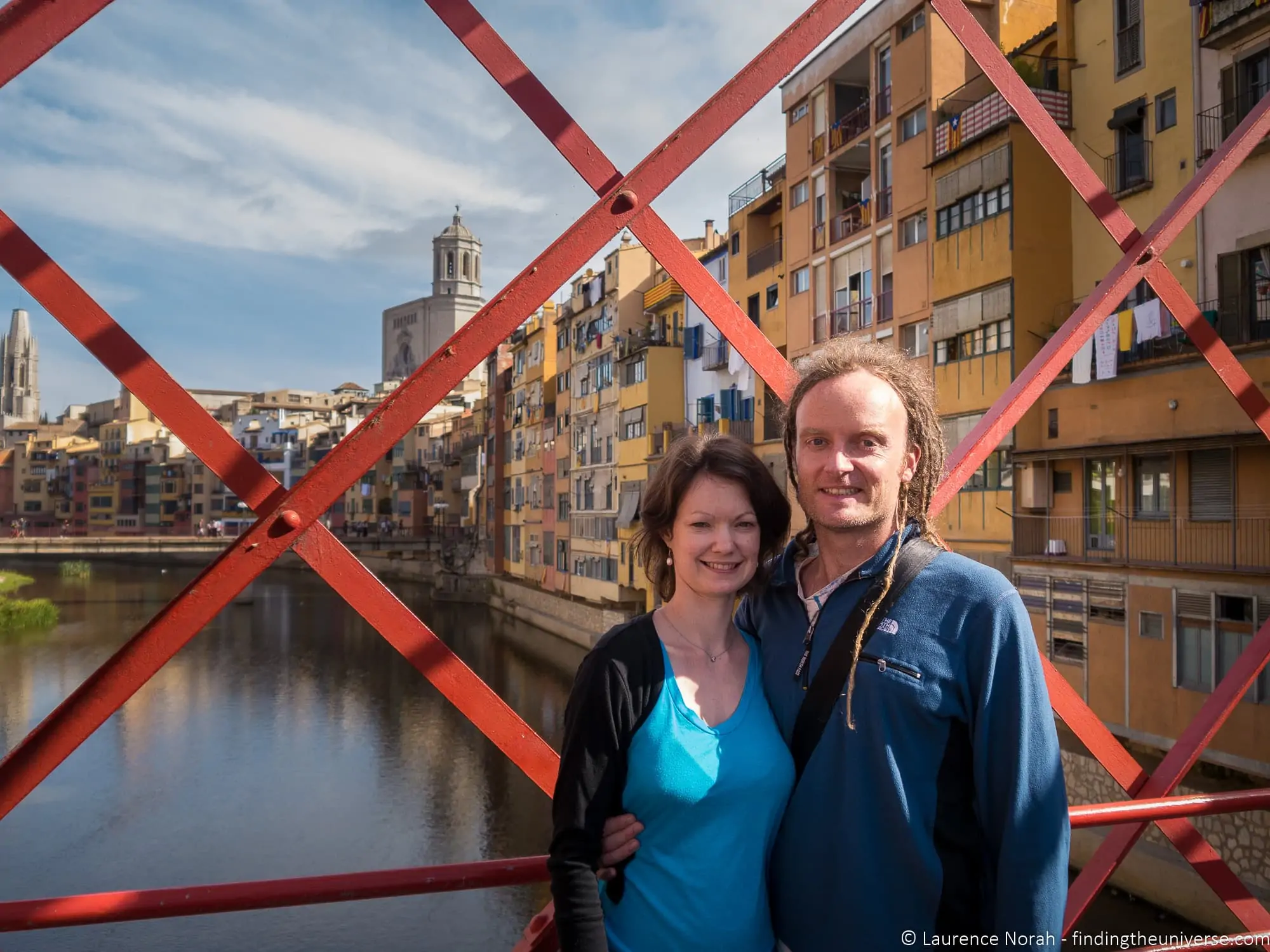
Should you take a tour or do it yourself?
Most of what’s written about this trip online comes from companies selling the tour, so here’s the view from someone who isn’t. We’ve done this day both as an organised tour and under our own steam.
An organised day tour from Barcelona is the easy choice. You don’t think about timetables, the history gets narrated as you go, and most tours include priority entry to the Dalí museum so you skip the ticket queue. A guide especially earns their fee in Girona, where the Roman, Jewish and medieval layers aren’t something you’d pick up just wandering. Tours run roughly €80 to €100 per person and fill the full day.
I should admit a bias. I’m not naturally a coach-tour person, much of it down to childhood memories of bus trips to seaside towns with my Mum and funny-smelling old people, which is a hard thing to shake. But I won’t pretend a tour isn’t a sensible way to see a lot in a short time with someone else doing the driving.
Going independently costs less, usually €25 to €50 in train fares for the day, and puts the day on your own clock. For most reasonably confident travellers, that’s what we’d suggest. If your time is tight, or you’d rather have the day handled and the history brought to life, take the tour.
Getting to Girona and Figueres from Barcelona
However you travel, the two towns sit in a neat line north of Barcelona, so the day works as a loop: out to Figueres, back through Girona.
By train
The train is what we’d point most independent visitors to. It’s fast, frequent and cheap, and it all runs from Barcelona Sants, the city’s main station.
Barcelona to Figueres comes with one catch: there are two Figueres stations. High-speed AVE and Avant trains take around 55 minutes to an hour and stop at Figueres-Vilafant, about 1.5km outside town, which needs a short bus or taxi transfer. Slower regional trains take closer to two hours but stop at the central Figueres station, an easy walk from the Dalí museum. Fares run from about €10 on a regional service up to €17 to €25 for the high-speed.
Barcelona to Girona is simpler: 38 to 40 minutes by high-speed train, up to 90 minutes by regional one, with one-way fares from around €9 to about €17. Girona’s station is a 10 to 15 minute walk from the old town. The Girona to Figueres hop is the easy leg, 15 minutes or so and 16 to 19 trains a day for €6 to €9.
You can book Spanish trains in advance through Trainline, or directly with Renfe, the national operator. Advance high-speed tickets cost quite a bit less than buying on the day.
By car
Driving is how we most often do this trip now. It’s about 90 minutes up the AP-7 motorway to Figueres, then half an hour back down to Girona, and the AP-7 has been toll-free since 2021, so the drive costs you only fuel. Both towns are pretty easy to park in, with car parks a short walk from the museum in Figueres and from Girona’s pedestrianised old town.
A car gives you freedom the train doesn’t, and you can fold in a Costa Brava beach or a coastal village on the way home if you fancy it. The trade-off for a straight two-town day is that you spend it parking and watching the road, and nobody gets a glass of wine with lunch. If you’re already renting a car for a longer Catalonia trip, drive. Otherwise the train is less hassle for this one.
The best order for the day: Figueres first
It feels natural to do Girona first, since it’s the closer of the two. We’d do the opposite.
The reason is the Dalí museum. It’s the one fixed point in the day, it’s busiest through the middle of the day, and it stops admitting visitors 45 minutes before closing. Reaching Figueres in the morning gets you in near opening, when it’s quietest, and removes any risk of running out of time. Girona, by contrast, is an open-ended wander with no closing time to chase, so it sits much more happily in the afternoon.
A rough shape for the day: leave Barcelona around 8am, be at the museum when it opens, give it a couple of hours, then have lunch in Figueres before the short train to Girona for the afternoon. Trains back to Barcelona run late into the evening, so there’s really no need to clock-watch. In winter the museum opens later and the light goes early, so the day is tighter, but it still works.
Figueres and the Dalí Theatre-Museum
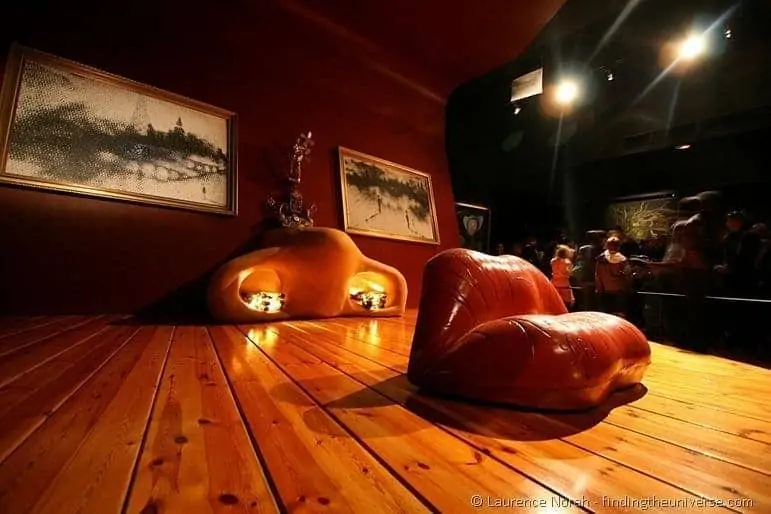
Figueres itself is a workaday Catalan town, pleasant enough but not the reason you’re here. The reason is the Dalí Theatre-Museum.
Dalí designed it himself, inside the shell of the town’s old theatre, so the building is as much his work as anything hanging in it. There are giant eggs along the roofline, a huge dome over the old stage, and seriously weird, wonderful things in every direction. Dalí is buried here too, in a crypt beneath the stage, which feels exactly right for a man who turned his own museum into a piece of art.
It’s also extremely busy. When I first visited it was possibly the busiest place I’d ever been, and going back over the years I can report it hasn’t quietened down. There are a lot of people with a passion for Dalí. Or a lot of people on bus tours carefully checking off destinations. One of the two. The art is brilliant and strange and worth the effort, but the crowds are real, so the best thing you can do is arrive when the doors open.
A few practical details, because they shape the day. The museum is closed on Mondays for most of the year, the exception being July and August, when it opens daily. Hours shift with the season: it opens at either 9:30am or 10:30am and closes at 6pm for most of the year, while in July and August it runs daily from 9am to 8pm. The earlier 9:30am start applies in spring and in September; January, February, June and the October to December stretch open at 10:30am. Last admission is always 45 minutes before closing.
Tickets are €18.50 booked online and €20.50 at the door, with reduced rates of €15 online for students, under-18s and over-65s, and free entry for children up to eight. The standard ticket includes the Dalí·Jewels exhibition next door, a collection of his surreal jewellery designs. We’d book online ahead of time. It isn’t strictly required, there’s a ticket desk at the entrance, but the museum sells to its capacity and turns walk-ups away on busy days, and online is a couple of euros cheaper anyway. Tickets are on the museum’s official site. In high summer there’s also a night opening on selected late-July and August evenings, with a Dalí audiovisual piece and a glass of cava.
The first time we visited, the crush of people got the better of us, so we left early, escaped into a wet Figueres afternoon and ate croissants instead. The art is still some of the most interesting you’ll see anywhere. I’d just go early, go in shoulder season if you can, and step out for a coffee when the crowds win.
Exploring Girona
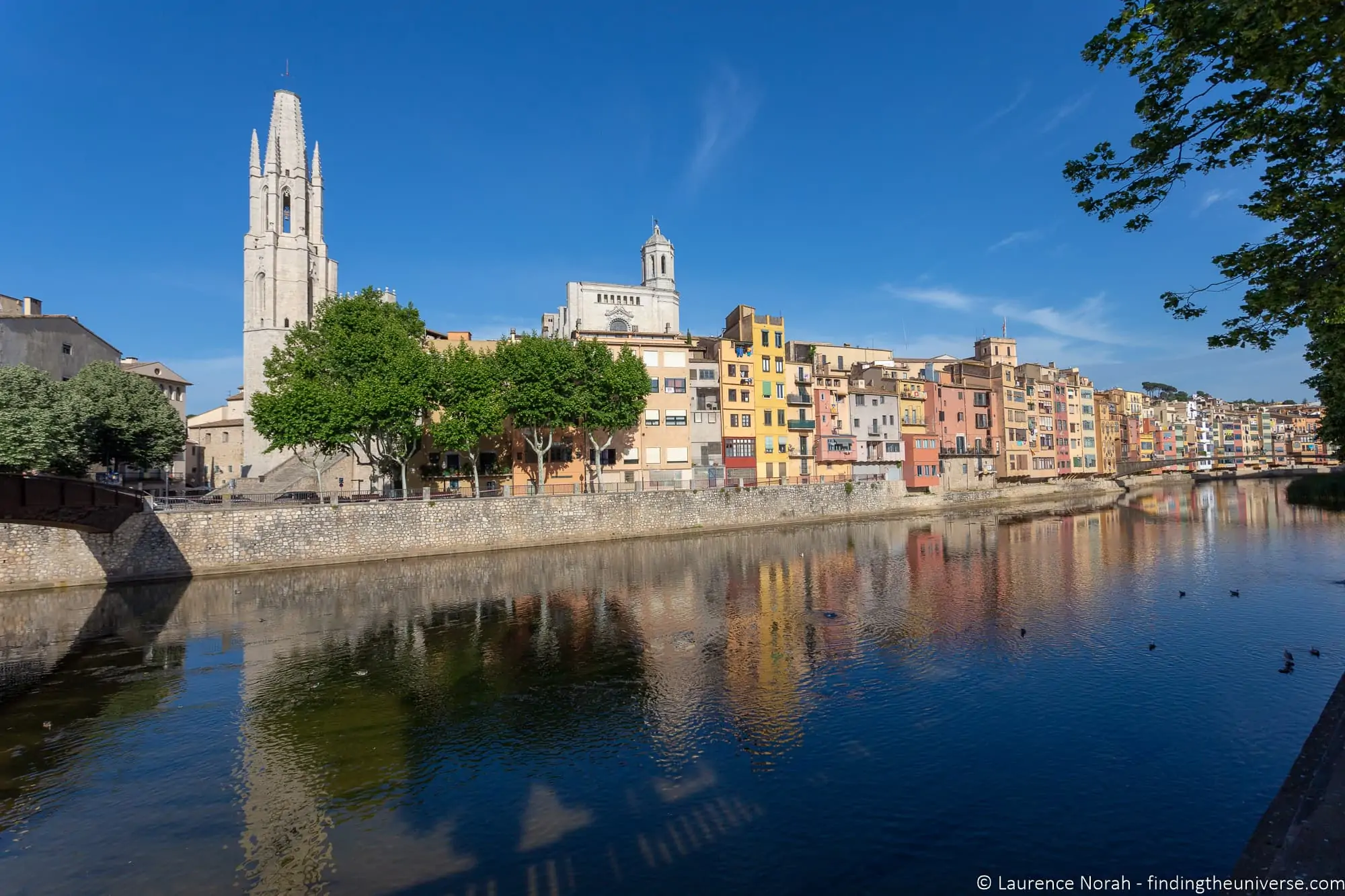
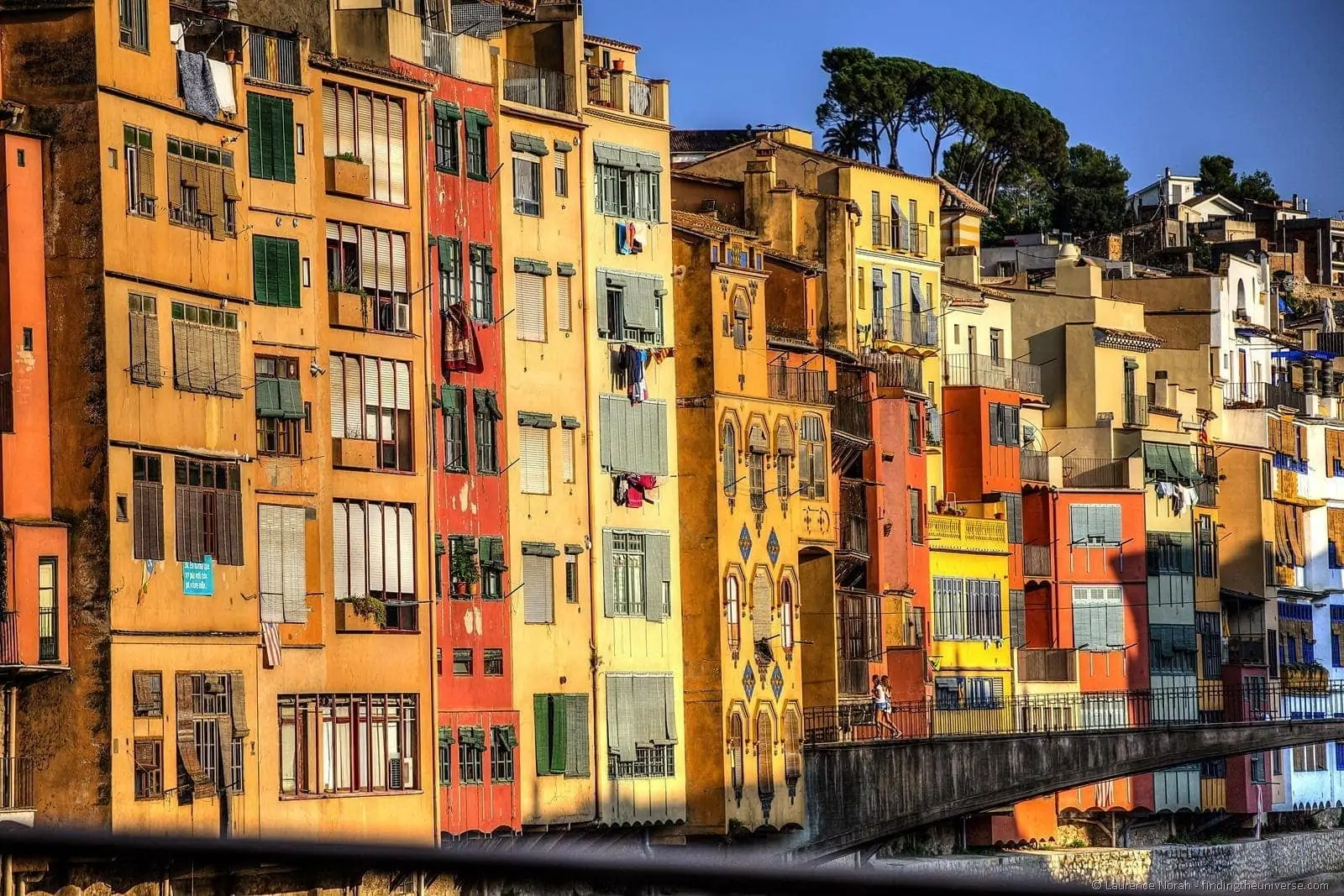
Figueres gives you one building to remember. Girona gives you a whole town, and we’d happily spend an afternoon here every time we come back.
Girona has been fought over for most of its existence. Romans, Visigoths, Moors and the French have all had a turn, with something like 25 sieges on the record. Your average medieval Gironan must have been thoroughly well versed in the basics of siege warfare. What it all left behind is a town built out of cultural collisions, layer on layer, and walking it is the whole appeal.
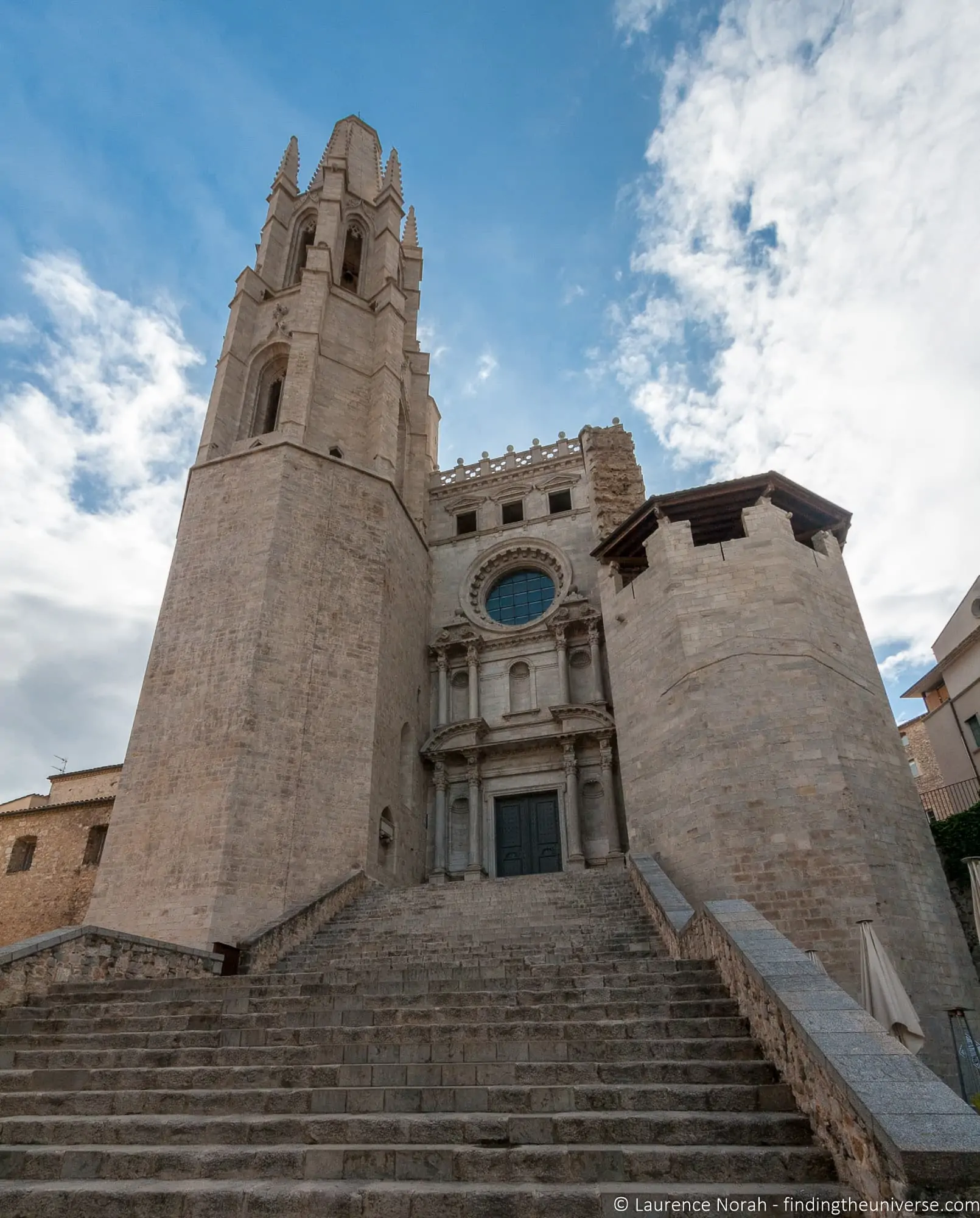
The old town is small and made for wandering. The crumbly old Jewish quarter, the Call, is one of the best preserved in Europe, a maze of narrow stone lanes and stairways. The cathedral is vast, and the climb up its wide stone steps is the town’s signature view. Game of Thrones fans will recognise both, as Girona stood in for King’s Landing and Braavos in the show’s sixth season. There are also the beautifully intact Arab Baths, the Romanesque monastery of Sant Pere de Galligants, and the cathedral museum’s Tapestry of Creation, an embroidered masterpiece from the 11th century.
Down at the river, the Onyar is lined with the painted houses everyone photographs, ochre and red and yellow, reflected in the water. As someone who has spent a career behind a camera, I find Girona one of those places where you stop talking and start shooting. It deserves more than an afternoon if you can give it one, and we’ve a full guide to things to do in Girona if you want to build it into a longer stay.
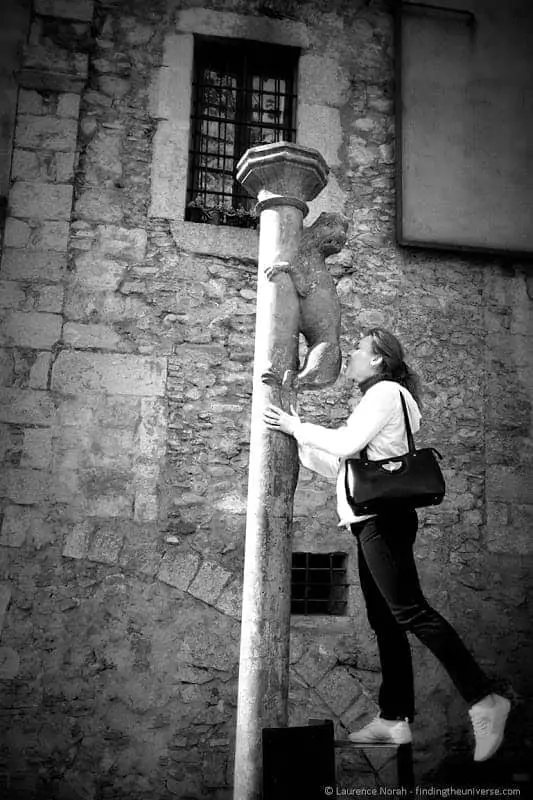
There’s the lioness statue, too. Tradition says you climb up and kiss the stone lioness for good luck and a promise you’ll return to Girona one day, which does also mean you collect whatever the last few hundred lucky visitors left behind. We’d still say do it. And Girona’s squares are full of good places to eat, because Spanish food, as a general rule, is both excellent and great value. The city also sits right at the edge of the Costa Brava, if a day here leaves you wanting more of this corner of Catalonia.
Girona or Figueres: which should you choose?
You don’t have to do both. If you’d rather give one town a proper, unhurried visit, here’s how we’d choose.
Pick Girona for a beautiful town to walk, photograph and eat in, with history in every street and no single attraction you’re tied to. It’s also the better choice if anyone in your group isn’t sold on a museum-heavy outing.
Pick Figueres if Dalí is the draw. The Theatre-Museum is the whole point of the town, and for a surrealism fan it’s a couple of hours you’ll remember. On its own, Figueres is more of a half-day than a full one.
Do both, the trip this guide is built around, if it’s your first time in the area and you want the fullest sense of inland Catalonia in a day. The towns are close, they’re different from each other, and together they make a more varied day than either one alone.
What we’ve learned
After doing this day more times than we can count, a few things make it better:
- Get to the Dalí museum for opening. The gap between a good visit and a frustrating one is the crowd, and it builds steadily through the morning.
- Go in spring or autumn if you can. You get kinder weather, thinner crowds and still-generous opening hours. High summer is hot and packed.
- Don’t try to add a third stop. Two towns are a satisfying day on their own; a third turns it into a route march.
- Book the museum before you leave Barcelona. It saves you money and a spell in the queue.
- Leave Girona for the afternoon and don’t rush it. Most tours give it a brisk hour. It deserves three.
If this gives you a taste for days out from Barcelona, Montserrat, the mountain monastery, is the other easy one and makes a good second day trip. Back in the city, our guide to Barcelona’s best viewpoints is worth a look for the days you’re not out of town. We also always travel with a guidebook for this kind of trip: the Rick Steves Barcelona guide covers Figueres and the Dalí museum well.
Girona and Figueres day trip FAQ
Can you visit Girona and Figueres in one day from Barcelona?
Yes, comfortably. Both towns are small enough to see well in a few hours, and a day trip runs around nine to ten hours door to door. Visit Figueres first, then spend the afternoon in Girona.
What’s the best order to visit Girona and Figueres?
Figueres first, then Girona. The Dalí museum is the day’s one fixed point and it’s quietest first thing, so reach Figueres in the morning. Girona has no closing time to chase, so it suits a relaxed afternoon.
Should you visit Girona or Figueres if you only have time for one?
It depends what you’re after. Girona is a beautiful medieval town to walk, photograph and eat in. Figueres is for Dalí and the Theatre-Museum. Girona fills a full day more easily.
How do you get from Barcelona to Girona?
Trains leave from Barcelona Sants and reach Girona in 38 to 40 minutes by high-speed AVE or Avant, or up to 90 minutes by regional train. One-way fares run from around €9 to about €17. Driving takes around an hour.
How far is Figueres from Barcelona, and how do you get there?
Figueres is about 140km north of Barcelona. High-speed trains take under an hour but stop at Figueres-Vilafant, 1.5km outside town; regional trains take nearer two hours into central Figueres. By car it’s about 90 minutes on the toll-free AP-7.
How do you get from Girona to Figueres?
It’s a short train hop of around 15 minutes, with roughly 16 to 19 services a day, so you rarely wait long. Fares are about €6 to €9 one way, and the regional train is fine on this leg.
Is the Dalí Theatre-Museum open on Mondays?
It’s closed on Mondays for most of the year. The exception is July and August, when it opens daily. Outside those two months, don’t plan your day trip for a Monday. The museum is also closed on 1 January and 25 December.
How much do Dalí Theatre-Museum tickets cost?
General admission is €18.50 booked online or €20.50 at the door. Reduced tickets are €15 online for students, visitors aged 9 to 17 and over-65s, with free entry for children up to eight. The ticket also covers the Dalí·Jewels exhibition.
Do you need to book Dalí museum tickets in advance?
It’s recommended rather than required. There’s a ticket desk at the entrance, but the museum sells to capacity and can turn walk-ups away on busy days. Online tickets are also €2 cheaper, so we’d book ahead, especially in summer.
Is it better to do the day trip by tour or independently?
For most reasonably confident travellers, going independently by train costs less and gives you the day on your own schedule. A tour suits you better if you’d rather not plan the logistics, or you want the history narrated. Tours run around €80 to €100 per person.
Is the Girona and Figueres day trip worth it?
Yes. It pairs a beautiful medieval city with one of Europe’s most unusual museums, and it’s one of the most rewarding days out from Barcelona. Visit outside peak summer if you can, and reach the museum early.
John Lau says
Hi, we are traveling to Barcelona next week and are planning a day trip to Girona & Figueres. Would you be able to recommend us a reliable tour agent?
Laurence Norah says
Hi John,
Thanks for your message. This reminds me I need to update this post with some recommendations 🙂 In the meantime, we’re always happy to recommend the Take Walks tours, we’ve taken tours with them in cities around the world and always had a positive experience. Groups are kept to a manageable size and their guides are always good. You can see their tour here:
Dalí Museum, Girona & Medieval Besalú: Barcelona Day Trip