
Poznań is one of those Polish cities that gets quietly skipped. The big-name picks pull all the attention (Kraków, Warsaw, Gdańsk), and Poznań sits between Berlin and Warsaw being one of the best stops in western Poland that nobody talks about. I visited back in 2012, hosted by the City of Poznan, and came home convinced more people should be giving it a couple of nights.
This is the guide I wish I’d had before that first trip. Everything has been rechecked in May 2026, with the practical details (train times, opening status, accommodation picks) brought up to date.
Table of Contents:
Quick Verdict: Is Poznan Worth Visiting?
Yes, and more enthusiastically than the city’s lukewarm reputation among travellers tends to suggest. Poznan is one of the most rewarding short stops in western Poland and well worth a couple of nights on any Berlin-to-Warsaw or wider Polish itinerary.
The Old Town square is one of the prettiest in central Europe. The Imperial Castle has had four owners in 120 years (Kaiser Wilhelm II, the Polish state, Hitler, and a communist cultural centre, all in the same building). Cathedral Island carries the founding-era history of the Polish state, where Mieszko I was buried in 992. Fort VII is a difficult but important visit to the country’s first Nazi concentration camp on occupied Polish soil. And Poznan sits about two and a half hours from Berlin and from Warsaw by direct train, which makes it dead easy to slot in.
Most travellers skip it. Almost everyone who actually visits comes away wondering why they hadn’t heard more about it.
Things to Do in Poznan
1. The Old Town Square and Old Town
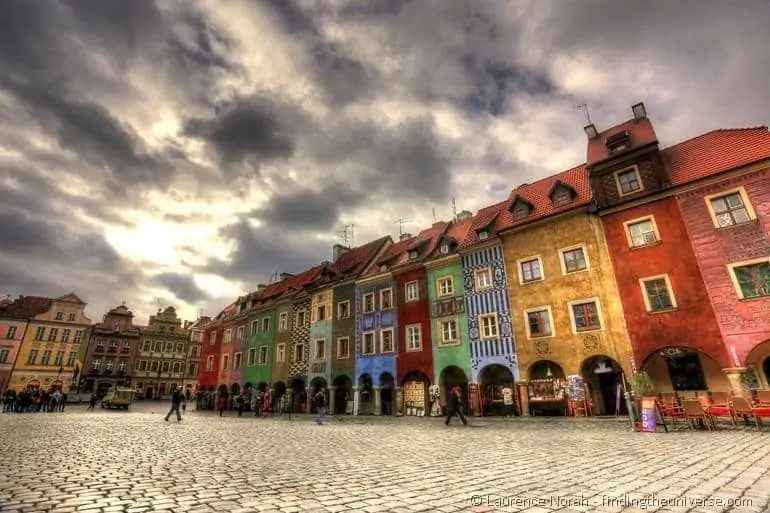
My absolute favourite part of Poznan was the town square, which is home to the pretty Town Hall. This is famous for the two goats (Poznan’s motif) that come out of the clock tower at midday, the watching of which seems to be “the” must-do thing when visiting Poznan.
My guide looked a bit sheepish when the wooden goats dutifully emerged at noon, bashed heads with each other, and retreated. It’s not that exciting on its own. The city has since added a second daily firing at 3pm (this wasn’t a thing back in 2012, but it gives you two chances if you can’t be in the square at midday).
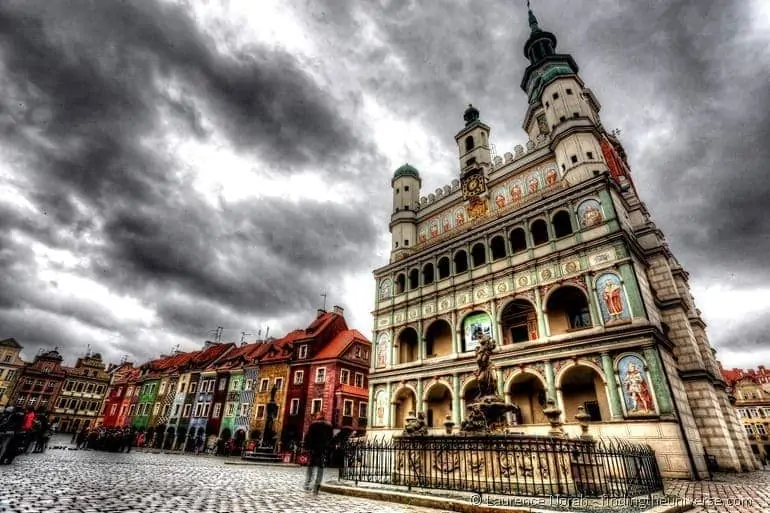
But the town square, town hall and medieval-style town centre are very pretty, and you will be able to happily wander around these streets for some time, discovering charming restaurants, bars and “olde-worlde” buildings at your leisure.
It’s hard to believe that most of this area was levelled during the second world war, with nearly everything rebuilt afterwards in the original style.
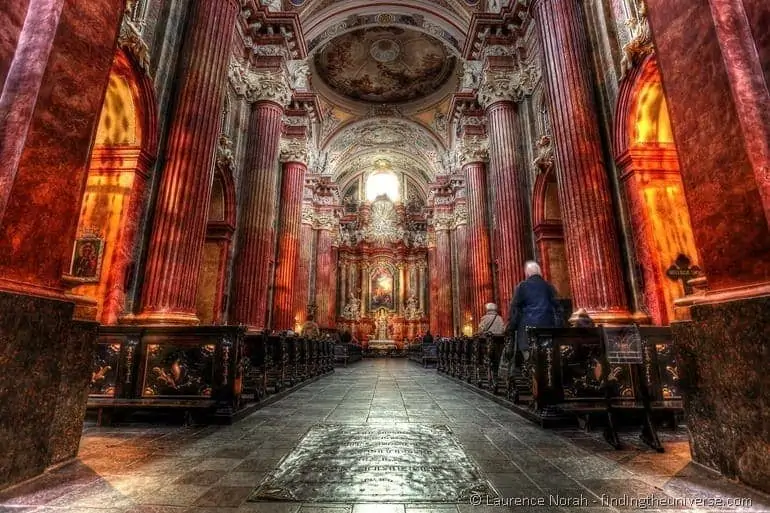
For my money, this part of Poznan is worth the visit to the city alone. So it’s kind of a bonus that there are all these extra things to do as well. Starting with:
2. The Imperial Castle
I know I just said the town square was my favourite part, but this castle has to also be my favourite part. Ok, I have a lot of favourites in Poznan.
The reason, really, for this being up there on my list, was the passion with which one of my hosts in the city showed it to me.
From the outside, it looks like just another castle, plopped down in the middle of the city. And, well, it is that.
The castle was built for the German Emperor Wilhelm the second in 1905, making it one of the youngest castles of its kind in Europe. The German empire didn’t do so well shortly after that, what with the first world war, and Poland gained independence just eight years after the castle was built.
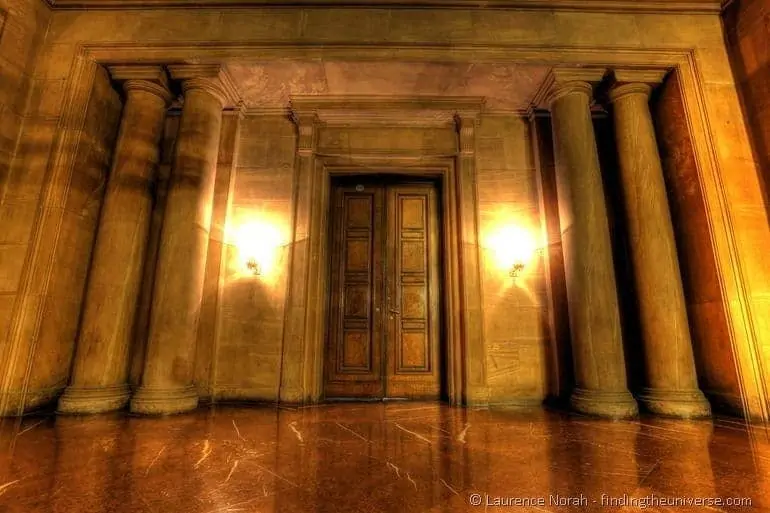
Now, the Polish people are a practical sort. Many other countries would look upon an enormous relic of the previous regime in the middle of their city with some disdain, and would no doubt make short work of it.
Not so the Poles. Here’s a large handy building, conveniently left for us by the German Emperor, they thought. Let’s do something useful with it. So it was turned into the official seat of Polish power.
The story of the castle doesn’t end there. As I’m sure you’re aware, the Germans popped along again in 1939, and the castle was converted to be used by Hitler as an official residence. His rooms (and fireplace) are still there, even though the man himself never actually visited.
After the war, Polish (and, likely, communist) pragmatism struck again. It was deemed too expensive to knock down, so was turned into a cultural centre. There are still some fascinating motifs dating from the communist era, including this enormous mural on the wall, giving a communist-era perspective into the history of Poznan.
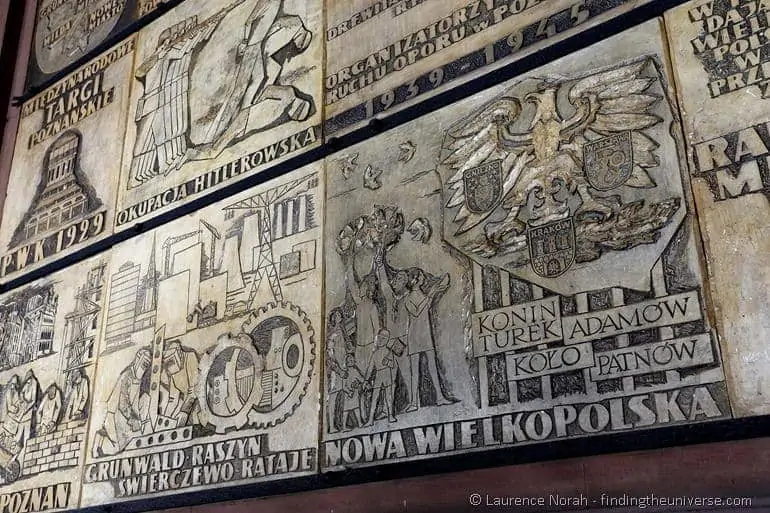
After the fall of the Iron Curtain, this mighty bit of building was converted into a multi-use space. There are offices, exhibitions, a cinema and you can even take coffee in the former throne room.
For a building that could have so much negativity associated with it, it’s refreshing to see what positive uses have come out of it. And a huge thanks to my host Wojciech, who opened my eyes to these facts.
3. The War Cemetery and Citadel Park
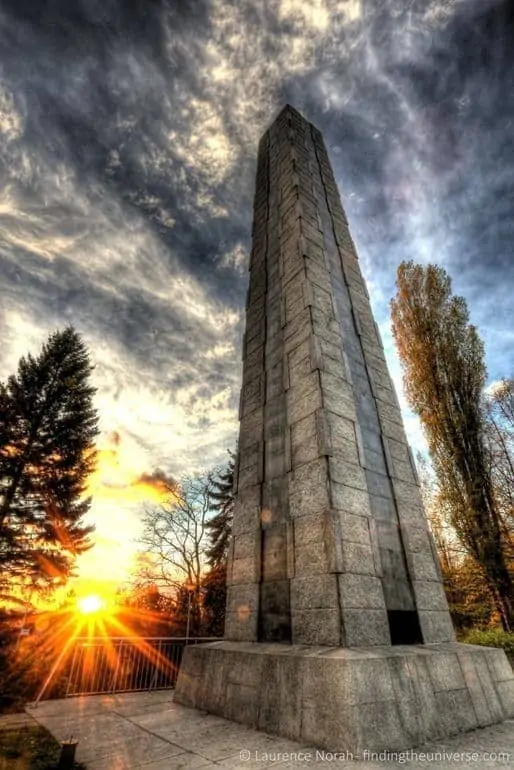
There has been a fair amount of turmoil in Poland. Which is a bit of an understatement. For a while, Poland wasn’t even on the map as a country, having been subsumed into either the Russian or Prussian empires.
All these wars led to a lot of deaths, and one of the many places the fallen are remembered in Poland is at the War Cemetery in Citadel Park. This is a large park just north of the city centre, which is also home to a large performance space as well as an interesting military museum. If you’re into tanks and so on.
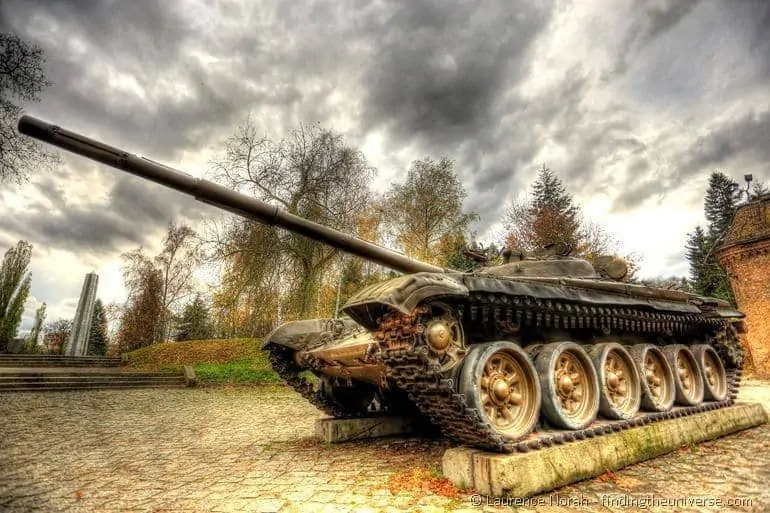
The War Cemetery, though, is not a light-hearted place. Major battles took place in Poznan, with the dates of the deaths on the graves reflecting the most costly. There are dead buried here from all over the world, soldiers who died thousands of miles from home, fighting bloody battles in horrific conditions.
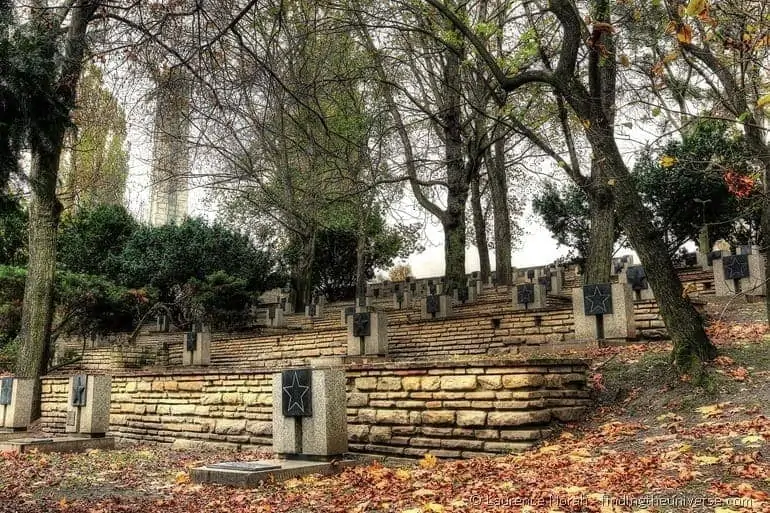
From the Great War, to the Second World War, to the Poznan uprising of 1956, this cemetery holds them all. Russians, English, Canadian, Polish, and many more. Not a fun place to visit, but a worthy one.
4. Fort VII
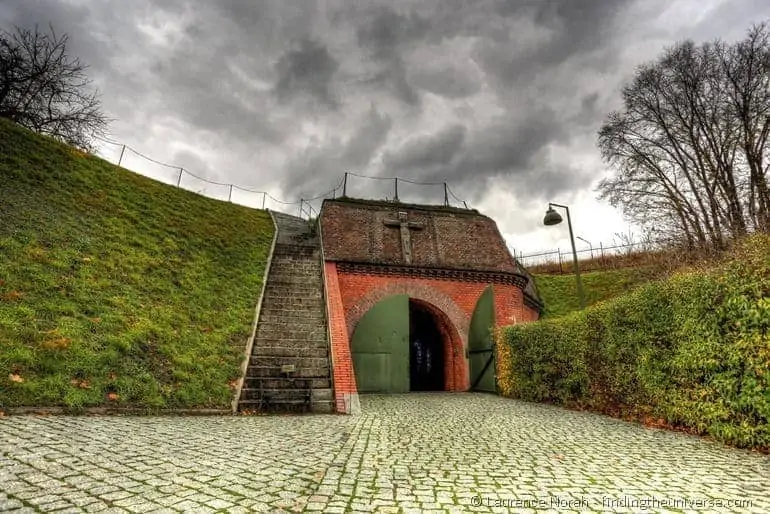
Oh, the Nazis. Naturally, they did their thing in Poznan as well, setting up one of their first concentration camps on occupied Polish soil here in 1939, not too long after they assumed control.
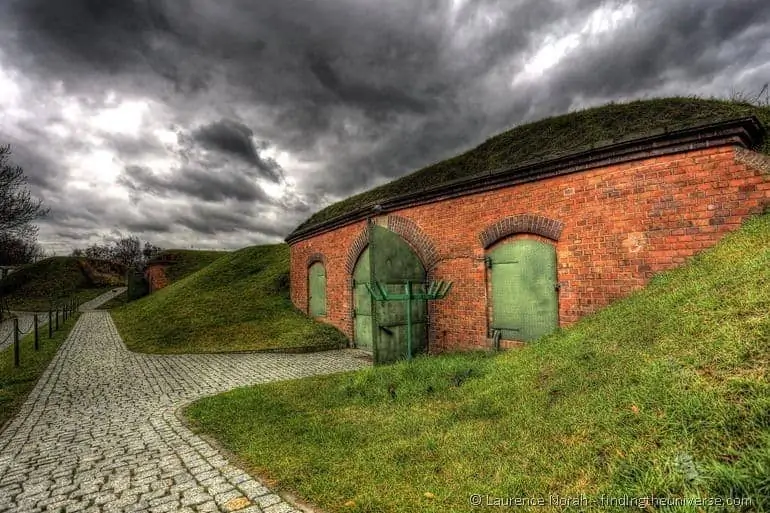
It was located in Fort VII, one of a series of eighteen defensive forts built around Poznan in the 19th century, most of which have now fallen into disrepair. Given the horrific acts that took place at Fort VII, disrepair would have been a kinder fate.
This fort was where the Nazis experimented with the use of gas, and you can stand in the gas chamber where 400 mental patients were “experimented on”.
This was a very difficult room to be in. An oppressively small tunnel shape with low ceilings and brick walls, far smaller than I would have imagined it to be.
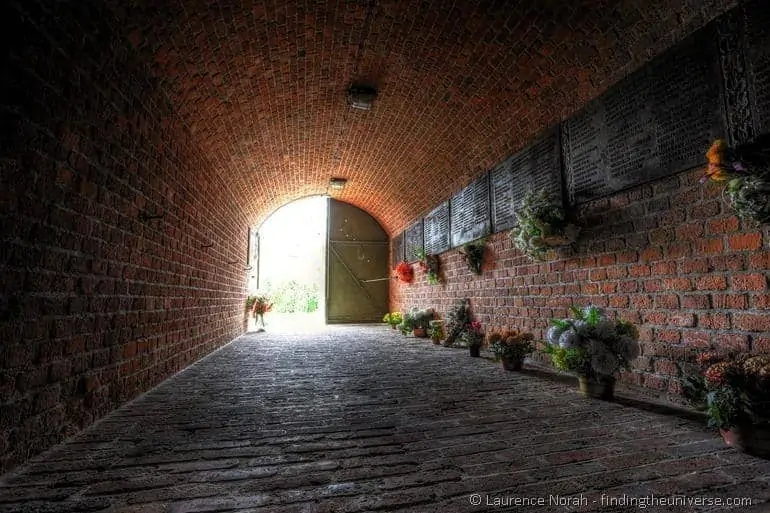
I stood at the back with the metal door half shut, and was, quite frankly, terrified. I cannot even begin to imagine what the prisoners felt like. I just know how depressing it felt to know how awful humans can be to each other if they choose that path, and how lucky I was to be able to just walk back out of the door into the light.
Between 4,500 and 20,000 people died here, less than a century ago. Oh mankind. When are you going to grow up?
Fort VII still operates as a museum (officially Muzeum Martyrologii Wielkopolan), and runs roughly Tuesday to Saturday 10:00 to 17:00 in summer, with shorter winter hours; check the museum’s own site for current opening times. If you visit, be aware that there is very little information in English, so either try and arrange a guide, or read up on it as much as possible before you go.
5. Cathedral Island
Cathedral Island (Ostrów Tumski) is home to, you guessed it, Poznan’s mighty cathedral. It’s also notable as one of the founding sites of the early Polish state, dating back to the 10th century. Mieszko I, the first ruler of a unified Poland, was buried in the cathedral here in 992, and tradition links his 966 baptism (one of the founding moments of the Polish state) to the same site.

The cathedral itself is an imposing red-brick structure and from my point of view had two particularly interesting features. Both of which involve dead people.
First, the original Kings of Poland are interred here, in the golden chapel at the back. Those are some pretty ancient bones.
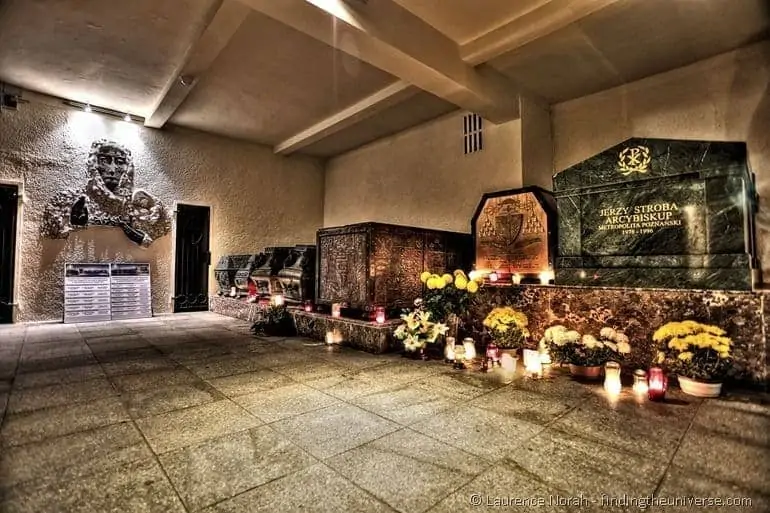
Second, down in the crypt below the main cathedral, are the coffins of the archbishops who have presided over the cathedral through the years. These are held in a small, dark room, which feels entirely claustrophobic and incredibly spooky, what with all the massive coffins. Archbishops not being the type to be given just any old coffin.
6. Lake Malta
If all the history and seriousness is too much for you, then a visit to Lake Malta is probably in order. A short distance from the old town, this is a park which is also home to a 2km long lake, most commonly used for rowing competitions.
There’s also a dry ski slope, for year-round piste action, an enormous aqua-park, which also has a whole range of spa treatments (although I spent my time going down slides), and countless opportunities to just get away from it all. Which is always nice, in a city.
These were but some of the highlights of Poznan. There are many more, from the reconstructed Royal Castle (rebuilt 2010 to 2013, with the Museum of Applied Arts inside reopening in March 2017) to the hip area on the other side of the Vine Bridge. But some things have to be left as surprises. Now, on to:
Some Practicalities
Getting to Poznan
Poznan is easy to get to. Budget airlines such as Ryanair and Wizz Air fly into the conveniently located Poznań-Ławica airport from a range of European cities. It’s also about two and a half hours from Berlin by direct EuroCity train (around nine services a day in 2026), and from Warsaw by direct Polish state rail, with hourly departures.
Accommodation in Poznan
Well, take your pick. The Old Town has plenty of hostels and budget hotels, and they looked funky when I wandered past them. I stayed at the slightly more upmarket NH Hotel, a decent city centre hotel with a good breakfast and free Wi-fi, which met all my needs at the time.
If I were booking again now, I’d start with PURO Poznań Stare Miasto, a modern design-led hotel about 250m from the Old Market Square that consistently rates 9.2 out of 10 on Booking. Hotel Stare Miasto is the boutique option about a five-minute walk from the square, well-rated by couples. And if you want something unusual, Blow Up Hall 5050 is a design hotel inside the Stary Browar complex with no reception desk, where you book and unlock your room with an iPhone.
For a reliable mid-range pick, Hampton by Hilton Poznan Old Town sits a few minutes’ walk from Stary Rynek and gives you a brand you know what you’re getting from, with consistent rooms and a good breakfast. Palazzo Rosso Old Town is the historical-character pick, set in a renovated building right by the Renaissance Town Hall with a 20,000-volume library, a panoramic lift overlooking the square, and a restaurant down in the original cellars.
On a tighter budget, Sleep in Hostel and Apartments Stary Rynek puts you literally on the square at number 77, with private rooms as well as dorms and a Booking rating around 8.7. And for families or groups wanting a kitchen, KRAMARSKA Residence by Friendly Apartments is a recently renovated historic building two minutes from the square, with family rooms and a minimarket on site.
You’ll find no shortage of places to stay in Poznan. Just be aware that the city plays host to large trade shows from time to time, so booking in advance is worth doing if you’re aiming for somewhere that might also appeal to a business traveller.
Eating and Drinking in Poznan
I had so much fun eating and drinking in Poznan that I’ve written whole posts about it. There’s one on food in general in Poznan, and one on the summer food of Poznan.
Suffice to say, you will neither go hungry nor thirsty. There’s an explosion of micro breweries, which means the beer drinkers amongst you will be happy (read my guide to beer in Poznan here), and of course there’s no shortage of vodka.
Food wise, well, from the classics like pierogi and beetroot soup to seriously cutting-edge cuisine, Poznan really knocked my socks off when it came to food choice and availability.
Shopping in Poznan
Yeah, I know, shopping isn’t really my forte. But given that one of the main shopping centres in Poznan was nominated by National Geographic Traveller as one of the new Polish wonders of the world, I thought it deserved a mention.
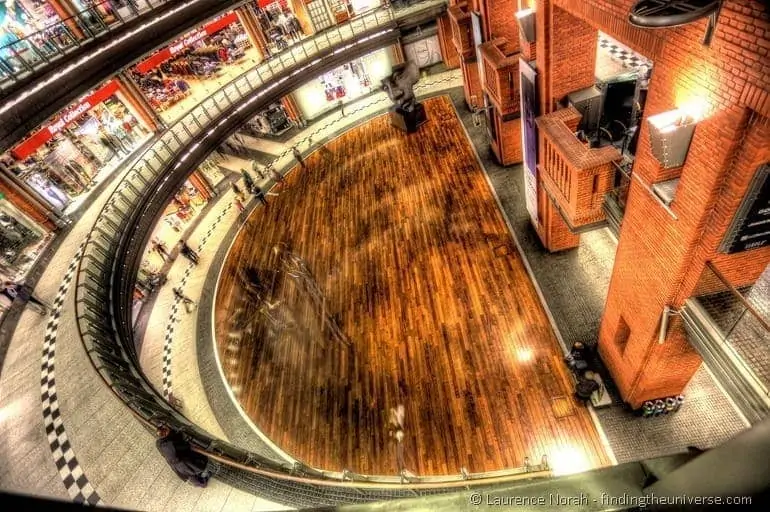
Stary Browar is set in a converted brewery, and the forward-thinking owner decreed that at least half the space be given over to art and cultural installations. So even if you’re not into shopping (that’s me), there is plenty to entertain you within, from a thoroughly modern art gallery, through to art installations around nearly every corner. Worth the time to visit, even if you’re not a shopper.
Why Poznan Stuck With Me
Poznan is awesome. It felt for me like a cross between the classic charm of old city centres like Prague, mixed with the cool, hipster vibe that is Berlin. All in a package that is easily walkable (unlike Berlin) and not overcrowded (unlike Prague).
Go now, before the rest of the world figures it out.
Further Reading for Your Visit to Poznan
Following my trip to Poznan, I’ve put together a number of posts to help you make the most of your visit. I’ve also added in some other resources to this list that you might find useful.
- Everything you need to know about summer festivals in Poznan
- A guide to the food of Poznan, as well as the summer food of Poznan
- A guide to visiting Poznan in summer
- An overview of the street art of Poznan
- A guide to the best beer in Poznan
- The Rick Steves Central Europe guidebook, a regional guide that covers Poland alongside its Central European neighbours
Frequently Asked Questions About Visiting Poznan
What Is Poznan Famous For?
Poznan is most famous for the mechanical goats on its 16th-century Renaissance Town Hall, which emerge from doors on the clock tower and butt heads twelve times each appearance. The goats appear every day at noon and again at 3pm.
The city is also known for the Stary Rynek (Old Market Square), one of the prettiest in central Europe, rebuilt after near-total destruction in the second world war. And for Cathedral Island (Ostrów Tumski), where Mieszko I, the first ruler of a unified Poland, was buried in 992. Tradition also links his 966 baptism (one of the founding moments of the Polish state) to the same site.
Poland’s Lech beer is brewed in the city, and Poznan hosts some of the largest trade fairs in the country.
Is Poznan Worth Visiting?
Yes, and more enthusiastically than its lukewarm reputation among travellers tends to suggest. Poznan sits between Berlin and Warsaw on the western Polish rail spine, about 2 hours 40 minutes from each, and most travellers route past it on the way to Kraków or skip western Poland entirely. That’s a mistake.
The Old Town square is one of the prettiest in central Europe, the Imperial Castle has had four owners in 120 years (Kaiser Wilhelm II built it in 1905, then a Polish state seat after 1918, then a Hitler residence after 1939, then a communist cultural centre after the war), Cathedral Island carries the founding-era history of the Polish state, and Fort VII is a difficult but important visit to the country’s first Nazi concentration camp on occupied Polish soil.
Two nights is enough to see the city without rushing. Three if you want to fit in Lake Malta or a slow afternoon over Polish craft beer.
How Many Days Do You Need in Poznan?
Two nights, three days, is the sweet spot. That’s enough to see the Old Town without rushing, the Imperial Castle, Cathedral Island, and Fort VII, with an afternoon left over for Lake Malta, Stary Browar, or Poznan’s craft beer scene.
One night is enough for the Old Town and a quick castle visit if you’re routing through, but you’ll miss Cathedral Island and Fort VII, which are the city’s two most distinctive stops.
Three nights gives you a slower pace and time for the practicalities Poznan rewards (a sit-down breakfast in the square, a wander around Citadel Park, a long Polish-craft-beer night).
How Far Is Poznan From Warsaw, Berlin, and Kraków?
Poznan sits roughly equidistant between Warsaw and Berlin (about 2 hours 40 minutes from each by direct train, around 280km and 240km respectively), and 4 to 5 hours from Kraków in the south.
Warsaw runs hourly direct services. Berlin runs about nine direct EuroCity trains a day on the Berlin-Warsaw line. Kraków runs multiple direct trains daily, with the fastest service around 4 hours 13 minutes.
In practice, this makes Poznan the easiest western-Poland city to slot into a Berlin-to-Warsaw trip. The half-day train rides give you a manageable rhythm, and it’s a reasonable stop on a multi-city Polish itinerary that includes Kraków.
What’s the Best Time of Year to Visit Poznan?
Late spring (May, June) and early autumn (September, October) are the best weather windows. The Old Town is at its most pleasant for a long lunch outside, and the city feels lived-in rather than touristy.
Summer (July, August) brings festivals and the Lake Malta park comes alive, but central Poznan can get hot and busy with trade-show traffic. Late autumn (November) is what I got on my first visit (and yes, it was cold).
December has Christmas markets in the Old Market Square; January and February are cold and grey. March is the one month I’d actively avoid if you can: still cold, often grey, no festivals.
Is Poznan a Good Day Trip From Berlin?
Yes, but it’s a much better overnight. The direct EuroCity train from Berlin Hauptbahnhof to Poznan Główny takes about 2 hours 40 minutes, which gives you a manageable day-trip window if you take the first morning train and return on a late one. You can see the Old Town, the goats at noon, and the Imperial Castle in that time.
The catch is that Cathedral Island and Fort VII both deserve their own half-day, and you’ll miss them on a day trip. Two nights is the better call if your schedule allows it. The trains run roughly hourly to the early evening, with about nine direct services per day.

I first visited Poznan in 2012 as a guest of the City of Poznan. All opinions, then and now, are my own.
Leave a Reply