
Jess and I spent three days in Redding in 2015, driving every leg of the Shasta Cascade as guests of the region’s tourism office. I’ve photographed places for a living since 2010, and I came home with the 16 photographs in this article and one firm opinion about how to plan the trip: the town is where you sleep, and nearly everything worth the drive is outside it.
That matters more than it sounds, because most people don’t choose Redding. They book it. The town sits in northern California at the top of the Sacramento Valley, right on Interstate 5 and about a 3.5 hour drive north of San Francisco.
It’s the sensible bed on the long run up to Oregon, and the question that follows isn’t “what’s in town” so much as “what can I reach from here, and is it worth the gas”.
So that’s what this is. The bridge in town, the waterfalls, the dam, the caves and the gold-rush ruins, grouped by how far you’ll drive to reach them, with what each one costs, how long to allow, and the one booking that will ruin your day if you skip it.
Table of Contents:
Redding is a base, and the good stuff is outside town
Treat Redding as a basecamp and give it two to three days. The town itself will fill an evening or two, and everything that makes the region worth a detour sits between 6 and 60 miles out along Highway 299, Interstate 5 and Highway 89.
If you only have one day, drive west to Whiskeytown for a waterfall hike and a swim, then take the Sundial Bridge at sunset on your way back in.
With two days, add the northern run: Burney Falls first thing, McCloud Falls after lunch, dinner under Mount Shasta if you fancy the drive.
With three, put the Shasta Dam tour and Old Shasta City together in one morning (they’re eight minutes apart and both sit west of town), and give the afternoon to the Lake Shasta Caverns boat and cave tour.
And if you have four, go to Lassen. It’s the one we ran out of time for, and eleven years later it’s still the thing I’d change.
Redding at a glance
Distances are the ones the park services publish themselves, the timings are what we found the places actually need, and the prices and dates are for the 2026 season.
| Where | Distance from downtown Redding | Time to allow | Cost | Book ahead? |
|---|---|---|---|---|
| Sundial Bridge | In town | An hour, longer at sunset | Free | No |
| Turtle Bay Exploration Park | In town, next to the bridge | Two hours, half a day with kids | $22 adult, $18 child 4 to 15, $18 senior 65+, free under 4 | No |
| Diestelhorst Bridge | In town | Twenty minutes | Free | No |
| Shasta State Historic Park | 6 miles west | An hour | Museum $3 adult, $2 youth, free 5 and under | No, but the museum only opens Thursday to Sunday |
| Whiskeytown National Recreation Area | 8 miles west on Highway 299 | Half a day, a full day if you hike more than one waterfall | $15 to $25 per vehicle, or $55 for the park’s annual pass. Cashless | No |
| Shasta Dam | 9 miles northwest | Two hours with the tour | Free | No, but tours are first come first served and the visitor centre shuts Wednesday and Thursday |
| Lake Shasta Caverns | North up I-5, half a day with the drive | Two hour tour | $46 general 16+, $27 junior 7 to 15, $17 child 3 to 6, free 2 and under | Worth it. Winter tours can be cancelled for weather |
| Burney Falls | A morning’s drive north on Highway 299 | Half a day, or pair it with McCloud for a full one | $10 per vehicle plus about a dollar processing fee | Yes, Friday to Sunday and holidays, 15 May to 27 September 2026. Same-day reservations are not accepted |
| McCloud Falls | About 30 minutes north of Burney Falls | Two to three hours for all three falls | Free | No, but the access road gates shut for winter |
| Mount Shasta | North on I-5, the far end of the same day | An evening | Free, dinner extra | The Highland House restaurant runs Wednesday to Sunday only |
| Lassen Volcanic National Park | A day of its own | A full day | $30 per vehicle 16 April to 30 November, $10 in winter, or $55 annual. Cashless | No reservation needed to enter, but check the park highway is open |
In Redding itself
1. Sundial Bridge and Turtle Bay Exploration Park
The Sundial Bridge is the reason people stop in Redding rather than driving through it, and it deserves the reputation. Santiago Calatrava designed it, his first free-standing bridge in the United States, and it opened on the Fourth of July in 2004.
It runs 700 feet long and 23 feet wide, with a 217 foot pylon, and you walk across on non-skid glass panels set into a steel frame. It’s free, it’s open daily, and it connects the Turtle Bay museum on one bank to the arboretum on the other.
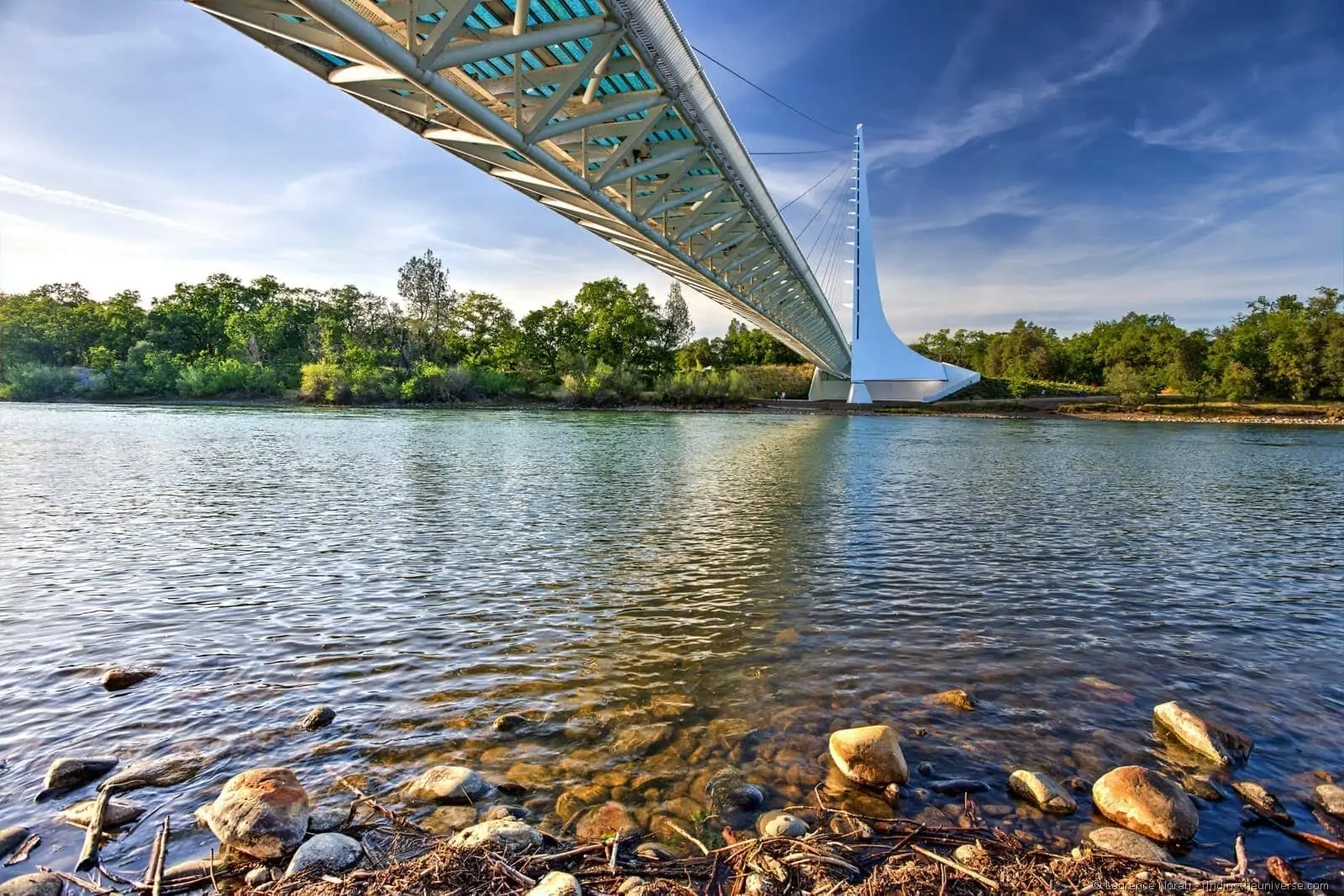
It cost $24 million, most of it from the McConnell Foundation, and it was controversial at the time for exactly that reason. Standing under the cantilever tower, it’s hard not to be won over by the flair of the thing.
And yes, it really is a working sundial, one of the largest in the world. Turtle Bay’s own figures are better than the myth about it: the shadow arc is so big that it can only record four hours a day, from 11am to 3pm, it’s no use at all in winter because the shadow falls too far into the arboretum to see, and when it is visible it moves about a foot a minute.
So it tells the time for four hours, on a good half of the year, at a pace you can watch. I wouldn’t replace your watch just yet.
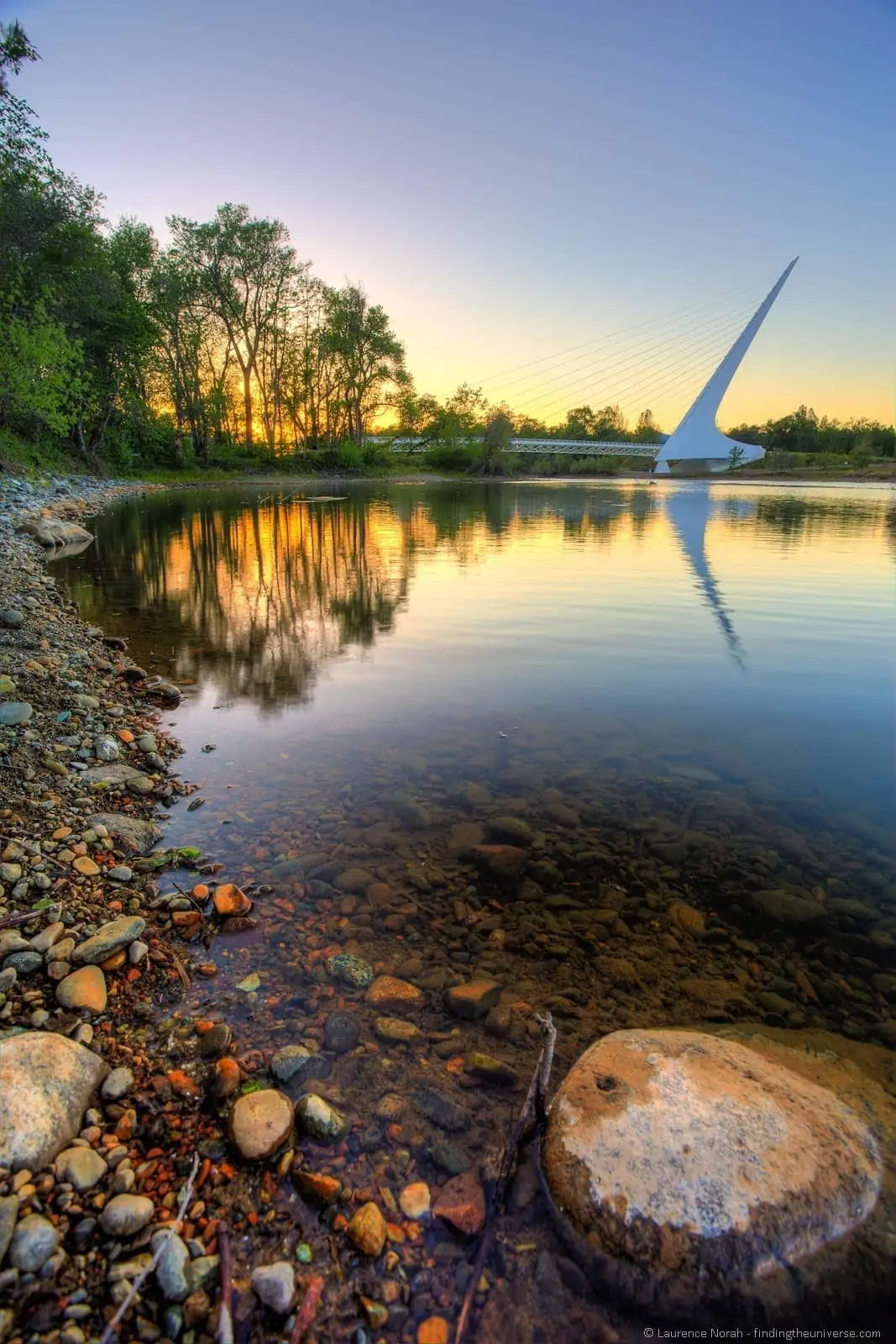
I visited a number of times to take pictures. The best angle is from the Turtle Bay side, down by the river, where you can get the whole span with the glass lit up underneath. Head east along the trail and you can shoot the sun setting behind it.
Ok, so that was four paragraphs about a bridge. I’ll move on now to the Turtle Bay Exploration Park.
It’s a fairly large complex, and the museum is the centre of it. The displays cover the local flora and fauna, with most of the attention on the Sacramento river running past outside. There are occasional special exhibitions too. When we visited there was a whole section given over to the history of candy, which was very interesting, particularly the free jelly beans.
It’s an educational centre with hands-on activities, and it seemed popular with the school groups that were passing through. That was also the case for the outdoor wildlife park, which housed a variety of interesting wildlife, from porcupines to foxes to parakeets. The latter are really fun. You’re allowed into their “playhouse” to feed them, and they get right up close and personal with visitors, sitting on heads, arms and hands in the quest for a bit of food.
Admission is $22 for an adult, $18 for children aged 4 to 15 and for seniors 65 and over, and free for under 4s. That covers the museum, Forest Camp, the Parrot Playhouse and the botanical gardens on the far side of the river. If you have kids, it’s a no-brainer.
Two ways to pay less, both from Turtle Bay’s own access programmes. The first Thursday of every month is discount day, at $10 for adults and $5 for children, with under 2s free. And Shasta Public Libraries lend out passes that get you in for nothing, which is a lovely thing for a museum to do and almost nobody mentions it. More on hours, tickets and events on the Turtle Bay website here.
2. Diestelhorst Bridge
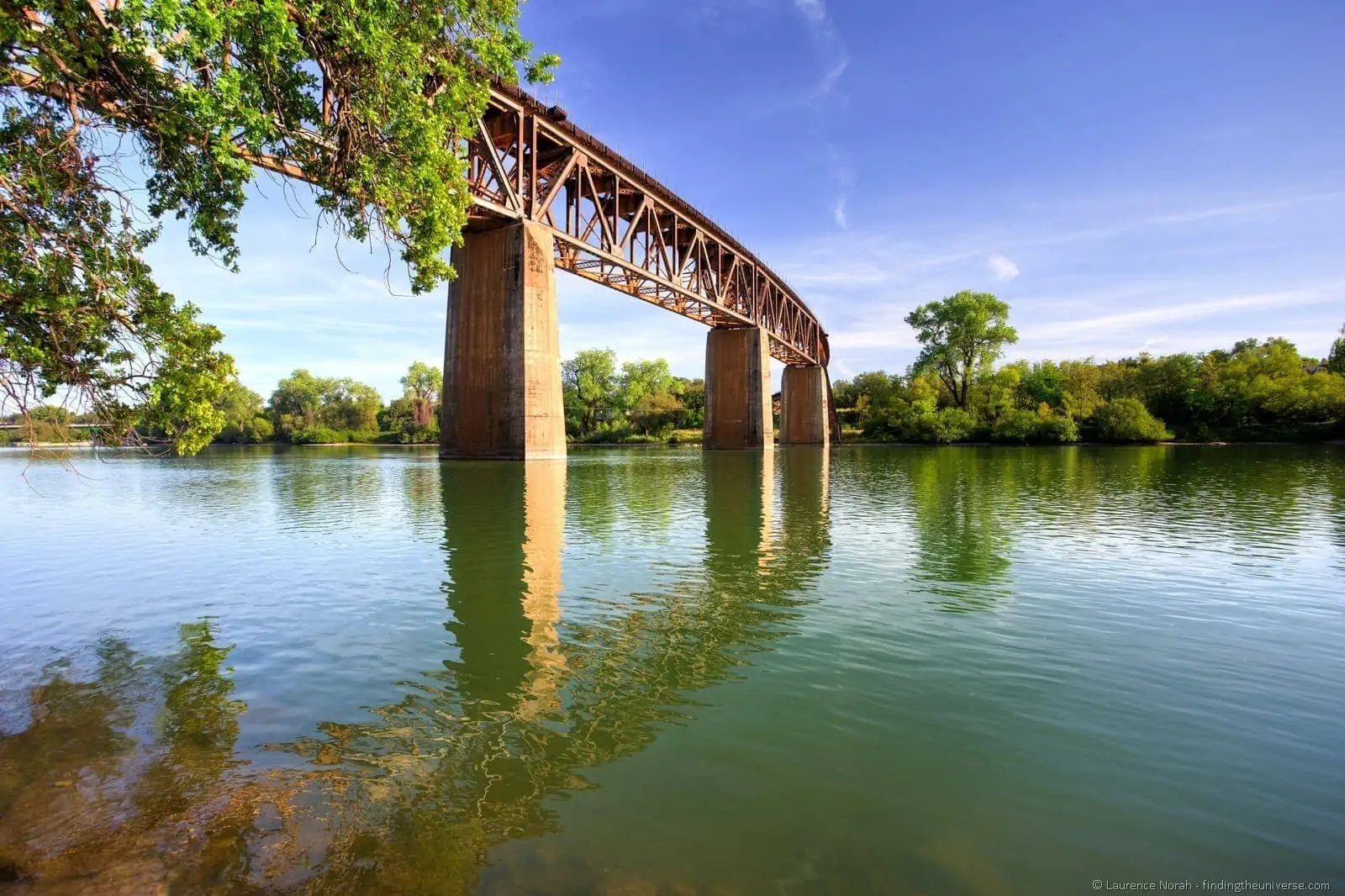
The Sundial Bridge is the famous one, but it isn’t the only bridge in town worth your time. The Diestelhorst bridge was started in 1914 and finished in 1915, and it carried the original Highway 99 across the Sacramento. Redding’s own tourism board claims it as the first bridge in the state that let cars cross the river.
It’s a photographer’s stop, and probably nobody else’s. Twenty minutes, no ticket, no facilities. What earns it is the view upstream to the wooden rail bridge, which is the better subject of the two.
3. An evening in Redding itself
We had three evenings in Redding and spent all three by the river, which tells you most of what you need to know.
The riverside walking is very good, and it’s free. The City of Redding maintains 80 miles of paved and natural surface trails, and the piece you’ll actually use is the 5.5 mile loop that runs along both banks from the Sundial Bridge, closed at the western end by a stress ribbon bridge that opened in 1990.
The Sacramento River Trail and its rail-trail sibling have been National Recreation Trails since 2002 and are in the Rails-to-Trails Hall of Fame, which for a city this size is a real achievement. Full network map is on the City of Redding trails page.
Downtown is a few blocks back from the water and has the restored art deco Cascade Theatre. It stopped showing films in 1997 and reopened in 2004 as a live music and performance venue. We didn’t spend an evening there and I’m not going to pretend otherwise. If you want a night out rather than a sunset, that’s the direction to look in.
My call, for what it’s worth: give one evening to the bridge at dusk, and don’t plan the others. Redding is a place where you eat and sleep well and get up early.
Within ten miles of downtown
4. Whiskeytown National Recreation Area
Whiskeytown is 8 miles west of downtown Redding on Highway 299, and it’s the single best reason to base yourself here. A big lake, a lot of trails, kayaking, swimming, and four waterfalls you can walk to.
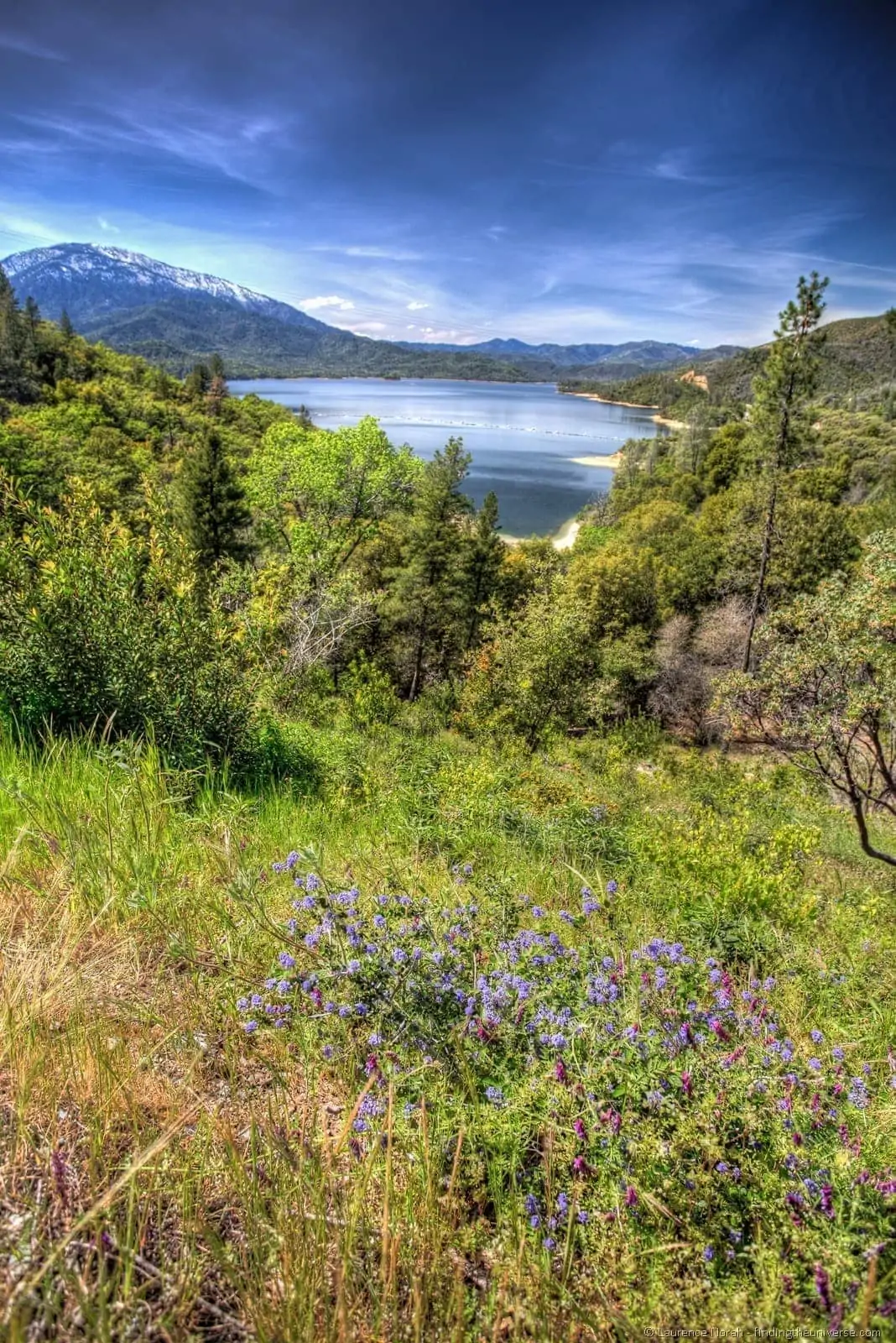
One for the photographers. Whiskeytown Lake is a small regulated reservoir and it’s held essentially full through the season, which is not true of the much bigger Shasta Lake behind the dam. Shasta draws down all summer, so a late-season visitor gets a lot of bathtub ring.
Whiskeytown just looks like a lake, in August as much as in May. That’s why it’s the one in my photographs.
The four falls are Whiskeytown Falls, Boulder Creek Falls, Brandy Creek Falls and Crystal Creek Falls, and the National Park Service publishes trail lengths for each: Crystal Creek at 0.4 miles is the easy one, the James K. Carr Trail to Whiskeytown Falls is 1.7 miles, Boulder Creek is 1.1 miles from Mill Creek Road or 2.8 from South Shore Drive, and Brandy Creek is 1.4 miles.
Brandy Creek comes with a caveat that’s easy to miss. The trail is open, but only as far as the Lower Falls Overlook and the bottom of the cascades. NPS describes the box canyon beyond that as “highly volatile and potentially dangerous for travel” and recommends you don’t continue, suggesting the other three instead.
So you can walk Brandy Creek. You just don’t get the main waterfall at the end of it. If you’re picking one and you want the payoff shot, take the James K. Carr Trail.
Two other trails, both Mill Creek approaches, are closed outright for burn scar hazards. Current trail status is on the NPS hiking page, and I’d check it the morning you go.
Burn scar, because in 2018 the Carr Fire went through here. NPS states that it burned 97% of the park and more than 100 structures, and calls it the most destructive fire in the history of the National Park System. Eleven years on from our visit the park is open and the falls are the same falls, but you’ll be walking through a forest that is visibly rebuilding, and that’s part of what you’re coming to see now.
The old Waterfall Passport we were told about isn’t something I can point you at any more. What the park does run, for its 60th anniversary in 2025 and 2026, are the 60 Miles For 60 Years exercise challenge and the 6 For 60 stewardship challenge, with worksheets and free prizes at the visitor centre.
Stop there anyway. You get the best view of the lake from the car park, and the rangers will tell you which falls are running well that week, which no website can.
Entry is $15 to $25 per vehicle depending on the pass, or $55 for the park’s own annual pass, and Whiskeytown is cashless, so bring a card. The pass covers being in the park at all, whether or not you end up parking at a trailhead.
One more that I love and no other Redding guide seems to carry: the NPS directions page describes a free summer bus from downtown Redding to Brandy Creek Beach, the RABA Route 19 Beach Bus on Thursdays, Fridays and Saturdays, with Shasta Connect running on Sundays. That page was last stamped in 2024, so ring RABA to check it’s running before you plan a car-free beach day around it. If it is, it’s the only way I know to do Whiskeytown without a car.
5. Old Shasta City
Before the railroad came, Shasta City was the place to be. This was the town at the epicentre of the region’s gold rush, and in the late 19th century it was the area’s focal point.
Being up in the hills made rail access a challenge, so when that technology came along and stopped at Redding, businesses and people moved to where the action was, and Shasta City was largely abandoned.
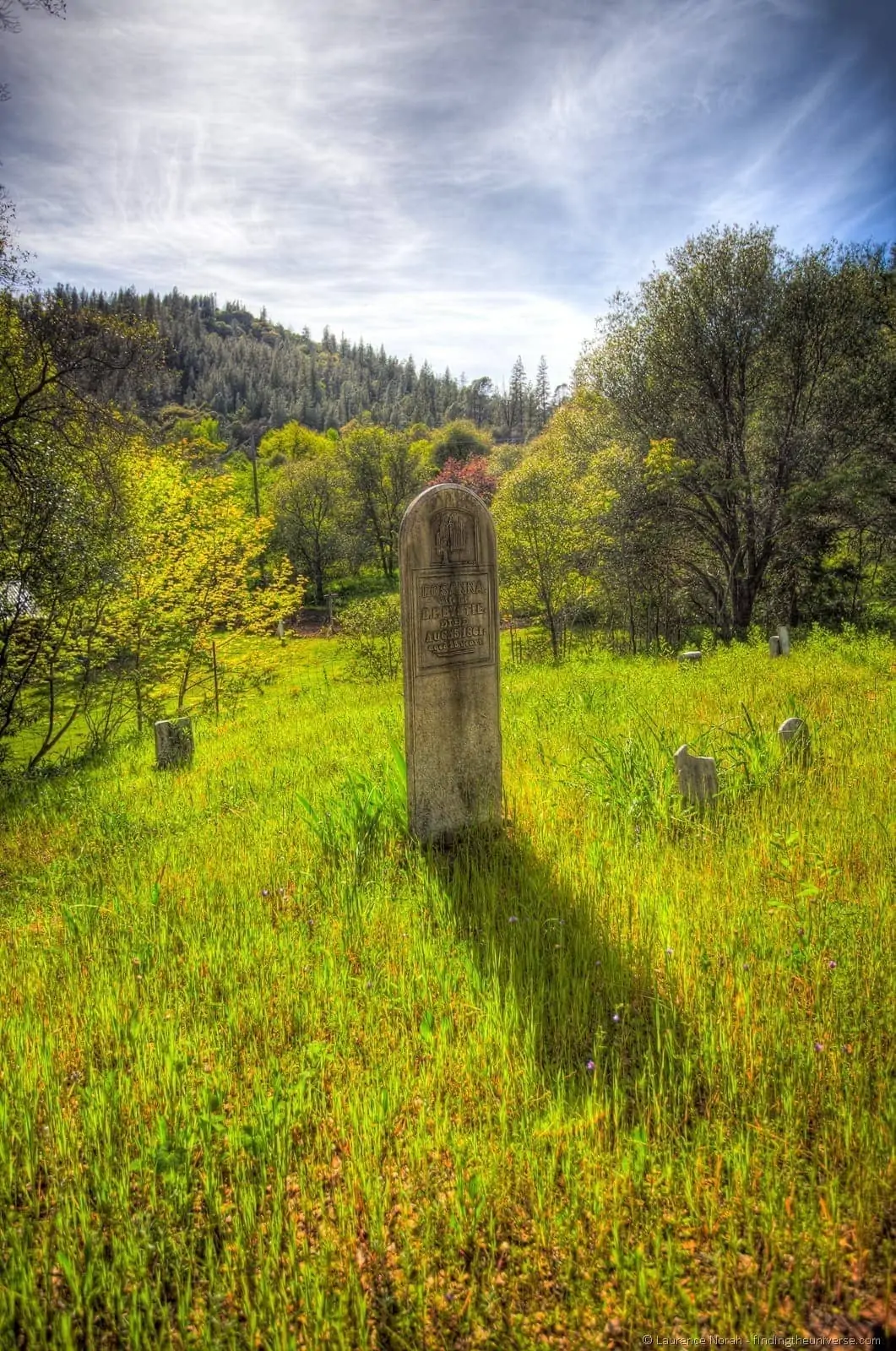
That’s good news for us, because the town is now the Shasta State Historic Park, 6 miles west of downtown, and you can wander among the ruins to get a feel for what life here might have been like. Which is exactly what we did, guided by one of the park rangers.
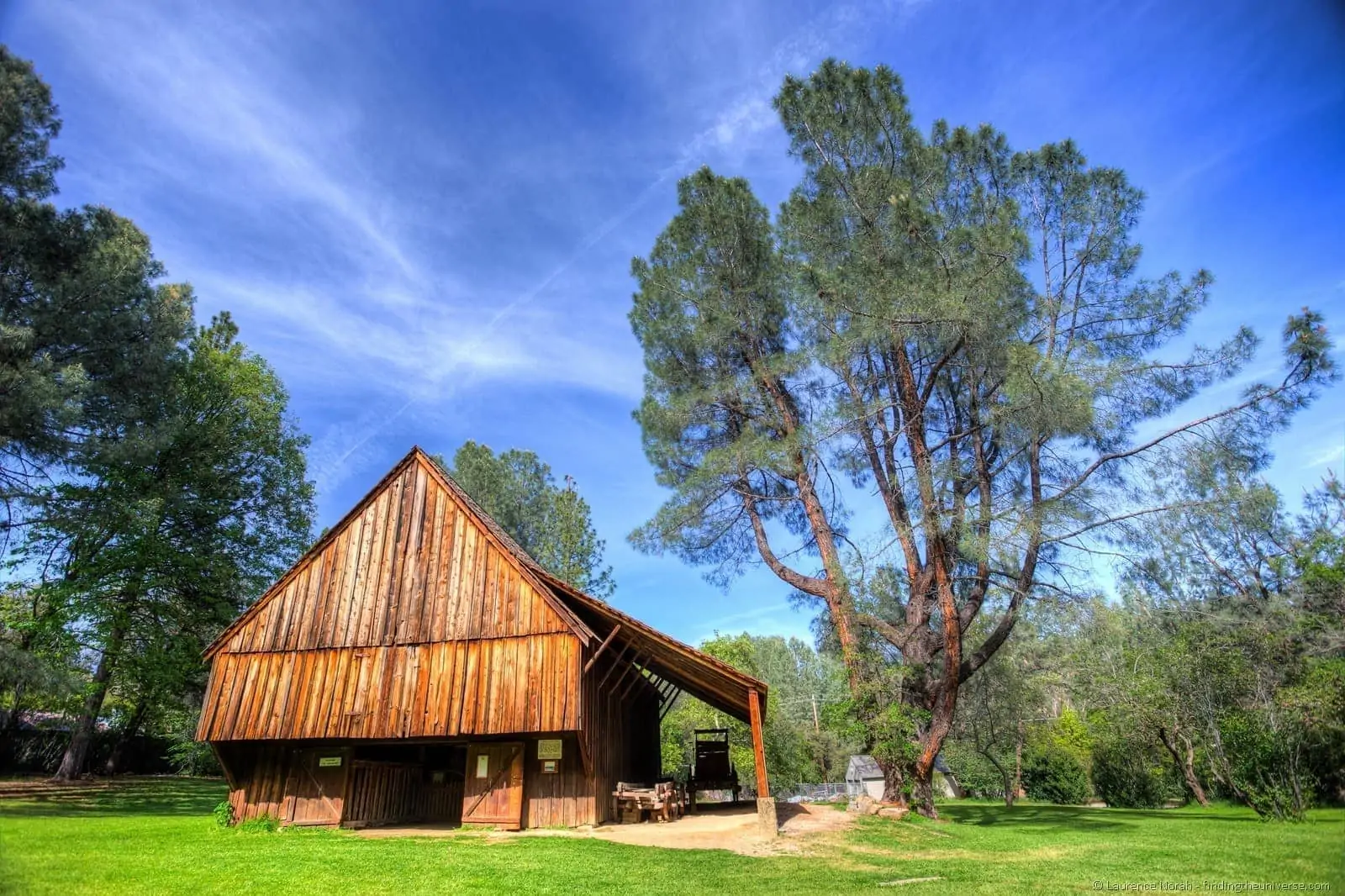
Many of the buildings are mere shells of course. When the original businesses left, a lot of them took the bricks with them. But enough is standing to give you a good idea of what the main street looked like, and the highlight is the restored courthouse and jail, which doubles as the museum of the town’s history and people.
Get the timing right, because the museum and gift shop only open Thursday to Sunday, 10am to 4pm. Entry is $3 for an adult, $2 for a youth, and free for children of 5 and under, which makes it the cheapest paid thing in this entire article by a distance. If you’re doing Whiskeytown, it’s on the same road and costs you an hour.
6. Shasta Dam
Lake Shasta isn’t a natural lake. It exists because of Shasta Dam, built between 1938 and 1945, and the numbers still land: 602 feet of structural height, a crest 3,460 feet long, so a shade over a kilometre, and 6.27 million cubic yards of concrete.
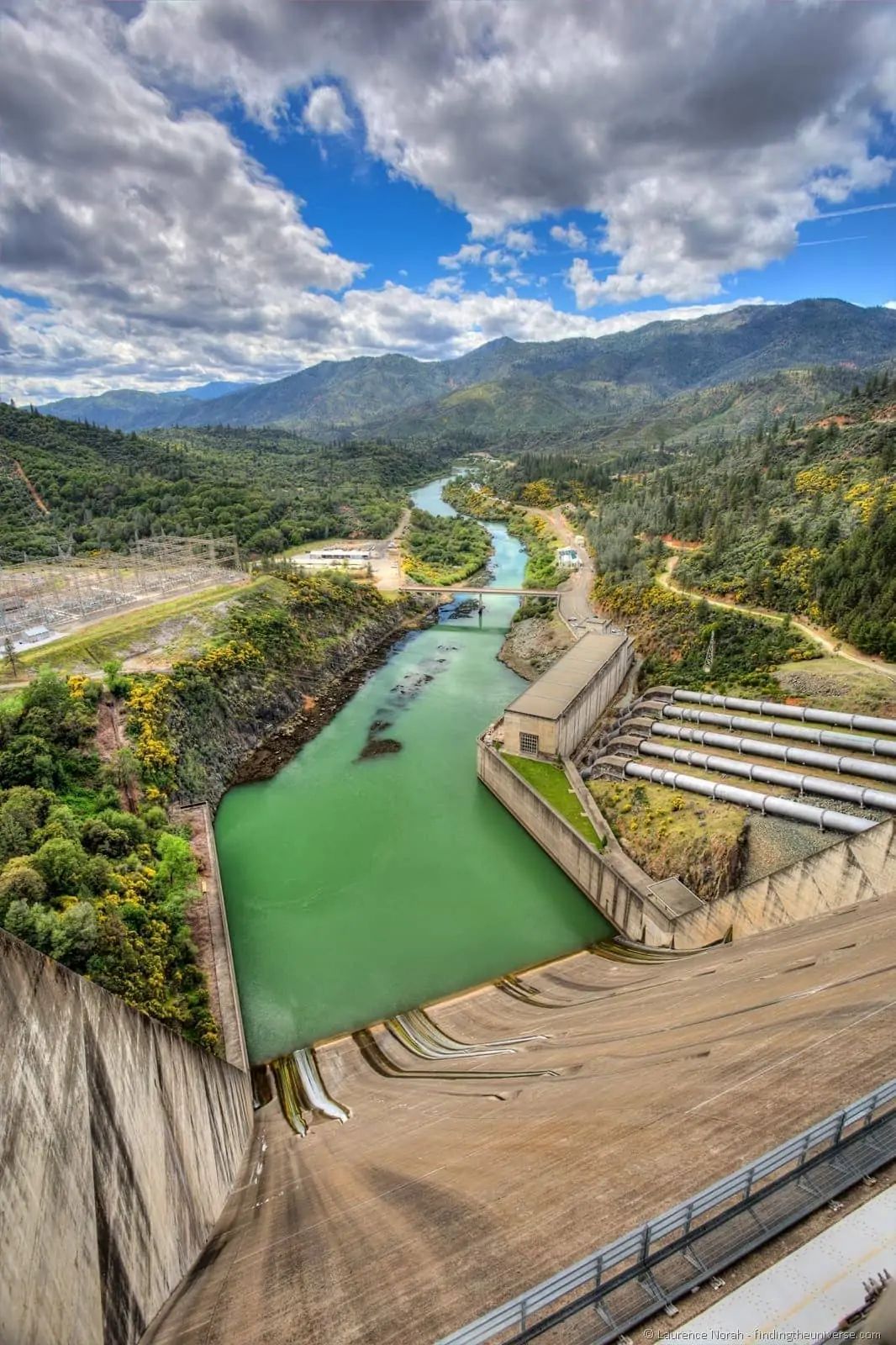
When it opened it was the second-tallest dam in the United States after Hoover. Today it’s eighth. The resemblance to Hoover isn’t a coincidence either, because both were built under Frank Crowe, who was Hoover’s chief construction engineer, and he brought Shasta in 26 months ahead of schedule. That’s the sort of fact I’d like to see on the wall of every construction project I’ve ever been near.
One thing has changed since we visited, and it’s good news. Tours resumed in 2024, for the first time since 2019. They’re free, they run Friday to Tuesday, and they take you across the top of the dam, 400 feet down in a lift, through the dam itself to a view of the spillway, and round the powerplant.
They’re first come, first served, capped at 20 people, with tickets handed out an hour beforehand. There’s no booking. And the visitor centre is closed on Wednesdays and Thursdays, which means a midweek day trip out here can get you a locked door and a nice view. Ring 530-247-8500 for the day’s tour times, because Reclamation doesn’t publish them. Details are on the Bureau of Reclamation tour page, with background on Shasta Dam itself.
Even without a tour it’s free to walk out to the middle of the dam, which I’d recommend for the scale of the thing as much as the view. Take the scenic loop drive on the way back. On a clear day you can see all the way to Mount Shasta.
Half a day out
7. Lake Shasta Caverns
The Shasta Cascade isn’t all above-ground activities like bridges, waterfalls and lakes. Although if it was, that wouldn’t be a bad thing.
There’s a lot of limestone up here, and limestone, of course, means caves. The Lake Shasta Caverns are the ones to visit, and you go in on a guided tour.
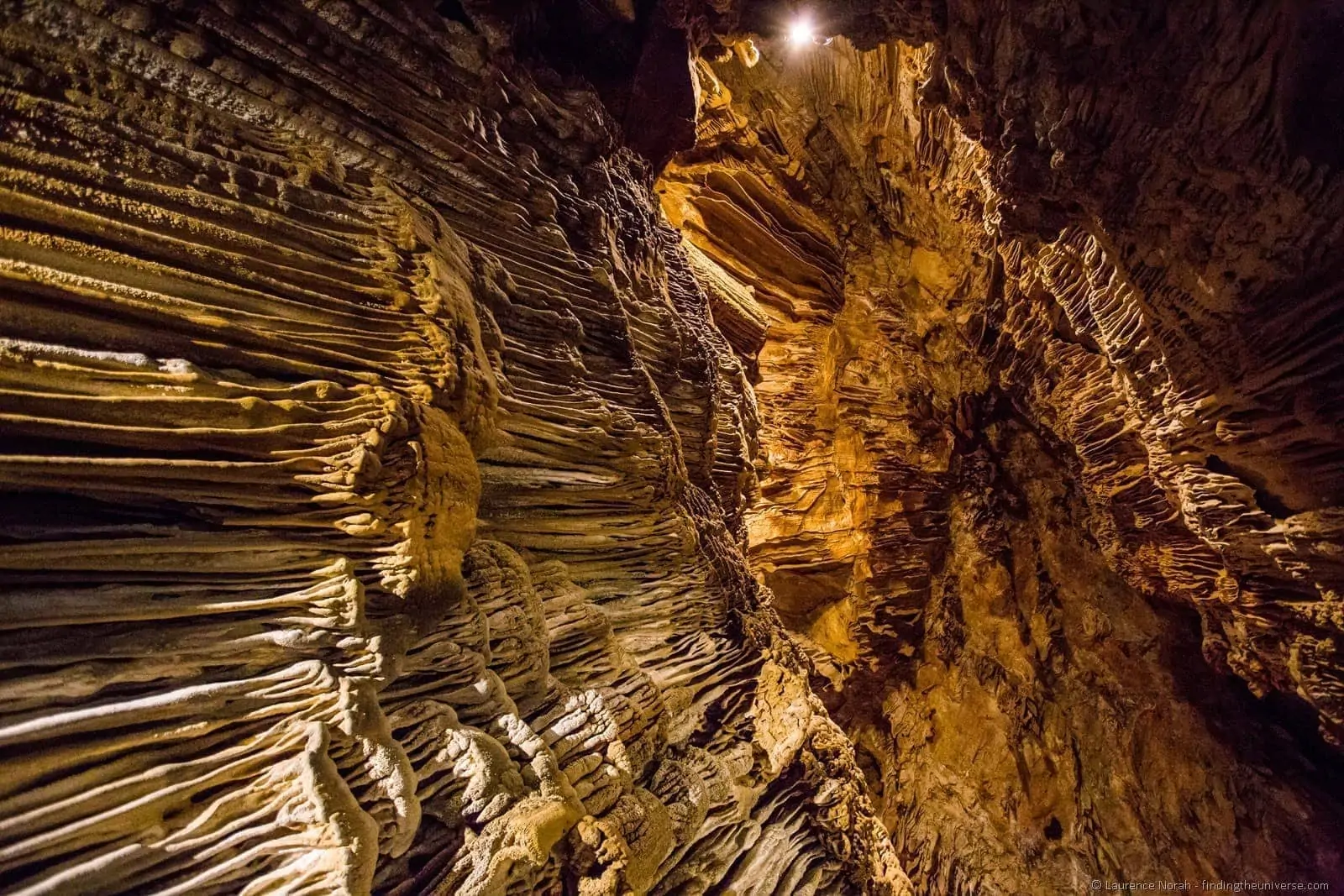
What makes it a good tour is that the caves are only about a third of it. You get a boat ride across Lake Shasta and then a bus up a hill, and the bus is more exciting than it sounds thanks to the views it affords.
We really enjoyed this one, more than I was expecting to be honest. I’ve seen a lot of caves. The combination of the boat ride, an hour or so underground and a guide who was both funny and well-informed made the whole trip, and the cathedral room at the end is the best of it.

Now the part you need to plan for. When we visited it was $24 for an adult and $14 for a child. Today the operator lists the two hour tour at $46 for general admission from 16 up, $27 for juniors aged 7 to 15, $17 for children aged 3 to 6, and free for 2 and under.
A family of four with two eight-year-olds has gone from $76 to $146, which turns this from an easy yes into a decision. It is now comfortably the most expensive single thing in this article, and if the budget is tight, Whiskeytown and Burney Falls give you more for less.
It’s still the best two hours of weather-proof entertainment in the region, and I’d still do it. Just go in knowing the price. Tickets and current hours are on the Lake Shasta Caverns website. Winter tours can be cancelled for weather, they’re closed on Thanksgiving and Christmas, and there are a lot of steps, so a basic level of fitness is needed.
A full day out
8. Burney Falls
There are dozens of waterfalls in the area surrounding Redding, so if you love waterfalls as much as I do, you’re going to be spoilt for choice. We took the northern run out of Redding to two of the best, Burney Falls and the McCloud Falls, and it filled a very good day.
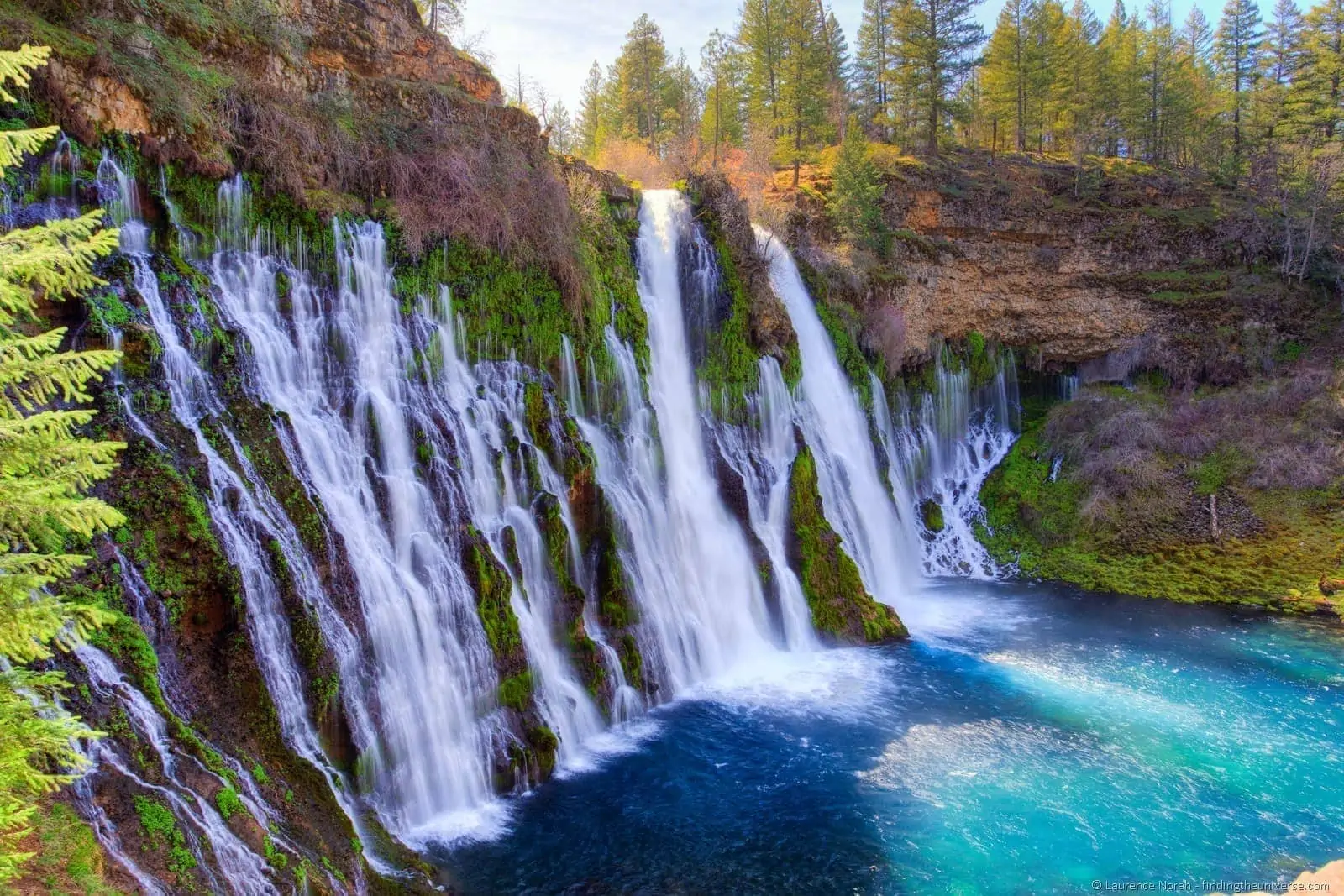
Waterfalls can be hit and miss depending on the season and how much water is about, which makes Burney Falls unusual: it doesn’t really have a bad month. Rain and snowmelt collect in a large underground reservoir, and the water then emerges as springs at and above the falls themselves rather than arriving down the creek. So the flow keeps going through the dry season.
California State Parks put the falls at 129 feet and the flow at 100 million gallons a day, and they describe it, rather beautifully, as “not the highest or largest waterfall in the state, but possibly the most beautiful.”
That much water falling into a mist-filled basin makes for a wonderfully photogenic waterfall, and the light in the basin holds up far longer into the day than it has any right to.
For photographers, the spring-fed flow is the part that matters. Most waterfalls make you gamble on when you turn up; Burney doesn’t, so you can plan around the light instead of the water. The mist in the basin softens it right through the middle of the day, which is usually the worst time to photograph falling water.
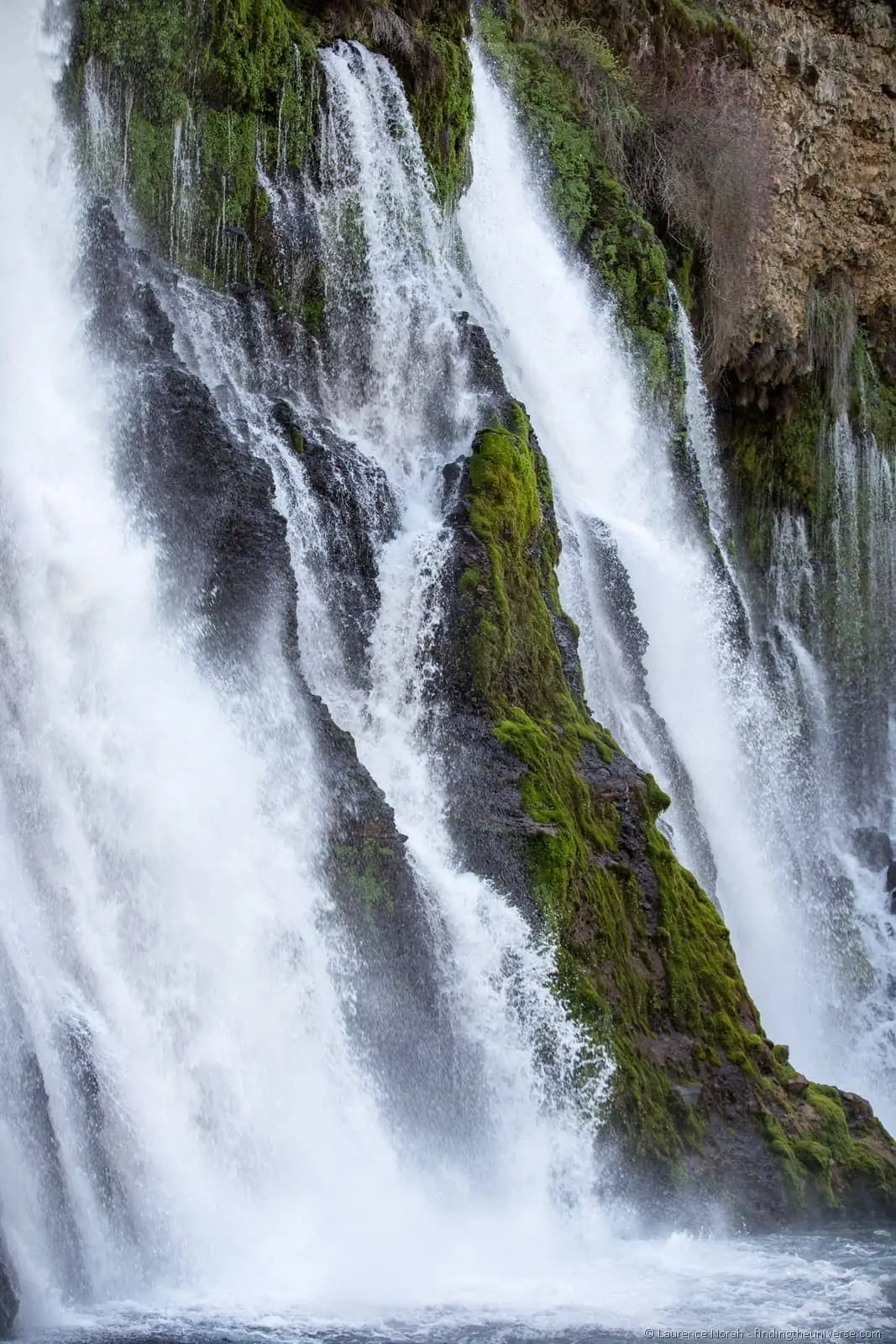
This is the one thing in this article you have to book, and it’s new. For the 2026 season, McArthur-Burney Falls Memorial State Park is running a day-use reservation pilot. From Friday 15 May to Sunday 27 September, you need an advance reservation to visit on a Friday, Saturday, Sunday or on Memorial Day, the Fourth of July or Labor Day. Monday to Thursday inside that window is free of it, and so is the rest of the year.
The details that will catch people out:
- Same-day reservations are not accepted, so turning up on a Saturday morning and hoping is not a plan.
- There are 103 passes for 8am to noon, 103 for 1pm to 5pm and 35 for the whole day. One per vehicle, and your car has to fit in one standard space.
- It’s $10 per vehicle plus about a dollar in processing, booked through LAZ Parking via the park’s own page.
- An annual state parks pass does not get you out of the reservation. Golden Poppy, California Explorer, Golden Bear, all of them still need one. Your pass covers the fee, not the slot.
- If you’re staying in the campground or a cabin you don’t need a separate day-use booking.
There’s also a trail closure notice live on the park page at the moment, so check the current advisories on the California State Parks Burney Falls page before you decide which walk you’re doing.
9. McCloud Falls
From Burney Falls it’s roughly a 30 minute drive north to the McCloud River Falls, a series of three waterfalls on the McCloud river named, with admirable restraint, the Upper, Middle and Lower falls.
You can walk between all three on the river trail, which is what we did, or drive to each of them and take the short walk in from the parking areas. The Lower falls are visible more or less from the car park. The trailhead is at the staircase next to the Lower Falls overlook, and you’re at about 3,200 to 3,600 feet up here, so it’s cooler than Redding, which in August is a feature rather than a bug.
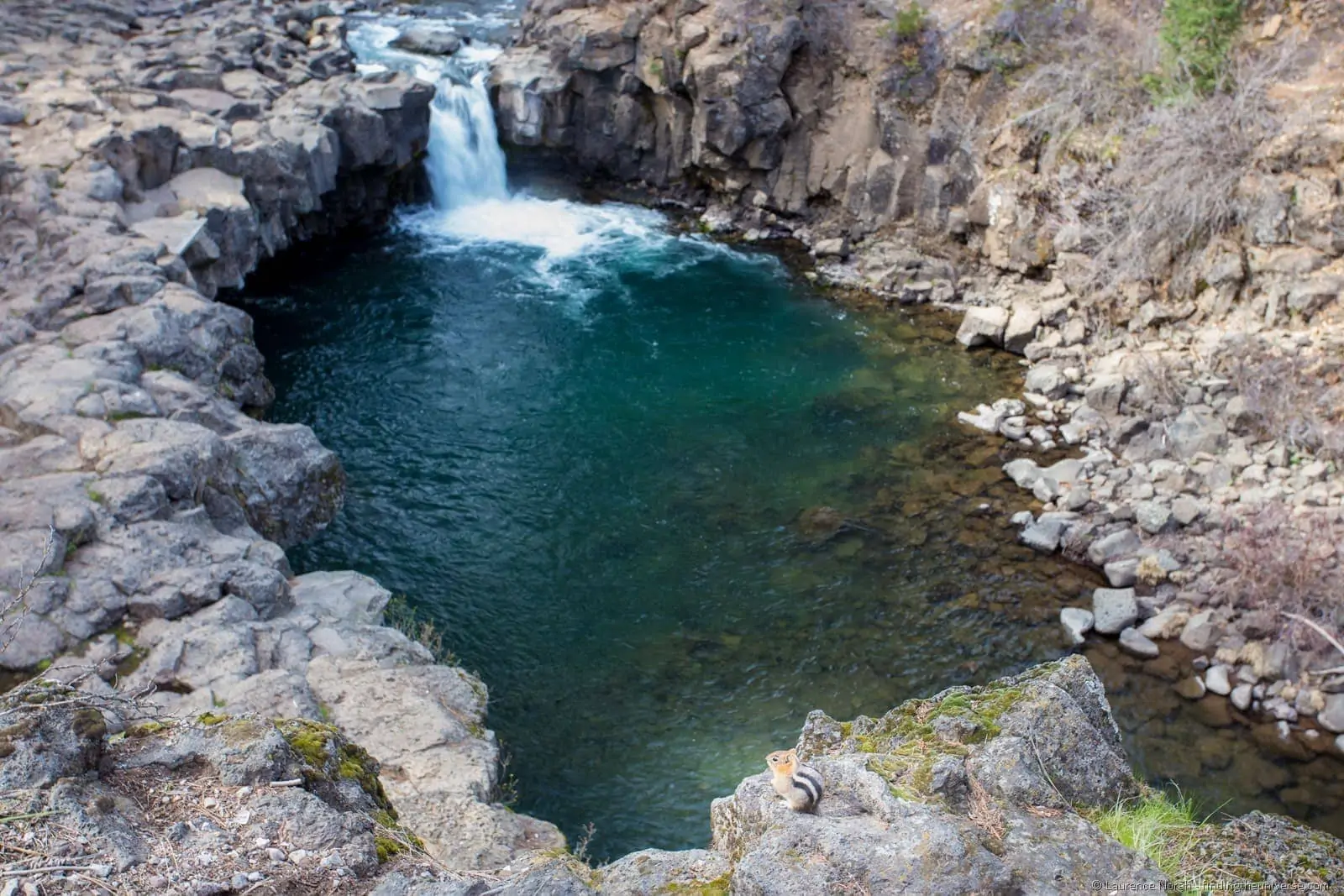
Do all three. They’re different enough from each other to be worth it, and if you have the legs, hike down to the base of Middle Falls, which is the best of the set and the only one that really rewards the effort.
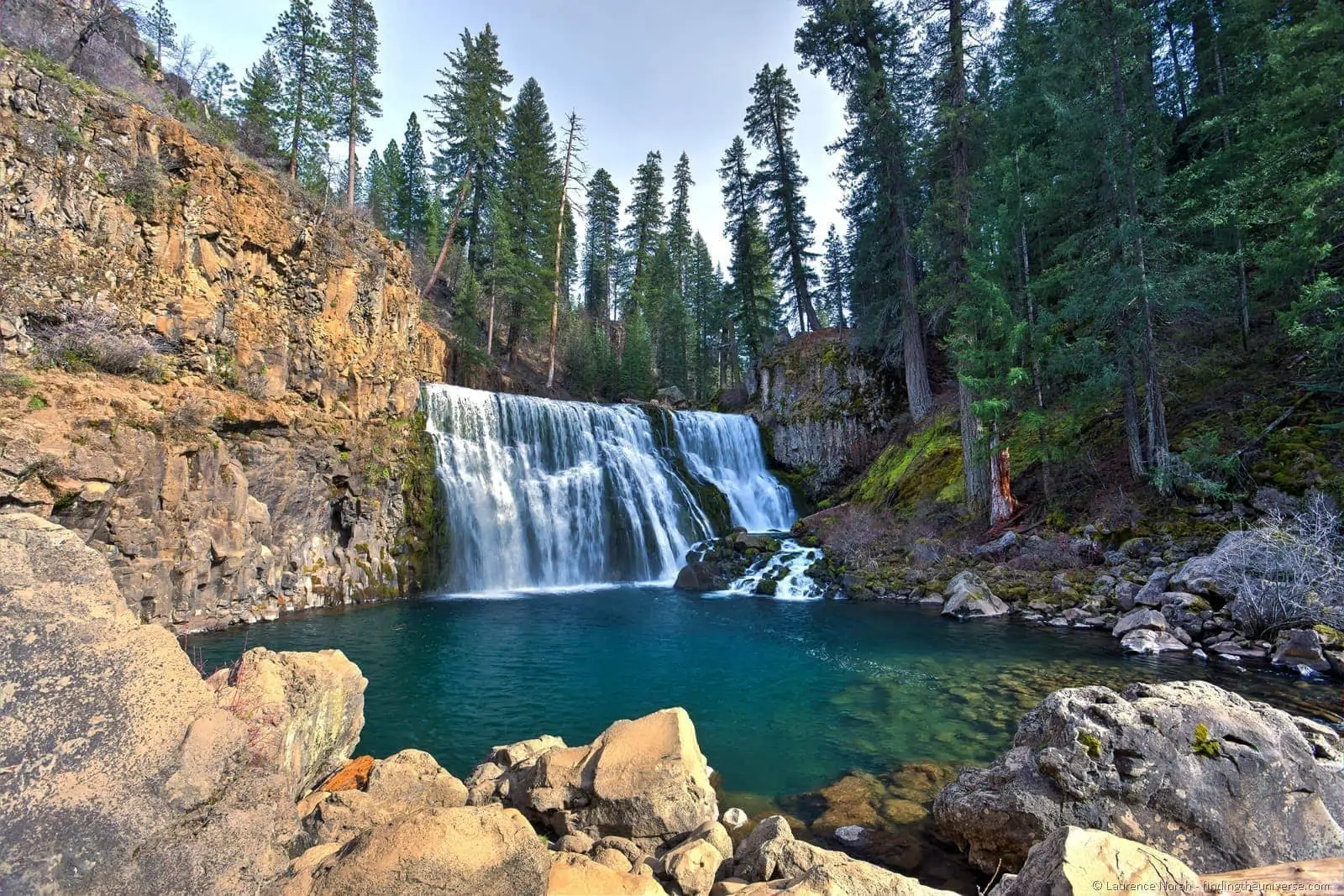
The seasonal catch: the gates on the access road, Forest Road 40N44, shut for the winter, and the exact window is set each year by a Forest Service closure order rather than a fixed calendar. The standing gate schedule runs from the start of November to the start of April, and the 2026 order ran from mid-January to 1 May, so treat anything between November and May as “check first”.
The good news, and it turns a dead end into an option, is that the trail itself stays open. When the gate is shut you can park up and walk in. Current status is on the Forest Service’s Upper McCloud River Loop page.
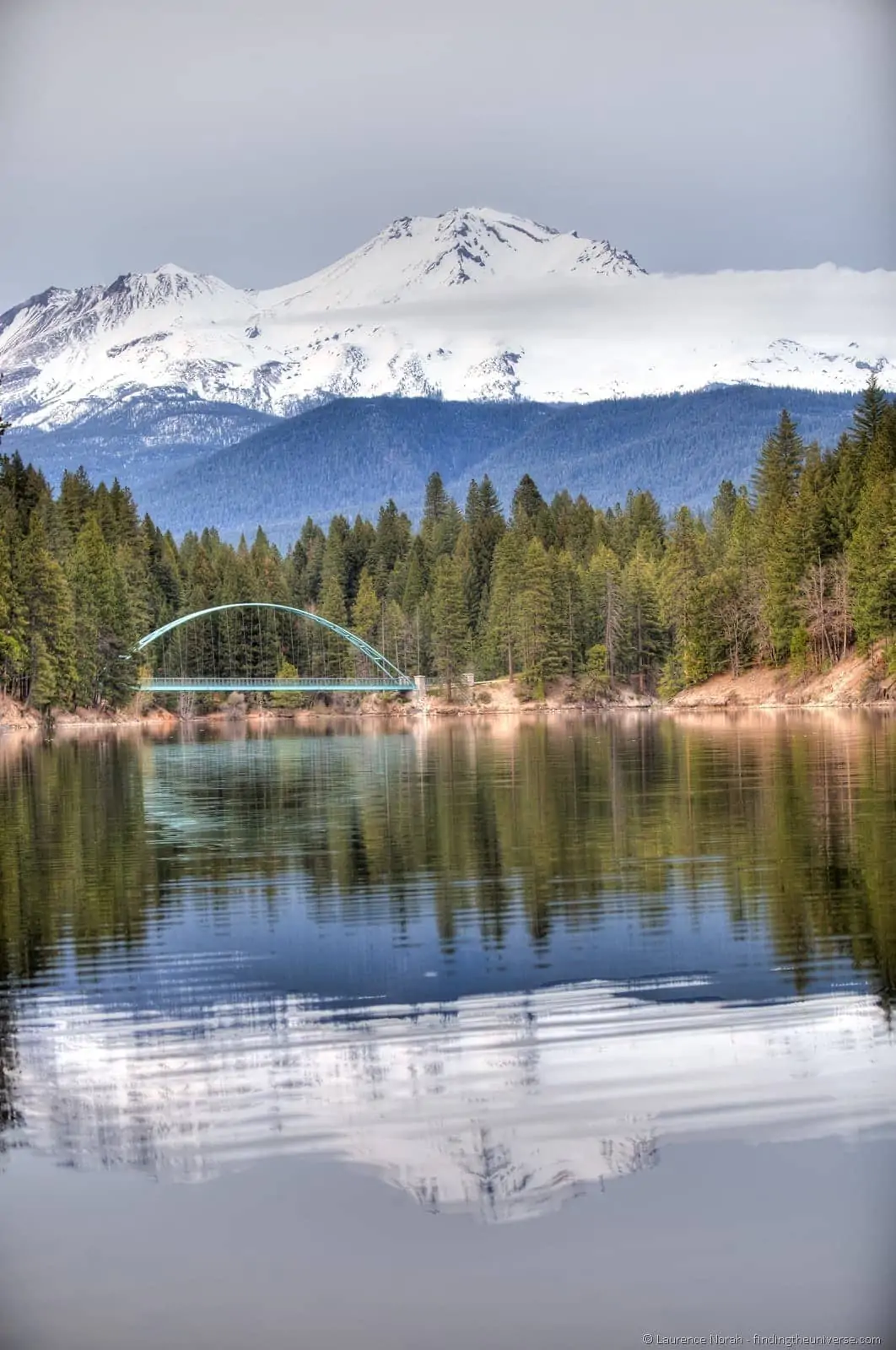
To finish the day, carry on north to Mount Shasta itself, or rather to the hotel near the base of it, the Mount Shasta Resort, where we had dinner in the Highland House Restaurant with a view of the snow-covered mountain. The restaurant runs Wednesday to Sunday from 11am until close and is shut on Mondays and Tuesdays, which is exactly the sort of thing you want to know before a 90 minute drive.
We spent very little time exploring up there, and the highlight for me was a small lake we found nearby, where I got a few photos like this:
A day of its own
10. Lassen Volcanic National Park
Lassen is the one we didn’t do, and it’s the reason I’d go back. It’s the region’s other national park, all hydrothermal basins and volcanic peaks, Shasta’s answer to Yellowstone.
Two things make it easier to plan than people assume. The park is open 24 hours a day, 365 days a year, and you don’t need a reservation to get in.
And the 2021 Dixie Fire, which is what most people ask about, is largely a non-issue for a day trip from Redding: the damage is concentrated in the east and southeast of the park, around Warner Valley and Juniper Lake, and the National Park Service is clear that everything west of the park highway was untouched. You come in from the west.
For scale, the Dixie Fire burned 963,309 acres in total between mid-July and late October 2021, of which 73,240 were inside the park. That’s the number that matters here, because it’s the burn a visitor actually sees.
The thing that decides a Lassen day is snow. The park highway closes for winter and reopens when the plough teams finish, which is a different date every year, so check current conditions rather than a month. The Loomis Museum runs a short season, 21 May to 12 October in 2026, Thursday to Monday. Entry is $30 a vehicle from 16 April to 30 November, $10 in winter, and like Whiskeytown the park takes no cash.
Park passes, and the one bit of maths worth doing
Two of the places above are National Park Service sites that charge entry, and if you’re visiting from outside the US there’s a new wrinkle for 2026 that’s worth getting right, because the scary version of it doesn’t apply here.
Since the start of 2026, non-US residents pay a $100 per person surcharge at 11 of the busiest national parks. Neither Whiskeytown nor Lassen is on that list, so there’s no surcharge on this trip at all. What does change with residency is the America the Beautiful annual pass, which costs $80 for US residents and $250 for everyone else. Children under 16 are free either way.
Which leaves one sum worth doing before you go, because the pass most visitors reach for by reflex is the wrong buy on this itinerary:
| Your plan | Pay at the gate | America the Beautiful | What wins |
|---|---|---|---|
| Whiskeytown only, one trip | $15 to $25 | $80 resident, $250 non-resident | Pay at the gate |
| Whiskeytown and Lassen, one trip | About $55 total | $80 resident, $250 non-resident | Pay at the gate |
| Whiskeytown and Lassen, coming back this year | $55 each visit | $80 resident, $250 non-resident | Either park’s own annual pass at $55 |
| Adding Yosemite, Sequoia or another big park on the same US trip | $35ish each on top | $80 resident, $250 non-resident | America the Beautiful, if you’re a US resident |
| Non-resident adding one of the 11 surcharge parks | Entry plus $100 per person aged 16+ | $250, and the surcharge still applies | Do the sum park by park, there’s no shortcut |
Short version for a Shasta Cascade trip on its own: pay at the gate, and bring a card, because both parks are cashless. Full detail is on the NPS nonresident fees page. Note too that Burney Falls, Old Shasta and the Sundial Bridge aren’t NPS at all, so none of this touches them.
What we’d do differently
Three days was enough to see the region and not quite enough to see it well. Looking at the trip now, five things.
We’d have booked Burney Falls. The reservation pilot didn’t exist when we went, and it’s the single change most likely to wreck someone’s day now. A summer Saturday without a booking means you don’t get in.
We’d have given Lassen a day. We ran out of time and put it on the “next time” list, and next time hasn’t happened. If I had four days here again, Lassen would get one of them and Turtle Bay would lose an afternoon.
We’d have checked which day the dam does tours. Wednesday and Thursday closures are the sort of detail you find out in the car park, and with tours back since 2024 there’s now a real reason to time it right.
We’d spend less time in town and more of it early. Everything worth photographing here is west or north, and the light is gone off the water by mid-morning in summer. Breakfast can wait.
And I’d still do the Diestelhorst Bridge, and I’d still tell you it’s a photographer’s stop. Some things are worth twenty minutes to one person and nothing at all to another. That one’s mine.
When to visit Redding California
Come in spring or autumn. The Shasta region gets four distinct seasons, with cold winters and hot summers, and for nearly everything on this list the shoulder months win: moderate temperatures for being outdoors, and you dodge the summer heat, which is no small thing in a valley that regularly sits above 100F in July and August.
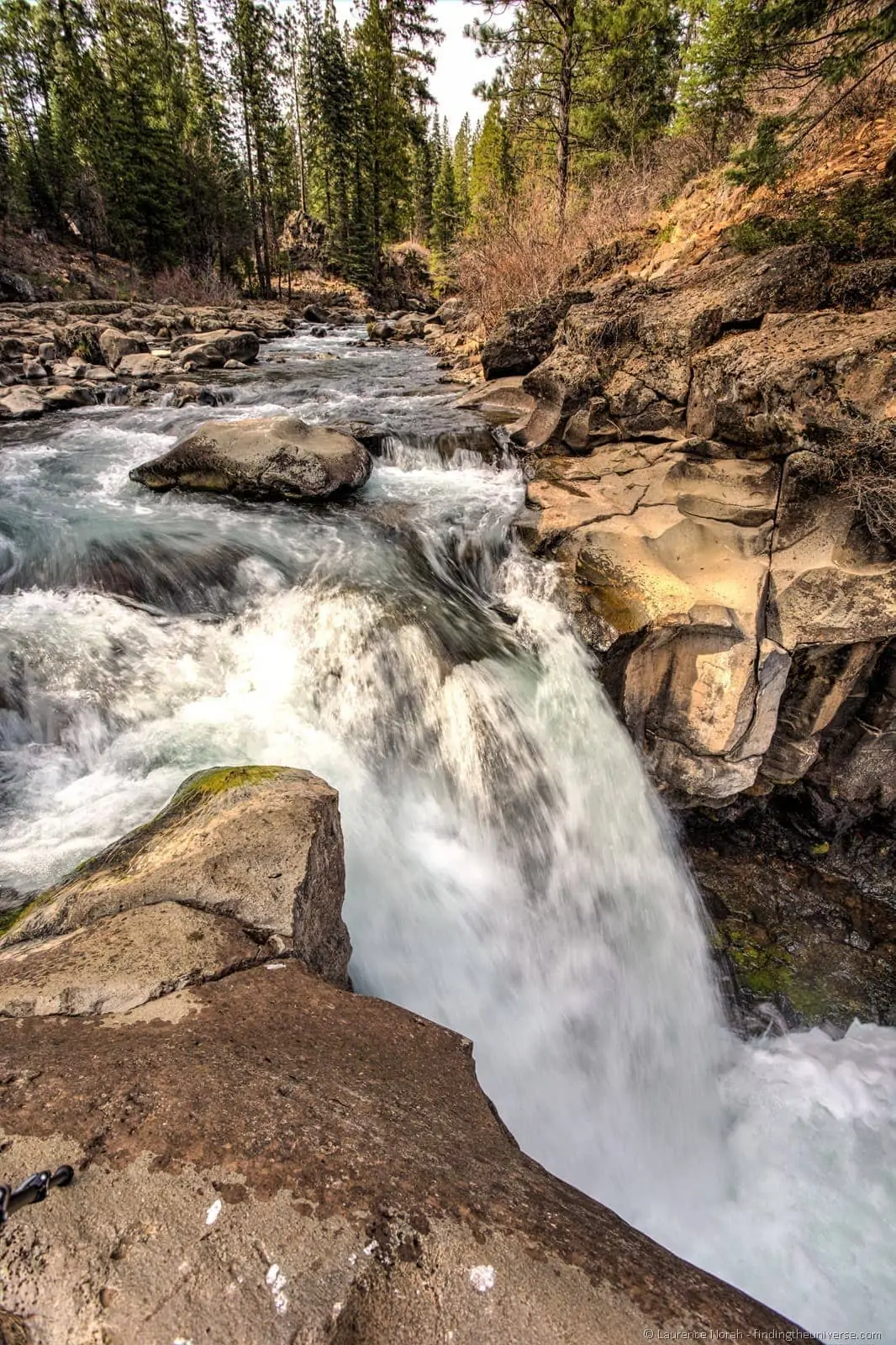
Season by season, and this is where the practical dates live:
- Spring, roughly April and May. Best waterfall flow of the year, everything green, and the crowds haven’t started. The McCloud gates usually reopen somewhere around here, and the 2026 order ran to 1 May. Burney Falls needs no reservation until 15 May.
- Summer, June to August. Hot, busy, and the only season for swimming at Brandy Creek. This is also the Burney Falls reservation window, and the one time of year the free Whiskeytown beach bus runs.
- Autumn, September and October. My pick. The reservation requirement ends on 27 September, Lassen’s park highway is usually still open, and the light is better than it is in June.
- Winter, November to March. Ski on Mount Shasta, and accept that the McCloud gates are shut, Lassen’s park highway is closed to through traffic, and cave tours can be cancelled for weather. Lassen entry drops to $10 a vehicle from 1 December, which softens the blow.
How to get to Redding, California
Come by car. Redding is right off Interstate 5, about a 3.5 hour drive north of San Francisco, and the whole point of the place is the driving radius around it. If you’re flying into California and heading this way, a car isn’t optional so much as the entire mechanism.
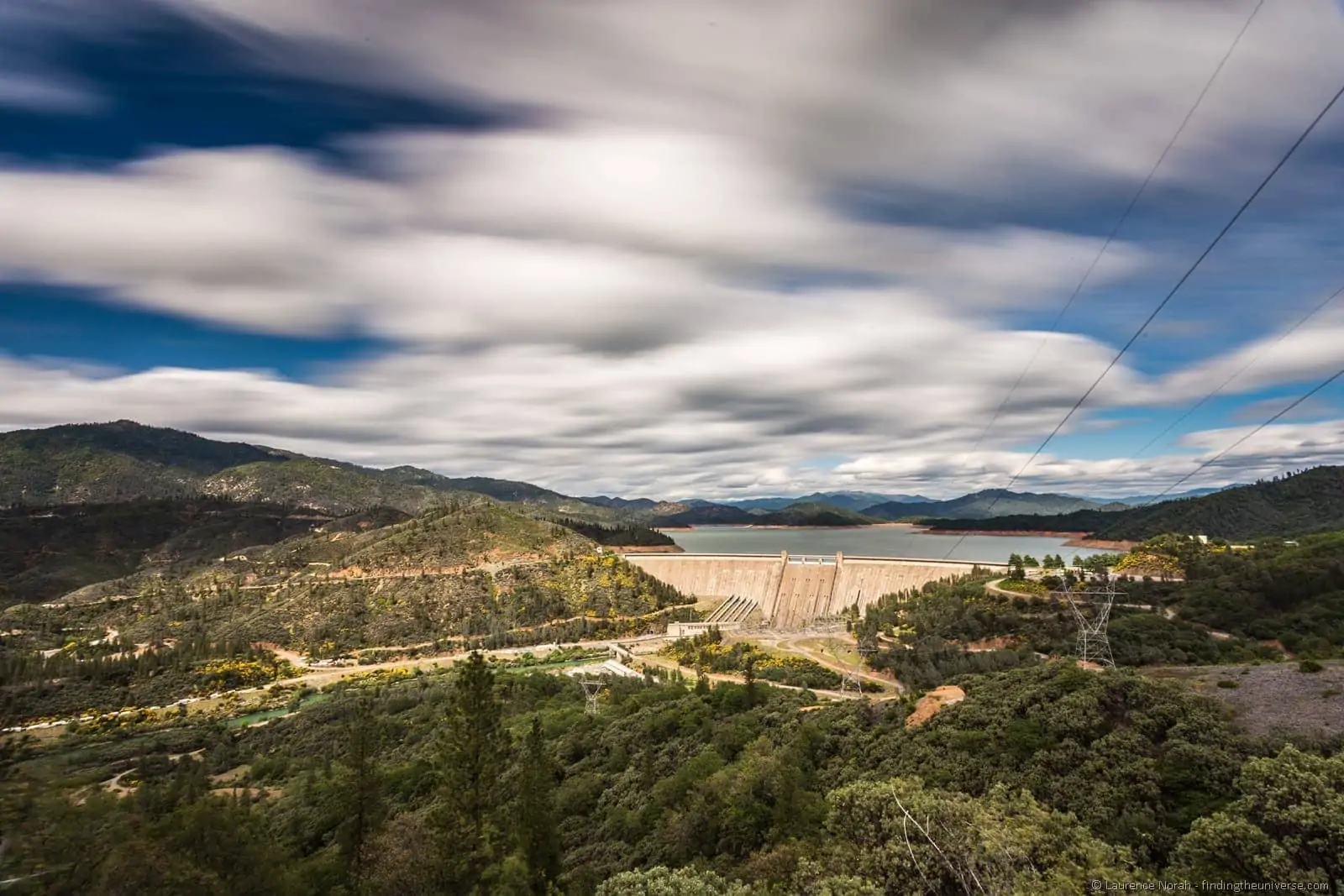
We recommend searching for your car rental on Discover Cars here. They compare a range of providers so you can find the best deal for your trip. If it’s your first time driving in the States, we’ve got a full guide to driving in the USA.
Redding does have a small commercial airport with connections to California hubs, though routes and carriers at airports this size change often enough that it’s worth checking what’s actually flying before you book around it.
The train is a lovely idea and an awkward reality. Redding is a stop on Amtrak’s Coast Starlight, which is a single daily service in each direction between Los Angeles and Seattle. One train a day, in a region where everything worth seeing is 8 to 60 miles apart, is why almost nobody arrives here by rail.
Where to stay in Redding
We stayed at the Bridgehouse B&B, a gorgeous little bed and breakfast about five minutes’ walk from the town centre and just above the Sacramento River. Our hostess knew the area inside out, and sharing breakfast with the other guests every morning was a real pleasure.
It has since closed, which is a shame and also a decent illustration of why I’m not going to hand you a single property name for a town I last slept in eleven years ago.
What I will give you is the geography, because in Redding it does the work. Sleep near the river, on the Turtle Bay side if you can. It puts the Sundial Bridge and the trail loop on your doorstep for evenings, and it drops you onto Highway 299 for Whiskeytown or I-5 for the northern run without crossing town.
The cheaper motels cluster along the interstate, which is fine if you’re only sleeping there and are gone by seven, and grim if you wanted a walk after dinner.
Booking.com is our usual starting point and has a good spread of options across the Redding area for most budgets.
Frequently asked questions about visiting Redding
How many days do you need in Redding, California?
Two to three days is about right for the Shasta Cascade region, using Redding as your base. One day covers Whiskeytown and the Sundial Bridge, two adds the northern waterfall run to Burney and McCloud, and three lets you fit in Shasta Dam, Old Shasta City and the Lake Shasta Caverns.
Four days if you want Lassen Volcanic National Park as well, which needs a day to itself.
Is Redding, California worth visiting?
Yes, as a base rather than a destination. The town has one outstanding piece of architecture in the Sundial Bridge and a 5.5 mile riverside trail loop, and the rest of what makes the area worth a stop is a drive away: four waterfalls at Whiskeytown 8 miles west, a 602 foot dam you can tour for free 9 miles northwest, and two of northern California’s best waterfalls up Highway 299.
If you were expecting a city break, you’ll be disappointed. If you like being outdoors with a car, it’s very good value for a couple of days.
Do you need to book Burney Falls in advance?
For the 2026 season, yes, on Fridays, Saturdays, Sundays and on Memorial Day, the Fourth of July and Labor Day, between 15 May and 27 September. Same-day reservations are not accepted, so this has to be done before you drive.
Outside that window, and Monday to Thursday inside it, you can just turn up. It’s $10 per vehicle plus about a dollar processing fee, and an annual California state parks pass still requires a reservation.
How far is Whiskeytown from Redding?
About 8 miles west of downtown Redding, following Highway 299 towards Eureka. It’s the closest of the region’s big outdoor attractions and the easiest to fit around a half day.
Entry is $15 to $25 per vehicle, or $55 for the park’s annual pass, and Whiskeytown is cashless.
Can you tour Shasta Dam?
Yes, and it’s free. Tours resumed in 2024 after a five year gap and run Friday to Tuesday, taking you across the crest, 400 feet down inside the dam in a lift, out to a spillway viewpoint and through the powerplant.
There’s no booking. Tickets are handed out an hour ahead, first come first served, and each tour is capped at 20 people. The visitor centre is closed Wednesdays and Thursdays, so don’t drive out midweek without checking.
Are the Whiskeytown waterfalls open after the Carr Fire?
All four waterfall trails are open, with one qualification. Whiskeytown Falls, Boulder Creek Falls and Crystal Creek Falls can be hiked to the falls themselves. Brandy Creek Falls is open as far as the Lower Falls Overlook and the bottom of the cascades, but the National Park Service recommends going no further because the box canyon above is unstable.
The 2018 Carr Fire burned 97% of the park, and two Mill Creek trails remain closed for burn scar hazards, so check the NPS trail status page before you set off.
What is the best time of year to visit Redding?
Spring and autumn. April and May give you the strongest waterfall flow and green everywhere, September and October give you good light, open roads and no Burney Falls reservation requirement after the 27th of September.
Summer is hot and busy but it’s the only time for swimming at Brandy Creek, and winter closes the McCloud access road and Lassen’s park highway.
Do you need a car in Redding?
Effectively yes. Everything that makes the region worth visiting sits between 6 and 60 miles from downtown, and there’s no public transport network linking them.
The exception is a free summer bus the National Park Service describes between downtown Redding and Brandy Creek Beach at Whiskeytown, run by RABA on Thursdays to Saturdays with Shasta Connect on Sundays. Check it’s running for the current season before you rely on it.
Can you visit Lassen Volcanic National Park from Redding?
Yes, and it makes a comfortable day trip. The park is open 24 hours a day, 365 days a year with no entry reservation required, and you approach from the west, which is the side the 2021 Dixie Fire did not affect.
The thing to check is the park highway, which closes with the winter snow and reopens on a different date each year. Entry is $30 per vehicle from 16 April to 30 November and $10 in winter.
Further reading
If you’re building a bigger California trip around this, these should help:
- Our two week California road trip itinerary, which is the natural home for a Shasta Cascade detour.
- The best photography spots in San Francisco, 3.5 hours south and most likely where you’re flying into.
- Things to do in Cambria for the central coast, and things to do in San Diego if you’re running the state end to end.
- Our guide to driving in the USA, which covers the paperwork, the insurance and the etiquette.
- For the wider trip, we use the Lonely Planet USA guide, which is the most useful single book for a state-hopping road trip.
- And if the waterfall photos are the reason you’re here, my online travel photography course covers the long exposure work behind most of the images on this page.
That’s Shasta Cascade. There’s a great deal more up here than we managed in three days, and Jess wrote up her own take on the region too, so do read Jessica’s extensive post on Shasta Cascade for the parts I’ve skipped.
Have you visited this part of California before? Is it on your list? Let us know in the comments below!
Our trip to Shasta Cascade and Redding was in partnership with the Shasta Cascade CVB, who covered our accommodation, meals and entry to all the attractions. All content and opinions remain our own.
Colleen Fay says
I live about 8 hours away in Oregon. I can’t wait to for a long weekend and head to Shasta.
Laurence Norah says
Enjoy!
Gai Pendlebury says
Wow .. i have never heard of this place .Thanks for the tips,looks fabulous
Laurence says
Our pleasure! Enjoy!