
I grew up partly on Bird Island, a low coral island a thirty-minute flight north of the main Seychelles airport. My parents ran the lodge there for many years, and for a long stretch of my childhood that one small island, all sand, palms and nesting seabirds, was simply home. I am Seychellois, ninth-generation on my father’s side, and I have spent a good part of my life in these islands.
I mention this up front because it shapes the itinerary that follows. The easy thing to do with two weeks in the Seychelles is to take a one-week trip and stretch it out, more beach time and slower mornings on the same three islands. That makes a lovely holiday. But two weeks can also buy you a different trip, and that is the one this guide is built around.
So this itinerary splits the fortnight like this: nine nights across Mahé, Praslin and La Digue, then five nights on one of the smaller outer islands, with Bird Island as the route I would steer most people towards (I may be biased).
If you only have seven days, our one-week Seychelles itinerary covers those three inner islands day by day, and this guide leans on it rather than repeating all of it. Here, the inner trio is the warm-up. The second week is the main event.
This is a guide for someone who has two weeks and the budget for a Seychelles trip, and who wants to know how to actually use the extra days, which islands are worth the transfer cost, and what to book months ahead. It is written from having lived it.
Table of Contents:
The 14-Day Seychelles Itinerary at a Glance
Two weeks in the Seychelles works best as nine nights across the three inner islands, Mahé, Praslin and La Digue, followed by five nights on a single outer island such as Bird or Denis. That gives you the variety and the famous sights in week one, then a complete change of pace for the finish.
Here is the shape of the trip:
- Days 1 to 3 on Mahé, the largest island, with the airport, the capital and the mountains.
- Days 4 to 6 on Praslin, quieter and greener, home to the Vallée de Mai and Anse Lazio.
- Days 7 to 9 on La Digue, the slow, almost car-free island of bicycles and granite beaches.
- Days 10 to 14 on Bird Island, a tiny outer island reached by light aircraft, with Denis Island as the main alternative.
Day ten is a travel day in its own right, so the trip is really nine full inner-island days and four to five days out on the wilder island of your choice.

Is two weeks in the Seychelles too long?
Two weeks is not too long for the Seychelles. It can be too long for three islands.
The inner trio of Mahé, Praslin and La Digue is wonderful, and a week there is pretty close to perfect. Stretch that same trip to fourteen days, though, and somewhere around day eight or nine you may find you have seen the main beaches, done the boat trips and visited the Vallée de Mai, and the days begin to blur into one long, pleasant sameness. For some people that is exactly the appeal. If a fortnight of slow beach time is your idea of a dream holiday, you do not need an itinerary to overthink it. Base yourself across two or three of the inner islands and enjoy it.
If you are the sort of traveller who likes a trip to build towards something, the second week is where two weeks really pays off. Spend nine nights on the inner islands and then fly out to Bird or Denis, and the trip changes gear completely. You go from hire cars, restaurants and other tourists to a single tiny island with one lodge, no traffic, and, on Bird, a sky full of seabirds. That contrast is the trip. The inner islands give you the variety and the sights. The outer island gives you the part you will still be talking about a year later.
So here is how I would decide it. If you have two weeks and the budget to add an outer island, do it. If the cost or the extra transfer does not appeal, take a focused ten days on the inner islands rather than a stretched fourteen, and spend the rest of your holiday somewhere else.
Week One: The Inner Islands
These first nine days follow our one-week Seychelles itinerary closely, so I will keep this section brief and send you there for the full day-by-day detail on where to stop, eat and swim. Here is the compressed version, shaped to leave you on La Digue at the end of day nine, ready for the outer-island flight.
Days 1 to 3: Mahé
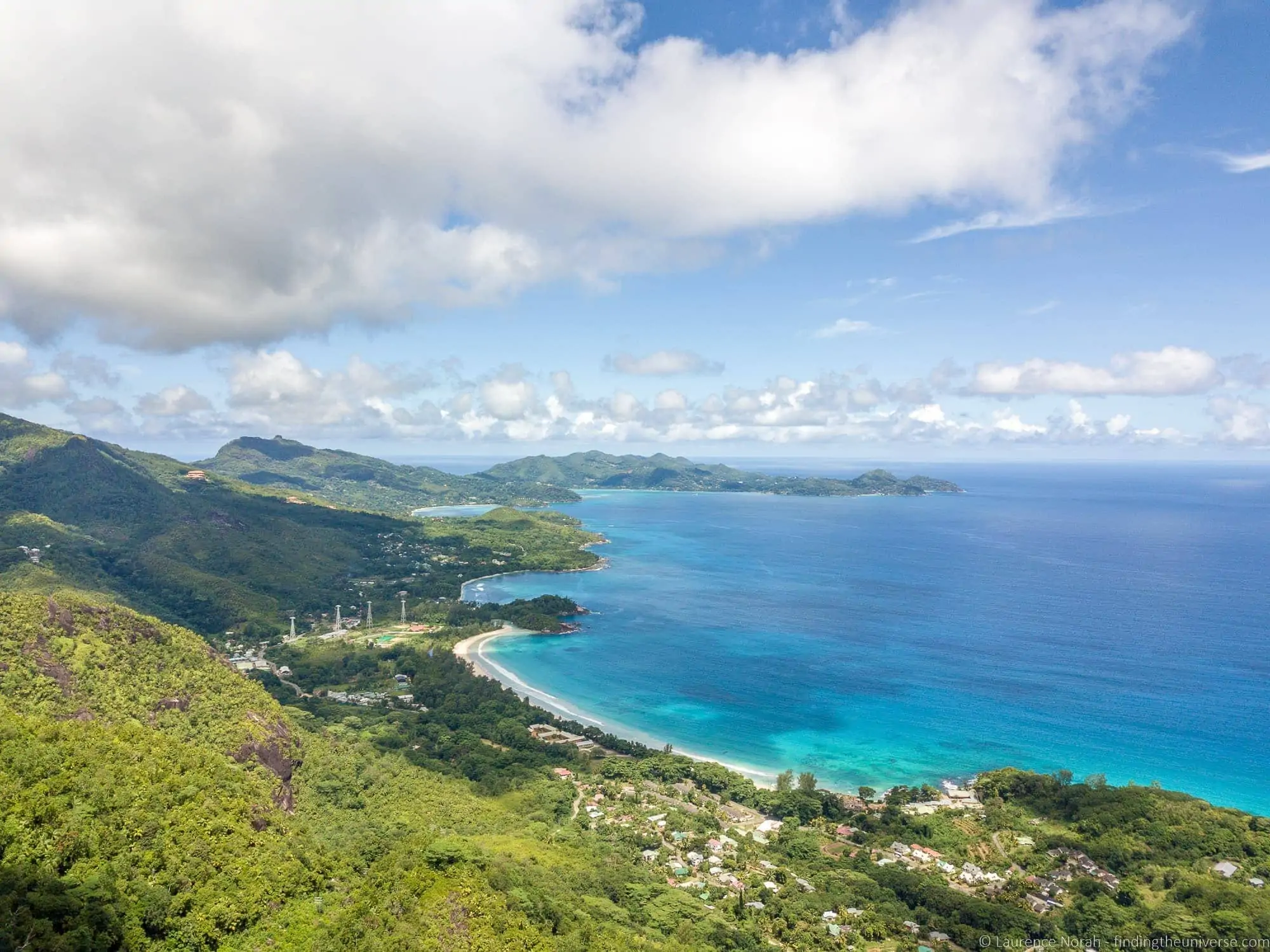
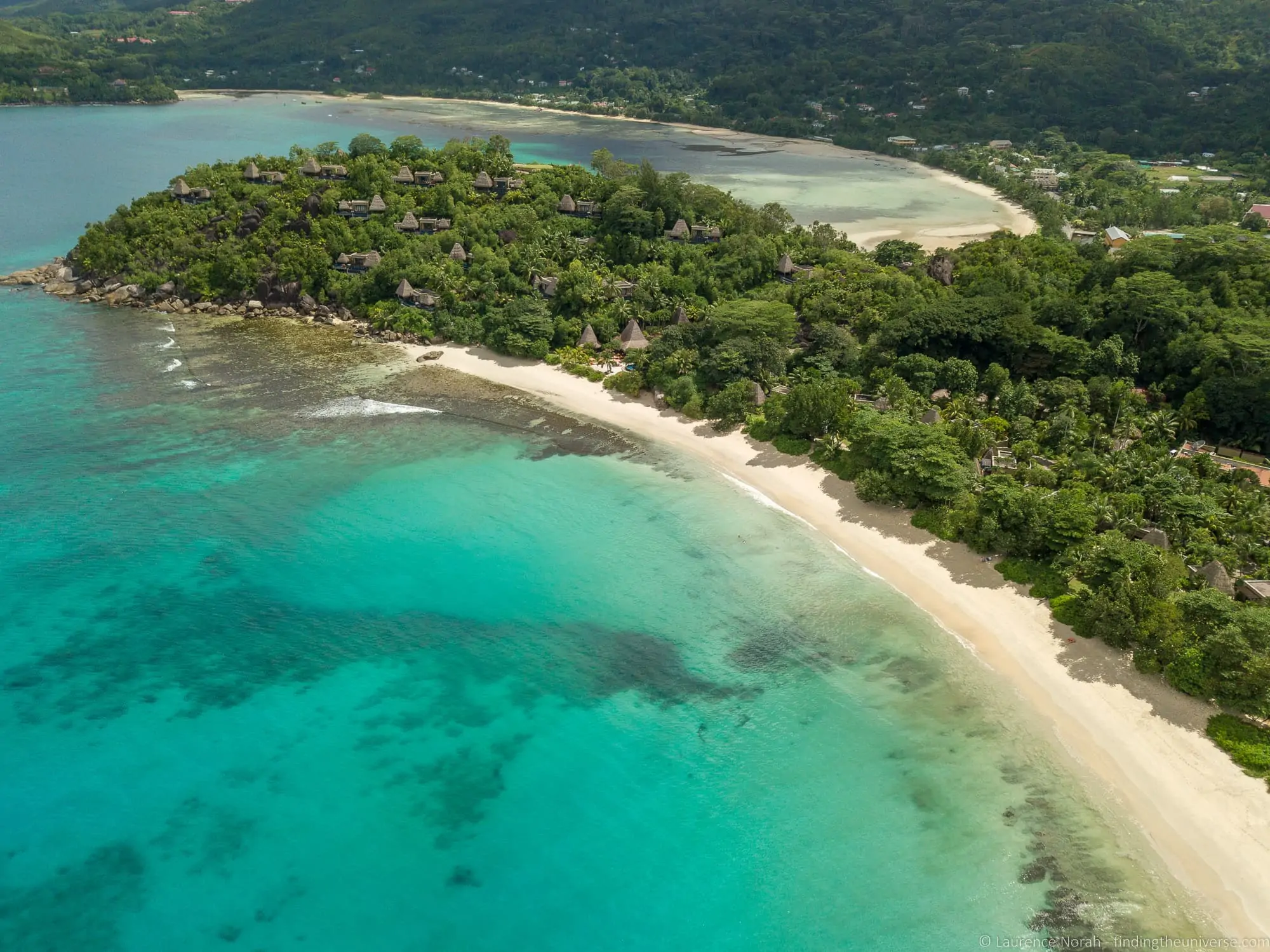
Mahé is the largest island and your arrival point. Day one is an arrival day and little more, so do not plan much beyond settling in near Beau Vallon, the long sheltered beach on the north coast, and finding dinner. Day two is for the island itself: the small capital, Victoria, with its market and botanical garden, then a south-coast beach such as Anse Intendance or Anse Royale.
A hire car is worth having on Mahé, because the best beaches and viewpoints are scattered around the coast and the bus, while very cheap, is slow. We use Discover Cars to compare the local hire companies. Day three can go one of two ways: a coastal drive and the walk out to Anse Major, or a boat trip into the Sainte Anne Marine Park to snorkel; there is also a private half-day version if you want the boat to yourselves. Mahé also has some of the best beaches in the country, so if the weather is good, no one will judge you for picking one and staying.
Days 4 to 6: Praslin
On the morning of day four you catch the Cat Cocos ferry from Mahé to Praslin, a crossing of about an hour and a quarter. Praslin is quieter and greener than Mahé. Day five is the Vallée de Mai, the UNESCO-listed palm forest famous for the giant coco de mer, followed by an afternoon at Anse Lazio, which is pretty much as good as Praslin’s beaches get. Entry to the Vallée de Mai is around SCR 450, or a little less if you book online. If you would rather have a guide walk you through the forest, a guided Vallée de Mai and Anse Lazio tour covers both in a single day, which is exactly the Day 5 plan.
Day six is a boat day out to Curieuse Island and St Pierre for giant tortoises, snorkelling and a barbecue lunch. You can book that as a guided boat trip from Praslin. Boat days are weather-dependent, so if a squally day lands during your stay, this is the one to move.
Days 7 to 9: La Digue
A short, frequent ferry of about fifteen minutes brings you from Praslin to La Digue, the slowest and most charming of the three islands. There are almost no cars here. You get around by bicycle, and the island is small enough to cross in half an hour of easy pedalling.
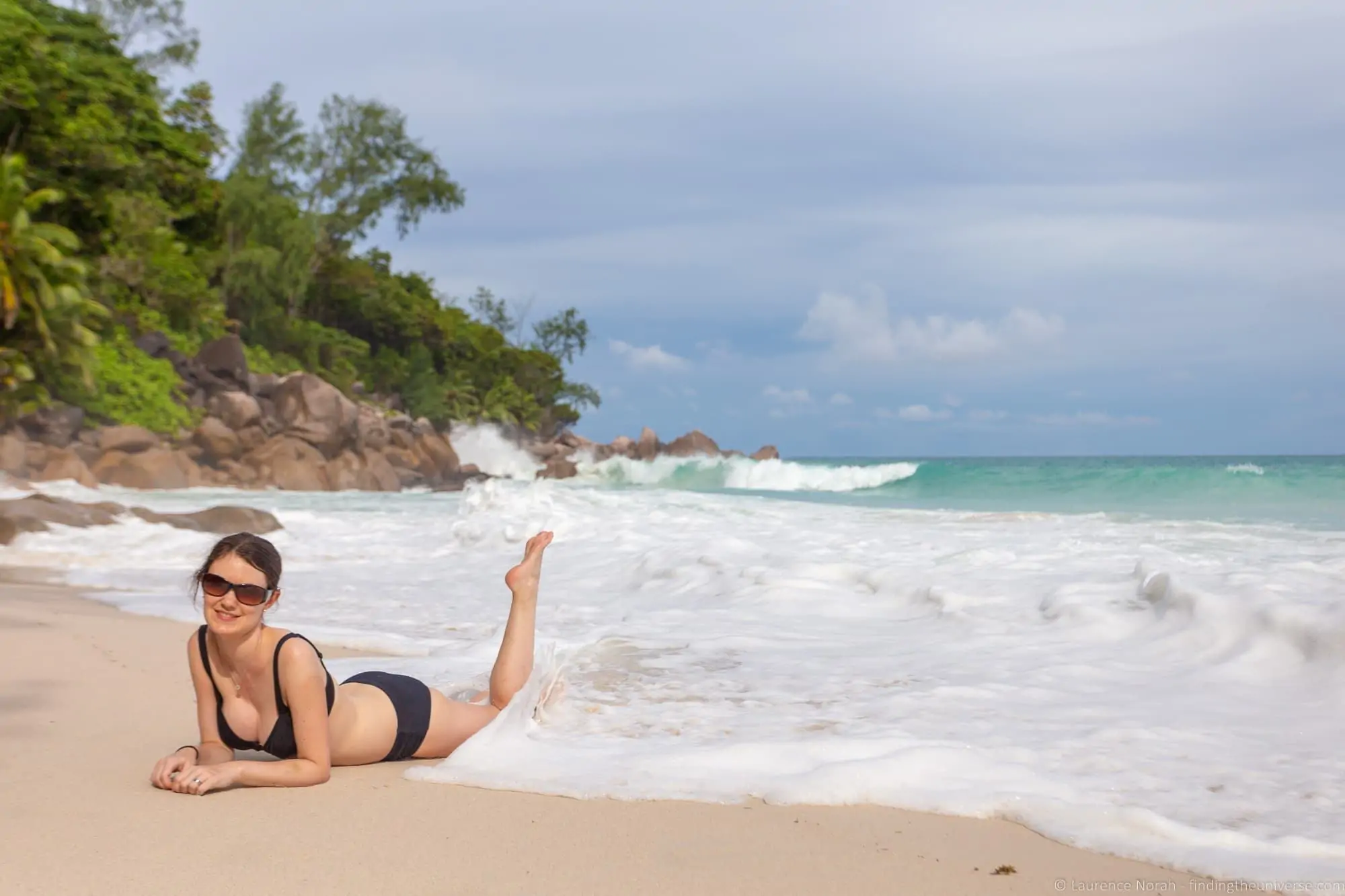
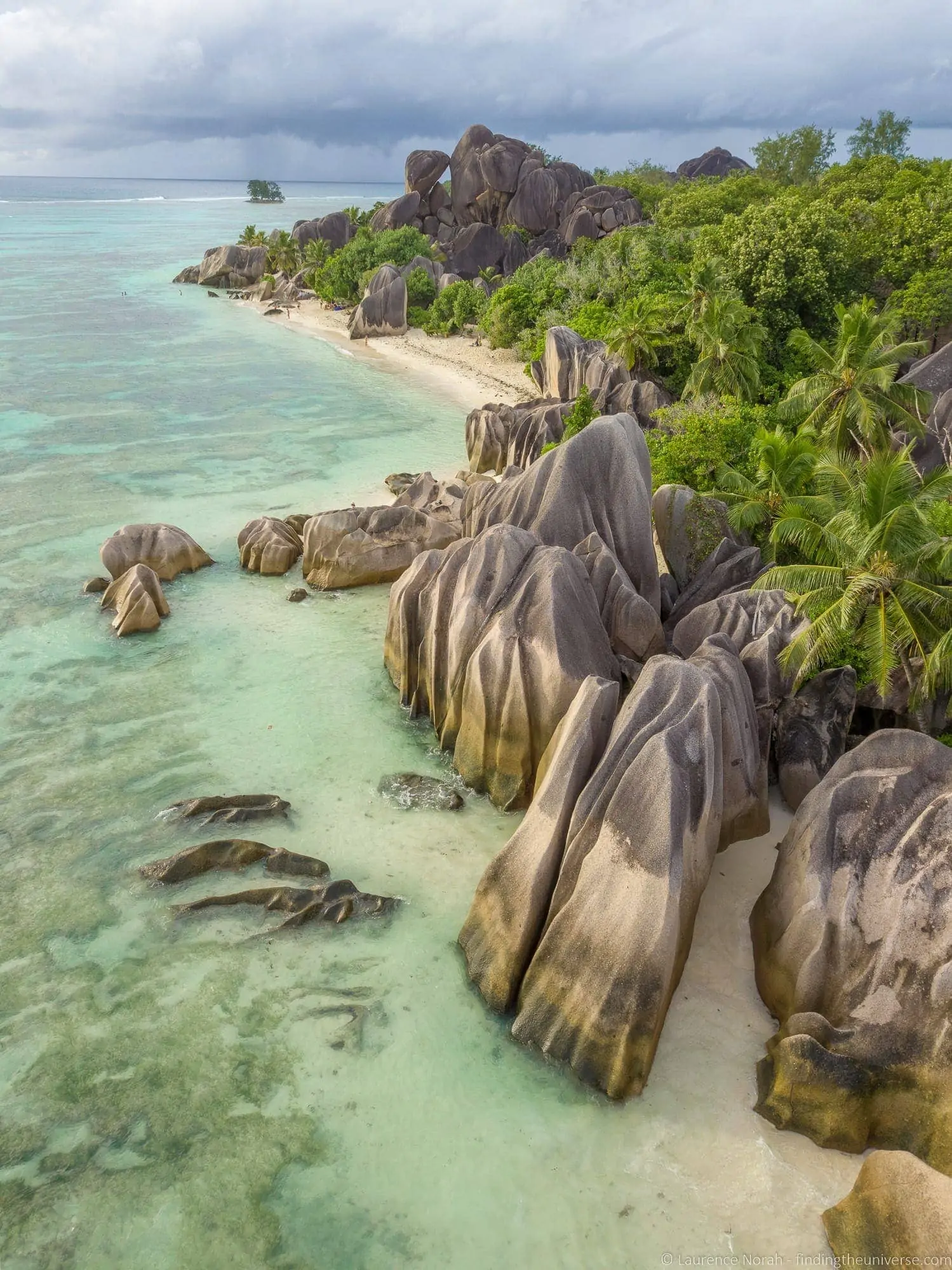
Day eight is the famous one: Anse Source d’Argent, the much-photographed beach of pink granite and shallow turquoise water, reached through the L’Union Estate, then the wilder string of beaches down the east coast at Grande Anse, Petite Anse and Anse Cocos.
Day nine is a deliberate slow day. Cycle up to the Nid d’Aigle viewpoint, take a snorkelling trip out to the Sister Islands, or do very little at all. This stretch is also the trip’s best for Creole food, the fish curries and grilled catch of the day I grew up eating, sold from small takeaways at far better value than the resort restaurants.
Week Two: The Outer Islands
Here is where two weeks becomes its own trip rather than a longer version of a one-week one. On day ten you leave the inner islands behind and fly out to an outer island for the last five nights. The itinerary below is built around Bird Island, because it is the one I know best and the one I would point most people towards. Denis Island is the main alternative, and I cover it straight after, with a simple way to choose between them.
One thing to know now: day ten is a travel day. You will take an early ferry, connect through Mahé, and catch a light aircraft out to the island. It is not a sightseeing day, and the trip works best if you treat it as the price of admission rather than a day wasted.
Days 10 to 14: Bird Island
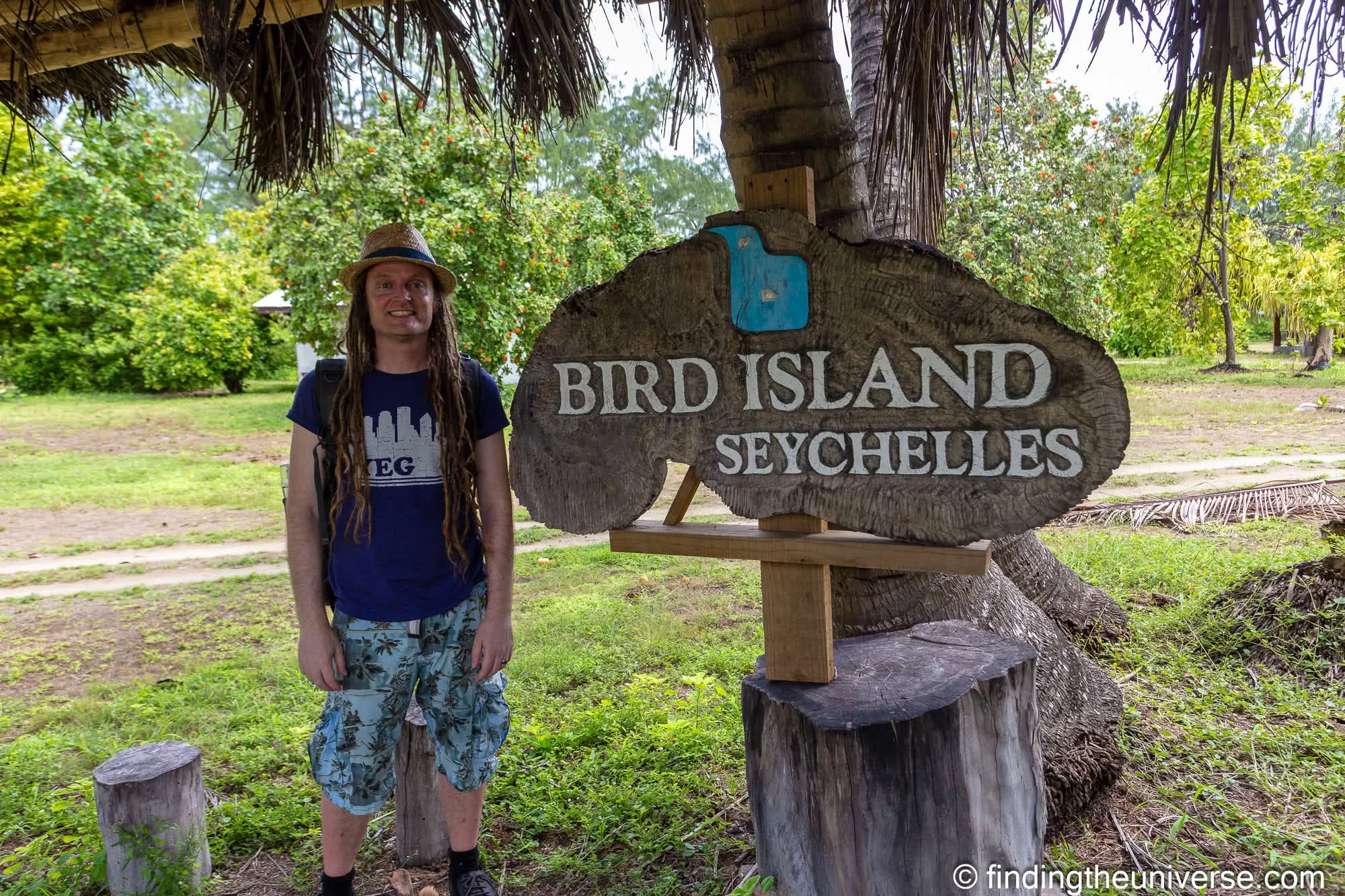
Bird Island lies at the very northern tip of the Seychelles, where the granite inner islands give way to flat coral. It is tiny. You can walk right around it in a morning, and the highest thing on the island is a coconut palm. As I said at the start, my parents ran the lodge here for many years, and I spent a chunk of my childhood on this one small island. Going back as an adult, with Jess, who had never been, is a large part of why this guide exists.
Coming back was strange in the best way. The island is so small, and so little changed, that much of it landed exactly as I had left it, the same beaches, the same birds, the same particular bird sounds, even as I had changed in the years between. Showing Jess the place that had been my whole world as a child, and watching it do its work on someone seeing it new, is something I am very glad we did.
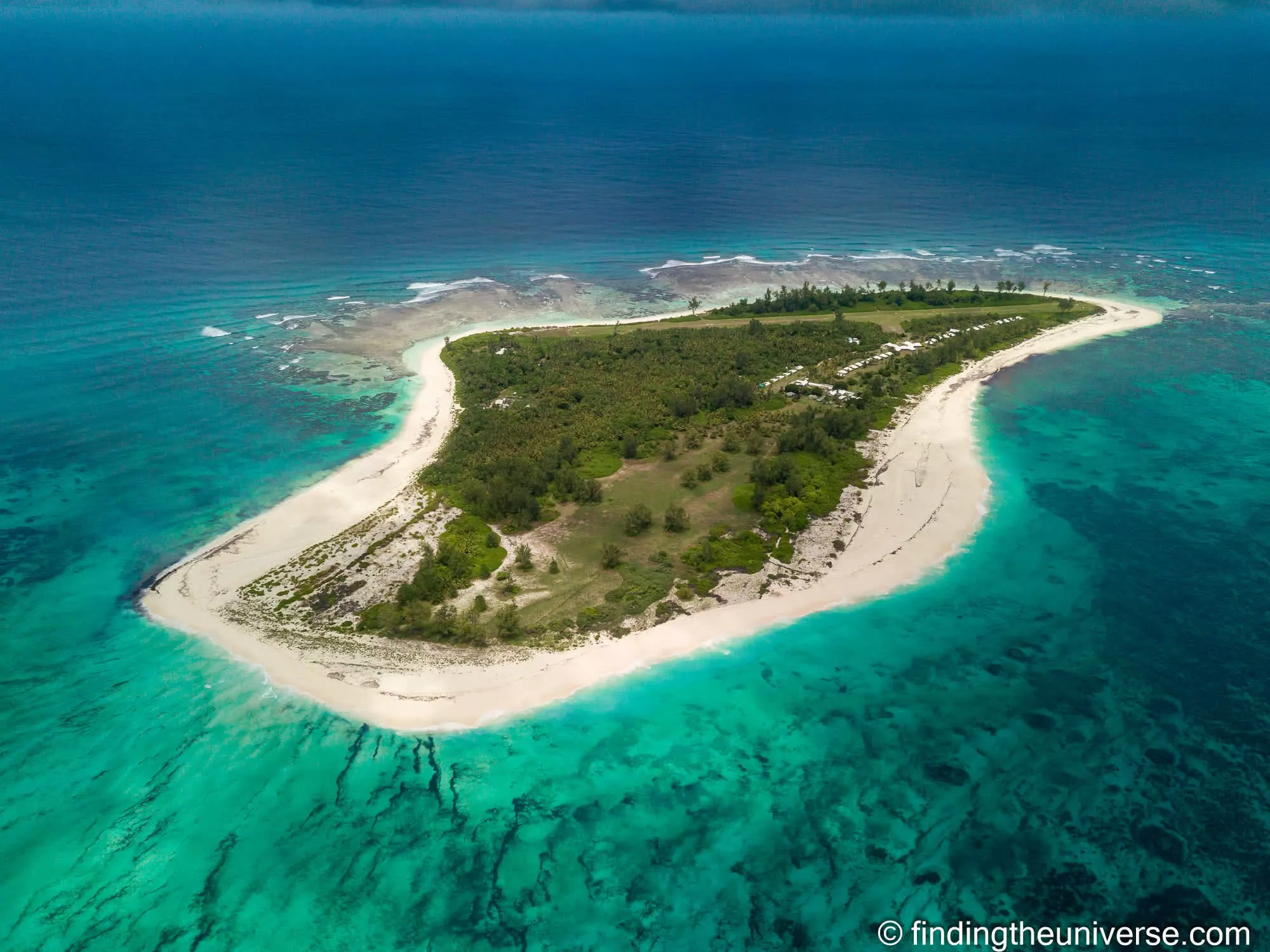
The flight in is part of the experience. Bird Island is served by a light-aircraft service from the domestic terminal at Mahé’s airport, departing in the early afternoon. The flights run on set days of the week and are arranged together with your stay, and the current flight days are listed on Bird Island’s own site.
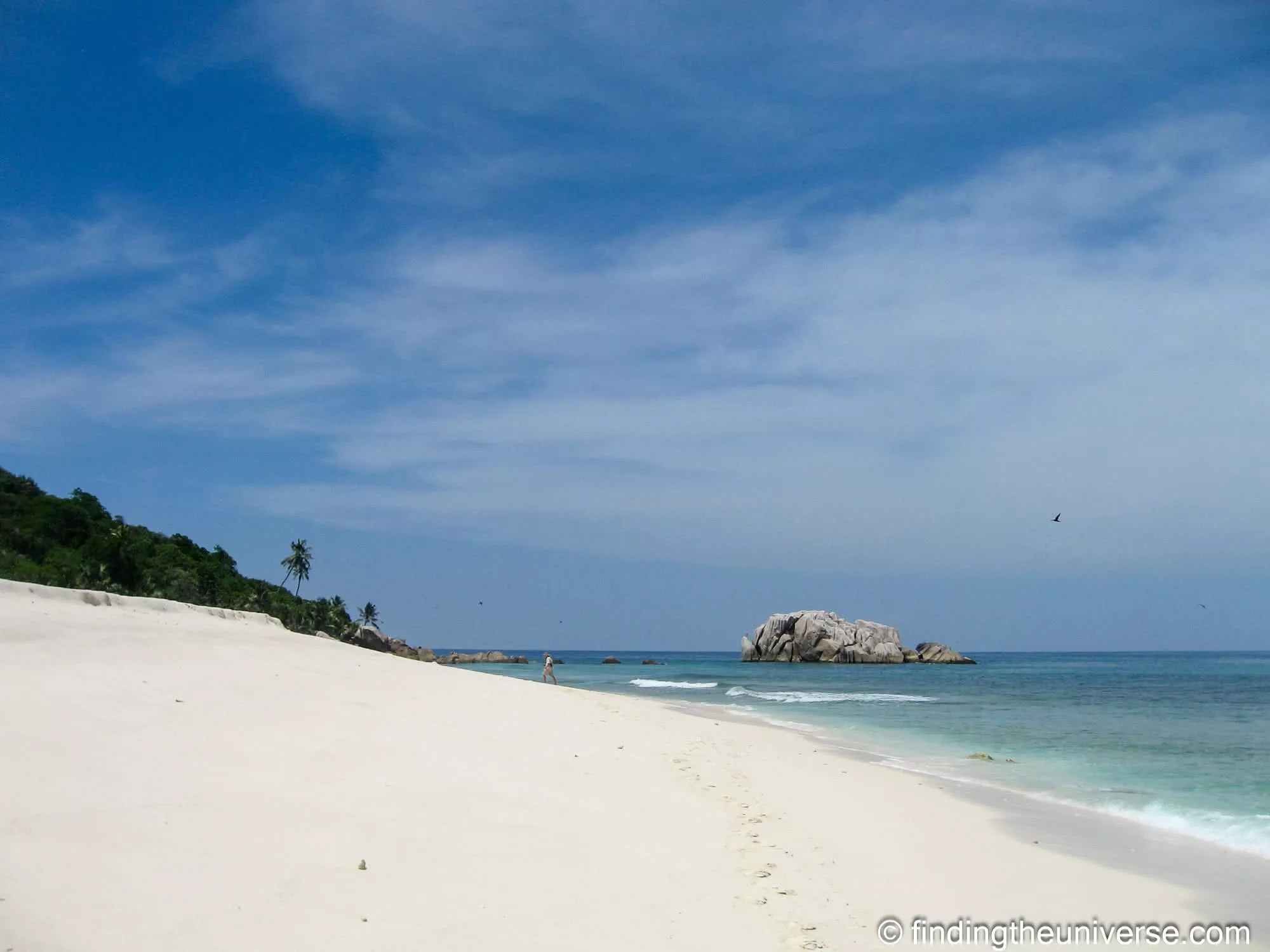
From the air the island shows you exactly what it is, a small comma of green and pale sand ringed by reef and then open ocean in every direction, with nothing else in sight. Within about half an hour of leaving Mahé you step out onto an island with no cars, no real roads and no crowd. The lodge is the only accommodation, low wooden bungalows set back from the beach among the palms.
What you actually do on Bird Island is not very much, and that is the point. There is snorkelling straight off the beach, with the island sitting on its own reef, and the lodge can arrange kayaks, guided nature and birdwatching walks, and fishing. Bird has a long-standing reputation among fishing enthusiasts, who come for the flats and the deeper water off the island’s edge. But you can just as easily spend five days reading, swimming and walking, and plenty of guests do exactly that.
The single best thing to do is also the simplest. A long sandbar shifts off one end of the island, appearing and disappearing with the tide, and walking out along it with clear water on both sides is the kind of small thing you remember for years. The beach walks are long and empty, green and hawksbill turtles nest on the sand in season, and the snorkelling turns up reef fish, rays and the occasional turtle without much effort.
With no roads and nothing resembling nightlife, the island runs on daylight. You will likely find yourself going to bed early and waking with the sun, and after a week of inner-island sightseeing, that slow resetting of your body clock is part of what makes the place work.
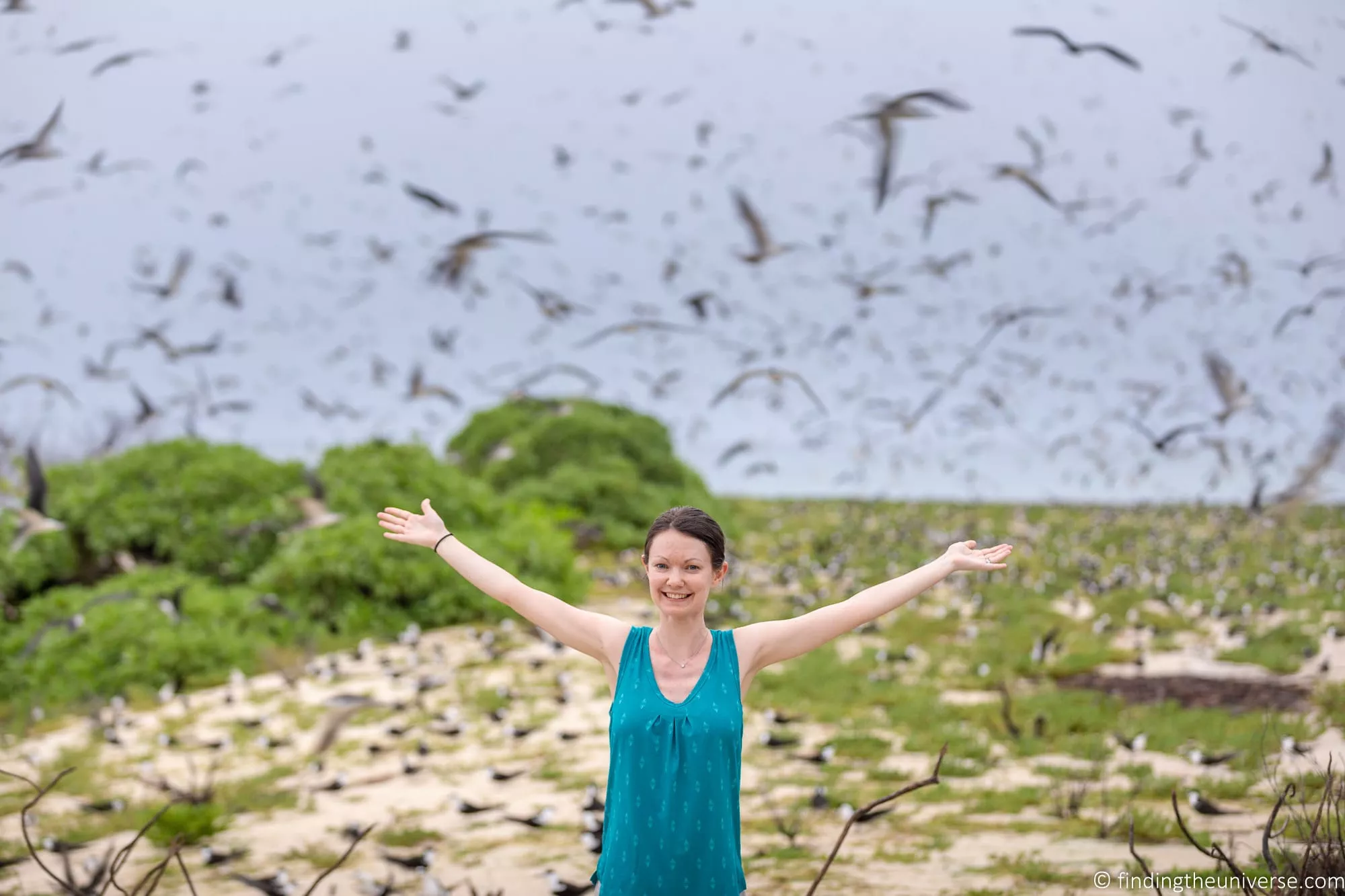
For a few months of the year the island is anything but quiet. Bird Island takes its name from its seabirds, and the headline event is the sooty tern colony. From around April the terns arrive to nest, and by June and July there can be something like a million and a half of them, a single dense, deafening, constantly wheeling colony packed into the island’s interior. I grew up with that sound.
Standing at the edge of the colony as an adult, watching Jess take it in for the first time, is one of my favourite memories of the whole trip. The birds thin out through the autumn and the colony has largely gone by the end of October, so if the terns matter to you, time your visit for the nesting months.
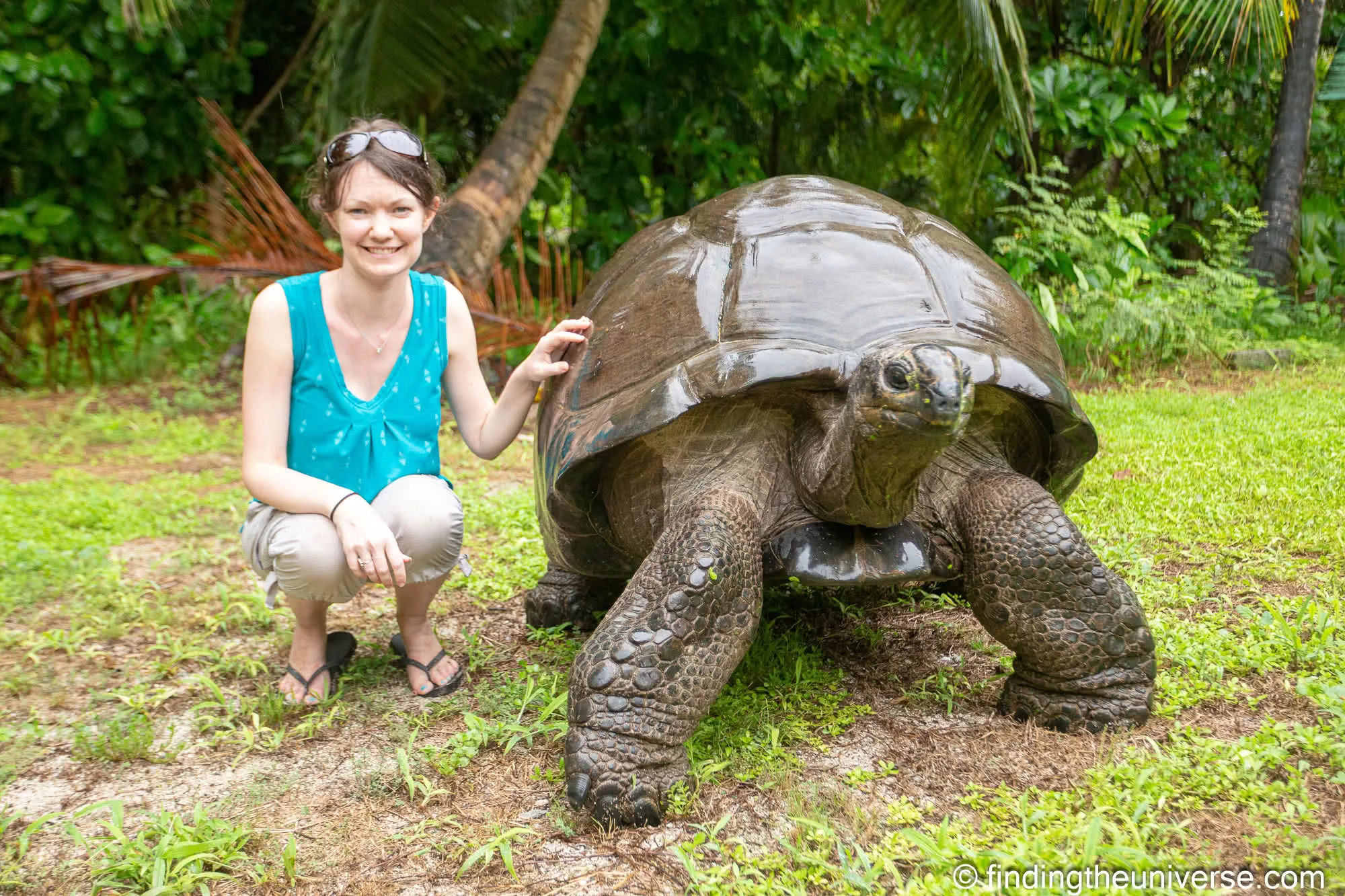
Bird Island is also home to free-roaming Aldabra giant tortoises, which wander the lodge grounds and the sandy tracks at their own unhurried pace. The largest and oldest of them is well known enough to have a name, Esmeralda, and has been a fixture of the island far longer than any guest. Esmeralda has long been reputed to be one of the heaviest free-roaming tortoises in the world. Whether or not that record still stands, Aldabra giant tortoises can live well beyond a century, and sharing a small island with creatures that old does something to your sense of scale.
All of this sits inside a real conservation effort. Bird Island is run as a private nature reserve as much as a place to stay, and the birdlife and the nesting turtles you see are the result of decades of patient protection. A stay here helps fund that work, and it is one of the things that makes a few days on Bird feel like more than a beach holiday.
A word on the lodge itself, because it matters and it is the sort of thing a brochure will not tell you. Bird Island Lodge is comfortable, but it is not a modern luxury resort, and you should not arrive expecting one.
The bungalows are simple and a bit dated next to the slick newer properties elsewhere in the Seychelles. There is no air conditioning and no television, both deliberate, and the wifi is the patchy sort you would expect on a remote coral island. The lodge is run as a wildlife and eco experience first. Meals are half-board, with dinner and breakfast included and lunch bought separately from a small island shop with a limited range, so this is not the anything-you-want, all-inclusive set-up some islands offer.
Guest reviews are consistently excellent and most people leave really happy, but they are happy because they came for the right thing: an unplugged few days on a wild little island. If the simple, eco-first style gives you any pause at all, read the next section on Denis before you book.
Denis Island, the More Comfortable Alternative
If Bird Island sounds wonderful but the stripped-back lodge gives you second thoughts, Denis Island is the answer to that hesitation. Denis lies a similar distance out from Mahé, reached the same way by a flight of around half an hour, and it offers the same core experience: one small island, one lodge, no crowds, no traffic, and a focus on nature and quiet.
The difference is comfort. I have stayed on Denis, and it is the more polished of the two by some margin. The accommodation is more modern and more spacious, the service is full and attentive, and the dining is closer to what you would expect of a high-end resort. Denis also runs a working farm that supplies much of the kitchen, so meals lean fresh and local. The accommodation is a spread of individual cottages and villas along the beach, in a handful of categories, so couples wanting a romantic base and families needing more room both find a fit.
Denis has its own conservation story, with rewilded native birds and nesting turtles, so you are not trading away the wildlife by choosing it. What you trade is a little of Bird Island’s raw, stripped-back character. Bird feels like a wild island with a lodge on it. Denis feels like a beautifully run private island that has kept its nature intact. Neither is better in the abstract. They suit slightly different travellers, which is what the next section is for. You can check current rates and availability for Denis Private Island online.
Bird or Denis: which outer island suits you?
Five nights on an outer island is a real commitment of time and money, so it is worth choosing the right one. Here is how I would decide between the two.
| If this is you | Where I’d send you | Why |
|---|---|---|
| A wildlife or nature traveller | Bird Island | The sooty tern colony in season is a real spectacle, and the free-roaming tortoises and nesting turtles are part of everyday island life. |
| A keen photographer | Bird Island | The light, the birds and the empty sandbar give you far more to work with, and the rawness is the appeal. |
| Travelling for comfort, quiet and good food | Denis Island | More modern rooms, full service and a stronger kitchen, without giving up the wildlife or the seclusion. |
| Wary of a rustic, unplugged lodge | Denis Island | It delivers the private-island experience with the rough edges smoothed off. |
| A first-time visitor who wants one easy outer-island stay | Denis Island | The gentler introduction to outer-island life. |
If money is no object there is a third answer, the ultra-private resorts, which is the next section. For most people, though, the choice is between Bird and Denis, and you can make it well by being clear-eyed about how much comfort you want.
The Ultra-Private Islands, and Why Most Trips Can Skip Them
Above Bird and Denis sits a third tier of Seychelles island, the exclusive private-island resorts where a single night can cost more than some people’s entire fortnight.
I have a family connection to this world. My family built and ran the lodge on Cousine Island, a small granite island long managed as a private nature reserve as much as a resort, with its own population of rare endemic birds and giant tortoises. It is a beautiful place, and growing up around it gave me a clear sense of what that top tier is and is not.
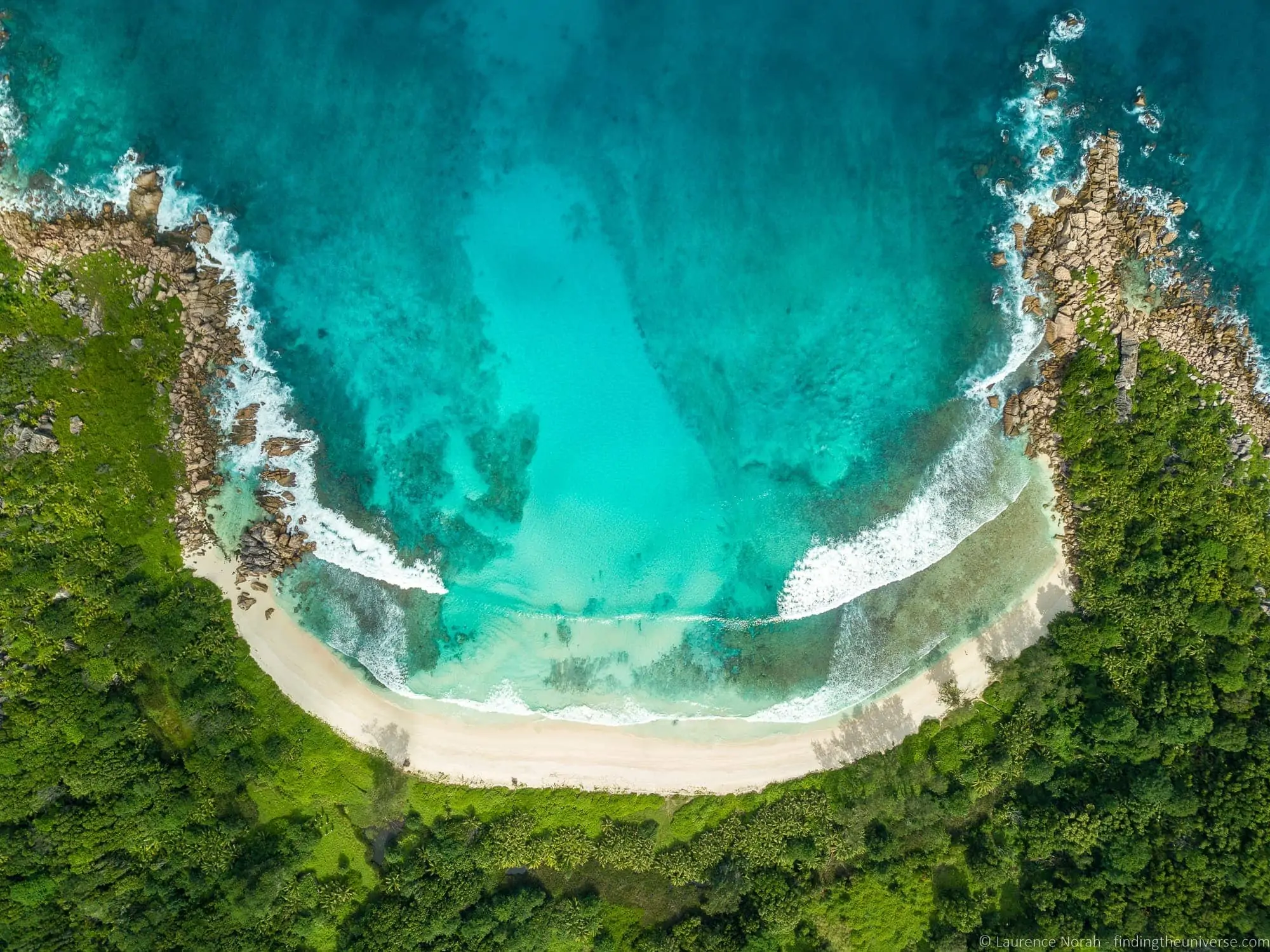
Here is the version that helps with trip planning. Islands like Cousine, along with Frégate, which is reopening in 2026 after a full rebuild, and North Island, sit at a price point aimed at honeymooners, celebrities and travellers for whom cost is simply not a factor. They are superb at what they do. But the heart of the experience, one small island, wildlife and seclusion in beautiful surroundings, is something Bird and Denis also deliver, at a fraction of the price.
On the ultra-private islands you are paying the premium for service, design and exclusivity, not for a better island. Unless that tier sits squarely within your budget and your taste, I would not lose any sleep over skipping it. Bird or Denis will give you the outer-island Seychelles without the eye-watering bill.
Getting Between the Islands
Two weeks in the Seychelles means several island moves, and getting them right is the difference between a smooth trip and a stressful one. Here is how the connections work.
Mahé to Praslin runs on the Cat Cocos catamaran ferry, a crossing of about an hour and a quarter with a few departures a day. A one-way adult fare is around SCR 850. In peak periods, roughly July and August, the Christmas and New Year weeks, and Easter, the best sailings sell out, so book ahead through the Cat Cocos website and aim for a morning crossing. Praslin to La Digue is far easier, a frequent ferry of about fifteen minutes that runs often enough that you rarely need to plan around it. There are also short inter-island flights and helicopter transfers between Mahé and Praslin if you would rather not take the ferry, faster but a good deal more expensive. For most two-week trips the ferry is the sensible choice for that leg.
The outer islands are a different matter, because they are reached only by light aircraft from the domestic terminal at Mahé’s international airport. Bird Island has scheduled flights on set days of the week, departing Mahé in the early afternoon, with check-in an hour before. Denis Island flies most days. Both hops take around half an hour. These are small planes, and the luggage allowance is strict and weight-limited, so travel light and be ready to leave a large hard case in storage on Mahé if you are carrying one.
That outer-island flight is the single biggest logistical pinch of the whole trip, and it should drive the order in which you book everything. Book in this sequence. First, the outer-island lodge and its flight, together, because each island has just one small lodge and limited flights, and they can fill up months ahead in high season. They anchor your dates, so everything else fits around them. Second, the Cat Cocos ferry for your inner-island legs, especially in peak season. Third, your inner-island hotels, which have far more capacity and can usually be sorted later. Booking in that order means the hardest things to get are locked in first.
One more thing about day ten, the transfer from La Digue out to Bird or Denis. It involves a ferry back towards Mahé, a connection at the airport, and then the island flight, and it realistically takes most of the day. Build in comfortable margins, do not schedule the tightest possible connections, and accept that you will not see much. The same goes for day fourteen in reverse: if your international flight home leaves early in the morning, fly off the outer island the day before and spend your final night near Mahé airport rather than gambling on a same-morning connection.
The Best Time to Visit the Seychelles
The Seychelles is a year-round destination. It sits close to the equator, with warm weather and roughly twelve hours of daylight whatever the month, so there is really no bad time to go. But there are better windows.
The islands have two trade-wind seasons. The northwest season runs roughly from October or November to March, warmer and wetter, with calmer winds. The southeast season runs roughly from May to September, drier but breezier, with livelier seas. The sweet spots are the transitions between the two: April to May, and October to November. These shoulder weeks tend to bring the calmest seas and the clearest water, which matters for snorkelling, boat trips and the day-ten flight.
For a two-week trip there is one extra factor to weigh, and it is specific to Bird Island. The sooty tern colony is on the island only for the nesting season, roughly April to October, at its overwhelming peak in June and July.
Those peak months fall in the breezier southeast season, so there is a real trade-off here: the calmest, glassiest sea conditions do not line up perfectly with the loudest, fullest tern colony. April and early May come closest to having both.
If the terns are the reason you are heading to Bird, lean towards the nesting months and accept a little more wind. If flat seas matter more to you, the shoulder weeks are ideal, and the island is still lovely without the full colony.
Where to Stay Across Two Weeks
Across two weeks you will sleep in four places: one base each on Mahé, Praslin and La Digue, then the outer-island lodge.
On the inner islands, accommodation runs from simple self-catering guesthouses up to full luxury resorts, with not a lot at the true budget end, since the Seychelles has no hostels and camping is not allowed. Most independent travellers do well in the middle, in guesthouses and small self-catering places, which also let you cook and eat Creole takeaways rather than paying resort restaurant prices every night.
Our one-week itinerary names specific places to stay on each of the three inner islands, across budget, mid-range and luxury, so I will point you there rather than repeat the whole list.
In short: Mahé is the easy place to spend a little less, with the widest choice and the most guesthouses, and Beau Vallon makes a relaxed base. On Praslin, the Côte d’Or area is central for beaches and boat trips. On La Digue, staying near La Passe keeps you close to the bikes, the ferry and the restaurants.
The outer-island lodge is a category of its own, and I have covered both options in detail above. Bird Island Lodge is the simpler, wilder, wildlife-first stay, half-board and pleasantly dated. Denis Private Island is the modern, comfortable, full-service option. Whichever you choose, it will be the most expensive single part of the trip, and worth it.
Entry Requirements: The Seychelles Travel Authorisation
One piece of admin you must not skip. Every visitor to the Seychelles, whatever their nationality, now needs a Travel Authorisation before they fly. The Seychelles is still visa-free, but the Travel Authorisation is a separate, mandatory online step, and airlines will check for it before they let you board.
You apply through the official Seychelles Electronic Border System at govtas.com, up to 30 days before you travel. You upload your passport, flight and accommodation details, and pay a fee of around €10, a little more once the processing charge is added. Approval usually comes through quickly, but do not leave it to the airport. Apply a few days ahead at the very least.
One warning. Several unofficial sites offer to handle the Travel Authorisation for you and charge a markup for the favour. You do not need them. The government portal is the only official site, and applying yourself takes only a few minutes.
What Two Weeks in the Seychelles Taught Us
A few things we learned from spending a full fortnight out here, offered in the spirit of helping your own trip go smoothly.
The transfers are worth respecting. Every island move costs you part of a day, especially the ferries. We found the trip flowed best once we stopped fighting that and simply built the travel days into the plan, with no sightseeing crammed on top. A relaxed transfer day is a pleasant day. A rushed one is not.
Do not over-programme the inner islands. It is tempting to fill all nine inner-island days with boat trips and beaches and drives, but the Seychelles rewards a slower pace. Leave gaps in the plan. Some of our best afternoons were the unplanned ones, a beach we pulled over for, a long lunch, a swim that turned into the rest of the day.
Save your energy, and your sense of wonder, for the outer island. After nine busy days on the inner trio, arriving on Bird with nothing to do and nowhere to be is a gift rather than an anticlimax. The quiet is the whole point, so lean into it. We came home from the inner islands happy and from the outer island restored, and that, more than anything, is the case for giving the Seychelles two weeks rather than one.
Two Weeks in the Seychelles Itinerary FAQ
How many days do you need in the Seychelles?
A week is the realistic minimum, and the length I would recommend to most first-time visitors. Seven nights let you settle into the three main islands, Mahé, Praslin and La Digue, without spending half the trip in transit.
Two weeks is the natural step up. It gives you those same three islands at an easier pace and frees up four or five nights for one of the outer islands, which is where a longer Seychelles trip starts to feel different rather than just longer.
Is two weeks in the Seychelles too long?
Not if you change islands. Two weeks only starts to drag if you spend all of it on the inner three, where you can run low on new things to do after eight or nine days.
Use the extra time to fly out to an outer island like Bird or Denis and the trip keeps moving, because the outer islands are a completely different pace and setting. If you would rather not deal with another transfer, a focused ten-day inner-island trip is often a better fit than a stretched fourteen.
Can you visit Bird Island on a day trip?
No. Bird Island is a fly-in stay, not a day trip. The scheduled flights from Mahé run only on certain days of the week, the island has a single small lodge, and the whole appeal is staying put for a few nights with very few other people around.
Plan on a minimum of two to three nights, and ideally more. The same is true of Denis Island and the other outer islands.
How do you get from Mahé to the outer islands?
By light aircraft from the domestic terminal at Mahé’s international airport. Bird Island has scheduled flights on set days of the week, and Denis Island runs flights most days, both taking around half an hour.
These are small planes with strict luggage weight limits, so pack light and keep your main luggage manageable. The flights are arranged together with your stay, so you book the island lodge first and the flight follows.
Do you need to book Seychelles island accommodation in advance?
For the outer islands, yes, well in advance. Bird and Denis each have only one lodge, with limited rooms and limited flights, so they can fill up months ahead in peak season.
Book the outer-island stay first, since it anchors the whole trip, then the Cat Cocos ferry, then your inner-island hotels, which have far more availability and can usually be arranged closer to the date.
Is two weeks in the Seychelles expensive?
Yes. The Seychelles is one of the more expensive places I have travelled, and a two-week trip with an outer island is not a budget holiday. Accommodation and the inter-island flights are the big costs.
You can keep the inner-island portion more affordable with self-catering guesthouses, Creole takeaways and the cheap public buses. The outer-island lodges and their flights sit at a higher price point by design.
What is the best time of year to visit the Seychelles?
April and October are the calmest months, sitting between the two trade-wind seasons with warm, still weather and clear water. Either works well for a two-week trip.
If seeing Bird Island’s sooty tern colony matters to you, aim for roughly April to October, when the birds are nesting, with the noise and the numbers peaking in June and July.
Leave a Reply