
Chiang Rai has two art-temples that pull travellers off the highway, and almost everyone has heard of the famous one. The White Temple gets the crowds, the postcards and the tour buses. The Black House sits a few kilometres up the road, draws a fraction of the visitors, and I think missing it’s a mistake. I’ve been to both, and when we visited, the Black House was my favourite of the pair.
It helps to know what you’re walking into. The Black House (Baan Dam in Thai, and widely called the Black Temple) is not a temple at all. It was the life’s work of Thai artist Thawan Duchanee: an estate of more than 40 dark timber buildings spread through shady gardens, filled with animal bones, hides, horns and furniture built on the scale of giants. It’s a strange, calm place, quite unlike anywhere else I’ve been in Thailand.
Table of Contents:
The Black House at a glance
If you’re short on time, here’s the quick version.
- The Black House (Baan Dam) is an artist’s estate and open-air museum, not a working temple.
- Entrance fee: 80 THB per adult.
- Opening hours: 9am to 5pm daily, with a closure for lunch from noon to 1pm.
- Time to allow: around an hour, longer if you stop often for photos.
- Location: roughly a 20-minute drive north of central Chiang Rai, in the Nang Lae area.
- Getting there: a local bus towards Mae Sai, a Grab car, a tuk-tuk, or a guided tour that combines it with the White and Blue temples.
What the Black House actually is
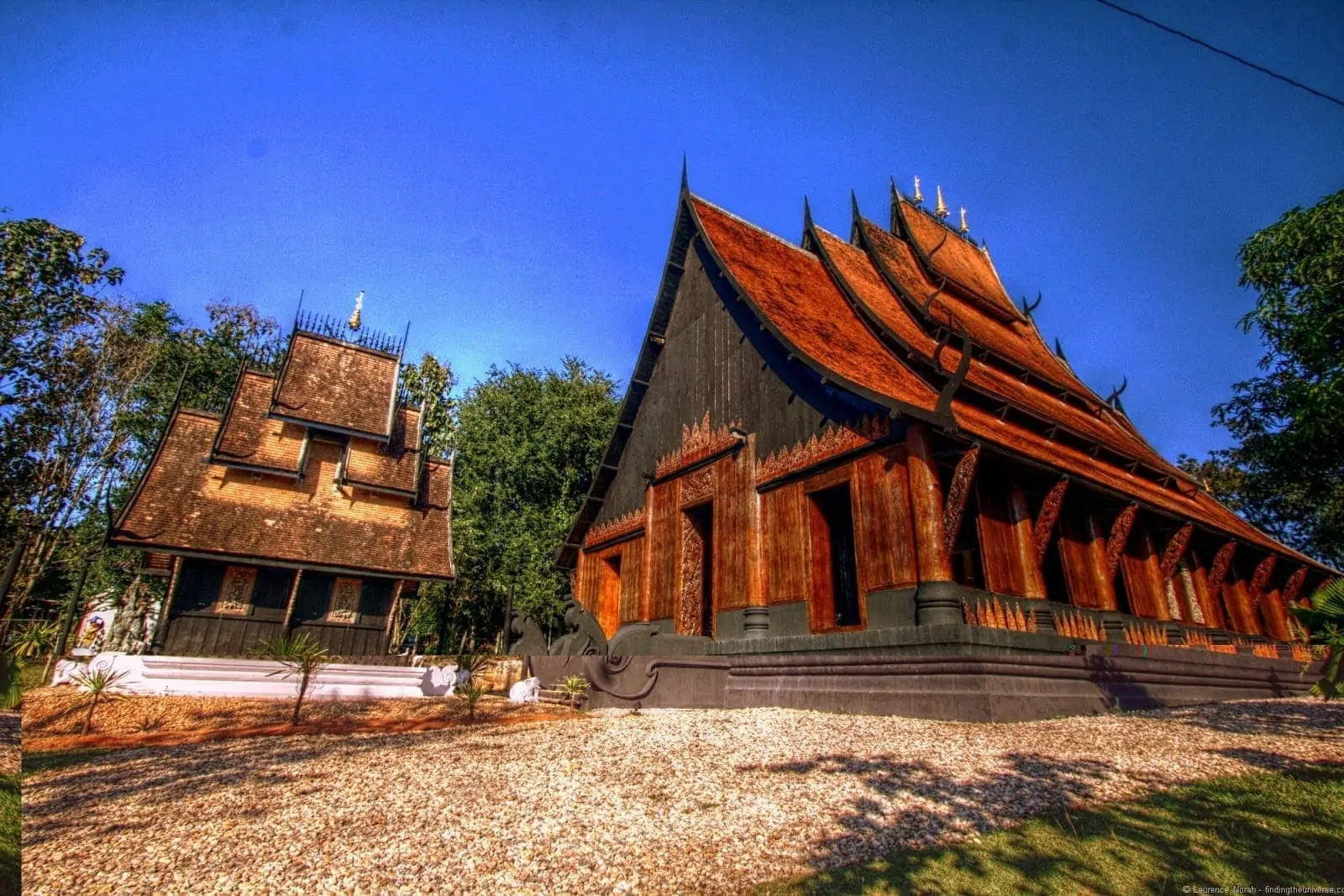
The main hall from the outside. I loved all the wood!
The most useful thing to know before you visit is in the name the locals use. They call the White Temple Heaven and the Black Temple Hell, and once you’ve seen both, the nickname makes sense. But neither is really a temple. The Black House is the work of one man.
Thawan Duchanee was one of Thailand’s most celebrated artists, a painter and sculptor known for dark, confronting religious work. He began building the estate in 1975 and spent the rest of his life adding to it, living and working among the buildings he made. He died in 2014, and the estate is now run as a museum, kept much as he left it.
More than 40 structures stand across the grounds, most in black timber, some shaped like traditional Lanna temples and others like barns. Inside, they’re furnished with the bones, skins and horns of animals. The effect should be grim, and in places it is, but the overall feeling as you wander the gardens is closer to calm than to dread.
A walk through the Black House
There’s no set route. You wander between the buildings, step into the ones that are open, and the estate slowly reveals itself. I shot these photos when we visited, so what follows is the Black House as we walked it.
The main hall
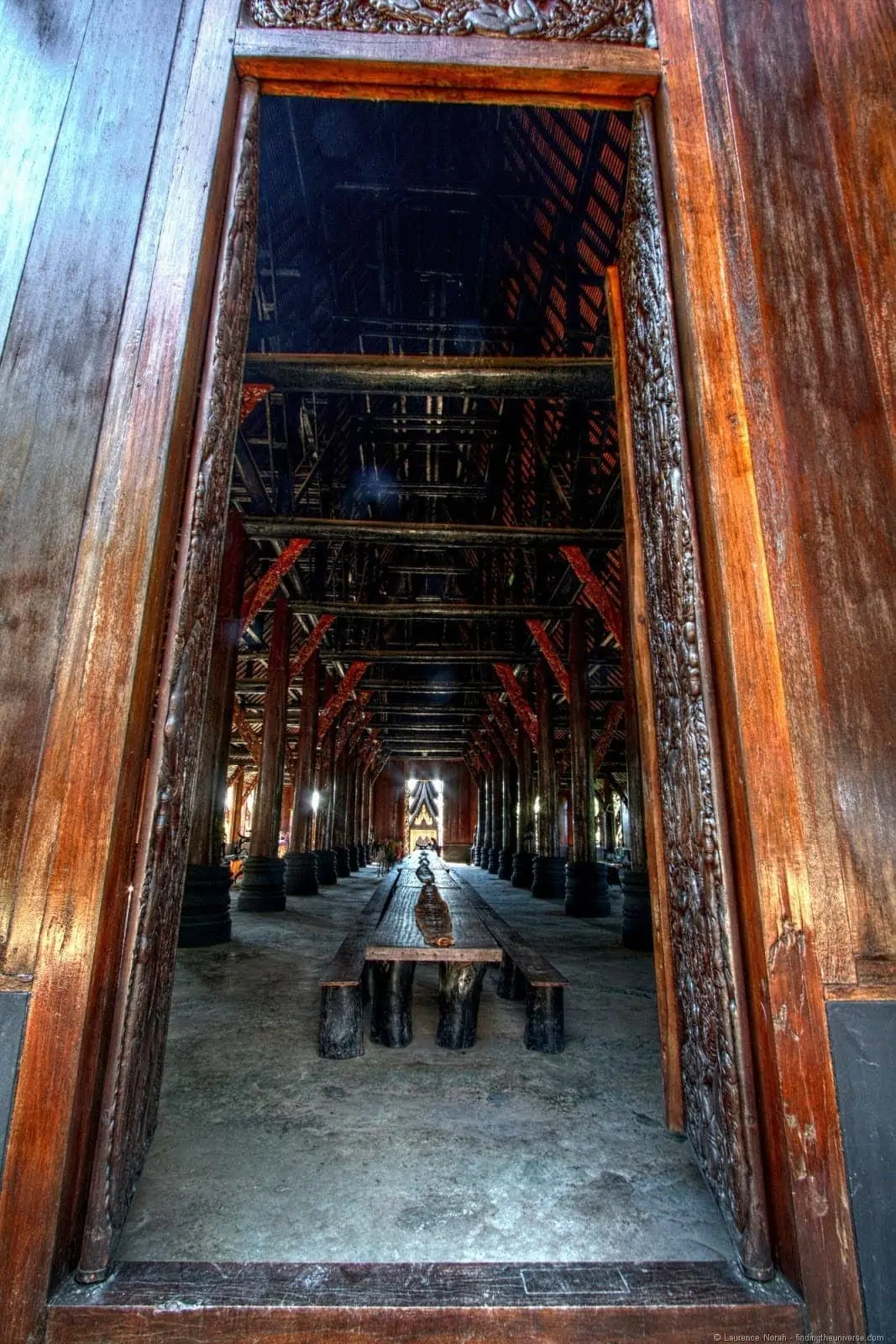
Looking into the great hall.
The centrepiece is the great hall, and it’s the building most people picture when they think of the Black House. From the doorway it has the look of a feasting hall of Viking proportions, one long dark room with an enormous table running its length and the light coming in low from the ends.
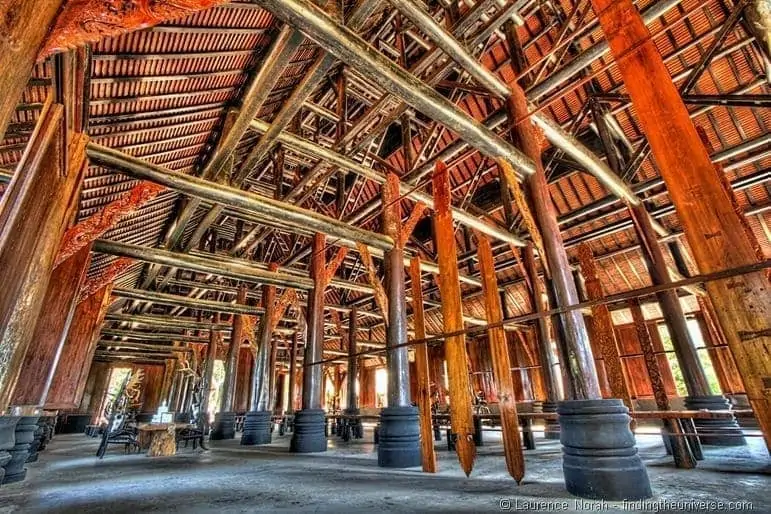
The great hall runs the full length of the building.
Look closer and the detail is all animal. The long table is set not with plates but with horns, bones and shells. The chairs are built from antlers. Skins lie where you’d expect cloth.
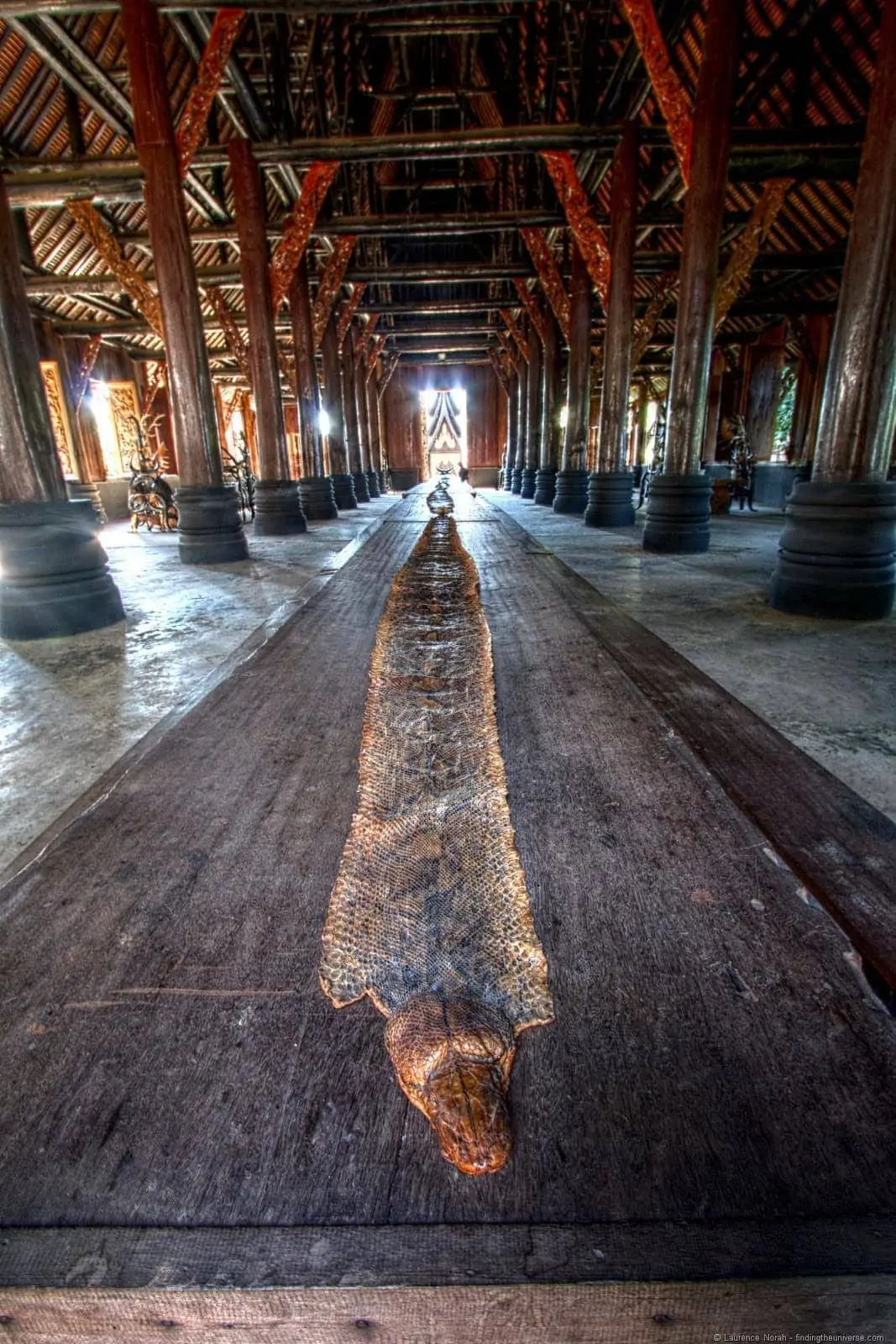
I wasn’t totally convinced about the tablecloth.

Even the chairs are made from antlers and bone.
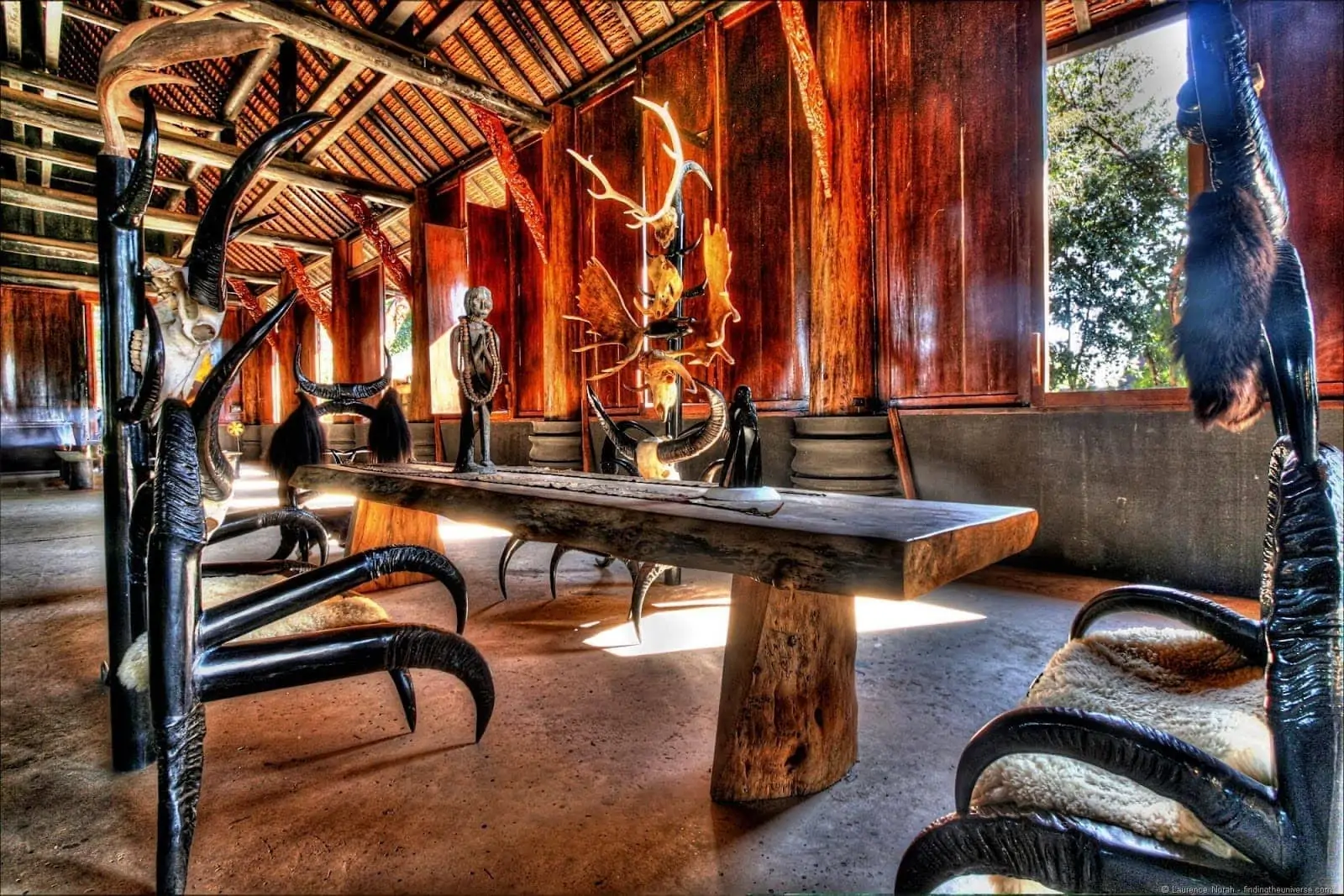
The interior of the great hall was a bit odd, too.
You walk the length of it slowly, then walk back again because you missed half of it the first time.
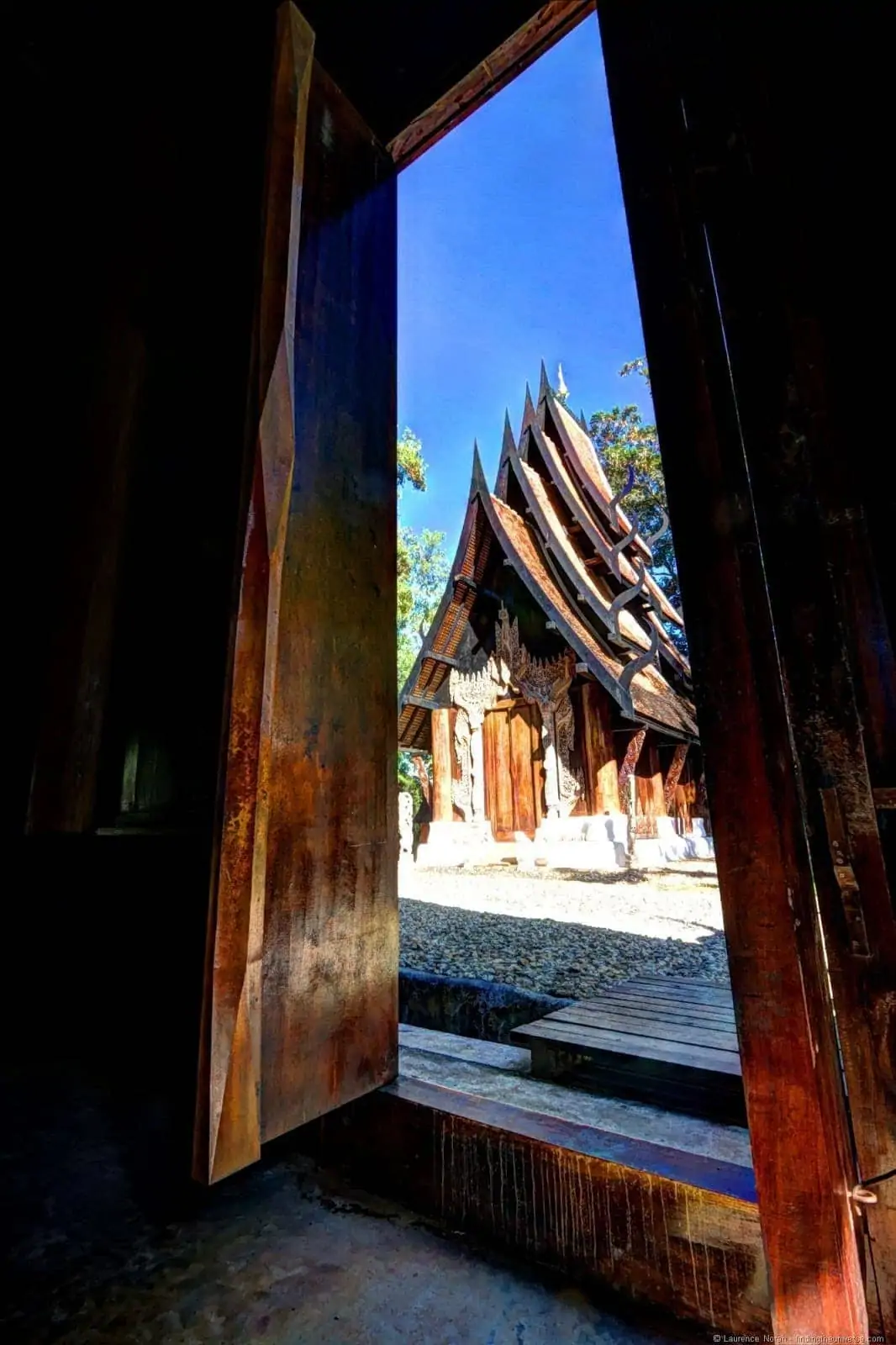
Looking out of the great hall.
The outbuildings
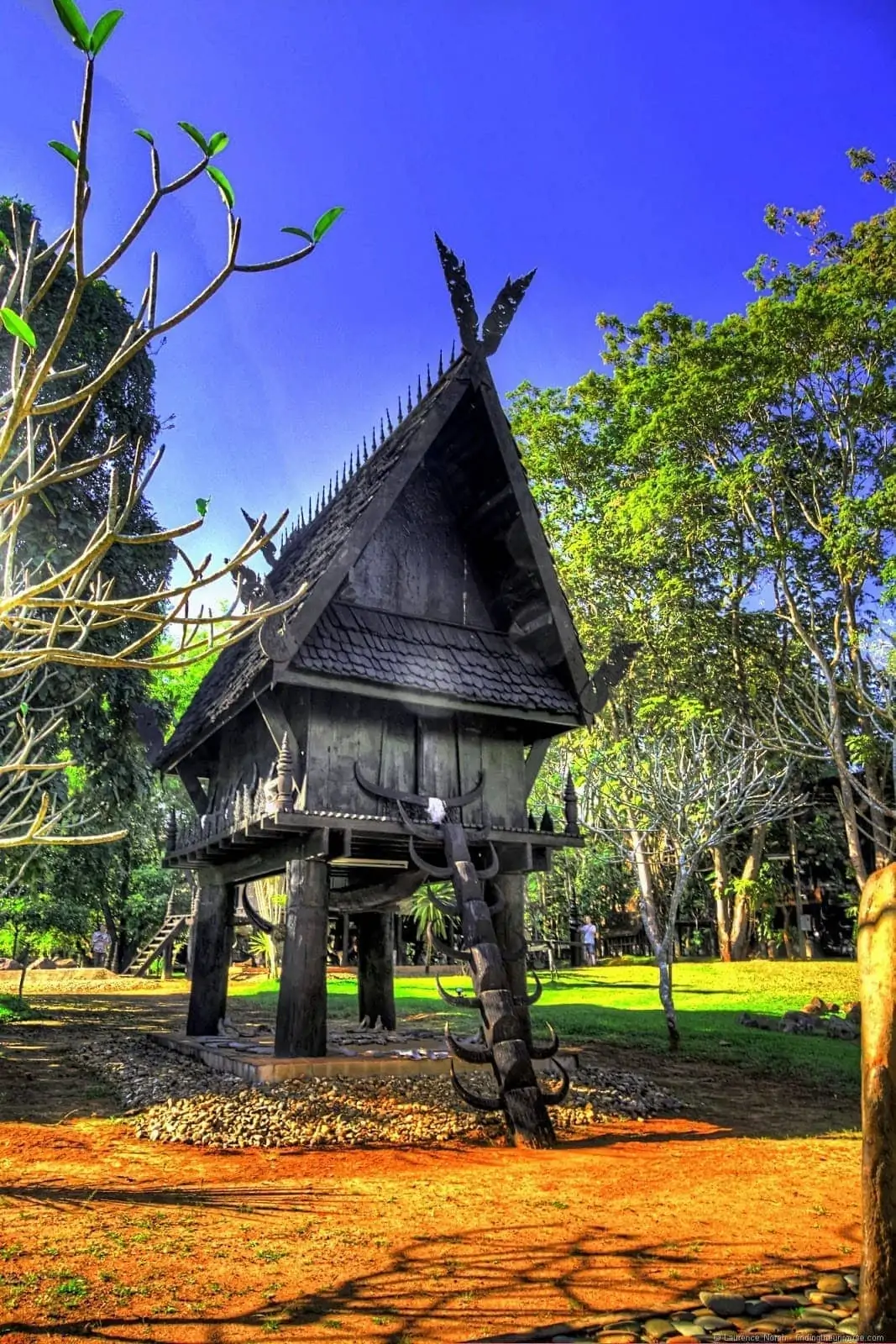
Buildings of unknown purpose were dotted all around. For bone storage, presumably.
Beyond the main hall, dozens of smaller buildings are scattered through the trees. Some are guest rooms, some are studios, and plenty have no obvious purpose at all.
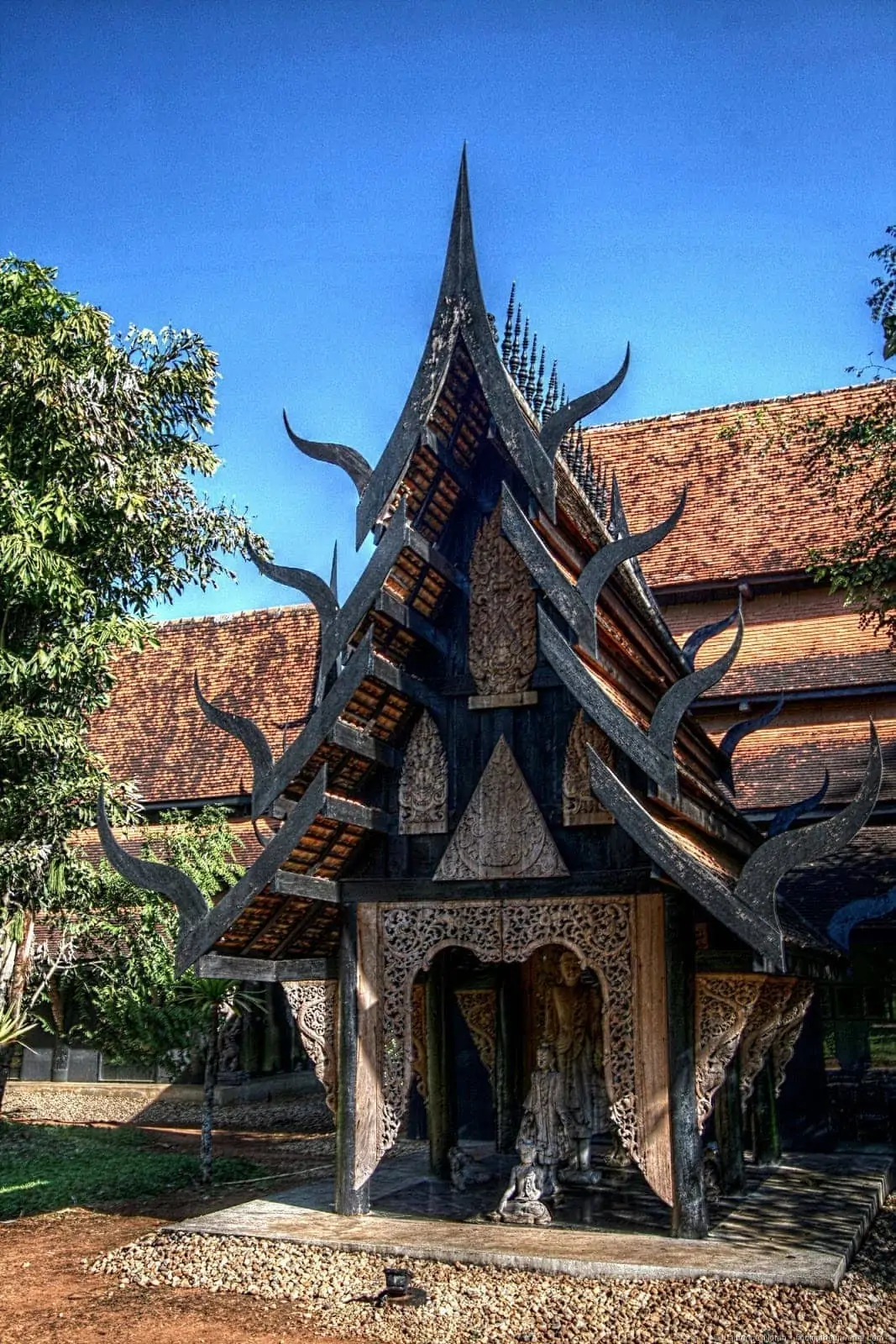
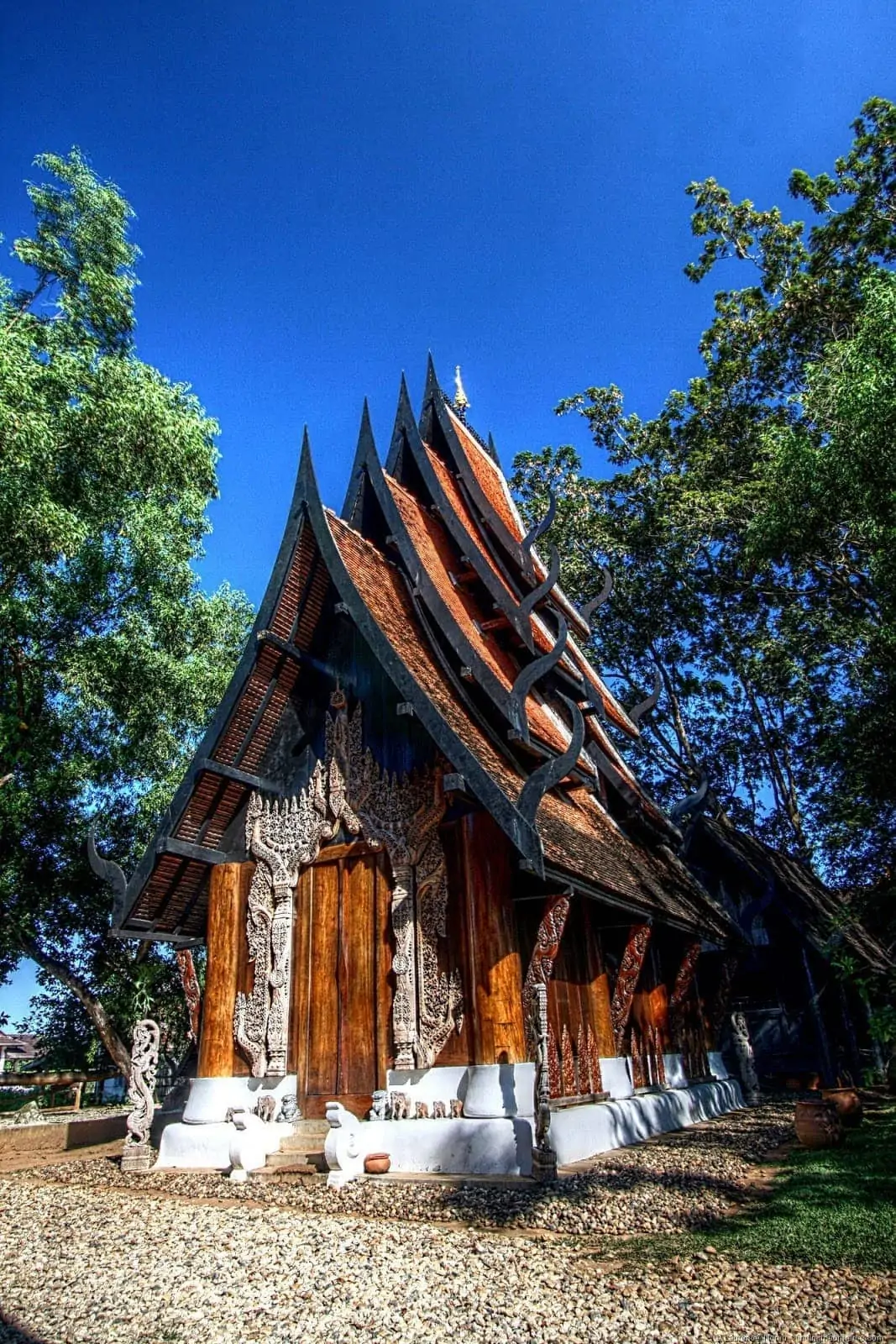
The roofs were very cool.
They’re worth slowing down for. The carpentry is the quiet pleasure of the place, all dark wood, steep Lanna roofs and doorways built on an odd scale.
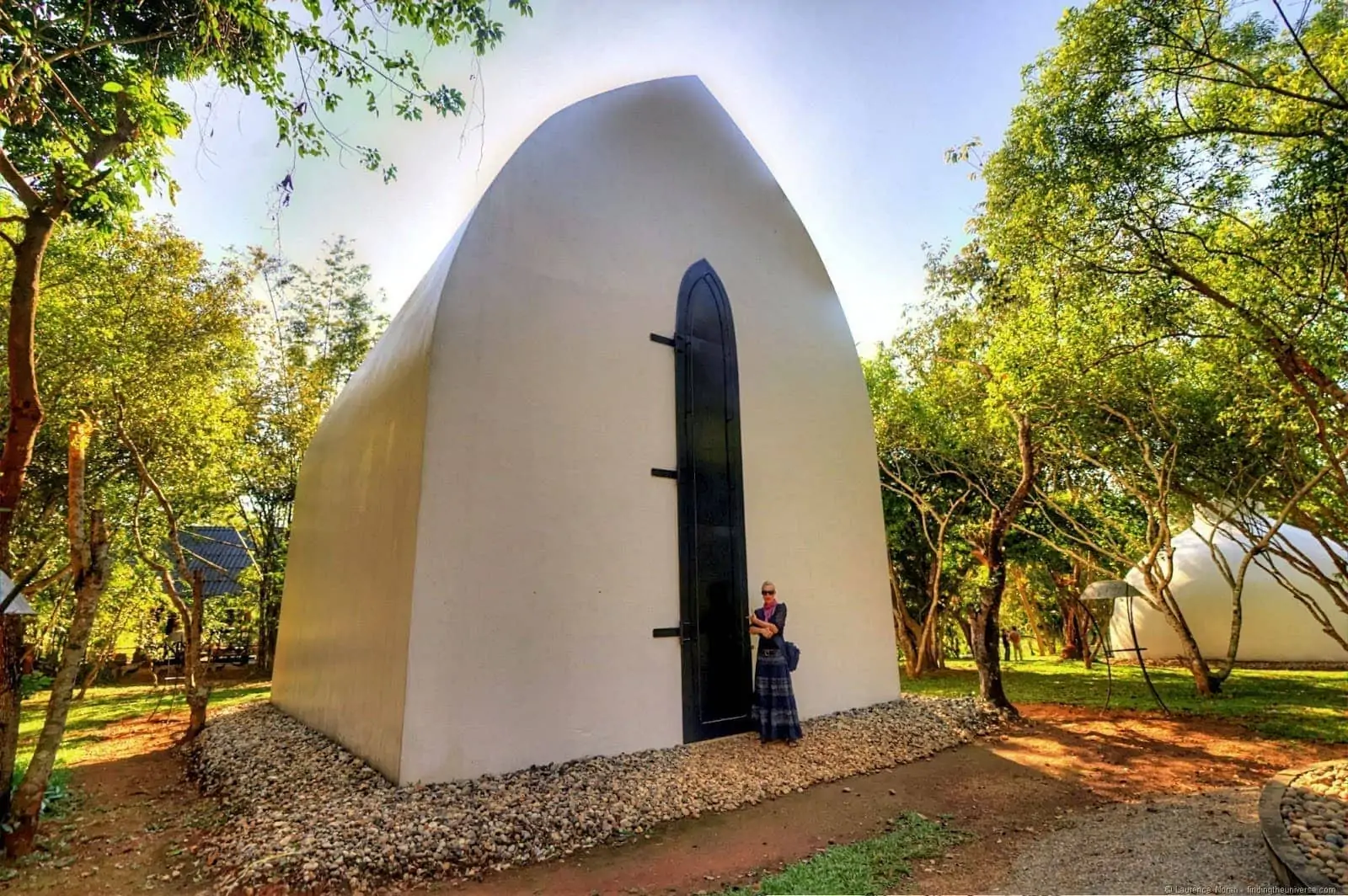
One of the guest rooms, with a doorway built for someone very tall.
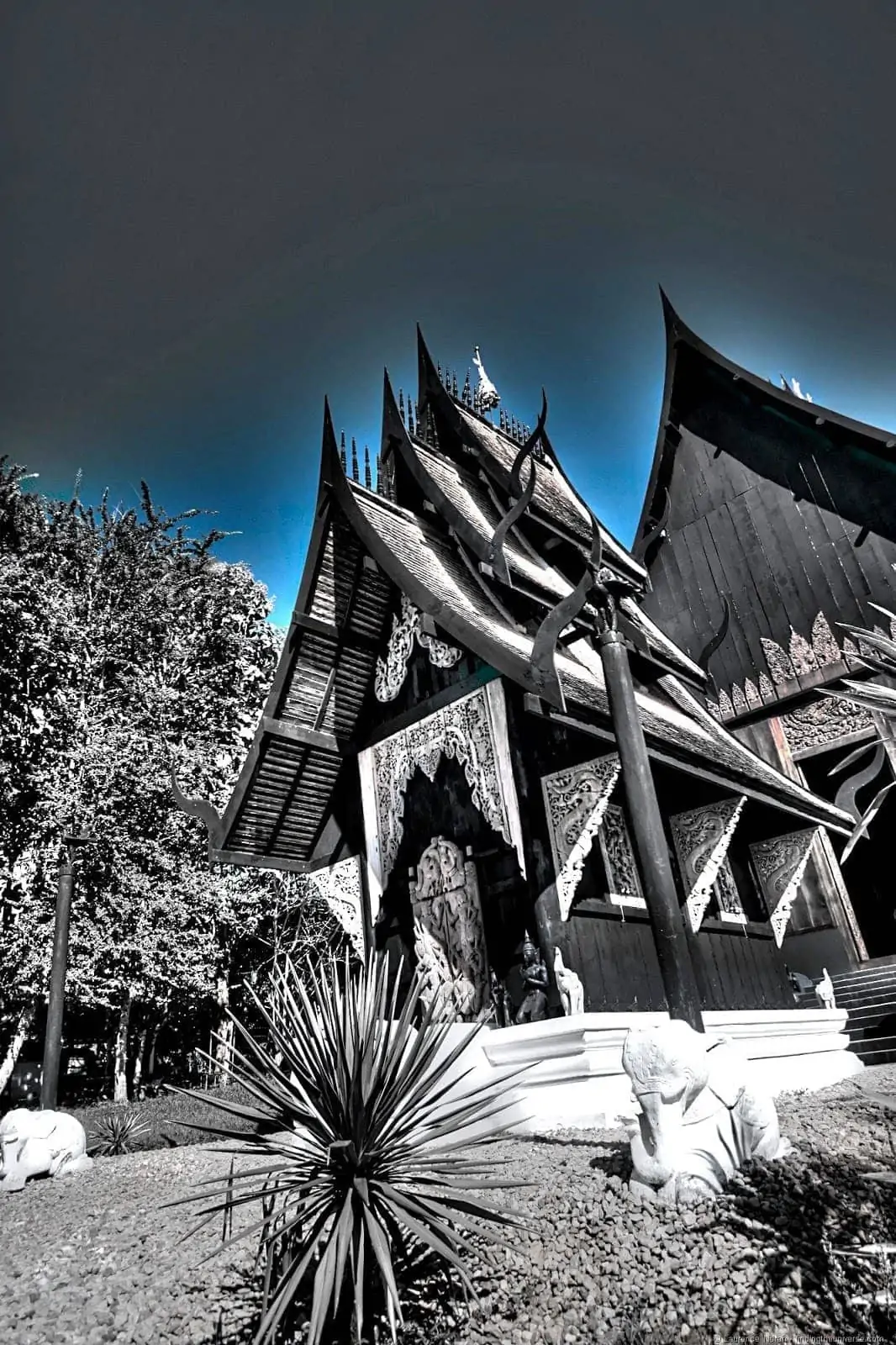
Late light turns the dark timber a deep blue.
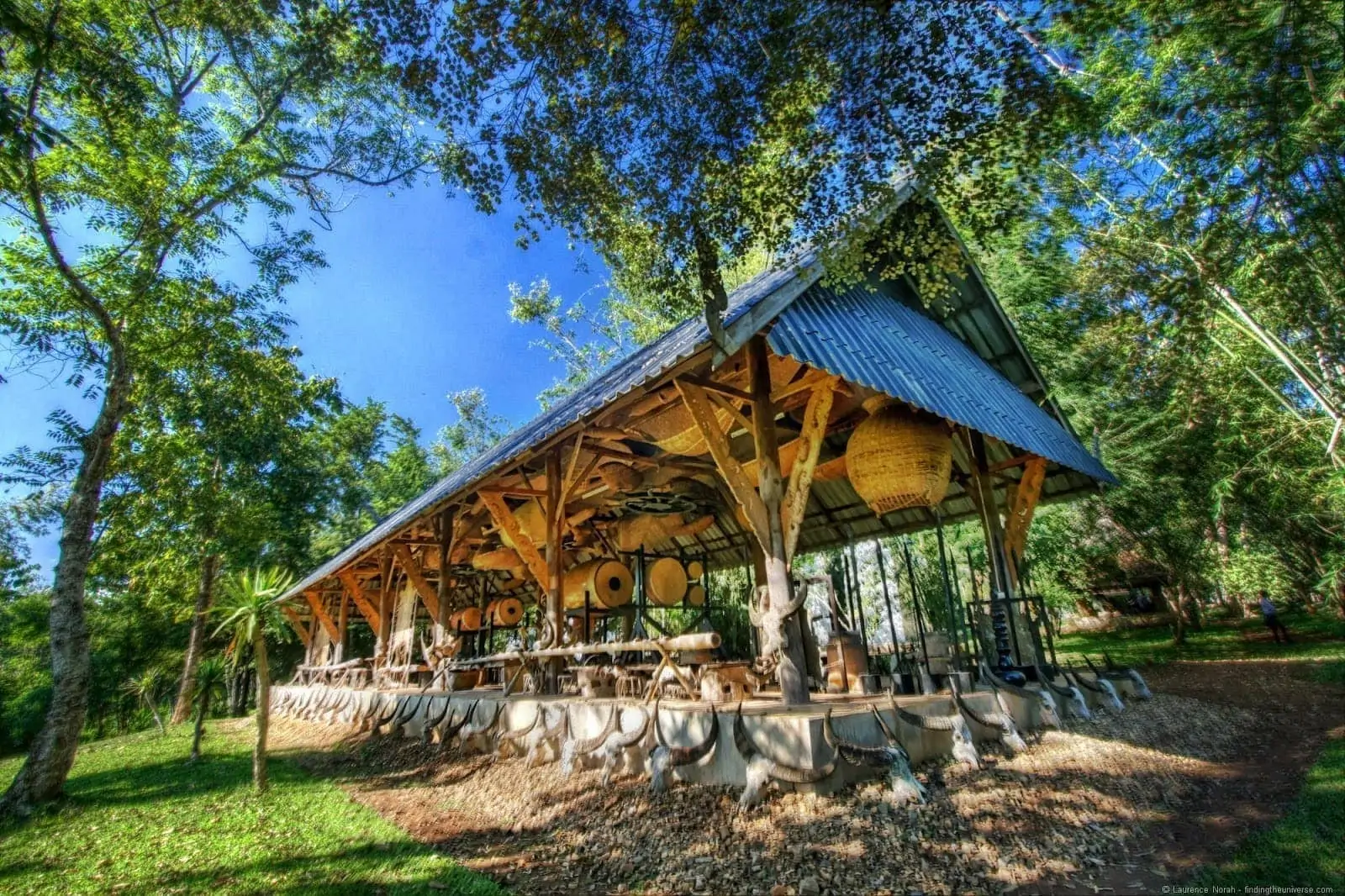
An outdoor space for sitting, playing the drums and peering at a huge collection of animal heads.
The whale, the toilet and the bones
And then there are the buildings that defy a tidy description.
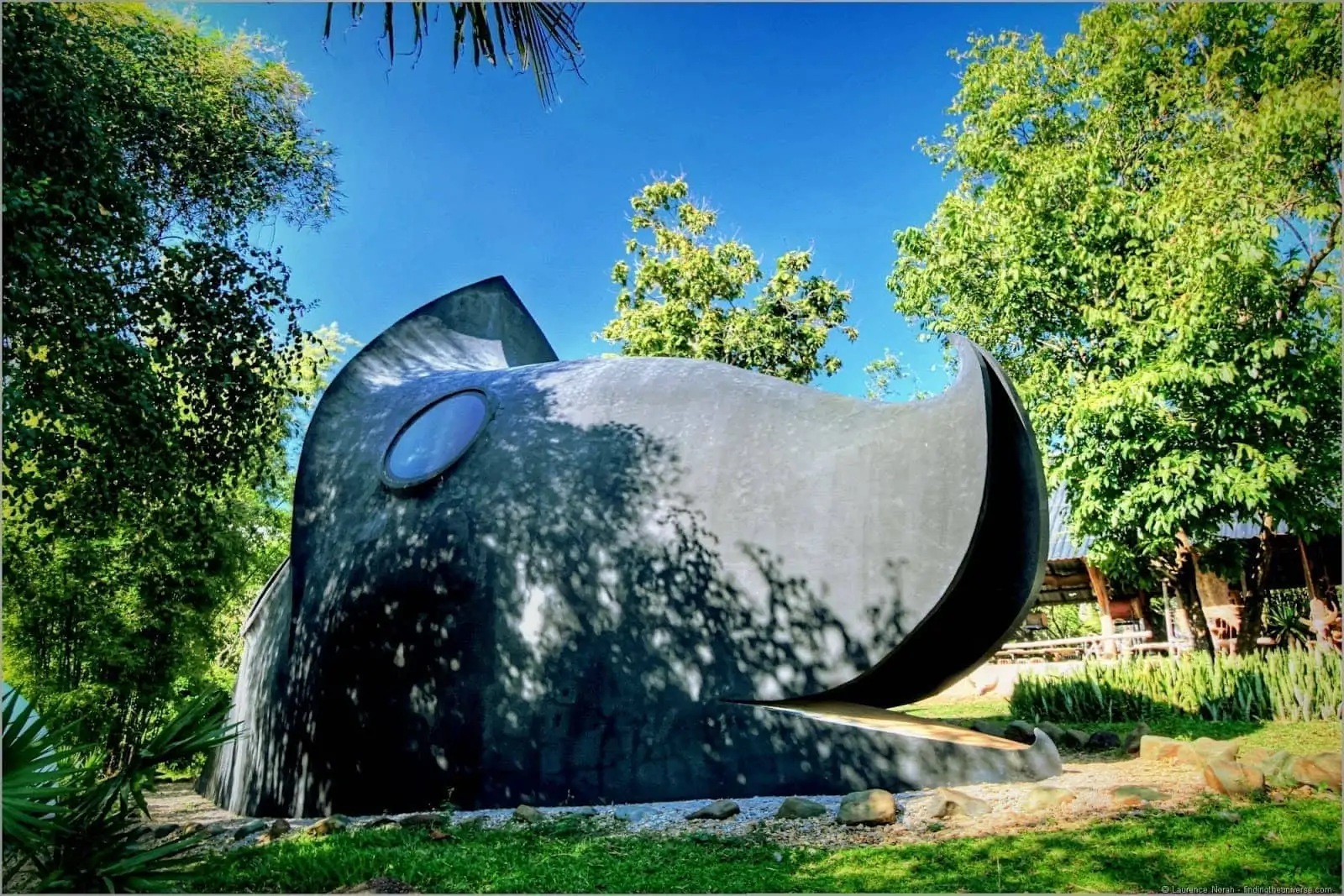
Yes, that does appear to be a large whale room.
One building is, as far as I could tell, a room built around a whale. Another is a toilet, given the same careful and slightly unsettling treatment as everything else on the estate.
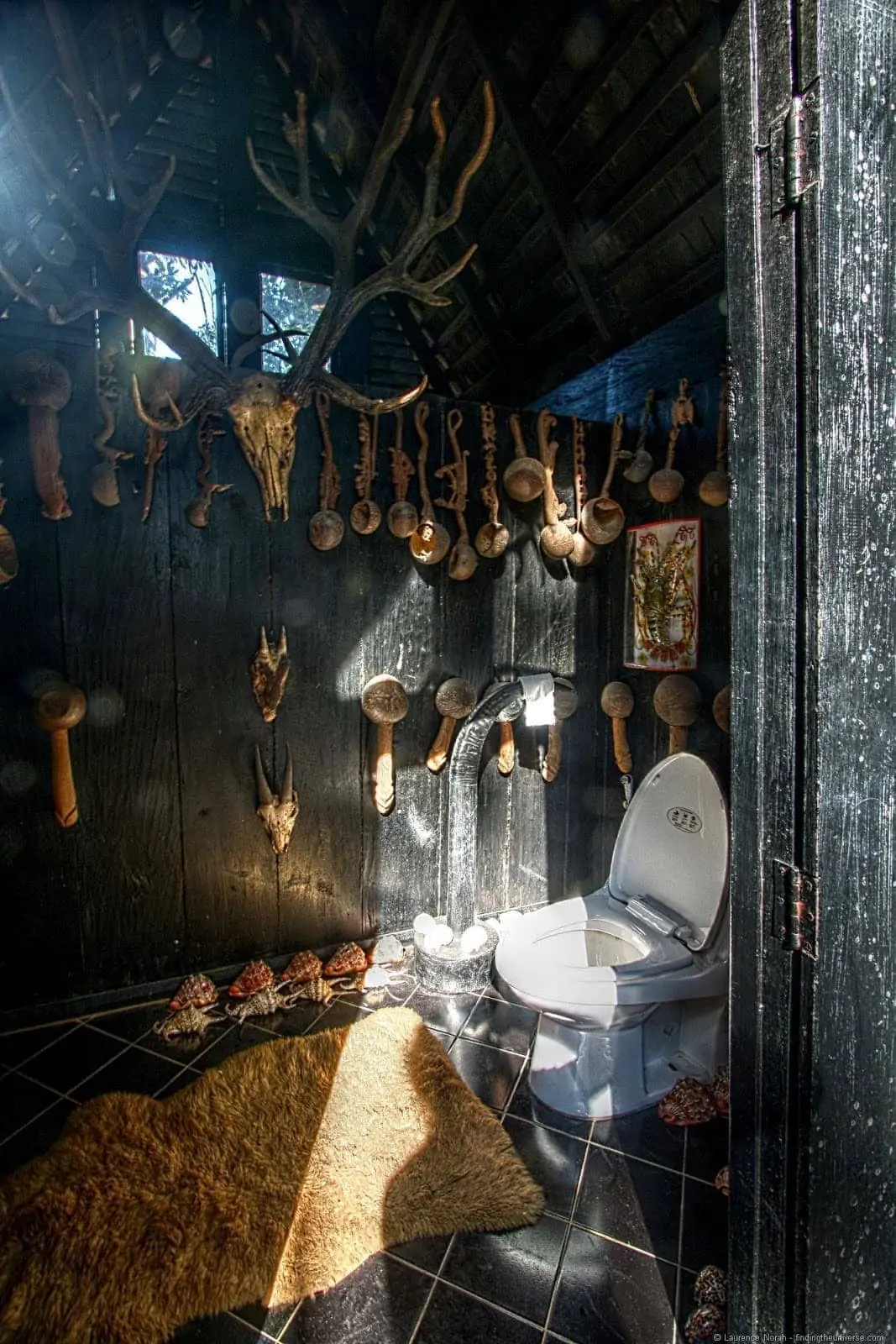
Even artists need toilets.
This is the part of the visit that stays with people. The bones and skins are everywhere, the scale is deliberately strange, and not everyone enjoys it. There’s more below on who the Black House suits.
Black House or White Temple: which is worth your time?
Both are of course worth your time, if you have the day for them. The White Temple and the Black House are very different places, and most people who see one wish they had also done the other.
They sit on opposite sides of Chiang Rai, the White Temple to the south and the Black House to the north, so the two pair naturally into a day out, and many visitors add the Blue Temple (Wat Rong Suea Ten) to make a three-temple loop.
If you have to choose, think about what you want from the visit. The White Temple is the showpiece, dazzling and intricate, and busy with crowds and tour groups for most of the day. The Black House was, for me, the better experience. It was far more serene, the buildings set among large shady trees, with none of the White Temple’s crowds. The bones jar that calm, but the contrast is the point.
For sequencing, I’d visit the Black House first thing, while it’s quiet and cool, then move on to the White and Blue temples.
If you’re putting together a longer trip, our 10-day Thailand itinerary can help you slot Chiang Rai into the wider picture, and the Lonely Planet Thailand guide is a solid companion for the north. And if your Thailand plans include wildlife as well as art, our tale of seeing wild elephants in Khao Yai National Park is a good place to start.
Visiting the Black House: fee, hours and how to get there
The Black House is a little way out of town, but it’s not hard to reach.
Entrance costs 80 THB per adult. Entry was free for years, but a fee was introduced in 2016. The estate is open every day, including weekends and holidays, from 9am to 5pm, though it closes for an hour over lunch, from noon to 1pm, so it pays not to time your arrival for the middle of the day. Allow around an hour to walk the full site, more if you photograph as much as I did!
The estate is in the Nang Lae area, about 20 minutes’ drive north of central Chiang Rai. The simplest options are a Grab car or a tuk-tuk arranged in town. Grab works well in Chiang Rai and is the easiest way out to the Black House. For the return, the spot is semi-rural, so it’s more reliable to ask your driver to wait, or to pre-arrange a pick-up, than to hope to hail one.
You can also do it by public bus, which is cheap and easy enough. From the old bus terminal in central Chiang Rai (Bus Station 1, near the night market), take a local bus heading towards Mae Sai and tell the conductor you want Baan Dam, the Black House.
The ride takes around 20 to 25 minutes and costs roughly 20 THB. You’ll be dropped on the main road, with a short walk of a few hundred metres down a side lane, sometimes marked Soi 13, to the entrance. To get back, cross to the other side of the highway and flag down a Chiang Rai-bound bus.
If you’d rather not deal with the logistics, a guided day tour is an easy alternative, and most combine the Black House with the White and Blue temples in one trip. This White Temple, Black House and Blue Temple day trip is a typical example, with hotel pick-up and all three sites covered in a single day. If you would rather base yourself in Chiang Rai to fit in the White and Blue temples too, Booking.com has a good spread of stays, from guesthouses near the night market to riverside hotels.
Before you go
A few things that will help you get the most from a visit.
Be ready for the subject matter. Animal bones, skins, horns and hides are the main material of the place, and a couple of the rooms are more confronting than that suggests, with some explicit carvings among the art. It’s all part of Thawan Duchanee’s vision rather than shock for its own sake, but if that idea bothers you, it’s better to know in advance than to be caught out by it.
The Black House suits a particular kind of visitor. If you like art that unsettles you a little, or you simply want a calm, shady break from temple crowds, you’ll get a lot out of it. If you’re mainly after the bright, photogenic Thailand of the White Temple, you may find it austere.
Children are usually fine here, though you know yours best. Plenty of families visit, and most kids find the strange buildings more interesting than frightening. If yours is sensitive to the bone-and-skin theme, the open-air layout at least makes it easy to stay outside and keep moving.
And give it a little more time than you think you need. An hour covers everything, but the estate rewards a slow wander, with time to sit in the gardens and let the oddness settle.
Black House Chiang Rai FAQ
Is the Black House in Chiang Rai a temple?
No. Despite the nickname “Black Temple”, it’s a museum rather than a religious building: the former home and studio estate of Thai artist Thawan Duchanee, now open to the public.
Some of the buildings are made in a temple style, which is where the name comes from, but no worship takes place there.
How much does it cost to visit the Black House?
Entrance is 80 THB per adult, paid on arrival. Entry was free in the early years, but a fee was introduced in 2016.
What are the Black House opening hours?
The Black House is open every day, including weekends and public holidays, from 9am to 5pm.
It closes for lunch between noon and 1pm, so aim to arrive in the morning or the afternoon rather than the middle of the day.
How do you get to the Black House from Chiang Rai?
It’s about a 20-minute drive north of central Chiang Rai, in the Nang Lae area. The easiest options are a Grab car or a tuk-tuk.
You can also take a local bus towards Mae Sai from the old bus terminal and ask for Baan Dam. That takes around 20 to 25 minutes and costs roughly 20 THB.
How long do you need at the Black House?
Around an hour is enough to walk the whole site and look inside the main buildings. If you photograph a lot or like to take your time, allow up to 90 minutes.
Is the Black House worth visiting if you have already seen the White Temple?
Yes. The two are very different and sit on opposite sides of Chiang Rai, so they pair naturally into a single day out.
The White Temple is the dazzling showpiece; the Black House is quieter, darker and, for me, the more memorable of the two.
Our visit to the temples of Chiang Rai was arranged by the Tourism Authority of Thailand, and our thanks go to them for making it possible. As always, the opinions here are entirely our own. Have you been to the Black House, or is it on your list? Let us know in the comments below.
Eva Diaz says
Today we have visited the place and there was a horror show with alive bufal full of strings (even into his nose), the poor animal could’nt move and he was on the sun without any food or water. We reclaim to the responsable and he was laughing about us. Which kind of art is the sofering of a poor animal? Which kind of country is Tailand? We are going to do a claim.
Laurence Norah says
Sorry to hear about your experience Eva, that does not sound very nice 🙁
Robin says
you might be interested to know that it now (2022) cost 80 baht per adult to visit the temple. There is also a big art exhibition in the car park well worth looking at.
Laurence Norah says
Thanks so much for taking the time to let me know Robin! We visited quite a long time ago now, but glad to hear it is still worth the visit. I’ve updated the post with your information on the fee and art exhibit. Your input is most appreciated!
Laurence