
Mobile is the nearest coastal city to home for us. We live in Montgomery, about two and a half hours up I-65, and when we want salt air, live oaks and a proper plate of oysters without crossing a state line, Mobile is where we point the car. It’s also one of the most historically significant cities in the American South, and worth giving a full weekend.
Mobile is also a city where the operational details make or break the trip. Half of what you’ve come to see is shut on the day you were planning to see it, the one thing you really shouldn’t miss needs a timed ticket booked before you travel, and in August the order you do things in decides whether you enjoy the day at all.
If you just want the plan: day one on the battleship and downtown Mobile, day two at the Clotilda exhibition and the waterfront, visit on a Friday and Saturday if you possibly can, and book your Clotilda timed ticket before you travel. The rest of this article explains why, and what to do instead if those pieces don’t fit your dates.
Table of Contents:
First, Pick the Right Two Days
The day of the week you visit Mobile matters, because unlike many cities where attractions have decided to share a day where they all close, Mobile has its own fun approach to closure days.
Three of the city’s most important attractions have closure schedules that barely overlap. Clotilda: The Exhibition is closed on Sunday and Monday. The National Maritime Museum of the Gulf is only open Wednesday to Saturday. And the Mobile Carnival Museum is closed on Tuesday, Thursday and Sunday, an awkward pattern that catches a lot of visitors out.
Lay those on top of each other and only three days of the week have all three open: Wednesday, Friday and Saturday.
| Day pairing | Verdict |
|---|---|
| Friday + Saturday | The best option. Everything in this itinerary is open on both days, so you can swap things around freely. |
| Wednesday + Thursday | Works, but the Carnival Museum has to go on Wednesday, as it’s shut on Thursday. |
| Thursday + Friday | Works, with the Carnival Museum on Friday. |
| Saturday + Sunday | Poor. Sunday loses the Clotilda exhibition, the Carnival Museum and the Maritime Museum in one go. |
| Sunday + Monday | Avoid if you can. Most of what makes Mobile worth visiting is closed. |
Mobile Prices and Opening Days at a Glance
Here are the headline numbers for the attractions in this itinerary, correct as of mid 2026. I’d still check the official sites before you travel, of course. They’re all linked in the relevant sections below.
| Attraction | Adult price | Open | Closed |
|---|---|---|---|
| USS Alabama Battleship Memorial Park | $18 (plus $5 parking) | Daily 8am to 5pm | Christmas Day |
| Clotilda: The Exhibition | $15, timed entry | Tuesday to Saturday, 10am to 5pm | Sunday, Monday |
| Mobile Carnival Museum | $8 | Mon, Wed, Fri, Sat, 9am to 4pm | Tuesday, Thursday, Sunday |
| History Museum of Mobile (includes Fort Condé) | $14 | Mon to Sat 9am to 5pm, Sun 1pm to 5pm | Free on the first Sunday of each month |
| National Maritime Museum of the Gulf | $19 (Oct 2026) | Wednesday to Saturday, 10am to 4pm | Sunday to Tuesday, plus city holidays |
Day 1: The Battleship and Downtown Mobile
Day one runs the causeway first and downtown after, with the big outdoor stop while it’s cool and the museums saved for the hot part of the afternoon. You can of course run the day in a different order, but in August I really wouldn’t, and I’ve explained why below.
8:00am: USS Alabama Battleship Memorial Park
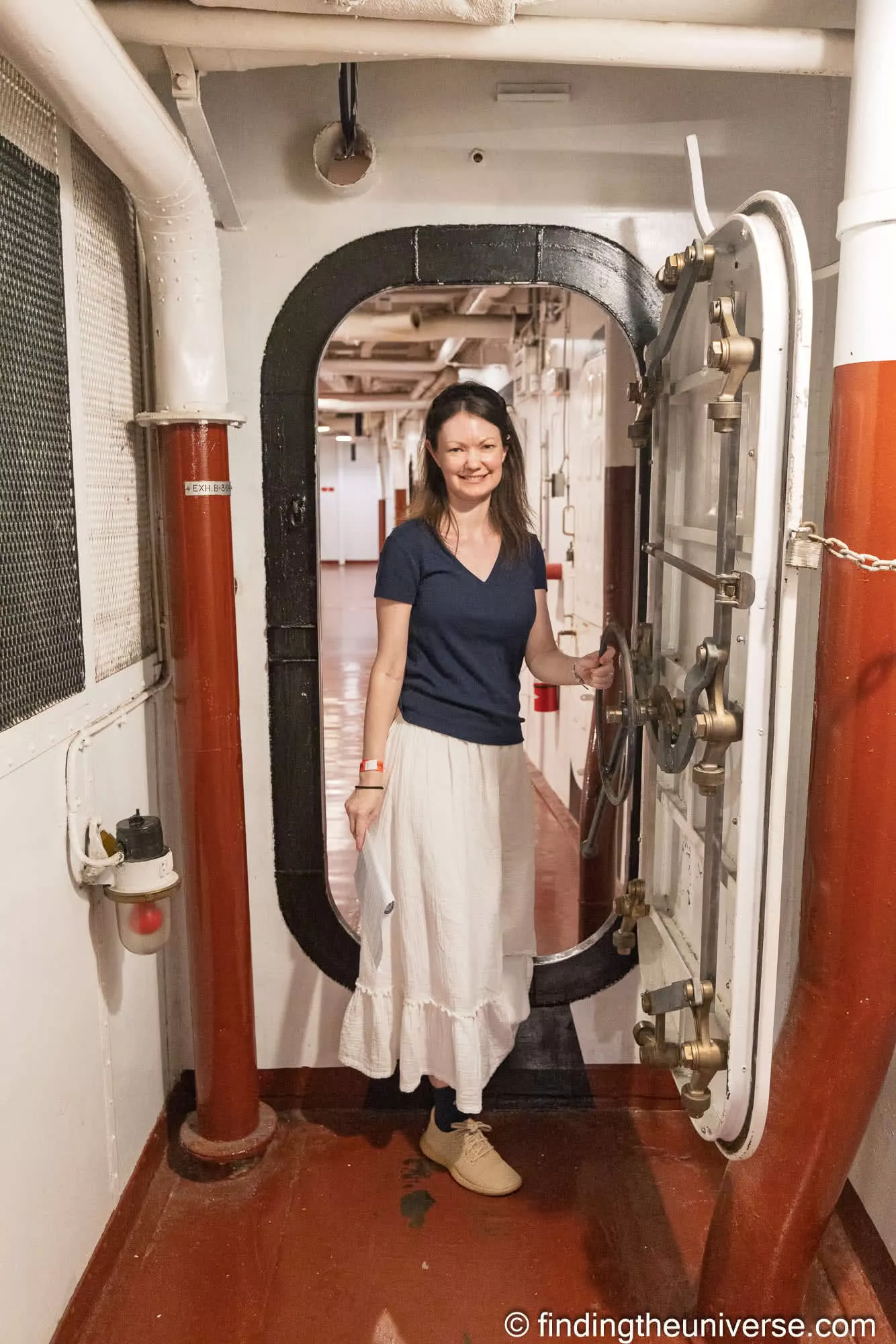
If you don’t mind an earlier start, head to Battleship Memorial Park when the gates open at 8am. The park sits on Mobile Bay just off the causeway, and it’s built around the USS Alabama, a South Dakota class battleship that fought in the Pacific in World War II. You can climb through nine decks of her, from the engine rooms up to the gun turrets, and alongside her you’ll find the submarine USS Drum and a pavilion full of aircraft.
There’s a reason this goes first on the itinerary. The ship is a huge piece of steel sitting in full sun, and by mid morning in summer the decks radiate heat like an oven door. It is air conditioned inside, but our experience was that this resulted in patches of the ship with warmer and cooler air, and it just gets hotter as the day goes by. At 8am you’ll have low light, cooler air, and large sections of her close to yourself.
One practical note from doing it: don’t take a camera bag aboard. You’re through watertight hatchways and up ladders between decks with both hands wanting to be free, and a bag on your back turns every doorway into a negotiation. I carried one wide lens and my phone and didn’t miss the rest of my camera kit once.
We did all nine decks. The bridge right at the top is a surprisingly tiny room to run a ship that size from.
Admission is $18 for adults, which covers ages 12 to 55, and that matters if you’re travelling with teenagers, as there’s no youth discount for them. Seniors over 55 pay $15, children aged 6 to 11 pay $6, under 6s are free, and active duty military get in free. Parking is $5 which you pay as you enter the park.
Veterans ($15) and AAA members ($16) get discounted rates, but only at the ticket window in person, so don’t pre book online if you qualify for either. The ticket office closes at 4pm.
Plan on two and a half to three hours. Check current details on the official USS Alabama site.

11:00am: Lunch on the Causeway
You’ll come off the battleship hungry, and Felix’s Fish Camp is ten minutes further along Battleship Parkway at number 1530, which puts it on the way back into town. It opens at 11am Monday to Saturday, and it’s closed on Sunday.
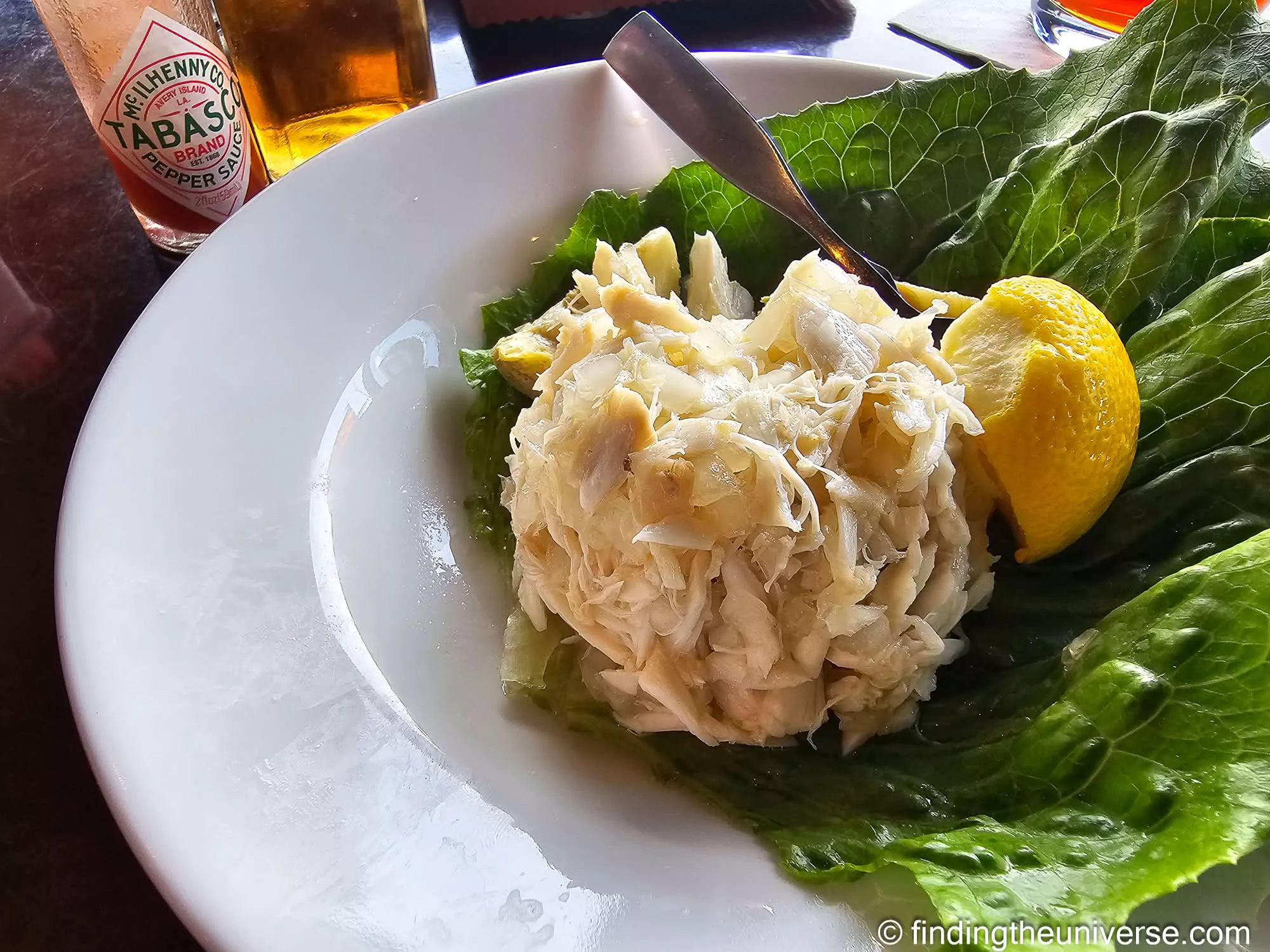
Order the West Indies salad, the marinated crab dish Mobile claims as its own, and quite rightly! This is where we had ours, and it’s the version that sold us on the dish.
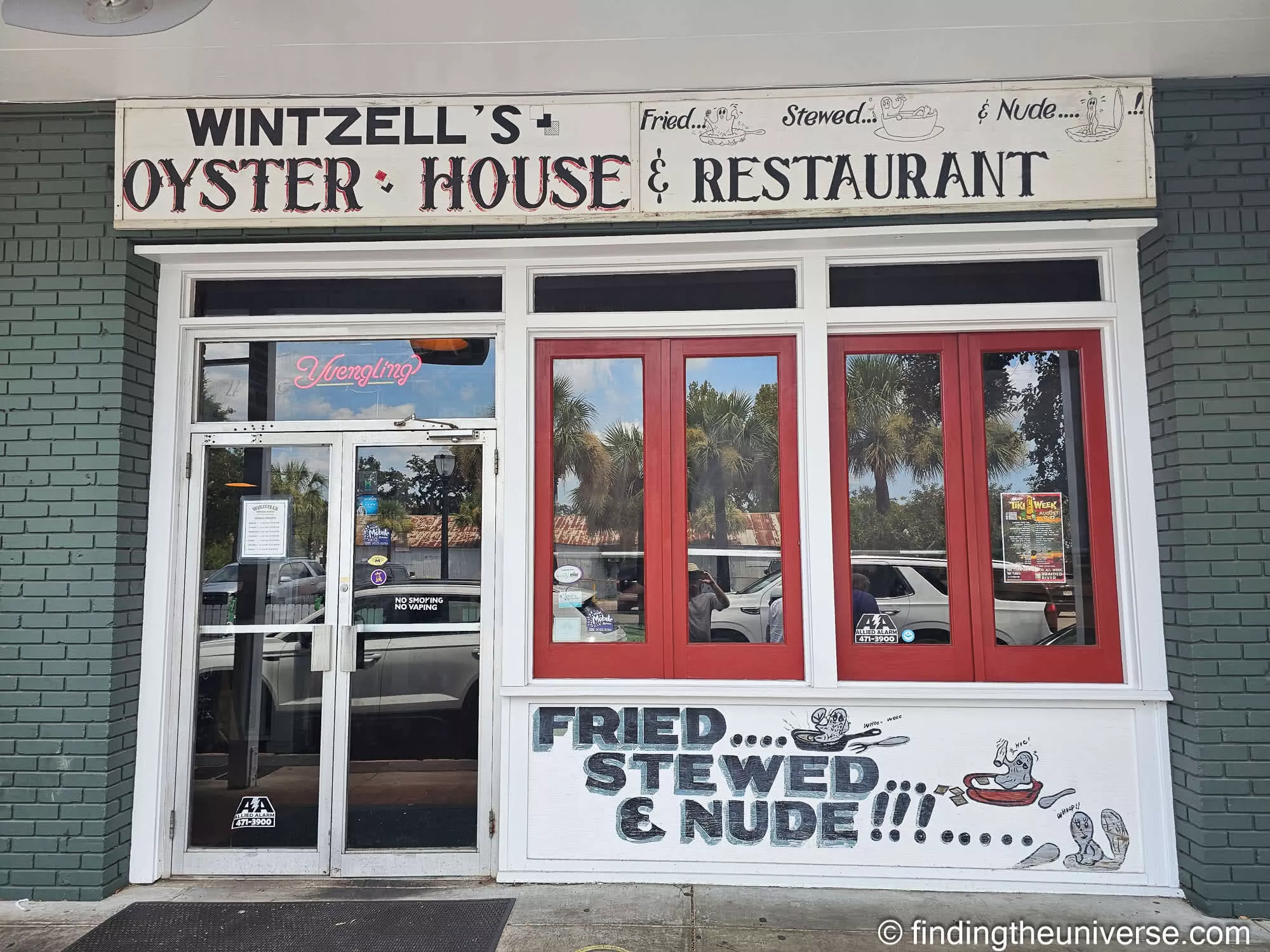
If you’d rather eat in town, Wintzell’s Oyster House at 605 Dauphin Street is the city’s institution and does the same salad. It opened in 1938 with six stools and oysters at fifteen cents a dozen, it’s been in the same building ever since, and roughly 6,000 hand painted sayings cover the walls. The oysters come, in their words, fried, stewed or nude.
12:30pm: Fort Condé
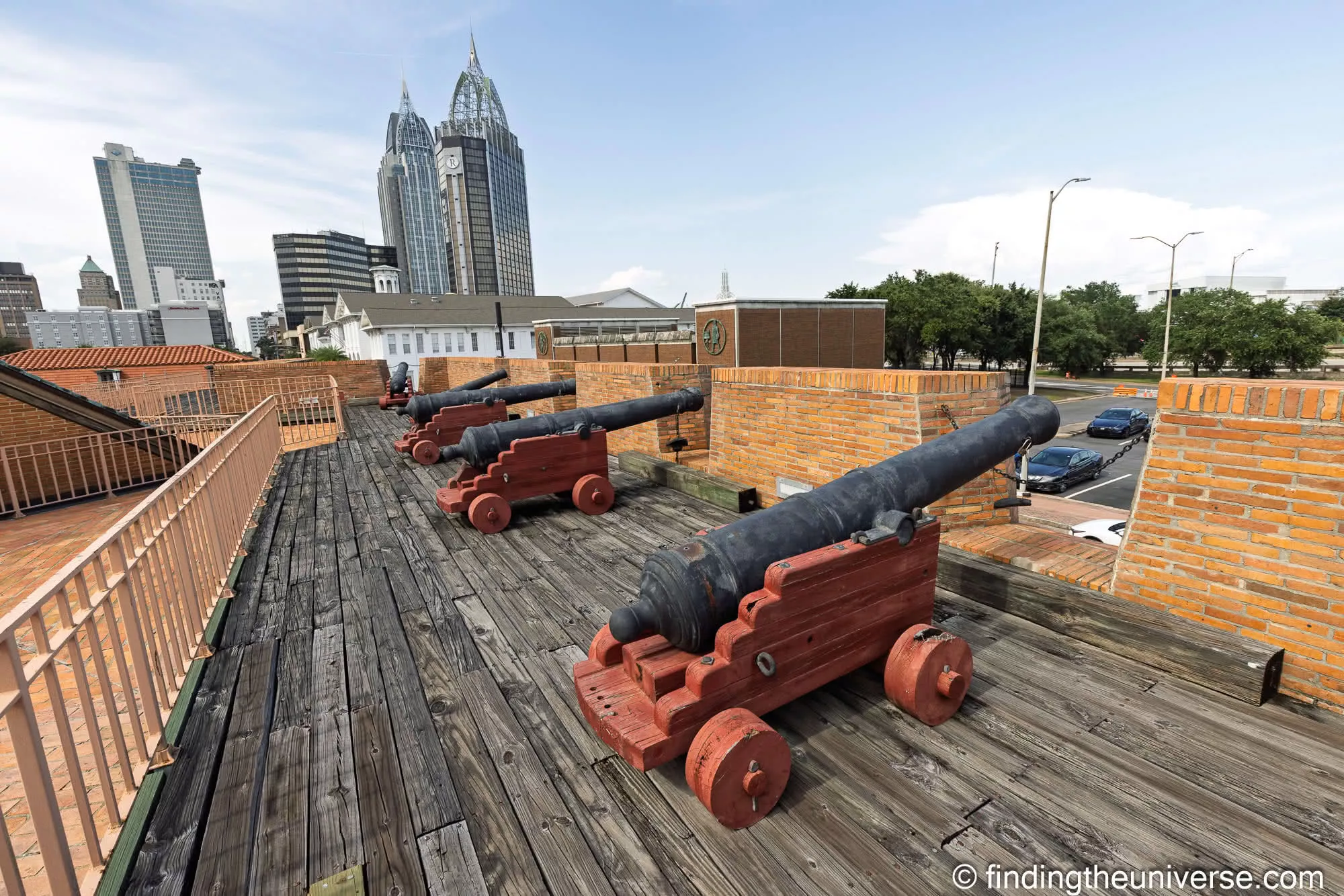
Drive on into downtown, about ten minutes from the causeway, and stop at Colonial Fort Condé at 150 South Royal Street. It’s a partial reconstruction of the French fort the city grew up around in the early 1700s, and it works well as a short orientation stop, since the whole walkable core of Mobile fans out from here.
Entry is included with History Museum of Mobile admission (you’ll probably have to go the history museum first to get your ticket). One small trap: the fort closes at 4:30pm, half an hour before the museum itself, so it’s better placed here than at the end of the day.
1:30pm: History Museum of Mobile
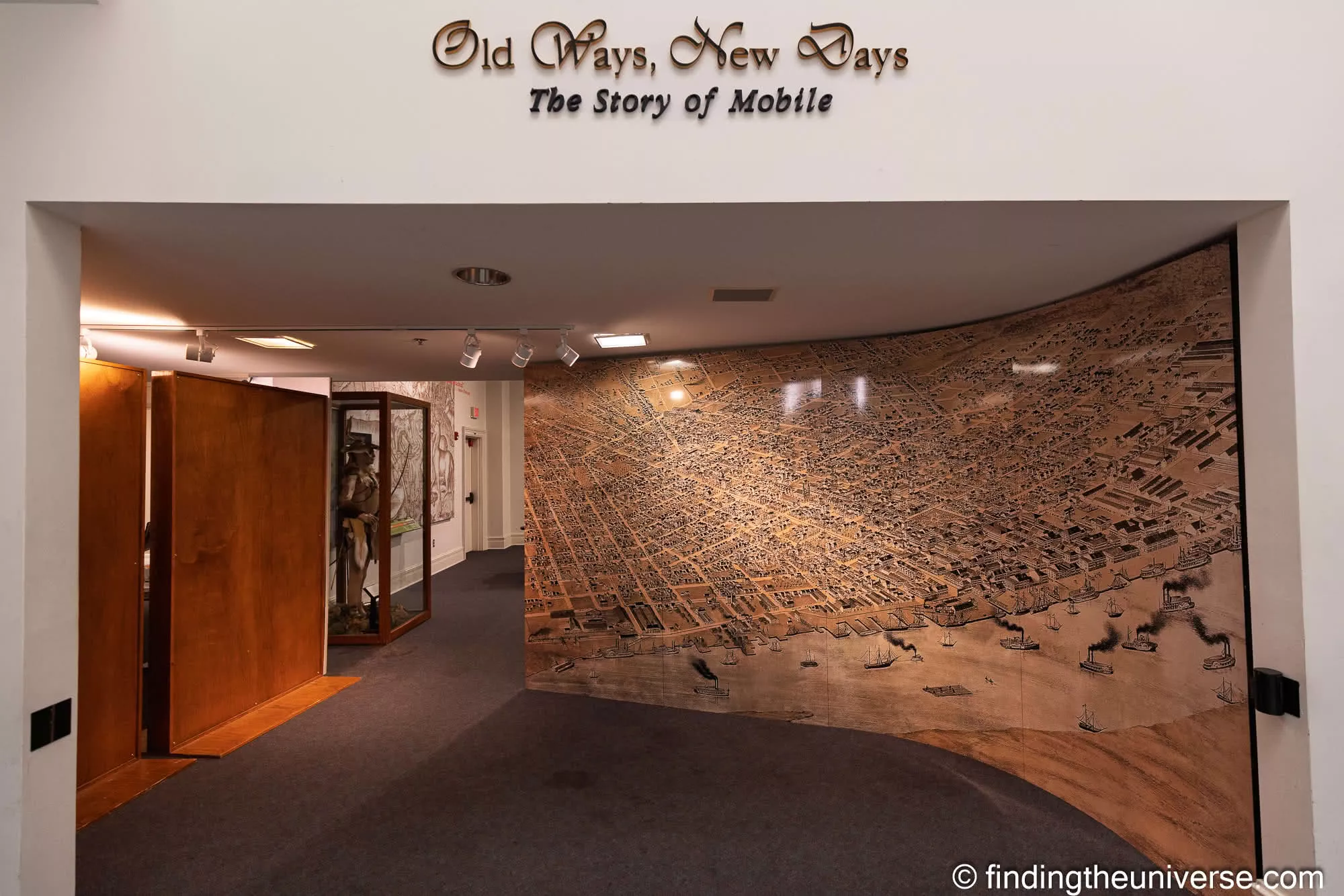
The History Museum of Mobile occupies the old City Hall, a couple of minutes’ walk from the fort, and it’s our suggested way to spend the hottest part of the afternoon. The collection runs from the French colonial period through the Civil War to the twentieth century, and it gives you the context that makes the rest of the weekend make sense.
The part that stayed with me was the run of disasters. Hurricanes, floods, yellow fever, one after another after another, and you come away with a very clear picture of how hard a place this was to live in for most of its history. That’s before you get to slavery, which is what day two is about.
Admission is $14 for adults, $8 for children 6 to 12, and $10.50 for teens, with Fort Condé included. If your trip happens to include the first Sunday of the month, admission is free that day. Hours and details are on the museum’s site. Note the tourist information site is in this building as well, and the helpful folks in there can give you suggestions on everything to where to eat to what to see. So if you need more inspiration, definitely drop by that office as well.
3:00pm: Mobile Carnival Museum
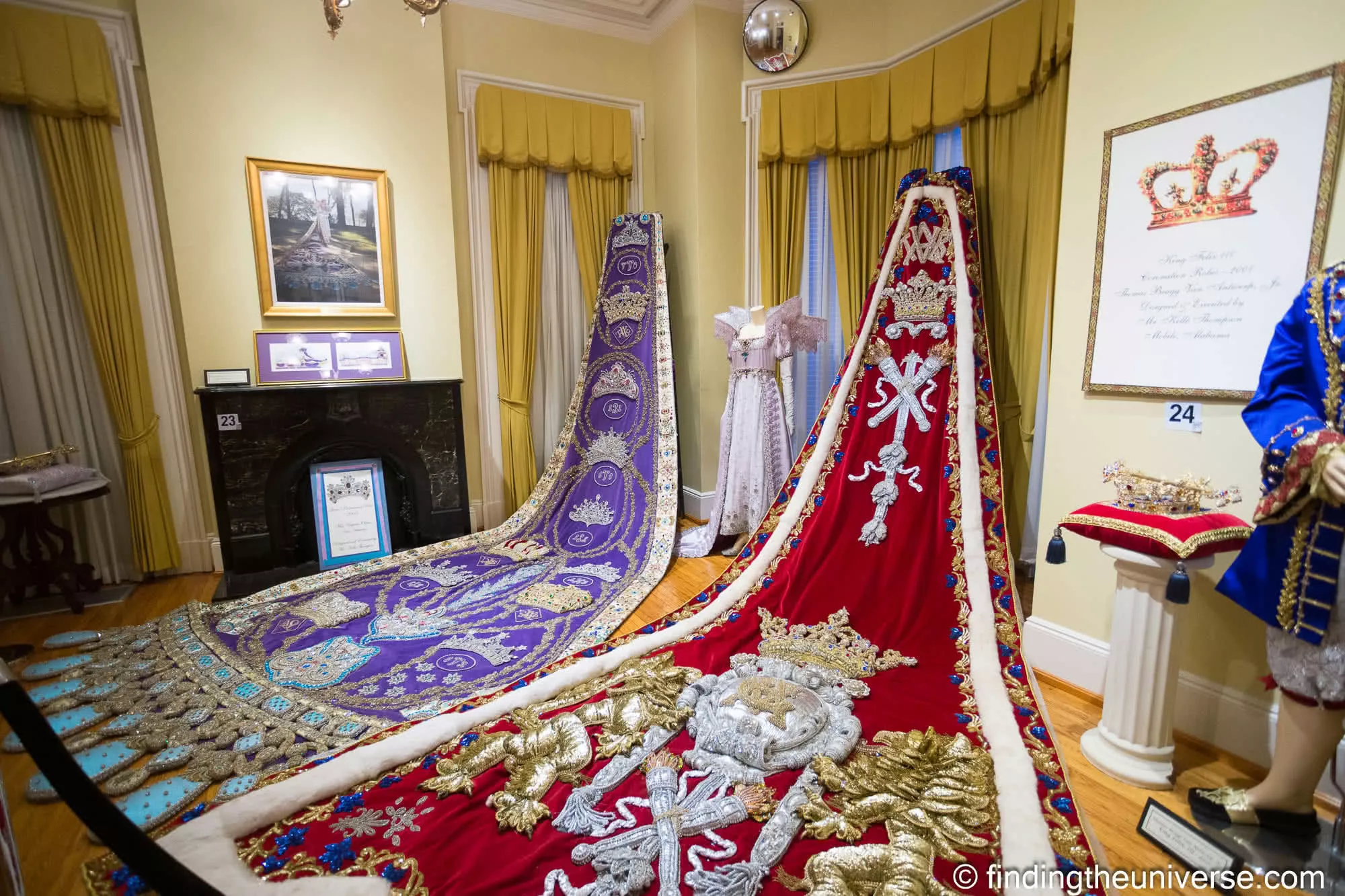
A short drive or a fifteen minute walk brings you to the Mobile Carnival Museum at 355 Government Street, in the Bernstein-Bush mansion. This is where Mobile makes its case as the home of American Mardi Gras, and it does it with coronation gowns, crowns, float designs and a rocking float you can climb aboard. There’s a full section on the history further down this article, because it deserves more than a paragraph.
Admission is $8 for adults, $6 for military, students, AAA and AARP members, and $3 for children 12 and under. Remember the odd schedule: open Monday, Wednesday, Friday and Saturday only, 9am to 4pm. Docent led tours run at 9:30am, 11am and 1:30pm when a docent is available. Details on the museum’s site.
5:00pm: Dauphin Street, Bienville Square and Mardi Gras Park
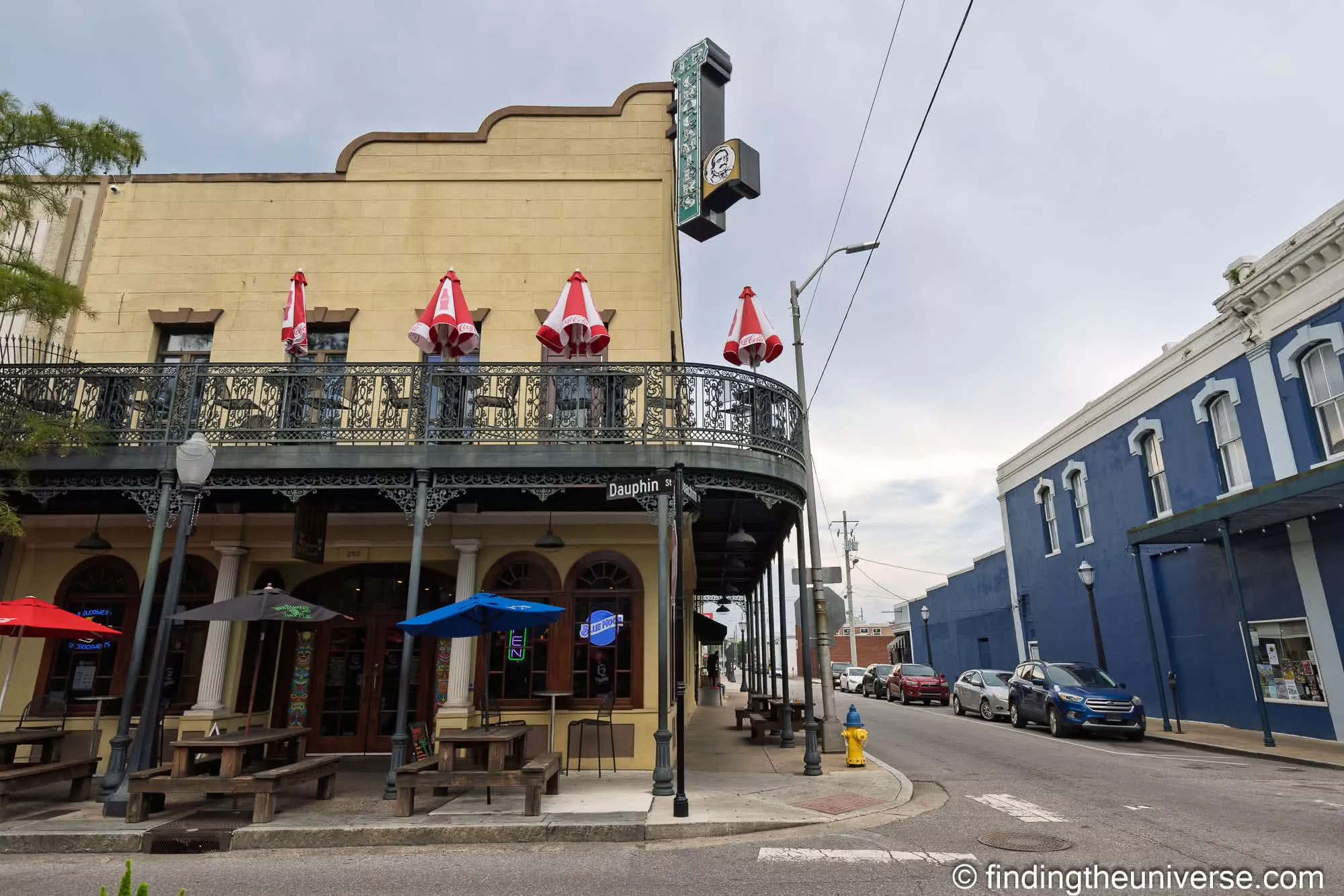
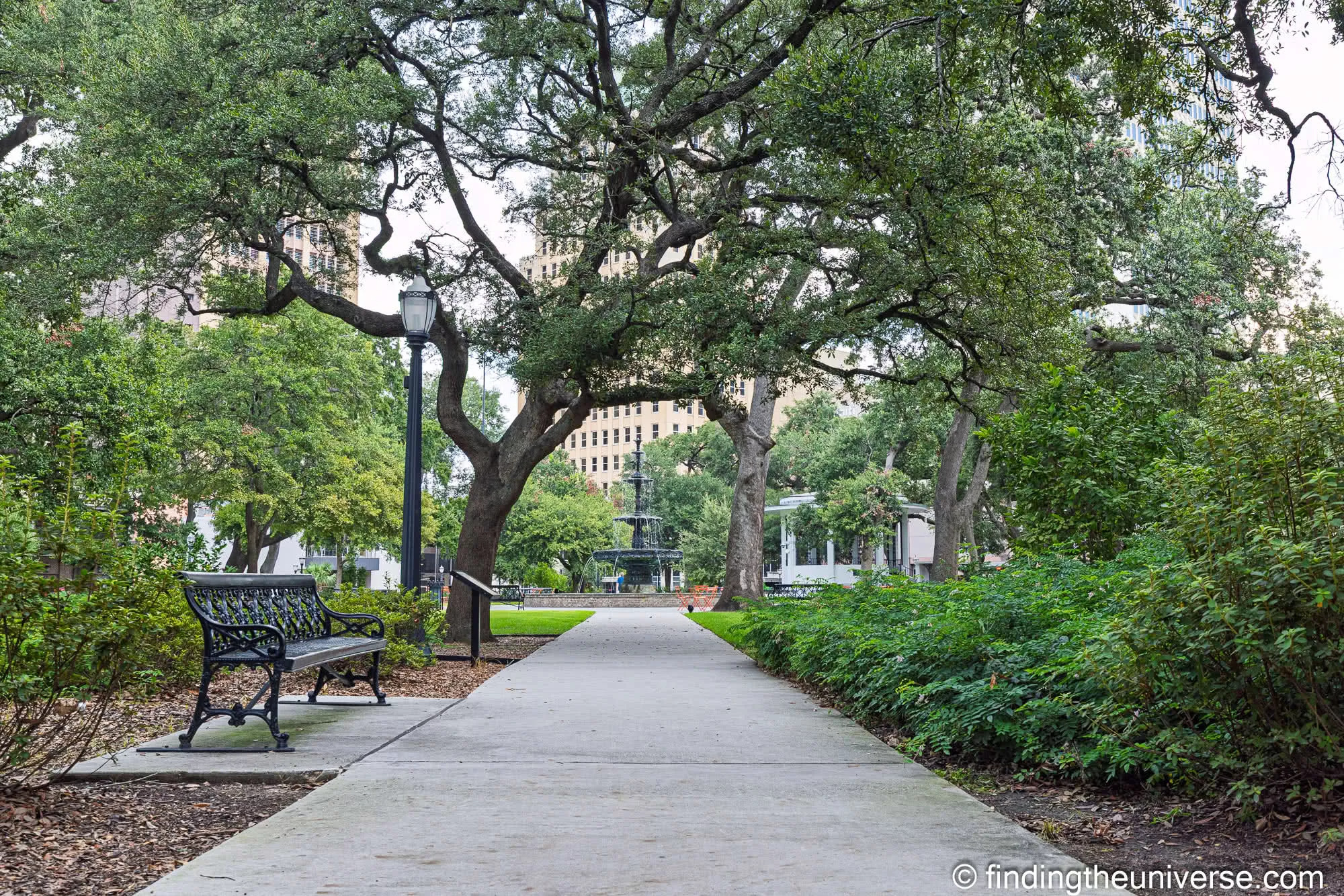
By late afternoon the heat has usually broken enough to walk, and downtown Mobile rewards it. Start in Bienville Square, the old town square with its canopy of live oaks and Spanish moss, then wander Dauphin Street itself, looking up as you go. The cast iron balconies are the detail everyone photographs at midday and gets wrong, the light is far better in the last two hours of the day.
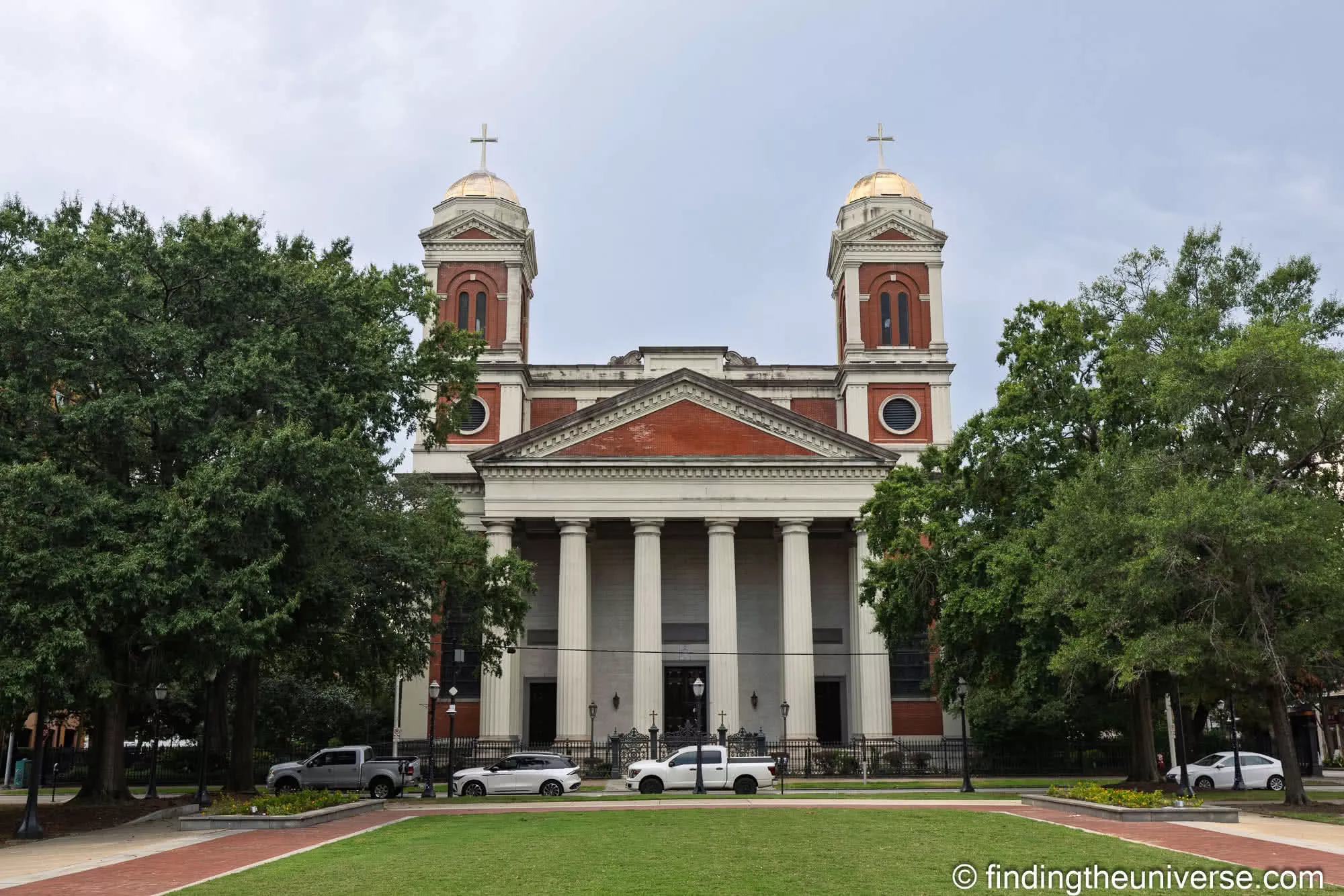
Loop past the Cathedral Basilica of the Immaculate Conception, whose Greek Revival portico of fluted Doric columns was added in the 1870s, a generation after the cathedral itself was finished, and finish in Mardi Gras Park, where the columns and statues nod to the mystic societies that run the city’s Carnival.
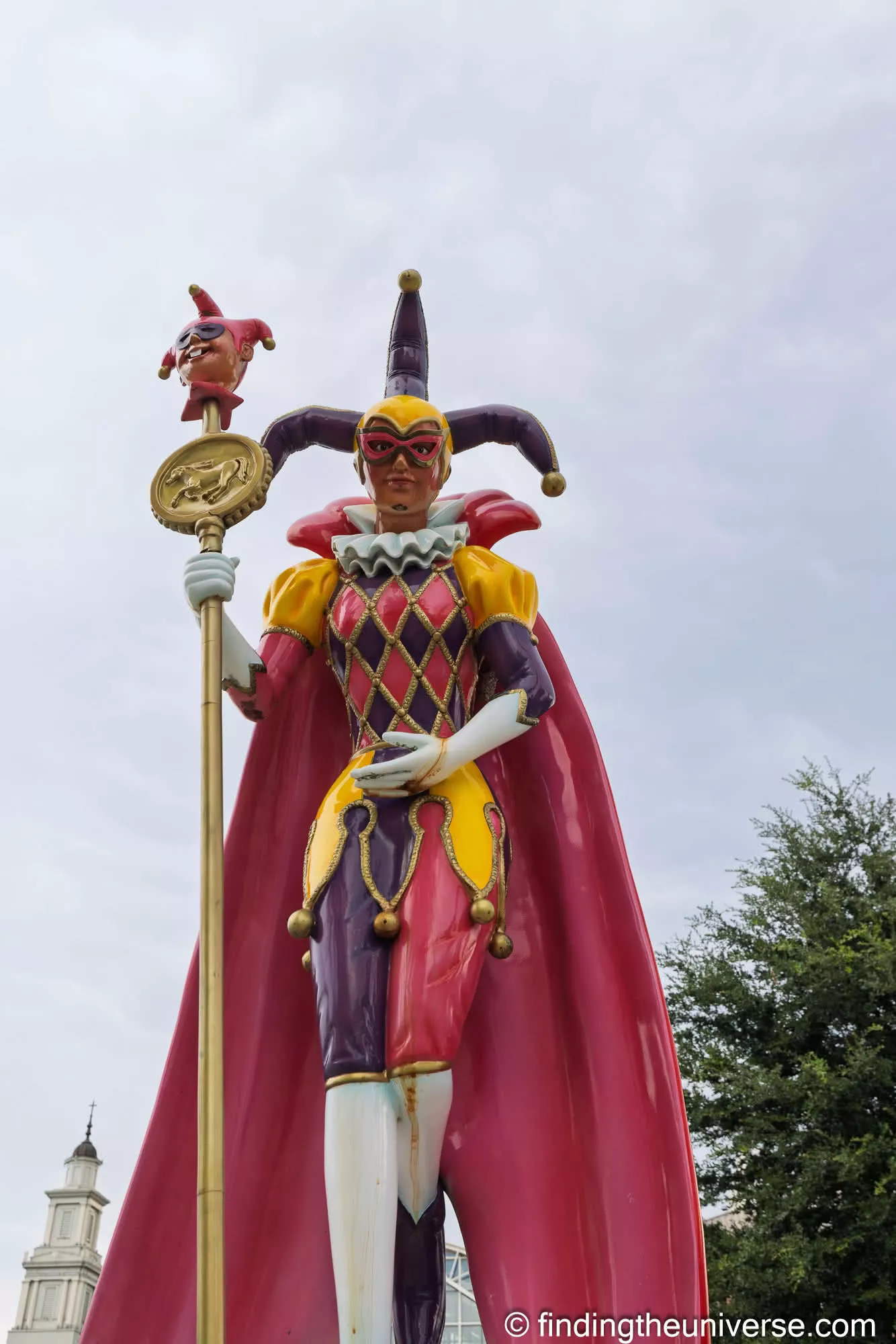
The balcony that stopped me was a corner one that wraps right around the building instead of sitting flat across the front, so you get two faces of it in a single frame. Mardi Gras Park itself is a pleasant square with a jester presiding over it, and we got there in the late afternoon. The monument lighting is a blue hour shot, so if that’s what you’ve come for, walk back down after dinner.
7:00pm: Dinner on Dauphin Street
Stay on Dauphin for the evening, it’s the restaurant and bar corridor of the city and you can pretty much pick your register, from white tablecloth to dive bar. There are specific recommendations in the Where to Eat section below.
One date worth engineering if you can: on the second Friday of every month, LoDa ArtWalk closes lower Dauphin to traffic from 6pm to 9pm, the galleries and studios open late, and the whole street turns into a free pedestrian evening. It’s the best version of downtown Mobile you can experience, and it decided which weekend we’d recommend without much of a fight.
Day 2: Africatown and the Mobile Waterfront
Day two is the day that separates this itinerary from a standard city break, and it needs one piece of admin done in advance: a timed ticket for the Clotilda exhibition, booked online before you travel. Weekend slots on a capacity limited exhibition can go early.
10:00am: Clotilda: The Exhibition at Africatown Heritage House
In 1860, more than fifty years after importing enslaved people into the United States had been made illegal, a ship called the Clotilda arrived in Mobile Bay carrying around 110 captive West Africans. She is the last known slave ship to reach the United States.
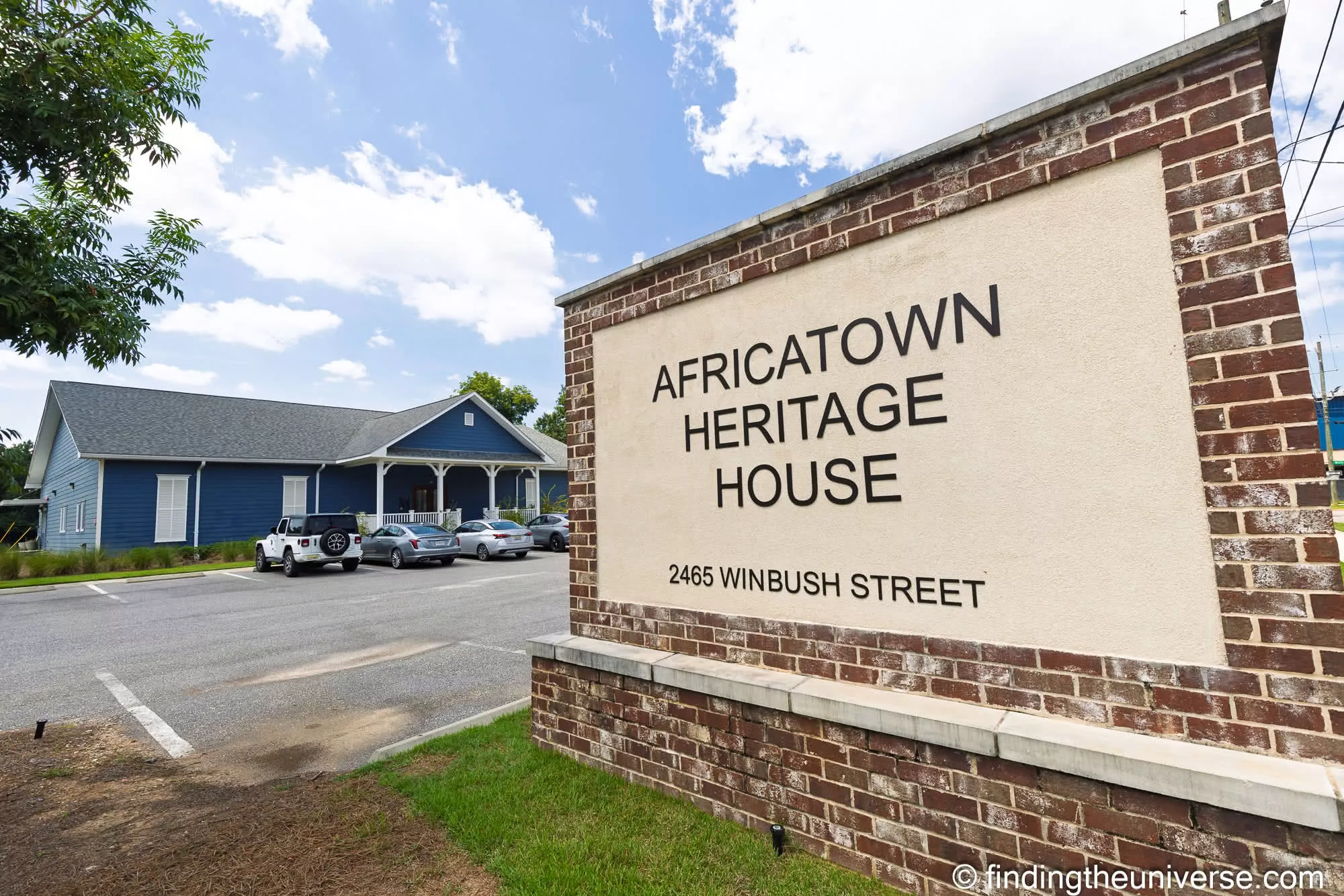
Her survivors, freed five years later at the end of the Civil War, founded a community three miles north of downtown Mobile and called it Africatown. The story of the ship, the people aboard her, and the community they built is told at Clotilda: The Exhibition, inside the Africatown Heritage House at 2465 Winbush Street.
It is, and I don’t say this lightly, the most significant thing you can see in Mobile. The exhibition holds recovered pieces of the ship itself, confirmed in 2019 after a widely reported 2018 find turned out to be a different vessel entirely, and it tells the survivors’ stories individually, by name.
I can’t pick one story out of it for you. It’s the accumulation that does it, a list of names and behind every name a whole life spent carrying an injustice that began with a crime somebody chose to commit. And it’s recent. The wreck was only confirmed in 2019, and Africatown is still there and still lived in. The descendants of the enslaved people are still here.
The practical details are important:
- Open Tuesday to Saturday, 10am to 5pm, with the last ticketed entry at 4pm. Closed Sunday and Monday.
- Entry is by timed ticket with limited capacity. Book ahead online via clotilda.com. A small number of same day tickets are sold first come at the desk, but I wouldn’t gamble a trip on them.
- Adults $15, seniors, military and students $9, ages 6 to 18 $8, age 5 and under free. Mobile County residents enter free with proof of residency.
- There’s no photography inside the exhibition. The operator asks for this to preserve the solemnity of the experience.
11:30am: Africatown on Foot
Give the hour after the exhibition to Africatown itself. People live here. It isn’t a heritage park, so walk it the way you’d want strangers walking your own street. The sites sit close together, and the full story of why they matter is in the Africatown section further down.
Outside Union Missionary Baptist Church is the memorial bust of Cudjo Lewis, one of the last adult survivors of the Clotilda, mounted on a pyramid of bricks made by the Clotilda captives themselves. Ten minutes away is Old Plateau Cemetery, established in 1876, where many of the survivors and early community members are buried.
If you want to beat the heat then you can reverse these two options, but the context of the exhibition will help.
1:00pm: Lunch Back Downtown
Head back into downtown for lunch. Mo’Bay Beignet Co. at 451 Dauphin Street does hot beignets and coffee if you want something quick, and it leaves you a ten minute walk from the afternoon.
2:00pm: The National Maritime Museum of the Gulf
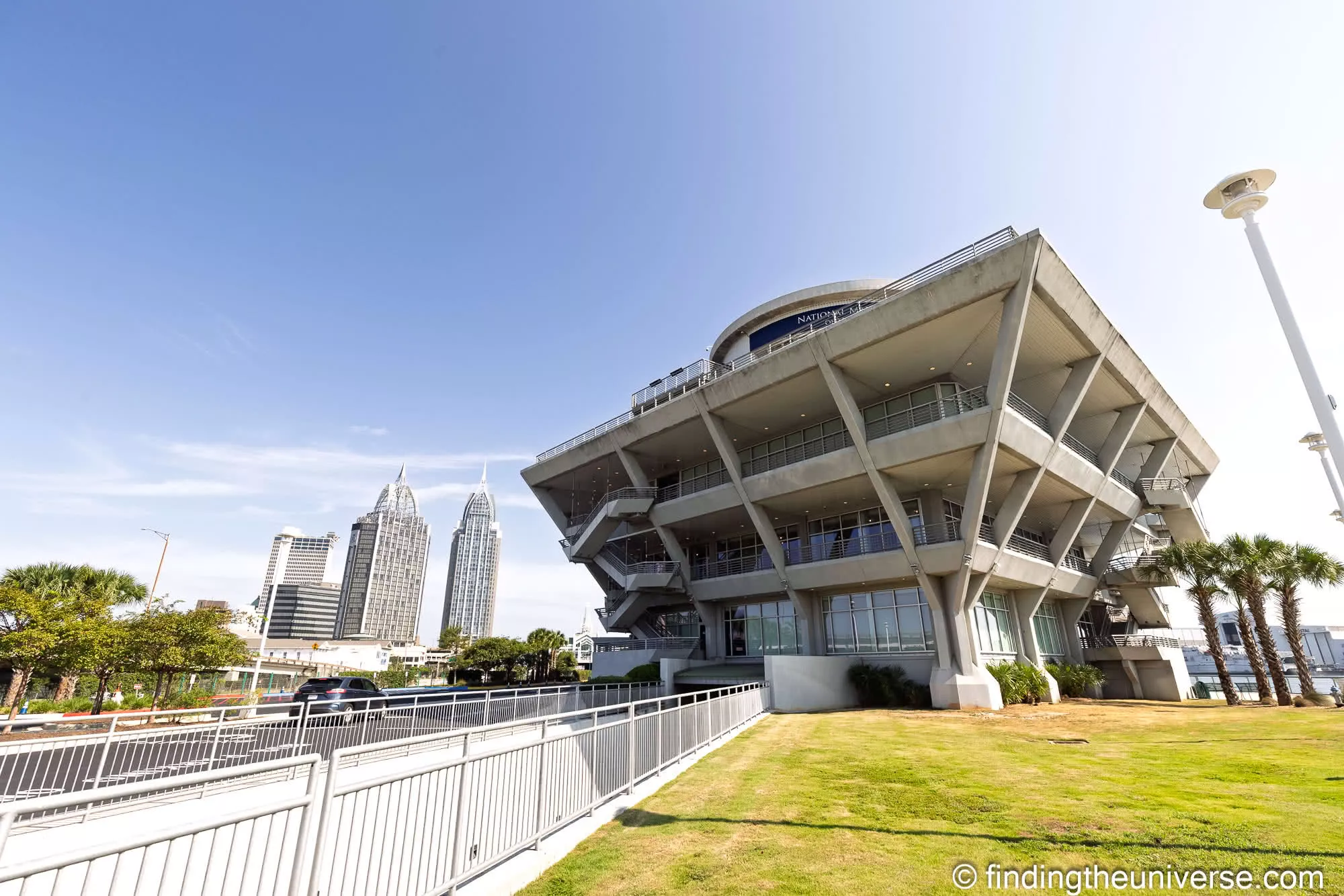
The maritime museum is at 155 South Water Street on the downtown waterfront, five decks of exhibits about the river, the port and the Gulf, in a building with working ships going past the windows. It spent its first decade as GulfQuest and changed its name in 2024. You will likely still see listings using the old name.
Adult admission is $19 as of October 2026, now that the summer promotional rate has ended. Check the museum’s tickets page for concessions and the latest price before you go.
Open Wednesday to Saturday, 10am to 4pm, last entry at 3pm, and closed on every holiday the City of Mobile observes.
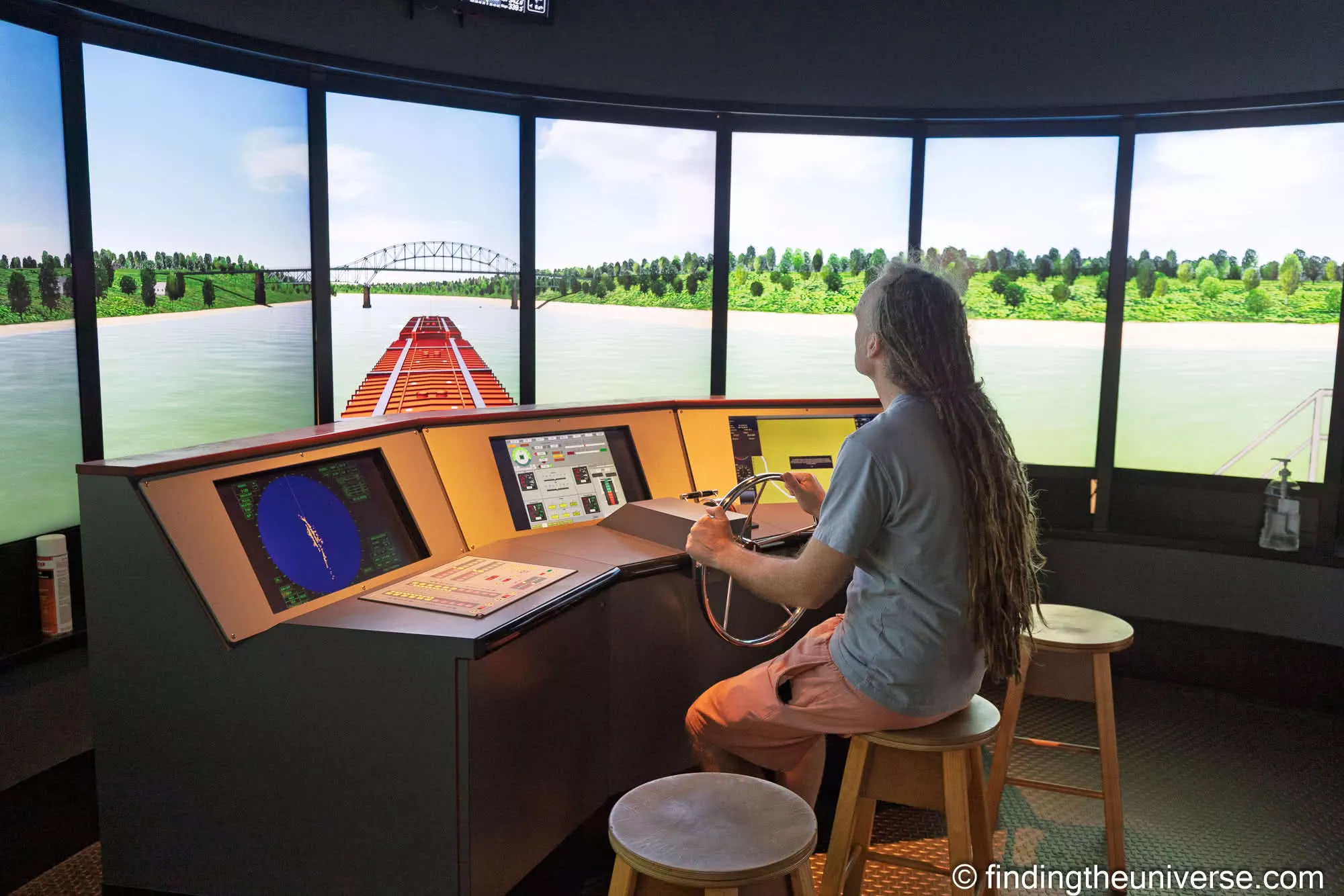
We gave it eighty-five minutes and it earned all of them, which was more than I expected going in. The hands-on exhibits are the reason, the ship simulator especially, and there’s a remote controlled boat that is officially for children and unofficially not. If you have kids, expect to spend a lot longer here.
4:00pm: The Waterfront on Foot
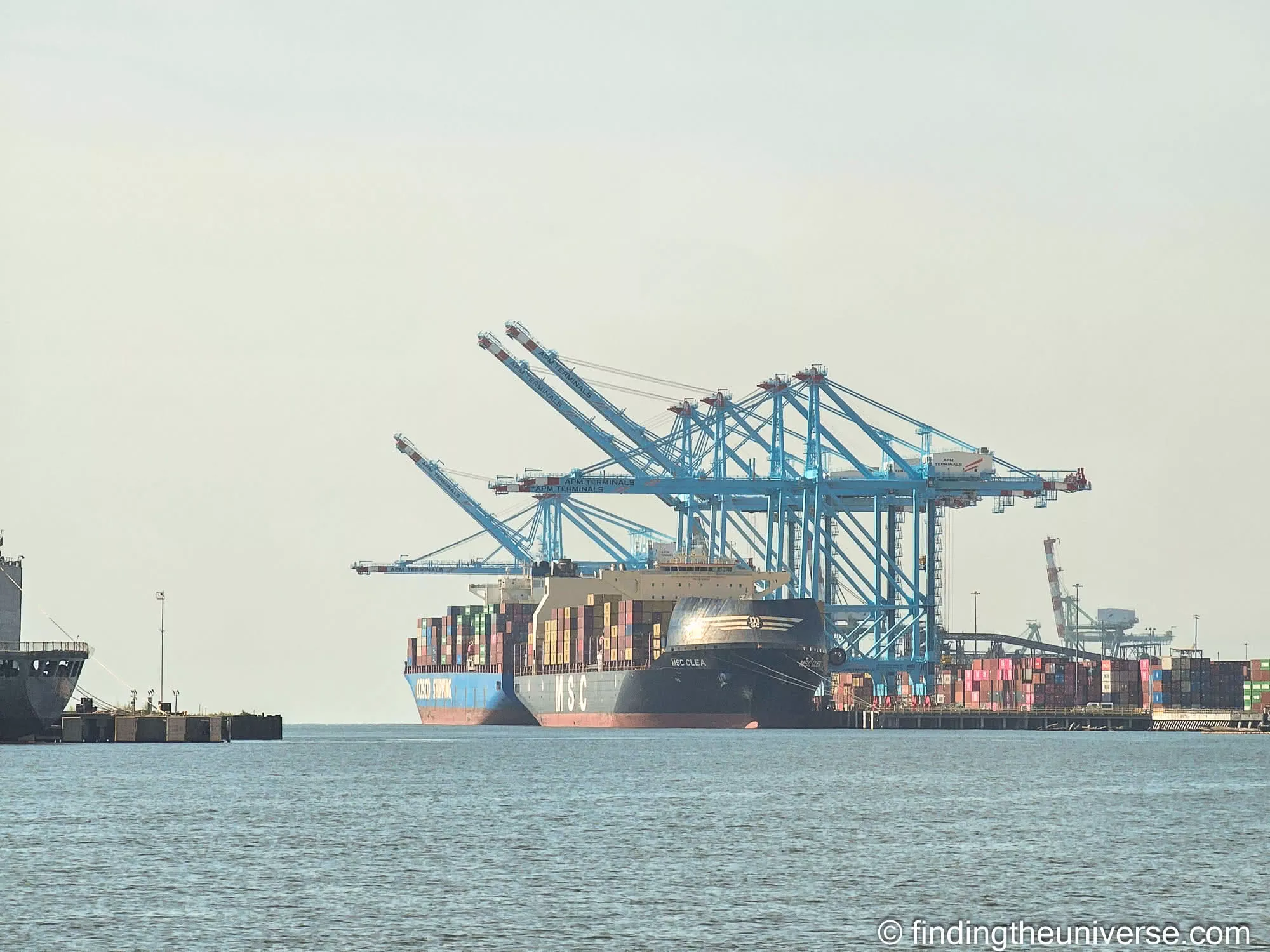
The museum turns you out at four, and the walk along the river afterwards beats driving straight to dinner. Cooper Riverside Park is a couple of minutes north, the port and the cruise terminal lay themselves out in front of you, and the last hour of afternoon light on the water is the best downtown gets.
5:30pm: The Oakleigh Garden Historic District
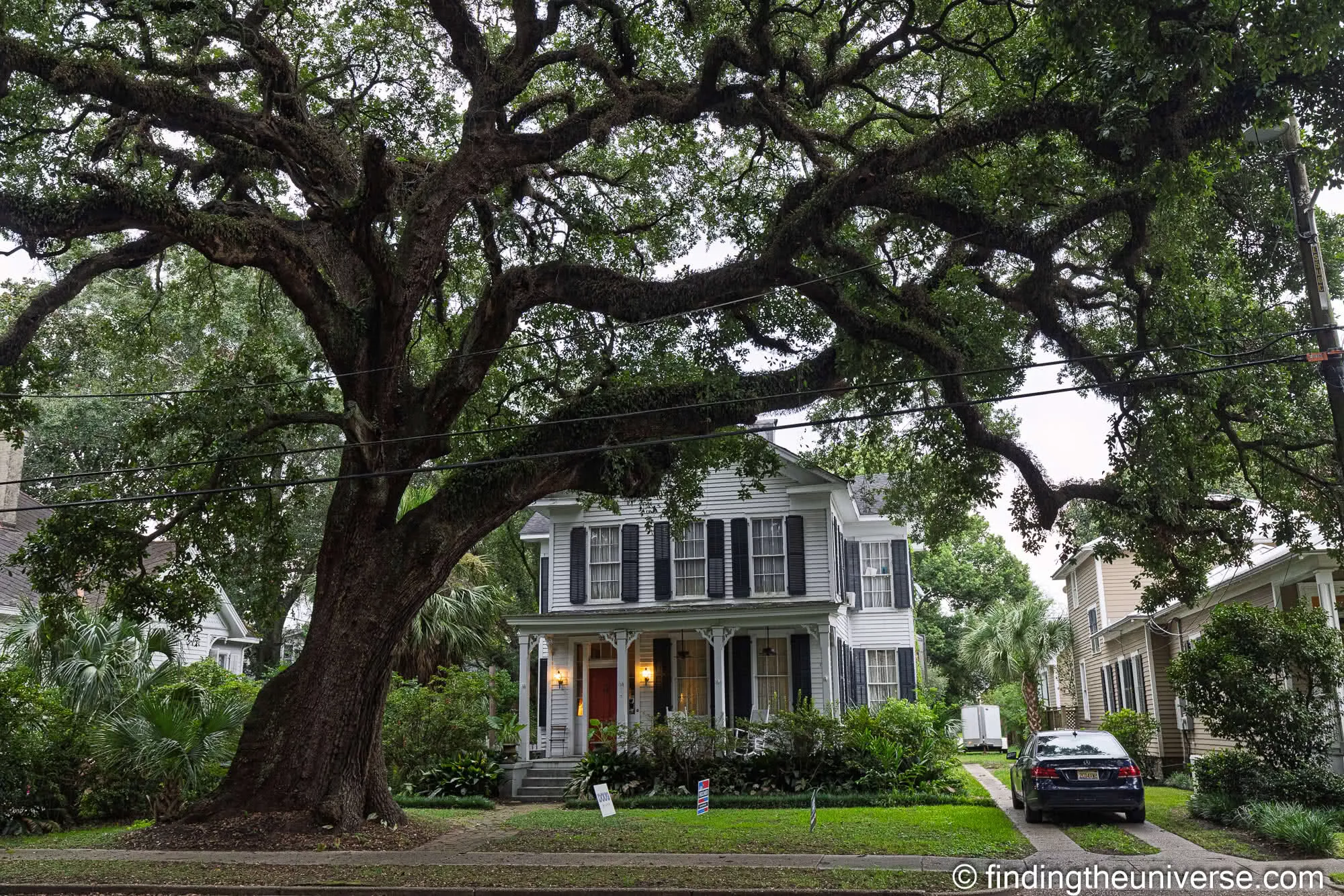
For the last golden hour of the trip, I’d suggest spending it on foot in the Oakleigh Garden Historic District, the neighbourhood of moss draped oaks and pastel clapboard cottages south of Government Street.
At its centre is Oakleigh House, built around 1833 by James W. Roper, a brick mason who also traded as a dry goods merchant and cotton factor. Roper chose the site for its clay pit, and the house’s raised basement is built of brick made on the spot. A bricklayer built himself a brick house on top of his own clay.
The house is a museum now, with its own tour schedule, if you want to go inside on a longer trip. The house below is not that house, just a pretty one from the neighborhood.
7:00pm: Dinner at Callaghan’s
You’re already in the right neighbourhood, so finish at Callaghan’s Irish Social Club at 916 Charleston Street, a corner institution in the Oakleigh district known for its burgers and live music.
If You Only Have One Day in Mobile
One day in Mobile is going to need you to make some real choices. My highlights that I wouldn’t skip in Mobile would be the battleship and Africatown. These are do-able in a day. Do the battleship in the morning, have lunch at Felix’s, then head to the Clotilda exhibition in the afternoon. Finish the day with a wander through downtown and any museums you have time for.
Of course opening days, the time of year you visit and your personal interests will dictate what you decide to do.
Mardi Gras in Mobile
Mobile hosts the oldest organised Mardi Gras celebration in the United States, dating to 1703, and yes, that sentence is worded carefully. In 1699 the French explorer Pierre Le Moyne d’Iberville named a spot on the Mississippi Point du Mardi Gras, having arrived there on the day itself, and Louisiana leans on that date hard. But d’Iberville’s journals record a naming, not a celebration.
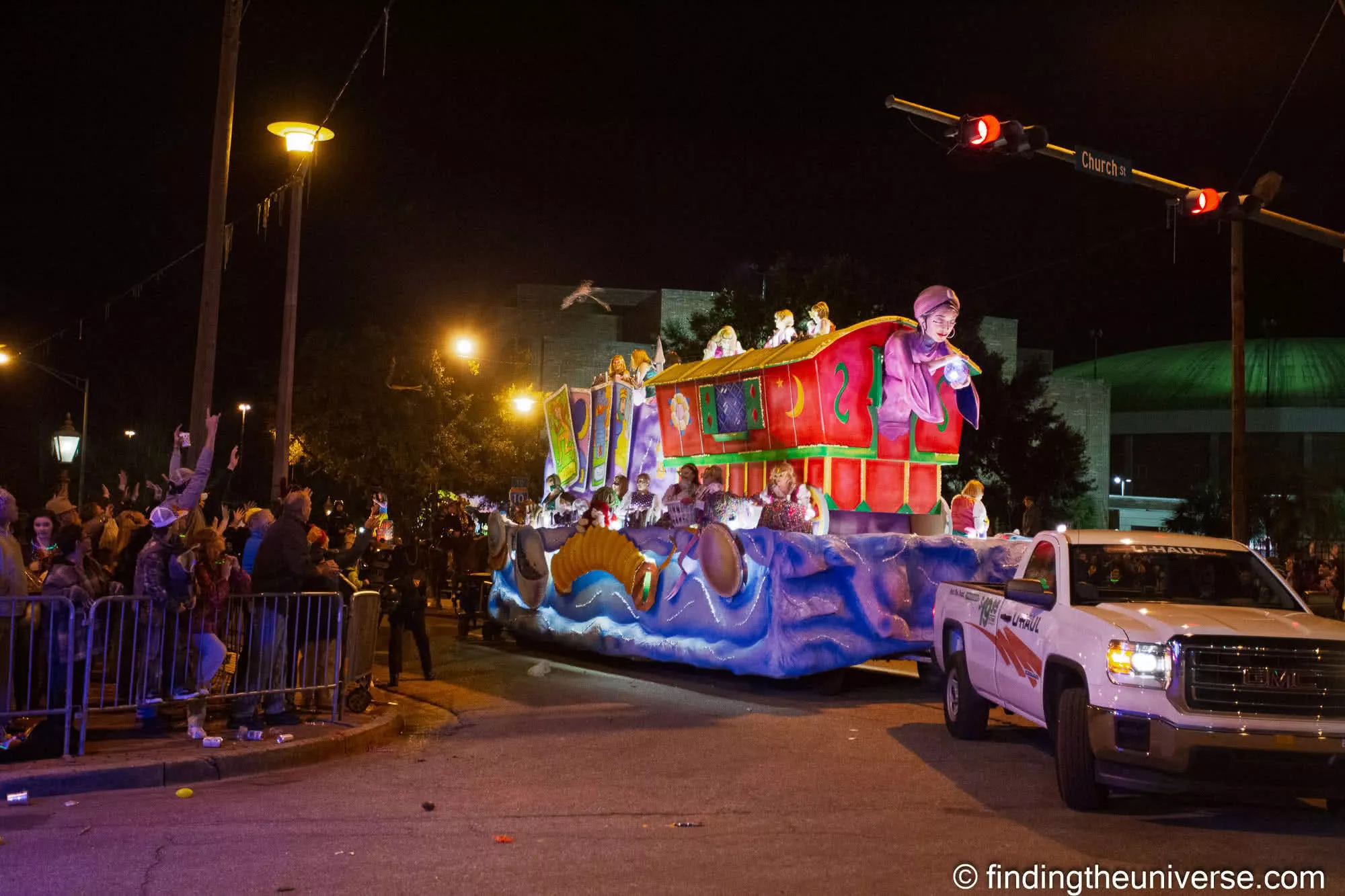
Mobile, founded in 1702 as the first capital of French Louisiana, was celebrating Carnival by 1703. The first known parade came in 1711, when sixteen men pushed a papier mâché cow’s head through the streets on a cart, an origin story I prefer to most cities’ founding myths. Mobile’s masked mystic societies came later, with the Cowbellion de Rakin Society in 1830. New Orleans, for the record, held its first recorded parade in 1857.
Carnival in Mobile today is a family affair run by the mystic societies, with parades through downtown in the weeks before Fat Tuesday, in January and February depending on the year. Expect moon pies thrown from floats, ball gowns in shop windows, and accommodation booked out well ahead. A few practical notes if you’re tempted, and you should be:
- Book accommodation months ahead, downtown fills completely on parade weekends.
- Some attractions change hours during Carnival. The History Museum closes early on parade days, and the Clotilda exhibition closes on Lundi Gras and Mardi Gras Day itself.
- The Carnival Museum is the year round way into the story, and arguably the calmer one. The crowns and gowns mean more once you’ve seen the real thing rolling past.
We cover the New Orleans version of the season in our guide to visiting New Orleans during Mardi Gras, and the two cities make a natural, slightly argumentative pairing.
Africatown, the Clotilda and the Heritage Trail
The Day 2 itinerary covers the logistics of visiting, but the story deserves its own section, because it’s the most internationally important thing in Mobile.
The United States banned the importation of enslaved people in 1808. Fifty-two years (!) later the Clotilda sailed anyway, a deliberate, illegal act, and the roughly 110 West Africans aboard her were the last known people trafficked into the country by ship.
When emancipation came in 1865, a group of the survivors, denied any means of returning home, pooled wages and bought land north of Mobile. They built their own town, with their own church, school and governance, and ran it substantially in the language and customs of home. Africatown is that settlement, still inhabited by descendants today.
Among the founders was Cudjo Lewis, born Oluale Kossola around 1841, who lived until 1935 and became one of the last adult survivors of the Atlantic slave trade. His memorial bust outside Union Missionary Baptist Church was erected in 1959.
Late in his life he told his story to the writer Zora Neale Hurston. She finished the manuscript in 1931, refused a publisher’s demand that she rewrite Lewis’s own words into standard English, and Barracoon sat unpublished until 2018. It’s the best thing you can read before visiting.
The wreck itself was found in the Mobile River delta and confirmed by the Alabama Historical Commission on 22 May 2019. You’ll see the discovery dated to 2018 in plenty of places, which conflates two events: a January 2018 find that drew national attention turned out to be a different vessel, and the actual Clotilda was identified and confirmed the following year.
The wreck is not visitable, and no boat tour takes you to it. Everything recovered from her lives in the exhibition at Africatown Heritage House, which is one more reason to plan your days around its Tuesday to Saturday schedule.
Beyond the exhibition, the sites of the African-American Heritage Trail of Mobile mark the community’s story on the ground: the church, the Lewis bust, Old Plateau Cemetery from 1876, and the neighbourhood streets themselves. Allow a slow hour, and spend your money locally where you can.
More Things to Do in Mobile
Two days covers the main highlights, but Mobile has more in it than one weekend. We got to the first of these on our last morning, drove out to the second and found it shut, and most of the rest are still on our own list.
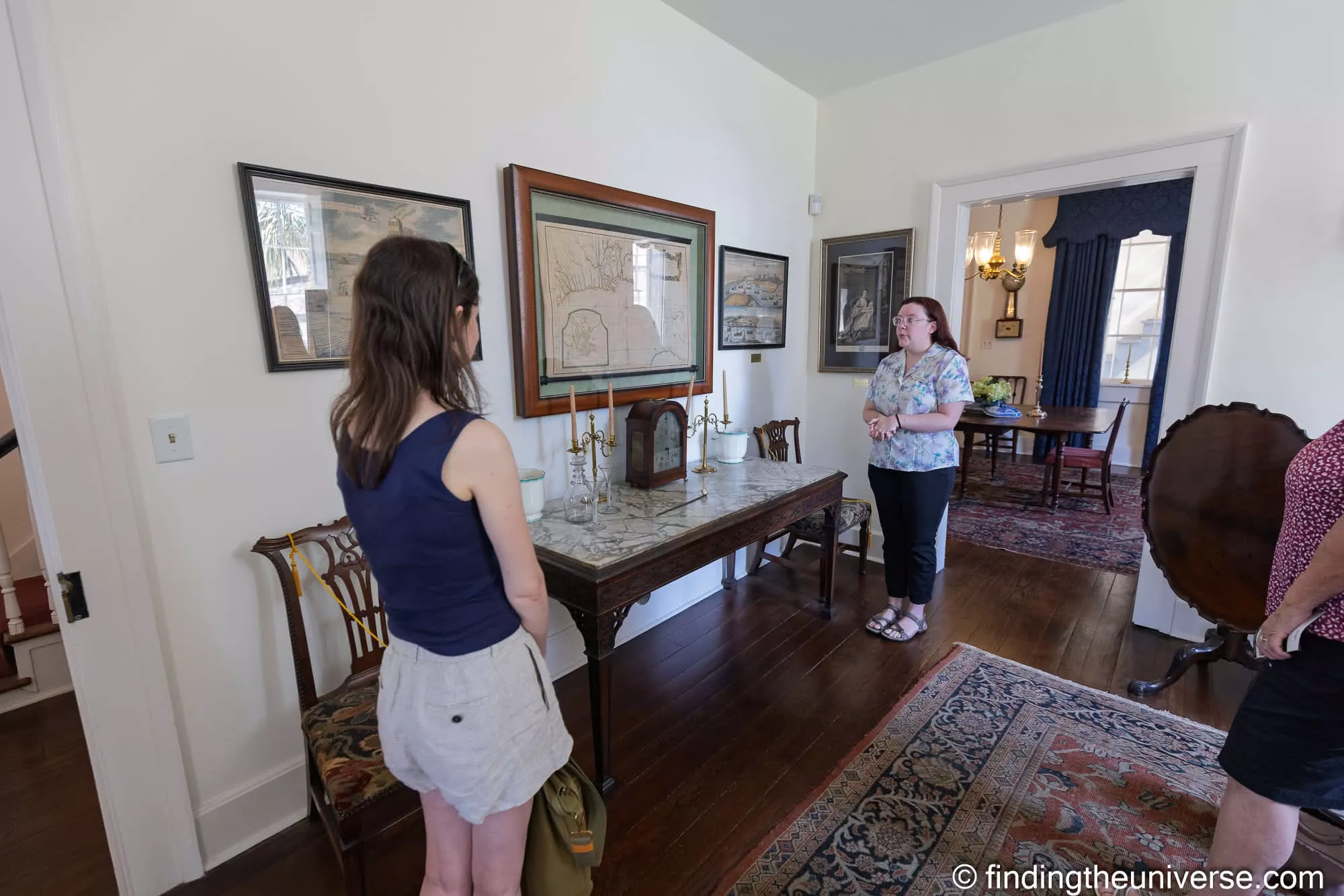
- Condé-Charlotte Museum. A house museum beside Fort Condé, furnished to the five flags that have flown over Mobile: French and British rooms, Confederate parlours, American bedrooms, and a walled Spanish courtyard. We did this one on our last morning in the city. It’s a docent led tour rather than a wander round on your own, so you go at the guide’s pace. $12 a head, open Thursday to Saturday, 11am to 3:30pm, so it fits a Friday or a Saturday and nothing else. Ours ran about three quarters of an hour, the guides were excellent, and we can highly recommend a visit.
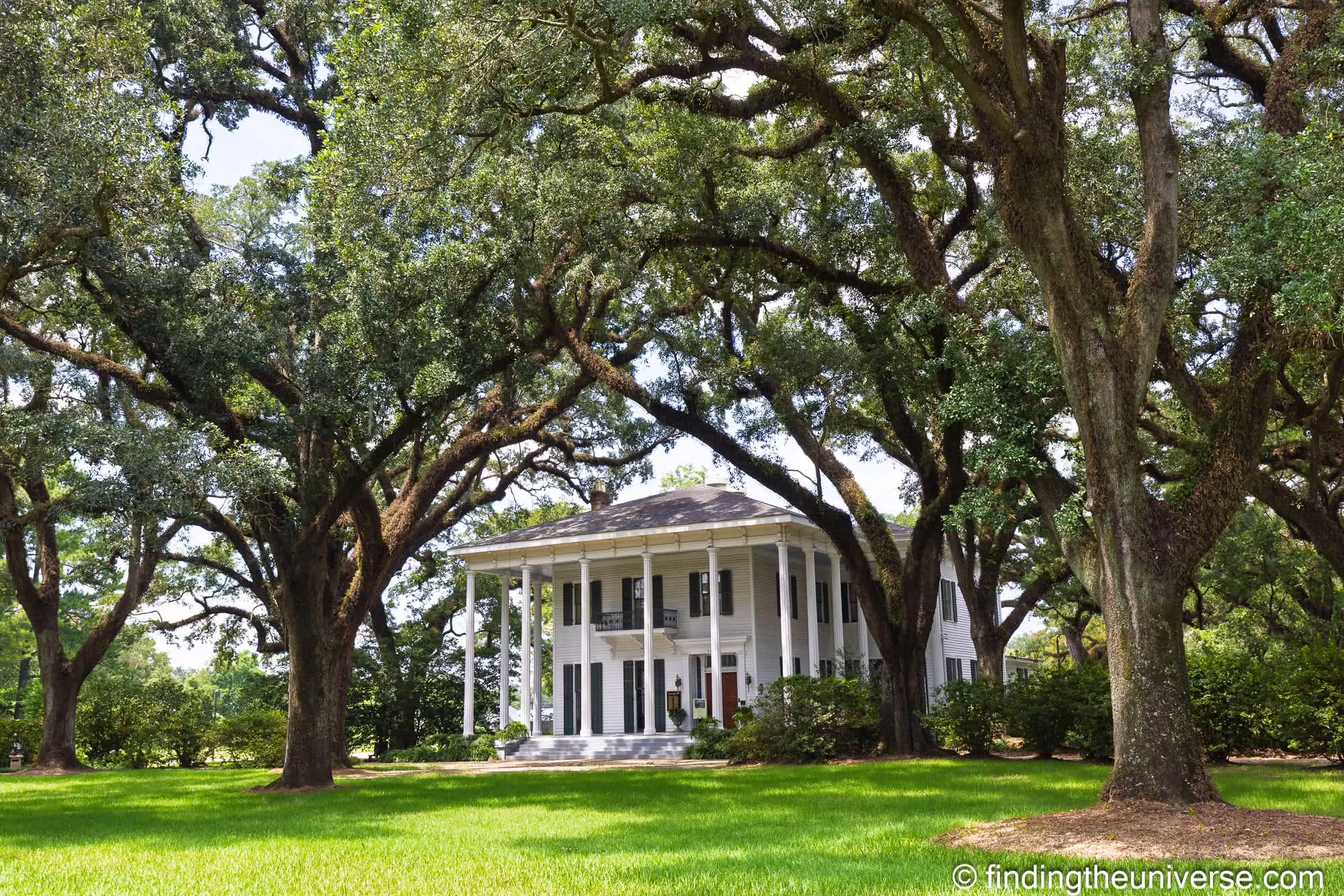
- Bragg-Mitchell Mansion. One of the Gulf Coast’s grandest antebellum houses, out toward the university district on Springhill Avenue, around $12. Tours run on the hour Tuesday to Friday, 10am to 3pm, and it’s shut Saturday, Sunday and Monday. I know, because we drove out on a Saturday and came away with a photograph of the outside of a closed house. It’s the one closure pattern in this article that works against the Friday and Saturday rule, so if the mansion is why you’re coming, put it on the Friday.
- Exploreum Science Center. A science centre at 65 Government Street with a digital dome theatre, in the middle of downtown. It’s the obvious answer to a wet August afternoon with kids, and it keeps the same hours as many other attractions: Tuesday to Saturday, 10am to 4pm, closed Sunday and Monday.
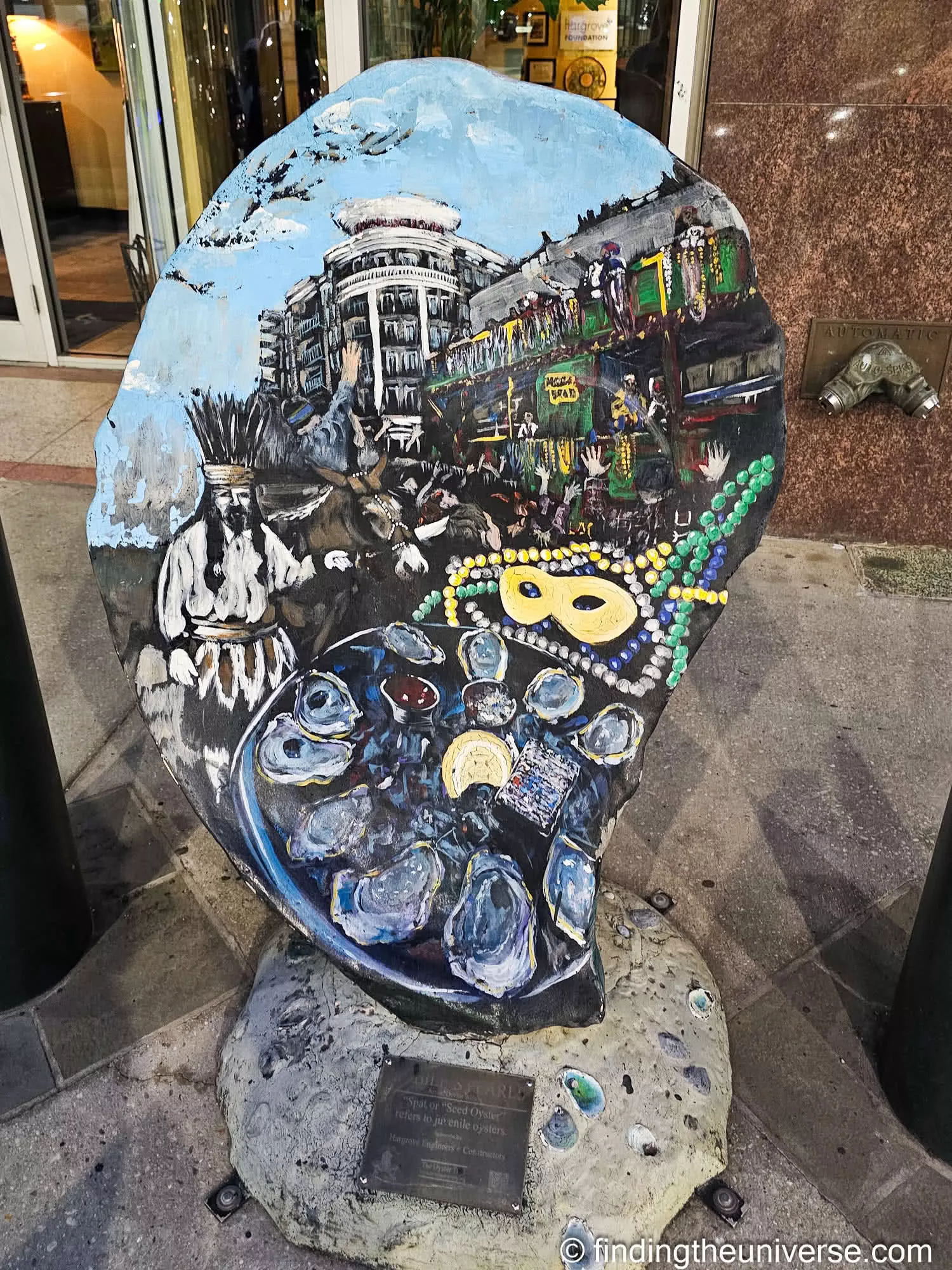
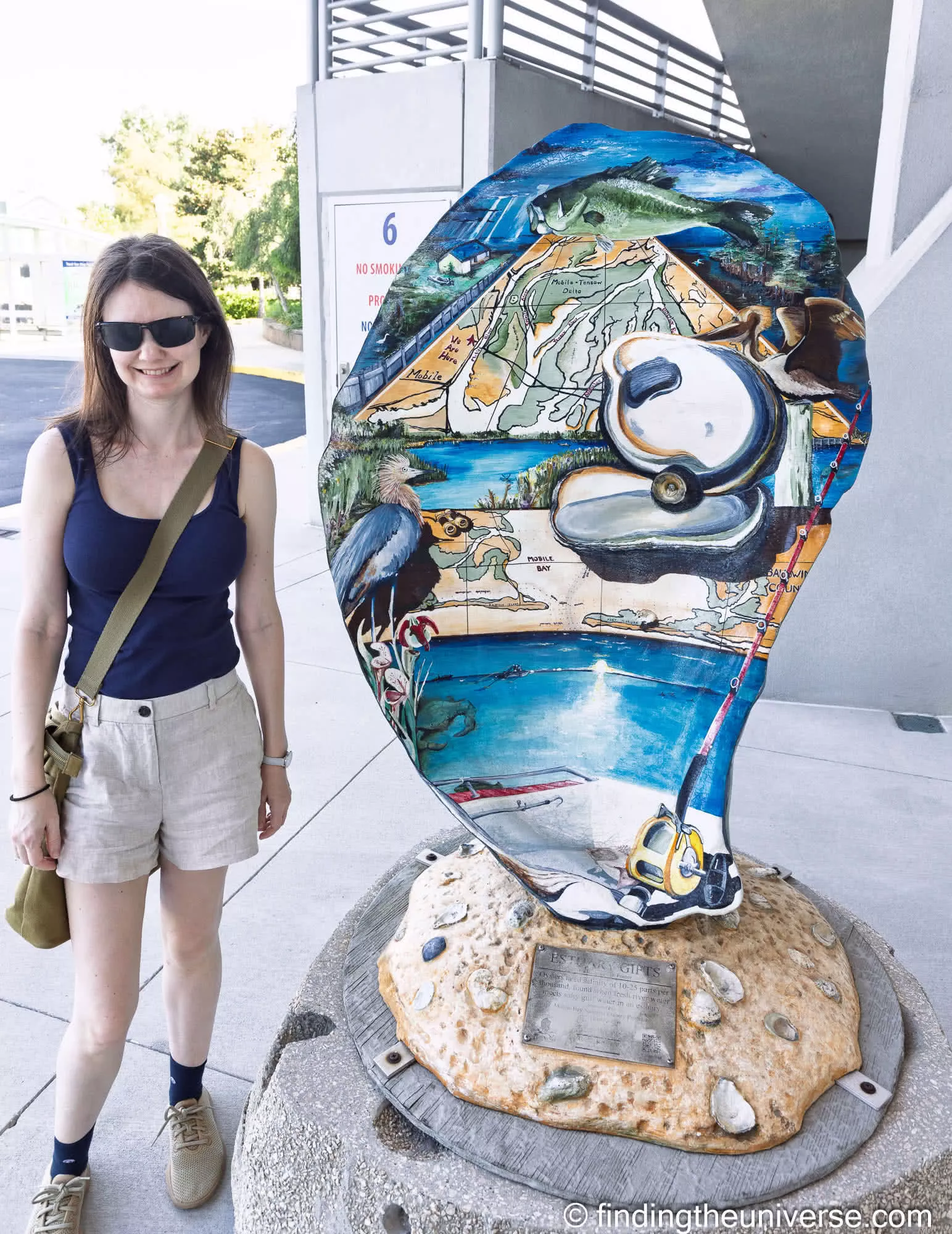
- The Mobile Oyster Trail. Painted oyster sculptures scattered through downtown, each by a different artist. We came across several without going looking for them, all within a few blocks of Dauphin, and collecting them makes a decent game for kids.
- Downtown murals and street art. Lower Dauphin and the surrounding blocks have a growing set of murals, best found on foot during the ArtWalk.
- Mobile Botanical Gardens. A quiet, local sort of garden in the west of the city, strong on camellias and native longleaf pine.
- Bellingrath Gardens and Home. The big one, 65 acres of gardens and a 1935 house about 30 to 40 minutes southwest in Theodore. It’s the standard answer to what to do with a spare half day out of the city.
- Meaher State Park and the causeway. The eastern shore of Mobile Bay, boardwalks over the delta marshes, and the best free sunset views of the city skyline and the battleship. Go knowing whose name is on it: the land was given to the state by the Meaher family, who financed the Clotilda, and the survival of that name here and on Meaher Street through Africatown is still a live grievance for descendants.
If you have longer than two days, Dauphin Island and its sea lab aquarium, Fort Morgan across the bay mouth, and the beaches at Gulf Shores all sit within day trip range, and they point the trip toward a Gulf Coast holiday and away from a city break. We’d give those a third day of their own.
Photographing Mobile
I’ve been a professional travel photographer for over 15 years, and Mobile is one of those cities that photographs far better than it gets credit for. The raw material is excellent: cast iron balconies, moss draped oaks, pastel clapboard, a battleship on open water.
The shots I’d suggest considering:
- The USS Alabama from the causeway. Shoot her from the shoreline in the park, across open water, where you can get the whole ship into one frame. Mine is 35mm at f/8, 1/500 and ISO 100, taken mid morning, which is a perfectly good time to shoot her from across the water.
- Dauphin Street’s ironwork at dawn or dusk. The balconies run east to west, so both ends of the day rake light along them. Midday flattens them completely.
- Bienville Square under the oaks in the first hour of light, when the moss backlights.
- The Oakleigh district at golden hour. Pastel cottages under dark green canopy, and in August the useful window is roughly the hour before sunset, which slips from about 7:45pm at the start of the month to about 7:20pm at the end.
- Mardi Gras Park at blue hour, as the monument lighting comes on against the last colour in the sky.

Two policy points to save you an awkward conversation: there’s no photography inside the Clotilda exhibition, budget it as an experience and leave the camera in the bag, and the battleship allows photography throughout, interiors included.
In summer, treat the middle of the day as time to spend in the air conditioning, the light is chalk and the heat index regularly clears 100°F.
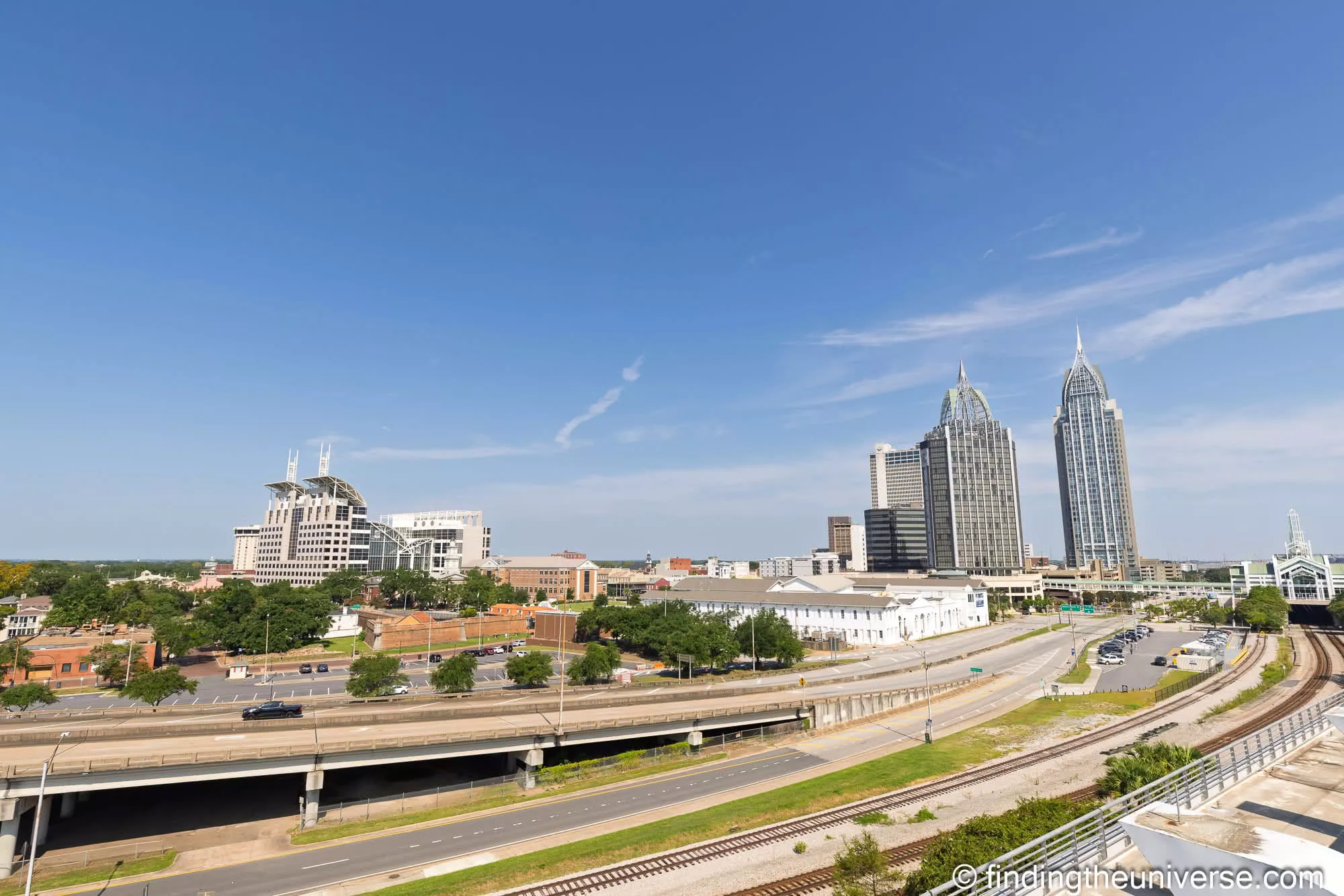
Where to Eat in Mobile
Mobile eats like a Gulf city with New Orleans in earshot, seafood first, and it does the historic institution unusually well. These are the places we’d build the two days around. Note that many options are going to be popular, especially on weekends, and we highly recommend a reservation for most of them.
- Wintzell’s Oyster House, 605 Dauphin Street. The 1938 original, covered above, and the downtown choice if you don’t fancy driving out to the causeway. Oysters fried, stewed or nude, plus the West Indies salad.
- Felix’s Fish Camp, 1530 Battleship Parkway, Spanish Fort. Out on the causeway, ten minutes from the battleship, and day one’s lunch stop above. Order the West Indies salad. It’s the dish Mobile claims as its own, and this was the version that sold us on it. Open Monday to Saturday, 11am to 10pm, and closed Sunday.
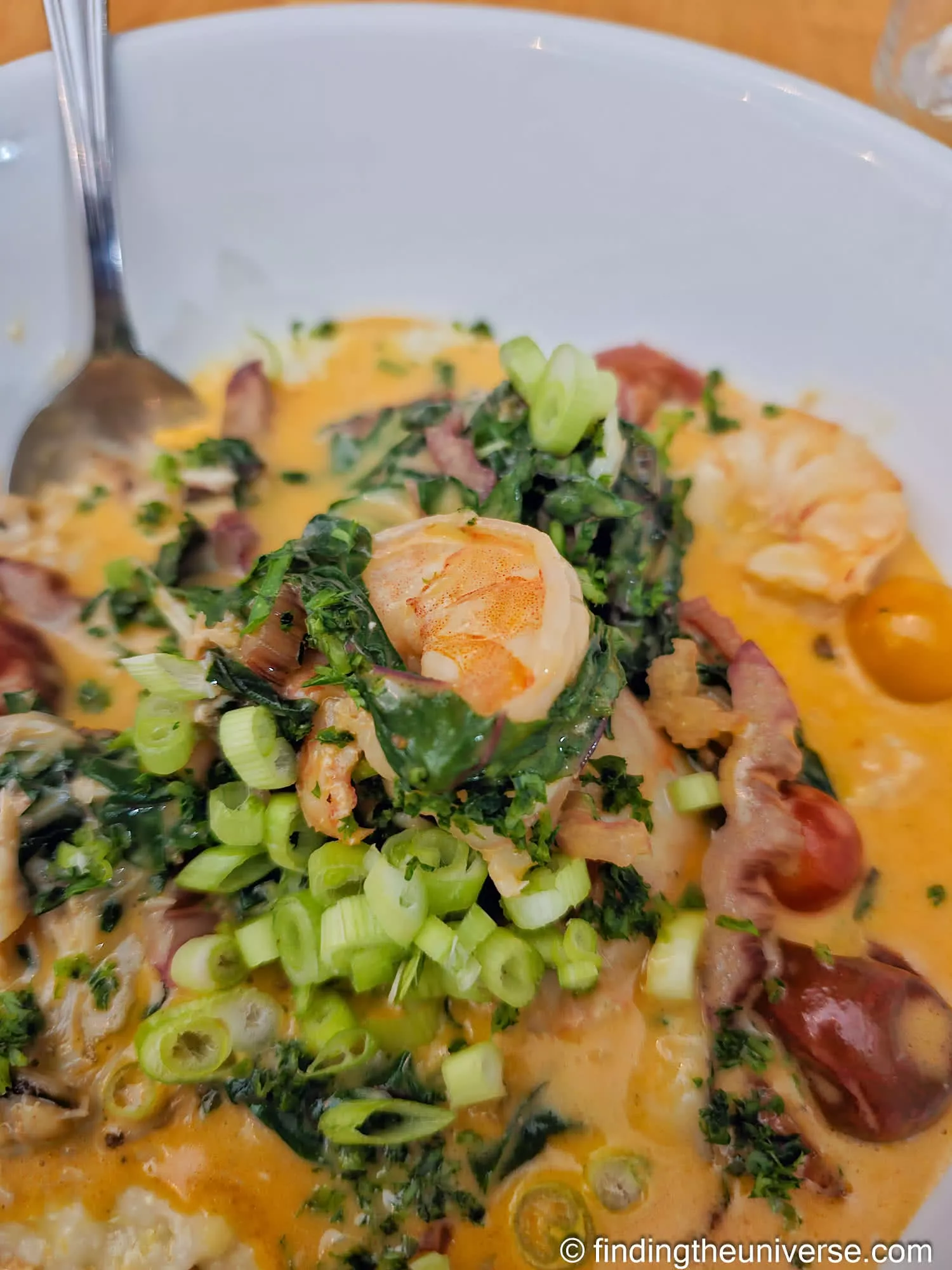
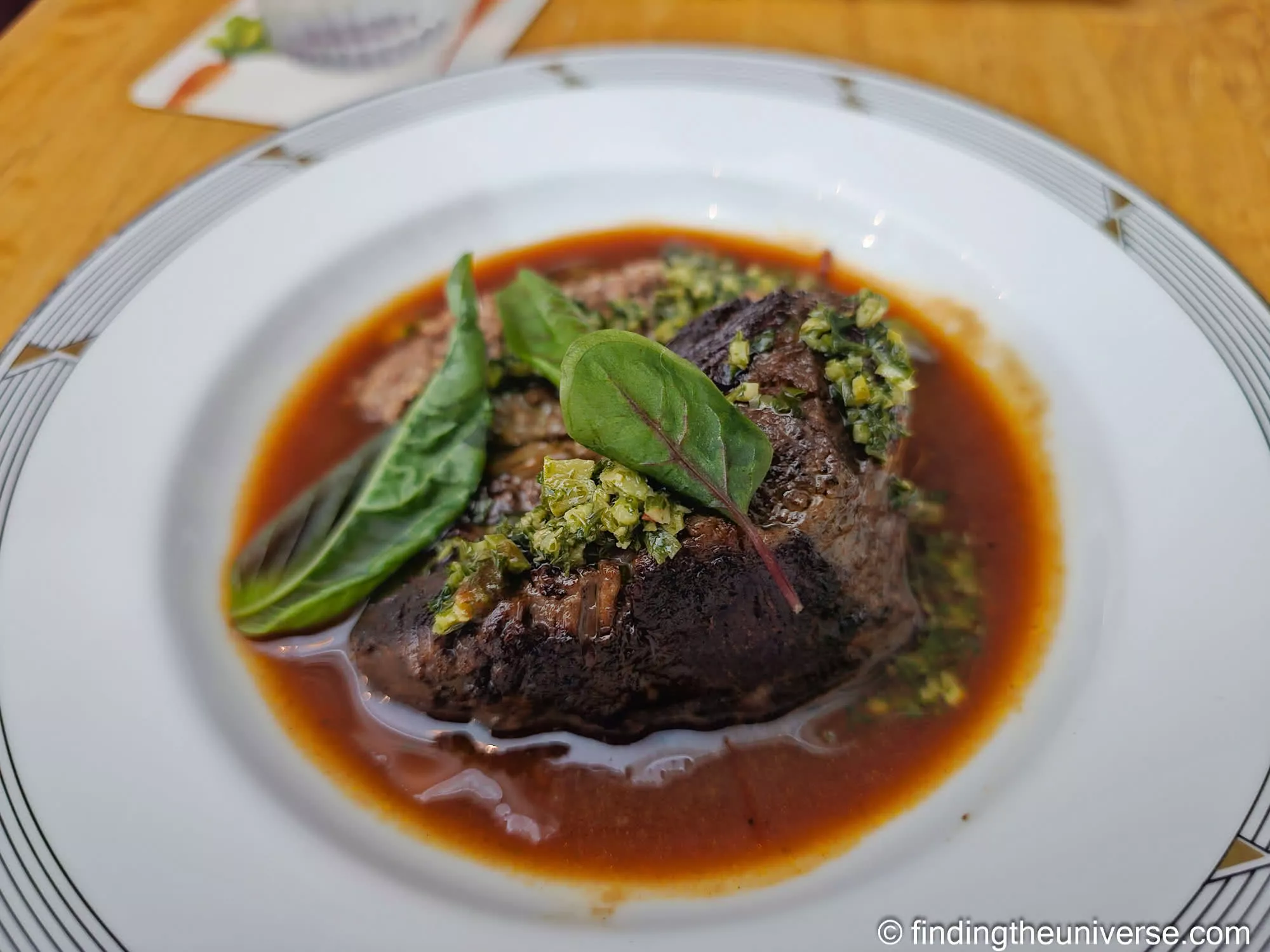
- The Noble South, 203 Dauphin Street. Seasonal Southern cooking from local farms, and where we ate on our first night. The braised beef cheek is the thing to order if it’s on. This is the pick for day one’s dinner if you want a proper sit down meal.
- Dumbwaiter Restaurant, 167 Dauphin Street. A long running and very popular Mobile option. Southern classics, a raw bar and fresh ingredients.
- Callaghan’s Irish Social Club, 916 Charleston Street. Oakleigh’s corner pub, regularly argued about in “best burger in Alabama” terms, with live music most weeks.
- Mo’Bay Beignet Co., 451 Dauphin Street. Hot beignets under an irresponsible quantity of powdered sugar. Mobile would like you to know it does this as well as the city two hours west.
- Dew Drop Inn, 1808 Old Shell Road. Serving since 1924, and credited with introducing Mobile to the hot dog. Order it all the way. It’s out on Old Shell Road, so it’s a drive from downtown.
Where to Stay in Mobile
Stay downtown. Everything on day one is walkable from lower Dauphin, and both mornings start faster when you’re not driving in. Four picks, starting with the one we booked ourselves:
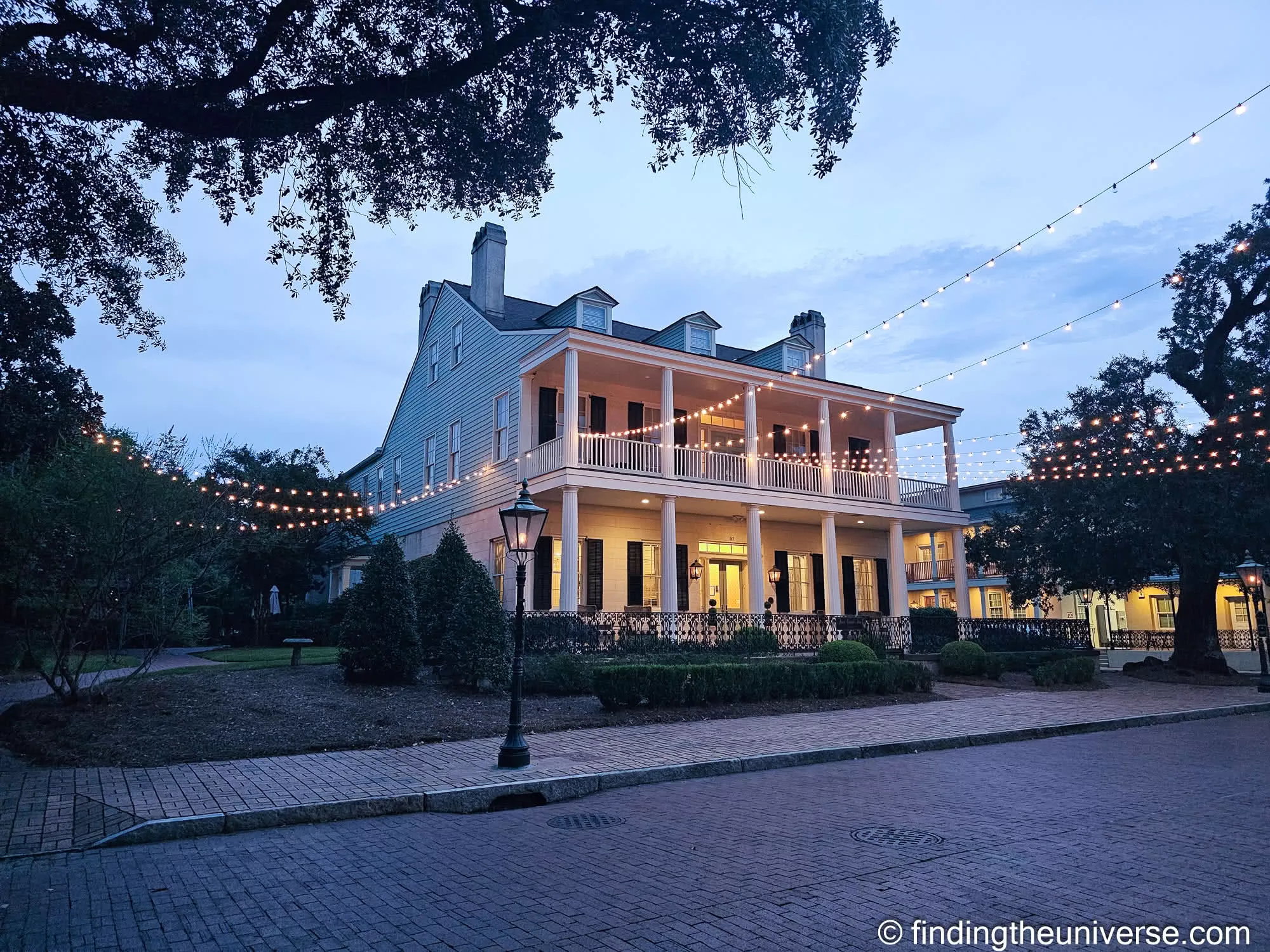
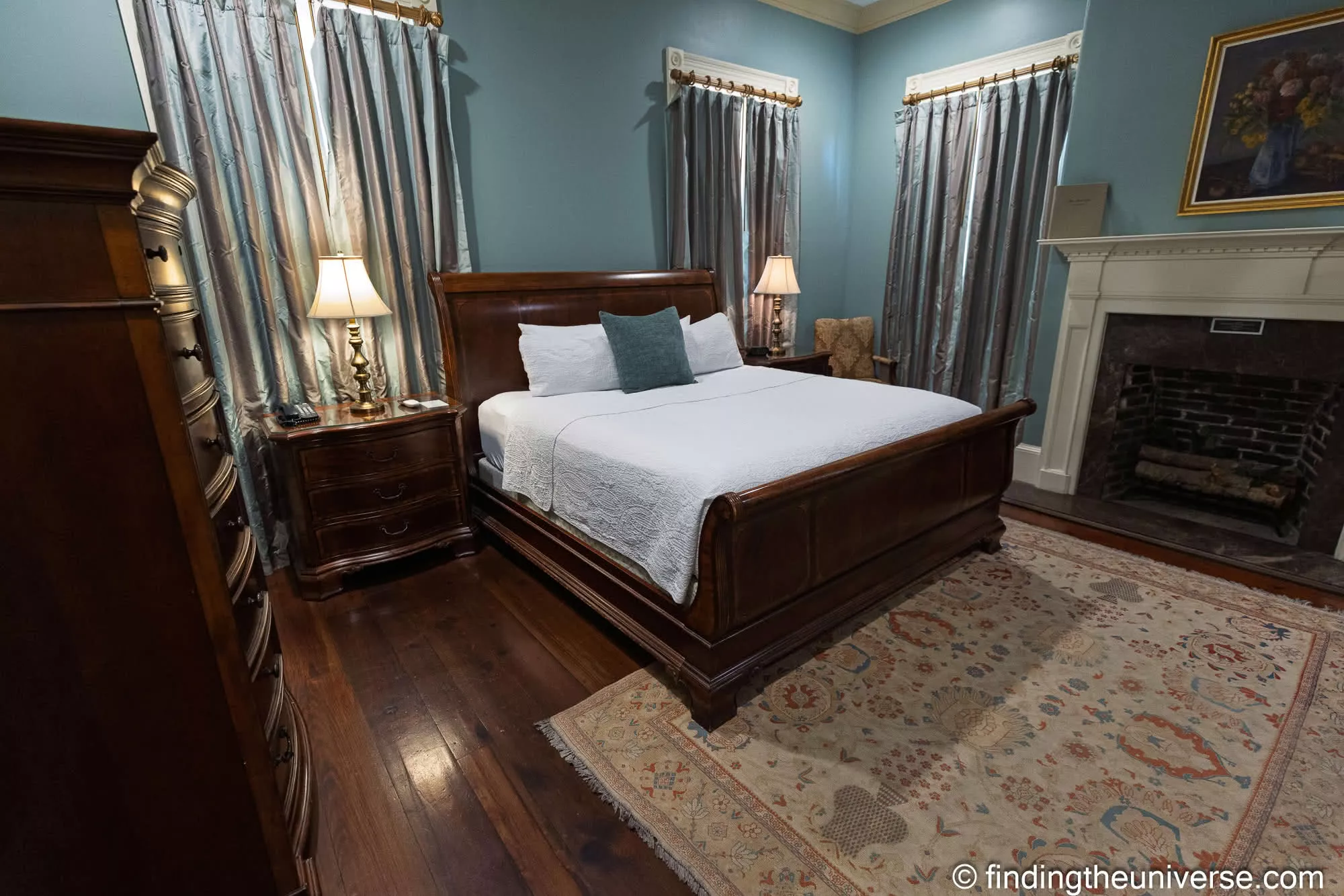
- Where we stayed: Fort Condé Inn. A restored historic house on South Emanuel Street with a row of galleried cottages around it, a few minutes’ walk from the fort it’s named after. We had a Historic King Room, which was really nice, the staff were friendly, and there’s free coffee all day, which we took full advantage of. Breakfast and parking are both included. Breakfast is also the one thing I’d mark down: a single set dish each morning, and our potatoes arrived on the burnt side of crispy.
- Luxury: The Battle House Renaissance Mobile Hotel & Spa. The grand historic hotel of the city, with a rooftop pool and a full spa, a block from Dauphin Street. If you’re marking an occasion, this is the one.
- Mid range: The Admiral. A 1940s hotel on Government Street given a boutique refit, walkable to everything downtown and usually sensibly priced for what it is.
- Historic on a budget: Malaga Inn. A pair of 1860s townhouses around a courtyard, two minutes’ walk from the Carnival Museum. Rooms vary a bit with the age of the building, which is part of the appeal rather than a warning. This was our second-pick.
When to Visit Mobile
Mobile is a year round city with two big seasonal facts to plan around: Carnival and the summer heat.
January and February are Carnival season, the city at its most alive and its most booked out. March and April are the sweet months, azaleas out and warm without punishment! From late April through late June, Market in the Park fills Cathedral Square on Saturday mornings, 7:30am to noon, so check the dates if you’re visiting in spring.
May and June warm up steadily, and by July and August you’re in full Gulf summer: highs in the low 90s°F, humidity that makes it feel over 100, and afternoon thunderstorms on close to half the days in August. The itinerary above is built to survive exactly that, outdoors early and late, indoors in the middle.
September and October ease off and are the best compromise months, though they’re also the heart of hurricane season, which runs June to November, so book with flexibility.
November and December bring a quieter, cooler downtown, and Magic Christmas in Lights out at Bellingrath, which pushes the gardens’ hours into the evening. Bellingrath runs other seasonal evening events too, in 2026 a Chinese lantern festival ran spring evenings, so look at their calendar if an after dark visit appeals.
Whenever you come, the weekday rule outranks the season: a Friday and Saturday in August beats a Sunday and Monday in perfect March weather.
Getting to Mobile and Getting Around
Most visitors arrive by road, and Mobile sits at the junction of I-10 and I-65: about 2.5 hours from New Orleans, an hour from Pensacola, 2.5 hours from Montgomery, and around 4 from Birmingham. Atlanta is a long half day at about 5 hours.
There’s also a pleasant rail option now: Amtrak’s Mardi Gras Service runs twice daily between New Orleans and downtown Mobile, taking a little under four hours along the coast through Bay St. Louis, Gulfport, Biloxi and Pascagoula. For a car free weekend from New Orleans, it makes a lot of sense. Details at amtrak.com.
Flying is in the middle of a change. Commercial flights currently use Mobile Regional Airport (MOB), about 13 miles west of downtown. From late 2026, all commercial service, Delta, United and American, moves to the new terminal at Mobile International Airport (BFM), which sits practically downtown at the old Brookley Field, with first flights anticipated by November 2026.
That’s good news for visitors, as the new airport is far closer to everything in this article. If you’re booking flights for late 2026 or beyond, double check which airport your ticket actually uses.
Once you’re here, you’ll want a car for everything beyond downtown, or plan or using your ride-share app liberally. The battleship and Africatown are both drives, and there’s no useful transit link between them. Downtown itself parks pretty easily by city standards, with street parking and garages around Dauphin, and the walkable core covers everything between the fort and the cathedral.
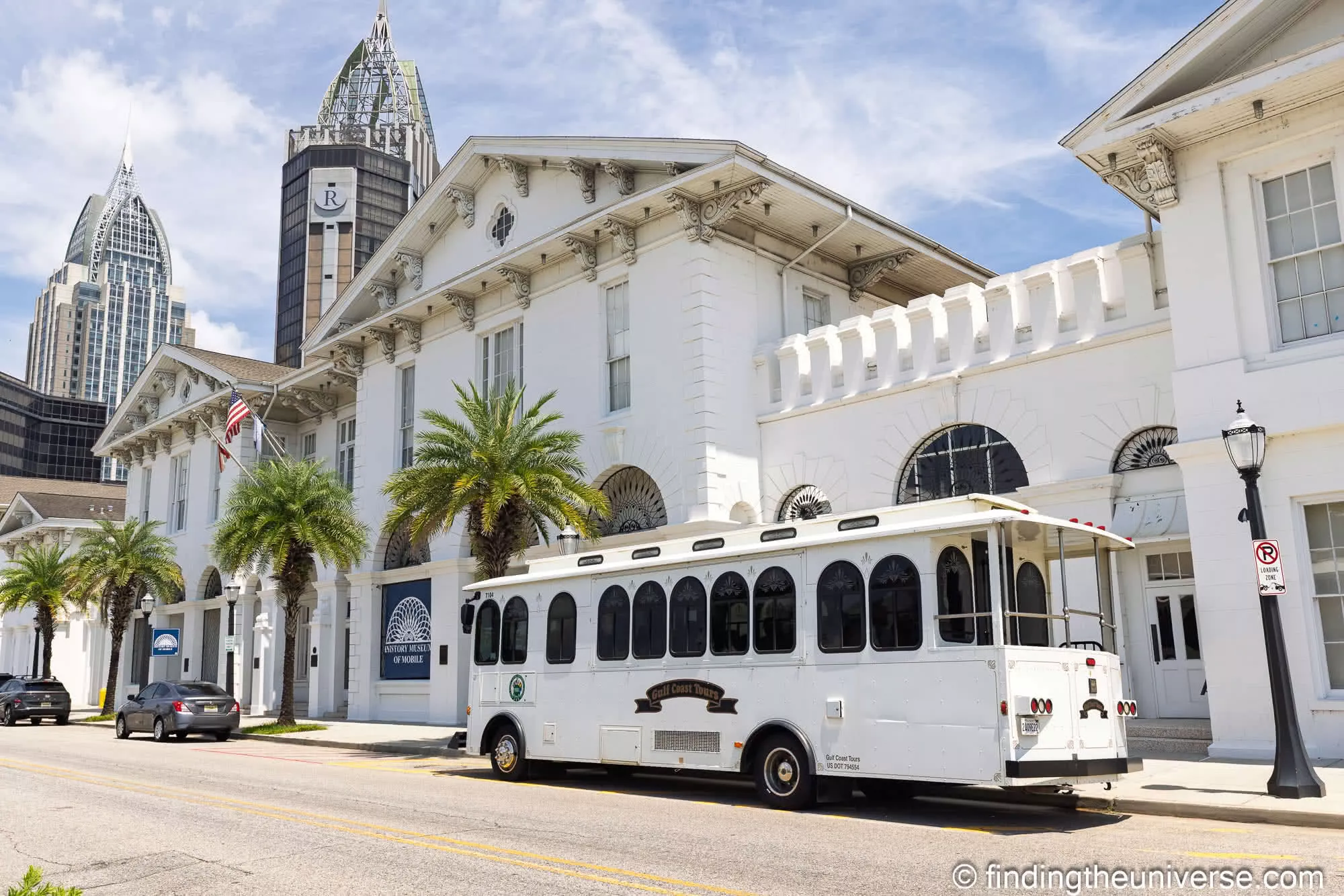
There’s also a trolley, if you’d rather have the city narrated at you for ninety minutes. The City of Mobile Trolley Tour picks up at the Visit Mobile Welcome Center at 111 South Royal Street and out at the battleship, costs $20 a head with under 13s free, and doesn’t need a reservation.
One thing to know before you build a day around it: the published schedule runs Tuesday to Saturday with nothing on Sunday or Monday, and the fewest departures fall on Friday and Saturday, which are exactly the two days this guide tells you to come. Check the current times at mobiletrolleytours.com before you count on it.
Is the Mobile Multi-Attraction Pass Worth It?
Mobile has multi attraction passes, and for once the maths is worth actually doing. There are at least three products: a Mobile City pass (also on Viator) from around $35, a wider Mobile Area pass from around $25 that reaches Dauphin Island and Foley, and a free to register VIP Attractions Pass run by Visit Mobile that gets you discounts, not admissions.
Here’s the arithmetic for this itinerary. The two most important tickets of the weekend, the Clotilda exhibition and the Carnival Museum, are not on the pass inclusion lists we checked. What the passes do cover is the cluster around the battleship, the History Museum and the historic houses.
Paying at the door, the battleship ($18) and the History Museum with Fort Condé ($14) come to $32, which is already less than a city pass costs. Add one of the historic houses, about $12 a head, and you’re at $44, so a pass from around $35 pays for itself if those inclusions hold.
That’s a real if. The inclusion lists we reviewed were visibly out of date, still naming the maritime museum by its retired GulfQuest name, so check the current list on the booking page before you buy, and don’t take a roundup’s word for it, including this one.
If you’re doing the two day core above, buy the Clotilda and Carnival Museum tickets directly, and consider a pass if it makes financial sense against up to date pricing. As of writing, it does, but things change. Also, don’t forget the History Museum is free on the first Sunday of each month.
Frequently Asked Questions About Visiting Mobile
How many days do you need in Mobile?
Two days is the realistic minimum. One day forces a choice between the battleship and Africatown, and both are worth the trip on their own.
With two days you can cover the USS Alabama, the downtown museums, the Clotilda exhibition and Africatown without rushing any of them. A third day opens up Dauphin Island and the Gulf beaches.
What days of the week are best for visiting Mobile?
Friday and Saturday. Three key attractions have closure schedules that only overlap on Wednesday, Friday and Saturday: the Clotilda exhibition closes Sunday and Monday, the Carnival Museum closes Tuesday, Thursday and Sunday, and the Maritime Museum only opens Wednesday to Saturday.
A Sunday and Monday visit loses nearly everything that makes the city distinctive, so it’s worth shifting your dates if you possibly can.
Do you need a car in Mobile?
For this full itinerary, yes. Downtown Mobile is compact and walkable, but the battleship and Africatown are both drives, and no useful public transport connects them.
The exception is a downtown only trip from New Orleans on the Amtrak Mardi Gras Service, which arrives in the city centre and puts Dauphin Street, the museums and the fort within walking distance.
Is Mobile the birthplace of Mardi Gras in the United States?
Mobile hosts the oldest organised Mardi Gras celebration in the United States, dating to 1703, four years after the French named Point du Mardi Gras on the Mississippi in 1699 but without any recorded celebration there. New Orleans’ first recorded parade came in 1857.
So the careful answer is that the celebration started in Mobile, and the wording matters enough that both cities will argue it with you. The Mobile Carnival Museum makes the city’s case in detail.
Do you need to book the Clotilda exhibition in advance?
Yes. Entry is by timed ticket with limited capacity, booked through clotilda.com. A small number of same day tickets are sold first come at the desk, but weekend slots go early and it’s not worth risking the centrepiece of your trip on them.
Remember it’s closed on Sunday and Monday, and note that there’s no photography inside the exhibition.
How far is Mobile from New Orleans?
About 150 miles. It’s roughly a 2.5 hour drive along I-10, or a little under four hours on the twice daily Amtrak Mardi Gras Service, which runs along the coast through Gulfport and Biloxi and arrives in downtown Mobile.
The two cities pair well over a longer trip, and Mobile makes a strong first or last stop on any Gulf Coast road trip.
Further Reading
Mobile was one of the stops that made us fall for this corner of the country, and it slots naturally into a bigger Southern trip. These guides continue the journey:
- Our complete Deep South road trip itinerary, which threads Mobile into a two week route
- Visiting New Orleans during Mardi Gras, the other half of the Carnival argument
- A weekend in Baton Rouge, Louisiana’s underrated capital
- Our guides to Savannah and a weekend in Charleston, the other great historic port cities of the South
- Our 2 week USA road trip itinerary for the wider picture
For a guidebook that covers the whole region in one volume, we use the Lonely Planet American South, which covers Alabama alongside the neighbouring states. And the official Visit Mobile site is the place to check current event calendars before you travel.
And that’s two days in Mobile. If you’ve been, or if you know something about the city we should see on the next trip, the comments are open as always.
Leave a Reply