
If you’re planning a long-weekend trip to New Orleans and you have three days to work with, the question is rarely what to do. It’s in what order to do it, what to book before you fly in, and which evenings deserve a sit-down and which deserve a walk. Jess and I first visited New Orleans during Mardi Gras week and have been back on quieter return trips since.
This is a sequenced day-by-day plan, not a shortlist. Day 1 focuses on the French Quarter on foot, Day 2 shifts to the streetcar and the Garden District with a long afternoon at the WWII Museum, and Day 3 commits to a plantation day trip on the River Road.
There’s a Quick Verdict near the top for the scanner, a photo-spots block for anyone who wants to know where to point a camera, and a “what we would do differently next time” block at the end. If you would rather see the city as a ranked thematic shortlist instead of a route, the companion article is our 22 things to do in New Orleans guide.
Table of Contents:
Quick Verdict: Is 3 Days in New Orleans Enough?
Three days is enough for a first visit if you’re happy to commit each day to one neighbourhood and one main evening area, and if you accept that you won’t see everything.
The plan below covers the French Quarter, the Garden District, two cemeteries’ worth of history, the WWII Museum, one iconic Creole restaurant, one Frenchmen Street evening, and a full-day plantation trip. You’ll leave wanting to come back.
Two warnings up front. If you’re travelling between June and September, the heat-index regularly tips above 105°F in August and the outdoor sections (Garden District, cemeteries, plantation grounds) are real work; book early-morning slots and treat midday as A/C time.
If you’re car-free and want Day 3’s plantation trip, you need to either pre-book a tour with hotel pickup or commit to a one-day rental. Top of the “book before you fly in” list is dinner at one of the century-old Creole restaurants (Antoine’s, Galatoire’s, or Arnaud’s); prime tables run three to four weeks out. We last visited in February for Mardi Gras 2026; if you’re aiming for Carnival, Mardi Gras 2027 lands on February 9.
Day 1: The French Quarter, on Foot
Day 1 is the easy one. Most flights into Louis Armstrong (MSY) land late morning or early afternoon, the French Quarter absorbs jet-lagged walking better than any other neighbourhood, and the density of the place (eight blocks by twelve, river on one side, Rampart Street on the other) means you can’t lose more than ten minutes between stops. The pace here is slow saunter, not march. We treat Day 1 as a soft landing into the city’s rhythm; we don’t push the walking and we don’t eat anything ambitious.
The day looks like this: breakfast on the river, a long walking loop through the Quarter’s small museums and bookstores, lunch indoors, a cocktail break to take the weight off, and an evening on Frenchmen Street for live music. Every stop is within fifteen minutes’ walk of every other stop, which is pretty much the entire point of staying in or near the Quarter for at least your first night.
Start at Café du Monde on Decatur Street, the original stand opposite Jackson Square. The hours are Sunday to Thursday 7:15am to 11pm, and Friday to Saturday until midnight. It’s not 24 hours, despite a persistent rumour, and it’s cash-only at the outdoor stand (cards work at the indoor counter).
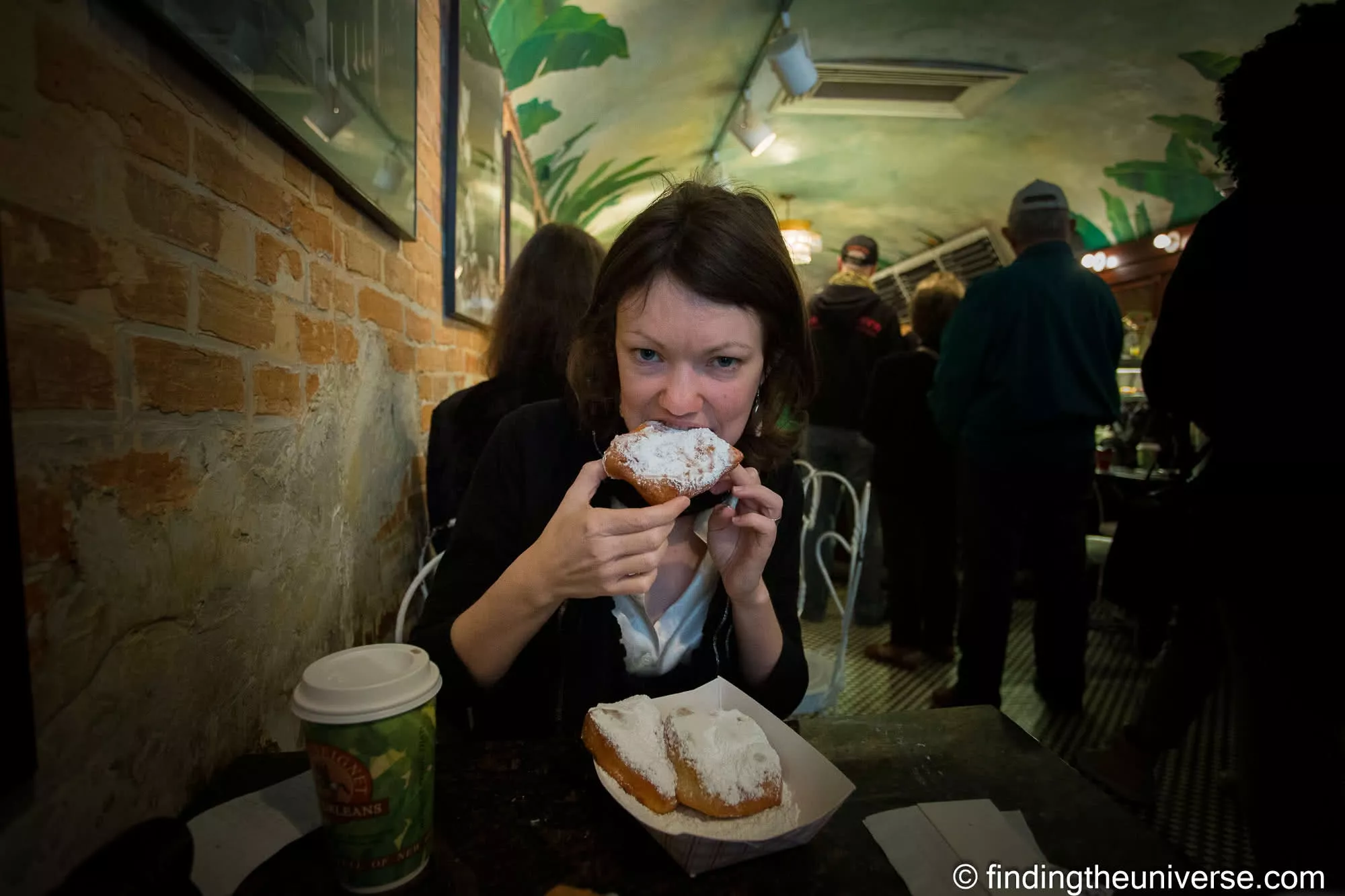
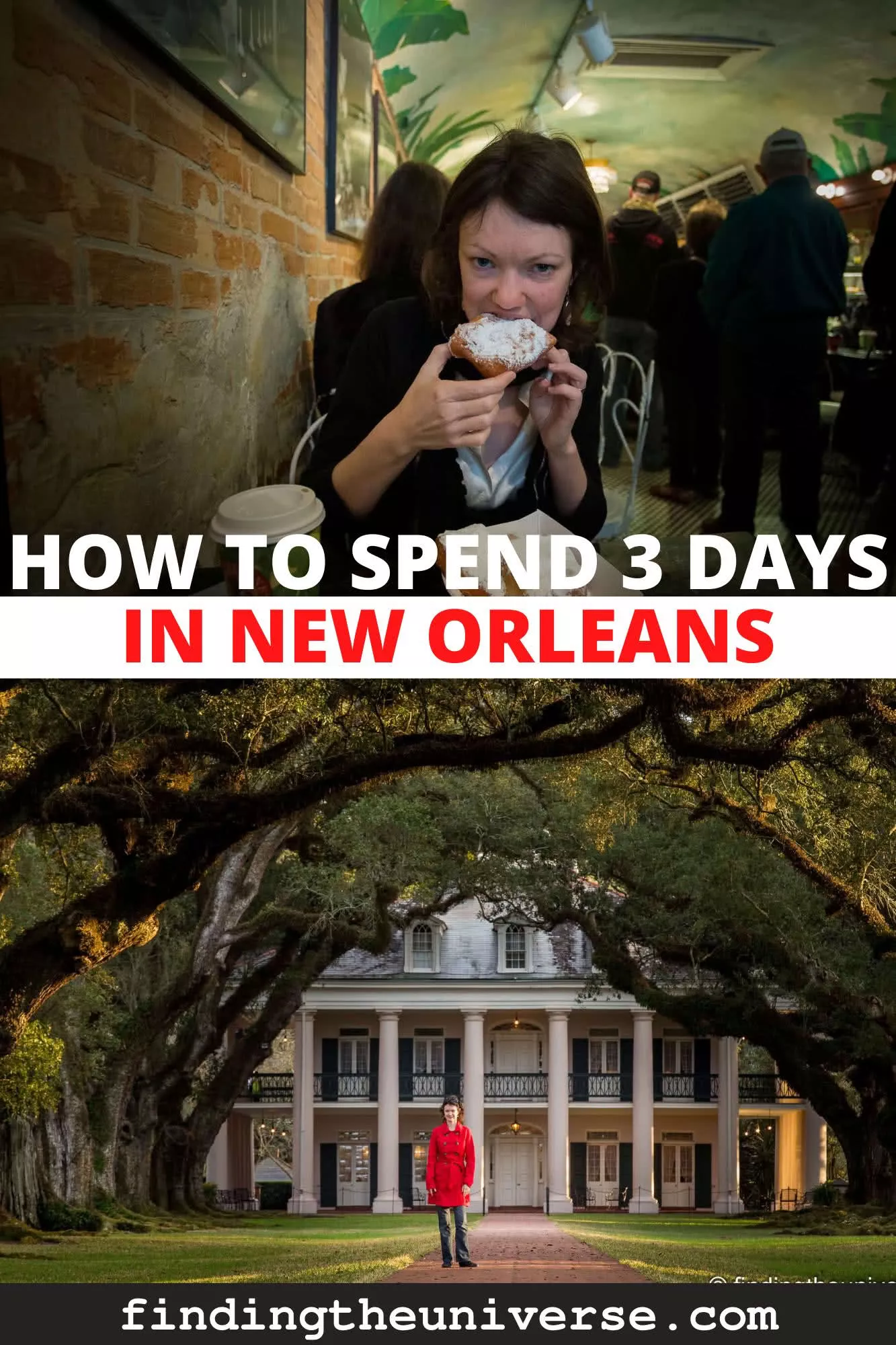
Order beignets and a café au lait and put up with the queue if you’re arriving after 9am, because the line builds sharply through the morning. The beignets are good, the icing sugar is unfair to dark clothing, and the marble-top tables wobble in a way that feels like the point.
From there it’s a two-minute walk across to Jackson Square, the heart of the Quarter, with St Louis Cathedral on one side, the Cabildo and the Presbytère flanking the cathedral, and the artists’ easels rotating around the square’s iron fence. Walk through, but don’t commit a cathedral visit yet (we’ll come back to the Cabildo later in the day; the cathedral exterior shot is what you want here).
Then bear north onto Royal Street, which is pedestrianised 11am to 4pm on weekdays and 11am to 7pm at the weekend. The galleries, antique shops, and street musicians along the four-block stretch between St Louis and Ursulines are the best of the Quarter’s walking; we usually take an hour here without trying.
Lunch is at Napoleon House, 500 Chartres Street, open daily 11am to 10pm. The building is a late-eighteenth-century house enlarged in 1814, and the often-repeated story that Napoleon was going to live here is folklore; the offer was reportedly made by Nicholas Girod, a former mayor of New Orleans, but Napoleon died in 1821 before anything came of it.
The history is fun; the muffuletta is the point. Theirs is served warm, the cheese melted into the olive salad and the cured meats heated through, which is the version we’ve always preferred over the cold-served Central Grocery original. Order it as a quarter sandwich unless you’re very hungry; the full thing is enormous.
Walk it off through Pirate’s Alley, the narrow cobbled lane that runs from Royal Street past the Cabildo to Chartres. Faulkner House Books sits halfway along at 624 Pirate’s Alley, open every day from 10 to 5. William Faulkner lived in the ground-floor apartment for about six months in 1925 finishing his first novel, Soldiers’ Pay; the building has the literary-landmark designation to back the connection.
The bookshop itself was opened in 1988 by Joseph DeSalvo and Rosemary James as a tribute, so Faulkner had nothing to do with the shop’s existence, but the room you’re standing in is where he finished the manuscript that made him. Worth ten minutes whether you read him or not.
Around the corner is the New Orleans Pharmacy Museum at 514 Chartres Street, which is one of those small, unflashy museums that punches above its weight. There are two ways in: self-guided Tuesday to Saturday 11am to 4pm at $10 adult, and a seasonal guided tour Thursday to Sunday from 10am at $20.
The collection is the apothecary of America’s first licensed pharmacist (Louis Dufilho, who set up here in 1823), and the cabinets are full of nineteenth-century surgical instruments, leech jars, voodoo charms, and patent medicines that are mostly opium. Closed Mondays. It’s a quiet hour, and the building’s leaded-glass front lights up beautifully in late afternoon if you’re carrying a camera.
Round out the afternoon with The Cabildo on Jackson Square ($11 adult, closed Mondays), the Spanish colonial building where the Louisiana Purchase was formally transferred to the United States in December 1803. The historical framing matters here: this is the transfer site, not the signing site (the Purchase was signed in Paris). The exhibits walk through Louisiana’s French, Spanish, and American chapters and Mardi Gras, and they don’t pull punches on slavery and Reconstruction, which is the right tone. Ninety minutes does it.
By now your feet have a vote, and our recommended rest is the Carousel Bar at Hotel Monteleone (214 Royal Street). The bar itself rotates a full 360 degrees every fifteen minutes, the Vieux Carré cocktail was invented there in 1938, and it’s a five-minute walk from Jackson Square. One drink, take the weight off your feet, watch the bar carry you slowly around the room!
We end day one on Frenchmen Street, three blocks of live music venues in the Marigny just past Esplanade. We rotate between The Spotted Cat ($5 drink minimum, cash only, brass and trad jazz from 6pm), d.b.a. (cover after 10pm depending on the act, the strongest jazz and funk billing on the street), and Three Muses ($3 music fee added to the dine-in bill, smaller room, often the best surprise of the night!).
Action picks up around 8 or 9pm; before that the bands are setting up. You can walk from the Quarter in under ten minutes; in the early hours we Lyft back.
If a late night isn’t for you, swap in Preservation Hall at 726 St Peter Street. The early set is at 6pm (doors 5pm), tickets are $25 standing, $40 seated, or $50 First Row, and sets run 45 minutes. There’s no air conditioning and no public restrooms, which is part of why the music sounds the way it does. Arrive fifteen minutes before doors.
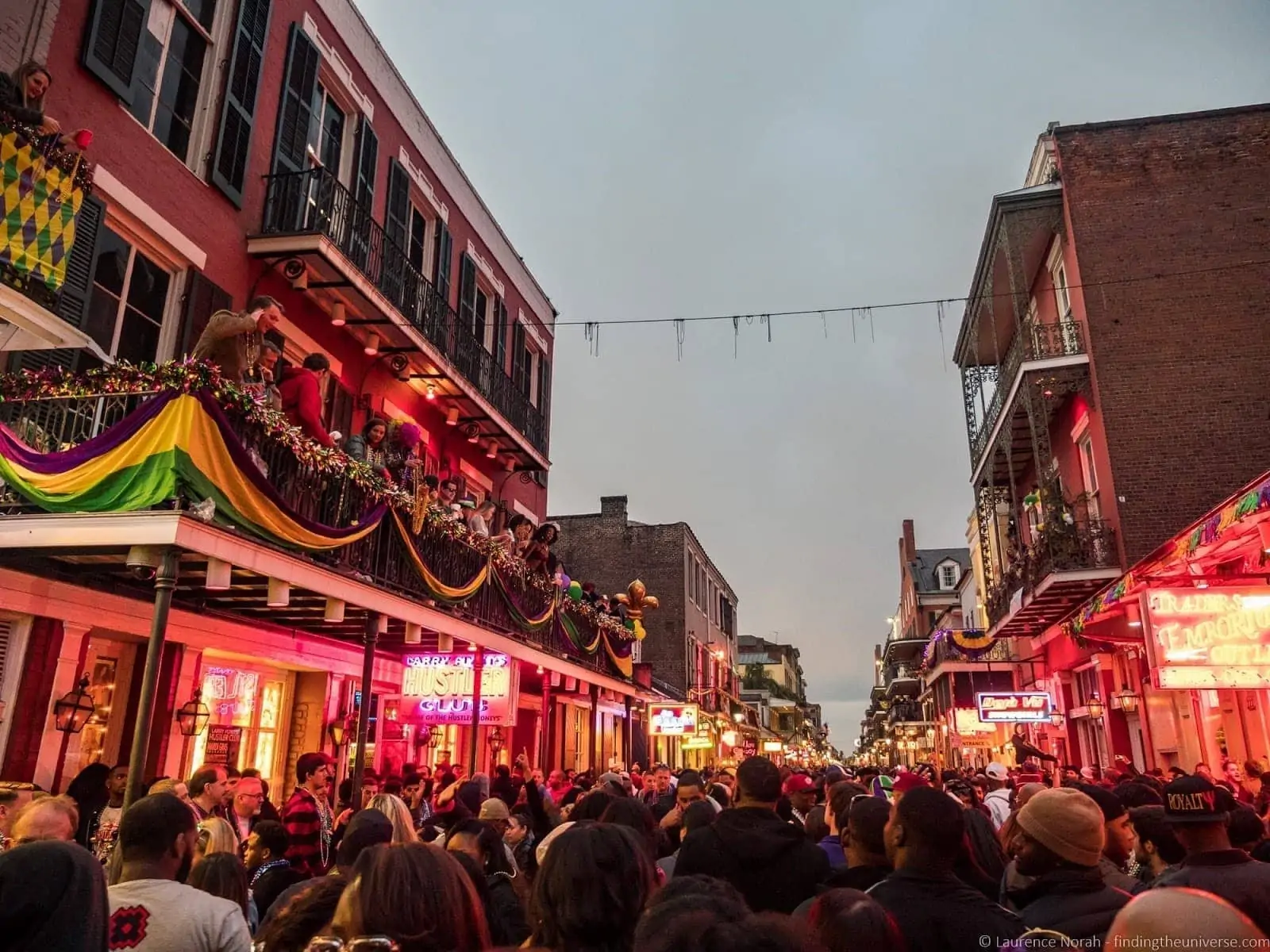
Two notes on Day 1 evening. The first: Bourbon Street won’t be missed if you walk it for an hour in the early evening and then walk back to the Marigny. Of course, if you like the neon-and-hand-grenade-cocktail party scene, give it the night you’ve always wanted to give it. If you don’t, give it the cultural-anthropology hour and then go where the working musicians actually play. We’ve done both versions across visits, and the Frenchmen Street evening is the one we go back to.
The second: the Café du Monde queue is far shorter at opening than it is mid-morning, so if you want the beignets without the wait, treat them as a 7:15am priority.
Day 2: Garden District, Cemeteries, and the WWII Museum
Day 2 trades foot-density for distance and shifts the city’s pace. You leave the Quarter on the St Charles streetcar, walk a quieter, leafier neighbourhood for a couple of hours, sit down for the longest lunch of the trip, and then commit the afternoon to one of the best museums in the United States. The day’s energy curve is the opposite of Day 1: a slower morning, a heavier lunch, an indoor afternoon with air conditioning that recovers your feet for Day 3.
The structure here is more booking-dependent than Day 1. Lunch at Commander’s Palace needs to be reserved weeks ahead, the cemetery tour requires a licensed guide and is easier with a same-day-to-48-hour lead, and the WWII Museum has a half-day combo ticket that can sell out for the Tom Hanks 4D feature. Book the first two before you fly in; the museum is fine to walk up to for general admission but better with the combo pre-booked.
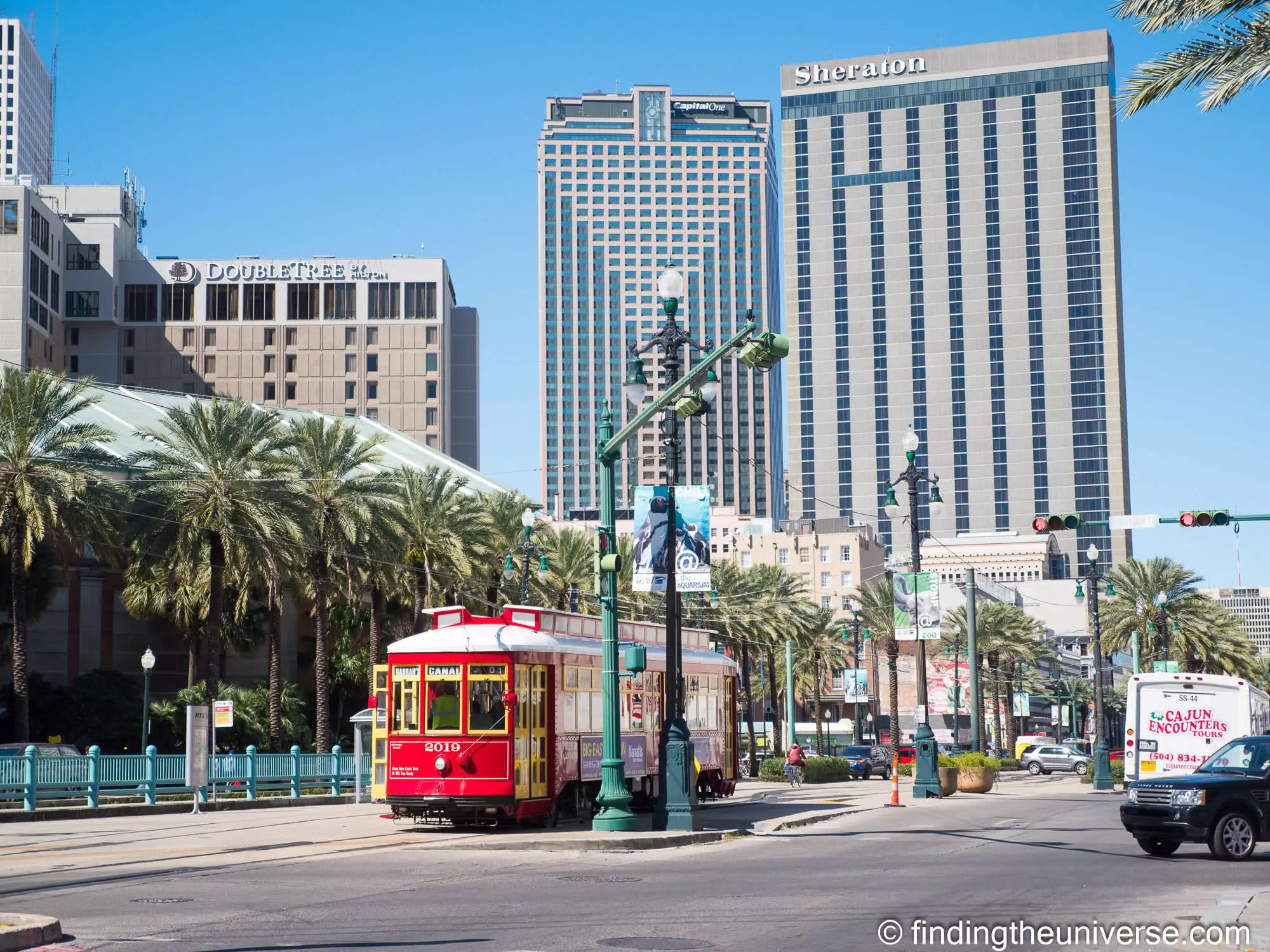
Catch the St Charles streetcar from Canal Street (Route 12, the dark-green olive-coloured cars, $1.25 a ride or $3 for a Jazzy Pass day ticket). They roll past every fifteen minutes or so. Get off around Washington Avenue or Coliseum Square for the Garden District entry, which puts you ten minutes’ walk from the mansion clusters along Prytania, First, Second, and Third streets.
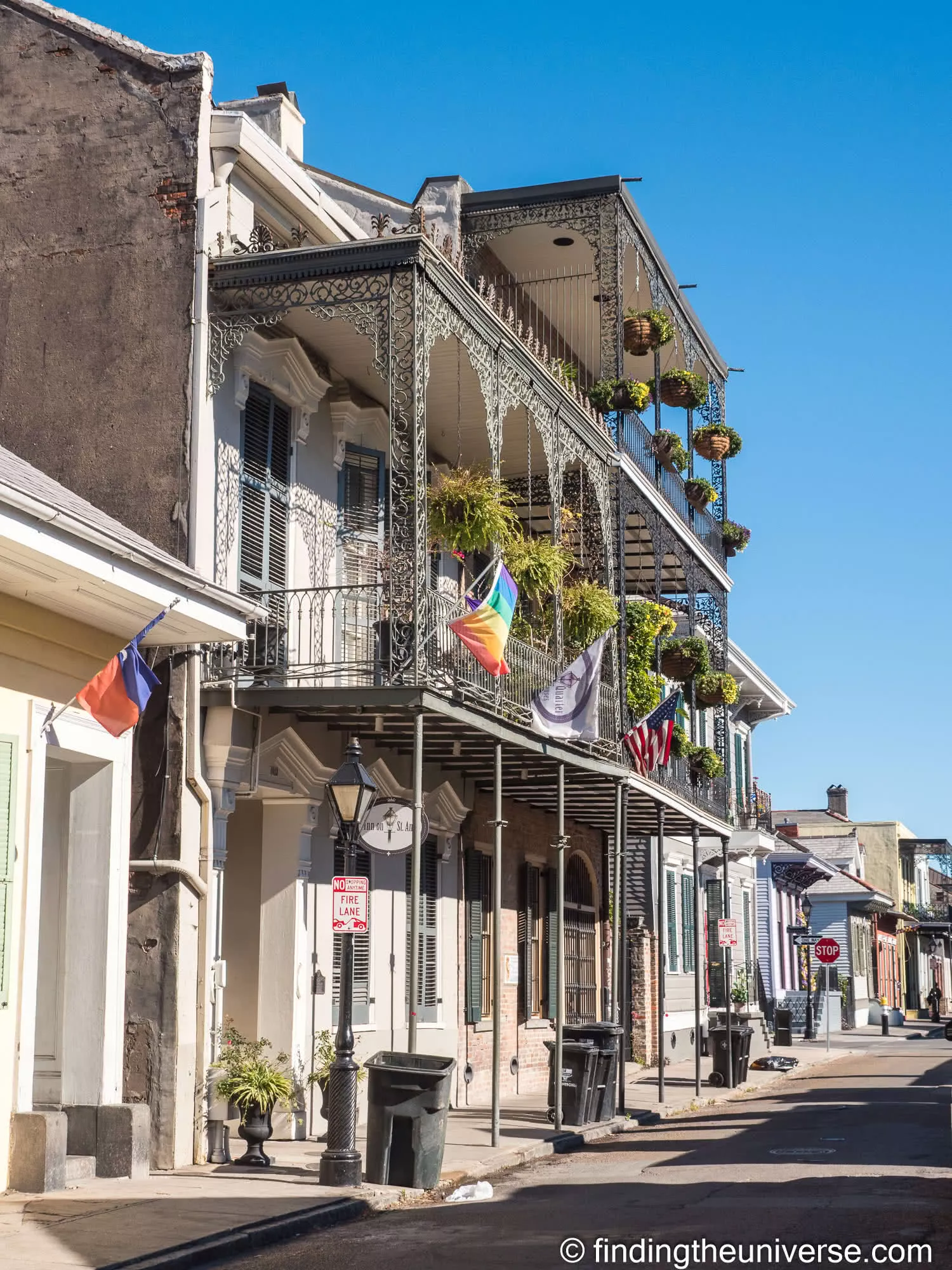
The neighbourhood is the early-nineteenth-century American Quarter, built when the wealthy Anglo arrivals wouldn’t (or couldn’t) buy into the Creole French Quarter, so the architecture is a step away from what you walked on Day 1: Greek Revival columns, Italianate brackets, fenced gardens, and the live oaks lined up overhead.
Anne Rice fans want 1239 First Street, the Brevard-Rice House where she lived for nearly thirty years and where the Mayfair Witches are set.
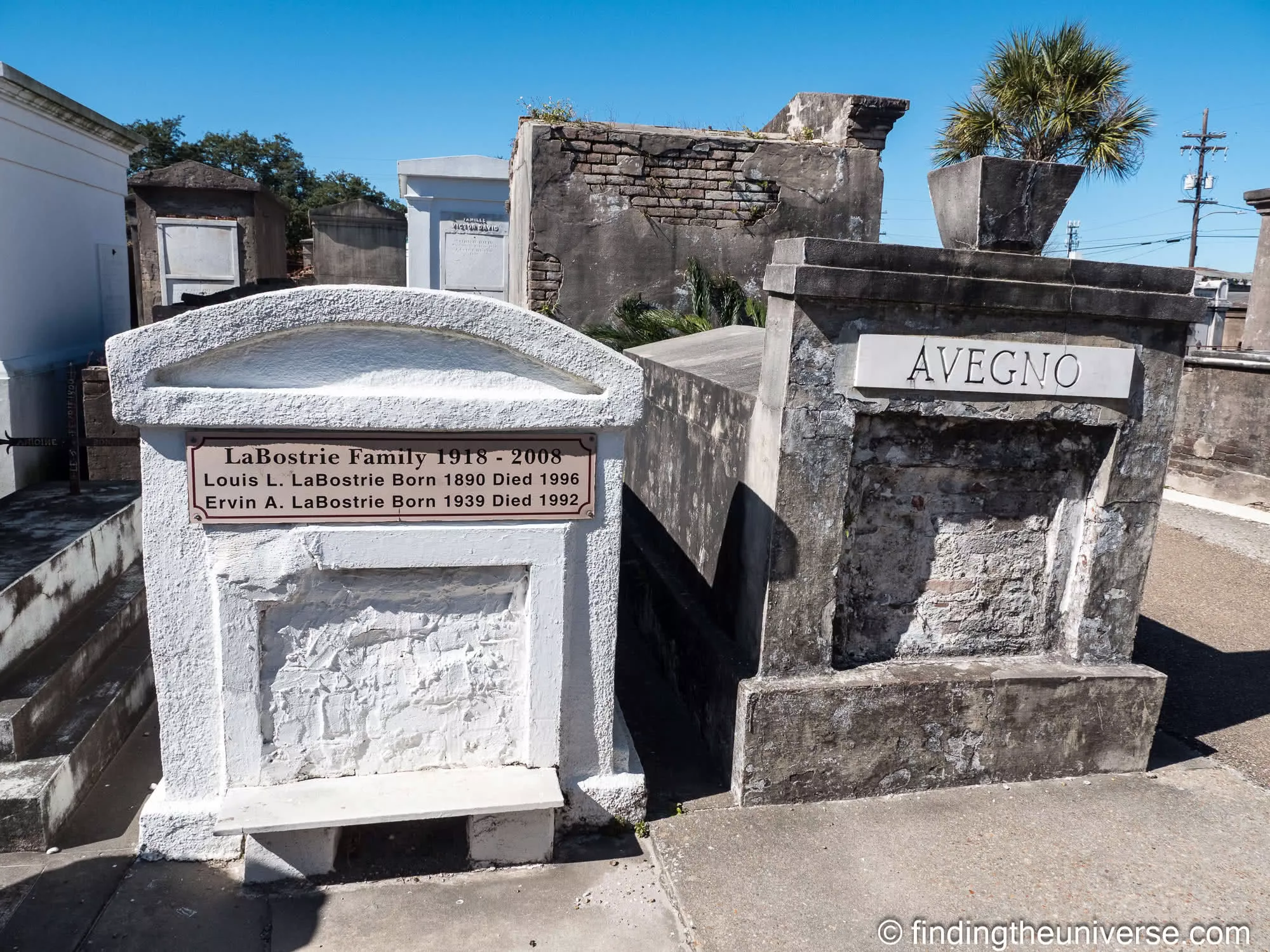
A note before you start: Lafayette Cemetery No. 1, the cemetery most associated with the Garden District and the one the older guidebooks send you to, has been closed to the public since September 2019 for restoration. The closure has gone on a lot longer than anyone expected. Walk past the gates if you want the photograph through the iron, but the cemetery to actually tour is St Louis No. 1 back near the Quarter, which we’ll route to in the afternoon.
Lunch is at Commander’s Palace, 1403 Washington Avenue, the turquoise-and-white Garden District icon that has run since 1893. Reservations through Tock, weeks ahead, prime times go first.
We’ve done both the Sunday Jazz Brunch and the legendary 25-cent martini lunch (Wed/Thu/Fri only); the martini-lunch version is the one we recommend, because it’s the way the Garden District has lunch on a weekday. Three martinis are the cap and the staff will tell you when you’ve hit it. Jackets are preferred but not required for gentlemen, and the dress code is read closer to country-club than black-tie. The turtle soup with sherry tableside is the order.
If your Day 2 falls on a Friday and the booking gods are kind, the swap-out play is to skip Commander’s lunch and do Galatoire’s Friday lunch back in the Quarter instead, where the dining room becomes a long, social, music-and-cocktails affair that runs hours into the afternoon; you’ll need a jacket for that one and you may not leave until five.
From Commander’s, head back into the Quarter for the St Louis Cemetery No. 1 guided tour. Since 2015, the cemetery has required a licensed guide to enter, both to protect the tombs from souvenir-takers and because the layout is confusing on first walk-through.
The licensed-guide cemetery tour on GetYourGuide runs around $25, lasts about an hour, and includes Marie Laveau’s tomb (the voodoo queen, although the lipstick X-marks are no longer permitted) and Nicolas Cage’s white pyramid mausoleum (purchased in 2010, still empty, draws strong feelings either way). Most tours wrap by 1pm; book the morning if you want to slot the cemetery before lunch, or the early afternoon if you want lunch first.
The afternoon is The National WWII Museum, 945 Magazine Street in the Warehouse District. Allow three to four hours minimum; we’ve done five and not finished it. The campus runs across six acres and six pavilions (Louisiana Memorial, Solomon Victory Theater, Campaigns of Courage, US Freedom Pavilion: The Boeing Center, Liberation, and the Hall of Democracy), and the general admission ticket is $36 adult.
The Beyond All Boundaries 4D feature, narrated by Tom Hanks, is an extra $9 and is really worth the upgrade; the seats actually move! The film gets the tone right on the bigger Pacific and European arcs. The museum closes at 5pm, so start by 1pm at the latest.
If you do nothing else, spend an hour in Campaigns of Courage and another in the personal-stories oral-history rooms upstairs. We’ve travelled with Jess’s father, a veteran, and watched him stop in front of half the cases; the museum’s pacing is unhurried by design.
The evening adventure is dinner at one of the century-old Creole institutions. Our pick for a first three-day visit is Antoine’s, 713 St Louis Street, in the Quarter. Antoine’s has been continuously family-owned since 1840 (it’s the oldest such restaurant in the United States), now in the fifth generation, and the warren of historic dining rooms behind the unassuming front door includes the Rex Room, the 1840 Room, and the Mystery Room.
Jackets are strongly suggested but not required, and a collared shirt with smart trousers reads as fine; if you turn up in athletic wear or flip-flops they will say no.
The Oysters Rockefeller were invented here in 1889; order them. The Pommes de Terre Soufflées (puffed potato chips, served upright like little pillows) are an Antoine’s signature, and worth ordering too. Reservations through OpenTable; book at least three weeks ahead for prime times.
The two alternatives in the same family: Galatoire’s, 209 Bourbon Street, is open Wednesday through Sunday for both lunch and dinner (Resy or call ahead for current hours, which the website doesn’t list publicly) and is the only one of the three with a strictly enforced jacket rule. Gentlemen must wear a jacket at dinner and all day Sunday in the Main and Second-floor dining rooms; they keep loaner jackets if you forget. The third dining room (Galatoire’s 33) doesn’t enforce the rule and allows shorts in summer. Friday lunch is the legendary tradition.
Arnaud’s, 813 Rue Bienville, has been running since 1918 under fourth-generation Casbarian ownership; jackets are preferred but not required, and the adjoining French 75 Bar is the most famous place in New Orleans to order the cocktail.
A bit of cocktail trivia: the French 75 itself was invented at Harry’s New York Bar in Paris around 1915, named after the WWI French 75mm field gun; Arnaud’s bar is named after the cocktail rather than the place where the cocktail was born.
Any of the three will give you the evening you came for; we land on Antoine’s because the dress code is the friendliest and the oldest-continuously-family-owned bit still makes us pause.
If you skip the WWII Museum or your Day 2 lunch ran long, the morning-alternative option is NOMA and the Besthoff Sculpture Garden in City Park. The sculpture garden is free seven days a week (a recent expansion brought it to about eleven acres), the museum is $23 adult for out-of-state visitors, and the streetcar to City Park (Canal-City Park line) drops you outside the front gate. NOMA closes Mondays. We’ve spent half-days here on quieter visits and the Besthoff really is one of the best urban sculpture gardens in the country.
Day 3: A Plantation Day Trip on the River Road
Day 3 is the only day that requires real advance commitment, because the plantation trip is a full-day undertaking and you can’t bolt it onto an afternoon.
We recommend a plantation day, and specifically Oak Alley with an optional pairing of Whitney, because the layered history of the Louisiana River Road is something you can’t get anywhere else in the United States and because the alternatives (a half-day swamp tour, or a slow walk through Tremé and Bywater) are already partly covered in our other New Orleans articles. Not everyone wants a plantation day, of course, so there are two alternatives at the bottom of this section.
The two ways to do the plantation day. The first is a one-day rental car through Discover Cars, picked up at 7 or 8am from the French Quarter or CBD; this gives you control over the day, lets you combine Oak Alley with Whitney without timing yourself out, and runs around $50 to $80 for a single-day economy.
The second is a small-group day tour with hotel pickup, available through the GetYourGuide plantation day-tour search; this trades flexibility for someone else driving and a guide who knows the road, and most of the bookings include either Oak Alley or Whitney rather than both.
We’ve done it both ways; the rental car wins on flexibility, the tour wins if you don’t want to drive in unfamiliar country on the morning after a Frenchmen Street night.
The drive west on River Road is about an hour from the CBD, depending on traffic on I-10. Whitney sits about 45 miles out, Oak Alley about 54 miles, and Laura Plantation (an optional third) about 48; the three are all within ten miles of each other along the same stretch of road. Day-trippers most often pair two; we’ve done Oak Alley and Whitney together and would do that pairing again.
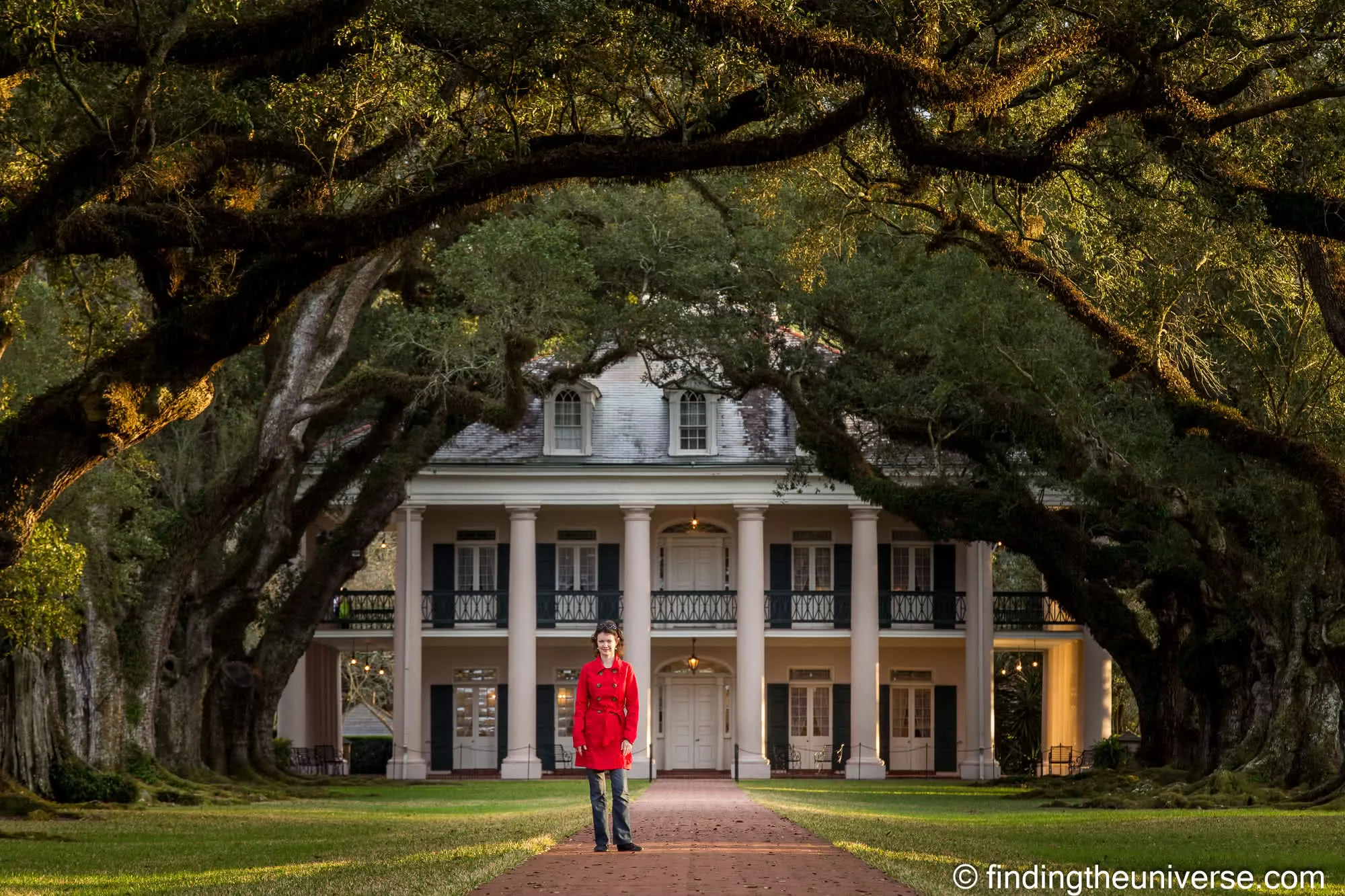
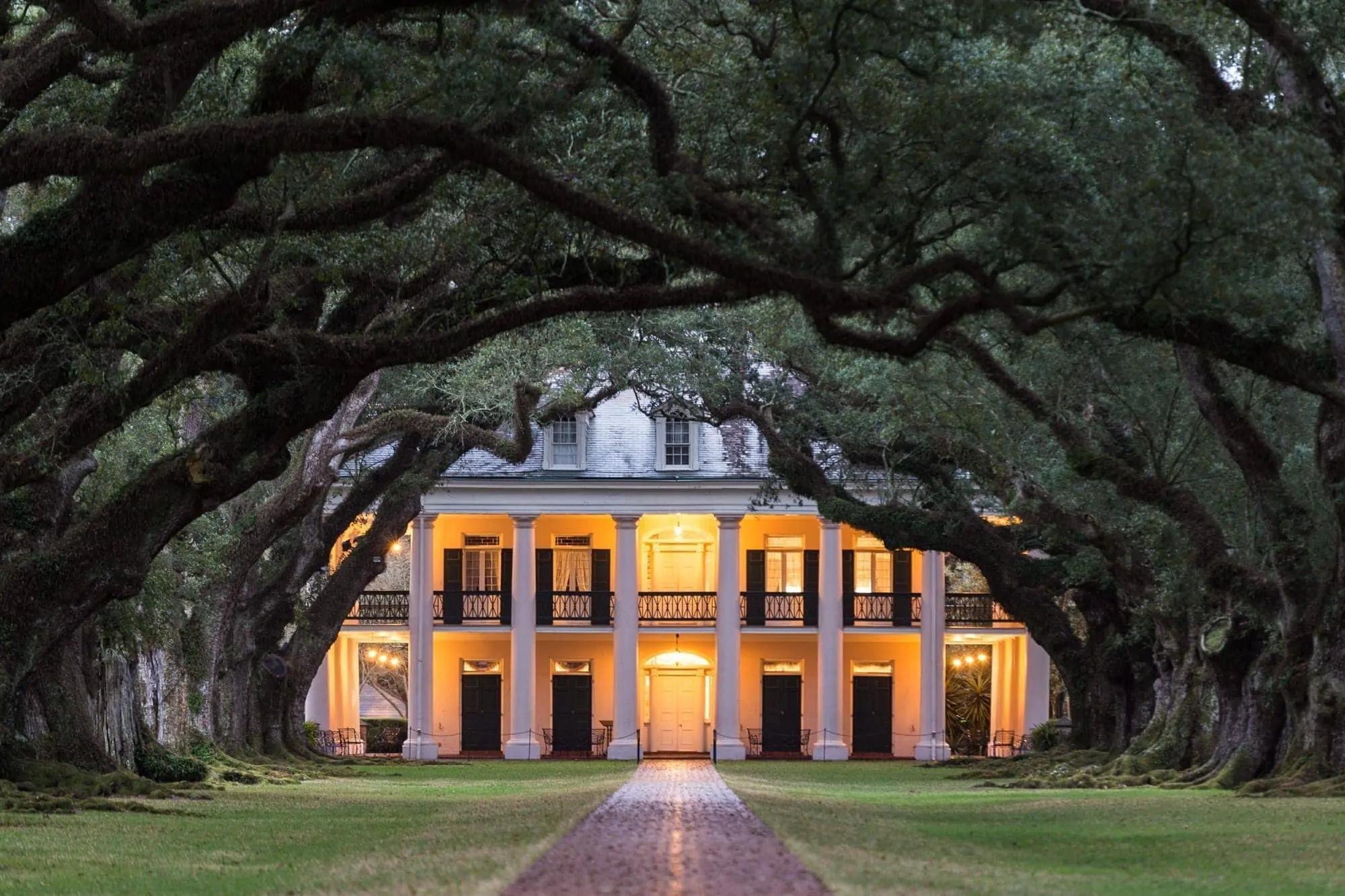
Oak Alley Plantation is the one most people think of when they picture a Louisiana plantation: a Greek Revival mansion built in 1839, fronted by an avenue of 28 live oaks planted (according to Oak Alley’s own 2017 research) by an unknown earlier settler before the house was built. The grounds open daily at 8:30am and the last Big House tour leaves around 4pm. The general admission ticket is $30 and includes the Big House guided tour, the slavery exhibit (six reconstructed cabins behind the main house), the sugarcane exhibit, and the blacksmith shop.
The Big House tour is the headline, but the slavery exhibit is the more important hour of your visit; it covers the enslaved people who lived and worked at Oak Alley by name and by household, with primary-source documentation that makes the place’s history unflinching. We’ve walked the alley of oaks in mid-morning light and again in late-afternoon light; the late light is the photograph, but the mid-morning slot is the cooler walk if you’re visiting May to September.
Lunch is on the grounds at the Oak Alley Restaurant (gumbo, crawfish étouffée, red beans and rice, the obvious things; expect $15 to $25 per plate), or you can pack out from the Quarter and eat in the car. We’ve done both; the on-grounds restaurant is fine.
The optional afternoon paired with Oak Alley is Whitney Plantation, five miles east on the same River Road. Whitney is the only Louisiana plantation museum to centre the enslaved people who lived and worked there as the primary historical subject, rather than treating slavery as a sidebar to the planter family’s story. The audio self-guided tour is $25 adult, the guided tour is $32 and runs about 90 minutes, and the site is closed Tuesdays (which matters if your Day 3 lands on a Tuesday, because Whitney needs a substitute).
The Allées Gwendolyn Midlo Hall memorial engraves the names of 107,000 people enslaved in Louisiana between 1719 and 1820, drawn from the historian’s Louisiana Slave Database; the Wall of Honor focuses on those enslaved at Whitney Plantation itself.
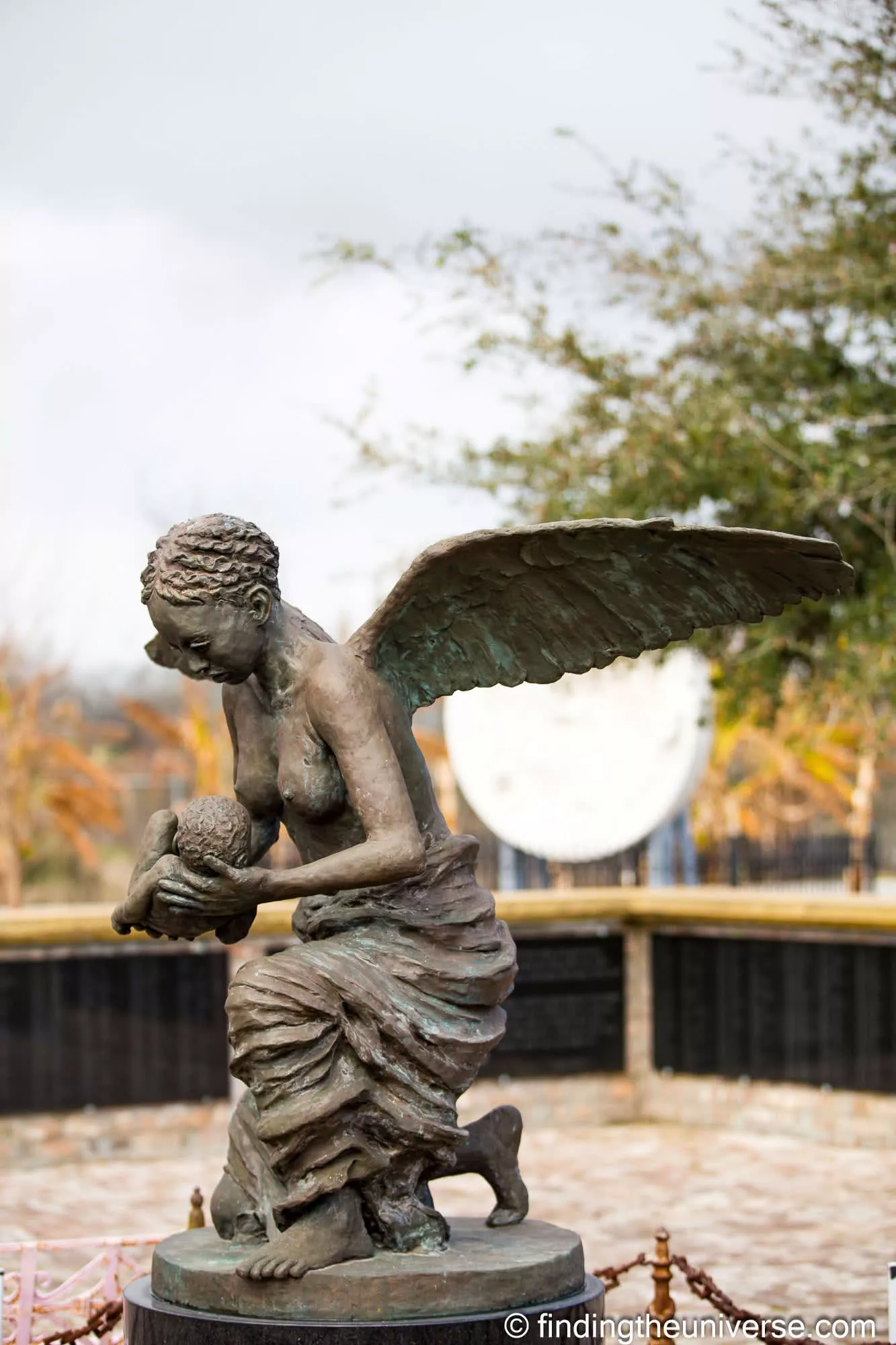
The Field of Angels is dedicated to the 2,200 enslaved children who died in St. John the Baptist Parish between 1823 and 1863, their names taken from the Sacramental Records of the Archdiocese of New Orleans. It is not a comfortable visit; it is not meant to be. We have left Whitney quieter than we arrived both times.
The drive back to the city is about an hour and gets you into New Orleans around 5pm. The evening is open: dinner at one of the Creole institutions you didn’t pick on Day 2, a quiet sit-down at Carousel Bar, or an early night because the day was long. If you did Antoine’s on Day 2, Galatoire’s or Arnaud’s is the natural Day 3 dinner; if Day 2 was Galatoire’s, take Antoine’s tonight.
Alternatives for Day 3. If a plantation day isn’t your idea of a great time, two clean substitutions. The half-day swamp tour with a Cajun-bayou operator like Cajun Encounters runs $35 standard for a two-hour boat tour with French Quarter hotel pickup.
The four departure times are 9:30am, 12:15pm, 2:45pm, and 5pm, and the morning departure pairs nicely with an afternoon Steamboat Natchez jazz cruise from the Toulouse Street Wharf for a river-themed day.
Alternatively, a city-day in Tremé, Marigny, and Bywater (the Backstreet Cultural Museum at 1531 St Philip Street, $25 adult, open Tuesday to Saturday and noting that the museum moved here from St Claude Avenue in July 2022; St Roch Market for lunch; Studio Be murals; Bacchanal Wine for a slow evening) is the better choice if you can’t face the early start or the drive.
Both alternatives skip the long history of the River Road, which is the reason we still recommend a plantation as the primary Day 3.
Best Photo Spots in New Orleans for a 3-Day Trip
I’ve been shooting in New Orleans across visits since the mid-2010s, and the city rewards a photographer who pays attention to time of day more than any other location-shoot factor. Six spots that have given us the strongest frames across three-day trips:
Jackson Square at golden hour, looking up at St Louis Cathedral with the three spires backlit. About an hour before sunset in winter, two hours before in summer. The artist easels along the iron fence give you foreground if you want it.
Royal Street between 10 and 11am on a weekday, before the pedestrianisation closes the street to vehicles and the crowd thickens. The mix of architectural shadow and street musicians at this hour reads more naturally than the busier midday version.
Garden District mansions in late afternoon raking light. The light comes through the live oaks at an angle that picks out the columns and the iron lacework on the balconies. We work the block around First and Prytania for the strongest mansion frames.
Oak Alley’s avenue of oaks at mid-morning. Counterintuitive (golden hour is the obvious answer), but the 28 oaks form a tunnel that holds shape best when the sun is high enough to filter through the canopy rather than rake across the trunks. Walk to the far end and shoot back towards the house. The Big House from the alley is the postcard frame; the alley itself looking out to the Mississippi is the better composition.
Frenchmen Street neon after 9pm. The Spotted Cat and d.b.a. neon signs are the right kind of saturated. Bump ISO and shoot wide open; the colour cast is the point.
Café du Monde steamed-glass mornings. The condensation on the side windows looking onto Decatur, the white-aproned waiters moving through the green-and-white awnings, the powdered sugar floating in shafts of morning light. Shoot from the sidewalk side; the inside of the stand is too busy for clean composition. A 35mm or 50mm equivalent gives you the right framing.
Lessons From Our New Orleans Visits
A few things we’ve learned across visits, all of them lessons we actually use now.
Book Commander’s Palace before everything else. The 25-cent martini lunch on Wed/Thu/Fri is the booking that sets your Day 2 up, and it goes first. We’ve rebuilt a day plan around being lucky enough to get a Friday slot, and we’ve also missed it entirely. Reserve before the flight clears.
Treat the plantation day as a single day, not a half. The temptation to bolt a swamp tour onto a plantation morning is real, and we’ve done it; the day always feels rushed and the drive home is grim. Pick one or the other for Day 3, and put the alternative on a return visit.
One Frenchmen Street night is the right number, not two. Two consecutive late nights flatten the music and the days that follow. We now go hard on one night (usually Day 1, when the legs are fresh) and pick a quieter dinner on the second evening.
Walk Bourbon Street once for the anthropology and then walk away. An hour, ideally between 6 and 8pm when it’s loud but not chaotic, is plenty. The musicians who actually live in New Orleans mostly don’t play Bourbon Street, which is the whole point of crossing Esplanade to Frenchmen instead.
Pre-book the cemetery tour 24 hours ahead, not on the day. Same-day works in shoulder season but is unreliable in peak; we’ve lost a Day 2 afternoon to a sold-out tour and ended up doing the Garden District in two directions instead. The 24-hour lead is the small habit that saves the day.
Practical Tips for a 3-Day New Orleans Trip
Getting around. You don’t need a car for the city itself. The French Quarter, CBD, Garden District, and Marigny are all reachable by some combination of streetcar, the RTA Jazzy Pass day ticket ($3, unlimited rides on streetcars and buses), Lyft or Uber, and walking.
From MSY airport, your three options are the long-standing taxi flat rate ($36 for one or two passengers, $15 per passenger for three or more, both to the French Quarter and CBD zone), rideshare ($25 to $40 depending on time of day, surges hard during Mardi Gras and Jazz Fest), and the RTA airport bus to Union Passenger Terminal in the CBD ($1.25 standard fare, slower but cheap). A rental is justified for Day 3’s plantation trip and not for anything else.
Best time to visit. October through April is the comfortable window, with March, April, October, and November the best months for weather. June through September the heat-index regularly tips above 105°F and the humidity is the real story; we’ve visited in late August and wouldn’t do it again with children. May sits in between, hotter than April but not quite June. Hurricane season runs June to November; mid-August to mid-September is the peak risk window for a trip getting weather-disrupted.
Safety. The French Quarter, CBD, Garden District, and the French-Quarter-adjacent edge of Marigny are safe to walk in daylight and lit at night. The Quarter is heavily policed and Bourbon Street’s late-night rowdiness isn’t the same thing as danger. Use Lyft or Uber at night for anything beyond the well-lit main streets, and treat Algiers across the river as a daytime visit only because the ferry timetable controls too much of the evening.
Planning around Mardi Gras. If your three days fall during Mardi Gras week itself (the run-up to Fat Tuesday), the city becomes a different trip and this itinerary stops working. Day 1’s French Quarter walking becomes parade-route navigation, Day 2’s Garden District is a sea of barricaded floats and ladders, and Day 3’s plantation drive is fine but you won’t want to leave the city.
We cover the parade-by-parade detail in our New Orleans Mardi Gras guide. Mardi Gras 2027 falls on February 9, with parades building through the preceding two weeks. If you want both the Carnival experience and the itinerary above, book a longer trip and overlap the two.
If you’re planning to visit several paid attractions across the three days, the Go City New Orleans Pass is worth doing the maths on; the WWII Museum, a steamboat cruise, and a cemetery tour together usually clear the break-even, but a two-attraction day won’t.
Where to Stay for a 3-Day New Orleans Trip
For a first three-day visit where every day starts and ends on foot, the French Quarter or the immediately adjacent CBD are the right call. The Quarter puts you on the doorstep of Day 1 and within ten minutes of Day 2’s streetcar; the CBD next door is quieter, usually a bit better value, and has the more reliable hotel air conditioning that matters in summer. The Garden District is the leafier alternative if you don’t mind starting most mornings with a streetcar ride.
We’ve stayed in both the Quarter and the CBD across visits and would recommend the Quarter for a first-time three-day visit specifically because it removes a journey from every day.
Use the Booking.com French Quarter search to filter by your dates and budget. For the longer four-neighbourhood comparison (including the Marigny and the Garden District) and our specific hotel picks, the deeper version is in our 22 things to do in New Orleans article.
FAQ: 3 Days in New Orleans
Is 3 days in New Orleans enough?
Three days is enough for a focused first visit covering the French Quarter, the Garden District, the WWII Museum, an evening on Frenchmen Street, and a plantation day trip. You won’t see everything, which is the right amount for a first visit; you’ll leave with a clear sense of which parts of the city you want to come back to. If you want both the city and Mardi Gras, you need a longer trip; if you want one of the alternative day-trips (swamp, alternative neighbourhoods) on top, plan four days.
What’s the best day-by-day order for a New Orleans itinerary?
French Quarter on Day 1, Garden District and the WWII Museum on Day 2, plantation day-trip on Day 3 is the order we would repeat. The reasoning: most flights land mid-afternoon, and the French Quarter’s eight-block walking density absorbs jet-lagged movement better than longer-distance neighbourhoods. Day 2’s streetcar ride and indoor afternoon recover your feet. Day 3’s full-day commitment lands when you know the city well enough to leave it for a day.
What should you book in advance for a 3-day New Orleans trip?
Six things, in priority order: dinner at Antoine’s, Galatoire’s, or Arnaud’s (three to four weeks ahead for prime times); lunch at Commander’s Palace (similar lead, and the 25-cent martini lunch Wed/Thu/Fri books first); the licensed-guide cemetery tour (24 to 48 hours, longer in peak); the plantation rental or day-tour (a day or two ahead is enough); the WWII Museum if you want the Beyond All Boundaries combo; and Preservation Hall First Row tickets if you’re going. The first two are the items that determine whether your itinerary works.
Should you do a plantation day trip on a 3-day visit to New Orleans?
Yes, if you have any interest in nineteenth-century American history or the layered story of the River Road. Oak Alley paired with Whitney is the strongest combination, because Oak Alley carries the postcard architecture and the Whitney centres the enslaved people who built and worked the parishes. The trade-off is a 7am morning and a long day, and the alternative half-day swamp tour or alt-neighbourhood walk is the right substitute if a plantation isn’t your interest.
Is Frenchmen Street worth it over Bourbon Street for a New Orleans evening?
Yes, and the difference isn’t subtle. Bourbon Street is a loud party strip with cover bands and frozen-cocktail bars; Frenchmen Street is where the working New Orleans musicians actually play. Walk Bourbon Street for an hour in the early evening if you haven’t seen it, then cross Esplanade to Frenchmen and start the evening at The Spotted Cat, d.b.a., or Three Muses. Sets pick up around 8 or 9pm.
What’s the best time of year for a 3-day New Orleans visit?
October through April is the comfortable window for a first visit. March, April, October, and November are the strongest months for weather (mid-60s to mid-70s Fahrenheit, low humidity). June to September the heat-index regularly clears 105°F in August and the outdoor portions of the itinerary become hard work; if you must travel in summer, push outdoor blocks to the morning and treat midday as A/C time. Mardi Gras (February or early March, depending on the year) is a different trip and needs a different plan.
Can you do 3 days in New Orleans without a car?
Yes for Days 1 and 2; for Day 3 you need either a one-day rental for the plantation trip, or a small-group day tour with hotel pickup. The city itself runs fine on foot, streetcar, and Lyft for late-night and outer-edge runs. For the airport, the taxi flat rate at $36 for one or two passengers or rideshare at $25 to $40 is the practical choice over the slower RTA bus.
Is a 3-day visit during Mardi Gras a good idea?
Three days during Mardi Gras week itself is short for the Carnival experience and means you skip the rest of the city. The big parades build through the weekend before Fat Tuesday, and three days lands you on either the run-up or the climax. If Mardi Gras is the trip’s purpose, plan five to seven days and accept that the itinerary above will be on hold. If you want a first New Orleans visit and Carnival is the secondary draw, travel outside Mardi Gras week; the city is more itself the rest of the year. Mardi Gras 2027 falls on Tuesday, February 9.
Further Reading
For trip planning beyond what we’ve covered here, the regional guidebook we travel with is Lonely Planet’s American South, which covers Louisiana, Mississippi, Alabama, Tennessee, Georgia, and the Carolinas in one volume and is the best single-book reference for travellers piecing together a Deep South trip.
For a deeper dive into the river plantations themselves, Jess wrote a longer comparison guide at our sister site’s Louisiana plantations on the River Road guide, and a review of staying overnight at Oak Alley at her Oak Alley overnight review.
The companion article that ranks the city’s attractions thematically rather than sequencing them is our 22 things to do in New Orleans shortlist, and if you want to extend the trip with a side visit to Louisiana’s capital, our Baton Rouge weekend guide covers the two-night extension that pairs well with a Whitney-or-Houmas-House plantation morning. The Mardi Gras depth guide is at our New Orleans Mardi Gras article.
If you have a question we haven’t answered or a Day 3 alternative we haven’t covered, leave a comment below and we’ll get back to you.
Leave a Reply