
New Orleans is a city where the obvious answers (Bourbon Street, beignets, a cemetery tour) are roughly correct. Jess and I have visited New Orleans both during Mardi Gras week and on quieter return trips, and we put this list together as the 22 things we’d steer a first-time visitor towards in 2026. If you’d rather follow a day-by-day plan, we’ve also put together a 3 day New Orleans itinerary that arranges the highlights around the city’s neighbourhoods. There’s a Quick Verdict for the scanner up top, deeper picks for each item in the body, and a “what we would do differently” block at the end.
If you’re specifically planning a Mardi Gras visit, the parade-by-parade detail lives in our New Orleans Mardi Gras guide; this article handles the rest of the year.
Table of Contents:
Quick Verdict: Is New Orleans Worth Visiting?
Definitely. New Orleans rewards travellers who want a city with a music scene, a food scene, and a layered history that you can’t get anywhere else in the United States. The French Quarter is ideal for those of us who like to explore on foot, the streetcar still works (St Charles runs every 15 minutes most of the day), and a few days here gives you enough range to mix culture, eating (there will be a lot of eating), and a day trip out to the river plantations.
Plan around the weather, not against it. October through April is the comfortable window. June through September is dangerously humid, with August heat-index figures routinely above 105°F.
If you’re travelling with children or anyone who struggles in heat, book outside summer or accept that midday is for indoor museums and air-conditioned restaurants, not cemetery tours. Outside of that, the city is pretty forgiving: skip what’s not for you (more on Bourbon Street below), give Mardi Gras a separate think (it’s a different kind of trip), and four to five days will cover the list.
Food and Drink in New Orleans
1. Café du Monde for Beignets and Café au Lait
The original Café du Monde at 800 Decatur Street, on the edge of Jackson Square, is the obligatory stop. Three beignets buried in powdered sugar, a chicory café au lait, and you’ve covered the cliché in under twenty minutes. Despite it being a cliché, it’s still our number one recommendation.
One thing to be aware of: it’s no longer open 24 hours. The original location is Sunday through Thursday 7:15am to 11pm and Friday and Saturday 7:15am to midnight. So if you want a 3am beignet fix, you’ll need to go somewhere else.
The food and drink counter is cash only (the adjacent gift counter takes cards).
If the Decatur Street queue snakes around the corner (it usually does by mid-morning), the City Park location at 56 Dreyfous Drive serves the same beignets without the wait. Hours are a bit shorter (Sunday to Thursday 7am to 9pm; Friday to Saturday 7am to 10pm) but the order is identical.
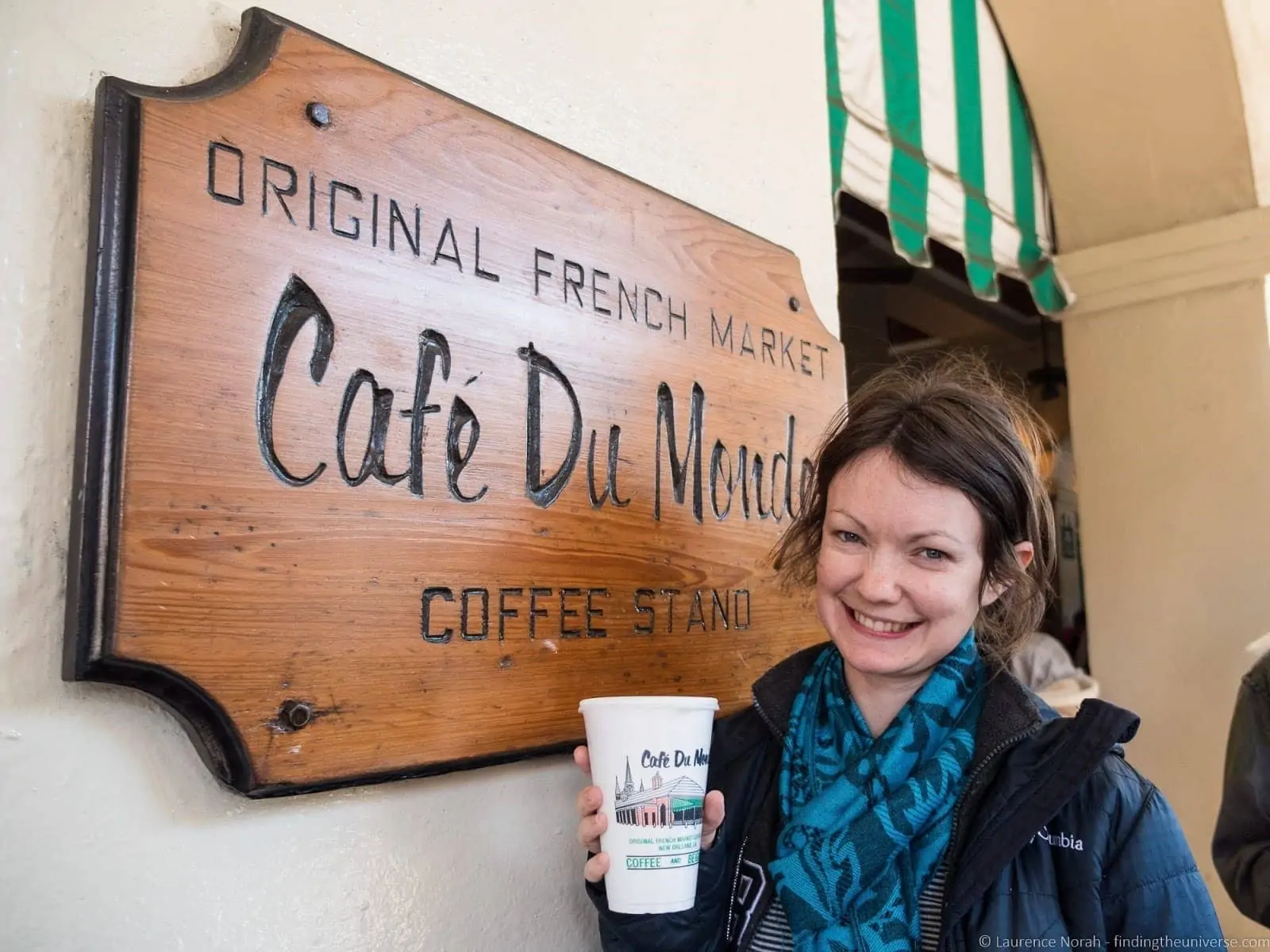
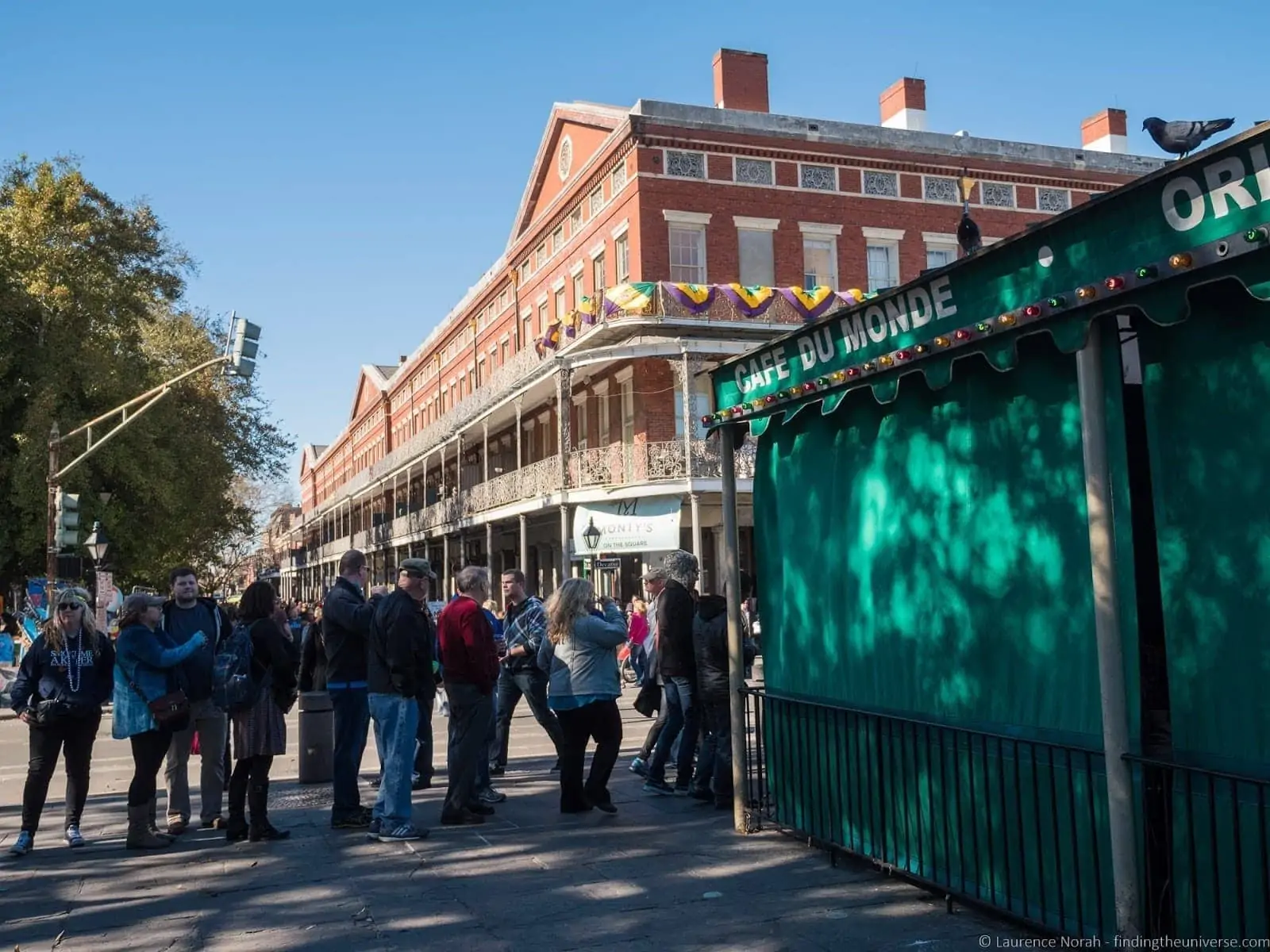
Useful link: the Café du Monde website covers all locations and current hours.
2. An Iconic Creole Lunch at Commander’s Palace
Commander’s Palace has been operating in the Garden District since 1893, it’s where the famous “Brennan family” Creole tradition was refined for the dining room, and it still runs a 25¢ martini lunch on Wednesdays, Thursdays, and Fridays that’s the most cheerful piece of value-for-money in the city.
Lunch service is 11:30am to 1:30pm (Wednesday to Friday) and the Sunday Jazz Brunch starts at 10am. The current dress code is business attire with jackets preferred (not required) for gentlemen; collared shirts and closed-toed shoes are required, jeans are discouraged, and shorts and t-shirts will get you turned away. Book well ahead through the restaurant’s reservation page; lunch slots fill faster than dinner.
If you would rather start your New Orleans meal at the start of the day, Brennan’s in the French Quarter runs a single 9am to 2pm breakfast-and-lunch service seven days a week, with the original Bananas Foster (invented at Brennan’s in 1951) finished tableside at lunch. The Brennan’s dress code is the same shape: jackets preferred at dinner, no athletic wear, advance bookings two months out.
3. A Neighbourhood Po’ Boy
Two contenders, both worth your time. Domilise’s Po-Boys at 5240 Annunciation Street in Uptown is the locals’ pick: a small corner shop, family-run since 1918, sandwiches roughly $10 to $15. It’s open Monday to Wednesday 11am to 3pm, Thursday 11am to 5pm, Friday and Saturday 11am to 7pm, closed Sunday. Bring cash (the standard NOLA-press wisdom is that Domilise’s is cash-only; their site doesn’t explicitly state it but plan accordingly).
Parkway Bakery and Tavern at 538 Hagan Avenue, near Bayou St John, is the more touristed option: bigger room, takes cards, hours are Sunday and Wednesday to Saturday 10am to 6pm (closed Monday and Tuesday). Order the roast beef po’ boy “dressed” (lettuce, tomato, pickle, mayo); the gravy is the point.
If you can only fit one, go to Domilise’s for the experience and Parkway for the convenience. Both are reachable by Lyft from the French Quarter for about $15.
4. A Cocktail at the Sazerac Bar or the Carousel Bar
One quick note before the recommendation: the Sazerac cocktail itself was not invented at the Sazerac Bar. The drink traces to Antoine Peychaud’s apothecary at 437 Royal Street around 1838, a full century before the bar opened in 1938. The Sazerac Bar inside the Roosevelt Hotel has served the drink continuously since then, which is a different and equally good story.
Sit at the bar, order a Sazerac, and you’re tasting a recipe that has been on that exact bar’s menu for nearly ninety years. The Sazerac Bar is open Monday to Thursday 11am to midnight, Friday and Saturday 11am to 1am, Sunday 11am to midnight, with a happy hour Tuesday to Friday 4pm to 6pm.
The Carousel Bar at the Hotel Monteleone is the other classic stop, and the gimmick is real: the bar rotates one full revolution every fifteen minutes, and has done so since 1949. It’s also where the Vieux Carré cocktail was invented, by Walter Bergeron in 1938. Open daily 11am to midnight; 21+ after 6pm. Sit at the carousel itself (not the side tables) for the rotation; the bar staff are used to people not quite realising they’ve moved.
If you only have one drink in you, the Carousel Bar is the better experience and the Sazerac Bar is the better historical pilgrimage.
Music and Nightlife in New Orleans
5. A Set at Preservation Hall
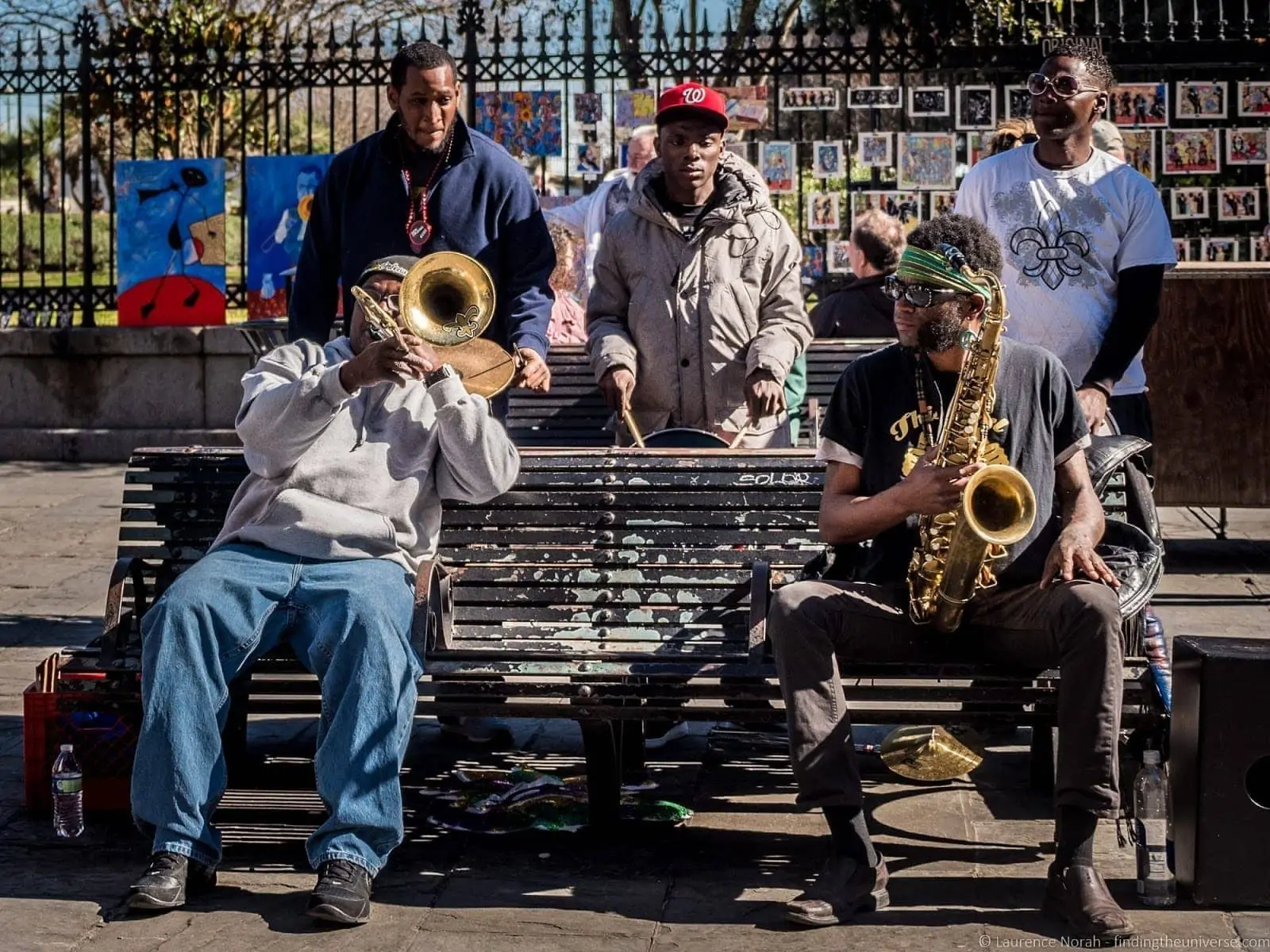
This is the best live-jazz forty-five minutes you’ll spend in the city, and the building has not changed since 1961. Preservation Hall runs three nightly 45-minute sets in a single small room at 726 St Peter Street, with three ticket tiers: General Admission Standing at $25, General Admission Seated at $40, and First Row Seated (“Big Shot”) at $50. Tickets sell online in advance and at the door (queue forms 30 to 45 minutes before each set for door tickets).
Be ready for the format: no air conditioning, no public restrooms, no food or drink permitted inside (bottled water is fine, no glass). It’s sweaty in summer, deliberately so. Arrive 15 minutes before your set. The musicians are the point, and the absence of distractions is the design.
Book through the Preservation Hall website. Pick the seated tiers if you can’t stand for forty-five minutes; the standing crowd packs in quite tightly.
6. Frenchmen Street for Local Live Music
Two blocks east of the French Quarter, Frenchmen Street is where local musicians actually play. Three venues to bookend an evening: The Spotted Cat Music Club at 623 Frenchmen, open daily 2pm to 2am, with a one-drink minimum (cash only); d.b.a. at 618 Frenchmen, with two sets a night (7pm typically free, 10pm usually a $5 to $10 cover); and Three Muses at 536 Frenchmen, which adds a $3 live-music fee to your dine-in bill rather than charging at the door.
Plan the route as eat-then-walk: dinner at Three Muses around 7pm, an early set at d.b.a. by 8pm, finish at the Spotted Cat after 10pm. Bring cash for at least the Spotted Cat. The street itself is closed to vehicles after dark and walkable end-to-end in five minutes.
7. Bourbon Street: One Hour, Then Move On
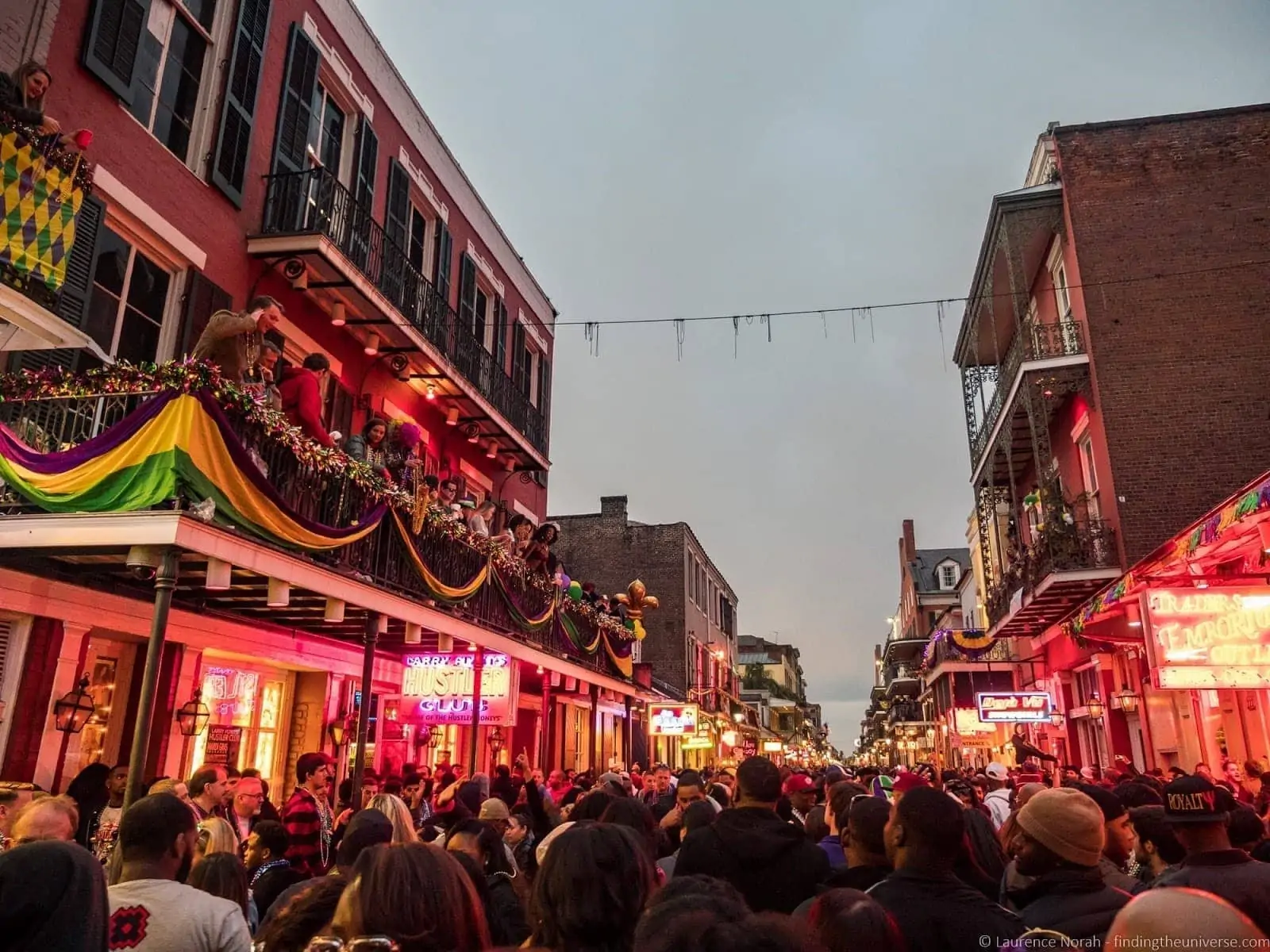
Bourbon Street is what it is, and a lot of people enjoy it for exactly what it is: a loud, neon, hand-grenade-drink, cover-band-and-karaoke party street that runs from sundown to sunrise. If that’s your idea of a good night out, then of course go and enjoy it. The energy is real.
If it’s not your idea of a good night out, give it an hour as a kind of cultural anthropology, then walk two blocks across to Frenchmen Street where the actual live music lives. We’ve done both versions of this and there’s no shame in either. What you should not do is plan your whole NOLA evening on Bourbon Street and then leave the city thinking you’ve heard New Orleans music; the working musicians are mostly on Frenchmen, in the Marigny, or in the small Tremé venues.
Museums and Culture in New Orleans
8. The National WWII Museum
This is one of the best museums in the country. Located at 945 Magazine Street in the Warehouse District, it spans six pavilions across the six-acre campus and tells the American experience of the Second World War from Pearl Harbor through Hiroshima. Allow at least four hours; a full day really isn’t excessive.
General Admission (covering all exhibit buildings and the USS Tang Submarine Experience) is $36 adult, $33 senior 65+, $26 student or military, free for children under 5 and WWII veterans. The Beyond All Boundaries film (a Tom Hanks-narrated immersive 4D piece) is a $9 add-on; the Priddy Family Freedom Theater is another $9; the combo of both films is $12. A Second-Day Pass within seven days of your first visit is $15, which is the right move if you’re staying long enough.
Hours are daily 9am to 5pm, closed Thanksgiving, Christmas Eve, Christmas Day, and Mardi Gras Day. Book ahead through the museum website for the headline exhibits; walk-ups are fine in shoulder season.
9. NOMA and the Besthoff Sculpture Garden
The New Orleans Museum of Art sits at the top of City Park, about a 20-minute drive or streetcar ride from the French Quarter. The museum itself charges $23 adult, $18 senior 65+, $16 student for out-of-state visitors (Louisiana residents pay less, and Wednesdays are free for residents and ages 13 to 19 every day). Hours are Tuesday to Sunday 10am to 5pm, with Wednesdays running 12pm to 7pm; closed Mondays.
The adjacent Sydney and Walda Besthoff Sculpture Garden is free, seven days a week, and is the part of NOMA we wouldn’t skip even if the museum itself doesn’t appeal: 11 acres of large-scale sculpture set around the City Park lagoons, with pieces by Henry Moore, Louise Bourgeois, and a hundred others. Best in the cooler months and at golden hour. Pair with a beignet stop at the City Park Café du Monde (item 1) for the easiest morning in the city.
The museum and garden are at One Collins C. Diboll Circle in City Park. Plan the visit through the NOMA site.
10. Mardi Gras World
Mardi Gras World is the float-building warehouse where Blaine Kern Studios has constructed Mardi Gras parade floats since 1932. The tour walks you through a working warehouse: floats in various stages of build, costumes, the Carnival history that produces them. It’s one of the few year-round ways to see Mardi Gras without actually being in town for it.
Address is 1380 Port of New Orleans Place. Open seven days a week, 9am to 5:30pm (first admission 9:30am, last admission 4:30pm). Closed on Christmas, Thanksgiving, Easter, and (unsurprisingly) Mardi Gras Day itself. The site is on the river south of the Convention Center; the free Mardi Gras World shuttle runs from a handful of French Quarter hotels.
If you’re visiting outside Carnival season this is the closest thing to the parade experience. If you’re visiting during Carnival, it’s a useful add-on for a rest-day, not a substitute for actually catching a parade.

11. The Cabildo
The Cabildo on Jackson Square is one of the most historically significant buildings in the United States, and the Louisiana State Museum has it organised as a walkable two-floor history of Louisiana from European contact through the early 20th century. The headline event: the Louisiana Purchase transfer ceremony took place here in December 1803, when the territory was formally handed from France to the United States. (The treaty itself was signed in Paris; the Cabildo is where the flag actually changed.)
Admission is $11 adult (under 62), $9 senior 62+, student with ID, active military and spouse, and ages 7 to 17; free for children 6 and under. Hours are Tuesday to Sunday 9am to 4pm (last tickets 3:30pm); closed Mondays and state holidays. Allow 90 minutes to two hours.
It’s right on Jackson Square between St Louis Cathedral and the Presbytère, so it pairs naturally with the French Quarter walking item below.
12. The New Orleans Storyville Museum
A smaller museum, and the one we’d add to any second-time NOLA visit. The New Orleans Storyville Museum at 1010 Conti Street, in the French Quarter, covers the city’s red-light district that operated from 1897 to 1917, the bordellos that hired and shaped early jazz musicians (Louis Armstrong came up as a teenager in this scene), and the segregated layered story of the women who worked there. It’s the only museum in New Orleans dedicated to this slice of the city’s history.
The collection includes E.J. Bellocq’s portraits of Storyville sex workers (negatives Lee Friedlander acquired and printed in the late 1960s, later introduced for a wider audience by Susan Sontag) and original artifacts from the district. It’s a small museum, an hour at most, and a useful counter to the sanitised Bourbon Street version of NOLA history.
Verify current hours and ticket pricing on the museum’s site before going; it’s run by a small team and hours occasionally shift.
Tours and the River in New Orleans
13. The St Louis Cemetery #1 Guided Tour
St Louis Cemetery #1 is the oldest extant cemetery in New Orleans, opened in 1789, and the resting place of Marie Laveau, the city’s most famous Voodoo priestess. Since March 2015 the Archdiocese has required visitors to enter only on a licensed guided tour; you can’t wander the cemetery on your own. The rule is enforced, and the tour itself is well worth doing (a licensed local guide who can talk you through the above-ground tomb tradition, the architecture, and the layered religious history of the city).
The cheapest reliable option is the St Louis Cemetery #1 guided tour on GetYourGuide, about 60 minutes long. The cemetery itself sits on the edge of the French Quarter at 425 Basin Street.
Practical note: Nicolas Cage’s pre-built pyramid tomb is here too, and yes, your guide will point it out. Marie Laveau’s tomb is intact and is the centerpiece of every tour.

14. A Cajun Swamp Tour
About 40 minutes from the French Quarter, on the Pearl River near Slidell, the bayou swamps are an easy half-day trip and a useful change of pace from the city. We went out with Cajun Encounters and would book them again: the boats are large pontoon-style craft, the captains are local, and the route works through bayous and small inland lakes thick with cypress trees draped in Spanish moss.
The Standard Swamp Tour starts at $35 per person; the VIP Swamp Tour (ages 13+) starts at $95. Each tour runs roughly two hours with departures at 9:30am, 12:15pm, 2:45pm, and 5pm daily from Slidell. Round-trip transport from “select French Quarter and downtown hotels” is available as an add-on, which we’d recommend over hiring a car for a single half-day if you’re not already driving.
If you prefer speed over wildlife-watching, the New Orleans airboat ride is the louder, faster alternative. One note on alligators: sightings are reliable in spring and summer, less so in winter when the cold-blooded reptiles slow down. Don’t book a winter tour expecting a guaranteed gator.

15. The Steamboat Natchez Jazz Cruise
The Steamboat Natchez is the last authentic steamboat cruising the Mississippi River out of New Orleans, and the cruise is worth doing once. Two formats. The Lunch Jazz Cruise is about two hours, starts at $65, and lets you see the river by day with a live jazz quartet and an optional Creole lunch buffet. The Dinner Jazz Cruise is the bigger production: roughly two hours, three-course Creole dinner, live jazz, starting at $107.50.
If you have to pick one, the lunch cruise is the better value and the daytime river views are better. The dinner cruise is the better evening out. There’s also a 75-minute Sightseeing Cruise from $25.75 adult if you just want to be on the boat for the steam-powered novelty.
Boarding is at the Toulouse Street Wharf, 400 Toulouse Street, at the edge of the French Quarter. Tickets and current schedules at the Steamboat Natchez site.

Neighbourhoods on Foot in New Orleans
16. The French Quarter
The French Quarter is the obvious one, and worth a slow morning. Start at Jackson Square, walk the front of St Louis Cathedral (one of the oldest continuously active Catholic cathedrals in the United States), then drift down Royal Street for the antique shops, art galleries, and the late-19th-century cast-iron galleries on the corner buildings. Royal Street is closed to vehicles 11am to 4pm on weekdays and 11am to 7pm on weekends, which makes it a much better walk than parallel Bourbon a block over.
Best times: early morning before 9am for street photographs without crowds, or late afternoon for the warm light bouncing off the pastel facades. The Quarter is small enough to cover the headline streets in two to three hours; allow a full half-day if you’re stopping in for coffee, the Cabildo (item 11), and a long lunch.
If you want a guided walking experience that also feeds you, the French Quarter food tour on GetYourGuide is a solid three-hour walk-and-eat option.
17. The Garden District
Five minutes by St Charles streetcar (Route 12) west of the CBD, the Garden District is the city’s gorgeous 19th-century Greek Revival neighbourhood: oak-lined streets, wrought-iron galleries, mansions that get name-checked across Anne Rice’s novels. The classic walk loops First Street to Prytania Street to Washington Avenue, picking up Magazine Street for the boutique shopping and lunch options on the way back.
One important currency note: Lafayette Cemetery #1, the cemetery most older articles steer you towards on a Garden District walk, has been closed to public visitors since September 2019. There’s no confirmed 2026 reopening date. You can still walk past the chain-link fence around the perimeter wall if you want to see it from the outside, but plan your cemetery visit at St Louis #1 in the French Quarter (item 13) instead.
Half a day is right for the Garden District. Hop off the St Charles streetcar at Washington Avenue, walk the loop, and rejoin the streetcar (or grab a Lyft) at the end.
18. Marigny and Bywater
Immediately east of the French Quarter (and home to the Frenchmen Street venues from item 6), the Faubourg Marigny and Bywater neighbourhoods are where the city’s creative-class energy lives. Walking-friendly: Marigny for the colourful Creole cottages and the Frenchmen music strip, Bywater for the Studio Be murals on Royal Street, St Roch Market (a smaller indoor food hall with around a dozen vendors), and the Crescent Park River Walk that runs along the Mississippi from Marigny down past Bywater.
For dinner, Bacchanal Wine at 600 Poland Avenue in Bywater is the standout. It’s a wine shop with a back courtyard that doubles as a music venue and outdoor restaurant: you pick a bottle from the shop racks, take it through to the courtyard, and order Mediterranean-leaning small plates from the kitchen while a jazz trio plays under the trees. 21+ only, no reservations, first-come-first-served. Hours are Monday to Thursday 4pm to 10pm, Friday to Sunday 12pm to 11pm; closed Thanksgiving, Christmas Eve, Christmas Day, and Mardi Gras Day.
A walking half-day plus a Bacchanal dinner is the right shape here.
Day Trips and Festivals From New Orleans
19. A Plantation Day Trip (We’d Pick Oak Alley)
About an hour west of New Orleans, along the Mississippi’s River Road, a string of antebellum plantations have been preserved as house museums. Three are the usual contenders, and we have a clear pick.
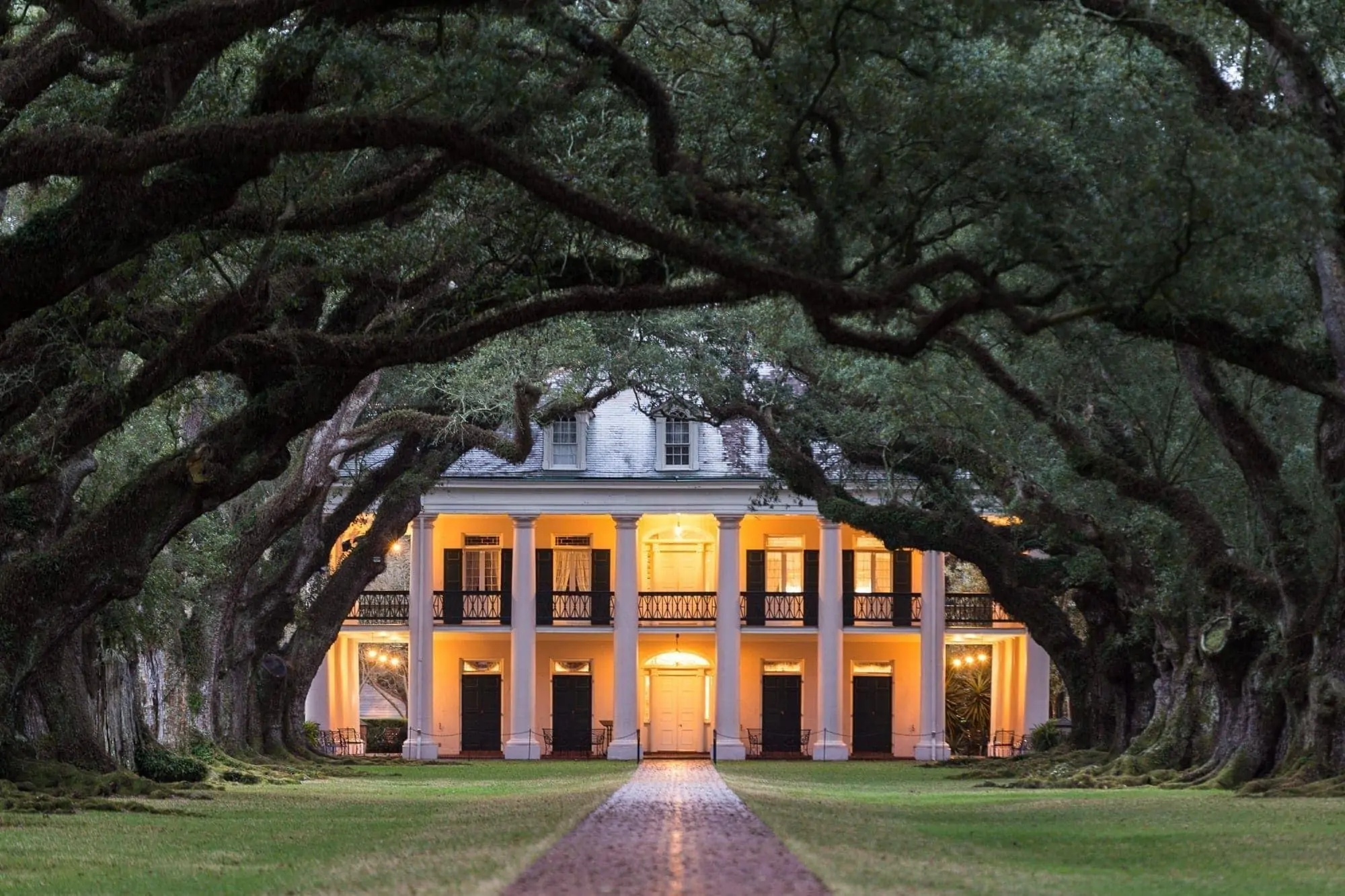
Our pick: Oak Alley Plantation at 3645 Highway 18 in Vacherie, about 54 miles from New Orleans (an hour’s drive). Oak Alley has the most photographed approach in Louisiana, the quarter-mile avenue of 28 live oak trees planted in the early 1800s leading to the Greek Revival Big House. We stayed in one of the Oak Alley overnight cottages on our last visit, which is the way to see it: the day-trippers leave around 4pm and the alley empties out for the evening light. Jess wrote up our overnight stay in detail at her Oak Alley overnight review over on Independent Travel Cats if you want the cottage-level practicalities. Admission with a Big House tour is from $30 adult; grounds-only is from $27. Hours are daily 8:30am to 5pm, Big House tours 9am to 4:30pm. The plantation also has an “enslaved people’s exhibit” with reconstructed slave quarters and primary-source displays, which we wouldn’t skip.
For the focused enslaved-people-perspective visit: Whitney Plantation at 5099 LA Highway 18 in Wallace, 45 miles from NOLA. Whitney describes itself as “the only plantation museum in Louisiana dedicated to telling the story of slavery in the United States.” Self-guided audio admission is $25 adult, $11 child 6 to 18; guided tour is $32 adult. Open 9:30am to 4:30pm daily, closed Tuesdays. If you’re doing one plantation and the enslaved-people history matters most to you, this is the one. If you have a full day, do both: Whitney in the morning for the focused visit, Oak Alley in the afternoon for the architecture and the alley.
Without a car, the easiest option is a plantation day-tour from New Orleans on GetYourGuide. For the deeper multi-plantation comparison along River Road, Jess has written a comprehensive guide at our Louisiana River Road plantations guide over on Independent Travel Cats; she also covers Magnolia Mound in our Baton Rouge weekend guide if you’re extending the trip up-river.
20. Longue Vue House and Gardens
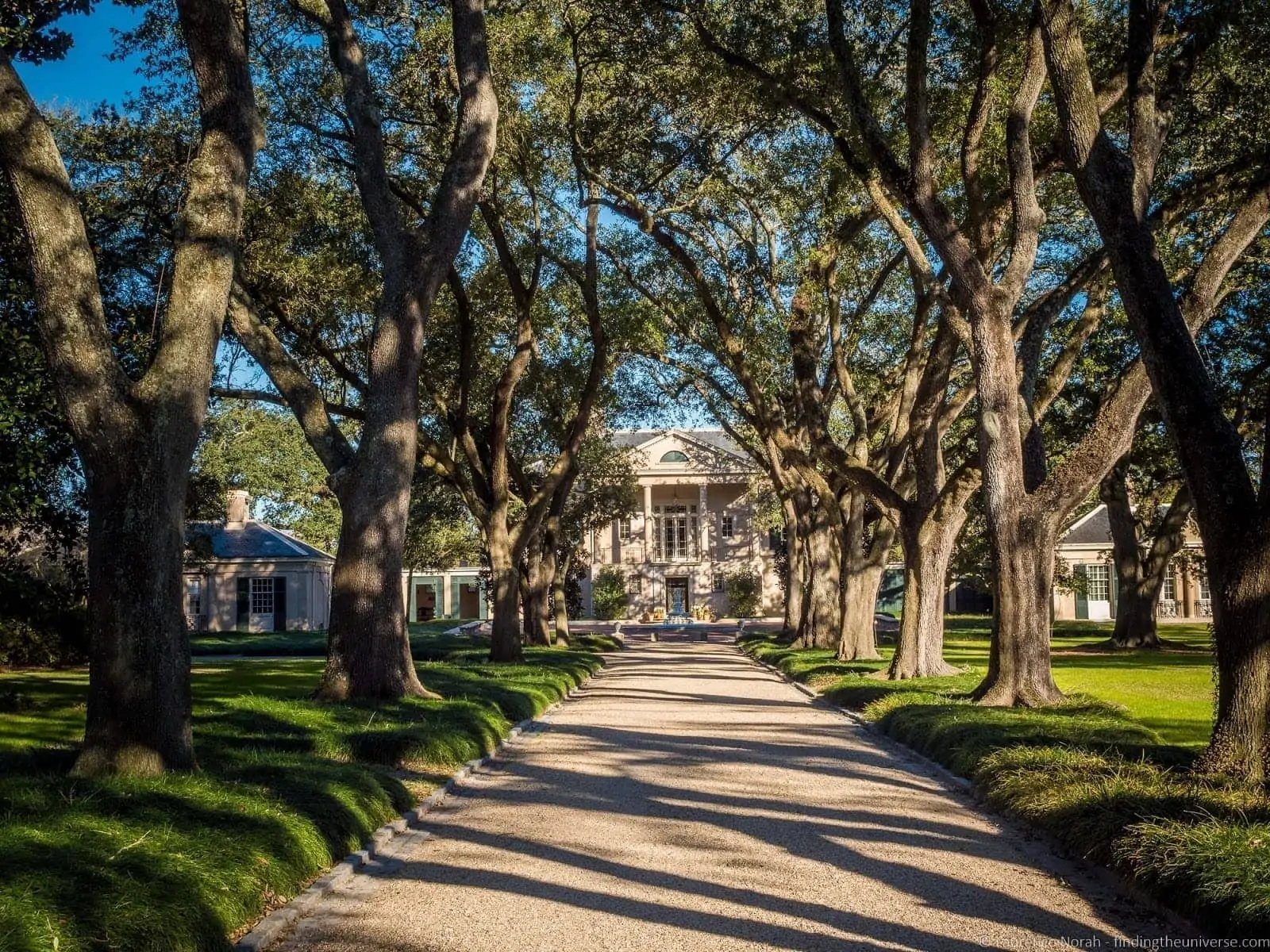
An overlooked spot in the city’s far west: Longue Vue House and Gardens, an eight-acre Country Place Era estate built between 1939 and 1942 for Edgar and Edith Stern. The house is restored to its 1940s family-home state, the gardens are formal-meets-naturalistic with a series of fountains and reflecting pools, and the whole site reads as a quiet half-day away from the French Quarter buzz.
Address is 7 Bamboo Road, 70124. Garden hours are 8am to 5pm daily; house tours run at 10am, 11:30am, 1pm, 2:30pm, and 4pm. Pricing has tiers: gardens-only self-guided is $15 adult in advance or $17 on arrival; the 45-minute House Tour with gardens is $27 in advance or $29 on arrival; the 75-minute House & Gardens guided tour is $35 or $37. Children’s pricing is around two-thirds of adult.
One important practical note: Longue Vue really isn’t as streetcar-accessible as some older articles suggest. The nearest streetcar stop (the Canal Cemeteries terminus) is about a mile from the front gate, an 18-minute walk through residential streets. Drive or take a Lyft (about $15 from the French Quarter) rather than relying on the streetcar. Parking on site is complimentary, with limited spaces.
21. Mardi Gras (A Different Kind of Trip)
Mardi Gras is its own kind of New Orleans visit, and the best advice we can give in a general guide is this: think about whether you actually want to go during Carnival or whether you want the rest-of-year version of the city. Carnival fills hotels, doubles room rates, closes parade-route streets for hours, and changes the rhythm of every other thing in this guide. It’s also the most uniquely New Orleans event you’ll ever experience, and if you’ve always wanted to do it, you should.
We’ve visited during Mardi Gras week ourselves, with Jess and a group, and we put the full parade-by-parade detail, the costume-and-throws etiquette, the where-to-stand-on-the-route advice, and the four-day vs week-long timing trade-off into a separate Mardi Gras article. Read it before you decide: our New Orleans Mardi Gras guide.

22. Jazz Fest and French Quarter Festival
Two music festivals worth planning a trip around if Carnival isn’t your thing. The New Orleans Jazz and Heritage Festival (“Jazz Fest”) runs late April into early May, across two consecutive weekends at the Fair Grounds Race Course, 1751 Gentilly Boulevard (about 10 minutes from the French Quarter). It’s a big-stage paid festival: 2026 Single-Day General Admission ran from $119 (Thursday) to $169 (Saturday) at tier 3, with 4-day Weekend Pass General Admission from $459. The 2027 dates haven’t been announced yet, but expect the same late-April through early-May window. Tickets and current pricing on the Jazz Fest site.
The French Quarter Festival is the better-value sibling: four free days of music in mid-April, twenty stages spread across the Quarter, three hundred-plus performances, all local musicians, with the entire festival admission-free (a $5 suggested donation was introduced in 2026 but isn’t mandatory). Dates for 2027 are confirmed: April 8 to 11. Current schedules and stage maps at frenchquarterfest.org.
If you want the music without the Jazz Fest crowds or ticket cost, French Quarter Festival is the better trip. If you want the headline acts and the festival-scale experience, Jazz Fest is the bigger event.
Best Photo Spots in New Orleans
A short photographer’s note on five spots that reliably reward the walk with the camera out.
Jackson Square at golden hour is the obvious starting point. The late-afternoon light bounces off the white facade of St Louis Cathedral and the bronze Andrew Jackson statue; the buskers and street painters add foreground interest, and the cathedral is the vertical-format hero shot.
Royal Street works best in the late afternoon, when it’s closed to vehicles 11am to 4pm and the cast-iron galleries and pastel facades photograph beautifully without cars in the frame. A 35mm or 50mm equivalent is the lens.
The St Louis Cemetery #1 tombs are at their best in side light. The white plaster and brick above-ground tombs work best with a low side-light, which means a morning tour rather than a midday one if you have a choice. Indirect cloudy light also flatters the texture.
Oak Alley at dawn is why the overnight cottages exist. The avenue of oaks empties of day-trippers around 4pm and the early-morning light through the moss is what every NOLA postcard imitates.
The Mississippi from Crescent Park (Bywater) at sunset is the quiet alternative to the French Quarter riverfront, with the curving park path framing the Steamboat Natchez and the downtown skyline as the sun goes down behind you.
One general note: New Orleans is humid, which means lens condensation when you step from air conditioning into the street. Carry a lens cloth and give the lens a minute or two to acclimatise before shooting.

Where to Stay in New Orleans
Four neighbourhoods to pick from, depending on your priorities. The one bit of advice we wish someone had given us before our first visit: stay walkable to the French Quarter. We did the experimental thing once (Old Algiers, across the river) and spent more of the trip than we’d have liked waiting for the ferry. Pick one of these four and you’ll get more out of the trip.
The French Quarter for first-timers who want everything on their doorstep. Loud (the Bourbon Street zone especially) and pretty pricey, but you’ll walk to breakfast, the Cabildo, the Steamboat wharf, and a dozen other items on this list. Search French Quarter hotels on Booking.com.
The Central Business District (CBD) for the best mix of price and walkability. Right next to the Quarter, less raucous, mostly modern hotels with reliable air-conditioning. Search CBD hotels on Booking.com.
The Garden District for the quieter, leafier base. A few minutes on the St Charles streetcar gets you to the Quarter; the immediate area has Magazine Street for restaurants and boutique shopping. Search Garden District hotels on Booking.com.
The Marigny for travellers who want Frenchmen Street music on the doorstep and a creative-class neighbourhood vibe. Walk to the Quarter in 10 to 15 minutes. Search Marigny hotels on Booking.com.
If you would prefer an apartment over a hotel, the Vrbo coverage of New Orleans is strong, particularly for Marigny shotgun houses and CBD condos.
What We’d Do Differently Next Time
One real regret and a few small things we’ve learned across the visits. First, the regret: stay closer to the French Quarter. We tried Old Algiers on one trip (the riverside neighbourhood directly across the Mississippi, reachable by ferry) and the ferry timetable controlled too much of the day, especially after evening shows when crossings thinned out. The romance of arriving at your hotel by boat wears off pretty quickly when you’re tired and the next ferry is 40 minutes away. Stay in any of the four neighbourhoods in the previous section instead.
A few smaller adjustments we’d make. We’d give the city a full week rather than four days; New Orleans rewards the slow-pace approach, and a week is the difference between rushing the museums and the day-trips and letting both have their proper share of the trip. We’d book Commander’s Palace earlier (it’s on our list for the next return). And we’d do the swamp tour earlier in the trip rather than late, when the post-cemetery, post-Steamboat, post-plantation fatigue caught up with us in the afternoon heat.
Practical Tips for Visiting New Orleans
You don’t need a car for the city itself. The five streetcar lines (St Charles is the famous one, running every 15 minutes most of the day along the Garden District route) plus a dense bus network cover the headline neighbourhoods. RTA single-ride fares are $1.25; a Jazzy Day Pass is $3; a 7-day pass is $15. Lyft and Uber are both fully active and the standard for late-night transit, especially to and from the cemeteries and Bywater. Rent a car if you’re doing the plantations or the swamp tour and want flexibility; book a tour with hotel pickup if you’re not.
October through April is the comfortable window for weather, with March, April, October, and November the sweet spots. June through September is dangerously humid (August heat-index figures regularly above 105°F); May straddles. If you’re visiting in summer, plan air-conditioned activities (the WWII Museum, NOMA, restaurants, the Mardi Gras World shuttle) for the 11am to 4pm window, and walk in the morning and evening.
The French Quarter, CBD, Garden District, Marigny, and the immediate French Quarter-side of Bywater are safe to walk in daytime and well-lit at night. Take a Lyft after dark in unfamiliar neighbourhoods rather than walking unfamiliar streets at 11pm.
Pack a light rain jacket year-round (afternoon thunderstorms are common from late spring through early autumn), comfortable walking shoes (the French Quarter pavements are uneven), and an actual lens cloth if you’re bringing a camera (humidity will fog your lens pretty much every time you leave an air-conditioned room).
On passes: the Go City New Orleans Pass bundles entry to a stack of the attractions on this list (WWII Museum, Mardi Gras World, swamp tour, Steamboat Natchez, cemetery tour). The maths really only works if you’re doing four or more covered attractions in three to five days; for shorter visits or selective visits, buy individual tickets.
New Orleans FAQ
How Many Days Do You Need in New Orleans?
Four days is the practical minimum for a first visit; five to seven is the comfortable length. Four days covers the French Quarter, one cemetery or swamp tour, the WWII Museum, an evening on Frenchmen Street, and a plantation day-trip.
A week lets you add the Garden District, NOMA, a second day-trip, and enough downtime for the city’s slow rhythm to start working on you. Mardi Gras visits run their own clock; a week is the right length if you’re committing to the Carnival experience.
Is New Orleans Safe for Tourists?
The neighbourhoods on this list (French Quarter, CBD, Garden District, Marigny, and the French-Quarter-adjacent edge of Bywater) are safe to walk in daytime and lit at night. Use Lyft or Uber after dark in unfamiliar areas; this is the same advice for most US cities.
The French Quarter is heavily policed and busy with foot traffic in the tourist zone; the Bourbon Street strip after midnight is rowdy but not dangerous if you’re paying attention. The Garden District is residential and quiet at night. Marigny and Bywater are walkable and increasingly residential; stick to the main streets after midnight.
What Is the Best Time of Year to Visit New Orleans?
October through April is the comfortable window, with March, April, October, and November the best months for weather. The big festivals (Mardi Gras in February or early March, French Quarter Festival in mid-April, Jazz Fest late April to early May) all fall within this window, which is the trade-off: best weather plus highest hotel prices and biggest crowds.
June through September is dangerously humid, with August heat-index figures regularly above 105°F. Avoid summer if you can, particularly with children or heat-sensitive travellers. May straddles and can swing either way depending on the year.
Is New Orleans Worth Visiting?
Yes, comfortably. New Orleans is one of the most distinctive cities in the United States, with a music scene, a food scene, and a layered history (French, Spanish, Creole, African American) that you can’t get anywhere else. The walkable French Quarter, the lived-in feel of the neighbourhoods outside it, and the easy day-trips out to the river plantations and the bayou give a four-to-seven-day visit plenty of range.
If you’re weather-sensitive, plan for October to April rather than summer. If you’re not into the loud party-street vibe, skip or briefly visit Bourbon Street and base your evenings on Frenchmen Street instead. Outside those two caveats, the city is forgiving and rewards return visits.
What Is the Best Neighbourhood to Stay In for a First Visit?
For a first visit, the French Quarter or the CBD (Central Business District) are the safest bets. The French Quarter puts you on the doorstep of the headline attractions but is louder and pricier; the CBD is right next door, quieter, and usually better value, with most of the modern hotels and reliable air-conditioning.
The Garden District is the quieter, leafier alternative with the St Charles streetcar to the Quarter. The Marigny is the right choice if you want Frenchmen Street music on the doorstep and don’t mind a 10-to-15-minute walk to the Quarter. Avoid staying across the river in Algiers; the ferry timetable controls too much of the day.
Is Bourbon Street Worth Visiting?
Yes, briefly. Bourbon Street is what it is: a loud, neon, hand-grenade-drink, cover-band party strip that runs from sundown to sunrise. If that’s your idea of a good night out, it’s one of the most concentrated party experiences in the United States and you’ll have a good time.
If it’s not, give it an hour as a cultural anthropology stop, then walk two blocks to Frenchmen Street where the local live music plays. What you should not do is plan a whole NOLA evening on Bourbon and leave thinking you’ve heard the city’s music; the working musicians are mostly elsewhere.
How Much Does a Trip to New Orleans Cost?
Budget rough guides for two adults in October to April shoulder season: $150 to $250 a night for a mid-range hotel in the French Quarter, CBD, or Marigny; $80 to $120 a day for food (a beignet breakfast, a po’ boy lunch, a sit-down dinner); $50 to $100 a day per person for attractions (entries plus one tour). A four-day trip lands between $1,500 and $2,500 per couple before flights.
Mardi Gras and Jazz Fest push hotel rates up 50% to 100% and require booking six to nine months out. Summer accommodation drops 20% to 30% but the weather penalty is real.
Do You Need a Car in New Orleans?
Not for the city itself. The streetcar, bus, walking, and Lyft cover everything in the French Quarter, CBD, Garden District, and Marigny, and rideshare is the cheap reliable option for late-night transit or trips to the Bywater or Uptown po’ boy shops.
For the river-road plantations and the swamp tours, a rental car gives you flexibility and lets you combine two plantations in a single day. If you’re doing one plantation day-trip and one swamp half-day, the GetYourGuide tour options with hotel pickup are easier than renting a car for two days.
Further Reading and Resources
If you’re planning the wider Louisiana or Deep South trip, Lonely Planet’s regional guide is the best print companion: Lonely Planet American South covers Louisiana, Mississippi, Alabama, Tennessee, and Georgia in one volume, and the New Orleans section is detailed enough to leave the Frommer’s at home.
Other articles that work alongside this one:
- Our full New Orleans Mardi Gras guide for the parade-by-parade, costume, and timing detail if Carnival is the trip.
- The Louisiana River Road plantations guide on Jess’s site Independent Travel Cats, for the detailed multi-plantation comparison along the river.
- Our Baton Rouge weekend guide if you’re extending the trip up-river to the state capital.
If you have questions about a specific section, or want a personal recommendation for the next return trip, drop a comment below and we will reply.

Leave a Reply