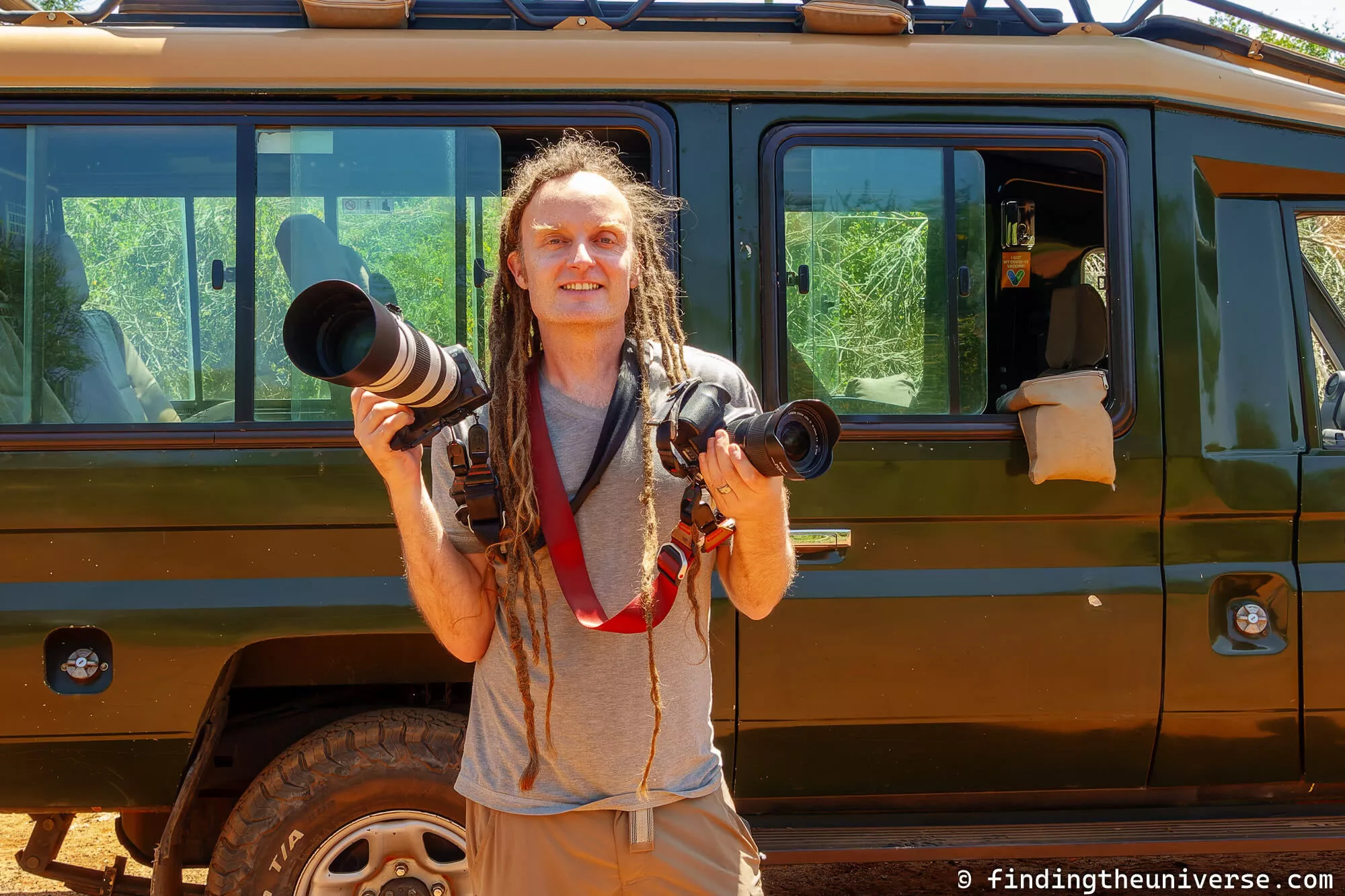
The best camera strap for most photographers is the Peak Design Slide. I’ve been a professional travel photographer since 2010, I bought my first Slide back in 2015, and I haven’t used another strap system on my main cameras since.
Of course, the Slide isn’t the right strap for everyone. The strap that suits an all-day city walk with a small mirrorless camera is a different beast to the one you’d want for a wedding with two bodies, or a hike with a big telephoto lens. So in this roundup I’ve picked a best option for each way you might actually carry a camera, from a budget strap up to a leather dual harness.
Everything here is current as of 2026, which matters more than usual right now. BlackRapid replaced its most popular sling in September 2025, and Peak Design launched its first leather strap in October 2025, so plenty of older strap guides are recommending products you can no longer buy. I’ve checked that every pick below is available today.
My quick picks:
- Best overall: the Peak Design Slide
- Best for mirrorless and packability: the Peak Design Leash
- Best budget: the OP/TECH Pro Loop
- Best sling for heavy kit: the BlackRapid Sport X
- Best for two cameras: the HoldFast MoneyMaker
Table of Contents:
Best Camera Straps Compared
Here’s every strap in this guide side by side. The load ratings are the manufacturers’ own published figures, and they vary a lot, so if you shoot with a heavy camera and lens combination, look at that column before anything else.
| Strap | Type | Attachment | Load rating | Quick release | Price |
|---|---|---|---|---|---|
| Peak Design Slide | Neck / shoulder / sling | Anchor Links (V4) | 200 lb | Yes | Check price on Amazon |
| Peak Design Leash | Sling / neck / tether | Anchor Links (V4) | 200 lb | Yes | Check price on Amazon |
| Peak Design Cuff | Wrist | Anchor Links (V4) | 200 lb | Yes | Check price on Amazon |
| Peak Design Slide Lite | Neck / shoulder / sling | Anchor Links (V4) | 200 lb | Yes | Check price on Amazon |
| Peak Design Clutch | Hand | Quick-attach plate | 200 lb | Yes | Check price on Amazon |
| Peak Design Form Leather | Neck / cross-body (fixed length) | Integrated hardware | 100 lb | Yes | Check price on Amazon |
| BlackRapid Sport X | Sling | Tripod socket (FastenR) | Not published* | Yes | Check price on Amazon |
| OP/TECH Pro Loop | Neck / shoulder | Webbing loops + quick disconnects | 15 lb comfort (146 lb breaking) | Yes | Check price on Amazon |
| Think Tank Camera Strap V2 | Neck / shoulder (thin) | Camera lugs | Not published | No | Check price on Amazon |
| Urth Core | Neck / shoulder | Pebble quick-release clips | 10 kg (22 lb) | Yes | Check price on Amazon |
| Domke Gripper | Utility / neck | Swivel hooks | Not published | No | Check price on Amazon |
| HoldFast MoneyMaker | Dual harness | Clips + tripod-socket leash | Not published | Yes | Around $260 |
| BlackRapid Double-X | Dual harness | Tripod socket (FastenR / ConnectR) | Not published* | Yes | Around $200 |
*BlackRapid doesn’t publish per-strap load ratings. The company states its FastenR and ConnectR hardware holds a 20 kg (44 lb) static load, which is a hardware figure rather than a rating for any specific strap.
Which Type of Camera Strap Do You Need?
Camera straps come in five main types: neck and shoulder straps, slings, wrist straps, hand straps, and dual harnesses. Picking the right type matters more than picking the right brand.
A neck or shoulder strap is the classic option, and it’s what most cameras ship with. The camera hangs at your chest or side, ready to shoot. The good ones spread the weight and don’t slip. The one that came in the box with your camera does neither, which is why it’s usually the first thing I suggest replacing.
A sling strap wears across your body like a car seatbelt, with the camera resting at your hip and sliding up along the strap when you raise it to shoot. Because the weight sits on your shoulder rather than your neck, slings are much more comfortable for long days with heavier kit.
A wrist strap is the low-profile choice. Your camera never leaves your hand, there’s nothing around your neck, and you’re not advertising your kit to a whole street. I use one with smaller cameras in busy cities for exactly that reason.
A hand strap wraps across the back of your hand and anchors your grip on the camera body. It’s for holding rather than carrying, and it does its best work on bigger bodies with heavy lenses, where your fingers are doing a lot of work.
A dual harness carries two camera bodies at once, one on each hip. If you’ve ever watched a wedding photographer work, you’ve seen one. Nobody needs a harness for a city break, but for event work it solves a problem no single strap can.
There are also clip systems that mount a camera to a backpack strap or belt, which some hikers prefer. Those are a different category, and I cover bag-based carry options in my guide to the best camera bags for travel.
For travel, my default recommendation is a convertible strap like the Slide, which does neck, shoulder and sling duty with one piece of kit. That flexibility is exactly what you want when one day is a museum crawl and the next is a six-hour walk.
Camera Strap Attachment Systems Explained
Camera straps attach in one of three ways: through the camera’s strap lugs, via a quick-release connector system, or by screwing into the tripod socket on the base of the camera.
Lug attachment is the traditional route. The strap threads through the metal loops on the top corners of your camera body, the same way the box strap does. It’s secure and universal, but swapping straps means re-threading webbing, so in practice the strap you fit is the strap you keep. The Think Tank strap works this way, and the Domke uses swivel hooks that clip on and off those same points.
Quick-release connectors solve the swapping problem. Peak Design’s Anchor Links are the best-known system: small button-shaped anchors on loops of cord stay on your camera permanently, and any Peak Design strap clicks on and off them in a couple of seconds. The current shipping version is the V4 Anchor, and the system is rated to 200 lb.
Anchors are the reason I’ve stayed with Peak Design for a decade, since I can go from a Slide to a Cuff to no strap at all without threading anything. OP/TECH and Urth run their own quick-disconnect systems on the same principle, though the connectors aren’t cross-compatible between brands.
One caveat if you’re already invested in Anchors. Peak Design’s new Form Leather strap doesn’t use them. It has fixed, integrated hardware and a fixed length, so it won’t click onto the anchors you already own, so check before you assume every Peak Design strap plays in the same ecosystem.
Tripod-socket attachment is BlackRapid’s approach. A metal fastener screws into the threaded socket on the base of your camera, and the camera hangs upside down at your hip from a carabiner that glides along the strap. It sounds odd the first time you see it, but it’s quick to shoot from and it keeps all the weight off your neck. The trade-off is that the socket is occupied, so mounting on a tripod means unscrewing the fastener first.
The Best Camera Straps in 2026
Here are my picks, starting with the strap I use myself.
1. Peak Design Slide: Best Overall Camera Strap
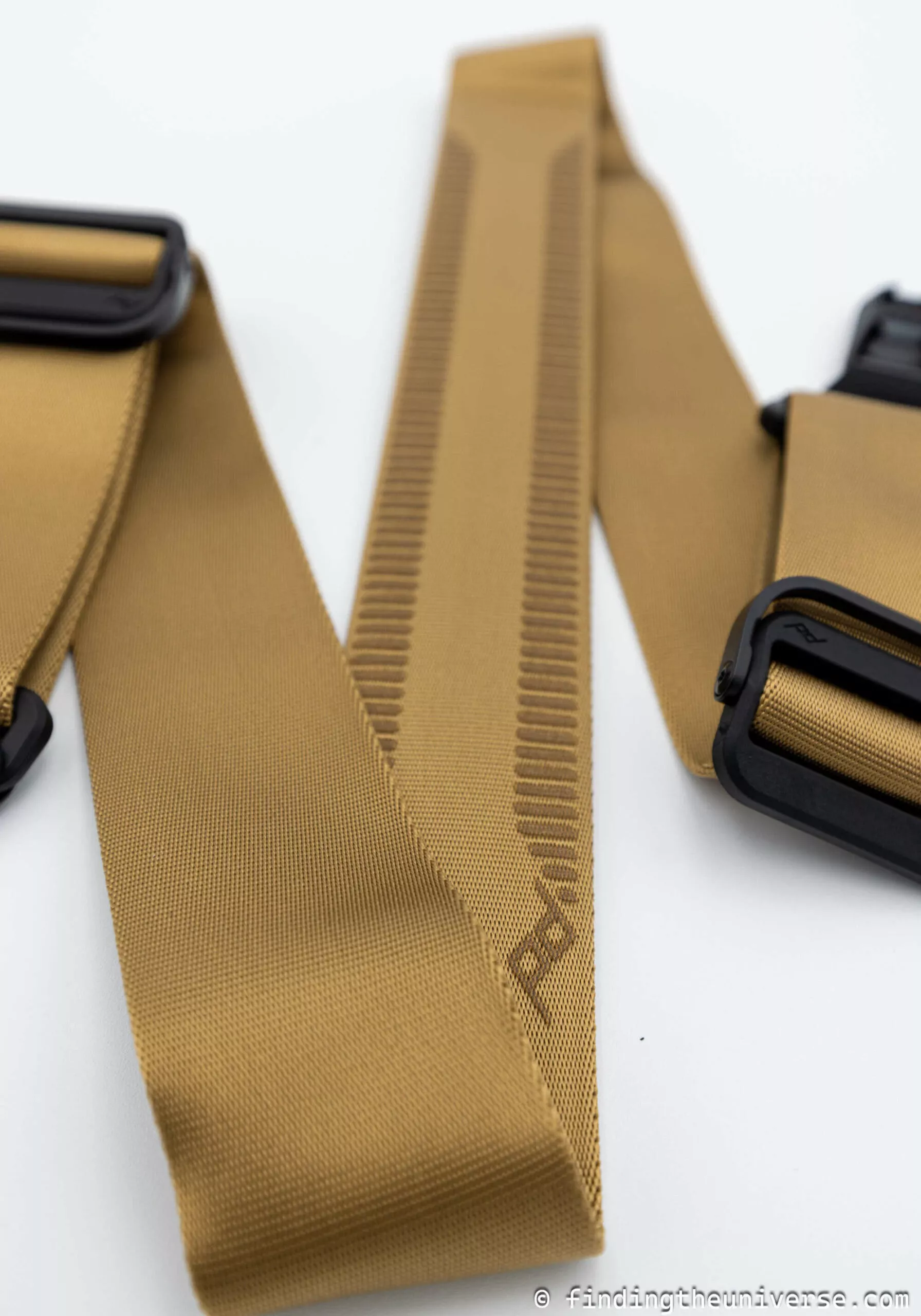
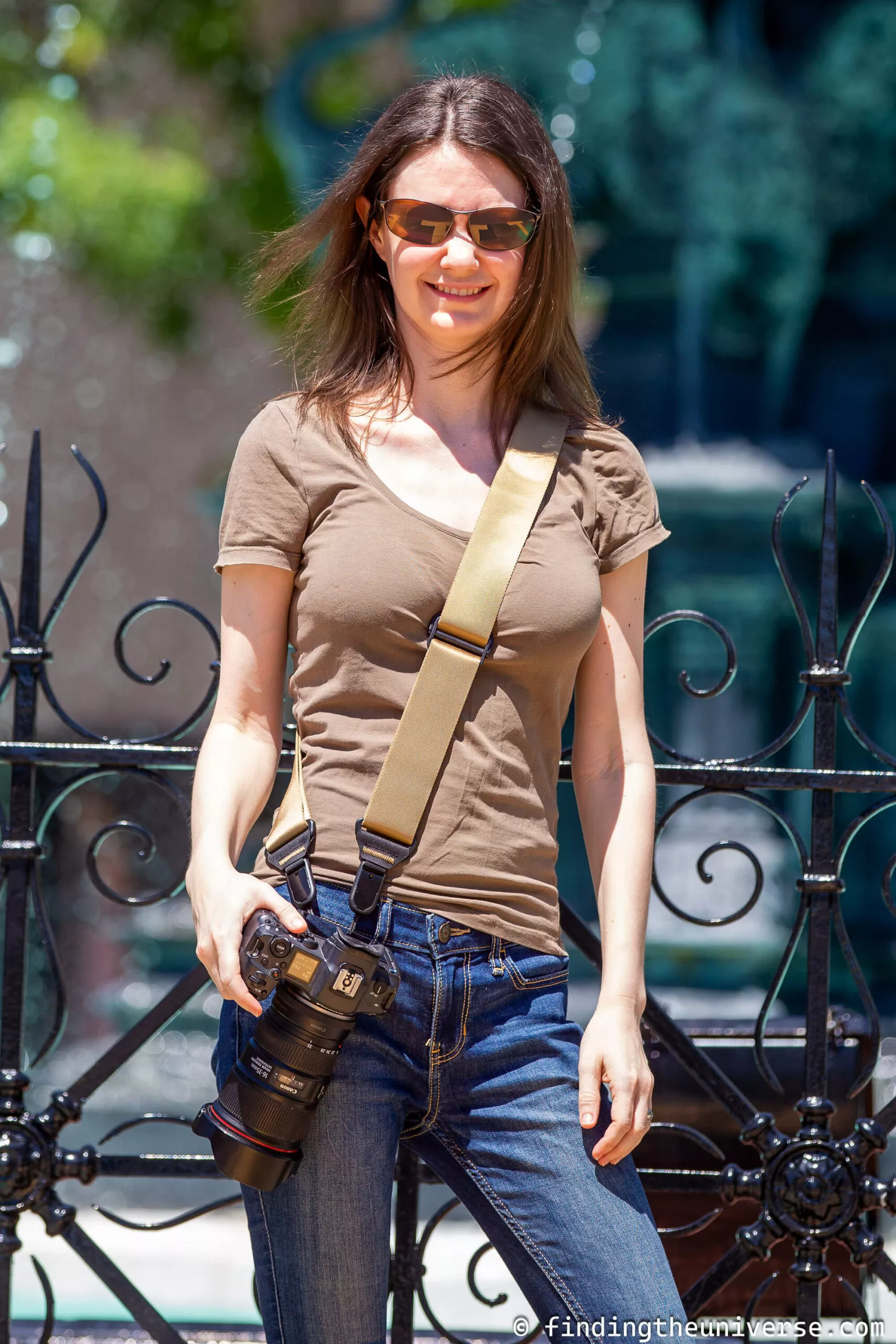
The Slide is the strap on my main camera right now, and it has been in one version or another since 2015. It converts between neck, shoulder and sling carry, the 45mm webbing is smooth on one side and grippy on the other depending on which way you wear it, and the whole system is rated to 200 lb.
Two aluminium adjusters let you lengthen or shorten it one-handed, which is quicker than it sounds and surprisingly useful when you’re switching between walking and shooting.
It attaches with Peak Design’s Anchor Links, so it comes off in seconds when you want to put the camera on a tripod or pack it away. After a decade of travel, mine has carried everything from a small mirrorless up to my Canon R5 with a 100-400mm lens, and it’s never given me a reason to look elsewhere. It comes in nine colours, though I’ll admit mine has only ever been black!
I’ve also written a full Peak Design camera strap review if you want the long version with more photos.
Check price on Amazon
2. Peak Design Leash: Best Camera Strap for Mirrorless Cameras
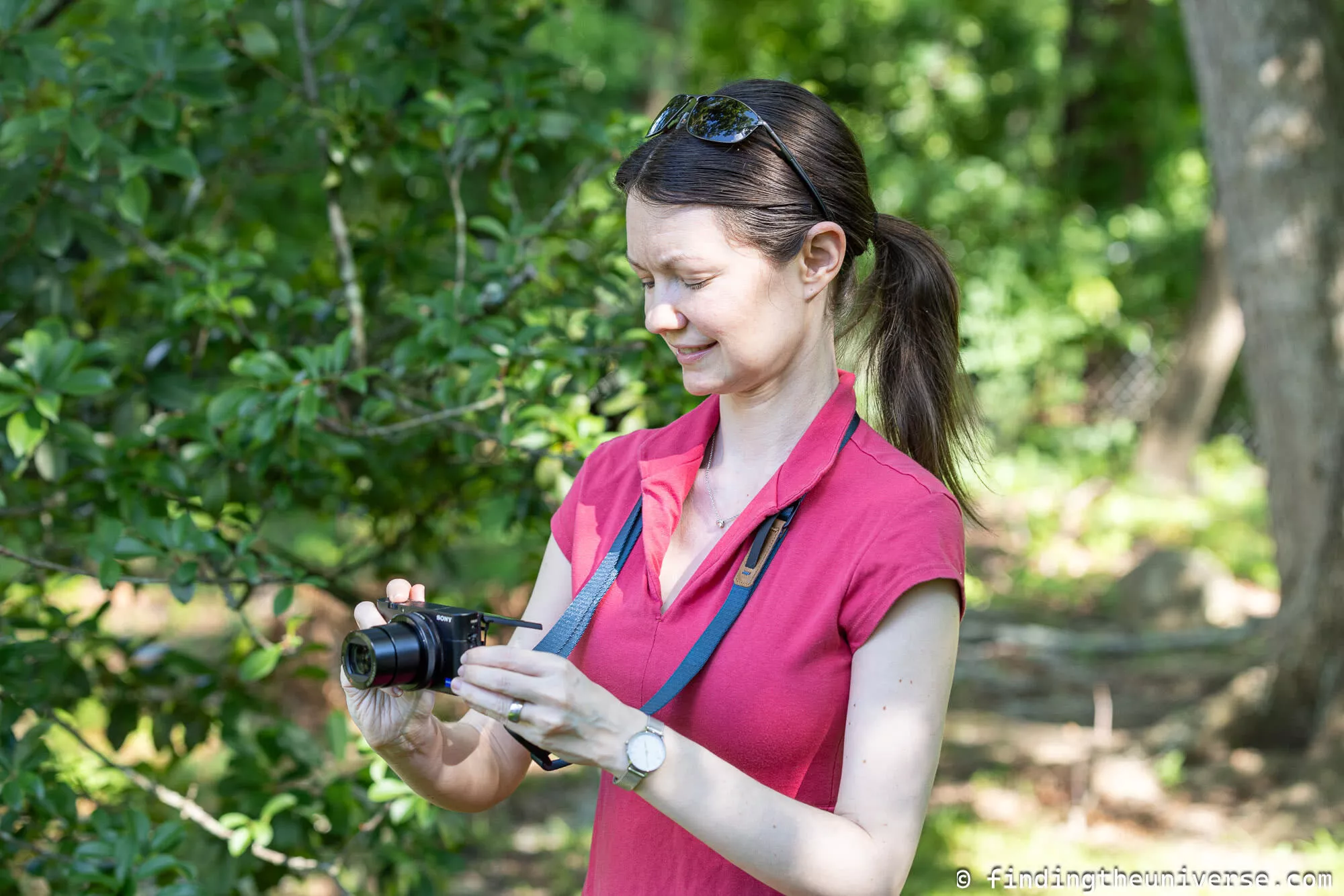
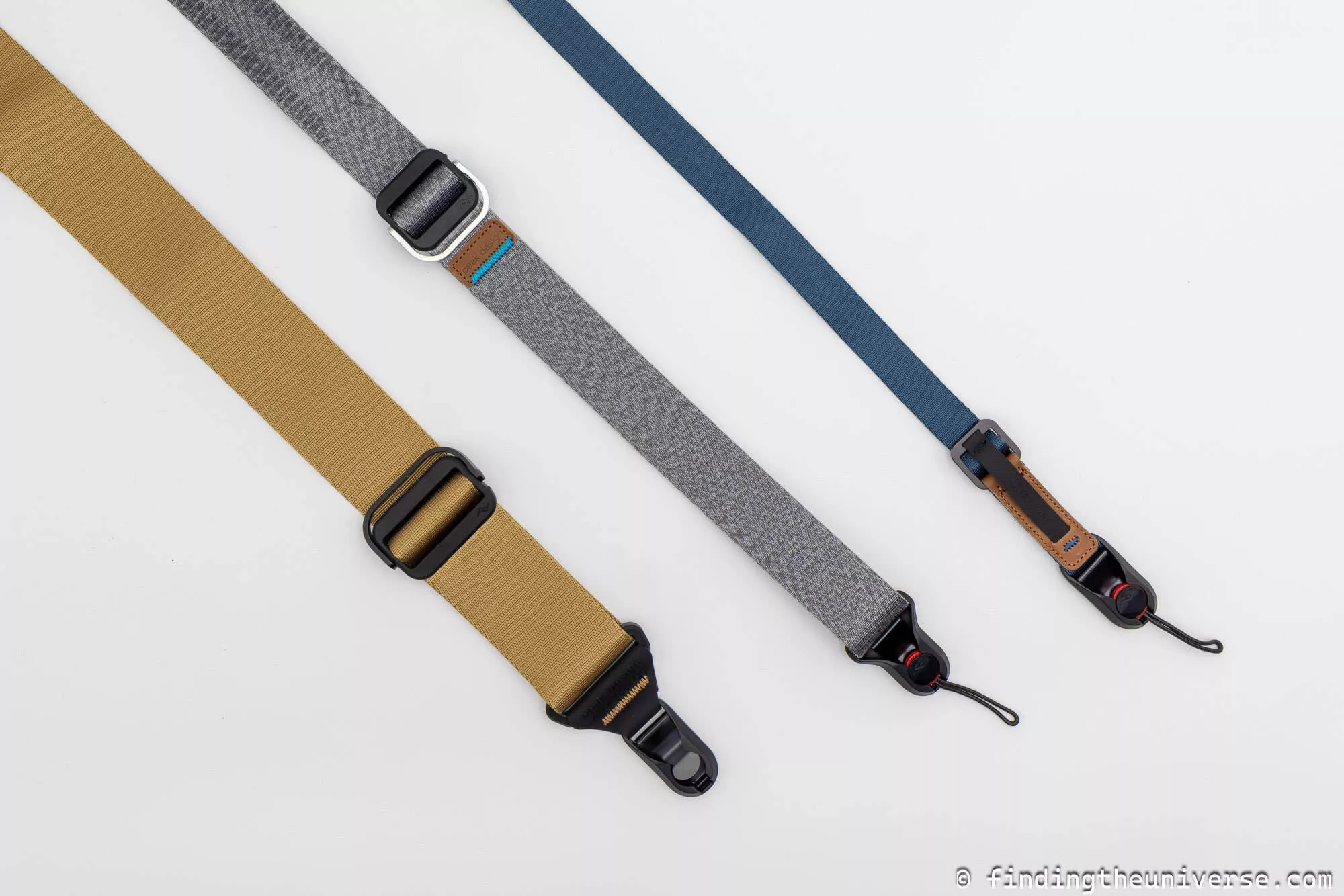
The Leash is the Slide’s little sibling, and it’s the strap I pack when I’m travelling light. At 19mm wide it rolls up small enough to disappear into a jacket pocket, it adjusts from 83 to 145cm, and it still carries the same 200 lb Anchor Link rating as the bigger straps. For a small mirrorless body with a prime lens, it’s really all the strap you need.
It also doubles as a safety tether, which is a use Peak Design designs for rather than a happy accident. I’ve clipped one between camera and wrist while shooting over water and been glad of it. If your camera is small and your packing philosophy is ruthless, this is the pick.
Check price on Amazon
3. Peak Design Cuff: Best Wrist Strap
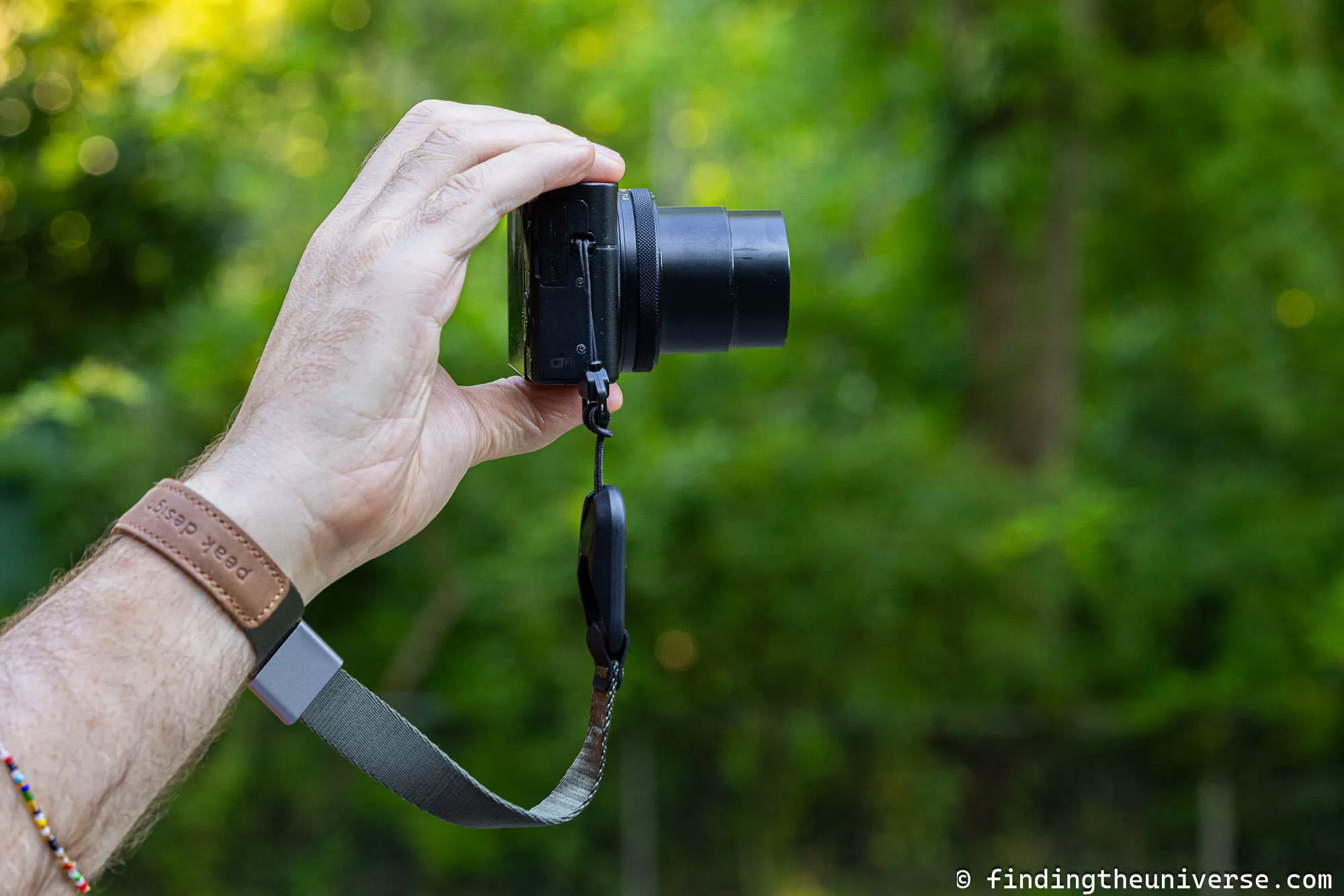
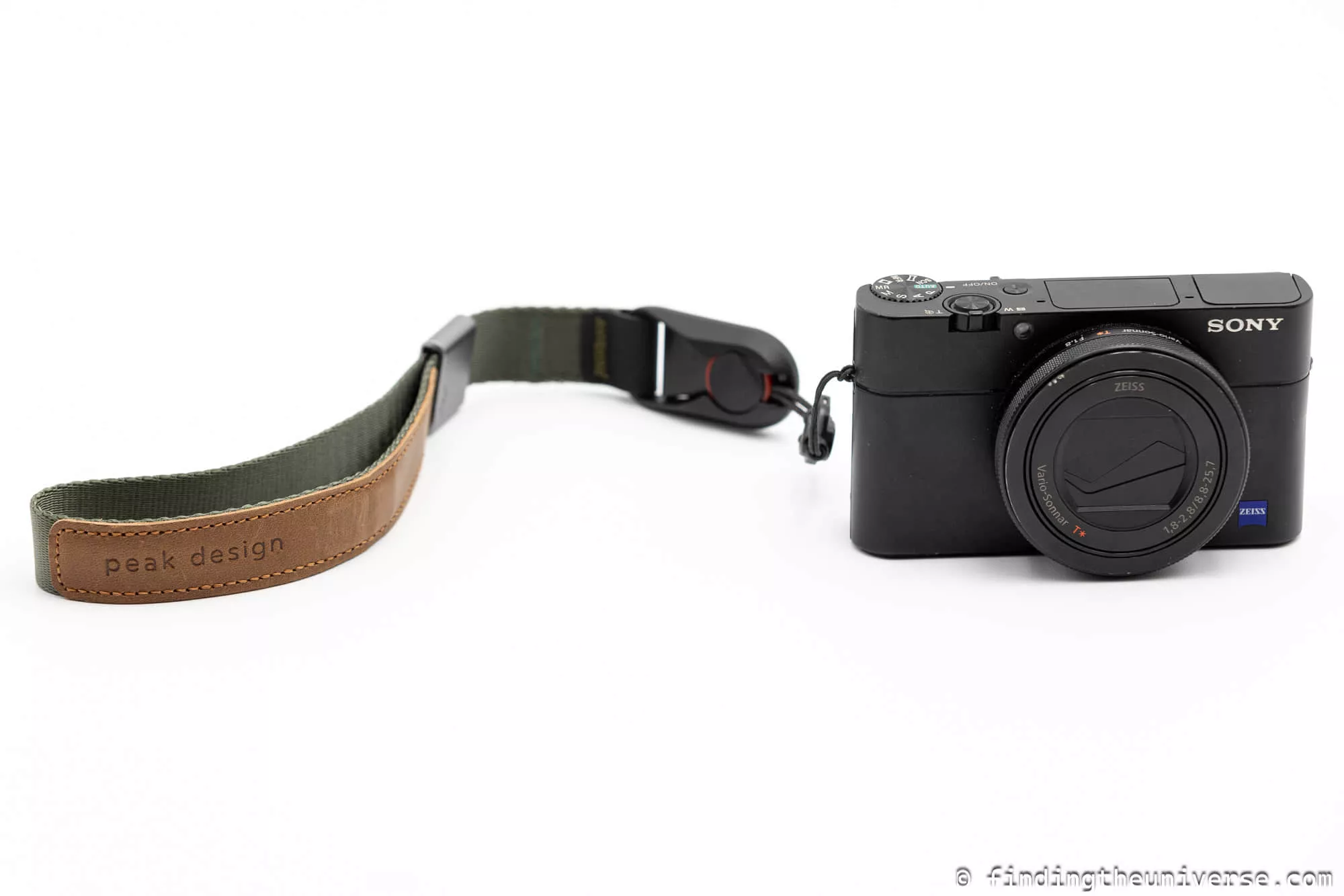
The Cuff is a wrist strap that connects to the same Anchor Links as the rest of the Peak Design range, with a wrist opening that adjusts from about 13 to 29cm. It’s my choice for crowded cities. With the camera in hand and nothing around my neck, I’m quicker to shoot and a lot less conspicuous, and the 200 lb anchor rating means a slip won’t end the trip.
The obvious limitation of any wrist strap is that your hand is never free, so it suits short wanders and evening shoots better than eight-hour days. But as a second strap that lives in a pocket until needed, it’s pretty good value, and if you already own anchors it clicks straight in.
Check price on Amazon
4. Peak Design Slide Lite: Best for Lighter Kits

The Slide Lite is the same idea as the Slide in a 32mm width, aimed at mirrorless kits that don’t need the full-width webbing. You keep the three-way convertibility, the dual adjusters, the Anchor Links and the 200 lb rating, and you lose a bit of bulk and a little money. It adjusts from 99 to 145cm.
Choosing between the two is a weight question. With a mid-size mirrorless and a standard zoom, the Lite carries all day without complaint. If a heavy telephoto is in your bag, spend up on the full Slide and get the wider, more padded webbing on your shoulder.
Check price on Amazon
5. Peak Design Clutch: Best Hand Strap
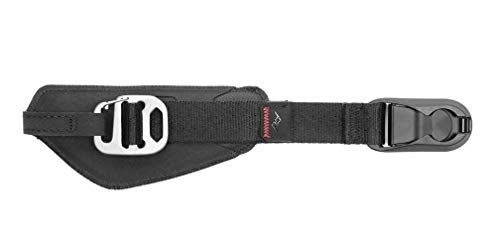
The Clutch wraps across the back of your hand and locks your grip to the camera body, adjusting from about 18 to 29cm to fit over gloves if needed. It attaches with a quick-adjust plate rather than the four-point Anchor Link system the straps use, and it’s rated to the same 200 lb. One-handed tightening means you can cinch it down for shooting and loosen it to reach the controls.
Hand straps make the most sense on DSLR-style bodies with proper grips and heavier glass, where they take real strain out of your fingers on a long shoot. Pair it with a Cuff or a Leash as a backup tether and you’ve got a very secure, very compact carry setup.
Check price on Amazon
6. Peak Design Form Leather: Best Leather Camera Strap
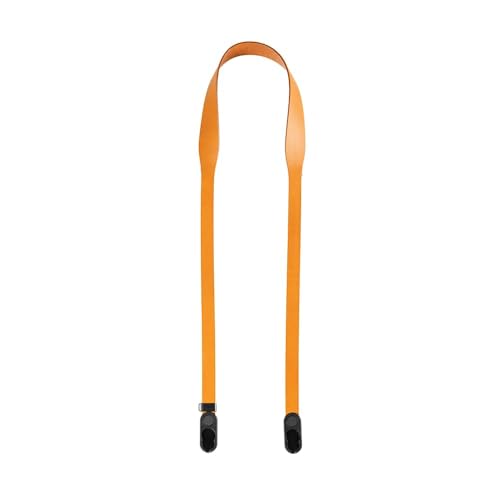
The Form Leather is Peak Design’s first leather strap line, launched in October 2025, and it’s the pick here if you want a strap that looks as considered as the camera it’s carrying. It’s full-grain ECCO leather with machined aluminium hardware, and there’s a matching Form Cuff Leather wrist strap from the same launch.
Two things to know before buying. It’s a fixed-length strap sold in separate sizes (Short, Standard, Long and Neck) rather than an adjustable one, so check the length you order. And unlike the rest of the range, it uses fixed integrated hardware rather than Anchor Links, so it won’t connect to anchors you already own. It’s rated to 100 lb rather than the webbing straps’ 200 lb, which is still far more than any camera you’ll hang from it.
Check price on Amazon
7. BlackRapid Sport X: Best Sling Strap for Heavy Cameras

The Sport X is BlackRapid’s current comfort sling, launched in September 2025 as the replacement for the long-running Sport model. The camera screws in at the tripod socket via the FastenR system and hangs at your hip, gliding up the strap when you shoot. The shoulder pad is a breathable mesh over TPE foam with an underarm stabiliser to stop it shifting when you move quickly.
This is the type of strap I’d point you at for a full day with serious weight, the kind of setup where a neck strap becomes a medical decision by mid afternoon. A camera like my R5 with a 100-400mm lens rides at the hip far more comfortably than it ever hangs from a neck.
BlackRapid makes several other slings too, including the lighter Metro and Delta models, but the Sport X is the one to start with.
Check price on Amazon
8. OP/TECH Pro Loop: Best Budget Camera Strap
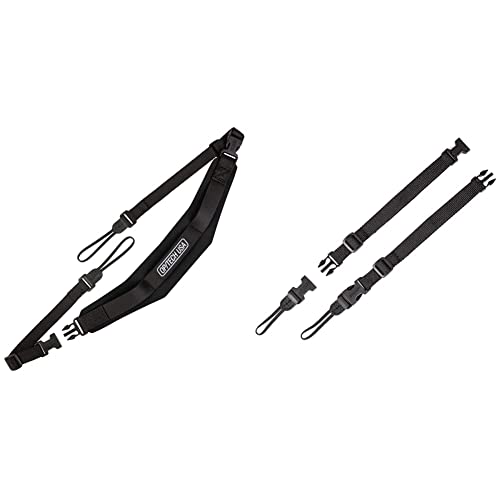
Worthwhile camera straps don’t have to cost much, and the Pro Loop is the best of the budget bracket. It’s part of OP/TECH’s Pro Strap line, with a stretchy neoprene shoulder pad that has a non-slip backing and absorbs bounce far better than plain webbing at three times the price. It attaches with slim webbing loops and quick disconnects, so you can unclip the pad and leave just the loops on the camera.
The caveat is the comfort rating: OP/TECH quotes 15 lb, which is fine for pretty much any normal mirrorless or DSLR kit but not the strap for a monster telephoto. The Amazon listing linked here bundles a set of extra adaptor loops, which is worth having anyway. If you want to spend as little as possible on something that still does the job, buy this and move on.
Check price on Amazon
9. Think Tank Camera Strap V2: Best Minimalist Camera Strap

Think Tank’s strap is the opposite philosophy to everything padded and convertible above: a thin, unpadded strap with a silicone non-slip coating woven into both sides, attaching directly to your camera lugs the traditional way. Fully extended it runs to 140cm end to end, and it’s one of the cheaper straps here.
The case for it is simplicity. No pads, no clips, no system to buy into, just a strap that grips your shoulder and never slides off. Working photographers who carry a second body on a plain strap tend to love these, and the metal rings accept Think Tank’s optional support straps if you use their belt system. If your kit is light and you find padded straps fussy, this is a quiet little classic.
Check price on Amazon
10. Urth Core: Best Eco-Friendly Camera Strap

The Urth Core is a 40mm strap made from 100% recycled nylon webbing with anodised aluminium buckles, and it comes with two sets of Urth’s Pebble quick-release clips, so you can leave connectors on two cameras and swap the strap between them. It adjusts from 70 to 125cm and it’s rated to 10 kg (22 lb), which covers a typical mirrorless kit with room to spare.
It’s the pick if you want your gear choices to tread a bit lighter and still get a proper quick-release system. The 22 lb rating is the ceiling to respect here: plenty for everyday kits, not the strap for your longest lens. There’s also a slimmer 20mm Core Slim if your camera is small.
Check price on Amazon
11. Domke Gripper: Best Classic Camera Strap

Domke sells the Gripper as a utility strap for bags and cases, not as a dedicated camera neck strap. Photographers have long clipped them onto cameras anyway, because the rubberised Gripper weave in the webbing stays put on a shoulder like almost nothing else, and the metal swivel hooks make it easy to move between bodies and bags.
It’s a fixed-length, no-padding, no-nonsense strap in the same spirit as the Think Tank, with a bit more old-school character and a 1.5 inch width that spreads the load better than it looks like it should. If you like your gear plain, functional and free of marketing gloss, the Gripper is money well spent.
Check price on Amazon
12. HoldFast MoneyMaker: Best Dual Camera Harness
The MoneyMaker is the leather dual harness you’ve seen on wedding photographers, and it’s the go-to among wedding and event shooters for good reason. Two cameras hang from sailboat-style clips at each hip, removable safety tethers screw into the tripod sockets as backup, and sliders adjust the drop length on each side. HoldFast makes it in the USA in a range of leathers, with the standard bridle leather 2-camera harness at around $260.
My own two-body solution for years has been a pair of Slides worn crossed, and it’s a compromise. It works, but it’s inelegant, and it sits badly over or under a wedding jacket. A purpose-built harness spreads two bodies’ weight across your whole back and looks like it belongs there. If you shoot events regularly, it’s the upgrade that pays for itself in your shoulders.
One more thing before you order: MoneyMaker is a family rather than one product. There’s a standard leather Original (the one linked here), a Vegan version at around $210, a slimmer Skinny for lighter kit, and even a 3-camera variant. It also comes in three fit sizes and several leather colours, so pick your size and finish on the product page.
You can check the current price at B&H Photo here.
13. BlackRapid Double-X: Best Value Dual Camera Harness
The Double-X is the sport-nylon answer to the MoneyMaker, and at around $200 it’s the value route into two-camera carry. It’s BlackRapid’s current dual harness, replacing the older Double model, with both cameras hanging from locking swivel carabiners at the hip, cam-lock adjusters, and safety tethers included. Like the Sport X, everything mounts via the tripod socket.
Choose it over the leather harness if your events lean more active than formal, if you shoot in the rain, or if $260 for leather feels like the wrong end of your budget. A Slim Fit version exists for smaller frames.
It’s no longer the cheap option it once was, the current version costs a fair chunk more than its predecessor did, but against a leather harness it still saves you real money and weighs less on a hot day.
You can check the current price at B&H Photo here.
What About Anti-Theft Camera Straps?
There’s currently no dedicated anti-theft camera strap I can recommend, because the main brand behind them has left the category. Pacsafe built its name on slash-resistant travel gear, and its Carrysafe camera straps were the standard answer to this question for years. Pacsafe no longer makes or sells a camera strap, and the Carrysafe line is discontinued, though old stock still turns up at third-party retailers.
I’ve used Pacsafe gear since 2001, when I spent three months travelling around China with one of their slashproof covers over my backpack. The backpack made it home without incident, though I can’t tell you whether the cover deterred any thieves or whether nobody wanted my laundry.
So what do you actually do about camera security in 2026? My approach, learned over a lot of city trips, is to carry low-profile kit with the branding covered or removed, use a wrist strap like the Cuff in crowded places so the camera never leaves your hand, keep the strap worn cross-body rather than on one shoulder where it can be lifted, and put the camera away in a proper bag when you’re not shooting.
And insure your kit, because no strap on this page will stop a determined thief.
Camera Strap Lessons from the Road
A few things I’ve learned about camera straps from fifteen years of professional travel, mostly the slow way.
Replace the box strap first. The strap that ships with your camera is thin, uncomfortable, and prints the make and model of your expensive camera across your chest in big letters. Swapping it is the cheapest meaningful upgrade you can make to your kit, well before you buy another lens.
Buy for the heaviest lens you’ll carry, not for the camera body. A strap that’s lovely with a 24-70mm can be a real problem with a 100-400mm on the front. Check the load rating, and if your kit is heavy, move the weight off your neck entirely with a sling or harness.
Comfort compounds. On a one-hour shoot, every strap on this page feels fine. On day four of a city trip, at hour six of walking, the difference between a padded strap that spreads the load and a thin one digging into your shoulder is the difference between shooting the evening light and going back to the hotel. Your shoulders will thank you for spending well here!
Quick-stow is important. Museums and churches regularly ask you to bag the camera, and plenty of restaurants make a hanging camera feel awkward. A strap you can detach in seconds, like anything on the Anchor system, or a strap that packs to nothing, like the Leash, removes that friction.
And buy once. The strap I bought in 2015 is still in service, so a good strap is also the last one you’ll need for a long time.
Camera Strap FAQs
Quick answers to the camera strap questions I’m asked most often.
What Is the Best Camera Strap?
For most photographers, it’s the Peak Design Slide. It’s comfortable with heavy cameras, converts between neck, shoulder and sling carry, and the Anchor Link quick-release system means it comes off in seconds. I’ve used one since 2015 and haven’t found a reason to change.
If the price stings, the OP/TECH Pro Loop gets you most of the comfort for a fraction of the money.
What Is the Best Camera Strap for Travel?
I travel with two: a Peak Design Slide on my main camera and a Leash or Cuff packed as backup. The Slide handles all-day carry in any configuration, while the Leash packs into a pocket and the Cuff keeps things low-profile in crowded places.
Whatever you pick, for travel you want quick removal for museums and tripods, comfort over full days, and a look that doesn’t advertise your kit.
Are Peak Design Straps Worth It?
In my experience, yes. I bought my first Slide in 2015, it’s still in service, and the Anchor Link system means every strap I’ve bought since works with every camera I own. They’re well made and backed by an excellent warranty.
They do cost more than basic straps, so if you shoot occasionally and your kit is light, a cheaper option like the OP/TECH Pro Loop will serve you fine.
What Is the Difference Between the Peak Design Leash and Slide Lite?
Width and padding. The Leash is a 19mm ultralight strap that packs down to nothing, best for small mirrorless bodies with compact lenses. The Slide Lite is 32mm with more substance on the shoulder, better for a mid-size mirrorless with a zoom attached.
Both use Anchor Links and carry the same 200 lb rating, so it’s a comfort and packability decision rather than a strength one. Small body and a prime, take the Leash. Anything heavier, take the Slide Lite.
Do Camera Straps Fit Any Camera?
Almost all cameras have strap lugs, and any lug-attached or loop-attached strap fits them, including Peak Design’s Anchor Links, which loop through the lugs. BlackRapid slings are the exception to check: they screw into the tripod socket instead, which nearly every camera has, but it does mean the socket is occupied.
Hand straps usually want a base plate as a lower attachment point, so check what’s included before ordering one for a smaller body.
What Is the Best Camera Strap for Carrying Two Cameras?
The HoldFast MoneyMaker is the go-to dual harness among wedding and event photographers, with two cameras hanging from a leather harness at your hips. The BlackRapid Double-X does the same job in sport nylon for less money.
I carried two crossed single straps for years, and a purpose-built harness does it better: more comfortable, and far less of a tangle when you’re moving fast.
Are Sling Straps Better Than Neck Straps?
For heavy kit and long days, yes. A sling puts the weight on your shoulder and torso rather than your neck, keeps the camera at your hip out of the way, and is faster to raise to your eye. As a rule of thumb, past about 2 kg of camera and lens, a neck strap stops being fun and a sling becomes the better buy.
For lighter cameras, a neck strap is simpler and packs smaller, and it keeps the camera visible in front of you, which some people prefer in busy places.
Are There Anti-Theft Camera Straps?
Not any more, in any meaningful sense. Pacsafe made slash-resistant Carrysafe camera straps for years, but it no longer makes or sells a camera strap and the line is discontinued, with only old stock floating around at third-party sellers.
Better security comes from habits: a wrist strap in crowds so the camera stays in your hand, cross-body carry, covered branding, and decent insurance.
Further Reading
If you found this guide useful, here are some more of my photography gear guides to help you build out the rest of your kit:
- The best travel cameras, which covers the cameras these straps will be carrying
- The best camera bags for travel, for when the camera needs to go away entirely
- My in-depth Peak Design camera strap review, with years of real-world use behind it
- My Peak Design travel tripod review, if you’re already invested in their ecosystem
And if you’d like to improve the photos you take with all this kit, I run an online travel photography course that covers everything from composition through to editing, with personal feedback from me along the way.
That’s it for my guide to the best camera straps. If you’ve got a question about any of these picks, or a strap you swear by that I’ve missed, pop it in the comments below and I’ll get back to you.
Leave a Reply