
During my old corporate job I lived in a Marriott long enough to be invited to the staff Christmas party. I suspect that says more about my travel schedule back then than about my charm, but the habit stuck.
These days Jess and I still book a lot of hotels, enough that I hold Marriott Bonvoy Lifetime Gold Elite status and Genius Level 3 on Booking.com, a level you only reach after 15 completed bookings in two years. Booking.com, Expedia, Agoda, Priceline and Hostelworld have all taken our money at some point, and when we’re chasing status we go straight to the chain instead, usually Marriott, Hilton or Best Western.
Booking a hotel should be one of the fun parts of planning a trip. These days there are so many booking sites, and so many variables to weigh up, that it can all get a bit overwhelming.
I’d also love to tell you there’s one easy answer to which site you should use. There isn’t. If there’s a loyalty programme you like, that’s a good reason to lean one way. If you care about price above everything else, you’re going to have to get comfortable with a lot of browser tabs.
Two things surprised us researching this post: how few companies are behind all these brands, and how often the right move is to skip the booking sites and go straight to the hotel.
There’s also the story of the Airbnb outside Paris that we turned up to find wasn’t happening, which is a big part of why we’ve swung back to hotels for most of our trips.
Table of Contents:
Which Hotel Booking Site for Which Trip
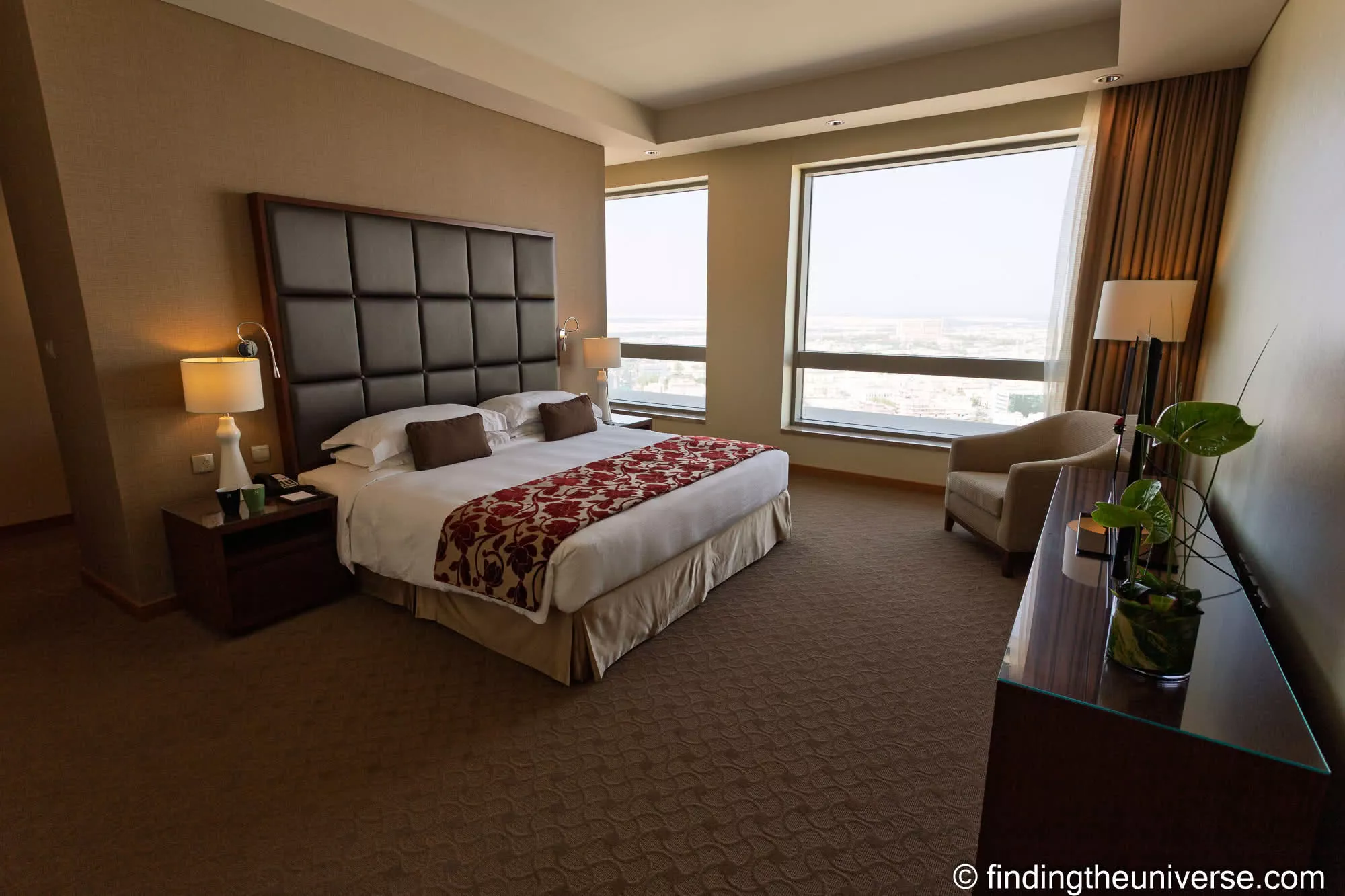
There’s no single winner, which is why this guide is arranged by trip type. Booking.com is our default for most trips, Agoda leads for Asia, Priceline and Hotwire are the bargain tools when your dates are locked, and if you’re building status with a chain then that chain’s own site is the answer. Of course, no table survives contact with a real trip.
| Your trip | Our starting point | Why |
|---|---|---|
| Most trips, no strong loyalty | Booking.com | The widest choice of places, good cancellation, excellent filters, and Genius discounts that build as you book |
| Building or holding chain status | The chain’s own site | Status nights and points generally only count when you book direct or through approved channels |
| Travelling in Asia | Agoda | Asia-Pacific is its home turf, with the inventory to match |
| Fixed dates, price above all | Priceline or Hotwire | Deep discounts in exchange for not knowing the hotel name until you’ve paid |
| Flight and hotel together | Expedia | Packages, plus One Key rewards across its brands |
| Hostels or budget solo travel | Hostelworld | The specialist, and still independent |
| Just comparing prices | Google Hotels, Kayak or Trivago | Fast rate comparison before you commit to a booking site |
Two Companies Own Almost Every Hotel Booking Site
The most useful thing to understand about hotel booking sites is that most of them are the same two companies wearing different outfits. Booking Holdings owns Booking.com, Priceline, Agoda, KAYAK and OpenTable, and through KAYAK it also runs momondo, HotelsCombined, Cheapflights and a string of smaller comparison brands. Expedia Group owns Expedia, Hotels.com, Vrbo and Hotwire, plus Orbitz, Travelocity, ebookers and Wotif, among others.
Trivago deserves a special mention. On paper, Expedia Group owns 59.2% of it (as of the December 2025 filings). In practice, Expedia’s class of shares carries ten votes each to ordinary shareholders’ one, which hands it 83.9% of the voting power, and trivago formally operates as what Nasdaq calls a “controlled company”. So a comparison site and a booking site showing you the same hotels are, quite often, siblings.
For a sense of scale, from the companies’ most recent annual filings: Booking Holdings took in $26.9 billion of revenue in 2025 and Expedia Group $14.7 billion, with Airbnb at $12.2 billion and Trip.com Group at US$8.9 billion. Names that are independent of the big two are rare in this business. Hostelworld is a publicly listed company in its own right, Trip.com Group is its own parent with its own listings, and Google is, well, Google.
For your nightly rate this matters less than you’d think, since the brands still compete with each other. Where it does bite is loyalty (each family runs its own scheme), deal formats, and the way so many of these sites feel interchangeable. Quite a lot of them are.
| Owner | Hotel-relevant brands | The numbers |
|---|---|---|
| Booking Holdings | Booking.com, Priceline, Agoda, KAYAK (with momondo, HotelsCombined, Cheapflights and more), OpenTable | $26.9 billion revenue in 2025; Booking.com itself is headquartered in the Netherlands |
| Expedia Group | Expedia, Hotels.com, Vrbo, Hotwire, Orbitz, Travelocity, ebookers, Wotif, plus effective control of Trivago | $14.7 billion revenue in 2025; One Key rewards spans the three core brands |
| Neither | Trip.com Group (Trip.com, Ctrip, Skyscanner, Qunar), Hostelworld, Google Hotels | Trip.com Group made US$8.9 billion in 2025, the biggest OTA outside the two families |
The Hotel Booking Sites We Actually Use

I’ve grouped these by owner, because ownership explains most of the differences. We’ve booked and paid for stays through every site here except one, and I’ve flagged that one clearly.
Booking.com
Best for: most trips, most of the time.
The biggest brand in the Booking Holdings family, and the site we use more than any other. Properties run from Highland B&Bs of the kind we wrote about in our North Coast 500 B&B guide up to the big city hotels in our London accommodation guide. Cancellation filters are the feature we lean on most, and when plans might move we book a free-cancellation rate and don’t worry about it.
We also like the general range of filters that let you narrow properties down by everything from budget to amenities to rating. Yes, most other platforms offer these filters too, but we’ve just found the ones on booking.com to be the easiest to work with when researching destination accommodation options.
The Genius loyalty scheme is real money if you book hotels a lot. Level 1 arrives just for signing in and gets you 10% off participating stays. Level 2 needs 5 bookings in two years (10 to 15% off), and Level 3 needs 15 bookings in two years, with discounts of 10 to 20%.
There are two catches. Those percentages are ceilings each property chooses whether to offer, so 20% is the best case rather than the rule, and the discount applies to the price before taxes and charges. Once you unlock a level you keep it for life, and Booking.com says around 850,000 properties take part.
Agoda
Best for: trips to Asia.
Also a Booking Holdings brand, this one based in Singapore, a fact most “alternatives” lists never get around to mentioning. Agoda is where we look first when a trip involves Asia, where its inventory and pricing are strongest. We’ve booked and paid for stays through it ourselves.
Its loyalty programme is AgodaVIP, which runs five tiers: Bronze, Silver, Gold, Platinum and Diamond, the last of those added in October 2025.
The thing to watch is how Agoda quotes you. It shows a per-night rate before taxes, so the first number you see is well under what lands on your card, and the longer the stay the bigger the gap. UK readers get a little more protection, because Agoda gave the competition regulator undertakings in 2019 to include compulsory charges in its headline prices. Everywhere else, open the price breakdown before you commit.
Priceline
Best for: deep discounts on US stays when your dates won’t move.
Another Booking Holdings brand, and an old-school online travel agency that sells hotels alongside cars and flights. It’s the same site we covered in our guide to the best car rental sites. For hotels, its signature format is Express Deals: you pick the neighbourhood, star rating and amenities, but the hotel’s name is only revealed after you book. Priceline’s own claim is savings of up to 60% off retail rates on these.
The trade is flexibility. Read the cancellation terms on the specific deal before you buy, and only go opaque when your plans are locked. Used that way, it’s a really useful tool for keeping a US road trip budget under control.
Expedia
Best for: packages, and anyone collecting One Key rewards.
When we compared car rental sites, I concluded there wasn’t much reason to book a car on Expedia over a specialist. Hotels are a different story. The inventory is deep, we’ve booked and paid for stays through it, and it’s the flagship of the One Key rewards programme, which spans Expedia, Hotels.com and Vrbo.
One Key launched in the US in 2023 and the UK in 2024, and reached more markets during 2025. You earn OneKeyCash on eligible bookings across hotels, flights, cars, packages and cruises, which makes Expedia the natural pick if you like to book a whole trip in one place. It can offer real savings for regular travellers, and there are perks as you progress through the tiers as well.
Expedia also shows the full price up front with things like taxes included, rather than the per-night teaser most other sites default to. I appreciate this as it lets me know the actual price I’m going to be paying at the end of the checkout up-front, which is nice.
Hotels.com
Best for: collecting free nights, if you live outside the US and UK.
You may remember Hotels.com for its “stay 10 nights, get one free” rewards scheme, and whether you still get it now depends on where you live. In the US and UK, One Key has replaced Hotels.com Rewards, so bookings there earn OneKeyCash instead. Everywhere else, Expedia’s own annual report confirms the old benefit continues: stay 10 nights through the site and you get one free, subject to the usual restrictions.
If you’re outside those two markets and book hotels often, that remains one of the simplest loyalty deals going.
Hotwire
Best for: the lowest price on locked-in dates, eyes open.
Expedia Group’s bargain basement. Hot Rate hotels work along the same lines as Priceline’s Express Deals, in that the hotel’s name stays hidden until after you’ve booked. Its pitch is literally trademarked: “4-star hotels. 2-star prices.”
The discounts can be steep, and there’s one rule you need before you touch them. Hot Rate hotel bookings are non-cancellable and non-refundable. No changes, no cooling-off. We’d only use it for a trip that could not possibly move, and even then I’d read the star rating and area description carefully.
Kayak, Trivago and Google Hotels
Best for: comparing prices, not booking.
These three are search engines rather than booking sites, and the distinction matters most when something goes wrong. As I put it in the car rental guide, a comparison site is a price radar. The site you land on afterwards sets the terms, the cover and the support.
Kayak is Booking Holdings’ radar (it also runs momondo and HotelsCombined). Trivago is Expedia’s, per the ownership numbers above. Google Hotels is the quickest of the three to scan, and the one we tend to open first for a feel of what a night should cost.
Hostelworld
Best for: hostels, and travellers who want the social side of them.
The specialist, and one of the few names here owned by neither giant. Hostelworld is a publicly listed company in its own right, on the London Stock Exchange. We’ve booked and paid for stays through it, and for dorm beds and sociable budget travel it’s the obvious first stop, with the review depth to match.
Trip.com
Best for: travellers focused on Asia, though we can’t vouch for it ourselves.
Full disclosure: this is the one site on this list we haven’t booked through, so you’re getting facts here rather than experience. Trip.com Group is the largest online travel agency outside the Booking and Expedia duopoly, with revenues of US$8.9 billion in 2025, listings on both Nasdaq and the Hong Kong exchange, and Skyscanner in its stable.
Its home advantage is Asia, and particularly China, where it began life as Ctrip. If your travels lean that way, have a look at it alongside Agoda. We just can’t tell you what its customer service is like at 2am, because we’ve never had to find out.
Book Direct When You’re Building or Holding Status

Hotel prices tend to land close together across channels. The booking sites’ breadth and constant rate competition see to that, so chasing the absolute lowest rate across ten tabs often saves less than you’d hope. What differs between channels is what the stay earns you afterwards.
Status nights, points, recognition and upgrades attach to the chain, and a stay booked through a third-party site normally earns you nothing. If you hold status but book through a third party, you likely won’t get the status perks you worked so hard for either.
Hilton spells this out in its own rules: a booking made through a third-party website doesn’t count as a qualifying stay, whatever rate you paid for it.
So the arithmetic is simple. Book direct when you’re building or holding status. Use the booking sites for one-off stays, mixed-chain trips, independent properties, and any booking that might need to move.
For hotels there’s a wrinkle the usual “book direct” advice misses: you’re often choosing between two loyalty currencies rather than between loyalty and nothing. Fifteen bookings in two years on Booking.com makes you a Genius Level 3 member, with discounts of up to 20% on your very next stay. The same fifteen stays booked direct with one chain would carry you a long way up its status ladder instead.
Discounts now, or perks later. Neither answer is wrong, but it’s worth deciding which game you’re playing before you book, rather than accidentally playing both badly.
My own chain is Marriott. Lifetime Gold Elite, which under Marriott’s published criteria takes 400 qualifying nights plus 7 years at Gold or higher; the published lifetime criteria are nights and years.
Gold is the third of Marriott’s six tiers (Member, Silver, Gold, Platinum, Titanium, Ambassador), reached at 25 nights a year. It gets me 25% bonus points, late checkout to 2 p.m., a room upgrade, a welcome gift of 250 or 500 points depending on the brand, free Wi-Fi and member rates. Marriott hedges the checkout and the upgrade with “subject to availability” in its own wording, so treat those as a decent shot rather than a promise.
What Gold does not get me is free breakfast or lounge access. Marriott saves the breakfast benefit for Platinum, at 50 nights a year. The lifetime bit is what makes it worth having. Mid-tier benefits, permanently, with nothing to requalify for.
Hilton runs five tiers (Member, Silver, Gold, Diamond and Diamond Reserve, the one most people haven’t heard of), with Gold arriving at 25 nights, 15 stays or $6,000 of eligible spend in a calendar year.
If breakfast is the benefit you care about, and it usually is, the two programmes’ own pages settle the choice of chain. Hilton Gold comes with a daily food and beverage credit at US hotels, or continental breakfast elsewhere, from 25 nights. Marriott makes you wait until Platinum at 50 nights for its equivalent. Lounge access starts a tier higher again, at Hilton Diamond.
We also hold status with Hilton and with Best Western, and Best Western Rewards is the one I’d point you at if you want status quickly. Gold arrives at 5 qualifying nights, Platinum at 7, Diamond at 15 and Diamond Select at 25, with point bonuses of 10, 15, 30 and 50% as you climb. Marriott and Hilton both put Gold at 25 nights.
If your travel leans toward road trips, where Best Western shows up a lot, five qualifying nights is one week away.
And plenty of the places we love aren’t on any chain at all. For independent properties, the booking sites or the property’s own website are your options, and it never hurts to email the property directly and ask what they can do.
Every Hotel Booking Site, Grouped by Owner
The same list in one view, ownership first.
| Site | Owner | Loyalty or deal angle | Best for |
|---|---|---|---|
| Booking.com | Booking Holdings | Genius: 10 to 20% off participating stays, levels kept for life | Most trips |
| Agoda | Booking Holdings | AgodaVIP, five tiers (Bronze to Diamond) | Asia-Pacific |
| Priceline | Booking Holdings | Express Deals: hotel named after booking | Locked-date US bargains |
| Expedia | Expedia Group | One Key (OneKeyCash across Expedia, Hotels.com, Vrbo) | Flight and hotel packages |
| Hotels.com | Expedia Group | One Key in the US and UK; 10 nights earns a free night elsewhere | Free-night collectors outside the US and UK |
| Hotwire | Expedia Group | Hot Rate: named after booking, non-refundable | Cheapest locked-in stays |
| Kayak, Trivago, Google Hotels | Booking Holdings / Expedia Group / Google | Comparison only | Price scanning before you book |
| Hostelworld | Independent (listed) | Hostel specialist | Dorms and budget solo travel |
| Trip.com | Trip.com Group | Largest OTA outside the duopoly | Asia focus (not personally tested) |
| Direct with the chain | The hotel itself | Bonvoy, Honors, Best Western Rewards and the rest | Building or holding status |
When It Goes Wrong

The booking that changed how we travel wasn’t a hotel at all. In September 2017 we booked a room through Airbnb in Deuil-la-Barre, just north of Paris, for the night we arrived. It was an Instant Book listing, so it confirmed automatically, with nobody at the other end needing to approve it.
We found out it hadn’t worked while standing on the doorstep. The host had stopped doing Airbnb some time earlier, but their listing was still up and still bookable, and the booking email never reached them. They thought they’d left the platform. We thought we had a room.
Credit where due, Airbnb sorted it. We got a full refund and a $50 credit, and an agent spent a couple of hours on the phone with me, chasing the host and then sending over other listings until we had somewhere to sleep, in the next suburb along. The process worked.
But the episode reset something for us, because a hotel fails differently. A hotel has a front desk, staff on site and dozens of rooms, so if something’s wrong with yours there’s usually another one. A room in someone else’s flat has none of those fallbacks, and nobody tells you until you’re already there.
We still use rentals when they make sense, but these days we’ve swung back to hotels for most of our trips. They’re just more reliable and often cheaper to boot.
Your Protections When You Book
Hotel booking is one of the more heavily regulated corners of online travel, and your protections are stronger than you might expect. In the EU, Booking.com has been a designated “gatekeeper” under the Digital Markets Act since 13 May 2024, the first and only travel company on that list, and it’s separately designated a Very Large Online Platform under the Digital Services Act.
In the UK, the competition regulator took formal undertakings in 2019 from Booking.com, Agoda, Expedia, ebookers, Hotels.com and Trivago covering pressure selling (“only one room left!” messages), how commission affects search rankings, and hidden charges. A few months later, 25 more sites signed up to the same sector-wide principles.
That case is closed and dates from 2019, and its real lesson is about the industry as a whole: the countdown clocks and surprise fees were widespread enough that the whole sector was made to sign up to fixing them.
A few habits cost nothing. Screenshot the rate and cancellation terms when you book. Treat opaque deals like Express Deals and Hot Rates as commitments rather than reservations you can walk back. And if a listing or a price just looks wrong to you, book somewhere else.
Hotels or Vacation Rentals?
Different platforms, and mostly different companies. If what you actually want is an apartment, a cottage or a villa, the players and the trade-offs are different too, and we’ve covered them separately. Our guide to Airbnb alternatives covers the rental platforms in depth, we have a UK and Ireland specific guide to holiday home websites, and Jess has written up the best vacation rental websites over on Independent Travel Cats.
Booking.com straddles the line, with a serious stock of apartments alongside its hotels, and the rental guide is where we cover that side of it.
Rentals still make sense when you need space for a group or a kitchen for a longer stay, and the guides above will point you at the right platforms for that.
Frequently Asked Questions
What is the best hotel booking site?
No single site wins outright, which is why we’ve sorted this guide by the kind of trip you’re taking. Booking.com is our default for most trips thanks to its breadth and cancellation filters, Agoda leads for Asia, and Priceline and Hotwire are the bargain tools when your dates are locked.
If you’re building status with a hotel chain, the best booking site is usually the chain’s own.
What are the best alternatives to Booking.com?
Most of the obvious ones are relatives. Agoda, Priceline and Kayak share Booking.com’s parent company, while Expedia, Hotels.com, Hotwire and Vrbo belong to Expedia Group.
The alternatives that are structurally different: booking direct with the hotel, Hostelworld for hostels, Trip.com if your travel centres on Asia, and Google Hotels for comparing rates before you commit.
Is it cheaper to book direct with the hotel?
Usually the prices land close, because the booking sites and the chains compete hard on rates. The reason to book direct is what the stay earns rather than the headline price: status nights, points and perks generally only accrue on direct or approved-channel bookings, and chains like Marriott list member-only rates among their benefits.
Our rule: book direct when you’re building or holding status, and use the booking sites for everything else.
Who owns Trivago?
Expedia Group owns 59.2% of Trivago’s shares and holds 83.9% of the voting power (per the December 2025 filings), and Trivago operates as a Nasdaq “controlled company”.
It’s still a useful comparison tool. Just know whose family it belongs to when you use it.
Does Hotels.com still give you a free night after 10 nights?
It depends where you live. In the US and UK, the old Hotels.com Rewards scheme has been replaced by One Key, which earns OneKeyCash instead.
Everywhere else, per Expedia’s own annual report, the benefit continues: stay 10 nights through the site and you get one free, subject to restrictions.
How do you get Booking.com Genius Level 3?
Complete 15 bookings within two years. Levels are kept for life once unlocked.
Level 3 unlocks discounts of 10 to 20% at participating properties, applied to the price before taxes and charges. The top of that range is a ceiling that individual properties choose whether to offer, so don’t count on a flat 20%.
Does Marriott Gold status include free breakfast?
No. Gold Elite gets you 25% bonus points, late checkout to 2 p.m. and a possible room upgrade, with the last two subject to availability. Free breakfast (or an amenity choice) starts at Platinum, which takes 50 nights a year.
If mid-tier breakfast matters to you, Hilton is the chain that grants it: Hilton Gold comes with a daily food and beverage credit at US hotels or continental breakfast elsewhere, from 25 nights.
Are Hotwire Hot Rate and Priceline Express Deals refundable?
Hotwire is explicit that Hot Rate hotel bookings are non-cancellable and non-refundable. Priceline’s Express Deals reveal the hotel name only after booking, and you should read the specific deal’s cancellation terms before you buy.
As a rule, treat any opaque deal as final and only book one when your plans are locked.
Is Trip.com bigger than Booking.com?
No. By 2025 revenue, Booking Holdings ($26.9 billion) and Expedia Group ($14.7 billion) lead, with Airbnb next at $12.2 billion and Trip.com Group fourth at US$8.9 billion.
Trip.com Group is, though, the largest online travel agency outside the Booking and Expedia families, and the strongest of the independents in Asia.
Do hotel booking sites show you the full price?
Not always, and it’s the easiest way to be caught out. Agoda quotes a per-night rate before taxes, so the headline number sits well below the total. Expedia shows the full price up front, which is one of the better reasons to use it.
Wherever you book, open the price breakdown before you pay. UK readers have some protection here, since Booking.com, Agoda, Expedia, ebookers, Hotels.com and Trivago all gave the competition regulator undertakings in 2019 covering hidden charges.
Is it safe to book hotels through third-party sites?
The five sites we book and pay through regularly (Booking.com, Expedia, Agoda, Priceline, Hostelworld) have all been reliable for us. Protections have also improved: the big platforms gave binding undertakings to the UK regulator in 2019 on hidden charges and pressure selling, and the EU now regulates Booking.com under the Digital Markets Act.
Keep your confirmation, read the cancellation terms, and complete payment on the platform rather than off it.
Should I book a hotel or an Airbnb?
After turning up at an Airbnb near Paris to find the host had quietly left the platform without taking their listing down, we lean hotels for most trips. Staffed front desks and real inventory make failures rarer and easier to fix.
Rentals still win for groups and longer stays. Our guide to Airbnb alternatives covers those platforms in detail.
Final Thoughts
The pattern we keep coming back to is to decide up front which game you’re playing, price today or perks tomorrow, and to read the cancellation terms either way. Do that, and the ten thousand hotel sites collapse down to a manageable handful pretty quickly.
Got a question about booking a hotel for a specific trip, or a site we haven’t covered here? The comments are open below, and we answer them.

Leave a Reply