The best day trip from Prague is Kutná Hora. It’s about an hour from the main station by train, the Sedlec Ossuary and St Barbara’s Cathedral are two of the more memorable buildings in the country, and you’ll be back in Prague for dinner. If you can spare a night rather than a day, spend it in Český Krumlov, and I’ll explain why a day trip there is the wrong way to see it.
I first visited Prague back in the 2000s and came back to the city in September 2026 with Jess, for her first visit. We spent five nights in the Old Town, hired a car for one of those days and drove out to Kutná Hora, Konopiště and Karlštejn, and later in the same trip spent two nights in Český Krumlov and passed through Telč. In this guide, we’ve put together our thoughts on the best day trips from Prague, with detailed information on the best way to get to each one.
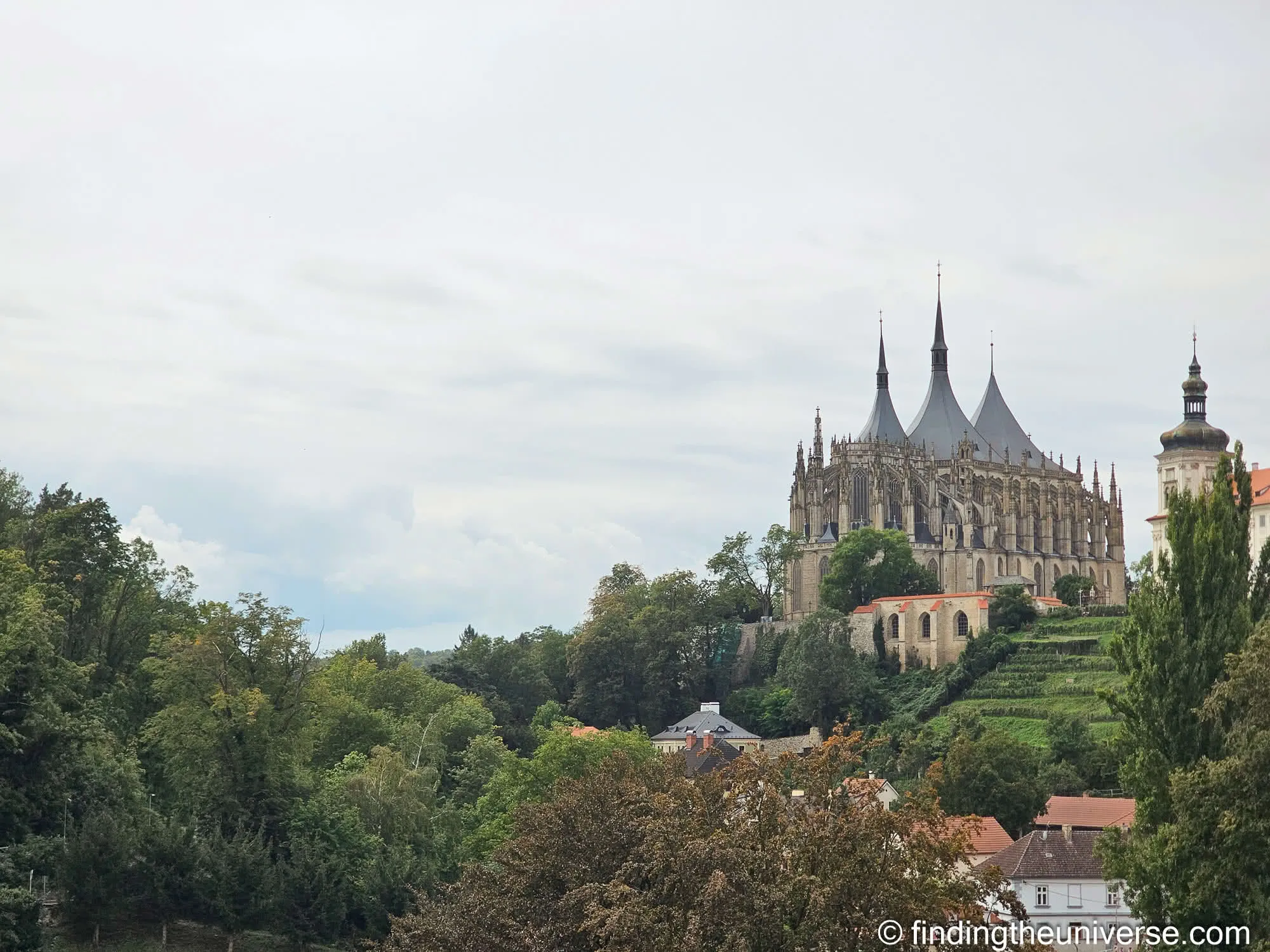
Table of Contents:
Day Trips from Prague at a Glance
Kutná Hora is the best day trip overall and the best by train. The ossuary, the cathedral and the silver mine give you three very different things in one small town, and Karlštejn is a close second for a half day. Both are on the PID suburban network, so the ticketing is simple.
The best castle is Karlštejn if you want the famous one, Konopiště if you want the place to yourself. The castles-compared section further down goes into this.
If you only have half a day, Karlštejn is the answer. The train is under an hour and the castle is a short walk up from the village.
In winter, Kutná Hora and Terezín are open daily all year, and Pravčická brána in Bohemian Switzerland opens Friday to Sunday. Most castle interiors shut between November and March, so check the winter section before you commit to one.
If you can stay overnight somewhere, make it Český Krumlov. Everyone who does a day trip there sees it at the busiest four hours of its day, and the empty streets at 8am are really what you came for.
The ten numbered sections below are in no particular order, so use the picks above to choose between them.
How to Get to Each Day Trip from Prague: Train, Bus, Car or Tour
Times and fares are what the national journey planner IDOS showed for a mid-October 2026 weekday, with standard second-class walk-up fares in Czech crowns. Bus fares on RegioJet and FlixBus are dynamic, so treat those as a guide. Driving times are approximate and assume you’re leaving from central Prague outside the rush hour.
The Prague Visitor Pass, which we used all week in the city, doesn’t cover trains at all, nor suburban buses outside the city centre, so it’s no help for any of these trips. Prague also has several departure points. Trains leave from Praha hlavní nádraží (the main station, hl.n. on timetables) or Praha-Smíchov, RegioJet buses to the south leave from Na Knížecí next to Anděl metro, FlixBus mostly uses the Florenc bus station, and the Terezín bus leaves from Letňany at the end of metro line C.
| Destination | Train or bus from Prague | By car | Day tour available? | How we’d go |
|---|---|---|---|---|
| Kutná Hora and Sedlec | Train from Praha hl.n., about 1 hour. Direct R9 trains roughly every two hours, otherwise change at Kolín. 166 CZK. | Roughly 1 hour 15 minutes. Free parking in town with a little research. | Yes | Train |
| Terezín | Bus 413 from Praha, Letňany (metro C), about 1 hour, hourly. No direct train. | About 45 minutes via the D8 motorway. | Yes | Bus or tour |
| Karlštejn | S7 train from Praha hl.n. or Praha-Smíchov, 35 to 45 minutes, two an hour. 76 CZK on a ČD ticket, or a PID zone ticket. | Roughly 40 minutes. Paid parking in the village below the castle. | Yes | Train |
| Plzeň | Direct IC/EC train from Praha hl.n., 1 hour 25 minutes, hourly. 169 to 179 CZK. | Roughly 1 hour on the D5. | Yes | Train |
| Český Krumlov | RegioJet bus from Na Knížecí, about 2 hours 40 minutes, from around 250 to 300 CZK. Some direct IC trains, about 2 hours 30 minutes, 239 CZK. | Roughly 2 hours 45 minutes each way. | Yes | Bus, or stay the night |
| Karlovy Vary (and Loket) | FlixBus from Florenc, about 2 hours, 158 CZK when we checked. The direct train takes 3 hours 30 minutes. | Roughly 1 hour 45 minutes on the D6. | Yes | Bus or tour |
| Konopiště | Train from Praha hl.n. to Benešov u Prahy, 40 to 60 minutes, several an hour. 117 CZK. Then a walk or local bus to the castle. | Roughly 50 minutes. Parking below the castle. | Only combined with Karlštejn | Car or train |
| Bohemian Switzerland | Train from Praha hl.n. to Děčín, 1 hour 30 minutes to 1 hour 45 minutes, roughly hourly, 185 to 229 CZK. Then bus 434 or 438 from Děčín, Tyršova to Hřensko, about 20 minutes. | Roughly 1 hour 45 minutes. | Yes | Tour, unless you like changing buses |
| Telč | Not realistic. 3 hours 20 minutes or more each way with changes. | Roughly 2 hours 15 minutes each way. | No | Car only |
| Dresden | Direct EC/railjet from Praha hl.n., 2 hours 20 minutes, every two hours. 722 CZK at full fare, less booked ahead. | Roughly 2 hours on the D8, then the A17. Czech e-vignette needed to the border; German motorways are toll-free for cars. | Yes | Train or tour |
A few notes on buying tickets. For Czech trains, České dráhy sells online and at the station, and the fares above are theirs. Karlštejn, Benešov (for Konopiště) and Kutná Hora are all inside the Prague integrated transport zones, so a PID zone ticket bought in the PID Lítačka app also works on those trains, and is usually the cheaper option for Karlštejn.
For the buses you can of course just turn up, but book RegioJet and FlixBus online a few days ahead, because the cheap seats go first and both companies price dynamically.
If you don’t want to deal with any of it, every destination except Telč and Konopiště has a reasonable organised day tour from Prague, and I’ve linked the one I’d book under each section. Tours cost more than the train, but they solve the last-mile problem at places like Bohemian Switzerland, where the public transport works but takes planning.
1. Kutná Hora and the Sedlec Ossuary
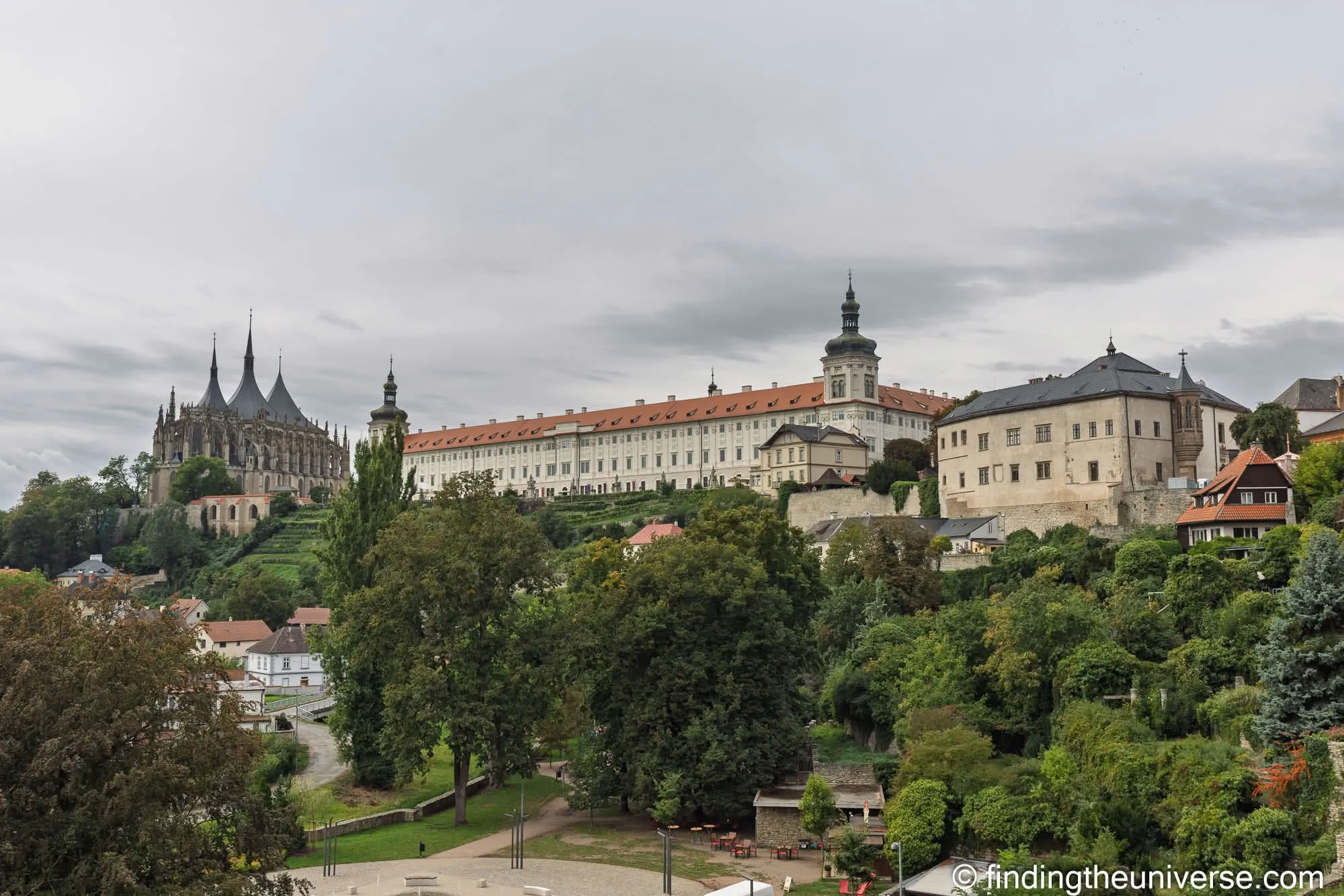
Kutná Hora was the second city of medieval Bohemia, built on silver, and the money is still visible in the stonework. The town centre, St Barbara’s Cathedral and the Cathedral of Our Lady at Sedlec have been a UNESCO World Heritage Site since 1995. Most people come for the Sedlec Ossuary, the small chapel decorated with the bones of around 40,000 people, and then discover the cathedral and the mine are at least as good.
We drove here as the first stop of our castle day, and it’s my pick for a first-time visitor. It’s compact, it’s pretty close, and the three main sights are different enough from each other that the day doesn’t feels repetitive.
Getting to Kutná Hora from Prague
Trains leave Praha hl.n. for Kutná Hora hl.n. and take about an hour, 166 CZK each way. The direct R9 trains run roughly every two hours, and in between there are services with a change at Kolín that take an hour to an hour and a quarter.
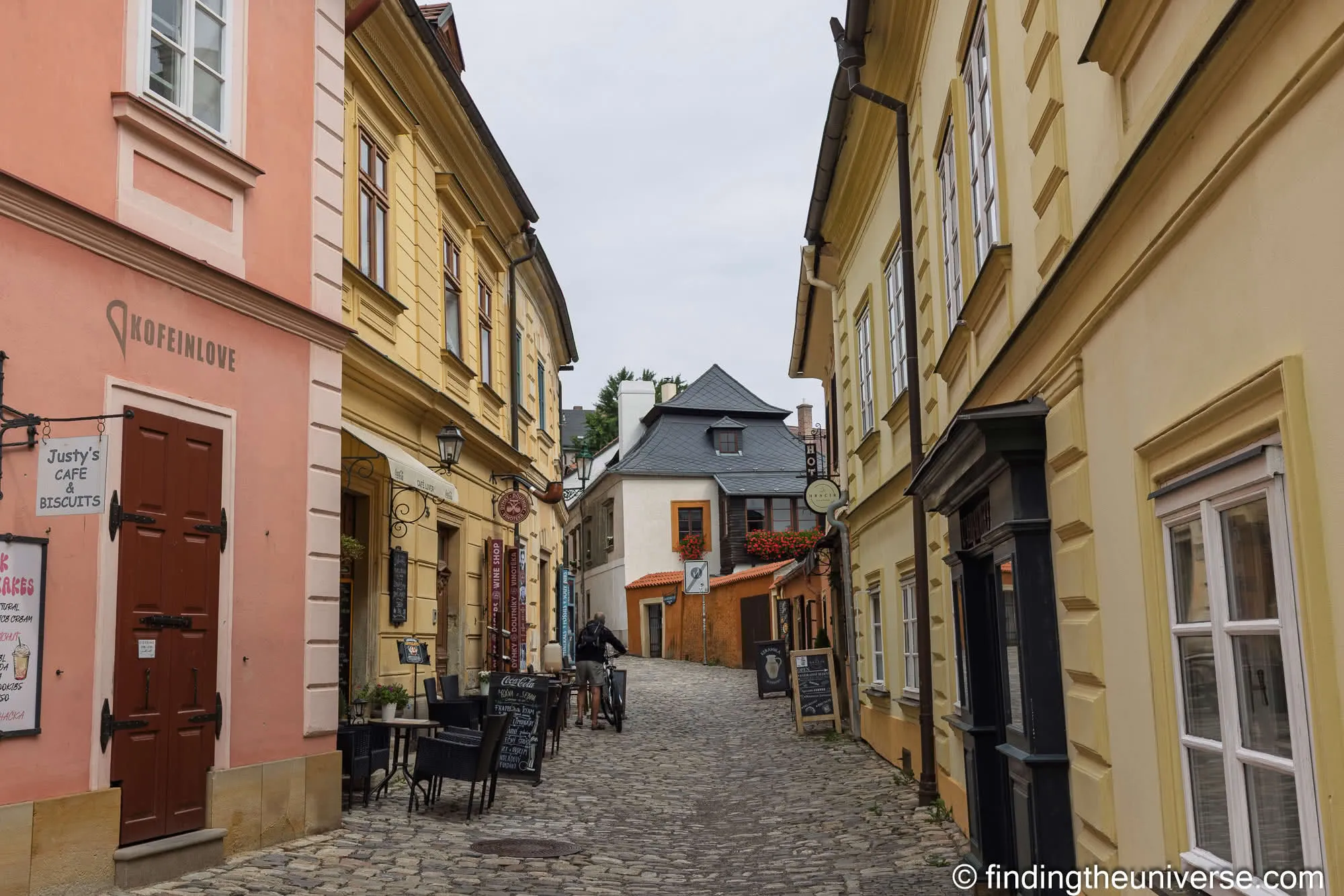
The main station is out at Sedlec rather than in the centre, which is actually convenient, because the ossuary is a five-minute local train ride (the S28 to Kutná Hora-Sedlec, 17 CZK) or a short hop on bus 801, which stops at “Sedlec, kostnice” right by it. The same local train carries on to Kutná Hora město for the old town.
By car it’s a bit over an hour from central Prague, and we found free parking in town without any trouble. Driving is what let us combine it with Konopiště and Karlštejn in one day, which I cover in the pairing section, but for Kutná Hora on its own the train is simpler.
What to See in Kutná Hora
Start at Sedlec. The Sedlec Ossuary is sold on a combined Sedlec Area ticket with the cathedral next door: 220 CZK for adults, 150 CZK for seniors and students and 80 CZK for children at the time of writing. Tickets are for a specific date and time slot, capacity is limited, and entry can’t be guaranteed without a reservation, so book online before you travel. Your visit to the lower chapel is capped at 30 minutes, which is plenty.
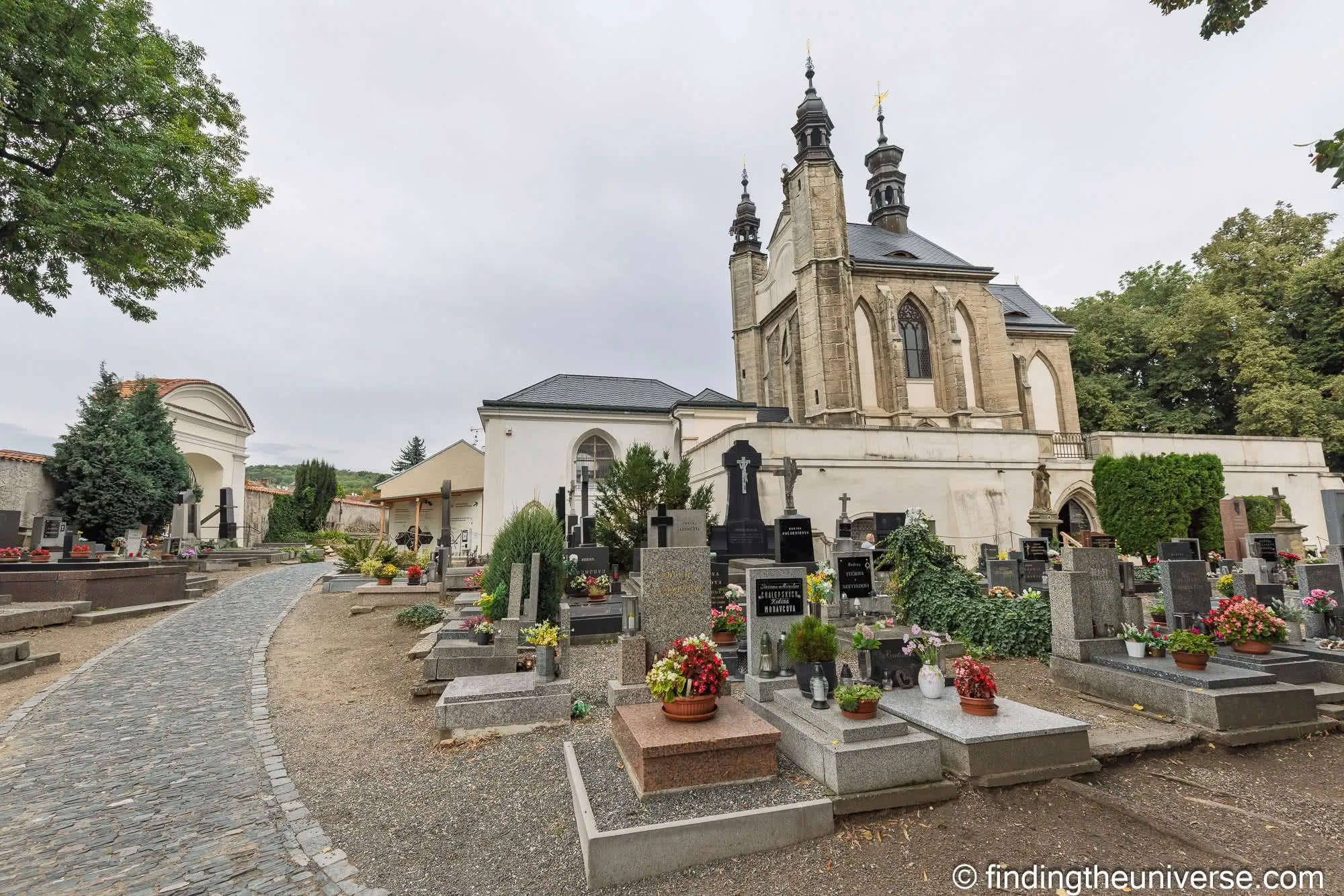
Photography is prohibited inside the ossuary, and the ban is enforced. The parish describes it as a resting place and a working sacred space, and asks that you look rather than shoot, which I think is fair enough. It’s why every photo in this section is of the outside. The building has been under restoration since 2014, with work expected to run until at least 2030, so you’ll enter via a temporary wooden staircase and it isn’t wheelchair accessible.
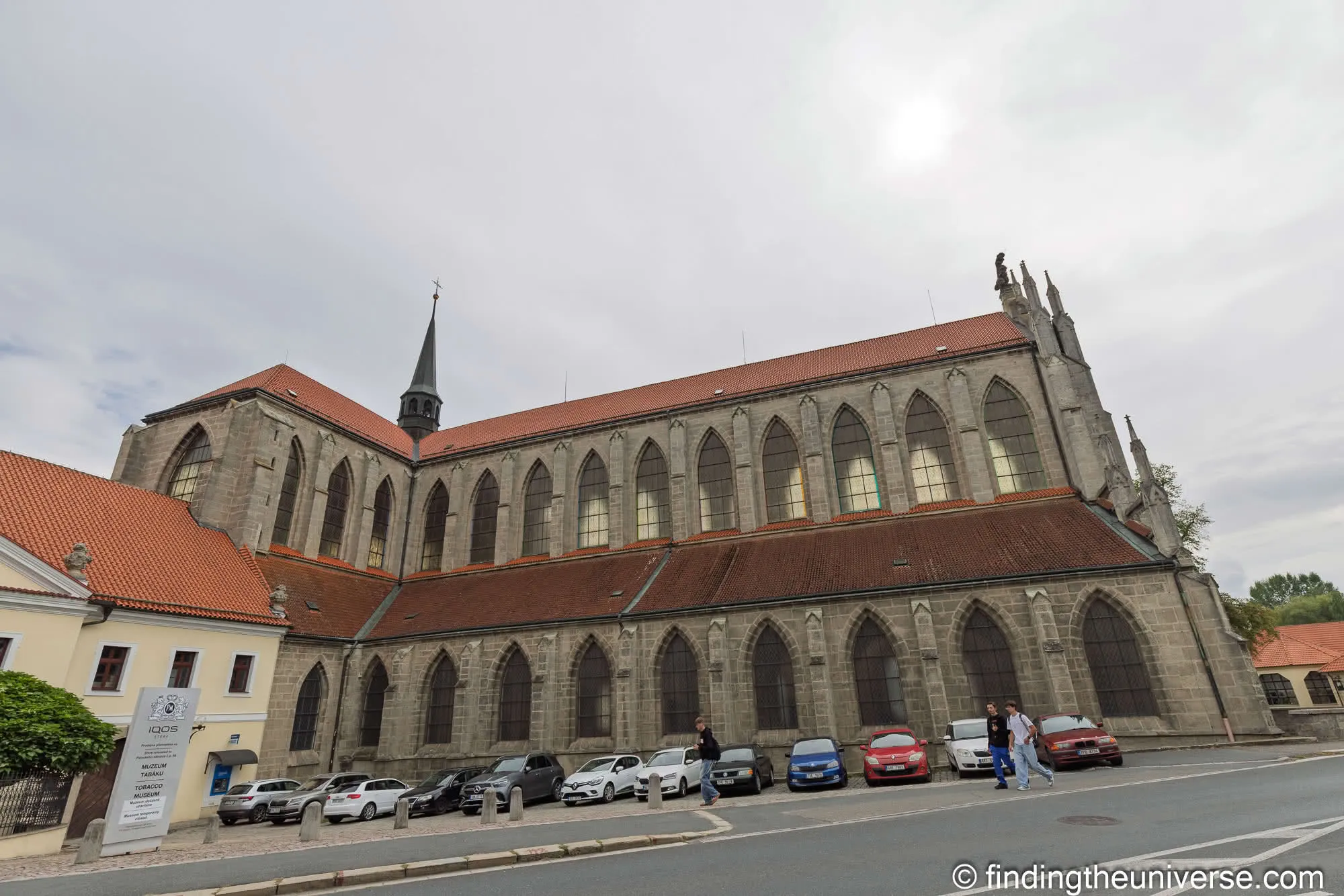
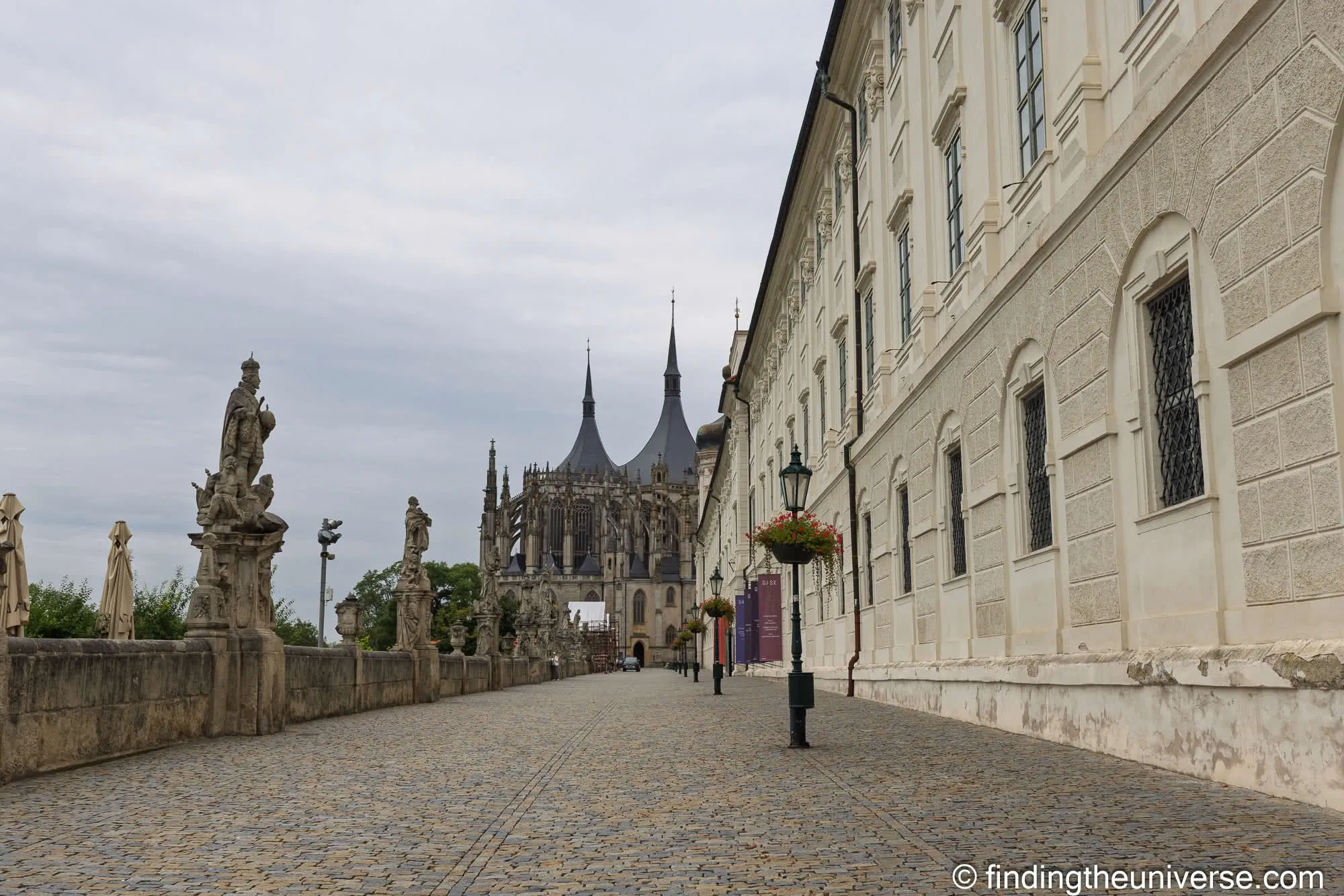
From Sedlec it’s a pleasant walk (about 30 – 40 minutes) or the local train into the old town. St Barbara’s Cathedral sits on the edge of the hill above the valley, and the approach along the terrace past the Jesuit College, with the statues on the balustrade, is the view of Kutná Hora you’ve probably seen.
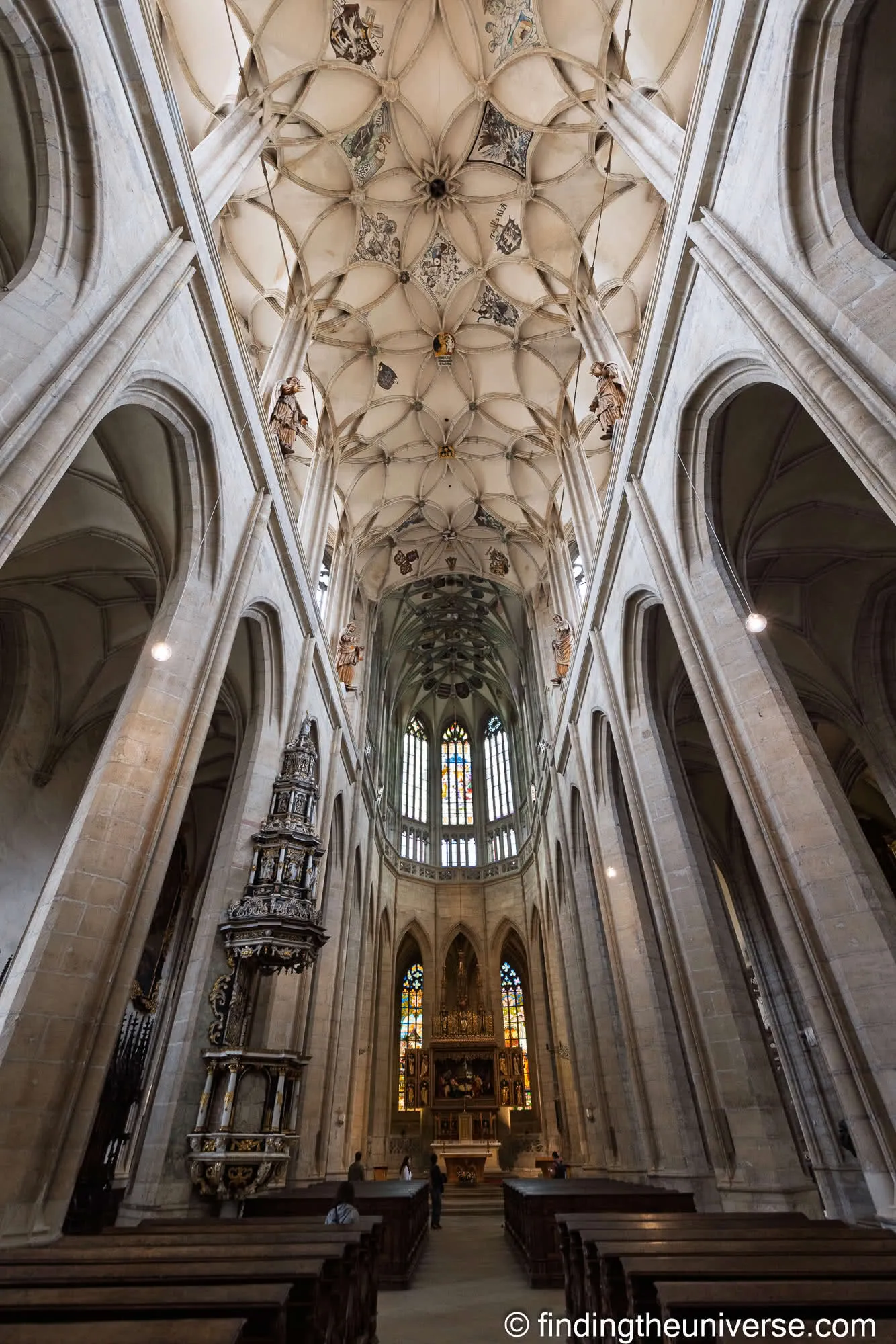
The interior is late Gothic and worth the ticket, with miners’ frescoes in the side chapels that tell you what paid for all of it.
The third stop is the Czech Silver Museum at Hrádek, and specifically its Route II, the guided “Silver Road” tour, which goes down into a medieval silver mine under the town.
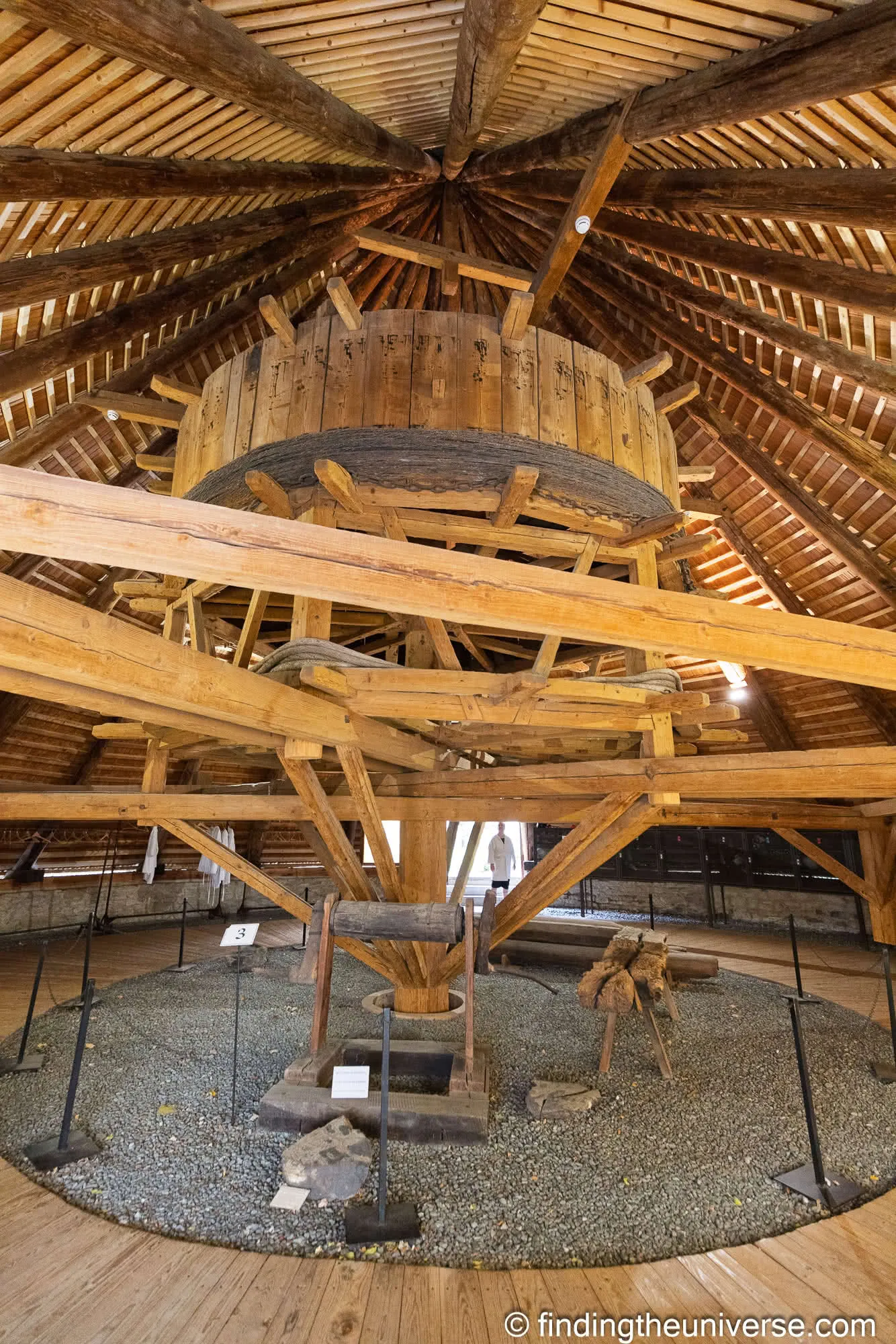
I went down on our visit. You get a helmet and a lamp, the passages get very narrow, and it’s an excellent tour.
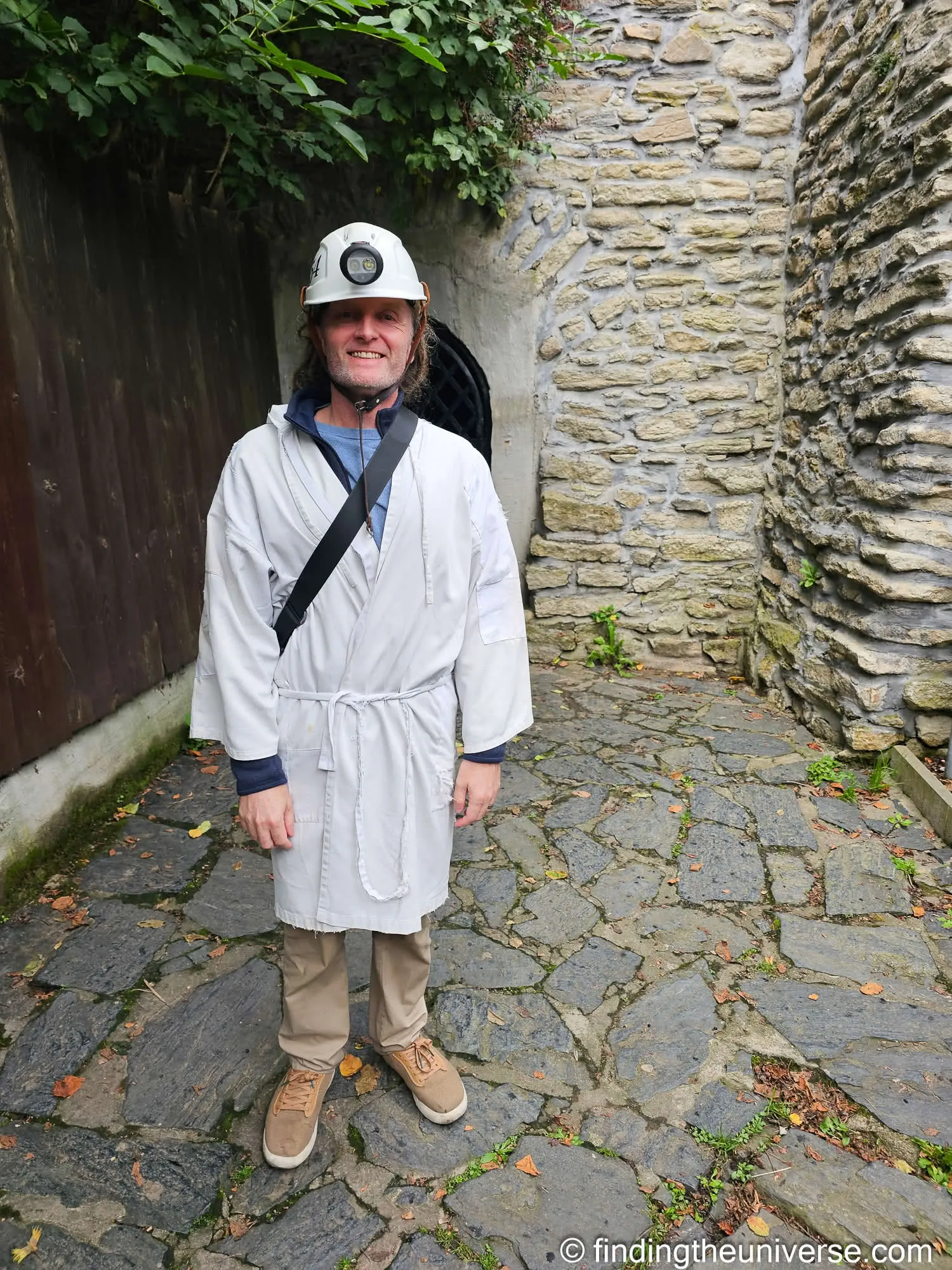
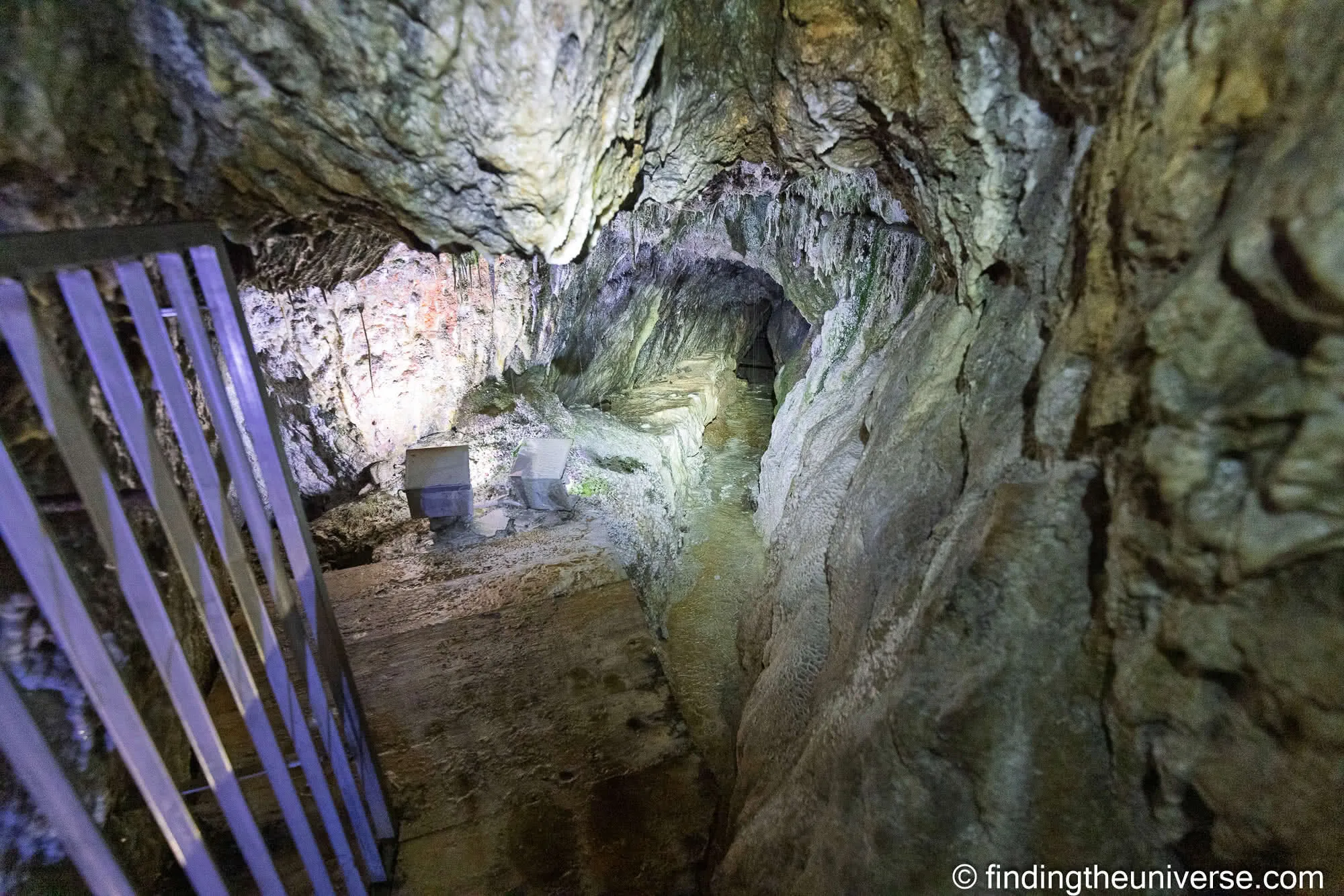
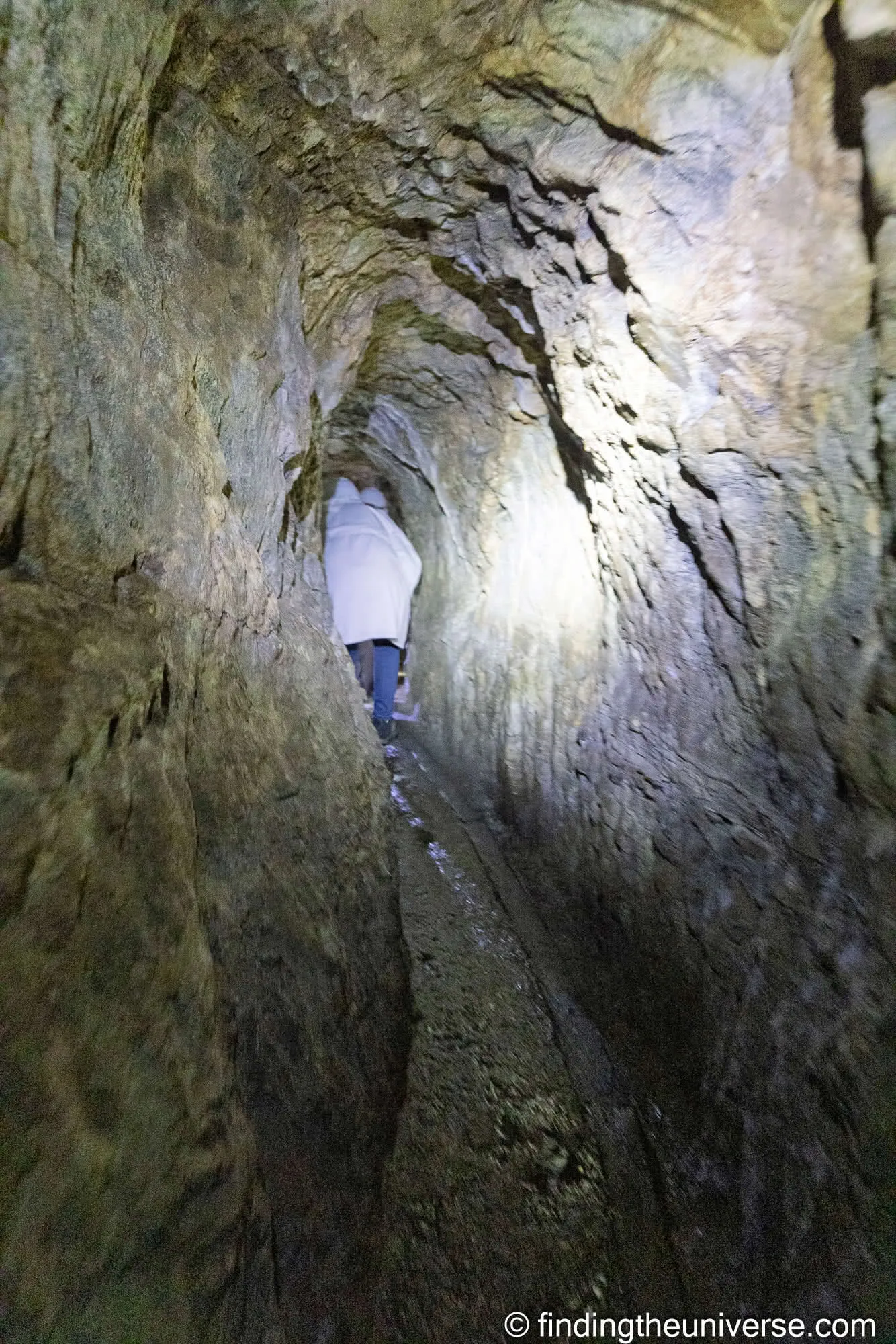
Tours take about an hour and a half, run Tuesday to Sunday from roughly March to November, cost 200 CZK for adults (160 CZK reduced, 640 CZK for a family) and are limited to 25 people, so reserve ahead. When I visited I was lucky to only have six people on the tour with me, along with the two guides to make sure we didn’t get lost.
Children under six aren’t allowed in the mine, and six to ten year olds need an adult with them. Commentary is in Czech by default, with foreign-language commentary for an extra 40 CZK per person. It’s not one for anyone who dislikes confined spaces or the dark.
Tour or Independent, and Winter
Independent is easy here. If you want it organised, this guided Kutná Hora and bone chapel tour from Prague covers the ossuary and the town with transport included.
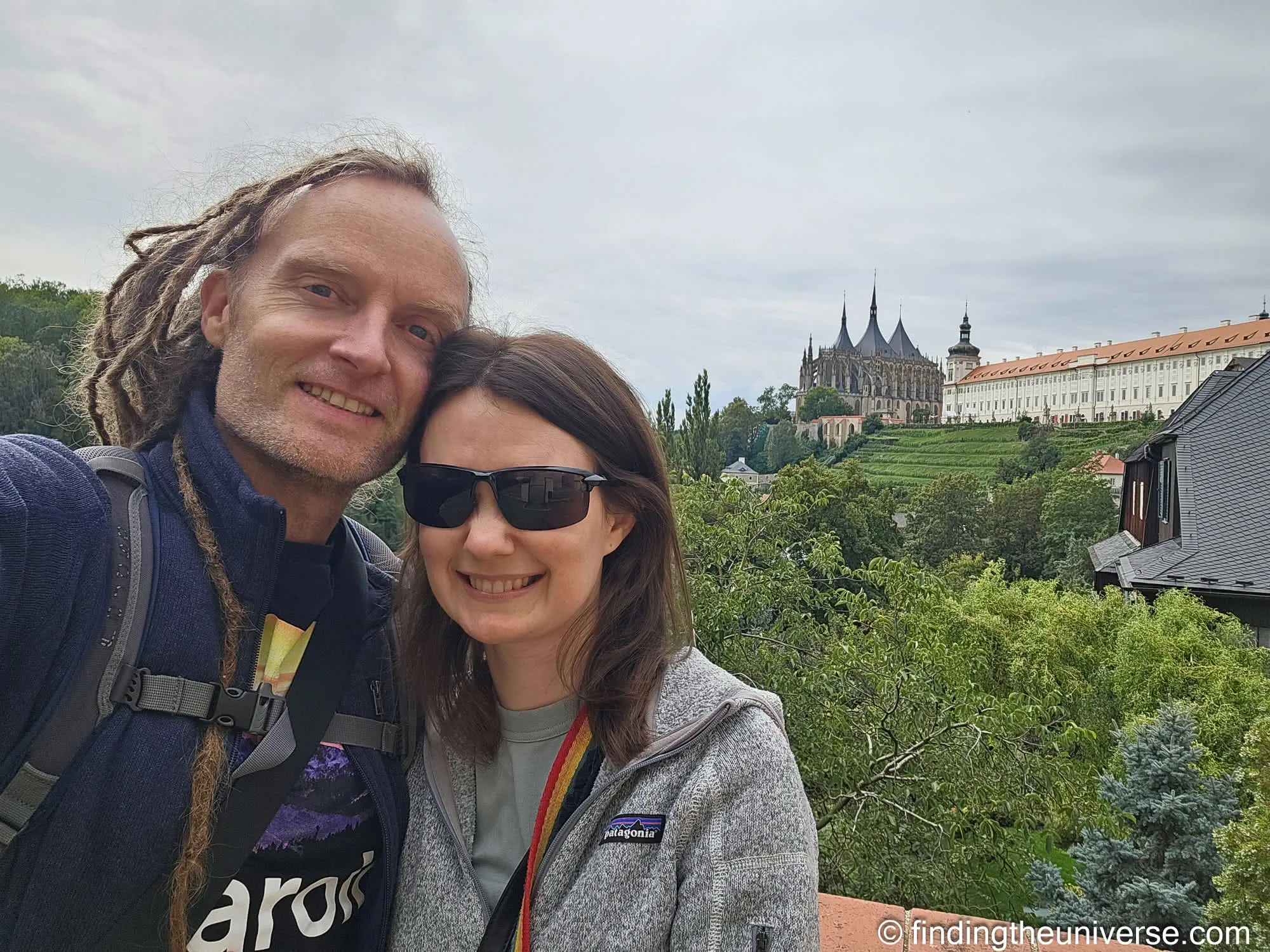
Kutná Hora is a good winter option. The ossuary is open daily all year (9am to 6pm from April to September, 9am to 5pm in March and October, 9am to 4pm from November to February, closed on 24 December). The exception is the mine, which is a spring-to-autumn thing, so in winter you’re down to the ossuary and the cathedral. That’s still a good day.
2. Terezín Memorial
Terezín is an 18th-century fortress town about an hour north of Prague that the Nazis turned into the Theresienstadt ghetto and, in the Small Fortress across the river, a Gestapo prison. Around 150,000 people passed through the ghetto; most were sent on to the death camps, and tens of thousands died in Terezín itself.
We didn’t make it to Terezín on this visit. Several of the Prague museums we did visit cover the ghetto’s history in some depth, and the photo below is from one of those exhibitions, not from Terezín itself. The practical information here is from the Terezín Memorial’s own pages.
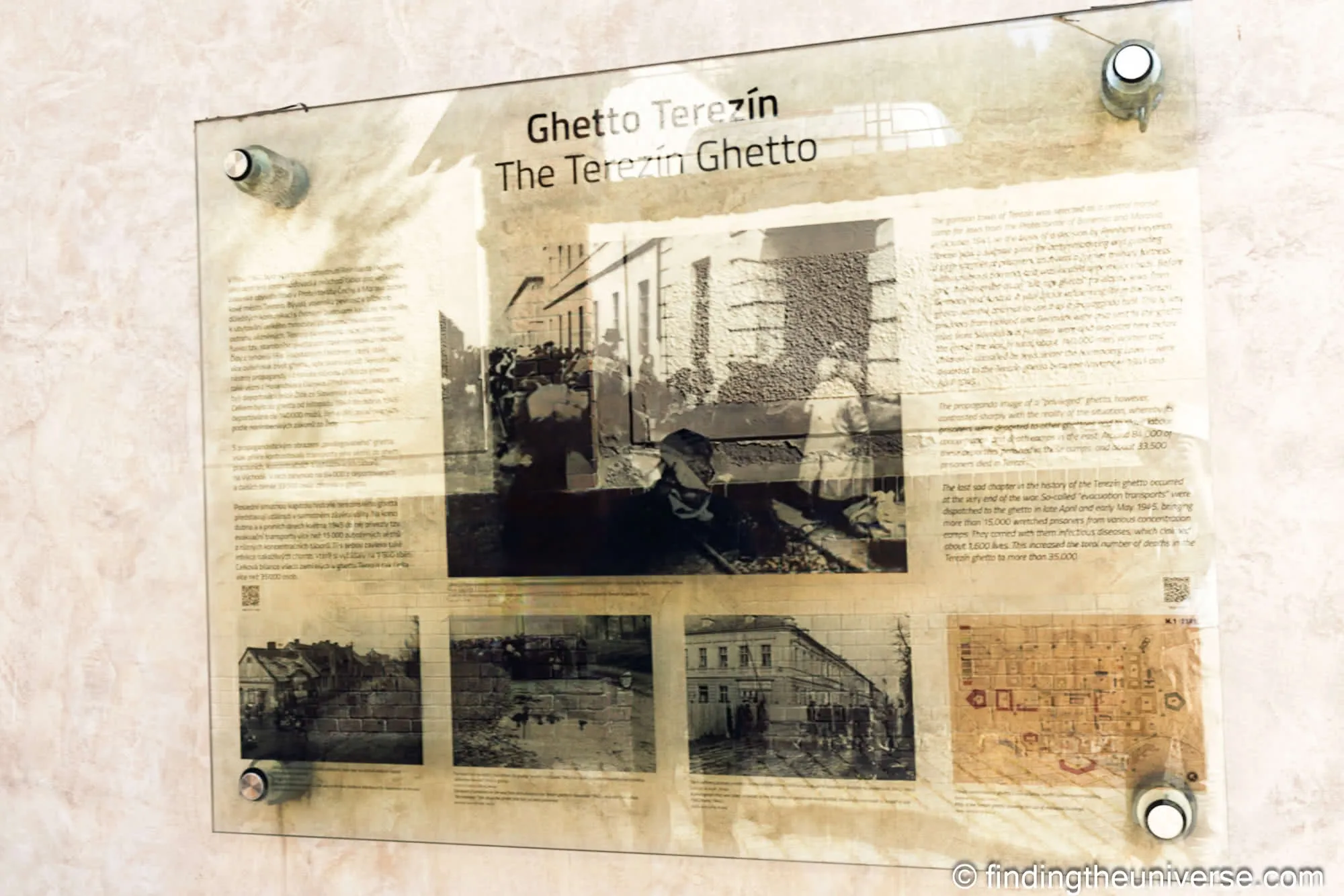
Getting to Terezín from Prague
There’s no direct train. The way to go is the direct bus 413 from Praha, Letňany, the bus station at the end of metro line C, platform L. It takes about an hour and runs hourly through the day. Get off at “Terezín, U památníku” for the Small Fortress, or at the bus station in town for the ghetto sites.
Pay on the bus or check IDOS for the current fare. You may still see Nádraží Holešovice given as the departure point; the memorial’s own getting-here page now gives Letňany, and from Holešovice it’s just the metro to Letňany and the same bus.
If you insist on the train, the nearest stations are Bohušovice nad Ohří and Litoměřice, both about 40 minutes from the memorial on foot or by local bus. By car it’s about 45 minutes from Prague on the D8, exits 35 or 45.
What to See at Terezín
One entrance ticket, valid for four days, covers the Small Fortress and all the former ghetto sites, including the Magdeburg Barracks, the crematorium and the columbarium. It’s 310 CZK for adults, 240 CZK for children aged 10 to 18, students and seniors, 630 CZK for a family, and free under 10. A guided tour is included if you book it ahead, and there’s a free audio guide to download.
The thing you need to know for a visit from late 2026 onwards is that the Ghetto Museum, the main exhibition on the ghetto’s history, closes on 2 November 2026 for an extensive renovation and a new permanent exhibition. While that work is going on, a temporary exhibition on the ghetto between 1941 and 1945 is shown at the Museum of Art in the former Magdeburg Barracks, which is also where the ticket office moves to.
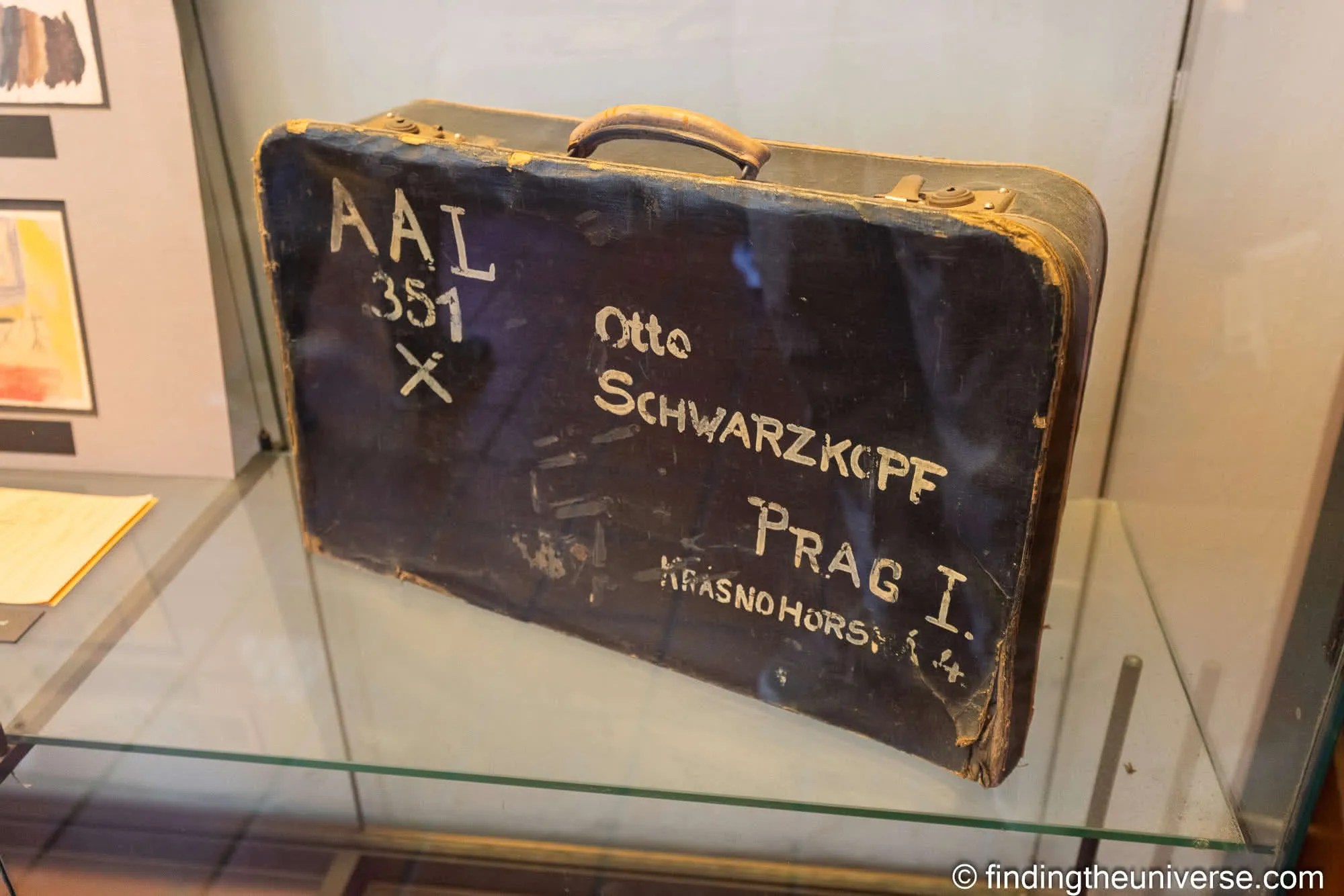
The memorial will post a reopening date on its own site, so start at the Magdeburg Barracks and ask.
The Small Fortress is open daily, 9am to 5pm from April to October and 9am to 4pm from November to March. The crematorium and columbarium are closed on Saturdays. Everything shuts on 24 to 26 December and 1 January.
Allow a full day. The Small Fortress alone takes a couple of hours, the ghetto sites are spread across the town, and this isn’t a place to rush. Many people prefer to visit Terezín with a guide, for the context as much as the logistics, and I’d book this guided Terezín tour from Prague. It’s open all year, so it’s also a sound winter choice.
3. Karlštejn Castle (and the Koněprusy Caves)
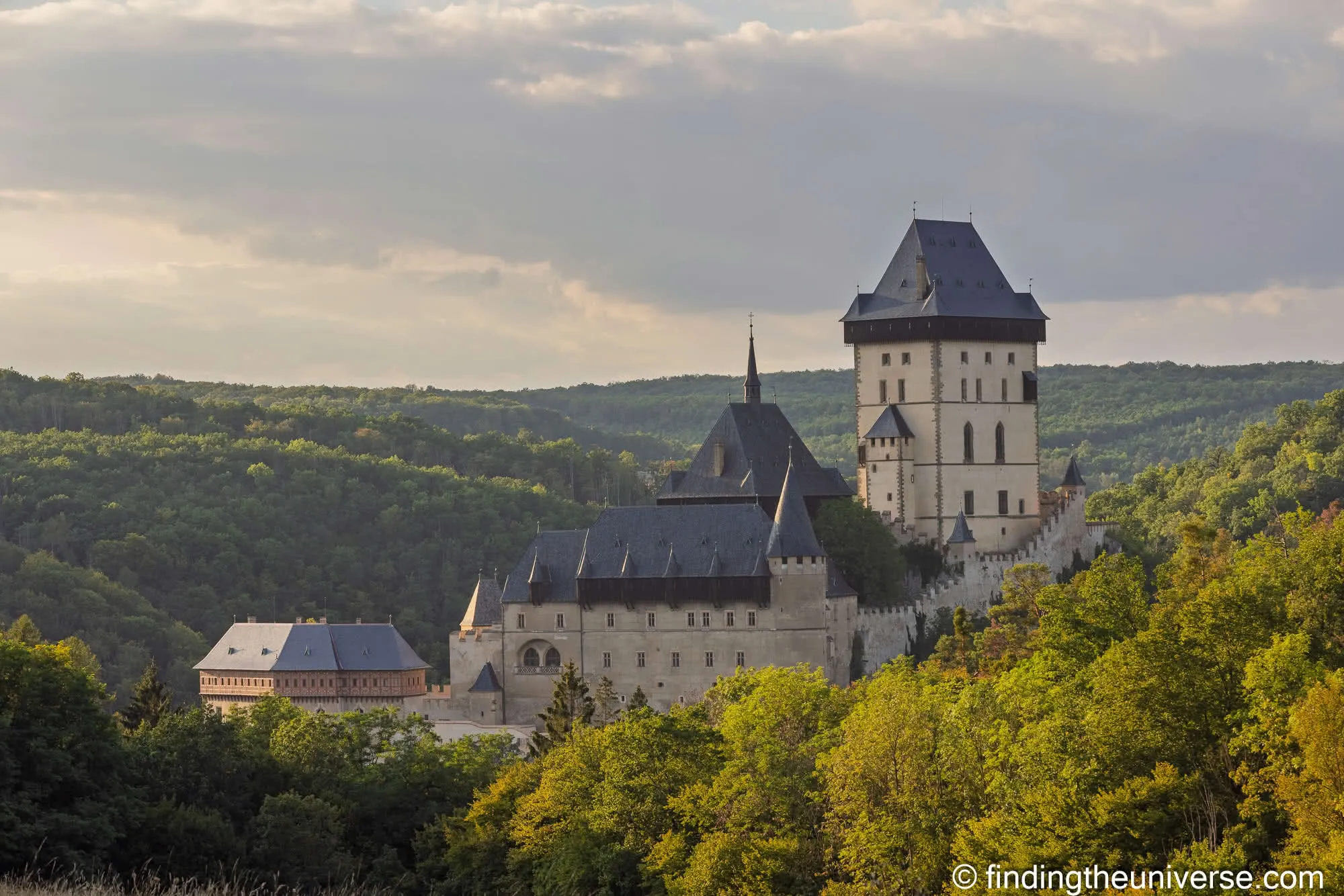
Karlštejn is the castle on the postcards: a 14th-century Gothic pile built by Charles IV to hold the imperial crown jewels, sitting on a wooded crag above a village of souvenir shops about 40 minutes from Prague. It’s one of the most visited castles in the country, which tells you two things. The setting is as good as the photos suggest, and you won’t have it to yourself.
We came here at the end of our castle day, in the late afternoon when the day-trippers were heading back to the station, and walked up through the village and around the walls. I also walked up to a viewpoint to see the castle from a different angle.
Getting to Karlštejn from Prague
This is the easiest day trip on the list by train. The S7 suburban line runs from Praha hl.n. and Praha-Smíchov to Karlštejn station, 35 to 45 minutes depending on where you board, with two trains an hour. A ČD ticket from Smíchov was 76 CZK when we checked; Karlštejn is in PID zone 3, so a PID ticket covering Prague and zones 1 to 3 from the Lítačka app is the alternative, and the one most locals use.
From the station it’s a walk through the village and up the hill to the castle gate, which is pretty steep in places.
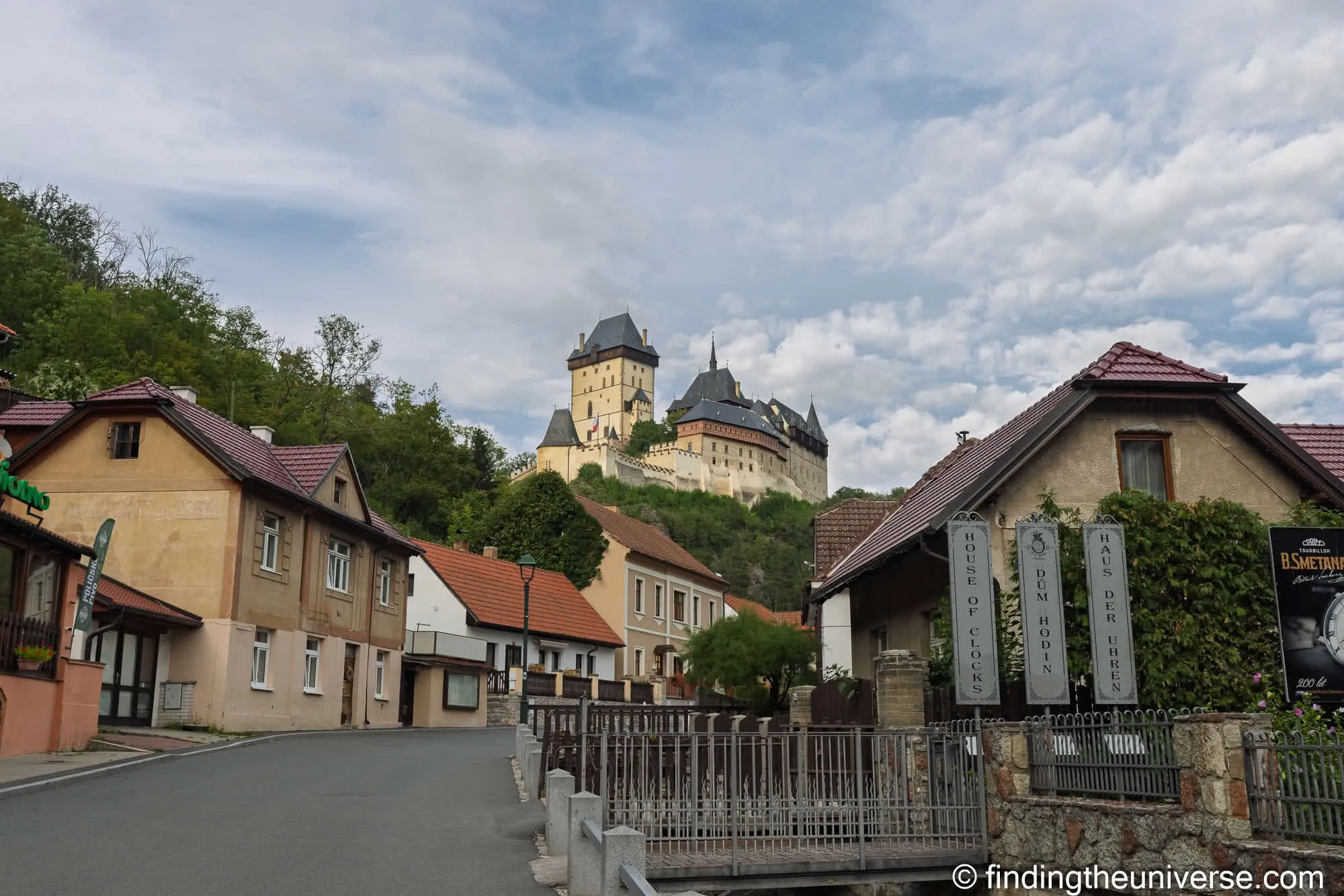
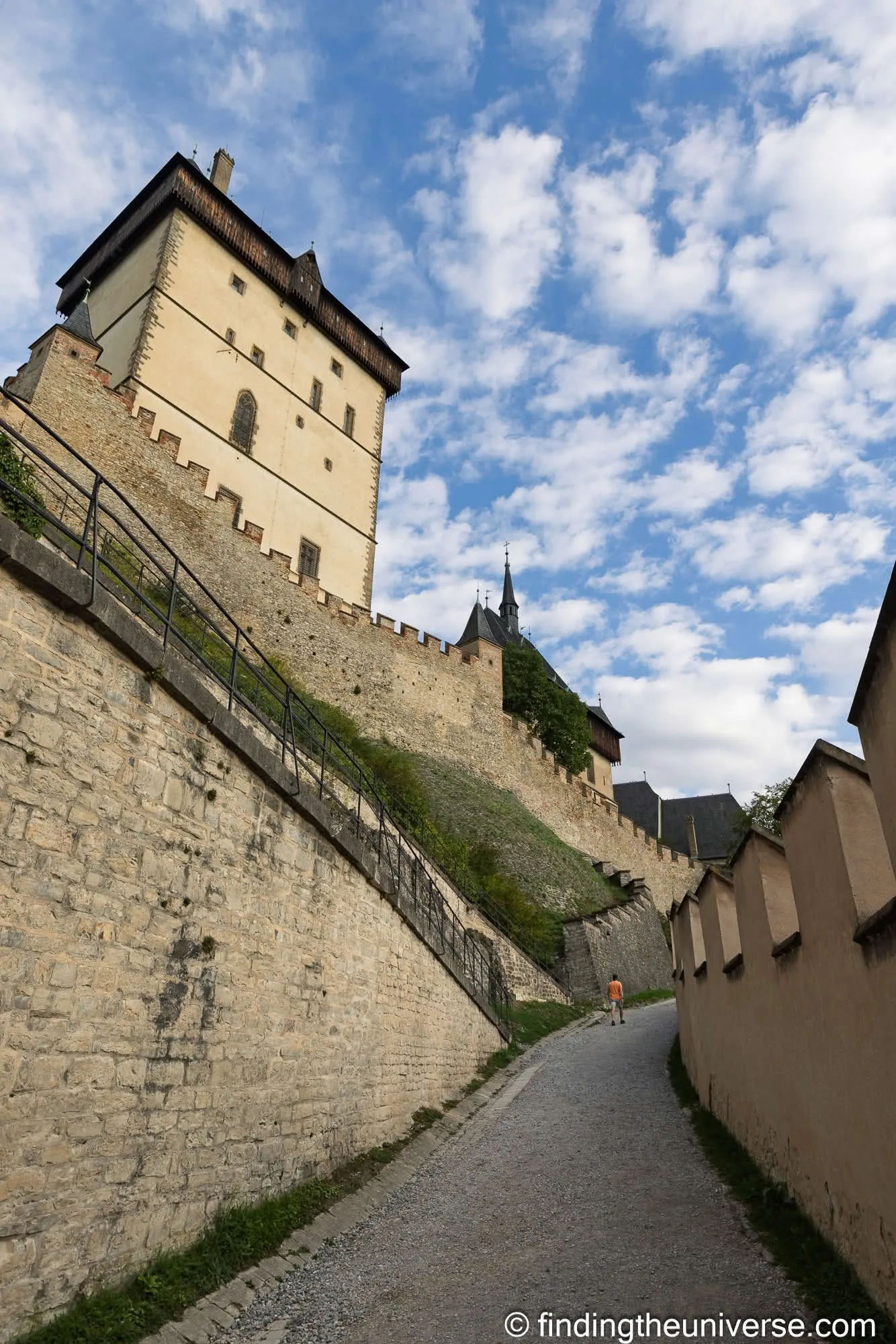
By car it’s around 40 minutes from the centre and there’s a paid car park in the village below the castle, which is where we left ours. The e-vignette is covered in the driving section below.
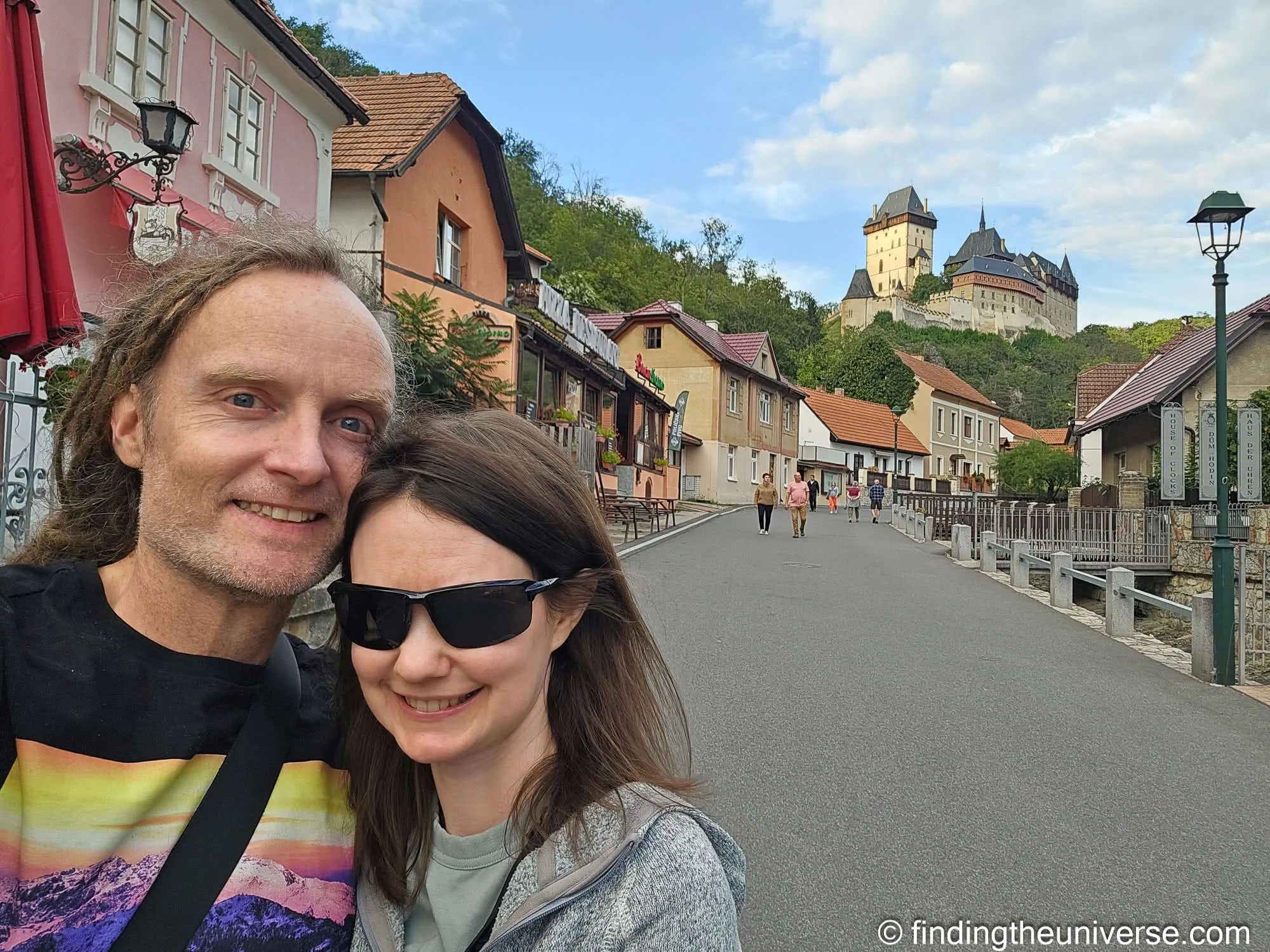
Visiting Karlštejn Castle
Every visit is a guided tour, and there are three. The basic tour, the Imperial Residence of Charles IV, costs 300 CZK for adults, 240 CZK for seniors over 65 and 18 to 24 year olds, and 90 CZK for children aged 6 to 17, with an audioguide for 120 CZK plus a 500 CZK deposit.
The one people travel for is the Chapels tour, which includes the Chapel of the Holy Cross with its wall of panel paintings, and costs 640 CZK (510 and 190 CZK reduced). It needs a reservation, and in summer it sells out well ahead, so book on the castle’s booking page before you leave home.
There’s also a 180-minute whole-castle tour at a flat 1,800 CZK, which is a lot of castle.
The Chapels tour is closed from 1 November to 30 April. The basic tour runs through the winter on a reduced schedule: Friday to Sunday from November to 20 December, closed 21 to 25 December, then daily from 26 to 31 December. Check the opening-hours page for the new year before you plan a January visit.
Allow a half day for Karlštejn on its own, which is why it pairs so well with something else.
If you have a car, the Koněprusy Caves, the longest cave system in Bohemia, are a short drive away towards Beroun. The guided tour is 50 to 60 minutes over 620 metres and 483 steps, at a steady 9 to 10°C, so bring a layer! Photography without flash is allowed, dogs aren’t.
The caves open daily from April to October (8.30am to 4pm, or 5pm in July and August, and 9am to 3pm in October), run on fixed entry times in February, March and November, and close in January. There’s a paid car park about 400 metres from the ticket office. Check current prices on their site.
If you want someone else to handle the trains and the tickets, this guided Karlštejn Castle tour from Prague includes the castle entry, which gets around the sell-out problem.
4. Plzeň and the Pilsner Urquell Brewery
Plzeň (Pilsen, if you’re reading the German or the beer label) is the fourth-largest city in the country and the reason half the world’s beer is called pilsner. The brewery claims the world’s first golden lager was brewed here in 1842, and whatever you think of the “first”, the 1842 part is solid and the beer is very good. This is a day trip for beer people, and for anyone who wants a real working Czech city rather than a preserved one.
Getting to Plzeň from Prague
Direct intercity trains run hourly from Praha hl.n. to Plzeň hl.n., taking an hour and 25 minutes, 169 to 179 CZK. There’s also a regional train from Praha-Smíchov for 155 CZK that takes about the same time, so there’s no reason not to take whichever leaves first. By car it’s roughly an hour down the D5 motorway, which continues on to Nuremberg, so Plzeň also works as a stop if you’re driving west out of the country.
What to Do in Plzeň
The Pilsner Urquell brewery tour is why most people come. It costs 430 CZK, runs in Czech, English and German, and should be booked online. The tour ends with unfiltered, unpasteurised Pilsner drawn from an oak barrel in the cellars, which is a version of the beer you can’t get anywhere else and is the bit everyone remembers. The brewery is a short walk from the station, on the far side of the river from the old town.
With the rest of the day, the old town has a big main square with the Cathedral of St Bartholomew in the middle (the tower is the tallest church spire in the country, and you can climb it), the Brewery Museum in a medieval malt house, and a network of medieval cellars under the centre that you can tour. The Great Synagogue, one of the largest in Europe, is a short walk from the square.
There’s no castle season to worry about here, so Plzeň works year-round, and it’s the easy choice if you’re visiting in January and want a day out of Prague that isn’t dependent on anything being open. If you’d prefer a tour, several Prague operators run brewery-and-city days, but with an hourly train and a brewery that sells its own tour tickets, I’d just go.
5. Český Krumlov: Day Trip or Stay Overnight?
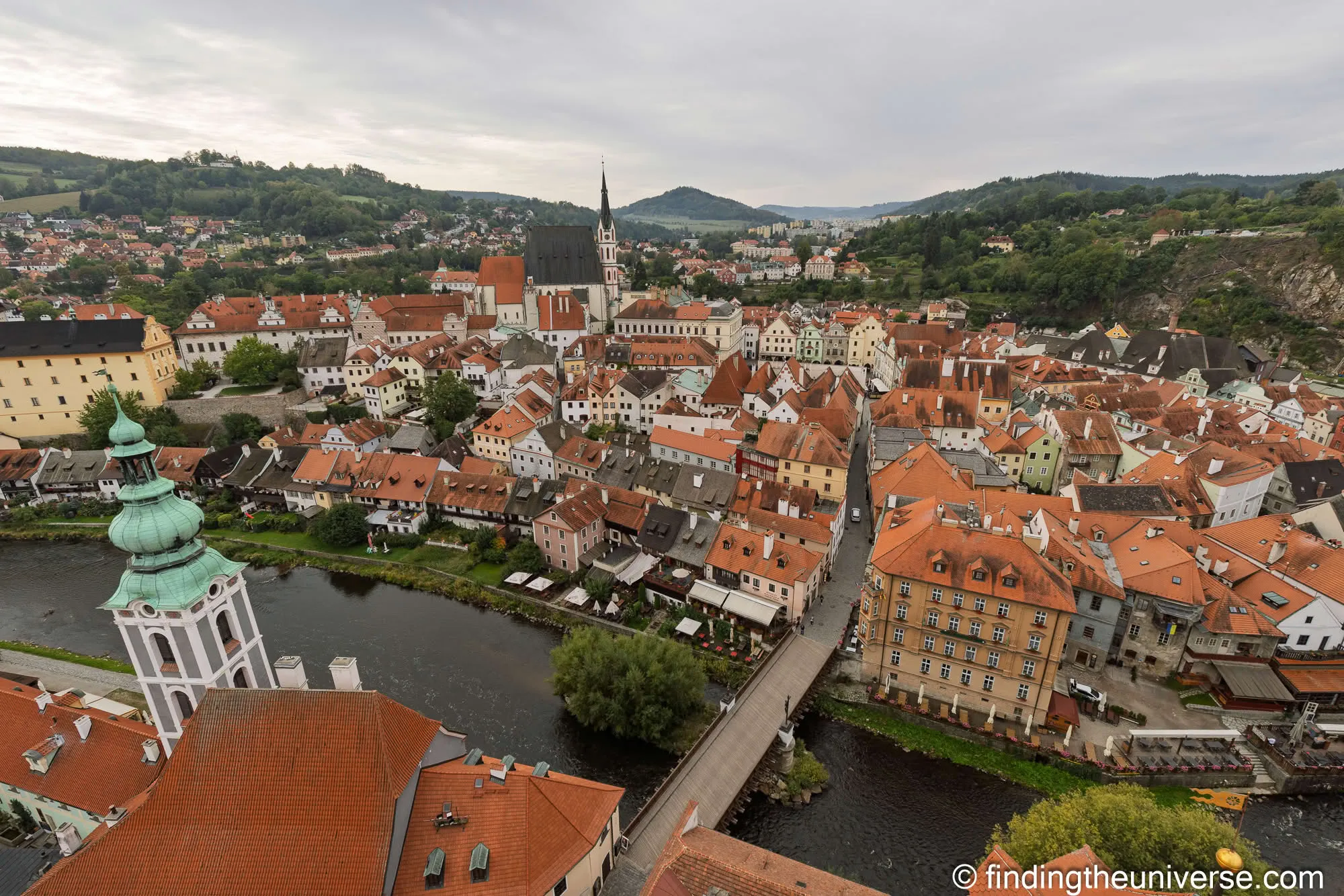
Český Krumlov is the most beautiful small town in the Czech Republic, a Renaissance and Baroque huddle of red roofs inside a double bend of the Vltava, with a castle on the rock above that is the second largest in the country after Prague’s. It’s been a UNESCO World Heritage Site since 1992 and every day-trip list from Prague has it at or near the top.
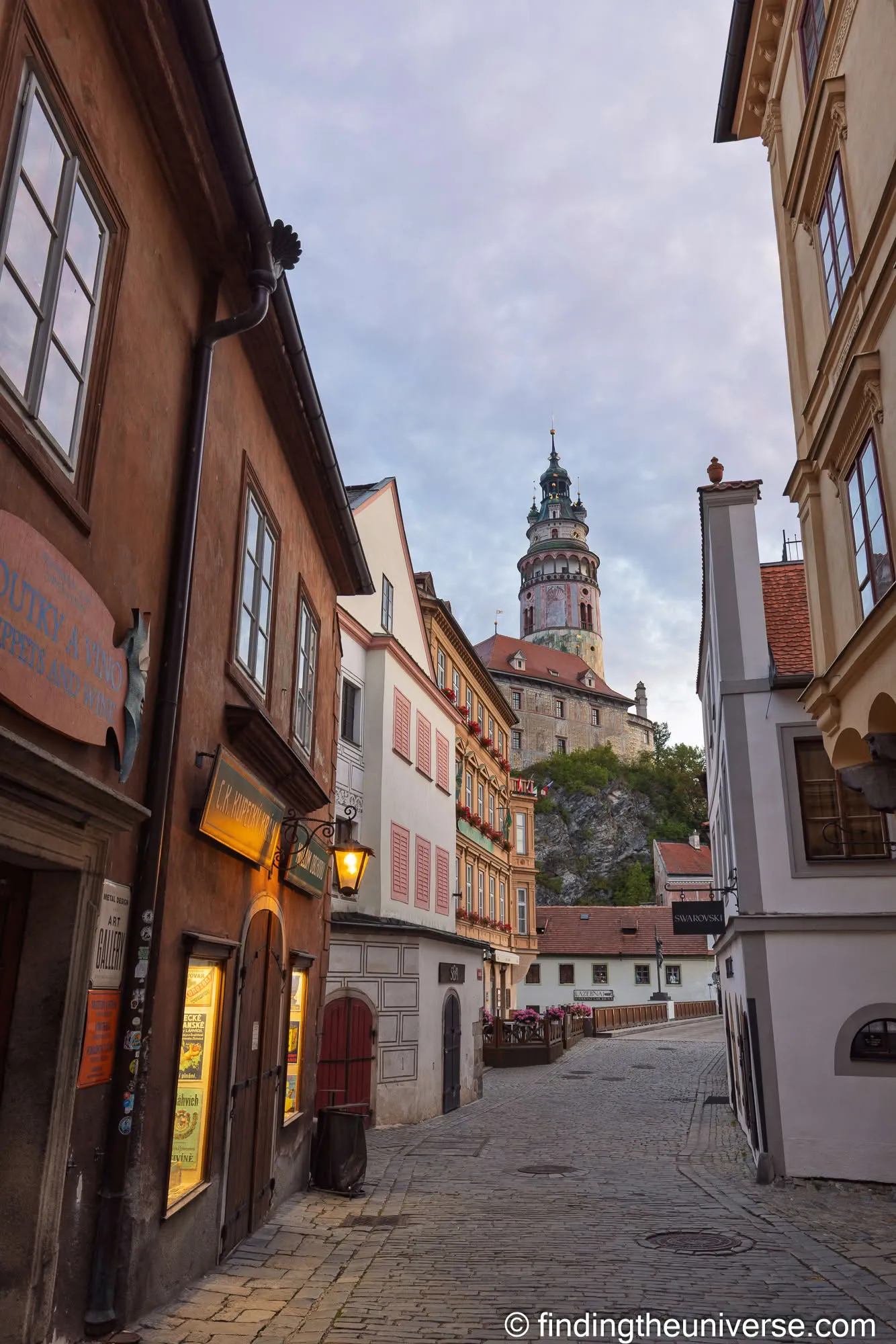
My problem with that is the travel time. It’s nearly three hours from Prague each way, so a day trip gives you four or five hours in a town whose lanes fill with coach parties between about 11am and 3pm. We stayed two nights, at Hotel Konvice on Horní street a few steps from the main square, and the town we saw at 8am and at 9pm, with the lanes much quieter, was a different place from the one at lunchtime. If you can possibly make Český Krumlov an overnight stop, do that.
Getting to Český Krumlov from Prague
The bus is the standard answer. RegioJet runs from Praha, Na Knížecí (by Anděl metro) to the Český Krumlov bus station in about two hours 40 minutes, and the fare when we checked was 279 CZK, though it moves with demand, so call it 250 to 300 CZK and book a few days ahead. FlixBus runs from Florenc in about three hours 10 minutes and was pricier on the day we looked.
The train is a better option than it first looks. Some IC “Jižní expres” services run straight through from Praha hl.n. to Český Krumlov with no change, in about two and a half hours for 239 CZK.
The others require a change at České Budějovice onto a local operator, which makes the ticket more expensive because you’re paying two companies, so look for the direct ones on IDOS.
The station sits above the old town, so it’s a downhill walk in and an uphill one back. By car it’s a long drive from Prague, roughly two hours 45 minutes each way, which is another reason to stay the night.
What to See in Český Krumlov
The castle is sold as separate tours and tickets rather than one entry. Tour Route I (the Renaissance and Baroque interiors) is 300 CZK for adults, 240 CZK for seniors and students, 90 CZK for children. Tour Route II is 260 CZK.
The Baroque Castle Theatre, one of only a handful of surviving Baroque theatres in the world with its machinery intact, is 400 CZK and needs a reservation.
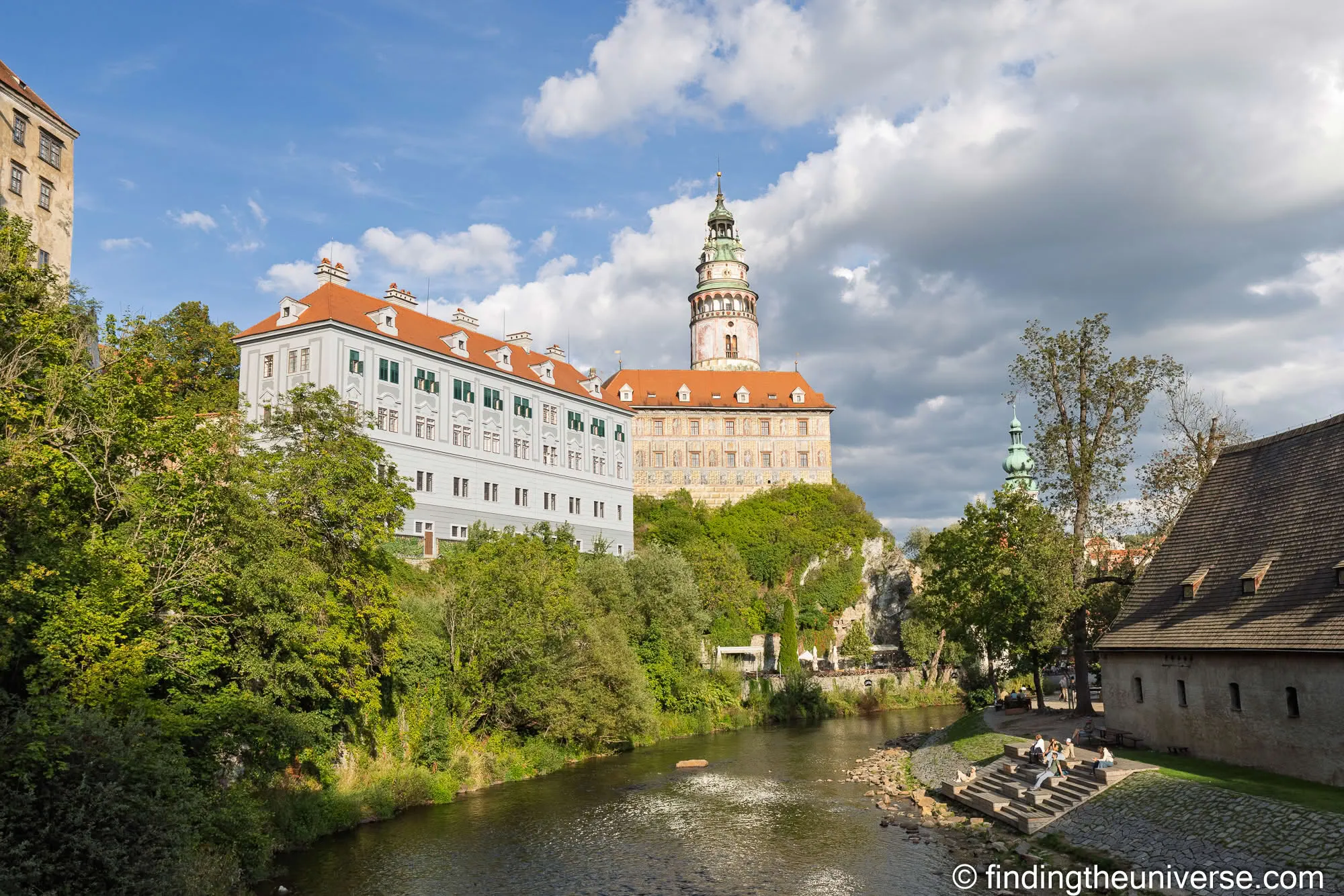
The Castle Museum and the Castle Tower together are a self-guided 280 CZK, and don’t skip the tower, because the view down over the roofs and the river is the view of the town. The castle garden is free and makes a good end to the afternoon.
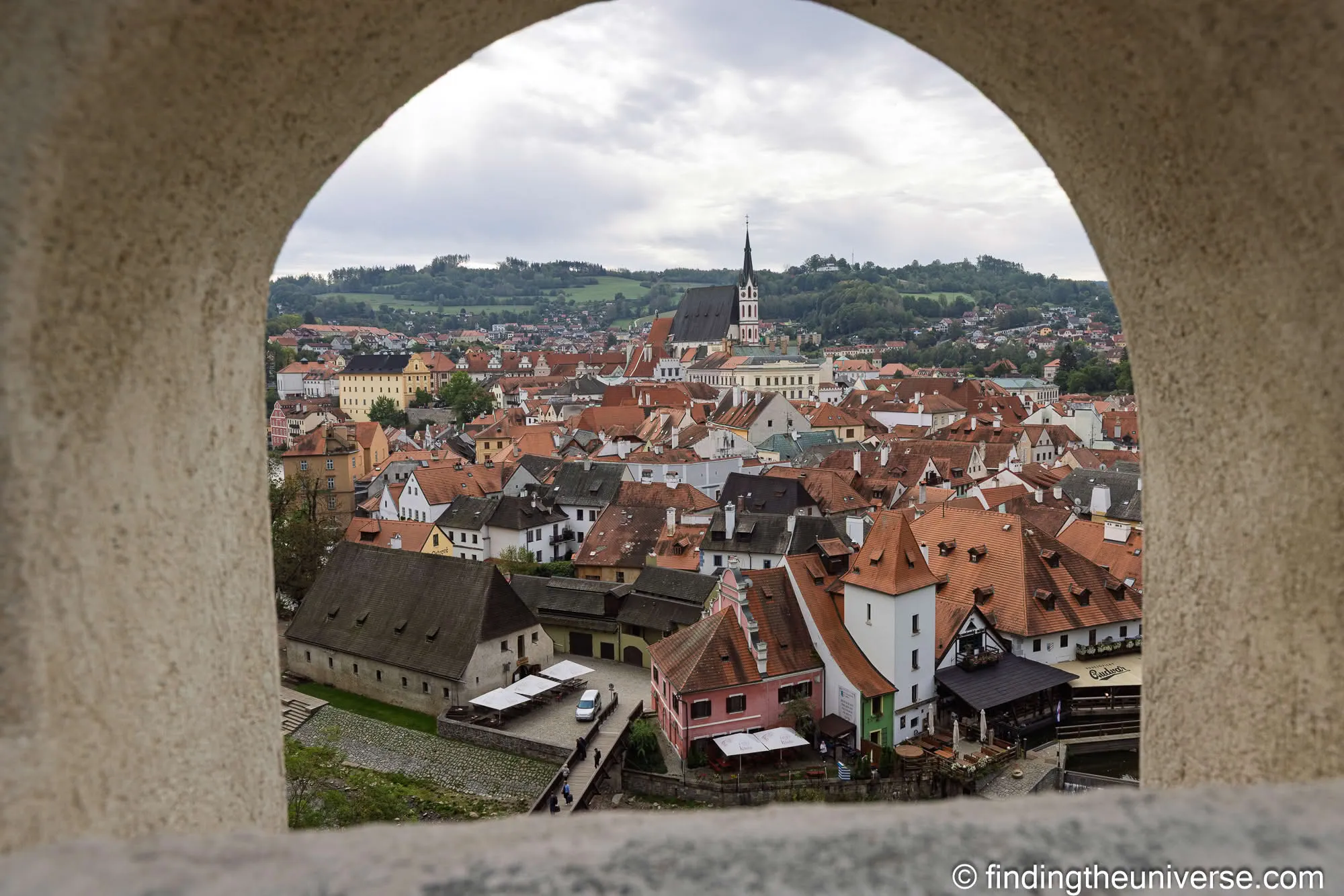
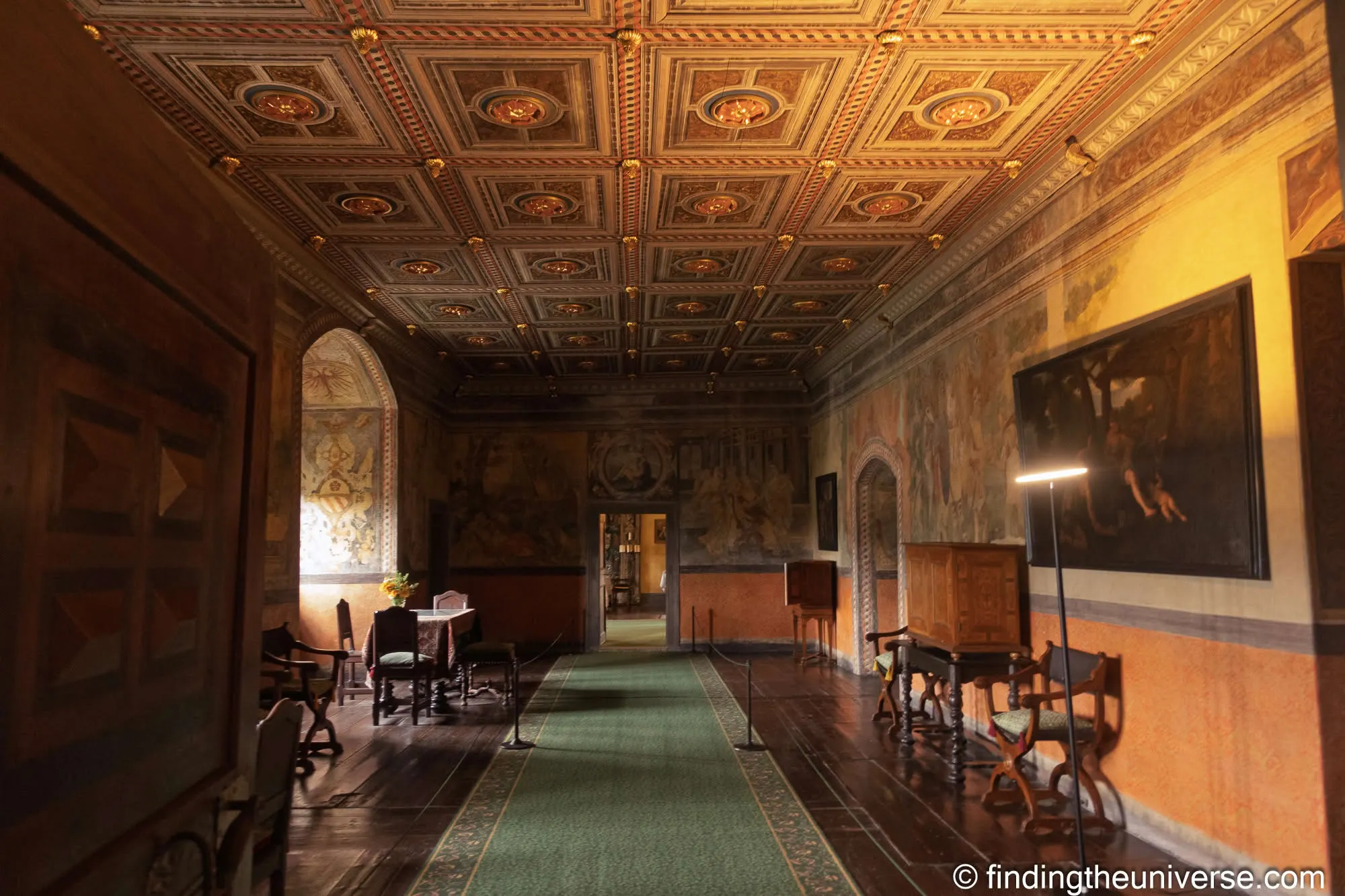
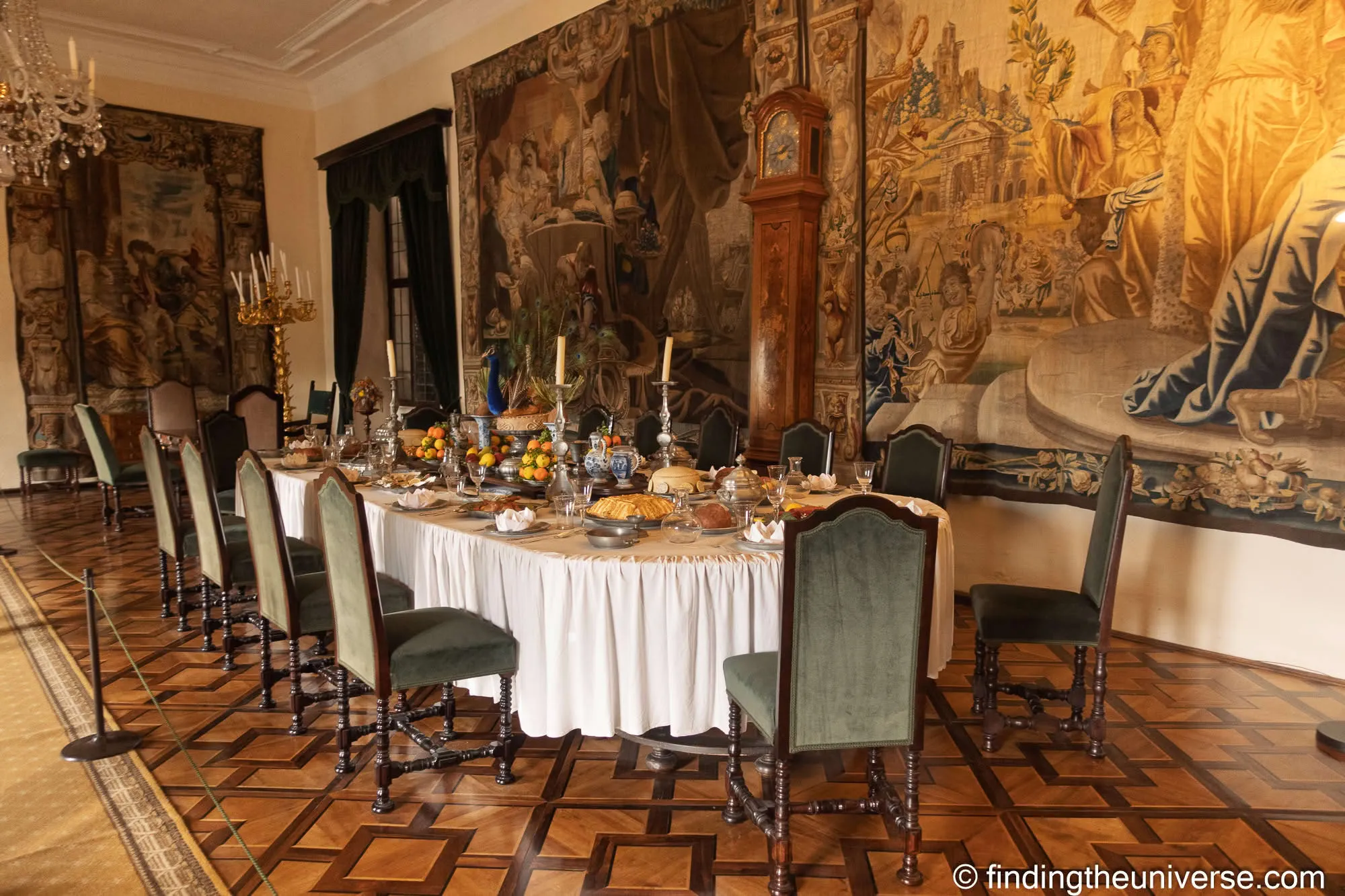
We did the interiors and the tower. The interiors are rich without being enormous, and the Masquerade Hall, painted floor to ceiling with trompe-l’oeil carnival figures, is the highlight of Route I.
Beyond the castle, the pleasure of Český Krumlov is the town itself: walking the lanes, crossing and recrossing the river, eating on a terrace over the water. If you’re sporty, renting a raft or canoe and floating the Vltava loop around the town is a very Czech thing to do in summer!
If you must do it as a day trip, go midweek, catch the first bus, and head for the castle tower before the coaches arrive at eleven. This full-day Český Krumlov trip from Prague handles the transport and includes lunch, which for a three-hour-each-way trip is worth having sorted.
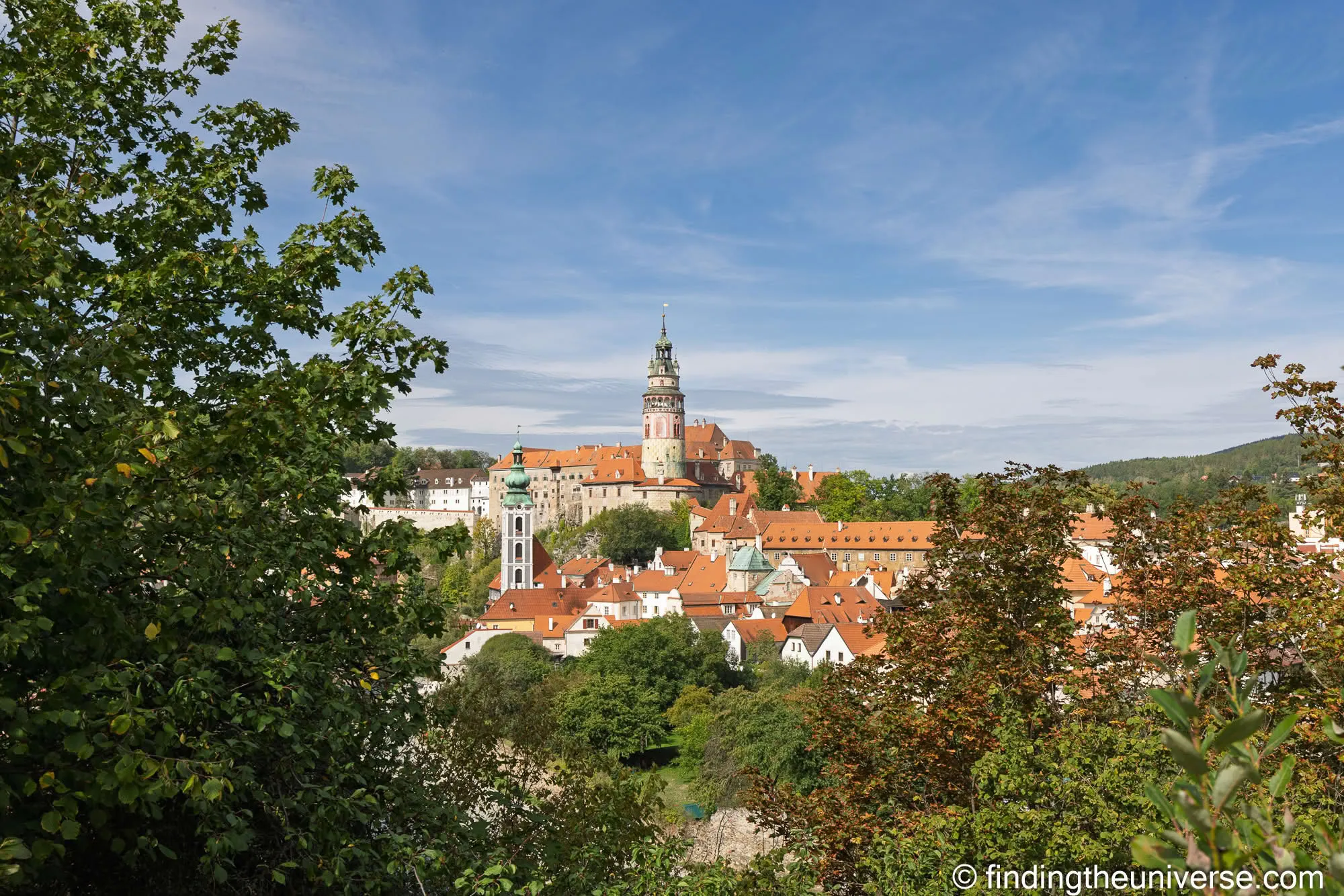
For an overnight, Český Krumlov has plenty of hotels inside the old town, and I’d stay inside it rather than across the river, because the point is to be on the streets when everyone else has gone. České Budějovice, the regional capital and home of Budvar, the Czech Budweiser, is half an hour away and an easy add-on if you’re spending two nights.
In winter the castle interiors close at the end of October, and the Castle Museum and Tower keep going Tuesday to Sunday until 20 December. Check the castle’s hours page for the new year. The town itself is lovely in the cold with nobody around, so a winter overnight still works; a winter day trip gives you a tower, a walk and a lot of time on a bus.
6. Karlovy Vary and Loket
Karlovy Vary (Carlsbad) is the grand spa town of the Austro-Hungarian empire, a valley of colonnades, pastel hotels and hot springs that you drink from porcelain cups with a spout. It’s a two-hour bus ride west of Prague and the furthest of the classic day trips, which is why so many people combine it with Loket, a small town with a castle on a rock in a bend of the Ohře, 15 minutes further on by road.
Getting to Karlovy Vary from Prague
Take the bus. FlixBus runs from Praha, ÚAN Florenc (with some departures from Hradčanská) to the Karlovy Vary terminal in about two hours, and the fare on the day we checked was 158 CZK. RegioJet also runs the route on some days, so check both. The direct train, the R15, takes three and a half hours for 229 CZK, which is the scenic option if you’re not in a hurry, but it’s not the sensible one for a day trip.
Karlovy Vary to Loket is a local train with one change, about half an hour, 49 CZK, roughly hourly, which makes the pairing easy without a car. By car Karlovy Vary is roughly an hour and 45 minutes from Prague on the D6, and Loket is a short detour on the way back.
What to Do in Karlovy Vary
The spa quarter runs along the river from the Hot Spring Colonnade, where the Vřídlo geyser shoots up to the ceiling, past the long neo-Renaissance Mill Colonnade and the painted wooden Market Colonnade. The thing to do is buy a spa cup, fill it at each spring and compare the temperatures and the mineral taste, which ranges from mildly fizzy to something closer to warm iron filings.
The Diana funicular gets you up to the viewing tower above the town, and if you’d like to try the spa for real, some of the spa hotels, the Thermal among them, sell day entries to their pools.
Loket is the counterpoint: a quiet medieval town inside a river loop, a Gothic castle you can walk around in an hour, and a good lunch stop. To have both arranged, this Karlovy Vary and Loket excursion from Prague does the pair in a day with the castle visit optional.
Karlovy Vary is a town rather than a castle, so it works year-round, and the colonnades are pretty nice in the cold with steam coming off the springs. Allow a full day because of the travel time.
7. Konopiště Castle
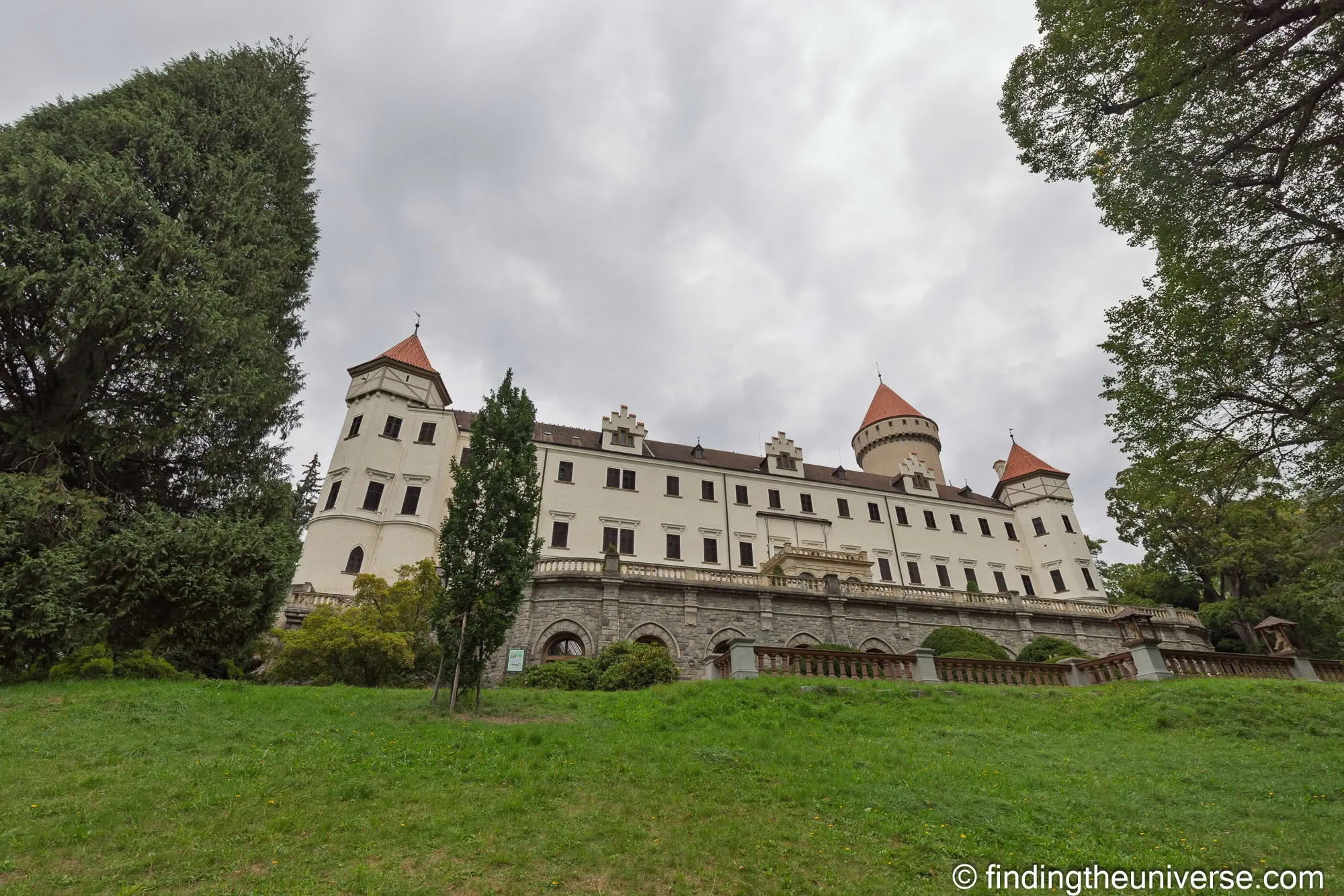
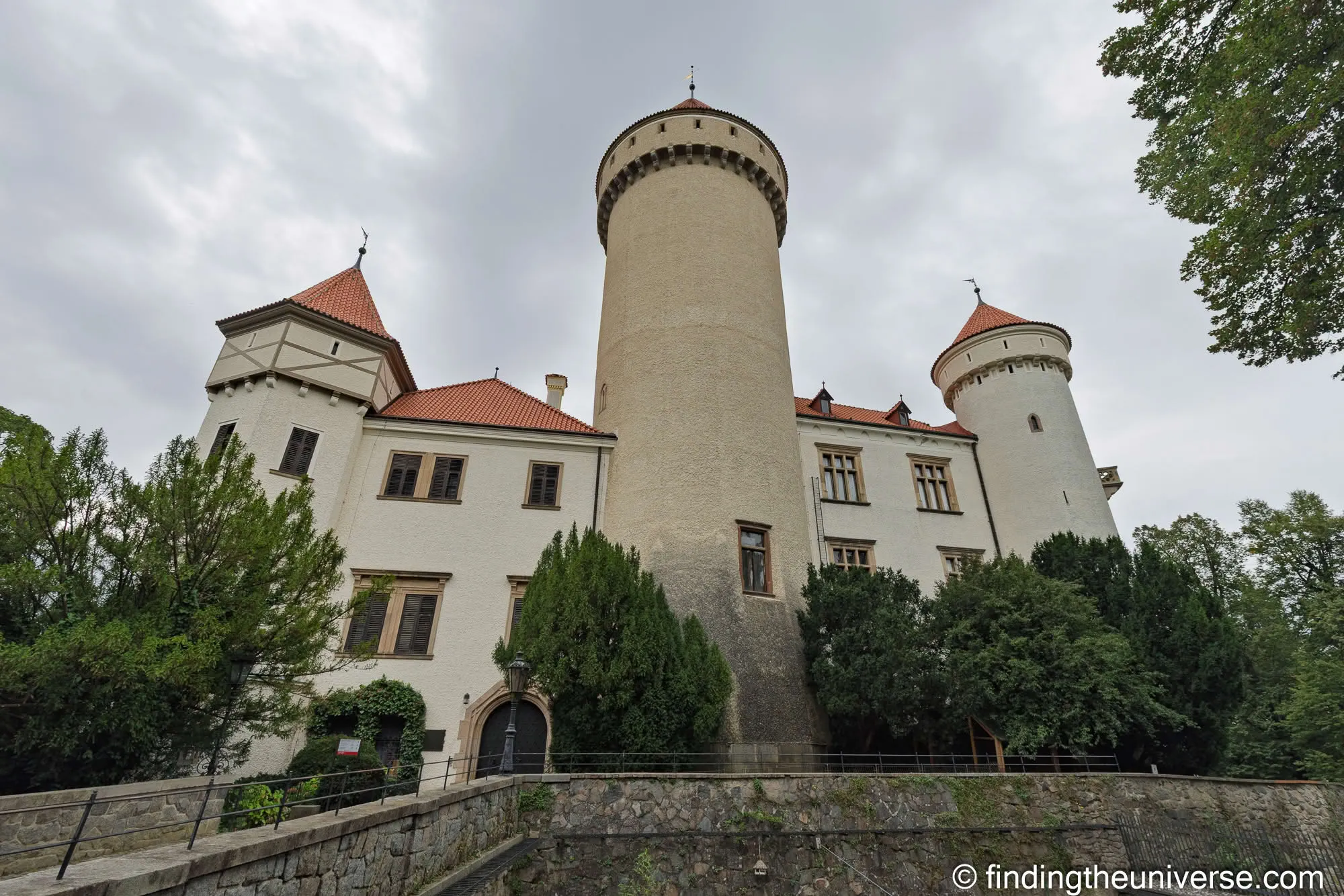
Konopiště is the castle most visitors to Prague never hear about, and if you’ve already seen a famous castle and want a quieter option, go here. It was the country home of Archduke Franz Ferdinand, whose assassination in Sarajevo in 1914 started the First World War, and he spent the last years of his life turning a medieval fortress into a comfortable hunting lodge stuffed with trophies and armour. It sits in a big landscaped park above a lake, about 50 kilometres south-east of Prague near the town of Benešov.
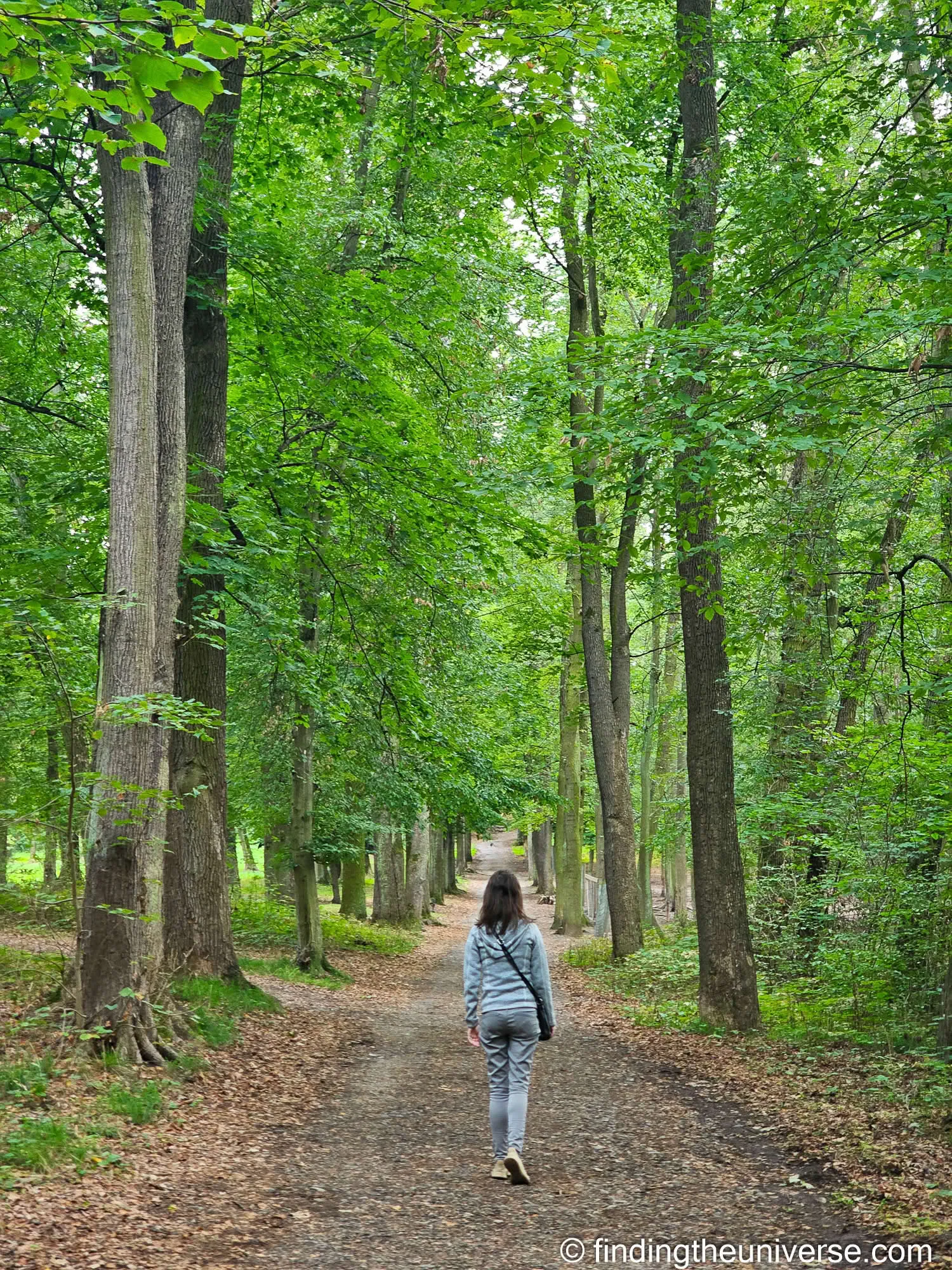
We stopped here between Kutná Hora and Karlštejn on our castle day, and walked the grounds, the courtyard and the rose garden, with the castle’s towers coming and going above the trees. It was quiet when we visited in September.
Getting to Konopiště from Prague
Trains from Praha hl.n. to Benešov u Prahy are direct and frequent, several an hour, taking 40 minutes on the fast R17 trains and about an hour on the stopping S9, for 117 CZK. Benešov is in PID zone 5, so a PID zone ticket works too. The castle is a walk or a short local bus ride from the station; check IDOS for the bus, or allow a stroll through town and up through the park. By car it’s roughly 50 minutes from Prague and there’s parking below the castle.
Visiting Konopiště
There are three main guided tours. The first covers the south wing with its salons and guest rooms, the second the north wing and the armoury (one of the largest collections in Europe), each 300 CZK for adults, 240 CZK reduced and 90 CZK for children.
The third tour, the private apartments of Franz Ferdinand and his family, is 460 CZK (370 and 140 CZK reduced) and needs a reservation. Tours run in English, German, French and Russian as well as Czech. Prices and booking are on the castle’s admission page.
The park is free and large, and the rose garden and the lake walk take an hour or two on their own, which is how we spent our visit. You may still read about a bear in the moat, but the last one was moved to Ostrava Zoo at the end of 2024. The shooting-range exhibition in the former stables is still there, and feels very much of its owner.
We had a late lunch at a restaurant by the castle, in a dining room hung with antlers and mounted birds that suits the place rather well. I had roast duck with dumplings and sauerkraut, Jess had venison, and we washed it all down with a cider for Jess and a non-alcoholic Birell for me, since I was driving.
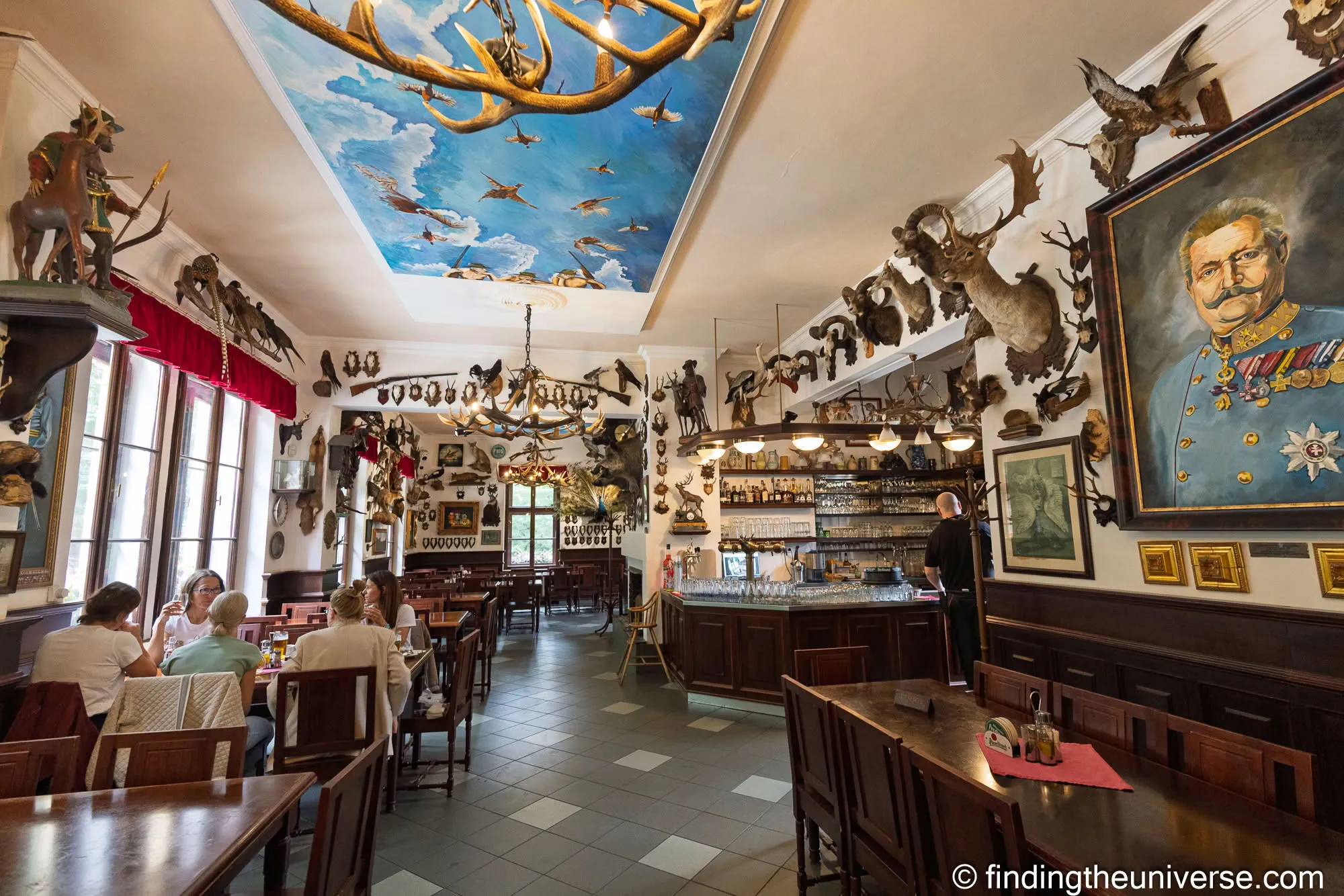
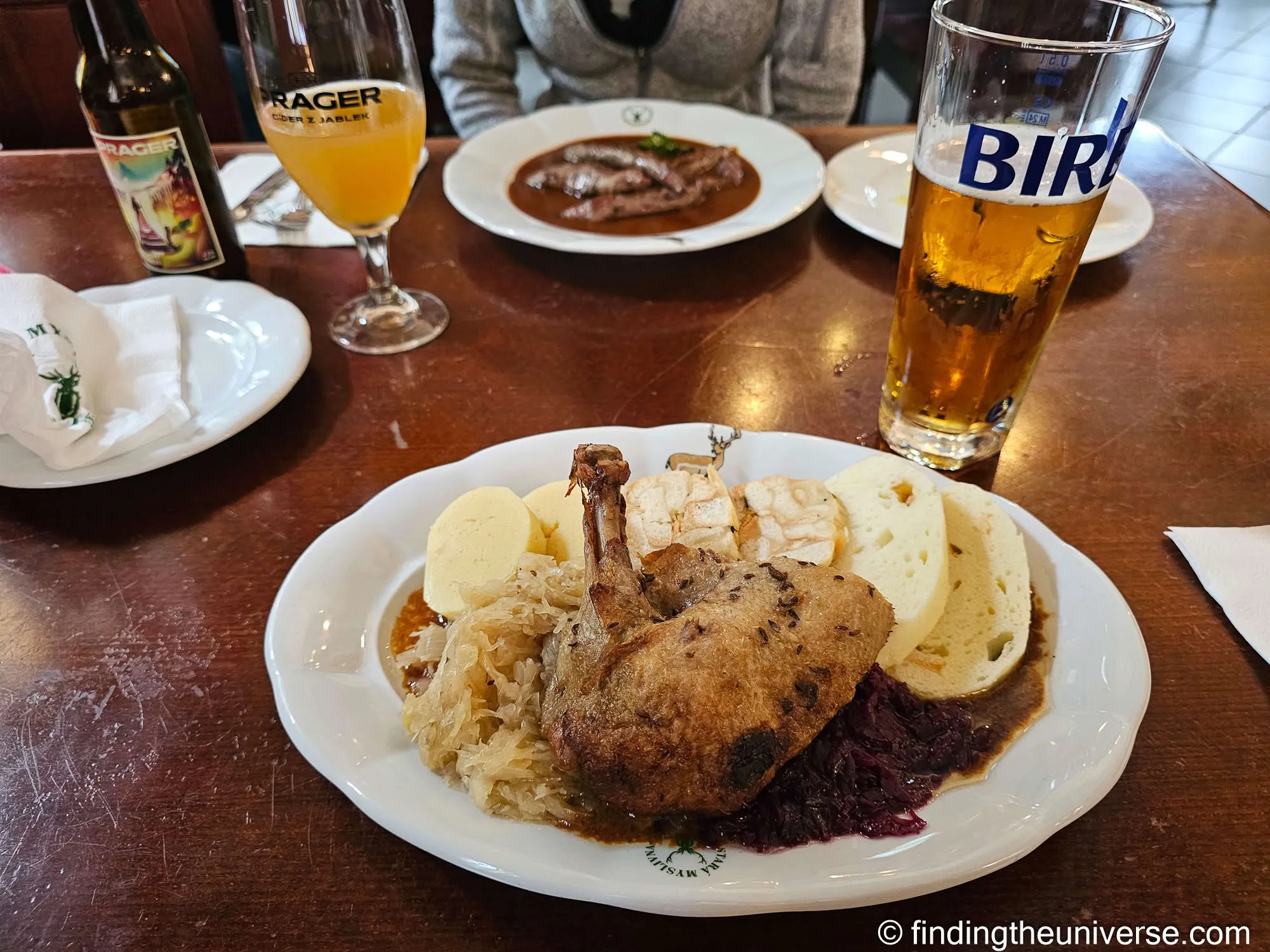
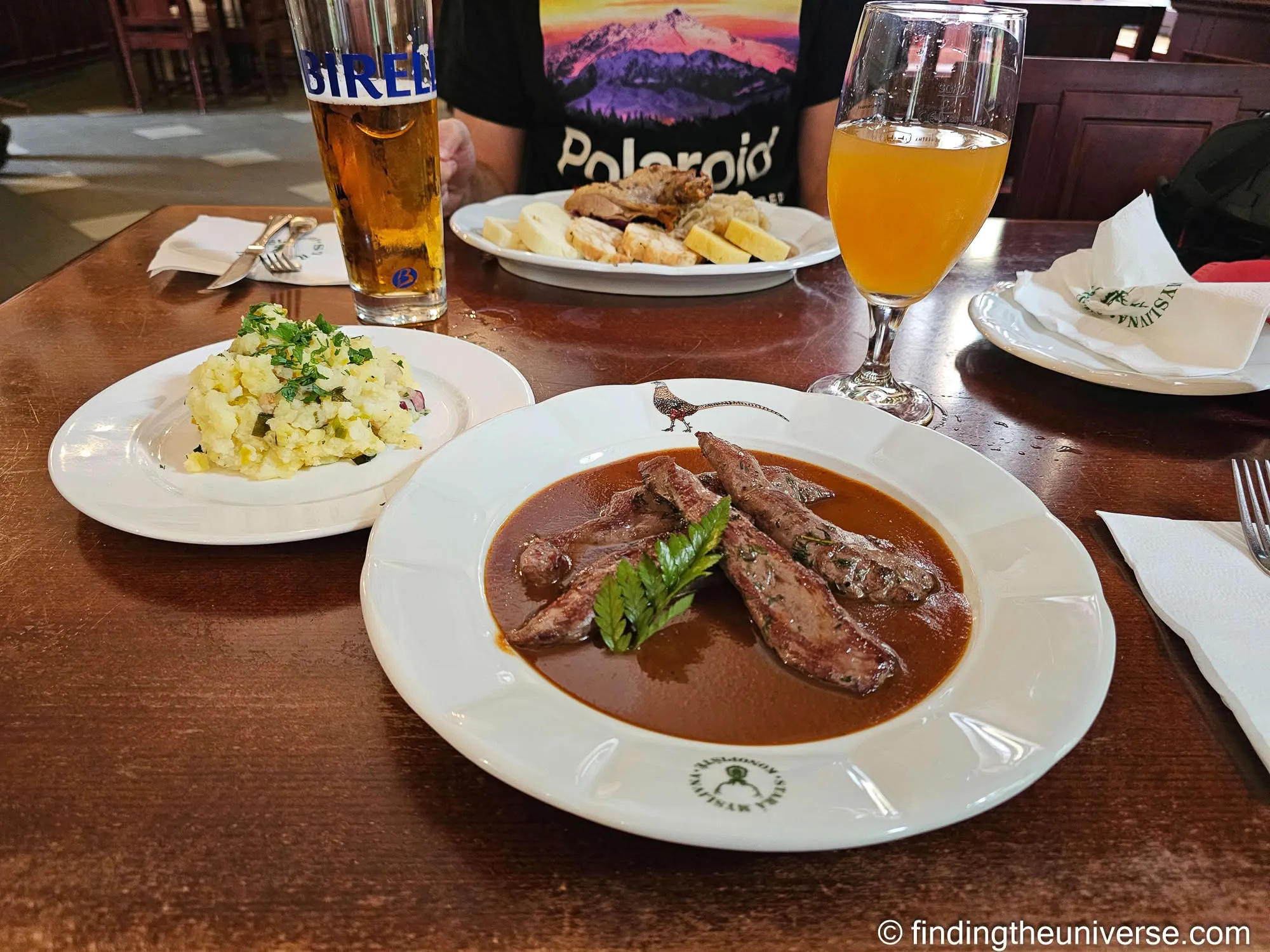
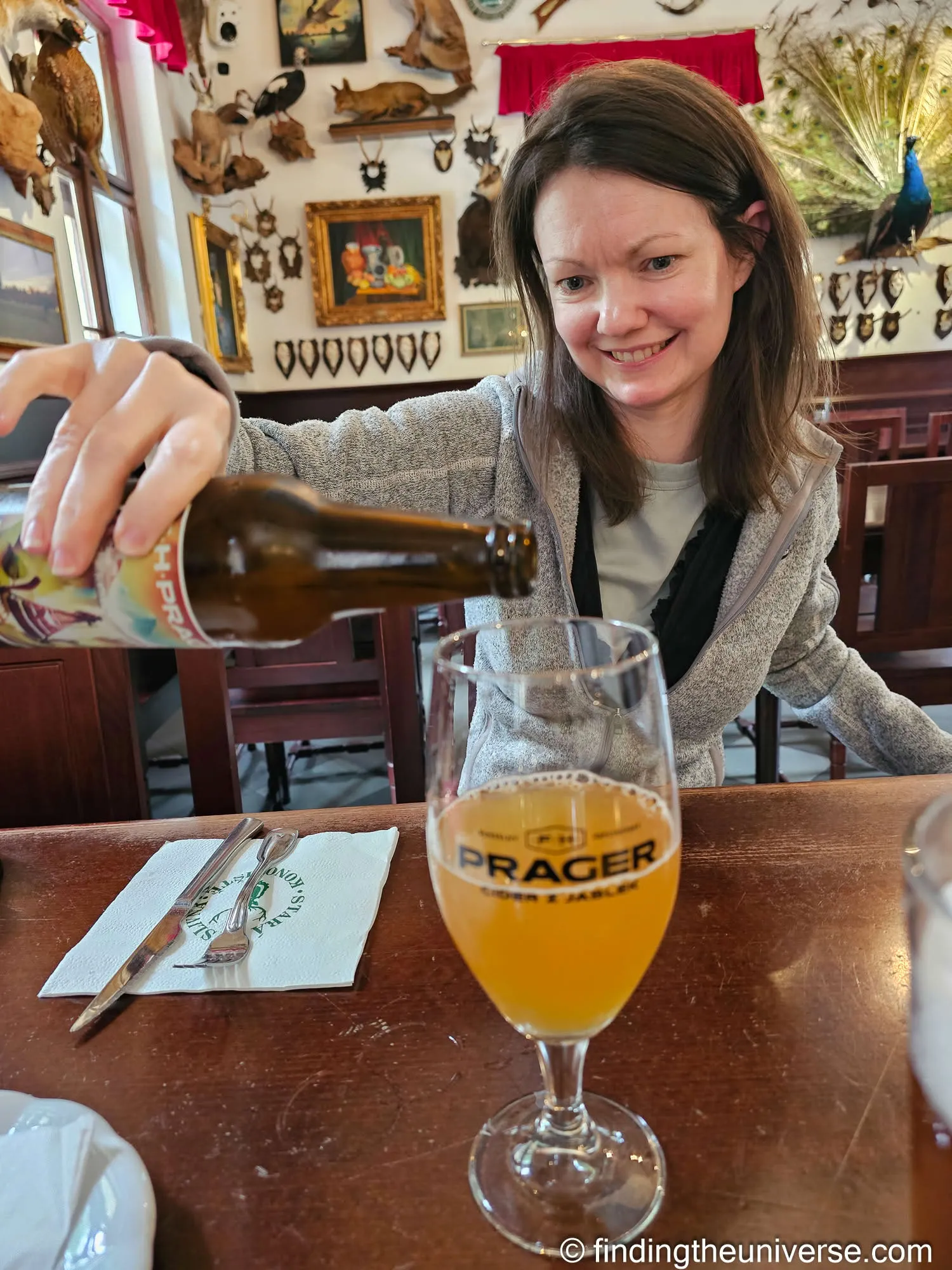
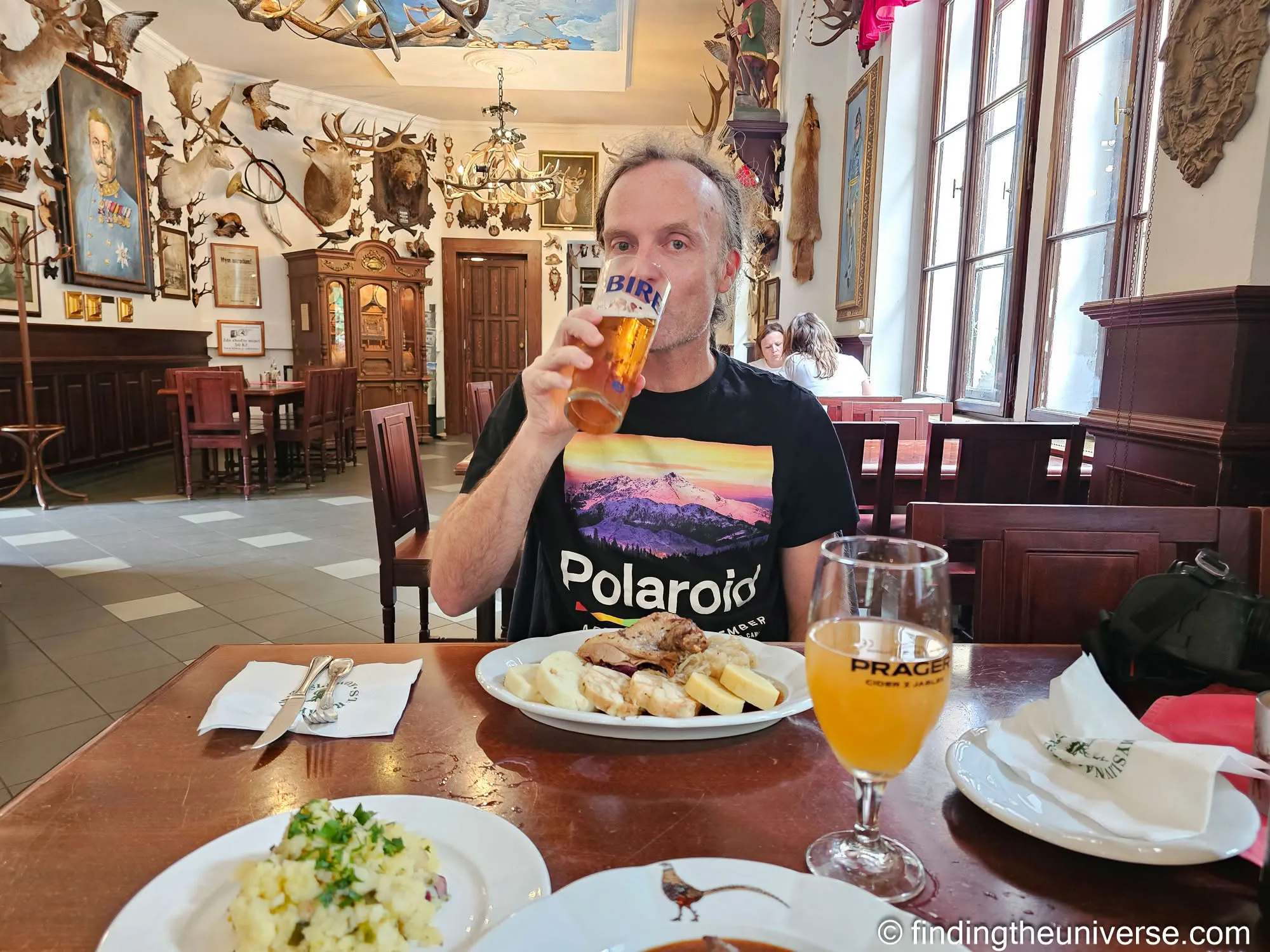
Konopiště’s season is the catch. It runs through October Tuesday to Sunday, and in November only on weekends with the first two tours. English language tours are also a bit of a rarity that you have to plan around. The interiors shut for the winter, as most Czech state castles do, so check the castle’s opening-hours page before planning anything between December and March. The park is open regardless, and a frosty walk around the lake with the castle peeping through the trees is no hardship.
There’s no dedicated Konopiště tour from Prague that I’d recommend; the castle appears as a stop on some combined castle tours, but the train is so easy that this is one to do yourself, or by car as part of the castle day described below.
8. Bohemian Switzerland National Park
Bohemian Switzerland (České Švýcarsko) is the sandstone country on the German border north of Děčín, a landscape of pillars, gorges and rock arches that continues across the frontier as Saxon Switzerland.
The national park was established in 2000 and is the youngest in the country. The headline sight is Pravčická brána, the largest natural rock arch in the region, which the operator describes as the biggest in mainland Europe, with a span of 26.5 metres. The second is the boat ride through the Edmund’s Gorge of the Kamenice river.
Of everything we didn’t fit into this trip, this is the one I most regret, because it’s a photographer’s day out.
Getting to Bohemian Switzerland from Prague
By public transport this takes some assembling. Trains from Praha hl.n. to Děčín hl.n. run roughly hourly: the railjet takes an hour and 27 minutes for 229 CZK, the slower R20 an hour and 45 minutes for 185 CZK.
From Děčín, buses 434 and 438 to Hřensko leave from the Tyršova stop in the town centre, not from the station, so allow for a walk or a city bus between the two, then about 18 minutes to Hřensko, střed for 20 to 23 CZK.
Door to door you’re looking at two and a half hours each way, and the buses aren’t frequent, so check the return times before you set off.
By car it’s roughly an hour and 45 minutes from Prague, with parking at Hřensko and at Mezní Louka. And this is the one destination on the list where I’d point most people at a tour: this Bohemian and Saxon Switzerland day trip from Prague covers both sides of the border, including the Bastei bridge on the German side, in a day, which you can’t do on the buses.
What to Do in Bohemian Switzerland
Pravčická brána is privately run and ticketed: 125 CZK for adults and 50 CZK for children aged 6 to 14, students and seniors over 65. It’s open daily from 10am to 6pm from 28 March to the end of October, and on Fridays and weekends from 10am to 4pm in winter, with limited services. You can’t stand on the arch itself (it was closed to walkers decades ago to preserve it), but the viewing platforms around the Falcon’s Nest chateau next to it give you the classic angles.
Plan your route around the 2022 fire, which burned around 1,000 hectares, roughly an eighth of the park. The red-marked Gabriela trail from Mezní Louka to the arch is still closed, along with several other trails in the quiet zone, so approach Pravčická brána from Hřensko on the red trail, which is the one the operator lists. It’s a bit of a climb, an hour or so. The park’s own closure list is in Czech, but it’s the authoritative one, and the tour operators follow it.
The Edmund’s Gorge boat ride runs from mid-June to 1 November, daily from 10am to 5pm. You go through with a guide in groups of up to 25, leaving every hour, entering and leaving only from Hřensko, and it’s 350 CZK per person paid at the gate by cash or card. There’s no advance booking and it can sell out on a summer weekend, so go early. The separate Wild Gorge boat trip, further upstream and reached from Mezná, sells tickets online.
In winter Pravčická brána is open Friday to Sunday, the boats aren’t running, and the sandstone under snow is a different kind of beautiful. The park allows entry between 6am and 10pm only.
9. Telč (Car Only)
Telč is a small Renaissance town in southern Moravia whose main square is a long triangle of arcaded, gabled houses in pastel colours, every one of them different, ending at a chateau. The historic centre has been a UNESCO site since 1992, and it’s the sort of place where you walk the length of the square, turn round, and walk back because you can’t believe it.
We stopped in Telč on our road trip between Vienna and Český Krumlov, not from Prague, and I’m including it because it’s within reach if you’re driving and we liked it a great deal. It is not a public-transport day trip: the fastest connections from Prague take three hours 20 minutes or more each way with changes, so by bus and train you’d spend seven hours travelling for two in the town.
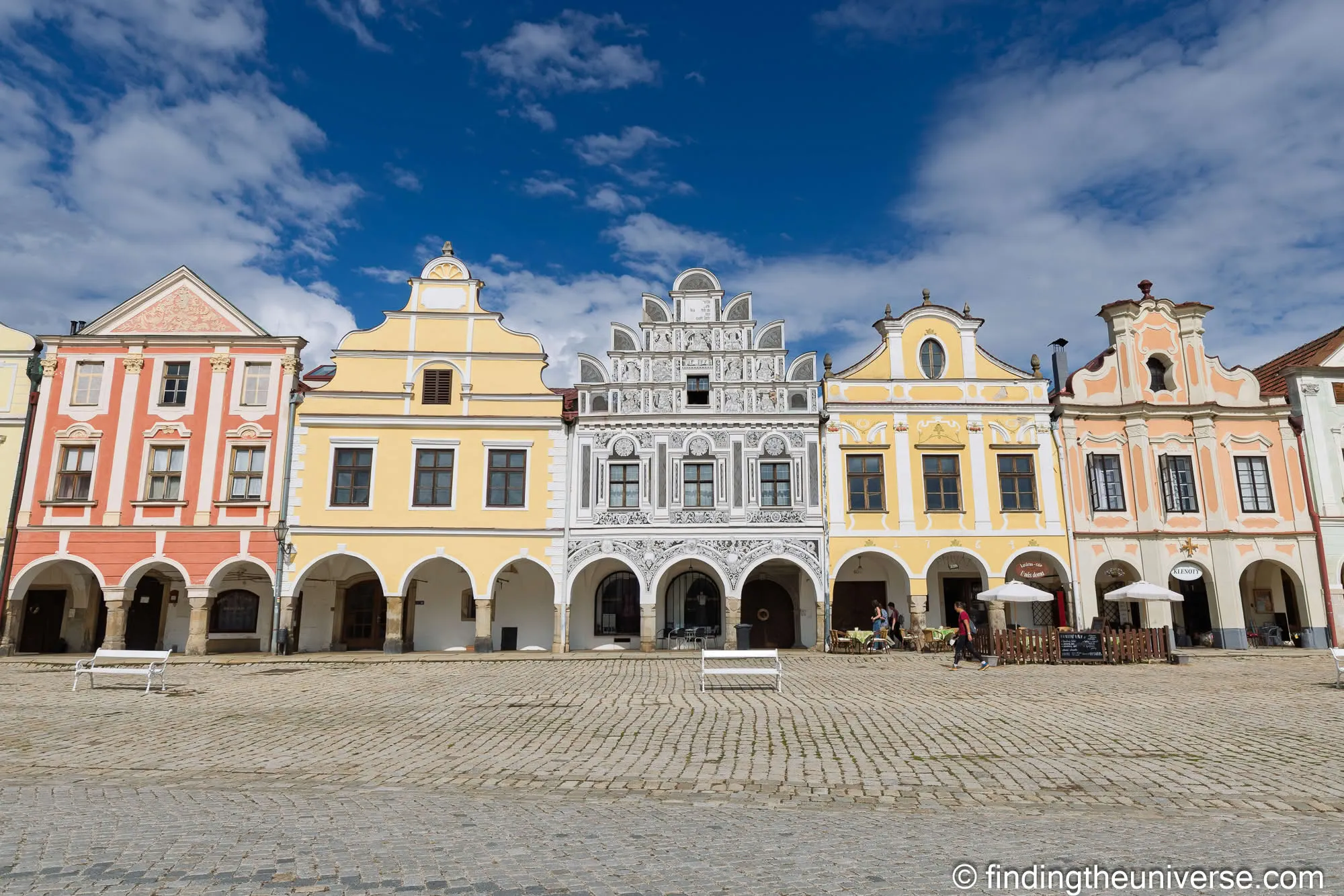
Getting to Telč from Prague
Drive. It’s roughly two and a quarter hours each way via the D1 motorway and Jihlava, which makes for a long day, so leave early and treat it as a full day out. Park on the edge of the old town (paid but not very expensive).
From June to September the square itself is closed to cars, and the rest of the year it doubles as a paid car park, so the edge car parks are the easier option either way. If you’re heading south to Vienna or Český Krumlov by car at the end of your Prague stay, Telč is a far better fit as a stop on that drive than as an out-and-back from Prague, which is exactly how we did it.
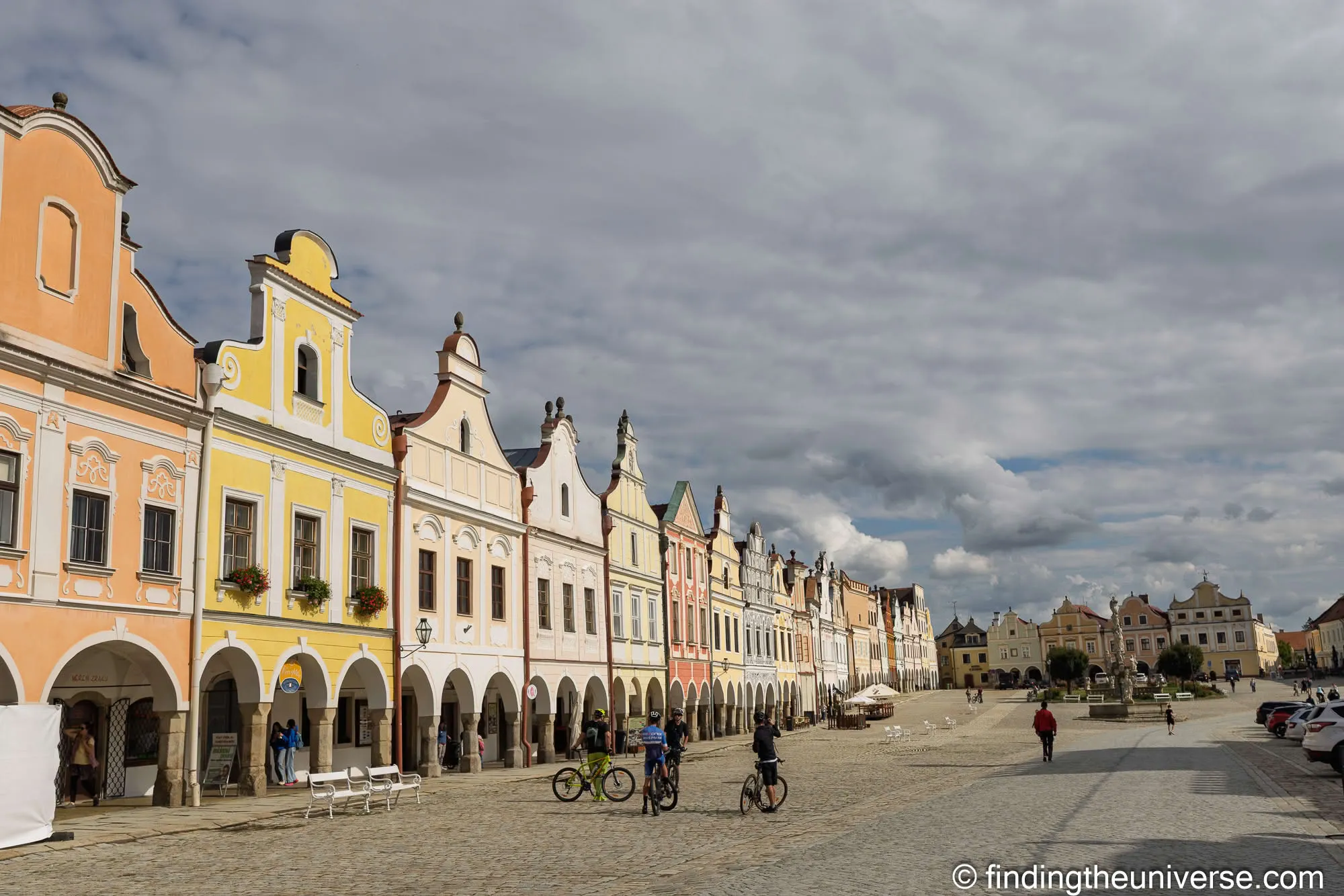
What to See in Telč
The square is the thing, and you’ll spend most of your time just looking at it and photographing it from both ends. The chateau at the top has guided tours of its Renaissance interiors, and the two fishponds either side of the old town give you the reflections. Lunch at one of the restaurants under the arcades, then the walk around the ponds, and that’s the day.
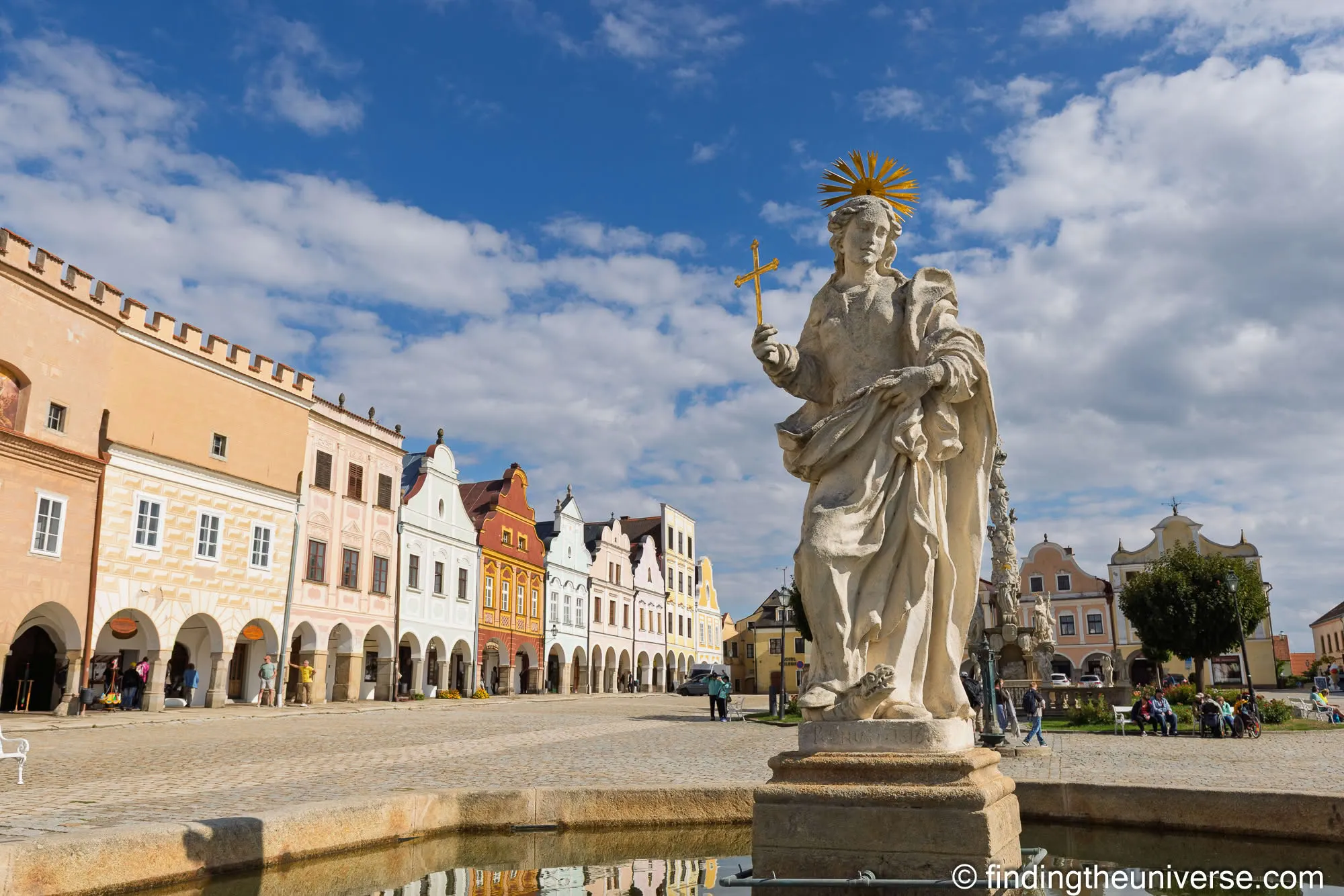
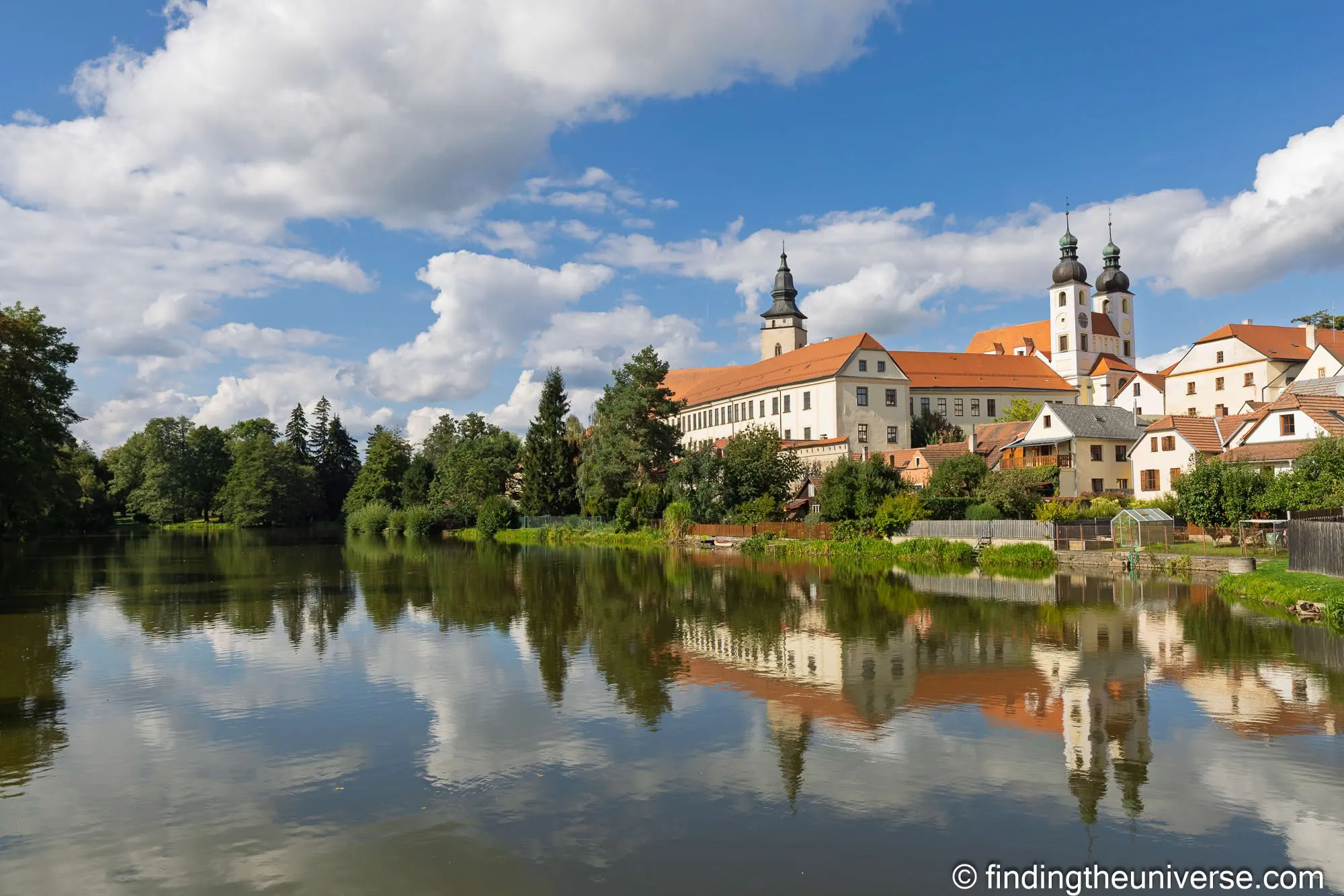
There’s no day tour from Prague, and I wouldn’t want one, because the drive through the Vysočina hills is part of the appeal. Combine it with Třebíč, about 30 kilometres east, if you want a second UNESCO site in the day; the Jewish Quarter and St Procopius’ Basilica there were inscribed in 2003.
10. Dresden and Saxon Switzerland
Dresden is the one cross-border day trip from Prague that works. The Saxon capital is two hours 20 minutes away by direct train, the rebuilt Baroque old town (the Frauenkirche, the Zwinger, the Semperoper, the long Brühl’s Terrace above the Elbe) is compact enough for an afternoon, and if you prefer landscape to architecture, the Bastei rock formation in Saxon Switzerland is a short S-Bahn ride before you get there.
Getting to Dresden from Prague
The EC and railjet trains from Praha hl.n. to Dresden Hauptbahnhof are direct, take two hours 20 minutes, and run every two hours. The full walk-up fare showed as 722 CZK when we checked, and ČD and Deutsche Bahn both sell cheaper advance tickets, so book ahead on cd.cz or bahn.de. The route follows the Elbe through the sandstone country for the last hour, so sit on the right-hand side going north.
For the Bastei, get off at Dresden Hauptbahnhof and take the S1 S-Bahn back out to Kurort Rathen, 34 minutes, half-hourly, then the little ferry across the Elbe and the climb up to the rocks and the Bastei bridge. It’s possible to do the Bastei in the morning and Dresden in the afternoon, but it’s a long day, and it’s what the organised tours do with a coach for a reason. This Dresden and Bastei bridge day trip from Prague does both in a day.
By car it’s roughly two hours on the D8, which becomes the A17 at the border; the vignette details are in the driving section below.
What to Do in Dresden
In a day, walk the old town. The Frauenkirche, rebuilt from the rubble of 1945 and reconsecrated in 2005, has a dome you can climb; the Zwinger palace holds the Old Masters gallery with Raphael’s Sistine Madonna; the Historic Green Vault in the Residenzschloss is the treasury that everyone says to book ahead for, and they’re right. Finish on Brühl’s Terrace above the river, cross the Augustus Bridge for the view back, and get the evening train home.
In December, Dresden’s Striezelmarkt, the city’s Christmas market and one of Germany’s oldest, fills the Altmarkt through Advent, and it’s the obvious reason to pick Dresden over anywhere else on this list in winter. Everything here is a city sight, so there’s no season to worry about otherwise, and the train runs all year.
Which Castle? Karlštejn vs Konopiště vs Křivoklát
Three castles sit within an hour of Prague, and most people only hear about one. Karlštejn is the famous Gothic fortress. Konopiště is Franz Ferdinand’s hunting lodge in a park. Křivoklát is the quieter Gothic castle in the woods along the Berounka, west of the city, which is harder to reach without a car and is worth it for exactly that reason. We visited the first two on our castle day; the Křivoklát details are the castle’s own.
| Karlštejn | Konopiště | Křivoklát | |
|---|---|---|---|
| What it is | 14th-century royal fortress of Charles IV; the postcard castle | Medieval castle rebuilt as Franz Ferdinand’s hunting lodge, in a landscaped park | Royal Gothic castle in the Berounka woods; the quiet one |
| Getting there | S7 train, 35 to 45 min, two an hour, then a steep walk up | Train to Benešov, 40 to 60 min, several an hour, then a walk or local bus | No direct service: train with a change at Beroun, about 2 hr 10 min, 148 CZK. Car is far easier |
| Tours and prices | Basic tour 300 CZK; Chapels tour 640 CZK, reservation needed | Two main tours at 300 CZK; private apartments 460 CZK, reservation needed | Short tour 260 CZK, long tour 300 CZK, grand tour 360 CZK; tours guided in Czech |
| Crowds | Heavy, especially midday in summer | Light. We had the grounds nearly to ourselves in September | Light |
| Winter | Basic tour Fri to Sun, Nov to 20 Dec and 26 to 31 Dec; Chapels closed Nov to Apr | Weekends only in November, then check the castle’s page | Weekends only Nov to 20 Dec, open 27 to 31 Dec; grand tour closed Nov to Dec |
| Pick it if | You want the famous one and the Chapel of the Holy Cross | You want a castle to yourself, the park, and the Franz Ferdinand story | You have a car and like your castles unvisited |
If you’re choosing one and travelling by train, make it Karlštejn, and book the Chapels tour. If you want to avoid crowds, Konopiště, and spend the time you save in the park. Křivoklát is for a second visit or a car day; it runs Tuesday to Sunday in October and weekends only from November to 20 December, and like the others its new-year hours appear on its own site closer to the time.
Combining Two Day Trips in One Day
You don’t have to do these one at a time, and with a car you can cover a surprising amount of ground. Our own castle day went Prague to Kutná Hora and Sedlec in the morning, across country to Konopiště for the early afternoon and the park, then north-west to Karlštejn for the late afternoon and back into Prague for dinner. It was a full day with a fair bit of driving, and we didn’t do an interior tour at either castle, but it worked.
Other pairings that make sense:
Karlštejn and the Koněprusy Caves, by car, as described above. A castle in the morning and a cave in the afternoon, both close to Beroun.
Karlovy Vary and Loket, by bus and local train, or on the tour linked above. The classic pairing, and the local train between them makes it work without a car.
Český Krumlov and České Budějovice, if you’re staying overnight in Krumlov. Half an hour apart by bus or car, and Budvar’s brewery tour (about an hour, in English at 2.40pm, plus 10.40am in July and August) is worth booking.
Dresden and the Bastei, by train and S-Bahn or by tour, as described in the Dresden section.
Telč and Třebíč, by car, for two UNESCO towns in a day.
What I wouldn’t do is pair Kutná Hora with Karlštejn by train. They’re in opposite directions from Prague and you’d spend the day on platforms. If you want two sights in one day without a car, pick a pairing from the list above.
Day Trips from Prague That Still Work in Winter
Czech state castles mostly close their interiors from November to March, or drop to weekends only. If you’re visiting Prague between November and March, here’s what still works, based on the operators’ published hours for the 2026 season.
Open daily all year: the Sedlec Ossuary at Kutná Hora (9am to 4pm from November to February, closed 24 December), and the Terezín Memorial (the Small Fortress 9am to 4pm from November to March, closed 24 to 26 December and 1 January). Plzeň, Karlovy Vary and Dresden are towns and cities, so they’re open whenever you are, and Dresden’s Christmas market makes it the December pick.
Open Friday to Sunday: Pravčická brána in Bohemian Switzerland (10am to 4pm), and Karlštejn’s basic tour from November to 20 December and daily between Christmas and New Year.
Weekends only, and only until 20 December: Křivoklát, and the Konopiště interiors through November.
Open until 20 December, Tuesday to Sunday: the Castle Museum and Tower at Český Krumlov.
Not available in winter: the Kutná Hora silver mine (spring to autumn), the Edmund’s Gorge boats (mid-June to 1 November), the Gabriela trail at Pravčická brána (closed since the 2022 fire regardless of season), the Karlštejn Chapels tour (closed 1 November to 30 April), and Český Krumlov’s castle interiors (closed from the end of October).
For January to March, the castles publish their new-year calendars late in the previous year, so check the castle’s own opening-hours page rather than trusting any guide, including this one, for exact dates.
Driving from Prague: Car Hire, the E-Vignette and Parking
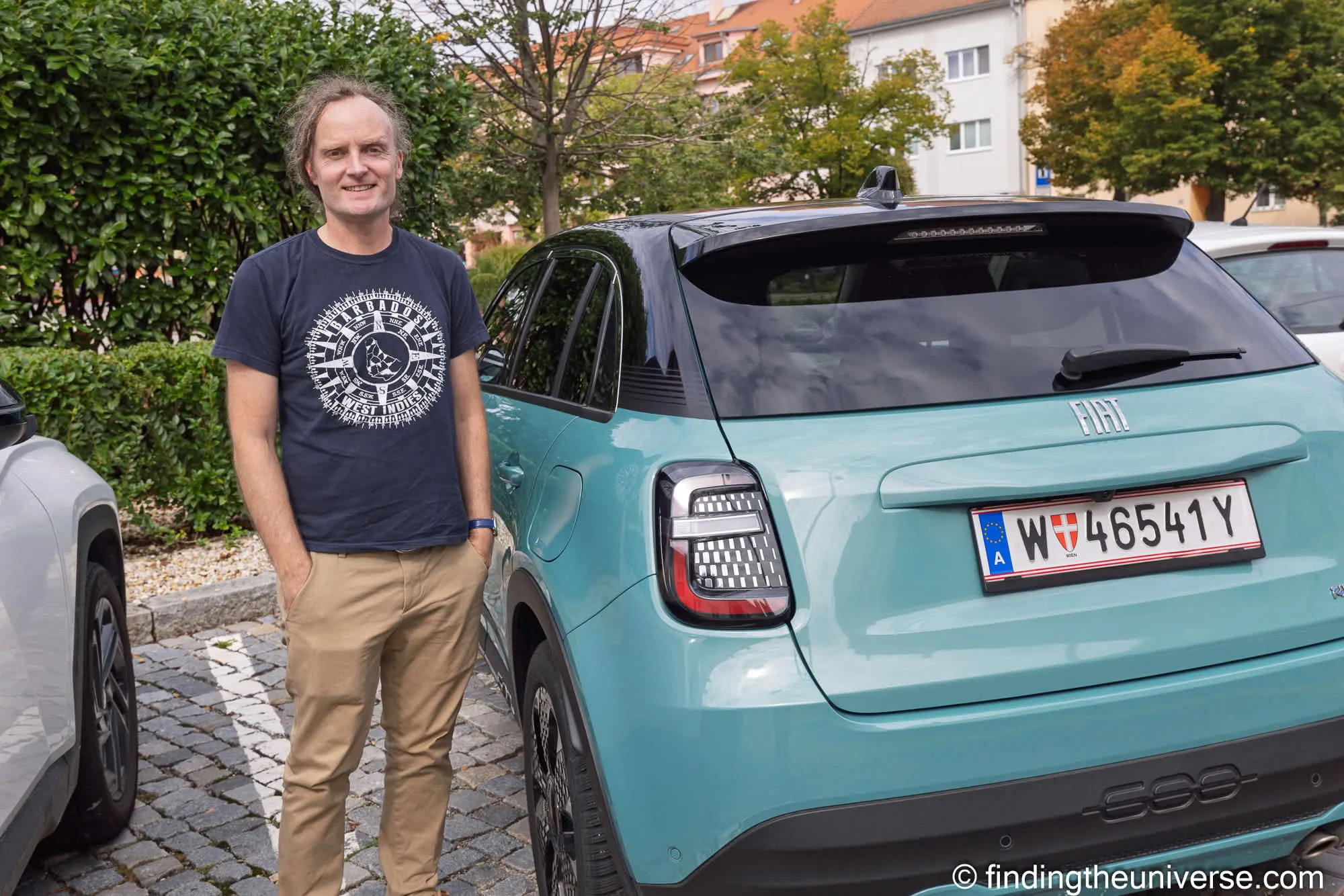
We hired a car for one day in Prague and it was the right call for the castle day, because it let us do three places that would have been three separate train trips. You don’t want a car for the city itself (parking is a pain and the trams go everywhere), so a one-day hire picked up and dropped in Prague is the pattern that works. We use Discover Cars to compare rental prices.
The main thing to know about Czech motorways is the e-vignette. Instead of paying tolls as you go, as you would in France or Italy, all cars up to 3.5 tonnes need a time-based electronic vignette to use the motorway network. It’s registered to your number plate, there’s nothing to stick on the windscreen, and you buy it at the official edalnice.gov.cz site or at the official sales points, which are Czech Post branches and EuroOil and RoBiN OIL petrol stations.
For 2026 the prices are 230 CZK for one day, 300 CZK for ten days and 480 CZK for thirty. Once you have it, every motorway in the country is covered and you don’t think about it again, which after driving in France is quite a relief.
Our hire car came with the vignette already paid, and I’d expect most Czech-registered rentals to, but ask at the desk when you pick up, because the fine for driving without one can be up to 20,000 CZK. If you’re driving into Germany for Dresden, you only need the Czech vignette for the Czech section; German motorways are free for cars.
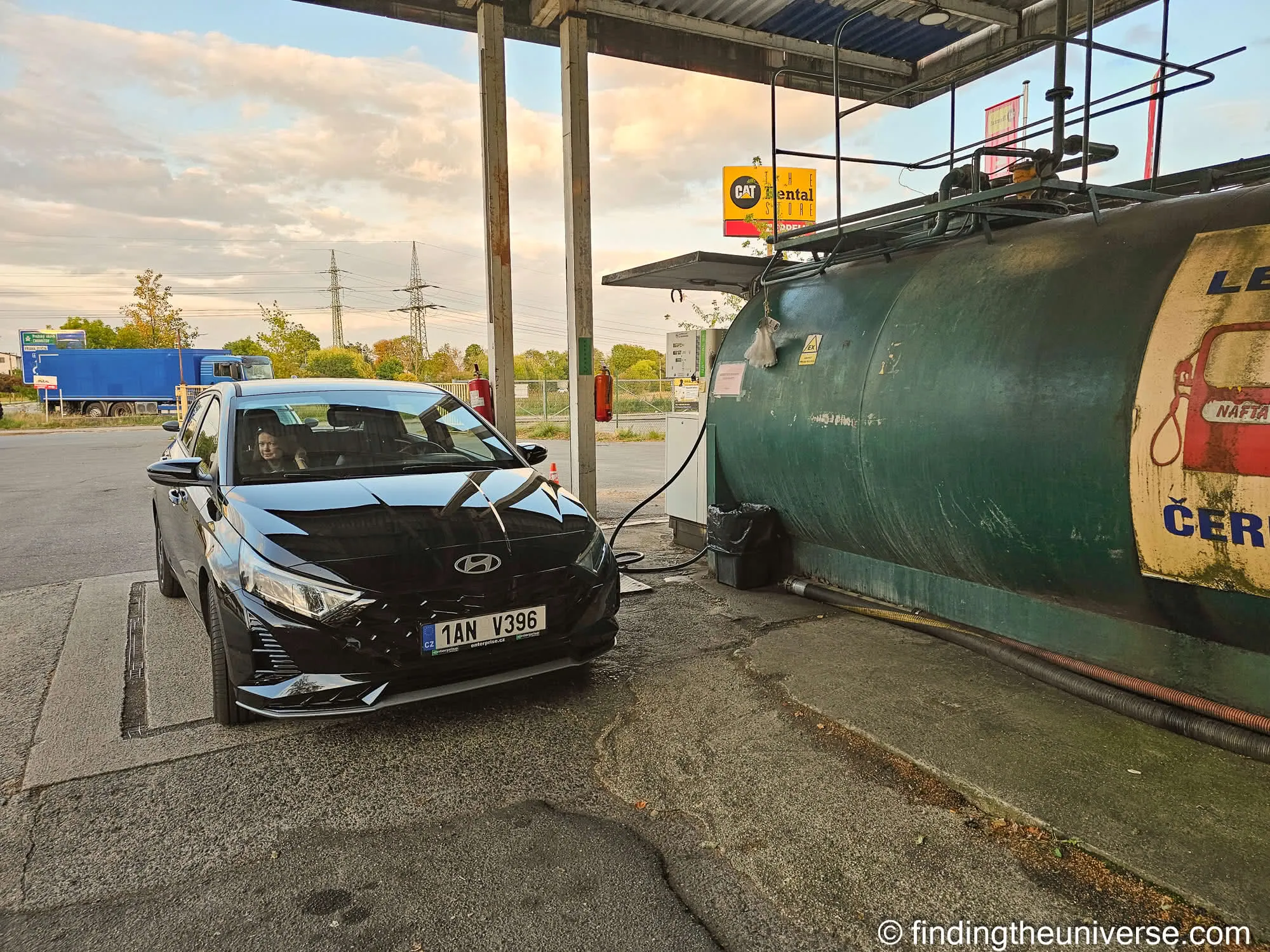
Parking was easier than I expected. We found free parking at Kutná Hora and Konopiště with a few minutes of research the night before, and paid for a car park in the village at Karlštejn, which wasn’t really expensive by Western European standards.
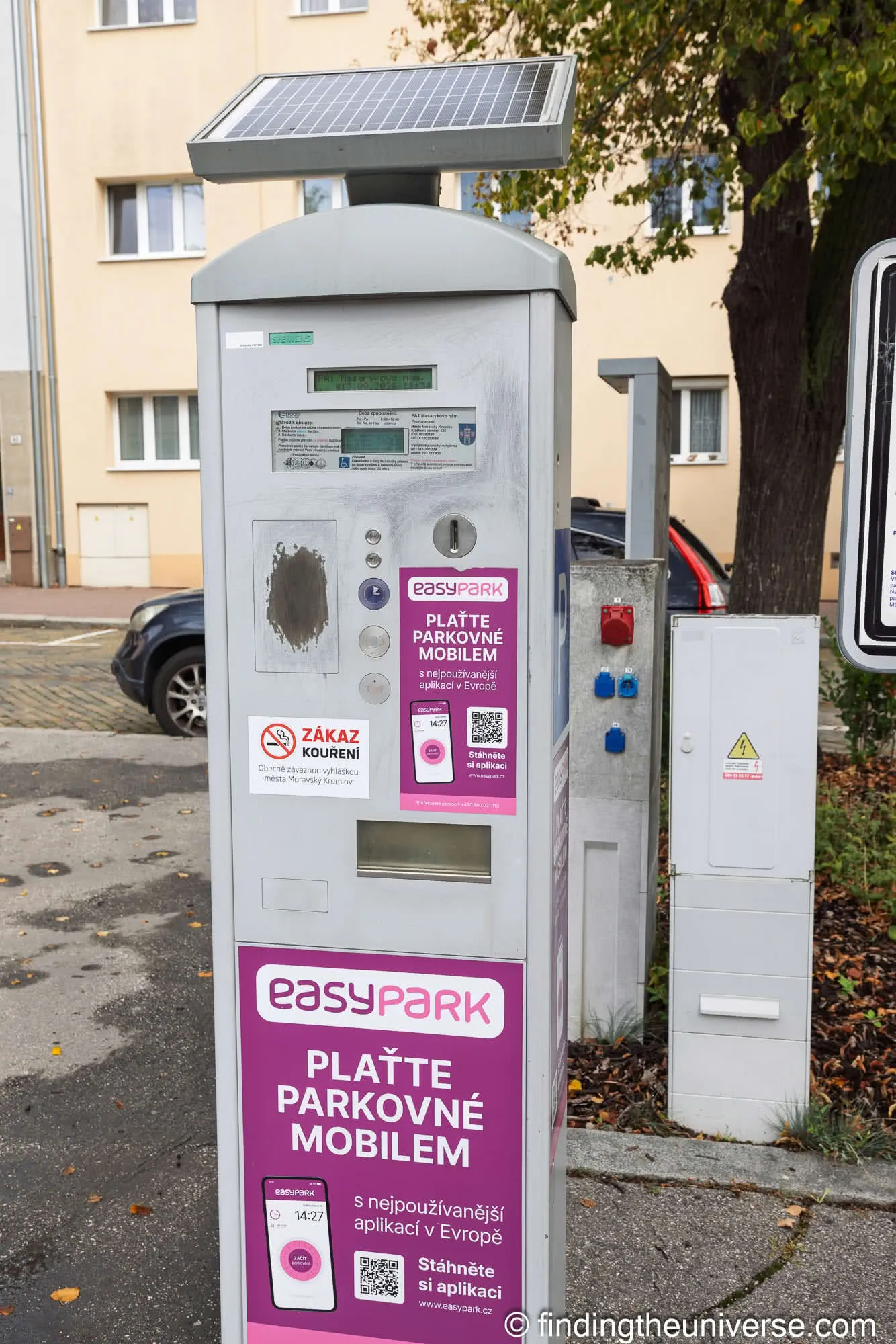
The usual advice applies: don’t leave anything on view, and have some coins or a card for the machines.
Driving itself is unremarkable in a good way. The motorways are pretty good, the country roads between the castles are quiet, and the part to plan is the drive back into Prague at the end of the afternoon, through a city of trams and one-way streets, so have the satnav on and know where you’re dropping the car.
Too Far for a Day Trip from Prague
A few places get sold as day trips from Prague that aren’t, and one or two more that people ask about. These are the ones I’d say no to, and what to do instead.
Vienna is about four hours each way by direct railjet. People do it, of course, and I don’t know why. If you want Vienna, give it two or three nights; we’ve written up both a 2 day Vienna itinerary and a 3 day Vienna itinerary, and the train between the two cities makes them an easy pairing across one trip.
Brno, the second city, is two and a half hours by train. It’s a good city, and the Villa Tugendhat is a wonder of modernist architecture that you have to book ahead for, but a five-hour round trip for an afternoon is a stretch. An overnight on the way to Vienna is the way to see it.
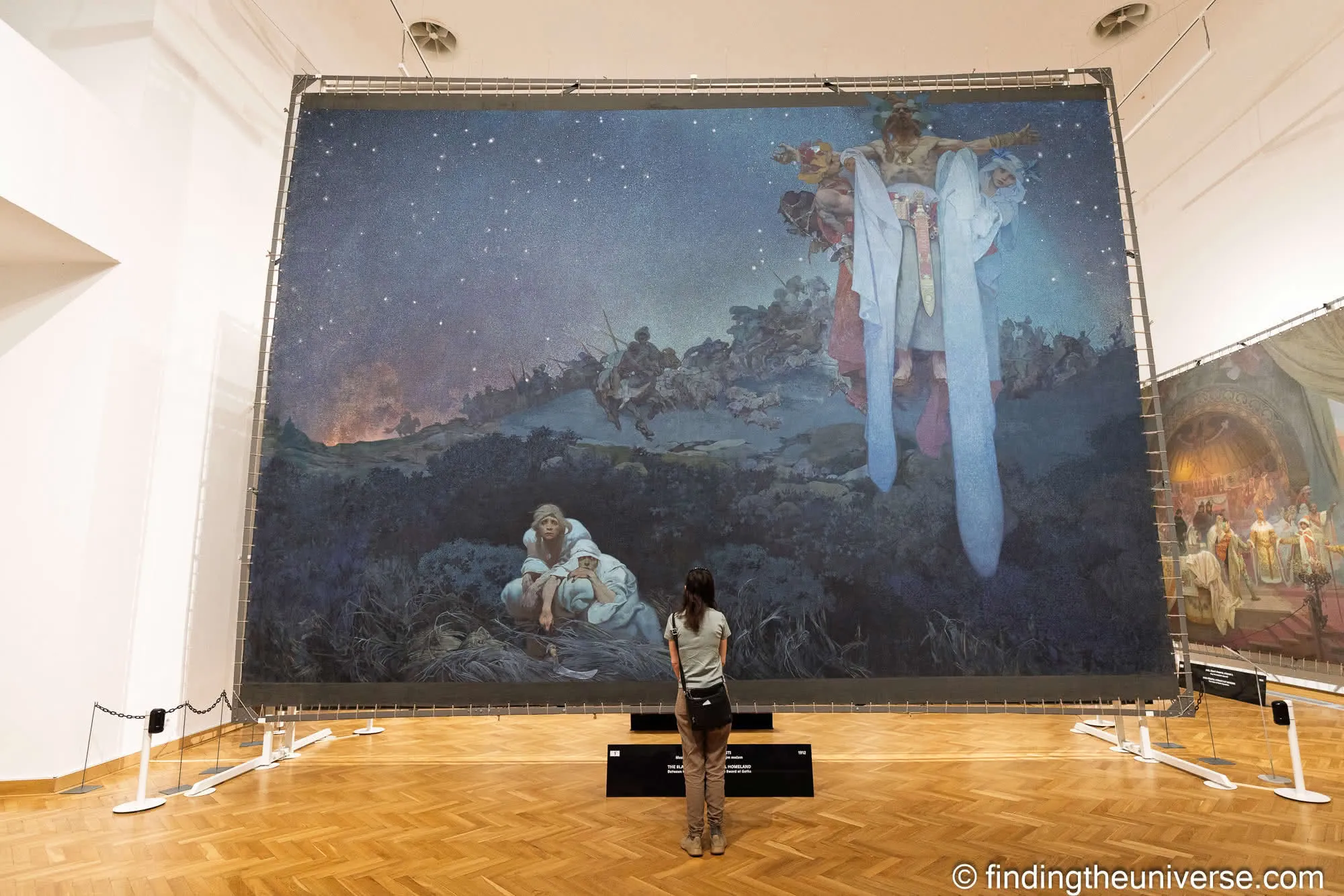
Moravský Krumlov is the small Moravian town where Alfons Mucha’s Slav Epic, twenty vast canvases, is on display in the chateau, and as of 2026 it’s still there and will be into 2027. We visited on our road trip and it’s a remarkable thing to see. It is nowhere near Prague, though, so build it into a drive south instead.
Třebíč, with its UNESCO Jewish Quarter, is the same story. Pair it with Telč by car, or skip it.
Budapest is nearly seven hours by train and Berlin four. Both need a few nights of their own. If you want a German day out, Dresden is the answer, and if you’re thinking about Berlin at all, our guide to exploring Berlin is where to start planning a longer visit.
Frequently Asked Questions
What is the best day trip from Prague?
Kutná Hora. It’s about an hour from Praha hl.n. by train, the Sedlec Ossuary is unlike anything else in the country, St Barbara’s Cathedral is part of a UNESCO World Heritage Site, and the medieval silver mine tour gives you something you can’t do anywhere else nearby.
If you can stay a night rather than a day, Český Krumlov overtakes it, but as a pure day trip the travel time counts against it.
What is the prettiest town near Prague?
Český Krumlov, by some distance, with its red roofs inside a loop of the Vltava and a castle on the rock above. Telč, in Moravia, has the prettiest single square in the country, but it’s only reachable by car. Loket, near Karlovy Vary, is the quiet small-town option.
What day trips from Prague can you do by train?
Kutná Hora (about an hour, some direct trains), Karlštejn (35 to 45 minutes on the S7), Konopiště via Benešov (40 to 60 minutes), Plzeň (an hour and 25 minutes, hourly) and Dresden (two hours 20 minutes, every two hours) all work by train. Český Krumlov has a few direct trains but the bus is more frequent; Karlovy Vary and Terezín are bus trips.
The Prague Visitor Pass doesn’t cover any of these trains, so you’ll need a ČD ticket or, for Karlštejn, Benešov and Kutná Hora, a PID zone ticket from the Lítačka app.
Can you do Český Krumlov as a day trip from Prague?
Yes, but I’d stay the night instead. The bus or the direct train takes around two and a half to three hours each way, so a day trip gives you four or five hours in town during the busiest part of its day.
If a day is all you have, take the earliest bus, go straight to the castle tower before the coach groups arrive, and expect a long day.
What city should you combine with Prague?
Vienna, and then Budapest if you have the time. The direct train from Prague to Vienna takes about four hours and Vienna to Budapest about three, which is why the three cities are so often done as one trip. None of the three is a day trip from another; give each a few nights.
Are the castles near Prague open in winter?
Mostly not, or only at weekends. Karlštejn’s basic tour runs Friday to Sunday from November to 20 December and daily between Christmas and New Year, with the Chapels tour closed from November to April. Křivoklát is weekends only until 20 December, and Konopiště’s interiors run weekends in November and then close for the season.
For a winter day out that doesn’t depend on a castle, go to Kutná Hora (the ossuary is open daily all year), Terezín, Plzeň or Dresden.
What are some less-visited places near Prague?
Konopiště Castle, which was quiet when we visited in September. Křivoklát Castle, if you have a car. Loket, the small castle town near Karlovy Vary. And Telč in Moravia, which is too far for public transport but worth the drive if you’re heading south.
Further Reading
If you’re planning the Prague part of your trip, our 3 days in Prague itinerary covers the city day by day, including how we used the Prague Visitor Pass and which days of the week to avoid where. For the next stop on a Central Europe trip, our 2 day Vienna itinerary picks up where the Prague to Vienna train leaves off.
For the trips themselves, the official sources I’d keep open are the IDOS journey planner for every train and bus time in the country, České dráhy for train tickets, and each castle’s own opening-hours page before you commit to a date, especially between November and March.
We’ll be adding our guides to things to do in Prague and to Kutná Hora as we write them up from this trip, and we’ll link them here when they’re live. As always, if you have questions about any of these day trips from Prague, or have done one we haven’t, let us know in the comments below.
Leave a Reply