
Three days is enough time to see Prague well, as long as you put the days in the right order. I first visited Prague back in the 2000s and returned to the city in September 2026 with Jess, on her first visit. We spent five nights in the Old Town and walked four full days of the city, using the Prague Visitor Pass for three of those days. This itinerary is what we’d recommend to first-time visitors to Prague.
Visit the Old Town and Charles Bridge on day one, the castle district on day two and the Jewish Quarter and the New Town on day three. We’ll also give you ideas on how to adjust this itinerary to two days or how to stretch it to four or five.
The main problem Prague presents visitors is the calendar rather than the crowds (although there are plenty of those too). For example, the Jewish Quarter shuts on Saturdays. Popular attractions often sell out and some are reservation only, like the Klementinum library or paternoster tours.
The castle buildings close at 5pm in summer and 4pm in winter, and a couple of the smaller museums take Mondays off. So if you happen to get the days in the wrong order you’ll spend an afternoon reading closed signs.
The good news is that with some planning you can avoid all this and just have a great time in Prague, like we did. Which is what this guide is all about.
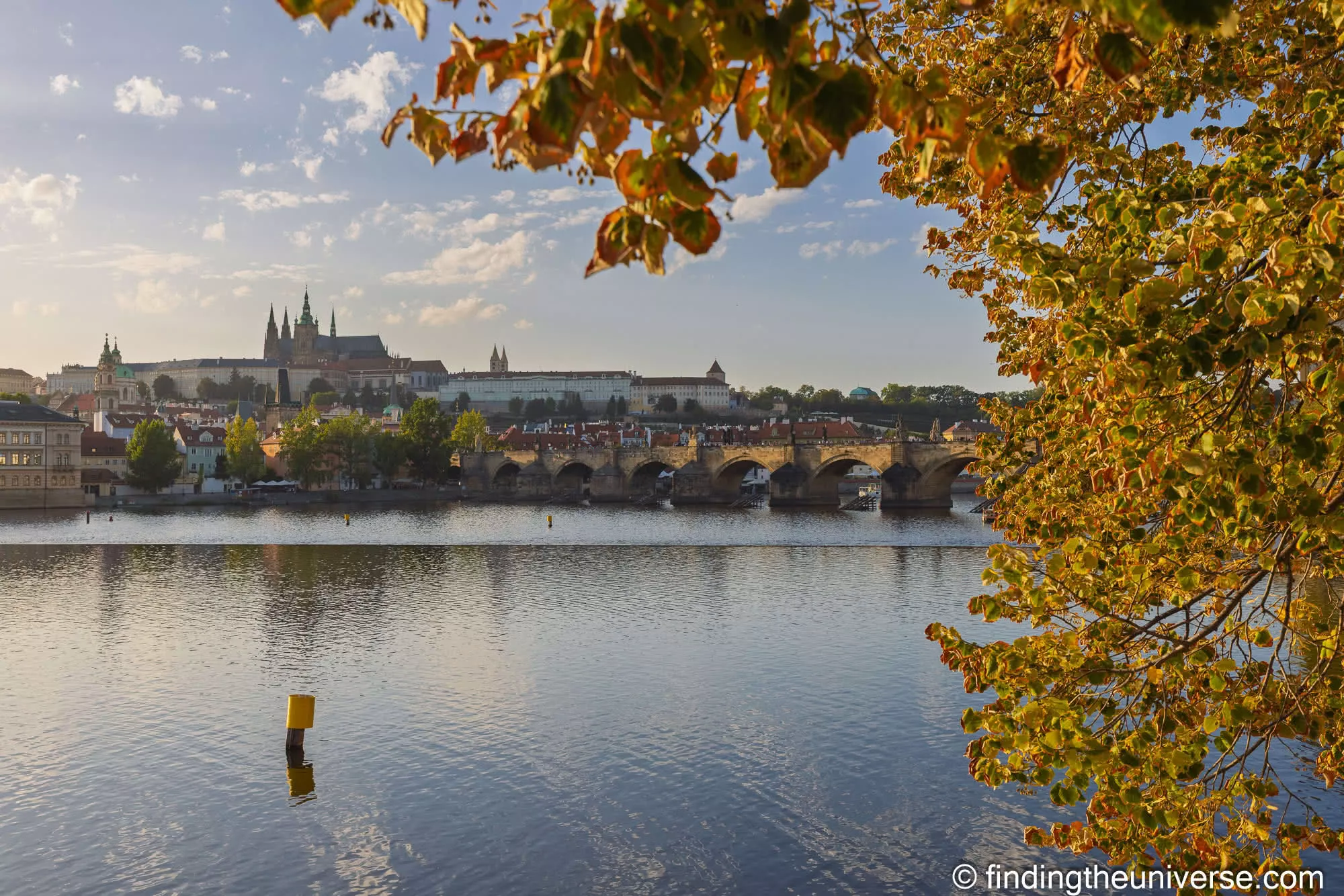
Table of Contents:
Is 3 Days Enough in Prague?
Yes. Three days covers the Old Town, Charles Bridge, the castle district, Malá Strana, the Jewish Quarter and the New Town at a pace that still leaves time to enjoy yourself, and the centre is compact enough that you can walk nearly all of it. Most of the walks between stops in this plan are five to fifteen minutes, and the one real climb (up to the castle) is done by tram.
What three days doesn’t give you is a day trip. Kutná Hora, Karlštejn and Český Krumlov all need a full day each, so if one of those is on your list you’re planning four or five days, and there’s a section on that further down. Two days is doable too, with a specific cut I’ll come to.
Before You Go: Opening Days, Timed Slots and What to Book
Prague has no single booking bottleneck on the scale of the Sagrada Família in Barcelona or the Vatican in Rome, just a collection of small rules that each break a different day of the week. These are the ones that decided the order of our days.
Saturdays: The Jewish Quarter Is Closed
The Jewish Museum in Prague sites (the Pinkas, Maisel, Spanish and Klausen synagogues, the Ceremonial Hall and the Old Jewish Cemetery) are closed every Saturday and on Jewish holidays, and so is the separately run Old-New Synagogue. The museum publishes a rolling list of the holiday closures; the clusters to watch are Passover in spring, and Rosh Hashanah, Yom Kippur and Sukkot in September and October.
On Fridays the Old-New Synagogue closes about an hour before the start of Shabbat, so on a Friday the Jewish Quarter is a morning job. If your Day 3 lands on a Saturday, swap it with Day 1. There’s a note on this in the Day 3 section.
Mondays
The House at the Black Madonna (the Cubist museum on Day 3) is closed on Mondays, as are the National Gallery venues, which includes the Museum of Medieval Art at St Agnes Convent on Day 1. There’s no paternoster tour on a Monday either, so if one of your three days is a Monday, make it Day 2, which loses only the Štefánik Observatory. Keep Day 1 and Day 3 off it.
Timed Entry and Reservations
Four sights in this plan need a slot or a reservation, and the other sights are walk-up.
- The Klementinum library and tower tour is guided and timed, and it sells out. Tickets are released every Monday for the following two weeks. With the Visitor Pass you don’t pay, but you still have to reserve online with your card number, and the reservation is binding unless you cancel by 6pm the day before. You can also join a line in the morning for same-day tickets but they go quickly and you don’t want to waste time on your trip in line if you can avoid it.
- The Prague City Hall paternoster tour is a small group (fifteen people, over-15s only) and books by email. It runs on fixed afternoon and early evening slots on Tuesdays, Thursdays and weekends. You can email quite far in advance (we booked about three months out with our Prague Visitor Pass number).
- The Prague Boats sightseeing cruise that comes with the pass has to be self-booked online once the pass is active, which means you need to be in the city. The other included cruise, Prague Venice, is a walk-up. The good news is that there are a lot of sailings and normally getting a spot isn’t a big issue.
- Prague Castle is not timed. Circuit tickets are valid for two days and you can enter each building once, so you can split the castle across two visits if a day runs long. The Prague Visitor Pass includes many (but not all!) of the sights in the castle complex, which has a frankly byzantine ticketing setup.
Book your restaurants too. Prague is busy, and restaurants much prefer reservations, especially in the busier months. We booked almost every sit-down meal in this plan before we flew, and the ones that need it are flagged as you go.
Sundays
St Vitus Cathedral opens at noon on Sundays because of the morning services, so a Sunday castle day starts with Golden Lane and the palace and finishes in the cathedral. The basilica at Vyšehrad opens at 11am on Sundays for the same reason.
Every Ticketed Stop in This Itinerary at a Glance
Hours are the operators’ published ones at the time of our September 2026 visit. Most of them shorten by an hour or two in winter, and the pass column is taken from the official inclusions list.
| Stop | Day | Hours | Needs a slot? | On the Visitor Pass? |
|---|---|---|---|---|
| Old Town Hall tower | 1 | Daily 9am to 8pm Apr to Dec, 10am to 7pm Jan to Mar | No | Yes |
| Klementinum tour | 1 | Daily 9am to 8pm, timed departures | Yes, timed | Yes, reservation required |
| Prague City Hall paternoster | 1 | Fixed slots Tue, Thu, Sat and Sun | Yes, by email | Yes |
| Old Town Bridge Tower | 1 | 9am to 8.30pm Jun to Sep, 10am to 6pm Oct to Mar (7.30pm in Dec), 10am to 7pm Apr to May | No | Yes |
| Prague Castle buildings | 2 | 9am to 5pm Apr to Oct, 9am to 4pm Nov to Mar (grounds 6am to 10pm) | No | Yes |
| St Vitus Cathedral | 2 | Mon to Sat 9am to 5pm, Sun noon to 5pm | No | Yes |
| Lobkowicz Palace | 2 | Daily 9am to 6pm | No | Yes |
| Strahov Library | 2 | Daily 9am to 5pm | No | No, 220 CZK |
| Petřín Lookout Tower | 2 | 9am to 7pm Apr to Sep, 9am to 6pm Oct, 10am to 6pm Nov to Mar | No | Yes |
| St Nicholas Bell Tower | 2 | 9am to 8.30pm Jun to Sep, 10am to 6pm Oct to Mar (7.30pm in Dec), 10am to 7pm Apr to May | No | Yes |
| Jewish Museum sites | 3 | 9am to 7pm May to Aug, 9am to 6pm Apr and Sep to mid Oct, 9am to 4.30pm late Oct to Mar; closed Sat and Jewish holidays | No | Yes, collect tickets at the Visitor Centre |
| Old-New Synagogue | 3 | 9am to 6pm (5pm in winter); closed Sat, early close Fri | No | Yes |
| Powder Gate Tower | 3 | Daily 10am to 6pm | No | Yes |
| House at the Black Madonna | 3 | Tue 10am to 8pm, Wed to Sun 10am to 6pm, closed Mon | No | Yes |
| Dancing House Gallery | 3 | Daily 9am to 8pm | No | Yes |
| Prague Boats cruise | 3 | Daily 10am to 10pm, every 30 minutes | Yes, self-book online | Yes |
The Prague Visitor Pass: How We Used It
The Prague Visitor Pass is the city’s official pass, run by Prague City Tourism, and it comes in 48, 72 and 120 hour versions. It covers public transport, including the airport trolleybus and the Airport Express, and gives free entry to most of the ticketed stops in this itinerary plus two river cruises. Each included site can be visited once. You can buy the Prague Visitor Pass here.
| Validity | Adult | Student (15 to 25) | Child (6 to 14) |
|---|---|---|---|
| 48 hours | 2,700 CZK | 2,050 CZK | 1,350 CZK |
| 72 hours | 3,300 CZK | 2,500 CZK | 1,650 CZK |
| 120 hours | 3,900 CZK | 2,900 CZK | 1,950 CZK |
Under-sixes go free on most of the included sites and on transport.
The clock starts when you activate the pass, not when you buy it, and an unactivated pass stays valid for a year, so buy it before you fly and activate it when you want it to start. Note that the pass runs by the hour, where some city passes run by the calendar day. So if you activate the 72 hour pass at 3pm on a Monday afternoon, it will be valid until 3pm on Thursday.
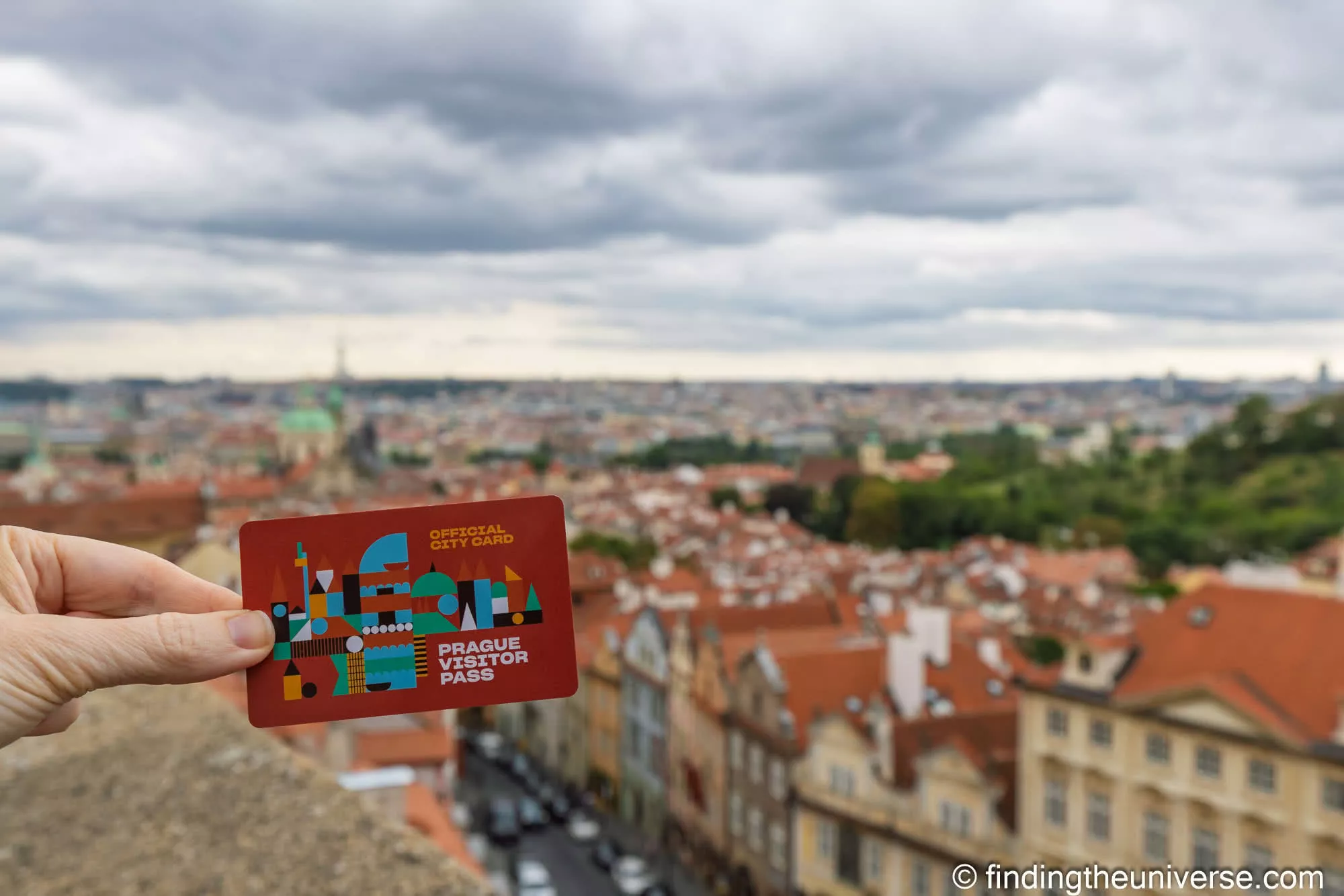
It comes as a physical card or as an e-Pass in the Prague Visitor Pass app, and the e-Pass is the full pass rather than a voucher you then exchange.
We ordered ahead and picked up the physical card at the tourist information desk at the airport when we landed, where the staff were really friendly and sent us off loaded up with maps and information.
If you’d rather not queue for anything after a flight, the e-Pass skips the desk entirely, but there was no line and we enjoyed our interaction with the staff. Plus a physical pass doesn’t get a flat battery halfway through the day.
Transport is only covered once the pass is active, so if you activate at the airport the ride into town is included, but your hours are running from the arrivals hall. We just took a taxi into town from the airport as it was easier with our bags, but the airport transfer is definitely a nice bonus.
We used our pass for the first three days of our trip, for everything from the trams to the castle, and on this route it paid for itself. Whether it does for you rests on how many of the ticketed stops you walk into rather than past.
A couple of things to be aware of. At the Jewish Museum, pass holders collect their tickets at the Visitor Centre at Maiselova 15, not at the synagogue doors. And at the Klementinum, the pass gets you in free but it doesn’t get you a place; you still have to reserve, and the dates only open two or three weeks ahead.
The one stop in this plan the pass doesn’t cover is the Strahov Library, which is 220 CZK at the door.
Prague Itinerary Day 1: Old Town, the Klementinum and Charles Bridge
Day 1 is entirely on foot and never more than ten minutes from Old Town Square. It runs comfortably from a 9am start to the Klementinum tour, lunch at Lokál, the Museum of Medieval Art in the afternoon, the paternoster at 5.15pm, Charles Bridge and the tower for last light, and then, if you’ve booked it, an 8pm concert back in the Klementinum. Everything in it is a walk-up except the Klementinum tour and the paternoster, which you’ll have reserved before you arrived.
Old Town Square and the Astronomical Clock
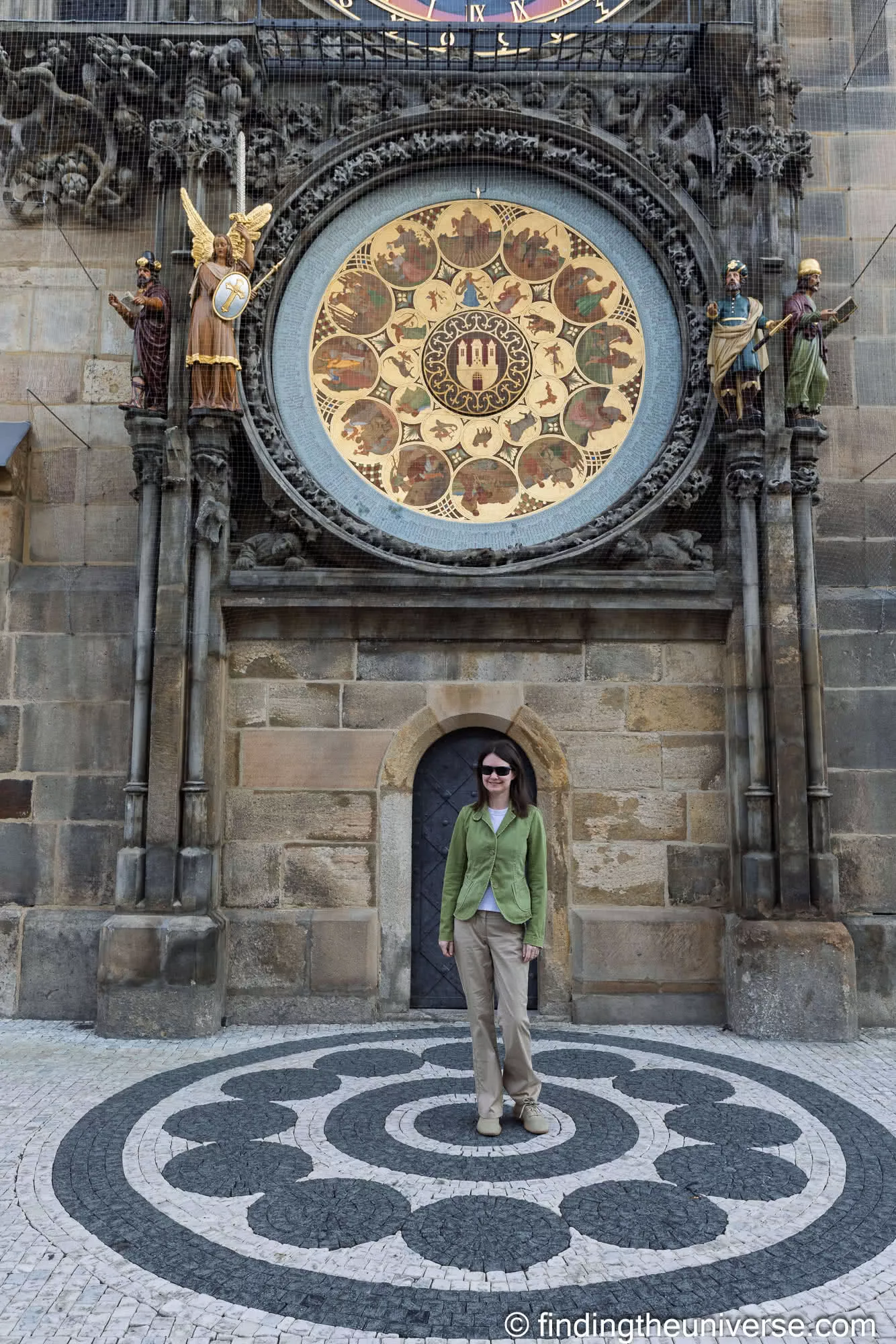
Start in the square. The Astronomical Clock on the Old Town Hall does its show every hour on the hour from 8am to 11pm, the twelve apostles appear in the little windows, a skeleton rings a bell, and it’s all over more quickly than most people expect.
The crowd packed in underneath is just as much of the spectacle as the clock. Watch it once from the back, then come back at a quieter hour (8am was the quietest we found) if you want a photograph without a sea of phones in it.
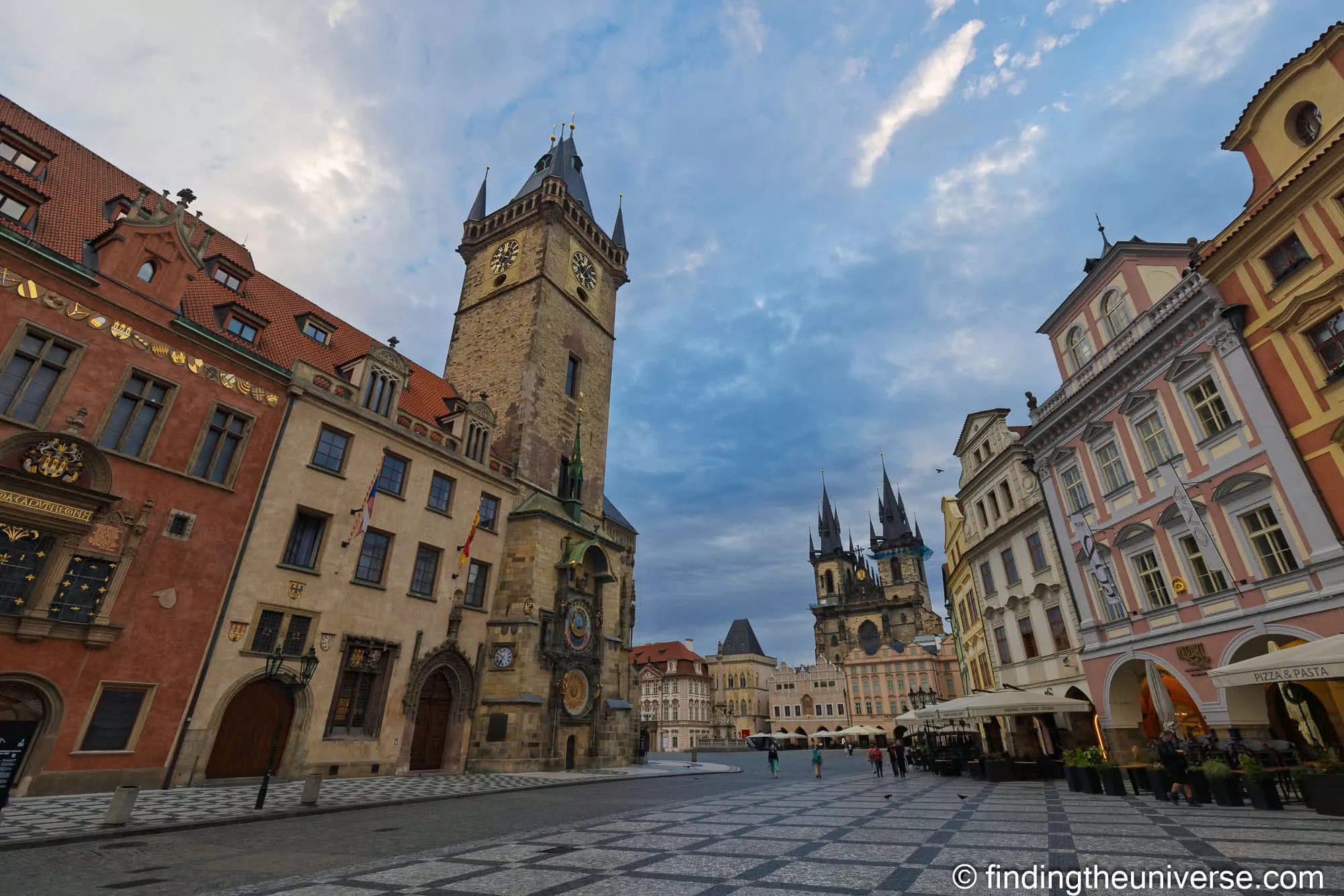
The square itself doesn’t really need a plan. The Týn Church towers, the Jan Hus memorial, the pastel fronts and the horse carriages are the Prague you came for, and if you’re like us you’re going to be going across this square a lot over your time in Prague.
My favourite time was around sunrise when I had it mostly to myself, but watching the crowds line up for the hourly clock show was also fun.
The Old Town Hall Tower
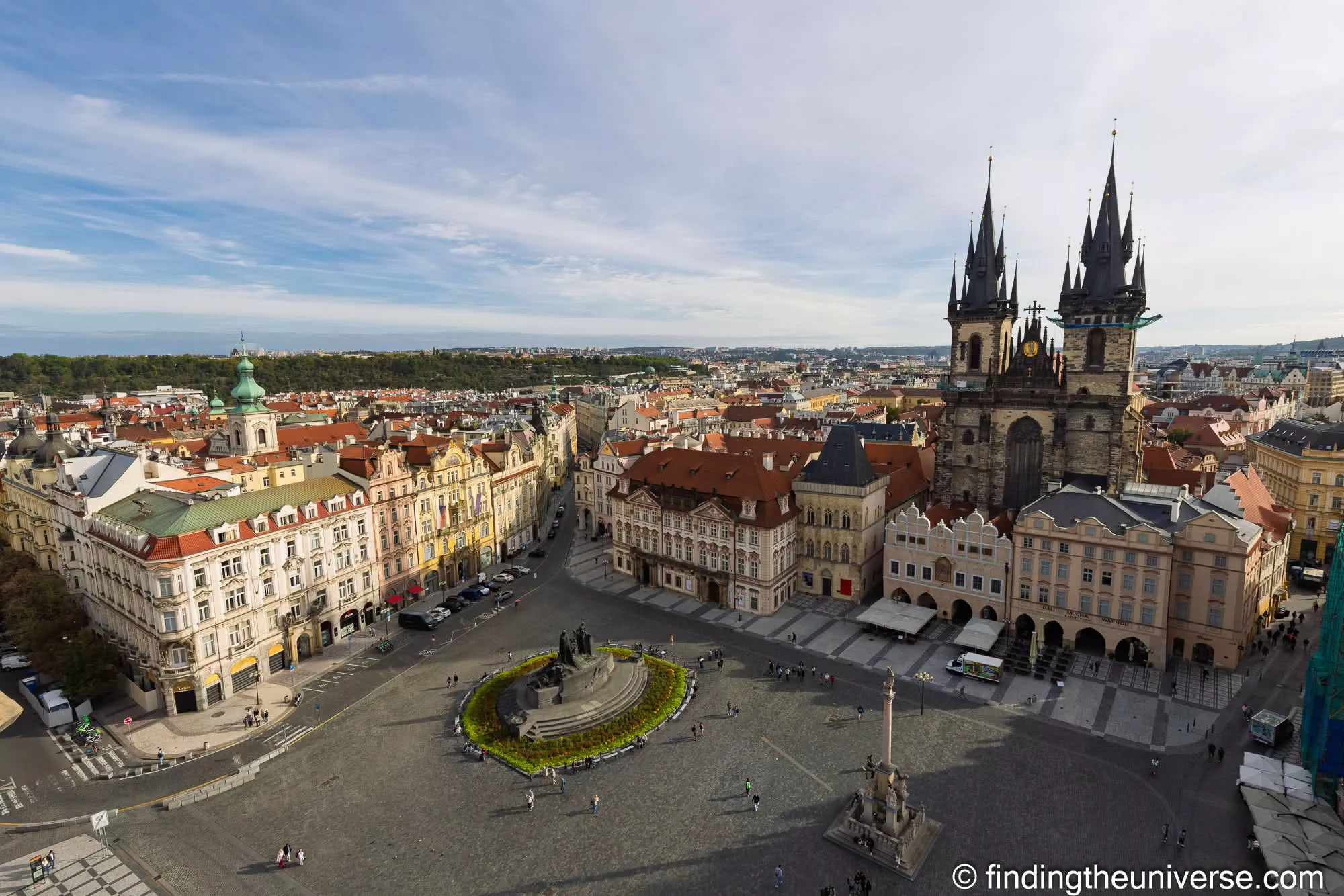
The Old Town Hall tower is the first climb of the trip and the best orientation you’ll get, because you’re looking straight down onto the square and across to the Týn towers and the castle beyond.
It’s open daily from 9am to 8pm from April to December (10am to 7pm in winter) and it’s on the pass. I went up when it opened at 9am and there were still a few people at the top, so don’t expect to have it to yourself at any hour.
If you have the Prague Visitor Pass, the elevator is included, and there’s a special fast track desk so you can skip the inevitable line. Normally I eschew luxuries like an elevator, but given how many towers I climbed in Prague and the fact it was free, I admit to being lazy on this occasion.
The Klementinum
The Klementinum is the old Jesuit college that fills most of the block between Mariánské náměstí and the river, and its guided tour takes you to the Baroque Library, the Meridian Hall and up the Astronomical Tower.
You look into the library from the doorway rather than walking in, which is great for the books but not quite as immersive an experience as you might hope for.
As a photographer it also limits your angles somewhat. That said, it does come with the bonus that you’re not editing people out of your shots after the fact.
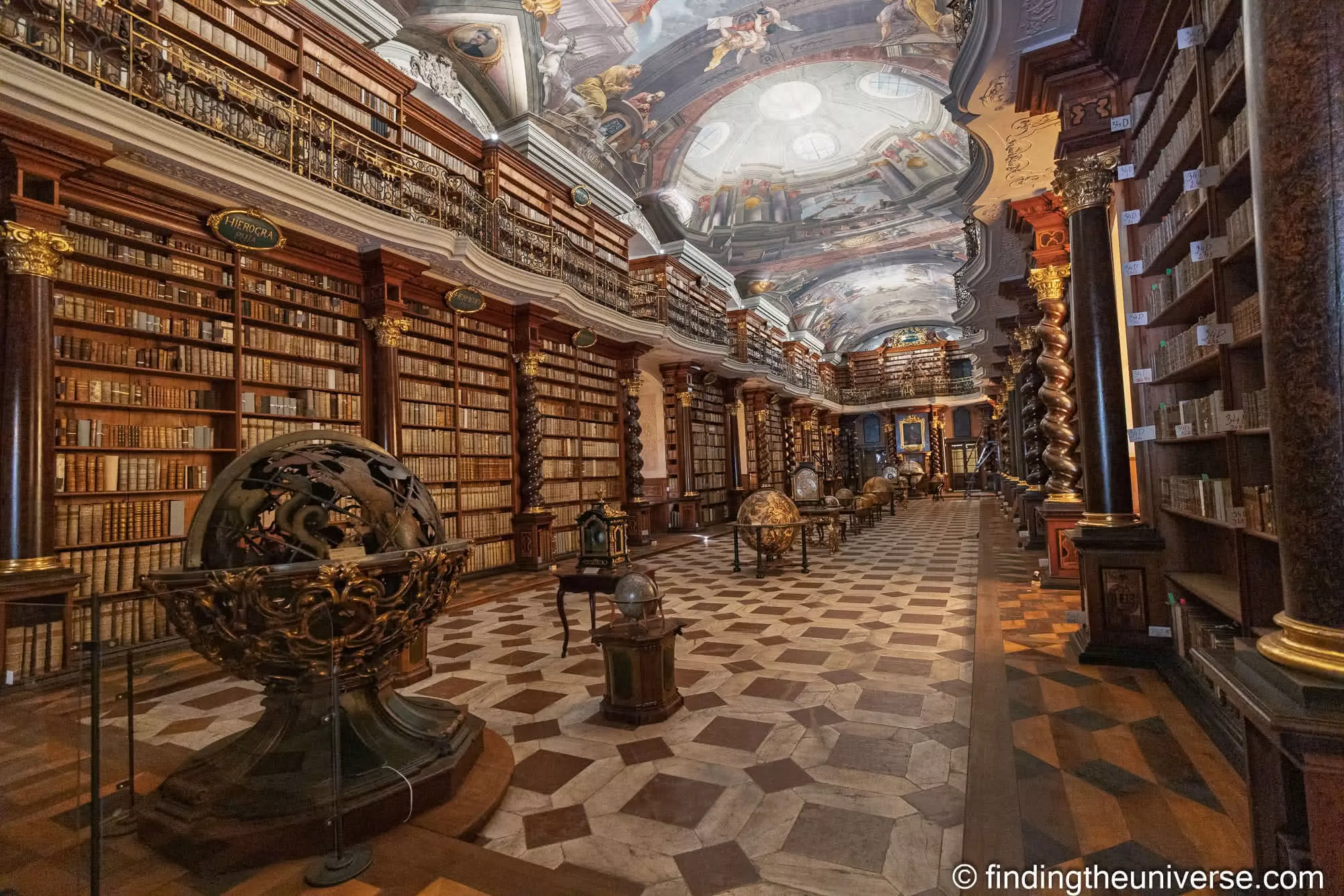
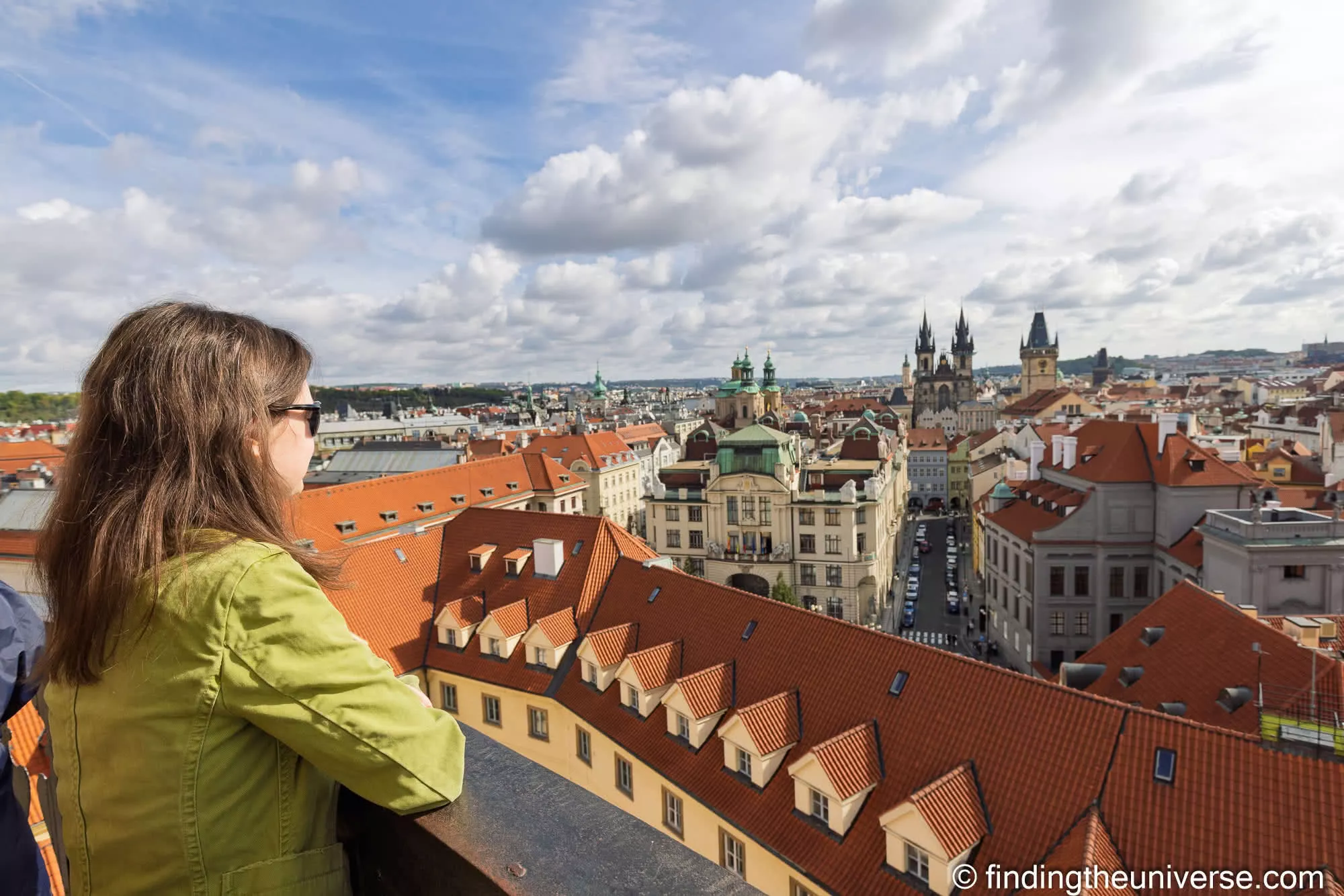
Once you’ve taken your turn peering into the library (only six people at a time can peer, but the guides manage it well and everyone on our tour had more than enough time) you get to go up the Astronomical Tower. The Astronomical Tower is 68 metres high and in the middle of the Old Town roofs rather than at the edge of them, so the view from the top is all rooftops. There’s no elevator on this one and the stairs can be steep, but the view is worth it.
Tours are timed and sell out, so this is the booking to make first. Tickets go on sale every Monday for the following two weeks (380 CZK regular, 230 CZK reduced), and pass holders reserve a free slot online with their card number. The tour does not include the Mirror Chapel, which is a concert venue; see the evening below. It’s a five minute walk from the square.
Lunch in the Old Town
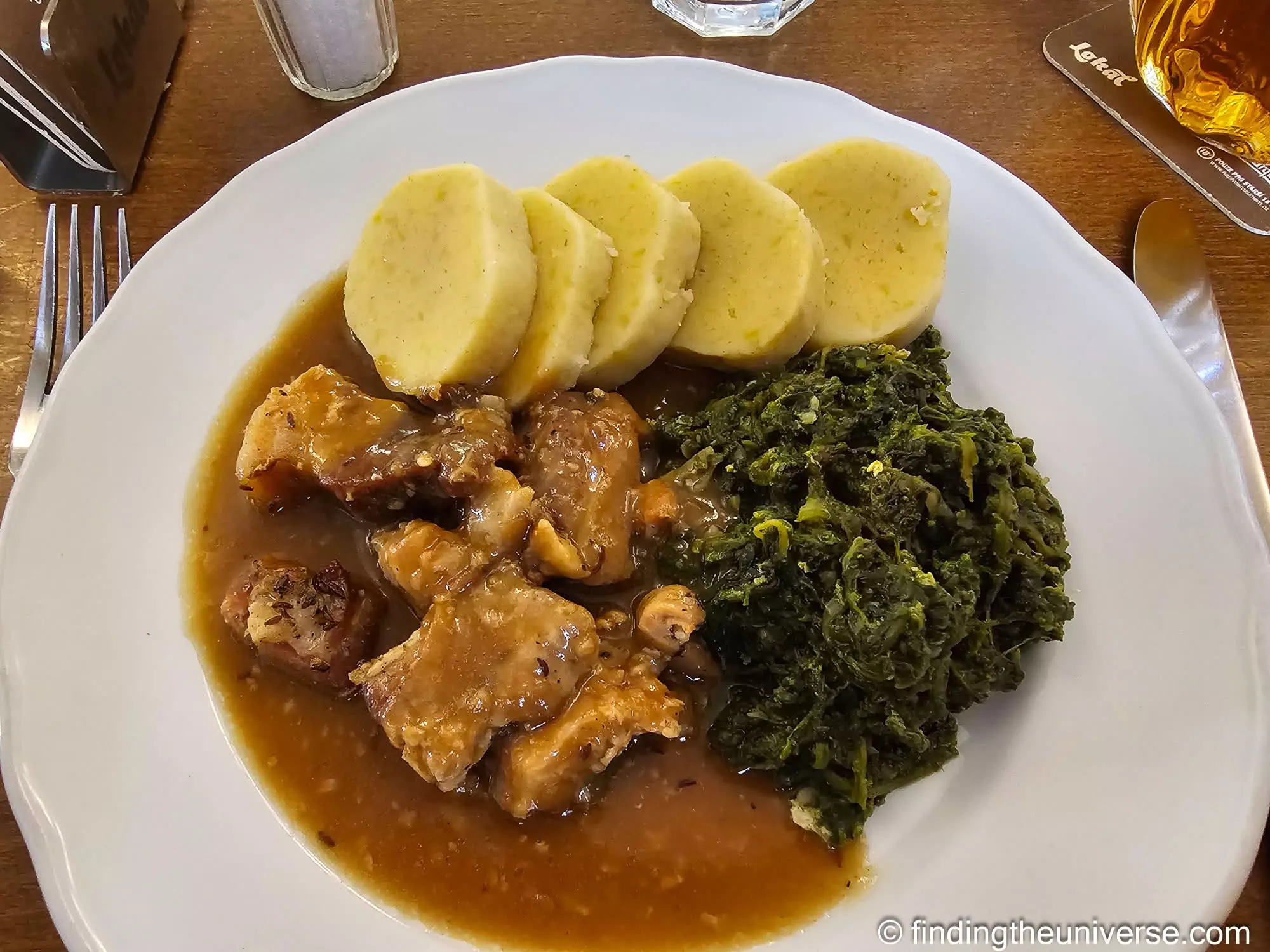
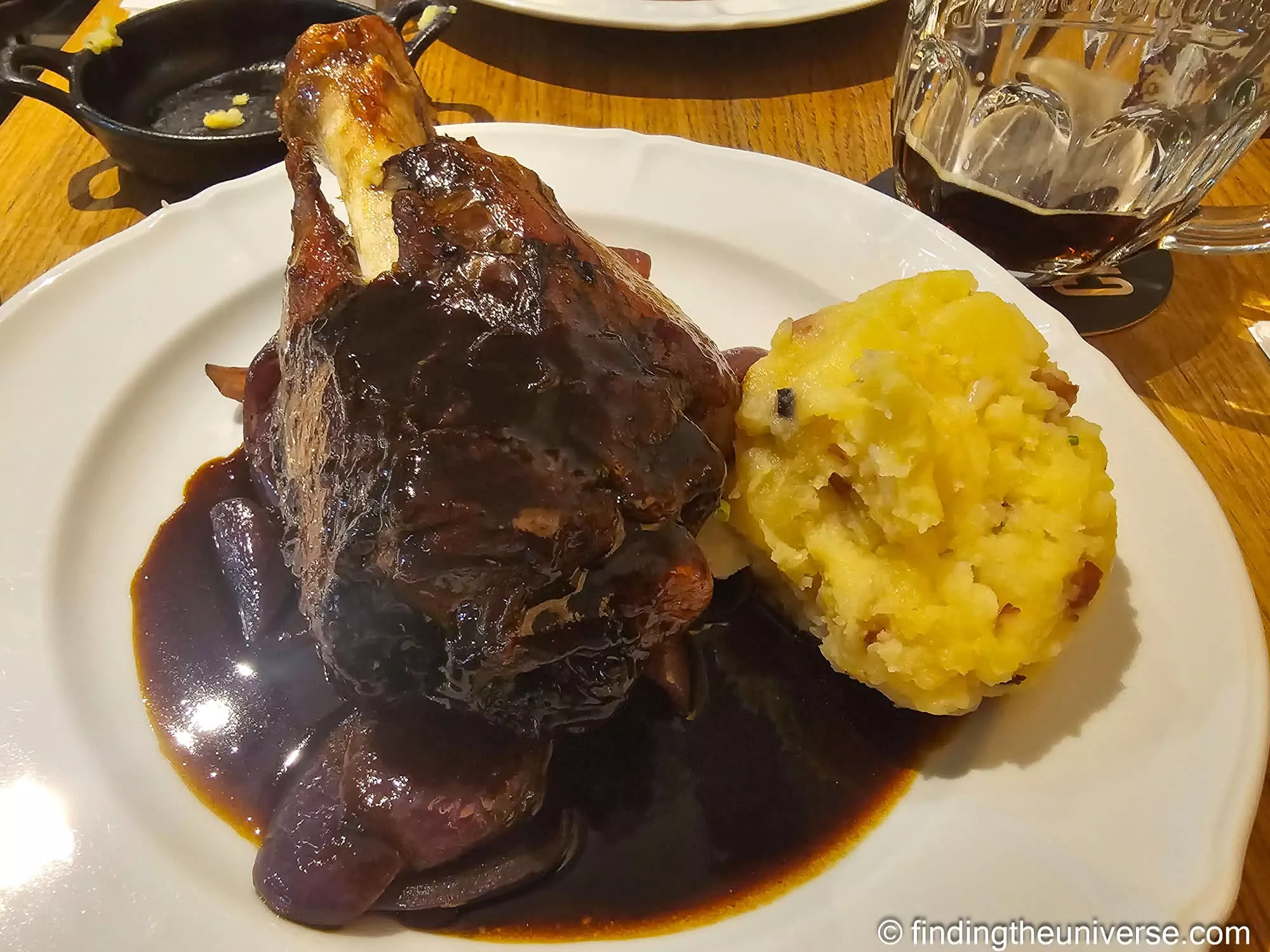
Lunch is at Lokál Dlouhááá, five minutes’ walk from the square on Dlouhá, and it was one of my favourite meals of the trip. It’s a beer hall nearly 70 metres long, pouring tank beer, with a menu of Czech classics. These tend to lean on the heavier side, generally involving a meat in sauce, some sort of dumpling, and a cabbage.
We had a creamy potato and mushroom soup, pork in gravy with dumplings and spinach, and a cake to finish, and I’d happily order all three again. It’s busy all day, so book a table.
The Museum of Medieval Art at St Agnes Convent
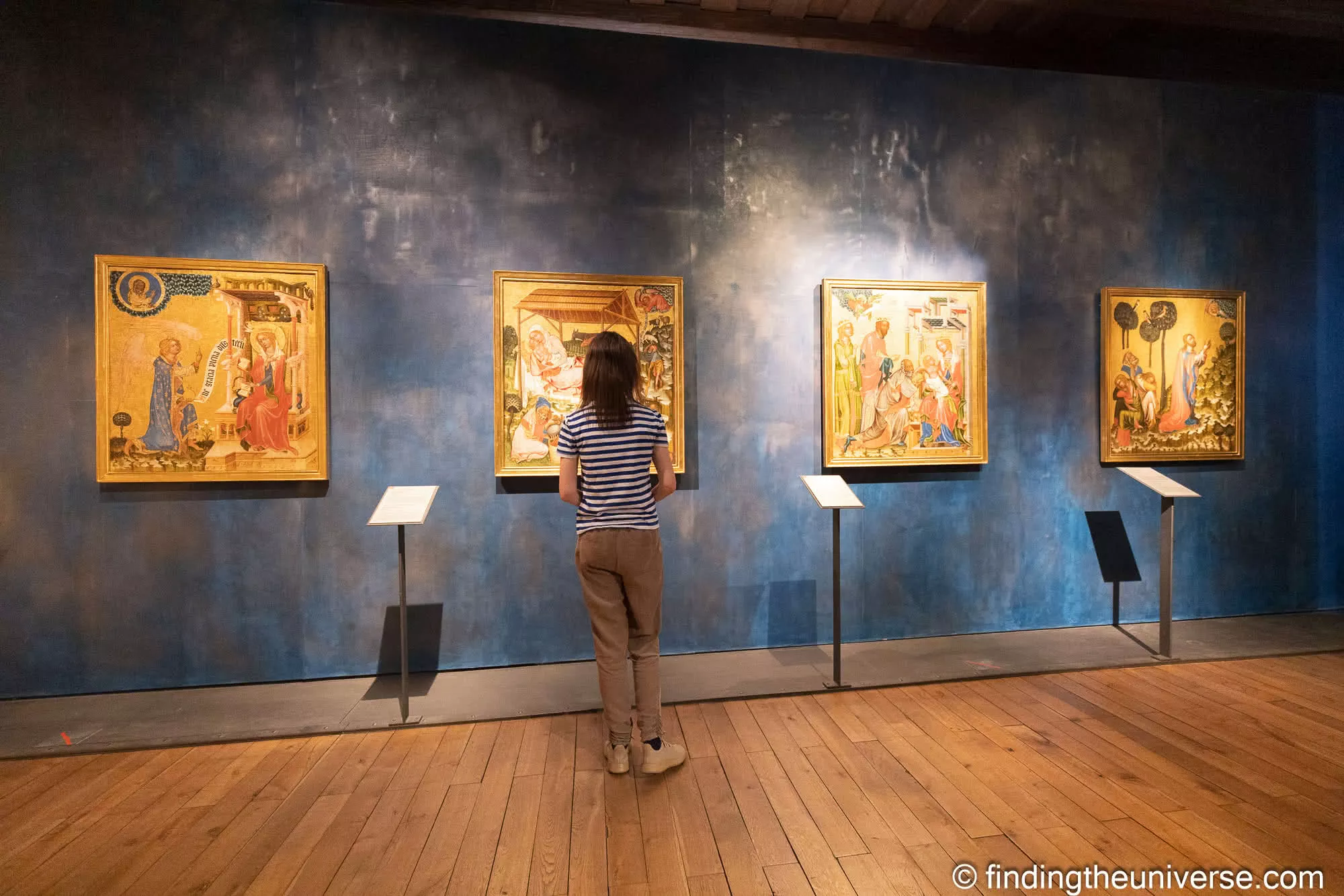
After lunch, walk north from Lokál to St Agnes Convent, a few minutes’ walk away on the edge of Josefov. It’s where the National Gallery keeps its Museum of Medieval Art, and that’s where we spent our afternoon after Lokál. It’s the National Gallery at its quietest, and we enjoyed seeing both the medieval art and the quiet atmosphere away from the crowds.
It’s open Tuesday to Sunday from 10am to 6pm, it’s closed on Mondays, and it’s free with the Visitor Pass, which lists it as the Convent of St Agnes of Bohemia rather than by the museum’s name.
The Paternoster at Prague City Hall
Next door to the Klementinum on Mariánské náměstí is Prague City Hall, and it has a working paternoster. If you’re not familiar with what this is (I wasn’t), it’s basically an open cabin elevator that never stops moving. You just step into and out of it while it’s going. If this sounds more dangerous than a regular elevator, it is, which is why there aren’t many of them in the world, and there are even fewer of them open for tourists to ride. Which makes it a unique and slightly thrilling experience.
The Prague City Hall paternoster tour (250 CZK regular, free with the pass) runs in small groups on fixed slots, and you book by email in advance. The English tours are at 5.15pm on Tuesdays, 5.15pm and 6.15pm on Thursdays, 1.15pm, 5.15pm and 7.15pm on Saturdays, and 1.15pm, 3.15pm and 5.15pm on Sundays. There are none on Mondays, Wednesdays or Fridays.
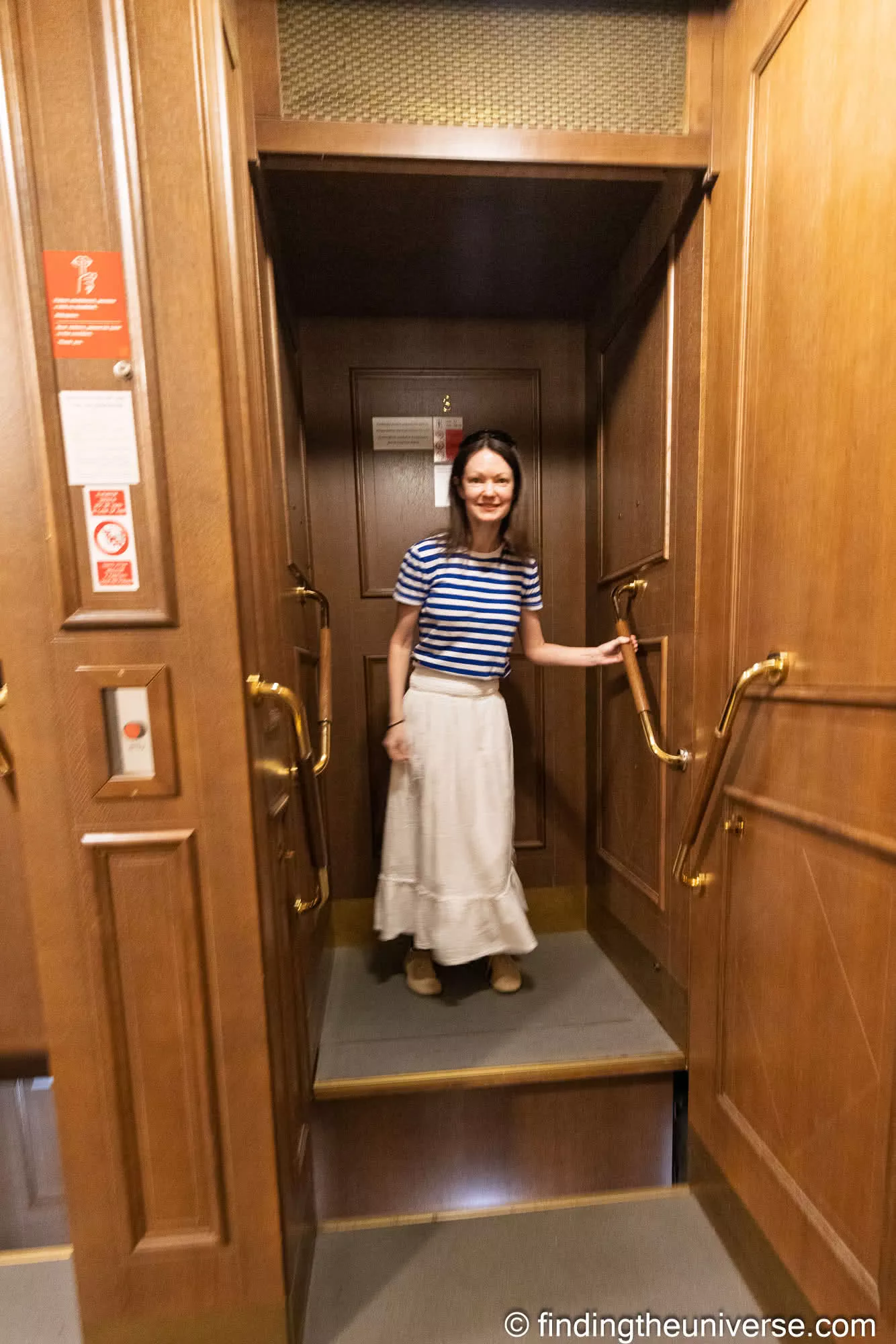
Tickets are collected from the Klementinum ticket office, so pick yours up when you’re there for the morning tour, and the paternoster tour itself starts at the Astronomical Tower entrance. The 5.15pm slot runs on all four days, and it’s the one this day is built around, because for most of the year it leaves the best light on Charles Bridge still to come. At the weekend there’s also a 1.15pm slot, straight after lunch.
From the end of October to early February the sun has set before 5.15pm, so turn the end of the day round: the bridge and the tower for sunset first, then the paternoster. In the rest of February, in March and in early October, the sun sets after the tour but the bridge tower still closes at 6pm, so climb it before the paternoster and take the sunset from the bridge itself.
It’s a nice oddity and I’d only build a day around it if your dates line up with a slot. We found the guide really interesting, he gave us a good overview of paternosters in general, how they work, and also how to safely get in and out of them. The tour also included a look around the main parts of Prague City Hall, which was also interesting.
Charles Bridge and the Old Town Bridge Tower
Charles Bridge is a ten minute walk from the square and it’s busy from mid-morning until well after dark. Go early or go late, and go more than once (you will anyway, of course; it’s the main way across the river).
It’s only really quiet at dawn, and I went back three mornings at first light for photos, although as you can see the sky was a bit moody for some of these visits.
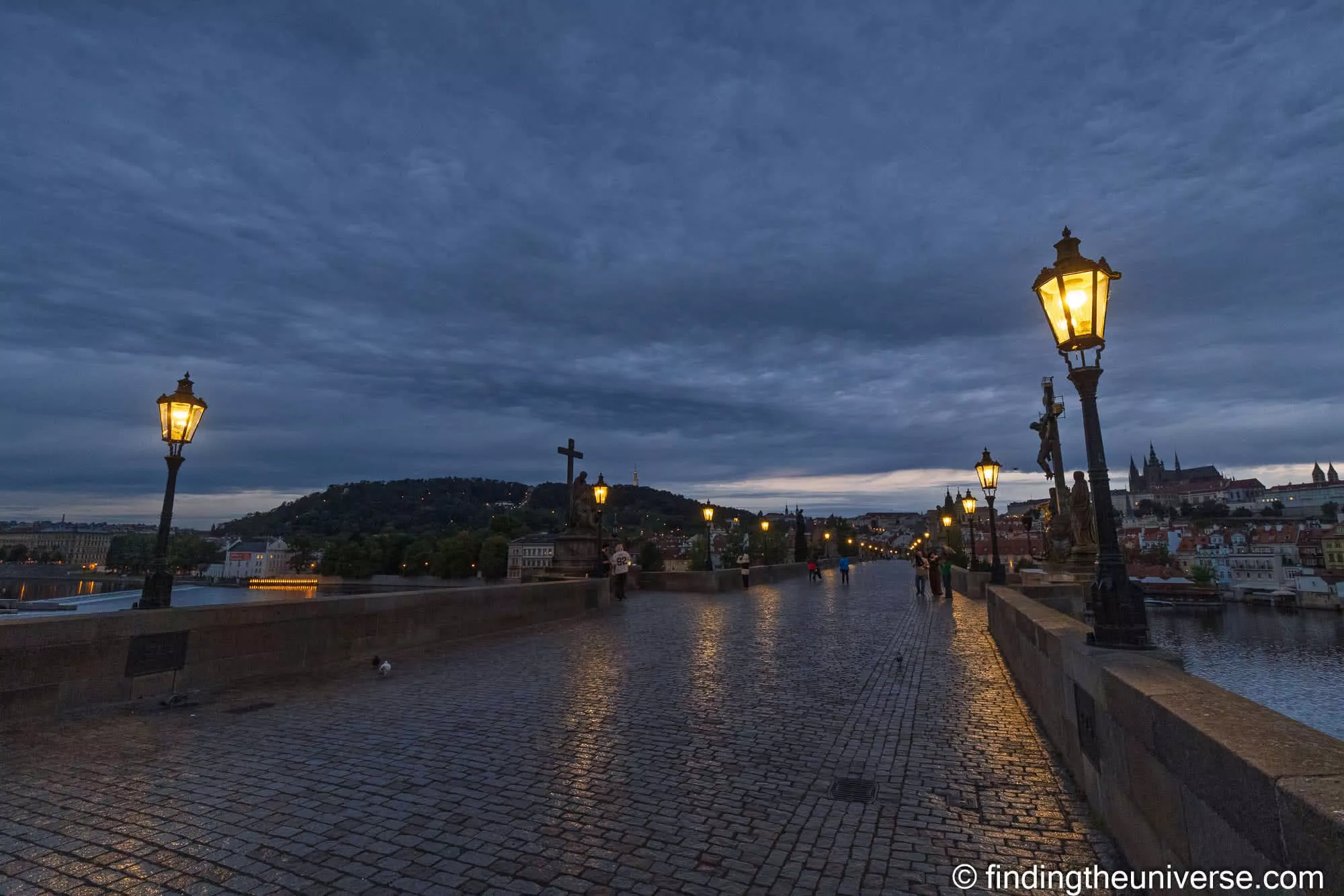
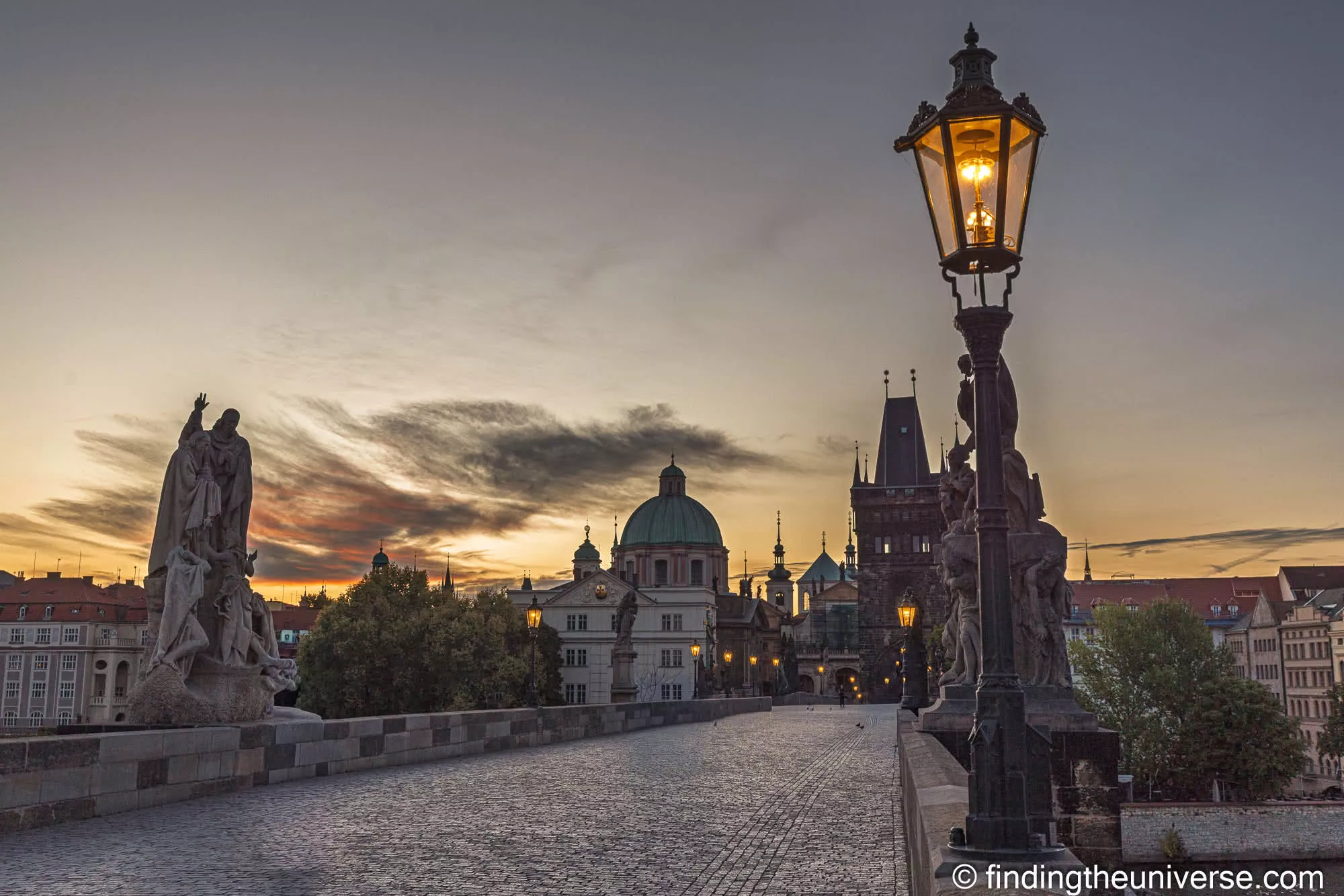
For this itinerary I’d recommend visiting at the end of the day, with the sun going down behind the castle hill.
The Old Town Bridge Tower at the eastern end is on the pass, and it was my favourite climb of the whole trip. I went up at sunset in September and the views were great, but the staff inside were really interesting to chat to as well. Who knew steeping wooden beams in cows blood was a medieval wood preservation technique!
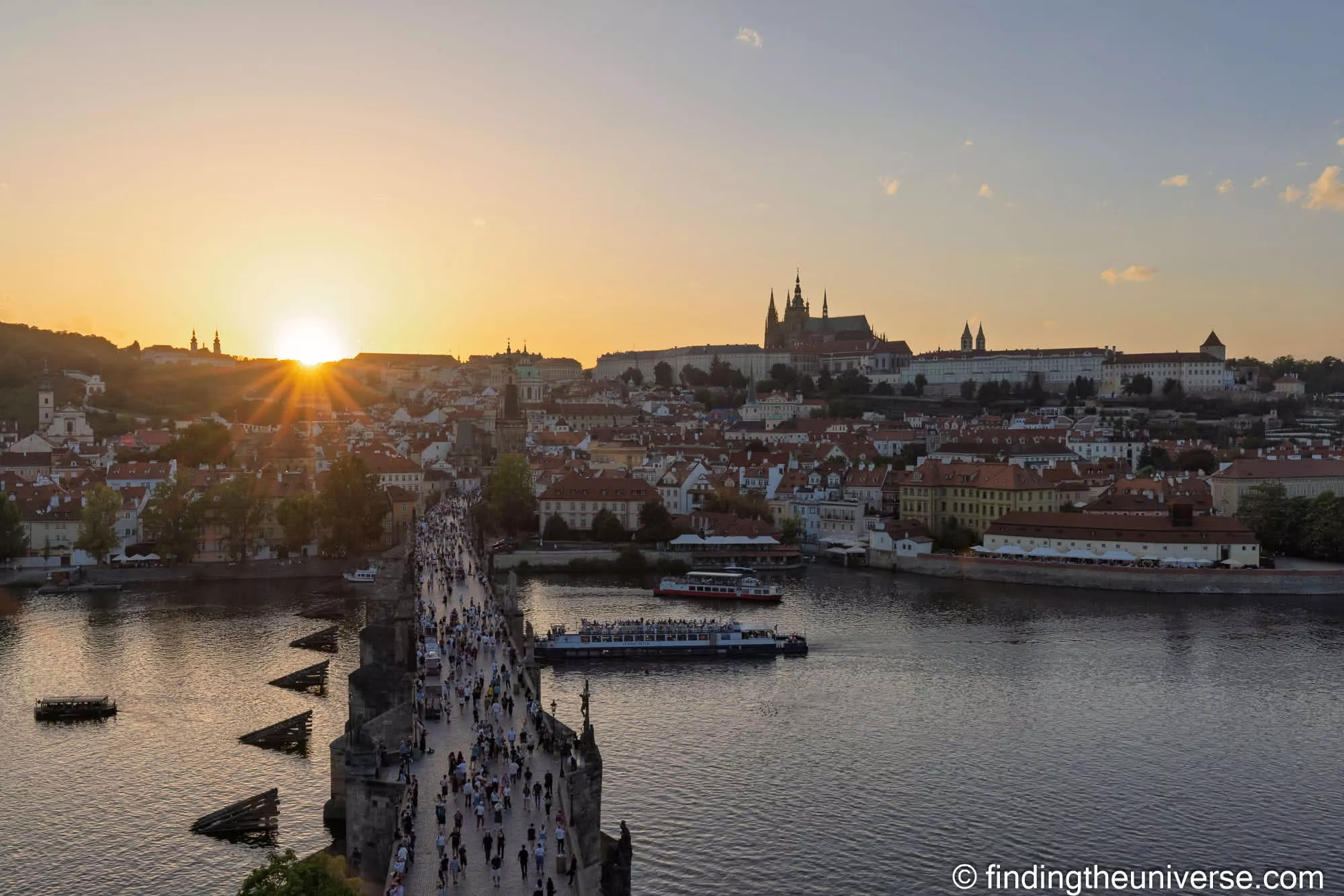
Whether you can do the same depends on your dates. From April to mid-August the tower closes with the sun still up, so take the last light from the bridge itself or from Kampa on the far bank instead. The evenings section below has the hours and the months that work.
Evening: A Concert in the Mirror Chapel
If you want a concert in Prague, and the city sells a lot of them, this is the one we did. The Mirror Chapel is inside the Klementinum, a few metres from where you stood for the tour that morning, and the daytime tour skips it, so a concert is the only way in.
The chapel is small and Baroque, with mirrors set into the ceiling, which is a strange and lovely thing to sit under while a string ensemble plays, and the programme the night we went was the familiar crowd-pleasers done well.
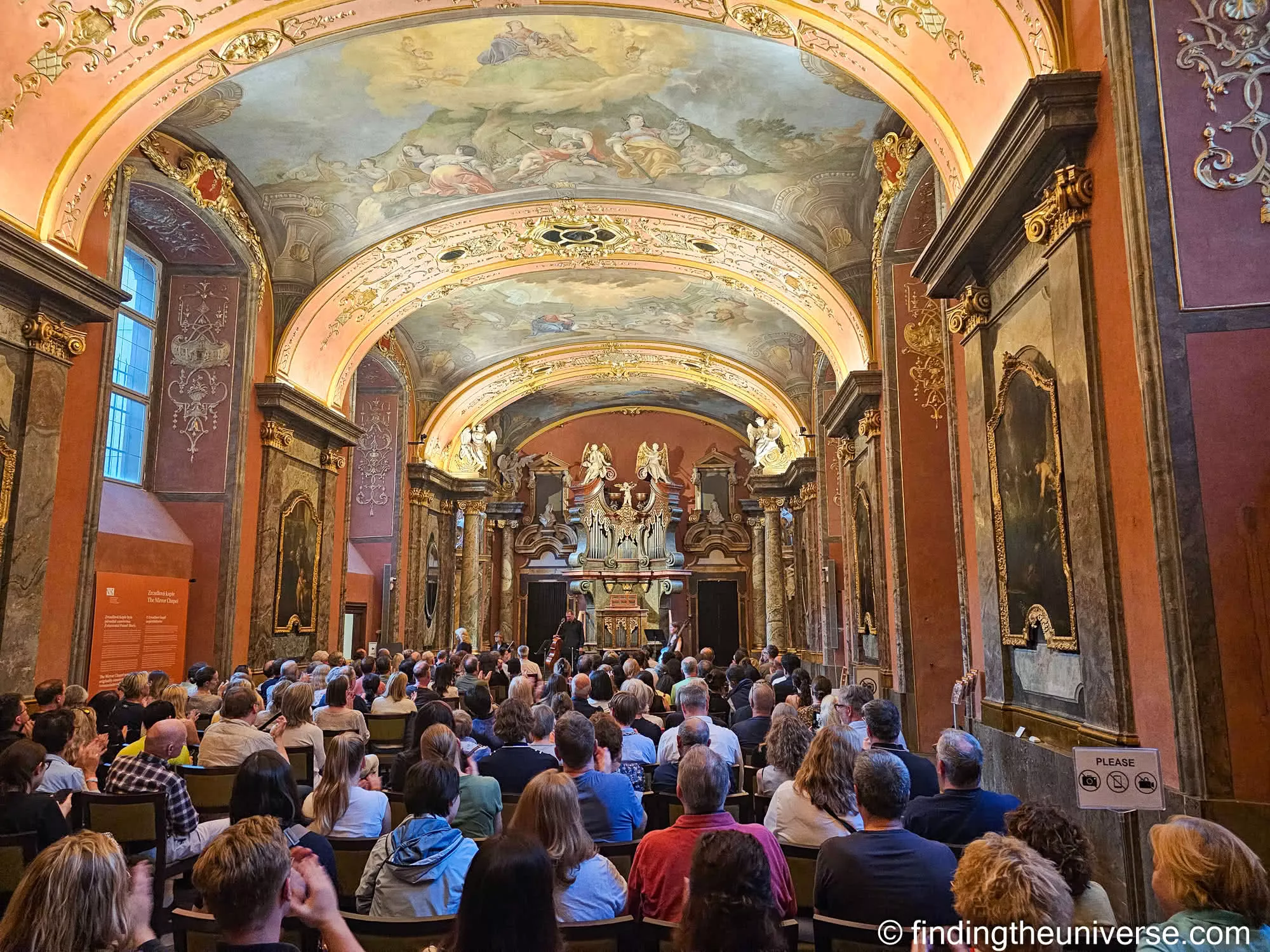
Several promoters sell concerts here on most evenings, with typical start times of 6pm or 8pm. After the paternoster and the bridge, the 8pm one is the one that fits. We booked our Mirror Chapel concert tickets here.
Doing the library tour in the morning and the concert in the evening is the same building twice, but different rooms, and the pairing worked for us. If you’d rather not go back, swap the daytime tour for the Old Town Bridge Tower and the Lesser Town Bridge Tower at the other end, and keep the concert.
Note that depending on the ticket seating varies. The only ticket we could get was for the unallocated seating section, which means first come first serve. We arrived a little later than planned so we ended up right at the back with no real view of the performers. It didn’t affect the sound, which was excellent, but if sitting near the front is important to you be sure to book well in advance.
For dinner afterwards we booked Restaurace Mincovna, which is on Old Town Square itself, about seven minutes’ walk from the Klementinum. It serves traditional Czech dishes, and having it so close to the chapel made for an easy end to the day. It’s also open relatively late most days. Book ahead.
Prague Itinerary Day 2: Prague Castle, Strahov, Petřín and Malá Strana
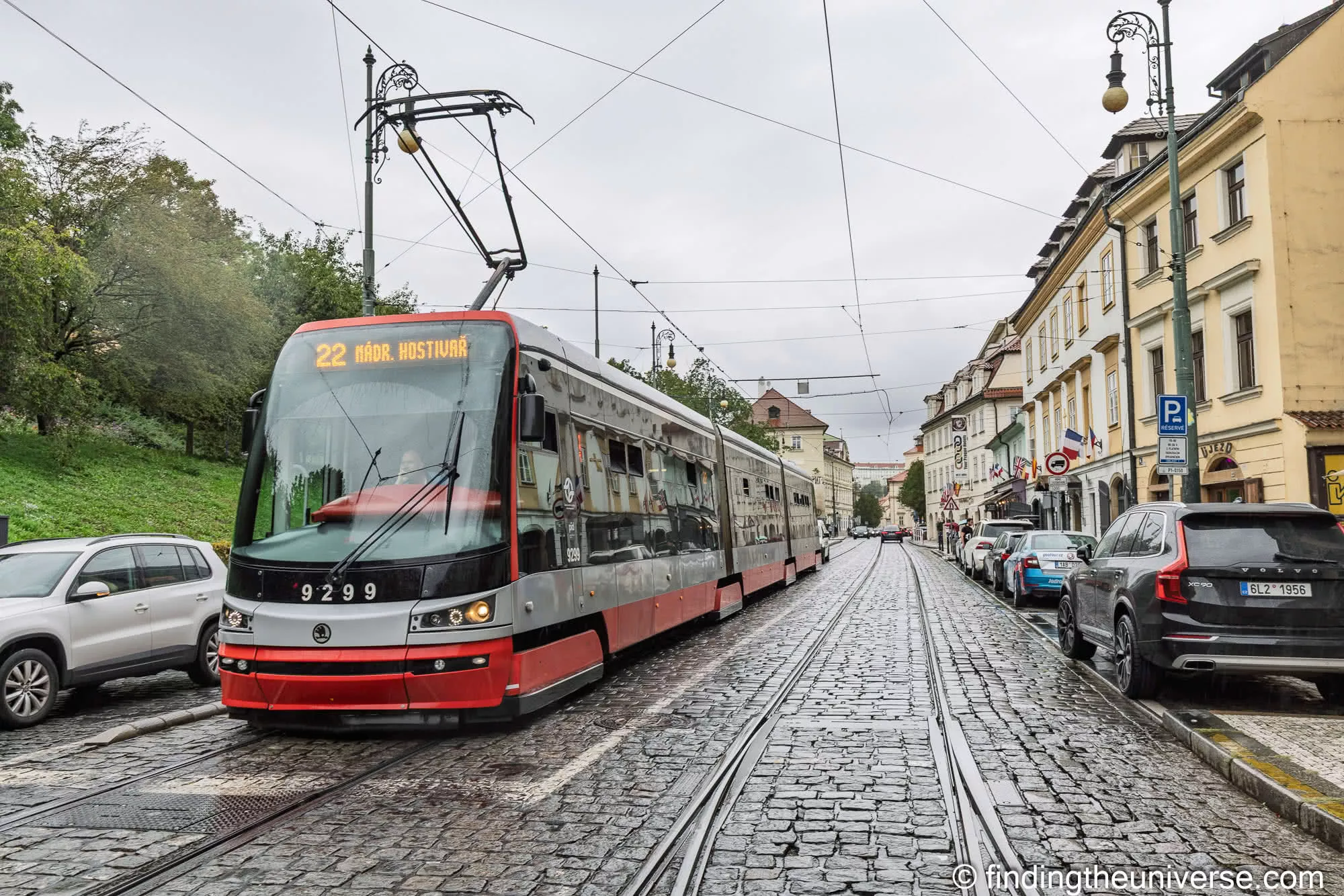
Day 2 is the long one with a hill, but you can arrange it so you have less climbing by taking tram 22. This goes from the old town right up behind the castle (use Pražský hrad stop). We recommend doing what we did, which is planning to arrive for the castle opening at 9am.
Then you can walk through the castle district to Strahov for lunch, over Petřín Hill, and down into Malá Strana for the late afternoon. From a 9am start you’ll be in Malá Strana by mid afternoon with time for a café before dinner. It’s a lot of cobbles, and Jess would like it noted that she walked every one of them on her birthday, mostly in the rain!
Prague Castle
Prague Castle is a walled town rather than a single building, which can be a little confusing, especially because there are multiple sights within which are covered by a confusing array of tickets.
The grounds are open 6am to 10pm and free to walk, and the buildings open at 9am and close at 5pm from April to October and 4pm from November to March. The main circuit ticket (450 CZK adult, 300 CZK reduced, 950 CZK family) covers St Vitus Cathedral, the Old Royal Palace, St George’s Basilica and Golden Lane, it’s valid for two days, and the the circuit ticket is free with the Visitor Pass.
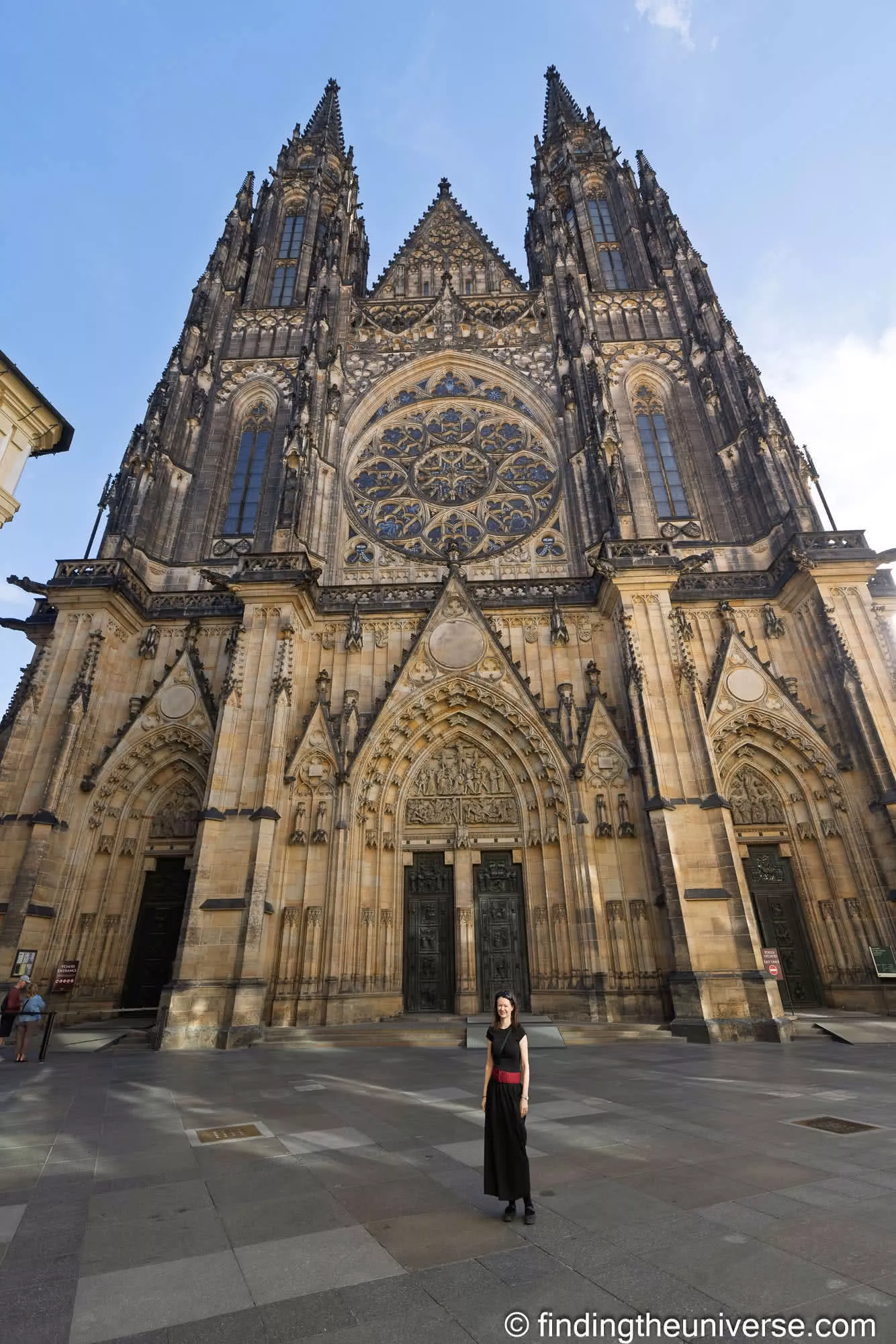
Arriving for the 9am opening put us in St Vitus before the big tour groups, and that half hour is the best argument for the early tram. I also climbed the cathedral’s Great South Tower, which was my favourite climb of the trip after the Old Town Bridge Tower.
It’s close to 300 steps and a separate ticket from the castle circuit (200 CZK adult, half price with the Visitor Pass), open 10am to 6pm from April to October and 10am to 5pm in winter, and it shuts in bad weather.
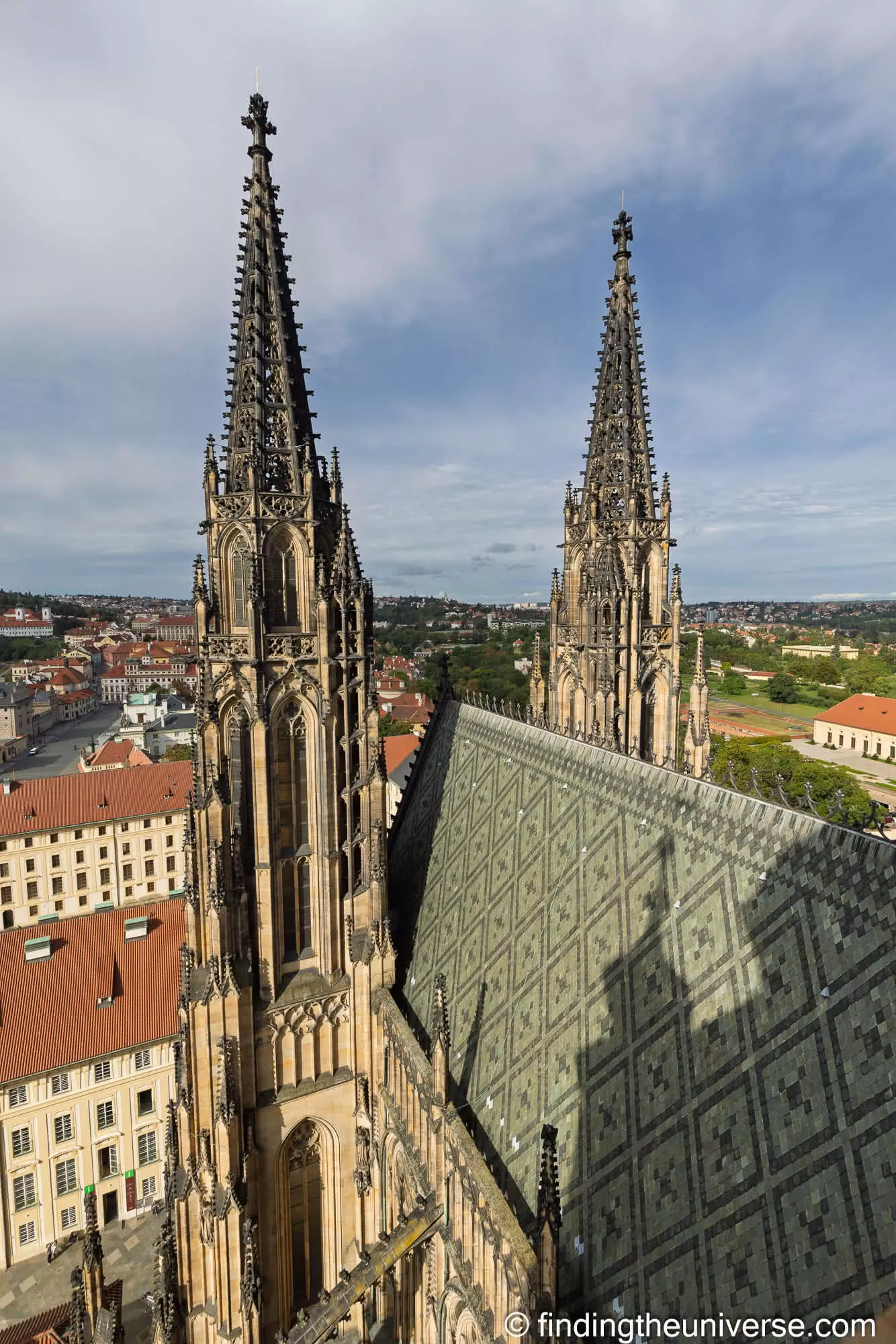
The interior of St Vitus is the one you really can’t skip, and remember it opens at noon on Sundays. Golden Lane, the row of tiny painted houses along the castle wall, is at its best before the lane fills up, so do it straight after the cathedral rather than on the way out. Give the whole complex about three hours.
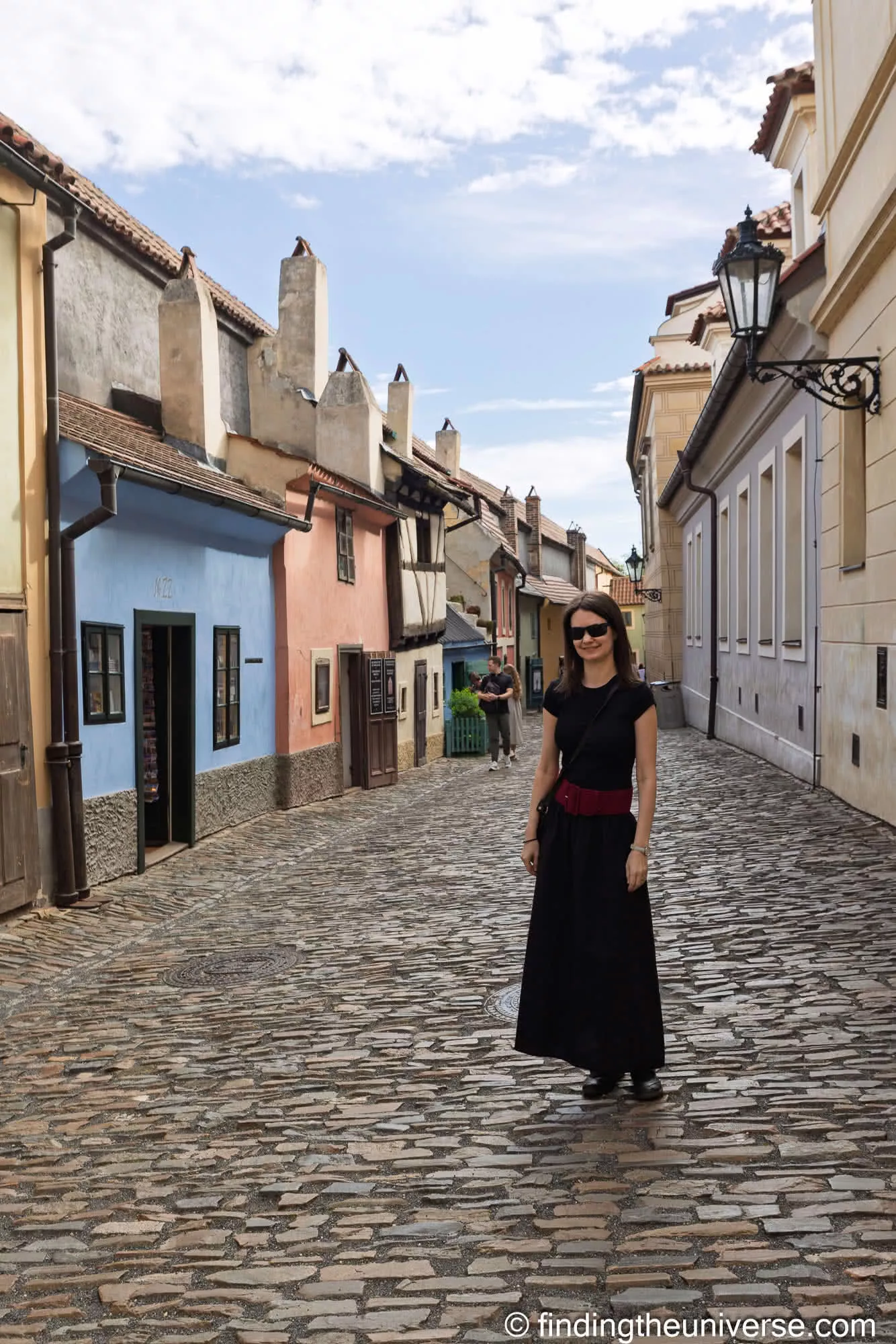
Lobkowicz Palace, at the far end of the complex by the east gate, is privately run and normally a separate ticket, but it’s free with the pass, and we enjoyed it.
It was a nice escape from the crowds in the rest of the castle, the family collection has a lot to learn from, and it’s open daily 9am to 6pm. If you’d rather have a guide for the castle, this small group castle tour includes the entry ticket.
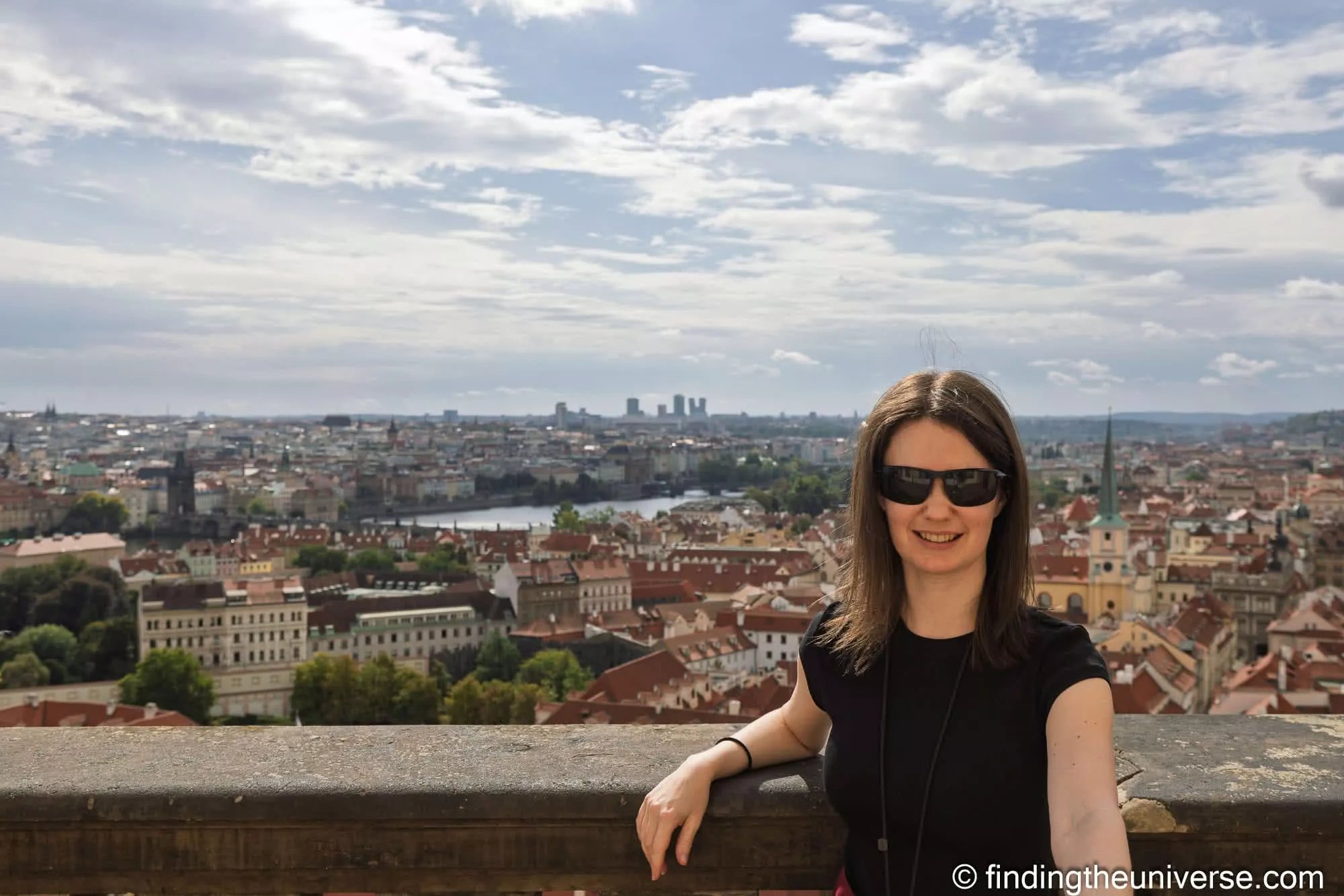
When we visited the Old Royal Palace was being refurbished so we had to miss that. Another attraction inside is the Story of Prague Castle, which tells the history of the castle complex. However, it’s not included on the main ticket, much to chagrin of the person who stands at the entrance with seemingly the sole purpose of telling people this fact as they try to get in with their main ticket.
We didn’t visit it, but it’s there if you want to. Just expect to buy a seperate ticket for it, and it’s not on the Prague Visitor Pass either.
Loreto and the Walk to Strahov
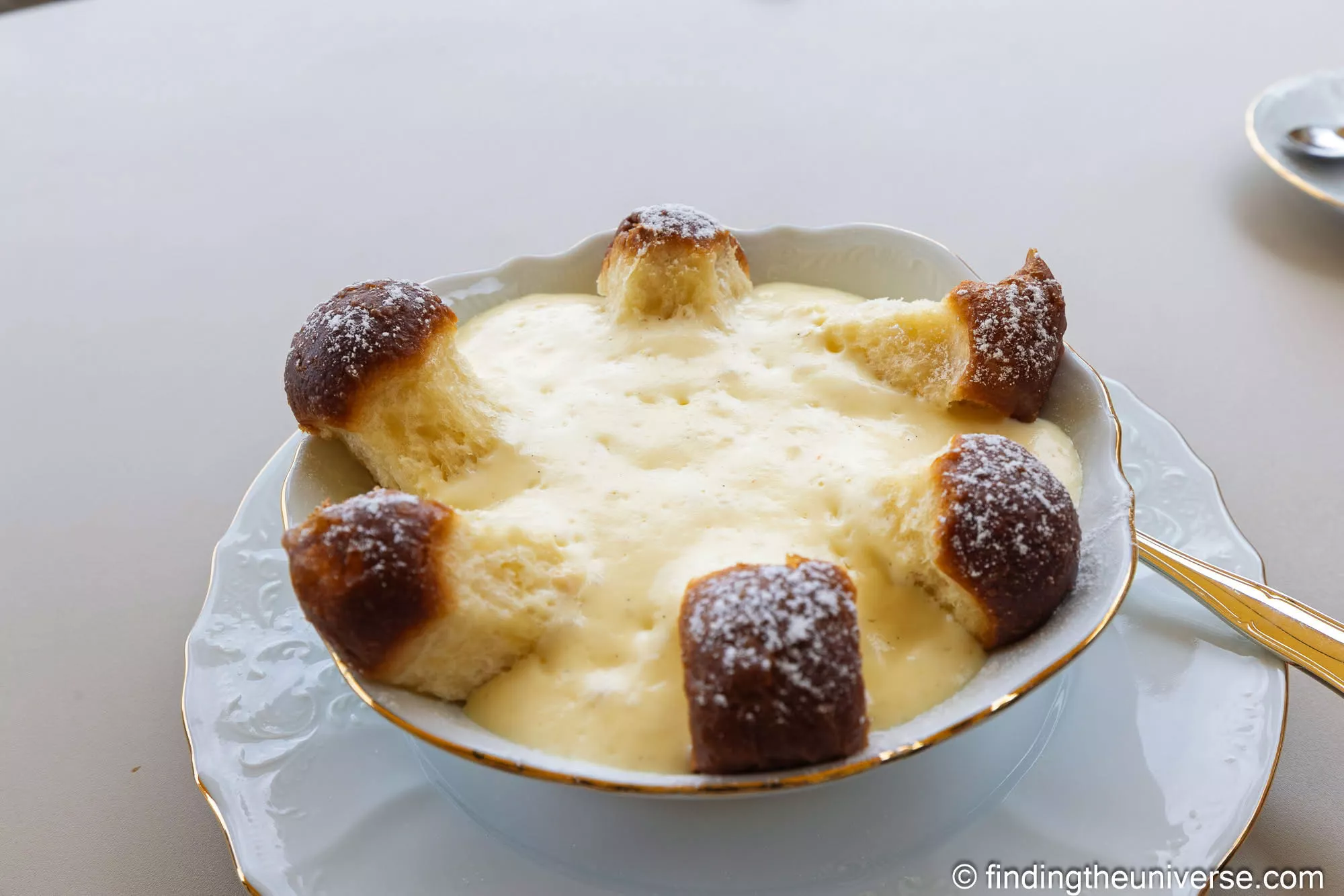
Leave the castle by the west gate onto Hradčanské náměstí, and before you head uphill, stop at Myšák. It’s the castle branch of an old Prague cake shop, in the courtyard of the Schwarzenberg Palace on the square. Order the dukátové buchtičky, little sweet buns served in a pool of vanilla cream sauce. They were one of the best things I’ve ever eaten. The views from the terrace here across the old town are also good.
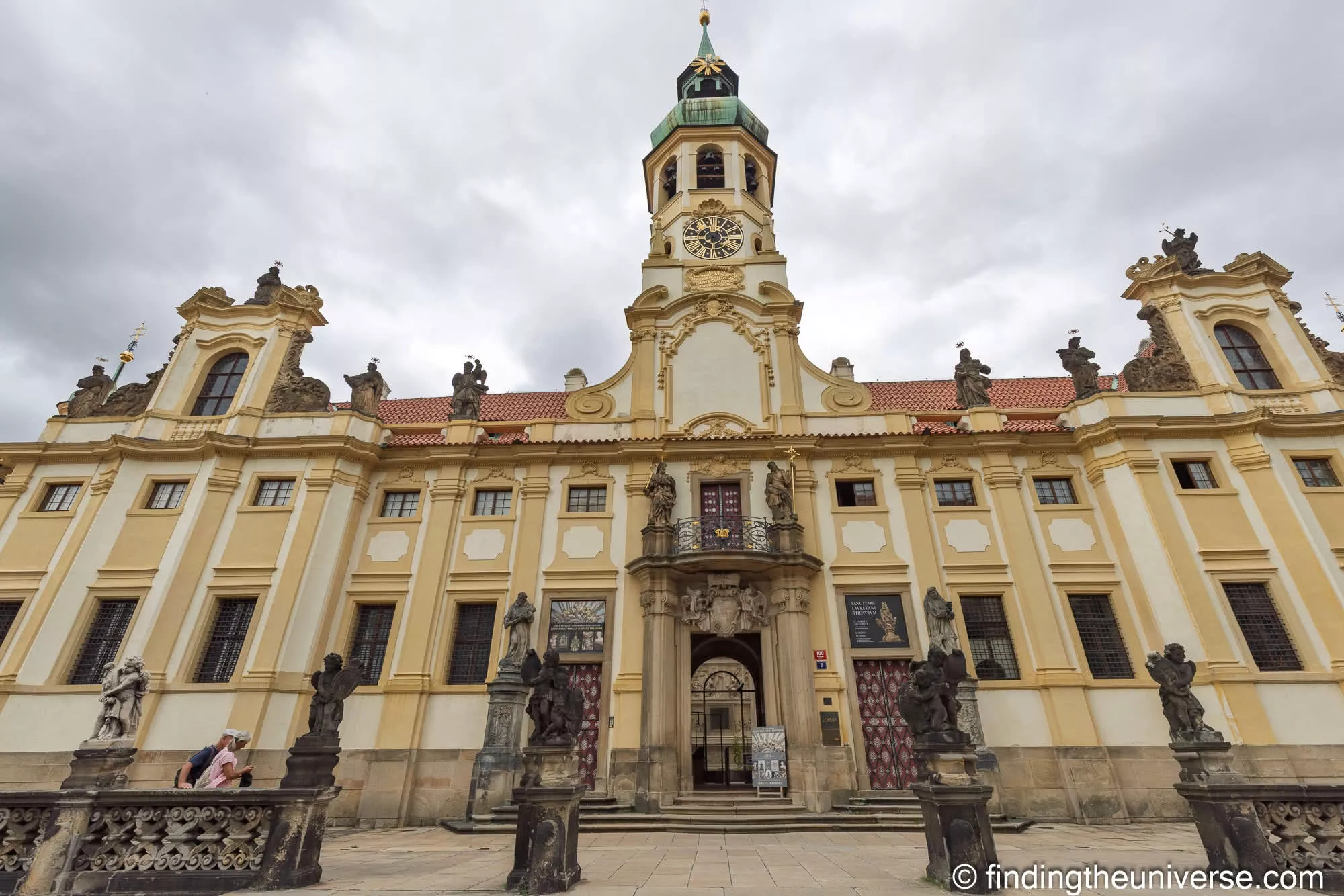
Then carry on past the Archbishop’s Palace and uphill along Loretánská. The Loreto, a pilgrimage complex with a famous carillon, is ten minutes from the castle gate and a quiet half hour if you want it. From there it’s another five minutes to Strahov.
Strahov Monastery and Lunch at the Brewery
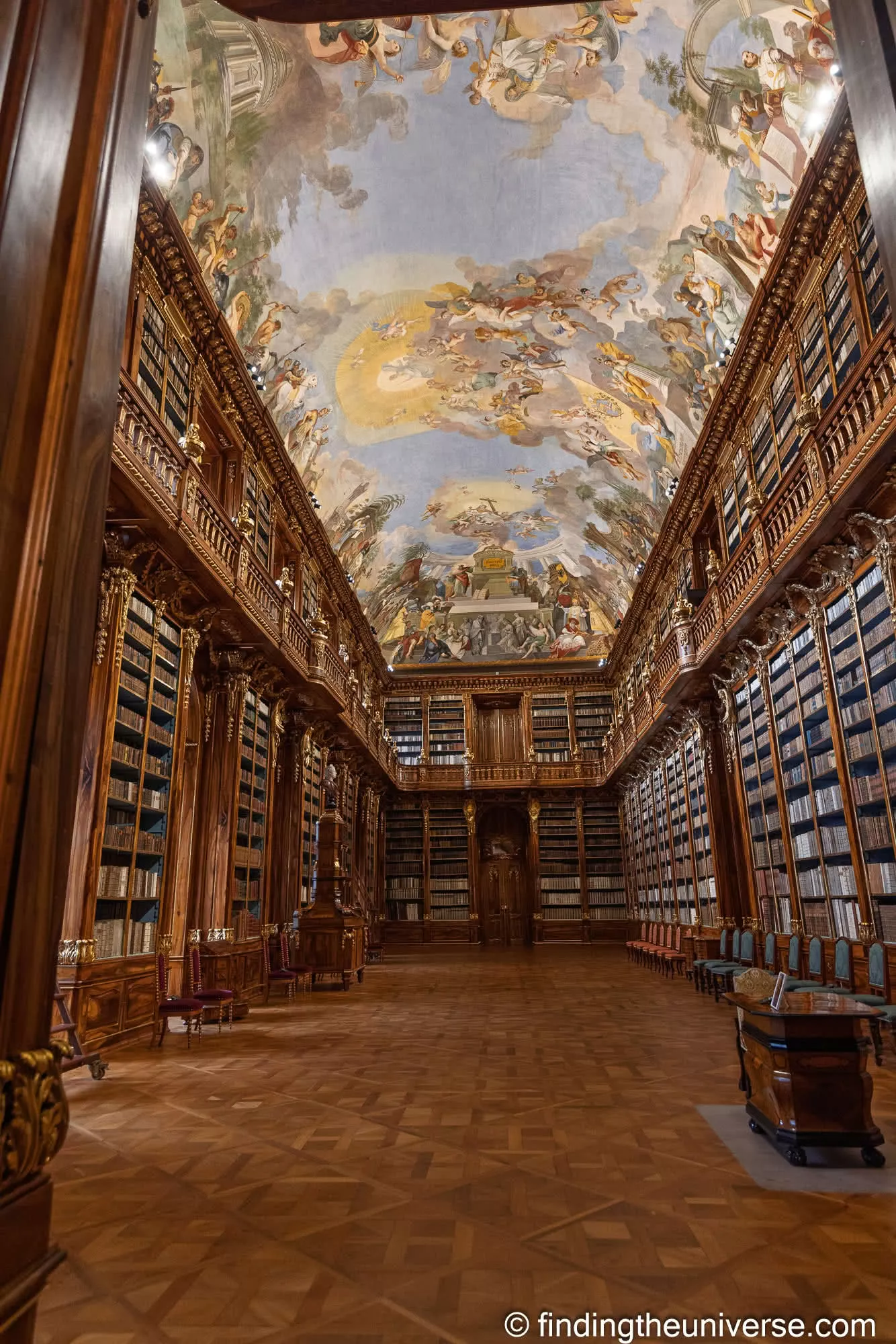
Strahov Monastery sits at the top of Petřín Hill with the whole city laid out below it, and it has two reasons to stop. The first is the library, the Philosophical and Theological Halls, which you view from the entrance doors rather than walking through. It is not on the Visitor Pass; tickets are 220 CZK from the office in the Church of St Roch, open 9am to 5pm, and the office takes koruna.
There’s also a self-service ticket machine you can get tickets from right by the entrance, although when we visited the interface was mind bogglingly slow and you might find walking the two minutes to the ticket office where you can interact with a real human to be a quicker and less stressful experience.
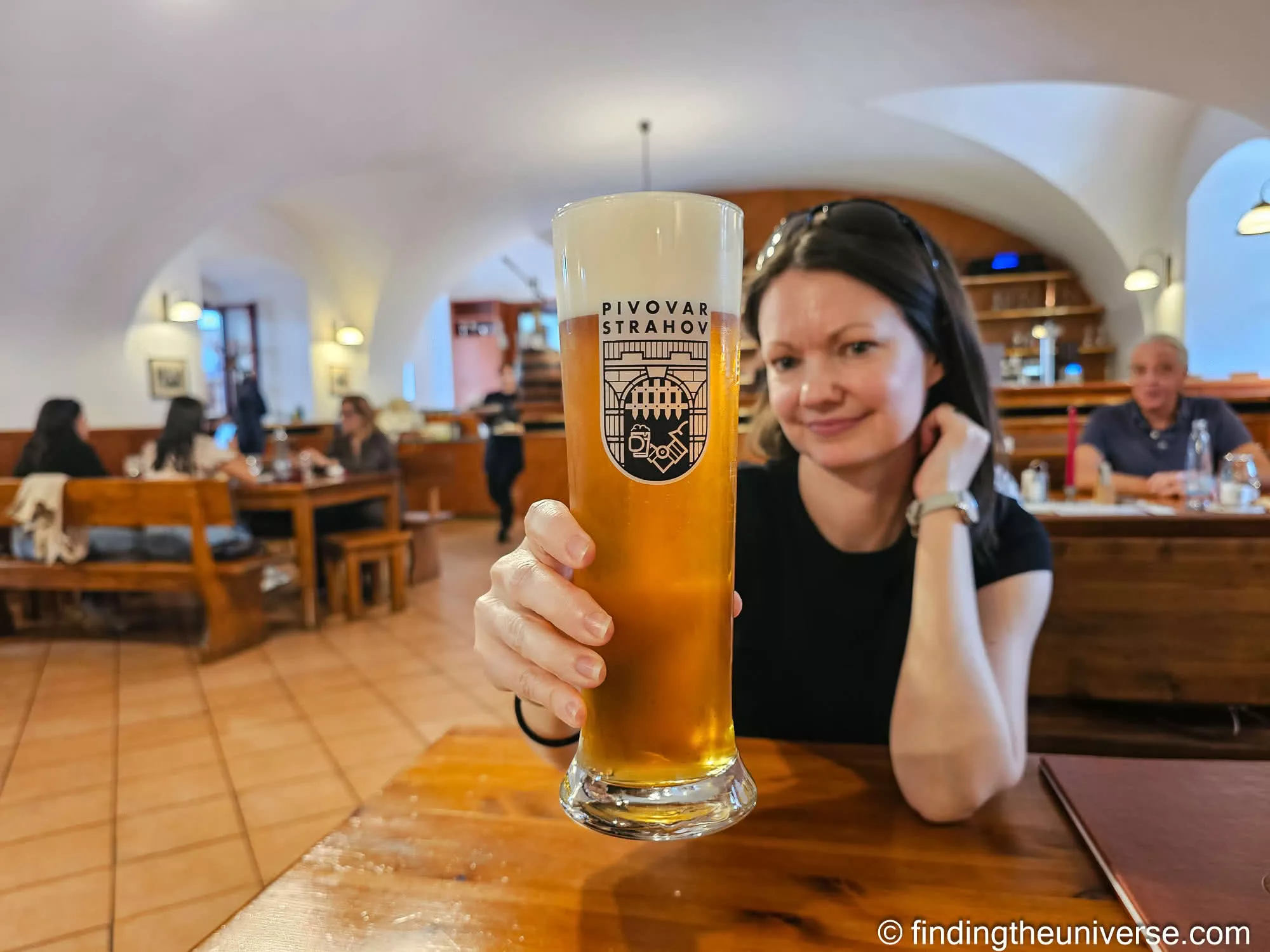
The second attraction in this area is the monastery brewery in the courtyard, which brews its own beer on site, including the amber St Norbert lager, and does a solid lunch. We had beef tartare (a Czech speciality) with toasted bread and a bowl of garlic soup alongside the beer.
It gets very busy, so arrive a bit before you’re hungry. We didn’t make a reservation here as weren’t able to figure out if they take them but we were seated straight away.
Petřín Hill
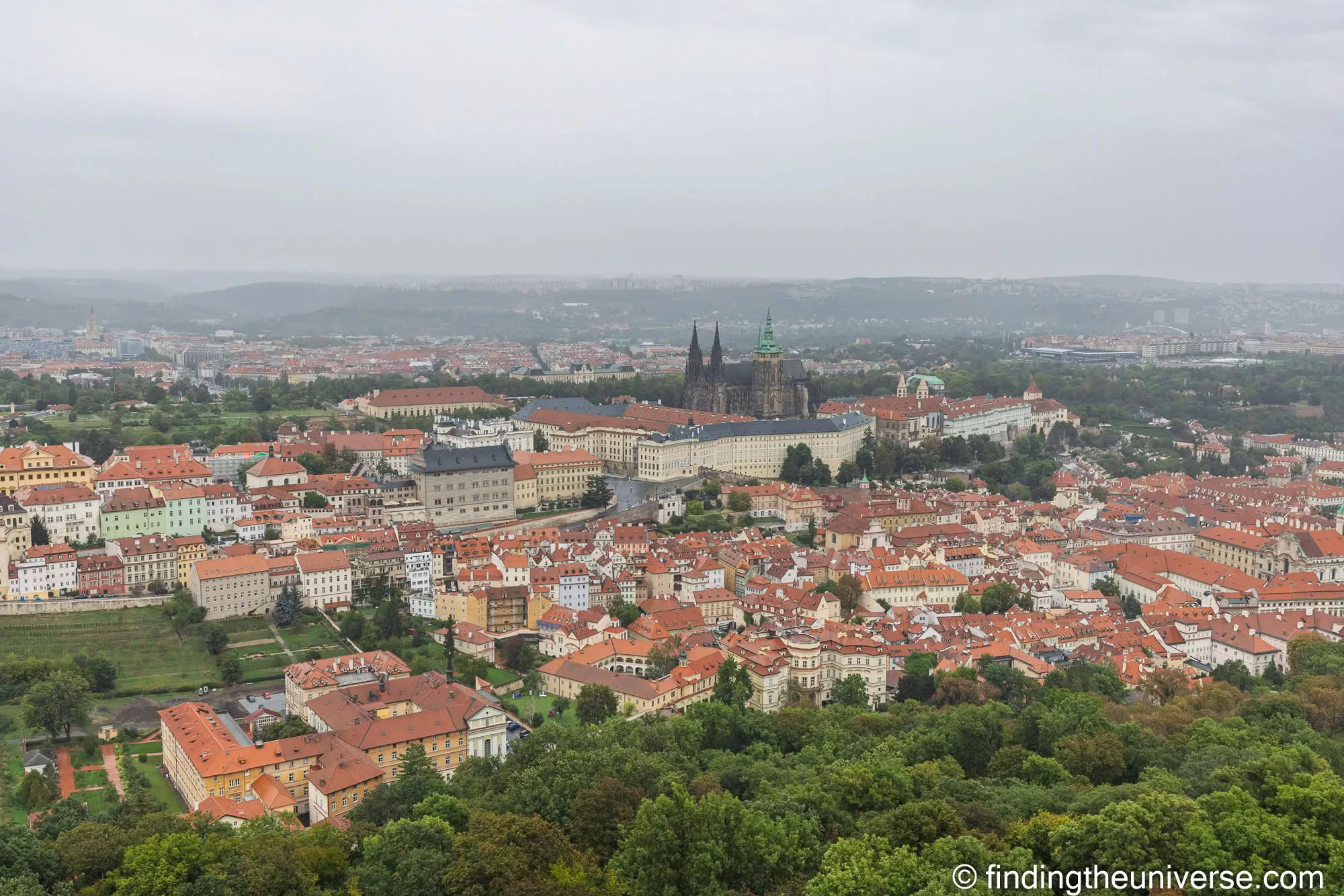
From Strahov, the paths through the orchards take you up to Petřín Hill with the view opening up on your left.
At the top of the hill are the Petřín Lookout Tower (a small Eiffel Tower, 9am to 7pm from April to September, shorter in winter) and the Mirror Maze next to it, both on the pass, and the Štefánik Observatory, which is also on the pass.
The observatory’s hours change month by month: from April to September it opens on weekday afternoons as well as in the evenings, and from October to March it’s weekday evenings plus daytime at weekends, so check its site for your dates.
We climbed the tower, although it was pouring with rain, which put a bit of a dampener on the view. We also called into the observatory on the way down. The rain meant they couldn’t open the dome, but it was still worth the visit, and I’d really not expected to enjoy it as much as I did!
The Petřín funicular reopened in late September 2026 after two years of rebuilding, so it was still closed when we walked down. It now runs daily from 7am to 10.15pm, every ten minutes, and it has its own single ticket (100 CZK, or 90 CZK in the PID Lítačka app), or it’s free with the Visitor Pass or a 24 or 72 hour transport ticket.
If your knees would prefer it (mine would have), ride it down to Újezd; if you’d rather do the hill in the other direction, ride up and walk the ridge to Strahov.
Malá Strana, Kampa and the Lennon Wall
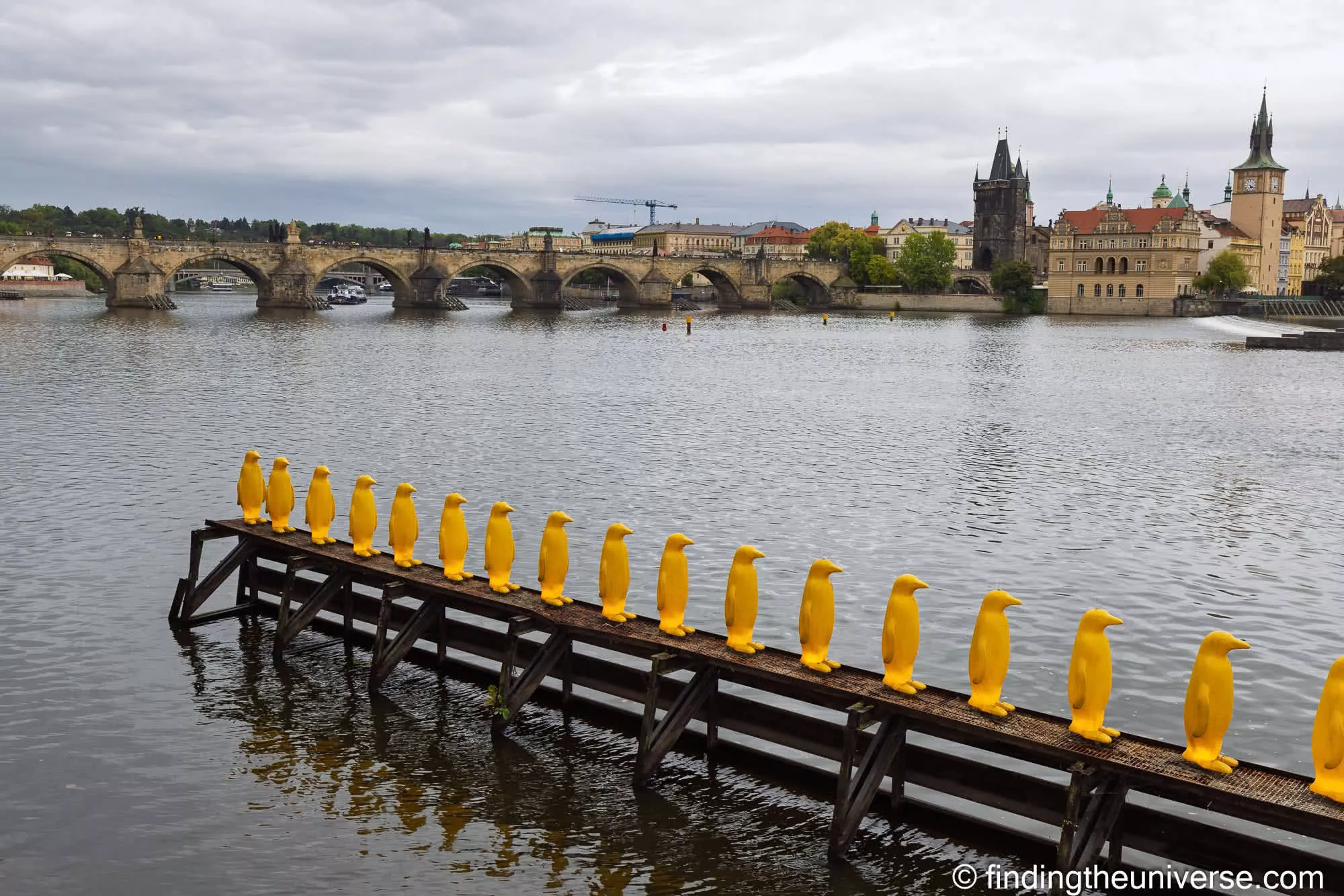
The bottom of the hill puts you in Malá Strana, the Lesser Town, which is the prettiest half hour of wandering in the city. Kampa Island, with its millrace and its riverside lawn looking across at the Old Town, is the place to sit down for a bit.
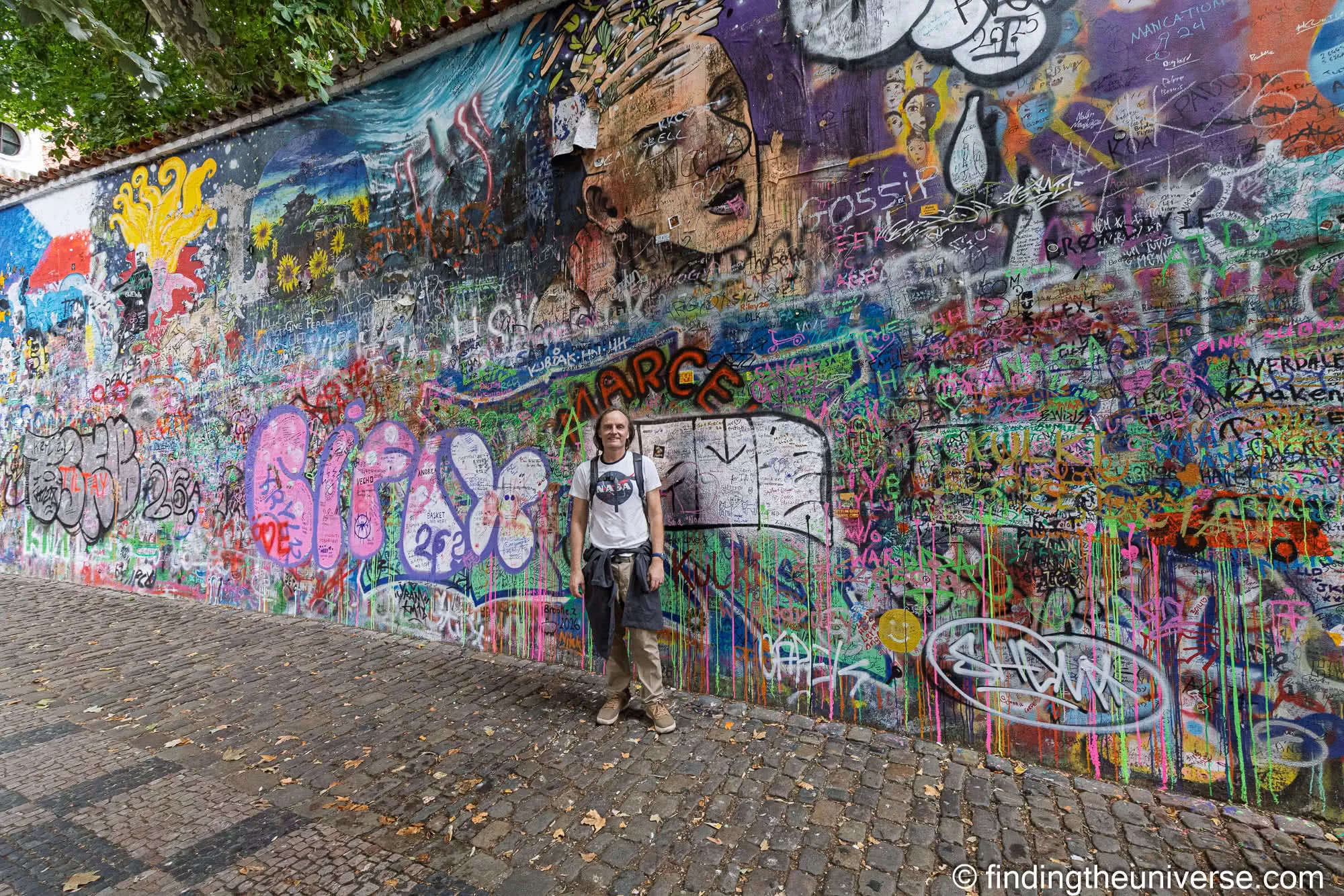
The Lennon Wall is a two minute detour from it and worth exactly that long.
Then head up to Malostranské náměstí for St Nicholas Church, the big green-domed Baroque church that dominates this side of the river. Its bell tower is on the pass and keeps the same hours as the Old Town Bridge Tower, so in September it’s open until 8.30pm, and it’s the other sunset tower in the evenings section.
Café Savoy
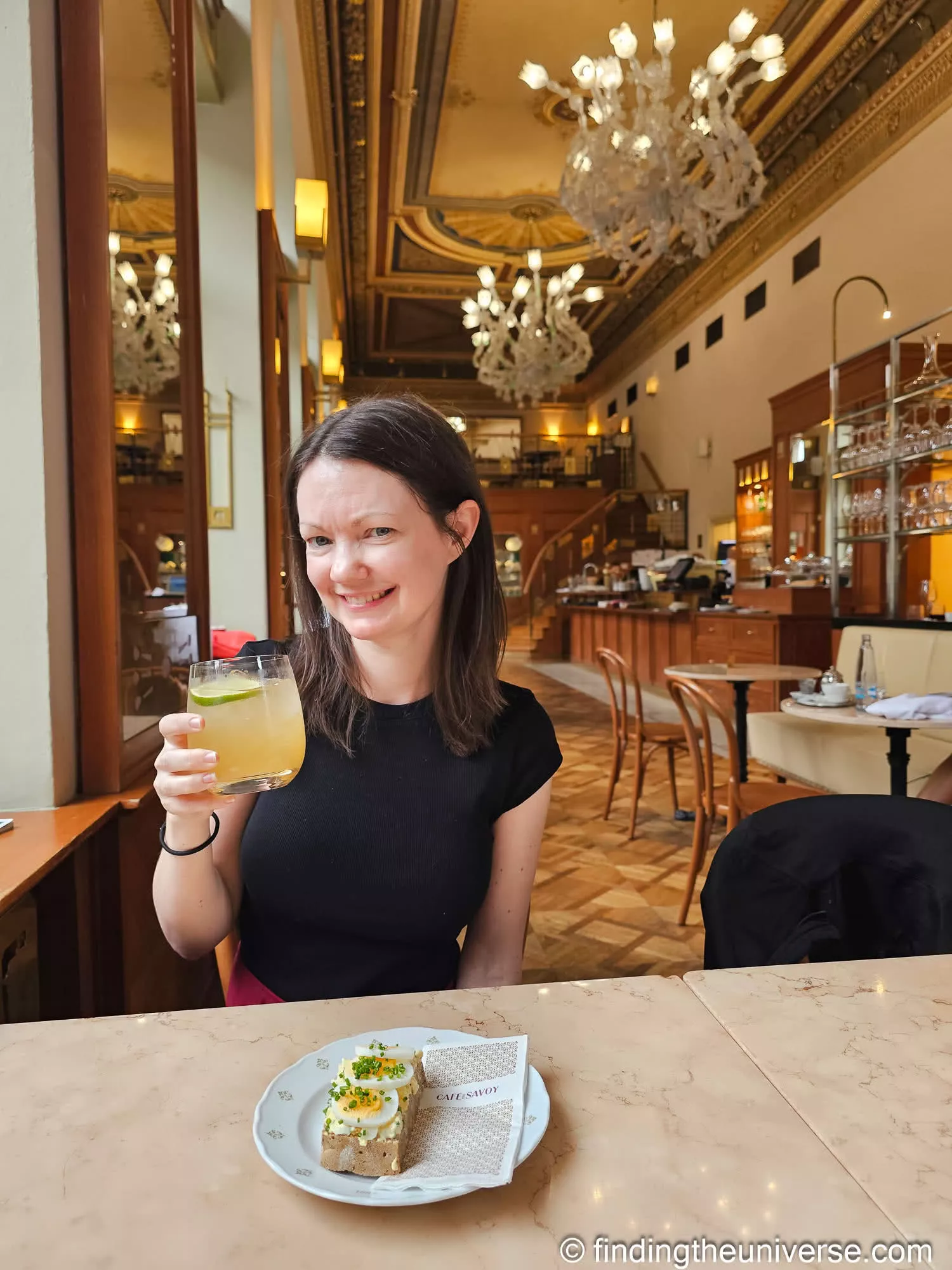
Finish at Café Savoy, five minutes south of Kampa, which is a proper grand café, all high ceilings and a cake counter that makes decisions difficult. It was where we ended Jess’s birthday afternoon before dinner, and it was quite busy mid-afternoon. We’d booked a table, and I’d do the same if you’re set on it.
We kept it light with an egg open sandwich, as we had dinner booked for 8pm.
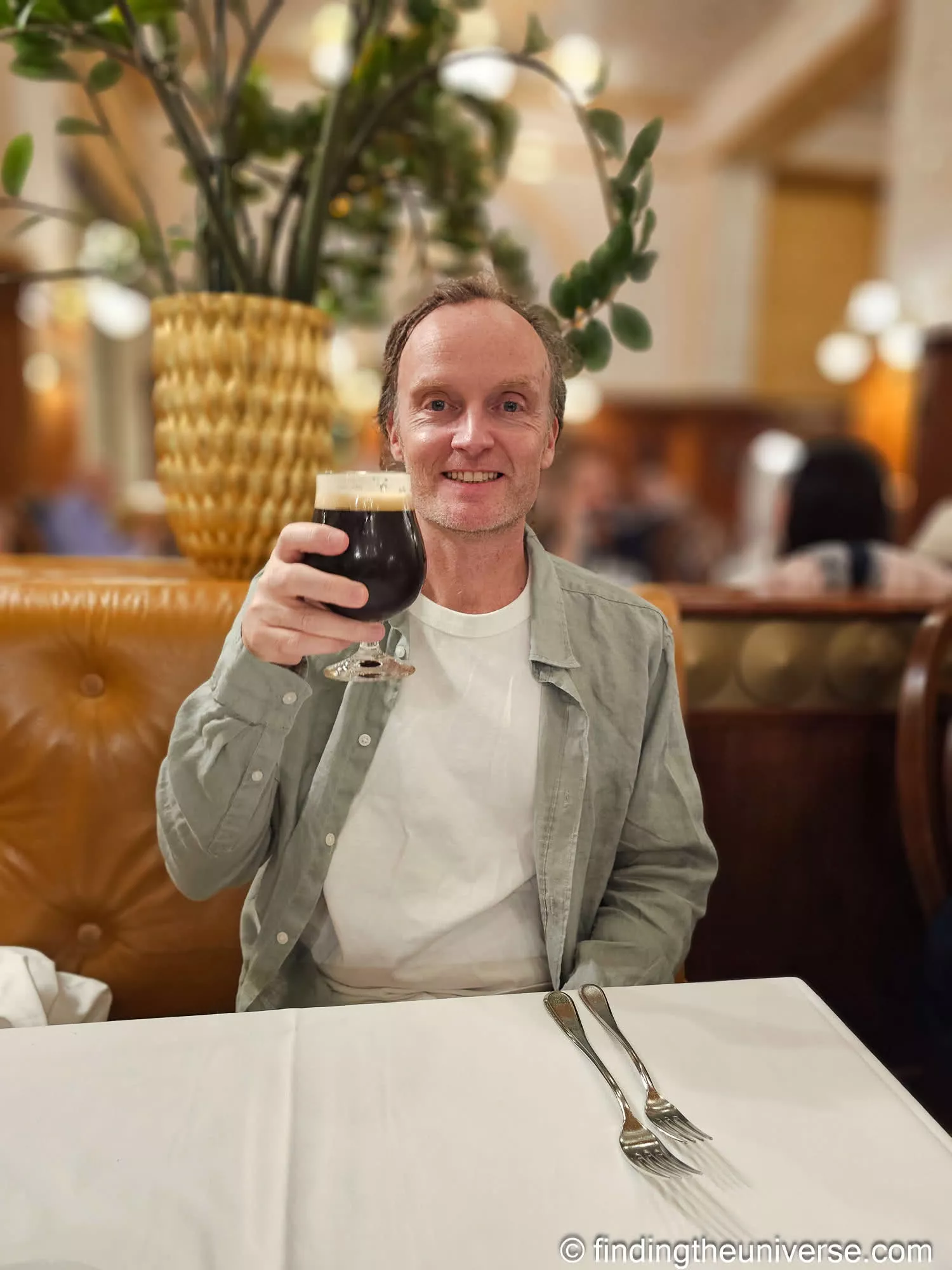
Dinner was Café Imperial, back across the river near náměstí Republiky, in a dining room covered in ceramic tiles. That was the birthday dinner proper, and it books up, so reserve ahead and allow a good half hour to get there from Malá Strana.
Prague Itinerary Day 3: Josefov, the New Town and the River
Start in the Jewish Quarter, five minutes north of Old Town Square, and work east and then south through the New Town to the river, finishing with a cruise at dusk. It’s a 9am to 8pm day on foot, but the attractions are all close together.
If Your Day 3 Is a Saturday
Josefov is closed on Saturdays and Jewish holidays, so if that’s where Day 3 lands, swap the two halves of the trip around. Do the Jewish Quarter on Day 1 after the Klementinum tour, in place of St Agnes, and move Charles Bridge and the bridge tower to Day 3, where they fit after the Dancing House on the walk back along the river. Day 1 is then a Thursday, so the paternoster keeps its 5.15pm slot, with a 6.15pm one as a fallback.
Check the Jewish Museum’s holiday list for your dates while you’re at it; a Thursday in late September can be a holiday closure too.
The Jewish Quarter
Pick up your tickets first. The Jewish Museum’s Visitor Centre is at Maiselova 15, and it’s where pass holders collect their entry; a regular adult ticket to the museum sites is 600 CZK.
The circuit takes in the Maisel, Pinkas, Spanish and Klausen synagogues, the Ceremonial Hall and the Old Jewish Cemetery, and the Old-New Synagogue, which is run separately and included on the pass, sits in the middle of them all.
Allow two and a half to three hours and do it in the morning while it’s a bit cooler and quieter. The synagogues get busy and have quite strict security screening (think airport style), so the queues can get long as the day progresses.
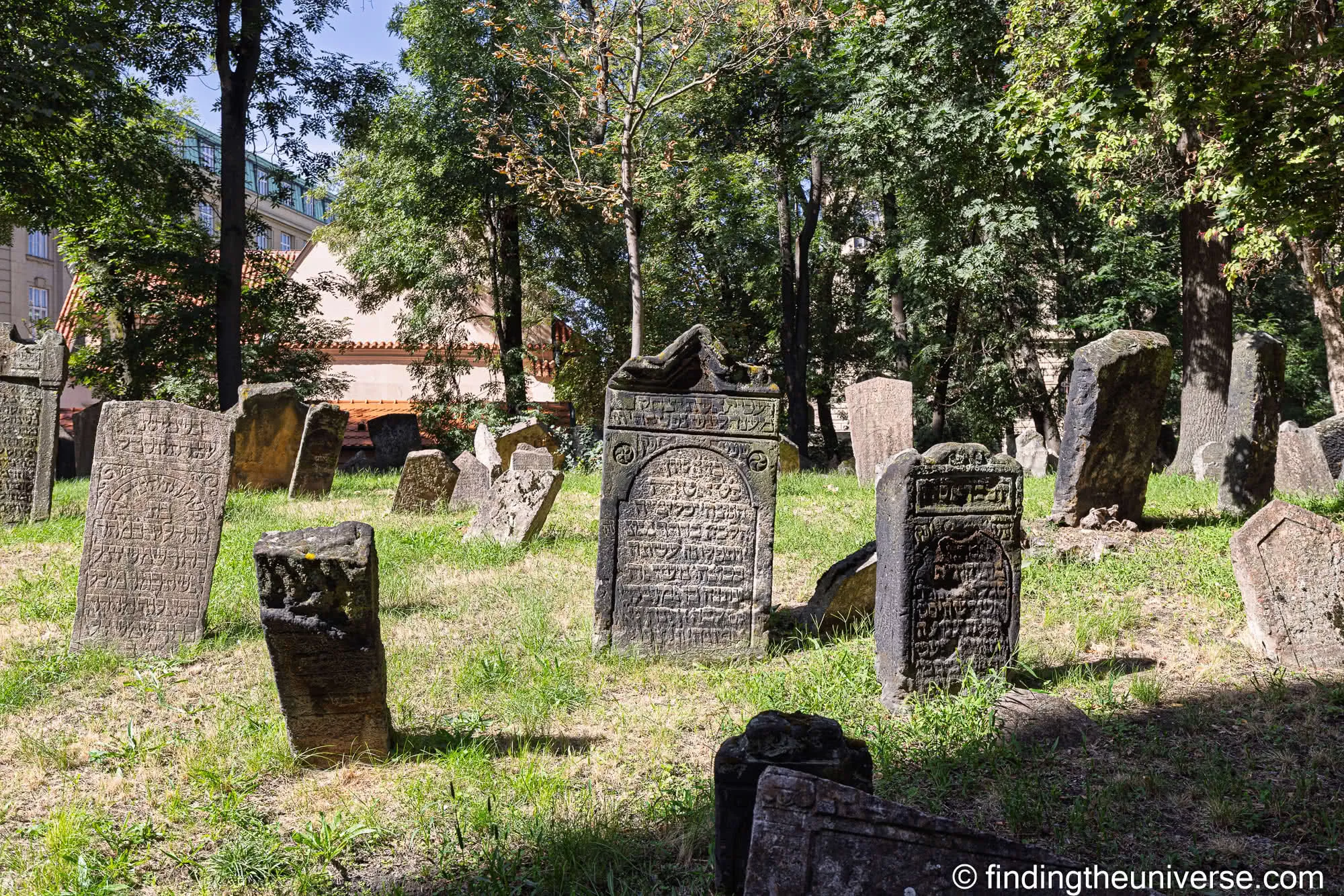
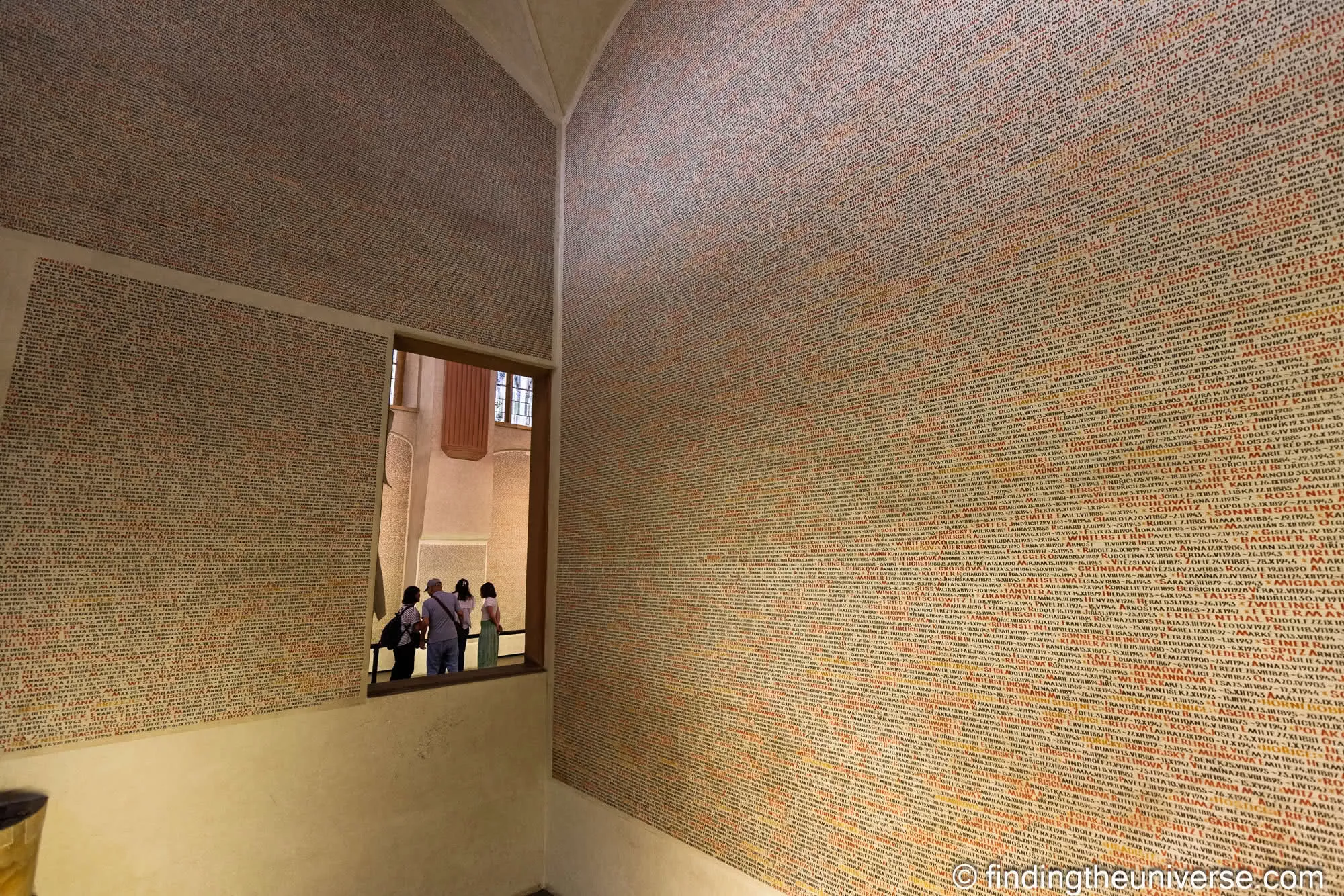
The Pinkas Synagogue, whose walls carry the names of the Bohemian and Moravian Jews murdered in the Holocaust, is the hardest room in the quarter, and the Old Jewish Cemetery behind it, with its layers of tilted headstones, is the one you’ll photograph. Give yourself a quiet ten minutes somewhere afterwards before moving on.
Municipal House and the Powder Gate Tower
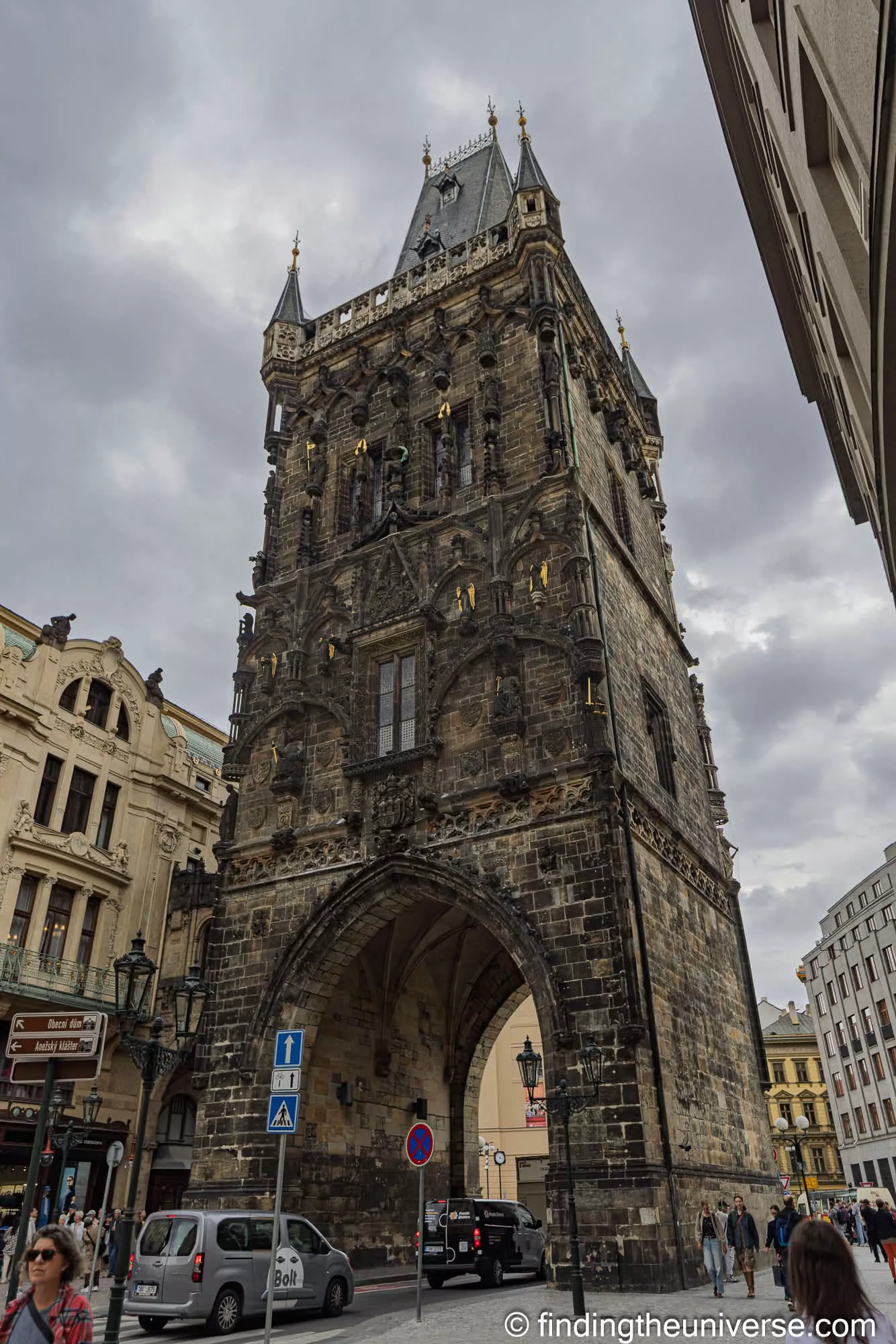
A fifteen minute walk east along Celetná brings you to náměstí Republiky and two Prague landmarks standing next to each other. The Powder Gate Tower, the dark Gothic gate that used to mark the Old Town boundary, is on the pass and open daily 10am to 6pm.
I climbed to the top because that’s what I do when I see a tower, but it’s not the best view in the city so unless you just love climbing medieval towers (it is included on the pass) it’s not a must-do.
The Municipal House beside it is the city’s Art Nouveau showpiece, and its interiors are seen on guided tours that run to a published schedule (free with the pass) or by going to a concert in the Smetana Hall. The café inside is open to anyone, daily from 8am to 8pm.
The House at the Black Madonna
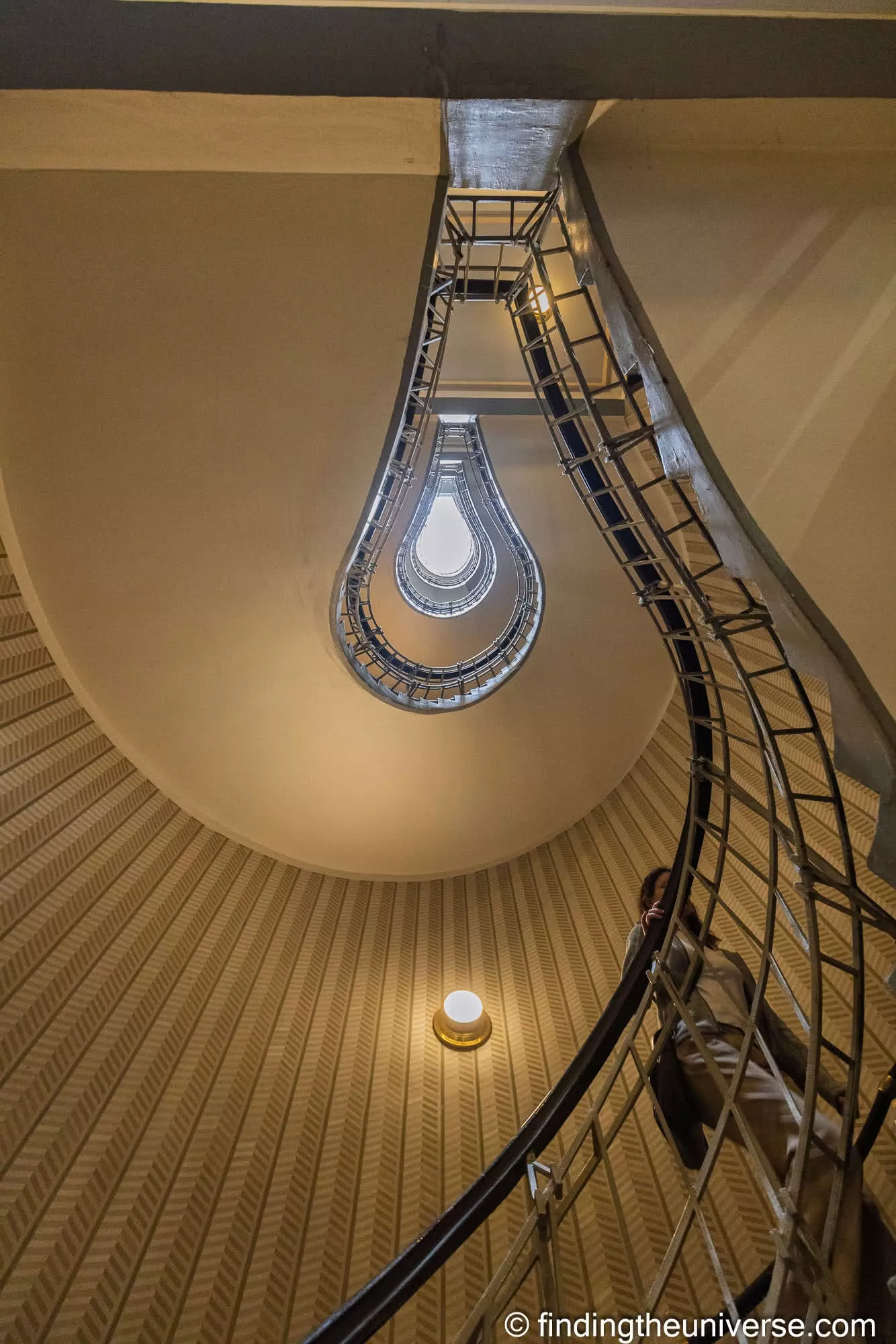
Three minutes back along Celetná is the House at the Black Madonna, the Cubist building with the Museum of Decorative Arts’ Czech Cubism exhibition inside. It’s on the pass, it’s small enough to do in half an hour, and it is closed on Mondays (open Tuesday 10am to 8pm, Wednesday to Sunday 10am to 6pm). Cubist architecture is a Prague speciality, and this is a Cubist building you can actually go inside, with cubist furniture you can goggle at to boot.
Wenceslas Square and the National Museum
From there it’s a ten minute walk to the top of Wenceslas Square, which is a long boulevard rather than a square, with the National Museum closing the view at the top. We went in, and the building is the exhibit; the view back down the square from the cupola at the top is the one everyone takes, and it’s good. Allow an hour or so if you go inside.
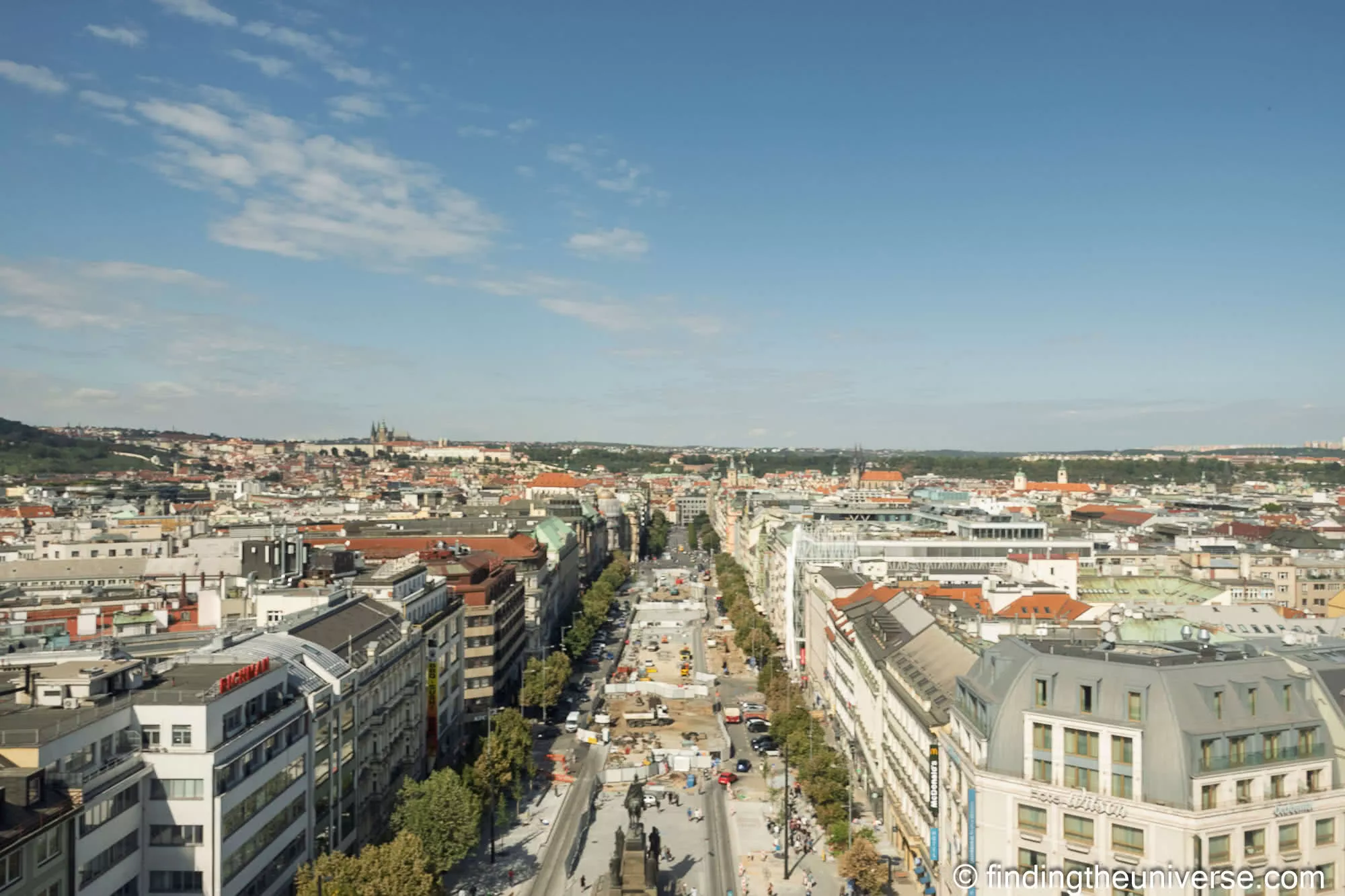
For lunch, Ovocný Světozor on Vodičkova, just off the lower half of the square, does chlebíčky, the Czech open sandwiches, along with a counter of cakes. It’s a quick stop, which suits a busy day.
Just near here is the excellent Cold War Museum. We visited this and enjoyed the tour but this itinerary is already pretty full. So it’s a swap or one for another day.
The Dancing House and the Náplavka Embankment
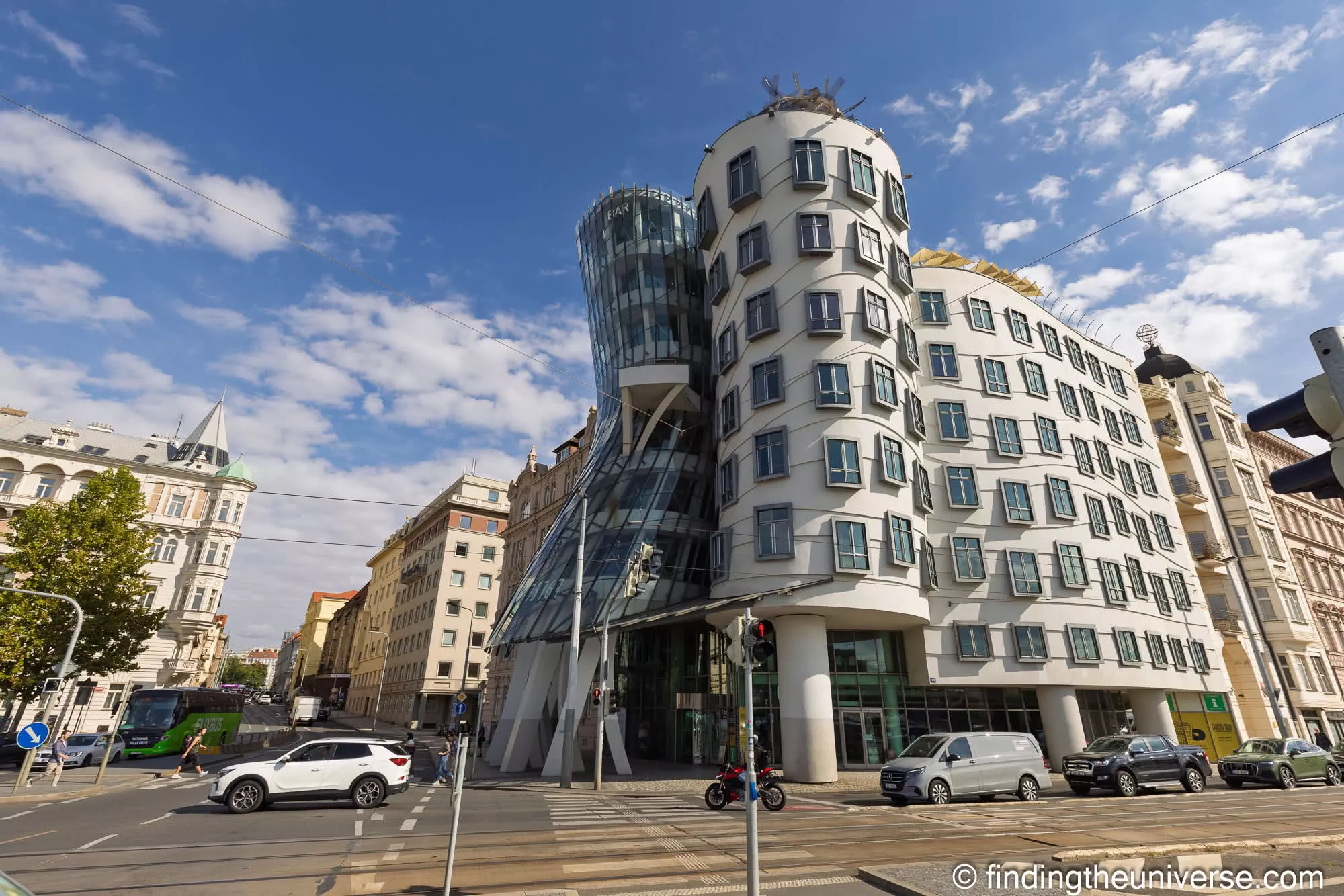
Head down to the river (fifteen minutes on foot) for the Dancing House, the Frank Gehry building on the embankment. The gallery inside is on the pass and open daily 9am to 8pm; the rooftop terrace belongs to the restaurant and bar.
I did the Dancing House while Jess went to the Mucha Museum instead. If that’s on your list, the original Mucha Museum is at Panská 7, and since 2025 there’s also a separate Mucha Foundation Art Museum on Na Příkopě, so it’s easy to walk into the wrong one. We know, because we did.
From the Dancing House, the Náplavka embankment runs south along the river with bars built into the old arches, and on Saturday mornings from February to December there’s a farmers’ market along it which is popular with tourists and locals alike.
A Cruise at Dusk
Finish on the water. The Visitor Pass includes two cruises. The Prague Venice boats run from 10am, with the last sailing at 5pm in winter and as late as 8pm in July and August, and you collect a ticket at the Charles Bridge Museum ticket office by the bridge; the Prague Boats sightseeing cruise runs 10am to 10pm every half hour from the pier at Čechův most and has to be self-booked online with an active pass.
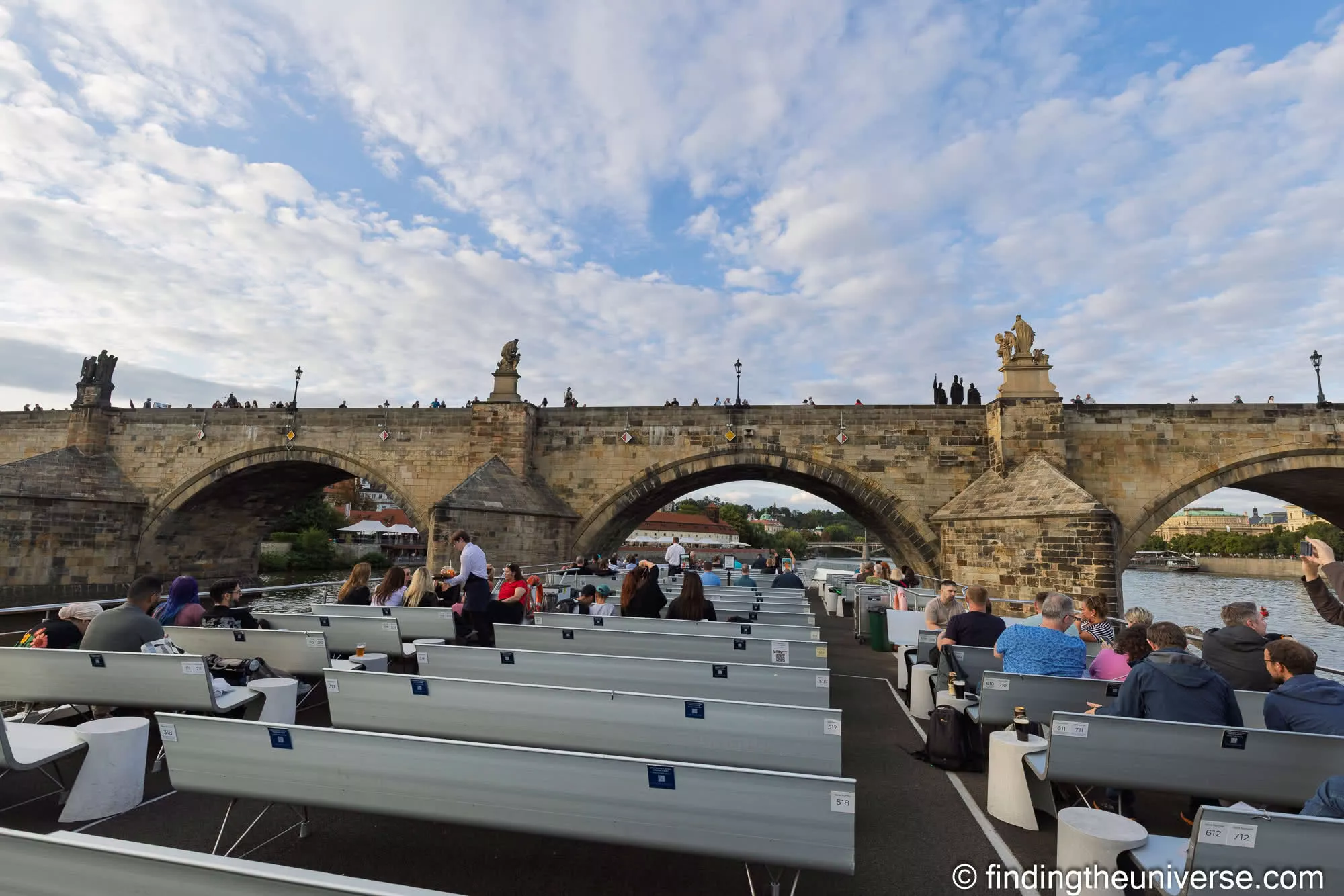
We took the included cruise in the early evening which made for a nice break from being on our feet all day. The boats don’t go that far, though, and you aren’t really getting a view you can’t see from the riverbank, so this isn’t a must-do.
If you’re not carrying the pass, this evening sightseeing cruise does the same stretch of river.
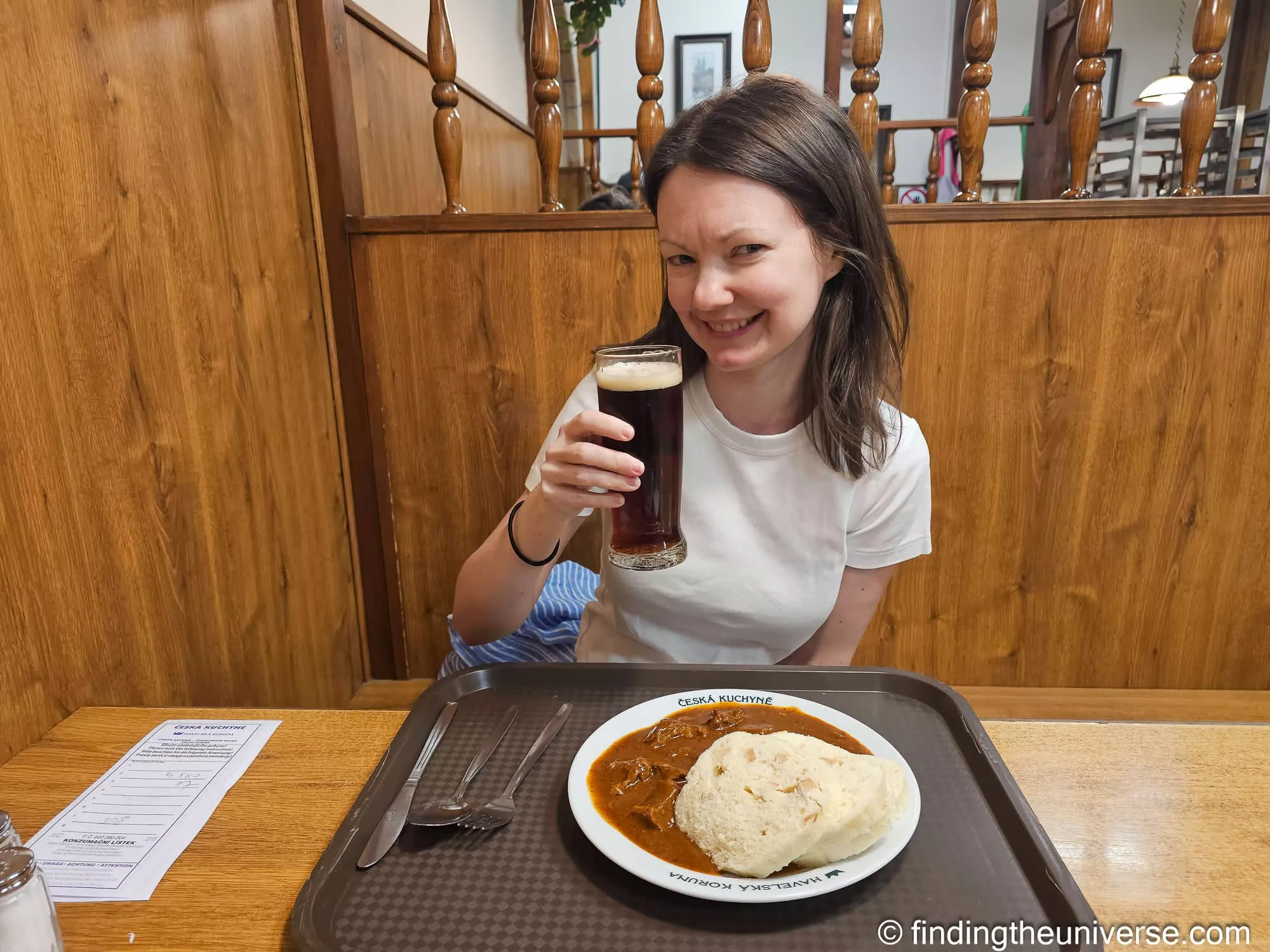
Dinner is a fifteen minute walk back into the Old Town at Havelská Koruna, a self-service canteen on Havelská by the market. You’re handed a ticket at the door, the staff mark each dish you order on it, and you pay on the way out.
We had goulash with bread dumplings and pork with sauerkraut and dumplings, washed down with dark beer. It was a unique experience with the added bonus of being good-value and quick. There’s also no need to book. It closes at 8pm, so head straight there from the boat. From April to September dusk comes too late for that, so take an early evening sailing, as we did, and save the dusk light for another evening.
Evenings and Sunsets in Prague
Prague has a lot of towers you can climb (I climbed most of them, which my knees did not appreciate), and the majority are on the pass, so it can be tempting to plan a different one for sunset each evening. Whether that works is a matter of dates, because the towers close at fixed times and the sun doesn’t.
The two sunset towers on this route (the Old Town Bridge Tower on Day 1 and the St Nicholas Bell Tower on Day 2) keep the same hours. Both shut at 8.30pm from June to September, at 7pm in April and May, and at 6pm from October to March, with December a little later. Sunset in Prague is after 9pm in midsummer, around 8pm at the start of September, around 6.30pm in early October, and before 5pm from late October into January.
So from late August to the end of September, which is when we visited, we could have been up a tower for sunset every evening. From late October to early March you can too, with the sun down before the 6pm close.
From April to mid-August you can’t; the towers close with the sun still up, so take the last light from Charles Bridge itself, from the Kampa riverbank, or from Letná Park above the river on the north side, which has the classic view of the bridges in a row and no closing time. In those months the towers are for golden hour, an hour before they shut, and that’s still a pretty good hour.
The Žižkov TV Tower, which is on the pass and in the four-day section below, stays open late into the evening all year, so it’s the one tower that works for a summer sunset. However, the glass makes for slightly more challenging photography conditions and you are quite far from the main old town sights that you probably want in your frame.
The other evenings, beyond the concert on Day 1 and the cruise on Day 3, are yours. The Štefánik Observatory on Petřín is on the pass and opens in the evenings from Tuesday to Saturday all year, and on a clear night they open the dome for telescope viewing. We went by day in the rain, so we did not get that experience.
Prague in 2 Days: What to Cut
With two days, keep Day 1 and Day 2 almost as they are and lose most of Day 3. Fold the Jewish Quarter into Day 1 in place of the Old Town Hall tower, St Agnes and the paternoster, straight after the Klementinum tour, and push Charles Bridge and the bridge tower into the evening. That works from Sunday to Thursday. On a Friday the Old-New Synagogue closes early, and on a Saturday the whole quarter is shut.
On Day 2, drop Loreto and the observatory and keep the castle, Strahov and the walk down. Day 1 now ends on the bridge and the tower, so give Day 2’s evening to either the Mirror Chapel concert or the cruise, not both.
What you lose is the New Town, the Dancing House and the Cubist house, which are the three I’d drop first on a first visit.
4 or 5 Days in Prague: What to Add
One popular option for a fourth or fifth day in Prague is a day trip. However, Prague easily has a fourth day in it without leaving the city, and on our fourth full day in Prague we visited the following.
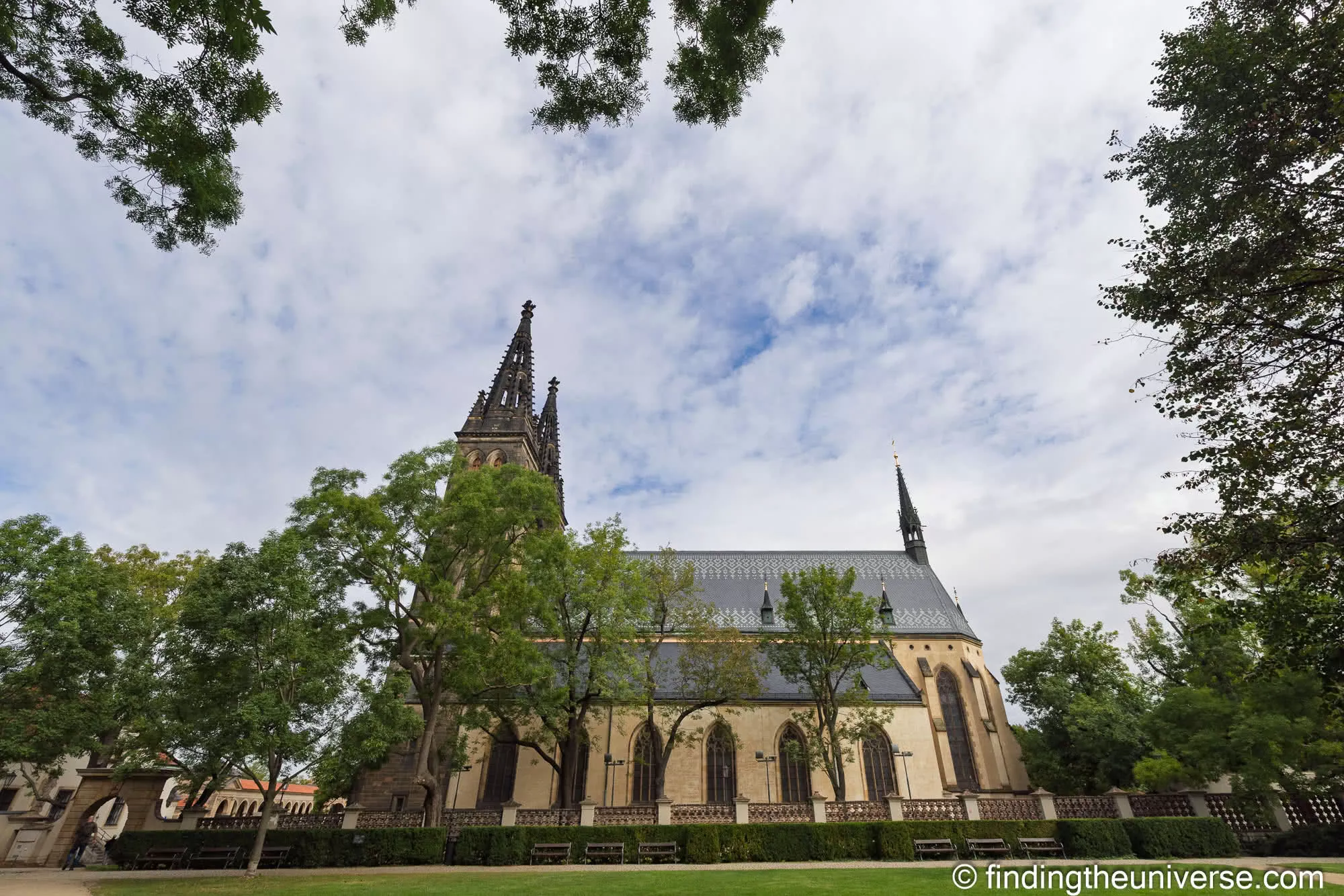
Vyšehrad, the old fortress on its rock above the river south of the centre, is the one I’d put first. It’s a short walk from Vyšehrad metro station on line C, the grounds are a park, the Basilica of Sts Peter and Paul (open from 10am most days, 11am on Sundays) and the casemates with their Gorlice hall are on the pass, and the cemetery holds Dvořák and Smetana. It was the calmest morning of our trip.
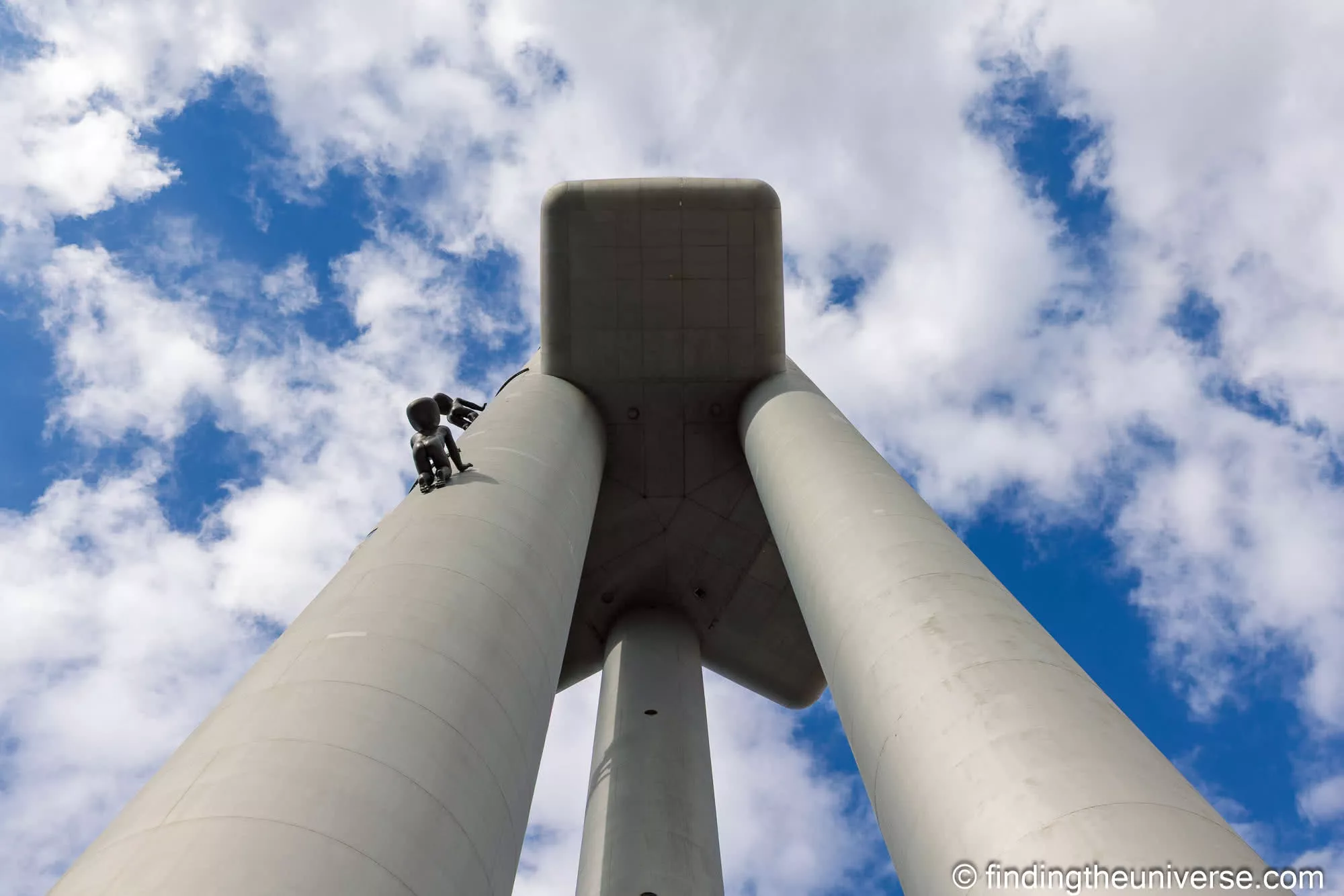
The Žižkov TV Tower, with its giant crawling babies, is on the pass and open late, and its observation deck sits 93 metres up the tallest structure in Prague. The Pilsner Urquell Original Beer Experience on 28. října by Můstek metro is a self-guided multimedia tour with two beers at the end (579 CZK regular, free with the pass, open daily 11am to 8.30pm with last entry at 7pm).
The Heydrich Terror Memorial, in the crypt of the Sts Cyril and Methodius church in the New Town, tells the story of the 1942 assassination and the paratroopers who died there; it’s a short visit and a heavy one. The Cold War Museum, in a nuclear bunker under a hotel on Wenceslas Square, is a stranger hour.
Letná Park, across the river north of Josefov, has the view of the bridges that the postcards use.
For a fifth day, take a day trip, like we did. We rented a car for the day and drove to Kutná Hora with its bone chapel and silver-town cathedral, and that trip, along with Karlštejn, Konopiště and Český Krumlov, will be in our separate guide to day trips from Prague.
If you’d rather not drive, this Kutná Hora and bone chapel tour covers the same ground from Prague.
Getting Around Prague
You’ll walk nearly all of this itinerary, and the bits you won’t walk are covered by the Visitor Pass if you have one, so transport is the easy part of a Prague trip.
From the airport, Uber is the airport’s official taxi partner, with pick-up directly outside arrivals at both terminals and a staffed counter if you’d rather not use the app; allow 30 to 40 minutes to the Old Town depending on traffic. We found Bolt to be marginally cheaper but it’s worth checking both apps as pricing (and driver availability) definitely varies.
Note that parts of the old town are fully pedestrianized so depending on where you are staying your taxi might not be able to get you right to your hotel doorstep. In our case, it was a two minute walk from where we were dropped off, which wasn’t a big deal.
By public transport, take trolleybus 59 from either terminal to Nádraží Veleslavín (about 15 minutes) and change to metro line A, which puts you at Staroměstská for the Old Town in about half an hour all in.
The Airport Express bus runs to the main railway station in about 40 minutes if that’s nearer your hotel. All of these are covered by an active Visitor Pass.
In town, tram 22 is the one to know. It climbs from Malostranská past the castle to Pražský hrad and Pohořelec, and it’s the start of Day 2. Metro line C gets you to Vyšehrad on the four-day plan. Everything else is on foot, and the Prague public transport site has the timetables if you need them.
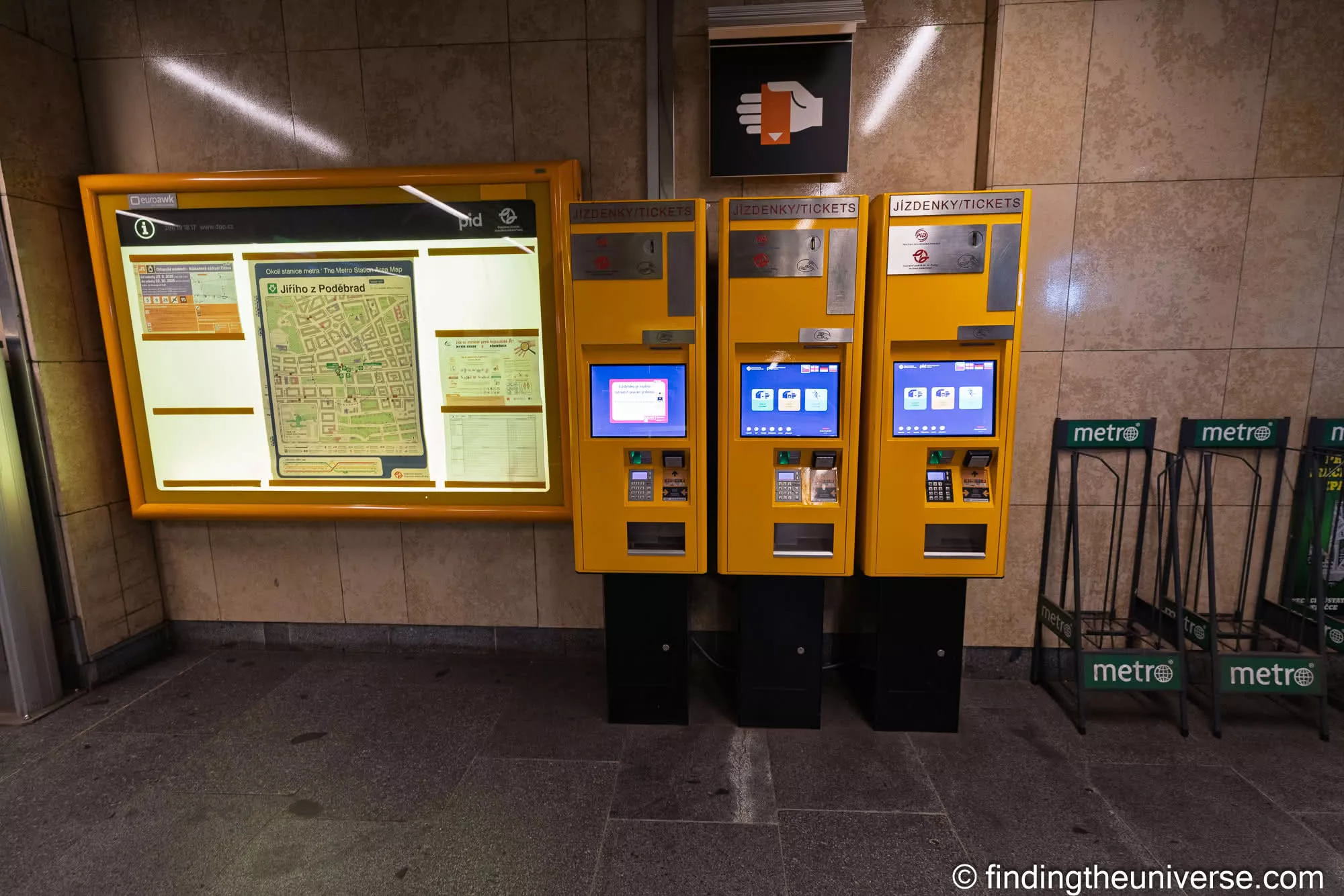
Tickets without a pass are bought in the PID Lítačka app or from machines, and a paper ticket has to be validated in the yellow machine when you board a tram or enter a metro station.
Prague’s currency is the Czech koruna, written Kč or CZK. Plenty of tourist-facing shops and restaurants will take euros, at the shop’s own rate and with change in koruna, but you’ll do better paying in koruna by card or cash. A travel eSIM sorted before you land saves you from hunting for the airport Wi-Fi while trying to find the trolleybus stop.
Where to Stay in Prague
We stayed at The Dominican, a converted monastery on Jilská, two minutes from Old Town Square. Every day in this plan starts on foot from the Old Town, and being able to walk out of the door into it, and back to it after a concert, made a short trip easy. It was quiet at night despite the location, which in the Old Town is not something to take for granted.
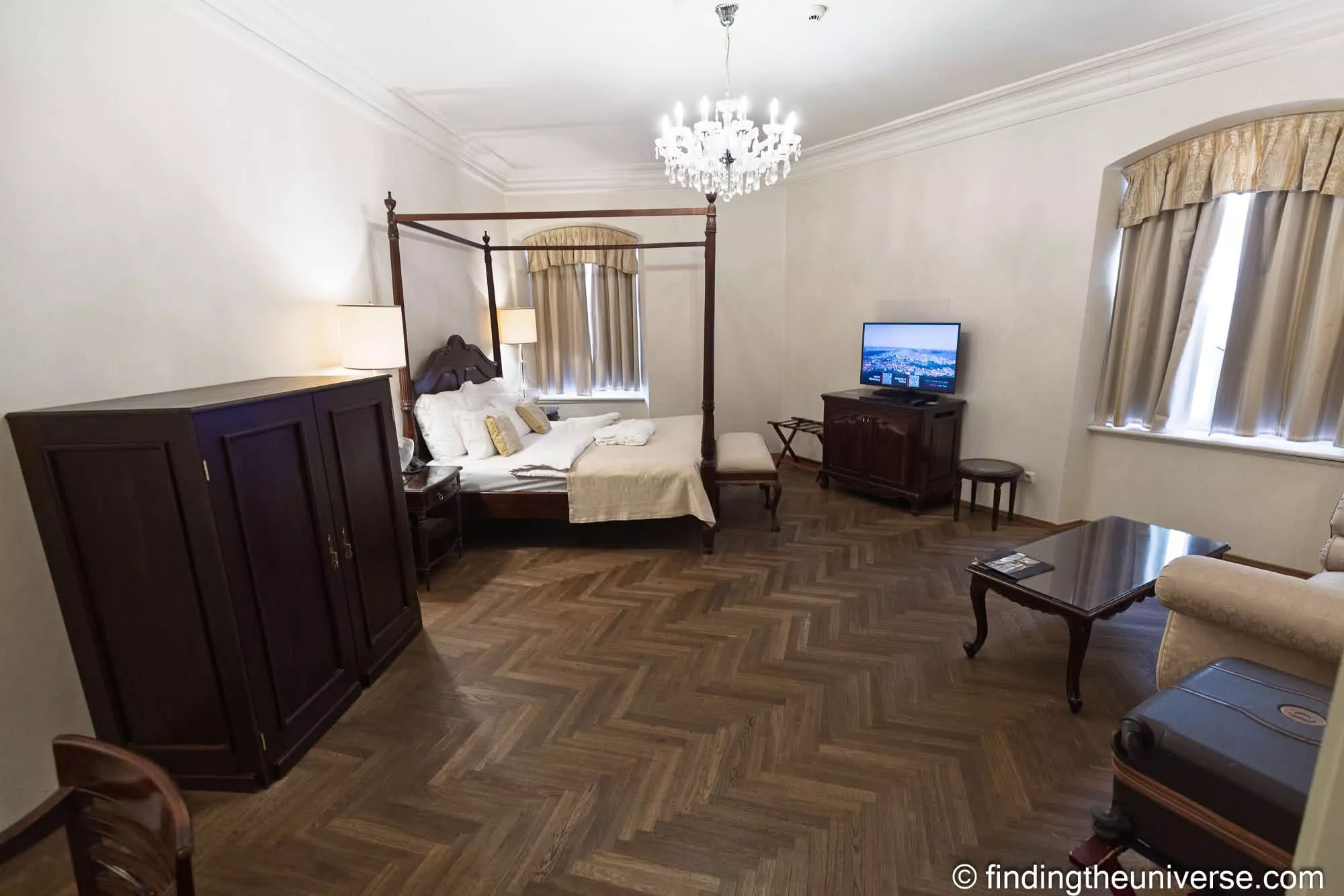
If The Dominican is booked up or doesn’t fit your budget, try to stay in the Old Town or Malá Strana. Every day in this plan starts on foot, and the closer you are to Charles Bridge, the less of each morning goes on getting there. The New Town, just south and east of the Old Town, is usually cheaper and still a walk from everything. These are well-rated options across a range of budgets, all on Booking.com.
Motel One Prague-Florentinum is the budget pick, a chain hotel on Na Florenci, just east of the Old Town. The Municipal House, where the New Town half of Day 3 begins, is a short walk away.
Mosaic House is a mid-range design hotel on Odborů in the New Town, close to Charles Square. It’s around a 15-minute walk to Charles Bridge, which is the trade-off for staying outside the Old Town.
Hotel Josef is a step up, a design hotel on Rybná in the Old Town. Old Town Square and the Municipal House are both a few minutes away, so Day 1 and Day 3 start almost at the door.
Hotel Pod Věží is on Mostecká at the Malá Strana end of Charles Bridge, right under the bridge tower it’s named after. It’s the one to pick if you’d rather sleep on the castle side of the river and cross the bridge into the Old Town each morning.
Four Seasons Hotel Prague is the splurge, a five-star hotel on the Old Town riverbank with views across the Vltava to the castle and Charles Bridge.
If none of those have rooms for your dates, Booking.com’s list of hotels in the Old Town is the place to start.
Where We Ate in Prague
Czech food is filling. Most of what we ate in Prague was some version of the same plate: meat, a rich sauce, dumplings and often sauerkraut, with a beer alongside, and five days of it suited us fine.
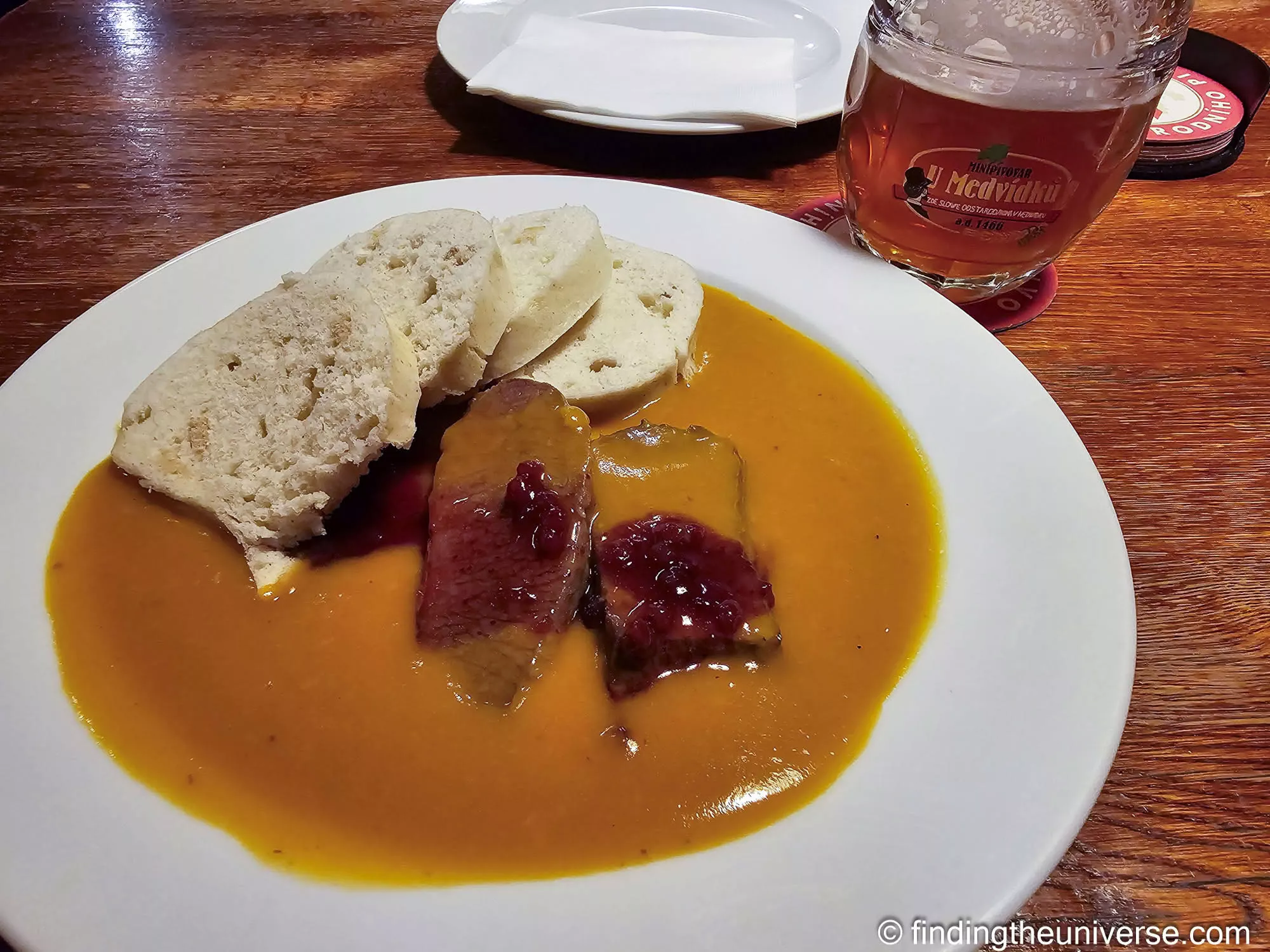
The dumplings that come with most mains are bread dumplings, houskové knedlíky, cooked as a loaf and sliced, and their main purpose is soaking up the sauce. However, you will also often find potato dumplings as well. Once I had both on my plate, which was quite the adventure.
Reserve a table for any sit-down meal where possible. The city is busy for much of the year, the popular places fill up, and restaurants here much prefer you to book, more so in the busier months. Havelská Koruna and Ovocný Světozor are the walk-in exceptions.
Every place in this itinerary is somewhere we ate. For a sit-down Czech meal, book Lokál Dlouhááá (my favourite of the trip), U Medvídků, a few minutes from our hotel, where we had svíčková (beef in a creamy root vegetable sauce with cranberries and bread dumplings) and a schnitzel with potato salad on our first night, or Restaurace Mincovna on Old Town Square. Café Imperial is the grander option for a special occasion.
For something quicker, Havelská Koruna is the canteen, Ovocný Světozor does open sandwiches and cakes, and Knedlín on Národní makes nearly 20 kinds of filled potato dumplings, sweet and savoury. For cake, Café Savoy is the grand café, and Myšák at the castle is where we found the dukátové buchtičky.

What We’d Do Differently Next Time
The three days above are how we’d spend a visit, but there are a few things we learned the slow way.
Book the Klementinum first. The slots go, pass holders still have to reserve, and the dates only open two to three weeks out, so put a reminder in your calendar for the Monday three weeks before your Day 1.
Day 2 is long. The castle, Strahov, Petřín and Malá Strana in one run is the best way to do it, but it’s six or seven hours on your feet before the afternoon café. If you’re visiting in winter, when the castle buildings close at 4pm and the light’s gone by 4.30pm, start with the 9am opening without fail and treat Petřín as optional; the funicular makes that easier than it was for us.
Check the Jewish holidays as well as the Saturdays. September and October carry three or four closure days in the space of a month, and they don’t fall on the same dates each year.
Map of This Prague Itinerary
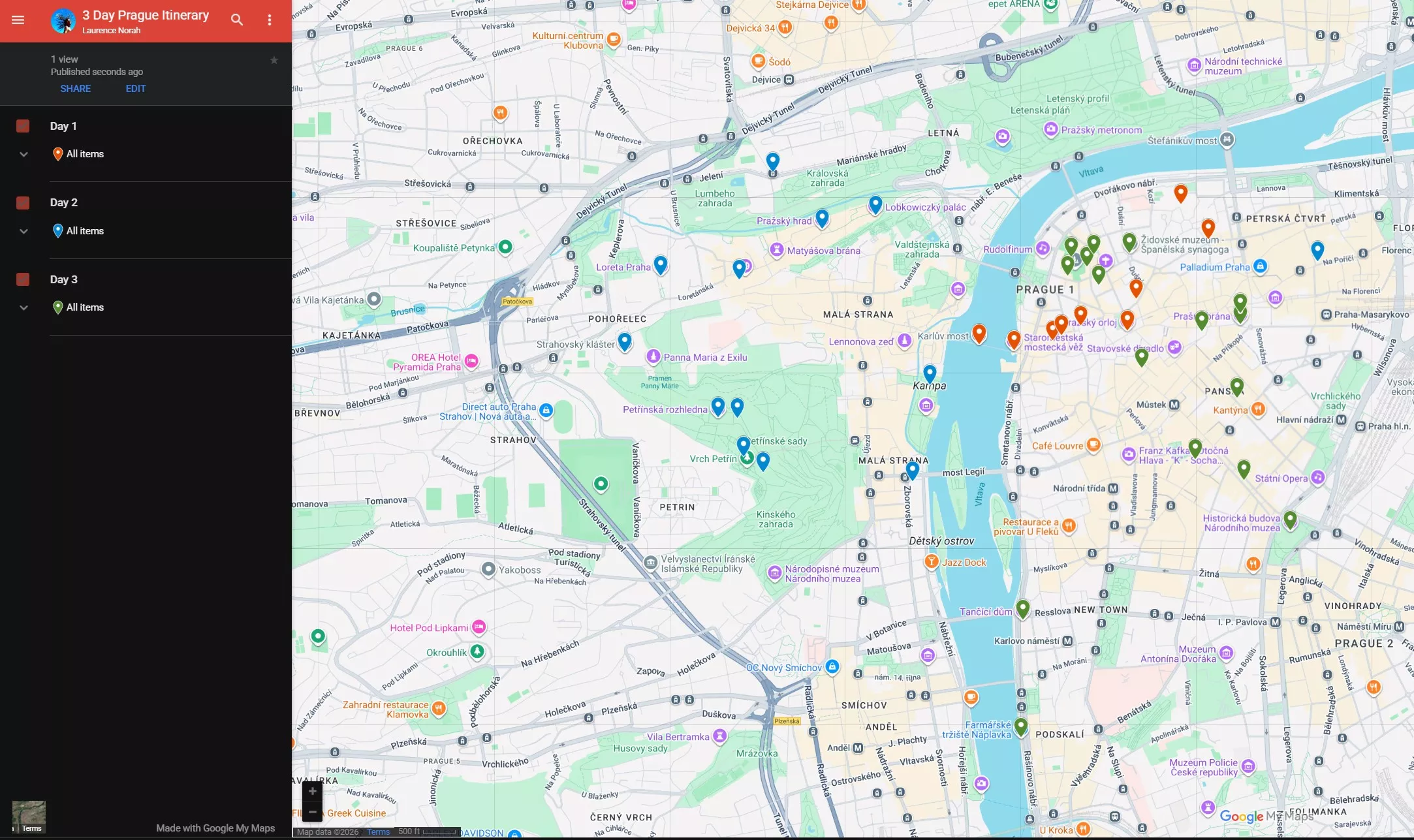
The map below has the three days as separate routes, with every stop in this guide marked. You can also see it on Google Maps here.
Frequently Asked Questions
Is 3 days enough in Prague?
Yes. Three days is enough to see the Old Town, Charles Bridge, the castle district, the Jewish Quarter and the New Town without rushing, because the centre is compact and nearly everything is a five to fifteen minute walk from the last thing.
What three days doesn’t fit is a day trip, so if Kutná Hora, Karlštejn or Český Krumlov are on your list, plan four or five days.
How many days do you need in Prague?
Three days is the right first visit. Two days covers the Old Town, Charles Bridge and the castle if you fold the Jewish Quarter into the first afternoon and drop the New Town. Four days adds Vyšehrad, the Žižkov Tower and the smaller museums without leaving the city, and five lets you add a day trip.
What is the best order to see Prague in 3 days?
Old Town, the Klementinum and Charles Bridge on day one; Prague Castle, Strahov, Petřín Hill and Malá Strana on day two; the Jewish Quarter, the New Town and a river cruise on day three. The one rule that reorders it is that the Jewish Quarter is closed on Saturdays and Jewish holidays, so swap it into day one if day three is a Saturday.
Is the Prague Visitor Pass worth it?
On a three-day first visit it covers the castle circuit, both bridge towers, the Old Town Hall tower, the Klementinum tour, the Jewish Museum sites, the Petřín tower and funicular, several smaller museums and two river cruises, plus all public transport including the airport trolleybus, and we used ours every day. The sums rest on how many of those ticketed stops you’ll actually go into. It doesn’t cover the Strahov Library.
When is the Jewish Quarter in Prague closed?
The Jewish Museum sites and the Old-New Synagogue are closed every Saturday and on Jewish holidays, and the Old-New Synagogue also closes about an hour before Shabbat begins on Fridays. The museum publishes the exact holiday dates for the current year on its opening hours page; the main clusters are Passover in spring and Rosh Hashanah, Yom Kippur and Sukkot in September and October.
Can you visit Prague Castle for free?
The castle grounds and courtyards are free and open from 6am to 10pm, so you can walk through the complex, see the outside of St Vitus Cathedral and look over the city from the ramparts without a ticket. Going inside the cathedral, the Old Royal Palace, St George’s Basilica and Golden Lane needs the circuit ticket (450 CZK adult), which is valid for two days and included on the Prague Visitor Pass.
What is the best time to visit Charles Bridge?
Early morning, before about 8am, is the only time Charles Bridge is anything like empty, and late evening after dark is the next best. For photographs with the castle lit, go in the hour before sunset and then stay. The Old Town Bridge Tower at the eastern end is open until 8.30pm from June to September and until 6pm from October to March, so check whether sunset falls before the close on your dates.
What should I know before visiting Prague?
Pay in Czech koruna rather than euros, by card where you can; euros are accepted in many tourist places but at the shop’s rate, with change in koruna. From the airport, Uber is the official taxi partner, or take trolleybus 59 and metro line A. Validate paper transport tickets before you ride. And check the day of the week against the Jewish Quarter and museum closures before you fix your three days.
Planning Resources and Further Reading
We carried Rick Steves Prague & the Czech Republic on this trip, and it came out of the bag every day. The guided walking tours are particularly useful and it will help you understand the key highlights of what you are seeing.

Prague pairs naturally with Vienna, which is a four hour train ride away, and we have both a 2 day Vienna itinerary and a 3 day Vienna itinerary for the next stop. If Prague is one stop on a longer European trip, our 10 day Europe itinerary has ideas for stitching cities together by train.
We’ll be adding our guides to things to do in Prague and to day trips from Prague as we write them up from this trip, and we’ll link them here.
And that’s our three days in Prague. If you’ve got a question about the plan, or about fitting it around your own dates, let us know in the comments below and we’ll do our best to help.
Leave a Reply