I’ve been a professional travel photographer since 2010, and we’ve been visiting Barcelona regularly since 2012. On every trip, whatever we’ve actually come for, I end up with a memory card full of street art. The city’s art spills well beyond the Picasso Museum and Gaudi’s facades, onto shutters, doorways, factory walls and whole gable ends.
I’ve loved photographing street art since a trip to Berlin back in 2010, where the East Side Gallery got me hooked, and Barcelona is one of the best cities in Europe to indulge the habit.
There’s a catch with writing about it, though. Street art changes constantly. Legal walls in Barcelona repaint roughly every week, murals get buffed or built over, and a guide promising you a specific piece is usually out of date before you’ve booked your flights. Most of the photos in this article were shot on our earlier visits, and the majority of those pieces are long gone.
So rather than send you chasing individual murals that may no longer exist, this guide takes you to the places where Barcelona’s street art actually happens: the sanctioned legal walls, the tolerated neighbourhoods and the converted factories where new work goes up all the time. Wherever the art has rotated to by the time you visit, these are the spots where you’ll find it, plus my advice on how to photograph it well while you’re there.

Table of Contents:
Where to Find Street Art in Barcelona
The best street art in Barcelona is concentrated in four areas: the legal walls at the Jardins de les Tres Xemeneies in Poble-sec, the streets of El Raval around the MACBA museum, the post-industrial blocks of Poblenou, and Nau Bostik, a former glue factory in La Sagrera. Each one offers something a bit different, and they sit in four different corners of the city, which matters for planning (more on that below).
| Area | What you’ll find | Nearest metro | Pairs well with |
|---|---|---|---|
| Jardins de les Tres Xemeneies (Poble-sec) | Legal walls, fresh work weekly | Paral·lel | Montjuïc |
| El Raval | Murals, painted shutters, the Keith Haring wall | Universitat / Liceu | Gothic Quarter |
| Poblenou | Large murals on former factories, La Escocesa | Poblenou | Nau Bostik |
| Nau Bostik (La Sagrera) | Mural courtyard, B-Murals gallery | La Sagrera | Poblenou |
Jardins de les Tres Xemeneies (Poble-sec)
If you only have time for one street art stop in Barcelona, make it this one. The Jardins de les Tres Xemeneies is a free public park on Avinguda del Paral·lel in Poble-sec, built around the three towering brick chimneys of an old power station. The long concrete walls here are the city’s best-known sanctioned graffiti walls, run under the Murs Lliures (free walls) programme since 2012 by the Rebobinart association together with the city council.
Artists book painting slots online, and the work rotates roughly every week. That means two things for you as a visitor. First, you’re pretty much guaranteed to see fresh, current work whenever you turn up, and quite often you’ll see artists mid-piece, which is half the fun. Second, the wall you photograph today will probably be gone within the month. I find that oddly liberating, though I accept not everyone shares my enthusiasm for impermanence.
The park itself is scruffy in a likeable way, shared between painters, skaters and local dog walkers. It’s a two minute walk from Paral·lel metro station, and it sits at the foot of Montjuïc, so it slots naturally into a day when you’re heading up the hill for the views over the city.
El Raval
El Raval is the neighbourhood where street art feels like part of daily life. There’s no formal legal wall here, it’s more a district where murals, paste-ups and painted shop shutters are tolerated and everywhere, particularly in the streets around the MACBA contemporary art museum.
The signature piece is the Keith Haring mural, “Todos juntos podemos parar el sida” (together we can stop AIDS), on Plaça dels Àngels right beside the MACBA. Haring painted the original in the neighbourhood in 1989, and the version you see today is a preserved full-size recreation of it. It shares the square with Barcelona’s most famous skate spot, so you’ll almost always have skaters flying past it, which I think improves the photo no end.
One thing we noticed on our very first visits here: a lot of El Raval’s art lives on roller shutters, which means the neighbourhood looks completely different depending on when you go. Wander through in the morning before the shops open, or on a Sunday, and you’ll see art that’s invisible by lunchtime. El Raval sits right next to the old town, so it pairs perfectly with a day exploring the Gothic Quarter.
Poblenou and La Escocesa
Poblenou, in the northeast of the city, is Barcelona’s former industrial district, and its old factory walls carry some of the largest murals in the city. This is a neighbourhood for wandering: the blocks between the metro station and the sea are dotted with big pieces, and new ones appear as old buildings are renovated or demolished.
The centrepiece is La Escocesa, a 19th century factory complex on Carrer de Pere IV that’s now a city-run art production centre. It’s a working space for resident artists rather than a walk-in gallery, so you can’t just stroll in on any given day, but it opens for exhibitions, open-studio days and workshops through the year. If your dates line up with an event, it’s well worth it; if not, the streets around it still deliver.
Nau Bostik (La Sagrera)
A little further north in La Sagrera, Nau Bostik is a former glue factory turned cultural centre, and it holds the most concentrated collection of large murals in Barcelona. The B-Murals gallery is based here, dedicated specifically to urban art, and the site keeps evolving: thirteen new murals went up in November 2025.
Like La Escocesa, it runs on events and programming, not fixed museum hours. The mural courtyards and gallery are open during exhibitions, markets and events, which in practice is much of the time, but do check the calendar on their website before making the trip. It’s a short walk from La Sagrera metro, and since Poblenou is on the same side of the city, the two combine nicely into one street art afternoon.
Can You See It All in One Walk?
No, and it’s worth being clear about this before you plan your day. These four areas sit on four different sides of Barcelona. Tres Xemeneies is in the southwest by Montjuïc, El Raval is in the city centre, and Poblenou and La Sagrera are out to the northeast. There’s no sensible walking route that links them all, and anyone who tries will spend more time on pavement than looking at art.
What works instead is pairing each area with the sightseeing you’re already doing:
- El Raval fits naturally into a city centre day around the Gothic Quarter and La Rambla, with the Haring mural and the shutter art as an easy detour.
- Tres Xemeneies works best on a Montjuïc day, since it sits at the foot of the hill on your way to the castle or the Olympic sites.
- Poblenou and Nau Bostik make a dedicated street art half day by metro, for those of you (like me) who’d happily give it a full afternoon.
If you’re working out how to fit all this around the bigger sights, our 3 day Barcelona itinerary covers how we’d structure a longer visit.
Is Street Art Legal in Barcelona?
Mostly no, with important exceptions. Painting on walls in Barcelona is illegal unless it’s on an authorised wall or commissioned by the property owner. The city’s answer to this is the Murs Lliures programme, which designates specific walls, like those at Tres Xemeneies, where anyone can paint legally by booking a slot.
Beyond the legal walls, plenty of what you’ll see is commissioned work on shop shutters and building facades, and some of it is simply tolerated, as in El Raval.

This legal patchwork is exactly why the scene changes so fast. Legal walls rotate by design, unsanctioned pieces get cleaned off, and commissioned murals last only as long as the building does.
It’s also why I’d gently steer you away from any list of “the 20 best murals in Barcelona”, including any we might have written: the churn is the defining feature of street art here. Learn where the art happens and you’ll never be disappointed; chase individual pieces and you often will be.
How to Photograph Street Art in Barcelona
Photographing street art sounds easy, the subject holds still after all, but Barcelona throws some specific challenges at you. Here’s what I’ve learned shooting it over the years.
Go early, and mind the light
Early morning is the best time for street art photography in Barcelona, for three reasons. The streets are empty, so you’re not waiting for gaps in the crowds. Parked cars and delivery vans haven’t yet buried the lower half of every wall. And in El Raval especially, the shop shutters are still down, which means a whole layer of art exists only before opening hours.
Light matters more than people expect. A big mural in a narrow street will often be half in harsh sun and half in shadow by midday, which is about the worst thing that can happen to a photo of a flat painted surface. Overcast days are your friend here: soft, even light across the whole wall. If it’s sunny, shoot walls that are fully in shade, or come back when the sun has moved.
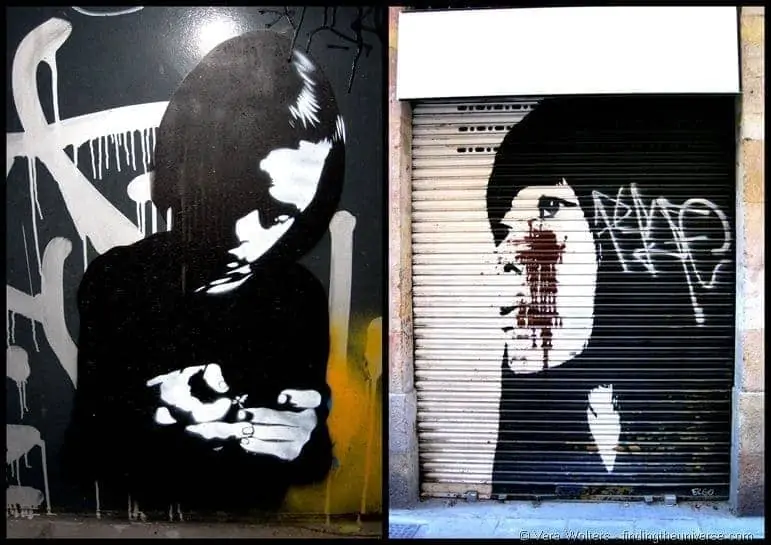
Framing, and what to carry
Where you have room, step back and shoot straight on with a slightly longer focal length instead of standing close with a wide angle. You’ll keep the wall’s lines square instead of converging, and the piece will look the way the artist intended. When you can’t step back, embrace the angle and make it deliberate.
Don’t only shoot whole walls, either. Some of my favourite street art photos are details: a face, a texture, the way paint sits on crumbling brick.
And people in the frame are usually a gift, not a problem. A skater blurring past the Haring mural, or an artist up a ladder at Tres Xemeneies, gives the shot scale and life. If someone is painting, a quick nod or hello before you point a camera at them goes a long way, and in my experience most artists at the legal walls are happy to be photographed at work.
On gear: a phone will do a perfectly good job, since street art is big, static and usually well lit. I shoot with a Canon EOS R5 these days, but every photo in this article came from much older kit, which tells you how much the camera matters.
If you’d like to get better shots from whatever you carry, my online travel photography course covers all of this in much more depth, and we also have a guide to our favourite photography locations in Barcelona for the rest of your trip.
Barcelona Street Art Tours
Everything in this guide is very doable on your own, and half the joy of street art is stumbling onto it. But this is one subject where a good guide adds real value: the scene changes weekly, and local guides know what went up last month, who painted it and what it’s about. If that appeals, three options stand out:
- The Raval street art and graffiti walking tour (from €28 per person) covers the neighbourhood where context helps most.
- The 3.5 hour street art tour by bamboo bike (from €80 per person) covers far more ground than you’d manage on foot.
- The street art bike tour with MOCO Museum entry (from €150 for a group of up to 3) bundles the outdoor scene with the museum below.
If I had to pick just one, I’d take the Raval walking tour. It’s the cheapest, and it’s the neighbourhood where the stories behind the work make the biggest difference to what you’re seeing.
Barcelona Street Art Museums
Barcelona has two museums built around street art, they’re quite different propositions, and they’re easily confused, so here’s which is which before you buy a ticket.
The MOCO Museum is the serious one. It’s housed in the 16th century Palau Cervelló on Carrer de Montcada in El Born, next door to the Picasso Museum, and it shows authenticated works by Banksy, KAWS and other contemporary and street artists from the Moco collection.
Tickets use time-slot pricing and start from around €15, and it’s open daily (10am to 8pm Monday to Thursday, until 9pm Friday to Sunday). If you want to see a real Banksy while you’re in Barcelona, this is where it lives.
The Banksy Museum at Espacio Trafalgar (Carrer de Trafalgar 34) is a different thing: over a hundred high quality reproductions of Banksy’s work, not originals. Entry is €14 and it’s open daily from 10am to 8pm, with late opening to 9pm on Thursdays.
As a primer on Banksy’s career it’s actually pretty well done, and whether it’s worth €14 comes down to how you feel about looking at very good copies. My take: if you’re choosing one, choose MOCO, and spend the change on coffee in El Born.
Street Art from Our Earlier Visits
Everything below was shot on our earlier trips to Barcelona, and as far as I know almost none of these pieces survive today. I’ve kept them here partly because I’m fond of them, and partly because they make the point better than I can: photograph what you find, because it won’t be there next time.
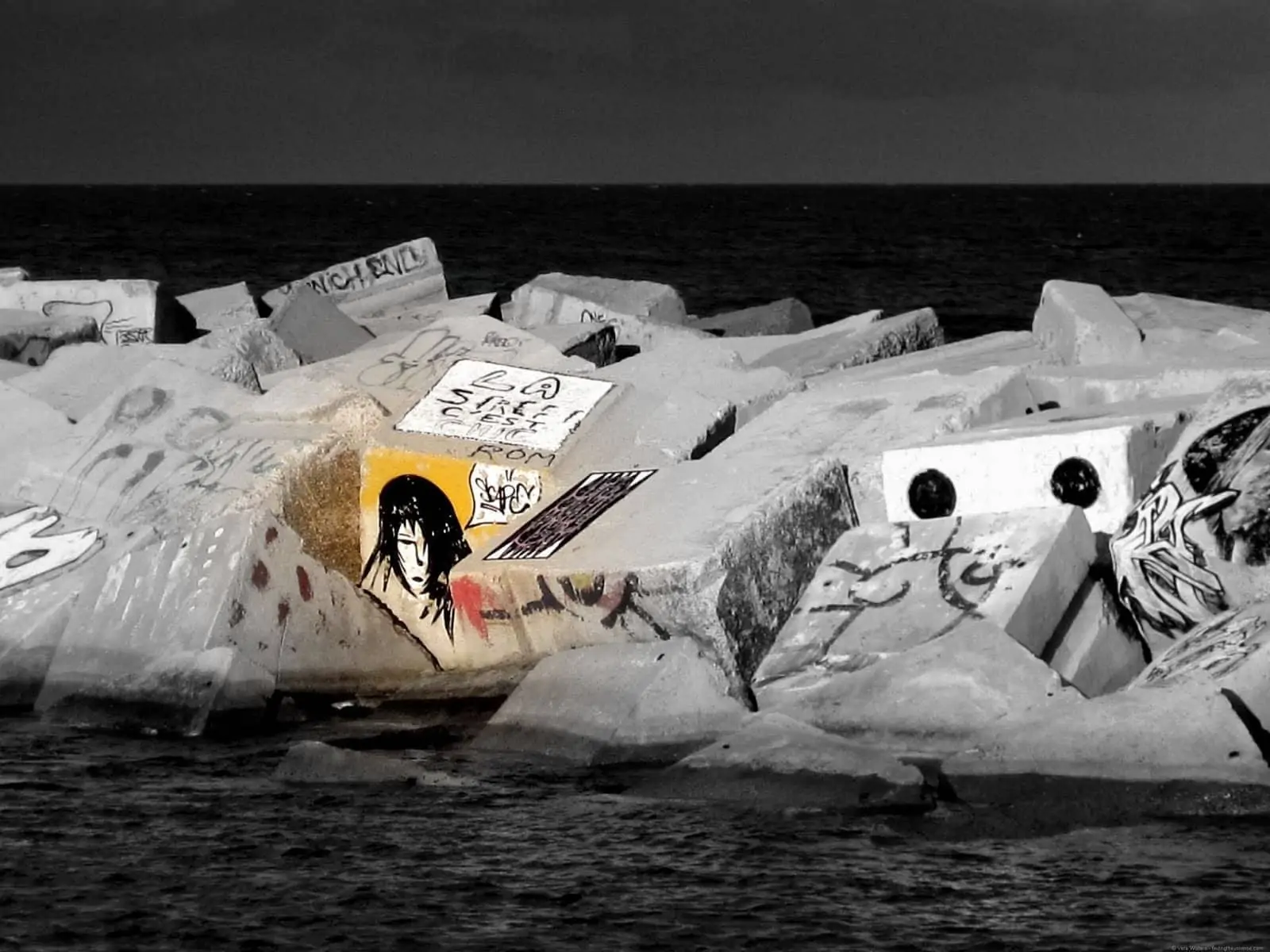
I’m still not sure this counts as street art, given it’s on a breakwater. But it reminded me of the painted breakwaters of Australia’s coastline, so it stays.

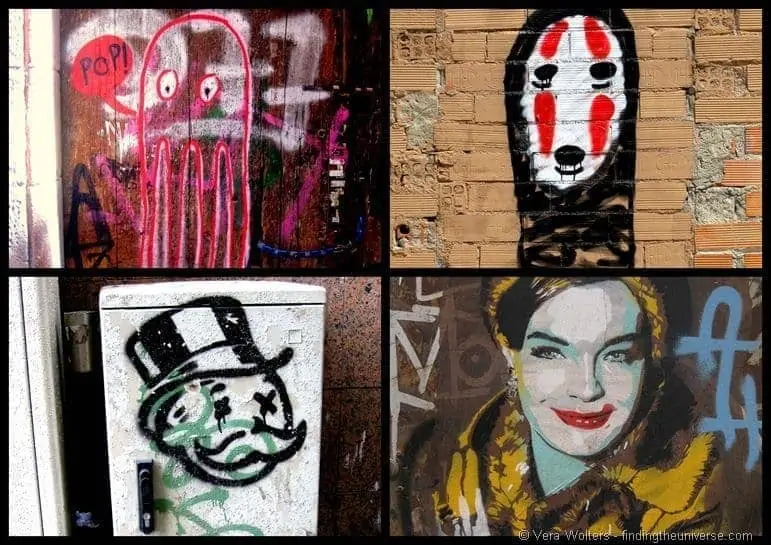
Popular culture turns up everywhere. Bonus points if you can name all the references.

Speaking of pop culture, that chap in yellow seems familiar somehow.

Some of it heads somewhere altogether more otherworldly.

Street art, like every other kind of art, is not immune to cats. Yes, one of these is stretching the definition a bit.
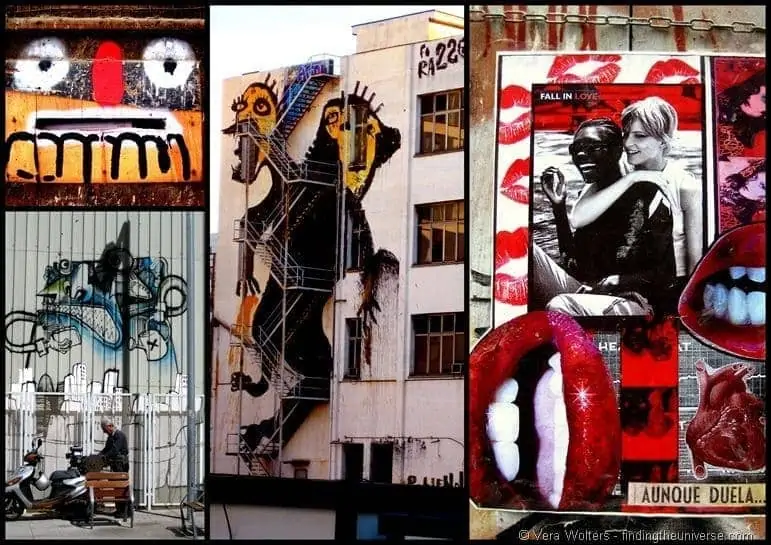

And of course, the I-have-no-idea-what-the-artist-was-on-but-I-like-it pieces.

Frequently Asked Questions
Where is the best street art in Barcelona?
The Jardins de les Tres Xemeneies in Poble-sec is the single best spot, with legal walls that get fresh work roughly every week. For sheer density, wander El Raval around the MACBA; for the biggest murals, head to Poblenou and Nau Bostik in La Sagrera.
Is street art legal in Barcelona?
Painting is illegal except on authorised walls or with the property owner’s permission. The city runs the Murs Lliures programme, which lets anyone paint legally on designated walls such as those at Tres Xemeneies by booking a slot. Much of the rest of what you’ll see is either commissioned or quietly tolerated.
Is there a street art museum in Barcelona?
There are two. The MOCO Museum in El Born shows authenticated works by Banksy, KAWS and others, with tickets from around €15. The Banksy Museum at Espacio Trafalgar shows high quality reproductions, not originals, with entry at €14. If you’re only visiting one, we’d pick MOCO.
Does Barcelona have a real Banksy?
Not on the street. Barcelona has no authenticated Banksy street piece, so the murals you may see attributed to him around town aren’t his. The authenticated Banksy works in the city hang in the MOCO Museum, while the Banksy Museum on Carrer de Trafalgar shows reproductions.
When is the best time to see street art in Barcelona?
Early morning, ideally on an overcast day. You’ll have the streets to yourself, cars won’t have parked in front of the walls yet, and in El Raval the shop shutters are still down, which is when a whole extra layer of shutter art is visible. Soft light also photographs painted walls far better than harsh midday sun.
Further Reading For Your Visit To Barcelona
We’ve written quite a bit about Barcelona over the years, so if you’re planning a trip, these should help:
- Our recommended itineraries for one day, two days and three days in Barcelona
- Our guide to the Gothic Quarter, and the best spots for a great view of Barcelona
- Our favourite photography locations in Barcelona
- Our complete guide to visiting the Sagrada Família
- Jess’s review and guide to the Barcelona Pass, and her definitive guide to the best Gaudi sights in Barcelona
- For a guidebook, we suggest the Rick Steves Barcelona guide
- The WikiVoyage guide to Barcelona
And that’s it for our guide to the street art of Barcelona! Are you a street art fan, or does it all leave you cold? Either way, we’d love to hear about it, so do let us know in the comments below.
Leave a Reply