
Helsinki is one of those cities that rewards a proper look rather than a rushed one. We’ve been multiple times across summer and winter, and every visit we’ve found something new. It’s not as immediately showy as Stockholm or as moody-photogenic as Copenhagen, but it has a quiet confidence I’ve come to like a lot: a city of saunas and sea fortresses and unreasonably good cinnamon buns, where the cathedral dome is the skyline and the ferry to a UNESCO World Heritage island costs the same as a tram ride.
This is a curated guide to the best things to do in Helsinki, written after a lot of time actually spent trudging around in sub-zero temperatures (Jess still reminds me) and then coming back in summer to find the same streets transformed. I’ve kept it opinionated. Where something’s really worth your time I say so. Where something is niche, quirky, or flat-out odd (Helsinki has a weirdly excellent collection of tiny museums) I’ve flagged that too, because a proper Helsinki trip should include at least one slightly strange museum. That’s how you know you’re doing it right.
Table of Contents:
Quick Take
In one line, Helsinki is a compact, cultured Nordic capital with a UNESCO sea fortress, proper sauna culture, and a weirdly deep museum scene for a city of half a million.
It’s best for anyone who likes design, architecture, quiet green spaces, day-tripping to another country, and cities that don’t try too hard. Skip it if you need constant nightlife, dramatic mountain landscapes, or a sprawling megacity. Helsinki is a small city and happy to be one.
Two to three days is the sweet spot for a trip. One day is doable but you’ll wish for longer (and if that’s all you have, we have a dedicated one day in Helsinki itinerary). And if you only do three things in the city, make them the ferry to Suomenlinna, a sauna and sea-plunge at Allas, and a morning walk from Senate Square down the Esplanade to the Old Market Hall.
How Many Days Do You Need in Helsinki?
Two full days covers the highlights without feeling rushed. One day is doable if you pick carefully (see our one day in Helsinki guide for a time-boxed itinerary). Three days lets you add day trips (Porvoo is easy, Tallinn is actually a different country), more museum time, and some of the weirder corners of the city. Anything longer and you’re looking at using Helsinki as a base for wider Finland travel, which it does well thanks to the train and bus network.
For context: Helsinki is compact. You can walk from the central railway station to Senate Square in ten minutes, and to Allas Sea Pool in fifteen. Most of what’s in this guide sits inside a walkable core, with a few outliers like Seurasaari and the Zoo that need a tram or bus.
Things to Do in Helsinki
What follows is the proper list. I’ve grouped the weirder small museums into a single roundup section (Helsinki has a lot of them and they all deserve a mention, but most don’t justify half a day each), and I’ve paired a few stops geographically where that makes sense on the ground.
Suomenlinna Sea Fortress
Suomenlinna is the one attraction everyone should make time for. It’s a UNESCO World Heritage Site, an 18th-century sea fortress spread across six linked islands, and for the price of a regular public transport ticket you get a proper ferry ride, panoramic views of the Helsinki archipelago, and a half-day of exploring walls, cannon emplacements, and a working harbour town.
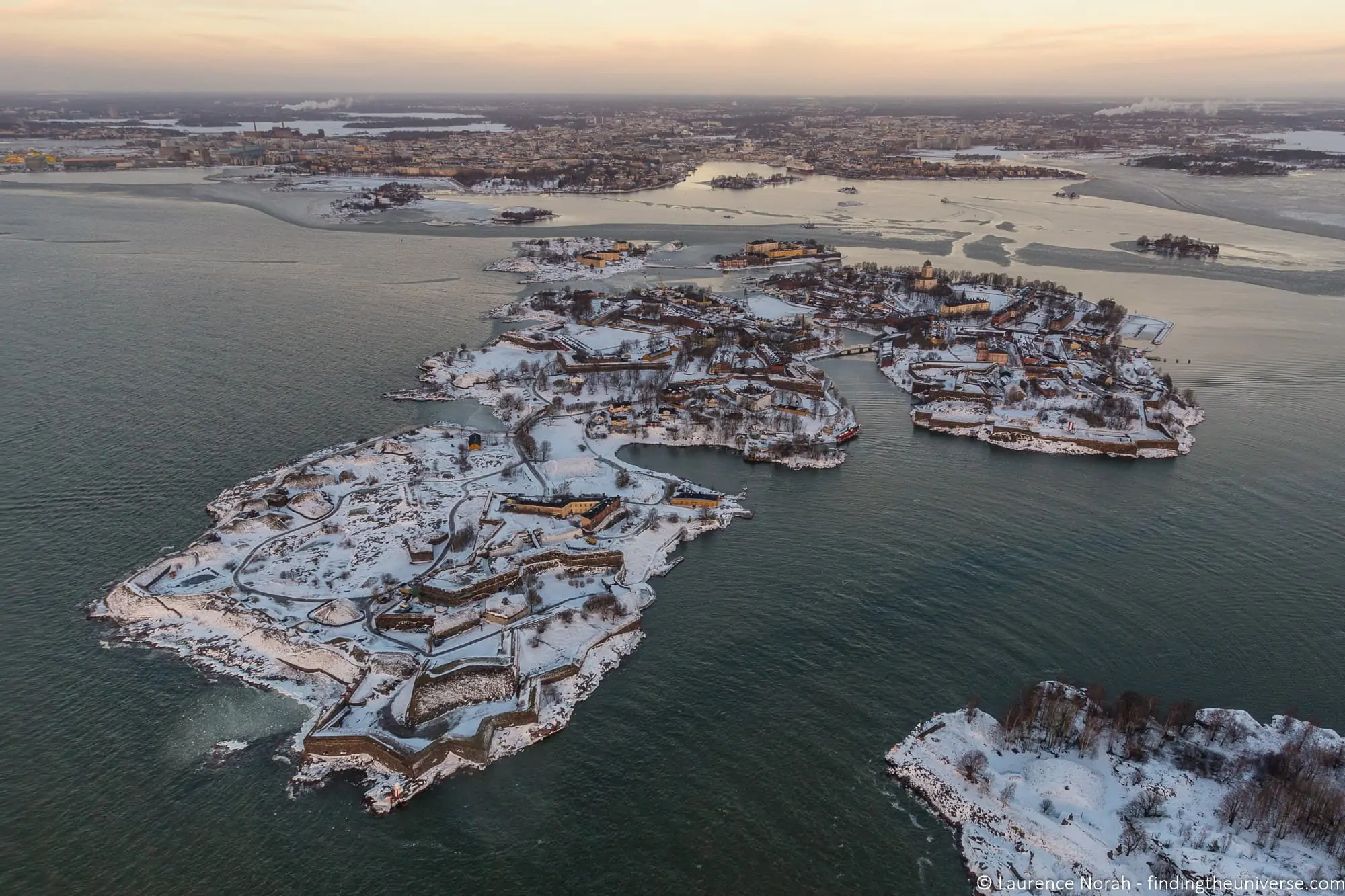
Built by Sweden in the 1700s to ward off Russian expansion, the fortress fell to Russia anyway in 1809, was shelled by the English and French during the Crimean War (they didn’t take it), and only became Finnish when Finland itself became Finnish in 1917. There’s still a small military presence on the islands and about 800 permanent residents, so it’s a living place rather than a preserved one.
Practically: just wandering is free. Most people underestimate how long they’ll want here, so plan a half-day minimum. There are several small museums if you want to go deeper (the Suomenlinna Museum is the one to pick if you only visit one, €10 adult, open year-round), plus a military museum, a toy museum, and the delightfully named Customs Museum which is all about smuggling in Finland. The Submarine Vesikko (a WW2 submarine) is fun but summer only.
The ferry runs year-round from Kauppatori (the main market square harbour) and is part of the HSL public transport network, which means if you already have an HSL day ticket or a Helsinki Card, the ferry is included. A standard single HSL AB ticket (€3.30 via the HSL app) covers it, as does any zone-inclusive ticket like a day pass or an ABC airport ticket. The crossing takes about 15 minutes.

For something slightly different, guided walking tours depart from the Suomenlinna Museum, run by the Ehrensvärd Society (daily in summer, weekends in winter). And if you really want to get a feel for the scale, a helicopter tour with a local operator gives you the aerial view of the fortress and the city at the same time.
Helsinki Card holders get the ferry, all the museums on the islands, and the guided walking tour included.
Helsinki Cathedral and Senate Square
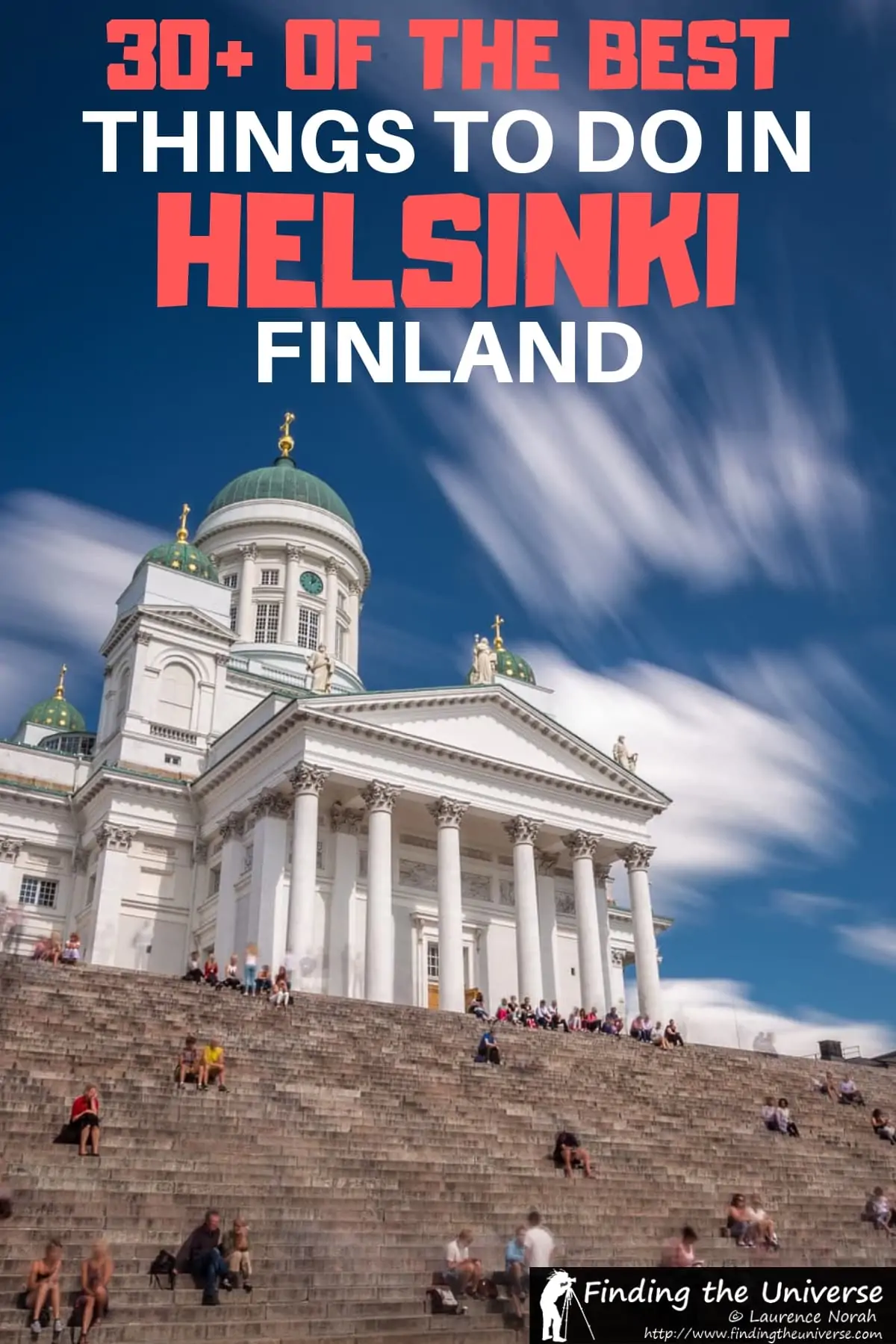
The white Lutheran cathedral sitting above Senate Square is the postcard image of Helsinki and, for once, the postcard gets it right. The cathedral itself (built 1830-1852, neoclassical, Evangelical Lutheran) is free to enter and fairly austere inside, which is actually quite a nice change if you’ve spent time in more gilded European churches.

The cathedral sits above Senate Square, Helsinki’s historic heart and a proper public space that changes with the seasons. In December it’s home to one of Europe’s coziest Christmas markets (definitely try the traditional Christmas porridge if you’re there). In summer it’s a people-watching spot with wide steps that function as unofficial public seating. The cathedral is open daily from 9am, with extended opening until midnight in June, July and August.
Directly behind the cathedral is the National Library, which is worth a quick look for the interior if you’re already walking past. A bit further along the same ridge you’ll find the Ateneum art museum on one side and a short walk down to the harbour on the other, which leads neatly into the next entry.
Market Square, Old Market Hall and the Esplanade
The area known as Kauppatori (Market Square) is where the Suomenlinna ferry departs, where the harbour life happens, and where you can try traditional Finnish food at very reasonable prices. The outdoor market runs daily, with stalls selling everything from fresh lingonberries to moose meatballs and salmon grills. Sitting on the harbour wall with a plate of salmon and a paper cup of something hot is a legitimate Helsinki activity in its own right. Rick Steves has been recommending the moose meatballs here for decades and he’s right to.
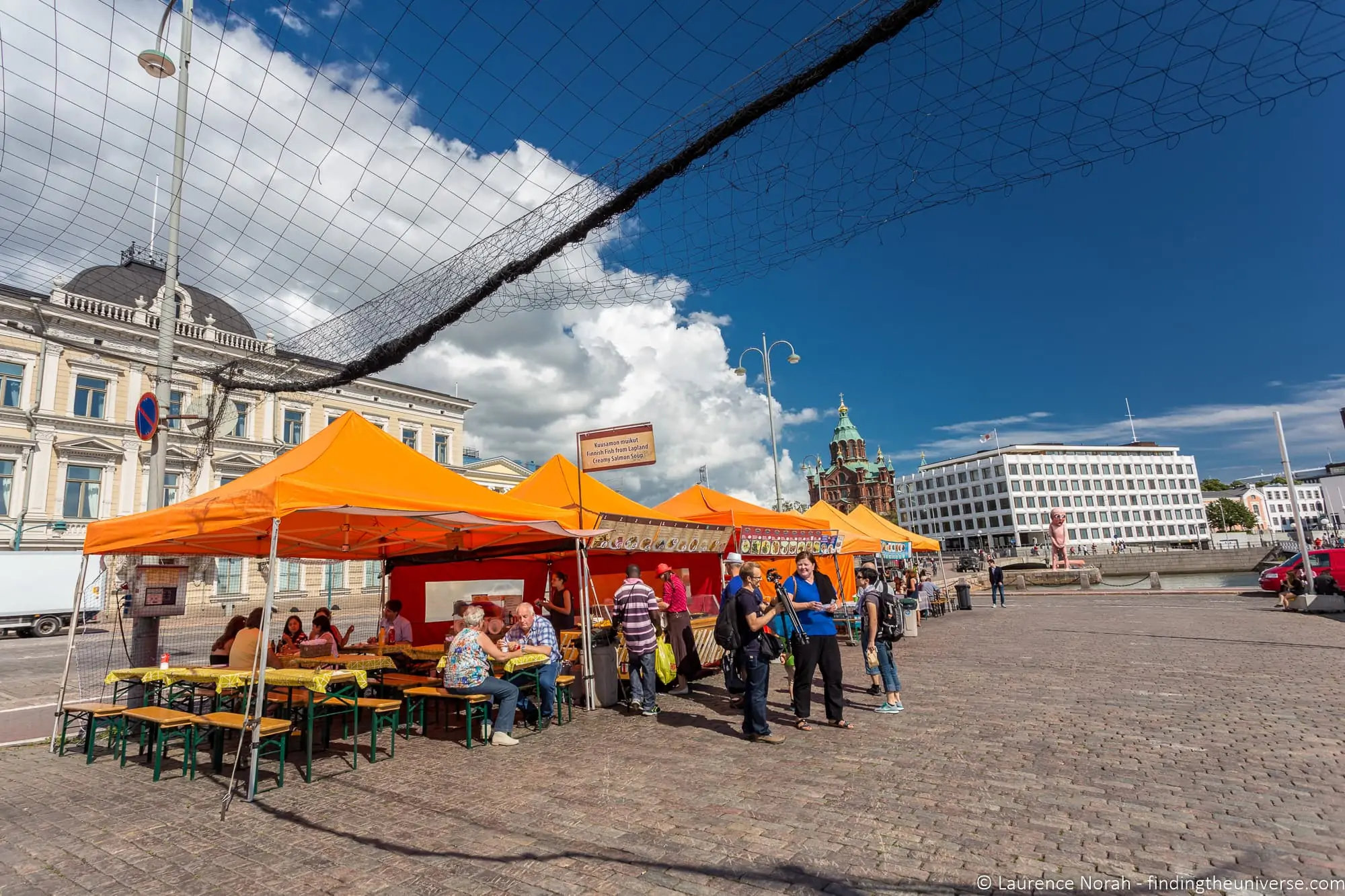
A couple of minutes’ walk west is the Vanha Kauppahalli (Old Market Hall), a purpose-built indoor food market that opened in 1889. The format hasn’t changed much in 135 years: multiple vendors selling cheese, meats, fish, Finnish specialities, and lunch from small counters where you can sit down. We like Story for smoked salmon, but you can really just wander in and eat whatever looks good. It’s open Monday to Saturday, 8am to 6pm.

From the market hall, walking north brings you to Esplanadi (the Esplanade), Helsinki’s grand tree-lined boulevard. In summer this is the city’s heart: free live music at the Espa bandstand, ice cream kiosks (the lippakioskis that have been around since the 1920s), people watching, and the boutiques of the Design District opening onto it. In winter it still has a certain dignified calm, with the Christmas market at its eastern end spilling out from Senate Square. A morning walk from Senate Square down to the Old Market Hall via Esplanadi is probably the single most pleasant hour you can spend in central Helsinki.
Uspenski Cathedral
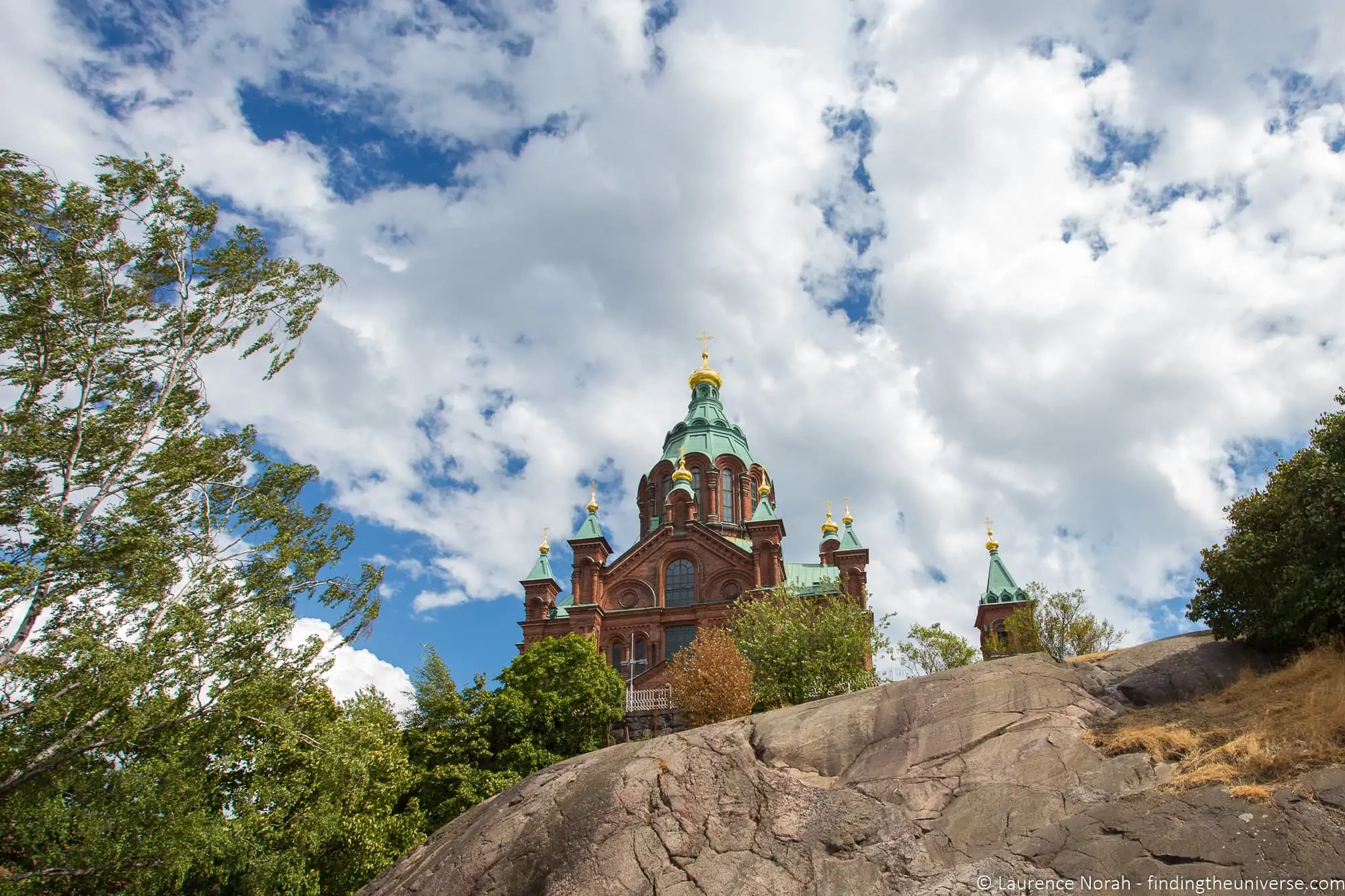
Just across the harbour from the market square, sitting on a hillside behind the Skywheel, you’ll find Uspenski Cathedral: a red-brick, gold-cupola-ed Russian Orthodox church that looks like it’s been teleported in from St Petersburg. Which is more or less what happened. Built in 1868 during Russian rule, it’s the largest Orthodox cathedral in Western Europe, and if you’ve been to Russia it’ll feel instantly familiar.
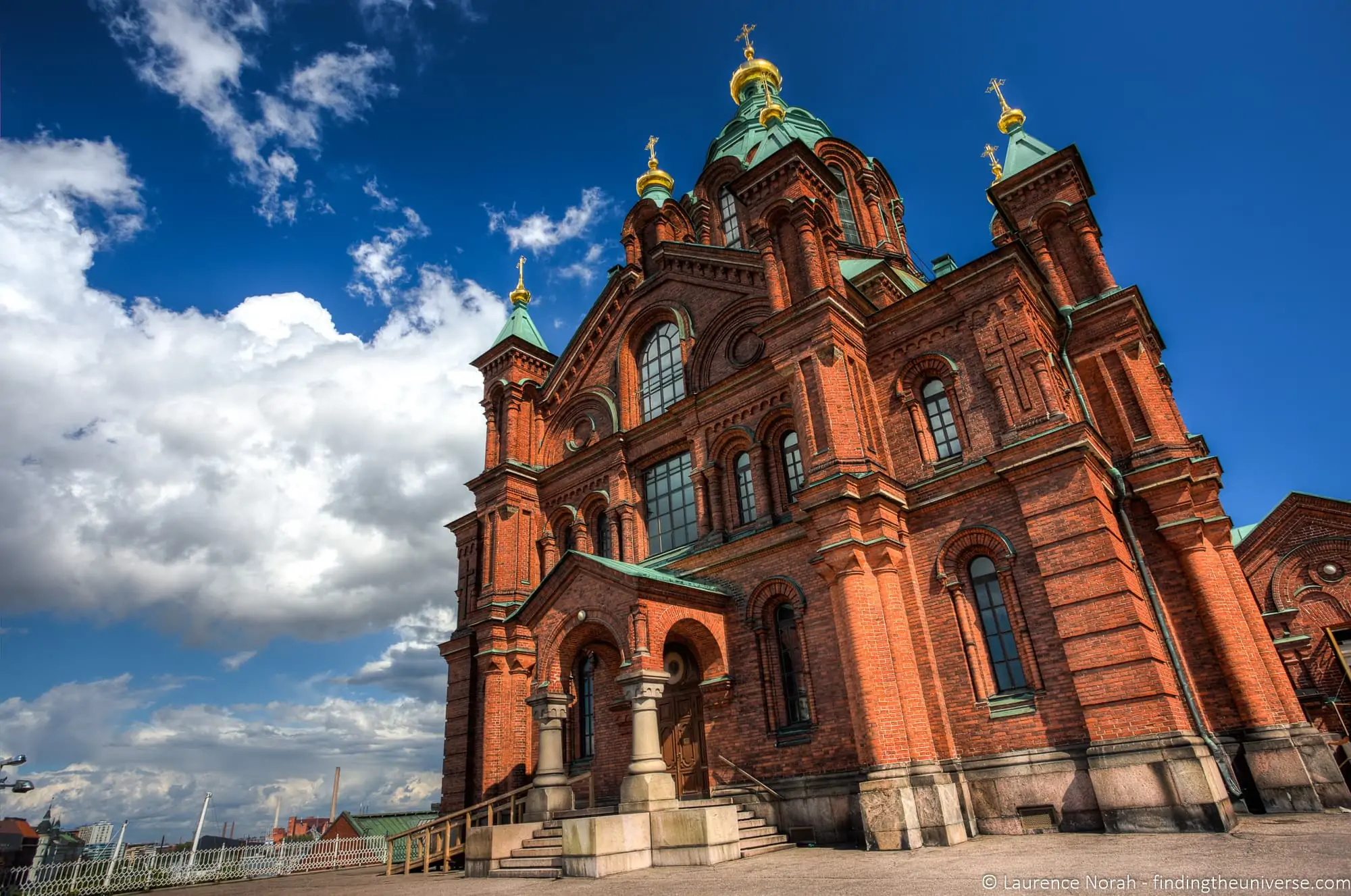
It’s free to enter, open daily in summer and closed on Mondays outside that. Worth pairing with the Skywheel and Allas Sea Pool since they’re all within a two-minute walk of each other. The exterior is photogenic from pretty much any angle, especially when the sun is low.
Temppeliaukio Church (the Rock Church)
If you only have time for one unusual church in Helsinki, make it this one. Temppeliaukio is built directly into the granite of a residential square in Etu-Töölö, with a copper-domed skylight letting natural light flood the interior. It opened in 1969, and the design still feels surprisingly modern almost 60 years later.
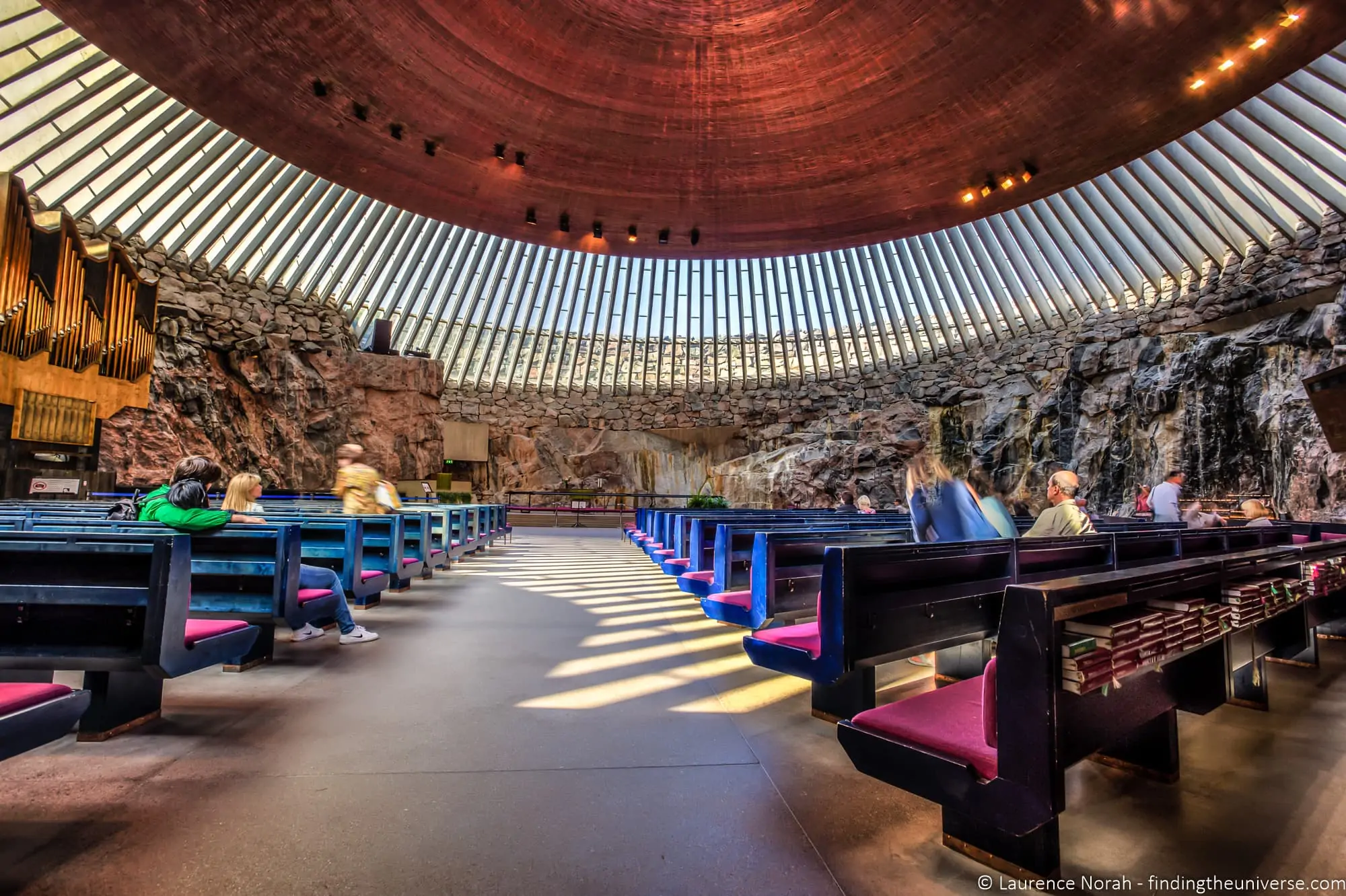
Entry is €8, or free with the Helsinki Card. It’s also free on Wednesday afternoons (from 3pm October-April, from 4pm May-September). Services happen periodically so check the official website before visiting.
Kamppi Chapel of Silence
Helsinki’s other unusual religious building, and in some ways the one that caught me off guard more. The Kamppi Chapel sits in the middle of a busy square in the Kamppi shopping district, looking like a wooden cylinder that’s landed from somewhere else. Inside, there are no services. It’s just a space for quiet, lit by indirect daylight filtering through an oculus in the ceiling, with benches around the walls. The acoustics are weirdly dampened, so even though you’re five metres from a tram line the outside world just disappears.
Entry is free and it’s open daily. You don’t need to be religious (neither of us is particularly) to find it remarkable. Five minutes of silence in the middle of the city is sometimes exactly what a day of sightseeing needs.
Oodi Central Library
Oodi surprised me, because it hardly feels like a library at all. It opened in December 2018 and has become the architectural landmark the 2018-opening tourism posters said it would. Three floors of sculptural timber-and-glass, positioned directly opposite the Finnish Parliament (deliberately, to symbolise the relationship between government and citizens), with a rooftop balcony giving views across the Töölönlahti bay.
The top floor is where the books actually live and it’s the most library-like, with a café and long benches where locals come to read. The middle floor is a makerspace with 3D printers, sewing machines, recording studios, and a very good if slightly chaotic tote-bag printing service (it’s weirdly satisfying to leave Helsinki with a tote bag you printed yourself for less than the cost of a coffee). The ground floor is event space.
It’s free, open every day, and you can just walk in. Even if you’re not a library person, it’s one of the best examples of public architecture built anywhere in Europe in the last decade. Worth pairing with Kamppi Chapel (a ten-minute walk) for an architecture mini-circuit.
Allas Sea Pool (with Löyly and Kotiharjun as alternatives)
Any trip to Helsinki that doesn’t include a sauna has failed. Finns have been doing sauna since around 7000 BC and take it more seriously than most nations take any activity. There are around 3.3 million saunas in Finland for a population of 5.4 million, which means a lot of Finns have multiple saunas. The good news for visitors is that you don’t need to befriend a Finn to experience it.
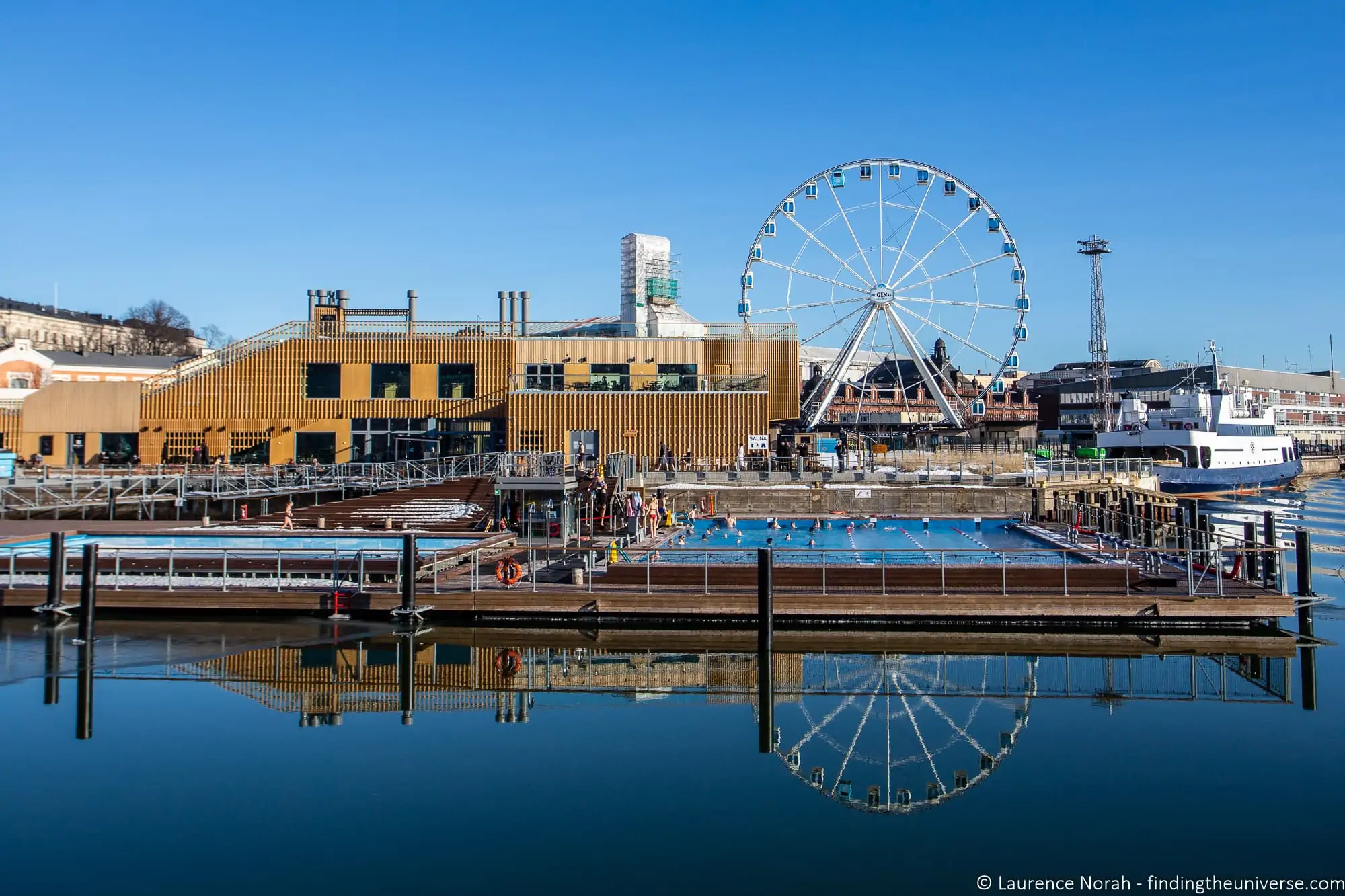
Allas Sea Pool is the most central public sauna complex. It sits in the harbour next to the Skywheel, open year-round, with a heated freshwater pool, a heated-in-summer and cold-in-winter sea pool (filled from the Baltic, no treatment), and multiple wood-heated saunas. We think it’s the most convenient introduction for first-time visitors: you don’t need to book far in advance, it’s right in the centre, and the dunk-from-sauna-to-cold-sea sequence is as Finnish as it gets. €19 weekday before 2pm, €24 after 2pm and weekends. Bring or rent a towel and flip-flops.
Löyly is the other main option, 25 minutes’ walk south-west on the Hernesaari waterfront, designed by an architecture firm and looking more like a sculptural timber installation than a sauna. It’s smaller than Allas, has a superb restaurant attached (the fish soup is worth the trip alone), and feels like a destination rather than a drop-in. It’s also where you’ll find the city’s most photogenic sunset if you time it right.
If you want the old-school version, Kotiharjun Sauna in Kallio has been going since 1928 and is the last working-class public wood-heated sauna in Helsinki. We haven’t been ourselves, but it’s the one locals will send you to if you say you want the traditional experience rather than the polished one. It’s cheap, plain, and uncompromising, and you should go if that sounds like your kind of thing rather than mine.
One small etiquette note: Finnish public saunas are almost always gender-segregated and swimsuit-optional within each section. Allas and Löyly have swimsuit-required mixed areas as well. If you’re not sure, ask. Nobody will mind.
Helsinki Skywheel
The Ferris wheel by the harbour is harder to miss than it is to justify, but Helsinki is a very flat city with very few high viewpoints and sometimes a Ferris wheel is just the practical solution. It’s 40 metres tall, heated, and takes about ten minutes for a full rotation.
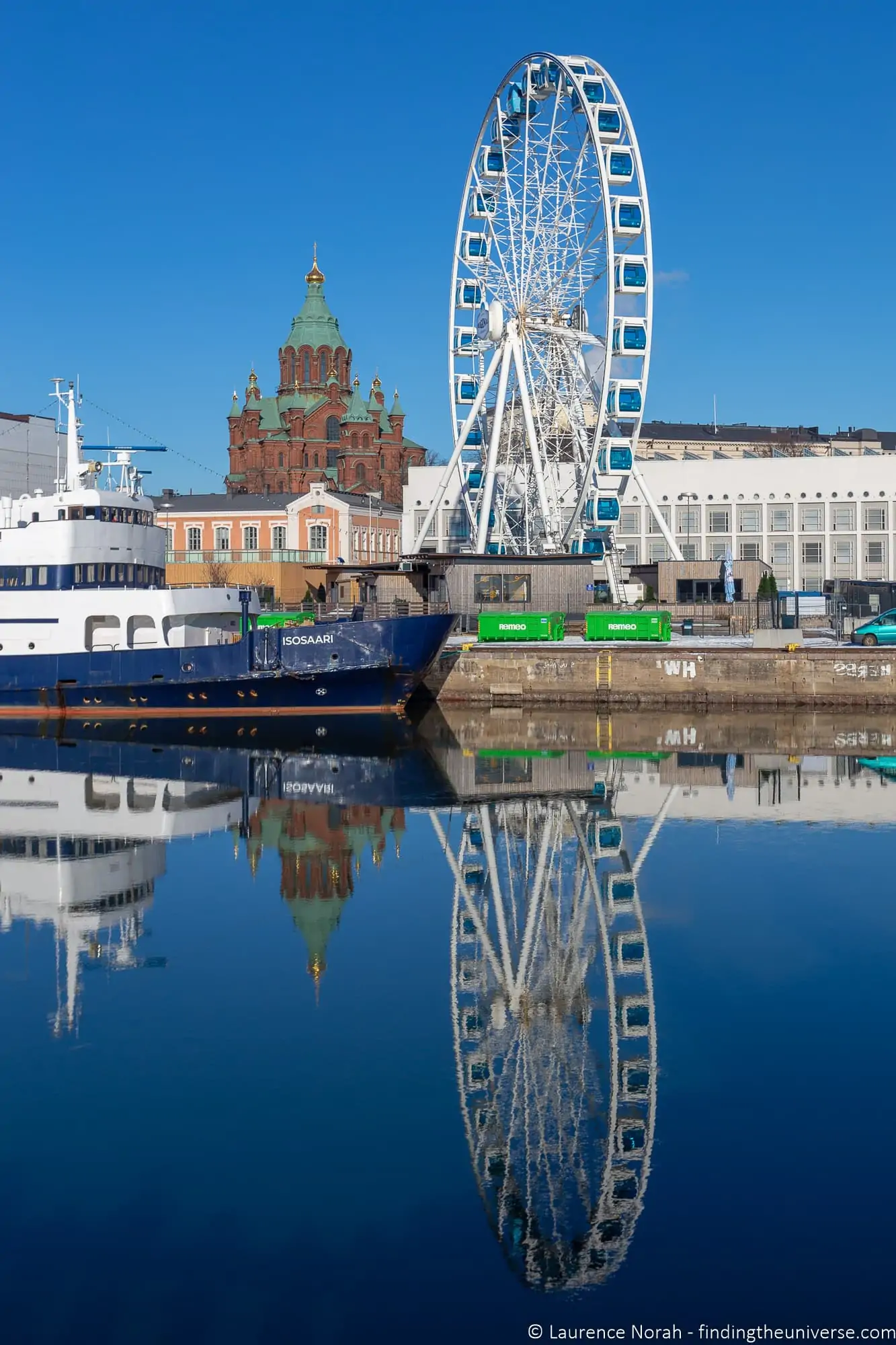
The thing that elevates it from ordinary-tourist-Ferris-wheel to only-in-Finland is the SkySauna cabin: a fully functioning sauna you can ride in a Ferris wheel cabin. I’m not sure any other activity on this entire list is as Finnish in concept. Yes, it sounds faintly ridiculous. Yes, I would happily do it again given the chance. Standard ticket is €15 adult, with a discount to €13 for Helsinki Card holders (€10/€9 child). Note the SkySauna closes for the winter season (November to April).
Canal Cruise
In summer (roughly May to September), the 90-minute canal and archipelago cruises from Market Square are one of the nicest ways to see the city from a different angle. The boats pass Suomenlinna, weave through some of the quieter canals, and give you the sort of perspective on the Helsinki archipelago you can’t get from land.
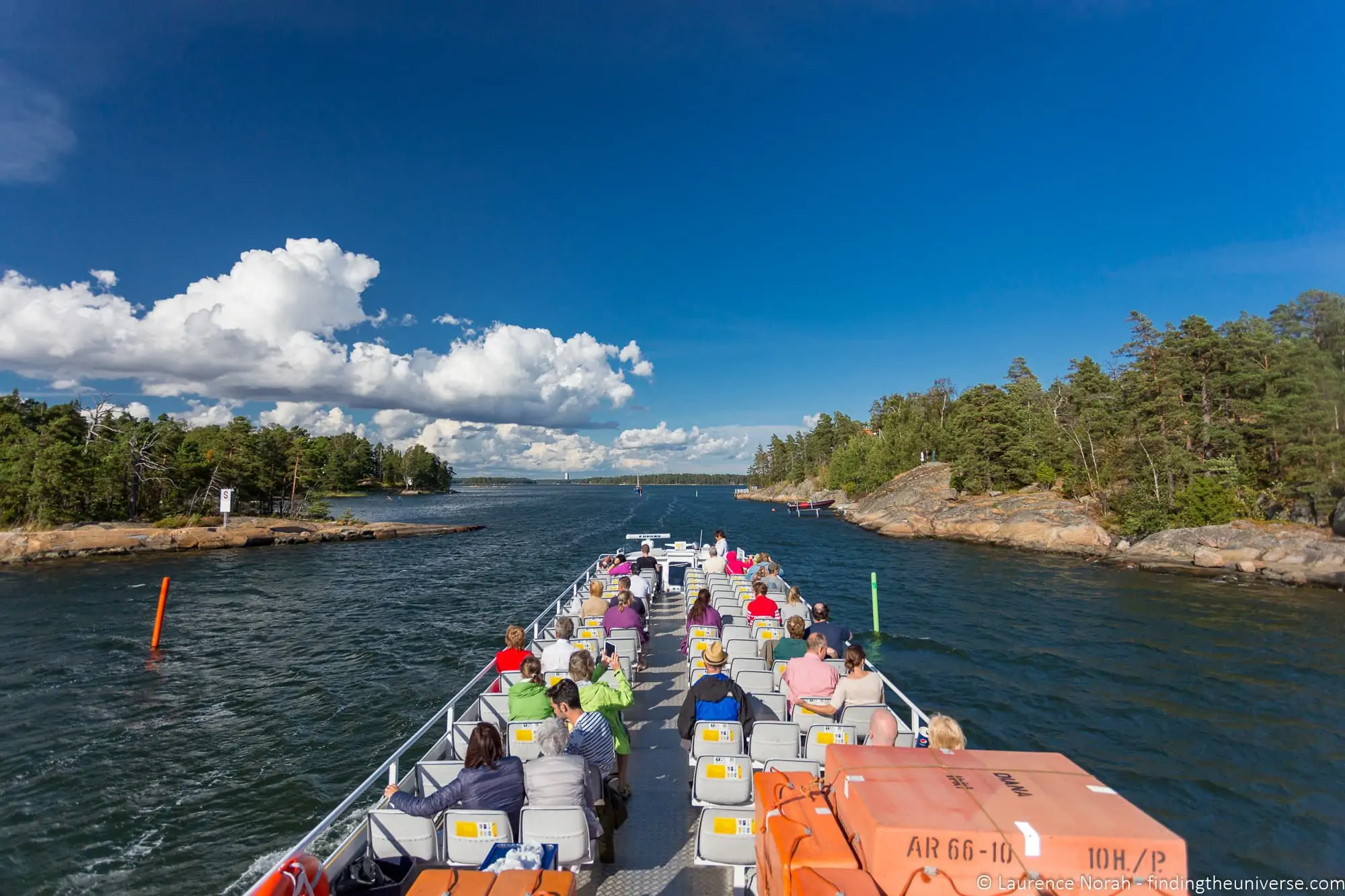
We took ours on a warm July afternoon, and the thing that made it memorable was discovering the boat had a bar. Drinking a cold beer on the top deck watching Suomenlinna slide past is the sort of thing that makes you wonder why you don’t live in Helsinki. The cruise is included on the Helsinki Card, or you can book directly with Strömma. It’s €28 direct. Not available in winter.
Amos Rex
Helsinki’s most hyped museum and, in our experience, the one where you’ll actually queue. Amos Rex opened in 2018 underneath Lasipalatsi Square in the centre of the city, with those distinctive dome-like bubbles breaking through the plaza floor that you’ll see in every Helsinki photo shoot from the last five years.
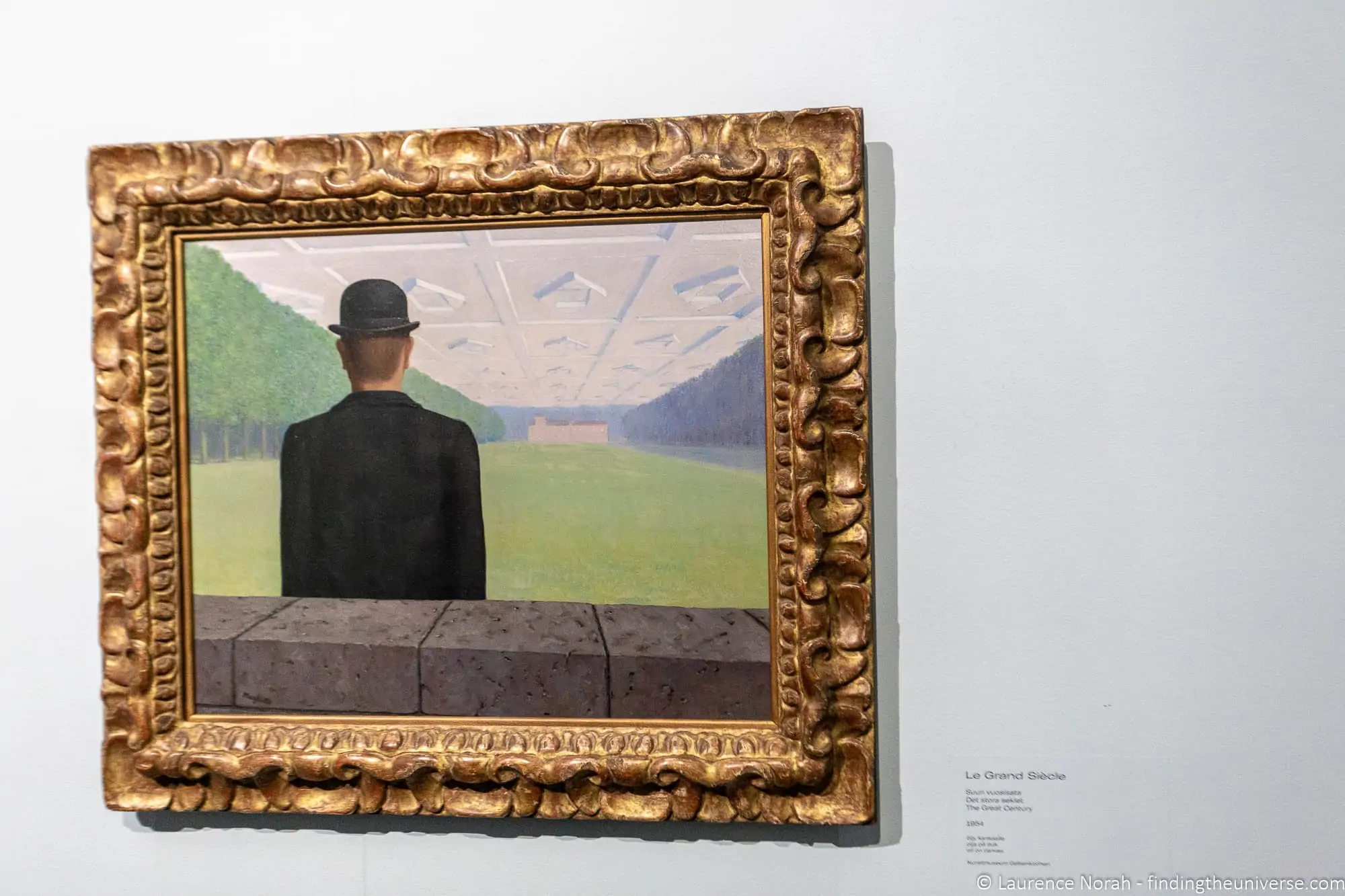
The programme is almost entirely temporary exhibitions, typically leaning toward immersive, interactive, or digital-native work from both Finnish and international artists. It’s the kind of place where even the non-art-obsessed will find something interesting, which is part of why it’s so popular. €22 adult, €6 for 18-29s, free under 18. Free with the Helsinki Card and the Museum Card. Closed Tuesdays. The queue I mentioned is real, so buy tickets online for a specific time slot.
Design Museum Helsinki
If Amos Rex is the new kid, the Design Museum is the reason Helsinki matters in the design world at all. The collection covers 140 years of Finnish design, from Alvar Aalto furniture to Marimekko textiles to Nokia phones to Angry Birds (yes, really). Over 75,000 objects in the main collection, supplemented by temporary exhibitions.
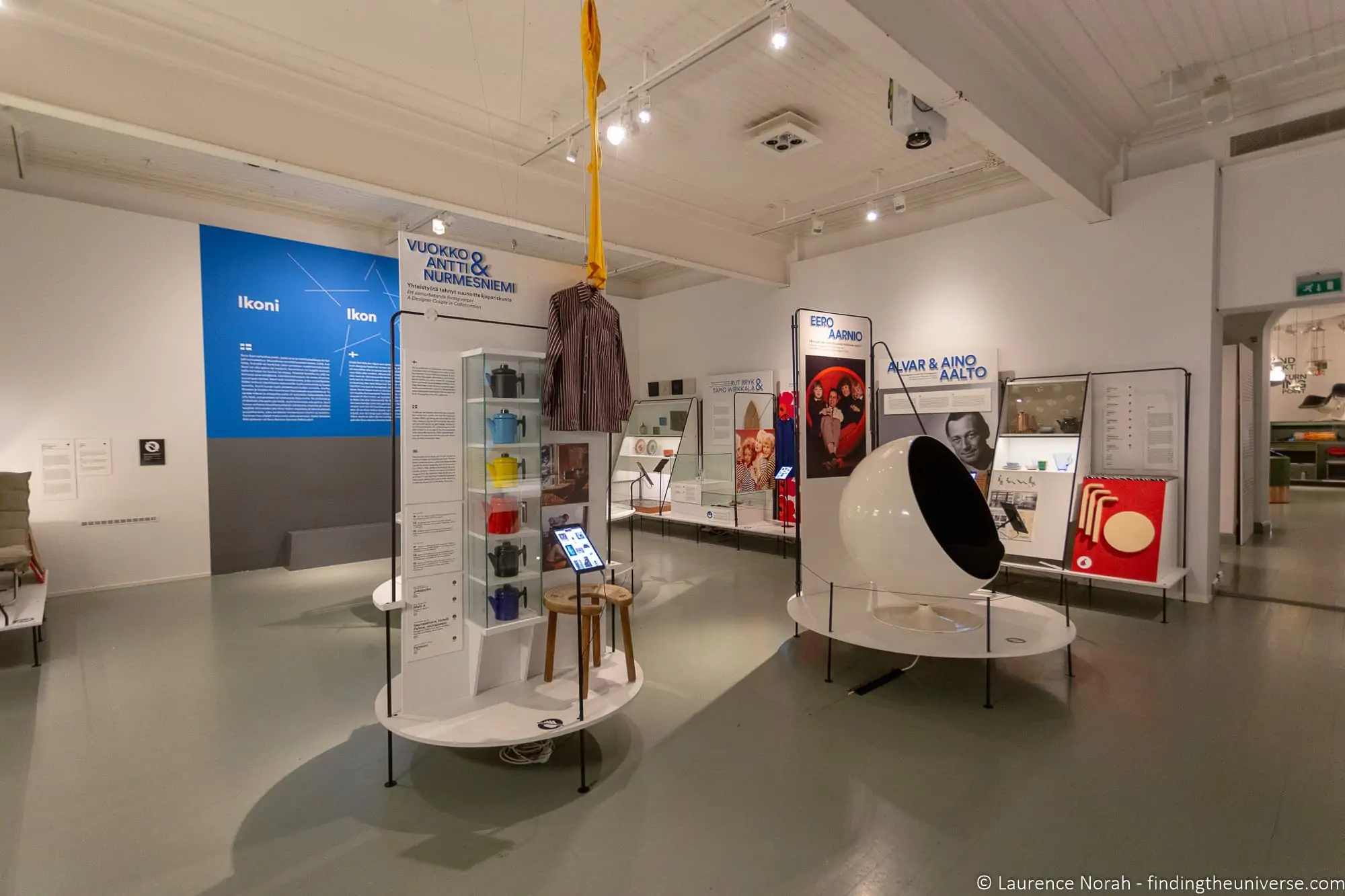
This was the one museum I wasn’t expecting to love, and it became one of my favourites. Design is one of those topics that sounds dry in the abstract and is the opposite in person: how chairs evolve, how industrial objects get better or worse over decades, how a small country develops a globally recognisable visual language. €22 adult, closed Mondays. The neighbouring Museum of Finnish Architecture shares the same building complex and now the same website (admuseo.fi), and a combined ticket saves money if you’re doing both.
Ateneum
The classical art museum of the Finnish National Gallery, Ateneum houses the country’s largest collection of pre-modern art: over 4,000 paintings and 750 sculptures covering Finnish classical work and European masters including Cézanne and Van Gogh. Interesting piece of trivia: Ateneum was the first art museum in the world to acquire a Van Gogh, in 1903.
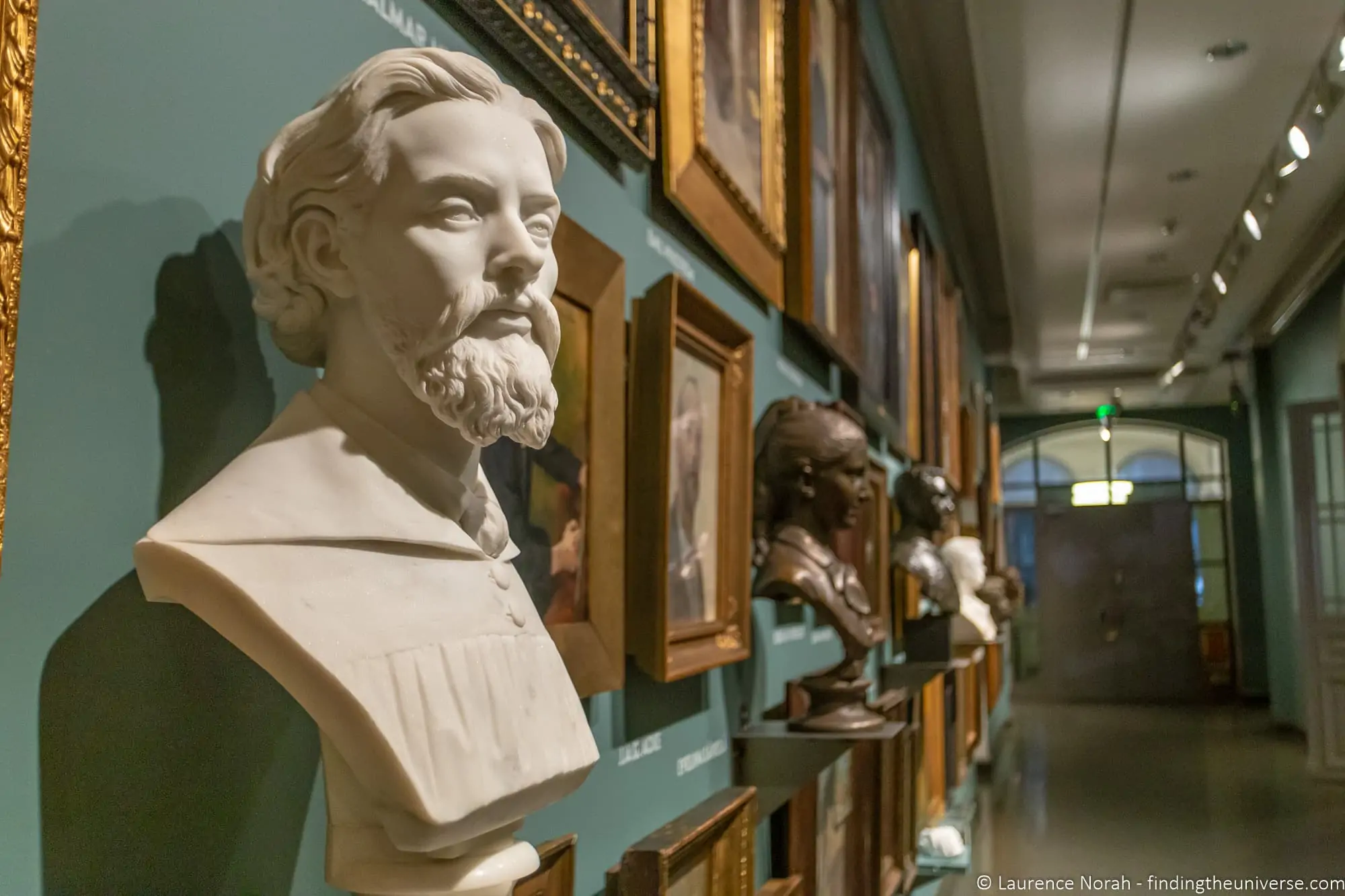
The building itself (1887, purpose-built as an art gallery) is worth the visit even if classical art isn’t your thing. Free for under-18s and Helsinki Card / Museum Card holders. Closed Mondays.
Kiasma: Museum of Contemporary Art
The third of the National Gallery trio, Kiasma is the contemporary counterpart to Ateneum. Over 8,000 works in the collection, primarily from Finnish and nearby Nordic artists from the 1970s onwards, plus around 100 new acquisitions each year. Spread across five floors, with an on-site theatre and an events programme that’s worth checking if you’re visiting for more than a day or two.
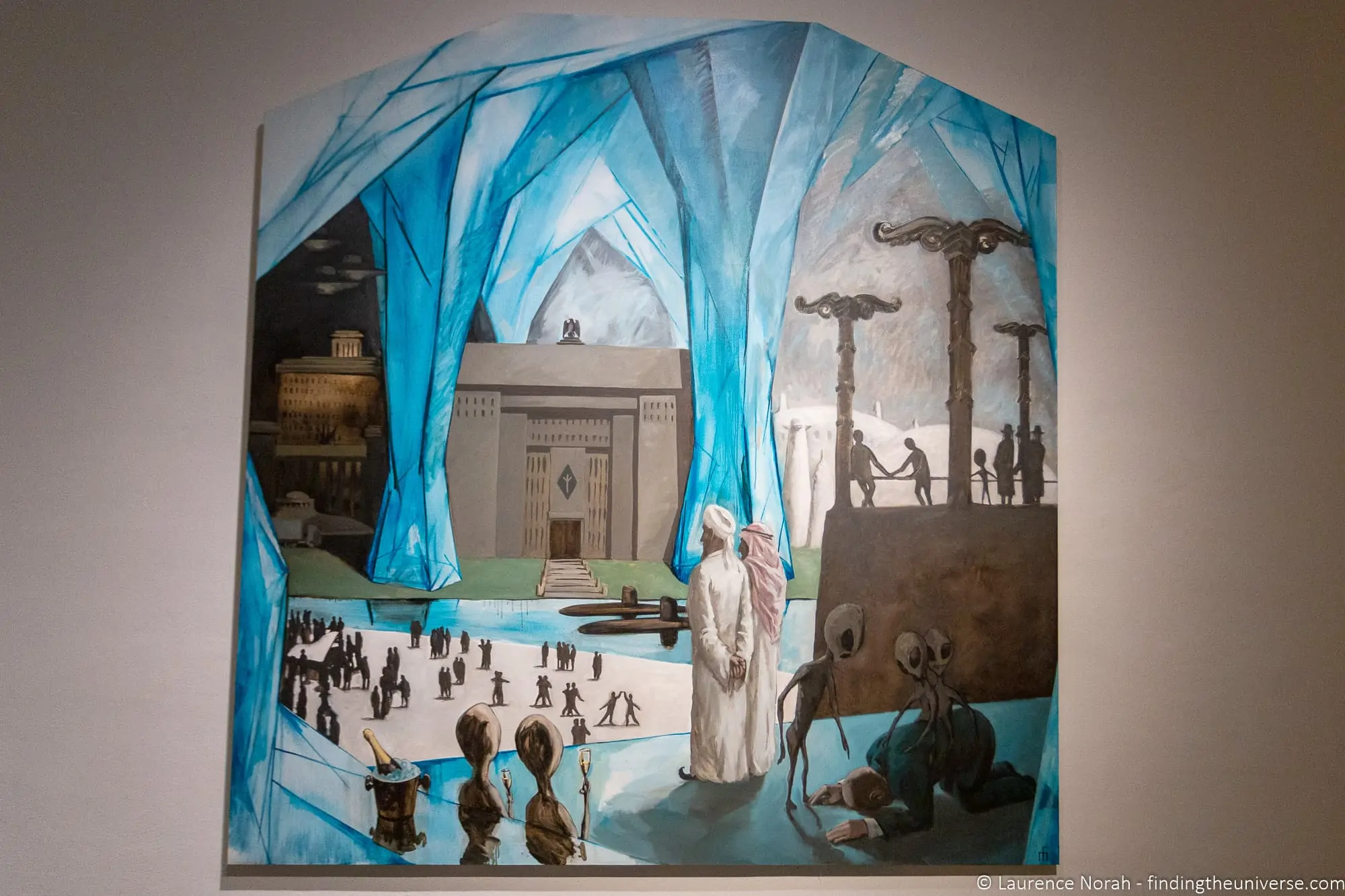
If you’re doing all three National Gallery museums (Ateneum, Kiasma, Sinebrychoff) a combination ticket is available. Free on the first Friday of every month, and for under-18s, Helsinki Card holders, and Museum Card holders. Closed Mondays.
National Museum of Finland
Important closure note: the National Museum of Finland is currently closed for major renovation, with a reopening planned for spring 2027. This is worth flagging because it was historically one of the first museum stops for any Helsinki visitor, and the 2026 version of “things to do in Helsinki” needs to acknowledge that it isn’t one right now.

When it does reopen, it’s the museum to pick if you only have time for one “learn about Finland” stop. It covers the whole history from Stone Age to present, and the building itself (early 20th century) is one of the finest in the city. In the meantime, the Helsinki City Museum (free, a few minutes’ walk from the cathedral) handles some of the same territory at a Helsinki-specific scale, and Seurasaari Open-Air Museum (summer only) covers rural Finnish heritage.
Mannerheim Museum
This one’s niche and it’s included here because it’s excellent, not because it’s obvious. Field Marshal Carl Gustaf Emil Mannerheim is Finland’s most consequential 20th-century figure: officer in the Imperial Russian Army, head of the Finnish armed forces during two world wars, sixth President of Finland, and the only person ever to hold the honorary rank of Field Marshal in Finnish service. There’s a statue of him riding a horse in Mannerheim Square in the centre of the city. You can’t really understand modern Finland without understanding him.
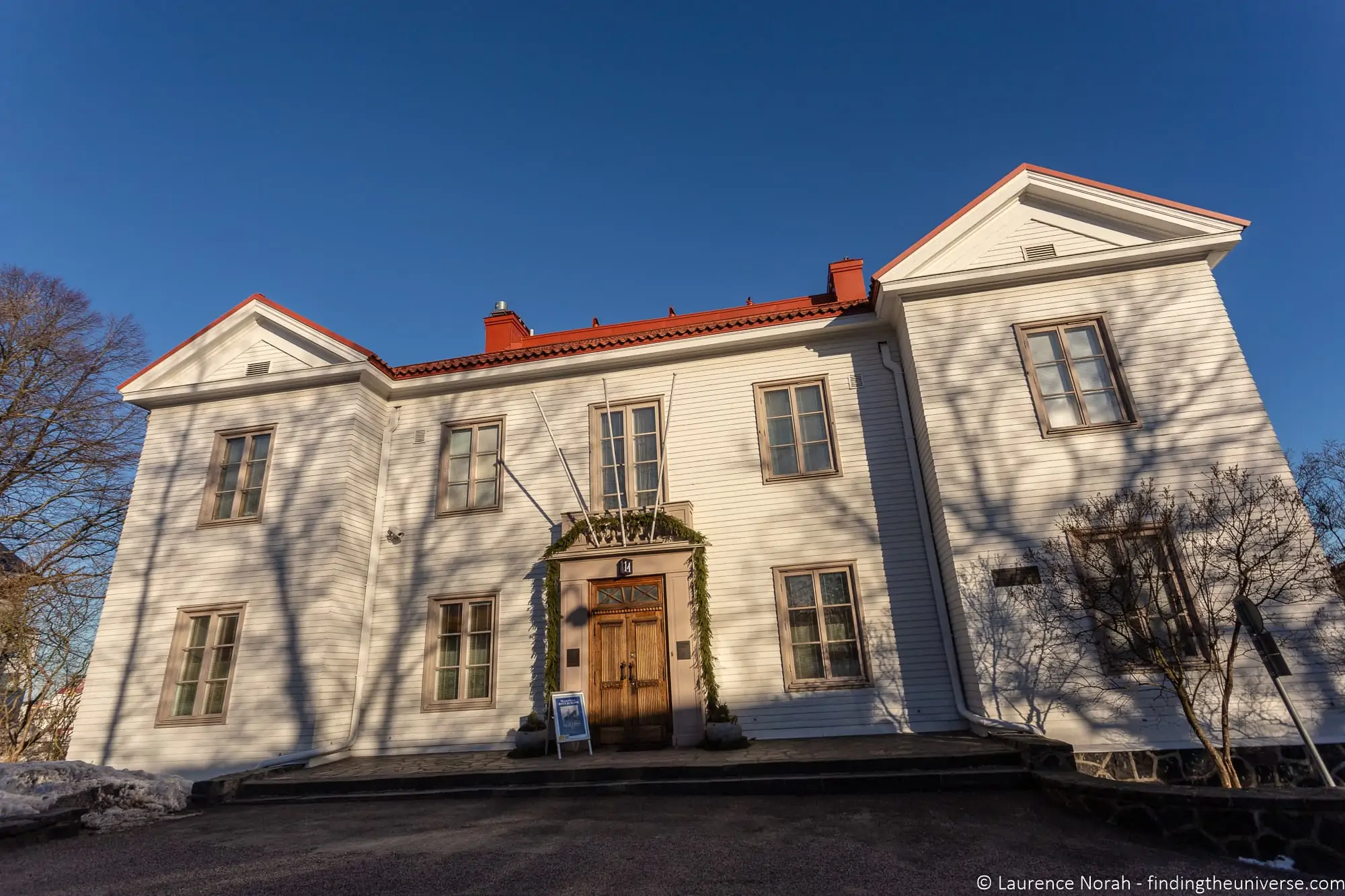
The Mannerheim Museum is his preserved home, lived in from 1924 until his death in 1951, open Friday to Sunday 11am-5pm, plus the last Thursday of each month from 4-7pm for self-guided evening visits. The rest of the time it’s guided tours only (available in six languages including English, lasting around an hour). We really enjoyed the tour: the house has been kept almost exactly as it was when he died, which makes it one of those rare house museums where you get a real sense of the person rather than a curated display. Photography isn’t permitted inside, which is a shame, but you can pick up postcards in the gift shop.
Included on the Helsinki Card and Museum Card. Check the official website for current tour times and languages before you go.
Finnish Museum of Photography
Found in the Kaapelitehdas (Cable Factory) west of the centre, which is itself worth knowing about: it’s a former Nokia cable factory turned into Finland’s largest cultural centre, housing three museums, ten galleries, and an event space. The photography museum occupies the lower floor.
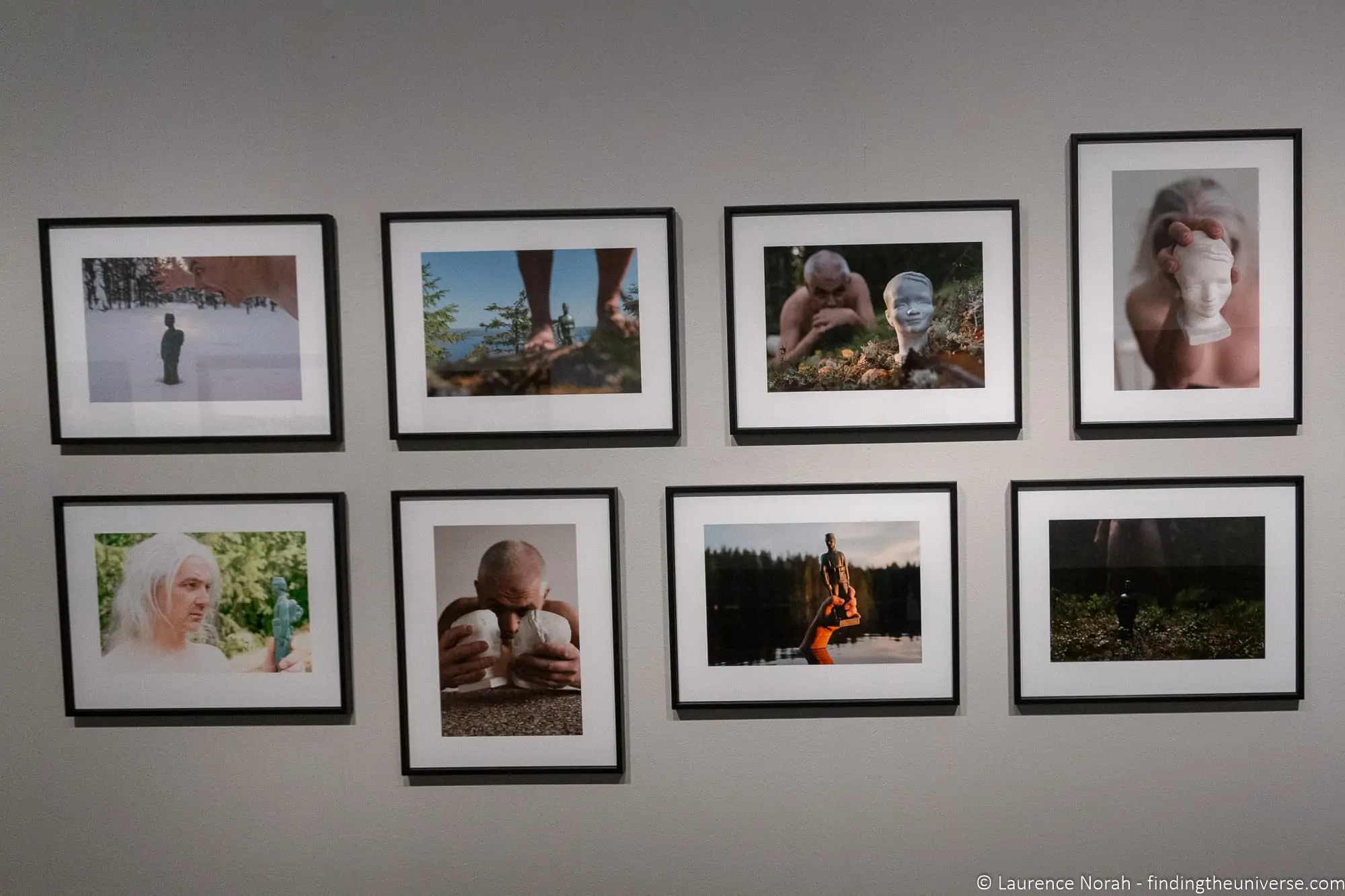
As someone who’s worked as a travel photographer for over fifteen years, this is the Helsinki museum I was most looking forward to, and it delivered. The programme is almost entirely rotating exhibitions from Finnish and international photographers, with a curatorial voice that isn’t afraid to take risks, rather than the slightly-too-safe selections some photography museums default to. A combined ticket for the three Cable Factory museums (Photography, Theatre, Hotel and Restaurant) is available if you’re going to see more than one. Free with the Helsinki Card and Museum Card.
Helsinki’s Weird and Wonderful Smaller Museums
Helsinki has a reputation in Finnish travel circles as the city with the highest quirky-museum density. I’m not sure if that’s true but it feels true after a few visits. None of these individually justify a half-day, but collectively they’re the things that make Helsinki feel like Helsinki rather than a generic Nordic capital. We’ve been to all of these, and in most cases have a specific reason for remembering them.
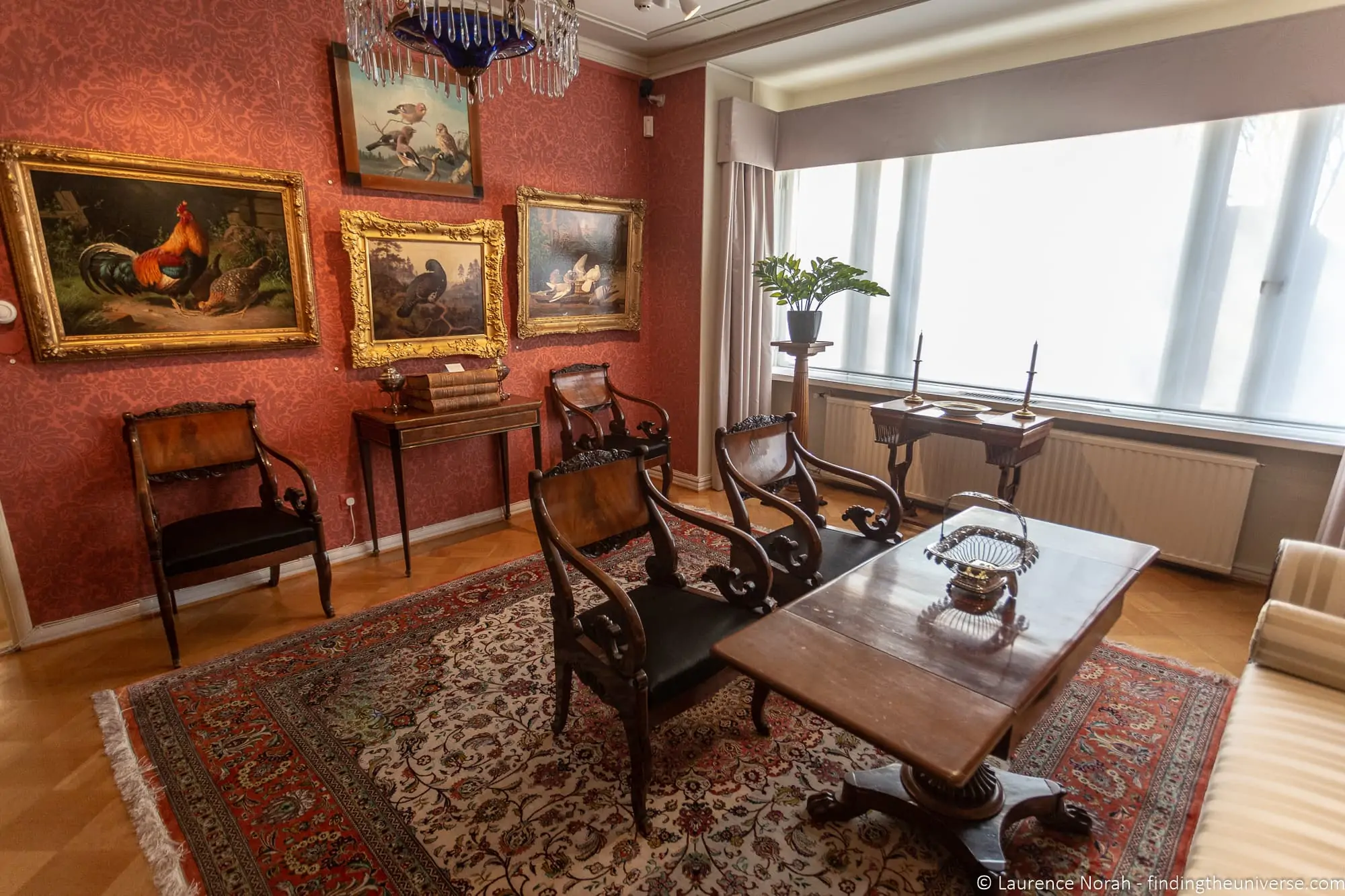
The Reitz Foundation Museum is the one I always tell people about. It’s open two afternoons a week (Wednesday and Sunday, 3-5pm), it’s on the sixth floor of an apartment building on Apollonkatu, and you get in by ringing the buzzer for the specific flat. When we visited we were properly convinced we were about to arrive in someone’s home by mistake. Inside, it turns out to be an extremely good small collection of 19th-century Finnish art, silver, weapons, and ceramics (16th century onwards), curated in the former home of Lauri and Maria Reitz. Small fee. Go for the disorientation and stay for the art.
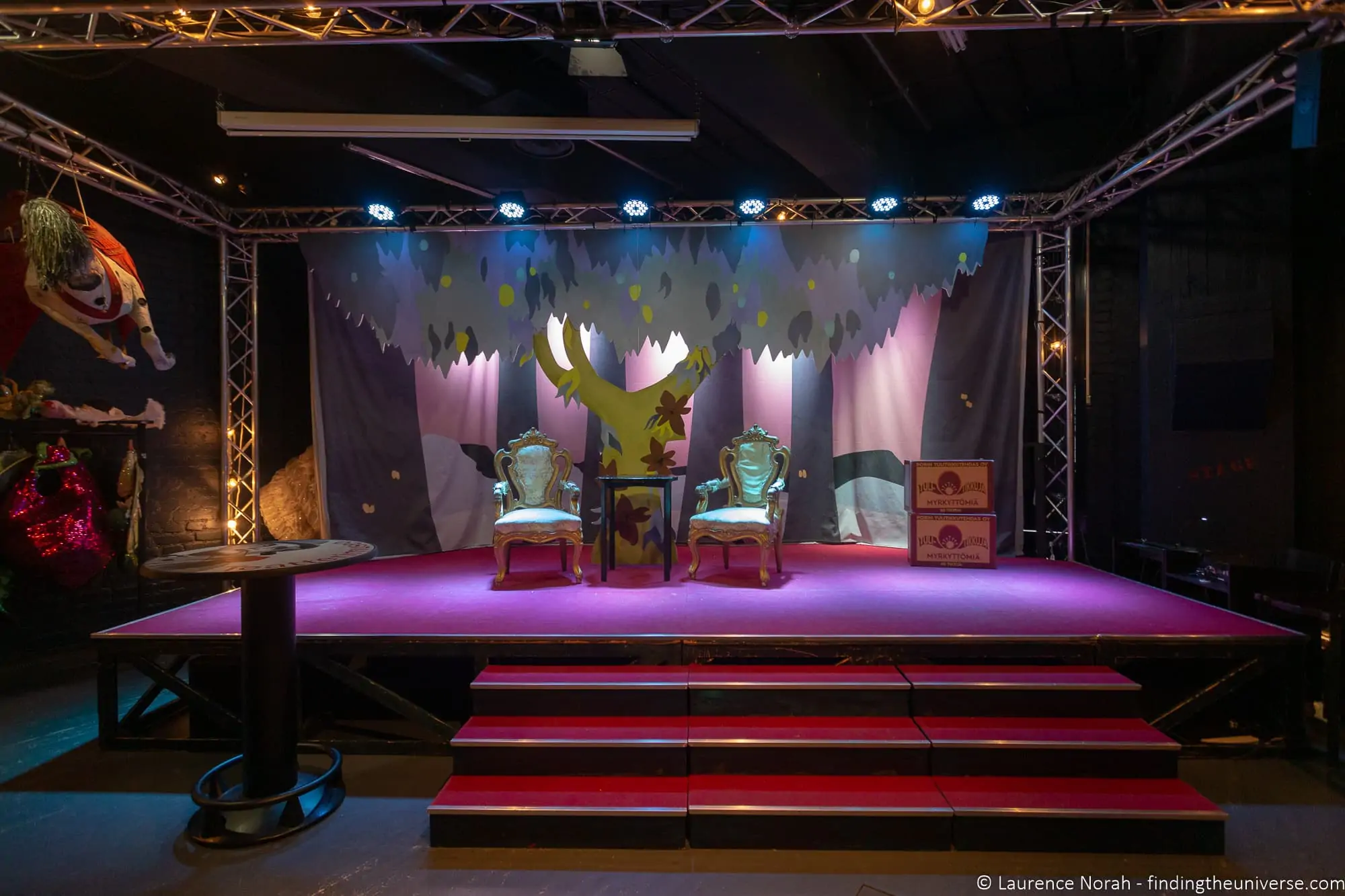
The Finnish Museum of Theatre (also in the Cable Factory) is essentially a hands-on playground for grown-ups who wish they could be backstage at a real theatre. You can operate actual stage lighting, change sound effects, make wind blow across a stage, and dress up in costumes and perform. Excellent for kids, and we enjoyed it more than either of us expected to. Bring a group.
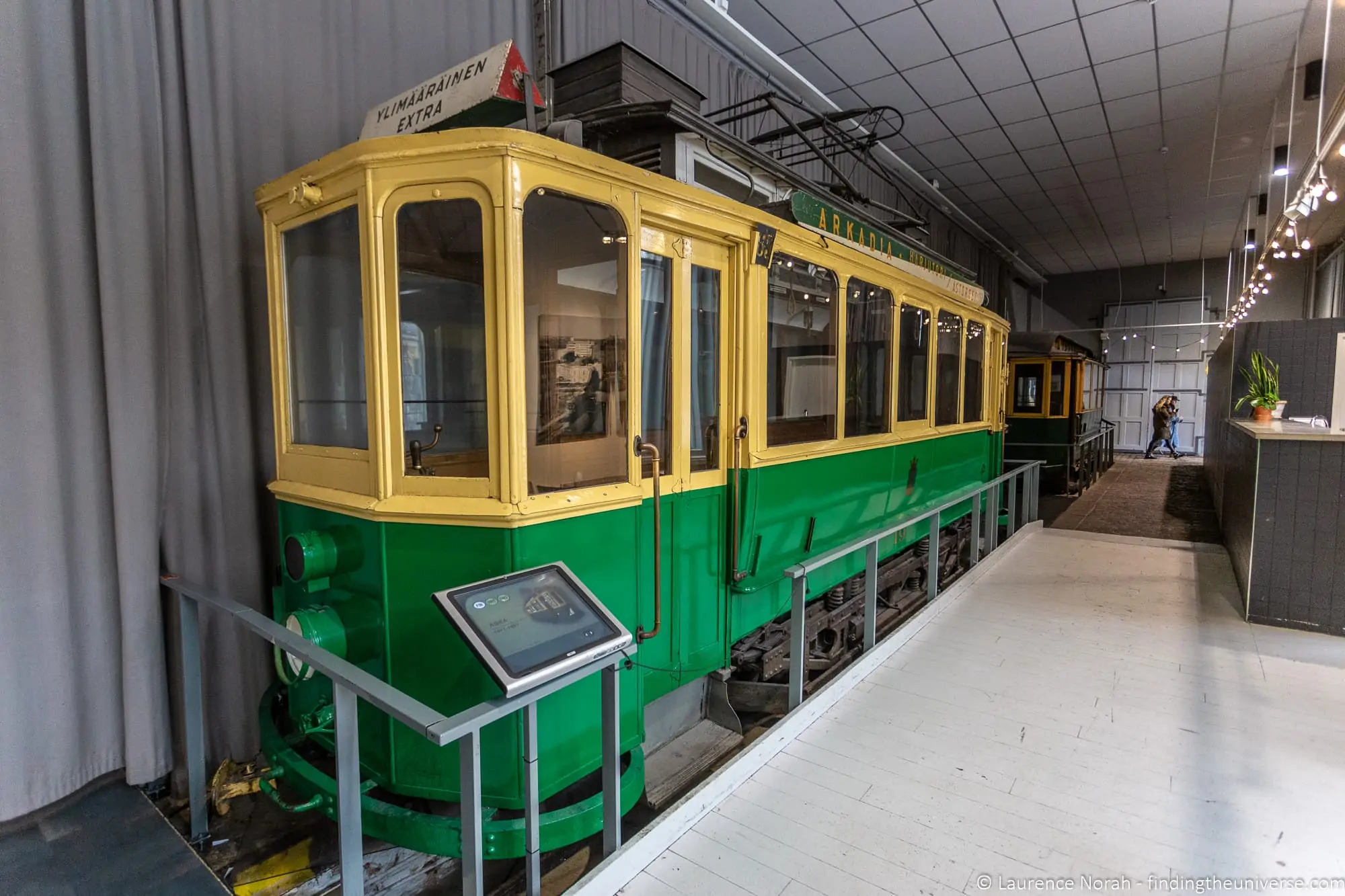
The Helsinki Tram Museum is small and free (operated by the Helsinki City Museum). The tram system in Helsinki is one of the oldest electrified tram networks in the world, dating from 1891, and the museum walks through the various iterations of trams that have served the city since. You can climb inside several of the older cars. More fun than it sounds.
The Museum of Technology (Tekniikan museo) is in a former water processing plant and covers the evolution of Finnish technology: computing, television, communications, mobile phones, industrial tech. I’ve got a computer science degree and used to build computers for fun (still do, occasionally), so this one had my name on it. It’s well curated for a non-specialist audience, with interactive displays. Free entry on Thursdays, free with Helsinki Card and Museum Card otherwise.
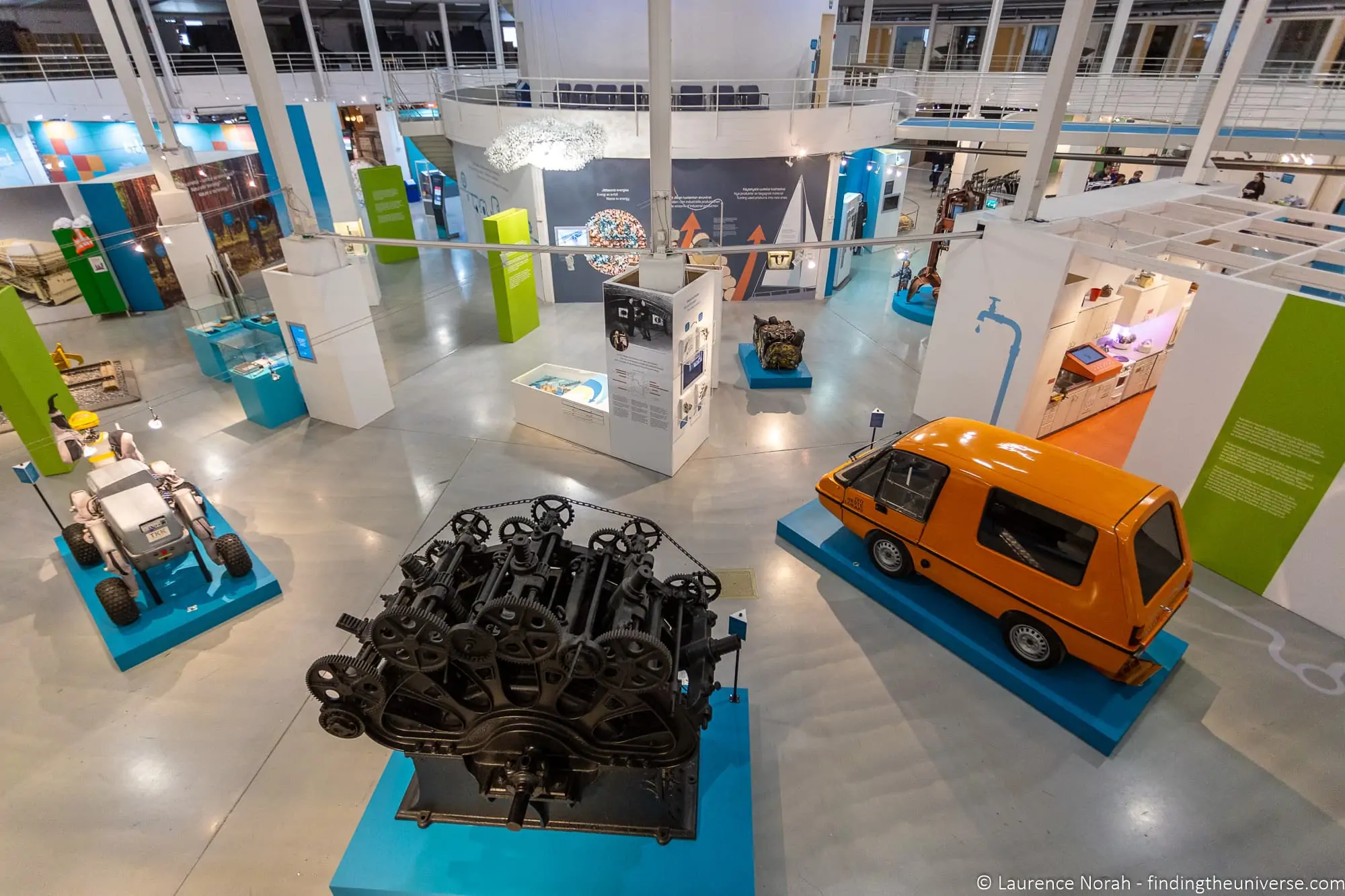
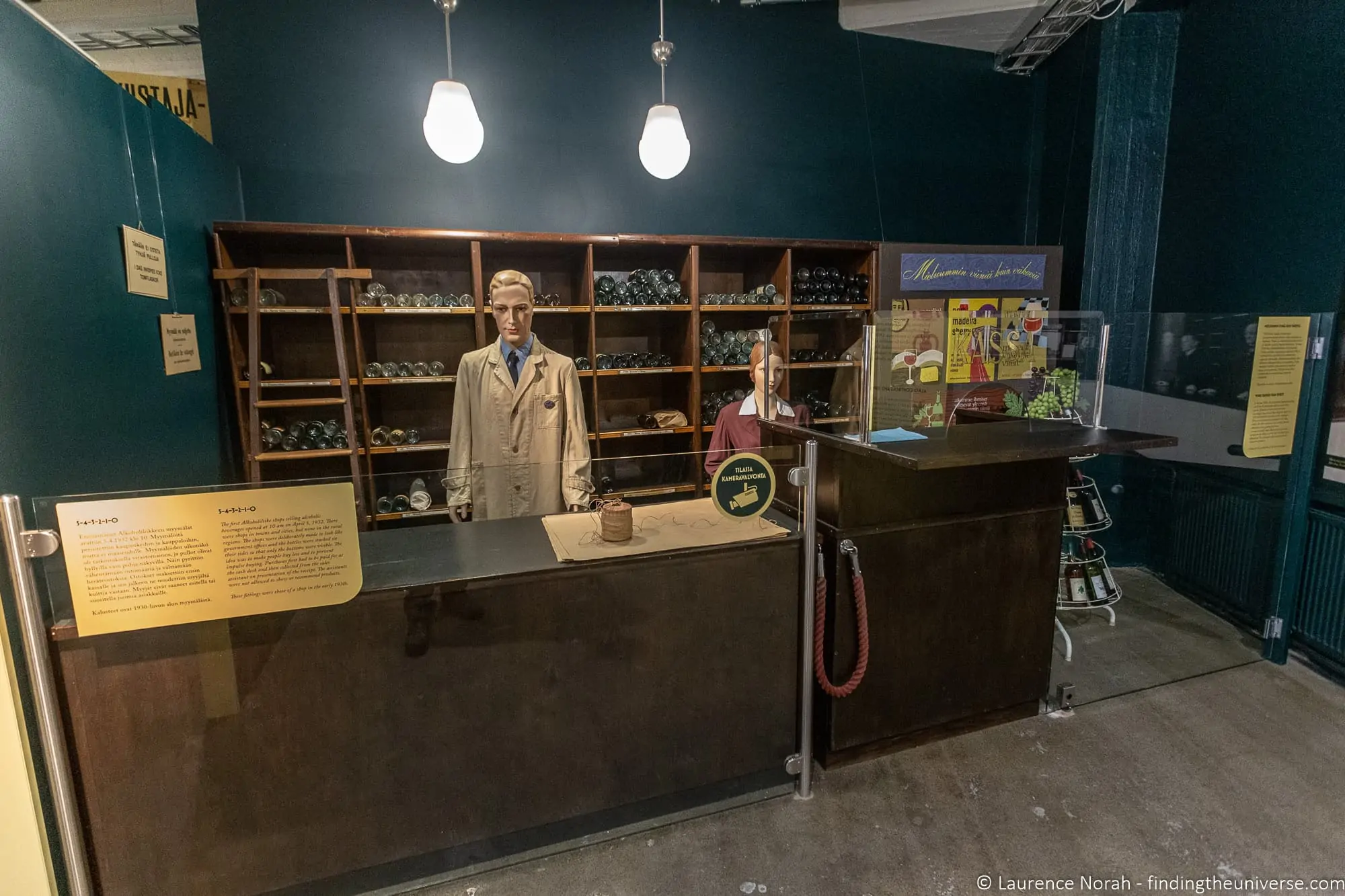
The Hotel and Restaurant Museum (also Cable Factory) is the one museum in Helsinki that’s entirely about the tourism industry itself, which gives it a slightly recursive quality I enjoyed. It covers the development of hotels and restaurants in Finland, how Prohibition (Finland was dry from 1919 to 1932) affected the trade, and how the modern Finnish hospitality scene emerged. Niche, but interesting if you travel a lot. We did.
The Sinebrychoff Art Museum is the third of the National Gallery trio (alongside Ateneum and Kiasma), but the experience is quite different: it’s housed in the 1842 home of the Sinebrychoff family, who founded Finland’s oldest brewery in 1819. The family’s own art collection (over 900 items, including 100 Old Masters) was donated to Finland in 1921 and it remains Finland’s largest-ever art donation. The home is laid out as it would have been in the early 20th century, restored to period accuracy. Closed Mondays. Half house museum, half art gallery.

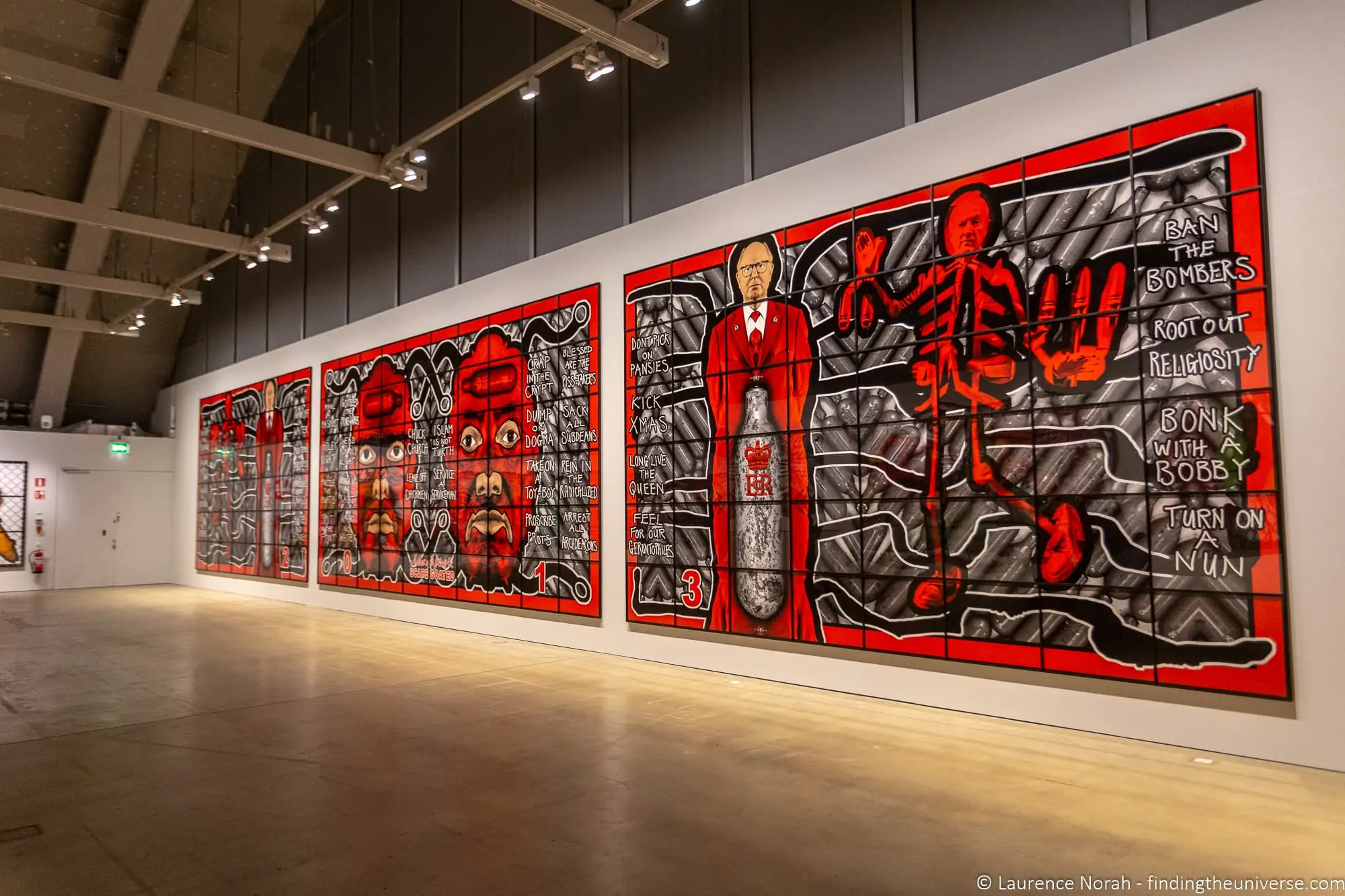
HAM Helsinki Art Museum is the city of Helsinki’s own art collection: 9,000 works, at least half of which are scattered around the city as public sculptures (the HAM public art map is worth a look for self-guided walks). The museum building itself houses the rest of the collection plus rotating temporary exhibitions. You can’t miss it, partly because there’s a giant seagull-head sculpture over the entrance that I don’t have an explanation for and that nobody has been able to give me one. Closed Mondays.
Villa Hakasalmi is a small country house in the centre of the city, opposite the National Museum, dating from 1843 and now operated by the Helsinki City Museum (which also runs the Tram Museum and the City Museum proper, all free). It runs a rotating programme of small exhibitions. Worth a quick stop if you’re already in the area.

The Helsinki City Museum itself (free, near the cathedral) is spread across five buildings from different eras of Helsinki’s history, and does a good job of telling the story of the city and its people. Much more approachable than it sounds.

Seurasaari and Urho Kekkonen Museum (a half-day out west)
Both of these sit together on the Meilahti and Seurasaari islands north-west of the city centre, connected by bridge to the mainland and to each other. If you’re making the trip out at all, do both. It’s a proper half-day, more if it’s a nice day.
Seurasaari Open-Air Museum is a collection of traditional buildings relocated from across Finland onto one forested island, letting you walk through centuries of rural Finnish architecture without leaving Helsinki. It’s only open from 15 May to 15 September, with hours varying by month, and it’s worth timing a visit to a Midsummer visit if you’re in Finland in late June, when the island hosts one of Finland’s biggest traditional bonfire celebrations (see the official site).
The atmosphere on the island is remarkable for somewhere so close to a capital city. Red squirrels, hares, various birds, and a tranquility that makes you forget you’re 15 minutes from Senate Square. Locals come here to picnic as much as tourists do, which is always a good sign.
The Urho Kekkonen Museum (Tamminiemi) is a five-minute walk across the bridge. It’s the former official residence of three Finnish presidents between 1940 and 1981, most associated with Urho Kekkonen, who lived here as president from 1956 until 1981 and kept living here after his resignation until his death in 1986. The house has been preserved in its 1970s condition, and you take a self-guided tour through all the main rooms.
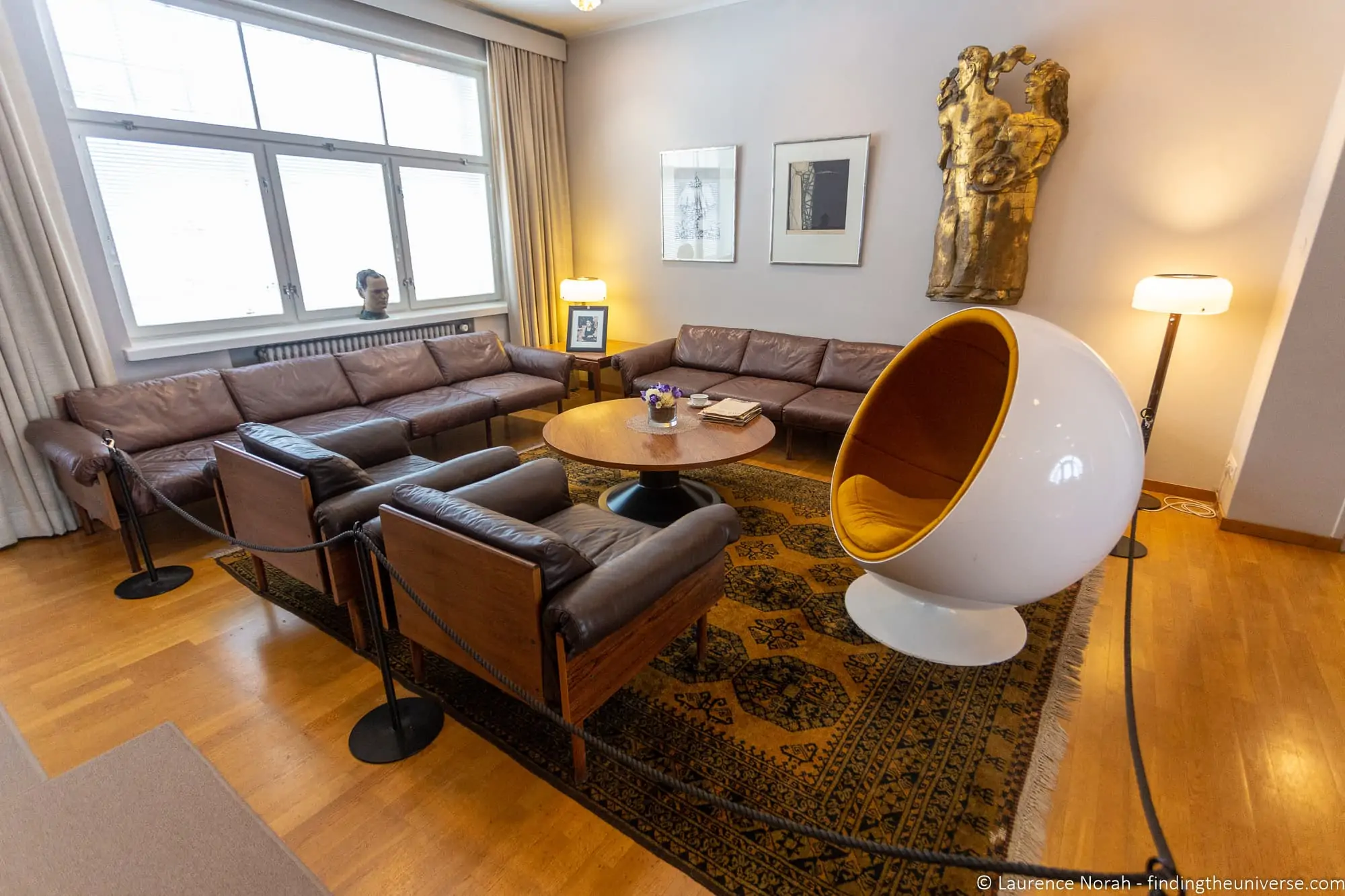
It’s a niche interest (mid-century Finnish political history), but it pairs naturally with Seurasaari, and the two together give you a very Finnish afternoon. A combined ticket covering both is available. Both included on the Helsinki Card and Museum Card.
Sibelius Monument
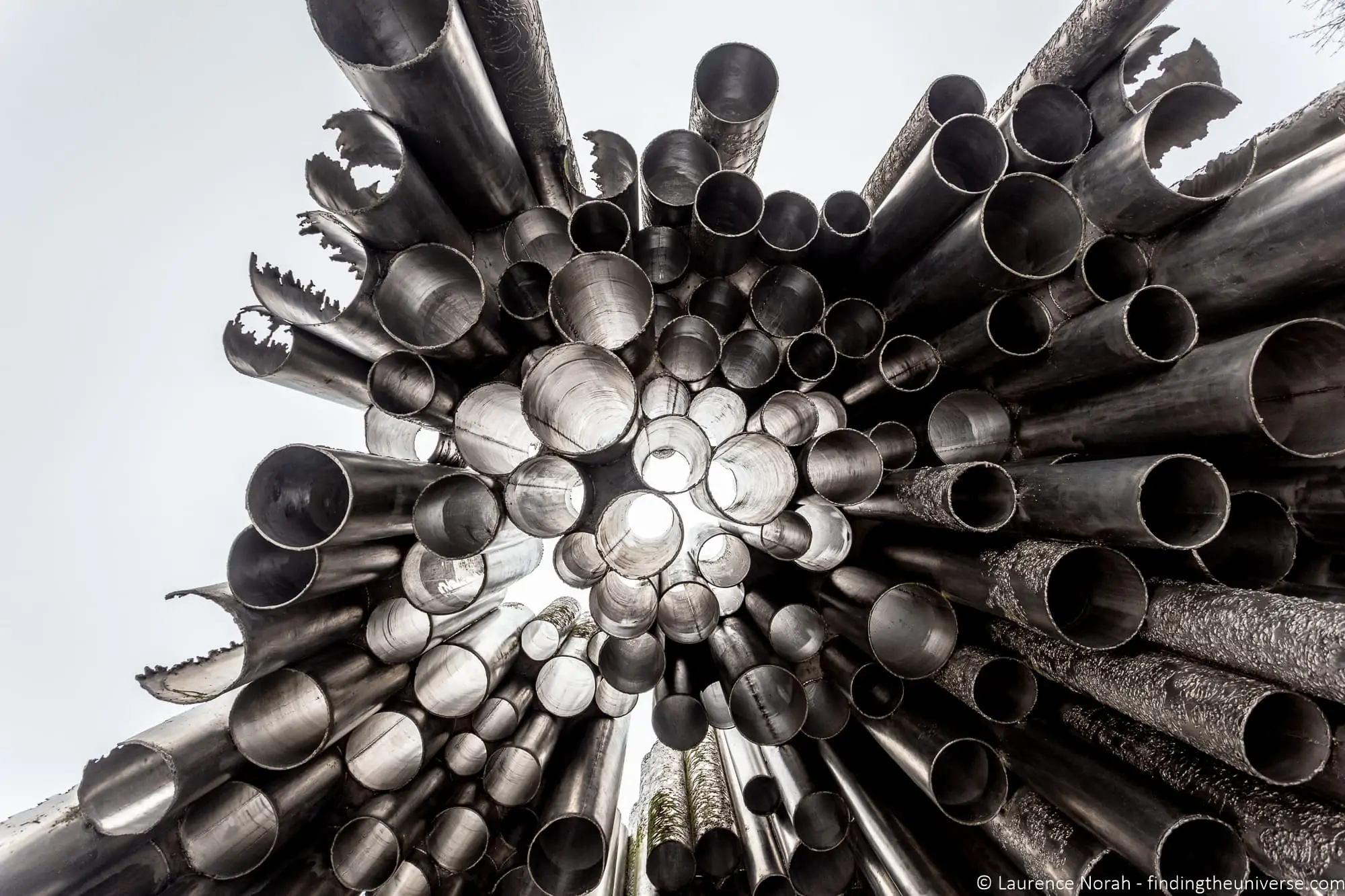
A short walk from the Seurasaari bridge gets you to the Sibelius Monument in Sibelius Park. Dedicated to Finnish composer Jean Sibelius, it’s one of Helsinki’s most photographed pieces of public art. The sculpture itself is a 600-tube welded steel construction that looks vaguely like an organic pipe organ, designed to represent the music of Sibelius. It’s been there since 1967, free to visit, and the surrounding park is a nice place to pause.
Helsinki Zoo (Korkeasaari)
Helsinki Zoo is on the island of Korkeasaari east of the centre, accessible by bridge year-round or by ferry in summer. Home to around 150 species and 1,000 plant species, and established in 1889, which makes it one of the oldest zoos in the world. It’s a good stop if you’re travelling with kids, open every day except Christmas Eve. Helsinki Card holders get a discount.
Finnish Design Shopping
I should flag this as its own thing because Helsinki is one of the best cities in Europe for design shopping. The major flagships (Marimekko, Iittala, Arabia) all have their main stores clustered around the Esplanade and Pohjoisesplanadi, within a five-minute walk of each other. If you’re in the market for anything from a hand-painted ceramic mug to a Marimekko Unikko-print raincoat, this is your corridor.
The Design District (roughly Punavuori and nearby neighbourhoods, south-west of the Esplanade) is where the smaller local designers live, and it’s worth wandering through even if you don’t plan to buy anything. The design density per block is absurd for a city this size.
One small admission: Finnish design is expensive. A single Iittala tumbler starts at around €15, a Marimekko cushion cover will run you €60+. It’s the sort of souvenir shopping where you buy one thing and it lasts the rest of your life, rather than five things that break by Christmas.
Coffee and Cakes: Helsinki’s Café Culture
Finland drinks the most coffee per capita in the world, which takes some doing given the competition, and the café scene in Helsinki is one of the city’s underrated pleasures. A few recommendations:
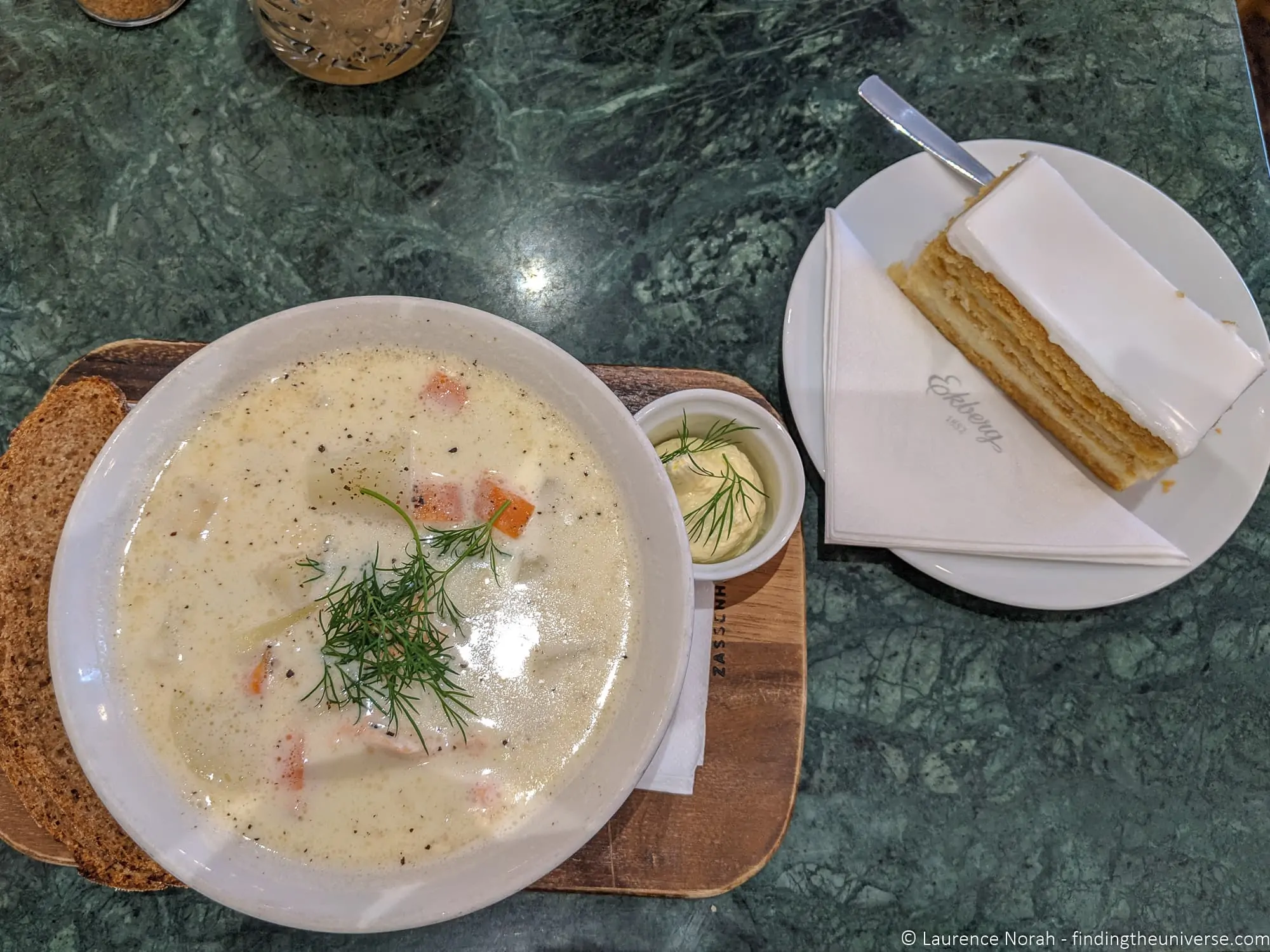
Ekberg 1852 is the oldest in the city (the name is the year it opened) and still one of the best. It’s a patisserie and bakery that also runs a proper sit-down restaurant. Their signature pastries are the Napoleon (going strong since 1865) and the Alexander (a Helsinki baking tradition since 1819). We had an excellent salmon soup with an Alexander pastry for lunch here; the Sunday brunch is very popular so book a table if you want to be sure of a seat.
Café Regatta is a tiny red cottage on the waterfront near the Sibelius Monument, serving good coffee and famously good cinnamon buns. Outdoor seating only (they provide blankets in winter), and you can grill your own sausages over a fire pit if that’s your kind of thing. This is the most photographed café in Helsinki for good reason.
Fazer is the place to go if you want the classic Finnish café experience with the full Finnish chocolate brand attached. It’s a bit touristy, not in a bad way. The chocolates make good presents.
Story inside the Old Market Hall is the best lunch stop in central Helsinki if you want something substantial (their smoked salmon is very good) without committing to a restaurant.
Outside these, Helsinki has a surprisingly deep third-wave coffee scene. Walk into any café in Punavuori or Kallio that looks vaguely independent and you’ll find decent coffee and a cinnamon bun.
The Architecture Walk: Finlandia Hall, Central Station, and the rest
Helsinki takes its 20th-century architecture seriously and rewards a slow walk. The Central Railway Station (Eliel Saarinen, 1919) is an Art Nouveau masterpiece, and worth pausing to look at even if you’re not catching a train. The four lamp-holding statues on either side of the entrance are much-photographed. Finlandia Hall (Alvar Aalto, 1971) is visible from Oodi across the bay and is the most recognisable Aalto building in Helsinki; the recent renovation added a permanent Finlandia exhibition if you want to go inside, but the building itself is worth seeing from the outside whether you do or not.
Parliament House on Arcadia Hill, the Helsinki Music Centre, and a handful of Jugendstil residential streets (Huvilakatu is the most famous, in Ullanlinna) round out an architecture walk that you could stretch to a full day if you want.
Map of Things to Do in Helsinki
To help with planning, we’ve put all the attractions from this guide on a map. You can also see it on Google Maps here.

Day Trips from Helsinki
If you’ve got extra time in Helsinki, the day-trip options are unusually good for a Nordic capital. A few worth considering:
- Porvoo. A beautifully preserved wooden-house town about an hour by bus. Worth a half-day to wander the medieval streets, and the Runebergintorta pastries (invented by the poet Johan Ludvig Runeberg’s wife) are a local specialty. You can book a guided half-day trip to Porvoo or just take the Onnibus Flex for around €10 one-way from the driver (cheaper if you book in advance via onnibus.com). Jess has written a comprehensive Porvoo guide on ITC if you want the full practical version.
- Nuuksio National Park. Finland’s accessible wilderness: forest, lakes, marked hiking trails, about 45 minutes by bus from central Helsinki. Free to visit, though the excellent Haltia Nature Centre at the edge of the park has a small entry fee (included on the Helsinki Card). You can also take a guided half-day tour.
- Tallinn, Estonia. Yes, you can take a day trip to another country. The ferries run year-round, take about two hours each way, and Tallinn’s medieval old town is one of the best-preserved in Europe. We’ve written separately about our first day trip to Tallinn. Helsinki Card holders get discounted ferry tickets; you can also buy them separately via GetYourGuide.
- Turku. Finland’s former capital and oldest city, about two hours by direct train. Medieval streets, a 13th-century castle and cathedral, and a riverfront that comes alive in summer. Good for a longer day out.

Where to Stay in Helsinki
We’ve stayed in a variety of Helsinki accommodation over multiple trips. A few we can recommend:
- Hostel Diana Park. Ten-minute walk from the central station, well reviewed, good budget option.
- SweetDream Guesthouse. A little way from the centre but reachable by public transport, great value.
- Radisson Blu Plaza Hotel. We’ve stayed here on a winter trip. Four-star, extremely central (minute from the station), comfortable beds, tea/coffee in room.
- Hotel Katajanokka. Also four-star, and with the unusual distinction of being a converted 1837 prison. 15 minutes’ walk from the centre, in the Katajanokka district near Uspenski Cathedral.
- Radisson Blu Seaside Hotel. West of the centre, handy for the Cable Factory museums, comfortable four-star.
For a wider range, see all Helsinki listings on Booking.com. For apartment rentals (which work well in Helsinki as many flats have their own private saunas built in, a very Finnish touch), we use Vrbo.
When to Visit Helsinki
We’ve been in both summer and winter, and there isn’t a bad time. They’re very different experiences.
Summer (roughly June to August) means very long days (it doesn’t fully get dark in June), warm weather (often 20-25°C), and a city that spills outdoors: café terraces, Esplanade concerts, people swimming in the Baltic, archipelago cruises running, Allas Sea Pool at its peak. If you’re in Helsinki in August and enjoy music, it’s worth checking what’s on at the Flow Festival (Suvilahti, mid-August) and the Helsinki Festival, which runs through late August and September.
Winter (December to February) is cold (often below freezing, sometimes well below), darker (as little as six hours of daylight in December), but has its own quiet magic, especially if there’s snow. The Christmas market in Senate Square is one of Europe’s coziest, ice-swimming at Allas is a proper Finnish experience if you’re brave enough, and the indoor café and museum culture hits differently when it’s -10°C outside. Pack properly: see our Finland winter packing guide for specifics.
Shoulder seasons (April-May and September-October) are good if you want fewer tourists and lower prices. Some outdoor attractions like Seurasaari, the canal cruises, and the hop-on hop-off bus only run summer to early autumn, so check before booking.
How to Get Around Helsinki
Helsinki is a walkable city in the centre. Most of what’s in this guide is within a 20-minute walk of the railway station. For anything further (the Cable Factory museums, Seurasaari, the Zoo), you’ll want public transport.
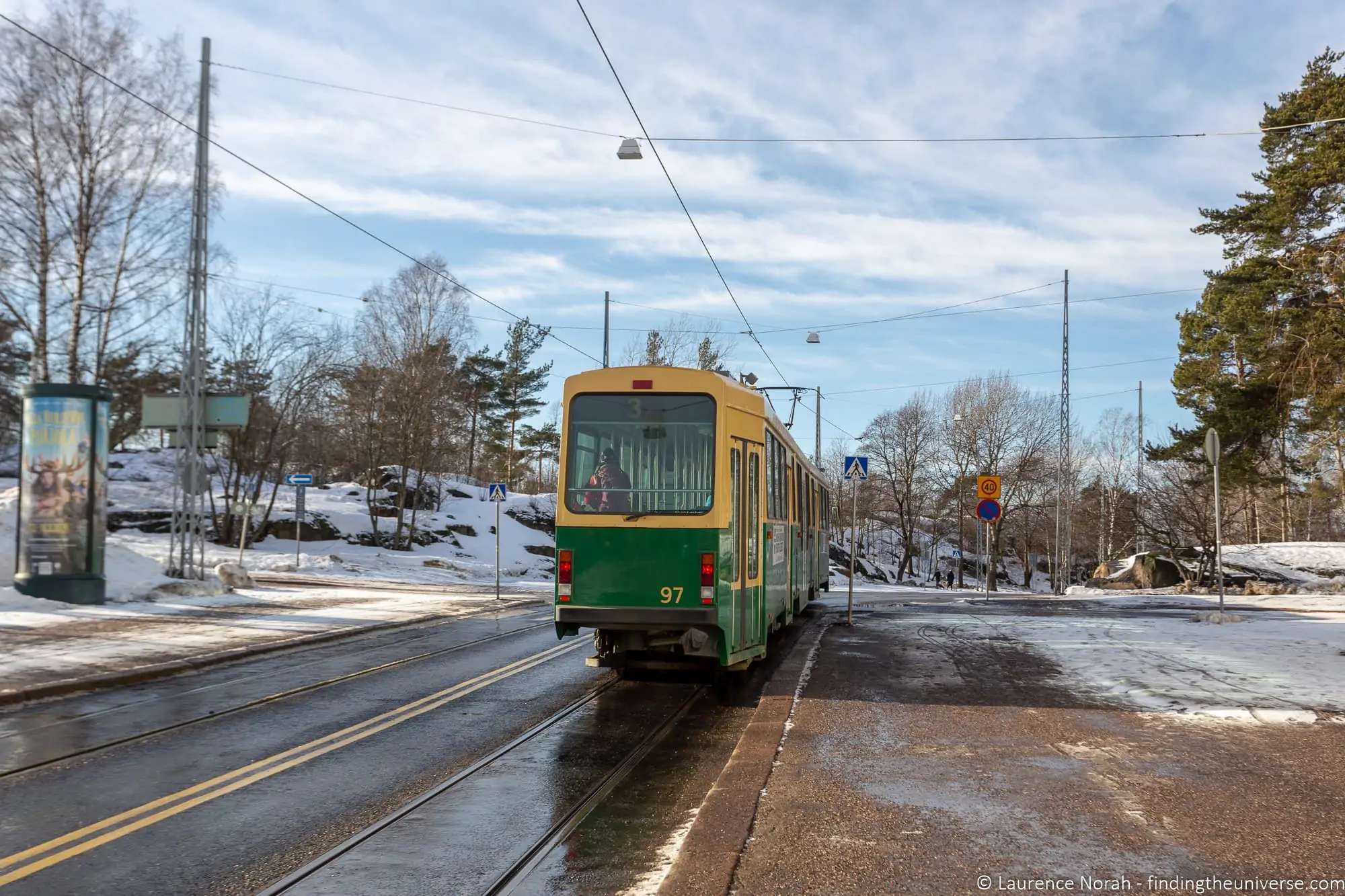
The Helsinki public transport network (HSL) runs trams, buses, metro, local trains, and ferries including the Suomenlinna one. Current pricing: a single AB ticket is €3.30 on the HSL app or HSL card (€3.50 if paying contactless), a day ticket (zone AB, covers the whole central area) is €10.60, a 2-day ticket is €15.90, and a 3-day ticket is €21.20. For the airport you need the wider ABC zone ticket, which is €4.40 app/card on 90-minute validity. The old Finnair City Bus has been discontinued; the airport route is now HSL bus 600, which takes about 40 minutes from the airport to the central station and is covered by an ABC ticket or the Helsinki Card Region.
Tickets are easiest via the HSL app (iOS/Android) or contactless on trams and buses. The penalty fare for riding without a valid ticket is €100 plus the cost of the ticket, so don’t risk it.
If you’re doing multiple attractions and using public transport, the Helsinki Card Region (see next section) bundles everything and often works out cheaper than buying separately. In summer, the city bike network is also worth knowing about: €5 per day, stations across central Helsinki.
Kaivopuisto, the city’s main south-coast park with views out to Suomenlinna, is worth mentioning as a walking target on a nice day, since it’s 20 minutes on foot from the centre and a proper local hangout in summer.
Saving Money on Helsinki Attractions
Helsinki isn’t a cheap city, and entry fees add up quickly. Two passes can save significant money:
The Helsinki Card is the main tourist pass, available in 1, 2, and 3-day versions and covering most of the attractions in this guide, plus a canal cruise and the hop-on hop-off bus (summer only for both). As of January 2026 it comes in three tiers.
The digital version is attractions only, with no public transport, priced at €51 / €62 / €73 for 1/2/3 days adult. The Helsinki Card CITY (printable) adds HSL transport within Helsinki and costs €62 / €78 / €94. The Helsinki Card REGION (printable) extends transport to cover Espoo, Kauniainen, Vantaa and the airport, at €64 / €81 / €99. Child pricing is roughly half of adult across all three tiers.
A worth-it example: a fairly standard one-day Helsinki itinerary of Suomenlinna (€10 museum + €3.30 ferry + €5 guided tour) plus Temppeliaukio (€8) plus Amos Rex (€22) plus Design Museum (€22) plus canal cruise (€28) plus a tram back across the city (€3.30) comes out to around €101 bought separately. With the Helsinki Card CITY for a single day (€62), you save around €40 and get a lot of other things included. If you’re going to visit more than two or three paid attractions and take public transport, it’s usually worth it.

One logistical note on the Helsinki Card: the CITY and REGION versions must be printed on paper before they’ll work on HSL public transport. The digital version is fine for attractions but doesn’t cover transport. If you’re flying in and won’t have printer access, the digital version is the safer pick (and you can still buy separate HSL tickets via the app).
You can read our detailed Helsinki Card review or buy it directly via GetYourGuide with free cancellation up to 24 hours before your trip.
The Museum Card is a different proposition: €86 for a full year, valid across 360 museums in all of Finland. If you’re a Helsinki resident or visiting Finland multiple times across a year, it pays for itself quickly. For a single short trip, the Helsinki Card is nearly always the better pick. The Museum Card only covers museums, with no transport or cruise elements.
Frequently Asked Questions
How many days do you need in Helsinki?
Two to three days is the sweet spot. Two gives you comfortable time for Suomenlinna, one day of museums or design, plus a proper sauna evening. Three lets you add a day trip to Porvoo or Tallinn, or go deeper into the weirder museums. One day is possible if you pick carefully (see our one day in Helsinki itinerary), but you’ll wish for a second.
Is Helsinki worth visiting?
Yes, particularly if you like design, architecture, public green space, and cities that don’t try too hard. Helsinki doesn’t have the dramatic topography of Stockholm or the polish of Copenhagen, but it has a quiet confidence and one of the best museum-per-capita ratios in Europe. It also works well as a starting point for wider Finland travel, Tallinn day trips, or as a stopover between Helsinki Airport flights.
Is the Helsinki Card worth buying?
For most short-stay visitors planning to see several paid attractions, yes. The break-even point is around two or three paid attractions plus any public transport use (for the CITY or REGION versions).
If you’re doing Suomenlinna properly, visiting one or two museums, and taking a canal cruise or the hop-on hop-off bus, the 1-day CITY version (€62) typically pays for itself. The digital version (€51) is a good pick if you’re flying out of the airport via a different route and don’t need transport; the REGION version (€64) is the one to pick if you want the airport bus included. Full breakdown in our Helsinki Card review.
What’s the best time of year to visit Helsinki?
It depends what you want. Summer (June-August) gives you long daylight, outdoor cafés, archipelago cruises, and festivals, at the cost of higher accommodation prices. Winter (December-February) gives you snow, Christmas markets, ice swimming, and a quieter city, at the cost of cold and short days. Shoulder seasons are cheaper and have fewer tourists but reduced hours on some outdoor attractions. We’ve been in both summer and winter and both are worth doing.
What’s the best sauna to try as a visitor?
Allas Sea Pool is the most convenient introduction: central, open year-round, no advance booking needed for walk-ins most days, with a heated pool and a cold sea pool alongside the saunas. Löyly is the more photogenic, design-led option a bit further south on the waterfront. Kotiharjun in Kallio is the old-school traditional option if you want the authentic 1928-vintage public sauna rather than the polished modern one.
How do I get from Helsinki Airport to the city centre?
The fastest option is the train (I-train or P-train on the Ring Rail Line), which takes about 30 minutes to Helsinki Central Station and runs every 10-20 minutes. Ticket is €4.40 (ABC zone, app or HSL card) via the HSL app or ticket machines. The alternative is HSL bus 600, which takes about 40 minutes and costs the same. The old Finnair City Bus has been discontinued. A taxi will cost €45-60 and take 25-30 minutes depending on traffic.
Can I visit Suomenlinna in winter?
Yes. The ferry runs year-round, though the winter timetable is less frequent than summer. Most of the island’s outdoor areas are accessible (wrap up warmly), the Suomenlinna Museum is open year-round, and the island has a lovely quiet atmosphere in winter that many prefer to the summer crowds. Some smaller museums (Toy Museum, Customs Museum, the Submarine Vesikko) close in winter.
What’s the National Museum of Finland situation?
The National Museum is closed for major renovation, with reopening scheduled for spring 2027. If you’re visiting before then, the Helsinki City Museum (free) covers Helsinki-specific history well, and Seurasaari Open-Air Museum (summer only) covers rural Finnish heritage. The National Museum building itself is still visible from the outside, which is worth a minute or two if you’re walking past.
Is a day trip from Helsinki to Tallinn worth it?
Yes, particularly if you’ve never been to Estonia. Tallinn’s medieval old town is one of the best-preserved in Europe, the ferry takes two hours each way (so you get a full day in Tallinn if you go on an early crossing), and it’s a different country and currency. We’ve written about our experience if you want more detail. Helsinki Card holders get discounted ferry tickets.
Can I drink the tap water in Helsinki?
Yes, Helsinki tap water is excellent and safe to drink. The city has won awards for tap water quality. Bring a reusable bottle.
Further Reading for Helsinki
If this guide has been useful, here are a few more resources we’ve written that might help plan your trip:
- Our detailed Helsinki Card review, with the full breakdown of whether it’s worth buying for your specific plans.
- For a single-day trip, our one day in Helsinki itinerary with time-boxed summer and winter versions.
- If you’re visiting Finland in winter, Jess has written a comprehensive guide to winter activities across Finland, plus the Finland winter packing list.
- Our one-week Finland winter itinerary starting from Helsinki.
- Our guide to husky sledding in the Arctic Circle if you’re heading further north.
- Summer in Finland: our summer activities in Finland guide.
- Jess’s Porvoo day trip guide for the most popular Helsinki day trip.
- The day trip to Tallinn from Helsinki.
- Other Finnish cities we’ve been to: Rauma, Rovaniemi, and Oulu.
- The official Helsinki tourism website for current events and festival listings.
And that’s our guide to the best things to do in Helsinki. If you’ve got questions or a favourite stop we missed, drop them in the comments below.
K Pearson says
Thank you for a very informative blog.The info will come in extremely helpful for our winter trip.
Kay
Byron Bay, Australia
Laurence Norah says
My pleasure Kay, have a great time in Helsinki and let me know if you have any questions!
Laurence
Steve Kennedy says
Great post. Love Helsinki and Finland in general. Thanks for sharing!
Laurence Norah says
Thanks Steve!