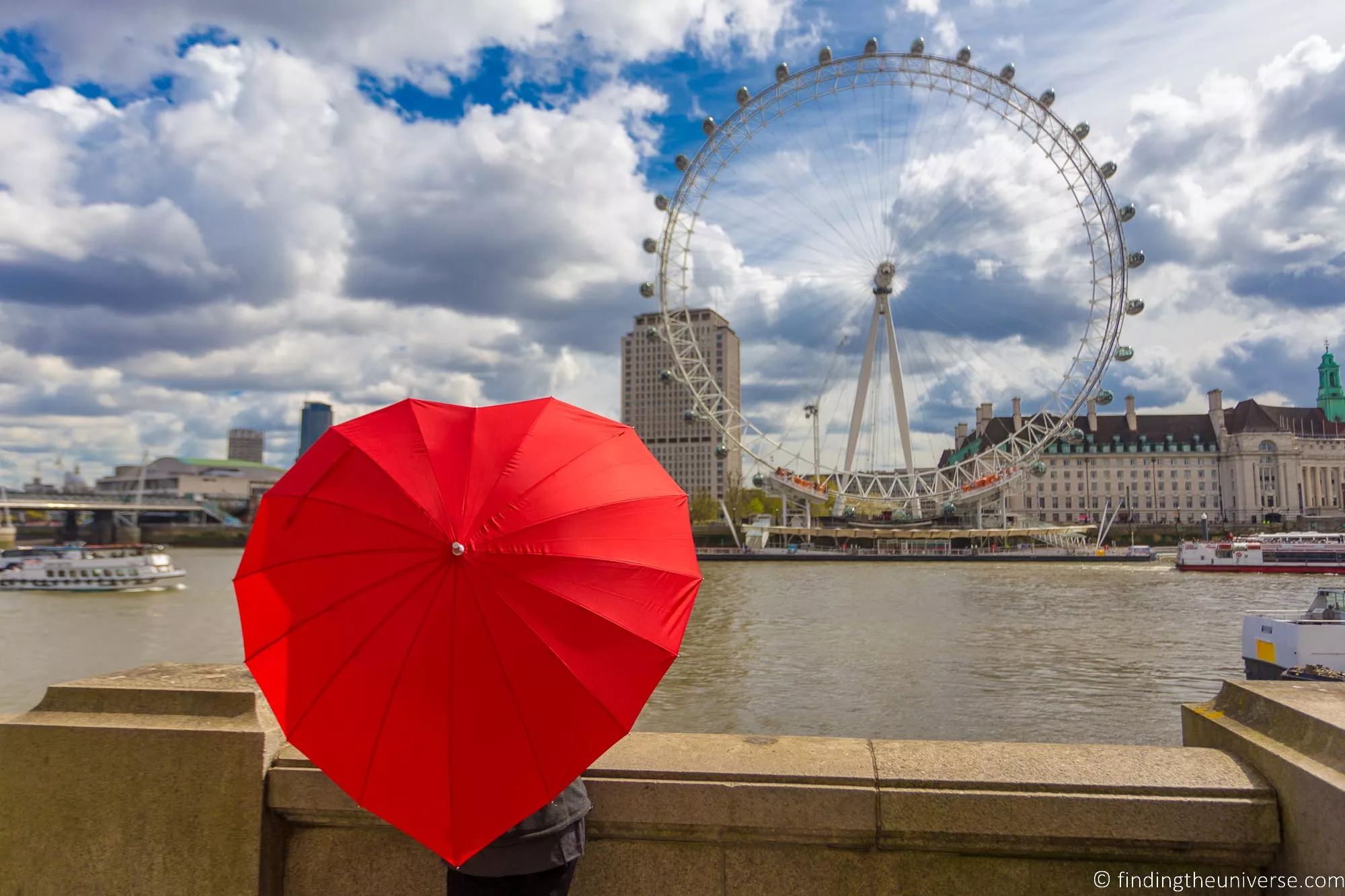
I’ve been writing about England for Finding the Universe for over a decade, and I’ve lived in five of the cities on this list: London, Bath, Oxford, Newcastle, and Nottingham (the last one as a student, which I’m counting). I grew up in Cornwall, so the West Country is home turf too. All of which is a long way of saying I’ve got firm opinions about which English cities are worth your time on a trip, and which ones you can happily leave for another visit.
England gets, by my reckoning, about five warm days a year. On those days, with a Pimm’s in hand and the sun on some dreamy spires, there’s nowhere I’d rather be. The rest of the time, happily, England’s cities are good to visit whatever the weather is doing, which is just as well. This is my pick of the best cities to visit in England: who each one suits, how many nights to give it, and how to reach it by train from London. The capital earns its reputation, but some of the best days I’ve had in this country were spent getting lost in York, punting badly in Oxford, and watching hot air balloons drift over Bristol.
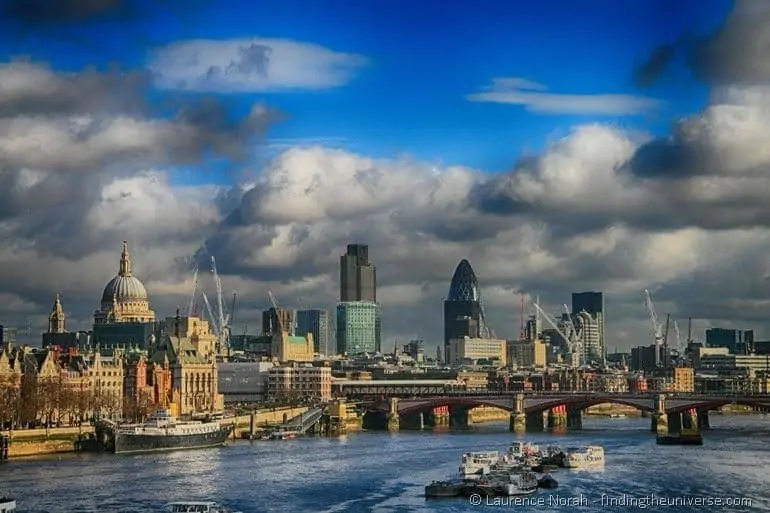
Table of Contents:
Quick Take: Where to Go
Short on time? Here’s the version I give friends who message me before a trip.
For a first visit, base yourself in London and add two or three others. London, Bath and York between them give you the capital, Georgian and Roman history, and the medieval north, which is a strong week in itself. Oxford or Cambridge is the call for a day of college courts and punting. Pick Liverpool or Manchester if music, football and a big night out matter more to you than cathedrals. Brighton is your seaside fix, an hour from London. And if you grew up reading about Robin Hood, Nottingham is closer and better than you think.
Almost everything on this list is reachable from London by train, most of it in under two hours, so you don’t need a car to do it. More on that below.
England’s Best Cities at a Glance
| City | Best for | Suggested nights | Train from London |
|---|---|---|---|
| London | First-timers, museums, theatre, everything | 3 to 4+ | You’re already here |
| Brighton | Seaside and nightlife, a quick coast fix | 1 (or a day trip) | Victoria, about 1hr |
| Oxford | Dreaming spires and academia in a day | 1 (or a day trip) | Paddington, about 1hr |
| Cambridge | Punting and college courts, a gentler Oxford | 1 (or a day trip) | King’s Cross, from about 50min |
| Bath | Georgian elegance and Roman history | 2 | Paddington, about 1hr20 |
| Bristol | Street art, maritime history, food and cider | 1 to 2 | Paddington, about 1hr30 |
| Nottingham | Caves, castle and proper pubs | 1 | St Pancras, about 1hr45 |
| Chester | Roman walls and Tudor rows, compact | 1 | Euston, about 2hr |
| Liverpool | Music, the waterfront, football, warmth | 2 | Euston, about 2hr10 |
| Manchester | Music, sport, industrial heritage, nightlife | 2 | Euston, about 2hr10 |
| York | Medieval streets, the Minster, Vikings | 2 | King’s Cross, about 1hr45 to 2hr |
| Durham | One of England’s great cathedrals | 1 (or a day trip) | King’s Cross, about 2hr45 to 3hr |
| Newcastle | Nightlife, the Quayside, the friendliest welcome | 2 | King’s Cross, about 2hr45 to 3hr |
London
For the longest time, London was my least favourite city. Overcrowded, overpriced, and full of people who wouldn’t stop telling me how amazing it was. Then I had the good fortune to live there for a couple of years, and I finally understood what they meant. London really is a city unlike any other in the UK. There’s always something on, from live music to West End theatre to street performers on the South Bank, and the choice of museums, pubs and green space is hard to beat anywhere in the world.
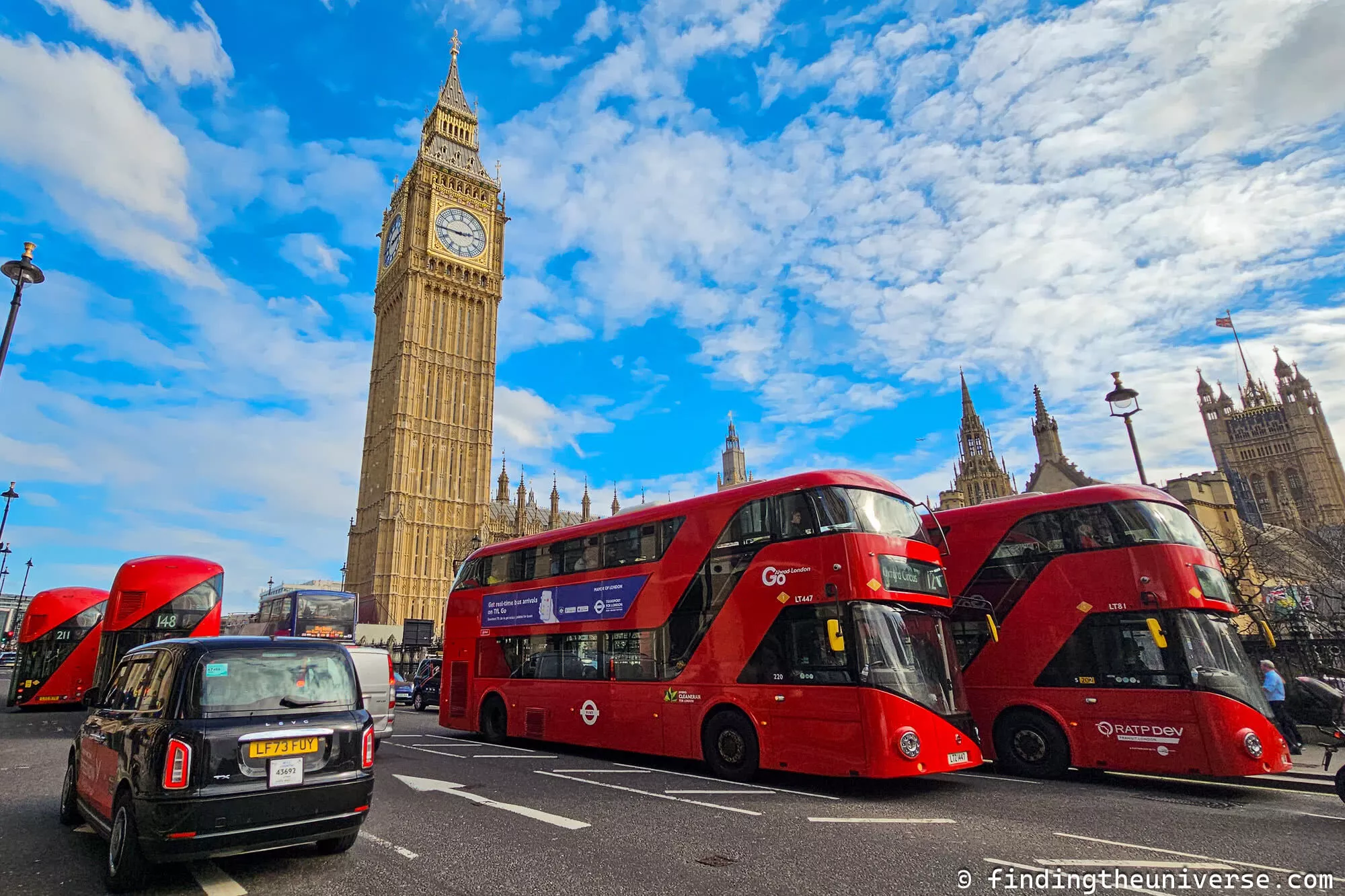
The big national museums, the British Museum, the Tate galleries, the Natural History Museum, are free, which makes London a far cheaper city than its reputation suggests if you plan around them. My short list: a walk along the South Bank, a picnic in Hyde Park, sunset from Primrose Hill, a show in the West End, and a pint in any pub that takes your fancy. I’d add a food tour through its markets to that list, which is the fastest way to eat well and get your bearings at the same time. If you only have a day, I’ve written up five things to do on a day in London, and a guide to getting around London on public transport that will save you a lot of standing on the wrong platform. Give it three or four nights at least, and stay somewhere central and close to a Tube station so more of your day is sightseeing and less is spent commuting; you can browse London hotels on Booking.com to find one on the lines you’ll use most. You could spend a fortnight and not run out.
Brighton
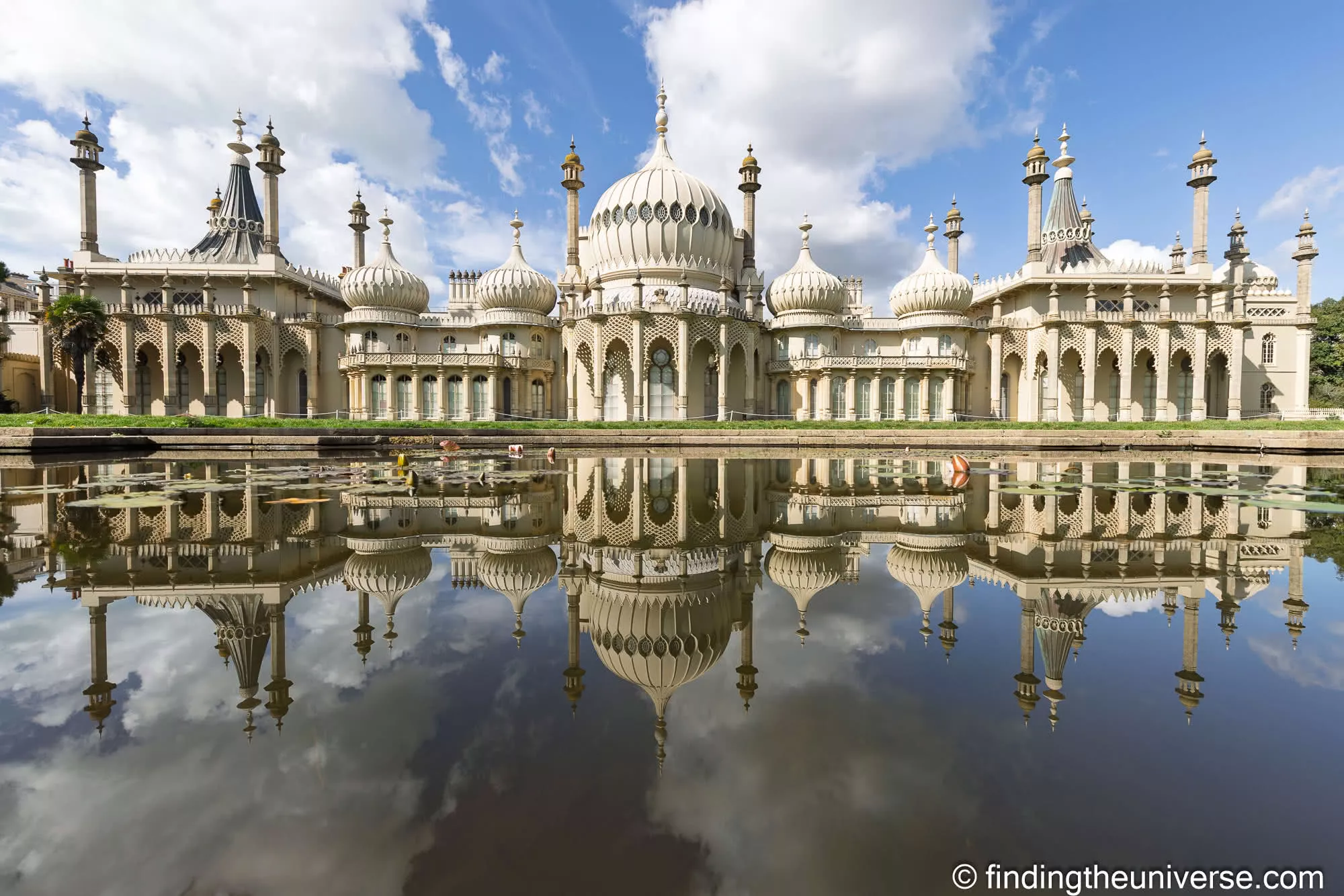
Brighton (officially Brighton and Hove, which became a city in 2000) is where London goes to the seaside, and it has a character all its own. The Royal Pavilion is the headline act, a domes-and-minarets fantasy palace built for a Regency prince who clearly had money to burn. Beyond it you have the pebble beach, the Palace Pier with its old-fashioned arcades and rides, the i360 observation tower (back open since 2025 under new owners), and the Lanes, a knot of narrow streets full of independent shops, record stores and cafes.
I have friends who live in Brighton, and the thing they always sell me on is the evenings. It has a nightlife and a music scene that punch well above the size of the place, plus the best pub-and-restaurant choice on the south coast. You can do Brighton as a day trip from London in under an hour from Victoria, but stay a night if you want the evening as well as the seafront.
Oxford
Home to the university that gave the world Halley of the comet, Oscar Wilde, Tolkien and Lewis Carroll, Oxford is a small place that somehow makes you feel cleverer just for wandering its cobbled lanes. The university buildings are the main draw, and they will look familiar even on a first visit, partly from the Inspector Morse decades and partly because Christ Church stood in for Hogwarts in the Harry Potter films.
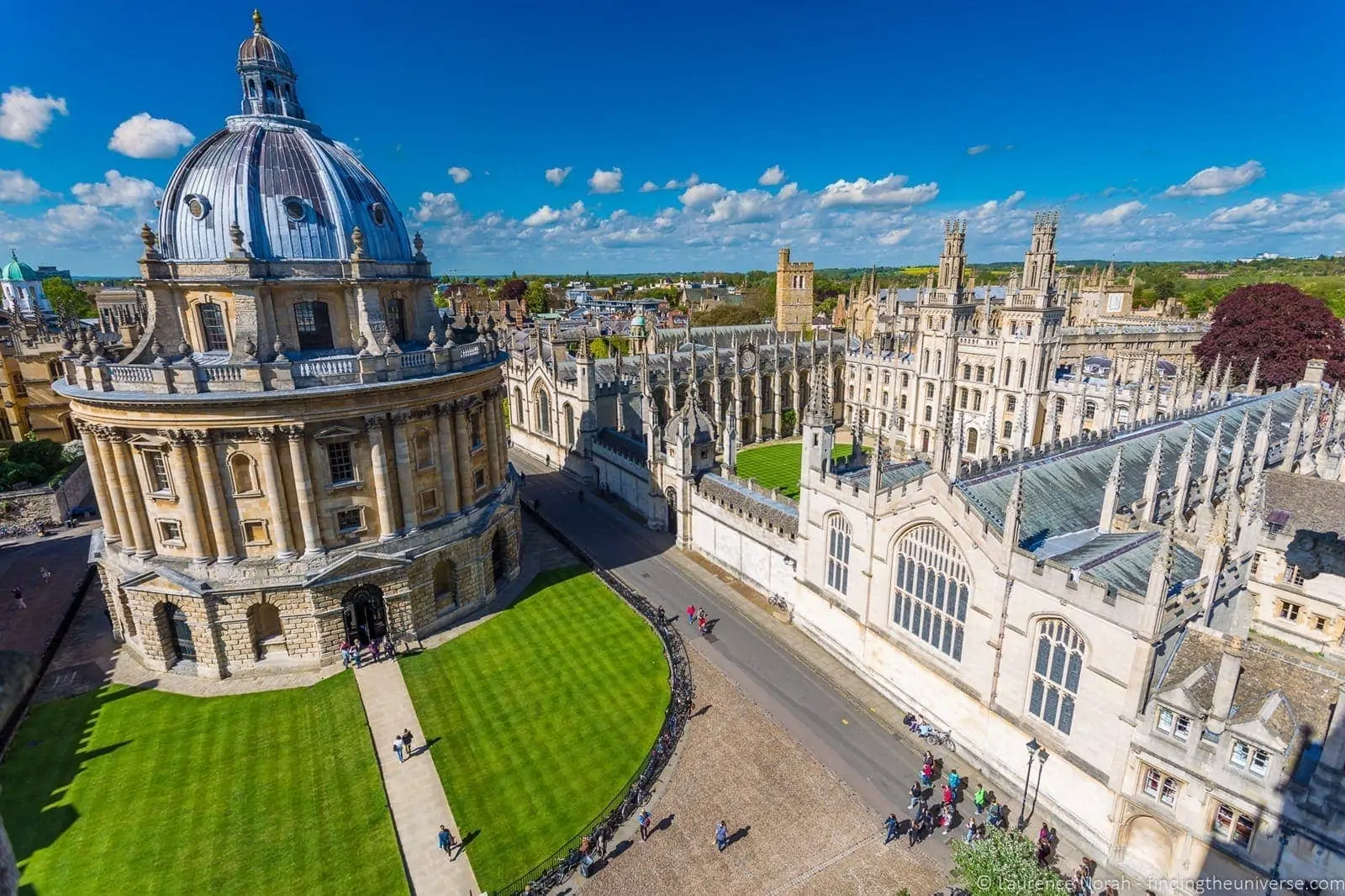
The Thames runs through Oxford, though for its time in the city it goes by the name of the Isis. There’s doubtless a good reason for that, but the important thing is to grab a bottle of Pimm’s and take a punt out on it. Punting is a lot harder than it looks, and my advice is to appoint yourself navigator and find someone else to do the propelling with the pole.
Don’t miss the Bodleian Library, a walk past the dreaming spires, and a pint in one of the old college pubs. I’ve lived in and around Oxford for years, and I still rate it as the best day trip from London in the country. Here are six ways to spend a day in Oxford if you want a fuller plan. A day does it, but a night lets you enjoy it once the coach tours have gone home.
Cambridge
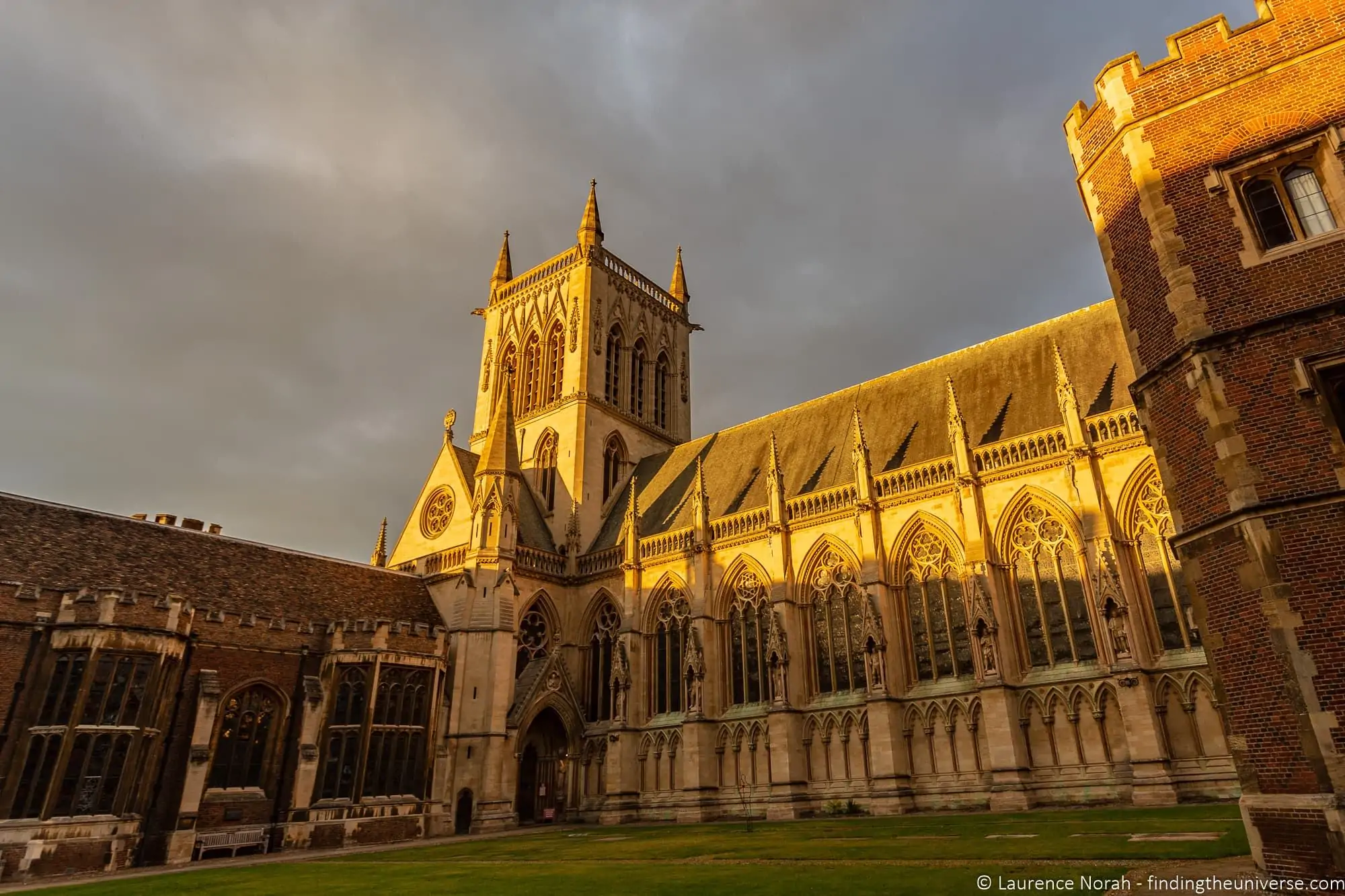
If Oxford and Cambridge feel like rivals, that is because they have been for about 800 years. Cambridge is the quieter, greener of the two, and for a short visit I’d argue it’s the prettier. The colleges back onto the river along a stretch known as the Backs, and the view of King’s College Chapel across the lawns is one of the great sights in England. King’s College Chapel itself, with its fan-vaulted ceiling, is worth going inside for.
Punting here is the thing to do, as it is in Oxford, and the Cambridge version takes you right past the back of the colleges. I’d still rather watch someone else wield the pole. Cambridge is a touch under an hour and a quarter from King’s Cross, with the fastest trains doing it in about 50 minutes, so it works well as a day trip. For more ideas, here are things to do in Cambridge. Oxford or Cambridge? If you can only do one and you want the postcard, make it Cambridge. If you want the bigger city with more going on after dark, make it Oxford.
Bath
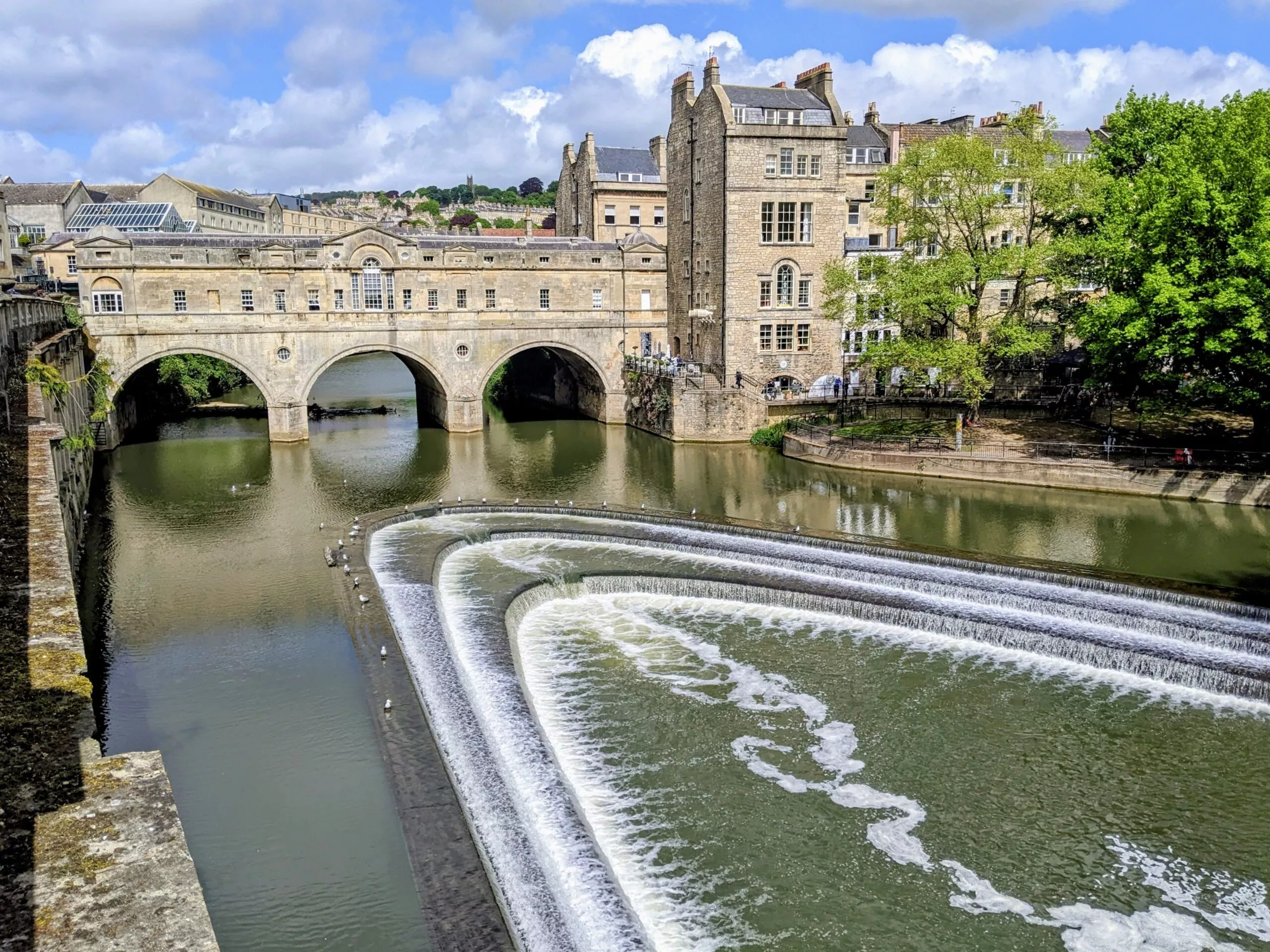
I lived in Bath for four years, so I’ll declare my bias up front: it’s the most beautiful city in England, and I’ll fight anyone who says otherwise. If you want the long version, I’ve put together a fuller guide to visiting Bath. The whole place is built from the same honey-coloured local stone, which gives it a warmth that few cities can match, and the Georgian architecture is the finest in the country. Walk the Royal Crescent and the Circus, cross Pulteney Bridge, and you will see why the entire city is itself a World Heritage Site.
The Roman Baths, the hot springs the Romans built a temple complex around two thousand years ago, are the headline attraction and well worth the entry fee (one of the few places where I’ll say that without hesitation), and you can book a Roman Baths entry ticket ahead to skip the queue at the door. Bath Abbey next door is glorious, and the city is thick with Jane Austen connections if that is your thing. Bath sits about an hour and twenty from Paddington, close enough for a day trip from London if you can’t spare a night, and it pairs beautifully with Bristol just down the line. You can also reach it on a day trip from London that takes in Stonehenge and the Cotswolds, though Bath really deserves a couple of nights of its own. I’d stay central so the honey-coloured streets are on your doorstep in the evening once the day-trippers have gone; here is where to check hotels in Bath on Booking.com.
Bristol
Over in the West Country, where the accent takes a little getting used to, sits the old seafaring city of Bristol. This was the home of Isambard Kingdom Brunel, arguably the greatest engineer England has produced, the man behind the Great Western Railway and a long list of bridges, tunnels and ships that rewrote what was possible in the 19th century.

You can find Brunel’s hallmarks all over the city, with two standing out. The first is the SS Great Britain, launched in 1843 as the first ship to combine an iron hull with screw propulsion in a large ocean-going vessel, and for a time the largest ship in the world. You can climb all over her in the dry dock where she was built.
The second is the Clifton Suspension Bridge, its 214 metre (702 foot) span crossing the Avon Gorge. It’s one of the oldest surviving iron suspension bridges in the world: Brunel designed it but died in 1859, before it was finished, and it was completed as a memorial by the engineers Barlow and Hawkshaw, opening in 1864.
Beyond the engineering, Bristol has a thriving food and cafe scene, Banksy stencils around the streets of the city where he started out, local cider that will catch you out, and in early August the free Bristol International Balloon Fiesta at Ashton Court, where hundreds of balloons lift off at dawn and dusk. Give it a night or two, ideally paired with Bath. The harbourside and the streets around it are the spot to base yourself for the food and the bars, so compare Bristol hotels on Booking.com to find somewhere within walking distance.
Nottingham
Nottingham is where I went to university, so I spent three formative years here and have been back with Jess since. It doesn’t sell itself on its looks, and the city centre is more workaday than pretty, but it has more history and a better night out than plenty of places that photograph better. Nottingham Castle sits on a rock honeycombed with caves, the City of Caves runs beneath the shopping centre, and Ye Olde Trip to Jerusalem, carved into the castle rock, has a fair claim to being the oldest pub in England.

Robin Hood is everywhere, of course, and Sherwood Forest is a short trip out if you want the legend in person. Wollaton Hall, the Elizabethan mansion that stood in for Wayne Manor in the Batman films, is a lovely afternoon. Nottingham is about an hour and three quarters from St Pancras on East Midlands Railway, with the fastest trains nearer an hour and a half, which makes it an easy and underrated stop between London and the north. One night is plenty, but it’s a good one.
Chester
Chester is the one people are surprised by. The Romans founded it as Deva, and it still has the most complete circuit of city walls in Britain, Roman in origin, which you can walk in under an hour. Inside the walls, the Rows are the city’s signature: two tiers of medieval and Tudor galleries, so you shop along covered walkways above street level. The black-and-white timbered buildings, the Eastgate Clock (said to be the second most photographed clock in England after Big Ben), and the cathedral round it out.
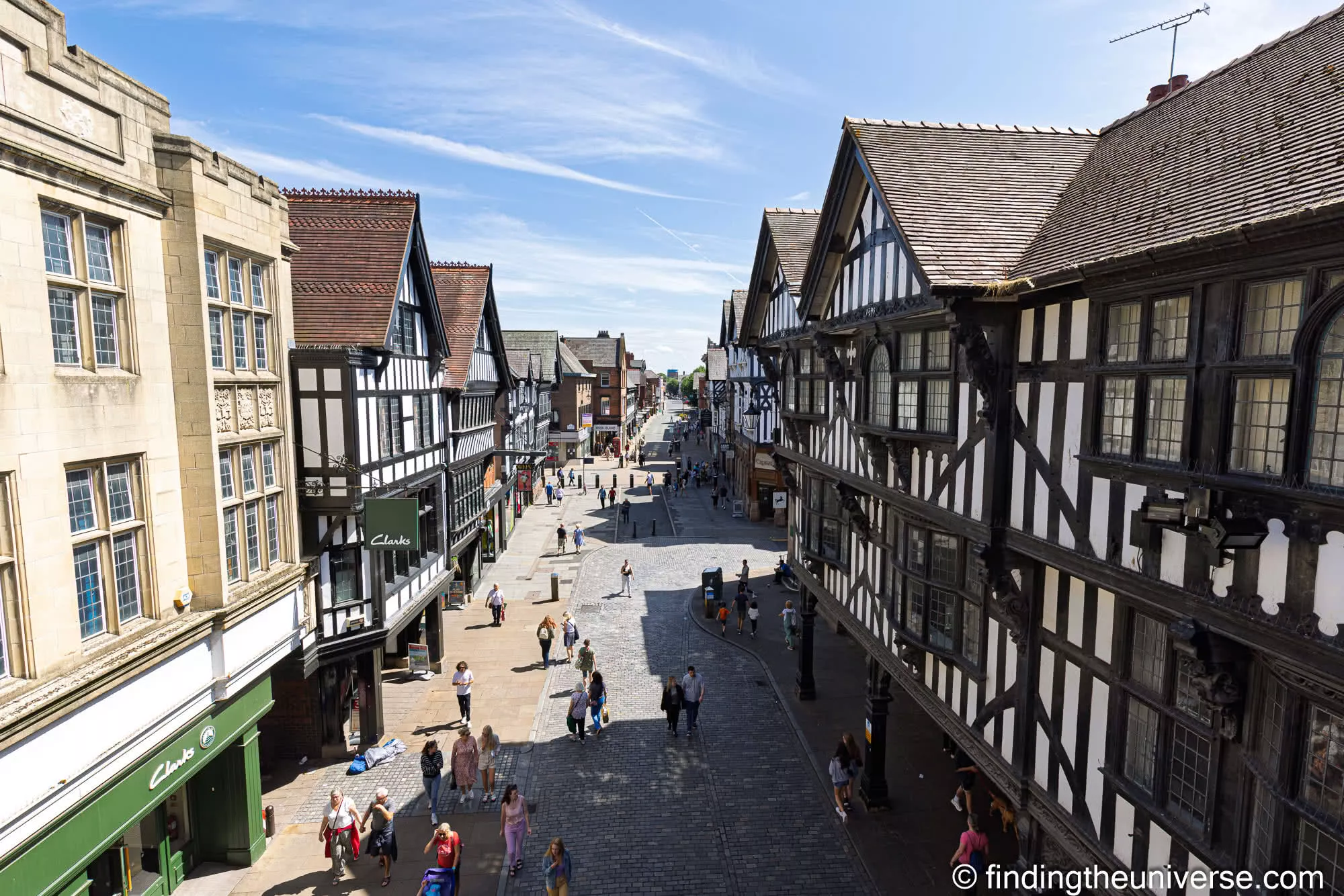
If anyone wants the title of prettiest city in England, Chester is in the conversation. It’s small enough to see in a day, walkable from end to end, and an easy base for North Wales and the Snowdonia foothills if you are continuing west. It’s about two hours from Euston with Avanti. One night does it nicely, two if you’re using it as a launchpad. We’ve put together a full guide to one perfect day in Chester, covering the walking route, the best of the Rows, the cathedral and where to eat.
Liverpool
My mum was born in Liverpool, and I’ve got friends here, so I have a soft spot for the place, but it’d earn its spot on merit anyway. This is the most warm-hearted city in England, with a sense of humour and a music heritage no other city comes close to. The Beatles are the obvious draw, from the rebuilt Cavern Club on Mathew Street to the Beatles Story museum, but the waterfront is what stays with me. The Three Graces (the Royal Liver Building, the Cunard Building and the Port of Liverpool Building) line the river, and the Royal Albert Dock behind them is home to Tate Liverpool and the Maritime Museum.
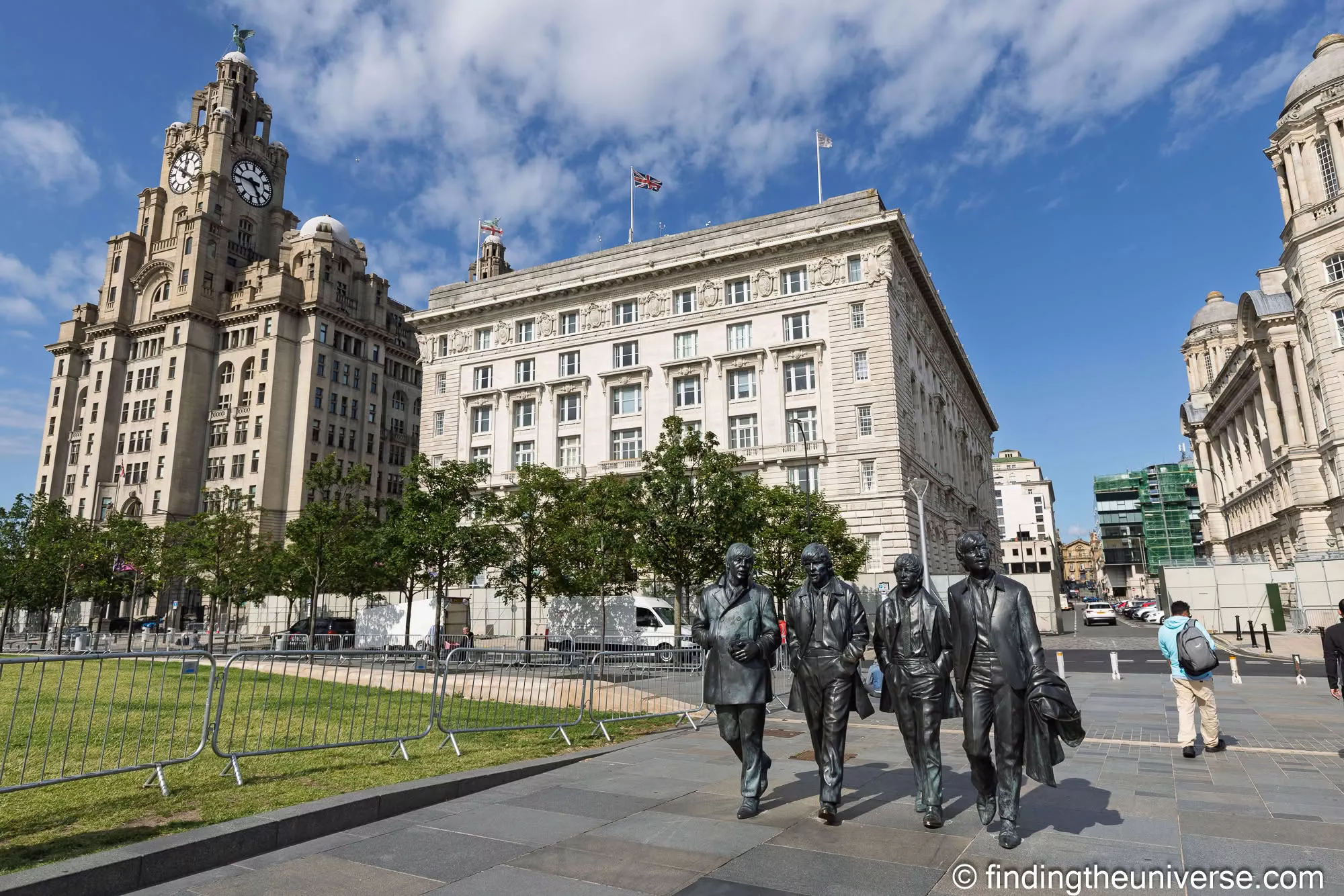
Worth knowing: Liverpool’s waterfront was a UNESCO World Heritage Site until 2021, when it became the only place in England ever stripped of the status, after redevelopment around the docks cost it the listing. The docks and the Three Graces are all still very much there and still worth your time. It’s only the certificate on the wall that’s gone. Football runs deep here too, with Anfield and Goodison Park a short ride apart. Liverpool is about two hours ten from Euston with Avanti. Give it two nights, and base yourself near the Albert Dock or the city centre so the waterfront and the music are on your doorstep; you can browse Liverpool hotels on Booking.com.
Manchester
I spent a summer working in Manchester, my first ever job in IT, so this was my introduction to the north and I’ve been fond of it ever since. Manchester was the original industrial city, the world’s first, and that history is everywhere, told best at the Science and Industry Museum in the oldest surviving passenger railway station on the planet. The John Rylands Library, a neo-Gothic reading room that looks more like a cathedral, is free and well worth an hour for anyone who likes a beautiful building.

What Manchester really runs on is music and football. The city gave us Oasis, the Smiths, Joy Division and the Hacienda, and you can feel that legacy in the Northern Quarter’s bars and record shops. The two football clubs need no introduction, and the National Football Museum is here for the full story. The nightlife is among the best in the country. Here are more things to do in Manchester. It’s about two hours ten from Euston, and pairs naturally with Liverpool and Chester for a northwest loop. Two nights. The Northern Quarter and the city centre put the bars, record shops and nightlife within walking distance, so that is where I would look for a hotel on Booking.com.
York
Up in the north sits the old Viking settlement of Jorvik, known these days as York. Its history runs back well before the Vikings, with the Romans and others having had a go at living here first, but it’s the Viking connection that draws most people, and the city wears its thousand years lightly.

York is about a lot more than Vikings, mind. There’s the Shambles, a warren of overhanging medieval streets you can happily get lost in, and York Minster, a vast Gothic cathedral you can climb for one of the best rooftop views in England. You can walk almost the entire circuit of the medieval city walls. The Jorvik Viking Centre, rebuilt and reopened in 2017 after the Boxing Day floods, tells the Norse story, the National Railway Museum is free and superb, and the ghost walks after dark are good fun. Here’s my two-day York itinerary if you want it mapped out. York is about an hour forty-five to two hours from King’s Cross with LNER. Two nights, and it pairs perfectly with Durham just up the line. Stay inside the medieval walls if you can, so the Shambles and the Minster are a short walk from your door; you can find a hotel inside the walls on Booking.com.
Durham
Durham is tiny. The old city sits on a steep peninsula inside a tight loop of the River Wear, crowned by its castle and cathedral, and the effect when you first see it from the train is one of the best arrivals in the country. I watched it slide past the window dozens of times on the London to Edinburgh run before I ever got off, and I’m glad I finally did.

Durham Cathedral and Castle have been a UNESCO World Heritage Site since 1986, and the cathedral is about the finest piece of Norman architecture in England, all massive stone columns and weight. Harry Potter fans will recognise the cloisters from the early films. The castle is part of the university now, and the cobbled streets between the two are made for an afternoon’s wander. Durham is about two hours forty-five to three hours direct from King’s Cross, or a quick hop from York or Newcastle, which is how most people fit it in. A day trip covers the essentials, but a night lets you have the place to yourself once the day visitors leave.
Newcastle
I lived in Newcastle for five years, and I’ll tell anyone who asks that it’s home to the warmest welcome in England. The city sits on the north bank of the Tyne, and the Quayside, with its run of bridges (the Tyne Bridge above and the tilting Gateshead Millennium Bridge below), is the place to start. Cross the river to the BALTIC contemporary art gallery and the Glasshouse concert hall, both built out of the old industrial waterfront.
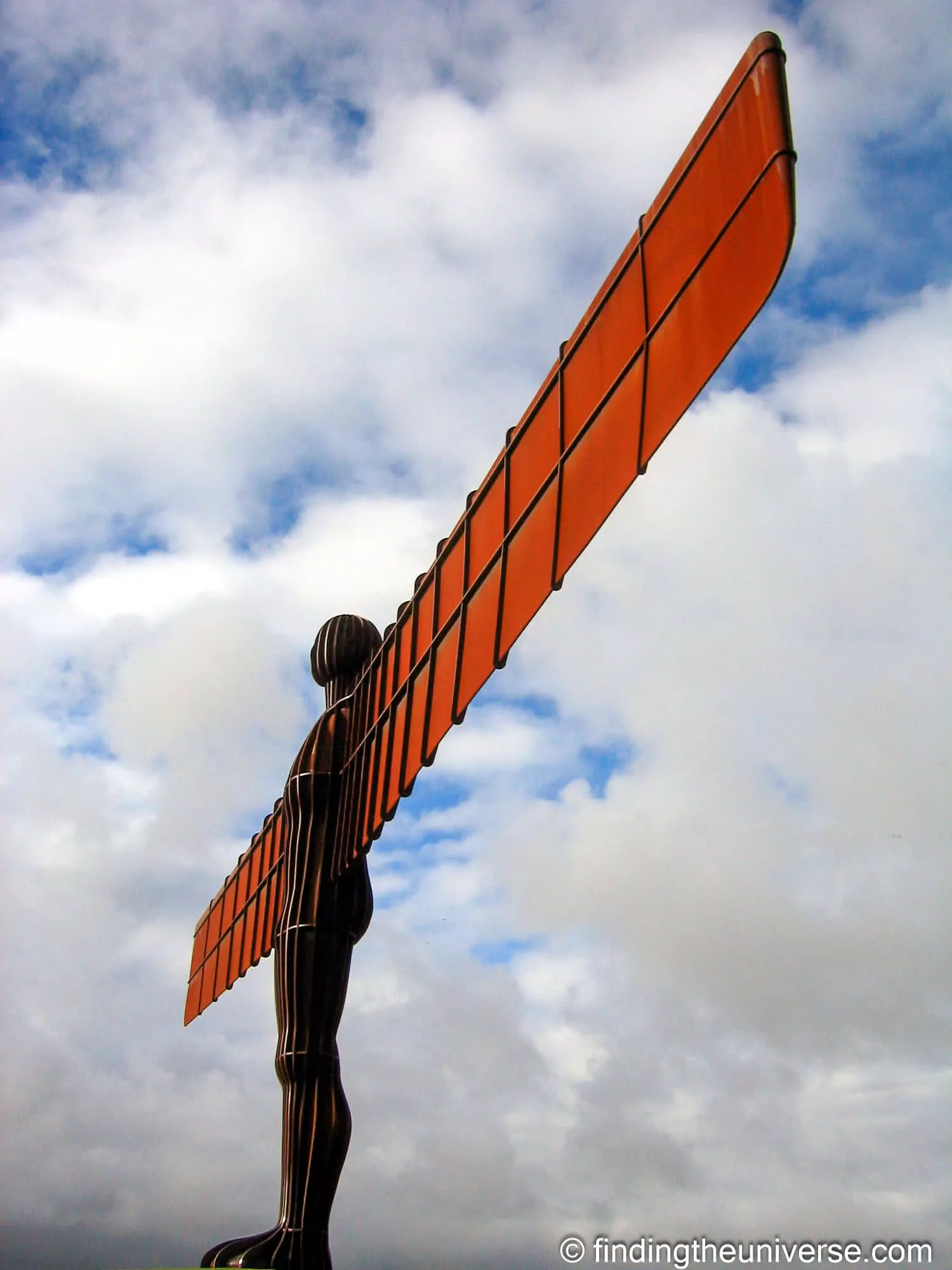
Up in the centre, Grainger Town is a set of grand Georgian streets, and Grey Street curving down towards the river is one of the most handsome in the country. Newcastle Castle gave the city its name, the Angel of the North stands just to the south, and the nightlife, centred on the Bigg Market, is the stuff of legend for good reason. Football is a religion here, with St James’ Park sitting right in the city centre. Newcastle is about two hours forty-five to three hours from King’s Cross with LNER, the last major city before the Scottish border. Give it two nights, and pair it with Durham and York for an East Coast run. Stay in the centre or down by the Quayside to be within walking distance of the bridges and the bars; here is where to check Newcastle hotels on Booking.com.
Honourable Mention: St Ives
St Ives is not a city. It’s a small Cornish harbour town, and including it on a list of cities would be cheating. But I grew up in Cornwall, this is where I’d send you in the West Country, and it’s my list, so here it is.
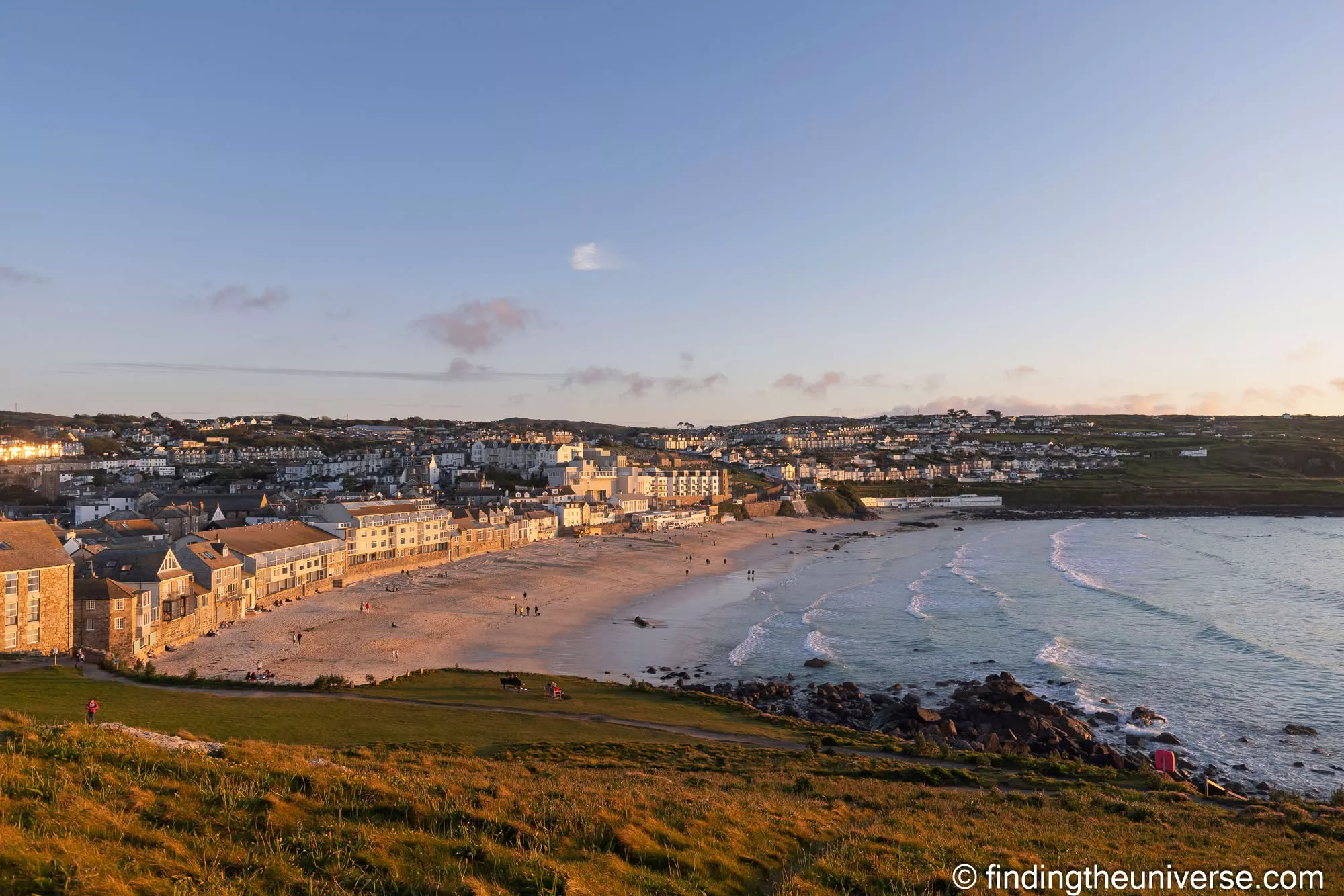
St Ives is all about the light, which is why the artists came, and why there’s a Tate St Ives and a Barbara Hepworth sculpture garden in a fishing town of a few thousand people. The beaches are the best of any town on this list, with Porthmeor for surfing and Porthminster for a swim and a posh lunch, and the South West Coast Path runs straight through. Eat a pasty by the harbour and walk it off along the cliffs. St Ives is a long way from London and not on a fast line, so treat it as part of a wider Cornwall trip rather than a quick stop. Here are 25 things to do in Cornwall and a one-week Cornwall itinerary to build it into.
How to Plan a Multi-City England Trip
The single most common mistake I see is trying to do too much. Thirteen cities is a list to choose from, not an itinerary. Two or three cities done well will always beat six done in a rush, so pick a region and lean into it.
If you’re short on time, base yourself in London and day-trip the close ones: Oxford, Cambridge, Brighton and even Bath are all comfortable there-and-back days. If you want to head further, the cities cluster nicely. Bath and Bristol are twelve minutes apart by train and make an easy pair. York, Durham and Newcastle all sit on the East Coast Main Line, so you can string all three together heading north. Liverpool, Manchester and Chester are close together in the northwest and work as a loop. For the timing, late May and September are the sweet spot: the weather is at its most reliable and the crowds are thinner than high summer. And book your train tickets a few weeks ahead, because advance fares are a fraction of the price you pay on the day.
Getting Around: Trains or a Car?
For hopping between cities, the train wins, and it’s not close. England’s railways drop you right in the centre of every city on this list, so you skip the misery of city-centre parking, and you can read, work or have a drink on the way instead of sitting in motorway traffic. If you base yourself in London, every other city here is within about three hours, which makes day trips and longer stays equally easy. Book in advance for the cheap fares, which are often a fraction of the on-the-day price: I use Trainline to check times and book tickets across all the operators in one place. If you’re making several journeys, a Railcard pays for itself fast.
A car makes sense when you want what’s between the cities rather than the cities themselves: the Cotswolds, the Lake District, the Northumberland coast, or the Cornish lanes around St Ives. For those trips I hire a car and take my time. If you’re doing the same, I search for the best deal across the providers on Discover Cars here. For a city trip, though, leave the car at home and let the train do the work.
Frequently Asked Questions
What are the best cities to visit in England?
For most visitors, the strongest shortlist is London, Bath, York, Oxford or Cambridge, and either Liverpool or Manchester. That mix gives you the capital, Georgian and Roman history, the medieval north, a classic university city, and a northern city built on music and football.
If you have longer, add Bristol, Brighton, Durham, Chester, Newcastle and Nottingham. Every one of them is reachable from London by train.
How many days do you need to see England’s cities?
For a satisfying first trip, plan on about a week to ten days and cover three or four cities, with London as your base or starting point. That is enough to give the capital three nights and add two or three others without rushing.
If you only have a long weekend, do London plus one easy day trip, such as Oxford, Cambridge or Bath.
What is the best city to base yourself in for a trip to England?
London, without much doubt. It has the best transport links in the country, so Oxford, Cambridge, Brighton and Bath are all easy days out and back, and it has more than enough to fill several days on its own.
If you’re focusing on the north, base yourself in York or Manchester instead, both of which put a cluster of other cities within an hour or so.
Can you visit England’s cities by train?
Yes, and it’s the best way to do it. The rail network connects every city on this list, usually city centre to city centre, and from London most are under two hours away.
Book your tickets a few weeks ahead for the cheapest advance fares, and consider a Railcard if you’re making several journeys, as it knocks a third off most tickets.
Which English cities are best for a first-time visitor?
Start with London, then add York and Bath. Between them they cover the capital’s museums and theatre, the medieval and Viking north, and the Georgian and Roman south, which is a well-rounded picture of England in three stops.
Slot in Oxford or Cambridge for a day if you want the classic university-city experience too.
What is the prettiest city in England?
I lived in Bath for four years and I’ll happily call it the most beautiful city in England, thanks to its Georgian crescents and honey-coloured stone. York and Chester are the next two I would name, one for its medieval streets and Minster, the other for its Roman walls and Tudor rows.
Cambridge is the prettiest of the university cities, especially the view of King’s College Chapel across the Backs.
Which English cities make good day trips from London?
Oxford, Cambridge and Brighton are the easiest, all about an hour away and very doable there and back in a day. Bath is a slightly longer day at around an hour and twenty each way, but still comfortable.
For anywhere further north, such as York or Liverpool, stay at least one night rather than trying to round-trip it.
Is York or Bath better to visit?
See both if you possibly can. But if you’re choosing, York is the call for medieval streets, Viking history and a great cathedral you can climb, while Bath is the call for Georgian architecture, the Roman Baths and a more elegant, compact feel.
Forced to pick one for a first trip, I’d take Bath for its looks and its closeness to London, then come back for York.
Do you need a car to visit England’s cities?
No. For a city-focused trip the train is faster, cheaper and far less stressful than driving, and it drops you in the centre of each city with no parking to worry about.
Hire a car only if you want to explore the countryside between the cities, such as the Cotswolds, the Lake District or the Cornish coast.
Which is better, Oxford or Cambridge?
For a short visit I lean towards Cambridge, which is the greener and prettier of the two, with the colleges backing onto the river along the Backs. Oxford is the bigger city with more going on after dark and a stronger pub scene.
You can’t really go wrong, and both are easy day trips from London, so do both if you have the time.
What is the best English city for a weekend break?
York is my top pick for a weekend, as it is compact, full of history, and packs a lot into two days without feeling rushed. Bath and Liverpool are close behind, the first for elegance and the second for music and warmth.
For a livelier weekend with a big night out, choose Manchester or Newcastle.
When is the best time of year to visit England’s cities?
Late May to early June and September are the sweet spots, with the most reliable weather and thinner crowds than the school summer holidays. Cities work well year round, though, since most of the attractions are indoors, so a rainy day rarely spoils a trip.
Avoid expecting reliable sunshine at any point. England doesn’t really do that.
Further Reading
If you want to string several of these cities together, I have put together a two-week UK itinerary and a ten-day UK itinerary by train and bus, both of which take in a good number of them.
If you prefer a physical guidebook to plan with, the one I’d pack is the Rick Steves England guide (currently in its 11th edition), which is strong on exactly this kind of multi-city trip.
Some of the links in this guide are affiliate links. If you book or buy through them we may earn a small commission, at no extra cost to you, which helps keep the site going. We only ever recommend things we would use ourselves.
Dominic says
Durham and Newcastle should be added to this list too.
Laurence says
That’s a good point. I actually lived in Newcastle for five years, and travelled regularly to Durham! I’ll have to create an expanded itinerary and add some more locations in 🙂