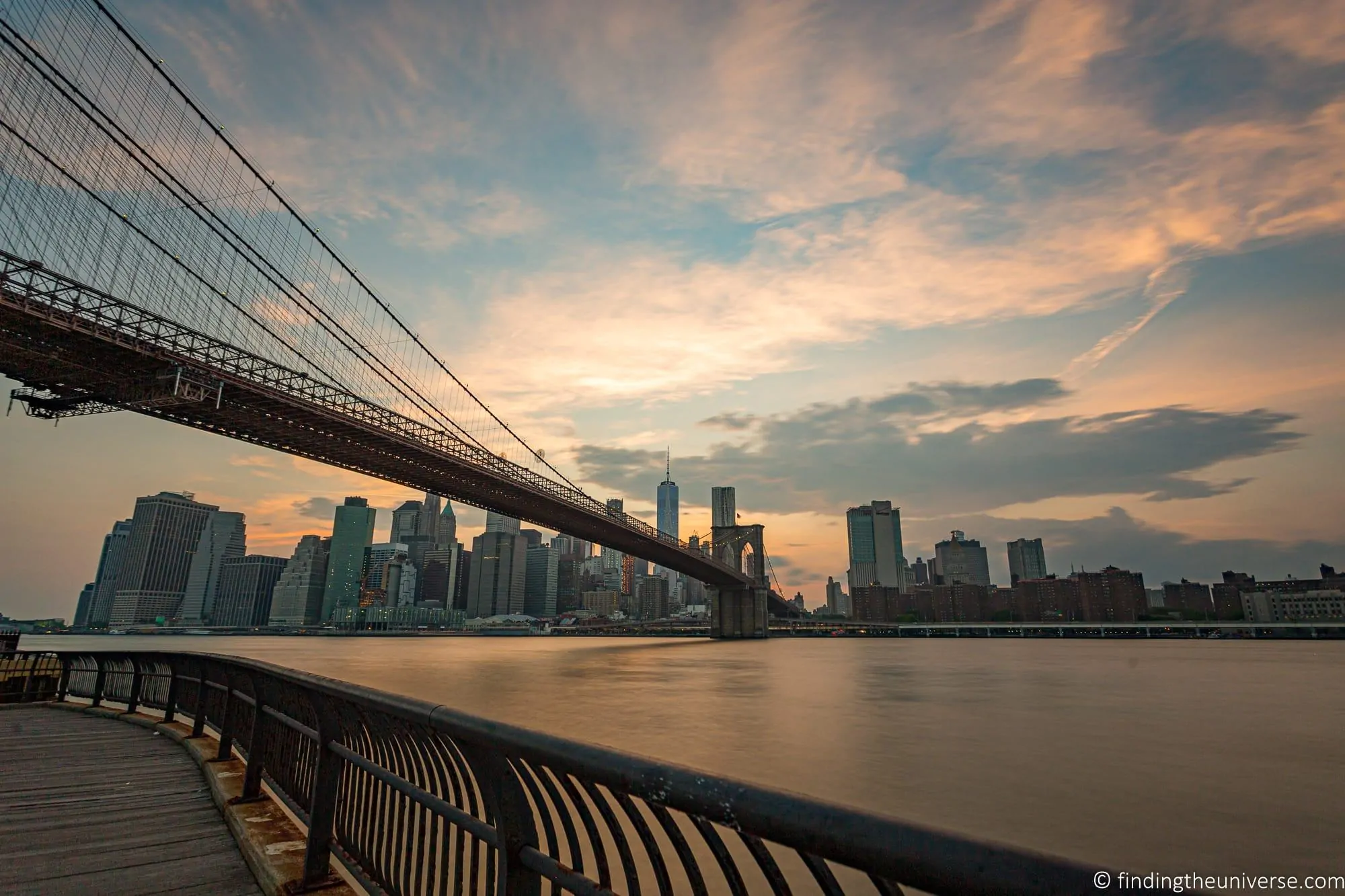
We’ve stayed in New York City many times now, across five Manhattan neighbourhoods plus an apartment in Brooklyn. Our stays have ranged from a points-burn Times Square hotel on my first ever visit (back before Jess and I started travelling together), up to a Fifth Avenue five-star opposite Central Park. We’ve done budget-end, mid-range chain, four-star historic, five-star treat-yourself, and apartment rental, and we’ve done them in different parts of the city in different seasons. So when we sat down to write this guide, we wanted to put together the article we wish we’d had on our first visit, and on our fifth.
The thing about New York is that picking a neighbourhood matters more than picking a hotel. Get the neighbourhood right and most of the hotels in the right tier will work fine. Get it wrong and even the best hotel feels like a slog. The reason this article is structured by neighbourhood rather than by hotel is that this is how the decision should go: which area first, which property second.
Jess has a thing for historic hotels, especially the high-end ones. That’s how we ended up at both the Warwick (built by William Randolph Hearst, the publishing magnate behind Hearst Castle) and at The Sherry Netherland on Fifth Avenue. We don’t stay at the five-star tier on every NYC trip, but occasionally we’ll treat ourselves for a night or two, and the Sherry has been our pick when we have. The Warwick gets us into the same era for a fraction of the price.
A note on disclosure: none of our NYC stays have been press trips. Everything below is paid stays or points stays, and we’ll flag which is which where it matters. We’ve also linked to hotels through our Booking.com affiliate, which doesn’t change your price but does help support the site. Our usual rule applies: if we wouldn’t book it ourselves, we don’t link it.
Table of Contents:
NYC at a Glance: Where to Stay Decision Shortcut
If you’d rather skip the neighbourhood-by-neighbourhood walkthrough and pick something quickly, this table is the short version. Each row maps a trip type to a neighbourhood and our pick within it.
| Best for | Neighbourhood | Our pick |
|---|---|---|
| First-time visitor | Midtown | Warwick New York (4-star, mid-range historic) |
| Special occasion / luxury | Fifth Avenue / Central Park | The Sherry Netherland (5-star) |
| Walkable to downtown sights | Lower Manhattan / FiDi | Gild Hall, A Thompson Hotel (4-star) |
| Mid-range chain, good value, central downtown | Lower East Side / Chinatown | Fairfield Inn & Suites Manhattan/Downtown East |
| Return visit / longer stay | Brooklyn (DUMBO) | An apartment via Vrbo or Plum Guide |
| Cool / food-led | Greenwich Village | The Jane Hotel (2-star, riverside) |
| Budget Manhattan | Midtown / Greenwich | Hotel 31 / The Jane Hotel |
| Rock-bottom budget | Upper West / Queens | HI NYC Hostel / The Local Hostel NYC |
The rest of the article unpacks each row.
Midtown Manhattan: The Default First-Timer Pick
If this is your first NYC trip, or if you want to keep walking distances short and tick off the famous-name sights efficiently, Midtown is where to base yourself. It’s central, the subway lines all converge here, and you can walk to the Empire State Building, Times Square, Rockefeller Centre, Bryant Park, the New York Public Library, and Grand Central Terminal without needing transit. We’ve covered the main Midtown sights in our 2 day New York itinerary and our 3 day New York itinerary if you’re planning a trip around them.
Pros and cons of staying in Midtown
The pros are obvious: it’s central, walkable to the headline sights, and the subway covers the rest. There’s plenty of food at every price point and the area is busy day and night, which means it feels safe walking back to your hotel after a Broadway show.
The cons are worth flagging upfront. Midtown is loud, crowded, and tourist-heavy. The streets immediately around Times Square in particular are a slow-moving sea of people and digital billboards, and the food on those blocks tends towards overpriced chain restaurants rather than anywhere you’d actually want to eat. The fix is simple: stay a few blocks east or west of Times Square itself, where the crowds thin out and the prices come back to earth.
Where to stay in Midtown
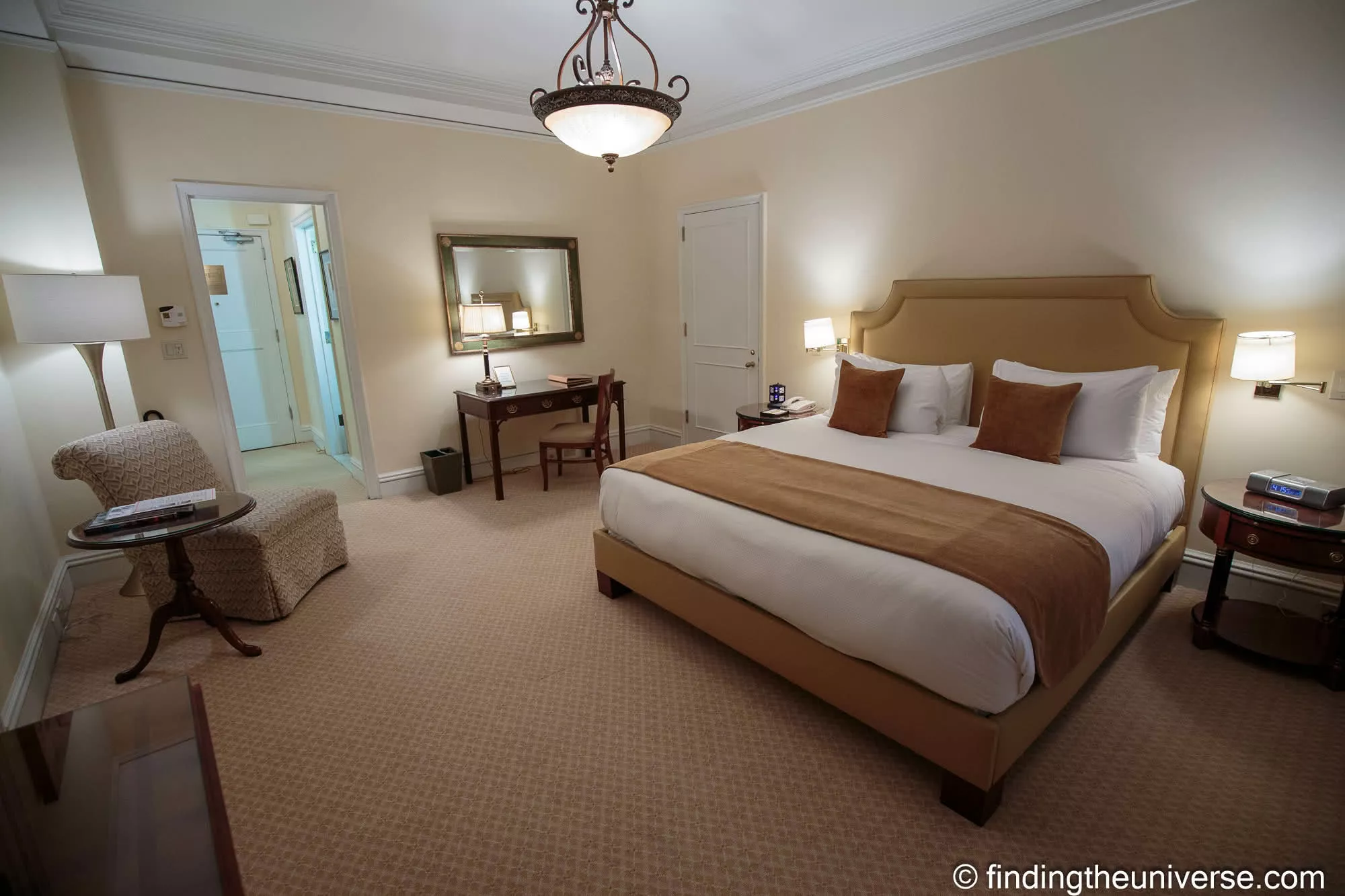
For our top pick, we’d point you at the Warwick New York, a historic four-star hotel built by William Randolph Hearst in the 1920s. It sits on 54th Street and Sixth Avenue, which is far enough north of Times Square that it’s quiet, but still inside the Midtown walking radius. We’ve stayed here more than once and it’s one of my favourite hotels in the city. Spacious rooms (which is a big deal in Manhattan, where standard rooms can feel like cabins), helpful staff, a proper old-school lobby, and prices that are very fair for what you’re getting. It’s not a five-star and doesn’t try to be, but it’s the kind of mid-range historic hotel Jess and I both like, and we’d happily go back.
For something more contemporary at a similar price point, the Radisson Hotel New York Midtown sits 200 yards from Rockefeller Centre and is a solid four-star at fair prices. It’s a chain so you know what you’re getting, but it’s well-located.
For budget travellers who still want a Manhattan address, Hotel 31 is a well-located two-star hotel 650 yards from the Empire State Building. Some rooms have shared bathrooms at lower rates, which is a fair trade if you’re spending most of your time outside the room. Don’t expect frills.

Lower Manhattan: Walkable Hub for Downtown Sights
Lower Manhattan is the area south of Canal Street, and it has two distinct sub-neighbourhoods we’ve stayed in. They feel different and serve different kinds of trip, so we’ll cover them separately.
FiDi and Wall Street: quiet downtown with the financial-district feel
The Financial District sits at the southern tip of Manhattan and is walkable to most of the headline downtown sights: the 9/11 Memorial and Museum, the Statue of Liberty ferry from Battery Park, the Brooklyn Bridge walk, and Wall Street itself. The area also has the Oculus, which is worth a few minutes even if you’re not catching a train.
The pros are walkability to downtown sights and surprisingly fair prices given how central it is. The cons are the area’s character: FiDi is built around finance, which means it goes quiet on weekends and after 6pm. If you want a buzzy evening scene right outside your hotel, this isn’t it. If you want to be able to walk to the ferry terminal in the morning and have a quiet street to come back to at night, it’s exactly right.
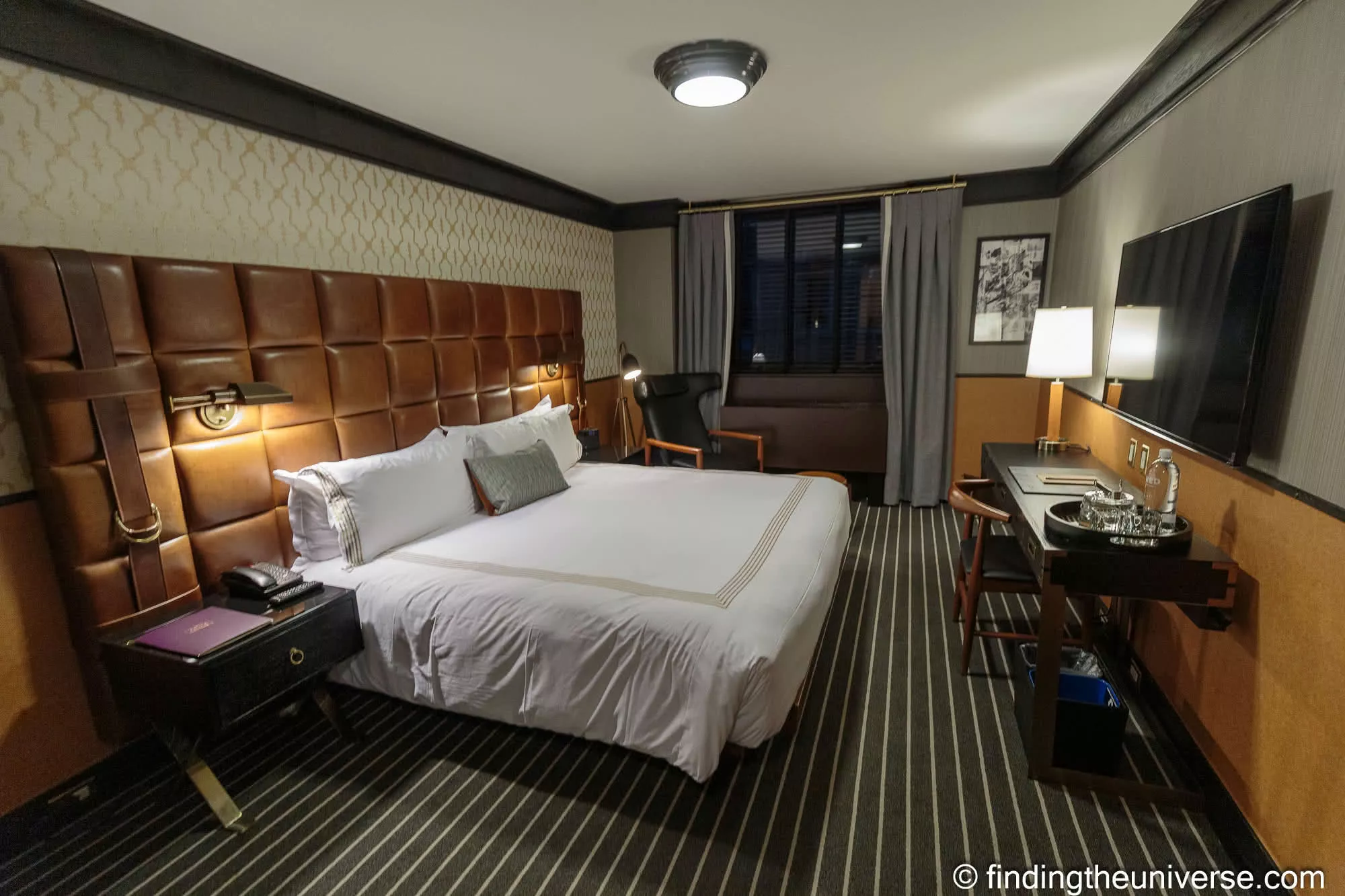
Our pick here is Gild Hall, A Thompson Hotel. It’s a four-star hotel on Gold Street, walking distance to Wall Street and the Statue Cruises ferry. We enjoyed our stay here. The rooms are comfortable, there’s an on-site restaurant, and the location is a real strength for a downtown-heavy itinerary. It’s the kind of hotel where the location is the headline benefit, and the room delivers exactly what you’d expect from a Thompson property.
Budget options are thin in FiDi. If you’re on a tight budget but want to be downtown, the better play is to look at Greenwich Village (covered below) or commute in from Brooklyn.
Lower East Side and Chinatown: food, nightlife, downtown grit
A few blocks east, the character changes completely. The Lower East Side and Chinatown sit right next to each other, and together they make up one of the most food-led, lively, and characterful corners of Manhattan. Chinatown’s narrow streets are dense with dim sum, hand-pulled noodles, and bakeries; the LES has the bars, restaurants, and music venues that the Financial District doesn’t. The Manhattan Bridge entrance is a short walk away if you want to walk over to Brooklyn, and the F, J, M, and Z trains all stop in the area.
The pros: a real food scene, nightlife, and a sense of being in a working neighbourhood rather than a tourist district. The cons: the walks to the headline downtown sights are a touch longer than from FiDi, and the streets can feel busy late at night (more lively than unsafe, but if you want quiet this isn’t it).
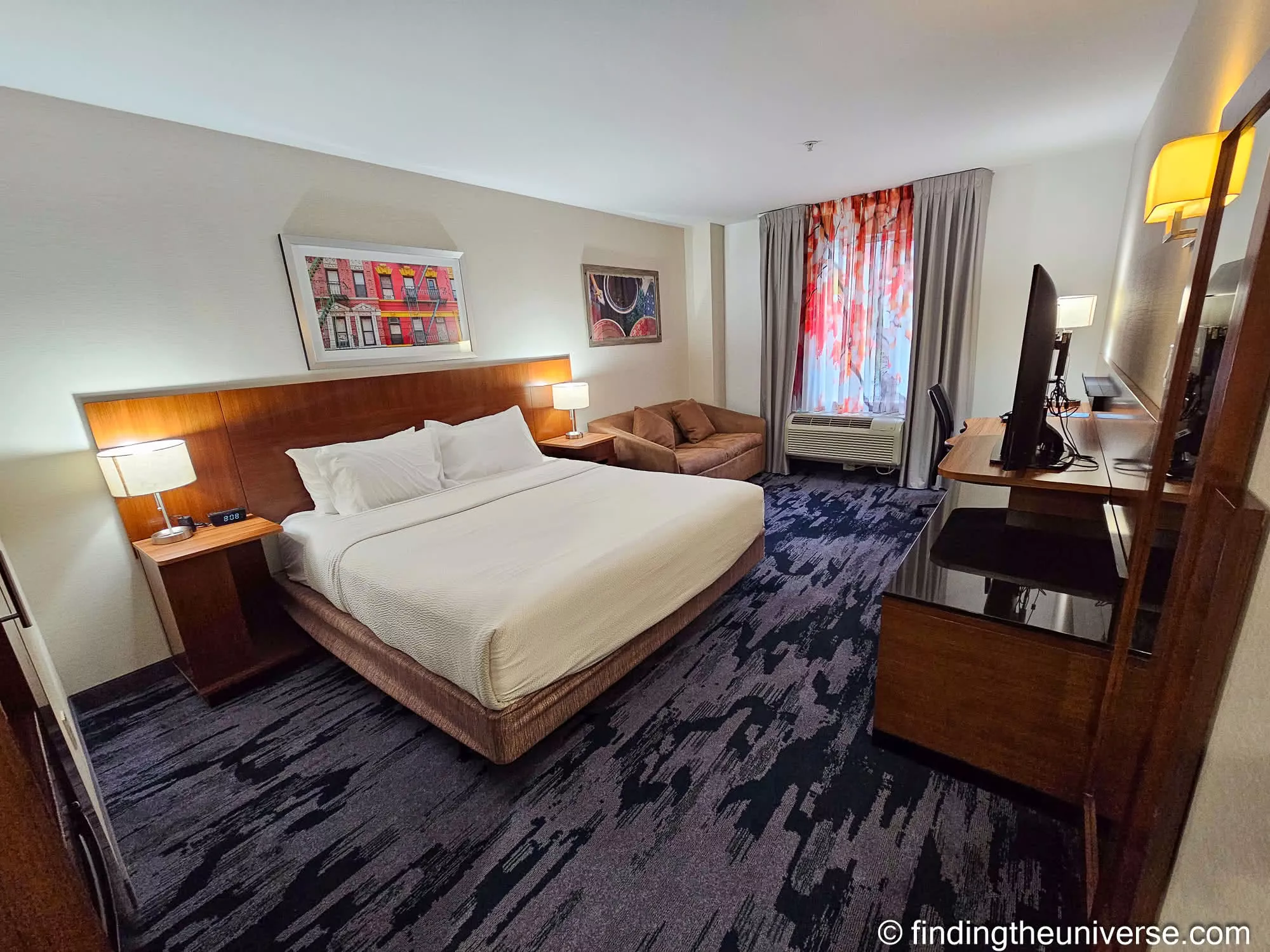
Our pick is the Fairfield Inn & Suites Manhattan/Downtown East at 95 Henry Street. It’s not an exciting hotel and we won’t pretend otherwise, but it was reliably good. The rooms are clean and well-equipped, the included breakfast is a real money-saver in NYC where breakfast pricing in restaurants is steep, and the location puts you a short walk from Chinatown’s food, the LES nightlife, and the Brooklyn Bridge. This is the trip we did when we wanted a no-stress mid-range chain stay in a neighbourhood we’d actually want to walk around in, and it delivered.
It’s also worth flagging that this part of Manhattan is a structural blind spot for most NYC accommodation guides, including ours until now. We’ve covered Midtown and FiDi extensively in our existing itinerary articles, but the LES and Chinatown side of downtown deserves more attention than it usually gets.
Greenwich Village and Chelsea: Cool Neighbourhood, Great Food
If you’ve been to NYC before and you’re looking for somewhere with more character than Midtown, Greenwich Village and Chelsea are the obvious answers. The streets are tree-lined, the architecture is mostly low-rise brownstones rather than skyscrapers, the High Line runs along the western edge, and the food and bar scene is good rather than tourist-priced. It’s also a short walk to Washington Square Park, the West Village, and Chelsea Market.
The pros: character, walkability, food. The cons: hotel selection is thinner here than in Midtown (the area is mostly residential), and what hotels exist tend to be either boutique-quirky or apartment-style. This is also a neighbourhood where an apartment rental might make more sense than a hotel, especially for longer stays.
Our pick on the budget end is The Jane Hotel, a quirky two-star hotel in Greenwich Village with rooms styled like ship’s cabins (it was originally a sailors’ hotel) and views over the Hudson River. The cabin rooms have shared bathrooms which is the trade-off, but the rates are very good for Manhattan and the building has real character. Worth knowing about if you’ve been to NYC before and want somewhere different.
For mid-range and high-end options here, we’d suggest looking at apartment rentals via Vrbo or Plum Guide rather than hotels. The character of the neighbourhood lends itself to staying in a brownstone or a converted loft, and the inventory at the apartment-rental tier here is strong. More on that in the apartments section below.
Fifth Avenue and Central Park: Special Occasion / Luxury
If you’re in NYC for a special occasion, an anniversary, or a treat-yourself trip and budget isn’t the constraint, the area along Fifth Avenue opposite Central Park is where the grand-dame hotels are. This is the New York of the postcards and the films: Central Park views, the Plaza, Tiffany & Co flagship, the Apple cube, Saks Fifth Avenue, Trump Tower, and the long walk south down Fifth Avenue from the museum end to the shopping end.
The pros: the location is iconic, the rooms (in the right hotels) are huge by Manhattan standards, and the walk into Central Park first thing in the morning is a real moment. The cons: prices are seriously high, mid-range options are thin (it’s mostly five-stars and ultra-luxury), and the area itself goes quiet in the evening once the shoppers leave (which can be a feature or a bug depending on what you want).
Jess has always had a thing for historic hotels, and if they happen to be high-end luxury too, even better. The Sherry Netherland fits both. The Sherry Netherland is a Fifth Avenue grande dame opposite Central Park, the kind of hotel where you can feel the building’s age in the lobby’s marble and the brass elevator fittings. Lovely rooms, helpful staff, and a fantastic location: you can walk straight across the road into Central Park, and you’re a few minutes’ walk from Bergdorf Goodman, the Plaza, and the Fifth Avenue museum stretch.
We don’t stay at this tier on every NYC trip. Five-star Fifth Avenue is not where most of our nights have been spent. But occasionally we’ll treat ourselves for a night or two, and the Sherry has been our pick when we have.
If you like the historic-hotel feel but the five-star price isn’t going to work, the Warwick (covered in the Midtown section above) is a four-star alternative. Also historic, also Hearst-built, at roughly half the price.
Brooklyn: For Your Return Visit (or Your First, If You’re Brave)
Brooklyn is where the smart return-visitor tends to go, and it’s where we’ve spent more nights than anywhere else in the city. We stayed in an apartment right in DUMBO, near the spot where every photo of the Manhattan Bridge framed between two buildings is taken (the corner of Washington and Water Streets, if you want to find it yourself). It’s a few minutes’ walk to the Brooklyn Bridge, the East River walk, and the F train into Manhattan, and the area has more good restaurants per square block than most of Midtown.
The pros: more space for your money than Manhattan (apartments especially), better food, a real neighbourhood feel, and the views back across the river are the views you’ve actually come to NYC to see. The cons: you’re across the river, so factor in 20-30 minutes each way on the subway to get to most Manhattan sights. This adds up over a short trip.
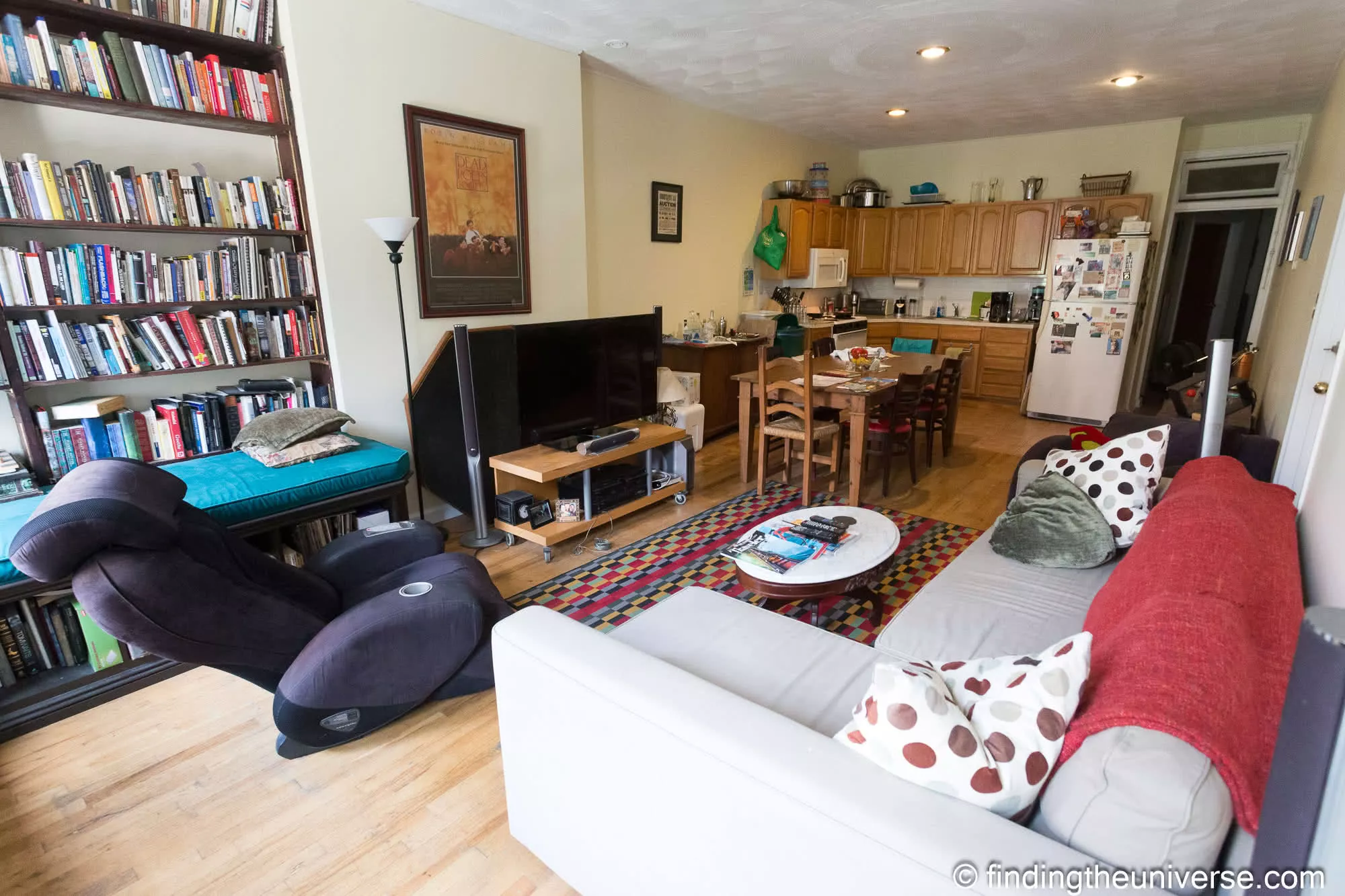
The Brooklyn apartment pattern
We stayed in an apartment in DUMBO across multiple visits. We’re not going to point you at a specific listing because apartment listings rotate fast on any platform, and a recommendation that’s solid this week is gone next year. The right move is to recommend the platform rather than the property.
The two we’d suggest are Vrbo and Plum Guide. Vrbo (owned by Expedia Group) is the broad-inventory option with thousands of NYC apartments listed, and is what we’d use if Airbnb were still our default (it isn’t, for various reasons we won’t get into here). For the actual hotel search, our wider roundup of hotel booking sites walks through which ones are worth your time. Plum Guide is the curated option: they hand-check their listings and the inventory is smaller as a result, but the quality is more consistent. We’ve covered the apartment-rental landscape more broadly in our alternatives to Airbnb guide if you want more options.
For longer stays (anything four nights or more), an apartment usually beats a hotel on cost per night and gives you a kitchen (which matters more in NYC than in most cities, given restaurant pricing).
Brooklyn hotel picks
For travellers who want Brooklyn but prefer a hotel, here are four we’d consider, ranked roughly by tier:
1 Hotel Brooklyn Bridge is the luxury anchor in DUMBO. Reclaimed-wood interiors, a Bamford spa in the basement, a rooftop pool with views back across the river to Manhattan, and the location is the same one we stayed in via apartment. If you want the DUMBO area but don’t want an apartment, this is the most direct swap.
The William Vale in Williamsburg is the other luxury option. Sleek modern design, floor-to-ceiling windows, one of NYC’s largest outdoor hotel pools (open seasonally, May to early September), and a rooftop bar with skyline views. The L train at Bedford Avenue connects you to Manhattan in a few stops.
The Tillary Hotel is the mid-range pick, well-positioned at the foot of the Manhattan Bridge with easy access to DUMBO, Brooklyn Heights, and Downtown Brooklyn. A 174-room hotel with a rooftop garden bar, a lobby café, and rooms that fuse mid-century modern and art-deco influences. (Worth knowing: it used to be branded as Dazzler Brooklyn, hence the slightly old-feeling URL on Booking.com.)
Moxy Brooklyn Williamsburg is the design-led mid-range option in Williamsburg. We’ve stayed at Moxy properties in other cities and found the brand consistent: small but well-thought-out rooms, a bar-led communal lobby, and prices that are reasonable by Manhattan standards. Worth a caveat though: the Moxy aesthetic is very of its moment, and we wouldn’t be surprised if the format feels dated in five or ten years. Worth knowing if you’re booking it for a longer stay or you prefer a more traditional hotel feel.
When Brooklyn isn’t the right call
Skip Brooklyn if your trip is short (one or two nights) and Manhattan-heavy, if you have early-morning flights from JFK or LaGuardia (the transit logistics get awkward), or if you’re travelling with someone who’d find the extra subway time stressful. For a five-day trip with a mix of Manhattan and food-led wandering, Brooklyn is the right call. For a two-day blitz of the Manhattan headline sights, stay in Manhattan.
Upper West Side and Uptown: Quiet, Park-Side, Budget Pocket
The Upper West Side runs along the western edge of Central Park, north of Columbus Circle. It’s a residential, leafier part of Manhattan with the American Museum of Natural History on its eastern edge and Central Park itself a few blocks east of that. Our 3 day New York itinerary starts on this side of the park.
The pros: quieter than Midtown, walkable to Central Park, good restaurants, and budget options exist here that don’t exist further south. The cons: you’re a subway ride from most of the headline downtown sights, and the area itself is more about long walks and weekend brunches than headline tourism.
Our pick on the budget end is HI NYC Hostel, a solid dorm-style option ten minutes’ walk from Central Park. It’s a Hostelling International property so the standards are reliable, and at the prices NYC charges for hotels, a hostel bed is sometimes the only way to make a long trip work financially.
Queens: Budget Across the River
Queens borders Manhattan to the east and is connected by multiple subway lines. You won’t come here for the famous-name sights. But if budget is the constraint and you don’t mind a short subway ride, Queens is a way to make a NYC trip happen at a price point that Manhattan won’t allow.
The pros: significantly cheaper than Manhattan, often within 10-15 minutes of Times Square or Grand Central by subway, and the food scene in Long Island City and Astoria is strong. The cons: you’re commuting in every day, the neighbourhood character is residential rather than tourist-friendly, and you have to plan around subway logistics.
Our pick is The Local Hostel NYC, a budget hostel in Long Island City with a kitchen, a rooftop terrace, and both private rooms and dorms. Times Square is eight minutes by subway. It’s good value for what you’re getting, and the area itself is fine.
Apartment Rentals in NYC
We’ve already touched on apartments in the Brooklyn section, but the same logic works in Manhattan too. For trips of four nights or more, or for groups of three or more travellers, an apartment rental is often the better economic call than a hotel. You get more space, a kitchen (which saves you a fortune given NYC restaurant prices), and the option of a multi-bedroom layout that doesn’t exist in any reasonable hotel room.
Our two go-to platforms are:
Vrbo has the broadest inventory, owned by Expedia Group, and lists apartments across all five boroughs. You’ll find everything from studio walk-ups to multi-bedroom Brooklyn brownstones. Filter by neighbourhood and price.
Plum Guide is the curated option. They send people to physically check listings before approving them, which keeps the inventory small but the quality high. If you’ve been burned by misleading listing photos before, Plum Guide is set up to fix that problem.
We’ve written a more general guide to alternatives to Airbnb covering the rental landscape more broadly. And our travel resources page collects the accommodation tools we use across all our trips.
A couple of practical points on apartments in NYC specifically:
- Short stays (1-3 nights) usually don’t pencil out. Many NYC apartments have minimum-stay requirements of 3-4 nights, and for a one-night stay a hotel is almost always cheaper once cleaning fees and platform fees are factored in.
- Check the actual address before booking. NYC has neighbourhoods that are different in character from one block to the next, and a listing described as “Williamsburg” can sometimes be on the edge of an entirely different area. Drop the address into Google Maps and see how far you actually are from the subway.
- Confirm the elevator situation if you’re packing heavy. NYC has a lot of walk-up apartments, especially in the older buildings.
Where NOT to Stay in NYC
A guide that only tells you where to stay is half a guide. Here are the areas we’d actively steer you away from, and why.
Times Square itself (especially the hotels right on Times Square)
I stayed at the New York Marriott Marquis on my first ever NYC trip, back before Jess and I started travelling together. It was a points-burn booking (I had Marriott points to use up), and as a tourist anchor for a first visit it was actually fine. The rotating restaurant on top was a moment, the in-the-thick-of-it Times Square energy is a one-time-experience kind of thing, and the lifts that open onto a thirty-seven-storey atrium are impressive.
I wouldn’t pay full price for it now though. At Marriott Marquis nightly rates you’re paying a Times Square premium for the location, not the room. The room itself is a perfectly reasonable upper-mid-range business hotel that you could find anywhere. If you want the Times Square experience, walk there from the Warwick (five minutes east) and walk back to a quieter street to sleep. If you have Marriott points to burn or you specifically want the Marquis for the building rather than the value, it’s a fine pick. At full price it isn’t.
The same logic applies to most of the hotels right on Times Square. You’re paying for the address.

The Penn Station / Madison Square Garden area
Penn Station is a major transit hub but the streets around it are a mix of theatre crowds, tourist traffic, and not-much-character commercial blocks. The hotels in this strip are mostly priced for tourists who want to be near the train station rather than near anywhere good, and the area can feel uncomfortable late at night. If your trip involves Amtrak in or out of Penn, a hotel a few blocks east in Midtown is a better play than one right at the station.
Far outer-borough hotels listed as “in NYC”
Booking.com (and other sites) will return hotel results an hour out from Manhattan when you search “New York City hotels”. These can look like good deals on price, but factor in the real cost: subway/cab fares both ways every day, time lost to commuting, and the experience-cost of not being able to walk back to your hotel for a break in the middle of a long day. If a hotel is in deep Queens, far southern Brooklyn, or anywhere on Staten Island, treat it as a different category from “NYC accommodation” and price accordingly.
Airport hotels for anything other than a pre-flight night
A hotel near JFK, LaGuardia, or Newark is fine if you have a 5am flight and want to crash near the terminal. It is not a NYC hotel for the purposes of a NYC trip. The transit time between JFK and Manhattan is regularly over an hour each way, and the cost per day in lost time and transit fares makes the price advantage disappear quickly.
Frequently Asked Questions
What’s the best NYC neighbourhood for a first-time visitor?
Midtown, almost without exception. It’s central, walkable to the headline sights, the subway lines all converge here, and you can ease into the city from a base that’s easy to find your way around. Stay a few blocks east or west of Times Square itself rather than right on it, and the experience is much better. Our pick is the Warwick New York.
Is Brooklyn a good place to stay for a first-time visitor?
It can be, but it’s not the obvious choice. If your first NYC trip is short (two or three days) and headline-sight focused, the time you’d spend on the subway each day adds up quickly. Save Brooklyn for a return visit, or for a longer first trip where you can afford a day in the borough itself.
How much should I budget for a hotel in NYC?
Manhattan mid-range hotels run roughly two to three times what equivalent hotels cost in most other US cities. Budget hostels start meaningfully cheaper, and luxury hotels go meaningfully higher. NYC pricing is also seasonally and event-driven (a Knicks home game or a New York Fashion Week night will bump rates). The cleanest play is to set your maximum nightly rate up front, search around it, and accept that the location will narrow as the rate gets tighter. We’ve been deliberate about not quoting specific 2026 nightly figures here because hotel pricing in NYC is more variable week-to-week than almost anywhere else we’ve stayed.
Is it worth staying near Times Square specifically?
For a first NYC trip, no. The hotels right on Times Square are paying a Times Square premium that doesn’t translate into a better room or a quieter night. Stay a few blocks east or west and you can walk to Times Square whenever you want it without having to live inside it.
What’s the best area to stay for families with kids?
For families, we’d suggest the Upper West Side (close to Central Park and the American Museum of Natural History, with the quieter residential character that travels well with younger children) or Midtown a few blocks east of Times Square (central to the headline sights but enough off the main drag to be liveable). An apartment rental via Vrbo is also worth a look for families, especially for stays of four nights or more, because the kitchen and the multi-bedroom layout often make more sense than two adjoining hotel rooms.
Should I get a hotel or an apartment for a week-long NYC trip?
For a week, lean apartment. The cost per night drops once you’re past three or four nights, the kitchen pays for itself within the first two breakfasts at NYC restaurant prices, and the extra space matters more for a longer stay. The exception is if you’re travelling solo or as a couple and value not having to do any housekeeping at all, in which case a mid-range hotel is the simpler option.
A quick close
Picking where to stay in New York City is the single biggest decision you’ll make for the trip after picking the dates. Get it right and the city does the work for you. Get it wrong and the days get harder than they need to.
If you came to this article and you’ve already picked your neighbourhood, go to the section that covers it and book the pick for your tier. If you’re still deciding, the table at the top is the short version. And if this is a first NYC trip, the answer is almost always Midtown a few blocks east of Times Square, in a hotel like the Warwick where the room is bigger than the cliché Manhattan square footage and the location lets you walk to most of what you came for.
We’ve covered what to do once you’re here in our 2 day New York itinerary and our 3 day New York itinerary. For getting around, our NYC transport guide covers the subway, ferry, and taxi options. And if you’re picking attractions, our New York attraction passes article walks through which pass actually pays for itself.
Have fun. New York rewards a bit of preparation more than most cities, and getting the where-to-stay decision right is the single most useful thing you can do up front.
Leave a Reply