

I'm Laurence, a professional travel photographer since 2010. Jess and I write this site from our own travels.
Jess and I have spent a lot of money on luggage over the years. Some of it was money well spent. The Osprey wheeled pack I bought over a decade ago is still rolling, and Jess has an Eagle Creek bag that has now passed the fifteen year mark. Some of it was money less well spent, which is how we ended up with strong opinions on the subject.
More recently, I took a Level8 hardside trunk more or less straight from the delivery box onto a six week safari across Africa. I can report that this is a very effective way to find out what a suitcase is made of.
Between us, Jess and I own nine pieces of luggage across seven brands, bought over roughly twenty-five years, and together they cover pretty much every type of bag you can buy. The five we actually travel with are the heart of this guide. They have all been thoroughly field tested.
I also know you’re not choosing between the bags in our cupboard, so I’ve assessed five of the biggest names in luggage, from Travelpro to Tumi, against the same things our own bags have taught us to care about. Where we own a bag, you’ll get the years-of-use story. Where we don’t, I’ll tell you exactly what the assessment is based on.
Further down you’ll also find our guide to choosing between the main types of luggage, plus a warning from our own shopping trips: that bargain name-brand suitcase at the outlet store might not be the bag you think it is.
Table of Contents:
Quick Take: The Luggage We Recommend
If you’re in a hurry, here’s what we use. The best checked hardside case we’ve travelled with is the Level8 Luminous Trunk 28″, which is the bag that survived the safari.
For something a bit more elegant, Jess swears by her Delsey Chatelet. And if you want one bag that will still be working in 2036, my money is on the Osprey Sojourn, because mine is already ten years into proving it.
- Large checked hardside: Level8 Luminous Trunk 28″, the safari survivor
- Premium hardside, checked and carry-on: Delsey Chatelet, Jess’s go-to
- Wheeled travel pack for rougher trips: Osprey Sojourn 60L, ten years old and counting
- Softside durability: Eagle Creek, the brand behind Jess’s fifteen year old bag
- Newest arrival, early days: Lojel Cubo Fit Lite, an expandable check-in case
And if you’d rather buy from one of the big household names, here’s where they land for us:
- Value softside carry-on: Travelpro Maxlite 5, the flight crew standard
- Strongest suitcase warranty: Briggs & Riley Baseline, free repairs for life, airline damage included
- The one everyone asks about: Away Bigger Carry-On, solid cover for its first five years
- Cheapest way into a big-name hardside: Samsonite Omni PC, just read the warranty terms first
- Business travel: Tumi Alpha Dual Access, the luxury benchmark
We don’t own those five; each of their entries below says so, and explains what the assessment is based on instead. The comparison table has the numbers for all ten bags, and after that I’ll go through each one in detail, including the things we don’t like about them.
How We Judge Luggage We Haven’t Owned
Five of the bags in this guide are ones we’ve never owned, so it’s fair to ask what our opinion of them is worth.
Luggage makes this easier than most gear. It’s a low-differentiation product: every suitcase is solving the same problem inside the same airline size limits, the shells come from a short list of materials, and plenty of brands buy their wheels and zips from the same handful of suppliers.
What actually separates the cheapest bag here from the most expensive is mostly things you can check without owning either: what the warranty really covers once you read the terms, whether the company behind it has the track record to still be honouring that warranty in year nine, and how the parts that usually fail (the wheels, zips and telescoping handles) are built.
Those happen to be exactly what twenty-five years of buying and breaking our own luggage has taught us to look at. So for the five assessed brands, that’s what I’ve done: read the current warranty terms in full, checked the company’s history, and weighed the failure points, using the bags we do own as the benchmark. Each assessed entry is labelled as a bag we don’t own, and none of them comes with an invented travel story.
Our Travel Luggage Compared
A quick note on this table: the “our history” column is the one you won’t find anywhere else, and it’s the reason this guide exists. Anyone can copy a weight figure off a product page.
| Luggage | Type | Capacity | Empty weight | Wheels | TSA lock | Warranty | Our history |
|---|---|---|---|---|---|---|---|
| Level8 Luminous Trunk 28″ | Hardside checked trunk | 99 litres | 5.2 kg / 11.4 lb | 4 wheel spinner | Yes, built in | Lifetime or 1 yr (Level8 says both) | Six week African safari, still in service |
| Delsey Chatelet Hard+ 24″ | Premium hardside checked | Not published | 4.9 kg / 10.8 lb | 4 wheel spinner with brakes | Yes, built in | 10 years | Jess’s current go-to, plus a matching carry-on |
| Osprey Sojourn 60L | Wheeled travel pack | 60 litres | 3.7 kg / 8.2 lb | 2 wheel | No, padlock loops only | Lifetime (All Mighty Guarantee) | 10+ years of heavy use |
| Eagle Creek wheeled range | Softside wheeled | Varies by size | Varies by size | 2 or 4 wheel by model | Varies by model | Manufacturing defects, for the life of the product | Jess’s older Eagle Creek is 15+ years old |
| Lojel Cubo Fit Lite | Expandable hardside check-in | 89 to 101 litres | 4.5 kg / 9.9 lb | 4 wheel spinner | Yes, TSA-008 | 10 years | Newest bag, one three week trip so far |
| Travelpro Maxlite 5 | Softside expandable carry-on | – | – | 4 wheel spinner | – | Lifetime on defects; airline damage year 1 only | Not owned, the flight crew favourite |
| Samsonite Omni PC | Hardside expandable checked | – | – | 4 wheel spinner | – | 10 years, transport damage excluded | Not owned, the biggest name in luggage |
| Away Bigger Carry-On | Hardside carry-on | – | 3.6 kg / 7.9 lb | 4 wheel spinner | Yes, built in | Free repair for 5 years, a fee may apply after | Not owned, the brand readers ask us about most |
| Briggs & Riley Baseline Cabin | Softside carry-on | – | – | 4 wheel spinner | – | Lifetime, airline damage included | Not owned, the warranty benchmark |
| Tumi Alpha Dual Access | Ballistic nylon expandable carry-on | – | – | – | Yes, built in | 5 years, tiered by year | Not owned, the business travel benchmark |
A footnote on the numbers. Delsey no longer lists the Chatelet Hard+ on its own site, so there’s no official litre capacity to quote for it, and I’ve left that cell blank rather than guess.
The Level8 warranty is worth a mention too, because it’s murky. Level8’s warranty page says its suitcases carry a lifetime warranty, then says on the same page that its bags and accessories get one year. It also tells you to check the period printed on the tag, and says anything bought through another retailer falls under that retailer’s terms.
Amazon’s listing doesn’t state a term at all and sends you back to Level8’s website. So the cover you get is unclear, and it’s worth checking the tag on yours.
A lifetime promise is also only as good as the company behind it, a point I come back to later; Level8 is a much younger brand than Osprey or Eagle Creek.
For the five bags we don’t own, I’ve filled in only what I could verify against the brands’ own listings and warranty pages, which is why several of those cells hold a dash instead of a number I can’t stand behind. Their warranty column, on the other hand, is fully checked, and that’s the column doing the real work anyway.
Level8 Luminous Trunk
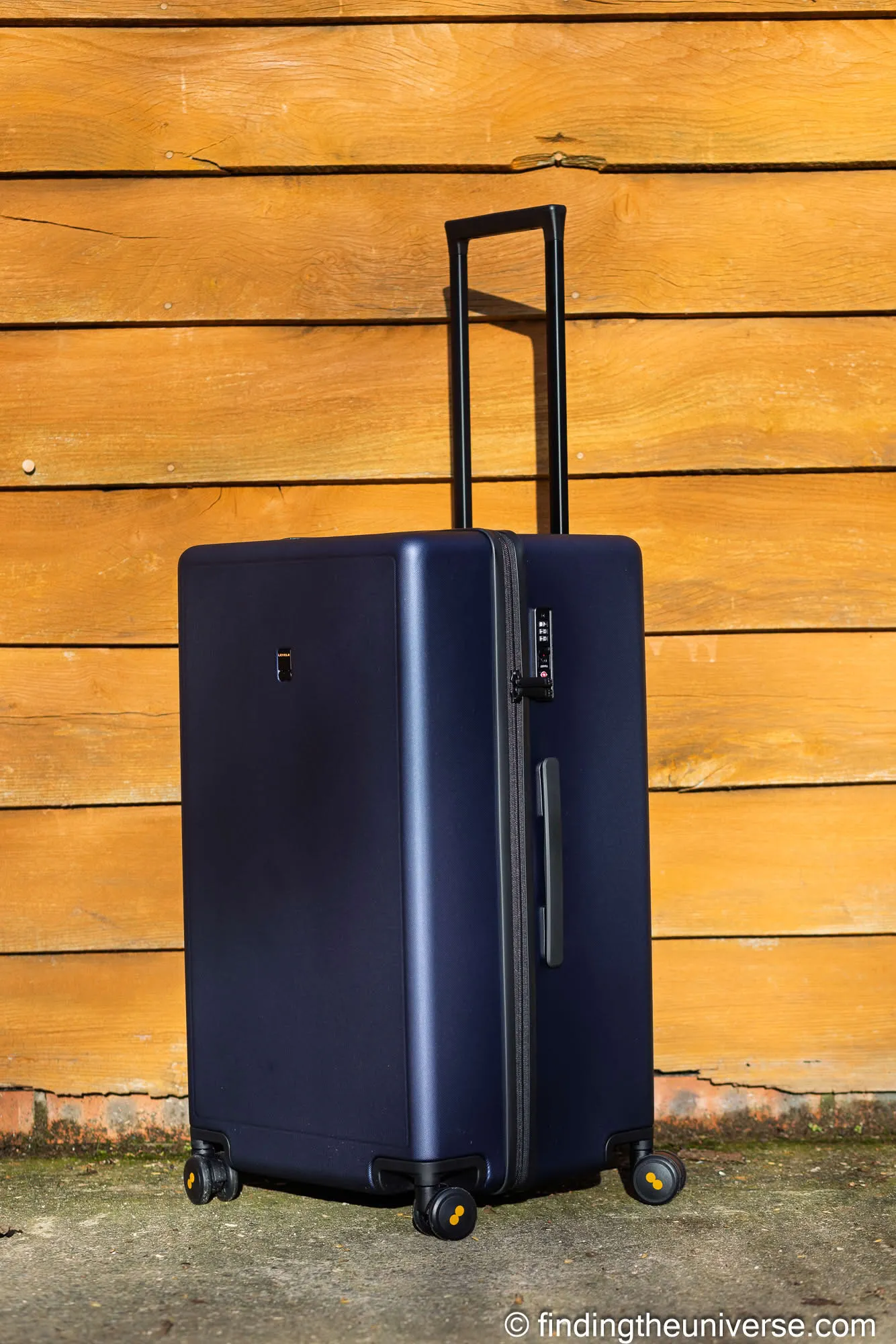
The Level8 Luminous Trunk is our large checked case, and it earned its place on this list the hard way. We bought it shortly before a six week safari across Africa, so its first outing was about as far from a gentle city break as luggage gets. It handled it with aplomb. My thinking at the time was that if it could survive that trip, it could survive anything, and so far nothing has proved me wrong.
It’s a trunk style case, which means it’s deeper and boxier than a standard suitcase. One side is deeper than the other, but you still need to fully open it to access the compartments. At 99 litres it swallows a really impressive amount of gear, which for a six week trip mattered rather a lot.
The shell is Makrolon polycarbonate, made by Covestro, and it has taken scuffs without cracking. You get a built in TSA lock, smooth 360 degree spinner wheels, and at 5.2 kg it’s usefully light for a case this size. It’s not expandable, though at 99 litres we’ve never once wished it was.
It does have downsides. The warranty comes with an asterisk, as I mentioned under the table: Level8’s own page quotes both lifetime and one year, Amazon’s listing won’t commit to either, and a lifetime promise from a brand this young is a softer thing than the same word from Osprey.
And a 99 litre case, packed carelessly, will sail past airline weight limits before it’s two thirds full. That’s not really the bag’s fault, but plan for it before you buy this much space. Ours is the blue version; the current equivalent on Amazon is navy.

Check price on Amazon You can check current prices and buy the Level8 Luminous Trunk 28″ on Amazon here.
Delsey Chatelet
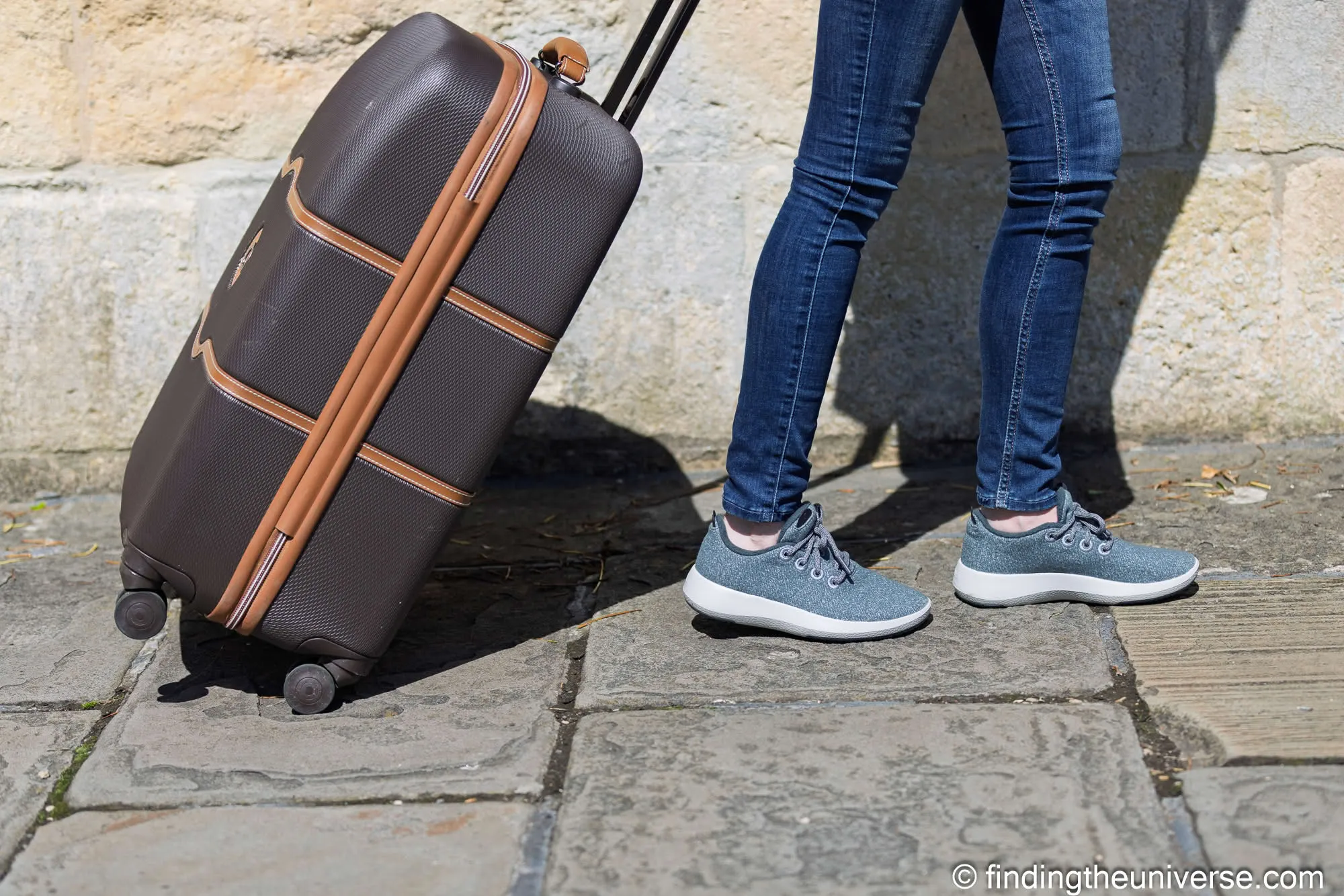
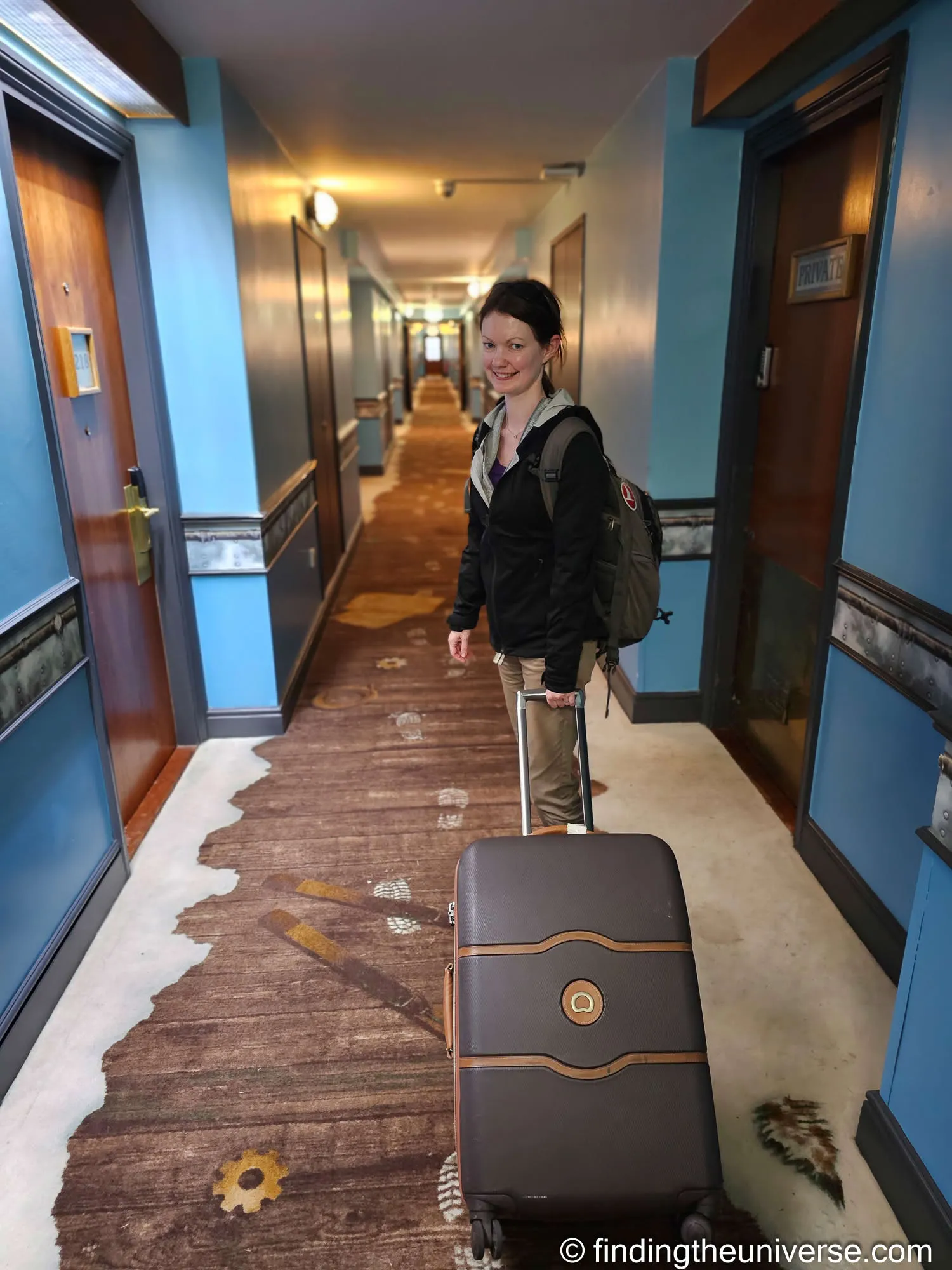
The Delsey Chatelet is Jess’s bag, and I should say upfront that she liked the 24″ checked version enough to go back and buy the matching carry-on, which is about as strong an endorsement as luggage gets in this house.
The Chatelet is the case you buy when you want your luggage to look like it belongs in an old European grand hotel. Ours is the mocha brown with the leather look trim, and it’s easily the most elegant piece of luggage we own. Underneath the styling it’s a serious hardside case: 100% polycarbonate shell, built in TSA combination lock, and four spinner wheels.
Our Hard+ version also has a wheel brake button, which locks the spinners so the case can’t roll away on a sloping surface. It sounds like a gimmick until the first time your case starts creeping down a train platform, and then it doesn’t.
Jess moved to the Chatelet after many years with her Eagle Creek, and it has been her default checked bag ever since. It’s a bit heavier than some rivals at 4.9 kg for the 24″, and you’re paying a premium for the looks, but the ten year warranty takes some of the sting out of that.
One generation note. Delsey has updated the line since we bought ours: the current version is the Chatelet Air 2.0, which is around 800 grams lighter, adds a USB pass-through port on the carry-on, and drops the wheel brake. Our older Hard+ model is still sold on Amazon, and it’s the exact bag we own and describe here, so that’s the one I’ve linked for the checked size. For the carry-on, the Air 2.0 is the current model.

Check price on Amazon You can buy the Delsey Chatelet Hard+ 24″ checked case on Amazon here, and the Chatelet Air 2.0 carry-on here.
Osprey Sojourn 60L
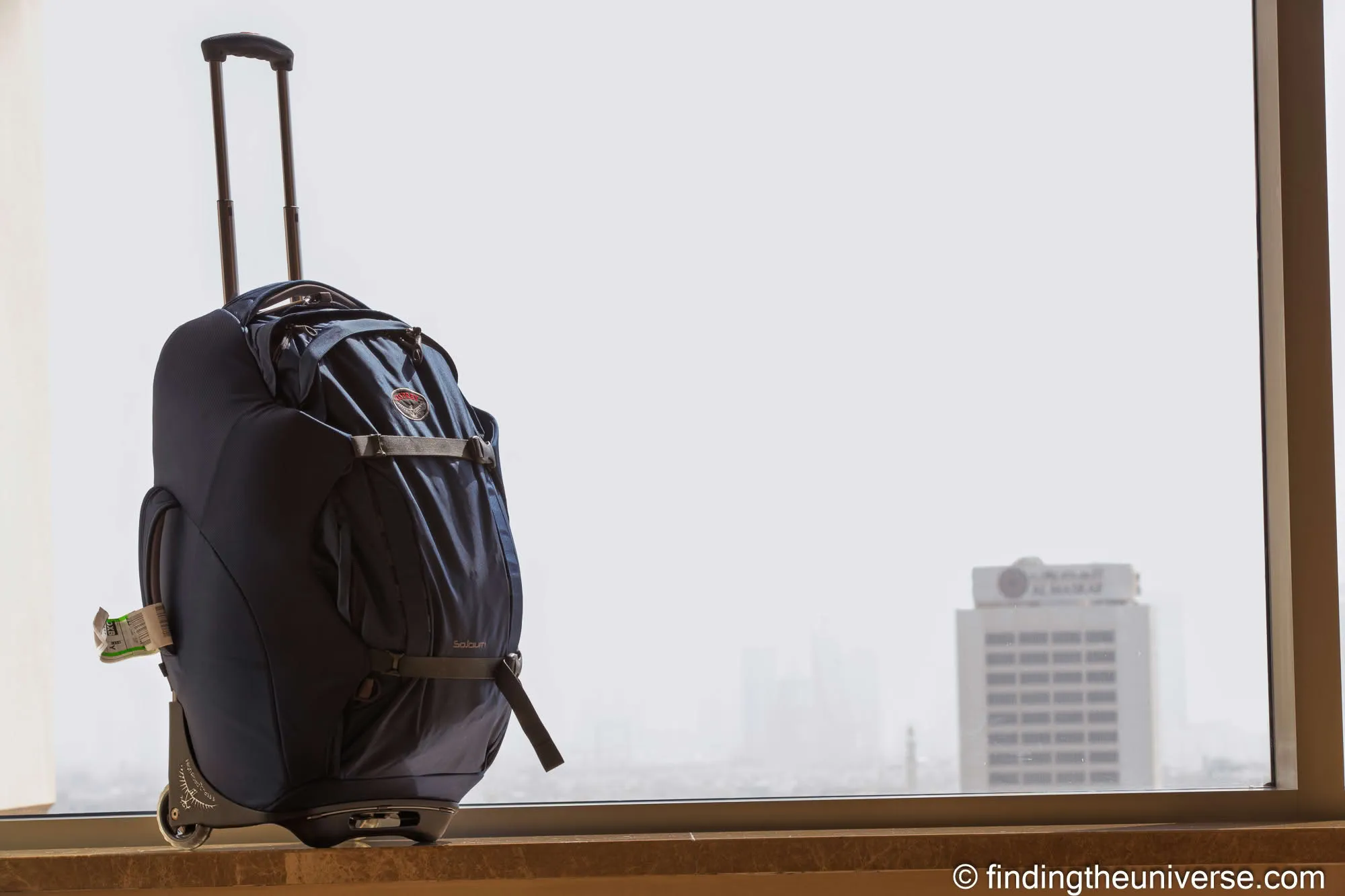
My Osprey Sojourn is the oldest bag on this list and the one I’d save in a fire. I bought it over ten years ago, it has been in near constant service ever since, and it still works exactly as it did on day one. It’s an amazing bag, really well made, and at this point it owes me nothing.
The Sojourn is a wheeled travel pack, which is a category that confuses people: it’s a soft sided 60 litre bag on two large rollerblade style wheels with a solid telescoping handle, and it has a stowaway harness so it can be worn as a backpack. A confession about that feature: in more than a decade, I’ve never once turned mine into a backpack. I bought it as a tough rolling bag, and that’s what it has been.
The wheels are the stars here. They’re big, smooth polyurethane things that shrug off cobblestones and gravel car parks that would eat the little spinner wheels on a hardside case. Whenever I use any other bag, I wish it had wheels like this one.
The current model is the Sojourn 25″/60L Wheeled Travel Pack, made from recycled high tenacity nylon these days, and it carries Osprey’s All Mighty Guarantee: they’ll repair or replace the product for its functional life, any product, any era, no registration required. Given that my ten year old one hasn’t needed the warranty yet, I’d call that promise credible. Of all the bags here, this is the one whose lifetime warranty actually means lifetime.
Two things count against it. First, there’s no built in TSA lock, just lockable zip pulls that take a separate padlock, which is a slightly odd omission on a bag at this price. Second, it doesn’t look super smart. If your trips end at hotels with marble lobbies, the Chatelet is the better companion. If they end at the far side of a gravel road, buy the Osprey.

Check price on Amazon You can check prices and buy the current Osprey Sojourn 60L on Amazon here. Mine is the original version; the current one has the same bones with updated materials.
Eagle Creek
This entry is a bit different, because I’m recommending a brand rather than a specific bag we own. Jess’s Eagle Creek is more than fifteen years old.
The exact model is long discontinued, so there’s no point me reviewing it as a product you could buy, but it gave her fifteen years of heavy use before the Delsey took over as her main bag, and it’s still in working order today. That kind of track record is why Eagle Creek gets a place here.
At REI, Eagle Creek’s current wheeled range is the Gear Warrior XE, a 27″ soft sided rolling case, and two sizes of Cargo Hauler wheeled duffel. If we were replacing Jess’s bag today, that’s the range we’d be looking at.
A word on the warranty, because it has changed over the years and older reviews will mislead you. Eagle Creek’s “No Matter What” warranty used to be famously unconditional. The name survives, but the current version covers defects in materials and workmanship for the practical life of the product, and specifically excludes normal wear and tear, cosmetic damage, misuse and neglect.
That’s still a solid warranty, but it’s not the “we’ll fix anything, whatever happened” promise it once was, so buy the bag on its build quality rather than the warranty name. On the evidence of our fifteen years, the build quality is the real warranty.
You can browse Eagle Creek’s current wheeled luggage at REI here.
Lojel Cubo Fit Lite
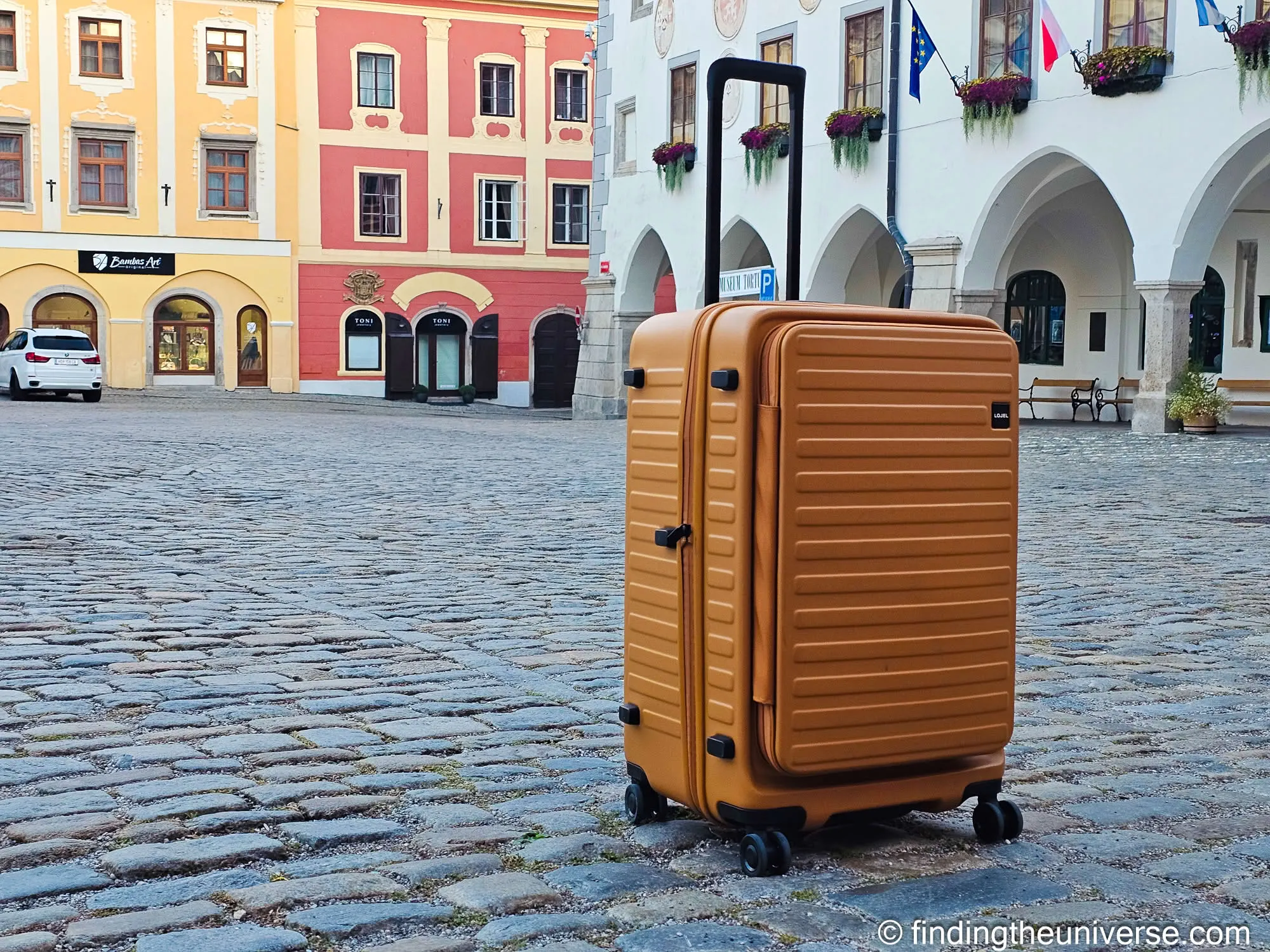
The Lojel Cubo Fit Lite is the newest member of the fleet. It arrived in summer 2026, and I held off on writing this guide until it had been somewhere. It has now done three weeks around Europe with us, across three countries, by plane, train and car, and it did everything we needed it to.
That’s one trip, though, not the years of use behind everything else on this list, so take this section as an early verdict rather than a long-term one. Here’s why we chose it.
On paper it fills a gap in our lineup: an expandable check-in hardside, running from 89 litres to 101 litres when you unzip the expansion. The shell is 50% recycled polycarbonate, the lining is recycled fabric, there’s an integrated TSA-008 lock, and it rolls on four spinner wheels. Lojel backs it with a ten year limited warranty, which puts it in the same bracket as the Delsey, and on much clearer terms than the Level8.
The expandable design is the main draw: most of the time it travels as a normal sized check-in, with the extra 12 litres in reserve for the trip home when the souvenirs have somehow multiplied.
The detail that made the biggest difference on the road is how it opens. Instead of splitting into two halves like most hardside cases, the Cubo has what Lojel calls a flat-top opening. You lift the lid and get at everything inside through that one gap, so it sits happily on a hotel room luggage rack and takes up far less space when it’s open. That’s more than our Level8 can manage.
Whether it lasts as long as the rest of the fleet is something only years of trips can answer, and I’ll keep this section updated as it racks up more of them. Lojel sells it direct, at a price that puts it squarely in premium territory rather than bargain.
You can see the Lojel Cubo Fit Lite on Lojel’s site here.
The Big-Name Luggage Brands, Assessed
That’s the fleet we own. Now for the brands you were probably expecting to see at the top of this page: the five biggest names in luggage, assessed the way I described earlier, on warranty terms, company track record and the parts that fail. We don’t own these, so there are no safari stories here. There are, in a couple of cases, warranty terms interesting enough to make up for it.
Travelpro Maxlite 5
There’s a reason so many flight crews tow the same silhouette of bag. Travelpro was founded by Bob Plath, a Northwest Airlines pilot who invented the Rollaboard in 1987, started the company two years later, and sold his first hundred bags to fellow crew members. The brand still runs a dedicated warranty tier for working crew, which tells you who it expects to be rolling these bags every single day.
The Maxlite 5 is the value pick of this section, a light softside expandable carry-on with four spinner wheels. It also happens to fill the one gap in our own fleet. We’ve never owned a value softside carry-on, so this one is assessed here rather than reviewed.
The warranty needs reading carefully, because it’s really two separate promises. Defects on the parts that matter, the wheels, zips and handles, are covered for the original owner for the bag’s lifetime. Airline damage is a different programme that runs for your first year only, and only if you register the bag within 120 days of buying it.
Plenty of coverage blurs those two together; don’t buy this expecting lifetime airline cover, because that isn’t the deal. What you’re actually buying is a well priced bag from the company that invented the category, with sensible cover on the components that fail.

Check price on Amazon You can check prices and buy the Travelpro Maxlite 5 on Amazon here.
Samsonite Omni PC
Samsonite is the biggest name in luggage. The company has been making bags since 1910, and there’s a fair chance the first suitcase you ever borrowed from your parents was one of theirs. The Omni PC is the affordable end of the range, a hardside expandable spinner that is a lot of travellers’ first serious suitcase.
The warranty is where you want your eyes open. Ten years sounds generous next to Away’s five, but Samsonite’s terms explicitly exclude transport damage, which means the most obvious threat to any checked bag, the airline baggage system, isn’t covered. I go into what that means against Briggs & Riley and Away in the warranty section below, because the three of them make a neat lesson in reading the terms rather than the number.
We don’t own a Samsonite, so there’s no long-term verdict from me. As an assessment: a fairly priced, sensibly built hardside from a company that will still be around when the bag wears out. Just know that if an airline breaks it, that’s your problem, not theirs.

Check price on Amazon You can check prices and buy the Samsonite Omni PC on Amazon here.
Away Bigger Carry-On
Away is the brand people email us about. It built its name selling direct rather than through shops, and the Bigger Carry-On is its best known bag: a polycarbonate hardside with a built in TSA lock, an interior compression system and 360 degree spinner wheels. As with any larger carry-on, check the dimensions against the airlines you actually fly before assuming it goes in the overhead.
Two policies define this brand. The returns window is 100 days, which is excellent, but it applies to unused bags: you can test-pack it and roll it around your house, not take it to Portugal and post it back. Older articles still describe a travel-with-it trial; that isn’t the current policy.
The warranty, branded LifetimeCare, is better than Samsonite’s, though not quite what the name suggests. For your first five years, repairs are free and the cover includes what Away calls the unpredictability of travel, meaning airline mishandling counts, plus up to one replacement if a repair isn’t possible.
After year five, repairs carry on for the life of the case, and they stay free if you can take it into one of Away’s stores, with Away still paying the shipping. But the replacement promise ends there, and Away says a service fee may apply in some cases. There’s also a paid Pro tier that stretches the free window to ten years.
We don’t own one, and I’d want a few years with a bag before calling it a keeper. On the terms alone, though, five years of rough-travel cover is a stronger promise than most brands make at this price.

Check price on Amazon You can check prices and buy the Away Bigger Carry-On on Amazon here.
Briggs & Riley Baseline
Briggs & Riley is the brand whose warranty every other warranty in this guide gets measured against. Their lifetime guarantee covers repair of anything functional, for the life of the bag, and that includes airline damage. If you’d rather not chase the airline, their guarantee page says they’ll repair the bag at no charge. No registration, no time window, no arguing with a gate agent about whose fault it was.
Among the suitcase makers in this guide, nobody else promises that for life (Osprey’s guarantee is just as broad, but Osprey makes travel packs rather than suitcases), and it’s most of the reason a Baseline costs what it costs.
The caveats: cosmetic wear isn’t covered, lost or stolen bags aren’t either, and you pay the shipping to get the bag to their repair centre. So it’s free repair, not free everything. Briggs & Riley themselves suggest claiming against the airline before you leave the airport where you can; their repair service is the backstop.
The Baseline Cabin Spinner is the carry-on from their flagship Baseline collection, a softside spinner built for people who fly constantly. We don’t own one; at this price we’ve never quite pulled the trigger, and I’ll admit those warranty terms have me eyeing it every time a wheel on anything else so much as squeaks.
If you fly a lot, check bags often, and want to buy once, this is the strongest case in this guide for spending serious money on luggage.

Check price on Amazon You can check prices and buy the Briggs & Riley Baseline Cabin Spinner on Amazon here.
Tumi Alpha Dual Access
Tumi is the luxury benchmark of this guide, the brand you notice gliding through airport lounges, and the Alpha is its flagship: an expandable carry-on in ballistic nylon with a built in TSA lock, at a price comfortably above everything else on this page.
For that money the warranty is shorter than you might guess: five years, not lifetime. The structure is unusual though. In year one, Tumi covers wear and tear as well as defects, even damage from airline mishandling, and pays the shipping both ways, which is a generous first year by suitcase standards.
Years two to five still cover functional and structural failures, wear and tear included, but airline damage drops out and you pay to send the bag in (Tumi pays the return, and many repairs can be done free in a Tumi store). After year five, repairs are at your own cost, which you should know before you spend this much.
Every Alpha also carries Tumi’s Tracer, a unique serial number you register to yourself, designed to route a found bag back to its owner and to prove a Tumi is the real thing.
Tumi’s terms say an unregistered bag needs the original receipt for a warranty claim, and that Tracer doesn’t count as proof of purchase in Hong Kong, Macau, mainland China, Japan or Korea, so registering is a sensible backup everywhere else. Keep the receipt anyway, as Tumi asks you to.
Also check who is actually selling the bag before you buy. Tumi’s warranty only covers purchases from Tumi or an authorised dealer, and Tumi can reject claims on bags bought from unauthorised online sellers.
Not owned, and unlikely to be, since our travel leans more gravel road than lounge. As an assessment: beautifully made, uniquely well covered in its first year, and past year five you’re paying for the badge.

Check price on Amazon You can check prices and buy the Tumi Alpha Dual Access on Amazon here.
Which Type of Luggage Should You Buy?
The short answer: hardside for protection and checked trips, softside for flexibility and overpackers, and a wheeled travel pack if your trips involve surfaces rougher than an airport floor. Here’s how we actually think about it, having owned all three types for years.
Hardside Suitcases
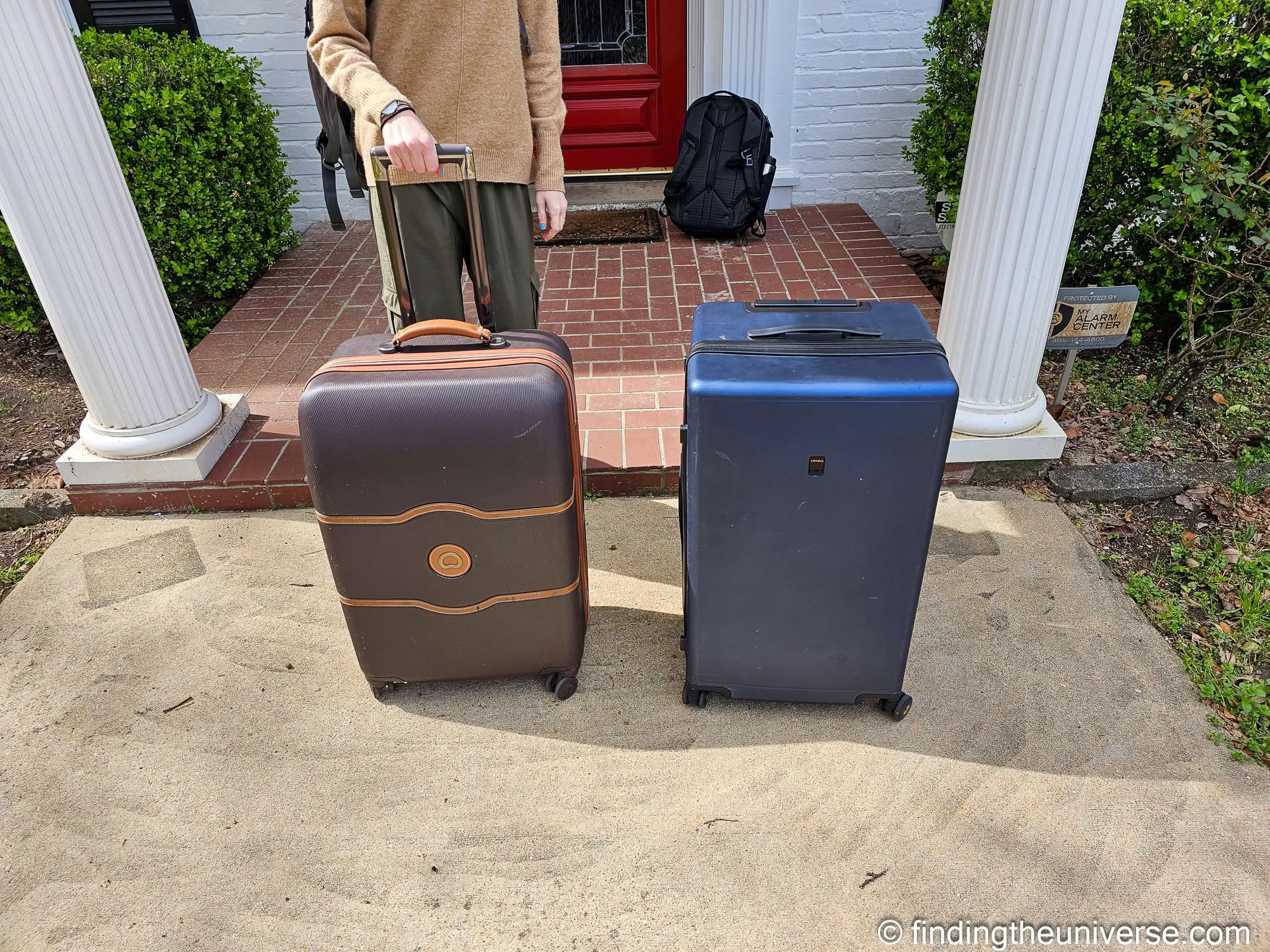
Hardside cases like our Level8, Delsey and Lojel are what we reach for on trips where the bag will be checked. The shell protects whatever is inside from the tender mercies of baggage handlers, it wipes clean, and modern polycarbonate shells are light and take a lot of abuse before failing. Most come with built in TSA locks and four spinner wheels as standard.
The trade-offs are real, though. Spinner wheels are brilliant in airports and terrible on cobbles. Hardsides don’t compress, so a half empty case is the same size as a full one, and they have no outside pockets, so your passport lives in your day bag or a wrestling match. Most also split open like a clamshell, so you need clear floor space to get at anything inside; the Lojel, which opens through a lid, is the exception.
If most of your travel is fly-and-check to cities, this is your type.
Softside Luggage
Softside bags like Jess’s old Eagle Creek flex. You can squeeze an extra jumper in, cram them into odd shaped car boots, and use outside pockets for the things you need at the top of the trip. Good ones, and Eagle Creek’s fifteen year run with us suggests they exist, last as long as anything hardside.
Fabric does give up some crush protection for fragile contents, and a cheap softside bag fails faster than a cheap hardside, usually at the zip. With softside, brand quality matters more, not less.
If you’re planning a safari, softside luggage is often recommended, and if you’re taking any bush flights, many operators only accept soft bags. On those smaller aircraft the hold can’t always take a larger hardside bag, while a soft bag can be squished into place. We’ve not run into this ourselves, as our safaris have all been firmly on the ground, but our safari packing list covers what the bush flight operators allow.
Wheeled Travel Packs
The hybrid category my Osprey lives in: soft bags on two big wheels, usually with a hideable harness. The two wheel design is the point. Big wheels and a strong handle will roll over gravel, cobblestones, dirt tracks and broken pavement that would stop a spinner dead.
If your travel involves overlanding, small guesthouses down unpaved lanes, or any itinerary where “the last hundred metres” is a recurring theme, this is the type to buy. The cost is capacity (mine carries 60 litres against the Level8’s 99) and, as noted, they look like expedition gear because they are.
What Counts as Carry-On?
One thing to know before you buy any carry-on: there is no universal carry-on size, and any guide that quotes you a single number is oversimplifying.
In the US, the major carriers (American, Delta, United, Alaska, JetBlue) standardise on 22 x 14 x 9 inches including wheels and handles, with Southwest allowing a bit more at 24 x 16 x 10.
In Europe it varies by airline and by fare: on budget carriers like Ryanair and easyJet, the free allowance is typically just a small underseat bag around 40 x 30 x 20 cm, and the larger overhead cabin bag costs extra. IATA publishes guidance on baggage rules, but it’s a recommendation only, and no airline is bound by it.
The practical advice: buy your carry-on against the strictest airline you fly regularly, not the most generous. A bag that’s legal on United but 3 cm too deep for Ryanair’s sizer will eventually cost you a gate fee that wipes out whatever you saved on the bag.
What to Look for When Buying Luggage
Whatever type you land on, these are the features we’ve learnt to check before handing over money.
Wheels
Wheels are the first thing to die on cheap luggage, and a suitcase with a broken wheel is a cruel joke you have to carry. The whole category was effectively invented by a pilot: Travelpro’s founder came up with the Rollaboard because flight crews needed bags that could roll every working day, and daily rolling is still the hardest test a wheel faces.
Four wheel spinners should spin freely and feel solidly mounted, with metal rather than plastic in the mounting. Two wheel bags should have large diameter wheels, ideally the rollerblade style my Osprey uses, which is a big part of why it has lasted a decade. If you’ll be on cobbles or rough ground regularly, favour two big wheels over four small ones.
TSA Locks
A TSA approved lock is one built to the Travel Sentry standard, which means US security agents have master keys and can open and relock your bag during inspection instead of cutting the lock off. Three of the five bags we own have one built in; the Osprey needs a separate padlock.
Are they high security? No, of course not. A determined thief isn’t defeated by a three dial combination. What they do is keep the zips closed in transit, deter casual tampering, and survive a TSA inspection intact. The TSA’s travel tips page covers how they handle locked bags. Worth having, cheap to add if your bag doesn’t include one.
Empty Weight
Airline weight allowances haven’t grown, so every kilogram of suitcase is a kilogram of clothes you’re not bringing. Our bags run from 3.7 kg (the Osprey) to 5.2 kg (the Level8, forgivable at 99 litres). As a rule of thumb, be suspicious of any full sized checked case over about 5.5 kg, and check the weight figure before you fall in love with the styling.
This is the best argument for the travel pack category: my Osprey’s 3.7 kg buys a lot of extra packing allowance.
Warranty, and What It Actually Covers
The ten bags in this guide carry warranties running from one year to lifetime, and having now read all ten sets of terms, I can tell you the number is the least useful part. The question that actually separates them is what happens when an airline breaks your bag, which is the part of travel you have least control over.
Read the terms and the brands sort into three camps. Briggs & Riley repairs airline damage free, for life, and says so in plain terms on its guarantee page.
Away covers rough travel free for your first five years. And Samsonite’s ten year warranty explicitly excludes transport damage, so the most likely fate of a checked bag is precisely what isn’t covered.
Travelpro and Tumi sit somewhere in between, covering airline damage in year one only (Travelpro only if you registered the bag in time).
The same word, warranty, appears on all of those boxes and means completely different things.
Beyond that, two lessons from our own bags. Length matters less than which parts are covered: wheels, zips and handles are what fail, so check those are named in the terms. And terms change over time. Eagle Creek’s cover narrowed and Away’s was restructured, so what an old review praised may not be what you’d get today. Read the current policy, not the reputation.
Watch Out at Outlet Stores
Here’s one we learnt by paying attention rather than by being burned, and it applies to a lot more than luggage. Off-price and outlet stores sell name brand luggage at prices that look too good to be true, and increasingly that’s because they are.
An investigation by Consumers’ Checkbook across 40 major brands found that more than half the goods in outlet and factory stores are made specifically for those stores, built down to a lower cost than the mainline product they resemble. Luggage brands haven’t escaped this: Samsonite has faced class action suits over made-for-outlet merchandise and misleading “compare at” pricing.
To be clear, that’s an outlet-channel problem, not a mainline one. The full price Omni PC I covered above is exactly what it claims to be. The point is that the bag on the outlet shelf may not be that suitcase, whatever the label says.
We’ve seen it first-hand with Delsey: outlet units we’ve looked at were missing the TSA locks and didn’t have the premium feel of the full price Chatelet line. Same brand name on the tag, different bag.
So if you spot a known brand at an off-price store, check the actual features against the brand’s own site before assuming you’re getting the reviewed product at a discount. Sometimes you are! But check the lock, the wheels and the warranty card before you celebrate.
Buy From Brands That Will Still Exist
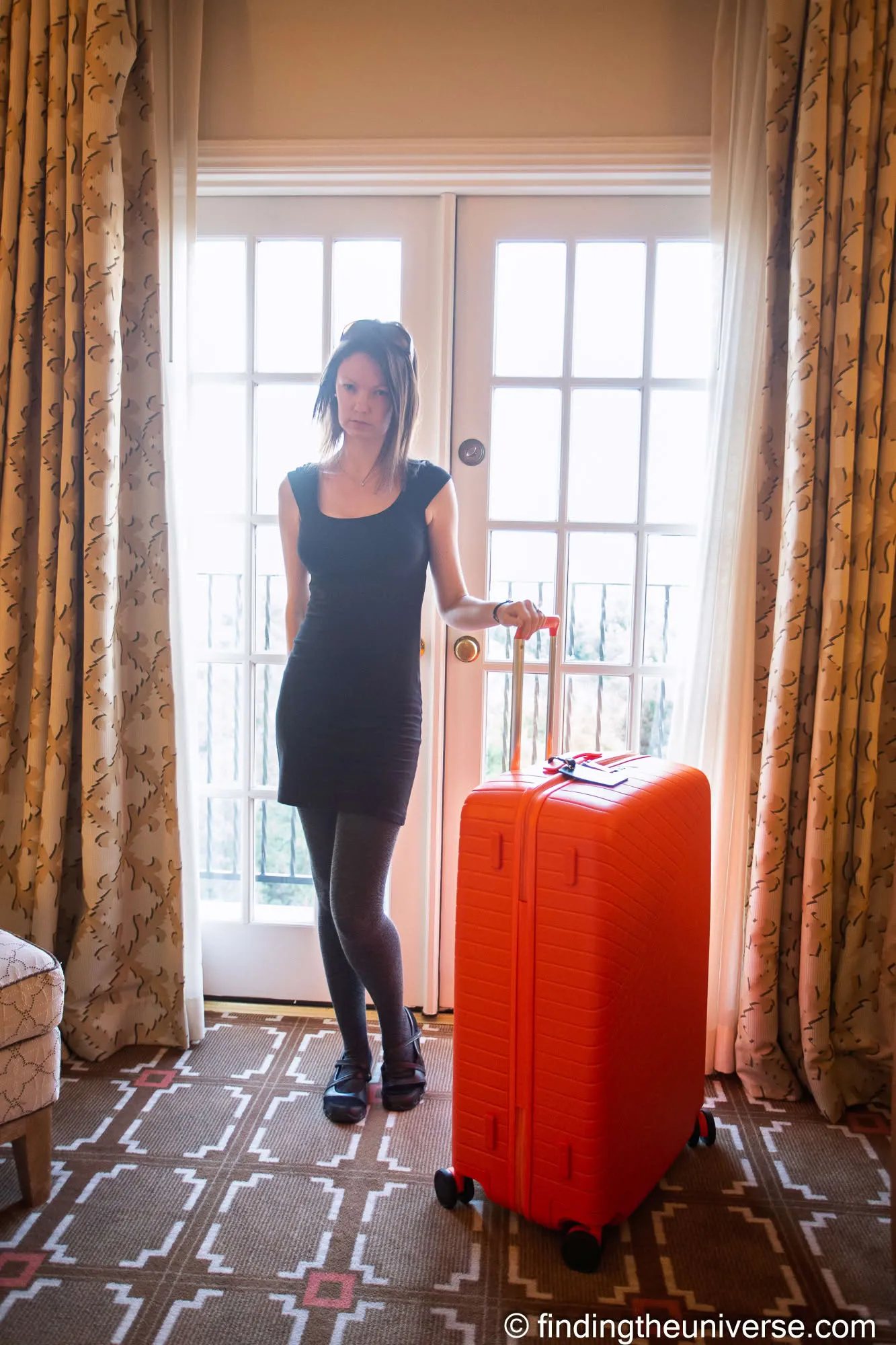
We still own an enormous orange suitcase from a brand called OOO, bigger than any other bag we’ve had and still pretty solid. The brand, as far as we can tell, no longer exists. The case outlived the company.
The longest serving bag we own adds a twist to that story. I’ve had an Antler suit carrier since around 2001, a quarter of a century of weddings and smarter trips, and it still does its job (if you regularly travel with a suit, a dedicated suit carrier makes life much easier; mine features in our guide to travelling with a suit). Antler is a British brand, founded in 1914, and it’s still trading today.
Which sounds like the case for established names, until you look closer. Antler the brand has survived; Antler the company has changed hands repeatedly since I bought that bag, and any warranty or repair promise attached to it in 2001 would not have survived the journey. My suit carrier has outlasted, in effect, every company that stood behind it. It’s the OOO lesson wearing a badge that’s still on the shop shelves.
That ten year warranty is only worth something if there’s a company at the other end of it in year nine, and spare parts, replacement wheels and repair programmes all die with a brand, or get reset when it changes owners.
Luggage brands come and go with surprising speed, and even the survivors rarely travel in a straight line. So buy established names, but buy them for their build quality first, and treat the warranty as a bonus that lasts exactly as long as the company does.
Luggage Lessons We Learned the Expensive Way
A few things a couple of decades of buying, breaking and occasionally loving luggage has taught us, offered here to save you learning them the same way.
Buy less capacity than you think you need. Every giant case we’ve owned, the orange OOO included, taught the same lesson: a big bag invites more stuff. I hugely overpacked for years, and the discipline of a smaller bag beats the discipline of willpower every time. The exception is a really long trip, which is what the 99 litre Level8 is for; it comes out for six week adventures and stays home for weekends.
Spend your money on the bag you use most, not the bag for the trip you take once. Jess’s Delsey goes on more or less every trip she takes, so it has repaid its price many times over. A premium case that leaves the house every other summer never will.
Judge a bag by its worst component. The shell almost never fails; wheels, zips and telescoping handles do. Ten years on, my Osprey’s wheels still roll like new, and that, more than any fabric or shell spec, is what “well made” turns out to mean.
And don’t buy luggage as fashion unless you’ll also accept it as fashion. The Chatelet is beautiful and Jess loves it. My Osprey is not beautiful, and I love it anyway. Both are correct answers; just know which question you’re answering when your card comes out.
What We Pack Inside Our Luggage
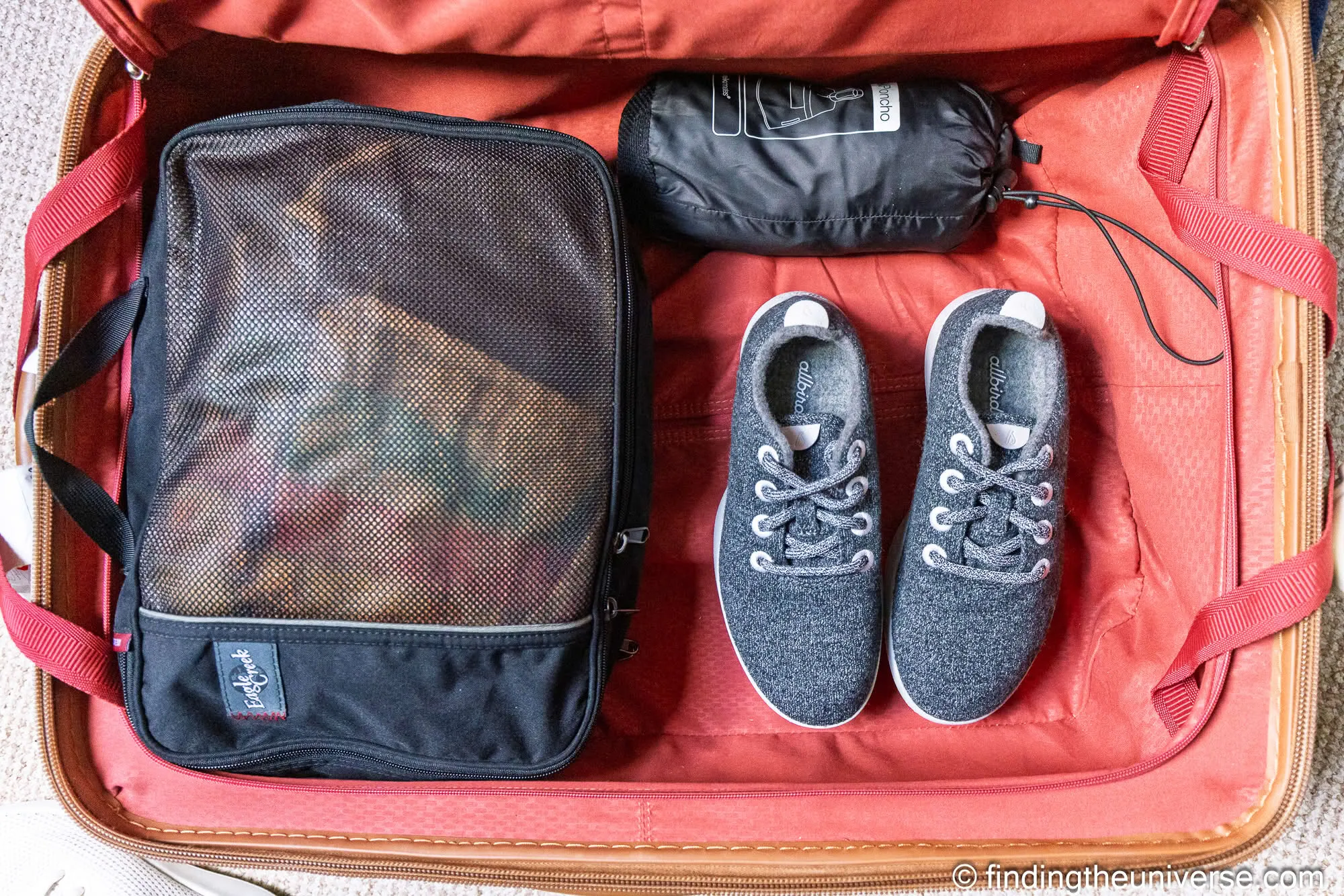
A quick aside, since people ask: the bags are only half the system. Inside every case we travel with, you’ll find packing cubes, which are the single cheapest upgrade to how a suitcase works, especially in the deep well of a trunk style case. Checked bags also get a Bluetooth tracker each, so we always know which airport a bag is actually in; our picks are in our guide to luggage trackers.
Beyond those, my carry-on always has an INIU P63 power bank (my everyday pick from our power bank guide) and an Epicka universal travel adapter, which between them keep everything charged wherever we end up.
Frequently Asked Questions
What Is the Best Luggage Brand?
If I had to name one, it would be Briggs & Riley, purely on the strength of its warranty: free repairs for life, airline damage included, which no other suitcase maker in this guide matches.
Beyond that, pick by priority. For a value softside carry-on, Travelpro is the flight crew’s answer and ours. For proven longevity, our own money went to Osprey and Eagle Creek, whose bags have given us ten and fifteen years respectively, and counting.
The brand we’re asked about most is Away, which makes a solid hardside with strong cover for its first five years; after that, the replacement promise ends and some repairs can carry a fee. Whichever brand you choose, read its current warranty terms rather than its reputation, because as this guide shows, the same word covers very different promises.
Does Hardside or Softside Luggage Last Longer?
In our experience, build quality matters far more than shell type. Our longest serving bags are one of each: Jess’s softside Eagle Creek is past fifteen years, and my soft sided Osprey is past ten, whilst our hardside cases are all younger but going strong.
A quality softside bag from a serious brand will outlast a cheap hardside, and vice versa. Where the types differ is how they fail: softside bags usually go at the zips or seams, hardsides crack at corners or lose wheels. Whichever you buy, the wheels and zips are what to inspect, because that’s where the lifespan lives.
Is Expensive Luggage Worth It?
Up to a point, yes. The difference between a $50 case and a $250 case shows up in year three, when one of them still has working wheels. Our bags have repaid their prices across a decade or more of trips, which works out far cheaper than replacing a budget case every couple of years.
Past that point you’re paying for design and status rather than lifespan, which is a perfectly fine thing to pay for as long as you know that’s the deal. Jess’s Chatelet costs more than a plainer case that would last just as long. She considers it money well spent every time she sees it on a carousel.
What Size Is Carry-On Luggage?
There’s no single answer, which surprises quite a lot of people. Most major US airlines allow 22 x 14 x 9 inches including wheels and handles. In Europe it varies by airline and fare type, and on budget carriers the free item is often just a small underseat bag around 40 x 30 x 20 cm, with the overhead bag as a paid extra.
Always check your specific airline before you fly, and if you fly several airlines regularly, buy for the strictest one.
Are TSA Locks Worth It?
Yes, for what they actually do. A TSA lock keeps your zips closed in transit and lets US security open and relock your bag with a master key instead of cutting the lock off. It won’t stop a determined thief, and it isn’t meant to.
Three of the five bags we own have one built in. For the ones that don’t, a separate Travel Sentry padlock costs very little and does the same job.
How Long Should Good Luggage Last?
A well made bag from an established brand should give you ten years of regular use, and our experience says that’s conservative: Jess’s Eagle Creek is past fifteen and my Osprey is past ten, both still working.
If a bag fails inside three or four years of normal use, it was either badly made or badly matched to how you travel. This is also why the warranty terms matter: ten year and lifetime warranties exist because good manufacturers know their bags can reach those numbers.
Further Reading
Hopefully this has helped you find the right bag. Here are some of our other guides that pair well with new luggage:
- Our guide to the best packing cubes for travel, the first thing to put inside whichever case you buy
- Our guide to the best luggage trackers, so a checked bag is never lost for long
- Our safari packing list, from the trip that tested the Level8
- Our guide to the best portable power banks for travel, for keeping everything charged en route
Got a bag that’s survived longer than ours, or a luggage disaster story? We’d love to hear it in the comments below. It’s how half the lessons in this guide got learnt.
Leave a Reply