
Between us, Jess and I have packed for a lot of safaris over the years, right across East and Southern Africa. I’ve been a professional travel photographer since 2010, so a good chunk of my bag is always camera gear, but we’ve worked out what else is actually worth its space, from gorilla and chimpanzee trekking in Uganda through to game drives in Kenya, Tanzania, Namibia, South Africa and Zimbabwe. Everything in this guide is kit we’ve actually carried, and photographed, on those trips.
There’s no single safari packing list that works for everyone. What you need depends on where you’re going, what you’ll be doing, and how you’re getting around once you land, which catches most people out. So we’ll start with the questions that decide what goes in your bag, then go through every category in detail, and finish with a full checklist you can print or save.
Table of Contents:
What to Pack for Safari: The Short Answer
If you only remember a handful of things, make it these. Pack light, neutral clothing in browns, greens and khaki (skip blue, black and camouflage), plan for layers because mornings and evenings can be cold, and keep everything in a soft duffel if you’re taking any bush flights, since most cap you at around 15kg (33lb) including hand luggage. Add strong sun protection, a good insect repellent, a pair of binoculars, and the best camera and zoom lens you can bring. Almost everything else is comfort and personal preference.
Here are the essentials at a glance:
- Neutral, lightweight clothing (brown, green, khaki) with long sleeves and trousers for sun and insects
- Warm layers for cold mornings and evenings
- A soft-sided duffel bag if you’re taking bush flights (hard cases often aren’t allowed)
- Sun hat, high-SPF sunscreen and sunglasses
- Insect repellent, plus any antimalarials your doctor recommends
- Binoculars and a camera with a long zoom lens
- A reusable water bottle and any personal medicines
What to Consider when Packing for Safari
Before you start putting your safari packing list together, you are going to need to know the answers to a few questions. These questions will help inform you as to what you need to pack.
There are many different types of safari across a range of destinations and accommodation types, so there is no “one size fits all” safari packing list.
Here are some questions that we think will help you figure out more clearly what you need to bring.
Where are you going?
The first question of course is where you are going on safari. Whilst many people will instantly think of the African continent when thinking of a safari trip, you can take a safari in destinations around the world.
Once you know where you are going, then you can start to research the answers to some of the other questions that are important to your safari trip planning.
What will the weather be like during your safari?
Having an idea of the weather is going to make a big difference to what you pack. Whilst we often think of safaris as taking place in hot and dry places, this often isn’t the case.
If you are visiting Africa, this is obviously a huge continent, with very variable weather. If you are visiting the more southern countries like South Africa, these have a weather pattern similar to Europe or the USA, with cool winters and hot summers. Although of course being in the southern hemisphere, the seasons are reversed.
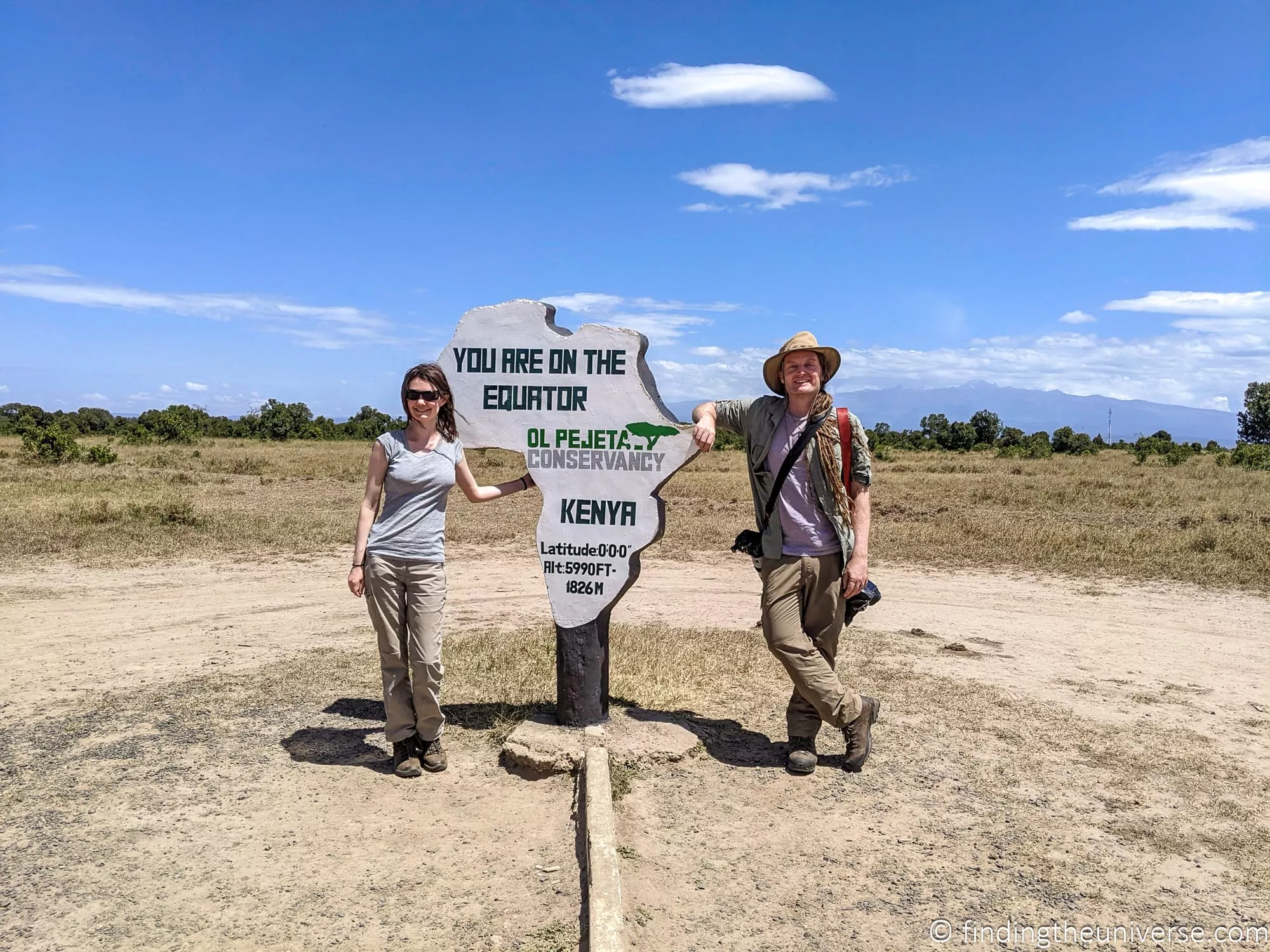
If you are visiting countries closer to the equator, like Kenya or Tanzania, then their proximity to the equator means that they tend to be quite warm year-round, and their seasons are instead divided into dry seasons and wet seasons.
The wet season, as the name suggests, is when you are more likely to get a lot more rain, whilst the dry season will be, well, drier. Of course, rain is theoretically possible at any time, but it is much less common in the dry season.
In some areas, it can get pretty cold, especially at higher elevations or when next to water. For example, if you are visiting Tanzania to hike Kilimanjaro, then even if it is hot in the plains, it is likely to be very cold near the summit.
So be sure to check into that, especially if you are visiting during the winter season of that country. You may be surprised to know you might need to bring a coat, gloves, hats, etc.
So take a look at the average temperatures, humidity, and rainfall in the places you plan to go at the time of the year you plan to visit. Also note that some countries may have very different climates across regions so be sure to take that into account as well.
One good website for checking average temperatures, precipitation, and humidity for the destinations on your trip is the “Climate (averages)” section of timeanddate.com. It lets you check the historical averages by month as well as the current weather.
How long is your safari?
The duration of your safari will definitely make an impact on how much you pack.
If you are travelling for a few days, then you will likely need fewer items of clothing compared to a safari lasting for a few weeks or even months. For longer safaris, you’ll want to consider how to handle laundry, which we cover in a different section.
What types of transport will you be using?
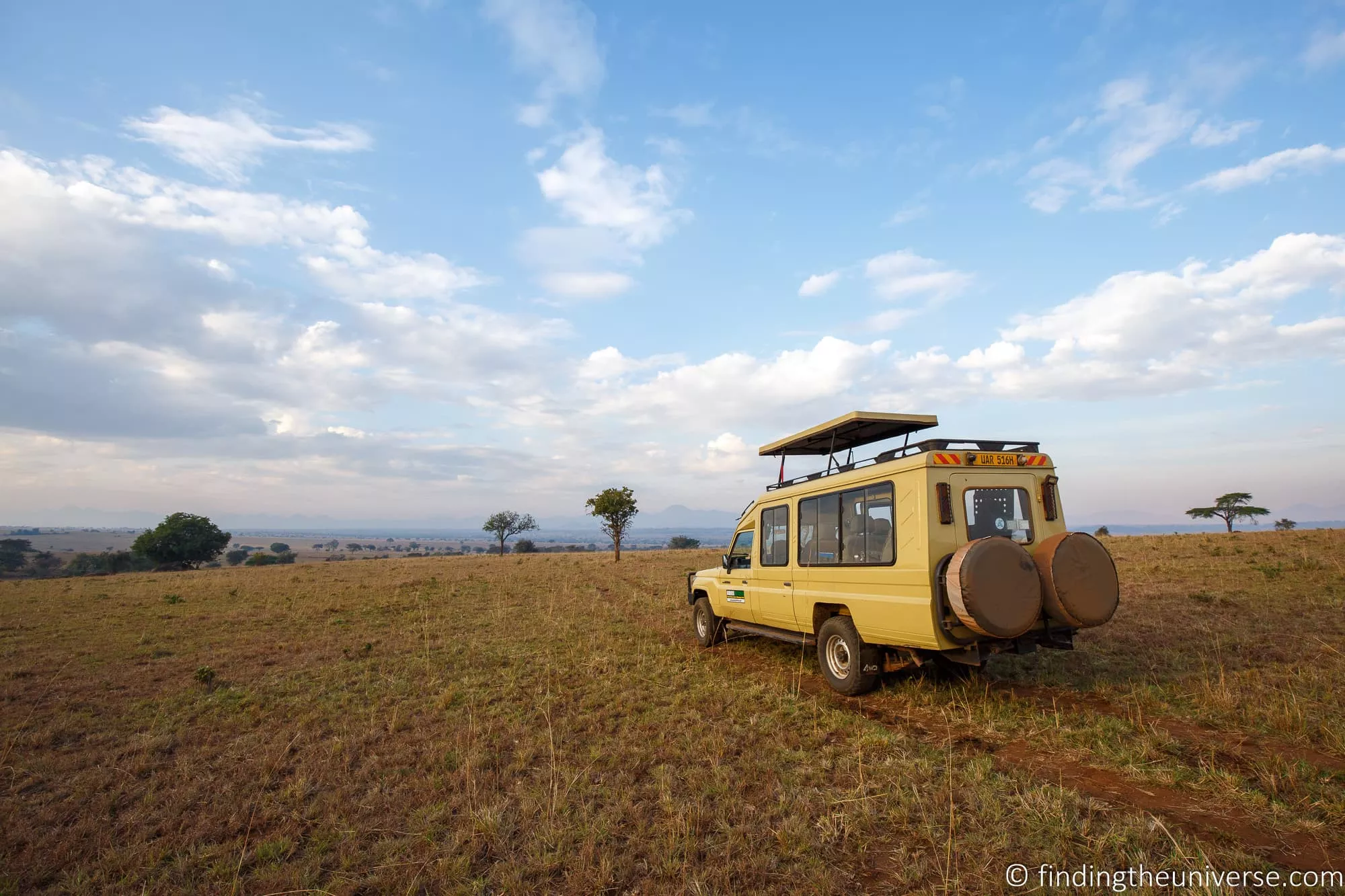
It’s important to have an understanding of the transport you will be using when you are on safari, as this will often make a big difference in terms of what you can bring with you, and also the sort of luggage you can bring.
For example, if you are going on safari in an African country, many airlines flying to and from these destinations will have very generous luggage allowances, so it can be tempting to pack a lot in a big suitcase just in case.
However, once you are actually in the country, your local transport might not have quite so much room. If you are taking a group safari especially, with multiple people, there will be limited space available for each person.
Another big restricting factor is if you are taking any domestic flights on smaller aircraft. These are often used in-country to get to and from safari parks, and can skip long drives. They tend to be particularly restrictive on luggage, both in weight and volume. The small holds mean they can only carry so much, and larger hard-sided luggage might not even fit through the hatch, so many don’t allow any kind of hard case at all.
As a rough guide, East African bush flights (operators like Safarilink and Coastal Aviation) typically limit you to around 15kg (33lb) total, including your hand luggage, in soft-sided bags only. Some routes stretch to 20kg. Southern African charters such as Federal Airlines are usually a little more generous, at around 20kg (44lb) checked plus a 5kg (11lb) carry-on, again in a soft bag with no rigid frame. These limits are strict because the holds are tiny, so always confirm the exact figure with your operator before you pack.
If you are doing a multi-day hike, such as up Mt. Kilimanjaro or Mt. Kenya, your trekking guide and company will generally set size and weight restrictions on what can be carried. Generally, you are allowed one duffel bag (carried by a porter) and one personal backpack that you have on you at all times. Most companies (or hotels, if you’re staying at the same one before and after) will have somewhere you can store additional luggage before your hike if needed, but you will need to check and make arrangements.
You will definitely want to talk to your safari organiser prior to packing. They should be able to give you clear instructions regarding luggage limits and restrictions. If you are flying on smaller aircraft, soft luggage is going to be preferable.
What activities will you be doing on your safari trip?
Every safari is different, and it’s important that you pack according to what you will be doing.
For example, a safari where you spend the majority of your time in a vehicle looking at wildlife in game reserves will pack a bit differently than one which includes gorilla trekking, long hikes, climbing a mountain, fishing, cycling, camping, or spending a lot of time birdwatching on foot in swampy areas.
So it is good to have an idea of those activities. How much time will be spent in vehicles, walking, hiking, boating, biking, etc.? Will you be spending any time in cities doing activities like visiting museums, shopping, or eating out? Will you be going to a beach or spending time in swimming pools?
You should have a full itinerary for your safari so you should know what to bring, and a good tour operator should also give you some suggestions as to essential items. We go through how the main safari types differ for packing in a dedicated section below.
What sort of accommodation will you be staying in during your safari?
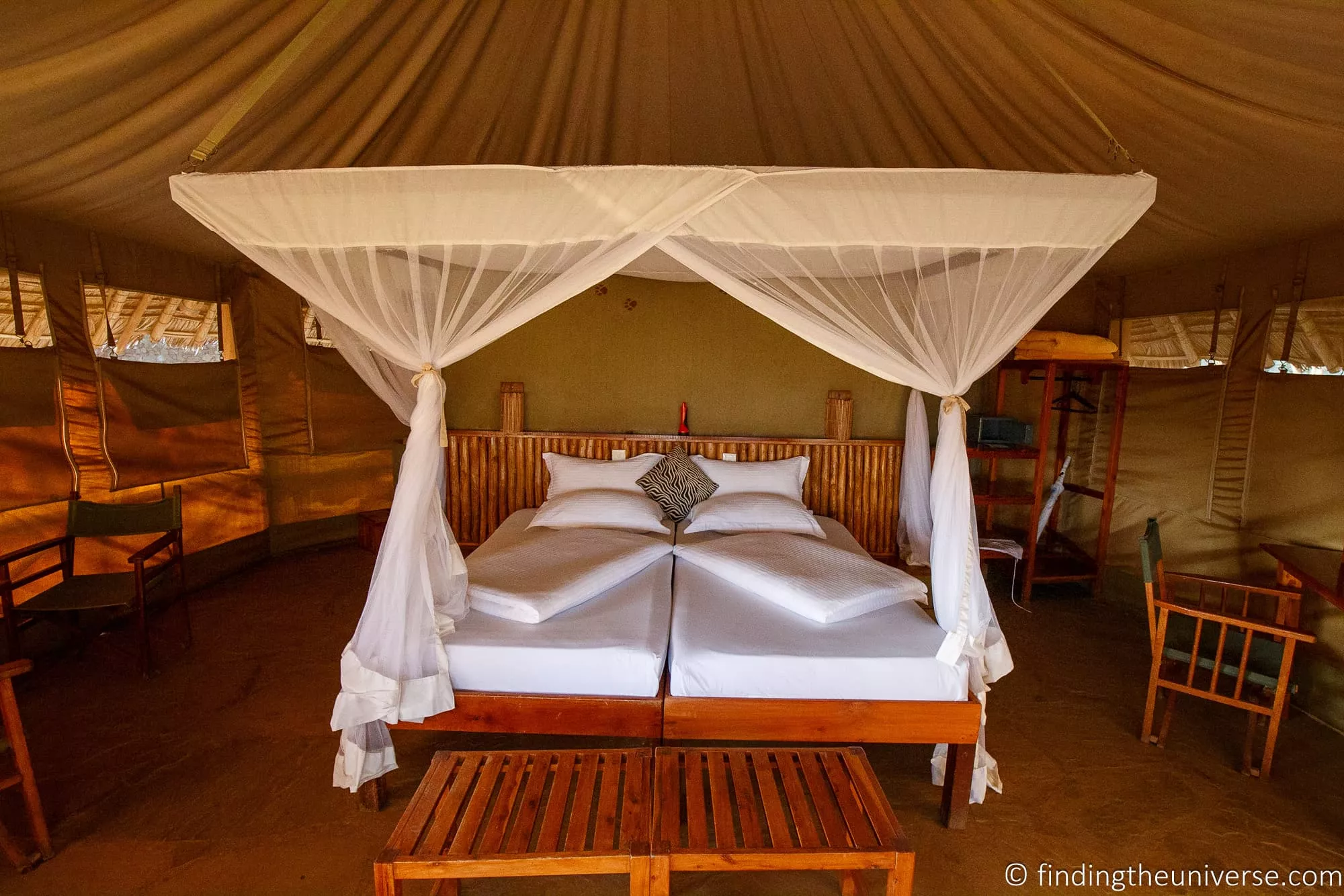
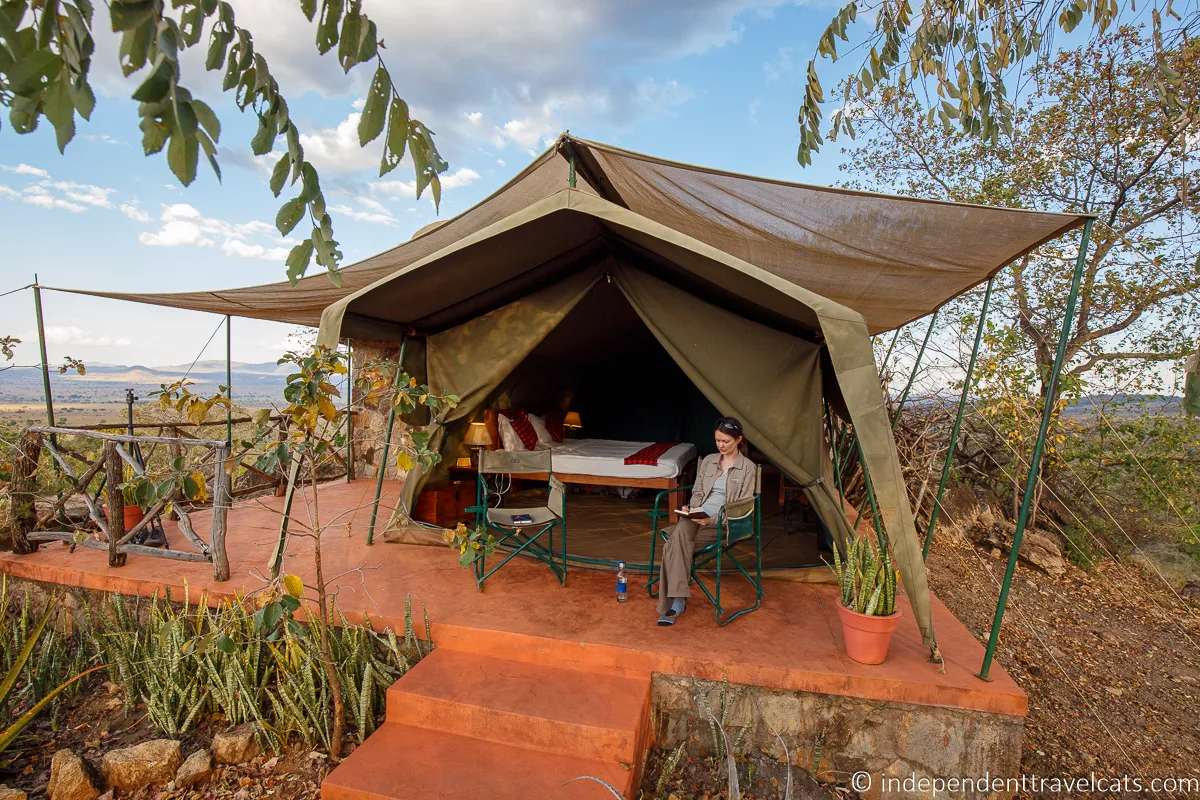
Safari accommodation varies wildly, from very simple budget camping options through to high end 5-star luxury lodges.
Whilst the majority of accommodation options that we have stayed at on safari have a fairly relaxed dress code, even at the luxury end, it is worth checking to see what the dress code is, if any. Sometimes evening attire might require a button up shirt for men for example, or closed-toe shoes.
On the other end of the scale, if you are staying in a tent then you might need to consider things like shower shoes or nightwear that is suitable for midnight bathroom breaks at shared toilet blocks.
General Tips when Packing for Safari
Before we go through the packing list, we wanted to share some tips to help you pick what to bring with you on safari.
Clothing Colour for Safari
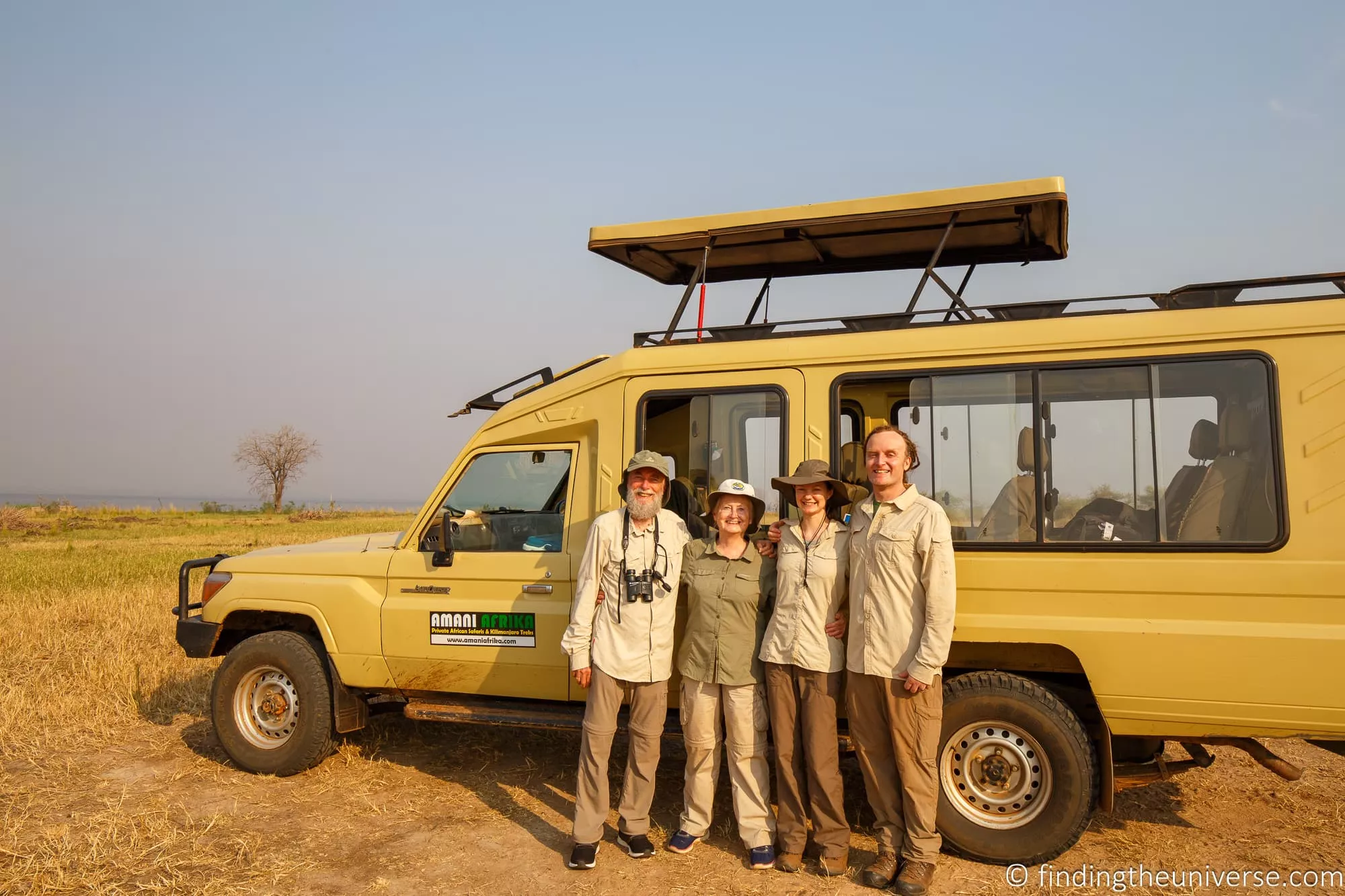
Perhaps one of the more important things to consider when packing for safari is the colour of the clothes you bring with you.
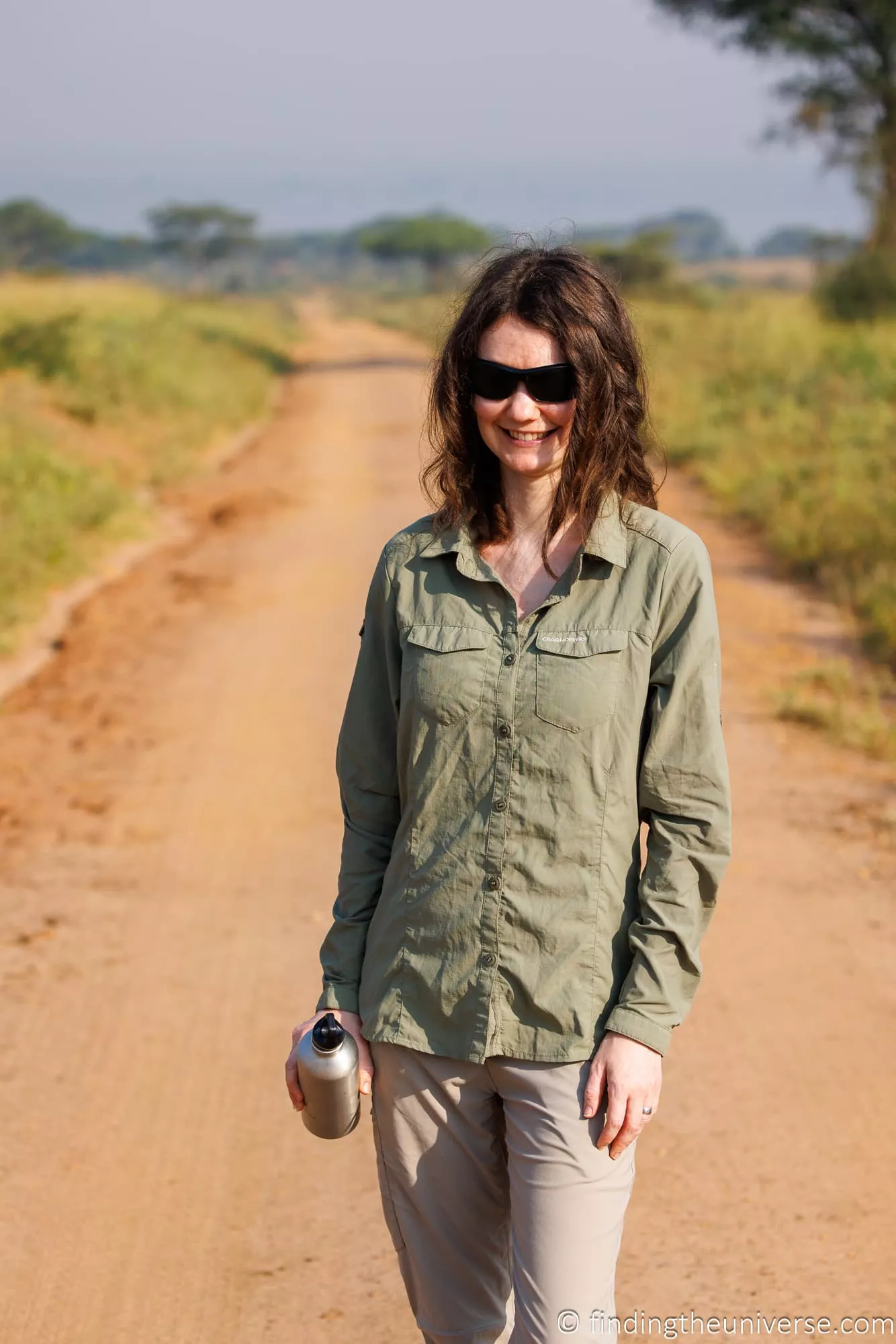
Generally, brown and green colours, or variants thereof, are regarded as the best. They blend into the surroundings, and have the bonus that they don’t show dirt quite as well, which is a benefit on dusty drives.
Bright primary colours are discouraged as they make you stand out more.
Blue and black colours should also be avoided. These are known to attract Tsetse flies, which have a very nasty bite and which can carry disease.
One more thing to leave at home: camouflage clothing. It is actually illegal for civilians to wear camo in a few African countries, including Zimbabwe and Uganda, where the penalties can be severe. Stick to plain browns, greens and khaki. They’re what you want for wildlife viewing anyway, and they’ll keep you on the right side of the law.
How Easy is it to Wash?
When putting your clothing list together, especially on a trip longer than a week or so, you will want to think about how easy each item of clothing is to wash. You might also want to consider how long it might take to dry.
A safari can be both a dusty and sweaty environment, meaning that unless you want to carry a lot of clothes, you will have to plan to do some laundry as you go on a longer trip. Most lodges will likely offer laundry, or you can do your own hand laundry easily enough.
With this in mind, high-end clothing which requires dry-cleaning or a careful delicate cycle might be best left at home if you don’t want it ruined. We’d suggest sticking to clothes that wash easily in hot or cold water, and which air-dry quickly (the majority of locations we’ve visited do not have electric driers).
Versatility
When you’re choosing clothing and putting outfits together, we’d suggest giving priority to items that can be worn in multiple situations or in multiple outfits, to avoid having to bring too much.
So a top that works as well on a game drive as at an evening meal is a better choice, if possible, than bringing separate options for different occasions.
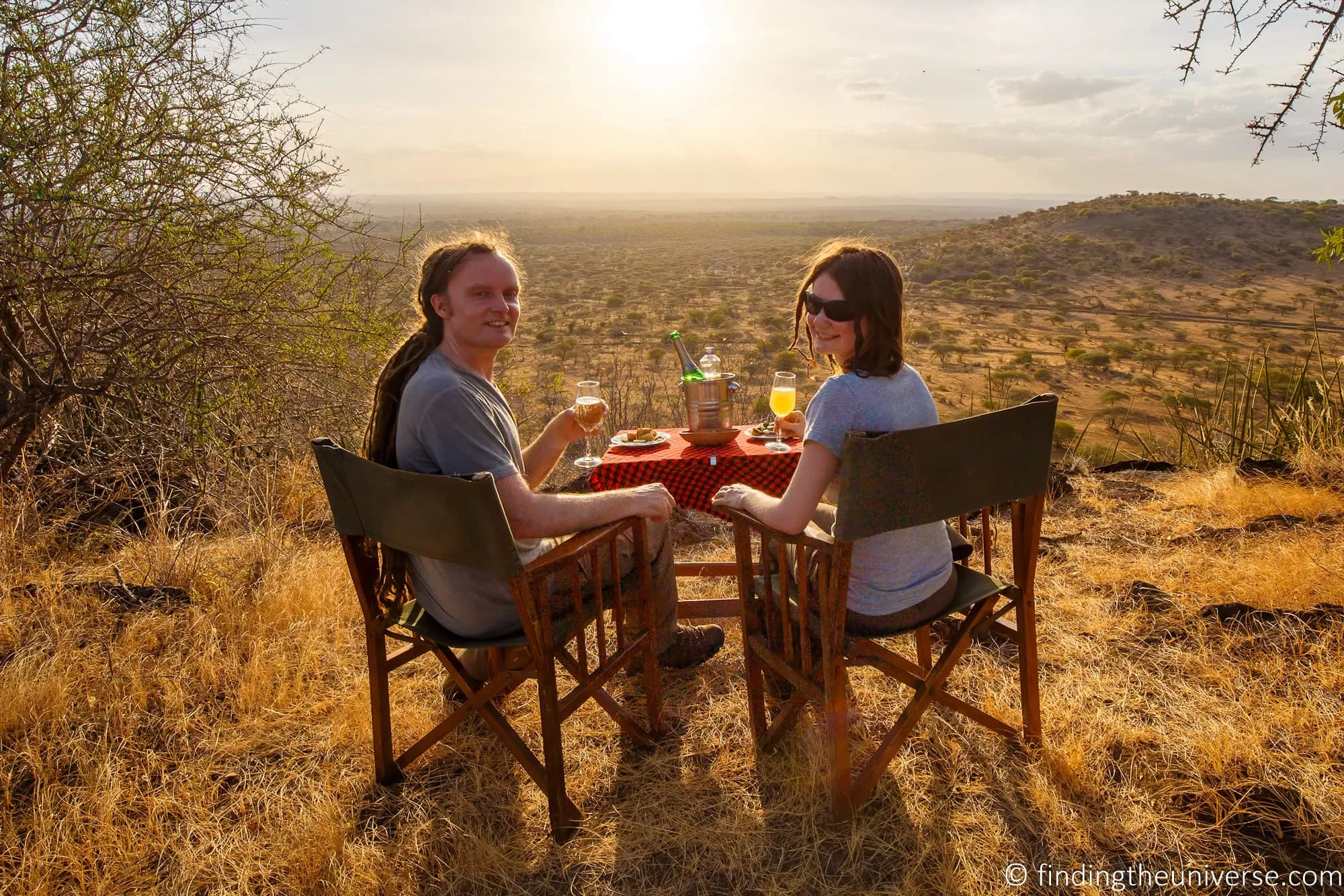
Packing for Game Drives, Trekking and Walking Safaris
Not every safari puts the same demands on your bag. What you’ll actually be doing matters more than anything else, so here’s how the three most common types compare.
| Safari type | Footwear | Key extras | How much to pack |
|---|---|---|---|
| Game drives (vehicle-based) | Comfortable closed shoes | Fleece for cold starts, camera bean bag, sun hat | You can pack a little more; comfort over ruggedness |
| Gorilla & chimp trekking | Waterproof hiking boots (broken in) | Gardening gloves, gaiters, rain shell, long sleeves | Pack light; a porter can carry your day bag |
| Walking safaris & bush walks | Closed, comfortable walking shoes | Strictly neutral colours, long trousers, minimal loose gear | Travel light and quiet; follow your guide’s rules |
For classic game drives, where you spend most of your time in a vehicle, you can afford to pack a little more. Comfort matters more than ruggedness: a fleece for the cold early starts, a bean bag to steady your camera on the window frame, and a soft bag that squashes into the back of a 4×4. You won’t be walking far, so shoes are less critical.
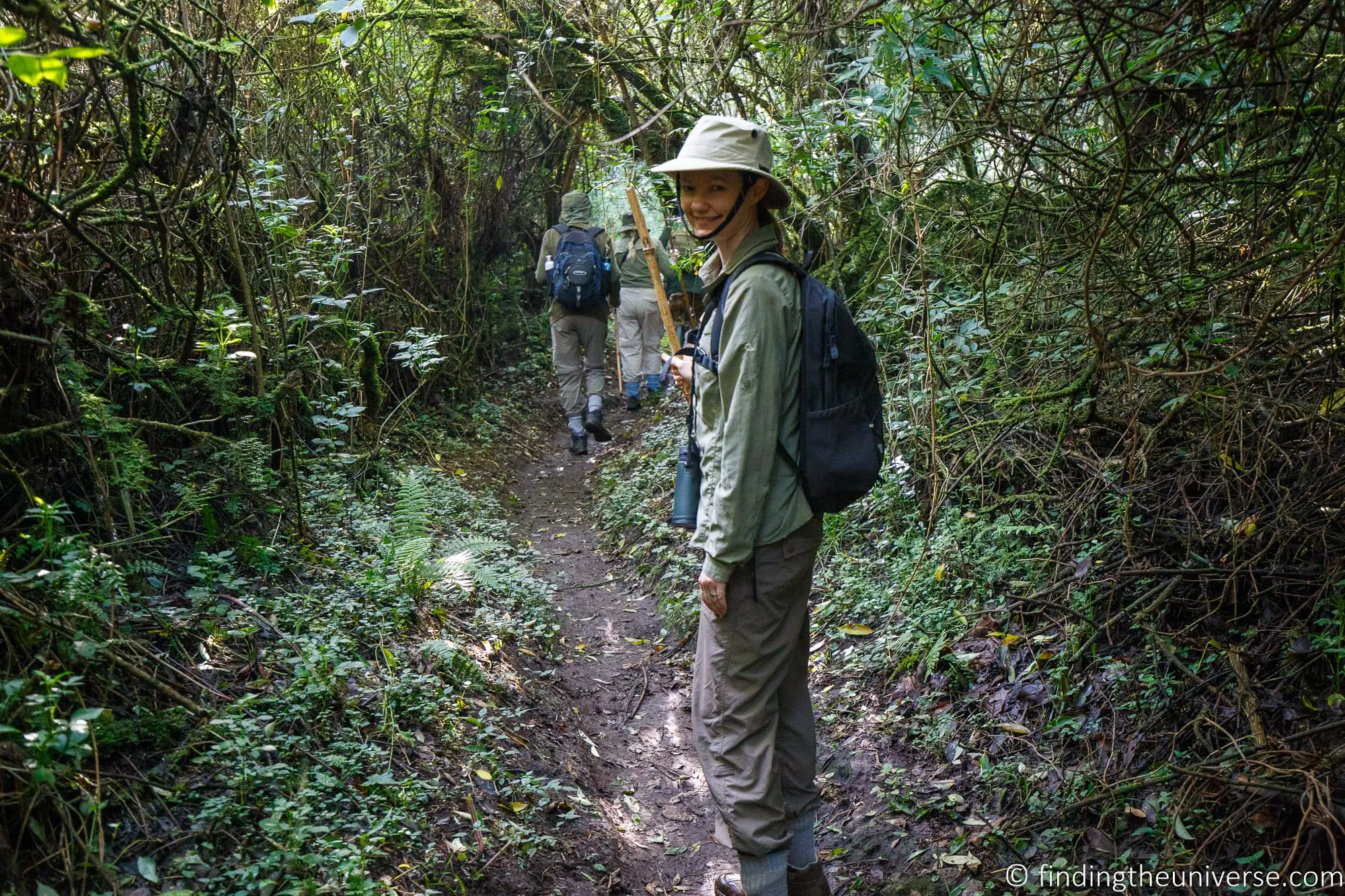
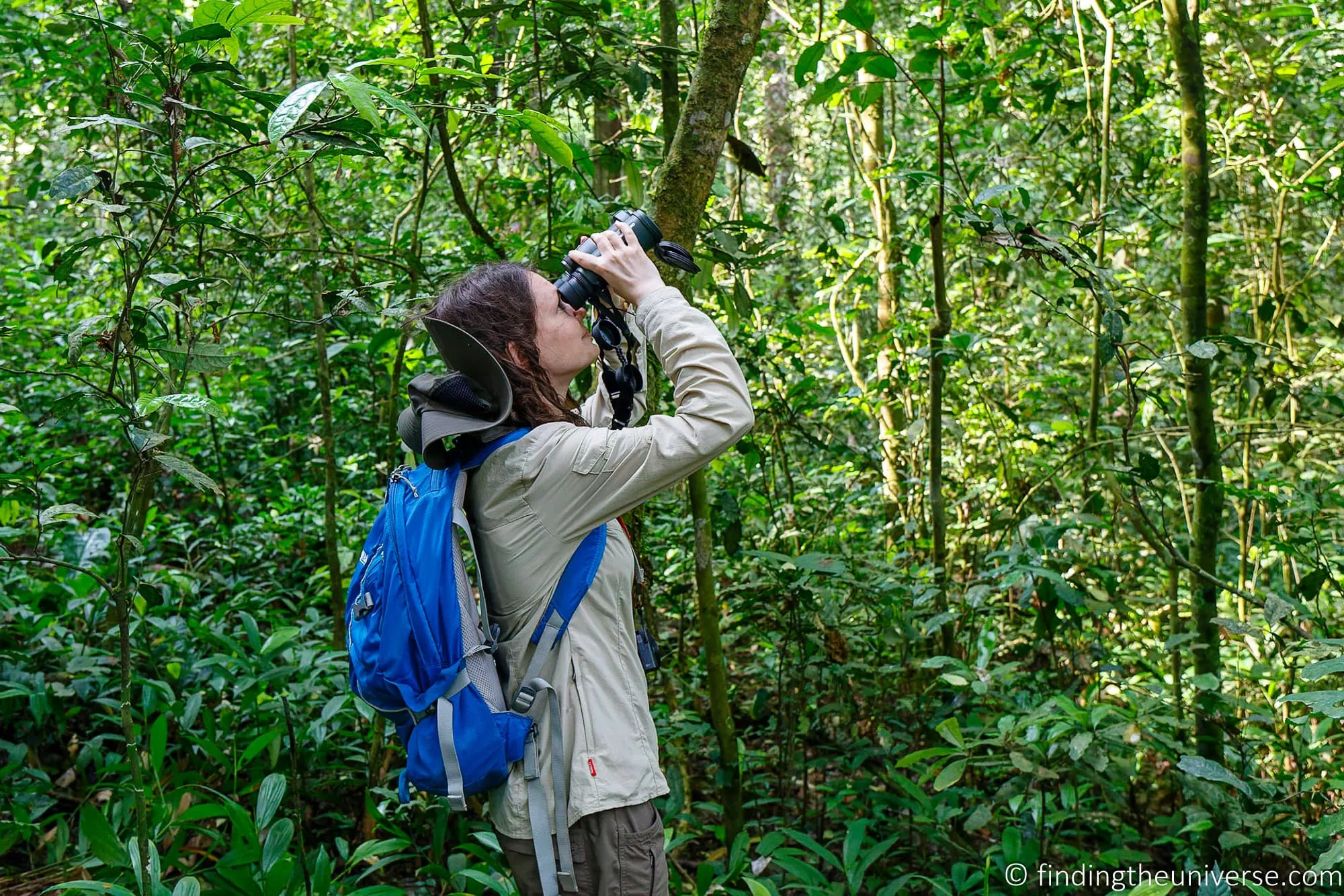
Gorilla and chimpanzee trekking is a different game entirely. We’ve done both in Uganda, and it can mean hours on steep, muddy, often overgrown trails. Waterproof hiking boots are essential, and we’d add gardening-style gloves for grabbing hold of vegetation, gaiters to keep mud and biting ants out of your boots, and a proper rain shell, because the forest is wet even in the dry season. Porters can usually carry a day bag for you, which is well worth the small fee. Keep your camera gear to what you can comfortably carry uphill.
Walking safaris and bush walks sit somewhere in between. Neutral colours matter most here, since you’re on foot and close to wildlife, and you’ll want closed, comfortable shoes, long sleeves and trousers against the sun and insects, and as little dangling, noisy gear as possible. Your guide sets the pace and the rules, so pack light and follow their lead.
Safari Packing List
We’ll now go through a guide to what we think are the essentials for safari, based on multiple safaris we have taken, some of which have been over quite prolonged multi-week trips.
Of course, there is no definitive list, and you should adjust it based on what you feel you need to take with you. But this should give you a good starting point.
Shirts for Safari
Wherever you are going on safari, and whatever the weather, you will need a number of shirts or tops. We usually travel with a number of layers, because even in hot countries our experience is that it can be cooler at night.
So for us, we normally pack a bunch of t-shirts, some long sleeve button-up safari style shirts, and a couple of fleece outer layers.
For t-shirts, we prefer those made of a wicking material, which is cool and fast drying. So something like this synthetic tee for Laurence and these for Jess. We also travel with a few cotton t-shirts as well, but note that these tend to hold sweat and not dry as fast.
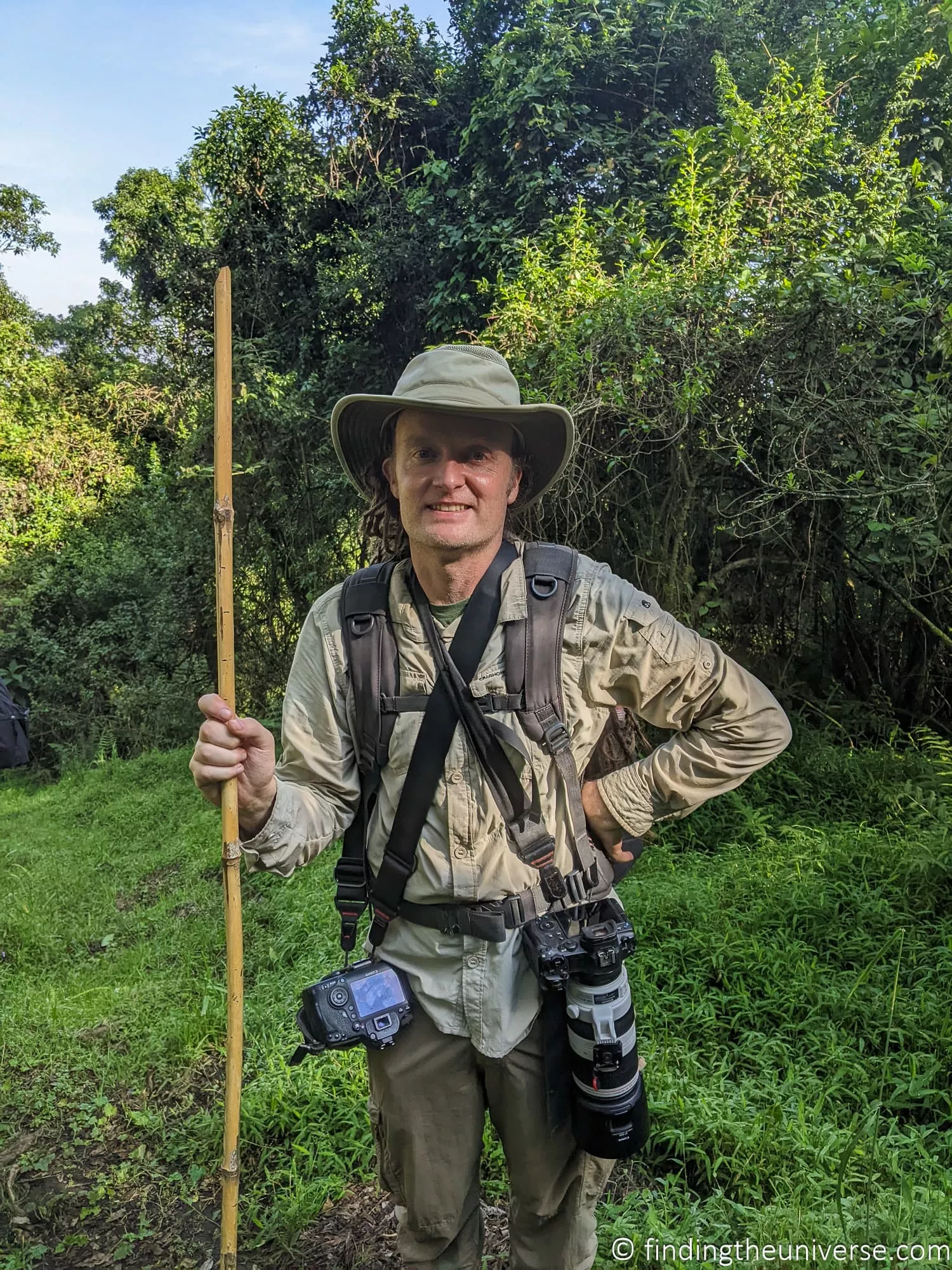
Next, we also like to travel with button-up shirts that are specifically designed for safari, and for that we like the Craghoppers brand of clothing. We mostly wear long-sleeved ones as these protect against both the sun and insect bites.
Craghoppers make a whole range of clothes which are excellent for all sorts of outdoor activities, but we think they are particularly suited to safari. If you spend time on safari, you’ll likely recognise that this is probably the most common brand worn by more experienced travellers, especially those from Europe.
Their clothes are fast drying, very lightweight, durable, usually have multiple handy pockets, and many of them have built-in insect repellent as well.
For shirts, we both like the Craghoppers NosiLife shirts, available for men here and for women here. We’ve worn them on safari all across East Africa and they have proven to be very capable items of clothing.
Craghoppers stopped selling directly in the US a while back, but you can still find their gear on Amazon. If you are in the US and want an easy alternative, we’d also recommend Patagonia’s options.
Of course, there are many more options out there, and you can see a range of moisture-wicking, fast-drying button-up shirts on Amazon here.
Finally, we usually also pack at least one warmer top which can go over everything else. This is handy for those cooler early morning safaris or evenings in camp, when temperatures can drop, especially at higher elevations.
Generally, we prefer a top with a full zip down the front as it lets us control our temperature a bit more by zipping or unzipping the front, but this is a personal choice.
For tops, we love clothes from Patagonia. Their sustainable ethos and approach to rewearability is something we really appreciate, plus their clothing happens to be great quality. It is a little on the more expensive side, but it should last you a long time.
Jess in particular really likes her Patagonia full-zip better sweater, and there’s a men’s version as well. We’ve also had good experiences with the North Face range of fleeces, which is my current fleece, and you can see a full range of those here.
If you are on a budget, we’ve had good luck finding high-quality fleeces and pullovers second-hand from thrift stores and online resale sites.
Trousers / Pants / Dresses for Safari
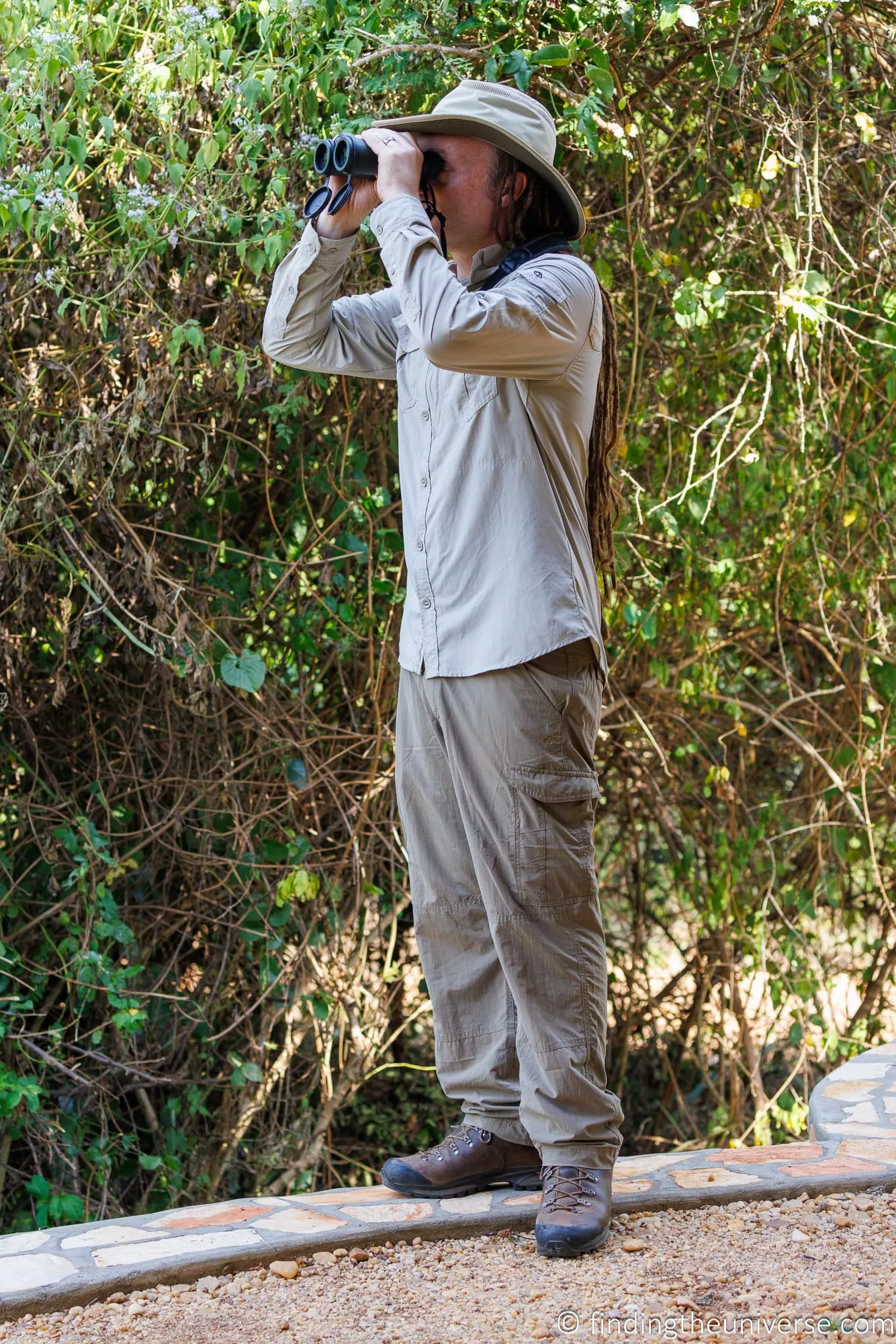
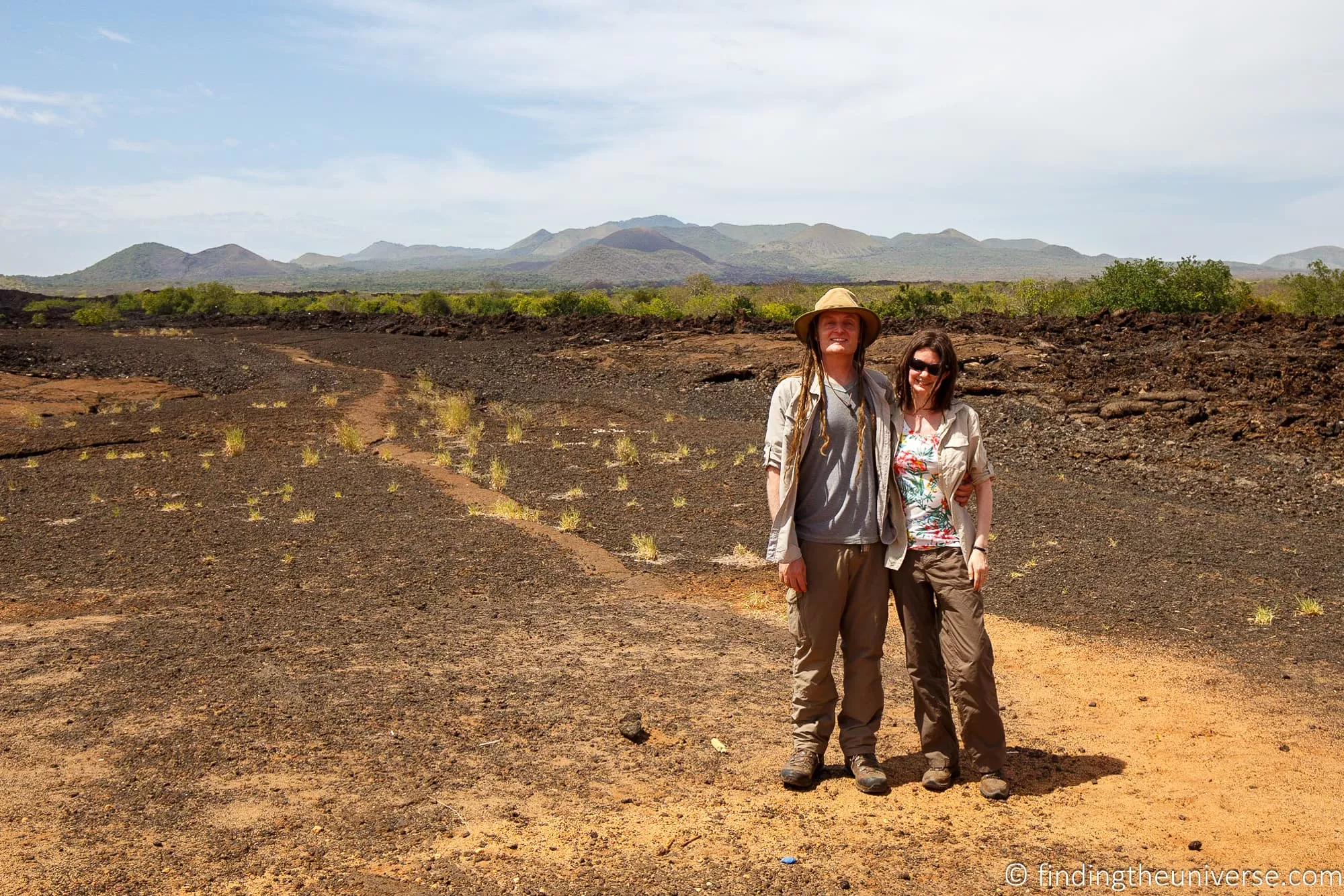
Generally we both prefer to wear long trousers for safari, even on hotter days. We like lightweight hiking style trousers that offer good sun protection, as well as some protection from biting insects and branches. Jeans generally are a bit too heavy and hot in our experience.
For specific brands, we again like Craghoppers. Their NosiLife technology helps keep biting insects away, and they have a range of hiking trousers with it built in. Their products are also very lightweight and fast drying.
As for specific pairs we’ve worn, Laurence likes more baggy cargo style trousers, whilst Jess prefers slightly more fitted ones.
Again, there are multiple brands offering high quality trousers, including these options from Patagonia, and this extensive selection on Amazon.
Jess also likes to travel with some easy wear lightweight dresses which are good for wearing in the evening for dinner and on non-safari days.
Shoes for Safari
Choosing the right footwear for safari will of course depend on the kind of activities you are going to be doing.
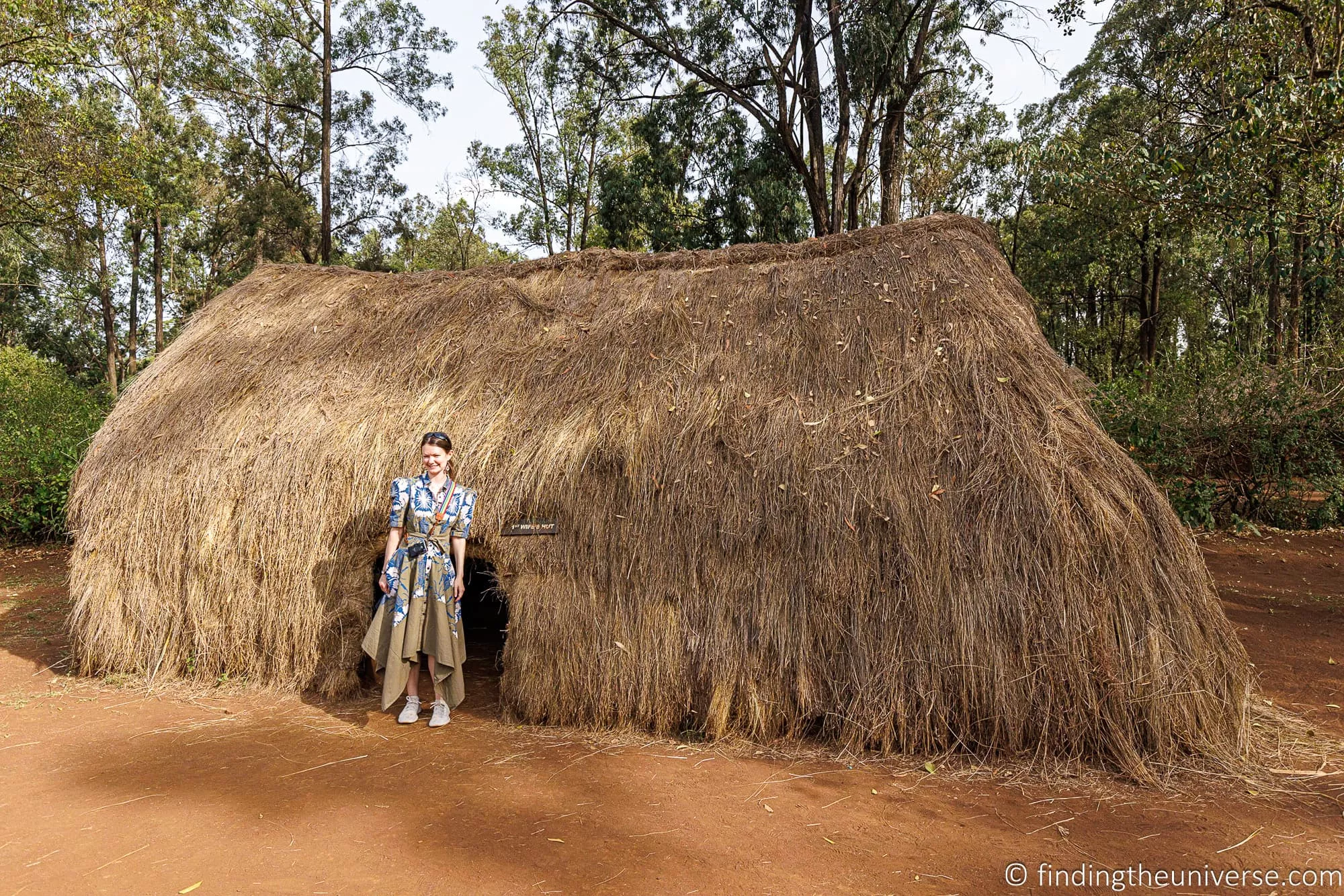
If you will be doing any hiking, including game walks, chimpanzee trekking or gorilla trekking, then we highly recommend a good pair of waterproof hiking boots.
We both have a pair of Scarpa hiking boots, Laurence has these ones and Jess has these.
Of course, there are lots of other great brands. We’ve had various pairs, and Jess in particular liked her Merrell hiking boots, which she hiked Mt. Kilimanjaro in.
If your trip doesn’t involve a lot of hiking, then you can probably skip proper hiking boots. They are quite heavy and take up a fair bit of space, so you’ll save some luggage room if they’re not required.
We just recommend you bring one good pair of comfortable closed-toe shoes. A pair of lightweight flip flops or sandals is also a good idea if you plan to spend time relaxing at the pool, resort, or on the beach.
For more tips on shoes for travel, see our guide to the best travel shoes for men, and the best travel shoes for women.
Hats for Safari
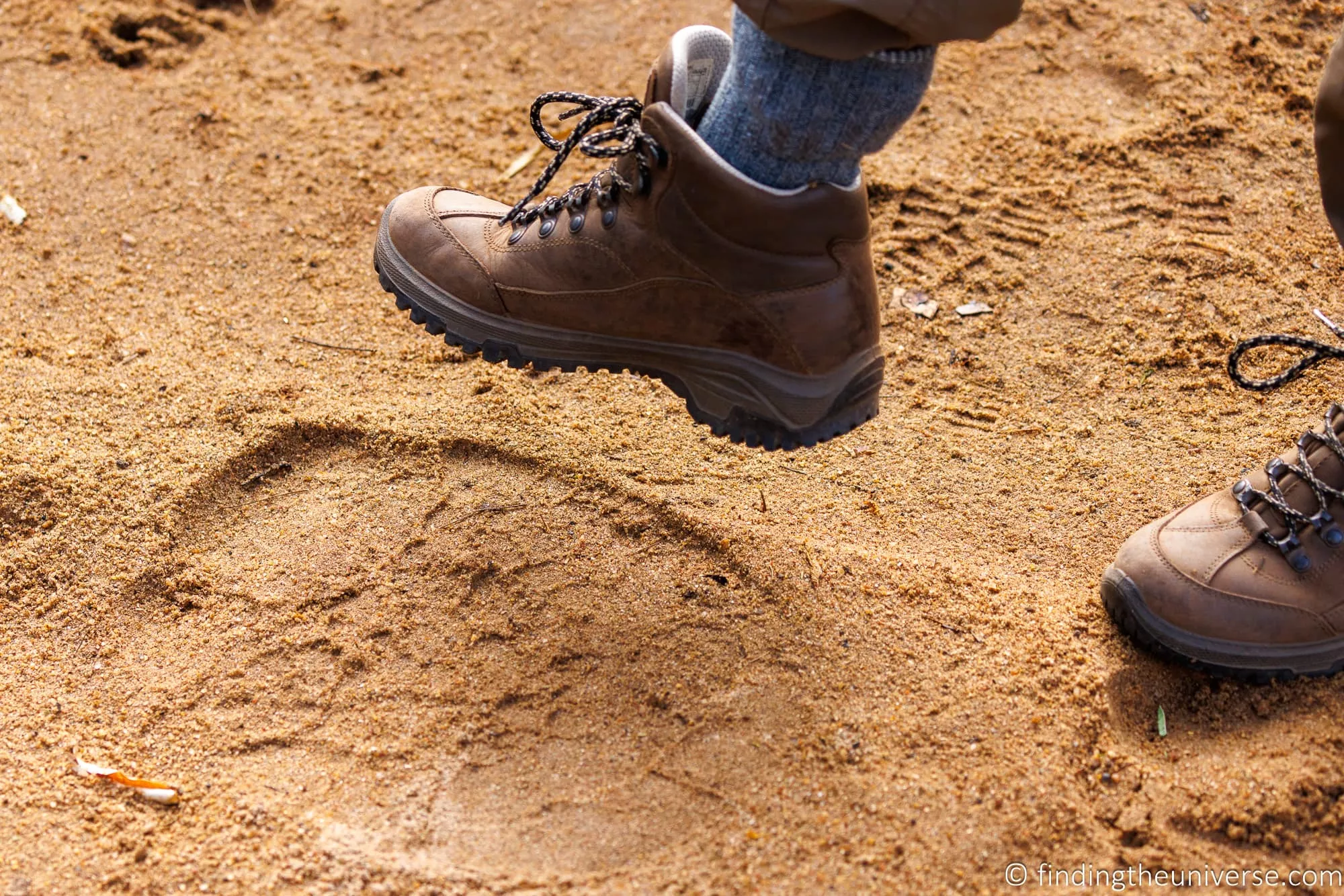
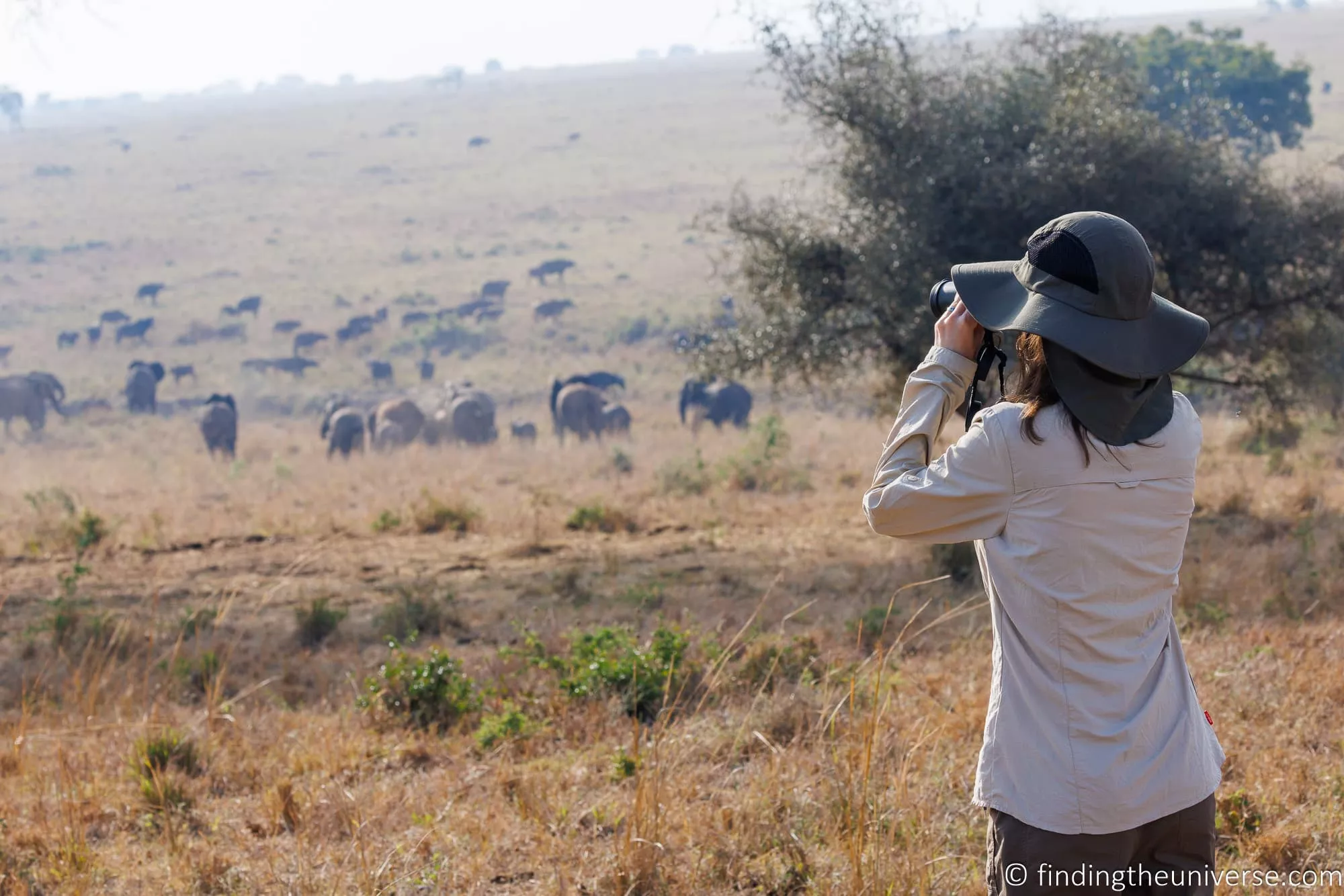
Many safari destinations tend to be quite hot and sunny, and you’re going to be spending a lot of time outdoors. So a good hat is going to be essential for your trip. You just want to make sure that the hat you choose has a wide enough brim to shade your entire face. Some may also want one with a neck flap.
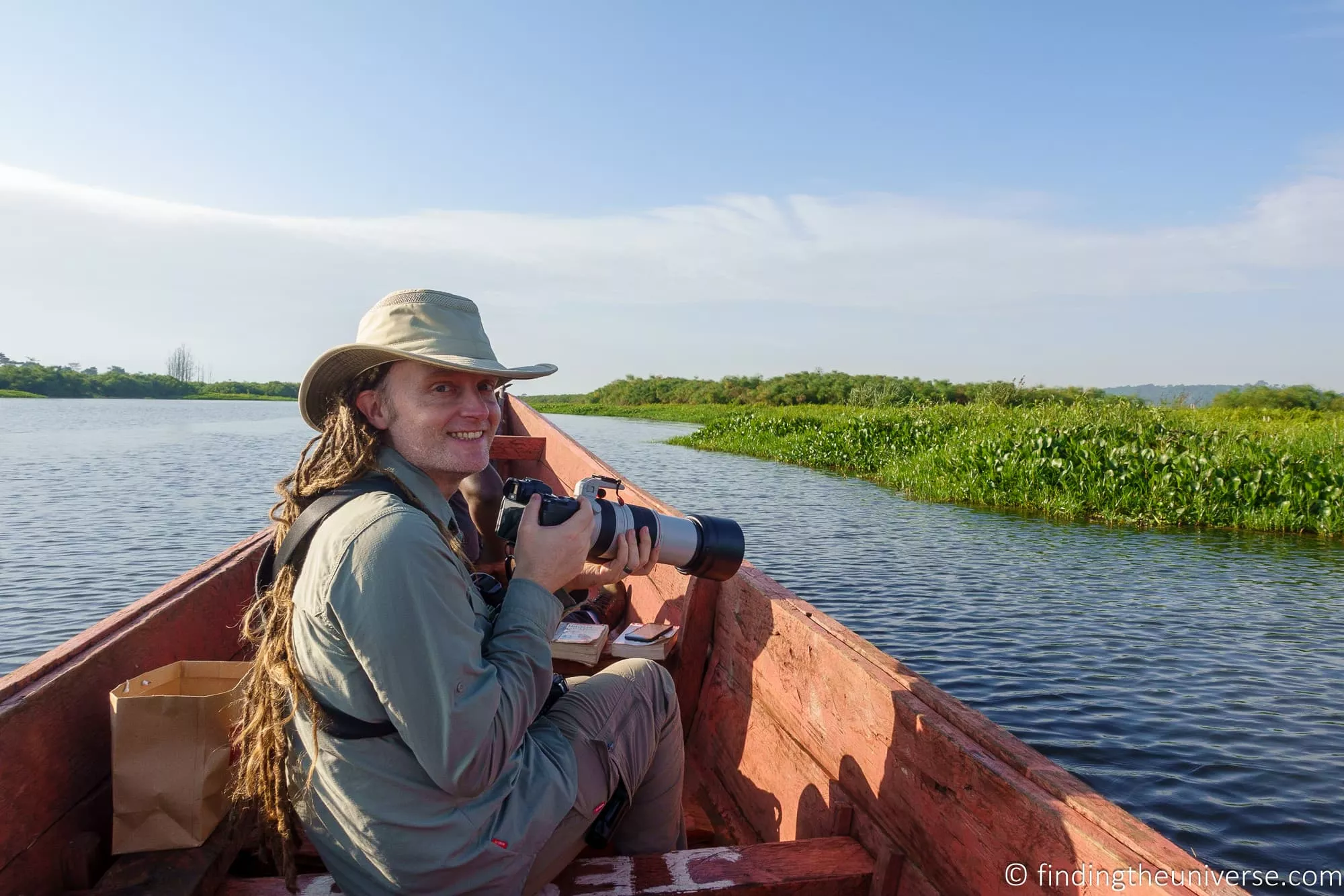
We personally love our Tilley hats. They are well constructed, easy to pack, lightweight, machine washable, and come with a very solid guarantee. For safari, we’d recommend the LTM6 Airflo hat, which is what Laurence uses, or for even more cooling, the LTM8 Airflo hat.
We have also had other hats of course. In addition to a Tilley Airflo hat, Jess also has a hat with a foldable neck flap like this one, which keeps the sun off her neck as well as her head. My parents both took hats with sun flaps on safari to protect their necks, so that is also a great option.
Swimwear for Safari
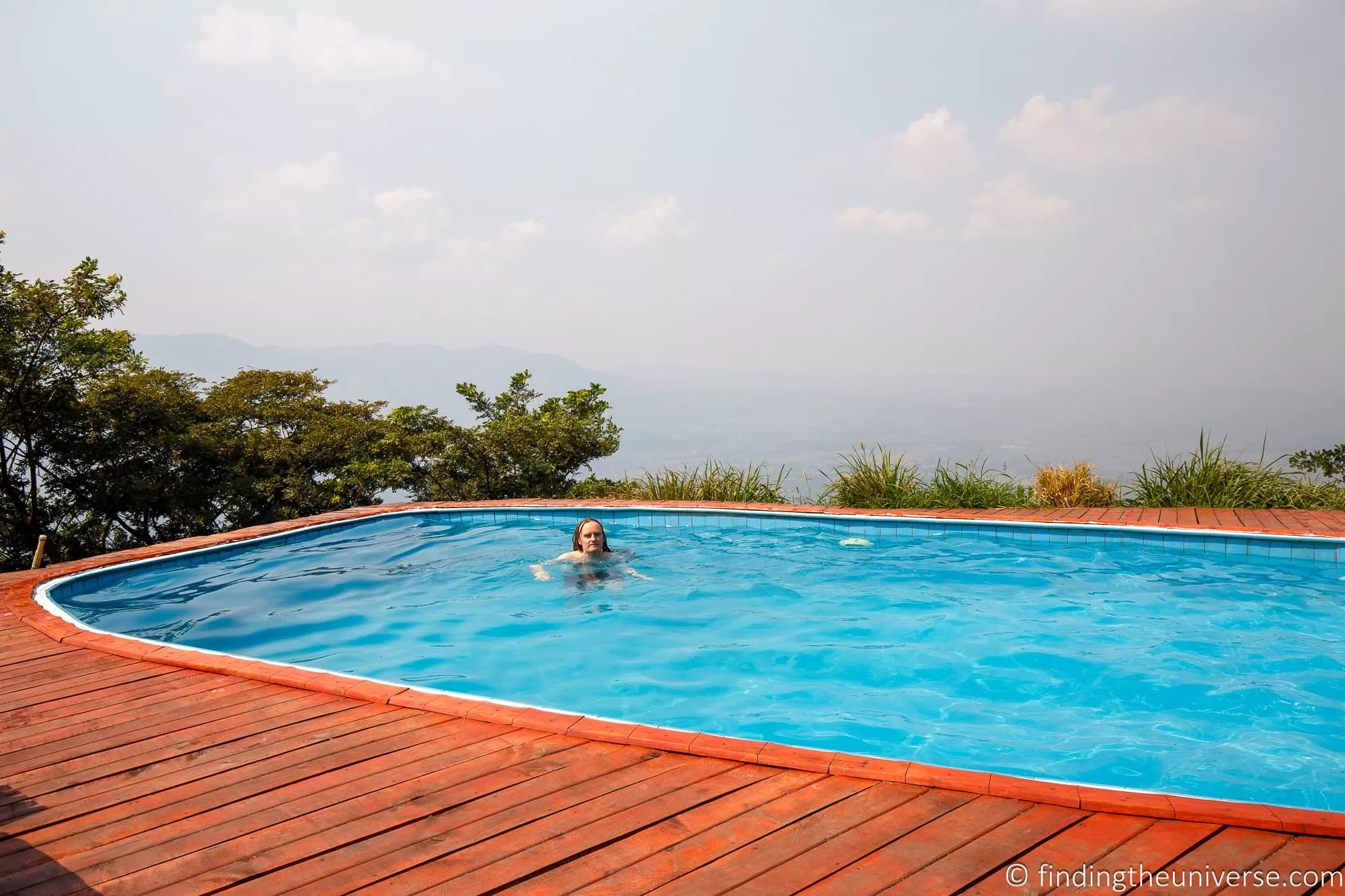
Whilst you are unlikely to be going for a swim whilst out on safari, what with the risk of crocodiles and hippos, that doesn’t mean you should leave your swimwear at home.
Plenty of safari lodges and camps have a pool, and if you have downtime between game drives on a hot day, then a dip is a great way to relax and cool off. Many safaris might also include some relaxation time on a beach or island.
We always pack swimwear when we go on safari for just this reason, and we’ve had some lovely swimming experiences as a result.
You can search for swimwear for men on Amazon here, and for women here.
Socks and Underwear for Safari
This one will be a brief entry. Obviously, you’re going to need undergarments and socks for safari.
Our main tips are to be sure to pack enough to last either your trip (if a week or less) or the longest stretch of your trip you plan to go without doing laundry. Ideally pick lightweight and quick-drying underwear and socks that can be easily washed on the go. We tended to handwash these types of items every 4 to 5 days so we never ran out of them.
If you are looking for a brand, ExOfficio (nylon) or Smartwool (merino wool) are a couple you might check out for travel-friendly quick-drying undergarments.
If hiking or planning to do a lot of walking, be sure to bring good quality hiking socks along. You want socks that will provide a bit of cushion, wick away moisture, and help prevent blisters. A few brands we like are Smartwool, Darn Tough, and Farm to Feet.
Also, for women, it is a good idea to bring along a supportive sports bra or two. Jess says these are a must-have for bumpy roads and climbing.
Raingear for Safari
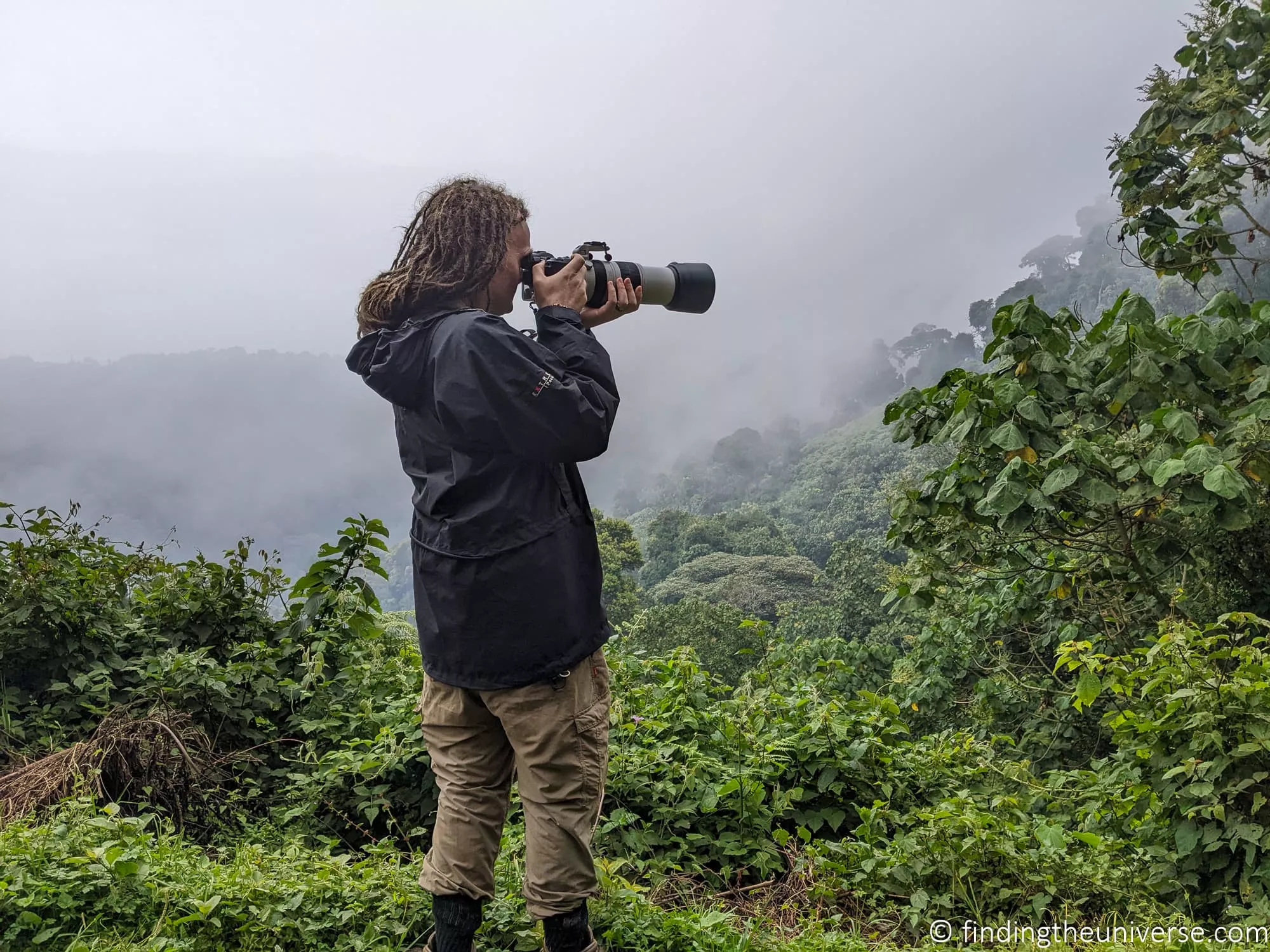
Whatever time of year you are planning on going on safari, and whatever activities you will be doing, we still recommend packing some sort of raingear just in case.
This might be a lightweight breathable rain jacket that you can wear over your clothes, or a pack away rain poncho. Just make sure whatever you bring has a hood.
We always travel with rain protection of some kind, just in case.

Camera Gear for Safari
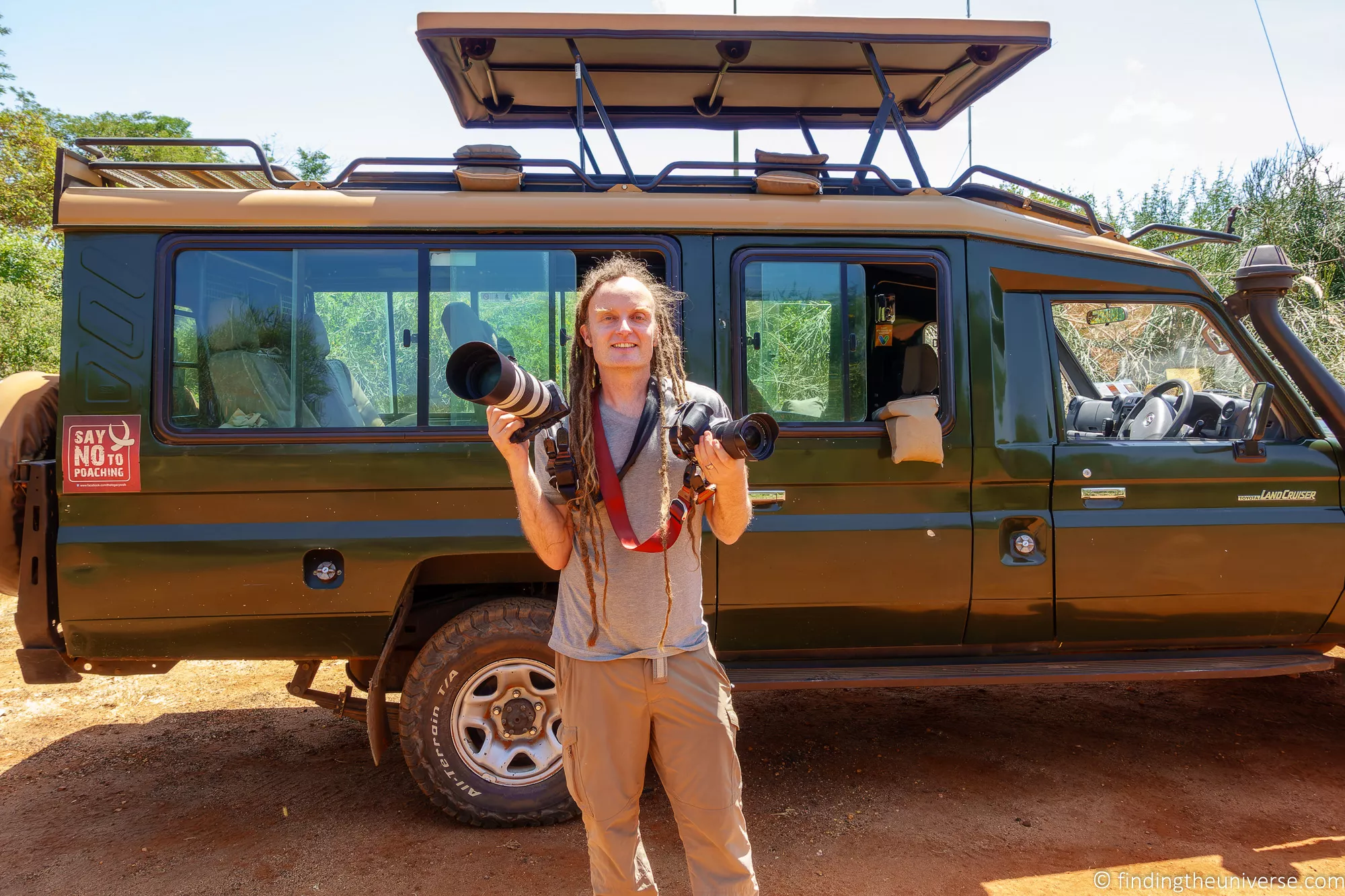
I’ve already written a very comprehensive guide to the best camera for safari, as well as the best bean bag for safari, so I would definitely recommend reading those if you want to get some great images on your trip.
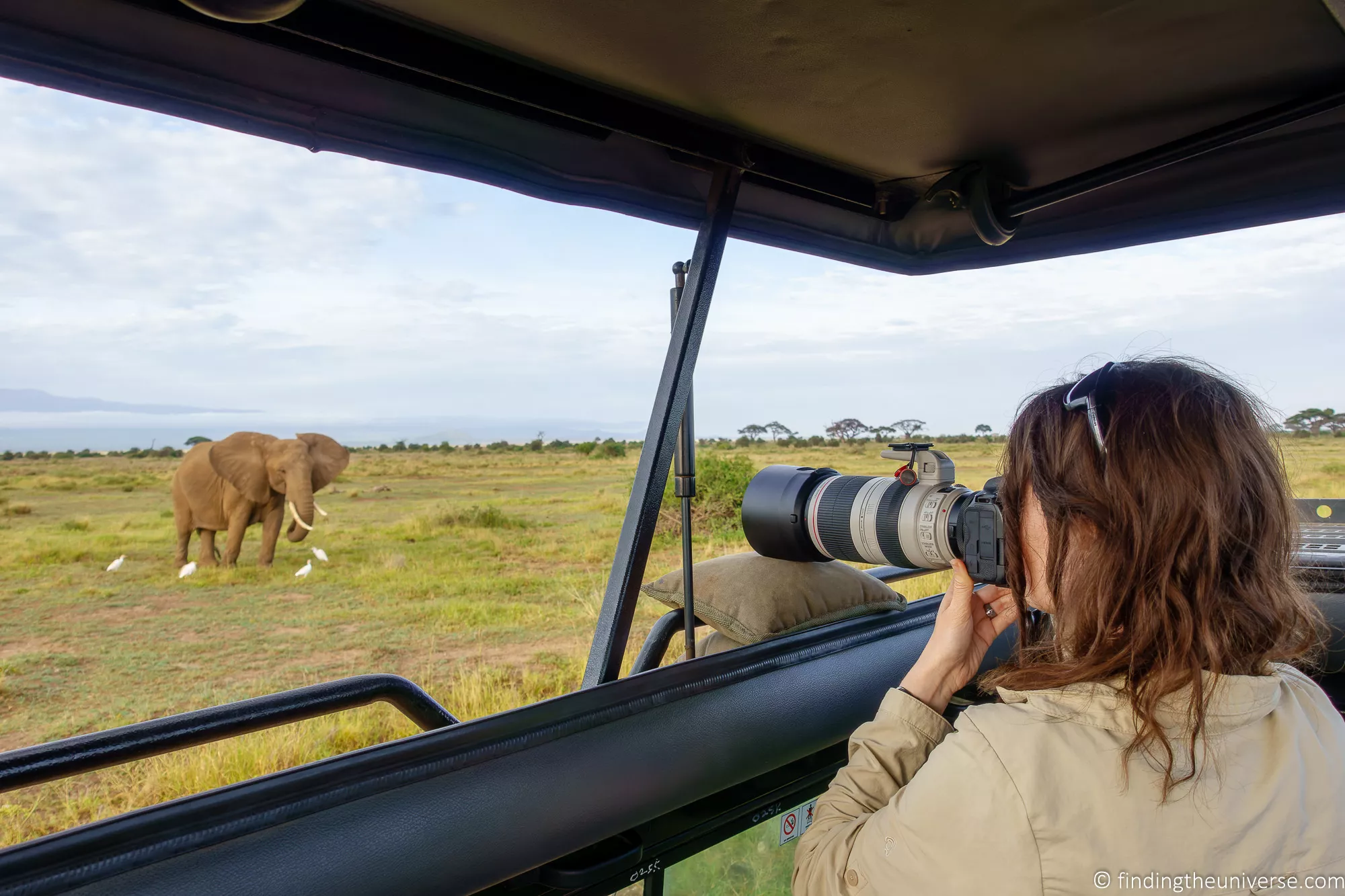
The two things that make the biggest difference to your wildlife shots are a camera with a decent zoom lens and a bean bag to steady it against the vehicle.
For a specific camera, the bridge camera route is the simple option: one body, a huge zoom range, and no lenses to swap out in the dust. Our pick was the Sony RX10 IV until Sony discontinued it in early 2025, but it finally has a successor. The new Sony RX10 V, announced in July 2026, keeps the same 24-600mm lens and adds a much better autofocus system.
It’s shipping now. For the best results though, we’d still point you towards a dedicated mirrorless camera paired with at least a 400mm zoom, which is the setup we use on safari.
A camera can be a huge investment, so we also suggest renting as an option to consider. A company like Lens Rentals will let you rent a lens and a camera body at a much lower cost than buying outright.
They also give you the option to buy the gear rather than return it, so if you love the experience then you can invest, having tested it out.
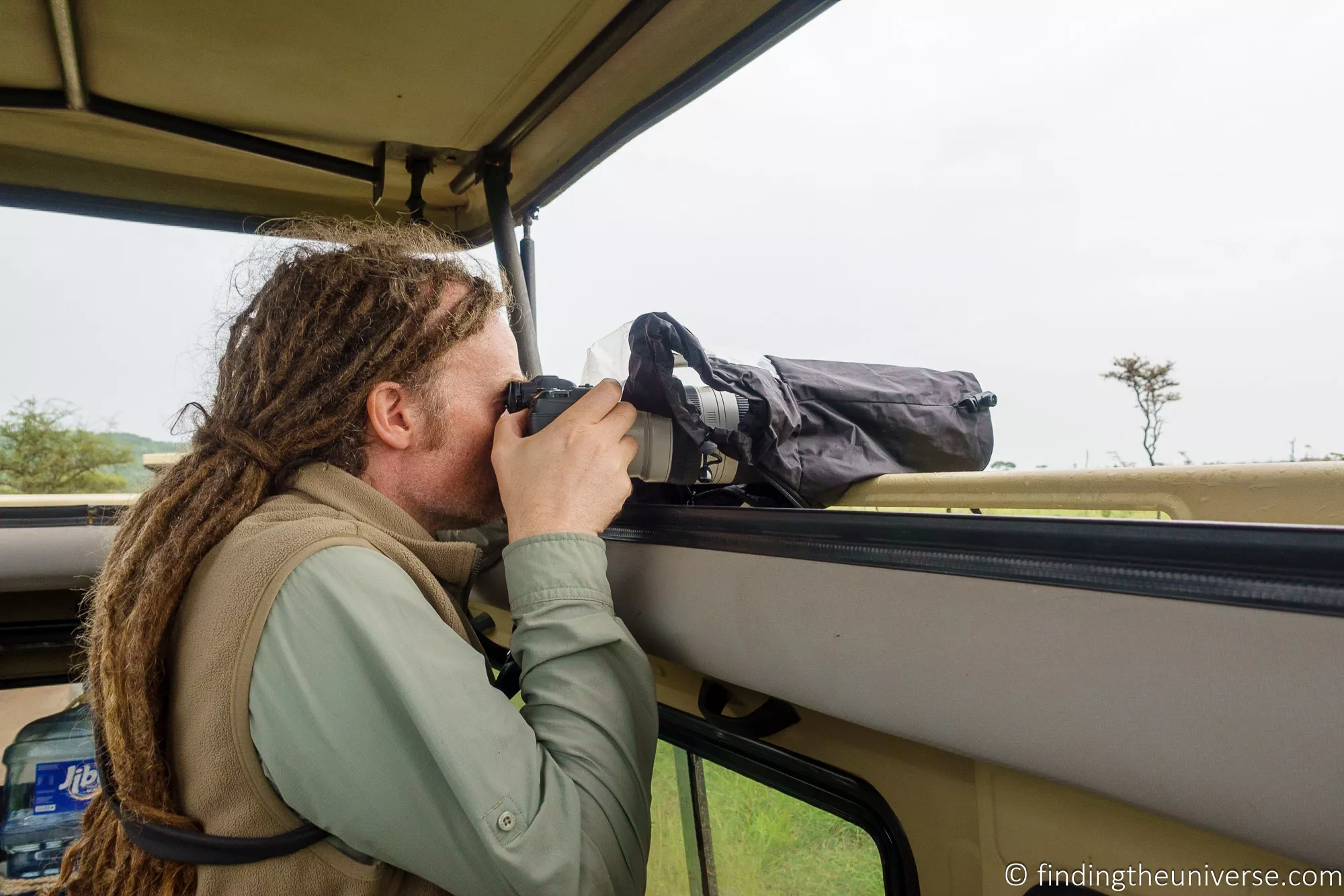
We also strongly recommend a photography bean bag if you’ll mostly be shooting from inside a vehicle. We use these constantly on safari to steady a long lens against the window frame or roof hatch, and they make a huge difference. Our guide to the best safari photography bean bags goes into detail, but the Grizzly camera bean bag is a solid, in-stock starting point (buy it empty and fill it with rice or beans once you arrive, to save luggage weight). We’ve got more options and tips in our general photography bean bags guide too.
Finally, don’t forget a good camera bag to keep your gear safe, lots of spare batteries, memory cards, your chargers, and ideally a waterproof camera cover to protect your gear in case it rains.
Binoculars for Safari
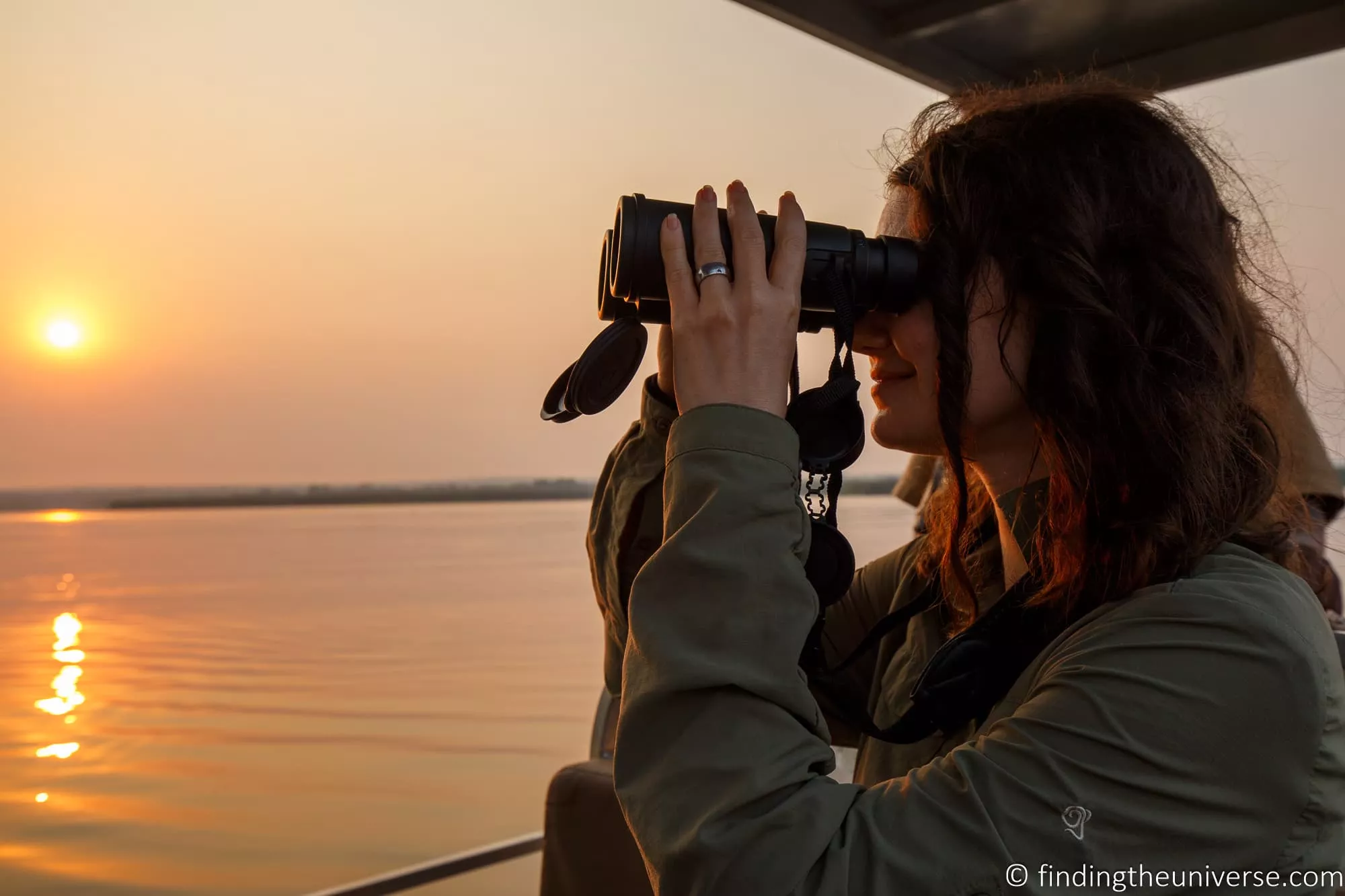
We can highly recommend taking a good pair of binoculars with you when on safari. Not every bird or animal is going to conveniently place itself within easy viewing range, and a pair of binoculars will let you get a much better view of the wildlife.
You don’t need to spend a massive amount to get a reasonable pair of binoculars, but we’d suggest setting a minimum budget of around $80 USD. Below this price point, build and image quality will likely suffer. We’d also suggest looking for a pair with around 8x to 10x magnification.
Here are the pairs we’d suggest looking at, across a range of budgets:
| Binoculars | Magnification | Size | Price band | Our take |
|---|---|---|---|---|
| Vanguard Vesta 8×25 | 8x | Ultra-compact | $ | Tiny, light, waterproof and fogproof. A great entry-level pick if you don’t want to spend a fortune. Save 20% with code FindingTheUniverse on the Vanguard store. |
| Celestron Nature DX 8×42 | 8x | Full-size | $ | A well-regarded budget option. Tough, fogproof and waterproof, and great value. |
| Vortex Diamondback HD 8×42 | 8x | Full-size | $$ | The pair we own, and our top pick. The “HD” is Vortex’s own optical system rather than ED glass, but the view is the widest here. Amazon stock comes and goes; B&H carry them too. |
| Vanguard VEO HD2 8×42 | 8x | Full-size | $$ | ED glass, carbon-composite build, waterproof and fogproof. Another pair we use. Vanguard update their range regularly, so browse their current models. |
| Nikon Monarch M5 8×42 | 8x | Full-size | $$ | Lightweight, durable, waterproof and fogproof. A popular and reliable mid-range choice. |
| Swarovski EL 8.5×42 | 8.5x | Full-size | $$$ | Premium in every sense. We borrowed a pair for several months and the images were magnificent. Worth it if budget is no object. |
As you can see, there’s no shortage of choice across a range of price points. If you are interested in bird watching on safari, or getting into birding, see our beginners’ guide to birdwatching for some tips.
Electronics for Safari
You don’t really need a lot of electronics for safari, however there are a few things you might find useful.
First, a good USB power bank. We currently travel with the INIU P63, which holds enough charge to top up a phone several times over and still slips into a day bag. These let you charge your phone on the go, as well as any other device that uses USB.
The second thing we recommend, if your camera has removable batteries, is to see if you can get a USB-powered battery charger for it.
This is because sometimes, more remote lodges don’t have regular plug sockets. However, they do often have USB outputs. While some cameras support direct charging by USB, this is by no means the standard.
We personally travel with a USB charger which is compatible with our DSLR and mirrorless Canon cameras, both of which use the same type of battery. You will need to search for a USB battery charger that is compatible with the batteries your camera uses. You can see some examples for a range of brands on Amazon here.
You’ll also want a universal travel adapter. Plug types vary from country to country across the main safari destinations, so a single adapter that covers multiple standards saves a lot of hassle. We use the Epicka universal adapter. For more on staying powered up, see our guide to the best travel adapters.
Insect Repellent for Safari
One slightly less exciting aspect of safari is the potential for biting insects. Mosquitoes are the obvious one, but there are a range of other insects that can bite you.
Ideally, you want to avoid being bitten if you can help it. Many insects carry various diseases, including malaria, yellow fever, and dengue fever. Whilst you can take medication or vaccines to help prevent some of these, like antimalarials for malaria (which we’d definitely recommend considering), prevention is also a really important step.
With this in mind, a good insect repellent is a safari essential. The CDC recommends repellents containing DEET, picaridin, oil of lemon eucalyptus (OLE) or IR3535, and treats DEET and picaridin as comparably effective. What matters most is the concentration, which sets how long each application lasts, rather than which one you pick. For a full day out we’d look for something in the 20 to 30 percent range and reapply as the label directs.
Also, for those planning to do much trekking, hiking, or walking, depending on your destination, you’ll want to think more about crawling insects like safari ants, leeches, stinging caterpillars, and ticks. Generally, insect repellent along with long sleeves, long trousers, and pulling your hiking socks up over your trousers is enough to avoid these for most people.
Those heading into wetter areas and jungles, where leeches are common, might also want leech socks or gaiters. We own a pair of leech socks and they work well, though they’re overkill for most safari trips. If you already pack gaiters for hiking to keep out dirt and stones, those will usually guard against leeches and ticks too.
Toiletries / Medicines for Safari
You will want to bring a range of toiletries and medicines with you, some of which should be fairly obvious, and some which may be less obvious.
Falling into the latter camp, we always travel with and recommend rehydration salts. Dehydration is no joke, and drinking plenty of water is really important. However, as you sweat you can lose salt, and rehydration salts can help replace what you lose.
It’s also important to remember that you may be in some pretty remote places, so it is good to be prepared to tend to minor health issues such as cuts, scrapes, blisters, bug bites, headaches, common stomach complaints, and so on.
Here’s a quick list of things to think about packing in your toiletry and medicine kit for safari:
- High SPF (30+) sun cream or sunscreen
- Lip-balm with SPF
- Rehydration salts
- Basic meds like pain relievers, anti-diarrhoeal tablets, and antacids
- Mini first aid kit with bandages, blister covers, antiseptic wipes, etc.
- Toothpaste / toothbrush
- Sanitary items (in our experience tampons are not always available in country, depending on where you are going)
- Anti-malarial / other required medication
- Razor / spare blades
- Sunglasses
- Ear plugs / eye mask
- Hand sanitiser
- Moisturiser / lotion
Of course, your list may vary somewhat, but we think the above is a good starting point.
Laundry on Safari
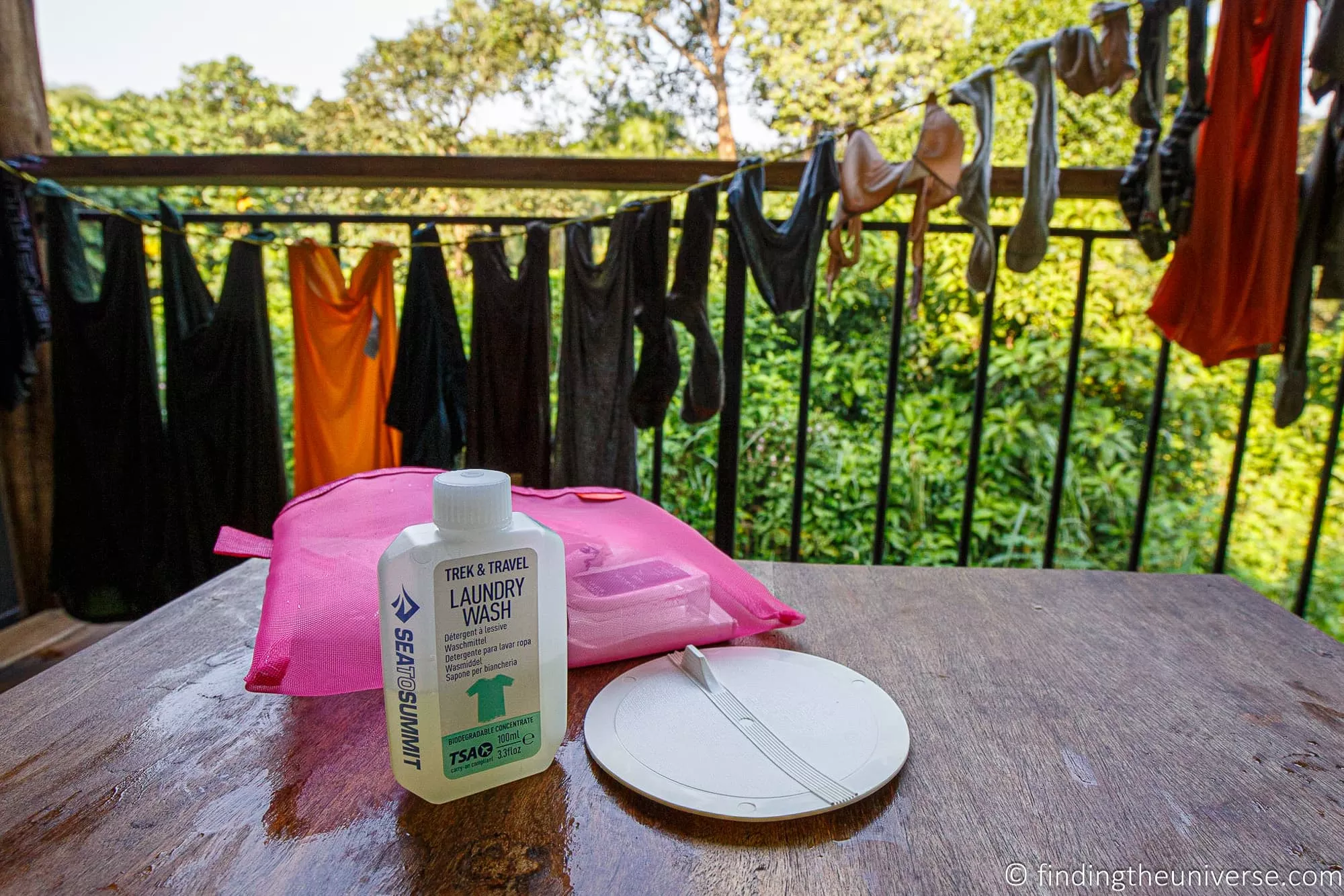
Depending on how long your safari trip is, it’s possible that you might need to do a little laundry as you travel. We’ve done a couple of five-week safari trips, and we had to do laundry a few times on both.
Whilst many lodges and hotels will do your laundry for you if you stay more than one night, you can also normally just handwash a few items yourself, which is what we often end up doing. In hot countries it can often dry in an afternoon.
The main things you will need are some form of travel wash, a sink stopper, and a portable clothesline to hang your clothes.
For laundry wash in a travel-sized bottle or tube we like Dr. Beckmann’s travel wash, Sink Suds, or the Sea to Summit Wash, all of which we have used to do laundry whilst travelling all around the world. Or just put your favourite liquid laundry detergent in a reusable plastic or silicone bottle and pack it along.
For a clothesline, there are lots of portable clotheslines on Amazon. We particularly like this one as it packs away small and you don’t need to pack pegs. For a sink stopper, Jess has been using this one for over 10 years.
For more tips on laundry, see our complete guide to laundry when you travel.
Luggage for Safari
When choosing what to pack all your belongings into for your safari trip, a lot will come down to the type of trip you are taking, especially around the transport.
If you’re going to be using small planes for example, this will have a big impact, and you’ll likely find a sturdy duffle travel bag like this is the best option.
You might be wondering if wheeled luggage makes sense for safari. In our experience, the majority of accommodation options don’t really suit wheeled luggage as the ground is simply too rough. So whilst it will be nice at the airport, beyond that you’re likely going to have to carry the bag (or rely on the enthusiastic hotel staff).
However, if you already have wheeled luggage and won’t be taking small planes, then by all means don’t feel you need to buy new bags. We’ve taken a number of safaris with hard-sided wheeled luggage and it worked out great. Inside whichever bag you choose, packing cubes make it much easier to keep clothes compartmentalised, especially in a soft duffel with no built-in dividers.
As well as larger luggage, we highly recommend bringing a small backpack or shoulder bag that you can use on a day-to-day basis. This can carry things like your water bottle, battery charger, guide books, suncream and insect repellent.
We use a small Osprey day pack as well as a larger Vanguard camera bag for our camera gear on a day-to-day basis. If you’re picking a day bag for safari, our guide to travel daypacks covers eleven of them.
If you’re looking for a new bag anyway, we have no hesitation recommending Eagle Creek or Osprey specifically for safari.
For hard-sided luggage with wheels, we use and can recommend Level8 or Delsey, both of which we have used on trips around the world including safaris (without domestic flights).
For camera gear, we use Vanguard for our camera bags. They offer a great mix of high quality and great value. Laurence has been a Vanguard ambassador since 2014 and is always happy to recommend their gear.
Books for Safari
When you go on safari you are going to be seeing a lot of new animals and birds.
Your guide will normally be very knowledgeable and help you identify what you are seeing, but it is also nice to be able to develop your own recognition skills.
We’d also often see birds or animals around our hotel when we were not with our guide, and want to know what they were.
For this reason, we recommend bringing along a guidebook or two to the likely animals and birds you might see. Whilst your guide will probably have a giant and super comprehensive book, we suggest that a smaller book covering the most common animals and birds will be more practical for packing.
We particularly like the Pocket Guide series, which we’ve used on various trips. There’s the Pocket Guide to the Birds of East Africa (currently out of print, so you may need to grab a used copy), the Pocket Guide to the Mammals of East Africa, and the Pocket Guide to the Mammals of Southern Africa.
We have found that having a small reference guide can make the safari experience a lot more fun and hands on, and well worth the small investment.
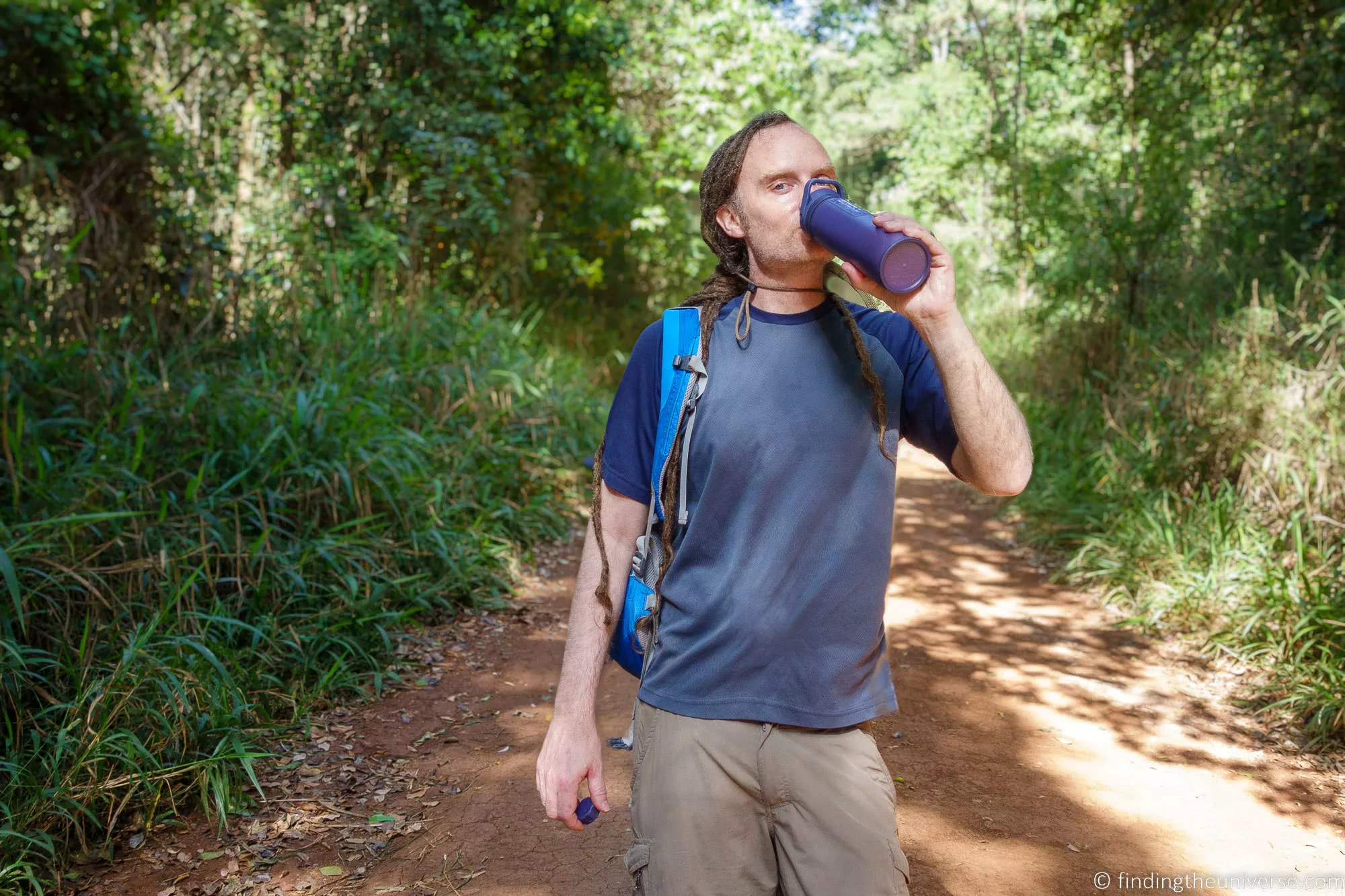
Reusable Water Bottle / Water Filter
You will definitely need to drink a lot of water on safari. Unfortunately, most safari destinations do not have safe drinking water, meaning you need to either drink bottled water, or figure out a way to purify it yourself.
We prefer the latter option as it means we can cut down on plastic waste. Depending on your safari operator, they may also provide a large refillable water container that you can refill your own bottle from. Some hotels also filter their own water on site.
In either case, we highly recommend travelling with at least one refillable water bottle per person on your trip. Just make sure to get one with a lid that seals and doesn’t drip, and one that will fit into a standard cup holder or the back of a vehicle seat pouch.
For water bottles, we use and love Klean Kanteen bottles, and they have a range to choose from. Jess uses the classic, whilst Laurence likes the wide mouth version.
If you decide to go down the route of filtering your own water, we recommend reading our guide to safe drinking water when travelling, as well as the best water filters for travel, which contain lots of useful advice to help you pick the right product for your trip.
If you have questions or want advice based on our experience, just ask in the comments section of this post or in either of those water-related articles.
Entertainment Items
Whilst a safari is very entertaining in and of itself, there will be periods of downtime, such as long drives between game reserves, flights, or afternoon and evening periods between game drives.
For these periods, you may want to bring some entertainment. We always like to travel with a pack of playing cards for example, as well as some books to read.
Many hotels and safari lodges will have a small book swap service, so you can often swap books as you go. A Kindle or similar eBook reader can also be a good investment if you read a lot.
If you’re a coffee drinker like me, the AeroPress Go is worth squeezing in. It brews a proper cup from nothing more than a flask of hot water, which makes it a nice luxury at a remote lodge or bush camp where the coffee can be hit or miss.
Another thing we love to do when we travel is keep a travel journal. On safari it’s a great reminder of what we’ve seen and done each day, and it makes for a lovely keepsake.
See our guide to the best travel journals for some of our favourites.
What You Can Leave at Home
After enough safaris, the biggest lesson we’ve learned is that most people pack too much. Here’s what we’ve stopped bringing.
Too many clothes. Almost every lodge and camp offers laundry, and hand-washing a few things in a sink dries fast in a hot climate, so you rarely need more than a few days’ worth of outfits even on a multi-week trip. We now pack for about five days and wash as we go.
A hard-sided suitcase, if there’s any chance of a bush flight. It simply won’t be allowed on a light aircraft, and even on the ground it’s awkward on rough tracks. A soft duffel does everything you need.
A huge camera kit you won’t use. It’s tempting to bring every lens you own, but a single body and one long zoom covers the vast majority of safari shots. The rest just adds weight you’ll haul through airports.
Brand-new hiking boots. If your trip does involve trekking, break your boots in at home first. A five-hour gorilla trek is the worst possible place to discover a hot spot.
Valuables and a heavy toiletry bag. Safari is casual, so leave the jewellery at home and pack toiletries in miniature. Camps and lodges usually provide the basics anyway.
Safari Packing Checklist
Here’s a full safari packing checklist to help you remember what to bring on your trip.
You can also download and print this checklist as a PDF to tick off as you pack. We’ve also created a handy shoppable safari packing list on Amazon for the gear we recommend.
- Clothing
- T-shirts / tops
- Button down shirts
- Sweater / fleeces for layering
- Trousers / Pants / Shorts
- Dresses
- Underwear
- Socks
- Comfortable walking shoes
- Hiking boots (if needed)
- Sandals (if needed)
- Sleepwear
- Swimwear
- Nicer outfit for evening wear if required
- Sunglasses
- Wide-brimmed hat
- Raincoat or poncho
- Coat (if needed)
- Hat / gloves (if needed)
- Reusable water bottle / water filter
- Toiletries
- Toothpaste / toothbrush
- Deodorant
- Skincare items (cleansers/soap/creams etc.)
- Moisturiser / lotion
- Lip balm with SPF
- Sun cream / Sunscreen (SPF 30+)
- Insect repellent
- Basic Medications and first aid items (incl. anti-malarials and prescriptions)
- Hygiene Products
- Cosmetics
- Hair care items (shampoo/comb/hair ties, etc.)
- Razor / tweezers / nail clippers
- Hand sanitiser
- Rehydration salts
- Eye mask / ear plugs
- Other __________________
- Photography Gear
- Camera and lenses
- Photography bean bag
- Memory cards
- Spare batteries / chargers
- Camera accessories
- Other __________________
- Electronics
- Smartphone
- Headphones / ear buds
- Portable power pack
- Travel adapter
- Cables / chargers
- Other __________________
- Hiking / Climbing Gear (if needed)
- Hiking day bag, duffel bag (if needed for porter), gaiters or leech socks, hiking poles, hiking clothing, reusable water bottle or hydration pack (like a Camelbak), head lamp or flashlight, any camping gear like a sleeping bag etc. (if not provided), Other
- Luggage
- Checked bag
- Carry-on bag
- Day pack
- Miscellaneous
- Passport
- Visa / proof of onward travel etc (if required)
- Vaccination records
- Jewellery / watch
- Binoculars
- Guidebooks
- Laundry supplies
- Travel journal
- Mini sewing kit
- Reading materials
- Cards / games / puzzle books
- Other ___________________
Safari Packing FAQ
What should you wear on safari?
Lightweight, neutral-coloured clothing in browns, greens and khaki, with long sleeves and long trousers for protection from sun and biting insects. We layer up, because even hot destinations get cold at dawn and dusk, so pack a fleece or a warm top alongside your t-shirts and safari shirts. Quick-drying fabrics are ideal, since you’ll likely wash clothes as you go.
What colours should you avoid on safari?
Avoid bright primary colours, which make you stand out, and steer clear of blue and black, which are known to attract tsetse flies (their bite is nasty and can carry disease). Also leave camouflage clothing at home, as it is actually illegal for civilians in some countries, including Zimbabwe and Uganda. Stick to natural earth tones and you’ll be fine everywhere.
How much luggage can you take on a safari?
On the ground you usually have plenty of room, but bush flights are the catch. East African light aircraft typically limit you to around 15kg (33lb) including hand luggage, in soft-sided bags only, while Southern African charters allow roughly 20kg plus a small carry-on. Hard suitcases often aren’t permitted at all. Always confirm the exact allowance with your operator before you pack.
Do you need binoculars for a safari?
Yes, and they’re one of the most underrated things you can bring. Your guide will get you close to a lot of wildlife, but binoculars let you pick out birds, distant cats and detail you’d otherwise miss. You don’t need to spend a fortune, but we’d budget at least $80 for a usable pair. An 8×42 is a great all-round choice for most people.
Do you need hiking boots for a safari?
Only if your trip involves proper walking, such as gorilla or chimpanzee trekking, mountain climbing or guided bush walks. For those, waterproof hiking boots are essential, and you should break them in before you travel. If you’re sticking to vehicle-based game drives, a comfortable pair of closed shoes and some sandals for camp are all you need. Boots are heavy and bulky, so skip them if you can.
How do you do laundry on safari?
Most lodges and camps offer a laundry service if you stay more than a night, and it’s usually inexpensive. For everything else, hand-washing in a sink works well, and clothes dry quickly in the heat. We pack a little travel wash, a universal sink stopper and a compact clothesline, and wash a few items every four or five days. That means you can pack far less than you might think.
What camera should you take on safari?
You want a camera with a long zoom to reach distant wildlife, ideally 400mm or more. For the best results we use a mirrorless camera with a telephoto zoom, but a bridge camera with a built-in superzoom is a lighter, simpler and cheaper option. A photography bean bag to steady the camera in the vehicle makes a bigger difference than most people expect. Renting gear is also worth considering for a one-off trip.
What do people most often forget to pack for safari?
The usual culprits are a soft duffel bag for bush flights, a universal travel adapter, a USB power bank for charging on the go, rehydration salts for hot days, and personal medicines including antimalarials. A reusable water bottle is essential too, as safe drinking water isn’t a given. Our full checklist above covers everything else.
Further Reading
That’s it for our guide to what to pack on safari. We hope you found it useful. We do have some more content that we think you might find handy when planning your safari.
- Our guide to getting better photos on safari, as well as choosing the best camera for safari
- We also have a guide to the best photography bean bags for safari
- If you are keen on seeing primates, we have a guide to gorilla trekking as well as a guide to chimpanzee trekking
- We have a guide to getting online when travelling, to help you stay connected on the go
- You’re going to need to power all your devices when you travel, so see our guide to the best travel adapters so you can choose the right one for your trip
And that’s it! As always, we are happy to try to answer any questions you may have about planning your own safari. Just pop them in the comments below, and we’ll get back to you as soon as we can.
Or if you have been on safari and want to share your own experiences or advice about packing, feel free to share below.
Myra says
Hello there, I am wondering about packing jackets or coats for an upcoming safari trip to South Africa? It will be myself, a friend, and my teenage daughter. We have never been and will be visiting during the country’s winter season (July). We’ll be in both north and south parts of the country and we’ve been told to prepare for cool weather and rain, as well as warm sunny weather, but not too much else. Going on a 10 day planned safari tour and need to keep our packing to a minimum as I think there are size/weight requirements for parts of the journey. Wondering how you would decide about what to bring for warmth and rain given the time of year?
Also, if the 3 of us share a photo beanbag, which one might you suggest for someone who has little space?
Appreciative of any advice you can share with me and thanks for such a great article on packing for a safari – it has been a great help for us as we come up with what we need to buy for our trip to South Africa!
Laurence Norah says
Hi Myra,
Sounds like you have a wonderful trip coming up!
Having visited South Africa in July I can confirm that it definitely gets pretty cold, especially at higher elevations. In July in Johannesburg it’s not unusual to have temperatures close to freezing for example. So you are definitely going to want warm clothes for your trip.
I would recommend packing a number of layers so you can take them on and off as the day warms and cools, and you can also then mix and match to suit. If you are particularly sensitive to the cold you might consider thermal baselayers, but the challenge with those is that as it gets warmer you will likely find they are too hot and removing a base layer in the middle of a safari is going to be more challenging.
So a good warm coat as your outer layer is probably going to be your best bet, and then a long sleeve mid-layer fleece followed by a baselayer. You might also appreciate a warm hat and gloves. A lot of safari time takes place early in the morning and in the evening, when temperatures are going to be lower. I would personally bring a lightweight rain jacket or poncho and a warmer jacket. Then if it’s warmer in the day and raining I can still wear the rain jacket, rather than having a heavy waterproof jacket that might be too warm.
A good down (or down style) jacket will be fairly lightweight and still warm, so that might be the best option. Fleece is also a light material.
For a photo bean bag I’d probably recommend the smaller Kinesis Safari Sack 1.4 which is pretty small. If you get buckwheat that is very light, or you can buy something like kidney beans when you arrive in country. If you have larger camera gear then the Kinesis 4.2 is also a great pick, I own of these and it works great. It’s also worth noting that most bean bags are very light and small when empty, they only start to take up weight and space when they’re full.
I hope this helps, have an amazing time on safari and let me know if you have any more questions!
Laurence
Glenn M. says
Just wanted to stop by and say that this is such a wonderful post for anyone packing for a safari for the first time (or second time!). We have been lucky to do a couple of African safaris in our life and it was fun to read over this and remember them even if our safari days have probably come to an end. Definitely second the recommendations for Craghoppers (if you know, you know!) and for bringing soft sided luggage, hard wearing clothes, comfortable high-top hiking shoes/boots, lots of sun cream & insect repellent, a hat, earbuds, and some physical things to do (books, cards, journals, etc.) in the evenings and on long driving days.
Also woudl add for those who wear glasses like myself, those eye glass things that attach to your glasses with a cord and keep your glasses from coming off. Can also be useful for sunglasses as my wife and son wore them as well. They saved my glasses a couple of times and they are very cheap to buy. Maybe somethign to add to your otherwise great safari packing list here?
Also my wife always brought a few little souvenirs or useful items from home for our main driver and guide on the trips to give them as a small token of our appreication.
Laurence Norah says
Hi Glenn,
Thanks so much! Your tip on a sunglasses holder is a good one, Jess does actually normally travel with one and also finds it invaluable. I will definitely add that to our post. I also like your idea of bringing things from home as gifts for your guide, that’s a lovely idea.
Thanks for stopping by and sharing your thoughts! I’m actually hiking in Wales in my Craghoppers at the moment. Such great pants 🙂
Cheers!
Laurence