
I'm Laurence, a professional travel photographer since 2010. Jess and I write this site from our own travels.
Bratislava is one of the easiest day trips you can make from Vienna, and Jess and I did it as a half day in September 2026: the 9:14am train out of Wien Hauptbahnhof, about three and a half hours walking the old town, lunch, and back in Vienna by mid-afternoon with plenty of time to get ready for an evening at the State Opera. I’ve been a professional travel photographer since 2010, and all the photos in this guide are from that one day.
The two cities are only about 35 miles (55 km) apart, which makes them two of the closest capital cities in the world, and a regional train gets you from one to the other in under an hour. Half a day is enough for the old town, and it’s what I’d recommend to most people. With a full day you can add Bratislava Castle and the ruins of Devín Castle, which we didn’t have time for.
| At a glance | Half day (what we did) | Full day |
|---|---|---|
| Time in Bratislava | About 3.5 hours | 7 to 9 hours |
| Train | Wien Hauptbahnhof to Bratislava hlavná stanica, 56 minutes | The same train, or the one an hour earlier |
| Ticket | ÖBB Bratislava-Ticket: €19 each when we bought ours in September 2026, with city buses and trams included on the day you travel out | The same ticket |
| What you see | St Michael’s Gate, the Main Square, Čumil, St Martin’s Cathedral, the UFO Bridge | All of that, plus Bratislava Castle, Devín Castle or the Blue Church |
| Back in Vienna | Mid-afternoon | Evening |
Table of Contents:
Is Bratislava Worth a Day Trip from Vienna?
Yes, if you have a spare day. Jess and I really enjoyed our half day there, and we’d highly recommend it. For a €19 train ticket and under an hour each way, you get a second capital city in a different country, a medieval old town small enough to walk in a morning, and a piece of history Vienna doesn’t have: from 1563 to 1830, the Kingdom of Hungary crowned its kings and queens in Bratislava’s St Martin’s Cathedral, when the city was better known as Pressburg.
If you only have two days in Vienna, I’d skip it. Vienna has plenty to occupy you, as our 2 day Vienna itinerary shows, which is why we saved Bratislava for our second visit. With three or more days in Vienna, you can spare the time.
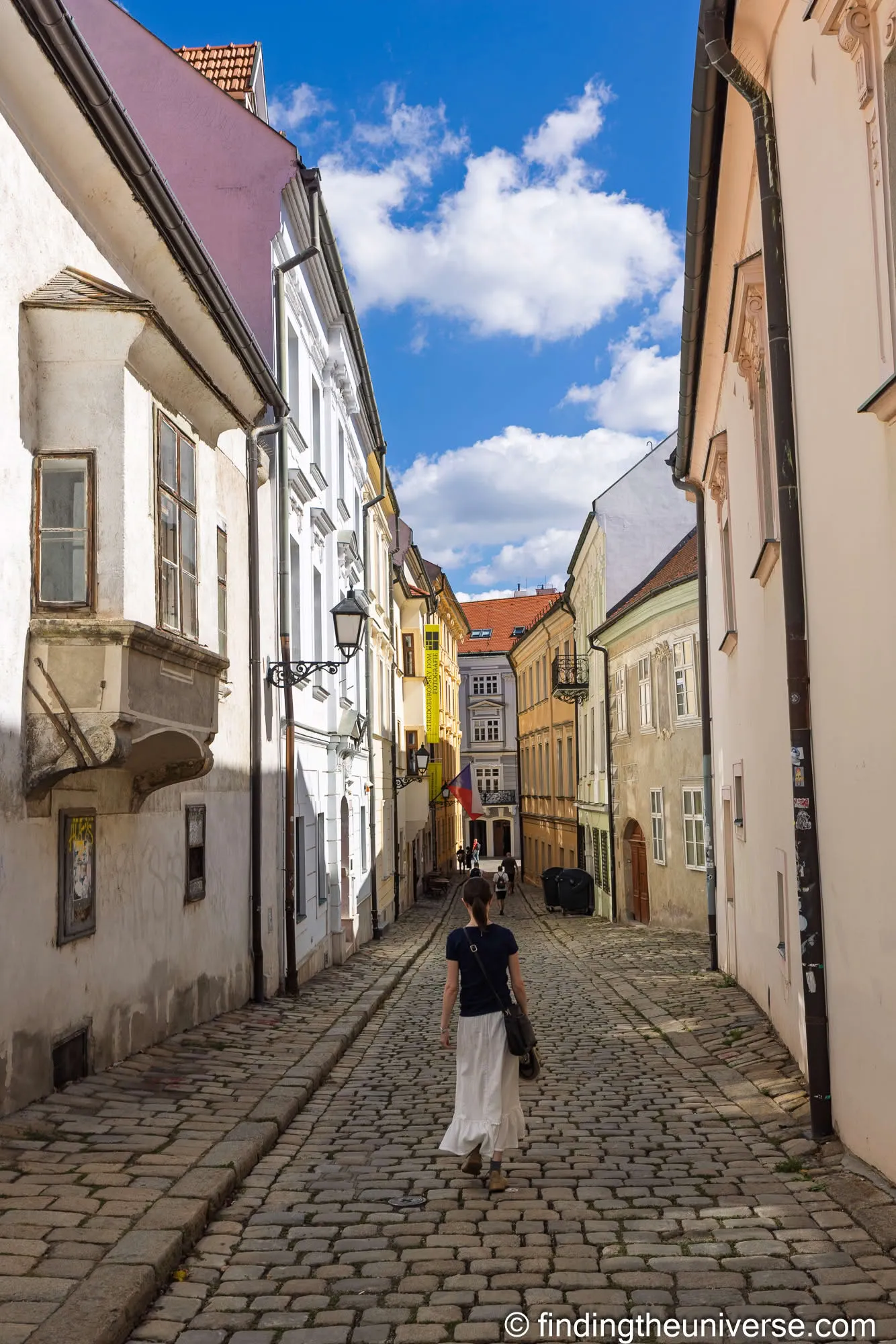
Bratislava is a lot smaller than Vienna. The old town is a handful of pedestrian streets between St Michael’s Gate and the Danube, and there’s nothing on the scale of the Hofburg or Schönbrunn. For palaces and big museums, stay in Vienna. For a change of pace and a second country on your trip, go.
How Much Time Do You Need in Bratislava? Half Day vs Full Day
Half a day is enough for Bratislava’s old town. Everything on our route is within a few minutes’ walk of the next stop, and three and a half hours on the ground covered the gate, the Main Square, Čumil, the cathedral, a look at the UFO Bridge and a sit-down lunch.
A half day costs you one Vienna morning. Leave Wien Hauptbahnhof around 9am, catch a train back just before 2pm, and you’re in Vienna before 3pm with the rest of the day free. That suited us, as we had the State Opera that evening (and I had laundry to do!).
A full day adds Bratislava Castle, Devín Castle or both, and costs you a whole day in Vienna. I’d only do it with four or more days in Vienna, or if castles are high on your list.
In winter, plan around the light. The sun sets around 4pm in December, and from November to February Devín Castle closes at 4pm (last entry 3:15pm). So head out to Devín straight after lunch, then come back for Bratislava Castle, whose museum stays open until 6pm and whose grounds are open until 10pm.
How to Get from Vienna to Bratislava
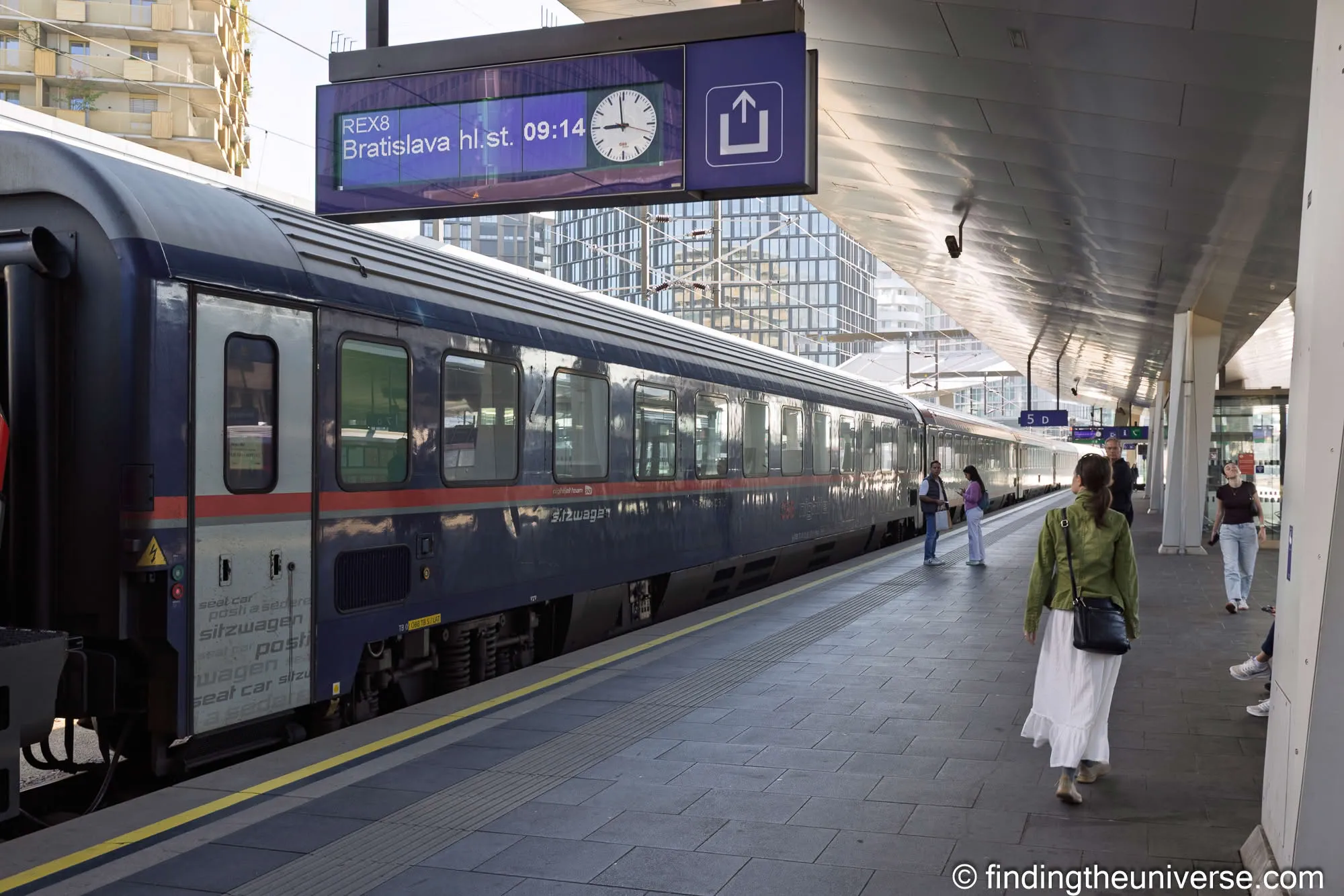
Take the train. Regional trains run every hour from Wien Hauptbahnhof to each of Bratislava’s two main stations, the journey takes just under an hour, and ÖBB’s Bratislava-Ticket covers the return trip plus a day of Bratislava’s buses and trams. It’s what we did, and I’d do the same again.
Here’s how the options compare.
| How | Journey time | Cost | Arrives at | Our take |
|---|---|---|---|---|
| Train via Marchegg (REX 8) | 56 minutes | Bratislava-Ticket (we paid €19 return in September 2026) | Bratislava hlavná stanica | How we went, and our pick |
| Train via Kittsee (REX 6) | 59 minutes | Same Bratislava-Ticket | Bratislava-Petržalka, south of the Danube | Fine too, bus 93 links it to the old town |
| FlixBus | From 55 minutes | From about €5.50 one way | Most SNP (under the UFO Bridge) or the main bus station | Cheapest, but traffic can slow it down |
| Slovak Lines | About 70 minutes | Check when you book | Most SNP, via Vienna Airport | Handy if you’re coming from the airport |
| Twin City Liner boat | 75 minutes (about 90 back) | From €34 one way, plus a €3 fuel surcharge | The riverside in Bratislava’s old town | Seasonal, so check the dates first |
| Guided tour | Full day | Several times the train fare | Depends on the tour | Worth it to add Devín without the bus |
| Car | About an hour | Two vignettes, Austrian and Slovak | Wherever you park | Only if you’re driving on afterwards |
The ÖBB Bratislava-Ticket
The Bratislava-Ticket is an ÖBB fare that covers one trip out and one trip back between any train station in Vienna and any train station in Bratislava, plus a day of Bratislava city transport. We bought ours from an ÖBB ticket machine without any trouble, and they cost €19 each. For an international return train trip with the bus into town thrown in, we thought that was great value!
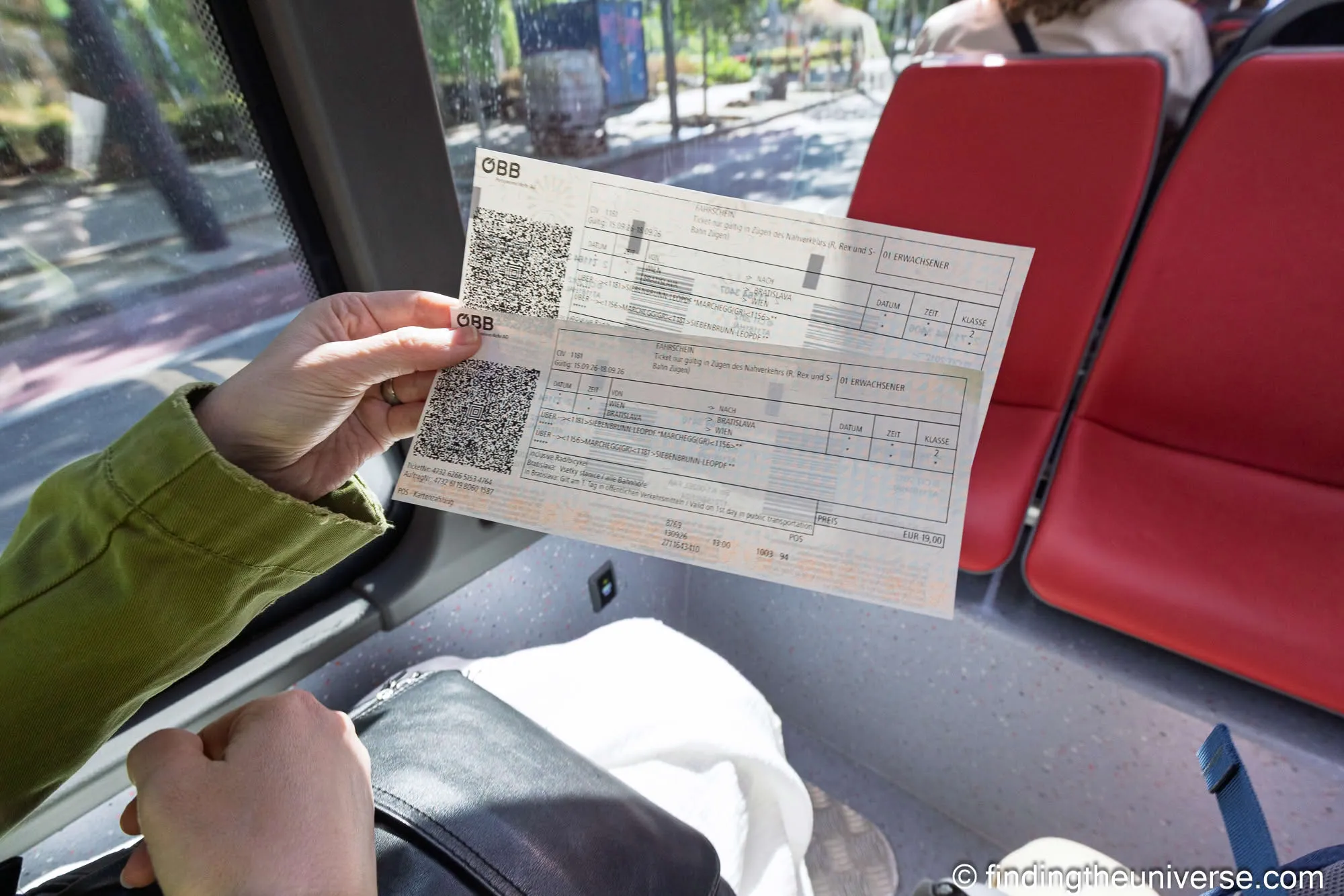
The rules are worth reading before you buy:
- It’s valid for four days, for one journey out and one journey back within that window, with no stopovers on the way.
- It works on either route, via Marchegg to Bratislava hlavná stanica or via Kittsee to Bratislava-Petržalka, but only on regional trains (REX and Os) in second class. Long-distance trains between the two cities aren’t covered.
- Bratislava city transport is included on the first day only, on the city’s DPB buses, trams and trolleybuses. That includes bus 29 out to Devín Castle. If you stay the night and come back the next day, you’ll need a separate city ticket for that second day.
- You can buy it at ÖBB ticket counters and machines, through ÖBB customer service, or from travel agencies that sell ÖBB tickets. There’s a child version too.
Fares can change, so check the price on the machine before you buy. ÖBB’s new timetable starts on 13 December 2026, and fares sometimes change with it.
Hlavná Stanica or Petržalka?
Trains from Vienna use two stations in Bratislava, and the Bratislava-Ticket covers both. REX 8 trains via Marchegg leave Wien Hauptbahnhof at 14 minutes past the hour and arrive at Bratislava hlavná stanica, the main station north of the old town, 56 minutes later. REX 6 trains via Kittsee leave at 45 minutes past the hour and arrive at Bratislava-Petržalka, south of the Danube, 59 minutes later.
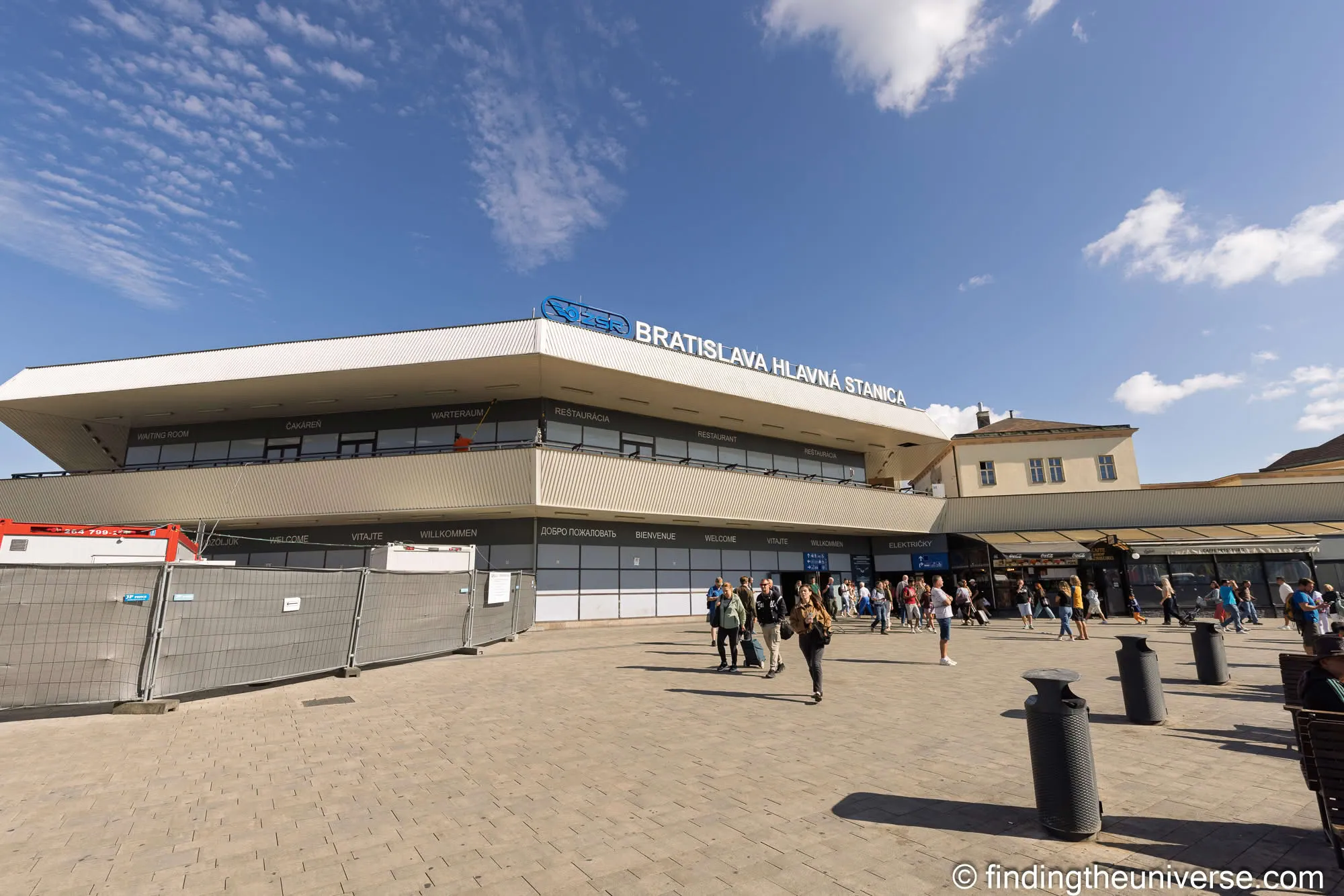
Each regional train goes to one station or the other, never both, so when ÖBB says there are two trains an hour to Bratislava, they’re going to different places.
Getting into the old town is easy from either one. Bus 93 links both stations to the Zochova stop, near St Michael’s Gate, in about five minutes. We used hlavná stanica, and it worked well: bus 93 into the old town, and tram 1 back to the station after lunch.
Plan your return around a specific station, though. REX 8 trains back to Vienna leave hlavná stanica at 50 minutes past the hour, and REX 6 trains leave Petržalka at 16 minutes past, so if you plan around one and turn up at the other, you’ll have a bit of a wait.
In the evening, check the timetable before you rely on a late train. There’s currently a gap with no 9:50pm train from hlavná stanica, and the whole timetable changes on 13 December 2026.
By Bus
FlixBus runs frequent buses from several stops in Vienna, including Erdberg and Wien Hauptbahnhof, to Bratislava’s main bus station and to Most SNP, the stop under the UFO Bridge on the edge of the old town. Fares start at around €5.50 one way, and the fastest buses take 55 minutes, though traffic can add to that.
Slovak Lines runs from Wien Hauptbahnhof via Vienna Airport to Most SNP and on to Bratislava’s airport and bus station, taking around 70 minutes end to end. It’s handy if you’re flying into Vienna and heading straight to Bratislava.
For a day trip, I’d still take the train. The Bratislava-Ticket includes your city transport, and trains don’t sit in motorway traffic.
By Boat on the Twin City Liner
The Twin City Liner is a high-speed catamaran that runs down the Danube from Schwedenplatz in central Vienna to the riverside in Bratislava’s old town. It takes 75 minutes going downstream to Bratislava, and about 90 minutes coming back against the current. Economy fares start at €34 one way, plus a €3 fuel surcharge per ticket, and you’ll need your passport to board (EU, EEA and Swiss citizens can use a national ID card).
It’s seasonal. In 2026 the main season ran from 20 March to 2 November, followed by Advent trips on Fridays, Saturdays and Sundays from 27 November to 20 December, which line up nicely with the Bratislava Christmas markets. The 2027 dates weren’t out when we checked in November 2026, so look for them on the operator’s news page before you plan around the boat.
If the dates work and the boat sounds fun to you, I’d take the boat one way and the train the other. For the rail leg you’ll need a one-way ticket, since the Bratislava-Ticket is a return.
Driving to Bratislava
Driving only makes sense if you’re carrying on somewhere else by car. You’ll need two vignettes, and both are digital: an Austrian one for the motorway out of Vienna, and a Slovak e-vignette, which you need from the border onwards, as the first two kilometres of the D4 motorway inside Slovakia are a toll section.
Austria’s vignette goes digital-only from 1 December 2026, and a 1-day vignette costs €9.80 in 2027. The Slovak e-vignette costs €8.10 for one day or €10.80 for ten days, and you can buy it online, in the eZnamka app, or at selected petrol stations and border crossings.
Our Half-Day Bratislava Itinerary
This is the route Jess and I walked. It runs comfortably from a 10am arrival to a train back just before 2pm, and you can stretch or shrink it depending on how long you linger over lunch.
We followed the Bratislava walk in the Rick Steves Vienna, Salzburg & Tirol guidebook, starting at St Michael’s Gate and working down through the old town to the river. Jess had her nose in it on the train out, and I took photos at every stop.
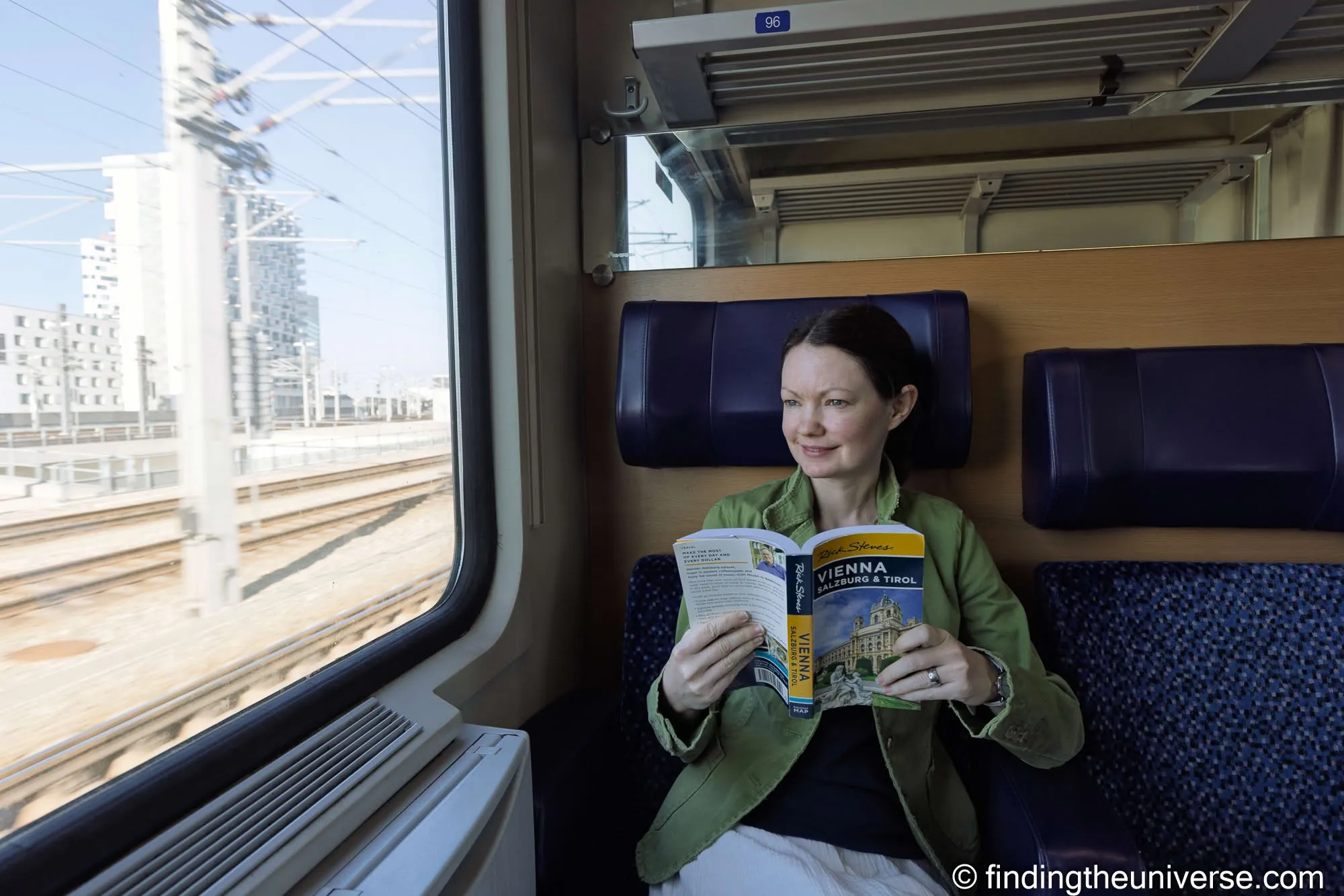
If you’d rather have a guide, there’s an Old Town and Castle walking tour that starts in Bratislava, so it fits around the train.
Bus 93 from the Station to the Old Town
Allow 15 minutes. From Bratislava hlavná stanica, take bus 93 from bus platform D to the Zochova stop, four or five minutes away. It runs every five to ten minutes during the day, and the Bratislava-Ticket covers it. Tram 1 to Poštová is the alternative. From Zochova it’s a short walk to St Michael’s Gate.
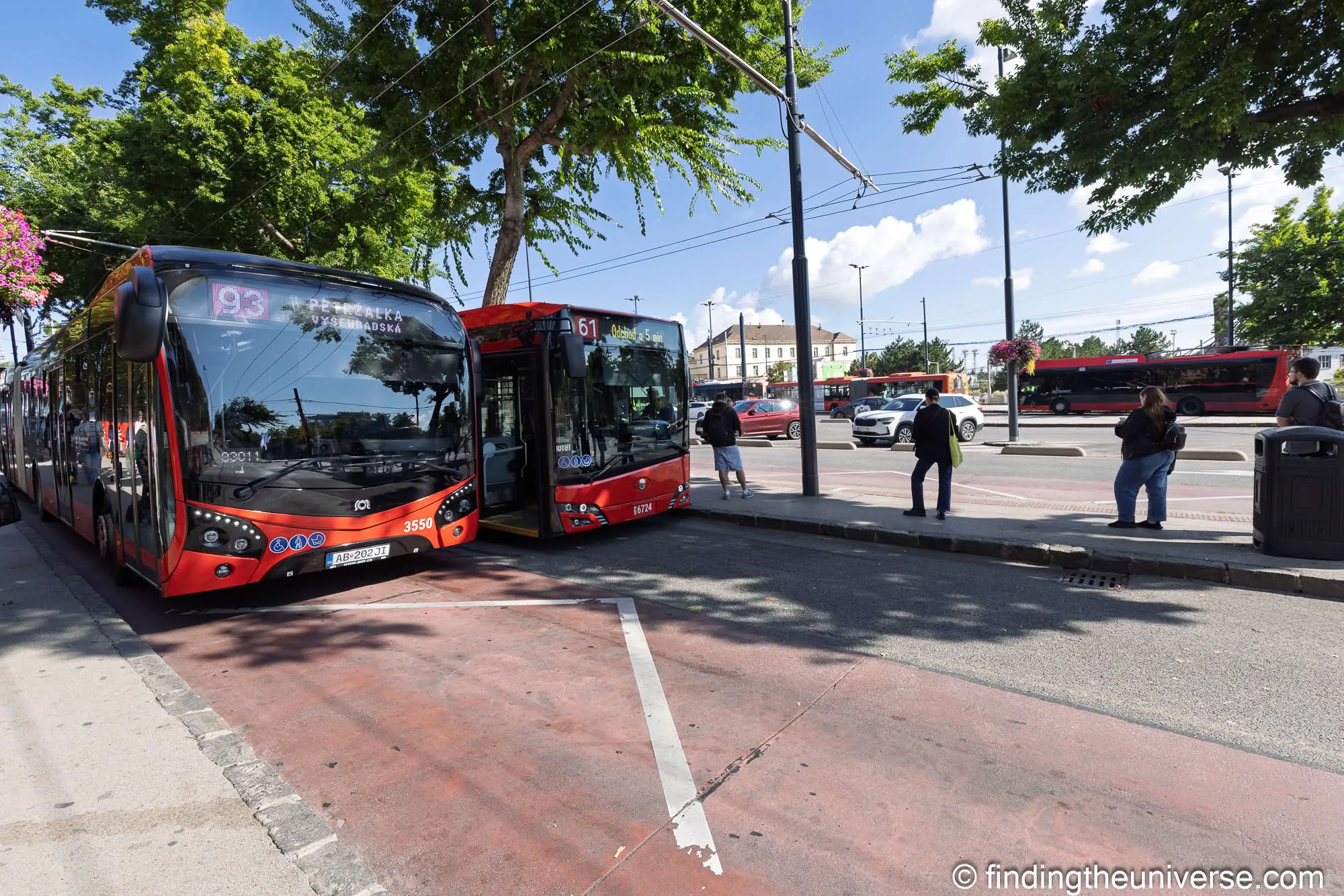
You can check routes and times on the DPB website, the city’s public transport operator.
St Michael’s Gate and Michalská Street
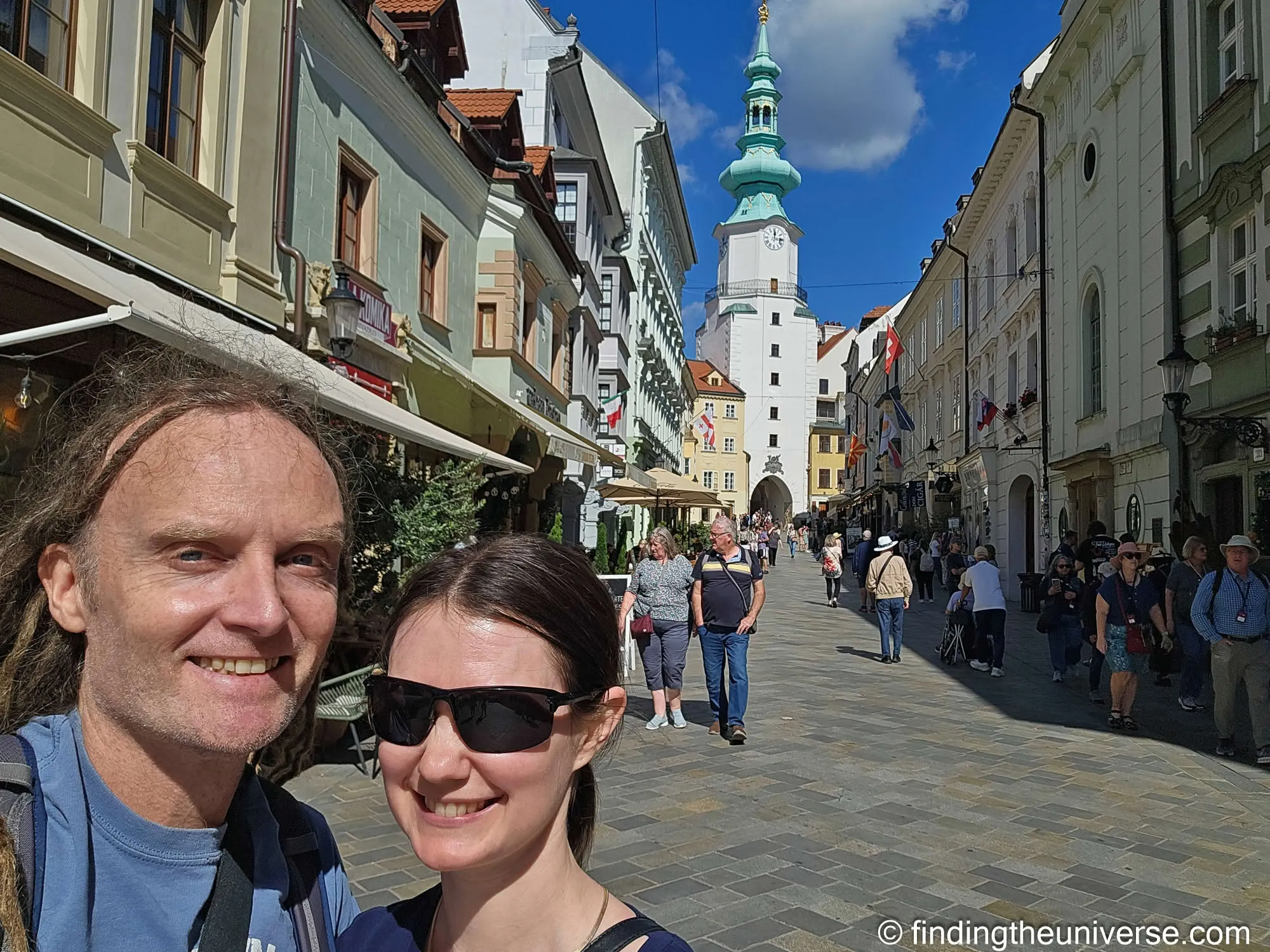
Allow 30 minutes. St Michael’s Gate is the only one of Bratislava’s four medieval city gates still standing, and walking through it and down Michalská street is the traditional way into the old town.
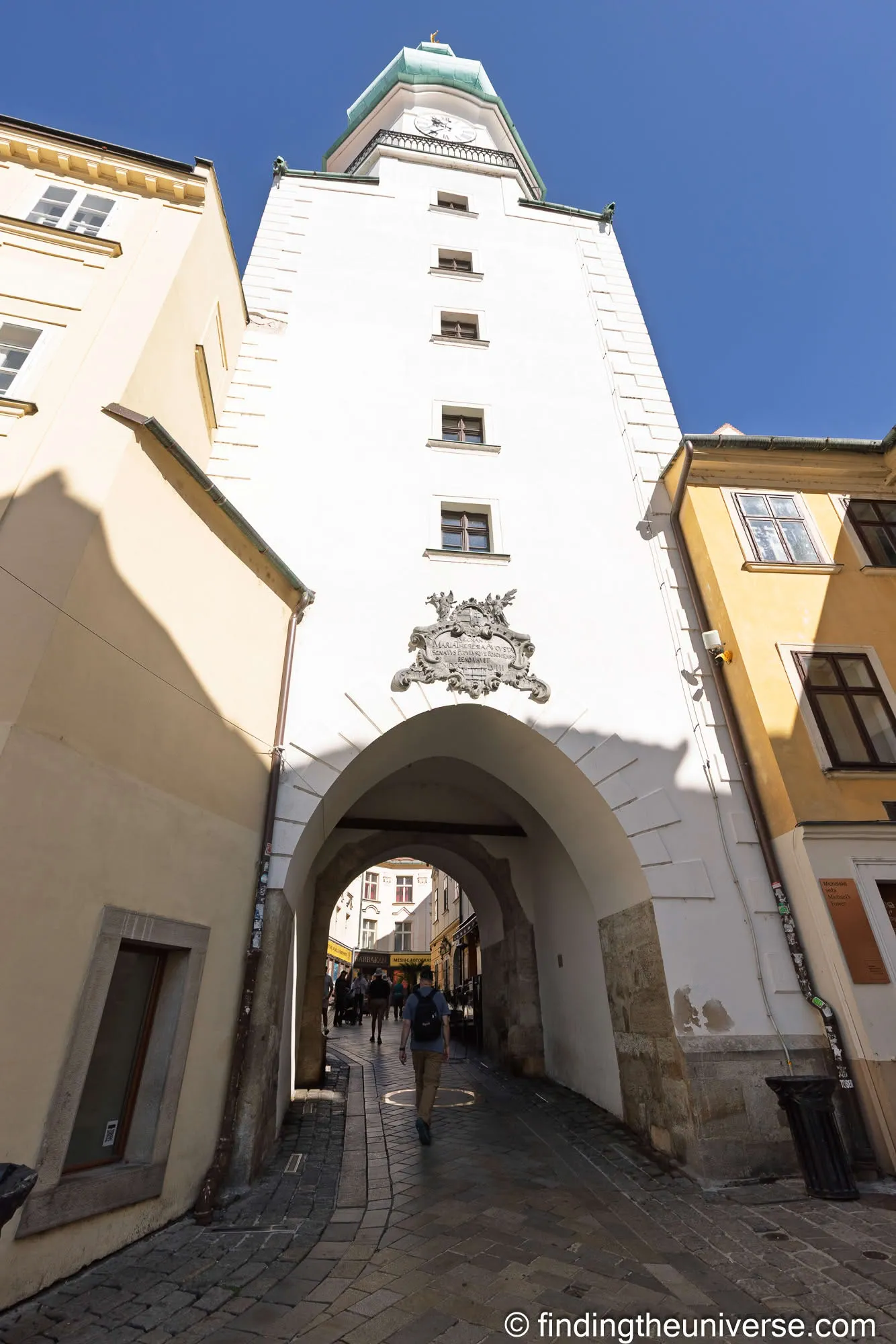
You can go up Michael’s Tower, which is run by the Bratislava City Museum. It’s open 10am to 6pm every day except Tuesday (last entry 5:30pm), and tickets cost €6. Oddly, you buy them at the Red Crayfish Pharmacy (Lekáreň U Červeného raka) a few doors down Michalská, which is free to go into. We were there on a Tuesday, so the tower was shut, but the gate itself is really the main event anyway.
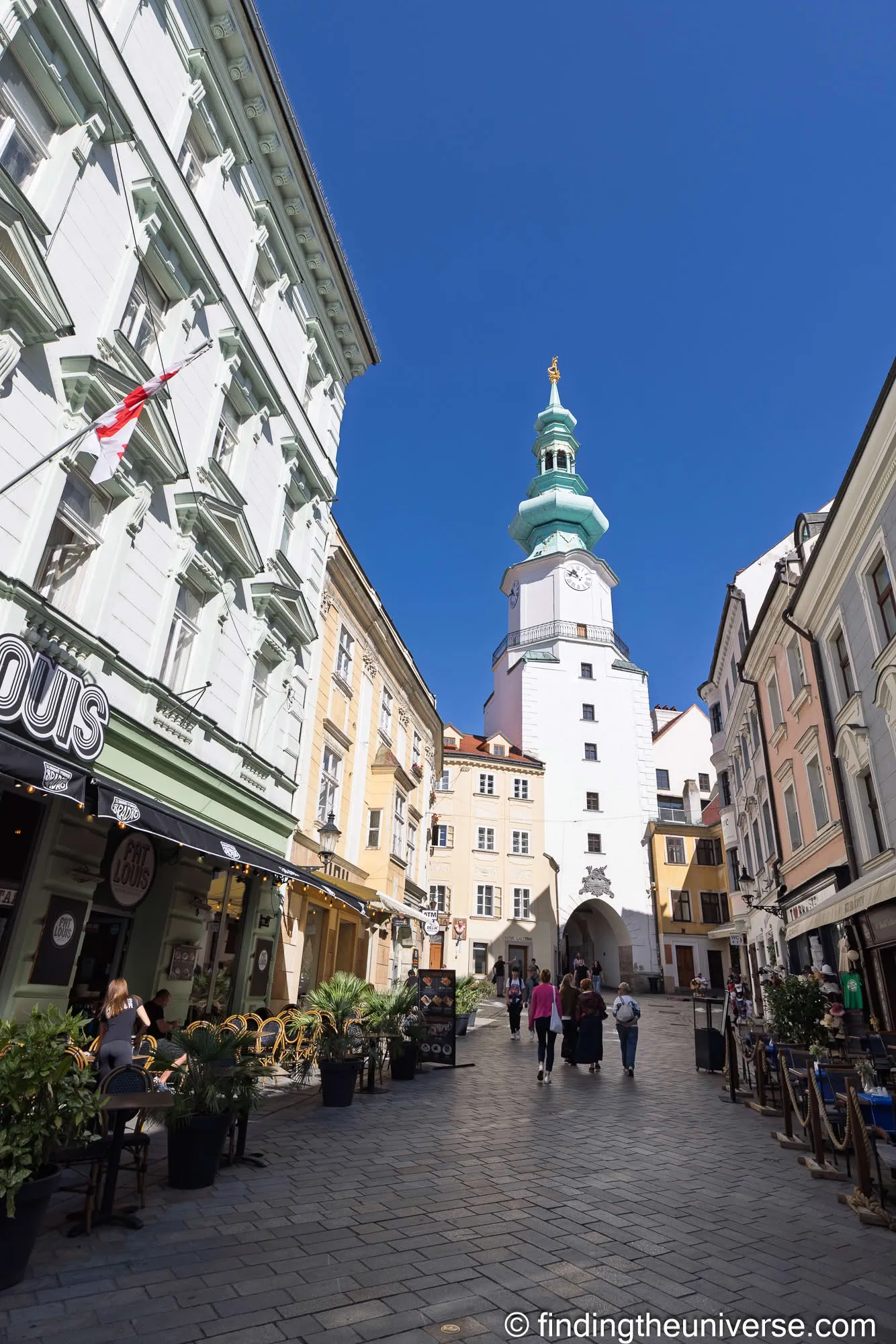
Photo tip: for the classic shot, walk a little way down Michalská and turn back, so the tower closes off the end of the street. Wait for someone to walk through the arch, which gives the gate a sense of scale.
Main Square, the Old Town Hall and the Primate’s Palace
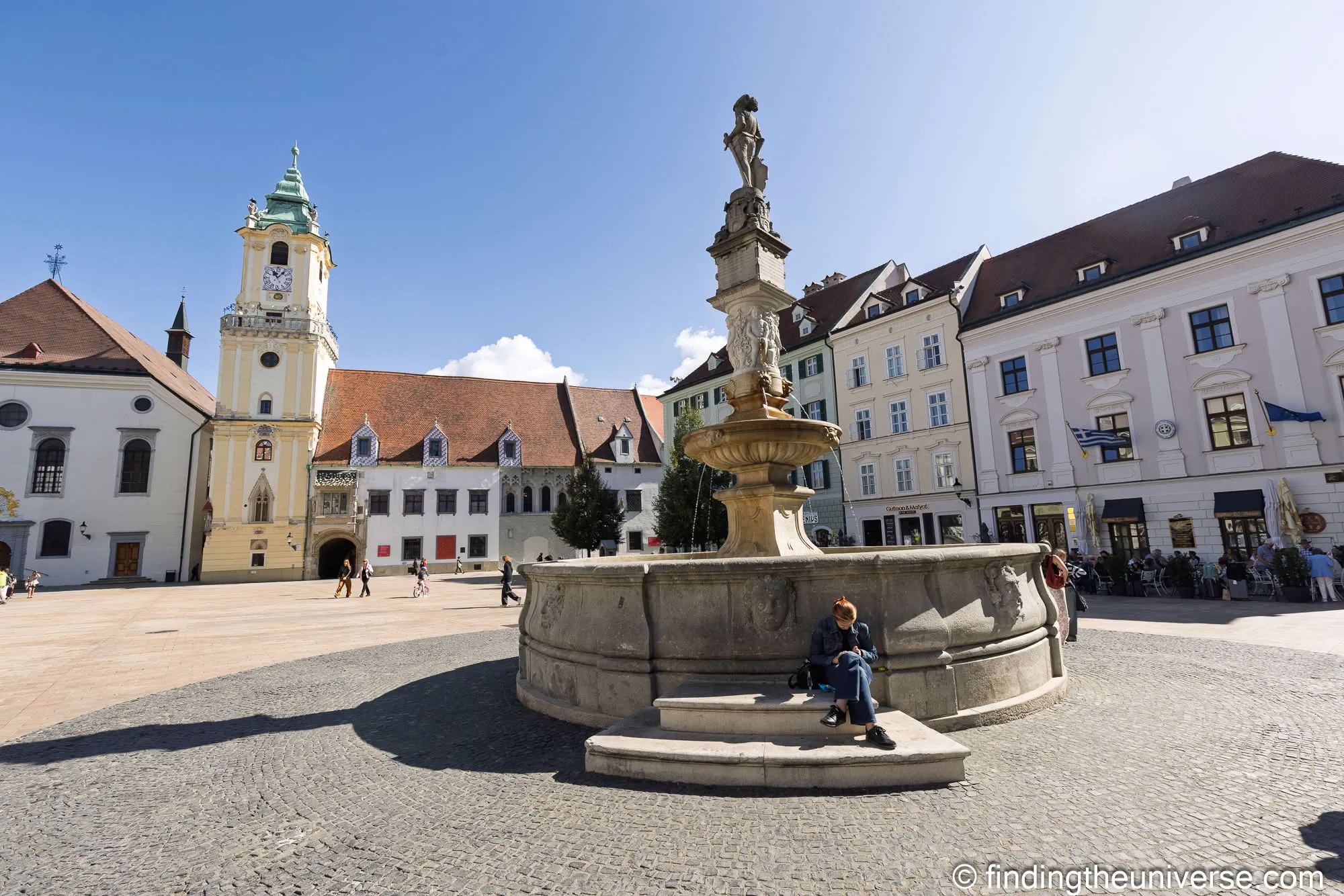
Allow 45 minutes. From the bottom of Michalská it’s a couple of minutes’ walk to Hlavné námestie, the Main Square, and the Old Town Hall. Inside is the City Museum’s exhibition on the history of Bratislava, and the €8 ticket includes a climb up the Old Town Hall tower. It’s open 10am to 6pm, Tuesday to Sunday, and closed on Mondays.
Right behind it is the Primate’s Palace, where the Peace of Pressburg between Austria and France was signed in the Mirror Hall in 1805. The palace also holds a set of six 17th-century tapestries woven at the royal workshop at Mortlake, near London, which were found hidden behind the palace walls in 1903.
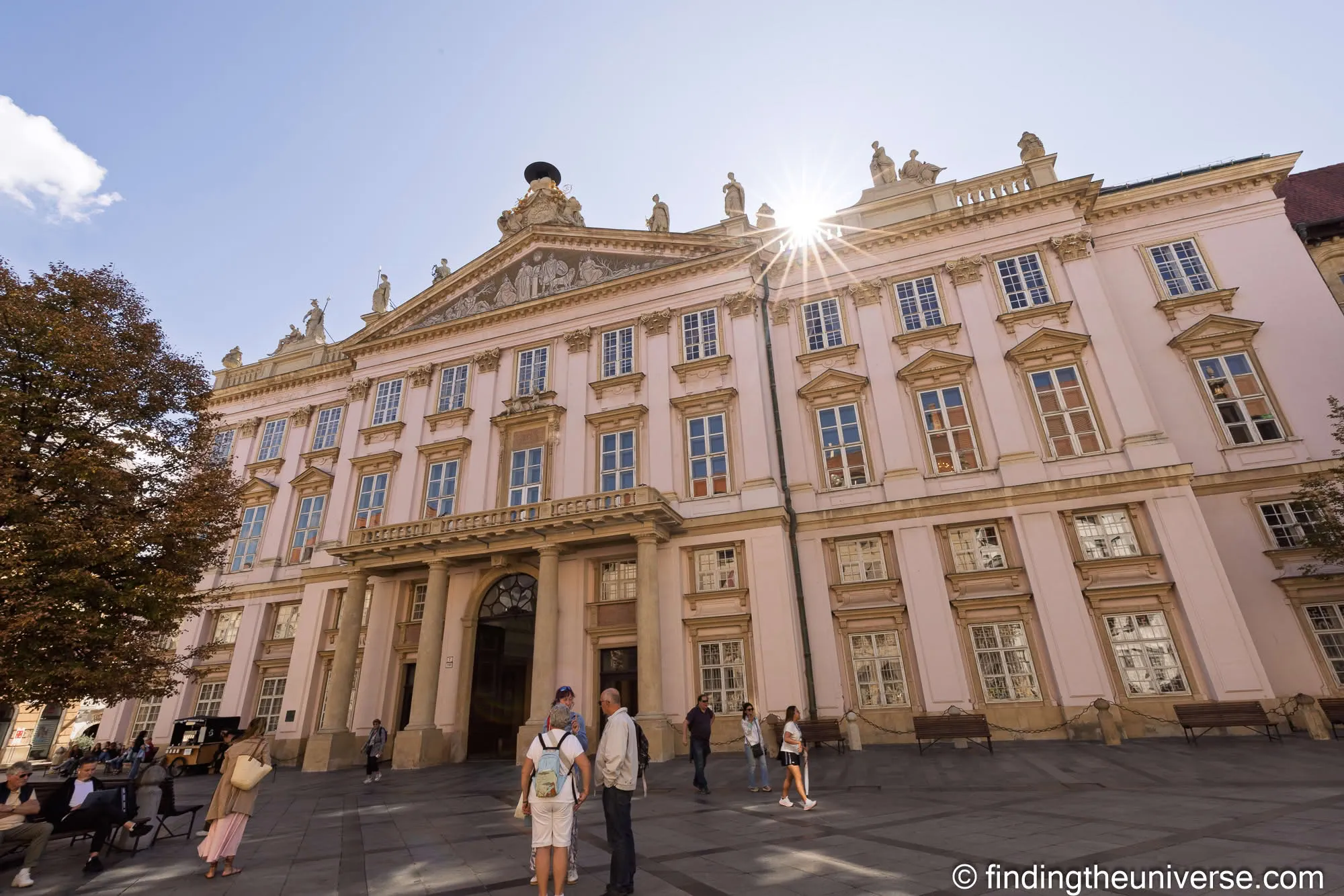
Tickets are €5 (€2.50 reduced, and free for under-18s). The opening hours change from week to week around official events, so check the city’s Primate’s Palace page before you plan on it.
If you only go inside one building on a half day, I’d make it the Primate’s Palace, for the tapestries and the Mirror Hall.
Photo tip: the Main Square is quite small, so a wide-angle lens (or the 0.5x setting on your phone) helps fit in the Old Town Hall tower. From late November the Christmas market fills the square, which makes for good evening shots but busy daytime frames.
Čumil and the Bronze Statues
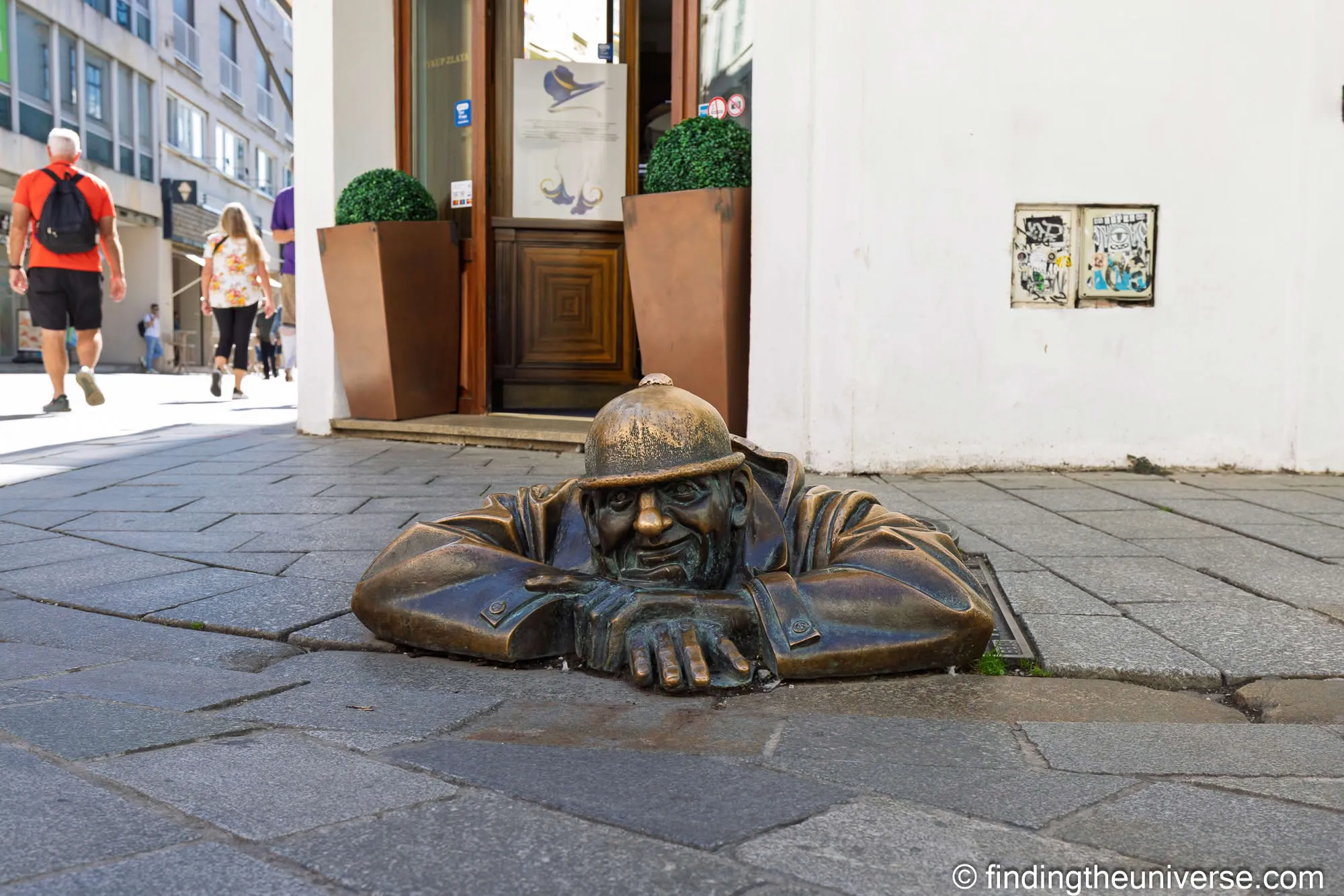
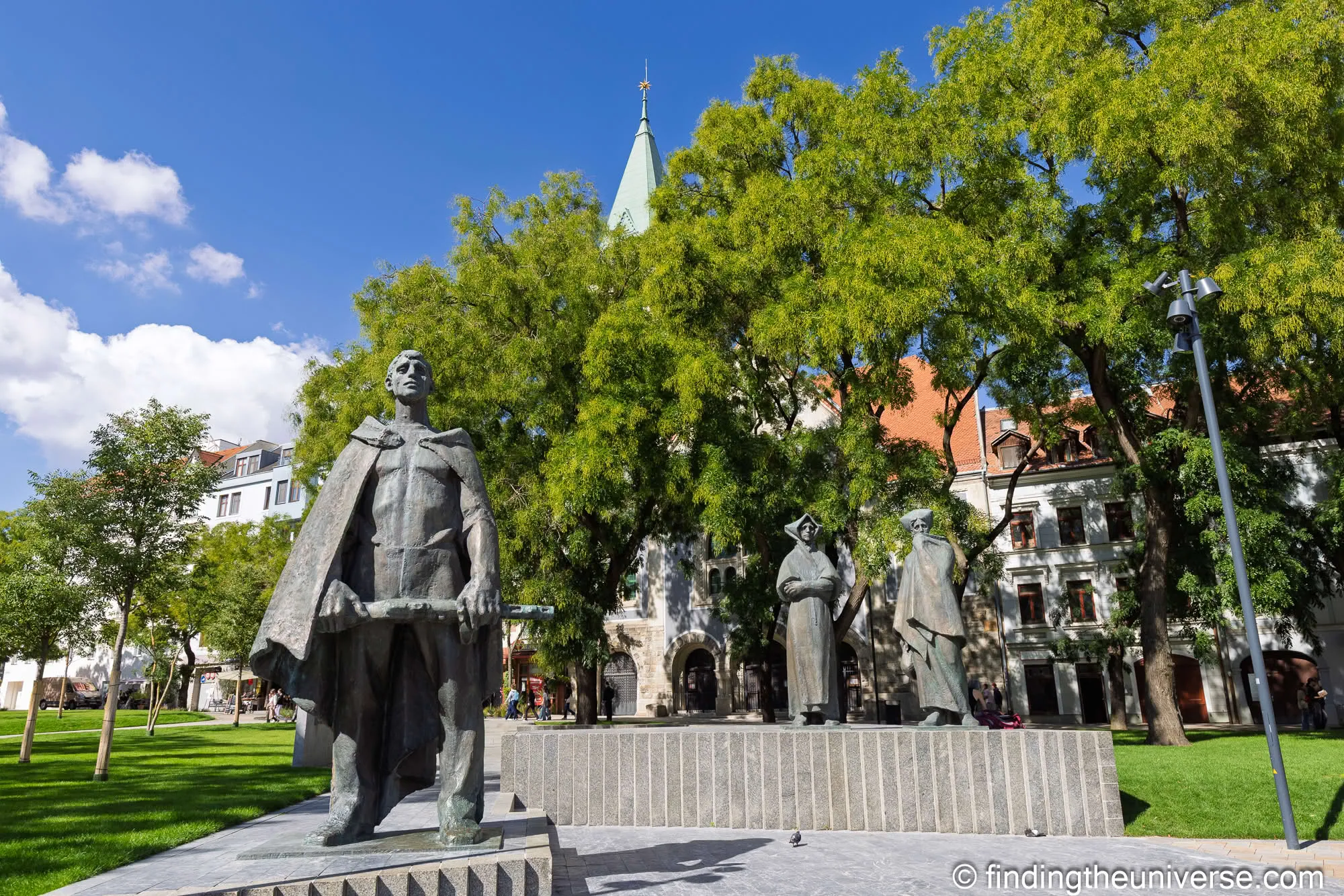
A couple of minutes’ walk from the Main Square, on the corner of Panská and Rybárska brána, Čumil is a bronze man peering out of a manhole. His name is Slovak slang for someone who stands and stares, and nobody quite agrees on what he’s up to.
Some see a workman taking a break, others a man watching the passers-by, and the sculptor, Viktor Hulík, has described him as an anonymous observer. He was installed in 1997, when the old town’s pedestrian zone was renewed.
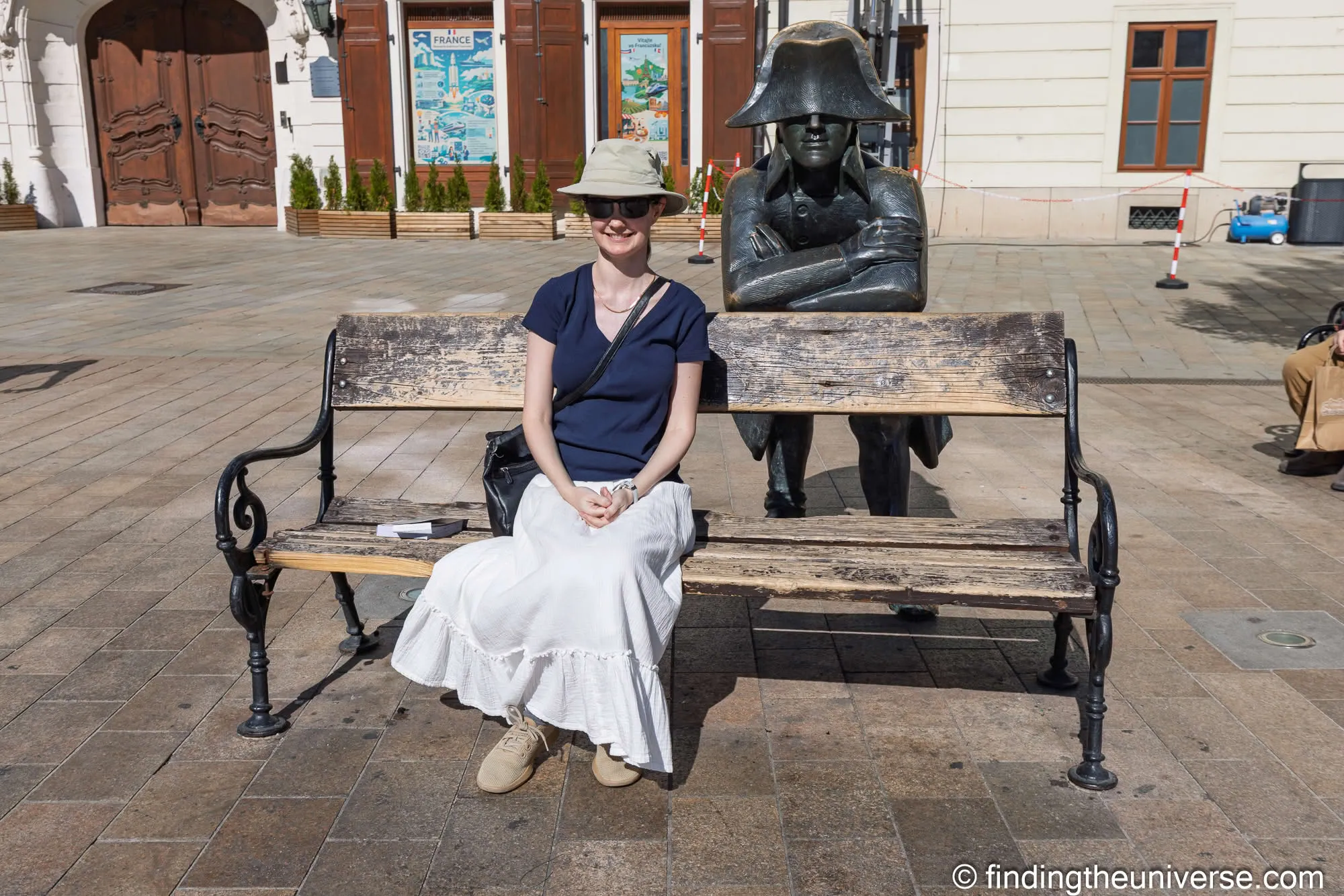
Two more bronze figures from the late 1990s are on the Main Square itself. A soldier of Napoleon’s army, by the sculptor Juraj Meliš, leans over one of the benches. The statue recalls the siege of the city in the early 19th century.
Outside Café Mayer, where Sedlárska street meets the square, is Schöne Náci. He was a real person, Ignác Lamár (1897 to 1967), who walked the old town in a top hat and tails, greeting women in German, Hungarian and Slovak.
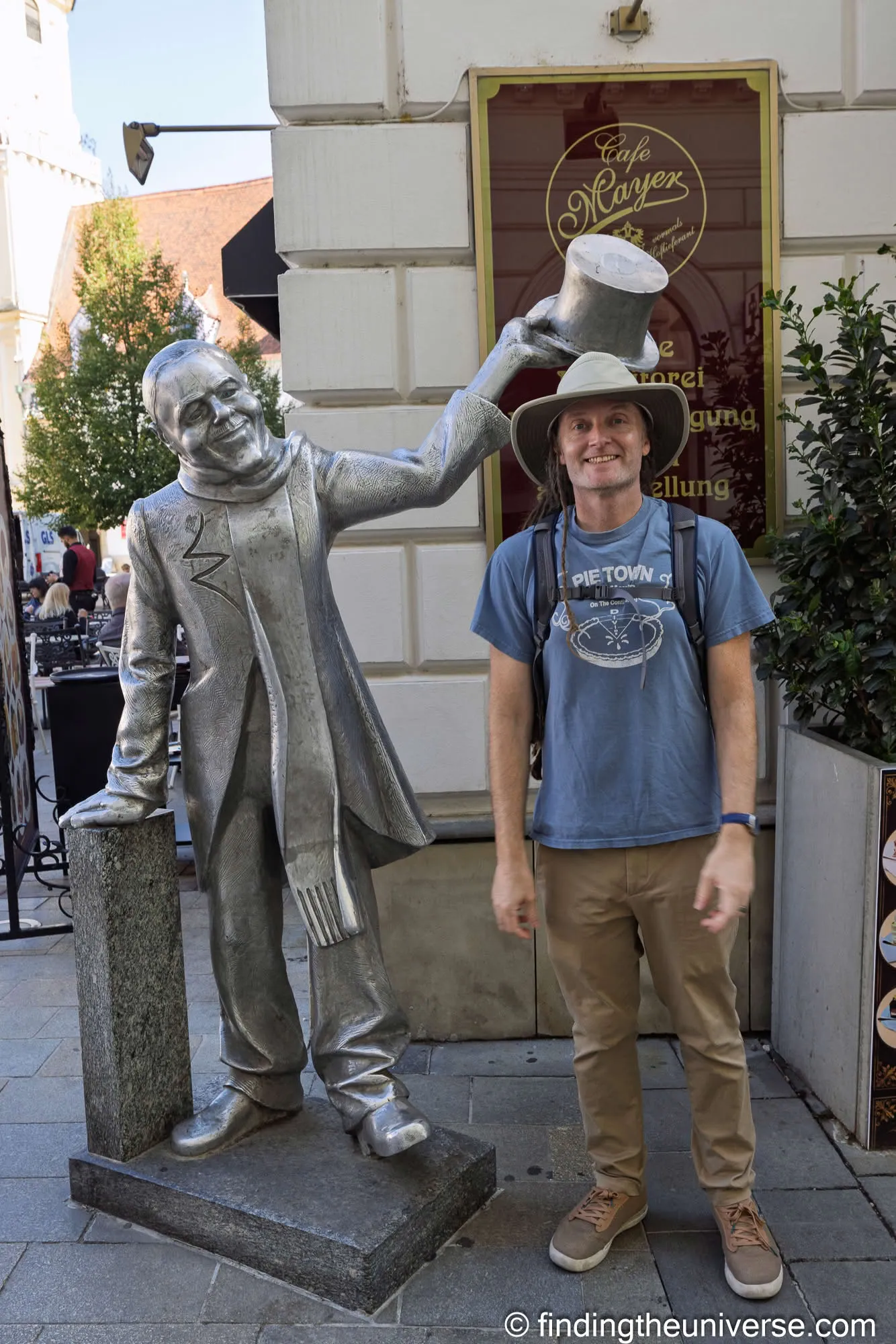
We had our photos taken with both: Jess on the soldier’s bench, and me beside Náci. Twenty minutes is enough for all three statues.
Photo tip: get down low, at Čumil’s eye level, and shoot along the street so he’s watching the people going by. If there’s a queue to pose with him, it’s worth waiting for a clear frame.
St Martin’s Cathedral
St Martin’s was the coronation church of the Kingdom of Hungary from 1563 to 1830. Nineteen coronations took place here, of eleven kings and eight queens, including Maria Theresa in 1741. Allow 30 minutes.
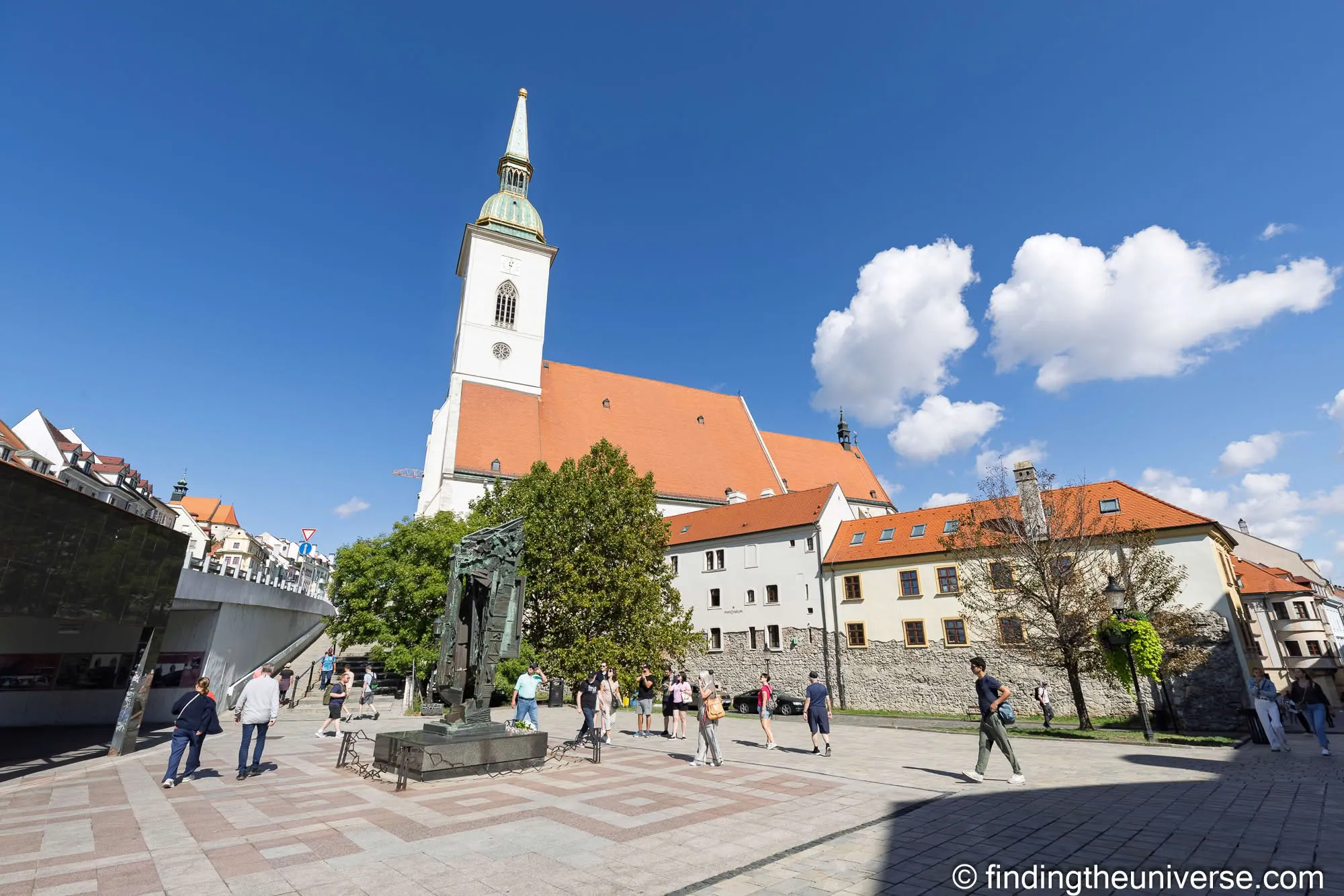
The nave is free to visit, and there’s a small fee for the treasury and side chapels. Visiting hours are 9am to 11:30am and 1pm to 6pm, and you can’t look around during services. If you want to go inside, note that the midday break falls right when this route reaches the cathedral, so either get there before 11:30am or have lunch first and come back afterwards.
Right beside the cathedral is Bratislava’s Holocaust memorial, by the sculptor Milan Lukáč, which went up in 1996. It stands on the site of the city’s Neolog synagogue, built in 1893 and 1894 and demolished in 1969 during the construction of the SNP Bridge, and the black wall behind the sculpture carries the synagogue’s outline. It’s on the way down to the river, so stop for a few minutes.
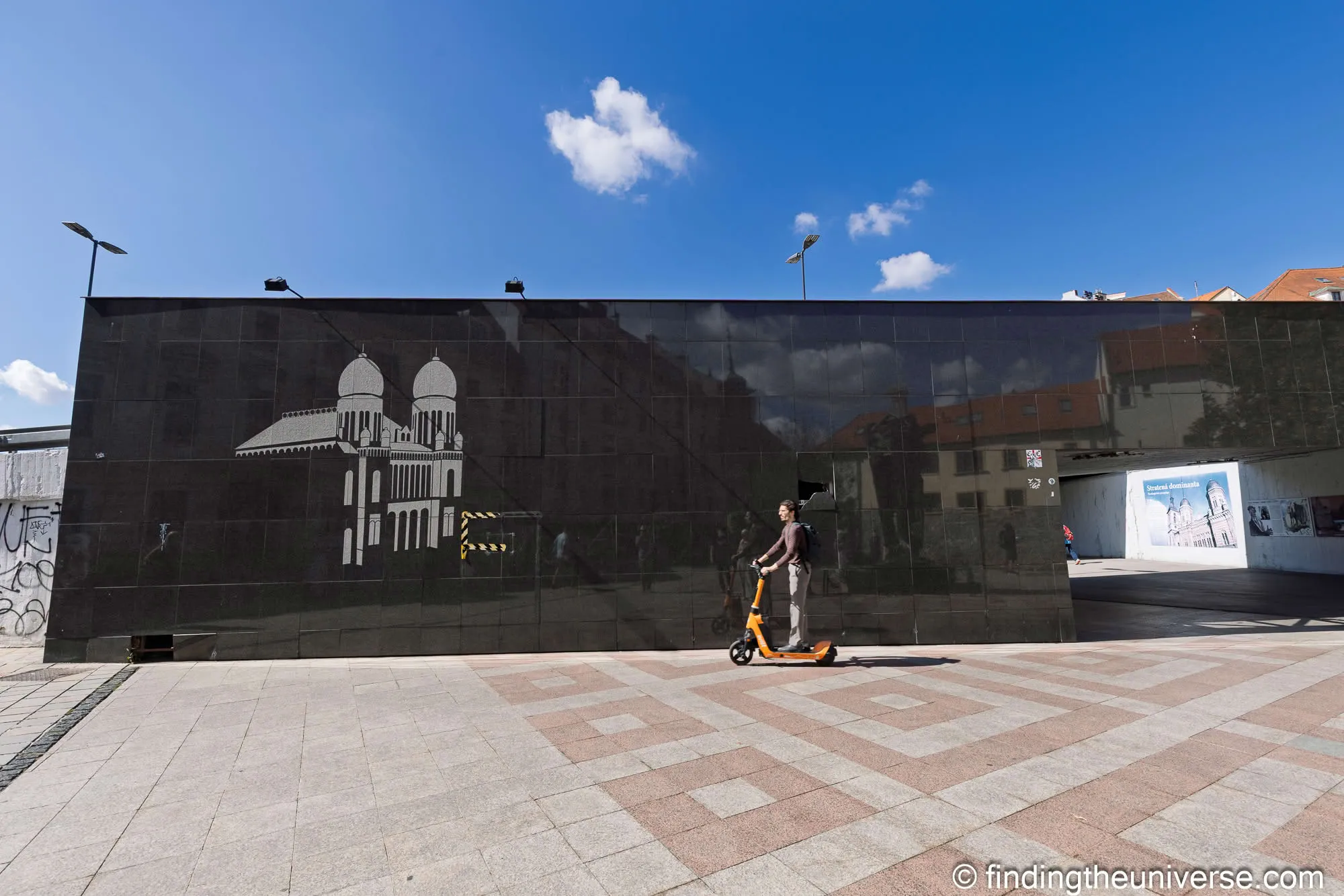
Photo tip: bring a longer lens, or zoom in with your phone, to pick out the gilded crown on top of the spire.
The UFO Bridge (Most SNP)
Allow 15 minutes for the view, or 45 if you go up. The bridge over the Danube by the cathedral is Most SNP, the Bridge of the Slovak National Uprising, but it’s usually called the UFO Bridge because of the flying-saucer restaurant and observation deck on top of its pylon.
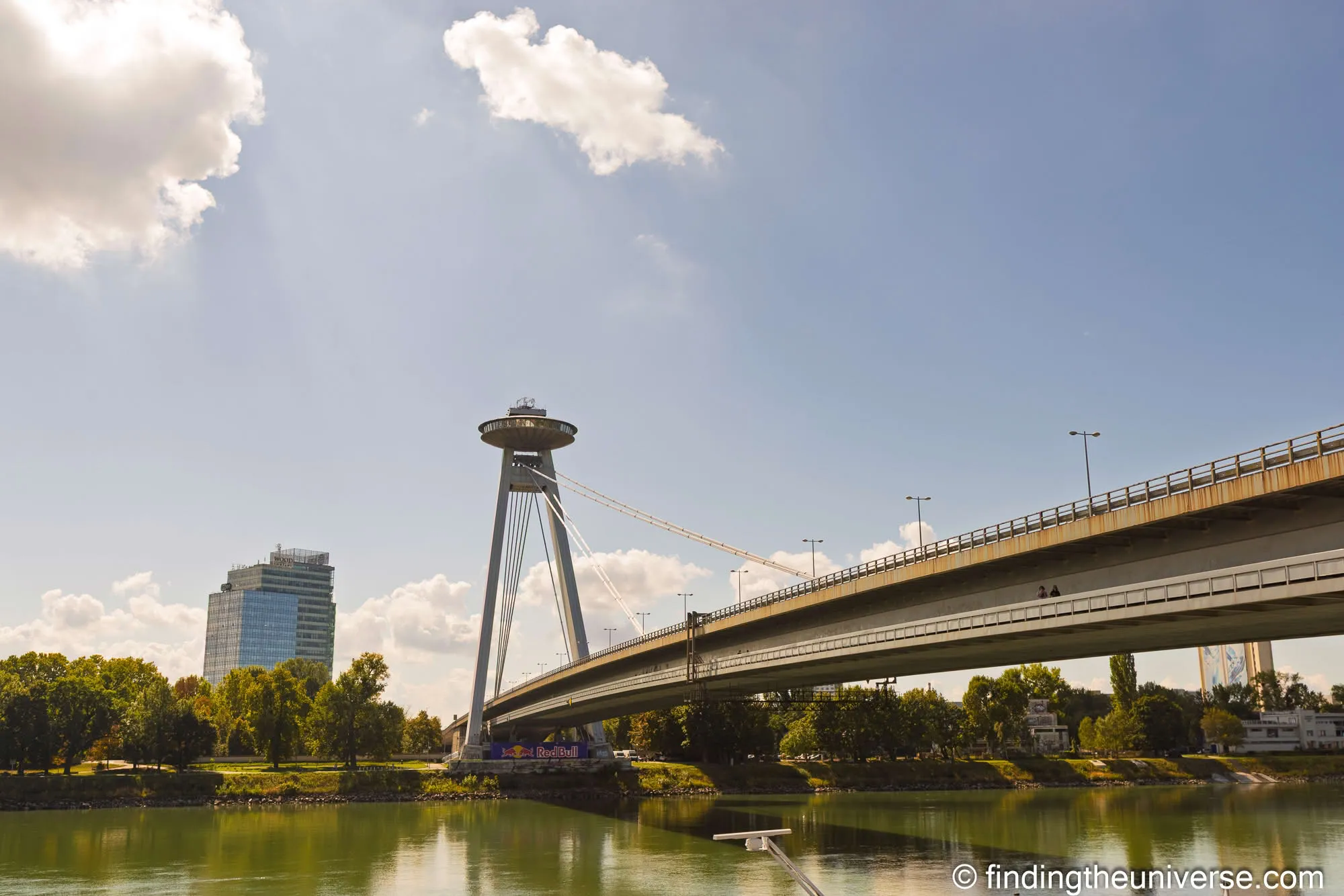
The deck is 95 metres (312 feet) up and open daily from 10am to 11pm. Tickets are €11.50 on weekdays before 1pm and €12.50 at other times, rising to €15 between 21 December and 10 January, and you can only buy them at the reception on site. On a half day, the view of the bridge from the riverbank is enough. If you have longer, go up.
Photo tip: the UFO sits on the far side of the river from the old town, so a short telephoto lens (or your phone’s 3x setting) frames it best from the old town bank.
Lunch on Námestie SNP, Then Back to the Station
Allow an hour. We walked back up through the old town to Námestie SNP for lunch at the Bratislava Flagship Restaurant (there’s more on that, and what to order, below).
For the station, we took tram 1 back to hlavná stanica, so we went in by bus and came back by tram on the same ticket. The Poštová stop for tram 1 is at the top of Námestie SNP. We caught the 1:50pm train, which got us into Wien Hauptbahnhof just before 3pm.
With a Full Day: What to Add
We didn’t get to these on our half day, so this part is based on the official sites rather than our own visit.
Bratislava Castle
Bratislava Castle is the big white castle with four corner towers on the hill above the old town, about ten minutes’ walk uphill from St Martin’s Cathedral. The grounds are open daily from 8am to 10pm, and the Baroque Garden has seasonal hours (9am to 4pm from November to February, later in summer).
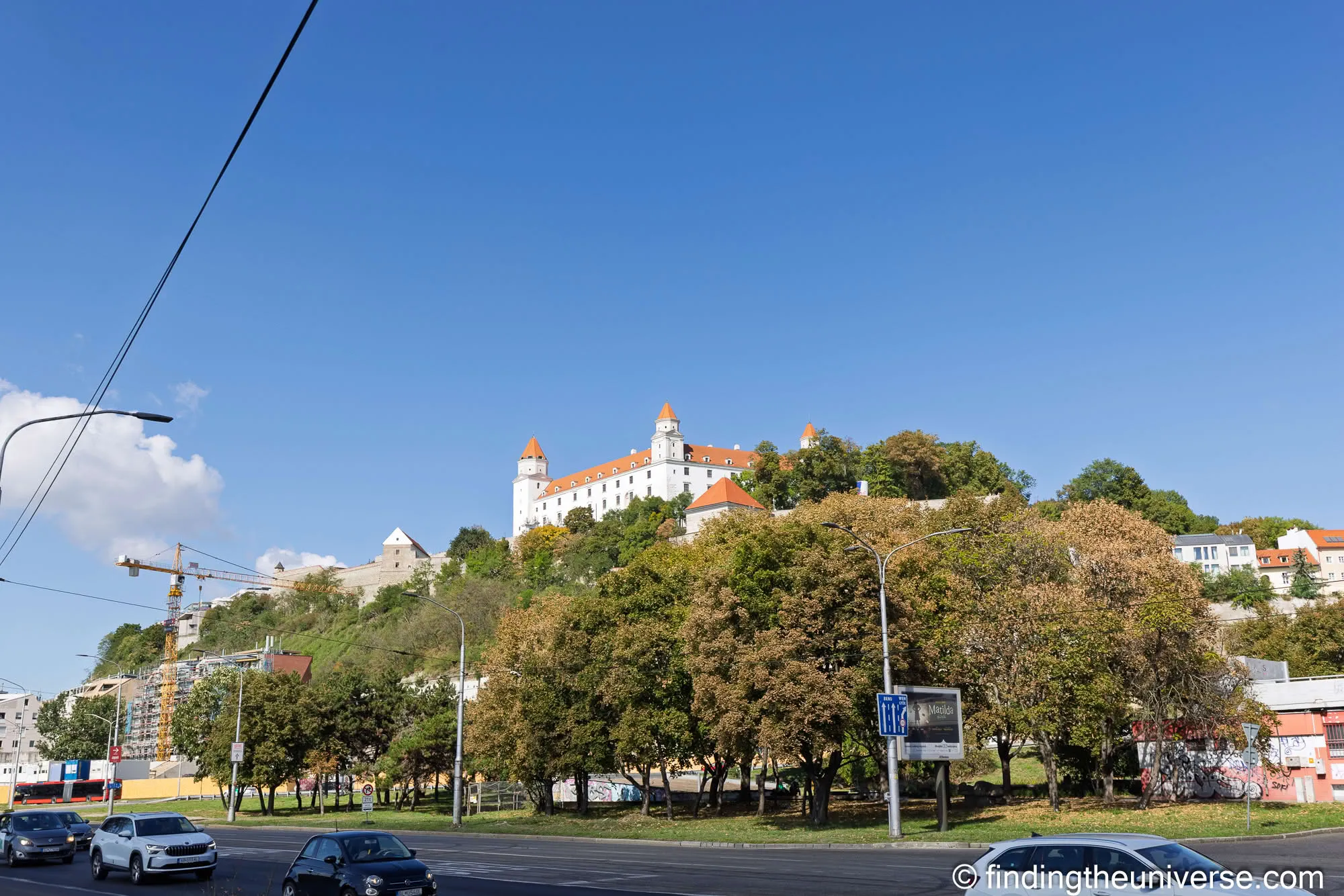
Inside, the Slovak National Museum runs the castle’s exhibitions. Tickets are €14 for adults, and the museum is open Wednesday to Monday, 10am to 6pm, with last entry at 5pm. It’s closed on Tuesdays, unlike the Old Town Hall and Devín Castle, which close on Mondays.
Devín Castle
Devín Castle is a ruined castle on a rock above the Danube, where the Morava river meets it on the border with Austria. To get there, take bus 29 from the Most SNP stop under the UFO Bridge to the Hrad Devín stop, which takes 25 to 30 minutes. The bus carries on past the castle, so watch for your stop.
The bus is covered by the city transport part of the Bratislava-Ticket if you go on the day you travel out.
Devín Castle is closed on Mondays all year. From April to October it costs €8 and closes between 5pm and 7pm depending on the month. From November to March it costs €6 and only the temporary exhibition is open, with the castle closing at 4pm from November to February and 5pm in March. Last entry is 45 minutes before closing.
You can also go by boat, on a Devín Castle river cruise from Bratislava.
The Blue Church
The Church of St Elizabeth, known as the Blue Church, is a short walk east of the historic centre. It was designed by the Hungarian architect Ödön Lechner in the Hungarian Art Nouveau style and consecrated in 1913, and the name comes from its pale blue walls and blue-glazed roof tiles.
The interior is only open at set times, mostly early in the morning and in the evening, so on a day trip, plan to see it from outside.
What to Eat in Bratislava
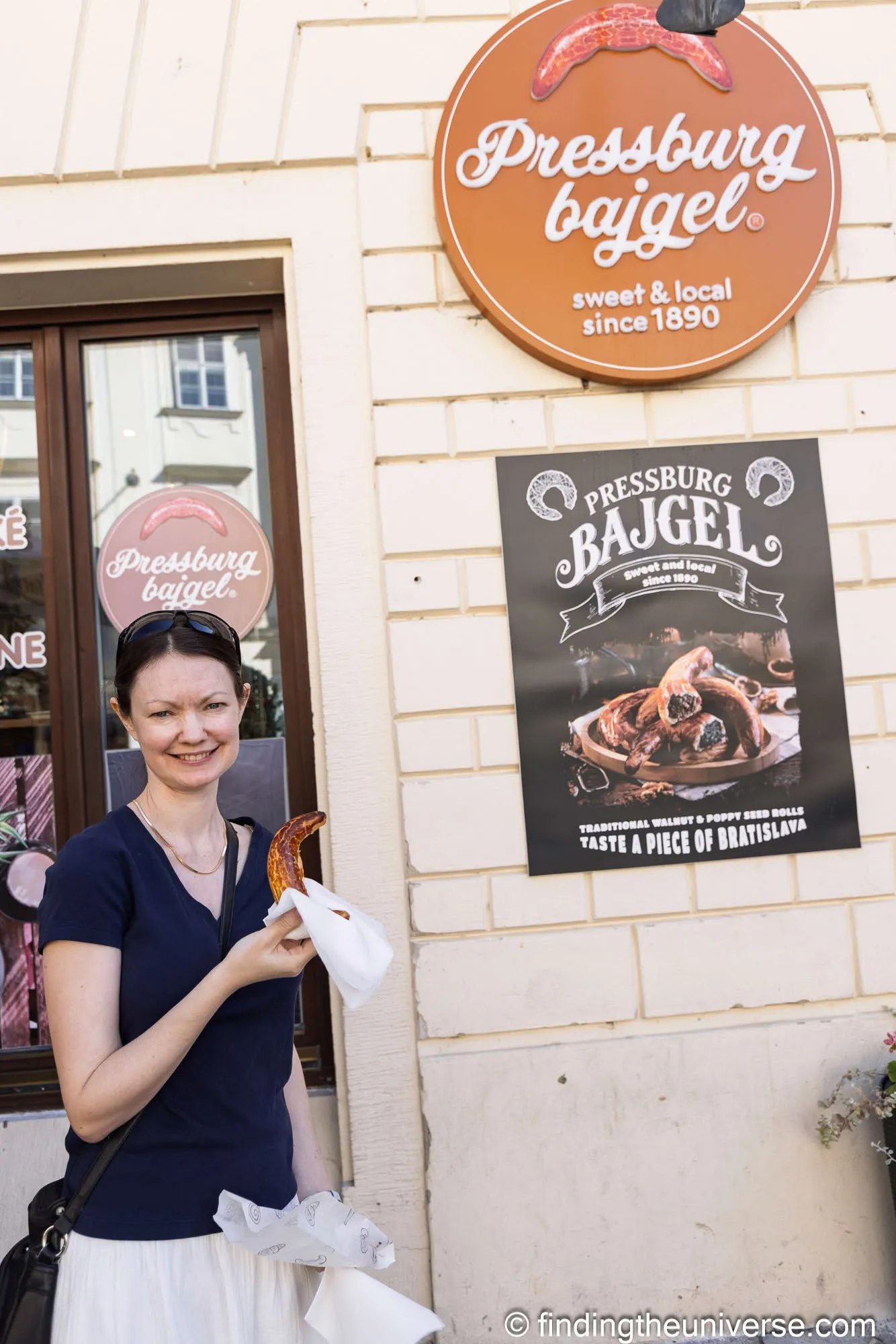
Bratislava’s own pastry is the Bratislava roll (Bratislavský rožok), a horseshoe-shaped roll with a poppyseed or walnut filling and a glossy, marbled top. It’s been an EU Traditional Speciality Guaranteed since 2012, and the rules say the filling has to make up at least 40% of the weight.
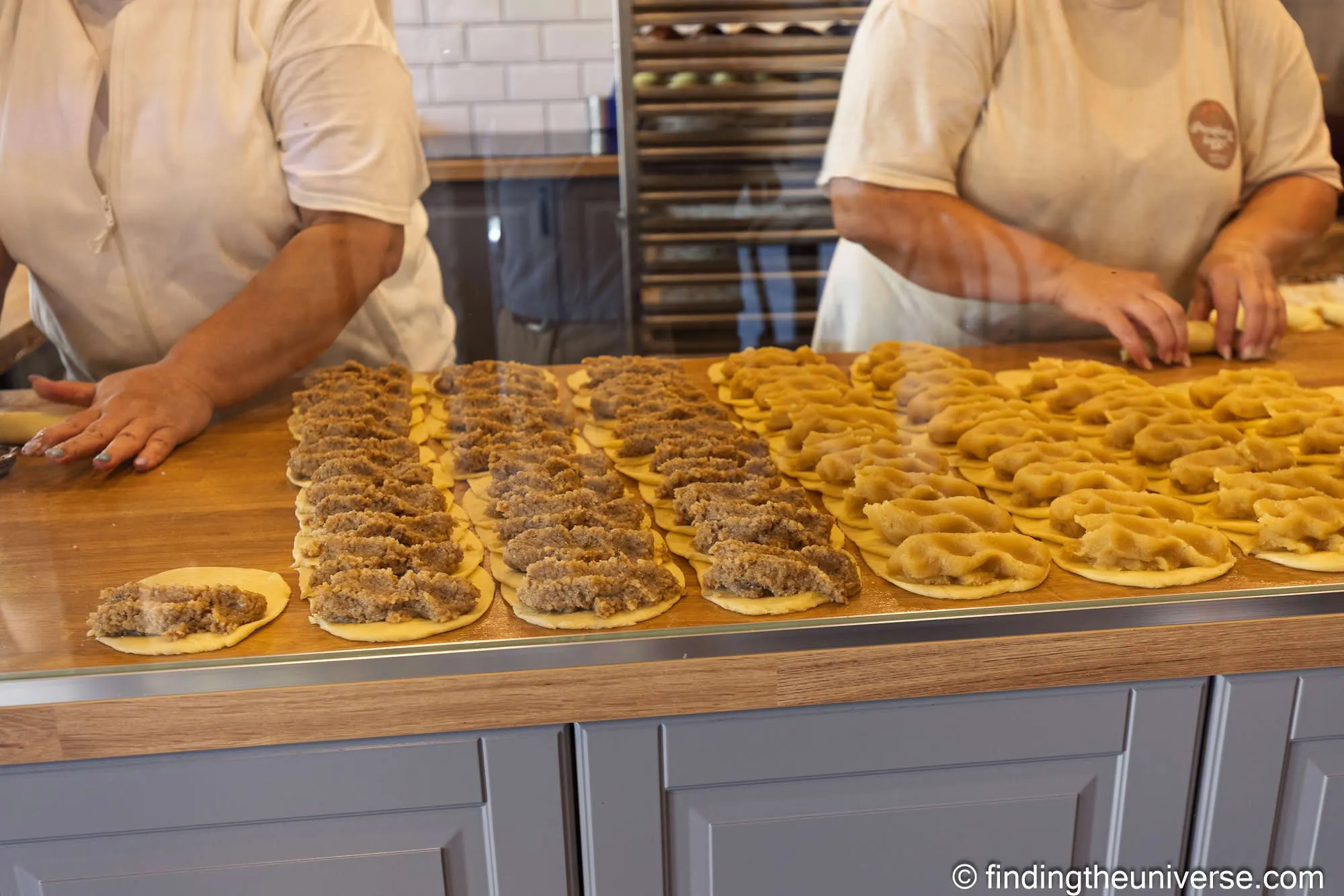
We got ours at Pressburg Bajgel on Ventúrska, a bakery that sells them as Pressburg bajgel and bakes them to a recipe dating from around 1890 to 1900. You can watch the bakers shaping them behind the counter, and of course we had to try one!
The dish to look for on menus is bryndzové halušky, small potato dumplings with bryndza, a soft sheep’s cheese, usually topped with bacon. We had it at lunch, along with garlic soup (cesnaková polievka), which is often served in a hollowed-out bread loaf, as ours was.
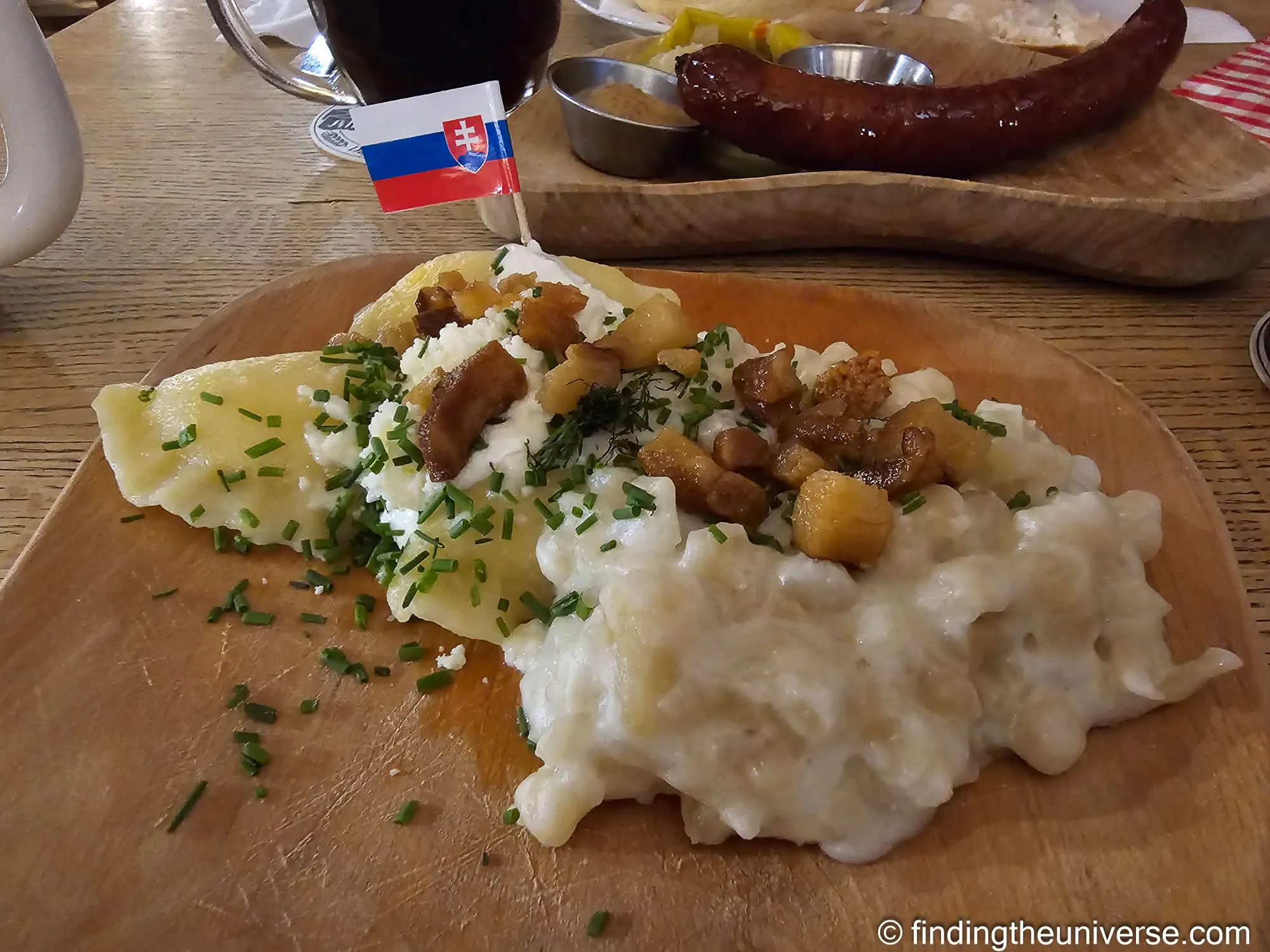
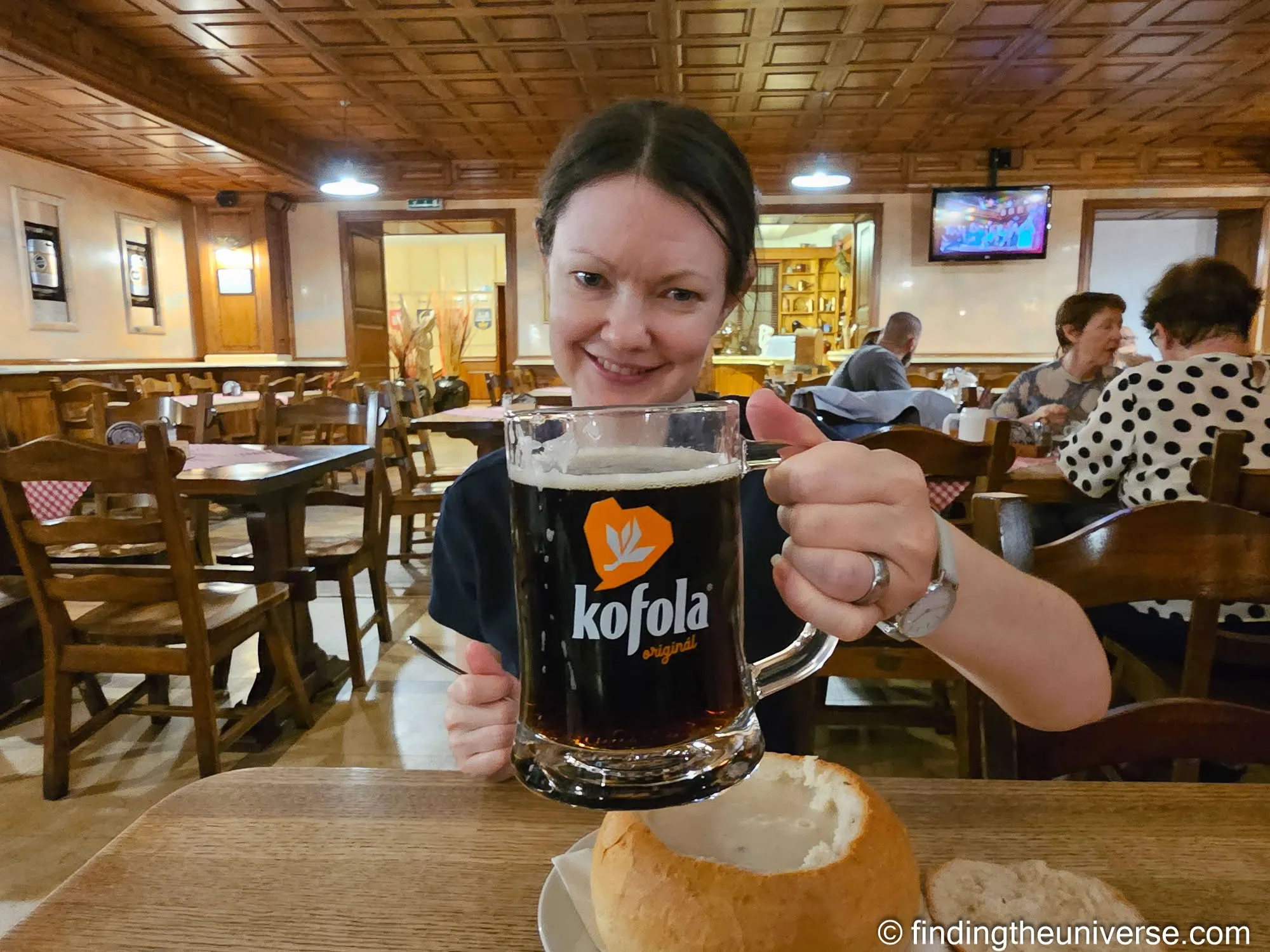
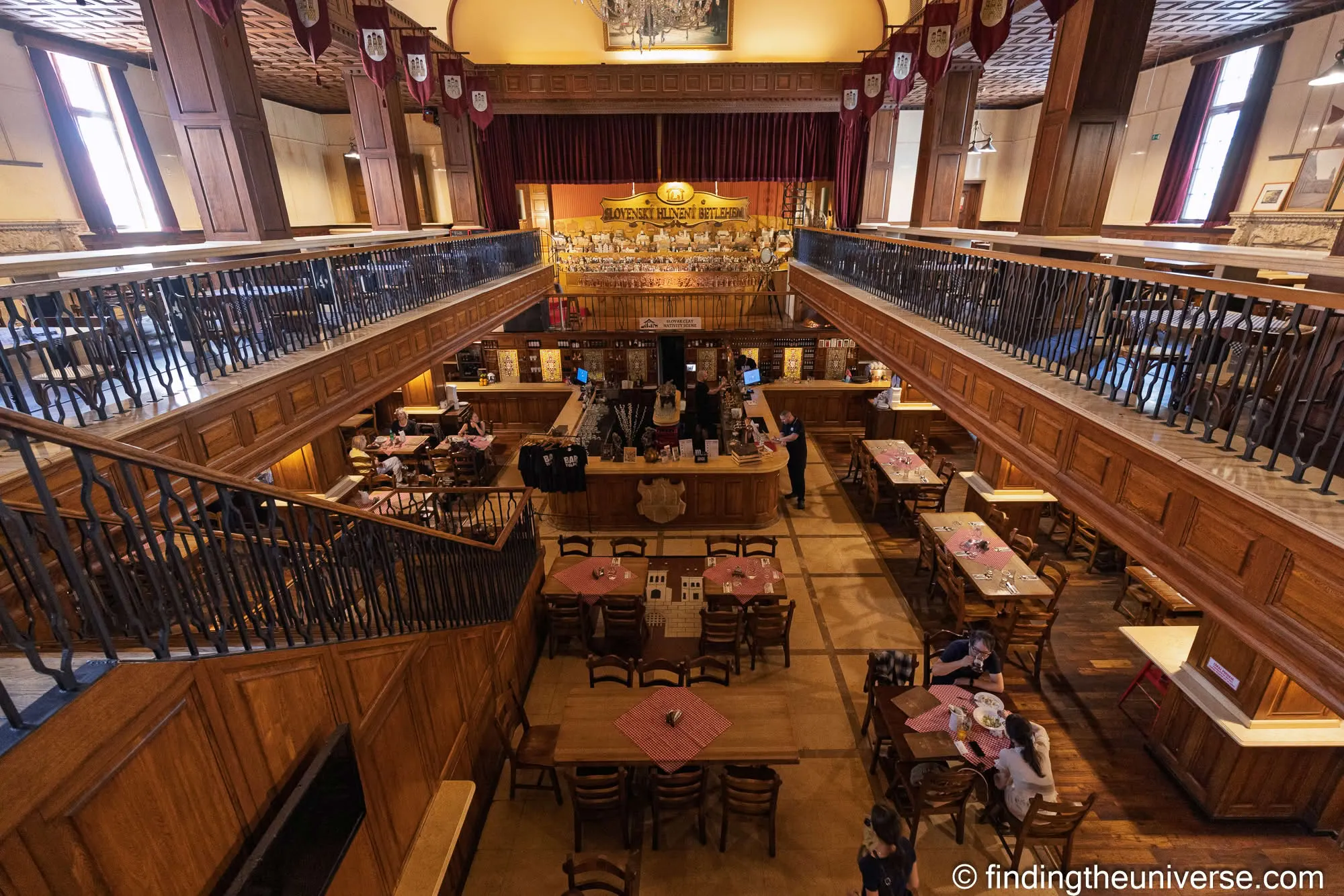
We ate at the Bratislava Flagship Restaurant on Námestie SNP, which, according to the restaurant, was built in 2008 and 2009 inside a former cinema. It’s a big hall with a gallery running around it, and the menu has a whole Slovak section, so it’s an easy place to try the national dishes on a day trip. If you’d like to try more in one go, there’s an Old Town food tour with a local guide and ten tasters.
Should You Take a Tour Instead?
For most people, no. The train is quick and cheap, the old town is pretty easy to find your way around, and our €19 ticket covered everything we needed to get there and back.
A tour makes sense in two cases. The first is if you want Bratislava and Devín Castle in one day without working out the buses. The guided Bratislava and Devín Castle tour via Hainburg leaves from Vienna and covers both.
The second is if you’d prefer someone else to handle the whole day. The Bratislava day trip “Like a Local” also starts in Vienna and includes either lunch or a tasting.
Both cost several times what we paid for the train, so if you’re happy with a ticket machine and a bus, do it yourself.
Before You Go: What Made Our Day Work
Buy the Bratislava-Ticket. As well as the train both ways, it covers Bratislava’s buses and trams on the day you travel out, which for us meant the bus into the old town and the tram back.
Take the train at 14 minutes past the hour from Wien Hauptbahnhof to hlavná stanica, and know your train home before you set off. We’d planned on the 1:50pm back, and the day ran exactly to plan.
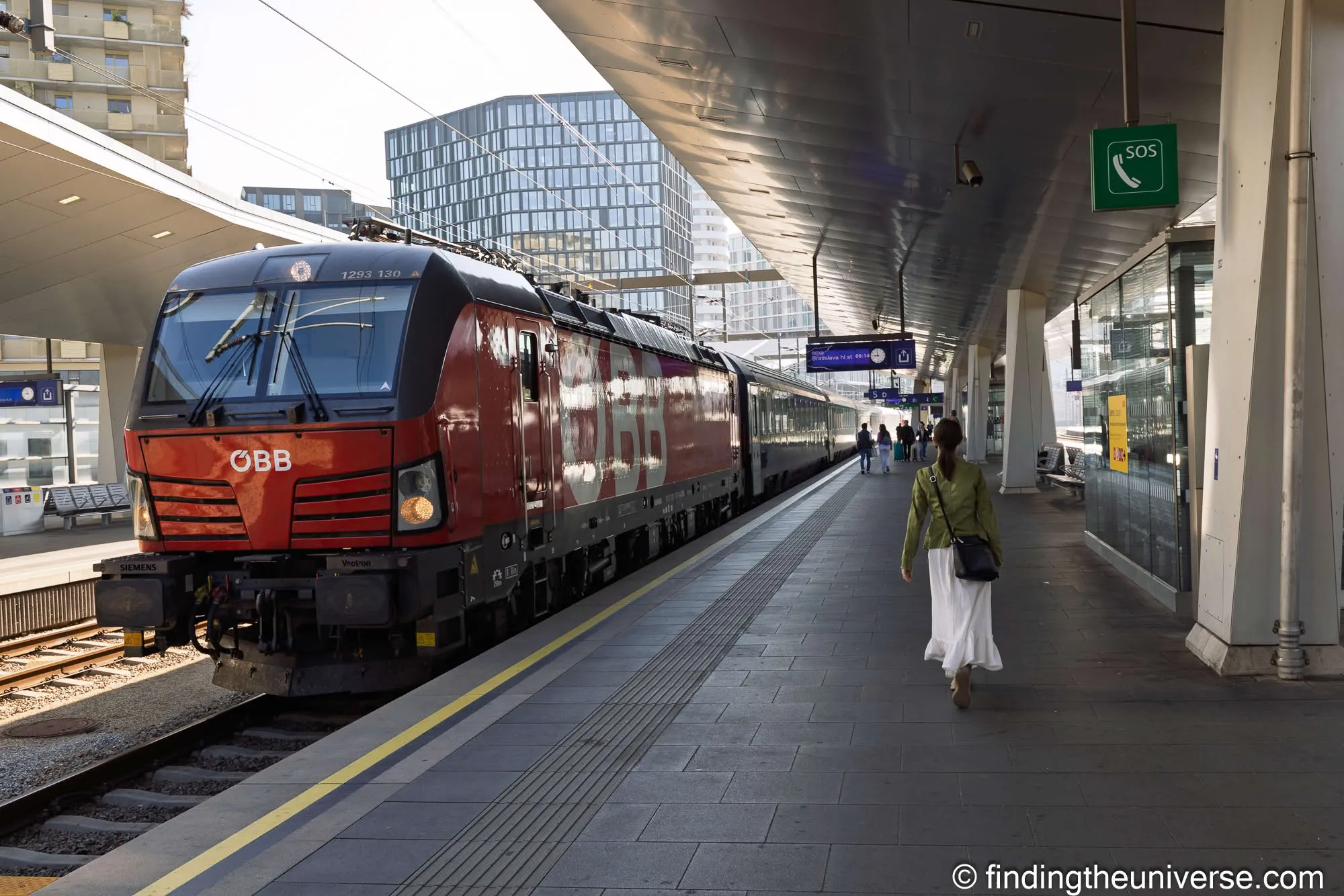
Check the day of the week. We went on a Tuesday, the one day Michael’s Tower and the castle museum are closed, and the table below shows which sights close on which day.
Start early. The 9:14am train gave us three and a half hours in Bratislava and still had us back in Vienna for the afternoon. In winter, with sunset around 4pm, an early start makes even more difference.
Practical Tips: Opening Days, Money and Passports
Bratislava’s sights close on different days of the week, so it’s worth checking your day against this table before you go. Hours and prices were checked in November 2026.
| Sight | Closed | Open | Adult ticket |
|---|---|---|---|
| Old Town Hall and tower | Mondays | Tuesday to Sunday, 10am to 6pm | €8 |
| Michael’s Tower | Tuesdays | Wednesday to Monday, 10am to 6pm | €6 |
| Primate’s Palace | Changes weekly | Published week by week on the city’s website | €5 |
| St Martin’s Cathedral | During services | 9am to 11:30am and 1pm to 6pm | Nave free |
| Bratislava Castle museum | Tuesdays | Wednesday to Monday, 10am to 6pm (grounds daily, 8am to 10pm) | €14 |
| Devín Castle | Mondays | Tuesday to Sunday, 10am to 4pm in winter, later from April to October | €6 winter, €8 summer |
| UFO observation deck | Open daily | 10am to 11pm | €11.50 to €15 |
The Old Town Hall and Michael’s Tower are also closed on 24, 25, 26 and 31 December and on 1 January.
Slovakia uses the euro, as Austria does, so there’s no money to change.
Both countries are in the Schengen Area, so there’s normally no passport control between them. Austria has notified the EU of temporary checks on its border with Slovakia until 15 March 2027, though, and it has renewed these checks in six-month blocks before. Carry your passport. US citizens will of course have it with them anyway, and the Twin City Liner won’t let you board without one (or an EU national ID card).
From 26 November 2026 to 3 January 2027, Bratislava’s main Christmas market runs daily from 10am to 10pm on the Main Square, and there’s a second market on Hviezdoslavovo námestie. The tree on the Main Square is lit on 27 November at 5:45pm. A December day trip timed so you’re in the old town as it gets dark makes the most of it. Visit Bratislava lists the events.
Bratislava Day Trip FAQ
Is Bratislava worth a day trip from Vienna?
Yes, if you have at least three days in Vienna. It’s under an hour by train, the Bratislava-Ticket covers the return trip and the city buses, and the old town is small enough to see in half a day. We went in September 2026 and were back in Vienna by mid-afternoon.
If you only have two days in Vienna, I’d stay put and save Bratislava for another trip.
Is half a day enough in Bratislava?
For the old town, yes. Our route from St Michael’s Gate down to the cathedral and the UFO Bridge, plus lunch, took about three and a half hours.
If you want to add Bratislava Castle or Devín Castle, give it a full day.
How do you get from Vienna to Bratislava?
By train from Wien Hauptbahnhof. Regional trains take just under an hour and run every hour to each of Bratislava’s two stations. Buy the ÖBB Bratislava-Ticket, which covers the trip there and back plus Bratislava’s buses and trams on the day you travel out.
FlixBus and Slovak Lines buses also run, and in season you can take the Twin City Liner boat down the Danube.
How much does a day trip from Vienna to Bratislava cost?
Our Bratislava-Ticket cost €19 each in September 2026, and that covered the train both ways and the bus into the old town. On top of that, budget for lunch and any sights you go into: the Primate’s Palace is €5, the Old Town Hall and its tower €8, and the castle museum €14.
A guided day trip from Vienna costs several times as much as doing it yourself.
Which train station in Bratislava should I go to?
Either works, as the Bratislava-Ticket covers both and bus 93 links each one to the old town in about five minutes. We used hlavná stanica, which the REX 8 reaches 56 minutes after leaving Wien Hauptbahnhof.
Just check which station your train home leaves from, since they have different departure times.
Do I need a passport to go from Vienna to Bratislava?
Yes, take it with you. Austria and Slovakia are both in the Schengen Area, so there’s normally no passport control. But Austria is running temporary checks on its border with Slovakia (notified until 15 March 2027), and they can happen on trains and roads.
The Twin City Liner also needs a passport, or an EU national ID card, to board.
Is Bratislava safe for American tourists?
Yes. The US State Department rates Slovakia at Level 1, “Exercise Normal Precautions”, which is the lowest of its four levels. We had no problems on our visit. As anywhere, keep an eye on your bags in crowded spots like the Christmas markets.
What is closed on Mondays in Bratislava?
The Old Town Hall and Devín Castle close on Mondays. Michael’s Tower and the Bratislava Castle museum close on Tuesdays instead, and the Primate’s Palace sets its hours week by week.
Wednesday to Sunday is the safest time for a day trip if you want to go inside the main sights.
Should I visit Vienna or Bratislava?
Vienna, if you only have time for one. It has the palaces, the big museums and the concert halls, and it needs at least two days.
Bratislava is the better day trip, though. It’s small, quick to reach, and easy to see in half a day from Vienna.
Can you visit Bratislava and Budapest in one day from Vienna?
Not in any way I’d recommend. Budapest is just under three hours from Vienna by train, and it needs at least two days of its own.
Do Bratislava as a half or full day from Vienna, and give Budapest its own stop on your trip.
Further Reading
If you’re planning the Vienna part of your trip, our 2 day Vienna itinerary and 3 day Vienna itinerary cover the city itself. With three days or more, there’s room for a morning in Bratislava as well.
Heading on to Budapest? Our guide to the Budapest Parliament tour covers how to book it and what you’ll see. If Prague is also on your route, see our 3 days in Prague itinerary and our guide to day trips from Prague.
The guidebook we used for the Bratislava walk was Rick Steves Vienna, Salzburg & Tirol, which also covers Vienna in detail.

For the day itself, the official sites I’d keep open are ÖBB’s Bratislava-Ticket page, DPB for the city’s buses and trams, and the Bratislava City Museum for the gate tower and the Old Town Hall.
As always, if you have any questions about a day trip from Vienna to Bratislava, let us know in the comments below.
Leave a Reply