
I’ve been to Cinque Terre more than once, and I can tell you exactly where I’ve stayed: Manarola, at a small five-room guesthouse called Arpaiu, with a rooftop terrace that looks straight across the harbour and out to sea.
I’ve walked the villages end to end, including the steep mountain path over the headland from Manarola to Riomaggiore back when the famous coastal Via dell’Amore was still shut. So when a first-timer asks me how to plan this, I’m not guessing.
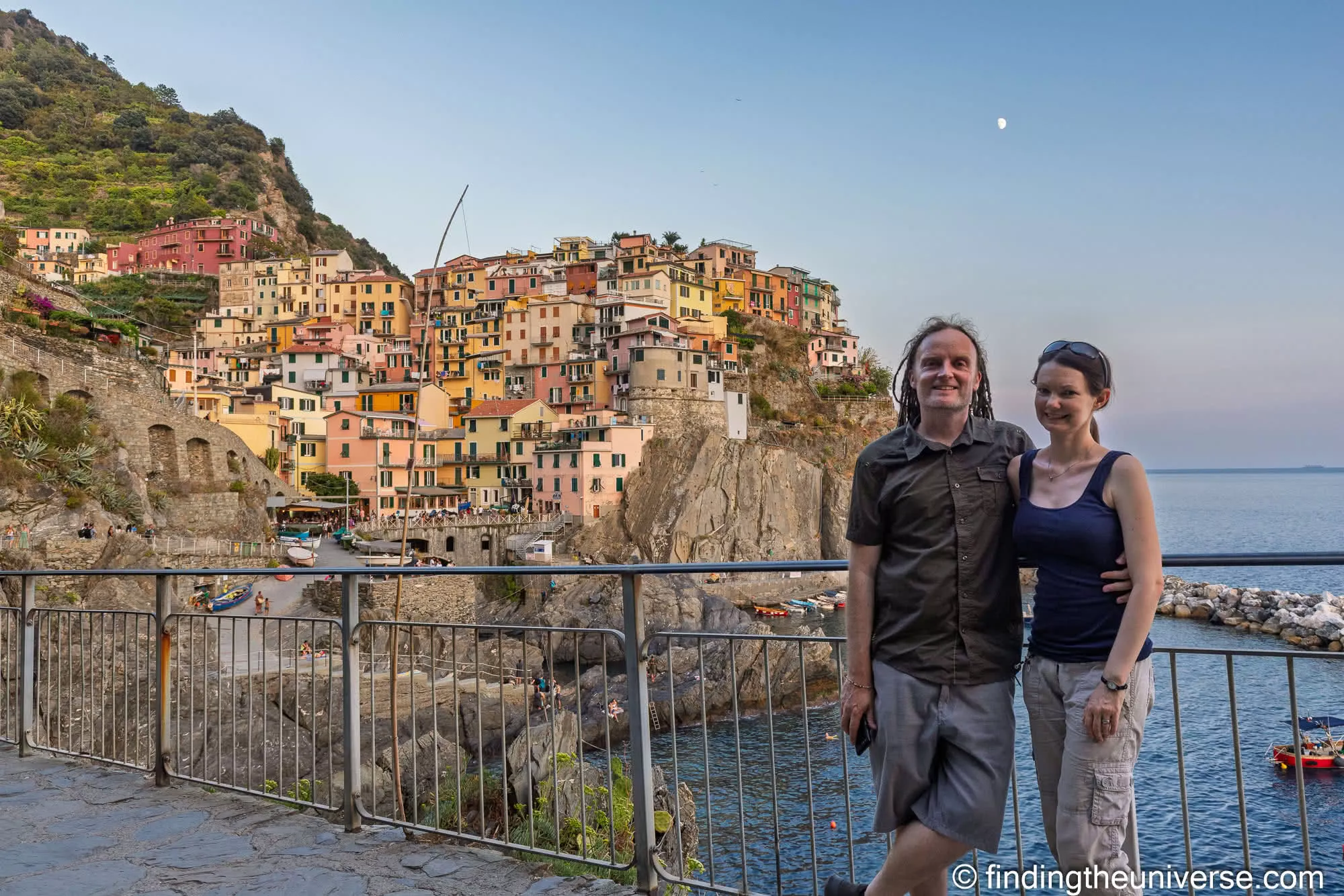
Here’s the short answer: two days. It’s tempting to assume you need a full three days, then pad to fill them, but two well-paced days from a single base see all five villages and the best of the trail without rushing. The other thing to get right is which stretches of the coastal path are actually open, because that has changed recently.
If you’re skimming, here’s what matters:
- Two days from one base sees all five villages and the best open trail sections at a human pace. One day works if that’s all you have; three lets you add a boat trip or a vineyard high-trail.
- Base yourself in Manarola if you want the classic Cinque Terre feeling, or Monterosso or Vernazza if you’d rather have a beach, more restaurants and an easier arrival.
- The coastal path from Manarola to Corniglia is closed indefinitely after landslides, with no reopening date set. The lovely flat Via dell’Amore between Riomaggiore and Manarola has reopened, but you have to book a timed slot in advance and access is through a Cinque Terre Card.
- You’ll want a Cinque Terre Trekking Card or Train Card. I’ve put the actual 2026 prices and a quick “which one” calculation further down.
Table of Contents:
How many days do you need in Cinque Terre?
Two. Two days, based in one village, is exactly what I’d book myself.
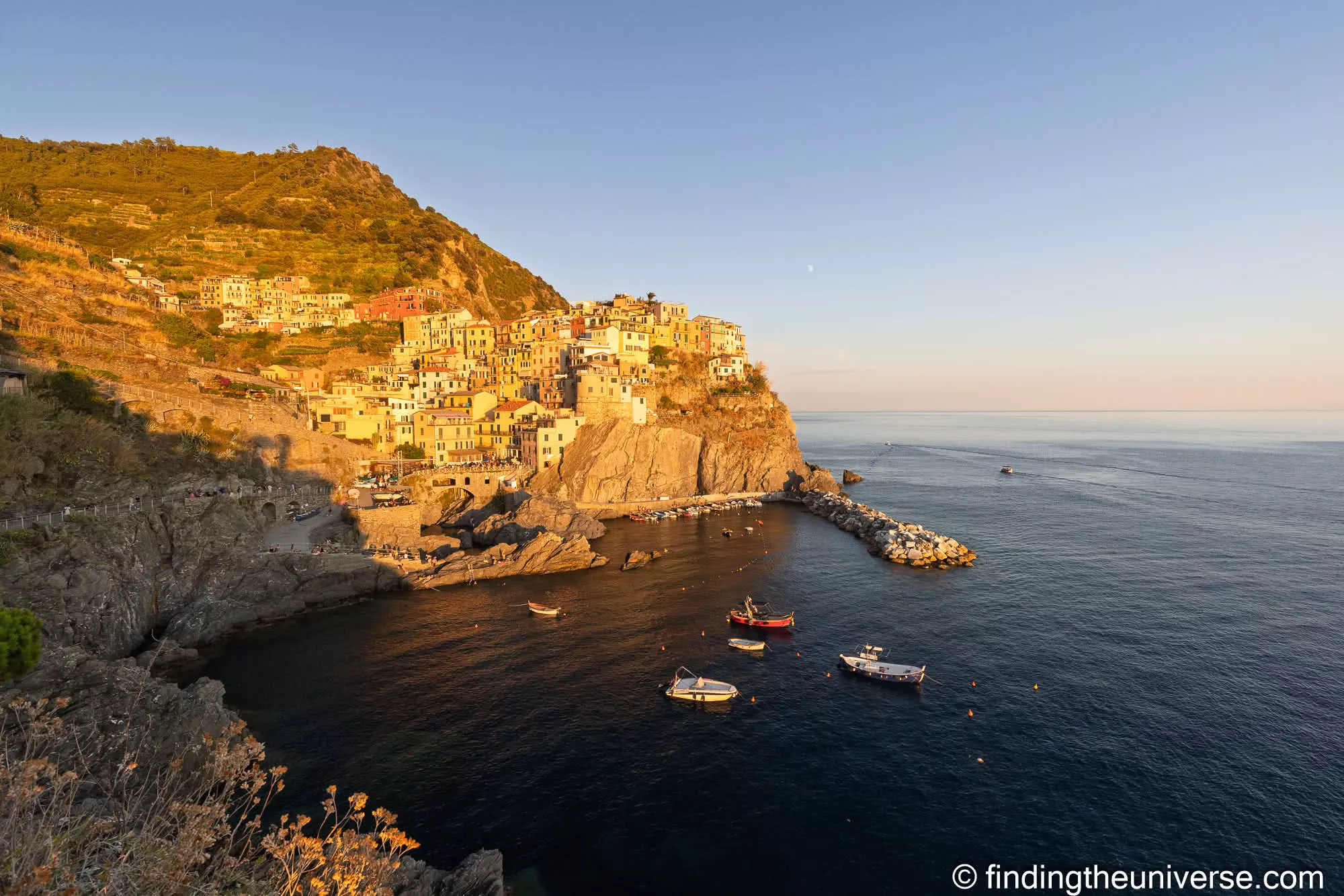
The five villages, strung along the coast from north to south, are Monterosso al Mare, Vernazza, Corniglia, Manarola and Riomaggiore. They’re tiny, and really close together. The train between the furthest two takes under twenty minutes, and the whole national park is barely eleven kilometres of coast.
The reason you don’t do it in a single rushed day has nothing to do with distance. The good part is just slow: walking a coastal section in the morning before the heat, a long lunch in a harbour, an aperitivo while the light goes gold on the cliffs. Cram all five into one day by train and you’ve technically “done” Cinque Terre and felt almost none of it.
Here’s how the options actually compare.
| Length | What you realistically get | Who it suits |
|---|---|---|
| 1 day | One coastal walk (Monterosso to Corniglia), then train-hop the southern villages. A taste, not the place. | A day trip from La Spezia, Genoa or a cruise stop. |
| 2 days | All five villages, the best open trail sections walked at a comfortable pace, the Via dell’Amore, two relaxed evenings at your base. | Most first-timers. The version I recommend. |
| 3 days | Everything above, plus a boat day to Portovenere, a vineyard high-trail, or a slow beach afternoon in Monterosso. | Walkers, photographers, anyone allergic to rushing. |
If Cinque Terre is one stop on a longer Italian trip, two days slots in neatly. We’ve built it into bigger routes ourselves, and you can see how it fits in our 10-day Italy itinerary. But on its own merit, two nights here is the right call.
The 2-day Cinque Terre itinerary
This is built around a single base in Manarola, the village we based ourselves in, with the harder walking on Day 1 while your legs are fresh and a slower, prettier Day 2 around the famous coastal path. I’ve put real clock times against it so you can see how the day actually breathes. Times assume a summer envelope of roughly 9am to 9pm; in winter the daylight and the trail closures pull everything earlier, and I’ve noted how to compress at the end.
Day 1: The Blue Trail and the northern villages
The plan is to train north to Monterosso, then walk back south along the open sections of the coastal Sentiero Azzurro, taking the train across the one closed leg to get home. This puts the climbing first and the views in your face all morning.
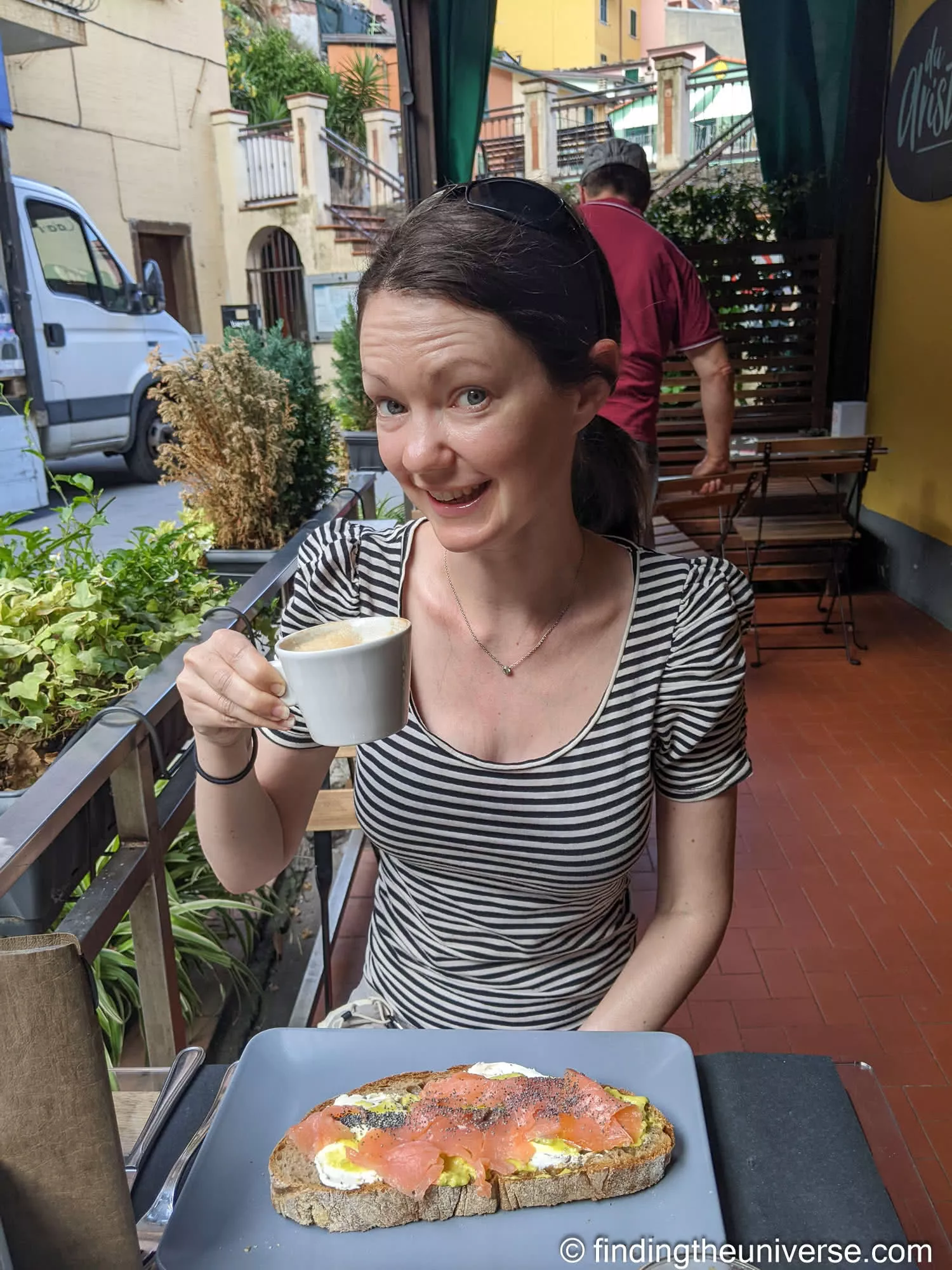
08:30 A proper breakfast in Manarola, a coffee and a pastry to set you up for the climb, then buy your Cinque Terre Trekking Card at the station before you go anywhere. It covers the open coastal trail sections and the Via dell’Amore. In 2026 it’s €10, €17 or €23.50 for one, two or three days in regular season. You can also save time and buy it online from the official site here, which is what we did.
09:00 Train from Manarola to Monterosso on the Cinque Terre Express. It’s a frequent local service in season, just a few stops, and you’re there in under half an hour including the wait.
09:30 Monterosso al Mare. It’s the largest village and the only one with a sandy beach, so it’s a good place to start while you’re fresh and before the trail climb. Have a bit of a wander through the old town, then find the path south.
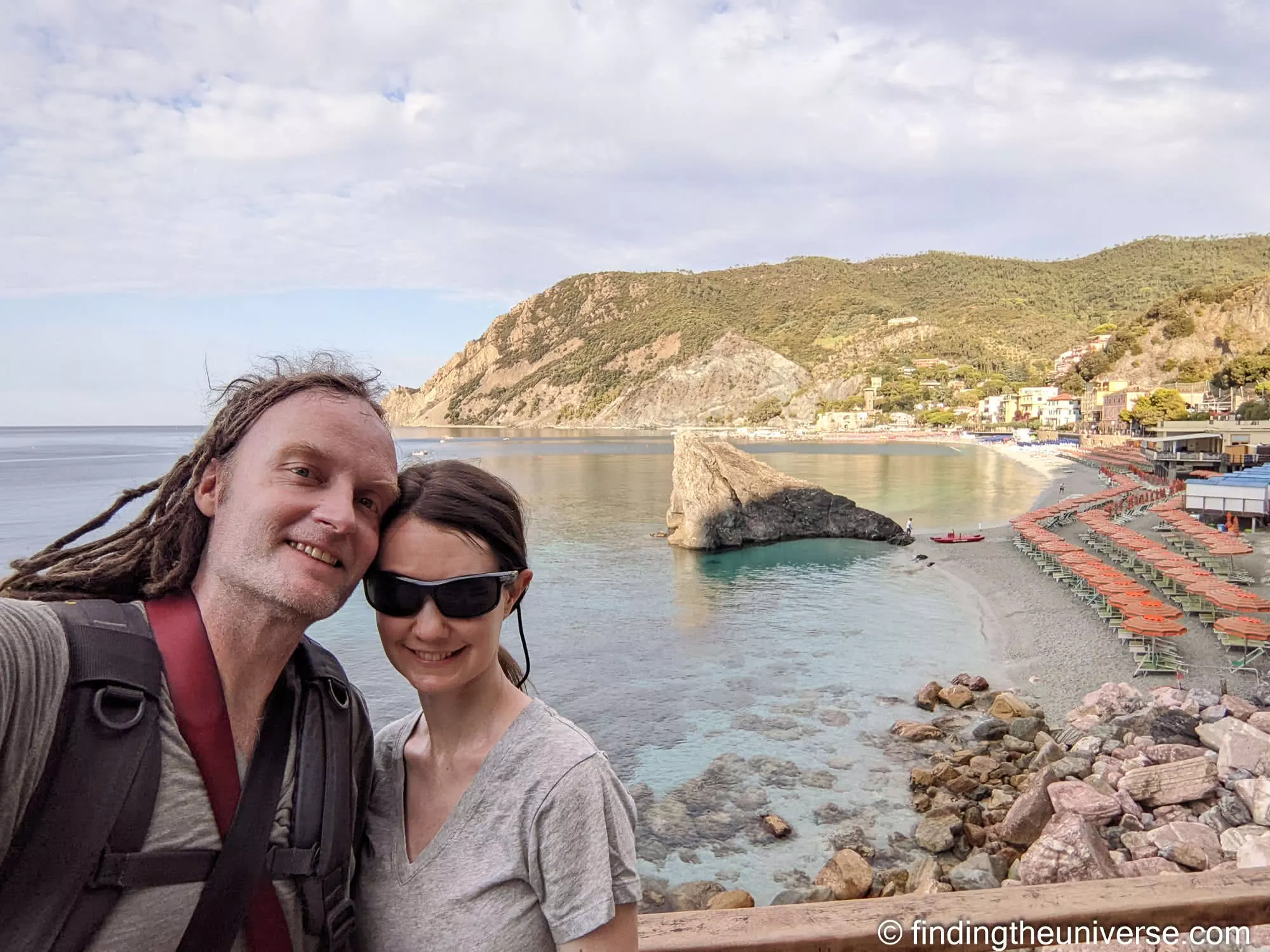
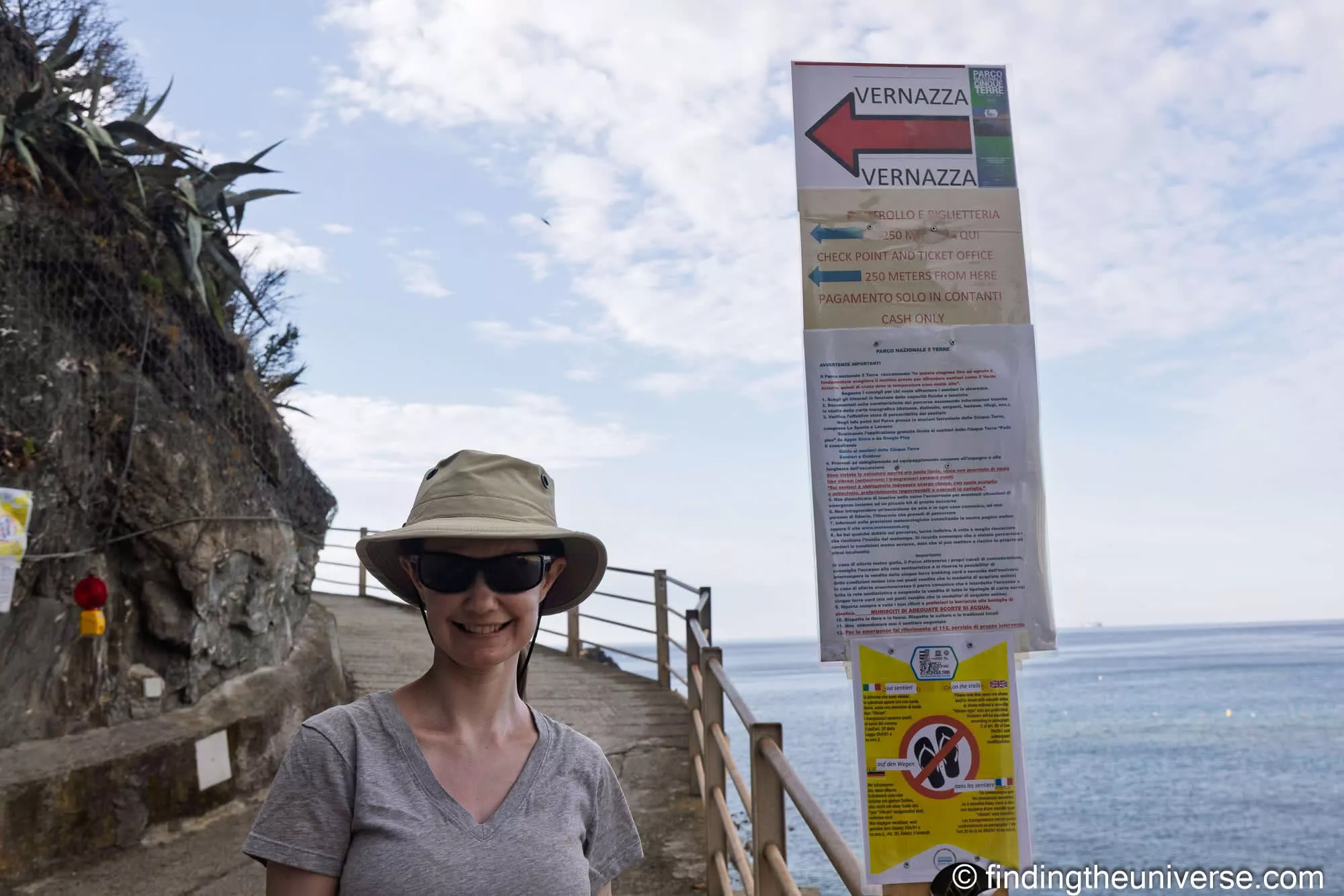
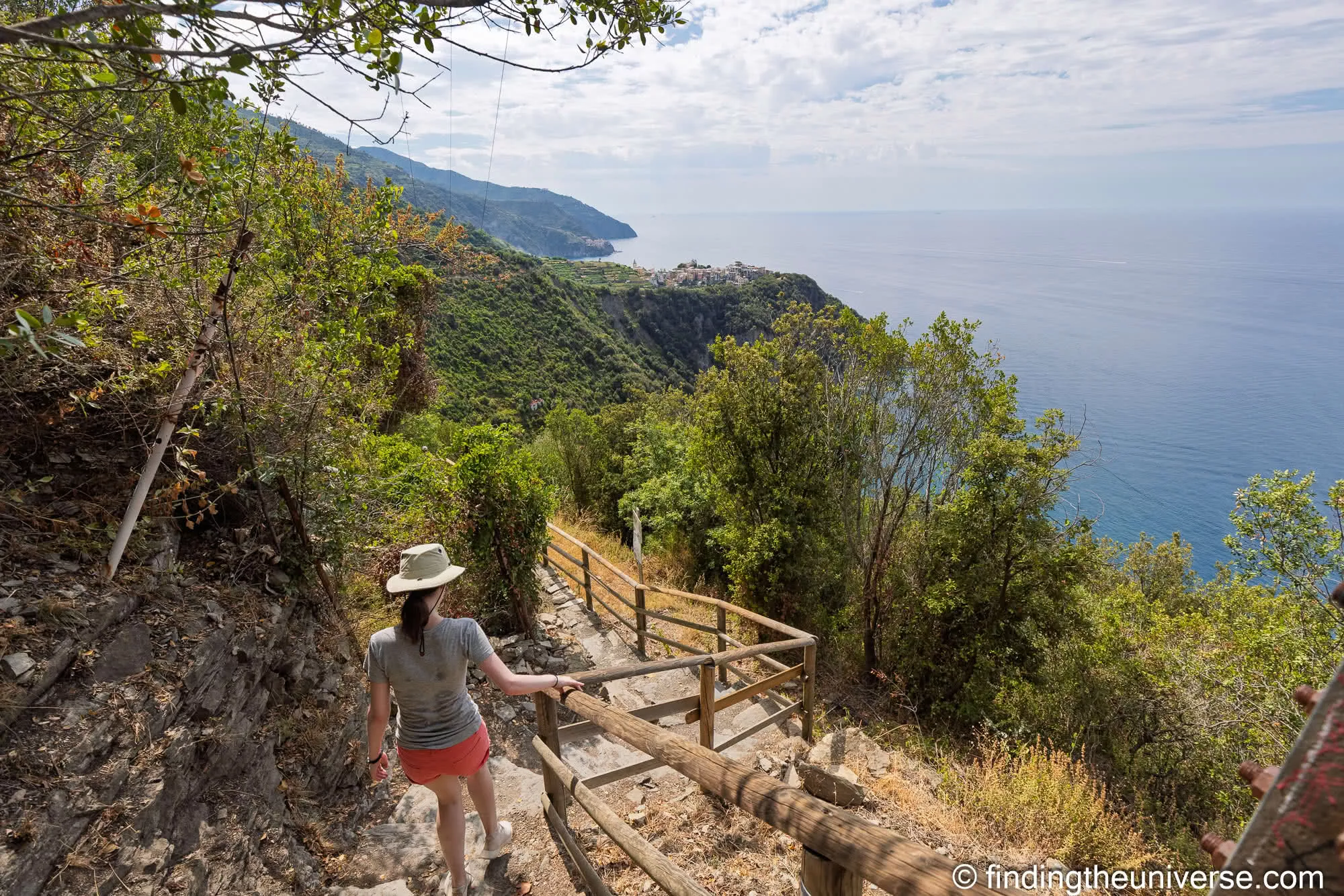
10:30 Walk Monterosso to Vernazza. Don’t underestimate this one. The park now officially rates this section as Esperto, expert level, and gives it two hours. It is not a gentle stroll. There are long stepped climbs and it gets brutally hot by midday, which is why you’re doing it now and not at two in the afternoon.
Carry plenty of water; the climbs are exposed and there’s almost no shade. On busy days the park runs this section one-way, Monterosso to Vernazza only, until 14:00, so walking it southbound in the morning keeps you with the flow rather than against it.
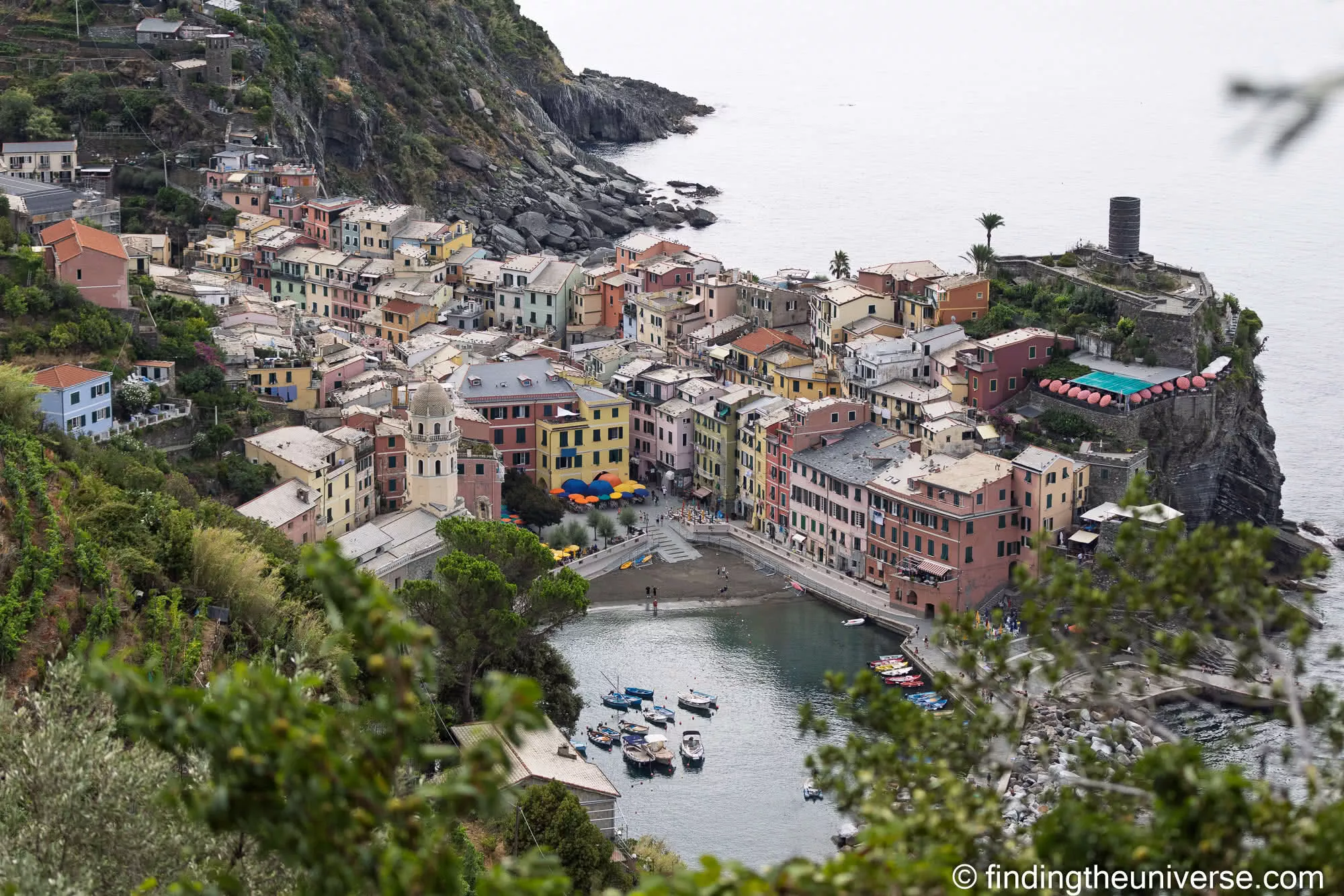
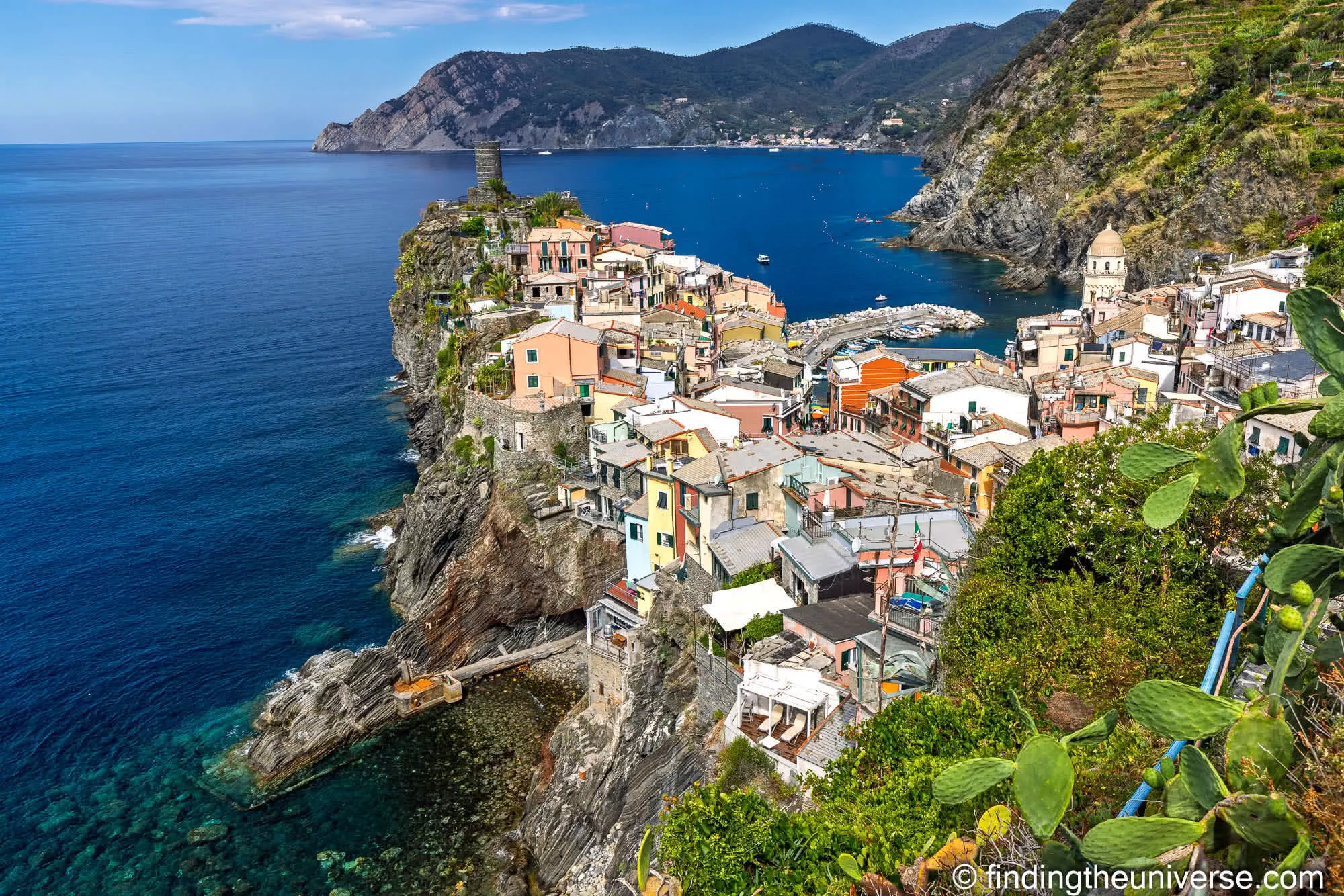
12:30 Vernazza for lunch. If you’ve seen one postcard of Cinque Terre it was probably this: the little harbour, the church right on the water, the ruined Doria castle on the point. It’s the most photogenic of the five and the obvious place to stop, eat and let the climb wear off.
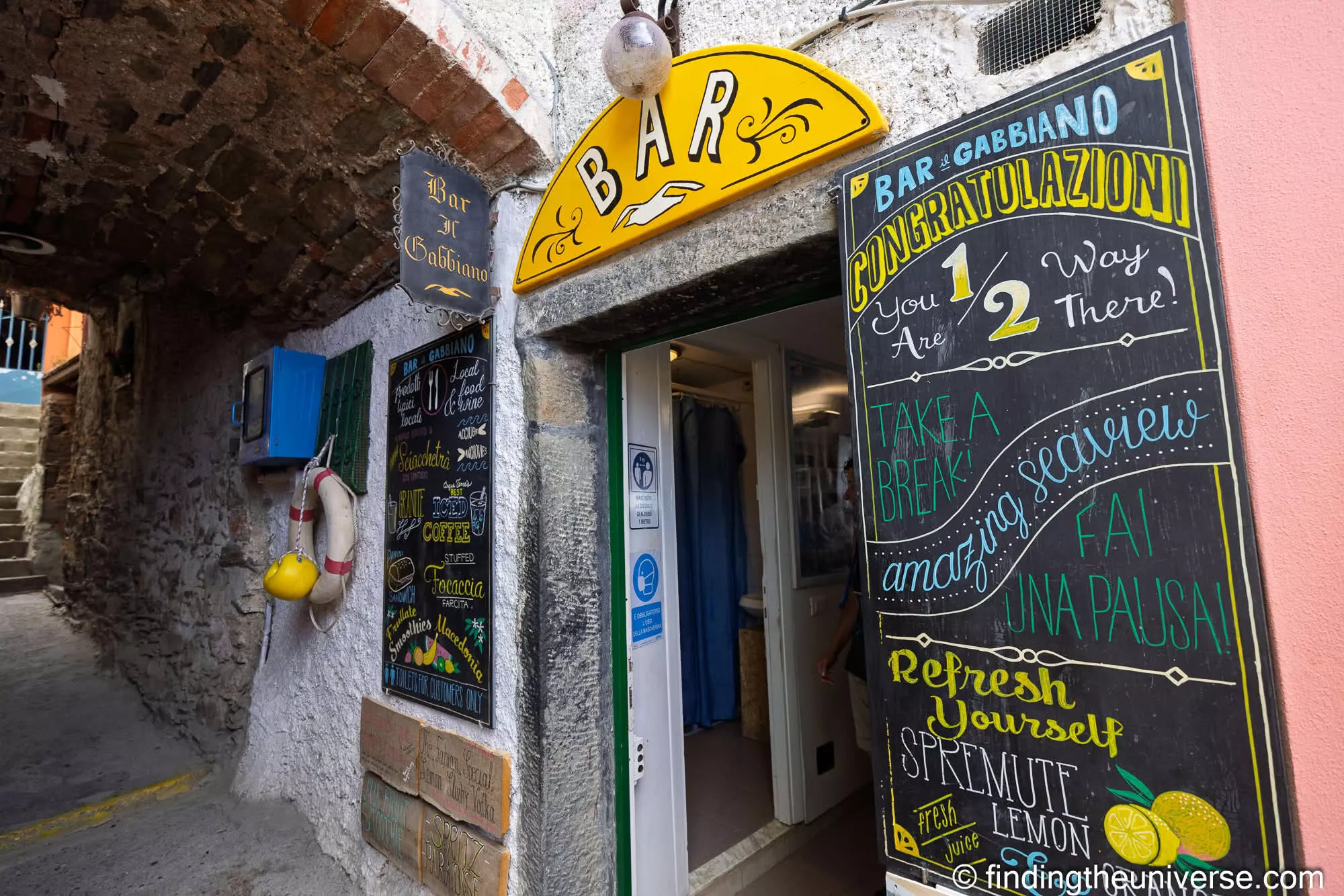
14:00 Walk Vernazza to Corniglia. Another coastal section, officially rated expert and given an hour and a half. There’s a bar roughly halfway where a granita is the best two euros you’ll spend all day! You’ll need your Trekking Card scanned for both of these stretches.
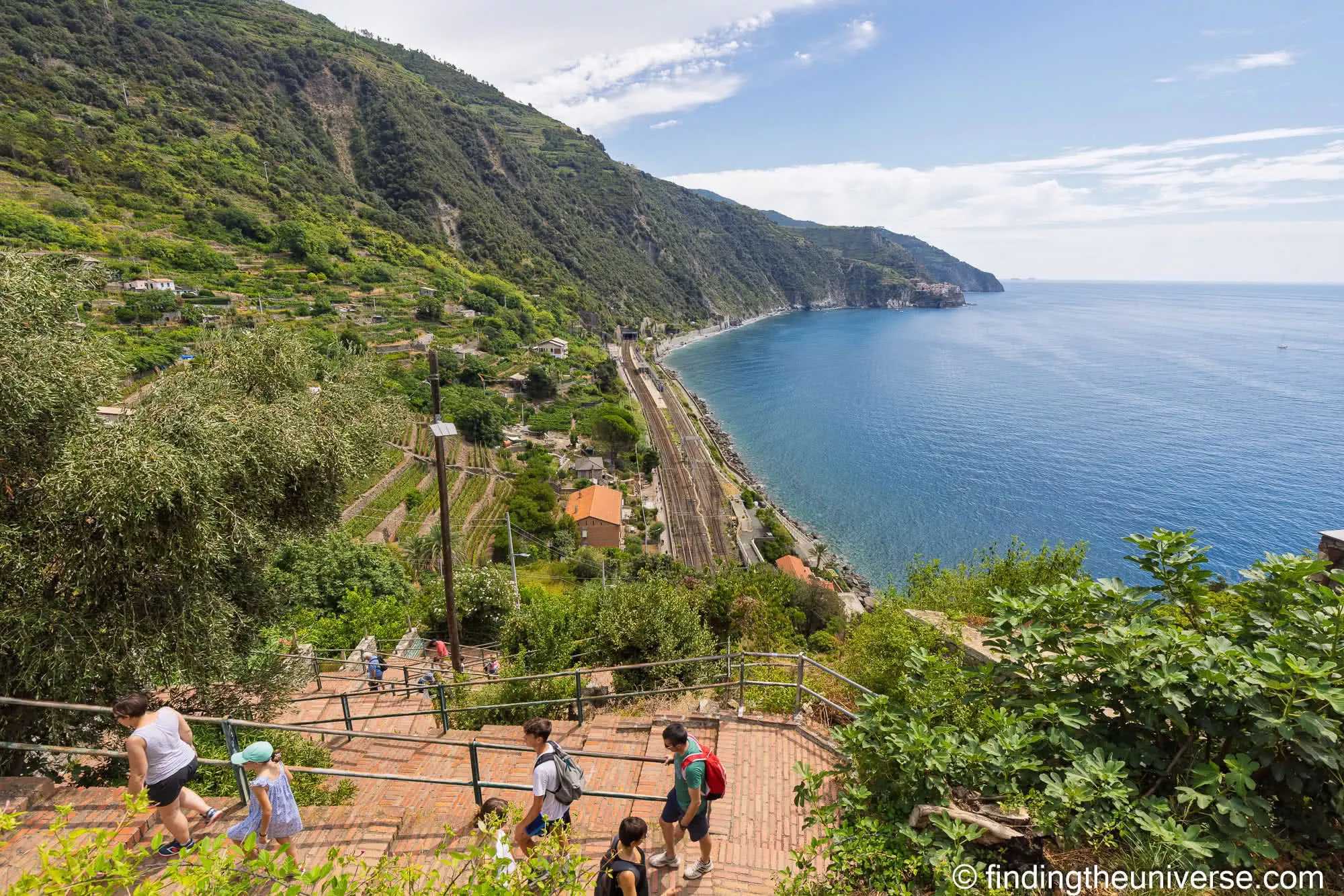
16:00 Corniglia. It’s the odd one out, the only village not down at sea level, sitting up on a clifftop. From its train station you either climb the Lardarina, a brick stairway of 382 steps (the number is posted at the bottom, presumably as a warning), or of course you can just wait for the little shuttle bus. Reward yourself with a gelato and the view from the Santa Maria terrace.
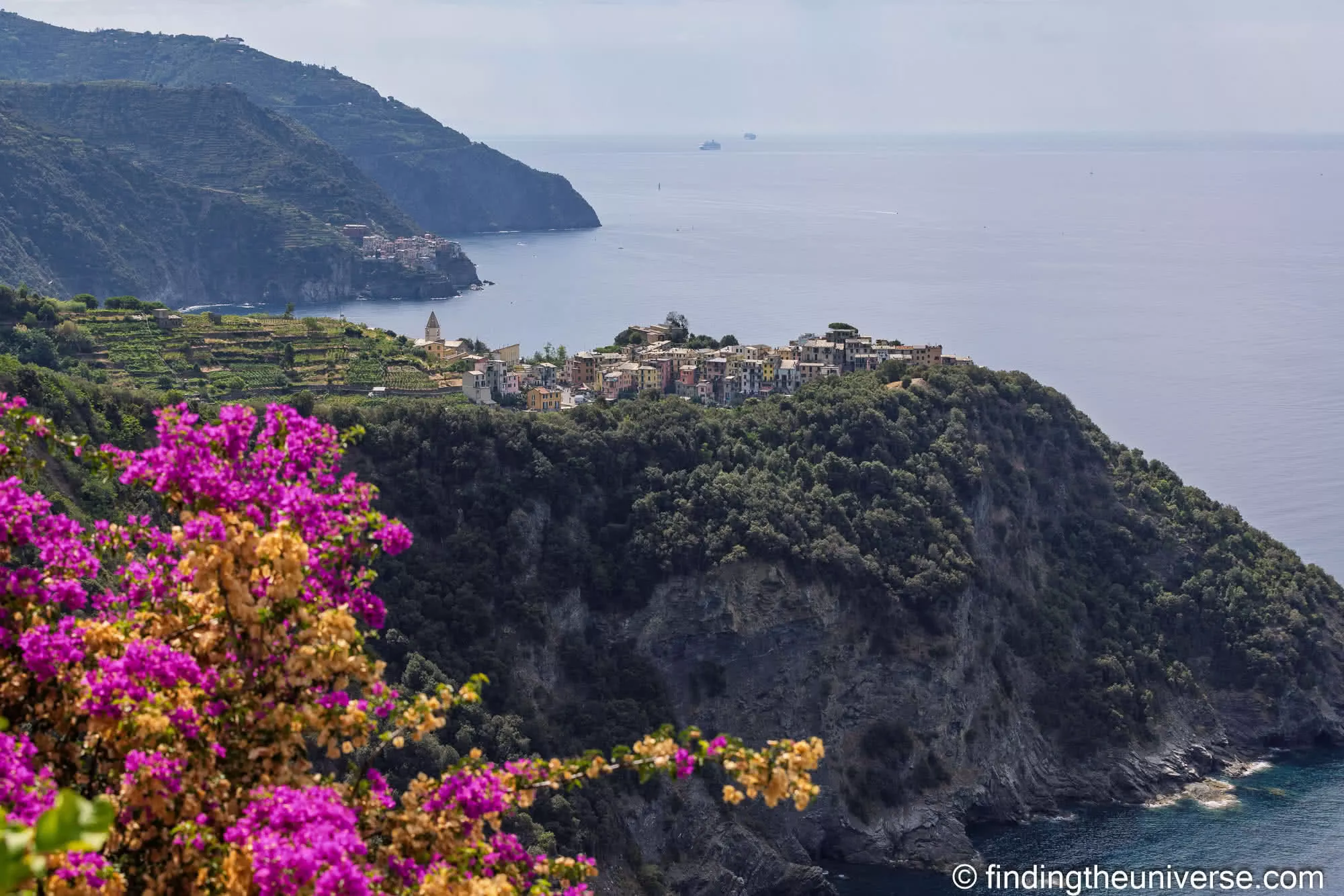
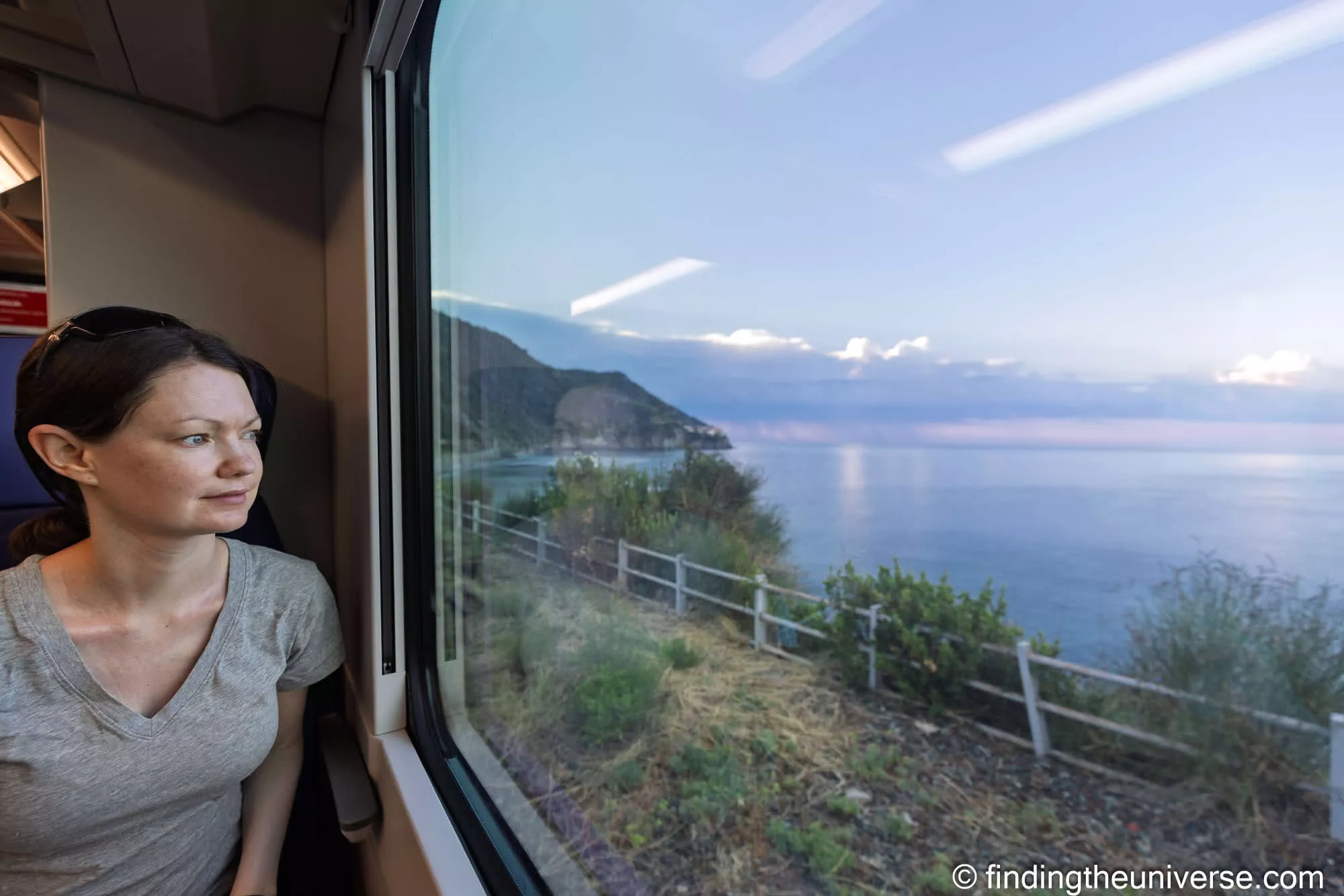
17:15 Train Corniglia to Manarola, about ten minutes. This is the leg you can no longer walk on the coast: the Manarola to Corniglia path is closed indefinitely after landslides and has no reopening date (more on that below).
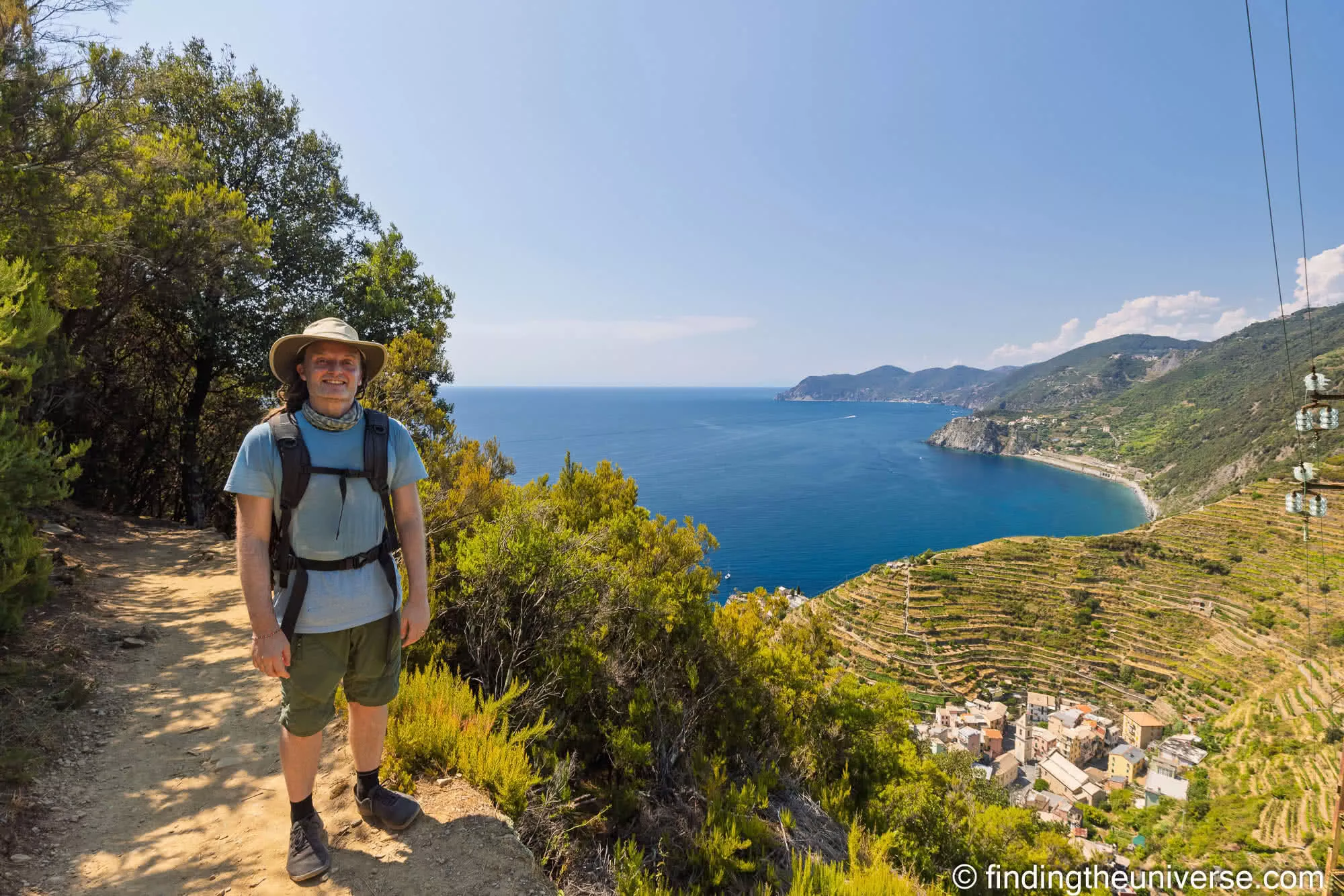
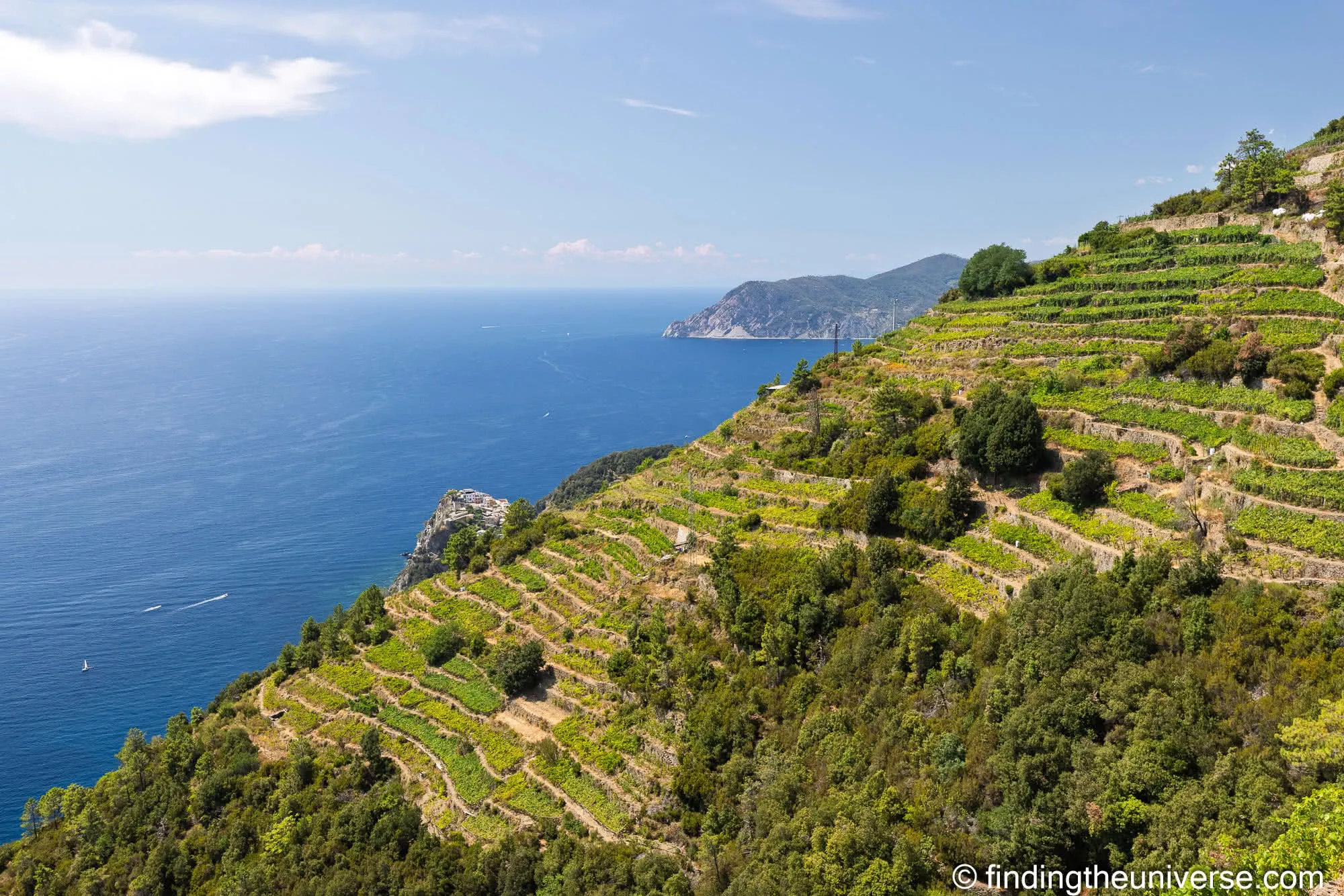
Strong walkers with energy left can instead take the free high route up through the Volastra vineyards on trails 506 and 586, which adds an hour and a half to two hours.
It climbs steeply through the terraces and the path isn’t always well marked, so it’s worth it for the vineyard views but a serious walk, not a casual add-on at the end of a long day. I did this and loved it, but it’s a heck of a climb, so don’t feel bad if you skip it!
If you plan on doing this you will likely want to quicken your pace for the walk overall and shorten your stops in the villages so you have time to do the whole route.
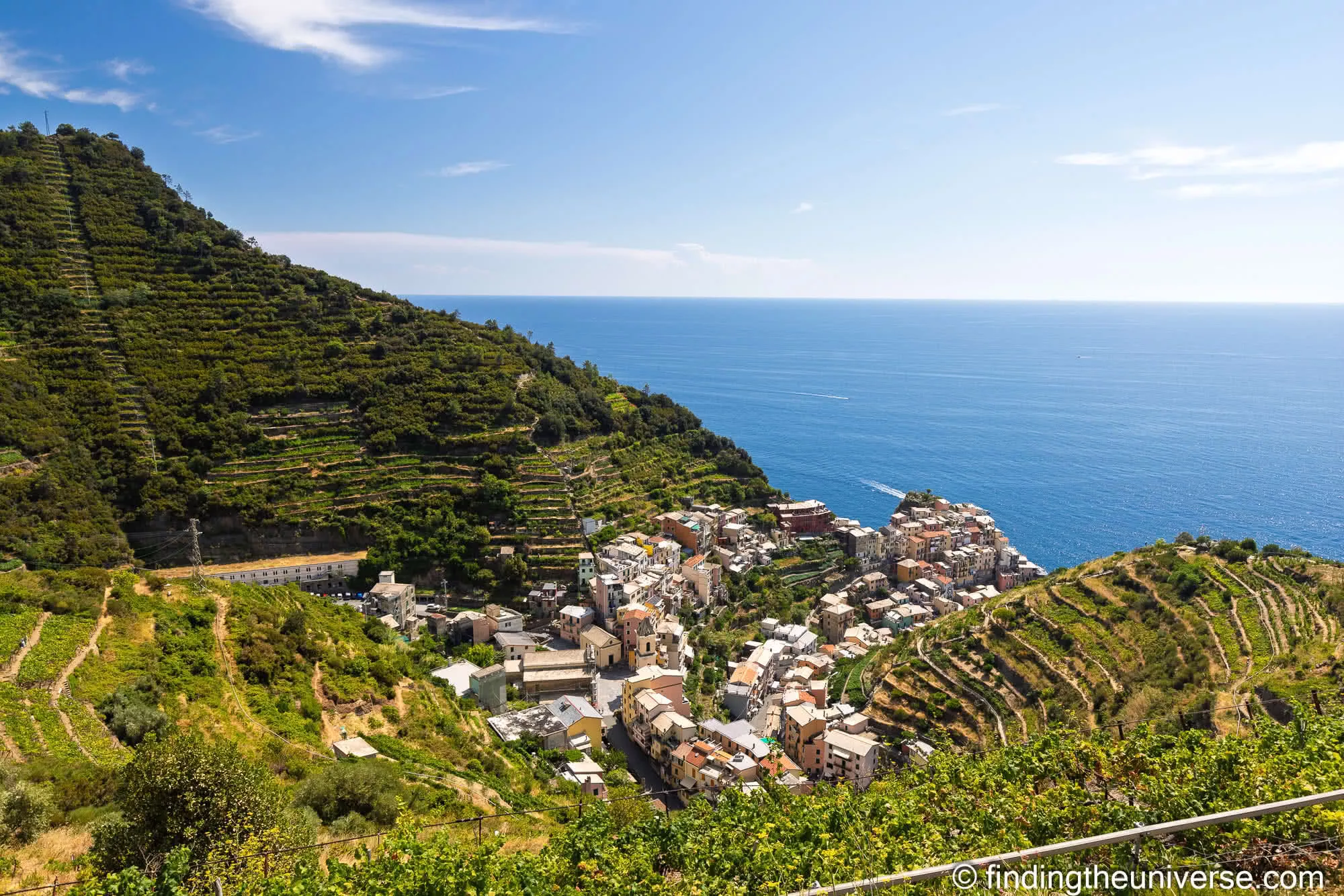
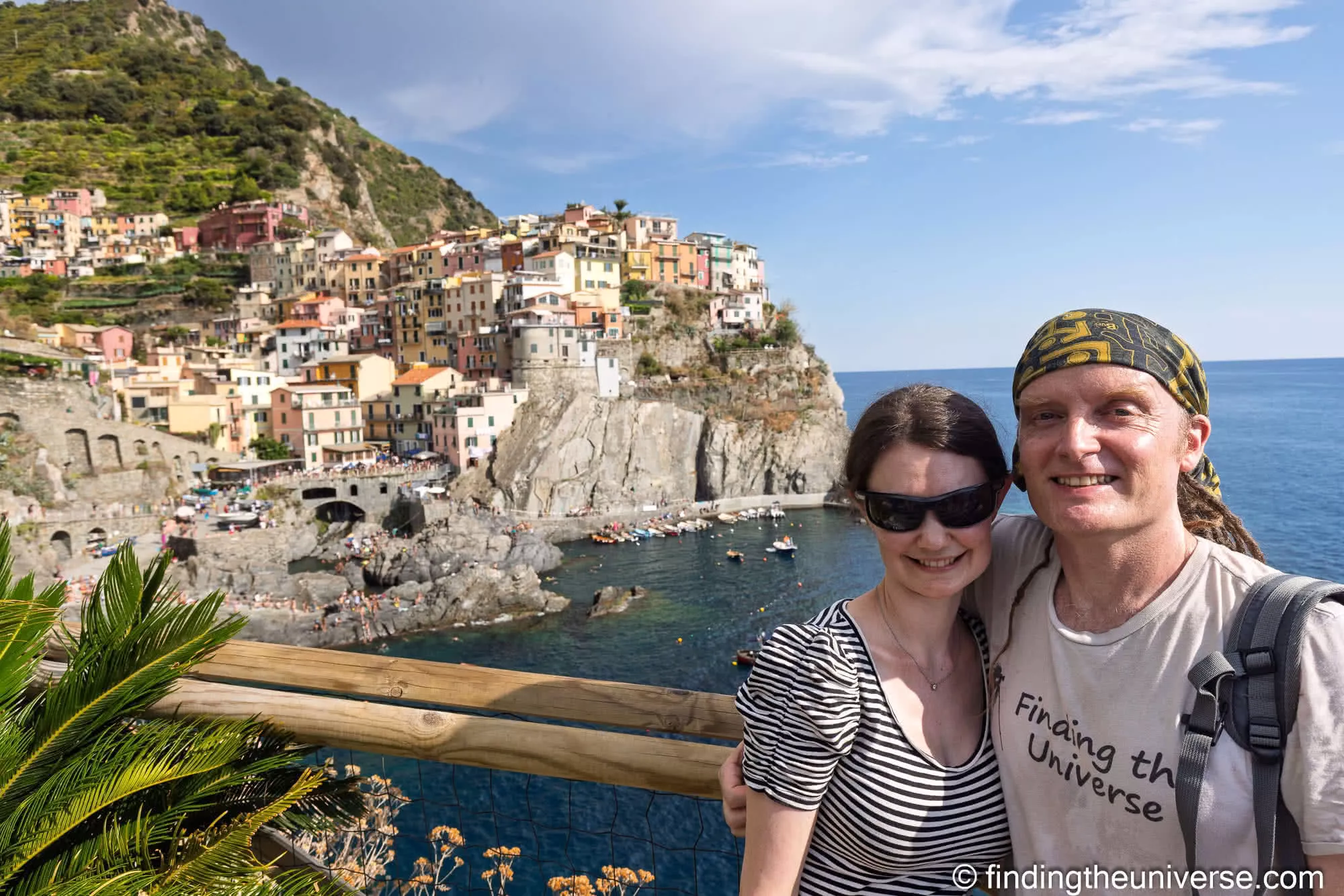
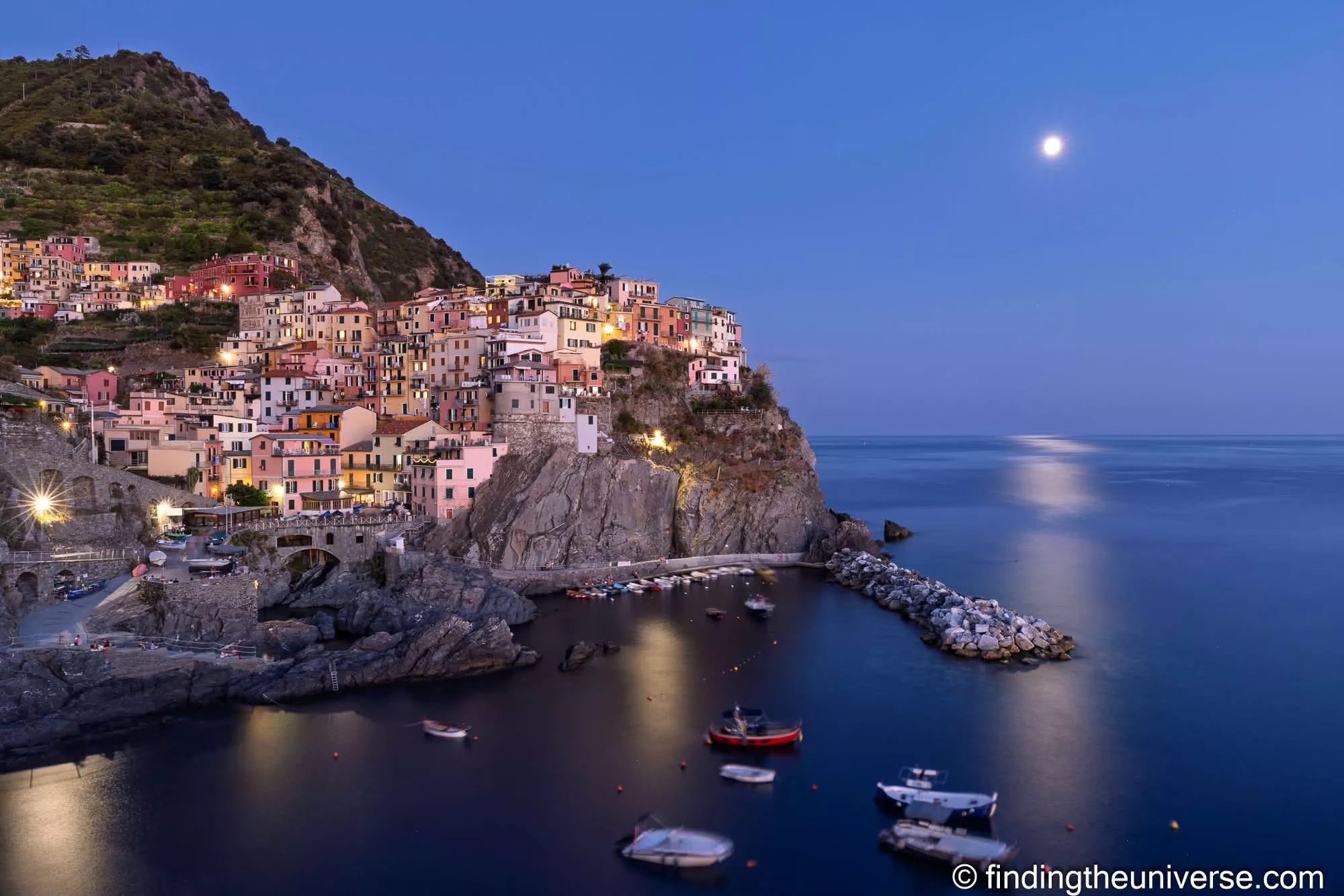
19:00 Aperitivo at Nessun Dorma, the open-air wine bar on the Punta Bonfiglio promontory above Manarola’s harbour. The view of the village stacked up the cliff is the one everyone photographs.
One thing has changed: they no longer take normal reservations. You join a waitlist through their app once you’re physically in Manarola, or take a ticket from the machine at the entrance, so put your name down and go for a wander rather than standing in line.
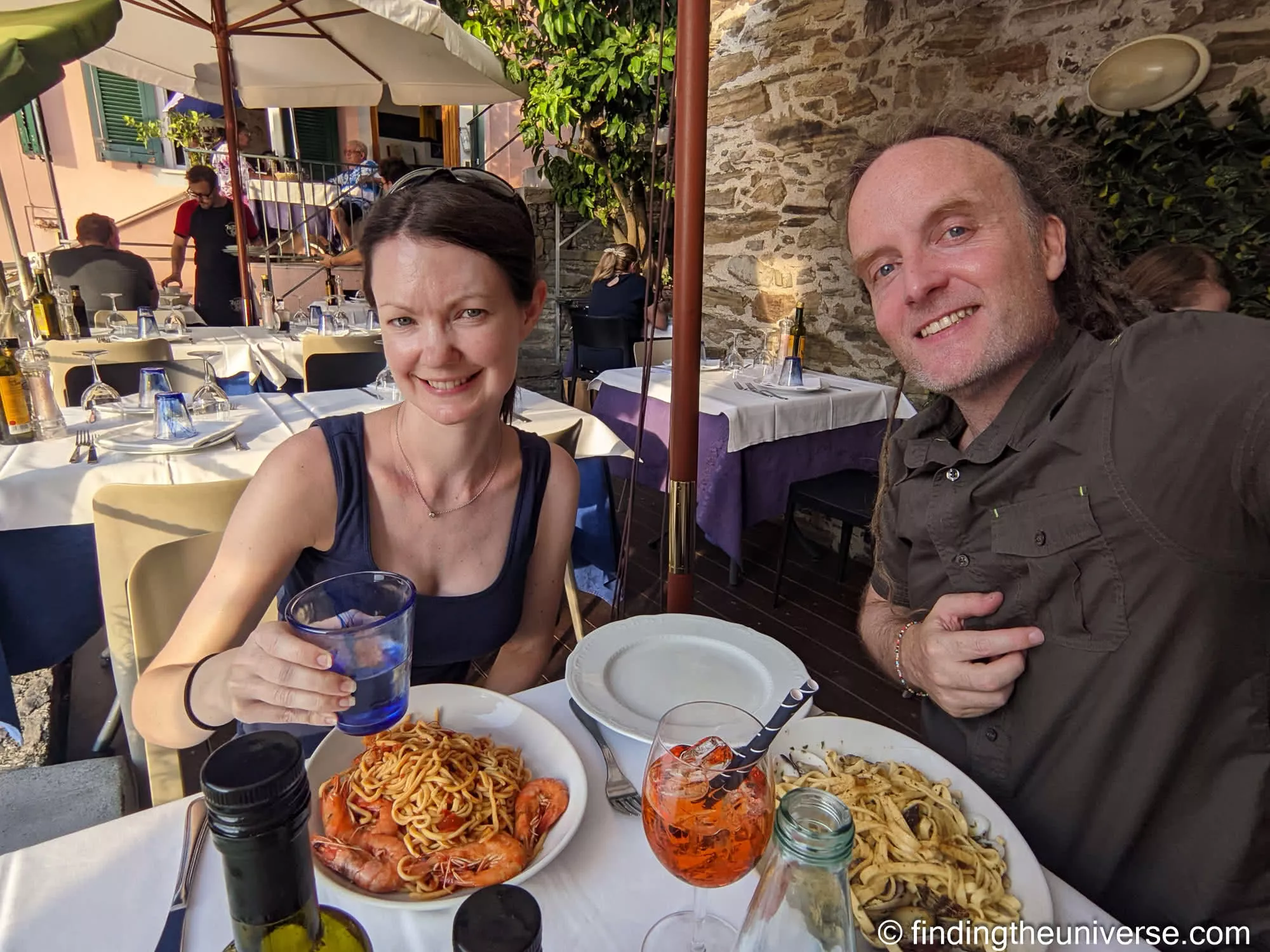
20:30 Dinner at Trattoria dal Billy, up in the higher part of Manarola. It does two sittings, around 7pm and 9pm, and you need to book ahead. This is the meal to plan your evening around.
That’s roughly four hours of walking and three villages explored on foot, comfortably inside the daylight.
One thing worth holding onto on Day 1: the coastal trail shadows the railway the whole way, and every village you pass through has its own station, which makes it a pretty forgiving walk.
The day Jess and I did this north to south, she’d had enough by Corniglia. She was tired and it was fiercely hot, so she hopped the train back to Manarola while I carried on over the hill through Volastra. Neither of us felt we’d missed out.
If a section is getting the better of you, or the heat is, just stop at the next village and take the train; you’re never far from one. The point of being here is to enjoy it, not to prove you can grind out every last kilometre.
Day 2: Manarola, Riomaggiore and the Via dell’Amore
A slower day built around the two southern villages, the famous coastal path, and time on or in the water. Less climbing, more lingering.
09:00 Start at the Manarola classic viewpoint before the day-trippers arrive. Follow the path past the village towards the cemetery on Punta Bonfiglio and you get the textbook shot of the houses tumbling down to the harbour. It’s empty and beautifully lit before about half past ten, and packed an hour later.
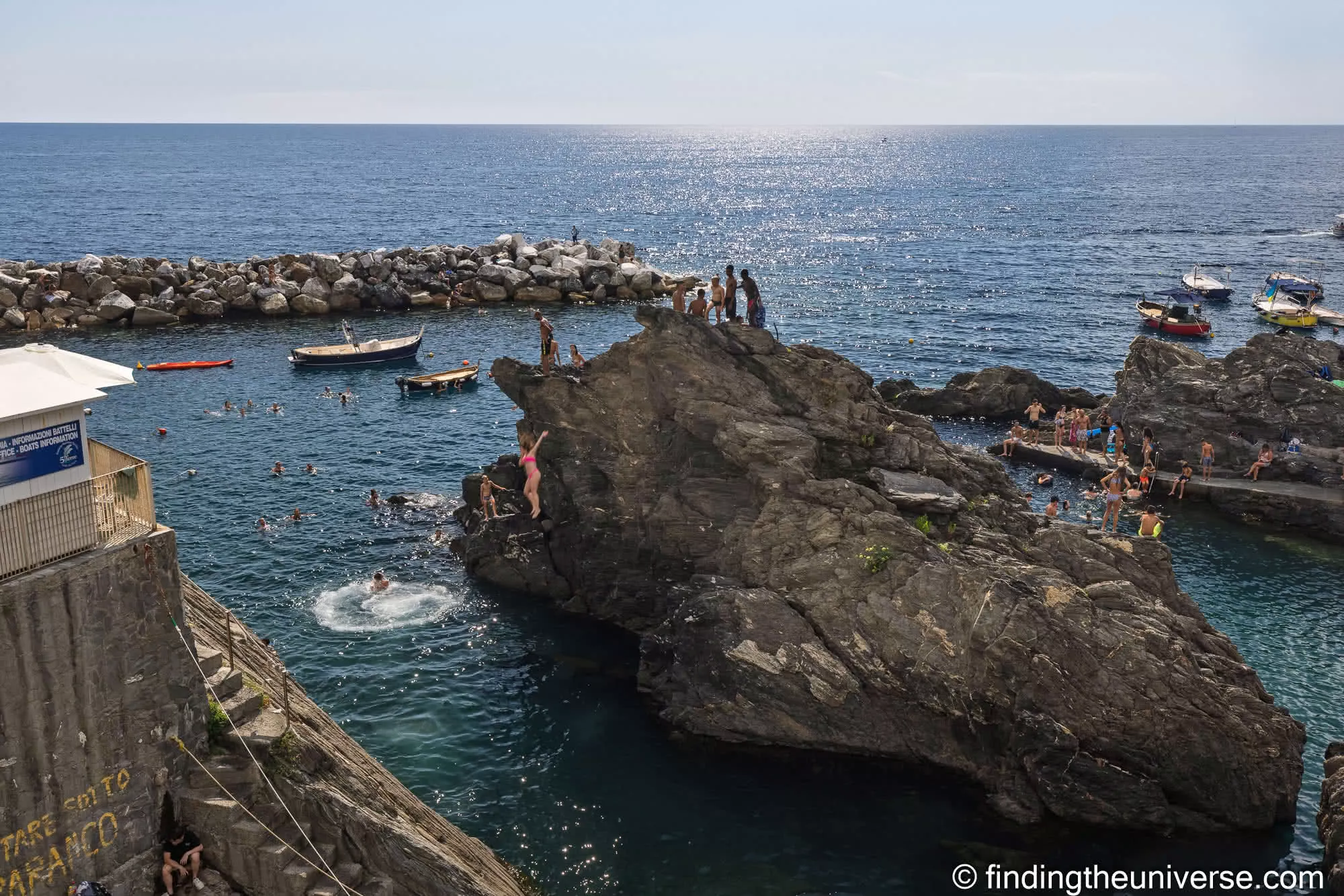
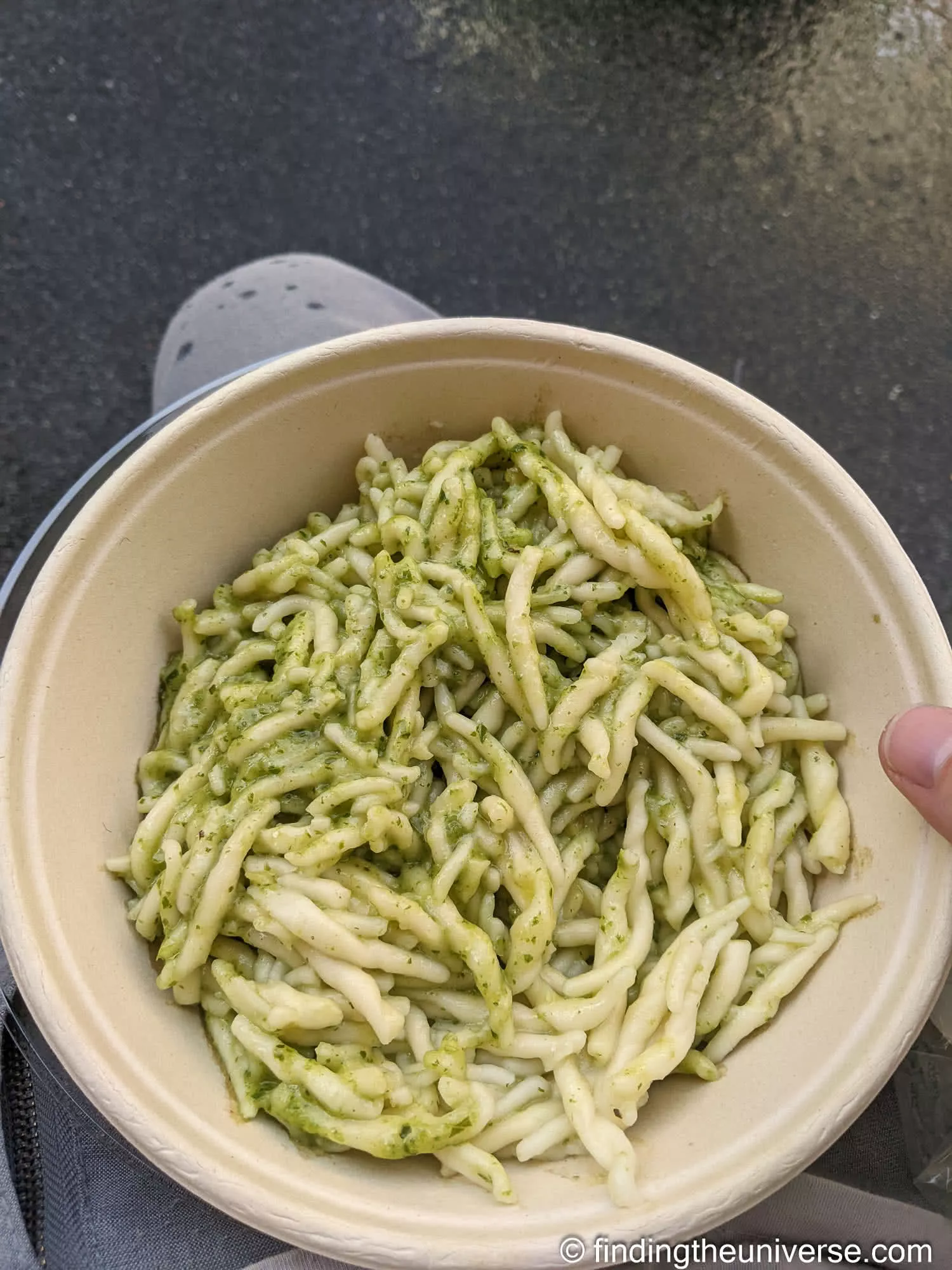
09:45 Potter around Manarola itself: the harbour where people leap off the rocks, the vineyard terraces above, and a stop at Take-Away Pasta (it trades as Pastakeaway, on Via Antonio Discovolo) for a tub of trofie al pesto for a few euros. This is our home base village and the one I know best.
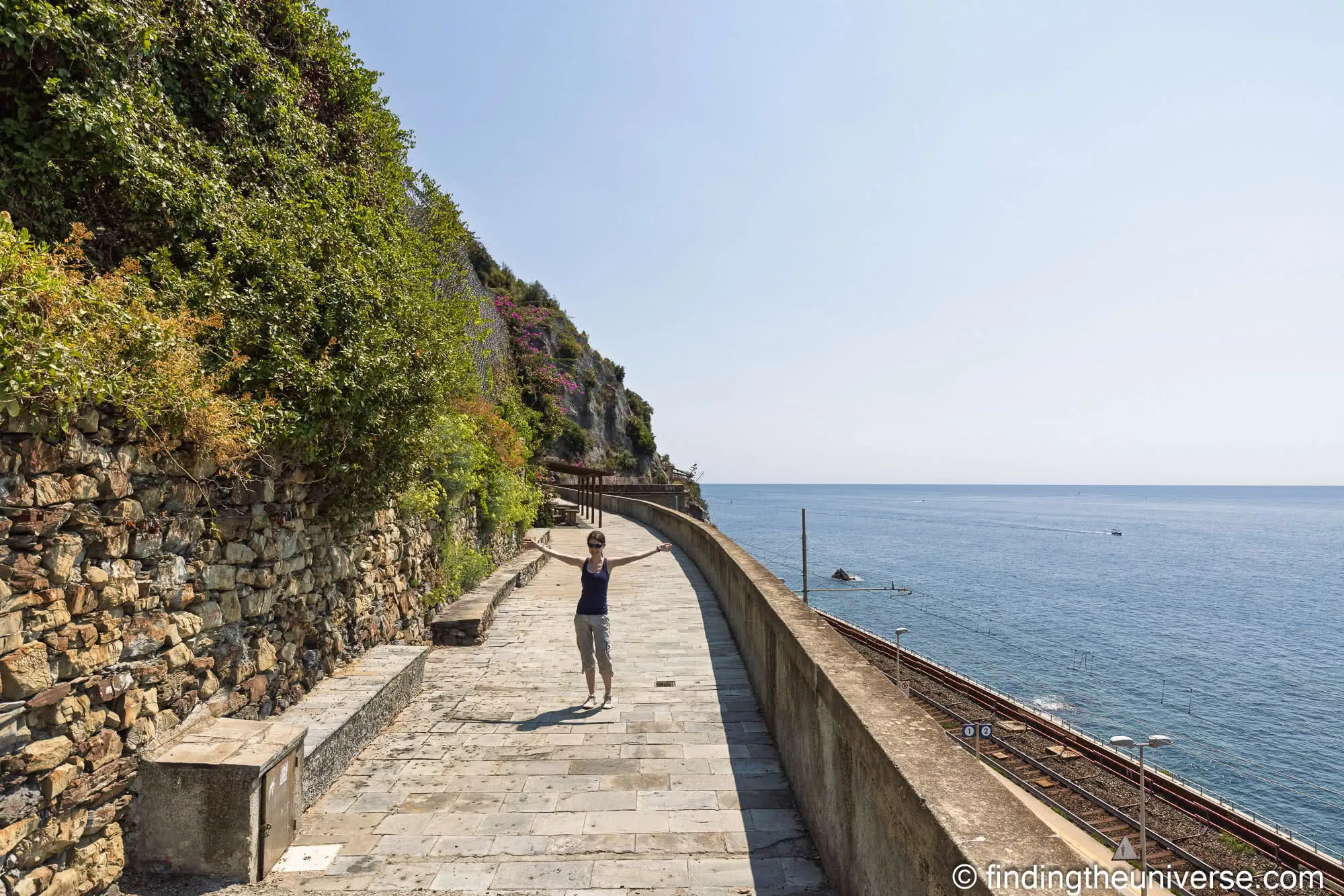
11:00 Walk the Via dell’Amore from Manarola to Riomaggiore. After twelve years shut it reopened recently, and it’s the easy one: a flat, paved cliff path that takes about half an hour at a dawdle.
You do need to book a timed entry slot in advance though. Capacity is capped at 200 people every 30 minutes, and there’s no separate ticket for it. Access comes through the Cinque Terre Card, which means the cheapest way on is a one-day Trekking Card from €10. Slots do sell out, so book before you arrive in town.
This, incidentally, is the path that was closed on our earlier visits, which is why we walked the steep Via Beccara mule path over the top instead. You don’t have to; it’s open and free if you want the harder, higher version, but most people will be very happy with the flat one now it’s back.
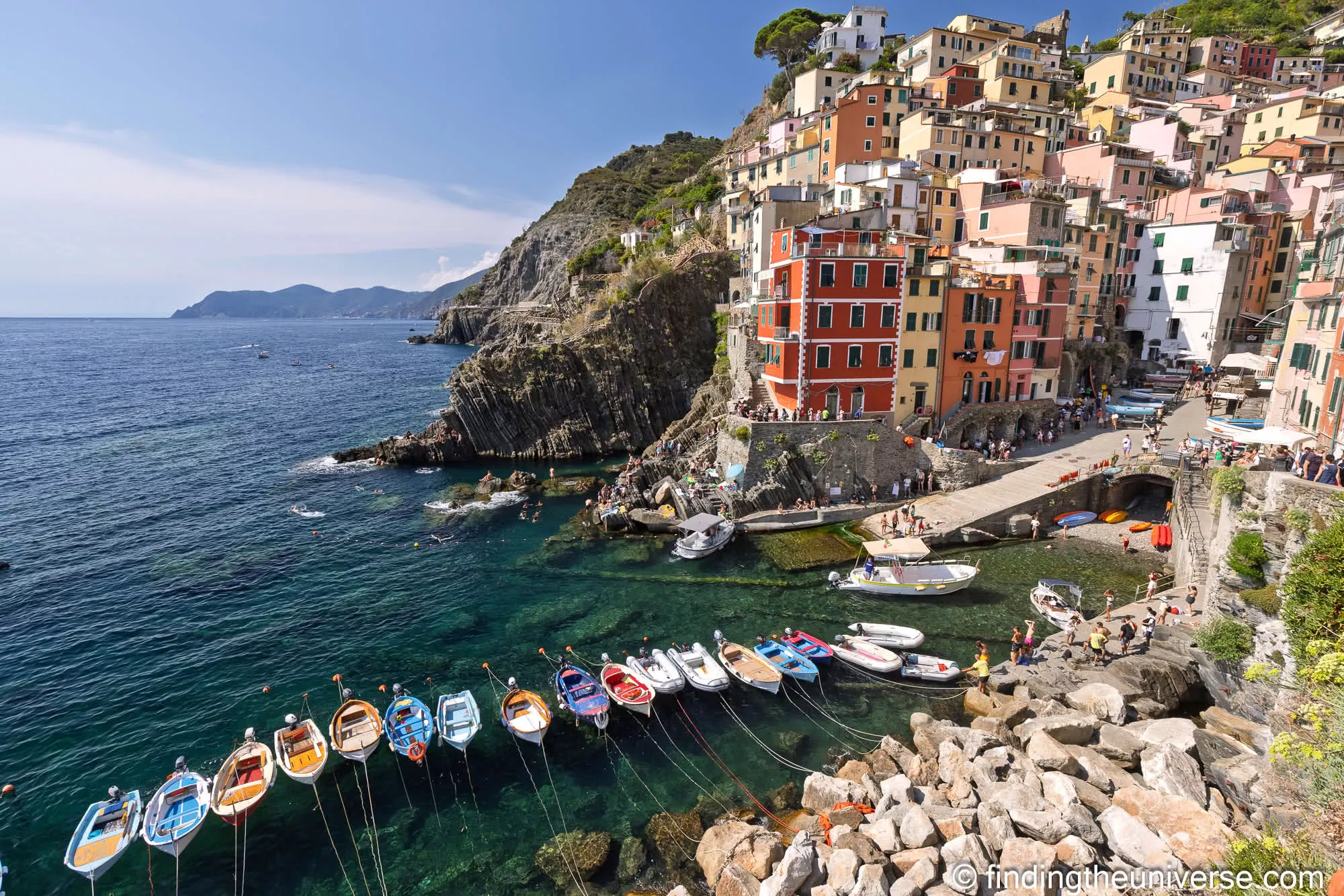
11:45 Riomaggiore, the southernmost village, for the harbour and the classic view back up the boat ramp. Have lunch here.
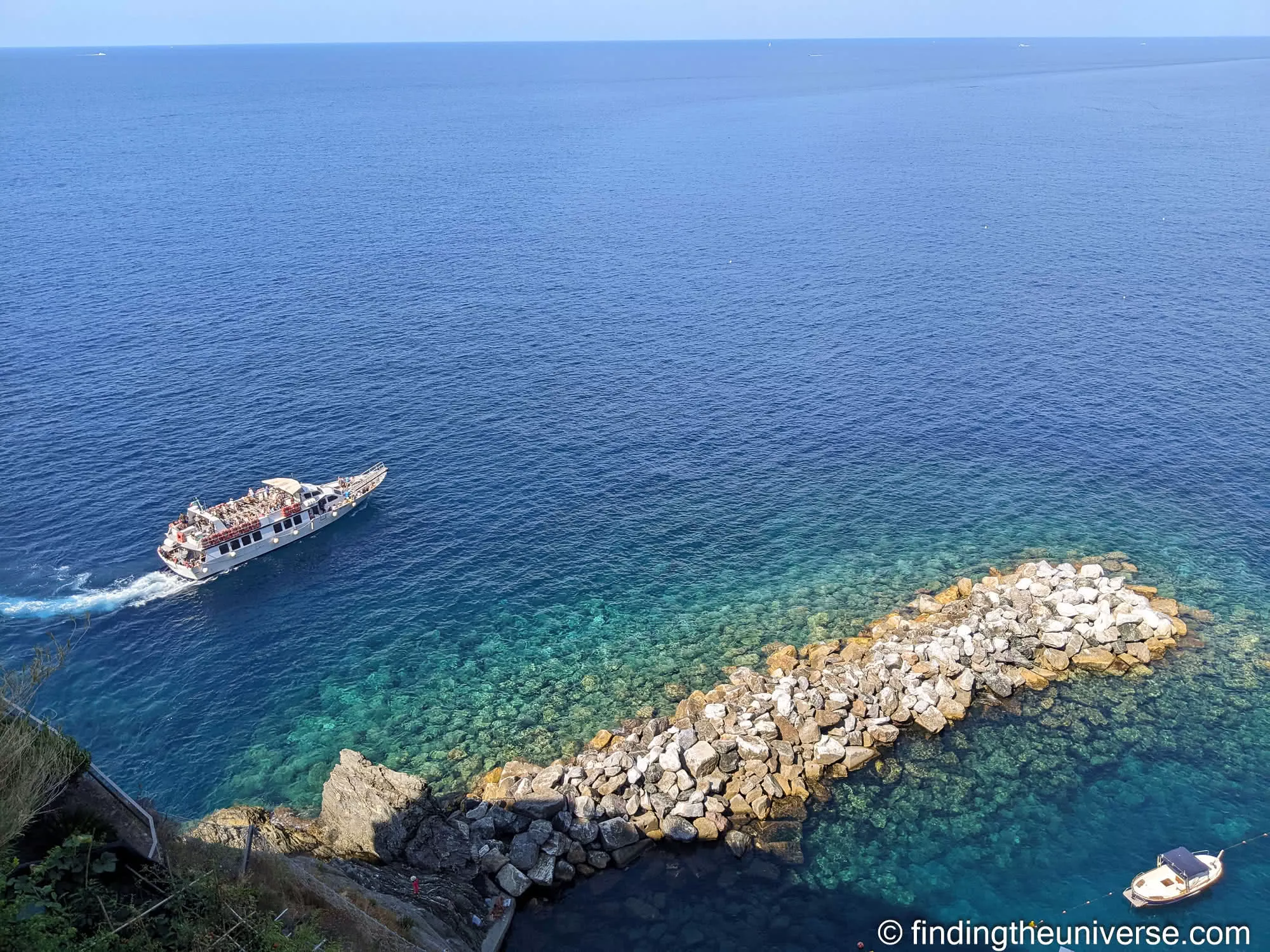
14:00 Take to the water. A coastal boat trip is the one way to see the villages from the angle you can’t get on foot, stacked up against the cliffs from the sea, and it’s well worth doing if the weather’s kind. The ferry runs along the coast roughly from late March to the start of November and doesn’t operate in deep winter, so check the day’s sailings (they’re confirmed each morning depending on the sea).
Or just swim off the rocks back in Manarola instead. If you’d like to book one ahead, this Cinque Terre boat tour from Monterosso takes in the coast with a swim stop along the way.
16:00 Back in Manarola, do a Sciacchetrà tasting. This is the local sweet wine, a Cinque Terre DOC dessert passito made from grapes dried on the terraces above the village. Don’t confuse it with Vernaccia, which is a Tuscan wine entirely. A small glass with something sweet is the proper way to end an afternoon here. If you’d rather have it arranged, this Manarola wine tasting pours a few local wines, the Sciacchetrà among them.
19:30 Sunset and dinner back at base. The Punta Bonfiglio side of Manarola catches the last light beautifully, and after two days you’ll have earned a slow final evening.
Shorter or longer: 1-day and 3-day versions
Of course, not everyone has exactly two days to play with. The nice thing about basing yourself in one village is that you can stretch or shrink this without rebuilding it.
For one day, do Day 1’s walk and nothing else: Monterosso to Vernazza to Corniglia on foot, train home, and a sunset aperitivo at Nessun Dorma. Skip the southern villages or pick them up by train if you’ve energy left. You’ll have walked the best of the open coast and seen three of the five.
For three days, keep the two days above and add a third that’s deliberately gentle. The best options are a boat day out to Portovenere just down the coast (off the Cinque Terre Card, but a lovely trip), the vineyard high-trail loop above Volastra if you want serious walking and quieter paths, or simply a slow beach afternoon in Monterosso.
A third day is where photographers and keen walkers get their money’s worth; for everyone else, two is plenty.
Which Cinque Terre trails are open right now?
This is the part that’s easy to get wrong, and it’s the most important thing to plan around. Here’s the current state straight from the official Parco Nazionale delle Cinque Terre trail network, which is the place to confirm it before you go. The park also closes the coastal sections at short notice in bad weather and suspends access during orange and red weather alerts, so it’s worth a final check on the morning you plan to walk.
The coastal Sentiero Azzurro (the Blue Trail) is the famous low path linking the villages. Right now it is open in parts and closed in parts:
- Monterosso to Vernazza is open, officially rated expert, and takes about two hours. You need a Trekking Card.
- Vernazza to Corniglia is open too, also rated expert, about an hour and a half, Trekking Card required.
- Corniglia to Manarola is closed indefinitely after landslides, with no official reopening date. The restoration is still in the design and financing stage, so there’s no date to plan around yet. Take the train across this leg, or walk the free high route through Volastra.
- Manarola to Riomaggiore, the Via dell’Amore, is open again after a long closure, but timed-slot booking is mandatory and access is through the Cinque Terre Card. The official Via dell’Amore booking page has the slots and seasonal hours, which run roughly 9am to 9pm in high summer and shorter in shoulder season.
Three things before you set out.
First, the two open coastal sections are rated expert now, not the easy strolls some older guides describe: they’re stepped, exposed and hot.
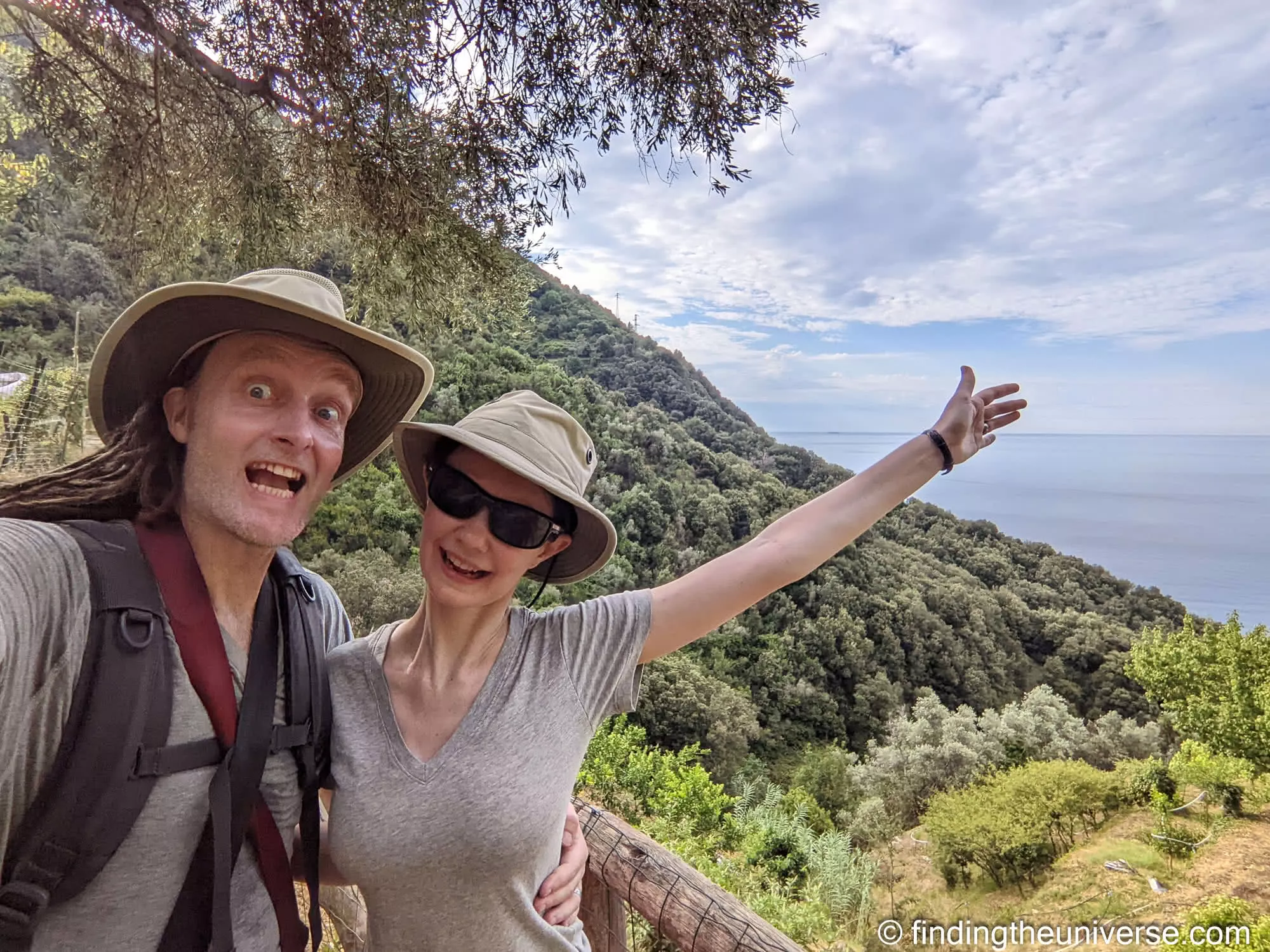
Second, footwear is not optional here. The park bans flip-flops, sandals and smooth-soled shoes on the trails. Get caught in them and you can be turned back, or fined anywhere from €50 to €2,500, which would make them the most expensive flip-flops you’ve ever owned. You don’t need full hiking boots, though. The rule is really about the sole: closed shoes with a proper grippy tread are all that’s required.
We walked the whole route in lightweight trail runners and they did the job; I’d happily have worn hiking boots, but we were travelling Italy by train for a month and hauling a heavy pair around for a single walk wasn’t worth it.
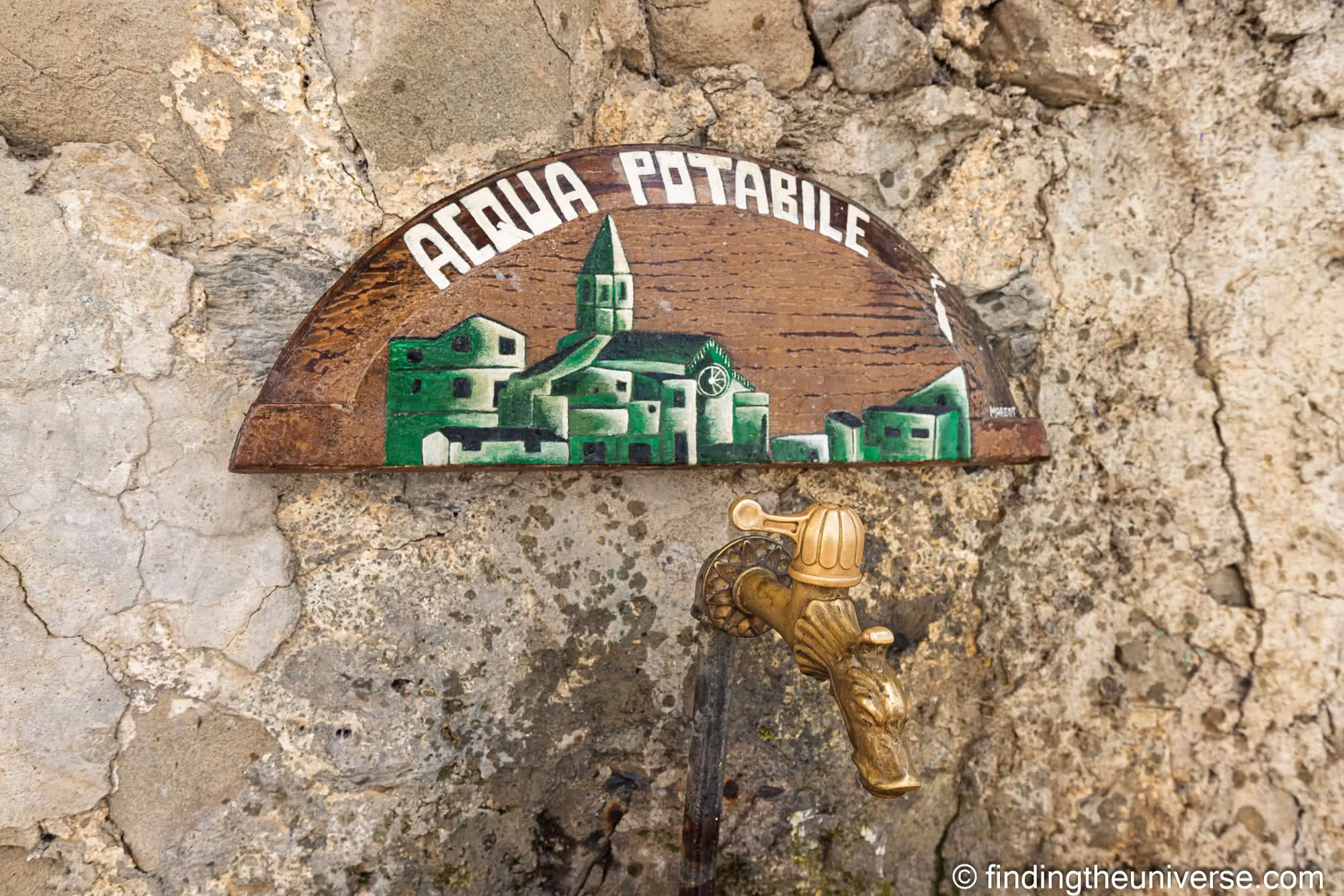
Third, bring plenty of water, and refill for free at the village drinking fountains marked Acqua Potabile (never the ones marked Acqua Non Potabile).
And finally, there are two free high paths that aren’t part of the paid trail: the Via Beccara (trail 531) over the headland between Manarola and Riomaggiore, and the Volastra vineyard route (trails 506 and 586) above the closed Corniglia to Manarola section.
Both are open and cost nothing, but both are steep climbs rated expert, so treat them as a serious walk and not a casual detour.
Where to stay in Cinque Terre
Stay inside the five villages, not in La Spezia. Plenty of guides suggest commuting in from the city to save money, and you can, but you’ll miss the whole point: the villages empty out in the evening when the day-trippers leave, and that quiet hour is the best part of being here. The question is which village.
| Base | Best for | Trade-off |
|---|---|---|
| Manarola | The classic Cinque Terre feeling, the best sunset viewpoint, central for the trail. Our pick. | No real beach; restaurants book up. |
| Monterosso | The sandy beach, the most restaurants, the easiest arrival with proper roads and a bigger station. | Feels more like a resort, less like a fishing village. |
| Vernazza | The prettiest harbour, lively without being a resort, a good middle ground. | Small and steep; limited rooms, so book early. |
| Corniglia / Riomaggiore | Quieter, often cheaper; Riomaggiore is handy for the Via dell’Amore. | Corniglia is up a clifftop with no harbour and a lot of steps. |
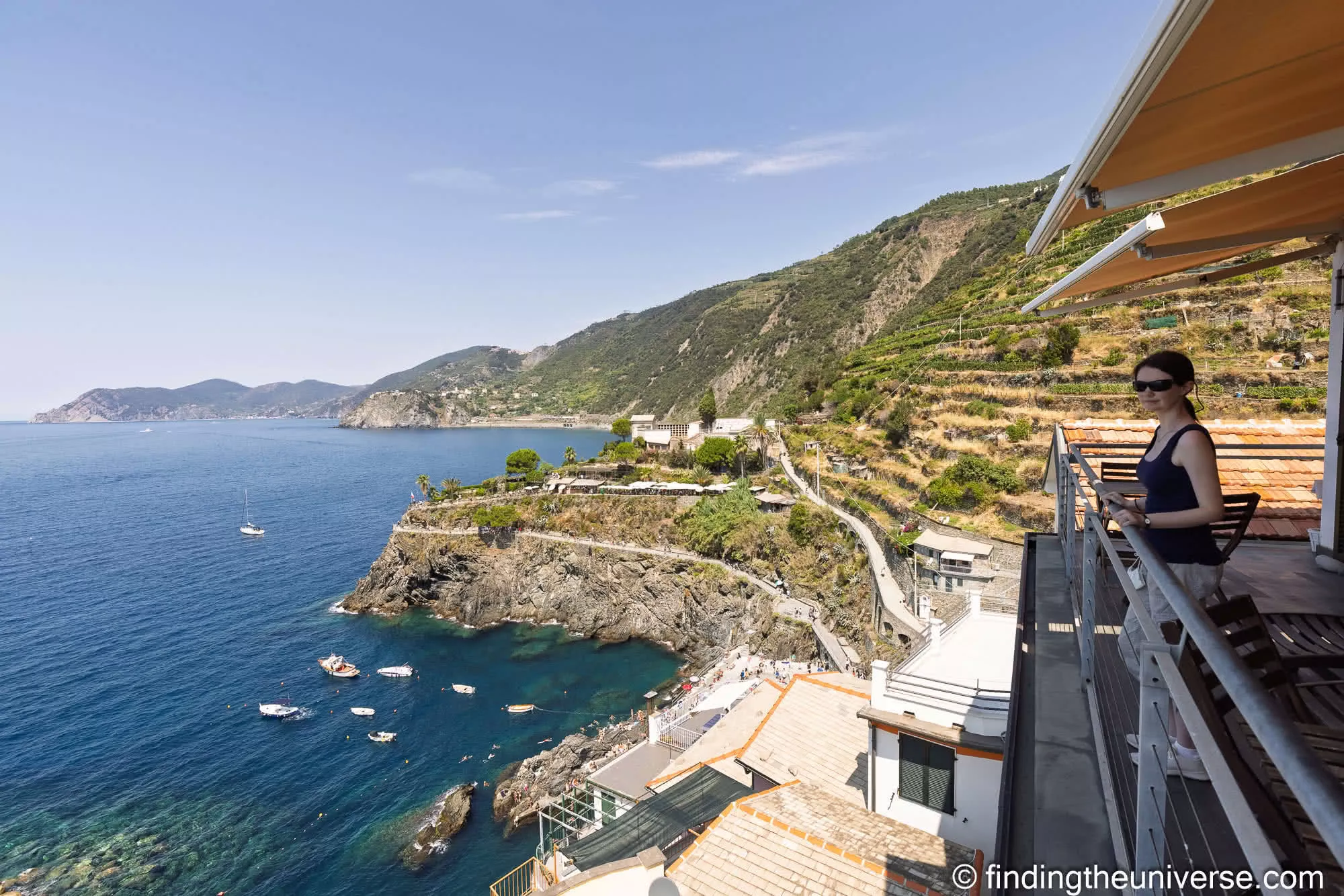
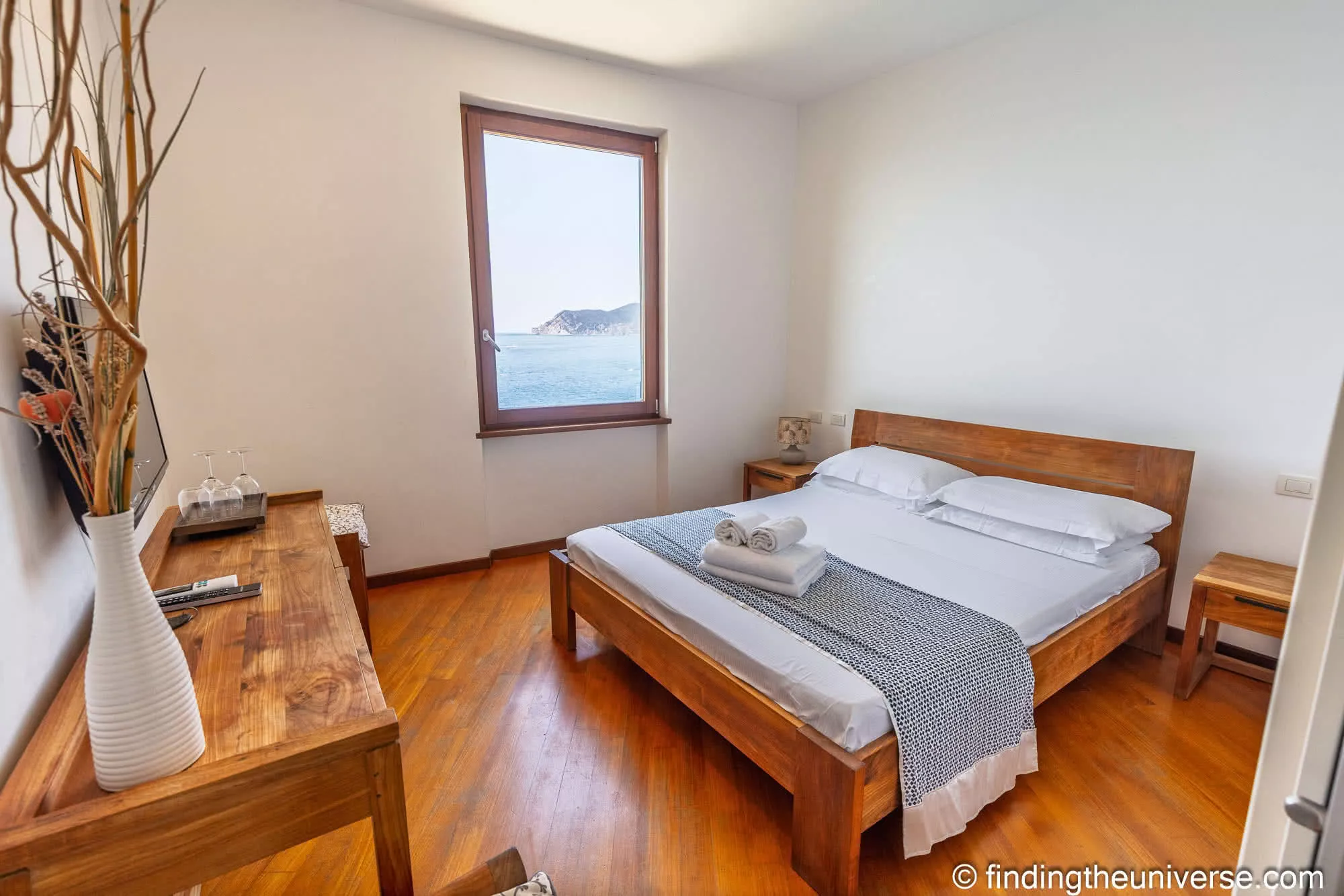
We base ourselves in Manarola, at Arpaiu, a small guesthouse with a rooftop terrace looking down the terraces to the water. It’s a five-room place and books out, so reserve well ahead.
If you’d rather have the beach, more dinner options and a less vertical arrival, I’d point you at Monterosso or Vernazza instead, and you won’t regret it; they’re the easier, more amenity-rich choice for families or anyone who doesn’t fancy hauling a case up a hill.
Getting there and getting around
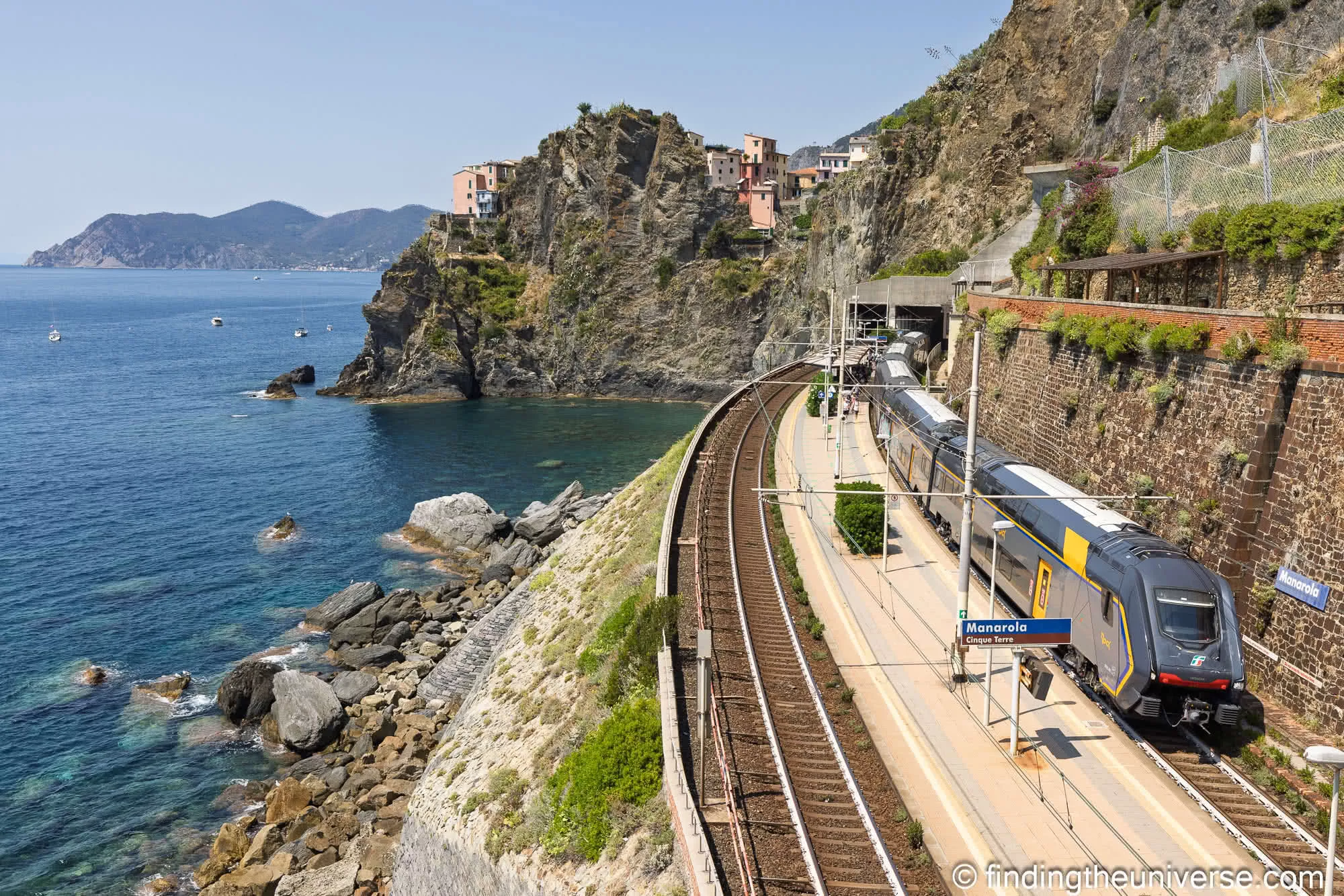
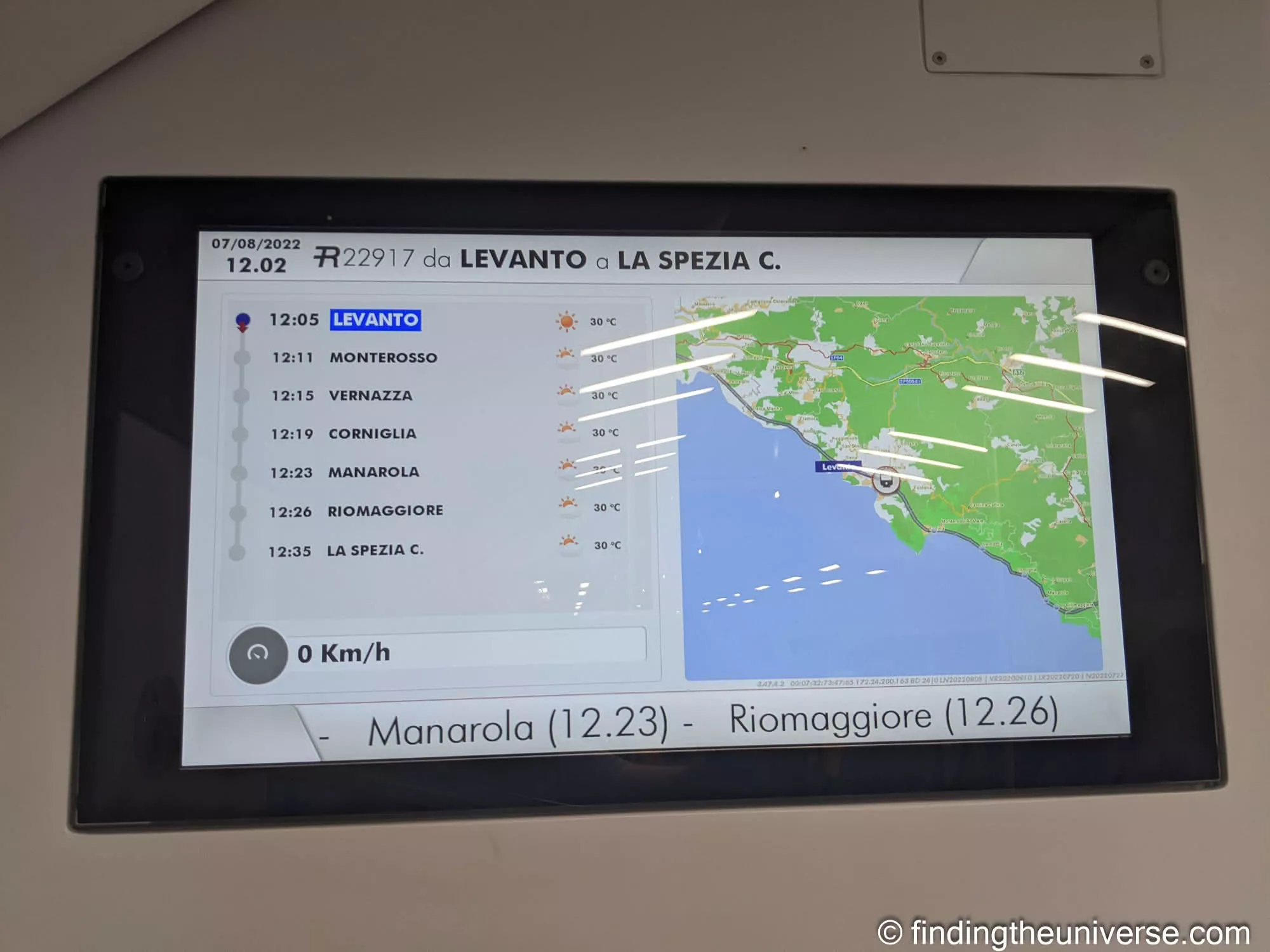
You arrive by train. The gateway is La Spezia Centrale, and from there the local Cinque Terre Express loops through all five villages and on to Levanto in a few minutes between stops. From elsewhere in Italy you change at La Spezia (or Genoa from the north), and it’s worth booking the longer-distance legs ahead through Trainline to lock in a seat.
Forget driving: the villages are effectively car-free, parking is a nightmare, and you’d spend the trip walking down from a hillside car park anyway. Trains, boats and your own feet are how this place works.
The one decision worth thinking about is which Cinque Terre Card to buy, because there are two and they’re easy to muddle. Both are sold at the village stations and by the national park.
- The Trekking Card covers the open coastal trail sections and the Via dell’Amore. In 2026 it’s €10, €17 or €23.50 for one, two or three days in regular season, rising to €15, €26.70 or €37.50 on designated high-season days. This is the one we normally get.
- The Train Card adds unlimited rides on the regional trains between the villages and Levanto and La Spezia. In high season (mid-March to the start of November) a one-day card is priced by demand band at €22, €29.50 or €35, with two- and three-day versions at €36.50 to €61 and €49 to €81. In low season it drops to a flat €17.30 for one day.
So which do you actually need? Here’s how I’d call it for the common cases.
| Your plan | What to buy | Why |
|---|---|---|
| Walking the open trail, training the closed leg only | Trekking Card + a couple of single tickets | You only take one or two short train hops, so the Train Card’s unlimited rides go to waste. |
| Hopping all five villages mostly by train, doing the Via dell’Amore | Train Card | It includes trail and Via dell’Amore access and pays off the moment you take three or more train rides in a day. |
| Mixing it: one big walking day, one train-and-boat day | One Trekking day + one Train day | Match the card to the day rather than buying two days of the pricier one. |
| Visiting out of season, walking little | Often nothing | Outside the season the open coastal sections are free; you just buy point-to-point train tickets. |
Whichever you choose, remember the Via dell’Amore slot still has to be booked separately and in advance even once you hold a card.
The best time to visit Cinque Terre
Late spring and early autumn, without much hesitation. May into June and September give you warm weather, walkable trail temperatures and water that’s swimmable without the peak crush. That’s when I’d come.
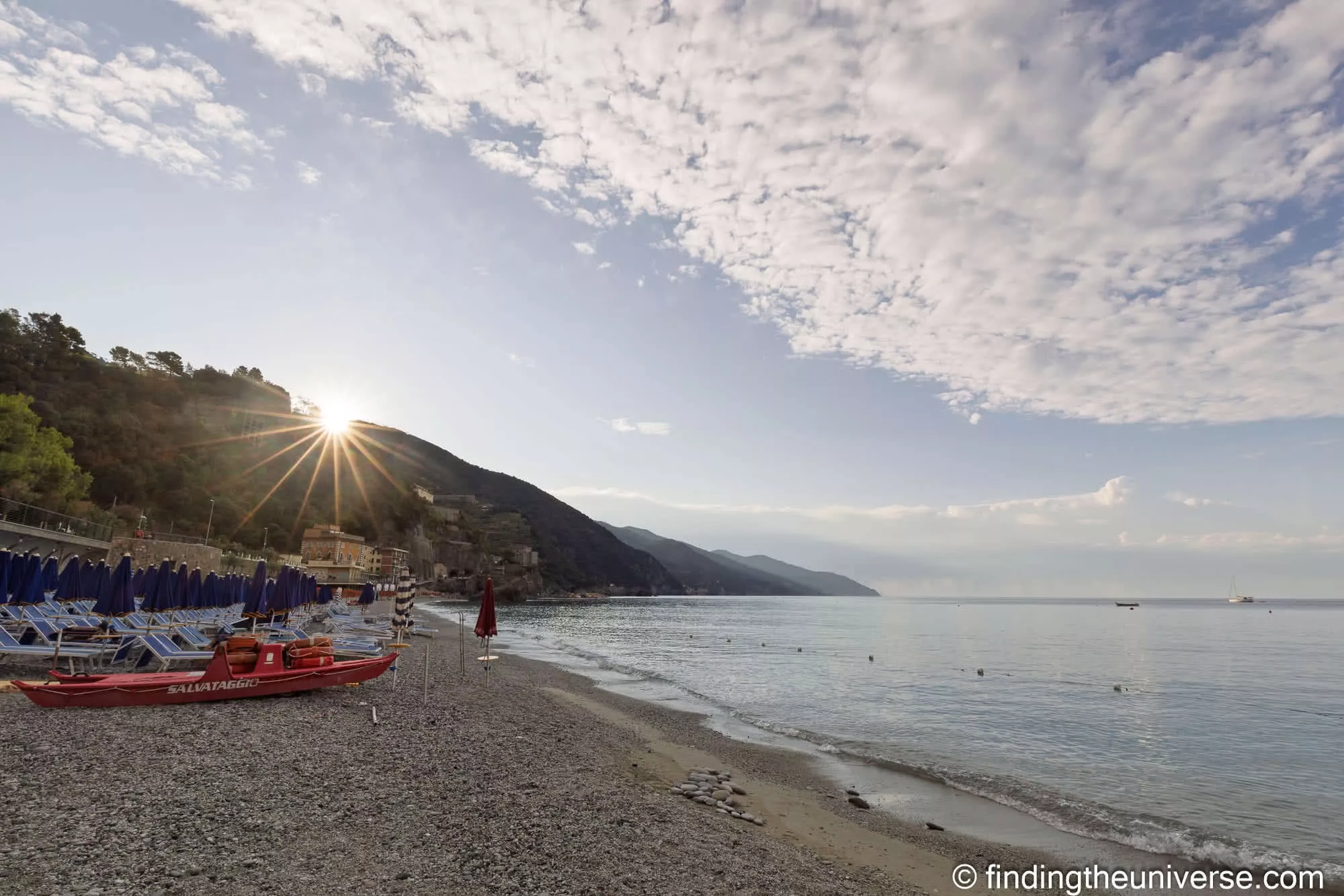
July and August are hot and very busy. I don’t mean that as the usual throwaway line: by the middle of an August day the coastal path and the village lanes turn into a slow-moving human traffic jam in 35-degree heat, and the walking sections I’d happily recommend in May become miserable.
If summer is your only option, walk at first light, retreat to the water or the shade by midday, and come back out in the evening when it cools and empties.
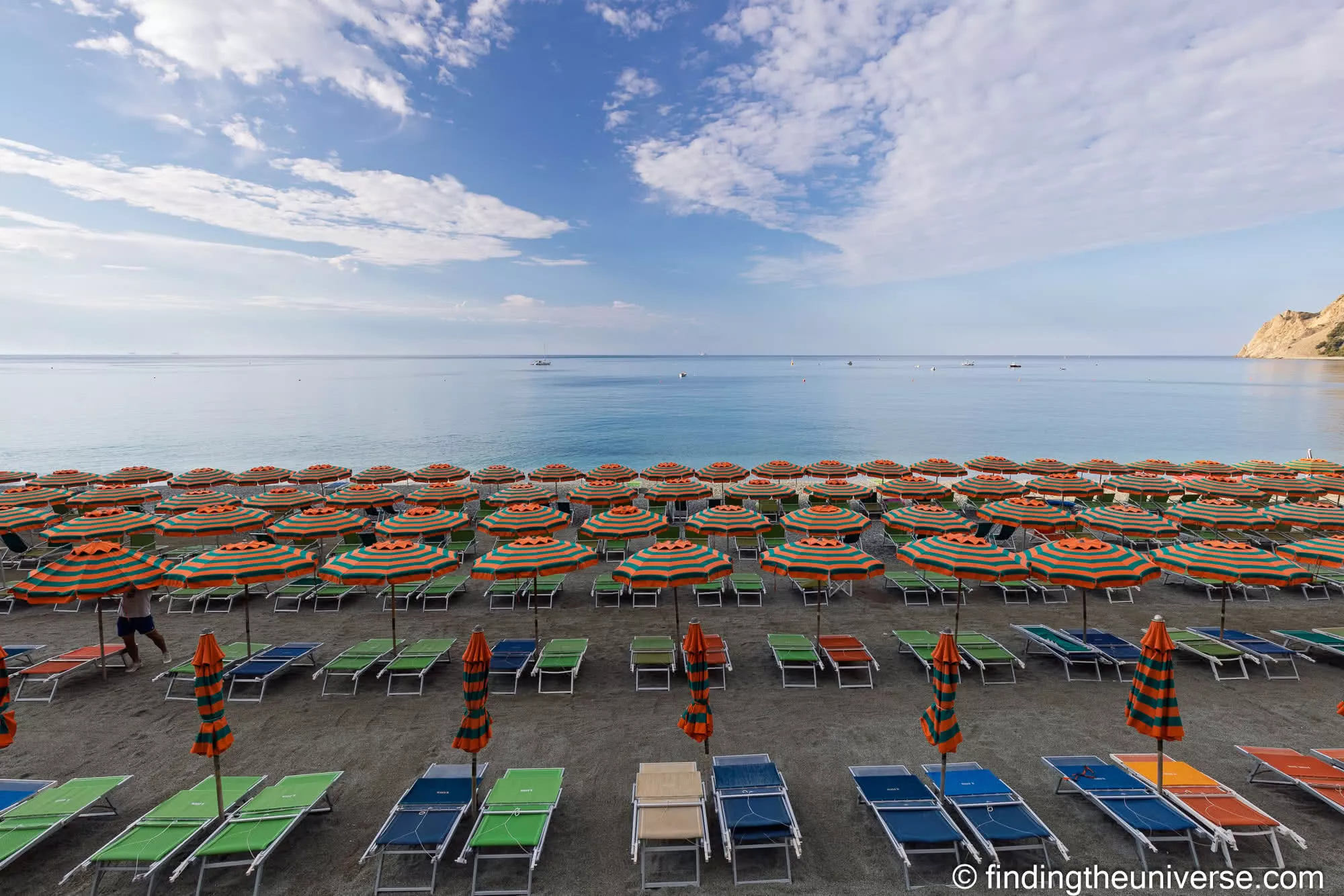
Winter is the quiet trade-off. You get the villages almost to yourself and lovely low light, but the days are short, the ferry stops running, some trail sections and restaurants close, and the whole place winds down. It’s a fine time for a slow, train-based visit if you don’t mind missing the walking and the boats. If that’s your plan, compress the itinerary above: drop the long Day 1 hike to a single open section, train between villages, and move sunset and dinner earlier to fit the shorter daylight.
Where to eat and drink
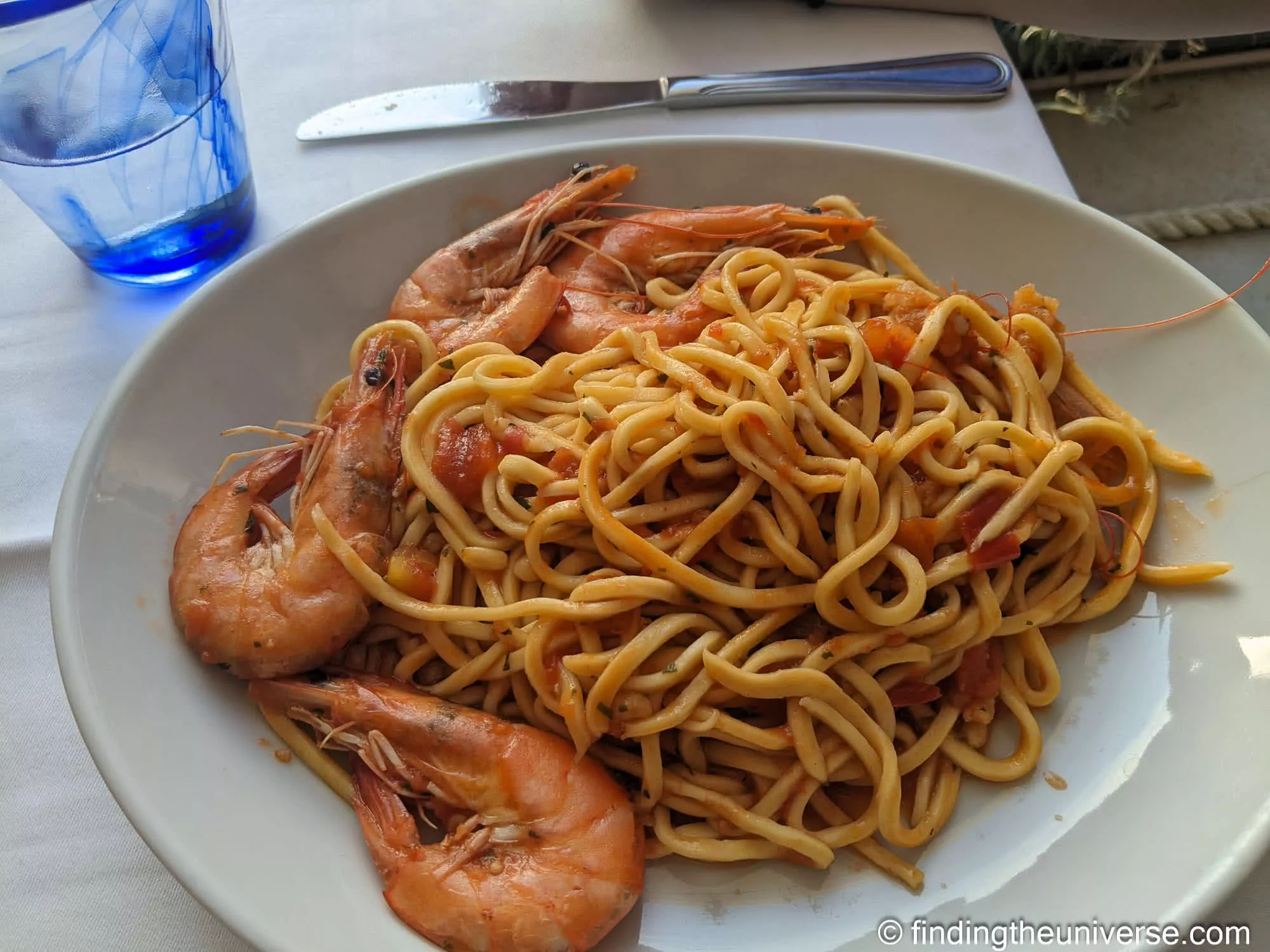
The food here is Ligurian and it’s all about a few specific things done well. Pesto was more or less invented along this coast, so trofie al pesto (the little hand-rolled pasta) is the dish to eat, ideally more than once! Focaccia comes plain or with onions and is the perfect trail or beach lunch. The anchovies, especially from Monterosso, are far better than the word suggests if you’ve only met them on a pizza.
In Manarola, where I know the ground, we come back to three places every time. Nessun Dorma on Punta Bonfiglio is the aperitivo spot, all view and cold wine and small plates, with that app-based waitlist I mentioned rather than bookings. Trattoria dal Billy higher up the village is the proper sit-down dinner, two sittings a night and reservations essential.
And Take-Away Pasta does exactly what the name says: a tub of fresh pesto pasta for a few euros, eaten on the rocks.
For a drink to finish, find a glass of Sciacchetrà, the local DOC dessert wine made from grapes dried on the terraces above town. It’s sweet, it’s particular to these five villages, and it’s the most local thing you can put in your mouth here.
Tips from our repeat visits
A few things I’d tell my first-time self, none of them dramatic, all of them the difference between a good trip and a slightly frustrating one.
Book the Via dell’Amore slot before you turn up. It’s the one piece of friction people don’t see coming, because for years it simply wasn’t open, and turning up to find the day’s slots gone is an avoidable annoyance.
Walk the coastal sections early, in the cool, while the path runs one-way with you rather than against you.
Don’t try to do all five villages justice in a single day; pick the slower version and you’ll actually remember it.
And don’t over-trust old trail information, including, eventually, this article: the coast here moves, paths close and reopen, and the official park site is always the place to confirm before you lace up. We’ve walked the trail in more than one of its states, and the one constant is that the current state is the only one that matters.
Photography tips for Cinque Terre
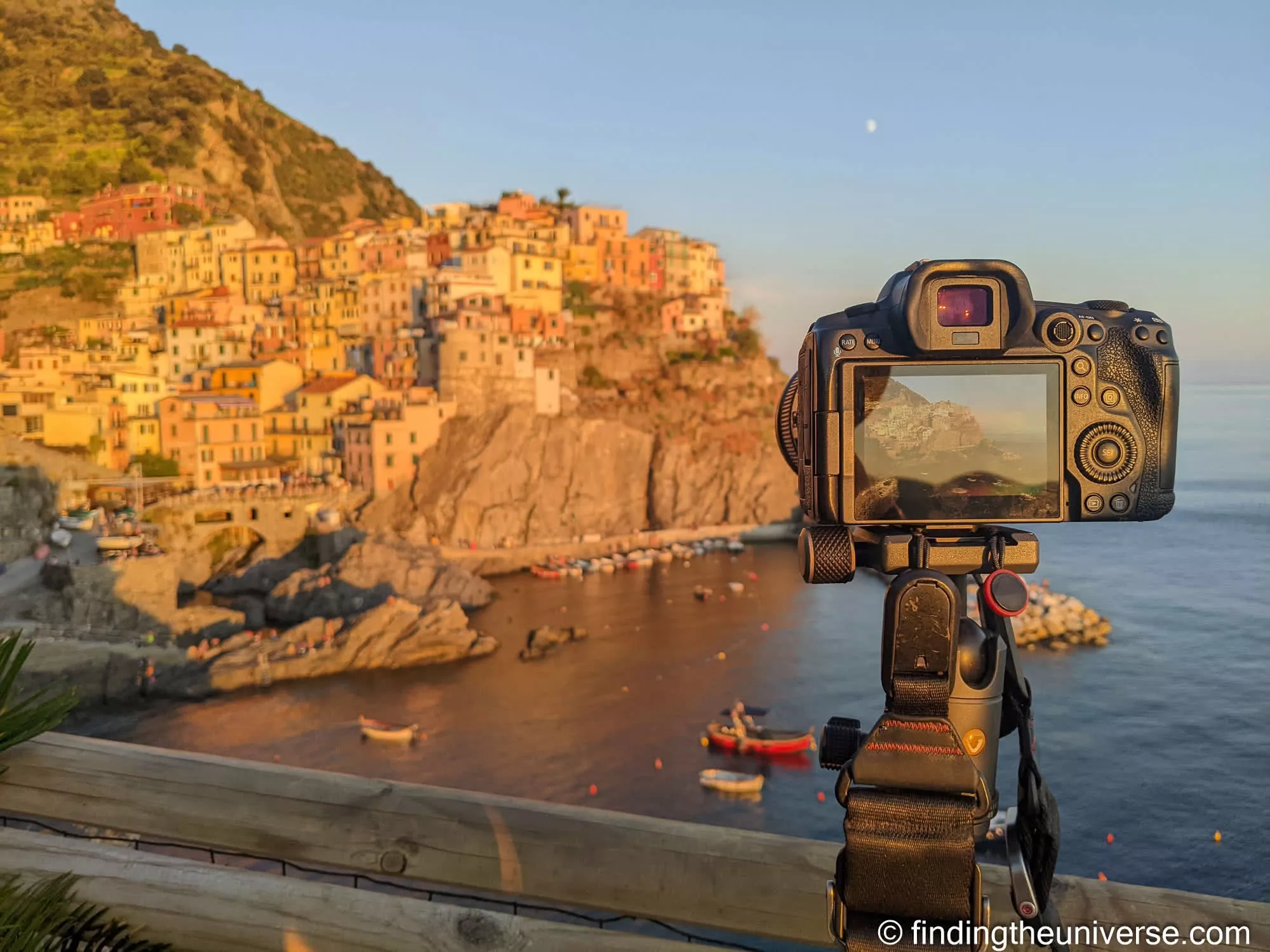
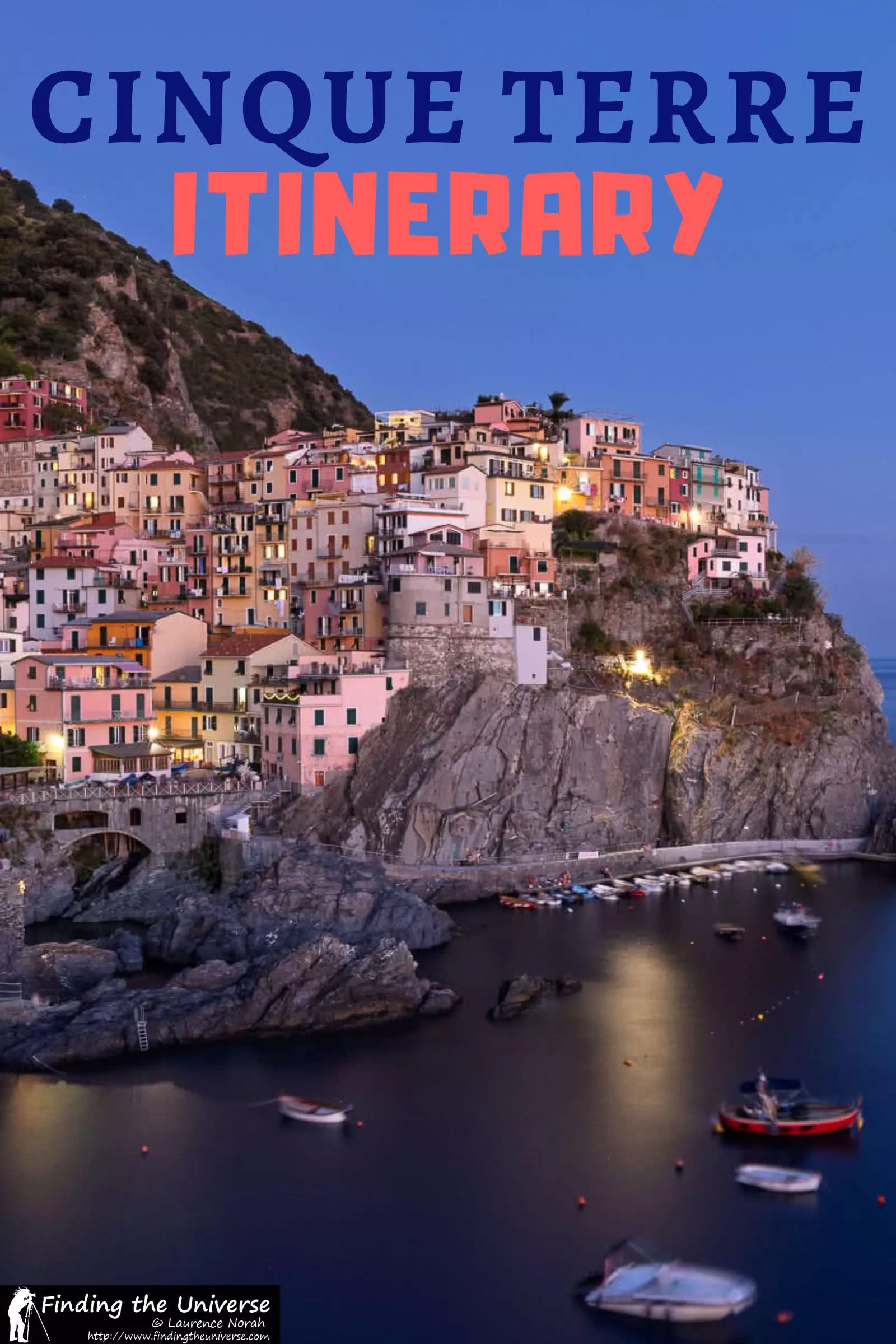
This is a photographer’s coast, and a handful of spots do most of the heavy lifting. The signature Manarola shot, the village stacked above its harbour, comes from the path out towards Punta Bonfiglio and the cemetery, and it’s a sunset and blue-hour subject; get there before the crowds and stay past the light.
Vernazza from the coastal trail just south of the village, looking back at the harbour and castle, is the other postcard, best in the morning. Corniglia gives you clifftop and vineyard rather than harbour, a different and quieter kind of frame.
The general rule here is light over location: every village photographs well, but the difference between a snapshot and a keeper is being in position for the golden hour at either end of the day, which is one more reason the two-day, single-base plan beats a rushed day trip.
Planning resources and further reading
For wider trip planning we still travel with the Rick Steves Italy guidebook, which is the one we’d recommend for context beyond the practical detail here. And if Cinque Terre is part of a bigger Italian trip, these itineraries from our own travels pair with it naturally:
- 10-day Italy itinerary, for fitting Cinque Terre into a longer route
- 2 days in Venice
- 2 days in Verona
- 2 days in Milan
- 2 days in Rome
Cinque Terre itinerary FAQs
How many days do you need in Cinque Terre?
Two days is the sweet spot for a first visit. That’s enough to see all five villages, walk the best open coastal trail sections at a comfortable pace, do the Via dell’Amore, and have two relaxed evenings at your base.
One day works if it’s all you have, focused on a single coastal walk. Three days lets you add a boat trip, a vineyard high-trail or a beach afternoon without rushing.
Which village should I stay in?
Manarola for the classic Cinque Terre feeling and the best sunset, Monterosso or Vernazza if you’d rather have a beach, more restaurants and an easier arrival.
We base ourselves in Manarola. Wherever you choose, stay inside the villages rather than commuting from La Spezia, because the evenings after the day-trippers leave are the best part.
Is the Cinque Terre coastal trail open?
Partly. Monterosso to Vernazza and Vernazza to Corniglia are open, both now rated expert-level walks. The Via dell’Amore between Manarola and Riomaggiore has reopened but needs a timed-slot booking in advance.
The Corniglia to Manarola coastal section is closed indefinitely after landslides, with no reopening date set. You take the train across that leg, or walk the free high route through the Volastra vineyards. Always check the official Parco Nazionale site before you go, because the trail state changes.
Do I need to book the Via dell’Amore in advance?
Yes. Entry is by timed slot, capacity is capped at 200 people every 30 minutes, and slots sell out, so book before you arrive.
There’s no separate ticket for the path. Access is included with a Cinque Terre Card, so the cheapest way on is a one-day Trekking Card from €10.
Is the Cinque Terre Card worth it?
Usually, yes, if you’re walking the trail or hopping villages by train in season. The Trekking Card (from €10 a day in 2026) covers the open coastal sections and the Via dell’Amore. The Train Card (from €22 a day in high season) adds unlimited regional trains.
If you’re only taking one or two short train hops, buy a Trekking Card plus single tickets. If you’re moving by train all day, the Train Card pays for itself quickly. Out of season, when the coastal sections are free, you often need neither.
What is the best time to visit Cinque Terre?
May into June and September. You get warm, walkable weather and swimmable water without the peak summer crush.
July and August are hot and extremely crowded, with the trails and lanes jammed by midday; if you come then, walk early and rest through the heat. Winter is quiet and atmospheric but the ferry stops, daylight is short, and some trails and restaurants close.
Barry Ritter says
While I have not been the Cinque Terre, I have been told that it has become over popularized by tourists and is no longer the haven it once was. I would suggest a visit to Cefalu, a resort town about an hour outside of Palermo. It has great beaches, hiking travels, awesome restaurants, and possibly not as overrun as Cinque Terre. Yet another alternative would be Taormina, also in Sicily, relatively easy to get to and fabulous enjoyment opportunities. It is also located on the north eastern edge of Mt. Etna, where you can find great hiking and wineries with top notch selections. Between the two, depending on your interests both would yield great vacation opportunities.
Laurence Norah says
Hey Barry! These are great tips. Indeed, Cinque Terre is very popular these days, as many of my photos show, particularly in the towns. Our experience on the hike was better, it was still fairly quiet when we did it. We started early, which helped, and they have a one way system in place for parts of it at busier times, which also helped. But yes, this is definitely not a place to escape people. It is stunning though! We have Sicily on our to-do list, we nearly visited a couple of years ago but ended up not having enough time to do it justice. But soon!
Barry Ritter says
Yeah! We did a 3 week vacation starting in Palermo, then Cefalù, Taormina, and Ortigia (Siracusa). We followed that up with a train ride (~1hr) to Pozzallo, and taking the ferry to Malta, visiting three of its inhabited islands (Malta, Gozo, and Comino).
The front end was flying into Rome to visit friends before flying to Palermo, then flying home from Malta.
Laurence Norah says
That sounds awesome!