The New Mexico Space Trail is a self-guided driving route that links 52 space and science sites across the state, from the first purpose-built commercial spaceport in the world to the town where a flying saucer supposedly came down in 1947. Jess and I spent five weeks road-tripping the state back in 2016, and Jess lived in New Mexico for a year before we met, so the stops below are ones we actually visited and rated.
For each one you’ll find what it costs, when it’s open and how to visit, all brought up to date for 2026.

It remains one of our favourite states in the country, and one of Jess’s favourites anywhere. The landscapes are enormous, the food is mind-bogglingly good, and somehow there are very few visitors (or, for that matter, residents). New Mexico is the fifth largest state in the US but ranks near the bottom for population, which leaves an awful lot of beautiful, empty country to drive through.
First though, let’s talk about space. Every now and then some poor soul stumbles onto this blog looking for answers to cosmic questions, which, despite the name, I don’t tend to provide in spades. So for once, this post is on theme.
If you like space, and I mean anything to do with space (I’m a lifelong sci-fi fan), then New Mexico is the state for you. It isn’t only Roswell and the aliens, although we’ll get to those. The state is so thick with space history that there’s an official trail linking sites all the way across it. Giant radio telescopes? Check. A real-life spaceport? Check. New Mexico really does have the lot!
One thing to know up front: these stops are spread right across a very big state, so seeing more than a couple of them means a proper road trip. You’ll want your own car (we book ours through Discover Cars), and ideally a week or two if you want to do the whole thing justice.
Table of Contents:
The New Mexico Space Trail at a glance
Here are the eight stops we’d build a New Mexico space trip around, in the order we’ve written them up below. Prices and opening hours are current for 2026.
| Stop | Region | What it is | Rough visit | Adult cost |
|---|---|---|---|---|
| New Mexico Museum of Space History | South (Alamogordo) | Five-storey space history museum and planetarium | 2 to 3 hours | $8 |
| Space Murals Museum | South (near Las Cruces) | Eccentric private collection and a painted water tank | About an hour | Free (donation) |
| Very Large Array | Central (west of Socorro) | 27 giant radio telescopes and a visitor centre | 1 to 2 hours | $10 |
| Spaceport America | South (tour from Las Cruces or Truth or Consequences) | Guided tour of a working commercial spaceport | Half day | $49.99 tour |
| National Museum of Nuclear Science and History | Central (Albuquerque) | Nuclear science and history, plus an outdoor aircraft park | 2 to 3 hours | $24 |
| Roswell (International UFO Museum) | Southeast | The 1947 UFO incident, plus a very alien town | 1 to 2 hours | $7 |
| Bradbury Science Museum, Los Alamos | North | Manhattan Project and atomic history | 2 to 3 hours | Free |
| Cosmic Campground | Southwest (Gila National Forest) | Dark sky sanctuary for stargazing | Overnight | Free |
Planning your New Mexico space trail road trip
New Mexico is the fifth largest state in the country, and the space trail’s stops are scattered right across it, so a little planning pays off. Here is roughly how they group together.
The densest cluster sits in the south, with three stops within a couple of hours of each other: the New Mexico Museum of Space History in Alamogordo, the Space Murals Museum outside Las Cruces, and the Spaceport America tour, which leaves from either Las Cruces or Truth or Consequences. If your time is short, this corner alone makes a good long weekend.
Head into the centre of the state and you have the Very Large Array, sitting out on the plains about 50 miles west of Socorro on US 60, and the National Museum of Nuclear Science and History up in Albuquerque. Both are an easy detour off Interstate 25, the main north to south artery.
Roswell is the outlier to the southeast, a couple of hours east of the Alamogordo area. It’s a fair drive, so it makes most sense if you’re already heading that way or looping back around.
Up north, above Santa Fe, Los Alamos is about an hour and a half from Albuquerque and pairs naturally with a Santa Fe visit. And out in the remote southwest, in the Gila National Forest, the Cosmic Campground is a proper detour for dark-sky fans rather than a quick pull-off.
Realistically, you can see the southern cluster in two or three days. Add Roswell and the central stops and you’re looking at about a week. The full loop, up to Los Alamos and out to the Gila, is more like ten days to a fortnight. We spent five weeks here, but we were doing a great deal more than space.
Either way you need a car, because there’s no public transport worth the name between these places and several sit well off the main roads. We book ours through Discover Cars.
As for timing, spring (March to May) and autumn (September to October) are the most comfortable seasons for this kind of driving trip. Summer gets seriously hot in the southern desert, regularly into the 90s Fahrenheit (mid-30s Celsius) around Alamogordo and Las Cruces, though the higher-elevation stops up north stay cooler.
Early October brings the Albuquerque International Balloon Fiesta (the 2026 edition runs from 3 to 11 October), which is well worth planning around if you can, just book your accommodation early because the city fills up. And if you’re heading for the Cosmic Campground to stargaze, aim for a clear night around the new moon.
The best stops on the New Mexico Space Trail
The official trail lists 52 sites, which is rather a lot. We have picked the eight that stood out most to us, in no particular order, plus one we would add ourselves. Here they are.
The New Mexico Museum of Space History, Alamogordo
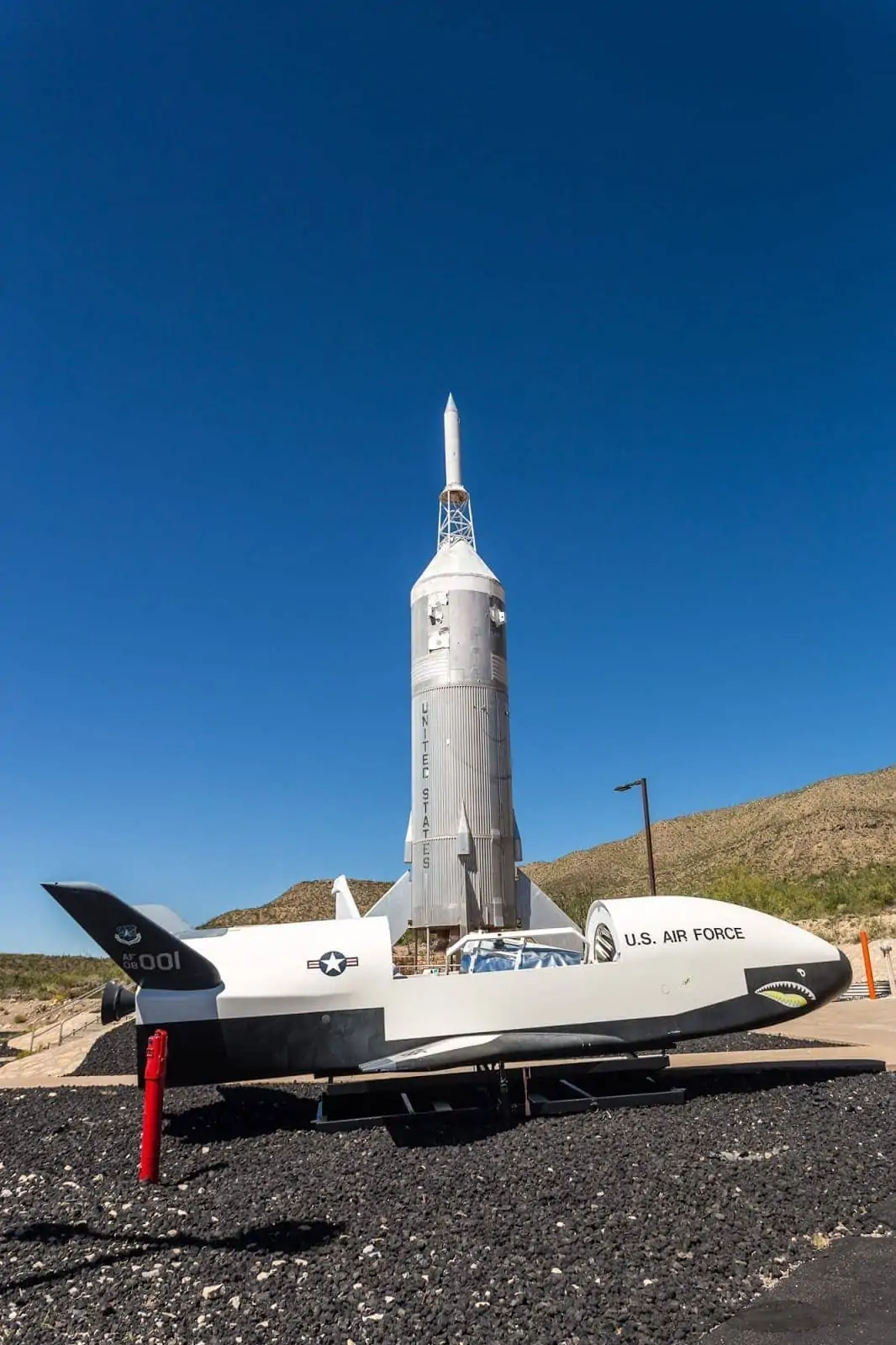
If you want to get your head around humanity’s efforts to reach space, the New Mexico Museum of Space History is the place to do it. It sits on a hillside above Alamogordo, with wide views over the city and the valley, and the five-storey building is packed with the history, science and people behind space exploration.

It’s more than a museum, although the exhibits alone will keep you busy, running from early rocketry through to a space shuttle landing simulator. The site is also home to the International Space Hall of Fame, the John P. Stapp Air and Space Park (a whole yard of space hardware), the Daisy Decelerator Track, and a planetarium and theatre.

We watched an excellent big-screen film about the journey to space while we were there, and I’d happily recommend catching at least one of the shows. You can buy combo tickets that bundle the theatre in when you arrive.
Adult admission is $8, and the museum is open from 10am to 5pm most days (from midday on Sundays), though it’s closed on Tuesdays. Give yourself two to three hours. It makes an easy first stop if you’re starting in the south of the state, and you can check current times on the official museum site.
The Space Murals Museum, near Las Cruces
The Space Murals Museum is best known for the enormous painted water tank sitting just off the highway, covered in murals that tell the story of the US space programme from the sixties to the eighties.
The tank is worth seeing in its own right, but there’s far more to the place than a painted water tank.

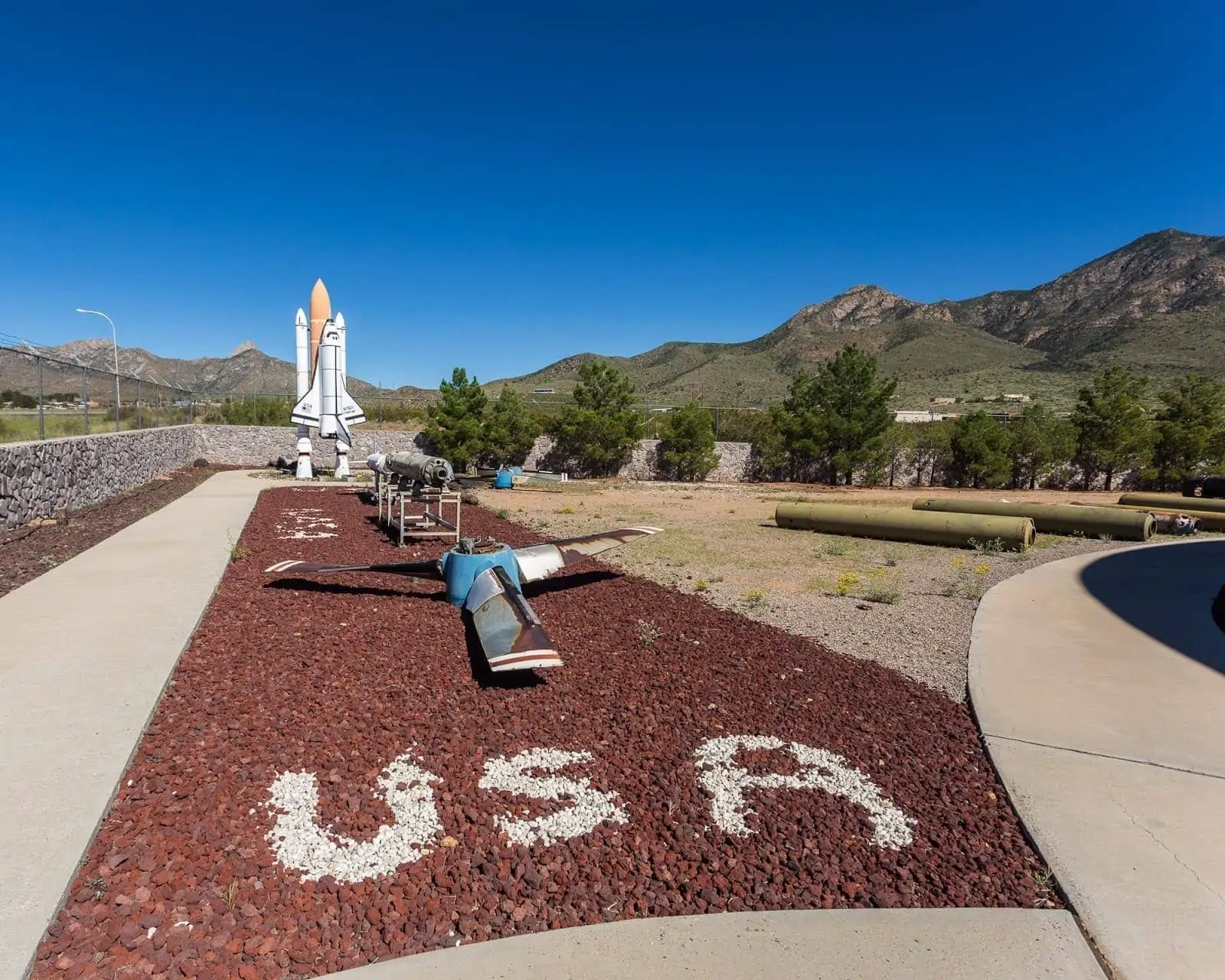
Essentially it’s a sprawling private collection of space odds and ends, gathered over the years by its late founder, Lou Gariano. There’s everything from discarded space station mock-ups to sections of V2 rocket to leftover food from past space missions. It’s probably still good, though I wasn’t in any hurry to find out.

It’s a peculiar little museum, but a good one, stuffed with oddities and curios. There’s also a gift shop, where I picked up some very reasonably priced NASA stickers and the obligatory freeze-dried astronaut ice cream.

The museum is out at Organ, about 12 miles northeast of Las Cruces on Highway 70, and opens Tuesday to Saturday from 11am to 4pm. Entry is free, though there’s a donation box, and it’s run by volunteers these days, so it’s worth calling ahead (575 382 0977) before you make the trip. You’ll find directions on the museum’s website.
Very Large Array
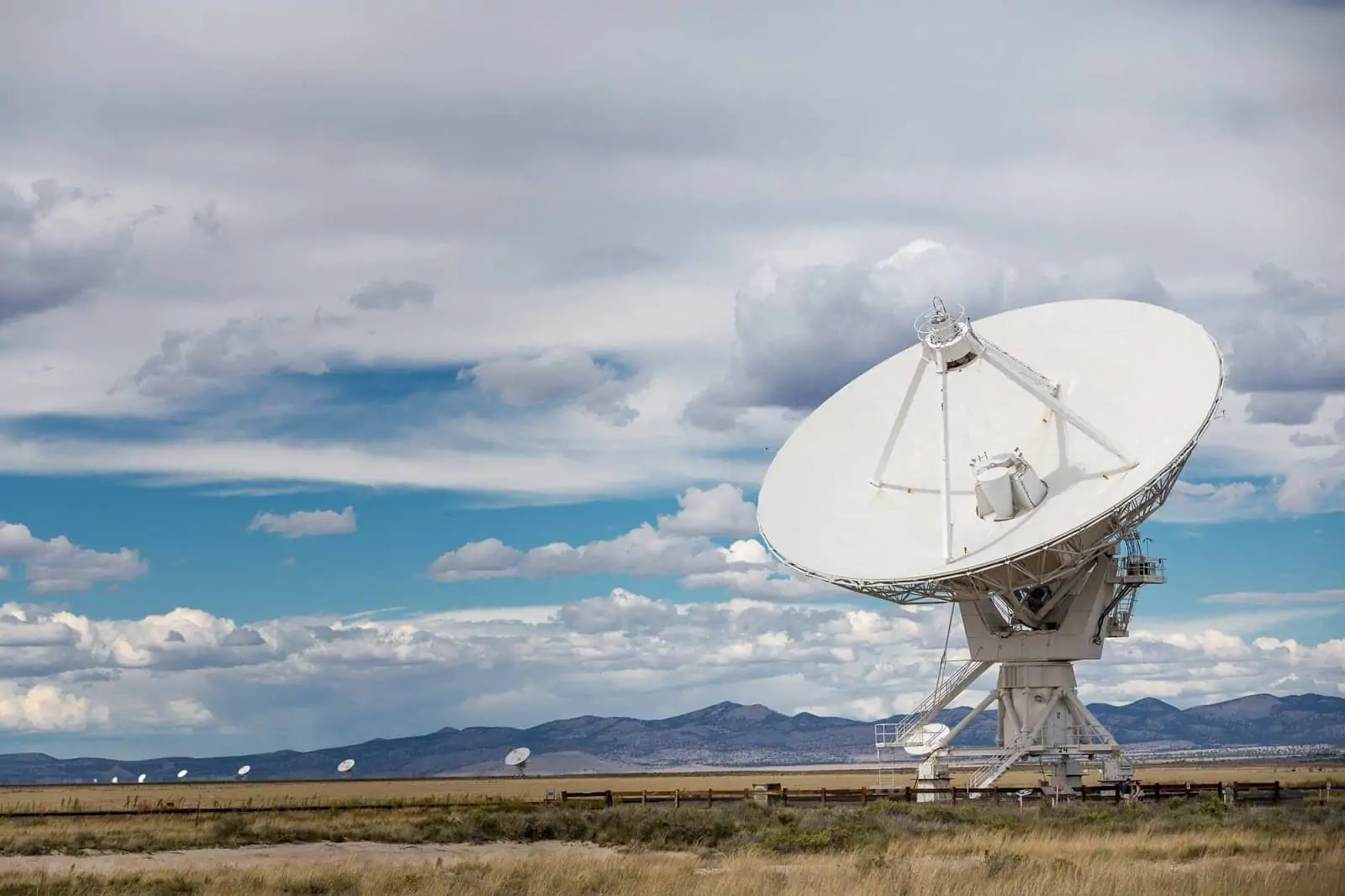
You might never have visited the Very Large Array, but the odds are you’ve seen it. Whenever a film or TV show needs a dramatic field of satellite dishes (radio telescope antennas, strictly speaking), this is usually what they point the cameras at.
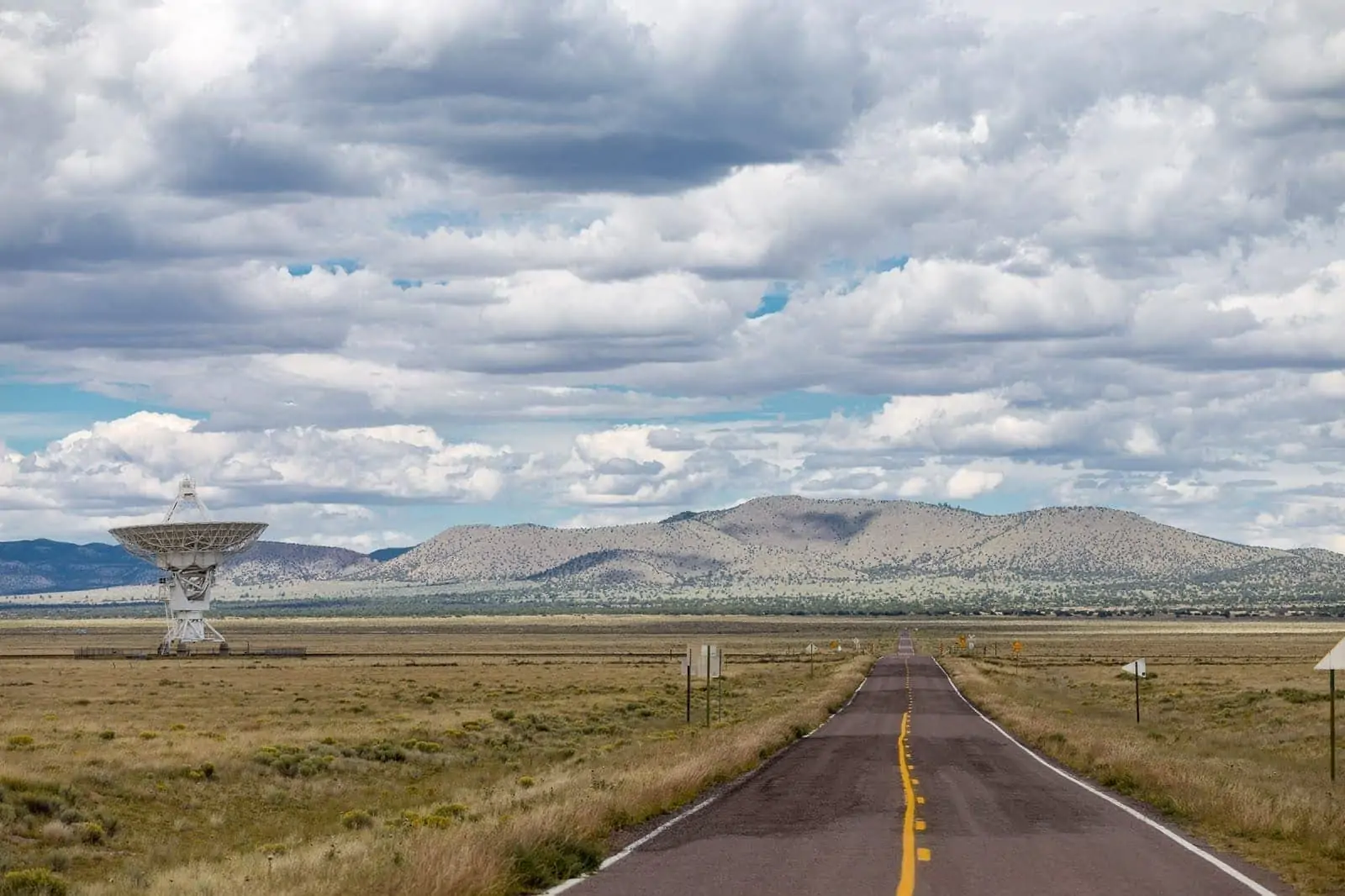
Formally known as the Karl G. Jansky Very Large Array, its most famous outing was in the 1997 film Contact, alongside Jodie Foster, but it has also turned up in a Terminator film and a Bon Jovi video, among plenty of other things.
When you visit, you understand the appeal. It’s a staggering sight: 27 antennas, each with a dish 25 metres across and weighing around 230 tons (about 209 tonnes). They sit on railway tracks so they can be shifted between one of four configurations, depending on what the telescopes are tuned to.

The VLA is a radio telescope, used mostly for research into distant objects, from pulsars to black holes. Rather than gathering visible light, it reads radio waves, which tend to be very faint, hence the need for such a mind-bogglingly large piece of kit.
Getting there takes a bit of a drive, since it sits about 50 miles west of Socorro on US 60, deliberately away from anything that might cause interference. It’s worth it.
There’s a small visitor centre and museum, that documentary voiced by Jodie Foster, and a self-guided walking tour that takes you right up among the dishes. Adult admission is $10 (it was free when we visited in 2016, so that’s a real change), and it’s open every day from 9am to 4pm. Guided tours run on selected dates, which you can check on the NRAO visit page. Allow an hour or two.
Spaceport America
A spaceport. Like an airport, but for space! You can imagine how excited I was to visit this slice of the future, already up and running out in the high New Mexico desert.
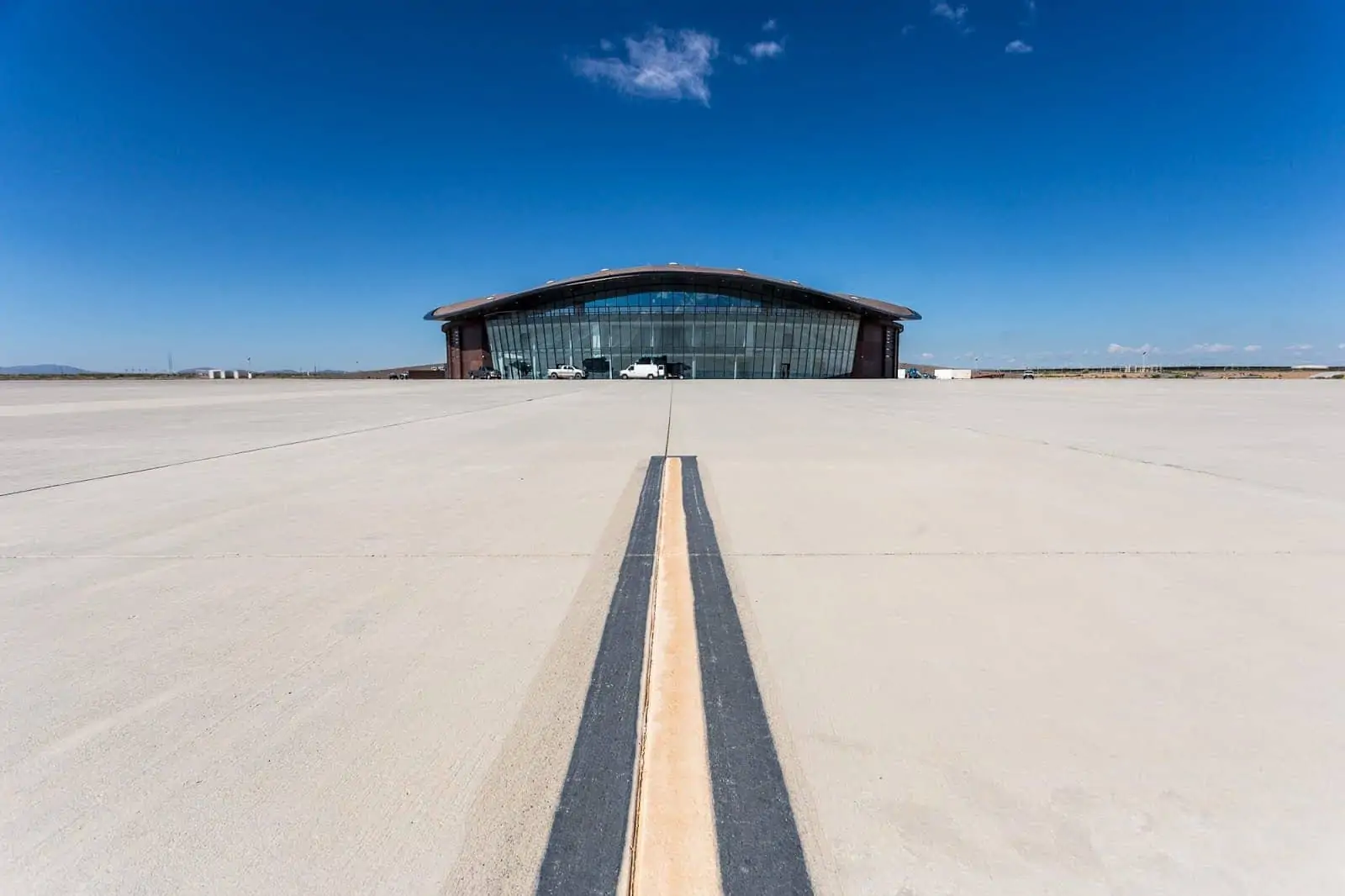
All right, “up and running” is a slight stretch. You can’t rock up and hop on a departing spacecraft to a nearby star system. Or anywhere, really. There’s no departures board listing far-flung galaxies, and no spaceships taxiing down the runway just yet.
But that hardly matters, because Spaceport America is a joy to visit precisely because it feels so optimistic. It’s a vision of a future where heading into space is as ordinary as catching a flight, and the guides who run the tours are hugely enthusiastic, full of the latest developments in a fast-moving industry.

We loved our visit, touring the main buildings, taking in the vast runway and learning about the past, present and future of both the spaceport and space travel in general. It gave me hope that one day I might just get to expand this blog to meet its namesake.
You can only visit Spaceport America on a pre-booked guided tour, and it’s a half-day out including the drive. Tours run on Fridays, departing from Las Cruces, and Saturdays, departing from Truth or Consequences, and cost $49.99 per adult. Book through the official tour shop.
The National Museum of Nuclear Science and History
If all this state-wide road tripping sounds like a lot, and your trip is really centred on Albuquerque (perhaps for the balloon fiesta), you can still get your science fix. Head for the National Museum of Nuclear Science and History.
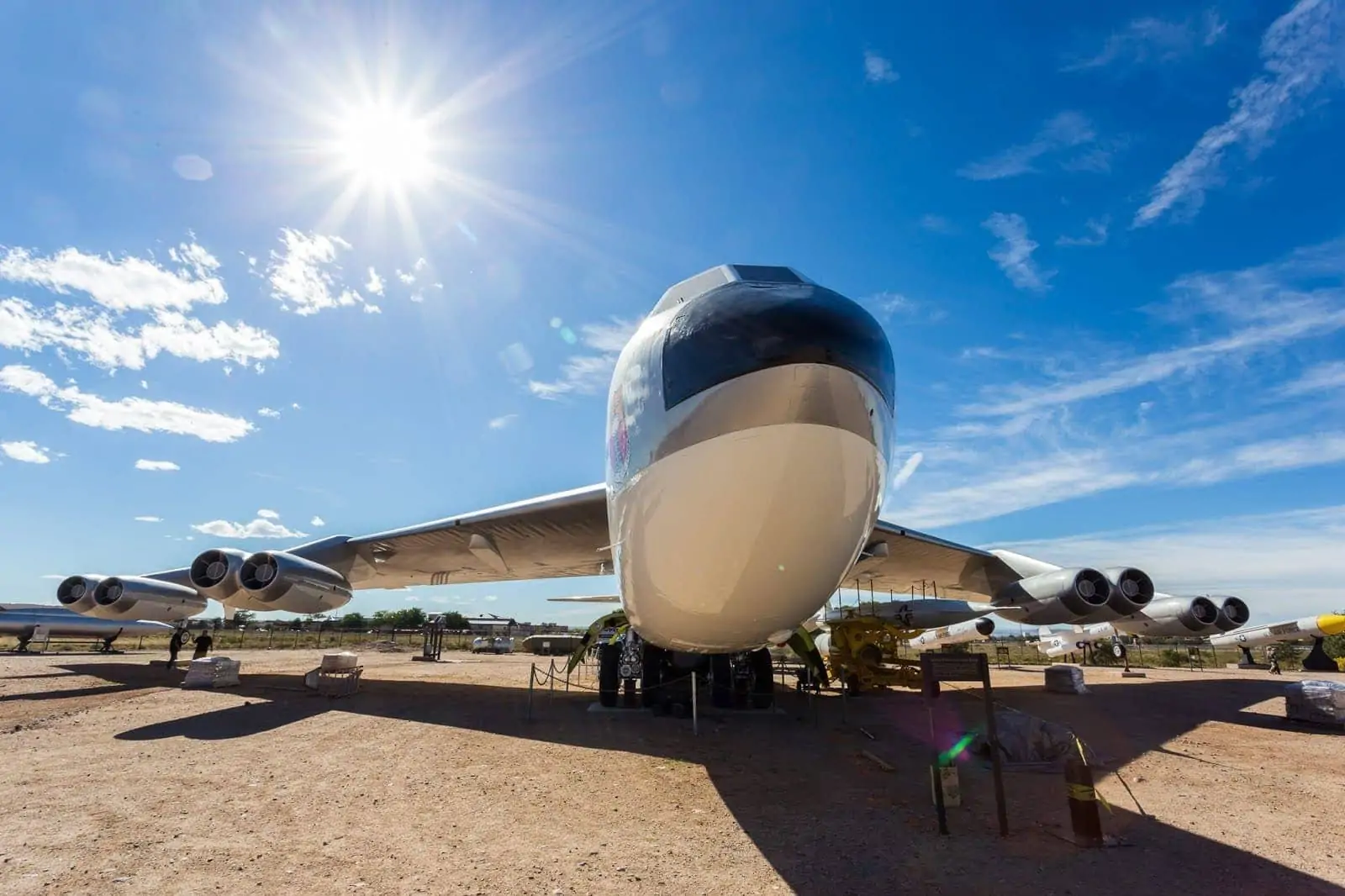
It’s a thorough overview of all things nuclear, from the underlying science to the people who drove it. There’s plenty of overlap with Los Alamos further north, but the museum has a lot of its own material, including hardware you won’t see elsewhere, from a B-52 bomber to a nuclear submarine sail. The walk through the history of nuclear technology is particularly good, from the early science through its use in war to modern nuclear medicine.
My favourite part was wandering the outdoor aircraft park among the huge planes parked up there. If you’re in Albuquerque, don’t leave it off your list (here are 20 more things to do in the city).
Adult admission is $24, and it’s open from 8am to 5pm every day. Allow two to three hours. We should add that we visited on a complimentary media pass, which we’ve noted at the end of this post.
Roswell
You can’t talk about New Mexico and space without Roswell. The name is shorthand for aliens the world over, thanks to the famous incident of 1947, when a mysterious something (allegedly a crashed flying saucer) came down nearby.

The truth of what happened remains, shall we say, unresolved. That hasn’t stopped Roswell making the absolute most of its UFO fame.

You can visit the International UFO Museum to dig into the incident itself, complete with newspaper cuttings, testimonies and weirdness by the bucketload. Or you can just wander the town, where you’ll find all sorts of oddities, from alien-themed postboxes to a full-size spaceship parked at the McDonald’s. It’s good fun, and you’ll probably leave grinning, maybe with a question or two. Which, in my book, counts as a win.
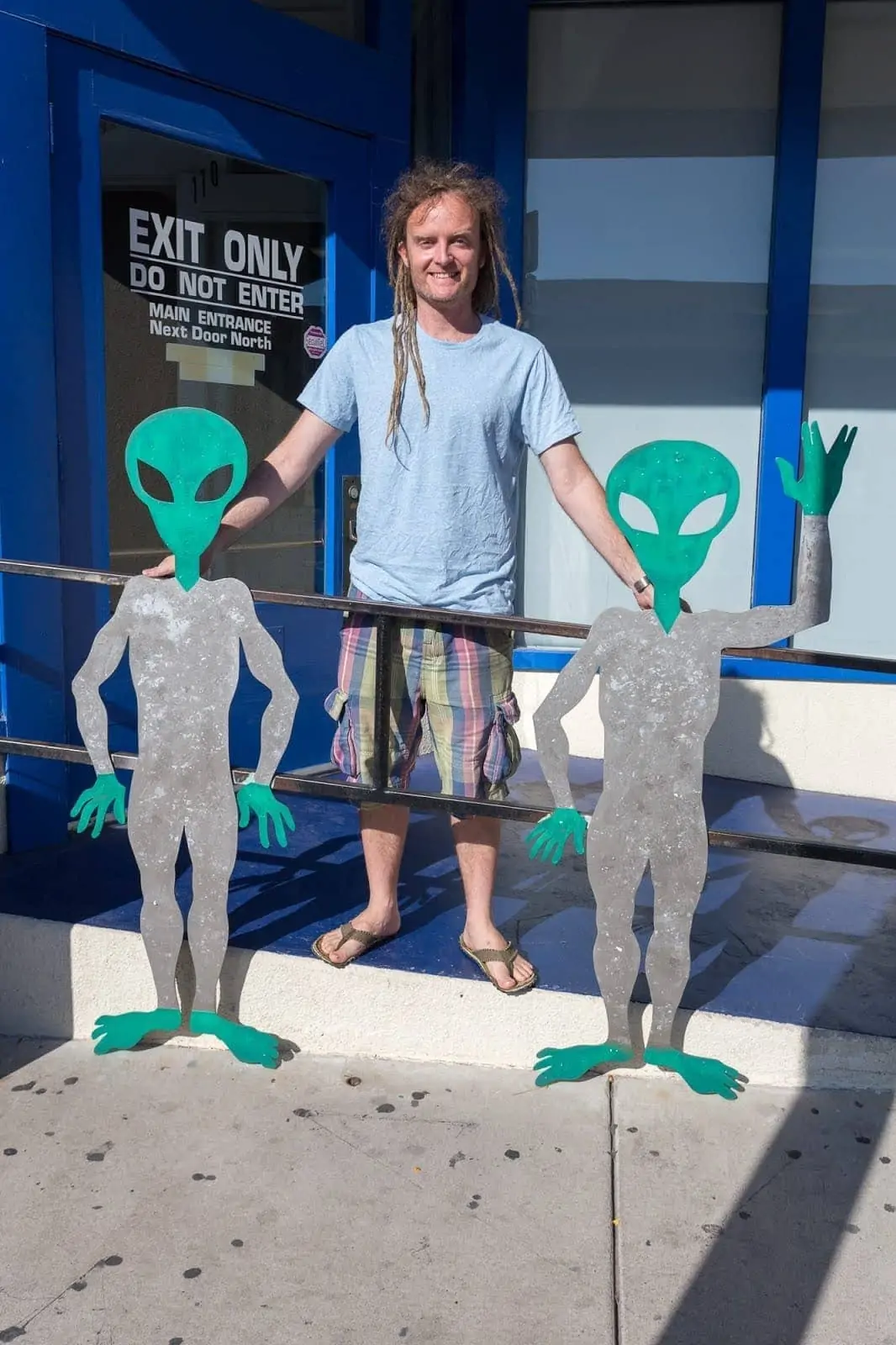
The UFO museum is at 114 North Main Street, open daily from 9am to 5pm (later in spring), and adult admission is $7. Give the museum an hour or two, and leave a little time to potter around town. It sits in the southeast corner of the state, so it’s a bit of a detour, but a fun one. You can check current details on the museum’s website.
Los Alamos National Laboratory
How about a town that was once home to thousands of people but officially didn’t exist? That’s Los Alamos. It was here, during the Second World War, that the first nuclear weapons were designed and built, the devices later dropped on Japan. With Christopher Nolan’s Oppenheimer putting the Manhattan Project back in the spotlight, interest in the place has only grown.

Today Los Alamos is still a working research facility, but it’s firmly on the map now, and visitors are welcome. The centrepiece of a visit is the Bradbury Science Museum, where you can get to grips with the Manhattan Project, from the science of the bomb to the remarkable people who worked here, along with the history of the town itself. Admission is free, and it’s open Tuesday to Saturday from 9am to 4pm (from midday on Sundays, and closed on Mondays).

Once you’re up to speed, take a wander around town with the help of the official Los Alamos historic walking tour map (we picked ours up at the museum). The route takes in everything from Oppenheimer’s former home to ancestral Puebloan dwellings to a homesteader’s cabin, a proper walk through time.
Los Alamos is also one of the three sites that make up the Manhattan Project National Historical Park, so it’s worth reading up on the wider story before you go. Give the museum an hour or two, add the walking tour if you have the time, and note that it’s about an hour and a half from Albuquerque, up above Santa Fe.
Cosmic Campground
Here’s the one we would add now. Back in 2019 a reader named Thomas suggested the Cosmic Campground in the comments below, and having looked into it since, he was quite right (thanks Thomas).
Out in the Gila National Forest, in the remote southwest of the state, the Cosmic Campground is an International Dark Sky Sanctuary, and a notable one: it was the first sanctuary of its kind in North America, and the first on United States Forest Service land. With no significant light source for more than 40 miles in any direction, it has some of the darkest, clearest night skies anywhere in the lower 48, with a full 360-degree view of the horizon.
It’s a primitive site, first-come-first-served and free, with a pit toilet and four concrete pads built for setting up telescopes. There’s no water, so bring your own. We haven’t camped here ourselves yet, which is the only reason it wasn’t in the original version of this post, but for anyone serious about stargazing it’s a natural addition to a New Mexico space trip. You can read the practicalities on the Gila National Forest site.
One more for the true believers. If you’re passing through Socorro on your way to the Very Large Array, that’s where Officer Lonnie Zamora reported one of the more credible UFO sightings on record in 1964, complete with a landed craft and two occupants.
There’s no marked site to visit, and the spot itself is an unremarkable arroyo, but the town remembers the encounter with a commemorative mural facing Park Street, and Visit Socorro runs a self-guided “Socorro Landing” story trail if you fancy following it up.
New Mexico Space Trail FAQ
How many days do you need for the New Mexico Space Trail?
You can see the southern cluster of stops, around Alamogordo, Las Cruces and Truth or Consequences, in two or three days. Add Roswell and the central stops and you’re looking at about a week.
The full loop, up to Los Alamos in the north and out to the Cosmic Campground in the southwest, is more like ten days to a fortnight. We took five weeks, but we were doing a great deal more than space. It’s a driving trip whichever way you cut it, so you’ll need a car.
Is Spaceport America open to visitors?
Yes, but only on a pre-booked guided tour, so you can’t just turn up at the gate. Tours run on Fridays (departing from Las Cruces) and Saturdays (departing from Truth or Consequences), and cost $49.99 per adult.
Plan for a half-day out, since a fair chunk of it is the drive to and from the site. You book through the official Spaceport America tour shop.
Can you visit the Very Large Array?
Yes. The VLA visitor centre is open every day from 9am to 4pm, and adult admission is $10. It was free when we visited in 2016, so the charge is a recent change.
There’s a small museum, a documentary voiced by Jodie Foster, and a self-guided walking tour that takes you right up to the giant dishes. Staff-led guided tours run on selected dates only, so check the calendar before you go if that’s what you’re after.
Is Roswell worth visiting?
If you like your space with a side of kitsch, yes. The International UFO Museum ($7 adult, open daily) is earnest and a lot of fun, and the town leans all the way into the alien theme, right down to the spaceship at the McDonald’s.
It’s out in the southeast corner of the state, a fair drive from the other stops, so it makes the most sense if you’re already heading that way. Give it a couple of hours and enjoy the silliness.
Is the Sunspot Solar Observatory still open?
No. The National Solar Observatory at Sunspot, which used to be one of the stops on this trail, closed permanently to the public in early 2026 after liquid mercury was found inside the Dunn Solar Telescope.

In February 2026 the National Science Foundation announced it would demolish and restore the site, so the visitor centre isn’t coming back. That’s the observatory in the photo above, as we found it back in 2016. If you’re holding an older guidebook that lists it, that’s why you won’t find it in our stops.
What is the best time of year to visit New Mexico?
Spring (March to May) and autumn (September to October) are the most comfortable seasons for a driving trip like this. Summer gets very hot in the southern desert, regularly into the 90s Fahrenheit around Alamogordo and Las Cruces, while the higher-elevation stops up north stay cooler.
Early October also brings the Albuquerque International Balloon Fiesta, which is well worth planning around if you can time it. For stargazing at the Cosmic Campground, aim for a clear night close to the new moon.
Further reading and resources
That’s our round-up of the best of the New Mexico Space Trail. Here are a few more resources to help you plan, both our own guides and a couple we found useful ourselves.
- Our guide to how much a trip in the USA costs, to help you budget.
- If you’re spending time in Albuquerque, here are 20 things to do there.
- A guide to attending Space Camp USA, and to visiting the US Space and Rocket Center in Alabama.
- If you’re wondering how you might actually get to space yourself, see our guide to going to space as a tourist.
- You really should try to catch the balloon fiesta. Here’s a guide to getting the most from the Albuquerque International Balloon Fiesta.
- My friend Lauren went to Roswell, and this is what she made of it.
- Photo highlights of Route 66 in New Mexico, an epic road trip in its own right. If you fancy it, here’s how to plan a Route 66 trip.
- The official New Mexico Space Trail website, plus the Southern New Mexico Space Trail pages.
- For more ideas across the state, the Lonely Planet USA guidebook is a solid all-rounder.
Have you been to any of these, or is there a stop you’d add to the list? Let us know in the comments below.

Just so you know, we received complimentary media passes for our visits to Spaceport America and the National Museum of Nuclear Science and History, but we covered all other entry costs for the attractions in this article, along with all of our own travel expenses.
Thomas A Irion says
I think the Cosmic Campground, south of Reserve, nm and the Lonnie Zamora UFO site in Socorro, nm, would be great additions to the Space Trail.
Laurence Norah says
Thank Thomas, we will have to check them out next time we are in New Mexico!
Stéphanie Bayle says
I’ve never been to New Mexico but it looks sooo beautiful! The pics of landscapes are amazing!
I love sci fi as well but I’m a bit afraid that Roswell is too “cliche” ; I’d like to have a chance to visit though 😉
Laurence says
It really is beautiful. Definitely a state that doesn’t make the radar for many people, but is definitely worth visiting. And Roswell is certainly worth it 😀