
You’ve found the tour you want. The problem is that it’s on GetYourGuide at one price, it’s on Viator at a slightly different price, and the operator’s own website has a third number that may or may not include the same things. You’ve got three tabs open, and you’re wondering whether the cheap one is a scam, whether the expensive one includes something the others don’t, and what happens to your money if the whole thing gets cancelled. We’ve been in exactly that position plenty of times since 2010, when we started doing this full time.
We’ve booked tours both ways since then, some through platforms like GetYourGuide and some direct with the operator. A fair few we took as guests of the operators themselves, and we flag those wherever they come up.
For this guide we also did something most tour comparisons don’t. We read the contracts tour operators sign with GetYourGuide and Viator, pulled the commission numbers out of Tripadvisor’s investor filings, ran live checkouts to see what fees appear, and searched five platforms for the same four destinations on the same day to count what each one really sells. Where our first-hand booking experience is thin, we say so, and you can judge the research on its sources: they’re all linked.
By the end you’ll know which site fits your specific trip, what to do when the same tour shows two prices, and why “book direct and save” is mostly wrong for tours (and occasionally very right).

Table of Contents:
Which Tour Booking Site Should You Use?
Quick answer: here’s where we’d send you.
- For Europe and most of the world, use GetYourGuide or Viator. Prices for the same tour usually sit within a few percent of each other, so pick on cancellation terms and which app you prefer.
- In Asia-Pacific, check Klook first.
- For museum and attraction tickets in major cities, Tiqets is the specialist.
- For a private or custom tour, use ToursByLocals, where you deal with a named guide, or go direct to an operator you already trust.
- Found it cheaper on the operator’s own website? For tours, you don’t have to choose. Book on the platform and claim the difference under its price guarantee. Nothing accrues from booking a tour direct the way hotel points do, so there’s no loyalty maths to worry about.
The rest of this article is the evidence for those five lines, plus the places where they bend.
A quick word on money before we start. We have affiliate relationships with every booking platform in this comparison, and with several of the tour operators we mention. If you book through our links we may earn a commission, at no extra cost to you. Since every platform here would pay us something, we have no reason to steer you anywhere in particular, and where the best answer is one that pays us less, we’ve said so.
Tour Booking Sites Compared
Here’s the side-by-side view. Fees and terms were checked in August 2026, and the coverage notes come from our own destination counts further down the page.
| Platform | Coverage | Booking Fees | Payment Timing | Cancellation | Best For |
|---|---|---|---|---|---|
| GetYourGuide | 2,495 London listings; deep in Europe, holds up well in smaller towns | None added at checkout; the displayed price includes its commission | At booking; a pay-later option on some activities charges your card 72 hours before | Free cancellation up to 24 hours on most activities | Europe, and first-time platform bookers |
| Viator | The biggest catalogue we counted; 4,127 London listings | None added when we ran a checkout in August 2026 | At booking | Free cancellation up to 24 hours on most tours | Sheer choice, and the Americas |
| Klook | 343 London listings, but thin outside big cities and Asia-Pacific | Its terms provide for no Klook-levied fee; supplier charges and local taxes can sit outside the quoted price | At booking | Varies by activity | Asia-Pacific trips |
| Tiqets | Attraction tickets; 118 London experiences, very few in small towns | None added when we ran a checkout in August 2026 | At booking | Varies by ticket | Museums and attractions in major cities |
| ToursByLocals | 666 London listings, and strong in small places (148 in Inverness) | You agree a quoted price with the guide for your group | At booking | Full refund up to 15 days before; paid upgrade to cancel later | Private and custom tours |
Who Actually Pays the Commission When You Book Through a Platform
The standard advice in this category is to book direct with the tour operator, cut out the middleman, and save the 20 to 30% commission the platforms supposedly charge. We went looking for that number in primary sources, and the real picture is more interesting. Ok, interesting might be a stretch. Feel free to skip to the next section if the inside world of tour operator fees doesn’t tickle your fancy. Otherwise, read on.
GetYourGuide’s supplier terms confirm the structure – the operator pays GetYourGuide a percentage of the retail price – but the rate itself is set individually in each supplier’s account, so there’s no single published figure.
Viator doesn’t charge a commission at all, in the technical sense. Its supplier agreement, which we can read because one operator filed their executed copy with the SEC, uses a net-rate model. The operator hands Viator a wholesale rate, Viator sets the retail price you see, and keeps the spread.
Viator’s parent company Tripadvisor reports the numbers in its FY2025 annual report. The Experiences segment earned $924 million of revenue on $4.7 billion of gross bookings. Divide one by the other and you get about 19.7%, and the two prior years work out at 20.0% and 19.9%.
That’s a derived figure, of course, and it’s a floor rather than a midpoint, because the bookings number is measured before refunds and the segment includes reseller channels where Viator shares its margin. Call it “about a fifth, probably more” and you’re being fair.
That cut comes out of the operator’s side of the price, not on top of yours. GetYourGuide’s consumer terms state plainly that the price shown includes its commission, which the supplier pays. When we ran checkouts in August 2026, neither Viator nor Tiqets added a fee on top of the listed price either. The commission is real money, but it’s the operator’s margin funding it.
You might expect the contracts to ban operators from undercutting the platforms on their own websites. They don’t. We searched the current GetYourGuide supplier terms and the June 2024 version for any price parity clause and there isn’t one – the supplier “sets the Retail Price”, full stop. Viator does have a lowest-rate clause, but read it closely and it binds the wholesale rates offered to other resellers, and says nothing about the price on the operator’s own front door.
What keeps prices aligned is aimed at you, not the operator. GetYourGuide’s consumer terms include Best Price Matching: find the same activity cheaper anywhere on the internet, including “bookable with the same Supplier” – which is precisely the operator’s own site – and GetYourGuide pays you the difference. Viator’s supplier agreement names its own “lowest price guarantee” as the reason its wholesale clause exists.
Which gives you the rule this whole article runs on. For tours – and this is specific to tours, because hotels work differently – if you spot it cheaper on the operator’s own website, you don’t have to choose. Book on the platform and claim the difference. You keep the platform’s cancellation terms and dispute process, and you pay the direct price. And the right to do it is written into the platform’s own terms.
Between the June 2024 supplier terms and the current version, GetYourGuide narrowed its anti-circumvention clause. The old wording barred operators from referring customers to any other website, including their own. The current wording only stops them poaching you from within a GetYourGuide conversation. Operators are now free to sell cheaper direct and advertise it. Checked August 2026, and a small sign the market is loosening rather than tightening.
GetYourGuide: Best for Europe and First-Time Bookers
GetYourGuide is the platform we’ve used most ourselves. We’ve booked day trips through it in Iceland, which we cover in our guide to the best guided tours of Iceland, and it’s where one of our two cancellation stories comes from.
A food tour we’d booked in Uganda had to be cancelled when one of us was ill. It was inside the free cancellation window, the refund came through without any fuss, and that was the end of it. Which is exactly what you want a cancellation to be: boring.
Its catalogue is deep in the places Europeans and visitors to Europe head for, and in our counts it held up unusually well in smaller places: 196 activities for Inverness and 115 for Akureyri, in northern Iceland. You can browse a whole destination at once, for example everything it sells for Iceland.
Two features stand out from the terms. The displayed price includes the commission, with no fee added at checkout.
On some activities there’s also a “Reserve now, pay later” option: your card is validated with a zero charge at booking, then debited 72 hours before the activity starts, with a 47-hour grace window to pay manually if the charge fails. It’s only on selected activities, and you’ll see the option at checkout when it applies. For pinning down plans months ahead without parting with cash, it’s a really useful option that no other platform in this list matches.
- Pros: no checkout fees, clear 24-hour free cancellation on most activities, pay-later option, strong coverage in secondary European towns
- Cons: catalogue is smaller than Viator’s overall, and its Asia-Pacific depth trails Klook’s
Viator: The Biggest Catalogue
Viator is owned by Tripadvisor, and it has the largest inventory of any site we counted – 4,127 London listings against GetYourGuide’s 2,495, and it was the biggest in all four of our test destinations. If a tour exists, the odds are good it’s on Viator, usually with a long tail of reviews inherited from the Tripadvisor ecosystem.
We’ve booked many Viator tours, but the one you will be interested in is the one that went wrong. We booked an airport transfer in Uganda (maybe we shouldn’t book things in Uganda is the wider lesson?) through Viator, and the driver never showed up. We ended up in a pretty frantic last-minute Uber. Viator was apologetic and refunded us in full, which is the system working as designed, and also a reminder that a refund fixes your bank balance, not your morning. There’s more on what the contracts say about supplier cancellations further down.
At checkout, no service fee was added on top of the listed price when we ran one in August 2026. A few third-party blogs claim Viator adds a percentage at checkout. Our own checkout didn’t show one, and that’s the test we’d trust anyway: the payment page either itemises a fee or it doesn’t.
- Pros: the most choice in every destination we tested, deep review history, free cancellation up to 24 hours on most tours
- Cons: the catalogue’s size cuts both ways, more near-duplicate listings to sift, and quality varies more than on smaller platforms
Klook: First Choice for Asia-Pacific
Klook started in Hong Kong, and Asia-Pacific is where its coverage runs deepest. That’s also exactly what our counts show from the other side of the world: a respectable 343 listings in London, then 3 in Aberdeen and 5 in Akureyri. In Europe’s smaller places it thins out quite fast. In Tokyo, Taipei, Singapore or Seoul, it’s the platform we’d check first.
We’ll be plain about the incentive here, since this is a page full of affiliate links: GetYourGuide is the partner that performs best for us commercially, and for Asia-Pacific we’d still point you at Klook first. The regional strength is real.
On fees, Klook’s terms provide for no Klook-levied booking fee, with the usual carve-out that supplier charges and local taxes can sit outside the quoted price. Cancellation terms vary by activity, so check the individual listing instead of assuming the 24-hour norm applies.
- Pros: the deepest Asia-Pacific catalogue, competitive pricing in its home region, sells practical extras alongside tours
- Cons: weak in secondary Western destinations, and cancellation terms are less uniform than GetYourGuide’s or Viator’s
Tiqets: The Attraction Ticket Specialist
Tiqets does one thing and does it well: entry tickets to museums and attractions, mostly in major cities. We’ve booked through Tiqets ourselves, and for a skip-the-line ticket to a big-city museum it’s often the cleanest experience of the lot – you’re buying a timed ticket, not scrolling tour upsells.
The flip side is scope. Our counts found 118 London experiences, 5 in Akureyri, 3 in Inverness and just 1 in Aberdeen. If your trip is big-hitter cities and your question is “how do I get into the Rijksmuseum on Tuesday”, Tiqets fits. For guided tours in smaller places, look elsewhere.
A currency note for 2026: Expedia Group agreed to buy Tiqets in December 2025, in a deal that closed in early 2026 (Expedia’s announcement). Day to day the product hasn’t visibly changed as we write this, but ownership changes have a way of surfacing later, so we’ll keep this page updated. At an August 2026 checkout, no booking fee was added on top of the ticket price.
- Pros: excellent for timed-entry attraction tickets, simple mobile tickets, no fee added at our checkout
- Cons: narrow outside major cities, and it’s a ticket shop rather than a place to compare guided tours
ToursByLocals: Private Guides, Even in Small Places
ToursByLocals runs a different model from everything above. Instead of buying a fixed-departure product, you message a named guide, discuss what you want, and can have the itinerary customised before you commit – the platform’s own booking guide is built around that conversation. It’s the closest thing to booking direct that still comes with a platform wrapped around it.
The surprise in our counts was how well this model covers places the marketplaces neglect: 148 Inverness listings (nearly as many as GetYourGuide) and 37 in Akureyri, from a platform many travellers have never heard of. Private guides live everywhere; fixed-departure tour buses don’t.
You pay private-tour money, of course, and the price is a quote for your group rather than a per-seat rate.
Cancellation runs on one platform-wide policy here, not guide by guide, and it’s much stricter than the marketplaces. The standard policy is a full refund up to 15 days before the tour, fees included. Inside those 15 days you’re relying on the “Any Reason” upgrade, bought at checkout, which refunds you right up to the tour start time less the service fee. Don’t use it and you get a credit for what it cost, good for a year.
Illness isn’t on ToursByLocals’ list of unforeseeable events, and nor are poor weather or a change of plans. The Uganda food tour we cancelled through GetYourGuide because one of us was ill would not have been refundable here inside 15 days, unless we’d bought the upgrade.
Fifteen days is a real planning constraint, so settle your date before you book. For a family that wants a day shaped around them, or a niche interest no group tour serves, this is still the strongest option on this page.
- Pros: direct contact with a named guide before booking, custom itineraries, remarkable small-town coverage
- Cons: private-tour pricing, a 15-day cancellation deadline instead of the usual 24 hours, no bargain-hunting
Other GetYourGuide Alternatives Worth Knowing About
A second tier is worth a quick word, either because you’ll run into them or because they fit a specific trip.
Headout sells much the same category as Tiqets, concentrated in big cities. Civitatis has a deep catalogue for Spain, Portugal and Latin America, including a lot of Spanish-language tours. Musement is an Italian-born platform along GetYourGuide lines, and Withlocals connects you with local hosts for meals and small private experiences. None of them is a bad actor; we just know them less well, and for most readers the five platforms above cover the ground.
If you’re planning a multi-day organised trip instead of a day tour, that’s a different vertical with its own comparison site: TourRadar aggregates multi-day tours from operators worldwide, and it’s where we’d start for something like a week-long small group trip. We’ve used them for long tours in Morocco and had a very positive experience.
And one deliberate exclusion. GoCity keeps appearing in lists of GetYourGuide alternatives, and it isn’t one – it’s a city pass. You pay upfront for a bundle of attraction entries in one city, which is a completely different bet from booking an individual tour. Passes can be decent value for a packed sightseeing itinerary, but comparing one against a tour marketplace is comparing a season ticket to a taxi.

When Booking Direct With the Operator Makes Sense
Everything above argues that the platforms are usually fine value. So when is direct better? We’ve booked both ways, and we think there are three cases where direct wins.
The first is when you already know the operator. We chose and paid for a Devour food tour in Testaccio for our Rome trip, and later booked with them again in London, both times direct – you can read what we thought in our guides to Rome food tours and London food tours. Once you trust an operator, going straight to them is simpler, and every pound or dollar goes to the people running the tour.
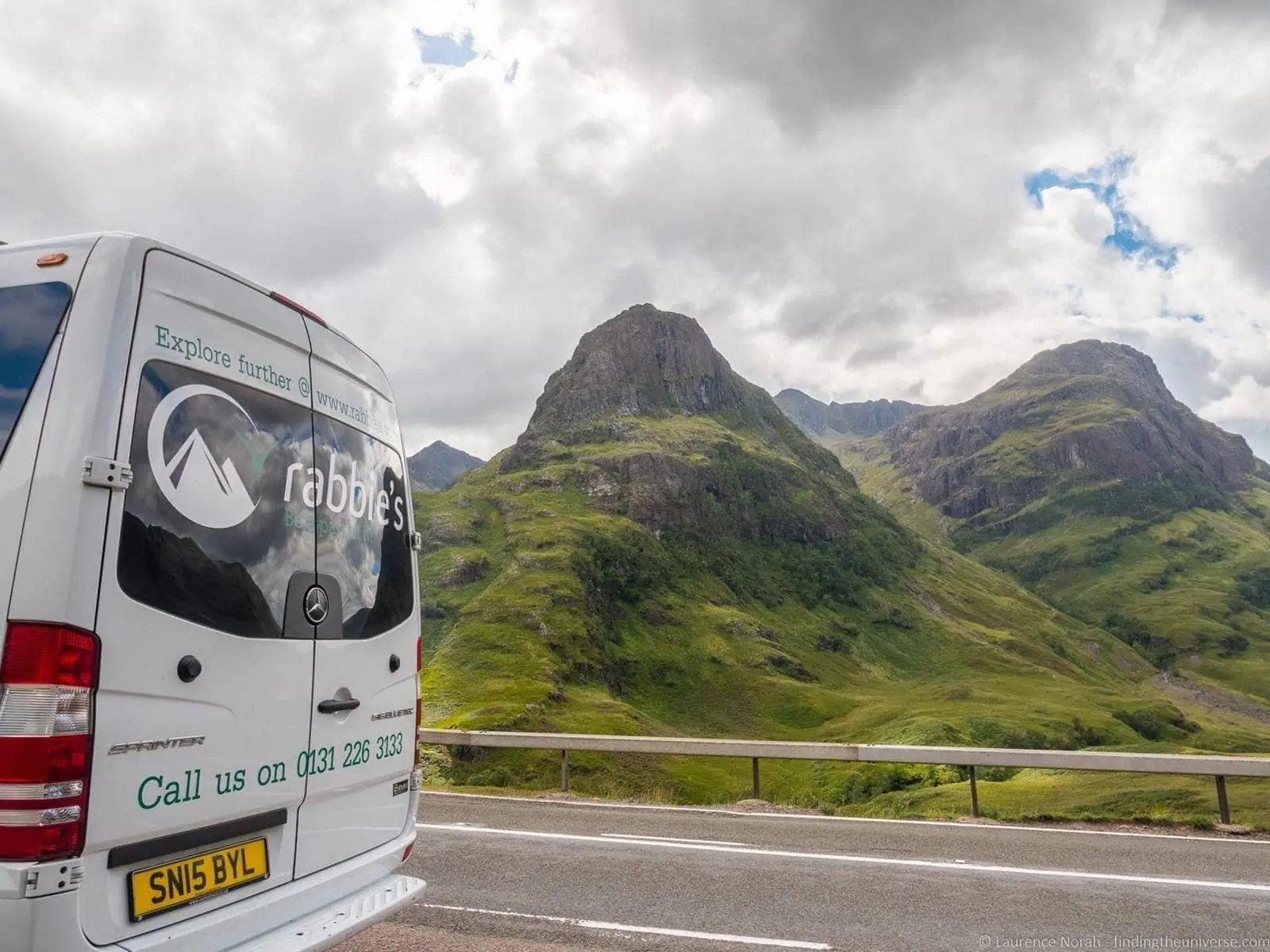
The same logic applies to Rabbie’s, whose small-group Scotland trips we’ve taken multiple times, both as their guests and on trips we’ve paid for ourselves. You can see some of our reviews of those: our five-day Highlands and Skye tour and their whisky day tour from Edinburgh, which we covered in our whisky tour review.
We’ve also taken Context Travel’s expert-led walks in Florence and Rome as their guests, again disclosed in each review.
The second is when you want something the platforms don’t sell. Devour’s tours are a good example. Search GetYourGuide’s catalogue for them and you’ll find nothing, because the operator sells direct and through Viator but not there. Specialist and premium operators often pick their channels.
The third is price, and this one comes with a worked example. In August 2026, Devour’s Ultimate London Borough Market food tour cost $112 on walksdevour.com, $120 on the operator’s other site devourtours.com, and $115.29 on Viator, with a ticket discounter carrying it too. Three channels, one tour, an $8 spread – and the operator uses dynamic pricing, so the ordering can flip week to week. That’s the pattern we keep finding. Direct is sometimes a bit cheaper, by single-digit percentages, not the fabled 20 to 30%.
Now the trap that catches people doing this comparison themselves. While checking those prices, we found a “London: Borough Market Food Tour with 6+ Authentic Tastings” on GetYourGuide at $124.06. Near-identical name, same market, same “6+ tastings” pitch – and it’s run by a completely different company, Secret Food Tours.
We hit the same thing at the Vatican: WalksDevour’s Key Master tour, which we’ve taken as their guests and reviewed in detail (around $670 a head when we checked in August 2026), sits alongside a near-identical “Alone in the Vatican Museums” Key Master listing on Viator that’s operated by LivTours, another of the handful of key-holder operators.
A matching title does not mean a matching tour. Before you compare prices across sites, find the “activity provider” line and check it’s the same company. It takes ten seconds, and it catches the most common mistake in this game.
And when it is the same company, compare the what’s-included lists before deciding the cheaper listing is the better deal. Hotel pickup, entry tickets, food and gratuities are the items that move between listings of the same tour, and they’re the first place to look when two prices don’t match.
So the direct-booking rule we use: book direct for operators you already trust, and for tours the platforms don’t carry. The third case, price, is the one that usually dissolves – for tours, the platform’s price guarantee means you can have the lower number and the platform’s terms at the same time.
Cancellation: The Policy Versus What Actually Happens
GetYourGuide and Viator both lead with the same promise, free cancellation up to 24 hours before, on most activities. GetYourGuide’s terms make that the default unless the individual activity says otherwise, and Viator’s own partner documentation puts it at about 85% of its products. It’s true as far as it goes, and it’s the wrong thing to focus on. You cancelling is the easy direction. The direction that ruins a trip day is the operator cancelling on you.
The contracts are blunter about this than the marketing. GetYourGuide’s supplier terms make an operator who cancels pay liquidated damages of 25% of the retail price for every affected customer – a real financial deterrent. Viator’s supplier agreement requires the operator to offer an equivalent or better alternative, or accommodate you to your reasonable satisfaction, and only then process a refund. What we couldn’t find anywhere in that agreement is a minimum notice period. Nothing in the contract stops a supplier cancellation landing the night before.
Our own two cases sit above, one in each direction and both from the same Uganda trip: the food tour we cancelled on GetYourGuide, and the Viator transfer that never arrived. Both systems did what they promised. Neither could give us back the plan.
Which points to the practical advice. For bookings where failure is expensive – airport transfers, a once-in-this-trip experience, anything feeding a flight or a train – assume the refund works and the morning doesn’t, and keep a plan B in your pocket. Favour the flexible cancellation option when it’s offered, even at a bit of a premium. And do your cancelling, if you must, before the 24-hour line: on both big platforms that’s the difference between a refund and a donation.
Which Platform Has Tours Where You’re Actually Going? We Counted
Every comparison of these platforms reasons from Rome, Paris and Tokyo, where all of them look infinite. The differences show up in the places most trips actually pass through. So in August 2026 we searched all five platforms for the same four destinations – London as the control, then Inverness, Aberdeen and Akureyri – and recorded the number of results each one showed. Anyone can repeat this with a browser and twenty minutes.
| Destination | GetYourGuide | Viator | Klook | Tiqets | ToursByLocals |
|---|---|---|---|---|---|
| London | 2,495 | 4,127 | 343 | 118 | 666 |
| Inverness | 196 | 299 | 39 | 3 | 148 |
| Aberdeen | 46 | 71 | 3 | 1 | 28 |
| Akureyri | 115 | 141 | 5 | 5 | 37 |
Counts are point-in-time (August 2026) and each site counts slightly different things, so read the ratios rather than the digits. Four findings stood out to us.
Viator’s catalogue really is the biggest, everywhere – it led in all four destinations, the famous one and the small ones alike.
Inventory follows tour geography, not city size. Aberdeen and Inverness are comparably sized cities, and Inverness has four to five times the listings on the big platforms, because it’s the base for the Highlands, Loch Ness and Skye day-trip trade.
We know both well – our guides to things to do in Inverness and two days in Aberdeen cover them – and Aberdeen isn’t four times poorer in things to do. If a search comes back thin, it may be the platform’s map of tour departures, not your destination.
Klook’s numbers collapse outside its home region, which is the concrete version of “use Klook in Asia-Pacific”. Tiqets’ low counts are the model doing what it’s built for – it sells attraction tickets, and Akureyri doesn’t have 100 ticketed attractions.
And ToursByLocals beat platforms many times its size in exactly the places you’d least expect a booking site to help – 148 listings in Inverness and 37 in Akureyri. Private guides turn out to be the deepest inventory small places have.
One more observation from the Akureyri results: a lot of the listings are built for cruise passengers, pitched around port pickup times. Fine if that’s you; if you’re staying in town, check the pickup point before assuming a tour fits your day.
Regional Strengths at a Glance
Here are the same conclusions sorted by region.
- Europe: GetYourGuide and Viator are near-interchangeable in the big cities; GetYourGuide edges secondary towns. Civitatis is worth adding for Spain and Portugal.
- Asia-Pacific: Klook first, then compare against GetYourGuide and Viator.
- The Americas: Viator’s home advantage shows in catalogue depth.
- Attraction tickets in major cities anywhere: Tiqets.
- Small towns and rural regions everywhere: ToursByLocals, plus whichever regional operator actually runs the routes – in the Scottish Highlands, that’s Rabbie’s.
What to Do Once You’ve Booked
Whichever platform you book with, download its app before you travel. Your booking lives there as a voucher or QR code, changes and cancellations are faster in-app than by email, and standing at a meeting point is exactly when you don’t want to be digging through your inbox on hotel wifi. Screenshot the voucher too. The one time you need it will, of course, be the one time you have no signal.
ToursByLocals is the exception. Because the product is a conversation with your guide, the thread of messages matters more than any voucher, so keep that reachable.
The one piece of booking-day housekeeping that differs by platform is the cancellation deadline, so put it in your calendar. On GetYourGuide and Viator it’s 24 hours before the start. On ToursByLocals it’s 15 days, which is easy to sail past while you’re still deciding whether the trip is happening.
Where This Advice Could Date, and What We’d Re-Check
A guide like this is a photograph of a moving target, so here’s what’s most likely to shift, and how to check it in the time it takes to read a terms page.
The fee positions could change. Every “no fee added at checkout” line above is dated August 2026, and platforms adjust fees quietly. The checkout itself is the test. The price breakdown on the payment page either shows an added fee or it doesn’t.
The price guarantee is a contract with conditions, and the rule “book the platform and claim the difference” is only as good as your claim. GetYourGuide’s version has five conditions – same activity, same details, same supplier, currently bookable, and proof – and it excludes member-only rates and special promotions. Read the current version of the terms we linked before relying on it, and keep screenshots of the cheaper price.
Our inventory counts will drift, though we’d expect the ratios to hold up quite a bit longer than the digits. The Tiqets and Expedia integration is the change most likely to alter one of these platforms structurally; we’ve dated what we know above.
And a word on the limits of our own evidence, since we’ve leaned on it throughout: our deepest booking history is with GetYourGuide and with direct operators, our Viator history is a single eventful transfer, and our Klook, Tiqets and ToursByLocals sections lean on their contracts, checkouts, and our destination counts rather than years of bookings. We’ve tried to keep each claim pinned to the kind of evidence behind it.
Frequently Asked Questions
Is GetYourGuide Legit?
Yes. We’ve booked tours through GetYourGuide ourselves, including in Iceland and Uganda, and when we had to cancel one inside the free cancellation window the refund arrived without any fuss.
The price you see at checkout includes GetYourGuide’s commission, with no separate booking fee added, and most activities carry free cancellation up to 24 hours before the start.
Is Viator Legit?
Yes. Viator is owned by Tripadvisor and had the largest catalogue of any platform we counted. Our one Viator booking, an airport transfer, ended with the driver not showing up – and Viator apologising and refunding in full.
The failure was the local operator’s; the platform’s protection did its job. Book through it with the same confidence as GetYourGuide, and the same 24-hour cancellation habit.
Which Is Better, GetYourGuide or Viator?
For most trips either works, and the same tour is often on both at similar prices. Viator has more listings overall (4,127 for London against 2,495 in our count) and deeper review history. GetYourGuide has the pay-later option, holds up well in smaller European towns, and its Best Price Matching is written into its consumer terms.
Our habit: GetYourGuide in Europe, Viator in the Americas or when choice matters most, and a two-minute price check between them before paying.
Is It Cheaper to Book a Tour Directly With the Operator?
Sometimes, and usually only slightly. The platform commission comes out of the operator’s share of the price. It isn’t added to yours, and in our checks the same tour differed by single-digit percentages across channels, not the 20 to 30% often claimed.
For tours specifically, if you find a lower direct price you can book on the platform and claim the difference under its price guarantee, keeping the platform’s cancellation terms.
Do Tour Booking Sites Charge Booking Fees?
In the checkouts we ran in August 2026, GetYourGuide, Viator and Tiqets added no fee on top of the listed price, and Klook’s terms provide for no platform-levied fee. The displayed price was the paid price.
The caveats: supplier charges and local taxes can sit outside a quoted price, and fee policies change, so treat the payment page’s price breakdown as the final word.
What Happens if the Tour Operator Cancels My Booking?
You’ll get your money back – the platforms’ terms are solid on refunds, and when a Viator-booked transfer failed to show for us, the refund came in full. What no policy restores is the day itself, and nothing in Viator’s supplier agreement sets a minimum notice period for operator cancellations.
For time-critical bookings such as airport transfers, keep a backup option in mind, and favour flexible tickets where offered.
Can I Cancel a Tour After Booking It?
On GetYourGuide and Viator, most tours allow free cancellation up to 24 hours before the start time, and the listing states its exact policy before you pay. Some tickets and short-notice bookings are non-refundable.
Klook and Tiqets vary more by activity, so read the listing’s policy line before you pay. ToursByLocals is different again: one platform-wide policy, with a full refund up to 15 days before the tour, not 24 hours. Inside 15 days you need the paid “Any Reason” upgrade, and illness on its own doesn’t qualify for a refund without it.
Do GetYourGuide and Viator Sell the Same Tours?
Often, but check before assuming. Many operators list the same tour on several platforms at similar prices. Just as often, a near-identical title is a different company: we found a Borough Market food tour on GetYourGuide whose name almost matched a Devour tour on Viator, run by an entirely different operator.
Find the “activity provider” line on each listing and compare that, not the title.
What Is the Best Site for Booking Tours in Asia?
Check Klook first. It started in Hong Kong, its catalogue is deepest in Asia-Pacific, and it also sells practical extras for the region. Then compare your shortlist against GetYourGuide and Viator, which both cover Asian cities well, and pick on price and cancellation terms.
What Is the Best Way to Book a Private Tour?
ToursByLocals is built for it: you message a named local guide, agree the itinerary for your group, and book once it fits. Its coverage in smaller destinations surprised us – 148 listings for Inverness alone in our count.
The alternative is going direct to a specialist operator you already trust, which is how we’ve booked our own private and expert-led tours.
Further Reading
Once you’ve picked a platform, the harder question is which tour to book. These go deeper on that:
- The best guided group tours of Iceland
- The best food tours in Rome
- Food tours in London, compared
- Our review of the VIP Vatican Key Masters tour
- Day trips from Inverness
- The best car rental sites – the same exercise we did here, for hire cars
As always, the comments are open below and we read every one. Two things would help most: a price quirk you’ve spotted on any of these platforms, and counts from a destination we didn’t cover. Run the same searches we did, tell us what each platform showed you, and we’ll add it to the table.
Leave a Reply