

I'm Laurence, a professional travel photographer since 2010. Jess and I write this site from our own travels.
We’ve visited Barcelona somewhere between five and eight times over the past decade or so (I’ve genuinely lost count), and it’s one of those cities that keeps pulling us back. There’s always something new to photograph, a side street in the Gothic Quarter we haven’t wandered down, or a Gaudi building we want to see again in different light.
If you’re planning on spending 2 days in Barcelona, this itinerary is built from those visits. It covers the highlights that a first-time visitor will want to see, but it also includes a few of our personal favourites that don’t make it onto every tourist list.
A word of warning before we start: Barcelona is a city where booking ahead really matters. The Sagrada Familia, Park Guell, Casa Batllo and several other major attractions operate timed entry and can sell out days or even weeks in advance, especially in summer. We’ll flag exactly what needs pre-booking as we go.
Another important thing to be aware of is that many of Barcelona’s museums are closed on Mondays, including the Picasso Museum and MNAC. The Sagrada Familia and Park Güell are open daily, so the core of this itinerary works on any day of the week. But if you are visiting on a Monday and want to swap in museum visits or alternative attractions, check opening days before you go.
It’s also good to know that while Barcelona’s weather is generally warm and sunny, rain is not unheard of, particularly in autumn and spring. If you get a wet day, the good news is that most of Day 1’s highlights (Sagrada Familia interior, Sant Pau, Camp Nou museum) are indoors.
Day 2 is more weather-dependent: Park Güell and Montjuïc are best in dry weather. If rain is forecast, consider swapping Day 2’s outdoor stops for the Picasso Museum, MACBA (Barcelona’s contemporary art museum), or spending longer inside Casa Batlló or La Pedrera, both of which are worth a more leisurely visit. Just be aware that popular attractions like Park Güell require timed entry tickets booked in advance, and these are often non-refundable. Check the forecast before you book (if possible) and pack a light rain jacket just in case.
If you have more or less time, we also have guides to spending one day in Barcelona and 3 days in Barcelona. If you’re arriving by cruise ship, our Barcelona cruise ship itinerary is tailored to shorter port visits.
As well as the itinerary, we’re going to tell you everything you need to know to plan your time in Barcelona. From where to stay, to how to get around, to how to save money on attractions, this guide has you covered. Let’s start with the itinerary itself.
Table of Contents:
Is 2 Days Enough in Barcelona?
Two days is enough to see Barcelona’s biggest highlights and get a genuine feel for the city. You won’t see everything (you could spend a week here and still miss things), but you’ll cover the Sagrada Familia, the Gothic Quarter, at least a couple of Gaudi’s houses, and have time for a proper lunch with cava and patatas bravas.
What two days won’t give you is much time for day trips (Montserrat, Girona, the wine country) or for the slower pleasures of Barcelona: spending an afternoon at Barceloneta beach, getting lost in the Born neighbourhood, or lingering over a long dinner in Gracia. If that sounds more your speed, consider extending to three days.
The itinerary below is designed to be busy but not exhausting. We’ve grouped attractions geographically to minimise time on transport, and we’ve front-loaded the sights that benefit most from an early start.
2 Day Barcelona Itinerary
As with all our itineraries, this one should be taken as a starting point for you to plan your own time in the city. We think it makes for a good two days, but we appreciate that everyone has different interests. So you can personalize it as needed.
Additionally, we like to pack a lot in when we travel, so if you prefer to see less, or are visiting Barcelona as a family with children, do tweak it to meet your own travel style.
You also want to check the opening times and dates for each attraction as some are closed one day per week or might have annual closing periods. So make sure they are open before you set out.
Finally, Barcelona is a very popular city and some of the attractions have visitor limits and can sell out days or even weeks in advance. This is especially the case for the most popular attractions such as the Sagrada Familia or Parc Guell, which can book out. So we highly recommend booking tickets for these attractions online in advance where possible, and we provide links to do so.
Barcelona Itinerary Day 1
Day 1 at a glance: Start at 9am from Plaça de Catalunya on the Hop on Hop off bus. Sagrada Familia from around 9:30 to 11:30. Sant Pau Recinte Modernista from 12:00 to 1:00pm. Lunch break. Park Güell from around 2:30 to 4:30pm. Camp Nou or Tibidabo in the late afternoon (last entry at Camp Nou is typically 7pm, and you will want to allow at least 90 minutes for the museum). Dinner and evening from around 7:30pm onwards.
These times are approximate and you should adjust based on your own pace. We like to pack a lot in, so if you prefer a slower day, drop one of the afternoon stops and spend more time wandering.
Hop on Hop off Bus
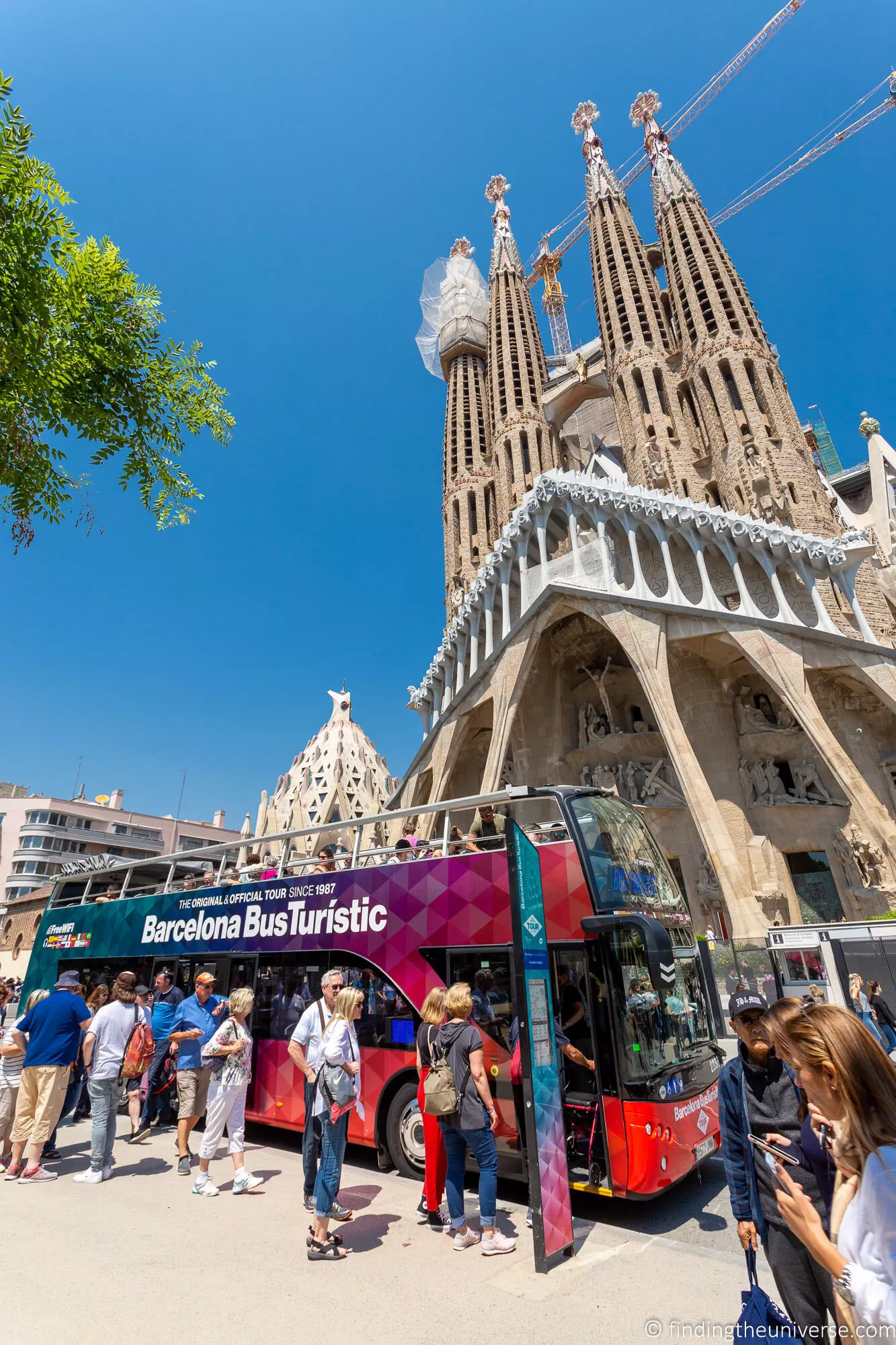
Today, I’m going to recommend you get around using the Hop on Hop off bus. A few of today’s attractions are spaced a little apart, and Barcelona’s Hop on Hop off bus is an easy way to get between them. It’s also a great way to learn about the city as you go, thanks to the included audioguide.
Of course, you could get between today’s sights by public transport or other forms of transport, as covered in the section on getting around Barcelona. But as many of the city passes for Barcelona include at least a day of hop on hop off bus travel, it is worth taking advantage of.
There are a couple of sightseeing bus services in Barcelona. We recommend the Barcelona Bus Turistic which is operated by the city’s tourism office. For this itinerary, we’re specifically recommending you take the Blue route.
This starts in Placa de Catalunya, and visits all the attractions on today’s itinerary. Buses run at least every 20 – 30 minutes, you can get on and off as many times as you like, and service normally starts at 9am.
If you prefer to walk between some of the stops, the most pleasant stretch is the 15-minute walk from the Sagrada Familia to Sant Pau Recinte Modernista. The route takes you down Avinguda de Gaudí, a tree-lined pedestrian boulevard with cafes and a direct view of the Sagrada Familia behind you. It is one of the nicest walks in the city and well worth doing on foot if the weather is good. The other transitions on Day 1 (Sant Pau to Park Güell, Park Güell to Camp Nou/Tibidabo) are longer and hillier, so the bus or metro is the better option for those.
You can book your HOHO tickets online in advance here. Also included on the Go Barcelona Pass and Barcelona City Pass.
Sagrada Familia
Your first attraction stop today is going to be at the incredible Sagrada Familia cathedral. In our opinion this is a must-see sight in the city. We recommend coming here earlier in the day, and it is one of the first stops on the Hop on Hop off bus route.
Whilst there is currently timed entry, there is no limit to how long people can stay, so it can get busier as the day progresses.
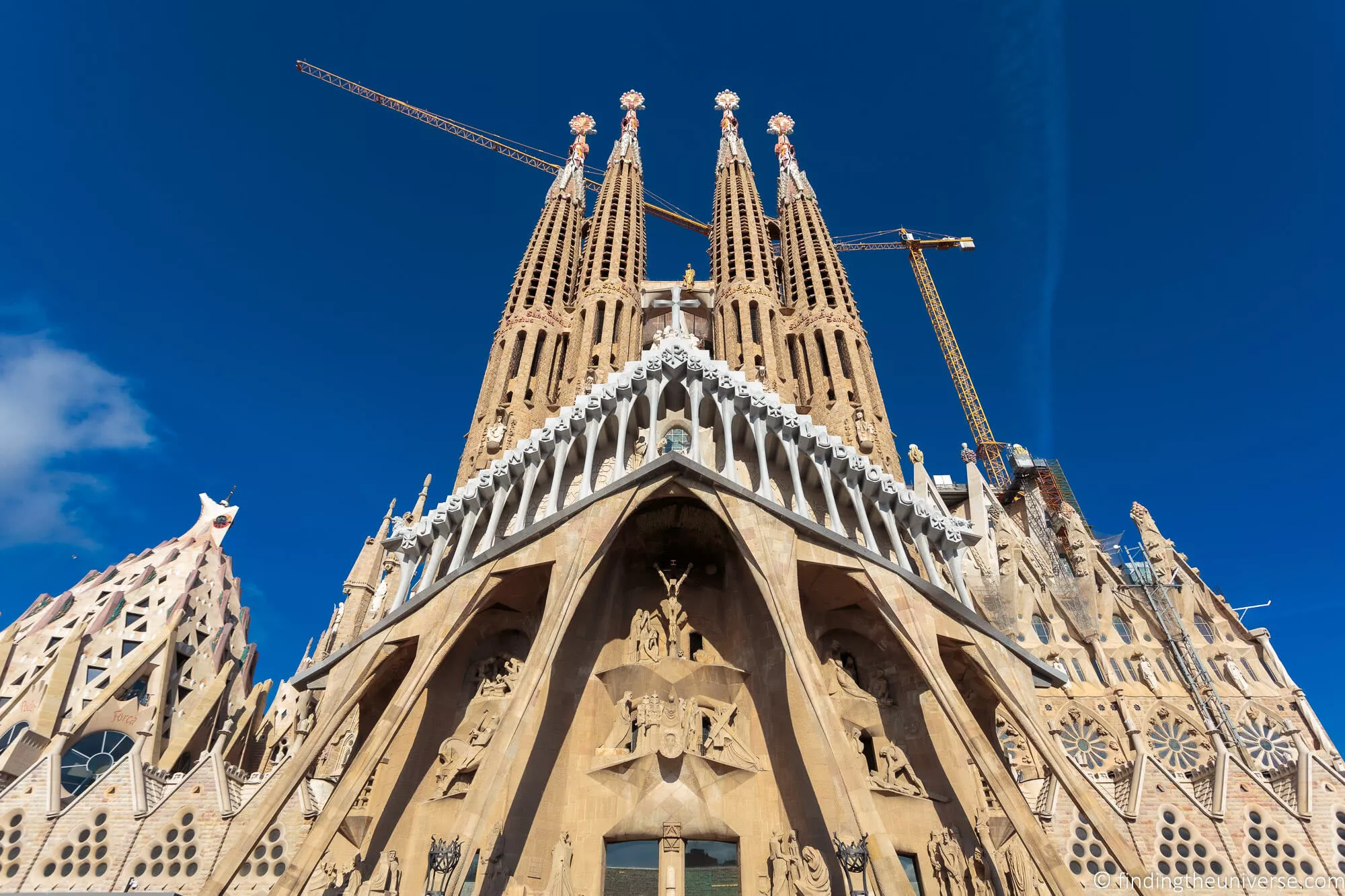
The Sagrada Familia is without doubt the most famous and impressive structure from the mind of architect Antoni Gaudi. He was responsible for a great many works in the city (see Jess’s guide to Gaudi in Barcelona for many more), but the Sagrada Familia is by far the largest and most well known.
In February 2026, the cross was placed on top of the Tower of Jesus Christ, completing the exterior of the basilica’s central tower at 172.5 metres. This makes the Sagrada Familia the tallest church in the world, surpassing Ulm Cathedral in Germany. The official inauguration took place on June 10, 2026, the centenary of Gaudi’s death. Interior work continues through 2027 and 2028, with full completion projected for 2034.
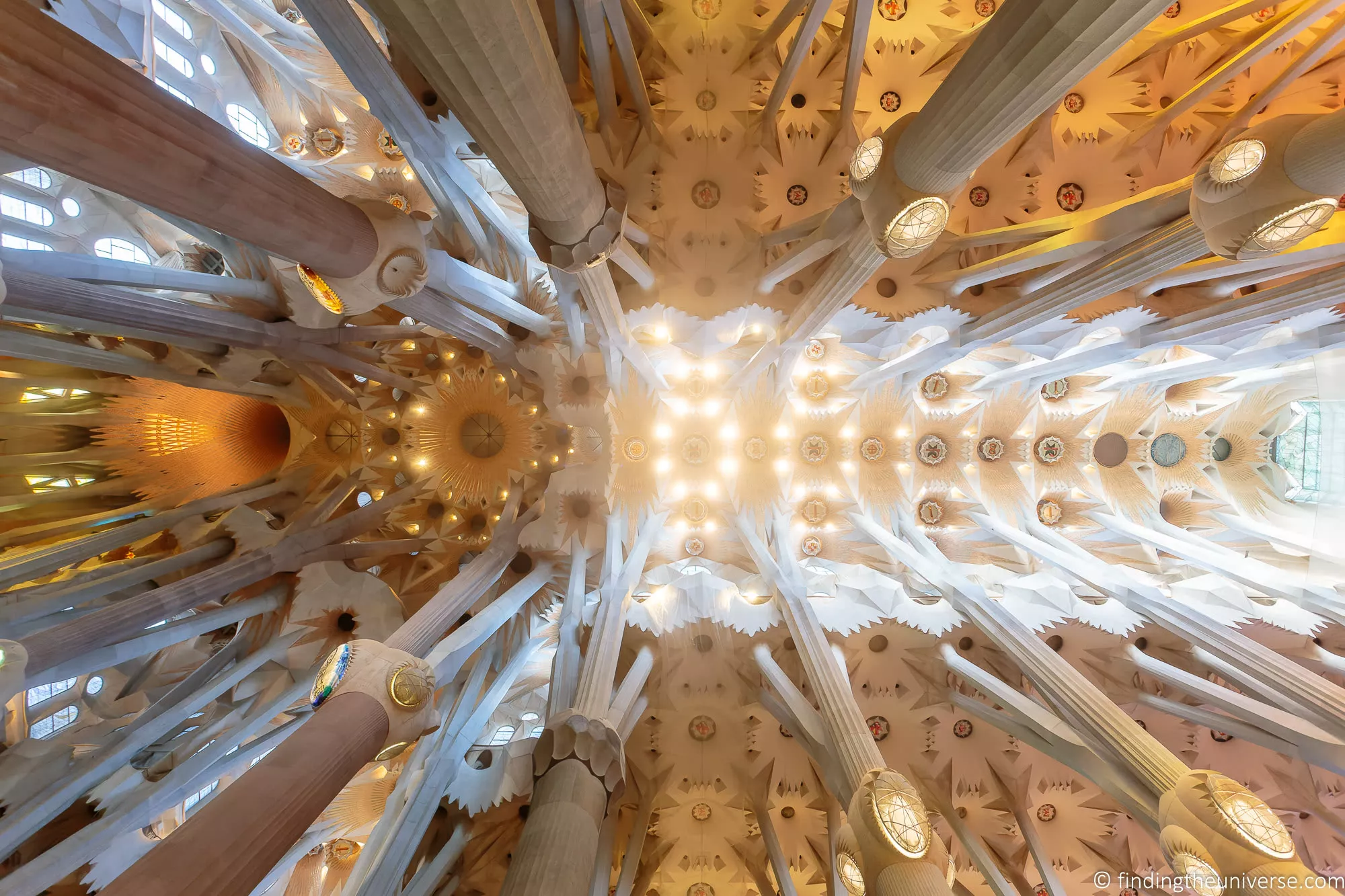
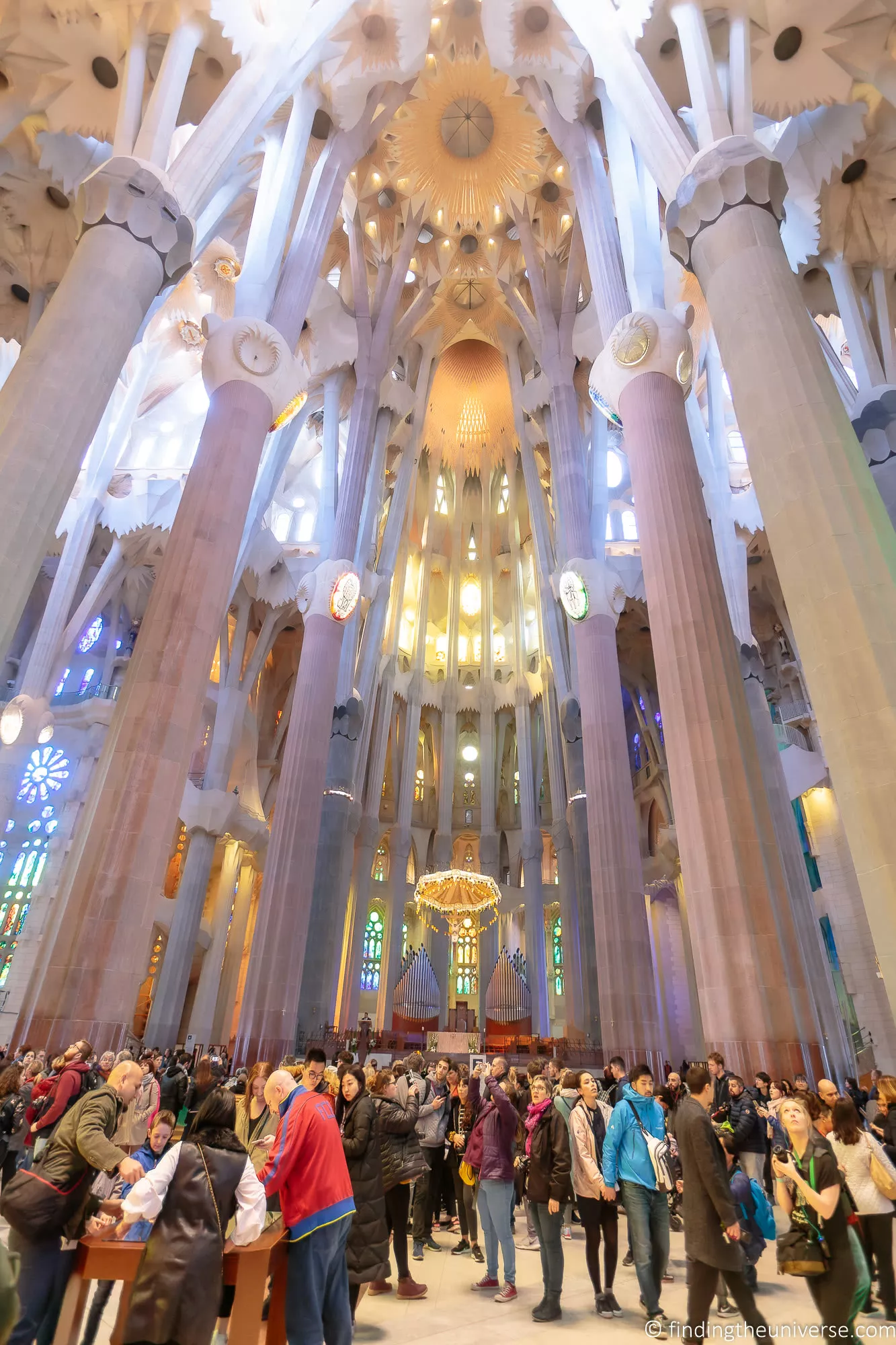
My first memory of walking inside the Sagrada Familia is just one of pure awe. The interior feels like standing under a massive canopy of coral trees, with light streaming through the stained glass in ways that change throughout the day. Every time we’ve gone back, the building has evolved as construction has continued, and somehow it keeps getting better.
If you were to only visit one Gaudi structure in Barcelona, we’d recommend making it the Sagrada Familia.
There is plenty to see here, and as the building is still under construction, what you can see changes on each visit. Highlights for us include the incredible “forest” of pillars holding the nave up, as well as the huge exterior façades. However, there is more than enough to see here to last for at least a couple of hours.
As a photographer, I will say that the interior of the Sagrada Familia is one of the most extraordinary spaces I have ever photographed. If you can, visit in the morning when the eastern stained glass windows catch the sun and flood the nave with warm reds, oranges, and golds. The afternoon light through the western windows is cooler, with blues and greens. Both are stunning, but the morning light is what makes most people stop in their tracks.
See our complete guide to visiting the Sagrada Familia, which has everything you need to know to plan a visit.
You need to book your entry to the Sagrada Familia in advance. You can do so on the official website here. Third party sites also offer tickets and tours, including GetYourGuide, Tiqets and Viator. These can be a good option if the official site has limited availability, or if you’d prefer to take a guided tour.
Finally, the Sagrada Familia is included on some of the city’s attraction passes. You’ll want to check exactly what the pass includes, as some include a guided tour at a specific time, whilst others just provide entry.
Currently, the Sagrada Familia is included on the Go Barcelona Pass, Barcelona City Pass and Gaudi Bundle.
However you get your ticket, we highly recommend booking tickets in advance as the Sagrada Familia is a very popular attraction and often sells out.
Lunch in the Eixample
The walk from the Sagrada Familia down towards Sant Pau runs through the Eixample, Barcelona’s elegant grid neighbourhood, and it is a good place to stop for lunch. The streets around Passeig de Gracia are lined with restaurants offering menu del dia deals at lunchtime: two or three courses with bread and a drink, usually for around €12 to €15.
In our experience this is one of the better-value ways to eat well in the city. We have not found a single spot we consistently return to, partly because the neighbourhood has so many options. Pick somewhere that looks busy with locals rather than one with a laminated photo menu outside, and you will generally eat well.
Sant Pau Recinte Modernista
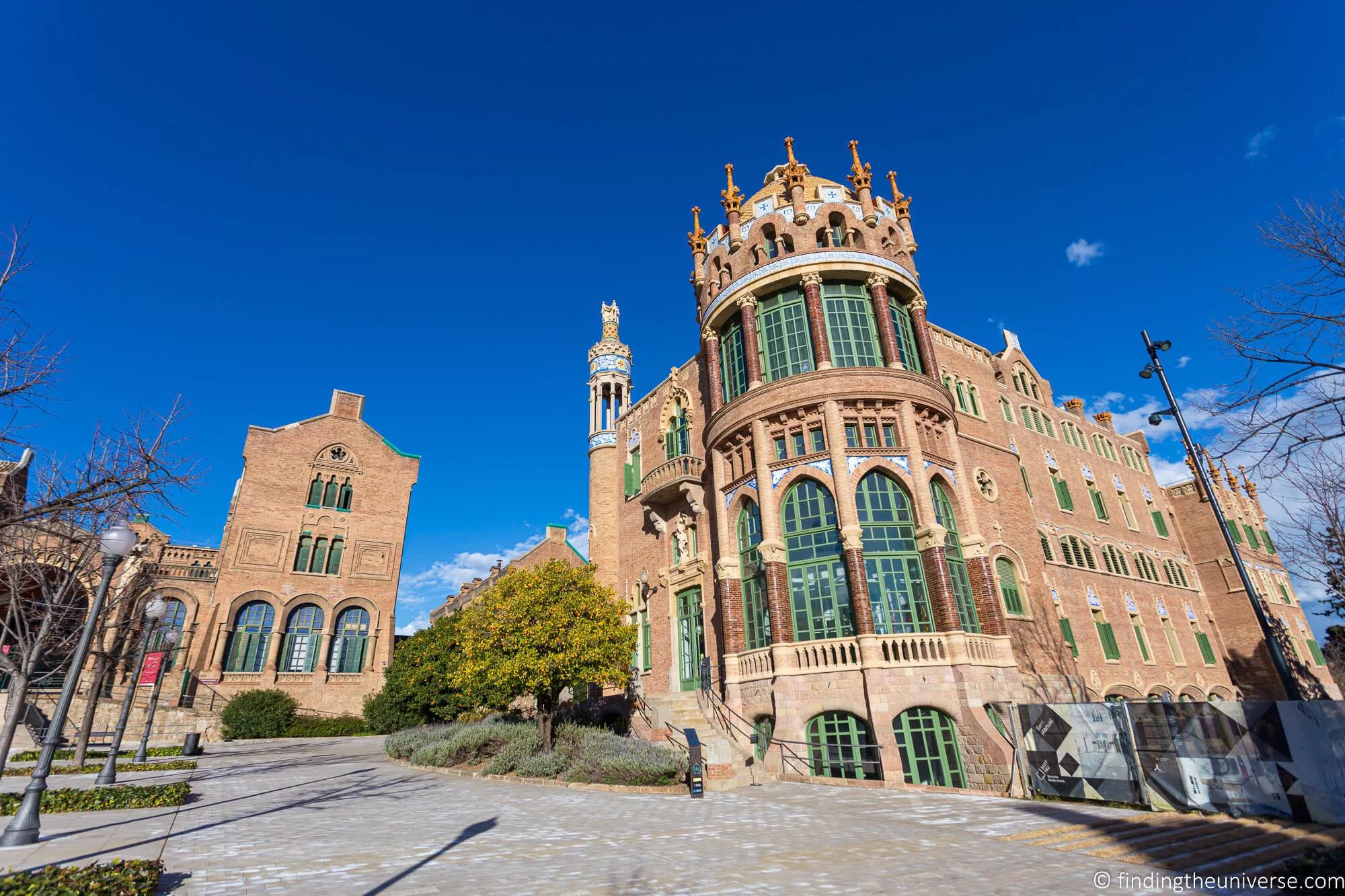
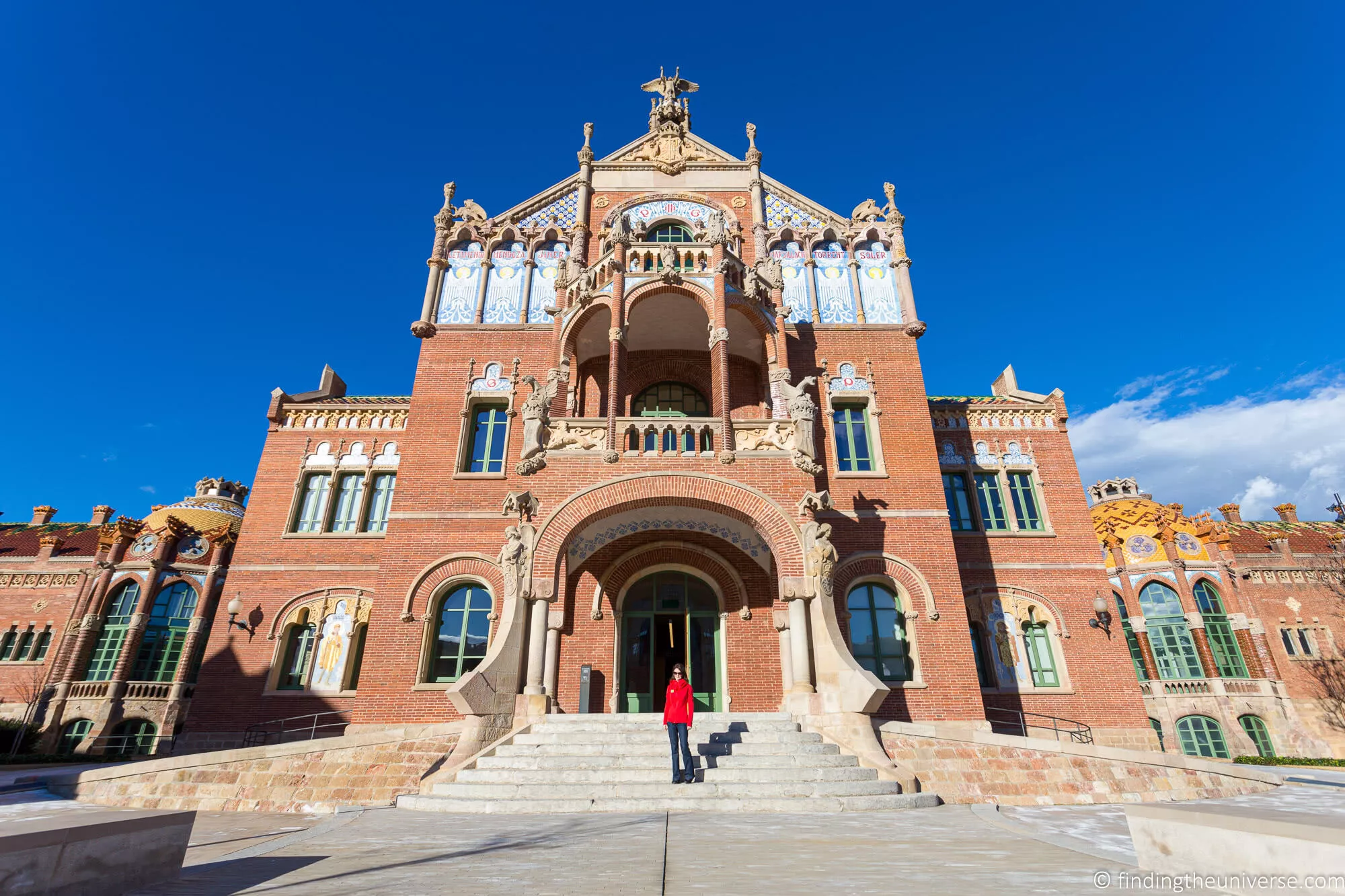
After the Sagrada Familia, our next recommended stop (and also the next stop on the hop on hop off bus blue route), is the Sant Pau Recinte Moderniste. Alternatively, it’s around a 20-minute walk between the two locations if you prefer to stretch your legs.
This complex was originally built as a garden city for the sick. It was built between 1905 and 1930 in the art nouveau style, and designed by architect Lluís Domènech i Montaner.
Today, the location is a UNESCO world heritage site, and is home to one of the most impressive collections of art nouveau buildings in Europe.
We love wandering this location, it feels very different to the organic structures employed by Gaudi, and as it’s less popular, it also makes a nice break from the crowds of Gaudi’s attractions.
There’s a fee to visit, and it’s included on the Go Barcelona Pass. You can also book tickets online in advance here.
Park Guell
Your next stop on your first day exploring Barcelona is Park Guell. This is one of the next stops on the Hop on Hop off bus, a 20-minute ride by public transport from Sant Pau, or a 30-minute walk.
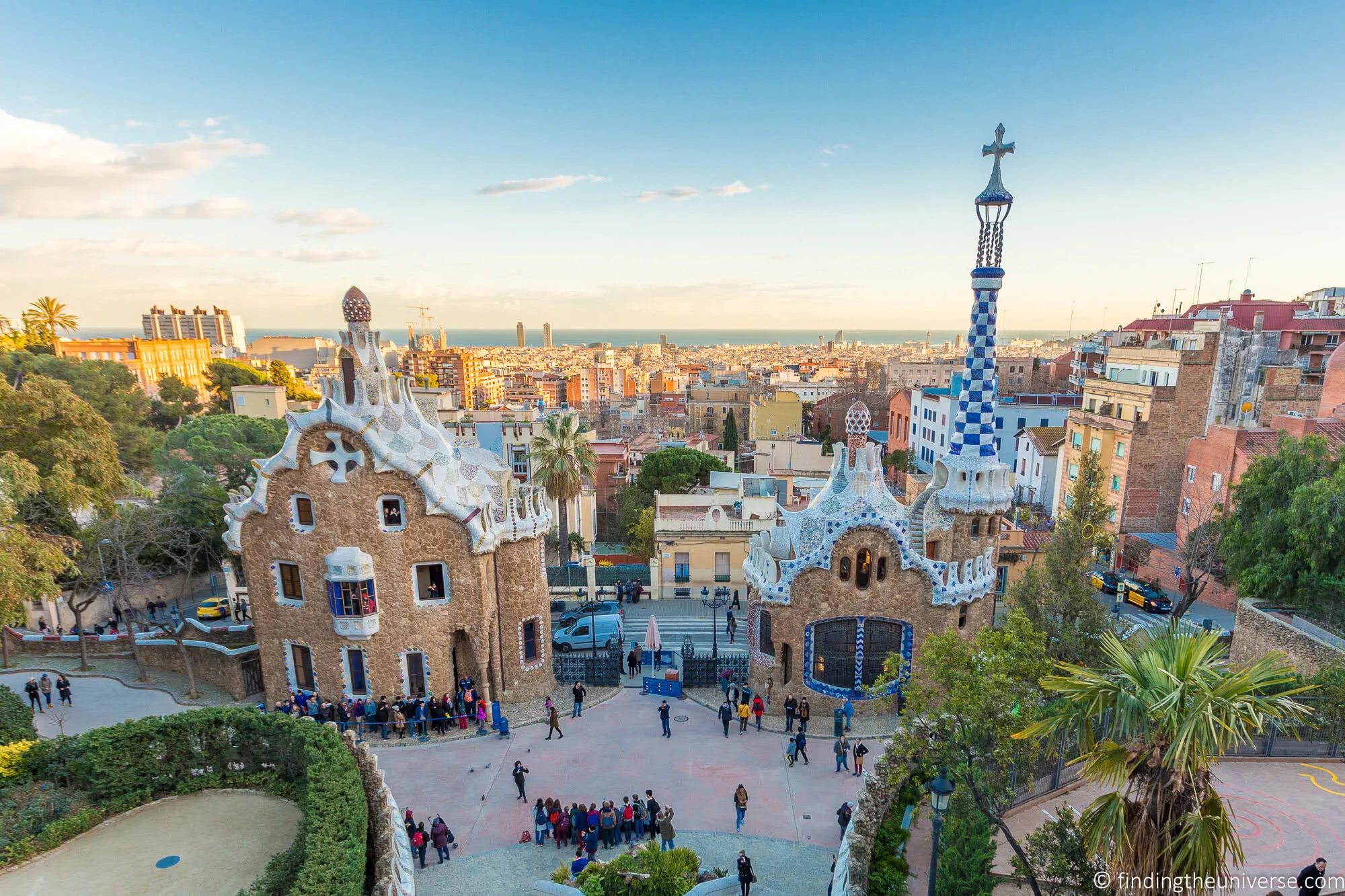
Park Guell is another of Gaudi’s works in the city. It was originally conceived as a housing development which would offer residents clean air and good views. The setting is a large park.
Unfortunately, the vision was never fully realised. Two of the houses were built, although they were not actually designed by Gaudi. Instead, the architect was responsible for the park design. He also lived in one of the show homes on the site for 20 years, from 1906 to 1926. This is now open to the public as the Gaudi House Museum.
Most visitors to Park Guell come to explore the Park, and it’s so-called Monumental Zone. This part of the park has a fee to enter, and is where you will find highlights like the terrace and mosaic installations. It is a very impressive place to visit and well worth spending at least an hour exploring.
Whilst much of Parc Guell is free to visit, the main attractions of the Monumental Zone do have a fee.
Currently, Parc Guell is included on the Go Barcelona Pass, Barcelona City Pass and Gaudi Bundle.
You can also book tickets for Parc Guell on the official site here and GetYourGuide here. There is also a combined ticket which includes the Gaudi House Museum and Parc Guell here.
We highly recommend booking tickets in advance as the Monumental Zone is very popular and can sell out, so same day tickets are not guaranteed if you turn up on the day.
A couple of practical notes. Entry to Park Guell is timed, which means your ticket is for a specific slot and is likely non-refundable. If the weather looks doubtful, dress accordingly: there is limited shelter in the ticketed area, and the terraces and mosaics that everyone comes to see are exposed.
The views over the city are generally good regardless of conditions, but the experience is considerably better in sunshine. The afternoon light also tends to be softer up here, which is worth knowing if you are bringing a camera.
Finally, the Gracia neighbourhood sits directly below the park. It is worth walking down through it rather than jumping straight on the bus: independent cafes, quiet squares, no chain restaurants. It has a completely different character to the more tourist-heavy parts of the city.
Camp Nou or Tibidabo
Your final stop for your first day in Barcelona will depend on your interests. The hop on hop off bus route continues around Barcelona, with the option to visit both of these locations.
Option 1: Camp Nou
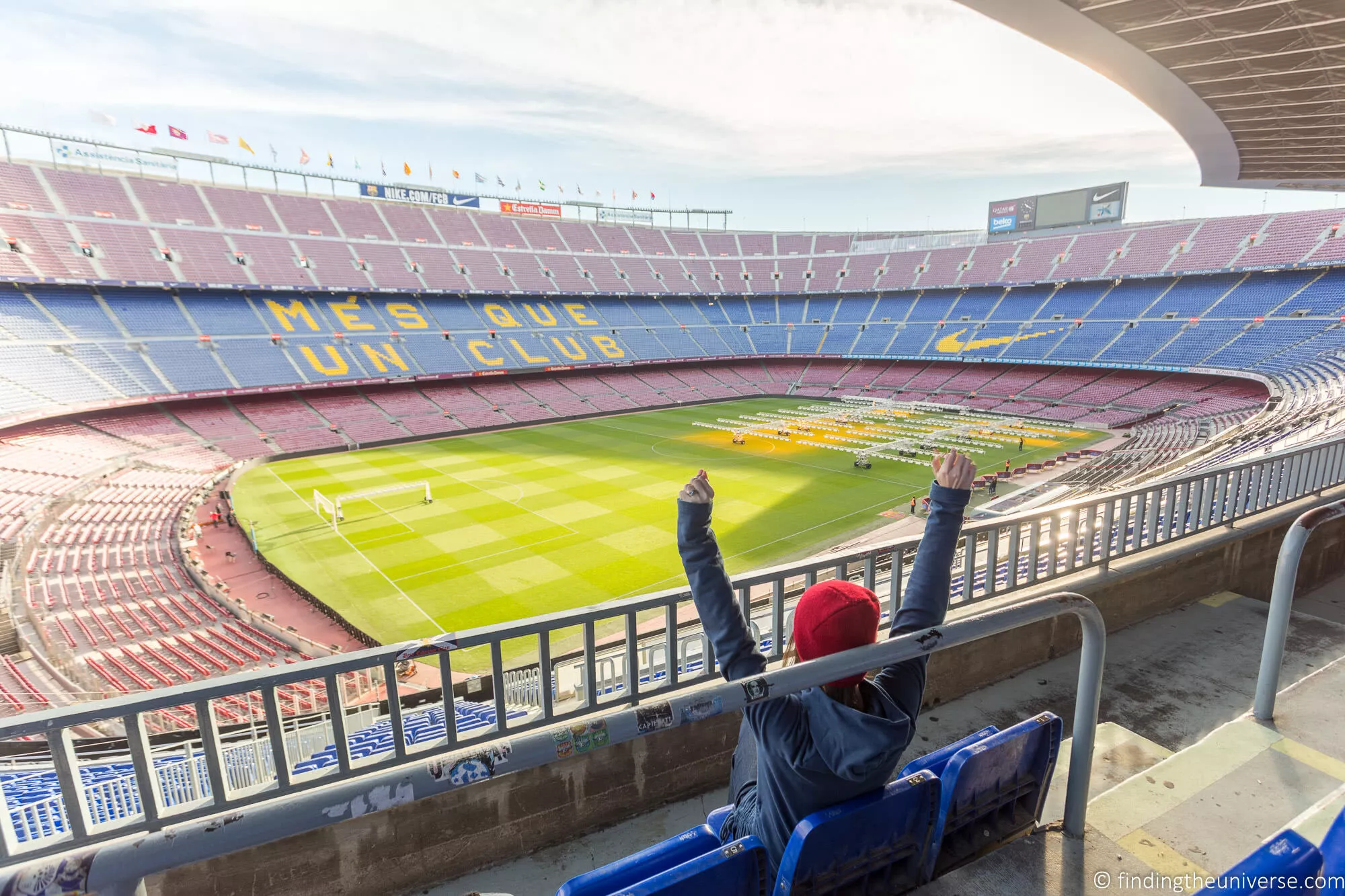
Camp Nou has been the home of FC Barcelona since 1957. FC Barcelona are one of Europe’s most well-known and successful football (soccer for those of you in the USA) clubs. They are also one of the most supported clubs in the world, with fans hailing from every corner of the globe.
Important (2026): Camp Nou is currently undergoing a major renovation, so the stadium isn’t open for general daily walk-through visits. The Camp Nou Immersive Tour is still running, which includes the FC Barcelona Museum, an immersive 360-degree show, a construction viewpoint, and an audio guide. If you specifically want to walk on the pitch, FC Barcelona now runs a Match Day Tour (from €249) on the day of home matches, which includes a guided behind-the-scenes tour and access to the main competition areas. It’s only available on the handful of match days each month, so check the FC Barcelona website for upcoming match dates and current opening times before you visit. FC Barcelona’s own site confirms tickets for the first matches back at Camp Nou are now on sale, with home fixtures returning there from 27 August 2026 (the 2026/27 season). The full self-guided daily stadium tour (pitch, changing rooms, tunnel, outside match days) still isn’t running, and is expected once renovations complete.
As such, many visitors to Barcelona have an interest in visiting Camp Nou, to see where their favorite players play. If you can’t get a Match Day Tour slot or a ticket to an actual match, the Camp Nou Immersive Tour runs every day and still gives you a real sense of the club’s history.
Now, I’ll be honest, neither Jess nor I have a great interest in football. However, we have visited the Camp Nou stadium and we both enjoyed it. The tour was interesting, it was fun to see behind the scenes, and we got a real sense of the history of the team and the passion the fans have.
Of course, if you are an FC Barcelona fan, or have a general interest in football, then you will probably enjoy it even more.
The full Camp Nou experience, via the Match Day Tour (or the standard stadium tour once renovations complete), includes a visit to the FC Barcelona Museum, as well as locations like the stand, the pitch, the away team changing room, tunnel and pressroom. There are also additional, more premium experiences available that grant further access.
Camp Nou is included on the Go Barcelona Pass. You can also buy individual tickets here.
Option 2: Tibidabo
If you aren’t so excited about a visit to a football stadium, or would just like an alternative option to consider, then we suggest instead considering a trip up Tibidabo.
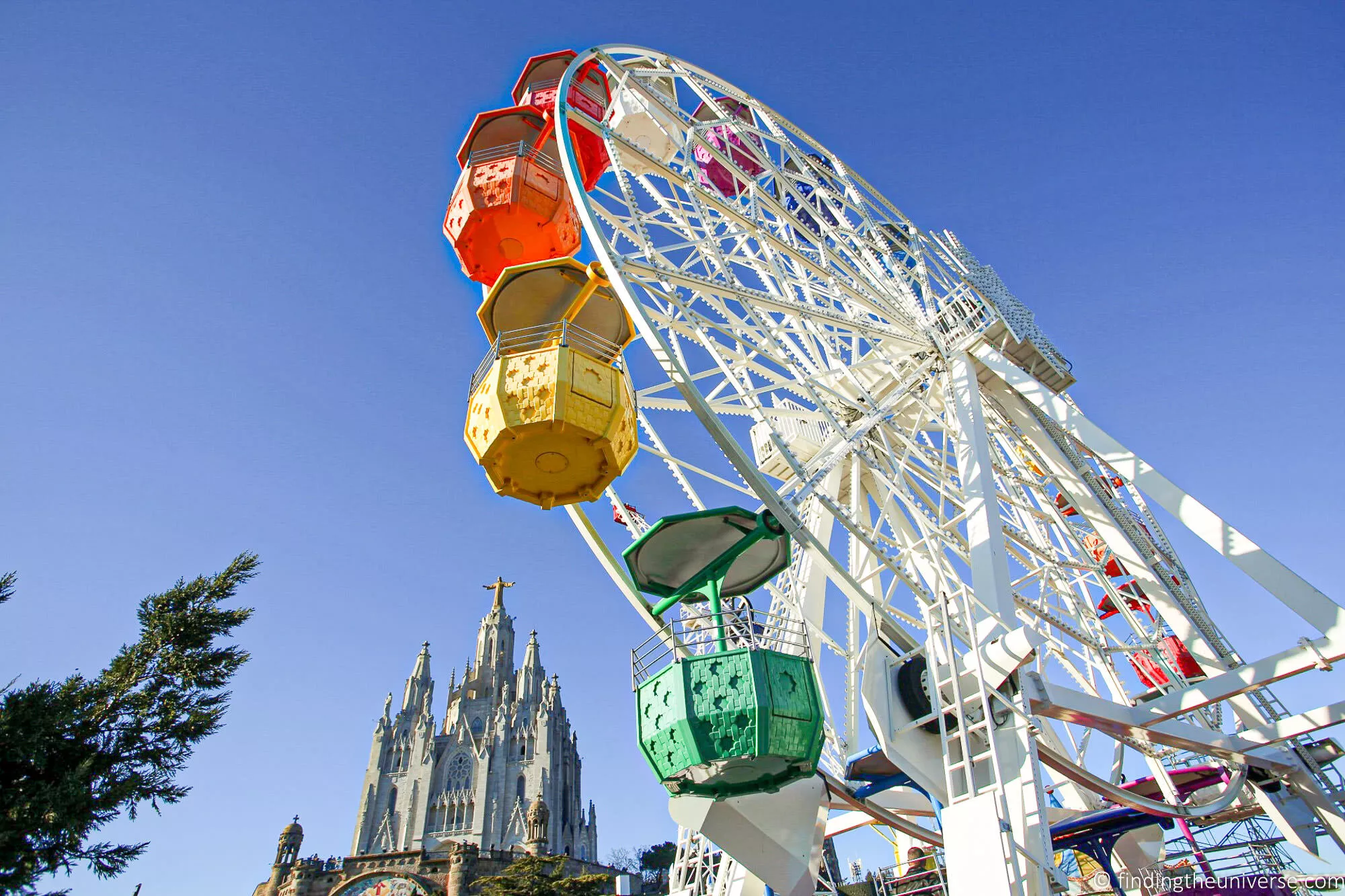
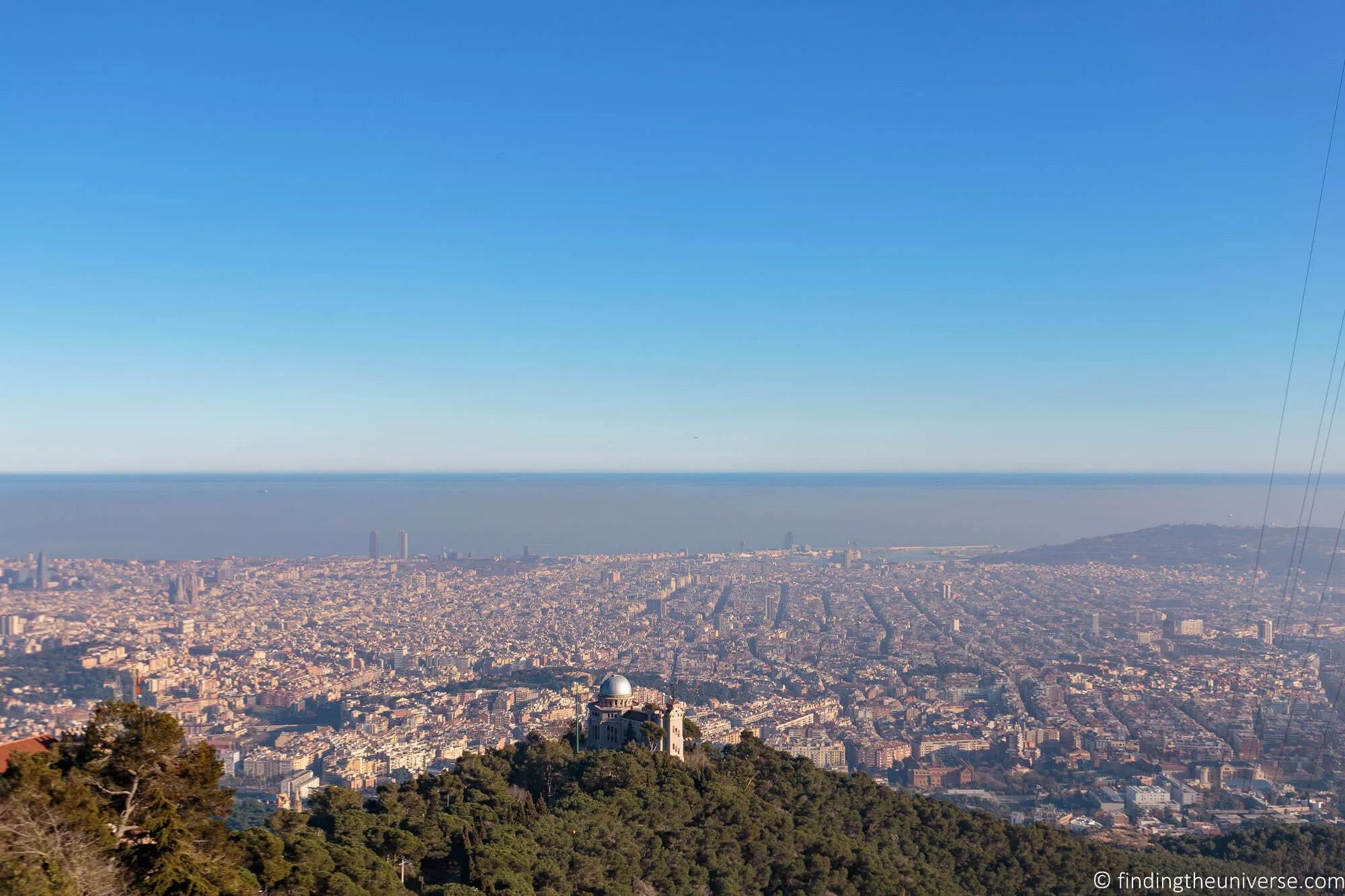
Tibidabo is a hill to the north-west of the city, which offers spectacular views across the city and surrounds. The top of the hill is crowned by the impressive Sagrat Cor church, and there is also an amusement park here called Tibidabo Amusement Park.
The park offers a small number of rides, including a simulated airplane ride which dates from 1928 as well as a large Ferris wheel. Woody Allen fans will recognise the park from the movie Vicky Cristina Barcelona, part of which was shot here.
The easiest way to reach the Tibidabo summit is by the Tibidabo Funicular. Conveniently, the hop on hop off bus has a stop at the station. There’s a fee to ride the funicular, and you can get tickets on site. The Tibidabo Amusement Park also has a fee, which gives you access to all the rides. You can save by buying tickets online in advance here.
I would add that I still think it’s worth going to the top of the Tibidabo for the views and to visit the church, even if you don’t visit the amusement park.
That brings us to the end of your first day exploring Barcelona, at least in terms of sight-seeing. Now you can head back to the city, relax, or head out for dinner and fun.
If you are looking for something fun to do in the evening, you might consider a dinner show with entertainment. Flamenco shows (sometimes with an accompanying meal or tapas) are a popular option for visitors to the city. For example, check out this show with optional dinner and drinks, or this show only option.
Where to Eat and What to Do in the Evening (Day 1)
Barcelona eats late. Most restaurants do not open their kitchens until 8:30 or 9pm, and locals rarely sit down before 9:30 or 10pm. If you are used to eating earlier, La Boqueria market on La Rambla is a good option for a lighter early evening meal, with stalls serving fresh seafood, jamón, and fruit juices. Time Out Market at the Port Vell is another reliable choice with a range of vendors.
For a proper sit-down dinner, the Gràcia neighbourhood (near Park Güell) and the Eixample district both have excellent options. Cervecería Catalana on Carrer de Mallorca is a long-established tapas spot that locals and visitors both rate highly, though it does not take reservations and the queue can be long. For something more relaxed, the streets around Plaça de la Vila de Gràcia are full of tapas bars and restaurants with outdoor terraces.
If you are visiting on a Thursday, Friday, or Saturday, the Magic Fountain of Montjuïc puts on a free evening light and music show that is well worth catching. You will be heading to Montjuïc on Day 2, but the fountain show works just as well as a Day 1 evening activity since it is easy to reach from Plaça d’Espanya. Times vary by season, so check the official schedule before you go.
Barcelona Itinerary Day 2
Your second day in Barcelona has you exploring some of the city centre attractions. Let’s get started.
Day 2 at a glance: Start at 9am with Casa Batlló (book a timed entry slot). La Pedrera from around 10:30. Walk the Gothic Quarter and find lunch from 12:00 to 2:00pm. Santa Maria del Pi around 2:30pm. Head to Montjuïc from around 3:30pm for the cable car, castle, and views. If visiting on a Thursday, Friday, or Saturday, time your evening around the Magic Fountain show (8pm or 9pm depending on season).
Day 2 is mostly walkable. Casa Batlló to La Pedrera is a five-minute stroll along Passeig de Gràcia, and the Gothic Quarter is entirely on foot. You will need the metro or bus to reach Montjuïc (take the L3 to Espanya or the Montjuïc funicular from Paral·lel).
Casa Batlló
Whilst the Sagrada Familia is spectacular in both design and scale, it’s obviously not a structure that is designed for living in. So if you want to get an idea of the sort of house that Gaudi built for actually dwelling in, then you will want to visit one (or both) of the two properties at the start of this itinerary.
First, the Casa Batlló. This is found in the city’s Eixample district, just a few minutes’ walk from Placa Catalunya.
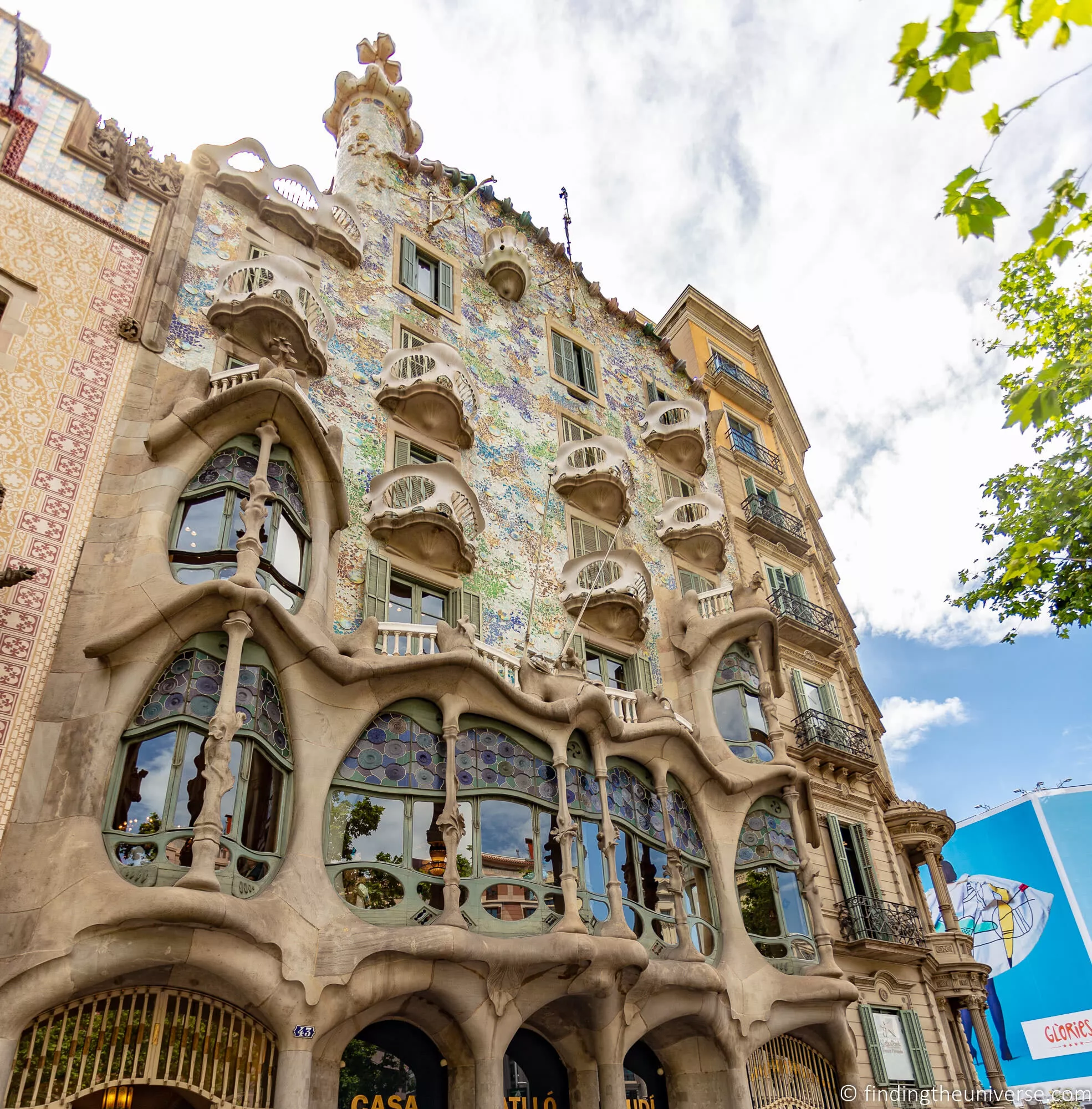
This house was actually a remodel of an existing house, completed by Gaudi in 1904. It’s famous for the balconies which look like opera masks, the dragon-like rooftop, and the flowing organic feel of the interior.
Today the house forms a part of the Gaudi UNESCO world heritage site and is a very popular tourist attraction. As such, we recommend starting your day here so as to avoid the worst of the crowds which tend to build up as the day progresses.
Entry to Casa Batlló is included on the Go Barcelona Pass. You can also buy individual tickets here. It is definitely one of the pricier attractions in Barcelona, so if you do include it on your itinerary an attraction pass is highly likely to save you money overall. It’s also very popular, so advance tickets are highly recommended.
La Pedrera
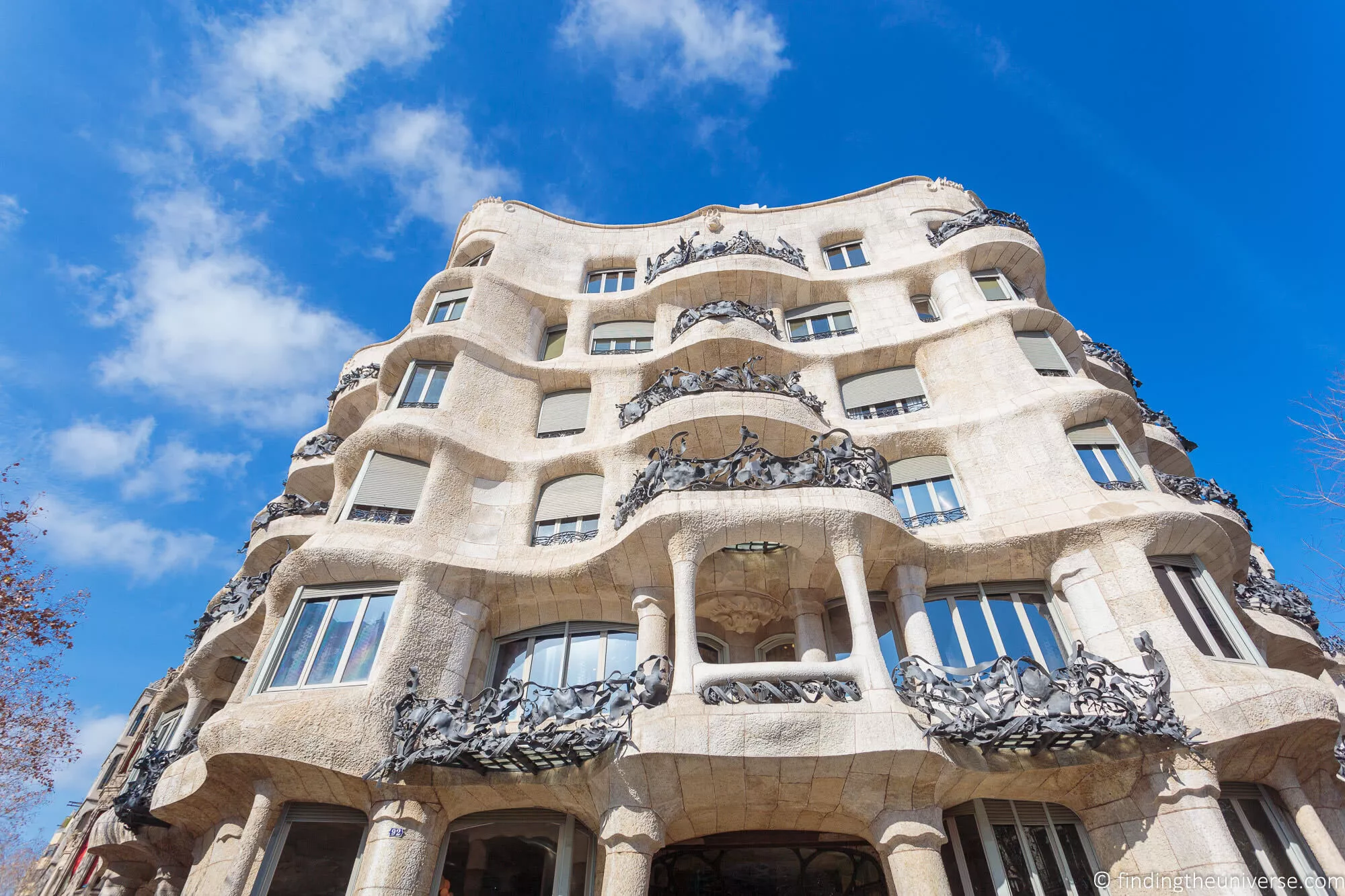
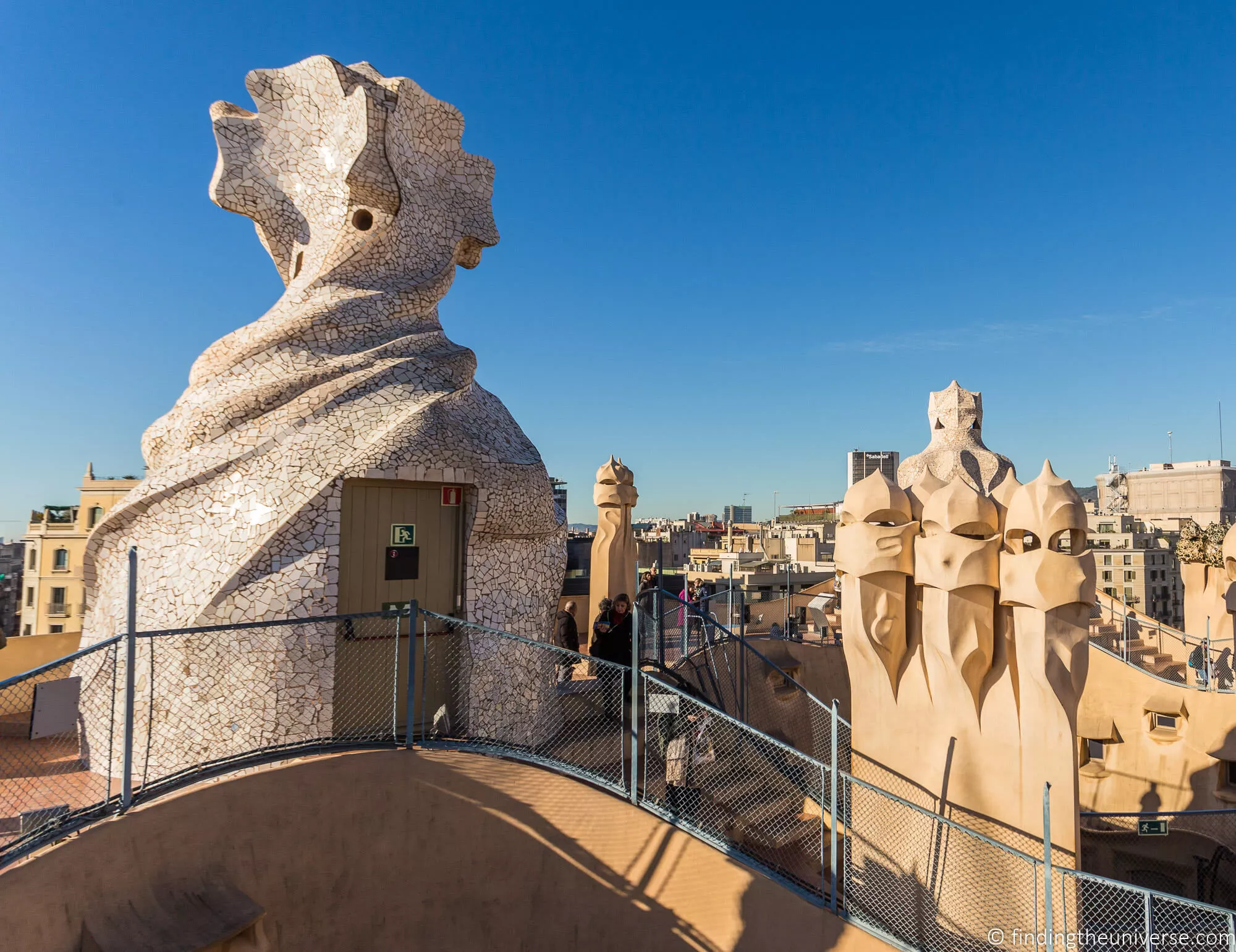
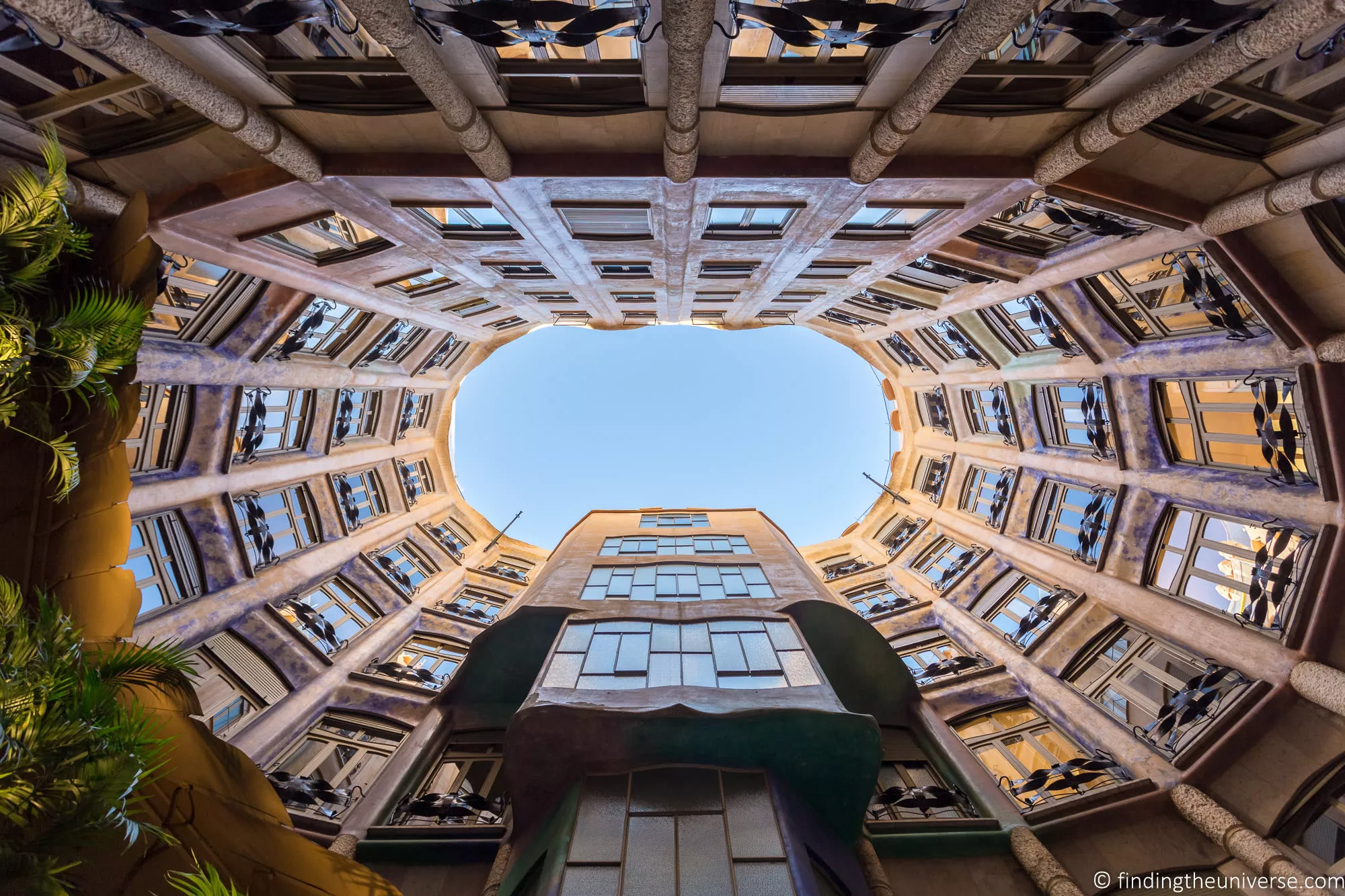
A couple of blocks from Casa Batlló is Casa Mila, which is more commonly known as La Pedrera, or “The Quarry”. This is another Gaudi property, famous for the organic concrete facade that wraps around the building.
Unlike Casa Batlló, this apartment building still has residents, so a visit here only grants you access to certain areas. These include the vaulted roof space where there is a good museum about Gaudi and his work, as well as the stunning chimney-dotted roof which offers nice views over the city and across to the Sagrada Familia.
There is an entry fee to La Pedrera, and it is also included on the Go Barcelona Pass. Alternatively, you can buy tickets online here.
If you aren’t planning on investing in the Go Barcelona Pass, we’d probably recommend visitors to Barcelona pick either Casa Batlló or Casa Mila to save money. You may also need to save time if you have a lot of activities booked later in the day. Both of them have unusual exteriors that are interesting to see even if you don’t visit them.
La Rambla / Gothic Quarter Walking Tour
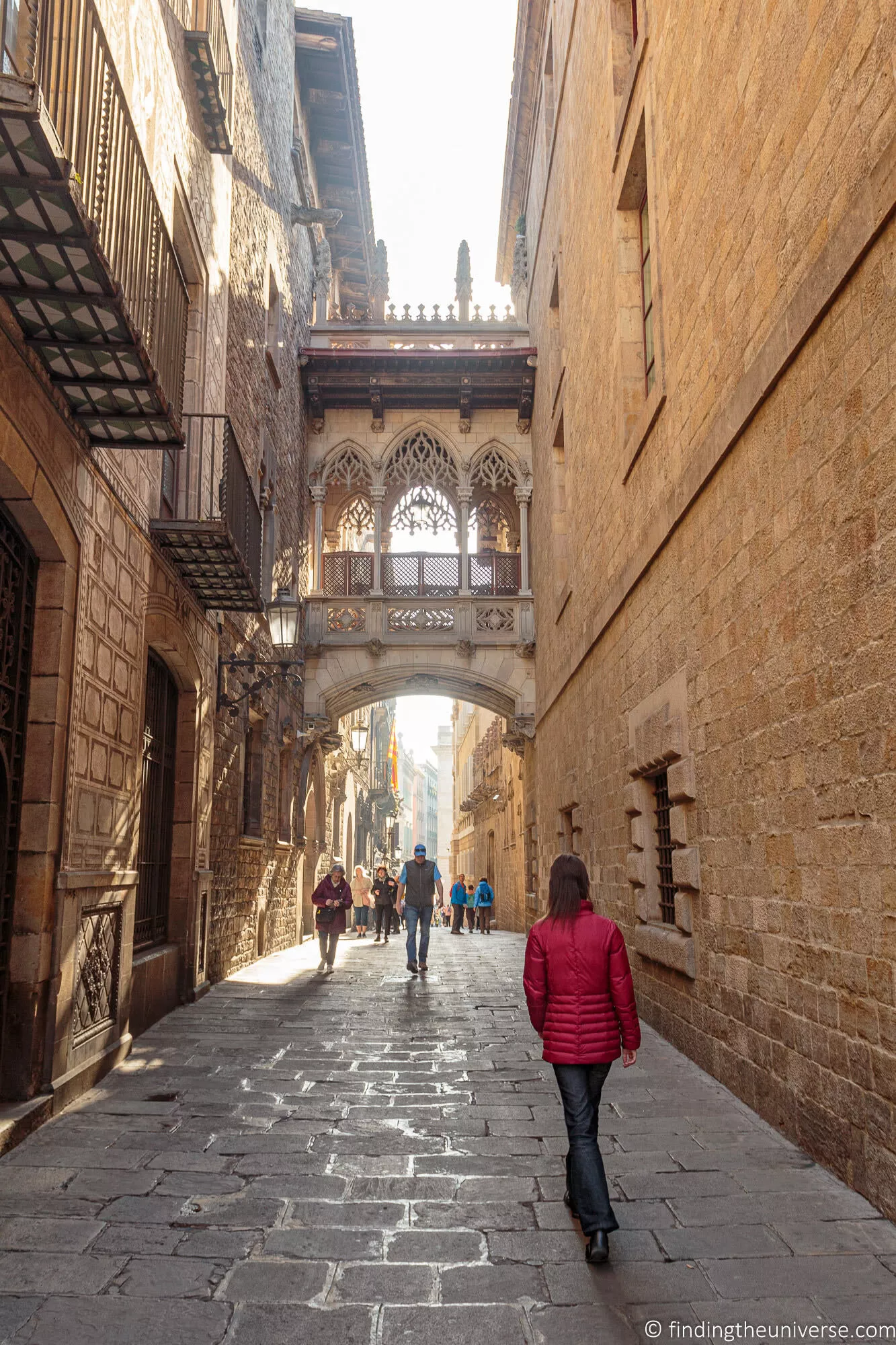
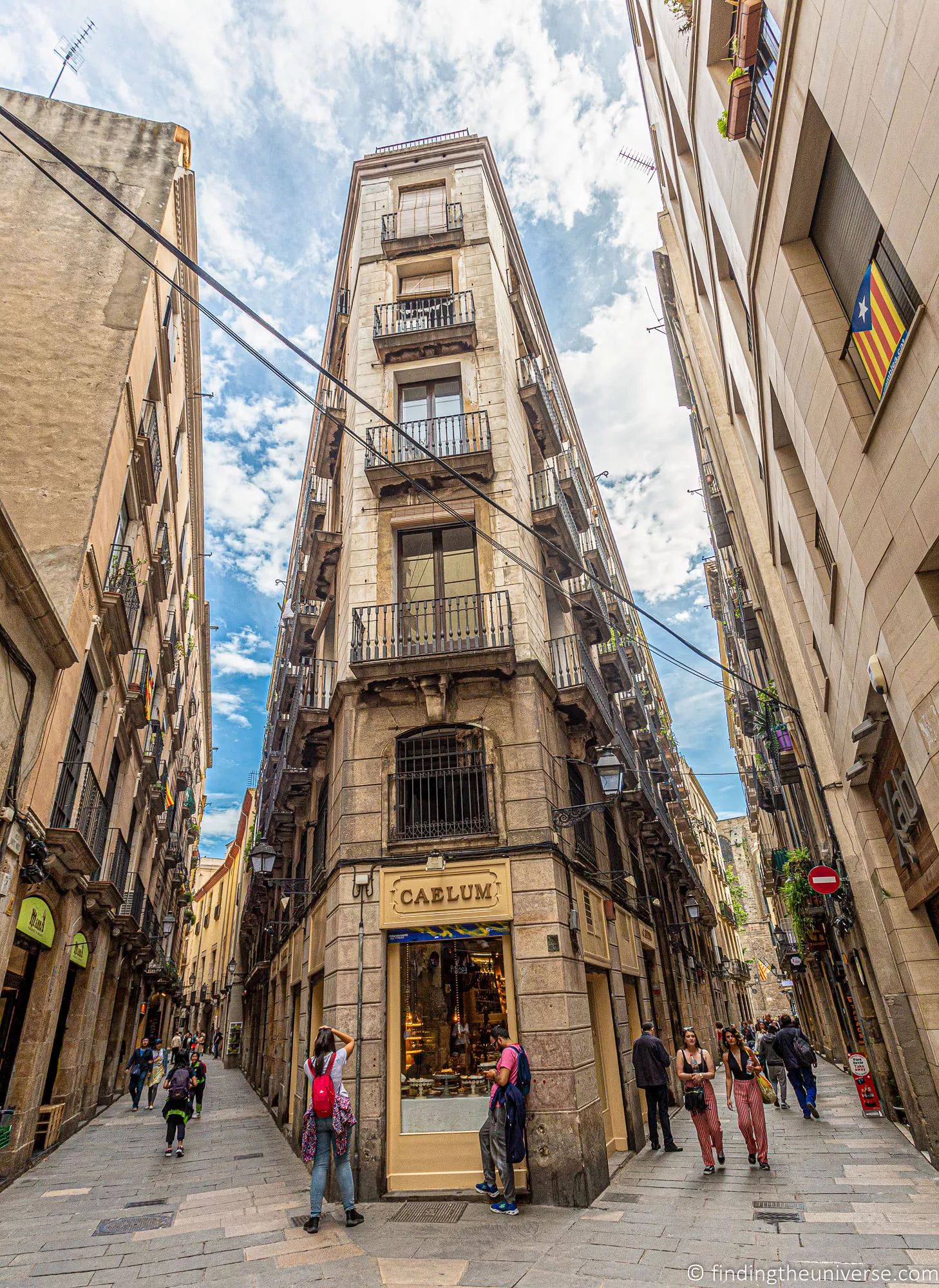
One of our favourite parts of Barcelona to wander around is the Gothic Quarter. This is in the oldest part of Barcelona, which was founded by the Romans in 15BC. The Gothic Quarter is bordered by the sea to the south east, and the famous La Rambla street to the south west.
Las Rambla was originally a stream on the border of the Roman city wall which encircled the city. Today it is a popular place to take a stroll, have a drink or snack, and do some people watching. It’s also home to La Boqueria, one of the city’s most well-known public markets.
The Gothic Quarter is still very much medieval in feeling. Unlike the wide avenues and symmetrical layout of other parts of the city, the Gothic Quarter features narrow streets with looming buildings on either side. It’s largely pedestrianised, great to wander around, and quite easy to get lost in.
We recommend taking a walking tour of the area if you want to learn more about its fascinating history. We have a list of recommended walking tours further on in our itinerary, but a couple we recommend that include the Gothic Quarter are:
- This 3 hour tour of the Gothic Quarter which includes tapas tasting. Included on the Go Barcelona Pass
- If you prefer your tours to mix history with food, check out this 3.5 hour food walking tour of the Gothic Quarter which includes tapas tasting, drinks and dinner. This is with WalksDevour, one of our favourite walking tour companies.
- This excellent value 2-hour walking tour of Barcelona’s Gothic Quarter
If you plan on taking a tour, you might have to adjust this itinerary to take into account the start time of the tour. I’d also add that you can of course visit the Gothic Quarter on your own and just wander around without a tour should you prefer. Both are great ways to explore.
The Gothic Quarter and El Born are the best areas in Barcelona for a lunch stop. The streets around Santa Maria del Mar in El Born are packed with tapas bars and small restaurants. If the weather is good, grab an outdoor table and order some patatas bravas and a glass of vermouth, which is something of a Barcelona institution at lunchtime. La Boqueria is also nearby if you prefer to graze through the market stalls rather than sit down for a full meal.
Santa Maria Del Pi
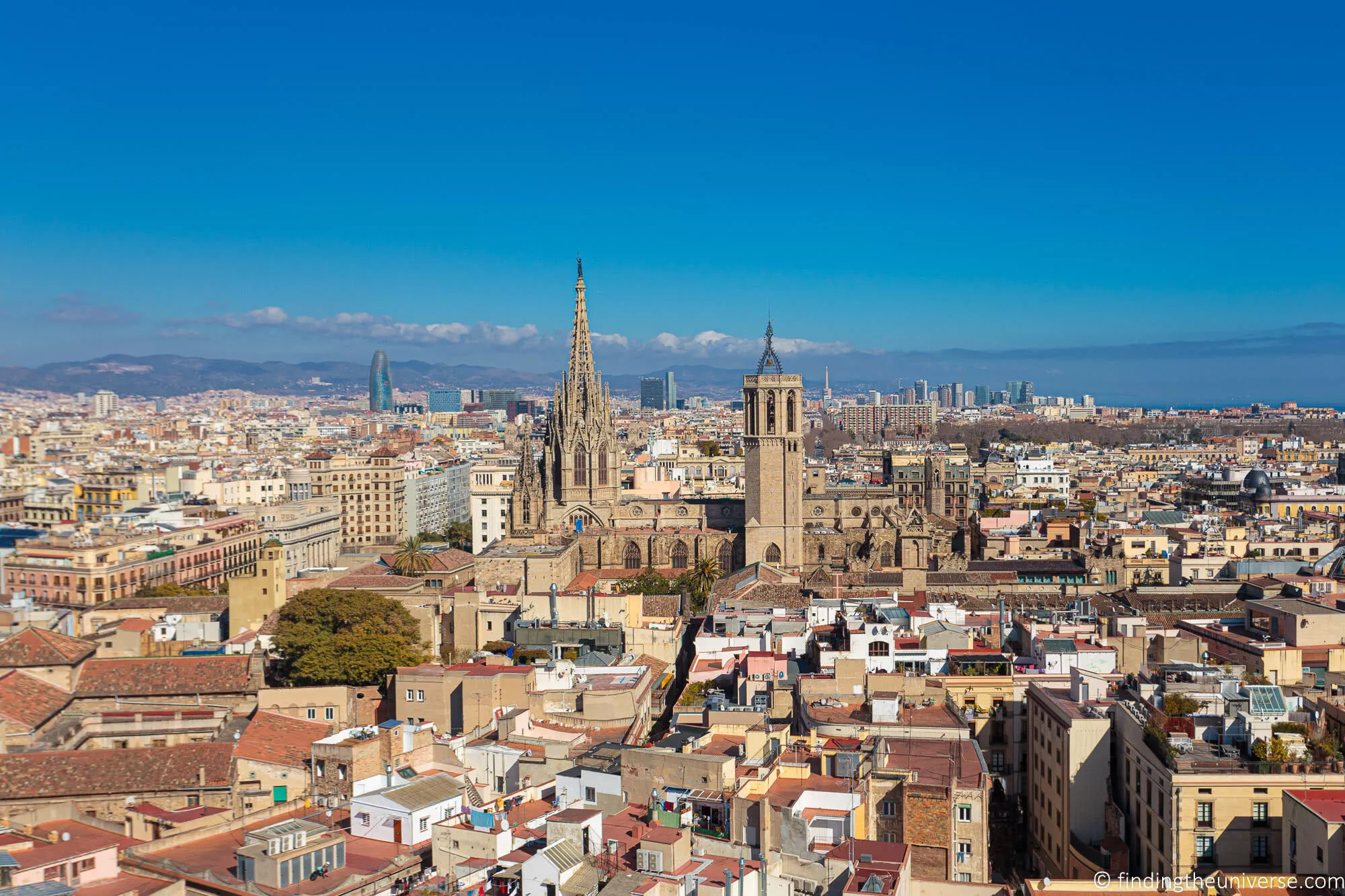
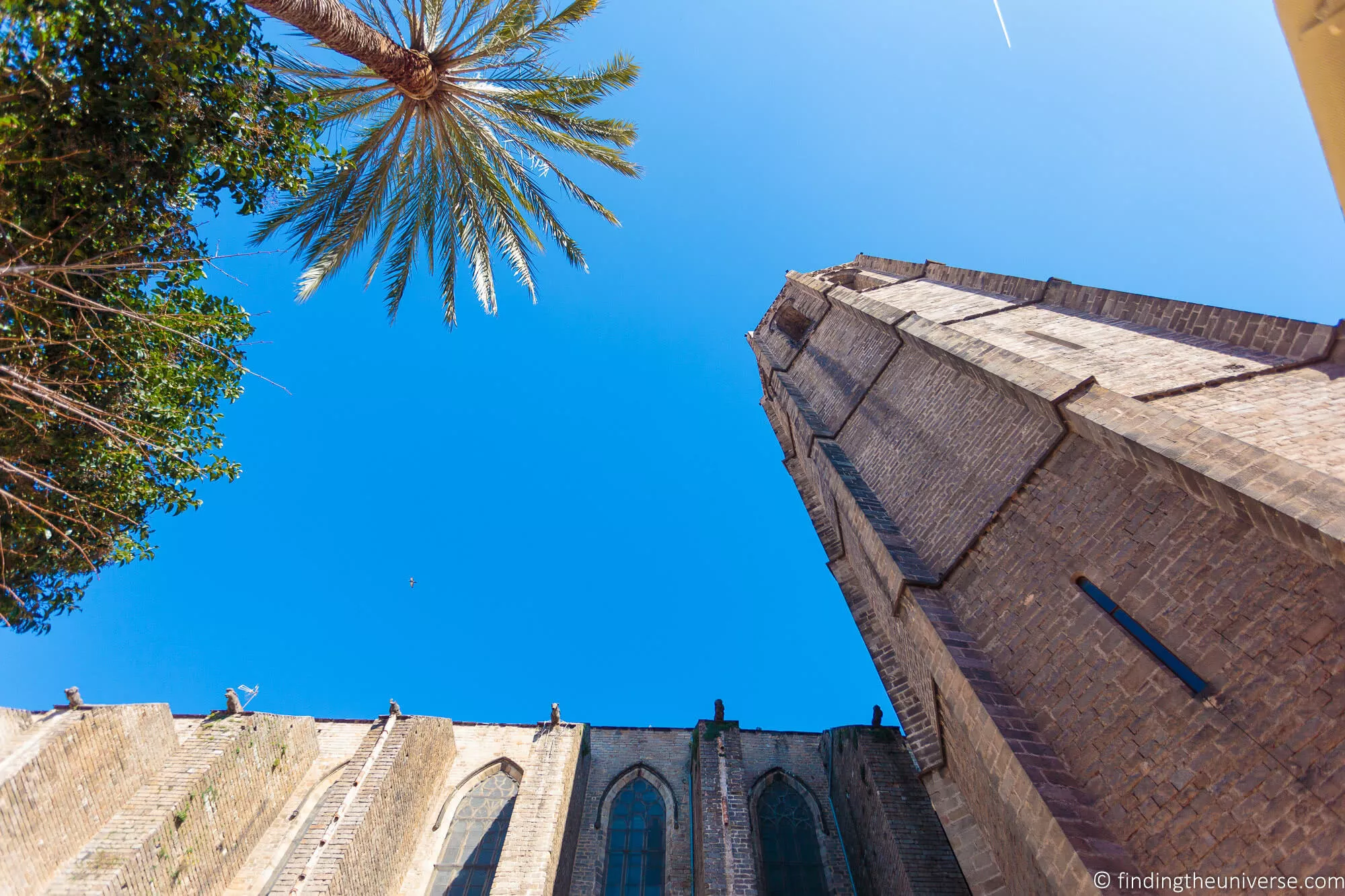
One of my favourite spots in Barcelona which isn’t normally too busy is this church in the Gothic Quarter. The Church of Saint Maria of the Pine is a 15th century Gothic church, with a peaceful interior. It often plays host to concerts and performances.
The reason I like it though is the gigantic octagonal bell tower. This tower is almost 200 feet (60 metres) high, and you can go to the top for fantastic views over the Gothic Quarter. It is a truly impressive construction, with walls almost 12ft (3.5 metres) thick at the base.
Visiting the church itself is free, but there’s a fee to climb to the top. The fee is well worth paying in my opinion as it includes a guided tour, and when I took the tour the guide gave a lot of information about the history of the city and its layout.
Check the website for opening times and prices. You can also buy tickets online in advance through the official site.
Montjuic and Magic Fountain
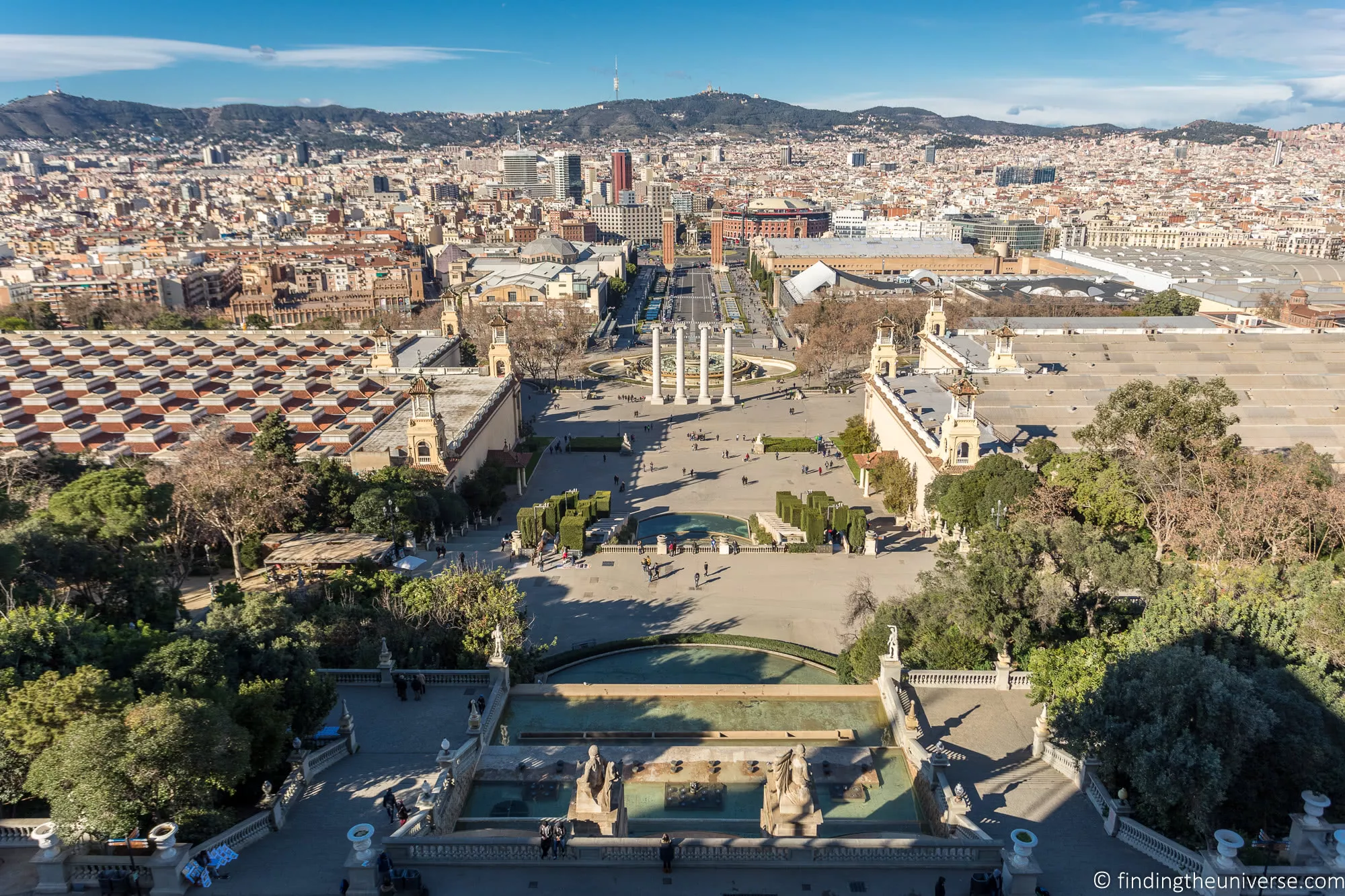
To end your day of sightseeing, you’re going to head up Montjuic Hill. This hill is found just to the southwest of the city centre, near to the port.
There is a lot to see at the top of Montjuic hill, from the 17th century Montjuic Castle through to the Joan Miro foundation, Poble Espanyol open air museum, National Art Museum of Catalonia, tiered gardens, Barcelona Olympic village and more. There are also excellent sweeping views across the city.
If you are interested in visiting a good museum in Barcelona, then we can definitely recommend the National Art Museum of Catalonia (Museu Nacional d’Art de Catalunya). It has a large collection of both art and historical objects.
Just note that if you do plan a visit here, you’ll need to skip or shorten visits to some of the suggested places above to ensure you have enough time for an afternoon visit. It’s located about a 5 minute walk from the fountains.
You could walk to the top, but we think a better option is to take the Montjuic Funicular followed by the scenic Montjuic cable car which runs from Estaciò Funicular on Avenida Miramar up to the Castell de Montjuic.
The Funicular is part of the metro service, and departs from Paral·lel station. The Montjuic cable car is ticketed separately but is included on the Go Barcelona Pass. You can also buy tickets in advance here.
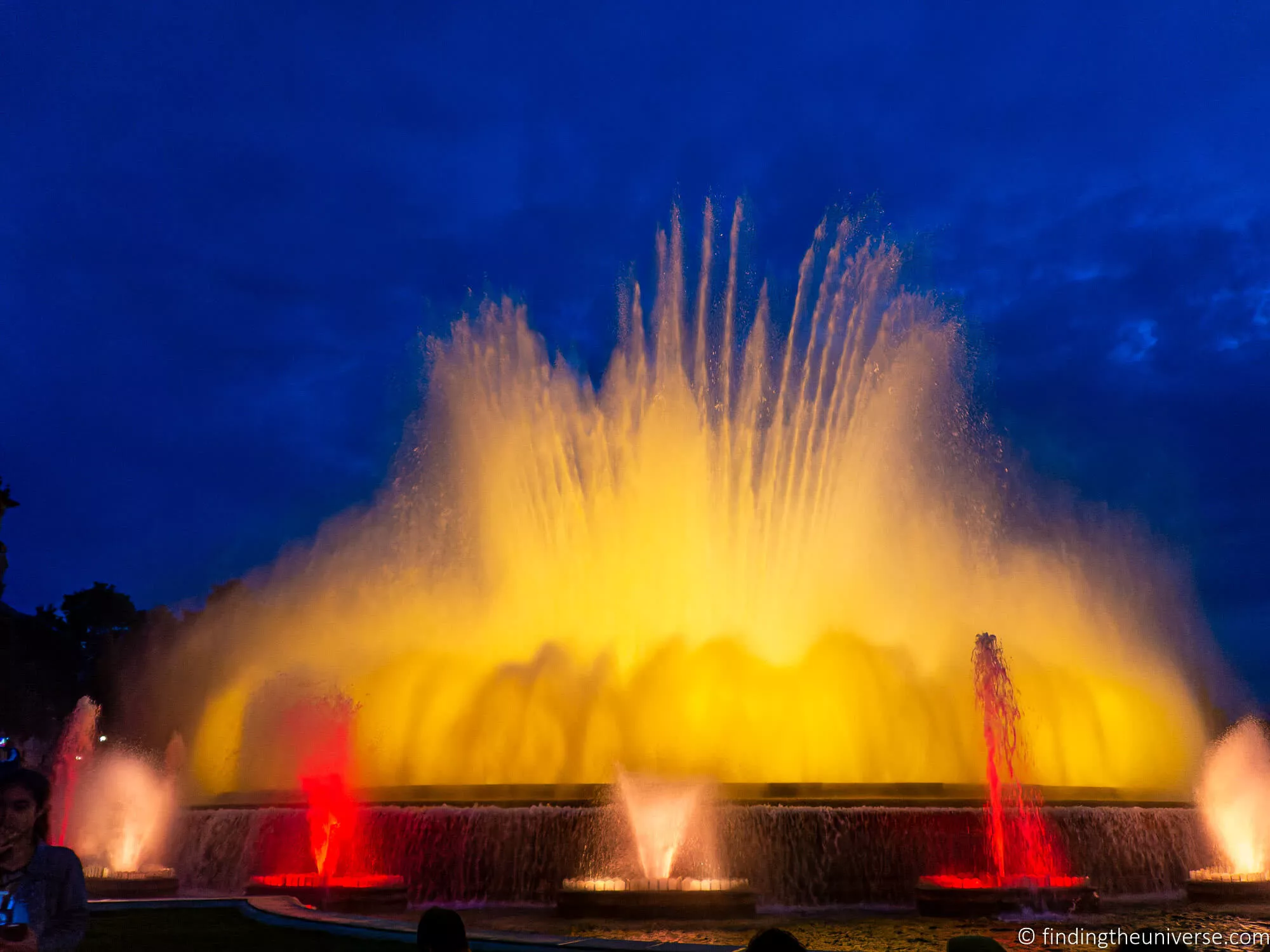
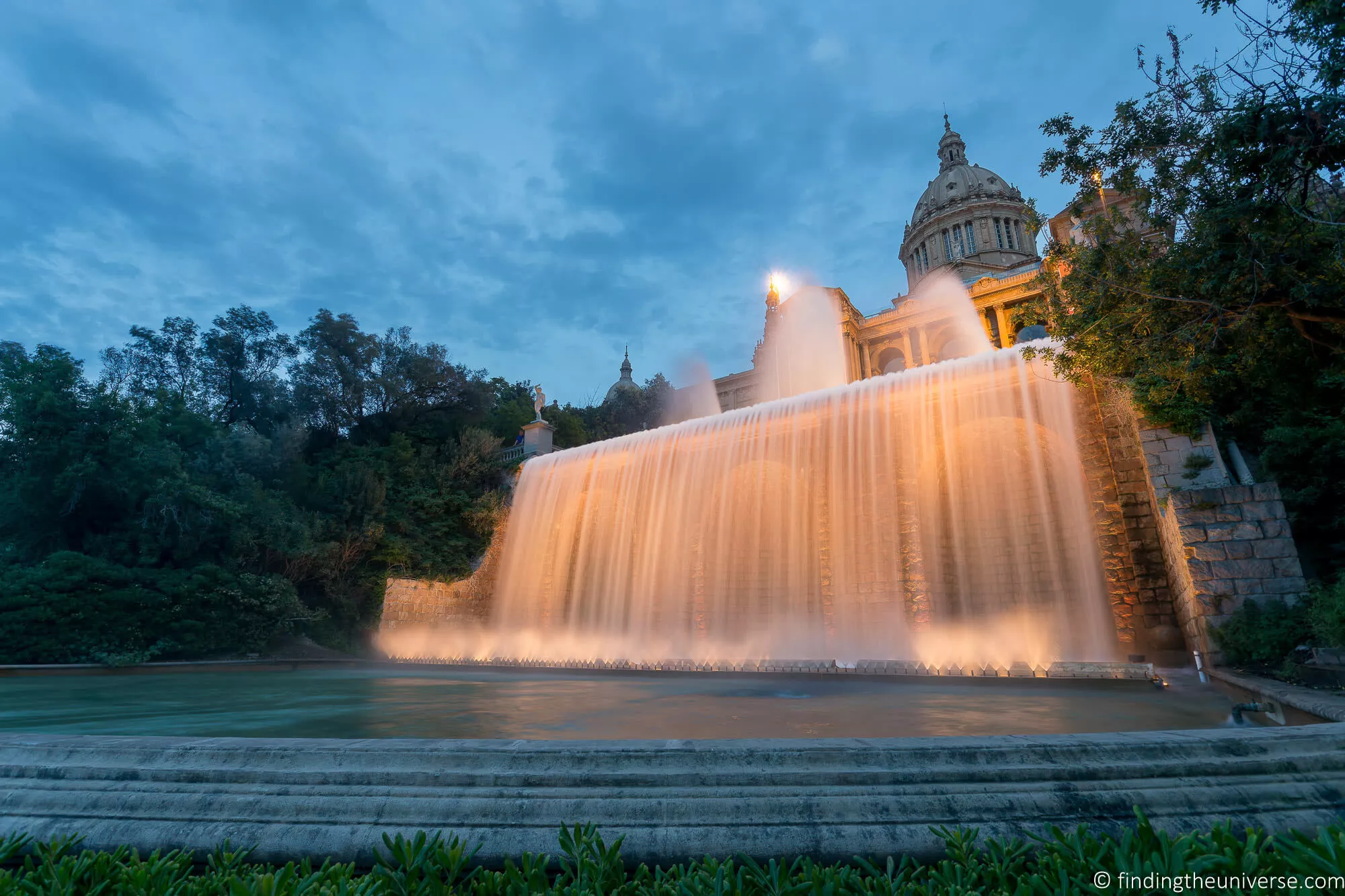
One thing we definitely recommend planning for the end of your day is to try and take in the Magic Fountain display. This is a free sound, light and water display which happens most evenings.
The fountain is found below the Palau Nacional at the head of Avinguda Maria Cristina. It’s a lovely way to end a day in the city in our opinion. You can see the timetable of the show here.
Evening in Barcelona
After Montjuic, head back down into the city for the evening. The El Born neighbourhood, just east of the Gothic Quarter, is probably our favourite part of Barcelona for an evening: narrow streets, good bars, tapas places that are actually used by people who live here.
Dinner in Barcelona happens late by northern European standards. Restaurants start filling up around 9pm, and turning up at 7pm you will often find yourself eating alone. Lean into it. Have a drink, wander, find somewhere that looks good. Barcelona rewards that kind of evening more than most cities.
If the Magic Fountain is running on the evening of your visit, it is worth going back up to Montjuic for the show rather than watching it the first time round at the end of the afternoon. The fountain is better after dark. Check the schedule in advance at the official Barcelona tourism site, as hours vary considerably by season and the fountain does go dark for maintenance periods.
That finishes up the itinerary section of this guide. We’ll now cover lots of practical information to help you plan the perfect trip to Barcelona.
2 Day Barcelona Itinerary Summary
Here’s a quick summary of this 2-day Barcelona itinerary for reference.
- Barcelona Itinerary Day 1 – Hop on Hop off Bus, Sagrada Familia, Sant Pau Recinte Modernista, Park Guell, Camp Nou or Tibidabo
- Barcelona Itinerary Day 2 – Casa Batlló, La Pedrera, La Rambla / Gothic Quarter Walking Tour, Santa Maria Del Pi, Montjuic and Magic Fountain
What This Itinerary Skips (and Why)
Two days in Barcelona means making choices, and there are several worthwhile attractions that did not make the cut for this itinerary. Here is what we deliberately left off and why.
The Picasso Museum is excellent, particularly for fans of his early work. We left it out because it requires at least 90 minutes to do justice to, and fitting it into an already packed two days felt rushed.
Barceloneta Beach is lovely on a warm day, but trading attraction time for beach time on a short trip is a difficult call. If the weather is hot and you need a break, it is easy to reach from the Gothic Quarter. But we would not sacrifice Sagrada Familia or Park Güell for it.
The El Born neighbourhood deserves more than a rushed walk-through. It is one of Barcelona’s most characterful areas, with narrow medieval streets, independent boutiques, and excellent tapas bars.
For day trips, Montserrat and Girona are both excellent options if you have a third day or are extending your stay. Both are reachable within an hour or so by train.
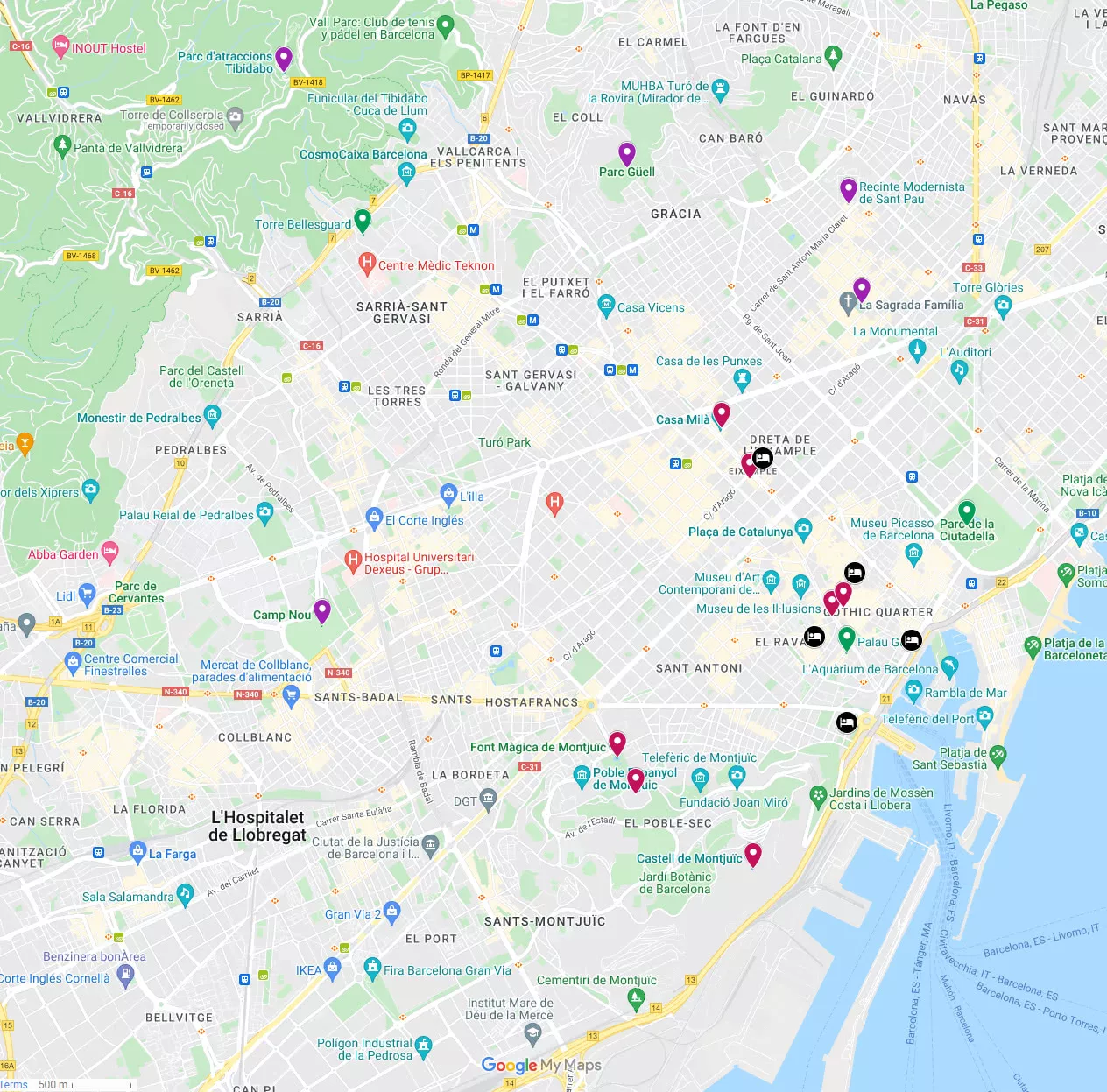
Map of Barcelona Things to Do
For ease of visualisation, here is a guide to the attractions on the itinerary. We’ve also included some recommended hotels so you can see where they are in relation to the city’s attractions. You can also see this map on Google Maps here.
Where to Stay in Barcelona
Barcelona has a huge amount of choice when it comes to accommodation, and we’ve stayed at a number of different locations in the city in both apartments and hotels.
Our preferred option when booking accommodation is booking.com (see their Barcelona listings here). They list everything from hotels to apartments to hostels, and we find they usually have the widest range at the most competitive prices.
To give you an idea of what’s available, here are some options we recommend:
- Hostel One Ramblas – a very well reviewed and very central hostel option
- The 8 Boutique B&B – a highly rated and well located bed and breakfast
- Hotel Barcelona Catedral – a 4* property in Barcelona in the heart of the Gothic Quarter. We’ve stayed here, and enjoyed the roof top pool and incredible central location.
- Leonardo Hotel Barcelona Las Ramblas – part of the good value Leonardo chain, this 3* property is a few moments from Las Ramblas. We enjoyed our stay here, and the breakfast in particular was excellent.
- Duquesa de Cardona – a 4* property on the waterfront with a roof top bar
Apartment rentals through sites like Plum Guide, Airbnb, and Vrbo are also available. One thing to be aware of is that in Barcelona these need to be registered with the city. When they are registered, they will be issued a license number. If you want to stay in an apartment rental in Barcelona, then we recommend picking one which has the license number on the listing.
If you would prefer to stay in an apartment in Barcelona, then we recommend Plum Guide. We’ve stayed at a number of their properties around the world, and you can see our review of the Plum Guide here. See their listings for Barcelona here. We also recommend Vrbo, see their Barcelona listings here.
If you can’t find what you want from the above choices, or you want some new options to try out, we wrote a whole post on the best alternatives to AirBnB which you should check out!

How to Get Around Barcelona
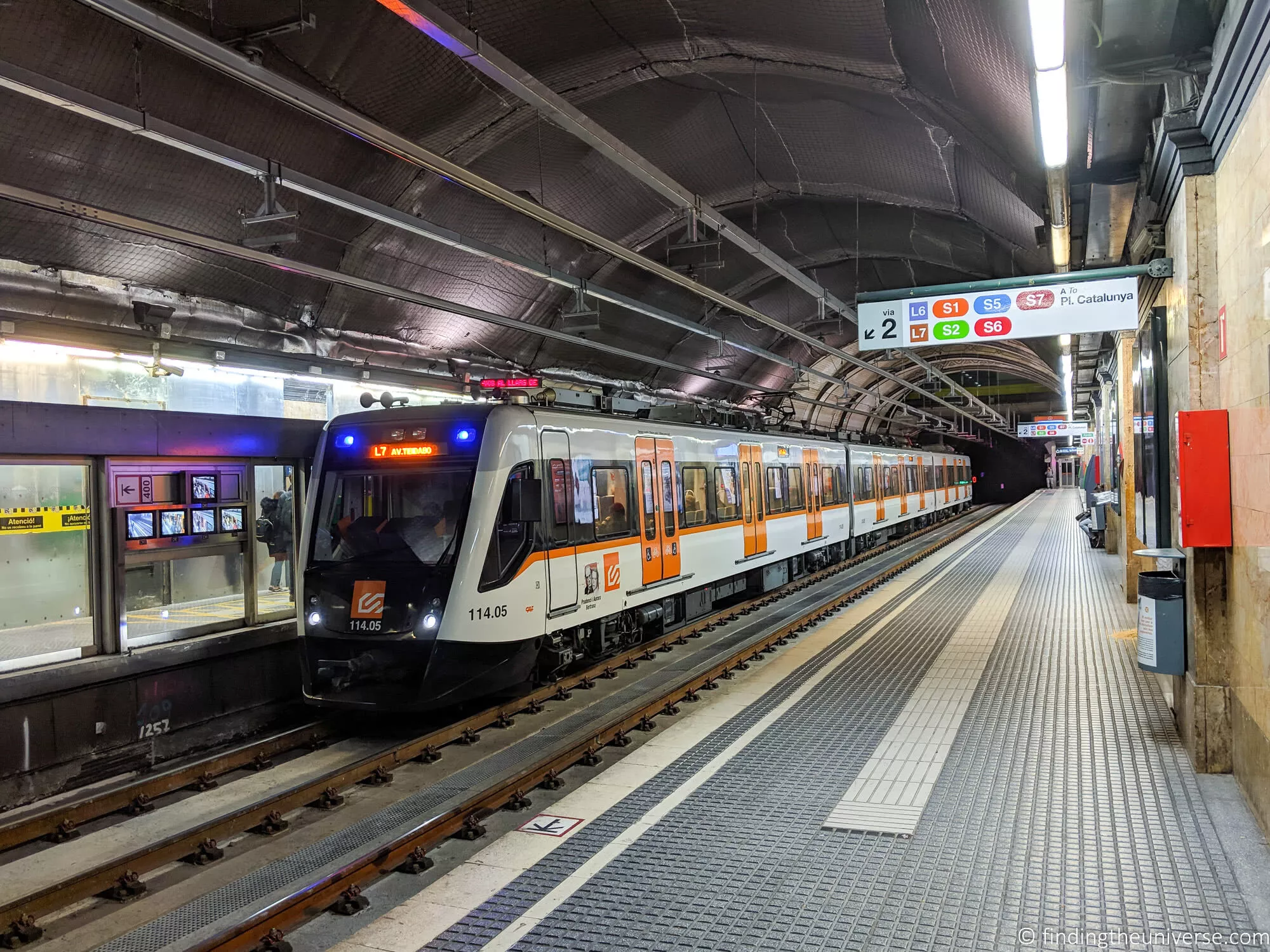
Barcelona is easy to get around, with an extensive bus, metro and light rail network. It’s also easily walkable for the most part, although you will likely want to take public transport for some of the slightly further out destinations such as Parc Guell, Tibidabo, and Camp Nou.
Alternatively, you can visit these locations on the hop on hop off bus, as outlined in our itinerary. More on that shortly.
If you are going to use public transport you have two options, depending on how much you want to travel.
First, you can buy individual tickets as you go. If you decide to do this, the most cost-effective way to do so is the ten ticket (T-Casual) card. This is much cheaper than buying individual tickets and also lets you change transport options within an hour and fifteen minutes of starting your journey.
The other option for public transport is the Hola BCN card, which gives unlimited access to the transport network in the city, and is available for durations from 48 hours to 120 hours. You can buy that online here.
There are a couple of other options for paying for your Barcelona transport.
First, if you purchase a Barcelona Card, you get free travel on the metro, buses, trams and trains for the duration of the card. This includes the airport metro and train. The card also includes some discounts and attractions.
Second, if you purchase a Go Barcelona Pass or Barcelona City Pass, these both come with one day access to the Hop On Hop Off Barcelona Bus Tour, which covers nearly every major tourist site in the city.
Alternatively, you can purchase 1 or 2 day hop on hop off bus tickets directly here.
If you’re arriving into Barcelona by air, you can take a taxi or train into the city centre. There’s also an airport bus service, which is what we normally use. You can buy tickets on the day, but we normally reserve ours in advance so as not to have to worry about it. You can buy tickets for the Barcelona Aerobus here.

Suggested Walking Tours in Barcelona
We love taking walking tours when we visit a city. It’s a great way to learn a lot about its history, culture and people, as well as get tips on what to see and where to eat.
There are a number of walking tour companies offering tours in the city. If you pick up one of the aforementioned passes, some of these include a walking tour, so definitely take advantage of that.
Otherwise, we usually recommend walking tour company WalksDevour. We’ve taken tours with them in cities around the world, and enjoy the small groups and knowledgeable guides. They offer a number of tours in Barcelona, some of which we’ve included below along with other suggestions.
- This is an excellent value 2-hour walking tour of Barcelona’s Gothic Quarter on GetYourGuide
- This 3 hour tour of the Gothic Quarter which includes tapas tasting. Included on the Go Barcelona Pass
- Complete Gaudí Tour: Interested in learning about Gaudi? This tour features some of the architects highlights, including Casa Batlló, Park Guell and the Sagrada Família. It even includes a Tower Climb of the latter. This is with WalksDevour, one of our favourite walking tour companies.
- Barcelona Cooking Class: Want to learn how to cook some delicious Spanish cuisine? This Paella making party with a local chef includes a visit to Boqueria market and Sangria making!
- Skip the Line Express Sagrada Família Tour & Tickets – If you want a guided tour of the Sagrada Familia and are struggling to get official tickets, this is a great option with WalksDevour.
- If you prefer your tours to mix history with food, check out this 3.5 hour food walking tour of the Gothic Quarter which includes tapas tasting, drinks and dinner. This is another WalksDevour tour.
- If you would like to take in an evening show, check out this flamenco show with optional dinner, and this one which is show only.
Obviously, if you decide to take a walking tour you will need to tailor this itinerary to suit.
Naturally, there are also many other walking tours to choose from. See this selection on GetYourGuide and these options on Viator for more ideas.

Saving Money with Barcelona Attraction Passes
Barcelona has several attraction passes that can save you money on sightseeing. The three main options are:
Go Barcelona All-Inclusive Pass
This is the pass we use most often. The Go Barcelona All-Inclusive Pass covers over 45 attractions including the Sagrada Familia (guided tour), Casa Batllo, La Pedrera, Park Guell (guided tour), the hop-on hop-off bus, Camp Nou tour, and much more. It works on consecutive calendar days, available in 2, 3, 4 and 5 day versions.
Current pricing (as of March 2026): €189 adult / €114 child for 2 days, €244 / €159 for 3 days, €269 / €189 for 4 days, and €329 / €244 for 5 days.
How Much Can You Save with the Go Barcelona All-Inclusive Pass?
Here is a worked example based on the attractions in this itinerary. Gate prices are as of March 2026 and may change.
| Attraction | Gate Price (Adult) |
|---|---|
| Sagrada Familia | €26 |
| Sant Pau Recinte Modernista | €18 before 2pm, €17 after |
| Park Güell | €18 |
| Camp Nou Immersive Tour | €35.10 |
| Casa Batlló | €29 |
| La Pedrera (Casa Milà) | €25 |
| Montjuïc Cable Car | €19 |
| Total at gate prices (Sant Pau before 2pm) | €170.10 |
A 2-day Go Barcelona All-Inclusive Pass costs €189 per adult (as of March 2026). On gate prices alone for the seven attractions above, the pass does not quite break even.
However, the pass also includes the Hop on Hop off bus (which costs around €30-33 on its own), guided tours of both the Sagrada Familia and Park Güell (which cost more than standard entry), and dozens of additional attractions. If you use the bus and visit everything on this itinerary, you will comfortably save money.
The pass also includes a number of attractions not on this itinerary that you might want to add, including the Barcelona Aquarium, the Picasso Museum, and various walking tours. You can see the full list of included attractions on the Go Barcelona Pass website.
If you are not planning to visit all the attractions on this itinerary, the Explorer Pass might be a better fit. It lets you pick 2 to 7 attractions from the same list, and is valid for 60 days. There is also the newer Essentials Pass which covers a smaller selection of top sights.
The discount code AFFGOALL gives 5% off any Go City pass, which brings the 2-day All-Inclusive down to around €180.
Note: Montjuïc Castle is not included on the Go Barcelona Pass. Entry to the castle is a separate charge. Prices shown are as of March 2026 and may change.
Go City also offers an Explorer Pass (choose 2 to 7 attractions, valid for 60 days) and a newer Essentials Pass for visitors who want a lighter selection. These can be better value if you only plan to visit a handful of attractions.
Tip: You can save 5% on any Go City Barcelona pass with the code AFFGOALL at checkout.
Barcelona City Pass
The Barcelona City Pass via Tiqets is another popular option with a slightly different attraction mix. It’s worth comparing against the Go City pass for your specific plans.
Barcelona Card
The Barcelona Card from the city tourism office includes public transport alongside attraction discounts, which the other passes don’t. This can be useful if you plan to use the metro heavily.
Which Pass Should You Choose?
How many of the big-ticket attractions you’ll actually visit is what separates them. Jess has written a detailed comparison of Barcelona’s discount passes as well as a comprehensive Go Barcelona Pass review, both of which are worth reading before you decide.
For most visitors following this 2-day itinerary, the Go Barcelona All-Inclusive Pass will offer the best savings, as it covers most of the attractions on our route including the Sagrada Familia guided tour, which alone is worth a significant chunk of the pass price.
Frequently Asked Questions
Is 2 days enough in Barcelona?
Yes, two days is enough to see Barcelona’s biggest highlights including the Sagrada Familia, the Gothic Quarter, and several of Gaudi’s famous buildings. You’ll be busy, but with good planning you can cover the essentials and still have time for a proper meal or two. If you want a more relaxed pace or time for day trips, three days is better.
What should I book in advance for Barcelona?
The Sagrada Familia is the most important to book ahead, as timed entry slots can sell out days or weeks in advance. Park Guell, Casa Batllo, and La Pedrera also operate timed entry and benefit from advance booking, especially in summer. If you’re using a Go City pass, check which attractions require a reservation through the Go City app before your trip.
Is the Go Barcelona Pass worth it for 2 days?
For most visitors following a sightseeing-focused itinerary, yes. The 2-day Go Barcelona All-Inclusive Pass costs €189 and covers the Sagrada Familia guided tour, Casa Batllo, La Pedrera, Park Guell, the hop-on hop-off bus, and over 40 other attractions. If you visit even four or five of the included attractions, you’ll likely save money compared to buying individual tickets. Use the code AFFGOALL for 5% off.
What is the best area to stay in Barcelona for 2 days?
For a first visit, the Eixample district is hard to beat. It’s centrally located, well connected by metro, and walking distance to Casa Batllo, La Pedrera, and the Sagrada Familia. The Gothic Quarter is more atmospheric but can be noisy at night. Gracia is quieter and more local-feeling but slightly further from the main sights.
Is the Sagrada Familia finished?
Not entirely. The exterior of the central Tower of Jesus Christ was completed in February 2026, making the Sagrada Familia the tallest church in the world at 172.5 metres. The official inauguration took place on June 10, 2026. However, interior work continues through 2027 and 2028, with the full basilica projected for completion around 2034. It remains open to visitors throughout this period.
Can you walk everywhere in Barcelona?
The city centre attractions (Gothic Quarter, La Rambla, Casa Batllo, La Pedrera) are all walkable from each other. However, the Sagrada Familia, Park Guell, Montjuic, and Camp Nou are spread further out and you’ll want to use the metro, hop-on hop-off bus, or taxis to reach them efficiently. On our 2-day itinerary, Day 1 uses the hop-on hop-off bus while Day 2 is mostly on foot.
Further Reading
Well, that’s the end of our guide to spending two days in Barcelona! Hopefully you find it useful. As well as the above, we have a number of other resources we’d like to recommend to help you out, both content we’ve written ourselves, and resources we’ve found online. Between this post and these resources, you should be able to put together the perfect trip!
- If you’re visiting for a different time period, here’s a suggested itinerary for one day in Barcelona, as well as three days in Barcelona
- Jess’s comprehensive review and guide to using the Go Barcelona Pass
- A post comparing the three main discount passes available in Barcelona, to help you decide which one will save you the most money
- Want to see some of Gaudi’s creations? Check out our definitive guide to the best Gaudi sights in Barcelona
- We have a guide to visiting Montserrat from Barcelona, which makes for a great day trip or overnight stay from the city.
- A guide to taking a day trip from Barcelona to Girona and Figueres and our guide to things to do in Girona
- Our guide to the best photography spots in Barcelona and the best locations for getting a great view of Barcelona
- If murals and graffiti are more your thing, here’s where to find Barcelona’s street art
- Looking for where to go after Barcelona? Check out our definitive guide to the Spanish Pyrenees, as well as our guide to things to do in Besalu!
- The Lonely Planet Pocket Guide to Barcelona
- Rick Steve’s Barcelona Guide
- The official Barcelona Tourism webpage
And that sums up our idea of how to spend the perfect two days exploring Barcelona! We hope you found this itinerary useful. Are you planning a trip to Barcelona? What do you want to see when you do? Let us know in the comments below!

jules says
Isn’t the Magic Fountain not running in 2025?
Laurence Norah says
Hey Jules,
Unfortunately yes, due to drought conditions the fountain is currently closed and I’m not sure when it’s due to reopen. It’s always wise to check any attraction before visiting as things can open and close for various factors.
Have a great time in Barcelona!
Laurence
Igor says
Meanwhile Park Guell cannot be entered for free. On the day I came (February 2023) they only had tickets for the next day. So Tickets (adults 10 €) should be bought online in advance.
Laurence Norah says
Hi Igor,
So Parc Guell is divided into two sections, the Monumental Zone (fee) and the rest of the park. Most visitors want to visit the Monumental zone, and it is clear in this itinerary that there is a fee. Barcelona is a very popular city, and we always recommend booking tickets in advance for the main attractions, sorry to hear you were disappointed when you visited!
Laurence