
I’ve been visiting the Amalfi Coast since 1995, most recently in 2023, when Jess and I based ourselves in Sorrento for the best part of a week and explored the coast from there. We’ve also done it the other way, cramming the whole coastline into a single day trip from Naples. I’ll save you the suspense on that one: a day trip is how you see the Amalfi Coast, staying a few nights is how you enjoy it. That’s why the coast sits in the skip section of our guide to the day trips from Rome we would skip.
Most articles about the Amalfi Coast hand you a fixed plan and march you through it. The problem is that the two questions you actually have when you start planning are different ones. How many days does the coast really need? And which town should you sleep in? Nobody seems to want to answer either, so let’s start there.
For most first-time visitors, four to five days is the sweet spot, based in one town, using ferries and buses to day-trip along the coast. That’s long enough to see Positano, Amalfi and Ravello without rushing, hike the Path of the Gods, and fit in Capri, without the daily pack-and-move that ruins a lot of Amalfi trips.
The second question, where to sleep, matters more here than almost anywhere else we’ve travelled in Italy, so it gets its own section below. After that comes the plan itself, day by day, with versions for squeezing it into three days or stretching it past a week.
A quick bit of context for anyone new to the region: the Amalfi Coast is the stretch of cliff-edge coastline on the southern side of the Sorrentine Peninsula, south of Naples, and it has been a UNESCO World Heritage site since 1997 under its official name, Costiera Amalfitana. Thirteen towns cling to its cliffs. You’ll visit three or four of them. That’s the correct number, and no, you’re not doing it wrong.
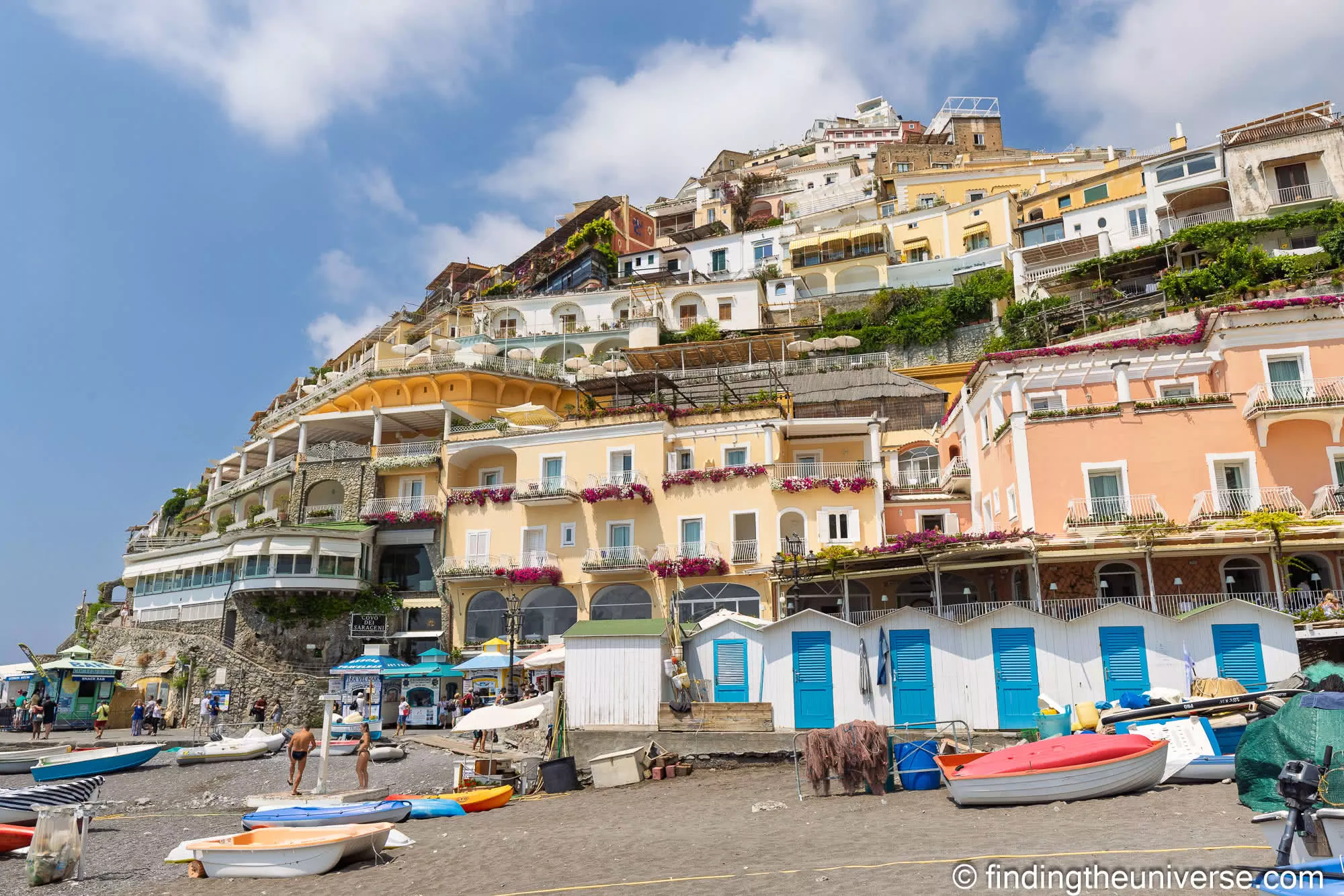
Table of Contents:
How Many Days Do You Need on the Amalfi Coast?
Four to five days is right for a first visit to the Amalfi Coast. That gives you a full day each for Positano, the Amalfi and Ravello pairing, and a Capri day trip, plus arrival and departure days that don’t feel like a sprint.
Here’s how the different trip lengths actually play out:
| Days | What fits | Who it suits |
|---|---|---|
| 1 (day trip) | A bus or boat glimpse of Positano and Amalfi. We’ve done it. You spend more time in transit than in the towns. | People with a spare day in Naples and no other option |
| 3 | Positano, Amalfi and Ravello, with one base and no Capri. Tight but workable. | Long-weekenders who’d rather come back than rush |
| 4 to 5 | Everything in the three-day version plus the Path of the Gods, Capri, and room to breathe. | Most first-time visitors. This is the plan in this article. |
| 7 to 10 | The coast at half speed, plus Naples, Pompeii and the wider bay. | Anyone who can spare the leave. You won’t regret it. |
If you’re weighing the day trip option because that’s all your Italy plans allow, I understand the temptation, and it is of course possible. We booked ours through GetYourGuide years ago and the logistics ran fine.
But the coast’s whole appeal is the slow bits, the early mornings before the day-trippers arrive and the evenings after they leave, and a day trip only shows you the crowded middle. If you can possibly convert that day into two or three nights, do it.
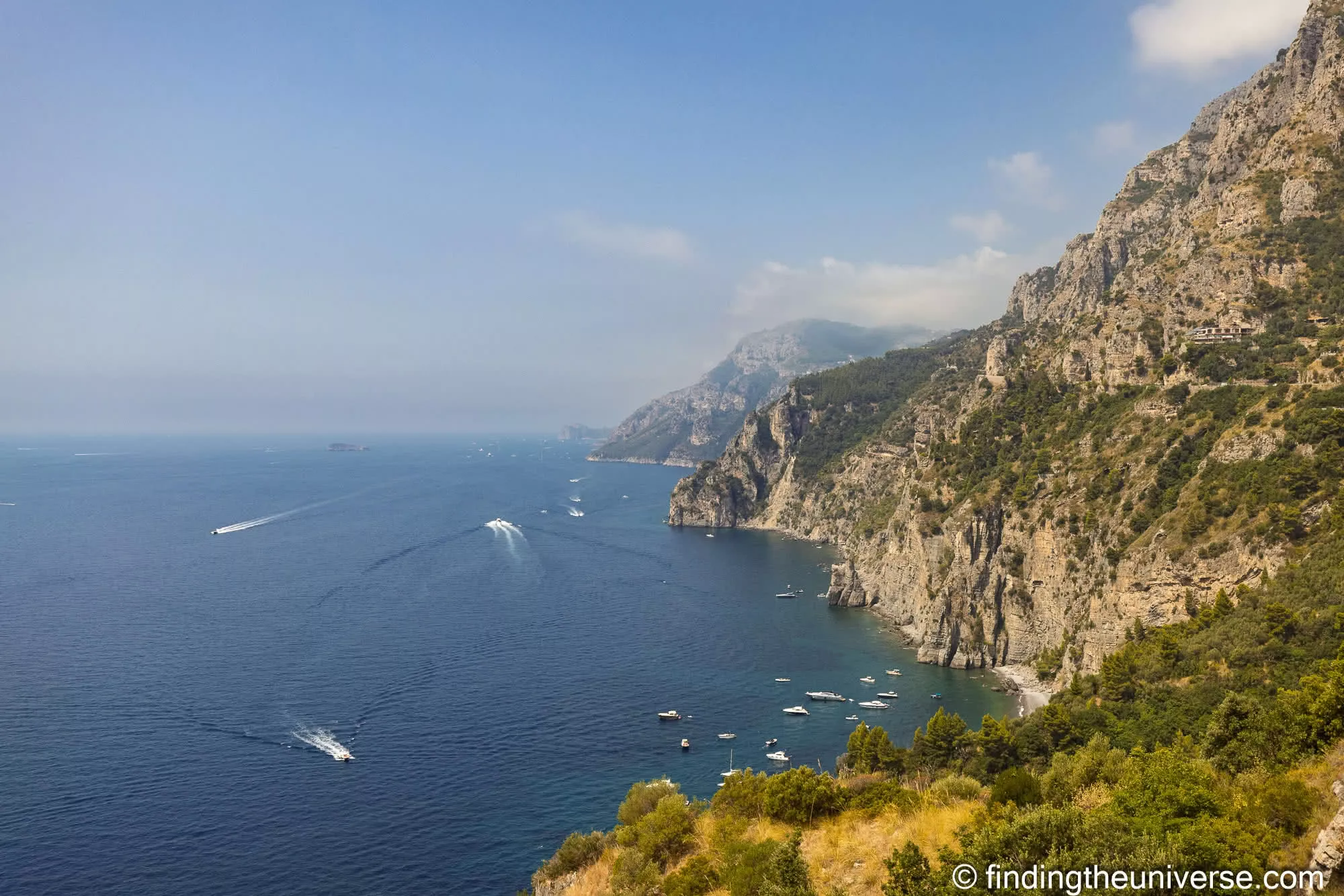
Where to Base Yourself on the Amalfi Coast
Pick one town and stay there for your whole trip. The towns are close together, the ferries and buses connect them well from roughly April to October, and moving accommodation every night on this coast means hauling luggage up staircases you’ll come to know personally. One base, day trips out. It’s the single best decision you can make here.
Which base? Here’s how the four realistic candidates compare:
| Town | Character | Stairs and terrain | Cost | Transport connections |
|---|---|---|---|---|
| Positano | The postcard. Glamorous, romantic, busiest of the lot | Relentless. The town is essentially a staircase with buildings attached | Highest on the coast | Good ferries in season, buses fill up fast |
| Amalfi | Working town with the great cathedral, less polished, more real life | Flat centre, a rarity here | Mid | The coast’s transport hub: ferries and buses in every direction |
| Ravello | Quiet, refined, up in the hills with the best views of all | Hilltop, but level once you’re up | Mid to high, thin at the budget end | No ferry (it’s 350m up), bus down to Amalfi for everything |
| Sorrento | Lively full-sized town just outside the coast itself, with the best infrastructure | Mostly flat and walkable | Most range, best value | Direct train to Naples, ferries to Positano, Amalfi and Capri in season |
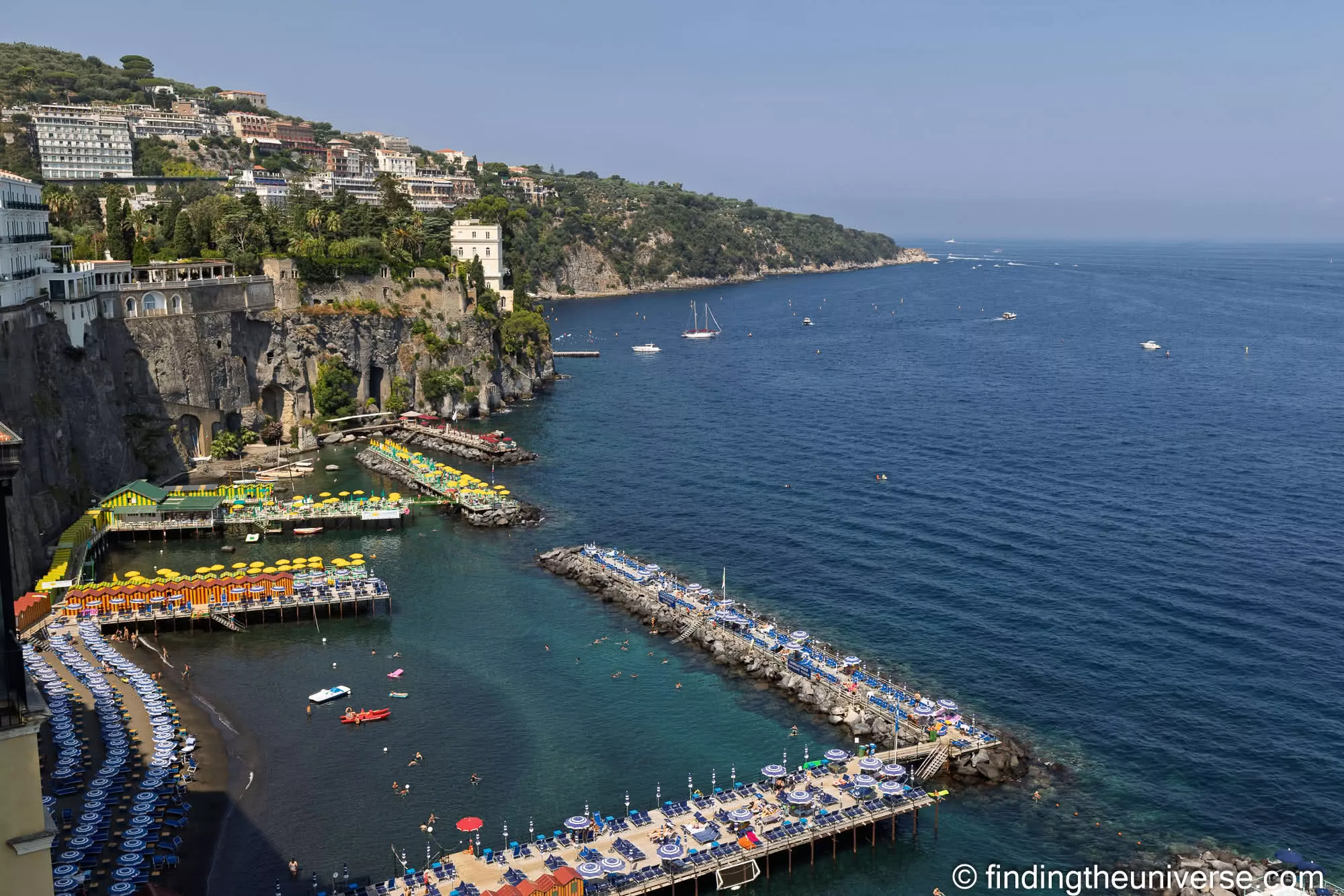
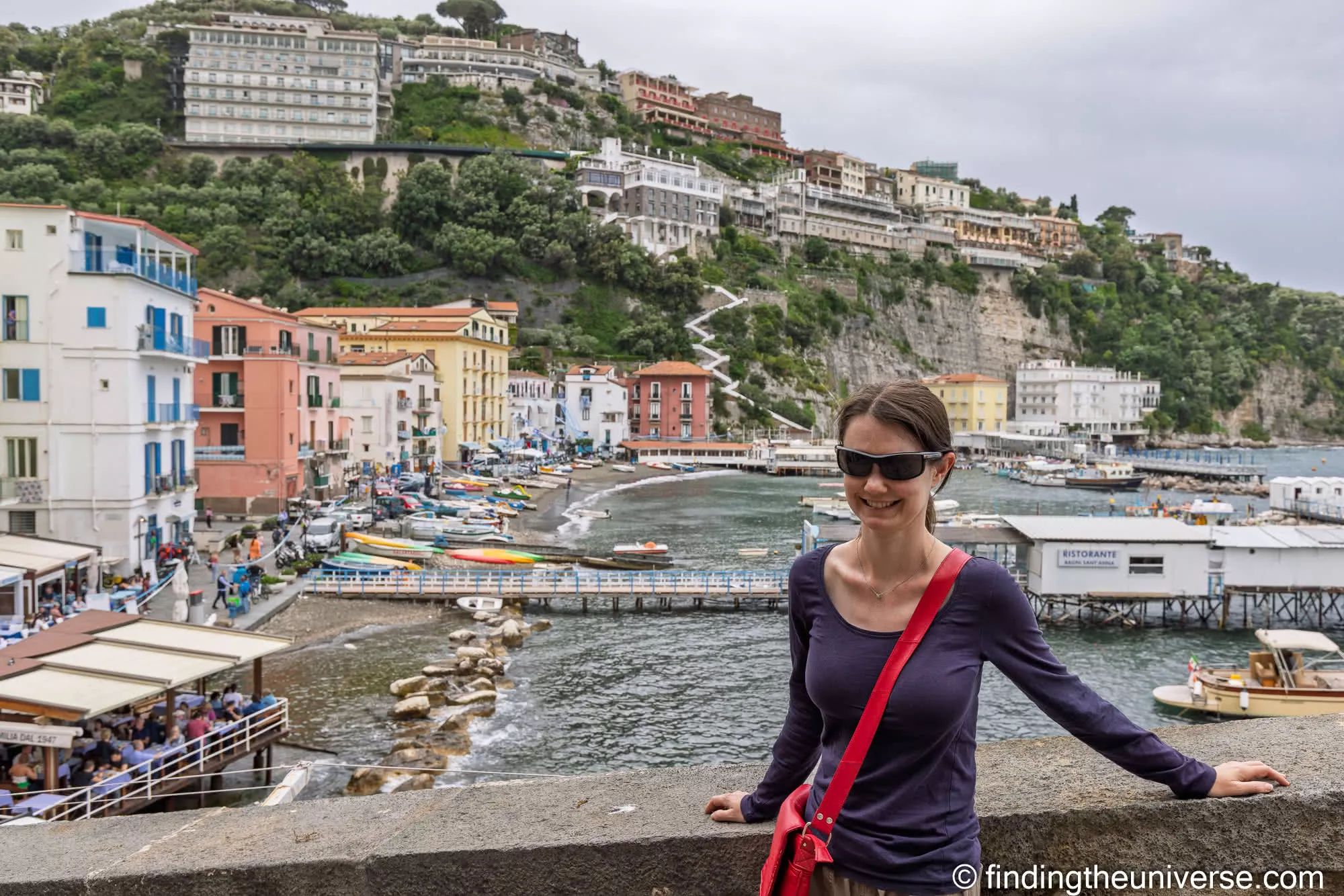
In 2023 we based ourselves in Sorrento. We had our own car on that trip, and Sorrento is the one place in the region where arriving with a car doesn’t feel like a mistake, since parking exists and the roads in are sane.
Purists will point out that Sorrento isn’t technically on the Amalfi Coast, and they’re right, it sits on the other side of the peninsula. It’s still the base I’d recommend to a lot of first-timers: prices are noticeably kinder, the restaurant scene is deeper, the Circumvesuviana train connects you straight to Naples, and in season the ferries put Positano about 40 minutes away.
That said, the right base depends on what you’re optimising for:
- If it’s your first trip and you want the full romance, make it Positano, budget allowing. Waking up inside the postcard is worth something, and evenings there after the day-trippers leave are lovely. Pack light. Every hotel warns you about the stairs; believe them.
- If anyone in your party has knee trouble, heavy luggage or a pushchair, base in Amalfi. It’s the only coast town where you can live on the flat, and being the transport hub means you’re never on the last bus home.
- On a second visit, or if crowds bring you out in hives, choose Ravello. It empties beautifully in the evening and the views down the coast are the best on offer. You’ll ride the Amalfi bus a lot.
- For value, families, or anyone arriving by car or train, it’s Sorrento. What it lacks in cliff-edge drama it makes up in practicality, and you’re perfectly placed for Capri and Naples as well as the coast.
I’ve put specific hotel recommendations for all four towns, across budget, mid-range and luxury, further down this article.
Getting Around the Amalfi Coast Without a Car
You don’t need a car on the Amalfi Coast, and for the coast itself I’d actively recommend against one. Here’s how the three options really compare, and how to combine the two good ones.
The Ferry: Best Way to Travel, When It’s Running
The ferry is the way to see this coastline. The towns were built to be admired from the water, the boats are frequent in season, and you skip the traffic entirely. Several operators run the routes, including Travelmar and NLG, so it’s simpler to think of it as one network.
As a guide to 2026 prices, Sorrento to Positano runs around €12 to €14 one way, Positano to Amalfi around €10 to €13, and most operators add a €3 luggage charge. Buy online a day ahead in summer, or at the pier kiosks around 20 minutes before departure.
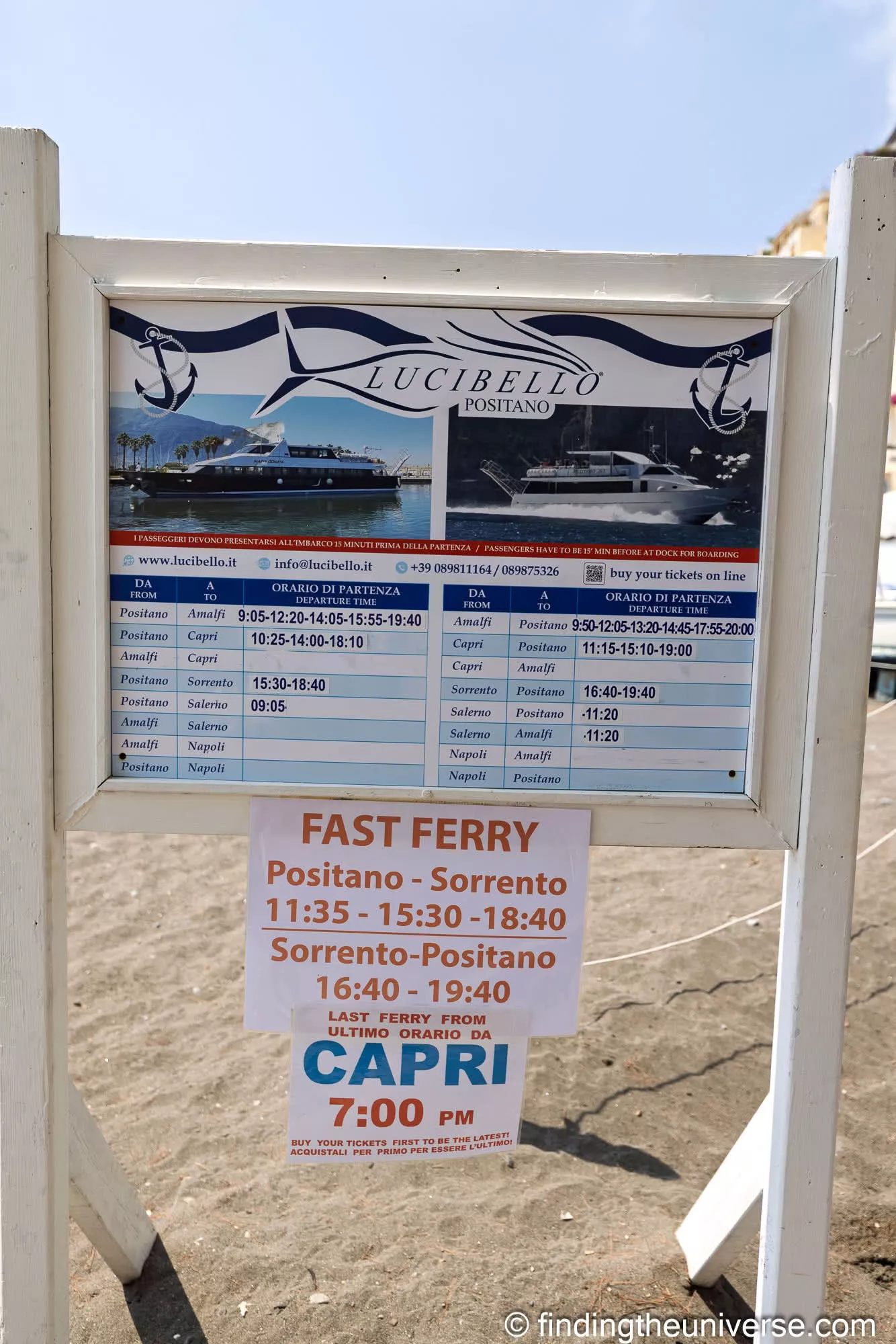
The catch is seasonality. The ferry network runs roughly from April to October, and even in season boats get cancelled when the sea is rough. Don’t build a plan where a missed ferry means a missed flight, and always have the bus as a mental backup for any leg that matters.
The SITA Bus: Cheap, Reliable, Cosy
The blue SITA Sud buses run the coast road year-round and cost very little: €1.80 for a short hop between neighbouring towns (Positano to Praiano, say) and €2.60 for longer runs like Positano to Amalfi or Positano to Sorrento. There’s also the COSTIERASITA day pass at €10 for unlimited coast travel over 24 hours, or €12 including Positano’s little local buses, which is worth it on any day with three or more legs.
Two pieces of hard-won bus wisdom:
- Buy tickets before you board, from a tabacchi (tobacconist), newsstand or bar near the stop, because drivers don’t sell them. Validate on board.
- In summer the buses between Positano and Amalfi are packed by mid-morning. Board at the start of a route where you can, travel early, and treat the middle-of-the-day departures as a squeeze.
The road is narrow, winding and spectacular in roughly equal measure, so grab a seat on the sea side if you get the choice!
Driving: Mostly Don’t
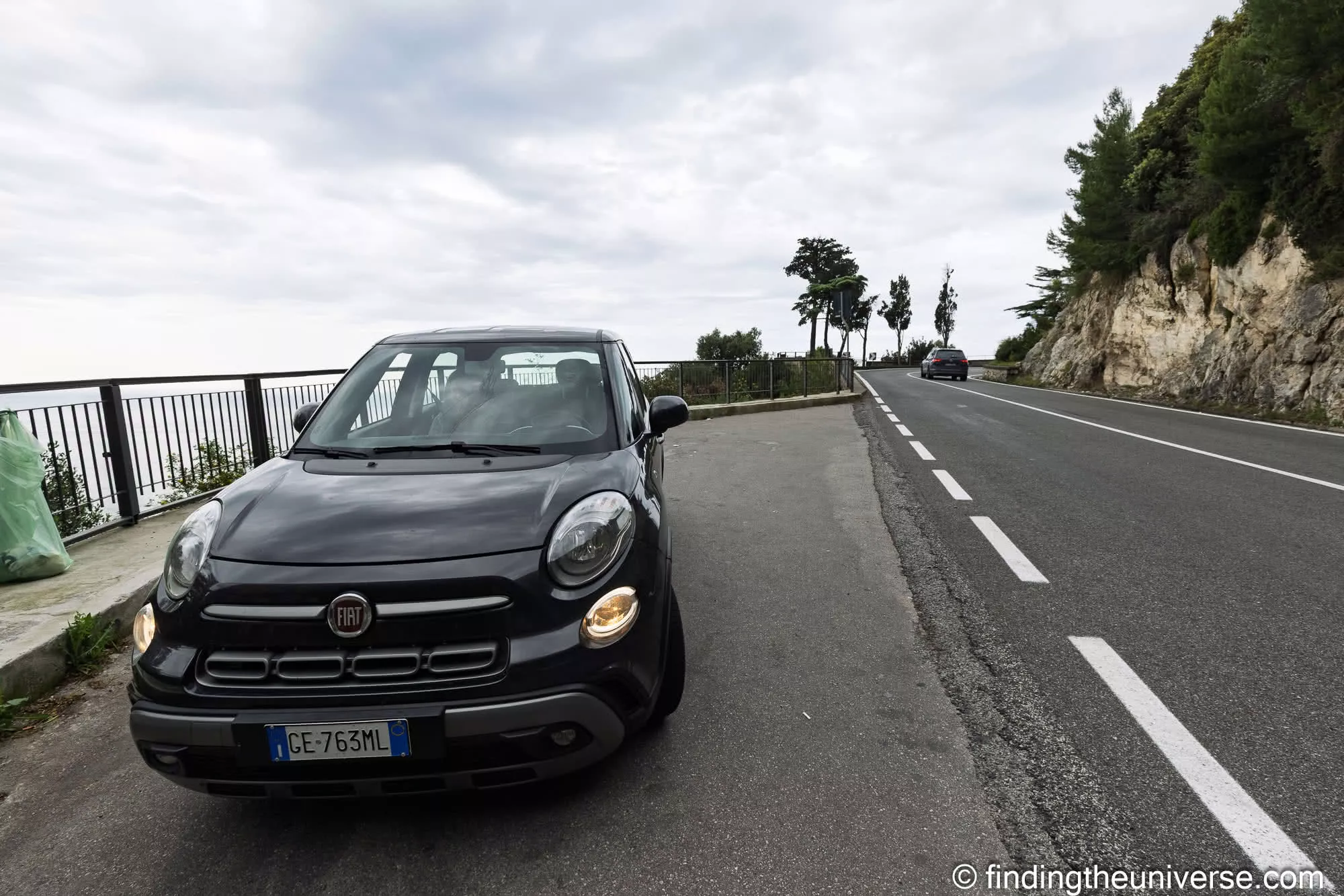
We arrived in the region by car in 2023, and the best thing I can say about that decision is that we parked it in Sorrento and mostly left it there. The SS163 coast road is a beautiful drive in the abstract. In practice it’s a single narrow lane each way shared with buses, scooters and 10 million other visitors’ hire cars, and the towns actively discourage you at the other end.
Garage parking in Positano runs €30 to €60 a day in peak season. In summer the centre operates access restrictions, including an alternate number plate system on the busiest days (odd plates on odd dates, even on even), and fines start around €150. It’s a lot of admin for a worse view than the ferry gives you for €13.
Where a car does make sense is the wider region: touring more of Campania or Italy before or after, as we were. If that’s your trip, base in Sorrento, park it, and compare hire prices on Discover Cars. For the coast itself, ferries and buses win.
Our 5 Day Amalfi Coast Itinerary
Here’s the plan I’d hand a friend doing this for the first time. It assumes you’re basing in one town per the advice above, travelling in ferry season (roughly April to October), and arriving via Naples like almost everyone. Take it as a framework rather than a script, and of course you can swap days around freely, with one exception I’ll flag on Day 2.
Day 1: Arrive in Naples and Get to Your Base
However you reach Naples (if you’re coming by rail from Rome or elsewhere, you can book Italian train tickets on Trainline), your first job is getting to the coast, and the standard route is the Circumvesuviana train from Naples to Sorrento. It leaves from Porta Nolana and Piazza Garibaldi stations roughly every 30 minutes, takes about 70 minutes, and costs €5. It’s a commuter train, so think functional rather than scenic, and keep your bags close.
From mid-March to mid-October there’s also the Campania Express, a limited-stop tourist service on the same line with guaranteed seats and luggage space. It costs more than the regular €5 ticket and is worth it with luggage; check current fares on the operator EAV‘s GoEAV app, which is also the easiest way to buy regular tickets.
From Sorrento, connect onwards to your base: ferry to Positano or Amalfi in season, or the SITA bus along the coast road. If you’re basing in Sorrento itself, you’re already done, which is one of its quiet advantages. Spend whatever’s left of the afternoon settling in, then have a slow first evening: a wander, a long dinner, an early night. The itinerary proper starts tomorrow.
One practical warning from experience: if your flight lands in Naples in the evening, just overnight in Sorrento regardless of where you’re basing. The last ferries and buses go earlier than you’d hope, and finishing a travel day with a taxi negotiation on the coast road is nobody’s idea of a holiday.
Day 2: Positano and the Path of the Gods
This is the day with the fixed-ish plan, because it’s built around a hike you want to start early, ideally walking by 10am and earlier in high summer, as the trail has little shade.
The Path of the Gods (Sentiero degli Dei) is the coast’s famous clifftop walk, and it earns the reputation. It runs about 7.8km from Bomerano, up in the hills, down to Nocelle above Positano, takes three to four hours, and is free, being an ordinary public mountain trail marked with the red and white CAI stripes (routes 327 and 331).
Walk it in that direction, Bomerano to Nocelle, so the route trends downhill and the views of the coast and Capri stay in front of you the whole way. Getting to the trailhead is a bus job: SITA to Amalfi and then the local bus up to Bomerano in Agerola.
Two caveats before you set off. This is an exposed cliff path, not a stroll: you want real shoes, water, and a head for edges.
And while the trail is open as of 2026 (with one short signed detour where the path was stabilised after a landslide), it does close after storms and isn’t sensible in wet conditions, so ask locally or check recent reviews before you commit the day, especially outside the April to October window.
If a self-guided hike feels like too many moving parts, there are guided versions with transfers sorted, like this half-day guided hike from Sorrento.
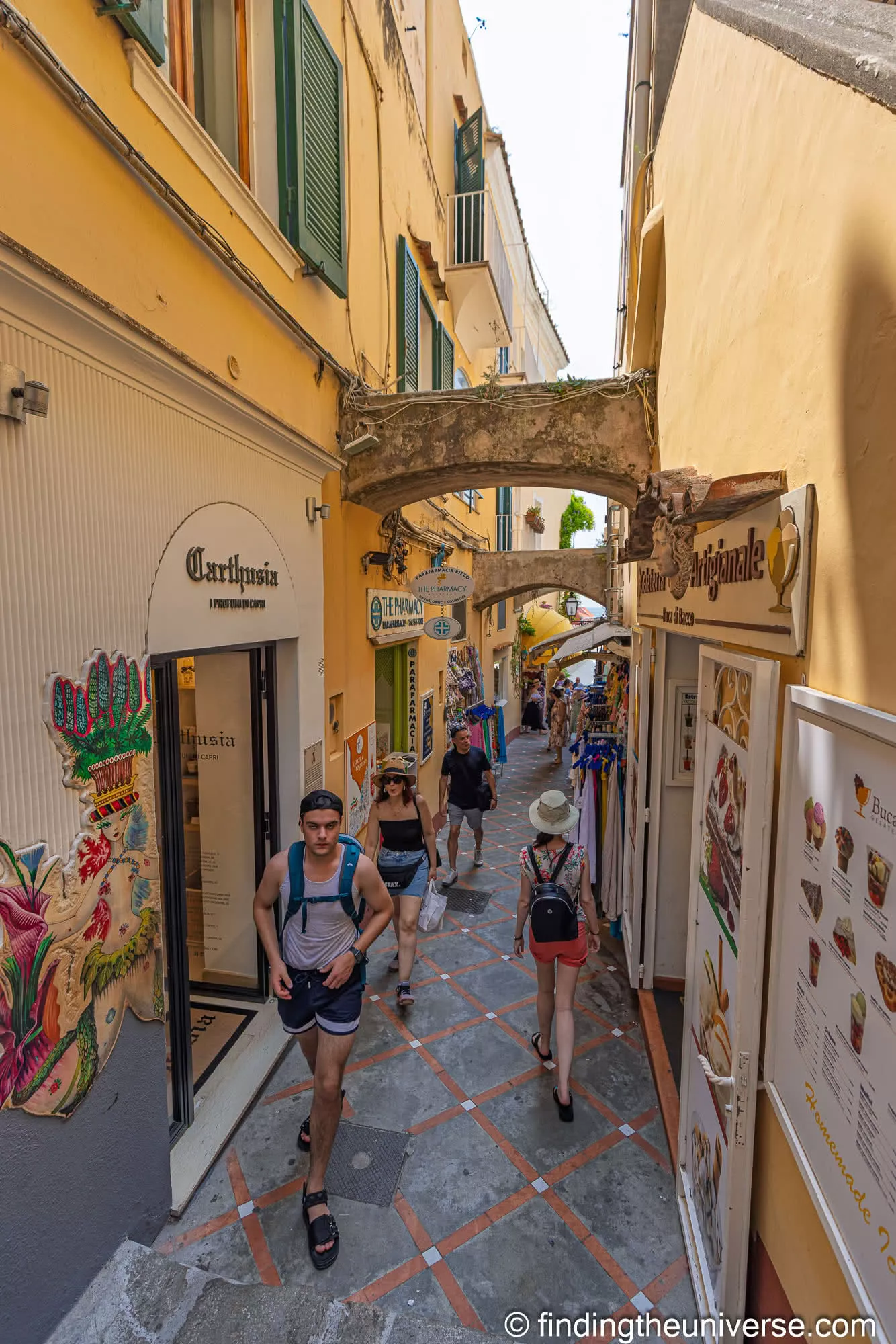
From Nocelle, you can walk down the (many, many) steps into Positano or catch the local bus. Then give Positano the rest of the day. Have a late lunch, wander Via dei Mulini, poke your head into the church of Santa Maria Assunta with its majolica dome.
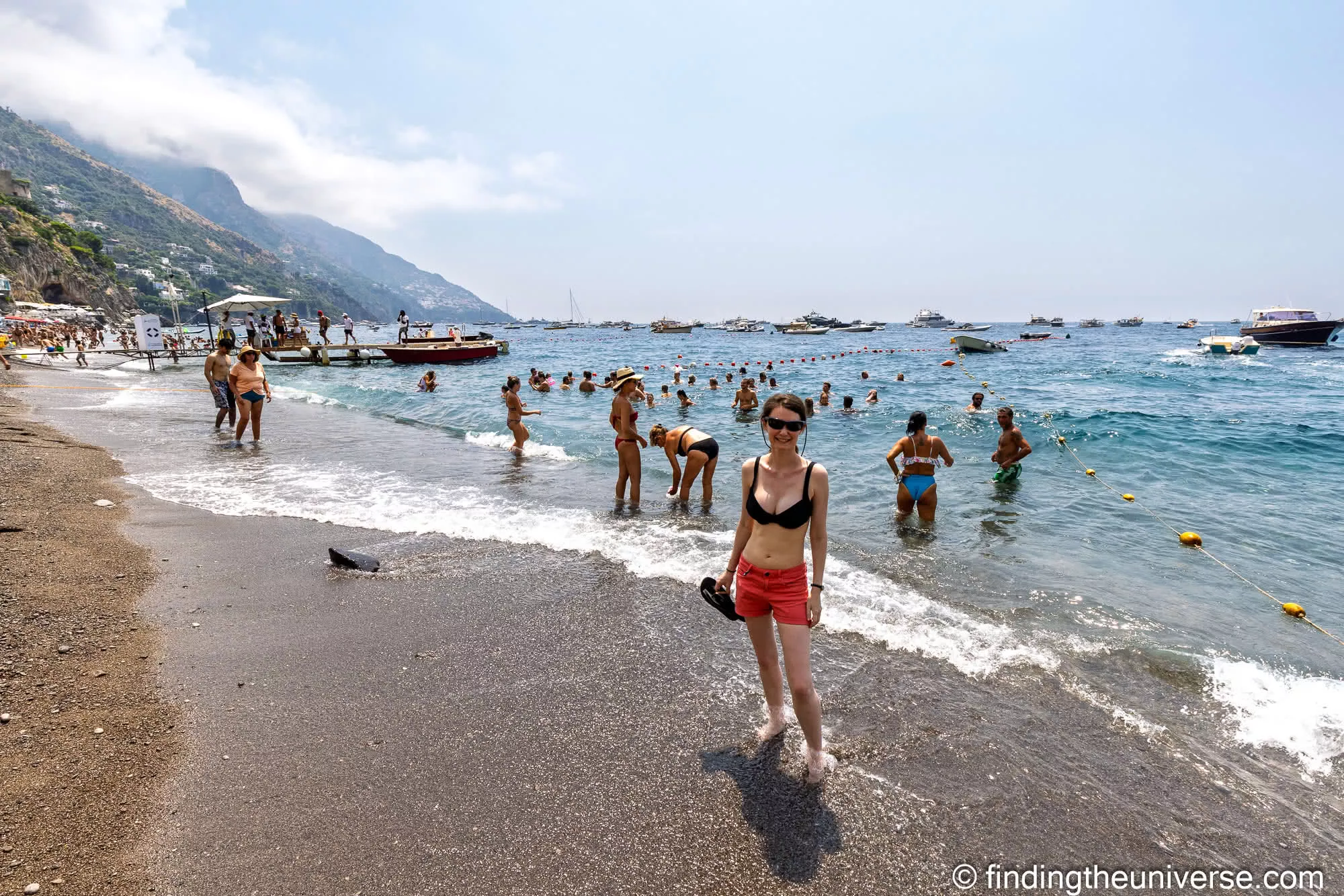
Then get to know the beach situation. Spiaggia Grande, the main beach, is mostly paid loungers from the two beach clubs, but there’s a free public section too, and the smaller Fornillo beach, a 10-minute path west along the cliff, is a bit quieter and also has a free area.
Stay for the golden hour, when the town’s famous stacked view is at its best, and eat dinner before the last ferry or bus home. If you want the classic waterfront table, Chez Black has been doing exactly that on Spiaggia Grande since 1949; book ahead.
Not a hiker? Skip the trail, take the morning slowly, and do Positano at half speed instead: the town rewards aimlessness, and a morning coffee there before the day-trip boats arrive is a different place from the 2pm version. Alternatively, this is the day to swap in a boat trip; more on that in the Day 5 options below.
Day 3: Amalfi, Atrani and Ravello
Three towns, one bus ride, and the coast’s best cultural sights. Start with the ferry or bus into Amalfi and give it the morning. The Duomo di Sant’Andrea, the cathedral whose striped facade towers over the main piazza on a frankly excessive staircase, is the sight.
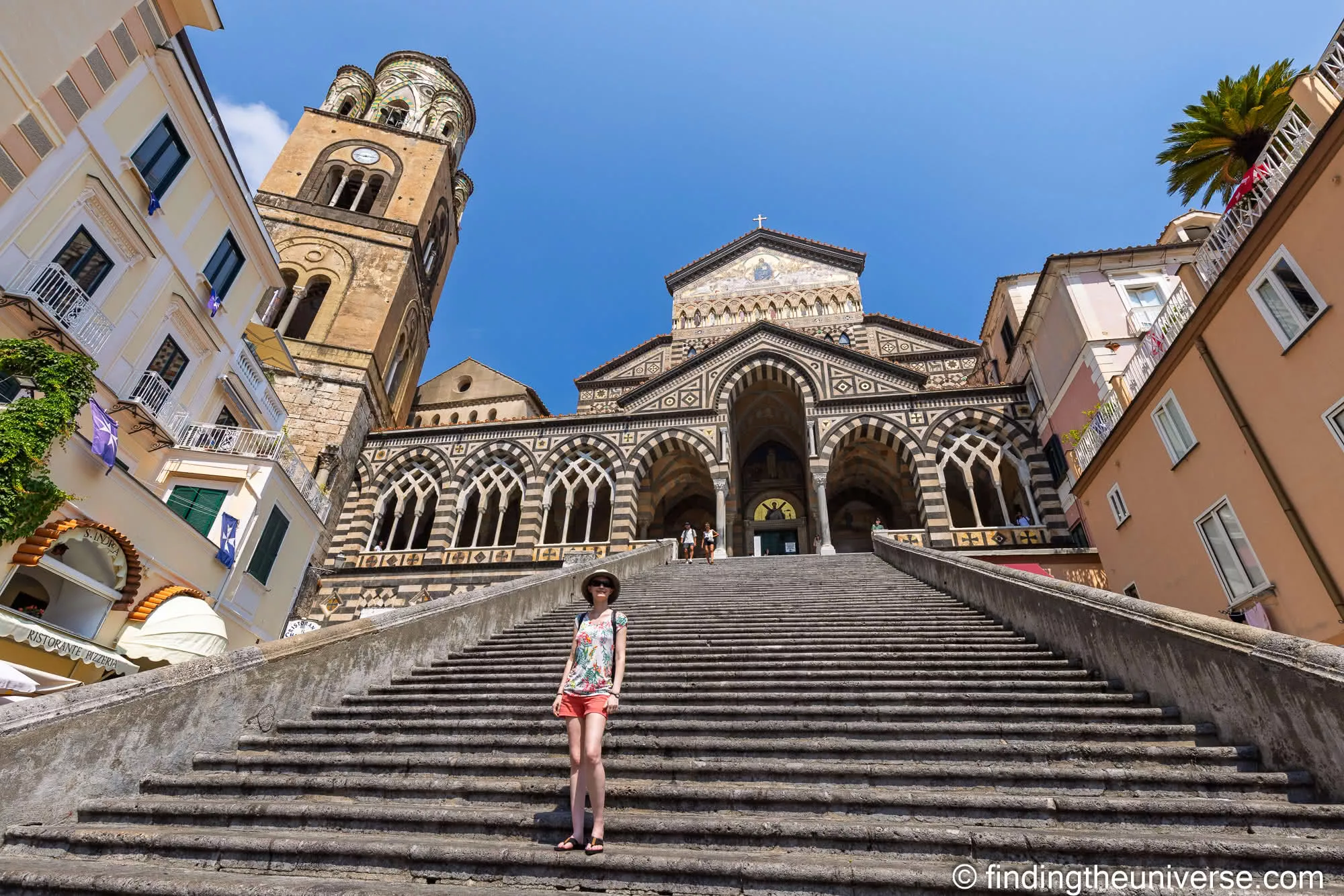
Entry to the cathedral itself is free during services, and the Monumental Complex ticket, which is how you visit the rest (the Cloister of Paradise, the basilica museum and the crypt, entering through the cloister), costs €4. Hours run seasonally, roughly 9am to 6.45pm in spring stretching to 7.45pm in summer.
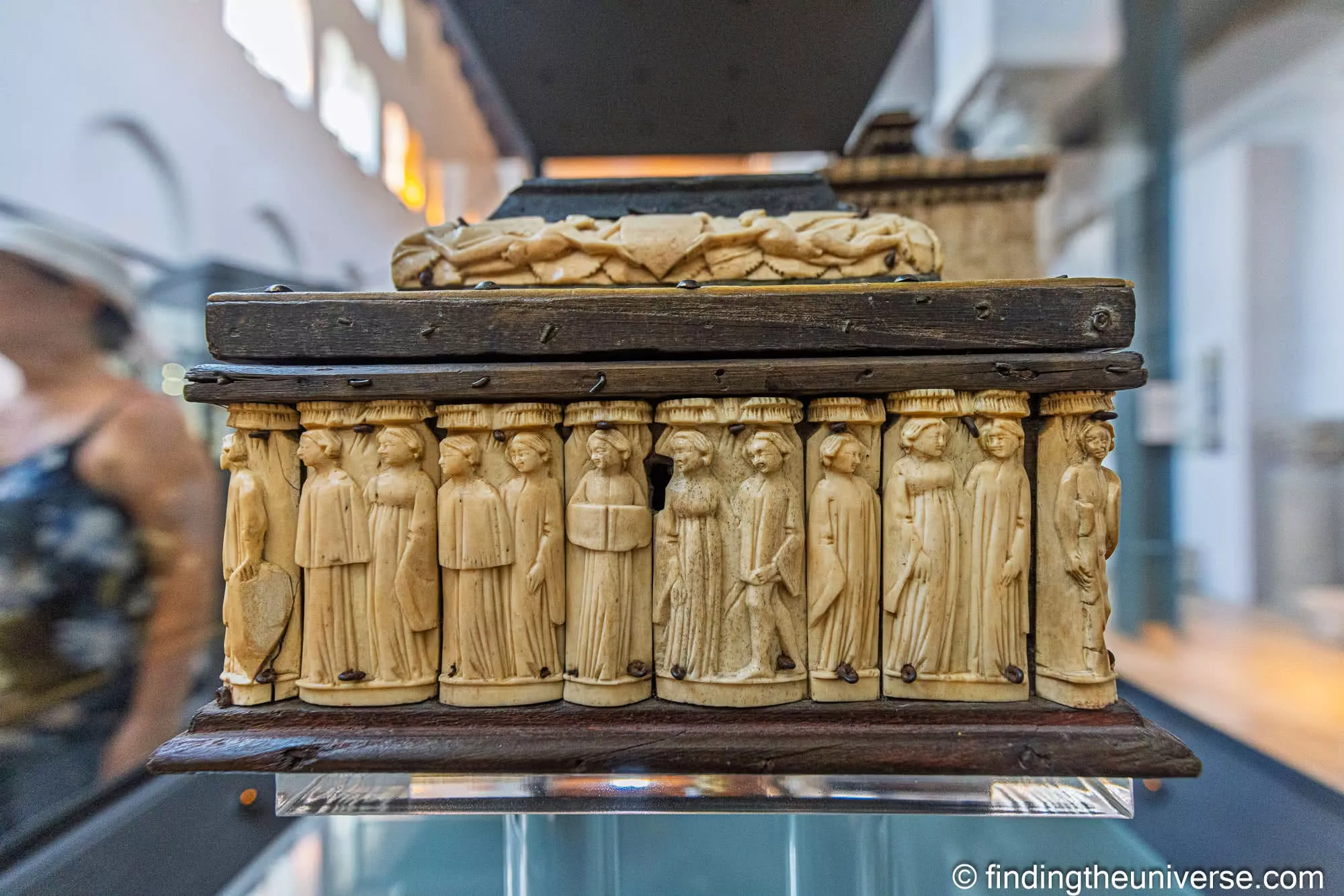
The cloister is small and quietly beautiful, and at €4 it’s one of the better value tickets in the region. If you want a sit-down lunch before moving on, Da Gemma has been feeding Amalfi since 1872.
Before lunch, though, take the 15-minute walk through the pedestrian tunnel east to Atrani. It’s the coast’s smallest town, a tangle of arches and stairs around a tiny piazza and beach, and because the tour buses can’t stop there it feels like the coast did before mass tourism. It’s also, for my money, the best photo stop on the entire coastline; more on that in the photography section below.
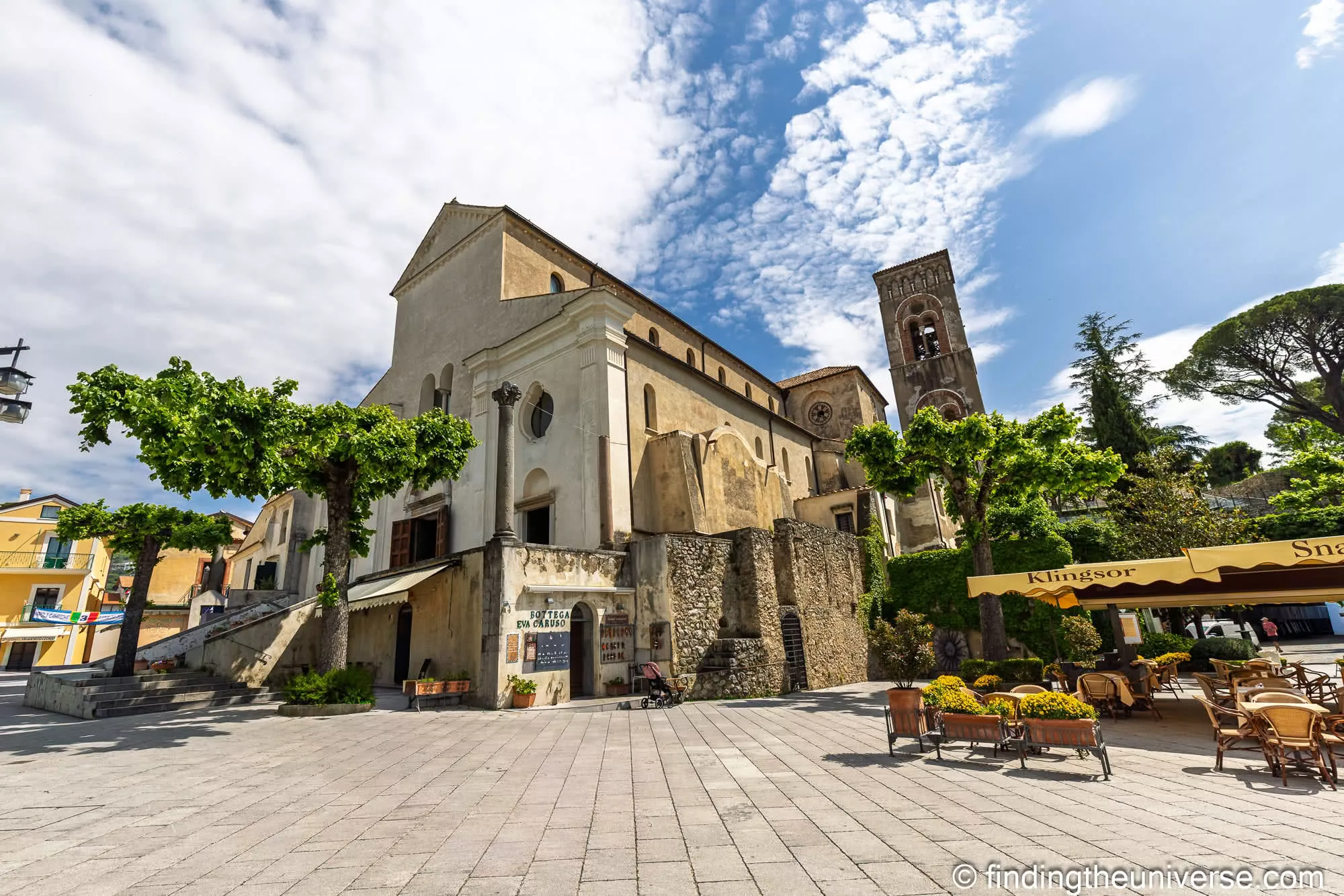
In the afternoon, catch the bus from Amalfi up to Ravello, 25 to 30 minutes of switchbacks to a town 350 metres above the sea. Ravello is the coast at its most composed, and its two villa gardens are the reason you’re here.
Villa Rufolo (€8, open daily 9am to 5pm with last entry 4.30pm, later during the summer festival) is the one with the famous terrace view over the coast that appears on half the region’s postcards.
Villa Cimbrone (€10, open 9am until sunset) is the bigger, wilder garden, and its Terrace of Infinity, a belvedere lined with marble busts hanging over a 350-metre drop, is the single best viewpoint on the Amalfi Coast. Do both; they’re a 10-minute walk apart and the €18 combined is money well spent.
If you’re visiting between early July and early September, evening concerts run at Villa Rufolo as part of the Ravello Festival (the 2026 edition runs 4 July to 5 September), and hearing an orchestra on that terrace at dusk is a strong argument for rearranging your week.
Mind the last bus down, which fills up in season, then ferry or bus back to base for dinner.
Day 4: Capri Day Trip
Capri gets dismissed as overrun and overpriced, and by 11am in August both charges stick. The fix is the same as everywhere on this coast: go early. Catch one of the first ferries out, around 8am, and you’ll have a couple of hours of the island at its best before the day-trip fleet arrives.
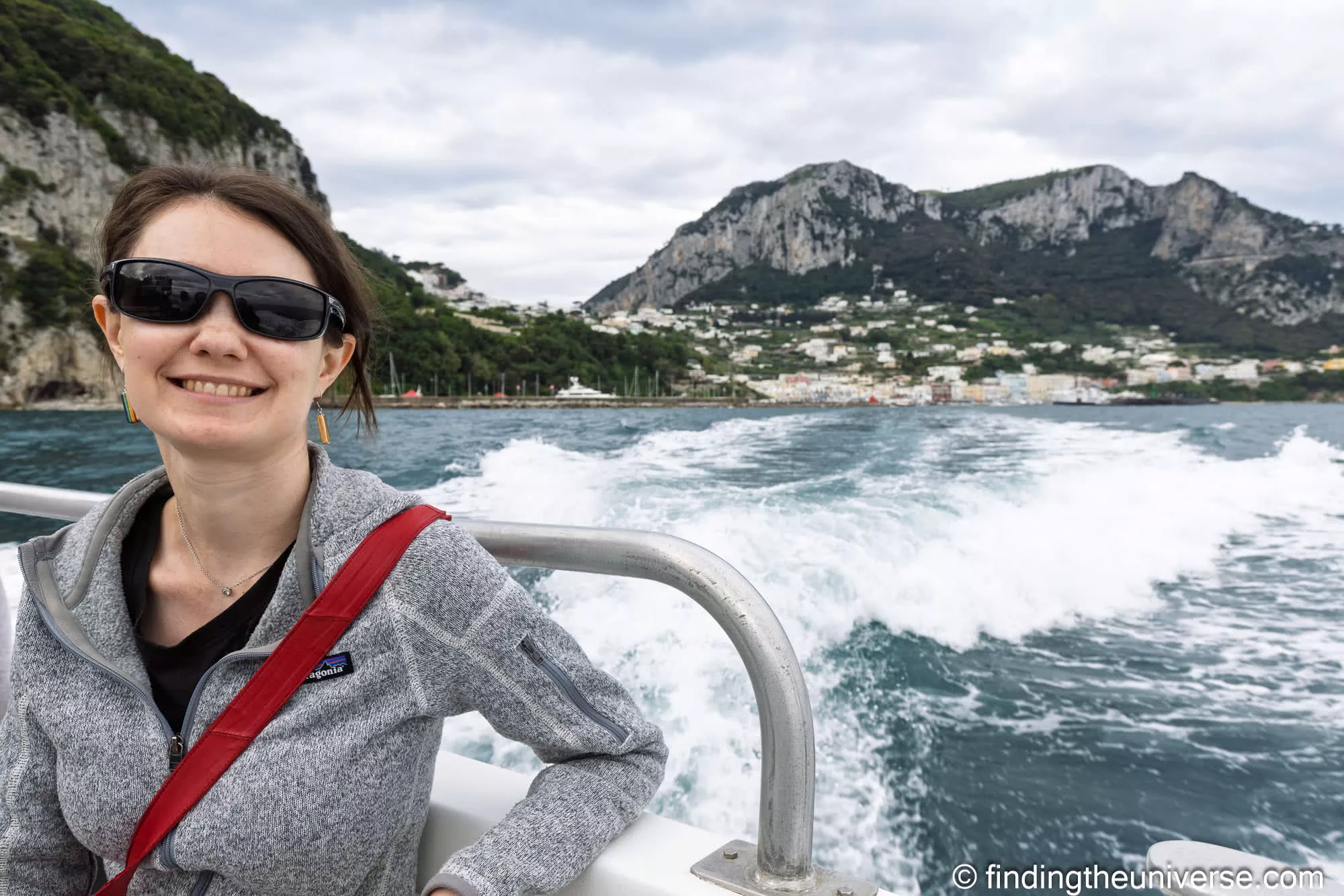
Ferries run from Sorrento year-round (20 to 25 minutes on the hydrofoil, around €15 to €25 one way) and from Positano in summer only (30 to 40 minutes, roughly €20 to €25). Timetables and operators are all on capri.com.
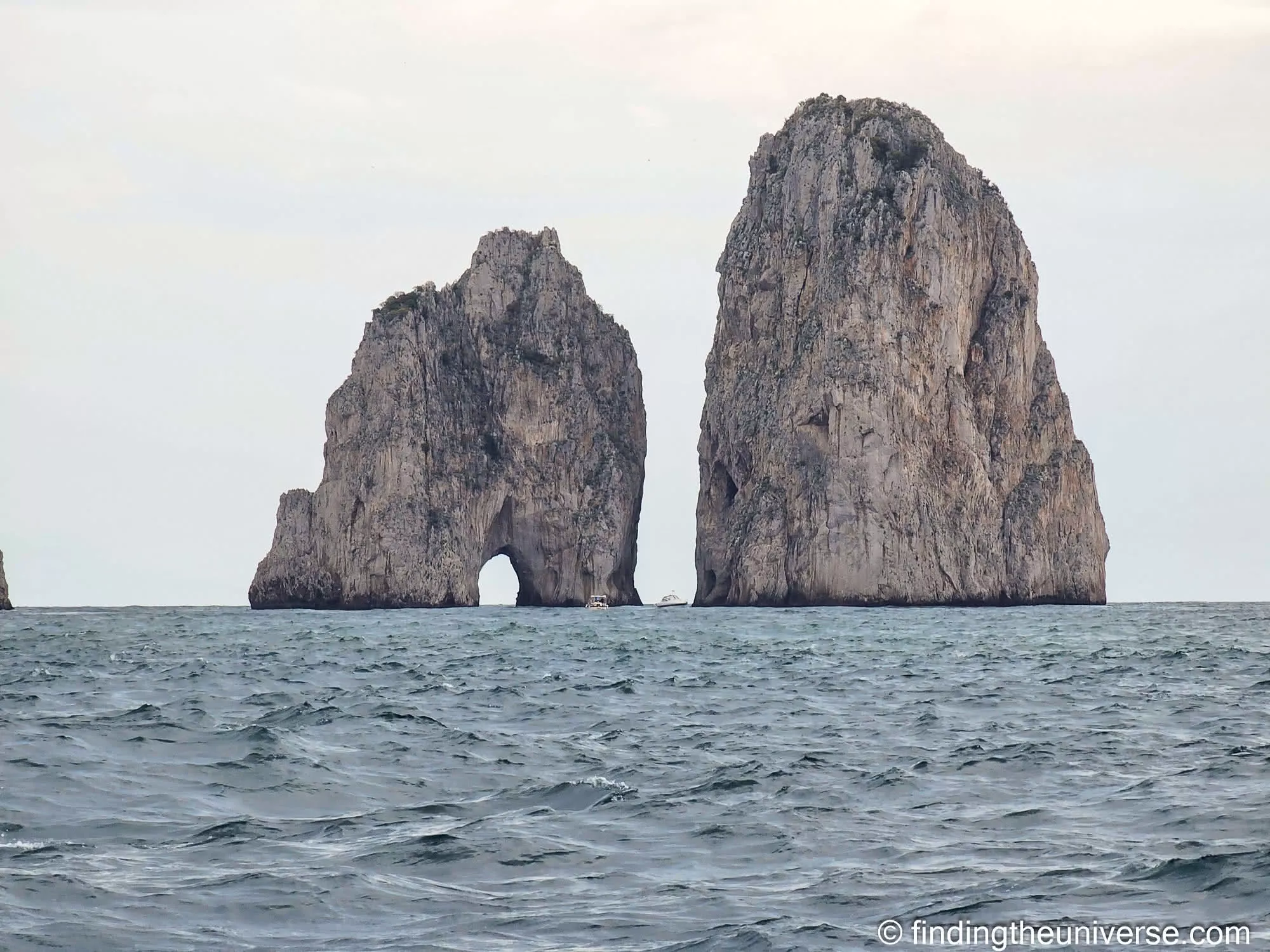
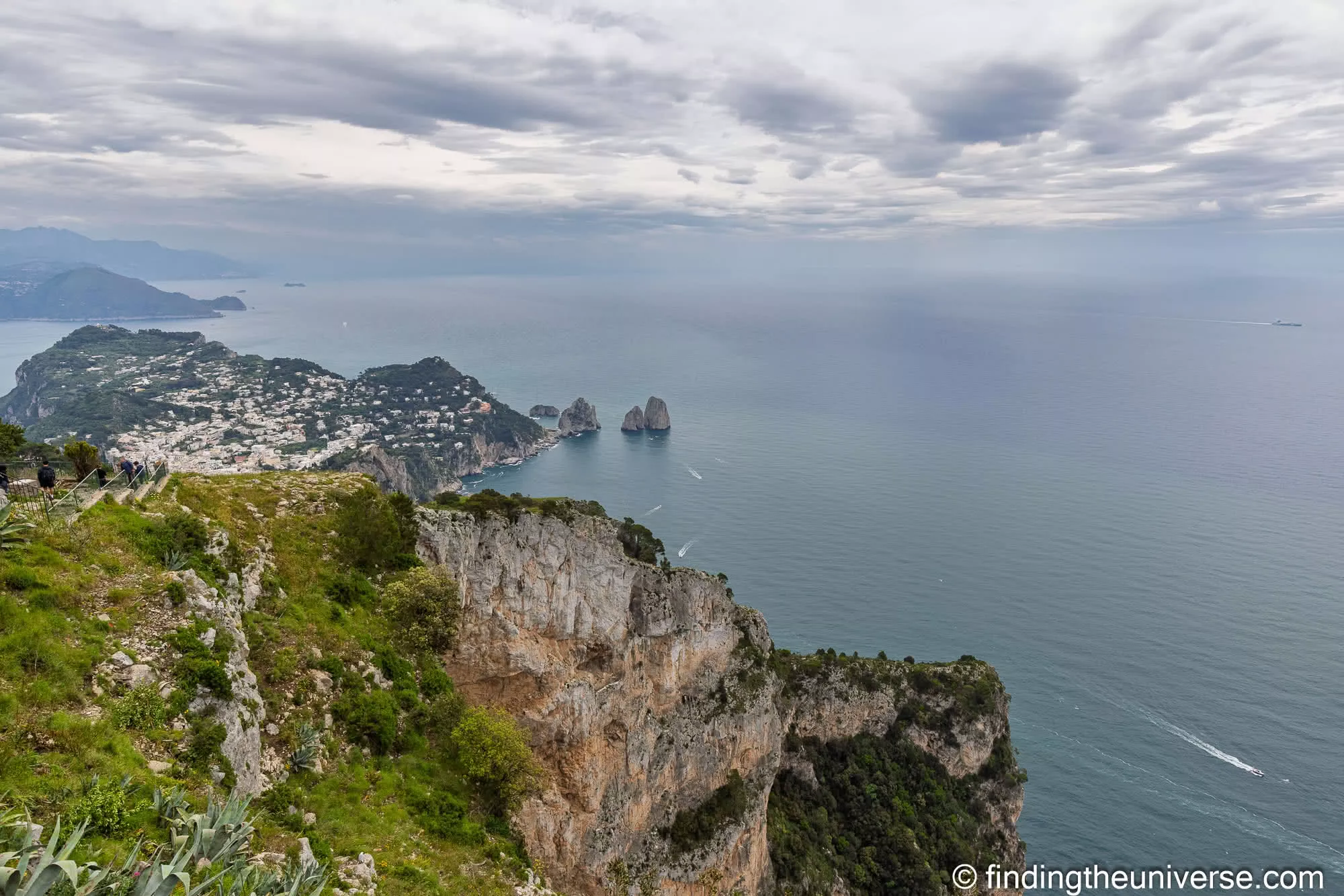
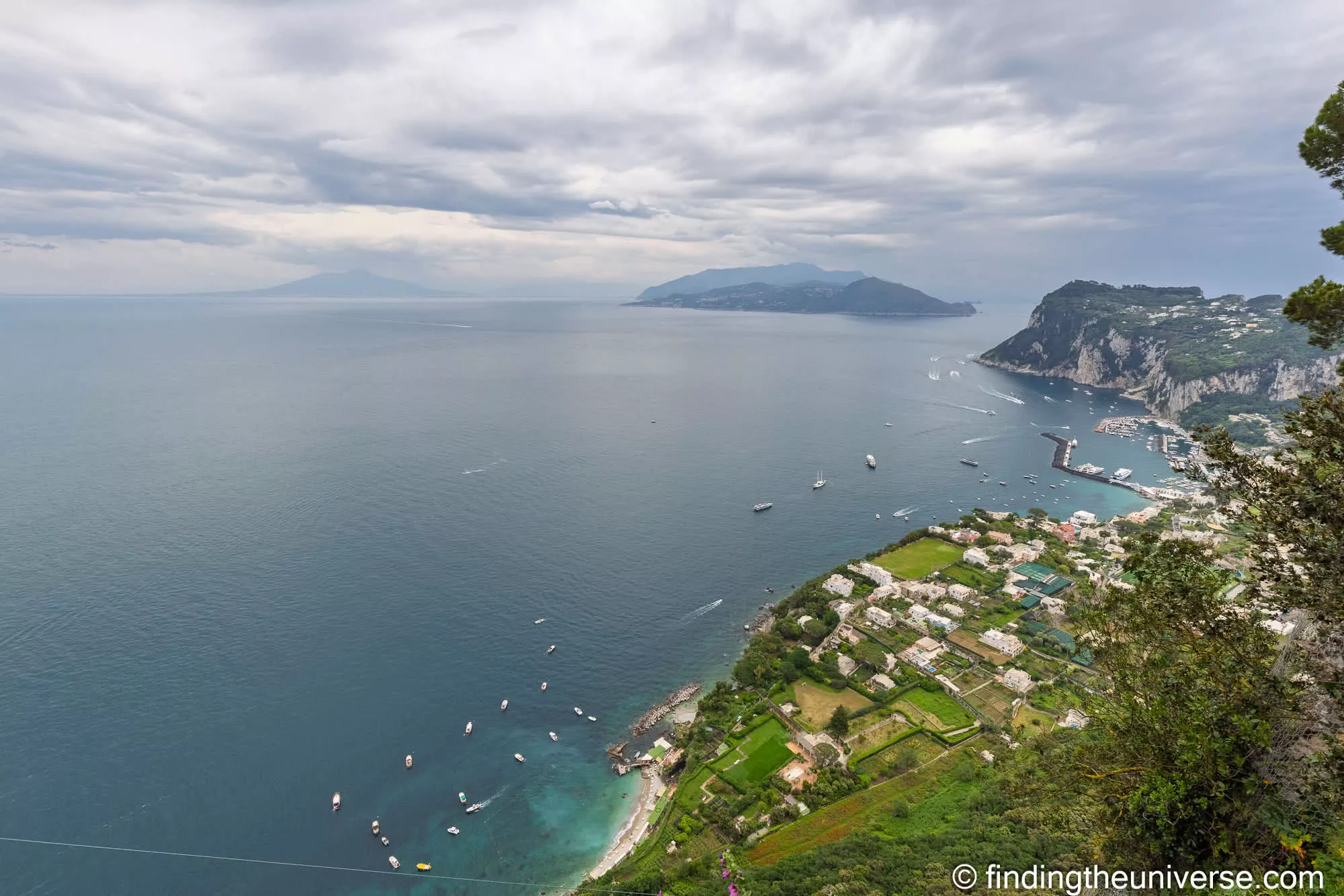
From Marina Grande, where you’ll land, take the funicular up to Capri town (€2.40, four minutes) and walk out to the Gardens of Augustus for the view over the Faraglioni sea stacks and the switchbacks of Via Krupp. That view before the crowds is worth the early alarm by itself.
The Blue Grotto is the Capri decision people most often get wrong. The sea cave with its electric-blue water costs €18 (€4 admission plus €14 for the compulsory rowing boat that takes you in), and that’s on top of getting to the entrance in the first place, either by tour boat from Marina Grande or by bus via Anacapri. You can’t pre-book the cave itself, only boat trips that queue at the entrance.
And because the entrance is only about 80cm high, it closes whenever there’s any swell at all, often at short notice, and conditions tend to worsen after about 3pm.
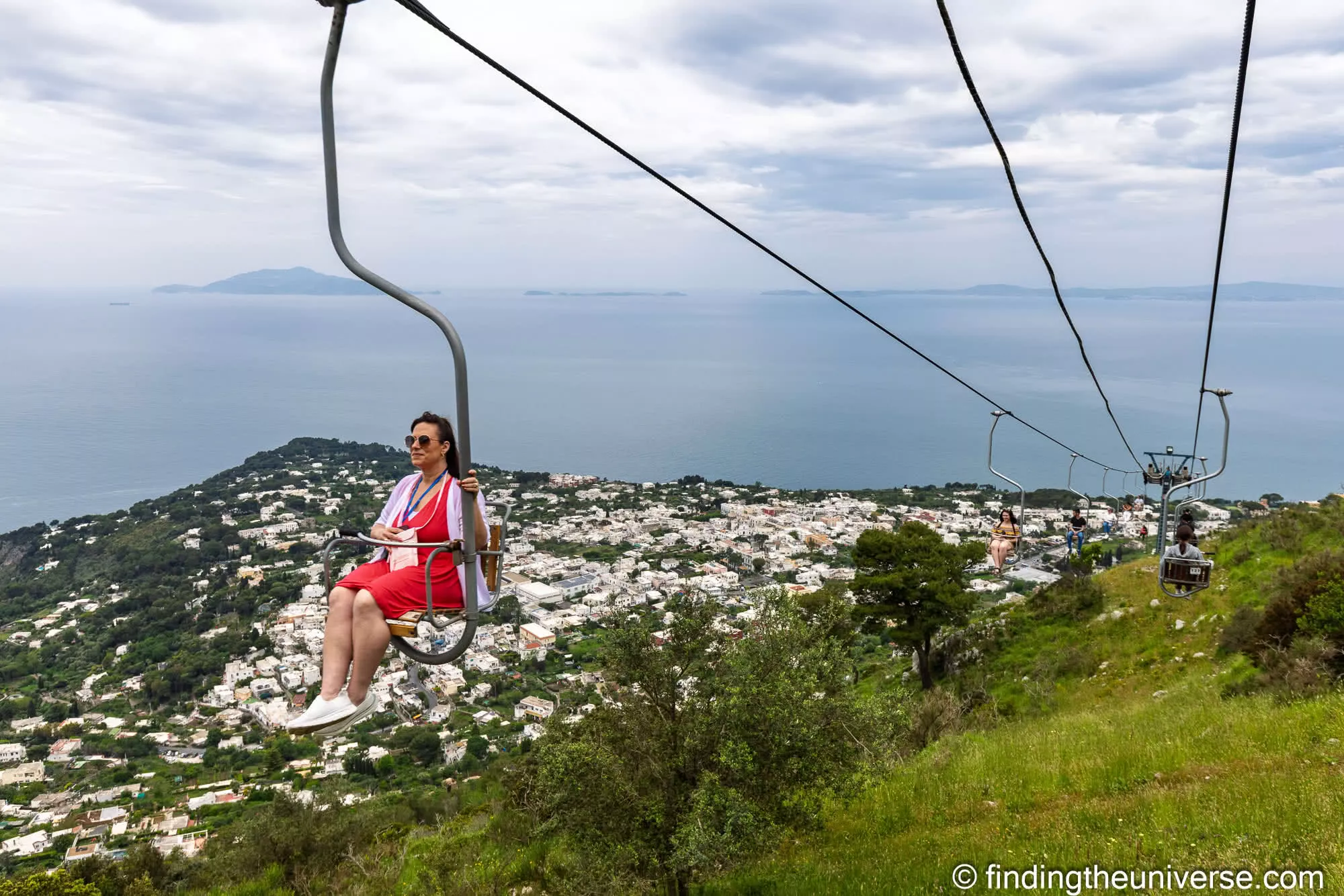
So: treat the Blue Grotto as a bonus rather than a plan, go in the morning if you go, and have a backup. Our suggested backup is a good one anyway: the bus to Anacapri, the quieter top half of the island, and the chairlift up Monte Solaro for the best panorama in the bay.
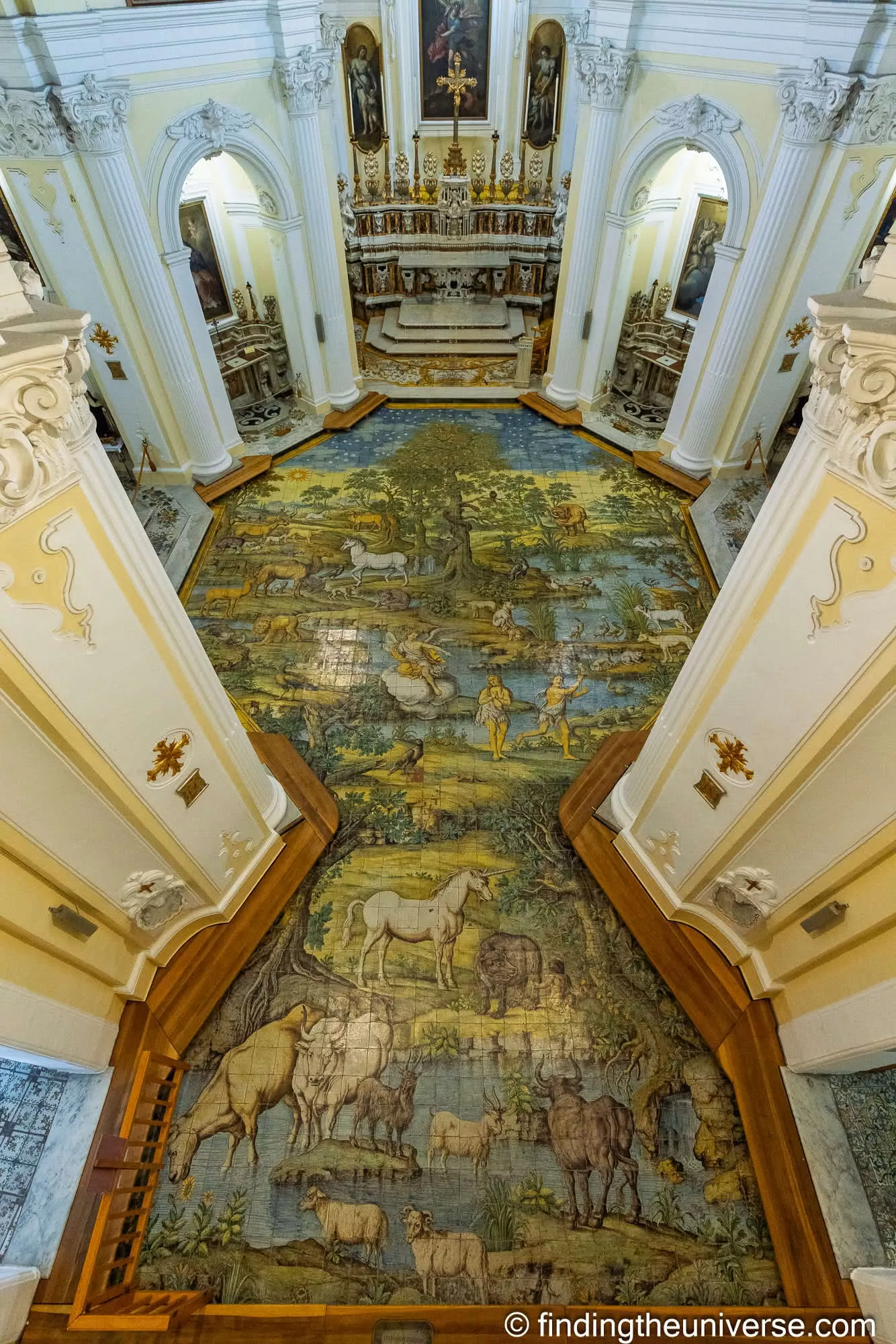
Anacapri rewards a wander in its own right. The little Church of San Michele hides a remarkable majolica-tiled floor, an 18th-century hand-painted scene of Adam and Eve being turned out of a Garden of Eden full of animals, which you view from a raised walkway around the edge so as not to wear it away. And the gardens at Villa San Michele, the former home of Swedish doctor Axel Munthe, come with one of the finest views on the whole island for the price of a ticket.
Take a mid-afternoon ferry back rather than the last one; the late boats are the crowded ones, and if the sea gets up you want a sailing or two of slack before your dinner reservation. If you’d rather have the logistics handled and add swimming stops around the island, a boat-tour version of this day works well too, something like this full-day Capri boat trip from Sorrento.
Day 5: Slow Morning, Flex Slot and Departure
Keep the last day loose. Have the slow breakfast, walk the corner of your base town you haven’t reached yet, or claim a couple of beach hours.
If your departure is late, this is the slot for the thing your trip has been missing so far, and my pick would be seeing the coast from the water if you haven’t yet: a morning boat run along the cliffs, either the ordinary ferry ridden purely for pleasure or a dedicated trip with swim stops like this full-day boat tour from Positano. A lemon grove visit with granita is the low-effort alternative, and nobody has ever regretted it.
Then allow real time for the journey out: two and a half to three hours from a coast base back to Naples station or airport, and I wouldn’t book a flight out of Naples any tighter than four hours after leaving the coast. The SS163 crawls in afternoon traffic, and it’s really not worth cutting it fine.
Only Have 3 Days? Got a Week? Scaling the Plan
The 3 Day Version
Base in Amalfi for the flat logistics and central position.
- Day 1: arrive, settle, evening in Amalfi.
- Day 2: morning ferry to Positano early enough to beat the crowds, afternoon back through Atrani, evening free.
- Day 3: morning bus up to Ravello for the two villas, back down for departure.
Capri doesn’t fit, and the Path of the Gods becomes an optional half-day for fast walkers who’d trade the Positano morning for it. Three days is enough to fall for the place; it’s just not enough to also fit the island and the hike.
The 7 to 10 Day Version
Don’t add more coast towns; add the bay. With a week or more, put two or three nights in Naples at one end for the city and the pizza, give Pompeii the full day it deserves (it’s right on the Circumvesuviana line you’re already using), and drop a completely empty beach day into the coast stay.
That rhythm, city then coast, is how our 10 day Italy itinerary works too, if you’re folding the Amalfi Coast into a longer first trip that also takes in Rome, Florence or Venice.
Where to Stay on the Amalfi Coast
Amalfi Coast accommodation is expensive for what you get in high season, and the good-value places sell out months ahead, so book as early as you possibly can. Here are our picks per base town at three budgets. Prices obviously swing wildly by season; the tiers below are relative to each other.
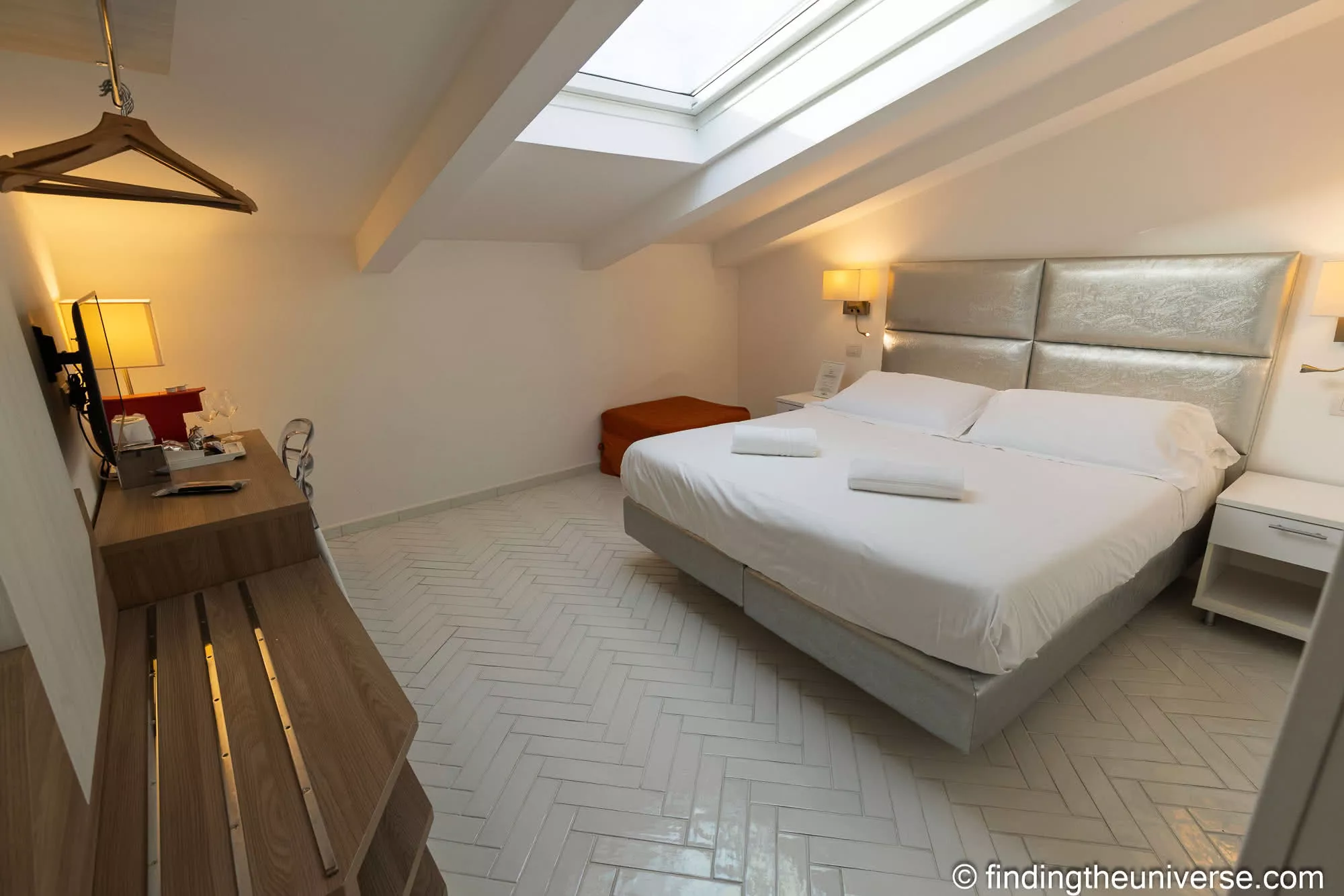
Positano
Budget: Pensione Maria Luisa is the classic budget bed in Positano, over in the quieter Fornillo district with sea views from the shared terrace. It’s a lot of stairs from the main beach, which at these prices is exactly the trade you’re making.
Mid-range: Albergo California has big rooms in an old palazzo on the main road with the balcony views the town is famous for. Luxury: Le Sirenuse is one of the famous hotels of Italy, and if there was ever a place to commit a savings account to a view, this is it.
Amalfi
Budget: Hotel Lidomare is a family-run 18-room spot in a 14th-century building just off the main square, steps from the flat centre that makes Amalfi such an easy base.
Mid-range: Hotel Aurora sits right by the harbour with its own bathing area, so the ferry network starts at your doorstep. Luxury: Hotel Santa Caterina, in art nouveau villas on the cliff just outside town, with glass lifts down to a private sea deck, is the grande dame of the coast.
Ravello
Ravello doesn’t really do cheap, so treat mid-range as the entry point. Mid-range: Hotel Parsifal is a converted 13th-century convent with a view terrace that outperforms its rates, and it’s our value pick for the whole coast. Luxury: Palazzo Avino is the five-star option up here, with a Michelin-starred restaurant and that impossible Ravello outlook from the rooftop pool.
Sorrento
Budget: Ulisse Deluxe Hostel is that rare thing, a hostel with hotel-grade private rooms, 10 minutes’ walk from the centre. Mid-range: Hotel Antiche Mura is just off Piazza Tasso with a pool in a citrus garden, which after a day of coast buses is exactly what you’ll want. Luxury: Grand Hotel Excelsior Vittoria has crowned the cliff above the port since 1834, with a lift straight down to the ferries. Caruso stayed; you’ll see why.
Where to Eat on the Amalfi Coast
We based ourselves in Sorrento, so that’s where most of our dinners happened, and it turns out that’s also where the coast’s best-value eating is. Restaurants in Positano and Amalfi are often priced for the view as much as the plate, while Sorrento has the depth of a proper working town: step one street back from the water and you’re paying normal southern-Italy prices again. A few places we’d happily send you to.
In Sorrento itself, Chantecler’s Trattoria is the pick, tucked down a quiet lane near Piazza Tasso inside a 15th-century villa, family-run and refreshingly cheap for how good it is; the bruschetta and the fish of the day are what we went back for. Zi’Ntonio, a couple of minutes from Piazza Tasso, is the dependable all-rounder, strong on pasta, seafood and a proper wood-fired pizza. And down at Marina Grande, Porta Marina Seafood is a family fish restaurant right on the waterfront, first come first served, where the grilled catch is worth the queue that builds most evenings.



Out on the coast we’ve pointed you at our two favourites in the itinerary already: Chez Black on Positano’s beachfront for the classic waterfront lunch, and Da Gemma in Amalfi, which has been feeding the town since 1872. Add one more for Ravello: Cumpà Cosimo, a family institution for 70-odd years, where the thing to order is the piatto misto, seven sampler-sized portions of the day’s pasta. You won’t need much of an afternoon plan afterwards.
Whatever you’re eating in season, book ahead, particularly anywhere with a view, a reputation, or both.
When to Visit the Amalfi Coast
May, June, September and early October are the months I’d book. The sea is swimmable, the full ferry network is running, everything is open, and the crowds, while real, are pretty manageable with early starts.
July and August work if they’re what you’ve got, but know what you’re signing up for: highs of 29 to 31°C with real humidity, peak prices, and the kind of crowd densities that turn Positano’s lanes into a shuffle. The trick in high summer is to live at the edges of the day, out by 8am, long shaded lunch, back out at 5pm. It’s also not the window I’d choose for the Path of the Gods.
Winter is the quiet option, and for a first trip I wouldn’t recommend it. The coast is at its most local from November to March and hotel prices drop hard, but most of the ferry network stops, a good chunk of restaurants and hotels close, and the weather is a coin flip. If a car-free trip is the plan, and it should be, the ferry season sets your calendar: April to October, shoulders preferred.
What Catches People Out on the Amalfi Coast
A few things we’ve learned across our visits, offered so they don’t catch you out:
The middle of the day belongs to the day-trippers. Positano and Amalfi between 10.30am and 4pm in season are a different, worse experience than the same towns at 8am or 7pm.
The single biggest upgrade available on this coast is free: get up early. Staying overnight means the best hours are yours, which is most of the argument against day-tripping the coast in the first place. But just know that the Amalfi Coast is not a place you come to escape people, whatever time of day it is.
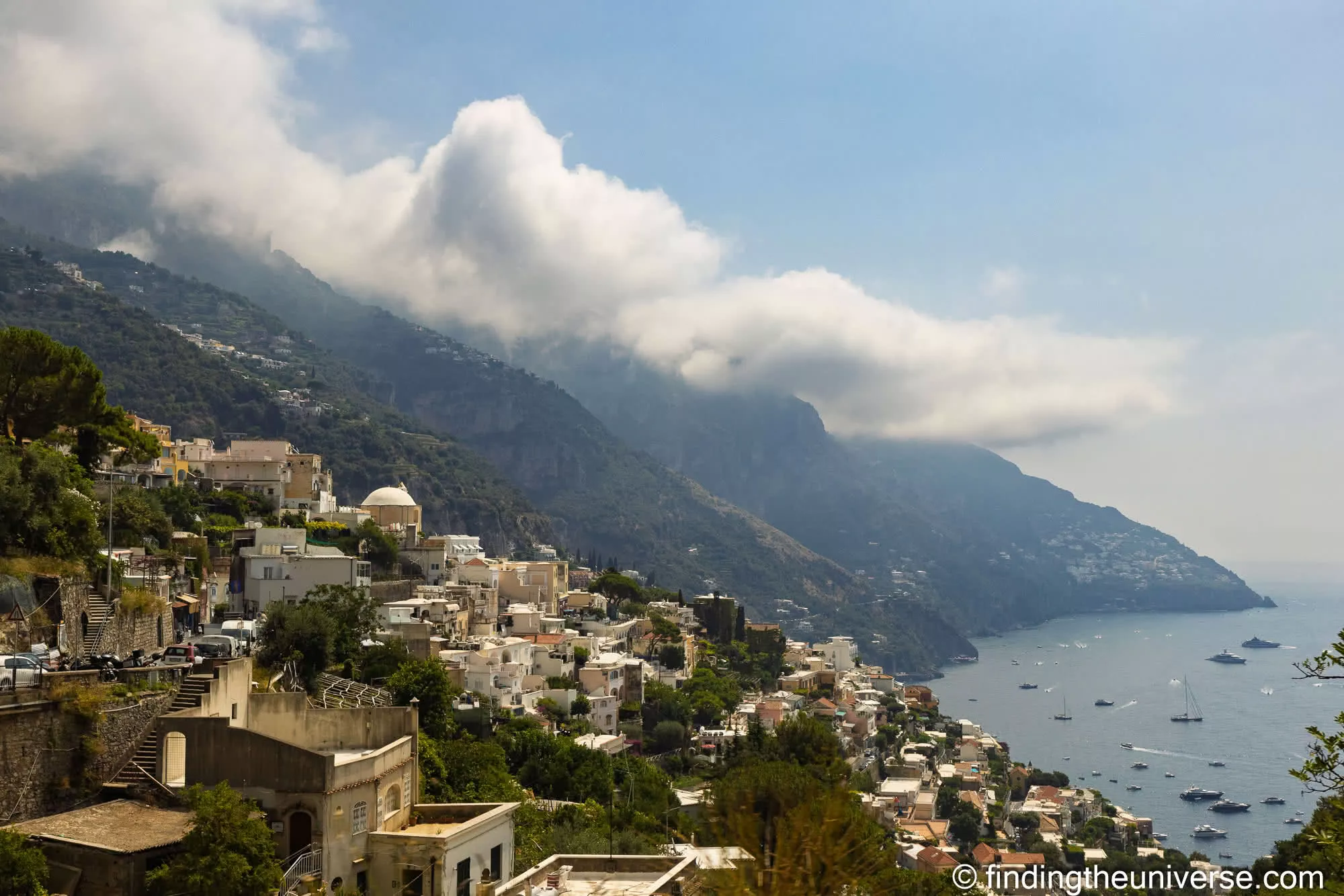
The stairs are not a metaphor. Positano especially is vertical in a way photos don’t convey, and “sea view room” often translates as “you’ll earn this view several times a day”. If stairs are a problem for anyone in your party, this changes which town you stay in (Amalfi) and it’s better to know before booking. Related: pack shoes you can walk in. The lanes are steep, cobbled and polished smooth by a century of visitors.
The bus ride affects some people more than they expect. The coast road is 40-odd minutes of continuous hairpins. If anyone in your group is prone to motion sickness, sit near the front, keep eyes on the horizon, and favour the ferry wherever the choice exists. Although of course this can introduce sea sickness. No-one said travel was easy.
Instagram is doing a lot of heavy lifting. The famous shots are real and the views deliver. What the photos crop out is the queue for the viewpoint, the beach club fees, and the €9 spritz that comes with the postcard table.
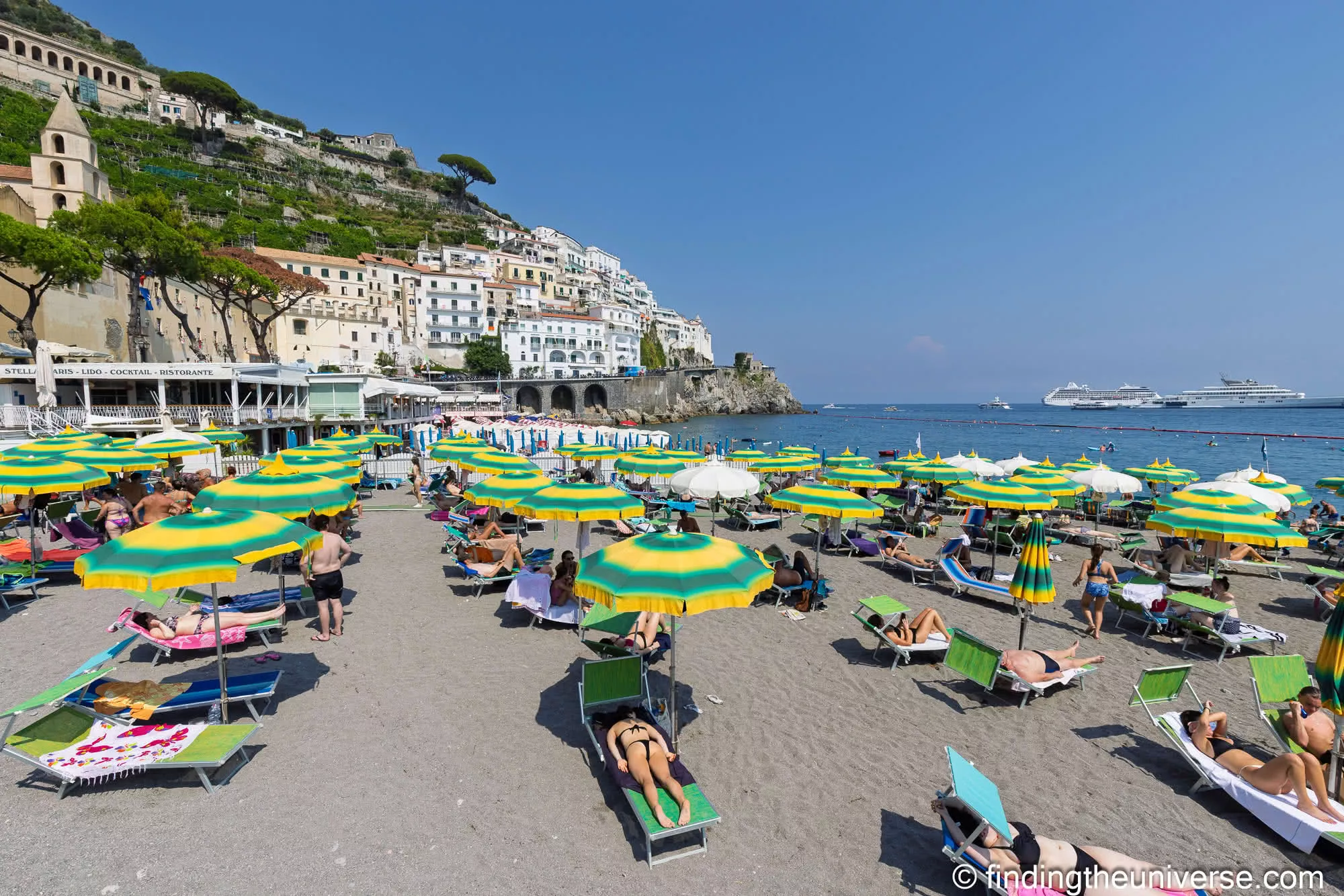
The beaches are fine, not spectacular. The coastline is the draw here, the beaches themselves are small, crowded, and the sand isn’t picture postcard white. Grey or pebbley is the vibe. But the water is gorgeous, and the views (especially from the water as bob around) are worth it.
Go anyway! Go knowing, and budget accordingly: after flights and hotels, this is one of Italy’s priciest corners, though the €2.60 bus and the free public beach sections mean it doesn’t have to be ruinous day to day.
Sea and weather run the schedule. Ferries cancel on swell, the Blue Grotto shuts on it, and the Path of the Gods is a bad idea in rain. Build one flexible day into any plan (that’s Day 5 above) and hold plans lightly. The coast rewards people who can shrug and reshuffle.
Photographing the Amalfi Coast
I’ve been a professional travel photographer since 2010, and this coastline is about as generous a subject as the job offers. A few location notes for making the most of it:
- The classic stacked-Positano view is best from the path that climbs west towards Fornillo beach, in late afternoon and golden hour, when the light comes across the sea and the pastel buildings switch on. From the water, the ferry arrival gives you the same composition for the price of your ticket, so have the camera out on deck.
- Atrani is the sleeper pick. The viewpoint from the coast road footpath above town gives you the huddle of whitewashed houses, the arches and the beach in one frame, with none of Positano’s viewpoint queue. Worth the Day 3 detour on its own.
- In Ravello, the Terrace of Infinity at Villa Cimbrone is the famous frame, best photographed in the morning before the haze builds over the sea below. At Villa Rufolo, use the umbrella pines to frame the coastline and Wagner’s tower.
- On Capri, the Gardens of Augustus view over the Faraglioni is why you caught the 8am ferry. By late morning the light flattens and the terrace fills.
On kit: this is a wide-angle-to-short-telephoto coastline, and a polariser is the one filter worth packing here, cutting the sea haze and deepening that famous blue, though ease it off when shooting across the water or you’ll get uneven skies. Heat haze is the enemy of long-lens shots by midday in summer, which is one more argument for the early starts this article keeps prescribing.
Amalfi Coast Itinerary Map
The map below has every stop in this itinerary marked, including the towns, the Path of the Gods trailheads, the villa gardens in Ravello, the ferry ports and our recommended hotels, so you can see how the days fit together geographically.
Frequently Asked Questions About the Amalfi Coast
How many days do you need on the Amalfi Coast?
Four to five days is right for a first visit: a day each for Positano, the Amalfi and Ravello pairing, and Capri, plus travel days. Three days covers the core towns from one base without Capri or the big hike. With a week or more, add Naples and Pompeii rather than more coast towns.
Can you visit the Amalfi Coast without a car?
Yes, and it’s the better way to do it. From April to October, ferries link Sorrento, Positano, Amalfi and Capri, and the SITA bus runs the coast road year-round for €1.80 to €2.60 a hop. Driving means narrow roads, summer access restrictions and €30 to €60 a day parking, so I’d only bring a car if you’re touring the wider region, and then I’d leave it in Sorrento.
Should I stay in Positano or Amalfi?
Positano if you’re here for the romance and can afford it, and you’re happy on stairs. Amalfi if you want flat streets, better transport connections and kinder prices, since it’s the hub the ferries and buses radiate from. For a first trip I’d also weigh Sorrento, which isn’t technically on the coast but has the best value and infrastructure of the lot.
Is the Amalfi Coast too touristy?
In the middle of a summer day, in the famous towns, yes, it can feel that way. The fix is staying overnight and using the early mornings and evenings, when the day-trip crowds are gone and the towns feel like themselves again. Shoulder season (May, June, September, early October) helps a lot, and Atrani and Ravello stay calmer than Positano even in peak weeks.
Is Capri worth visiting?
Yes, on the right terms: catch one of the first ferries across, see the Gardens of Augustus and ride up Monte Solaro before the day-trip fleet lands mid-morning, and take a mid-afternoon boat back. Treat the Blue Grotto as a weather-dependent bonus rather than the point of the day, since it closes on any swell.
What is the best month to visit the Amalfi Coast?
June and September are the pick: warm sea, full ferry timetables, long days, and crowds a notch below the July and August peak. May and early October are the value plays with slightly cooler swimming. From November to March most ferries stop and many hotels close, so winter suits only a quiet, car-assisted trip.
How hard is the Path of the Gods?
It’s a moderate hike: about 7.8km, three to four hours, mostly downhill if you walk Bomerano to Nocelle, on an exposed cliff path with uneven footing. Any reasonably fit walker in decent shoes can do it. It’s not one for vertigo sufferers, summer middays (no shade) or wet weather, and it’s free, with no booking needed.
Is the Amalfi Coast good for kids?
It can be, with the right base. Choose Amalfi or Sorrento for flat streets and easy logistics, favour ferries over the winding buses, and plan around beach time and boat trips rather than long sightseeing days. Positano’s stairs and a pushchair are a bad combination, and the Path of the Gods suits confident older kids only.
How do you get from Naples to the Amalfi Coast?
Take the Circumvesuviana train from Naples (Porta Nolana or Garibaldi) to Sorrento: about 70 minutes, €5, departures roughly every 30 minutes, with the more comfortable Campania Express running on the same line from mid-March to mid-October. From Sorrento, continue by ferry in season or SITA bus to Positano or Amalfi. Direct summer ferries and buses from Naples and Salerno also exist and are worth checking for your dates.
Is Sorrento on the Amalfi Coast?
Technically no. Sorrento sits on the north side of the peninsula facing the Bay of Naples, while the Amalfi Coast proper is the southern shore from Positano to Vietri sul Mare. In practice it’s the most convenient base for visiting the coast, with the Naples train, seasonal ferries to Positano, Amalfi and Capri, and better value hotels.
How expensive is the Amalfi Coast?
Hotels are the painful bit, especially in Positano in season, and a beach-club lounger or waterfront cocktail is priced for the view. The everyday costs are gentler than the reputation suggests: €2.60 buses, €12 to €14 ferry hops, €4 for Amalfi’s cathedral complex, €8 for Villa Rufolo, and pizza and pasta at normal southern-Italy prices once you step one street back from the water.
Can you do the Amalfi Coast as a day trip from Naples?
You can, and we have, on an organised bus tour. You’ll see Positano and Amalfi from their crowded midday side and spend a lot of the day in transit. It works as a taster if a day is all you have, but even two nights on the coast is a different and much better trip.
Planning Resources and Further Reading
A few things we’d point you at for the rest of the planning:
- For a guidebook to carry, Rick Steves Italy remains the one we recommend for first trips; the Amalfi and Naples chapters are strong on the practical logistics this region runs on.
- Official sources worth bookmarking: EAV for the Circumvesuviana and Campania Express, SITA Sud for coast buses, Travelmar and Alilauro for ferries, and capri.com for everything Capri.
- Building a longer Italy trip around the coast? Start with our 10 day Italy itinerary, our guide to visiting Pompeii, and our city itineraries for Rome, Florence and Venice. Coming from further afield, our 10 day Europe itinerary shows how Italy fits a first European trip.
And that’s the Amalfi Coast as we’d plan it: four to five days, one base, early starts, ferries where possible, and a spare day for the sea to do its thing. If you’ve got questions about your own trip that the FAQ didn’t cover, drop them in the comments below, we read and answer all of them. Safe travels!
Leave a Reply