I’ve been visiting Rome since I was 15, and Jess and I have taken every one of the nine day trips in this guide ourselves, from the ruins of Pompeii to a plate of truffle pasta in Civita di Bagnoregio. There are dozens of places you could reach from Rome in a day. Nine of them, in our view, are worth doing as a day trip, and a few of the famous ones are not.
The reason we’re opinionated about this is simple. A day trip from Rome costs more than the train fare. It costs a day in Rome, and if you have four or five days in the city, that’s a quarter of your trip. So a day trip has to beat the Colosseum, the Vatican and a really good plate of cacio e pepe to deserve its slot.
If you just want the short answer, here it is. Pompeii is the best day trip from Rome if you’re up for a long day, Ostia Antica is the best one if you’re not, and Civita di Bagnoregio is the one whose photos you’ll still be looking at in ten years. Each of them comes with a closure day or a timetable quirk that catches people out. We’ve noted all of those in our table below.
Table of Contents:
Quick Take: Which Day Trip Should You Pick?
Here’s how we’d choose, depending on what you’re after:
- Pompeii is the best day trip from Rome overall. It’s a long day, but it’s worth it.
- Ostia Antica is the easiest, under an hour from the centre of Rome and a fine substitute if Pompeii won’t fit in your plans.
- Civita di Bagnoregio is the most beautiful, a hilltop village reached by footbridge, best paired with Orvieto.
- Florence is the best city day, with Naples close behind if you’d rather eat than queue for the Uffizi.
- Capri, Sorrento and the Amalfi Coast are the ones we’d skip. Lovely places, worth visiting, but not good as a day trip from Rome. We explain below.
And here are all nine we recommend compared. Travel times are each way. Read the “avoid” column carefully. Turning up on the wrong day is the most common way a Rome day trip goes wrong.
| Destination | Time from Rome | By train? | Key costs | Days to avoid | Who it’s for |
|---|---|---|---|---|---|
| Pompeii | Roughly 2 hours door to door | Yes, high-speed to Naples then a local train | €20 entry | None, it’s open daily | Anyone. It’s Pompeii. |
| Tivoli | About 1 hour | Yes, or the Cotral bus | €30 VILLÆ Pass covers both villas | Monday mornings (Villa d’Este opens at 2pm) | Gardens, fountains and Roman ruins |
| Ostia Antica | Under an hour | Yes, Metro plus the Metromare line | €18 entry | Mondays (closed) | Time-poor ruin lovers |
| Orvieto | About 1 hour 30 | Yes, direct | €8 Duomo, €1.30 funicular | Sundays if you’re continuing to Civita | Hill town, cathedral, wine |
| Civita di Bagnoregio | Train to Orvieto (1h30), then a bus | Train plus bus | €5 bridge toll | Sundays (no bus from Orvieto) | Photographers and romantics |
| Assisi | 2 hours to 2 hours 15 | Yes, some direct services | Basilica is free | None, but check basilica hours | Pilgrims and fresco fans |
| Florence | About 1 hour 25 | Yes, high-speed | €29 Uffizi booked ahead | Mondays (Uffizi and friends closed) | Renaissance in a day |
| Naples | About 1 hour 10 | Yes, high-speed | €20 MANN entry | Tuesdays (MANN and Certosa both closed) | Food, chaos and one great museum |
| Siena | The long one. Do it from Florence instead | Awkwardly | €14 to €16 OPA SI Pass | Sunday mornings (Duomo opens 1.30pm) | People already visiting Florence |
Should You Even Leave Rome?
Before we rank anything, the question we’d ask you first. If this is your first visit and you have three days or fewer in Rome, we don’t think you should take a day trip at all.
Rome fills three days without any effort at all, and our 3 day Rome itinerary and 2 day Rome itinerary are both already making painful cuts. Even one day in Rome is a better day than a rushed Pompeii.
The city has more than enough to hold you. Between the Colosseum, the Vatican, and everything in our guide to things to do in Rome, plus the important work of researching the city’s best gelato (someone has to), you can quite easily lose a week here without noticing.
There’s also a middle option that feels like leaving Rome without spending a day on it, and that’s the Appian Way with the catacombs. On one visit we walked out from Porta Metronia, past the Baths of Caracalla, and down to Porta San Sebastiano, where the old road begins and the city quite suddenly stops feeling like a capital.
Add a catacomb tour at San Callisto or San Sebastiano and you’ve had the “ancient world beyond the walls” experience in half a day. Photography is banned inside the catacombs, by the way, which is why you won’t see any pictures of them here. The full plan is in the fourth-day section of our 3 day Rome itinerary.
If you have four days or more, or this is a return visit, carry on. This is where it gets good.
1. Pompeii
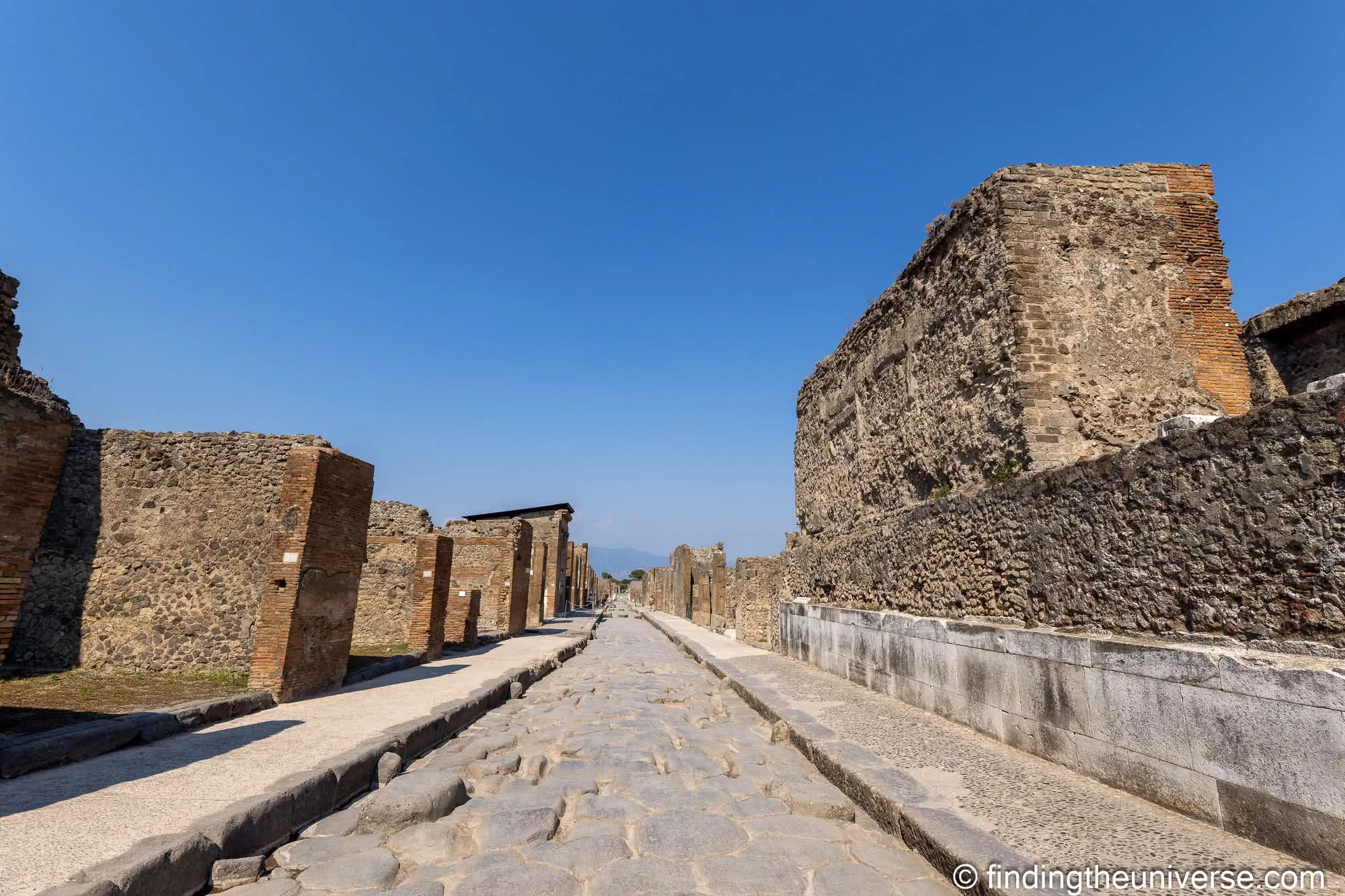
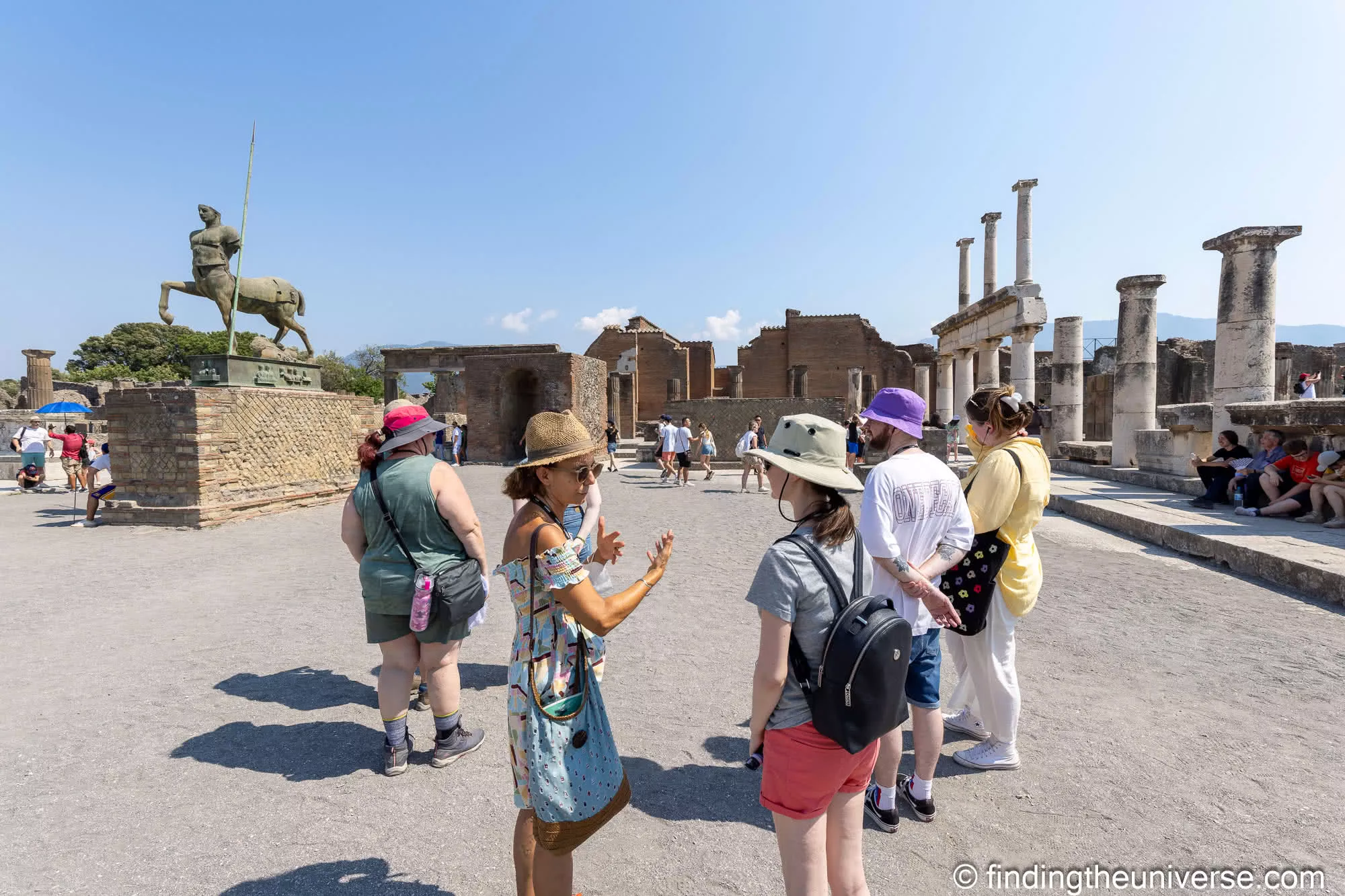
Pompeii is the best day trip from Rome, and also the most demanding one. It’s roughly two hours each way door to door (assuming you pick the right trains), it involves a connection in Naples, and you’ll walk further than you expect once you’re inside. We think it’s worth all of it. Walking down Via di Mercurio with Vesuvius sitting at the end of the street is worth the two-hour journey on its own.
Here’s the route. Take a high-speed train from Roma Termini to Napoli Centrale, which takes about 1 hour 10 minutes. From there, follow signs down to the Circumvesuviana platforms at Garibaldi station, directly beneath Centrale, and take a train on the Sorrento line to Pompei Scavi – Villa dei Misteri. That leg takes 35 to 40 minutes, costs €3.30, and runs every 20 to 30 minutes.
Note the station name carefully, because this catches people every year. You want Pompei Scavi – Villa dei Misteri, right by the ruins. There’s a separate Pompei Santuario stop and a separate mainline Pompei station, both of which serve the modern town and leave you quite a hike from the ruins themselves.
There’s also a tourist-oriented train on the same line, the Campania Express, with reserved seats and air conditioning, but it only calls at Villa dei Misteri in the Sorrento direction, so it works going out and not coming back. The Circumvesuviana itself is run by EAV, and it’s the flakiest link in the chain, with periodic strikes.
On strike days, service is only guaranteed from 5.30am to 8.30am and 4.30pm to 7.30pm (when locals are commuting essentially), so if you hear one is planned, check EAV’s site before committing.
Entry to Pompeii costs €20, bookable via the official Pompeii site (the €2 reduced rate only applies to EU citizens aged 18 to 24, so US visitors over 18 pay full price).
Like many popular attractions across Italy, tickets are nominative, which means your name is printed on them and you’ll need photo ID at the gate. You can’t use someone else’s ticket. The site caps entry at 20,000 people a day, and in summer that’s split into a morning band from 9am and an afternoon band from 1pm. Booking ahead isn’t mandatory, but with those caps we’d book anyway in peak season and not risk being pushed to the afternoon slot.
The site is open every day, 9am to 7pm in summer (last entry 5.30pm) and 9am to 5pm in winter. Give yourself at least four hours inside, and remember there’s very little shade out there, so in July and August aim for the 9am opening and carry water.
Should you take a guided tour? At Pompeii, yes, we strongly recommend it. The site is vast and the labelling is sparse, so without context you’re really just looking at a lot of anonymous walls.
We cover the site in detail in our full guide to visiting Pompeii, but for a day trip the simplest options are a guided Pompeii day trip by high-speed train, the Walks full-day Pompeii trip from Rome, which now includes a drive along the Amalfi Coast, or, if you want the volcano too, a combined Pompeii and Vesuvius day trip by coach.
Pompeii, Herculaneum or Ostia Antica?
Three buried Roman cities compete for the same day of your trip. Here’s our take after visiting all three.
Pompeii is the epic. It’s a whole town, streets and forums and theatres, and it dwarves the other locations by size.
Herculaneum, one Circumvesuviana stop closer to Naples, is a fraction of the size but better preserved, with intact upper storeys and carbonised wooden beams, and it takes half the walking. Entry is €16, it opens at 8.30am (half an hour before Pompeii, useful if you want to do both), and it has no weekly closing day.
One caveat if you’re going specifically for the famous Villa dei Papiri: it’s currently closed for maintenance, along with the ancient theatre, with no reopening date announced, so don’t build your visit around it. Details on the official Herculaneum site.
And Ostia Antica is the shortcut, Rome’s own ancient harbour town, not a Vesuvian one, under an hour from the centre. You give up Vesuvius on the horizon and gain about four hours of your day back. First visit to Italy with a spare day? Pompeii. Second visit, or ruins fatigue in the family? Herculaneum. Only half a day, or travelling with kids whose patience is finite? Ostia, which gets its own entry two spots down.
2. Tivoli
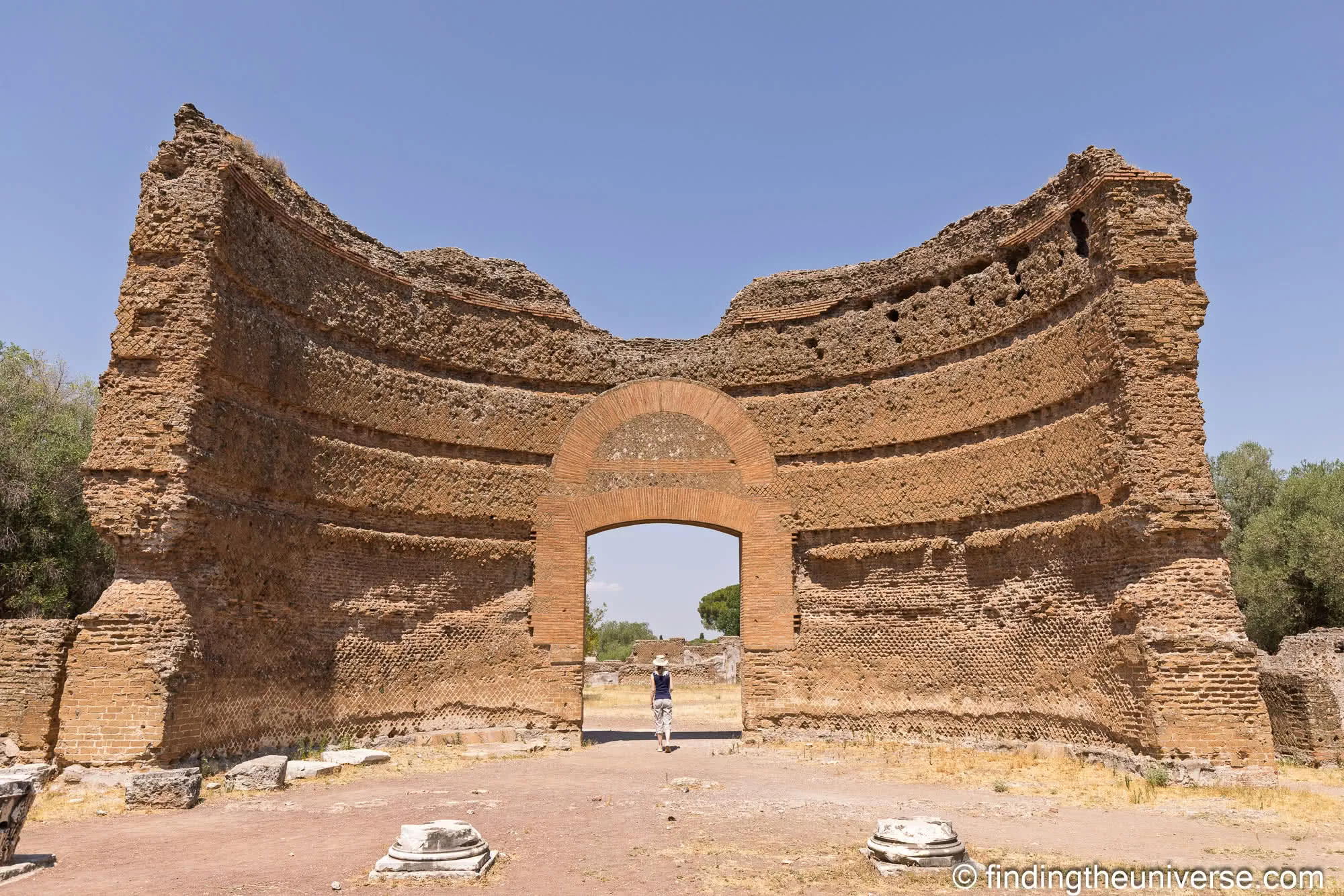
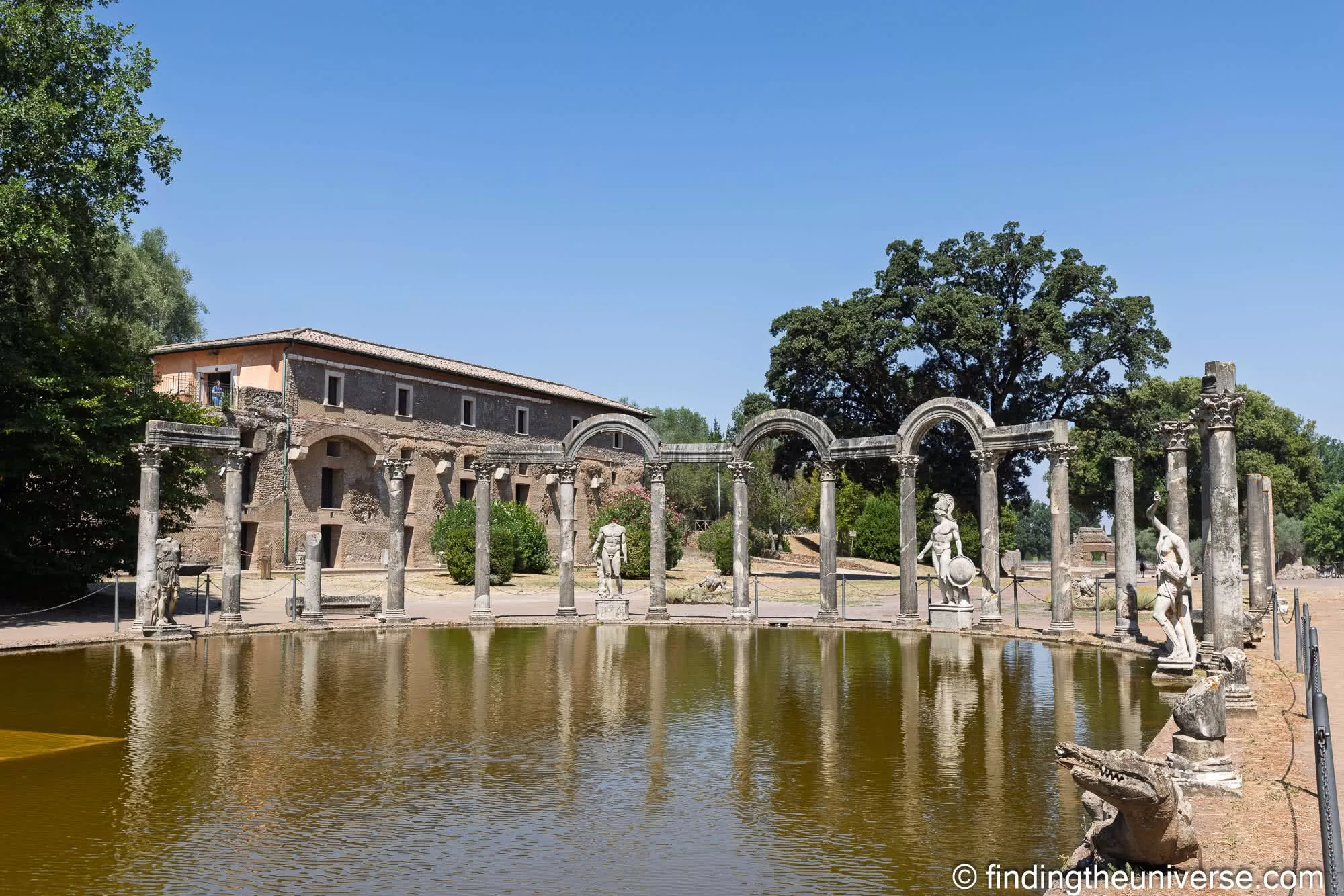
Tivoli, about an hour east of Rome, is really two day trips wearing one name. Hadrian’s Villa sits below the town, a sprawling ruined palace complex where we’ve spent a very happy day wandering between the Canopus pool and dome fragments the size of houses. Villa d’Este, up in the town itself, is the Renaissance one, a garden of fountains and water terraces built for a cardinal with a point to prove.
We’ve only visited Hadrian’s Villa ourselves so far, so everything here about d’Este comes from the operator and not from our own visit.
The most useful thing we can tell you about Tivoli is a scheduling quirk. Villa d’Este is not “closed on Mondays”. It’s closed on Monday mornings, opening at 2pm, while Hadrian’s Villa is open every day. So a Monday in Tivoli works fine, as long as you do it in the right order, Hadrian’s Villa in the morning and d’Este after 2pm. (On public-holiday Mondays d’Este opens normally, and the half-day closure shifts to the following Tuesday afternoon instead.) Check current hours on the official VILLÆ site.
For tickets, the simple answer is the VILLÆ Pass, €30, valid 72 hours, covering Hadrian’s Villa, Villa d’Este and the Sanctuary of Hercules Victor. It’s a three-site pass, there’s no two-villa-only version, and it only launched in summer 2026. The individual villa tariffs are only published as image files on the official site, of all things, so we’re not quoting them here.
Getting there is the part that breaks people’s days. The Cotral bus from Ponte Mammolo (on Metro B) drops you at Piazza Garibaldi in the town centre, right by Villa d’Este. The train from Roma Tiburtina takes about 57 minutes, costs around €3, and leaves you a bit of a walk from the centre, which is why most visitors take the bus.
The real problem is that the two villas are about 6km apart. Local CAT buses on lines 4 and 4X connect the town with Hadrian’s Villa, with line 4 running roughly every half hour. There’s also a combined train-plus-bus ticket called the Ville di Tivoli Link, though note it runs from Bagni di Tivoli, a different station from Tivoli itself.
This is the one trip in this guide where we think a tour makes life dramatically easier, purely because someone else solves the 6km problem. A Tivoli day tour covering both villas takes the logistics off your plate entirely.
3. Ostia Antica
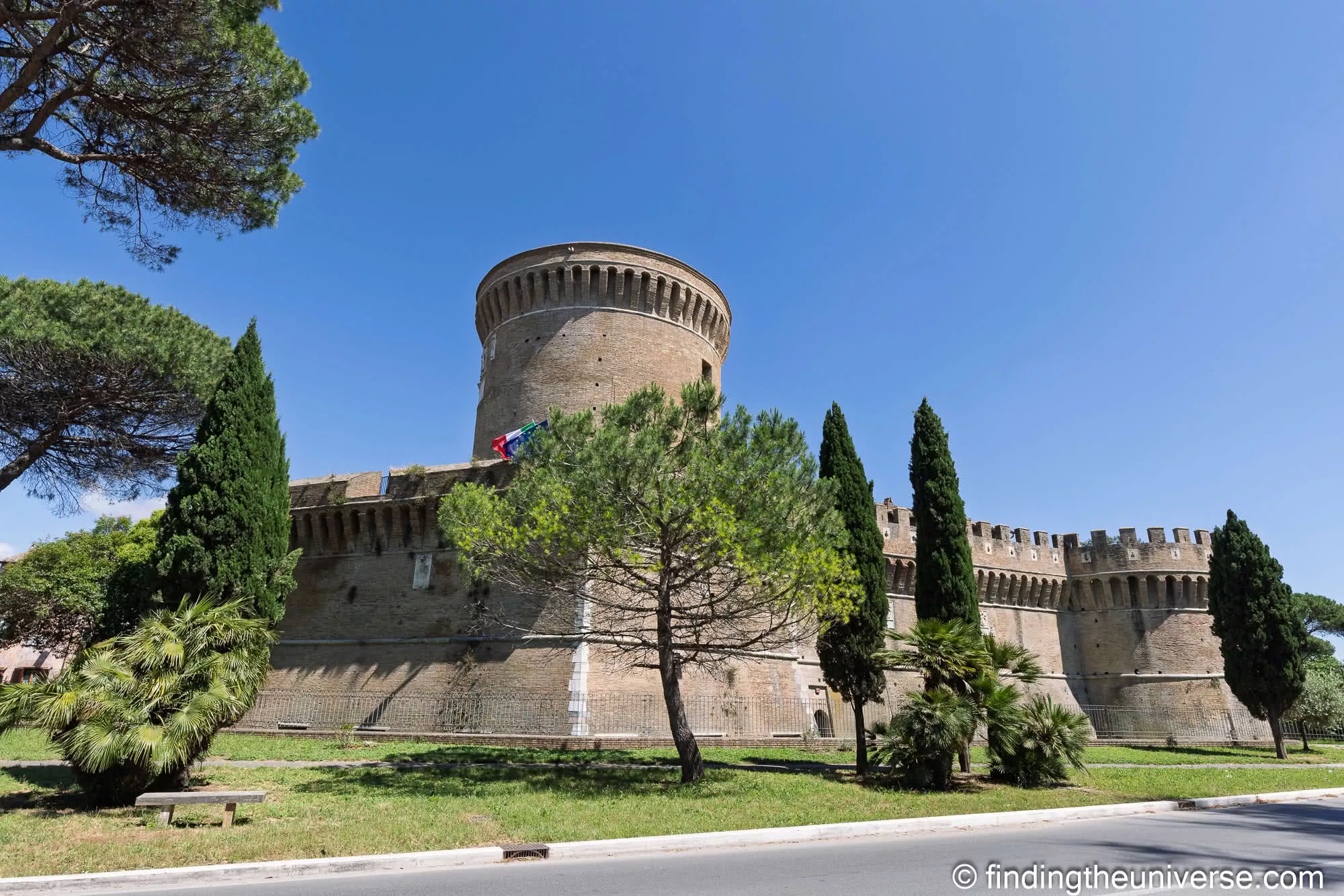
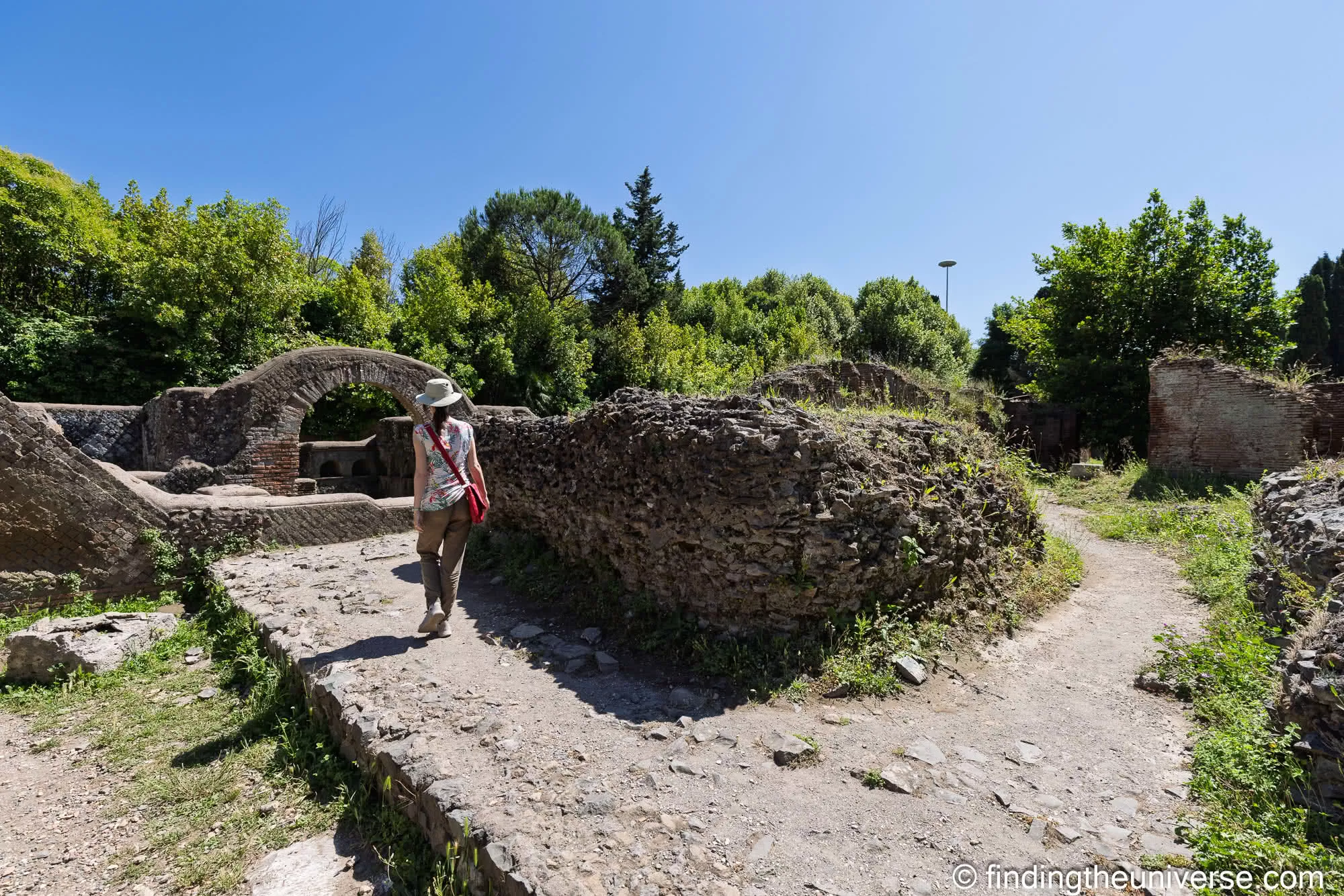
Ostia Antica is our answer for anyone who doesn’t have time for Pompeii. Rome’s ancient port city is under an hour from the centre, the ruins are extensive and easy to walk, and you can be back in Rome for an early dinner. We’ve wandered its main street past temples, warehouses and a theatre that still hosts performances, sharing the place with a tiny fraction of Pompeii’s crowds.
Getting there is easy, with one piece of small print. Take Metro B to Piramide, walk through to the adjacent Porta San Paolo station, and ride the Metromare line to the Ostia Antica stop, followed by a short walk to the site.
One note on tickets, though. The Metromare is the old Roma-Lido line, and since 2022 it’s been run by Cotral for the Lazio region, not by ATAC, Rome’s city operator. Ticketing is meant to be integrated, but given the operator change we’d double-check that whatever Rome ticket or pass you’re carrying covers the line before you ride, either at the machine or via ATAC’s site.
As of late July 2026, last services on the line were extended from 9pm to 10.30pm, which gives you a much more relaxed buffer than the old timetable did.
The site itself costs €18, which includes the Ostiense Museum, and it’s closed on Mondays, the first of several Monday traps in this guide. It opens at 8.30am daily, closing at 7pm from April to September (last entry 6pm), earlier in the darker months. Full details on the official site. Give it four hours or so, look up at the castle of Julius II near the entrance, and don’t miss the mosaics at the Baths of Neptune.
If you’d like context without committing to a full Pompeii-style day, there’s a guided Ostia Antica half-day trip by train that handles the transit and the storytelling in one go.
4. Orvieto
Orvieto is the classic hill town day trip, and it’s the one we’d pick for a first-timer who wants Italy-outside-the-cities with pretty minimal logistics. Direct trains from Termini take about 1 hour 30 minutes, with around nine a day, and the town sits on a slab of volcanic rock above the station with views over the Umbrian countryside in every direction.
From the station, the funicular carries you up to the old town. The €1.30 ticket is actually a 90-minute urban ticket that also covers the connecting bus from Piazza Cahen up to Piazza Duomo, so you don’t need to budget a second fare at the top. And don’t pay the €2 buy-it-on-board rate when the machines sell the same ride for €1.30.
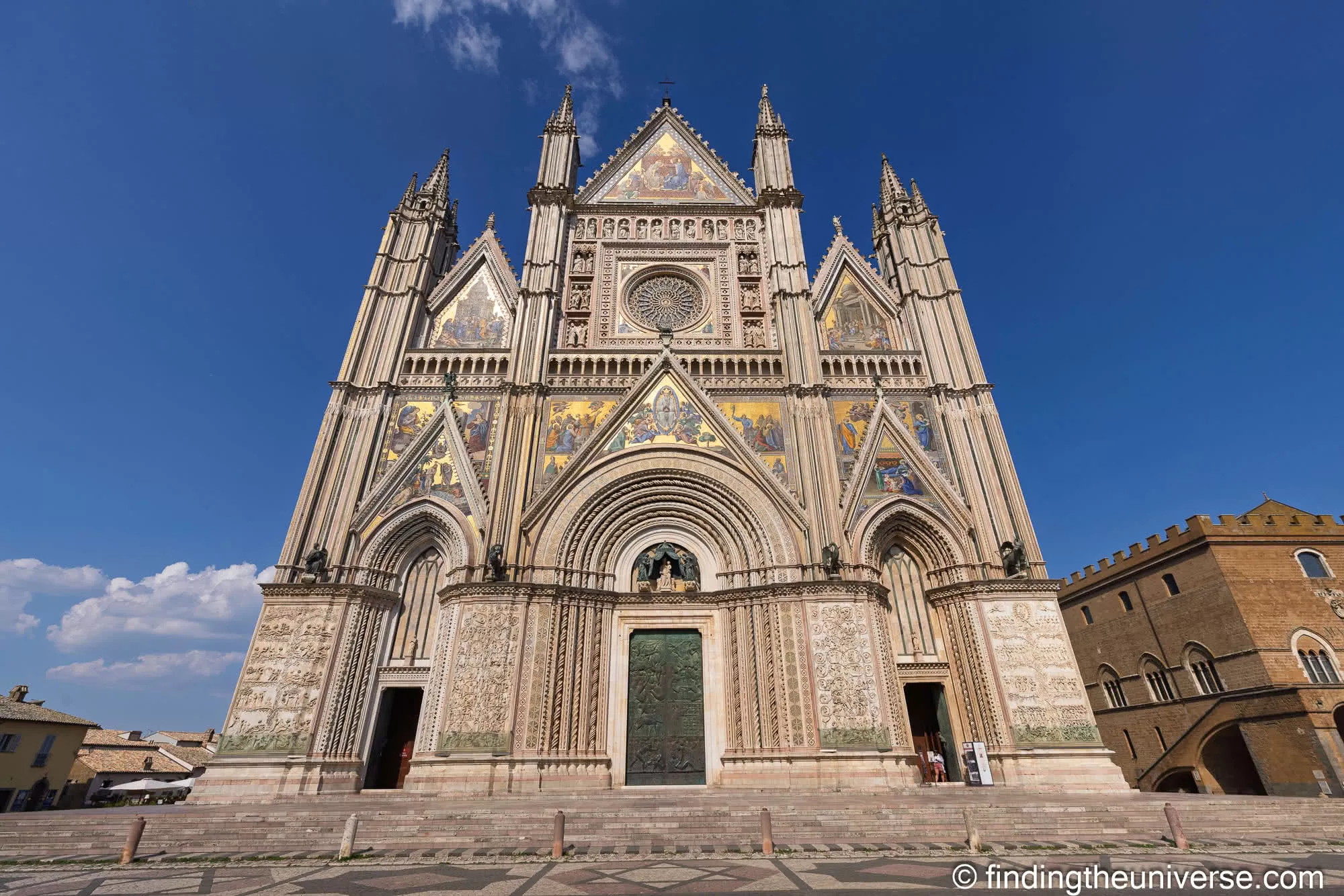
The Duomo is the reason to come. The striped Gothic facade is absurdly photogenic, and the €8 ticket covers more than most visitors realise, including the San Brizio chapel with Signorelli’s Last Judgement frescoes, the Museo Emilio Greco, and the cathedral’s underground spaces.
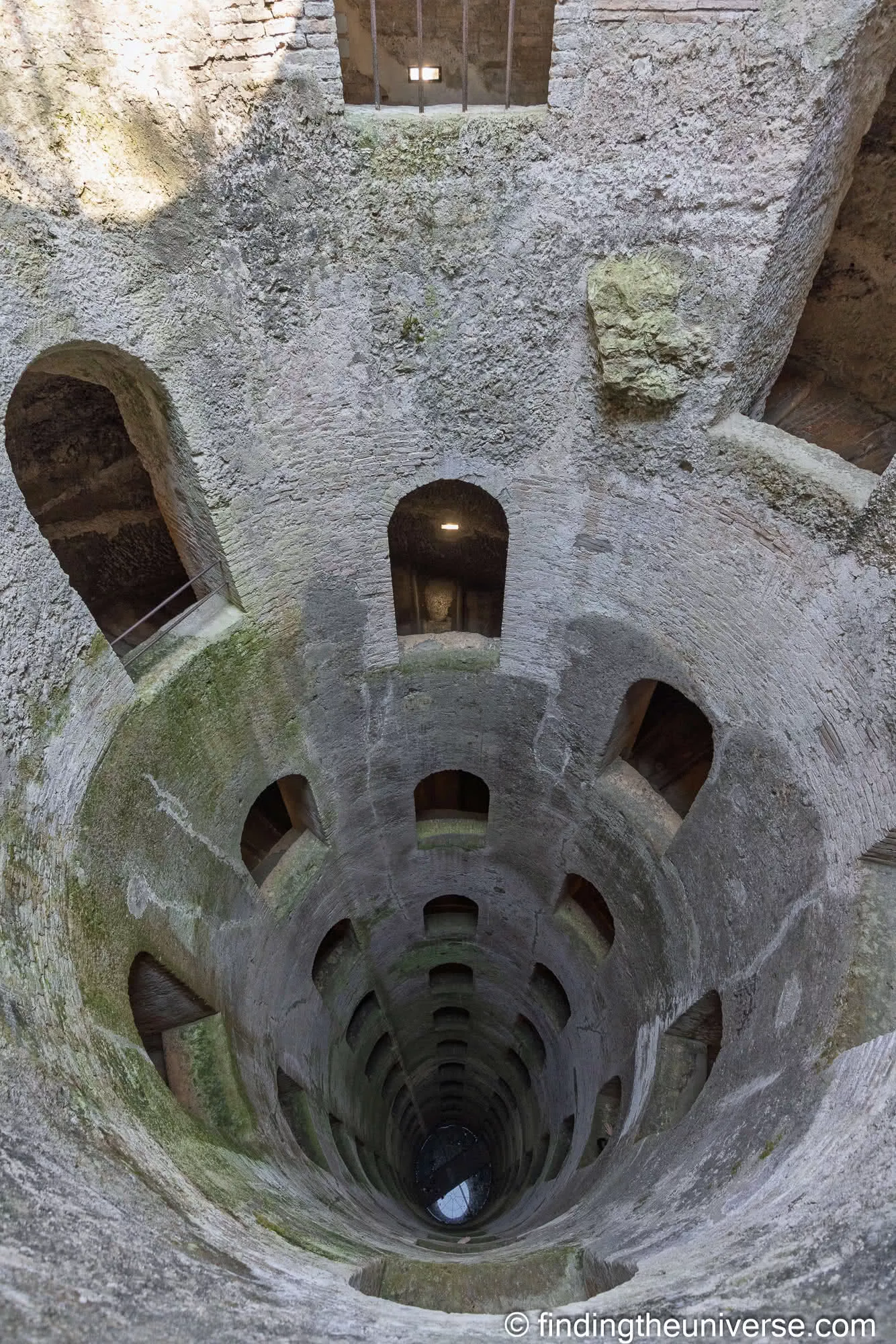
Tourist visits pause during services, so plan around Mass times. Details at the Opera del Duomo site. Beyond the cathedral, we highly recommend climbing the Torre del Moro for the rooftop view, and peer down the double-helix shaft of St Patrick’s Well near the funicular station. You can also go down to the bottom and peer up, which is a fun little walk.
Underneath it all is another Orvieto entirely. The Orvieto Underground tour takes you into the caves and tunnels the town has been digging into its rock since Etruscan times, with daily departures at 11am, 12.15pm, 4pm and 5.15pm from Piazza Duomo 23. The operator doesn’t publish prices online, so just book at the office when you arrive, or ahead at weekends and in high season when tours fill up.
Orvieto pairs naturally with Civita di Bagnoregio, next on this list, and if you don’t fancy managing the bus connection yourself there’s a combined Orvieto and Civita day trip from Rome that does both in a day.
5. Civita di Bagnoregio
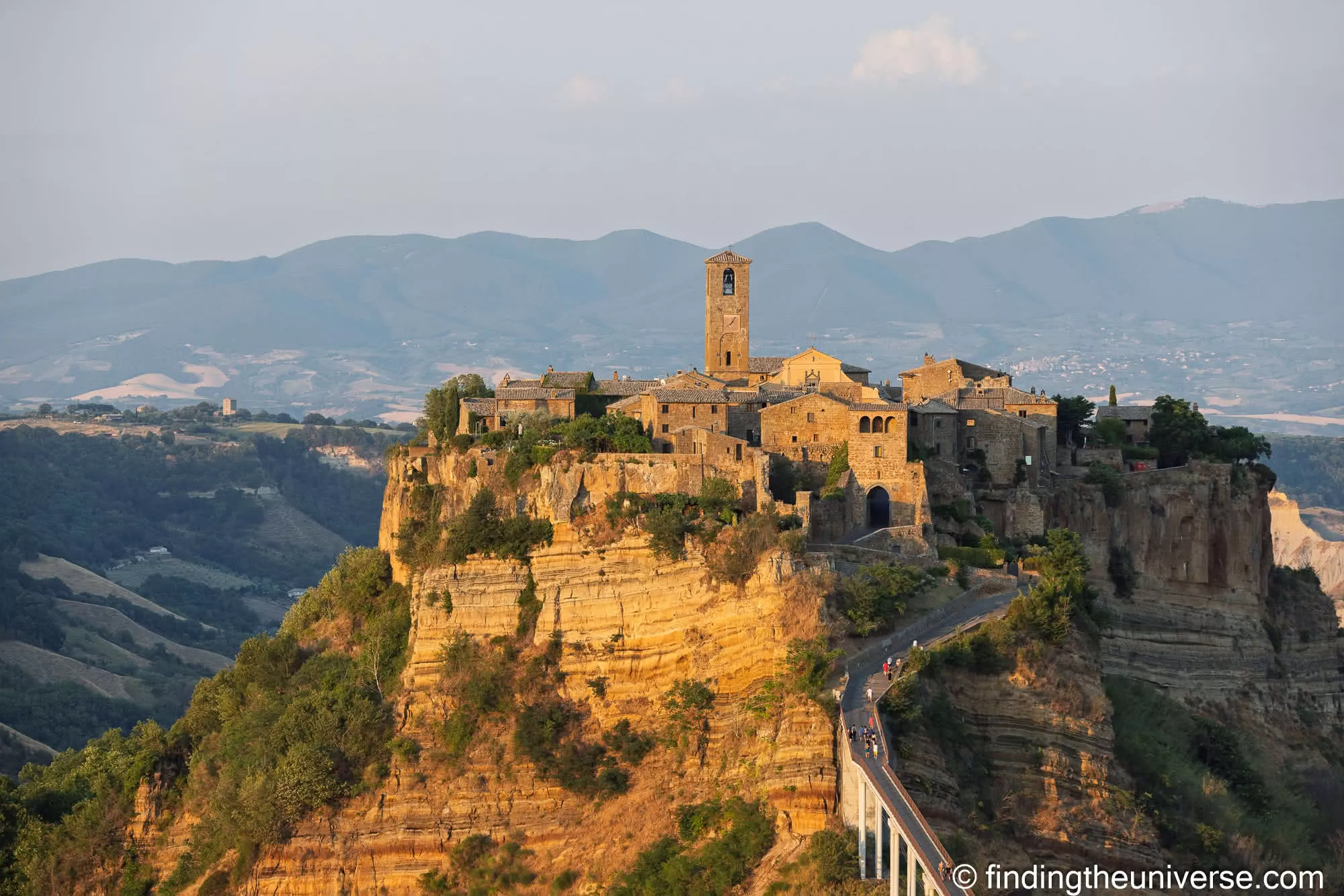

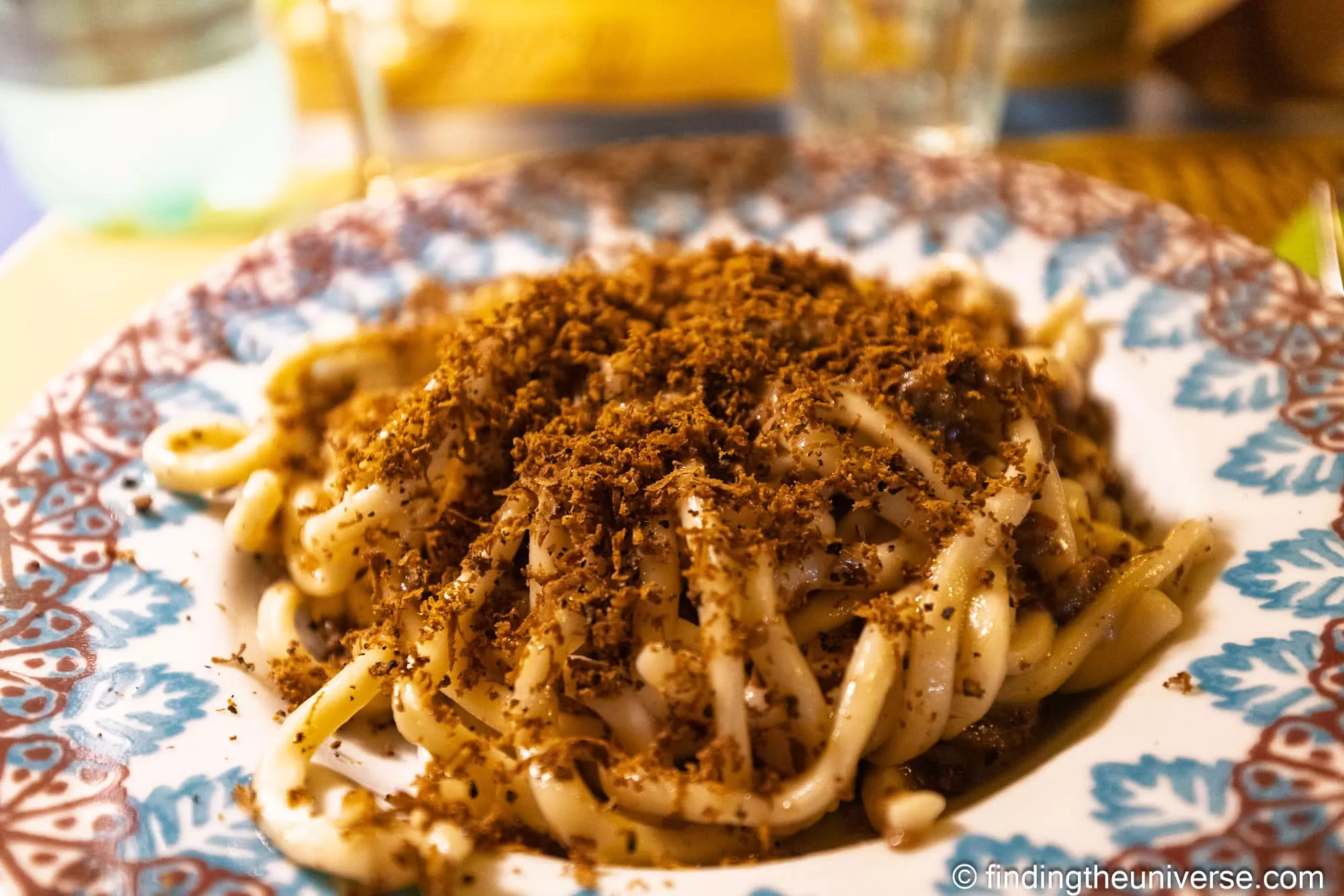
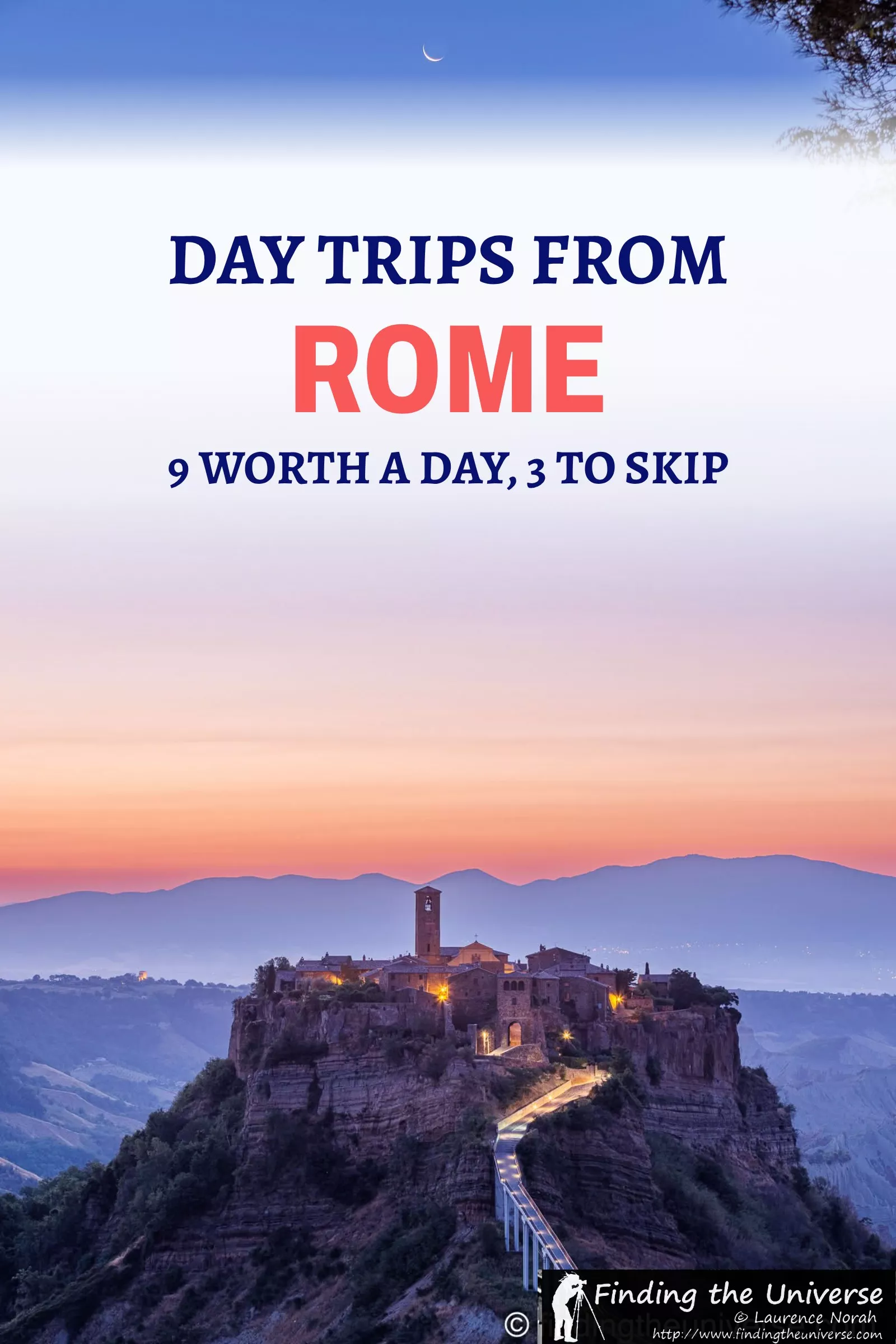
Civita di Bagnoregio is a village on a crumbling pinnacle of tufa, connected to the rest of Italy by a single pedestrian footbridge, and it’s easily the most photogenic place on this list. We’ve photographed it across the valley in evening light and at dawn under a crescent moon, and we’ve eaten truffle pasta in its tiny square, and we’d go back tomorrow.
Crossing the bridge costs €5, paid at the access point between 8am and 8pm. There’s no visitor discount structure worth chasing (the exemptions cover residents, village guests and small children), so budget the flat €5 and check the comune’s site for the current figure, since the toll has risen more than once since it was introduced.
Now the practical part, because this is where Civita punishes casual planning. By public transport you take the train to Orvieto, then the Cotral bus from Orvieto’s Piazza d’Armi to Bagnoregio, then walk through town to the bridge.
The problem is the bus timetable. On weekdays the morning departures cluster early, and after the 8.30am bus there’s a gap of roughly four and a half hours until the early afternoon. Saturday service is reduced. And on Sundays there is no bus at all, which means a Sunday Civita day trip by public transport simply doesn’t exist.
Check current times on Cotral’s site before you commit to a DIY run, or sidestep the whole thing with the Orvieto and Civita combined tour mentioned above.
Most people visit Civita as a day trip, and that works. But if your itinerary has any flex in it, staying the night nearby is the upgrade. The day-trip crowds drain away in the late afternoon, the village goes quiet, and the next morning you can have the bridge and first light almost to yourself. Our own dawn visit came with a crescent moon hanging over the village, and that frame is still one of our favourites from anywhere in Italy.
6. Assisi
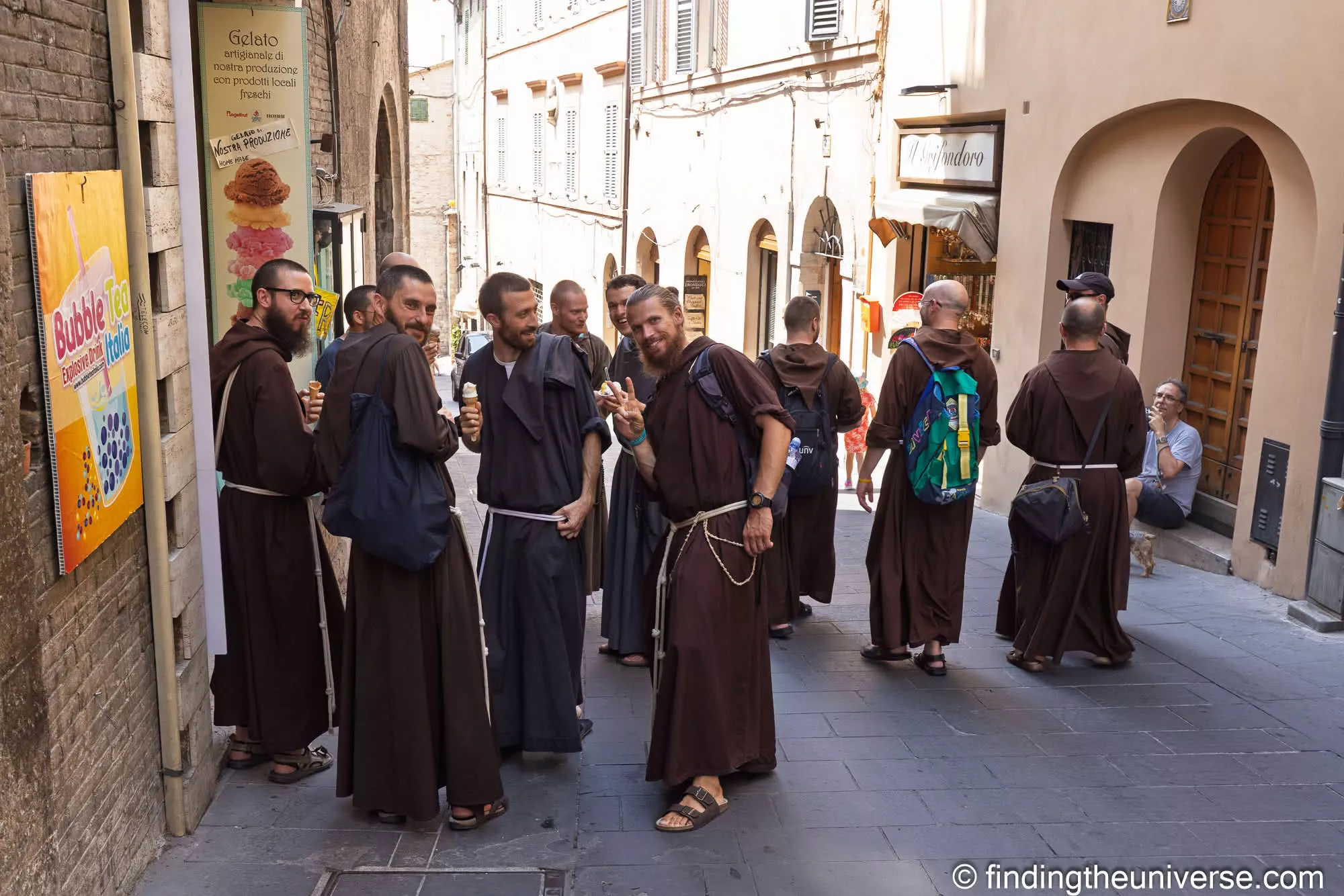
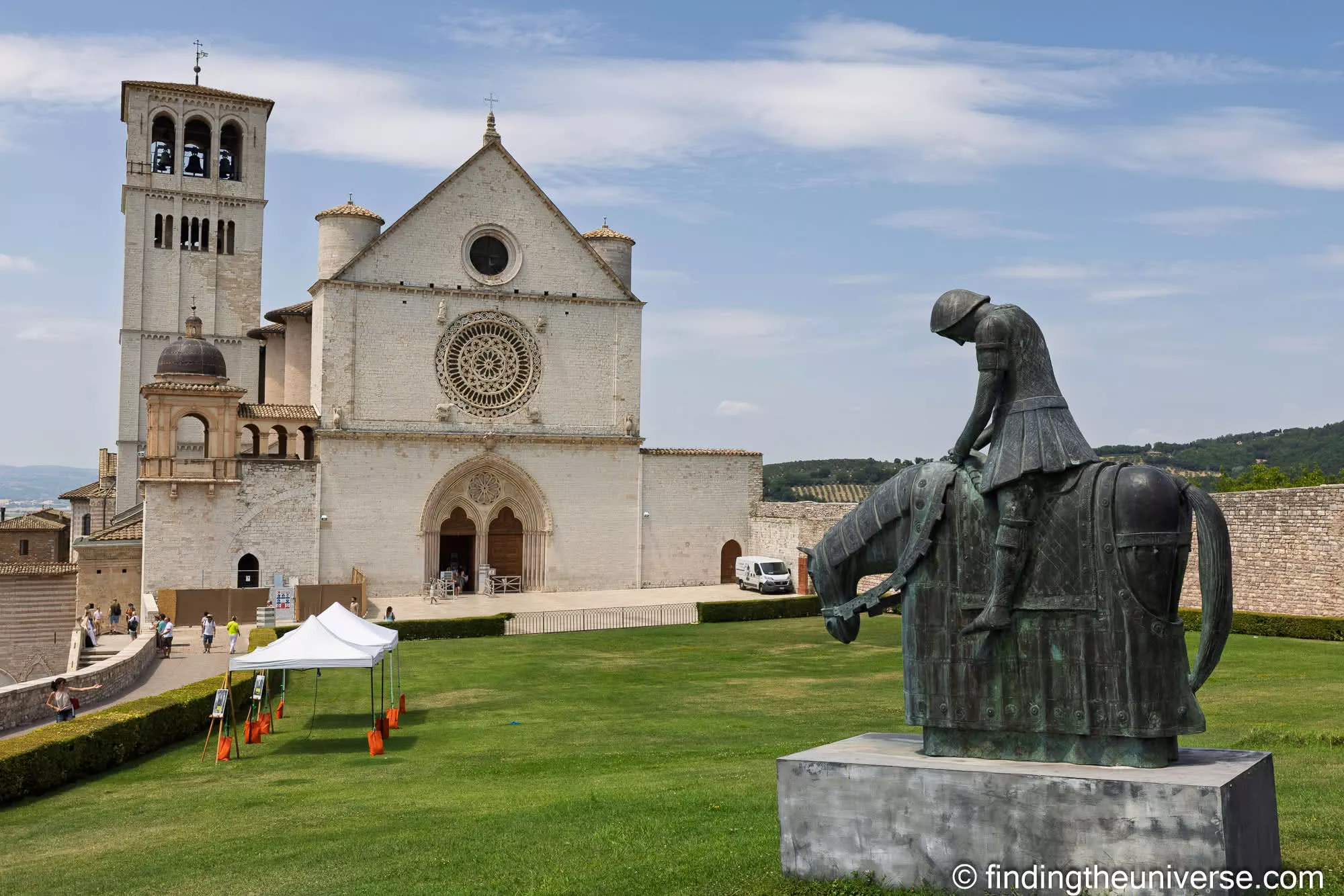
Assisi is the day trip for a different mood. It’s a pale stone town draped over an Umbrian hillside, home to the Basilica of St Francis and its Giotto frescoes, and even at its busiest it runs at a slower pulse than anywhere else on this list. We remember watching a group of Franciscan friars queueing for gelato on the main street, which felt like the town summarised in one image.
Trains from Rome take a bit over two hours. Some run direct and others change at Foligno, and extra direct services were added for 2026, the 800th anniversary of St Francis’s death. Where a change is needed, the Foligno leg is only about 18 minutes on the second train. Assisi’s station is down in the valley below the town, so allow time for the hop up the hill at both ends.
Entry to the basilica is free for individual visitors, no ticket needed, which still surprises people given what’s inside. Two practical notes, though. First, opening hours have changed recently and the basilica’s own website currently gives conflicting times, so check the official site close to your visit, and don’t trust any article’s fixed schedule, ours included.
Second, this is a working Franciscan church, so dress as you would for any Italian church, with shoulders and knees covered. That’s standard Italian church convention, not a printed rule, but you don’t want to be the person testing it at the door of one of Christianity’s great pilgrimage sites.
Assisi also combines well with the Lazio hill country. If you want maximum scenery per day, there’s a day tour combining Assisi, Civita di Bagnoregio and Orvieto, which is a lot of ground for one day but solves three transport puzzles at once.
7. Florence
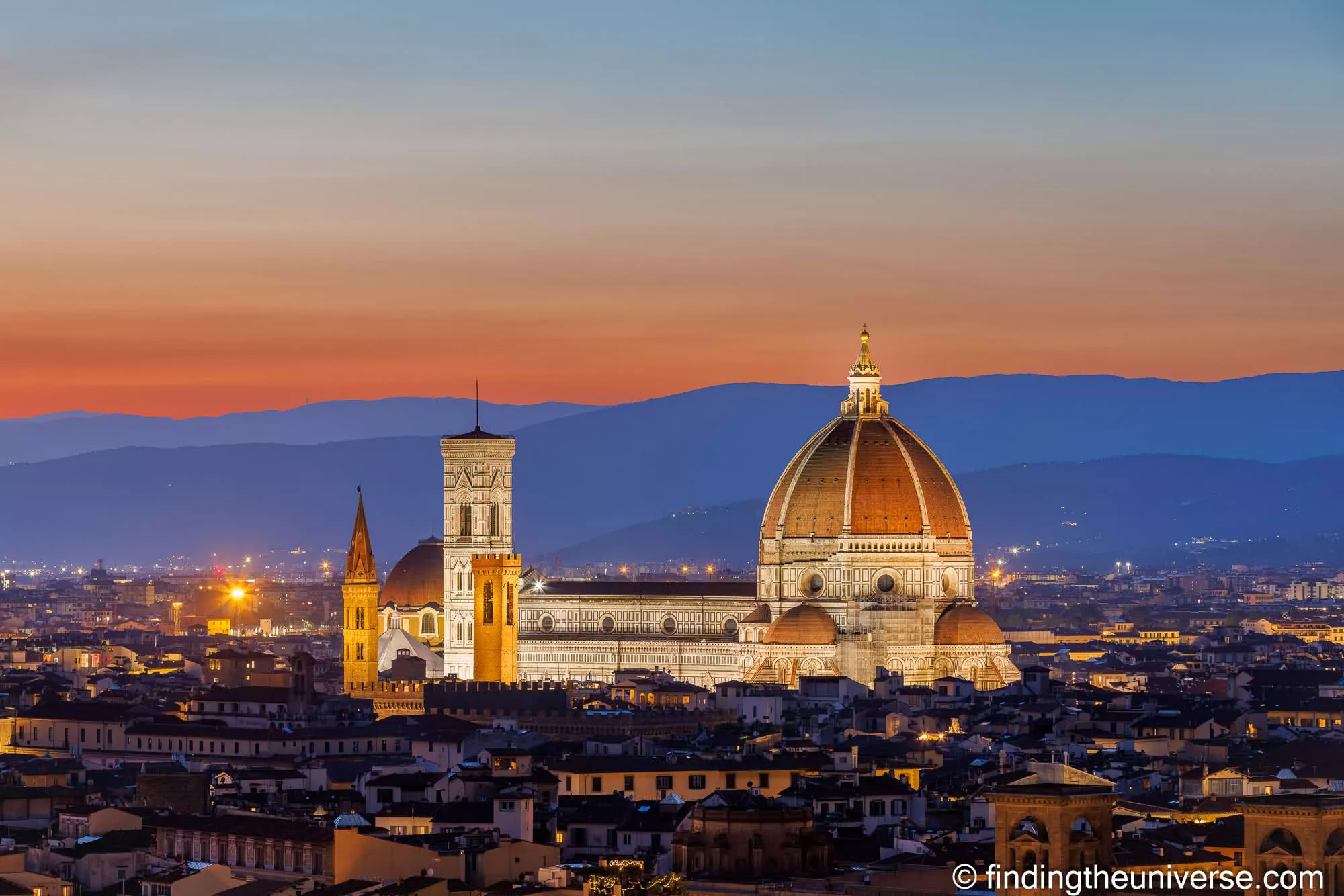
Yes, Florence works as a day trip from Rome, and no, you won’t see it all. The high-speed train takes as little as 1 hour 25 minutes, both Frecciarossa and Italo run the route constantly, and if you book ahead the fare can be a quarter of the walk-up price.
We’ve spent a lot of time in Florence over the years, and for a single day we’d keep it brutally simple: one big gallery, the Duomo from the outside, the Ponte Vecchio, and as much aimless wandering as the timetable allows. Our 2 day Florence itinerary shows what you’re choosing between.
The gallery decision is between the Uffizi and the Accademia, and the pricing needs explaining because it’s counter-intuitive. The Uffizi costs €25 if you buy same-day at the door, but €29 booked in advance. That’s right, pre-booking costs more, and since same-day availability in season is a gamble, €29 is the realistic number for most visitors.
Two useful wrinkles: since January 2026 there’s a €16 late-afternoon ticket for entry from 4pm, which suits a day-tripper arriving mid-afternoon rather well, and the whole Uffizi group (Palazzo Pitti and the Boboli Gardens included) is closed on Mondays. Book through the official Uffizi site and nowhere else.
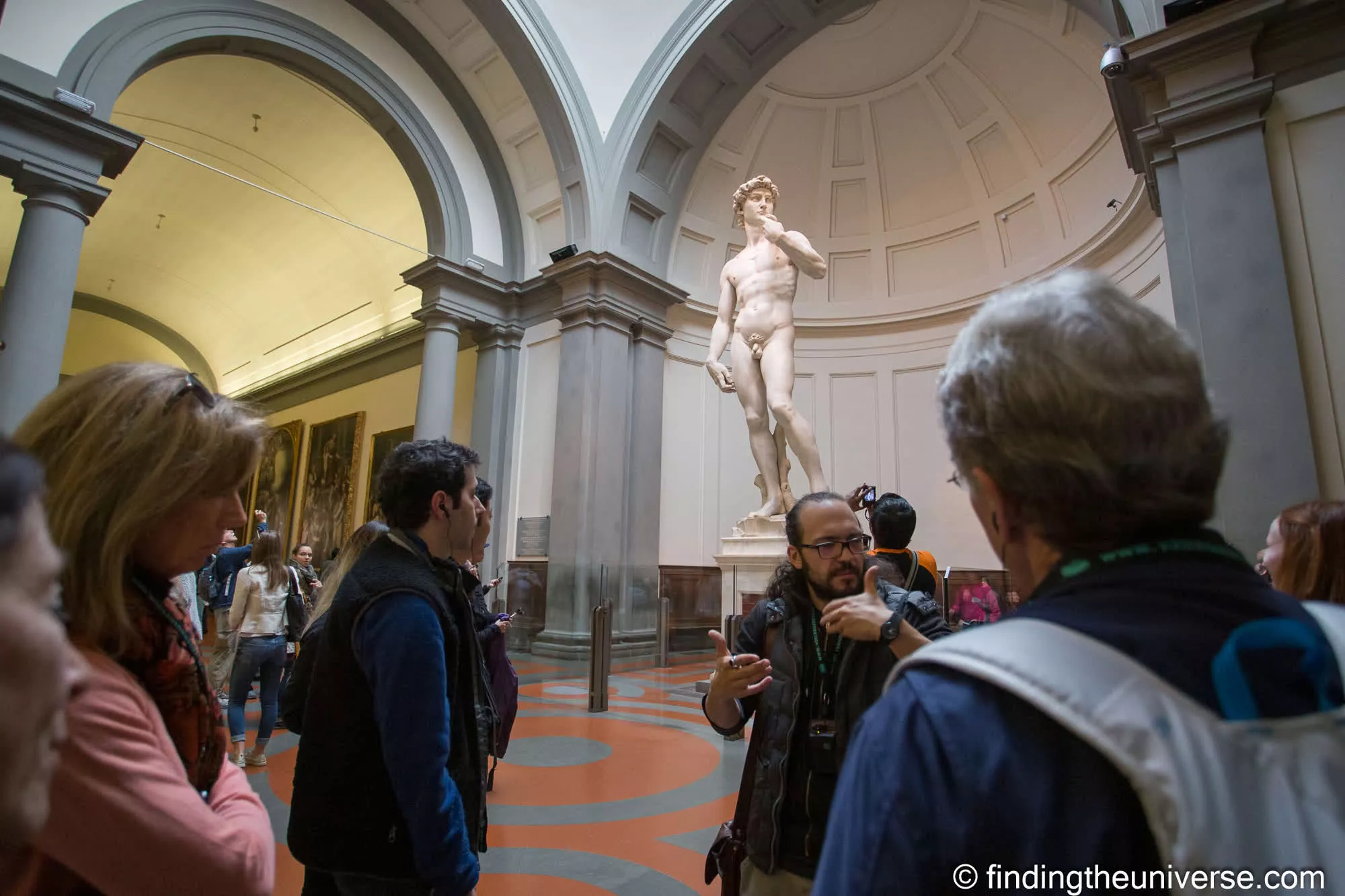
The Accademia, home of Michelangelo’s David, is €20 booked ahead, or €16 if you buy at the door. Take the €20 version, I implore you. The Accademia has the worst queue in Florence, and the four euros you save are not worth an hour (or more) of your one day in the city.
There’s also a €26 combined ticket with the Bargello valid over 48 hours, which only makes sense if you’re staying longer. Book via the official Accademia site. Seeing David in person is worth the queue. Photographs really don’t prepare you for the scale of him.
If you’d rather have the whole day organised, there’s a full-day Florence trip by high-speed train, or a guided Florence walking tour with train tickets included if you want a human to hand you the highlights.
8. Naples

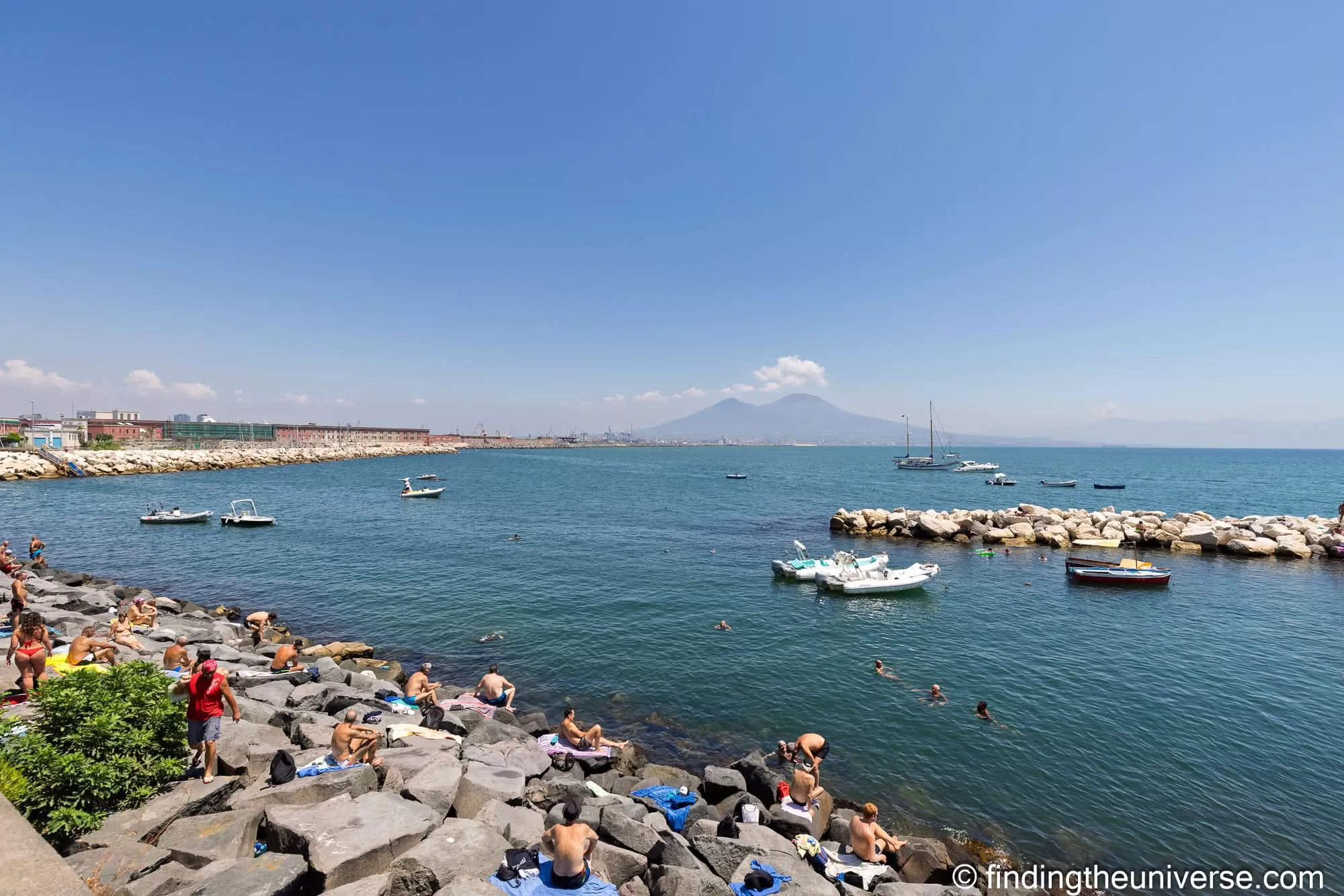
Naples is the day trip we recommend to people who’ve already done a big ruins day, because it’s fast, cheap to reach relative to the reward, and unlike anywhere else in Italy. The high-speed train takes about 1 hour 10 minutes, which is less time than many visitors spend queueing at the Vatican. You arrive into noise, washing lines and the best pizza of your life, with Vesuvius sitting across the bay like a stage backdrop.
We’ve watched locals swimming off the waterfront rocks with the volcano behind them, a city completely relaxed about living somewhere dramatic.
The cultural heavyweight is the National Archaeological Museum, MANN, home to the mosaics and frescoes excavated from Pompeii and Herculaneum, and it’s the missing half of any Pompeii visit, since the good stuff was carted here. Entry is €20, it’s open 9am to 7.30pm, and it’s closed on Tuesdays.
One caveat for 2026 is that the Egyptian, Epigraphic and Numismatic collections are closed for rearrangement until further notice, so if the Egyptian rooms were your main draw, hold that thought and check the museum’s site before you go.
Whatever else you do, don’t visit Naples on a Tuesday. MANN closes Tuesdays, and as of mid-2026 the Certosa di San Martino, the hilltop monastery with the best view over the bay (open 8.30am to 6.30pm otherwise), moved its closing day to Tuesday as well. A Tuesday visitor loses both headline museums at once, and nothing on the trains warns you.
You can also combine the city with the ruins on a full-day Pompeii and Naples tour from Rome, though it’s a firmly packed day. If Naples grabs you, as it did us, our Naples itinerary makes the case for giving it more than a day, including the Capodimonte museum on the hill, where we once stood in front of a painting of Vesuvius erupting with the real thing just a few miles away.
9. Siena
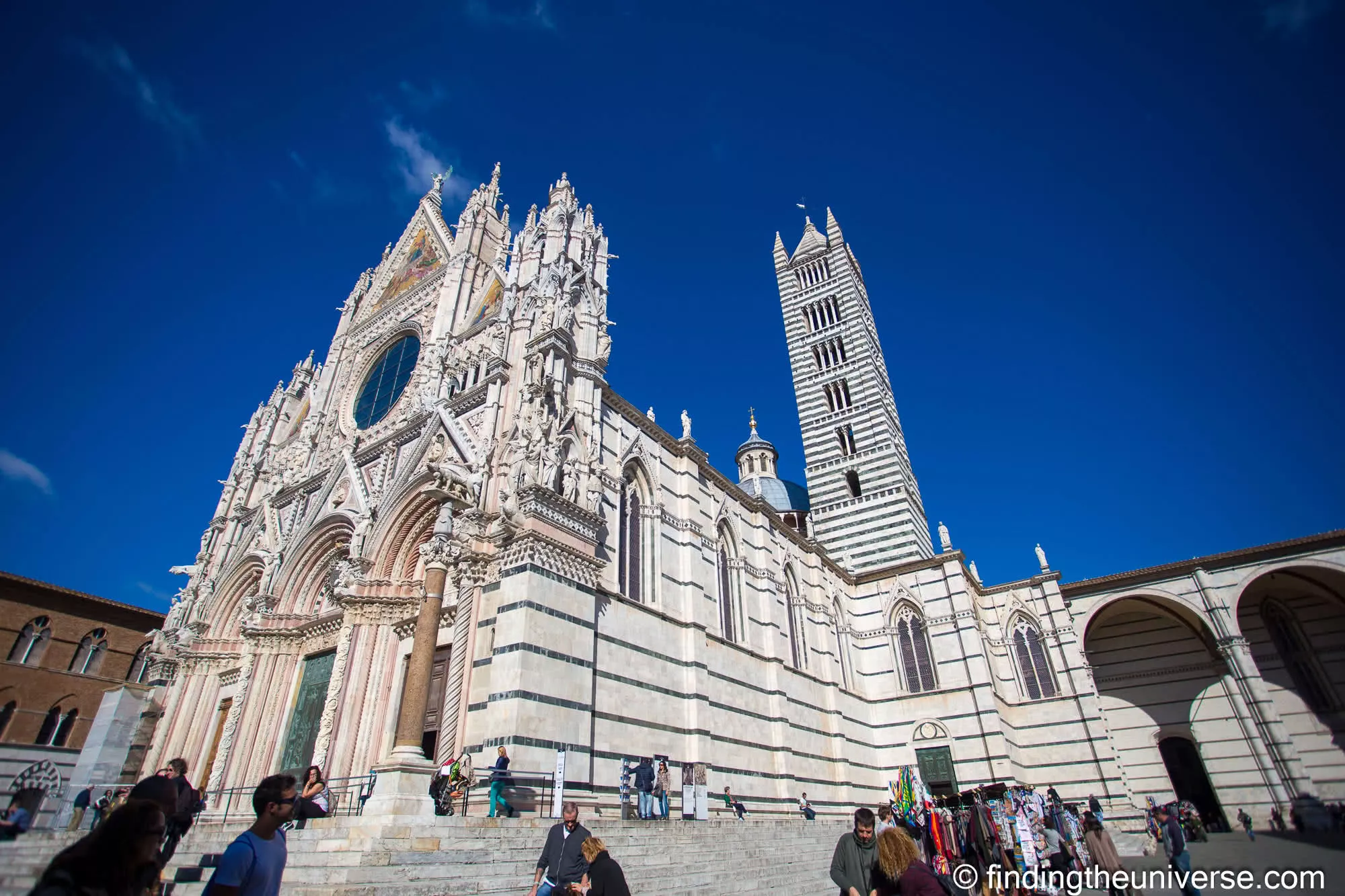
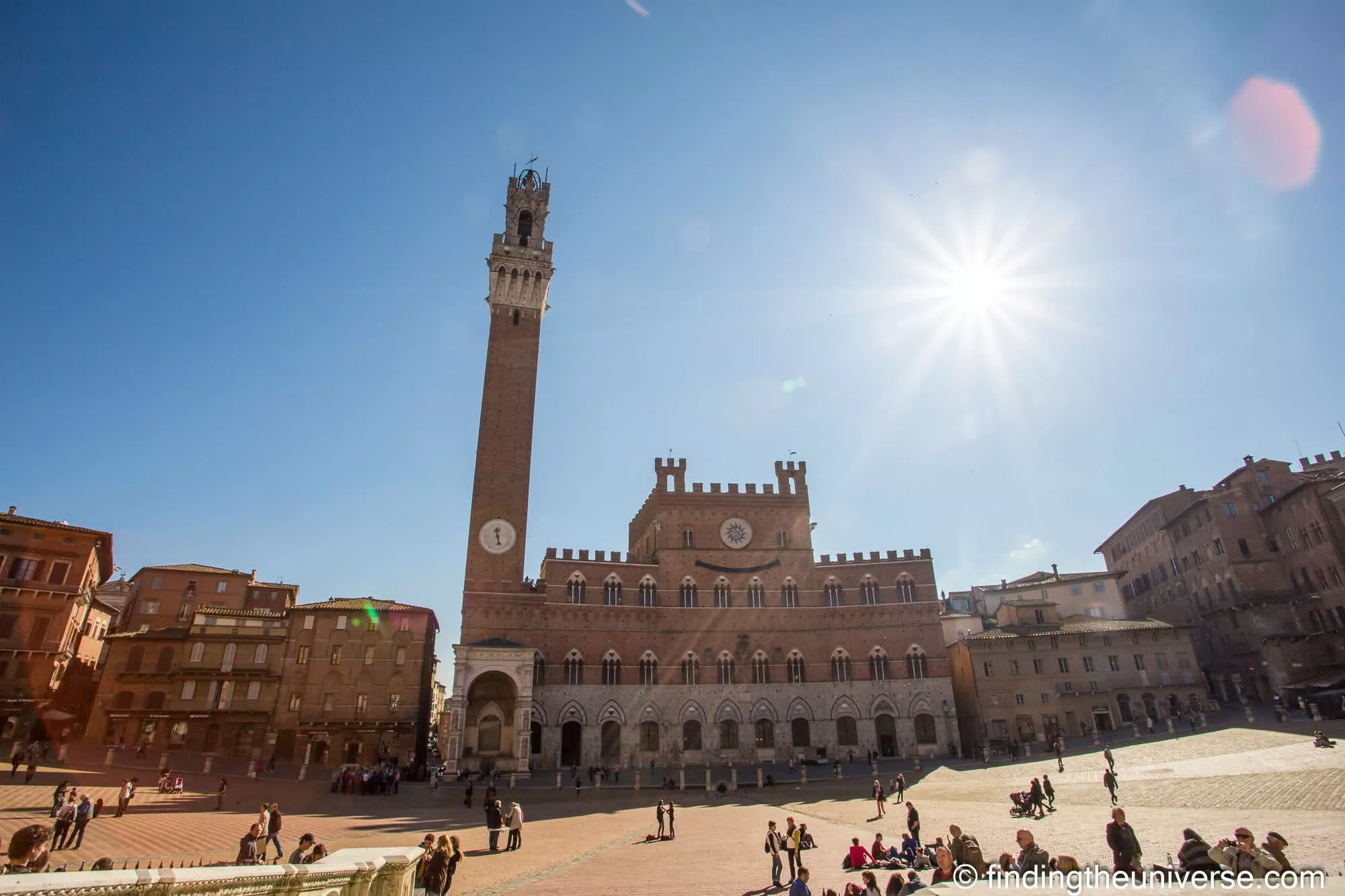
Siena is last on this list for one reason only. It’s a glorious town at the end of the wrong journey. From Rome, the trip is the slowest and most awkward of the nine, while from Florence it’s an easy regional hop. So our actual recommendation is contradictory on purpose. Go to Siena, just not from here. If Siena is on your Italy list, build it into a Florence stay instead, the way we do in our Florence and Tuscany itinerary.
If you do go, the Piazza del Campo is the star of course, the shell-shaped square where the Palio horse race runs, overlooked by the Torre del Mangia. But the Duomo complex is the better use of a ticket.
The OPA SI Pass covers the cathedral, crypt, baptistery and museum, costs €14 in regular season and €16 during the weeks when the cathedral’s inlaid marble floor is fully uncovered (late June to July, then mid-August to mid-November), and it’s valid for three days with an audioguide included. The floor pricing sounds like a gimmick until you learn the marble panels are protected under boards most of the year, so the more expensive window is also the better visit.
There’s also a €21 single-day ticket covering the complete complex, which covers different ground, so read the official ticket page carefully before buying the first thing offered.
One timing trap: on Sundays and religious holidays the Duomo doesn’t open to visitors until 1.30pm. A day-tripper arriving on a Sunday morning finds the main event shut until after lunch, which on a day trip is most of your day.
The Day Trips We’d Skip: Capri, Sorrento and the Amalfi Coast
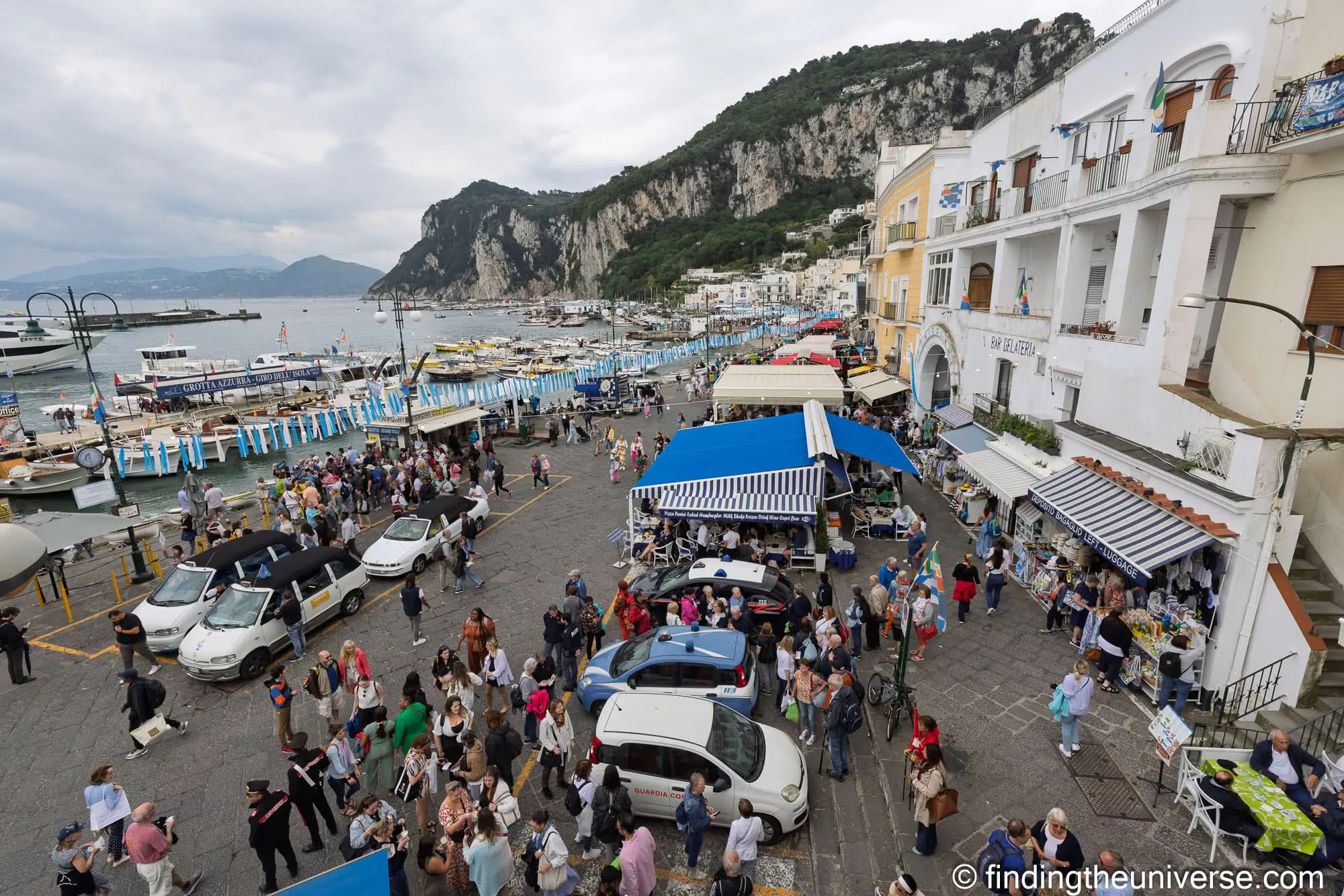
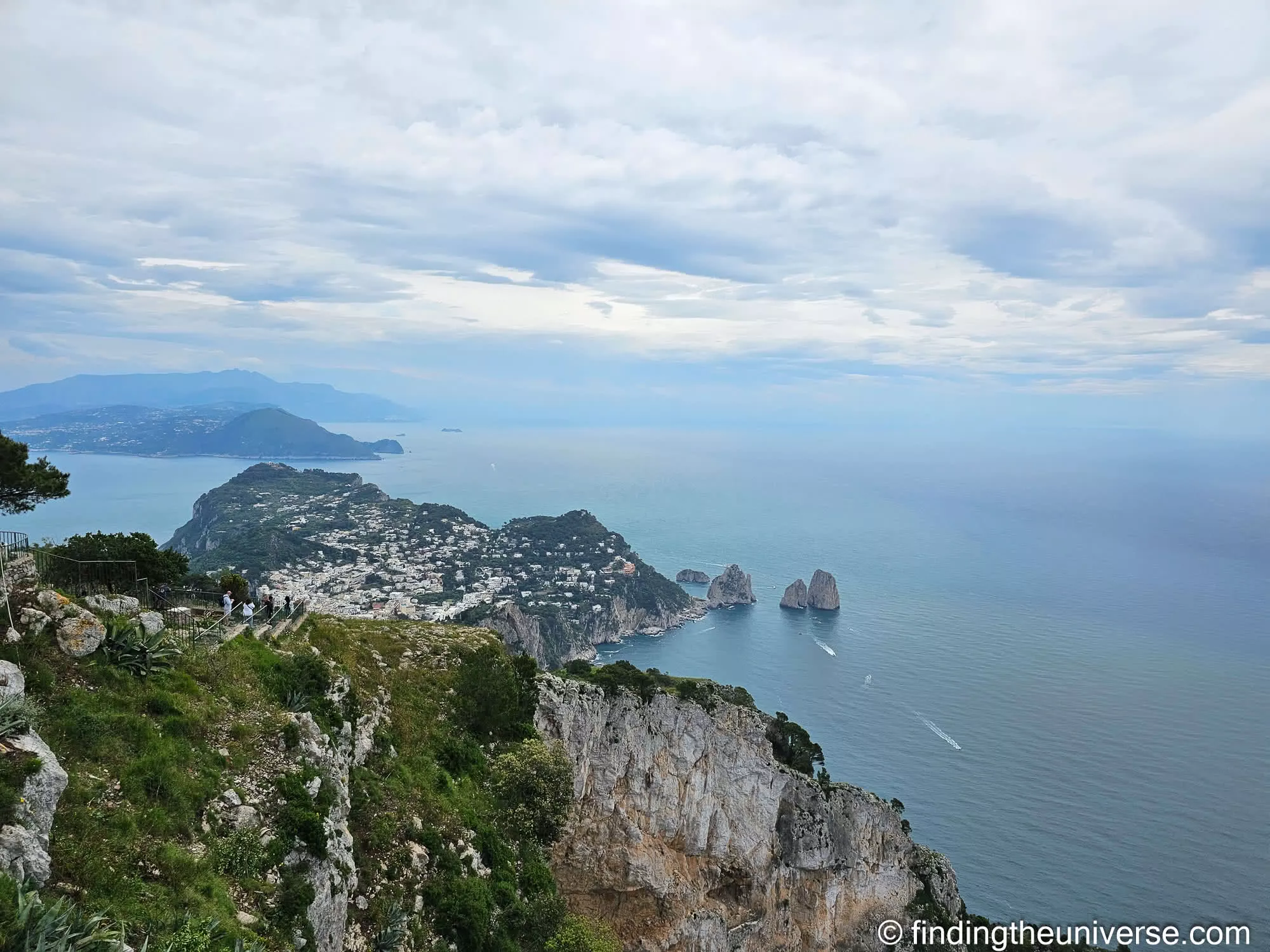
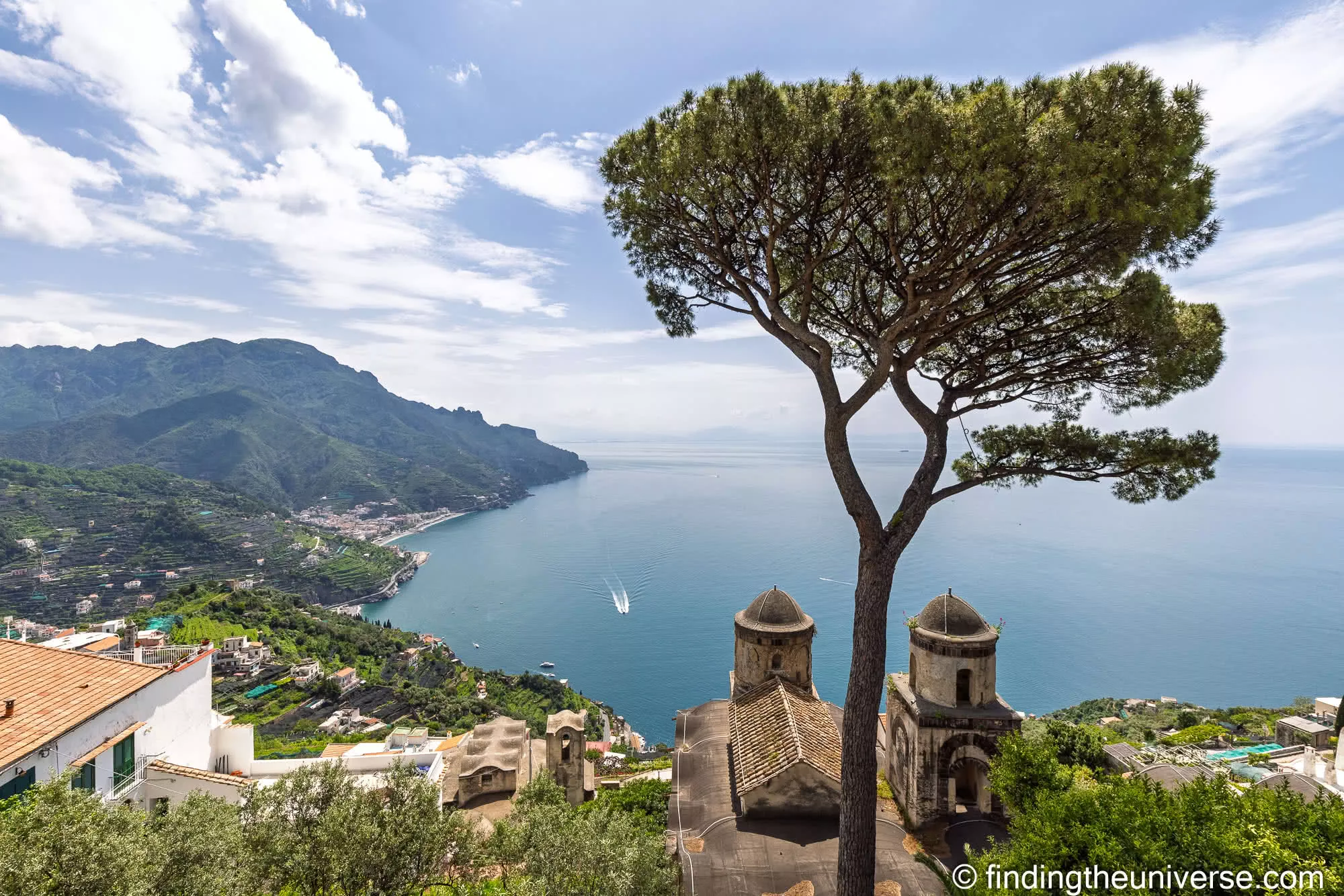
Capri, Sorrento, Positano, Amalfi and Ravello are all sold enthusiastically as day trips from Rome, and having spent unhurried time in all of them, our advice is the same for each: don’t do them as day trips from Rome.
I first saw that coastline at 15, on a campervan trip across Europe with my parents, and we’ve since done it both ways, as a day trip out of Naples and with Sorrento as a base. The Naples day trip works and gives you a real taste of it. From Rome you’d spend that same day getting there and back, and a taste is the most any day trip gets you here. They’re all beautiful, of course. The problem is that a day trip from Rome shows you the worst version of each.
Run the maths on Capri. Train to Naples, transfer across the city to the port, ferry to the island, and you’ve spent the entire morning in transit before you’ve seen a thing. What you get for it is Marina Grande at midday, which we’ve seen and photographed, and it’s a queue with a harbour attached.
The Capri worth having, wihch is quiet Anacapri lanes, the majolica-tiled floor of San Michele, the Faraglioni from the high viewpoints, belongs to people who are still on the island in the evening after the day boats have goneok .
Same story on the Amalfi Coast, where a day tripper from Rome spends most of the day in transit to sit in coast-road traffic, and in Sorrento, which is a lovely base town (we have fond memories of a limoncello tasting under the lemon trees) but not a destination that rewards that much travelling.
Our advice is to save this entire coastline for its own trip with nights in it, which is exactly what our Amalfi Coast itinerary and 10 day Italy itinerary are for. Ravello’s gardens at golden hour, Positano before the boats arrive, Capri after they leave: those are the versions worth crossing the world for, and no Rome day trip can reach them.
The Day Trips We Haven’t Taken
A quick note on some names you’ll see in other guides but not ranked here: the Castelli Romani towns (Frascati and Castel Gandolfo chief among them), Sperlonga, the gardens at Ninfa with neighbouring Sermoneta, the war cemeteries at Anzio and Nettuno, Etruscan Cerveteri, and Bracciano with its lake and castle.
The reason they’re not ranked is simple: we haven’t been to them yet. We only write in detail about places we’ve actually visited, so rather than paraphrase other people’s day trips, we’re leaving these off the ranking until we’ve done them ourselves.
The Castelli Romani in particular are on our own list for next time, since every Roman we’ve asked seems to have a favourite Frascati lunch spot they defend with real feeling. When we’ve been, they’ll earn their sections here.
Trains from Rome: Fares, Booking and the Last Train Back
Every trip in this guide except Tivoli and Civita leans on the railway, so five minutes understanding Italian train pricing will save you real money. High-speed fares work like airfares, and regional fares don’t.
Bookings open around four months out (shrinking to roughly 30 days for dates just after the Europe-wide timetable changes each June and December). Trenitalia sells three main fare types: Base, which is flexible and refundable; Economy, roughly 40% cheaper but non-refundable; and Super Economy, roughly 70% off and locked to your train, though a small paid add-on called tiRimborso (about €2) makes even that refundable minus 10%.
Italo, the private competitor on the same high-speed routes, has its own fare types and is always worth cross-checking. On Rome to Florence, the swing is real money: from around €19.90 booked early to around €50 walking up on the day. Rome to Naples swings similarly, with the same seat costing several times more on the day than booked ahead. Book directly with Trenitalia or Italo.
The regional routes are the opposite. Orvieto, Tivoli and the Ostia line are cheap and pretty stable on price, so those trips suit spontaneity. Decide the night before, check the weather, go.
As for the classic day-trip fear of being stranded, relax. On the Florence and Naples runs, the last trains back to Rome leave late in the evening, typically somewhere between 10pm and 10.45pm, so dinner before the return journey is entirely realistic. Do check your specific date, though, and don’t trust a round number.
The fragile link is actually the Circumvesuviana back from Pompeii to Naples, not the mainline, which is why we suggest heading back to Napoli Centrale with a comfortable margin rather than squeezing a last hour from the ruins.
Our Rules for a Rome Day Trip That Works
After all these trips, our planning has settled into four rules, and they’re cheerier than they sound, because each one exists to protect a great day rather than to warn you off one.
The first rule is to check the closure day before anything else. This one habit prevents almost every day-trip disaster in this guide and it is a trap I have personally fallen into. Turning up at a closed museum when you are in charge of the itinerary for the trip will not go down well, believe me. That said, it’s not a mistake you’re likely to make twice.
Mondays close Ostia Antica, the Uffizi group and Villa d’Este’s morning. Tuesdays close both of Naples’s headline museums. Sundays kill the Civita bus and Siena’s Duomo morning. Pompeii, helpfully, never closes for the week, which is one more reason it tops the ranking.
The second is to treat free Sundays as a warning rather than a bargain. On the first Sunday of every month, Italy’s state sites, including Pompeii, Herculaneum, Ostia Antica, both Tivoli villas and MANN, are free. It sounds great. In practice it means maximum crowds, no advance booking, and at Pompeii a hard daily cap you can’t reserve your way around. With one precious day, we’d happily pay €20 for the Tuesday version instead.
The third is to book the fast trains early, and the sights by their own rules. The train fare is the biggest swing in your day’s budget. For the sights: Pompeii doesn’t require pre-booking but rewards it in peak season, and remember its tickets are nominative, so book in the name on your passport, and bring your passport with you. The Uffizi effectively requires advance booking at the €29 tier. Everything else here you can pretty much decide on the morning.
And the last rule is a ratio: one day trip for every three days of Rome. Break it if you like, but break it knowingly. Rome rewards unstructured time, and the best day trip is the one that doesn’t leave you resenting the city you came for.
None of the traps above are trip-breakers. Dodge the wrong day, book the fast train, and every trip on this list sends you back to Rome with a full memory card and a strong opinion about where to go next time.
Day Trips from Rome: Your Questions Answered
What is the best day trip from Rome?
Pompeii, in our view, if you’re up for a long day. It’s about two hours each way, but nothing else within reach of Rome matches it. If you want something easier, Orvieto gives you the classic hill-town day with a direct 90-minute train, and Ostia Antica gives you remarkable Roman ruins under an hour from the centre.
What is the easiest day trip from Rome?
Ostia Antica. It’s under an hour from central Rome by Metro and the Metromare line, entry is €18, and half a day covers it comfortably. Just don’t go on a Monday, when the site is closed.
Can you visit Pompeii as a day trip from Rome?
Yes, and we think it’s the best day trip from Rome. Take the high-speed train to Naples (about 1 hour 10), then the Circumvesuviana local train to Pompei Scavi – Villa dei Misteri (35 to 40 minutes, €3.30). Make sure you use that station, not Pompei Santuario or the mainline Pompei station, which serve the modern town.
Is Pompeii or Herculaneum better for a day trip?
For a first visit, Pompeii, because the scale is the experience. Herculaneum is smaller, better preserved and less crowded, opens earlier (8.30am) and costs €16, so it’s our pick for a second visit or for anyone who wants the story without hours of walking. Note that Herculaneum’s Villa dei Papiri is currently closed for maintenance.
How much does Pompeii cost to visit in 2026?
€20 for a standard adult ticket, per the official Pompeii site. The reduced €2 rate only applies to EU citizens aged 18 to 24. Tickets are nominative, meaning they carry your name and you need photo ID at the gate, so buy in the exact name on your passport.
What days should I avoid for day trips from Rome?
Mondays close Ostia Antica, Florence’s Uffizi group and Villa d’Este’s morning session. Tuesdays close both MANN and the Certosa di San Martino in Naples. On Sundays there’s no bus from Orvieto to Civita di Bagnoregio, and Siena’s Duomo doesn’t open to visitors until 1.30pm. Pompeii and Herculaneum are open every day.
Is Civita di Bagnoregio worth visiting from Rome?
Yes, it’s the most photogenic day trip on our list, a hilltop village reached only by footbridge. The bridge toll is €5. Reaching it by public transport means a train to Orvieto plus a Cotral bus to Bagnoregio, and there’s no bus on Sundays, so go on a weekday or take a tour.
Can you get to Civita di Bagnoregio on a Sunday by public transport?
No. The Cotral bus between Orvieto and Bagnoregio doesn’t run on Sundays, so there’s no public transport link that day. On weekdays, watch the timetable too, as there’s a gap of about four and a half hours in the middle of the day. On a Sunday your options are a tour or a hire car.
Is Florence worth doing as a day trip from Rome?
Yes, with expectations managed. The high-speed train takes about 1 hour 25 minutes each way, so you get a real day in the city. Pick one major gallery rather than trying for two, book it ahead, and avoid Mondays, when the Uffizi, Palazzo Pitti and Boboli Gardens are all closed.
Is Capri worth it as a day trip from Rome?
We don’t think so. The journey involves a train, a cross-city transfer in Naples and a ferry, which consumes the morning, and midday Capri is the island at its most crowded. Capri rewards people who stay nearby and visit early or late. From Rome, we’d spend the day at Pompeii or Naples instead.
Do Italian museums and archaeological sites have free entry days?
Yes. On the first Sunday of each month, state sites including Pompeii, Herculaneum, Ostia Antica, Hadrian’s Villa, Villa d’Este and MANN are free. We’d avoid it for a one-shot day trip, though: crowds peak, advance booking isn’t available, and Pompeii’s daily visitor cap still applies.
How far in advance should I book trains for a day trip from Rome?
For high-speed routes like Florence and Naples, as soon as your dates are fixed. Bookings open about four months ahead and the cheapest fares sell first, with Rome to Florence swinging from around €19.90 to around €50. Regional trains to Orvieto or Tivoli have stable fares you can buy on the day.
Is Villa d’Este closed on Mondays?
Only in the morning. Villa d’Este opens at 2pm on Mondays, while Hadrian’s Villa is open every day. So a Monday Tivoli trip works if you visit Hadrian’s Villa first and Villa d’Este in the afternoon. On public-holiday Mondays, d’Este opens normally and the following Tuesday afternoon is affected instead.
Do I need a guide for Pompeii?
You don’t need one, but it’s the one site in this guide where we actively recommend one. Pompeii is huge and lightly labelled, and a good guide turns anonymous walls back into a city. If you’d rather go alone, our Pompeii guide covers the highlights and how to structure a visit.
Further Reading for Your Italy Trip
We’ve written about Italy for years, and these are the guides we’d read next alongside this one:
- 2 Days in Rome: The Itinerary We Recommend
- 3 Days in Rome: Our Complete Itinerary (including the Appian Way half-day)
- Rome Highlights in Two Days
- Which Rome Pass Is Worth It?
- Our Complete Guide to Visiting Pompeii
- The Best Food Tours in Rome, and for the caffeine-dependent, Jess’s guide to the best coffee in Rome
- Our 10 Day Italy Itinerary
- Day Trips from Venice and our 2 day Venice itinerary, if your trip continues north
And if you like planning with a book in hand, we always travel Italy with the latest Rick Steves Italy guidebook, which pairs well with this site’s opinions!
Pick the right day of the week, book the fast train early, and whichever trip you choose, we’d love to hear how it went in the comments below!
Leave a Reply