
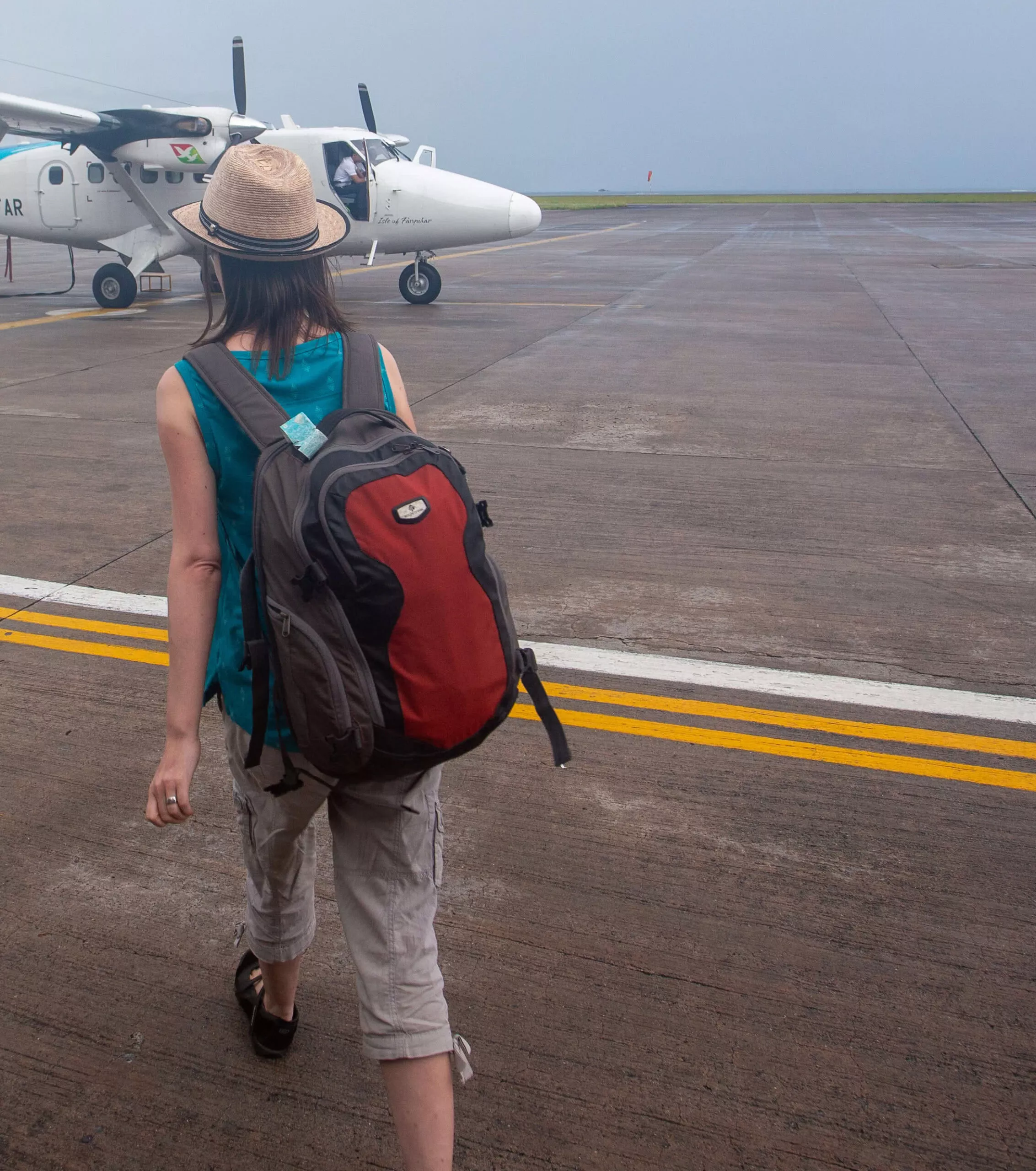
I’ve been carrying the same Osprey daypack for the best part of two decades. It has been rained on, sat on, squashed under plane seats and dragged up a fair few hills and mountains, and it’s still going strong. Osprey stopped making that exact model years ago, which tells you something about how long a good daypack lasts, and also why it’s worth buying the right one first time.
If you just want the quick answer, for most travellers the Osprey Daylite Plus 20L is the best travel daypack in 2026. It’s the closest current pack to the one I own, it’s light, it holds a 15 inch laptop, and Osprey’s repair-or-replace guarantee means it could well outlast your next several trips.
The right daypack does depend on what your days look like, though. So below you’ll also find picks for day hikes, wet weather, larger frames, camera gear and packing down small, plus a comparison table and a guide to what actually matters when choosing.
A quick word on what we mean by a travel daypack. This is the second bag, the one that comes out once you’ve arrived. Your main travel backpack or bag stays at the hotel while the daypack does the museum days, the day hikes, the beach runs and the flights, where it doubles as your under-seat personal item. It has a different job to your main luggage, and it needs different things to be good at it.
Between us, Jess and I have run our daypacks harder than any other bag we own. Mine is the ancient Osprey; hers is an older Eagle Creek that she still reaches for on most trips. Neither is sold any more, which is a compliment to both brands, so every pick below is a current model, not the exact bag on our shelves. I’ve been clear throughout about which packs we know as brands and which are recommendations based on specs and research.
Our picks at a glance:
- Best overall: Osprey Daylite Plus 20L
- Best for day hikes: Deuter Speed Lite 21
- Best for wet weather: Patagonia Black Hole Pack 25L
- Best for larger frames: Gregory Nano 20 Plus
- Best organisation: Eagle Creek Ranger XE 26L
- Best for rough handling: Thule Chasm 26L
- Best for bigger days: Cotopaxi Chiquillo 26L
- Best packable: Osprey Ultralight Stuff Pack
- Best budget packable: Eddie Bauer Stowaway Packable 20L
- Best for camera gear: Vanguard VEO Metro B20L
- Best ultralight: REI Co-op Flash 18
Table of Contents:
Travel Daypack Comparison Table
Here’s the full lineup side by side. All weights and capacities are the manufacturers’ own figures, checked in July 2026.
| Daypack | Best for | Capacity | Weight | Laptop | Price |
|---|---|---|---|---|---|
| Osprey Daylite Plus 20L | Best overall | 20 litres | 585 g / 1.29 lb | 15 inch | Check price on Amazon |
| Deuter Speed Lite 21 | Day hikes | 21 litres | 470 g / 1.04 lb | No sleeve | Check price on Amazon |
| Patagonia Black Hole Pack 25L | Wet weather | 25 litres | 760 g / 1.68 lb | 15 inch | Check price on Amazon |
| Gregory Nano 20 Plus | Larger frames | 20 litres | Not published | Unpadded sleeve | Check price on Amazon |
| Eagle Creek Ranger XE 26L | Organisation | 26 litres | 595 g / 1.31 lb | Not stated | Check price on Amazon |
| Thule Chasm 26L | Rough handling | 26 litres | Not confirmed | 15.6 inch | Check price on Amazon |
| Cotopaxi Chiquillo 26L | Bigger days | 26 litres | 700 g / 1.57 lb | 16 inch | Check price on Amazon |
| Osprey Ultralight Stuff Pack | Packable | 18 litres | 113 g / 4 oz | No sleeve | Check price on Amazon |
| Eddie Bauer Stowaway Packable 20L | Budget packable | 20 litres | 272 g / 9.6 oz | No sleeve | Check price on Amazon |
| Vanguard VEO Metro B20L | Camera gear | 20 litres | 1.77 kg / 3.9 lb | 14 inch | Check price on Amazon |
| REI Co-op Flash 18 | Ultralight | 18 litres | 269 g / 9.5 oz | No sleeve | Check price at REI |
Which Travel Daypack Should You Buy?
The right daypack for you will depend on the sort of days your trip actually contains. So think back over your last few trips, and count which of these day types filled them.
Mostly city days. Museums, cafés, a market, maybe a laptop for the train. This is most of our travel, and it’s exactly what the Osprey Daylite Plus is built for. It’s light enough to forget, organised enough for a camera, a jacket and a water bottle, and it doesn’t look like you’re about to summit something.
If you like everything to have its own pocket, the Eagle Creek Ranger XE does that better than anything else here. Buy one of those two and spend the time you’ve just saved planning something more interesting.
Real day hikes. If your trips regularly include a proper walk, you’ll want a ventilated back panel and a bag that sits close when you’re moving. The Deuter Speed Lite 21 is the pick, at under half a kilo. The Daylite Plus handles easier trails happily as well. More on capacity and water in the size section.
Long days out. If your days routinely run from breakfast to dinner with layers, lunch and a camera in the bag, 20 litres starts to feel mean. The Cotopaxi Chiquillo 26L is the pick there, and it takes a 16 inch laptop, the largest of anything here.
Wet places. None of these packs is waterproof, but the Patagonia Black Hole 25L is the one I’d trust in persistent drizzle. Its laminated fabric sheds water far longer than the standard coated nylon on everything else here. We own a fair bit of Patagonia clothing and have a lot of time for how the brand stands behind what it makes.
Rough travel. If your bags get thrown rather than placed, and spend their lives on wet ground, boat decks and bus roofs, the Thule Chasm 26L is the one built to expect it, with thicker fabric where it counts and a base that shrugs off being put down in a puddle.
Flying with a small airline allowance. If your trips involve budget carriers where the free bag has to fit under the seat, a structured daypack can be a squeeze. A packable like the Osprey Ultralight Stuff Pack disappears into your main bag on travel days and comes out at the destination. There’s a full airline sizing section below, because the allowances moved around a lot in 2025 and most of the size charts you’ll find online are wrong.
You’re watching the budget. Two of these cost a fraction of the rest and neither is rubbish. Take the Eddie Bauer Stowaway if a packable suits how you travel, or the REI Co-op Flash 18 if you’d rather have a structured bag for the money. Both are easiest to buy in the US, which I come back to on each pick.
You’re a bigger person. Most daypacks are built around one torso and one waist, and if that’s not you, they never sit right. The Gregory Nano 20 Plus is one of very few extended-fit daypacks in this class, and it’s the reason it made this list.
You’re carrying a camera. One pick here, the Vanguard VEO Metro B20L, is built for it. If camera carry is the main event rather than a side quest, that’s a different article, and I’ve written it: see our guide to the best camera backpacks for hiking.
The Best Travel Daypacks in 2026
Here’s the full detail on each pick. Specs come from the manufacturers’ own pages, and where a number isn’t published or I couldn’t confirm it directly, the table says so instead of guessing.
1. Osprey Daylite Plus 20L: Best Overall Travel Daypack
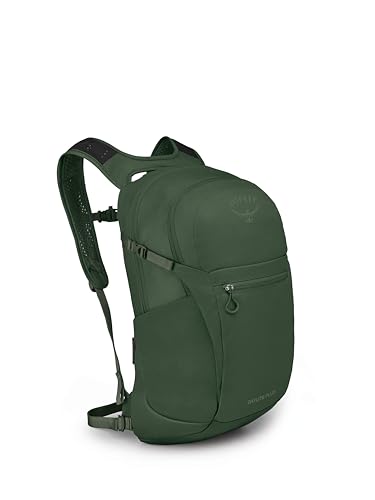
This is the recommendation I have the most history behind. My own Osprey daypack is about 25 litres, I’ve had it for over fifteen years, and the Daylite Plus is the closest thing Osprey makes to it today. That kind of lifespan from a single bag is the strongest endorsement I can give a brand, and it’s why an Osprey sits at the top of this list.
The Daylite Plus itself is a simple, well sorted pack. You get a main compartment with a sleeve that takes a 15 inch laptop, plus water bottle pockets that hold a real bottle rather than a token 500ml one.
At 585 g it’s light without feeling flimsy, and the 300D recycled fabric is the same weight of material Patagonia and Vanguard use on their packs here. The hip belt is a simple removable webbing strap with no padding, which is fine at this size, as 20 litres of day kit shouldn’t really need load-bearing support.
The other reason to buy Osprey is the All Mighty Guarantee, which covers repair or replacement for life on the packs in this article, with the exception of a couple of newer specialist lines. No receipt needed, no argument. When a bag can be repaired rather than replaced, a slightly higher price stops mattering much, of course.
One thing to know before you buy. At 24 cm deep it’s one of the chunkier packs here when full, so if your trips revolve around strict budget-airline allowances, read the airline section below or consider a packable instead.
- Capacity: 20 litres
- Weight: 585 g / 1.29 lb
- Dimensions: 48 x 28 x 24 cm
- Laptop: 15 inch sleeve
- Fabric: 300D recycled polyester with PFC-free water-repellent coating
- Hip belt: removable webbing strap
2. Deuter Speed Lite 21: Best Travel Daypack for Day Hikes

If your travel days lean more towards trails than galleries, this is where I’d point you. Deuter is a pack specialist, with hiking packs at the core of the range, and the Speed Lite 21 is their lightweight day-hiking pack done in a size that works for travel.
At 470 g it’s among the lightest structured packs in this list, and it carries like it. The slim 18 cm profile keeps the weight close to your back, the detachable waist belt steadies it on rougher ground, and the narrow shape means your arms swing freely, something you notice on a long walk and never think about in a museum queue.
The trade-offs are exactly what you’d expect from the weight. The 140D fabric is thinner than the 300D on the city packs, so I’d be a bit more careful about grinding it against rocks, and there’s no laptop sleeve, because it isn’t that sort of bag. If you want one pack that does trails on Saturday and a laptop café on Monday, get the Daylite Plus. If the trail is the point, get this.
- Capacity: 21 litres
- Weight: 470 g / 1.04 lb
- Dimensions: 46 x 28 x 18 cm
- Laptop: no dedicated sleeve
- Fabric: 140D recycled polyamide ripstop
- Hip belt: detachable webbing belt
3. Patagonia Black Hole Pack 25L: Best for Wet Weather
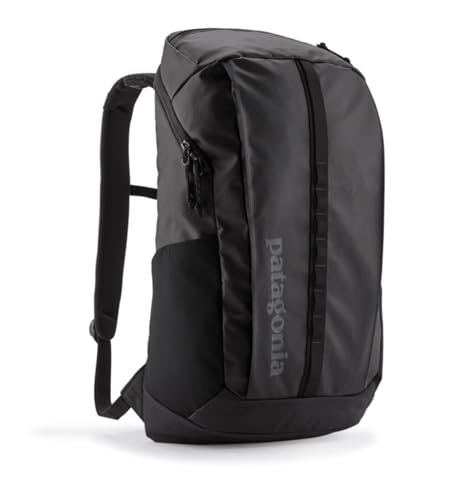
Patagonia’s Black Hole fabric has a bit of a cult following, and for good reason. It’s a 300D recycled ripstop with a TPU film laminate, which in practice means rain beads up and rolls off instead of soaking in the way it eventually does with a standard coated fabric. Patagonia are careful to call it water resistant rather than waterproof, and so am I, but of everything here it’s the pack I’d choose for a drizzly week in Scotland or a rainy season city break.
Beyond the fabric, it’s a real travel pack. The 25 litre size swallows a jacket, a camera and a day’s shopping, the padded sleeve takes most 15 inch laptops, and the slim 15 cm depth keeps it from ballooning outwards the way soft packs can. The shiny laminate look divides opinion, though I’ve come around to it.
Two things to know. There’s no hip belt at all, just a sternum strap, so it’s a city and light-trail bag, not a hiking bag. If you want something that will take a camera up a hill properly, a proper camera pack for hiking is a different shopping list altogether. And the zips are water resistant rather than sealed, so in a serious downpour you’ll still want your electronics in something waterproof inside. That last sentence applies to every pack in this article, mind.
- Capacity: 25 litres
- Weight: 760 g / 1.68 lb
- Dimensions: 47.8 x 27.9 x 15 cm
- Laptop: padded sleeve, fits most 15 inch laptops
- Fabric: 300D recycled polyester ripstop with TPU film laminate
- Hip belt: none, sternum strap only
4. Gregory Nano 20 Plus: Best for Larger Frames

Here’s a gap almost nobody in the daypack world bothers to fill. Most packs are cut for one range of torso and waist sizes, and if your body sits outside that range, the straps dig, the back panel floats, and the bag never feels right no matter how much you fiddle with it. Gregory’s answer is the Nano 20 Plus, an extended-fit version of their Nano daypack with a longer harness and hip belt cut for larger bodies.
To be clear, this is the Plus fit, not the standard Nano 20. Same 20 litre capacity, same recycled fabric with a PFAS-free water-repellent finish, same breathable mesh back panel and hydration compatibility. The difference is the sizing, and Gregory doesn’t publish a separate weight for the Plus version, so I haven’t quoted one.
If standard packs have always fitted you fine, the regular picks above will serve you better on price. But if you’ve spent years tolerating straps that don’t reach and belts that don’t close, this is the pick on this list built for you. Extended-fit daypacks are thin on the ground at this size: Osprey’s Sportlite 25 Extended Fit is the main alternative if you want a bit more capacity, and Gregory does the Nano and the Miwok in plus-size fits a little smaller than this one.
- Capacity: 20 litres
- Fit: extended (longer harness and hip belt than the standard Nano 20)
- Laptop: unpadded internal sleeve, sized for a laptop or tablet
- Fabric: 210D recycled nylon and 450D recycled polyester, PFAS-free water-repellent finish
- Hip belt: removable webbing belt
5. Eagle Creek Ranger XE 26L: Best Organisation
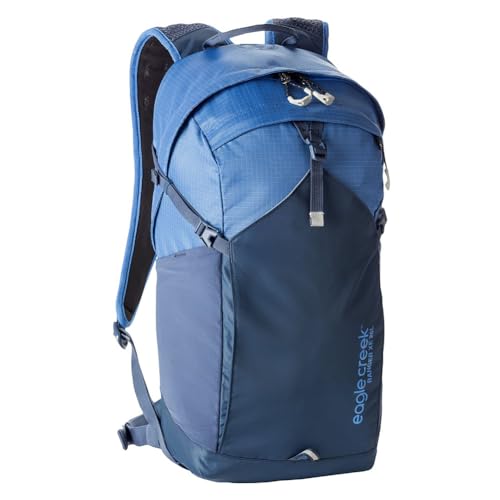
Jess’s daypack is an older Eagle Creek, and it’s the bag she reaches for on most trips, so this brand has earned its second household vote the slow way. Eagle Creek has always been a travel company first, not an outdoor company adapting hiking gear, and you can see it in how the Ranger XE is organised.
Where most daypacks give you one big cavity and a front pocket, this one is organised the way good luggage is, with a hydration sleeve, pockets that give the small stuff somewhere to live, and, the real giveaway of a travel-first company, a trolley sleeve so it rides on your rolling luggage handle through the airport. At 26 litres it’s one of the two biggest bags here, and it still comes in under 600 g, which is pretty impressive for something this structured.
One caveat from the spec sheet: Eagle Creek doesn’t state a laptop sleeve size for this pack. The hydration sleeve will hold a slim laptop in a pinch, but if a padded laptop home is a requirement, the Osprey, Patagonia or Thule are the safer choices. For everyone whose daypack chaos has ever swallowed a passport, this is the fix.
- Capacity: 26 litres
- Weight: 595 g / 1.31 lb
- Dimensions: 51 x 28 x 19 cm
- Laptop: no stated laptop sleeve (hydration sleeve and trolley sleeve included)
- Fabric: recycled 400D polyester ripstop with 420D nylon reinforcement
- Hip belt: removable
6. Thule Chasm 26L: Best for Rough Handling

Thule made its name making roof racks that survive Scandinavian winters, and the Chasm carries that same over-engineered energy. This is the pack for people who treat their bags badly and would rather not think about it, with thick weather-resistant fabric across the front panel and, more importantly, the base, the part of the bag that meets wet pavement every time you set it down. Anyone who has watched a floppy daypack slump sideways into a puddle will understand the appeal.
It’s also the most laptop-serious bag here, with a padded sleeve for machines up to 15.6 inches that you can reach from the top or through a side zip, which is handy at airport security. The 26 litre capacity matches the Eagle Creek, but the two bags have opposite personalities: the Ranger XE organises everything, the Chasm survives everything.
The price of all that armour is heft. This is quite a dense, solid-feeling bag by daypack standards, there’s no hip belt, and it’s overkill for a light city wander. But if your travel involves motorbikes, boat decks, overhead racks and the occasional drop onto concrete, this is the one I’d hand you.
- Capacity: 26 litres
- Laptop: padded 15.6 inch sleeve, top or side access
- Fabric: weather-resistant front panel and base, PFC-free water-repellent finish, recycled materials
- Hip belt: none
7. Cotopaxi Chiquillo 26L: Best for Bigger Days
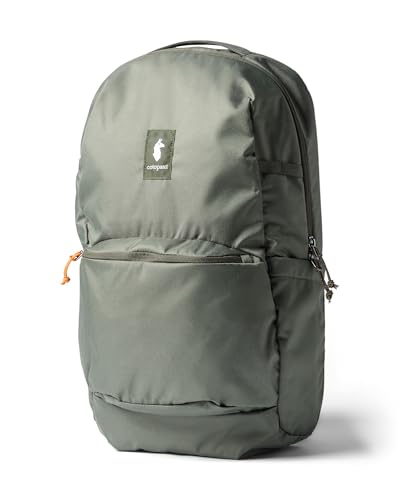
Cotopaxi is the brand you’ve seen on every hostel luggage rack in loud, joyful colours, and the Chiquillo 26L is their travel daypack. The version linked here is the Cada Día line in Fatigue, a defined colourway, so the bag that arrives matches the bag in the picture. Cotopaxi also sells a Del Día version of this pack made from one-of-a-kind repurposed fabric, where the colours are a surprise. I rather like that idea, but I can’t in good conscience link you to a lucky dip.
The pack itself is built for full days out. The 26 litres and a 16 inch laptop sleeve, the largest here, make it the pick when your day includes a bit of everything: layers for changing weather, a camera, lunch, and the souvenirs you told yourself you weren’t buying. At 700 g it stays reasonable on the shoulders for its size.
It’s a simpler bag than the Eagle Creek at the same capacity, with fewer dedicated pockets, and Cotopaxi doesn’t list a hip belt for heavier loads. Think of it as the friendly generalist of the bigger packs, with the best laptop coverage of the lot.
- Capacity: 26 litres
- Weight: 700 g / 1.57 lb
- Laptop: 16 inch padded sleeve
- Fabric: 100% recycled polyester
- Colour: Cada Día line, defined colourways (Del Día surprise-colour version also exists)
8. Osprey Ultralight Stuff Pack: Best Packable Daypack

A packable daypack folds into its own pocket and vanishes inside your main luggage until you need it. If that idea suits how you travel, this is the one to get. At 113 g it weighs about the same as a phone, yet it opens out into a usable 18 litre bag with real shoulder strap padding, a bottle pocket and a top grab handle, small comforts most packables skip.
It’s made from 40D ripstop nylon, which is kite fabric compared to the 300D packs above, and that’s the deal with every packable: you’re trading durability and comfort for weight and space. I go into whether that trade is worth it in the packable section further down, because it’s the question I’d want answered before spending money here.
Within the category though, Osprey has done this better than anyone. The fabric is tougher than the price suggests, it’s covered by the same lifetime guarantee as my own ancient Osprey, and it comes from a company that will still exist when yours needs repairing. If you buy one packable, buy this one.
- Capacity: 18 litres
- Weight: 113 g / 4 oz
- Dimensions (open): 43.2 x 22.9 x 17.8 cm
- Laptop: no sleeve
- Fabric: 40D ripstop nylon
- Packs into its own internal pocket
9. Eddie Bauer Stowaway Packable 20L: Best Budget Packable

The cheapest way into this whole article, and a surprisingly complete bag for the money. The Stowaway has been around for years, it folds down to roughly the size of a paperback (21.6 x 17.8 x 3.8 cm packed, per Eddie Bauer), and it opens into a full 20 litre daypack with a water-repellent finish and even a light webbing hip belt, which almost no packable bothers to include.
At 272 g it’s more than twice the weight of the Osprey Stuff Pack, and that extra weight buys you slightly beefier fabric and those extra straps. For an emergency spare bag, an overflow bag for the flight home, or a first packable to find out whether the category suits you, it’s the sensible money. Buy it in a bright colour, it makes it easier to find in the depths of your luggage.
Two things to know. It’s thin fabric with unpadded-feeling straps under a heavy load, and there’s no laptop protection at all. And Eddie Bauer has no UK storefront, so if you’re buying from this side of the Atlantic it’s an awkward one to get hold of, and the Osprey Stuff Pack above is the easier packable to find.
- Capacity: 20 litres
- Weight: 272 g / 9.6 oz
- Dimensions (open): 45.7 x 25.4 x 22.9 cm
- Packed size: 21.6 x 17.8 x 3.8 cm
- Fabric: ripstop polyester with StormRepel water-repellent finish
- Hip belt: light webbing belt included
10. Vanguard VEO Metro B20L: Best Camera Daypack

One camera pick, by design. As a professional travel photographer I could fill a whole list with camera daypacks, and in fact I have, elsewhere. The VEO Metro B20L is here because it’s the one that best doubles as a normal travel daypack: 20 litres, a 14 inch laptop space, and a camera compartment that holds a body with a 70-200mm attached, which is more lens than most travellers will ever carry.
Full disclosure before I go further: I’ve been a Vanguard ambassador for a number of years, so judge my enthusiasm accordingly. What I can point to concretely is the spec sheet, which is unusually generous at this price.
You get a rain cover included, the only pack in this article that ships with one, plus a hidden security pocket, a padded waist strap that tucks away when you don’t need it, and a dedicated pocket for an AirTag or similar tracker. If you use one of those, our guide to luggage trackers for travel covers the options.
The main downside is weight. At 1.77 kg empty it’s more than three times the Daylite Plus, which is what padded camera protection costs. If you’d carry a camera insert in a regular daypack instead, do that. But as a single bag that protects a camera and still works for everything else, it’s the best I’ve found at this size.
You can also buy it directly from Vanguard, where the code FindingTheUniverse gets you 20% off.
- Capacity: 20 litres
- Weight: 1.77 kg / 3.9 lb
- Dimensions: 41.9 x 28.4 x 22.1 cm
- Laptop: up to 14 inch, plus tablet space
- Camera: fits a body with 70-200mm attached
- Rain cover: included
- Fabric: 300D polyester, water-repellent coating both sides, water-resistant zips
11. REI Co-op Flash 18: Best Ultralight Daypack
The Flash 18 has been the budget darling of American hiking for years, and it’s the pick I’d send US readers to first if the priority is minimum weight and minimum spend without going packable. At 269 g with the straps fitted (you can strip it to 218 g), it’s barely heavier than the Eddie Bauer packable, but it’s a real framed-feeling pack with a removable back panel that doubles as a sit pad, a removable webbing hip belt, and recycled ripstop fabric with a PFAS-free water-repellent finish.
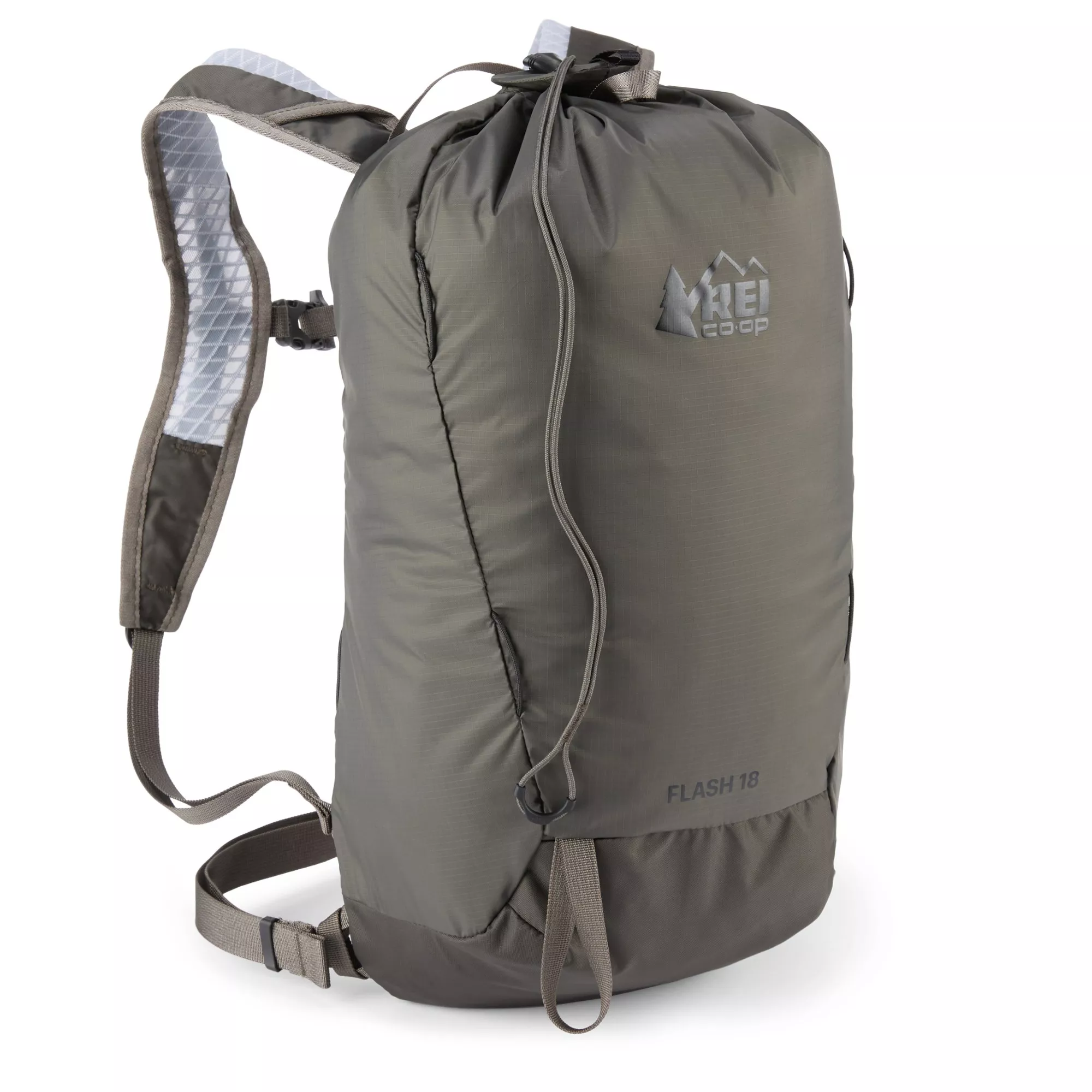
At about $45 it undercuts everything structured in this list. The compromises are sensible ones. There’s no laptop sleeve, minimal organisation, and none of the structure of the city packs above. It’s a hiking bag that travels well rather than a travel bag, and for light packers that’s exactly right.
The catch for non-American readers is that REI is a US retailer, so this one is a pick for US-based travellers or anyone passing through who fancies a detour to one of their shops. Everyone else should look at the Deuter or the packables above.
- Capacity: 18 litres
- Weight: 269 g / 9.5 oz (218 g stripped)
- Laptop: no sleeve
- Fabric: recycled ripstop nylon, PFAS-free water-repellent finish
- Hip belt: removable webbing belt
- Back panel: removable, doubles as a sit pad
Check the current price at REI
How Big Should a Travel Daypack Be?
Capacity is the first spec everyone looks at and the one most people over-buy. Daypacks are measured in litres, and the useful range for travel is narrower than the market suggests.
| Size | What it holds | Best for |
|---|---|---|
| Under 18 litres | Water, a light layer, phone, snacks, a paperback | Minimalists, city wanders, packables |
| 18 to 22 litres | All the above plus a camera, a full-size jacket and a laptop | Most travellers, most days |
| 23 to 26 litres | All the above plus lunch, extra layers and shopping | Full days out, families carrying for two, bigger kit |
My own daypack is around 25 litres and I’ve never wanted bigger. Water eats capacity faster than anything else you’ll pack. On day hikes I generally carry around 3 litres, and three litres of bottles takes real space, which is why decent side pockets matter more than an extra litre of headline capacity. We carry a Klean Kanteen Classic each, and a bag whose bottle pocket actually grips a bottle, rather than letting it eject on the first stile, is worth paying attention to.
Above about 30 litres you’ve left daypack territory for small travel backpacks, which are a different purchase with different rules. We’ve covered it separately in our guide to the best travel backpacks, which picks up at 35 litres where this article stops.
Will Your Daypack Fit Under the Plane Seat?
For a lot of travellers the daypack is also the free under-seat bag on budget flights, and this is a section I’ve been deliberately careful with. While researching this article we tried to pin down every major carrier’s under-seat allowance from its own baggage page, and two things became clear.
First, the allowances really did move in 2025, when the airlines in the Airlines for Europe group voluntarily agreed to carry a 40 x 30 x 15 cm personal item free of charge. The EU has since written the same dimensions into law, with both the Parliament and the Council signing off in July 2026, but those rules aren’t in effect yet. Airlines get a year to implement them once they’re published, so in practice the industry commitment is what you’re travelling under today.
Second, the third-party size charts we found mostly copy each other instead of the airlines, and several print confident dimensions for carriers that don’t publish any.
So here are only the numbers we could verify on the carriers’ own pages in July 2026, and plain guidance for the rest.
| Allowance | Under-seat bag size | Weight limit |
|---|---|---|
| easyJet small cabin bag | 45 x 36 x 20 cm including handles and wheels | 15 kg |
| Ryanair small personal bag | 40 x 30 x 20 cm, and it has to fit under the seat in front of you | None published |
| Delta personal item | No published dimensions. Delta asks only that it’s similar in size to a purse or small backpack and fits under the seat | None published |
| Airlines for Europe commitment (since summer 2025) | 40 x 30 x 15 cm, or fits under the seat in front of you | Varies by carrier |
For every other airline, including Wizz Air and British Airways, check the current policy page shortly before you fly, and make sure it’s the airline’s own policy page rather than a blog’s summary of it. Airlines move these numbers more often than you’d expect, and not every page on their own site updates at the same time, so check close to your travel date.
How does that apply to the packs above? A soft, unframed daypack that’s a few centimetres over on paper will usually squash into an under-seat sizer if it isn’t stuffed full. A structured pack at maximum capacity won’t.
The Daylite Plus at 48 x 28 x 24 cm, for example, is fine overhead or half-full, but it sits over Ryanair’s 40 x 30 x 20 cm limit on both height and depth, and I wouldn’t bet a gate fee on it under the seat when it’s loaded. If your travel is built around tight allowances, that’s the strongest argument for the packables, which fold away inside your main bag on the flight and cost nothing in allowance at all.
What Happens When It Rains
Time for the most misused word in bag marketing. Not one pack in this article is waterproof.
What these packs have is a water-repellent coating (usually labelled DWR) on woven fabric, which makes light rain bead and roll off. Keep a coated pack in steady rain for long enough and water finds its way through the fabric, the seams and the zips.
The distinction matters because manufacturers’ accessory pages are happy to put the word waterproof near their packs, usually attached to a rain cover sold separately.
In practice, here’s how the lineup ranks in the wet. The Patagonia Black Hole is the best of them, because its TPU laminate is a physical layer on top of the weave, where everything else relies on a coating alone. The Thule and the Vanguard follow, with weather-resistant panels and water-resistant zips, and the Vanguard is the only pack here that includes a rain cover in the box. Everything else, including both Ospreys, relies on a standard coating, and Osprey sells its rain covers separately.
Our approach after years of wet destinations is to assume the bag will eventually let water in, and keep electronics in a dry bag or even a freezer bag inside. A camera that stays dry because of a 50p plastic bag is just as dry as one protected by expensive laminate. Rain covers work, but they’re faff, they obstruct your pockets, and they blow about in wind, so we treat them as a last resort rather than a plan.
Comfort, Straps and Back Panels
Daypack comfort is mostly decided by three things, none of which show up in a product photo.
The back panel does the biggest job. A bit of moulded foam with air channels, like the Deuter’s, keeps sweat manageable on a warm day’s walking, while a flat unpadded back, standard on packables, is clammy by lunchtime. If your trips involve hot climates, weight this heavily.
Shoulder straps matter more than hip belts at this size. A 20 litre pack loaded sensibly weighs perhaps 5 or 6 kg, which well-shaped shoulder straps carry all day without help.
That’s why most packs here have webbing hip belts or none at all. At daypack weights the belt just stops the bag swinging when you move quickly; the shoulder straps do the carrying. If a bag’s straps are thin and its fabric is light, the comfortable ceiling is lower, more like a jacket and water than a full day’s kit.
And bottle pockets, which I’ve mentioned already but will happily mention again, are the difference between a bag you drink from and a bag you stop and take off every time you’re thirsty. Deep, elasticated, and reachable while wearing the pack is the standard to look for. It’s a small thing that makes a difference every single day you carry the bag, which is more than can be said for most headline features.
Are Packable Daypacks Actually Good Enough?
Packables ask you to trade comfort and durability for space, and whether that trade works depends entirely on the trips you take. For some trips it’s an easy yes; here’s how to tell which side of the line you’re on.
A packable is the right call when the daypack is a secondary character. City breaks where the bag holds a jacket, water and souvenirs. Trips where you’re tight on luggage space or flying carriers with mean allowances. A spare bag that lives in your luggage for laundry runs and overflow on the way home. For all of that, the Osprey Stuff Pack or the Eddie Bauer are all the bag you need, and the few hundred grams they cost you is nothing.
A packable is the wrong call when the daypack is the main event. All-day carrying, long hikes, anything with a laptop or a camera. Thin fabric, unpadded backs and light straps are fine for a couple of hours and a bit wearing by hour six, and no packable protects electronics. If your trip is built around full days out, buy a structured pack and pay the space cost in your luggage. Your shoulders will thank you daily.
Plenty of travellers, us included, eventually land on both: a structured pack for trips where day bags work hard, a packable living permanently in the luggage as a spare. If you use packing cubes, a folded packable slots in beside them and you’ll forget it’s there until the day it rescues you.
What About Camera Gear?
There’s a fork in the road here that’s worth flagging. If you carry a camera occasionally, any structured pack here will do with a padded insert dropped in, and the VEO Metro above is the single best hybrid if you want dedicated protection that still works as an everyday bag. You can see everything we personally carry on our photography gear page.
If the camera is the point of the trip, though, stop reading this article and read the right one instead. Dedicated camera bags are their own world with their own trade-offs, and we’ve covered them at length in our guides to the best camera backpacks for hiking and the best camera bags for travel.
How We Chose These Daypacks
A word on where these picks come from. The two brands we know best, we know from long ownership. My Osprey has been in service for the best part of two decades, and Jess’s Eagle Creek remains her default travel daypack. Both of our actual bags are discontinued, so the picks here are the current equivalents, not the bags on our shelves, and I haven’t pretended otherwise anywhere in this article. I also have an ambassador relationship with Vanguard, disclosed on that pick.
The rest of the list was built the way I’d research any purchase: current-model specs verified against each manufacturer’s own pages in July 2026, availability confirmed, and a deliberate rule that no brand takes more than two spots, because a roundup that funnels you to one company isn’t much of a roundup.
Where a manufacturer doesn’t publish a number, the spec lists above say so instead of borrowing a figure from somewhere less reliable. And where I haven’t used a bag, the recommendation rests on long category experience, not on an ownership story I don’t have.
One note for readers outside the US. Most of these brands sell here and across Europe through their own stores as well as Amazon, so the picks hold up wherever you’re buying, even if the prices won’t match. Two don’t travel, as I’ve flagged on their picks: REI’s Co-op line is US-only, and Eddie Bauer has no UK storefront.
What We’d Do Differently Buying a Daypack Today
Enough years of carrying daypacks teaches you a few things, mostly by way of the mistakes. Here’s what we’d tell our younger selves.
Buy smaller than feels safe. A bigger bag doesn’t carry spare space, it collects weight, because a daypack always gets filled. The 18 to 22 litre range covers almost every travel day we’ve ever had, and on the rare day it doesn’t, a tote from the hotel handles the overflow.
Check the depth as well as the litres. Two 20 litre packs can behave completely differently under a plane seat depending on whether they’re slab-shaped or barrel-shaped. If you fly budget carriers, the depth measurement is the one to read first.
Take the warranty seriously. The reason my daypack has lasted this long is partly that it was well made, and partly that a lifetime repair guarantee changes the maths, because problems get fixed rather than binned. A pack from a brand that repairs things costs less per year than a cheap bag replaced every few trips, and it’s better for the planet too.
And pick the boring colour second. We’ve both learned that the bag you’ll actually carry for a decade is the one that goes with everything, works in a nice restaurant and doesn’t scream tourist. By all means buy the fun colour, of course, but buy it knowing which of you is the boring one. In this house, that’s me.
Travel Daypack FAQs
What size daypack is best for travel?
For most travellers, 18 to 22 litres. That comfortably holds water, a jacket, a camera and a laptop, without becoming heavy enough to hate by mid-afternoon.
Go up to 25 or 26 litres if you regularly carry for two people or spend full days out with layers and food, and down towards 15 litres if you pack light and mostly wander cities.
What’s the difference between a daypack and a travel backpack?
Size and job. A travel backpack, usually 35 to 80 litres, is your main luggage and carries everything you own on transit days. A daypack, usually 15 to 26 litres, is the bag you take out each day once you’ve arrived.
The two work as a system: the main pack stays at your accommodation, the daypack does the daily work, and on flights the daypack often rides as your free under-seat bag.
Can I take a daypack on a plane as well as a carry-on?
Usually, yes. Most airlines allow a small under-seat personal item alongside your paid or included cabin bag, and a daypack is exactly what that allowance is designed for.
Sizes vary by airline and changed on several European carriers during 2025, so check your carrier’s own baggage page before flying. Airlines in the Airlines for Europe group have carried a free 40 x 30 x 15 cm personal item since summer 2025, and the EU adopted the same dimensions into law in July 2026, though those rules take a year to come into effect.
Are packable daypacks worth buying?
Yes, if the daypack plays a supporting role on your trips. For city days, souvenir runs and tight airline allowances, a packable like the Osprey Ultralight Stuff Pack does the job for around 100 g of luggage weight.
They’re the wrong choice for all-day comfort, laptops, cameras or real hikes, where thin fabric and unpadded straps catch up with you. Many travellers end up with a structured daypack for hard-working trips plus a packable living in their luggage as a spare.
Do I need a waterproof daypack for travel?
No, and hardly any daypacks are waterproof, whatever the marketing implies. The packs in this guide are water resistant, meaning a coating sheds light rain, but sustained rain will eventually get through fabric, seams or zips.
The practical fix costs pennies: keep electronics in a dry bag or freezer bag inside your pack. If you’re regularly out in rain, the Patagonia Black Hole’s laminated fabric holds out longest, and the Vanguard VEO Metro is the only pick that includes a rain cover.
Will a daypack fit under an airline seat?
A soft daypack that isn’t stuffed full will usually squash under the seat, even if it’s slightly over the stated dimensions. A structured pack packed to capacity often won’t, and depth is the measurement that causes the trouble.
Among the carriers we could verify, easyJet publishes 45 x 36 x 20 cm including handles and Ryanair 40 x 30 x 20 cm, while Delta publishes no dimensions at all. Check your own carrier’s page shortly before flying rather than trusting third-party size charts, which are frequently out of date.
Can I use a travel daypack for day hikes?
Yes, and we do constantly. For most travel-length day hikes you need water, food, layers and not much else, which any 20 litre pack holds.
If hiking is a regular feature of your trips, choose a pack with a ventilated back panel and a stabilising strap or belt, like the Deuter Speed Lite 21. On day hikes I generally carry around 3 litres of water, so check the bottle pockets take full-size bottles.
What daypacks do you actually use?
My daypack is an Osprey I’ve had for getting on for two decades, long since discontinued, which is why the Daylite Plus, its closest current equivalent, leads this guide. Jess mostly uses an older Eagle Creek daypack, which is why the Ranger XE carries her brand’s flag here.
Since neither of our exact bags can be bought any more, every recommendation in this guide is the current model, chosen on manufacturer specs and our long experience with the brands, not on a claim to have tested each bag individually.
Further Reading
Hopefully that’s helped you find the right daypack for your travels. If you’re still building out your luggage system, these guides carry on where this one stops:
- The best travel backpacks covers the 35 litre and up main-luggage packs this article deliberately excludes.
- The best packing cubes for travel is how everything stays organised inside the big bag, packable daypack included.
- The best camera bags for travel and the best camera backpacks for hiking go deep on dedicated camera carry.
- The best luggage trackers covers AirTags and the alternatives, several of these packs having pockets designed for them.
- Our digital nomad packing list shows how the daypack fits into everything else we carry.
As always, if you’ve got questions about any of these packs, or a daypack that’s been going even longer than mine, we’d love to hear about it in the comments below!
Leave a Reply