
The quick answer: for most trips, two pairs of shoes. The Vessi Weekend Classic covers city days in any weather, and the second pair matches the trip: hiking boots if there’s a trail, flip flops if it’s hot, the Amberjack Original if there’s a smart evening.
Wear the bulkier pair on the plane and everything fits in a carry-on. That’s the system this guide is built around, worked out over years of travelling with (and retiring) more pairs than I care to admit.
When you travel, the chances are you’re going to be doing a fair bit of walking. We usually spend many hours on our feet each day of our trips, whether that’s hiking up mountains or just exploring city attractions, and the right pair of shoes really does make or break the trip.
Shoes are also heavy and take up valuable luggage space. So you want something versatile, something that handles cobbles in the morning, a museum floor for three hours, and a restaurant that won’t quite seat you in trainers.
We’ve spent years travelling many months out of the year, often walking 20,000+ steps a day researching destinations. We do everything from city exploring to mountain hiking, and our trips cover all sorts of terrain, from city streets to deserts to dirt and snow-covered trails.
Based on all that walking (and an embarrassing number of pairs of shoes), I’ve put together this guide to the travel shoes I actually wear, plus the picks I’d recommend across every category. We also have a guide to travel shoes for women here, written by Jess.
This guide covers a wide range of men’s travel shoes, from versatile city shoes to hiking boots to dress shoes.
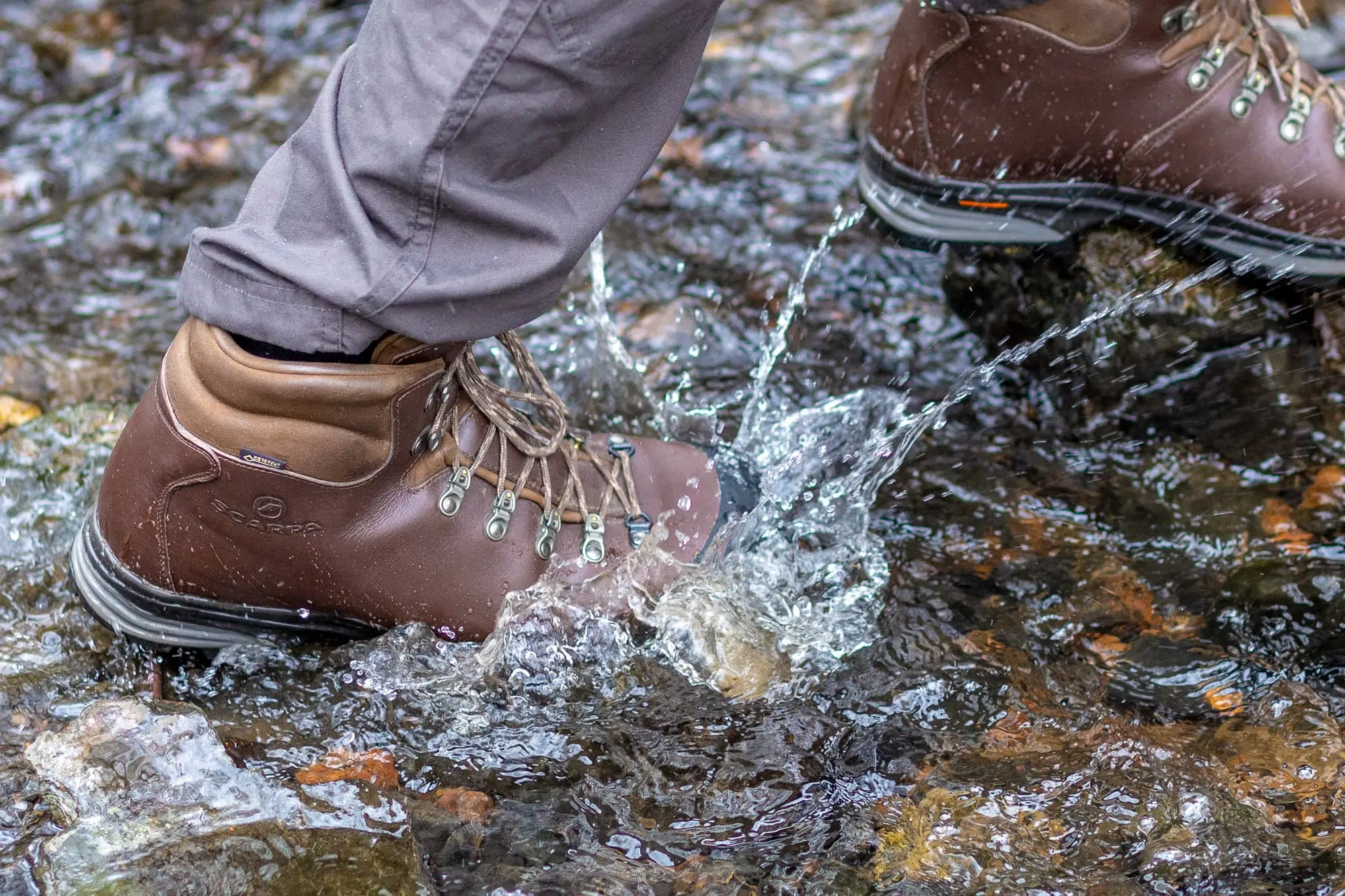
Table of Contents:
What I’ve Actually Worn for Years
Before getting into the full category guide, here’s the short version. Most travel shoe roundups give you 20+ products with no clue which ones the author actually wears. So this section is the opposite. These are the four pairs I actually reach for when packing, and where each one earns its place.
If you only read one section of this article, make it this one.
| Shoe | Type | Waterproof | Best for |
|---|---|---|---|
| Vessi Weekend Classic | Waterproof sneaker / casual lace-up | Yes | One-pair city travel in wet or cool climates |
| Allbirds Tree Runner Go | Breathable eucalyptus-fibre sneaker | No | Hot-weather & summer city travel |
| Scarpa Kinesis Pro GTX | Leather Gore-Tex hiking boot | Yes (Gore-Tex) | Multi-day hiking & mixed terrain |
| Amberjack Original | Full-grain leather dress shoe | No | Smart-dress occasions & business travel |
I also have a pair of Allbirds Wool Runners which have been my go-to for cooler wet weather for years, but they have become difficult to find so I can’t recommend them currently. Instead, the Vessis are a good waterproof option.
1. Vessi Weekend Classic
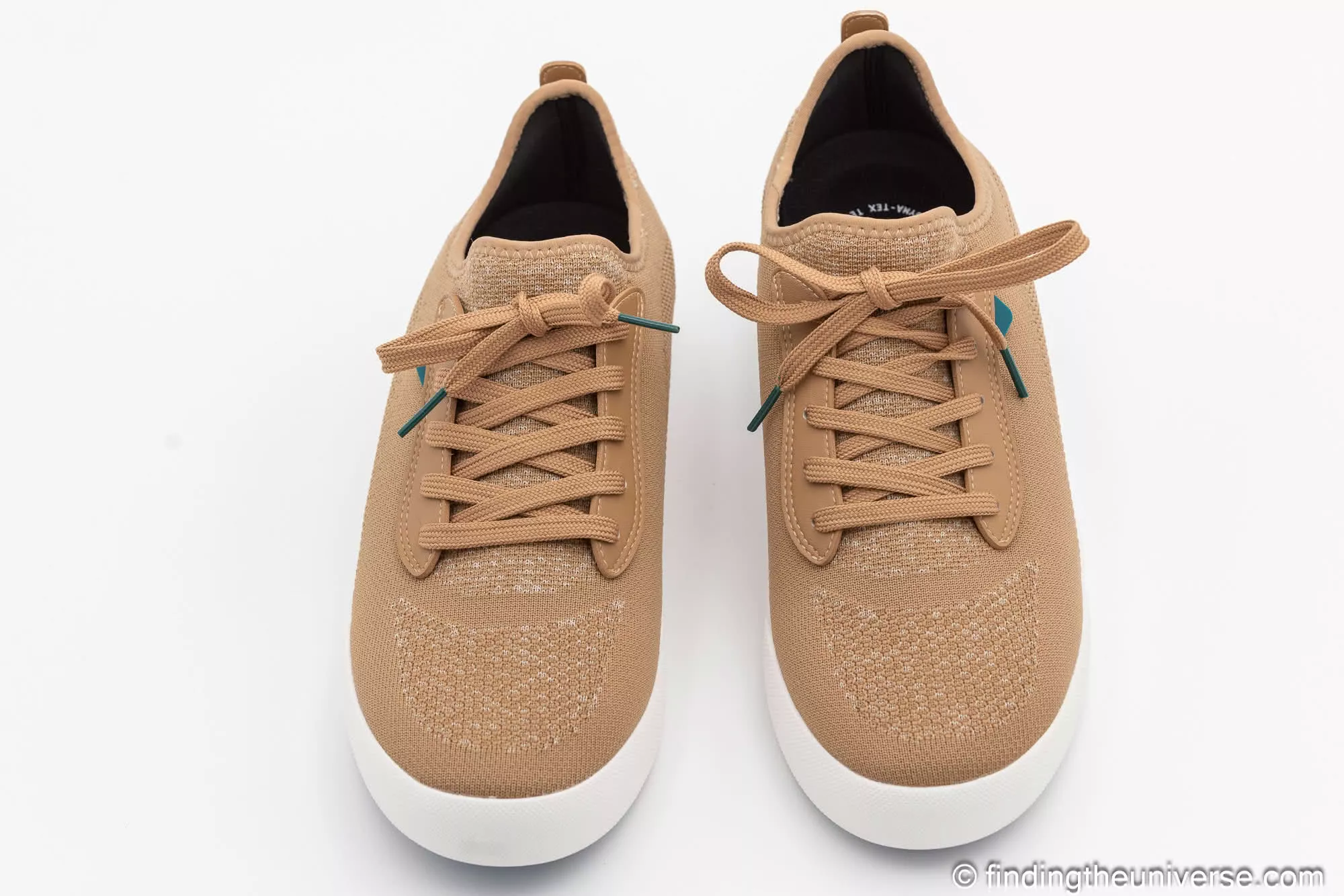
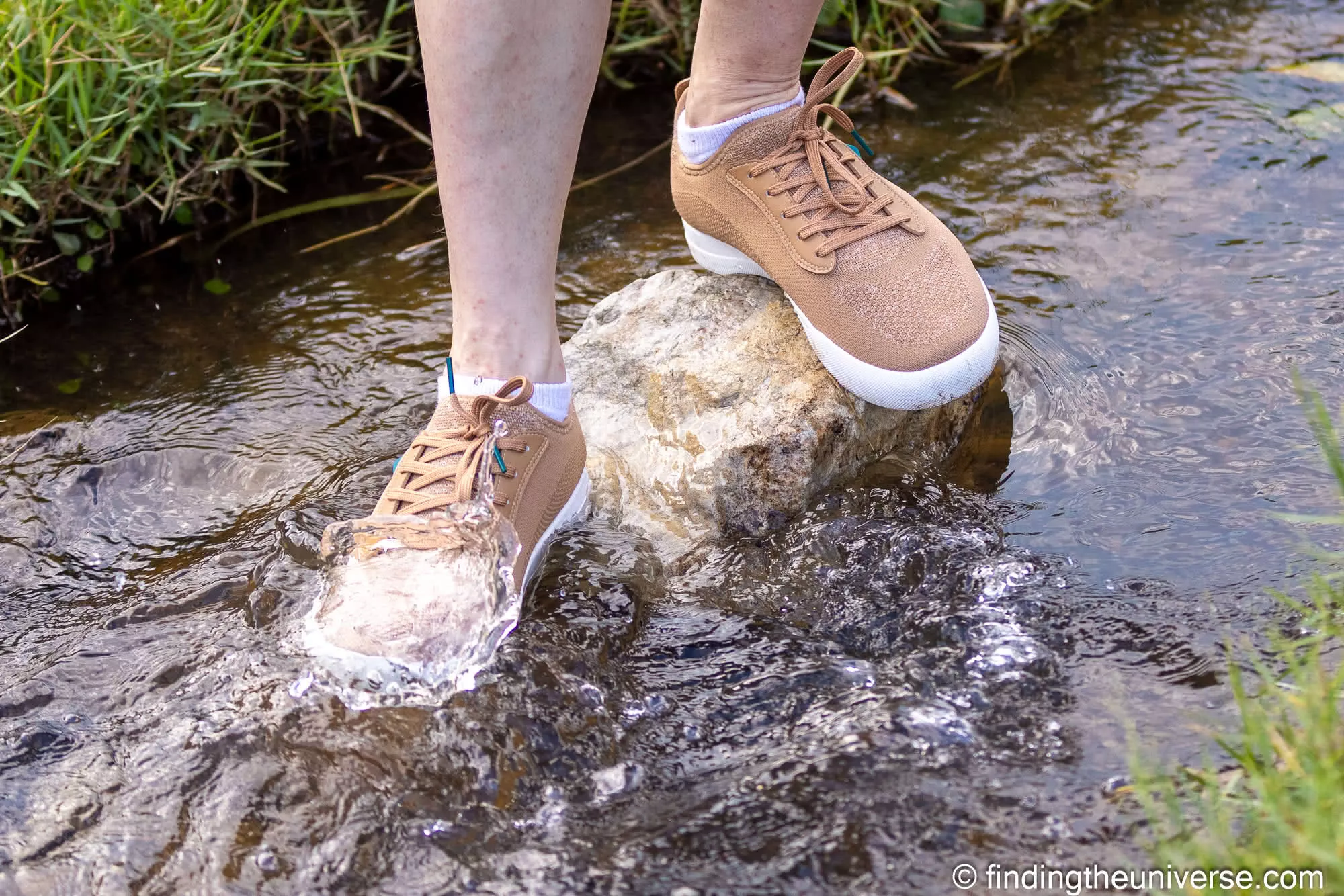
My current daily go-to. I’ve been wearing the Vessi Weekend Classic in oak brown for around two years now, and they’ve replaced almost everything else for general city travel. They’re properly waterproof, comfortable for full days of walking, and smart enough that I’m happy wearing them out for dinner.
The waterproofing is the headline feature. I’ve worn them in proper rain in the UK, through wet grass, and through deep city pavement puddles, and my feet have stayed dry every time. They’re also light and pack-friendly, so if you’re trying to travel with one pair, these are the ones I’d point you at first.
The look is somewhere between a sneaker and a casual lace-up, which is the sweet spot for European city travel where pure trainers can feel a bit out of place at evening venues.
Best for: One-pair-only city travel, anywhere wet (the UK, autumn Europe, Pacific Northwest), travellers who want waterproof without looking like they’re about to climb a mountain.
Check current price on Vessi here.
2. Allbirds Tree Runner Go
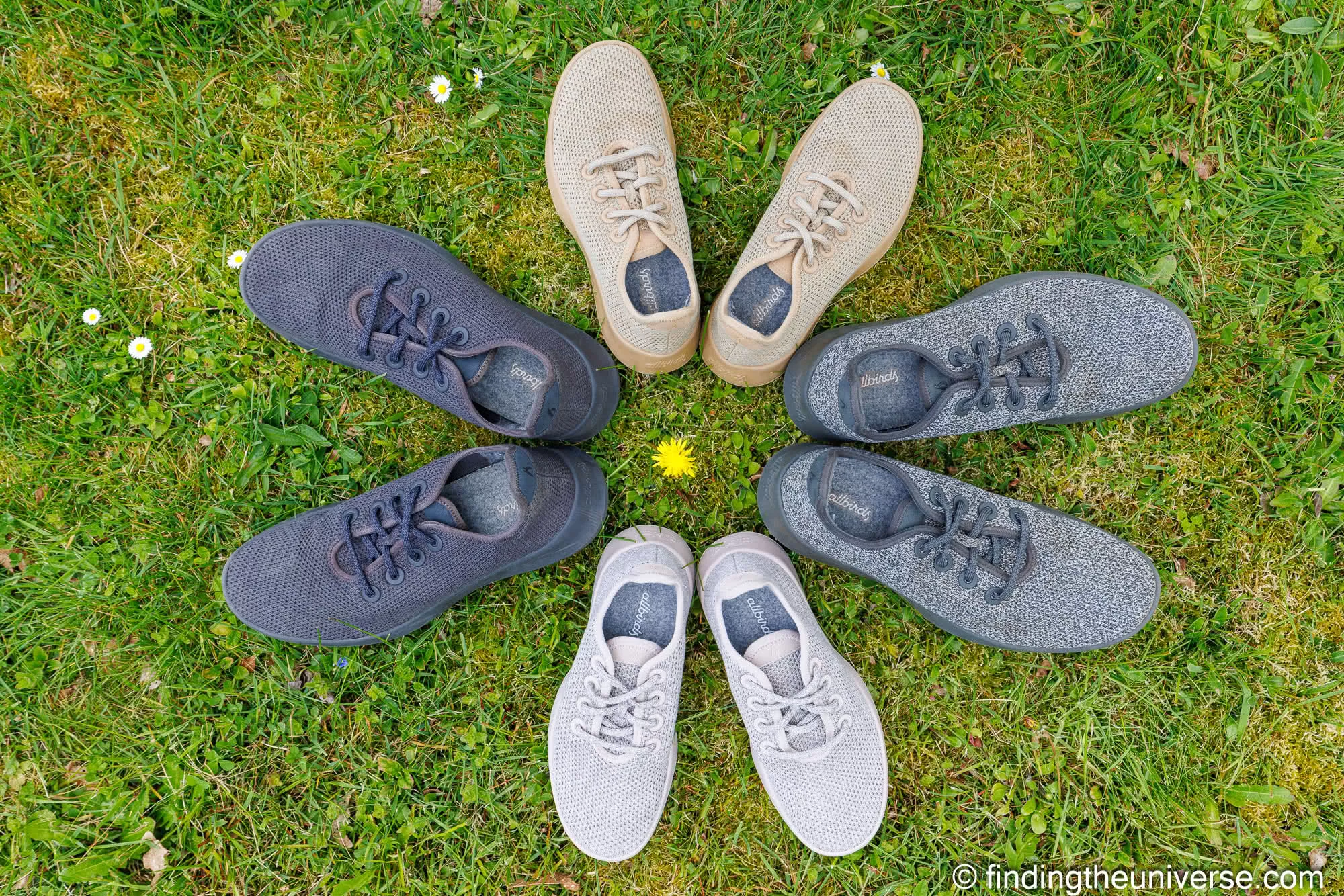
My hot-weather pick. The Allbirds Tree Runner is made from eucalyptus tree fibres, which makes it extremely breathable and lightweight, ideal for warm climates. I’ve worn mine across East Africa and across Europe in summer, including a memorable European heatwave where I covered 25,000+ steps a day in 35°C / 95°F+ heat. They were comfortable the whole time.
I liked the first pair so much I’ve since bought multiple pairs in different colours. They’re machine washable and minimise odour, so you can wear them with or without socks (mostly without, in summer).
Allbirds has discontinued the original Tree Runner that I own, and the line has split into two shoes. The Tree Runner Go is the cushier of the two, with more foam underfoot and a TENCEL knit upper; the Tree Runner NZ is a slightly firmer, more structured build. My pairs are the originals, so I can’t yet tell you how either new version holds up over a summer of wear. Of the two, the Go is the one I’d buy today, both because the extra cushioning suits long city days and because it’s the one that’s actually stocked.
Best for: Summer city travel, hot destinations, anyone who runs warm.
Check current price on Amazon here.
You can also read our complete Allbirds review, which covers everything you need to know about the various Allbirds styles available.
3. Scarpa Kinesis Pro GTX
I’ve worn Scarpa boots for decades, and these Kinesis Pro GTX boots are only my second pair. That’s how durable they are. The first pair lasted me through years of hiking before they needed replacing, which is the kind of return on investment that justifies the price.
These are full-leather upper, Gore-Tex lined, with a Vibram sole and proper ankle support. I’ve worn them on hikes around the world, including in Australia, Europe and the USA, in conditions from desert to snow, and they haven’t let me down yet.
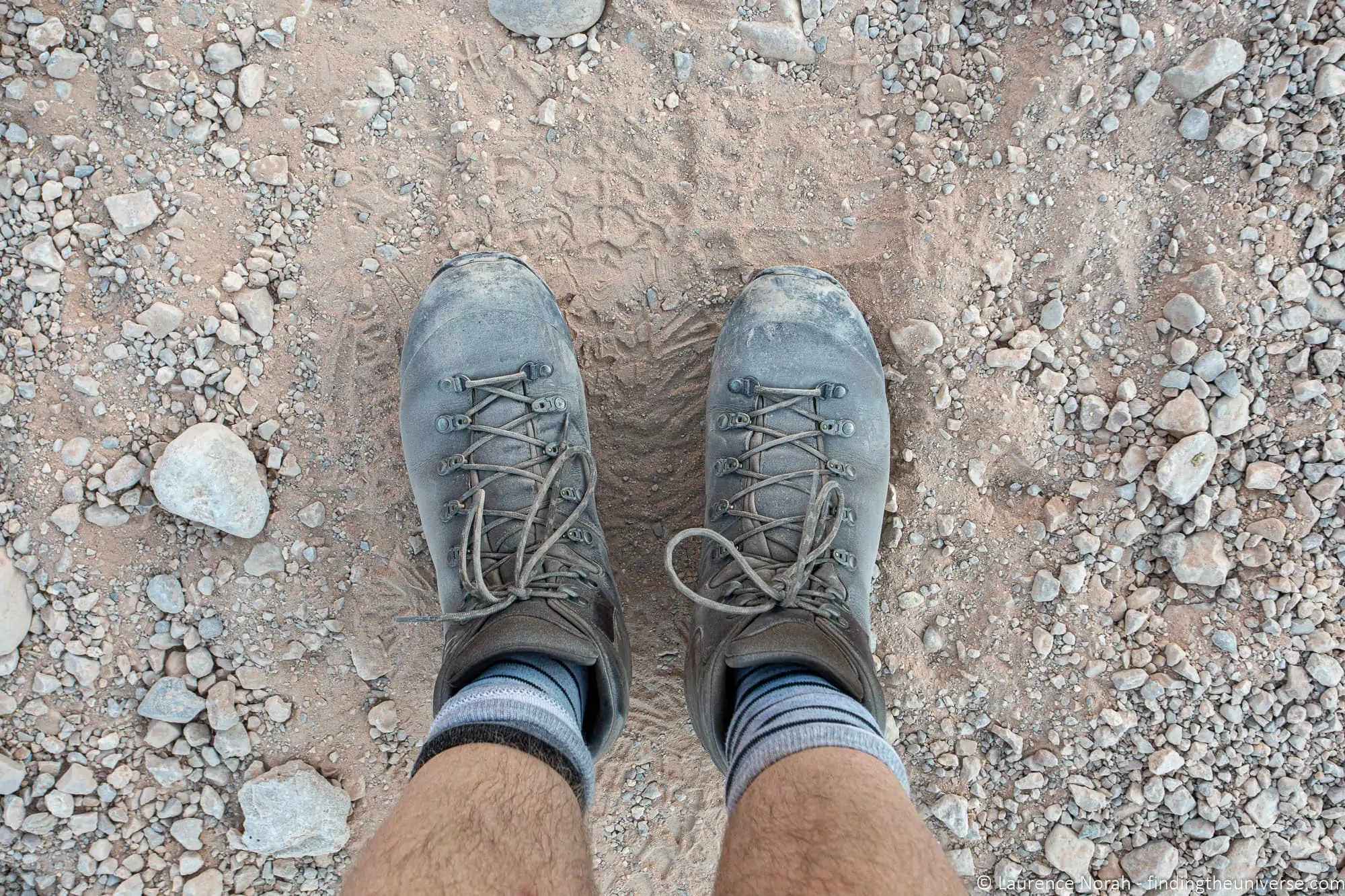
They’re not cheap, but if you’re going to be doing any serious hiking, a good pair of boots is the single most important purchase you’ll make. Cheap hiking boots cause blisters, leak, and fall apart on the trail. These do none of those things.
Best for: Multi-day hiking, mixed-terrain trips, the kind of person who’d rather buy once and be done.
Check current price on Amazon here.
4. Amberjack Original
The most comfortable pair of dress shoes I’ve ever owned. I used to have to wear dress shoes every day for work, back in my software developer days, and I wish that Amberjack had existed back then. The base is built like a hiking boot for support, the shoe flexes like a sneaker, and the inside has a sheepskin lining that makes them feel less like dress shoes than any I’ve owned.
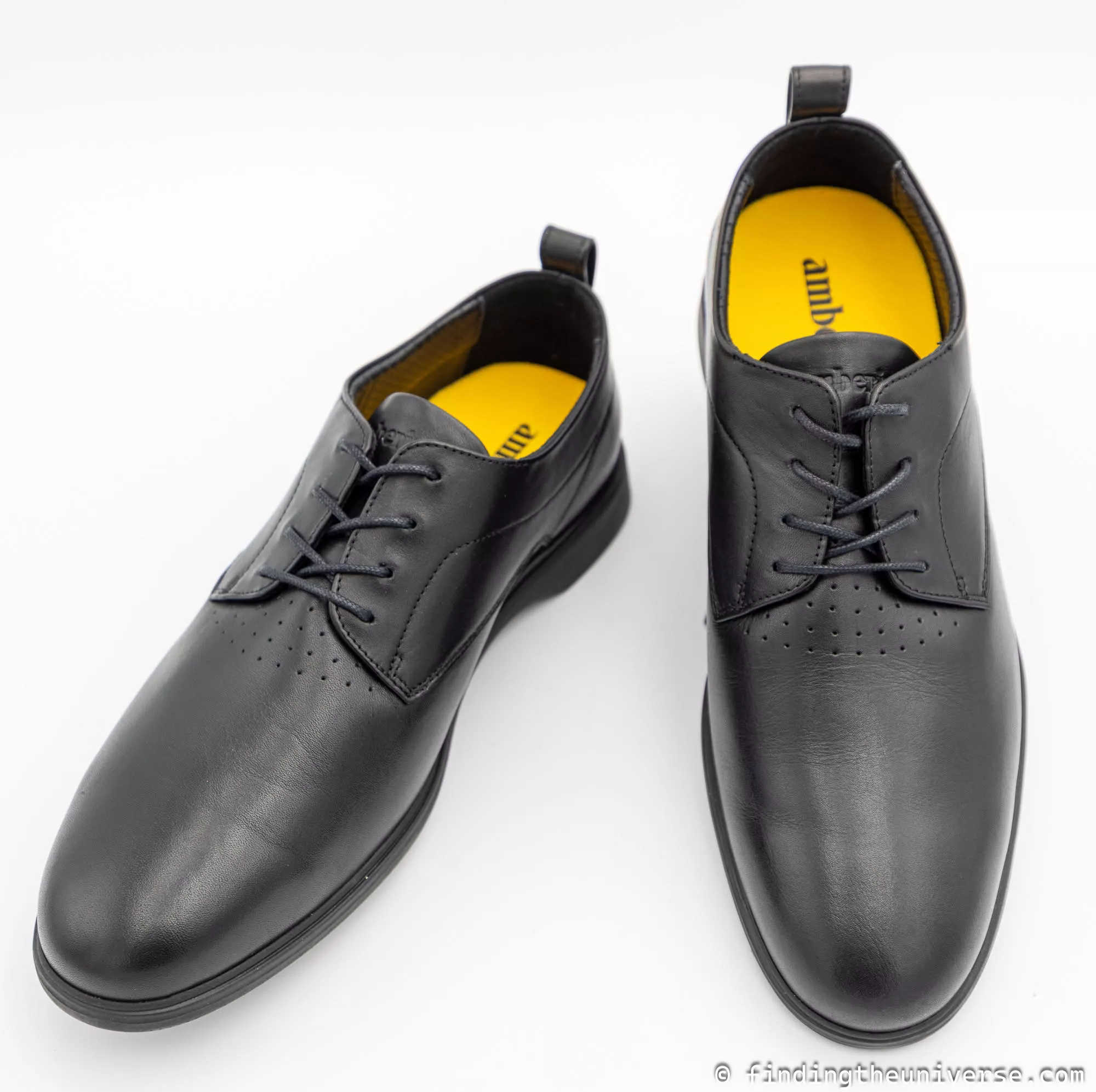
The exterior is full grain leather. They look properly smart, which is the test for a dress shoe, but they walk like a casual shoe, which is the test for a travel shoe. These are the ones I pack when I know there’s a wedding, a nicer restaurant, or any setting where the Vessi or Allbirds wouldn’t quite fit.
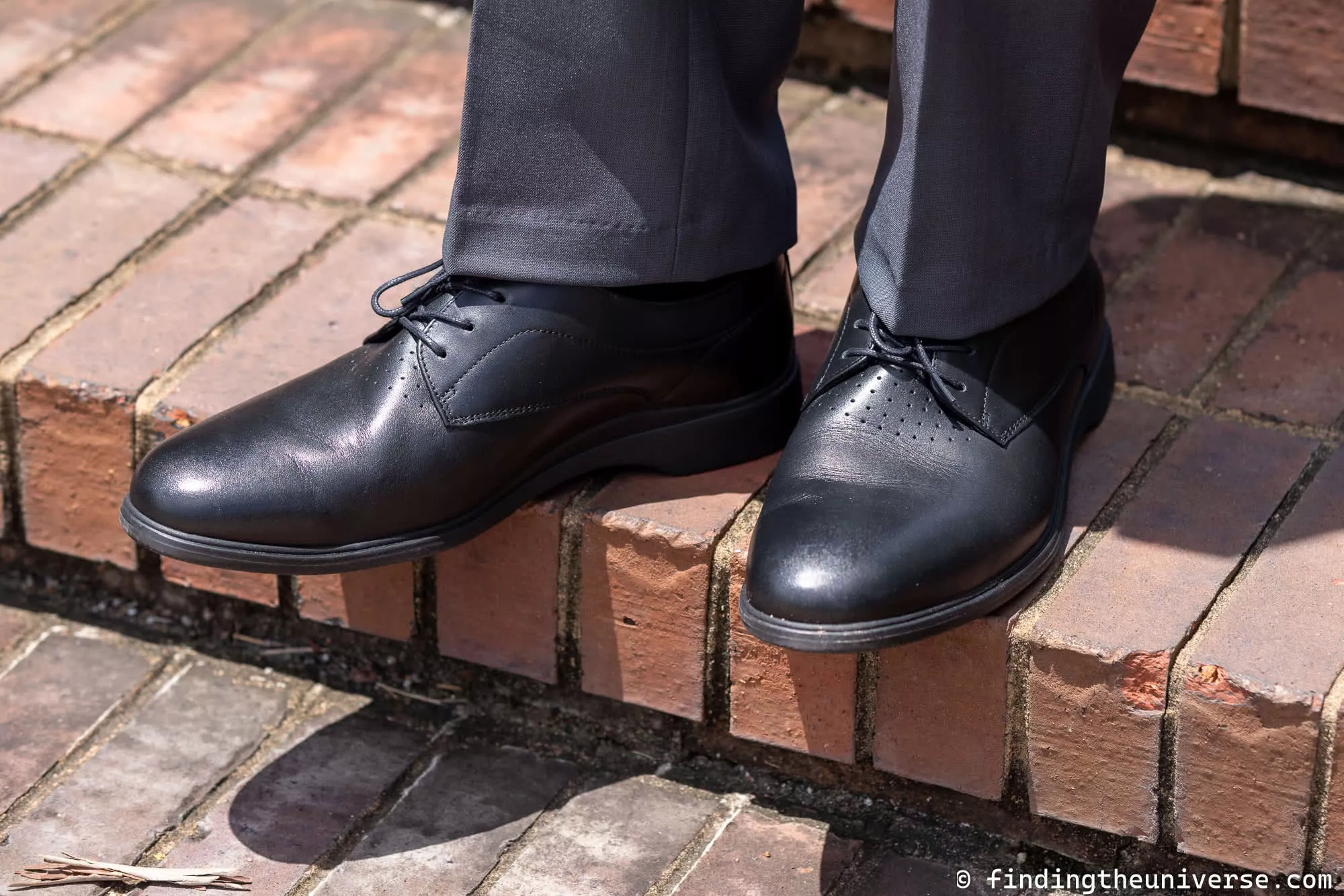
Best for: Any trip with a smart-dress occasion, business travel, anyone who’s previously had to compromise comfort for formality.
Check current price on Amberjack here. They make a few different styles too, so it’s worth seeing the full range.
Pack-One-Pair Picks by Trip Shape
Most travel shoe articles, ours included historically, organise everything by category (sandals, dress shoes, hiking boots, etc.) and assume you’ll work out for yourself which combination to pack. The question I actually get asked is the opposite: “I’m going on a 10-day trip to X, what should I bring?”
So here are six common trip shapes with the actual pair (or two pairs) I’d pack for each, and a straight answer on whether the combination fits in a carry-on. If your trip doesn’t quite fit one of these, the closest match is usually the right starting point.
Europe City Break
For a 10-day European city trip (Lisbon, Edinburgh, Rome, Athens, similar), the everyday pair is the Vessi Weekend Classic, and for most people it’s the only pair. Because they’re fully waterproof, you can leave the backup pair at home even on a cool, wet forecast. The Vessis handle cobbles, hills and museum floors well, and they’re presentable enough for evening venues.
Carry-on verdict: one pair, worn, nothing in the bag at all. The only thing that breaks this one is packing a second pair you never put on, which in waterproof shoes on a city trip is most people’s instinct and almost always wrong.
Europe City Trip Plus a Hike
For a European city trip with a day hike or two mixed in, the Allbirds Tree Runner Go works for city days and the Scarpa Kinesis Pro GTX for the hike days. The Scarpa is a serious boot, 850 g (1 lb 14 oz) per boot in an EU 42 by Scarpa’s own spec, so you wear it on travel days instead of packing it.
If the hiking is gentler, swapping the Scarpa for the lighter Merrell Moab 3 Mid (495 g / 1 lb 1.45 oz per boot) saves weight you’ll notice at the end of a transit day.
Carry-on verdict: fine, as long as the boots are on your feet at the airport. Boots are the bulkiest thing in this whole guide, so this is the shape where the packing order matters more than which pair you picked.
Hiking-Led Trip
For a hiking-led trip (Iceland, Norway, the Alps), the Scarpa Kinesis Pro GTX is the daily pair, with the Tree Runner Go as the recovery shoe for evenings and travel days. After eight hours in boots, changing into something soft is not a luxury.
Carry-on verdict: comfortable, with room to spare. What sinks this trip is the third pair people add for evenings out, and the recovery sneakers already do that job.
Heatwave City Trip
For a summer heatwave city trip (Mediterranean, Southeast Asia), the Allbirds Tree Runner Go handles the walking, with the Teva Voya Flip for evenings, the beach, and the hotel pool. This was the combination I ran on 25,000-step days at 35°C, except with the original Tree Runners.
Carry-on verdict: the easiest of the six. Both pairs are light and the flip flops pack flat down the side of the bag. If you’re over your allowance on a heatwave trip, it isn’t the shoes.
Winter City Trip
For winter city travel (Northern Europe, North America), the Vessi Weekend Classic covers most days, paired with warm socks when it is properly cold. If you’re somewhere with serious snow on the ground (Reykjavik in January, say, rather than London in January), step up to a proper snow boot like the Merrell Thermo Chill 2 Mid, which at 480 g (1 lb 0.92 oz) per boot is light for an insulated boot.
Carry-on verdict: the tightest of the six. Snow boots go on your feet, and even then the winter coat is competing for the same space. This is the one shape where a carry-on might not work at all. Check a bag rather than pack cold-weather gear badly.
Business Trip with Sightseeing
For a work trip with free days attached, the Vessi Weekend Classic covers the sightseeing and the Amberjack Original covers the meetings and dinners. The Amberjacks are the pair I pack for exactly this, and they’re comfortable enough that if the meeting day turns into a walking day, you’re not stranded.
If you’d rather carry one pair for both jobs, the Rockport Taylor Waterproof Plain Toe below is the shoe that splits the difference: formal enough for the office, built for all-day walking.
Carry-on verdict: easily, and it’s the shape people over-pack for most. Dress shoes are the smallest thing here. It’s the gym pair for the hotel treadmill that turns a carry-on trip into a checked one.
The two-pair maximum is real. We’ve travelled for years and rarely needed more, even on trips that mixed city and trail.
Things to Consider when buying Travel Shoes
Before getting into the full picks list, three things matter when choosing travel shoes. The list of things people say matter is much longer (cost, weight, style, durability, versatility, packability), but most of those collapse into these three.
Comfort
The most important point. A stylish pair of shoes that hurts your feet by hour three is a worse purchase than a slightly less stylish pair you can wear all day. Big city days take their toll on feet, with hours of walking, climbing endless stairs, and standing on hard museum floors. Anything that shaves friction or impact from that experience is worth paying for.
The shoes that sit in this article do because I’ve worn them for full days without my feet complaining. Comfort is also why every category here includes at least one option with proper cushioning and support, even the dress shoe section.
Versatility
The single best thing a travel shoe can do is fit more than one role. A pair that handles all-day city walking, a smart-casual evening, and a forecast change without protest is worth two pairs that each only handle one job. That versatility is what lets you pack two pairs total instead of four.
Neutral colours help here. Black, tan, navy, grey or brown shoes go with whatever you’ve packed, which means you don’t end up rotating shoes around your outfit choices.
Weight and Packability
Airlines are increasingly strict on weight, and shoes are heavy. The lighter and more packable each pair is, the more you can take or the more space you have for other things.
Most travellers get this backwards and pack the bulky pair. Hiking boots, snow boots, and any chunky shoe should be worn on the plane, not packed, so the lighter and more packable pair (sandals, sneakers, dress shoes) goes in the bag.
Best Travel Shoes for Men
The rest of this guide covers the full picks across every type of travel shoe, organised by category. Most travellers won’t need shoes from every category, and there’s a “you probably don’t need this” note on a couple of the niche ones below.
Generally, our trips include both city walking and some hiking. So I usually pack a versatile city pair (Vessi or Allbirds, depending on weather) and a pair of hiking boots if there’s any trail walking on the itinerary. If we’re somewhere warm, sandals get added too.
Best Versatile Travel Shoes for Men
The “if I can only bring one pair” category. Versatile shoes work for full-day city walking, evenings out, and forecast changes without complaint.
1. Vessi Weekend Classic
Covered above as my current daily pair. Worth repeating in this category because it’s exactly what versatile shoes are meant to be: 100% waterproof, comfortable for long days, and smart enough to wear out to dinner. Two years in and they’re still my first choice for any trip where I want to pack one pair.
Vessi makes a few styles. The Weekend Classic is the lace-up casual that I wear, but they also do slip-ons, sneakers, and a couple of dressier options if the look isn’t quite right.
Check current price on Vessi here.
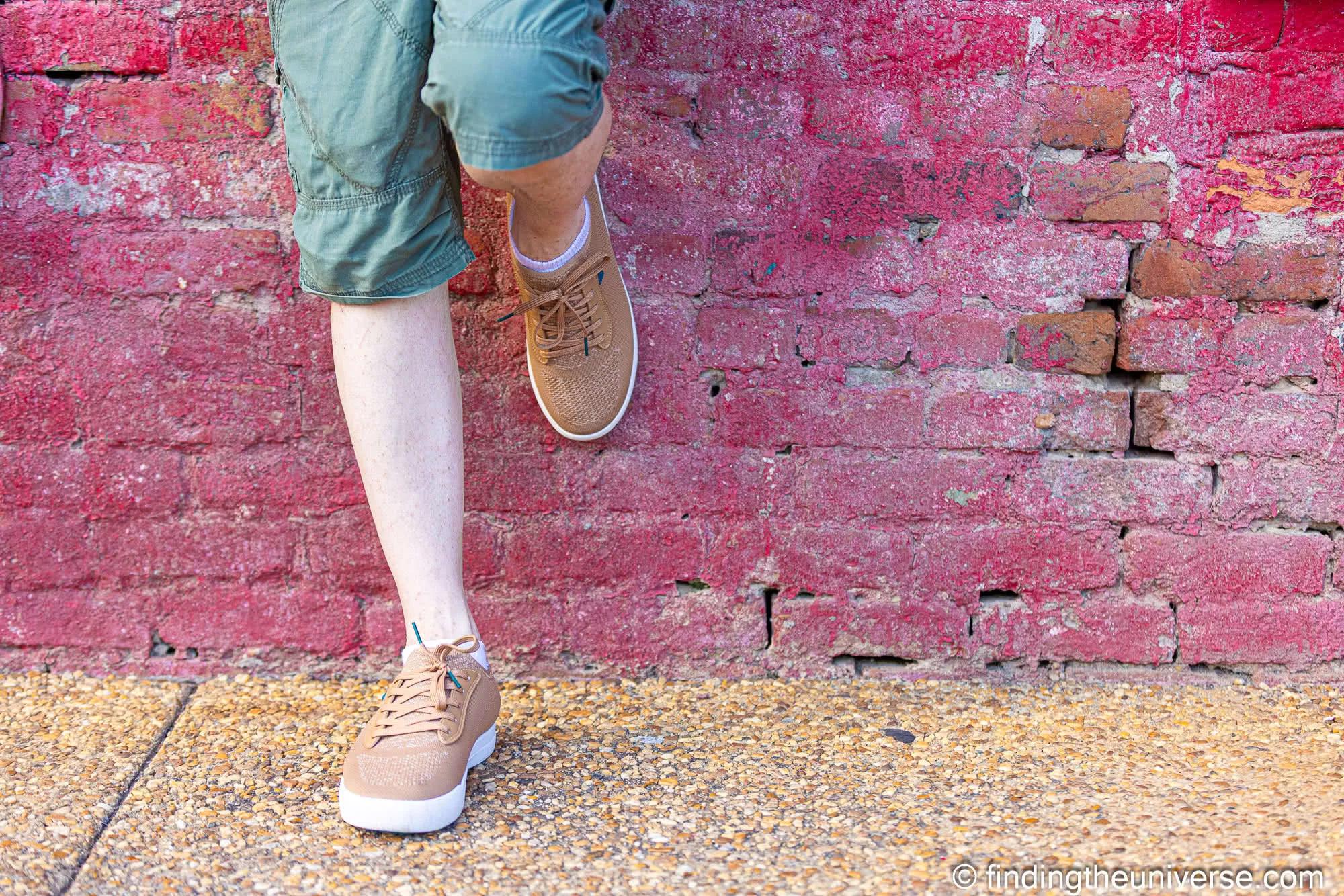
2. Rockport Taylor Waterproof Plain Toe Oxford
If you want something a bit more formal-looking than the Vessi while still being comfortable for full-day walking, this is the pick. The Robinsyn used to sit in this slot; what Rockport sells now is the Taylor Waterproof Plain Toe, which is the same idea in the current line: a leather plain-toe oxford you could wear to a meeting, built on a walking sole.

Despite the relatively formal appearance, Rockport has made a shoe that’s fully waterproof (their Hydro-Shield construction) and comfortable for walking around all day, and it comes in both medium and wide fittings. For trips where you need one pair that can do meetings, dinners, and long walks, this is a strong choice.
Check current price on Amazon here.
Best Travel Walking Shoes / Sneakers for Men
These are designed for long days of walking above all else. Less formal than the versatile picks above, but the comfort-per-mile is unmatched.
1. Vessi Weekend Classic & Allbirds Tree Runner Go
Both covered in detail in the lead section above. They sit together here because between them, they cover almost any city-walking scenario. The Vessi Weekend Classic handles cooler and wet weather; the Allbirds handle warm and dry. If you’re wondering which to pick, weather is the deciding factor: pick the Vessi for European autumn or winter trips, the Allbirds for summer.
The Tree Runner Go is made from responsibly sourced, renewable eucalyptus fibre, and remember the note from the lead section: it replaced the original Tree Runner I wear, alongside the firmer Tree Runner NZ, when Allbirds split the line.
Check current prices: Vessi Weekend Classic here, or the Allbirds Tree Runner Go on Amazon here.
2. Skechers Men’s Go Walk Max Effort
For a more affordable walking-focused option, Skechers have really upped their game with their cushioned walking sneakers. The Go Walk Max range is built around athletic walking, with a cushioned, supportive sole that holds up across long city days.

Jess loves her Mary Jane Skechers for all-day city walks, and the men’s Go Walk Max sit in the same family of “extremely comfortable, modestly priced, no-nonsense walking shoes.” If you’re not ready to commit to the Vessi or Allbirds price point, these are the budget pick.
Check current price on Amazon here.
Best Travel Sandals for Men
If you’re travelling somewhere warm, a pair of travel sandals is worth packing. The good options offer real arch support and a sole that handles light hiking and beach use both.
1. ECCO Men’s Offroad Yucatan Sandal
ECCO’s Yucatan sandals are a longstanding favourite for travel because they balance support and comfort better than most hiking sandals. ECCO now sells them under the Offroad name, and they come in enough colours that you can pick something that goes with your wardrobe.

What sets these apart from typical sandals is that you can actually walk a long way in them without your feet aching. They handle uneven trails, river crossings, and the kind of mixed beach-and-rocky-headland exploring that wears out cheaper sandals.
Check current price on Amazon here.
2. Teva Voya Flip
For trips where you really just want a pair of relaxed flip-flops for the beach, the pool, or evening hotel-to-restaurant walks, you don’t need a full hiking sandal. The Teva Voya Flip is what I’d point you at instead.

They’re light, pack tiny, and Teva makes them properly. They’re not trying to be a hiking sandal, which is the right call for a flip flop. They cost a fraction of the ECCOs and serve a different purpose.
Check current price on Amazon here.
Best Travel Hiking Boots for Men
If you’re going to be doing any serious hiking, a good pair of boots is the single best investment in this whole article. They’re not cheap, but they last for years and they make the difference between a hike you remember for the views and a hike you remember for the blisters.
1. Scarpa Men’s Kinesis Pro GTX
Covered in detail in the lead section above. These are my hiking boots, and they’ve been across deserts, snow, and most things in between. Full grain leather upper, Gore-Tex lining, easy-lace system, ankle support, Vibram sole. Expensive, but the kind of boot you buy once and own for a decade.

Check current price on Amazon here.
2. Lowa Men’s Renegade EVO GTX Mid
Lowa is another well-respected hiking boot brand, and the Renegade has been their best-known model for over 25 years. What Lowa sells now is the Renegade EVO GTX Mid, the updated generation of that boot: fewer seams in the upper, a revised sole package, and dual-zone lacing that lets you tension the forefoot and ankle separately, still with a leather outer and a Gore-Tex membrane.

My own pair is the previous-generation Renegade, and the EVO keeps the reasons I bought them. At 590 g per boot they’re lighter than the Scarpas, so if the Kinesis Pro feels like a bit too much boot for the kind of hiking you do (the Scarpa is built for serious mountain conditions), the Renegade is the more travel-friendly option. Lighter to pack, still properly waterproof, and a known quantity for hikers. It also comes in narrow, medium and wide fittings, which almost nothing else in this article does.
Check current price on Amazon here.
3. Merrell Men’s Moab 3 Mid Waterproof
For a long time, Merrell were Jess’s go-to hiking boots. She wore a pair of them when hiking Mount Kilimanjaro in Tanzania, which is about as serious a test as a pair of hiking boots gets.

The Moab 3 Mid Waterproof is the version we’d recommend, with a waterproof membrane and ankle support. They’re more affordable than either the Scarpa or the Lowa, which makes them a good entry point for someone who isn’t sure yet how much hiking they’ll actually do. It also comes in a wide fitting.
Check current price on Amazon here.
4. Adidas Terrex Free Hiker 3 Low GTX
If you want the waterproofing and grip of a hiking boot without the ankle collar, a low hiking shoe is the answer, and the Terrex Free Hiker 3 Low GTX is adidas’s current one. Gore-Tex lined, with a thick cushioned midsole that feels closer to a running shoe than a traditional hiker underfoot, which is the point: it’s aimed at people who want one shoe for the trail and the town.

I haven’t worn these myself, so this is a research pick instead of a lived one, included because the lineup needed a low-cut waterproof option between the sneakers and the boots. If your trip has trails but nothing technical, and the mid-cut boots above feel like overkill, this is the category to look at.
Check current price on Amazon here.
Water Shoes (You Probably Don’t Need These)
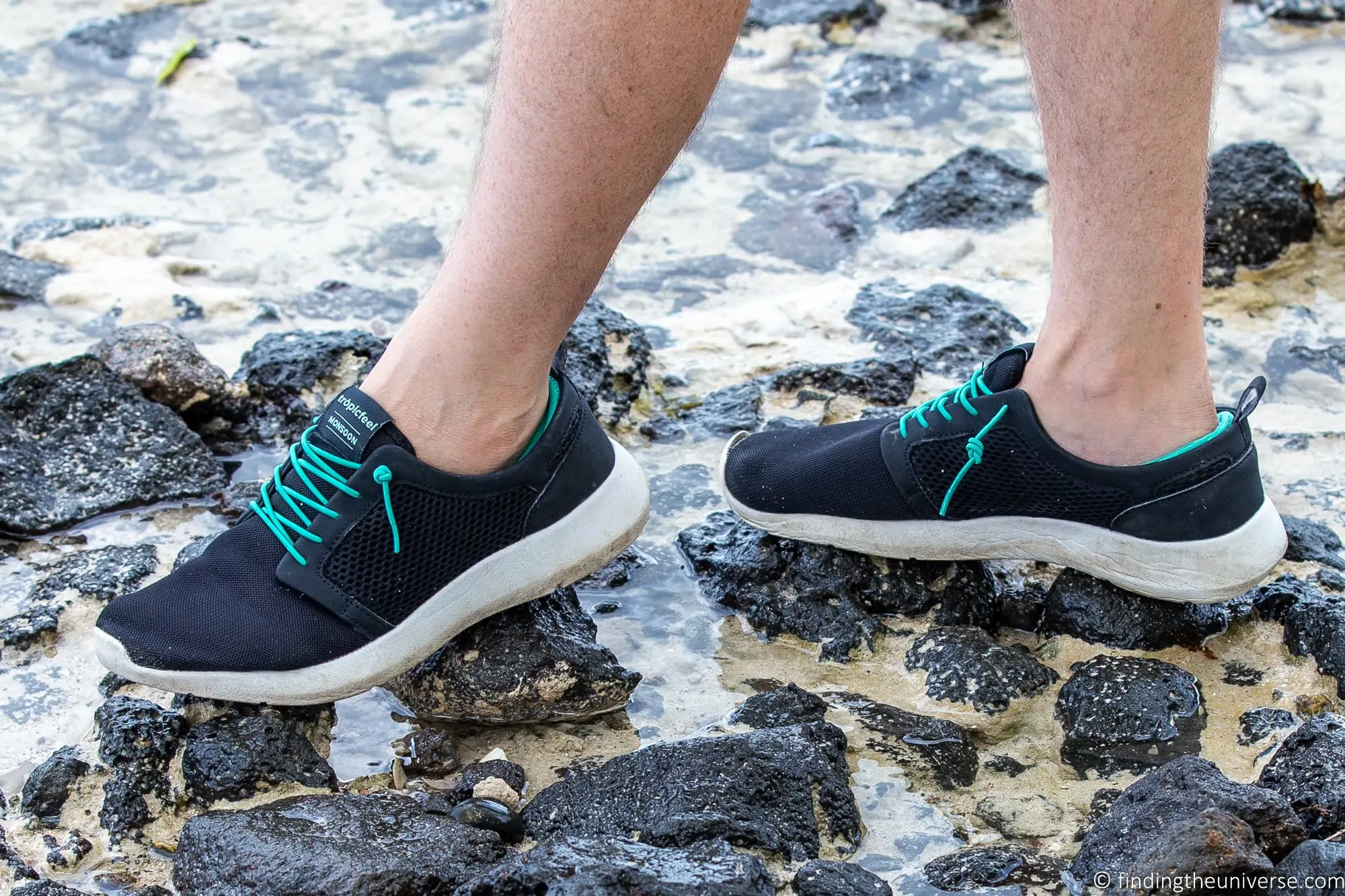
Water shoes are a small market full of generic options, and most travellers don’t actually need them. If you’re spending a day on a boat tour, a beach holiday, or a snorkelling trip where you’ll be walking on rocks or coral, they might be useful. For everything else, your sandals or trainers do the job.
If you specifically need them, the things to look for are quick-drying mesh, a non-slip sole with proper grip, and protection on the toes. Most of the cheaper options on Amazon meet that bar; the brand matters less than the fit.
Best Travel Sports Shoes for Men
If you’re planning to actually run or do gym workouts on your travels, packing dedicated sports shoes is worth it. They’re also lightweight and useful for less challenging hikes in dry conditions.
1. Adidas Men’s Duramo SL 2
The Duramo SL 2 is the entry-level Adidas running shoe and a sensible pick for a travel sports shoe. Light mesh upper for breathability, cloudfoam sole for cushioning, and a price point that doesn’t ask you to commit like a serious running shoe does.
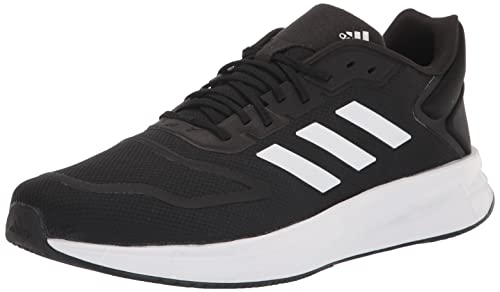
If you want something for occasional hotel-gym workouts and the odd morning run on a trip, these handle that without taking up too much space in your bag.
Check current price on Amazon here.
2. ASICS Men’s Gel-Nimbus 28
If you actually run and want something proper, the ASICS Gel-Nimbus 28 is the current generation of the running shoe I’d point you at. The Gel-Nimbus line was originally designed for long-distance road running, with gel cushioning under the heel to take the impact out of long runs, and the 28 carries that on with an engineered knit upper.
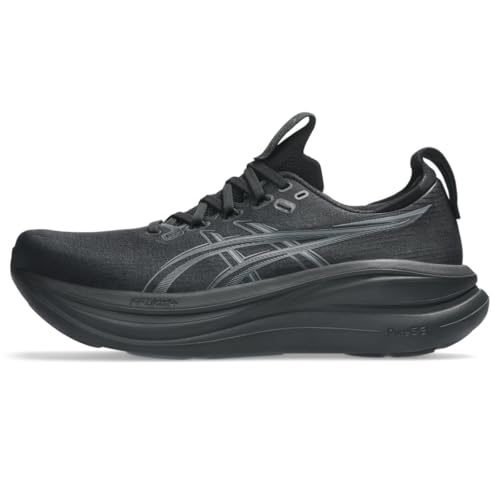
The cushioning is the reason to buy it, and it also comes in a wide fitting, which is rarer than it should be in running shoes. They’re heavier and more expensive than the Duramo, but if running is part of your travel plan, the difference is worth it.
Check current price on Amazon here.
Best Travel Snow Boots
If you’re travelling somewhere where there’s serious snow on the ground (Reykjavik in winter, Tromsø, Quebec, the Alps in deep winter), a proper snow boot is worth packing. They’re insulated for warmth, designed to keep snow out from the top, and waterproof in a way that ordinary hiking boots aren’t necessarily.
For most winter European city travel (London, Paris, even Edinburgh), the Vessi Weekend Classic from above (with warm socks) will be enough. Snow boots are for the destinations where you’d actually be walking through snow.
1. Merrell Thermo Chill 2 Mid Waterproof
A solid mid-priced snow boot from a brand that knows what it’s doing in waterproof footwear. Merrell has moved the line on to the Thermo Chill 2, with 200g of insulation and a waterproof membrane.

For a week of winter city travel where there might be snow on the ground, these are the pick. They’re warm, they keep your feet dry, and they’re not so chunky that you can’t wear them out for dinner.
Check current price on Amazon here.
2. Columbia Men’s Bugaboot Celsius
If warmth is the priority, the Columbia Bugaboot Celsius range goes further than most. Waterproof, seam-sealed, with Columbia’s omni-heat reflective lining that makes a real difference when it’s properly cold.

They’re a bit heavier than the Merrell Thermo Chill, but if you’re going somewhere properly cold (Iceland in winter, ice hotel territory), the extra insulation justifies the extra weight.
Check current price on Amazon here.
Best Travel Dress Shoes
If you need smarter shoes on the road (a wedding, a business meeting, a nicer restaurant), a pair of travel dress shoes is worth packing. The picks below balance smartness with all-day comfort, which is the gap most dress shoes fail. We’ve also got a related guide to the best travel suit for men if smarter dress is part of your trip.
What Shoes Can You Wear to Dinner in Europe?
Since dress codes are the thing men actually worry about here, the practical version from years of travelling with one smart pair: in the US, very little gets you turned away. Dark, quiet sneakers pass at the overwhelming majority of restaurants, including nice ones, and a collared shirt does more for you than your shoes do. In Europe the line sits a bit higher. Formal dining rooms, jacket-expected hotels and old-school establishments will expect a proper shoe, and bright technical trainers read as sportswear there in a way plain dark shoes don’t.
If the trip has one smart evening on it, the Amberjacks go in the bag. If I’m not sure, dark Vessis cover the ambiguous middle ground, and nobody has ever looked twice.
1. Amberjack Original
Covered in detail in the lead section above. Most comfortable dress shoes I’ve owned. Hiking-boot-grade base, sneaker flex, sheepskin lining, full grain leather upper. The pair I pack when smart-dress is on the trip. They also come in a wide fitting.
Amberjack also makes other styles (loafers, wholecuts, brogues), so if the Original isn’t quite right, the full range is worth a look.
2. Clarks Men’s Cotrell Edge Oxford
For a more traditional dress shoe at a much lower price point than the Amberjack, Clarks is the dependable pick. The Cotrell Edge has an open-cell Ortholite foam insole that helps with impact absorption, which is the thing most cheap dress shoes cut corners on.

They’re not in the same comfort league as the Amberjack, but they’re a fraction of the price and they last for years if you care for them properly. A reasonable compromise pick.
Check current price on Amazon here.
3. ECCO Men’s New Jersey Slip On Loafer
If you’d rather skip laces, ECCO’s slip-on loafers are the smarter slip-on option. Lightweight, casual-but-smart, and they tuck flat into a bag.

These work as a year-round dress-casual option, day to evening, and they’re particularly useful for any trip with airport security in it (slipping them off and on is faster than dealing with laces, and European checkpoints can still ask).
Check current price on Amazon here.
Travel Shoe Specs Compared
Here’s the full lineup side by side. Every figure comes from the manufacturer’s own published specs; where a cell is blank, the maker doesn’t publish that figure, so the cell stays empty rather than filled with a guess. Weights are per single shoe, not per pair, because that’s how makers quote them.
| Shoe | Weight (per shoe) | Waterproof | Widths | Upper |
|---|---|---|---|---|
| Vessi Weekend Classic | Yes (Dyma-tex waterproof knit) | Waterproof knit | ||
| Allbirds Tree Runner Go | No | Standard only | TENCEL Tree Knit | |
| Scarpa Kinesis Pro GTX | 850 g / 1 lb 14 oz (EU 42) | Yes (Gore-Tex) | Standard only | Full-grain leather |
| Amberjack Original | No | Standard + Wide | Full-grain leather, sheepskin lining | |
| Rockport Taylor Waterproof Plain Toe | Yes (Hydro-Shield) | Medium + Wide | Leather | |
| Skechers Go Walk Max Effort | No | Medium only | Air-mesh | |
| ECCO Offroad Yucatan Sandal | No | Standard only | Nubuck leather, neoprene lining | |
| Teva Voya Flip | No | Recycled REPREVE straps | ||
| Lowa Renegade EVO GTX Mid | 590 g | Yes (Gore-Tex) | Narrow / Medium / Wide | Nubuck leather |
| Merrell Moab 3 Mid Waterproof | 495 g / 1 lb 1.45 oz | Yes | Standard + Wide | Pig suede + mesh |
| Adidas Terrex Free Hiker 3 Low GTX | Yes (Gore-Tex) | |||
| Adidas Duramo SL 2 | No | Standard only | Synthetic mesh | |
| ASICS Gel-Nimbus 28 | No | Standard + Wide | Engineered knit | |
| Merrell Thermo Chill 2 Mid Waterproof | 480 g / 1 lb 0.92 oz | Yes | Medium only | Mesh + PU-coated suede |
| Columbia Bugaboot Celsius | 673 g / 23.8 oz (size 9) | Yes (Omni-Tech) | Standard (separate Wide version) | Waterproof leather + textile |
| Clarks Cotrell Edge Oxford | No claim | Standard only | Leather | |
| ECCO New Jersey Slip On Loafer | Standard only | Full-grain leather |
A note on widths, since this table makes it plain: most travel shoes come in one width. If you have wide feet, the list that matters is short: the Amberjack Original, the Lowa Renegade EVO (narrow through wide), the Merrell Moab 3, the ASICS Gel-Nimbus 28, the Rockport Taylor, and the Columbia Bugaboot in its separate wide version. Start there instead of hoping a standard-width knit shoe stretches to fit, because knit uppers give a little but soles don’t.
How These Shoes Have Held Up
Most shoe roundups are written in the first month of ownership, when everything is comfortable and nothing has worn out yet. So here’s the longer view on the pairs I’ve owned longest, because how a shoe looks after two years matters more than how it looks in the box.
On travel shoes it’s rarely the upper that goes first. Soles wear through, knit stretches at the flex points, and leather just gets better if you look after it, which is why the leather picks here (the Scarpa, the Amberjack) are the ones I talk about in decades and the sneakers are the ones I talk about in years.
My leather pairs bear that out. I replaced the Scarpas with the identical boot, which is the strongest recommendation I know how to give, and Amberjack backs the Original with a 2-year warranty, which for a dress shoe is a statement of intent. The knit side is where it gets interesting: two years on, the waterproofing is the part of the Vessis I expected to fail first, and it’s the part that’s held. They’re still in the daily rotation, which is the only endorsement that really counts.
The original Allbirds Tree Runners went the other way, through no fault of the shoes: I own multiple pairs, they’ve been washed more times than any other shoe I travel with, and now the model has been discontinued under me! The Wool Runners met a similar fate a while back, retired from this guide because they became hard to find, not because they failed. That’s the pattern with knit sneakers in general: the shoe outlasts the product line.
How Many Shoes Should I Pack for Travel?
Two pairs is the answer for most trips. I try to travel with no more than two pairs on most trips, even ones that mix cities and trails, and we’ve never come back wishing we’d brought a third pair.
Most of our trips include both city walking and some hiking. On those, I wear my hiking boots in transit (because they’re bulkier and heavier and it’d be silly to pack them) and pack the Vessis or Allbirds in my bag. That covers everything.
Sometimes you do need three pairs. If you’re going somewhere warm enough that sandals make sense, and you also want a more formal pair for an evening, three is the count. Try not to go beyond that.
Best Travel Shoe Accessories for Men
Shoes aren’t the whole story. A few accessories make a real difference to how comfortable your feet stay across long days of travel.
1. Cushioned Ankle Socks
A good pair of shoes won’t get you far without good socks inside them. Most people don’t think about socks much, which is why so many travellers end up with blisters on day three. The basics that matter: comfort, breathability, washability (the test being whether they survive a few washes), and odour control.

Check current price on Amazon here.
2. Merino Wool Hiking Socks
If you’re hiking, merino wool socks are non-negotiable. They handle moisture and temperature better than cotton, they don’t smell after a long day, and they last for years. I prefer merino over any synthetic for hiking specifically.

The packs come in threes and fives, which covers most trips, plus you can always do laundry as you travel. Reinforced heel and toe for the extra wear hiking puts on socks.
Check current price on Amazon here.
3. SOUL INSOLE Premium Orthotic Insole
Both Jess and I have suffered from arch pain on long trip days, and these orthotic insoles have been the fix. They slot into the arch of any shoe, including sandals and dress shoes, and they redistribute pressure across the foot rather than letting it concentrate on the heel and forefoot.

They’re washable and reusable, so one pack lasts a long time. Worth a try if you’ve ever had arch pain on a long walking day, even if you don’t normally wear orthotics.
Check current price on Amazon here.
4. Travel Shoe Bags
For ease of packing, and to save you having to scrub shoes spotless before they go in the bag, shoe bags are worth the small investment. The Yamiu set is what we use: four bags across two sizes, waterproof material, inexpensive.
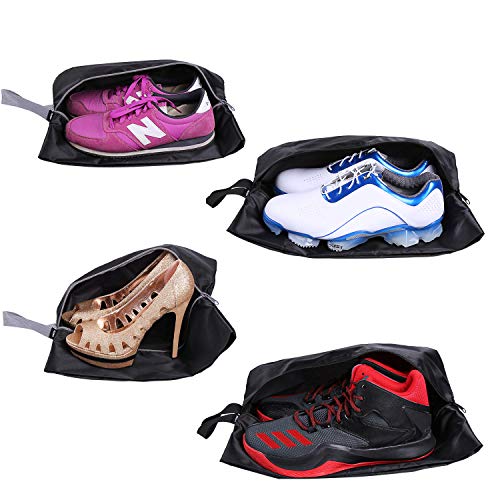
When you’re not travelling, they’re useful for shoe storage at home (dust-free) or as a waterproof toiletry bag if you don’t have four pairs of shoes to bag up.
Check current price on Amazon here.
5. Nikwax Fabric & Leather Proof Spray
If you’ve spent good money on a pair of leather shoes or hiking boots, a waterproofing aftercare product extends the life of the shoe and keeps them performing properly. Nikwax is the well-known name in this space.

You probably don’t want to travel with this, but a regular application at home keeps leather waterproof and the leather itself in good condition. Cheap insurance against having to replace a £200 pair of boots after one bad season.
Check current price on Amazon here.

Frequently Asked Questions
What are the best travel shoes for European city walking?
The Vessi Weekend Classic is my first recommendation for European city walking. They’re 100% waterproof (which matters more than you’d expect across UK and Northern European weather), they handle cobbles and hills well, and they’re presentable enough for evening venues where pure trainers feel out of place.
If you want a more sneaker-like silhouette, the Allbirds Tree Runners are the warm-weather pick. Allbirds has since split that line into the Tree Runner Go and the Tree Runner NZ, and the Go is the one I’d buy today. Between the waterproof Vessi for cooler, wet weather and the Tree Runners for warm and dry, you’ve got European city travel covered for any season.
How many pairs of shoes should I pack for travel?
Two pairs covers almost every trip. One versatile city pair you wear most days, and a second pair for whatever your trip needs (hiking boots if there’s a trail walk, sandals if it’s hot, dress shoes if there’s an evening occasion).
Wear the bulkier of the two in transit. Hiking boots and snow boots go on the plane, lighter shoes go in the bag. Three pairs is sometimes justified (warm trip with both hiking and evening occasions), but four or more rarely is.
What about cobblestones?
Cobbles are harder on feet than flat pavement because they cause constant micro-adjustments to balance and impact. The shoes that handle them best have proper cushioning, decent grip, and a sole that flexes rather than going stiff.
The Vessi Weekend Classic and Allbirds Tree Runners both handle cobbles well. The Rockport Taylor does too if you want something dressier. What you want to avoid for a heavy-cobble destination is anything with a thin or rigid sole, including most fashion sneakers and most dress shoes that aren’t built for walking.
Are sneakers okay for nicer restaurants in Europe?
Most sneakers are fine for European restaurants, quiet leather or wool shoes in dark colours pass without a second glance. Bright-coloured technical running shoes are the exception, and anywhere formal (Michelin-starred, jacket-required) calls for dress shoes.
The Vessi Weekend Classic and Allbirds Tree Runners in dark colours both pass for casual-evening wear at most European restaurants. There’s more on exactly where the line sits, US versus Europe, in the dress shoes section above.
What shoes should I pack for Iceland in winter?
For Iceland in winter, hiking boots are the right answer for any day with outdoor activity (the Scarpa Kinesis Pro GTX or Lowa Renegade EVO GTX both work). Pair them with the Vessi Weekend Classic for Reykjavik city days where you’re not walking through snow.
If you’re going to be out on glaciers, ice caves, or northern-lights tours where you’re standing outside in serious cold for long periods, step up to a proper snow boot like the Merrell Thermo Chill or Columbia Bugaboot Celsius. Warm wool socks are non-negotiable. We’ve got a full Iceland winter packing guide for the rest of the kit.
What about smart-casual or business travel shoes?
The Amberjack Original is my main recommendation for business travel. It’s a full dress shoe in look but built like a sneaker for comfort, which is the gap most dress shoes fail. If Amberjack isn’t quite the right fit, brands worth checking out include Cole Haan (good comfort options), Ecco’s S Lite hybrid brogue line, Grant Stone, and Allen Edmonds (more expensive, traditional dress shoe craftsmanship).
The Rockport Taylor Waterproof Plain Toe is also worth considering if you want something between a smart shoe and a casual one. The Clarks Cotrell Edge Oxford is the budget option that still passes the smart-shoe bar.
Do you have to take your shoes off at US airport security?
No, not as a default any more. TSA announced on 8 July 2025 that travellers at US domestic checkpoints can keep their shoes on, and the change applies to every traveller, with or without PreCheck.
There’s one condition: if you set off the alarm, you can still be asked to remove your shoes for further screening or take a pat-down instead. So shoes that come off easily still make security marginally less annoying, just no longer for everyone by default. PreCheck also still has value, since it covers laptops, liquids, belts and light jackets.
In Europe there’s no single answer, because each airport runs its own screening. There’s no blanket shoes-off rule, but you may be asked depending on the checkpoint and what you’re wearing. Heathrow, for example, tells passengers to be prepared to remove shoes, but stops short of requiring it. The practical approach: wear shoes you can get off and back on without a fuss, and you’re covered either way.
Are slip-on shoes good for travel?
Yes, with one caveat. A smart slip-on like the ECCO New Jersey Loafer packs flat, works day to evening, and makes airport security and shoes-off situations (some house visits, temples, certain restaurants in Asia) painless. For a trip built around city walking and dinners, they’re an excellent second pair.
The caveat is support. Most slip-ons hold your foot less securely than a laced shoe, so I wouldn’t make one my main all-day walking pair on a heavy-mileage trip. Slip-ons as the smart pair, laced shoes for the miles.
What are the best travel shoes for wide feet?
Most of the shoes in this guide come in one width only, so if you have wide feet, start with the picks that offer a real wide fitting: the Amberjack Original, the Lowa Renegade EVO GTX (narrow through wide), the Merrell Moab 3, the ASICS Gel-Nimbus 28, the Rockport Taylor, and the Columbia Bugaboot in its separate wide version.
Knit shoes like the Vessi and Allbirds only come in standard widths, though the knit does give a little more than a leather upper would. If you’re between widths, that stretch can be enough; if you’re firmly a wide fitting, buy a shoe that’s made in one.
How long do travel shoes take to break in?
Buy new travel shoes two to three weeks before the trip and wear them at home first, on errands and full days. Pottering around the house doesn’t count. Sneaker-style shoes need very little breaking in, leather dress shoes need the most, and hiking boots sit in between (Merrell pitches the Moab on out-of-the-box comfort, but I still wouldn’t take any brand-new boot straight onto a trail).
Never start a trip in shoes you haven’t done at least one long day in. Blisters on day one follow you around for the whole trip.
How do you dry soaked shoes overnight when travelling?
Pull the insoles and laces out, stuff the shoes tightly with newspaper or any absorbent paper, and swap the stuffing after an hour or two, that first swap does most of the work. Leave them somewhere with moving air, near (never on) a radiator. Direct heat is how you crack leather and separate glued soles, so keep them off the heater and skip the hairdryer.
Knit sneakers dry fastest of anything in this guide. And of course, actually waterproof shoes sidestep the problem, which is an underrated reason to buy them for wet destinations.
Do you need waterproof shoes for Europe?
For spring, autumn or winter in the UK, Ireland, or Northern and Central Europe, I’d say yes, it’s the feature I’d pay for first. Wet feet at 10am ruin a city day faster than almost anything else, and forecasts on those trips change by the hour.
For a summer Mediterranean trip, no. Breathability matters more than waterproofing when it’s 30°C and dry. That’s why my two everyday pairs are one of each: the waterproof Vessi for the wet half of the year, the breathable Allbirds for the hot half.
Further Reading
That summarises our guide to the best travel shoes for men. We’ve also got a number of other guides we think you’ll find useful for travel planning.
- For more on Allbirds specifically, see our complete Allbirds review.
- If smarter dress is part of your trip, see our guide to the best travel suit for men.
- For destination-specific packing, see our guides to what to pack for a ski trip, what to pack for Iceland, what to pack for London, and what to pack for winter in Finland.
- For gift ideas, see our guide to what to buy for photographers, travel themed home decor items, and our ultimate gift guide for travelers.
- And lots of travel inspiration: the world’s best road trips, getting online when travelling, picking a travel router, and more.
And that’s it. Hopefully you found a pair of shoes you like, or at least some ideas for what to look for when buying your next pair.
Do you have a favourite pair of travel shoes, or a question about any of the above? As always, just let us know in the comments below.
Mitch Clark says
what are some travel shoe suggestions would you recommend for a twenty-something business traveler starting out? I normally wear either black or dark brown shoes and need to look professional to go with more formal work wear and also be fairly easy to clean and comfortable – bonus if works with other clothes too – looking for a list of brands to check out and even specific shoes you might know of
Laurence Norah says
Hey Mitch!
So this will depend a little on how formal you want to be. If you are going to be wearing a suit, then you might want a pair of dress shoes. These can definitely work with other clothes as well as long as you don’t mind looking more dressed up than casual. Personally I have a pair of Amberjacks as formal dress shoes, they are very smart but they are stealthily designed to also be very comfortable, which isn’t the case with a lot of dress shoes I’ve owned. They make a number of different styles.
If those are a bit formal then I used to recommend a pair of Timberland Stormbuck Oxford shoes but they don’t seem to be being made any more. So the next closest shoes I could find are these Rockport Oxfords. Just note that they aren’t leather, although the material has a similar look. Another option to consider would be the Ecco S Lite hybrid brogue which offers a good balance of style and comfort. Cole Haan would be another brand to consider.
Depending on budget, you may also consider looking at brands like Grant Stone or Allen Edmonds. However their shoes tend to be a bit more expensive, and I’d say if you are just starting out you might want to start off with a less expensive option and see what works for you.
I hope this helps, let me know if I can be of any more help!
Laurence
Rigo says
Hello Laurence, thanks for the list.
I’m going to be travelling to a few cities in Europe for the first time for about 3 weeks(Belgium, Germany, Austria), from mid november to early december, so i’m assuming i can expect a not extremely cold environment, but most likely colder than i’m used to as a south american haha, so i’m trying to figure out what would be some good pairs of shoes to bring to my trip.
I’m mostly worried about rainy weather, since in the colder months I usually wear some pretty comfortable and breathable running shoes and switch to warmer socks and works well enough for me at around 8C(45~F), but i’m not sure if that strategy will work out this time since they’re very not waterproof haha, so what would you recommend? assuming it’s going to be an exclusively city walking trip.
Laurence Norah says
Hi Rigo,
It’s my pleasure. So my personal choice would be the Allbirds Wool Runner Mizzles. They are fairly water resistant and are what I use for most of our cooler weather trips. I’m wearing them around Chicago at the moment and it’s been pretty cold and they have been comfortable for the trip. They are not going to withstand standing in rivers or anything like that, but they are fine for general wet weather in my experience.
I hope this helps!
Have a great trip 🙂
Laurence
David says
Hi Laurence, Found this article after reading through some of your Iceland articles which have been very useful. Thoughts on what shoes my wife and I should pack for a 10 day winter trip? Spending time in capital, some hiking, baths, beaches, day tours, etc. Thanks!
Laurence Norah says
Hi David,
Thanks so much. So personally I’d lean towards a good pair of hiking boots which is what we wear in Iceland in winter. Another option is snow boots, but those are a bit more specific. Waterproof hiking boots with a good grip should cover all your needs, along with some nice warm socks. You might also consider something like the Allbirds Wool Runner Mizzles for city use as they offer some water resistance and are quite warm too, but they wouldn’t be as good for hiking.
Let me know if I can help any further, and have an amazing time in Iceland!
Laurence
Scott says
This has been helpful. I am trying to find a pair of shoes for a 2 wk trip where I can just take the one pair as I don’t want to pack any shoes. The trip will to 3 cities in the USA so mostly a lot of city walking but also maybe some light walking/hiking on trails. I have wide feet so need a wide toe box and am prone to blisters. Thoughts on shoes and socks you would consider packing?
Laurence Norah says
Hi Scott!
I’m delighted to have been of help! So my first tip would be around socks. If you are prone to blisters, what I have found to work for me is to wear two pairs of thin socks rather than one pair of socks. Then, if there is friction, it happens between the socks rather than on your foot. Another option is to rub vaseline into your feet, which can also help. The anti-blister socks are also a good idea, and I would also suggest packing some blister specific sticking plasters like this.
As you only want to travel with one pair of shoes for a city break / light trail walking I am guessing you might want something a little bit smarter that would work on an evening out as well. So I’d suggest maybe the Timberland shoes, which are what I have. They are smart enough for a night out, but they also work for city walking. I wouldn’t want to do any extreme hiking, but they are ok for trail walking.
If those are a bit formal, then I think the Adidas Terrex might be a good pick. If you are buying online, my suggestion would be to purchase some different options at different sizes so you can return the ones that don’t fit.
I hope this helps!
HAve a great trip 🙂
Laurence
Brandon says
This has lots of good recommendations for men. I am heading on a trip soon that will include some city walking, museums, beaches, and snorkeling. I am guessing I will need two pairs of shoes…trying to fly carry-on only as short trip. Any thoughts? New to traveling and this is also my first time snorkeling so not sure if just flip-flops would be ok for boat or maybe water or reef shoes would be better?
Laurence Norah says
Hi Brandon – it’s really up to you, but I would definitely say that reef / water shoes would be better. Flip flops can be a bit slippery, especially when wet, and you might find your feet slip out of them. Reef shoes are more grippy and offer better support and protection. The good news is that they are pretty lightweight and fold up fairly small, so you shouldn’t have any problem fitting them in!
Best
Laurence