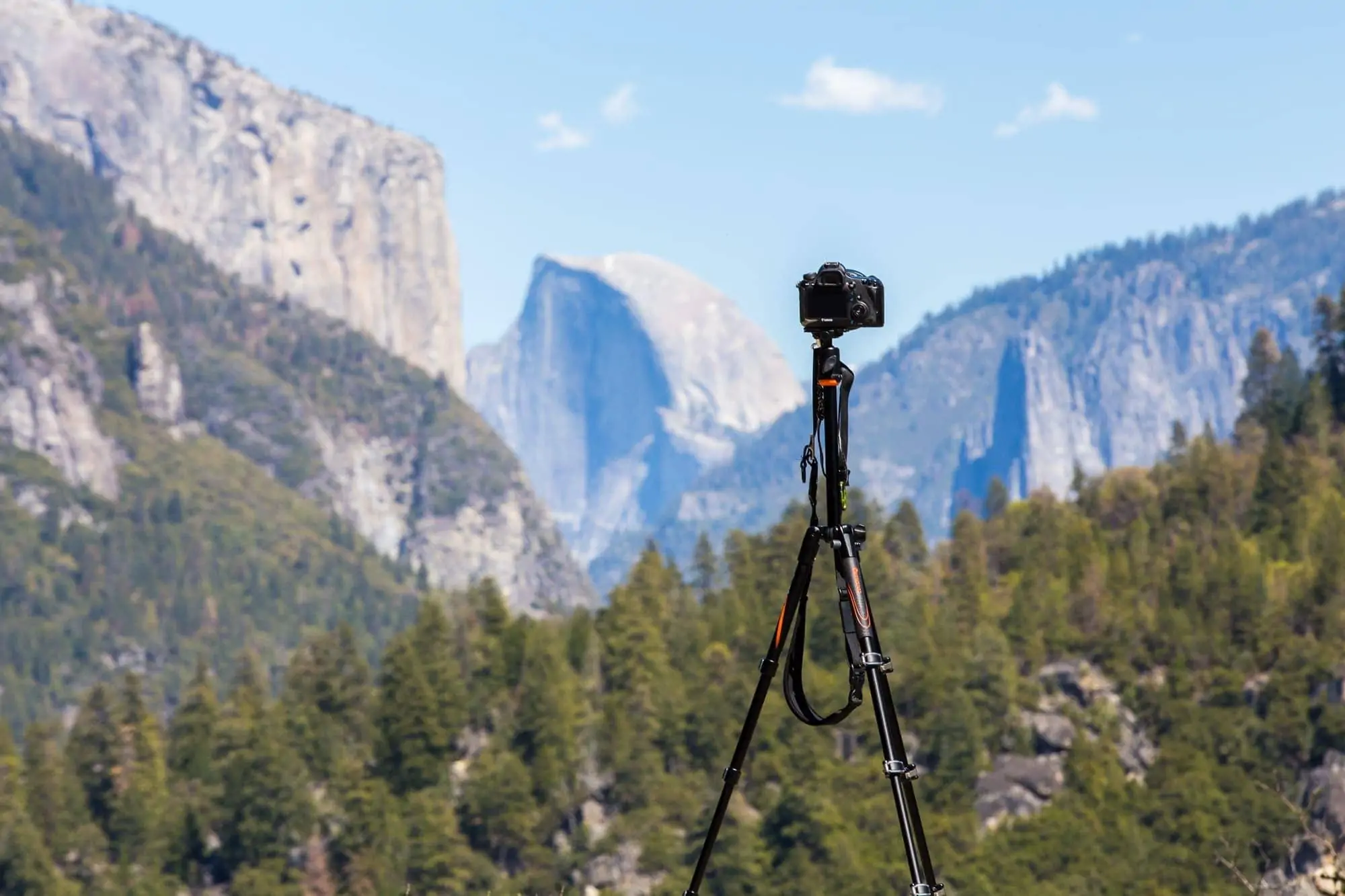
I’ve been a professional travel photographer since 2010, and I’ve owned around eight travel tripods over the years, which is enough to know what matters and what doesn’t. I don’t buy or ask for new ones just to have them. I bring one in to test when a design does something new, the way Peak Design got rid of the centre column, or when Vanguard switched to CNC-machined legs. I’ve also spent three years working the Vanguard stand at the UK’s biggest photography show as one of their ambassadors, so I’ve handled more or less everything they make, on top of the Peak Design and Vanguard tripods I’ve owned and reviewed in depth here on the site.
These days I travel with a Canon R5 and Canon’s EF 100-400mm zoom, which is about 2.4kg (a little over 5lb) of camera and glass, and it’s exactly the sort of kit that sorts the good travel tripods from the marketing.
That combination matters because it’s the question most spec sheets quietly dodge: will this tripod hold a real camera with a heavy lens steady in a breeze, or just a phone on a calm day? Every pick in this guide gets judged on that, along with the practical stuff that decides which camera tripod actually gets carried: how small it folds, how much it weighs, and whether you’ll still like it in five years.
One thing to be clear about before the list: I haven’t used every tripod here for months on end. The Peak Design Travel Tripod is my own, with years behind it, and I’ve owned and reviewed several of Vanguard’s VEO tripods too. The others, the Vesta GO included, are picks I’ve researched or handled rather than lived with, and I’ve flagged which is which in each section.
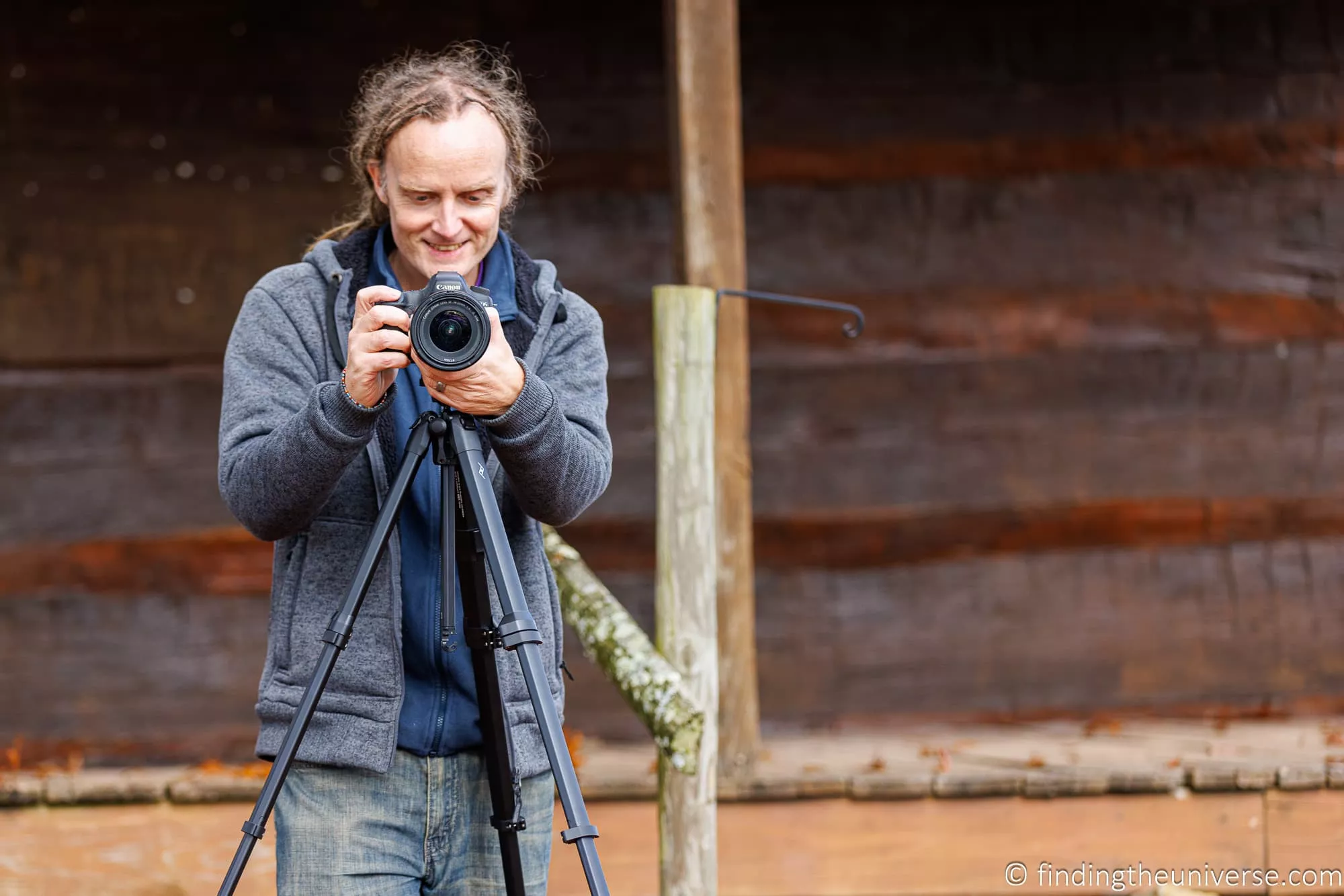
Table of Contents:
Quick Take: Which Travel Tripod to Buy
The best travel tripod for most photographers is the Peak Design Travel Tripod in carbon fibre. It packs smaller than anything else with this much stability, and after years of use mine still does everything I ask of it. If the carbon price makes you wince, the aluminium version (the one I own) is the same design for a lot less money, and it’s the value buy of this whole guide.
The Vanguard I’d steer most travellers to is the Vesta GO 204CB, a compact 2.1lb carbon tripod for light mirrorless kits, and if you buy it direct from Vanguard the code FindingTheUniverse takes 20% off.
On a tight budget, the K&F Concept ultralight gets you a 2lb carbon tripod for around a third of the big-name prices. And if you shoot heavy telephoto glass and want legs you’ll never replace, the Gitzo Traveler Series 1 kit is the one to save for.
Travel Tripods Compared
Specs below are from the manufacturers’ current pages, locked in July 2026. Cells marked – aren’t stated on the linked listing. One important warning before you read the load column: load ratings aren’t standardised between brands, so use them to compare headroom within a pick, not to rank one brand against another. There’s more on that further down.
| Tripod | Weight | Folded | Max Height | Max Load | Locks | Head | Price |
|---|---|---|---|---|---|---|---|
| Peak Design Travel Tripod (Carbon) | 2.8 lb | 15.5″ | 60″ | 20 lb | Flip | Ball (integrated) | Check price on Amazon |
| Peak Design Travel Tripod (Aluminium) | 3.44 lb | 15.5″ | 60″ | 20 lb | Flip | Ball (integrated) | Check price on Amazon |
| Vanguard Vesta GO 204CB | 2.1 lb | 15.4″ | 54.5″ | 6.6 lb | Twist | Ball (BH-45) | Check at B&H |
| Vanguard VEO 3T 204ABP | 3.3 lb | 15.9″ | 55.1″ | 8.8 lb | Twist | Ball/pan | Check price on Amazon |
| Manfrotto Befree | – | – | – | 26.5 lb | Twist | Ball | Check price on Amazon |
| SIRUI AM-284 | 2.69 lb (legs) | – | 47.2″ | 33.1 lb | Twist | None (legs only) | Check price on Amazon |
| K&F Concept Ultralight Carbon | 2.0 lb | 16.5″ | 60″ | 13.2 lb | – | Ball | Check price on Amazon |
| JOBY GorillaPod 5K | 1.63 lb (kit) | 15.2″ | n/a | 11 lb | Flexible | Ball (5K Kit) | Check price on Amazon |
| Gitzo Traveler Series 1 Kit | 3.2 lb (kit) | 16.7″ | 64.4″ | 22 lb | Twist | Ball (kit) | About £540 |
The Best Travel Tripods in 2026
Each pick below is the best at one job, and I’ve been specific about which job that is. The load comments assume a real camera: my reference kit is the Canon R5 with the EF 100-400mm zoom, and if a tripod can’t hold that combination steady, I say so.
1. Peak Design Travel Tripod Carbon – Best Travel Tripod Overall
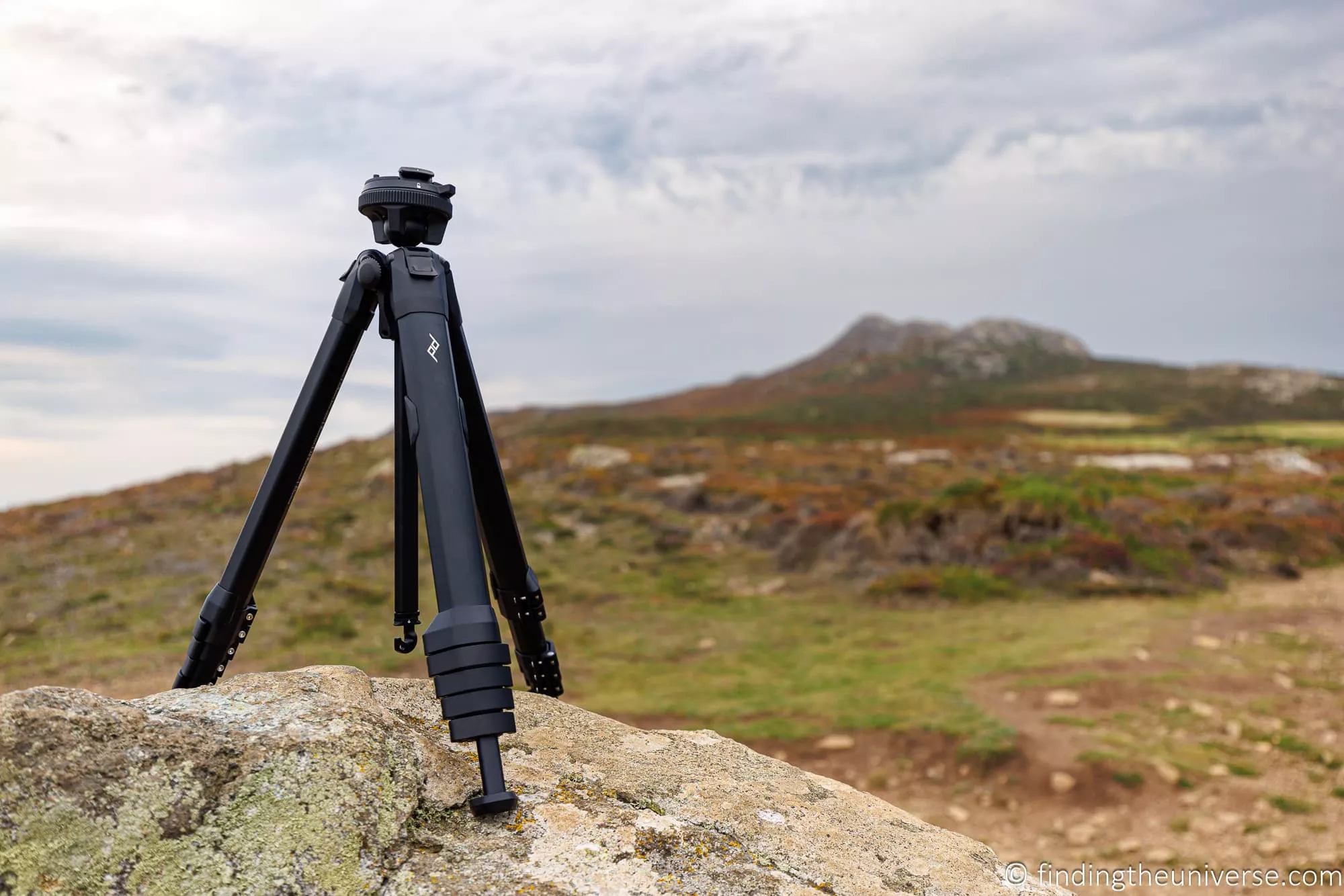
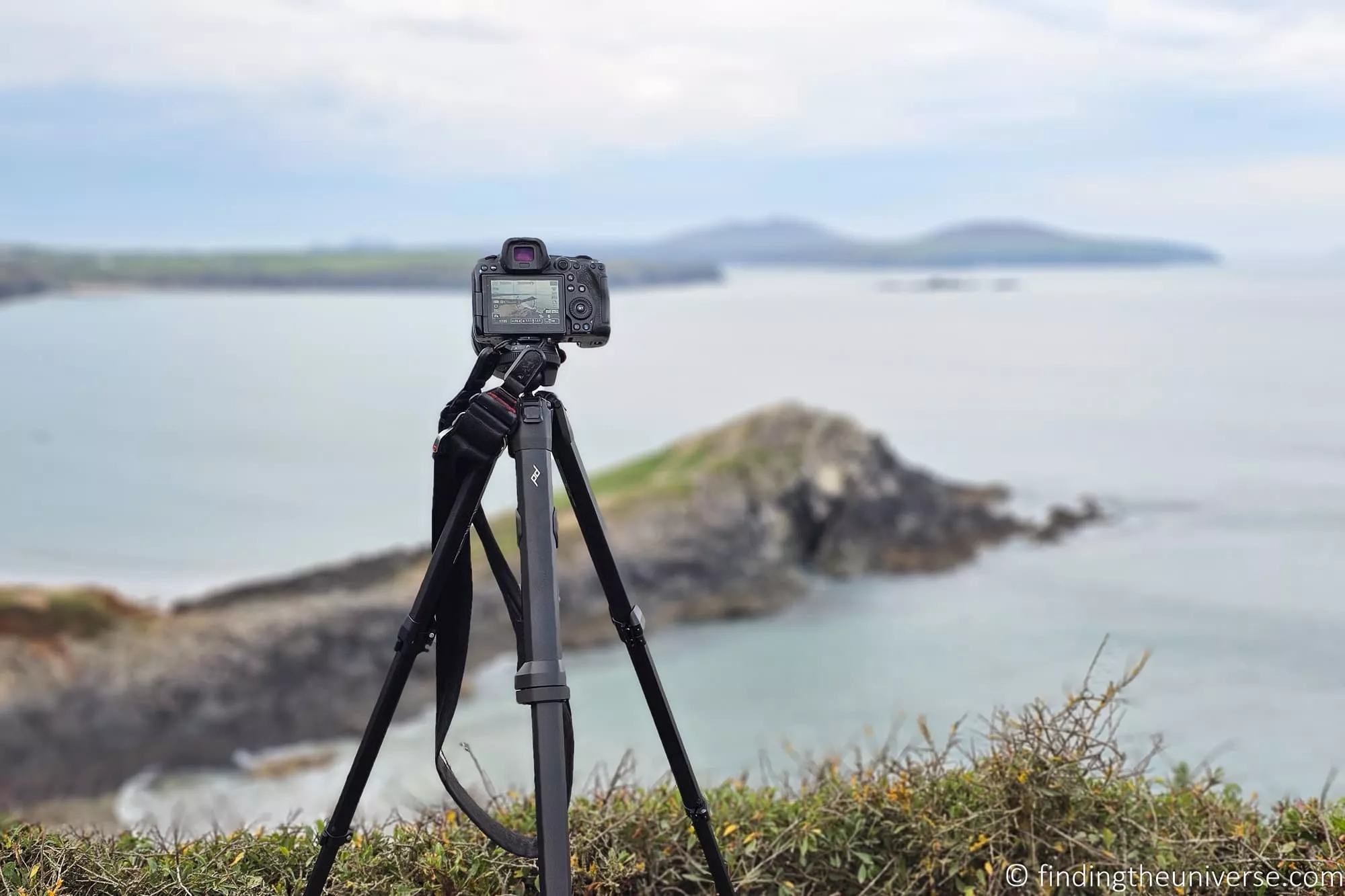
I’ve used the carbon Travel Tripod since 2023, and it’s still the cleverest piece of camera support design I’ve owned. The whole thing packs down to the diameter of a water bottle, about 15.5 inches long, because the legs fold flat against the centre column with no dead space and the ball head sits flush inside the legs rather than sticking up on top. It disappears into a camera bag side pocket in a way no other full-size tripod here manages.
In use it’s quick. The five-section legs run on flip locks, so it’s up in about twenty seconds, and the compact head adjusts with a single ring rather than a forest of knobs. It’s rated to 20lb and holds my R5 with the 100-400mm attached without complaint, although as with any travel tripod I keep the centre column down and hang my bag from the hook when the wind picks up.
There’s even a phone mount hidden inside the centre column, which is a nice touch rather than a gimmick.
It’s not cheap, and the carbon version especially so; the aluminium model below is the sensible answer to that. For the full story, including the small things I’d change after years of use, my Peak Design Travel Tripod review goes into much more detail. You can also buy it direct from Peak Design.
Check price on AmazonIf you shoot really heavy glass, there’s a new option to know about: Peak Design launched a Pro Tripod line in November 2025, three bigger models rated for 35 to 40lb of kit, running £699.99 to £999.99 in the UK. I haven’t used them, and they’re aimed more at working pros than travellers, but they carry the Travel Tripod’s flat-packing leg design scaled up. If your bag holds a gripped body and fast telephotos, that’s the step up to research.
2. Peak Design Travel Tripod Aluminium – Best Value
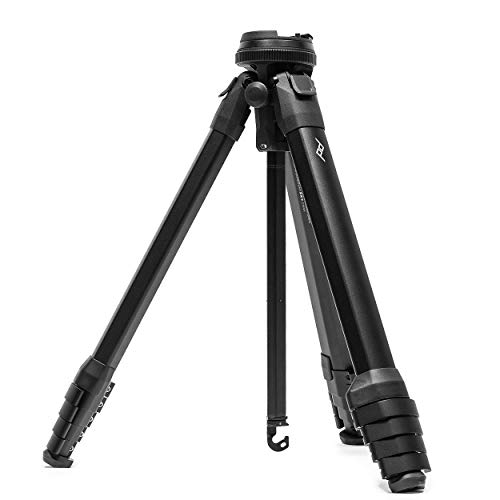
Same tripod, same geometry, same 20lb rating and 60-inch height, just aluminium legs instead of carbon. That adds about 0.6lb to the carry weight and, on paper, a little more vibration through the legs at long shutter speeds. Everything that makes the design special, the packed size, the fast setup, the integrated head, is identical.
This is the version I recommend to most people who ask. Unless you’re counting every gram on hiking trips or shooting long telephoto exposures where damping matters, buy this one and put the difference towards a lens. It’s the best value camera tripod for travel in this guide by some distance.
Check price on Amazon
3. Vanguard Vesta GO 204CB – The Everyday Vanguard
I should say up front that I’ve been a Vanguard ambassador for years, three of them spent working their stand at the UK’s biggest photography show, so factor that in. It also means I’ve had my hands on almost everything they make, and for most travellers the Vesta GO is the one I’d point to right now.
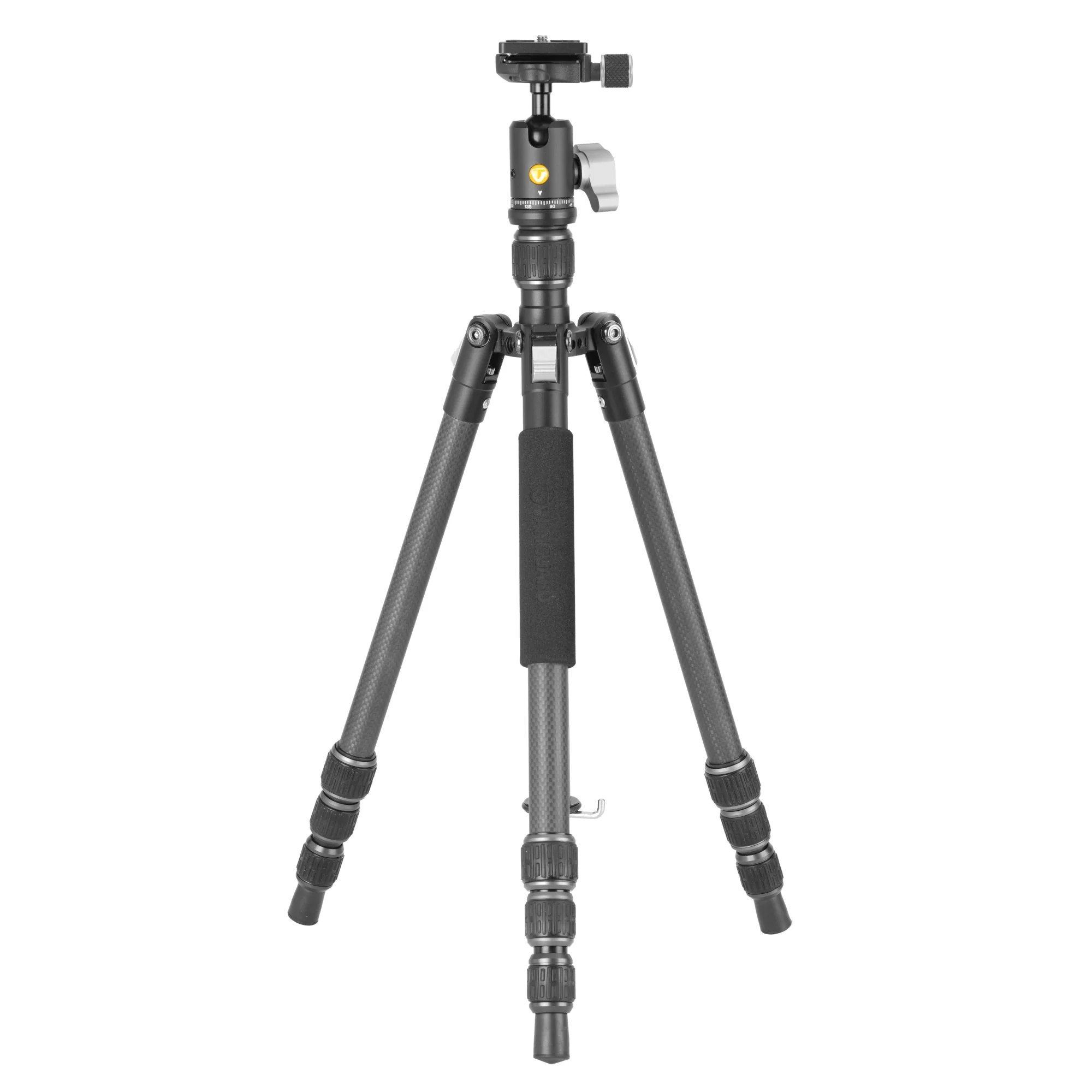
It’s a four-section carbon tripod at just 2.1lb that folds to 15.4 inches and disappears into a bag, with a split centre column that drops it flat for low-angle work. The VEO BH-45 head takes standard Arca-Swiss plates, which I always look for, and it reaches 54.5 inches, a little below eye level but steadier for it.
The trade-off is the load rating: at 6.6lb this is a light-kit tripod, right for a mirrorless body with a standard zoom and wrong for a heavy telephoto. For years I travelled with Vanguard’s bigger VEO carbon tripods, but they’re between generations in the US just now, so the Vesta GO is the current Vanguard I’d buy. If you want the long view on how the range holds up, my VEO 3T 264CB review and VEO 2 265CB review go deep on its siblings.
You can buy it through B&H, who have it in stock as I write this, or direct from Vanguard, where the code FindingTheUniverse takes 20% off at checkout.
4. Vanguard VEO 3T 204ABP – Best Budget Tripod for Light Kits

The budget pick from Vanguard’s current range, and the right answer if your kit is a mirrorless body with a standard zoom or a couple of primes. It’s aluminium, folds to 15.9 inches, reaches 55.1 inches, and comes with a ball and pan head with a removable pan handle, plus a smartphone holder built into the quick shoe.
The number to pay attention to is the 8.8lb load rating. That’s fine for a light mirrorless setup, but this is not a tripod for heavy telephoto lenses, and I wouldn’t put my 100-400mm anywhere near it. Buy it for what it is, a well-made light-kit tripod at a light-kit price, and it’ll serve you well for years. You can also buy it direct from Vanguard, where the code FindingTheUniverse takes 20% off.
Check price on Amazon
5. Manfrotto Befree – The Classic Choice

Manfrotto’s Befree has been the default travel tripod recommendation for a decade, and it’s still an easy one to make. My own first travel tripod was a Manfrotto, years before this site existed, and though I moved to Vanguard later the brand’s legs have stayed part of my working life. This particular Befree is a researched pick rather than one I own, but Manfrotto’s track record for surviving abuse is real.
A word on the confusing bit: Manfrotto currently sells the Befree in several tiers (Advanced, GT PRO, GT XPRO) and retailer listings haven’t always kept up with the names.
The one linked here is the aluminium twist-lock model with a ball head, rated to 12kg (26.5lb), sold on Amazon under the older Befree Advanced GT PRO name. If you want the version with the 90-degree centre column for overhead and macro work, that’s the pricier Befree GT XPRO, which I’ve left out of the main list as a more specialist buy.
What you’re buying is a solid, predictable travel tripod from a company that’s been making them longer than almost anyone. It’s rarely the most exciting pick in any category, but it just works, and that 12kg rating gives a heavy lens combination plenty of headroom.
Check price on Amazon
6. SIRUI AM-284 – Best Load for the Weight

The AM-284 is here for one number: SIRUI rates it at 15kg (33.1lb) of load from just 2.69lb of carbon legs. As I explain below, load ratings aren’t comparable between brands, so don’t read that as “holds more than a Gitzo”. Even read conservatively, though, it’s a huge amount of support for the weight, and for the price, which usually sits well under the big names.
The catch is height. It tops out at 47.2 inches without a centre column, which is chest height at best for most people. So I’d buy it as a low and waist-height tripod: landscapes, long exposures, and steadying a heavy telephoto from a kneeling or seated position, where a lower platform is steadier anyway.
As an eye-level, everyday travel tripod, look at the Peak Design or Gitzo instead. It’s a researched pick, and it comes with detachable metal spikes for soft ground, which is rare at this price.
One buying note. The link here is the legs on their own, so the 2.69lb and the price are for the legs and you’ll need to add a head. SIRUI also sell the AM-284 bundled with their A-10R ball head, so check which version you’re putting in the basket.
Check price on Amazon
7. K&F Concept Ultralight Carbon – Best Ultralight on a Budget

The cheapest carbon fibre in this guide, and a really light one: 2.0lb, with a 60-inch maximum height, a 16.5-inch folded length and a 13.2lb load rating. There’s a flexible centre axis for low-angle work and the ball head takes an Arca-type quick release plate.
At this price something has to give, and here it’s polish more than capability: the head does its job without feeling special, and the load rating puts it in the same light-kit territory as the VEO 3T. For a mirrorless body and a mid-range zoom on city trips and hikes, it’s a lot of tripod for the money. I haven’t used this one myself, so it’s here on the strength of its spec and price, but it’s the pick I’d point a beginner at who isn’t yet sure how much they’ll use a tripod.
Check price on Amazon
8. JOBY GorillaPod 5K – Best Flexible Tripod
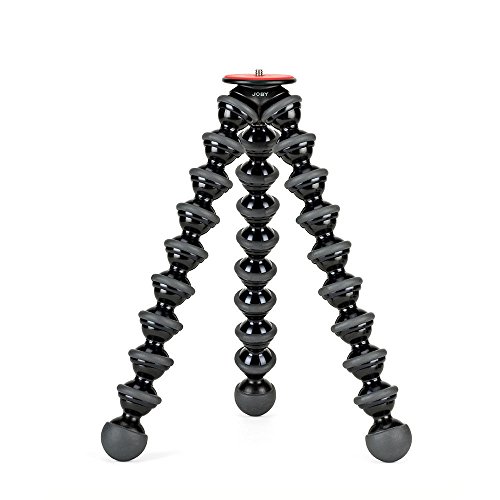
The GorillaPod is a different tool entirely: ball-jointed legs that wrap around railings, fence posts and branches, for all the places a standard tripod can’t stand. The 5K version is the one built for real cameras, rated to 11lb (5kg), and it packs down smaller and lighter than anything else here at 1.63lb for the kit.
Two buying notes. The link here is the 5K Stand, which is the legs on their own; the 5K Kit adds JOBY’s BallHead 5K with an Arca-Swiss quick release, and you’ll want a head of some sort for anything heavier than a phone.
And treat that 11lb rating with more caution than usual, because a wrapped GorillaPod is only as steady as whatever it’s wrapped around.
Phones, of course, are its natural habitat, and with a simple clamp it makes a great pocket setup for family photos and low-light phone shots, so it belongs alongside a full tripod rather than instead of one.
Check price on Amazon
9. Gitzo Traveler Series 1 Kit – Best Premium Travel Tripod
Gitzo is the heritage name in carbon tripods, and the Traveler Series 1 kit is the buy-once option of this guide. The kit pairs the GT1545T legs (four carbon sections, Gitzo’s G-lock twist system, 2.33lb on their own) with the matching Series 1 centre ball head.
It reaches 64.4 inches, folds to 16.7, and is rated to 22lb. In the UK expect to pay around £540 for the kit; it’s a lot of money for a set of legs and a head, and Gitzo knows it.
Do they justify it? If you’re regularly hanging an R5-and-big-telephoto class of kit off a travel tripod, I think yes: this is the point where build quality stops being a luxury and starts being why your long exposures are sharp.
Gitzo’s built-to-last reputation is earned, and these are legs people hand down rather than replace, although be aware the warranty is a registerable, time-limited one rather than a literal lifetime promise. This is a researched pick, chosen over rivals for the kit pairing and the G-lock legs.
I’ve linked the kit at B&H, and Gitzo’s own kit page has the full specifications.
How to Choose a Travel Tripod
If none of the picks above jumped out, these are the five decisions that actually matter, in roughly the order I’d make them.
Carbon or Aluminium?
Carbon gets you two things: less weight, usually around half a pound on a travel tripod, and better vibration damping, which shows up at long focal lengths and slow shutter speeds. Aluminium gets you the same geometry for a lot less money. My rule: if the tripod rides in your bag every day, or you shoot long lenses, pay for carbon. If it comes out for a few trips a year, buy aluminium and have a nicer dinner on the difference.
What Max Load Numbers Actually Tell You
Less than you’d hope. There’s no industry standard for load ratings, so SIRUI’s 33lb and Peak Design’s 20lb are measured differently and can’t be compared across brands.
What the number is useful for is headroom within a single tripod: I want a rating of at least double the weight of my heaviest camera and lens combination. My R5 with the 100-400mm is about 5.2lb, so anything rated under roughly 10lb is out for that kit, and that’s why the 8.8lb VEO 3T appears here as a light-kit pick and not an all-rounder.
Real-world stability is as much technique as spec. Keep the centre column down, that’s the wobbliest part of any tripod. Hang your camera bag from the centre hook in wind. And if a shot really matters, shoot it again with a two-second timer or remote so your hands are nowhere near the camera.
How Tall Do You Need?
Around 60 inches puts the viewfinder near eye level for most people once the camera and head are on top, and everything in the main list except the SIRUI, the Vesta GO and the VEO 3T gets there. But taller isn’t automatically better: a lower camera is a steadier camera, and quite a few of my favourite landscape shots were taken from half-extended legs. Check the maximum height without the centre column raised, because that’s the height you can actually use in wind.
Twist Locks or Flip Locks?
Photographers split on this, and both are fine. Flip locks (Peak Design) are faster and you can see at a glance whether every section is closed; the trade-off is that they can catch on bag straps, and they lose tension over years of use, although Peak Design bundles a tool for exactly that.
Twist locks (everything else here) are slimmer, kinder to bag straps, and cope better with sand and grit. After years with both, I’d let the rest of the tripod make the decision rather than the locks.
Heads and Plates
Most picks here come with a ball head, but two don’t: the SIRUI and the JOBY are both linked as legs only, so budget for a head on those. After that the real question is plates. The Vanguard and K&F heads take Arca-type plates, as does JOBY’s BallHead 5K if you buy the Kit, which means cheap spares and easy swaps between supports. Peak Design and Manfrotto use their own plate designs, which work well but tie you into their spares.
Also note the Peak Design head is integrated, part of what makes it pack so small, so you can’t swap it for a different head later. None of this is a dealbreaker; it just decides which spare plates live in your bag.
When a Monopod Makes More Sense
I kept this guide tripods-only, but there are days a monopod is the better carry. It won’t hold a frame while you walk away, so it’s no use for long exposures or self-portraits, but for wildlife and long-lens work it takes the weight of a big lens, moves with you, and sets up in seconds.
Some venues that refuse tripods will also wave a monopod through, although check rather than argue with a steward; they always win. If you want one support that covers both jobs, some travel tripods include a leg that unscrews into a monopod, which is worth seeking out if you shoot a lot of long-lens work on the move.
What Fails After Years of Travel Use
Tripods die slowly, and almost never from the part the spec sheet talks about. After years of travelling with Vanguard and Peak Design legs, this is what actually goes wrong, and what to do about it.
Grit is the big one. Sand and salt spray work into leg locks and leave sections crunchy or seized, and one beach shoot can do it. Rinse the lower legs in fresh water after a sandy day and extend them to dry; most twist locks can be unscrewed and wiped out if things get bad.
Flip locks lose tension with age, and the legs start creeping under load. It’s happened on every flip-lock tripod I’ve owned. Peak Design clearly know it, because they include an adjustment tool and a clip that keeps it attached to a leg, which is the sort of detail that makes the price easier to forgive.
Quick release plates wear loose, and more often they simply get lost. Carry a spare if your tripod takes standard Arca plates, and snug up the camera screw with a coin every few weeks; a slightly loose plate quietly softens every photo you take on the tripod.
Rubber feet wear smooth or drop off entirely, usually on cobbles a long way from home. Spares cost a few pounds; buy them before the trip, not after. Centre column and head locks can also develop slip over time, so if your camera slowly nods forward on a long exposure, service the head before blaming the lens.
Travel Tripod FAQs
What is the best travel tripod?
The Peak Design Travel Tripod in carbon fibre. It packs smaller than anything comparable, sets up in seconds, and its 20lb rating handles a full-frame camera with a heavy telephoto zoom. The aluminium version is the best value alternative, and for a lighter, cheaper carbon option the K&F Concept or Vanguard Vesta GO both handle light mirrorless kits well.
What is the best budget travel tripod?
For carbon, the K&F Concept ultralight: 2lb and 60 inches for around a third of big-name prices. For aluminium, the Vanguard VEO 3T 204ABP, which adds a pan handle and phone holder.
Both are light-kit tripods. They’re fine for a mirrorless body with a standard zoom, and wrong for heavy telephoto lenses.
Is a carbon fibre travel tripod worth it?
If the tripod travels with you constantly or you shoot long lenses, yes. You save around half a pound and get better vibration damping at slow shutter speeds.
For a few trips a year, aluminium does the same job for much less. The aluminium Peak Design in particular gives up very little to its carbon twin.
Can you take a tripod on a plane in hand luggage?
Usually, yes. Security regimes in the UK, EU and US generally treat a folded travel tripod as normal camera kit, and everything in this guide folds to under 17 inches. We’ve flown with ours in carry-on for years without a problem.
It’s not guaranteed though. The final call sits with the security officer on the day, so if losing it would sink the trip, put it in checked luggage.
How tall should a travel tripod be?
Around 60 inches gets the viewfinder to eye level for most people once the camera is mounted. Taller is convenient rather than essential, since a lower camera is a steadier camera and plenty of shots work better below eye level anyway.
Check the height without the centre column raised. A raised column is the least stable configuration, so column-down height is the number you’ll really use.
Will a travel tripod hold a heavy telephoto lens?
The 20lb-plus class will. The Peak Design Travel Tripod, Manfrotto Befree and Gitzo Traveler all take my Canon R5 with a 100-400mm zoom.
Keep the centre column down, hang weight from the hook in wind, and skip anything rated under about 10lb for that job.
Are twist locks or flip locks better?
Neither, universally. Flip locks are faster and show their state at a glance, but they loosen with age and can snag on bags. Twist locks are slimmer, easier to service and cope better with sand. Build quality matters far more than lock type, and I happily use both.
What is the best travel tripod for a mirrorless camera?
Any pick in this guide; mirrorless bodies are light, so it’s the lens that decides. A body with a standard zoom is happy on the budget picks, the Vanguard VEO 3T or K&F Concept. Add a heavy telephoto and you want the 20lb-plus class, exactly as you would with a DSLR.
Do I really need a tripod for travel photography?
For daytime snaps, no. For low light, sunsets, long exposures, sharp landscapes, and any photo you want to be in yourself, a tripod changes what’s possible.
I’ve written a whole piece on why you need a tripod for photography if you’re on the fence.
Further Reading
A tripod is only one corner of a travel kit, and we have detailed guides to the rest, all based on the gear we actually carry:
- The best travel cameras, from compacts to the full-frame kit I shoot with
- The best camera bags for travel, including bags with dedicated tripod carry
- Our photography gear, the full list of what’s in our bags right now
- My Peak Design Travel Tripod review and Vanguard VEO 3T 264CB review for the long-form versions of the top picks
- Landscape photography tips, the genre where a tripod makes the biggest difference
- Jess has a travel tripod guide over on Independent Travel Cats written for general travellers rather than photographers, with a deeper section on tripod anatomy and materials
And if you’d like to put the new tripod to real use, my online travel photography course covers everything from camera fundamentals to composition, with personal feedback from me on your images.
That’s it for my travel tripod picks. If you’ve got a question about any of them, or a tripod story of your own (everyone who’s owned one for a decade has at least one), pop it in the comments below and I’ll do my best to help!
Leave a Reply