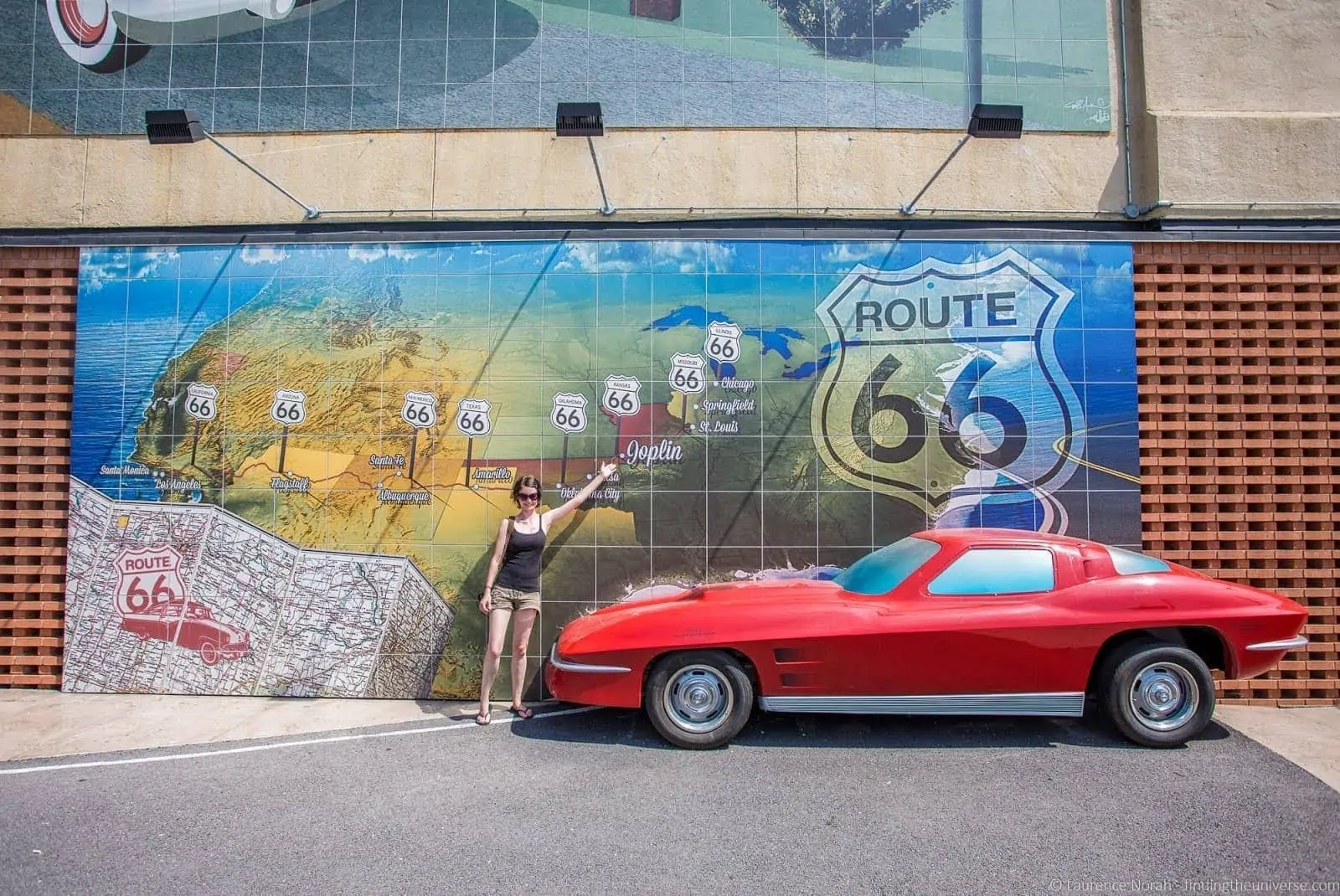

I'm Laurence, a professional travel photographer since 2010. Jess and I write this site from our own travels.
Missouri has the strongest claim of any state to being the spiritual home of Route 66. It was here, in Springfield, that the name “Route 66” was first proposed in a telegram sent to Washington on April 30, 1926. The state has over 300 miles of the Mother Road running from St. Louis in the east to Joplin in the west, and it packs in more classic roadside attractions per mile than just about anywhere else on the route.
We drove the full Missouri stretch as part of our Route 66 road trip from California to Chicago, following the original alignment as closely as we could. Missouri was the seventh state on our adventure, and I have to say it was one of the most photogenic. Neon motel signs, cave systems advertised on painted barns, frozen custard stands, giant rocking chairs, ghost towns, and one very large arch. There’s a lot going on.
The route through Missouri runs roughly southwest from St. Louis, paralleling Interstate 44 most of the way. From St. Louis and the Old Chain of Rocks Bridge, it’s about 60 miles to Meramec Caverns near Stanton, then 20 miles to the murals and the Wagon Wheel Motel in Cuba, with the giant rocking chair at the Fanning Outpost a few miles further on.
From Cuba it’s 25 miles to Rolla (Stonehenge replica, hillbilly statue), then the road winds through the Ozarks past Devils Elbow and on to Lebanon, about 55 miles further. Springfield, the birthplace of Route 66, is another 50 miles southwest.
The final stretch runs 65 miles from Springfield through Carthage (Boots Court, Red Oak II, the 66 Drive-In) and on 20 miles to Joplin near the Kansas and Oklahoma state lines. About 317 miles all up, and you’ll want at least two days to do it properly.
I also have many of these photos available for purchase in my online Route 66 photo gallery if you’d like a memory of the Mother Road for your wall.
Table of Contents:
Route 66 Missouri Highlights: St. Louis to Joplin
What follows are our highlights from driving Route 66 through Missouri, ordered roughly east to west as you’d encounter them on the road from St. Louis towards Joplin and the Kansas/Oklahoma state line. We’ve reversed the order we did it in as the east to west route is the more traditional way to drive the route.
Gateway Arch, St. Louis
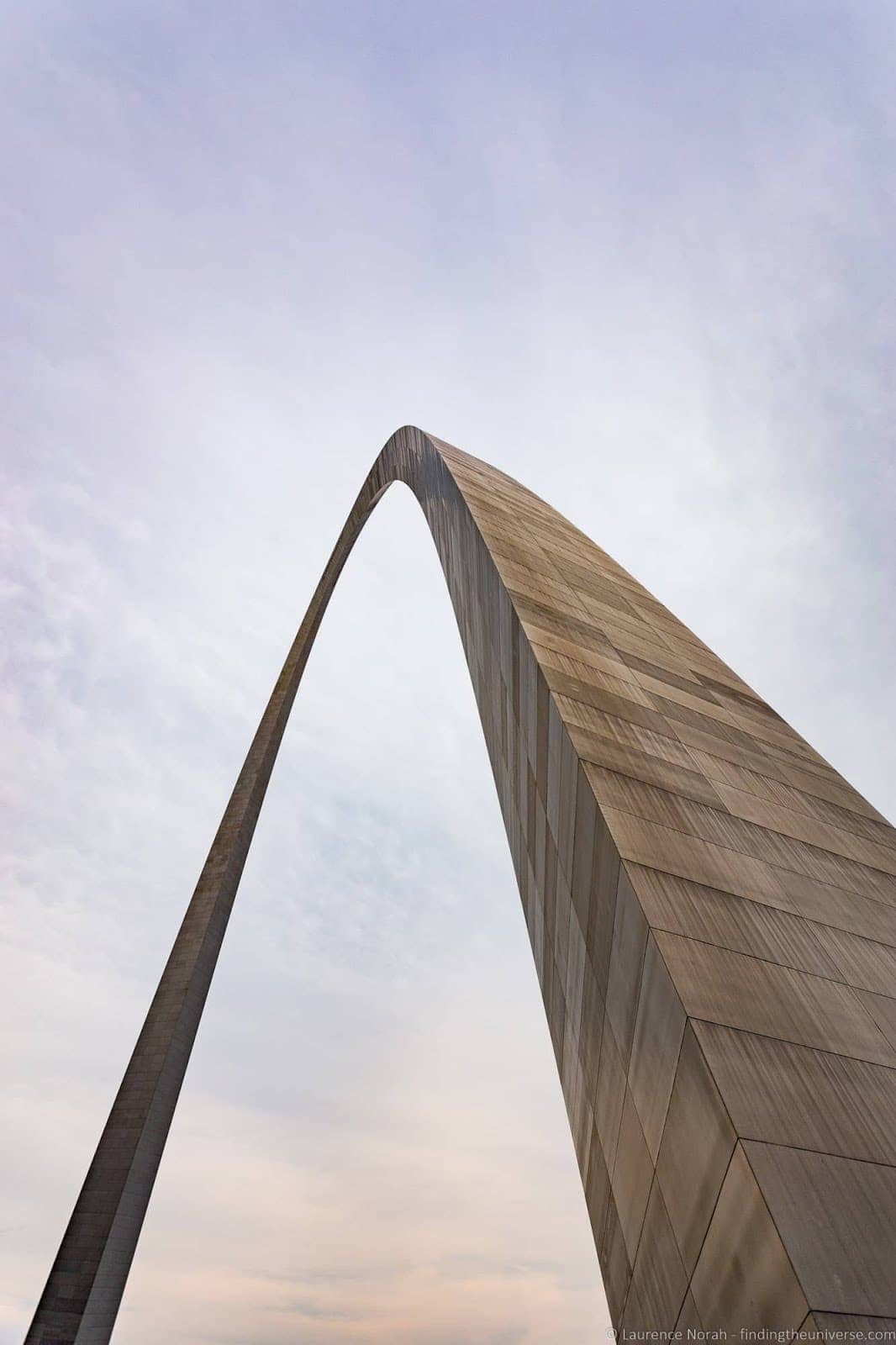
St. Louis is where Route 66 enters Missouri (or leaves it, depending on your direction of travel), and the Gateway Arch is hard to miss. At 192 metres, it’s the tallest arch in the world and the largest man-made monument in the western hemisphere. You can ride a tram to the top for panoramic views, and there’s a museum underneath covering the history of westward expansion.
The Old Chain of Rocks Bridge is also in St. Louis, just north of the city. It was the original Route 66 crossing over the Mississippi River, and it’s now a pedestrian and bike bridge with a famous 30-degree bend in the middle. If you’re coming from or heading to Illinois, it’s a great way to cross the state line on foot. We got our photos from the Illinois side, but if you have time you can also park on the Missouri end and walk out for views looking back towards Illinois.
Ted Drewes Frozen Custard, St. Louis
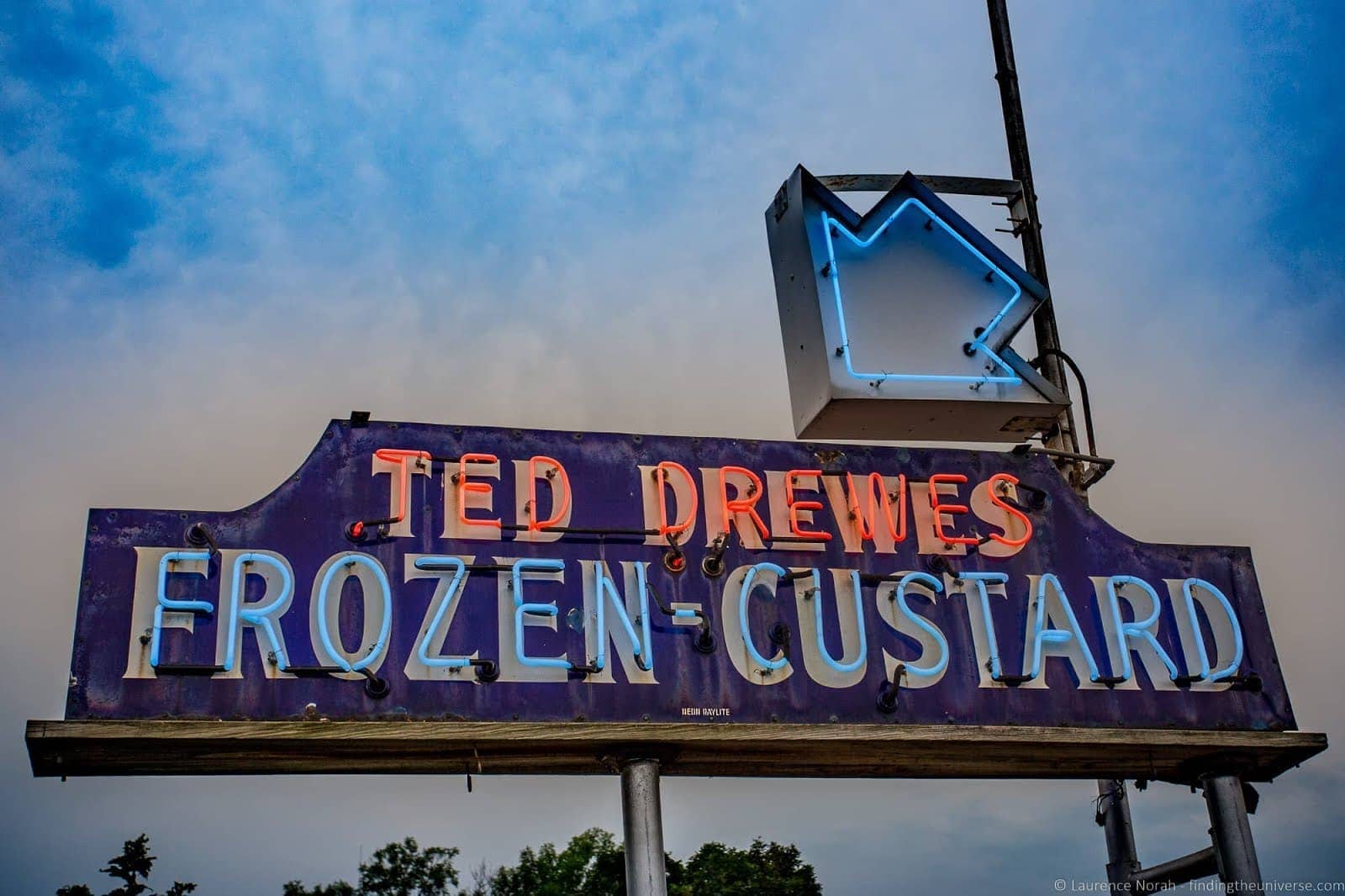
Every state on Route 66 seems to have a must-try food, and in Missouri that’s frozen custard. Ted Drewes in St. Louis has been serving it since 1929, and it’s one of those Route 66 institutions that lives up to the hype. The signature move is the “concrete,” which is a frozen custard so thick they turn the cup upside down before handing it to you. We tried it, of course. It was excellent.
Abandoned Motel, Villa Ridge
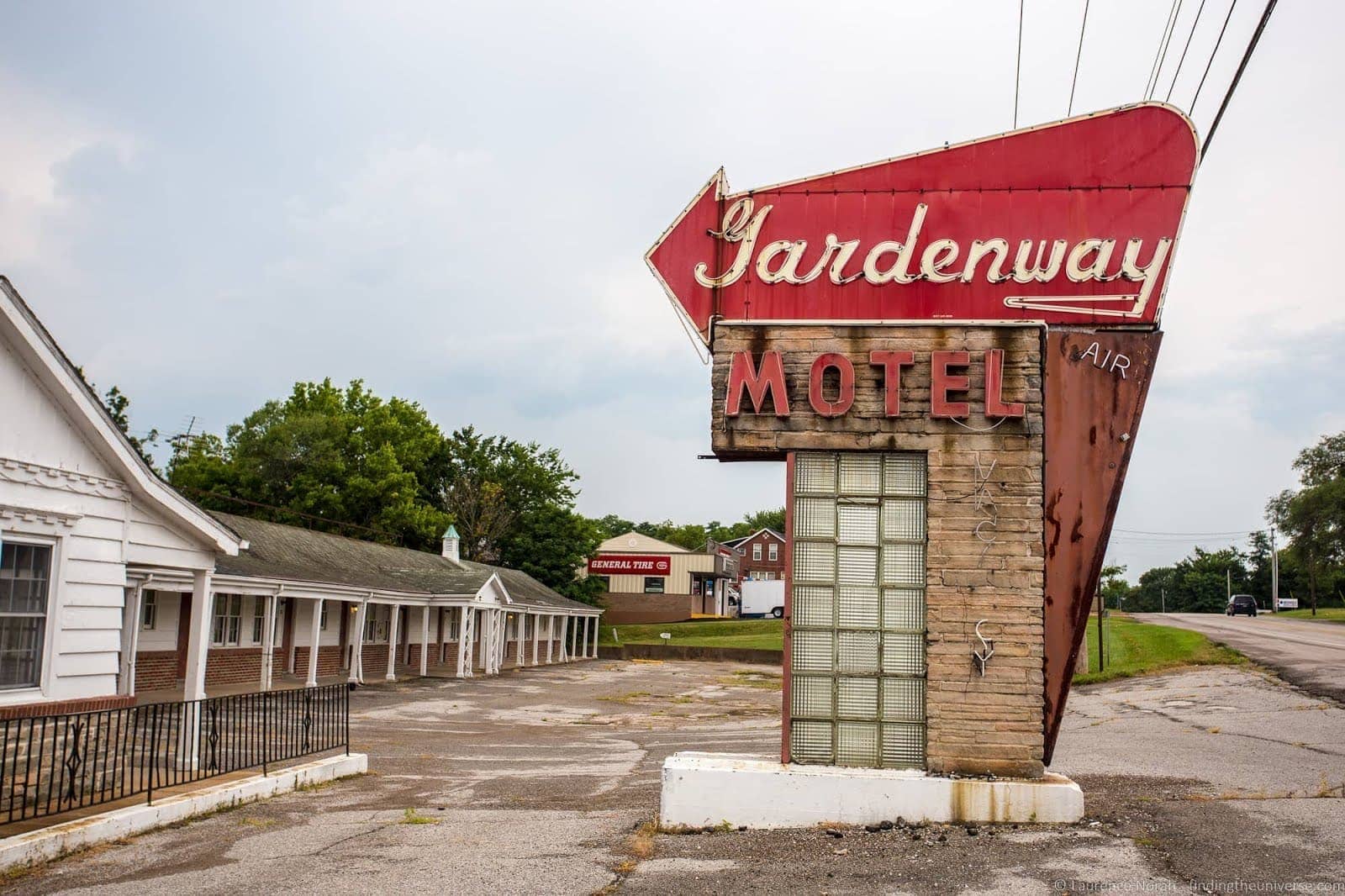
Like every state on Route 66, not all the businesses in Missouri survived the coming of the interstates. There are abandoned buildings and faded signs all along the route, and they make for great photography. This motel in Villa Ridge seems to be not much more than a sign at this point.
Meramec Caverns
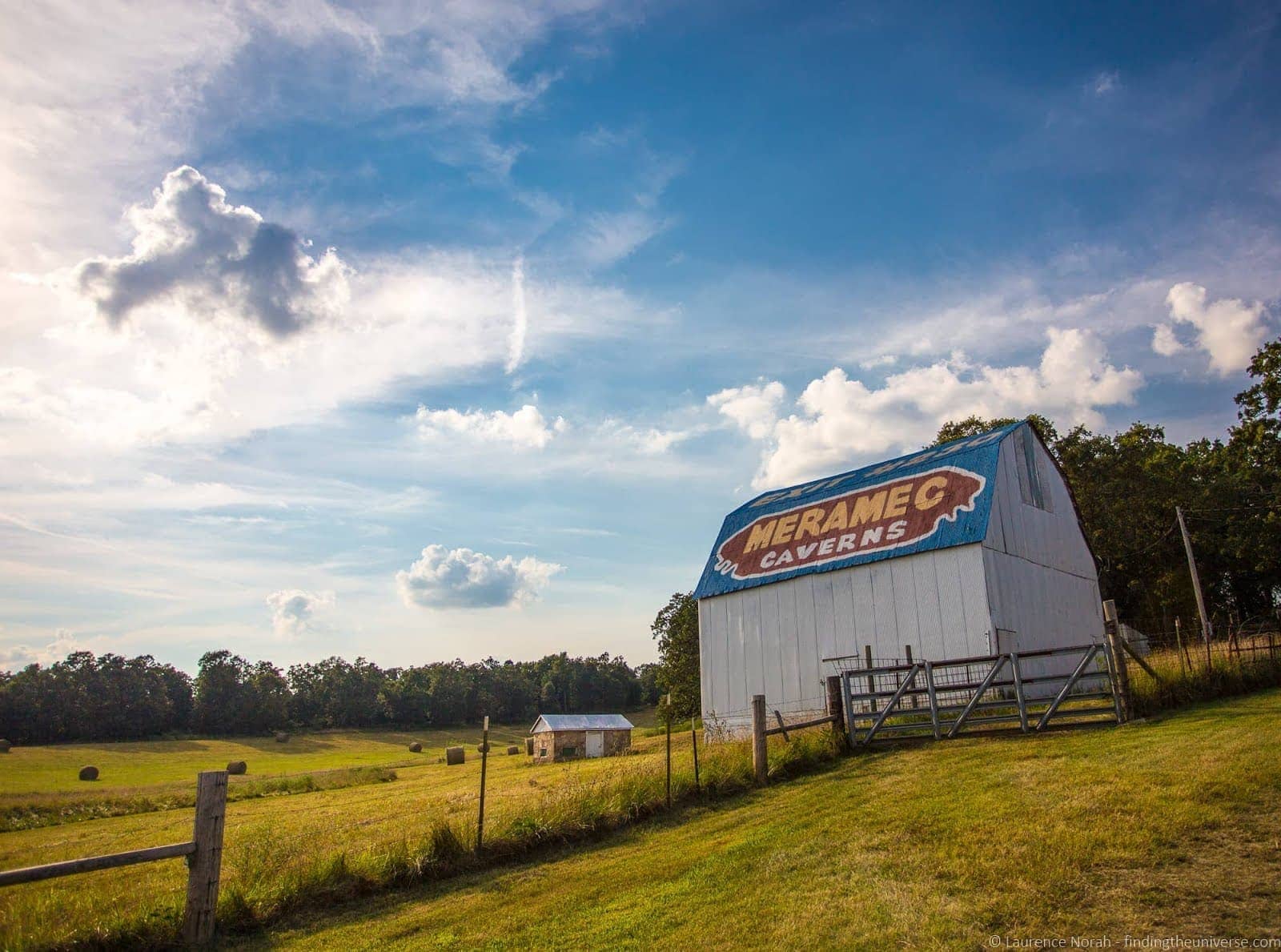
One of Missouri’s most famous attractions, the Meramec Caverns are a huge limestone cave complex near Stanton. The caverns were advertised on painted barns all across the midwest, and those barn ads have become a classic part of Route 66 folklore. A few of the original painted barns still survive along the route, so keep an eye out between St. Clair and Stanton.
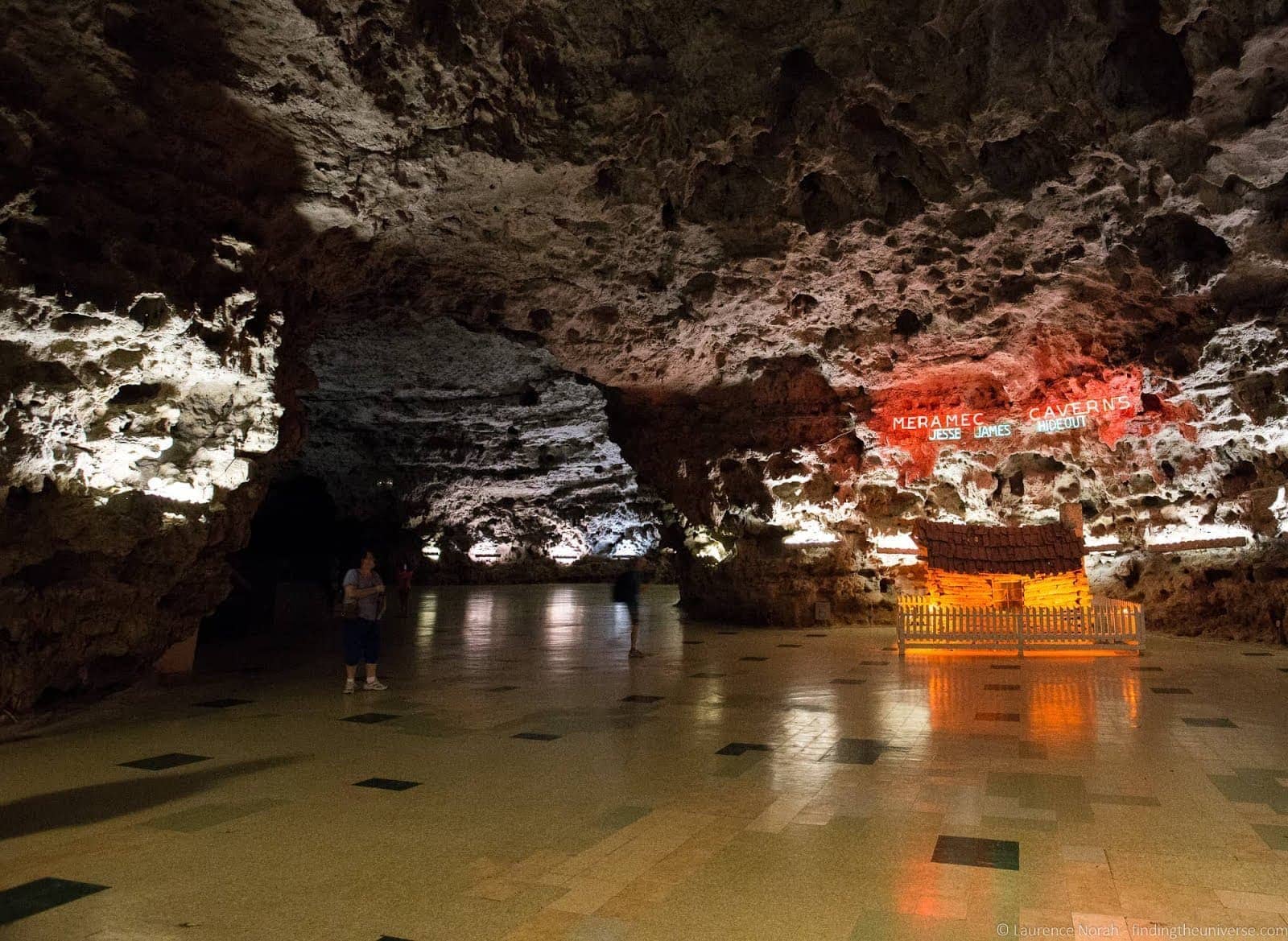
And of course, once you’ve seen the barns, you’ll want to check out the caverns themselves. The guided tour takes you through limestone formations that have been given names like the wine room, the ballroom, and the theatre room. The caverns also have a Jesse James connection (he supposedly used them as a hideout, though that claim gets more colourful every decade).
Wall Murals, Cuba
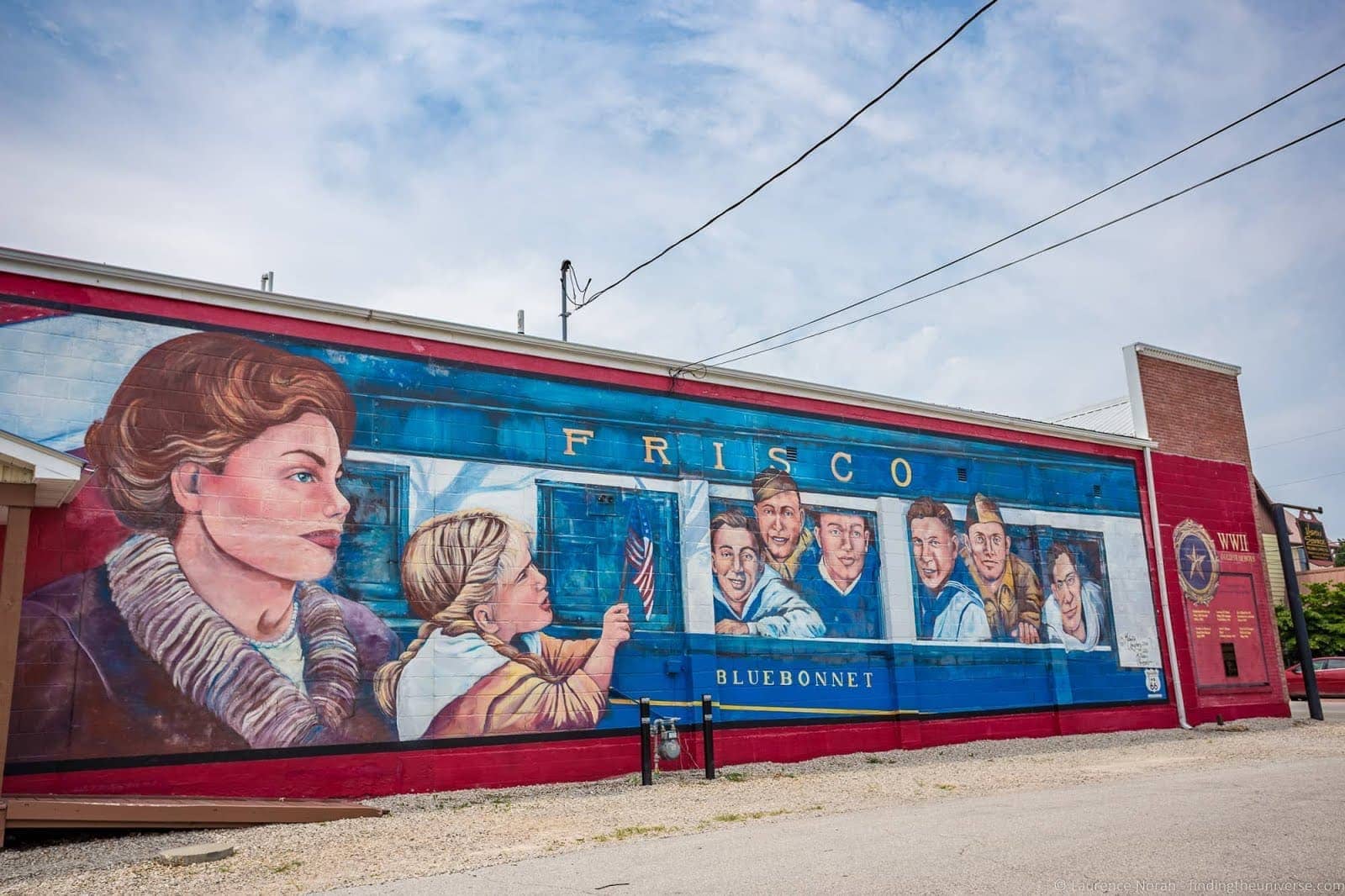
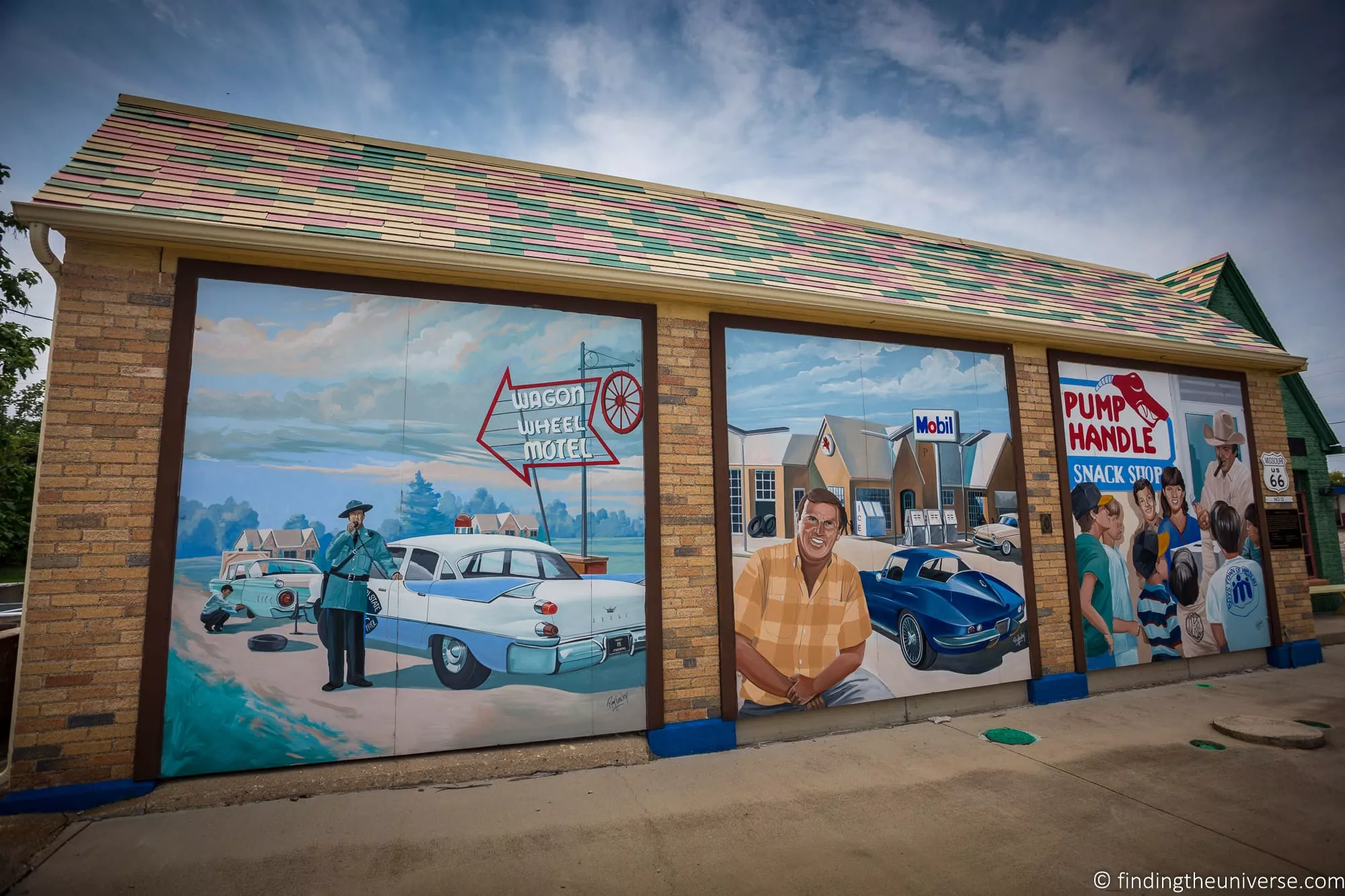
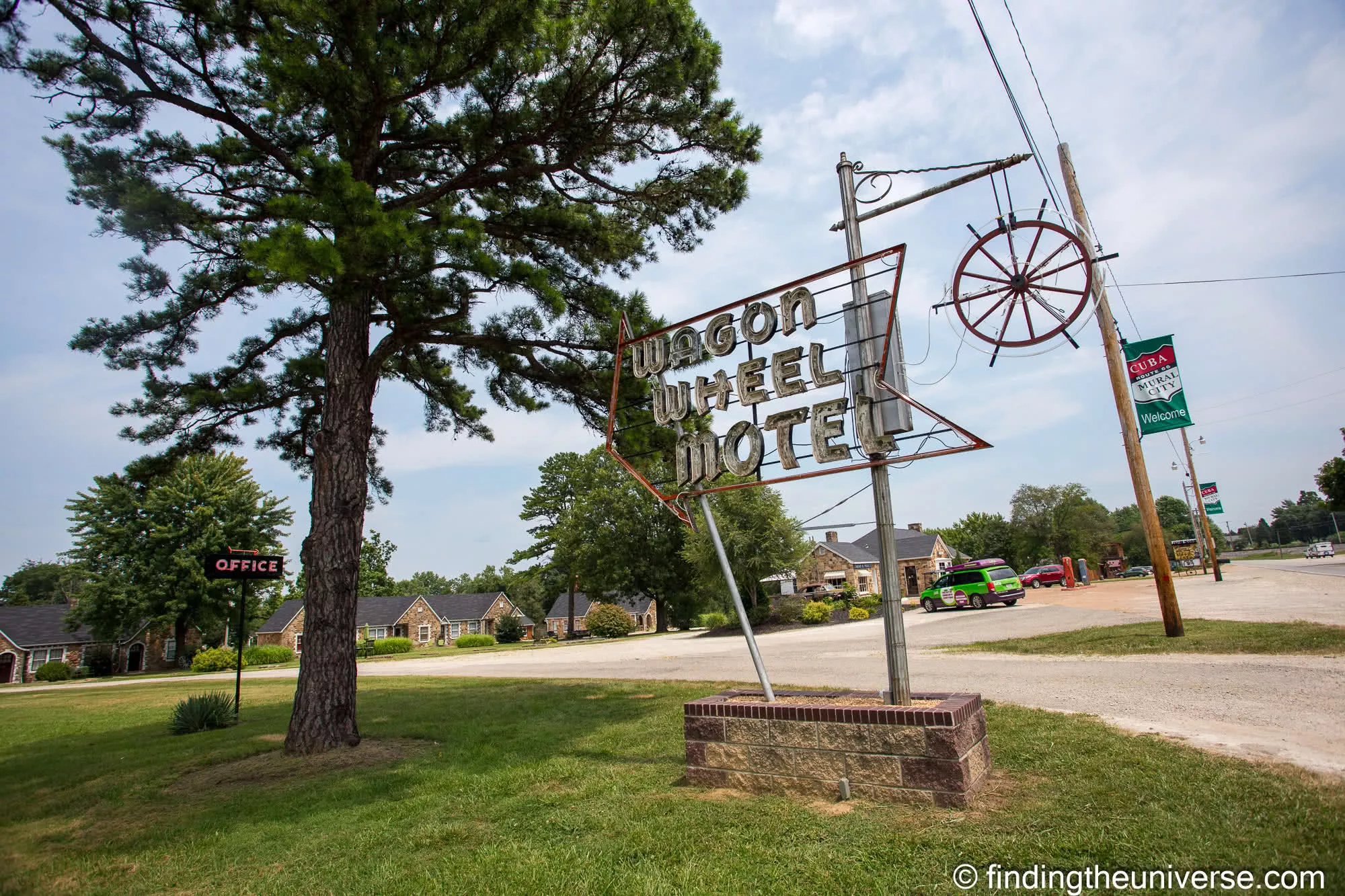
We loved the murals along the route, and Cuba is the best place to see them. The town is known as “Route 66 Mural City” (thanks to Scott in the comments for that detail!), and there are murals everywhere depicting scenes from the past. The Viva Cuba Murals Project has 12 officially commissioned pieces, but you’ll find plenty more painted on walls and shopfronts throughout the town. Pick up a walking tour brochure from the Cuba Visitor Center to find them all.
Cuba is also home to the Wagon Wheel Motel, the longest continuously-operating motel on Route 66 (it’s been welcoming guests since 1938). If you want to stay somewhere with proper Mother Road history, this is it.
Giant Rocking Chair, Fanning
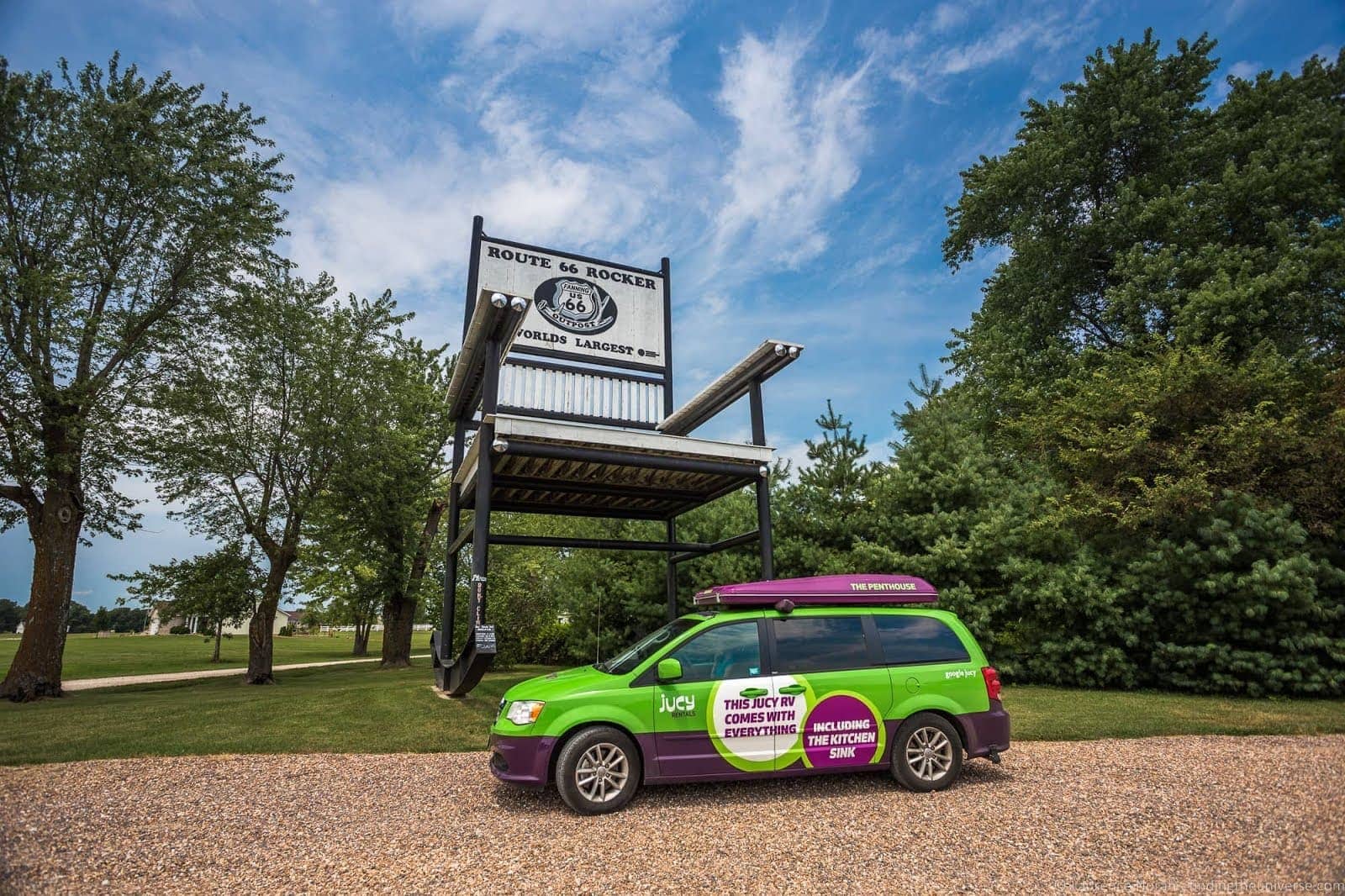
About four miles from Cuba, at the Fanning Route 66 Outpost, you’ll find this giant rocking chair. It’s over 42 feet of steel and once held the Guinness World Record for the world’s largest rocking chair (it’s since been surpassed, but nobody along Route 66 seems to care about that). It’s one of those stops where you pull over, take a photo, and wonder who decided this was a good idea. And then you’re glad they did.
Stonehenge Replica, Rolla
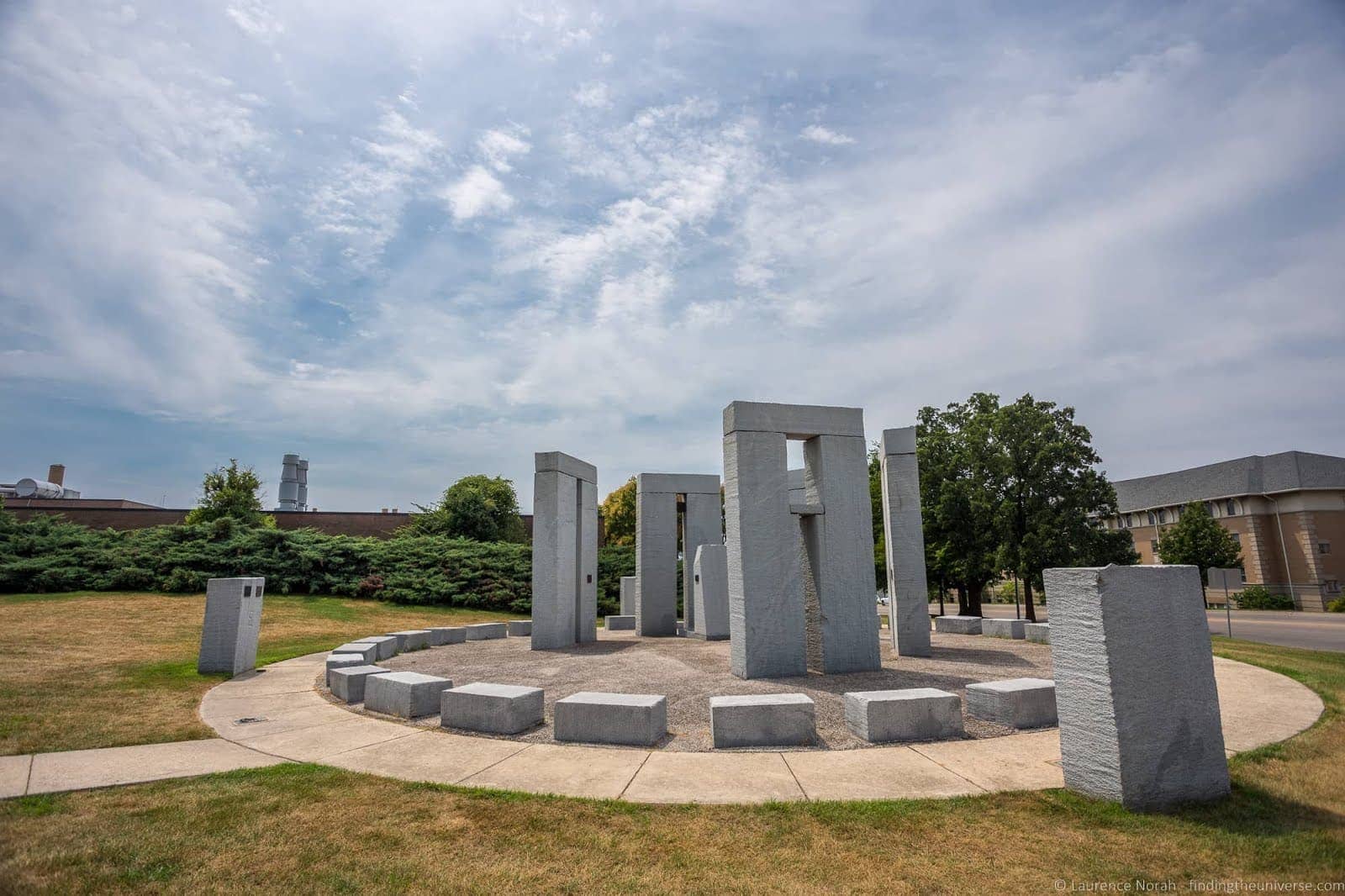
Speaking of man-made monuments, Rolla has a half-scale replica of Stonehenge on the campus of Missouri University of Science and Technology. As someone who grew up near the real thing in the UK, I can confirm this one is considerably easier to park at and visit.
Hillbilly Statue, Rolla
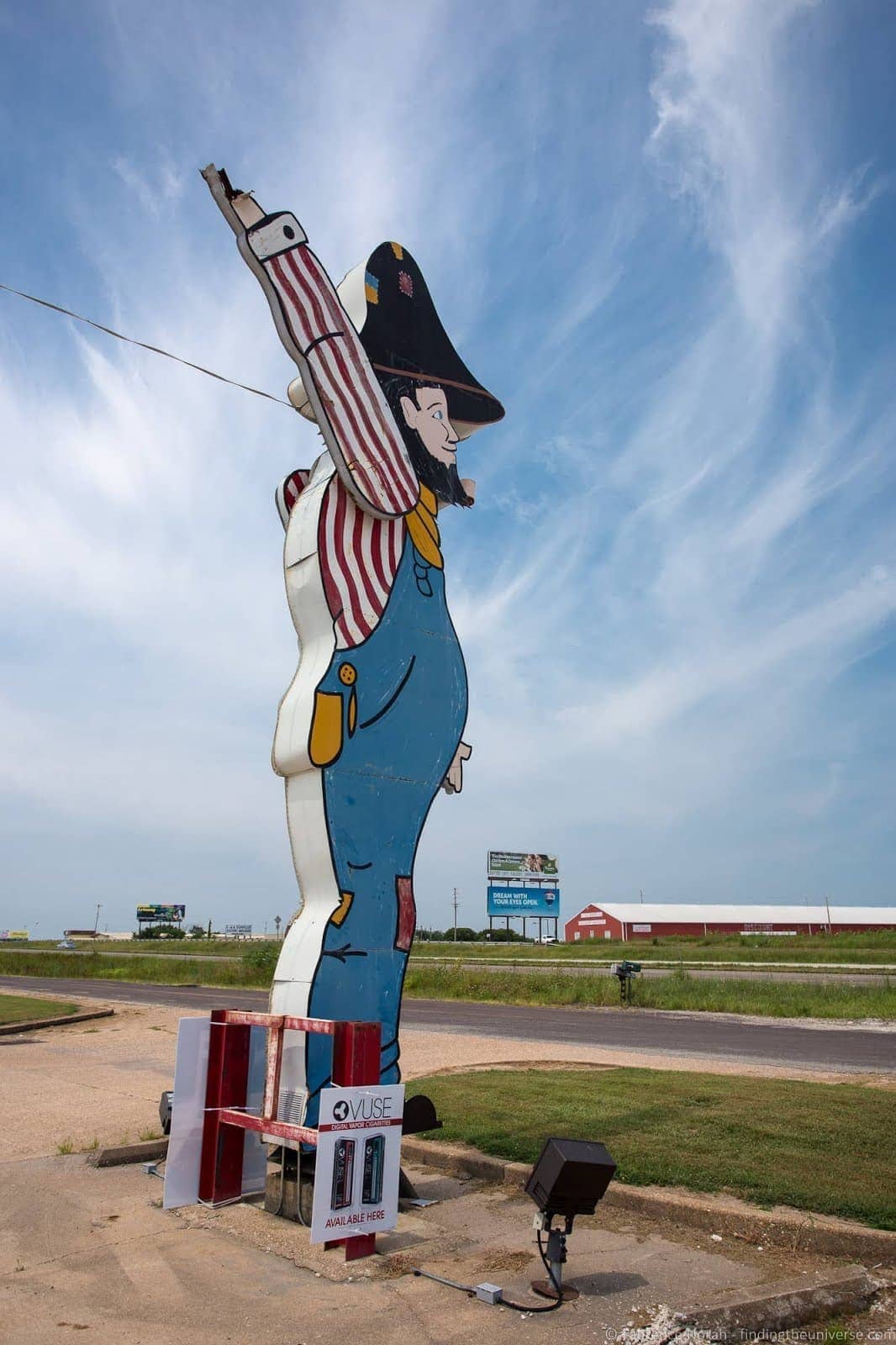
Route 66 does quirky roadside attractions like nowhere else. This giant statue originally stood outside the Hillbilly Store, which was a fixture along the route from the 1950s through to the 1980s (thanks to Angela in the comments for that history!). The statue has found a new home in Rolla.
Devils Elbow and the Ozarks

Between Rolla and Lebanon, Route 66 winds through the Ozarks, and this is some of the prettiest driving on the whole Missouri stretch. Devils Elbow, hugged by the Big Piney River, has 200-foot bluffs and a 1923 steel truss bridge that’s worth pulling over for. The scenery here is a world away from the flat prairie driving further west, and it’s one of those sections where you’re glad you’re not on the interstate.
Munger Moss Motel, Lebanon
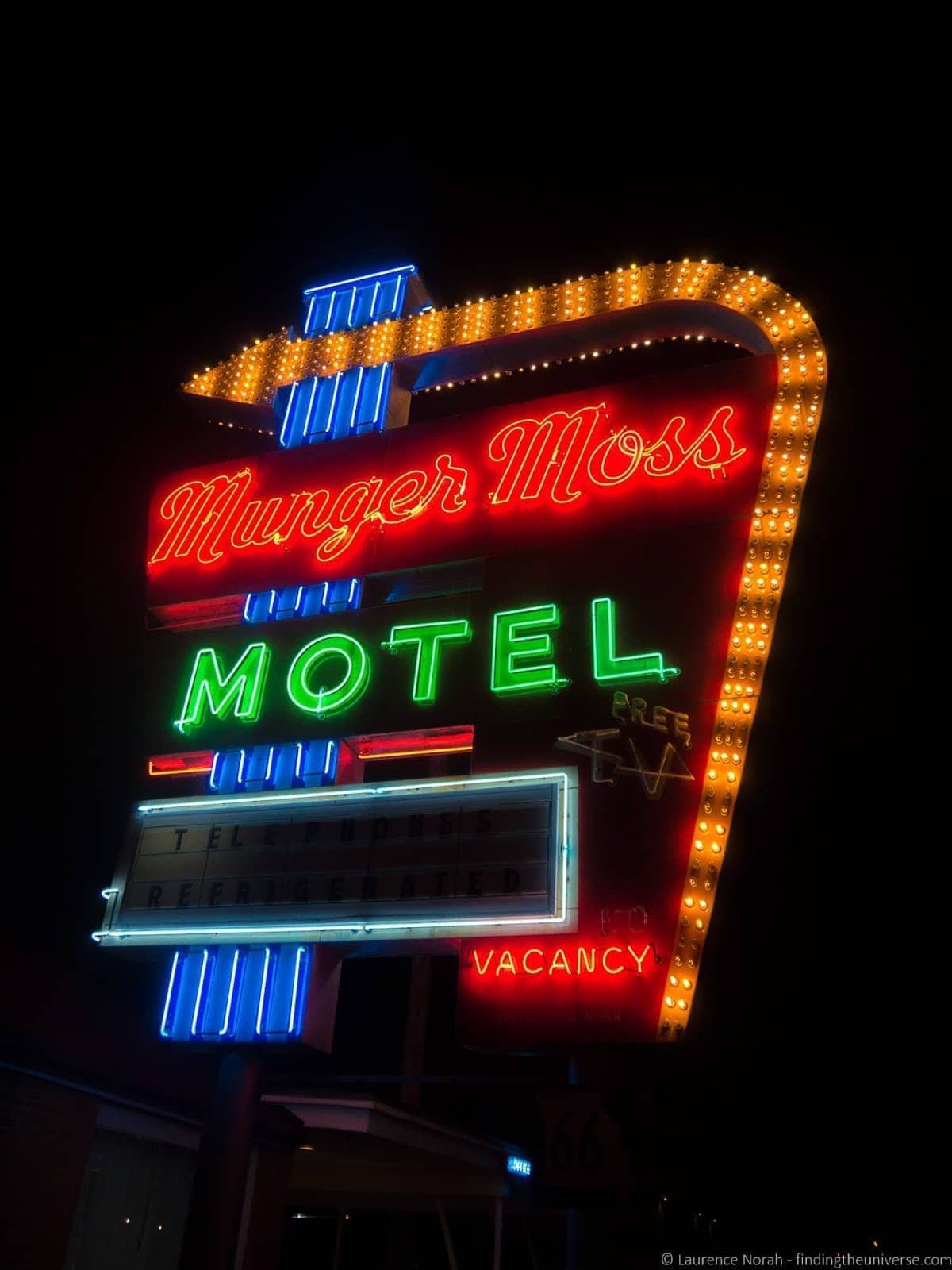
We stayed at the Munger Moss Motel in Lebanon and managed to get these photos of that incredible Route 66 neon. For decades, Munger Moss was one of the most beloved stops on the entire route, run by Ramona and Bob Lehman who welcomed travellers from all over the world.
Sadly, Munger Moss permanently closed in 2023 after Ramona Lehman passed away. The property was sold, and the iconic neon sign has since been donated to the City of Lebanon for preservation. It’s a loss for Route 66, but the sign at least will survive. If you’re driving through Lebanon, it’s worth stopping to pay your respects to one of the great Mother Road motels.
Motel Signs
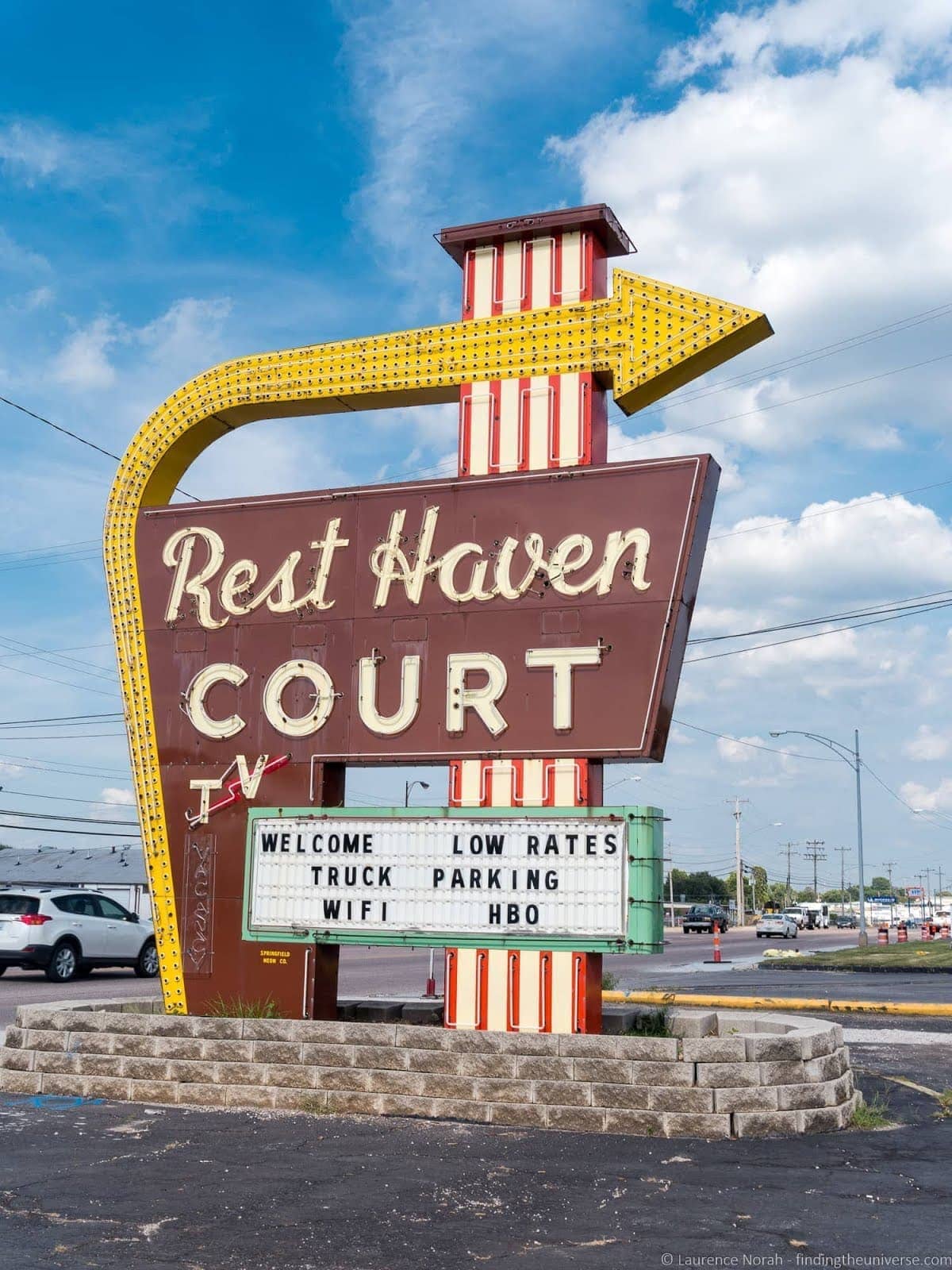
No Route 66 photo essay would be complete without motel signs, and Missouri has some beauties. The above is Rest Haven Court in Springfield, which sits right along the original route through the city.
Springfield: The Birthplace of Route 66
Springfield has a special place in Route 66 history. On April 30, 1926, a telegram was sent from the Colonial Hotel in Springfield to federal highway officials in Washington, proposing the name “Route 66” for the new Chicago-to-Los Angeles highway. That telegram is why Springfield holds the official designation as the Birthplace of Route 66.
The city has a Route 66 Visitor Center, the Route 66 Car Museum, and plenty of original Route 66 businesses still operating along the old alignment. The original Steak ‘n’ Shake on Route 66 is here too (it’s on the National Register of Historic Places). We arrived too late to get into the visitor centre, which is a shame, but the Route 66 signage and historic markers around town are worth stopping for regardless.
2026 is the Route 66 Centennial, and Springfield is hosting the National Centennial Kickoff from April 30 to May 3, with concerts, a classic car parade, dedications, and a Route 66-themed arts festival. There are centennial events happening along the full route throughout 2026, so if you’re planning a trip this year, you’ll have even more to see. Check the Route 66 Centennial website for the latest schedule.
Route 66 Diners
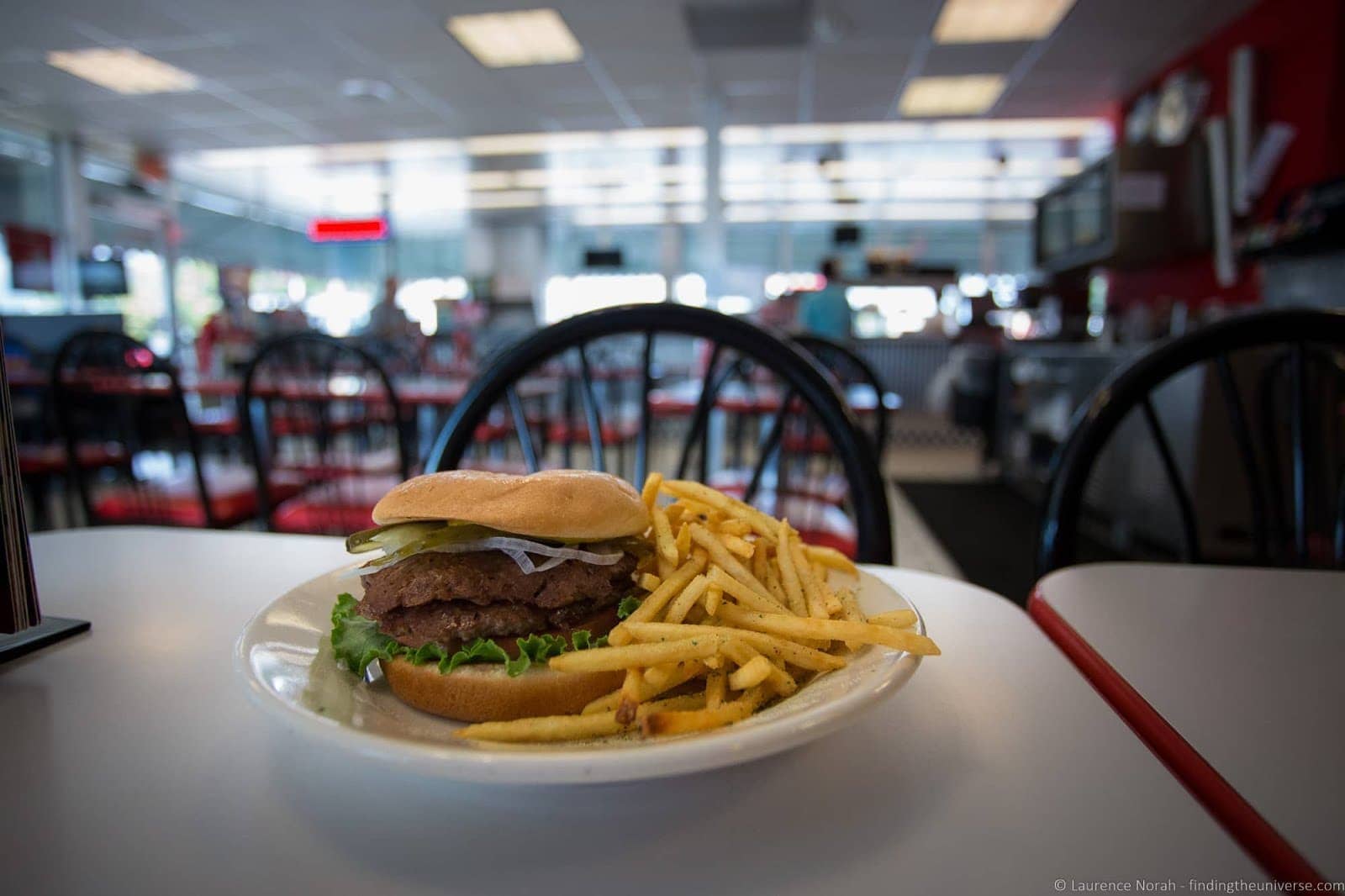
I couldn’t do a Route 66 post without a photo of some diner food. Missouri is particularly good for this. You’ll find classic diners all along the route serving huge plates of proper American comfort food at prices that haven’t quite caught up with the coasts.
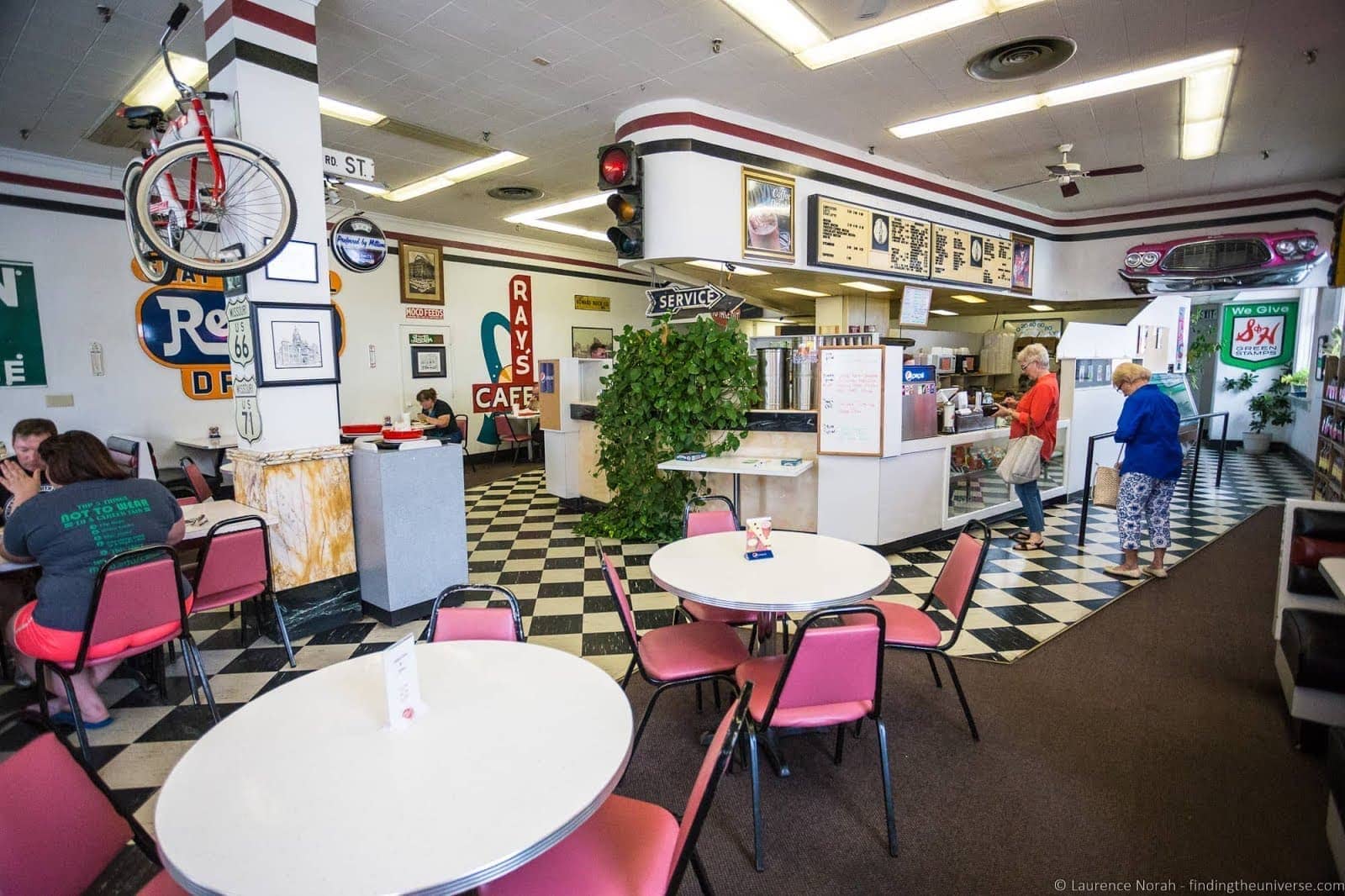
And the inside of a diner. I love these old-style places. This one was in Carthage.
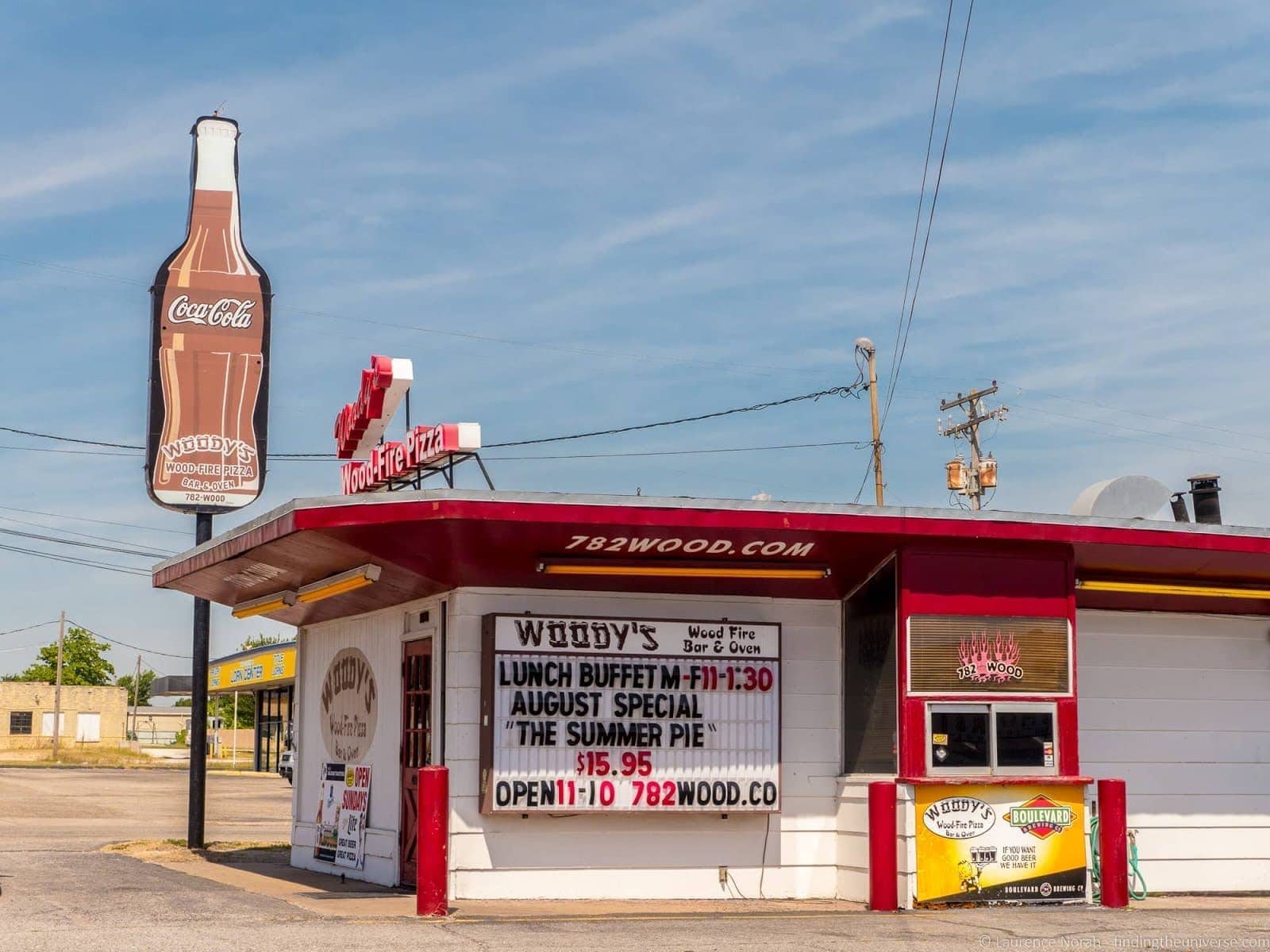
There are also plenty of dining options offering enormous plates of great-value food. Nobody’s going hungry on Route 66 in Missouri.
Boots Court Motel, Carthage
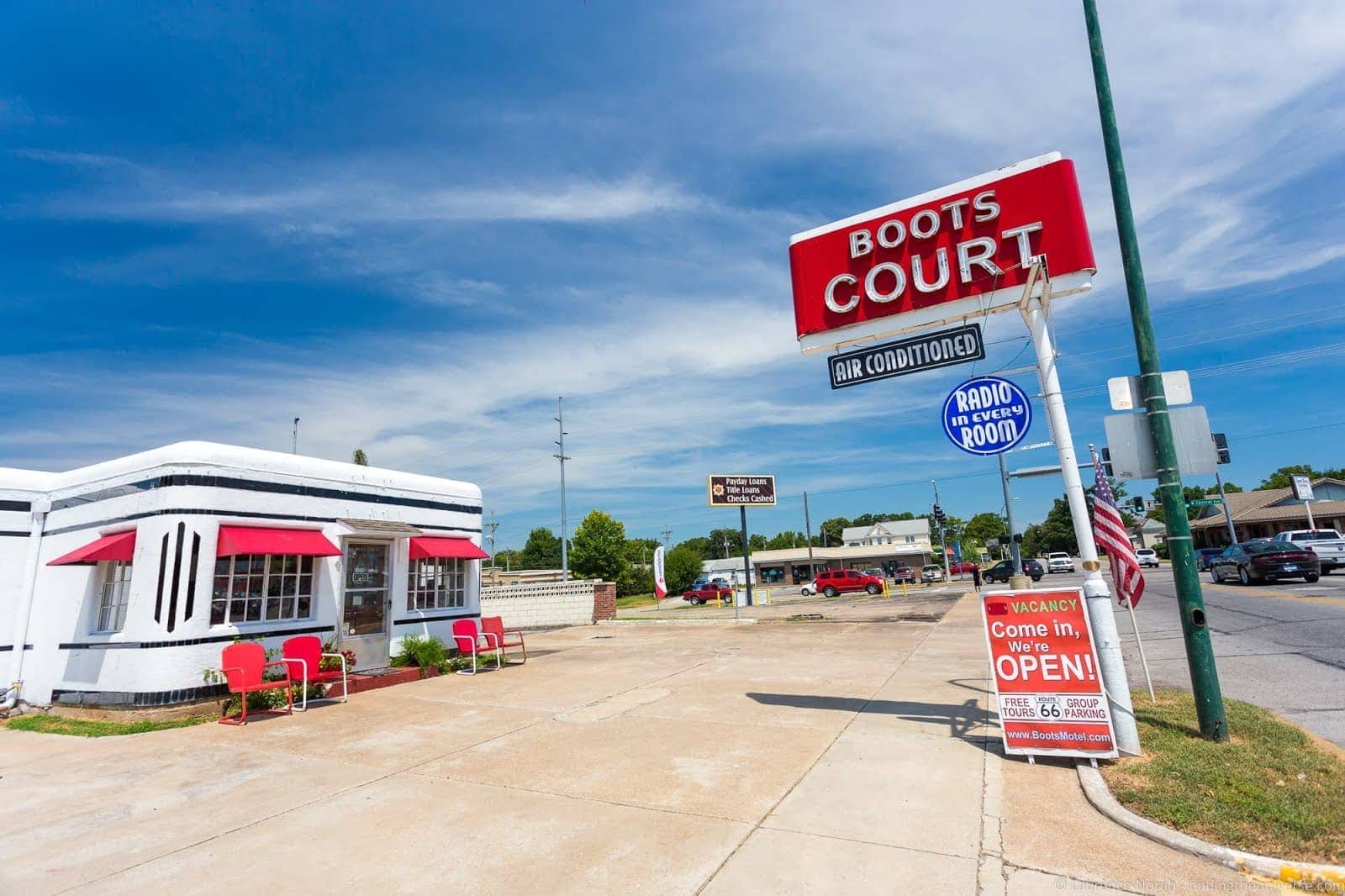
Boots Court in Carthage is one of Route 66’s great preservation success stories. Built in 1939 in the Streamline Moderne style, it spent decades falling into disrepair before the nonprofit Boots Court Foundation purchased it in 2022 and restored all 13 rooms to their 1940s condition. It’s now on the National Register of Historic Places and welcomes guests from around the world.
We weren’t able to stay overnight when we did the route originally, but we were given a full tour. However we have since stayed, and it was everything we hoped it would be from a Route 66 motel.
The rooms have real keys, chenille bedspreads, period furniture, and a radio tuned to a 1940s station (no TVs, just like the original). Clark Gable stayed here in the 1940s (we stayed in the room he stayed in!). If you get the chance, I’d say book a room.
If you’re looking for more accommodation along the route and want to stay in motels like this, see our full guide to Route 66 era hotels and motels.
Red Oak II, Carthage
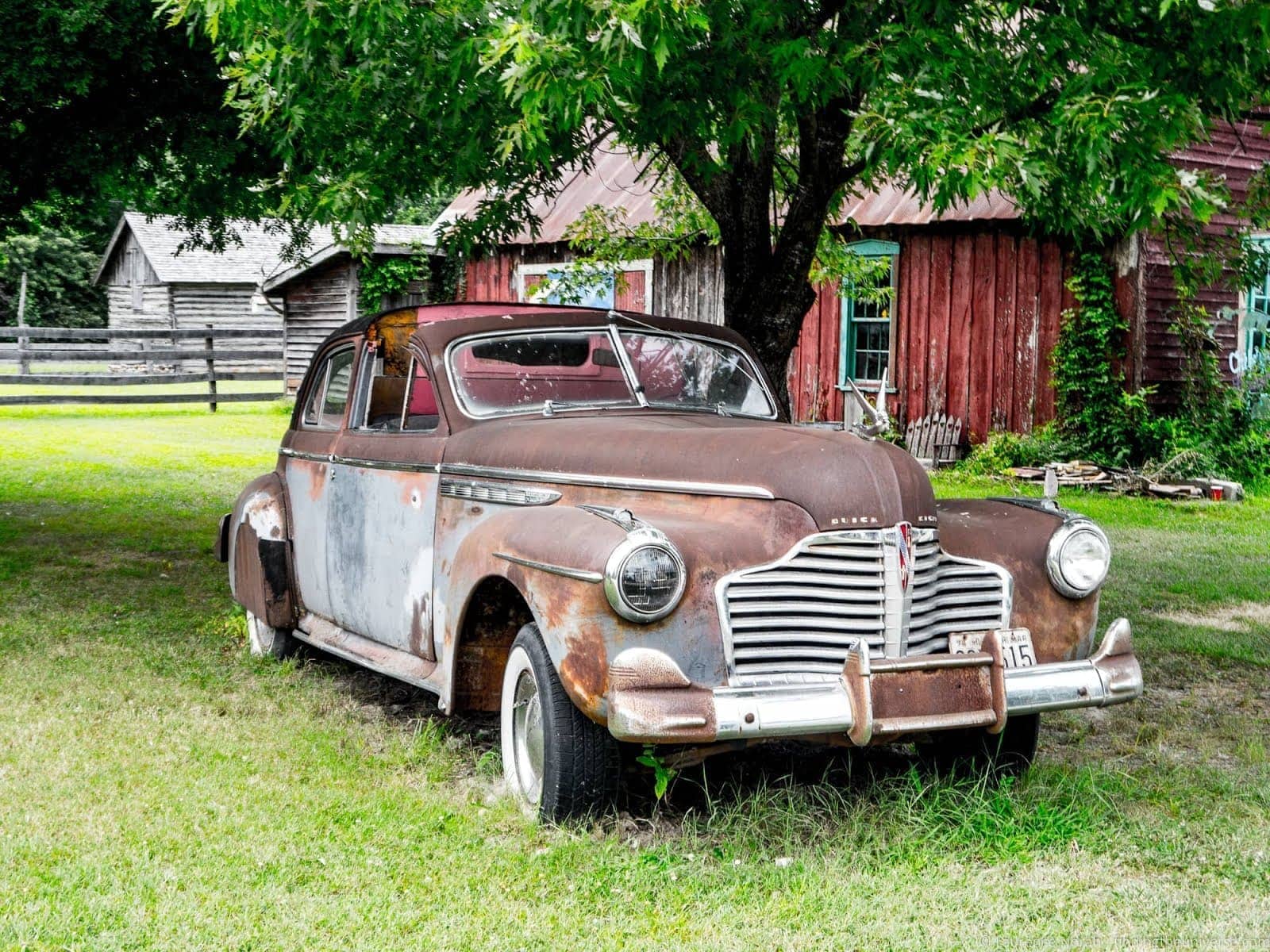
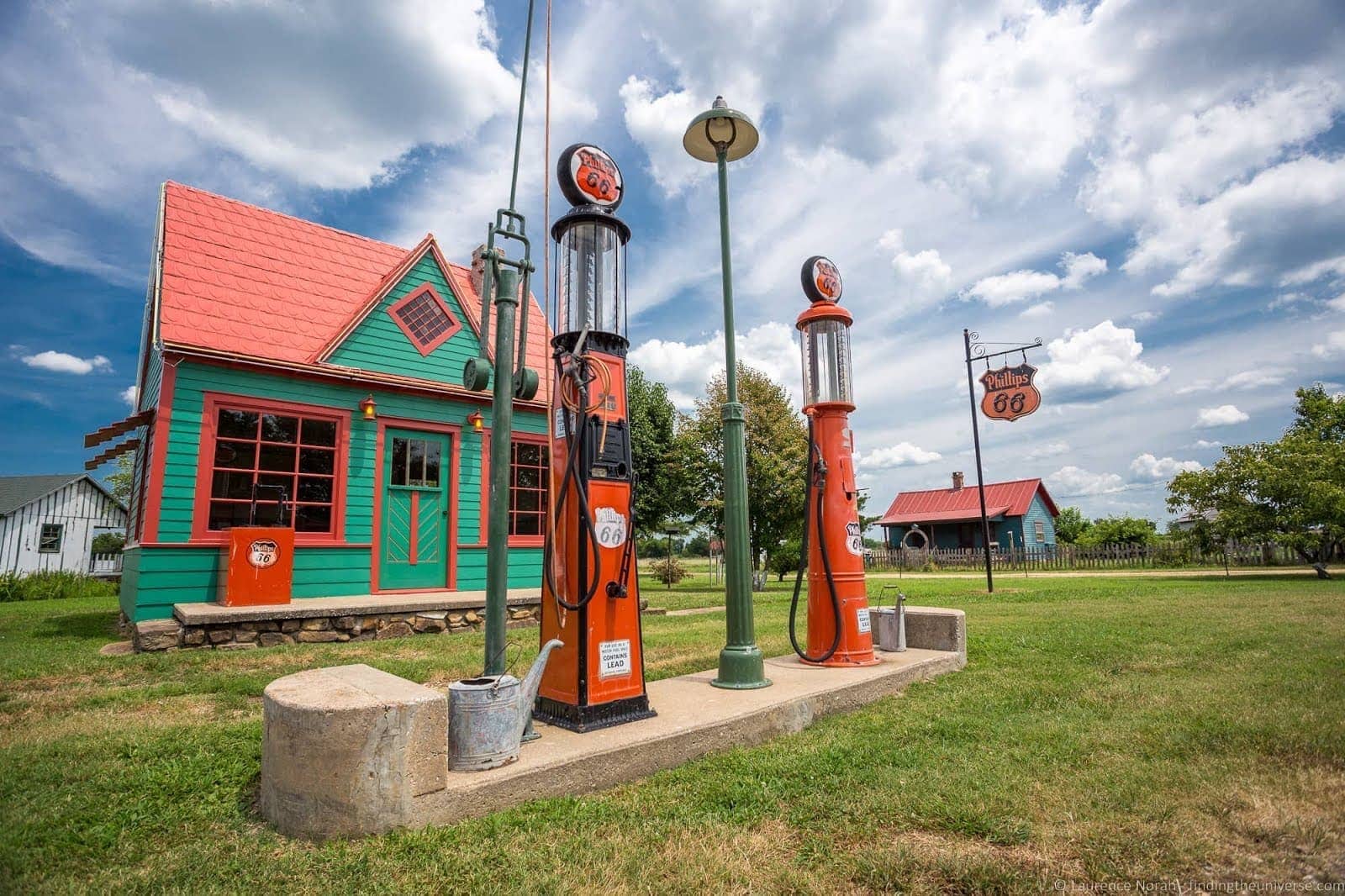
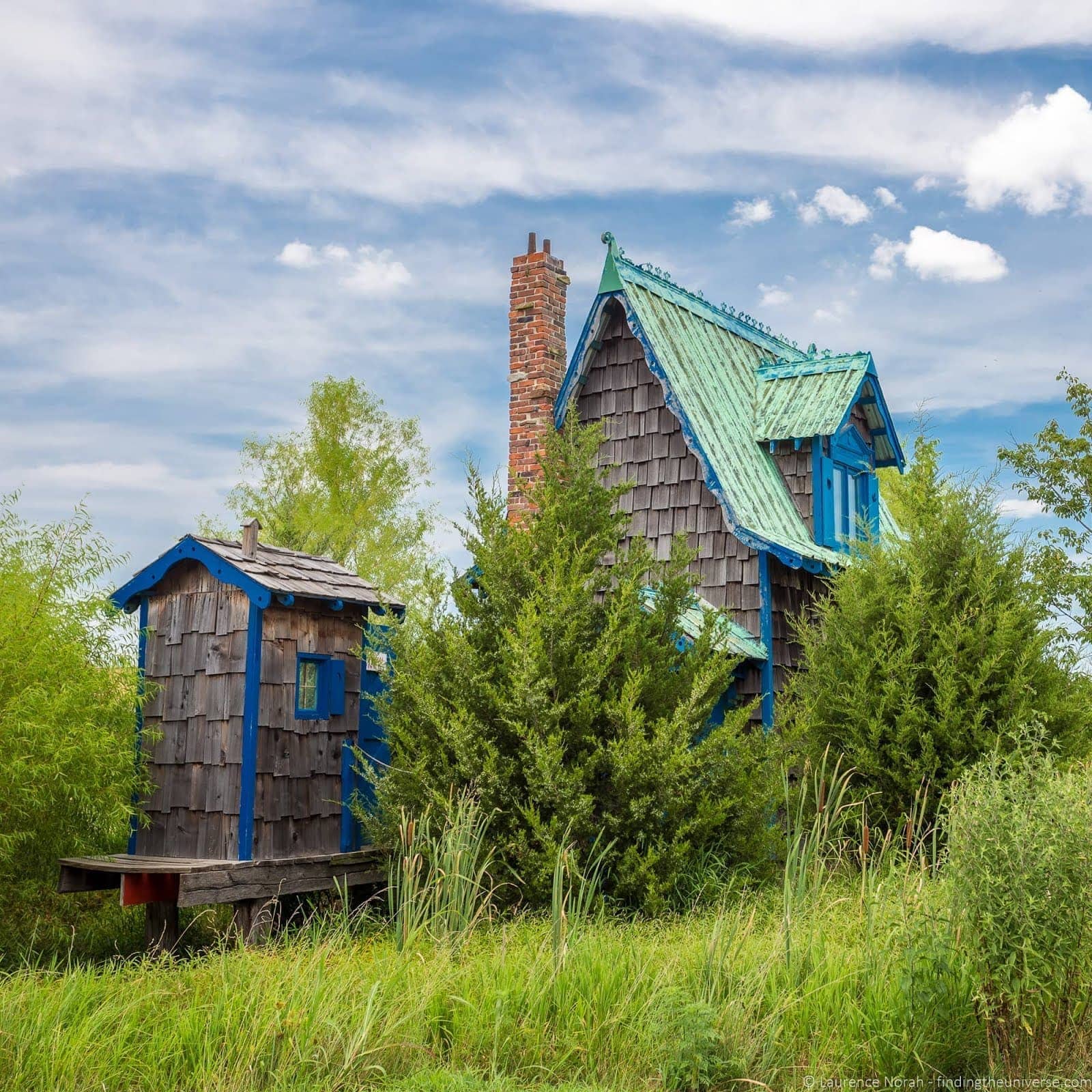
This vintage car is part of Red Oak II, just off Route 66 near Carthage. It’s billed as a ghost town, but that’s not quite right. Artist Lowell Davis collected and relocated buildings from his original hometown of Red Oak (and elsewhere) to this spot, restoring them as a kind of open-air museum of small-town America. There’s a Phillips 66 station, a schoolhouse, a feed store, a diner, and more.
We loved wandering around. It’s free to visit and there’s nobody rushing you. The kind of place where you end up spending longer than you planned.
66 Drive-In Theatre, Carthage
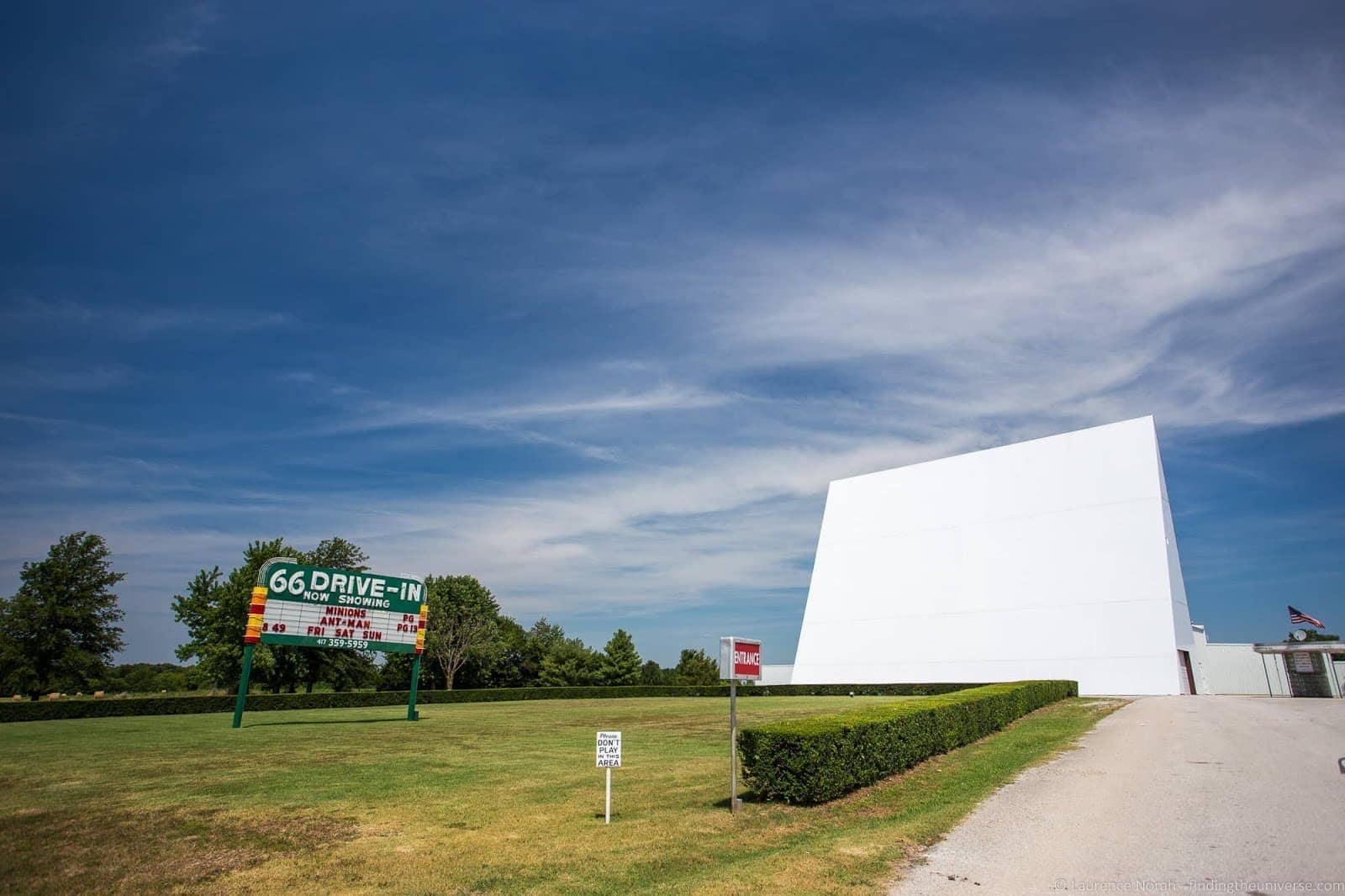
No Route 66 adventure would be complete without a drive-in movie theatre. The 66 Drive-In sits just west of downtown Carthage and is one of the few surviving drive-ins on the route that’s still in operation (it’s open seasonally, roughly April through September). We stopped at a different drive-in for a double bill in Oklahoma, but if you’re passing through Carthage in the right season, this is the one to hit.
Route 66 Bowling, Joplin
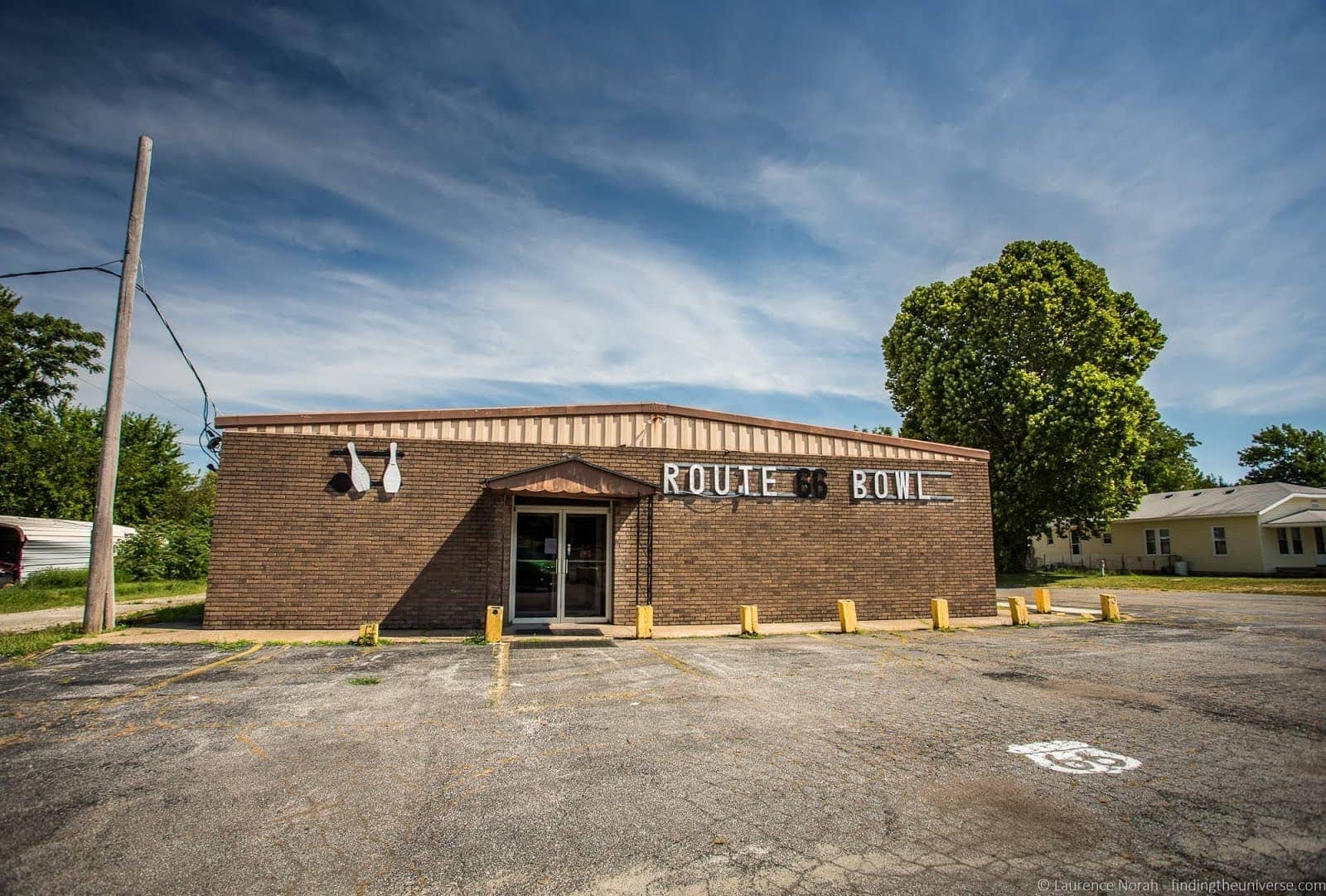
Bowling was (and still is!) a popular way to spend an evening on Route 66. The one in the photo, Route 66 Bowl, was in Joplin. It’s since been converted to a gym, but the sign’s still there. Route 66 entertainment in a nutshell.
Gary’s Gay Parita, near Ash Grove
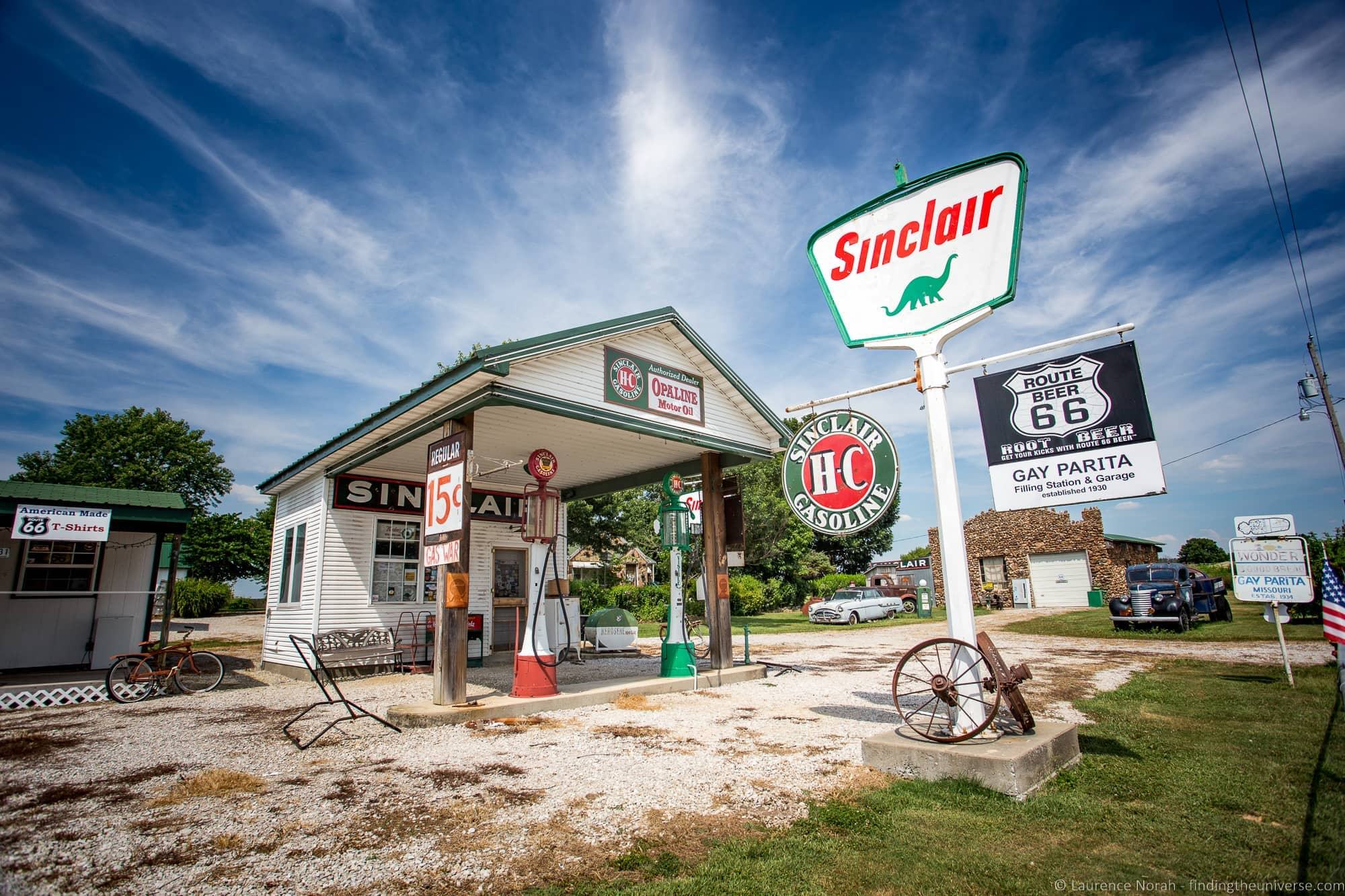
About 25 miles west of Springfield, Gary’s Gay Parita is a recreation of a 1930s Sinclair gas station, and it’s one of the most photographed stops on all of Route 66. The original station was built in 1930 by Fred and Gay Mason (Parita was the local area name) and burned down in 1955. In the early 2000s, Route 66 enthusiast Gary Turner rebuilt the station and turned it into a welcoming stop for travellers, complete with vintage pumps, classic cars, and Sinclair dinosaur memorabilia.
Gary passed away in 2015, but his daughter Barb Barnes and her husband George Bowick now keep the station running and his spirit alive. It’s free to visit, donations welcome, and if the doors are open you might get a cold drink and a good story. Don’t skip this one.
Tips for Planning Your Route 66 Missouri Trip
If you’re planning to drive Route 66 through Missouri, here are some resources to help.
For the full route, Jess has put together a comprehensive guide to planning a Route 66 trip, plus an incredibly detailed two week day-by-day Route 66 itinerary covering all the sights, route tips, lodging, and places to eat. We also have a 1 week Route 66 itinerary if you have less time. For accommodation options, see our guide to the best motels and hotels on Route 66.
We’d also recommend picking up a copy of the EZ66 Guide for Travelers by Jerry McClanahan. It’s now in its 6th edition and is the best way to follow the original Route 66 alignment as faithfully as possible. We used it the whole way and even met the author. Couldn’t have done the trip without it.
You’ll need a car for Route 66, and if you need to rent one, we recommend checking Discover Cars, which compares prices across all the major rental companies so you can find the best deal. If you’re new to driving in the US, have a look at my tips for driving in the US to get you started. And for budget planning, we’ve got a guide to travel costs in the USA.
For photos from the rest of our trip, check out our photo highlights from each state: California, Arizona, New Mexico, Texas, Oklahoma, Kansas, and Illinois.
Route 66 Centennial 2026
Route 66 turns 100 in 2026. The highway was officially designated on November 11, 1926, and centennial celebrations are happening all year long across all eight states.
Missouri has a special role in the centennial because Springfield is where the name “Route 66” was first proposed (that April 30, 1926 telegram). The national centennial kickoff took place in Springfield, and there are events throughout the year including motor tours, festivals, travelling exhibits, and the AAA Route 66 Road Fest. Lebanon is hosting its own centennial festival, and Red Oak II in Carthage has centennial exhibits planned.
If you’ve been thinking about driving Route 66, the centennial year is a good excuse to do it. More businesses along the route are open, more events are happening, and there’s a real energy along the road that makes 2026 a particularly good time to go. The Route 66 Centennial website has the full schedule of events.
Frequently Asked Questions
How long is Route 66 in Missouri?
Route 66 runs for about 317 miles through Missouri, from St. Louis at the Illinois state line in the east to Joplin near the Kansas and Oklahoma borders in the west. The route runs roughly southwest, paralleling Interstate 44 for most of the way.
If you drove it without stopping, you could cover it in about five hours. But with all the roadside stops, diners, and photo opportunities, I’d suggest at least two days to do it properly.
What are the must-see stops on Route 66 in Missouri?
The highlights include the Gateway Arch and Ted Drewes Frozen Custard in St. Louis, Meramec Caverns near Stanton, the murals in Cuba, Boots Court Motel in Carthage, Red Oak II ghost town, and Gary’s Gay Parita near Ash Grove. Springfield is worth a stop as the Birthplace of Route 66, particularly during the 2026 centennial year.
The Old Chain of Rocks Bridge in St. Louis is also a favourite. It’s the original Route 66 crossing of the Mississippi, now converted to a pedestrian and bike bridge.
Is Route 66 in Missouri driveable?
Yes. Much of the original Route 66 alignment through Missouri is still driveable, though some sections have been absorbed into modern roads or replaced by Interstate 44. A good guidebook like the EZ66 Guide for Travelers will help you stay on the original route as much as possible.
The road surface varies from well-maintained two-lane highway to rougher stretches, but you don’t need a special vehicle. A standard rental car is fine.
Where should I stay on Route 66 in Missouri?
For the classic Route 66 experience, Boots Court Motel in Carthage is hard to beat. All 13 rooms have been restored to their 1940s condition. The Wagon Wheel Motel in Cuba has been operating since 1938 and is the oldest continuously-running motel on Route 66.
For more options, see our guide to Route 66 era hotels and motels. Springfield and St. Louis both have a full range of modern hotels if you prefer something more contemporary.
What is the Route 66 Centennial?
Route 66 was officially designated on November 11, 1926, which means 2026 is its 100th anniversary. Centennial celebrations are happening all year across all eight Route 66 states, with Springfield, Missouri hosting the national kickoff as the city where the name “Route 66” was first proposed.
Events include concerts, classic car shows, motor tours, travelling exhibits, and community festivals. The Route 66 Centennial website has the full event calendar.
Chris Nunn says
I just discovered your website and your Route 66 blog. I grew up in Springfield. One thing that you didn’t mention in your photo of Rest Haven Court is that is the “Birthplace of Route 66”
Laurence Norah says
Thanks for sharing Chris, appreciated 🙂 For anyone else wondering, Springfield in Missouri is often known as the birthplace of Route 66 because this is where the number for the Route was decided upon 🙂
Scott Wiggins says
I caught what I’m quite sure is a honest mistake in your article here. The mural in that picture is in Cuba, MO, the town my wife and I live in. It’s referred to as mural city on 66 and has quite a few beautiful ones in the historical district of town. Hopefully y’all got to check out the wagon wheel motel on your way through Cuba as well.
Laurence Norah says
Hi Scott! Thanks for noticing that and letting me know, that’s much appreciated. I’ve updated the post and added another mural too – we loved them 🙂 We did indeed get to see the Wagon Wheel motel as well, although we didn’t get to spend the night unfortunately.
Thanks again for taking the time to help out!
Laurence
Scott Wiggins says
You’re very welcome. Thank you for the shout out in the article. My wife and I plan on driving the entirety of Route 66 eventually to see the history of it outside of just Missouri and there are places in this article we haven’t been able to visit in Missouri yet either. Thank you for writing this article and sharing the beauty of Route 66 and the history of it. I wish it was still alive and traveled like it once was decades ago.
Laurence Norah says
It’s my pleasure! I think there is definitely a resurgence in popularity for the route, and we definitely hear from readers regularly about their experiences driving it. Certainly not like the hey day, but it’s nice to know people are still interested. I hope you guys get to travel it all soon!
Angela Kay says
“”Route 66 is all about quirky road side attractions, like this giant statue of a pirate”.
That’s not a pirate it is the Hillbilly from the Hillbilly store on 66 in and around the 50 threw the 80s.
It was a child hood treet to go there n get a grab bag for .25/.50/1.$
I miss it!
Laurence Norah says
Hey Angela – thanks for the information! I have updated the post with your correction 😀 Thanks for sharing your experience too!
Joseph E. Long says
In the summer of 1945 a couple of friends and I went on a trip from Kentucky to California. We hitchhiked and rode freight trains, worked along the way, horse farm in Missouri, wheat harvest in Kansas etc.. we probably traveled a lot of Route 66 before we ended up in Los Angeles. The pictures are a good reminder of what it looked like then. Route 66 was not famous then, just another road. Just before the Interstate hiways took over, old 66 was dangerous, too many cars on two lane roads.
Laurence Norah says
Hey Joseph – wow, what an experience that must have been. My dad actually did something similar, except he went to Australia, and did a lot of the physical type work you are describing – from rounding up sheep on horse back to stacking peanuts!
I can imagine it would have been very different back then to how it is now. Thanks so much for sharing your experience 😀