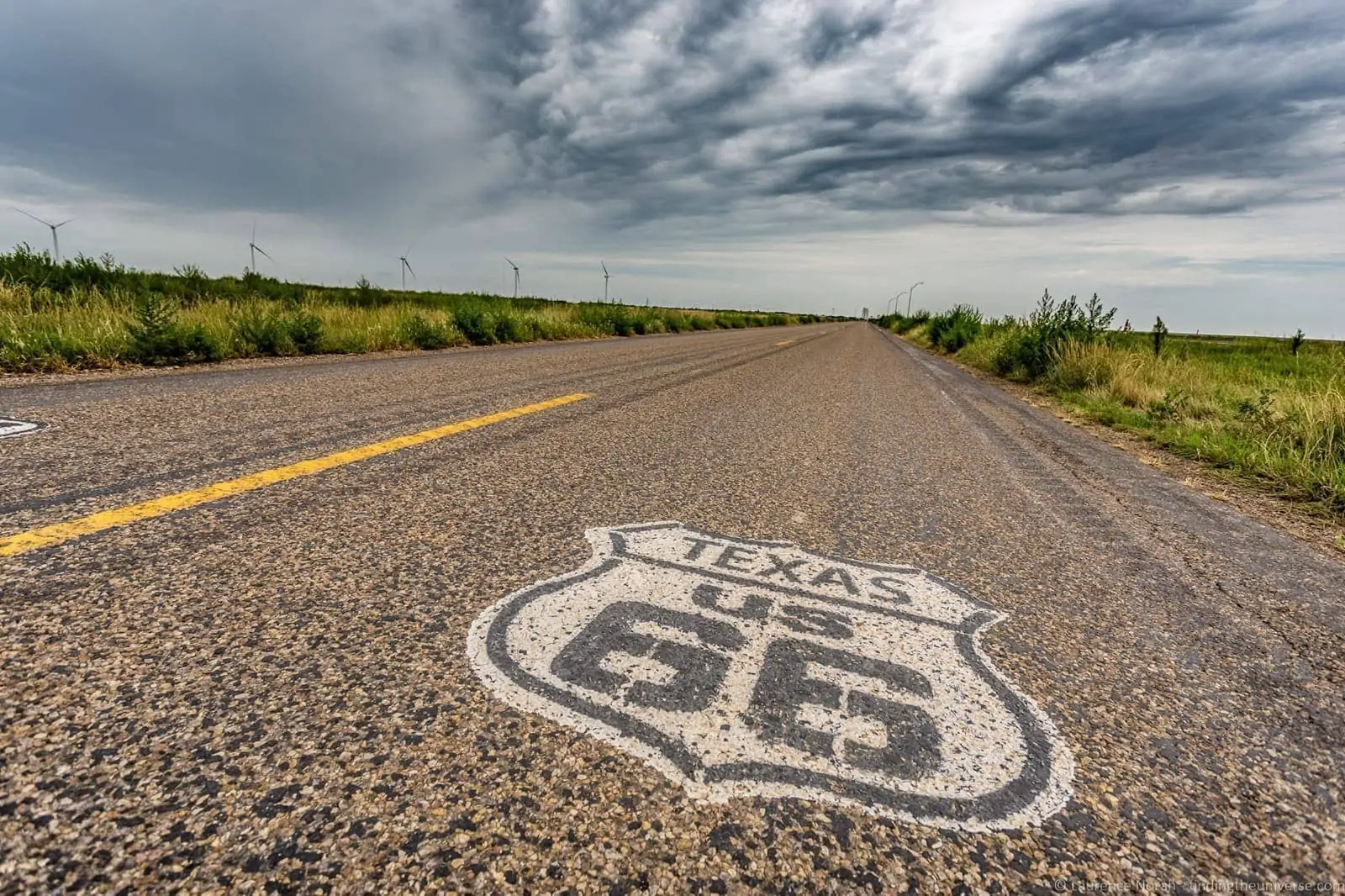
Route 66 cuts about 178 miles across the Texas Panhandle, and it’s a stretch of road that looks like the opening scene of every American road trip movie you’ve ever watched. Flat, wide open, with the kind of sky that makes you understand why Texans are the way they are. The towns are small and spread out, but the stops along the way are some of the best on the entire route: Art Deco architecture, buried Cadillacs, a steak challenge that defeats most people, and the exact halfway point between Chicago and LA.
We drove the full Texas stretch as part of our Route 66 road trip from California to Chicago, and we generally had much better weather here than we’d had in New Mexico. Wide open blue skies for the second half of the drive, which is really what the Texas Panhandle is all about.
Coming in from Oklahoma, Route 66 enters Texas at Shamrock. From there it’s about 65 miles west to Amarillo (the only real city on the Texas stretch), then another 35 miles to the midpoint at Adrian, and a final 40 miles to the ghost town of Glenrio at the New Mexico border. About 178 miles all up, and you could drive it in three hours if you didn’t stop. But you will stop. Repeatedly.
I also have many of these photos available for purchase in my online Route 66 photo gallery if you’d like a memory of the Mother Road for your wall.
Table of Contents:
Route 66 Texas Highlights: Shamrock to Glenrio
Here are our highlights from driving Route 66 through Texas, ordered east to west as you’d encounter them coming in from Oklahoma and heading towards New Mexico.
Tower Station and U-Drop Inn, Shamrock
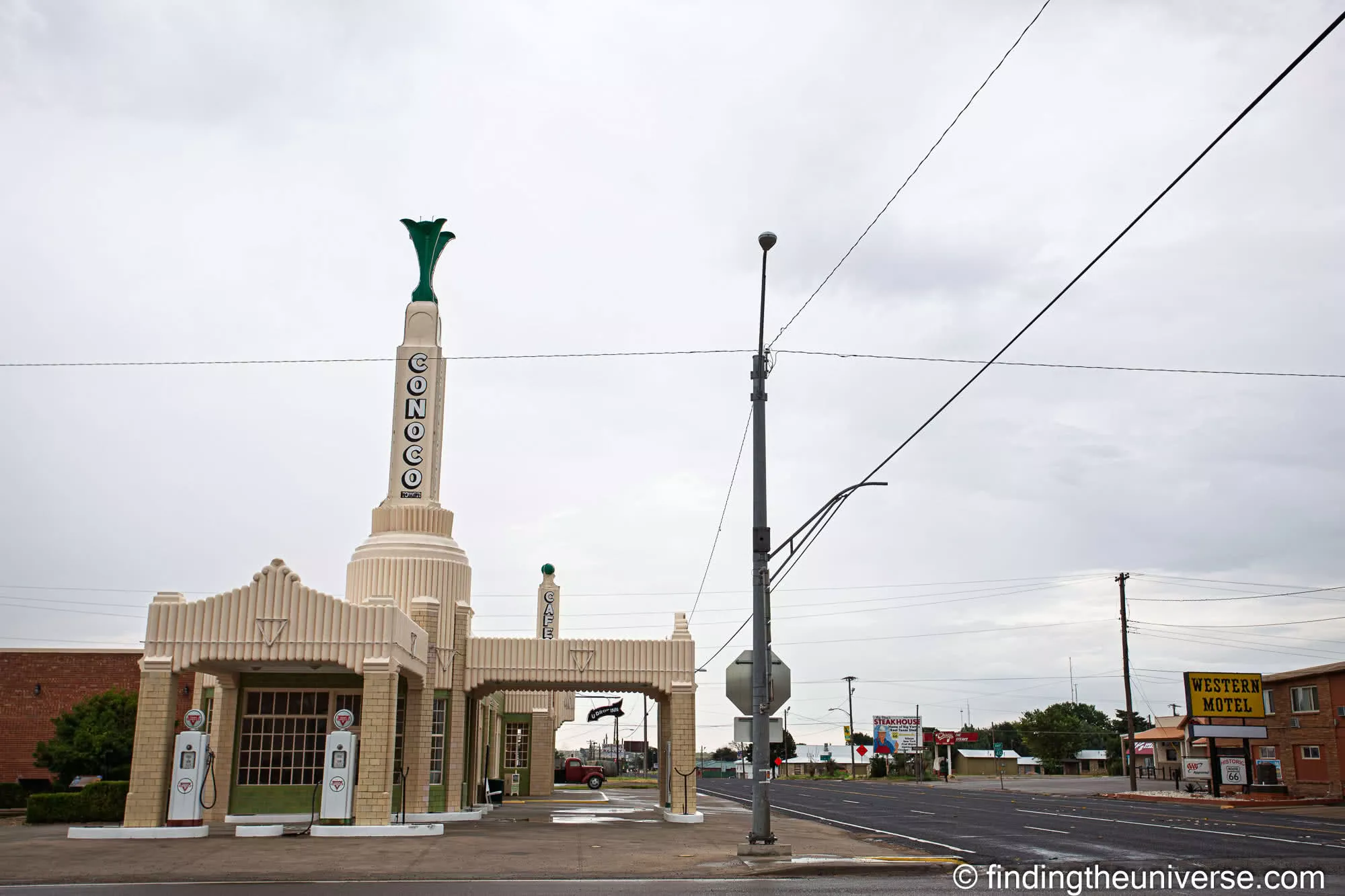
Shamrock is the first major stop in Texas, and it has one of the most photographed buildings on all of Route 66. The Tower Station and U-Drop Inn was built in 1936 in the Art Deco style, with twin towers and glazed ceramic tiles that looked impossibly glamorous for a gas station and café in the middle of the Panhandle. It’s on the National Register of Historic Places and was the inspiration for Ramone’s House of Body Art in the Pixar movie “Cars.”
The building has been fully restored by the City of Shamrock and now houses the Chamber of Commerce and a café. It’s free to visit and the interior is worth a look. Elvis Presley apparently ate here, and the booth he sat in is marked.

Shamrock also has a chunk of the actual Blarney Stone from Ireland (the town was named by an Irish immigrant postmaster in 1924, after every other name he submitted to Washington was already taken). The town leans into its Irish connection with a big St. Patrick’s Day celebration that draws over 30,000 people.
Devils Rope Museum, McLean

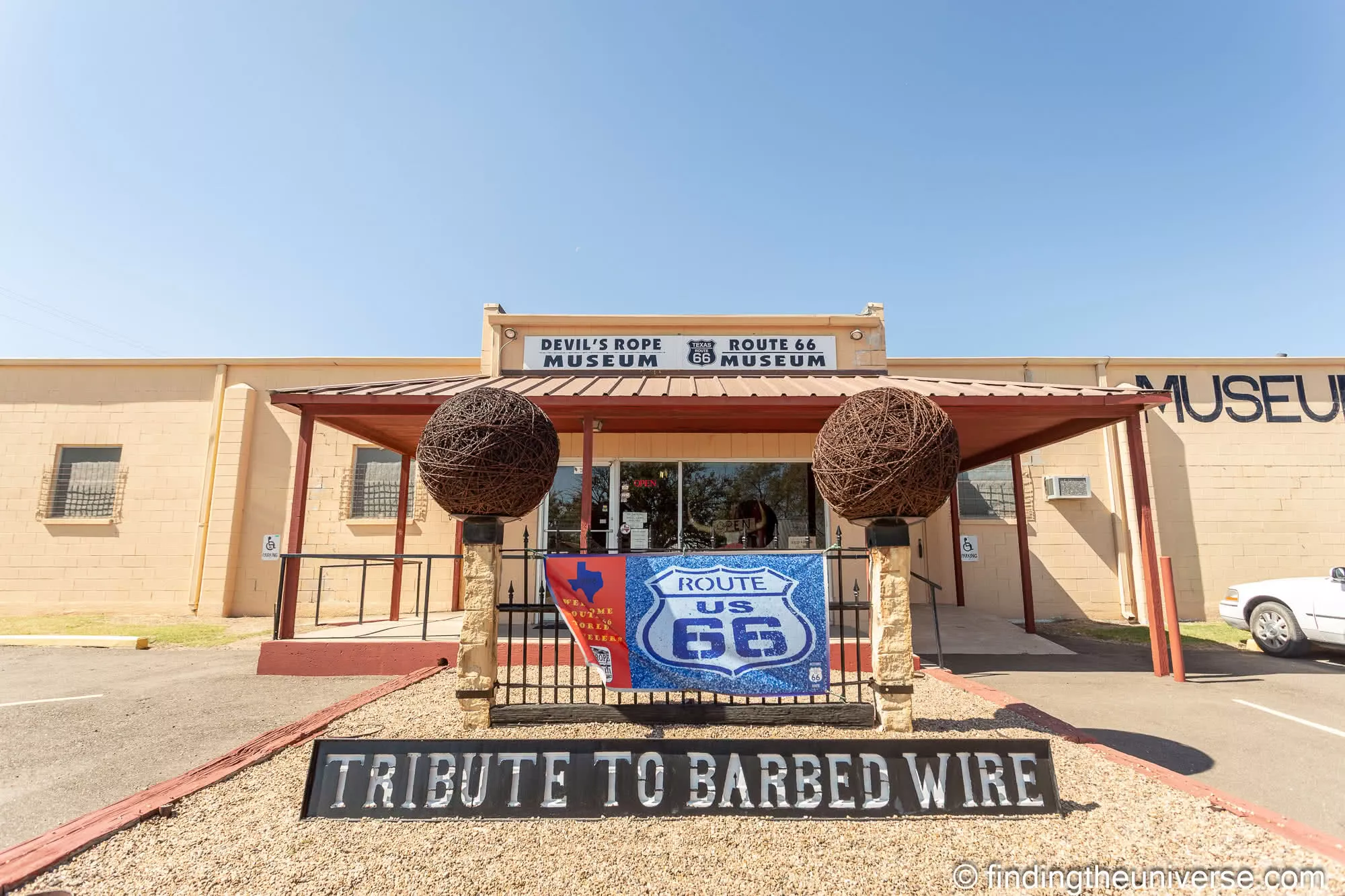
McLean, about 20 miles west of Shamrock, has the Devils Rope Museum and a Route 66 Museum sharing the same building. Devils rope is what they called barbed wire, and the museum makes a surprisingly compelling case for how important it was to the expansion of cattle ranching in Texas. The Route 66 section has over 700 artifacts from the highway’s history. Free to visit.
Route 66 Gas Stations, McLean
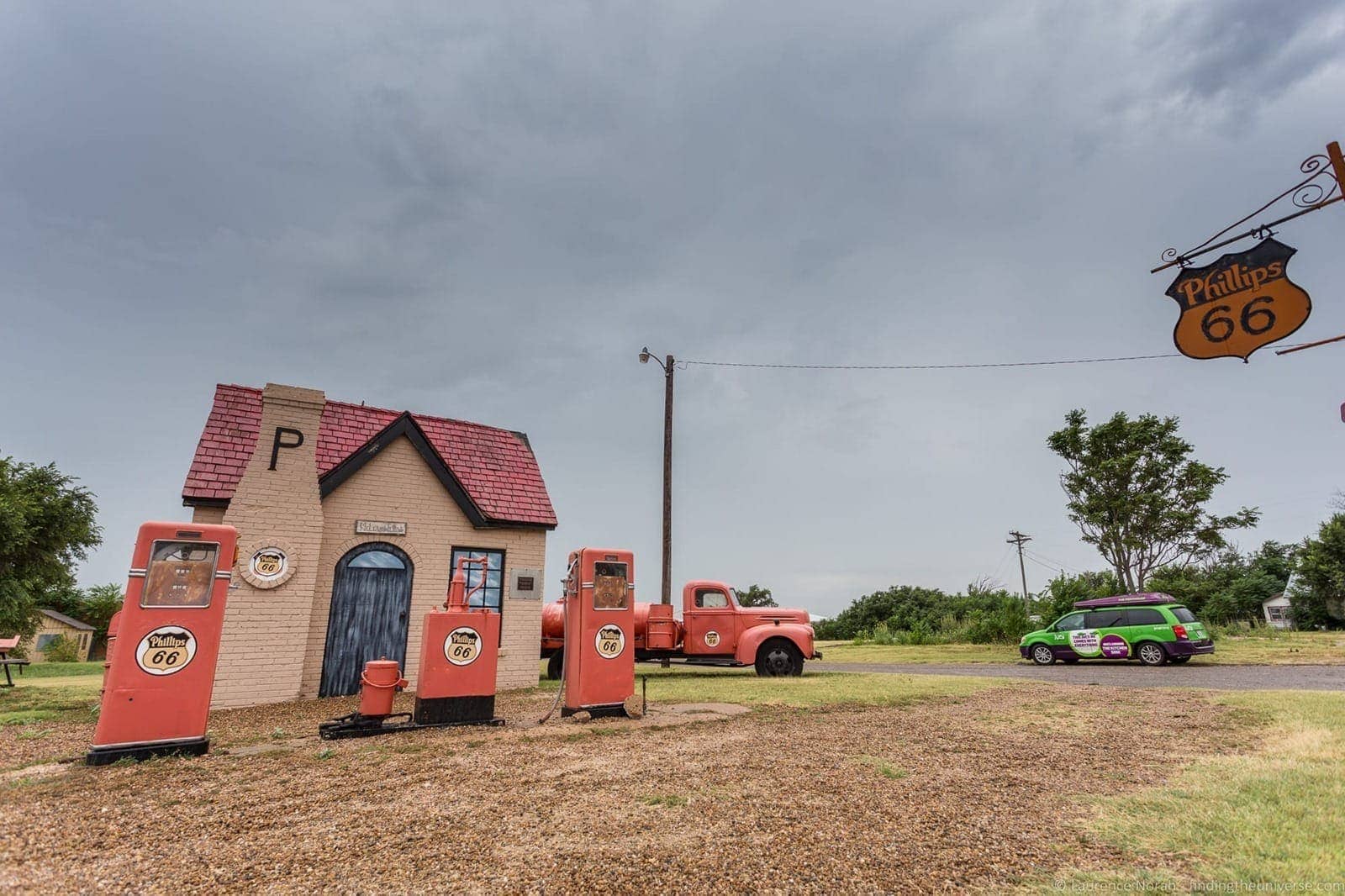
It’s not a Route 66 post without some old gas stations. This restored Phillips 66 station in McLean has been lovingly brought back to its original condition. Some get restored, some get turned into museums, and some just slowly fall apart. That’s Route 66.
The Leaning Water Tower, Groom
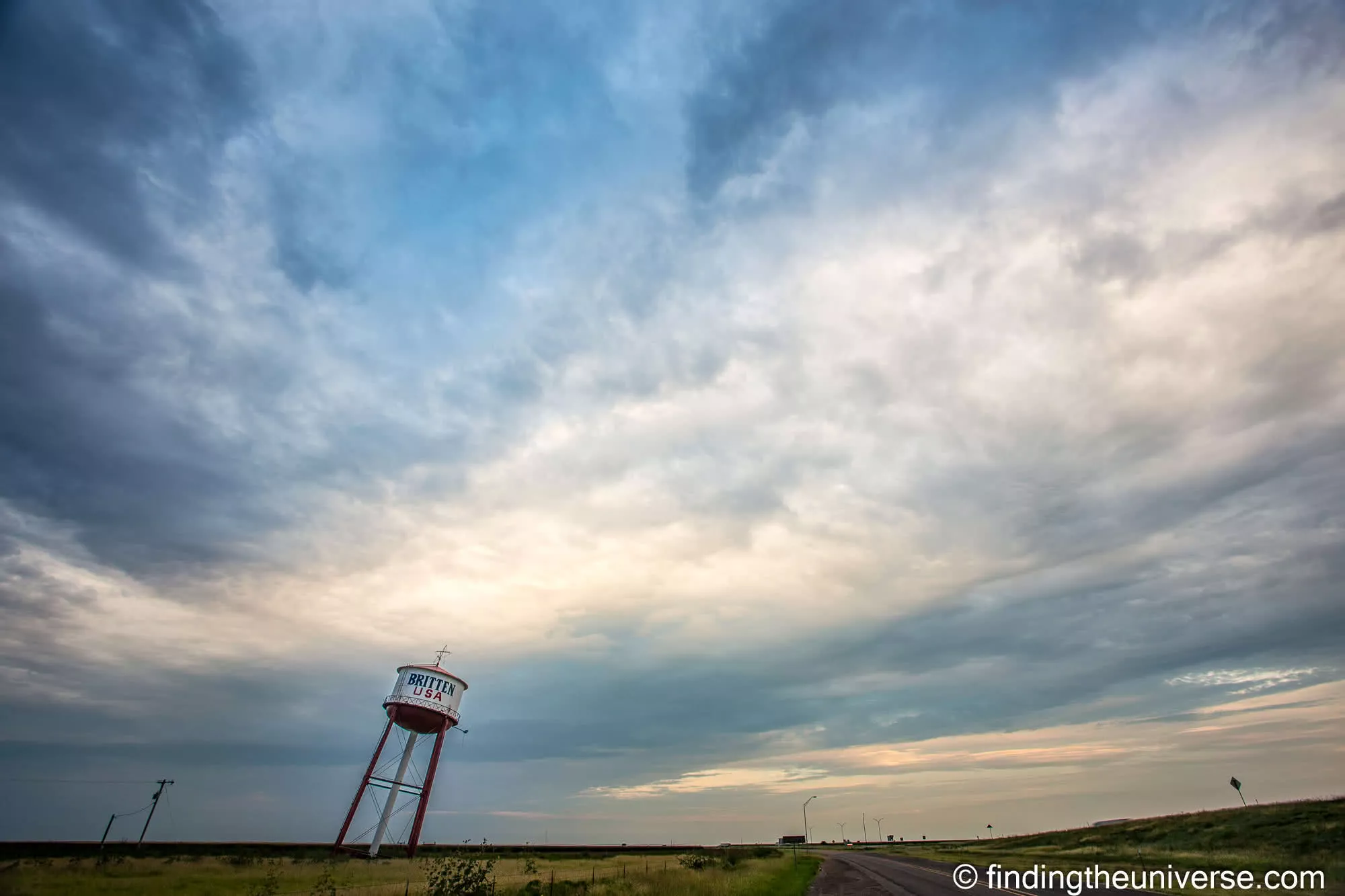
Groom is a tiny town about 40 miles east of Amarillo with two things worth stopping for. The first is the Britten leaning water tower, a decommissioned water tower that was bought and deliberately tilted to serve as a roadside attraction for a truck stop. The truck stop burned down years ago, but the tower remains, leaning at an alarming angle and confusing people on the interstate.
The Cross, Groom
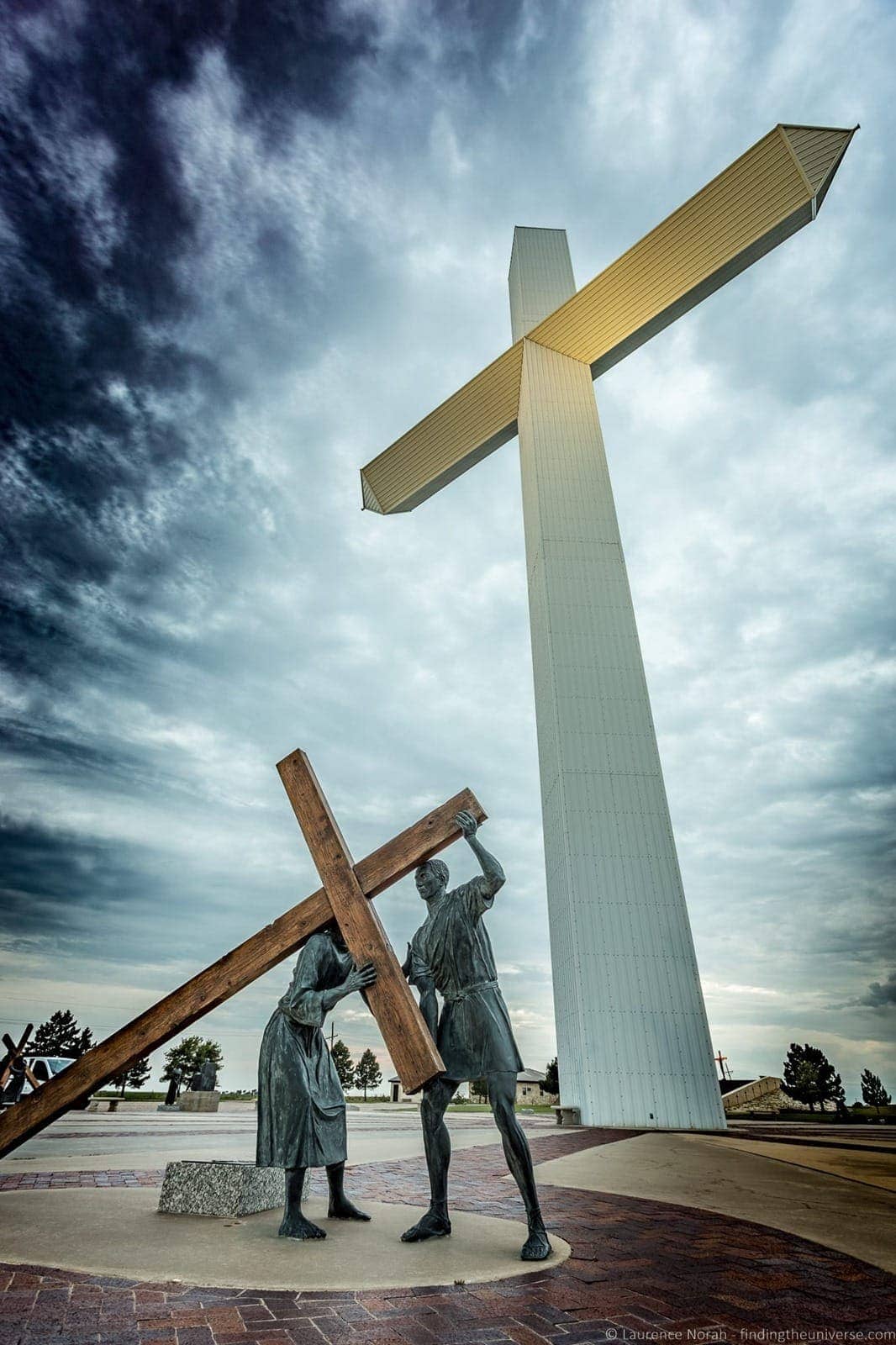
The second thing in Groom is harder to miss. This 190-foot cross is one of the largest in the western hemisphere and is visible from 20 miles away. It’s surrounded by life-sized statues depicting the Stations of the Cross. Regardless of your feelings about religion, the sheer scale of the thing is impressive. This is Texas, after all.
Amarillo 6th Street Historic District
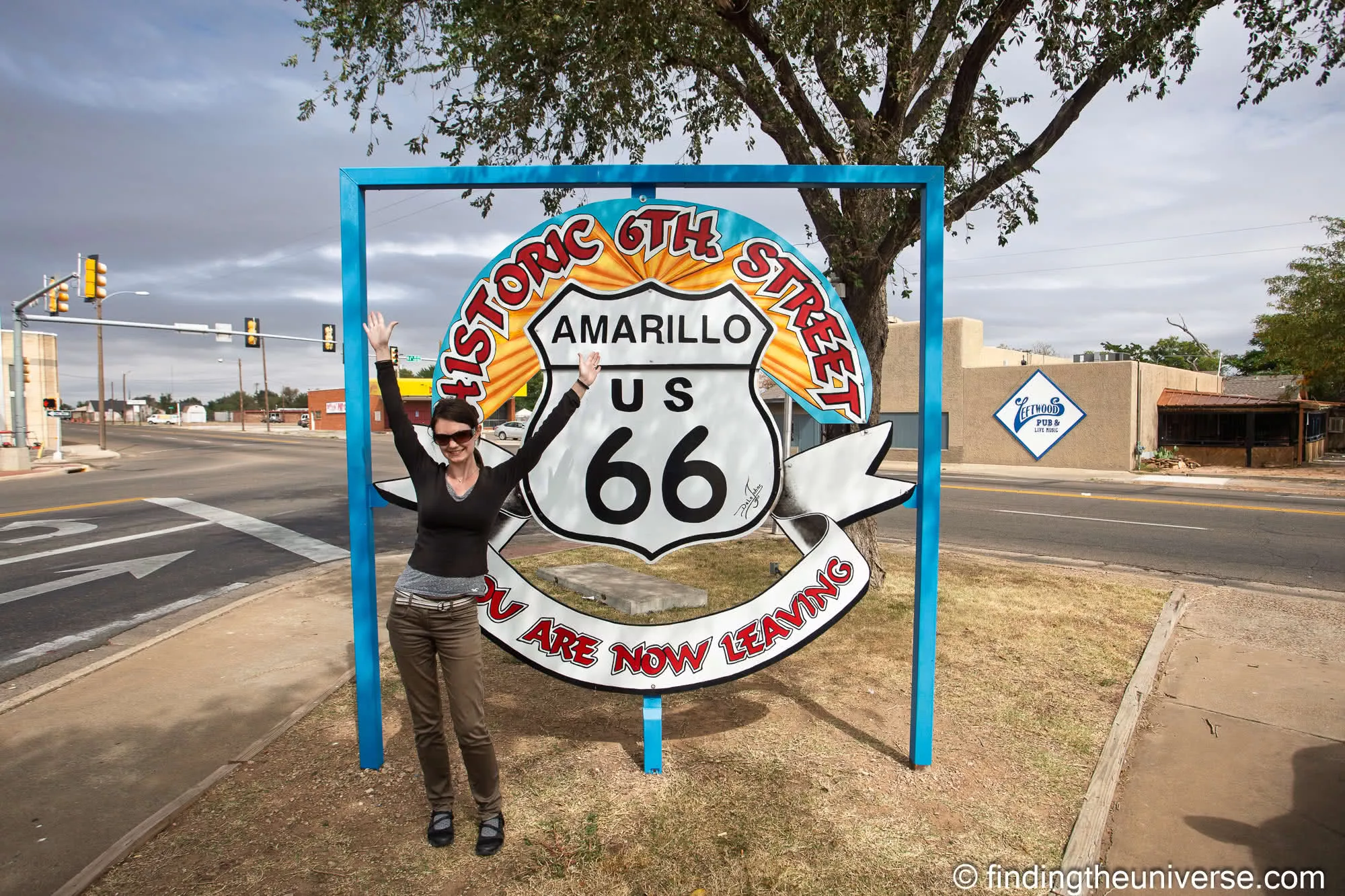
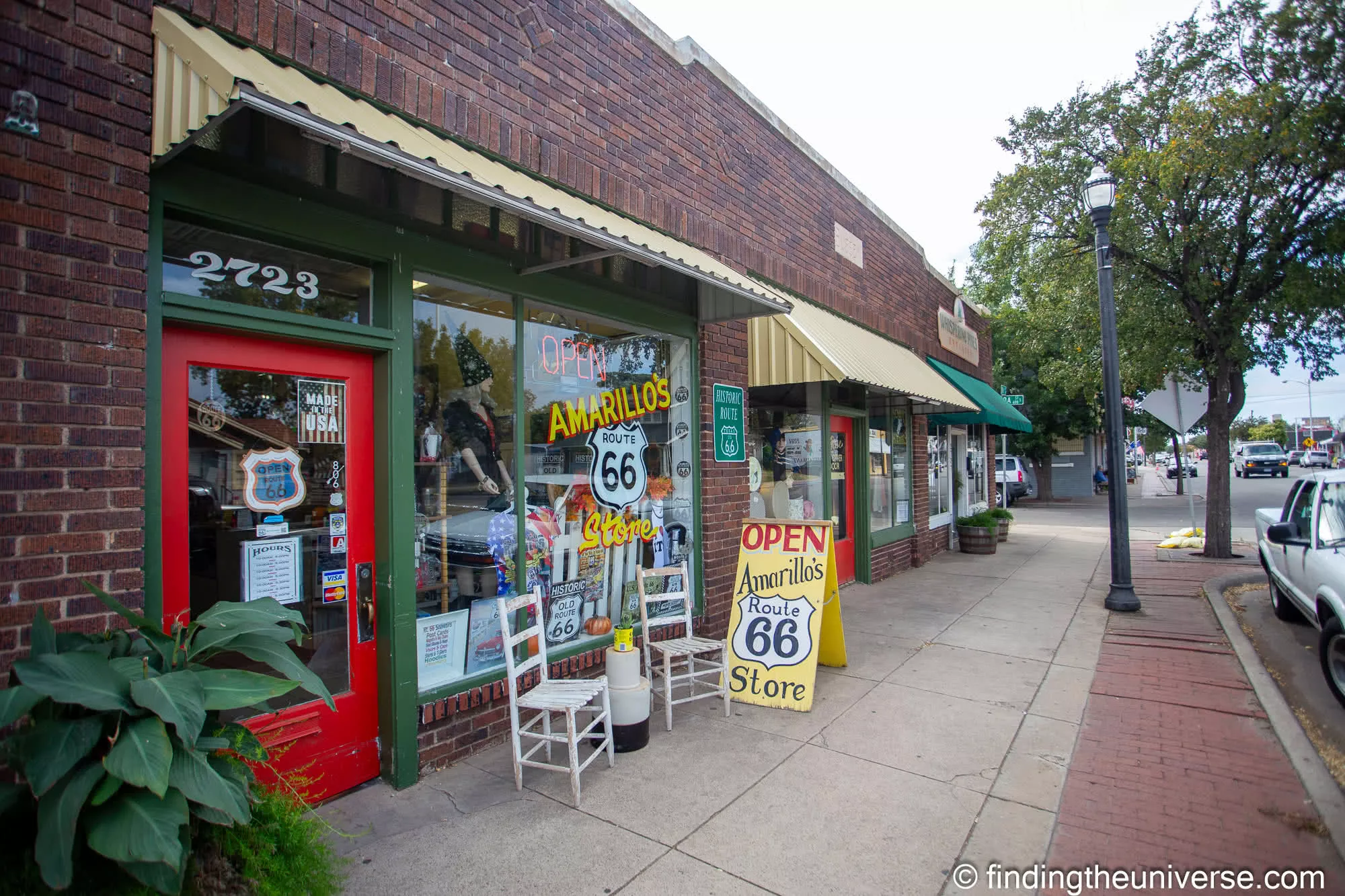

Amarillo is the only proper city on Route 66 in Texas, and the 6th Street Historic District is where the Route 66 heritage is most visible. There are 13 blocks of antique shops, local restaurants, galleries, and murals, all along the original Route 66 alignment. It’s a good place to stretch your legs and browse, and there’s a Route 66 festival here every June.
Big Texan Steak Ranch, Amarillo
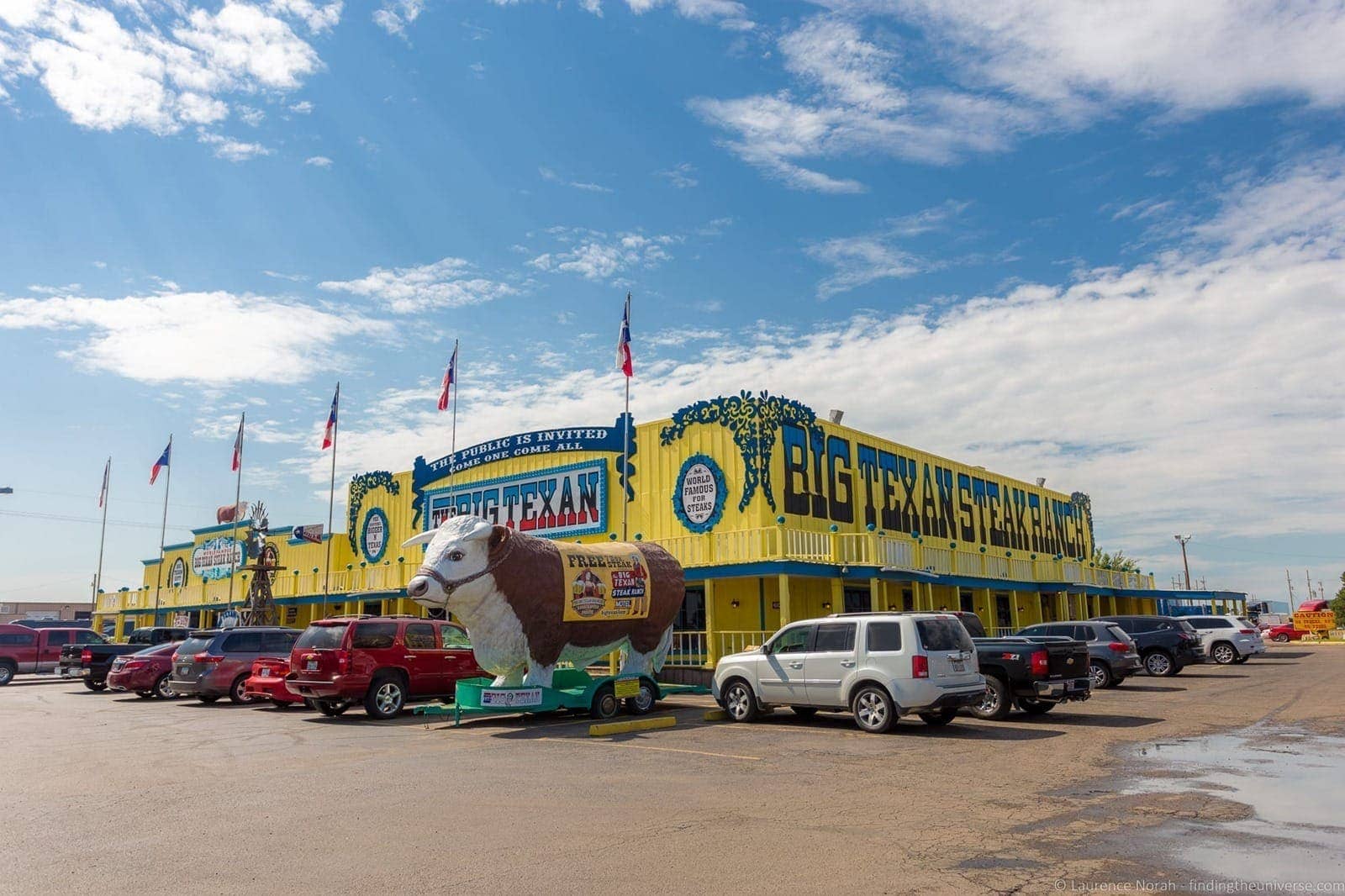
Everything in Texas is bigger. It’s just a fact. As you drive along, giant signs start appearing advertising a free 72oz steak. The catch? You have to eat the whole thing, plus sides, within an hour. This is the Big Texan Steak Ranch, a Route 66 institution. We asked our waitress if many people managed it and she said no, most did not. But plenty of people tried.
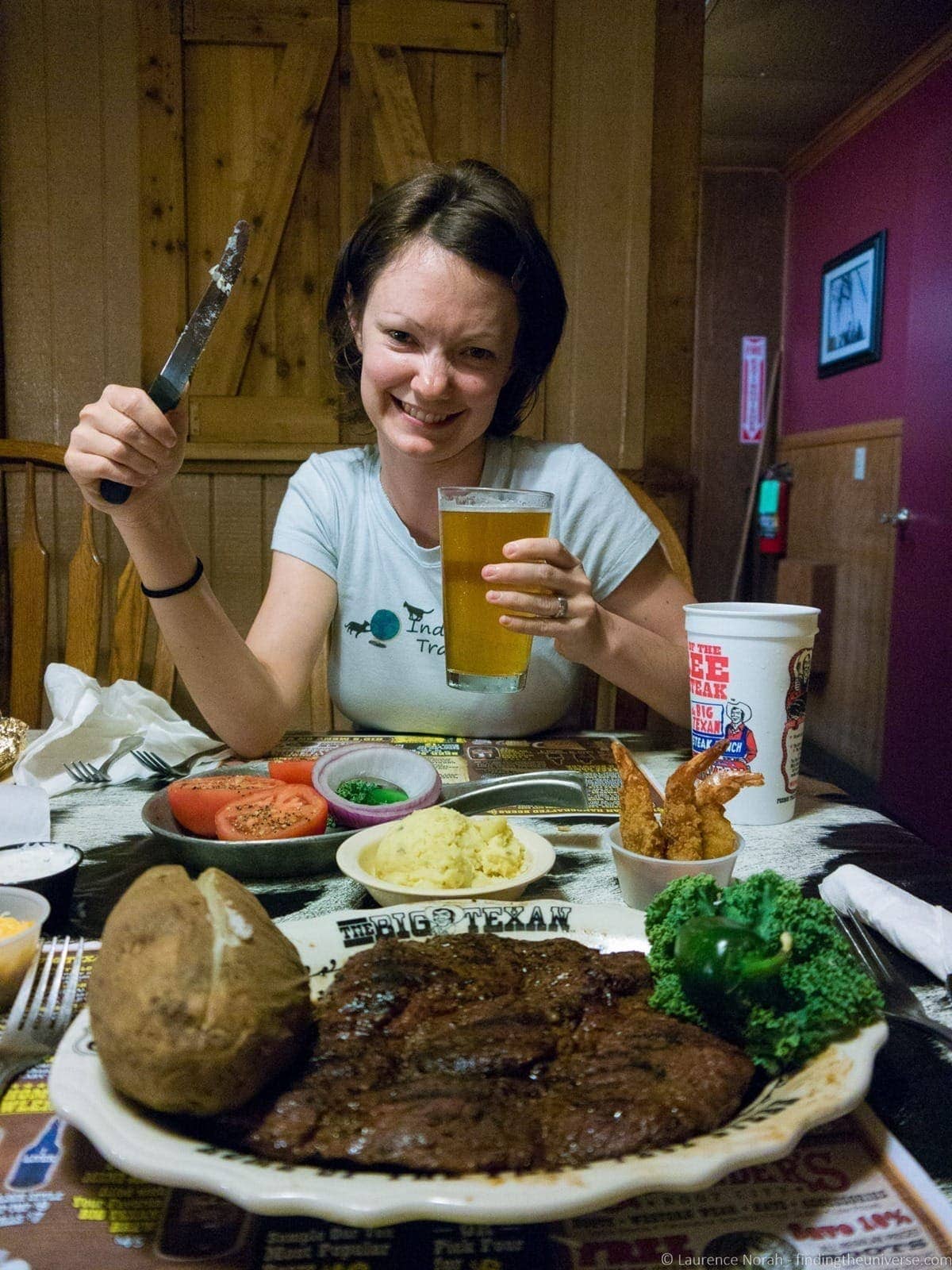
We decided that a 20oz steak between the two of us would probably suffice, and it did, with enough left over to take on the road with us. It was very good, as Jess’s smile confirms.
Cadillac Ranch, Amarillo
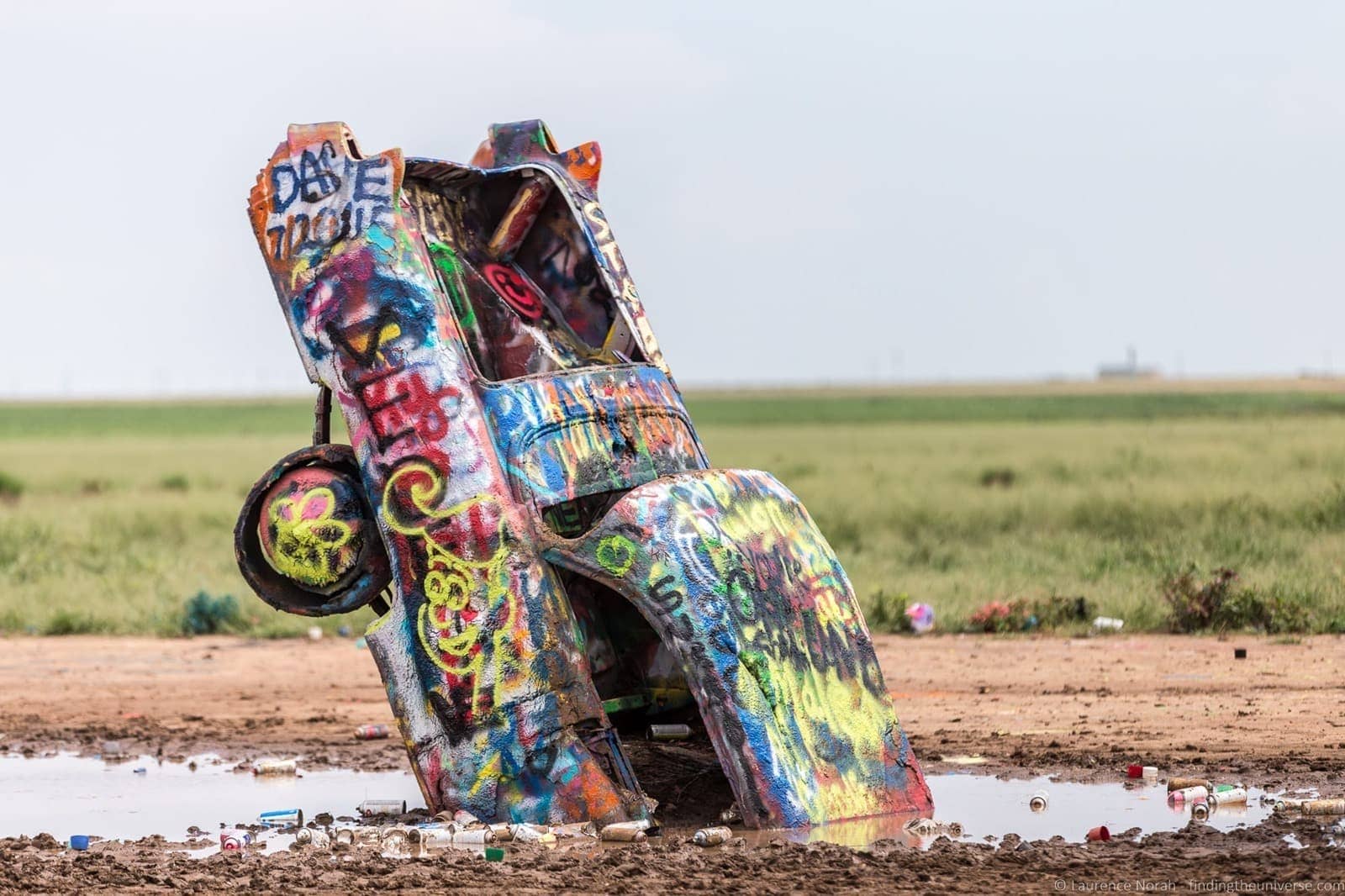
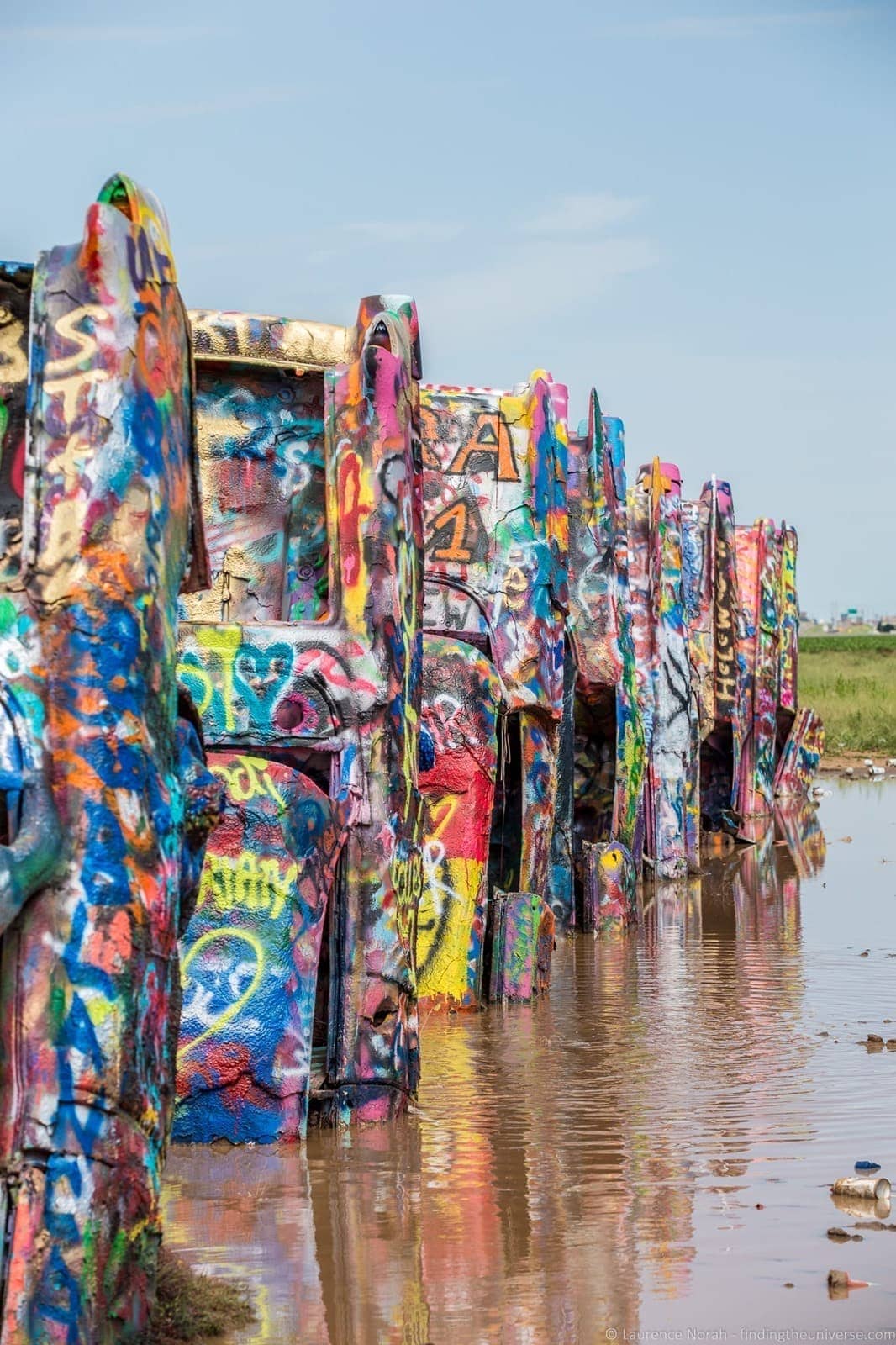
Just west of Amarillo, Cadillac Ranch is probably the most famous roadside attraction on Route 66 in Texas. It’s a public art installation from 1974 featuring ten old Cadillacs buried nose-down in a field. Visitors are encouraged to bring spray paint and add to the artwork, which plenty of people do. The downside is that it’s surrounded by old paint cans. The upside is that it’s ten Cadillacs buried in a field, which is a sight that stays with you.
Slug Bug Ranch
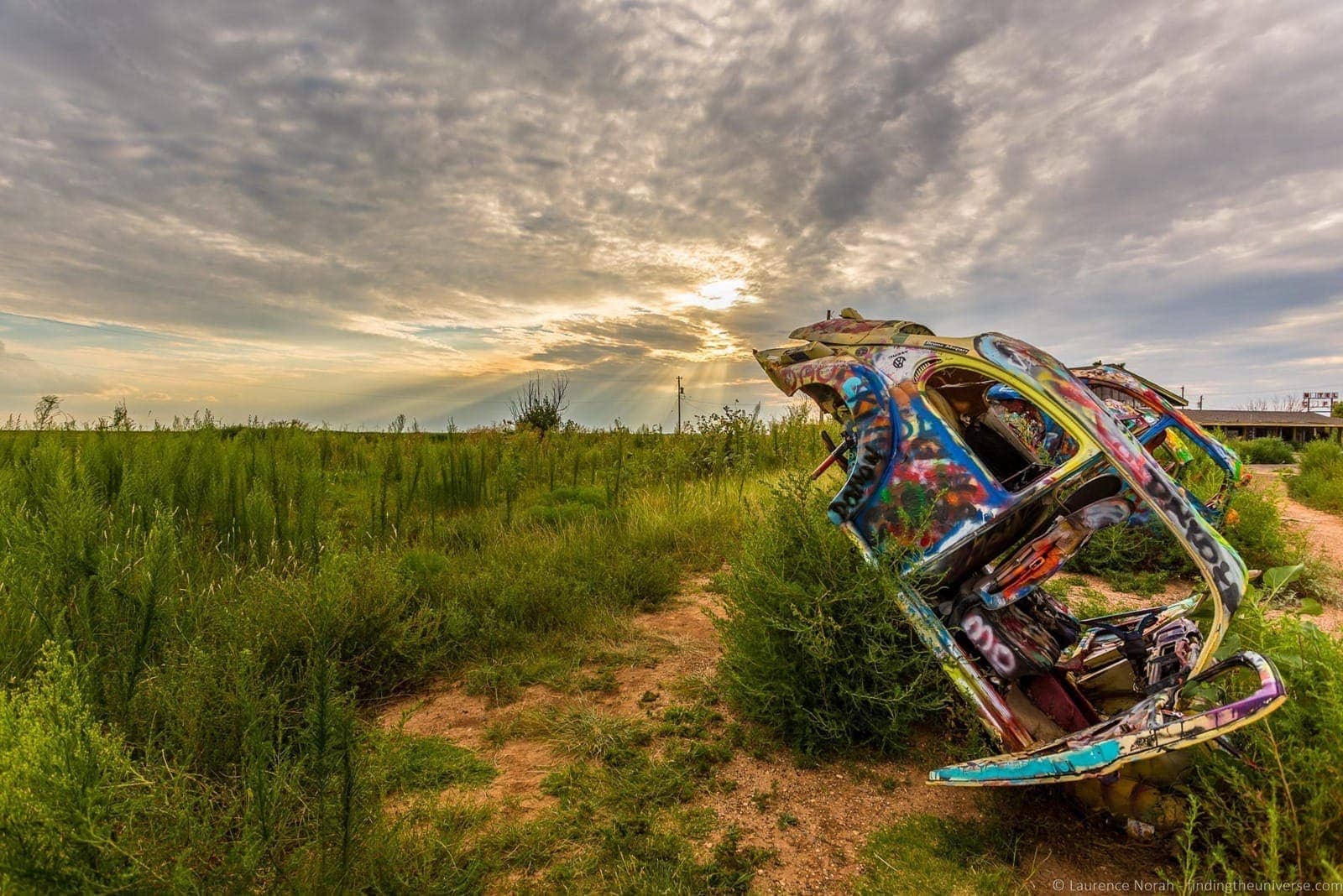
Not far from Cadillac Ranch, the Slug Bug Ranch is the VW Beetle version of Cadillac Ranch. Same concept (cars buried in a field, visitors add spray paint), but with Beetles instead of Cadillacs. It’s a bit more overgrown and less visited, which actually gives it more character.
This is actually before Cadillac Ranch if you’re traveling east to west, but we led with Cadillac Ranch because it’s so iconic.
Vega
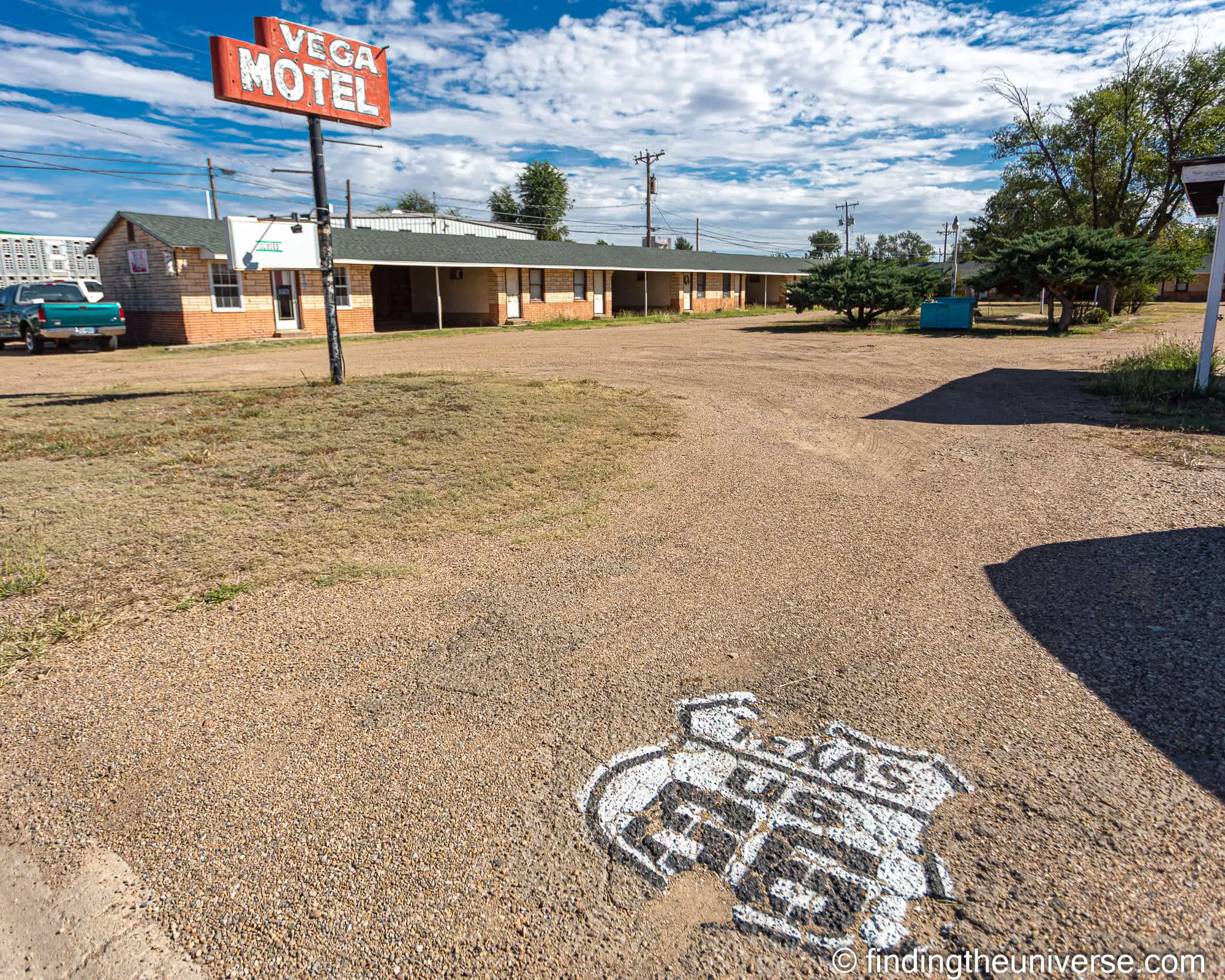
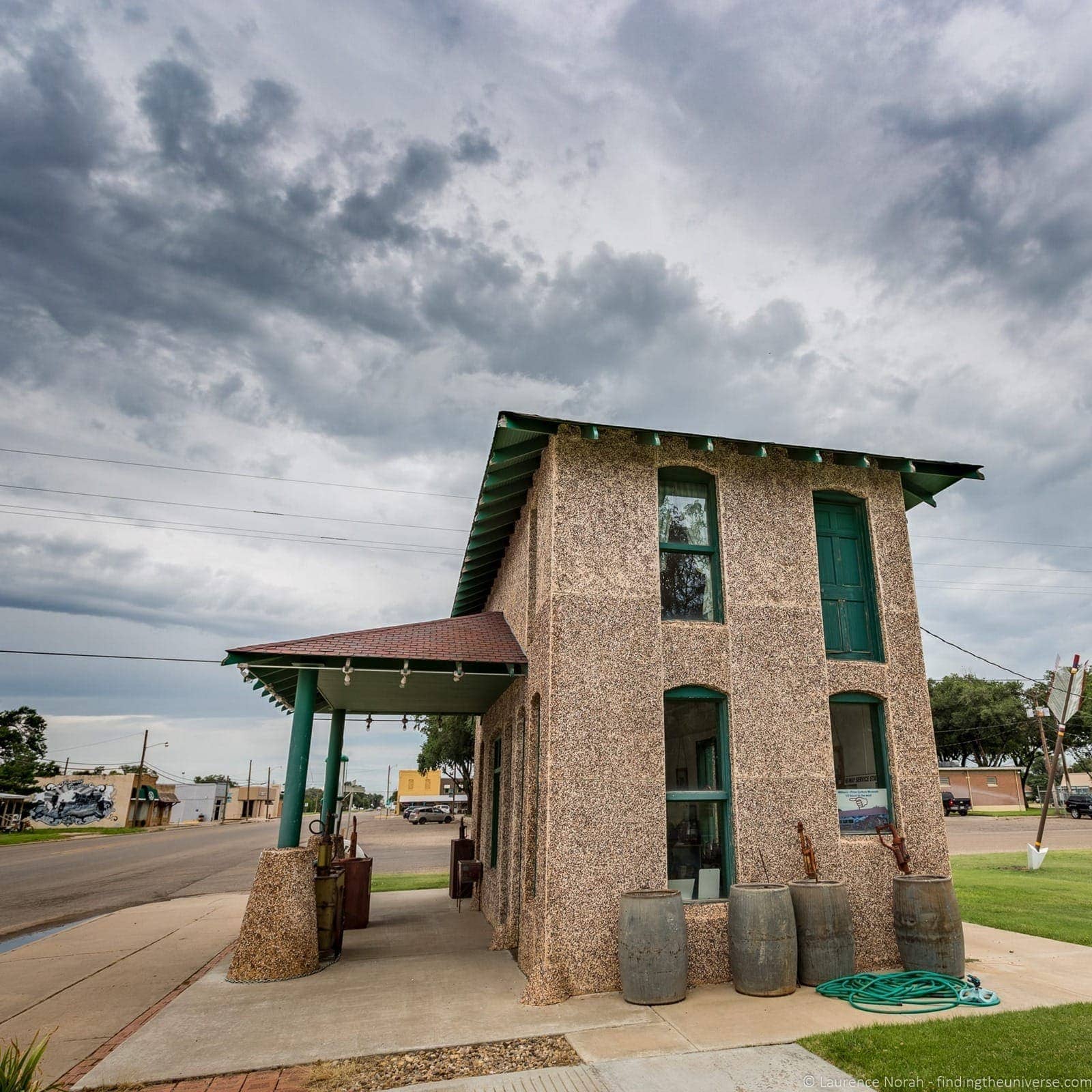
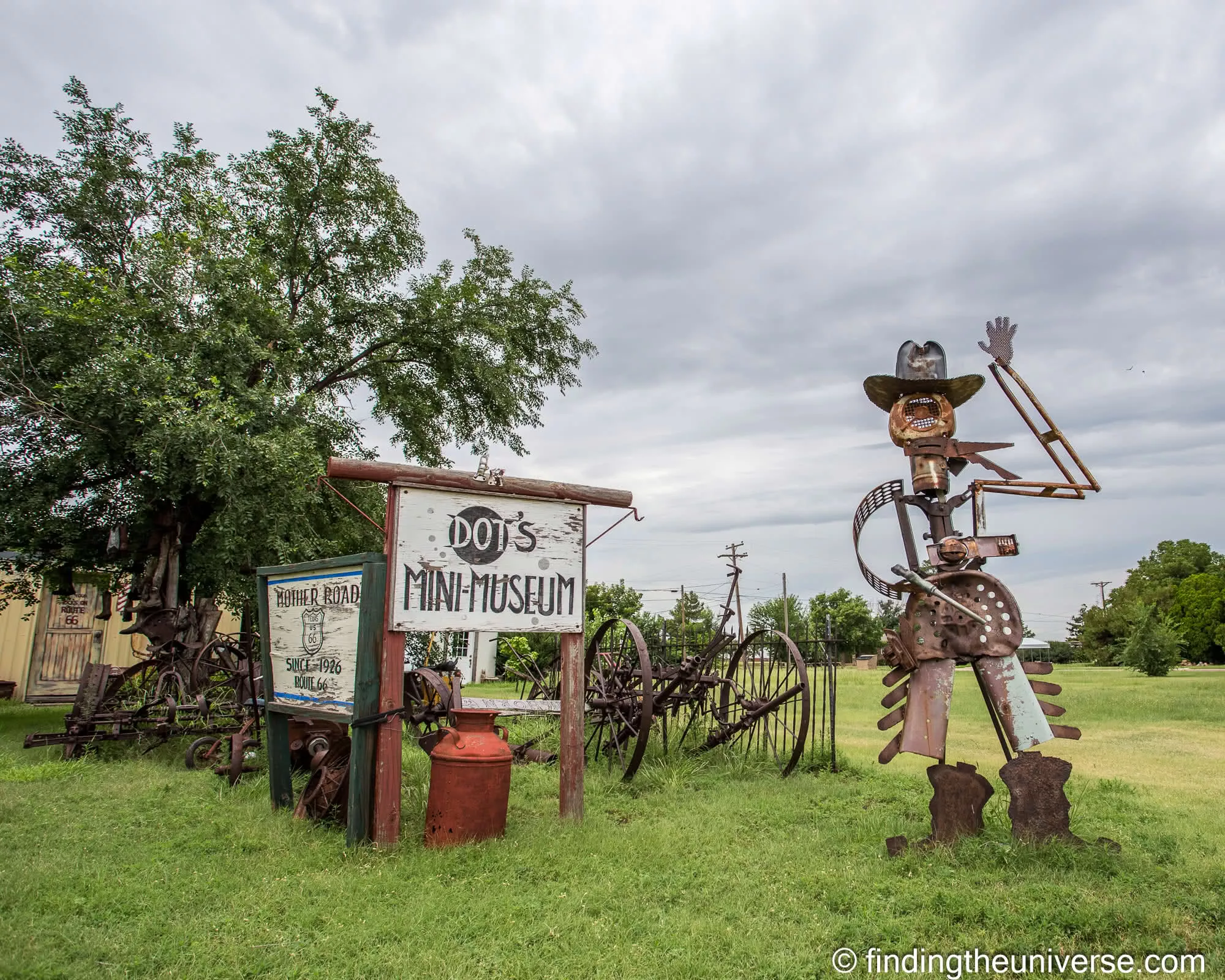
Vega is a small town between Amarillo and Adrian with a classic Route 66 motel, a couple of restored gas stations, and Dot’s Mini Museum. Dot Leavitt started collecting Route 66 memorabilia, cowboy boots, and Avon perfume bottles in the 1940s and displayed them in a small building on her property. She passed away in 2006, but her daughter Betty kept the collection going. It was open when we visited, though these days it’s reported to be open irregularly.
MidPoint Cafe, Adrian
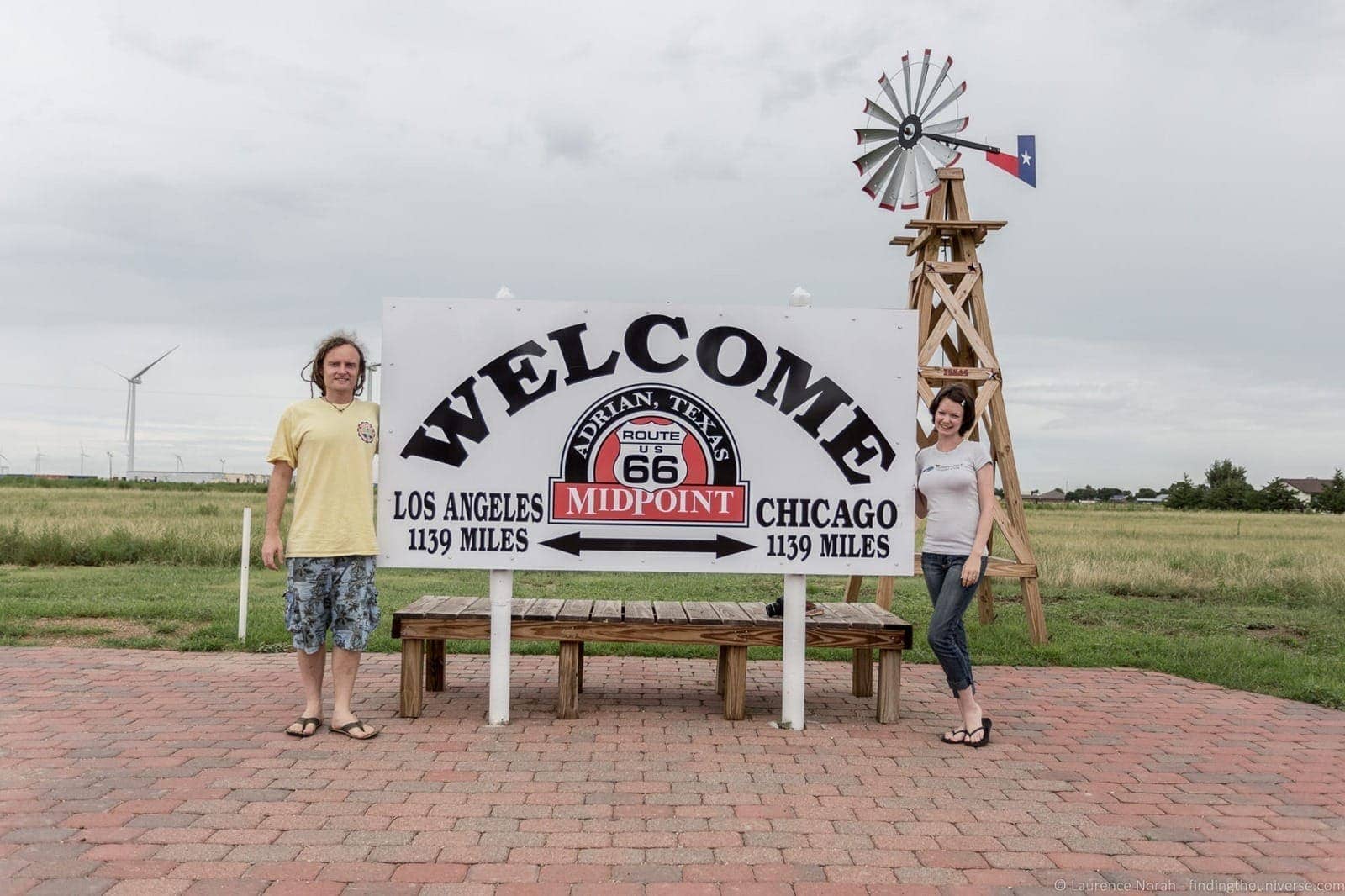
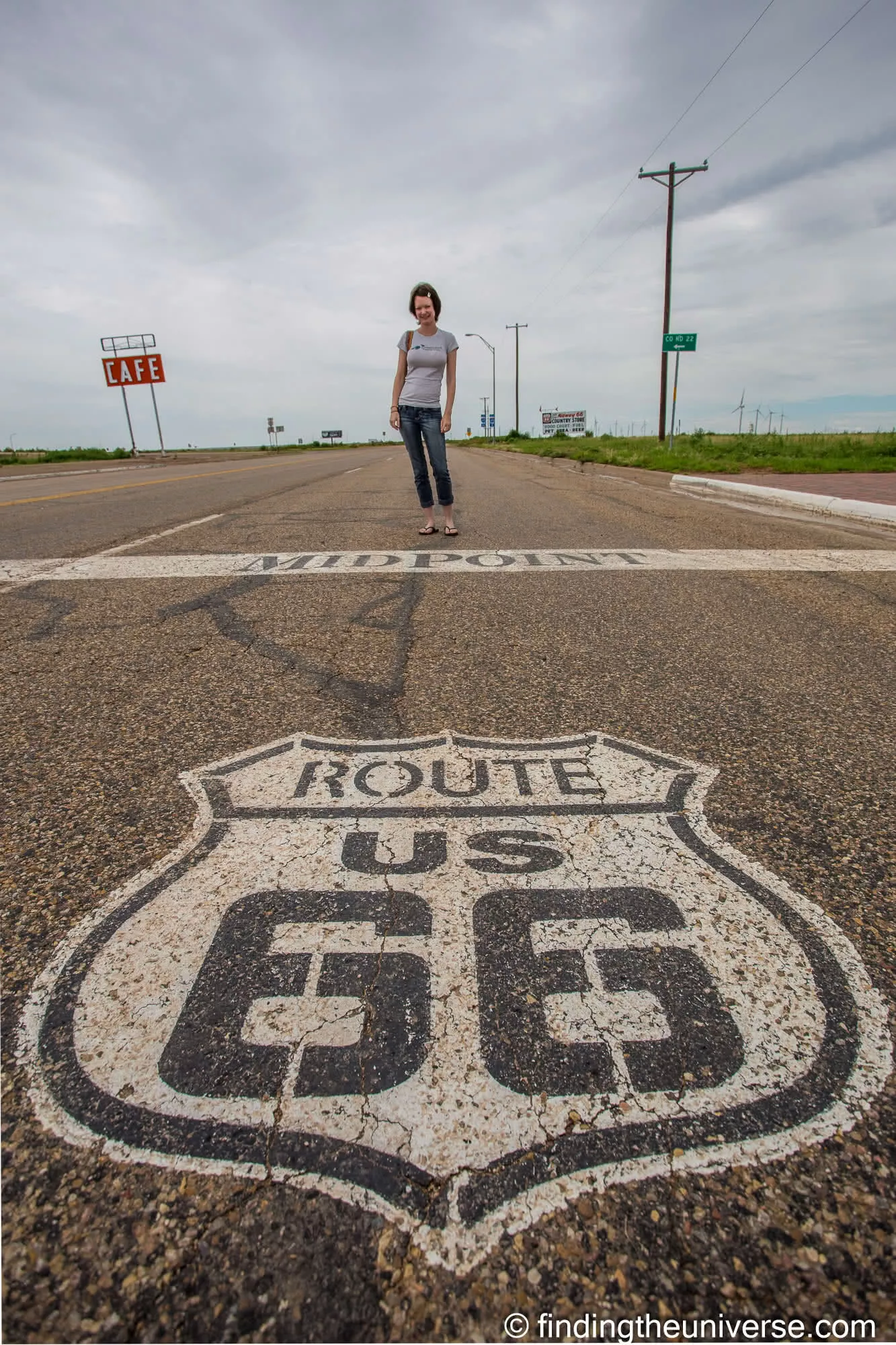
Route 66 has to have a halfway point, and Adrian, Texas is it. The sign reads 1,139 miles to Chicago in one direction and 1,139 miles to LA in the other (though the exact midpoint is disputed, given the many reroutes over the years). There’s a line painted on the road and a sign with the slogan “When you’re here, you’re halfway there.”


The MidPoint Cafe is one of the oldest continuously-operating cafes on Route 66, and it’s become a proper destination in its own right. Worth a stop for photos at minimum, and for food if you’re hungry.
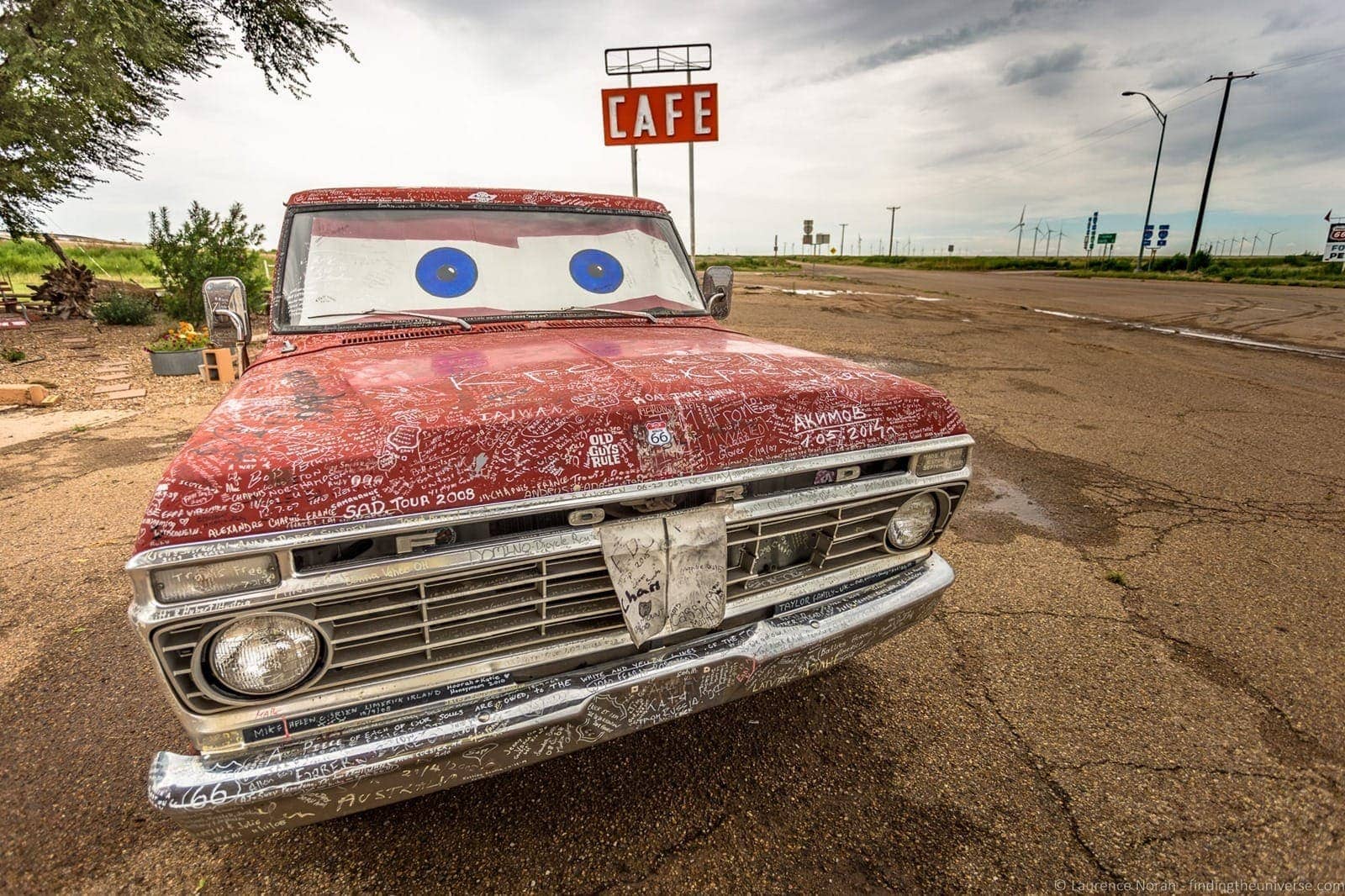
Texas doesn’t escape the Route 66 “Cars” connection. This old Ford is also at the Midpoint Cafe area and had hundreds of scribbled messages from travellers passing through. All you need is something to write with and you can add your own.
Glenrio Ghost Town
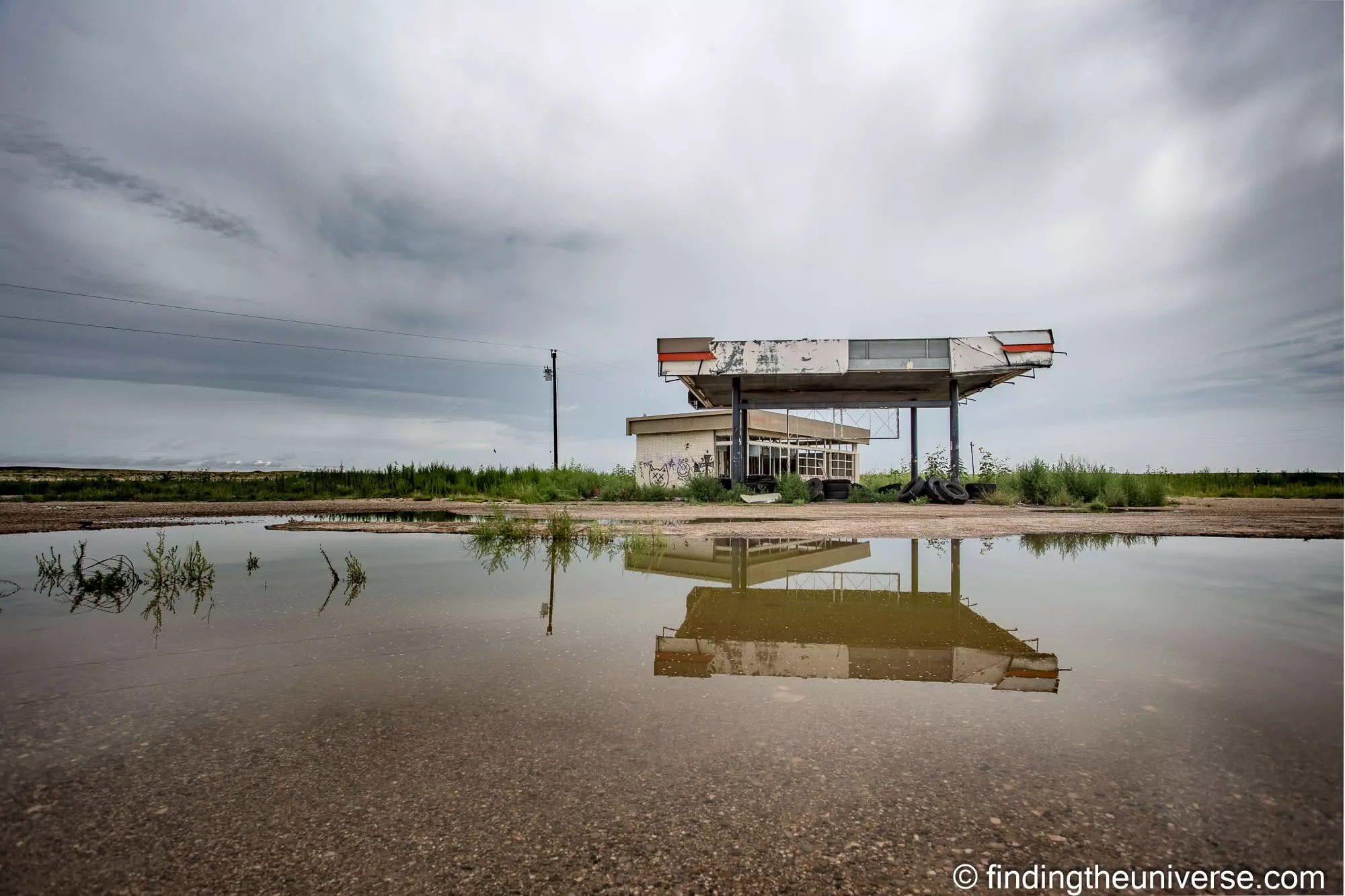
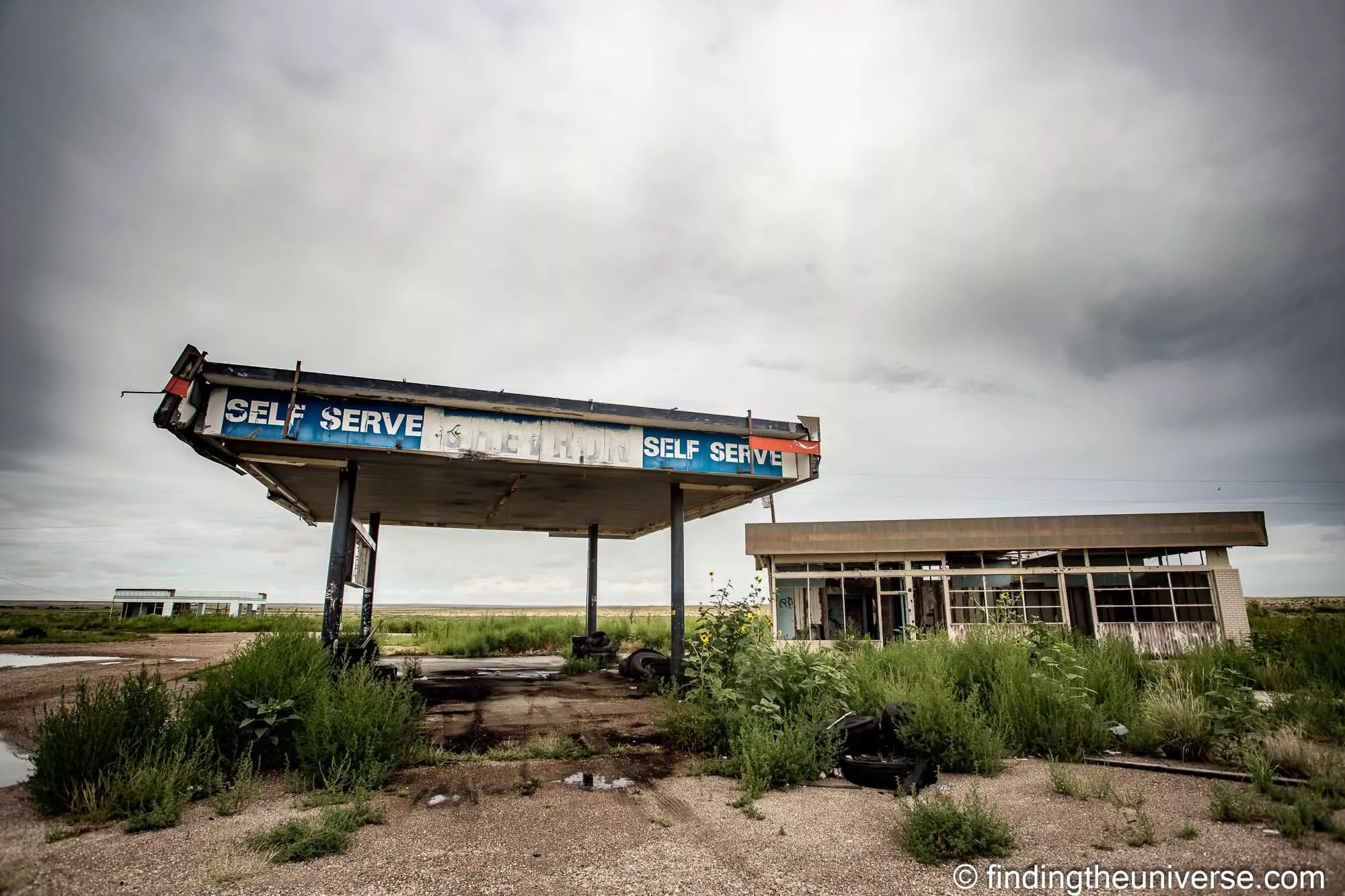
Right at the Texas-New Mexico border, Glenrio is a ghost town that straddles the state line. It thrived when Route 66 ran through it, but the interstate killed the traffic and now it’s a collection of abandoned gas stations and motels slowly being reclaimed by the prairie.
It’s a fitting end (or beginning, depending on your direction) to Route 66 in Texas, and a reminder that not every town along the route survived.
Tips for Planning Your Route 66 Texas Trip
If you’re planning to drive Route 66 through Texas, here are some resources to help.
For the full route, Jess has put together a comprehensive guide to planning a Route 66 trip, plus an incredibly detailed two week day-by-day Route 66 itinerary covering all the sights, route tips, lodging, and places to eat. For accommodation options, see our guide to the best motels and hotels on Route 66. We also have a one-week Route 66 itinerary if you have less time to spare.
We’d also recommend picking up a copy of the EZ66 Guide for Travelers by Jerry McClanahan. It’s now in its 6th edition and is the best way to follow the original Route 66 alignment as closely as possible. We used it the whole way and even met the author.
You’ll need a car for Route 66, and if you need to rent one, we recommend checking Discover Cars, which compares prices across all the major rental companies. If you’re new to driving in the US, have a look at my tips for driving in the US. And for budget planning, we’ve got a guide to travel costs in the USA.
For photos from the rest of our trip, check out our photo highlights from each state: California, Arizona, New Mexico, Oklahoma, Kansas, Missouri, and Illinois.
Route 66 Centennial 2026
Route 66 turns 100 in 2026. The highway was officially designated on November 11, 1926, and centennial celebrations are happening all year across all eight states.
Texas is hosting the Texas Route 66 Festival in Amarillo (ten days of classic car shows, cattle drives, parades, and music on the 6th Street Historic District), plus the Texas Motor Tour, a multi-day group drive across the Panhandle covering all the major stops from Shamrock to Glenrio. The Route 66 Centennial website has the full events calendar across all eight states.
Frequently Asked Questions
How long is Route 66 in Texas?
Route 66 runs for about 178 miles across the Texas Panhandle, from Shamrock in the east (at the Oklahoma border) to Glenrio in the west (at the New Mexico border). The route passes through Amarillo, the only major city on the Texas stretch.
You could drive it in about three hours without stopping, but plan at least a full day to see the highlights properly.
What are the must-see stops on Route 66 in Texas?
The Tower Station and U-Drop Inn in Shamrock (1936 Art Deco landmark), Cadillac Ranch near Amarillo (ten buried Cadillacs), the Big Texan Steak Ranch in Amarillo (72oz steak challenge), and the MidPoint Cafe in Adrian (the halfway point of Route 66). The Devils Rope Museum in McLean and the Amarillo 6th Street Historic District are also worth your time.
Is Route 66 in Texas driveable?
Yes. Most of the Texas Panhandle stretch is well-maintained and easy to drive. A good guidebook like the EZ66 Guide for Travelers will help you stay on the original alignment where it diverges from the interstate. A standard rental car is fine.
Where should I stay on Route 66 in Texas?
Amarillo has the widest range of hotels and is the natural overnight stop on the Texas stretch. Shamrock has a few options if you want to start early the next morning. For the full list of Route 66 accommodation, see our guide to Route 66 era hotels and motels.
What is the Route 66 Centennial?
Route 66 was officially designated on November 11, 1926, making 2026 its 100th anniversary. Texas is hosting centennial events including the Texas Route 66 Festival in Amarillo and the Texas Motor Tour across the Panhandle. The Route 66 Centennial website has the full events calendar.
Bob Lile says
Sorry you didn’t experience Historic Route 66 in Amarillo….it’s SW 6th Avenue…..what a Damned shame.
Laurence Norah says
Hey Bob – we didn’t on this particular trip, but we have returned and visited that stretch in Amarillo since then 🙂
Michael Edward Kelsey says
Great and interesting pictures….but the one with the truck written on in Adrian is a Ford…not a Dodge.
Laurence Norah says
Thank Michael! It even says “FORD” in big letters, so I’m not sure how I got that wrong. I’ve corrected the text, thanks for letting me know!