
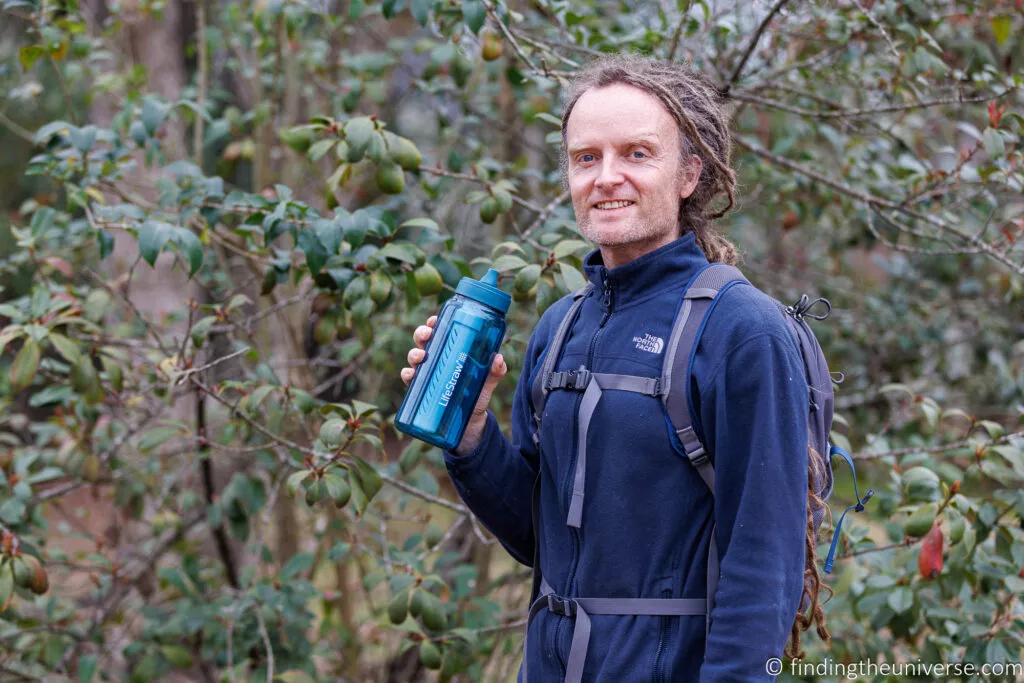
We’ve been travelling and working on the road full time since 2010, and clean drinking water is one of those things you stop taking for granted pretty quickly. Over the years Jess and I have carried a Grayl UltraPress across East Africa, drunk straight from back-country streams through a LifeStraw on hikes like Havasu Falls in Arizona, and boiled more kettles of dodgy-looking tap water than I care to count. Here’s how we actually go about getting safe water wherever we end up.
There are really only three things to sort out.
First, find out whether the tap water where you’re going is safe to drink. If it is, you don’t need to treat anything, so just carry a reusable bottle and fill up. If it isn’t, you’ve got five reliable ways to make water safe: boiling, chemical tablets or drops, a filter, a purifier, or a UV light device. The distinction that matters most is filter versus purifier.
A standard filter removes bacteria and protozoa but not viruses. A purifier also removes viruses, which is what you want across much of the developing world. And if you already know you want a device and just need to pick one, we’ve compared our favourites in our guide to the best water filters for travel.
Table of Contents:
Why safe drinking water matters when you travel
Water is very good at carrying things that aren’t good for us: bacteria, viruses, parasites, and sometimes chemicals and heavy metals. The WHO and UNICEF estimate that around 2.1 billion people, roughly one in four of us, still lack safely managed drinking water at home (their 2024 figure). Contaminated water is linked to cholera, dysentery, hepatitis A, typhoid, giardiasis and more.
For travellers, the most common problem by far is travellers’ diarrhoea, which affects a large share of people visiting places where the water isn’t reliably safe. The cause is usually viruses, bacteria or protozoa in water or food.
It isn’t only about what you drink, either. The same water you’d treat before drinking can catch you out as ice in a cold drink, on a toothbrush, or on salad and fruit rinsed under the tap. It only takes a little contaminated water to ruin a week of your trip.
Is the tap water safe where you’re going?
For most of North America, Western Europe, Japan, Australia and New Zealand, tap water is generally safe to drink. Across much of Asia, the Middle East, Africa and Latin America, it generally isn’t, at least not for visitors. That single question decides whether you need to pack anything at all, so it’s the first thing to nail down.
Here’s how we go about it before a trip:
- Start with an official source. The CDC’s destination pages, your own government’s travel advice and local health authorities are the reliable places to look, and this map gives you a quick global overview.
- Next, work out what the actual risk is. Bacteria and protozoa are a concern almost everywhere, while viruses are mainly a risk where human waste can reach the water supply, which is most of the developing world. What’s in the water decides which method you need.
- From there, let the risk pick the method. A hostel with a stovetop suits boiling, a multi-day hike suits a filter, and developing-world tap water suits a purifier (more on choosing below).
- Finally, pack your method along with a light backup. A strip of chemical tablets weighs almost nothing and covers you if your main method fails.
As a rough regional guide:
| Region | Tap water for visitors | Good to know |
|---|---|---|
| North America (US, Canada) | Generally safe | Some rural wells and older systems are exceptions |
| Western and Northern Europe | Generally safe | Taste varies by area, but it’s safe to drink |
| Japan, South Korea | Generally safe | |
| Australia, New Zealand | Generally safe | |
| Southern and Eastern Europe | Usually safe, but variable | Check locally in rural areas and older towns |
| Latin America (Mexico, Central and South America) | Treat or use sealed bottled | Some cities, like parts of Chile and Costa Rica, have safe tap water |
| Most of Asia (except Japan and South Korea) and the Middle East | Not safe for visitors | Treat, or stick to sealed bottled water |
| Most of Africa | Not safe for visitors | Treat, or stick to sealed bottled water |
| Many island nations | Variable | Check locally before you drink |
These are rules of thumb, not a map. Tap safety varies within countries, it changes over time, and even where locals drink the water happily your stomach may disagree with the unfamiliar microbes. Always check the current CDC advice for your specific destination, and ask locally when you get there.
If the tap water is safe, you’re done! You don’t need any treatment, so just bring a reusable water bottle and refill it, rather than paying for and getting through single-use plastic.
Filter or purifier? The difference that matters most
A water filter removes bacteria and protozoa but not viruses. A water purifier also removes viruses. Everything else about choosing your kit is detail; this is the decision that keeps you well.
This is really about pore size. A standard travel filter has pores of around 0.1 to 0.2 microns, which is fine enough to trap bacteria and protozoa such as Giardia and Cryptosporidium, but viruses are far smaller and slip straight through. To catch viruses, which are far smaller, you need a much finer barrier, with pores down around 0.01 microns, or a different approach entirely such as chemical treatment or UV. The CDC’s water disinfection guidance sets out which methods handle what. Devices that clear this bar are sold as purifiers.
So a filter is perfect for a hike in the Rockies, where viruses aren’t the concern, but it isn’t enough for tap water in East Africa. If you’ll be somewhere viruses are a real risk, you want a purifier, a UV device, or chlorine dioxide. This is the concept; for which specific devices are filters and which are purifiers, and which we’d buy, see our guide to the best water filters for travel.
The five ways to treat water, compared
There are five methods to know about, and each kills a different set of things at a different speed.
One caveat first. We’re travellers, not doctors or water engineers, and drinking badly treated water can make you seriously ill. Treat this as a practical starting point from our own trips, check the current CDC or local advice for your destination, and get medical guidance if you’re unsure.
| Method | Viruses | Bacteria | Protozoa (incl. Cryptosporidium) | Chemicals & metals | Time to safe water | Best for |
|---|---|---|---|---|---|---|
| Boiling | Yes | Yes | Yes | No | 1 minute rolling boil (3 minutes above 2,000m), plus cooling | Anywhere with a heat source: hostels, apartments, camping |
| Chlorine dioxide (tablets or drops) | Yes | Yes | Yes, but up to 4 hours for Cryptosporidium | No | 15 to 30 minutes; up to 4 hours for Cryptosporidium | A lightweight all-rounder and the best chemical backup |
| Iodine (tablets or drops) | Yes | Yes | No | No | About 30 minutes | Short trips only; not for pregnancy, thyroid conditions or iodine allergy |
| Chlorine / NaDCC (tablets) | Yes | Yes | Giardia yes, Cryptosporidium no | No | About 30 minutes | A light backup where Cryptosporidium isn’t the main worry |
| Microfilter (LifeStraw, Sawyer style) | No | Yes | Yes | Some, with a carbon stage | Immediate, filter as you drink or pump | Back-country US and Europe, where viruses aren’t the concern |
| Purifier (virus-rated, Grayl style) | Yes | Yes | Yes | Some, with a carbon stage | Immediate to a few minutes | Developing-world tap water, where viruses are a risk |
| UV light (SteriPen style) | Yes | Yes | Yes | No | 1 to 3 minutes per litre | Clear tap water, where you have power or batteries |
The column to watch is Cryptosporidium. It’s a chlorine-resistant protozoan, so ordinary chlorine and iodine tablets don’t reliably kill it, and it’s the reason the chemical rows above split the way they do. Boiling, chlorine dioxide, UV and a good filter all deal with it; iodine and standard chlorine tablets don’t. The CDC has a helpful comparison chart covering the same ground, and a fuller guide to water disinfection.
Boiling
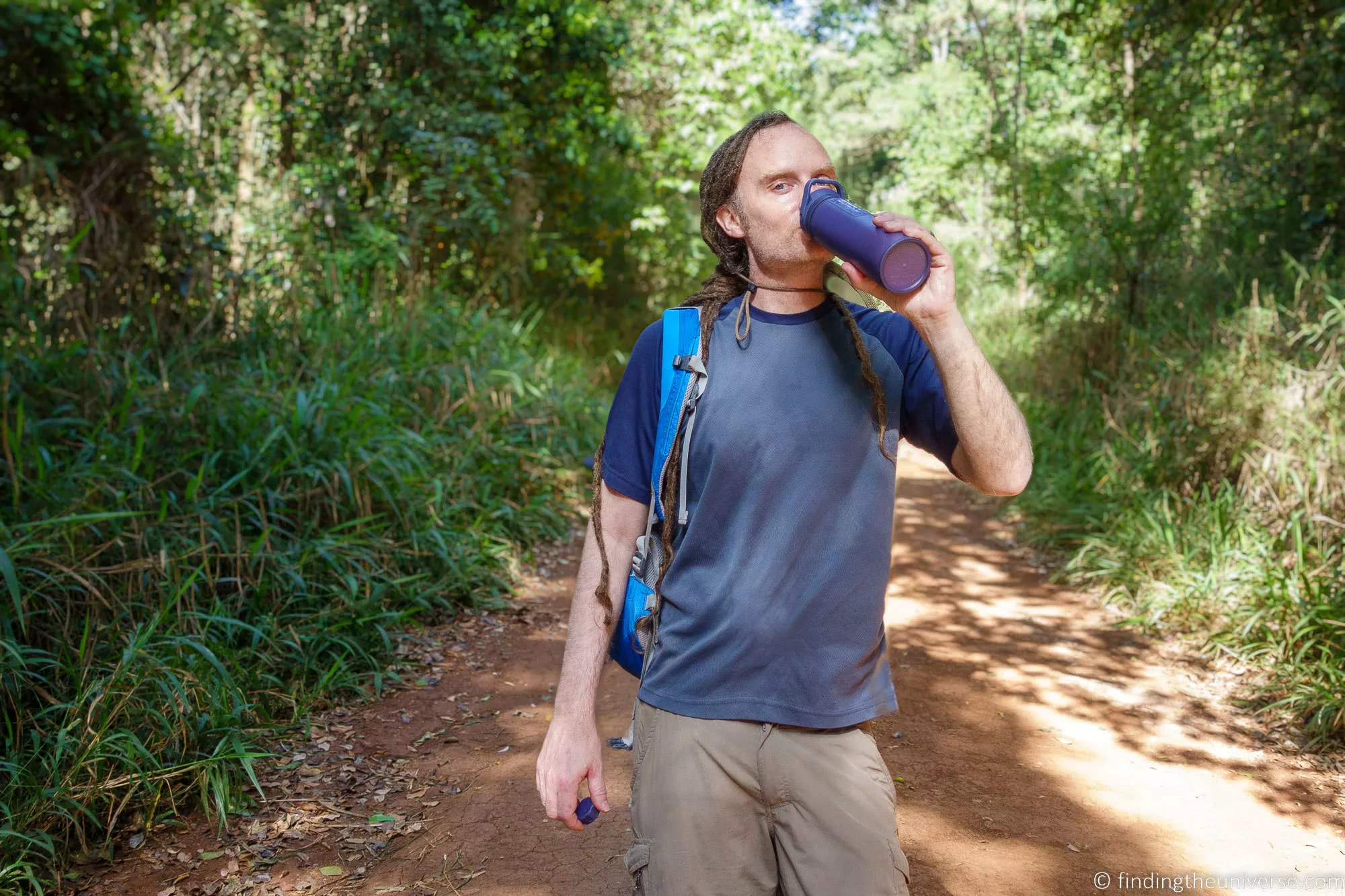
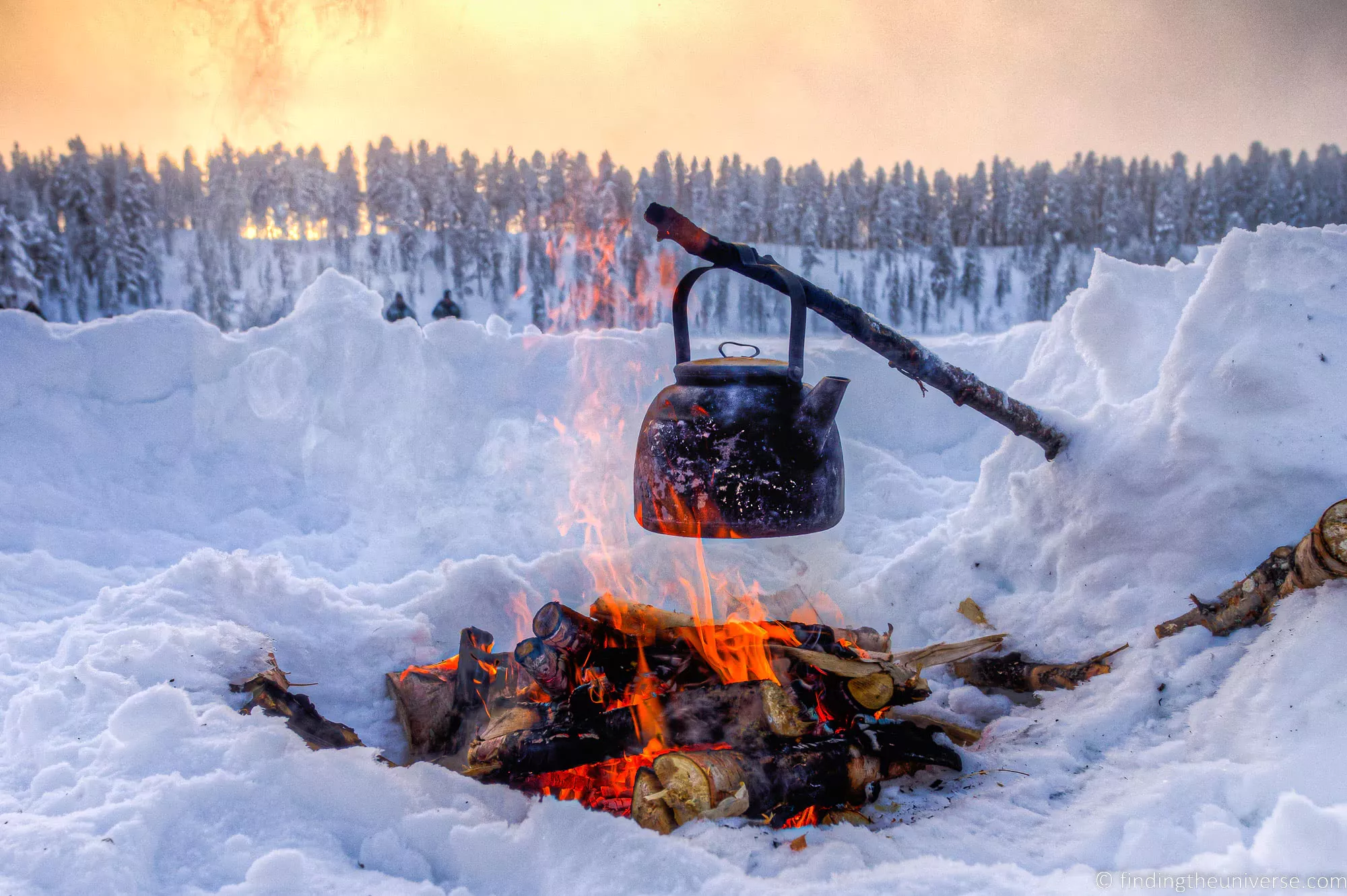
Boiling is the most reliable way to kill pathogens, and it’s the CDC’s first recommendation wherever you can do it. It kills viruses, bacteria and protozoa, and there’s very little chance of getting it wrong.
Bring the water to a rolling boil for one minute at sea level, or three minutes above about 2,000m, then let it cool. That’s it. What boiling won’t do is remove chemicals, heavy metals, sediment or a bad taste, so it’s a disinfection method, not a clean-up-dirty-water method.
The practical snag is that you need a heat source and a vessel, and you need to hold a rolling boil for long enough. Most electric kettles switch off the moment they reach boiling point, which isn’t long enough to be sure, so they’re not ideal on their own. Some electric kettles do have a dedicated purification setting that holds the boil for three minutes. A stovetop kettle sidesteps the problem entirely, because you decide when it comes off the heat. Boiling works brilliantly in a hostel kitchen, an apartment rental or on a camping trip where you already carry a stove. It’s much less practical for a day of sightseeing, when you won’t want to lug a burner around, and you have to factor in cooling time before you can drink.
Chemical tablets and drops
Chemical treatment is the lightest and cheapest way to make water safe, which makes it the best backup to carry. You add a tablet or a few drops, wait, and drink. But not all the chemistries kill the same things, so it helps to know which is which.
Chlorine dioxide is the one to reach for. It kills bacteria, viruses and, given enough time, Cryptosporidium, which the others can’t manage. Bacteria and viruses clear in 15 to 30 minutes; crypto needs up to four hours of contact time. It also adds the least taste and is the safest of the three for longer use. Aquamira drops and Katadyn Micropur MP1 tablets both use it.
Iodine kills bacteria and viruses but does not reliably kill Cryptosporidium. It gives the water a noticeable taste (many kits include a neutralising tablet to help), and it comes with real health limits: it’s only for short-term use, up to a few weeks, and it shouldn’t be used by pregnant women, anyone with an unstable thyroid condition, or anyone with an iodine allergy. Potable Aqua is the best-known brand here, and one point often gets muddled: their classic germicidal tablets are iodine, and they sell a separate chlorine dioxide product too, so check which one you’re actually buying, because they don’t kill the same things.
Chlorine and NaDCC tablets, such as Aquatabs (MSR sell the same chemistry rebadged), clear bacteria, viruses and Giardia in about 30 minutes, but like iodine they don’t reliably kill Cryptosporidium, because it’s chlorine-resistant.
Whichever you choose, the same two rules apply. Chemicals don’t work well in cloudy water, so filter or pre-strain it first, and read the manufacturer’s instructions for the doses and contact times. A pack of these lives in our first-aid kit on every trip, even when we’re mainly relying on something else.
Water filters
A water filter removes bacteria and protozoa, including Giardia and Cryptosporidium, but it will not remove viruses. Many also include a carbon stage that pulls out some chemicals and improves the taste, and unlike chemicals or UV they work on cloudy water and give you clean water instantly.
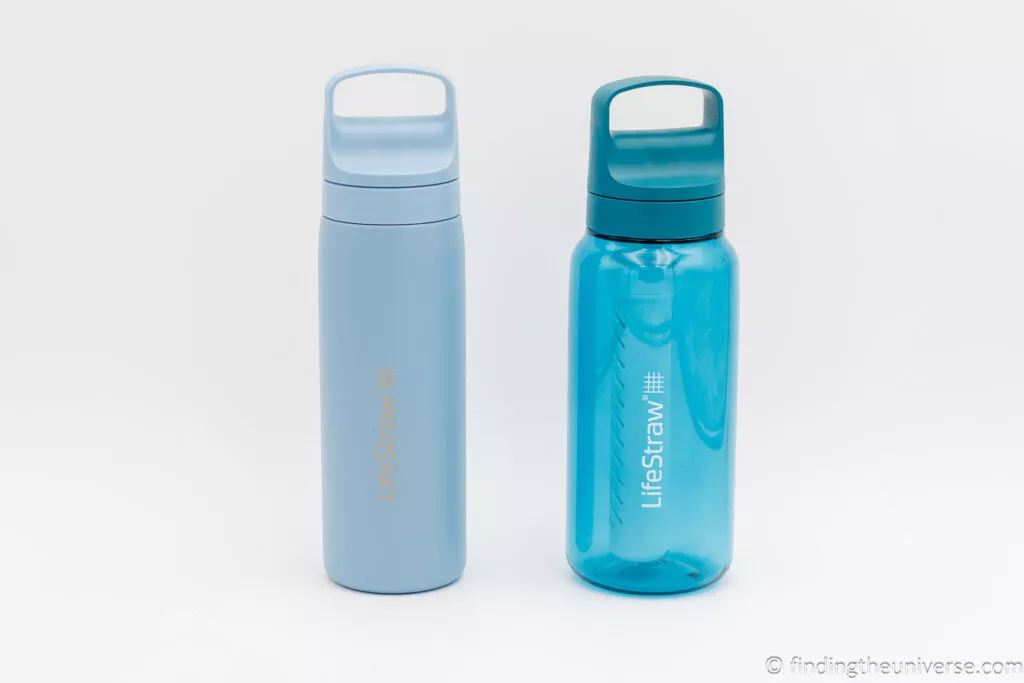
That makes a filter a great choice for back-country hiking in the US, Canada or Western Europe, where viruses aren’t the main risk. Popular travel filters like the LifeStraw Go, the Sawyer Bottle and the Katadyn BeFree are bottle-and-filter systems you drink through. We’ve used a LifeStraw Go for years on hikes where there’s no treated tap water, including the multi-day trek down to Havasu Falls.
Water purifiers
A water purifier does everything a filter does and also removes viruses, thanks to a much finer mesh or an extra treatment stage. That makes it the safest single device for travel almost anywhere in the world, including places where the tap water carries a virus risk.
Because the mesh is finer, purifiers are usually a touch slower than filters and take a bit more effort to push the water through, but they’re still quite quick, treating roughly half a litre to three litres a minute. The Grayl UltraPress, which works like a French press, is the one we carry; other pump-style purifiers exist too.
UV light
UV devices kill bacteria, viruses and protozoa, including Cryptosporidium, by scrambling their DNA so they can’t reproduce or harm you. They’re light, quick, treating a litre in a minute or two, and simple to use.
The two catches are clarity and power. UV only works in clear water, because cloudy water shields the microbes from the light, so you’ll need to pre-filter anything murky. And it runs on batteries, which fade in the cold and can leave you stuck. UV is at its best for treating clear tap water in places where you’re unsure of the supply. The main brand is SteriPen, now owned by Katadyn; you’ll find UV devices in our filter guide alongside the filters and purifiers.
What about bottled water?
Factory-sealed bottled water is generally safe, and in some situations it’s simply the only realistic option, for instance where there’s no water source at all, or where the water is contaminated with chemicals or metals that ordinary treatment can’t remove. That last case is exactly when the CDC recommends sticking to sealed bottled water, and it’s the reason we always keep some as a fallback.
Two things to watch. Check that the seal is fully intact, because refilling used bottles and faking the seal with a dab of glue is a known scam in some places, and a carbonated bottle is a useful tell since the fizz is hard to counterfeit. The downsides are the cost, which adds up fast over a long trip, and the plastic: most of it isn’t recycled and ends up in landfill or the ocean. That’s exactly why we treat our own water wherever we can.
How to choose the right method for your trip
The right method is the one that matches the water you’ll actually face. A few questions sort it out quickly:
- What’s in the water? Where viruses are a risk (most developing-world destinations), you need a purifier, UV, chlorine dioxide or boiling. For back-country US or European hiking, a filter is plenty.
- Is the water clear or cloudy? UV and chemicals struggle with cloudy or dirty water. For murky sources, boil or filter, or filter first and then treat, which is a solid belt-and-braces approach.
- How cold will it get? Water left inside a filter can freeze and crack it, and batteries fade in the cold. Check the temperature rating if you’re heading somewhere freezing.
- How much water, how fast? Chemicals are light but slow, with a 30-minute to four-hour wait. Filters and purifiers give you water on demand. Boiling scales with the size of your pot.
For a good standard to look for on any filter or purifier, check whether it meets the NSF P231 protocol, a tough test for microbiological water purifiers, and whether the maker can show an independent lab report to prove it. Some products also meet EPA guidelines for microbiological purifiers. Whatever you buy, choose a maker that publishes its test results.
What we’ve learned treating water on the road
The biggest lesson we’ve learned is that a filter and a purifier are not interchangeable, and assuming otherwise is the classic mistake. Our LifeStraw Go had served us well on hikes in the US, so when we started planning a long trip across East Africa, the instinct was to just pack that. Then we did the reading, and remembered our 0.2-micron filter does nothing about viruses, which were a real concern where we were going.
That’s why we switched to the Grayl UltraPress for East Africa. Most of our water there came from taps, so it looked clear enough, but we had no idea what it was carrying, and a purifier that handled viruses as well as everything else was the only thing that let us stop buying bottled water and relax about it. It’s a slightly slower press than a straw filter, but for peace of mind across a couple of months of travel, that was an easy trade.
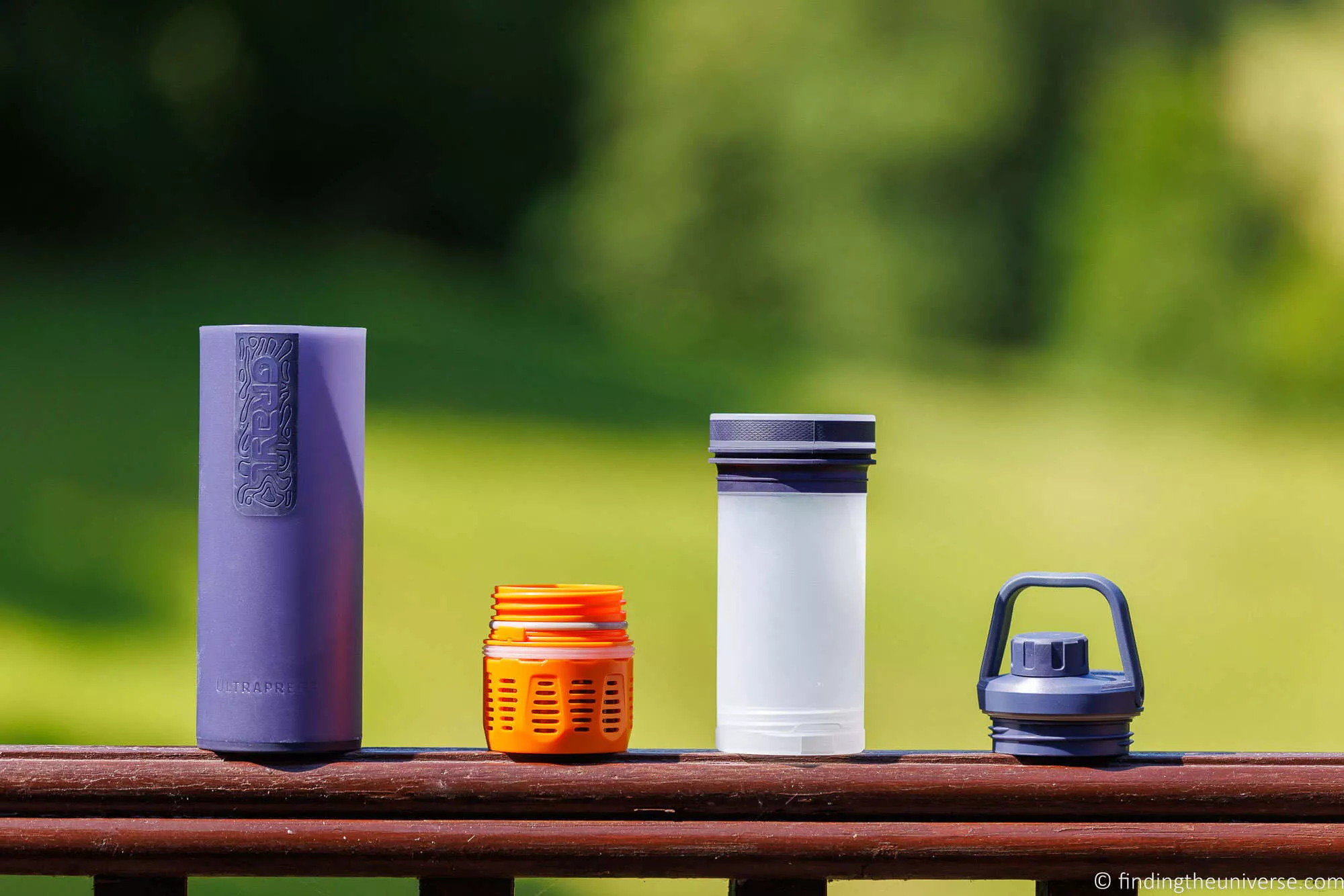
The other habit we’ve stuck to is never relying on a single point of failure. Batteries die, bulbs break, and filters clog at the worst possible moment, of course. Whatever our main method is, a strip of chlorine dioxide tablets goes in the bag as backup, because they weigh nothing and last for years. If you take one thing from all this, let it be that: pick the method that matches your destination’s real risk, and carry a light backup for when it lets you down.
Where to buy a travel water filter or purifier
This guide is about the methods and the choice between them. For the devices themselves, the specific filters, purifiers and UV units we rate, how they compare on capacity, weight and price, and which we’d buy for which kind of trip, we keep all of that in one place: our guide to the best water filters for travel. Sort out your method here, then head there to pick the kit.
Useful resources
We’ve linked to trusted sources throughout this guide. Here are the most useful ones gathered in one place, plus a few extras worth a read:
- The WHO’s drinking water fact sheet, for the global picture on water access.
- The CDC’s food and water safety page, a great starting point for travellers, its comparison chart of treatment options, and its water disinfection guide.
- Check the water safety for your destination on the CDC’s destination pages, and browse the wider CDC drinking water resources.
- For travellers’ diarrhoea, the UK’s TravelHealthPro fact sheet and this JAMA literature review.
Frequently asked questions
Is it safe to drink tap water when travelling?
It depends entirely on where you’re going, and it’s the first thing to check. Across North America, Western Europe, Japan, Australia and New Zealand, tap water is generally safe to drink.
Across much of Asia, the Middle East, Africa and Latin America, it generally isn’t safe for visitors. Check the CDC’s destination pages and local advice before you travel, and when in doubt, treat the water or drink sealed bottled water.
What’s the difference between a water filter and a water purifier?
A filter removes bacteria and protozoa, including Giardia and Cryptosporidium, but it doesn’t remove viruses. A purifier does the same job and also removes viruses.
That difference matters because viruses are a real risk in much of the developing world. A filter that’s perfect for a hike in Colorado may not be enough for tap water in East Africa.
Do I need a purifier that removes viruses?
You need one if you’ll be drinking water where human waste can reach the supply, which covers most low- and middle-income destinations. For back-country hiking in the US, Canada or Western Europe, viruses are rarely the concern and a standard filter is usually fine.
If you want one device that covers you everywhere, choose a purifier.
Does boiling water make it safe to drink?
Yes. Boiling kills viruses, bacteria and protozoa, and it’s the CDC’s first recommendation wherever you can do it. Bring the water to a rolling boil for one minute, or three minutes above about 2,000m, then let it cool.
Boiling won’t remove chemicals, heavy metals or a bad taste, but for killing the things that make you ill, it works every time.
How long do water purification tablets take to work?
Most tablets need about 30 minutes, though it varies with the chemistry and what you’re trying to kill. Chlorine dioxide clears bacteria and viruses in 15 to 30 minutes but needs up to four hours to deal with Cryptosporidium.
That waiting time is the main downside of tablets, so plan ahead and treat your water before you’re thirsty.
Do purification tablets kill Cryptosporidium?
Only chlorine dioxide tablets reliably kill Cryptosporidium, and even those need up to four hours of contact time. Iodine and ordinary chlorine or NaDCC tablets, like Aquatabs, don’t reliably kill it, because Cryptosporidium is resistant to those chemicals.
If crypto is a concern, use chlorine dioxide, boil the water, use UV, or pre-filter it with a good microfilter.
Are iodine water purification tablets safe for everyone?
No. Iodine is fine for short-term use for most people, but it shouldn’t be used by pregnant women, anyone with an unstable thyroid condition, or anyone with an iodine allergy. It’s also not meant for long-term use, so limit it to a few weeks.
If any of that applies to you, use chlorine dioxide tablets instead.
Is bottled water safe when travelling?
Factory-sealed bottled water is generally safe, and in some places it’s the most practical option. Check that the seal is fully intact, since refilled bottles with faked seals are a known scam, and a carbonated bottle is a good sign because the fizz is hard to fake.
The downsides are the cost and the plastic waste, which is why we treat our own water wherever we can.
Can a travel filter make seawater drinkable?
No. Travel filters and purifiers remove pathogens, but they don’t remove salt, so they can’t turn seawater into drinking water. They also won’t remove fuel, toxic chemicals or radioactive contamination.
In those situations, sealed bottled water is the only safe option.
Does UV light purification actually work?
Yes, in clear water. A UV device scrambles the DNA of viruses, bacteria and protozoa, including Cryptosporidium, so they can’t make you ill. The limitation is that it only works in clear water, because cloudy water shields the microbes from the light, and it needs power or batteries.
Pre-filter cloudy water first, and carry a backup in case the batteries or bulb fail.
What’s the best backup water treatment method?
Chemical tablets, specifically chlorine dioxide ones. They’re light, cheap, last for years, and work on their own or alongside a filter.
We always pack a strip of tablets even when we’re relying on a purifier, because a single point of failure isn’t something you want with your drinking water. They belong in every hiker’s and traveller’s kit.
What water treatment do you actually travel with?
For most trips we carry a LifeStraw or a Grayl, depending on the virus risk, plus a pack of chlorine dioxide tablets as a backup. In the US back-country we use a LifeStraw Go, which is a filter.
For places where viruses are a real concern, like our travels across East Africa, we switch to the Grayl UltraPress, which is a purifier. We’ve written up the full comparison in our guide to the best water filters for travel.
Further reading
That’s how we get safe drinking water on the road. Before you go, here’s some more of our content you might find useful:
- Our guide to the best water filters for travel, with our tested device picks.
- If you brew your own coffee on the road, we travel with an AeroPress, and we’ve reviewed our favourite portable coffee makers.
- Our packing list for Havasu Falls and our guide to the Havasu Falls hike, where we put our LifeStraw to work.
- A guide to doing laundry when travelling, and our picks for the best travel shoes for men and the best travel shoes for women.
- How to get online when you travel, including the best mobile hotspots and the best travel routers.
As always, we’d love to hear your thoughts, comments and questions on this guide! Just pop them in the comments below and we’ll get back to you as soon as we can.
John & Charlotte says
hello and thanks for this amazing article. can I ask your advice please about kenya travel? you say you treated some of the water when travelling in east africa, did this include kenya? what would you recommend as we are going to be there (2 of us) for about 3 weeks, some in hotels but some out in the far north (rural parts) doing volunteer work where can be hard to avoid relying on bottled water but we want to avoid single-use plastic when safe and possible. should we just rely on boiling or would filtering also be a good idea? travelling from uk (manchester) so need something we could buy locally here or online in next month. thanks!
Laurence Norah says
Hi John & Charlotte,
It’s my pleasure. So yes, we did travel in Kenya as part of that trip in East Africa and yes, we did treat our water. We primarily did that with the Grayl UltraPress on that trip.
We’re actually on a trip in East Africa at the moment again (Uganda / Rwanda) and are again travelling with the Grayl. However, we have also been boiling water. If we are staying somewhere where we can boil water for at least a minute (so using a stovetop rather than a kettle), I find it a lot easier to boil water as I can do batches. Any filtration system is a bit slow and takes a bit of effort in most cases, so if I have the opportunity to boil it I will. The downside of boiling is that whilst it kills things, it doesn’t remove any taste or filter out anything that can discolor the water. We’ve not found that to be a big issue, but as you are going more remote in rural areas it might be an issue.
So I would probably pick one of the filter options in the list, the LifeSaver, the Survivor or the Grayl. I do like the Grayl but it has a limited filtering capacity compared to the other options, so do keep that in mind when purchasing and consider the cost of spare filters.
I hope this helps, let me know if I can offer any more advice! Have an awesome time in Kenya as well!
Laurence
Michaël says
Hello,
Great post, with many useful information, links, tables, etc.!
My plan is to go cycling and wildlife/birdwatching through everywhere in South-East Asia for more than a year, in Indo-China, Phillipines, Indonesia, etc. The dream is to end up in Papua New-Guinea.
While cycling in hot weather I drink about 10 liters of water a day. I don’t want to, and in many remote places I wouldn’t even be able to, buy water bottles for all of that. In Europe I can use my loyal Sawyer Squeeze filter and filter unlimited amounts of water everywhere, both through a big gravity system or squeezing by hand.
But unfortuntely, the Sawyer Squeeze doesn’t filter viruses out of the water, so it’s only a partial solution for South-East Asia. I don’t know whether it’s possible to buy chlorine dioxide tablets/ liquid in many places in South-East Asia and I don’t want to lug around too much. I also don’t like the chemical taste and don’t know whether it’s healthy to use in large quantities for extended periods of time. I could buy a Steripen, but you can treat only one liter of water at a time, and you need to bring multiple spare batteries and possibly another light bulb.
I found two options. First, an electricied purifier like the Aqua Research H2gO Global or Prime or the Potable Aqua Pure. Very interesting, but somehow not used a lot by outdoor people (unknown, bad marketing?). Second, to have one of the filter/purifier combinations that also get rid of viruses. But those filters are mostly inside (smaller) bottles and often have limited lifetimes (definitely compared to the unlimited lifetime of the Sawyer Squeeze). For a water purify filter, it would be important for me to both be able to use it with a larger bag (as a gravitation system) or with a smaller bag (squeezing, on the go) and to have long lifetimes (so, I don’t have to lug different filters around). I found the LifeStraw Mission, but it seems only for a large gravitation system and the flow rates are very slow (six minutes per liter). There’s also the Survivor Filter Pro, which is a pump system, so it might be time-consuming and less ideal for large amounts of water (but there’s also an electric version…).
You mentioned the ‘Sawyer Pro Filter’ (or did you mean the Survivor Filter Pro?) with a large lifetime, but I cannot find it on the Sawyer website or anywhere else on the internet. I can only find the Sawyer S3 Select Water Purifier, which has only 400 uses and is not able to purify large amounts at the same time.
Thanks for any suggestions!
Michaël
Laurence Norah says
Hi Michael!
Thanks for your comment. First, you are correct, that was a typo and it should have been Survivor Filter Pro. Apologies for that!
So the main issue that you will definitely encounter with most filter system for viruses is that they are slow. The pressure required to get the water through such a fine filter is quite high, so flow rates end up being slow. This is still the same with the Survivor, one of the main negative things people say about it is that it takes a while to filter the water. Other than that though it is a very portable and handy bit of kit that with proper care should last for a lot of water. The electric version might be a good option, most user reviews are positive and suggest it can do around half a litre in a minute.
I am not familiar with the two products you mention, although looking at them it seems they fall into the chemical disinfection category. It looks on paper like they would be a good option, as long as you have the time for the purification to work (normally 4 hours for viruses). Being chemical it’s also possible they would affect the taste but not having tried them I’m not sure.
Another option you might consider is the LifeSaver Bottle. It’s a bottle with a built in pump which can do viruses as well as everything else, and it can do up to 4,000 litres of water, which should cover your whole trip. I mention that one in my list of water filters here.
Have a great trip!
Laurence
Michaël says
Hey, thanks a lot for the reply! I’m still researching and hesitating a lot. I’ll have to make a decision soon, since I’ll be leaving Georgia, Caucasus, in a month and will travel to Thailand afterwards.
My main options now are the pumps Survivor Filter Pro X and MSR Guardian, or chemical purifiers Aqua Research H2gO Prime and the Potable Aqua Pure.
The Survivor Filter Pro X seems awesome. It produces very clean (0.01 main filter) and tasty (carbon filter) water without effort (electronic). The downsides are that it is fairly bulky and heavy and, I’ll need one or two carbon filters and, most importantly, that it’s an electronic device and I’m a bit hesistant in placing all my trust for clean water for a year into that. A good option would be to order the manual convertion kit with it. So that, if something happens, you can still manually pump. But it will add even more to the weight and bulkiness of the set-up and the flow rate for manually pumping is really low (0.5 l per minute), which means 20 minutes of pumping for ten liters. So, I wouldn’t want to do that for extended periods.
An alternative would be the MSR Guardian, which is a fully manual pump with an exceptional flow rate of 2.5 l per minute. The downsides are that is is even bulkier and heavier than the Survivor Pro X (without the manual back-up kit), that is has only a 0.02 main filter (compared to 0.01 for the Survivor) and that it is super expensive (almost 400 dollars). It also does not have a carbon filter, so the water will taste less good. Furthermore, there are reports of the pump breaking, which could be a potential disaster and unexceptional for a pump with a price like that.
In either case, I might still bring my Sawyer squeeze filter, combined with chemical drops, as a back-up system.
On the other side are the chemical purifiers Aqua Research H2gO Prime and the Potable Aqua Pure. I couldn’t really find a difference between those two. The upsides are that they are lightweight, you only need salt and that it is easy to pair them with my existing Sawyer Squeeze filtration system. The downsides are that it is chemical, so it makes the water taste less good (although better than usual pills). And from a health perspective I also don’t want to drink a lot of chemically-treated water for a year straight.
Laurence Norah says
Hey Michael!
It sounds like you have most of your work done in terms of the research. If it was me I’d probably go with the lighter, easier option (the Survivor Pro X), but I’d bring water filtration tablets as a backup as they work regardless. I’d probably not use the tablets long term either.
Have a great trip to Thailand!
Laurence
Dawn says
Hi there Laurence & Jessica,
Great post here. Taking first holiday to Mexico and know I should not drink the water. My sister got a lot of stomach troubles when she visited, although may have been from food rather than water. Also want to avoid plastic bottles when possible when travelling which is what is provided at the hotels and resorts.
1. Do you think the LifeStraw Go would be sufficient in Mexico? Planning to filter tap water (not from streams or anything like that). I guess we would probably want to bring one per traveller?
2. I read somewhere to not eat peeled fruit…can you tell me more about that? Is that related to water? I wasn’t really sure what it meant. I eat a lot of fruit and just want to know what is safe and what I should avoid.
Thanks!
Dawn
Laurence Norah says
Hi Dawn,
Thanks very much! So the answer will depend a little on where you are going. First, you are obviously correct in that you shouldn’t drink the tap water in Mexico. You should also not use it to brush your teeth or clean fresh food you plan to eat raw.
In Mexico many hotels and resorts provide their guests with access to safe drinking water, either they purify their own on site for the tap water or there are large containers you can fill your bottles from. Some, as you say, provide the water in plastic bottles which is of course not ideal environmentally.
For tap water in Mexico, a LifeStraw Go should be fine. It will filter out bacteria and parasites, which are the main causes of upset stomachs. The LifeStraw Go doesn’t filter out viruses but that should be less of a concern in most situations. The main water borne virus in Mexico is Hepatitis A (source: https://www.indexmundi.com/mexico/major_infectious_diseases.html), which most travellers would likely be vaccinated against, along with Hep B, Typhoid, Tetanus etc. You can see a list of recommended travel vaccines for Mexico on the CDC site here.
The other option would be the SteriPen which also covers viruses, but I think the risk of that is lower. Of course, it is a personal decision, and I would stress when it comes to health matters that I am not a doctor or infectious disease expert, so this is just my opinion. The LifeStraw is easy to use, but has the downside that because it filters as you suck you can’t filter water for later use for example. If you want more peace of mind, you might prefer a Steripen or Grayl, but as I said, these tend to be more for backcountry use or rural travel in less developed countries.
In terms of how many LifeStraws, yes, you would need one per person. The filtering happens as you suck the water, so it’s kind of a personal use item! If you are in the USA, Amazon currently has them included as part of Prime Day for a pretty impressive discount.
For the second part of your question, yes, this is also largely related to water. It’s important to be cautious when travelling when consuming any fruit or vegetable that might have been exposed to contaminated water, normally through washing. When you peel fruit, you take off the skin so this removes any contamination. Things like bananas, oranges etc. If the fruit is already peeled, or doesn’t need peeling (like an apple), then there is a higher risk that it might have been washed in unfiltered water. The same applies to salads, ice in drinks, etc. Many travellers are very cautious about what they drink, but forget that water can be used on food and that is how they get sick.
Now, it is worth noting that the risks vary depending on where you are. In reputable hotels and restaurants in popular destinations, they normally use filtered water for the ice and food preparation because they are aware that getting tourists sick is not good. But it is definitely something to keep in mind, and feel free to ask the wait staff if you are unsure!
I hope this helps, feel free to follow up with any questions 🙂
Laurence
Dawn says
Hi there Laurence,
Thanks you for your speedy reply and help with these questions!
Yes, I realize you can’t determine safety of specific water or wan to give too specific health related advice. But your answer was still helpful. I found some reviews by others who also said they used a Lifestraw Go in Mexico and had no issues. Some used it for months. So I think it must filter out the main things that make people sick.
I think we will go with the Lifestraw Go as I don’t think paying more for the other kinds that are more for outdoor travel makes sense for this trip. Sadly I cannot take advantage of the Lifestraw deal on Amazon as I live in England.
And tahnks for taking time to explain about the fruit, that make sense.
Thanks again!
Dawn
Laurence Norah says
Hi Dawn,
No problem! We live in the UK too and are also sadly missing out on the deal, it seems not be available for us this time round, otherwise I would have picked up another one for us!
I agree, most reports suggest that the LifeStraw Go works well in Mexico, so I think you should be fine. Also, I linked to the US CDC but as you’re in the UK you might prefer the UK gov website here: https://www.gov.uk/foreign-travel-advice/mexico/health. The NHS Fit for travel website is also a great resource: https://www.fitfortravel.nhs.uk/destinations/north-america/mexico
Have an awesome time in Mexico!
Laurence
Brandon says
great tips, this article got me thinking – I have a gap year in australia coming up and will be doing a lot of travelling staying in campsites and hostels. Is water safe to drink there in outback areas and campsites? If not, what system would you recommend for that? thanks
Laurence Norah says
Hey Brandon,
So I spent a year camping all around Australia, and in my experience the majority of campsites had drinkable tap water available. We were travelling in a vehicle though, and normally carried at least 100 litres of water with us (we did a lot of remote outback travel where obviously having a water supply in case of emergency was important). We also had a stove so could boil water if necessary. However we never had to purify our own water.
I’d say for the most part you should be fine. Of course, if you plan on drinking from streams or untreated supplies, or if there are water advisories in place, then you will need to purify the water. I’d say something like the Sawyer or Steripen would be a good option as they both last for a lot of water and are lightweight. If you’re already camping, then a camping stove would probably suffice as a backup.
Let me know if you have any questions, and have an amazing time in Australia!
Laurence
Larry says
I’m not even traveling with water purification needs, but as always found myself reading the entire post due to the engaging style, clarity, and thoroughness of the writing. Two thumbs up for your blog!!
Laurence Norah says
Thanks so much Larry, that is lovely to hear! Thanks also for taking the time to comment, it is appreciated!