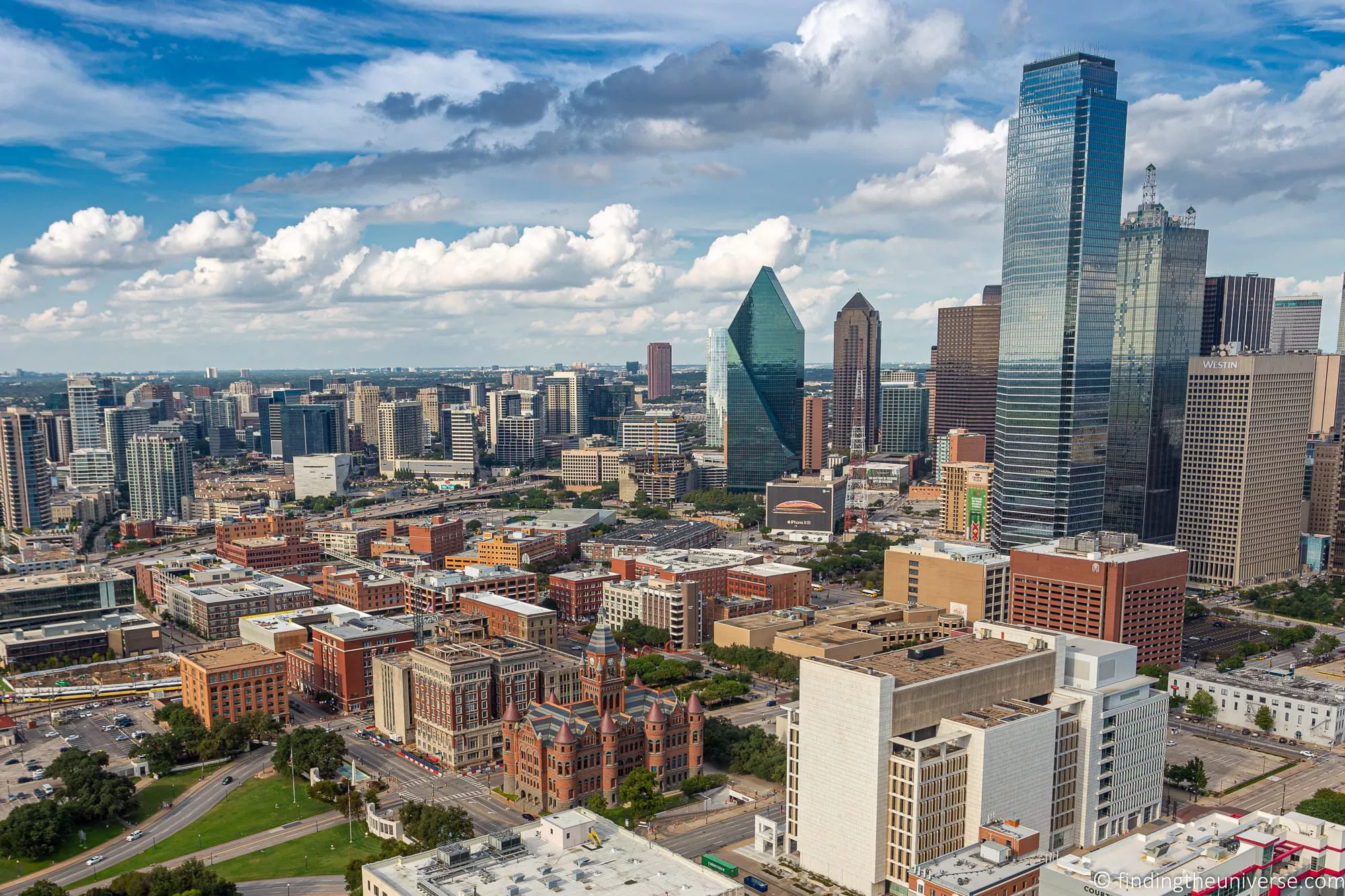
Planning two days in Dallas? We spent several days exploring the city with a camera, and every photo in this guide is one of ours, taken at the stops below. We’ve been full time travel bloggers since 2010, and we visit and photograph everywhere we write about. In Dallas that meant walking the downtown Dealey Plaza and JFK core, driving out to the spread out spots like the Dallas Arboretum and the Bush Library, and basing ourselves downtown (with one memorable night at the Rosewood Mansion on Turtle Creek).
Dallas is a big, car friendly city where the highlights are scattered, so a good plan matters quite a bit more here than in a compact European old town. The trick is knowing what clusters together and what you have to drive to, so you spend your time looking at things rather than sitting in traffic.
This guide lays the city out as a sequenced two day itinerary, with a condensed one day version if that’s all you have. Day 1 is a walkable downtown and Arts District day with no car needed. Day 2 covers the spots you’ll want wheels for. We’ve added the opening hours, current prices, and rough drive times you actually need to make it work, plus where to eat along the way and where to base yourself.
Table of Contents:
At a Glance: 2 Days in Dallas
Two days is enough to see the Dallas highlights without rushing, as long as you split the city the way it’s actually laid out. Here’s how the two days break down.
Day 1, downtown and the Arts District (walkable):
- The Sixth Floor Museum and Dealey Plaza (the JFK story, where it happened)
- A short walk past downtown’s history: the JFK Memorial, Old Red, Pioneer Plaza, the Giant Eyeball
- Lunch downtown or in nearby Deep Ellum
- The Arts District: Klyde Warren Park, the Dallas Museum of Art, and the Nasher or the Perot
- Sunset from the Reunion Tower GeO-Deck, then dinner
Day 2, the spread (car or rideshare):
- Brunch and browsing in the Bishop Arts District
- The Dallas Arboretum and Botanical Garden
- The George W. Bush Presidential Library, or the Dallas Zoo
Only have one day? Do Day 1 exactly as written and skip Day 2. You’ll get the parts of Dallas most people come for, all on foot.
A Few Things Worth Knowing First
Before you lock in dates, three things shaped how we’d plan a Dallas trip, and they’re worth knowing up front.
Run Day 1 between Wednesday and Sunday. The big downtown museums all close on Mondays and Tuesdays, including the Sixth Floor Museum, the Dallas Museum of Art, and the Nasher Sculpture Center. If your Day 1 lands on a Monday or Tuesday, the middle of the day falls apart, so plan the downtown day for Wednesday through Sunday and use a Monday or Tuesday for Day 2’s gardens and the zoo instead.
It gets hot, so do outdoor things early. Dallas summers are no joke. July and August highs sit in the upper 90s Fahrenheit (mid 30s Celsius), and the city tips past 100°F on roughly a third of August days. We’ve sequenced each day to put the outdoor walking in the cooler morning and the air conditioned museums in the heat of the afternoon. Carry water, and don’t plan to be standing in Dealey Plaza or the Arboretum at 3pm in July.
You’ll want a car for Day 2. Downtown and the Arts District are walkable, and Day 1 needs no car at all. Day 2’s stops are spread across the metro, and while DART (the local train and bus network) reaches some of them, a car or a string of rideshares will save you a lot of waiting. More on this in the getting around section below.
One more practical note: book your Sixth Floor Museum tickets in advance. Entry is timed, and it’s the one stop on this itinerary that regularly sells out.
Day 1: Downtown Dallas and the Arts District
Day 1 is the marquee day, and the good news is you can do all of it on foot. Everything below sits within about a mile, walkable or a short rideshare hop if the heat bites. This is the part of Dallas most first time visitors come for, so it leads.
Morning: The Sixth Floor Museum and Dealey Plaza
Start where the city’s most famous story unfolded. Dallas is widely known as the place where President John F. Kennedy was assassinated on the 22nd of November 1963, shot from a sixth floor window of the Texas School Book Depository as the presidential motorcade drove through Dealey Plaza. For a long stretch that was the city’s main association in a lot of American minds: from 1963 into the early 1980s, Dallas was “the city where Kennedy got shot,” until a TV show came along and made it “the city where J.R. Ewing got shot” instead. More on Southfork Ranch and the Dallas show later.
Today that sixth floor is the Sixth Floor Museum, which covers the life, death, and legacy of President Kennedy through films, photographs, artifacts, and a recreation of the corner where Oswald fired. There’s also a nod to the many conspiracy theories around the assassination. We found it moving, and would put it first on any Dallas list.
A few practical details. The museum is open Wednesday to Sunday, 10am to 5pm, with last entry at 4:15pm, and it’s closed Monday and Tuesday. Adult tickets are $24 online (plus a small fee) or $27 on the door, and all tickets are timed, so book ahead. You can check current times and prices on the official website. If the conspiracy side is what draws you, a guided tour like this one digs into it without the museum, and this tour pairs a guide with museum entry.
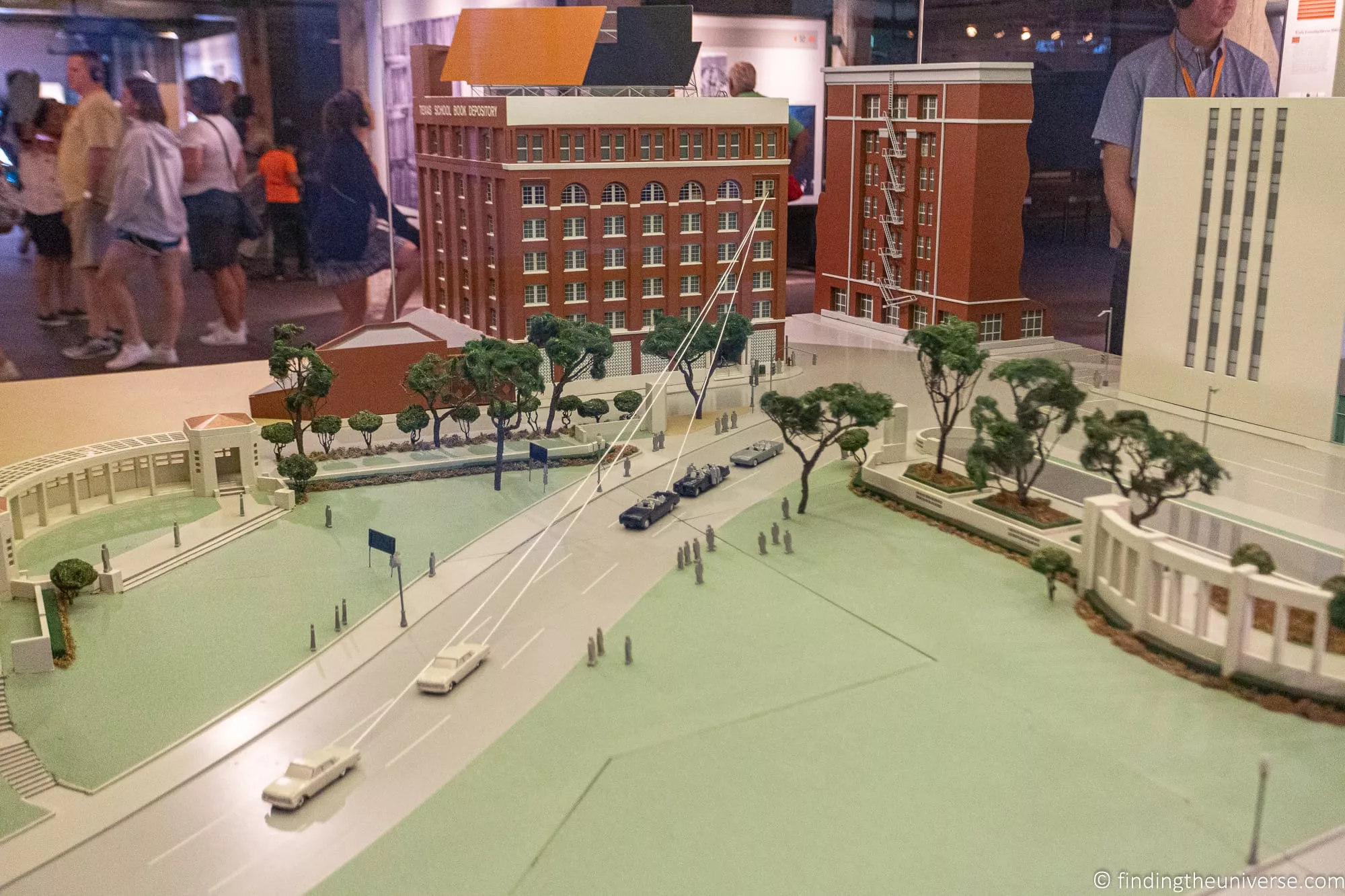
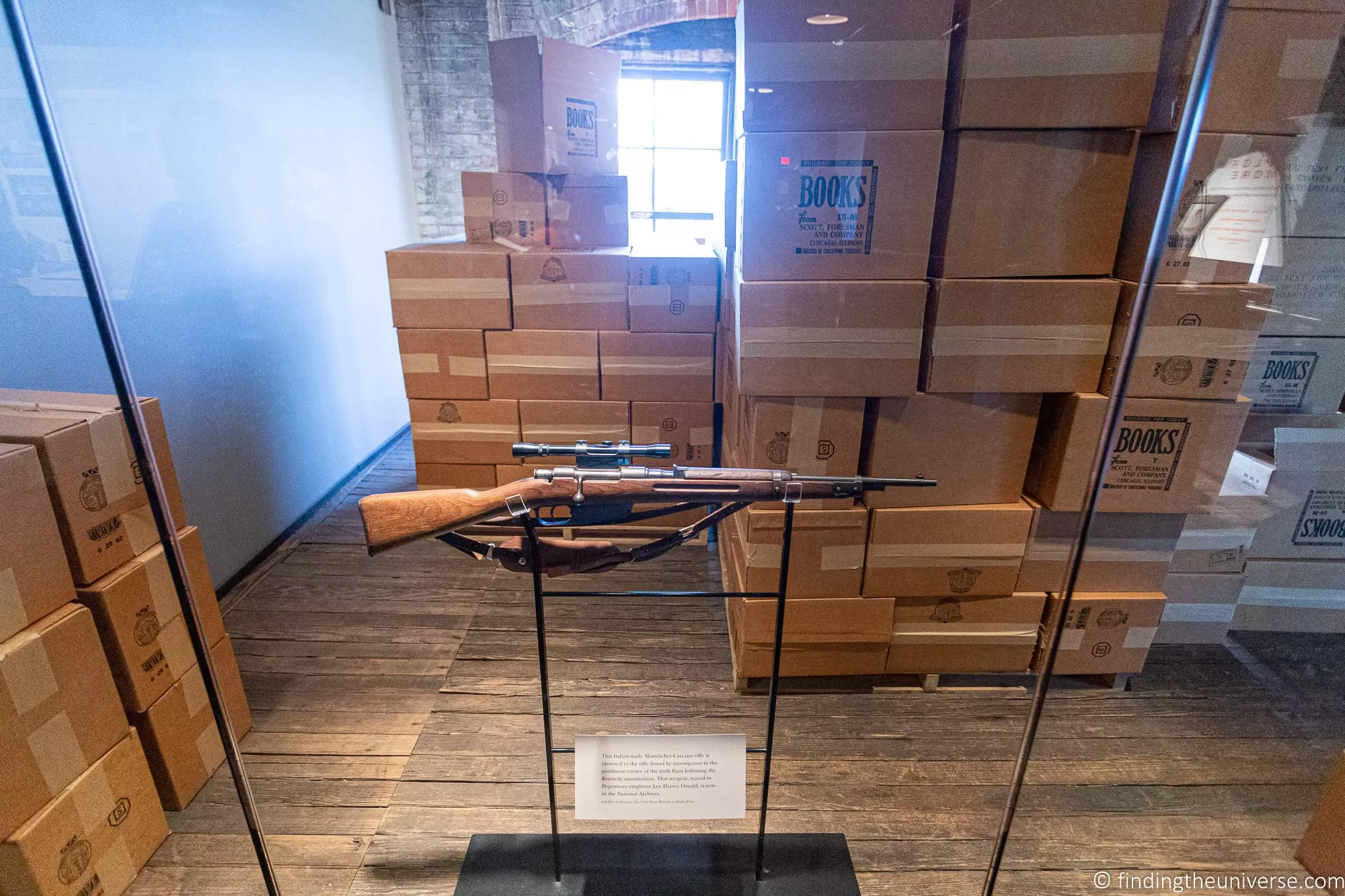
Step outside and you’re in Dealey Plaza itself, a city park in the West End that’s often called the birthplace of Dallas. It’s a National Historic Landmark District now, which is why the older buildings here sit in sharp contrast to the office towers nearby.
Two white X markings on Elm Street show where the shots struck, and there’s a plaque commemorating the assassination. The plaza itself has fountains, reflecting pools, a pair of pergolas, and statues dotted around it, so it’s a pretty pleasant place to walk even setting the history aside. Do this part first thing, before the heat builds, and take care: Elm Street is an active road, and we saw several tourists almost get hit by cars trying to take pictures in the middle of it.


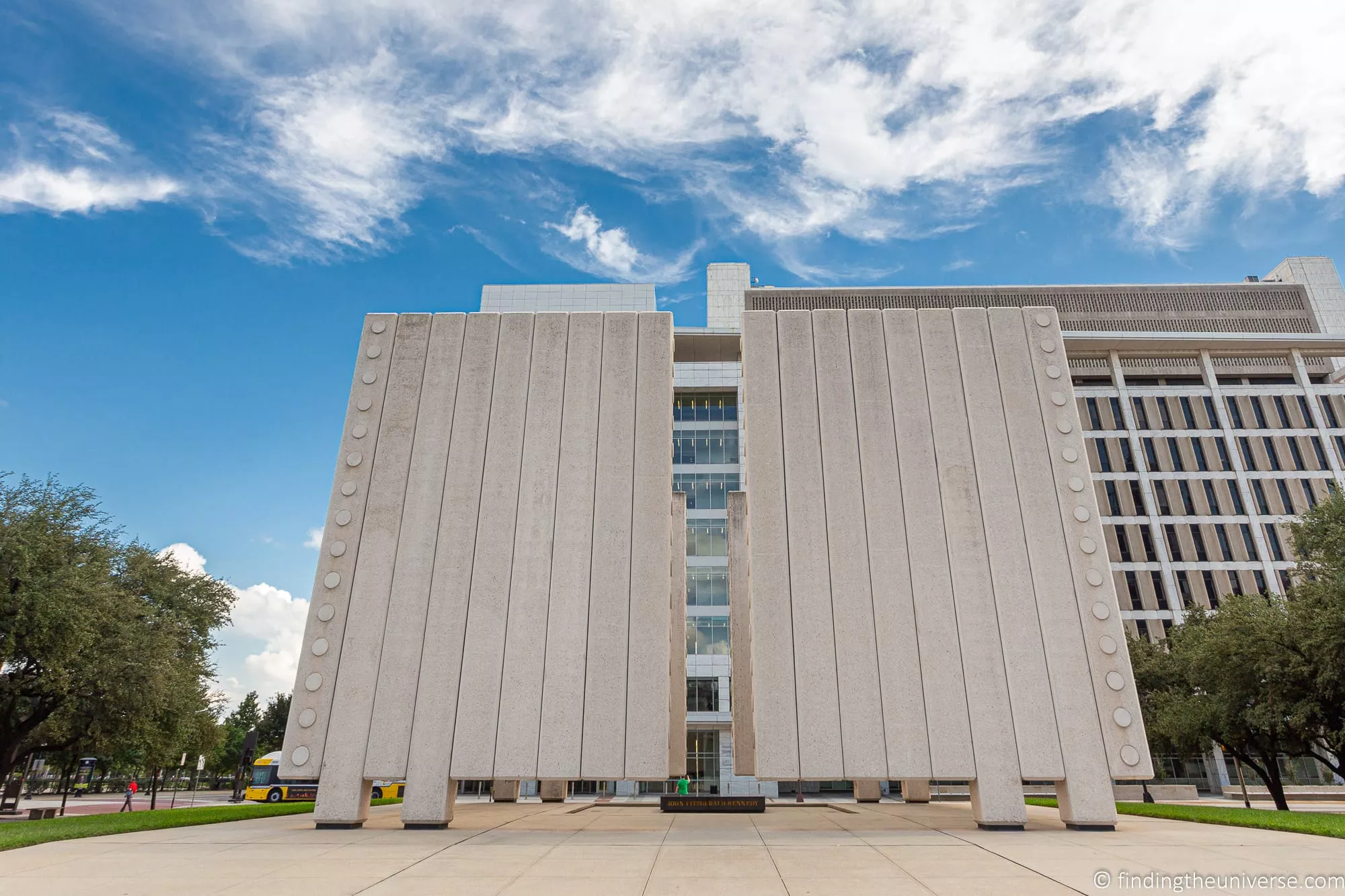
A couple of hundred yards away, still within Dealey Plaza, is the John F. Kennedy Memorial, a large concrete cenotaph designed by Philip Johnson and erected in 1970. It’s essentially a roofless room you can walk into, with the president’s name in gold lettering and no other words on the structure itself. It’s free, open year round, and worth the five minutes.
Late Morning: Walking Downtown’s History
From the JFK Memorial, a short loop on foot picks up a cluster of downtown sights, most of them free, outdoor, and quick. Do them now while you’re still in the cooler part of the day.
A block away in Founders Plaza sits the John Neely Bryan Cabin, a 1930s replica of the first house in Dallas (Bryan founded the city in the 1840s). We happened on it by chance while wandering, and it’s worth a moment to read the historical plaque, though the cabin itself is locked. Jess is always drawn to a good historical plaque.

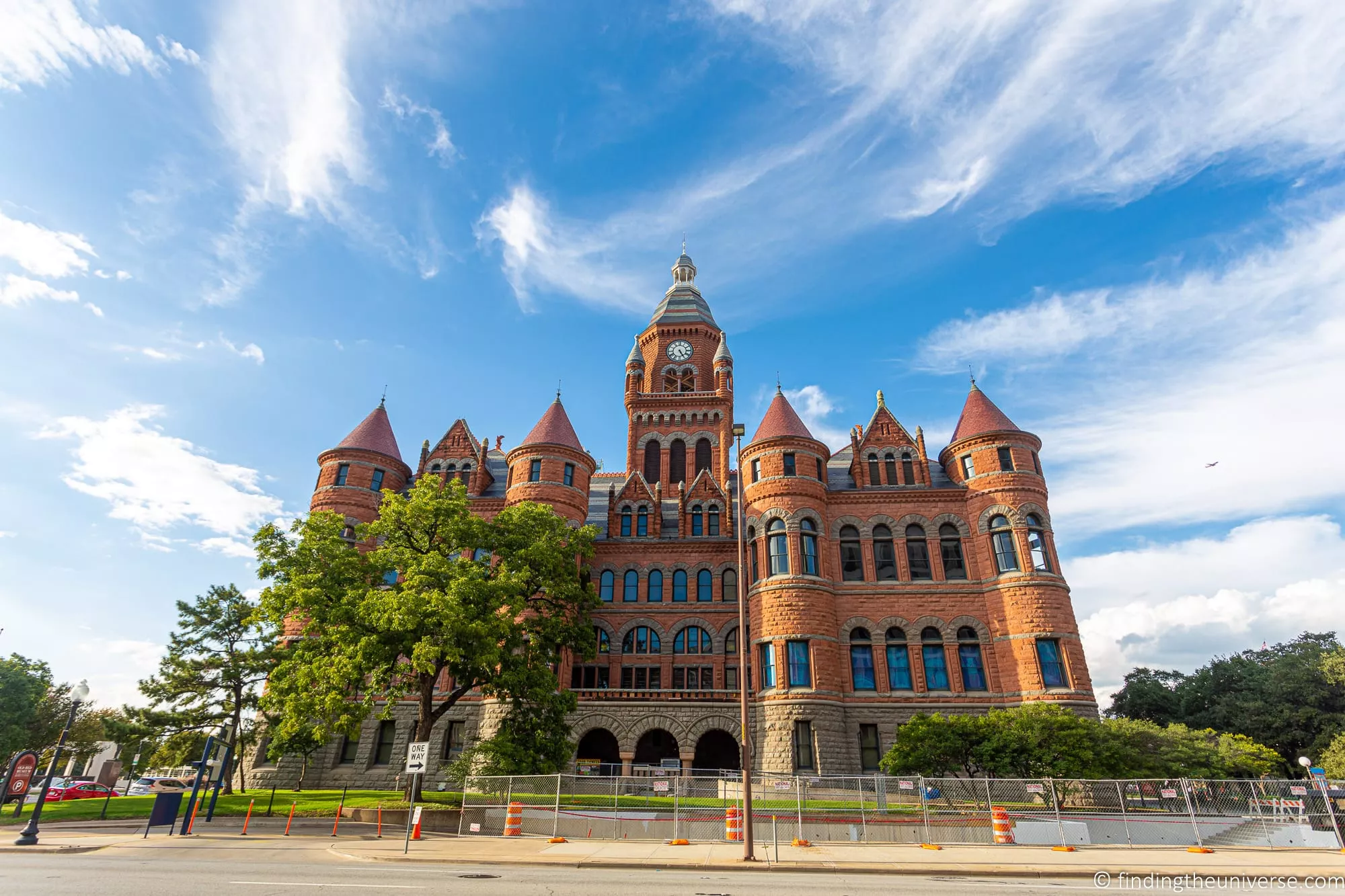
Next to it stands Old Red, the striking red sandstone courthouse built in 1892 in the Richardsonian Romanesque style. For years it housed a Dallas County history museum, but as of 2024 the building has returned to its original use and is home to the Texas Fifth District Court of Appeals, so it’s no longer open as a museum. It’s still one of downtown’s best looking buildings and worth a photo from the outside.
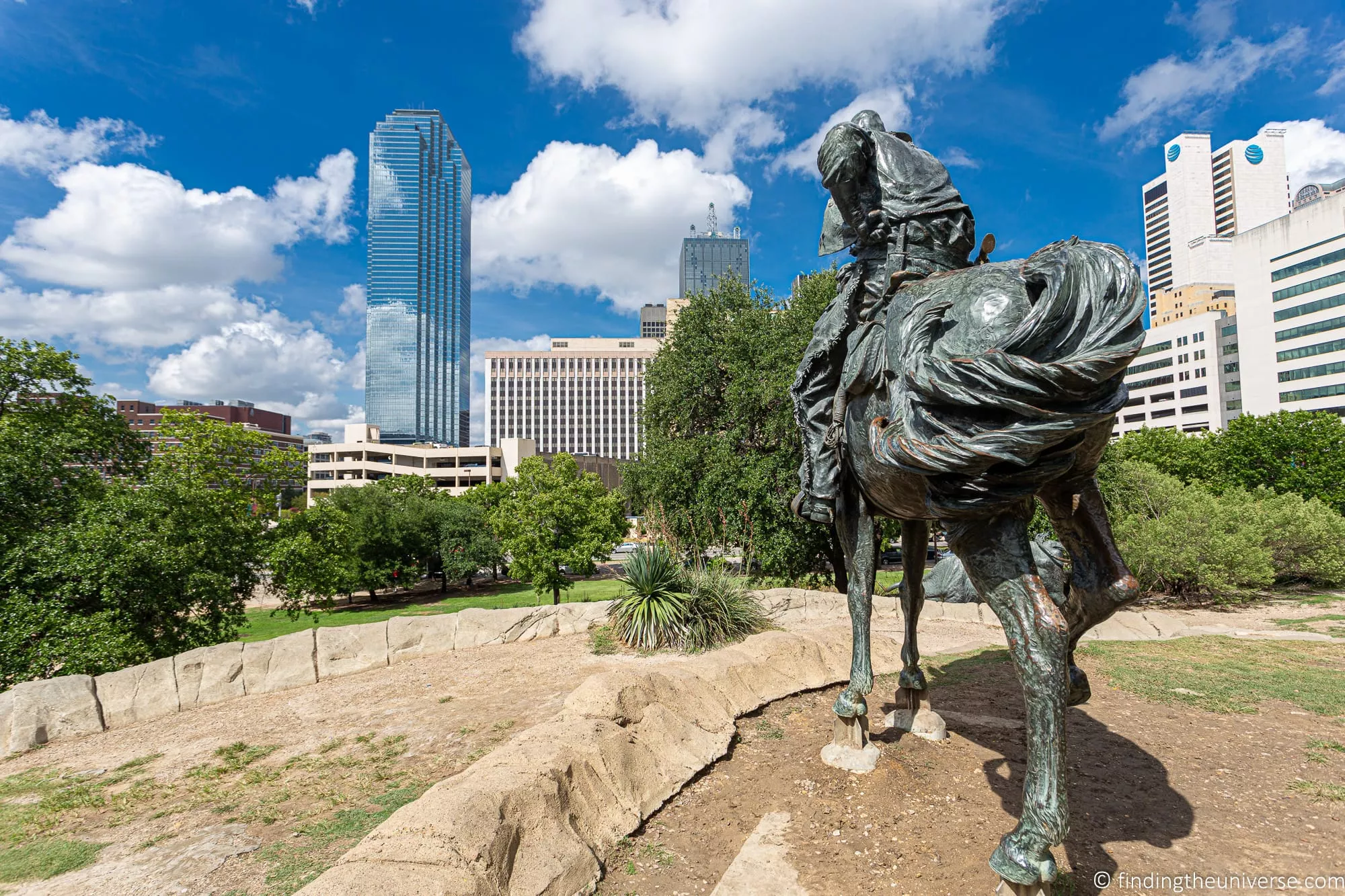
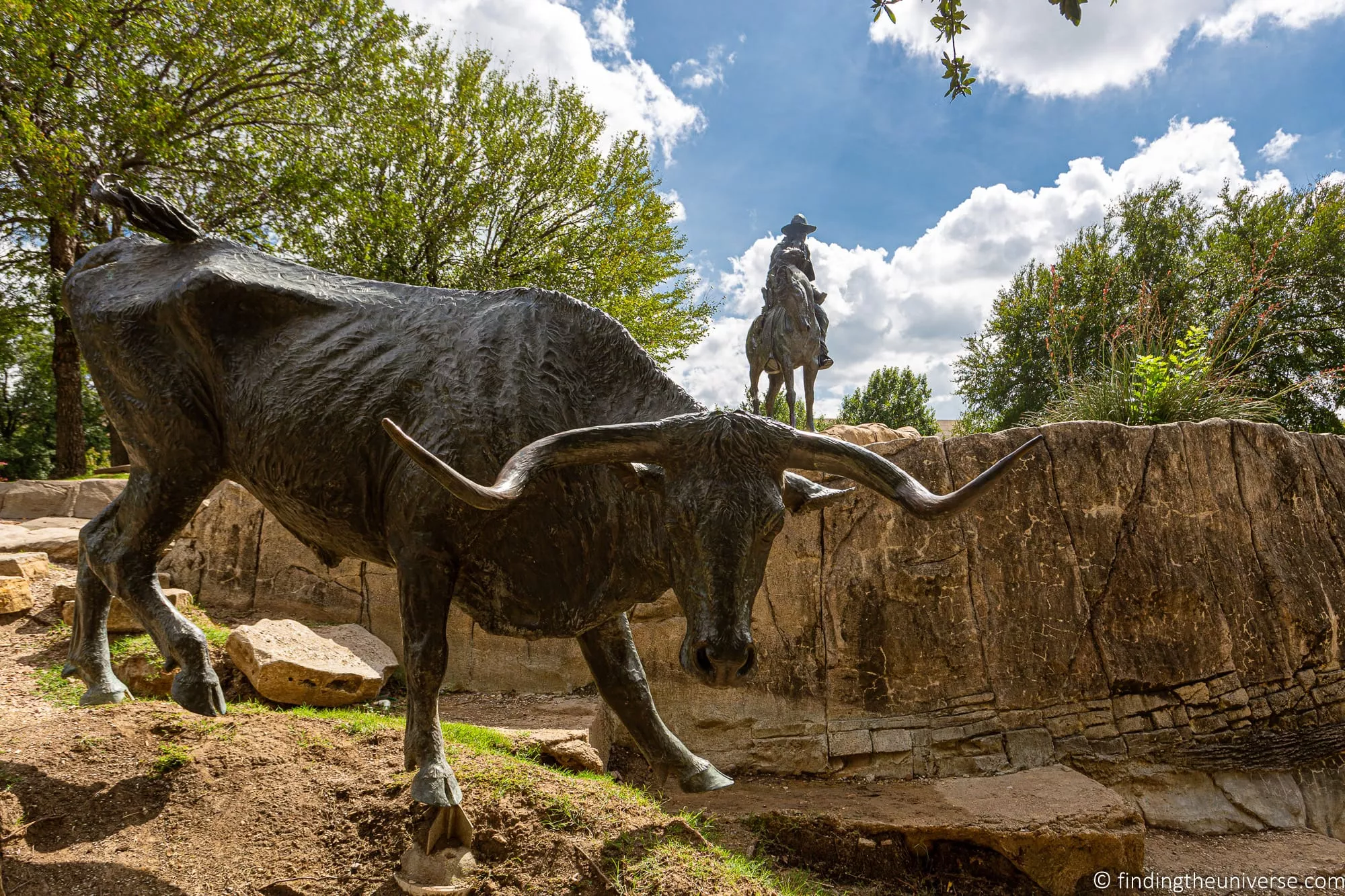
A short walk south brings you to Pioneer Plaza, the largest public space in this part of downtown and our favourite of the quick stops. It’s home to an enormous bronze sculpture group of a 19th century cattle drive: dozens of longhorn steers and three trail riders on horseback, set against a man made limestone bluff with a stream and a small waterfall. It’s free, it’s huge, and it’s a real surprise in person.
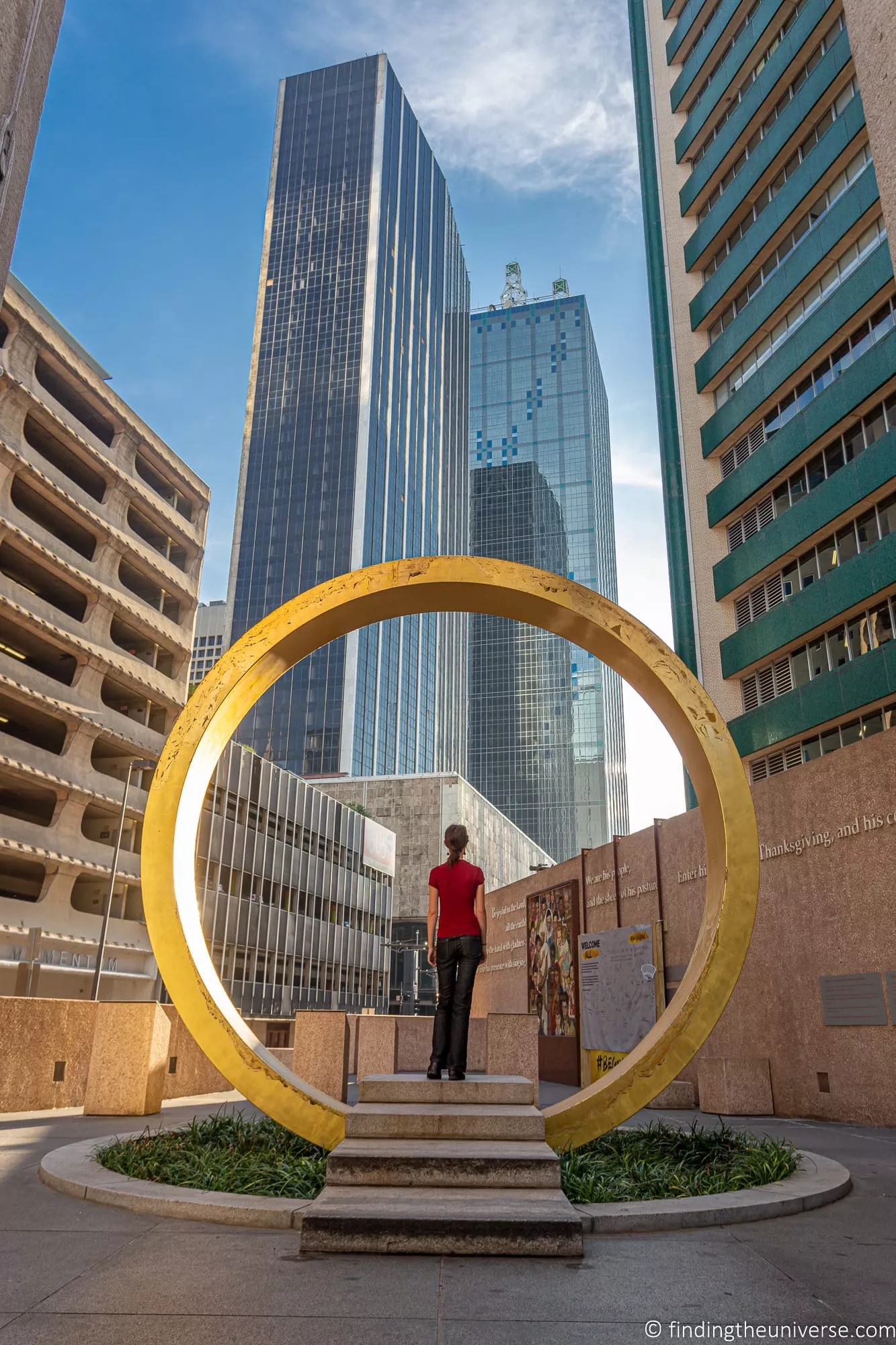
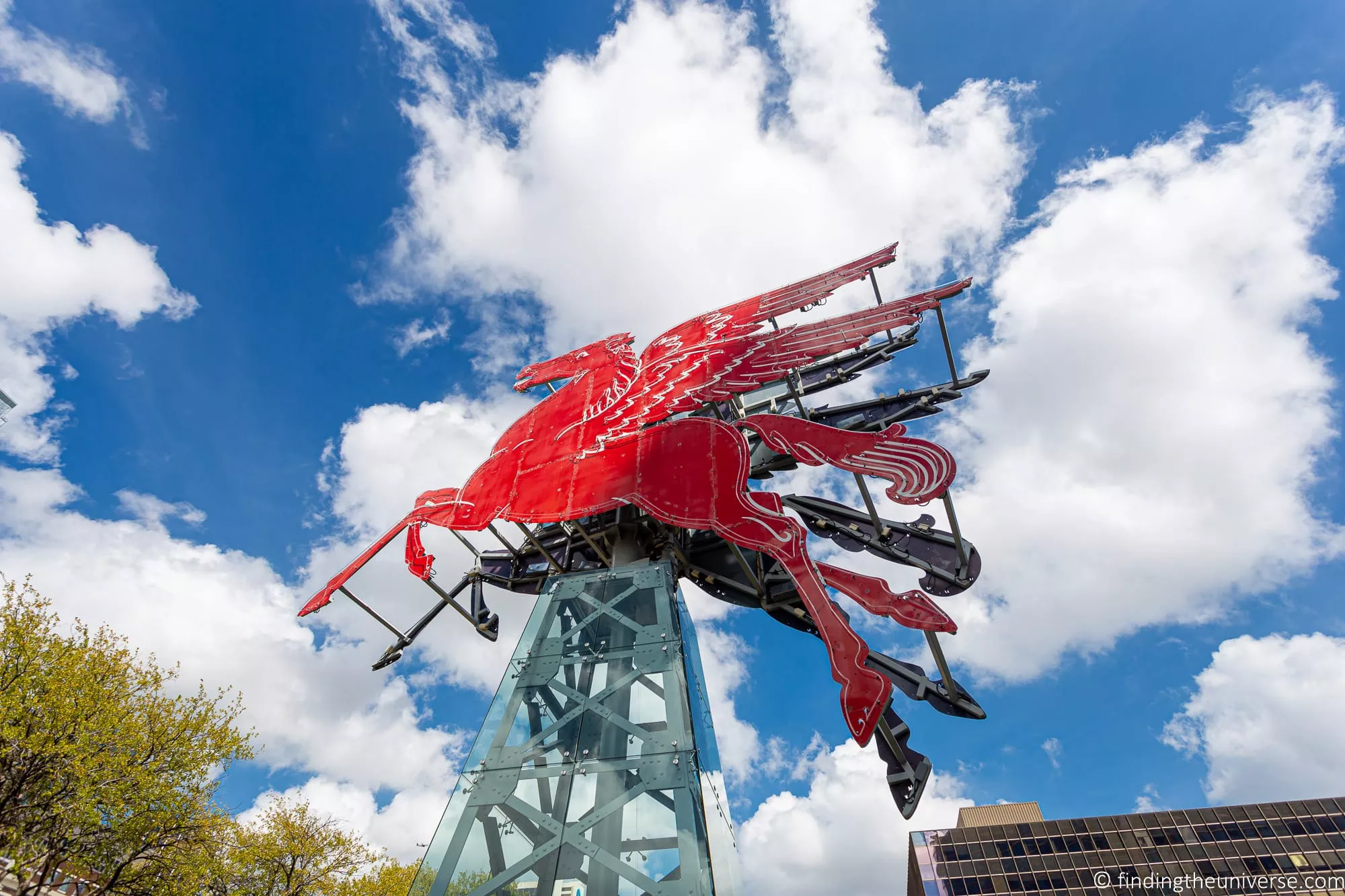
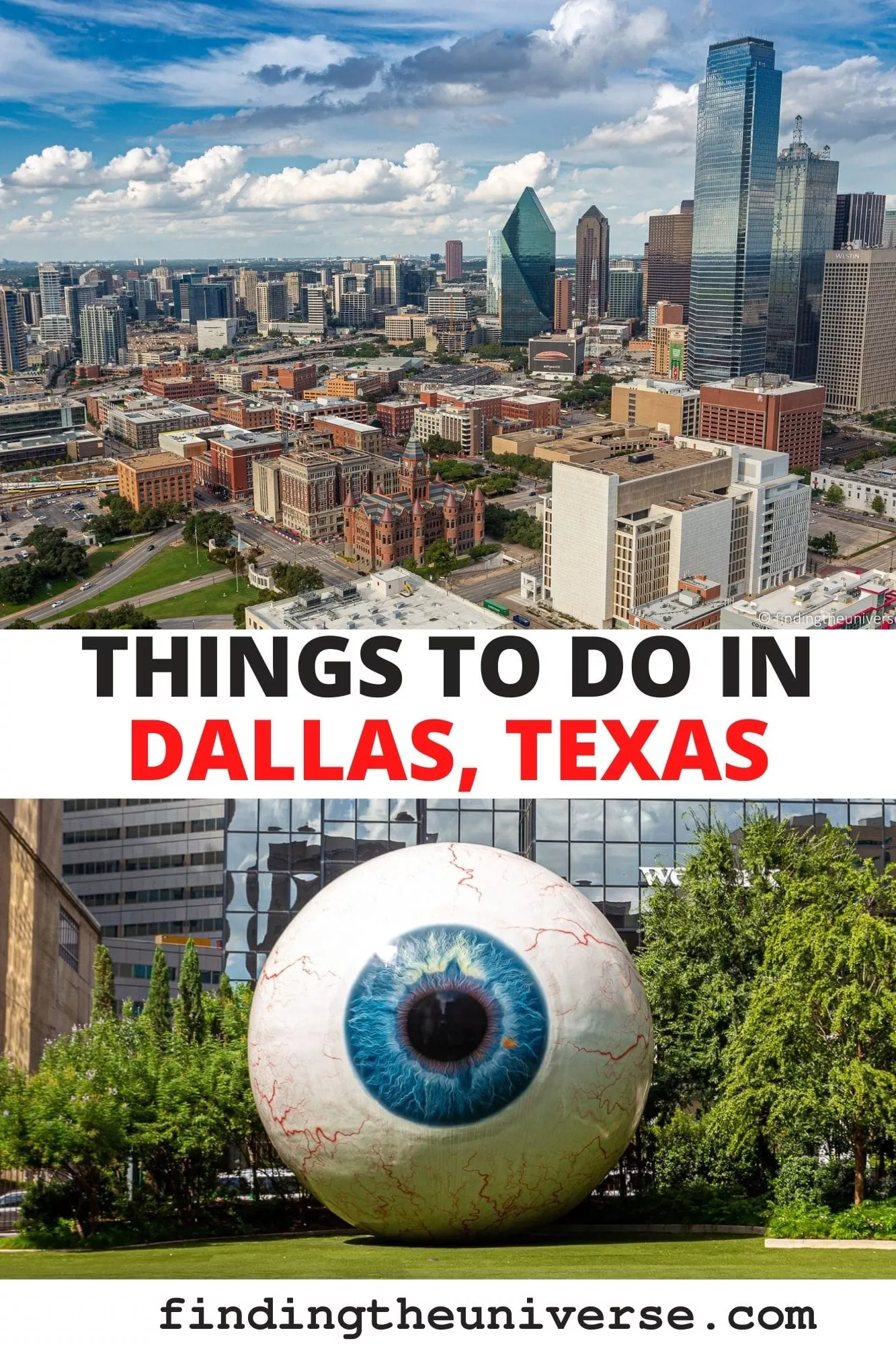
A few more downtown curiosities sit within this loop if you want them. The Giant Eyeball, a 30 foot tall sculpture of a human eye by artist Tony Tasset, stands outside the Joule Hotel at 1601 Main Street and makes a fun photo stop. The original Flying Red Horse, the neon Pegasus that has been a Dallas icon since 1934, now sits at ground level outside the Omni Dallas Hotel. And Thanksgiving Square, a small downtown garden with fountains and a gold leafed Ring of Thanks, is a quiet spot to pause. If you’d rather keep moving, none of these will hurt to skip.

Lunch: Downtown and Deep Ellum Food Stops
You’ll be ready for lunch by now, and you’ve got two easy directions to go. For something quick and casual, the food trucks at Klyde Warren Park (the deck park between downtown and Uptown, which you’ll pass on the way to the Arts District) run daily, roughly 11am to 2:30pm on weekdays and later at weekends.
If you want the Dallas food most people travel for, head a few minutes east to Deep Ellum, the city’s live music and street art neighbourhood. This is barbecue country: Pecan Lodge and Terry Black’s Barbecue are both on Main Street, a few blocks apart, and both are the kind of place people queue for. Deep Ellum has had some issues with crime over the years, so take the usual city precautions, but it’s a rewarding stop for lunch or for a wander. You can also see it on a food tour like this one, which builds in five tastings.
Afternoon: The Dallas Arts District
Spend the hot part of the afternoon in the air conditioning of the Dallas Arts District, a walkable cluster of museums on the north edge of downtown. Start at Klyde Warren Park, then take your pick of the museums next door. A heads up: like the Sixth Floor Museum, the Arts District museums close on Mondays and Tuesdays.
The Dallas Museum of Art is the easy win here, because general admission is free (special exhibitions are ticketed separately). Its collection runs to more than 24,000 objects spanning 3,000 BC to the present, with European masters like Monet and Van Gogh, ancient American art, and second century Gandharan Buddhist sculpture all on display. It’s open Wednesday to Sunday, 11am to 5pm (until 9pm on Fridays). You can check current details on the visitor page.
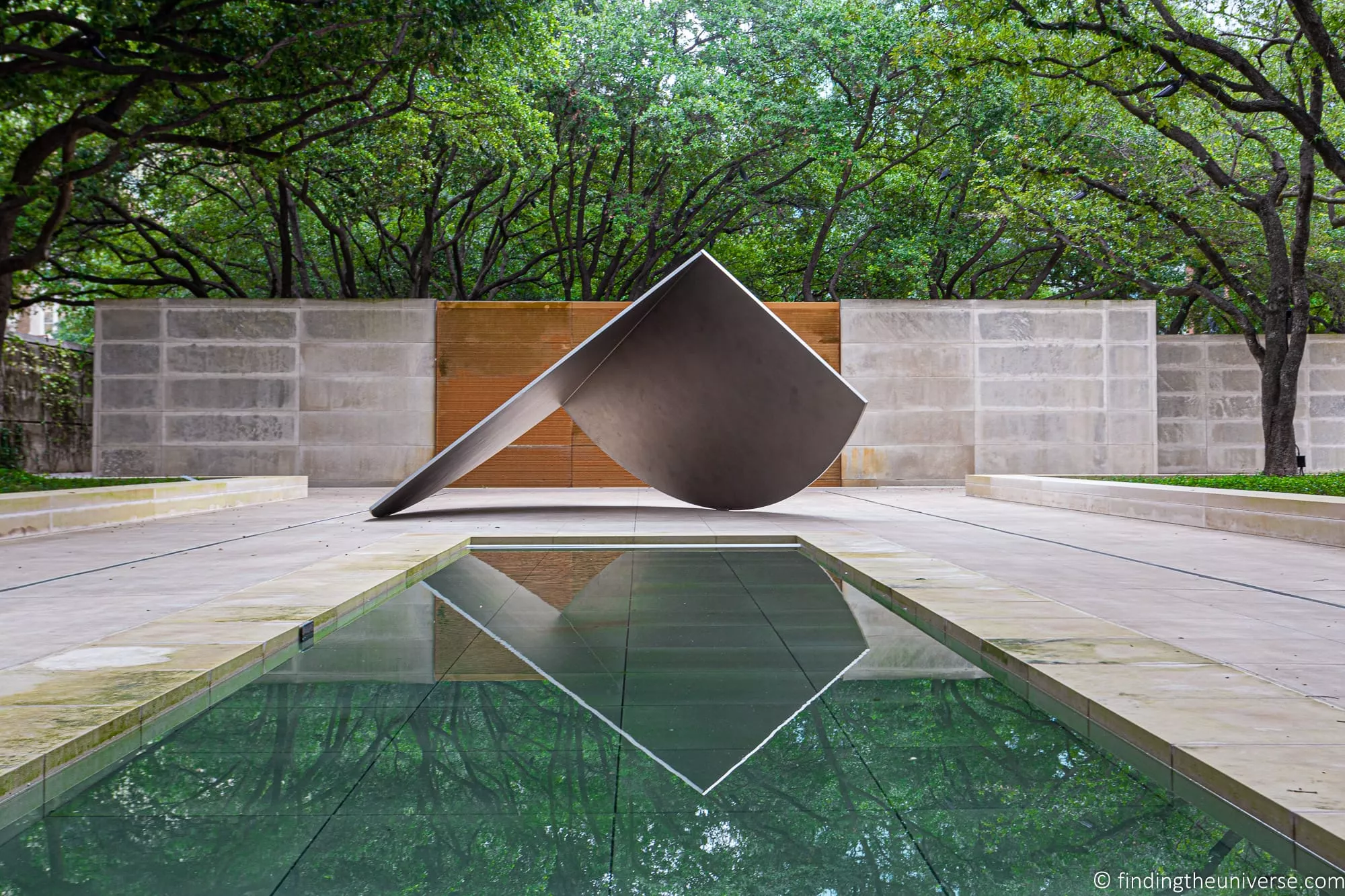
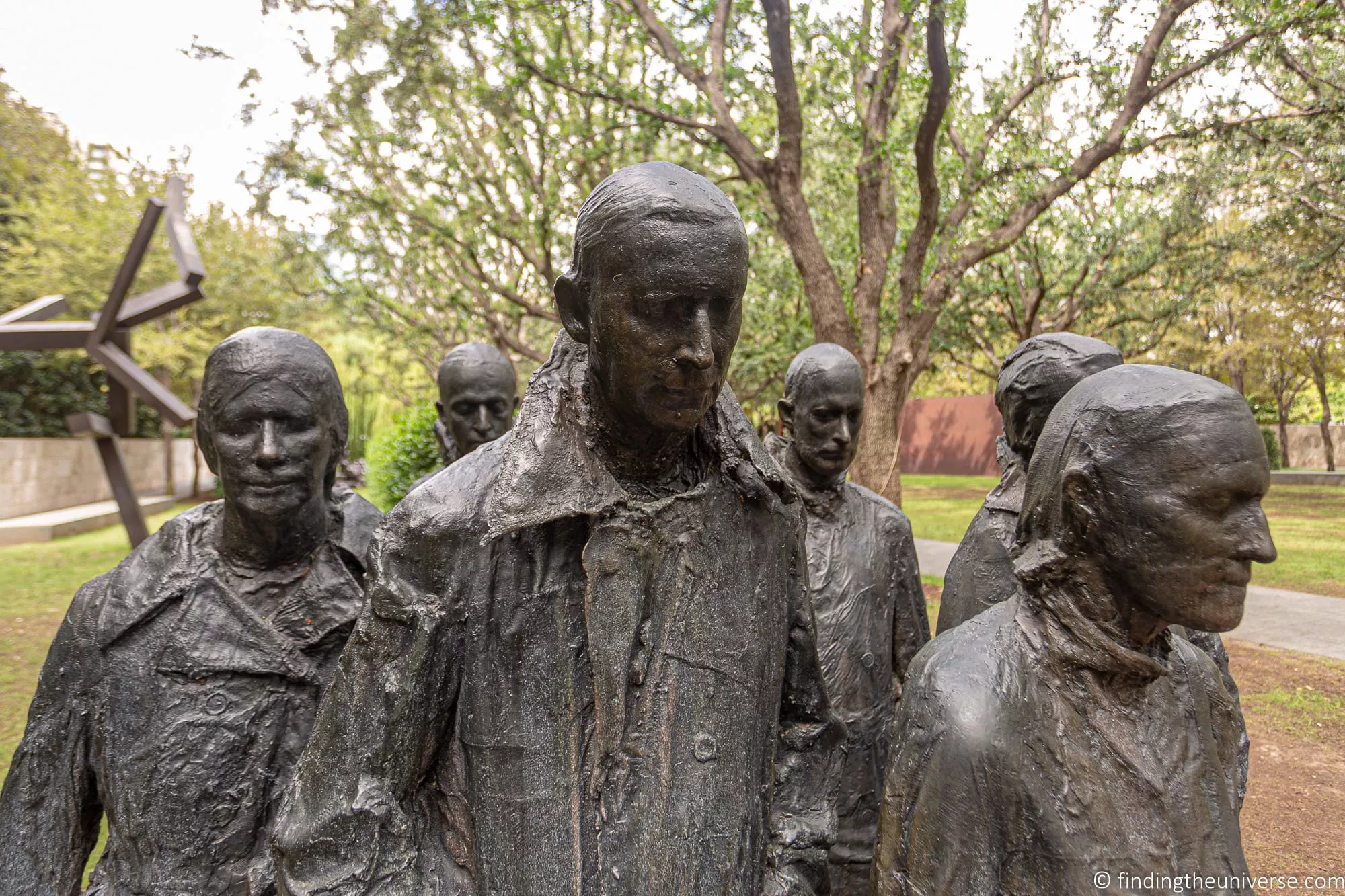
Right next door, the Nasher Sculpture Center holds the Patsy and Raymond Nasher collection of modern and contemporary sculpture, with work by Rodin, Matisse, Picasso, and Miró. Most of it is inside across two floors, but my favourite part was the outdoor garden, which is really lovely for a slow wander among the pieces. Adult admission is $10 (children under 12 are free), and it’s open Wednesday to Sunday, 11am to 5pm. Details are on the plan a visit page.
If you’re travelling with kids, or you just love a good interactive science museum, swap the Nasher for the Perot Museum of Nature and Science, a short hop away in Victory Park. Funded in part by the family of Ross Perot and named in their honour, this is quite a big one: five floors and eleven permanent exhibitions covering everything from local ecosystems to a hall where you can race a digital version of a sporting legend, plus four billion years of life on Earth. If you’ve ever wanted to see a 60lb gold nugget, experience the Big Bang, or travel through a shale gas well, this is your museum, and we had a lot of fun here. Adult admission is $27, and it’s open Monday to Saturday 10am to 5pm and Sunday 11am to 5pm, so unlike its neighbours it runs every day. Allow around two hours, and if you’re flagging, do the Perot or the DMA and Nasher rather than all three.


Dallas is a strong city for public art generally, so keep an eye out as you walk: alongside the museums there are hundreds of sculptures, murals, and installations around the city, many of them free to see. There’s a full list of the city’s public art here if you want to seek more out.
Evening: Reunion Tower at Sunset
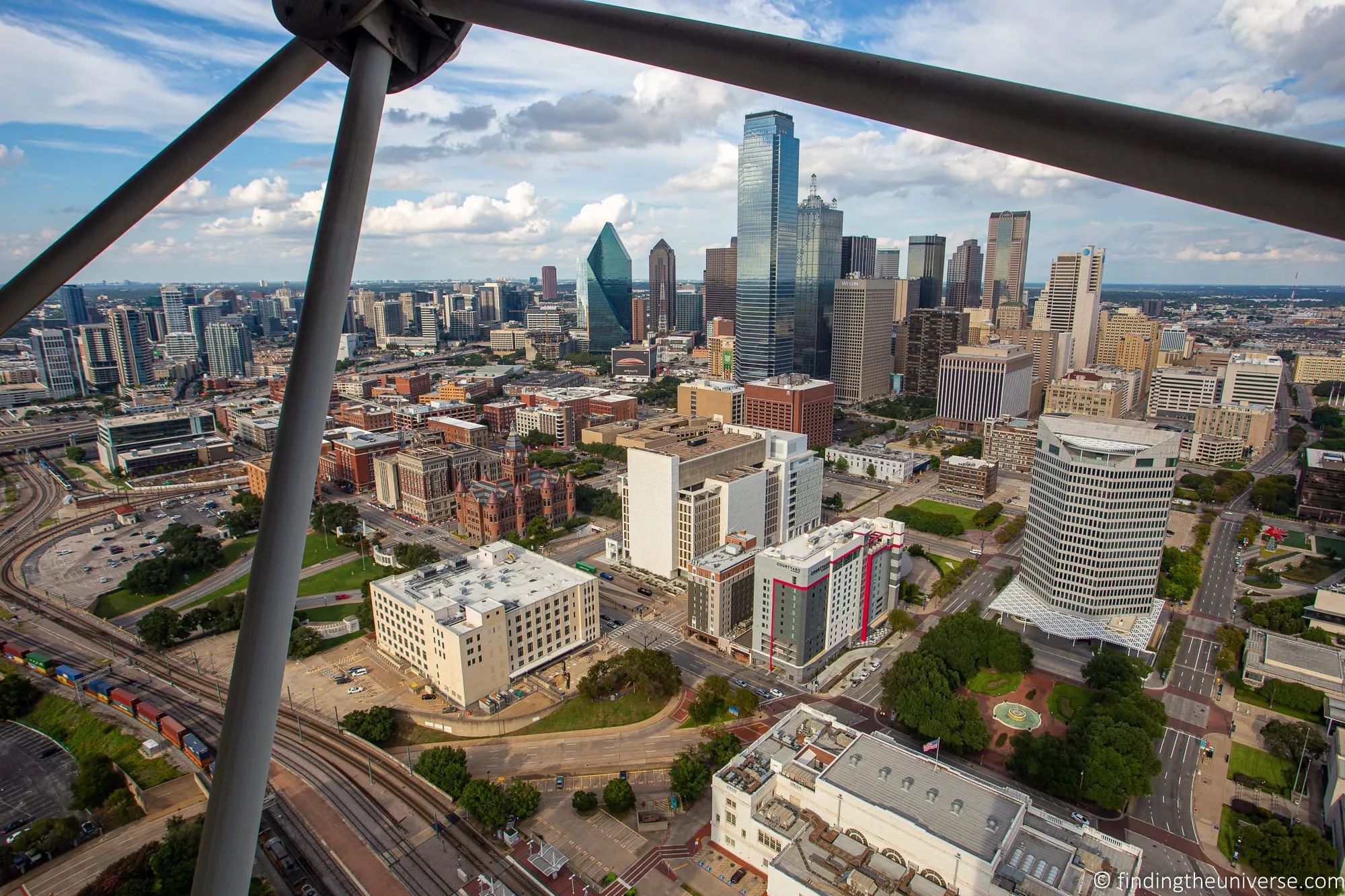
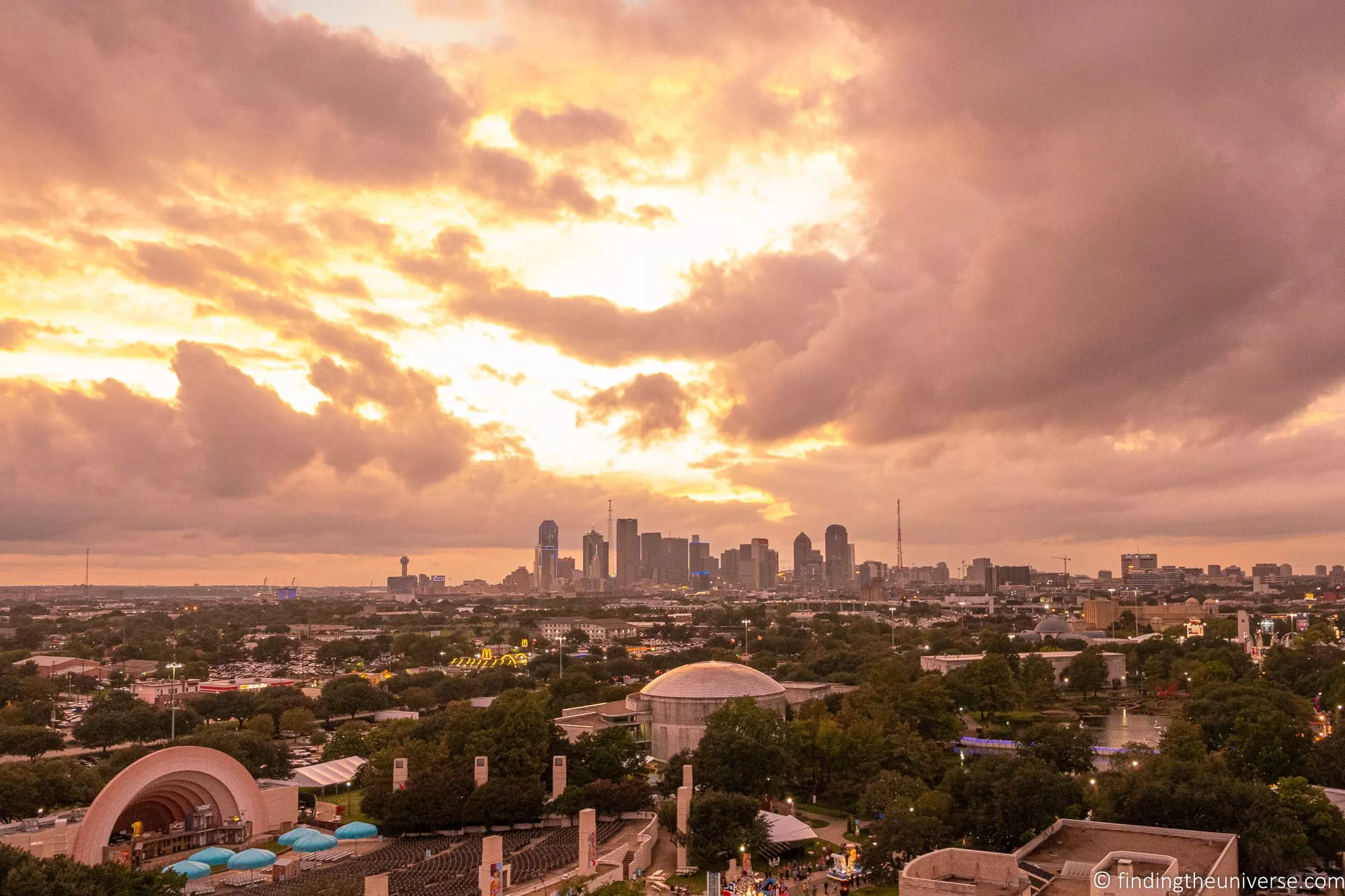
One of my favourite things to do in a new city is to get up high for a view, and in Dallas that means the Reunion Tower. This 561 foot (171 m) tower was built in 1978 and is one of the most recognisable shapes on the Dallas skyline. Time your visit for late afternoon or sunset and you’ll get the city in the best light.
The observation deck, the GeO-Deck, is where you’re headed, with views over the city and an interactive digital experience to put names to what you’re seeing. Admission is dynamic and depends on the date, starting from around $19, so check current times and prices online or buy a GeO-Deck ticket here. The tower used to have a revolving restaurant; that space is now home to Crown Block, a fine dining restaurant that opened in 2023, though it no longer revolves. If your dinner plans run early, the GeO-Deck views hold up at any time of day, so you can flip this with an afternoon visit.
For dinner, Deep Ellum is your best bet for atmosphere and the barbecue mentioned earlier, or stay downtown if you’d rather keep it short after a full day on your feet.
Day 2: Bishop Arts, the Arboretum and the Spread
Day 2 is where Dallas spreads out. The rest of the city’s highlights are spread out, so this is a driving day (or a rideshare day). We’ve sequenced it to keep the driving down and to front load the outdoor stops before the afternoon heat.
Morning: Bishop Arts District
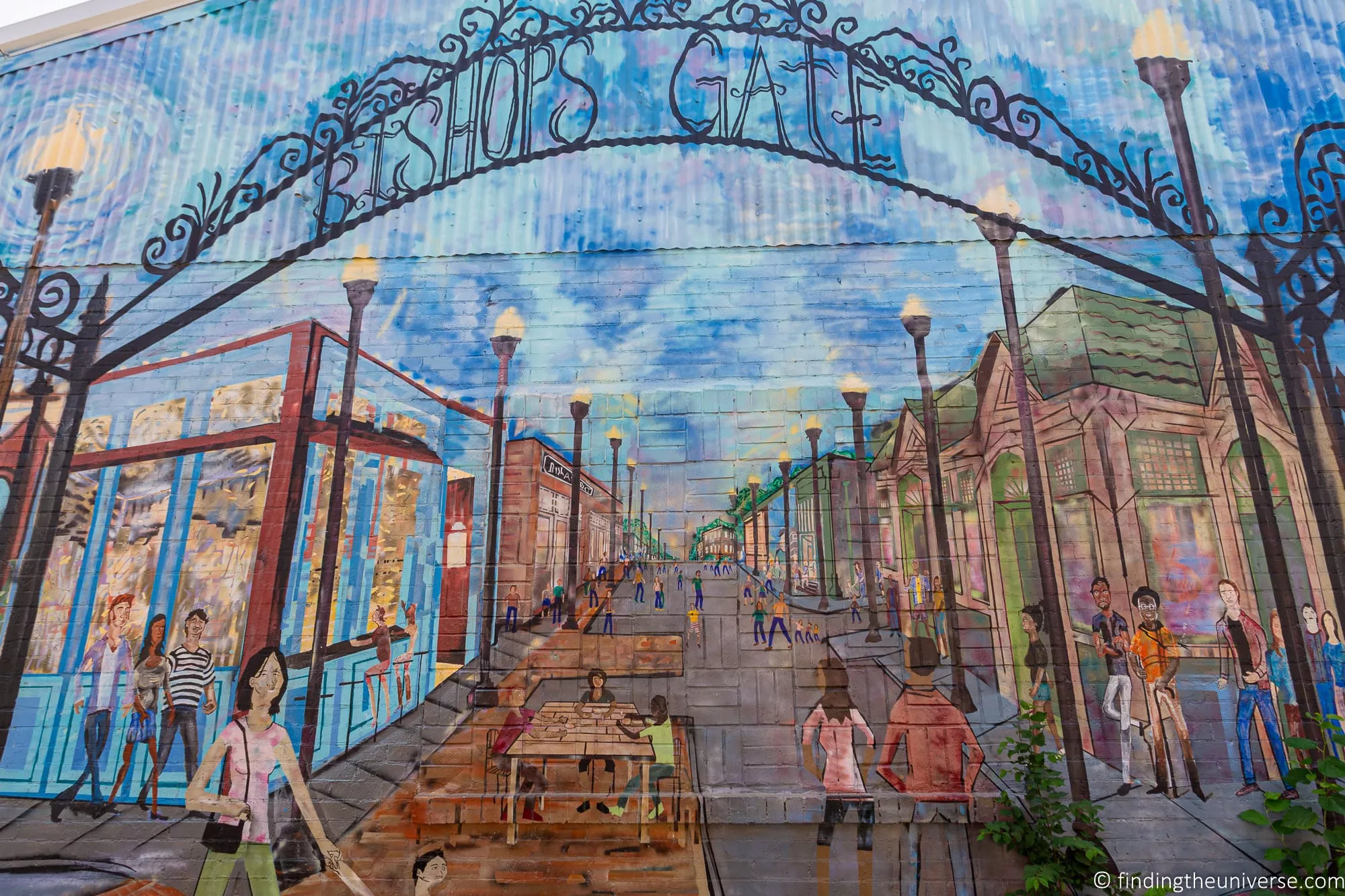
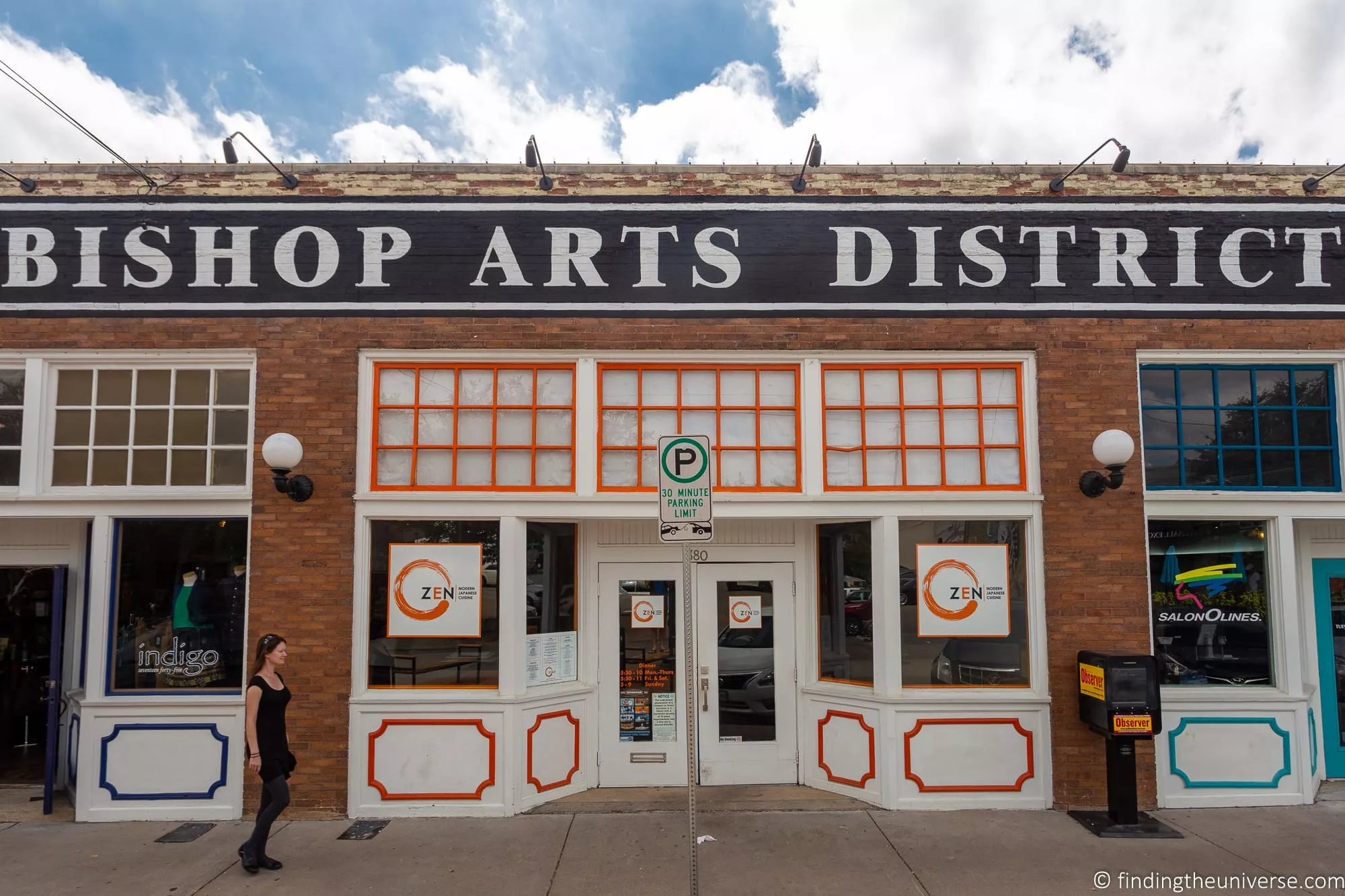
Start your morning in the Bishop Arts District in Oak Cliff, about a ten minute drive southwest of downtown. This is the city’s most walkable neighbourhood after downtown itself, a compact grid of locally run shops, cafés, restaurants, and murals. It’s a really good place to have brunch or a coffee, browse for a souvenir, and photograph the street art before the day warms up. Individual shops set their own hours, but the district is busiest and best mid morning.
Midday: Dallas Arboretum and Botanical Garden
From Bishop Arts it’s about a 20 to 25 minute drive east to the Dallas Arboretum and Botanical Garden, a 66 acre garden on the shore of White Rock Lake. It’s quite a lovely place to walk, with themed garden areas, fountains, and plants from around the world, plus seasonal displays that change through the year. We visited near Halloween and the place was full of pumpkins.
It’s open daily, 9am to 5pm. Admission varies by day, $21.95 Monday to Thursday and $25.95 Friday to Sunday, and parking is a separate $15 per vehicle, so factor both in. This is a large outdoor site with limited shade in places, so it’s another one for the morning or late afternoon in summer rather than the middle of the day. Check current details on the hours and admission page.

Afternoon: George W. Bush Presidential Library or Dallas Zoo
For your last big stop, you’ve got a choice, and it’s really down to what interests you. Both are about a 15 to 20 minute drive from the Arboretum, and both give you indoor or shaded relief from the afternoon heat.
Every US president from Herbert Hoover onward has a presidential library in their home state, each one part archive of that president’s papers and part museum to their time in office. Texas has three: the Lyndon B. Johnson library in Austin, which we visited and enjoyed during our time there, plus the two Bush libraries. The George W. Bush Presidential Library and Museum sits on the SMU campus, about five miles north of downtown. It covers the eight years of Bush’s presidency, including 9/11 and the second Gulf War, and includes a full size replica of the Oval Office and a selection of the 43,000 gifts given to the President and First Lady. We found these presidential libraries reveal a lot about the personal side too. Jess got talking with a staff member for quite a while and came away surprised by things she hadn’t known, from the President’s younger sister dying of leukaemia when he was a boy, to his account of the weight of being a wartime president, his veteran art project, and the work going on at the family’s Prairie Chapel Ranch. Adult admission is $26 (note this is the George W. Bush museum in Dallas, not the cheaper George H.W. Bush library down in College Station), and it’s open Monday to Saturday 9am to 5pm and Sunday noon to 5pm. You can plan your visit on the official site.


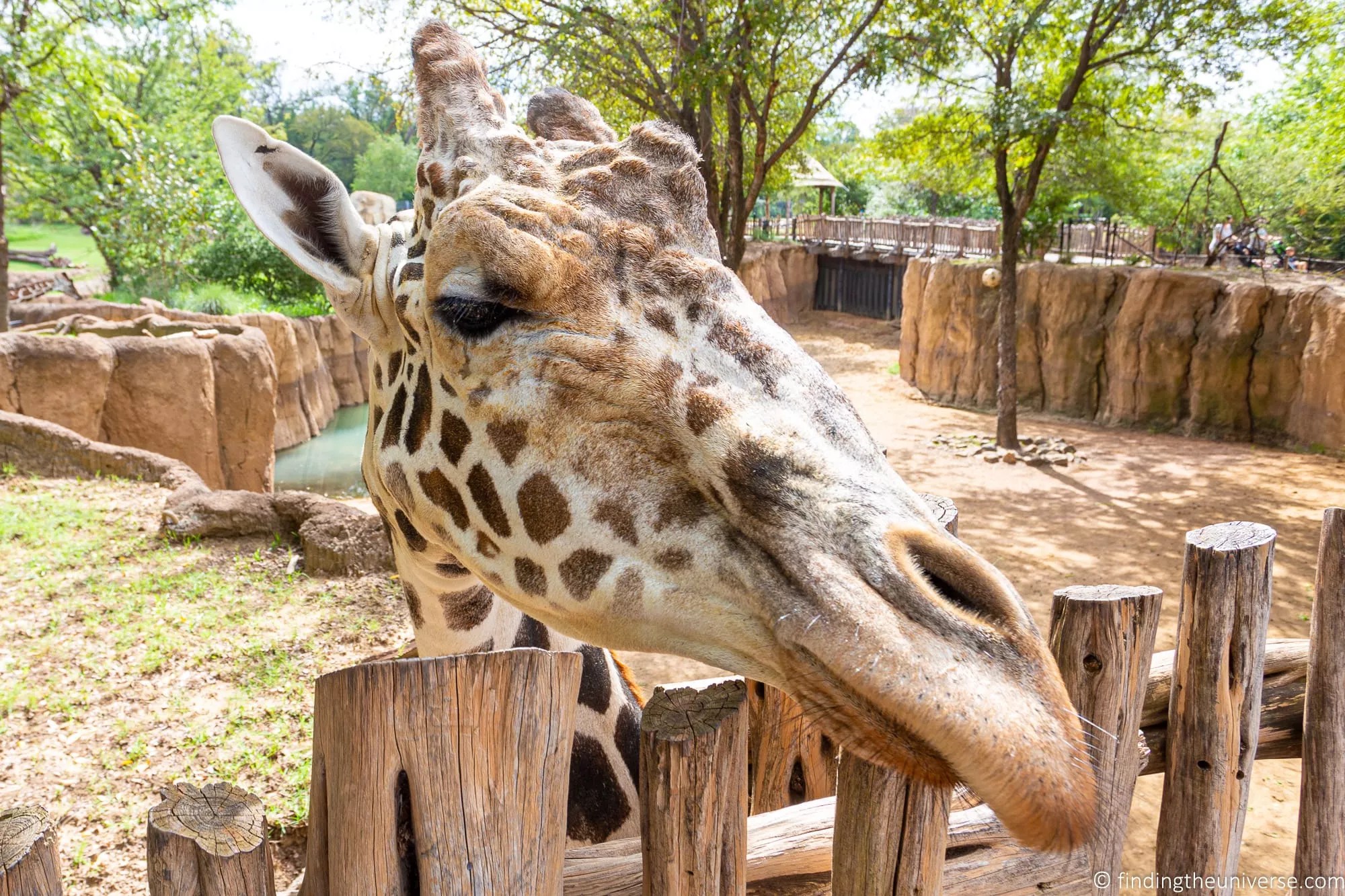
If you’re travelling with family, the Dallas Zoo is the better pick. Three miles south of downtown, it’s the largest and oldest zoo in Texas, a 106 acre site with more than 2,000 animals, from Galápagos tortoises to lions, tigers, penguins, and chimpanzees. The highlight for me was getting up close at the giraffe feeding station. Adult tickets use date based pricing and start at around $18, with parking $14, and an online reservation is recommended. Summer hours run longer than the winter 9am to 4pm, so check the website for the day you’re going. You could easily lose most of a day here, so it’s a pretty strong option if you’d rather slow Day 2 down.
In the old days the Dallas CityPASS made you choose between the Bush Library and the Zoo. The 2026 pass doesn’t, so if you’re using one, you can fit both across your two days and simply pick which to do this afternoon.
Only Have One Day in Dallas?
If you only have a single day, don’t try to cram in both days above. Do Day 1 exactly as written and skip Day 2 entirely.
That means the Sixth Floor Museum and Dealey Plaza in the morning, the downtown history walk and a Deep Ellum lunch in the middle of the day, the Arts District in the afternoon, and the Reunion Tower at sunset. Drop the Bishop Arts District, the Arboretum, and the Bush Library or Zoo, which are all the car dependent stops. It’s no accident those are the ones to cut: Day 1 is the walkable, no car, most iconic version of Dallas, and it’s exactly what a one day visitor is searching for.
Got a Third Day? Optional Dallas Add-Ons
A few of Dallas’s best known draws sit well outside the downtown core, far enough that forcing them into two days means a lot of driving for not much else. If you’ve got a third day, or you’re a big enough fan of one of them to build a half day around it, here’s where they fit.
AT&T Stadium (the Dallas Cowboys). Home of the NFL’s Dallas Cowboys, AT&T Stadium is in Arlington, about 20 miles and a 25 to 40 minute drive west of downtown depending on traffic. You don’t need a game to visit: the stadium runs tours where you can walk the field and see how a venue this size works. You can also book a small group tour that includes round trip transport, or this VIP tour that pairs the stadium with city sightseeing. The stadium tour is also one of the six choices on the current Dallas CityPASS.
Southfork Ranch. If you remember the 1980s TV show Dallas, you’ll know Southfork Ranch as the Ewing family home. The original series ran from 1978 to 1991 across 357 episodes, following the Ewing family and their oil empire in and around the city, and it was rebooted for three more seasons from 2012 to 2015. The house that played the Ewing home, originally known as Duncan Acres, sits on around 240 acres of Texas ranchland near Parker, about 25 to 30 miles and a 35 to 45 minute drive north of the city. It’s open daily for tours, 10am to 5pm, with adult admission $30. Even if, like me, you aren’t a Dallas superfan, the tour is good fun, with props, photos, and stories from the show. If you were a fan like Jess, it’s a highlight. The ranch also runs other bookable experiences and hosts events, so check availability in advance. You can drive yourself or book a tour with round trip transfers, such as this combo tour or this one.


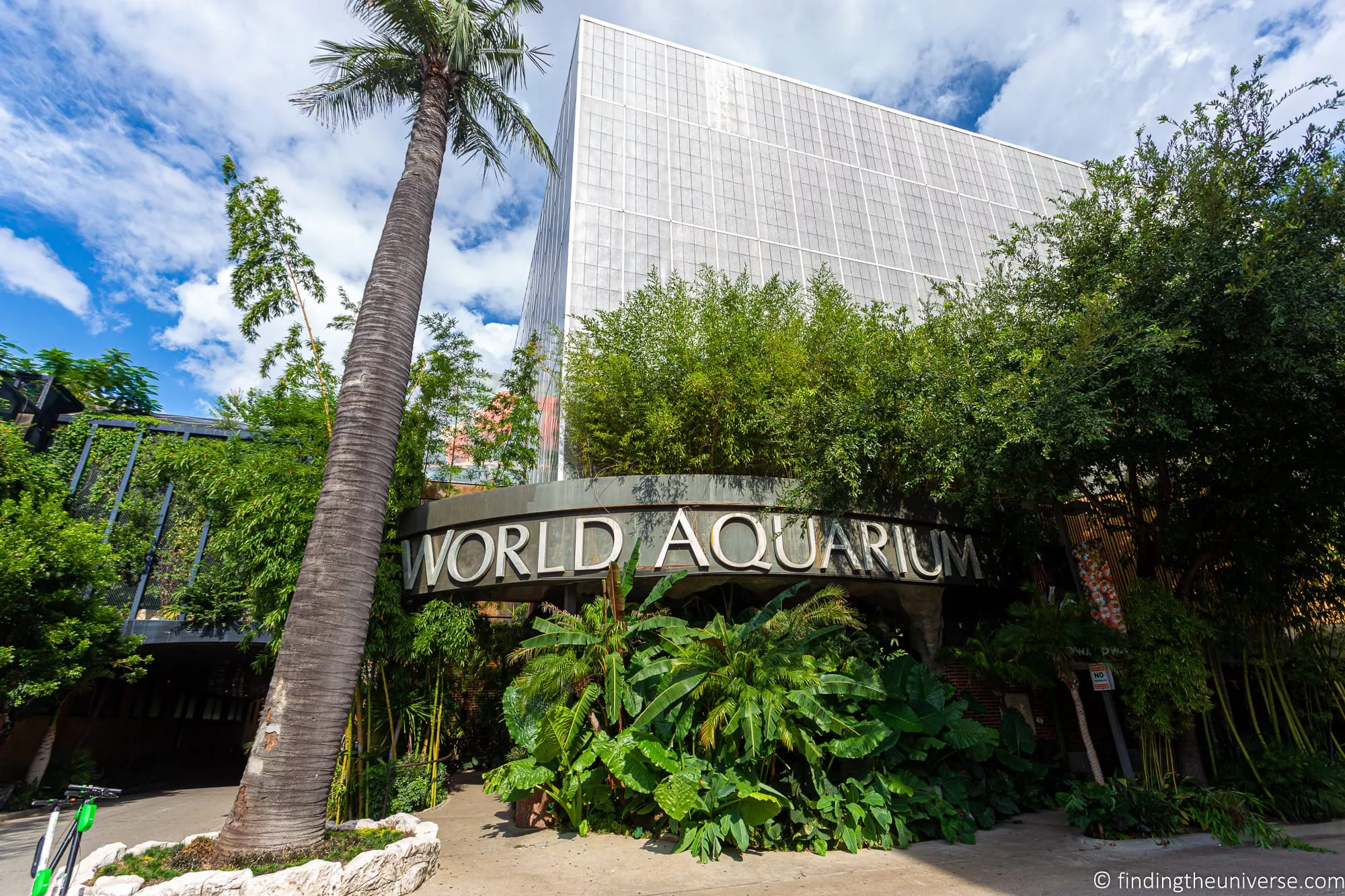
Dallas World Aquarium. Back downtown, the Dallas World Aquarium is part aquarium, part zoo, with a walk through tunnel on the lower level and a recreated Orinoco rainforest above that’s home to birds and the only public display of three toed sloths in the USA. It’s open daily, 8:30am to 5pm (last entry 4pm), with adult admission $34.95 plus tax. It’s not on the CityPASS, so it’s an à la carte add, but it’s a good rainy day or extreme heat option since it’s all indoors.
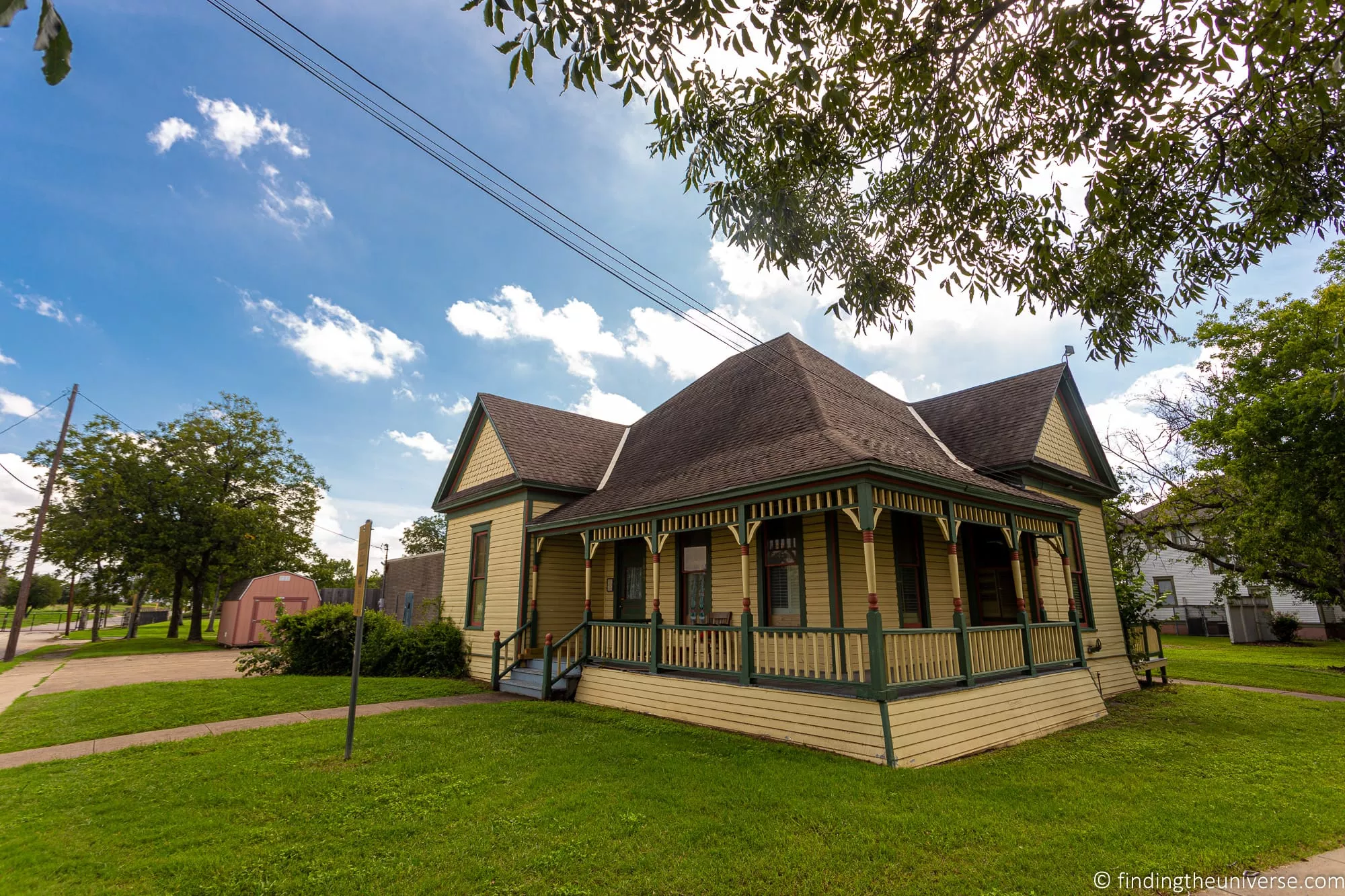
Dallas Heritage Village. In Old City Park just south of downtown, Dallas Heritage Village is an open air collection of 19th century pioneer and Victorian buildings, dozens of them spread across 20 acres in the city’s first park. It’s a quiet, time capsule kind of stop if you like living history. Hours can be seasonal, so check before you go.
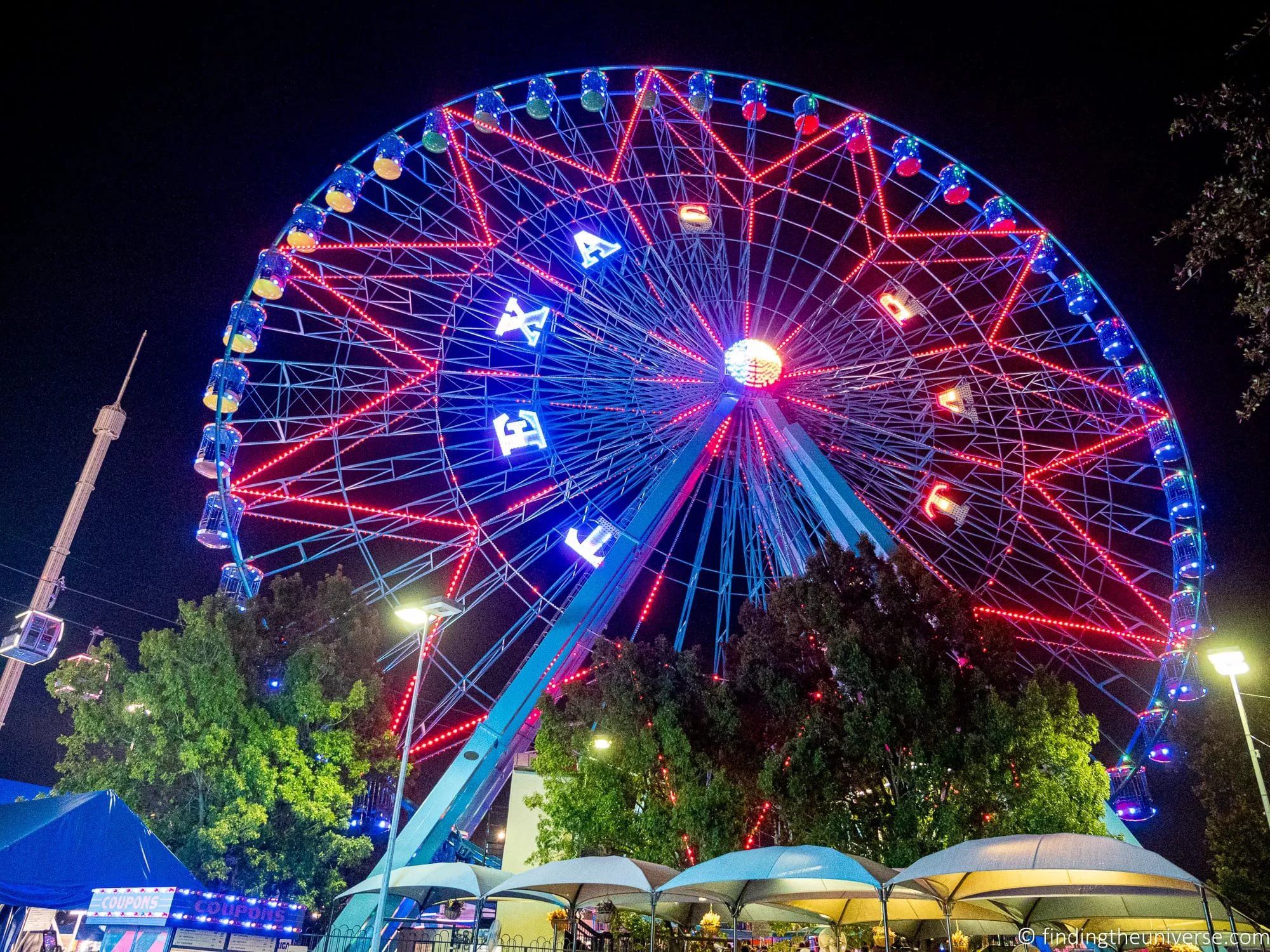
The State Fair of Texas. If your visit lands in late September or early October, the State Fair of Texas at Fair Park is worth building a day around. It’s run most years since 1886, and we happened to catch it on our visit: we loved seeing Big Tex, wandering the farm and craft halls, eating far too much fairground food, and catching a couple of shows. If you’re visiting from outside the USA, a state fair is an experience you won’t find at home. Outside fair season, the city events calendar is the place to see what else is on.

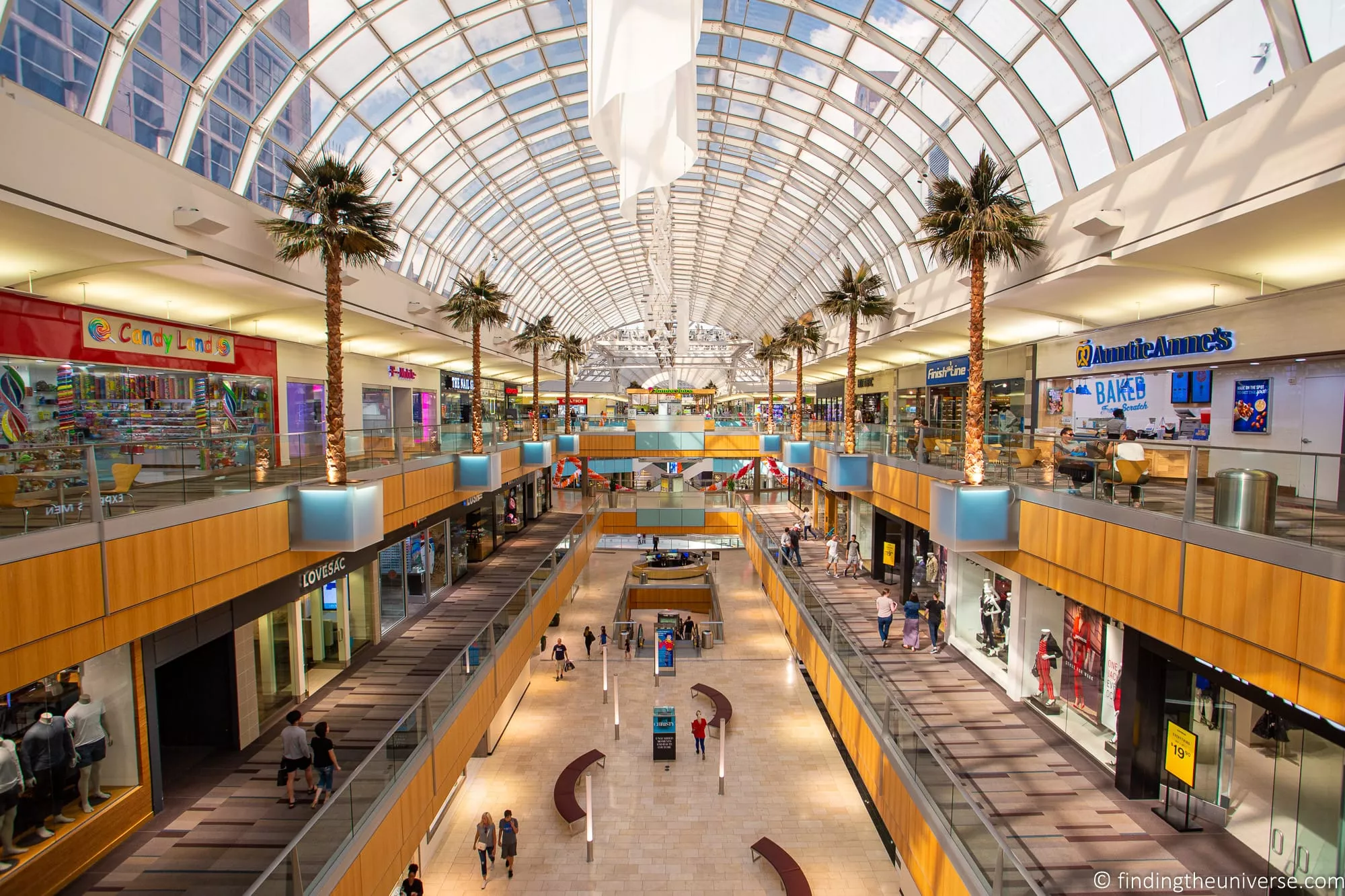
If you have a little time and like to shop, Dallas does that well too, from the original Neiman Marcus downtown and handmade boot makers like Miron Crosby in Highland Park Village to the vast Galleria mall, which has an indoor ice rink under its glass atrium.
Getting Around Dallas
Here’s how getting around Dallas actually works. The two days split neatly: Day 1 needs no car, Day 2 does.
The downtown core and the Arts District are close enough to walk, and that’s how we’d do Day 1, with the one caveat that in high summer you’ll want to break up the walking with the air conditioned stops or grab a short rideshare between them. Day 2’s stops are spread right out. As rough drive times from downtown, Bishop Arts is about 10 minutes, the Arboretum 15 to 20, the Bush Library 12 to 15, Southfork 35 to 45, and AT&T Stadium 25 to 40 depending on traffic. None of those are walkable from each other.
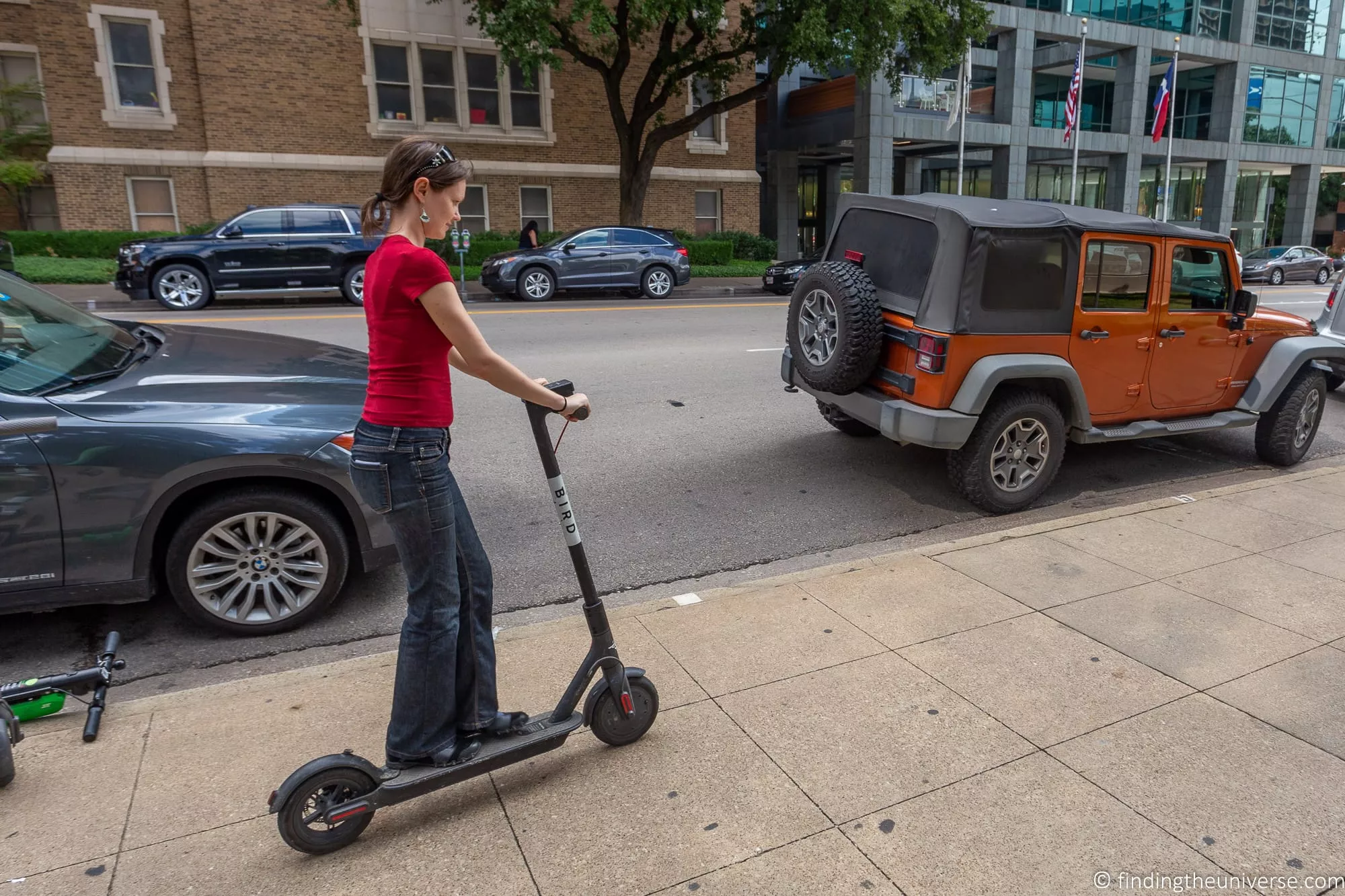
Dallas does have good public transport in DART, the bus, train, and trolley network that links downtown with the suburbs, and you can reach most of the in town attractions on it. But for the Day 2 loop, and especially for Southfork or AT&T Stadium, a car is far less hassle, and it’s the way we’d recommend doing it. If you’re flying in and planning Day 2 properly, it’s worth hiring a car for at least that day. Taxis and rideshare apps cover the gaps if you’d rather not drive, and most hotels and attractions have parking, usually for a fee.

Where to Stay in Dallas
For a two day trip like this, where you base yourself matters: stay downtown and Day 1 becomes a walk out of the lobby. We’ve stayed in both a budget apartment rental and a five star hotel in Dallas over the years, so here are picks across three budgets, all central enough to make the itinerary work.
Budget: the Holiday Inn Express Dallas Downtown sits in a historic 1925 building in the West End, a five minute walk from the JFK Memorial and steps from the Sixth Floor Museum, which makes it ideal for Day 1. The rooms are simple and comfortable, with free breakfast and WiFi included.
Mid range: the Hotel Indigo Dallas Downtown is a well reviewed three star in the centre, with en suite rooms, on site dining, a fitness centre, and a free shuttle within three miles of the hotel. If you’d rather be in the Arts District near the museums, the Fairmont Dallas is a good value four star with a pool and restaurant.
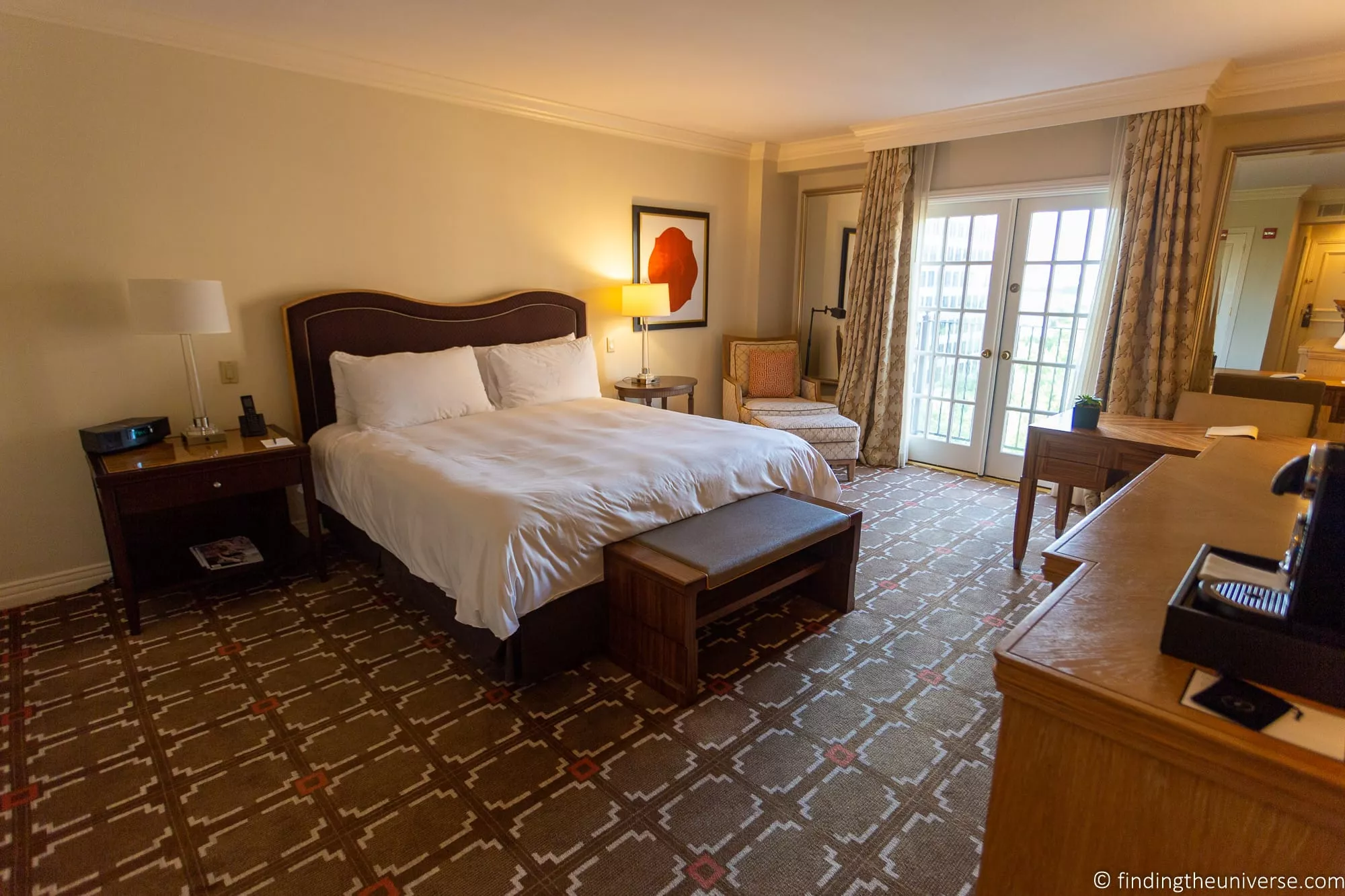
Luxury: we stayed at the Rosewood Mansion on Turtle Creek and loved it. A former private mansion a couple of miles from downtown, it’s one of the city’s best known luxury hotels, with an excellent fine dining restaurant on site. For something more central at this level, the Adolphus is a historic downtown landmark with a rooftop pool.
If you’d prefer a self catering apartment, as we’ve done in Dallas, you can browse Dallas listings on Vrbo.
Is the Dallas CityPASS Worth It?
Like a lot of big US cities, Dallas has an attraction pass, the Dallas CityPASS, and of course we get asked whether it’s worth buying. The answer depends on which stops you’re doing, so here’s the maths.
The 2026 pass costs $64 for adults (13 and over) and $46 for children, and it lets you pick any four of six attractions: the Perot Museum, the Reunion Tower GeO-Deck, the Dallas Zoo, the George W. Bush Presidential Museum, the Dallas Holocaust and Human Rights Museum, and AT&T Stadium Tours. CityPASS advertises savings of up to 56%.
The thing to watch is that those headline savings assume you’d have paid the gate prices CityPASS lists, which can run a bit higher than what the venues charge directly. To check it properly, compare the pass to each venue’s own current price. Here’s how a realistic four for this itinerary stacks up.
| Attraction (on the CityPASS) | Price at the gate |
|---|---|
| Perot Museum of Nature and Science | $27 |
| Reunion Tower GeO-Deck | from $19 |
| George W. Bush Presidential Museum | $26 |
| Dallas Zoo | from $18 |
| Four at the gate | about $90 |
| Dallas CityPASS (any four of six) | $64 |
On that combination you’d pay roughly $90 at the gate against $64 for the pass, so you save about $26, around 29%. Swap in AT&T Stadium Tours or the Holocaust Museum (the other two options) and the saving holds or grows.
So the rule of thumb: if you’ll do at least three or four of those six attractions, the pass pays for itself pretty comfortably. If your Dallas plan leans on the Sixth Floor Museum, the Arts District, and Deep Ellum, note that the Sixth Floor Museum and the Dallas Museum of Art aren’t on the pass (the DMA is free anyway), so the CityPASS won’t do much for you. It comes down to your itinerary, not the marketing percentage.
You can check current details and buy in advance by clicking here. For comparison, we’ve also written about attraction passes for a city like New York, which are more comprehensive than Dallas’s.

Map of Dallas Attractions
To help you picture how the stops fit together, here’s our map of the attractions in this guide. The image below covers the downtown stops, and if you click here you can open a Google map that includes the out of town spots too.

Dallas Tours Worth Booking
If you’d rather have someone else handle the logistics, or you want to go deeper on one part of the city, a few tours are worth a look. For the JFK story, this full day small group tour covers the assassination plus other city highlights. Food lovers have the Deep Ellum food tour mentioned earlier. If you’d like an evening with a twist, there’s a haunted evening pub tour, and for a general overview a private highlights tour takes in the main sights. You can browse the full range on GetYourGuide and Viator.

Dallas Itinerary FAQ
Is two days enough for Dallas?
Two days is enough to see the highlights of Dallas without rushing. One day covers the downtown core (the Sixth Floor Museum, the Arts District, and the Reunion Tower), and a second day gives you time for the spread out spots like the Bishop Arts District, the Arboretum, and the Bush Library or the Zoo. If you want to add AT&T Stadium or Southfork Ranch, you’ll want a third day, as both are a fair drive from the city.
Is Dallas walkable?
Downtown Dallas and the adjoining Arts District are walkable, and you can do a full day there on foot. The rest of the city is not: the attractions are spread across a large area, so beyond the downtown core you’ll need a car, a rideshare, or the DART public transport network to get around.
How do you get around Dallas without a car?
DART, the Dallas Area Rapid Transit network of trains, buses, and trolleys, links downtown with most of the in town attractions, and rideshare apps fill in the gaps. You can manage a downtown focused trip without a car. For stops further out, especially Southfork Ranch and AT&T Stadium in Arlington, a car or an organised tour with transport is much easier.
What’s the best time of year to visit Dallas?
Spring (March to May) and autumn (September to November) are the most comfortable times to visit Dallas, with warm days and cooler evenings. Summers are hot, with July and August highs in the upper 90s Fahrenheit and frequent days over 100°F, so if you visit then, plan outdoor stops for the morning and save the museums for the afternoon. Late September into early October also brings the State Fair of Texas.
Is the Dallas CityPASS worth it?
It’s worth it if you’ll visit at least three or four of the six attractions it covers (the Perot Museum, Reunion Tower GeO-Deck, Dallas Zoo, George W. Bush Museum, Holocaust Museum, and AT&T Stadium Tours). At $64 for adults, doing four of those typically saves around $25 to $30 against the gate prices. If your trip centres on the Sixth Floor Museum and the free Dallas Museum of Art, which aren’t on the pass, it won’t save you much.
Where should you stay in Dallas for a weekend?
Stay downtown. It puts you within walking distance of the Sixth Floor Museum, Dealey Plaza, and the Arts District, which is the whole of Day 1. Budget travellers can look at the Holiday Inn Express in the West End, mid range visitors at the Hotel Indigo or the Fairmont in the Arts District, and for a splurge the Rosewood Mansion on Turtle Creek is our pick.
Do you need to rent a car in Dallas?
Not for a downtown only trip, but it helps for a fuller visit. Day 1 of this itinerary needs no car. For Day 2’s spread out stops, and for anything as far out as Southfork or AT&T Stadium, a rental car is the easiest option, though DART and rideshares are workable alternatives if you’d rather not drive.
Further Reading
We hope this guide helps you plan a great couple of days in Dallas. To help with the rest of your trip, here are some of our other resources you might find useful.
- Staying in Texas? We have guides to things to do in Houston, things to do in Austin, and things to do in San Antonio.
- In Houston, don’t miss our guide to Space Center Houston. In San Antonio, see our guides to the Alamo and the San Antonio River Walk.
- Tying these cities together makes a great road trip. See our guides to how much it costs to travel in the USA and our tips for driving in the USA if it’s your first time.
- For more road trip inspiration, see our itineraries for a USA Deep South road trip, a California road trip, Route 66, and the Pacific Coast Highway.
- We’ve visited a lot of other US cities too. See our guides to Huntsville, Savannah, Charleston, Albuquerque, New Orleans during Mardi Gras, Cambria, Omaha, San Diego, and Santa Fe.
- If you’re tying Dallas into a bigger US trip, the Lonely Planet USA guidebook is a good general companion when there’s no state or city specific guide to hand.
And that’s our guide to spending two days in Dallas. As always, we’re happy to answer your questions and hear your feedback, so pop any thoughts in the comments below and we’ll get back to you.
Eva says
As a long-time Dallas resident, I can relate to this article! The Dallas Museum of Art is indeed a treasure that offers a variety of exhibits catering to different art preferences. The free admission is such a boon for art lovers, but I always make it a point to donate whenever I can.
The Perot Museum of Nature and Science is a must-visit, especially if you have kids. The exhibits are interactive, which makes learning a fun process for the young ones (and even for adults like me!). The Dallas CityPASS is a great option for families to explore this and other attractions in Dallas.
Remember, though, that Dallas is so much more than its tourist spots. The city is rich with history, culture, and a vibrant food scene that you can’t miss. Don’t forget to explore some of the local restaurants and coffee shops!
Overall, this guide is a fantastic start for anyone planning to visit our beautiful city. Enjoy your time in Dallas!
Laurence Norah says
Thanks very much Eva!