
The United States is pretty much the perfect country to road trip in, with great roads, cheap gas and hundreds of gorgeous destinations to choose from. It’s no wonder that a California road trip is on many visitors’ to-do lists!
We’ve taken a number of fantastic US road trips, including Route 66, the Pacific Coast Highway, the Oregon Trail and a route through the Deep South, and have never failed to have an amazing time.
One of our favourite states to explore though has to be California. With a mix of an excellent climate, some of the best National Parks in the country, and world-famous cities to explore, you’re never going to run short of things to do.
I first did a version of this road trip about 20 years ago on one of my earliest visits to the States, and I’ve been back to California multiple times since. Jess also used to live in California so has lots of personal experience travelling around the state.
This itinerary is the result of all those trips and experience, refined into what I think is the best way to see the highlights in two weeks. It works as a loop starting and finishing in San Francisco, which keeps car hire costs down and means you don’t have to worry about one-way fees.
I’ve also included a winter route variant for those visiting between November and May, when snow closes some of the mountain passes. California is a year-round destination, you just need to plan the route differently depending on the season.
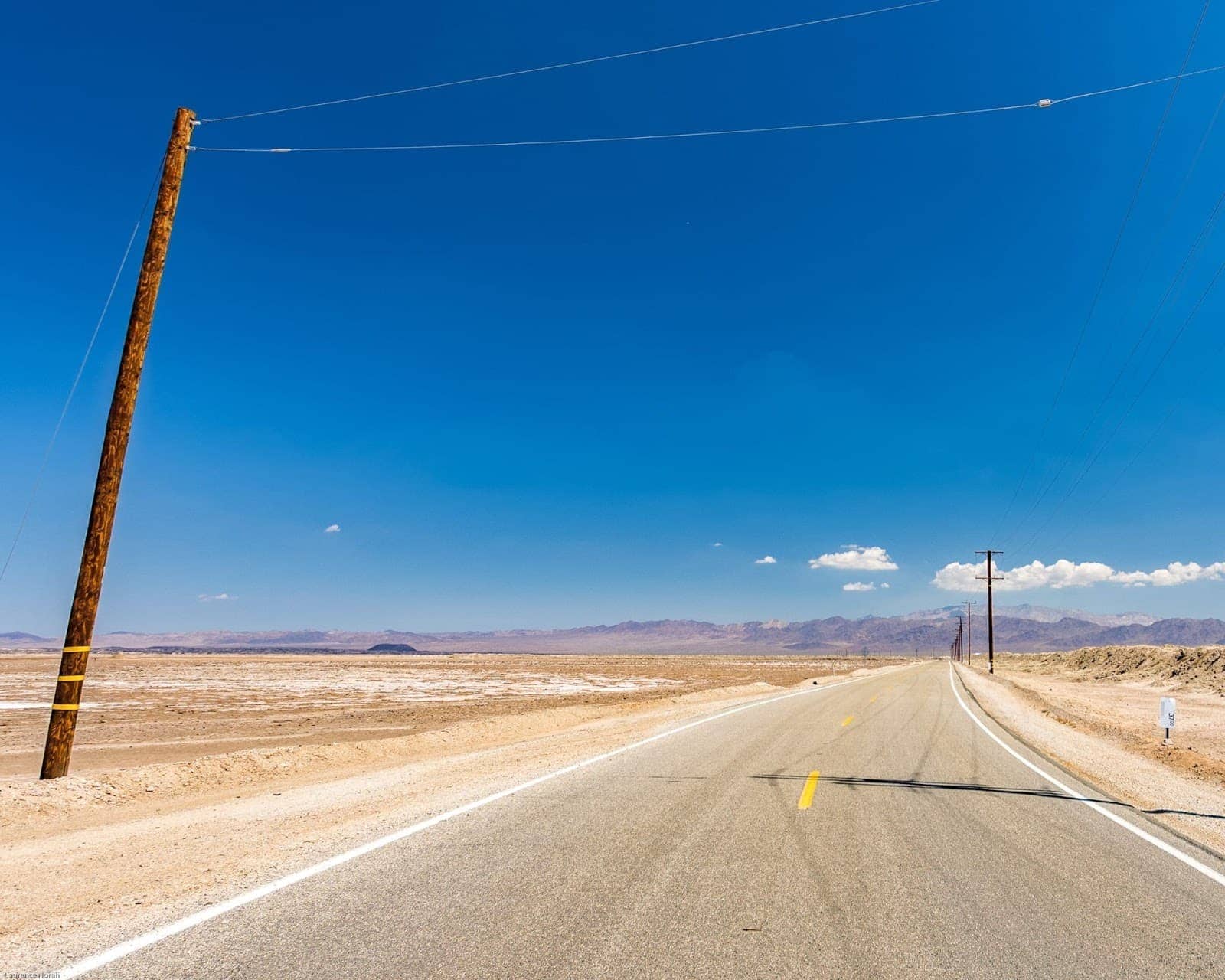
Table of Contents:
California Road Trip Itinerary Overview
This California road trip itinerary has you starting and finishing in San Francisco. As it’s a loop, you could also start and finish at any other point on the route. If you’d prefer another starting location, LA would be the most logical alternative as it has a large well connected airport.
The only downside of starting in LA is that LA is much harder to explore without a car, so you’ll need one from the start of your trip. You’ll also have to figure out parking in San Francisco when you reach it. If you start in San Francisco as we suggest, it’s very manageable without a car (we highly recommend it), so you can skip paying for car rental and parking for your first few days of the trip.
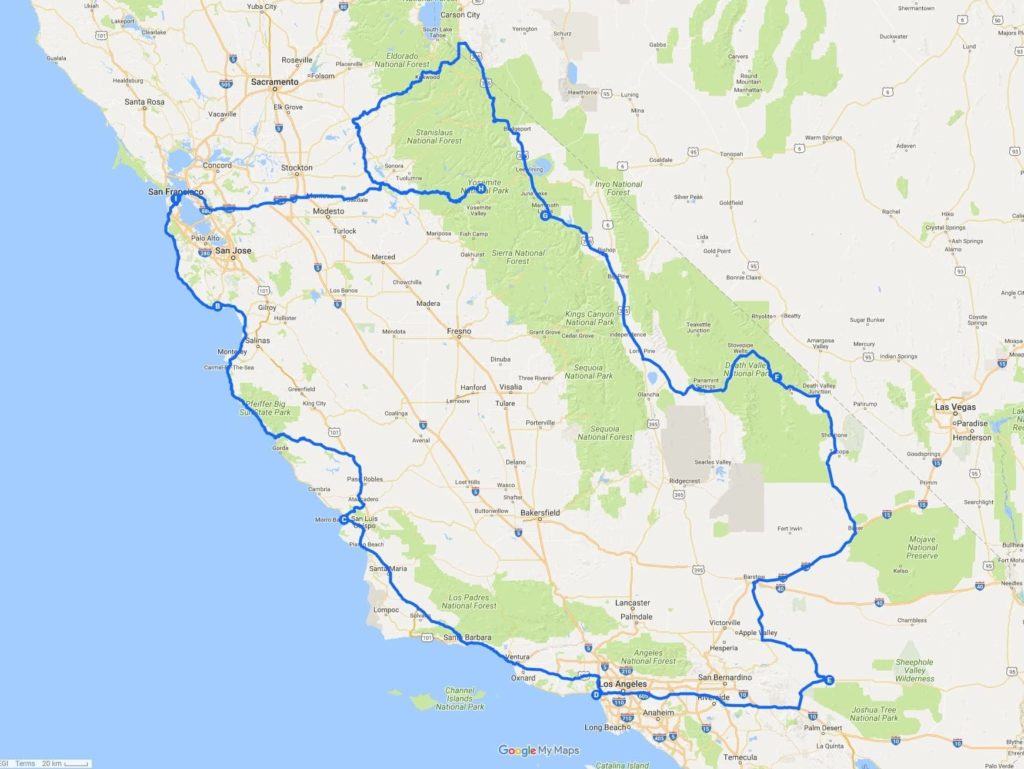
The route runs anti-clockwise, heading south down the Pacific Coast Highway first and returning inland through the national parks. I’d recommend this direction because you’ll be on the ocean side of the road for the coastal stretch, which gives you much better views and easier access to pull-offs and viewpoints.
Here’s the day-by-day breakdown. Total driving distance for the loop is roughly 1,500 miles, though detours and side trips will add to that.
Summer route (May/June through October):
- Days 1 to 3: San Francisco
- Days 4 and 5: Pacific Coast Highway to LA
- Days 6 and 7: Los Angeles / Santa Monica
- Day 8: Joshua Tree National Park
- Day 9: Death Valley National Park
- Day 10: Mammoth Lakes and the Eastern Sierra
- Days 11 to 13: Yosemite National Park (via Tioga Road)
- Day 14: Return to San Francisco
Winter route (November through May):
- Days 1 to 3: San Francisco
- Days 4 and 5: Pacific Coast Highway to LA
- Days 6 and 7: Los Angeles / Santa Monica
- Day 8: Joshua Tree National Park
- Day 9: Death Valley National Park (pleasant temperatures in winter)
- Day 10: Mammoth Lakes via Highway 395
- Days 11 and 12: Lake Tahoe or Yosemite (your choice, see below)
- Days 13 and 14: Yosemite National Park or Lake Tahoe, then return to San Francisco
The main difference is that the Tioga Road, which connects Mammoth Lakes directly to Yosemite from the east, closes from around November through May or June due to snow. In winter, you continue north on Highway 395 from Mammoth to Lake Tahoe, then loop back down to Yosemite via the western approach (Highway 140 from Mariposa).
The trade-off on the winter route is time. With 14 days, you need to choose how to split your days between Lake Tahoe and Yosemite. If skiing is a priority, spend two days at Tahoe and give Yosemite a day and a half (arrive afternoon, full day exploring, leave the following morning).
If Yosemite is the bigger draw for you, spend one night at Tahoe and give yourself two full days in the valley instead. Both approaches work, and Yosemite in winter with snow-capped peaks and almost no crowds is a very different but very special experience. If you have the luxury of being able to extend your itinerary to 15 or 16 days, adding them to Yosemite would be my recommendation.
If you’re visiting in the summer and want to include Lake Tahoe, you can easily extend this to a 16-day trip by adding two days between Yosemite and San Francisco. More on that in the Lake Tahoe section below.
California Road Trip Map
We’ve put together a map of our suggested California road trip itinerary, which you can see below, and also on Google Maps here. Note that depending on the time of year, access to Yosemite can be restricted due to snow, so you may have to take the longer way round via the western approach.
In addition, parts of the Pacific Coast Highway can be closed due to damage caused by landslides. As such, the map should be seen as an overview rather than a definitive route. You’ll want to check current road conditions before you set off.
You can check the status of Highway 1, as well as all the other roads in the state, on the Caltrans website here.
California Road Trip Itinerary
Days 1 to 3: San Francisco
Driving: None (pick up your hire car when you leave)
We’re going to start our California road trip with three days in San Francisco. San Francisco is home to the second largest airport in California, so there are plenty of options for getting here for both domestic and international travellers.
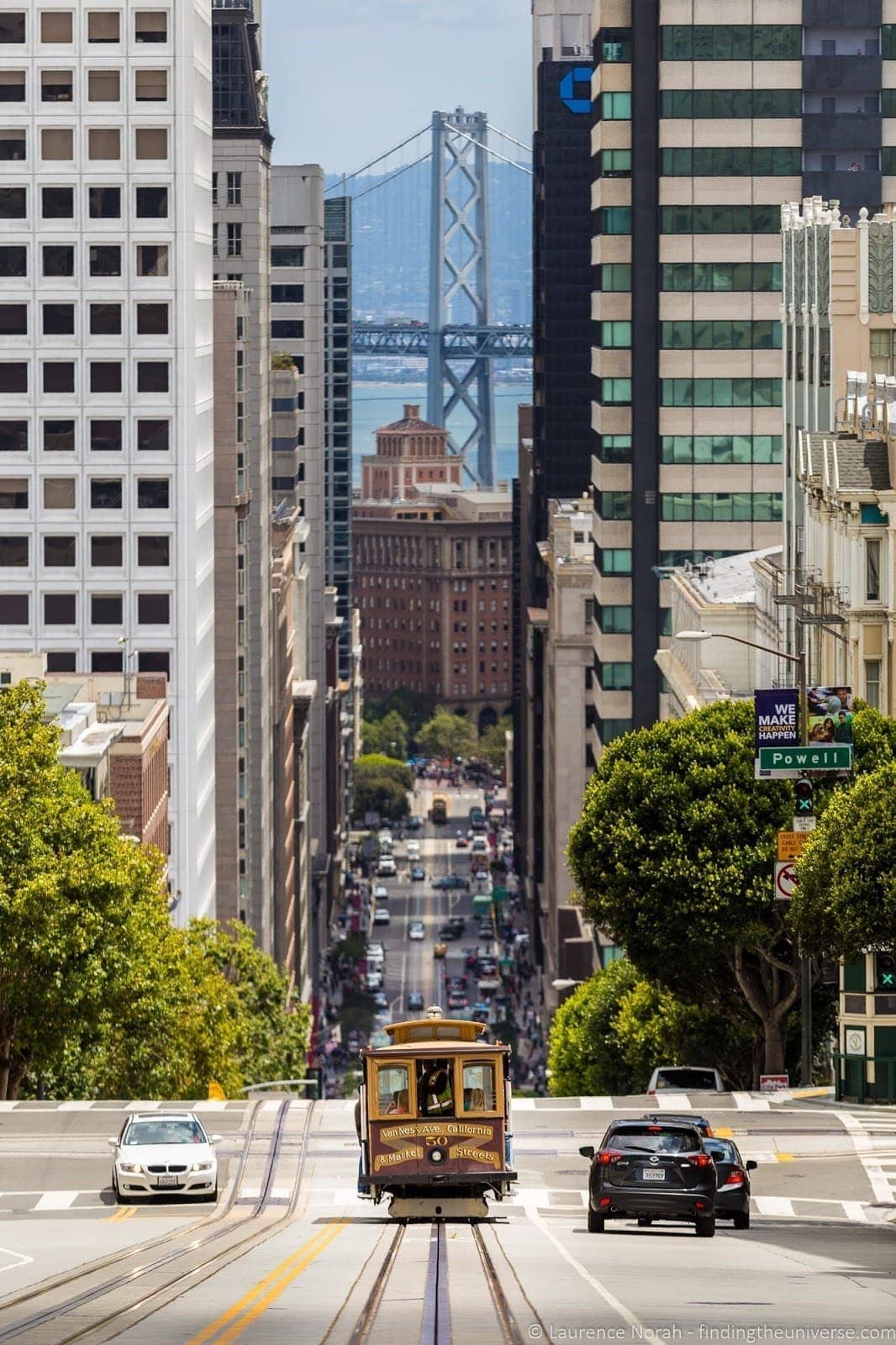
If you’re arriving internationally, you’re going to want a few days to adjust to the time zone difference before getting behind the wheel. That’s why I’m suggesting three nights in San Francisco, and picking up your hire car as you leave. You won’t want (or need!) a car while you’re in the city. Parking is expensive and there are plenty of other ways to get around.
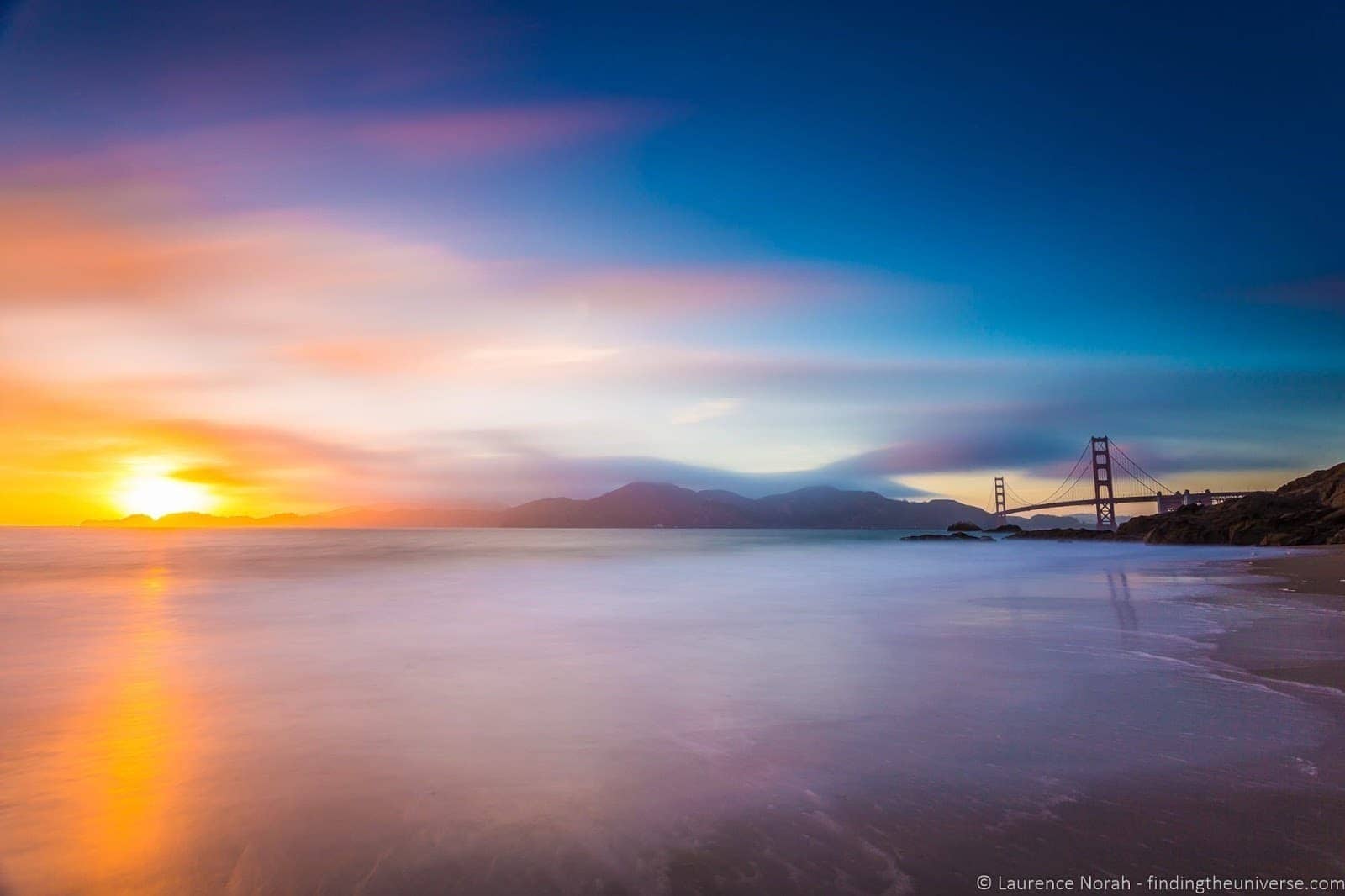
You won’t be short on things to do. Our suggestions would be to take in the Golden Gate Bridge (hire a bike to get here easily), explore Chinatown, pop across to Alcatraz, revel in the tourist trap that is Fisherman’s Wharf, don’t miss Golden Gate Park, head to the top of Nob Hill for cocktails at The Mark, hop on a cable car and, if you still have time, take a stroll at Lands End.
One thing you have to do while in San Francisco is get a clam chowder in a sourdough bread bowl at Boudin Bakery at Fisherman’s Wharf. Yes, it’s touristy. Yes, the queue can be long. But the sourdough is incredible and it’s a San Francisco institution for a reason.
To get yourself oriented, we can recommend taking a walking tour with the excellent SFNative folks, as they know the city inside out. If you’re looking for some great photo opportunities, check out our guide to the best photography locations in San Francisco.
A word on car break-ins: San Francisco has a well-known problem with car break-ins, particularly in tourist areas. Never leave anything visible in your car, not even a jacket or an empty bag. Thieves will break a window for anything that looks like it might contain valuables. This applies to the whole trip, but SF is where the risk is highest. Another reason not to hire a car until you leave the city!
Where to stay in San Francisco:
There are plenty of accommodation options in San Francisco. Here are some picks across a range of budgets.
HI San Francisco Fisherman’s Wharf Hotel is a great budget option right on the waterfront at Fort Mason. They offer both dorm and private rooms, with free parking and free breakfast.
Staypineapple Union Square is where we stayed on our most recent trip to San Francisco. It’s a restored 1913 hotel with a fun pineapple theme and free cupcakes. Rooms are comfortable and the Union Square location is excellent.
Four Seasons Hotel is the luxury option, also in Union Square. Huge rooms, city views, and all the amenities you’d expect.
See more options for hotels in San Francisco here, or check out curated apartment rentals on Plum Guide.
Days 4 and 5: Pacific Coast Highway
Driving: San Francisco to LA, roughly 380 miles over 2 days. Day 1: SF to Cambria/SLO area (~4 hours with stops). Day 2: Cambria to LA (~4 hours with stops).
The drive down the Pacific Coast Highway from San Francisco to Los Angeles is one of the best road trips in the world. It’s really a no-brainer that this would be your first destination after you pick up your hire car and head out of the city.
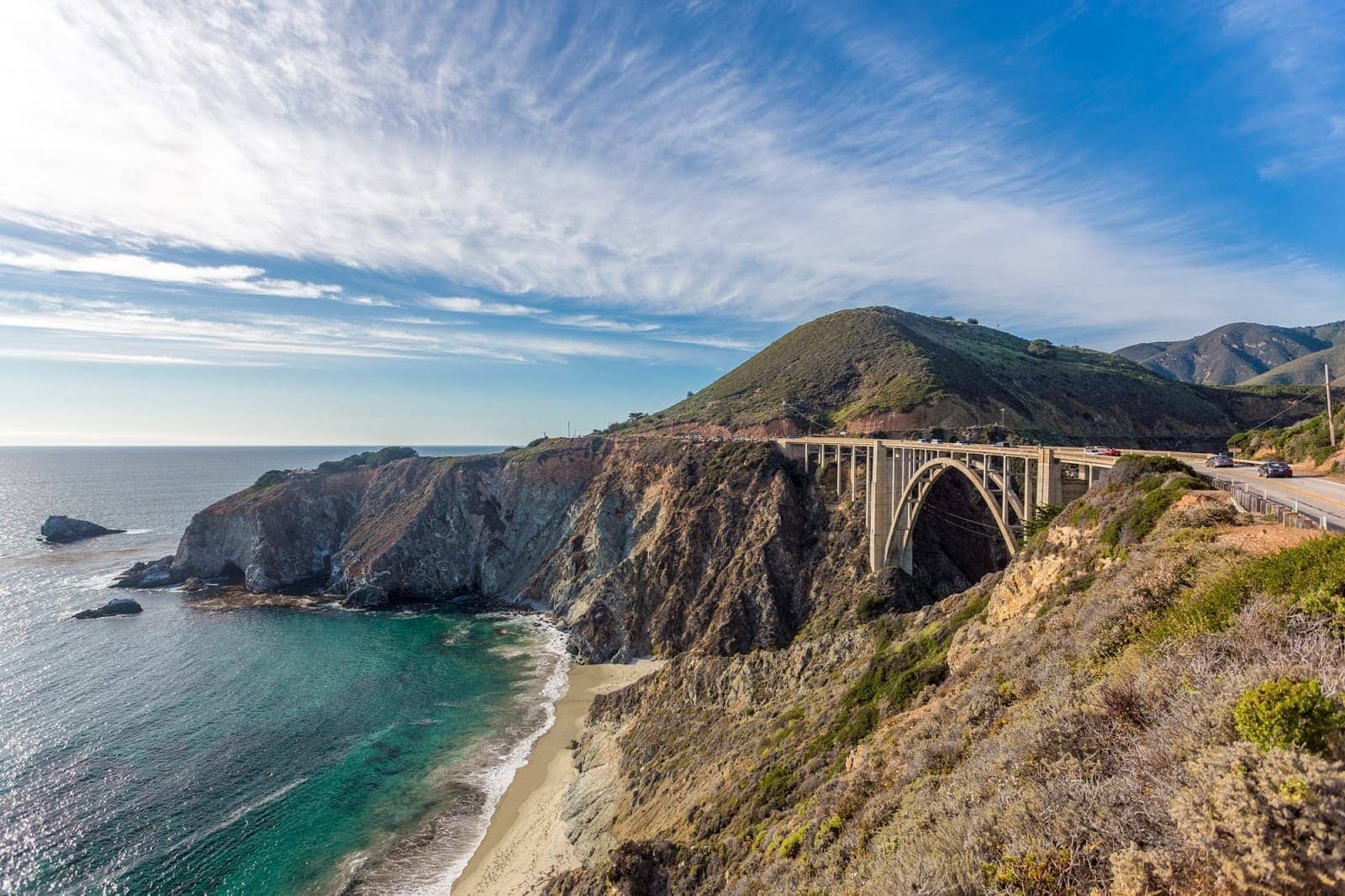
Big news for 2026: Highway 1 through Big Sur is now fully open for the first time in nearly three years. The road was closed since early 2023 due to a series of landslides, most notably at Regent’s Slide. The final section reopened on 14th January 2026, so you can now drive the complete route from Carmel to Cambria without detours. Do be aware that Highway 1 is always prone to temporary closures after heavy rain, so check the Caltrans website before you go.
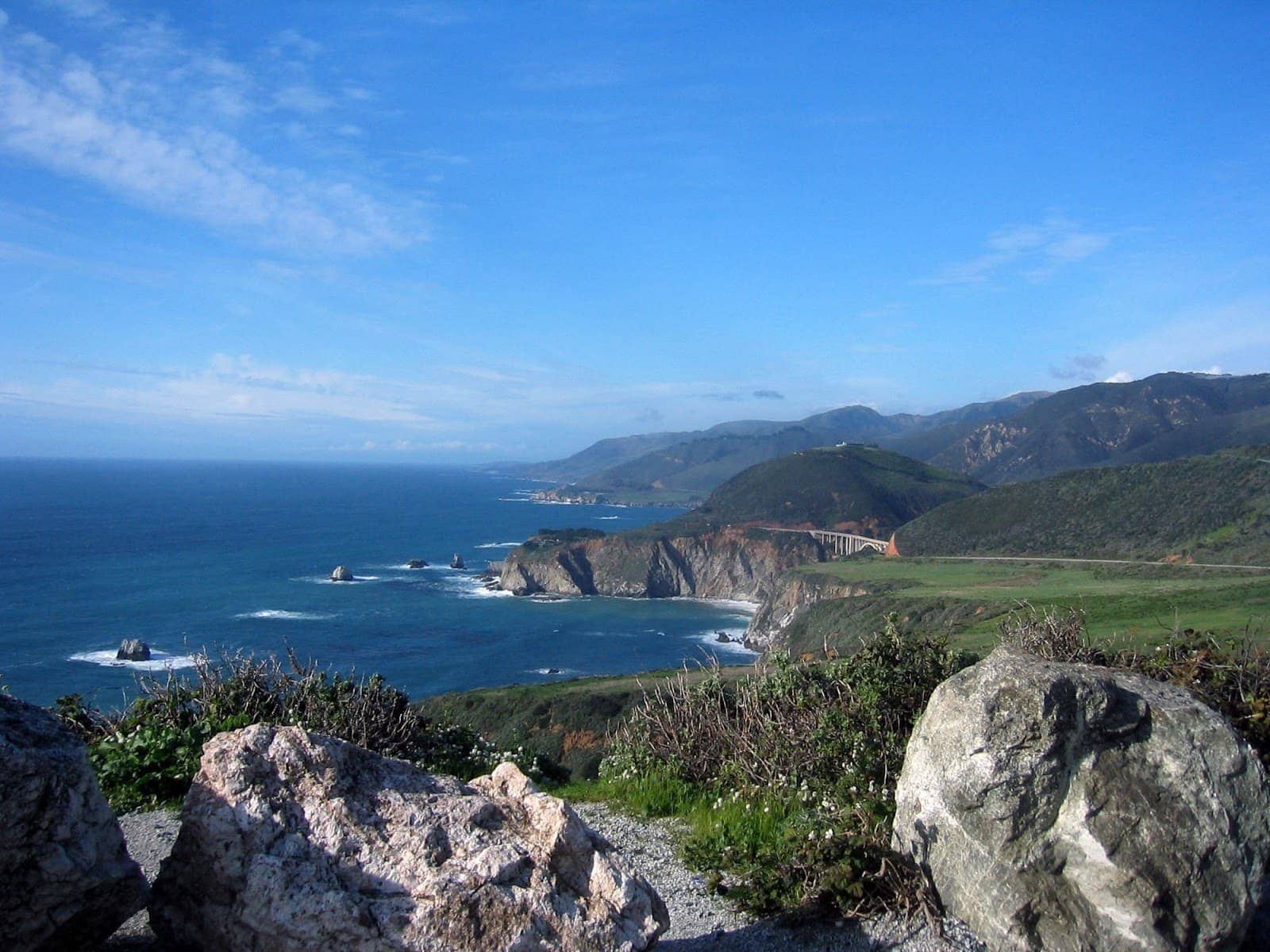
There are loads of highlights along the way. Don’t miss Santa Cruz, Monterey (the aquarium is a highlight), the 17-Mile Drive, Big Sur and the Julia Pfeiffer Burns State Park (camp here if you can!). The latter is particularly famous for the waterfall that cascades onto the beach, a gorgeous photo opportunity. If you want to see our highlights of Route 66 through California, which ends in the LA area, that’s another option for the southern end of this drive.
From Big Sur, head further south and take in the seals and charming village of Cambria, the gorgeous Pismo Beach, Hearst Castle and more.
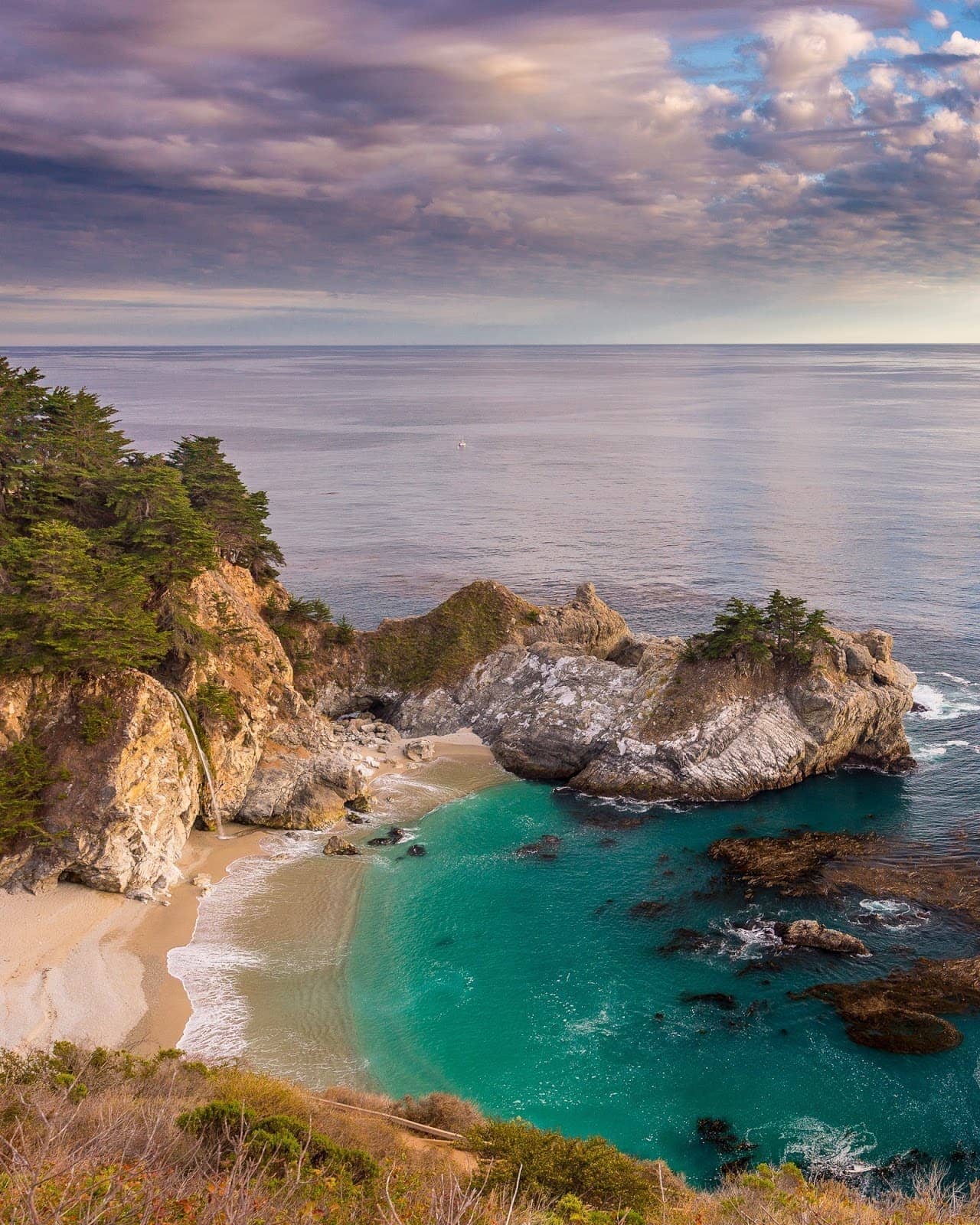
For the two days on this stretch, I’d recommend stopping overnight around Monterey, Carmel or Big Sur on your first night, and somewhere around San Luis Obispo, Morro Bay or Cambria on your second night. For loads more detail on this stretch and help planning the perfect coastal drive, check out our super detailed guide to planning a Pacific Coast Highway road trip.
If you’re a foodie, San Luis Obispo is worth a longer stop. The Thursday night farmers’ market on Higuera Street is one of the best in California if your timing works out. And if you’re passing through the area, the Madonna Inn just south of SLO is worth at least a meal, even if you don’t stay the night. Each of the 110 rooms is uniquely decorated and the Gold Rush Steak House is a proper experience. We didn’t stay but we had dinner there and it was fantastic.
Where to stay on the PCH:
For your first night, around Carmel or Monterey:
Sandpiper Inn, Carmel. We stayed here and enjoyed the comfortable rooms, inclusive breakfast, and proximity to the beach. Free parking.
The Jabberwock B&B, Monterey. Just a few blocks from Cannery Row, this very well reviewed B&B has lovely guest rooms, some with fireplaces and hot tubs. Free parking and breakfast included.
If you like camping, the Pfeiffer Big Sur Campground is surrounded by massive redwoods and is an incredible place to spend a night. I’ve camped here and loved it. Just be aware that it’s popular, and booking in advance is a must.
For your second night, around SLO, Morro Bay or Cambria:
Apple Farm Inn, San Luis Obispo. We really enjoyed our stay here. Spacious, comfortable rooms, fantastic breakfast, an on-site bakery with delicious food, two pools and free parking.
El Colibri Hotel & Spa, Cambria. We stayed here for a couple of nights and really enjoyed it. Rooms have fireplaces, there’s an on-site spa, outdoor hot tub, and free parking.
Cambria Palms Motel, Cambria. A good budget option a couple of blocks from downtown, with rooms at a reasonable price. Free parking on site.
Days 6 and 7: Los Angeles / Santa Monica
Driving: End of PCH to Santa Monica, roughly 2-3 hours from Cambria/SLO area depending on route.
Los Angeles can be a big, confusing place, particularly after your peaceful drive down the Pacific Coast Highway. That’s why I suggest you head to Santa Monica and make that your LA base.
On the coast, and technically a separate city (it’s hard to tell as LA and its surrounds are part of a fairly vast urban sprawl), you’ll have access to the wonderful beach and pier, as well as nearby Venice Beach, most famous for its boardwalk and people watching.
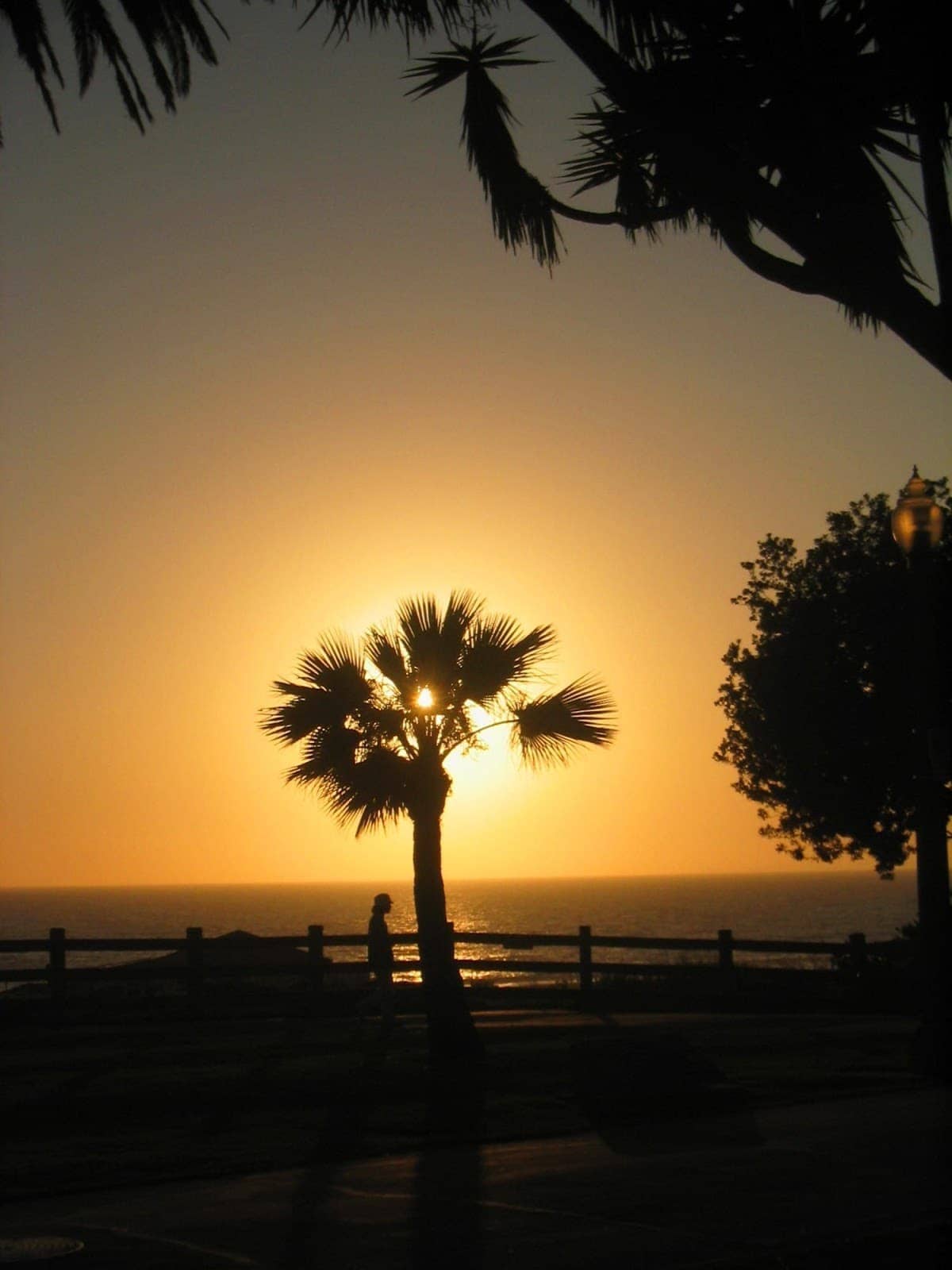
There’s no shortage of things to do in LA. If you’re interested in film, you can visit the Hollywood sign (the best views are from Griffith Park, which is also home to the Griffith Observatory and well worth a visit at sunset), walk the Hollywood Walk of Fame or go on a tour of the backlot at Universal Studios.
Art lovers will find their thrills at the Getty Center, which also offers gorgeous panoramic views of the surrounding city. Other highlights include Sunset Boulevard, and of course, you can hop on one of those tours of the stars’ homes if you’re so inclined.
Two days is enough for LA if cities aren’t your main focus. If you’d rather swap city time for more nature, you could spend just one night here and use the extra day at Yosemite or on the PCH instead.
Where to stay in LA:
Santa Monica Motel. We stayed here and it does the job well. It’s a basic 2-star motel, about a 10-minute walk from Santa Monica Pier. Free morning coffee, free parking, and rooms come with coffee makers and fridges. It’s a value option, but comfortable enough.
Magic Castle Hotel. We stayed here too, and it’s a great mid-range pick. A short walk from the Hollywood Walk of Fame, with a pool, unlimited free snacks, free continental breakfast and reasonably priced parking. Also a short walk to the Hollywood Bowl and three miles from Universal Studios.
The Georgian Hotel. If you want something a bit more special, this 1933 Art Deco hotel is a short walk from Santa Monica Pier with ocean views and on-site dining. This one is on Jess’s wishlist of hotels to stay in next time we’re in LA.
See more LA listings here, or check out curated apartment rentals on Plum Guide.
Adding San Diego to Your California Road Trip
If you’re not excited about Los Angeles, or if you have an extra day or two to play with, San Diego is an excellent alternative or addition. It’s about a 2-hour drive south of LA and a much more relaxed, easily walkable city.
We love San Diego and have written a full guide to things to do in San Diego which covers everything from the zoo to the beaches. If you’re swapping LA for San Diego, you’d continue south on the PCH past LA and pick up the desert portion of the itinerary from San Diego instead (it adds about an hour of driving compared to leaving from LA). If you’re adding it, budget an extra one to two days.
Day 8: Joshua Tree National Park
Driving: LA to Joshua Tree, roughly 150 miles / 2.5 hours.
Time to leave the cities behind. The rest of this itinerary is going to focus on some of California’s incredible wilderness, and we’re starting with the Joshua Tree National Park, home to those iconic shaped trees that the park is named for.
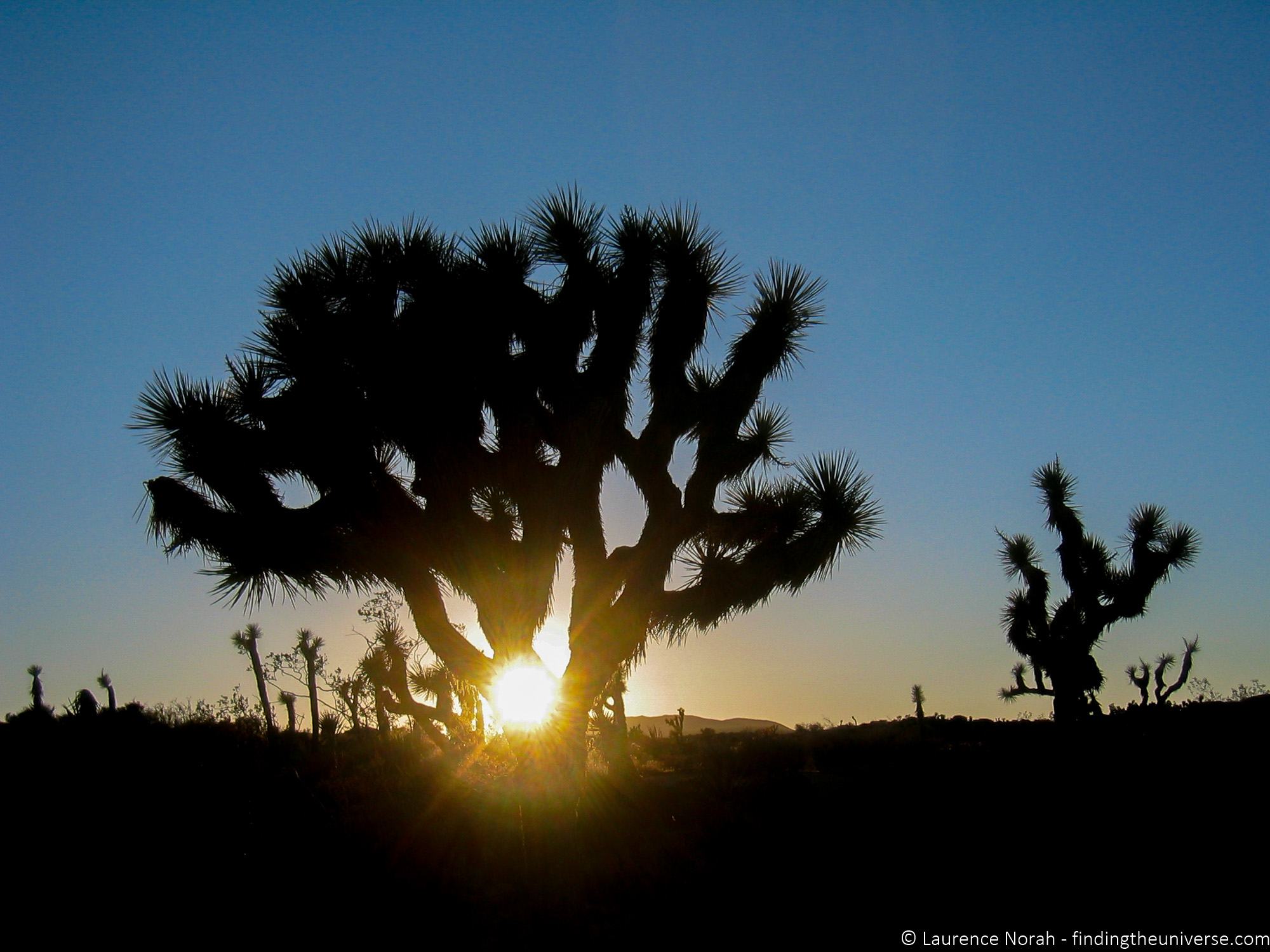
It’s a wonderful place, the meeting point of two deserts, and offers good opportunities for camping, hiking and star-gazing. The night skies here are spectacular.
The best way to experience the park is to camp overnight in one of its many campgrounds (reserve a spot well in advance), otherwise, there are various lodging opportunities outside the park in Twentynine Palms. Be aware that there is very limited water availability in the park (and no hookups for RVs), so bring plenty of water and food. This is a remote desert environment.
Where to stay near Joshua Tree:
9 Palms Inn. A budget-friendly option with good reviews, rooms with coffee maker, microwave and fridge, and free parking.
Holiday Inn Express Hotel & Suites. A reliable 3-star chain option with a heated pool, fitness centre, and free parking.
Flying Point Homestead. If you want something different, this property includes a beautiful silver streak trailer as one of its accommodation options.
See more listings for this area on Plum Guide.
If you want to include a detour to Las Vegas, this would be the moment to do it. We’d suggest adding a couple of days to your trip if you want to experience the city and its surrounds, then rejoin the trip at the next stop. For more on that sort of trip, check out our two week USA road trip itinerary, which includes Las Vegas and the Grand Canyon.
Day 9: Death Valley National Park
Driving: Joshua Tree to Death Valley, roughly 260 miles / 4 hours. Death Valley to Mammoth Lakes, roughly 200 miles / 3.5 hours (you can combine the drive with a half-day in the park).
From one desert environment to another, and the largest national park in the contiguous United States. Death Valley (the name was given by gold rush travellers who nearly perished here) is the hottest and driest place in North America, and holds the record for the hottest ambient air temperature ever recorded on Earth.
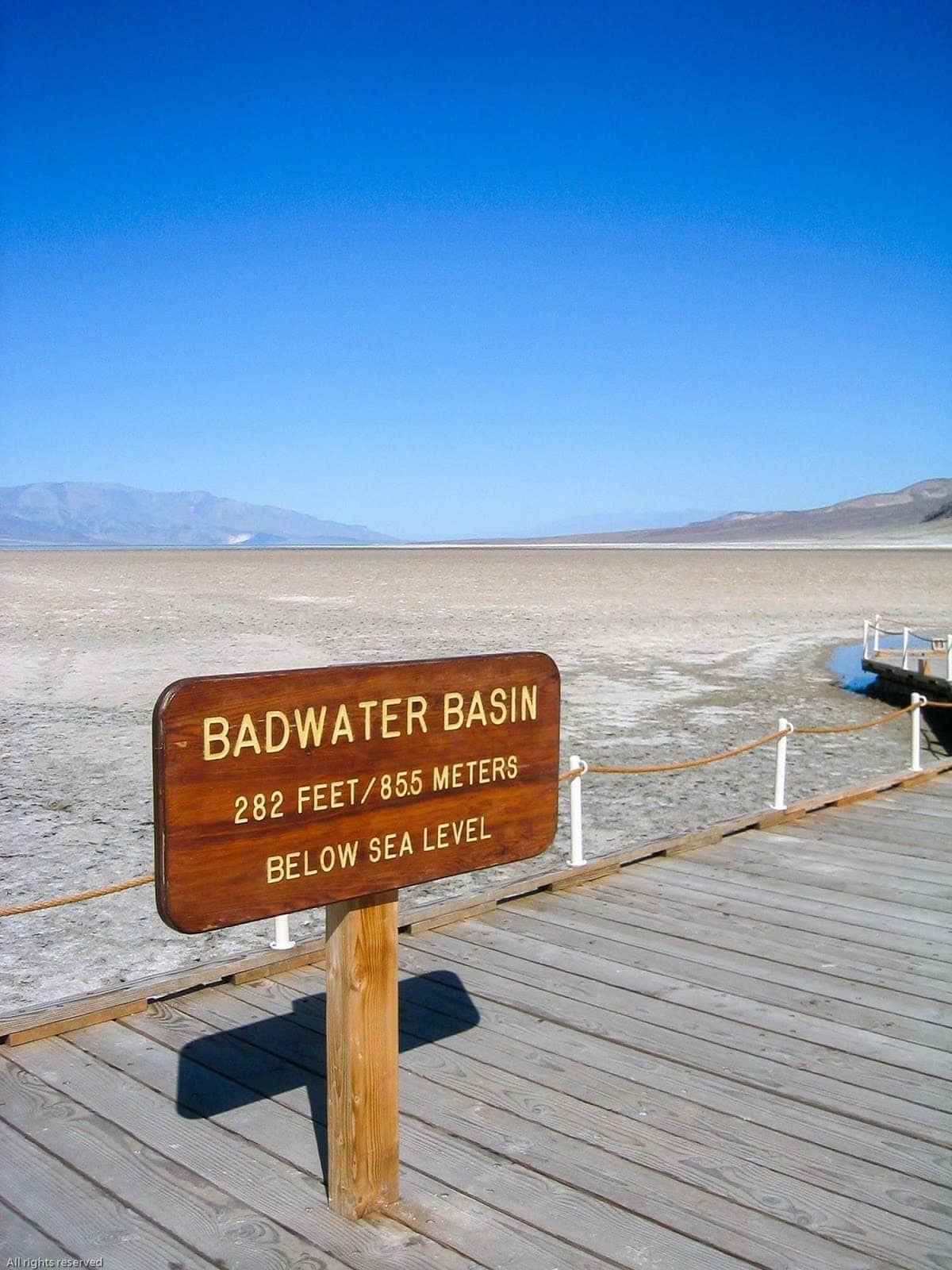
So, overall, a hot place. Which does beg the question: why go?
There’s the sense of remoteness. The vast, unforgiving wilderness. The knowledge that you’d probably not last very long if you wandered off and got lost (please don’t wander off and get lost).
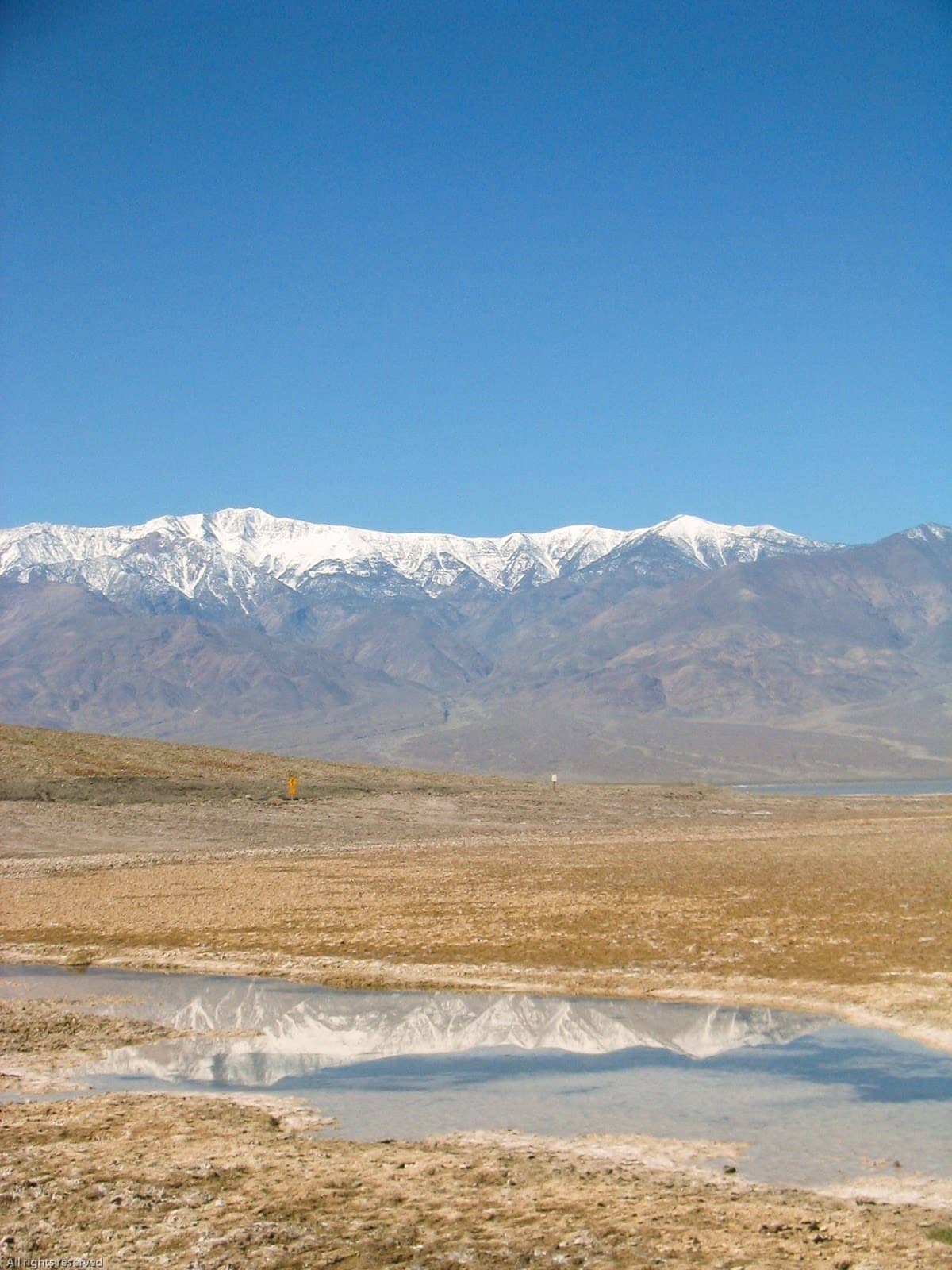
There’s plenty to do here. Visit Badwater Basin, the lowest point in all of North America, sitting 86 metres below sea level. Then there are the Mesquite Sand Dunes, Zabriskie Point, the Devil’s Golf Course, Artist’s Drive and Mosaic Canyon. A day is enough to see the highlights, and you can combine the visit with the drive north to Mammoth Lakes.
A note on timing: I’d personally skip Death Valley if you’re visiting in July or August. It’s going to be too hot to do much of anything, and you’d be better off spending that extra day at Yosemite or on the coast. If you’re visiting in the shoulder season (spring or autumn) or winter, Death Valley is actually a really pleasant temperature and well worth a full day. Plan and pack accordingly.
If you want to skip Death Valley, you can drive directly from Joshua Tree to Mammoth Lakes via Highway 395 (about 300 miles / 5 hours), or take Highway 95 along the eastern edge of Death Valley without entering the park itself.
Day 10: Mammoth Lakes and the Eastern Sierra
Driving: If coming from Death Valley, roughly 200 miles / 3.5 hours via Highway 395. If coming directly from Joshua Tree, roughly 300 miles / 5 hours.
From Death Valley we’re heading north up Highway 395 along the Eastern Sierra. This drive is incredible, with the scenery changing dramatically as you climb from the desert into the mountains. On a clear day you can see Mount Whitney, the tallest peak in the contiguous United States, from the road.
Mammoth Lakes is an adventure lovers’ playground. You can go hiking, cycling, rock climbing, horseback riding, fishing, or just enjoy the mountain scenery. There’s also Bodie, a ghost town, craft beer breweries and plenty of dining options.
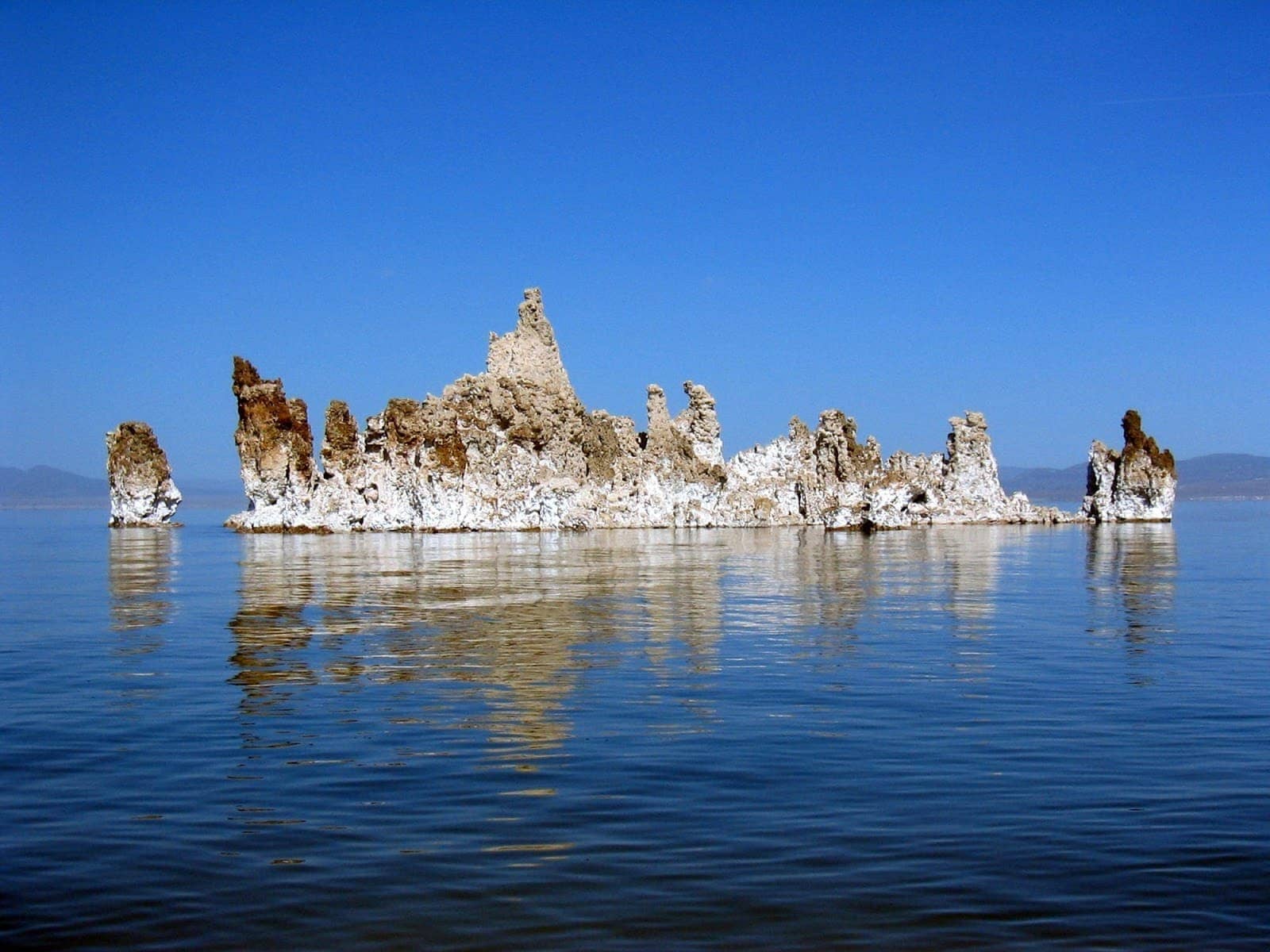
While you’re in the area, take the opportunity to visit Mono Lake. Now a state nature reserve, Mono Lake is a million-year-old lake notable for the “tufa” towers, calcium carbonate structures that stand above the lake like strange modern art installations. They’re particularly photogenic at sunrise and sunset.
What happens next depends on the season:
If you’re visiting between roughly June and October, the Tioga Road (Highway 120) will be open, and you can drive directly from this area west into Yosemite. This is the summer route, and it’s one of the most spectacular mountain drives in the country. Continue to the Yosemite section below.
If you’re visiting between November and May, the Tioga Road will be closed due to snow. Instead, continue north on Highway 395 to Lake Tahoe (about 3 hours). Highway 395 is maintained year-round, though you may need snow chains. See the Lake Tahoe section below.
Lake Tahoe (Winter Route: Days 11 and 12 / Summer Extension: Days 15 and 16)
Driving: From Mammoth Lakes, roughly 160 miles / 3 hours north on Highway 395 and east on Highway 50. From Yosemite (summer), roughly 3-4 hours via Highway 120 and 395.
Lake Tahoe is one of those places that looks almost too perfect to be real. It’s the largest alpine lake in North America, straddling the California-Nevada border, and it’s well worth including in your road trip if you can make it work.
We visited Lake Tahoe in March on an earlier version of this road trip and spent a couple of days skiing at Heavenly (the views of the lake from the slopes were something else). If you’re visiting in winter, the skiing and snowboarding around Tahoe are world-class. There are multiple resorts to choose from, with Heavenly, Palisades Tahoe and Northstar being among the most popular.
In summer, Lake Tahoe is completely different but equally appealing. The lake is crystal clear and warm enough for swimming, kayaking and paddleboarding. The hiking around Emerald Bay is gorgeous, and there are boat cruises, bike trails and some excellent restaurants in the surrounding towns.
On the winter route: Lake Tahoe slots in naturally after Mammoth Lakes. You drive north on Highway 395, which is open year-round (chains may be required), and then cut west to the lake. After a couple of days at Tahoe, you head south and west to Yosemite via the western approach (Highway 140 from Mariposa), which is open year-round.
On the summer route: If you want to add Lake Tahoe in summer, I’d suggest it as a two-day extension between Yosemite and San Francisco (making this a 16-day trip). From Yosemite, you can drive east via Tioga Road to Highway 395, then north to Tahoe, and then back west to San Francisco via Highway 80. If you’re keeping to 14 days, skip Lake Tahoe on the summer route and save it for a future trip or a winter visit.
Where to stay at Lake Tahoe:
The Landing Resort and Spa, South Lake Tahoe. A well-reviewed lakefront resort with a rooftop restaurant, spa and easy access to Heavenly ski resort. A good mid-range to upper option.
968 Park Hotel, South Lake Tahoe. A good value boutique option with comfortable rooms, free parking and a central location.
Basecamp Hotel, South Lake Tahoe. A fun, modern hotel with a social atmosphere. Rooms have a mountain lodge feel, and there’s a great on-site bar. Walking distance to Heavenly gondola.
Days 11 to 13 (Summer) / Days 12 to 14 or 13 to 14 (Winter): Yosemite National Park
Driving: From Mammoth Lakes via Tioga Road (summer only), roughly 75 miles / 2 hours. From Lake Tahoe via Highway 140/Mariposa (winter), roughly 200 miles / 4 hours.
Yosemite is without doubt one of my favourite places in the entire United States. It’s a wonder of nature, a photographer’s paradise, and somewhere I dare anyone to visit without falling instantly in love.
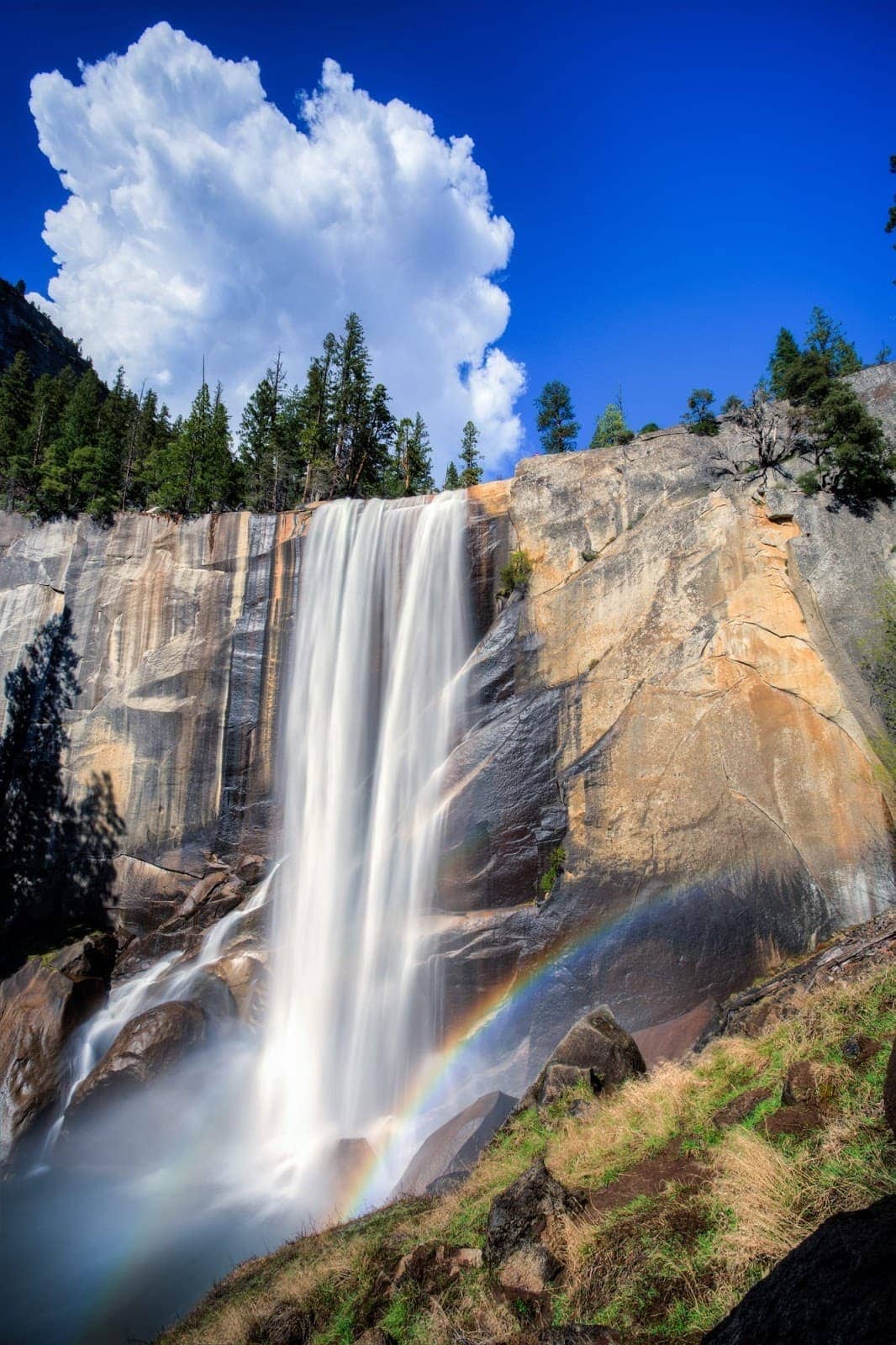
There’s a lot to see and do, which is why I suggest spending three days here on the summer route. This gives you time to see all the highlights, go for some longer hikes and not feel rushed.
On the winter route, how much time you get in Yosemite depends on how you split your days with Lake Tahoe (see above). With two days, you can comfortably see the valley highlights, do a couple of shorter hikes and soak in the views.
With a day and a half, focus on Tunnel View, Bridalveil Falls, Yosemite Falls and a walk along the valley floor. Either way, Yosemite in winter is a special experience, with snow-capped peaks and far fewer crowds than summer.
I’ve got a full guide to the best photography locations in Yosemite, but don’t miss Yosemite Falls, the hike up to Nevada and Vernal Falls (one of the best day hikes I’ve ever done), the drive or hike to Glacier Point (summer only, as Glacier Point Road closes in winter), Tunnel View, Valley View and Bridalveil Falls.
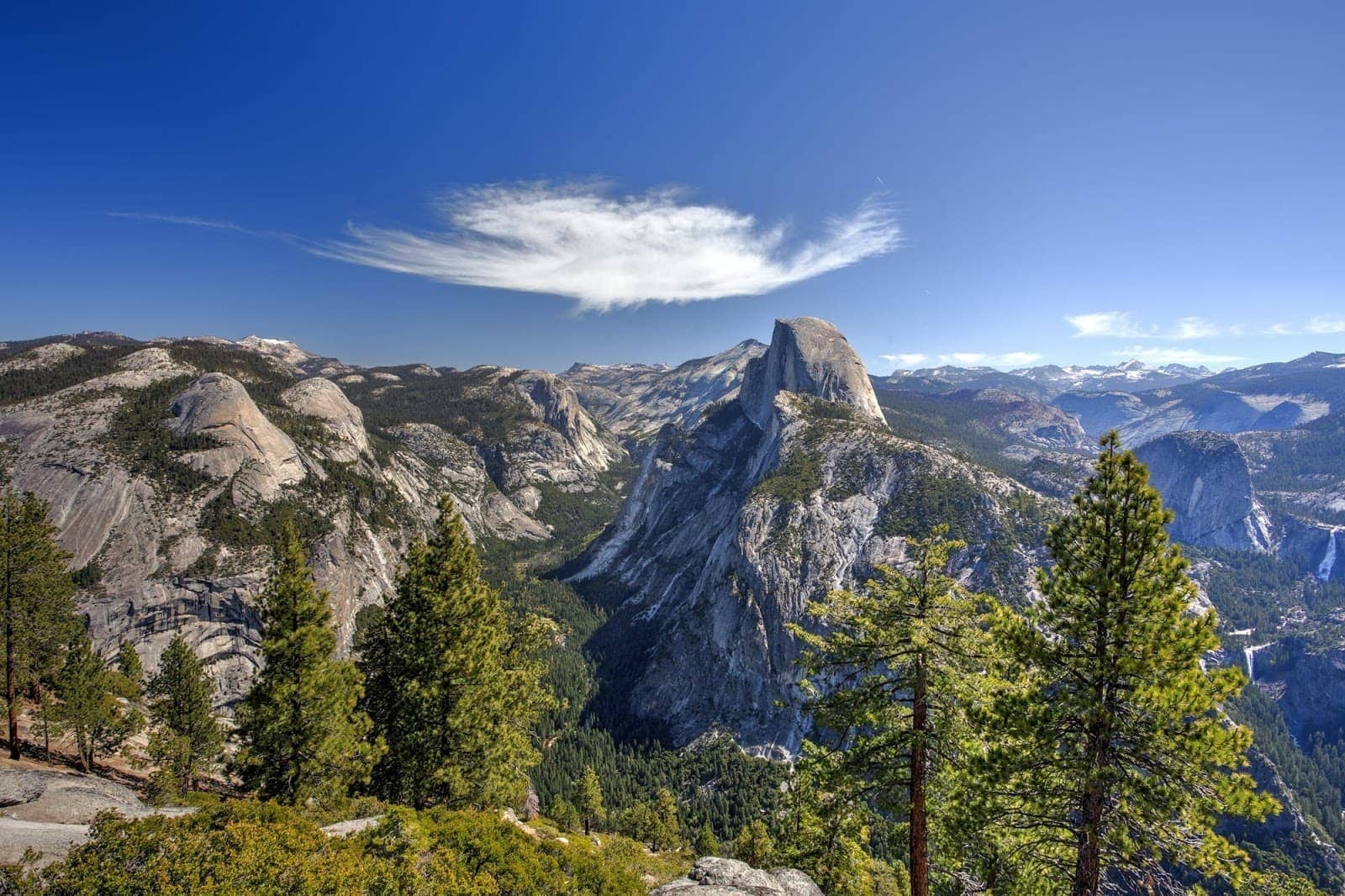
If you love longer, more challenging day hikes, then Half Dome is a seriously challenging walk (permit required), as is the walk up to the top of Yosemite Falls.
Important for 2026: Yosemite does not require entrance reservations for 2026. In previous years (2022-2024), a timed-entry reservation system was in place during peak summer months, but this has been paused for the 2026 season. You still need to pay the standard entrance fee ($35 per vehicle for 7 days), and without the reservation system in place, the park is expected to be busier than recent years. Arrive before 8am on busy days, especially weekends, to avoid parking problems. The park’s shuttle system is free and a good way to avoid the traffic.
Note for international visitors: The US National Park Service introduced new fees for non-US residents effective January 2026. The America the Beautiful annual pass, which covers entrance to all national parks, now costs $250 for non-residents (up from $80). If you don’t have the pass, there’s also an additional $100 per person (aged 16 and over) surcharge at 11 of the most visited parks, including Yosemite. If you’re visiting three or more national parks on this trip (which you likely are, with Joshua Tree, Death Valley and Yosemite), the annual pass is still worth it as it covers one vehicle and all passengers, but it’s become significantly more expensive. For US residents, the annual pass remains $80, which is excellent value on a trip like this that hits multiple parks.
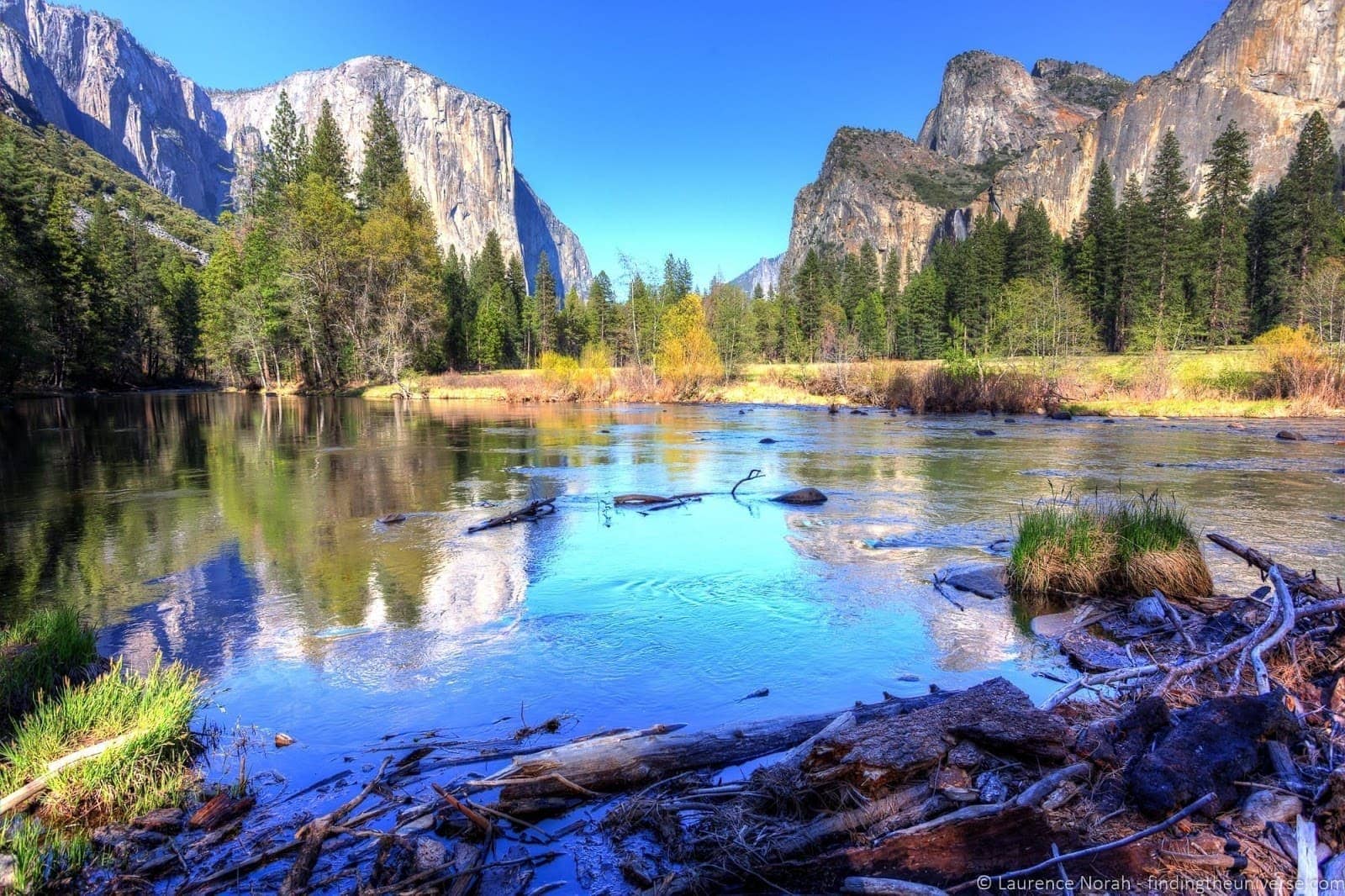
Where to stay in and around Yosemite:
There are 13 campsites available in the park. A number of these take reservations, the rest are first come first served. If you want to camp, book well in advance through Recreation.gov.
There are also lodging options inside the park operated by Yosemite Hospitality, from simple canvas tent cabins at Curry Village (where we stayed on one trip, and it was a lot of fun) through to the luxury Ahwahnee Hotel. These book up fast, so reserve as far in advance as possible.
Outside the park, the gateway town of Mariposa (45 minutes from the western entrance) and El Portal (10 minutes) both have good accommodation options and are often more affordable than staying inside.
Day 14: Return to San Francisco
Driving: Yosemite to San Francisco, roughly 170 miles / 3.5 hours via Highway 120 West (summer) or Highway 140 and Highway 99/580 (winter).
The final day of your California road trip takes you back to San Francisco to return your hire car and either catch a flight home or start planning your next adventure. If you’re not in a rush, the drive back has some nice options for a final stop, including the cute Gold Rush town of Mariposa or, if you’re returning via the northern route, a detour through Napa Valley wine country.
What About Sequoia National Park?
I’ll be upfront: we haven’t visited Sequoia National Park ourselves, so I can’t give you first-hand advice. However, it’s home to some of the largest trees on Earth (including General Sherman, the world’s largest tree by volume), and from what we’ve heard and read from other travellers, it’s well worth the detour if you have an extra day to spare.
Sequoia sits south of Yosemite and can be reached from the Fresno area. If you wanted to add it, the most logical place would be on the drive between LA and Yosemite, adding a day to the summer route. I wouldn’t try to squeeze it in without that extra day though, as the park deserves proper time.
When to Take a California Road Trip
California is a year-round destination, but each season brings different conditions and trade-offs. Here’s a month-by-month guide to help you decide.
May and June are my pick for the best time to take this road trip. The weather is warm but not oppressive (even in the desert), the coastal fog hasn’t fully set in yet, Tioga Road into Yosemite typically opens sometime in May or June, and you’ll beat the worst of the summer crowds. Yosemite’s waterfalls are also at their most impressive in late May and early June from the spring snowmelt.
July and August are peak season. Everything is open, the weather is hot and sunny, and there are long daylight hours for driving and sightseeing. The downsides: Death Valley can exceed 50C (120F) and is best avoided for anything more than a quick drive-through. The parks are busy, especially on weekends, and accommodation prices are at their highest. Coastal areas can actually be quite cool and foggy, which surprises many visitors, so pack layers for San Francisco.
September and early October are excellent. The summer crowds thin out, the weather stays warm, prices drop a bit, and the light is beautiful for photography. Yosemite is less crowded but still fully accessible. This is probably the most underrated time to visit.
Late October through November is when things start changing. Tioga Road typically closes in November (sometimes earlier after heavy snow), which means you’ll need to take the winter route variant. The coast and cities are pleasant, and Death Valley is entering its best season. Hotel prices are generally lower.
December through February is winter, and this is where the winter route variant shines. Lake Tahoe has world-class skiing. Yosemite Valley is accessible year-round from the west side and is beautiful in snow, with far fewer visitors. Death Valley is actually at its most pleasant temperature. The PCH is lovely and uncrowded. Just be prepared for road closures in the mountains (carry chains) and shorter daylight hours.
March and April are the transition months. Wildflowers can be spectacular in the desert and foothills. Lake Tahoe still has good skiing (we were there in March and the snow was excellent). Tioga Road is still closed. The coast is starting to warm up. It’s a good time for the winter route variant with the bonus of longer days.
Where to Stay on a California Road Trip
I’ve listed specific recommendations for each stop in the itinerary above, but here are some general tips for accommodation on a California road trip.
California has a huge range of accommodation options across every budget, though larger cities and busy months push prices up. Book in advance where you can, especially for national park campsites and lodges, and for city hotels where you want a specific location.
For two people travelling together, expect to pay roughly $80 to $150 per night for a comfortable budget motel, $150 to $250 for a good mid-range hotel, and upwards of that for anything luxury. Prices are very seasonal, with summer in the cities and ski season in the mountains being the most expensive periods.
Our preferred option for hotel booking is Booking.com, as they usually have good prices, regularly run deals, and many properties offer flexible cancellation. We also use and recommend Plum Guide for curated apartment rentals, and Vrbo for vacation rentals.
If you’re travelling on a tighter budget, the US has loads of perfectly decent budget motel chains (Motel 6, Super 8, Red Roof Inn, America’s Best Value Inn). They’re not glamorous, but they’re clean, cheap, and nearly always have free parking. Just be aware they’re often located at interstate exits rather than in town centres, so read reviews and check the location before you book.
For more ideas, take a look at our travel resources page.
How to Get Around California
This is a road trip, so you’re going to need a car! We recommend searching for your car rental on Discover Cars here. They compare a range of providers so you can find the best deal.
A few car rental tips: pick up from a city location rather than the airport if you can (airport surcharges are significant). Return the car to the same location to avoid one-way fees. And if you’re visiting in winter and plan to drive to the mountains, consider renting an SUV or 4WD, as you may encounter chain controls on the mountain roads.
Drivers with foreign licences are allowed to drive in California. If your licence is in a language other than English, you’d be best with an international driving permit or a certified translation.
Another option is to hire a camper van or RV, which will let you stay in campgrounds and more out-of-the-way areas. This can be a fun way to travel, though be aware that the cost of renting a campervan plus campsite fees often works out more expensive than a cheap car and budget motels. Campervans are also less practical in the cities, where parking is expensive and spaces are tight. If this sounds like you, we recommend comparing RV rental prices at Motorhome Republic, who list RVs from a range of suppliers.
If this is your first time in the USA, or you just want a refresher on what it’s like to drive here, check out our guide to driving in the USA.
Practicalities for a California Road Trip
Budget
California isn’t cheap, but it’s manageable with planning. As a very rough guide for two people, you’re looking at $120 to $200 per day for accommodation (budget to mid-range), $30 to $60 per day for food (a mix of self-catering and eating out), $15 to $25 per day for fuel (fuel prices in California fluctuate a lot, expect $4 to $6 per gallon), plus your car rental (from around $250 per week, though this varies hugely by season and how far in advance you book) and national park entrance fees. More detail on all of this in our guide to how much it costs to travel in the USA.
National Parks Pass
If you’re visiting three or more national parks (which you will on this itinerary, with Joshua Tree, Death Valley and Yosemite as a minimum), it’s worth buying an America the Beautiful annual pass. For US residents, it costs $80 and covers the passholder plus all passengers in the same vehicle at every national park and federal recreation site in the country for a year. For non-US residents, the pass costs $250 as of 2026. This also saves you from paying the $100 per person surcharge at 11 of the most visited parks including Yosemite. It’s still worth it mathematically if you’re visiting multiple parks, but it’s become a significant expense. Without the pass, individual park entry is $35 per vehicle for 7 days at each park.
Electricity
The USA uses a 110v electrical system, with plugs that are either two pin or three pin. The holes are flat, and sometimes the two pin plug holes are different sizes, so the plug only goes in one way.
If you’re coming from much of the rest of the world, including Europe, the UK or Asia, you’ll need a travel adaptor. We recommend this universal travel adaptor which we’ve used ourselves and it works well. If you need fast USB-C charging for laptops and phones, the GaN version with high-powered USB-C ports is worth the upgrade. For more detail on choosing the right adaptor for your trip, check out our guide to the best travel adaptors.
You’ll also need to check that your equipment supports the 110v supply, as much of the rest of the world uses a 220v supply. In our experience, most electronics like laptops and phone chargers accept a universal voltage, whilst higher power devices like hairdryers do not. Always check the device itself, the voltage rating should be on your plug or adaptor somewhere.
Connectivity
Internet access is widely available across the USA in the form of WiFi, which can be found for free at most hotels, cafes, bars and restaurants.
For mobile data, the simplest option these days is an eSIM. If your phone supports eSIMs (most recent iPhones and Android phones do), you can buy a USA data plan before you leave home and have it working the moment you land. We use and recommend Airalo for travel eSIMs, and have a full review with setup instructions.
If your phone doesn’t support eSIMs, you can pick up a physical prepaid SIM at most electronics or phone shops once you arrive.
Do be aware that mobile signal can be patchy or non-existent in remote areas, particularly in Death Valley, parts of the Eastern Sierra, and some stretches of the PCH. Download offline maps before you leave populated areas.
Currency
The USA uses the US dollar, and there are ATMs available throughout. In our experience though, you can pay for nearly everything with a credit card, so you’ll rarely need cash. Just make sure you have a credit or debit card that doesn’t charge foreign transaction fees, and you should be good to go.
Water
Water across the USA is safe to drink, unless otherwise indicated. There are drinking fountains in the majority of public locations, and we recommend you travel with a Klean Kanteen reusable water bottle. We’ve been using Klean Kanteens for years and they’re excellent. Fill up as you go and you’ll save money and plastic. One thing we always love about travelling in the USA is how drinking water is always brought to your table at restaurants.
Safety
For the most part, the USA is a safe destination, and we’ve never had any problems. Practice basic safety precautions, keep your valuables out of sight (especially in your car, see the note about break-ins in the San Francisco section above), and you should be fine.
Further Reading for a California Road Trip
- We have a guide to things to do in San Diego if you’re extending the trip south
- I’ve written a guide with some of my top tips for driving in the USA
- Our guide to how much it costs to travel in the USA will help you plan your budget
- Jess has a detailed guide to driving the Pacific Coast Highway with loads of ideas for that stretch
- If you’re interested in California’s wine country, see our guide to visiting Napa Valley
- Route 66 ends in California, so take a look at our guide to planning a Route 66 trip, our 2 week Route 66 itinerary and our 1 week Route 66 itinerary
- Fodor’s Guide to California, which includes details on a number of fantastic road trips
- The Lonely Planet California Guide, which is great for finding things to do, places to eat and places to stay
- A US road atlas, because sometimes you don’t want to rely on GPS!
- The official Visit California page, which will give you more advice on what to see and when to visit
- My guide to things to do in Redding California, if you decide to head to northern California
- Our Airalo eSIM review for getting online in the USA
- And if you’re looking for more US inspiration, check out our USA section, which includes a Deep South itinerary, tips for New Orleans during Mardi Gras and lots more
Frequently Asked Questions
Is two weeks enough for a California road trip?
Two weeks is a good amount of time to see the highlights of California without feeling rushed. You’ll have time for the major cities, the Pacific Coast Highway, and two or three national parks. You could easily spend a month and still not see everything, but two weeks gives you a solid, well-paced trip. If you have a bit more time, 16 to 18 days lets you add Lake Tahoe or spend more time on the coast.
What is the best time of year for a California road trip?
May, June and September are the sweet spot. The weather is warm, the mountain roads are open (or opening), and the crowds are lighter than peak summer. July and August work too, but expect heat inland and bigger crowds at the parks. California is a year-round destination though, and winter is excellent for skiing at Lake Tahoe and comfortable temperatures in the desert parks.
How many miles is a two-week California road trip?
The loop in this itinerary is roughly 1,400 to 1,500 miles, but you’ll want to budget for side trips and detours. Expect somewhere between 1,500 and 2,000 miles total. No single day involves more than about 4 hours of driving.
Can I do this road trip in winter?
Yes, but you need to adjust the route. The Tioga Road into Yosemite from the east closes from roughly November to May/June. We’ve included a winter route variant in this guide that swaps Tioga Road for Lake Tahoe and approaches Yosemite from the west instead. You may need snow chains in the mountains. The coast and desert are actually pleasant in winter.
Is it worth visiting Death Valley in summer?
I’d skip it in July and August unless you just want a quick drive-through with the air conditioning on full blast. Temperatures regularly exceed 50C (120F) and it’s dangerous to spend much time outside. Spring, autumn and winter are all great times to visit Death Valley properly. Spend the extra day at Yosemite or on the coast instead.
Do I need a reservation to enter Yosemite?
Not in 2026. Yosemite announced that no entrance reservation system will be in place for the 2026 season. You still need to pay the standard entrance fee ($35 per vehicle), and the park is expected to be busy. Arrive early, especially on weekends, to avoid parking issues.
Should I drive the Pacific Coast Highway north to south or south to north?
North to south, if you have the choice. When driving south, you’re on the ocean side of the road, which gives you better views and easier access to pull-offs and viewpoints. It’s a gorgeous drive either way, but the views are slightly better heading south.
Can I add Las Vegas to this itinerary?
Yes. The best place to add it is after Joshua Tree and before Death Valley. Las Vegas is about 3 hours from Joshua Tree. We’d suggest adding two extra days to your trip if you want to include Vegas. We cover a version of this route with Las Vegas and the Grand Canyon in our two week USA road trip itinerary.
And that sums up my two-week California road trip itinerary! I’ve done versions of this route across multiple trips over the last 20 years, and it never gets old. California has a way of surprising you every time. If you’ve got any comments, suggestions or additions, do pop them in the comments below. Plus, if you liked this post, check out our other US road trip itineraries for more inspiration.
Sara John says
This is some great information for our upcoming trip. We will have almost three weeks in CA and we will visit these spots!
Thanks.
Laurence Norah says
Glad to be able to help Sara, have an amazing trip!
Em says
Hi, This has been really useful! we are planning on Mammoth down to LA via Death Valley, I have seen you have said skip this in August, is this still worth a drive through with some quick stop offs? It seems to be largely the quickest route back down to LA anyway?…
Thanks,
Emma
Laurence Norah says
Hi Em,
Sure thing, as long as you are prepared for the heat and don’t spend a lot of time outside in the heat. You’ll also want to keep an eye on the Death Valley National Park website in case there are any alerts or closures during your trip.
Have a great time!
Laurence
Diego says
Hey, lovely guide thank you!
I am coming from Brazil and will spend around 2 weeks in the US, I was thinking of doing an itinerary very similar to this one, but starting and leaving in LA, and adding 1-2 days in Las Vegas and just pass through San Francisco after Yosemite (Entering the NP from the west coast).
What do you think of it? Also, we want to go on July and I’m worried that Las Vegas/Joshua Tree NP/Death Valley would be too hot, so I’m thinking of just driving through Death Valley to reach Mammoth Lakes, do you think it makes sense? Is there a way to “skip it”? By looking at the maps it seems it’s the shortest way to Yosemite. I’m use to the Brazil’s temperature which is quite hot but not so much as Death Valley hot.
My itinerary is extremely open so please feel free to suggest anything really, I’m just prone to visit LA and the west coast really, I want to visit some interesting cities but also see a lot of nature, small towns, and have an open itinerary in case I want to stay more at some specific place.
Laurence Norah says
Hi Diego,
Thanks very much! Sounds like you have a great trip planned. So your trip idea is definitely do-able, in fact I have a similar California itinerary that includes Las Vegas here. It also includes the Grand Canyon but you can leave that out as it’s a lot of driving. Going through Death Valley is going to be one of the quicker way to Mammoth Lakes. The park does get incredibly hot, but if you are driving through with an air conditioned vehicle then you should be ok. I’d just avoid doing too much sightseeing in the park as it can be pretty intense. You can also take Highway 95 from Las vegas and follow the eastern edge of Death Valley without having to actually go into the park if you prefer.
But honestly if you are coming from Las Vegas it’s going to be hot wherever you go, Vegas in July is also incredibly hot, as is all the desert around it! You certainly can sightsee if you get up early in the morning, but don’t plan to spend a lot of time outside.
If you like small towns then another option would be to join the original Route 66 road, if you drop down the 95 from Las Vegas to where it joins the Interstate 40 around Needles, then you can follow Route 66 towards LA. That’s a really fun drive with lots to see on the way, and we cover lots of detail on that in our two week Route 66 itinerary (just read the Needles to LA section, days 13 and 14).
Have an amazing trip, let me know if I can offer any more advice!
Laurence
Diego says
Thank you so much for the quick answer!
I will look into those, thank you again!
Just in general, first time coming to the US (and the west coast of course), in the summer, do you think there are better options than this itinerary I described or is it a solid one? I’m looking for a mix of interesting cities (LA, Vegas, SF), driving through interesting places, see nature, and just a flexible schedule in general that I can spend more days in places that I really like!
Laurence Norah says
Hi Diego
It’s my pleasure! So actually I think this is a great first time US itinerary. California and the section of Nevada from Las Vegas is going to give you a really diverse range of things to see. From the wild desert to dramatic Yosemite, to mountains and lakes, through to big cities like San Francisco and LA, through to the beautiful coastal towns. There really is something for everyone. This was actually really close to the itinerary I first took when I first visited the States around 20 years ago and I really enjoyed that trip. So I am sure you will have a great time. Let me know if you have any more questions as you plan it out, I’m happy to help!
Laurence
robert feinberg says
Hello,
we are planning a road trip to California in July, and using your template, but adding a few different options.
we are traveling with 2 15 year olds, and they want to surf.
any recommendations you can make on that, as well as stops that will be good for them? much appreciated.
Laurence Norah says
Hi Robert,
So there are a lot of surfing options all along the coast from San Francisco to San Diego. A lot will depend on the experience of your children and whether or not they are experienced surfers or are looking to learn. Also, some locations will have surfboard rentals wheras others are more remote. So it will depend what you need in that regard. However, there are good options all along the California coast, including Half Moon Bay, Santa Cruz, Pismo, Morro Bay, Ricon Point and Surfrider beach (Malibu). I’d just recommend doing some research to ensure you match the breaks to the skill level required 🙂
Have an awesome trip!
Laurence
Kim Dawtrey says
Hi Lawrence
We are just home after nearly three weeks in the US on a route based on your California Road Trip, although we also went to the a Grand Canyon and Las Vegas. The information within your blog was a great help in planning our trip. Unfortunately we were unable to drive down the whole Pacific Highway due to landslide near Big Sur, but we loved the 17 mile drive and would recommend staying in Pacific Grove (we stayed in Bide-A-Wee hotel which was great). We were also unable to drive across Death Valley as the NP was closed due to the damage to the roads, we did however visit Death Valley Junction and throughly recommend a visit to Amargosa Opera House. The board outside says tours at 9.00am and 6.00pm, but the young lady in the hotel reception was more than happy to give us a tour for a donation, fascinating place and history. If you haven’t visited I can send you some photos. Another side trip we did was to Bristlecone Ancient Pine Forest, amazing place, great drive up to 10,000 feet, with fresh snow at the top! The Grand Canyon and Yosemite were certainly the highlights for us.
We thoroughly enjoyed our trip, thank you for all your valuable information, if we were 40 years younger, we would love to be doing what you and Jess are doing!
Laurence Norah says
Hi Kim!
Thank you so much, I’m happy to hear you had a great trip in California and beyond! Unfortunately the Pacific Coast Highway does get blocked quite regularly due to landslides, and it also sounds like unfortunate timing with Death Valley. However I am glad to hear you still had a good time overall! We haven’t visited the Amargosa Opera House, we will definitely have to add that to the list!
Thanks for taking the time to share your experiences, and safe onward travels 🙂 Jess and I love to hear from fellow adventurers who have been out exploring!
All the best,
Laurence
erika liaci says
Hi
we are finalising our US Road trip to/from LAX in mid August. Would you recommend still going to the Death valley? I am a bit scared of the temperature which might be 50C?
Thanks
erika
Laurence Norah says
Hi Erika,
So I would personally probably skip Death Valley in August. It’s going to be too hot to do very much, and you would likely be able to better spend your time elsewhere. An extra day in Yosemite for example!
Have a great trip!
Laurence
Sam says
Hi – this 2 week California road trip looks amazing. Your blog is really helpful for planning our own trip. Would it be possible to know the driving distances between each of the places please.
Thanks
Sam
Laurence Norah says
Hi Sam, thanks very much! So I didn’t put distances because in my experience they tend to change with side trips etc. Also, the Pacific Coast Highway is regularly affected by landslips so stretches of the route can be closed.
That said, as a rough guide:
From San Francisco to Santa Monica is around 500 miles
From Santa Monica to Joshua Tree is around 150 miles
From Joshua Tree to Death Valley is around 260 miles
From Death Valley to Mammoth Lakes is around 200 miles
From Mammoth Lakes to Yosemite is normally around 75 miles but this depends on the pass being open
From Yosemite back to San Francisco is around 170 miles.
I hope this helps! Have a great time in California 🙂
Laurence
Ian says
Hi. Would you recommend Zion National Park or Bryce Canyon? We will be driving back from the South Rim of the Grand Canyon to Las Vegas and are thinking of an extended detour north rather than going back via Kingman.
Thanks
Laurence Norah says
Hi Ian,
It is with some dismay that I’m not able to accurately answer your question as both parks are still on my to-do list and I haven’t visited either. So rather than inaccurately answer your question I would have to say I don’t know. I definitely want to visit them both, and from the photos I have seen I don’t think you would be disappointed with either, but that’s about as much as I can say for now until I have visited both!
Sorry not to be of more help but I hope you have an amazing trip nonetheless!
Laurence
Maxine says
Hi
This post has been super helpful and given us great ideas for a trip we are planning with our two teenagers next summer. We want to include vegas, therefore, would you recommend that we head there after San Diego before heading back to Yosemite?
Thank you
Laurence Norah says
Hi Maxine,
Thanks very much, glad you found the post useful! So yes, heading from San Diego or Death Valley to Las Vegas would make the most sense. I’ve actually written a trip out that is similar to this one but include Vegas (and the Grand Canyon if you wanted to also include that). That’s here:
https://www.findingtheuniverse.com/2-week-usa-road-trip-itinerary/
You can save time of course by skipping the Grand Canyon 🙂 Let me know if you have any more questions, I’m happy to help. Otherwise, have a great trip!
Laurence
William D Villont says
My wife and I took a California trip similar to this one except we went south to San Diego as our final destination. I really enjoyed the trip and can fully understand why you highlight this trip as one someone should surely take. We agree. My only disappointment of the trip is that, at the time, I was doing videography and that is all I took on the trip, my video camera. Now that I have gotten back into photography I wish I had taken my camera as well. We rarely get out the old video (VHS tape) and watch and I have not taken the time to transfer the VHS to DVD yet. I just gave it away, that this trip was sometime ago because I was shooting VHS. Anyway I would love to take this trip again and if this Covid thing ever goes away, maybe I will. Thanks for sharing this trip.
Laurence Norah says
Hi William,
I’m glad to bring back positive memories of your California trip! Interesting to hear you mostly took video. I have a similar reverse quandry when I travel, I usually only find myself able to concentrate on one medium of story telling as we go, so I focus on photos. But I often think it might be nice to have more videos. I hope you get to watch your video soon and also to take the trip again one day!
Have a lovely and safe 2022,
Laurence
Delaney Blute says
Hi! Thank you so much for the wonderful travel recommendations. I’m planning on taking this trip with my mother and sister, possibly leaving next late summer. Do you have a ball park recommendation for price for the entire trip for 3 people? We plan on budgeting it, but just wanted to know if you had any estimate of what this trip would cost for 3 people. Thanks so much!
Laurence Norah says
Hi Delaney,
This is a great question. So it’s really hard to give a price estimate because everyone has a different travel style, and it will depend on what type of accommodation you are thinking of booking, whether you are happy to share a room for the three of you vs have individual rooms, whether you are ok with budget dining vs more expensive options and so on. I’m also not sure if you’re from the US or not, so car rental if you need to rent a car would also be a cost to consider.
I do have a guide which has a ballpark idea of costs for travel in the UK, which you can see here: https://www.findingtheuniverse.com/how-much-does-it-cost-to-travel-in-usa/
That should give you an idea of how much each element of the trip should cost you, to help you come up with a rough figure. The main costs are going to be your accommodation, gas / car rental / car parking in cities, food, and any attraction entry.
I hope this helps! Let me know if I can provide any further input, and have a great trip 🙂
Laurence
Chantelle says
Hello,
We have a trip booked for just short of a month in September! Your blog was really helpful, thank you!
I was wondering if you had some advice on Car vrs Camper. Is it easy to find places to stay in a camper or would you recommend a car and motels. We are happy either way just want our trip to be as stress free as possible!
Laurence Norah says
Hi Chantelle!
So we have done both, and honestly, we prefer motels / B&Bs to campsites.
In the USA, campsites are a bit different to the UK in my experience. They tend to have more formal “sites” for each visitor, which means they can’t just squeeze another person in. When they are full they’re full. For National Parks especially, this means that they can book out and then you can be stuck trying to find somewhere to stay. You can of course book them in advance, so that’s an option. The other good news is that if you have a campervan all is not lost as there are places you can camp for free. However these tend not to be totally exciting, Walmart carparks for example let folks stay overnight, but this might not be the dream option.
The other thing is that if you do the math, you will find that the cost of renting a campervan + the cost of paying campsite fees will probably be a lot more than the cost of a cheap car and economy lodging. Plus if you plan on visiting a few of the cities in this itinerary a camper will be more effort than it’s worth. You didn’t mention budget so this might not be a huge factor, but I just wanted to highlight it.
I think you can see where my preference lies for this itinerary. Obviously if you love camping and want to spend more time out in the backcountry and national parks, it’s a great option. But you might find that buying a cheap tent and a couple of sleeping bags for a few nights is a better option than renting a camper 🙂
Have a great trip – let me know how it goes and what you decide to do! We have a facebook group you’re welcome to share your experiences in here: https://www.facebook.com/groups/travelloversandphotography/
Laurence
chantelle sims says
This has been so incredibly helpful thankyou!!
Laurence Norah says
My pleasure Chantelle – have a great trip!
Sharon says
Great inspiration and ideas, thanks
Laurence Norah says
Our pleasure Sharon, thanks for stopping by and commenting!
Thiago says
Just want to thank you for these super detailed guides, guys;
Laurence Norah says
Our pleasure Thiago, if you have any questions we’re happy to help 🙂 Safe travels!
Laurence
Kathy Reed says
Hi – this was an amazing find! Loved all of your recommendations. Do you have any recommendations for anything just a little further north into the Redwoods. Perhaps starting in Santa Monica and going north? Though i do love the loop feature of this itinerary. Makes it so hard to decide.
Thanks!
Laurence Norah says
Hi Kathy,
We have travelled north of this itinerary as well, with our highlights including Napa Valley, Point Reyes National Park and Redding, however we’ve not put together a detailed itinerary for this sort of trip as we’ve not covered the area in enough detail. If redwoods are what you are after particularly, then on this itinerary you can see them near Santa Cruz, if you did want to follow it.
Let me know if I can offer any more advice for your trip!
Best
Laurence
Barry says
Hi
Great site for info ?
Just would like to know what time of year would you recommend doing this road trip ive just read on here ,we’re coming from the UK so any info will help us plan
Many thanks
Barry
Laurence Norah says
Hi Barry!
It can definitely be done at any time of year, but I might avoid the depths of winter as snow can make the roads into Yosemite a challenge, plus it will be quite cold. So if you are looking for more of a summery California road trip, I might suggest May through September. We just toured California in August, and it was definitely very hot inland, as well as being busy so perhaps May/June or September would be the best time for a good combination of weather and fewer people 🙂
Have a great trip!
Laurence
Debbie says
Hi
We are planning this trip in April 2020! We will skip LA (Not interested) & Yosemite (We’ve already been) & we will only spend 1 day in San Francisco (we’ve already been) my question is do you think we can do the rest in 7 days?? We definitely want to do the scenic drive from San Francisco to San Diego & back to San Fran an thank you for all the wonderful information!!
Laurence Norah says
Hey Debbie!
Awesome 😀 So you can do the Pacific Coast Highway from SF to San Diego in a couple of days if you don’t mind going at a bit of a pace. I’d probably slow it down to 3 days though. I’m not sure if you still plan on seeing Joshua Tree and Death Valley – if you plan on going up and down the Pacific Coast Highway both ways, then you’re actually going to end up driving much more than this itinerary if you do visit Death Valley, as you’ll do about 2/3rds of the route and then turn around.
I’m not sure if you wanted to go to Las Vegas instead, but what you could do instead of going all the way back is finish in Vegas. I have noticed that many car hire firms don’t charge one way fees for trips between SF and Las Vegas, and flights out of Las Vegas are also very inexpensive. Even if you don’t want to do the whole Las Vegas thing, there are some lovely outdoor attractions in the area including the Hoover Dam and the spectacular valley of fire state park.
Anyway, just a thought. To answer your question – yes, you could do the rest in 7 days but I fear it might be a bit rushed,
Have a great trip!
Laurence
Josh says
Hey,
How many miles is this trip in total?
thanks!
Laurence Norah says
Hey Josh!
Around 1400 miles, but you’ll want to add on detours, side trips etc. So I’d say 1500 – 2000 to be on the safe side 🙂
Laurence
Mallikarjun says
Hello,
Nice blog!
Can you please let me know the “Public Transport” options, it may be Bus, Metro or any other services in Los Angeles, San Francisco, San Diego. I am planning for a trip in end of Jan 2020 for about 6 to 7 days to cover these cities.
Or is there any travel packages you suggest for these cities. Please let me know.
Thanks,
Malli
Laurence Norah says
Hi Malli,
My pleasure, and apologies for the slow response, I’ve had some site issues I’ve been working on.
For your question, are you looking for public transport between the cities, or in the cities? If the former, then I’d generally recommend the long distance bus as the best way to get between the cities in California, although you will struggle to get to more remote locations this way.
For each city you mention, there are different options. San Francisco is the easiest to get around, as there’s a great bus system as well as bikes, e-bikes and scooters. LA is a bit trickier – there are both buses and a metro, but just be aware that the distances can be quite far as the city is very spread out. So the best option is to figure out what you want to see and make sure the accommodation you pick is as close to the sights as possible.
San Diego is also easy to get around for the most part, with buses, trolleys and trains.
I hope this helps 🙂
Have a great trip!
Laurence
Samantha says
Hi! this sounds amazing and I am literally looking at booking this for June next year! From looking about the only area that I am a bit unsure of is Death Valley – where is best to stay around there and if only doing a day – what would be the best suggestion of something to do? I am also thinking that we will add 1 day on to do a Vegas stay since its so close!
Laurence Norah says
Hi Samantha,
So when we visited we stayed just outside the valley at Panamint Springs – specifically we stayed here.
A day is enough to see the highlights of Death Valley. You’ll want to visit Badwater Basin of course, the lowest point in North America. Other highlights including the Mesquite Sand dunes, Zabriskie Point, the Devil’s Golf Course, the Artists Drive and Palette and Mosaic Canyon.
We can definitely recommend tacking on a trip to Vegas as well. We’re actually thinking of publishing a new itinerary in the coming months which includes Vegas, as it’s a popular addition 🙂
Have a great trip!
Laurence
Gisele leduc says
Would like to know w ymt is there a bus trip to 14 days in calif. Where does the bus leave from in the US. And approx how much is the cost
Laurence Norah says
Hi Gisele,
Sorry, could you clarify? Are you looking for a tour of California?
Thanks!
Laurence
Gisele leduc says
Looking for next year we live in Ottawa Canada and would like to take a 14 day bus tour especially san Francesco and pacific route. Are there bus tours leaving let’s say from Buffalo, New York we can easily drive to these destinations. I meant leaving from New York City and
Buffalo. What would be the cost and does it include meals. Thank u
Gisele Leduv says
Hi I would like to know if there are Any bus tours leaving from New York City or buffalo 14 day road trip to California especially the pacific coastland. What would be the cost for such a trip.
Laurence Norah says
Hey Gisele,
I have looked but most tours that depart from New York and go to California are much longer, because the distance is so great from the east coast to the west coast. If you want a tour that focuses more on California, it would definitely be easier to get one that departs from San Francisco or Las Vegas rather than New York – is that a possibility?
Laurence
vivianchoo says
Good articles and good photos, Helps a lot. Thank you!
Laurence Norah says
My pleasure – have a great trip!
Jason Parsons says
This is a super inspiring blog. Which area did you stay in Yosemite? We are planning to complete our road trip with 3 nights in Yosemite. We will have a car and plan on day trip walks within the park.using a hotel or lodge as our base.
Laurence Norah says
Hi Jason
Thanks very much! In Yosemite we’ve stayed in a few places. On the trip with the photos in this post, we stayed in Curry Village, which were canvas tents (https://www.nationalparkreservations.com/lodge/yosemite-curry-village/).
Jess has also stayed at the Wawona hotel, and the other lodge options are The Ahwahnee Hotel and the Yosemite Valley Lodge. I would definitely recommend staying with the park if you can as it makes it a lot easier to see everything within a short distance. The various options are at different price points though, so you’ll have to figure out which is best for you 🙂
Have an amazing trip!
Laurence
julie morton says
Great article, thank you. I will be doing a similar route with my husband in September. Do you have any further guides on the Mammoth Lakes area or could you suggest somewhere to base ourselves there for a couple of nights please? We will be coming from Death Valley and then heading on to Yosemite.
Laurence Norah says
Hi Julie! We don’t have anything else about Mammoth Lakes unfortunately on our blogs. We have guides to other parts of California, including Yosemite, but Mammoth Lakes is still on the to do list.
Have a great trip, sorry we couldn’t help this time!
Laurence
Tara West says
Hi there,
Just found your blog. Really helpful. Thank you. We are thinking of doing a Californian road trip with our 5 month old baby in Sept. How long are the drives between the places you mention? I wouldnt want to do LA so would probably do San Diego instead. Is there anywhere you advise missing out with a baby?
Thanks so much.
Tara
Laurence Norah says
Hi Tara!
Our pleasure, we’re delighted to be able to help 🙂
So the drives will obviously vary depending on what you stop and see, but none of the days on the itinerary should have more than four hours driving. We’ve also not got any personal experience with traveling with a baby, however, just bear in mind that even in September Death Valley is going to be very hot. Other than that I don’t see a reason not to go to any of the locations on the list, and Death Valley will be manageable, just take care with the heat 🙂
Enjoy!
Laurence
Priya Singh says
I really appreciate the work you have done, you explained everything in such an amazing and simple way.Good post. I was searched for this topic. Finally, I got the information on this blog. Thanks for the effective information.
Laurence Norah says
Thanks Priya – pleased we were able to help! Have a great trip 🙂
Rafael says
Hi guys, great post. I found it really handy now as i’m planning a 3 week road trip through California (and Nevada) in a month (apr 6 to 27). We are starting in LA, just a few days and then planning to go to Joshua Tree (Mojave, is it worth it?), Las vegas, Grand Canyon, Death Valley, Yosemite, San Francisco, and Route 1 back to LA. It’s quite a lot of days, and i find hard to plan where to sleep every night, as i’m not sure how long would it take me to visit every national park, and even cities. So my question is, should i book in advance all different accomodation? In that case how many days should we give to the different national parks and places. As the trip gets so long, we are being really careful with our budget, and that takes me to the second question, what are the best places to stay on a budget in the different stops?
By the way, we are a group of four, planning to rent a car.
Thanks again for your post. Looking forward to read your answer!
Rafael from Uruguay
Laurence Norah says
Hi Rafael!
Thanks very much 🙂
So to answer your questions. I think Mojave is worth it if you like deserts and wide open spaces.
In terms of accommodation, you are not travelling at a very busy time of year, although it is easter towards the end of April. However there are no Federal holiday, so it should not be too busy. So this means you should be able to book quite last minute. The only places I would advise maybe booking in advance would be any national parks you want to stay in, which can be busy year round. So Yosemite, Grand Canyon and Death Valley, if you plan on staying inside the park, you will want to plan your accommodation in advance.
In terms of budget accommodation, the parks all have campsites, so that would likely be the cheapest option if you don’t mind camping. Some have existing tents you can hire if you don’t want to bring your own tent – Yosemite for example has some nice fixed tents which are not too expensive. For other cities, I’d advise looking at the budget motel chains like Motel 6, Red Roof Inn and so on. These can be very cheap, but do be aware they are not always very central. So you might find something like AirBnB to be more cost effective.
As you are visiting a number of parks you will probably want to buy a national parks pass, which will save you money on parks entry.
I’d also advise taking a look at my guide to how much it costs to travel in the USA, which should give you some more budgeting ideas 🙂
https://www.findingtheuniverse.com/how-much-does-it-cost-to-travel-in-usa/
Let me know if you have any more questions!
Laurence
c. m. crawford says
I would take extra care with possessions in the big cities in California. I left my purse in the back of my rental car, parked in a highly visible location on a beach in San Francisco, and even though there were people walking up and down the beach, the window was smashed and the purse stolen. Luckily wallet & phone were on me and the purse was even found and turned in to the police, but I had to exchange the rental car. Other than that California is awesome.
Laurence Norah says
Sorry to hear that Cris! This is definitely an issue around the world, we always recommend not leaving any valuables in sight in a car as it makes for a tempting option for a thief 🙁 Glad to hear you got your purse back though!
Matthias says
Hey you guys!
You have a great blog and this post inspired the route for my first trip to California with a buddy (we’re planning on doing pretty much the same route). But our plan is doing it the other way around: Also starting end ending in SF but heading to Yosemite from there and doing the trip clockwise. Would love to hear your thoughts on that idea 🙂
Laurence Norah says
Hi Matthias!
The route would work either way. The only thing is that many people prefer to drive the PCH from north to south as you are on the right hand side of the road, so you get clearer views. But it’s stunning either way to be honest 🙂
Have a great trip!
Laurence
Catherine Smithfield says
Hi Laurence,
Fabulous site guys… I would love some tips please my husband and I are planning a once in a lifetime trip to the USA, we fly into and out of Los Angeles , arriving 16th October and leaving 5th December. We will be spending thanksgiving with friends in Washington state . We would like to drive the Pacific highway, see some of LA, San Fran , Yosemite,Death Valley Las Vegas,- just very quick as we feel we should see it and the Grand Canyon . We love nature, beautiful landscapes, we are also foodies .
Any suggestions would be very welcome , hire car v Rv , obviously due to the length of our trip I would like to be sensible on accommodation costs…is there a reliable decent hotel/motel chain you would recommend, or Airbnb. I have also been looking a5 the trusted Housesitters website but have recently come across a few very negative reviews .
Many thanks catherine(UK)
Laurence Norah says
Hi Catherine!
Thanks so much! We’ll do our best to help out.
So first of all, if you haven’t already, we can definitely recommend checking out the USA sections of both our websites:
https://www.findingtheuniverse.com/category/destinations/north-america/usa/
https://independenttravelcats.com/category/travel-destinations/united-states/
Where we have loads of posts that you will find useful. Most particularly, I’d advise reading our driving in the USA, and our guide to how much it costs to travel in the USA. That latter one in particular will help you in terms of costing out the trip.
For a hire car, a normal car rental is going to be a lot cheaper than an RV, especially as you will most likely still have to rent campsite space to stay at. A standard hire car in the US will usually start at around $200 a week. Our US travel budget post has a lot more on how to find the best deal and things to watch out for.
In terms of accommodation, the US has a wide range of options. The cheaper chains include: Red Roof Inn, Motel 6, Super 8, America’s Best Value Inn, Travelodge. The next step up would be Comfort Inn and Holiday Inn.
Note that the cheaper hotels are often found a little way outside of towns, often at interstate exit ramps. It’s also worth being aware that they are nearly all franchises, and so as a result the quality can vary dramatically, so it’s always worth reading reviews before visiting.
For booking and reviews, we highly recommend Booking.com. We have nearly always found this to be the cheapest option, even compared to turning up at the property, and the reviews can be a helpful guide. However, just bear in mind that cheaper hotels tend to rate worse, as folks can have high expectations!
Hopefully all this helps, let us know if you have any more specific questions we can help with!
Laurence
Natasha says
PS We are also planning to visit family in LA and have possible access to accommodation in Pacific Grove so should we be considering finding snow at Big Sur instead of north of San Fran?
PPS Budget is going to be very tight!
Laurence Norah says
Hey Natasha!
So I’ll answer the Big Sur question first 🙂 Snow isn’t very common at Big Sur as it’s right by the sea, and it doesn’t usually get much except at higher elevations. The most reliable option is to head east to Tahoe or Yosemite, although that is going to be quite a drive and won’t fall into the definition of a short drive I’m afraid 🙁 The other option is to head up towards Auburn, as you get closer to the Sierra Nevada Mountains you will definitely find snow, but again, this isn’t going to be a short drive.
Whilst there is always a possibility of snow elsewhere, I wouldn’t want to guarantee it!
In terms of house swaps, the closest option we have for you is TrustedHousesitters, but that’s more of a house sitting opportunity than a home swap. I know there are home swapping platforms, but we’re not familiar with them, so I wouldn’t want to give a recommendation!
I hope you have a wonderful trip!
Laurence
Natasha says
Thanks for the super-prompt response! Very helpful to know Big Sur is unlikely to tick the box and we hadn’t considered Auburn so I’ll find out more about that instead. Otherwise we’ll stick to Yosemite or Tahoe, which we’ve heard lots about.
Laurence Norah says
My pleasure! Those two will definitely be fantastic, Yosemite in winter in particular is stunning. We have a guide to visiting Yosemite here 🙂
Also, I know real snow is ideally preferable, but there are a number of locations that generate snow that are going to be closer to San Francisco. If you google “snow in san francisco” or something similar, you should find some options!
Natasha says
Thrilled to find your fascinating and helpful site! We live in Cape Town, and are planning a month in California between Thanksgiving and Christmas this year, focussed around spending time with family in San Fran.
But my 14- and 16-year-olds have never experienced snow so we’re looking for guaranteed on-the-ground snow in early/mid December, as short a drive from SF as possible. Skiing not required, but snowman-building and perhaps some sledging would be great.
Also, can you recommend a site we might arrange a house swap through?
Ivan says
Hi, I’d like to know if February os a good time to make this travel. And what do you think about Sequoia National park?
Laurence Norah says
Hi Ivan,
February would be good, just be aware that there might still be snow in Yosemite and so you’ll need to keep an eye on road closures around that area. We haven’t visited Sequoia National Park, but we have heard it is a great park, well worth visiting 🙂
Have a great trip!
Laurence
Neely says
Hi there! This post has been really helpful as my partner and I are planning our honeymoon for April 2019 and we would love to roadtrip in the US. We have about 12 nights and would love to spend good chunks of time in San Francisco, LA or Santa Monica and some national parks. We would also love to do the Pacific Coast. We were originally thinking of flying into San Francisco and out of LA, but your post has me wondering if a roundtrip is better. Would you suggest we amend your suggested route? Which of the the national parks would be the best to visit?
Laurence Norah says
Hey Neely! There are so many great National Parks, but Yosemite is definitely up there as one of my favourites. I would say a round trip is better – the route I have outlined makes a nice loop, and car hire is nearly always better value if you return the car where you picked it up 🙂
Chiara says
Hi! I love your blog guys!
We are thinking about a road trip in California next summer, and this post is a perfect inspiration! We will travel with our kids, they will be 3 and 6 and we have 3 weeks instead of 2. Do you have suggestions on how/where to use the extra days? Considering we can’t plan super long tiring car journeys and have to incorporate some activities they would enjoy too like some beach life, aquariums… Any suggestion is very welcomed! Thank you very much in advance!
Laurence Norah says
Hey Chiara!
So my suggestion would be to follow this itinerary, but just to go a bit slower and spend a bit more time in each place. I’d definitely suggest the Monterey Bay Aquarium and the San Diego Zoo as two great options along the way, and Universal Studios in LA is also sure to be a hit 🙂 Along the PCH you’ll also find loads of lovely beaches, so I think you’ll easily be able to stretch this two week road trip into a three week California itinerary! Have an awesome time!
Laurence
Chiara says
Thank you very much!
ANGELINE MONTIJO says
Hi Im planning a road trip with my family to California from Orlando,Fl on June 2019. I want some advice where should we start.
Laurence Norah says
Hi Angeline! Do you mean where to start in terms of planning? If you could let me know how long you are travelling for and what your interests are, then we can try to help. In the meantime, we can help out with some tips on driving in the USA:
https://www.findingtheuniverse.com/tips-for-driving-in-usa/
And some tips on budgeting for your trip:
https://www.findingtheuniverse.com/how-much-does-it-cost-to-travel-in-usa/
The overall route you take will also take you through part of our Deep South USA itinerary:
https://www.findingtheuniverse.com/usa-deep-south-road-trip-itinerary/
As well as parts of our Route 66 itinerary:
https://independenttravelcats.com/2-week-route-66-itinerary-ultimate-american-road-trip/
Which should both serve to help inform your planning on your route 🙂
Lisa Stark says
Hi, my partner and me are planning to do a road trip next September 2019, starting from San Fran and heading south, eventually arriving in San Diego over a 2 week period. Can you recommend a good car hire company, how long before we should book and some nice places to stop with boutique hotels, This will be out first time in America and I’m completely at a loss where to start planning.
Many thanks.
Lisa
Laurence Norah says
Hey Lisa! Well, that’s a great question. There are a number of hire car companies that we recommend, you can see our list here: https://www.findingtheuniverse.com/travel-resources/#Car-Rental
It looks like you are doing a one-way trip, so just bear in mind that sometimes the “meta-search” tools that search a variety of providers don’t always account for that. So it might be easier to go direct. We’ve found that it really varies, but we’ve often had success with Enterprise and Hertz. It’s also worth bearing in mind that pick up from an airport location is nearly always more expensive than a city location, so if you can be flexible in that regard you will likely save a bit of money. Especially somewhere like San Francisco, as you don’t really need the car for the city and it will just end up costing you in car parking fees and wasted rental fees for a car you aren’t using.
For hotel and car bookings, I’d usually say the further in advance the better so you have everything sorted and don’t have to worry about it. In terms of stops, your route pretty much follows the Pacific Coast Highway, and we have a super comprehensive guide to all the towns along the route which you can see here:
https://independenttravelcats.com/planning-a-california-pacific-coast-highway-road-trip-from-san-francisco-to-los-angeles/
That also has planning tips and suggestions. I’d also advise reading our tips for driving in the USA:
https://www.findingtheuniverse.com/tips-for-driving-in-usa/
And our guide to how much it costs to travel in the USA:
https://www.findingtheuniverse.com/how-much-does-it-cost-to-travel-in-usa/
In terms of other things to think about, I’m not sure which country you are coming from, but definitely consider getting a travel credit card that won’t charge you for foreign transaction fees, and maybe a SIM card that offers roaming in the USA. Three in the UK has a pretty good deal for SIM cards that offer free data in the USA.
Hopefully this helps a bit, let me know if you have other questions. It gives me an idea to put together a first timers guide to travelling in the USA 🙂
Fran says
Hi Laurence,
This is a great read, thank you for sharing. My partner and I are looking to do a similar trip in October this year. However, we are slightly confused on the route (and in what order) to do it all in. We want to do 14 nights and start in San Francisco and either end in San Diego or Vegas. (Everyone says Vegas is a must see at least once and although not on the top of our list, we thought we could add it on the end).
Our initial thoughts are 3 nights in San Fran, 2 in Yosemite, 1 in Monterey, 1 in Santa Barbara. 3 in la, 2 in San Diego and 2 in Vegas. Does this sound too ambitious? And any thoughts on in what order we would do this? I would appreciate anyones input on this. Thank you in advance!
Laurence Norah says
Hey Fran!
My pleasure. So the only slight niggle in your itinerary is that Yosemite is the opposite direction to the Pacific Coast Highway, so that will add a bit of driving time to your route (it’s about 3 – 4 hours each way from San Francisco). I definitely recommend Yosemite, it’s just going to take a bit of time to do it on this trip. Overall your route is certainly do-able, as long as you don’t mind a fair bit of driving. I like that you are scheduling multiple nights in the various locations, that will give you more time to enjoy without rushing. I’d say that your order is pretty good, I can’t think of a better way to do it.
Fran says
Hi Laurence,
Thank you for taking the time reply! I am glad it sounds doable. I think the multiple stops should help to break up the drive (I won’t be doing it my other half has that pleasurable job =) ). Yes Yosemite is the one we are are a bit confused about as when to add it. Before or after San Fran and at what point as you say it is out of the way, but is a must for us, and we don’t want to miss anything on the drive down from San Fran to La, so a tricky one. Thank you for your input, much appreciated!
Tim Shakespeare says
Hi there, my wife and I are coming mid October to California for a road trip celebrating my 50th. We start in SF, only for 2 days, then have 3 days before we get to Yosemite. Have you any recommendations of where to visit in that time, we don’t mind going in any direction before heading towards Yosemite? We then head to Las Vegas for my actual birthday for 3 days then onto LA for a further 4 days, any suggestions of where to spend time between the cities?
Laurence Norah says
Hey Tim! Well, it really depends on what you are interested in! Obviously you’re not too far from Napa Valley if it’s wine you’re after, or you could head north to Redding, where there’s some beautiful scenery. A sojourn along the Pacific Coast Highway, or at least part of it, is also an option – there are so many cute towns along that route to check out (see our guide here: https://independenttravelcats.com/planning-a-california-pacific-coast-highway-road-trip-from-san-francisco-to-los-angeles/
Between Vegas and LA, the obvious choices are Joshua Tree National Park, and the whole Mojave Desert is pretty impressive. I’m assuming you’ll stop at Death Valley from Yosemite, but if not, you could head up that way. Another option is to head south from Vegas and find Route 66, and follow then into LA, which is a fun option. You can see more on Route 66 here: https://independenttravelcats.com/2-week-route-66-itinerary-ultimate-american-road-trip/
Hope this helps a bit! Have a great trip and happy birthday!
tim shakespeare says
Thanks Laurance, that info is really useful
Laurence Norah says
My pleasure 🙂
Paula Lambie says
Hi Laurence,
Absolutely loved your article. We are a group of 6 friends that are coming from Trinidad and want to stay about 7-8 days on a road trip starting in LA and possibly leaving from San Fran. We are coming around the end of Feb 2019 and leaving around March 6 or 7th. Still in the planning stages and would appreciate any advice or recommendations. I want to include Yosemite and Sequoia but don”t know if it is feasible with the time period we are looking at. Any advice would greatly be appreciated. Take care.
Laurence Norah says
Hi Paula!
Thanks very much. So Yosemite would be feasible, but you have to bear in mind that in February and March it can still be quite snowy in the park, and it’s also a four hour drive each way from San Francisco, so that’s going to eat up a lot of your time. My suggestion would be to definitely do the Pacific Coast Highway over two or three days, and then depending on your interests, either some time in places like the Joshua Tree, or the cities like LA, San Francisco or San Diego. Another option is to go further north of San Francisco, although Yosemite is a really incredible place and well worth the effort to get out there!
Hope this helps, have a great trip!
Laurence
Louisa says
Hi Laurence, We are a family of 5 holidaying in California in August and staying San Francisco (3 nights) -Yosemite (3 nights)-Monterey (2 nights)-Santa Barbara (1 night) and at the moment San Diego (2 nights) and LA (3 nights). I am wondering if we are being over ambitious at the end of the holiday and should just stay in LA rather than driving down to San Diego and back to LA for our flight back? Is San Diego a must see? I am torn between wanting to see it all while we are in California but not overdoing it and rushing too much. What are the travel times likely to be realistically between Santa Barbara, LA and San Diego at that time of year? Thank you for any advice.
Laurence Norah says
Hey Louisa!
I think San Diego is worth visiting, and as you have 3 nights already in LA I don’t think you’ll have too much rush. I will be honest and say that I don’t know exactly what the travel times at that time of year will be, but I find that Google usually estimates travel times pretty well – just avoid the peak rush hours and you should generally be fine 🙂
Have a great trip!
Laurence
Shelley says
Hi Laurence,
Great website! We are booking a 3 week trip over Christmas. LA to San Francisco, via Vegas/Death Valley etc. Weather wise, what should we expect, particularly with Yosemite? Is there anywhere along the coast which is worth stopping off between LA and San Francisco for a night?
Many thanks
Shelley from Sydney
Laurence Norah says
Hi Shelley!
Thanks for your comment – sounds like you have a wonderful trip planned. So, Yosemite in particular can be tricky in winter. It can be accessed, but you need to be aware that it will obviously be quite snowy, and access isn’t possible from all sides – the route I have laid out for example you would have to alter a bit in order to access Yosemite in winter, as the Tioga Road is closed. You also usually can’t get up to Glacier point in winter. But the major attractions in the valley are accessible. For more on visiting Yosemite in Winter, you can check out this guide to Yosemite in a day that Jess wrote: https://independenttravelcats.com/planning-day-yosemite-national-park-introduction-yosemite-valley/
There is a lot to see and do on the Pacific Coast Highway, certainly enough to fill a day or two. There are lots of towns to stop at, and which you choose really depends what you are into. Cambria is a favourite of ours, but there’s a lot to see and do. This post breaks down all the highlights, so you can make an informed decision 🙂
https://independenttravelcats.com/planning-a-california-pacific-coast-highway-road-trip-from-san-francisco-to-los-angeles/
Have a fabulous trip!
Laurence
Lis Brown says
Hi Laurence, great post and photos! My husband and I are planing to do 2 weeks driving trip in California, i love all your suggested destinations, I may do the same trip as yours. However, I will be 4 months pregnant (planning to go in May) during the trip, may I know if the in-land route/parks and lake visits are suitable for me and accessible by car or light walking/ light hiking? your trip is start from san francisco and end there too, am i right? thanks in advance!
Laurence Norah says
Hi Lis! Thanks very much 😀 The trip does start and end in San Francisco yep.
For your question – I have to admit to not being an expert as we’ve not had any kids, however there is definitely light hiking in the majority of places. Just be aware it can get very hot in some parts of California, so do take plenty of water along. My advice would be to check the websites for the national parks you want to visit and see what hiking routes they have – I think you should be fine, but it’s always best to check as one persons “light hike” is another persons marathon 😉
Have a great trip!
Theresa says
This looks like a great route, but I was really hoping to see Sequoia National Park. Any advice?
Laurence Norah says
Hi Theresa! Thanks very much! As that’s in the north, you’d want to add it on near San Francisco. So you could either spend less time in the city, or lose a day somewhere else on the route. It’s hard to give specific advice without knowing your exact interests, but as you sound like you prefer nature to cities, perhaps spending less time in the cities might work better for you? Have a great trip!
Theresa says
Thanks for your reply. Sequoia National Park is south of Yosemite on the map (Redwood National Park is north of San Francisco). It doesn’t appear that there is road access to Sequoia NP on your route which heads north on 395. I did more research and verified that is the case.
Laurence Norah says
Hi! My apologies, I was thinking of the redwoods to the north of San Francisco and got a bit confused – but that is another option if you can’t make it to Sequoia. Road access can be a challenge due the mountains, and also in winter some of the roads into Yosemite are closed due to snow. So you might have to alter the route a fair bit to make it to Sequoia if that’s a priority 🙂
Jacques says
Hi Lawrence , we are also considering tyis roadtrip this month. Were from Canada. Assuming we are on the road a giving day with no reservations for a room the same night , by what time do we need to confirm a room or is there plenty of options once arriving early evening. Thank for everything.
Laurence Norah says
Hi Jacques! At this time of year for the most part you shouldn’t have too much trouble finding a room at the last minute. It does depend a little on what level of accommodation you are after, but for quick and easy motels we found they had lots of availability in general. We do definitely advise always checking prices online somewhere like booking.com though, as we nearly always got better deals that way compared to turning up – often the person at the desk didn’t have the power to actually match a price. So do keep that in mind 🙂 Have a great trip, and let me know how it goes!
Jacques Gauthier says
Hi Lawrence ! We decided to take two weeks to travel from San Francisco to LA (Manhattan Beach) . We travel along the coast for these 14 days and enjoyed it tremendously. Next trip will be the National Parks .
Thank you .
Laurence Norah says
Awesome!
Sarah says
We are hoping to do everything in your itinerary plus San Diego, we will only have 15 nights and would like to spend at least 2 full days in San Diego and 2 full days in SF, do you think this is reasonable without spending too long out of the 15 days in the car?
Laurence Norah says
Hi Sarah,
I think that should be do-able yes, if you are focused and don’t get too distracted 😉 Have an awesome trip!
Jacqueline says
Hi! I am planning a trip with my 10 year old son and love the looks of your itinerary. What would you suggest budget wise for this trip (minus flights) for the two of us?
Thanks,
Jacqueline
Laurence Norah says
Hi Jacqueline! It’s quite tricky to put a budget together on a case by case basis because everyone has different styles and standards of travelling. I’d suggest taking a look at my guide to how much it costs to travel in the USA, which covers pretty much all the areas you need to consider, and should give you some ballpark figures 🙂
https://www.findingtheuniverse.com/how-much-does-it-cost-to-travel-in-usa/
Let me know if you still have questions after checking that out 😀
Gai Pendlebury says
Thank you — what a great and helpful site you have made.We are flying into San francisco from Australia in April.We only have 10 nights.Your suggestions are great — we will miss the LA part.Happy for anyone hear to put in their opinions for an itinerary!We will spent 4 or 5 nights in San fran and 3 in yosemite but the 3 nights are up for grabs –we have done Big Sir before so probs wont go south on the coast.I am thinking maybe Lake tahoe,gold rush towns …love to walk,history, beautiful scenery and quaint American towns.Happy to drive long distances– thank you –your photos are wonderful!
Laurence says
Our pleasure – thanks for commenting to let us know, it’s always appreciated. Sounds like you have some good plans already – one idea might be to head north for Shasta Cascade region and see the caves / redwoods. I have a post about that region on the site too 🙂 Have a fabulous trip!
Gai Pendlebury says
Thank for that .I will look into it a bit more — I am really impressed with your links for such like 12 best spots for photographing San Fran or Yosemite. So helpful to know where to go to get those great shots!
Jules Selby says
We are planning two weeks but thinking of hiring an RV instead of hotels, what do you think?
Laurence says
Hi Jules,
An RV is definitely a good idea, but do be aware that they can be pricey, and you often have to pay for camping on top of that as well – although there are a lot of places you can camp for free in the US! So really it’s up to you – we’ve done both, and RV’ing is definitely a lot of fun!
Bob Steiner, Jr says
You can’t drive a highway 1 through Big Sur. The highest us closed and detours long and winding over dirt roads
Laurence says
Hi Bob,
Thanks for pointing this out. Do you know how long the road will be closed? I’ll put a note in the post.
Erica Landry Napolitano says
This is some great advice for our upcoming trip. We have almost three weeks out in CA and these will be some great spots! Traveling with an 8 and 10 year old this still seems doable!
Thanks.
Laurence says
My pleasure, have an awesome trip!
Jenna Francisco says
So many good ideas here, and I agree that visitors should plan at least 3 days in San Francisco and Yosemite. One suggestion I’d make related to the “when to visit CA” section–SF and much of the coast are cold and foggy in the summer, so it’s a good idea for visitors to dress in layers and expect lots of fog in summer, that way they won’t be disappointed!
Sarah @ Endless Distances says
Wow this is so exhaustive!! I’ve don’t the pch before and it’s a dream. I would also definitely recommend staying in Santa Barbara – and the Mexican street food!!!
Laurence says
Thanks Sarah! It’s a fun place to road trip for sure – thanks for the recommendation!