
On the last Tuesday of January, the Shetland town of Lerwick switches off its streetlights, sets fire to a Viking longship it has spent a year building, and throws a party that runs until eight the following morning. This is Up Helly Aa, the largest of eleven community fire festivals held across Shetland between January and March each year, and it is one of the more remarkable nights you can have anywhere in the UK.
We lived in Scotland for years and went to plenty of festivals in that time, from Edinburgh’s Hogmanay to the Big Burns Supper, Highland Games and the Aberdeen Jazz Festival. Up Helly Aa was the one we kept meaning to get to. Then we did. I can confirm it lived up to the hype, and then some.
This guide covers what Up Helly Aa actually is, when the 2027 event is happening, how to get to Shetland, where to stay, what to pack, how the hall tickets work (if you’re the hall-ticket type), and what to do the rest of the week while you’re up there. It also includes our own experience attending the festival, for what that’s worth.
First though, let’s tackle the question of what you’re actually signing up for.
Table of Contents:
Up Helly Aa: Quick Verdict
Up Helly Aa in Lerwick is the kind of travel experience that rewards specific kinds of traveller and punishes others. Worth working out which camp you’re in before you book a ferry cabin from Aberdeen in January.
You’ll love it if: you like unique cultural events, you don’t mind standing outside in Shetland in January (which, in case that wasn’t clear, is properly cold), and you’re the sort of person who finds a thousand torches and a burning longship thrilling rather than mildly concerning from a health and safety perspective. A working interest in Norse history helps but isn’t essential. A decent waterproof is.
You’ll struggle if: you were hoping this is a festival you can just turn up to and “join in”. You can’t be a guizer unless you’ve lived in Shetland for at least five years, you’re not allowed into the after-parties in the halls unless you’ve specifically arranged a ticket, and the logistics to get to Shetland in winter are legitimately punishing. If you’re also booked onto a tight itinerary that assumes British weather is a mild inconvenience rather than a potential trip-canceller, reconsider.
For us, the main procession and galley burning were the draw. We’re not big late-night ceilidh types and we didn’t chase down hall tickets, which turns out to be fine. You can have an excellent Up Helly Aa experience watching the evening procession, eating something hot, and being in bed before midnight. You just need to know that’s what you’re doing before you get on the ferry.
What is Up Helly Aa?
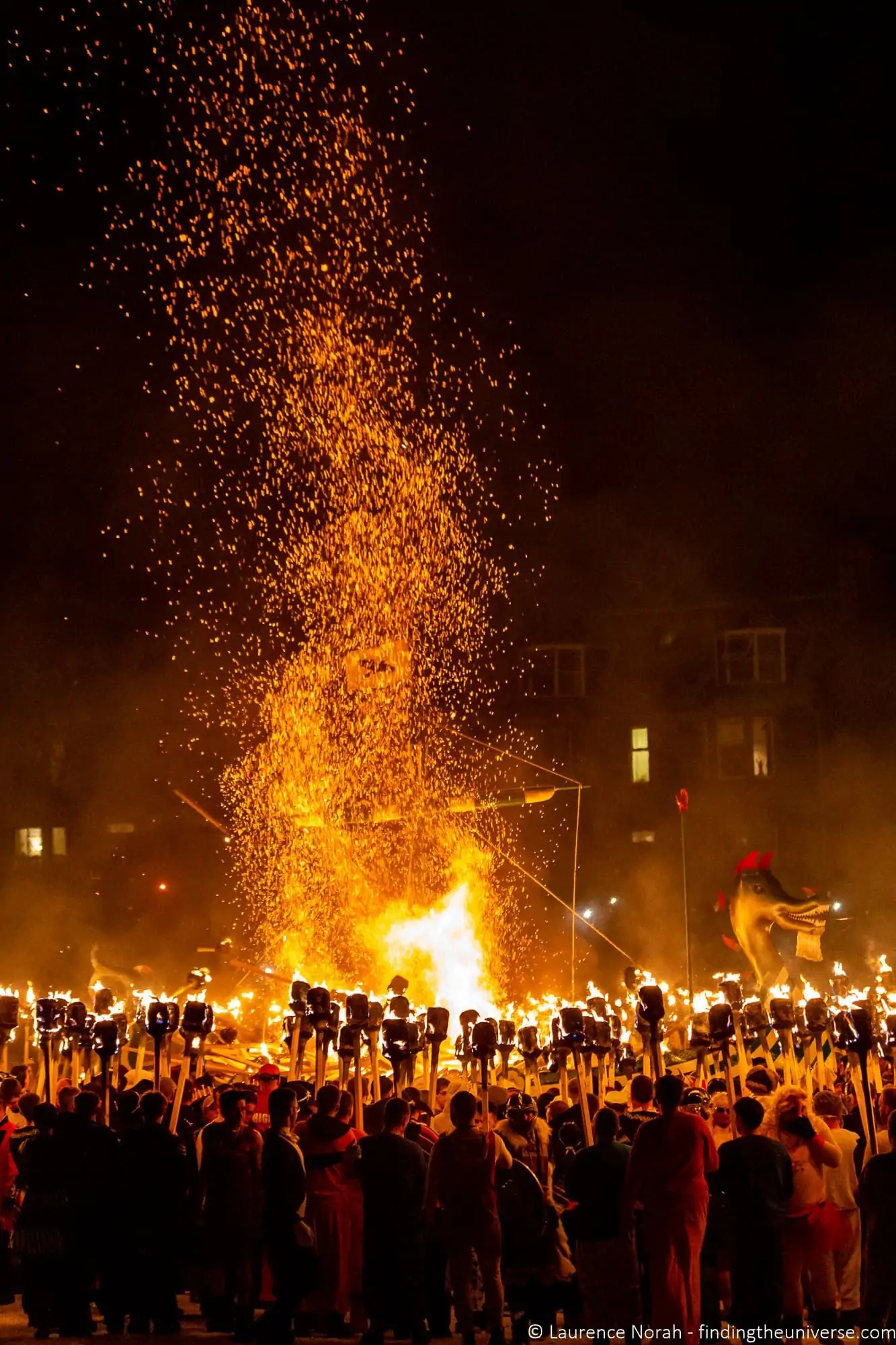
Up Helly Aa is the umbrella name for a series of eleven fire festivals held across Shetland between January and March every year, celebrating the end of the Yule season and nodding to the islands’ Viking past.
Shetland, or the Shetland Islands, is an archipelago sitting around 100 miles off the north coast of mainland Scotland. It’s the most northerly inhabited part of the UK, and was under Scandinavian rule for around 500 years until it became part of Scotland in 1468. That Viking heritage still runs through the place, and Up Helly Aa is one of its loudest expressions.
The biggest festival by some distance is in Lerwick, the capital. This is the one most visitors travel for, and the one this guide is mostly about. It happens on the last Tuesday of January, pulls in nearly a thousand costumed participants (known as guizers) and around five thousand spectators, and ends with a specially-built Viking galley going up in flames on a playing field just off the town centre.
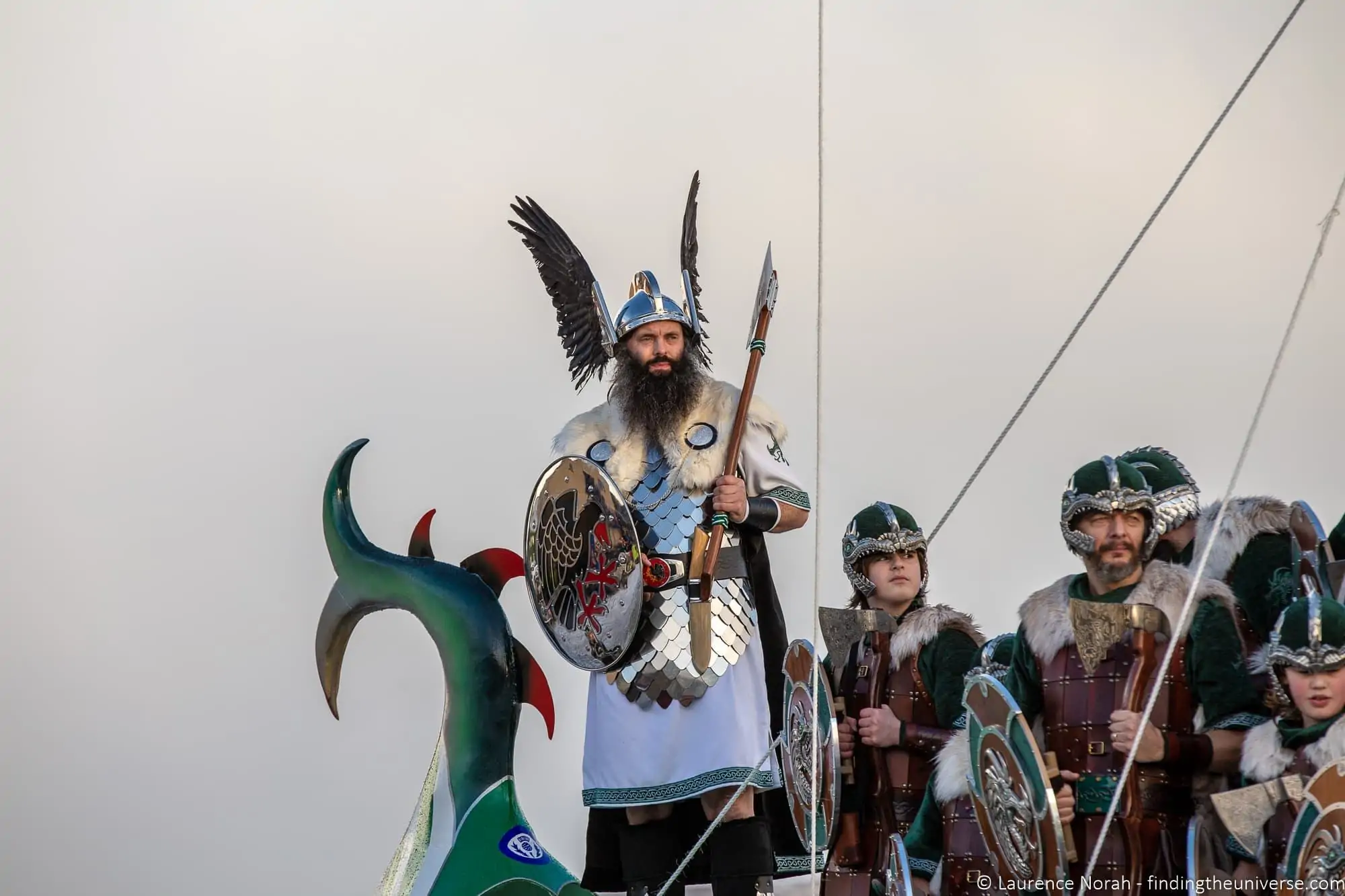
The leader of the festival is known as the Guizer Jarl, who dresses as a figure from Norse legend. The identity of the Jarl, their Norse character, and the design of their costume are kept under wraps for months in advance, with the reveal being a significant part of the morning’s drama. Committee members spend fifteen years working their way up to the role.
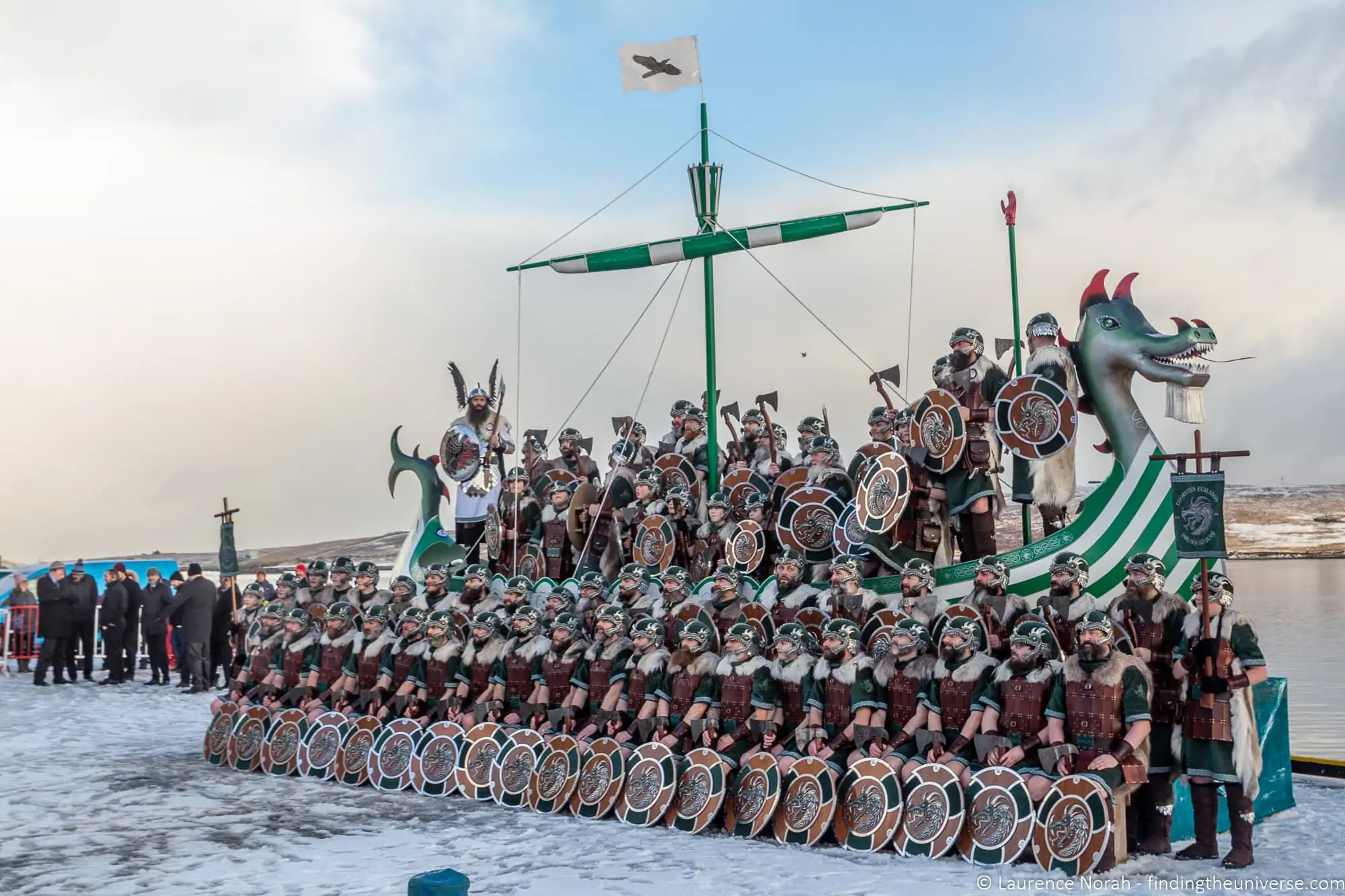
The Jarl’s supporters make up the Jarl Squad, all dressed in matching Viking-style kit. The forty-odd other squads pick their own themes each year, which can be pretty much anything: TV parodies, cartoon characters, historical figures, topical skits. You’ll see more Pikachus than Vikings, and that’s part of the charm.
The festival itself in its current form dates to the 1870s rather than any ancient Norse tradition. It grew out of a Victorian-era effort to replace the rowdier local custom of dragging burning tar barrels through town (which, as you might imagine, had started to cause public safety concerns). The Total Abstinence Society was closely involved early on, which is why some of the halls remain officially “dry” to this day. “Officially” is doing some work in that sentence.
One important recent change: for 143 years the Lerwick procession was open only to men and boys. That changed for the 2023 festival, when the Lerwick Up Helly Aa Committee removed gender restrictions on squad participation. Women have been taking part in squads in Lerwick since then. A few of the rural festivals had already been more progressive (the South Mainland festival had a female Jarl in 2015), but 2023 was the milestone for Lerwick itself.
When is Up Helly Aa 2027?
The largest Up Helly Aa festival in Lerwick is always held on the last Tuesday of January. For 2027, that means Tuesday 26th January 2027. Future years follow the same pattern:
- Lerwick Up Helly Aa 2028: Tuesday 25th January 2028
- Lerwick Up Helly Aa 2029: Tuesday 30th January 2029
- Lerwick Up Helly Aa 2030: Tuesday 29th January 2030
Those are the Lerwick dates. The rest of Shetland holds its own separate festivals on different weeks, which means you can string together a longer Shetland trip and see two or three if the timing works.
The full current schedule, with 2027 dates, is in the next section.
The Other Ten Up Helly Aas
If you can’t make Lerwick, or if you want to see a smaller, more village-scale version, there are ten other Up Helly Aas scattered across Shetland between January and late March. Each has its own character, and some are very different in feel to the main Lerwick event. At Bressay, for example, the procession is open to anyone who wants to carry a torch (subject to there being enough torches to go round), which is about as different from the Lerwick rules as you can get.
Dates rotate based on which Tuesday, Friday or Saturday of the month the festival falls on, so they shift year to year. The official schedule is confirmed closer to the time on the Shetland.org fire festivals page, but the 2027 dates should work out roughly as follows:
- Scalloway Fire Festival (second Friday of January): 8 January 2027. The first of the year, held in Shetland’s former capital, with the galley burnt on the sea at Port Arthur.
- Lerwick Junior Up Helly Aa: morning of 26 January 2027, same day as the main Lerwick event.
- Nesting and Girlsta Up Helly Aa (ten days after Lerwick): around 5 February 2027.
- Uyeasound Up Helly Aa (third Friday of February, on Unst): around 19 February 2027.
- Northmavine Up Helly Aa (third Friday of February): around 19 February 2027. Covers Eshaness, Hillswick, Ollaberry, North Roe and Sullom, with a sailing galley as well as the burning one.
- Cullivoe Up Helly Aa (last Friday of February, on Yell): around 26 February 2027. Galley is floated out to sea and burnt.
- Norwick Up Helly Aa (late February, on Unst): Shetland’s most northerly fire festival, with the burning held on Norwick beach.
- Bressay Up Helly Aa (first Friday of March): around 5 March 2027. A seven-minute ferry from Lerwick. Visitors can sometimes join the procession if there are torches spare.
- South Mainland Up Helly Aa (second Friday of March): around 12 March 2027. Rotates between five different communities each year.
- Delting Up Helly Aa (third Friday of March): around 19 March 2027.
- Walls Junior Up Helly Aa (fourth Friday of March): around 26 March 2027. The last of the season.
These smaller festivals are a bit easier to slot into a Shetland trip if you can’t be there for the last Tuesday of January, and accommodation pressure is lower too.
What Happens on Up Helly Aa Day
Here’s what to expect if you’re visiting Lerwick for the main Up Helly Aa Tuesday. The broad shape of the day is the same each year; the exact schedule is confirmed on the official Up Helly Aa website.
The Jarl Squad starts early, with breakfast at the Islesburgh Community Centre and visits to the Galley Shed, the Toll Clock Shopping Centre and the British Legion. The first proper spectator event is around 9am, when the Jarl Squad parades through the town centre with a pipe band, ending up at the Galley. The year we went this was at Alexandra Wharf on Commercial Street, with good views from the wharf itself and from the walls of Fort Charlotte above the street. The Galley remains on display until early evening so you can get a proper look at it in daylight.
After the morning parade, the Jarl Squad makes a round of private visits to schools, museums and civic buildings, most of which aren’t open to the general public. The Shetland Museum is an exception, and it’s worth wandering in to see both that stop and the Up Helly Aa-related exhibits. The middle of the day is a good time to eat, warm up, and pace yourself for the evening.
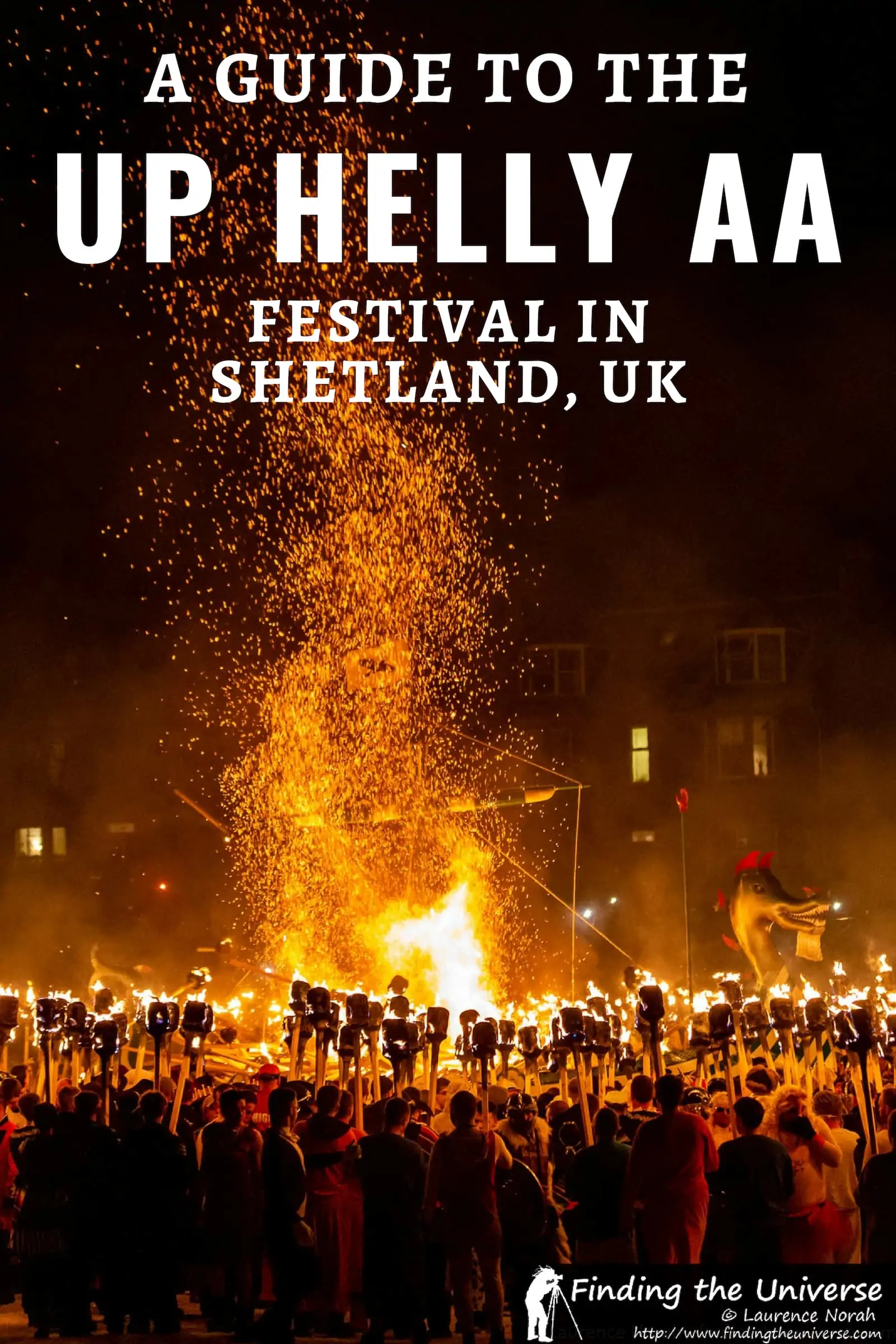
The main event starts at 7.30pm, and the crowds begin gathering from around 6pm. The torch procession begins with a signal rocket fired over Lerwick Town Hall, which is the cue for around a thousand guizers to light their torches. The street lights of Lerwick are switched off, the pipe band strikes up, and the procession winds through the town for half an hour before arriving at the burning site on the King George V playing field.
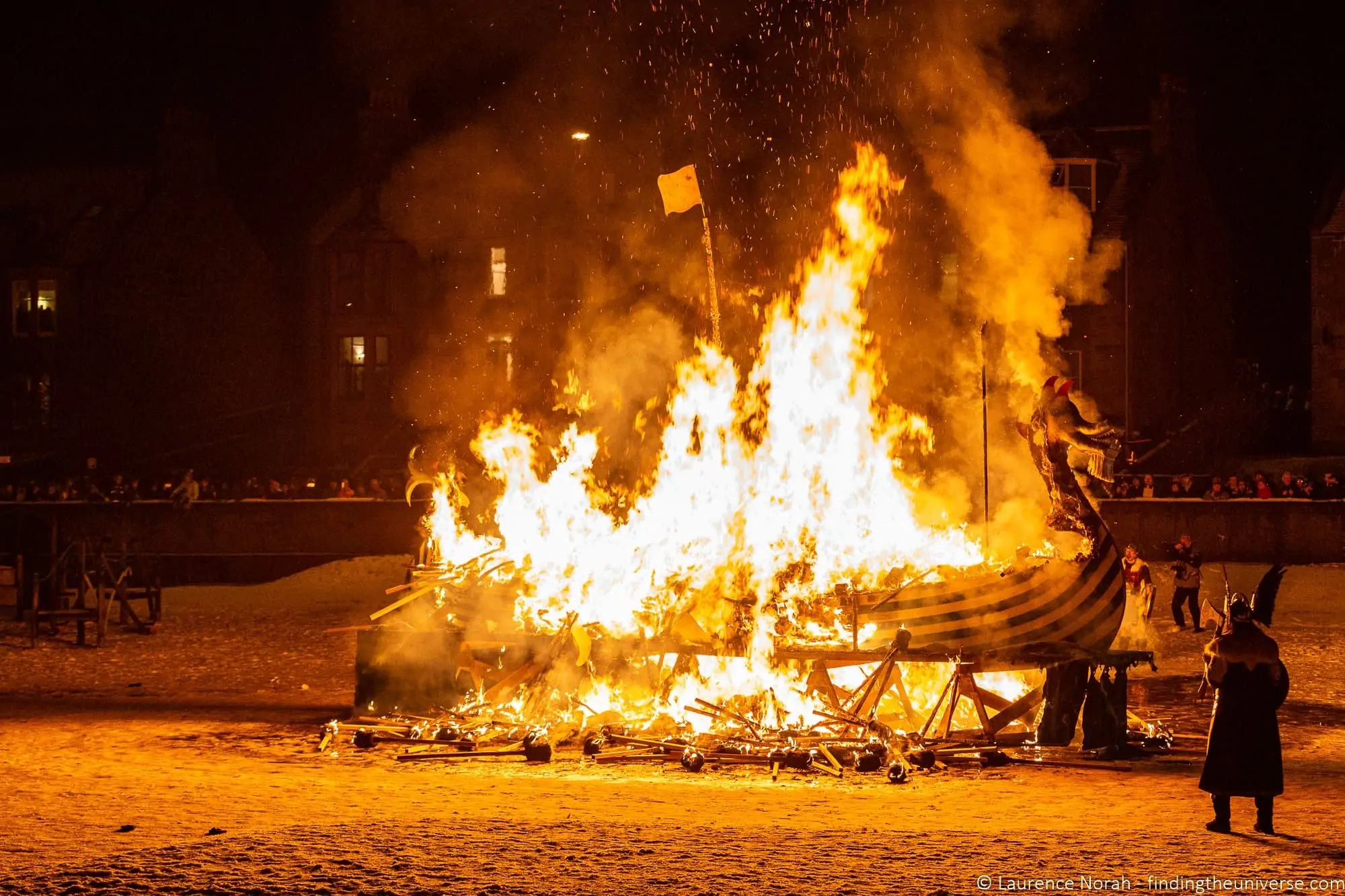
The burning itself is a choreographed piece of stagecraft. The squads circle the Galley in a slow ring of fire. Another rocket goes off. A bugle sounds. The Guizer Jarl leaves the ship and the torches are hurled in, and four months of work by the galley builders goes up in an impressive fireball, accompanied by the singing of The Norseman’s Home.
After the burning, a short fireworks display, and then the whole thing rolls on into the halls for the all-night celebrations, which is a separate bit of the festival with its own rules (see below).
Where to Stand for the Evening Procession
The best viewing is around the burning site, which is the playing field between King Harald Street, St Olaf Street, Harbour Street and King Erik Street. The playing field itself is closed to the public during the burning, but the streets around it have a low wall that gives a decent view, particularly from St Olaf Street and King Harald Street. The war memorial outside the Town Hall is also slightly elevated and makes a solid viewing spot.
We spoke to some locals in the morning and the advice was unanimous: get there by 6pm. We did, and had a very good spot on St Olaf Street, directly opposite the burning area. By 7pm there was a six-deep crowd behind us. If you turn up at 7.15pm you’ll see the tops of the flames and the tops of some people’s heads. This is the one piece of logistics that has real consequences for your night.
Bring gloves, a hat, and something to eat or drink while you wait. 90 minutes standing still in a Shetland January evening is a very different experience to 90 minutes walking around.
How Hall Tickets Actually Work
The evening procession and galley burning are public events that anyone can turn up to and watch. The halls are different. The halls are a dozen separate private parties that run from around 9pm to 8am the following morning, hosted by local volunteers, with each squad rotating between venues to perform their act (a skit, a dance routine, a parody of a local event or current TV show). This is the social heart of the festival for Shetlanders, and it is largely a local event.
We skipped the halls. We’re not really late-night ceilidh-til-dawn people, and the logistics of chasing down tickets for something we weren’t sure we’d enjoy felt like more trouble than it was worth. The procession and burning were what we came for.
If you do want to go to a hall, here’s how it actually works.
Lerwick Town Hall is the one venue that sells tickets to the general public directly. This is the blue-riband ticket. The Lerwick Up Helly Aa Committee runs an application process which opens in December each year for the following year’s festival (so for Up Helly Aa 2027, expect them to open in December 2026, but check uphellyaa.org to be sure). Tickets are £50 per person, and the event runs from 9pm to 9am.
Squads perform throughout the night, including a visit from the Jarl Squad. Food and live music are included. You bring your own drink, poured in a designated room (no bottles allowed in the main hall). Seating is first-come, first-served, and heels over 10mm are banned to protect the floor. Applications are heavily oversubscribed, so apply as soon as the window opens and have a backup plan if you don’t get in. Check the official Town Hall tickets page for the current year’s application window.
If you don’t get a Town Hall ticket, the other halls are invitation-only for the most part, but a few tickets do leak out to visitors each year:
- The Shetland Tourist Board (+44 (0)1595 693434) maintains a waiting list and sometimes sources tickets from halls which have had returns. Call in January if nothing else has worked.
- The Shetland Times classified ads occasionally advertise hall tickets in the run-up to the event.
- Ask your accommodation host directly. Guesthouse and B&B owners are often locally connected, and sometimes know of spare tickets or can put in a word. One travel blogger we know got two tickets to the British Legion hall via her B&B host for around £35 each.
- Some hall hosts post spare tickets to the tourist office if they can’t use them on the night. Worth asking on the day.
One more option: guided tours. Companies like Haggis Adventures, Highland Explorer Tours and Brightwater Holidays run multi-day Up Helly Aa trips from Edinburgh that include accommodation, the ferry crossing, and guided viewing of the festival. They don’t include hall tickets, but they take care of the main logistical problem (getting to Shetland and finding somewhere to stay), which is worth a lot. You can browse current Up Helly Aa tours on TourRadar to see what’s being offered.
Do you need Tickets for the Main Procession?
No. The morning parade, the afternoon Jarl Squad visits (for those that are open to the public), the evening torch procession and the galley burning are all public events that are free to attend. You just turn up.
Tickets are only required for the evening hall parties. The procession and burning are the main spectacle, and you can have a great Up Helly Aa experience without a hall ticket.
Where to Stay for Up Helly Aa
If you’re visiting for the Lerwick event, stay in Lerwick. You’ll want to walk to and from the festivities without worrying about parking (which is restricted anyway due to road closures), taxis (which are in short supply that night), or designated drivers.
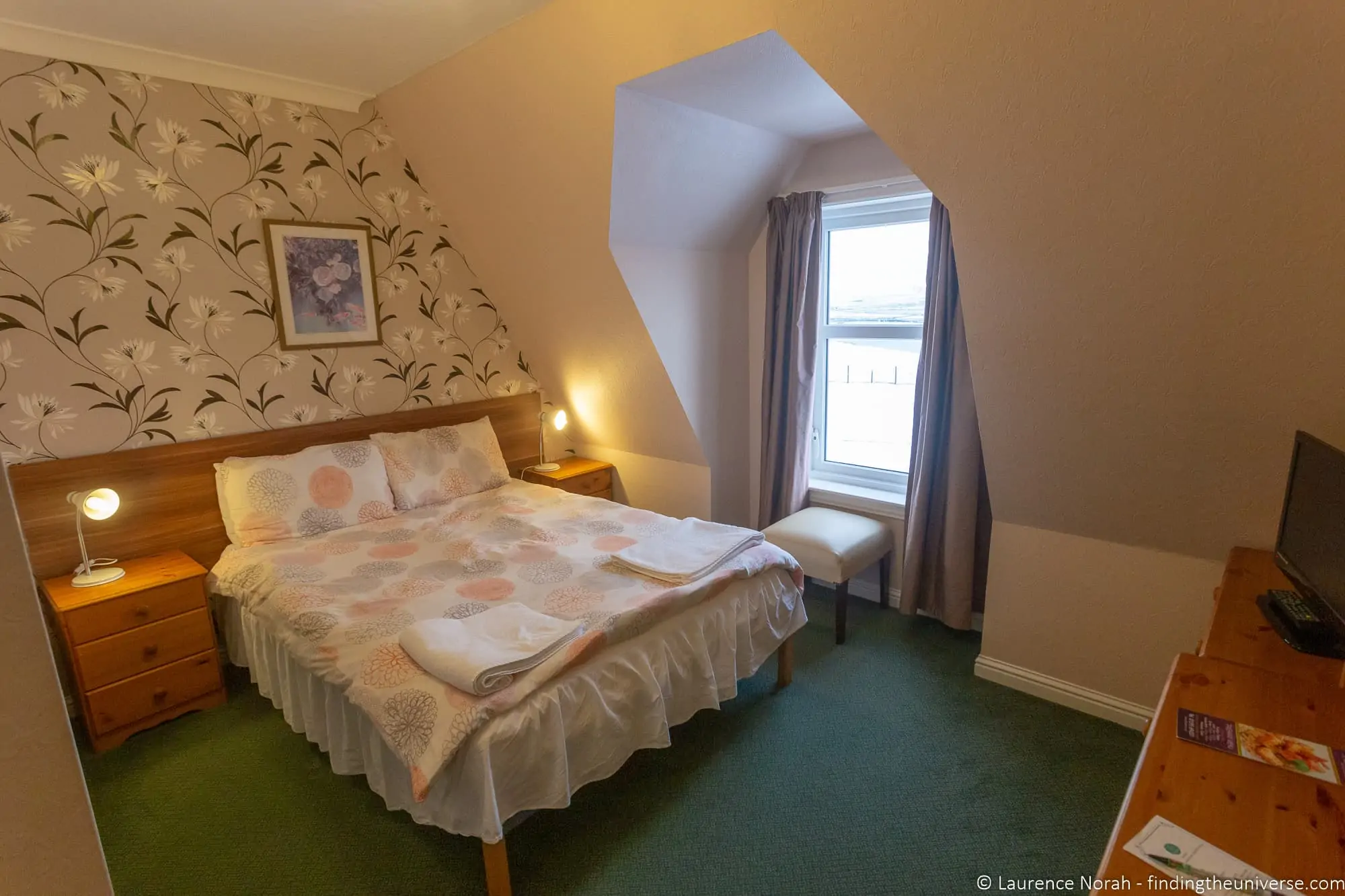
Up Helly Aa is by far the busiest week of the year in Lerwick. Accommodation books out months ahead, sometimes a full year in advance for the best-placed options, and prices are higher than the rest of the year. Two or three-night minimum stays are common. Book as early as you can.
When I checked in August 2026, nearly six months before the 2027 festival, Lerwick was already effectively full: a search across the whole town for the festival nights came back with a single room.
From the full Lerwick listings on Booking.com, some options to consider:
- Glen Orchy House – where we stayed. A ten-minute walk from the procession route, the breakfast was excellent, and the owners knew the festival inside out and were a useful source of advice on where to stand and when to set off.
- The Lerwick Hotel – a 3* hotel about ten minutes’ walk from the town centre, with free parking and an on-site restaurant.
- Aald Harbour Hoose – a 4-bedroom self-catering townhouse near the small boat harbour, sleeps up to 8. Refurbished from a B&B in 2023, and a good option for groups or families.
- Eddlewood Guest House – a central 3* guesthouse with good reviews. Breakfast not included, and no dedicated guest parking.
- Islesburgh House Hostel – the budget option. Seven minutes from the centre on foot, with shared and private rooms and an on-site kitchen.
If Booking.com is showing nothing for your dates, that’s normal for festival week. Self-catering is the next place to look, and our guide to holiday cottage websites in the UK has a range of alternatives. Shetland has a reasonable stock of cottages that sometimes have availability when the hotels don’t. Failing that, one of the rural festivals earlier in this guide is a much easier trip to book.
How to Get to Shetland
Two options: fly, or take the overnight ferry from Aberdeen.
Flights to Sumburgh Airport take between an hour and 90 minutes, with daily departures from Aberdeen, Edinburgh, Glasgow and Inverness. Flights are operated by Loganair, and prices are generally lower the further in advance you book. Sumburgh is around a 30-40 minute drive south of Lerwick, so you’ll need either Service 6 (the bus from the airport into the Viking Bus Station in Lerwick, with timetables on the ZetTrans website) or a hire car to get into town. For car rental, I suggest looking on Discover Cars here. They compare multiple providers and tend to find the best deal.
The ferry runs overnight from Aberdeen to Lerwick, operated by NorthLink Ferries. It’s a 12-hour crossing, departing Aberdeen in the evening and arriving into Lerwick the following morning. Prices depend on what cabin you book and whether there’s a car going with you, rather than how far ahead you book.

We took the ferry from Aberdeen with our car, and booked a twin room with ensuite. It was a good call. The sleeper-seat option is false economy for a 12-hour crossing in winter. You’ll arrive tired, cold, and not ready for a 14-hour day. A cabin is a proper bed and a shower, and the ship’s food was reasonably priced and used a lot of local produce. If you’re arriving on Up Helly Aa morning and going straight into a full day of events, you will appreciate having slept.
One small civility: if you book a cabin, you don’t need to check out of your room until 9.30am on arrival. You take the car off the ferry on arrival, and then I was able to reboard for breakfast. Worth knowing.
What to Pack
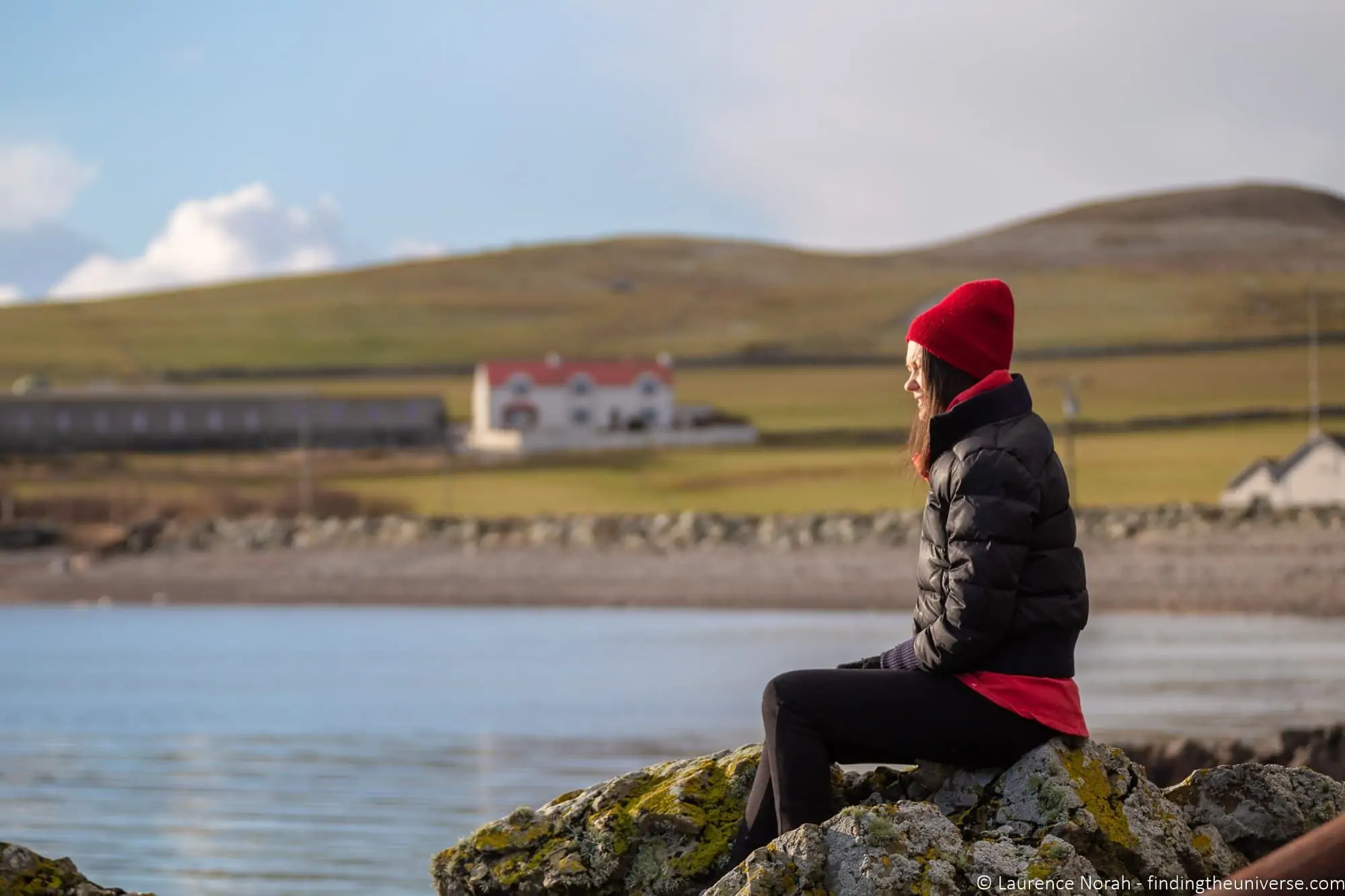
Shetland in January is cold, windy, and frequently either snowing or raining sideways. You’ll be standing still outside for long stretches. Overpack the warm layers and the waterproofs.
At a minimum we’d suggest:
- A warm hat like this
- A warm, waterproof, windproof coat like this
- Fleece midlayers like these
- Thermal baselayers like these
- Windproof gloves like these
Add good waterproof boots or shoes. An umbrella or poncho is useful. Our guide to what to pack for Hogmanay in Edinburgh covers a lot of overlap.
One practical detail: after the galley burning, your clothes will smell like a bonfire. If you’re going on to a hall, pack a change of outer layer.
Surrounding Events: Craft Fair, Fiery Sessions, Food Market
Up Helly Aa is a one-day festival, but there’s a cluster of smaller events in the week either side of it that are worth knowing about, particularly if you’re in Shetland for several days.
The Up Helly Aa Craft Fair is held at Mareel in Lerwick in the days before the festival, with local craftspeople and Shetland wool well represented. The Taste of Shetland food market runs at the Shetland Museum in the same window. Both are good places to pick up lunch and browse while you work up an appetite for the evening.
On Up Helly Aa day itself, the Fiery Sessions at Mareel are afternoon concerts (typically 12pm and 3pm) featuring traditional Shetland music: fiddle, accordion, and song. Tickets through the Shetland Arts website. Also at Mareel later on is Stand Up Helly Aa, an annual stand-up comedy show at 9pm designed to warm you up with laughter after the procession.
Shetland Museum often runs Origins of Up Helly Aa tours in the days leading up to the event, with archaeologists and historians talking through the festival’s evolution from tar-barrelling to today’s torchlit procession. Worth an hour if you’re interested in the history.
The Day After: What’s Open on Wednesday
The Wednesday after Up Helly Aa is a public holiday across Shetland. The point of it is to let guizers (and the rest of Lerwick) recover. This means most of the shops, cafés and restaurants are closed on Wednesday.
Stock up on food on Tuesday before the procession if you plan to self-cater on Wednesday. If you’re staying in a guesthouse with breakfast, you’ll be fine for the morning, but lunch and anything later may be tricky.
A few things do open specially for visitors during Up Helly Aa week that are usually closed in winter. Old Scatness Broch and Iron Age Village in the South Mainland often runs guided tours during Up Helly Aa week (check the Shetland Amenity Trust site for the current year). The Shetland Museum and Archives in Lerwick is open and free, and has a strong Up Helly Aa display. Sumburgh Head lighthouse and visitor centre is often open during this week as well.
If you want to get out of town, the road out to Eshaness in the north-west is one of Shetland’s best winter drives, with dramatic cliffs, a lighthouse, and very few people. The weather needs to be on your side. If it isn’t, don’t push it. The ferry closes for real weather, and you don’t want to be stuck inland in a whiteout.
Our Experience Attending Up Helly Aa
We’d heard about Up Helly Aa for years. Some of the Lerwick Vikings regularly travel down for the Hogmanay festival in Edinburgh, which is where we first saw them, and we decided fairly late to finally make the trip. Which meant two things. One, accommodation was tight. Two, we didn’t try for hall tickets.
We took the overnight NorthLink ferry from Aberdeen with the car. It arrived into Lerwick at around 7am, but we didn’t have to check out of the cabin until 9.30am. After getting the car off the ferry I reboarded and had breakfast. That small civility put a surprisingly good start on the day.
Our guesthouse, Glen Orchy House, let us check in straight off the ferry, which is not a given. We dumped our bags and walked into town for the morning procession. In hindsight we’d have arrived the day before if we could. The ferry from Aberdeen was fully booked the night before, which is partly why we didn’t.
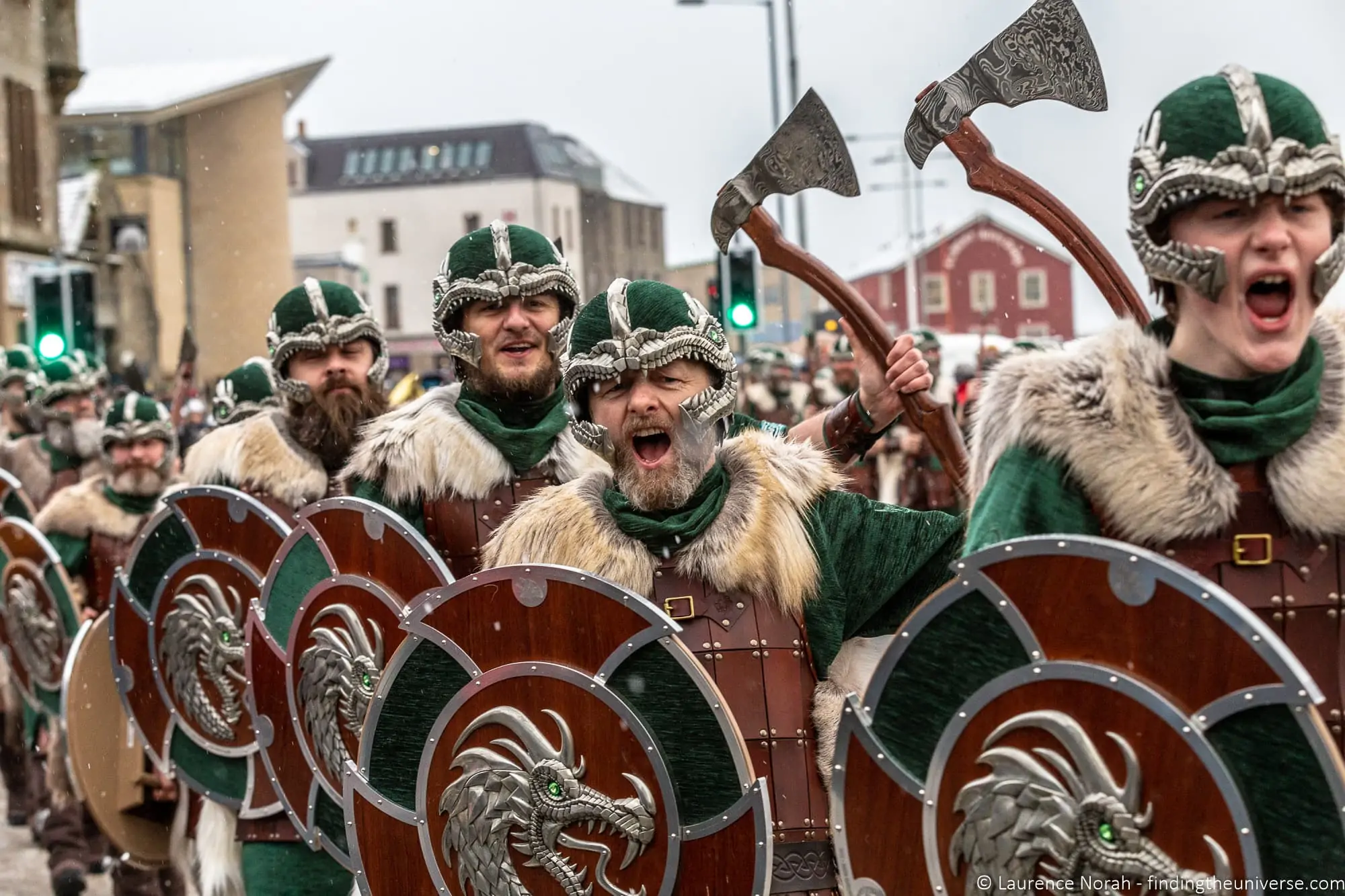
The morning parade runs down the Esplanade and along Commercial Street. We watched from the Esplanade, which worked well, though Fort Charlotte has a more elevated view if you want something a bit different. It was snowing fairly hard. That turned out to be a false alarm about the rest of the day, which was more or less fine by Shetland January standards. Fairly fine, anyway.
The Jarl Squad assembled at the Galley at the Lerwick to Bressay ferry terminal for photos. The costumes are proper craftsmanship. These aren’t rented Viking outfits, they’re built by the squad over a period of months. If you photograph this event, this is the moment when you want to be close. Everything after dark is silhouettes and fire; the morning is when you see the detail.
We spent the middle of the day sight-seeing in Lerwick: the Shetland Museum (strong), the town hall, the harbour, a slow walk through the old town. Warming up between things was a priority.
By 6pm we were on St Olaf Street, by the wall, directly opposite the burning area. We’d spoken to a local earlier who recommended arriving no later than 6.15pm, and by 7pm the crowd was six deep behind us. Wait 90 minutes in a cold Shetland January evening with nothing happening, or turn up fifteen minutes before and see the tops of the flames. Those are your choices.
The signal flare went off on time, the torches were lit, and the streetlights went out. The procession wound around the streets for half an hour, accompanied by pipes, shouting and a loud, surprisingly melodic mass singing. The outfits on parade, which I’d been assuming would be largely Viking-themed, were actually everything from cartoon characters to send-ups of local politicians. Vikings were a minority.
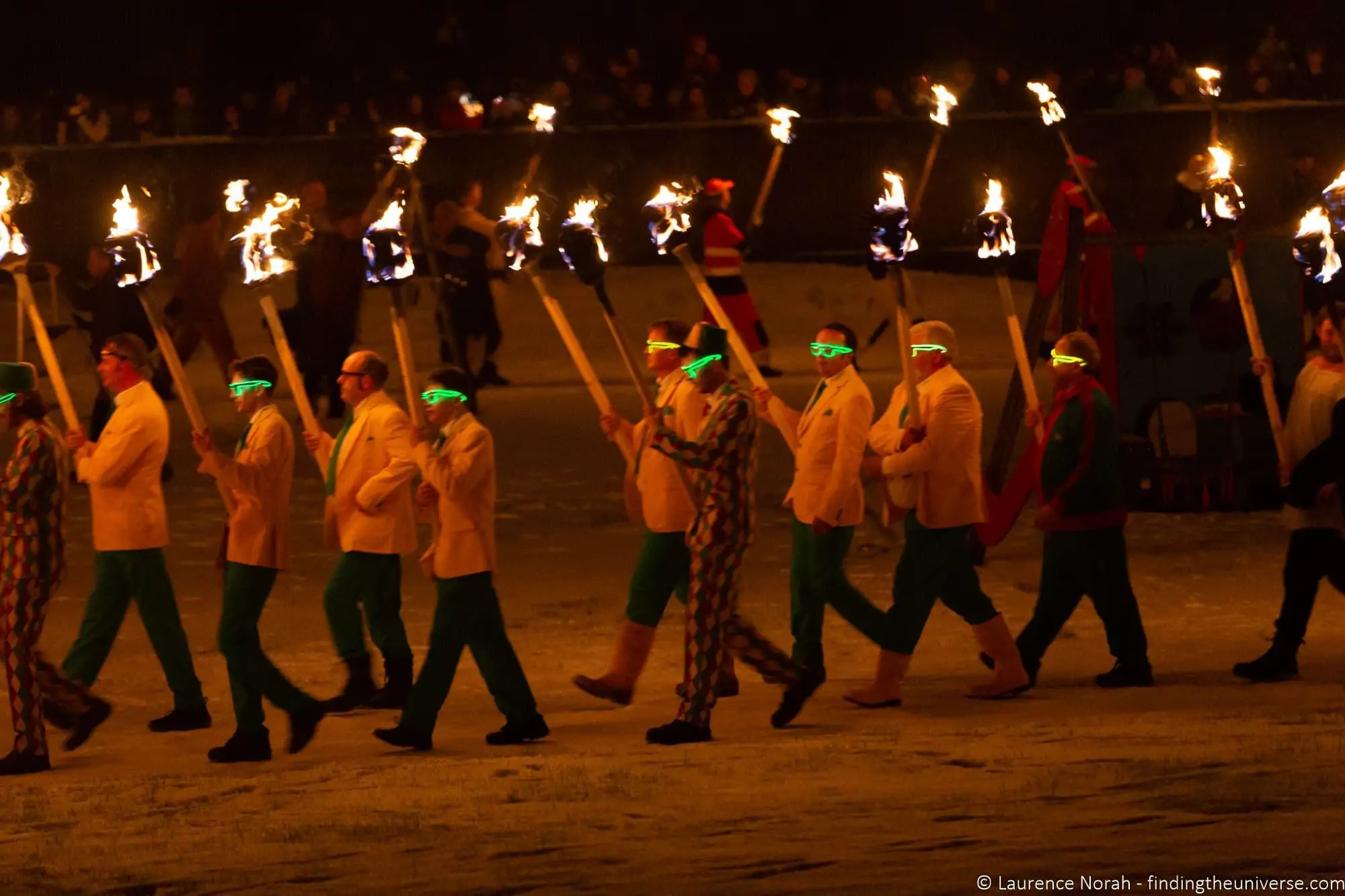
The end of the procession is the bit that surprised me. The guizers walked into the centre of the field, circled the Galley in a ring of torches, and then on a signal threw the torches inwards. The result was a fireball of properly impressive scale. The crowd sang The Norseman’s Home. A small fireworks display followed, and then the crowd began to drift away towards the halls.
We drifted in the other direction, back towards Glen Orchy, with the smell of woodsmoke on our coats. It was one of those nights you only get if you actually make the trip. I can see why it’s been on so many people’s bucket lists for so long.
The Northern Lights Bonus
Shetland sits at 60° North, which puts it squarely on the aurora map. Winter gives you long nights and, when the weather plays along, a reasonable chance of seeing the Northern Lights. We got lucky during our trip and caught a decent display one evening.
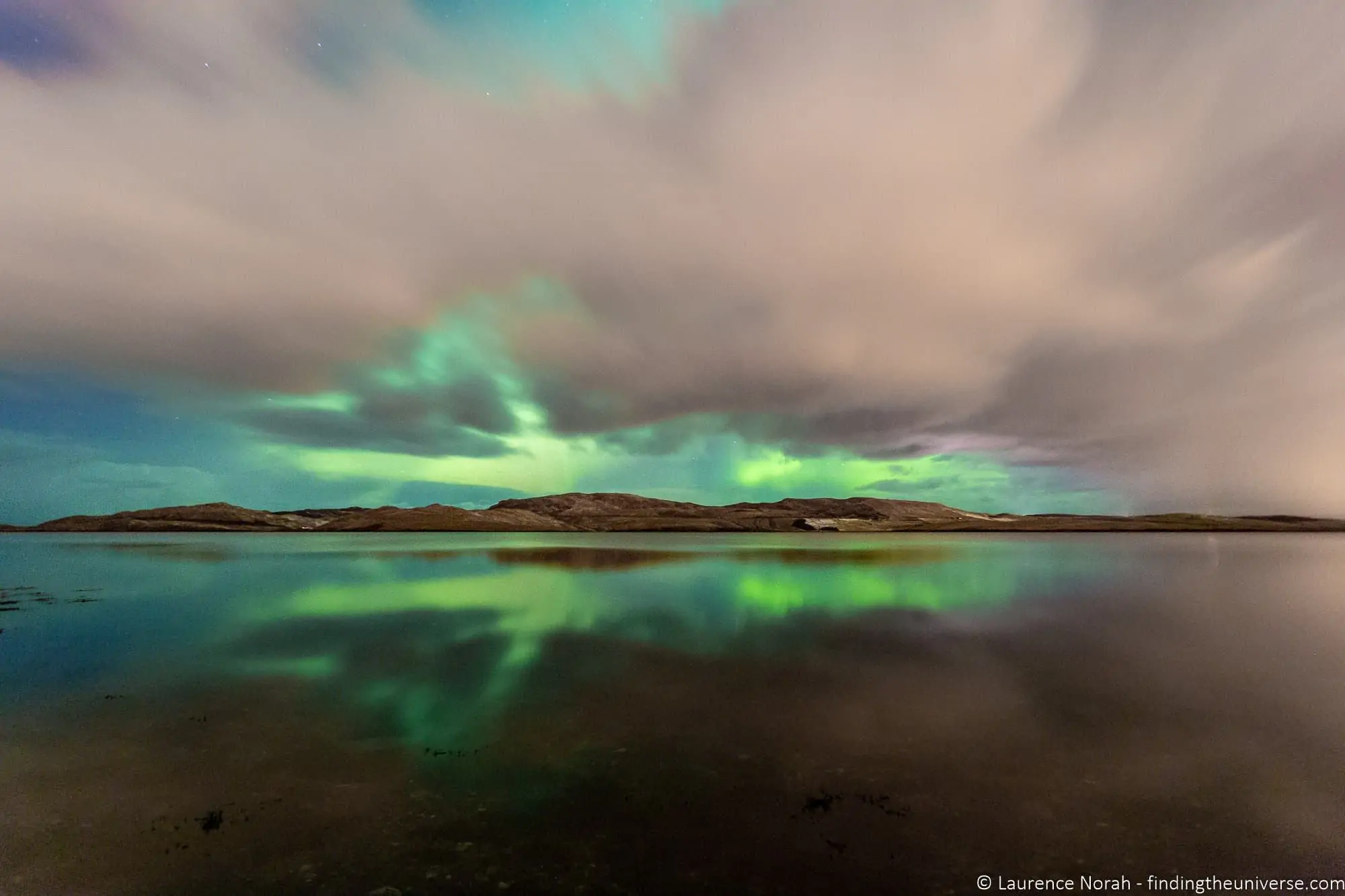
It’s not guaranteed, and the weather is a bigger variable than the solar activity in January (cloud cover is usually the thing that stops you seeing anything). But if you’re going to be in Shetland anyway, check the aurora forecasts, keep an eye on the sky, and have a long exposure ready on your camera if you’re keen.
If you’re interested in shooting the aurora, we have a detailed guide to photographing the Northern Lights with gear and settings recommendations.
Can’t Make It in Person?
The evening procession and galley burning have been streamed live for the past few years on the Promote Shetland YouTube channel and their Facebook page. The livestream usually starts around 7pm UK time on the last Tuesday of January. It’s a reasonable option if you can’t get there in person.
The Up Helly Aa Exhibition in the Galley Shed on St Sunniva Street, Lerwick, runs from May to September each year and is a good way to see a real galley, a Jarl Squad suit, and a lot of history without needing to be there in January.
Frequently Asked Questions
When is Up Helly Aa 2027?
The main Lerwick Up Helly Aa takes place on Tuesday 26th January 2027. Ten other Up Helly Aa festivals are held across Shetland between January and late March 2027.
Do you need tickets for Up Helly Aa?
You don’t need tickets to watch the main events. The morning parade, evening torchlit procession and galley burning are all public and free to attend in Lerwick.
You do need tickets for the all-night hall parties that follow the burning. The Lerwick Town Hall is the only hall that sells tickets to the general public (£50, applications usually open in December for the following year’s festival via uphellyaa.org). Other halls are mostly invitation-only, but a few tickets sometimes come through the Shetland Tourist Board waiting list, the Shetland Times classifieds, or local accommodation hosts.
Can anyone attend Up Helly Aa?
Yes, visitors are welcome as spectators. You can watch the parades, the torch procession, and the galley burning as a visitor with no restrictions.
You cannot participate as a guizer unless you are aged 16 or over and have lived in Shetland continuously for at least five years. That rule is strict and long-standing. The Bressay festival is the exception among the rural events and sometimes allows visitors to join the torch procession if spare torches are available.
Can women attend Up Helly Aa?
Yes. Women can spectate freely, and since 2023 women have been able to join squads in the main Lerwick procession (subject to the same residency and age rules as men). Several rural festivals had removed gender restrictions earlier, with the South Mainland festival appointing its first female Jarl in 2015.
How cold is Shetland in January?
Cold, windy, and often wet. January daytime temperatures typically sit around 3-5°C, but wind chill makes it feel significantly colder, and the wind is relentless. You’ll be standing still outside for 90 minutes or more around the evening procession. Thermal baselayers, a heavy mid-layer, a waterproof shell, a warm hat, windproof gloves and properly waterproof boots are the minimum. See our full packing section above.
Should I fly or take the ferry to Shetland for Up Helly Aa?
Both work. Flights from Aberdeen, Edinburgh, Glasgow or Inverness take 1-1.5 hours. The overnight ferry from Aberdeen with NorthLink is a 12-hour crossing, and is the only option if you want to take a car. If you’re flying, book Loganair early for better fares and factor in bus or car hire from Sumburgh Airport to Lerwick (around 35 minutes). If you’re taking the ferry, book a cabin rather than a sleeper seat. The difference in your energy levels on arrival is significant.
Is there a Wednesday holiday after Up Helly Aa?
Yes. The Wednesday following Lerwick Up Helly Aa is a public holiday across Shetland, and most shops and cafés are closed. Stock up on Tuesday before the procession if you plan to self-cater. The Shetland Museum and a few other attractions do open specially for visitors during Up Helly Aa week.
Further Reading
If you’re planning a trip built around Up Helly Aa, here’s some more content from our time living and travelling in Scotland that may help:
- Our guide to visiting Scotland in winter for advice on timing, transport and what to expect.
- If you’re taking the ferry from Aberdeen, our guides to things to do in Aberdeen and our favourite restaurants in Aberdeen are worth a look.
- Aberdeen sits close to Scotland’s largest national park. See our guide to the Cairngorms in winter.
- Other Scottish festivals worth knowing about: Hogmanay in Edinburgh, Burns Night (which falls the week of Up Helly Aa), and the Edinburgh August festivals.
- If you’re driving around Scotland, we have a guide to the NC500 and a three-day North East 250 itinerary.
- City guides for Edinburgh, Aberdeen and Glasgow.
That’s our guide to Up Helly Aa in Shetland, plus our experience of actually going. Had you heard of this festival? Is it on your list? Any questions about the logistics? Let us know in the comments below.
Lynne Hotz says
Although I am a first generation American of Scotish descent I had never heard of the Up Helly Aa festivals. I was watching a program called Shetland in which the festival was part of the story. I was intrigued and wanted to learn more. Your article online was really informative and fun. Almost felt as if was there! Thank you!
Laurence Norah says
Thanks Lynne! I’ll be honest, I don’t think they are that well known even here in the UK. I only really found out about them because for a number of years the Up Helly Aa vikings would come and parade in Edinburgh for the New Years Eve events, which I also photographed. So we were intrigued, and went to check this event out. It really was a lot of fun!
Thanks for leaving a comment, it’s really appreciated!