
I’ve worked as a professional travel photographer since 2010, and a few years before Jess and I road-tripped through Texas, I got to know Austin from behind the lens: I was on the official photography team for the SXSW music festival, shooting bands in bars and venues across downtown night after night. So by the time we came back to explore the city properly, I already had a feel for the place. On that trip we did the rest of it: we watched the bats pour out from under the Congress Avenue Bridge at dusk, ate our way through the BBQ, toured the Capitol and paddled about on the lake. Every photo in this guide is one I took myself.
What I’ve done here is take everything we worked out and turn it into a planned two-day route, instead of a list of twenty-odd things you have to sort into an order yourself. Two days is enough to see the best of Austin if you group the stops sensibly, and that is the whole idea of this itinerary. Day 1 keeps you downtown for the history, the food and the bats. Day 2 heads outdoors to the lake, the springs and South Austin. Where I think something is worth skipping, or worth planning around, I’ll tell you.
Table of Contents:
Your 2 Days in Austin at a Glance
Here is the short version. If you only read one thing before you go, read this.
| Day | The plan |
|---|---|
| Day 1: Downtown, history and the bats | Start at the Bullock Texas State History Museum, take the free Capitol tour, eat BBQ at Terry Black’s, spend the afternoon at the Blanton Museum (or the LBJ Library), wander Sixth Street and the murals, then get to the Congress Avenue Bridge for the bats at dusk and finish with live music. |
| Day 2: The lake, the springs and South Austin | Get out on Lady Bird Lake by kayak or walk the hike-and-bike loop, cool off at Barton Springs, see the sculpture at Zilker, have lunch and browse the murals on South Congress, then catch the sunset from Mount Bonnell. |
There’s a logic to this order. The bats only fly from roughly March to October, and only at dusk, so they have to come at the end of Day 1. Austin gets brutally hot from June to early September, so Day 2 puts the outdoor stops in the morning. And if you are coming by car (a good idea in Texas, more on that below), everything on Day 1 is walkable from a downtown base, which saves you parking twice.
Day 1: Downtown, Texas History, and the Bats
Day 1 stays in the downtown and university core. You can walk most of it, with maybe one short rideshare in the mix.
Morning: Bullock Texas State History Museum
Start at the Bullock Texas State History Museum. I like it as a first stop because it frames everything else you are about to see. The museum runs through 16,000 years of Texas, from the people who were here long before the Spanish, through Mexican independence, the Battle of the Alamo and Texan independence, and on into the Civil War, the civil rights era and the space programme. There are plenty of hands-on exhibits, so it works with kids as well as adults.
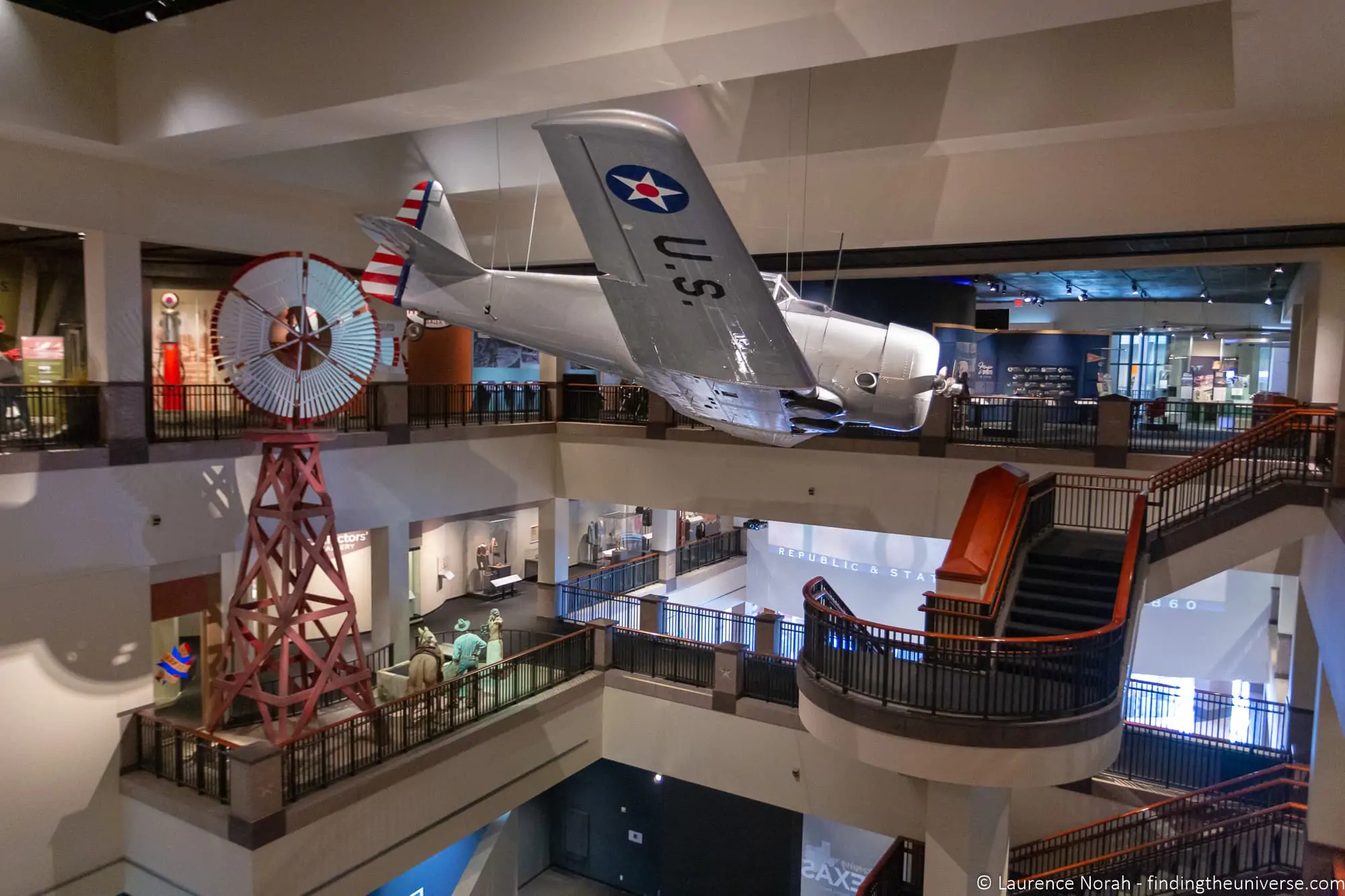
It opens daily at 10am and closes at 5pm. Adult admission is $17 and youth tickets (ages 4 to 17) are $11, with the usual discounts for students, seniors and military. There is an optional IMAX film on top, which runs about $10 for a documentary or $15 for a feature. Give it an hour and a half to two hours, and check the official site for current hours, as it closes for some public holidays.
Late Morning: The Texas State Capitol
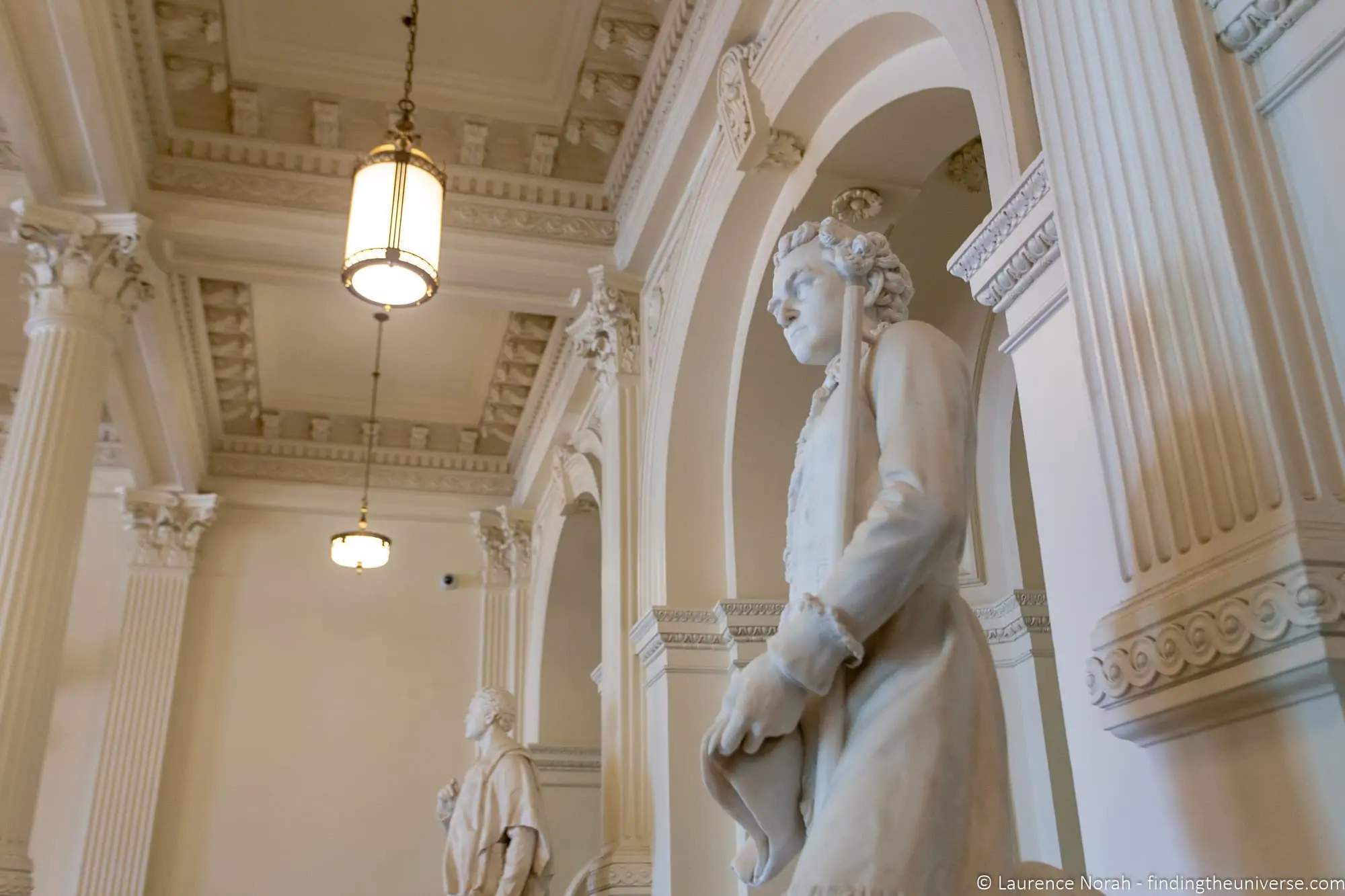
From the Bullock it is about an eight-minute walk to the Texas State Capitol, so do the two together. The building went up at the end of the 19th century and sits on a low rise that gives it a real sense of presence. Here is the fact every Texan will tell you, and it checks out: at just over 302 feet, the Texas Capitol is taller than the US Capitol in Washington, by about 15 feet.
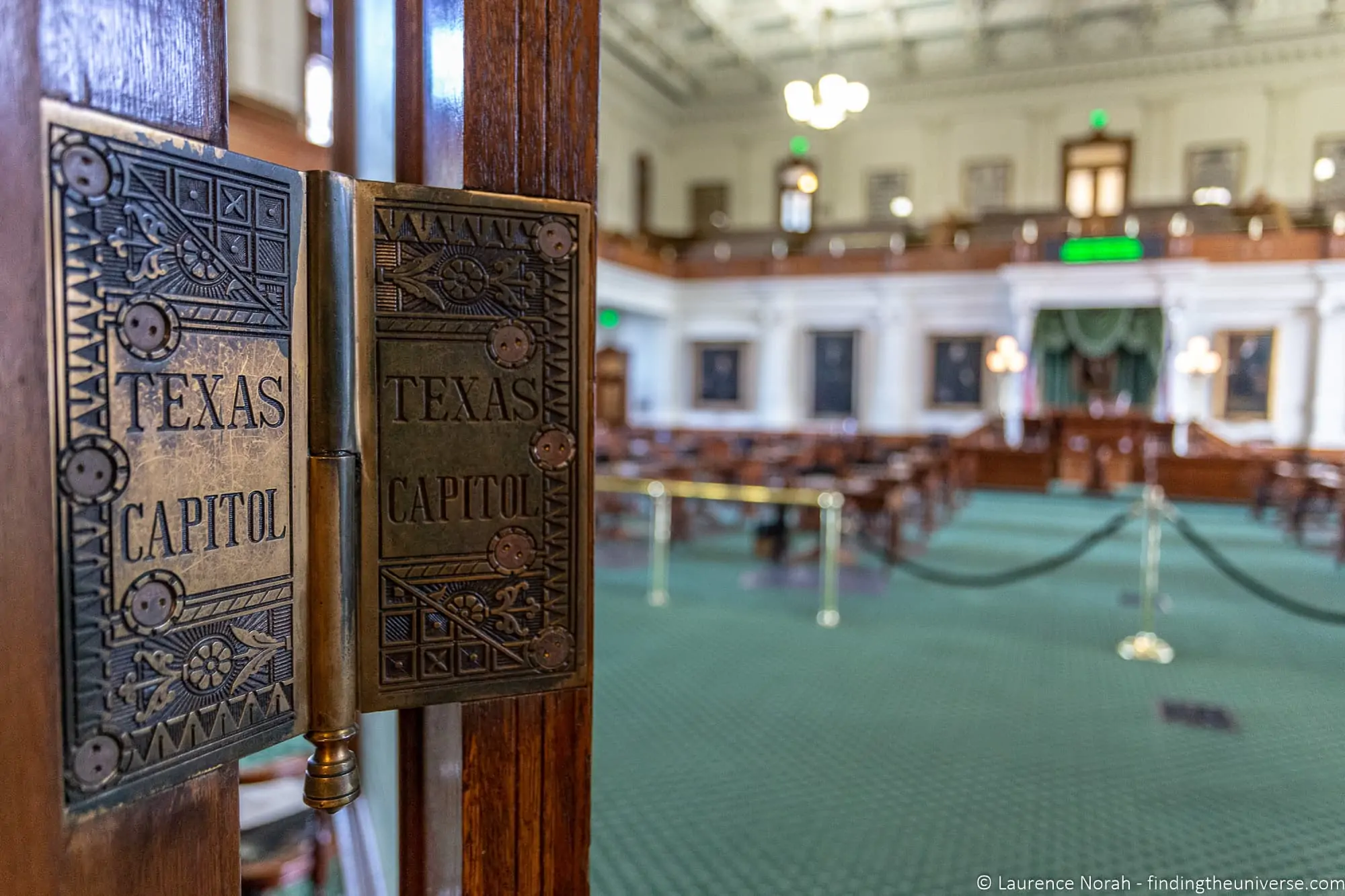
The best way to see inside is the free guided tour, and we really enjoyed ours. It taught us a lot about the building and a fair bit about how Texas politics actually works, and the highlight for me was standing in the Senate and House chambers. The free tours run weekdays from 9:30am and weekends from 12:30pm, every 30 to 45 minutes, with the last tour around 3:30pm. That weekend start time matters for planning: if you are here on a Saturday or Sunday morning, you’ll need to self-guide until 12:30pm, with leaflets available here and in the visitor centre. Either way, allow about an hour.
Lunch: Texas BBQ
You can’t come to Texas and skip the BBQ, and Austin is one of the best places in the state to eat it. Texas BBQ splits into four regional styles, each with its own approach to the meat and the sauce, and the debate over who does it best in Austin is never going to be settled.
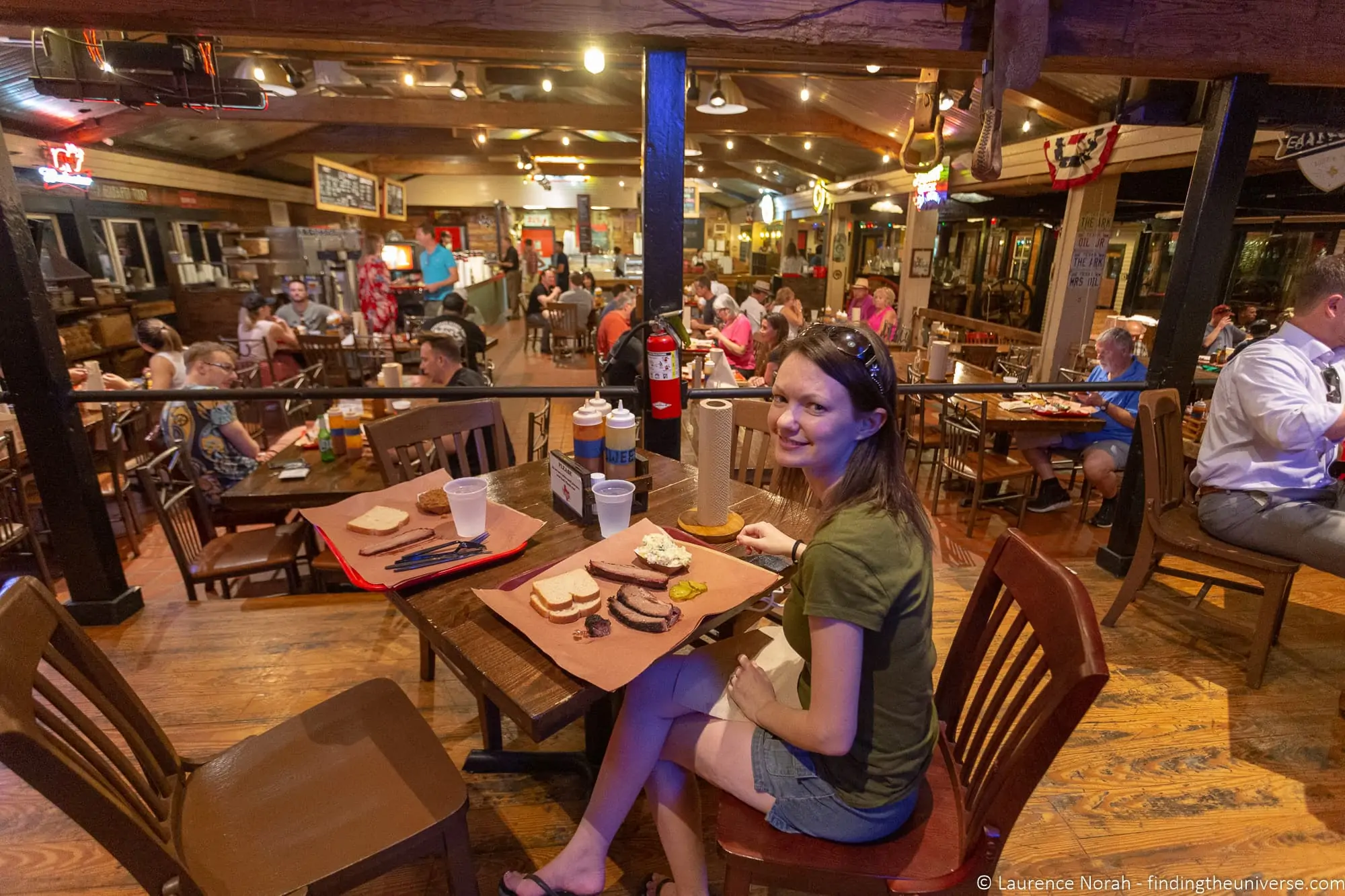
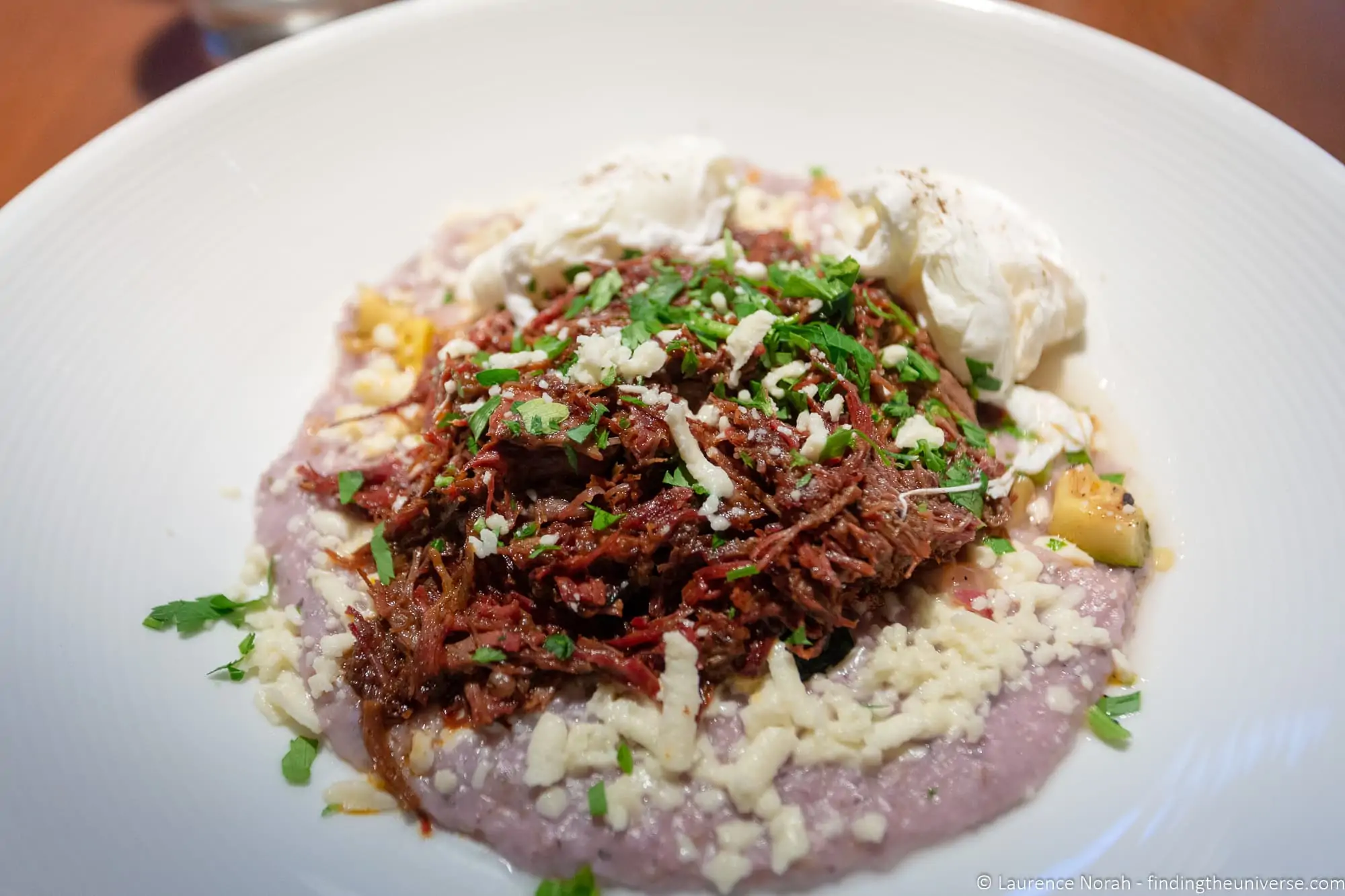
A quick word of warning here, because this one trips people up. Some of the famous places, Franklin’s being the obvious one, have queues that run for hours, and it is lunch only. We love BBQ. We don’t love it enough to give up half a day in a line for it. So we asked around, and after several locals pointed us the same way, we ate at Terry Black’s and Cooper’s BBQ. Terry Black’s was my favourite of the two, and it is my pick for a no-drama BBQ lunch on Day 1. If you want the line-up-for-hours experience, Black’s BBQ (same family as Terry Black’s) and Stiles Switch are also well regarded.
If you’d rather make a proper outing of the food, a guided downtown food tour walks you between several spots and takes the decision-making off your hands, which is a fair trade if you only have one BBQ meal in you.
Afternoon: The Blanton Museum of Art
After lunch, head over to the University of Texas campus for the Blanton Museum of Art, one of the largest university art museums in the country. The collection runs from pre-20th-century European work through modern and contemporary art, and it holds one of the most important collections of Latin American art anywhere in the US. It is a pretty easy stop to pair with the Capitol, since the two are close together.
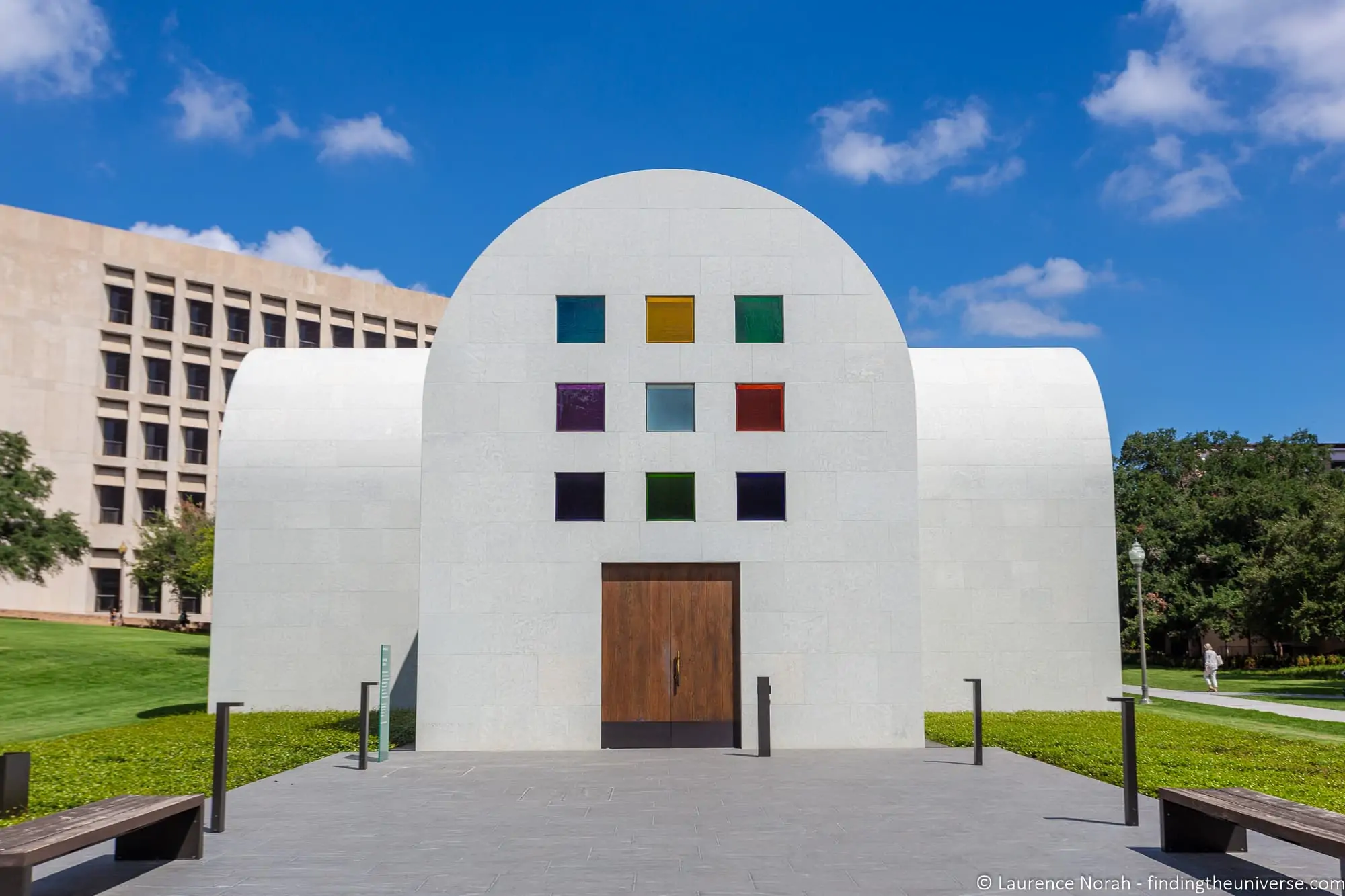
The Blanton is closed on Mondays and adult admission is $15, but here is the one to plan around: it is free every Tuesday. If your Austin trip happens to put a Tuesday in the mix, this is the afternoon to spend at the Blanton. Give it around 90 minutes.
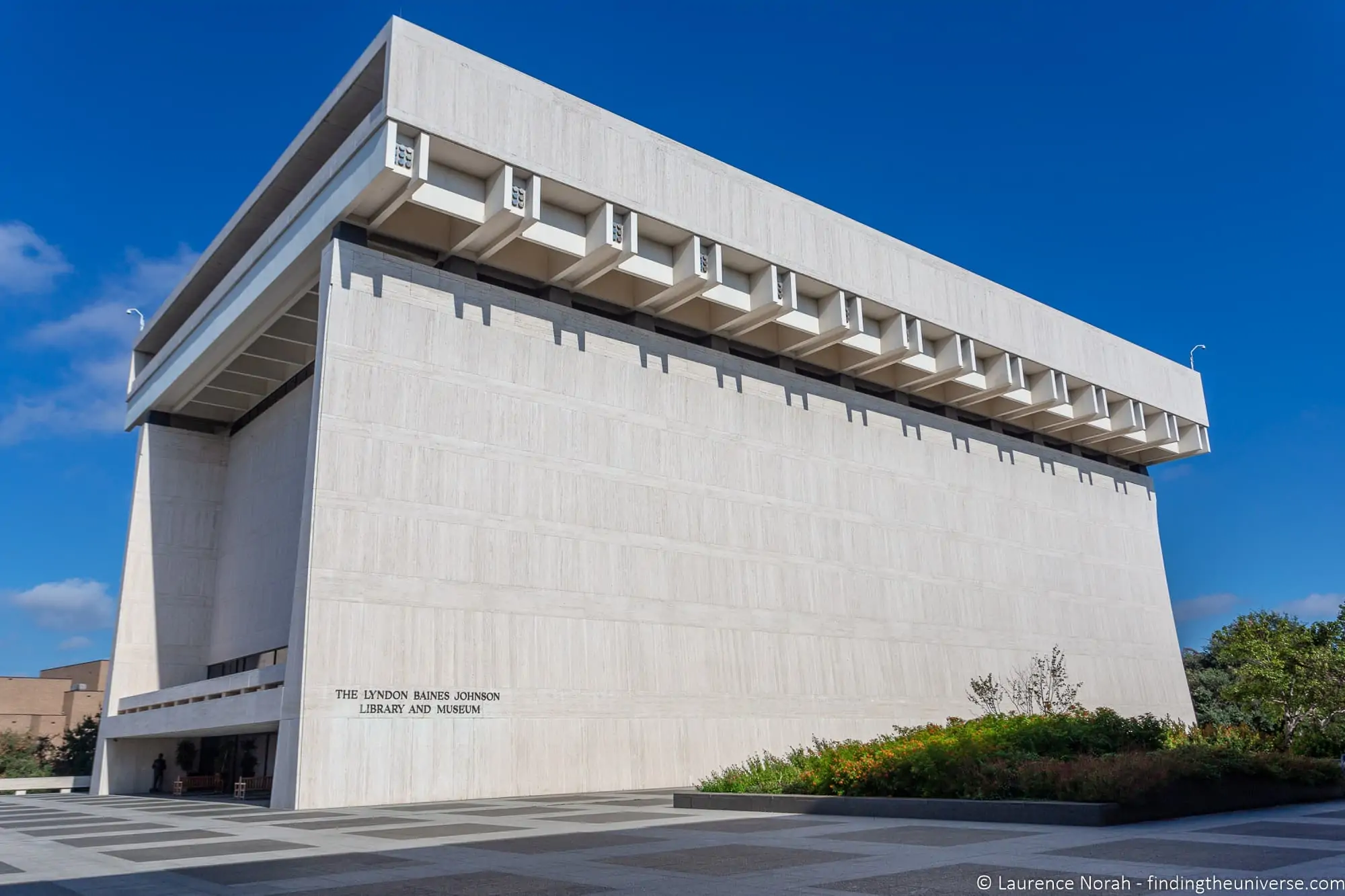
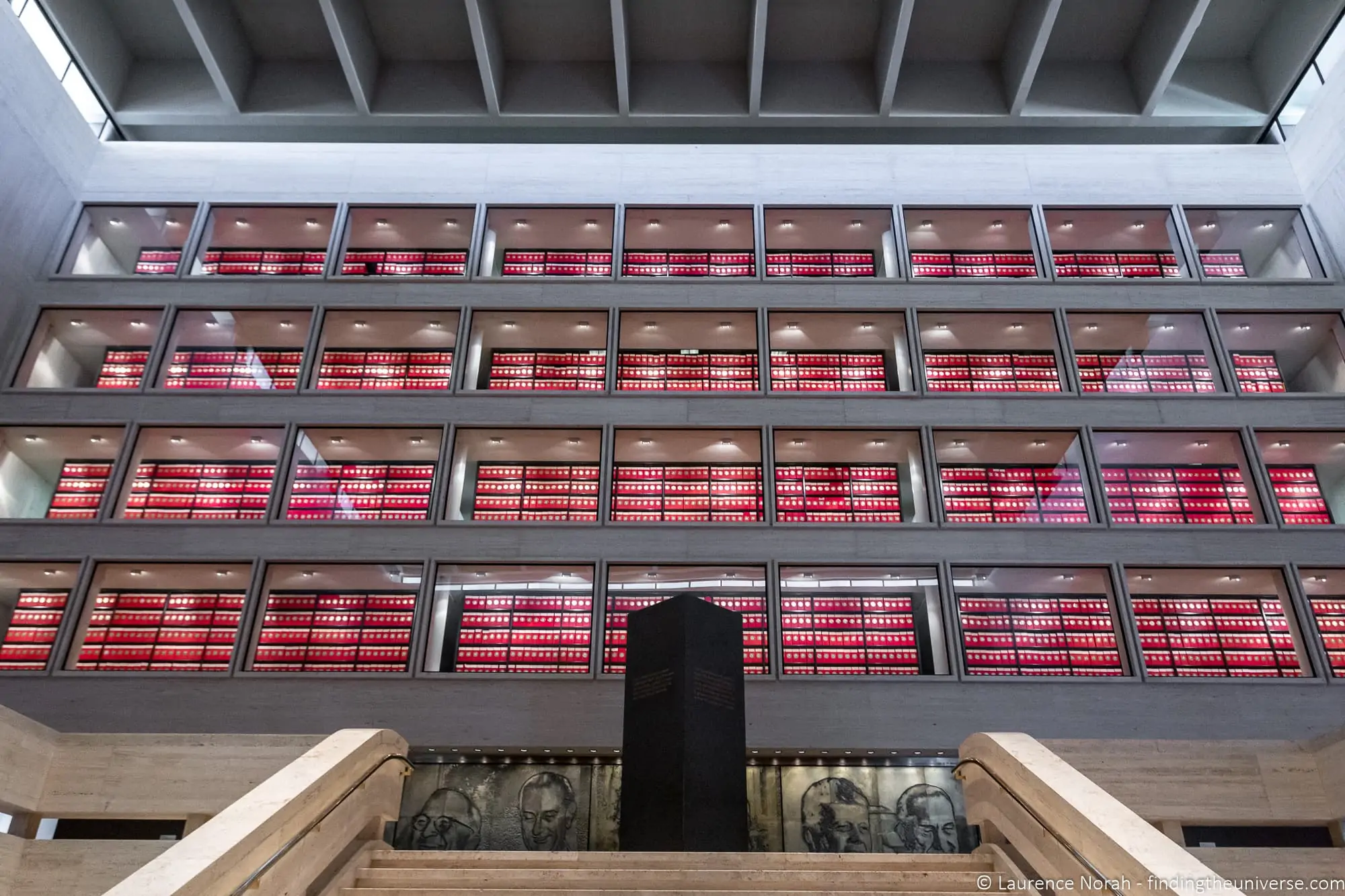
If you are more of a history person than an art person, swap the Blanton for the LBJ Presidential Library, also on the UT campus. Lyndon B. Johnson became the 36th president after Kennedy’s assassination in Dallas in 1963, and his administration pushed through civil rights and immigration reform, Medicare, and the Gemini space programme that set up the moon landings. The library tells that story through its exhibits, a 7/8-scale replica of the Oval Office, and millions of documents from his presidency. It is open daily 9am to 5pm (last entry 4pm), adult admission is $16, and admission is half-price on Tuesdays.
Late Afternoon: Sixth Street, Murals, and a Bit of the Weird
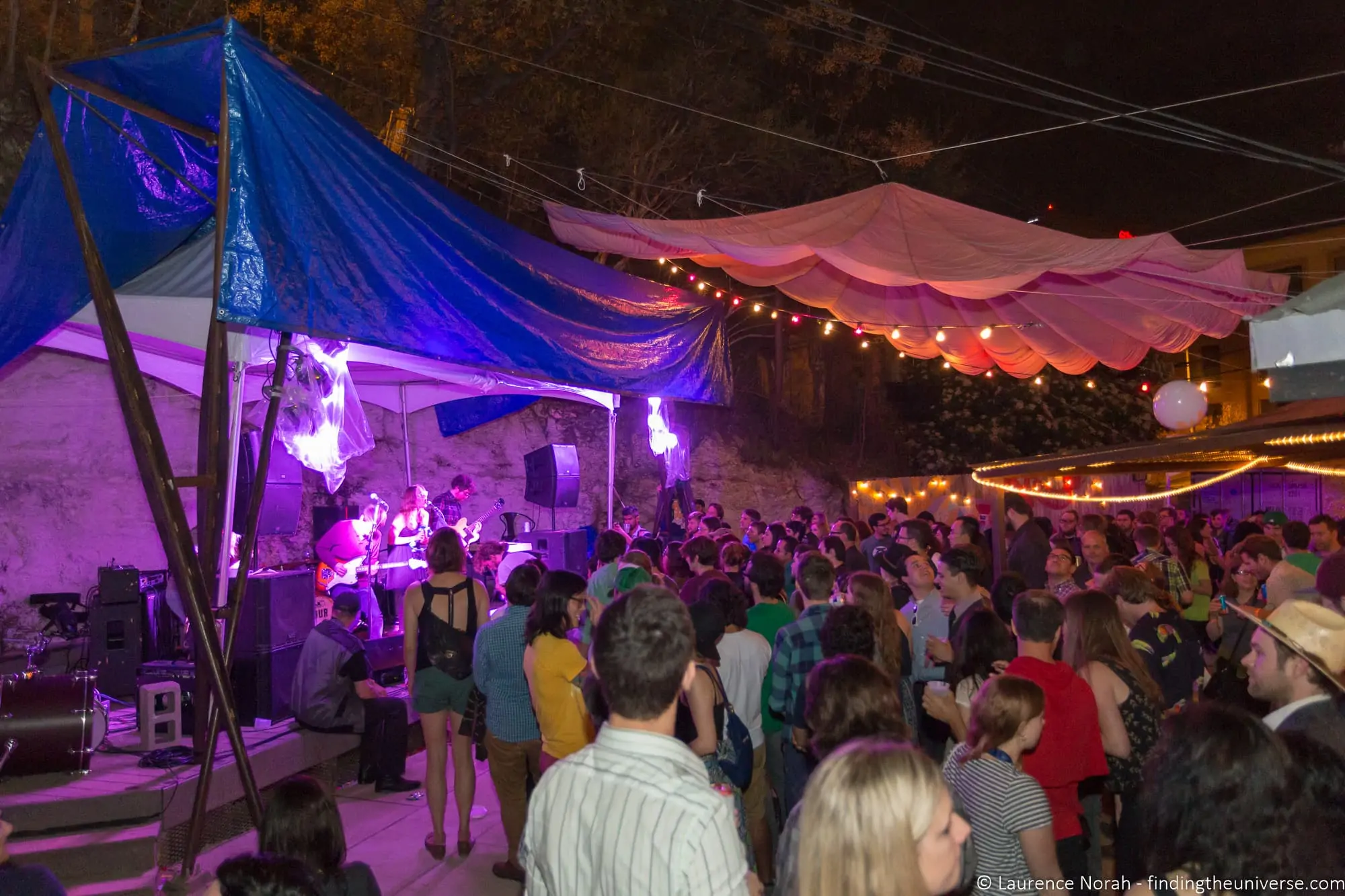
Walk back towards downtown and give the late afternoon to Sixth Street. This has been Austin’s entertainment strip since not long after the town was founded, when it was called Pecan Street and the stagecoach came through. A few of the late-19th-century buildings are still standing, and you can see them as you wander.
This is also a good stretch for street art. Austin has murals all over the city, and the downtown and East Austin areas are the easiest places to find them on foot. If you want specific addresses, the Austin mural guide at Carrie Colbert’s site is a good list to work from.

If you have a spare half-hour and a taste for the strange, the Museum of the Weird is tucked at the back of a curio shop on Sixth Street, full of shrunken heads, sideshow oddities and a wax horror gallery. It stays open late, so it also works as a Day 1 evening filler if the weather turns.
Dusk: The Congress Avenue Bridge Bats
This is the one to build your evening around. From roughly March to October, around 1.5 million Mexican free-tailed bats roost under the Ann W. Richards Congress Avenue Bridge, which makes it North America’s largest urban bat colony. At dusk they pour out from under the bridge in long ribbons to go and feed, and watching that happen against the skyline is one of those Austin sights that really does live up to the hype.
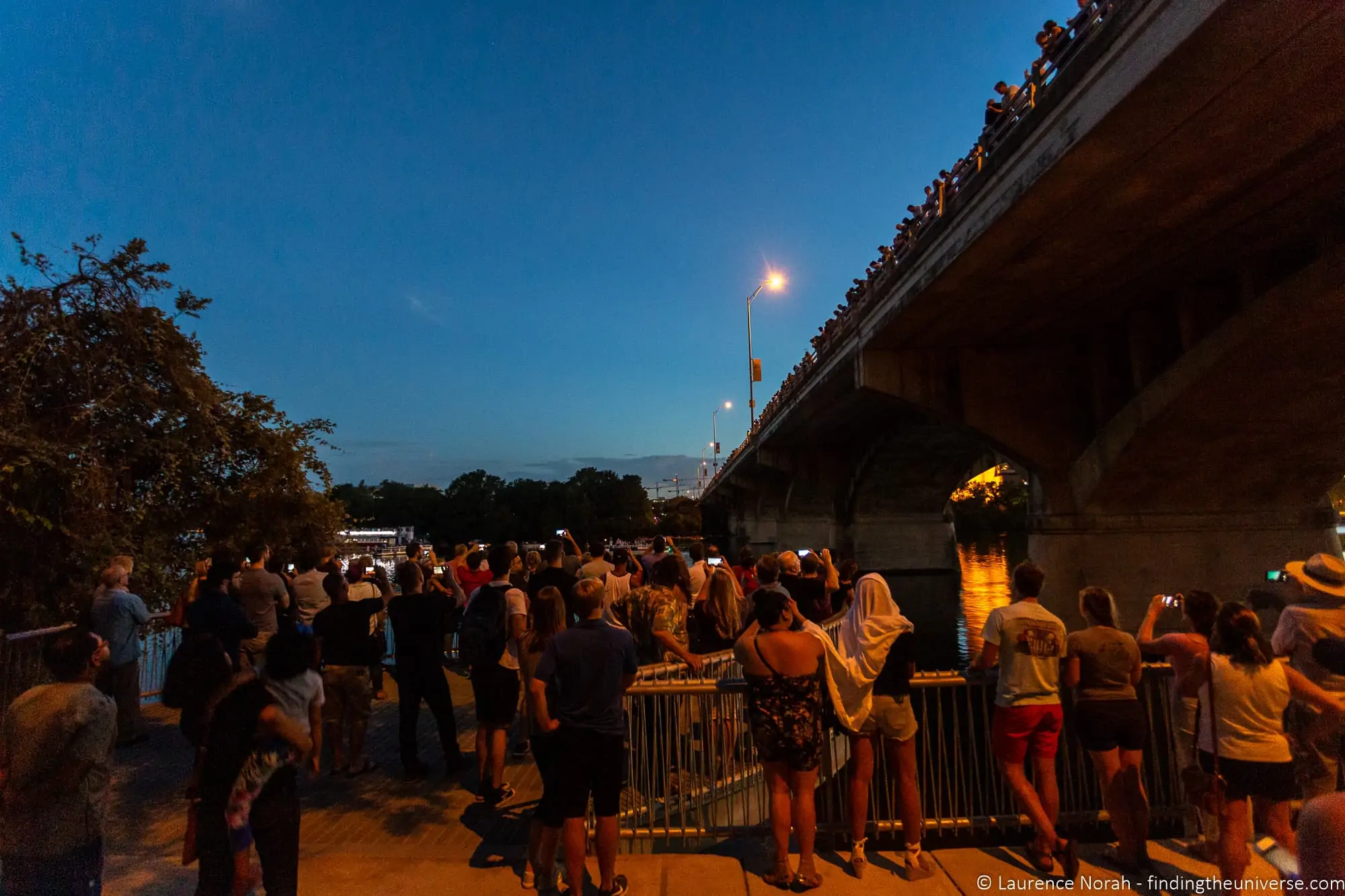
A few practical notes from doing it ourselves. Get there 30 to 45 minutes before sunset to get a spot, because this is one of the most popular things to do in the city and it gets busy. You can watch from on top of the bridge, from the lawn beside the Statesman building, or from the grass underneath on the north-east side, which is my pick. The bats come out most evenings, but weather can change the timing and it is never guaranteed, so treat it as a likely highlight rather than a sure thing.
You can also see them from the water, which is a great option if you want the show without the crowd on the bridge. We watched from land, but a sunset bat-watching kayak tour (from around $45) puts you on the lake right below the bridge as they emerge. If you’d rather stay dry, there are evening sunset boat cruises too.
One thing to plan for: if you are visiting between November and February, the bats won’t be here. In that case, swap the dusk slot for an earlier dinner and lean into the live music instead, so you are not standing on an empty bridge.
Evening: Live Music
Austin calls itself the Live Music Capital of the World, and Day 1 is the night to test that. There is live music on somewhere most nights of the week, from the bars on Sixth Street to the more relaxed strip of Rainey Street, and even some of the hotels run live sets. Esther’s Follies on Sixth Street has been doing comedy and cabaret for over 40 years if you want something other than a band.
If you’d like someone to do the navigating, a live music crawl takes you between several venues and styles in an evening, which is a good way to get your bearings on your first night in town.
Day 2: The Lake, the Springs, and South Austin
Day 2 trades the museums for the outdoors. In summer, do the water and the walking in the morning before the heat builds, and save the shops and murals for the afternoon.
Morning: Lady Bird Lake
First, a thing that confused me on my first visit. Locals talk about “the lake,” but on first glance it looks like a river, and it turns out I was half right. The Colorado River (the Texas one, not the river out west) was dammed for flood control, which created a chain of reservoirs. The stretch flowing past downtown is Lady Bird Lake, so it is both a river and a lake depending on how you want to argue it.
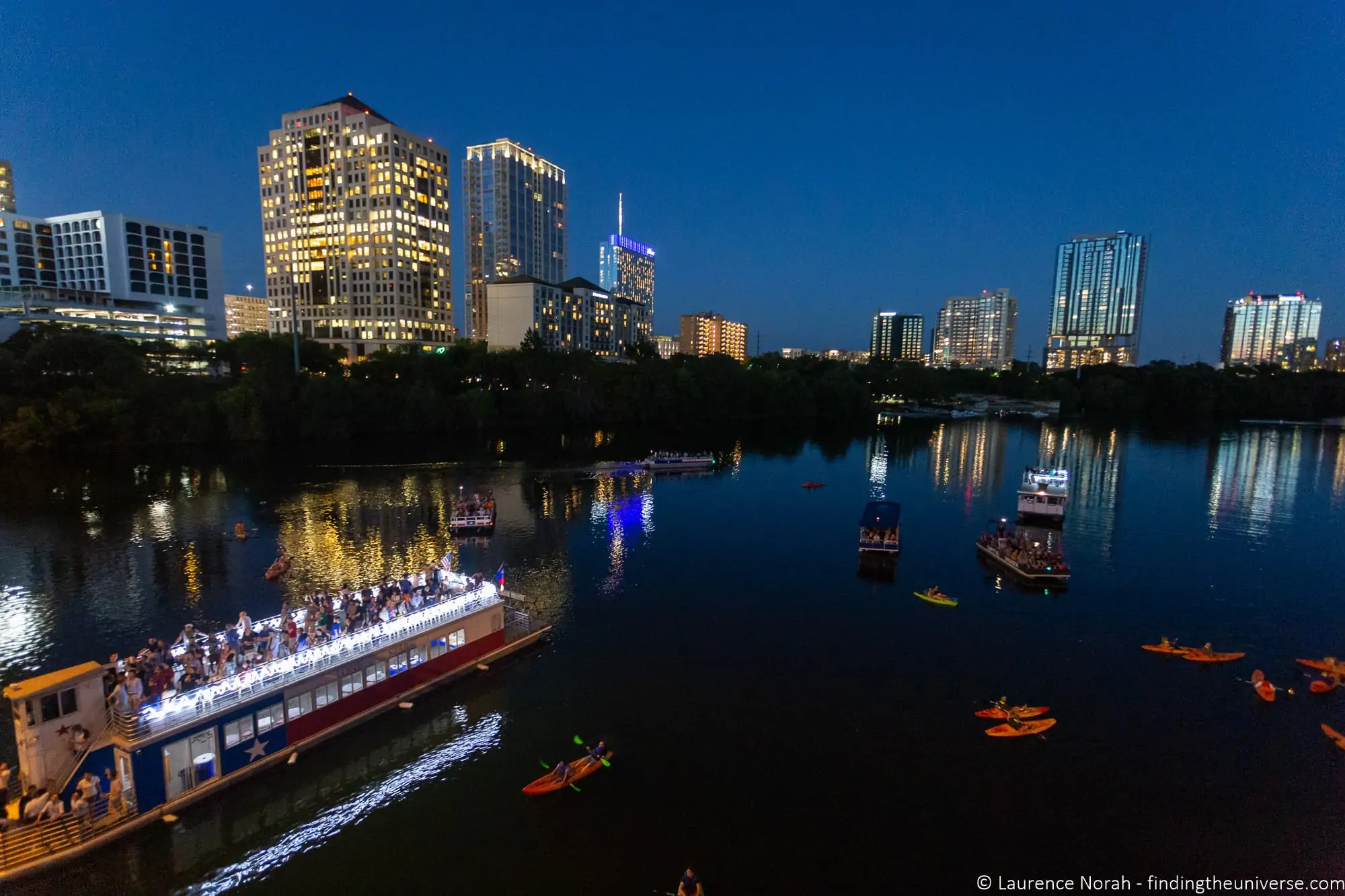
Either way, the morning is for getting out on it or alongside it. You can rent a kayak or stand-up paddleboard right downtown and head out under the bridges for a skyline view, or join a guided paddle. Rentals and tours on Lady Bird Lake start at around $15 for a basic rental. If you’d rather keep your feet dry, the Ann and Roy Butler Hike and Bike Trail makes a flat 10-mile loop around the water, and you can ride a stretch of it on the CapMetro Bikeshare bikes. Either way, this is the most pleasant way to start a hot Austin day.
Late Morning: Barton Springs Pool
Note (June 2026): Barton Springs Pool is currently closed due to flooding from recent rain. Check the city’s pool status page before visiting; it reopens once conditions improve.
A short hop south brings you to Barton Springs Pool in Zilker Park, and on a hot day there is no better way to cool down. This is a historic swimming spot. Long before the Spanish arrived, Native Americans used the springs here, and the pool is fed by the Main Barton Spring, the fourth largest in Texas. The water sits at around 68 to 70°F all year, which is bracing in winter and perfect in July.
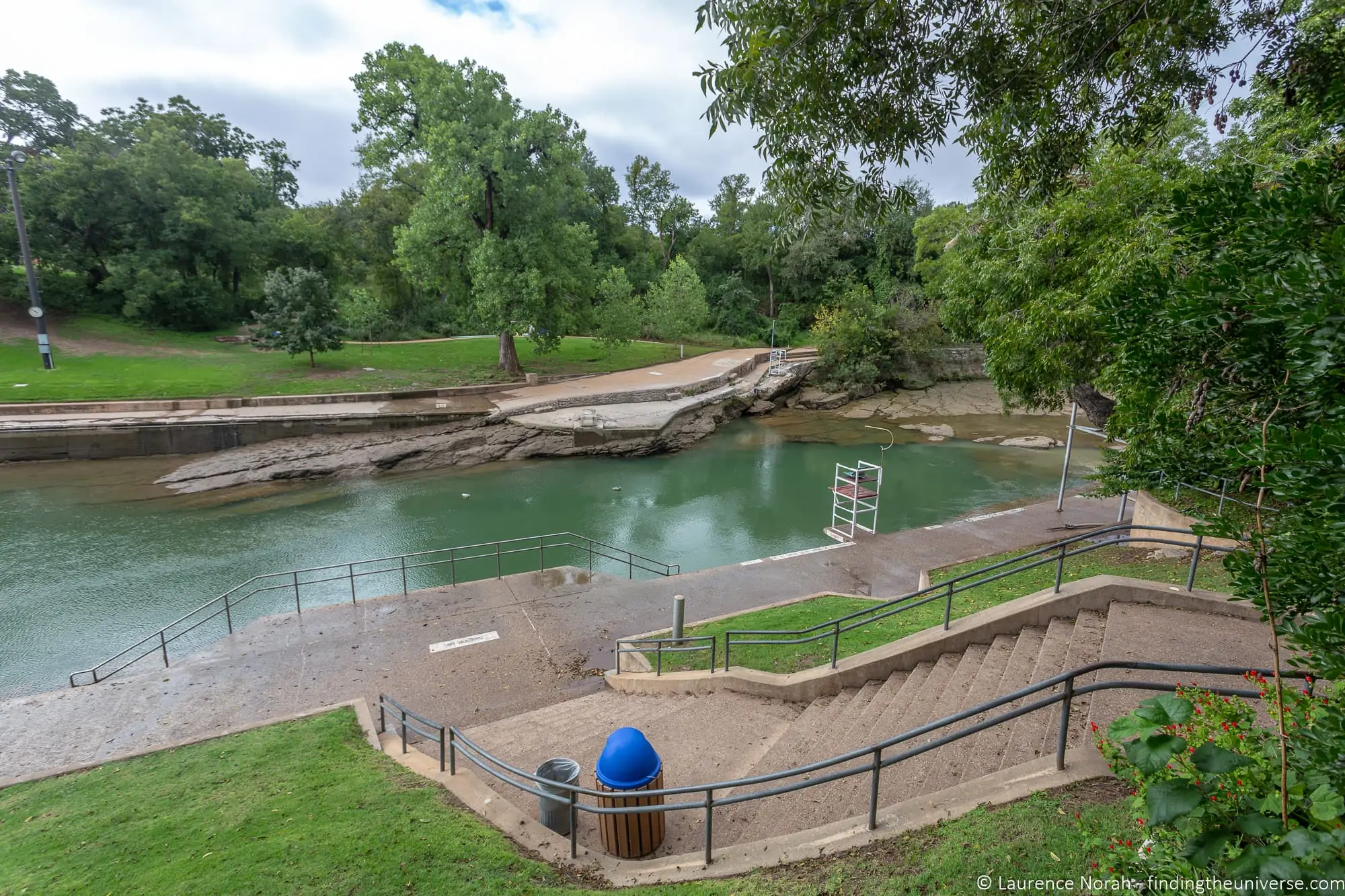
A few practical details. The pool is open Friday to Wednesday, roughly 5am to 10pm. On Thursdays it part-closes for cleaning, with the pool shut from 9am to 7pm but open early morning and late evening, so a Thursday-afternoon swim won’t work. From March to October there is an entry fee during the day (8am to 9pm), and it is free outside those hours. The fee is $9 for a non-resident adult and $5 for an Austin resident, so as a visitor budget for the $9. One more thing worth checking before you go: Barton Springs occasionally closes after heavy rain and flooding, so look at the city’s pool status page on the day rather than turning up and hoping.
Around Zilker: Sculpture and Gardens
You are already in Zilker Park, so it is worth seeing what else is here. The Umlauf Sculpture Garden and Museum sits right by Barton Springs, with four acres of grounds displaying the work of the American sculptor Charles Umlauf. It is open daily except Mondays and there is a small entry fee. Next door, the Zilker Botanical Garden is a quiet green break if you want to slow the day down.
Lunch: South Congress and the Farmers Market
Cross the river to South Congress (everyone calls it SoCo) for lunch. The street is lined with food trucks, restaurants and coffee spots, and you can eat well at any price point. Austin’s food trucks are worth seeking out in their own right, and you’ll find them dotted across the city.
If your Day 2 lands on a Saturday, the SFC Farmers Market at Republic Square (422 Guadalupe Street) is a lovely way to graze. It runs year-round on Saturdays from 9am, but note the hours shorten: it closes at 1pm most of the year and at noon in summer, so go early if you are visiting in July or August.
Afternoon: South Congress Shops and Murals
Spend the afternoon walking SoCo. This is the best stretch in the city for browsing independent shops, and it is also where you’ll find Austin’s most photographed murals, including the “i love you so much” wall and the “greetings from austin” postcard mural. Both are Instagram-famous and draw a small queue of people waiting for their photo, but they are still pretty good fun to shoot.
Evening: Sunset and More Music
For your last evening, you have two good options. Head back to Sixth or Rainey Street for another round of live music, or drive up to Mount Bonnell for the best sunset view over the city and the river. Mount Bonnell is a short climb from the car park and it gets quite popular at golden hour, for good reason.
If You Have a Third Day: Hill Country and the LBJ Ranch
Two days covers Austin itself. If you can add a third, point it west into the Texas Hill Country, which is my favourite day trip from the city and the one we did ourselves.
The big draw is the Lyndon B. Johnson National Historical Park near Stonewall, about 63 miles west of Austin. This is where LBJ was born, where he spent much of his presidency at the “Texas White House” on the LBJ Ranch, and where he is buried. We drove the ranch loop ourselves, and seeing the place he came from adds a lot to the LBJ Library back in the city. The drive out also takes you through Fredericksburg, with its German heritage, peach orchards and a growing cluster of wineries.
You can do this with a car, which is how we did it and what I’d recommend if you have the wheels, since it lets you set your own pace. If you’d rather not drive, a guided Hill Country and LBJ Ranch tour (around $109, with hotel pickup) covers the ranch and Fredericksburg in a full day from downtown.
The other classic Hill Country outing is river tubing, floating down a river in an inner tube to beat the summer heat. We didn’t get to this one ourselves, but if you are visiting in summer it is a quintessential Central Texas thing to do, and there are guided tubing trips from Austin that include transport, tube rental and a cooler for your drinks. The San Marcos River is the popular run, with tours usually lasting four to six hours.
When to Visit Austin
Austin sits in the south of the US, so it gets long, hot summers and mild winters, with snow rare. The best windows for a visit are September to November and March to May, when the temperature sits comfortably in the 70s and 80s and the city is made for being outside.
The months to think twice about are June to early September, when daytime temperatures average in the mid-90s and the humidity is heavy. It is doable if you are used to that kind of heat and you plan around it (mornings outdoors, middle of the day indoors or in the springs), but it is not the easiest time to sightsee.
Two timing notes. First, the bats are only here from roughly March to October, so a winter trip means missing them. Second, and this is the one I feel strongest about: unless you are specifically going for it, avoid SXSW. The festival takes over downtown for about a week in March, and while it is a brilliant event (I had a great time working it), accommodation gets scarce and expensive, parking is a nightmare and traffic climbs. If you are not attending, pick different dates. The same goes for the Pecan Street Festival weekends in May and September, when prices jump.
Where to Stay in Austin
We’ve stayed in a few different places in Austin over our visits, and I’d base yourself downtown if you can, simply because it keeps Day 1 walkable. You’ll pay a bit more to be central, but you save it back in parking and rideshares. Here is how the options break down.
| Budget | Mid-range | Luxury |
|---|---|---|
| Firehouse Hostel, Super 8 Downtown | Aloft, Kasa Downtown, Omni | JW Marriott, The Driskill |
At the budget end, the Firehouse Hostel is a well-rated, very central hostel just off Sixth Street, with 24-hour reception, an on-site bar with live music and breakfast included.
We’ve also stayed at the Super 8 by Wyndham Austin Downtown, about a 15-minute walk from Sixth Street. The rooms are basic, but there’s free parking, breakfast is included and it is good value. One tip from our stay: if you are sensitive to highway noise, ask for a room at the back. If you want to save more and don’t mind being out of the centre, somewhere like this works on a tight budget.
In the mid-range, the Aloft Austin Downtown is a central three-star with strong reviews, an on-site restaurant and a cocktail bar. Kasa Downtown is a good aparthotel pick if you want a kitchen and a bit more space, and the Omni Austin Hotel Downtown is a well-rated four-star with a rooftop pool.
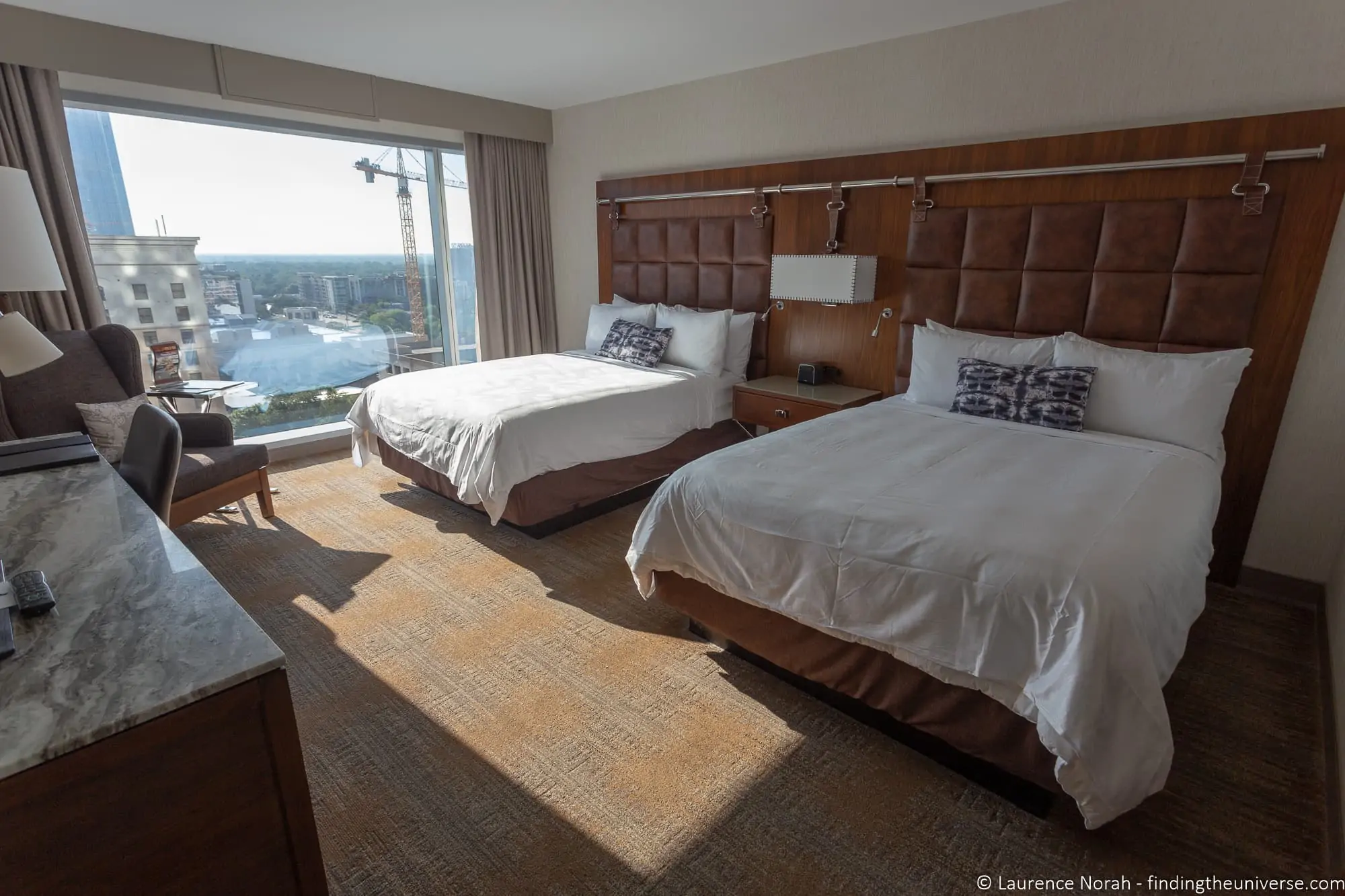
For a splurge, we stayed at the JW Marriott Austin, a large hotel right in the middle of downtown. The staff were friendly and efficient, the restaurants were good and the rooms were really comfortable. The grandest option is The Driskill, a historic four-star in the centre with a spa, live music and an award-winning restaurant. It is not cheap, but good rates turn up in quieter periods.
For more choice, browse all the Austin listings on Booking.com, look at vacation rentals on Vrbo, or see our wider list of alternatives to Airbnb. Whatever you pick, expect prices to climb sharply during SXSW and the other festivals.
How to Get Around Austin
Austin is flat and the downtown core is easy to cover on foot, which is why Day 1 of this itinerary keeps you central. For everything else, you have a few options.
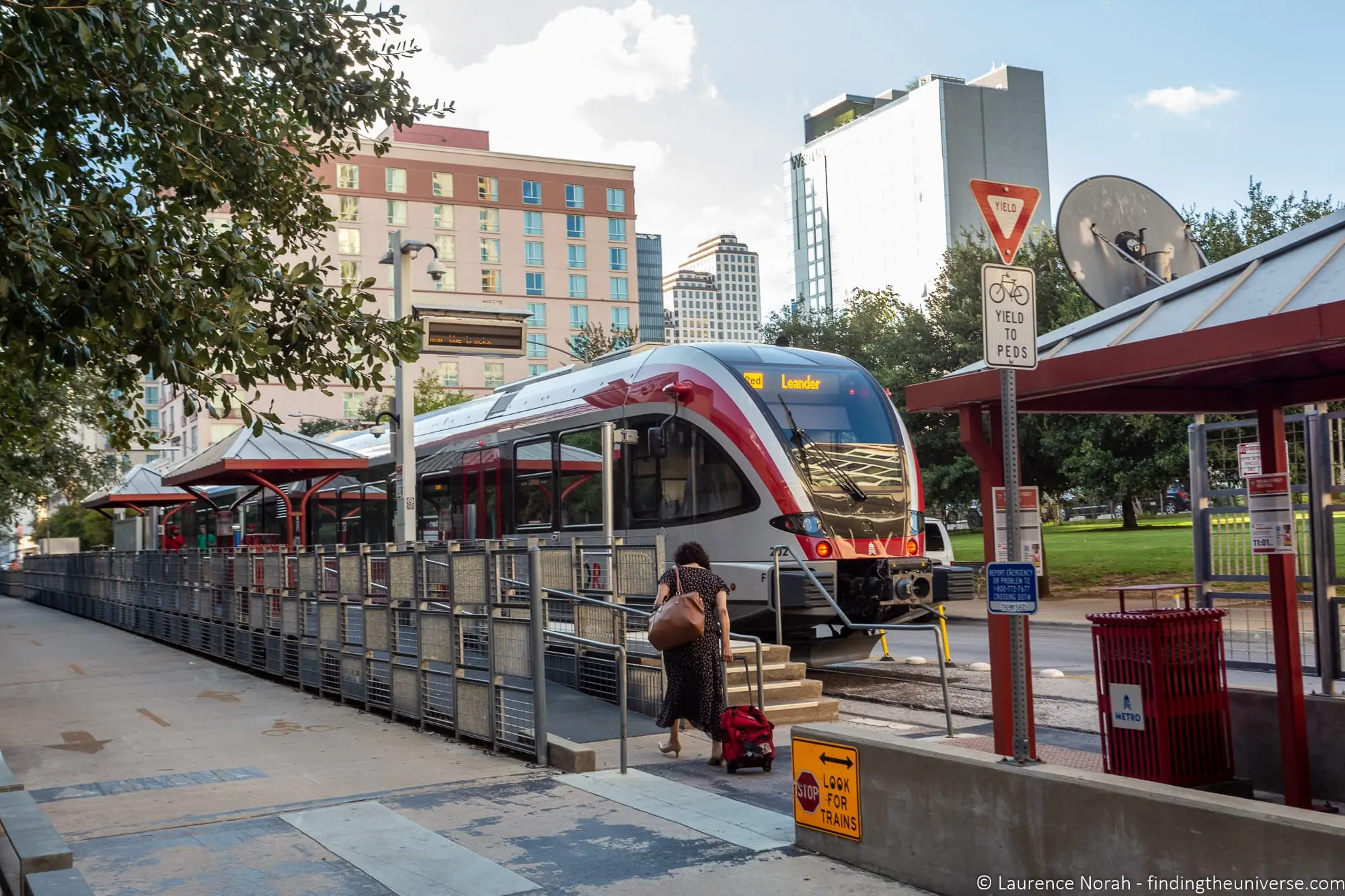
There’s a decent public transport system of buses and rail run by CapMetro, with timetables and fares on their website. Rideshare with Uber and Lyft is widely available and is how we got around in the evenings. For cycling, the CapMetro Bikeshare system has docks across the centre. You’ll also see electric scooters everywhere. I’m not convinced they’re the safest way to get around a busy city, so use your own judgement there.
One bigger-picture point: Austin was the start of a Texas road trip for us, and a road trip remains my favourite way to see this part of the US. If you are pairing Austin with San Antonio (an hour south), Houston or the Hill Country, hiring a car makes the whole thing far easier. Discover Cars is who we use to compare rental prices, and our tips for driving in the USA are worth a read before you set off. One last practical note for summer visitors: Austin’s heat is no joke, so carry water. A refillable bottle like a Klean Kanteen is what we travel with, and there are fountains around the trails and parks to top it up.
What We’d Tell a First-Time Visitor
A few things we’ve picked up over our visits that make an Austin trip run more smoothly:
- Get to the Congress Avenue Bridge 30 to 45 minutes before sunset for the bats, and remember they are only here from roughly March to October.
- Don’t lose half a day queueing for BBQ. Terry Black’s gave us everything we wanted without the multi-hour line at Franklin’s.
- In summer, do the outdoor stops in the morning, get out of the midday sun, and carry water. The afternoons in July and August are punishing.
- If a Tuesday falls in your trip, use it for the Blanton (free that day) or the LBJ Library (half-price).
- Check Barton Springs is open before you head out, as it closes on Thursdays for cleaning and after heavy rain.
- Unless you are coming for it, avoid SXSW week in March. Accommodation prices and crowds both spike.
Austin Itinerary FAQ
Is two days enough time in Austin?
Two days is enough to see the best of Austin if you plan the route well. It covers downtown and the Texas history, a proper BBQ meal, the bats at dusk, the lake and Barton Springs, and South Austin.
What two days won’t do is leave much room for day trips. If you want to add the Hill Country, the LBJ Ranch or river tubing, give yourself a third day.
Is there an Austin city pass?
No. Austin used to have a city attraction pass, but it has been discontinued, so there isn’t a single pass that bundles the main sights the way some other big US cities do.
For Austin you book each attraction or tour individually. The good news is that several of the best things to do, including watching the bats, walking Sixth Street and the murals, and the hike-and-bike trail, cost nothing anyway.
When can you see the bats under the Congress Avenue Bridge?
The bats are in Austin from roughly March to October, and they emerge at dusk, usually within the hour around sunset. They are gone from November to February, when they migrate, so a winter visit will miss them.
Arrive 30 to 45 minutes before sunset to get a good spot, and remember the emergence depends on the weather, so it is never fully guaranteed.
What is the best time of year to visit Austin?
The most comfortable months are September to November and March to May, when temperatures sit in the 70s and 80s. June to early September is very hot and humid, with highs in the mid-90s.
If you can, avoid SXSW in March and the Pecan Street Festival weekends in May and September, unless you are attending, because accommodation prices spike and the city gets crowded.
Is Austin easy to get around without a car?
Downtown Austin is walkable, and rideshare, CapMetro buses and bikeshare cover most of what a two-day visitor needs, so you can manage the city itself without a car.
A car becomes worth it if you plan to add San Antonio, the Hill Country or the LBJ Ranch, or if you are pairing Austin with a wider Texas road trip.
Do you need to book the Texas State Capitol tour in advance?
No. The guided tours are free and you don’t need to book ahead. They run weekdays from 9:30am and weekends from 12:30pm, every 30 to 45 minutes, with the last tour around 3:30pm.
Just be aware of that later weekend start: if you are visiting on a Saturday or Sunday morning, you’ll need to self-guide until the tours begin at 12:30pm.
Further Reading for Your Texas Trip
Hopefully this gives you a clear two days in Austin. To help with the rest of your trip, here are some of our other guides you might find useful.
- Austin pairs naturally with the rest of Texas. We have guides to things to do in San Antonio (an hour away), plus Houston and Dallas.
- In San Antonio, don’t miss our detailed guides to visiting the Alamo and the San Antonio River Walk. In Houston, see our guide to Space Center Houston.
- Planning a wider road trip? Start with how much it costs to travel in the USA and our tips for driving in the USA.
- For route inspiration, see our USA Deep South road trip, California road trip, Route 66 and Pacific Coast Highway itineraries.
- We’ve covered plenty of other US cities too, including Savannah, Charleston, Albuquerque, Santa Fe, New Orleans and Huntsville.
- For a longer read on the trip, the Lonely Planet USA guide is a solid all-rounder for a Texas or wider American road trip.
That’s our two days in Austin. As always, if you have questions about planning your visit, leave them in the comments below and we’ll do our best to help.
Alison Hay says
Thanks so much for all the great info! We’re from Australia and are about to leave (May 1st) to do a 20-night road trip in NM, AZ, UT, CO. Your blog (and several links) has been great to read and very helpful, thank you! We’re also staying with friends in Austin so looking forward to that too!
Laurence Norah says
Our pleasure Alison! Have a wonderful trip, sounds like it’s going to be amazing!
Alexandra Wrigley says
Wow! There is so much to do in Austin. To be honest I’ve only ever really associated Austin with SXSW. Although, SXSW is on my bucket list. It looks like I need to visit Austin for many other things!
Laurence Norah says
There is loads to do! The first time I visited was for SXSW, which was loads of fun, but the city has a lot more to offer 😀