
The short answer: The Golden Circle, the South Coast to Vik and the Snaefellsnes Peninsula are the three day trips from Reykjavik we’d prioritise, and all three work in a normal 2WD hire car. Beyond those, it comes down to season and how much driving you’ll tolerate, so every trip below comes with its round-trip drive time, season window and vehicle needs.
We’ve visited Iceland multiple times over the years, and on most of those trips we’ve based ourselves in Reykjavik (Reykjavík, in Icelandic) for at least a few days. It’s a brilliant base for exploring, giving you access to many of the highlights of the country. Across roughly six weeks of driving in Iceland over those trips, we’ve driven most of the routes in this guide ourselves, and you can see an astonishing amount of the country on day trips from the capital, whether you hire a car or book a tour.
But not every day trip from Reykjavik is equally worth your time. Some are unmissable. Others sound fantastic on paper but involve so much driving that you barely get to enjoy what you came to see. And a few have become so popular that the experience can feel more like queuing than exploring.
So instead of just listing every possible day trip, I’ll tell you which ones I’d actually recommend, which are best done on a tour versus self-driving, and how to plan your time based on how many days you have.
A quick note on logistics: most of these trips can be done either with a hire car or on a guided tour. For car hire in Iceland, we recommend checking prices on Northbound, who focus exclusively on Iceland and let you compare across providers (including the Iceland-specific insurance options you’ll want). For tours, we recommend booking through GetYourGuide, where we’ve had consistently good experiences across multiple trips.
For further planning, we’ve also put together detailed 3 day, 5 day and 7 day Iceland itineraries, our tips for planning a trip to Iceland, and a guide to our favourite photography locations in Iceland. If you’d prefer a longer guided trip, see our guide to the best multi-day guided tours of Iceland.
And don’t forget to spend some time in Reykjavik itself. The city has plenty to offer, from the iconic Hallgrimskirkja church to a handful of good museums and an increasingly impressive food scene. A Reykjavik food tour is a great way to spend a half day getting to know the city while trying things like fermented shark, Icelandic lamb, and local craft beer. If you plan on visiting several of the city’s museums and attractions, a Reykjavik City Card offers good value and includes free public transport on city buses (although not the route 55 airport bus).
Here are the best day trips from Reykjavik, organised by how much time they take and whether you need a car or a tour.
Table of Contents:
Which Day Trips to Prioritise Based on Your Time
If you only have time for one or two day trips, here’s how I’d prioritise:
One day trip only: The Golden Circle. It’s the classic for a reason, and you can easily self-drive it or join a tour.
Two day trips: Add the South Coast (to Vik). The waterfalls and black sand beach are some of Iceland’s most iconic sights.
Three to four day trips: Add the Snaefellsnes Peninsula (ideally a full day) and either a whale/puffin watching trip from the harbour or a visit to the Blue Lagoon or Sky Lagoon.
Five or more days: You can comfortably add Glymur Waterfall, the Reykjanes Peninsula, and seasonal experiences like Northern Lights (winter) or a Landmannalaugar super jeep tour (summer). With this much time, you might also consider our 5 day itinerary which takes you beyond Reykjavik as a base.
At a glance, what’s available when: The Golden Circle, South Coast, Blue Lagoon, Sky Lagoon, Reykjanes Peninsula, Glymur, Reykjadalur, and whale watching run year-round (though whale sighting rates are higher in summer).
Puffin watching and the Westman Islands are best from late April to mid-August. Landmannalaugar and Thorsmork are summer only (roughly mid-June to September), when the highland roads are open. Northern Lights tours run from roughly September to April. Natural ice cave tours have a shorter window, roughly November to March, as the caves only form and become safe to enter in the coldest months. The “Into the Glacier” experience on Langjökull runs year-round.
Round-Trip Drive Times for Every Trip
The number that actually decides whether a day trip works is the round trip: when you leave, when you’re back, and in which car. Here’s every trip in this guide on that basis. Times are driving only, with no stops, in decent conditions.
| Trip | Direction | Round-trip driving | Half or full day | Season | Vehicle | Self-drive or tour? |
|---|---|---|---|---|---|---|
| Golden Circle | East | About 240 km, 3.5 to 4 hours | Full day | Year-round | 2WD | Self-drive or tour |
| South Coast to Vik | South | About 370 km, 5 to 5.5 hours | Full day | Year-round | 2WD | Self-drive or tour |
| Snaefellsnes Peninsula | West | About 450 km, 6.5 to 7 hours | Long full day | Year-round | 2WD | Tour is easier |
| Glymur Waterfall | West | About 140 km, 2 hours (plus a 3 to 4 hour hike) | Half to full day | Year-round | 2WD | Self-drive |
| Reykjadalur Hot River | South | About 90 km, 1.5 hours (plus a 2.5 to 3 hour hike) | Half day | Year-round | 2WD | Self-drive |
| Reykjanes Peninsula | Reykjanes | About 150 km, 2.5 to 3 hours | Half to full day | Year-round | 2WD | Self-drive |
| Blue Lagoon | Reykjanes | About 100 km, 1.5 hours | Half day | Year-round | 2WD | Self-drive or transfer |
| Sky Lagoon | City | About 15 minutes each way | Half day | Year-round | Any | Self-drive or transfer |
| Whale and puffin watching | Sea | None: boats leave the Old Harbour | Half day | Year-round (puffins late April to mid-August) | None needed | Tour |
| Northern Lights | Varies | Guide decides on the night | Evening | September to April | n/a | Tour |
| Landmannalaugar | Highlands | Tour only: F-roads and river crossings | Long full day | Mid-June to September | Super jeep (tour) | Tour |
| Thorsmork | Highlands | Tour only: serious river crossings | Full day | Summer | Super jeep or highland bus | Tour |
| Natural ice caves (Katla) | South | About 370 km round trip with the tour | Full day | November to March | n/a | Tour |
| Into the Glacier (Langjökull) | West | About 260 km, 3.5 to 4 hours | Full day | Year-round | 2WD to Húsafell in summer; tour otherwise | Self-drive or tour |
| Westman Islands | South | About 270 km, 4 hours, plus a 35-minute ferry each way | Very long full day | Best in summer | 2WD | Self-drive to the ferry |
In winter, add a generous margin to all of these and check conditions on umferdin.is, the road administration’s live traffic and conditions map, before committing to a long day. And if you’re hiring a car, compare prices on Northbound (the Iceland-only comparison we mention above), with Discover Cars as a wider cross-check.
The Golden Circle
The Golden Circle is the most popular day trip from Reykjavik, and it’s popular for good reason. In a single loop of around 240km, you visit three of Iceland’s most impressive natural attractions, and you can comfortably do it in five to seven hours, although we’d recommend adding some of the optional stops like Brúarfoss and taking a bit more time.
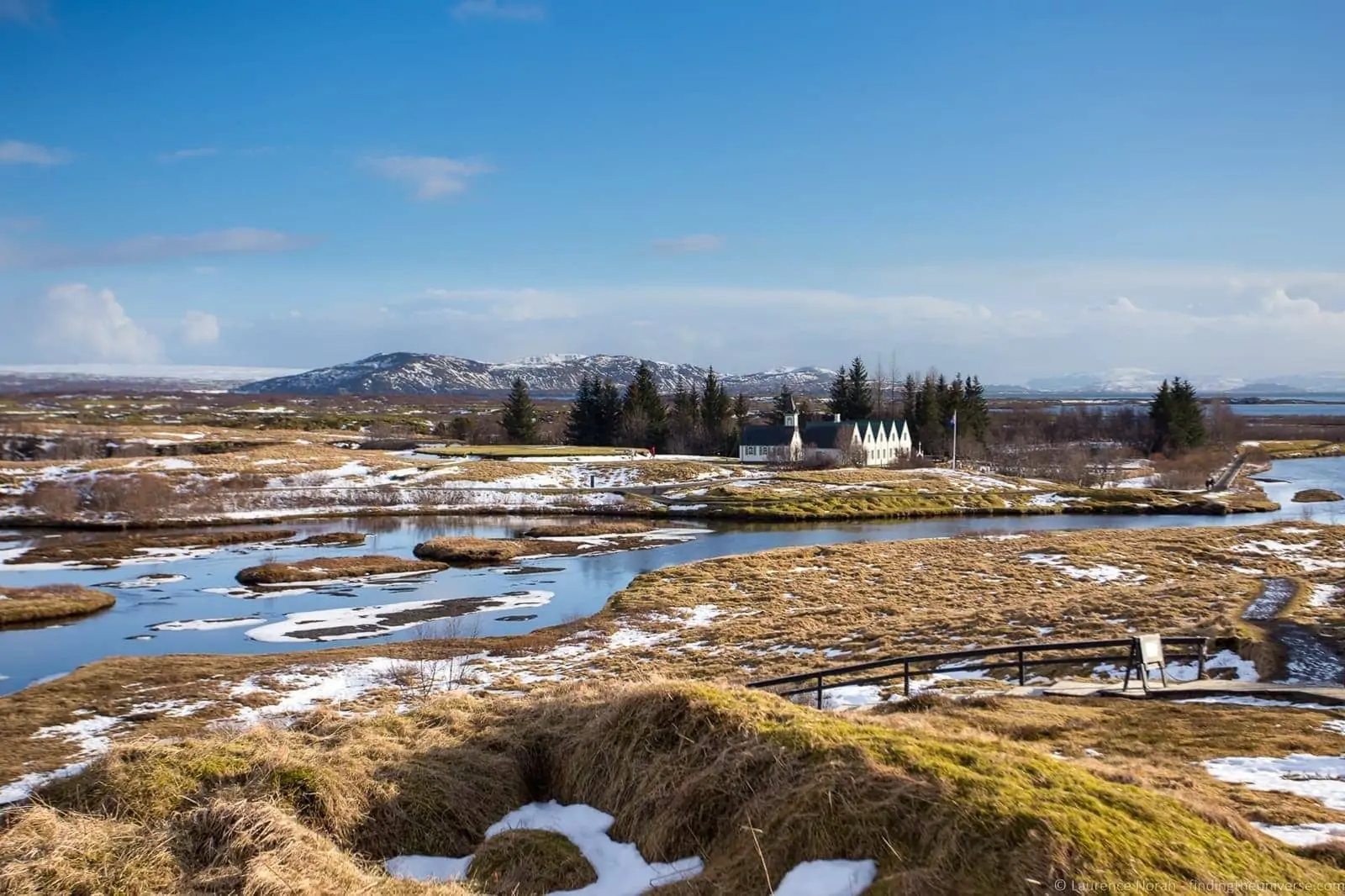
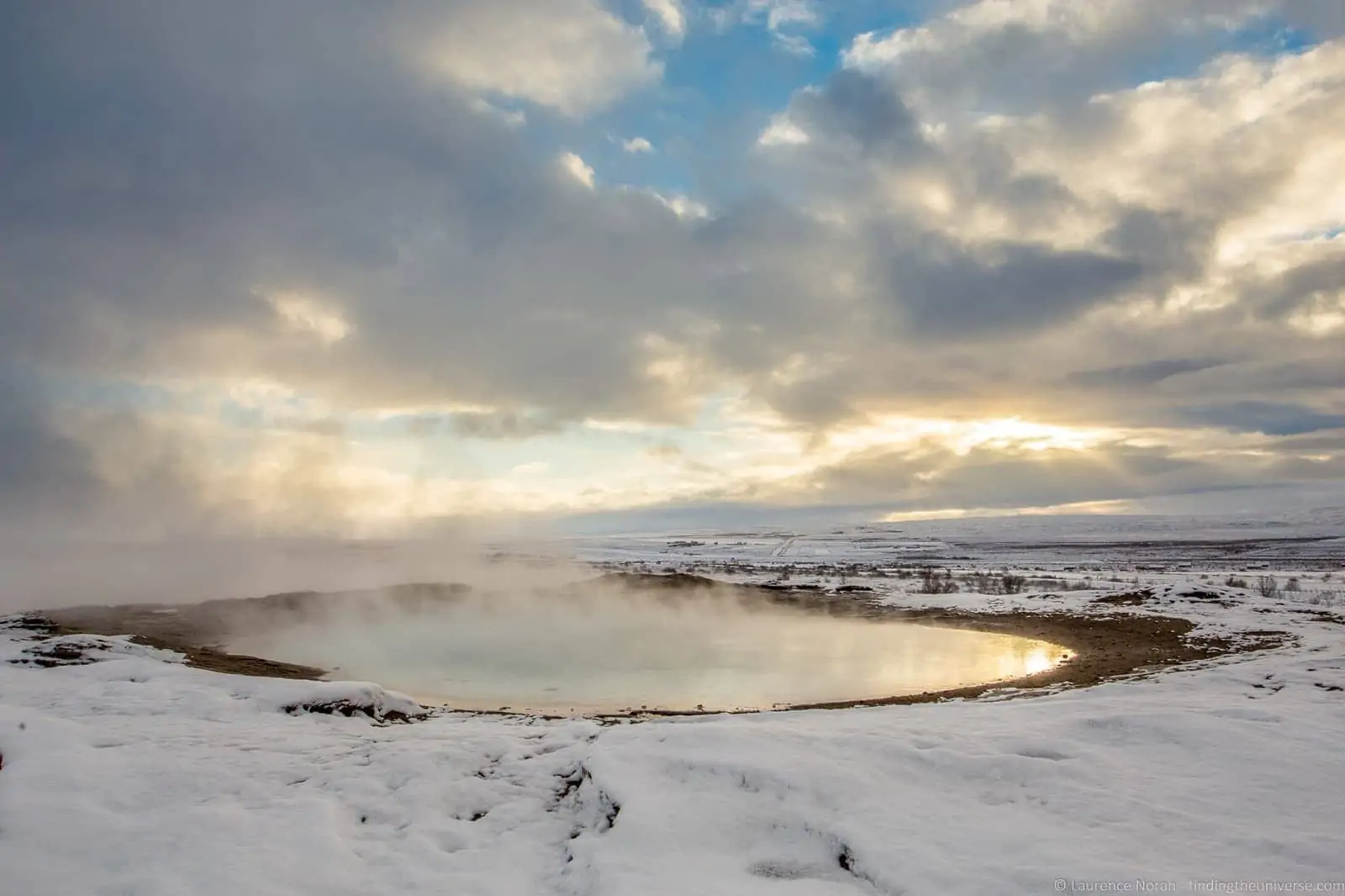
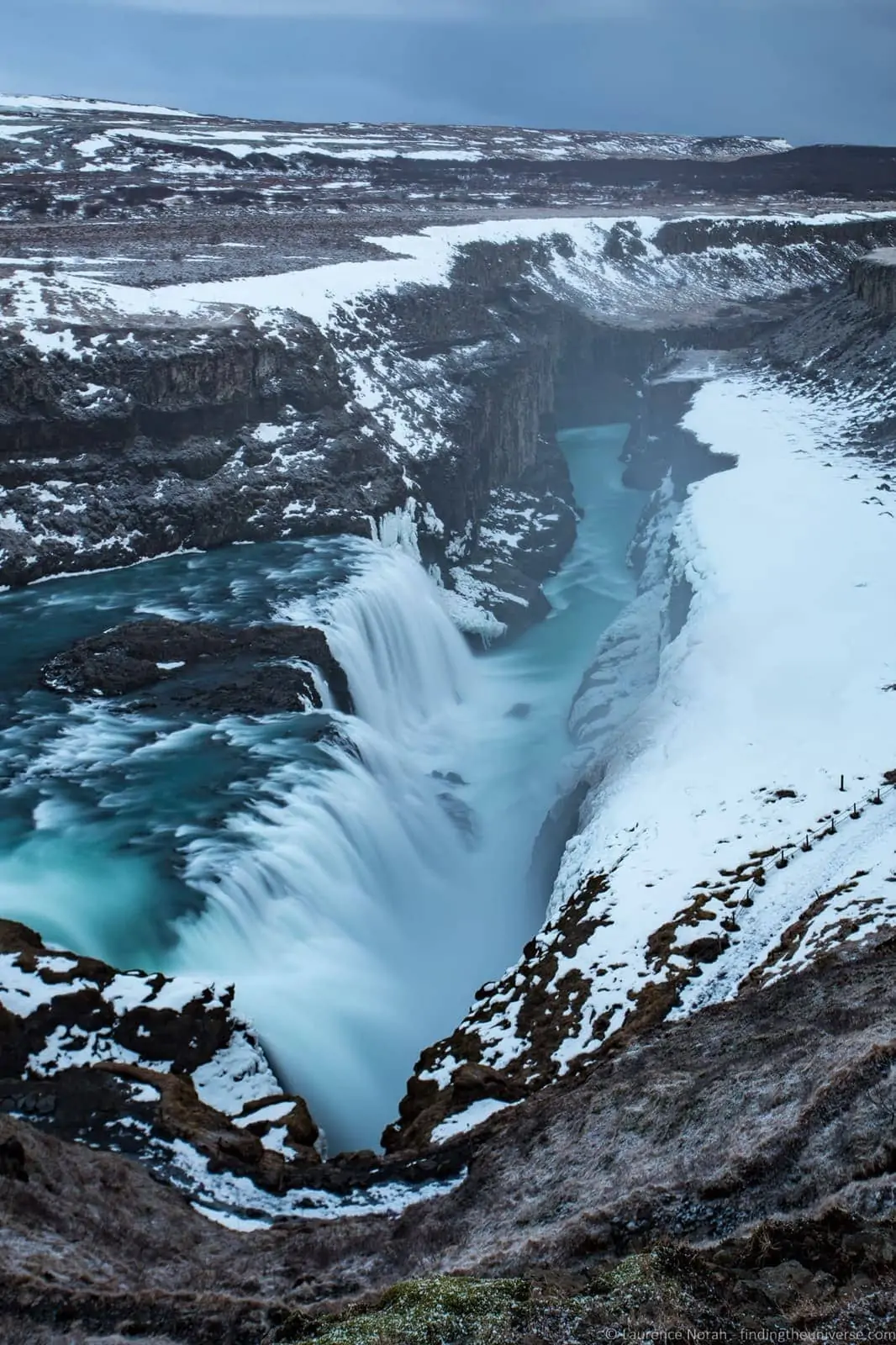
The three main stops are Thingvellir National Park (a UNESCO World Heritage Site where you can see the rift between the North American and Eurasian tectonic plates), the Geysir geothermal area (home to the original “geyser” that gave the English word its name), and Gullfoss, one of Iceland’s best-known waterfalls.
For a full breakdown of the route, stops, and tips, see our complete guide to visiting the Golden Circle.
Self-drive or tour? This is one of the easiest day trips to self-drive. The roads are excellent and well-signed, and having your own car means you can add stops like Brúarfoss waterfall (a gorgeous blue waterfall with a short walk from its official car park, 750 ISK parking via the Parka app, though the trail closes in winter), the Kerið volcanic crater (600 ISK entry), or lunch at Friðheimar tomato farm.
Parking costs: Thingvellir charges 1,000 ISK (valid all day across all park car parks, payable via machines or the checkit.is app). Geysir charges 1,000 ISK (Parka app). Gullfoss is free.
If you’d prefer a tour, there are plenty of options on GetYourGuide, including tours that combine the Golden Circle with the Blue Lagoon or Secret Lagoon. You can also add snorkelling in the Silfra fissure at Thingvellir, which is one of the more unique things you can do in Iceland (a dry suit keeps you warm in the near-freezing water).
Photography tip: At Gullfoss, the viewing platform on the upper path gives you the best angle for capturing the full scale of the falls. In winter, the ice formations around the falls are the better subject. At Geysir, use burst mode or a fast shutter speed to catch Strokkur mid-eruption. It goes off every five to ten minutes, so you’ll get multiple chances.
Worth the crowds? Do this trip. Yes, it’s the most touristy day trip from Reykjavik, and Geysir in particular gets very busy. But the sights really are impressive, and if you self-drive you can get ahead of the tour buses by starting early.
If you’re a fan of Game of Thrones, you’ll recognise Thingvellir National Park as a filming location (it stood in for several scenes including the pass to the Eyrie). For more filming locations across Iceland, see our guide to Game of Thrones filming locations in Iceland.
The South Coast
Iceland’s South Coast is home to some of the country’s most iconic sights, and I’d put this as my second-favourite day trip from Reykjavik after the Golden Circle.
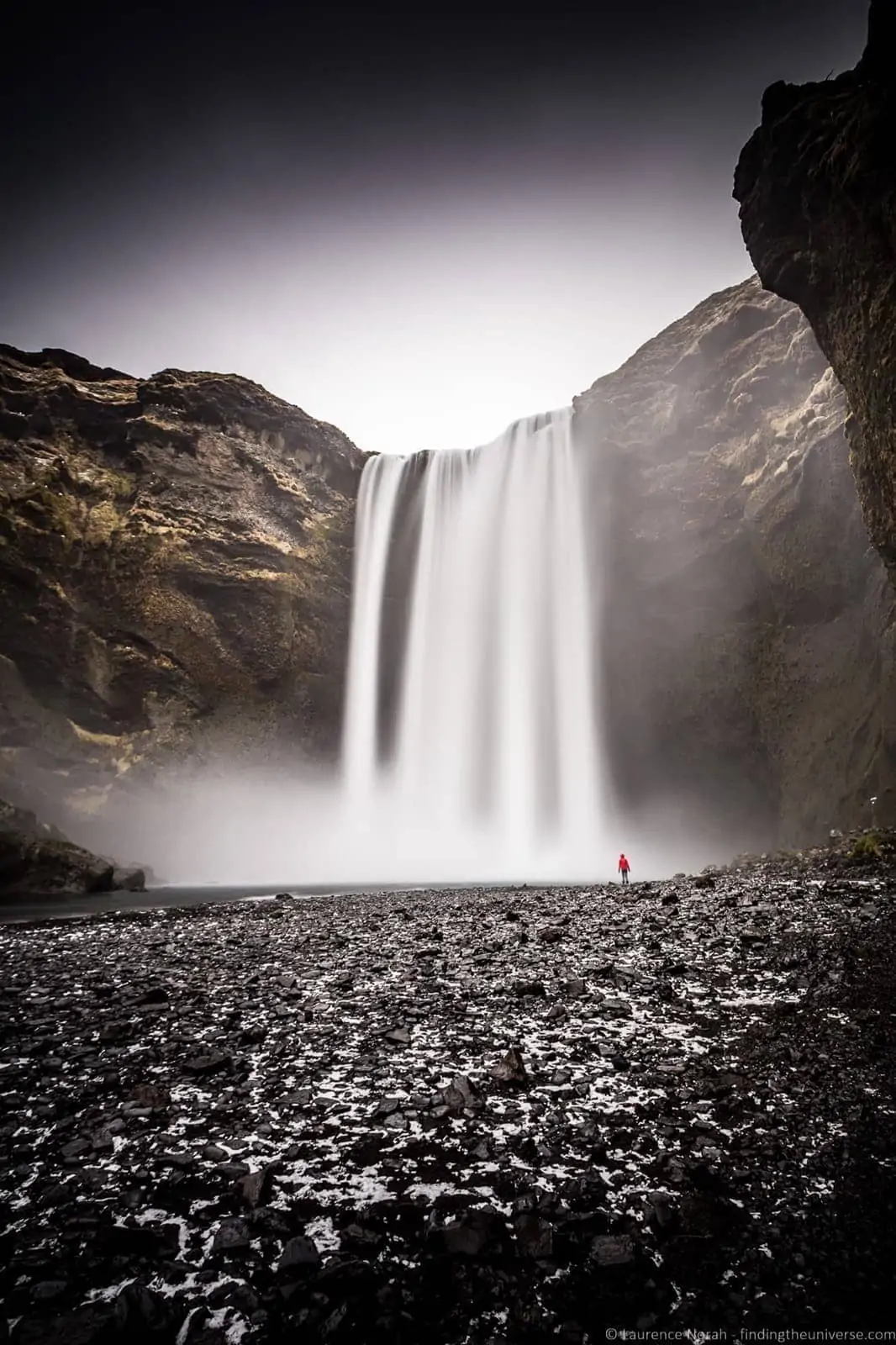
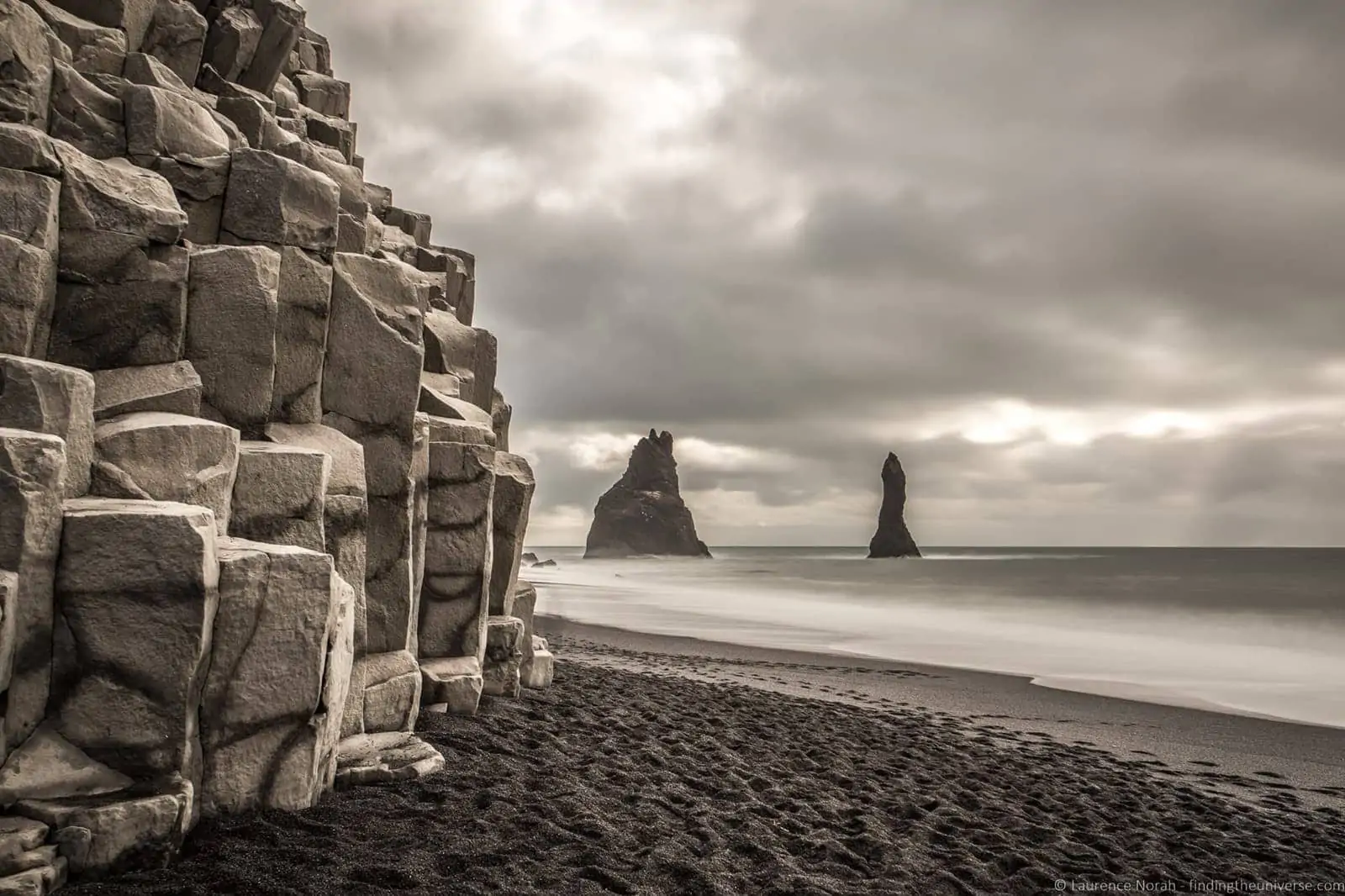
The highlights you can comfortably reach in a day include Seljalandsfoss (the waterfall you can walk behind, so bring a waterproof jacket, you will get soaked), Skogafoss (just as big, and with a staircase that climbs to a viewpoint above), and the black sand beach at Reynisfjara near the town of Vik. Hella, a bit over an hour out of Reykjavik on Route 1, is the sensible place to stop for fuel and a coffee before the waterfalls start.
A safety note on Reynisfjara: The beach experienced significant erosion and a cliff collapse in February 2026, so the landscape looks quite different from older photos. It remains open, with conditions posted daily via a three-level warning system (yellow, orange and red); on red days the beach itself is closed and you watch from the designated viewing area. More importantly, the sneaker waves here are genuinely dangerous and people have died. Stay well back from the waterline and check current conditions on SafeTravel.is before visiting.
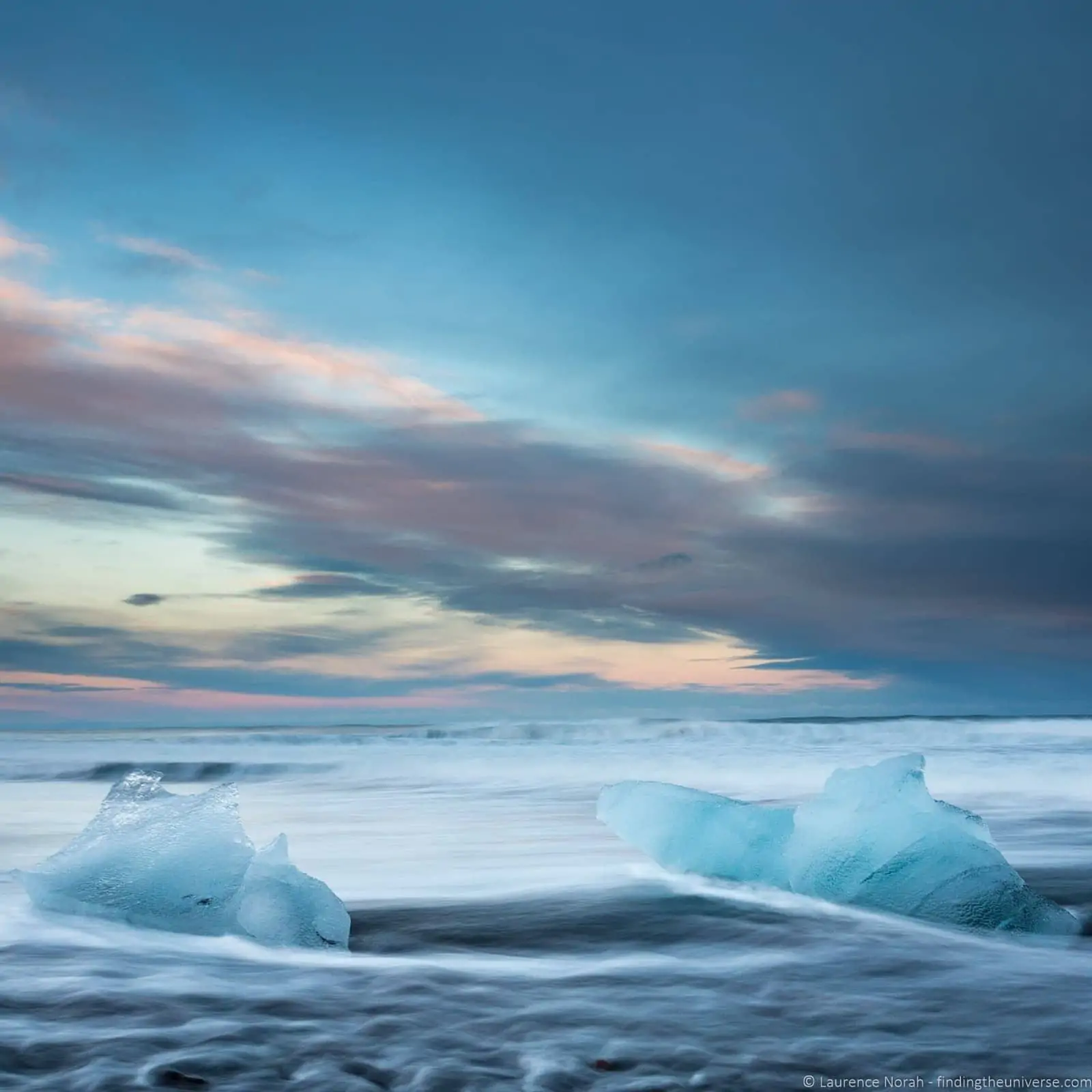
Self-drive or tour? Both work well. Self-driving gives you more flexibility on timing, and the road (Route 1) is an easy drive. Going all the way to Vik and back is around five hours of driving in total without stops, so start early. If you want to continue beyond Vik to the glacier lagoon at Jökulsárlón, that really needs two days. It’s too much driving for a comfortable day trip.
Parking costs: Seljalandsfoss is 1,000 ISK (machines or checkit.is). Skogafoss is 1,000 ISK (Parka app). Reynisfjara is 750 to 1,000 ISK (Parka app). Dyrhólaey viewpoint is 750 ISK (Parka app).
For a guided tour, this South Coast tour on GetYourGuide covers the main highlights in about 10 hours.
Photography tip: At Seljalandsfoss, you can walk behind the waterfall for a dramatic perspective, so bring a lens cloth and something to keep your camera dry because the spray is relentless, especially if it’s windy. At Skogafoss, climb the staircase on the right side for a powerful shot looking down into the spray with the river stretching out below. Get to Reynisfjara in the afternoon when the light hits the basalt columns at a low angle.
How far to push it: The waterfalls alone make this trip worthwhile, and Reynisfjara is unlike any beach you’ll have seen before. If your time is limited, focus on the stretch from Seljalandsfoss to Vik rather than trying to reach the glacier lagoon in a day.
Snaefellsnes Peninsula
The Snaefellsnes Peninsula is often called “Iceland in miniature” because it packs glaciers, volcanic craters, black sand beaches, sea cliffs, and one of Iceland’s most photographed mountains into a relatively compact area about two hours northwest of Reykjavik.
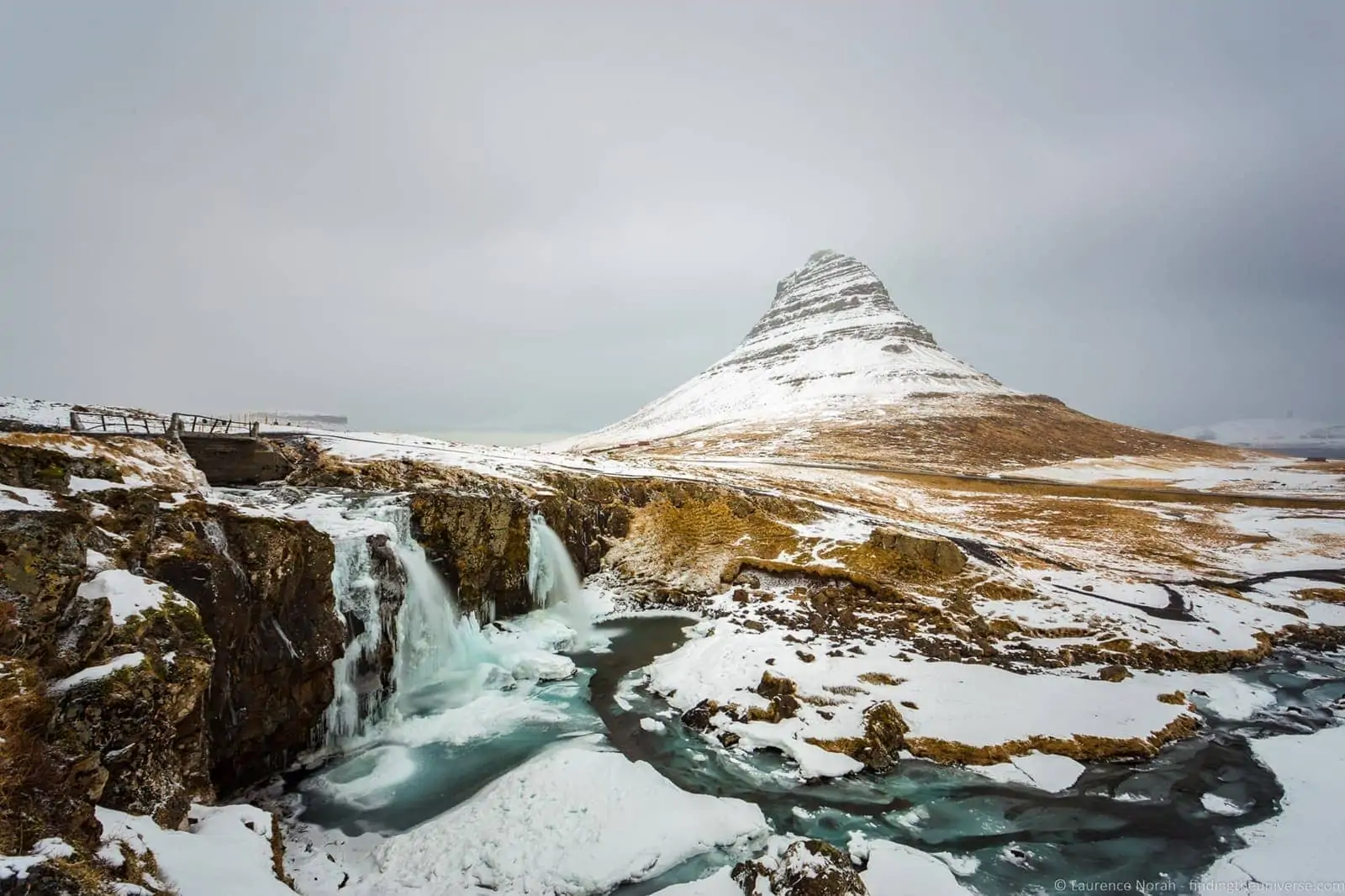
We did the peninsula as an overnight rather than a day trip, and I’d recommend that if you can manage it. As a day trip, you’re looking at a very long day (at least 10 to 12 hours) and you’ll need to be selective about stops. The essentials are Kirkjufell mountain and its waterfall, the black beach at Djúpalónssandur, the village of Arnarstapi with its dramatic sea cliffs, and the 19th century black church at Búðir. If you have time, Ytri-Tunga beach is a lovely spot for seal watching.
Self-drive or tour? You can self-drive this on normal roads (no 4×4 needed), but a tour is actually not a bad choice here because the driving is long and the peninsula itself is a loop with a lot of stops. Having someone else drive means you don’t miss the scenery.
On GetYourGuide, there are several good Snaefellsnes tour options: this 11-hour bus tour, this smaller group minibus tour, and this option which includes a home-cooked meal at a local horse farm.
Photography tip: Kirkjufell with its waterfall in the foreground is the classic shot. In winter you might catch Northern Lights behind the mountain, although you’d have to be out here when it’s dark obviously. The black church at Búðir is particularly striking against fresh snow or in the golden hour light just before sunset.
Do it now or later? This is one of the better day trips, but it’s a long one. If you have fewer than four days in Iceland, I’d prioritise the Golden Circle and South Coast first and come back for Snaefellsnes on a longer trip.
Glymur Waterfall
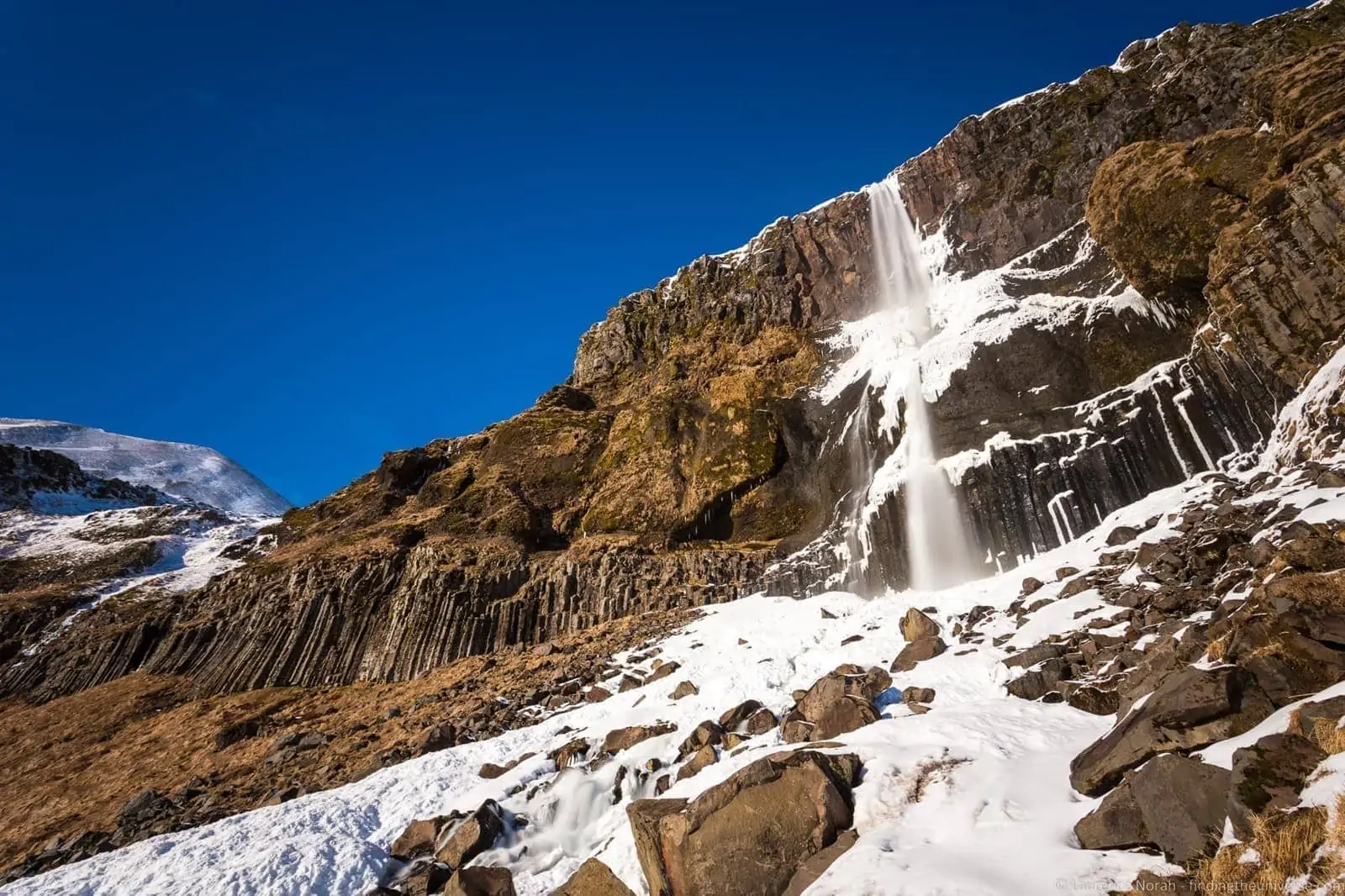
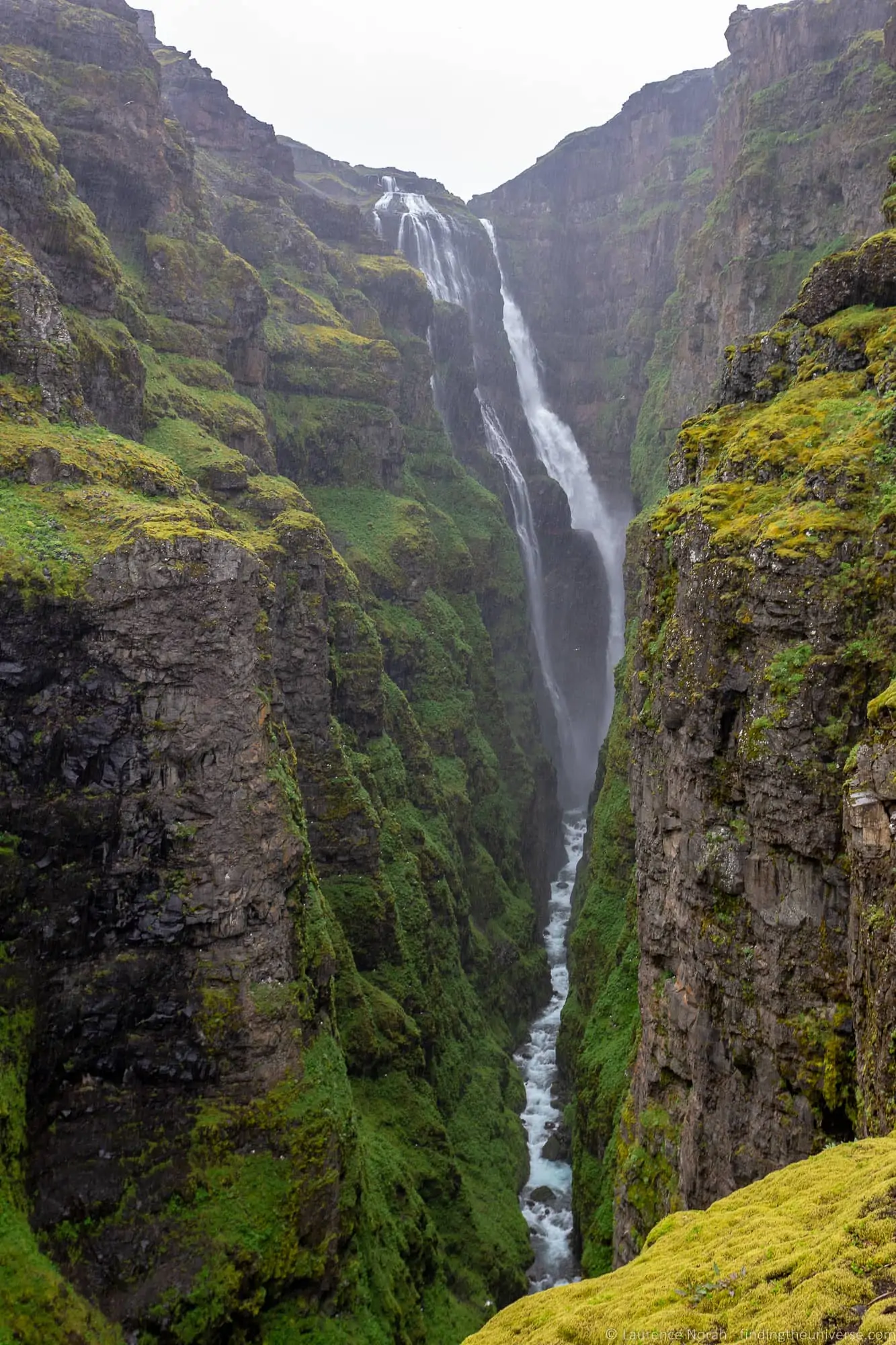
Glymur is one of Iceland’s tallest waterfalls and one of the best short hikes you can do as a day trip from Reykjavik. It’s only about an hour’s drive from the city, and the hike itself takes roughly three to four hours round trip.
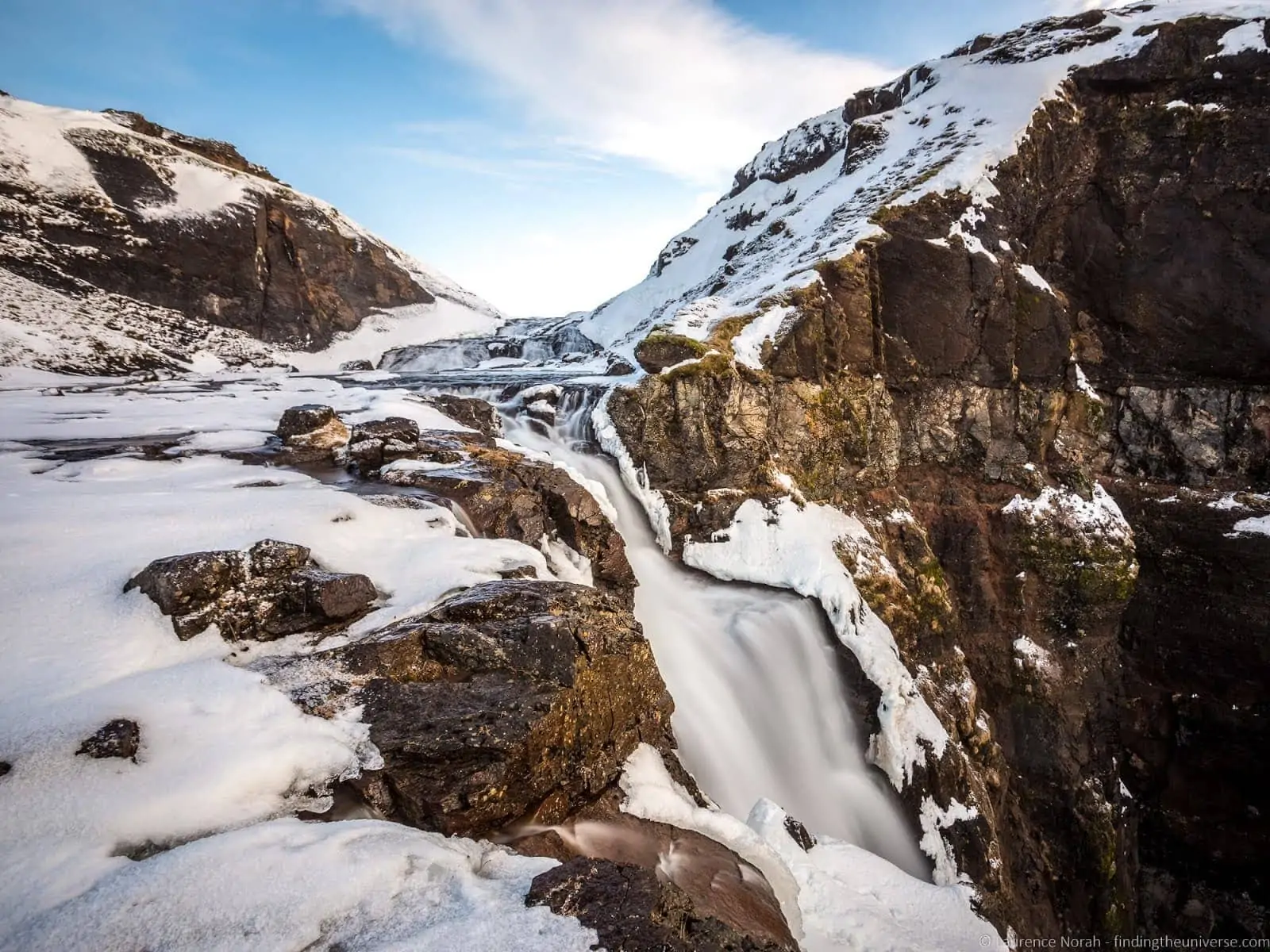
I’ve done this hike in both summer and winter, and the contrast is striking. In winter I had the trail essentially to myself, walking through a gorgeous snowy landscape, completely silent, and freezing cold. In summer it was busier but equally beautiful, though I got soaked by rain (Iceland, right?). Both versions were well worth the effort.
The hike involves some scrambling and a river crossing (there’s a log bridge), so it’s not suitable for very young children or anyone with mobility issues. Wear proper hiking boots and layers.
Self-drive or tour? Self-drive is the way to go here. Drive to the car park at the Botnsá river and follow the marked trail. There are no parking fees at the trailhead.
Photography tip: The viewpoint at the top of the trail gives you a clean angle looking down the falls into the canyon below. A wide-angle lens works best. In winter, the frozen sections of the waterfall add real drama to the shot.
Who it’s for: Anyone who wants a real hike without the crowds that gather at the Golden Circle waterfalls. It’s close to Reykjavik, the hike is rewarding without being punishing, and the waterfall at the top more than justifies the climb.
Hot River Hike
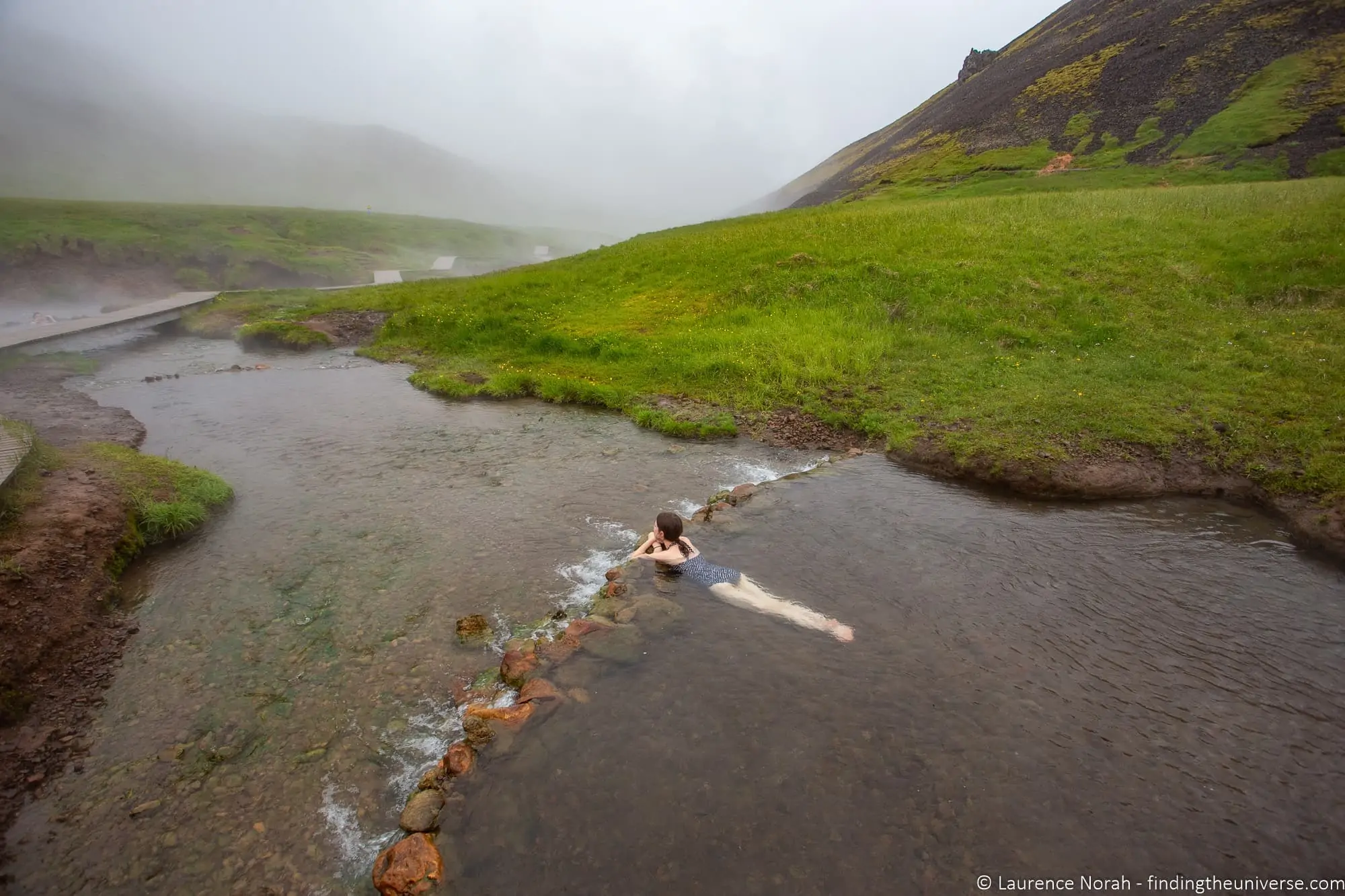
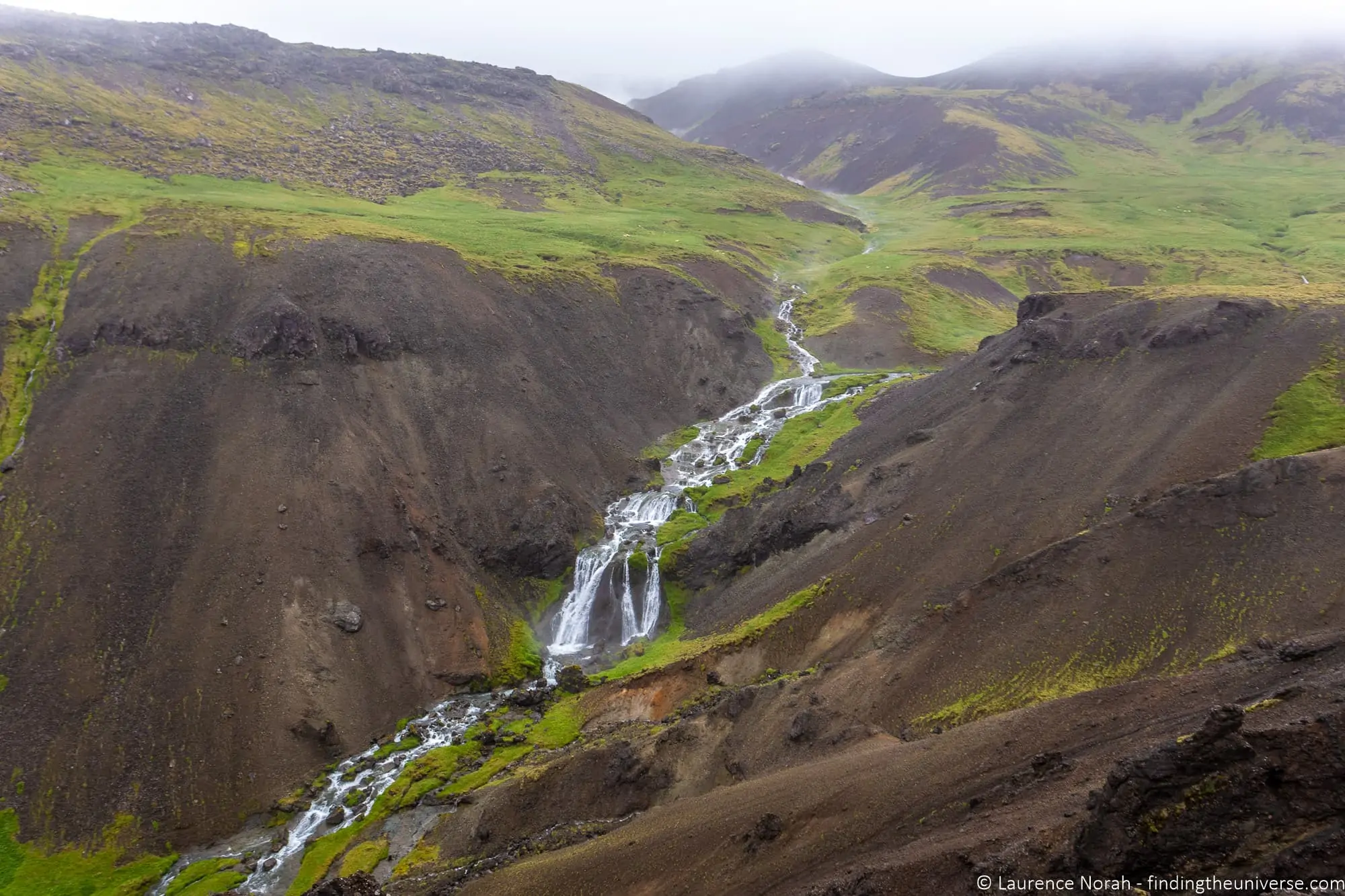
One of our favourite half-day trips from Reykjavik is the hike to Reykjadalur, a geothermally heated river where you can actually bathe in warm water flowing through a mountain valley. The trailhead is at Hveragerði, about 45 minutes’ drive southeast of Reykjavik, and the hike to the river is around 3km each way.
We really enjoyed this hike. The trail passes through a landscape of steaming vents and bubbling mud before opening out into the valley where the warm river flows. Bathing in a natural hot river surrounded by green hills is a uniquely Icelandic experience and far more memorable than any spa.
A word of caution, though: don’t underestimate this hike. The round trip takes around two and a half to three hours, and the trail can be muddy and slippery, especially after rain. The weather at Hveragerði can change quickly, so bring proper layers and waterproofs even if it looks fine when you set off. We’ve been caught out by Iceland’s weather more than once, and as you can see from our photos, it was pretty misty and cloudy when we visited, which was in the middle of summer!
One other thing to note, while there are some privacy screens where you can get changed, this isn’t what you could describe as a high-end spa experience. So you might need a loved one to hold a towel to preserve your dignity!
Self-drive or tour? Self-drive is easiest. Parking at the trailhead costs 200 ISK for the first hour and 250 ISK per hour after that, payable via the Easy Park app.
Photography tip: The steaming vents along the first section of the trail make for atmospheric shots, especially in cooler weather when the steam is thicker. For the river itself, a slightly elevated angle from the hillside above gives you the best view of the valley.
Why I’d pick this one: It’s the thermal bath that feels wild rather than commercial. It’s close to Reykjavik, it’s free to bathe (you just pay for parking), and it’s one of those experiences you’ll remember long after the trip.
The Reykjanes Peninsula
The Reykjanes Peninsula is the closest day trip from Reykjavik and one that many visitors overlook because they’re racing to the Golden Circle or South Coast. That’s a shame, because this volcanic landscape is worth the time and there’s enough here for a solid half-day or full-day trip.
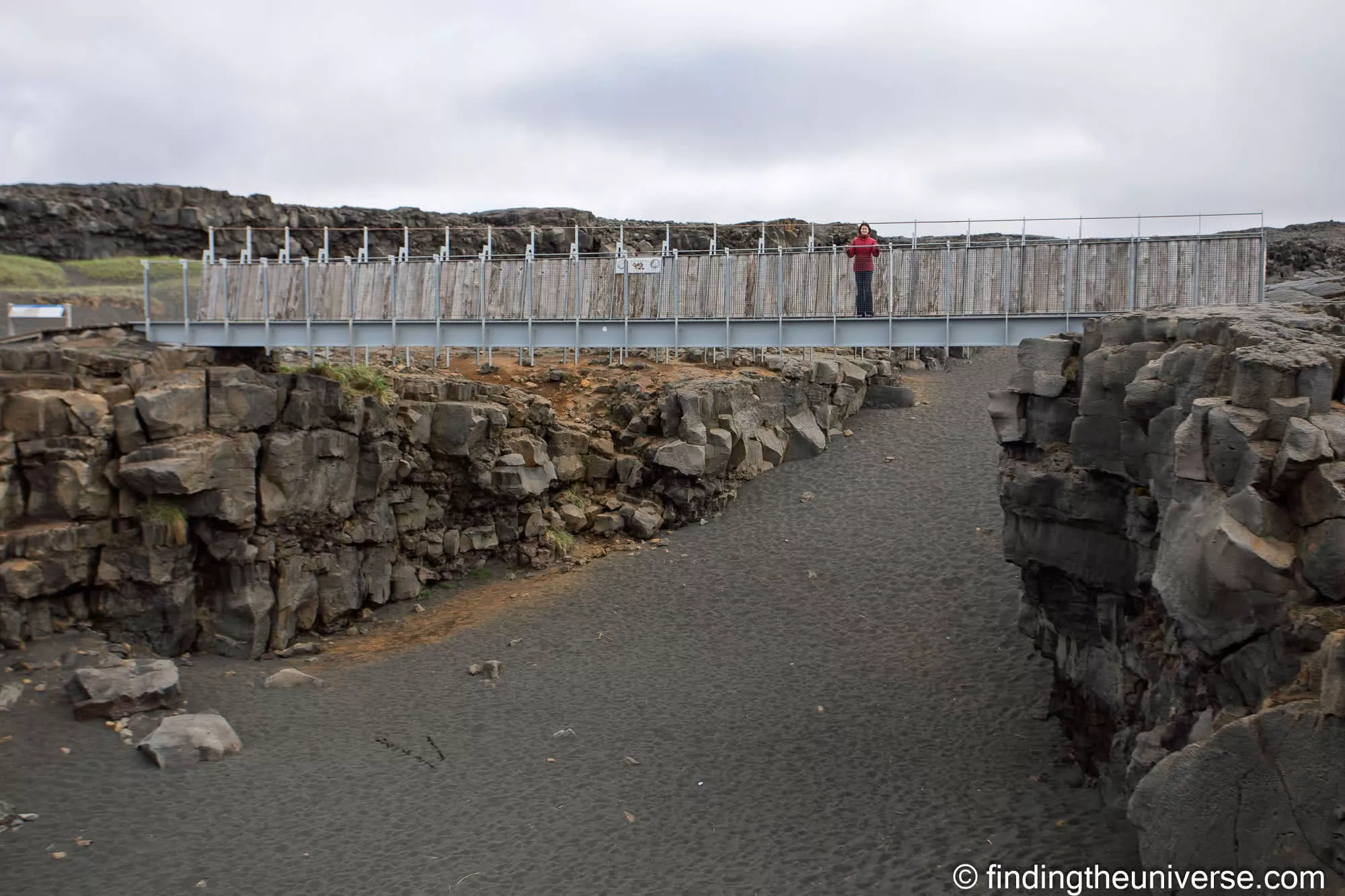
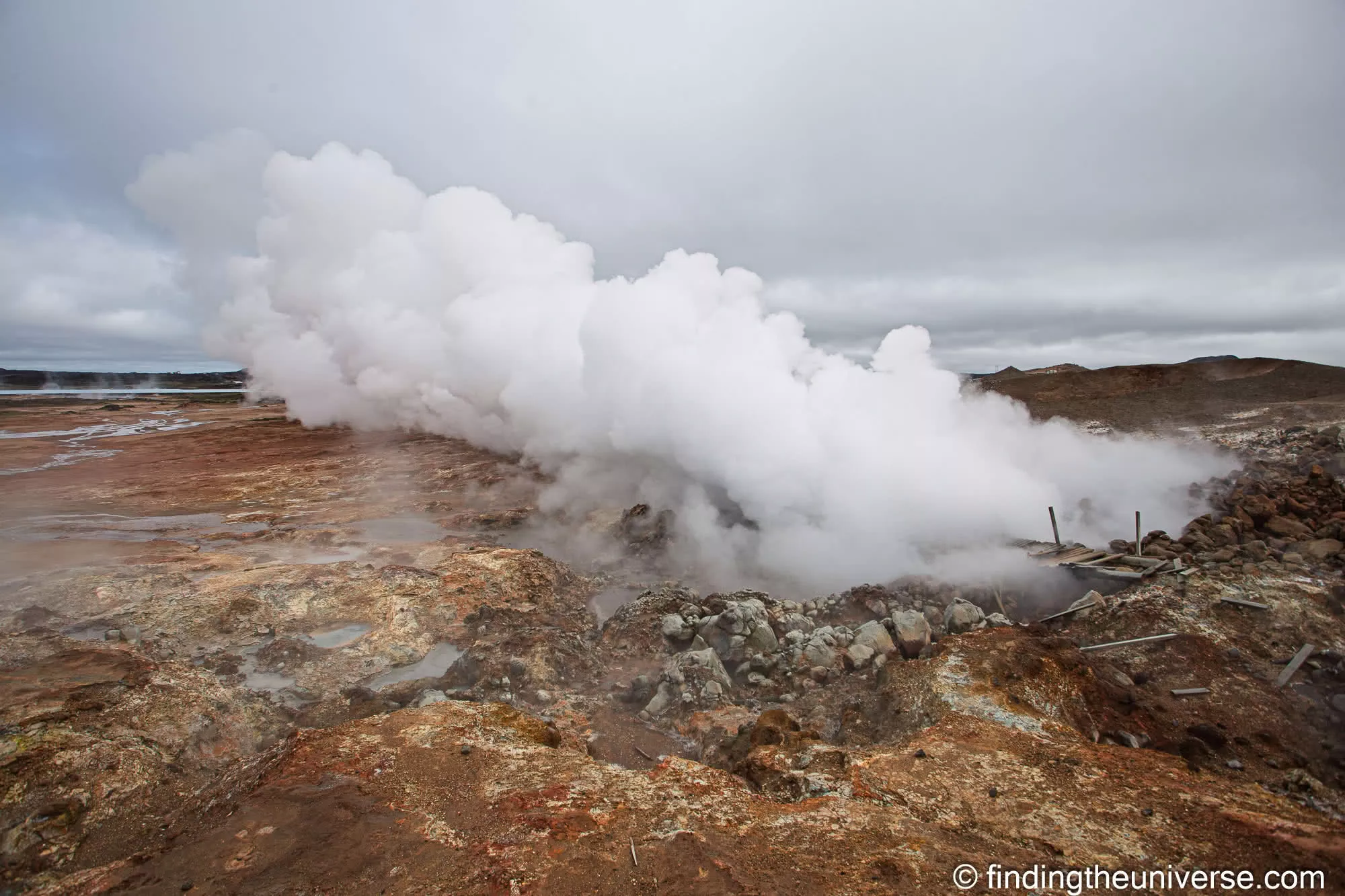
Highlights include the Bridge Between Continents (where you can stand between the North American and Eurasian tectonic plates), the dramatic coastline around Reykjanestá lighthouse, the eerie landscape of Gunnuhver hot springs, and the beautiful lake at Kleifarvatn. We’ve visited most of these sights and can vouch for them.
The peninsula has also been the site of significant volcanic activity in recent years, with eruptions in the Sundhnúkur crater row between 2023 and 2025 that hit the town of Grindavík hard. Check SafeTravel.is before you set off, and see the eruption sites section further down for what a tour actually involves.
Self-drive or tour? Self-drive works perfectly here. The roads are good and the peninsula is compact. You can combine it with a visit to the Blue Lagoon, which is in the same area.
Photography tip: The Gunnuhver hot springs area is great for moody, atmospheric shots, especially on an overcast day when the steam really shows. Kleifarvatn lake is photogenic from the roadside viewpoint, particularly with clouds reflected in the dark water.
When to slot it in: This is a great option if you’ve already done the Golden Circle and South Coast and want something different, or if you have a half-day to fill. The lunar landscape is unlike anything else near Reykjavik.
Blue Lagoon, Sky Lagoon, and Thermal Baths
A soak in geothermally heated water is one of the quintessential Iceland experiences, and you have several options as a day trip from Reykjavik.
Self-drive or tour? Either. The Blue Lagoon is about 50 minutes’ drive from the city (or book the return transfer below), the Sky Lagoon is barely 15 minutes away, and the city pools don’t need a car at all.
Blue Lagoon
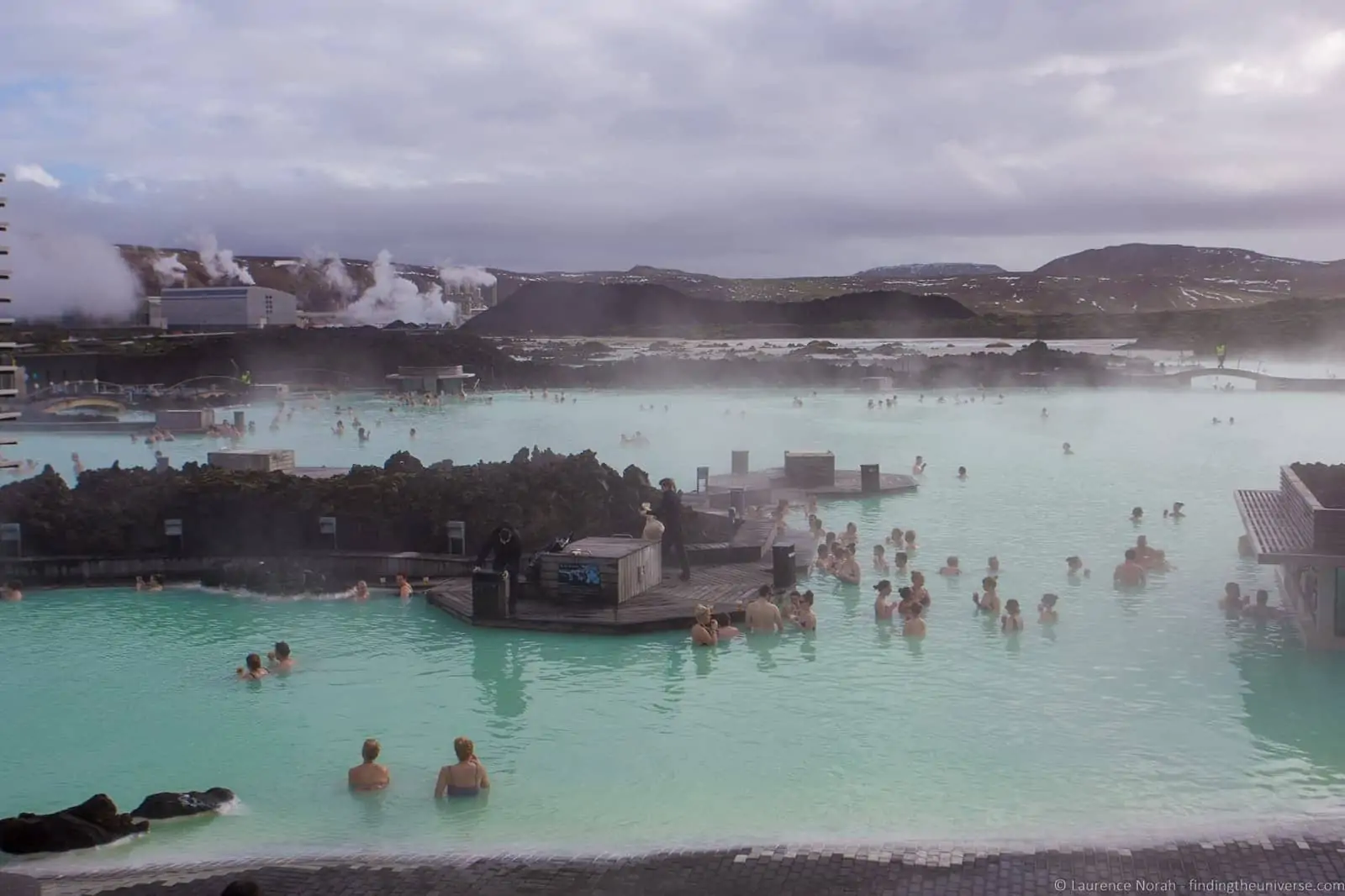
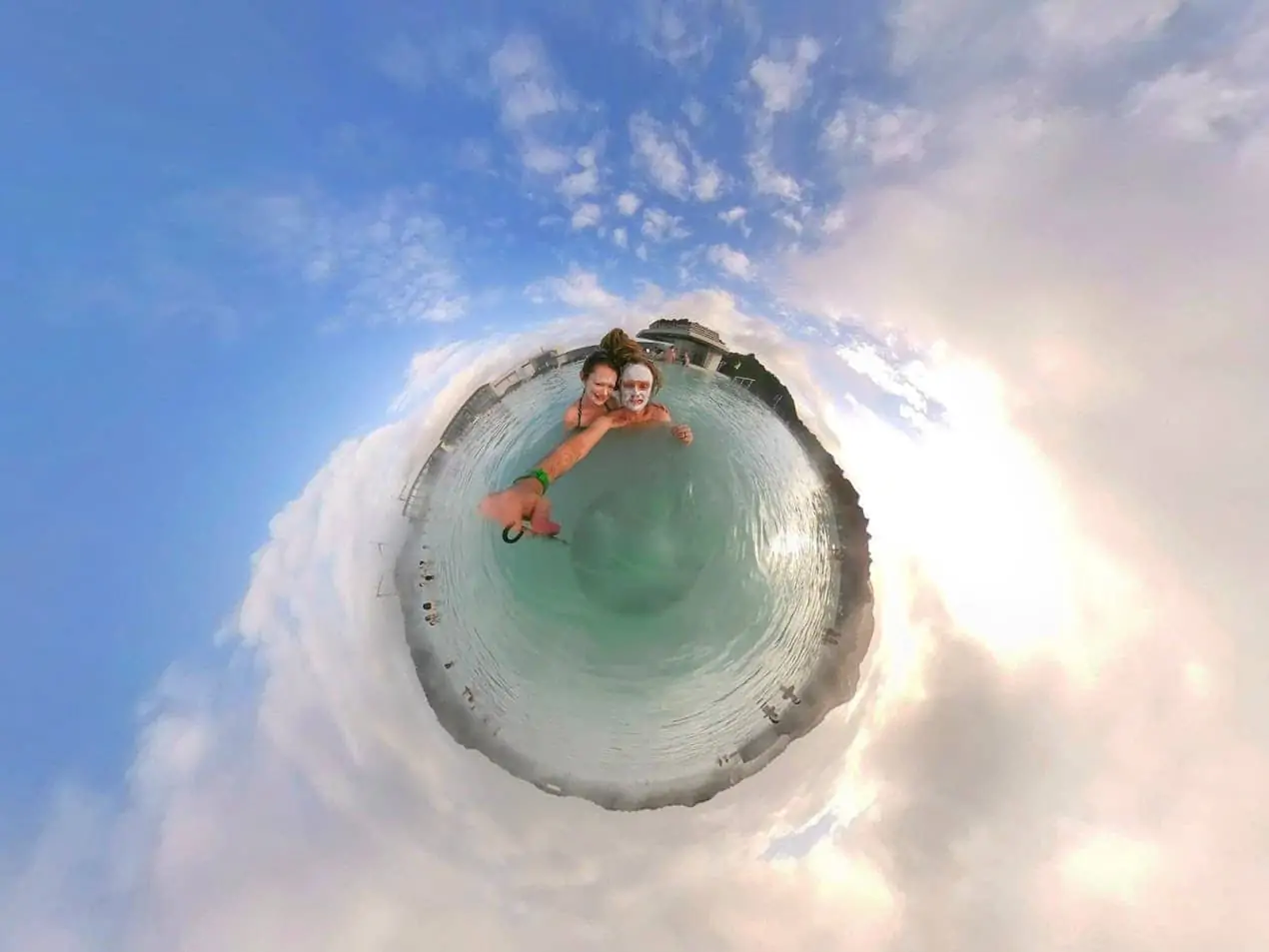
The Blue Lagoon is the most famous, and despite its popularity it’s still worth doing. The huge outdoor lagoon is an opaque milky blue, there are swim-up bars (the smoothies are excellent), and the silica mud mask is oddly satisfying. We’d recommend the Comfort level ticket as it includes a towel and a drink, which is convenient.
Before you book: The Blue Lagoon sits on the Reykjanes Peninsula, where the Sundhnúkur crater row erupted on and off between 2023 and 2025. The lagoon stayed open throughout, closing only for short spells while an eruption was active. Book it as you would any other Iceland activity, then check the Blue Lagoon website in the week before you travel.
Pre-booking is required. You can book tickets online here, and arrange transport from Reykjavik if you don’t have a car.
Sky Lagoon
A more recent addition to Iceland’s thermal bath scene, the Sky Lagoon is much closer to Reykjavik city centre and offers a beautiful hot spring experience on the edge of the ocean. The 7-step spa ritual is the draw here, and because it’s newer it tends to feel a bit less hectic than the Blue Lagoon. You can book tickets for the Sky Lagoon here, or with transport included here.
Photography tip: If you’re bringing a camera to the Blue Lagoon, be careful with the steam and mineral-rich water. A waterproof phone case or action camera is safer than your main camera body in this environment.
City Pools
If you’re on a tight budget but still want to experience Iceland’s geothermal waters, visit one of the city pools in Reykjavik. They use the same geothermally heated water as the lagoons and cost a fraction of the price. If you have a Reykjavik City Card, the city pools are free.
Which one to pick: I’d do one thermal bath experience during your trip. If money isn’t a concern, the Blue Lagoon is still worth the hype. If you want something more relaxed and closer to the city, the Sky Lagoon is the pick. If you’re watching your budget, the city pools are brilliant and much more of a local experience.
Northern Lights (September to April)
If you’re visiting Iceland outside of the summer months, a Northern Lights tour should be on your list. I won’t call it a day trip since you’ll be out at night, but it’s one of the most popular activities from Reykjavik and well worth the late evening.
Taking a guided tour gives you the best chance of seeing the aurora, as local guides know the best spots away from light pollution and can adjust based on weather and aurora forecasts. Most tours also include a free retry ticket if no lights are seen on your night, so book early in your trip to give yourself backup dates.
Options range from budget-friendly coach tours to more intimate small group experiences. A good starting point is this well-reviewed bus tour with hot chocolate, or for a more personal experience, this premium small group minibus tour.
Self-drive or tour? Tour for most people. You can chase the aurora with your own hire car if you’re confident on icy roads at night, but the guides know where the sky is clear and the retry ticket removes the gamble.
Photography tip: You’ll need a tripod (or at least a stable surface), a wide-angle lens, and manual exposure settings. Start with ISO 1600, f/2.8, and a 10 to 15 second exposure, then adjust from there. A remote shutter release or your camera’s timer avoids shake. Most Northern Lights tour guides will help you with camera settings, and some even include professional photos.
If you’re planning to photograph the aurora, have a read through our guide to how to photograph the Northern Lights, which covers tips for all types of cameras.
I should add that despite multiple trips to Iceland and various attempts, we have never been able to see a good display here due to the weather not co-operating. We have been lucky enough to see them in other locations around the world, but not Iceland. So please don’t be too disappointed if you don’t get to see them on your visit, it’s far from guaranteed!
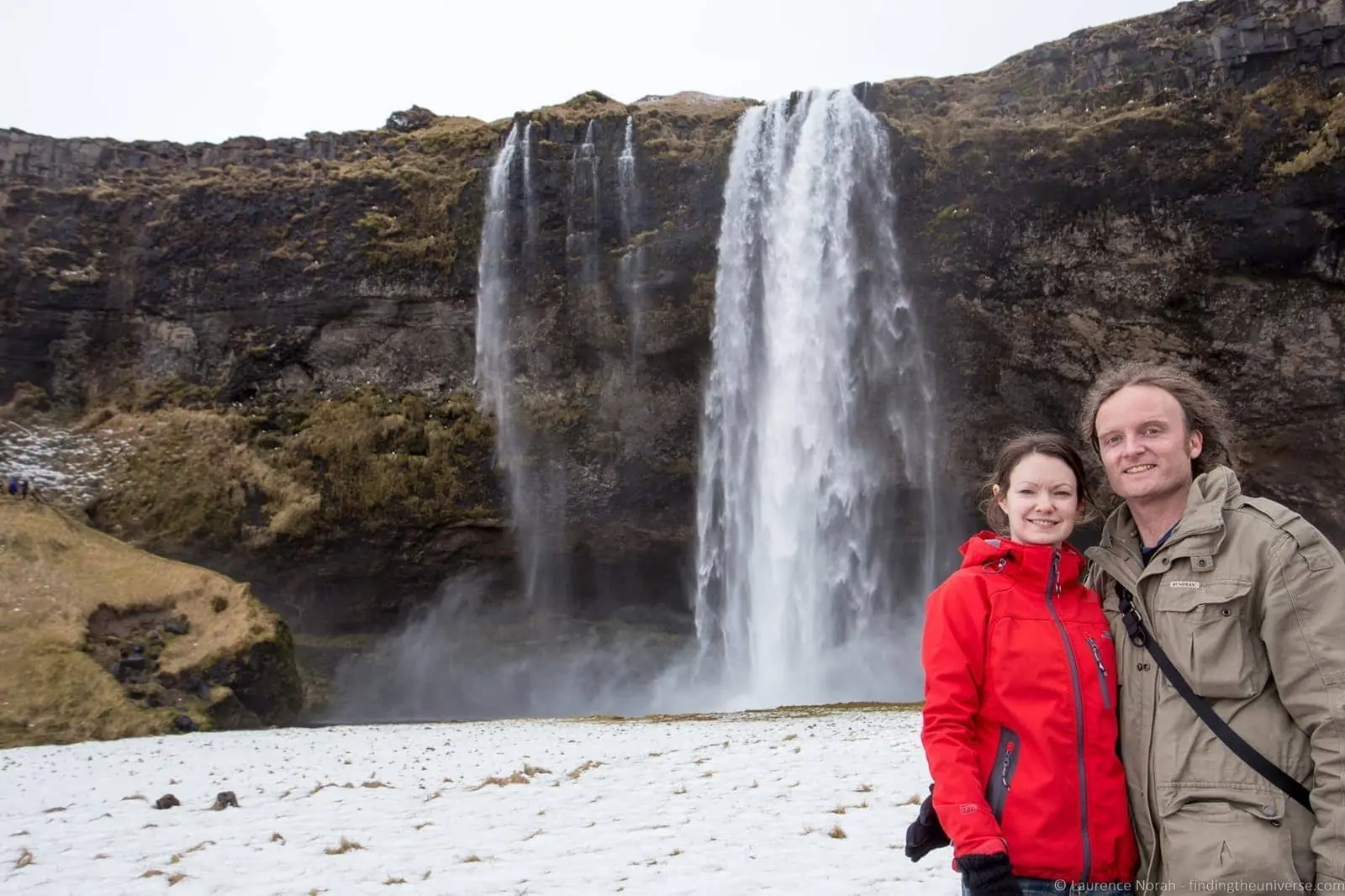
Landmannalaugar
We did a super jeep tour to Landmannalaugar and it was one of the highlights of our time in Iceland. This otherworldly landscape of colourful rhyolite mountains, steaming hillsides, and bubbling mud pots sits in the Icelandic Highlands, accessed across vast ash-covered plains.
The drive alone is an experience, especially in a super jeep, which handles the rough highland roads and river crossings that make this area tricky to reach. Once there, you can hike through a landscape that looks like it belongs on another planet. The main hiking loop takes around 60 to 90 minutes, though there are longer options if you have the time.
Dress in layers and bring proper waterproof, windproof clothing. We visited in June and got snowed on. See our Iceland summer packing list for tips. Don’t forget your swimming clothes either, as there are free natural hot pools at Landmannalaugar where you can soak after the hike.
Self-drive or tour? Tour, strongly recommended. The roads are F-roads (highland roads) that require a proper 4×4, and there are multiple river crossings. No car insurance in Iceland covers river crossing damage, so the financial risk of self-driving is high. A super jeep tour to Landmannalaugar is the way to go.
Season: Summer only (roughly mid-June to September, once the highland roads open).
Photography tip: The colourful rhyolite mountains are incredibly photogenic and look almost unreal in photos. The colours are most vivid in good light, so hope for some sunshine (which I did not have!). A wide-angle lens captures the sweeping landscapes best, though a telephoto is useful for compressing the layers of colourful ridges. The scale here can be hard to judge, so including people in your shots for scale can really help. As you’re riding in a vehicle, weight is less of an issue, so bring the gear you think you might need.
Why it’s worth the day: This is the one for anyone who wants remote and wild. The super jeep is great fun in its own right, and Landmannalaugar looks like nowhere else in Iceland.
Thorsmork (Þórsmörk)
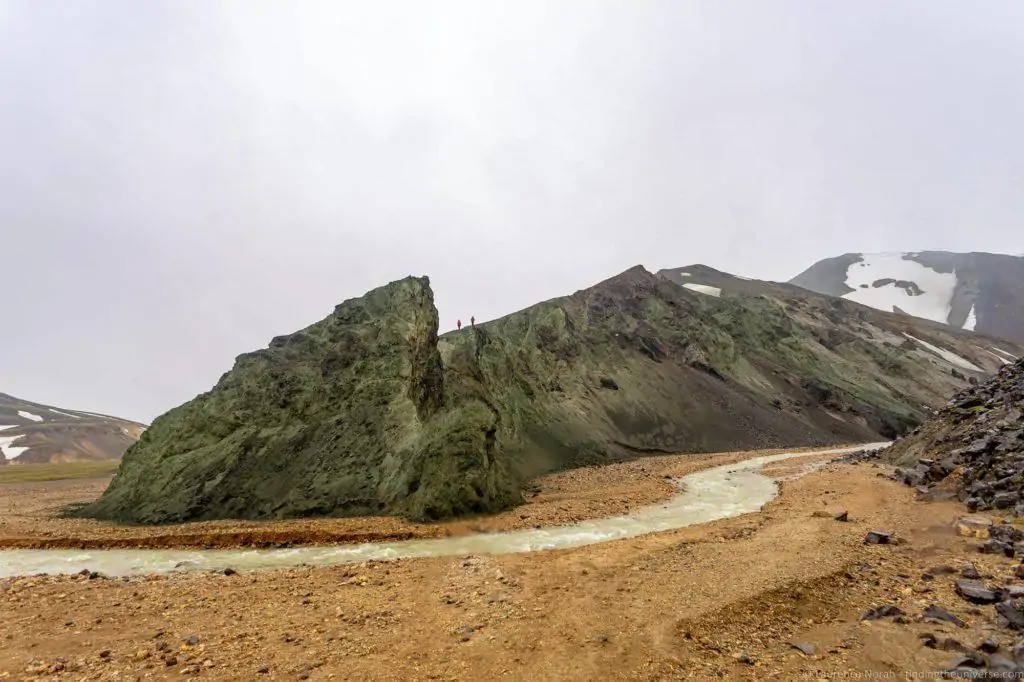
Thorsmork, or the Valley of Thor, is one of Iceland’s most popular hiking destinations. It’s a beautiful green valley sheltered by the glaciers of Eyjafjallajökull and Myrdalsjokull, and getting in means crossing more than ten rivers. We’ve made that trip, and the crossings are the part people underestimate. They’re deeper and faster than they look from the bank.
Self-drive or tour? Take a tour. Of everything on this page, this is the recommendation I’d least want someone to ignore. The river crossings are serious, no hire car insurance in Iceland covers this kind of driving, and the cost of damaging a rental out here would be eye-watering. There are dedicated super jeep tours and highland buses that run in summer, and letting someone else take the rivers is the whole point of using one.
Season: Summer only. This is also the starting point for the famous Laugavegur multi-day trek to Landmannalaugar, which is one of the most popular hikes in Iceland.
Where it ranks: If hiking is your thing and you have the time, Thorsmork is exceptional. It does get bundled together with Landmannalaugar in a lot of trip planning though, and the two aren’t interchangeable. Landmannalaugar is where you go for the scenery itself, and you get most of it from the jeep. Thorsmork is where you go to walk. If you’ve only got one highland day and you’re not set on a long hike, take the Landmannalaugar super jeep. For most visitors on a shorter trip, the more accessible day trips (Golden Circle, South Coast) should come before either of them.
Ice Caves and Glacier Experiences
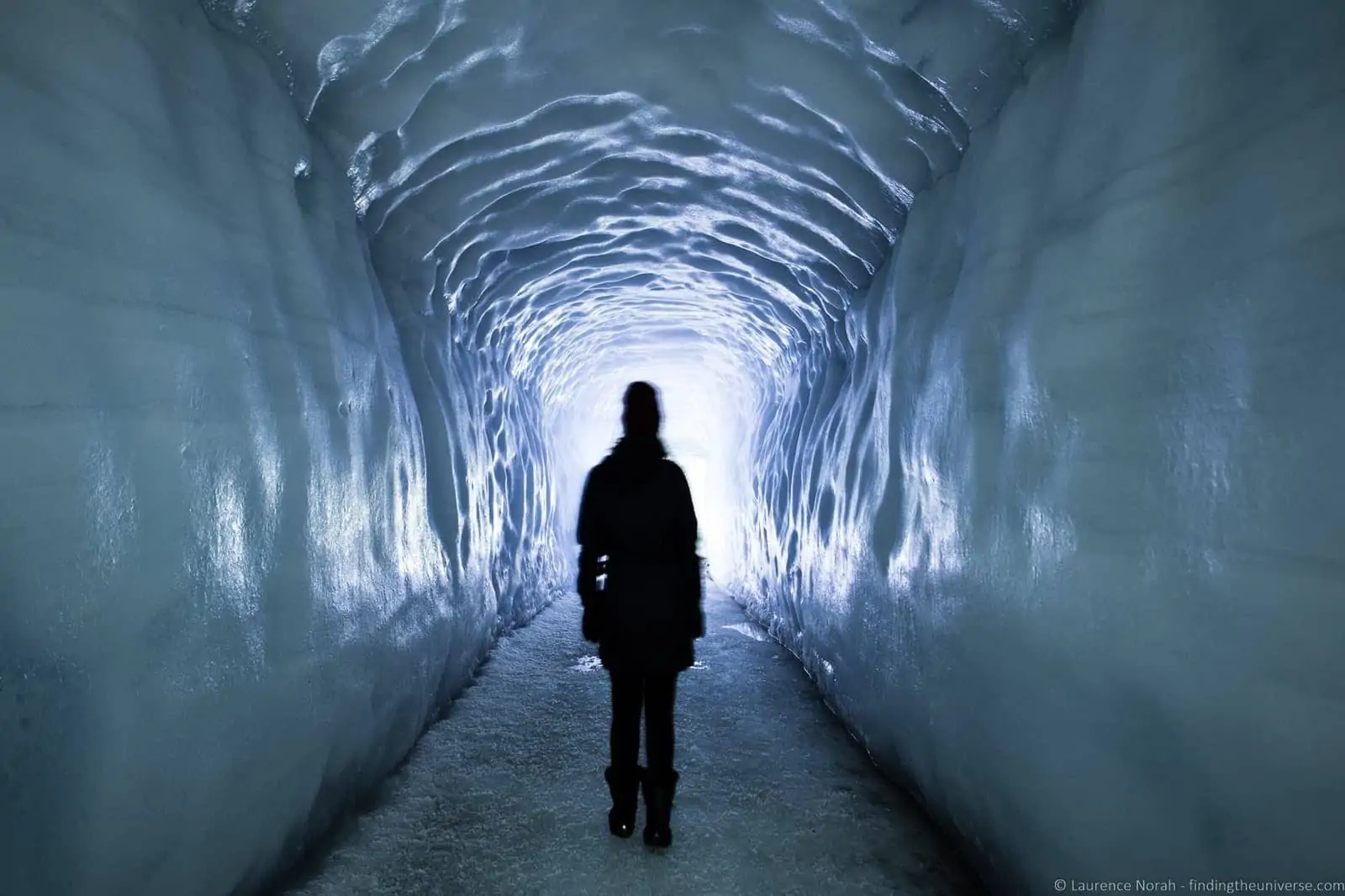
If you’re visiting Iceland in winter, a natural ice cave tour should be near the top of your list. The season is shorter than you might expect, roughly November to March; by late spring the caves destabilise as temperatures rise. These form inside and underneath glaciers, and the blue of the ice is the reason people go. I haven’t done a natural ice cave tour personally, but they consistently rank as one of the most popular winter activities in Iceland and the photos speak for themselves.
There are ice cave tours available from Reykjavik on GetYourGuide, including this Katla ice cave tour and this combined South Coast and ice cave trip. There are also tours departing from other locations you might find yourself, like this one from Skaftafell.
This is absolutely a trip that needs to be done as a guided tour. Glaciers are dangerous, and you want to be with an expert.
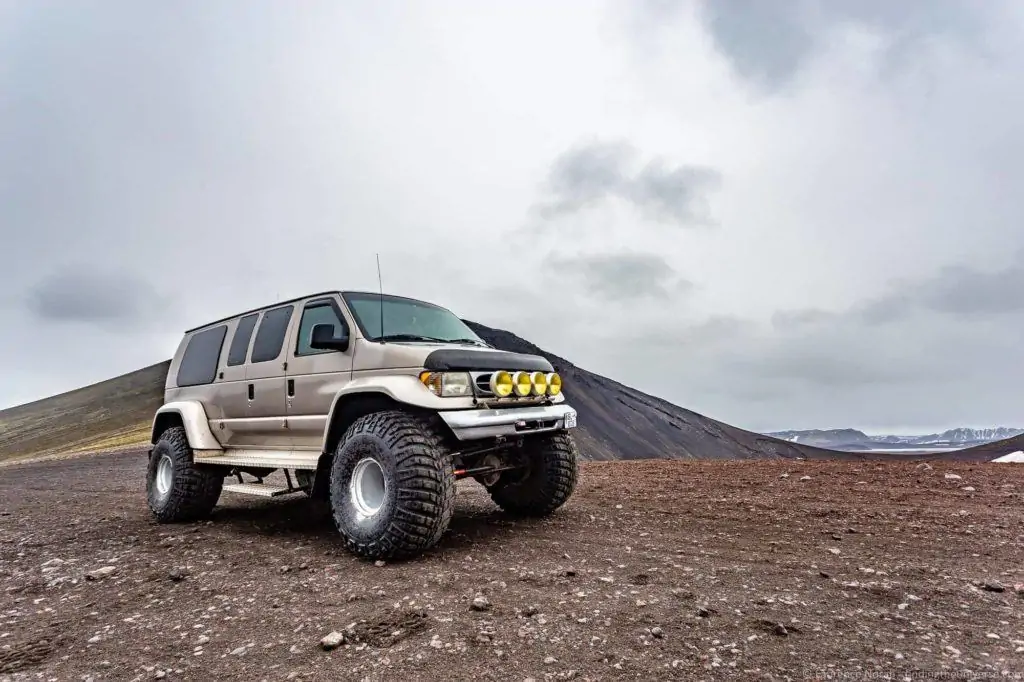
There’s also the “Into the Glacier” experience on Langjökull glacier, which involves driving across Iceland’s second largest glacier on a massive 8-wheel former NATO truck and then walking through a man-made ice tunnel. We did this and it was fun, though I’d recommend prioritising a natural ice cave tour if you have to choose between the two. The natural formations are more impressive. The Into the Glacier tour from Reykjavik also includes stops at the Hraunfossar waterfalls and Deildartunguhver hot spring area.
If you’re not visiting in winter, you can get an idea of what an ice cave is like at the Perlan in Reykjavik. Their Wonders of Iceland exhibition includes a recreation of an ice cave using real ice. It’s not the same as the real thing, but it’s well done.
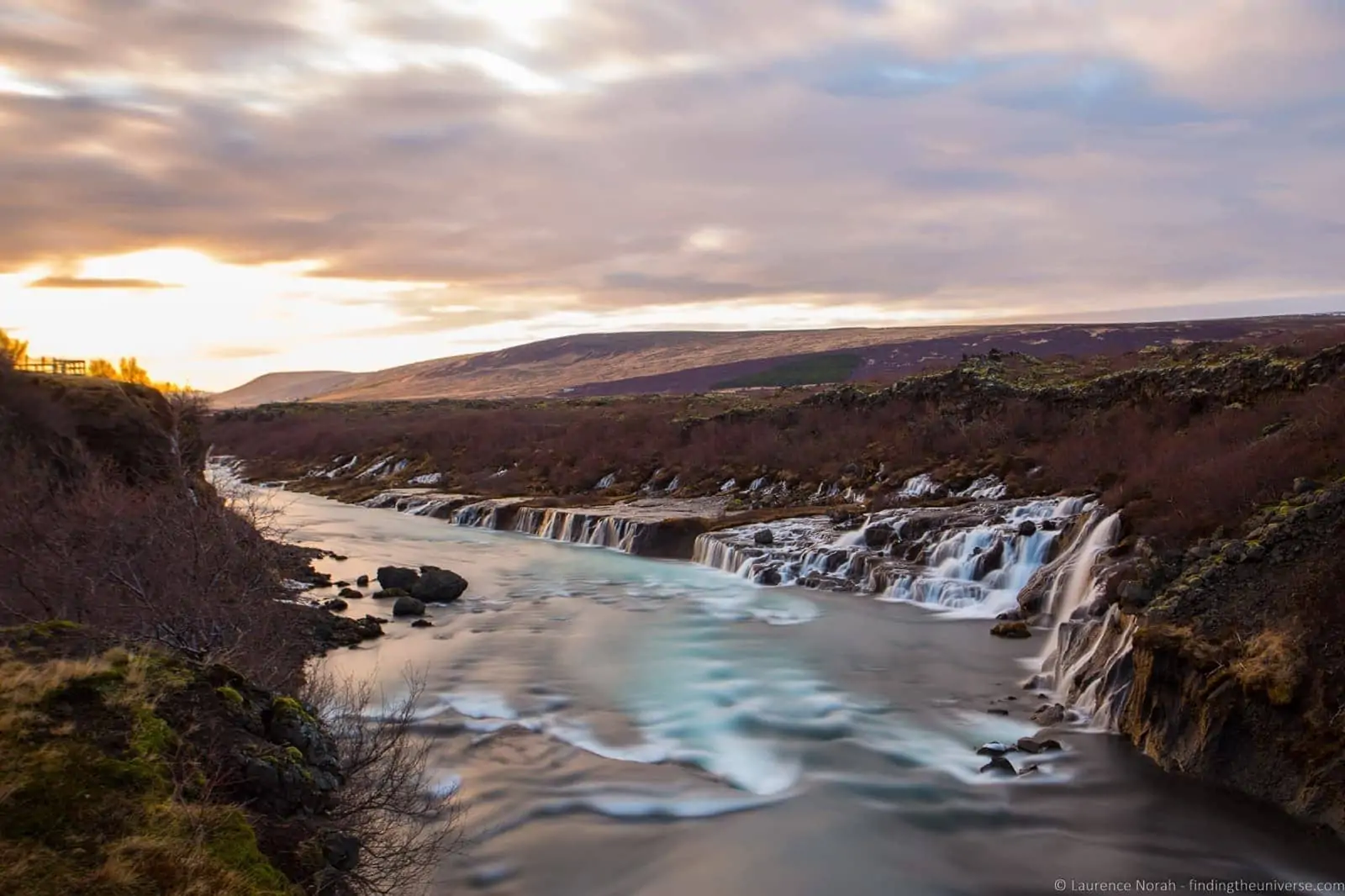
Whale Watching and Puffin Watching
You can do both whale and puffin watching on trips that depart from Reykjavik’s Old Harbour, making these easy half-day activities that don’t require a car or a full day.
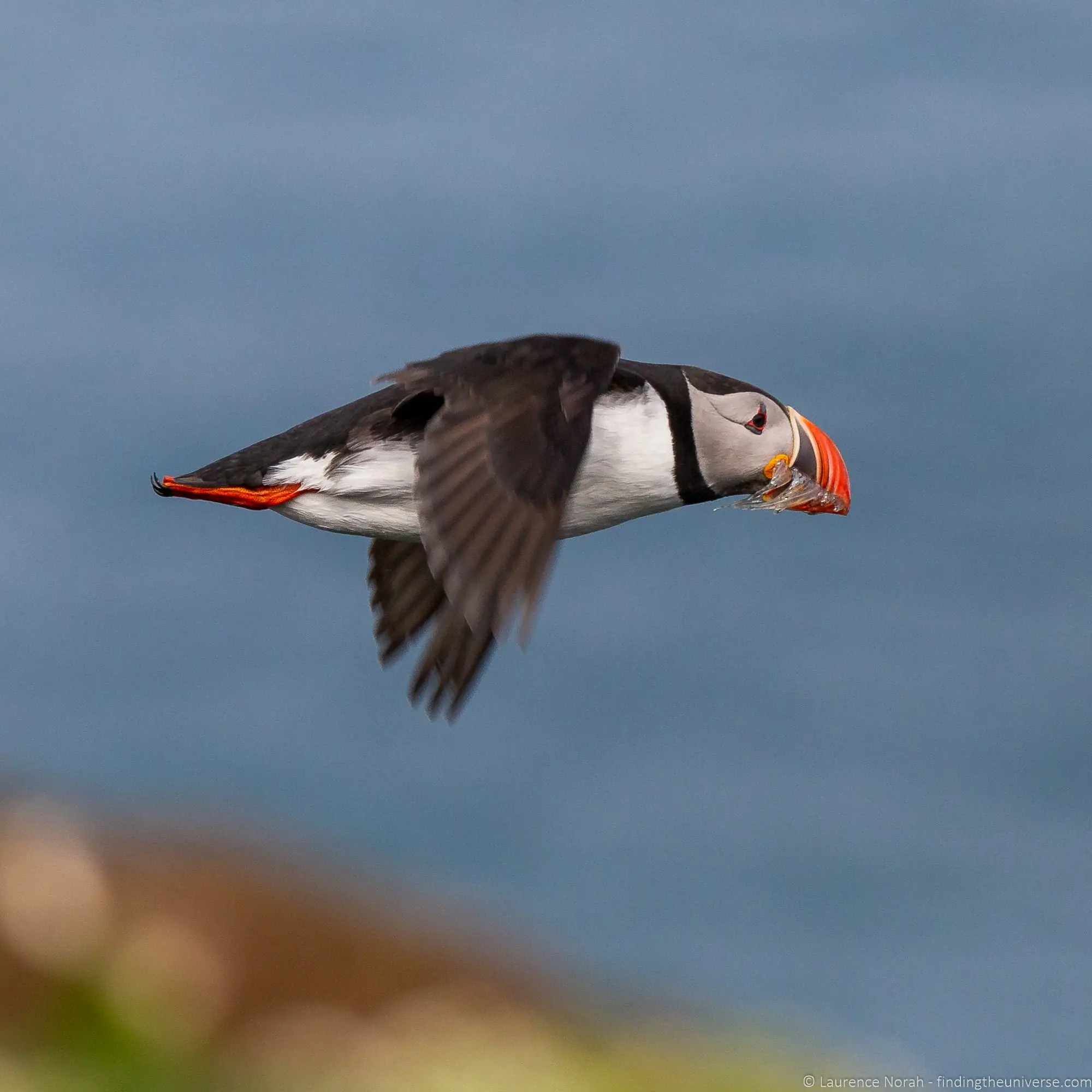
We’ve taken multiple puffin trips around Iceland, including this hour-long puffin trip from Reykjavik which takes you out to the small islands where puffins nest. We saw loads of them. Puffin season runs from roughly late April to mid-August, so timing matters.
For whale watching, there are options ranging from larger boats to faster RIB speedboats. This whale watching tour on the Andrea (Iceland’s largest whale watching vessel) is well-reviewed and includes a free retry ticket if no whales are spotted. For something more adventurous, this RIB speedboat tour gets you closer to the wildlife and is an experience in itself.
If you want to do both, this combo whale and puffin tour combines the two into a half-day experience.
Self-drive or tour? Neither is needed for transport: the boats leave from the Old Harbour, which is walkable from most of central Reykjavik. The tour is the trip itself.
Photography tip: For puffin watching, a telephoto or long zoom lens makes a huge difference (200mm minimum, ideally 300mm or more). For whale watching, a faster shutter speed (1/1000 or higher) helps capture breaches. On both boats, dress warmly and keep your camera accessible rather than buried in a bag.
I should mention that if you’re heading to Húsavík in the north of Iceland on a longer trip, the whale watching there is considered the best in the country. That’s where we went whale watching and we had a blast. But for a day trip from Reykjavik, the Old Harbour tours are convenient, and the sighting rates are good.
For more on where and when to see puffins across Iceland, see Jess’s detailed guide to puffins in Iceland.
Westman Islands (Vestmannaeyjar)
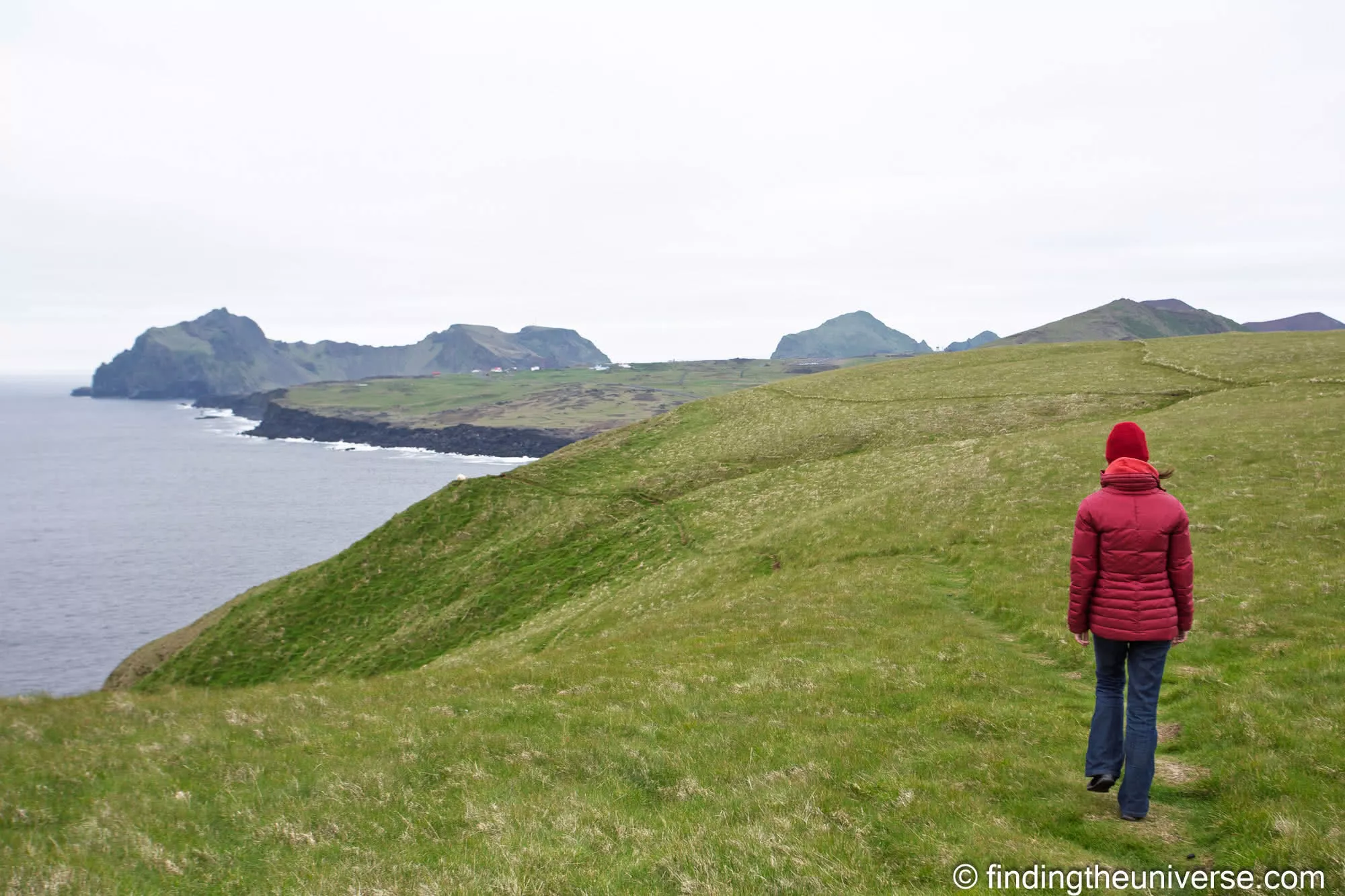
The Westman Islands are an archipelago off Iceland’s south coast, and they’re one of my favourite places to visit in the country. We took the ferry from Landeyjahöfn (about a two-hour drive southeast of Reykjavik), and then spent time on the main island of Heimaey exploring the volcanic landscape and taking a boat trip around the islands.
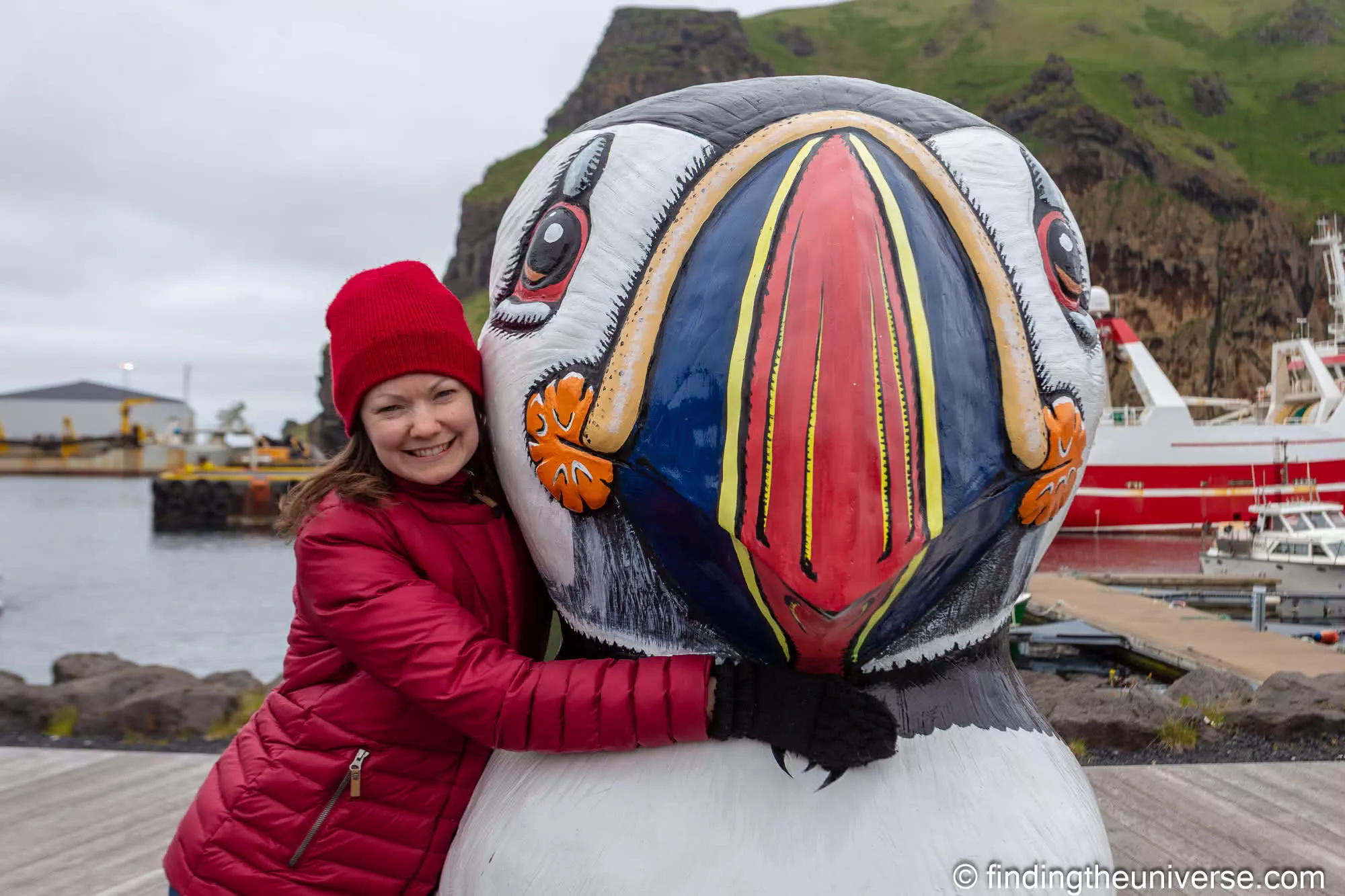
The boat trip was a highlight. You cruise past dramatic sea cliffs, sea caves, and in summer, enormous puffin colonies. This is one of the best places in Iceland to see puffins up close, as the Westman Islands host one of the largest Atlantic puffin colonies in the world.
We overnighted on the islands, and I’d recommend that if you can. But a very long day trip from Reykjavik is technically possible: drive to Landeyjahöfn (about two hours), take the 35-minute ferry, explore the island, and return the same day. Start very early.
Self-drive or tour? Self-drive to the ferry terminal, then explore on foot or rent a car on the island. Book the ferry in advance in summer as it fills up. One caveat: the day trip maths only works when the ferry is sailing from Landeyjahöfn, which is the norm in summer. In rough weather and in winter it diverts to Þorlákshöfn, a crossing of about 2 hours 45 minutes each way, at which point this stops being a day trip.
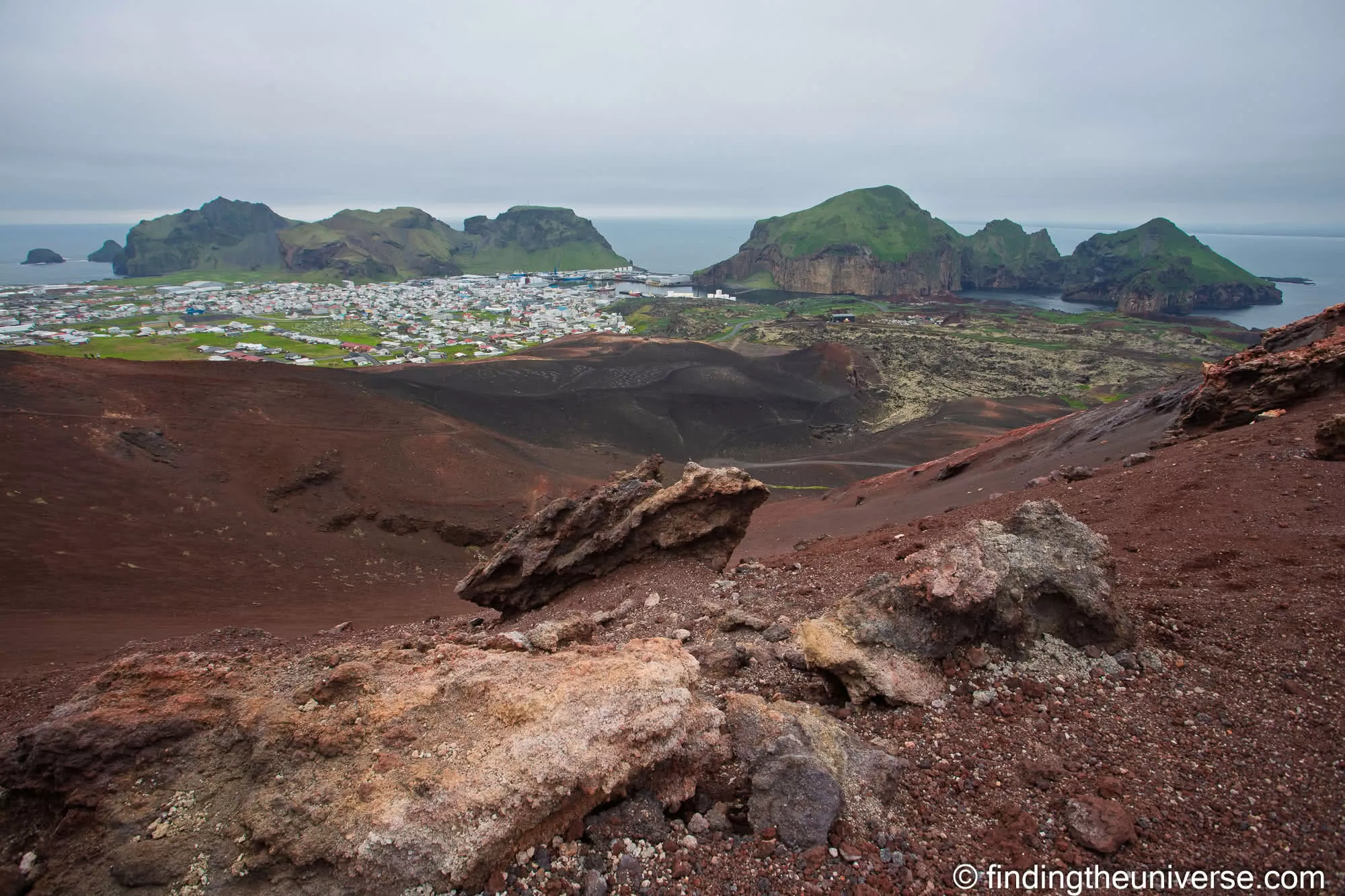
Photography tip: The boat trip around the islands offers great sea cliff compositions. A zoom lens helps for capturing puffins on the clifftops from the water. On land, the view from the top of Eldfell volcano looking down over Heimaey town and the harbour is one of the most photogenic panoramas in Iceland.
Only if you’ve got the days: If you have four or more days and you’re interested in puffins or volcanic history (the 1973 eruption that nearly destroyed the town is quite a story), the Westman Islands are well worth the effort. For shorter trips, there’s plenty to see closer to Reykjavik.
Visit Volcanic Eruption Sites
This is the one trip on the page you can’t put in a plan, because whether it exists at all depends on what the ground is doing the week you arrive. The recent activity has all been on Reykjanes, covered above, so when a site is open to visitors it’s a half day rather than a full one.
Plan for it as a maybe rather than a fixture. If a site is accessible while you’re there, guided tours run out to it, and they involve a hike over uneven ground, so pack proper boots rather than trainers, and layers for standing about in the wind. What you actually see changes from one eruption to the next, which is why photos from a previous one aren’t much of a guide.
Check SafeTravel.is for activity and exclusion zones while you’re planning, and again before you set off. Tour availability follows conditions, and operators cancel when it isn’t safe.
Self-drive or tour? Tour, and only when conditions allow. Access rules change with each eruption, and the operators know where you’re actually allowed to stand.
Can you plan around it? No, and I wouldn’t try. Build the trip as though it isn’t on, and take it as a bonus if it is.
The Trips That Aren’t Really Day Trips
Some of the best places in Iceland get sold as day trips from Reykjavik, and the maths just doesn’t work. We’ve driven most of these routes ourselves, so this is experience talking rather than caution.
Jökulsárlón glacier lagoon: about five hours of driving each way, which means ten hours behind the wheel before you’ve stopped once. We’ve been, and it deserves far better than twenty rushed minutes between two five-hour drives. Save it for a multi-day South Coast run; our 5 day itinerary works it in comfortably.
Mývatn, Akureyri and the north: Akureyri is around five hours’ drive each way and Mývatn nearer six or seven, which puts your entire day in the car. The north is what our ring road itinerary is for, and Húsavík’s whale watching (the best in Iceland, in our view) belongs to that trip too.
Landmannalaugar and Thorsmork by hire car: both are in this guide, but only with someone else driving. The F-roads need a proper 4×4, the unbridged river crossings can total a rental, and no hire car insurance in Iceland covers water damage. Take the super jeep and enjoy looking out of the window.
Látrabjarg and the Westfjords: the famous puffin cliffs sit the best part of six hours from Reykjavik, with gravel stretches and a rough final approach, and the Westfjords need several days to make sense. If puffins are what you’re after, the boat trips from the Old Harbour or a trip to the Westman Islands get you close for a fraction of the driving.
None of this means skip these places; they’re some of our favourite corners of Iceland. Give them room in a longer itinerary, and keep your Reykjavik days for the trips in the table above. If you’ve got the time, most of them work far better as a short road trip of two or three days than as one very long day trip from Reykjavik. That’s what our 5 day Iceland itinerary is built around.
Practical Tips for Day Trips from Reykjavik
Getting Connected
You’ll want mobile data for navigation and checking road conditions. We recommend picking up an eSIM before your trip. We use Airalo, which has Iceland-specific data plans that activate instantly on your phone. Much easier than buying a physical SIM card at the airport.
Parking and Payment
Most popular attractions in Iceland now charge for parking, typically 750 to 1,000 ISK per stop. The Parka app covers most sites and is essential, so download it before your trip. A few locations (Thingvellir, Seljalandsfoss) use machines or the checkit.is app instead. All accept contactless card payments. I’ve listed specific parking costs under each day trip above.
Driving Costs
As of January 2026, Iceland has a per-kilometre road tax of 6.95 ISK/km, which car rental companies add to your final bill. Expect to pay around 200 to 230 ISK per litre for petrol, and around 220 to 245 ISK for diesel. Car hire prices move constantly with season and vehicle type, so rather than quote a figure that will be stale by the time you read it, we recommend comparing live rates on Northbound.
What to Wear
Iceland weather changes fast. Dress in layers, bring a waterproof jacket, and wear proper walking shoes for any trip involving hiking. Even in summer, temperatures can drop quickly and rain can appear without warning. On the jacket front, I wear a Bluffworks Faroe rain jacket, a light packable shell that goes over however many layers the day demands. If you’d rather spend less, the Columbia Watertight II does the job for about a third of the price and packs into its own pocket. For a full rundown, see our Iceland summer packing list.
Booking in Advance
For popular tours (Northern Lights, ice caves, Blue Lagoon), book well in advance, especially in July and August and around holidays. For self-drive day trips, just make sure your car is booked. Many readers have asked whether you can book tours after arriving in Iceland, and the answer is yes, but the most popular ones often sell out days in advance.
Where to Stay in Reykjavik
Since you’ll be basing yourself in Reykjavik for your day trips, you’ll want somewhere comfortable to come back to at the end of long days. Here are some options we can recommend across different budgets.
For a well-equipped larger hotel, the Hotel Reykjavík Grand is a reliable choice with a good breakfast buffet and convenient location for tour pickups. We’ve stayed here on multiple trips.
The Berjaya Reykjavik Natura (formerly the Icelandair Hotel Natura) is close to the domestic airport and has a relaxed feel. It’s also a common pickup point for guided tours. We overnighted here once before heading out on our ring road adventure.
For those watching the budget, Guesthouse Galtafell is close to the city centre, has a lot of character (the building dates from 1916), and is significantly more affordable than the larger hotels. We’ve also stayed here and it was very comfortable.
For a hostel option, KEX Hostel is centrally located, has a great bar and restaurant, and offers both dorms and private rooms.
See more lodging options in Reykjavik on Booking.com here. We recommend Booking.com as they have everything from hostels to hotels to apartments, competitive pricing, and usually a solid cancellation policy.

When to Visit Iceland
Iceland is a year-round destination, but the time of year affects what you can do.
Summer (June to August) brings long days (near 24-hour daylight in June), warmer temperatures, and access to everything. The highland roads open, puffins are nesting, and all day trips are available. It’s also the busiest and most expensive time to visit. Book accommodation and popular tours three to six months in advance. Summer here is milder than winter but no drier, so read our Iceland summer packing list before you start filling a bag.
Winter (November to March) is quieter and generally cheaper. You get the Northern Lights, ice cave tours, and a very different atmosphere. But daylight is limited (as little as four to five hours in December), some roads may close due to weather, and tours like Landmannalaugar and Thorsmork aren’t available. You’ll need to plan your packing list carefully.
Shoulder season (April-May and September-October) often works well. Fewer crowds than summer, still decent daylight, and you might catch the Northern Lights in the early or late parts of this window. September in particular can be beautiful.
Further Reading for Your Iceland Trip
We have a lot more Iceland content to help you plan. Here are the most useful guides:
For detailed itineraries: our 3 day stopover itinerary, 5 day itinerary, and Ring Road itinerary. Jess has also written a 7 day winter Iceland itinerary.
For practical planning: our Iceland planning guide, our summer and winter packing lists, and driving tips for Iceland.
For photography: our favourite photography locations in Iceland and cold weather photography tips.
For specific attractions: our Golden Circle guide, Game of Thrones filming locations, finding the Iceland plane crash, and photographing the Northern Lights.
And on Independent Travel Cats: Jess has written about where to see puffins in Iceland, visiting the Blue Lagoon, and visiting Iceland on a budget.
For real-time weather and conditions: the Icelandic Met Office and SafeTravel.is.
And that finishes up our guide to the best day trips you can take from Reykjavik! We think this includes some of Iceland’s best day trips, and we hope you enjoyed it. Is Iceland on your list? Do you have a favourite day trip from Reykjavik you want to share? Let us know in the comments below!
Frequently Asked Questions
Can I do day trips from Reykjavik without a car?
Yes, but by tour rather than by public transport. Most of the popular day trips (Golden Circle, South Coast, Snaefellsnes, Northern Lights, whale watching, Blue Lagoon) are available as guided tours departing from Reykjavik, and the lagoon trips can be booked with return transport included if you’d rather not spend the whole day with a group.
Buses are a different matter. Iceland’s scheduled services connect towns, and the sights on these day trips mostly aren’t in towns, so you can end up in the right region with no way to reach the waterfall you came for and often no service back the same day. If you don’t want to drive, book the tour and enjoy the day.
The main trips that genuinely need a car are Glymur Waterfall and the Reykjanes Peninsula.
Do I need a 4×4 for day trips from Reykjavik?
For most day trips, no. A standard 2WD car handles the Golden Circle, South Coast (to Vik), Snaefellsnes Peninsula, Reykjanes Peninsula, and Glymur Waterfall just fine. You only need a 4×4 for highland F-roads leading to Landmannalaugar and Thorsmork, and we’d strongly recommend taking a tour to those anyway because of the river crossings.
How many days should I spend in Reykjavik for day trips?
Three to four days gives you a good selection. With three days, you can do the Golden Circle, the South Coast, and either a lagoon visit or whale watching. Four days adds the Snaefellsnes Peninsula or Glymur Waterfall. Five or more days lets you include seasonal experiences and less common trips like the Westman Islands or Landmannalaugar.
Can I visit the Jokulsarlon glacier lagoon as a day trip from Reykjavik?
Technically yes, but I wouldn’t recommend it. The glacier lagoon is about five hours of driving each way from Reykjavik, which makes for an extremely long and tiring day. You’ll barely have time to enjoy it. It’s better included as part of a multi-day trip along the South Coast. See our 5 day itinerary for how to work it in comfortably.
Is it worth booking the Blue Lagoon given the recent eruptions?
Yes, and I’d still book it. The lagoon stayed open right through the Sundhnúkur eruptions of 2023 to 2025, closing only for the odd short spell.
Book it as you would any other Iceland activity, then check the Blue Lagoon’s own site in the week before you travel, because that’s where any closure is announced first. If you’d rather not think about it at all, the Sky Lagoon is fifteen minutes from the city centre and nowhere near Reykjanes.
When is the best time to visit Iceland for day trips?
Summer (June to August) gives you the most options, the longest daylight, and the best weather. Winter offers Northern Lights and ice caves but fewer daylight hours and some road restrictions. The shoulder months of May and September offer a good compromise.
What are the best half-day trips from Reykjavik?
The Reykjadalur hot river hike, whale watching or puffin watching from the Old Harbour, the Sky Lagoon, and the Blue Lagoon all work in half a day. Reykjanes also fits a half day if you focus on a couple of stops rather than the full loop.
Can you combine the Golden Circle and the South Coast in one day?
I wouldn’t. The Golden Circle is around four hours of driving and the South Coast around five, so combining them means well over eight hours behind the wheel with barely time to get out of the car. Combination tours exist, but you’ll enjoy both far more as separate days.
What are the best day trips from Reykjavik in summer?
Summer opens everything up. The highland trips to Landmannalaugar and Thorsmork run from roughly mid-June once the F-roads open, puffins are on the islands until mid-August, and the Westman Islands ferry runs reliably from Landeyjahöfn. With near 24-hour daylight in June and July, even long trips like Snaefellsnes feel less of a squeeze.
What is the best day trip from Reykjavik in winter?
The South Coast works well in winter if you start early, as daylight is short, and the Golden Circle is arguably at its most photogenic with ice around the waterfalls. Winter is also the only window for natural ice cave tours (roughly November to March), and Northern Lights tours run on clear evenings from September to April.
Can you visit a natural ice cave as a day trip from Reykjavik?
Yes, in winter. Tours run from Reykjavik to the Katla ice cave near Vik, roughly November to March, and it’s a long day given the five-hour round-trip drive. It has to be a guided tour.
Louise says
Hi there, we plan to visit Iceland early March this year, not been before. Once we land on the Friday, we are heading straight for the Golden Circle. Can you advise best route please? And which way to go around the circle? Thanks in advance
Laurence Norah says
Hi Louise! Sure thing 😀 I cover all that in my detailed guide to the Golden Circle, which you can see here:
https://www.findingtheuniverse.com/iceland-golden-circle/
Let me know if you still have questions!
Laurence
Antonio Prikolov says
You described your trip to Iceland very accurately and I love these places. I remember the first time I got there and this country does not let me go to this day.
Laurence Norah says
Thanks Antonio!
Rashmi says
This is so informative. We are planning a 10 nights trip to Iceland in August out of which 5 days I want to stay in Reykjavik as accommodation is free for me there. The remaining 5 days I am torn between doing 2 flying trips to the north and west fjords or just spend 4 days at one location. What would you recommend ?
Laurence Norah says
Hi Rashmi,
Both the north of Iceland and the West fjords are beautiful. However, the west fjords is quite unique in Iceland in that it takes a very long time to get anywhere as the roads have to loop around all the inlets. So even what looks like a short distance on the map can take a long time to cover. So I would instead recommend heading up to the north. Four days based somewhere like Lake Myvatn will let you explore a great many sights, so that is probably what I would do.
I hope this helps – let me know if I can be of any more assistance 😀
Laurence
Steve says
This is an incredibly helpful blog. We will be on a small ship cruise into the northern arctic in August and have a three day stay in Iceland on the way back. On day one we will unwind at the blue lagoon. On day two we will do the golden circle. Would you recommend on day three the southern coast and an overnight in Vic or the Snaefelnes peninsula Or a different itinerary. Thanks. Steve.
Laurence Norah says
Hi Steve
Thanks very much! So personally I think the south coast would be my preference as the waterfalls along there are beautiful and some of the most well known in Iceland. So that is what I would do 🙂
Have an amazing time and let me know if you have any more questions!
Best
Laurence
Emily says
Hello,
My trip us next month and I will be doing mostly self driving tours. Did any of these areas where I can go myself absolutely require a 4×4 car? Thank you
Laurence Norah says
Hey Emily – the only two that you would absolutely need a 4WD for (and even then, I’d probably still take a tour) are the Landmannalaugar and Thorsmork trips. The roads are 4WD only and there are river crossings. Note that no car insurance in Iceland covers river crossings, so we advise doing those two tours on a day trip rather than doing it yourself, as the cost for damaging your rental due to a river crossing is very high.
Eric says
Hi Laurence and Jessica Norah,
Great blog, one of the most comprehensive I’ve read on Iceland. Myself and my wife are planning a trip (without the kids) in October for 4 days (Fri-Mon). Just wondering if you would recommend anywhere outside of Reykjavik to base ourselves? My thinking was to hire a car, drive out of Reykjavik and make our way back over 3 days but i know the time is short so wanted your opinion. Many thanks Eric
Laurence Norah says
Hey Eric! Thanks very much 🙂
It does depend on what you want to see of course. With four days, my suggestion would be the Golden Circle and South Coast, and perhaps if you have time the Snaefellsnes Peninsula. So you could do two days in Reykjavik and then two days somewhere like Vik. If you wanted to explore a region like the south coast more thoroughly of course you could do that, and move along slowly. It also depends on your planned transport and how you intend to do the trip, if it’s going to be self-guided with a hire car, or if you are looking more for guided trips, either multi-day or single day. So those decisions will also play a role, as the majority of day trips and group tours depart from Reykjavik.
I hope this helps a bit. If you are planning on heading as far east as the glacier lagoon, we do recommend breaking that journey up into a couple of day at least, just to save on the mammoth drive! We have a lot more Iceland content to help – maybe the five day itinerary would be something you could massage for your purposes?
https://www.findingtheuniverse.com/5-day-iceland-itinerary/
Have a great trip!
Best,
Laurence
Mom of three says
Thanks for the quick reply! I’m torn because while the car is more convenient, I’m not sure if we’d use it that much if we are taking guided day tours. The appeal of the guided tours is that way the person driving isn’t missing out on the great scenery. I really appreciate the insight. Right now I think we’re going to go with an Air BnB and a car but I’ve got to decide soon! Have a great trip.
Laurence Norah says
My pleasure! Depending on where you find the AirBnB, you might find that local buses serve it, then if you wanted a car you could hire it for a part of your time and do both 😀 Whichever you decide, I’m sure you’ll have a great time!
Momofthree says
Is it possible to get around Iceland without a car? I wanted to avoid renting a car and just go on guided day trips but we’re also considering AirBnB because I didn’t realize hotels booked up so early and there’s not a lot of choices even though we’re more than two months out. If we do find a hotel in the city, can we depend on shuttles/buses to get around? Or is having a car, just easier, even with the high cost of gas?
Thanks so much for the blog!
Laurence Norah says
Hey there! Unfortunately at the busier times of year, especially July / August, Iceland does get quite busy – more people than rooms! For sight-seeing, you can certainly do lots of things on a tour, and it’s definitely easier in many ways, although a car will give you a bit more flexibility – so it’s up to you. If your plan is to base yourself in Reykjavik and you find a place to stay (we know how hard it is!) then you won’t need a car if you just want to do day trips. For longer journeys, you can either do multi-day group trips, or you can look into something like the bus passport, which lets you travel around various parts of the country. You can see those here: https://guidetoiceland.is/book-trips-holiday/bus-tours/bus-passports?a=133265 and I have a bit more information on them in my Iceland Planning Guide: https://www.findingtheuniverse.com/tips-for-planning-trip-to-iceland/
Good luck – we’ll be in Iceland for most of June, maybe we’ll run into you 😉 Have a great time!
Sonya says
Hello, Can we book when we get to Iceland instead of in advance? In case our internet isn’t working is there a phone number we can call to book and pay?
Laurence Norah says
Hi Sonya,
For Iceland Travel, yes, you can book when you arrive and they have a phone number on their website:
https://www.icelandtravel.is/?ref=findingtheuniverse
Leslie says
This is one of the best travel blogs I have read – and I read a lot of them!!! Very well laid out, with all the right details, descriptions, and pictures. I feel confident planning a trip to Iceland. Thank you so much!
Laurence Norah says
Thanks very much Leslie – have a wonderful trip to Iceland!