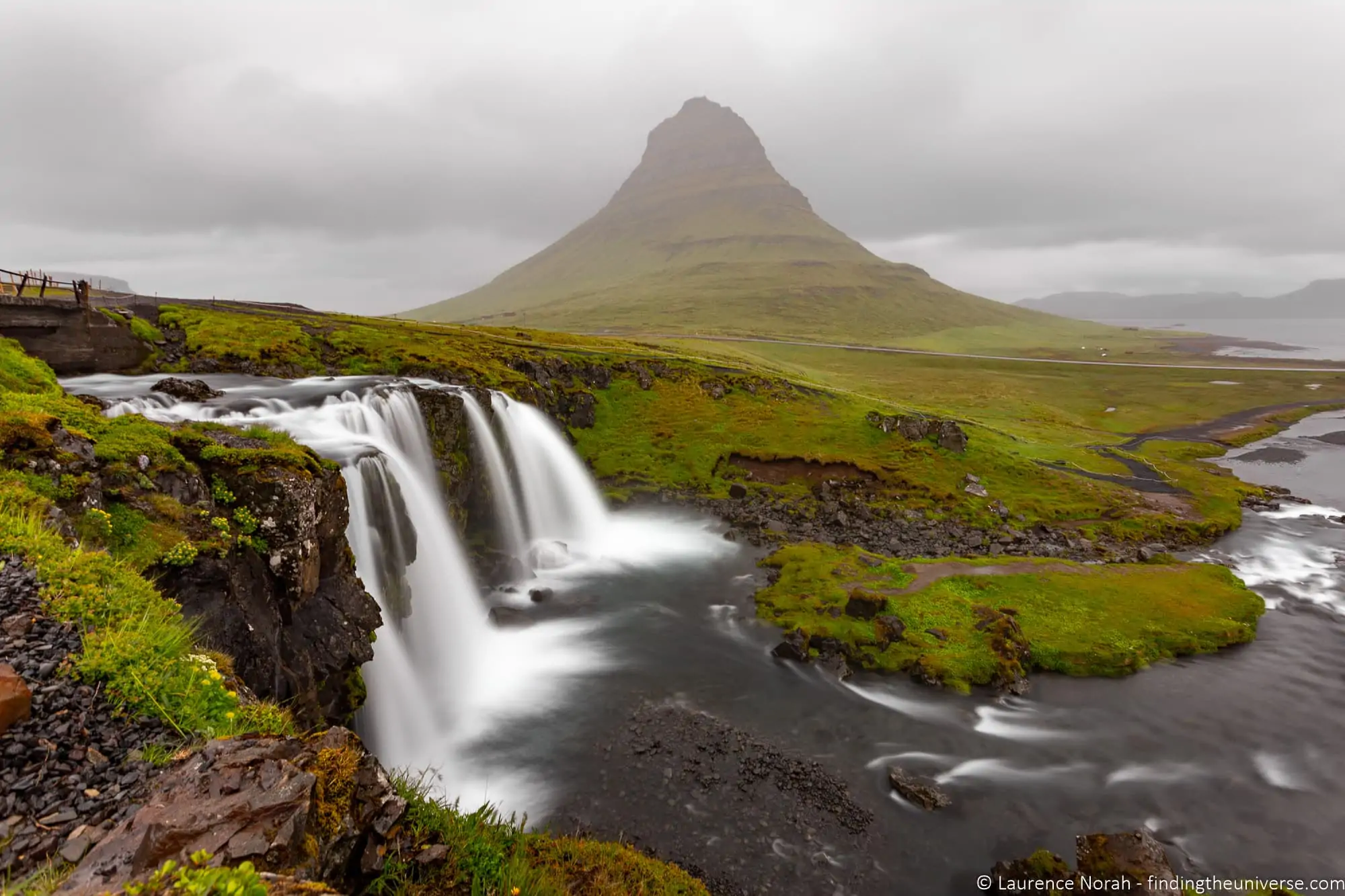

I'm Laurence, a professional travel photographer since 2010. Jess and I write this site from our own travels.
We spent four weeks one June driving Iceland’s full ring road, and we got rained on a lot more than we expected. Not dramatic, storm-chasing rain. Just steady, patient, all-day rain, with occasional breaks so the wind could have a turn. That trip taught us a lot about what belonged in our bags, mostly because we’d found out the hard way what we should have brought.
That trip is what this packing list is built on, and it’s informed by the actual problem of an Iceland summer, which turns out to be less about cold than about wet. Things get wet, then they need to dry, and you need a plan that handles that.
Quick note before we start: this guide covers summer trips, roughly May to September. If you’re visiting between October and April, you want our Iceland winter packing list instead. It’s a different list for what is, in practice, a different country.
I also want to add that Iceland is an amazing country at whatever time of year you visit. You just need to pack and plan accordingly so you’re not shivering in shorts and sandals as you’re battered by sideways rain and thinking you might have come on holiday by mistake.
Table of Contents:
What to Pack for Iceland in Summer: The Quick Answer
Here’s the core list. Pack a waterproof shell jacket and waterproof trousers, waterproof boots plus a second pair of shoes, three or four merino base layers (two if your trip is under a week), a warm mid layer such as a fleece, a hat, gloves and a buff, a swimsuit and quick-dry towel, a sleep mask, a day pack with a rain cover, and a European Type C/F travel adapter. Daytime highs in the lowlands run 13 to 15°C. You will not need shorts, and you will definitely not need an umbrella.
It might not rain all the time, but if it does, you will be glad you packed for it.
Here are the five items in our experience people most often skip, and most often regret skipping:
- Waterproof trousers (we made this mistake, more on that below)
- A second pair of shoes, so yesterday’s soaked pair can dry
- A sleep mask, because June nights never get dark
- A midge head net if Mývatn is on your route
- A swimsuit, for the pools and lagoons you’ll want to get into
There’s a full checklist at the end you can work through, plus a printable version.
Pack for Drying, as Much as for Rain
Bringing waterproofs is the easy part of the packing list. The harder part is what happens after they get wet, which they will, given that that is the point of bringing them. On a trip of more than a few days, the question that decides your comfort each morning is whether yesterday’s wet kit has dried, and no jacket specification answers that one.
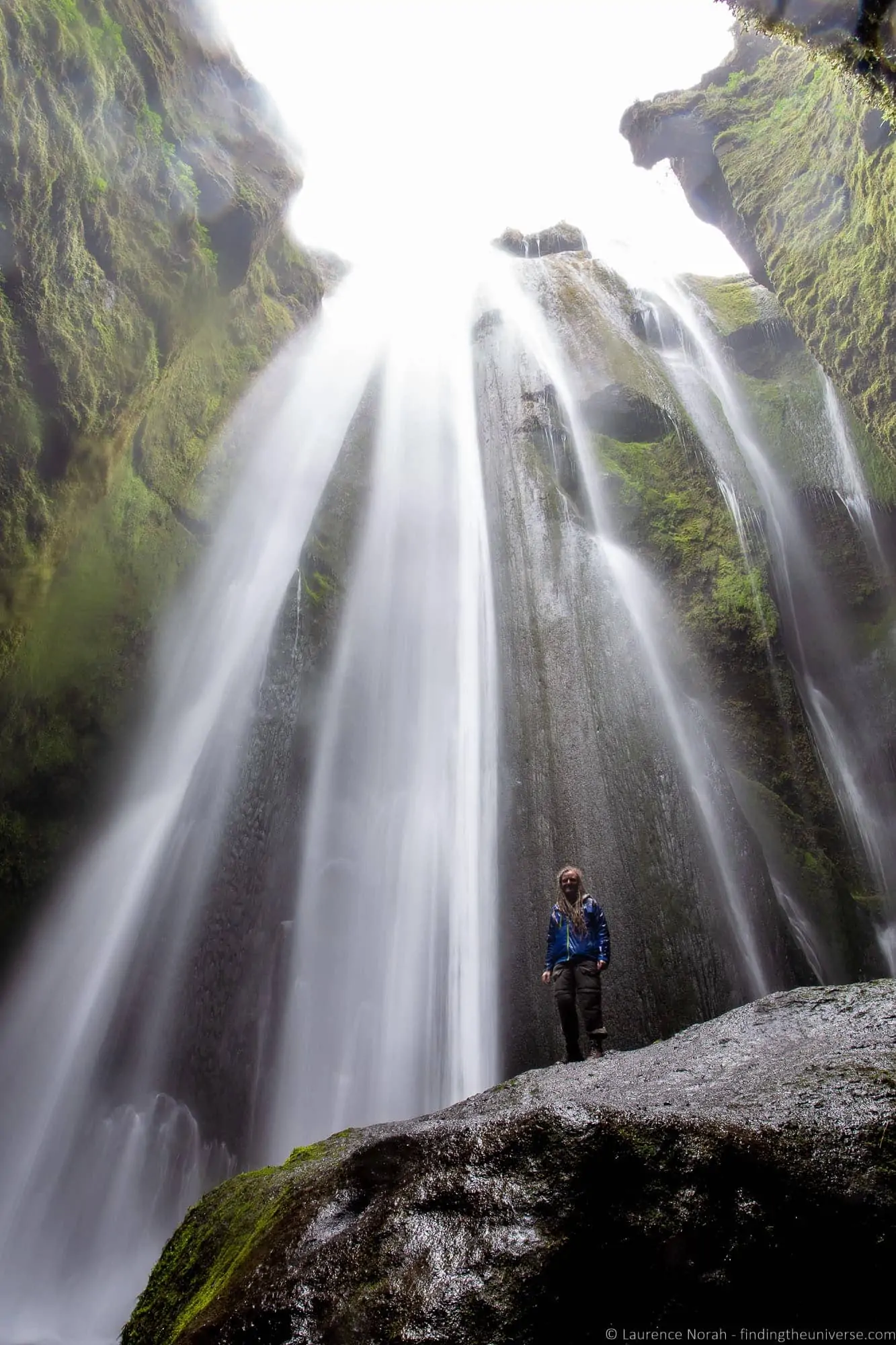
When it rains most days, everything operates on a rotation. Boots take a day or two to dry. A soaked base layer needs a radiator or a drying room overnight. Waterfall spray gets you even when the forecast doesn’t, and if you walk behind Seljalandsfoss (you should, it’s one of the best waterfalls in Iceland), you’ll come out looking like you swam there.
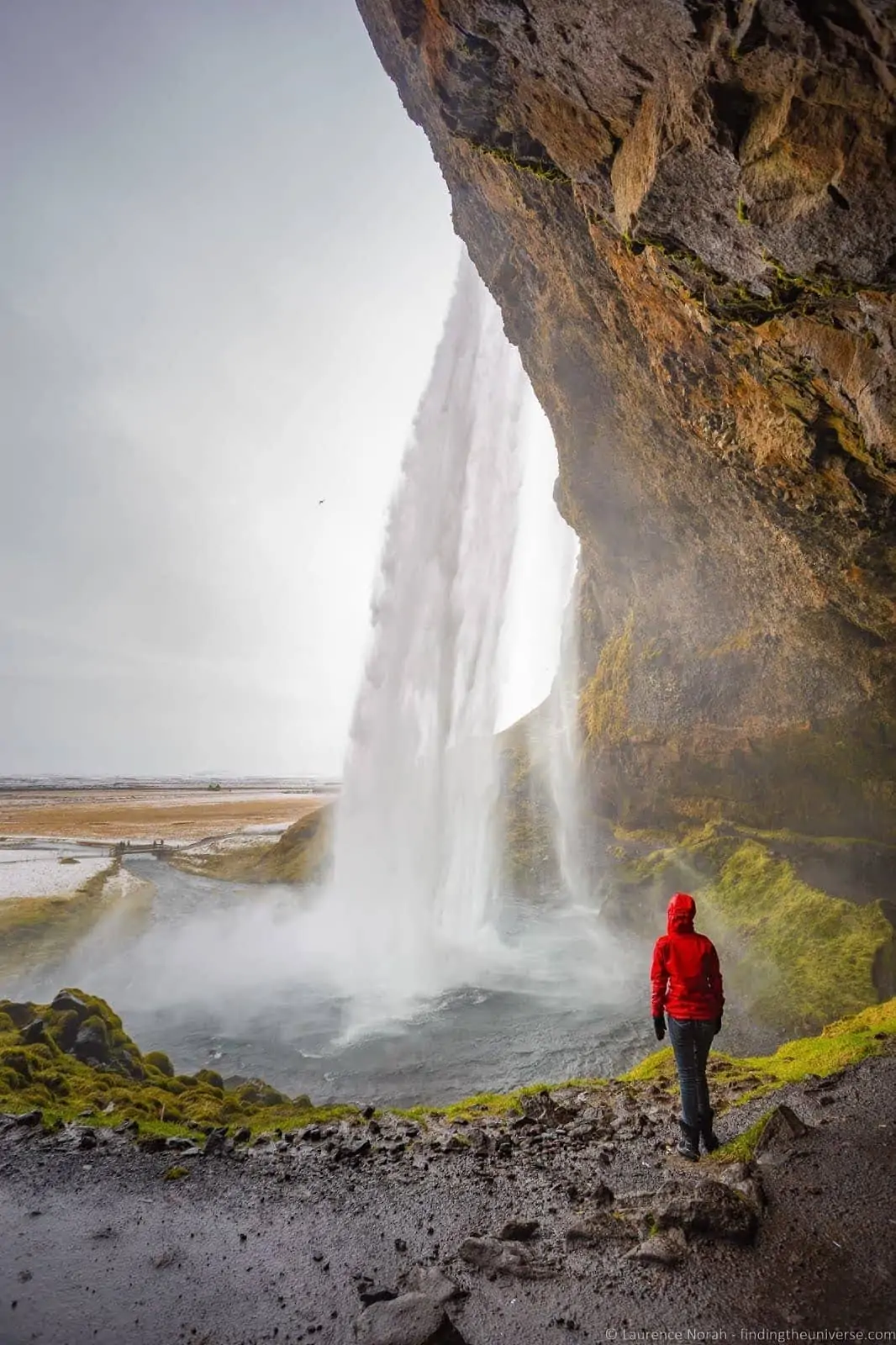
So the number of base layers you need comes down to a drying calculation. Guesthouses in Iceland are usually pretty good on this front, with radiators in every room and often a dedicated drying room. We stayed in guesthouses and hotels the whole way round, and draping the day’s kit over a radiator became as much a part of the evening routine as dinner.
One more thing about rain jackets. Under sustained rain, the water-repellent coating on the outside of your jacket (the DWR) eventually gives up, and the face fabric soaks. Your jacket has not started leaking. The waterproof membrane underneath is still doing its job.
What fails is breathability, so your own sweat condenses inside the jacket, and you end up damp and cold from the inside while the membrane keeps every drop of rain out. It’s a horrible sensation, and I can report from experience that it feels exactly like a leak.
The fix is maintenance rather than a new jacket. Wash the jacket, tumble dry it on low to reactivate the coating, and if that stops working, use a wash-in re-proofer. We now travel with a small 100ml bottle of wash-in re-proofer on any trip longer than a couple of weeks. Two other tips: clean the jacket before re-proofing (re-proofing a dirty shell is the classic mistake), and if your jacket is new, note that the current PFAS-free coatings need this treatment more often than the older chemistry did.
What to Pack by Trip Type
One list doesn’t fit every Iceland trip. A three day stopover, a full ring road drive, a campervan trip and a highlands visit are four different packing problems, and the differences matter more than most of the item-level advice.
| Trip type | What changes | Our guide |
|---|---|---|
| 2 to 4 day stopover | Cabin bag territory. One shell, one base layer per day, skip the boots if you’re staying on paved paths. Day trips cover a lot from Reykjavik. | 3 day Iceland stopover itinerary and day trips from Reykjavik |
| 5 to 7 days, southwest focus | The full clothing system, but laundry is optional. Golden Circle and south coast means waterfall spray, so waterproof trousers move from useful to necessary. | 5 day Iceland itinerary and Golden Circle guide |
| 7 to 28 days, full ring road | The drying rotation becomes the whole game. Second footwear, three to four base layers, re-proofer. Your bag lives in the car, so a duffel or backpack beats a hard shell case. | Iceland ring road itinerary |
| Campervan | No radiators, so drying capacity drops to whatever the van’s heater manages overnight. Add a washing line, more base layers, and be more ruthless about staying dry in the first place. | Driving in Iceland tips |
| Highlands add-on | Roughly 4 to 6°C colder than the lowlands, no phone signal, and the roads open late (more below). Add a warm insulated layer and register your plans at safetravel.is. | See the F-road section below |
We did the four week version, staying in guesthouses and hotels, with a superjeep day tour into Landmannalaugar rather than driving the F-roads ourselves. If you’re weighing up the options, the ring road itinerary linked above is where we’d start.
The Iceland Layering System
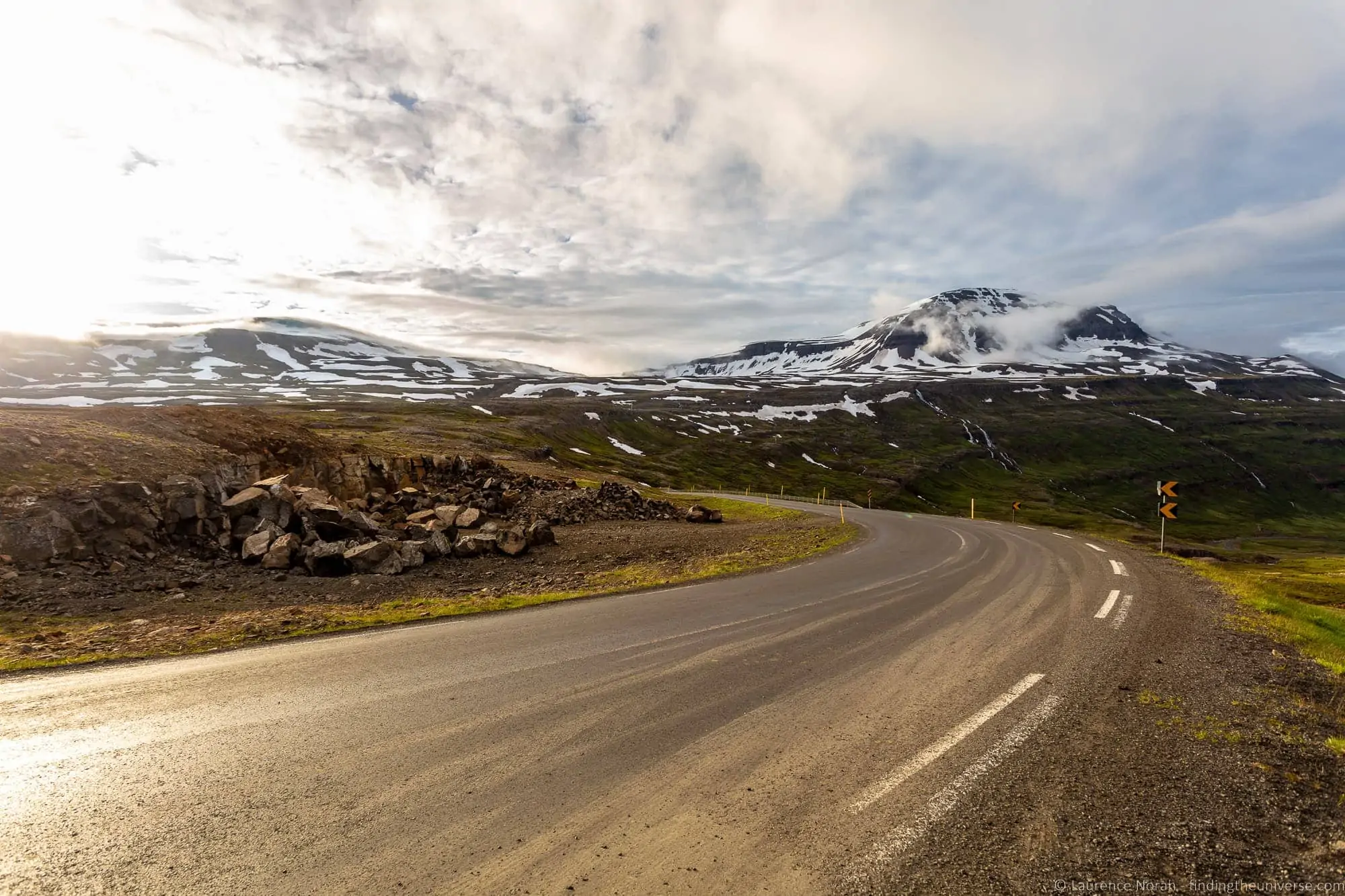
Icelandic weather changes fast enough that the forecast is more of a mood board than a plan. Layers are how you cope, and the system is simple: a base layer against your skin, a mid layer for warmth, and a shell to keep the weather out.
The base layer does more work than people expect, which is why we recommend merino wool over cotton or cheap synthetics. Merino keeps insulating when it’s damp, dries quickly on a radiator, and (the underrated part) doesn’t smell after a couple of wears, which matters when laundry is a week away.
The mid layer is your warmth, and a standard fleece or a light insulated jacket is fine. The shell is your weather protection, and it’s where the money goes. What you almost never need in an Iceland summer is a heavy winter coat.
Of course, on the warmest July days you’ll be down to the base layer and wondering why you’re carrying the rest, and by evening you’ll have it all back on. That’s just Iceland.
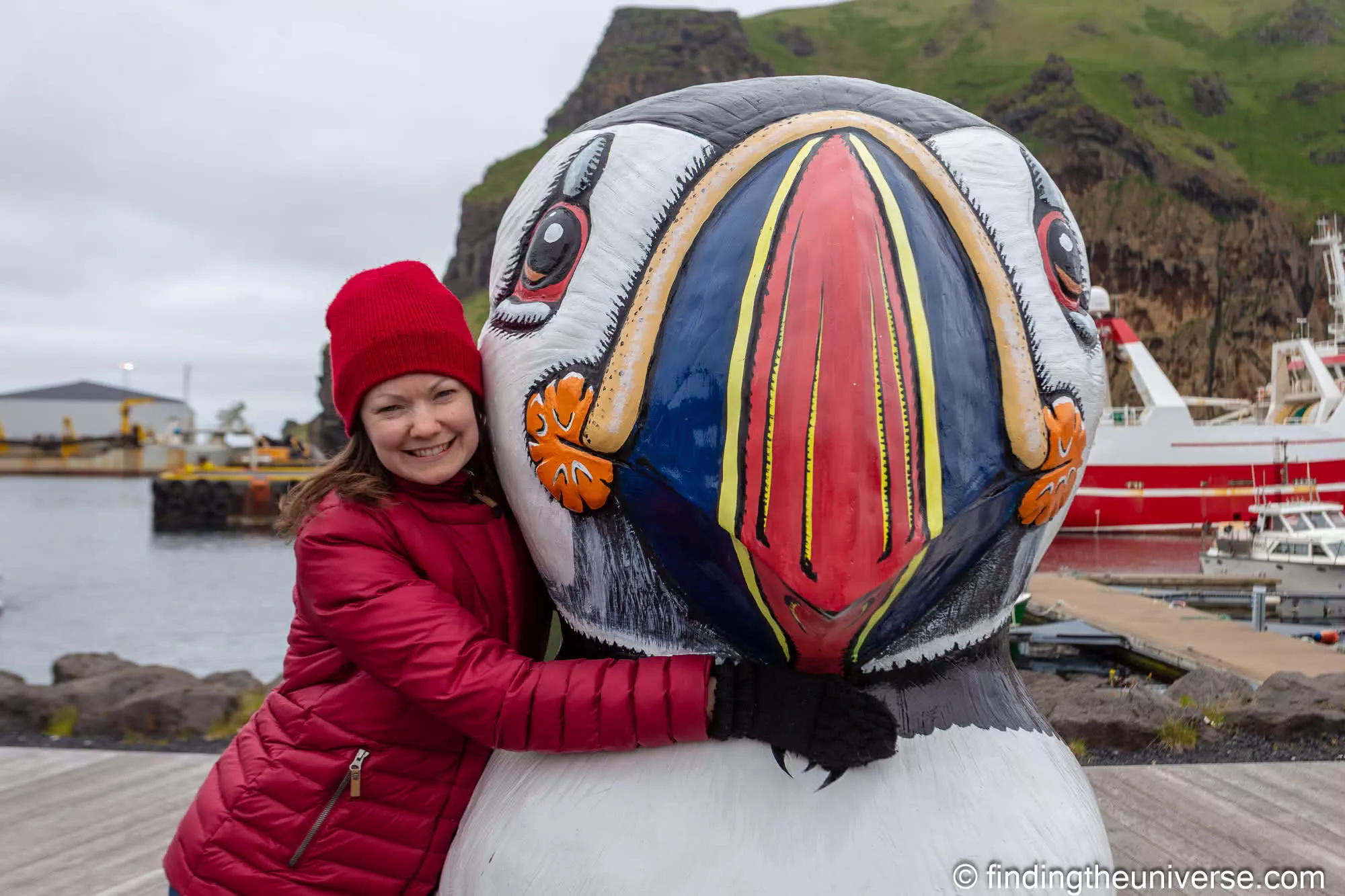
Rain Jacket and Waterproof Trousers
These are the two items your trip actually depends on, so they’re worth getting right.
For the jacket, you want a fully waterproof hard shell with taped seams and a hood that cinches down, because Icelandic rain rarely falls straight down. It arrives sideways, with enthusiasm. Water resistant jackets, softshells and “shower proof” anything will have a bad time.
I use the Bluffworks Faroe rain jacket, which has a 16,000mm waterproof rating, fully taped seams, and packs into its own pocket. It’s the jacket I bought after the trip taught me what my old one couldn’t do, and it’s been on every wet trip since.
On a tighter budget, the Columbia Watertight II (men’s) and Columbia Arcadia II (women’s) are both fully seam-sealed waterproof shells that pack down small, and they’re a really solid choice for a first trip.


Now, waterproof trousers. We didn’t pack any on our ring road trip. This was a major oversight that filled me with regret, and it’s the single item I’d most insist you bring. A good jacket keeps your top half dry while rain, waterfall spray and wet vegetation deal with your legs, and wet hiking trousers in a 13°C wind are miserable in a way that’s hard to appreciate until you’ve spent a long afternoon in them. Which I did.
We own waterproof trousers now, and they come on every trip like this.
You don’t need anything fancy. A packable over-trouser that goes on over your normal walking trousers is exactly right, and the Marmot PreCip Eco rain trousers are a well-made waterproof pair with fully taped seams that pack down to nothing in a day bag. No, they are not a fashion statement. Yes, they work.

Footwear: Waterproof Boots Plus a Second Pair
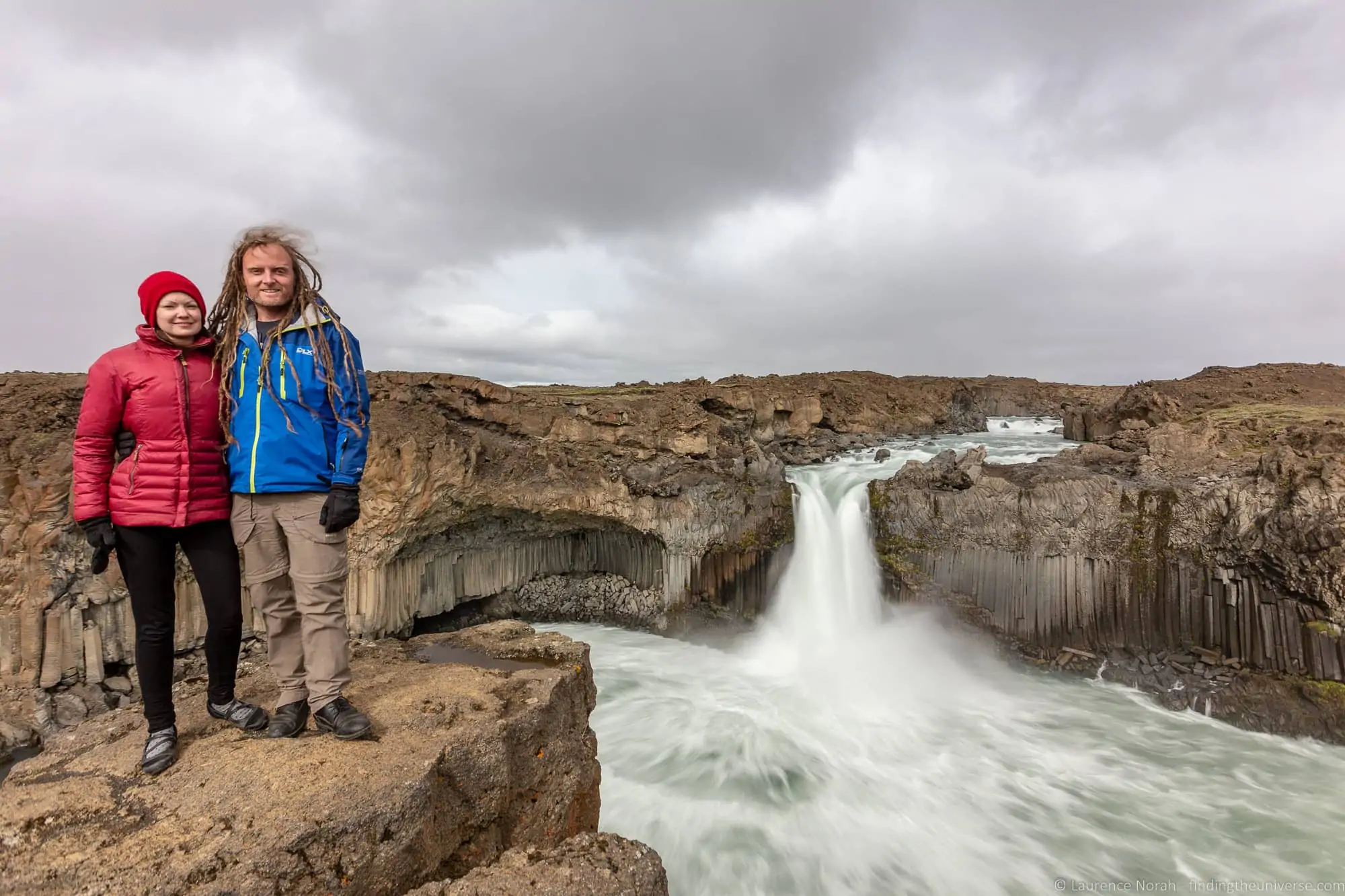
Jess and I have both done our Iceland miles in Scarpa walking boots we’ve owned for years, and the requirements are simple to state: waterproof, ankle support, and a sole that grips on wet basalt, which is Iceland’s default surface.
If you’re buying new for the trip, the Merrell Moab 3 Mid Waterproof (there’s a women’s version too) is the pick we recommend. It has a waterproof membrane, a Vibram sole, and it’s comfortable out of the box without a long breaking-in period, which matters when the trip is three weeks away. Jess wore Merrell’s on her hike up Kilimanjaro and had no complaints.

A second pair of shoes reads like an optional comfort until you’re on a wet trip, and then it’s a necessity. Boots that got soaked at a waterfall in the afternoon will not be dry by morning, whatever the radiator promises. You need something to wear while they recover.
My second pair is the Vessi Weekend Classic, a knit waterproof trainer I’ve used for a couple of years now. They’re comfortable for towns and easy walks, they shrug off rain and puddles, and they dry fast when they do eventually meet a deep enough puddle. Trainers you already own will also do the job, as long as you accept they may spend some days being the wet pair.
A Quick Word on Socks
Merino hiking socks, four or five pairs. Wet feet are the fastest route to a ruined day, and cotton socks in damp boots are a blister factory. Merino pairs also dry overnight on a radiator, which cotton doesn’t reliably do, so five pairs is plenty even for a month.
Base Layers and Mid Layers: How Many to Pack
For anything up to a week: two merino base layer tops, plus normal t-shirts to wear under them or alone on warm days. For a ring road trip of two weeks or more: three or four base layers, on the assumption that at any given moment one is being worn, one is drying, and one is in reserve. We ran that rotation for four weeks and it never broke down, though it came close after back-to-back soakings in the east.
Our pick here is the Smartwool Classic Thermal Merino Crew, a 100% merino top that’s warm for its weight. It’s not cheap, but a base layer is the one clothing item where the expensive version measurably outperforms. We own a variety of Smartwool clothing including their excellent socks, and they’ve not let us down yet.

For mid layers, one fleece and one light insulated jacket covers every summer scenario, including the highlands. Add a warm hat, light gloves and a buff. Yes, in July. The buff especially gets used constantly, because the wind is the real weather in Iceland and a buff is the difference between a windy overlook being fun and being an endurance event.
For trousers, normal hiking trousers are ideal. Jeans are fine for Reykjavik and dinner, but they’re a liability on trails, because wet denim stays wet, heavy and cold for days. More on that in the FAQ.
The Gear We Recommend at a Glance
Everything above and below in one table. Prices update live where Amazon publishes them, and everything here was confirmed in stock when we published.
| Item | Our pick | Why it matters in Iceland | Price |
|---|---|---|---|
| Rain jacket (premium) | Bluffworks Faroe | 16,000mm waterproof rating, taped seams, packable. The one I carry. | Check price |
| Rain jacket (budget, men’s) | Columbia Watertight II | Fully seam-sealed waterproof shell, packs into its own pocket. | Check price on Amazon |
| Rain jacket (budget, women’s) | Columbia Arcadia II | Same waterproof construction as the Watertight II, women’s fit. | Check price on Amazon |
| Waterproof trousers | Marmot PreCip Eco | Taped seams, packs to nothing. The item we most regretted not having. | Check price on Amazon |
| Hiking boots (men’s) | Merrell Moab 3 Mid WP | Waterproof membrane, Vibram grip for wet basalt, no breaking-in. | Check price on Amazon |
| Hiking boots (women’s) | Merrell Moab 3 Mid WP | Same boot, women’s fit and sizing. | Check price on Amazon |
| Second pair of shoes | Vessi Weekend Classic | Waterproof knit trainer, dries fast. Covers the drying rotation. | Check price |
| Base layer | Smartwool Thermal Merino Crew | 100% merino. Insulates when damp, dries overnight, no smell. | Check price on Amazon |
| Day pack | Vanguard VEO Metro B20L | Water-resistant with a rain cover included, fits a camera setup. | Check price on Amazon |
| Water bottle | Klean Kanteen Classic | Icelandic tap water is excellent and free. Fill from the cold tap. | Check price on Amazon |
| Travel adapter | Epicka Universal Adapter | Covers Iceland’s Type C/F sockets, charges several devices at once. | Check price on Amazon |
| Power bank | INIU P63 | 25,000mAh, 100W. Long days between sockets, phones on navigation duty. | Check price on Amazon |
| Midge head net | Sea to Summit Ultra-Mesh | 23 grams of sanity for Mývatn’s midge clouds. | Check price on Amazon |
| Binoculars | Vortex Diamondback HD 8×42 | Puffins, whales and seabird cliffs. The pair I use most days at home. | Check price on Amazon |
Iceland Summer Weather: The Actual Numbers
Lowland Iceland runs daytime highs of 13 to 15°C (around 58F) and overnight lows of 5 to 9°C (around 40F) across June, July and August. That single fact settles most packing arguments, and published summer figures for Iceland vary enough that the source matters. These are Icelandic Met Office climate averages, via vedur.is.
| Region (station) | June high / low | July high / low | August high / low | Reference period |
|---|---|---|---|---|
| Southwest (Reykjavik) | 13.0 / 7.2°C | 14.9 / 9.1°C | 14.1 / 8.6°C | 1991 to 2020 |
| North (Akureyri) | 13.7 / 6.6°C | 15.1 / 8.5°C | 14.8 / 7.9°C | 1991 to 2020 |
| East (Egilsstadir) | 13.1 / 5.0°C | 14.8 / 6.6°C | 13.9 / 6.2°C | 1961 to 1990 |
| Highlands (Hveravellir, 650m) | 9.1 / 1.9°C | 11.5 / 4.2°C | 10.6 / 3.7°C | 1965 to 2004 |
Two notes on that table. The east’s figures come from an older reference period, so current summers there are likely a touch warmer than shown. And the highlands row is the one to take seriously: roughly 4 to 6°C colder than the coast, with overnight lows near freezing in June and still only 4°C in July. Summer camping at altitude in Iceland is a cold-weather activity.
There’s a reason many of my photos still have snow in them, and the country is called Iceland for a reason.
On rain, Reykjavik averages about 9 to 12 days per month in summer with at least 1mm of rain (43mm falling in June rising to 65mm in August), while Akureyri in the north is noticeably drier, with around 5 rain days and 21mm in June. Two things those figures neglect to mention.
August is the wettest summer month everywhere. And that 1mm threshold doesn’t count the light, persistent drizzle that Iceland does so well, which soaks kit just as effectively as a real rain day. The official count says it rained “properly” on ten days; your drying rotation will report a higher number.
And daylight. Around the June solstice, Reykjavik gets 21 hours and 16 minutes of daylight, and the few remaining hours are twilight rather than darkness. You’ll read the phrase “midnight sun” everywhere, and for mainland Iceland it isn’t quite true: Reykjavik sits south of the Arctic Circle, so the sun does briefly set.
Only the island of Grímsey, on the Circle itself, gets the sun for a full 24 hours. What you actually experience from late May to late July is that it never gets dark, which for packing purposes is the same thing. Hence the sleep mask.

Non-Clothing Essentials
The kit beyond clothes, in rough order of how much you’d miss it.
Sleep Mask
The cheapest item on this list and possibly the most used. Icelandic accommodation has got a bit better at blackout curtains over the years, but plenty of guesthouse rooms still have curtains that politely filter the 11pm sunshine rather than blocking it.
A contoured sleep mask weighs nothing and rescues every night of the trip. Bring one per person, because the person without one will attempt to steal the other’s by day three.
We own and love Manta Sleep Masks, they’re the only ones we’ve found that actually deliver 100% blackout and don’t touch our eyes or eyelashes at all. They are a bit more expensive but we’ve had ours for around a decade at this point and it’s more than paid back our investment.

Swimsuit, Quick-Dry Towel and Flip-Flops
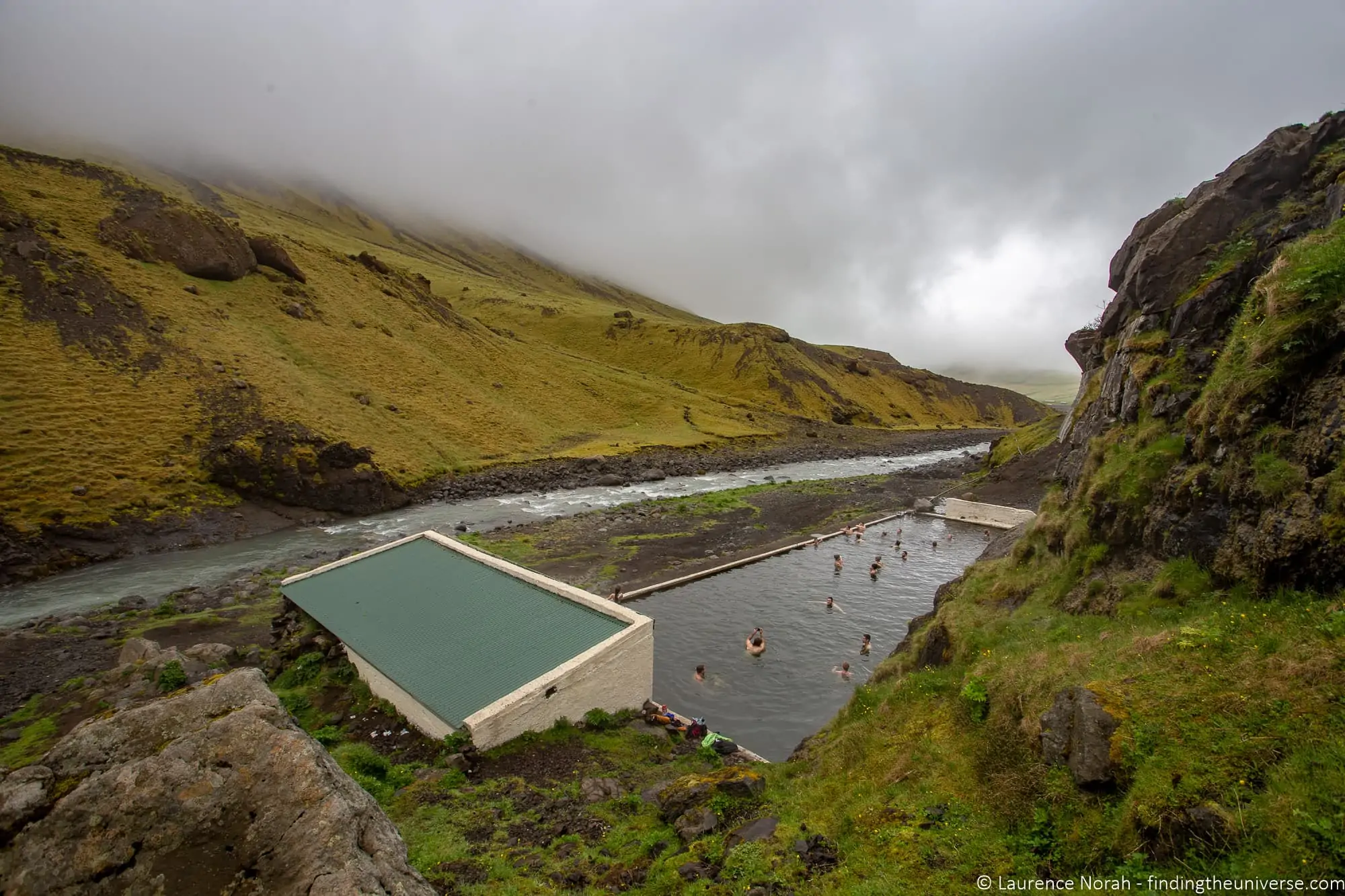
Swimming is one of the best things you can do in Iceland, and the famous lagoons are only half of it. Nearly every town has a geothermal pool with hot tubs, usually costing a fraction of the big lagoons.
The Blue Lagoon and Sky Lagoon are both operating normally as of summer 2026 (the Reykjanes peninsula remains in an active volcanic period, and the Icelandic Met Office publishes an updated hazard assessment on its news feed, so it’s worth a glance near your dates). Pack the swimsuit, a quick-dry towel, and flip-flops for the changing rooms. You can of course rent a towel at most pools, but it adds up fast.
Travel Adapter
Iceland uses the standard European two-pin sockets (Type C and F) at 230V. UK and US visitors need an adapter; phone chargers and laptop bricks are almost universally dual voltage, so an adapter is all you need, not a converter. If you’re shopping for one, our guide to the best travel adapters breaks down what to look for and our top picks. We travel with the Epicka universal adapter, a 45W GaN unit that charges a phone, laptop and camera batteries from one socket, which matters in guesthouse rooms that can be a bit stingy with sockets.

Reusable Water Bottle
Icelandic cold tap water is among the best in the world, filtered through volcanic rock, safe everywhere, and free. Buying bottled water in Iceland is paying for something that comes out of every tap. One warning: the hot tap is geothermal and smells of sulphur (think eggs). It’s harmless, but fill your bottle from the cold tap unless you enjoy egg water. We carry Klean Kanteen Classic bottles, single-wall stainless steel that’s survived years of being dropped on rocks.

Day Pack With a Rain Cover
You need a bag for each day out that can take waterfall spray and a rain shower without soaking your camera, snacks and spare layer. Our current pick is the Vanguard VEO Metro B20L, a 20 litre pack that swallows a camera plus the day’s kit. To be clear about the spec, since this matters in Iceland: the bag itself is water-resistant with a DWR coating, not waterproof, and it comes with a rain cover in the box for when the weather gets serious. That combination is exactly right; it’s the cover that does the heavy lifting in real rain. I’ve been a Vanguard ambassador for years, so factor that in as you wish, but I was carrying their bags around Iceland long before that arrangement existed. You can also buy it direct from Vanguard, where the code FindingTheUniverse takes 20% off.

Power Bank
Iceland summer days are long, your phone is the navigator, the camera, and the “is this road open” checker, and sockets are wherever you slept last. A big power bank removes the whole problem. I carry the INIU P63, a 25,000mAh unit that fast-charges a laptop as well as phones.
If your route touches the highlands, where there’s no signal on any network, a charged power bank moves from convenience to safety kit.

Sunglasses and Sunscreen
I appreciate I’ve talked a lot about rain, but don’t get me wrong, Iceland does get sun. Which you will really appreciate when it arrives.
However, when it does appear it tends to sits low for hours at a time, straight into your eyes on a westbound drive, and 20 hour days add up to plenty of UV exposure even through cloud.
A small sunscreen and decent sunglasses take no space and get used more than you’d think.
Binoculars
The optional item I’d argue you pack anyway. June and July are peak puffin season, the seabird cliffs hold more birds than you can take in with the naked eye, and there’s a reasonable chance of whales from shore in the north, never mind on a whale watching trip.
I use binoculars most days at home for birdwatching, and the pair I reach for is the Vortex Diamondback HD 8×42, which is waterproof, fog proof, and about the best glass you can get before prices go silly. Stock comes and goes on Amazon, so if the listing is unavailable, B&H is the fallback. 8×42 is the spec to buy for wildlife.

Midges at Mývatn (and What Actually Bites)
If your route includes Lake Mývatn in the north, and on a ring road trip it should, pack a head net. The lake’s name literally means “midge lake”, and on warm, still summer days the midge clouds there have to be seen to be believed. We drove into them in June and the sound alone was memorable.
There are two separate insect problems here, and they need different kit. The clouds at Mývatn are lake midges (chironomids), and they don’t bite. There’s nothing to repel, so repellent is the wrong tool; the problem is sheer density in your eyes, nose and mouth, and a fine-mesh head net solves it completely.
The Sea to Summit Ultra-Mesh head net weighs 23 grams and its mesh is fine enough for the smallest insects. It looks ridiculous. Everyone wearing one at Mývatn is having a better day than everyone who isn’t.
But don’t let anyone tell you nothing in Iceland bites. Blackflies, which Icelanders call bitmý (“biting midge”), thrive around fast-flowing water like the River Laxá right next to Mývatn. And biting midges of the no-see-um kind arrived in Iceland in 2015 and have been spreading since, with confirmed finds as far as the northeast. The distinction matters for your kit: the head net handles the swarms that ruin your photos, and long sleeves handle the small number of things that might want to bite you. Neither calls for drenching yourself in repellent.

Getting Online in Iceland
The practical answer for most visitors is an eSIM, bought and installed before you fly. We use and recommend Airalo, which sells Iceland data plans from a few dollars; our full Airalo review covers how it works, and our guide to the best travel eSIMs compares the alternatives. Note that these plans are data-only, so calls happen over WhatsApp and friends.
Coverage-wise, you’ll have a signal for most of the ring road and in every town. Expect it to drop in the East Fjords between Höfn and Egilsstadir, in some remote valleys, and, completely and on every network, in the highlands. That last one is why offline maps and a charged power bank belong in your kit, and why anyone heading into the interior should file a travel plan at safetravel.is first.
Camera Gear for Iceland in Summer
As a professional travel photographer I could fill three articles on this, and in fact I have, so I’ll keep this to what an Iceland summer specifically demands and point you at our Iceland photography locations guide for the where.
The two things Iceland throws at camera gear are spray and wind. Pack more lens cloths than you think is reasonable; at the big waterfalls you’ll wipe the front element between every few frames, and a cloth that’s already damp just redistributes the problem. A rain cover for the bag is non-negotiable (see the day pack section above), and a simple dry bag or even a bin liner is worth packing for the walk behind Seljalandsfoss.
On our ring road trip I carried everything in a Vanguard Alta Sky 49, which did four wet weeks without complaint. That exact model has since been discontinued, and our guide to the best camera bags for travel covers what we’d choose today. The long daylight, by the way, is a mixed blessing: you get 21 hours to shoot, but “golden hour” happens around midnight, which requires either commitment or a nap-based strategy. We tried both.
What NOT to Pack for Iceland
Space matters, so here’s what to confidently leave at home.
An umbrella. Iceland’s rain is horizontal and its wind is a professional. An umbrella lasts roughly one car park before it becomes modern art. Every local you meet will be dressed in a shell jacket, and none of them will be holding an umbrella.
Cotton for the outdoors. Cotton t-shirts for town and sleep are fine. Cotton as a hiking layer is a problem, because once damp it stays damp, stops insulating, and drags your drying rotation down with it. Jeans are the worst offender here.
A “summer” wardrobe. Shorts, sundresses and linen shirts describe a summer Iceland doesn’t have. One warm-day outfit is a fine bet for a lucky afternoon; five of them is luggage you’ll carry around the ring road unworn.
A heavy winter parka. The opposite mistake. A base layer, fleece and shell handles every lowland summer situation, and a big parka just eats a third of your bag.
Bottled-water budget. Not an item exactly, but bring the reusable bottle and skip buying water entirely.
If you’re trying to squeeze all this into a carry-on, packing cubes help more than any other single trick; we’ve tested a pile of them in our packing cubes guide.
Iceland Packing by Month: May to September
The core list above works for the whole season. Here’s what shifts at the edges.
May: colder nights, fewer crowds, and some highland roads still shut. Add an extra mid layer; hold any highland plans loosely until the road reports say otherwise.
June: the longest days and, in the north, the driest stretch of the summer. The sleep mask does its heaviest work now. Peak puffin viewing begins.
July: the warmest month everywhere, and the month a lucky traveller wears a t-shirt at Mývatn while swatting midges. The full list applies as written.
August: the wettest summer month at every station, so the drying-rotation logic matters most now. Real darkness returns late in the month, which also means the first aurora sightings of the season become possible right at the end.
September: shoulder season. Storms pick up, highland roads begin closing, and you should add back a warmer mid layer and warmer gloves. In exchange: autumn colours, aurora chances, and half the visitors.
A Note on the Highlands and F-Roads
If Landmannalaugar, Askja or any route marked with an F is on your list, timing is part of packing. The mountain roads open when the snow and river levels allow, not on a schedule. Over the last five years the earliest routes (like Kjölur) have opened around the start of June on average, while Sprengisandur and the southern Fjallabak route have waited until early July. Those are five-year averages and snow cover decides the actual date, so check current status at umferdin.is before committing.
We visited Landmannalaugar by superjeep day tour rather than self-driving, which I’d recommend for a first trip: the river crossings are seriously beyond a normal hire car (and hire car insurance coverage doesn’t extend to river crossings), and the tour operators cross them daily.
Packing-wise the highlands mean the insulated layer, hat and gloves come out in July, plus that no-signal warning from the connectivity section.

What We’d Pack Differently Next Time
Four weeks of Icelandic June rain is a thorough audit of a packing list, and ours failed it in two specific places. I’m sharing both so you can skip the field testing.
First, we brought no waterproof trousers. I’ve mentioned this above but it deserves its own paragraph, because nothing else we got wrong cost us as much comfort. Every waterfall visit, every showery walk, every windy headland put water on our legs, and hiking trousers in that climate dry on roughly a geological timescale. We now own waterproof trousers and they travel with us on every wet-country trip. Buy the over-trouser kind, keep them in the day pack, and you’ll use them within 48 hours of landing.
Second, my rain jacket was an old one whose water repellency had silently retired some years earlier. In sustained rain the outer fabric soaked, the breathability collapsed, and I got the full wet-from-the-inside experience described earlier in this guide, repeatedly, before I understood what was happening. The jacket wasn’t leaking; it just couldn’t breathe.
A newer shell, or even that old one with a wash and re-proof before the trip, would have made a real difference. Check your jacket before you fly: if water no longer beads on the surface, deal with it at home where the washing machine is.
What we got right, for balance: the merino rotation, the second pair of shoes, and the decision to base ourselves in accommodation with radiators and drying rooms. Those three carried the trip.
Iceland Summer Packing Checklist
The full list in checkable form. There’s also a printable Iceland summer packing checklist PDF, no email address required.
Clothing
- Waterproof shell jacket (taped seams, cinching hood)
- Waterproof over-trousers
- 3 to 4 merino base layer tops (2 for trips under a week)
- Fleece or light insulated mid layer
- Hiking trousers x2
- T-shirts and underwear per your laundry plans
- Warm hat, light gloves, buff
- 4 to 5 pairs merino hiking socks
- One town/evening outfit
- Sleepwear
Footwear
- Waterproof hiking boots
- Second pair of shoes (waterproof trainers ideal)
- Flip-flops for pool changing rooms
Kit
- Day pack with rain cover
- Swimsuit and quick-dry towel
- Sleep mask (one each!)
- Type C/F travel adapter
- Power bank
- Reusable water bottle
- Sunglasses and sunscreen
- Midge head net (Mývatn routes)
- Binoculars (puffin season)
- Camera, lens cloths, dry bag
- Wash-in re-proofer, 100ml (trips over 2 weeks)
- eSIM installed before departure
Documents and Admin
- Driving licence (all named drivers)
- Travel insurance details
- Offline maps downloaded
- Travel plan filed at safetravel.is (highland routes)
Frequently Asked Questions
What should I pack for Iceland?
For most of the year, the summer list on this page is the answer: a waterproof shell jacket and trousers, waterproof boots plus a second pair of shoes, merino base layers, a fleece, hat and gloves, a swimsuit, a sleep mask and a day pack with a rain cover.
If you’re travelling between October and April, the list changes substantially, with serious insulation, ice grips and thermal layers. Our Iceland winter packing list covers that version.
Do I really need waterproof trousers for Iceland in summer?
Yes, and we say that as people who skipped them once and regretted it for four weeks. Rain, waterfall spray and wet vegetation all target your legs, and normal hiking trousers take days to dry once soaked.
A packable over-trouser like the Marmot PreCip Eco lives in the day pack and goes on in under a minute when the weather turns.
How many base layers do I need for a week in Iceland?
Two merino base layer tops for a week, worn in rotation with one drying overnight. For two weeks or more, take three or four.
The reason it’s that few: merino dries overnight on a radiator and doesn’t hold smell, so the rotation works. With cotton you’d need far more, which is one of several reasons not to bring cotton.
Can I wear jeans in Iceland?
In Reykjavik, at dinner, and around town, jeans are of course fine. On trails and at waterfalls, we’d advise against it. Wet denim is heavy, cold, and can take days to dry, which in Iceland’s climate makes it the worst fabric you could choose for the outdoors.
Bring one pair for evenings if you like, and do your walking in hiking trousers.
Do I need hiking boots for Iceland, or will trainers do?
For most trips, yes, boots. Icelandic terrain is wet basalt, loose gravel and boggy grass, and popular trails are rougher than their fame suggests.
For a city stopover with paved-path sightseeing, waterproof trainers are enough. For anything involving waterfalls, coastlines or real walks, waterproof boots with ankle support are the right call.
Do I need a warm coat or down jacket in Iceland in summer?
Not a heavy one, in the lowlands. A merino base layer, a fleece and a waterproof shell layered together handle 13 to 15°C days and windy overlooks comfortably.
The exception is the highlands, which run 4 to 6°C colder, with overnight lows near 2°C in June and around 4°C in July. If your route goes up there, add a light insulated jacket.
Is it worth bringing an umbrella to Iceland?
No. Iceland’s rain almost always comes with wind, frequently sideways, and umbrellas do not survive contact with it. You’ll notice locals don’t carry them.
A hooded waterproof shell does the umbrella’s job while leaving both your hands free.
Do I need a sleep mask in Iceland in summer?
Yes, and it’s the highest value-per-gram item on the list. Around midsummer Reykjavik gets over 21 hours of daylight, and even the “night” is twilight rather than darkness.
Blackout curtains exist but aren’t guaranteed, especially in guesthouses. A contoured mask solves it for a few pounds.
Should I pack a swimsuit for Iceland?
Definitely. Geothermal swimming is a core Iceland experience, from the famous lagoons (Blue Lagoon and Sky Lagoon are both operating normally as of summer 2026) to the cheap and excellent municipal pools in almost every town.
Add a quick-dry towel and flip-flops, and you’ll skip the towel rental queue at every stop.
Do I need insect repellent for the midges at Mývatn?
Repellent is the wrong tool for Mývatn’s famous swarms. Those clouds are non-biting lake midges, so there’s nothing to repel; the problem is density, and a fine-mesh head net solves it.
Iceland does have some biting insects (blackflies near rivers like the Laxá, and biting midges that arrived in 2015 and are spreading), but long sleeves cover that. Pack the net, skip the spray.
Can you drink the tap water in Iceland?
Yes, everywhere, and it’s excellent. Fill your bottle from the cold tap.
The hot tap smells of sulphur because it’s geothermal water; it’s harmless but not what you want in a drinking bottle. Cold tap only.
What plug adapter do I need for Iceland?
Iceland uses the European Type C and Type F sockets at 230V, 50Hz. UK and US visitors need a plug adapter.
Modern phone and laptop chargers are dual voltage, so you don’t need a voltage converter, just the adapter. One with multiple USB ports covers a couple’s devices from a single socket.
Will my phone have signal on the ring road?
For most of it, yes, and in every town. Coverage drops in the East Fjords between Höfn and Egilsstadir and in some remote valleys, and there is no signal at all in the highlands on any network.
Download offline maps before you go, and if you’re heading into the interior, file a travel plan at safetravel.is.
What shoes should I pack besides hiking boots?
A second closed pair for the days your boots are drying, ideally waterproof trainers, plus flip-flops for pool and lagoon changing rooms.
The second pair isn’t a luxury on a wet trip. Boots soaked by afternoon waterfall spray will not be dry by morning, and someone has to be wearing shoes at breakfast.
What’s the difference between packing for summer and winter in Iceland?
Summer packing is about rain and drying capacity at 13 to 15°C; winter packing is about real cold, ice and storm-force wind, which means insulated boots, ice grips, thermal layers and a serious coat.
The two lists share surprisingly little beyond the swimsuit and the adapter. This page covers summer; our winter packing list covers the rest.
Further Reading for Your Iceland Trip
That’s everything we’d put in the bag. If you’re still in the planning stage, these guides continue where this one stops:
- Tips for planning a trip to Iceland, the overall starting point
- Our full ring road itinerary, the trip this list was tested on
- What to know before driving in Iceland
- The waterfalls worth planning around
- Iceland’s best photography locations
Questions about what to pack for your particular trip? Ask in the comments and we’ll answer from experience, or at least from the drier side of it now.
Leave a Reply