Last verified: 22 April 2026. Prices, road charges, and closure conditions checked against primary sources. Major changes since the last update: Reynisfjara cave access restrictions, Grjótagjá entry status (closed), and the new per-kilometre road tax that replaced fuel duties in January 2026.
Heading to Iceland and planning on driving the Ring Road? You have come to the right place. We spent four solid weeks driving the full route in one go (I like to take my time), and Jess and I have also done the south coast in winter, so we know the country in both its glorious-midnight-sun best and its horizontal-sleet worst.
This itinerary distils all of that into a practical, day-by-day guide for a one-week self-drive road trip, starting and ending in Reykjavik. Nearly every stop is somewhere we have been, every hotel is one we have stayed at or looked at seriously, and the warnings come from things that actually went wrong (for us, or for readers who wrote in afterwards). Where we haven’t been to a stop ourselves, we say so.
We have also written a number of other guides to visiting Iceland which you might find helpful alongside this one.
This post contains everything you need: a detailed day-by-day breakdown, where to stay each night, what to see along the way, driving distances, suggested timings, a full route map, 2026 cost guidance, and a section nobody else writes about the ways this trip most commonly goes wrong.
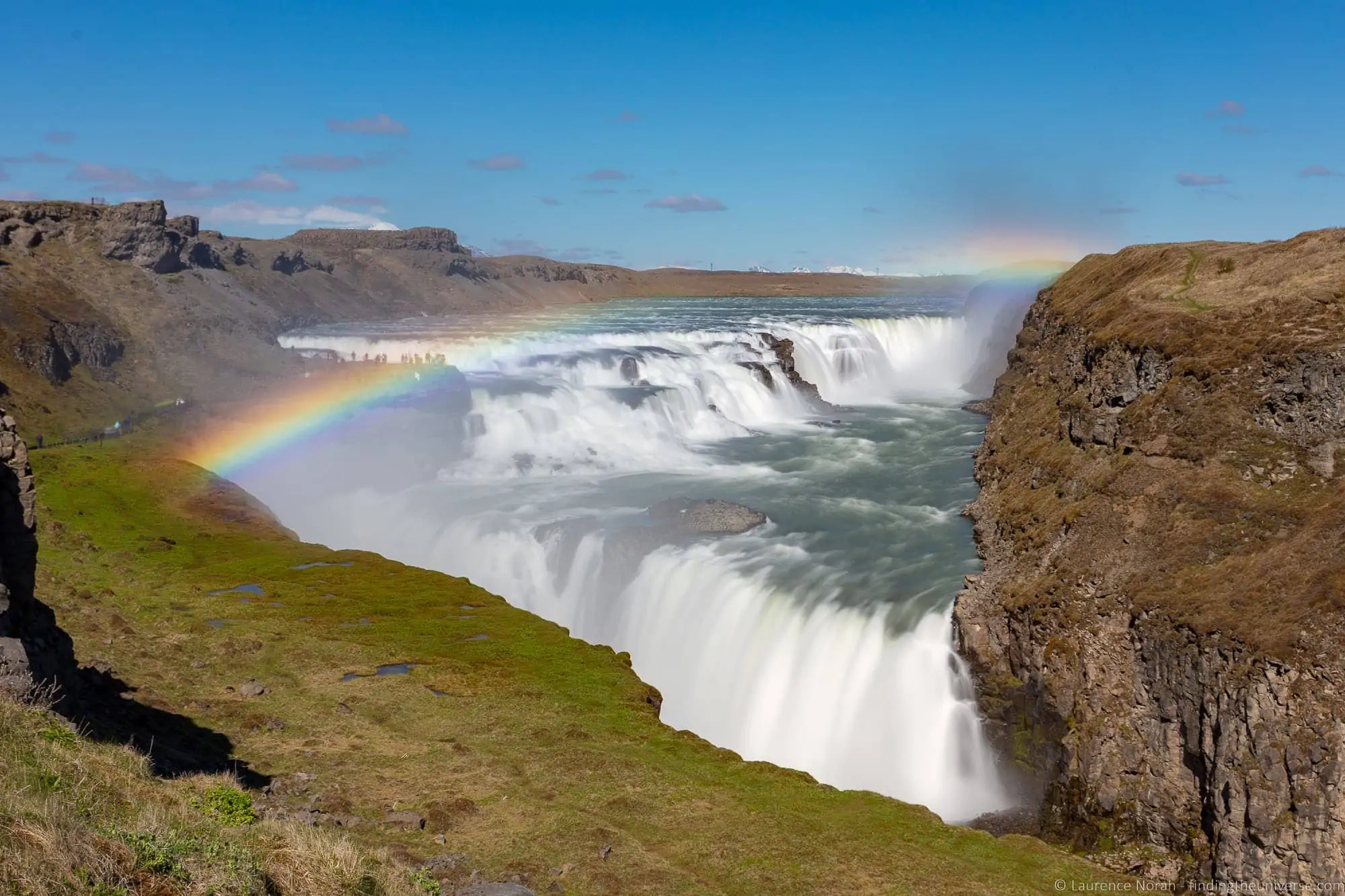
Table of Contents:
Is 7 Days Enough for the Iceland Ring Road?
Seven days is enough to drive the full Ring Road and see the major highlights, but only if you accept up front that you are choosing momentum over lingering. Days are full. Drives are real. Some stops will have to stay on the list for next time.
If you can stretch to nine or ten days, the trip becomes noticeably more relaxed and you gain room for the detours that are harder to justify in seven. If you have fewer than seven days, I would suggest focusing on a specific region rather than trying to rush the full ring. Our 5 day Iceland itinerary covers the south coast and Golden Circle in more depth, and our 3 day Iceland stopover itinerary is designed for Icelandair transit passengers with limited time.
We took four weeks to drive the Ring Road on one of our trips. We enjoyed every day of it (aside from the rain, of which more later). But I know most readers don’t have that kind of runway, so this itinerary is designed to work as written in seven days of actual driving time, plus an arrival day and a departure day. Eight days on the ground, seven nights of accommodation.
What is the Iceland Ring Road?
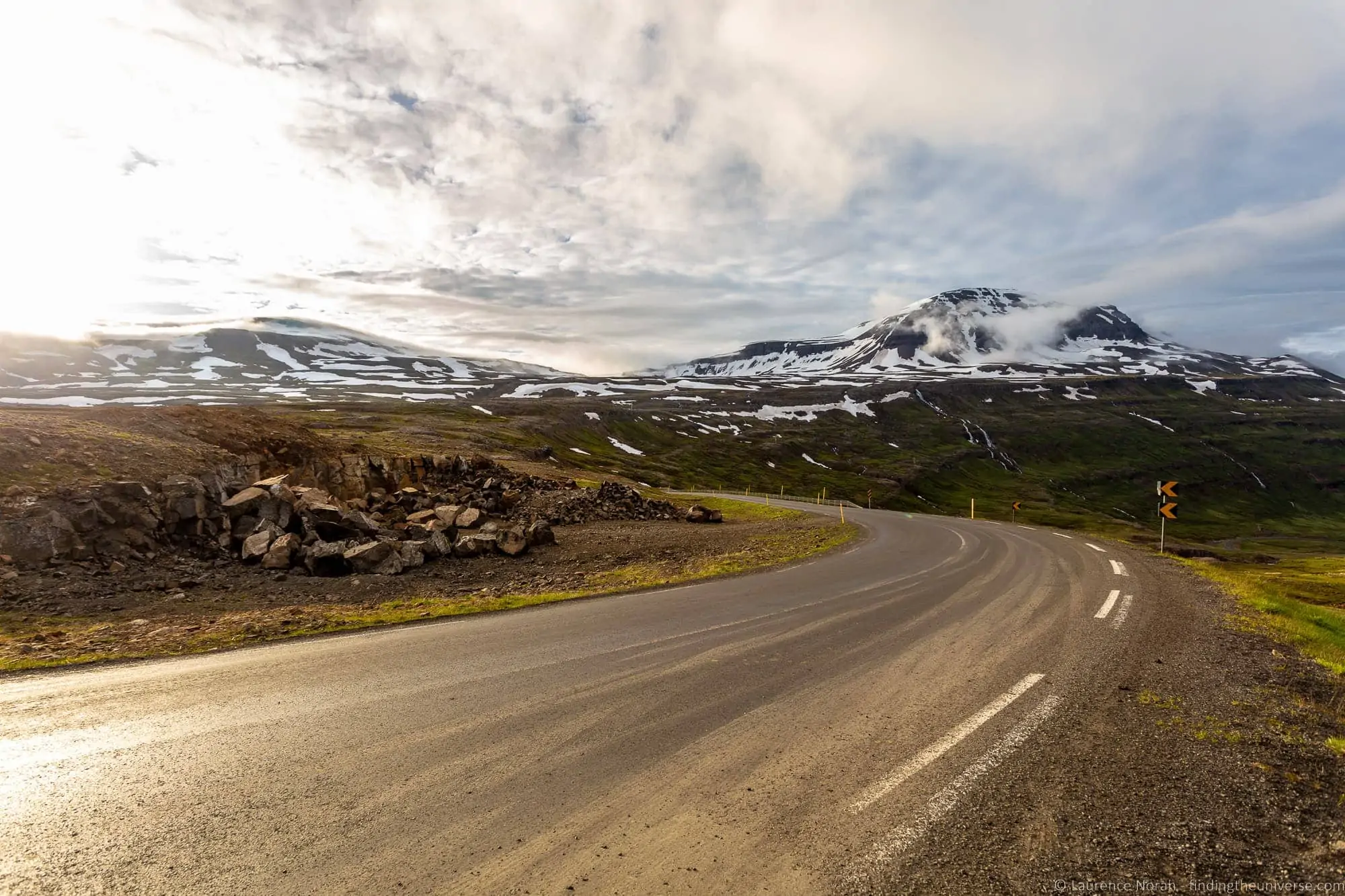
The Iceland Ring Road, officially Þjóðvegur 1 or Route 1, is the national road that loops around the entire country, connecting most major towns and cities. It runs 1,332 kilometres (828 miles), which makes it the longest road in Iceland by a considerable margin.
It is paved for its entire length and primarily two lanes wide, although it narrows in places, particularly for bridges. Iceland has 32 single-lane bridges on Route 1, which are signposted and generally well-behaved, but they are the thing first-time drivers fuss about most. (The rule is simple: whoever gets there first goes first. If you arrive together, the closer vehicle goes first. Nobody gets hurt. There are no duels.)
Why Road Trip on the Iceland Ring Road?
Because it covers a great deal of the country and passes right by, or very close to, most of Iceland’s most famous and noteworthy attractions. Waterfalls, glaciers, black sand beaches, geothermal areas, fishing villages, Game of Thrones filming locations, entire valleys that look like nowhere else on Earth.
The Ring Road also connects the major towns, which means accommodation is findable along the route (more on that later), and navigation is largely a matter of staying on the 1. If you have ever been lost on a road trip in, say, rural France, you will appreciate how restful this is.
How Long Does it Take to Drive Iceland’s Ring Road?
The speed limit on most of Route 1 is 90 km/h, so in theory you could drive the whole thing in 15 to 20 hours.
Of course, you would be an absolute lunatic to do this, and you would see approximately none of the country. Seven days is the minimum I would recommend, eight or nine is more comfortable, and if you have two weeks you will thank yourself daily. On one trip we spent four weeks driving the route, stopping whenever we wanted and taking whatever detours appealed. It remains one of my favourite road trips.
If you have less time in Iceland and don’t want to feel rushed, focus on a specific region rather than attempting the full loop. Our 5 day Iceland itinerary covers the south coast and Golden Circle properly.
Which Way Should I Drive the Iceland Ring Road?
You can drive the loop in either direction. My preference is anti-clockwise, tackling the south first.
The south is the busiest part of Iceland, simply because it is closest to Reykjavik and everyone does day trips from the capital to see Seljalandsfoss, Skogafoss and the black sand beaches. Going anti-clockwise means you do the crowded bit early, then progressively move into quieter territory. Going clockwise means the opposite: you start in relative solitude and end in the tour-bus pinch. I find the first approach more satisfying, but some may disagree and the itinerary works either way.
This itinerary is written anti-clockwise. If you want to reverse it, just read it from Day 7 back to Day 1.
How Much Does an Iceland Ring Road Trip Cost?
Iceland is not a budget destination. Being upfront about this saves heartache at the rental counter and in the supermarket.
Here is a rough breakdown of what to expect for a one-week self-drive trip for two people in summer 2026.
Car rental: A standard 2WD car suitable for the Ring Road typically costs $100 to $160 per day including basic insurance. A 4×4, needed only if you plan detours onto gravel roads or F-roads, runs $200 to $300 per day. Always add gravel protection and sand/ash insurance. Flying gravel and volcanic sand can cause expensive damage that standard insurance will not cover, and the repair bills are what I would describe as character-building.
Fuel and road charges: From January 2026, Iceland replaced fuel duties with a per-kilometre road tax. Petrol dropped from around 320 ISK per litre to around 185-230 ISK per litre, but you now pay a road charge of approximately 6.95 ISK per kilometre for a standard passenger car.
Most rental companies handle this either as a flat daily rate or as an odometer-based charge at return. The net effect is that overall driving costs are roughly similar to what they were before. Budget around $40 to $60 per day for fuel and road charges combined.
Accommodation: Guesthouse and mid-range hotel rooms along the Ring Road typically run $150 to $300 per night for a double room in summer. Budget hostels with shared facilities are available in the $50 to $100 range. Reykjavik is the most expensive; the east and north are cheapest. Book well in advance in summer. Some towns on the route have properly limited accommodation and they fill up.
Food: Eating out in Iceland is expensive. A main course at a sit-down restaurant typically runs 3,000 to 6,000 ISK (roughly $20 to $40). Many travellers save money by stocking up at supermarkets (Bonus and Kronan are the cheapest) and self-catering where accommodation allows. A daily food budget of $30 to $60 per person is realistic if you mix restaurant meals with supermarket food.
Activities: Most of Iceland’s best attractions (waterfalls, beaches, viewpoints) are free to enter, although parking charges of 750 to 1,500 ISK apply at many popular spots. Paid activities like the Blue Lagoon (from around 9,990 ISK), glacier hikes (from around 12,000 ISK), and boat tours vary widely. Budget $50 to $150 per person per day if you plan to do organised activities.
Total estimate: A comfortable one-week Ring Road trip for two people, staying in mid-range accommodation and eating a mix of restaurant and supermarket food, typically comes to around $4,000 to $6,000 total, or roughly $300 to $430 per person per day. You can do it for less with hostels and serious self-catering, or considerably more with luxury hotels and daily tours.
For more detailed money-saving tips, Jess has written a comprehensive guide to visiting Iceland on a budget which is well worth reading before you go.
Can I Drive the Iceland Ring Road in Winter?
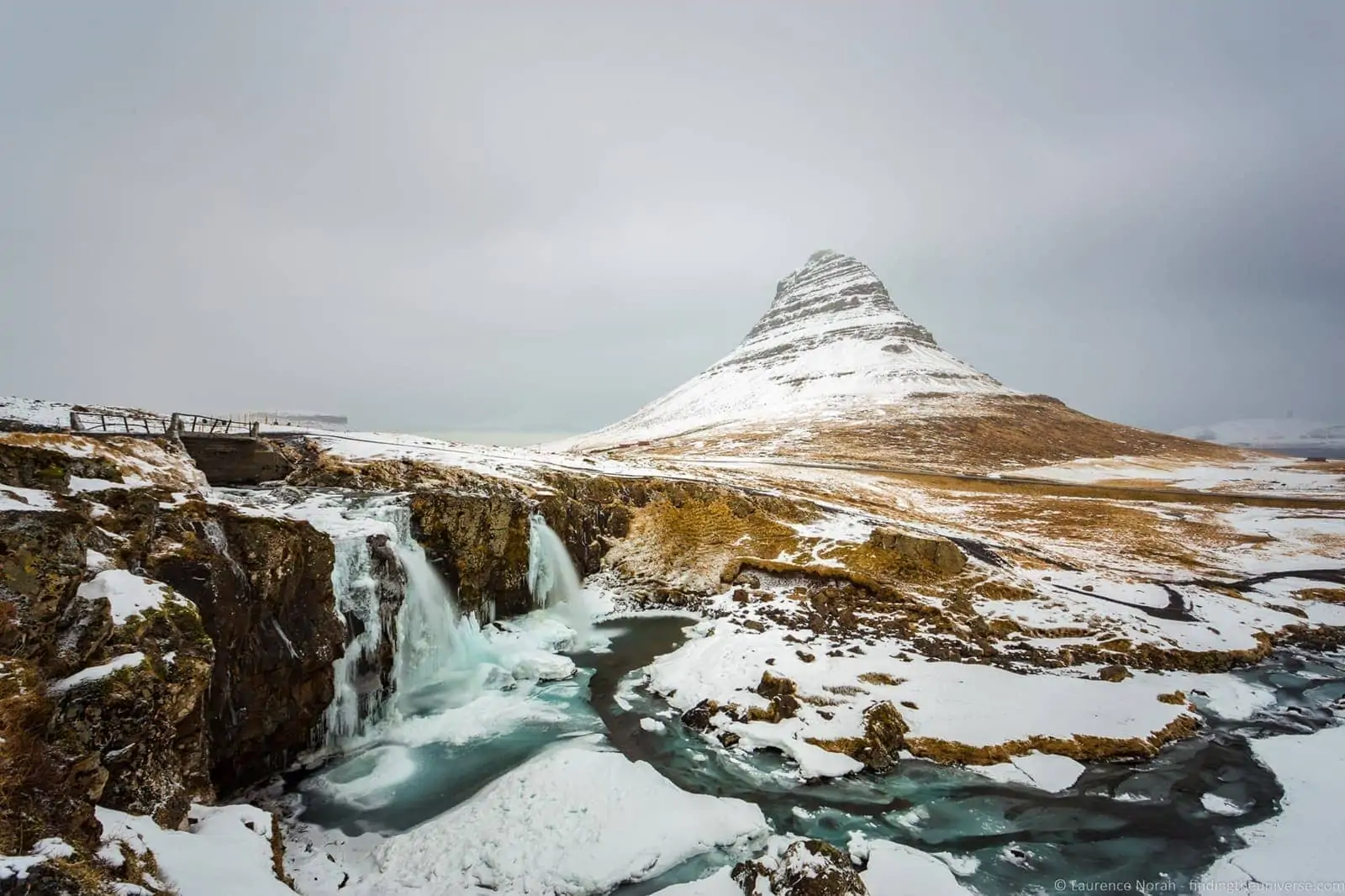
You can, but I would generally advise against it for this specific itinerary. Road conditions can change very quickly, sections of the Ring Road regularly close in winter, and a single storm can trash a carefully planned week. I have spent enough hours staring at umferdin.is closure maps in a warm café in Vik to know that the weather gets a vote whether you want it to or not.
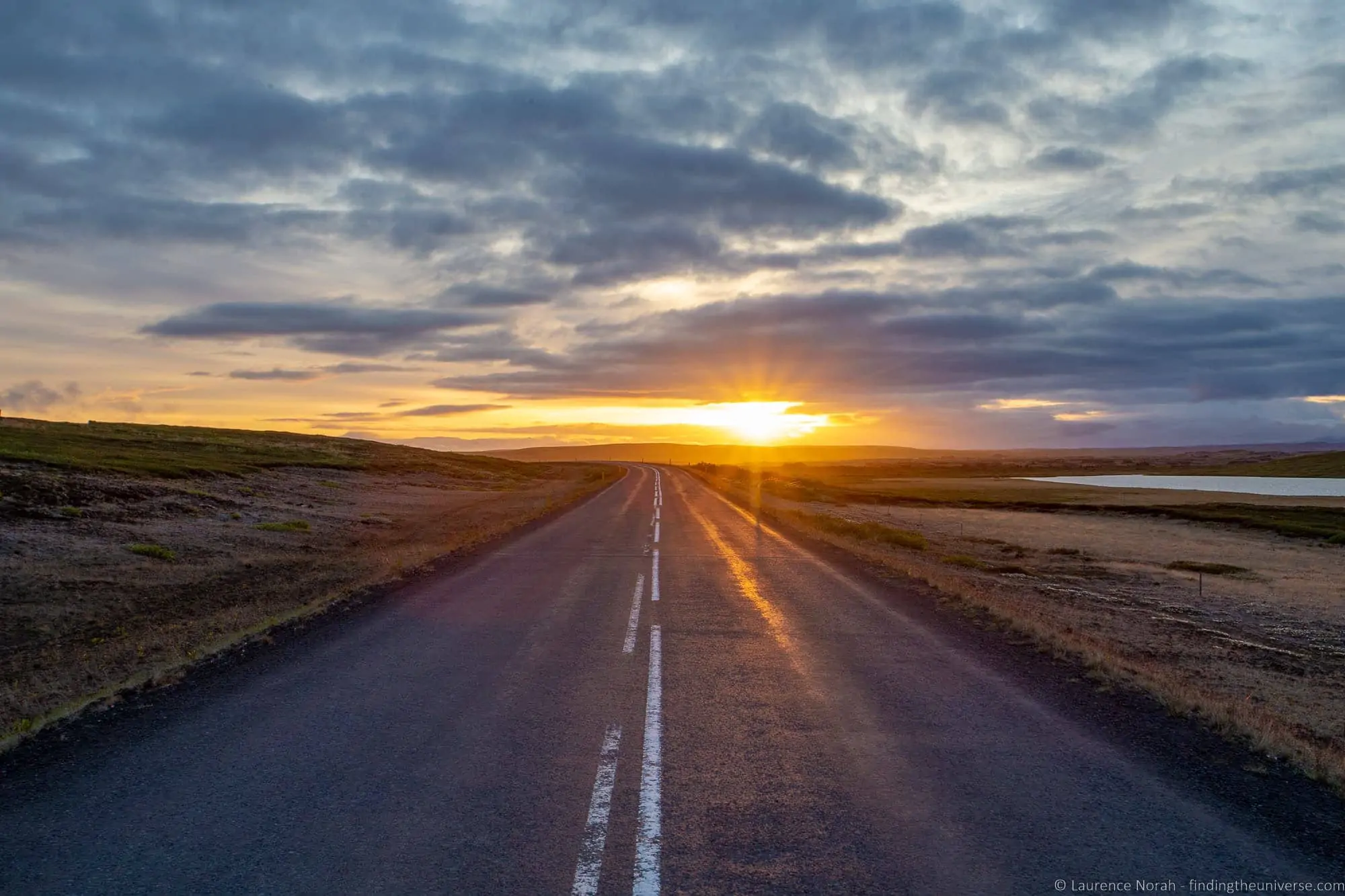
On top of that, winter daylight in Iceland is brutally short. In December you might get four or five usable hours. A 300 km driving day can eat all of it and leave you arriving at your accommodation in the pitch dark having seen nothing. Summer gives you the opposite problem, in the best way: the midnight sun means it barely gets dark, and you can stop at a waterfall at 10pm in full daylight.
The sweet spot is June to August, when you have near-endless daylight, the warmest weather, and full access to highland roads and detours. We drove the full loop across four weeks in June, and our summer packing list for Iceland is what that trip taught us. May and September are good shoulder months with fewer crowds, though weather gets more variable.
If you travel in late September or October you will also have a chance of seeing the northern lights. You do not need to do anything special to see them. Find somewhere with no artificial light, hope for clear skies and high solar activity, and look up.
I am not discouraging Iceland in winter in general. It is beautiful, and it is the right time of year for northern lights. But for the full Ring Road in seven days, winter stacks the odds against you. Instead, take a look at our 7 day Iceland winter itinerary, which focuses on the south coast (where roads stay most reliably open) rather than attempting the full loop. Also worth reading: our guide to driving in Iceland in winter, and our guide to what to pack for Iceland in winter.
Another option is to let someone else handle it. A guided tour like this means someone else handles the logistics, the driving, and the “do we turn back” decisions in a whiteout. You just enjoy the scenery through someone else’s windscreen.
Do You Have to Self-Drive?
No. This itinerary is written as a self-drive trip, which is what we have done on all our Iceland adventures. Self-driving gives you the most flexibility and is the way I would always choose to do it personally. But it is not the only option.
Group tours of Iceland are a good alternative if driving in a country you do not know doesn’t appeal. The tour company handles the driving, the itinerary, and the hotels, and you just turn up. There are a number of options:
We recommend either this 7 day tour or this 8 day tour. If you are really pressed for time, this is a 6 day tour covering the highlights.
When comparing tours, look carefully at what is included. A higher-priced tour that includes meals can be better value than a cheaper one without, because food costs add up fast in Iceland. Other things to check: accommodation quality, which activities are included, and whether things like Blue Lagoon entry or glacier tours are part of the price.
For more inspiration, see our guide to the best guided tours of Iceland. You can also see a selection of guided tours on TourRadar and on Guide to Iceland.
For the rest of this guide I will assume you are self-driving. Driving in Iceland is easy enough if you are comfortable driving in rural areas elsewhere. The main things to watch for are single-lane bridges (the 32 on Route 1 are well-signposted), sudden weather changes, sheep wandering onto the road, and the powerful urge to pull over and photograph literally everything.
How This Trip Most Commonly Goes Wrong
Iceland is one of the best road trips in the world. We have done it four times and would go again tomorrow. But there are specific, predictable ways this trip goes sideways for people, and almost nobody writes about them because they don’t quite fit anywhere in a day-by-day itinerary. Read this section once, and you will save yourself from the handful of mistakes that turn otherwise amazing trips into frustrating ones.
The hire car insurance ambush
You arrive at Keflavik jet-lagged, you pick up your car, and someone at the counter upsells you on “essential” insurance add-ons with prices that feel designed for people too tired to argue. You thought your credit card would cover you for these, but it turns out Iceland has all kinds of extra insurance options no credit card company covers. Things like gravel protection, sand and ash protection, additional collision waivers, the works.
By the time you drive away you have paid an extra $400 you did not budget for.
The fix is simple: do your research and decide what insurance you want before you land, and pre-book it. Tools like Northbound let you add the Iceland-specific cover (gravel, sand, ash) during the booking process, which both saves money and removes the sticker-shock moment at the counter. You still need some insurance (gravel protection in particular is a very good idea in Iceland, I am not kidding about flying rocks), but you do not need it at desk-panic prices.
Not being prepared for the weather
This is the big one. People assume “Iceland in summer” means sunshine. It does not. Jess and I spent four weeks in Iceland in June and we were rained on in every corner of the country, frequently and with considerable enthusiasm. We had proper rain gear, waterproof footwear (I cannot emphasize this enough, a week in wet shoes is miserable) and warm layers, so we were fine. Many travellers we met did not, and they were not fine.
Iceland’s weather is variable year-round and can turn from warm sun to horizontal sleet in under an hour. Pack proper waterproofs (a jacket and trousers, not a rain jacket worn over jeans), warm layers, and a hat and gloves even in July. The waterfalls will soak you. The coastal wind will cut through anything that is not actually windproof. Assume it will rain at some point every day and you will be pleasantly surprised on the days it does not.
Not being prepared for the costs
The cost section above is there for a reason. Iceland is expensive, and food is the category most people underestimate. A restaurant meal for two with drinks can easily hit $120, even at unremarkable places. A three-course dinner at somewhere nice is $200+. If you eat out every night for a week, you are looking at serious money.
Mitigation: self-cater at least some meals. Almost all guesthouses have kitchens. Bonus and Kronan supermarkets have everything you need. Picnic lunches at waterfalls are cheaper than roadside cafés, and they are also often nicer. Gas station food is better then you might expect, and more reasonably priced too.
Winter conditions if you ignored me earlier
If you are driving the Ring Road in winter despite my advice, here are the things that catch people out: roads can go from clear to ice-covered in under an hour, sections of Route 1 close regularly in bad weather (check umferdin.is obsessively), the East Fjords stretch between Breiddalsvik and Egilsstadir is particularly prone to closure, and the limited daylight means you will be driving in the dark more than you expect.
If you do drive in winter, budget at least ten days for the full loop (you will lose days to weather), rent a 4×4 with winter tyres (a 2WD is not enough), and always have a backup plan for where to stay if a road closes.
Flight-time mismatch
People plan this itinerary assuming a morning arrival on Day 1 and an evening departure on Day 8. Then they look at their actual flights and realise they land at 11pm and depart at 7am. Day 1 is a write-off and Day 8 needs a hotel near the airport rather than Reykjavik.
If your flight arrives after about 3pm, skip the Day 1 Blue Lagoon and Thingvellir plan, drive straight to an airport-area hotel, and start the itinerary fresh on Day 2 morning. If your flight departs before about 9am, spend your last night near Keflavik, not in Reykjavik. The 40-minute airport drive at 5am is not the memory you want to leave Iceland with.
The F-road temptation
Somewhere around Day 3 or 4, you will be in a 2WD rental car and you will see a scenic gravel road leading off somewhere dramatic. A little voice will say “it looks fine, let’s just see where it goes.” This is how people wreck rental cars and end up having $3,000 conversations with the rental company.
F-roads (highland roads, marked with an F prefix) are legally restricted to 4×4 vehicles with high ground clearance. Your rental agreement will exclude damage from F-road driving even with insurance. The roads involve water crossings, loose gravel, and surfaces that will shred a standard car’s undercarriage. Do not test this.
If you want to drive F-roads, rent a 4×4 from the start. And even then, be aware your insurance will still likely not cover driving on F roads, or the cost of a tow if you get stuck.
Accommodation scarcity
This is the one that makes people write me angry emails. “We tried to book Vik two weeks before our trip and there was nothing available.” Yes. Welcome to Iceland in summer. Some towns on the Ring Road (Vik, Hofn, Mývatn, Egilsstadir) have properly limited accommodation, and they fill up months in advance for peak season.
Book at least three months ahead for July and August, two months ahead for June and September, and do not assume “we’ll figure it out” works the way it does in countries with thousands of interchangeable hotels. It doesn’t. Wild camping is also not permitted in Iceland, so sleeping in the car is not a legal fallback.
Parking tickets at the waterfalls
Most of the popular stops on the south coast (Seljalandsfoss, Skogafoss, Skaftafell, and increasingly others) now charge for parking, typically 750 to 1,500 ISK. Payment is via the Parka.is app or EasyPark. Enforcement is aggressive and the fines are not small.
Install the Parka app before you land. Pay the moment you park, even if you only plan to stop for fifteen minutes. I have met people who got tickets at Seljalandsfoss on a ten-minute photo stop because they thought “we’ll be back before anyone notices.” The parking officials always notice. They’re paid to.
Reynisfjara sneaker waves
Reynisfjara’s waves are famous and they are also lethal. Six people have died there since 2013, most recently a nine-year-old in August 2025. The waves that kill people are not the ones crashing on the beach when you arrive. They are “sneaker waves” which surge up the sand far beyond the normal waterline, without warning, and pull people out.
The rule is simple and non-negotiable: stay well back from the water, do not turn your back on the ocean, and pay attention to the colour-coded flag system at the entrance (Yellow, Orange, Red). The Hálsanefshellir cave and the lower beach have both been closed off at times since the 2026 erosion, with the flags on yellow or orange rather than Red. The flag colour tells you how dangerous the water is, not how much of the beach you can walk on, so check what is actually open when you arrive. It is not a beach for paddling or for photo-shoots at the waterline. Treat it with the respect you would treat any other properly dangerous stretch of coastline.
None of this is meant to scare you off or be alarmist. Iceland is astonishing, and almost everyone we know who has done this trip comes back saying it was one of the best things they ever did. The point of this section is that the difference between a brilliant Iceland trip and a miserable one usually comes down to five or six decisions you make before you land. Get those right and the rest takes care of itself.
Iceland Ring Road Itinerary
Now, the itinerary itself. This covers 8 days and 7 nights, with each day aimed at a roughly similar workload (although some days are inevitably heavier than others).
A note on pacing: the south coast and East Fjords days in particular pack a lot in. I have marked the optional stops clearly. If you are travelling with kids, or you prefer longer stops at fewer places, be willing to cut things. The itinerary works if you treat it as a menu rather than a checklist.
Day 1: Arrive, Blue Lagoon, Thingvellir
You will arrive at Keflavik International Airport, which is roughly a 40 minute drive southwest of Reykjavik. This itinerary assumes a morning arrival. If you land in the afternoon or evening, see the flight-time mismatch note above.
Pick up your hire car (compare prices here) and, if the Blue Lagoon is on your list, head there straight from the airport. It is Iceland’s most famous geothermal lagoon: a huge outdoor bathing area where mineral-rich water is an almost unreal shade of milky blue. There is an on-site restaurant, a swim-up bar, and various premium treatments if you want the full spa experience.
If you plan to visit the Blue Lagoon, pre-book a timeslot, which you can do here. It is popular, you cannot turn up and buy a ticket. See our full guide to visiting the Blue Lagoon for more.
An alternative worth considering is the Sky Lagoon, a newer geothermal complex closer to Reykjavik city centre. It has a similar concept, is often less crowded, and the ocean-view infinity edge is a proper jaw-dropper. You can book tickets for the Sky Lagoon here. And if you are not sure about either, my actual favourite geothermal bath in Iceland is Earth Lagoon Mývatn (formerly the Mývatn Nature Baths) in the north, which you will reach on Day 5.
After the lagoon, head out onto the Golden Circle. This is one of the most popular short road trips in Iceland, and its proximity to Reykjavik makes it efficient to combine with Day 1 arrival logistics. We have written a full guide to the Golden Circle.
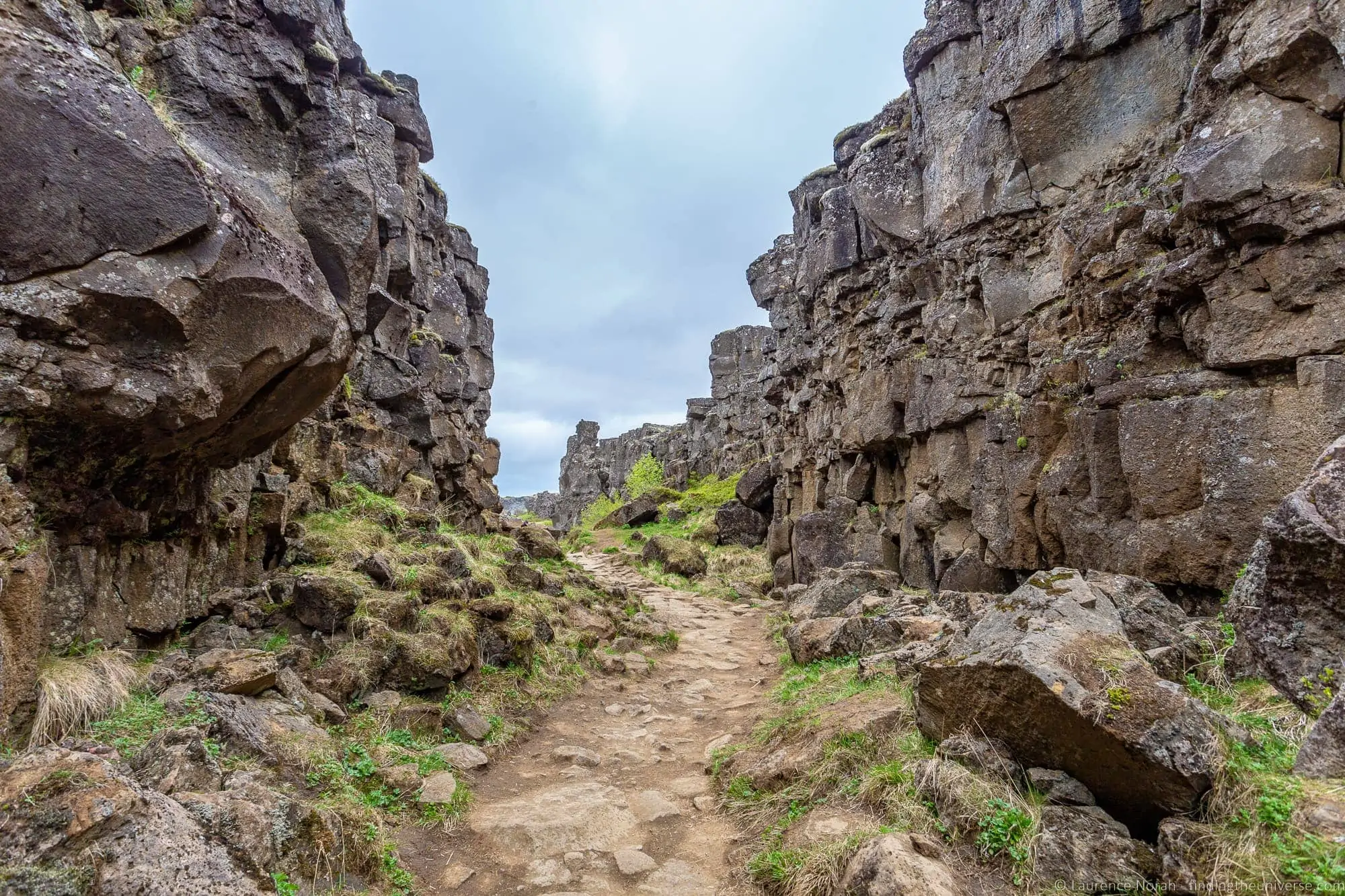
If you arrived in the morning, you will have time on Day 1 for Thingvellir National Park. Thingvellir (Þingvellir) is one of the most important cultural sites in Iceland and a UNESCO World Heritage Site: Iceland’s parliament met here from the 10th to the 18th centuries, which makes it one of the oldest continuous parliamentary sites in the world.
It is also geologically remarkable. The Eurasian and North American tectonic plates meet here, and you can walk in the rift between them. It is quite something to stand in a canyon and realise you are looking at the boundary between two continents slowly pulling apart.
If you are feeling ambitious (and I mean this advisedly, given that you have just flown), you can snorkel the Silfra fissure between the two plates in a dry suit. The water hovers just above freezing year-round. It is an odd and memorable thing to do, but book in advance and accept that you will need to be dried and recovered before driving again. Here is a tour booking link.
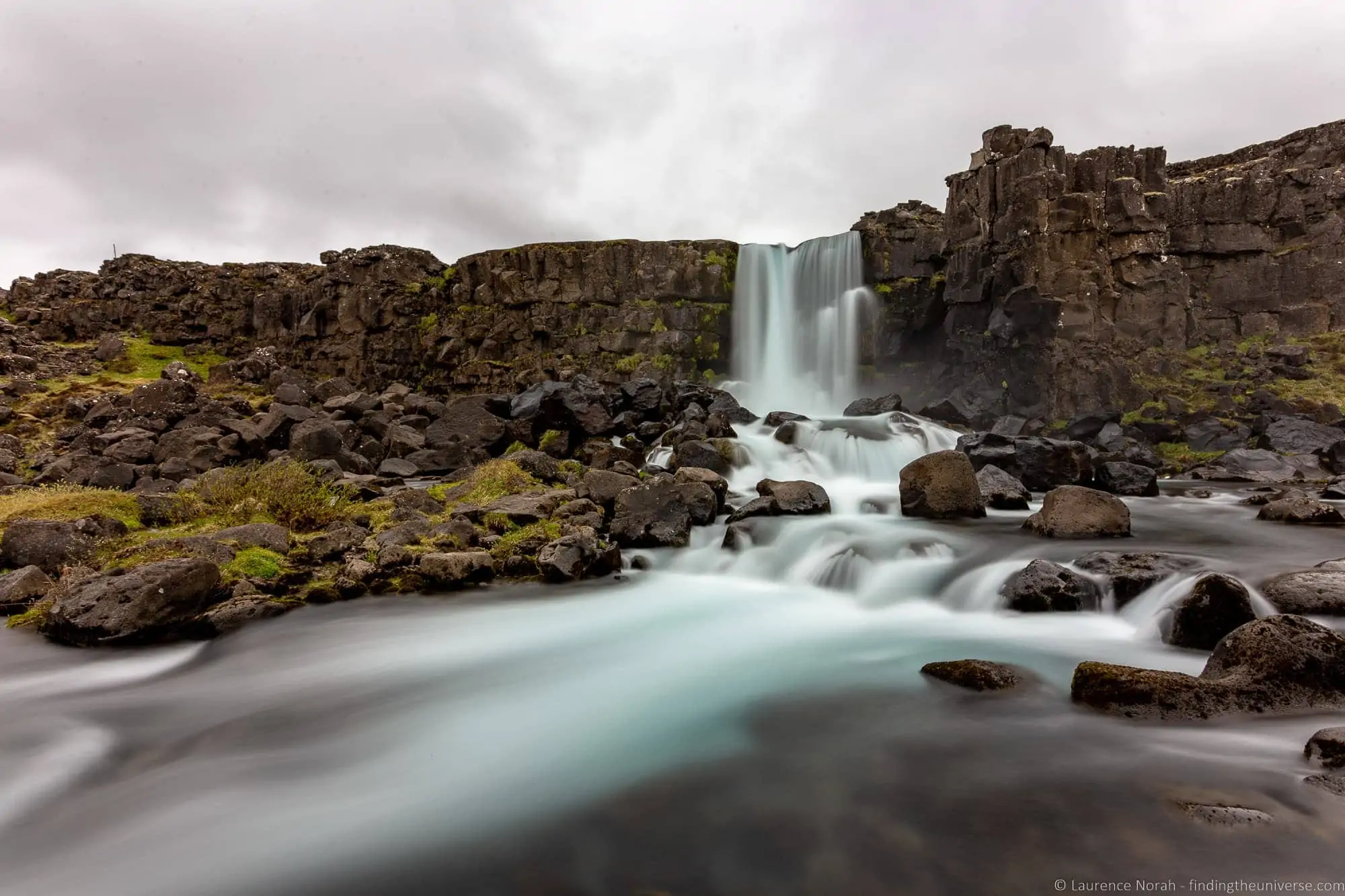
Thingvellir also has a beautiful waterfall, Öxarárfoss, about a 10 minute walk from the main car park. Game of Thrones fans will recognise parts of the park, including the Gates of the Moon filmed in Almannagjá gorge, right next to the waterfall.
If time allows, Kerið Crater is a 20 minute detour from the Ring Road between Thingvellir and your overnight stop. It is a 3,000-year-old volcanic crater lake with striking red slopes and surreal blue water. The walk around the rim takes about 30 minutes and there is a small entrance fee (700 ISK). It sounds minor but it is very photogenic, and it breaks up the drive nicely.
Call it a day after Thingvellir (and optionally Kerið) and head to your accommodation somewhere between Laugarvatn and Flúðir. If you arrived with lots of time and skipped the Blue Lagoon, you can instead push on to Geysir and Gullfoss on Day 1, which frees up Day 2.
Day 1 Highlights: Blue Lagoon (or Sky Lagoon), Thingvellir National Park, optionally Kerið Crater
Suggested timing: Arrive morning. Blue Lagoon mid-morning to early afternoon (allow 2-3 hours). Thingvellir late afternoon (allow 1.5-2 hours including walk to Öxarárfoss). Kerið if you have 30 minutes spare.
Start: Keflavik Airport
End: Laugarvatn / Flúðir area
Distance driven: approximately 140 km (90 miles)
Where to Stay on Day 1
Somewhere near Flúðir or Laugarvatn, well-positioned for the Golden Circle completion on Day 2.
Budget: Midgard Basecamp, a highly rated hostel in Hvolsvöllur with a hot tub.
Mid-range: The Hill Hotel (Flúðir), where we have stayed. Comfortable, with an on-site restaurant. Garður Stay Inn by the Secret Lagoon is also well-reviewed and handy for a visit to Flúðir’s Secret Lagoon, which is a lovely (and much less crowded) geothermal bath.
Luxury: Farmhotel Efstidalur, which is on a working farm with en-suite rooms and a geothermal hot tub.
See more lodging options in this area on Booking.com here.
If you arrive late and want to overnight near the airport, we have stayed at the Northern Light Inn, right next to the Blue Lagoon and about twenty minutes from Keflavik.
Day 2: Golden Circle and South Coast
Day 2 is the biggest day of the itinerary. I am telling you that up front because the article could easily make it sound casual and it is not. You will be on the move from breakfast until dinner, and even in the midnight-sun summer you will feel the weight of it by the end. If you try to do every stop on the list below, you will fail. Pick six or seven of the nine I describe and be ruthless about the others.
First, finish the Golden Circle. Two more stops: Geysir and Gullfoss.
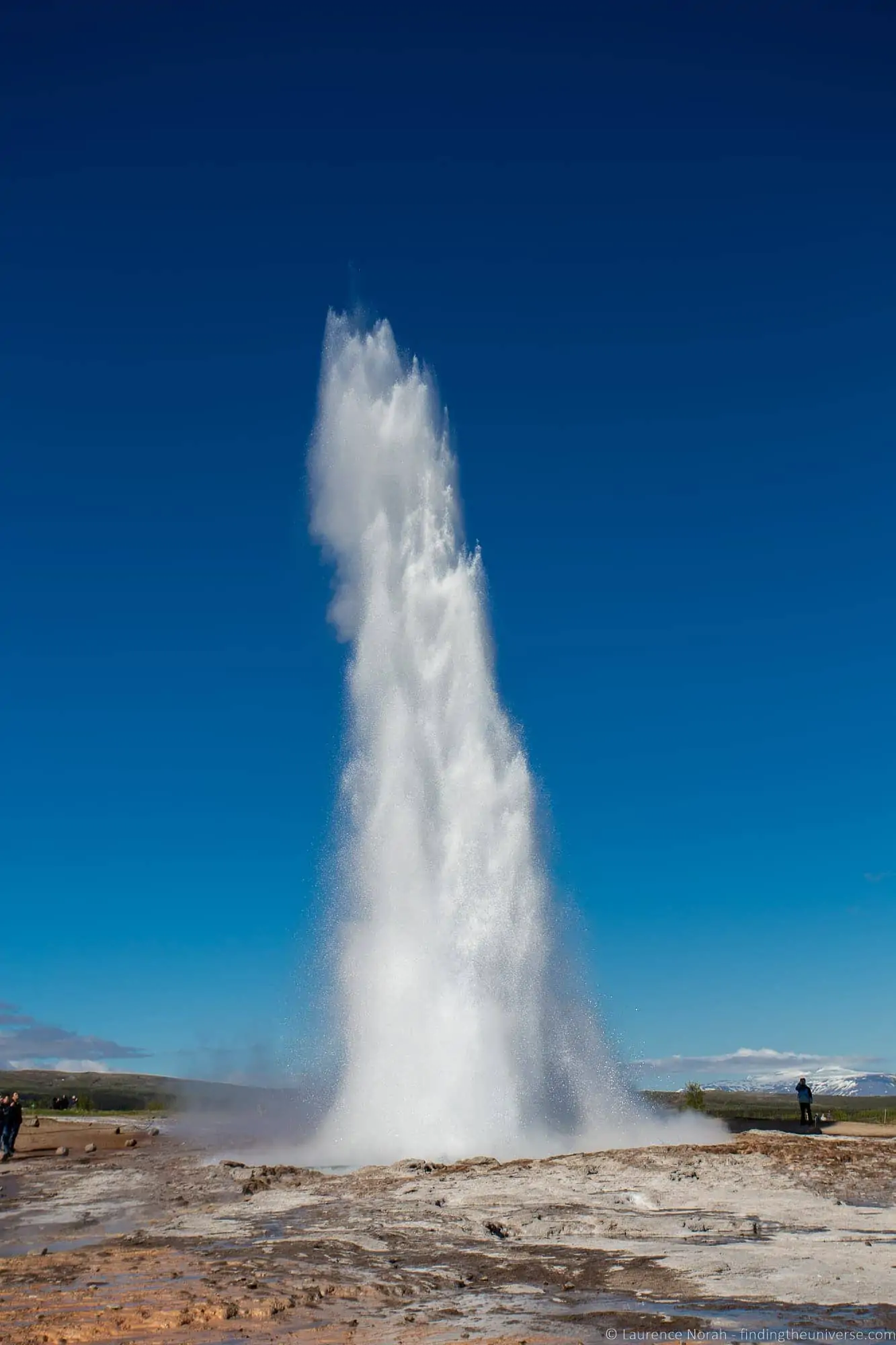
Geysir is the geothermal park that gave the English language the word “geyser.” The original Great Geysir is now mostly dormant, but the park has several other geysers, one of which (Strokkur) erupts reliably every few minutes, shooting water 15 to 30 metres into the air. It is one of the rare tourist attractions that consistently delivers the thing it promises. Allow 20 to 30 minutes.
From Geysir, a short drive takes you to Gullfoss. “Foss” means waterfall in Icelandic, and you will see that word a lot over the next week because Iceland has rather a lot of them. Gullfoss is one of the most spectacular: two tiers, enormous volume, a total drop of 32 metres, and multiple viewing platforms. There is a large car park and an on-site café. Allow 30-45 minutes.
From Gullfoss, join the Ring Road and head south. Your next stop, a welcome indoor break if the weather has turned on you, is the Lava Center in Hvolsvöllur. This is a relatively new museum that has won a string of awards, and the exhibits explain Iceland’s volcanic and earthquake activity in a way that is actually interesting rather than textbook-dull. There is a free section and a paid section, plus a cafeteria that is a reasonable lunch stop. Book tickets online in advance here. Allow 1 to 1.5 hours.
From the Lava Center, the next stop is Seljalandsfoss, the first of the south coast’s signature waterfalls. Seljalandsfoss is unusual because you can walk behind it. This is both magnificent and a guaranteed soaking, so dress accordingly: waterproof jacket, waterproof trousers, sturdy shoes with grip, and phone or camera in a dry bag or pocket. The path can be closed if conditions are icy or the spray is particularly brutal.
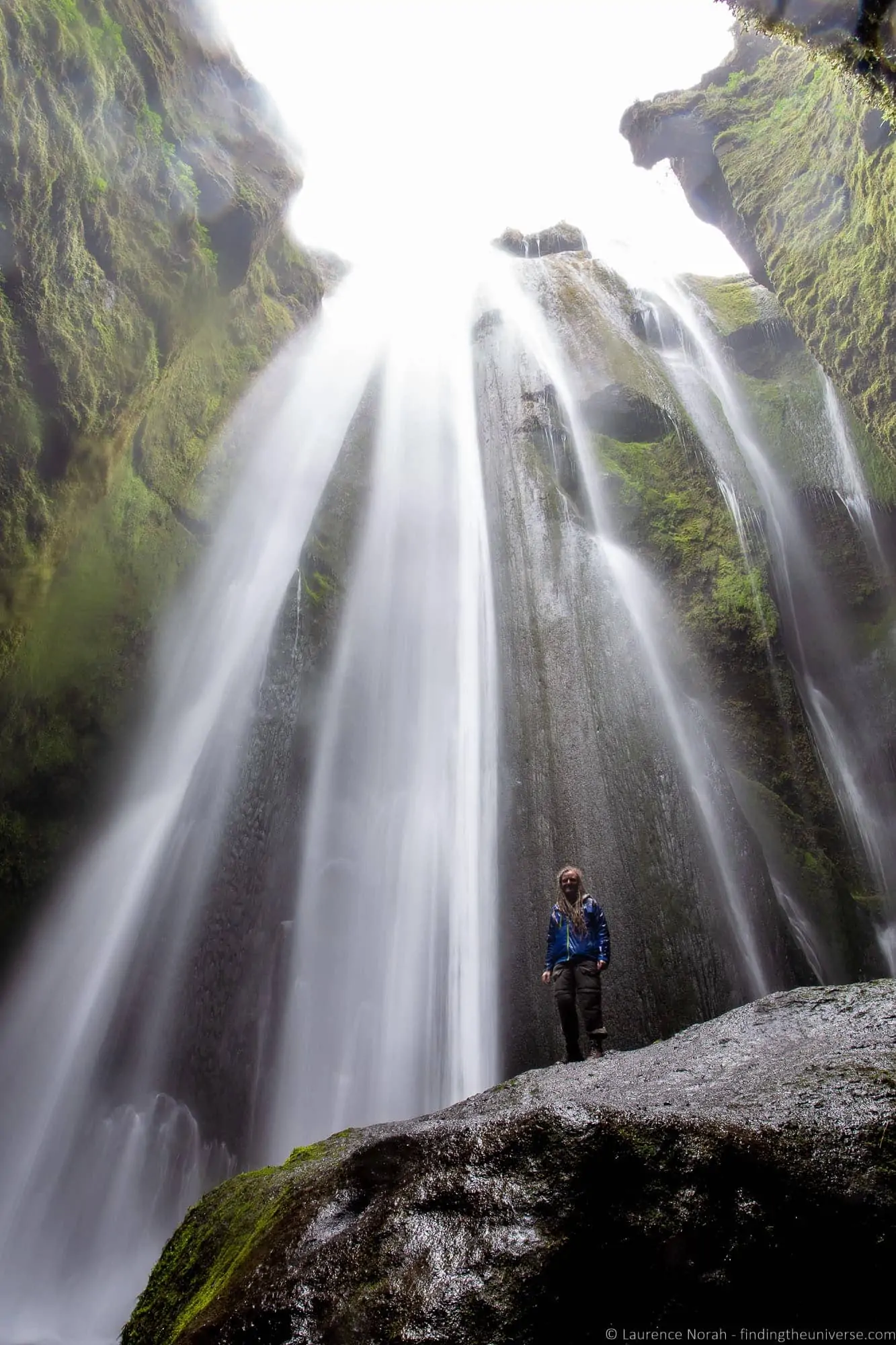
Parking at Seljalandsfoss is 700 ISK per car, enforced, and payable via the Parka.is app. Install it before you land, as I mentioned above. While you are at Seljalandsfoss, walk the paved path about ten minutes north to Gljúfrabúi, a smaller waterfall tucked inside a rock canyon. You have to walk a few metres up a small river to access the viewing spot (more wet feet) but it is worth it.
From Seljalandsfoss it is less than 30 minutes to Skogafoss, assuming you resist the urge to pull over for every photograph. On a clear day you will see Eyjafjallajökull along the way, the volcano whose 2010 eruption caused worldwide air-traffic chaos and whose name became a parlour game for international news anchors.
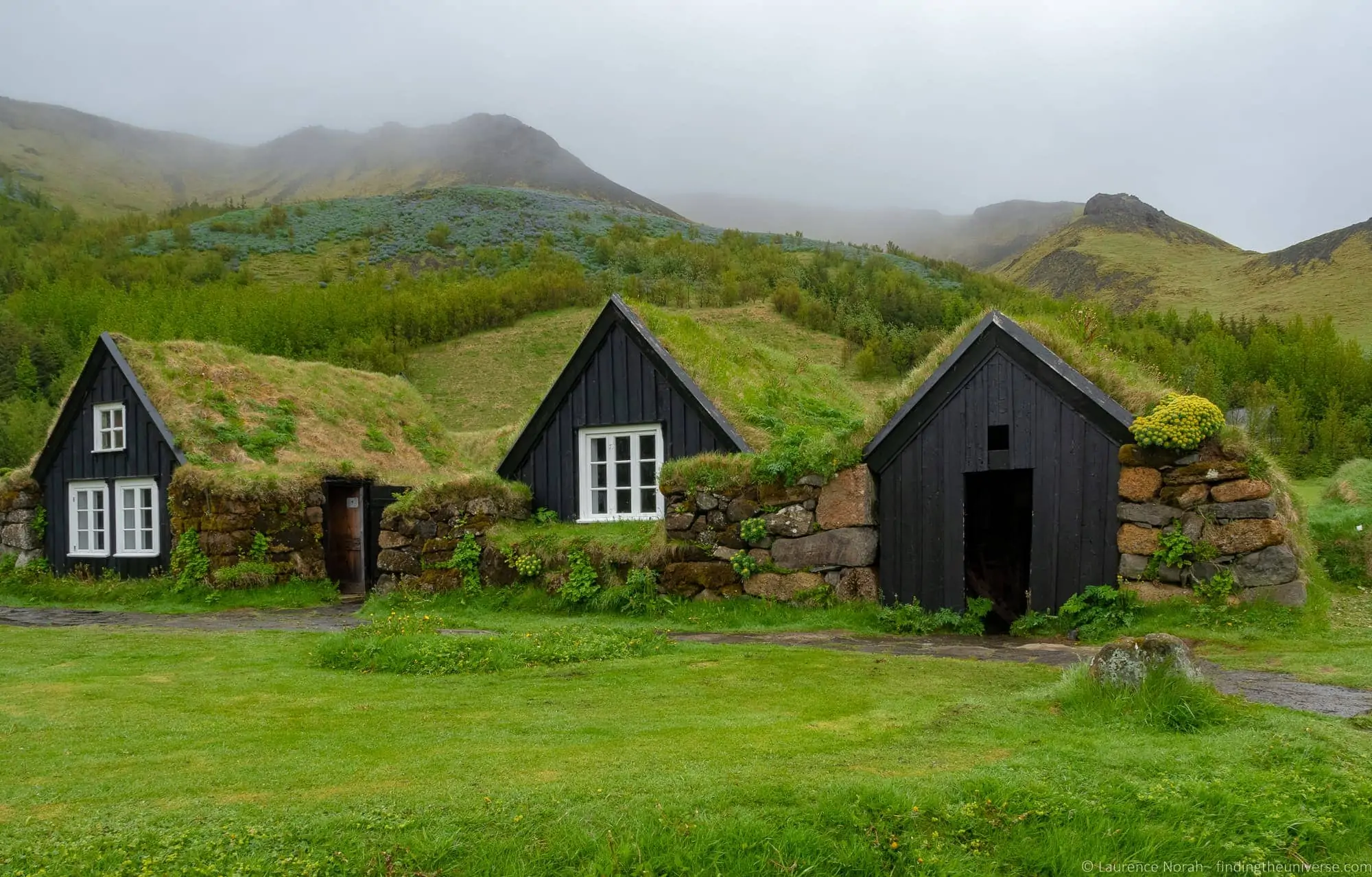
Skogafoss is another cracking waterfall: 60 metres tall, 15 metres wide, with a sheer drop and a viewing platform where you can get close enough to be properly drenched. The area also has the Skogar Museum, which is a good rainy-day substitute with over 15,000 artifacts across three buildings plus a collection of traditional turf houses. I would recommend the museum only if you have decided to skip the plane wreck (below) and have time; don’t try to fit both, you cannot.
From Skogafoss, the next stop is where you need to make a choice. The Sólheimasandur plane wreck is a crashed DC-3 on a black sand plain, about a 40-minute walk each way from the car park. It is a striking photograph if you are a photographer (I am, so I did the walk). For most people, it is an hour and twenty minutes of flat, featureless walking in exchange for a look at a wrecked fuselage. If you have any doubts, skip it. There is a paid shuttle (~$25 per person return) if you want to see the wreck without the walk.
Our full guide to visiting the Iceland plane crash at Sólheimasandur has more detail.
Continuing east, your next major decision is Dyrhólaey. This is a dramatic headland with sea arches, a lighthouse, and (in summer) puffin colonies on the cliffs. It is closed during nesting season between 7pm and 9am, and it is a detour off the 1 but not a long one. If you have time and energy after the plane wreck, do Dyrhólaey. If you are flagging, skip it. There is a better puffin-watching spot later in the trip (more on that later).
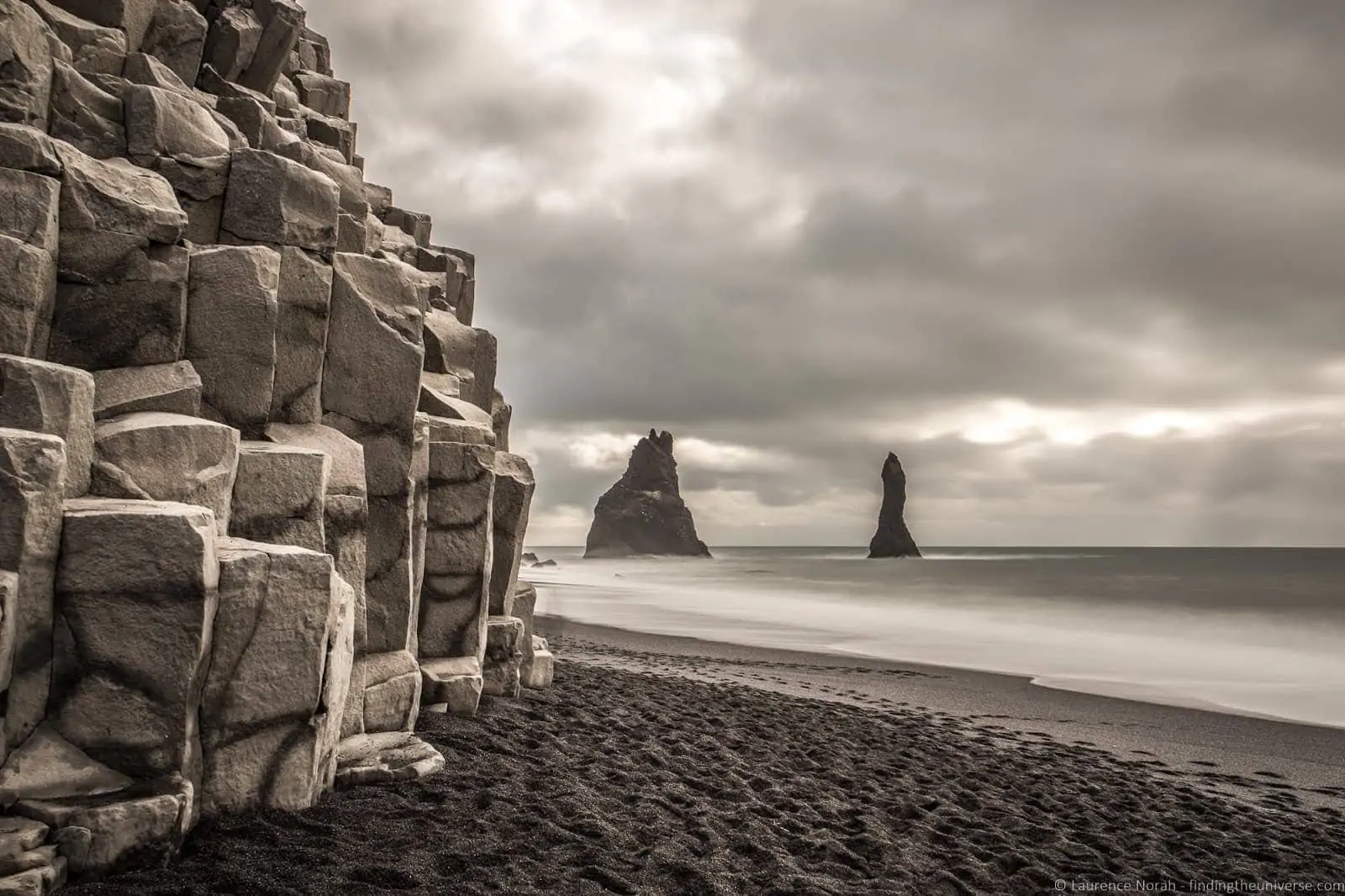
Final stop of Day 2 is Reynisfjara Black Sand Beach. This is one of Iceland’s most iconic beaches, with basalt columns, sea stacks, and a dangerous shoreline that has killed people. Re-read the sneaker waves section above. Pay attention to the colour-coded warning flags at the entrance. Stay back from the water. I mean this.
Reynisfjara 2026 update: In early 2026, unprecedented coastal erosion reshaped the beach significantly. Persistent easterly winter storms stripped huge volumes of sand, and for a period the basalt columns that once stood at the shoreline were partly surrounded by sea. Sand started returning in spring 2026, but the beach has not gone back to what it was, and how much of it you can reach has kept changing through the year. The Icelandic Tourist Board’s position since February has been that you cannot walk down to the basalt columns themselves, and at times this summer the lower beach has been closed off with the flags well short of Red, so treat the flag colour as a safety warning rather than a guide to what is open. Go expecting to see the sea stacks from the upper beach rather than to stand among the columns, and check the SafeTravel page the morning you visit rather than trusting any photo or article, this one included. Reynisfjara access last verified: 8 August 2026. Check the SafeTravel Iceland Black Beach page before your visit.
Overnight at Vik or, if you have the energy for more driving, push on another 30 minutes to Kirkjubæjarklaustur.
Day 2 Highlights: Geysir, Gullfoss, Lava Center, Seljalandsfoss, Gljúfrabúi, Skogafoss, Sólheimasandur plane wreck (optional), Dyrhólaey (optional), Reynisfjara
Suggested timing: Geysir (20-30 min), Gullfoss (30-45 min), drive and Lava Center with lunch (2.5 hours), Seljalandsfoss plus Gljúfrabúi (1 hour), Skogafoss (30 min), plane wreck if doing (1.5 hours), Dyrhólaey (30-45 min), Reynisfjara (45 min). Realistically, you will fit about 6 or 7 of these well. Do not try all 9.
Start: Flúðir / Laugarvatn area
End: Vik
Distance driven: 207 km (128 miles)
Where to Stay on Day 2
Vik or Kirkjubæjarklaustur (also known as Klaustur).
Budget: The Barn, a popular hostel in Vik with both dorms and private rooms. Framtid Hostel in Djúpivogur is also a good budget option if you push further east.
Mid-range: Hotel Vík í Mýrdal, 450 yards from the black sand beach in Vik. Hunkubakkar Guesthouse, a family-run option with colourful cottages near Kirkjubæjarklaustur.
Luxury: Hotel Klaustur, a modern hotel in Kirkjubæjarklaustur where we have stayed and had a good experience.
See more options in Vik and Kirkjubæjarklaustur.
Day 3: South Coast to East Iceland
Day 3 finishes the south coast and takes you into the quieter stretches of East Iceland. The first couple of stops are quick; the middle of the day is built around Vatnajökull National Park, which could quite happily eat the whole day if you let it.
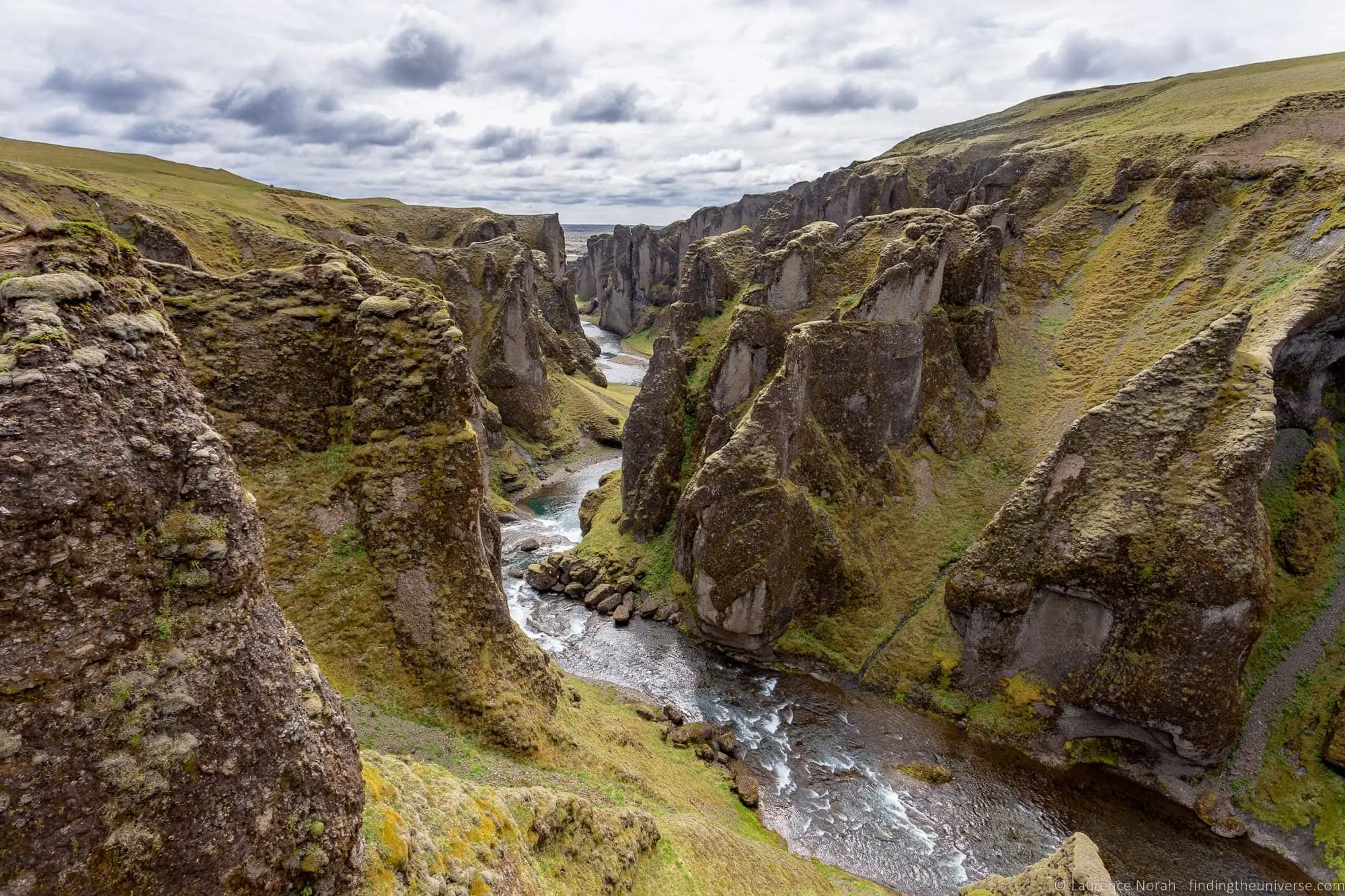
First stop is Fjaðrárgljúfur, a 2 million year old river canyon about five minutes off the Ring Road just before Kirkjubæjarklaustur. It is astonishingly photogenic, with a viewing path that runs along the top and (15 minutes up a gentle path) a metal platform looking down the length of the canyon. Allow 45 minutes.
From Fjaðrárgljúfur, carry on east along the Ring Road. You are now driving through the Eldhraun lava field, the largest in the world, created by an 18th-century eruption that lasted a year and very nearly caused Iceland’s entire population to be evacuated. The field is now covered in the pale green moss that grows on Icelandic lava. It looks otherworldly and it takes about two hundred years to grow, so please do not walk on it. There are designated parking areas with marked trails, and sticking to these is how future travellers will still get to see an intact lava field.
Continuing east, you will see the vast Vatnajökull glacier in the distance. Vatnajökull covers about 9 percent of Iceland and is the largest glacier in Europe by volume. It is protected as part of Vatnajökull National Park, and the next few stops are all within it.
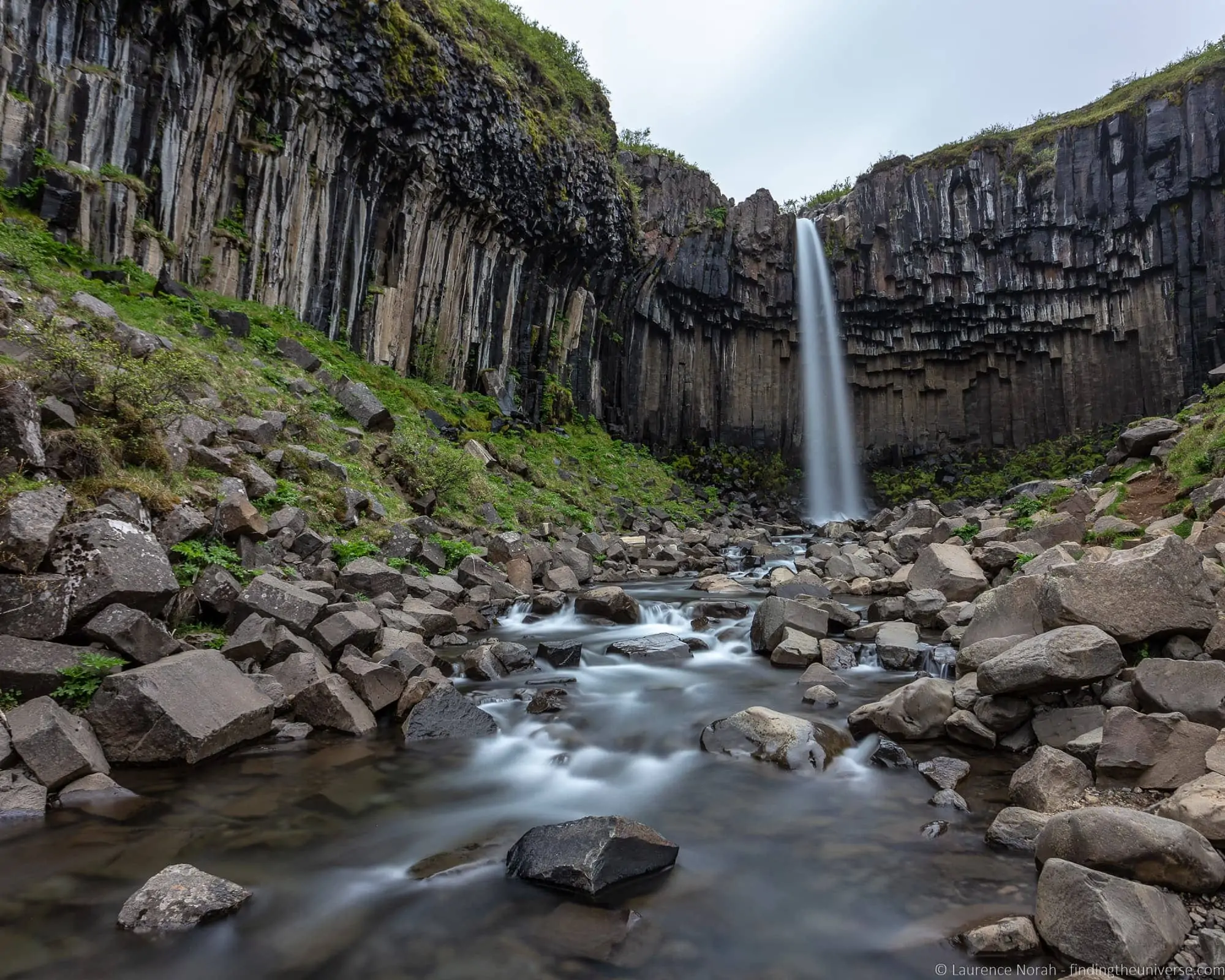
First is Skaftafell, which has a visitor centre, a large car park (700 ISK, Parka), and a choice of hikes. The most popular is the hike up to Svartifoss (“Black Falls”), a beautiful waterfall tumbling over black basalt columns. It is a 30-45 minute steep climb each way, and it is worth it. If hiking up is not your thing, there is also a flat 90 minute circular walk that takes you close to the base of one of the glacier tongues.
A pacing warning. Skaftafell also offers guided glacier hikes and ice-cave tours (glacier hike and ice cave hike). Both are worth doing in their own right. They also eat 3-4 hours plus travel time, which will cost you Jökulsárlón and the Hofn arrival. If you want to do a glacier hike, budget Day 3 as “glacier hike plus Svartifoss” and skip the rest. Do not try to fit everything or you will end up arriving in Hofn at 10pm and too exhausted to enjoy the langoustine.
Next is a short drive to Svínafellsjökull, a viewpoint overlooking the tongue of one of Vatnajökull’s outlet glaciers. Fifteen minutes and free.
Continuing on, you reach Jökulsárlón Glacier Lagoon, which is one of the most photographed places in Iceland and for good reason. Icebergs calve from the Breiðamerkurjökull outlet glacier into a lagoon, drift around slowly, and eventually wash out to sea. You can take a boat tour on the lagoon in summer, which gets you out among the icebergs. It is seasonal and bookable in advance. Allow 1 hour for the lagoon itself, longer if you take a boat tour.
Directly across the road is Diamond Beach, where icebergs that have drifted out of the lagoon wash up on black sand. In sunlight, they glitter like the name suggests. More dramatic in winter than summer (more icebergs, bigger ones), but worth 30 minutes regardless.
Finally, drive on to Hofn for the night. Hofn is known as the langoustine capital of Iceland, and it would be a waste not to eat some while you are here. Hafnarbudin is a no-frills harbourside diner that has been serving locals since 1982, and their langoustine sandwich is very good and surprisingly affordable by Icelandic standards.
Day 3 Highlights: Fjaðrárgljúfur Canyon, Eldhraun Lava Fields, Skaftafell, Svartifoss, Svínafellsjökull viewpoint, Jökulsárlón Glacier Lagoon, Diamond Beach, langoustine in Hofn
Suggested timing: Fjaðrárgljúfur (45 min), Skaftafell plus Svartifoss hike (2-3 hours), Svínafellsjökull (15 min), Jökulsárlón (1 hour or more with boat tour), Diamond Beach (30 min). Skip the glacier hike unless you want it to be your Day 3.
Start: Vik
End: Hofn (or continue to Djúpivogur)
Distance driven: 272 km (170 miles)
Where to Stay on Day 3
Hofn or Djúpivogur.
Budget: Höfn Guesthouse, a central budget guesthouse with shared bathrooms. Framtid Hostel in Djúpivogur, with shared kitchen.
Mid-range: Hotel Edda Höfn, harbourside with private en-suite rooms. Hotel Framtid in Djúpivogur, where we stayed and enjoyed the harbour views.
Luxury: Milk Factory, a design hotel in Hofn in a converted dairy building.
See more options in Djúpivogur and Hofn.
Day 4: East Fjords
Time for the East Fjords, which are the quietest and in some ways the most atmospheric part of the Ring Road. Jökulsárlón is the last stop for most day-trippers from Reykjavik, so from Hofn onwards the roads thin out considerably.
First stop is Vestrahorn, a dramatically spiky mountain (it is named for its “horns”) at Stokksnes, just outside Hofn. You can see Vestrahorn from Route 1, but the best views are from Stokksnes itself, which is on private land and charges a small entrance fee (around 900 ISK) at the Viking Café. The café also has a replica Viking village built as a film set, which is a fun add-on if you are into photography. Allow 45 minutes.
The drive from Stokksnes through the East Fjords is properly spectacular. You will find yourself wanting to stop every few minutes. Try to resist (a bit). Use the marked pullouts rather than stopping in the road.
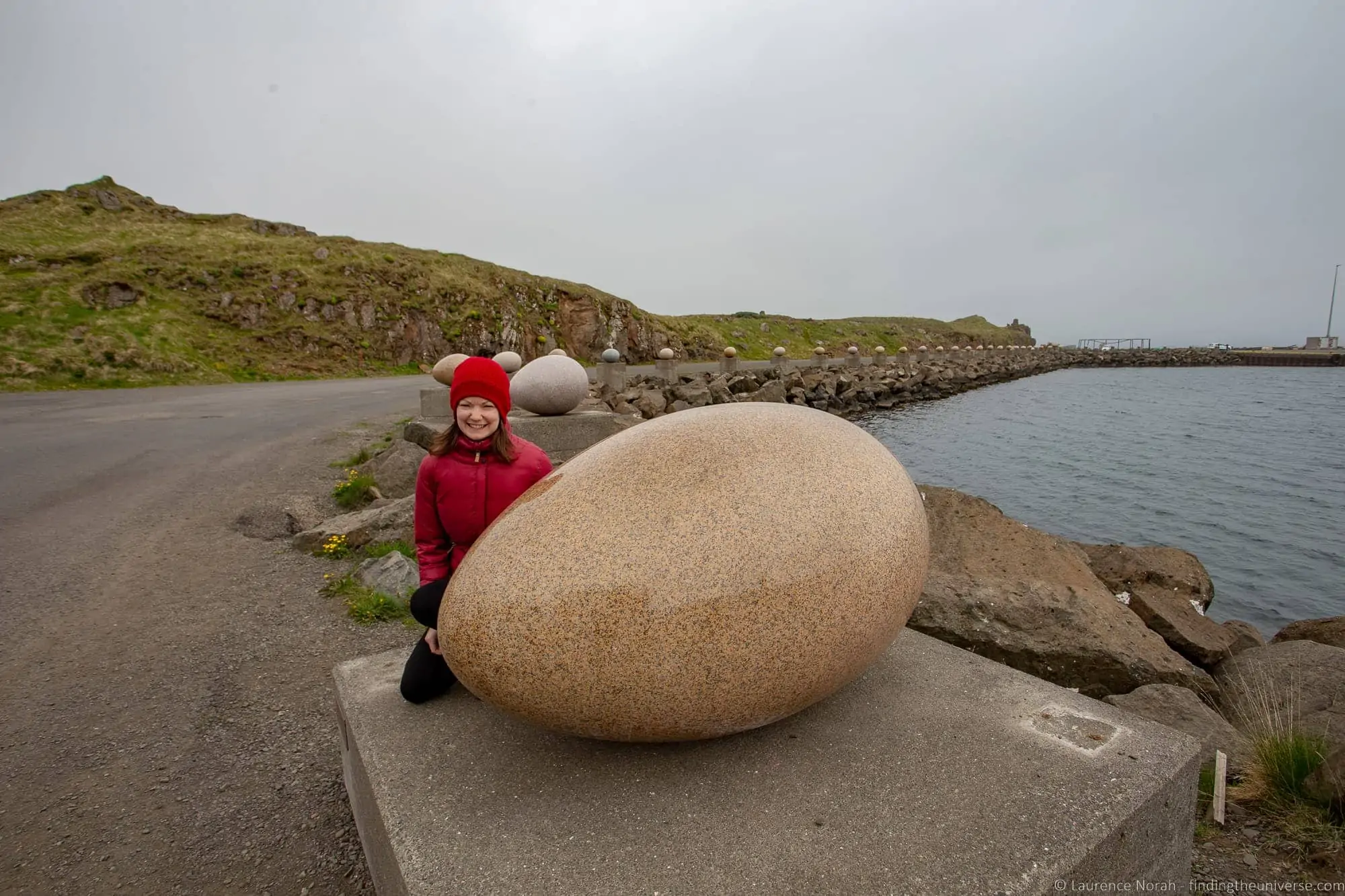
The first major stop is Djúpivogur, a small fishing town about two hours from Hofn. It has an art installation called Eggin í Gleðivík (Eggs of Gleðivík), which is 34 stone eggs representing the bird species found in Iceland. It is an unexpected stop in an unexpected place and I found it charming. Djúpivogur is also a good bird-watching area with a couple of hides, and has quirky studios where local artists display their work. See the official website for current listings.
Optional Detour: Studlagil Canyon
If you can give this day an extra 3 hours, and if you are any kind of photographer, I would highly recommend a detour to Studlagil Canyon. This basalt-column canyon in east Iceland was only revealed in 2009, when a hydroelectric project lowered the water level of the Jökla river, exposing what is now considered the largest collection of basalt columns in Iceland. It has become one of the most photographed locations in the country.
Full disclosure: we have not visited Studlagil ourselves (it was revealed after our main Ring Road trips). It comes so highly recommended by fellow travellers that I would be doing you a disservice not to include it. To reach the canyon, turn south off Route 1 onto Route 923 (signposted). The east-side viewpoint requires a hike of approximately 4 km round trip from the closer parking area (1,000 ISK parking fee). The west-side viewing platform is a shorter walk but the views are less impressive. Allow 2-3 hours total including the hike.
The river displays vivid turquoise colours from March to July, turning silty grey later in summer as glacial melt increases.
The practical question is where to fit Studlagil in. It is west of Egilsstadir, so it works better as a Day 5 stop (between Egilsstadir and Mývatn) than a Day 4 stop. If you take it on Day 5, plan to skip either Dettifoss or Earth Lagoon Mývatn, because three major stops plus driving will not fit in one day.
Optional Detour: Borgarfjörður Eystri (Puffins)
If puffins are a priority for you, Borgarfjörður Eystri is the best puffin-watching spot in Iceland, hands down. The Hafnarhólmi viewing platform hosts over 10,000 puffins each summer (roughly May to mid-August), and you can get within a few metres of them on wooden boardwalks. It is free.
The catch: Borgarfjörður Eystri is an hour off the Ring Road from Egilsstadir each way, so it is a 2.5+ hour commitment including viewing time. Realistically, you are choosing between Seyðisfjörður (below) and Borgarfjörður Eystri on Day 4. If puffins are high on your list, choose Borgarfjörður Eystri. Otherwise, choose Seyðisfjörður.
From Djúpivogur, continue north on Route 1. Two waterfalls come up in quick succession: Sveinsstekksfoss (just off the road, 1 minute walk from the parking area at the top of a short track) and Folaldafoss (five minutes off the 1 on Route 939, five minute walk down from the car park).
Note that GPS sometimes recommends you continue on the 939 to reach Egilsstadir. Don’t. It is a windy mountainous pass that saves no time and closes regularly in bad weather. Return to the 1.
Another good stop is Petra’s Stone Collection in Stöðvarfjörður. Petra was a local woman who had a real passion for collecting rocks and minerals. Her collection eventually took over her house and garden, and after her death her family has kept it open as a small museum. It is an unexpected and slightly magical place and a lovely glimpse of one person’s lifelong obsession. Allow 45 minutes.
The stretch of Route 1 from near Reyðarfjörður into Egilsstaðir runs through a valley that, when we drove it, had waterfalls crashing down both sides every few hundred metres. A properly memorable stretch of driving.
Egilsstaðir is the largest town in East Iceland and a good place to pick up supplies. It has the East Iceland Heritage Museum for a culture fix, and it is worth knowing that the largest forested area in Iceland is here (which may surprise you after four days of moss and lava). You can overnight in Egilsstaðir, or, if time allows, make the 30-minute drive out to Seyðisfjörður via Route 93.
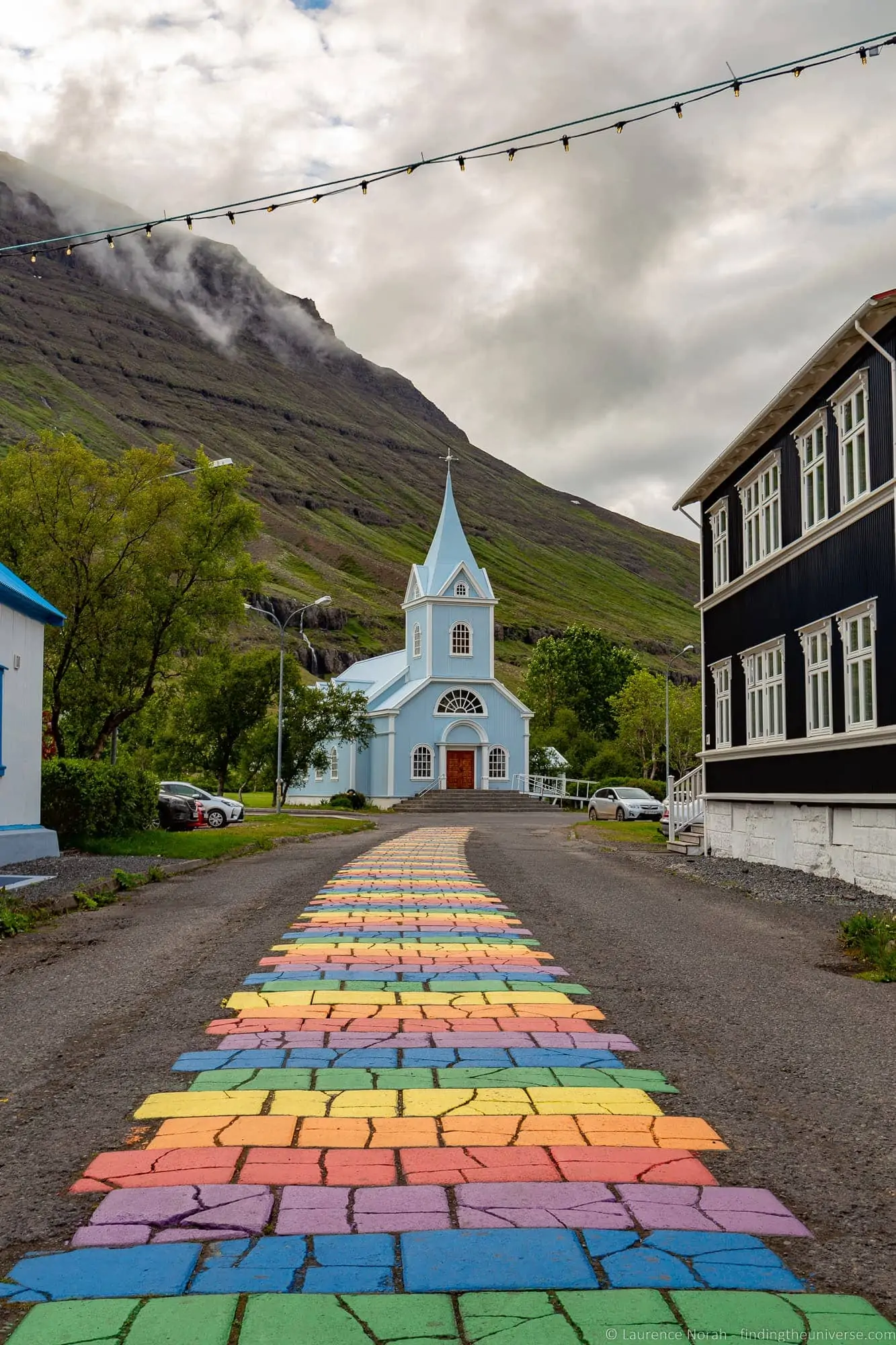
Seyðisfjörður is properly worth the detour. The drive out is spectacular (Secret Life of Walter Mitty fans will recognise it as the road Walter longboards down), the village itself is a coastal pocket of colourful wooden houses, and the rainbow-painted street leading to the blue church has become one of Iceland’s most photographed streets. On the way out, stop at Fardagafoss for a 45-minute round-trip hike to a pretty waterfall.
Day 4 Highlights: Vestrahorn / Stokksnes, Djúpivogur, Sveinsstekksfoss, Folaldafoss, Petra’s Stone Collection, Egilsstaðir, Seyðisfjörður (or Borgarfjörður Eystri for puffins)
Suggested timing: Vestrahorn / Stokksnes (30-45 min), Djúpivogur (30 min to 1 hour), Sveinsstekksfoss and Folaldafoss (15 min each), Petra’s (30-45 min), Seyðisfjörður (1-2 hours with Fardagafoss hike), OR Borgarfjörður Eystri puffins (2.5 hours round trip plus viewing).
Start: Hofn
End: Egilsstaðir or Seyðisfjörður
Distance driven: 281 km (173 miles), more with a Borgarfjörður Eystri detour
Where to Stay on Day 4
Egilsstaðir or Seyðisfjörður.
Budget: Hafaldan HI Hostel in Seyðisfjörður. Tehúsið Hostel in Egilsstaðir.
Mid-range: Hótel Eyvindará, 2km from Egilsstaðir with private bathrooms and some rooms with terraces.
Luxury: Hotel Aldan The Bank, two historic buildings in the centre of Seyðisfjörður where we stayed. Lovely rooms, beautifully decorated. Hérað (Berjaya Iceland Hotels) in Egilsstaðir with terrace bar, 24-hour room service, and en-suite rooms.
See more options in Seyðisfjörður and Egilsstaðir.
Day 5: East Iceland to Mývatn
Day 5 takes you from East Iceland into the north, with the northern jewel of Lake Mývatn as the payoff. Before you leave Egilsstadir, if wildlife is a priority, East Iceland is the only place to see Iceland’s wild reindeer, which were introduced from Norway in the 18th century and have only ever thrived in this part of the country.
We have seen reindeer herds by the roadside ourselves, simply by driving slowly through the region and keeping our eyes open. The best chances are in winter and spring (October to April), when the herds come down from the highlands to lower pastures. In summer, they retreat to the highlands north of Vatnajökull and are much harder to spot without a guide.
If you want to maximise your chances, a dedicated reindeer safari is the way to do it. Guide to Iceland’s 4-hour Super Jeep reindeer tour runs from Breiðdalsvik and Egilsstadir, with experienced trackers who know where the herds are currently moving. Alternatively, Tinna Adventure runs a smaller-operator version from Breiðdalsvik (October to mid-June).
Before leaving the East Iceland area, one more stop worth a detour: Vök Baths, on Lake Urriðavatn just 5 km from Egilsstadir. These are relatively new geothermal baths (opened 2019) with floating infinity pools set directly into the lake. The architecture is striking, the water quality is very good, and (the part that counts) they are far less crowded than either the Blue Lagoon or Earth Lagoon Mývatn later today. If you want to try one good Icelandic hot spring on this trip, Vök is my pick. Allow 1.5-2 hours. Book Vök Baths here.
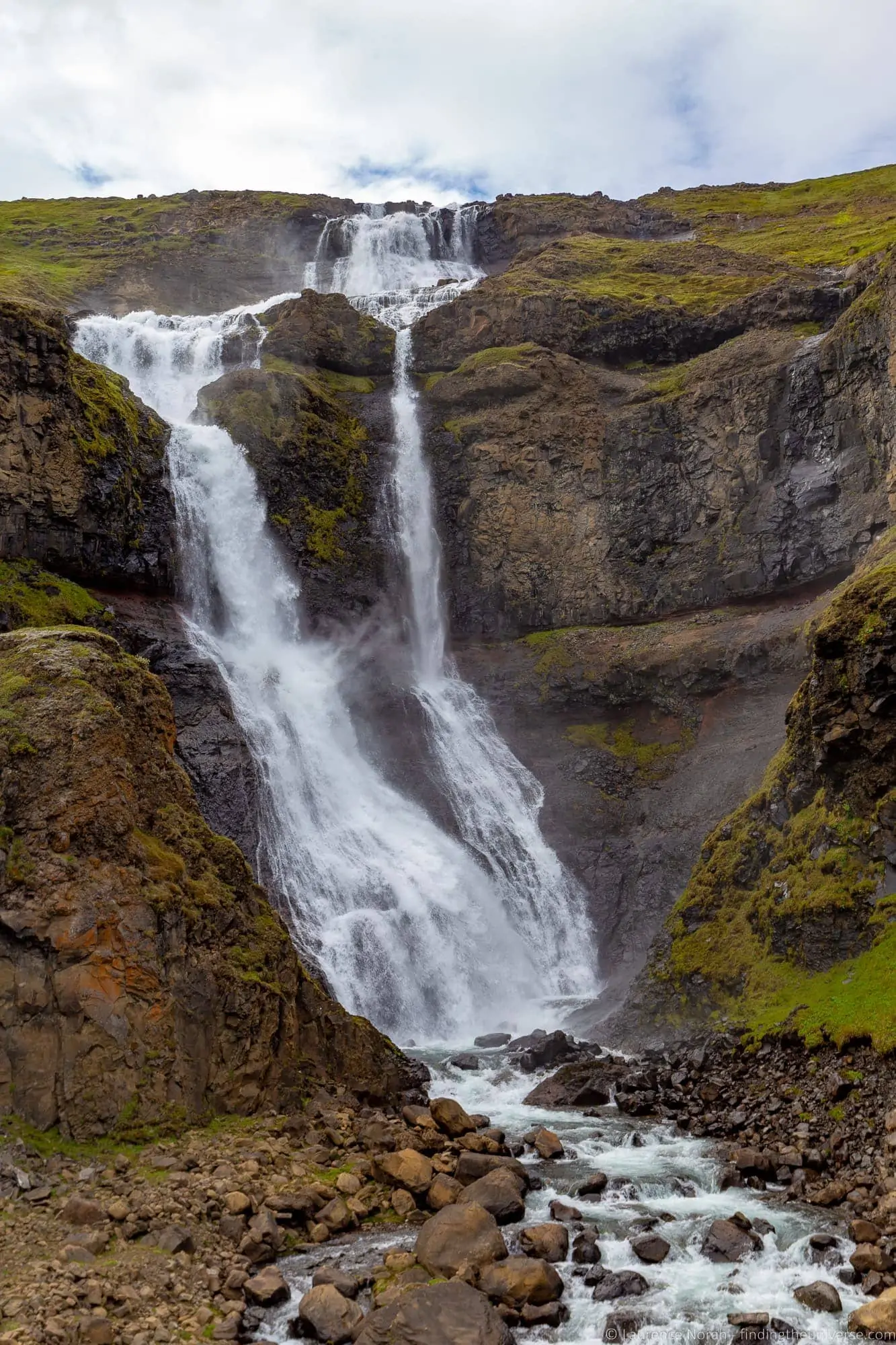
From Egilsstadir, your first major stop along Route 1 is Rjukandi waterfall, about a 40-minute drive out. There is a parking lot and a 5-10 minute walk up to the main viewpoint. Allow 25 minutes.
Not long after Rjukandi, you will see a turning for Sænautasel and Möðrudalur on the F970 unpaved mountain road. If you have a proper 4×4 with high clearance, the road is open, and you have the time, it is a fun detour. Sænautasel is a restored turf farmhouse where you can get coffee and pancakes in a 19th-century Icelandic home, and Möðrudalur has more turf houses and is the highest-altitude inhabited farm in Iceland. Add at least 2 hours if you take this detour, which means skipping something else.
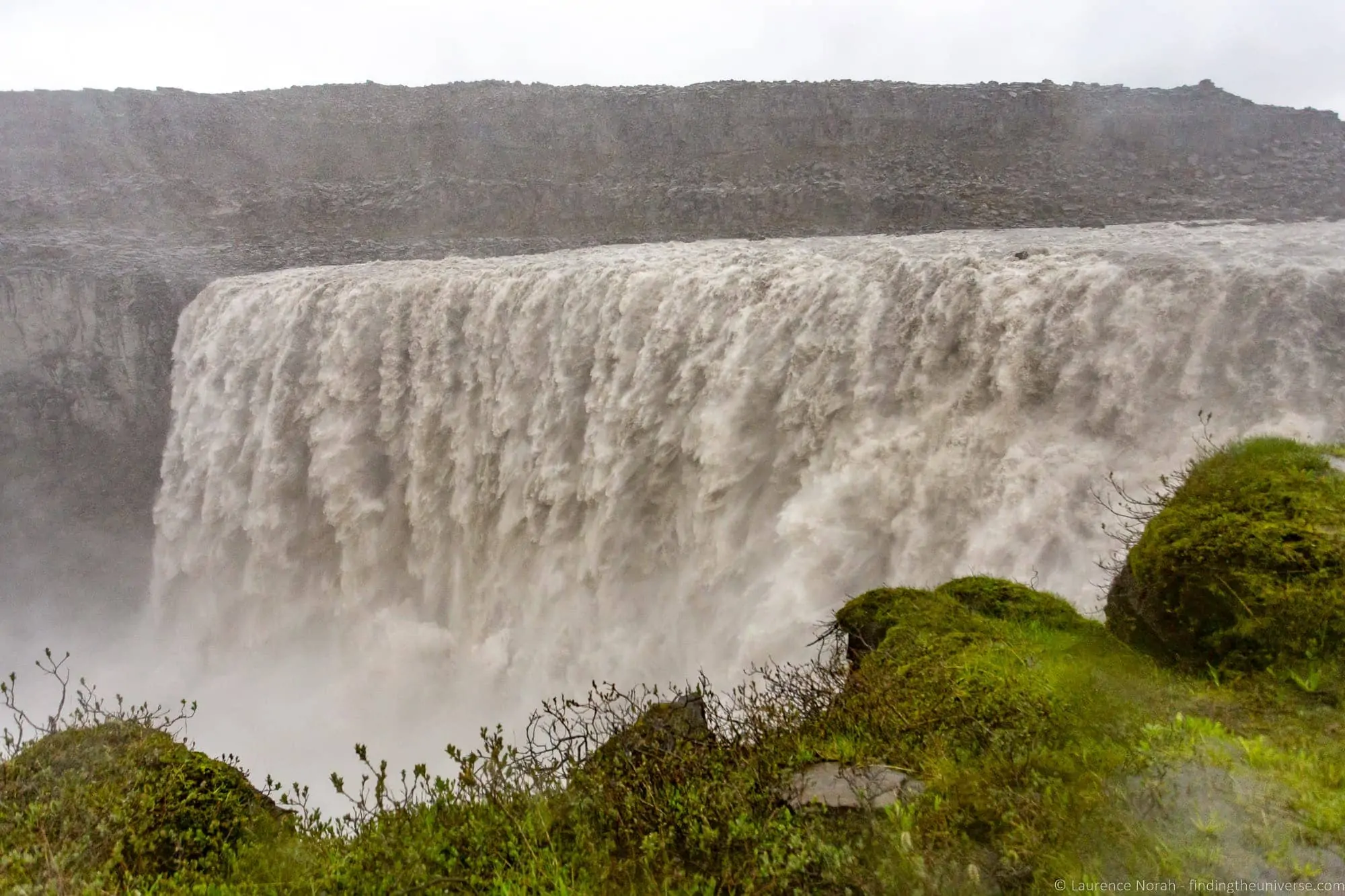
The next major stop is Dettifoss, one of the highlights of Iceland’s Diamond Circle. Dettifoss is Europe’s most powerful waterfall by water volume, with about 500 cubic metres per second thundering over a 100-metre-wide, 45-metre-high drop. It is the kind of natural feature that is quite difficult to describe in words because the sheer scale of it is disorienting.
Two roads lead to Dettifoss. Route 862 on the west side is paved and leads to the less-dramatic but more accessible viewpoint. Route 864 on the east side is gravel and leads to the closer, more intense viewpoint. Most visitors do 862. If you have a 4×4 and good weather, 864 is the better experience. Both roads can close in bad weather.
From the west-side viewpoint, a short walk also takes you to Selfoss, a smaller but still very impressive waterfall upstream.
You could extend the Diamond Circle from Dettifoss by continuing north to Hljóðaklettar (columnar rock formations, 1 hour), Asbyrgi canyon, or Húsavík for whale watching. Húsavík is the whale-watching capital of Iceland, with whale encounter rates over 95% in season, so if whales are a priority for you it is worth considering overnight there instead of rejoining Mývatn. For this itinerary, I am assuming you return to the Ring Road after Dettifoss and continue to Mývatn.
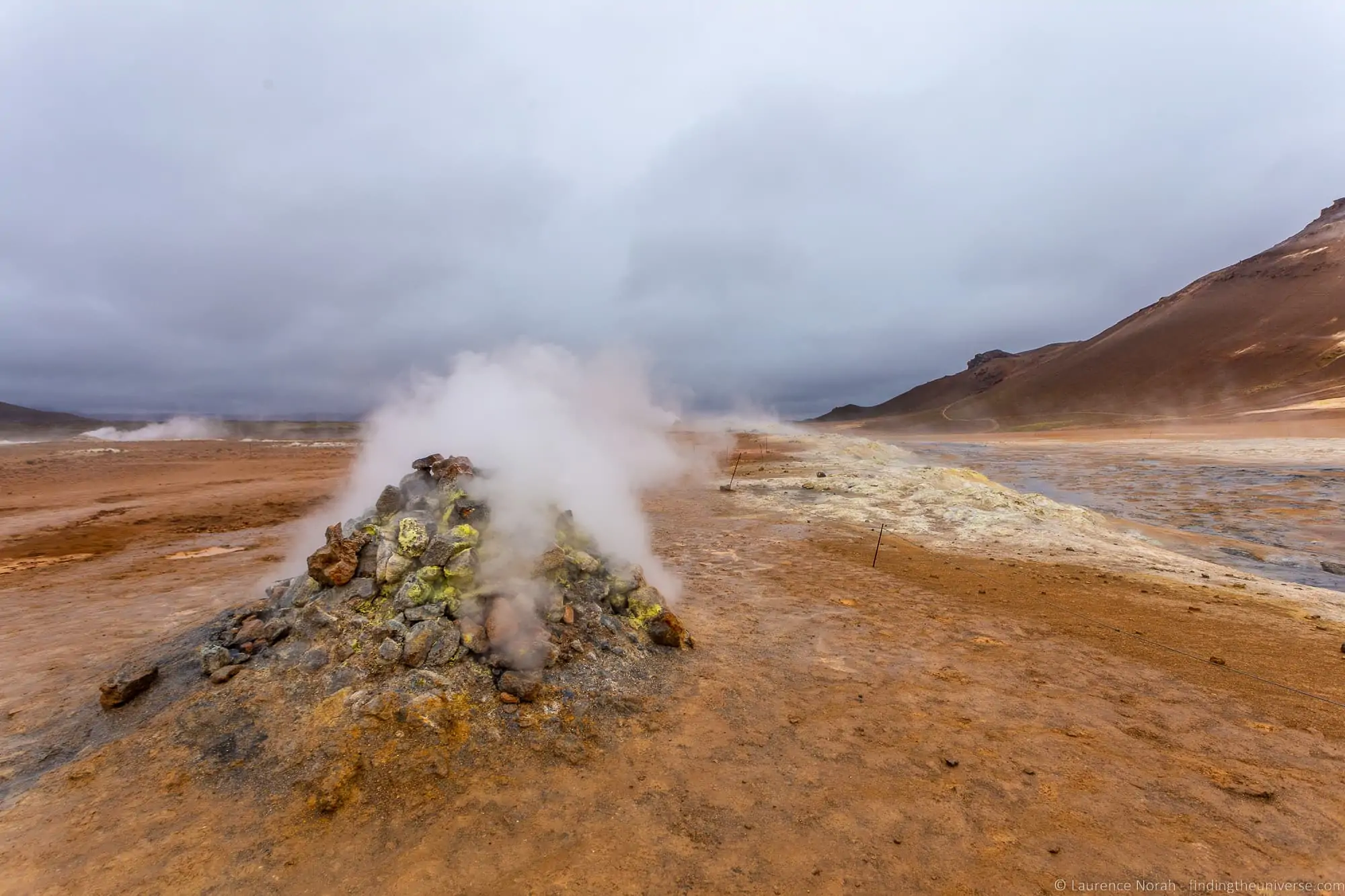
Lake Mývatn is one of the most geologically active regions in Iceland, and you could quite happily spend three days here. We are splitting the highlights between Day 5 (afternoon) and Day 6 (morning). On Day 5, stop at Hverir, a geothermal area with bubbling mud pools, steam fumaroles, and mineral-stained ground that makes you feel like you have landed on another planet. The smell is sulphurous (I will leave the obvious joke alone) and the site is small but unforgettable. Allow 30-45 minutes.
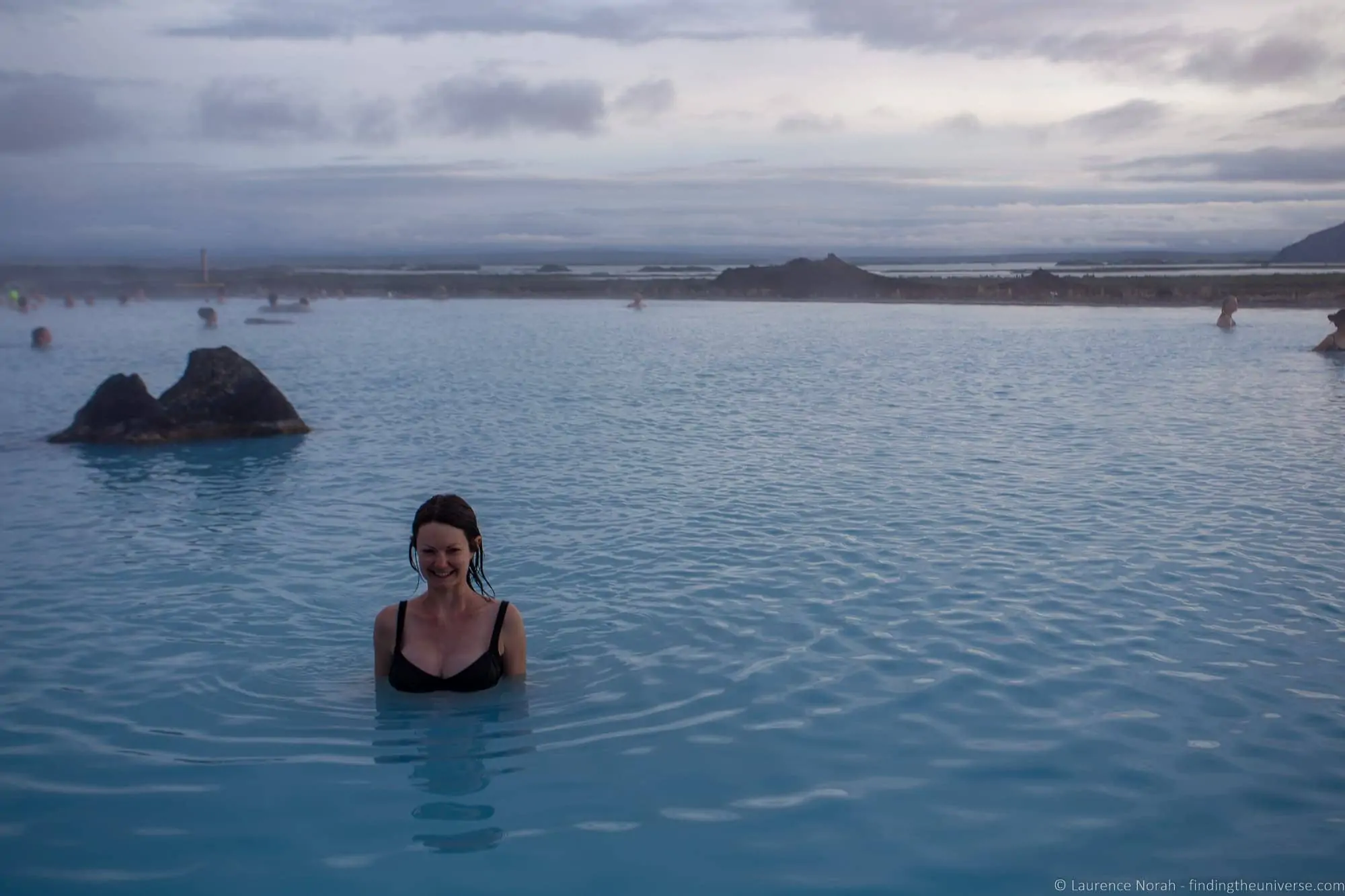
Finish the day at the Earth Lagoon Mývatn, formerly the Mývatn Nature Baths. If you skipped Vök earlier, this is your northern hot-spring experience. Earth Lagoon Mývatn is similar in concept to the Blue Lagoon (milky-blue mineral water, outdoor setting) but at a fraction of the crowds and with a better view, looking out across the whole Mývatn area from a hillside. It closed at the start of 2026 for a full rebuild and reopened in July 2026 with a larger lagoon, a steam cave and a swim-up bar. My photos here predate that work. Entry starts at 7,900 ISK. Book ahead, and bring a towel because rental is expensive.
Day 5 Highlights: Reindeer safari (optional), Vök Baths (optional), Rjukandi waterfall, Studlagil Canyon (optional detour), Dettifoss, Hverir, Earth Lagoon Mývatn
Suggested timing: Vök Baths (1.5-2 hours) OR Earth Lagoon Mývatn (1.5-2 hours) – pick one, not both. Rjukandi (25 min), Dettifoss (1 hour with Selfoss walk), Hverir (45 min). If doing Studlagil, add 3 hours and plan to skip either Dettifoss or one of the hot springs.
Start: Egilsstadir / Seyðisfjörður
End: Lake Mývatn
Distance driven: 262 km (162 miles)
Where to Stay on Day 5
Lake Mývatn area. If you detoured to Húsavík, stay there.
Budget: Skútustadir Guesthouse, a farm-based guesthouse with shared or private bathrooms.
Mid-range: Vogafjós Farm Resort, a family-run guesthouse with on-site dining. Dimmuborgir Guesthouse, with self-catering cottages or rooms with shared kitchen.
Luxury: Laxá Hótel, a design hotel 2km from the lake with great views, where we have stayed. Fosshótel Mývatn, very well reviewed with on-site restaurant.
See more options in the Lake Mývatn area.
If you chose the Diamond Circle detour to Húsavík, we stayed at the Kaldbakskot Cottages. More options here.
Day 6: Mývatn to Akureyri
Day 6 is one of the more relaxed days of the itinerary. You explore the rest of the Mývatn highlights in the morning, then make the short drive to Akureyri, the “capital of the north,” for the night.
First stop is Grjótagjá Cave, a small lava cave with a hot spring inside. Until the mid-1970s, locals bathed here; now the water temperature is too high for that (and yes, the cave was used as a Game of Thrones filming location, which made it properly famous).
2026 update: As of March 2026, access to the interior of the cave is closed, due to vandalism, littering, and dangerously hot water. You can still view the hot spring from the cave entrance, which is what most visitors do these days. Allow 15 minutes. Last verified: 22 April 2026.
Next is Hverfjall Crater, a kilometre-wide volcano crater. It is a 15-minute steep walk up to the rim, and the views from the top are magnificent. If you want to walk the rim, that adds another 45 minutes to an hour. Allow 1-1.5 hours total.
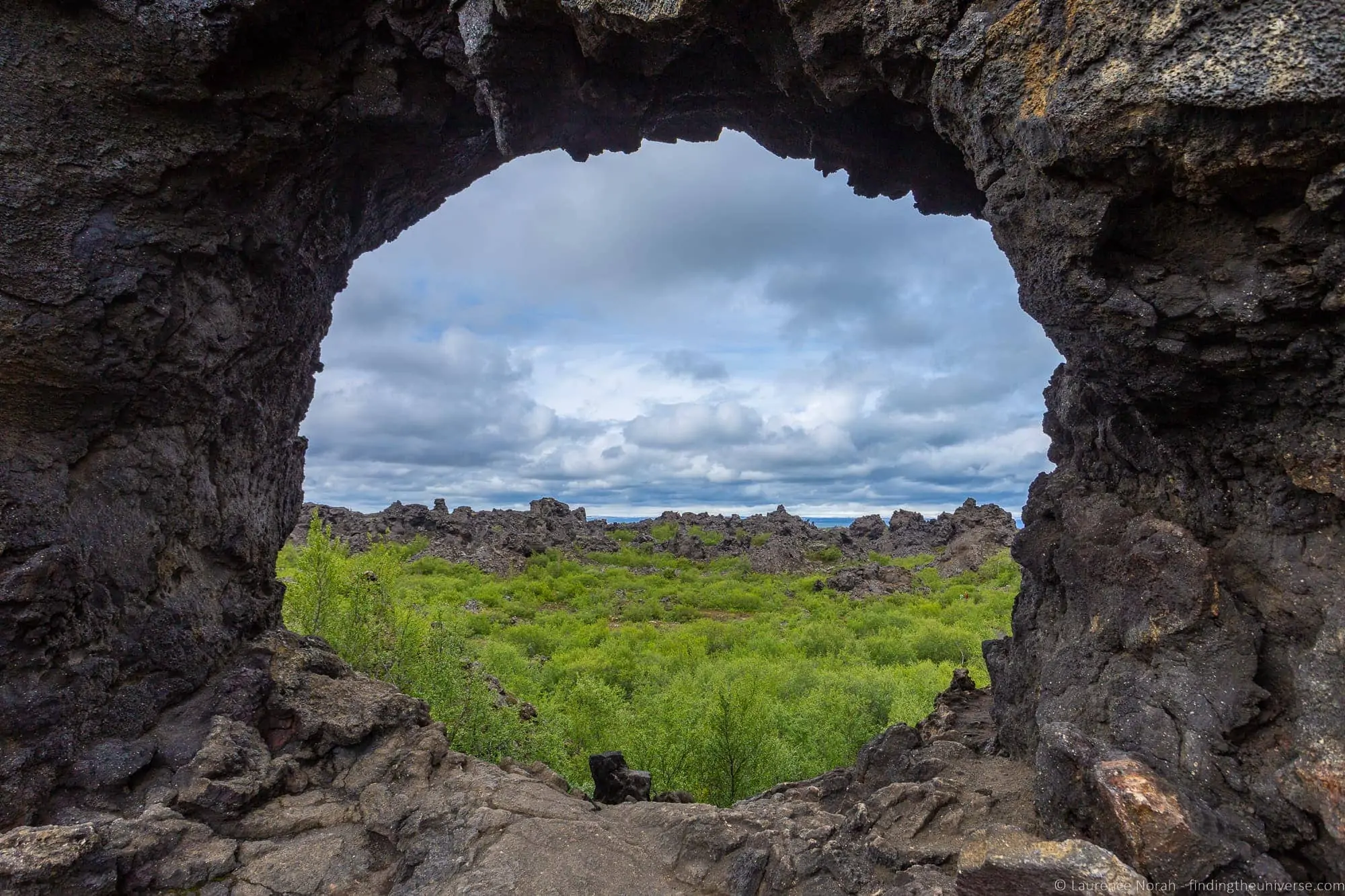
From Hverfjall, head to Dimmuborgir, a lava field full of spectacular rock formations (and another Game of Thrones location, specifically Mance Rayder’s wildling camp). There are a variety of well-marked walks of varying lengths, or you can just take in the view from the platform near the car park. There is a café and gift shop here with toilets. Allow 45 minutes to 1 hour.
Two more quick Mývatn stops: Hofdi, a small nature reserve with walks near the lake and rock formations jutting from the water (30 min), and Skútustaðagígar, the “pseudo-craters” (not volcanic craters, but depressions formed when lava flowed over wet ground and caused steam explosions). This is also one of the best bird-watching spots in the area (30 min).
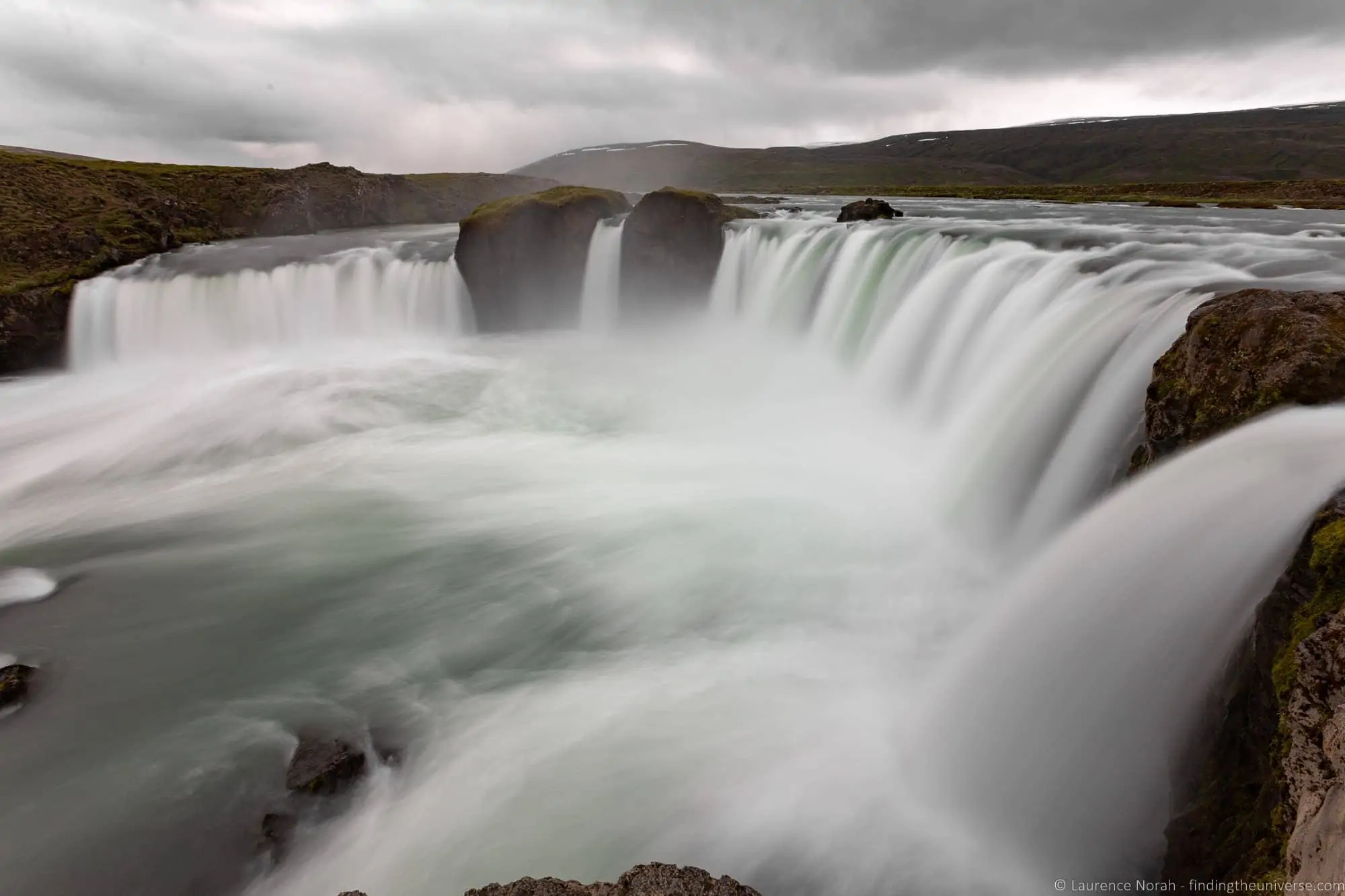
Now head west on Route 1 toward Akureyri, with one essential stop along the way: Goðafoss, the “Waterfall of the Gods.” The name comes from the story (possibly apocryphal) that in the year 1000 AD, when Iceland converted to Christianity, an influential local chieftain threw his pagan idols into these falls. The waterfall is a spectacular horseshoe shape with good viewpoints from both sides, and it is right off the Ring Road, so you literally cannot miss it. Allow 30 minutes.
Final drive of the day is to Akureyri, the biggest town in north Iceland with about 19,000 residents. This is the proper “town” stop of the trip and if you arrive by mid-afternoon you will have plenty of time to explore. Things I would put on your Akureyri list:
Forest Lagoon. If you did not do Vök or Earth Lagoon Mývatn and still want an Icelandic hot-spring experience, Forest Lagoon is the best of the Akureyri-area options. It opened in 2022, sits overlooking Eyjafjörður, and has a forest-surrounded setting that is lovely at sunset. Allow 1.5-2 hours.
Akureyrarkirkja. The church above the town, with great views down over the harbour and the fjord. Worth the walk up the steps.
Museums. Akureyri has a surprising density of museums for a town its size: the Motorcycle Museum of Iceland, the Industry Museum, the Akureyri Art Museum, Nonnahús, and Safnasafnið, the Icelandic Folk and Outsider Museum. A good rainy-day hedge.
Dinner. Akureyri has a surprisingly good restaurant scene for a northern Icelandic town. Treat yourself.
Day 6 Highlights: Grjótagjá Cave, Hverfjall Crater, Dimmuborgir, Skútustaðagígar, Goðafoss waterfall, Akureyri, Forest Lagoon
Suggested timing: Grjótagjá (15 min), Hverfjall (1-1.5 hours), Dimmuborgir (45 min to 1 hour), Goðafoss (30 min), Akureyri afternoon and evening. Forest Lagoon (2 hours) fits before dinner.
Start: Lake Mývatn
End: Akureyri
Distance driven: 110 km (70 miles)
Where to Stay on Day 6
Akureyri.
Budget: Akureyri Backpackers, a popular and central backpackers. Hafnarstræti Hostel, capsule beds and shared kitchen.
Mid-range: Hotel Akureyri, central with on-site restaurant. Centrum Hotel, central guesthouse with private bathrooms.
Luxury: Hotel Kea, a central 4-star where we stayed. Comfortable rooms, good on-site restaurant.
See more options in Akureyri.
Day 7: Akureyri to Borgarnes / Reykjavik
Day 7 is the second-longest driving day of the trip, taking you from Akureyri back across the north and west of Iceland toward Reykjavik. 370 km on the odometer before any detours, so start reasonably early and pace yourself.
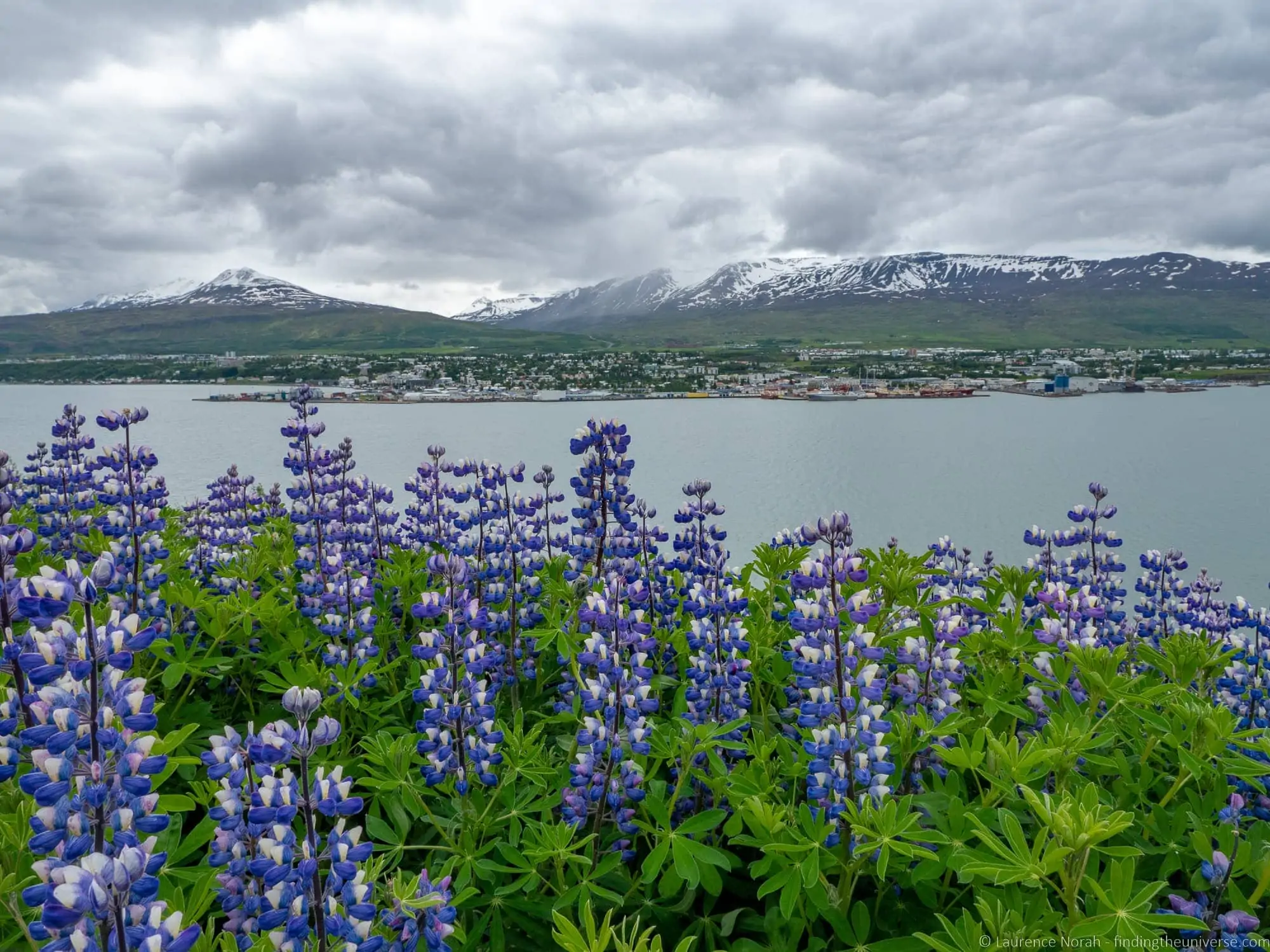
If you have not already explored Akureyri, do a morning wander before departing. An hour or two is enough for the main highlights.
From Akureyri, you have a choice between two detour options on the way back. You cannot reasonably do both in one day, so pick one.
Option A: Vatnsnes Peninsula. A 2-3 hour detour to see the Hvítserkur rock formation (the famous “rhino” sea stack) and, if wildlife is your thing, the Icelandic Seal Center at Hvammstangi. East Iceland is the only place in Iceland to see reindeer; Vatnsnes is one of the best places to see seals, both in the wild and at the dedicated research centre. If the sky cooperates, Hvítserkur at sunset is one of the classic Icelandic photographs.
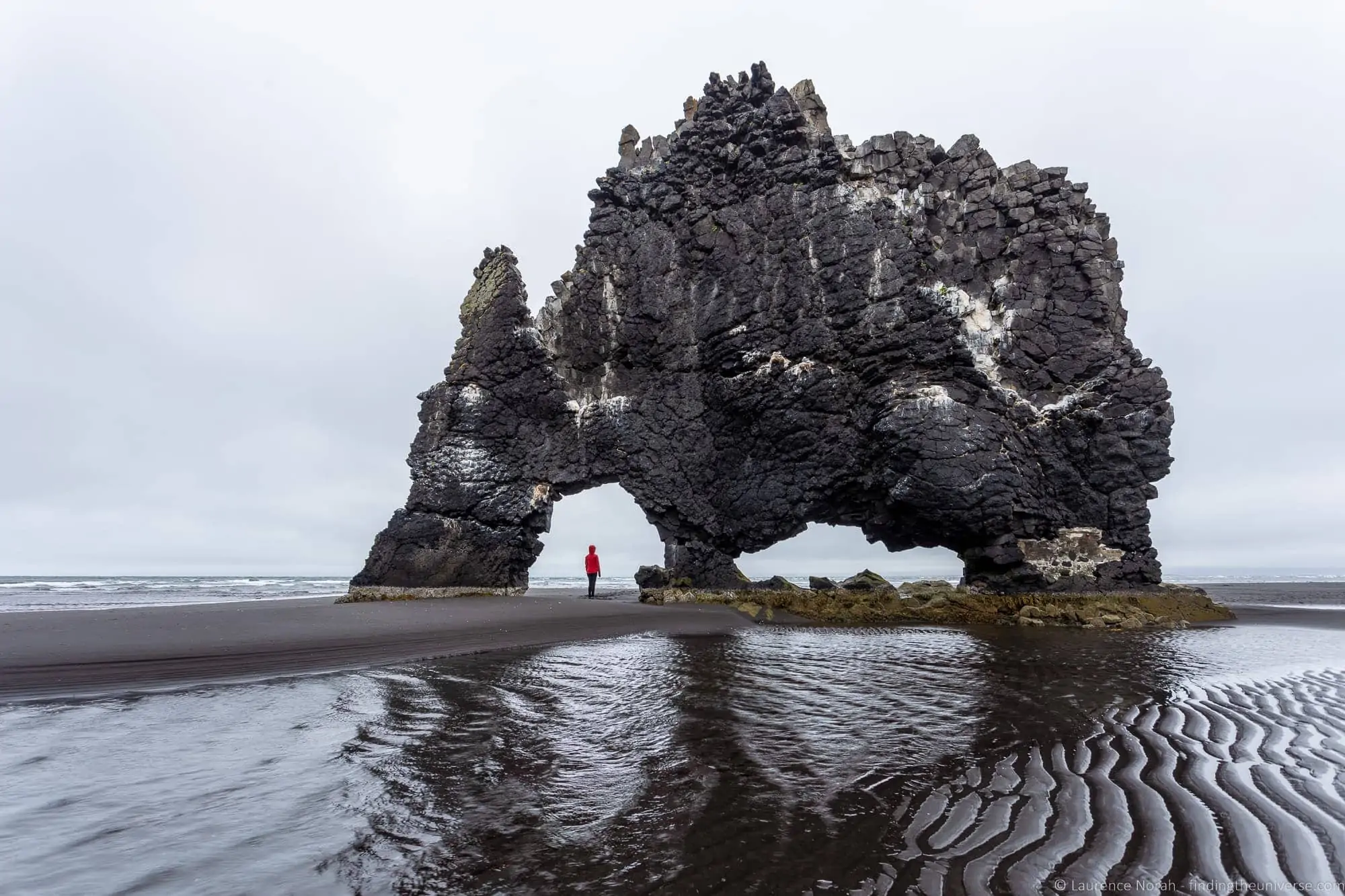
Option B: Grábrók Crater and Kolugljúfur Canyon. A less time-consuming pair of stops closer to Borgarnes. Grábrók is a 3,000-year-old volcanic crater with a short, gentle 30-45 minute hike to the rim, with wooden steps and a gravel path. Views from the top extend to the Snæfellsnes Peninsula on clear days. It is a perfect leg-stretcher between long drives. Kolugljúfur is a narrow canyon with a dramatic waterfall just off Route 1, worth 20-30 minutes.
If you are a photographer and want the signature shot, pick Vatnsnes. If you want to pace the day more gently and still have the option of a Borgarnes overnight, pick Grábrók and Kolugljúfur.
Finish the day by heading down to Borgarnes, where you might consider a visit to the Saga Museum, or drive all the way to Reykjavik for your final night. The choice depends on how much driving you have left in you and whether you want to maximise time in the capital on Day 8.
Day 7 Highlights: Akureyri morning, EITHER Vatnsnes/Hvítserkur/Seal Center OR Grábrók Crater/Kolugljúfur, Borgarnes Saga Museum (optional)
Suggested timing: Akureyri morning (1-2 hours), choose your detour option (2-3 hours for Vatnsnes, 1.5 hours for Grábrók plus Kolugljúfur), Borgarnes Saga Museum if visiting (1 hour). This is the longest driving day, so budget accordingly.
Start: Akureyri
End: Borgarnes or Reykjavik
Distance driven: 370 km (230 miles), more with Vatnsnes detour
Where to Stay on Day 7
Borgarnes or Reykjavik.
In Borgarnes: we have stayed at Hotel Hamar, which was comfortable and well-located. See more lodging options for Borgarnes.
In Reykjavik:
Budget: KEX Hostel, a former biscuit factory with dorms, private rooms, and a good on-site bar and restaurant. B14 Hostel, a quieter option with free coffee and communal kitchen.
Mid-range: Guesthouse Galtafell, a good-value option near the city centre, where we have stayed. Offers guest rooms and apartments with kitchenettes.
Luxury: Grand Hotel Reykjavik, 1.2 miles from the centre, with 4-star accommodation, free WiFi, spa, and free parking. We have stayed here. Reykjavik Natura (Berjaya Iceland Hotels), near the city airport, with free parking, free city bus pass for guests, and spa facilities. We have also stayed here.
See more options for Reykjavik. If your flight is very early and you want to overnight near the airport instead, we have stayed at the Northern Light Inn, 17 minutes from Keflavik and right next to the Blue Lagoon.
Day 8: Reykjavik
Your final day. After a week on the road, Reykjavik comes as a slight shock: proper restaurants, proper coffee shops, people in slightly more than four layers of technical clothing. It is a lovely small capital city and worth proper exploration before you fly home.
Some Reykjavik highlights that I would prioritise:
Hallgrímskirkja. The 74-metre concrete church on the hill, visible from most of Reykjavik. Inspired by basalt columns. You can take a lift up the tower (around 1,500 ISK) for arguably the best view of the city.
Sun Voyager. The stainless-steel sculpture by the waterfront, near Harpa. Deliberately designed to look like a Viking longship (although the artist insists it is actually a “dream boat”). Iconic Reykjavik photograph, particularly at sunset.
Harpa Concert Hall. The striking glass building by the harbour. Even if you are not going to a concert, the architecture is worth a look.
Laugavegur. The main shopping street, good for Icelandic wool, local design, and an alarming density of souvenir shops.
The Old Harbour. Good restaurants, departure point for whale watching and puffin watching tours in summer.
If you skipped the Blue Lagoon on Day 1, today is a good day to do it (or the Sky Lagoon, which is closer to the city centre). Both are better at the end of a trip than the start, in my view, because a long soak after seven days of driving is rather lovely.
Then it is back to the airport, car return, and home. You have successfully driven the Iceland Ring Road.
Day 8 Highlights: Reykjavik city sightseeing, Blue Lagoon or Sky Lagoon if not done on Day 1, departure
Suggested timing: Reykjavik morning (Hallgrímskirkja, harbour, Laugavegur: 2-3 hours on foot), Blue Lagoon / Sky Lagoon if visiting (allow 3 hours including transit), plenty of buffer time for car return. In summer, rental car return queues can be long.
What This Itinerary Skips (and Why)
Seven days of actual driving does mean trade-offs. Here is what this itinerary deliberately leaves out.
Snæfellsnes Peninsula. Often called “Iceland in miniature” because it packs a glacier-capped volcano, waterfalls, lava fields, and black sand beaches into a compact area. Snæfellsnes deserves at least one full day, and ideally two. If you have eight or nine days, this is the first thing I would add, slotting it between Borgarnes and Reykjavik on Day 7-8.
The Westfjords. One of the most remote and dramatic parts of Iceland. The roads are slow and the distances add up fast. Budget at least three extra days for a proper Westfjords visit.
The Highlands. The interior is only accessible in summer via F-roads that require a capable 4×4. Landmannalaugar is the most popular destination and could be reached as a long day trip from the south coast with the right vehicle.
Húsavík and whale watching. Mentioned as an option on Day 5. Not in the main line because it would mean skipping something else. If whale watching is non-negotiable for you, add an extra day in the north.
Trollaskagi Peninsula. Scenic peninsula between Akureyri and the west. Lovely if you have an extra half-day on Day 7.
Krafla Crater. Often included on Diamond Circle itineraries. Skipped here because it overlaps significantly with Hverfjall and Hverir, both of which are already in the Day 5-6 plan.
Iceland Ring Road Itinerary Map
Here is the suggested route as a map, including attractions and recommended overnight stops. See it on Google Maps here.
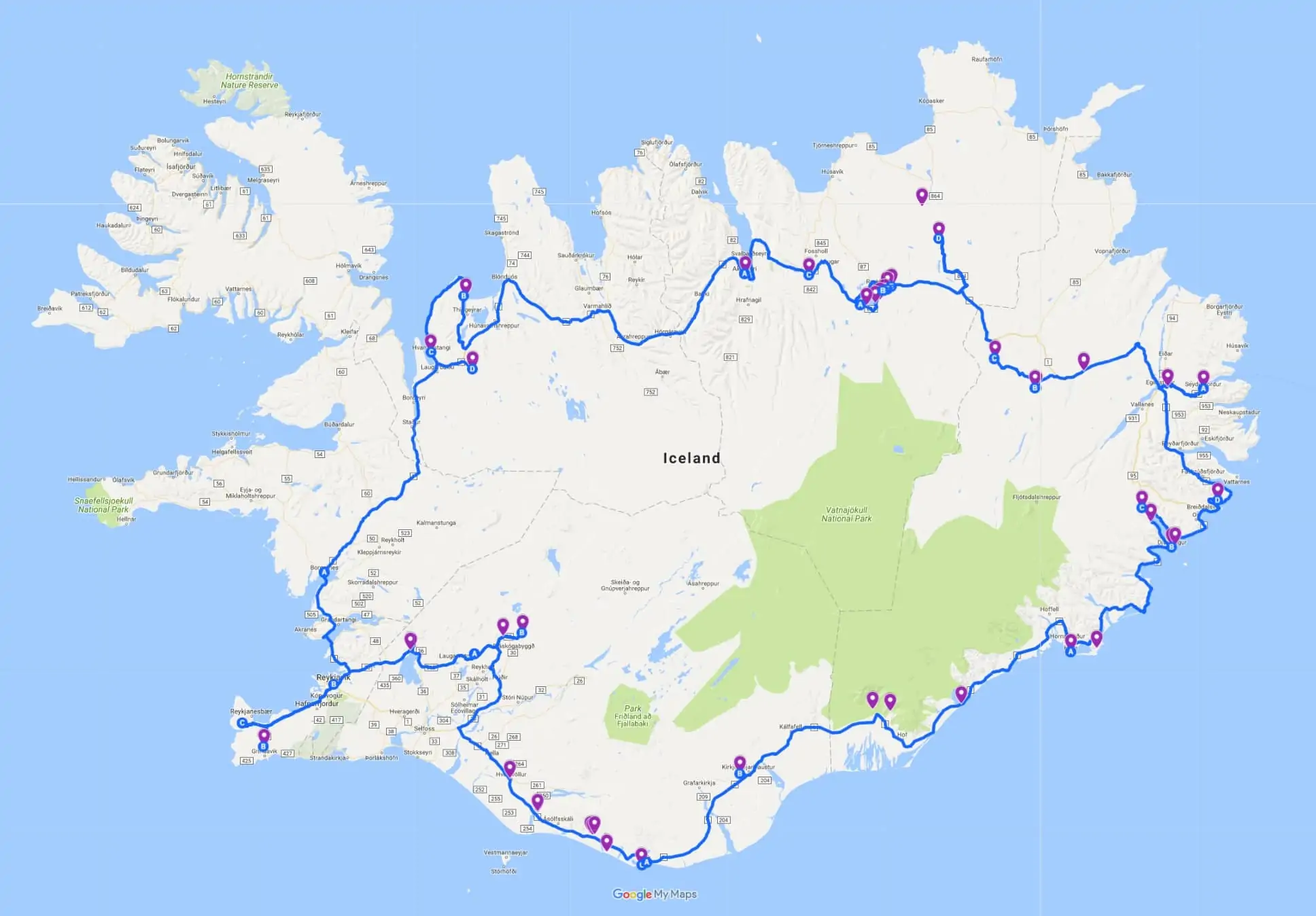
Iceland Ring Road Itinerary Overview
- Day 1: Blue Lagoon, Thingvellir National Park, optionally Kerið Crater
- Day 2: Geysir, Gullfoss, Lava Center, Seljalandsfoss, Gljúfrabúi, Skogafoss, plane wreck (optional), Reynisfjara
- Day 3: Fjaðrárgljúfur, Eldhraun lava fields, Skaftafell / Svartifoss, Jökulsárlón Glacier Lagoon, Diamond Beach, Hofn
- Day 4: Vestrahorn / Stokksnes, Djúpivogur, Petra’s Stone Collection, Egilsstadir, either Seyðisfjörður or Borgarfjörður Eystri puffins
- Day 5: Reindeer safari (optional), Vök Baths, Rjukandi, Dettifoss, Hverir, Earth Lagoon Mývatn, optional Studlagil Canyon detour
- Day 6: Grjótagjá, Hverfjall, Dimmuborgir, Skútustaðagígar, Goðafoss, Akureyri, Forest Lagoon
- Day 7: Akureyri, either Vatnsnes/Hvítserkur or Grábrók/Kolugljúfur, Borgarnes
- Day 8: Reykjavik, Blue Lagoon (if not done Day 1), depart
Planning A Self-Drive Ring Road Trip
We have written a detailed guide to planning a trip to Iceland, which is worth reading alongside this itinerary. Here are the specifics for a Ring Road self-drive.
Two main options: book a self-drive package or book everything yourself.
A self-drive package (from operators like Nordic Visitor, Guide to Iceland, or TourRadar) handles the car, the accommodation, and a suggested itinerary. You just turn up and drive. This is what we have done on most of our Iceland trips, and it saves considerable logistical headache, especially for accommodation in a high-season where peak-summer hotels book out months ahead.
See self-drive trips on Tour Radar and on Guide to Iceland.
The alternative is to book everything yourself, which is how I would approach it for maximum flexibility.
For the car, I recommend comparing prices on Discover Cars, which searches across multiple providers, and on Northbound, an Iceland-based comparison site. Northbound is particularly useful because you can add Iceland-specific insurance (gravel, sand, ash) during booking, which solves the rental-counter ambush problem I mentioned earlier.
A standard 2WD is fine for the Ring Road in summer. Route 1 is paved for its entire length. You only need a 4×4 if you plan detours onto gravel roads or F-roads, or if you are travelling in winter. Whatever you choose, add gravel protection and sand/ash protection to your insurance. The insurance is not optional in any meaningful sense.
Once the car is sorted, book your accommodation. I have included specific recommendations for each night of the itinerary. For summer travel, book at least three months ahead.
Travel insurance is worth it for Iceland. Weather disrupts plans, medical care is expensive for visitors, and car rental excess charges can be steep if anything goes wrong. Check that your policy covers driving on gravel roads if you plan any detours off Route 1.
Where Can You See the Northern Lights in Iceland?
Almost anywhere dark with clear sky, from late September through March. The daylight is too long in summer to see them. You need a dark sky and solar activity to line up, and both of those are unpredictable.
If you are driving, find a spot away from city lights, check the Icelandic Met Office aurora forecast, and look up. If the forecast and cloud cover cooperate, you will see them. If they do not, you will not. It is not complicated, it is just unreliable.
If you are in Reykjavik, northern lights tours are a reasonable option. Good operators cancel and refund on nights with no chance of activity, and the drivers know the best spots.
If photographing the lights is your plan, see my guide to how to photograph the northern lights.
Where to Stay in Iceland?
The accommodation picks for each day above cover the route itself. For the areas the Ring Road does not reach, we have a region by region breakdown of where to stay in Iceland. Some broader notes:
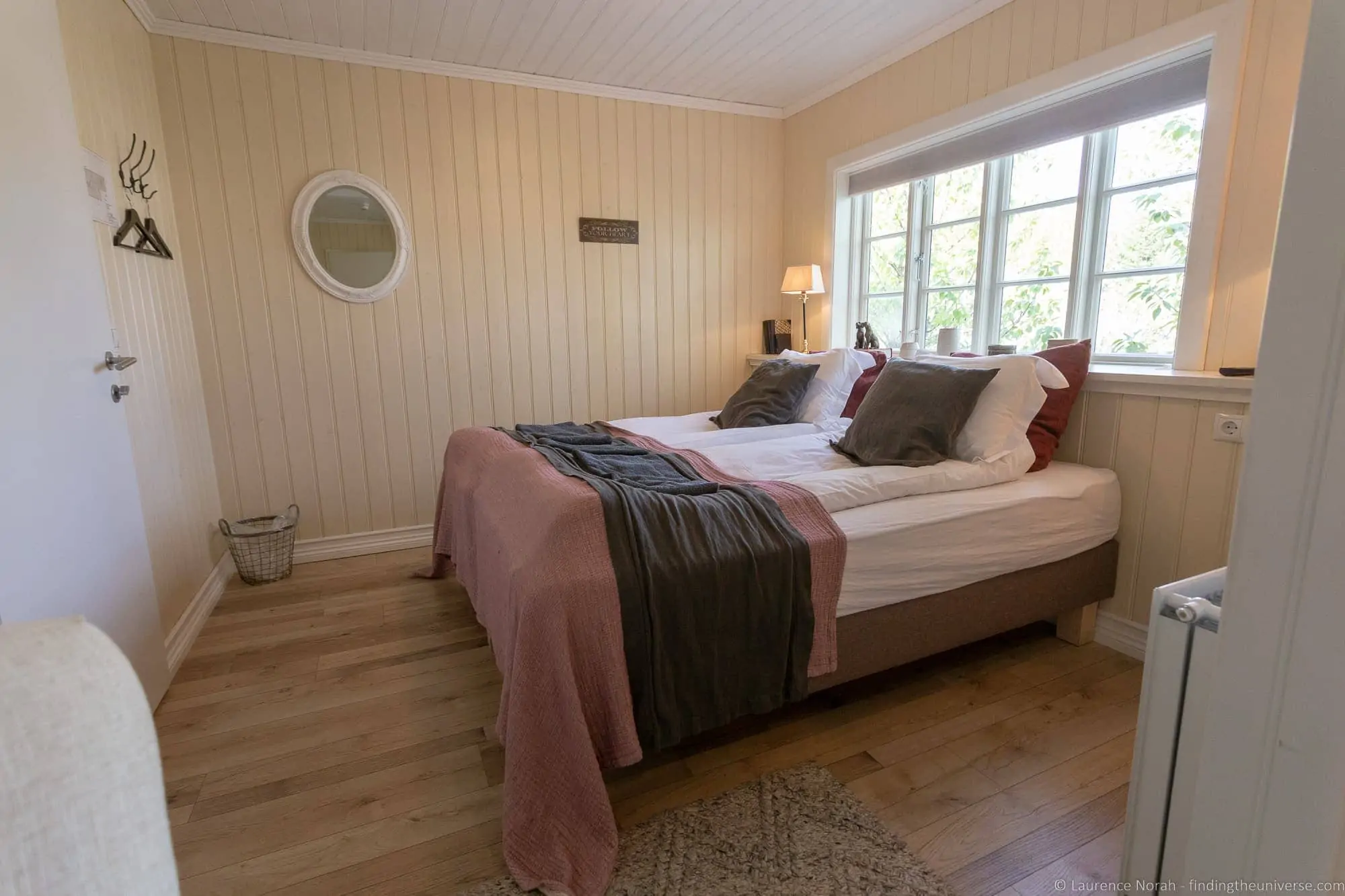
For self-drive road trips, our accommodation was arranged as part of the package. You can see a selection of self-drive tours.
For booking hotels directly, we use Booking.com, which has the biggest inventory and the best review system for the kind of mid-range guesthouses that make up most of the Ring Road accommodation.
We have also used apartment rental platforms for longer stays. For more on this, see our guide to the best alternatives to Airbnb. For one-night road-trip stops where your arrival time is variable, we prefer hotels and guesthouses because you do not have to co-ordinate key pickup with an owner.
Camping and campervans are popular. Iceland has around 200 official campsites, most open from mid-May to mid-September, with fees typically 1,500 to 2,500 ISK per person per night. A Camping Card (around $190) gives access to a network of sites. Wild camping is not permitted, so you must use designated sites. If you are considering a campervan, note that rental costs are significantly higher than a standard car, and you still pay for campsites.
Power in Iceland
Iceland uses a 220V system with the same two-pin European plug. UK and US travellers will need a travel adapter. See our Iceland packing list for suggestions, and our guide to the best travel adapters for how to pick one. Pick up your adapter before you fly, because Iceland is not the place to discover you need one.
Internet Access in Iceland
WiFi is easy to find. Every hotel and guesthouse we have stayed at had free WiFi.
For mobile data on the road (which you will want for navigation, Parka parking payments, and spontaneous Google searches at waterfalls), the easiest option in 2026 is an eSIM. We use and recommend Airalo, which lets you buy an Iceland data plan before you leave home and activate it the moment you land. No SIM shop hunting, no worrying about your phone being unlocked.
If you prefer a physical SIM, Keflavik airport has shops. For more options, see our guide to getting online when you travel.
Further Reading for Visiting Iceland
That wraps up the 7-day Iceland Ring Road itinerary. We have a number of other Iceland guides that pair well with this one:
- Our detailed guide to planning a trip to Iceland, with budget tips and practical information
- A guide to driving in Iceland, and a detailed guide to driving in Iceland in winter
- Our list of favourite photography locations in Iceland
- If you are interested in puffins, a detailed guide to puffins in Iceland
- A guide to finding the Iceland plane crash
- If the Ring Road seems like too much or you would rather not drive in winter, Jess has a 7 day winter Iceland itinerary
- A detailed Blue Lagoon guide
- A detailed guide to the Golden Circle
- The best winter activities in Iceland and my tips for cold weather photography
- Iceland on a budget
- What to pack for Iceland in summer and what to pack in winter
- Our guide to best day trips from Reykjavik
- Car rental comparison for Iceland
- Icelandic Met Office for real-time cloud cover and aurora forecast
- SafeTravel Iceland for safety alerts and weather warnings
- Finally, for camera gear, our guides to picking a travel camera, picking a travel lens, and our personal travel photography gear
And that is it. If you have questions or feedback, let me know in the comments below, and I hope you have a spectacular trip.
Frequently Asked Questions About Iceland’s Ring Road
How many days do you need to drive the Iceland Ring Road?
Seven days is the minimum I would recommend for a satisfying Ring Road trip that covers the highlights without feeling rushed. If you can stretch to nine or ten days, you will have more flexibility for detours and longer stops. I took four weeks to drive the route on one of our trips, which was lovely but not realistic for most people.
Do you need a 4×4 for the Iceland Ring Road?
No, not for the main route. Route 1 is paved for its entire length and a standard 2WD is fine in summer. You only need a 4×4 for detours onto gravel roads or F-roads (highland roads), or for winter driving. If you want the flexibility to explore off Route 1, a 4×4 is worth considering.
How much does it cost to drive the Iceland Ring Road?
For two people doing a one-week self-drive trip in summer 2026, expect to spend roughly $4,000 to $6,000 total. This covers car rental with insurance, fuel and the new per-kilometre road charges, mid-range accommodation, a mix of restaurant meals and self-catering, and some paid activities. Hostels and careful budgeting can bring this down; luxury accommodation and daily tours push it up significantly.
What is the best time of year to drive the Ring Road?
June to August is the best window, offering near-endless daylight, the warmest weather, and full access to highland roads and detours. May and September are good shoulder months with fewer crowds but more variable weather. I would not recommend driving the full Ring Road in winter, due to unpredictable road closures, limited daylight, and challenging driving conditions.
Which direction should you drive the Iceland Ring Road?
Either works. I prefer anti-clockwise, tackling the busy south coast first then moving into quieter north and east Iceland. There is no wrong answer. The itinerary in this guide runs anti-clockwise.
What if my flight arrives in the afternoon or evening?
Very common on flights from North America. If you land after about 3pm, skip the Day 1 Blue Lagoon and Thingvellir plan, drive to an airport-area hotel, and start the itinerary fresh on Day 2 morning. You can combine Days 1 and 2 (the Golden Circle section) into a single longer day in summer when you have midnight-sun daylight.
Can I do the Ring Road in 6 days? What about 10?
Six is possible but rushed. You will be sacrificing sleep, sacrificing stops, or both. If you only have six days, I would focus on the south coast and Golden Circle instead of trying the full ring. With 10 days, you gain real flexibility: add the Snæfellsnes Peninsula, spend more time in the Mývatn area, or do whale watching from Húsavík.
Is it safe to drive in Iceland?
Generally yes, but the weather can change rapidly and you need to respect it. Check umferdin.is for current road conditions and SafeTravel Iceland for safety alerts. Watch for single-lane bridges (32 of them on Route 1), high winds (which can be properly dangerous when opening car doors), and sheep on the road. In summer, the main hazards are other tourists stopping suddenly for photos and the occasional sheep.
What about the new 2026 road charges?
From January 2026, Iceland replaced fuel duties with a per-kilometre road tax (approximately 6.95 ISK per km for a standard passenger car). Petrol prices dropped as a result, and most rental companies handle the road charge either as a flat daily rate or as an odometer-based charge at return. The total cost of driving is roughly similar to before. Check with your rental company how they handle it.
Zee says
Very informative post. I would like to do the whole ring road in six days. I know I am going to have to miss some things. What would you say the cities I should stay at? I want to do blue lagoon and Reykjavik at the end of the trip
Laurence Norah says
Thanks Zee! So with six days I’d probably recommend Selfoss or Vik, then Hofn, Egilsstaðir, Myvatn area, Borgarnes area. Of course, if there are sights or activities in specific areas that you are more or less interested in, then you might want to adjust where you overnight each day to account for that. If you are visiting in the summer months then you will have lots of daylight to see more, but if you are planning on visiting in winter just be aware that there can be limited daylight and driving at night means you will miss a lot of the scenery.
Have an amazing time in Iceland, let me know if you have any more questions!
Laurence
Anna R says
Hi. Just a note to say thanks for your amazing blog about driving the Iceland ring road. It was super helpful for informing the planning for our upcoming trip there in September.
Laurence Norah says
It’s my pleasure Anna, have a great trip and let me know if you have any questions!
Laurence
Eric says
Hi Laurence,
Thank you for your detailed guide. I will be travelling to Iceland in July and will be following your itinerary as the days line up perfectly. I just had a question with regards to your itinerary and car rentals – are there any stops in your itinerary that would require an SUV with 4 wheel drive capabilities (F-roads) or would a regular city car be sufficient? Thanks again for all the detailed information you’ve provided.
Best,
Eric
Laurence Norah says
Hi Eric,
On the map that I’ve shared there shouldn’t be any F-roads and you shouldn’t need a 4WD car for this trip, especially not in summer. For Dettifoss, I’d recommend taking road 862 rather than 864.
F roads are very clearly marked, normally with very large signs, so you shouldn’t find yourself on one by accident 🙂
Have a great time in Iceland! Feel free to stop back and let us know how you found the trip!
Laurence
Keehyuk says
Thank you so much for your really detailed guide as well as the other Iceland related content! We just got back from a week in Iceland and worked off a compacted version of your guide here. The result was easily one of the most incredible trips we have ever had! We’ve already talked about going back so we can drive up to the West Fjords and hit some of the spots we missed due to time crunch/weather.
Just something to update your guide, the langostine restaurant you recommended in Höfn (Humarhöfnin Veitingahús) is permanently closed. There is another restaurant in its place now. We were looking forward to trying it but ended up at the Z Bistro down the street instead (fantastic food with generous portions and as fairly decently priced as well).
Laurence Norah says
Hey Keehyuk,
Thanks so much for taking the time to come back and leave your thoughts on the article and your experience in Iceland! I am so pleased to hear that you had a great time! I also hope you guys are able to get back, the West Fjords are absolutely stunning, and very different to the rest of the country.
I must also thank you for your update on the langoustine restaurant in Hofn. To be honest we very rarely recommend restaurants because they seem to come and go more quickly than most other attractions. This was so good that we had to recommend it, and we are sorry to hear it has gone 🙁 I have removed it from this guide, and thanks for the alternative option 🙂
Safe travels!
Laurence
Emily says
Hi there! Some friends of mine and I are planning a trip but we were wondering what you would estimate your budget to be to do the full itinerary for a guided tour versus self drive?? We’re planning on going end of may-June.
Laurence Norah says
Hi Emily,
Great question. So a tour of around this length, such as this one, is going to cost in the region of $1600 – $2000 per person. Then you will have to figure out what the tour does or doesn’t include, such as meals and attraction entry. Most tours include breakfast but often lunch and dinner at your own expense, so that’s another $20 – $50 per person per day depending on your eating style. Food can be quite expensive in Iceland, especially in restaurants.
When travelling on your own, your main costs will be the car rental, accommodation, fuel and meals. With a group of you, you can obviously split the car rental and fuel, although this would depend on how many you are travelling with. For car rental, this site should give you an idea of the cost at your time of year.
For hotels, I will assume you are sharing, so a room for two will generally run you in the region of $100 – $200 a night for two people. Meal costs will be similar as to being on a guided tour as most hotels include breakfast.
There are quite a few variables to take into account, so I can’t give you an exact answer as it will depend on your group size and the level of comfort you are looking for. I would say that doing it yourself will normally work out a little bit cheaper, especially with a group of around four as you can split costs quite easily. It also gives you more flexibiity. However you obviously won’t have the benefit of a guide, and you will have to do all the planning yourself. So cost is not the only thing to consider.
I hope this helps a bit, let me know if I can offer any further input, and have a great trip!
Laurence
Mari says
Dear Laurence,
First of all, thanks for all the amazing range of info and all the practical tips you have on your site. It’s really my favorite travel site! We’re going to Iceland this summer and wondering about spending a day in the Westjords. Have you visited the area? Would you recommend going there if we have an extra day or two? What should we see there? Any recommendations where to stay overnight?
Laurence Norah says
Hi Mari,
Thanks very much! So yes, we have visited the Westfjords and it is a beautiful part of Iceland. It’s the oldest part of the country geologically speaking, and is definitely very different to the other parts of the country. I don’t include it on this itinerary as you definitely need at least two days to visit. The distances might not look long on the map, but the roads here are very winding as they follow the coastline, so it can take a long time to get anywhere! There’s a lot to see and do here – the cliffs at Látrabjarg are popular, and Djnjandi waterfall is spectacular. We stayed in Isafjordur which was nice, we also did some sea kayaking here and took a boat trip to Vigur island to see puffins which was lovely.
Let me know if I can offer any more information! I can definitely recommend taking the time to visit this area 🙂
Laurence
Christos & Inge says
Hello Laurence,
thank you for taking the time to answer my question. We indeed plan to spend our last night at Reykjavik. We fly out on Monday, the 18th, at 18.30, so we will have several hours to spend in this nice city. However, back to our arrival day on Sunday the 10th,..We should be done with immigration and rental car, by 16.30, I hope. So, I did look into going to Thingvellir straight from the Airport. I estimate that we would get there at around 18.00…Perhaps, late to actually see things at our leisure after a long day of travelling. Then, I check for possible accommodation close by there, and there are few options only, and most of them pricy even…So, perhaps it will be wiser to book something in Reykjavik anyway, get a taste of the city in the evening, and get a fresh start the next Morning. Come to think of it…My wife actually would not mind seeing the Blue Lagoon again after almost 20 years!! Plus, my 12 year old daughter and myself had not been there at all. Its Iceland…We will try to go to all the hot pools and springs we can find!
So, we could indeed follow your advice from your itinerary, and drive straight to the Blue Lagoon from the airport, enjoy it and then head towards Reykjavik…Its all good! Its a holiday after all,
Best regards and thanks again,
Christos
Laurence Norah says
Hi Christos
It’s my pleasure! I think your plan sounds good. I think you might feel stressed about having to go to the Golden Circle on your first day. This way you can all relax in the lagoon and then go to the city afterwards for the evening, then be ready for your adventures the next morning 😀 And yes, there is a lot more choice of places to stay (and eat!) in the city.
Have an amazing time!
Laurence
Christos & Inge says
Hello again! My plan is coming along, but I would appreciate your recommendation for something. We plan to do the Golden Cirle but, instead of heading back to Reykavik, to join the Ring road after the Kerid Crater. I expect to be there after 16.00 for sure…
So, what is your recommendation for our next overnight? What area or town? And if you have any options for accommodation, it’s more than welcome!
Thank you,
Christos
Laurence Norah says
Hey Christos,
This is a great question, and it’s given me the incentive to add all the lodging we recommend to the route map to make it easier to see where it is. You can see the map here with all the hotels added in.
I would say that if you are ok to drive a bit further then heading towards Hella or Hvolsvollur would make the most sense. You have the Famer’s Guesthouse the Stracta Hotel or the Hotel Kanslarinn in Hella, and then Midgard Base Camp in Hvolsvollur. There are other options too of course!
Christos & Inge says
Hi Laurence!
We will fly for Iceland on Sunday the 10th and since we will land at 15.30, i want your opinion on how to begin our trip. I have already booked our car for the Ring road drive we plan to do. We have just 8 nights, and i hope to make the best of it. We want to skip the Blue Lagoon on the 1st day, because my wife has already seen it , plus we plan to visit the less busy option at Lake Myvatn, that you guys also reccomend.
Based on the fact that we could be ready to begin at around 16.30, what is your best option for this 1st day? Go towards the Golden Circle, and see a bit of it and spend the night somewhere there or head towards Reykjavik instead and have a fresh start the next morning??
Laurence Norah says
Hey Christos,
Great to hear from you! So the answer depends a little on when you leave as well. If you are planning on visiting Reykjavik at the end of your trip, then I would go straight onto the Golden Circle. However, if you think you’ll be missing it at the end, then I would say you should definitely include it. It’s worth at least wandering around for a couple of hours, and there are a wide range of accommodation options to choose from. However, if you plan to do that already at the end of the trip, I’d probably get going towards the Golden Circle.
The first main attraction would be Thingvellir. As you land relatively late (by the time you have gone through security and picked up your car), the visitor centre will likely be closed. However as far as I am aware you can still visit and see the main sights on the trails if you wanted too. Or you could just overnight nearby and visit in the morning when everything is open.
Honestly though, the distance from the city to Thingvellir is not too great, so I think either option would work. It might come down to where you can find to stay 🙂
Have a great trip and let me know if I can help any more!
Laurence
Barbara says
Hi Laurence,
We are planning on spending 3 weeks in Iceland. We will be spending 3 days at the Snaefellsnes Peninsula and 3 days at the Golden Circle before beginning our tour of the Ring Road. We also hope to be returning to Rekjavik for 2-3 days before flying out. That leaves us with 9-10 days to spend on the Ring Road. We have your suggested 7 day itinerary, but could use some suggestions to spend extra days. We are active and enjoy hiking, but nothing terribly extreme. We will be staying in hotel, etc. on the road. Our kids will be doing the Ring Road as well, but plan to camp most of the time. We will not necessarily be traveling together. Do you have additional suggestions to extend this trip beyond your 7 day itinerary?
Thanks,
Barb Fast
Laurence Norah says
Hi Barbara!
So the good news is that it is very easy to extend this itinerary for as long as you like 🙂 We actually spent four weeks driving the Ring Road when researching this piece, and still could have done more. I would personally recommend adding a bit of extra time in either the east or north, where there is plenty to see and do. Alternatively, a good option would be to spend a couple of days visiting the Westfjords. This is the oldest part of Iceland geologically speaking, and is very different to the rest of the country. There are lots of hiking and other outdoors activities here like sea kayaking. So that would probably be my suggestion.
I hope this helps – have a great time in Iceland!
Laurence
Jason says
You are a star. xxx
Jason says
Hello to you both from an unusually sunny Noth Wales.
My wife and I have just subscribed to your monthly newsletter, the first time i have subscribed to anything like this, and is testment to the quality of your website, its’s absolutely brilliant.
I have booked 2 weeks in Iceland off the back of your website starting 13th August. We are both fit and are there to celebrate my Wife’s 50th Birthday.
Due to Covid we will pobably have to isolate in a hotel for the fist night (waiting for test results) but then we can get started.
I have booked the following
3 nights in Laugarvatn (we lose the day of arrival as a exploring day due to having to Covid isolate) to do everything on the Golden Circle
2 Night near Vik
3 nights 25km beyond Jökulsárlón Glacier Lagoon
3 nights near Mývatn lake
2 night on Snæfellsnes peninsula
1 night near the Airport (due to a stupid O’ Clock flight the following morning)
We love hiking (absolute max of 20km) and want to see as much unusual geology / unusual landscapes / rare nature etc. as possible. We want a minimum 2 nights in a hotel as we don’t want to have to pack, unpack every night. So we have two questions…
How would you guys do things differently to our itinerary?
What paid tours would you do (ice cave, lava tunnels, snow-mobile, boat trips etc.) as we can probably only afford 2 or 3 max
Thank you for all of the Iceland Information, i have read EVERYTHING and you have made plannig the trip very easy.
Laurence Norah says
Hi Jason,
Lovely to hear from you! I was actually born in North Wales and am quite familiar with the area (and the vagaries of the weather!).
So I don’t know how flexible your bookings are. I also assume you are driving. Your itinerary looks good to me, but if I was going to make any changes I might suggest:
– Adding in a night or two on the east coast, between Jökulsárlón and Myvatn. East Iceland is very beautiful and it would be a shame to miss out on that. To stick to your minimum of 2 nights in a hotel, I’d suggest dropping 1 night in Laugarvatn and 1 night in Jökulsárlón perhaps. Seydisfjordur or somewhere in that area might be a good option to stop.
In terms of tours, I would recommend those that you can’t do safely by yourself. An ice cave for example is a great idea, but you can only visit those in winter. You might want to do a whale watching trip for example, or you might prefer snowmobiling, both of which are viable in August. A boat trip on the glacier lagoon is also a good option, although if you prefer something quieter there are also kayaking trips in this area which you might prefer. I’d also personally recommend a thermal spa experience – my favourite is the one in Myvatn which has gorgeous views. I preferred that to the blue lagoon for sure. Of course, there are also more natural pools if you prefer, many of which can be visited for free.
I think otherwise your itinerary looks very good and I am sure you will have a great time! Let me know if you have any more questions, I’m happy to help 🙂
Laurence
Jason says
Hello Laurence,
Thank you for getting back to us with your advice. We have tweaked our plans accordingly and we are now having a night near Seydisfjordur as you suggested. We will certainly be booking the kayaking in Jökulsárlón Glacier Lagoon so again thanks for the advice.
If we could trouble you for one further bit of advice – in the month you spent traveling Iceland which were your favourite walks / hikes (of less than 20km?)
Laurence Norah says
Hi Jason,
It’s my pleasure! So my favourite hike (so good I did it twice, once in winter and once in summer), was the hike up to the Glymur waterfall. It’s the second highest waterfall in Iceland and makes for a nice few hours of hiking 🙂 Of course, there are many more hikes in Iceland, but most of the ones we did were more like an hour or so rather than anything longer, so you might need to consult a hiking guide for longer walks.
I hope this helps a bit at least 🙂
Laurence
Jim F. says
I enjoyed reading about your travels on the Icelandic ring road. I was stationed at the NATO base in Keflavik which is now and was then an airport available to civilian flights as well. During our tour in Iceland we enjoyed driving the ring road three times, although it was not an entirely paved road then. There are so many wonderful things to see in Iceland and places to go that are off the beaten track if you have the time and of course the money.
Our children got to see a volcano fissure erupt at 3 AM, up close and personal while there. They walked close enough to feel the heat of the lava while standing in snow up to their knees, I have pictures of them with the look of amazement on their faces. We as a family united like never before and still talk about our trips when we look back over the pictures and movies.
One item not mentioned in your description is the Icelandic horses. They will come right up to the fences if you offer a treat. If I remember correctly the Icelandic horses are the only horses in the world that have a 5 step gait. They were also a favorite of our children.
One thing I would caution on is driving on the wooden bridges on the ring road ( I assume they are still wooden). They have poor traction and are often wet, you need to drive slowly and be prepared. In addition, I would never ever recommend driving the road in winter. I had to go to Hofn quite often in my duties for what was supposed to be a “two or three day trip” and ended up spending a week or more there because the road was closed due to snow and ice.
Would I do it again, in a heart beat.
Laurence Norah says
Hi Jim – thanks for stopping by and sharing your memories of your time in Iceland. It sounds like you had some really fantastic experiences!
I loved the Icelandic horses too! Somehow I didn’t mention them in this guide but I did include them in some of our other posts on Iceland 🙂
That’s a good tip on the bridges, although I don’t recall that many of them were wooden when we drove it. I also definitely agree about not driving the ring road in winter. Not only is the weather likely to be bad and the road subject to closure, but the long hours of darkness mean you can miss a lot too!
Thanks again for taking the time to leave a comment, it’s appreciated!
Laurence
Karen Buchsbaum says
Love your blog and have found it very helpful for our planning! We only have 7 nights and I had wanted to do the Ring Drive – but worry it might not give us enough time to enjoy the sights. We are older than your average readers, not too concerned about budget, and definitely not into rigorous active adventures (walks, boat rides, and scenery are of most interest). I was actually considering driving from Reykjavik by the Snafellsnes Penninsula to Akureyri so we can whale watch in Husavik. Then, if possible to drop the car, and fly back to Reykjavik. But, this would mean we would miss the Glacier Lagoon and Diamond Beach as well as the dramatic coast on the east, which I also wanted to see. If we dropped the car, I’ve considered taking a (long) day tour from Reykjavik to the Glacier Lagoon to give my husband a break from driving. Or, alternatively, skipping the Snafellsnes Penninsula and just going for the whole Ring Drive. Do you have any thoughts or input that could help us make the final decision?!
Laurence Norah says
Hi Karen!
Thanks very much. So yes, I would agree that with 7 nights it’s either the full ring road OR the Snaefellsnes Peninsula.
In terms of input, it will depend a little bit on the time of year you go. If you are visiting between March and September, the days will be much longer and you’ll be able to fit a lot more in. Outside of these months, the days will be much shorter, and the risk of poor weather closing the roads is also higher.
The reason the south coast is so popular is because it’s so accessible. Certainly, the waterfalls / glacier lagoon is impressive, but it’s not “better” than the scenery elsewhere in Iceland in my opinion. It’s just much more visited because it’s closer to Reykjavik, and there are lots of sights relatively close to each other. I’d also add that if you visit in the warmer months, the diamond beach will have very few diamonds on it.
The north, east and west of Iceland gets fewer visitors (basically anywhere that isn’t the south cost to the glacier lagoon), and I think makes for a great adventure. I think your plan of the Snaefellsnes Peninsula and north part of Iceland won’t disappoint. The Diamond Circle and attractions around Lake Myvatn are spectacular!
Have a great trip, whatever you choose to do!
Laurence
Karen says
Thanks Laurence! Your thoughts are very appreciated. I neglected to say we are going in early June! I have my plane tickets and now need to get going with booking the rest. It’s a compromise with my husband to just go for a week, since we have some other plans prior.
I also blog (non-monetized, independent, just for fun), so I have total appreciation for your excellent detail and photos! Regards, Karen
Chitra says
Hi We are planning to visit in the last week of June with a 21 month old. Is the 8 day self drive trip feasible with a toddler?
Thanks
Laurence Norah says
Hey Chitra,
So I have to be honest, we don’t have children so it is hard for us to answer this question definitively. My understanding from talking to other travellers with children is that it very much depends on the individual child as to what they like, and their tolerance for longer journeys. This is certainly a full itinerary with a lot to see and do, and I believe that travelling with a young child can definitely add overhead to a trip, so it may be that you have to skip a few things. You might also prefer to try and focus on a smaller area of Iceland. But really it’s up to you 🙂
Sorry I can’t be of more specific help! Have a great trip though 😀
Laurence
charissa says
Hi Laurence,
Your blog is amazing! My girlfriend and I are planning an Iceland trip in June 2020 and want to drive the ring road in 8 days, so we are going to use your ring road itinerary mostly. We are planning to camp during our trip. Do we need to make reservations at camp sites in advance or is there always an extra spot were we can pop our tent up?
Laurence Norah says
Hi Charissa!
Thanks very much! So June is a popular time, but in our experience you should generally be able to get a spot. However, if you know your dates and where you are going, then reserving will give you peace of mind 🙂
There’s also a camping card in Iceland which might save you money and works at many campsites – we have a guide to that in our post on travelling in Iceland on a budget.
Let me know if you have any more questions, and have a great trip to Iceland!
Laurence
Sridutt says
Hi Laurence..
Fantastic guide and great detailing..
We are planning on doing the ring road trip in March.. how many days do u think we should reserve for this trip considering the weather in March? And what are our chances of catching the northern lights?
Thank you..
Laurence Norah says
Hi Sridutt!
So 7 days is the absolute minimum in my opinion for driving the ring road. However, 10 – 14 days would be more comfortable. In March you should still have a good chance of seeing the northern lights, you just have to be lucky with the weather!
Have an amazing trip, and do feel free to pop back with any more questions and to let us know how it went!
Laurence
Lisa says
Thank you so much for this detailed post (and the others I have clicked on linked in your post!) I am planning a 7 day trip to Iceland next July and this was incredibly helpful to let me know where to go and where to stay!
Laurence Norah says
Our pleasure Lisa! Thank you so much for your kind comment 🙂 Have an amazing time in Iceland and don’t hesitate to get in touch if you have any questions 😀
Laurence
Seetul Ghattaora says
Hi! This is a really useful itinerary, thank you! We plan on going to Iceland in October and following the 5 or 7 day itinerary. Could you give an indication of price? How much did you spend on travel/accomodation/food/petrol in the week?
Thank you!
Seetul
Laurence Norah says
Hi Seetul,
Thanks very much! It really depends on your travel style. Iceland is definitely not a budget destination though. We have a break down of various costs in our detailed Iceland budget guide, which you can see here:
https://independenttravelcats.com/iceland-budget-tips-how-to-save-money-in-iceland/
Have a great trip!
Laurence
Neo says
Hi Laurence,
Such a wonderful site. I am totally planning my road trip in late September using this. I am in Iceland for 9 days/8 nights. I am thinking where should i spend my extra day. Any suggestion?
Laurence Norah says
Hi Neo!
Thanks very much 🙂 My suggestion would definitely be to add the Snaefellsnes peninsula to your trip, that would be a great way to use that extra day 🙂
Have a great time and let me know if you have any more questions!
Laurence
Hazel Marzan says
Hello Thank you for this wonderful itinerary. We’re thinking of traveling early September with our 6 yr old daughter. Will the 7 day itinerary be too much for a 6 yr old. Should we follow your 5 day itinerary and stretch it to 7 .Any suggestions so we can make this better for her. Thanks.
Laurence Norah says
Hi Hazel,
This would be quite a full trip for seven days so you might find that your 6 year old finds the pace of the five day itinerary easier if stretched over 5 days. Of course, everyone’s family is different, so I can’t say for certain, but it would definitely be an easier trip with less long hours of driving if you did the 5 day route 🙂
Have a great time in Iceland!
Laurence
Neha says
Hi,
I am planning to visit Iceland in 1st week of August. Could you please suggest the best and scenic road trip route. I would be very grateful. I would also want to include the peninsula.
Laurence Norah says
Hi Neha,
So the best itinerary for seven days, if you want to drive the whole ring road, would be this route. However, we also have a 7 day and a 5 day itinerary that you might find useful, which cover different parts of Iceland. It’s really up to you to customise these routes to your needs and interests, but they should form a great basis to start from. The 7 day and 5 day itineraries can be seen at the following links:
https://independenttravelcats.com/visiting-iceland-in-winter-7-day-iceland-itinerary-by-car/
https://www.findingtheuniverse.com/5-day-iceland-itinerary/
Have a great trip!
Laurence
keke says
Good Morning, I am travelling to Iceland the last week of October. Would the Ring Road trip be feasible at this time? I am doing a guided tour of the south the first week of Nov, so I will be strictly driving through this part. If Ring road is not doable at this time of year, what would you suggest as a plan that do not include the south? Thank you
Laurence Norah says
Hi there,
So it is hard to say exactly as predicting the weather is definitely tricky in Iceland. I would say that it might be possible, it might not. The risk is that there are not any alternatives, so if a section of the ring road is closed, your only choice is to backtrack. An alternative to doing the whole ring road would be to fly to Akureyri and base yourself from there, exploring that area and the Lake Myvatn area. There’s a great deal to see in the area, and you wouldn’t be locked in to having to follow the singular route and get back to your start point. So that would be my suggested alternative option 🙂
Have a great trip whatever you choose to do!
Laurence
Pankhri says
Hi,
I am a fan of this page, Such detailed itenary and details. I have a quick question. We will be in Iceland for exactly 8 days and we want to do the Ring road trip. We are planning to use this itenary except that we want to relax it a little bit in some places, so we are planning to start driving from Reyjavik to Lake Myvatn area and then drop the rental car at AEY airport. We will take a flight from AEY to RKV. We will miss Snæfellsnes peninsula and Borgarnes if we follow above. Do you think its is worth the trade-off.
Laurence Norah says
Hi Pankhir,
Thanks very much 🙂 My response would be that I am always a fan of going slower and trying to see more rather than rushing around, so I think you are making a good choice. I would say that yes, it’s worth the trade off. East and North Iceland area really fantastic, I don’t think you will regret this decision 🙂
Have an amazing trip!
Laurence
Nirman says
Perfect blog. Planning to be there in December 2019. This blog made things very easy and doable.
Thanks
-Nirman
Laurence Norah says
Thanks Nirman – have a great trip 🙂
PARASAR KASHYAP says
Hi Lawrence,
Thanks for the detailed road trip plan. Its the most comprehensive itinerary available on the net.
I am visiting with my cousin towards September end and plan to self-drive this trip. Would this trip be possible then? What kind of precaution would you suggest – choice of cars, places to avoid?
We were also hoping to catch the nothern lights but dont want to opt for any tours. Please advise.
Regards,
Parashar
Laurence Norah says
Hi Parasar,
My pleasure. This trip would be possible in September. Snow is possible then, but not common, and it will be around 5C – 10C (it might feel colder due to the wind though, so pack warm clothes!).
So you shouldn’t need to skip anything or worry about having an extreme car, a normal car should work fine.
For the northern lights, it’s just a question of finding somewhere dark enough and hoping for clear skies and northern lights activity. Most of Iceland is going to be dark enough, just drive away from any sources of light like towns or villages and you will be fine. You shouldn’t need to take a tour 🙂
Let me know if you have any more questions!
Laurence
PARASAR KASHYAP says
Thanks for the quick reply Lawrence. Much appreciated
Jac says
Wow…reading this felt I was already there…will do this 7 day round trip while tent camping…will go in two weeks, so I hope I can write a wonderful report when I’m back on the 15th…thanks for all the tips!
Laurence Norah says
Hey Jac, our pleasure! Have a wonderful time in Iceland and do let us know how your experience met to expectation!
Laurence
Mary Anne Sander says
Thanks for your great guidance. We plan on following your 7/day itinerary. Do you offer a condensed version for easy printing?
Laurence Norah says
Hi Mary Anne,
Our pleasure! That isn’t something we offer right now, but hopefully it shouldn’t be too hard to take the relevant parts and turn them into a document 🙂
Have a great trip!
Laurence
Laurence Norah says
Hi Mary Anne,
I hope you had a great trip to Iceland! I appreciate this might be a bit late for your trip, but for others reading and in case you use our site in the future for other trips, we’ve now added a print button on all our posts ?
Happy travels!
Laurence
Gina Davis says
Thank you for the great suggestions! We have almost this exact trip planned in July. I noticed that you did not have any cave (lava tube) tours suggested. I wondered if you did any and what you thought about them? I am specifically considering Lofthellir Ice Cave and wondering if it’s worth the time and expense to visit. Thanks!
Laurence Norah says
Hi Gina! We did do a Lava cave tour on our trip 🙂 We visited Raufarhólshellir, also known as the Lava Tunnel. You can see there website here: https://thelavatunnel.is/
We enjoyed it, it’s definitely different to a normal cave experience as it is quite close to the surface and formed differently. I haven’t visited Lofthellir though so we can’t comment on that one specifically!
Enjoy your trip!
Laurence
Husain Pulav says
Hi Lawrence,
Thank you for the detailed itinerary. In your itinerary you haven’t mentioned anything about watching the Northern Lights. We’re planning to do the ring road in Sept-Oct which is one of the best times to watch the Northern Lights.
So is there a special place where we can see it or just drive away from city lights while on the ring road?
Thank you
Laurence Norah says
Hi Husain!
Good point! You are right, September / October are great times to see the northern lights. You just need to find a dark place, which to be honest, is not very hard in Iceland! I actually just wrote a guide to photographing the northern lights, you can see that here: https://www.findingtheuniverse.com/photograph-northern-lights/
Have a lovely trip, and let me know if you have any more questions!
Laurence
Husain Pulav says
Thank you very much Laurence
Johnar Håland says
Just wanted to ask why you do not include Snaefellsnes Peninsula on this route as you list it as an option for the 5 day route. You think there are other spots that are “better” and worth prioritizing instead?
Laurence Norah says
The Snaefellsnes Peninsula needs a whole day in my opinion to see, and I don’t think a week would be enough to drive the Ring Road and also to see the Peninsula, so that’s why I left it off. It’s also quite a detour off the ring road, and for the most part (except the Golden Circle), I tried to stick to the path of the actual ring road for the itinerary.
For the 5 day route I listed it as an option instead of visiting Reykjavik, rather than as an addition. The Snaefellsnes Peninsula is certainly beautiful and worth seeing, but so are many other parts of Iceland 🙂
Johnar Håland says
Thanks for a great post! We are going to Iceland in July. We have 6,5 days (excluding flights). Would you recommend us to follow this route or your 5 day trip? We understand it might be a bit rushed, but we do not mind some long drives. Could it perhaps be a good idea to start on this route and see how far we get and just turn around and head back to Reykjavik if we do not have enough time for the whole plan?
Other question is about accommodation. We understand that July is a busy season. Will it be risky to book accomodation on the day as we drive or should we arrange everything in advance? The latter will give less flexibility obviously..
Laurence Norah says
Hi Johnar!
Our pleasure 🙂 So personally with 6.5 days I would not do the ring road. It is a lot of driving, and whilst you say you don’t mind that, I feel that you should spend a bit more time seeing some areas in depth and having time to get out and explore, rather than sitting in a car. Of course, you get a lot of daylight in July, so it is do-able, but personally I wouldn’t.
I would also say that as it’s a ring, and there isn’t really a shortcut across the middle, you will get to a point where turning around wouldn’t make much sense as it would be further to go back than go forward 😉
If it was me, I would follow my five day itinerary with the extra Snaefellsness Peninsula section added on. So I would start with the Snaefellsnes Peninsula, then the Golden Circle, then the South Coast. If you feel you have more time, you could head further along the south coast past the glacier lagoon to the stunning Vestrahorn mountain.
July is definitely busy. We travelling in June and it was a challenge getting all the hotels we wanted, even booking in advance. I would definitely advise against booking on the day. Whilst there are more hotels being built all the time, and capacity is increasing, I think this would lead to a stressful trip trying to find places to stay rather than enjoying yourself. Again, you might be ok, but it’s not something I would recommend 🙂
I hope this all helps! Have a wonderful trip, and do let us know how it goes – whatever you decide to do!
Laurence
Victor H says
Very Interesting post… question, Starting which month after the summer it is possible to see the Northen lights and where?
Laurence Norah says
Hi Victor,
So in theory you can see the northern lights in Iceland from late August to late April. However, we’d say September would be a better month, as you get more hours of darkness, and September / October are good months with a higher chance of northern lights activity.
Have a great trip!
Laurence
Alberto says
Hi! Thanks for this post. It is helping me a lot to plan my Iceland trip 🙂
I will be travelling in September and have only 6D 6N for the trip – do you recommend doing the ring road or are there better alternatives (I am guessing covering only the Southern part..)?
Thank you 🙂
Laurence Norah says
Hi Alberto,
I’d advise against driving the ring road in 6 days, it would be a bit rushed. My suggestion would be to do a trip from Snaefellsnes, round the Golden Circle, and along the south coast as far as Jokulsarlon Glacier lagoon. That will give you more time to see things and less time driving.
If you wanted to have a quieter time, you could also do a road trip starting in Akureyri and focusing on the northern highlights. However, as this is your first time in Iceland, I think the south coast makes more sense as that’s where many of the most iconic sights are.
I’d suggest looking at our 5 day Iceland itinerary:
https://www.findingtheuniverse.com/5-day-iceland-itinerary/
Which has the option to add on Snaefellsnes. We also have a 7 day itinerary focusing on this region here:
https://independenttravelcats.com/visiting-iceland-in-winter-7-day-iceland-itinerary-by-car/
Have a great trip, and let me know if you have any more questions!
Laurence
Alberto says
Thanks 🙂
Would you recommend renting a camper or rather a compact and staying in hotels/inns? I have read very different opinions on this. We are a young couple so camper should not be much of an issue
Laurence Norah says
Hi Alberto – so when it comes to cost, you might not find too much difference unless you get a very small camper, as campervans are generally more expensive than vehicles. It’s also illegal to camp in Iceland in a van unless you get specific permission for the landower (see more on this in our guide to travelling in iceland on a budget here: https://independenttravelcats.com/iceland-budget-tips-how-to-save-money-in-iceland/#Can-I-camp-for-free-in-Iceland)
So you will still have to pay for a campsite. So whilst this is obviously cheaper than a hotel, the overall price of your trip once you factor in camper rental might not be that different. So if cost is the reason, I would suggest there might not be much difference – I would choose to camp if that is the style of travel you prefer, rather than as a cost saving measure if that makes sense. Of course, camping gives your the opportunity to cook for yourself too, which can also save money, but you can achieve the same in hostels, airbnb’s and so on 🙂
I hope this clarifies!
Laurence
Kirk Rydberg says
Thank you for such a comprehensive itinerary. It really helped me plan for my trip with my daughters coming up in June. I have three questions. First, We will rent a car but we are used to American car sizes. Most rental cars say they are good for one large and one travel bag. Is this accurate? We would have three and three. Should I look at bigger auto for rental? Second, are fuel stations available in most towns and villages on the Ring? Finally, in the eastern and northern regions should we get hotel reservations now or will there be some available during late June? I’m just afraid of being forced to stick to the itinerary if we find places we want to spend more time in. Thank you again for the great info.
Laurence Norah says
Hi Kirk!
My pleasure. Let me see if I can help with your questions.
First, I would say that yes, the rental car sites are likely to be quite accurate. Compact cars in Iceland (and Europe in general) tend to be quite small, certainly a lot smaller than your standard US car. If there are three adults and three bags, you will want at least a mid-size car I think.
Second, fuel stations are available all around the ring road, yes, we never had a problem finding fuel. I mean, sometimes you’ll want to top off when you see a gas station in more remote areas, just to be sure, but it shouldn’t be a problem. Note that some of them are unmanned and operate with a credit card, but the instructions are available in English on the terminals and easy to follow.
Third – June is a relatively busy time of the year, but the eastern and northern parts of Iceland get far fewer visitors than the busy south coast. So I would recommend booking on the south coast in advance, and you should have more flexibility along the east and north.
Of course, I should add a note that there are fewer hotels in those regions. So one option might be to use a platform like booking.com where you can take advantage of the free cancellation should your plans change.
Hope this helps – have a fantastic trip and don’t hesitate to follow up with any more questions!
Laurence
Kirk Rydberg says
Laurence,
Thank you for the quick reply. This helps me quite a bit. I figured it was pretty accurate on the car so I will get a bigger car.
Thanks again and I’m sure i’ll be asking more questions as we get closer.
Kirk
Graham Hurst says
Hi guys. Just wanted to get in touch to say thank you for providing all this useful information regarding the ring road. We are heading to Iceland in April and hope to follow what you have described above.
We plan to rent a small 2WD vehicle to reduce costs. Would you envisage this being a problem in April? Not sure what to expect weather wise ????
Laurence Norah says
Hi Graham!
Our pleasure, we’re pleased you found it useful 🙂 So a 2WD should be fine for this itinerary, as it’s largely on good sealed roads. The weather in Iceland is very variable – it can be cold even in the summer months. Snow is unlikely in April, but certainly not impossible, although the main roads should be fine to drive on unless you are particularly unlucky! Otherwise, make sure you take plenty of warm layers and waterproof clothing, as rain and wind are a possibility all year round (those waterfalls need to get their water from somewhere!)
Have a great trip!
Laurence
Graham Hurst says
Thanks for the quick reply Laurence. Useful to know. The other thing I was hoping you could help with is which glacier you would recommend visiting (for a 3 hour walk) that is close to the ring road and would fit the itinerary you have listed. Thanks again.
Laurence Norah says
Hi Graham!
My pleasure 🙂 I’d recommend a tour on Vatnajokull, where you can do both a glacier hike or an ice cave tour.
These are found just off the ring road on the south coast, and are easy to get to with parking 🙂
Graham Hurst says
Thank you. Hopefully we can still do the ice caves in April.
sandra says
Oh, no, I just saw that the ice caves aren’t open when we plan to visit in October??? Are any of them open? I want to go and see. Thanks so much… Sandra
Laurence Norah says
Hi Sandra!
This ice cave tour runs year round with departure from Vik 🙂
Best
Laurence
Sandra says
Can the ice cave tours be done independently or do we have to pay for a tour? Thanks!
Laurence Norah says
Hi Sandra,
I would definitely not advise trying to visit an ice cave by yourself, they can be quite dangerous and you would want an experienced guide who knows the area and conditions well 🙂
Laurence
Brian Balanoff says
Hello! We are wondering if you could suggest how you would shorten this just a bit if you only had 7 days including the dates of arrival and departure (arriving in the AM and departing in the early evening). Would your 5 day itinerary be a better idea?
Thank you!
Brian
Laurence Norah says
Hi Brian,
With the shorter time, I’d definitely suggest following our five day itinerary, and not trying to tackle the whole ring road as you’ll be quite rushed and not be able to enjoy yourself fully. You will be able to go at a more leisurely pace for the five day itinerary I suggest, including having time to see the beautiful Snaefellsnes Peninsula 🙂
Enjoy, and do let us know how it goes!
Laurence
Flora says
Hi Laurence,
I echoed with other readers. Your itinerary is very reasonable and covers all major points that we want to visit. Due to our daughters’ different school and work schedule, we plan to visit the Ring Road from May 19 to May 31. Is the weather safe enough for us to drive through the whole ring road? We are from Michigan and are used to driving in snow but were wondering if this is a good time to visit the Ring Road. Thanks in advance for your time in answering our questions. It is very kind and nice of you. God Bless!
Flora
Laurence Norah says
Hi Flora!
That is an excellent amount of time for the ring road, it will give you plenty of time to see everything on our itinerary plus a few more things if you wish.
May would be a good time for sure. It’s worth being aware that snow is still possible in May, but it’s not that likely. One thing to be aware of is that the highlands roads will still be closed at this time. They’re not featured in this itinerary, but essentially any F road generally won’t be accessible until June.
If you’re used to driving in snow, then I don’t think you’ll experience any difficulties in May. The days are also nice and long by May, so you’ll have lots of time for sight-seeing!
Have a great trip, and let me know if you have any more questions!
Laurence
Dave says
Hi There,
I first started planning my trip to Iceland to include the ring route using the Insight Guide travel book. After awhile I did an internet search of the ring road and came across your wonderful sight. I soon noticed that the attractions I highlighted matched up with a lot of the sights you mention so I then figured I might as well use your route as a guide. I did come across the Iceland Travel self-drive tours, however since I will be travelling alone I found them to be quite expensive for a single traveler. I plan on travelling mid-late August, maybe early September. Do you think it makes sense to book everything myself to save money? I’ve planned self-drive trips to Scotland and Austria so I am used to it. Any suggestions you have will be appreciated. I plan to take 7-8 days for the ring road then another couple of days in Reykjavík.
Thank you in advance.
Dave
Laurence Norah says
Hey Dave!
Great to hear that we’ve been able to help you out with your trip planning 🙂 Certainly, travelling on your own can be a bit more expensive as you can’t split costs of things like rental cars etc with someone else. I would say that booking everything yourself is certainly a feasible option, and likely cheaper as you are not paying for the convenience.
We have provided hotel options for each day to help out with doing that if you follow our itinerary, and we recommend this website for car rental!
Let us know if you have any more questions 🙂
Laurence
Eksteen Jacobsz says
Hi,
Thank you for the comprehensive info on Iceland. Before finding your site I didn’t have a clue how to tackle this trip but you’ve helped me tremendously. Keep up the good work!
Eksteen
Laurence Norah says
Thanks very much Eksteen! Do let us know if you have any questions we can help with 🙂
Emma says
Hi guys,
Thank you so much for sharing this itinerary & map!
Just wondering what type of car you did this trip in? Does it require a 4WD?
Cheers,
Emma
Laurence Norah says
Hi Emma! Our pleasure 🙂
So I would say that generally no, you won’t need a four wheel drive for this trip, particularly if you drive in summer. If you are driving in winter, we’d usually advise against a trip of this duration as the weather can really slow you down. There are a couple of minor detours on the route where a 4WD is a legal requirement, but they are only brief and not essential, so you could definitely skip them.
We did do the trip in a four wheel drive, but we were travelling for almost four weeks in Iceland when researching this itinerary, and we did a lot of more four wheel drive only routes as part of that 🙂
Let us know if you have any more questions!
Laurence
Brian Weekes says
Hi Laurence,
I had the same question. As we are going in early July, it is really the F-roads that I’m concerned with. Two stops that I flagged as maybe needing a 4×4 (legally) were Nauthusagil Waterfall and Fladrargljufur Canyon. It’s hard to tell though from Google maps and other maps found online. Do you remember if the roads leading to these two places are F-roads? Any other stops in your itinerary above that take you on F-roads?
Thanks!
Brian
Laurence Norah says
Hi Brian
For Fjaðrárgljúfur Canyon, I believe that the road to the parking lot is not an F road, it’s just a gravel road that runs to the parking lot. There is an F road that runs from this, which goes to Laki, but as far as I recall and can see from the internet, you shouldn’t have a problem with that one.
Nauthusagil Waterfall on the other hand is definitely on an F road, so legally you would want a 4×4 for that waterfall.
I think that’s the only F road on the itinerary, so you should be fine otherwise with a 2WD 🙂
Have a great trip!
Laurence
Brian Weekes says
Ok great. Thanks Laurence!