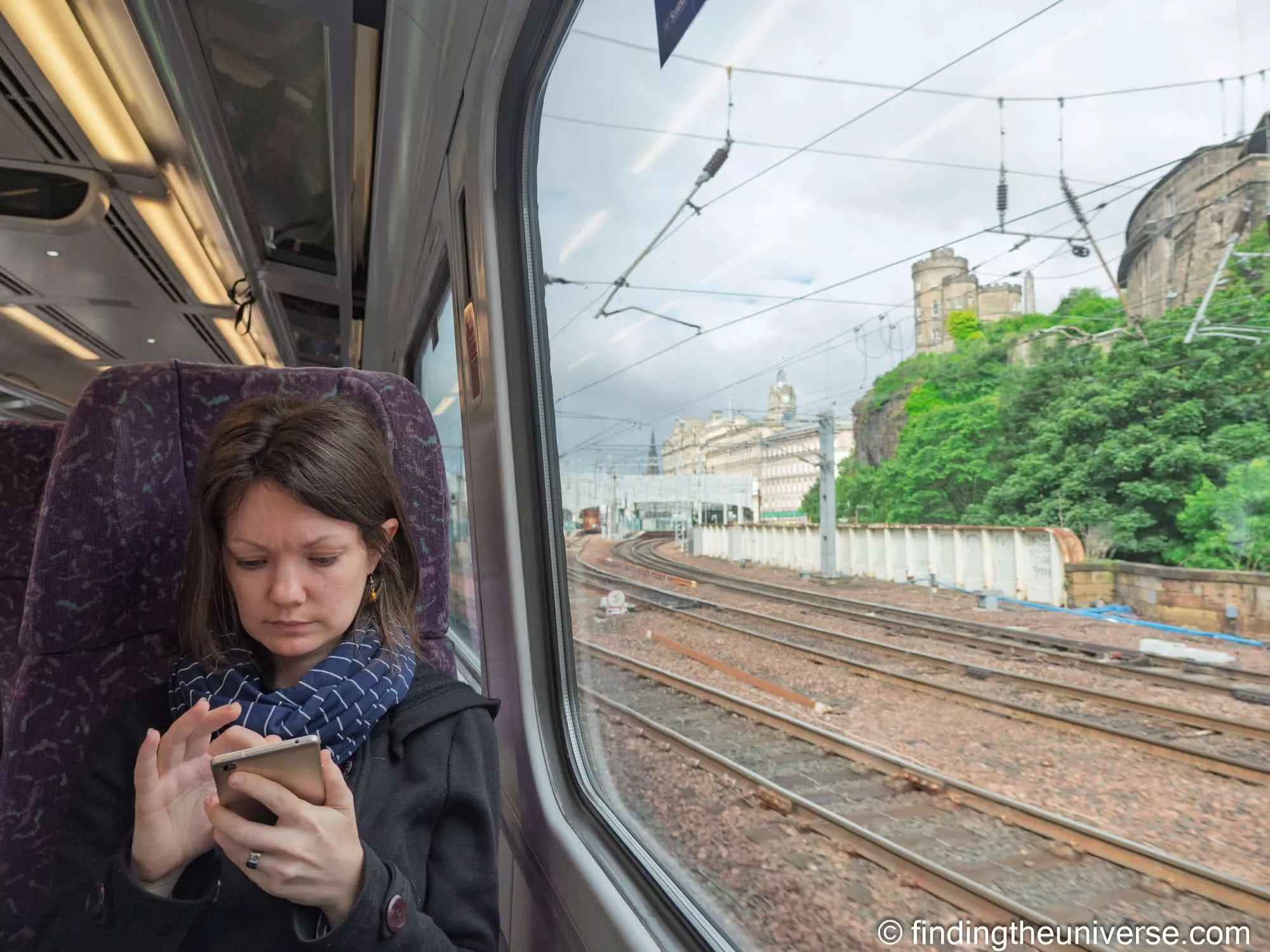
I’ve been a full-time travel blogger since 2010, and for years a Kindle came with me on our tris. I had the original model, and later upgraded to one with a built-in light so I could read in the dark. Then, once phone screens got big enough, I stopped packing it, and these days I do all my reading on my phone.
So this guide is written from a slightly unusual position. I’m going to help you pick the best e-reader for travel, and I’m also going to try to talk some of you out of buying one at all.
Here’s the thing. An e-reader is a lovely thing to read on, and for some trips it’s a clearly better tool than the phone in your pocket. For other trips it’s one more device to pack, charge and keep track of, and that ended up being the reason I started leaving mine behind.
Which trip you’re taking matters more than which model you buy, so I’m going to ask you that question first. Then come the seven devices I’d actually consider in 2026, judged on the specs that matter for travel.
Table of Contents:
Which E-Reader Is Best for Travel?
If you just want the answer, choose the Kindle Paperwhite. This is the best e-reader for most travellers. It has the best balance of size, weight, battery life and water resistance, and the Kindle store makes buying books effortless from pretty much anywhere.
- Most travellers should buy the Kindle Paperwhite 16GB
- On a budget, the Kindle 16GB is excellent value, though it’s the one pick with no water rating
- Outside the Kindle ecosystem, or if you borrow library books outside the US, get the Kobo Clara BW
- If you want physical page-turn buttons, it’s the Kobo Libra Colour
And the caveat: if you already read happily on your phone, you may not need any of these. A beach or pool holiday makes the strongest case for a dedicated e-reader. A city break makes the weakest. I’ll explain why below, because it’s the question that decides whether you should spend the money at all.
I Travelled With a Kindle for Years, Then I Stopped
My Kindle history runs from the original model through to one of the versions with a built-in front light. It came on a lot of trips with me, and the things it did well, it did really well.
The e-ink screen was a better reading experience than any phone I’ve owned, and because it did exactly one thing, there were no notifications, no email, and none of the other apps that sit one thumb-swipe away from your book on a phone. So it was easy to avoid distractions because there were none. This is the biggest plus of this kind of device in my opinion.
So why did I stop carrying it? Because it was another device. Another thing to pack, another thing to remember to charge, another thing to keep synced. Each of those is a small cost, but they add up, and they recur on every single trip. Once I got a phone with a screen big enough to read on comfortably, the Kindle stopped justifying its place in my bag, and eventually it stopped coming at all.
These days I read on my Samsung Galaxy S23 Ultra, mostly in the Moon+ Reader app, with Google Play Books and the Kindle app alongside it. I’m not alone in this either. My mum used a Kindle constantly for years, and she’s since switched to reading on her smartphone for the same reasons I did.
What do I miss? The screen, mainly, and the single-mindedness. A phone is a wonderful reading device right up until it buzzes. If you don’t have much willpower to avoid those distractions, toggle airplane mode or Do Not Disturb mode.
I’m telling you all this because the rest of this guide leans on it: I know exactly what a dedicated e-reader adds to a trip, and I know exactly what it costs you in practice, because I’ve done both.
Do You Actually Need an E-Reader for Travel?
Most comparisons of e-readers and other devices are really comparisons with tablets, and the classic argument is weight. Against an iPad that’s a fair fight: an e-reader weighs a fraction as much and packs smaller. Against your phone, the weight argument collapses completely. The reality is that your phone is coming with you anyway, so its marginal packing weight as a reading device is zero, and the e-reader is pure addition.
So the case for a dedicated e-reader has to stand on other legs. In my experience there are three that hold.
The first is the screen. E-ink is matte, glare-free and unlit by default, which is exactly what you want on a sun lounger or a bright train window seat. Phone screens have improved enormously, but reading in direct sunlight still means cranking the brightness and fighting reflections.
The second is battery. An e-reader runs for weeks on a charge (more on what those claims really mean below). Meanwhile, every hour you read on your phone drains the device you also need for boarding passes, maps, translation and photos. Reading is one of the easiest loads to move off your phone, and on a long travel day that can matter more than any spec.
The third is focus, with a sleep bonus attached. A dedicated e-reader has no notifications and nothing else to open, which does more for my reading than any hardware feature.
And the sleep argument holds up better than the eyestrain one you’ll see elsewhere. The American Academy of Ophthalmology is clear that there’s no scientific evidence blue light from screens damages your eyes, but it does accept that blue light affects your body clock.
Reading on a bright phone at midnight in a new time zone is a different proposition from reading on a dim, warm-lit e-ink screen.
Notice what’s not on that list: I haven’t claimed e-ink is easier on your eyes. The ophthalmologists attribute screen-related eye strain mostly to the fact that we blink less when we’re absorbed in reading, and that applies to a Kindle just as much as a phone.
My Recommendation by Trip Type
Put those three arguments against the packing and charging overhead, and the answer changes with the trip.
A beach or pool holiday is the strongest case for buying one. You’re reading for hours in bright sun, near water, with your phone ideally left in the shade (or your hotel room) doing nothing. This is the trip e-readers were built for, and it’s where the water ratings on most of these picks stop being a spec and start being the reason you can read in (or by) the pool.
A long-haul flight or work trip is a decent case. Hours of reading time, and a strong incentive to protect your phone’s battery for arrival. If you fly long-haul a few times a year, an e-reader slots nicely into the same bag as your other long-haul flight essentials.
A city break is the weakest case. You’re out all day, reading in snatches, and the phone in your pocket covers those snatches fine. This is the trip where the e-reader stays in the hotel room and you wonder why you brought it.
A road trip sits in the middle, and I’ll give you my own answer to this one. Would I take an e-reader on a road trip, where packing space isn’t a worry? Probably, yes. But even then it’s still another device to remember to charge, and that friction is real. If you’re building a bigger packing system around trips like these, our digital nomad packing list covers how we think about every device that goes in the bag.
If you’ve read all that and concluded your phone already does the job, I think that’s a perfectly good outcome, and a cheaper one. Skip the device, put some of the savings towards a good power bank (my suggestions are further down), and preload your phone with books before you fly, which is what I do.
The Best E-Readers for Travel in 2026
Seven devices, four Kindle and three Kobo. No, there are not a lot of brands out their making e-readers. But yes, there are enough choices to be worth a guide, even if I spent the first part of it explaining why you might not even need one. If you’ve decided you do, this is the bit you want.
Every one of my recommendations was in stock at the time of writing, and every spec below comes from the manufacturer’s own page rather than a retailer’s summary, which turns out to matter more than you’d think (see the battery notes on the Kobos).
Kindle Paperwhite 16GB: Best for Most Travellers
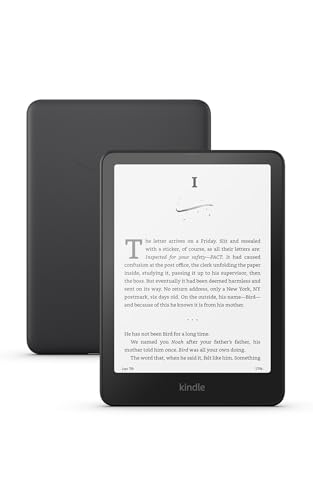
The Kindle Paperwhite () is the one I’d buy today, and the one I’d recommend to most people reading this. The 2024 model has a 7 inch, 300 ppi screen with a front light that adjusts from white to amber, so late-night reading doesn’t mean a face full of cold blue light. At 211 g it’s light enough to hold one-handed for a long flight.
For travel specifically, the two specs that matter are the IPX8 water rating, which Amazon states as immersion in up to 2 metres of fresh water for up to 60 minutes, and a battery claim of up to 12 weeks. Both need translating into real-trip terms, and I do that in the sections below, but the practical version is that it will survive the pool and outlast any normal holiday on one charge.
The main annoyance is that the default version shows sponsored screensavers (the future is bright and apparently filled with ads), and removing them costs extra. More on that in the FAQ.
Kindle 16GB: Best Budget Pick, With a Catch

The base Kindle () is the cheapest and lightest way into e-reading. At 158 g with a 6 inch, 300 ppi screen, it disappears into a jacket pocket, and its up-to-6-week battery claim works out at around 21 hours of reading time, which covers a week of holiday reading before you need the cable.
There’s one big caveat, and for a travel guide it really matters: this is the only device in this roundup with no water rating at all. The cheapest e-reader is the one you can’t take to the pool without being very cautious. If your trips are city breaks and flights, that’s fine. If the whole point is reading on a lounger with a drink, spend up to the Paperwhite.
Its front light also adjusts brightness only, with no warm setting, which makes it the weakest pick here for reading in bed.
Kindle Paperwhite Signature Edition 32GB: The Paperwhite Without Compromises

The Paperwhite Signature Edition () is the same excellent device as the standard Paperwhite with three upgrades: 32 GB of storage, a front light that auto-adjusts to the room, and wireless charging via a dock that’s sold separately. It’s also sold in a single configuration with no sponsored-screensaver purchase option to think about.
For most travellers the extra storage is the least useful upgrade (books are tiny files; 16 GB already holds a library), so this is really about whether the auto-adjusting light and the ad-free configuration are worth the difference to you. If you listen to audiobooks over Bluetooth, though, the bigger storage stops being theoretical.
Kindle Colorsoft 16GB: The Colour Kindle

The Kindle Colorsoft () brings colour to e-ink, which transforms book covers, highlights, comics and travel guides with maps, and changes nothing about ordinary fiction reading. Know what you’re buying: colour content renders at 150 ppi against 300 ppi for black and white, so colour pages look noticeably softer than text.
Travel-wise it keeps the Paperwhite’s shape, the same IPX8 fresh-water rating, and a battery claim of up to 8 weeks, down from the Paperwhite’s 12. It’s sold ad-free with no sponsored tier at all. One naming note to save you confusion while shopping: this 7 inch reader is a different product from the much larger Kindle Scribe Colorsoft, which is a note-taking device I wouldn’t pack for a holiday.
Kobo Clara BW: The Ecosystem Alternative

Yes, there are other brands beyond Amazon! The Kobo Clara BW () costs the same as the Kindle Paperwhite, and that’s the right way to think about it. It’s the alternative ecosystem, not the budget option. You get a 6 inch E Ink Carta 1300 HD screen at 300 ppi, a warm-adjustable ComfortLight PRO front light, IPX8 water resistance and a battery claim of up to 53 days, per Kobo’s own spec sheet.
Amazon’s retail listing summarises that same battery as 2 weeks, which is one reason I’ve sourced every spec in this guide from the manufacturers.
The reason to pick Kobo over Kindle is library borrowing outside the US, which I cover in the library section below, plus a store and ecosystem that aren’t Amazon’s, if that matters to you. The reason to pick Kindle is the bigger store and the deeper integration if you already live in Amazon’s world.
Kobo Clara Colour: Colour at the Small Size

The Kobo Clara Colour () puts an E Ink Kaleido 3 colour panel in the same pocketable 174 g body as the Clara BW, at the same price as the Paperwhite and Clara BW. Like the Colorsoft, colour content renders at 150 ppi against 300 ppi for black and white, and the battery claim drops a bit relative to its black-and-white sibling, to a still-enormous 42 days.
One detail worth knowing if you’re comparing listings: the two colourways aren’t identical inside. This white version carries a 1900 mAh battery against the black version’s 1500 mAh, per Kobo’s spec table, and the figures in my comparison table below are the white unit’s.
Kobo Libra Colour: Best for Page-Turn Buttons

The Kobo Libra Colour () is the only device in this roundup with physical page-turn buttons, and if you’ve never used them, they’re one of those features that sounds trivial and then quietly becomes the reason you love the device. Reading one-handed on a packed train, or with your other hand holding a coffee, buttons beat tapping a screen every time. The screen also rotates, so left-handers are catered for too.
Beyond the buttons it’s a 7 inch Kaleido 3 colour screen, 32 GB of storage, IPX8 water resistance and a claimed 40 days of battery, per Kobo’s spec page. It’s the most expensive Kobo here, and the asymmetric design with the button grip means it packs slightly less neatly than the symmetrical slabs. I think the buttons are worth both costs.
E-Reader Comparison Table
Every figure below comes from the manufacturer’s own product page: Amazon’s Kindle pages for the Kindles, Kobo’s spec sheets for the Kobos. That distinction matters because Amazon’s auto-generated retail sidebars understate all three Kobos’ battery life by a large margin, so if you’ve seen different numbers while shopping, that’s why.
| Spec | Kindle 16GB | Kindle Paperwhite | Paperwhite Signature | Kindle Colorsoft | Kobo Clara BW | Kobo Clara Colour | Kobo Libra Colour |
|---|---|---|---|---|---|---|---|
| Price | Check price on Amazon | Check price on Amazon | Check price on Amazon | Check price on Amazon | Check price on Amazon | Check price on Amazon | Check price on Amazon |
| Screen | 6 inch, 300 ppi | 7 inch, 300 ppi | 7 inch, 300 ppi | 7 inch, 300 ppi B&W / 150 ppi colour | 6 inch, 1448 x 1072, 300 ppi | 6 inch, 1448 x 1072, 300 ppi B&W / 150 ppi colour | 7 inch, 1264 x 1680, 300 ppi B&W / 150 ppi colour |
| Panel (maker’s name) | “6 inch display with built-in light” | “Paperwhite display technology” | “Paperwhite display technology” | “Colorsoft display technology” | E Ink Carta 1300 HD | E Ink Kaleido 3 | E Ink Kaleido 3 |
| Weight | 158 g / 5.56 oz | 211 g / 7.4 oz | 214 g / 7.5 oz | 215 g / 7.6 oz | 174 g / 6.14 oz | 174 g / 6.1 oz† | 199.5 g / 7.05 oz |
| Dimensions (mm) | 157.8 x 108.6 x 8.0 | 127.6 x 176.7 x 7.8 | 127.6 x 176.7 x 7.8 | 127.6 x 176.7 x 7.8 | 112 x 160 x 9.2 | 112 x 160 x 9.2 | 144.6 x 161 x 8.3 |
| Storage | 16 GB | 16 GB | 32 GB | 16 GB | 16 GB | 16 GB | 32 GB |
| Water rating | None | IPX8, “2 meters of fresh water for 60 minutes” | IPX8, same fresh-water wording | IPX8, same fresh-water wording | IPX8, “up to 60 mins in 2 metres of water”‡ | IPX8, same wording‡ | IPX8, same wording‡ |
| Battery claim* | Up to 6 weeks | Up to 12 weeks | Up to 12 weeks | Up to 8 weeks | Up to 53 days | Up to 42 days | Up to 40 days |
| Warm front light | No (brightness only) | Yes (white to amber) | Yes (auto-adjusting) | Yes | Yes (ComfortLight PRO) | Yes (ComfortLight PRO) | Yes (ComfortLight PRO) |
| Page-turn buttons | No | No | No | No | No | No | Yes |
| Charging | USB-C | USB-C | USB-C, plus wireless via optional dock | USB-C | USB-C | USB-C | USB-C |
| Ads | Ad-supported by default; ad-free costs extra | Ad-supported by default; ad-free costs extra | One configuration, no ad-supported option | Always ad-free | No ad-supported version | No ad-supported version | No ad-supported version |
*Battery claims use each maker’s own stated assumption of 30 minutes of reading per day with wireless off: Amazon with the light at setting 13, Kobo with the front light at 10% brightness (Clara BW) or 30% brightness (Clara Colour and Libra Colour). See the next section for what that means on a real trip.
†Kobo publishes weights in grams only. The ounce figures for the Clara BW and Libra Colour come from their Amazon listings; no ounce figure is published anywhere for the Clara Colour, so 6.1 oz is converted from Kobo’s 174 g.
‡Amazon specifies fresh water for the Kindles in its own wording. Kobo’s spec pages give no fresh-or-salt qualifier either way. I wouldn’t read that as a licence to take a Kobo in the sea; it just isn’t stated.
What the Battery Claims Mean on a Real Trip
“Up to 12 weeks of battery” is the headline spec on the Paperwhite, and every e-reader maker quotes something similar. Amazon’s own fine print says that figure assumes 30 minutes of reading a day, which doesn’t seem like a lot to a bookworm like me. Twelve weeks is 84 days, so the claim is really about 42 hours of reading on one charge.
On holiday, you don’t read for 30 minutes a day. Call it 3 hours a day on a pool-and-lounger trip, and those 42 hours become a fortnight. Which is still brilliant! A device that lasts a two-week holiday of heavy reading without its charger is a real, practical advantage over a phone that needs feeding nightly. But it’s a fortnight, not three months.
Two more wrinkles from the fine print. The assumptions aren’t identical between brands (Amazon quotes its figure at light setting 13, Kobo at 10% or 30% brightness depending on model), so treat cross-brand battery comparisons as rough. And wireless is assumed off in all of them; leave wi-fi on and syncing, and you’ll see fewer days.
In practice, every device in this guide covers a week of holiday reading on one charge, and the two 12-week Kindles will see out a fortnight. Since they all charge over USB-C, they share a cable with almost everything else in your bag anyway.
Where an E-Reader Will Let You Down
Every one of these devices has real limitations, and a few of them only show up once you’re on a trip.
The screens are more fragile than they look. Kobo’s own support pages are explicit that lines across the screen mean physical damage “caused by drops, or force applied to the screen”, and that this isn’t covered under warranty. Amazon’s care guidance recommends keeping a cover on when your Kindle is in a bag.
Neither maker will replace a cracked panel as a fault, so a sleeve or case is cheap insurance, and I’d treat it as part of the purchase price rather than an accessory.
The waterproofing has fine print. As the table above shows, Amazon’s IPX8 wording specifies fresh water, so the Paperwhite is rated for the pool and the bath, and the sea is outside what the rating says. Kobo’s wording doesn’t address fresh versus salt at all. And the base Kindle has no rating whatsoever, which is easy to miss when it’s sitting in a lineup of waterproof siblings.
Colour e-ink is a compromise. On both the Colorsoft and the colour Kobos, colour content renders at 150 ppi against 300 ppi for black and white. For book covers and the odd illustration that’s fine; if you’re imagining crisp magazine pages, that isn’t what this technology does yet.
And your phone stays better at everything except reading. Maps, video, browsing, photos of the menu, the airline app: none of it moves to the e-reader.
My original Kindle had no light at all, which made it useless in a dark cabin until I upgraded to a lit model; today’s front lights have fixed that completely, but the broader point stands. You’re packing a second device to do one thing brilliantly, and that maths only works if you’ll actually spend the hours reading.
Getting Books Onto Your E-Reader When You Travel
There’s a simple model behind how the Kindle store treats you when you’re abroad, and getting it right changes what you do before you leave home.
Here’s the model, from Amazon’s own documentation: your Kindle account belongs to a country, and that country is a setting you change when you move house, not something Amazon works out from wherever you happen to be standing. The trigger for switching marketplaces is a change of your country of residence in your account settings. A holiday doesn’t change it, so your account, your library and your store stay your home-country ones while you travel.
Two practical consequences follow. First, don’t change your account’s country because you’re on a long trip; among other things, Amazon’s own pages note that a Kindle Unlimited subscription can’t be transferred and gets cancelled when you switch.
Second, and this is the habit I’d push: download before you fly. I preload my reading before every trip, on my phone these days, and I did the same in my Kindle years. It takes five minutes at home on wi-fi you trust, and it means nothing about your holiday reading depends on whatever network you find when you land.
What preloading involves is much the same on both platforms, and it’s a smaller job than it sounds. Neither needs a computer. Amazon’s spec sheet lists system requirements as “None; fully wireless and doesn’t require a computer to download content”, and the Kobos sync over their own wi-fi, so the device and your home broadband are the whole setup.
The thing to check before you pack is the gap between your cloud library and what is sitting on the device itself. Amazon lists cloud storage and on-device storage as two separate specs, and on a plane only the second one exists. Open each book once at home and let it finish downloading. Capacity won’t be your constraint: 16 GB is thousands of books on a Kindle, and Kobo rates the same 16 GB at around 12,000.
Kobo owners have one extra route. All three Kobos here connect to Google Drive and Dropbox, so a PDF guidebook or your own EPUB files can go onto the device without a cable. If you travel with your own documents as well as bought books, that saves a step.
Borrowing Library Books While Travelling
If you borrow ebooks from your library, this is the clearest real difference between the two ecosystems, and it’s a geographic one.
On Kobo, Libby (the library app from OverDrive) is built into the device, and Kobo’s own support pages list it as available in 14 countries, including the US, UK, Canada, Australia and New Zealand. All three Kobos in this guide are on Kobo’s supported-device list.
On Kindle, library ebooks work through OverDrive too, but the documented flow is US-only: you borrow on your library’s site or in Libby, choose Kindle delivery, and the book arrives on your device over wi-fi. Amazon’s own help pages note that participation varies by library, so it’s worth confirming yours offers Kindle books.
So for an American reader, both platforms borrow from the same library system and the difference is workflow: on-device on the Kobo, a browser handoff on the Kindle. Outside the US, Kobo’s built-in borrowing works in 13 more countries and the Kindle route isn’t documented at all, which makes the Kobo the clear pick for library-first readers who live or spend serious time outside the States.
Keeping Everything Charged
Every device in this guide charges over USB-C, so an e-reader adds no new cable to your kit, just one more thing drawing on it. My charging setup is built around a power bank and a decent adapter, and it doesn’t change whether or not an e-reader comes along.
The power bank I carry every day is the INIU P63 (), a 25,000 mAh unit that will recharge an e-reader many times over and a laptop at a push.
If you’ve decided to skip the e-reader and read on your phone, a power bank is where I’d put the money instead, and for that job the smaller INIU P50 () is the one I’d suggest: it covers a heavy phone-reading day with much less bulk. We compare the field in our guide to travel power banks.
For international trips, the Epicka universal travel adapter () has been our go-to for years, and our travel adapter guide explains what to look for if you’d rather shop around.
Should You Wait for a New Kindle?
A fair question before spending this much on a gadget. As of August 2026, Amazon has announced no successor to the October 2024 Paperwhite, base Kindle or Colorsoft; the models on sale today are the models it launched then (the Colorsoft’s own listing dates its release to early 2025, when it actually shipped).
The specialist site Good e-Reader has reported that a refreshed family may arrive in late 2026, but that’s a single outlet’s report with no confirmation from Amazon, so I’d treat it as rumour.
There is one solid piece of forward context: EU battery regulation 2023/1542 requires that portable batteries in products placed on the EU market be removable and replaceable by the user, applying from 18 February 2027. That rule binds products sold in the EU, not a Kindle bought in the US, but it’s a plausible reason for hardware across the industry to evolve over the next couple of years.
My take: if you have a trip coming up, buy for the trip. The current devices are mature, excellent, and will not stop being good at their job when a successor appears.
Frequently Asked Questions
Can You Use an E-Reader During Take-Off and Landing?
Yes, under the same rules as your phone. Aviation regulators in both the US and Europe treat e-readers as ordinary portable electronic devices alongside phones and tablets, with no special category of their own. Policy in both regions leaves the final call to each airline, so the crew’s instructions are what govern.
The practical version: a light device like an e-reader doesn’t need to be stowed for take-off and landing the way heavier devices can, so you can usually keep reading gate to gate with the device in flight mode. If the crew asks for devices off, that includes your Kindle.
Can I Buy Kindle Books While I’m Abroad?
Your Kindle store follows your account’s country of residence, which is a setting in your Amazon account, not something derived from your location. On a normal trip your account stays exactly as it is at home, and you shouldn’t change its country for a holiday (doing so has real consequences, including cancelling any Kindle Unlimited subscription).
Amazon’s public documentation covers the residence model but not every travel scenario, so my standing advice is the one I follow myself: buy and download your books before you fly, and treat anything you buy mid-trip as a bonus rather than the plan.
Does Kindle Unlimited Work for Travel?
Kindle Unlimited is priced per marketplace ($11.99 a month plus taxes in the US, with a 30-day free trial for new subscribers) and eligibility follows your account’s marketplace, wherever you happen to be reading.
For travel, the sensible move is the same as with purchases: download your Unlimited borrows over home wi-fi before you leave, so your holiday reading is already on the device when you land. And don’t change your account country mid-trip, as that cancels the subscription.
Are E-Readers Waterproof Enough for the Pool or Beach?
Mostly, with two caveats. Six of the seven devices in this guide carry an IPX8 rating; the exception is the base Kindle, which has no water rating at all. And the wording differs by brand: Amazon rates its waterproof Kindles for immersion in fresh water, which covers the pool and the bath, while Kobo’s rating doesn’t specify fresh or salt water either way.
Sand, sunscreen and salt spray are the beach’s other hazards, and no IP rating covers those, so a zip pouch is a worthwhile companion for any of these devices on a beach trip.
Do Kindles Still Have Ads?
The base Kindle and the standard Paperwhite are sold ad-supported by default, which means sponsored screensavers on the lock screen and a sponsored item on the home screen. Removing them is a one-time payment of the difference between the two versions’ prices, which is $20 on the Paperwhite as I write this (the gap moves when either price does).
The Paperwhite Signature Edition is sold in a single configuration with no ad-supported option, and the Colorsoft is always ad-free. The Kobo devices have no ad-supported versions at all.
Is Reading on Your Phone Bad for Your Eyes?
Not in the way the marketing implies. The American Academy of Ophthalmology states there’s no scientific evidence that blue light from digital devices damages your eyes, and attributes screen-related eye strain mainly to the fact that we blink less while absorbed in a screen, which applies to e-readers too.
What does hold up is the sleep effect: blue light influences your body clock, and a bright screen late at night can make sleep harder, which matters double when you’re fighting jet lag. If you read at night, a warm, dim front light (on a phone, night mode) is the setting worth caring about.
Further Reading
A few related guides from our own travels that pair well with this one:
- Our long-haul flight essentials, for everything else that makes a 12-hour flight civilised
- Our favourite tech gifts for travellers, if you’re shopping for someone else
- Our London packing list, a worked example of how we pack for a city trip
And that’s the lot. If you’ve decided against the extra device, phone reading works fine on a trip with a bit of setup. Download the books at home, so nothing depends on the wi-fi you find when you land.
Switch your reading app to night mode before you go, since a warm dim screen is the part of the e-ink case that carries over to a phone. A power bank also matters more than it did, because reading now draws on the same battery as your boarding pass.
Whichever way you go, enjoy the reading time. It’s the one part of the trip that never depends on the weather.
Leave a Reply