

I'm Laurence, a professional travel photographer since 2010. Jess and I write this site from our own travels.
I took my first long haul flight when I was three years old, and I’ve never really stopped. Boarding school in the UK from age fifteen meant a flight home at the end of every term, and these days Jess and I are full time travel bloggers and photographers for whom long haul flights are a part of the job. So we have some thoughts on what to pack for a long haul flight.
This guide is based on our thoughts. We took all our experience of flying over the years and came up with our guide of what to pack in your carry-on bag. By which we mean the one that stays at your feet for nine to sixteen hours.
Everything in that bag has to pass three tests: the current airline rules, which changed in a big way in March 2026, a finite amount of under-seat space, and a rule Jess and I apply to everything we pack, which is that an item has to earn its place for the whole trip and a flight-only job doesn’t count.
That third test has done more for our luggage than any product ever has, and it’s why this list is shorter on gadgets and longer on decisions.
One thing to note before anything else. If what you know about flying with power banks predates March 2026, it’s out of date. A new global rule caps how many you can carry and bans recharging them on board, and it applies to you whichever airline you fly. So that section is worth bringing yourself up to date with to avoid breaking any rules in flight.
Table of Contents:
Quick Take: What to Pack for a Long Haul Flight
For a typical long haul flight in economy, this is the kit that matters:
- A flight-legal power bank. I fly with the INIU P63 (25,000mAh, under the 100Wh airline ceiling).
- A universal travel adapter for the destination end, especially useful if you have a layover. The Epicka universal adapter covers most people.
- Sleep kit: a cotton sleep mask, Loop Quiet 2 earplugs, and a Cabeau Evolution S3 pillow if you sleep with neck support (we no longer do, and I explain why further down).
- Noise cancelling headphones, or earbuds if you’d rather not carry cans. The Soundcore Space One is the value call, the Sony WH-1000XM6 the best there is, and the EarFun Air Pro 4 is what I actually travel with.
- An empty water bottle to fill airside. Ours are Klean Kanteen Classics.
- Packing cubes to stop the under-seat bag becoming soup by hour three.
- Compression socks are a personal call, and the health guidance on them is more specific than you’d think. We don’t travel with them. Details further down.
And the rules, in one breath: since 27 March 2026 you can carry at most two power banks, they must travel in your cabin bag, and you can’t recharge them on board. Liquid limits now vary airport by airport, even within the UK. Here’s the detail.
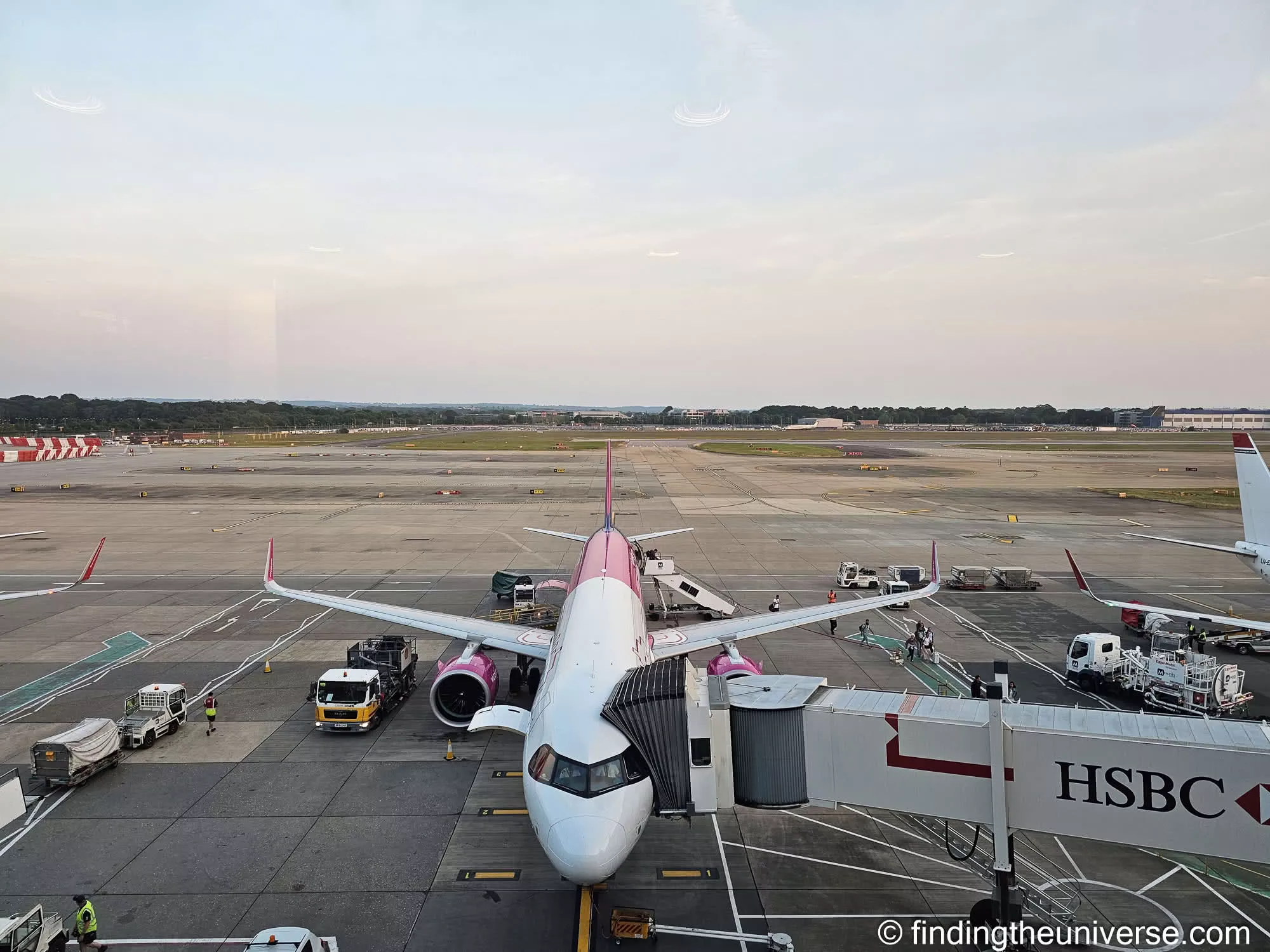
The Rules Nobody Writes: What You Can Actually Take on Board
The rules for cabin baggage changed more in the last year than in the previous decade. This section is current as of July 2026, with every claim sourced to the body that actually controls it. Read it even if you’ve flown long haul a hundred times, because quite a bit of what used to be true no longer is.
Power Banks and Spare Batteries
Since 27 March 2026, a single global rule has applied to power banks on international flights. It comes from ICAO, the UN body that sets aviation safety standards, and the UK Civil Aviation Authority confirms it. The rule says:
- Power banks must travel in your carry-on bag, never in checked luggage.
- You may carry a maximum of two power banks per person, whatever their size.
- You must not recharge a power bank on board, from the seat USB or anywhere else.
- Each one must be protected against short circuits when not in use (keep it in a case or a pocket, terminals away from keys and coins).
There’s a subtlety in there that matters. Recharging your power bank from the aircraft is banned outright. Using your power bank to charge your phone is only discouraged at the global level, though plenty of airlines have banned that too. The practical answer is to board with everything already charged and treat the power bank as a reserve, which is what it should have been anyway.
Some carriers go further than the global minimum. Virgin Atlantic’s policy states that power banks “cannot be used onboard to charge devices and cannot be plugged in to our onboard power supply”, and must be “stowed in an accessible location onboard, and not in the overhead lockers”. Rules like that are set airline by airline, so check the policy page for whoever you’re flying with, ideally the week you fly rather than the month you book.
The size limits themselves haven’t changed, and they’re confirmed by the CAA, the FAA, IATA and Virgin Atlantic alike:
- Up to 100Wh: allowed in carry-on, no approval needed. This covers almost every consumer power bank.
- 100Wh to 160Wh: allowed only with airline approval, arranged in advance.
- Over 160Wh: not going on a passenger aircraft at all.
The annoying part is that power banks are labelled in mAh while the rules are written in Wh. To convert, divide the mAh by 1,000 and multiply by 3.7. Virgin Atlantic publishes the paired figures directly, 100Wh equals 27,000mAh and 160Wh equals 43,000mAh, which match that calculation exactly.
So a typical 20,000mAh brick is about 74Wh and comfortably legal, and the 25,000mAh INIU P63 I fly with is rated at 90Wh on the unit itself, under the ceiling with room to spare.
One trap to avoid: don’t calculate from the 5V USB output rating some banks also print, which understates the true figure by about a third. Check the Wh rating printed on the bank itself, since that’s the number a check-in agent will look for.
On quantity, three different limits are floating around, and they attach to different things. The two-per-person cap on power banks is the global ICAO rule. Separate, older limits apply to spare batteries in the 100 to 160Wh approval band, and individual airlines set their own caps on smaller spares (Virgin Atlantic allows five, for instance). If you’re carrying more than a couple of batteries of any kind, check your airline’s page rather than trusting any single number, including mine.

Liquids: The 100ml Rule Is No Longer One Rule
The UK no longer has a single liquids rule. GOV.UK’s position is that “at most airports” you can’t take containers larger than 100ml, but that “some airports may allow you to take liquid in containers that hold up to 2 litres”.
Heathrow is one of them: its own guidance says you can carry containers of up to 2 litres and leave them in your bag through security. Gatwick has done the same, with the caveat that metal and double-walled containers don’t qualify, because the scanners can’t see through them.
Before you celebrate and pack full-size shampoo, though: your return airport probably hasn’t matched your departure one. GOV.UK’s advice is to check the rules at every airport you’ll pass through, including the way home, and that’s the advice I’d give too. We still pack as if 100ml applies everywhere, because on a two-connection routing it usually does somewhere.
Elsewhere the picture is steadier. In the US, the TSA’s 3-1-1 rule is unchanged: containers of 3.4oz (100ml) or less, in one quart-size bag per passenger. Across the EU, 100ml remains the working assumption. A handful of European airports have relaxed it, most haven’t, and the European Commission’s guidance still describes the restriction as in force. Assume 100ml and be pleasantly surprised occasionally.
Medication and Medical Exemptions
Medication is exempt from liquid limits everywhere, but the exemption differs by country, which catches people out. In the UK you can take up to 2 litres of liquid medicine through any airport regardless of that airport’s general limit, and Heathrow asks for a prescription or doctor’s letter above that. In the US, medically necessary liquids can exceed 100ml and don’t need to fit in the quart bag at all.
The EU exempts liquids for medical purposes and special dietary requirements, including baby food. Note there’s no universal requirement to carry a doctor’s letter, that’s a Heathrow condition for very large quantities, but carrying your prescription is cheap insurance anywhere.
The Empty Water Bottle Trick
Take an empty bottle through security and fill it on the other side. The TSA confirms this is fine in the US, and Heathrow says the same, with one detail to know in advance: metal and insulated bottles need to be emptied before you reach security, because they can’t be imaged.
Heathrow has water fountains in all four terminals, generally near the toilets. I’ve yet to meet an airport where this didn’t work, but Heathrow is the only UK airport that publishes it in writing, so treat it as general practice rather than a guarantee.
The Under-Seat Space Budget
Everything below competes for the same space: the bag at your feet. The overhead locker doesn’t count, because anything up there is gone once the seatbelt sign comes on, and on a full flight it may be six rows behind you anyway. So the real packing question is pretty simple. Is an item useful enough to displace something else from a very small bag?
That’s where the whole-trip rule from the intro does its work: an item has to be useful for the entire trip, and a flight-only job doesn’t count. That rule is why some famous flight essentials no longer make our bag (there’s a section on those below), and it’s why the things that do make it tend to be small, flat, or useful on the ground as well as in the air.
Whatever bag you use as your personal item (ours are covered in the travel backpack guide, and the day bags in our travel daypack roundup), organisation matters more than capacity. A long haul bag gets rummaged through in the dark, at odd hours, by a version of you with limited patience. Cubes fix that.
Amazon Essentials Packing Cubes

The cheapest way to make an under-seat bag behave. Amazon has rebranded these from Amazon Basics, so that’s the name you may remember them by. A four-piece set, two medium and two large, means one cube for cables and chargers, one for the sleep kit, and the rest for the actual luggage.
They’re not the most elegant cubes we’ve owned, but they’ve survived years of use, and for a first set I’d start here and see if the system suits you. We’ve compared the alternatives in our packing cubes guide if you want to go deeper.
Check price on Amazon
Gonex Compression Packing Cubes

The step up adds a second zip that squeezes the air out, which is how you fit a change of clothes for a missed connection into a bag that’s already full. A four-piece expandable set covers the cabin bag and earns its place in the main luggage for the rest of the trip, which is exactly the whole-trip test in action.
Check price on Amazon
SCOTTeVEST Travel Vest
This one is a bit niche, and I own it, so I’ll make the case and you can judge. The SCOTTeVEST Travel Vest is a gilet with over twenty pockets, and its party trick on a long haul is that a worn vest doesn’t count against your baggage. Passport, phone, power bank, snacks and a paperback all ride in the pockets, which effectively buys you a second personal item that no gate agent will ever question. Mine’s been in rotation since 2012, and there’s a full write-up in our SCOTTeVEST Travel Vest review.
If you’re the sort of traveller who likes everything in its own pocket, it’s brilliant. If you’re not, it’s a waistcoat with delusions, and you should spend the money on better headphones.
The Sleep Kit
Sleep is the whole game on a long haul. Land having slept and you’ve bought yourself a first day at the destination; land having watched four films and you’ve bought yourself a headache in a new time zone. The kit below is small, flat and cheap, which is exactly what the space budget wants.
Mavogel Cotton Sleep Mask

A soft cotton mask with an adjustable strap, and the best-reviewed cheap option in a category where cheap is usually the right call. It weighs nothing, packs flat, and does the one job.
For what it’s worth, the mask in my own bag is a Manta Sleep one, the only mask I’ve found that blocks every scrap of light without pressing on my eyes. It’s chunkier and costs a fair bit more, so it’s the upgrade for people who already know masks annoy them. The Mavogel is the one to buy first, to find out if you’re a mask sleeper at all.
Check price on Amazon
Loop Quiet 2 Earplugs

Reusable silicone earplugs rated at 24dB of noise reduction, which takes engine drone and galley clatter down to something your brain files under “weather”. They sit flush with the ear, so they work for side sleepers slumped against a window, which is where foam plugs tend to work loose. They come with a keyring case, and unlike foam plugs you’re not binning them after each flight.
Jess, for the record, swears by simple foam earplugs from Mack’s, which cost next to nothing and live in every bag we own. Both approaches work. The Loops are more comfortable for a full night; the foam ones are unloseable because you own nine pairs.
Check price on Amazon
Cabeau Evolution S3 Neck Pillow

Full disclosure: we stopped carrying a neck pillow years ago, which is an awkward thing to admit one sentence before recommending two of them. They lost our space-budget vote, and the longer story is in the stopped-carrying section below. But a neck pillow is the most recommended flight item there is, plenty of people we travel with won’t board without one, and of course just because something stopped working for us doesn’t mean it won’t work for you.
If you’re a neck pillow person, get a proper one. The Evolution S3 is memory foam (CertiPUR-US certified, if you care about what’s in the foam), straps to the seat’s headrest wings so it doesn’t migrate mid-sleep, and compresses to about a third of its size into an included carry bag. That last spec is the important one, because a pillow that won’t compress is a pillow you’ll end up wearing through three airports like a strange scarf.
Check price on Amazon
Trtl Pillow Plus

The other school of neck pillow: a wrap with a hidden support structure inside, so it looks like a scarf and works like a brace. At 254g it’s lighter than most memory foam options and packs flatter, which the space budget appreciates.
This Plus version is height-adjustable, so it fits between shoulder and jaw whatever your build. One caveat from the care label: it’s machine washable only after you remove the rigid internal support, on a cold cycle, so it’s “washable” with homework attached.
Pick the Cabeau if you sleep leaning back, the Trtl if you sleep leaning sideways. If you don’t know which you are, you’ll find out at about hour five.
Check price on Amazon
Power and Tech
The new rules changed the strategy here. Since you can’t top up a power bank on board, and using it in the air is discouraged or banned depending on the airline, the game now is to board with every device full, carry one decent power bank as a reserve, and do your real charging on the ground at each end.
That makes the charging kit below less about the flight itself and more about never being the person hunting for a socket at a layover gate.
INIU P63 Power Bank

This is the power bank I fly with, and under the two-per-person rule, one big bank beats a handful of small ones. It’s 25,000mAh, and the label on the pack rates it at 90Wh, under the 100Wh ceiling with margin, and its 100W output will fast charge a phone or keep a laptop alive through a layover’s worth of work.
It’s also about as much capacity as you can carry without a conversation. The 100Wh no-approval ceiling works out at roughly 27,000mAh, so a 25,000mAh bank sits just under it with a little margin in hand. Go much bigger and you’re into the band that needs airline approval arranged in advance.
If you want the full field notes, or you need a different size, our travel power bank guide covers the whole category, including what “flight safe” does and doesn’t mean on a spec sheet.
Check price on Amazon
INIU P50 Power Bank

The pocket tier. At 10,000mAh (roughly 37Wh at the standard 3.7V calculation, nowhere near any limit) and 45W output, it’s the bank for people whose only in-flight need is a phone that’s still alive at the baggage carousel. It disappears into a jacket pocket, which the vest people among you will have already noted.
Check price on Amazon
Anker 333 USB-C Cables
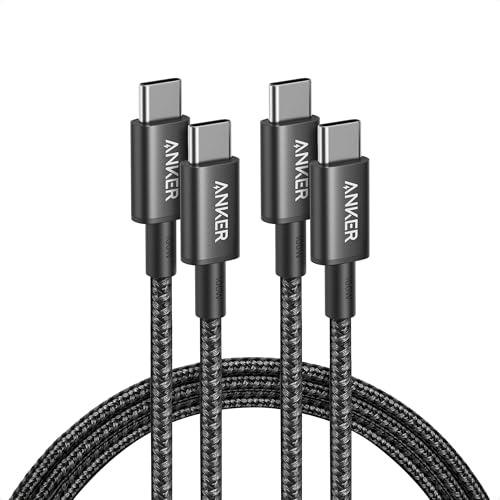
Cables are the item everyone forgets until they’re paying airport prices for a bad one. This is a two-pack of braided 1.8m USB-C cables rated for 100W, which matters twice: the length reaches from an awkwardly placed socket to where you’re actually sitting, and the 100W rating means the same cable fast charges the laptop, the phone and the power bank. Two identical cables also ends the nightly negotiation over whose phone gets the good cable.
Check price on Amazon
Epicka Universal Travel Adapter

Strictly for the destination end, since aircraft sockets don’t need adapting, but a long haul flight implies a country with different plugs, so it lives in the flight bag. While it’s not strictly necessary for the flight, being able to charge at a layover in a foreign country is invaluable. And if your checked luggage is delayed, you’re going to want to be able to charge your devices so you can figure out where your clothes are.
This one covers UK, European, US and Australian sockets with five ports (three USB-C, two USB-A) sharing 45W, which will charge a phone, earbuds and a watch overnight from one wall socket. It’s a GaN charger, so it runs smaller and cooler than the older silicon equivalents.
For picking an adapter more carefully, including higher-power options for laptop-heavy trips, our travel adapter guide has the full comparison.
Check price on Amazon
Epicka Pulse Duo 140W Travel Adapter

The one we currently travel with. As two people running phones, laptops and camera batteries off hotel rooms with one usable socket, the Pulse Duo’s 140W total and six outputs (three USB-C, one USB-A, and two AC outlets) mean everything charges overnight instead of taking it in turns.
It’s overkill for one person with a phone. It’s exactly right for a couple, a family, or anyone whose laptop is part of the trip.
Check price on Amazon
Soundcore Space One Headphones

For most people, this is the pair I’d point you at. Active noise cancelling that deals with engine drone, 40 hours of battery with cancelling on (55 with it off), LDAC support for the audio-quality crowd, and a weight of 265g.
The premium pair below beats it in every category except the one where it counts double at this end of the market: you can buy these, lose them in a seat pocket over the Atlantic, buy them again, and still have spent less than the Sonys cost.
Check price on Amazon
Sony WH-1000XM6 Headphones

I’ve own Sony’s over-ear noise cancellers, and the cancellation on this line is as good as consumer audio gets. The current WH-1000XM6 runs 30 hours with cancelling on, weighs 254g, and pairs to two devices at once, which means your phone and your laptop can both stay connected without you re-pairing every time you switch.
This pair also supports a wired connection to the inflight entertainment system. Whether you’ll need it depends on the airline. As of May 2026 United had Bluetooth built into the seatback screens on more than 800 aircraft, and Emirates has it on the A350 and its newest A380 cabins. Delta is further behind: as of February 2026 it only worked in first class on the A321neo, and plenty of carriers haven’t started at all. Take a cable unless you know your aircraft has Bluetooth, or pack a separate Bluetooth transmitter. See our full airline-by-airline Bluetooth breakdown for the current picture.
These headphones are excellent at noise suppression, but I don’t fly with them any more. The reason I no longer fly with them has nothing to do with quality, and everything to do with bulk. That story is in the stopped-carrying section below. If over-ears suit how you travel, these are the ones to get; if you’re already suspicious they’ll spend the trip in the overhead locker, trust that instinct and take earbuds and the Loops instead.
Check price on Amazon
EarFun Air Pro 4 Earbuds
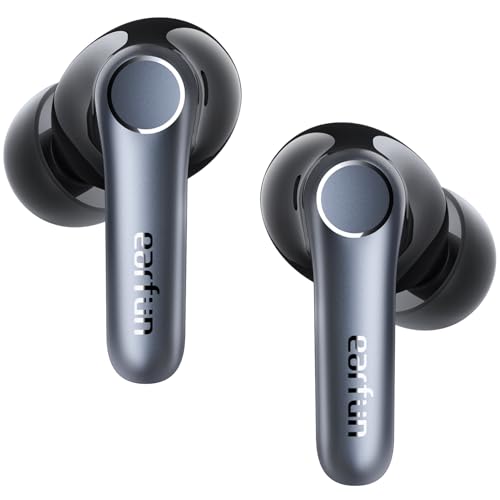
This is what I actually fly with, and it’s comfortably the cheapest thing in this section. Adaptive cancelling that handles engine drone, multipoint so the phone and the laptop stay paired at once, and 7.5 hours in the buds with cancelling on, 35 hours total with the case. Ignore the 52 hours on the listing: that figure is with cancelling switched off, which is nobody’s long haul flight.
The downside is that these only reach the inflight entertainment system on the Bluetooth-equipped aircraft covered above, and on plenty of airlines that still means you can’t. I get around that by loading up my smartphone or laptop with shows and movies I actually want to watch, which works out better for me anyway. But it does require some advance planning.
The case for cheap earbuds over expensive ones is one I’ve made the hard way. One of mine fell out on the floor mid-trip and I stepped on it. That’s the argument in a sentence: something small enough to lose, that comes out at every gate and gets handled by a tired version of you at three in the morning, is going to break eventually. When it does you want it to be an irritation rather than a write-off. At this price it is.
EarFun has since added a dual-driver Air Pro 4+ at a higher price, which I haven’t used and so can’t vouch for.
Check price on Amazon
What to Wear, and the Compression Sock Question
Dress for the aircraft you’re actually on: a cabin that cycles between fridge and greenhouse, seventeen hours in one chair, and feet that will be a size bigger by landing. Layers beat any single clever garment, and shoes you can slip off and on without a wrestling match make security and the flight itself easier. Roomier shoes help with the swelling too; my picks for flying (and everything else) are in our men’s travel shoes guide.
Physix Gear Compression Socks

Compression socks usually come with a vague line about circulation attached, and the actual guidance from the health bodies is a good deal more specific than that. Here’s what they say. Neither of us flies in them, as it happens, but plenty of readers will want the real picture.
Long flights do carry a raised clot risk. The NHS counts any journey over four hours among its DVT risk factors, and the CDC explains why: “sitting for a long time without getting up and walking around can cause blood to pool in the veins of your legs”.
The prevention advice both bodies lead with is free, though: loose clothing, plenty of water, going easy on the alcohol, and getting up to walk regularly. The CDC’s clinical guidance adds calf exercises and an aisle seat, on the logic that aisle-seat people get up more.
On the socks themselves, the CDC’s advice to travellers is to “talk to your doctor about wearing compression stockings” if you have additional risk factors, things like a previous clot, recent surgery, pregnancy, or oestrogen-based medication.
Its clinical guidance recommends properly fitted graduated stockings for at-risk travellers on journeys over six hours, and specifically doesn’t recommend them for travellers who aren’t at increased risk. So if the risk factors apply to you, that’s a conversation with your GP before it’s a purchase.
If they don’t, what’s left is the comfort case. The Cochrane review of compression stockings on flights did find less leg swelling among passengers who wore them, though the reviewers rate that particular finding as low certainty, because swelling is hard to measure well. Plenty of people fly in them simply because their ankles feel better on arrival, and a pair costs almost nothing in space.
Toiletries and the Liquids Bag
The long haul washbag is a different animal from the trip washbag: it’s the toothbrush, anything your face needs after a night in aircraft air, and your medication, all sized to whichever liquids rule is strictest on your routing. Everything else can ride in the hold or wait for the hotel.
Decanting is where the space goes missing. Most travel bottle sets leak, hold the wrong amounts, or surrender their labels by day three, which is how you end up moisturising with shampoo somewhere over Greenland.
Cadence Travel Capsules

These solid little twist-top capsules are built around the actual problems: they don’t leak, the caps twist-lock shut, and the lids take a label. They’re also magnetic, so they stack together and stay that way. The two-pack (one small, one medium) covers the in-flight essentials, skincare in one, tablets or earplugs in the other, and they’re compact enough that a few of them still fit inside a single liquids bag with room left over.
Not the cheapest way to move moisturiser, but it’s the one part of the washbag where I’d spend the extra.
If your grooming kit includes a safety razor, the blades need their own plan for the cabin bag; our guide to travelling with a safety razor covers how we handle it.
Check price on Amazon
Hydration and Snacks
Cabin air at cruise sits at roughly 10% humidity, half of what we register as comfortable, and the drinks trolley runs on its own schedule with no reference to your thirst. The fix costs nothing: carry an empty bottle through security and fill it airside, as covered in the rules section above.
Klean Kanteen Classic Water Bottle

We always travel with our Klean Kanteens, and they’re the oldest items in our kit by some distance. The Classic is 27oz (about 800ml) of 18/8 stainless steel, single-walled, made from 90% recycled steel, and it takes a dent rather than cracking, which is more than can be said for pretty much every plastic bottle we owned before it. Steel also doesn’t hold the taste of yesterday’s electrolyte tablet, a small mercy that grows on you.
One reminder from the rules section: a metal bottle has to be empty before you reach security, because the scanners can’t image it. Drain it in the queue, fill it at the gate.
Snacks
Snacks are personal, so I’ll offer one principle instead of a shopping list: bring things that survive being sat on and don’t need refrigeration, and bring a bit more than feels sensible. Airline meal timing follows the operation’s schedule, and the gap between dinner and breakfast on a sixteen-hour flight can be medieval.
Documents and What Never Leaves Your Feet
Some things don’t go in the overhead locker, full stop: passport, wallet, phone, medication, and the power bank (which, remember, has to stay in your cabin bag anyway, and some airlines specifically want it accessible rather than overhead). If the bag above your head walks off at a connection, everything that matters is still at your feet.
Two small additions from hard experience. First, a pen. Arrival forms have outlived every prediction of their death, and the person with a pen at row 48 makes friends quickly.
Second, we drop a tracker in every bag, including the carry-on, because connections are where bags and owners part ways; the options are compared in our luggage trackers guide. And sort your eSIM before you board rather than in the arrivals hall, our travel eSIM guide covers the good ones, so that landing admin happens on airport wifi instead of roaming charges.
What I’ve Stopped Carrying
Packing lists only ever grow, so here’s the rarer thing: what’s been voted off ours, and what those items taught us. Everything here follows from the whole-trip rule (an item has to be useful for the entire trip, and the flight alone doesn’t qualify), and if that rule works for you, it’ll do more for your bag than anything you buy.
The over-ear headphones went first. I own a pair of over-ear Sonys, and the sound is superb; carrying them through four airports is less so. They’re bulky in the bag, sweaty by hour ten, awkward to sleep in, and one more thing to shepherd through security. I also rarely find myself using them in destination, so they fail that rule.
A pair of earbuds and the Loop earplugs now do the same job in a hundredth of the space, and I stopped missing the over-ears somewhere over the Atlantic years ago. If your flights involve fewer connections than mine, or you simply can’t do without the best in class noise cancellation, your maths will quite likely come out differently.
The neck pillow followed. Ours was fine, the category is fine, but a pillow is a flight-only item, and it spent the other 95% of every trip strapped to the outside of a bag like a trophy. When we’re on the ground, that space carries things we use daily.
We sleep marginally worse in the air and travel noticeably lighter for weeks, and we’d make the same trade again. As I said above though, this is us: half the frequent flyers we know consider the neck pillow non-negotiable, and they’re not wrong either.
Our verdict matters less than the test. For every item in your flight bag, ask what it does for the rest of the trip. The bag that survives that question is a pleasure to carry.
Long Haul Flight Essentials Comparison Table
Every pick in one place, with the spec that matters most for each:
Long Haul Flight Essentials FAQ
Can you take a power bank on a long haul flight?
Yes, in your carry-on bag only. Power banks and spare batteries are never allowed in checked luggage; that’s one of the most consistently enforced rules in aviation, confirmed by IATA, the FAA, the UK CAA and the airlines themselves.
Size-wise, anything up to 100Wh (about 27,000mAh) needs no approval, which covers nearly every consumer power bank. Between 100Wh and 160Wh you need advance airline approval, and over 160Wh it doesn’t fly at all.
How many power banks can you take on a plane in 2026?
Two per person, whatever their size. That’s the global ICAO rule that took effect on 27 March 2026.
Airlines set their own separate limits on other spare batteries (Virgin Atlantic allows five, for example), so if you’re carrying a camera bag full of spares, check your specific airline’s policy page before you fly.
Can you use a power bank during a flight?
Usually not, and the direction of charge matters. Under the global rule in force since March 2026, recharging a power bank from the aircraft’s power supply is banned outright, while using a power bank to charge your phone is discouraged rather than prohibited.
Many airlines have banned both, and some also require the power bank to be stowed somewhere accessible rather than in the overhead locker. The practical answer: board with all your devices fully charged and treat the power bank as a ground-side reserve.
How do I work out my power bank’s watt hours?
Divide the mAh figure by 1,000 and multiply by 3.7. A 20,000mAh bank is about 74Wh; a 25,000mAh bank is about 92.5Wh; the 100Wh limit sits at roughly 27,000mAh.
Most banks also print the Wh rating on the casing, which is the number to trust. My own P63 comes out at 92.5Wh on that formula, but its label reads 90Wh, because INIU rates its cells at 3.6V rather than 3.7V. Don’t calculate from the 5V USB output rating some manufacturers list, as it understates the real figure by about a third.
Does the 100ml liquids rule still apply?
In most of the world, yes. The TSA’s 3-1-1 rule still applies everywhere in the US, and 100ml remains the safe assumption across the EU. What’s changed is the UK, where GOV.UK says most airports remain at 100ml but some now allow containers up to 2 litres, including Heathrow and Gatwick.
Because your return airport may not match your departure one, check the rules for every airport on your routing. When in doubt, pack to 100ml and you can’t be caught out.
Can you take an empty water bottle through airport security?
Yes. The TSA explicitly allows empty bottles through the checkpoint, Heathrow says the same, and it’s standard practice at airports generally. Fill it at a fountain airside.
One catch: metal and insulated bottles should be emptied before you reach security, because scanners can’t image them. Drain it in the queue rather than arguing about it at the tray.
Do compression socks prevent DVT on long flights?
That’s not what the health bodies say. The NHS counts journeys over four hours as a DVT risk factor, but its travel prevention advice is loose clothing, water, less alcohol and regular walking. The CDC tells travellers to discuss compression stockings with a doctor if they have additional risk factors, and its clinical guidance doesn’t recommend them for travellers who aren’t at increased risk.
If you have risk factors like a previous clot, recent surgery or pregnancy, talk to your GP before flying. Otherwise, compression socks are a comfort item that helps with ankle swelling, and that’s the right basis to buy them on.
Further Reading
If you’re building out the rest of your kit, these guides pick up where this one stops:
- The best power banks for travel, including the flight rules in more depth
- The best travel adapters for every plug situation
- The best packing cubes, tested across years of trips
- The best luggage trackers for keeping tabs on checked bags
- The ultimate digital nomad packing list if the laptop travels too
- The best travel apps to install before you’re on airport wifi
- What to buy the traveller who flies a lot, if you’re shopping for someone else rather than packing for yourself
And that’s the bag sorted. Pack it once, fly it a few times, and let the whole-trip rule evict whatever isn’t pulling its weight. If you’ve got a long haul essential I’ve overlooked, or you want to defend the neck pillow’s honour, the comments are open!
Leave a Reply