I spent years as a visiting driver in the USA on my UK licence before I moved here, became a resident, and passed a state driving test. So I’ve packed for a US road trip from both sides of the rental counter, and I can tell you the packing list looks different depending on which side you’re on.
What you should pack depends on one question more than any other: are you renting a car, or driving your own? If it’s a rental, our guide to where to book a rental car is worth a read first. A renter doesn’t need jump leads. An owner doesn’t need to think about rental insurance. A visitor from overseas needs to know why the fuel pump is asking for a ZIP code their card doesn’t have.
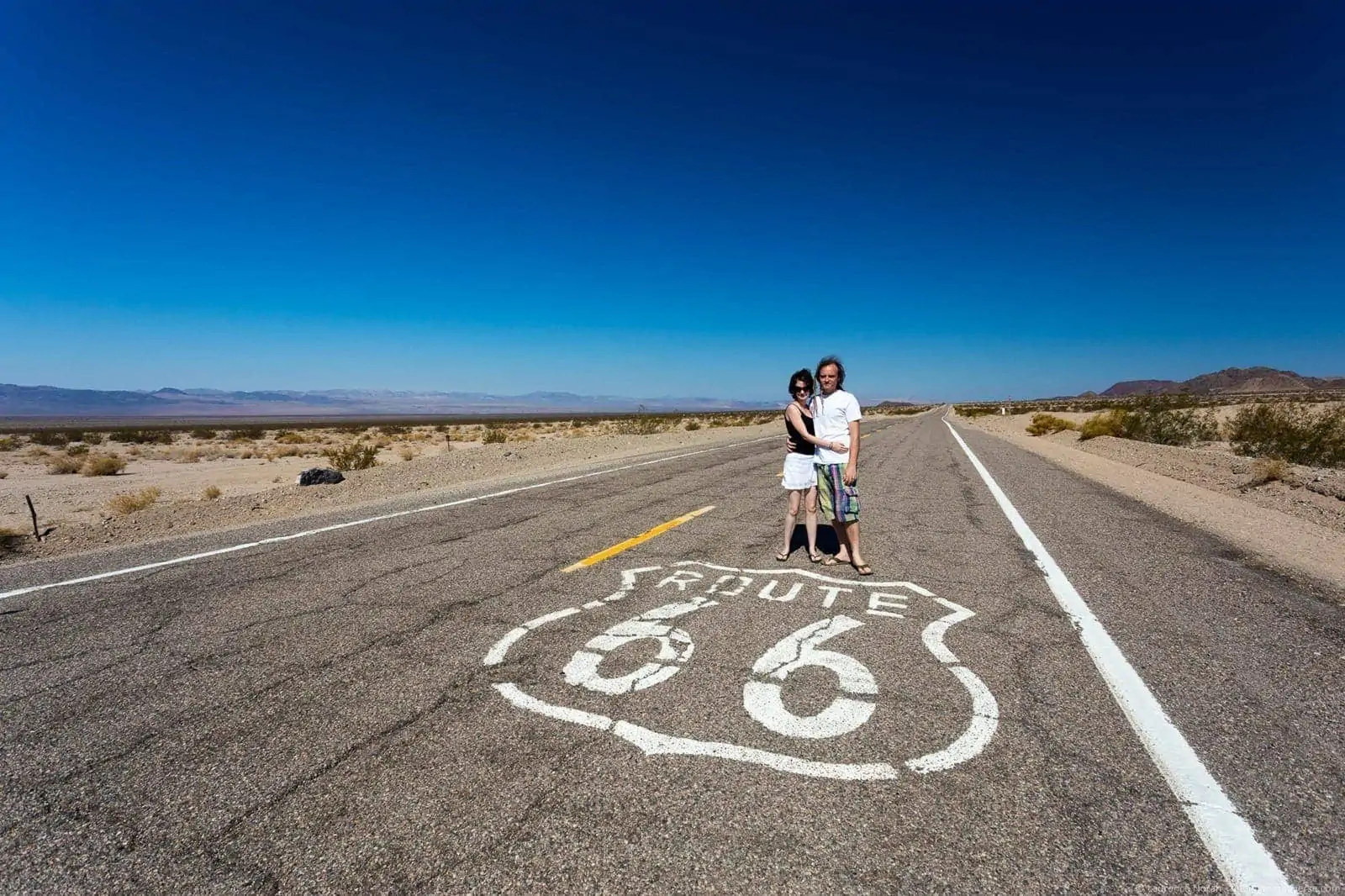
Jess and I have done a lot of miles on American roads, from Route 66 to the Oregon Trail (dysentery avoided) to a loop through the Deep South. This is the kit we pack ourselves, and just as usefully, the things you can happily skip.
Table of Contents:
Road Trip Essentials: The Quick Take
The essentials for a US road trip are a phone mount, a power bank, a car charger with cables for everyone on board, plenty of water, a windscreen sunshade, and your paperwork sorted before you leave: licence (plus an International Driving Permit if yours isn’t in English), and the America the Beautiful pass if your route includes several national parks.
Everything else in this guide makes a trip more comfortable or covers you when things go wrong. But if you have those six things and a full tank, you’re ready to drive!
One framing note that applies throughout: where an item only makes sense for your own car, or only for a rental, I’ve said so. It’s the difference between a useful kit and a boot (or trunk for the non Brits) full of things you’ll never touch.
Quick Comparison: All Our Road Trip Picks
Here’s the full lineup at a glance. Prices are live from Amazon.
| Item | Our Pick | Best For | Price |
|---|---|---|---|
| UGREEN Vent Clip Phone Mount | Phone mount (the one I travel with) | Renters, light packers | Check price on Amazon |
| iOttie Easy One Touch Advanced | Phone mount (suction) | Dashboard or windscreen mounting | Check price on Amazon |
| INIU P63 Power Bank | Power bank (all-round) | Everyone; it’s the one I carry | Check price on Amazon |
| INIU P50 Power Bank | Power bank (compact) | Pockets and day bags | Check price on Amazon |
| Anker PowerDrive 40W Car Charger | Car USB charger | Any car without USB ports | Check price on Amazon |
| Anker 333 USB-C Cables (2-pack) | Charging cables | Spares; you’ll want the second one | Check price on Amazon |
| BESTEK 300W Power Inverter | 12V inverter | Laptops and camera batteries | Check price on Amazon |
| NOCO Boost GB40 Jump Starter | Jump starter | Own car; remote routes | Check price on Amazon |
| AstroAI Tire Inflator | 12V tyre inflator | Own car; long rentals | Check price on Amazon |
| Surviveware First Aid Kit | First aid kit | Every car, rented or not | Check price on Amazon |
| ROVE R2-4K Dash Cam | Dash cam | Own car; long trips | Check price on Amazon |
| Cabeau Evolution S3 Travel Pillow | Travel pillow | Passengers on long hauls | Check price on Amazon |
| EcoNour Windshield Sun Shade | Sunshade | Anywhere south of Montana in summer | Check price on Amazon |
| RTIC 20-Can Soft Cooler | Cooler | Picnics and overlook lunches | Check price on Amazon |
| Klean Kanteen Water Bottle | Reusable bottle | One per person | Check price on Amazon |
| Amazon Basics Packing Cubes | Packing cubes (budget) | First set; we still use ours | Check price on Amazon |
| Eagle Creek Reveal Cube Set | Packing cubes (durable) | Frequent travellers | Check price on Amazon |
| Gonex Compression Cubes | Packing cubes (compression) | Overpackers (no judgement) | Check price on Amazon |
| Drive Auto Trunk Organizer | Trunk organiser | Keeping the chaos contained | Check price on Amazon |
Paperwork and Other Non-Gear Essentials
The paperwork matters more than any gadget on this list. Most gear can, of course, be picked up at a Walmart en route; a missing permit or an unbudgeted park fee can’t be fixed from the road quite so easily.
Your Licence, and Whether You Need an IDP
If you’re visiting from overseas, you can generally drive in the US on your valid foreign licence for the length of a normal tourist visit. I drove here as a visitor on both a UK and a French licence across multiple trips and it was never questioned at a rental desk.
An International Driving Permit is recommended rather than universally required. Some states expect one, some rental companies ask for one, and it becomes much more important if your licence isn’t in English. The rules really do vary by state, so check the DMV of the states you’ll drive through.
The one thing you can’t fix after arrival: an IDP normally has to be issued in your home country before you travel. The US doesn’t issue them to visitors, so if you’re on the fence, get one before you fly. They’re cheap and they remove the question entirely. I’ve had an IDP issued a couple of times, once in the UK where the Post Office did it for me, and once in the US through AAA.
Note that there are a lot of websites that will offer to “help” you with your IDP application, for a fee of course. There is a fee, but the best option is to go to the official issuer for your country, and your local government website will tell you who that is. If you can go in person to an office it’s usually more cost effective as you won’t have to pay for postage.
Renting a Car
If you’re flying in, the car itself is the biggest decision you’ll make. We use and recommend Discover Cars to compare rental prices across providers, and I’d suggest booking as far ahead as you can for summer national park routes.
Some rental-specific tips. First, check whether your quote includes unlimited mileage, because a US road trip will eat a capped allowance alarmingly fast. Second, read the toll section of your rental agreement before you drive off, for reasons I’ll get to shortly.
Finally, insurance is a whole other nightmare. Ideally you’ll want to read up on what you’re covered for before you arrive at the rental counter and get a hard sell for an overpriced policy you likely could of bought at a fraction of the price, or which may already be included on your credit card. If you can sort this out before you get to the rental counter you’ll save yourself some stress.
The America the Beautiful Pass
If your route includes several national parks, the America the Beautiful annual pass can save you money, but the rules changed in 2026 and the answer is no longer the same for everyone.
For US residents the pass is still $80 a year. Visitors from overseas now pay $250 for a separate nonresident annual pass, and on top of that, 11 flagship parks (including Yellowstone, Yosemite, Grand Canyon, Zion and Grand Teton) charge a $100 per person surcharge for nonresident visitors aged 16 and over. Free-entrance days are also now for US residents only.
So do the sums against your actual route before buying. For a resident hitting three or four parks, the $80 pass is an easy yes. For an overseas visitor doing one or two parks, paying per park is usually cheaper than the $250 pass, and either way you’ll want the surcharge parks budgeted for. Check current prices on the NPS passes page and the nonresident fees page.
If you do buy one, get the digital pass instantly at recreation.gov, or order the physical card from the USGS store a few weeks before you travel. Don’t leave the physical one to the last minute, as delivery can take up to three weeks.

First-Timer Gotchas: Fuel Pumps, Tolls and Right on Red
Three things cause more first-trip stress than any missing gadget, and none of them can be solved by packing. I’ve watched every one of them catch out visiting friends and family.
Fuel Pumps Often Reject Foreign Cards
Pay-at-pump readers commonly ask for a five-digit US billing ZIP code, which a foreign card has no way to satisfy. This isn’t a test you can pass.
The reliable fix is to pay inside: tell the cashier your pump number and either prepay or leave a card behind the counter. Contactless sometimes works at the pump, but don’t count on it in the middle of Nevada.
Tolls Are Cashless, and Rentals Bill You Later
Many toll roads, bridges and express lanes have no cash option at all; you either carry a transponder or the road photographs your plate and bills the car’s owner. In a rental, that’s the rental company, which passes the toll on to you through a program like PlatePass or e-Toll, plus a service fee.
The fee structure varies by company and state, and enrolment is usually automatic the moment you drive through your first cashless toll. The charge tends to land on your card 4 to 8 weeks after the trip, so read your rental agreement’s toll section now and the eventual bill won’t be a surprise.
Right on Red, Except New York City and DC
In all 50 states you can turn right at a red light after a complete stop, unless a sign prohibits it. New York City bans it by default across the whole city, and as of January 2025 so does Washington, DC.
If you’re used to UK or European rules this whole manoeuvre feels illegal anyway, so the main risk is really the queue of locals behind you wondering why you haven’t gone.
One more for 2026: if the rental desk offers you a free upgrade to an EV, think about your route first. Charging is easy around cities and painful in the rural West, and route planning around chargers is a job you didn’t have before. I cover this and much more in our full guide to driving in the USA, which is the companion piece to this list.
Navigation and Staying Connected
Your phone is your navigator, your entertainment system and your emergency line, which is why the next two sections are the most important gear on this list. In the old days you might have packed a dedicated GPS unit (we used to), but these are largely irrelevant now. Thanks technology.
A Phone Mount
A phone mount is the single cheapest thing that will improve your trip, and holding your phone while driving is illegal in a growing number of states anyway. I have a Peak Design mount permanently glued to the dash of my own car, but that’s no use for travel, so for rentals I pack this little UGREEN vent clip. It’s cheap, it weighs almost nothing, and it has never once dropped my phone.

The catch with vent clips is that some rental cars have vents that won’t take one, and a blasting air-con vent can get your phone cold (actually not a bad thing, overheating phones aren’t ideal) or block the airflow you want.
If you’d rather have a suction mount for the dashboard or windscreen, the iOttie Easy One Touch Advanced is a well-reviewed pick that works on pretty much any car. It will take up more room in your suitcase though, which is why I stopped travelling with one like this.

As I said previously: you don’t need a standalone GPS unit (or to rent one at an exorbitant daily fee from the rental counter). Nearly every rental now has Apple CarPlay or Android Auto, and your phone with offline maps does the job better than a dedicated device.
Offline Maps
Download offline maps for your whole route before you leave your first hotel’s wifi. Phone signal disappears fast once you’re out of the cities, and it tends to disappear exactly where the junctions get interesting.
Google Maps lets you save large offline areas for free, and five minutes of downloading has saved us from a lot of guesswork in the emptier corners of the West.
Data and eSIMs
If you’re visiting from abroad, sort your data before you land rather than paying roaming rates. An eSIM is the easiest route for most people. I’ve written a full guide to getting online when travelling, and we’ve also reviewed Airalo, the eSIM we’ve used ourselves across multiple countries.
Power and Charging
Running out of battery on a road trip is entirely avoidable, and yet it happens to almost everyone once. The fix is three cheap items and a bit of habit.
A Power Bank (or Two)
I carry the INIU P63 everywhere, road trips included. It’s a 25,000mAh, 100W power bank that’s compact for its capacity, charges a laptop as happily as a phone, and is flight-safe, which matters because your road trip probably starts and ends with a plane. If that flight’s the long haul kind, our long haul flight essentials guide covers the rest of what’s worth carrying on board.
It lives in my camera bag, and it has bailed out my phone and my camera batteries on more trips than I can count.

If you want something smaller for a pocket or a day bag, the INIU P50 is a 10,000mAh version of the same idea. For a deeper comparison of options, see our guide to the best power banks for travel.

A Car Charger and Spare Cables
Don’t assume the car will have USB ports. Plenty still don’t, and some rentals have one sad port that charges a modern phone at a crawl. You don’t want to watch your phone battery depleting over a long road trip when you’re relying on it for everything from navigation to fact finding.
We pack a fast charger for the 12V socket (the cigarette lighter, as it used to be) so every car we get into becomes a fast charger. The Anker PowerDrive covers it: two ports, and enough power to charge a phone that’s running navigation at the same time.

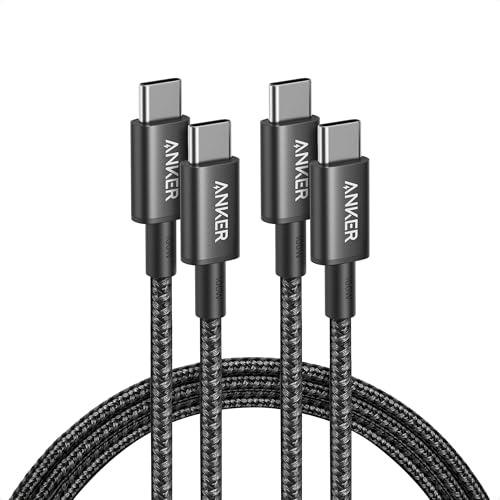
Bring at least one cable per person plus a spare. A two-pack of long braided cables like the Anker 333 covers it: the 6ft length means the back seat can charge too, which prevents a specific and well-documented category of family argument.
If you are coming from overseas you might also want a travel adaptor, in which case our travel adapter guide has you covered. If you’re doing a US-domestic trip you won’t need a travel adapter.
A 300W Inverter
We travel with a small inverter, and it’s one of those items nobody thinks to pack until they’ve needed it. It turns your cars 12V socket into a normal mains outlet, which means laptops, camera battery chargers and anything else with a wall plug can charge while you drive.
As a photographer, being able to top up camera batteries between stops has saved me more than once. The BESTEK 300W is the long-standing pick here: compact and reliable, with two outlets plus USB ports.

Skip it if your only electronics are phones or USB chargeable devices. The car charger above does that job with less clutter.
Vehicle Safety and Emergency Kit
This is the section where renting versus owning changes the list most, so I’ve flagged each item. Renters need less than they think, because a rental comes with roadside assistance. Owners need more than they think, because nobody is coming quickly on a Tuesday evening in rural Utah.
A Jump Starter (Own Car, Mostly)
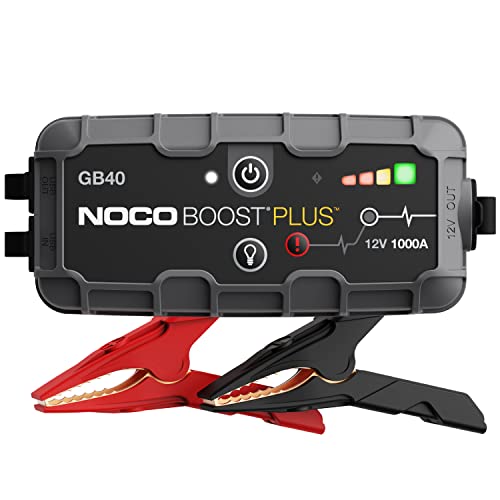
A portable jump starter means a flat battery costs you ten minutes instead of a morning. The NOCO Boost GB40 is the small lithium pack most people end up with: it’s the size of a chunky paperback and starts most petrol engines several times on a charge. If you’re driving your own car, especially on remote routes, I’d put it near the top of the list.
In a rental it’s optional, since a dead battery is the rental company’s problem and their roadside number is in the glovebox paperwork.
A Tyre Inflator (Own Car and Long Rentals)
We keep a 12V tyre inflator in the car, and it gets used more than you’d think. Slow punctures and seasonal pressure drops are a fact of long-distance driving, and being able to top up in a motel car park beats hunting for a working air machine at a gas station. The AstroAI plugs into the 12V socket, has a digital gauge and shuts off automatically at your target pressure. No, we don’t know what the AI does in this but presumably it’s a lonely existence.

For a one-week rental this is a skip. For your own car, or a rental measured in weeks and thousands of miles, it’s cheap insurance.
A First Aid Kit (Every Car)
A first aid kit is the item you hope stays zipped for the whole trip, and the one I’d never leave out. Distances between towns in the US can be enormous, and having plasters, antiseptic and painkillers in the boot (still trunk if you’re not British like me) means small problems stay small. The Surviveware kit is waterproof, sensibly organised and comprehensive without being a field hospital.

Duct Tape and a Foil Blanket
Two items that weigh nothing and solve a surprising range of problems. A roll of duct tape is always found in our car and will temporarily fix trim, hoses, luggage and shoes. When I road tripped around Australia for a year in a Toyota Land Cruiser I swear part of the vehicle was held together by duct tape. I’m kidding. Mostly.
Another good item to have is an emergency foil blanket which covers you if you’re ever stuck waiting for help in the cold.
We carried both on every winter trip when we lived in Scotland, along with snow chains and antifreeze, and the same thinking applies if your US route runs through mountain states outside summer. For a real winter trip, add chains, a small shovel and warm layers. For Route 66 in July, just the tape and blanket are plenty.
A Dash Cam
A dash cam is a sensible addition these days, particularly in a country where any insurance claim turns into a question of whose story holds up. The ROVE R2-4K records in 4K, has GPS built in, and sets up in minutes. It makes most sense for your own car or a long rental; for a short rental it’s more faff than protection.

Comfort on Long Drives
Comfort items feel optional until hour six of an eight-hour driving day. A couple of cheap additions make the difference between arriving fresh and arriving grumpy.
A Travel Pillow
A good travel pillow lets the passenger actually sleep, which matters because a rested passenger becomes a functional relief driver. The Cabeau Evolution S3 is a consistently well-reviewed one: memory foam, straps to the headrest so your head doesn’t loll, and it packs down to half size. It also does double duty on the flight over.

A Windscreen Sunshade
Park anywhere in the American South or Southwest in summer and you’ll return to a car interior that could proof bread. A folding sunshade keeps the cabin bearable and the steering wheel touchable. Ours are cheap ones we picked up at a Walmart and they do the job fine! If you want one that’s a bit better engineered and folds down neatly, the EcoNour is the popular pick and costs less than lunch.

Food and Drink on the Road
Carry more water than you think you need, especially in the West. Distances are long, summer heat is serious, and a case of bottled water from a supermarket costs a fraction of what you’ll pay at a gas station when you’re desperate. We refill reusable bottles as we go; a Klean Kanteen or similar per person keeps your water cold instead of bath-warm.
A soft cooler turns every supermarket into a lunch stop. The RTIC 20-can holds ice for a full day’s driving, squashes into a footwell, and pays for itself quickly against a week of roadside food. Fill it with picnic supplies and you can eat lunch at a national park overlook instead of a service plaza, which is rather the point of a road trip.

Keeping Everything Organised
Living out of a car for two weeks gets messy by day three unless you impose some order early. Two things do most of the work.
Packing Cubes
We’ve used packing cubes for years and I wouldn’t travel without them. On a road trip they solve a specific problem: instead of hauling whole suitcases into every motel, you grab the one cube you need.
We own both the Amazon Basics set, which is cheap and has held up fine, and the Eagle Creek Reveal set, which is lighter and better made if you travel a lot. If you chronically overpack, compression cubes like the Gonex set buy back some boot space.

Links for all three: the Amazon Basics 4-piece set, the Eagle Creek Reveal set and the Gonex compression cubes. We’ve also written a full comparison in our packing cubes guide.
A Trunk Organiser
A collapsible organiser stops the boot (ok, I give up, the trunk, we’re in America) becoming a rolling jumble sale. Cables, snacks, the first aid kit and the inflator all get a compartment, and it folds flat when you don’t need it. The Drive Auto organiser is the usual pick, and it straps down so it doesn’t slide about.

While we’re on bags: we keep trackers in our luggage year-round, road trips included, mostly for the flights either side. Our guide to the best luggage trackers covers the options, and our digital nomad packing list goes deeper on the work-from-anywhere kit.
If You’re Travelling With Kids or a Dog
We travel as a couple, so I won’t pretend to expertise I don’t have, but the additions are common sense: downloaded entertainment and headphones per child (the offline maps rule applies to cartoons too), far more snacks than seems reasonable, and a collapsible water bowl plus a car harness for the dog.
Beyond the kit, budget extra time at every stop, double the water for everyone, and pick motels with pools. Everybody arrives happier.
What First-Timers Wish They’d Packed
Having done this trip in both directions, so to speak, here’s what catches people out most, in roughly the order they discover it.
Cash comes first. America is nearly cashless until suddenly it isn’t: a rural toll booth, a national park campground envelope, a small-town diner with a card minimum. Fifty dollars in small notes covers every one of these.
Then offline maps, downloaded before departure. Everyone plans to do it at the hotel and forgets. Do it while you’re packing.
The sunshade. Nobody from a cooler climate believes how hot a parked car gets in Arizona until they’ve burned a hand on their own steering wheel. Believe it now, it’s cheaper.
A second charging cable, because the first one stays in the car and the second goes into the motel room. One cable means choosing which device dies overnight.
Decent sunglasses, kept in the car rather than a suitcase. Western light is relentless, and an afternoon driving into a low sun without them is surprisingly tiring.
And the parks pass decision, made in advance. Queueing at an entrance station while doing surcharge arithmetic with a ranger is nobody’s favourite start to Yellowstone. Work it out at home, buy digitally if it makes sense, and roll up ready.
Planning Your US Road Trip: Further Reading
Packing sorted, the next job is the route. We’ve published detailed itineraries from our own trips: a 2-week USA road trip itinerary for a first big loop, a Deep South road trip for music, food and history, and a week on Route 66 for the classic. Our guide to driving in the USA expands on all the rules-of-the-road material above.
For paper planning, and for the parts of the trip where the phone should stay in the glovebox, the Lonely Planet USA guide remains our pick for a single-volume overview of the country.
US Road Trip Essentials: Frequently Asked Questions
Do I need an International Driving Permit to drive in the USA?
Not necessarily, but it’s recommended. Visitors can generally drive on a valid foreign licence, and an IDP becomes important if your licence isn’t in English, or if a specific state or rental company expects one.
Since requirements vary by state, check the DMV rules for the states on your route. If in doubt, get the IDP: it’s inexpensive, but it must be issued in your home country before you travel, as the US doesn’t issue them to visitors.
How much is the America the Beautiful pass for foreign visitors?
As of 2026, non-US residents pay $250 for the nonresident annual pass, while the standard $80 annual pass is limited to US residents. In addition, 11 flagship parks including Yellowstone, Yosemite, Grand Canyon and Zion charge nonresident visitors a $100 per person surcharge (ages 16 and over) on top of standard entrance fees.
For overseas visitors doing one or two parks, paying per park is usually cheaper than the pass. Buy digitally at recreation.gov for instant delivery, and check the NPS website for current pricing before your trip.
How do tolls work in a US rental car?
Many US toll roads are now cashless: the road photographs the car’s plate and bills the owner, which for a rental is the rental company. They pass the toll on to you through a toll program such as PlatePass or e-Toll, plus a service fee on top.
Enrolment is usually automatic the first time you drive through a cashless toll, and the charge typically appears on your card 4 to 8 weeks after the trip. Fee structures vary by company and state, so read the toll section of your rental agreement before setting off.
Why is the fuel pump rejecting my foreign card?
US pay-at-pump card readers commonly ask for a five-digit US billing ZIP code as a security check, and a foreign card has no ZIP code to give. The transaction is declined even though the card is fine.
The reliable workaround is to pay inside: give the cashier your pump number and prepay or leave your card. Contactless payment sometimes works at the pump itself, but paying inside is the option that always works.
What are the most important things to pack for a US road trip?
A phone mount, a power bank, a 12V car charger with a cable per person, plenty of water, a windscreen sunshade, and your documents: licence, IDP if applicable, and any park passes bought in advance.
After those, a first aid kit and a soft cooler add the most value for the least money. Everything else depends on your car: rent one and you need less emergency kit, drive your own and you need more.
Leave a Reply