
The entire Lord of the Rings movie trilogy, as imagined by Peter Jackson, is a highly effective tourism advert for New Zealand.
Having seen all the films and being a bit of a Tolkien fan, it was inevitable that New Zealand would make it onto my list of places I must visit. And so it happened that I spent a year travelling around the country, in which time I visited as many of the real life Lord of the Rings filming locations as I could. Some were spectacular. Others involved staring at abandoned quarries and empty fields, trying to picture an army of orcs. But that’s all part of the fun.
In this post, I’m going to share the Lord of the Rings filming locations in New Zealand that I think are most worth visiting. These are the ones where the scenery is recognisable from the films, where you can actually access the location, and where the trip is worth it even if you’re not a die-hard Tolkien fan.
I’ve split them into North Island and South Island to make trip planning easier.
Table of Contents:
Where Was Lord of the Rings Filmed?
The Lord of the Rings trilogy was filmed entirely in New Zealand. Over 150 real-world locations were used across both the North and South Islands, with filming taking place between October 1999 and December 2000. All three films were shot simultaneously over a period of more than 400 days.
Many of the locations are still easily recognisable, especially the landscape-heavy scenes. Others, particularly those with heavy digital effects, are much harder to spot. The passage of time has also changed some locations, and a number were on private land that isn’t accessible to visitors.
The digital effects and soundstage work was done at Weta Workshop in Wellington, which is itself worth a visit (more on that below).
When Was the Lord of the Rings Filmed?
Principal photography ran from October 1999 to December 2000, with pickup shoots continuing through 2003 for The Return of the King. The Hobbit trilogy was filmed between 2011 and 2013 in many of the same locations, and some locations (like Hobbiton) were rebuilt for those films.
North Island Lord of the Rings Filming Locations
1. Hobbiton (Matamata)
Near the town of Matamata on New Zealand’s North Island is the Hobbiton Movie Set. This is on a working sheep farm, essentially in the middle of nowhere, which made filming here for the original trilogy much easier as it was far from prying eyes.
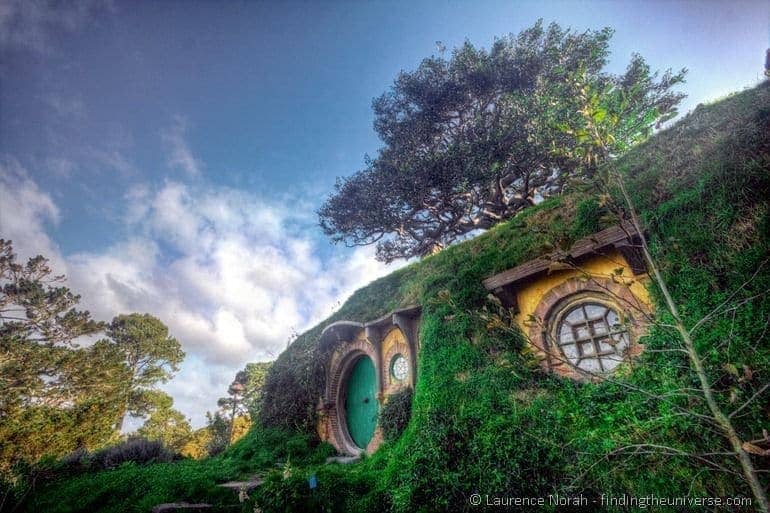
For a long while after the filming of the first three films, this was nothing more than a series of decaying bits of plywood. One of the stipulations of the original filming contract was that all locations be returned to their natural state after filming. But geeks being geeks, people kept trudging across the farmland to get a glimpse of the remnants, and the farm owners realised that some infrastructure was required.
The original tour was pretty bare: a walk around some fields, a large tree, a lake, and some mouldering bits of wood. Good for die-hard fans, but perhaps not what everyone was hoping for. The Hobbit trilogy changed all that. The set was entirely rebuilt for those films, and when I first visited, the new construction had just been completed.
Now it’s about as authentic as it gets. The hobbit holes are permanent, the gardens are maintained year-round, and they’ve added attractions described in the book, including a pub where you can have a drink. In all my time in New Zealand, I never spoke to anyone who was disappointed in the tour.
This is an essential visit for any Lord of the Rings fan in New Zealand, and it’s worth doing even if you’re not particularly into the films. You can see more photos from my visit to Hobbiton here.
You can book the standard Hobbiton guided tour here. Tours are also available with transport from Rotorua or Auckland. For the full experience, you can book a tour from Auckland that includes a lunchtime feast on set.
2. Tongariro National Park (Mordor, Mount Doom)
If you were only able to visit one Lord of the Rings location in New Zealand, Tongariro National Park has to be it. This was the main setting for the land of Mordor, and the scenery is otherworldly.
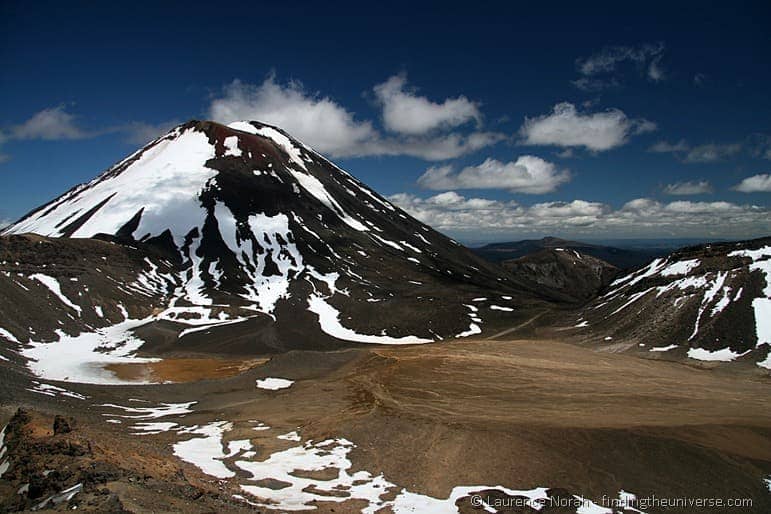
The highlight is Mount Ngauruhoe, which was used as the stand-in for Mount Doom. It’s hard not to be impressed by this perfectly conical volcanic peak, which is essentially a gigantic mound of ash with steam pouring off the top. The best way to see it up close is to hike the Tongariro Alpine Crossing, a one-way day hike that passes right by the base. I have a full guide to hiking the Tongariro Crossing and visiting Mount Doom if you want the details.
A note on climbing Mount Ngauruhoe: The summit is sacred to the local Māori hapū, Ngāti Hikairo ki Tongariro, and DOC has removed all signs directing visitors to the top. Rangers regularly ask hikers not to climb out of respect. It’s not illegal, but you should understand the cultural context before making that decision. My Mount Doom guide covers this in detail.
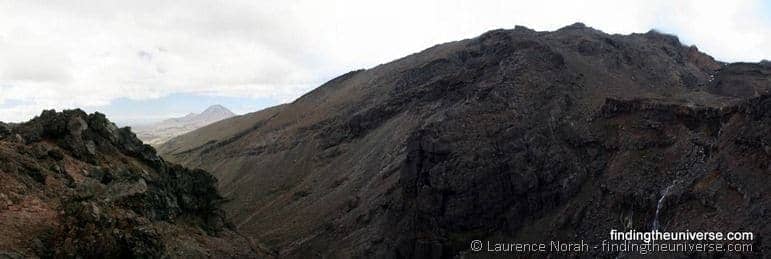
Beyond Mount Doom, there are other filming locations in the park. The slopes of Mount Ruapehu were used for the Emyn Muil scenes, where Sam and Frodo wandered in circles at the beginning of The Two Towers before Gollum found them. The Tukino ski field on the eastern side of the park stood in for the Plains of Gorgoroth and the Black Gate. And the Mangawhero Falls, up from the town of Ohakune, was where Gollum caught a fish.
There are enough filming locations in this area to keep you busy for a couple of days. The volcanic landscape is awe-inspiring on its own terms, and it’s remarkably easy to picture the place full of orcs and the fires of Mordor.
3. The Putangirua Pinnacles (The Paths of the Dead)
Not too far from Wellington, on the bottom tip of the North Island, are the Putangirua Pinnacles: a small reserve made up of a strange series of rock formations, carved by water erosion over countless years.
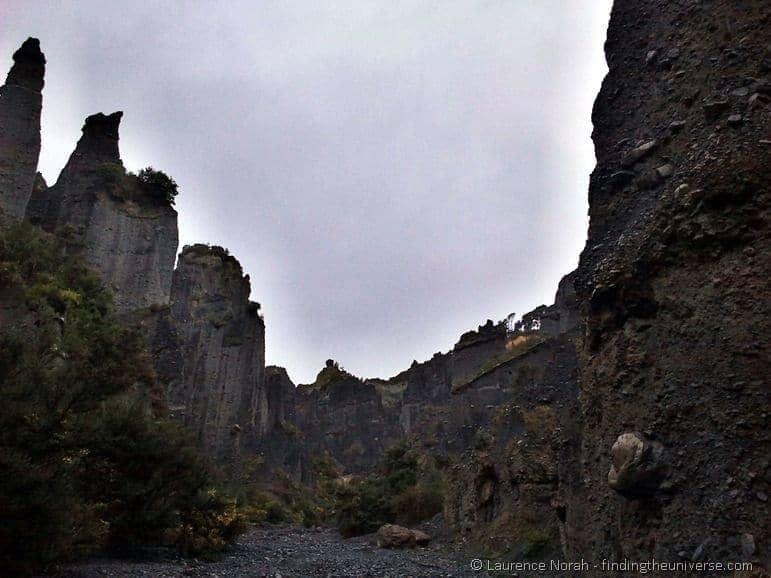
These pinnacles were the setting for the Paths of the Dead, which Aragorn, Gimli and Legolas walked to wake the army of the dead in Return of the King.
It was only a small part of the film, but I’d recommend a visit purely for the atmosphere. They’re perfect for visiting in the rain, when it’s easy to imagine them as being haunted by spirits of a lost age. The walk in from the car park takes about 45 minutes and you can loop up to a viewpoint above the pinnacles on the way back.
Fans of Peter Jackson’s earlier work may also recognise the pinnacles from his gore-fest Braindead (known as Dead Alive in the US), as this was the location the rat monkey came from. Clearly Mr Jackson has a soft spot for this park.
4. Wellington (Hobbiton Woods, Rivendell, the Anduin, Isengard)
Wellington is the filmmaking capital of New Zealand, and a number of locations within easy reach of the city were used for the trilogy.
The most recognisable is the woods on Mount Victoria, which stood in for Hobbiton Woods. This is where the hobbits hid from the Nazgûl under the tree roots. It’s a short walk from the city centre and easy to find, though you do need a bit of imagination as the actual tree was a prop.
Kaitoke Regional Park, about 40 minutes north of the city, was used for Rivendell. The set is long gone, but there’s a replica archway and information boards marking the spot. The park itself is beautiful, with tall native trees and a river running through it. The Hutt River nearby was used as the River Anduin, and Harcourt Park stood in for the Gardens of Isengard.
Some of these locations do require a fair bit of imagination. The digital effects in the films transformed them heavily. But if you’re spending time in Wellington anyway (and you should, it’s a great city), they’re worth tracking down.
Don’t miss the Weta Workshop while you’re in Wellington. This is where the props, costumes, prosthetics, and miniatures for the trilogy were made. The tours are well worth doing for the behind-the-scenes stories alone.
South Island Lord of the Rings Filming Locations
5. Mount Sunday (Edoras)
One of the most spectacular filming locations is Mount Sunday in the Ashburton District, which stood in for Edoras, the hilltop city of the Rohan people. There are beautiful sweeping shots of this location in the films, with snow-capped mountains rising behind it.
In real life, Mount Sunday has very much stood the test of time. The town of Edoras was entirely built for the film and then removed, but the location is so perfect that it doesn’t take much imagination to picture it there. The isolated hill surrounded by braided rivers and mountains is exactly as dramatic as it looks on screen.
You can drive to a car park on Hakatere Potts Road and then walk about 90 minutes return up to the summit of the hill. A 4WD is recommended for the road in, especially after rain, though I managed it in a regular car (carefully). The walk itself isn’t difficult and the views from the top are extraordinary.
6. Glenorchy and Paradise (Lothlórien, Isengard, Amon Hen)
The area around Glenorchy, at the northern end of Lake Wakatipu near Queenstown, was used for several key locations. The beech forest on the road to the settlement of Paradise (yes, that’s its real name) doubled as Lothlórien, the woodland realm of Galadriel. Other nearby locations were used for Isengard and Amon Hen.
The drive from Queenstown to Glenorchy along the lake shore is spectacular in its own right. If you want a guided experience, there are full-day LOTR tours from Queenstown that cover multiple filming locations in the area, including Ithilien, Isengard, Beorn’s House, and Fangorn Forest.
7. The Remarkables and Deer Park Heights (Rohan, Dimrill Dale)
The Remarkables mountain range near Queenstown provided the backdrop for several scenes. Deer Park Heights, overlooking Lake Wakatipu, was used for some of the Rohan landscape shots. The area around Arrowtown, a short drive from Queenstown, was used for the Ford of Bruinen, where Arwen made her dramatic charge against the Ringwraiths.
This is one of the easier filming location clusters to visit because everything is close to Queenstown. Deer Park Heights is a separate self-drive experience (NZ$75 per vehicle, pre-book online at deerparkheights.co.nz). The Queenstown LOTR day tour mentioned above covers the Glenorchy and Arrowtown locations but not Deer Park Heights itself.
8. Twizel and the Mackenzie Country (Pelennor Fields)
Near the town of Twizel in the Mackenzie Country, Peter Jackson filmed the Battle of the Pelennor Fields, where the armies of Gondor and Rohan clashed with Sauron’s orcs. The open grassland stretching to the foothills of the mountains fits the description from the books almost exactly.
The filming location is on private land, but you can arrange tours from Twizel. The broader Mackenzie Country is worth visiting regardless of the LOTR connection: Lake Pukaki, with its impossible blue colour and views of Aoraki/Mount Cook, was used as Laketown in The Hobbit.
Resources for Finding Lord of the Rings Filming Locations
If you want to track down every last location, the best resource is the Lord of the Rings Location Guidebook by Ian Brodie. It has full directions, photos, and GPS coordinates for virtually every location used in the films. I used it extensively during my year in New Zealand and it’s still the most comprehensive guide out there.
The Department of Conservation also has a useful page listing GPS coordinates for the filming locations that fall within national parks and conservation areas.
Bear in mind that a large proportion of the scenes were filmed on private land and are not accessible to the public. Others have changed enough over the years that they’re no longer recognisable from the films. A set of GPS coordinates won’t tell you that, which is why the Ian Brodie book is worth having: it tells you which locations are still worth the trip.
Lord of the Rings Tours in New Zealand
Because the filming locations are spread across both islands, you can either visit them independently as day trips or book a longer group tour that covers the main sites.
For day trips:
The Hobbiton Movie Set tour is the essential one. Tours are available from Matamata (the closest town), Rotorua, and Auckland.
From Queenstown, there’s a full-day LOTR tour covering multiple South Island locations including Ithilien, Isengard, Fangorn, and more.
For the ultimate experience, Red Carpet Tours run multi-day LOTR tours of New Zealand ranging from 7 to 14 days. They’ve been running since 2002, they’re the only tour company endorsed by the rights holders, and the reviews are exceptional. It’s not cheap (the 14-day tour is around NZ$8,500-$9,990 per person), but if you’re a serious fan, it’s the most comprehensive way to see everything.
Further Reading for Your New Zealand Trip
If you found this post helpful, you might like to check out some of my other New Zealand content. I spent a year in the country and have a lot of ground to cover:
My guide to hiking the Tongariro Crossing and visiting Mount Doom covers everything you need to know about the hike, including the cultural context around climbing Mount Ngauruhoe. I also visited Rivendell and the River Anduin, the mountains used as the beacon fires, and the mountain pass over Moria.
For general New Zealand trip planning, see my guides to the South Island highlights, the best day hikes, tips for your first time in New Zealand, and my detailed one-month New Zealand itinerary.
I visited a lot more filming locations than the ones listed here, including the Dimholt Road, various Emyn Muil locations, and some pretty obscure ones that involved staring at empty paddocks. But the locations listed here are the ones I’d recommend as being worth the effort, because they’re recognisable, accessible, and impressive in their own right.
Frequently Asked Questions
Where was Lord of the Rings filmed?
The Lord of the Rings trilogy was filmed entirely in New Zealand, using over 150 locations across both the North and South Islands. Key locations include Tongariro National Park (Mordor), Matamata (Hobbiton), Mount Sunday in Canterbury (Edoras), the Putangirua Pinnacles (Paths of the Dead), and various locations around Wellington and Queenstown.
Digital effects and studio work were done at Weta Workshop in Wellington.
Can you visit Lord of the Rings filming locations in New Zealand?
Yes, many of the key filming locations are publicly accessible. Hobbiton in Matamata is the most popular, with guided tours running daily. The Tongariro Alpine Crossing passes through Mordor locations. The Putangirua Pinnacles, Mount Victoria in Wellington, and various South Island locations are free to visit.
Some locations are on private land and can only be accessed by tour. Others, particularly those with heavy digital effects, are hard to recognise in person.
What is the best Lord of the Rings tour in New Zealand?
For a day trip, the Hobbiton Movie Set tour in Matamata is essential. From Queenstown, there are full-day tours covering multiple South Island filming locations. For the most comprehensive experience, Red Carpet Tours run 7 to 14-day dedicated LOTR tours covering locations across both islands. They’ve been operating since 2002 and are endorsed by the rights holders.
Is Hobbiton worth visiting?
Yes. Even people who aren’t big fans of the films tend to enjoy it. The set is permanent, the attention to detail is remarkable, and the tour includes a visit to the Green Dragon pub. It’s one of the most popular tourist attractions in New Zealand for good reason. Book in advance, especially during the summer months of December to February.
Can you climb Mount Doom in New Zealand?
Mount Ngauruhoe (Mount Doom) is in Tongariro National Park. It’s not illegal to climb, but the local Māori hapū have asked visitors not to summit the mountain out of respect for its sacred significance. DOC removed trail markers in 2017 and rangers are often present to explain the situation. The Tongariro Alpine Crossing, which passes by the base, is an incredible hike in its own right.
upwell says
Thanks for this great collection of The Lord of the Rings filming locations in New Zealand. I found the suggestion of Tongariro National Park (as Mordor) especially compelling—seeing the real-world counterpart behind the epic scenes adds a whole new layer of appreciation. I’ll be keeping this page bookmarked for when I plan my visit!
Laurence Norah says
My pleasure Upwell, enjoy your trip!
Valerie Jones says
Please tell me the name of the cave in Fellowship of the Ring.
Laurence Norah says
Hi Valerie – do you mean the cave with the Balrog (the Mines of Moria)? I don’t believe this had a real world location, I’m fairly sure it was computer generated. There are other caves in the movie though, so if you could be more specific I can try to help out!
maia says
that isn’t all the filming sites there are a lot more!
Laurence Norah says
That’s true – and I visited a lot of them! But this is some of my favourite, and also some of those that are most recognisable from the films 🙂
js_jessuup says
My NZ geography is limited. If I wanted to maximize my time, where should I stay for the best viewing of key sites?
Laurence Norah says
Taupo or Rotorua would be fine, as you’d be within easy distance of Tongariro and Hobbiton.
Wellington would also be a good choice 🙂
Ytre says
I’m at Tongariro right now. Mangatepopo Falls is on the north side of the park and Okahune is on the southwest. Are you sure you don’t mean Mangawhero Falls?
Laurence says
You are absolutely right! I’ll update that now.
Anonymous says
ace ;
)
Amanda Williams says
Great post, Laurence! I love that you included the Putangirua Pinnacles. I think they’re one of the most unique filming locations in NZ — and really cool to visit even if you have no interest at all in Frodo and the Ring.
I agree with Claire that Deer Park Heights used to be one of the best locations to visit. It’s such a pity that area is closed off to the public now.
I would also add Mount Sunday, near Erewhon (used for the Edoras set and Helm’s Deep). The area is seriously stunning, and, if you’ve read the books, you’ll swear Tolkien wrote Rohan with this place in mind…
Laurence says
Thanks Amanda 🙂 I was very close to Mount Sunday, but the road to it is through a rural area and there was risk of snow, so I played the caution card and didn’t go! But having seen the pictures I think it would easily have made my list. It will be interesting to see if the hobbit film locations receive any different treatment post filming 🙂
Claire says
My favourite was Deer Park Heights in Queenstown, but sadly I think it has since closed. Stunning views from up there, and I think it was the basis for Rohan.
Laurence says
It is definitely closed, I spent a long while driving around a housing estate trying to find the way in! It was used for lots of Rohan scenes, particularly the Warg battle 🙂