Quick verdict: two days in Belfast is enough to see the city properly. It is a compact, walkable capital, and a well-planned 48 hours covers the big sights, the Titanic Quarter, a black cab or street art tour, Crumlin Road Gaol and a night in the Cathedral Quarter, without leaving you worn out. This itinerary splits the two days into a city-centre day and a Titanic Quarter day, with rough timings, tour options and a clear view on what to cut if you are short on time.
We have visited Belfast a fair few times over the years, and the city has never run short of things to show us. The capital of Northern Ireland has changed enormously, and it is now one of our favourite short breaks in this part of the world.
Whilst it is hard to squeeze every Belfast highlight into 2 days, plenty of visitors will also want to explore further afield, perhaps along the Causeway Coastal route, or south into the Republic of Ireland. So we have put this itinerary together to help you make the most of your time in the city itself.
It works well alongside our detailed guide to things to do in Belfast, and if you are using the city as a base, our guide to the best day trips from Belfast covers what is within easy reach.
Table of Contents:
How Long Do You Need in Belfast?
Two days is the sweet spot for Belfast. That is long enough to see the city’s main sights at a comfortable pace, and it is the length this itinerary is built around. Here is how the options compare.
With one day in Belfast, you can manage the city centre and a single highlight. You could fit in a black cab tour, City Hall and an evening in the Cathedral Quarter, but you would have to skip or seriously rush the Titanic Quarter. One day works as a stopover rather than a proper visit.
Two days is the sweet spot, and what we cover below. Day one handles the city centre and a tour, day two is the Titanic Quarter and a couple of central sights. Two days lets you see Belfast properly without feeling like you are ticking boxes, and in practical terms it usually means two nights, or three if you are arriving late and leaving late.
With three days in Belfast, you get the city plus a day on the road. The obvious move for that third day is the Causeway Coast, where the Giant’s Causeway, the Dark Hedges and Carrick-a-rede all sit within an easy drive or organised day trip. Our guide to the best day trips from Belfast runs through the options.
For what it is worth, we have spent longer than two days here on more than one visit and never struggled to fill the time, as Belfast rewards a slower pace if you have it. But if two days is what you have, this itinerary makes the most of them.
Day 1 in Belfast: The City Centre
Your first day stays in and around the city centre. Most of Belfast’s indoor attractions open at 10am, so there’s no need to be up with the lark. The shape of the day is a morning around the waterfront and the MAC, Crumlin Road Gaol towards midday, an afternoon tour, and the Crown Bar to finish. It runs comfortably from a 10am start to early evening, though the afternoon depends on which tour you pick, which we get into below.
The Waterfront Area
The majority of Belfast’s attractions don’t open until 10 am, which is great news if you want a lie in, but not so great if you’re an early bird. So you have two options, a leisurely breakfast, or a bit of time spent sightseeing at some of the outdoor locations.
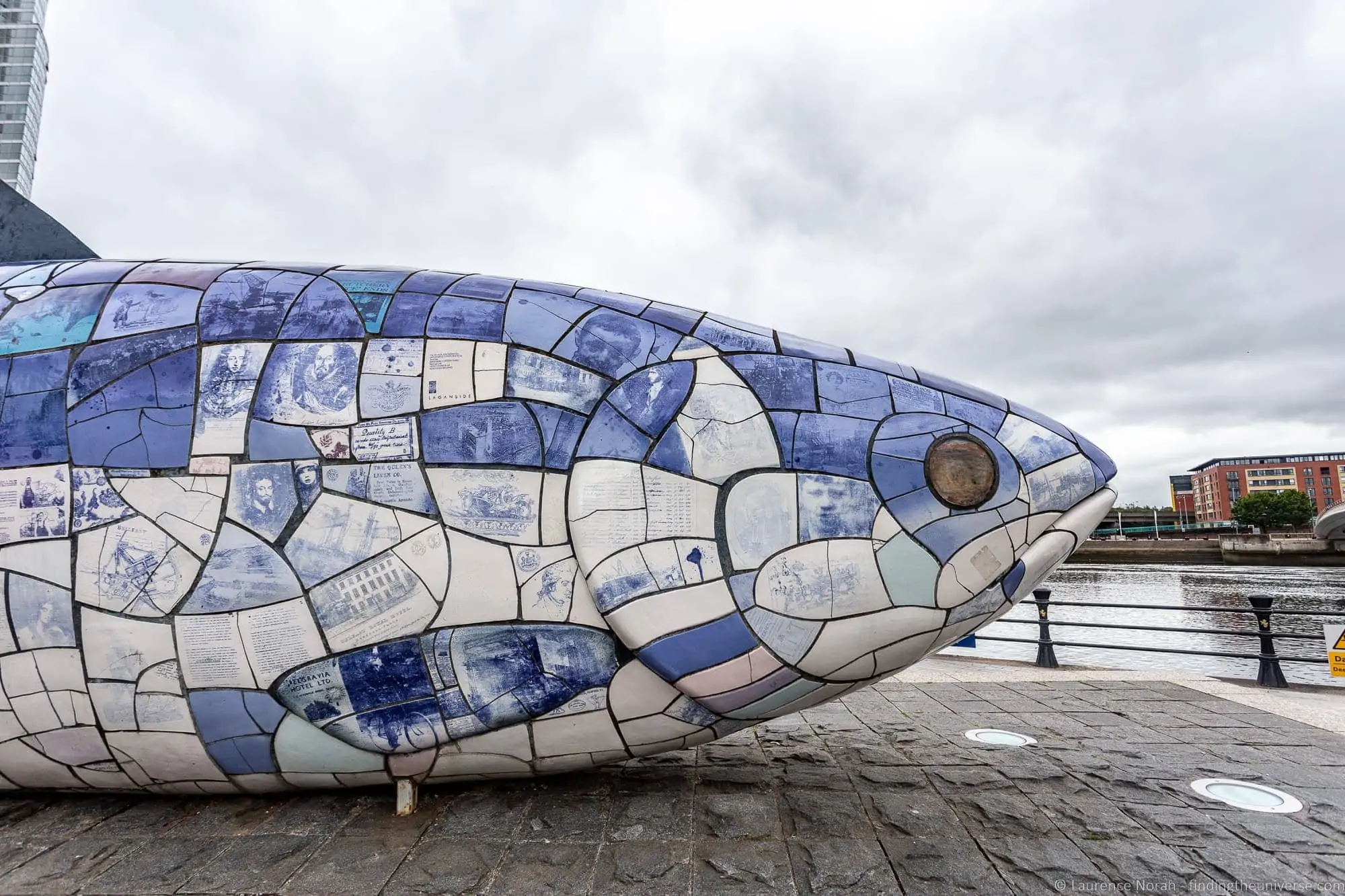
One good option is along the waterfront, where you can take a leisurely stroll from the actual Belfast Waterfront building (an event space), northwards past a number of art installations including the Beacon of Hope and the Big Fish.
The former is a massive stainless steel and bronze sculpture of a lady holding a large ring, which is meant to symbolise thanksgiving. She also has a globe at her feet which celebrates peace and harmony, and is marked with the cities where the people and goods of Belfast have migrated and been exported to respectively.
The Big Fish, also known as the Salmon of Knowledge, is a large sculpture of, as you would imagine, a salmon. This is covered in ceramic tiles, and each one tells a different story of the city, meaning you can spend quite a while here looking at all the different tiles. It’s also located at the meeting point of Belfast’s two major rivers, the River Farset (from where Belfast gets its name) and the River Lagan. Half an hour to forty-five minutes along the waterfront is plenty before the indoor attractions open at 10am.
The MAC
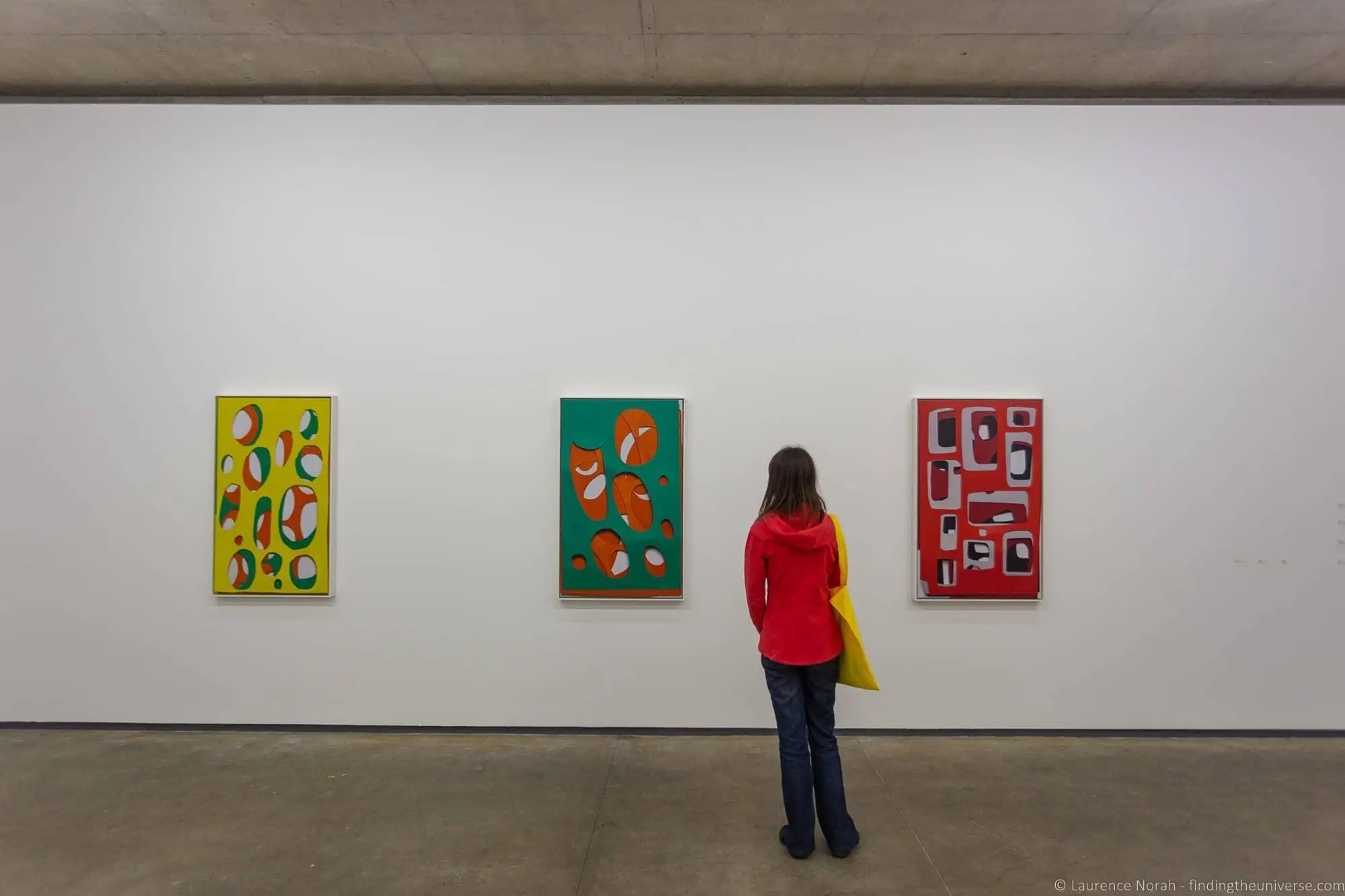
First on our list of indoor attractions is the MAC, Belfast’s Metropolitan Arts Centre. This opens at 10 am, and there are three major art galleries on site, with exhibitions varying depending on when you visit. Most of these are also free, which is nice. You can see what’s on by visiting the art exhibition page.
When we visited the MAC, we toured the exhibitions and were impressed by the variety of what was on offer, so we definitely recommend you check out their listings and add this to your itinerary. An hour or so is enough to take in the galleries.
As well as the exhibition space, the venue plays host to numerous events, including family focused events, art shows and performances. We didn’t have time to take in one of the events, but they did seem to have some excellent options. You can see the full event listing here, although obviously you’ll need to tweak this itinerary if something is coming up that interests you.
If you have time, just near the MAC is the Northern Ireland War Memorial Museum. This is quite a small museum that covers the history of World War II in Northern Ireland, and particularly the damage inflicted on Belfast by a number of air raids which targeted the docks here.
Belfast was initially believed to be out of range of the German bombers, so was quite badly prepared for the attacks when they did come, resulting in significant damage and loss of life. This is a free museum that is open from 10 am, just a two minute walk from the MAC.
Crumlin Road Gaol
Our next stop in Belfast is the Crumlin Road Gaol. This was, for over 150 years, one of Northern Ireland’s main prisons, and is today the only surviving Victorian era prison in Northern Ireland.
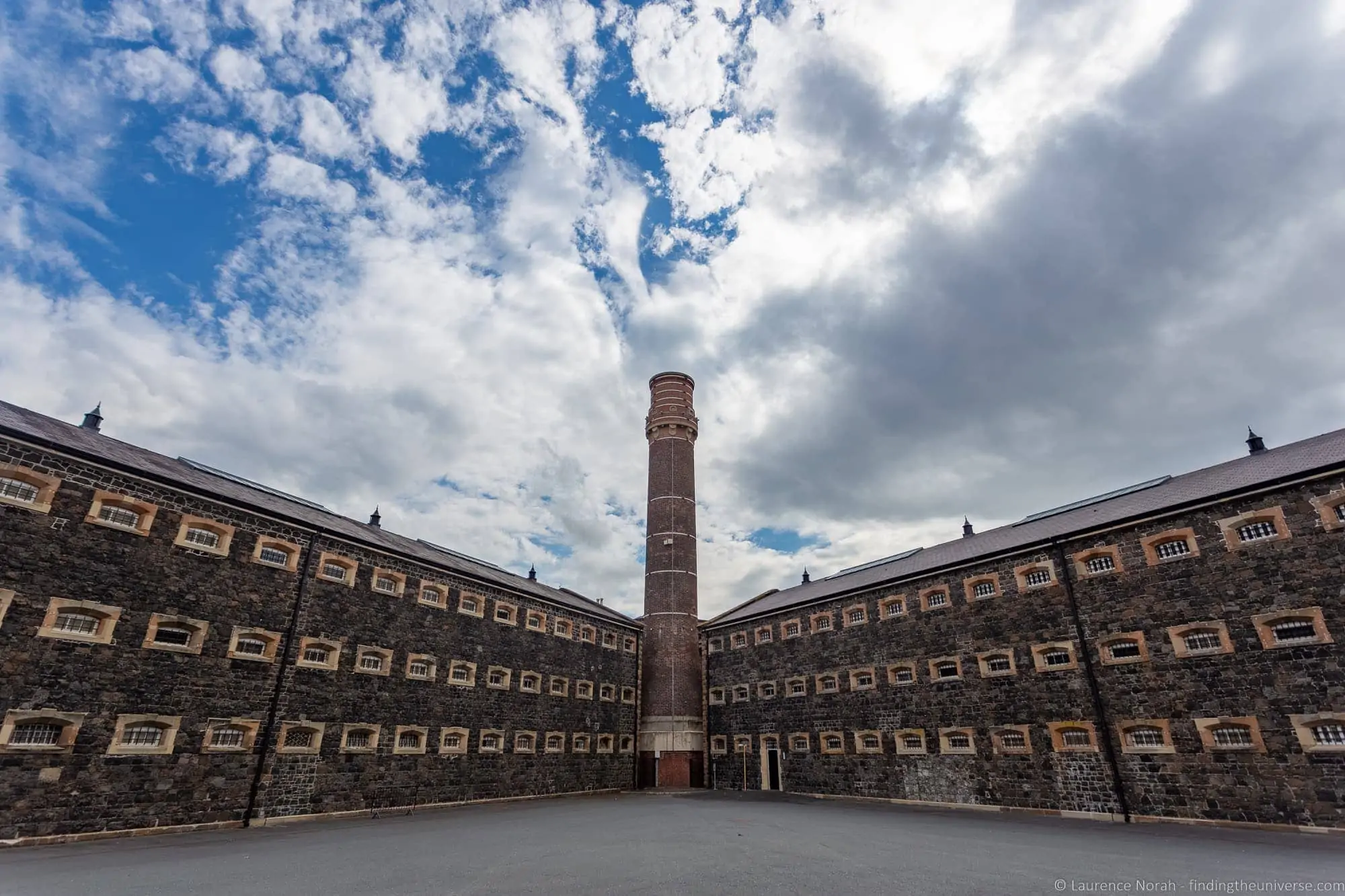
Opened in 1846, the prison was one of the most advanced of its time, built to house around 500 prisoners, although in its later years, and especially during the Troubles, it held many more than that. It closed as a prison in 1996, and following an extensive restoration project, opened as a visitor attraction in 2012.
These days a visit is self-guided. You make your way through the major parts of the prison at your own pace, including the tunnel under the road which linked the prison with the courthouse opposite (now derelict, but slated to become a luxury hotel), a cell wing, and the execution chamber, where seventeen prisoners were executed by hanging, the last in 1961. Audio and video along the way fill in the history of the prison, its design and its notable inmates. Allow somewhere between an hour and ninety minutes. The gaol is open 10:30am to 3:30pm Monday to Friday, and 10am to 4pm at weekends.
It’s worth booking online in advance. It guarantees your spot, and booking direct on the gaol’s own website costs £16.20 for an adult rather than the £18.50 you’d pay at the gate, as long as you book at least a day ahead. You can book online here. There’s a café on site where you can get some food too.
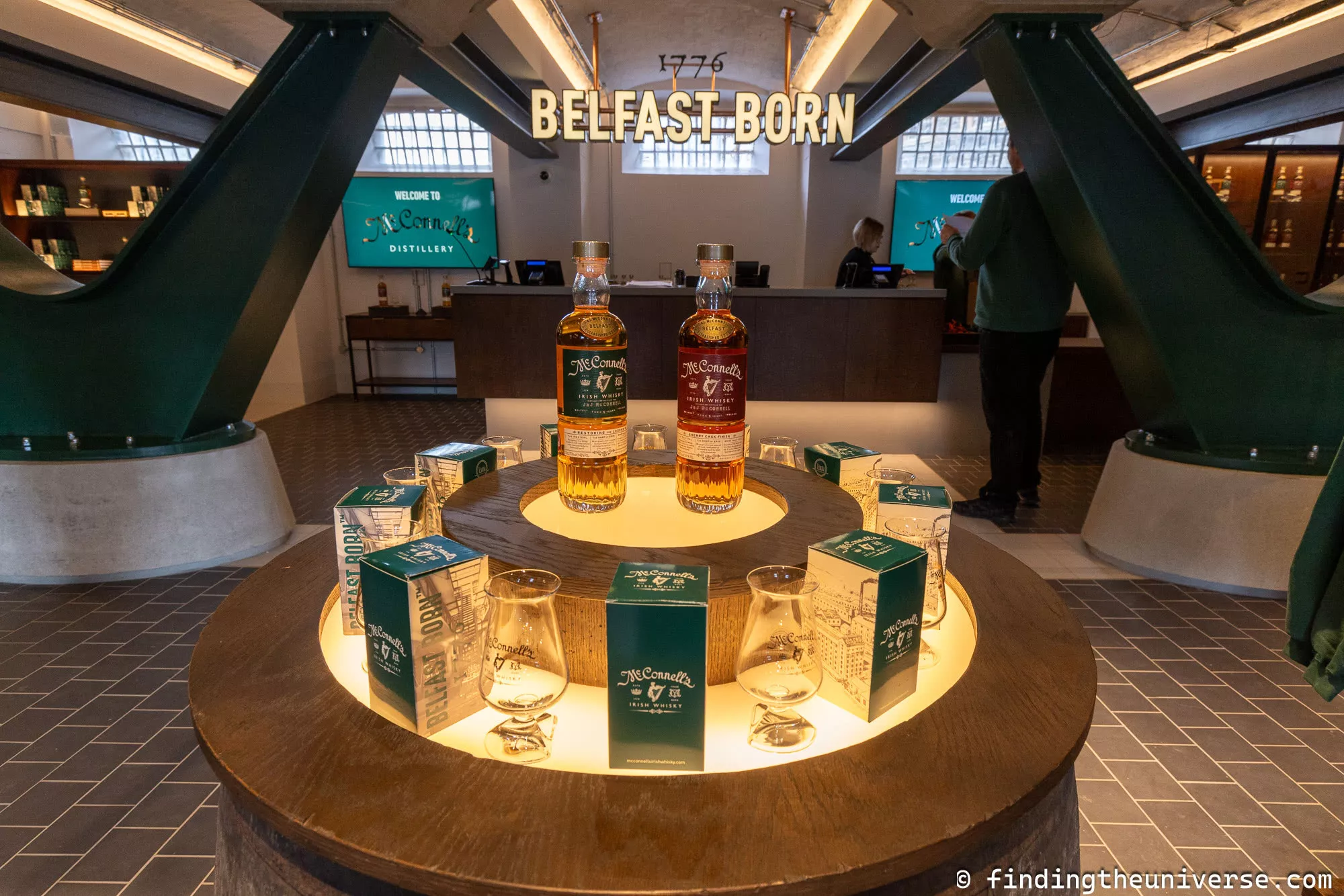
As a side note, in 2024 a new distillery opened in one of the wings of Crumlin Road Gaol. McConnell’s Distillery now runs tours from the restored wing, and if you like whiskey, or just want to learn more about how it’s made, this makes a logical stop while you are here. You can find out more and book tours here. There’s also a second new whiskey distillery over in the Titanic Quarter, which we cover on day two.
For our itinerary, aim to arrive at the gaol in the late morning. That leaves your afternoon free for one of the tours below.
Tours of Belfast
For your afternoon in Belfast we recommend taking a tour. We took three different tours in Belfast during our time in the city, a street art walking tour with Seedhead Arts, a Black Cab Tour with Belfast local blue badge guide Billy Scott, and a gin tasting tour with Taste & Tour.
Naturally, the tour you want to take will very much depend on your interests, and we’d suggest picking just one, as each takes up a good chunk of an afternoon. Here’s a quick overview of each tour we took so you can see which is right for you. You can also see more Belfast tour options here.
Belfast Street Art Tour
The street art walking tour of Belfast that we took was put together and is run by local Belfast street artists. The tour lasts around two hours, and in that time you’ll learn all about the history of the Belfast street art scene, as well as see a lot of different pieces of street art.
Note that this is a bit different to the tours that cover the Belfast murals, such as the Black Cab tour we mention below. Those primarily focus on the political art, while this one focuses more on everyday street art and the local and international artists who have visited and worked in the city.
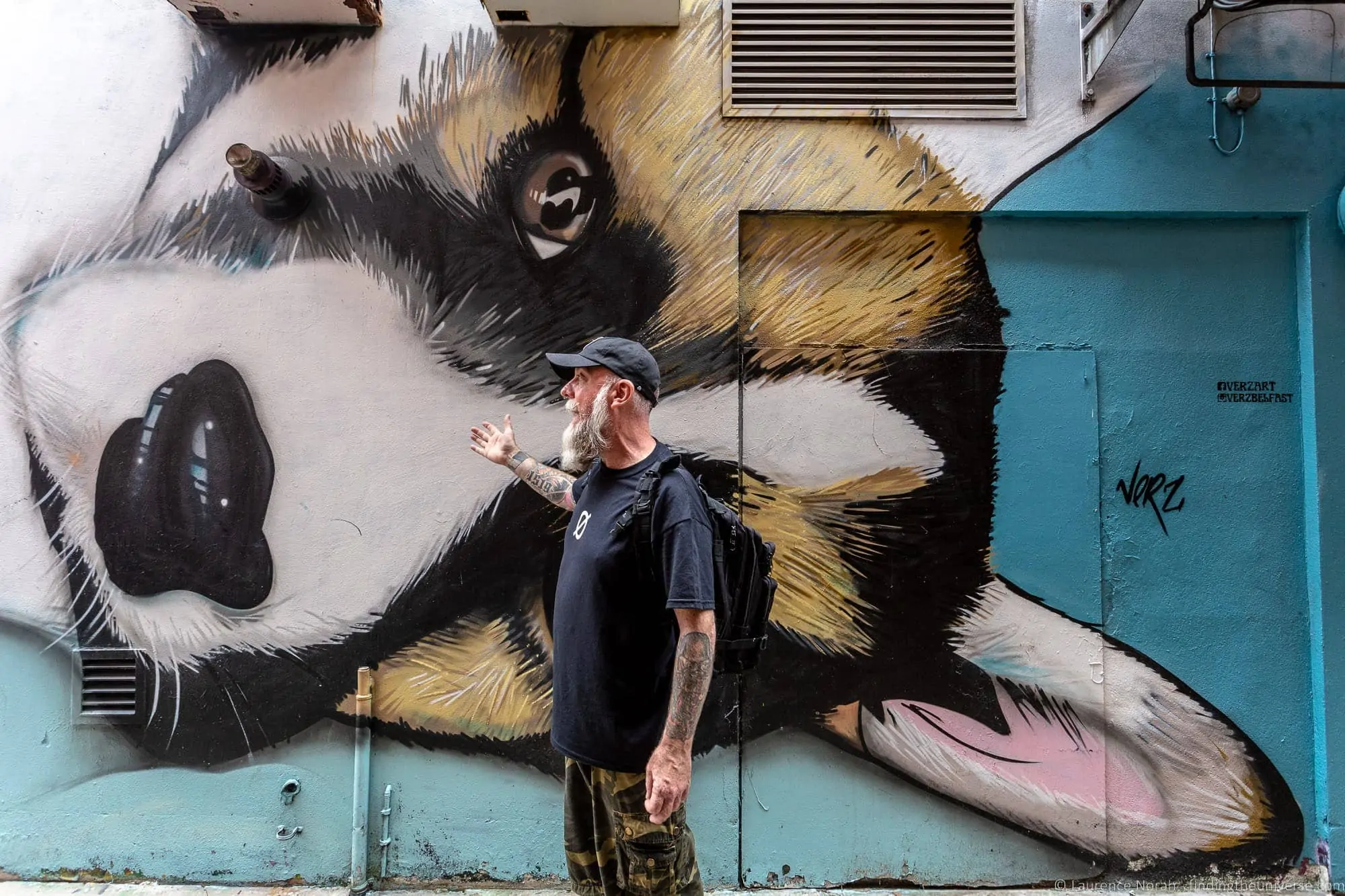
We really enjoyed this tour, and particularly getting an insight into the various pieces of art and street artists from our tour leader Tim, a Belfast street artist who works under the artist name Verz. Whilst you can of course walk around Belfast and spot street art on your own, a tour is a great way to really get an understanding of each piece, and the thinking behind it.
The tour currently runs every Sunday at noon, starting outside the Duke of York pub, and it’s free to join. If you’re visiting on a Sunday and want to do this tour, the easy fix is to do Crumlin Road Gaol first thing and pick the tour up at noon. You can also contact Seedhead Arts about a tour outside their usual time. We also have a post with lots more Belfast street art for you to check out.
Belfast Black Cab Tour
If you’re interested in learning a bit more about the political history of Belfast, then a Black Cab tour is a great option. This tour, which takes place in an iconic black cab, takes you around various parts of Belfast, many of which are synonymous with the years of conflict the city went through during the time known as The Troubles.
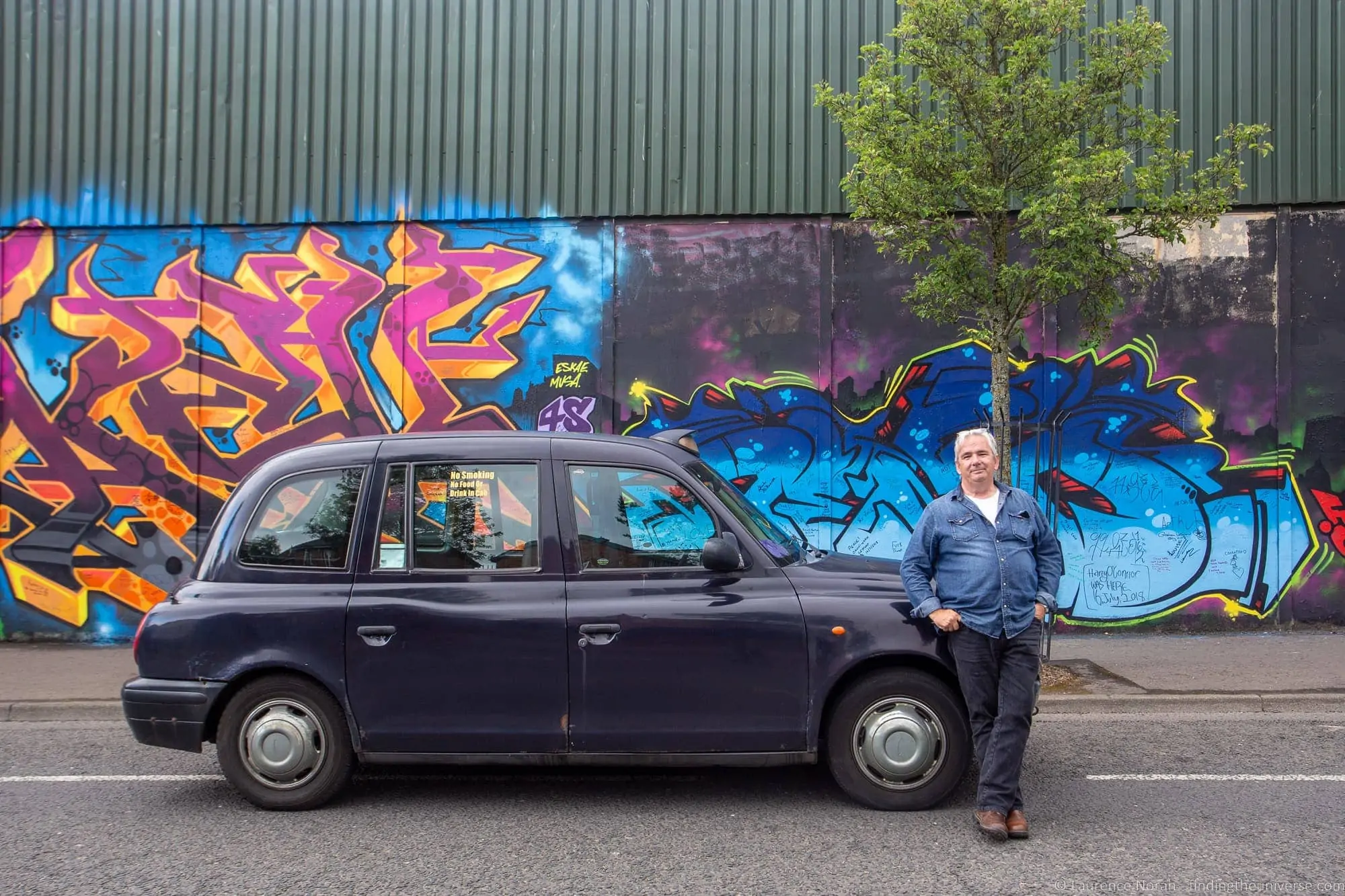
Parts of the city are still separated by the Peace Walls, massive barriers that literally divide the Republican and Catholic neighbourhoods from the Loyalist and Protestant neighbourhoods. The Black Cab tour we took was run by Belfast local Billy Scott.
Billy knows a great deal about the local history of the city, and seemed to know hundreds of people, often waving out the cab window to wish hello to folks passing by. He’s also a registered Blue Badge guide, which is the highest level of qualification awarded to tour guides in the UK, meaning he has to really know his stuff. Which he did.
We were able to tailor the tour as we wished based on our interests. We saw several different quarters of the city and learnt a lot about its history, its people and their struggles over the years from Billy. The tour was at times moving and at times funny. We also had the opportunity to write our own message on the Peace Wall, which has been covered in murals, and signed by people including the Dalai Lama and US President Bill Clinton.
Tours run on demand, so visit the official website for booking and pricing information. You can also book a similar tour here.
Gin Tasting Tour of Belfast
If you’re looking for something a bit more, well, alcohol focused, then the gin tasting tour of Belfast might be for you. Gin has experienced a surge in popularity around the world, and Northern Ireland is no stranger to this trend.

A number of local gin distilleries have started creating their own gins, and this gin tour is a great way to both sample a number of these and learn about the history of the drink, whilst visiting some of Belfast’s iconic drinking venues.
The tour we took lasted around three and a half hours and included seven generous gin drinks. Our tip is definitely to have prepared yourself with a good meal beforehand, as this is a fair amount of gin to drink. The drinks came in a variety of ways, from straight up gin shots through to gin martinis and the classic gin and tonic.
As well as gin, the tour included some nibbles, and we wound through a handful of the city’s gin bars and pubs. The tour guide was very knowledgeable and a lot of fun, and we particularly enjoyed chatting with the other folks on the tour, many of whom were Belfast locals out for a fun afternoon exploring their own city.
The Gin Jaunt runs regularly through the year, and the company who runs it also runs other food and drink based tours, so you should be able to find something to suit whenever you visit. See all their tours, prices and dates here.
The Crown Bar
Belfast has no shortage of watering holes (see the section later on in the post on where to drink in Belfast), but one location that deserves its own entry is the Crown Liquor Saloon, also known as the Crown Bar.

This is actually owned by the National Trust, and is probably the most famous pub in Belfast. It dates from at least 1826, and features an incredible ornate interior of tiles, original gas lamp fixtures and a beautiful carved ceiling. There’s even a heated footrest under the granite bar.
This was the place to be in Victorian times, when it was a gin palace of unparalleled design. Appropriately, the gin tour we took started here, with a gin and tonic. Today you can enjoy a wide range of drinks as you admire the incredible interior, and we think this is the perfect place to end your first day in Belfast.
Day 2 in Belfast: The Titanic Quarter & Central Belfast
Your second day is the Titanic Quarter day, with a couple of central sights on the way back. The morning is the Titanic Quarter itself, Titanic Belfast, the SS Nomadic and the Titanic Dock and Pump House. The afternoon brings you back through the centre for City Hall and the Ulster Museum, before a final evening in the Cathedral Quarter. Reckon on a 9am start at Titanic Belfast.
Day two is the fuller of the two days, and the Titanic Quarter alone can fill anything from half a day to a full one, depending on how much you take on. We flag exactly where to draw the line in our planning tips further down, so have a read of those before you lock in your day.
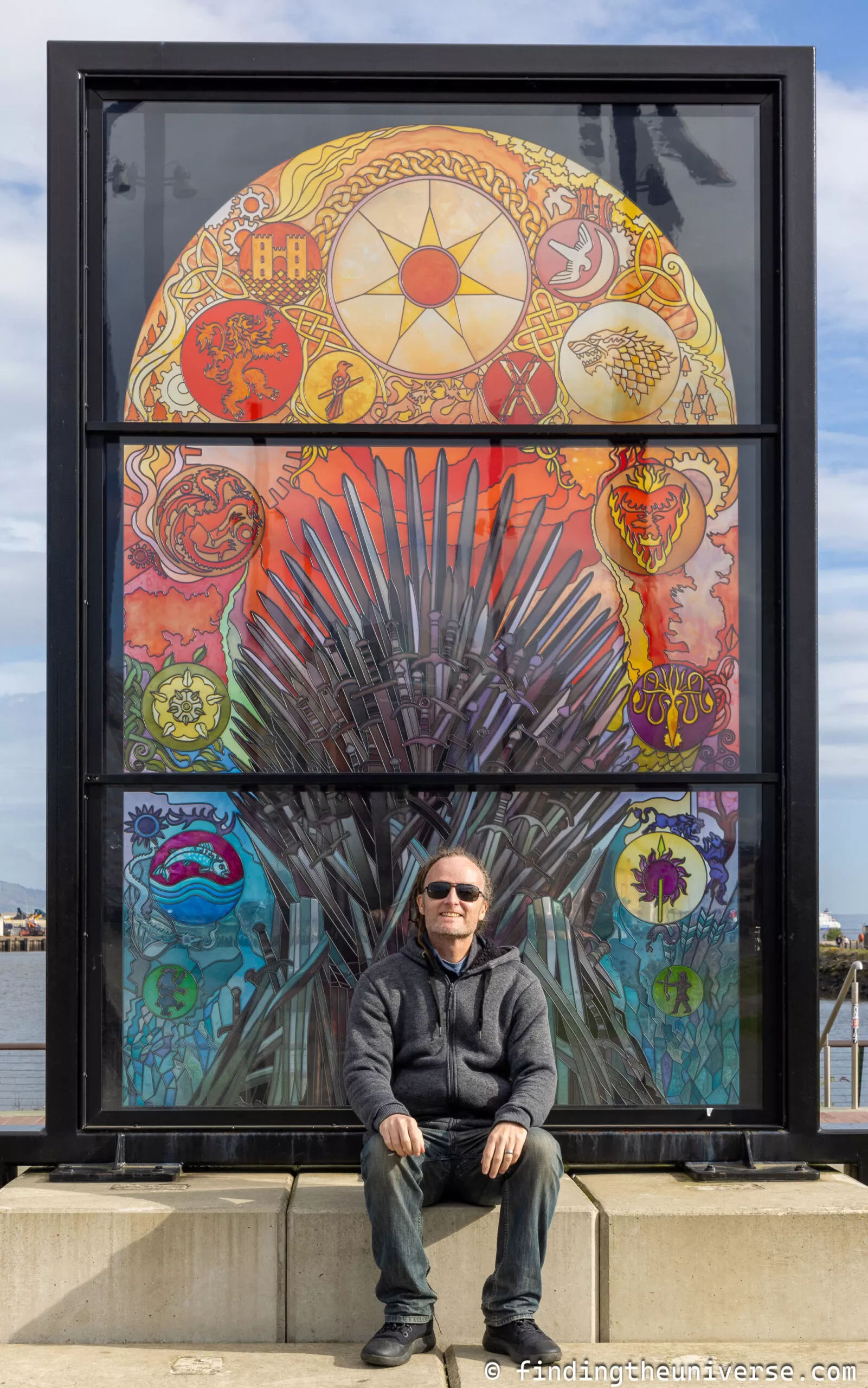
This part of Belfast is also home to the “Maritime Mile”, a mile-long walkable stretch focused on the maritime history of the city. It’s here too that the Titanic Studios are found, one of the key filming locations of Game of Thrones. There’s a nod to the show in the form of six giant stained glass windows depicting scenes from it, found along the Maritime Mile. See our guide to Game of Thrones locations in Ireland for more, and we also have a full review of the Game of Thrones Studio Tour here.
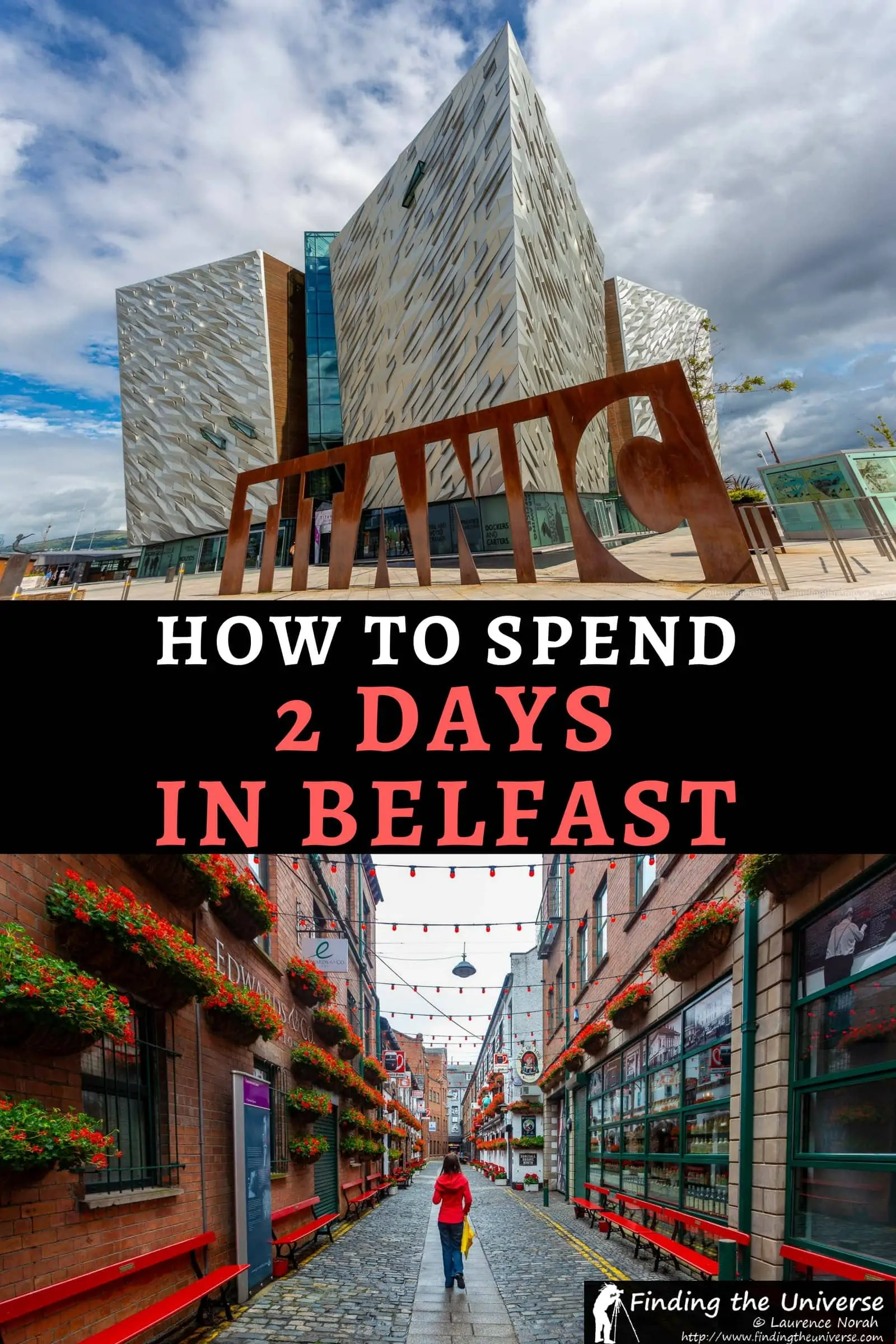
Titanic Belfast
First on our list for this area is the Titanic Belfast experience itself. For those of you who weren’t aware, the RMS Titanic was built in Belfast’s dockyards, by shipbuilders Harland and Wolff, who were responsible for the majority of the White Star Line’s ships, the Titanic among them.
The Belfast shipyard is still in business, although it has had a turbulent few years. The long-running Harland and Wolff company went into administration in 2024, and the Belfast yard was bought by the Spanish shipbuilder Navantia in 2025. These days it builds support ships for the Royal Navy rather than ocean liners.
The most recognisable features of the present day yard are the massive Samson and Goliath cranes, huge yellow gantry cranes which dominate the Belfast skyline, and which you’ll definitely spot when you visit the Titanic Quarter.
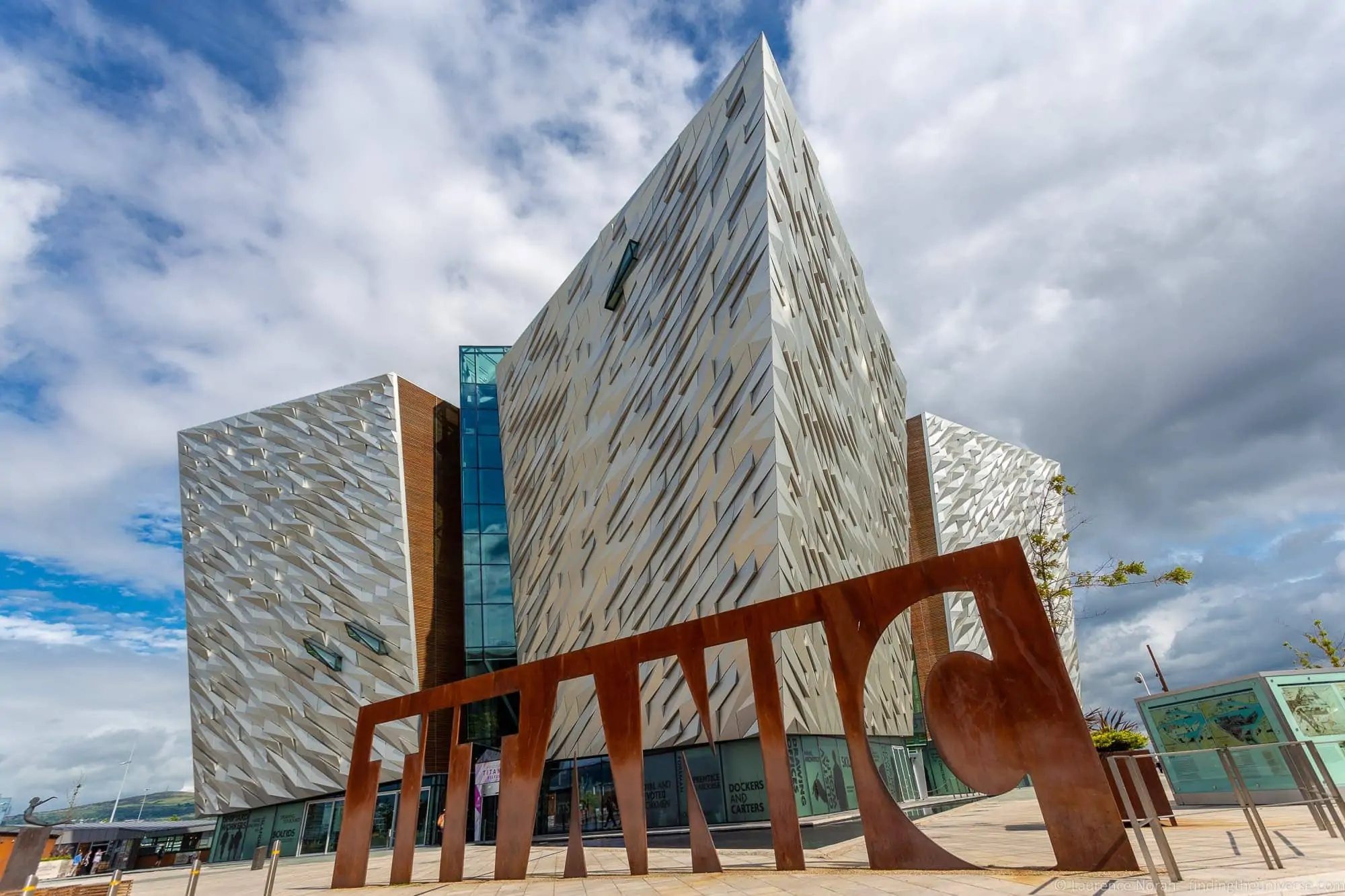
Back to the Titanic Belfast experience. This visitor attraction, which opened in 2012 (100 years after the Titanic sank), is found on the site of the original Harland and Wolff shipyard, where both the RMS Titanic and her sister ship the RMS Olympic were built and launched.
The museum, whose four corners are shaped like the prow of a ship, takes you through the history of the shipyard, the building of the RMS Titanic itself, the people who worked on her, her first voyage and, of course, an overview of the tragic events that resulted in the sinking of the Titanic in 1912, with the loss of over 1,500 lives.
The museum goes further than that, and covers events up to the current day, including the discovery of the wreck and stories about how popular culture has portrayed the events. Yes, you will even hear that famous Celine Dion song. Overall, it is well worth two or three hours of your time.
Titanic Belfast uses a timed ticketing system, and opening hours shift with the season, so it’s always a good idea to check the official website for current times and to book ahead. Tickets cost £24.95 for an adult, and include entry to the SS Nomadic next door. We definitely recommend you get your ticket in advance here to save queuing, and to come early to avoid the crowds.
Note that Titanic Belfast also has a full shop, on-site paid parking and dining options. Find out more about visiting in our comprehensive guide to Titanic Belfast here.
SS Nomadic
The SS Nomadic is the last surviving White Star Line ship in the world. Built by Harland and Wolff in Belfast, she was originally designed to serve as a tender to both the Titanic and the Olympic.
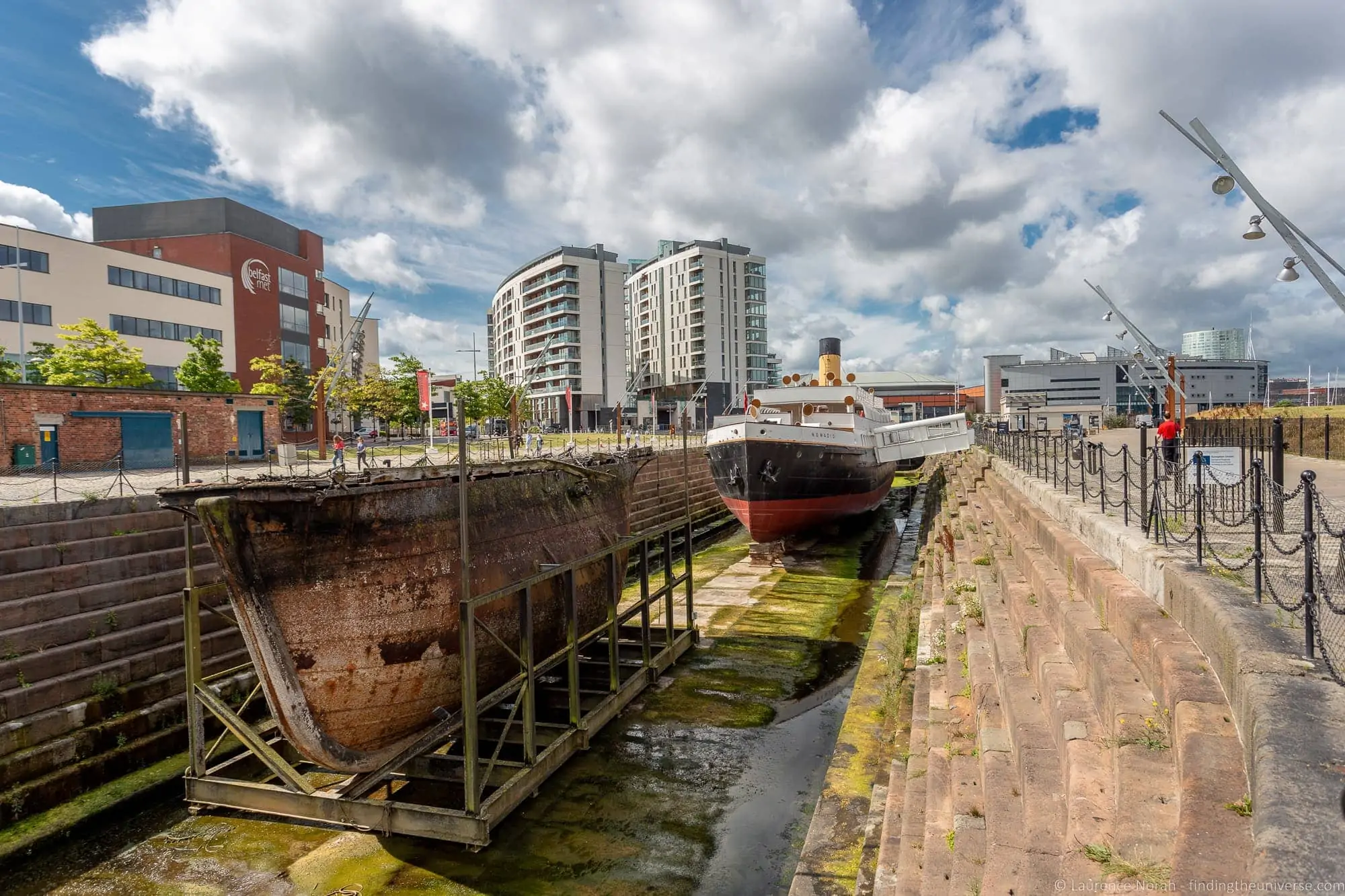
Due to the massive size of the Titanic and Olympic, not every harbour could accommodate them. In particular for the Titanic, the SS Nomadic ferried first and second class passengers and their luggage from Cherbourg Harbour in France onto the Titanic. Third class passengers primarily travelled on the SS Traffic, Nomadic’s running mate.
Following her role as tender to the Titanic and other White Star ocean liners, the SS Nomadic had a varied existence, from minesweeper and troop transport during World War One, through to troop evacuation in World War Two. Between and after the wars she continued to work as a tender, including to vessels such as the Queen Mary and Queen Elizabeth.
Finally, she wound up as a restaurant ship on the Seine in Paris, where she spent almost thirty years, a function which likely saved her from being scrapped. Following the failure of the restaurant business, her fate hung in the balance, before she was saved by the Northern Ireland government and returned to her original port of Belfast, a rather sorry version of her former self.
Following extensive restoration, including work by Harland and Wolff, the SS Nomadic was opened to visitors in June 2013. Today, you can tour the wonderfully recreated ship and learn everything there is to know about her past and her association with the Titanic. We’d recommend visiting this in conjunction with Titanic Belfast, as the combined ticket gets you into both attractions. Alternatively, you can pay a lower entry fee for just the SS Nomadic, and buy this on site. It doesn’t take long to look around, half an hour or so.
Titanic Dock & Pump House
If you want to get a feel for the massive scale of the Titanic, the best option is to visit the Titanic Dock and Pump House. This is about a ten minute walk from Titanic Belfast in the opposite direction to the SS Nomadic, which you can do along the waterfront.
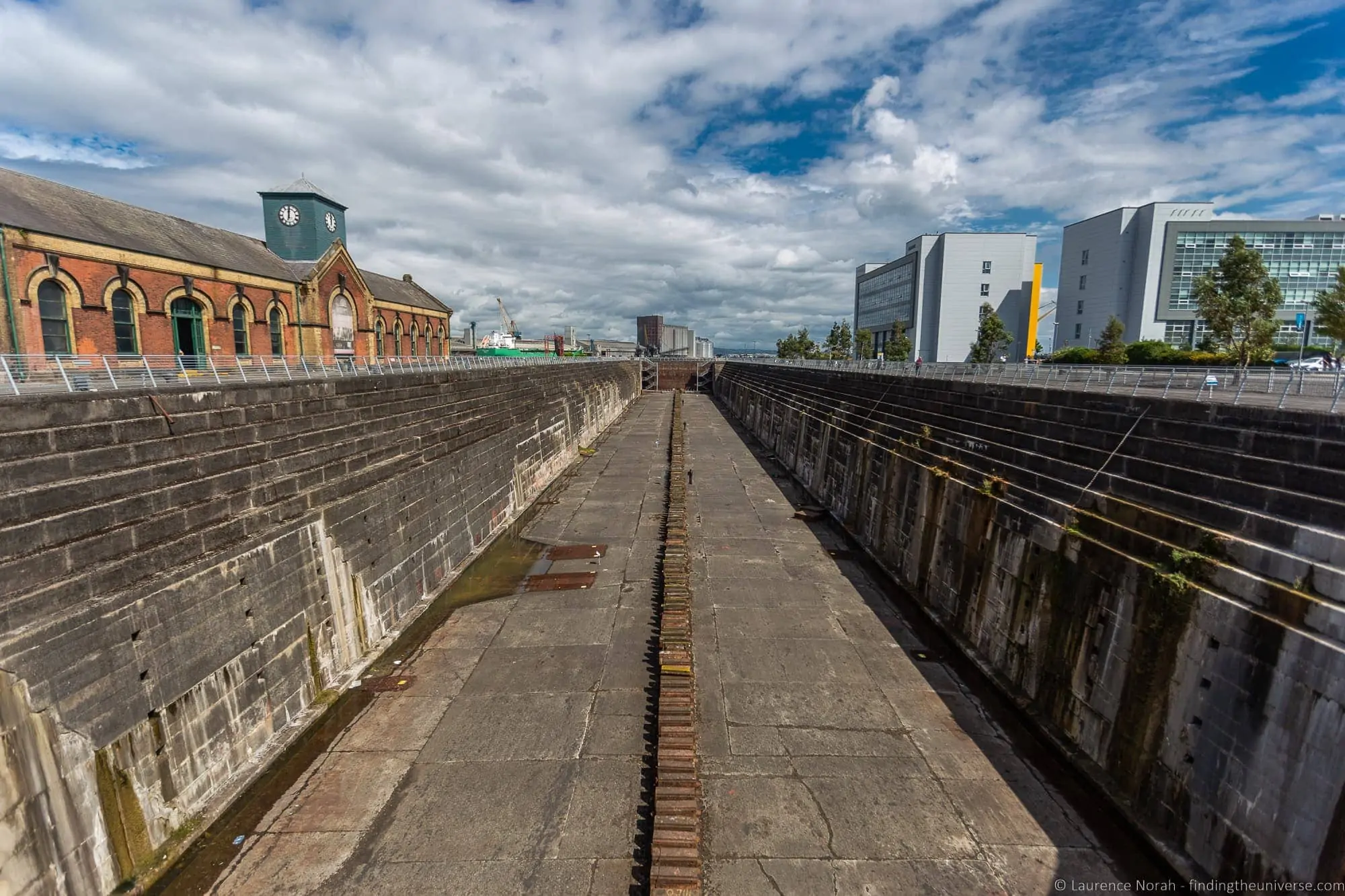
The Titanic Dock, officially called the Thompson Graving Dock, was where the Titanic was fitted out, after the superstructure had been completed and her engines and other major components were fitted.
In terms of a timeline, from her original point of construction (marked out outside Titanic Belfast), the hull was first floated to the Thompson deep water dock where things like engines, boilers and anchors were fitted.
She was then put in the Thompson Graving Dock in February 1912. This dry dock was where all the final parts of the Titanic were completed, including fitting her propellers, painting of the hull, and all the finishing she needed prior to her sea trials and maiden voyage.
At the time it was opened, the Titanic dry dock was the largest of its kind in the world. It was specially designed to accommodate the Titanic and Olympic, and at 850 feet in length, was the same size as the Titanic herself. So a visit here really gives you an impression of the incredible size of these vessels.
You can walk all around the dry dock as well as down inside it, where you can see the keel blocks where vessels rested. You can also visit the pump house, which was responsible for moving water out of the dry dock. As of 2023, this has been turned into a new Irish whiskey distillery, Titanic Distillers. You can take a tour which just focuses on the pump house, and there are also tours which include the working distillery, with tastings.
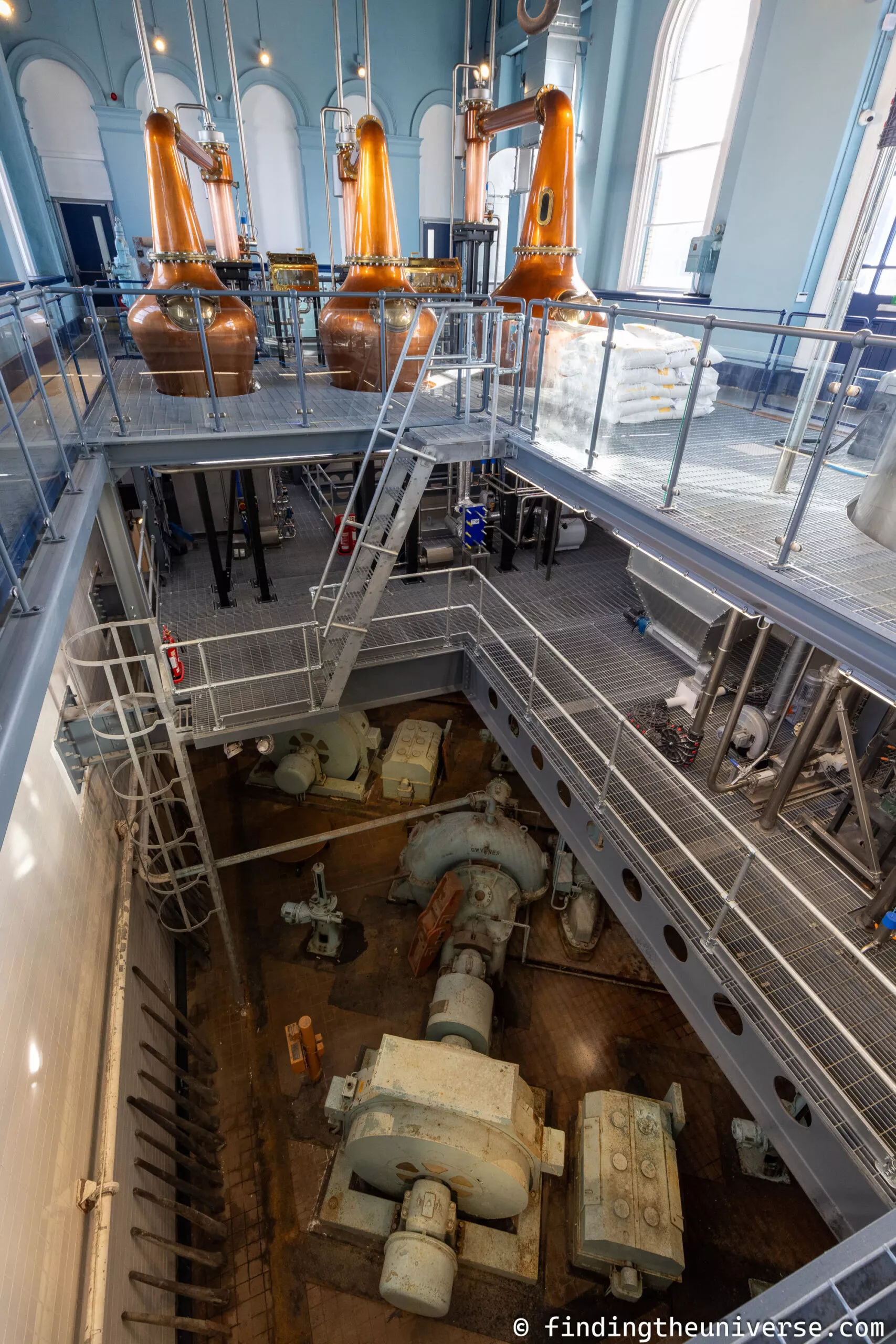
We have done both. We actually visited the pump house before it became a distillery, and then took a whiskey distillery tour in 2024. If you enjoy whiskey, the tour is well worth doing, the staff are excellent and it’s all very interesting. You can book tickets for the tour in advance here.
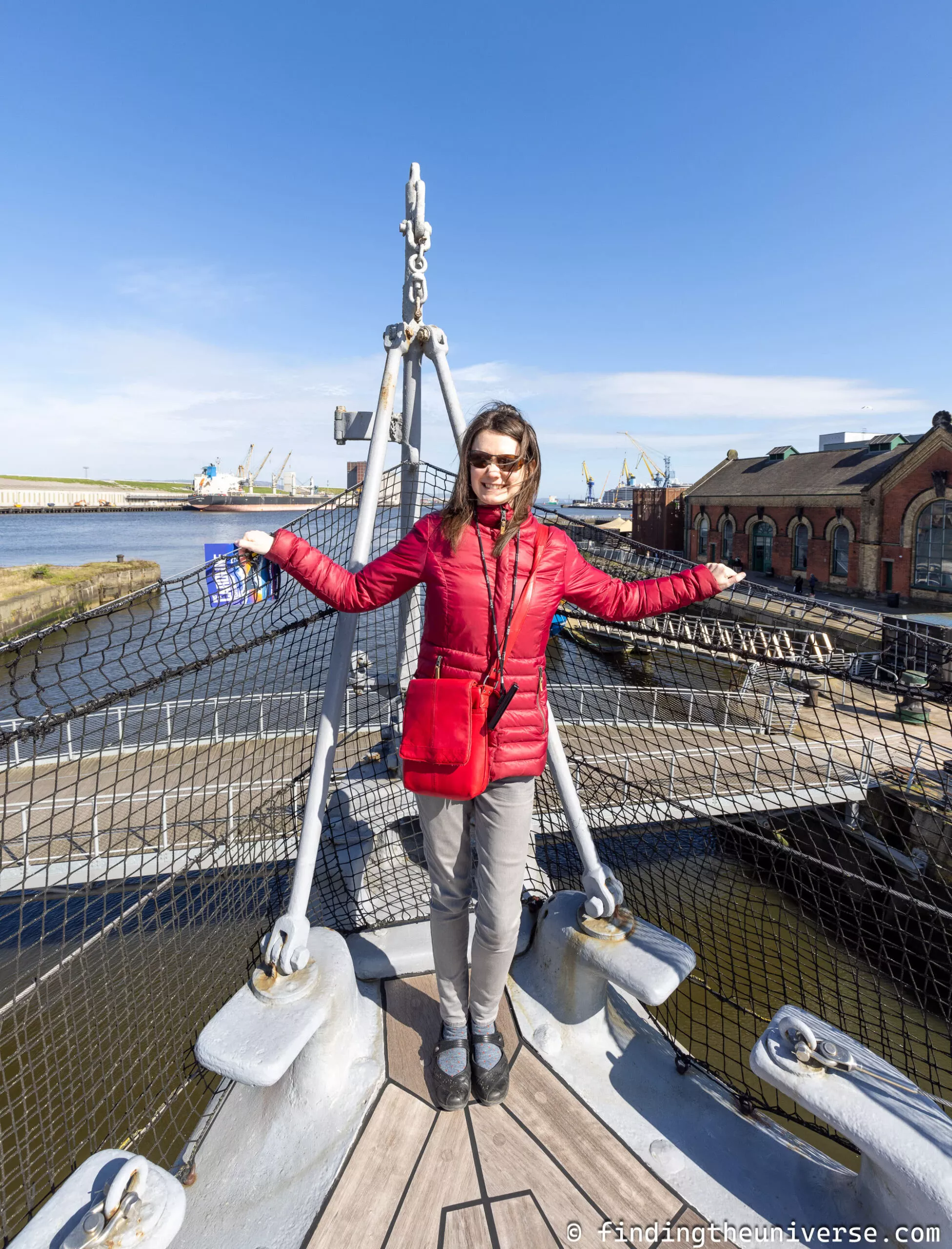
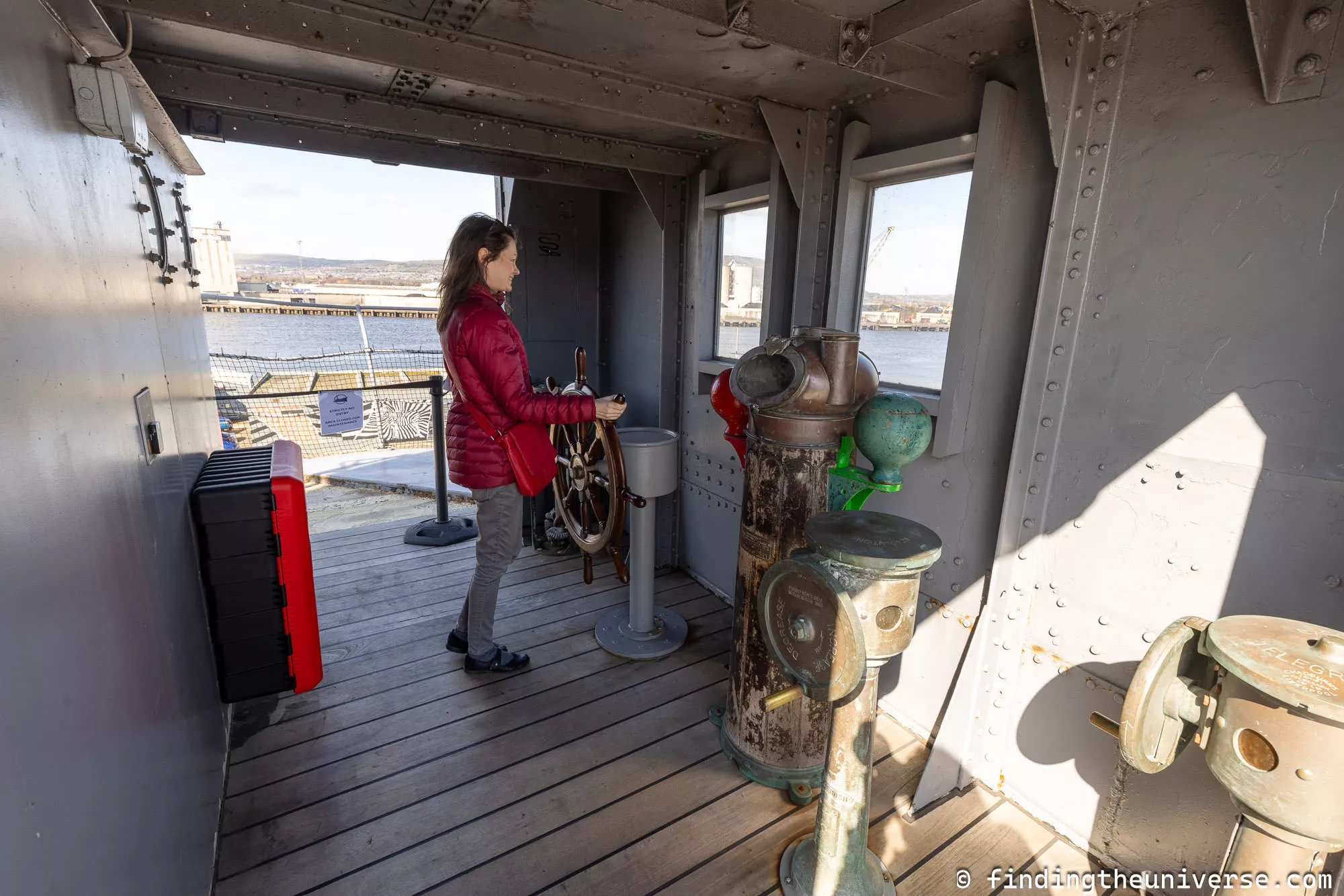
If you’re interested in naval history, you can also visit HMS Caroline, a World War One light cruiser and the last survivor of the Battle of Jutland. She’s berthed in the dock right next to the Pump House, and as well as the ship itself you can visit the small museum on shore. We really enjoyed exploring the ship and learning about its history. Access is by guided tour for much of the year, so it’s worth checking the current visiting times before you go.
City Hall
Belfast’s City Hall is a fantastic piece of Victorian engineering, built in the late 19th century following Belfast being awarded city status by Queen Victoria in recognition of its rapid growth.

Spread over an area of an acre and a half, the Baroque Revival style building is a beautiful centrepiece to the city, and the park area around it is a popular place in summer for people to visit. While we were in Belfast, part of this grassy area was being used as an outdoor cinema screening venue, which appeared to be a popular event given the large number of people in attendance.
It’s also possible to tour City Hall. Alongside an exhibition space that tells the story of the city, you can take a guided tour of the main areas of the building, including the rooms used by the council.
Tours last around 45 minutes and run at 11am, 2pm and 3pm on weekdays, with 12pm, 2pm and 3pm slots at weekends. They now carry a small charge, £6 for an adult, with under-18s free although they still need a ticket. Tours run first come, first served, so we’d advise turning up 15 to 30 minutes before the tour to register for a space. You can then spend the time before the tour looking at the free exhibition, and you can check current tour times on the official website here.
If you’re following our day two as laid out, an early-afternoon tour leaves you enough time for the Ulster Museum afterwards.
Ulster Museum & Botanic Gardens
Now, we think it’s time to head to another part of the city. You can either grab some food around the Titanic Quarter (the Titanic Hotel is an excellent spot), near City Hall, or wait until you get to the Ulster Museum area of town, depending on time and your hunger levels.
The Ulster Museum is found in Belfast’s Botanic Gardens, with both attractions free to enter (although donations are of course welcomed). It’s a large building spanning multiple floors, and has a little bit of everything from natural history through to archaeology, art and culture. Allow an hour to ninety minutes, depending on how much detail you want.
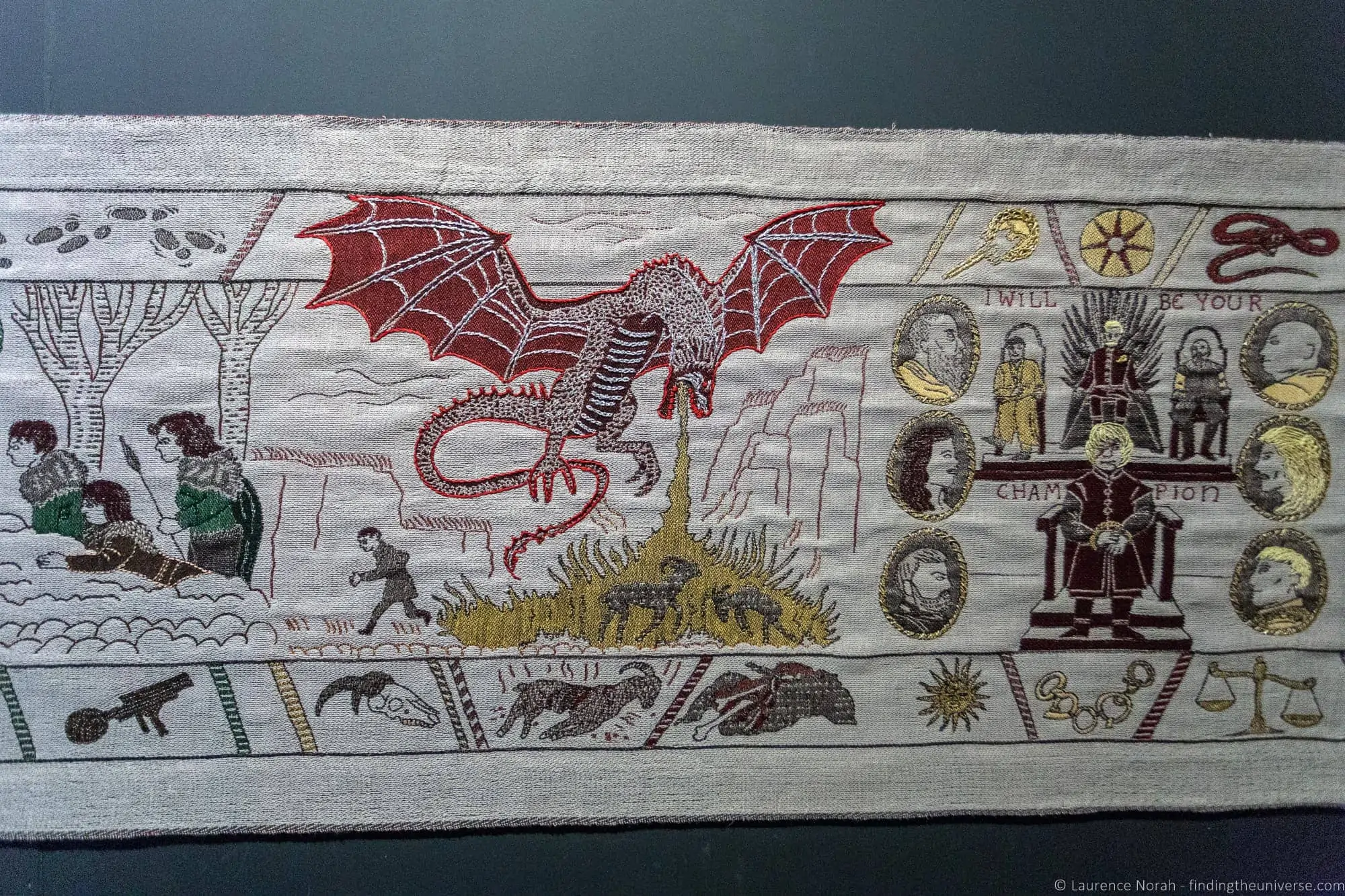
When we visited, a highlight for us was the museum’s huge Game of Thrones artwork, 87 metres of hand-woven linen with a panel for every episode of the show, and a nod to Belfast’s long linen history. It’s part of the museum’s permanent collection these days, but it isn’t always on display (it was in storage at the time of writing), so don’t count on seeing it, and it’s worth checking the museum website before making a special trip for it.
The reason a Game of Thrones artwork like that exists at all is that Game of Thrones was filmed in Northern Ireland, at iconic sites such as the Dark Hedges as well as at the Titanic Studios, one of Europe’s largest film studios, found right next to Titanic Belfast.
The Ulster Museum is open 10am to 5pm Tuesday to Sunday, and closed on Mondays (it does open on Northern Ireland bank holiday Mondays). If a visit here matters to you and your day two falls on a Monday, feel free to switch the days around, or the locations you visit on each day, so you can see everything you want.
Drink in the Cathedral Quarter
Last on our list of activities for your 2 days in Belfast is to have a drink in the Cathedral Quarter. This is a region of Belfast famous for its bars and restaurants, and is the perfect location to end your trip.

For some suggestions of where to go, take a look at our where to drink in Belfast section below. You can also take a beer bike tour, which sees you pedalling around the city and enjoying a beverage as you go.
Map of This 2-Day Belfast Itinerary
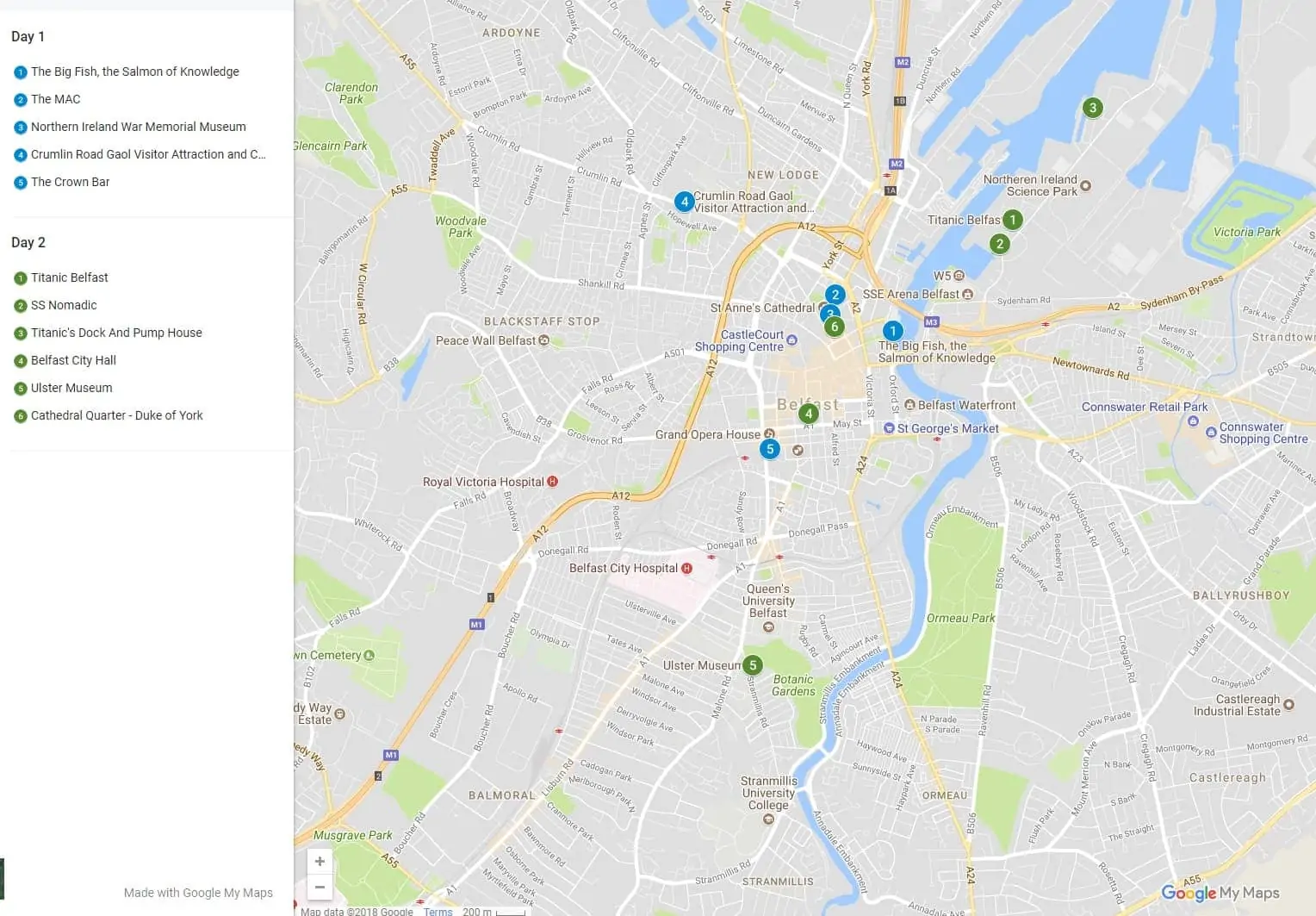
To give you an idea of where the various attractions in this Belfast itinerary are, we’ve put together this map, which should help you with planning your trip. You can also see it on Google Maps here.
2-Day Belfast Itinerary at a Glance
Here’s a summary of this 2 day Belfast itinerary for quick reference:
- Day 1: The Waterfront Area, The MAC, Crumlin Road Gaol, a tour of Belfast, The Crown Bar
- Day 2: Titanic Belfast, SS Nomadic, Titanic Dock & Pump House, City Hall, Ulster Museum & Botanic Gardens, a drink in the Cathedral Quarter
What We’ve Learned From Our Belfast Visits
A few things we’ve picked up across our visits that will help these two days run smoothly.
- The Titanic Quarter can eat a whole day. Our day two treats it as roughly a half-day, which works if you stick to Titanic Belfast and the SS Nomadic. Add the Pump House, HMS Caroline and a distillery tour and you have a full day on your hands. If you want to go deep in the Titanic Quarter, move City Hall to day one and keep day two for the Titanic Quarter alone.
- Book Titanic Belfast ahead. It uses timed-entry tickets and is the busiest attraction in the city, so booking online lets you pick a slot and skip the queue.
- The Ulster Museum is closed on Mondays. If your day two lands on a Monday, swap the two days around, or save the museum for another time.
- Pick one tour per day. The street art, black cab and gin tours are all worth doing, but each takes up a good chunk of an afternoon, with the gin tour running around three and a half hours. Choose the one that suits you rather than trying to cram in two.
- Belfast is walkable, but not everything is central. Crumlin Road Gaol, the Titanic Quarter and the Ulster Museum each sit a little way out from the centre. None are far, but factor in a short bus, Glider or taxi hop between them.
Where to Drink in Belfast
As mentioned throughout this post, there’s no shortage of fantastic venues to drink in Belfast. To help you put a shortlist together for your visit, here’s a few options we visited and enjoyed.
- The Crown is a Victorian era gin palace, and a must for any visit to Belfast.
- Muriel’s Cafe Bar is best known for its cocktails, though you’ll find everything from a traditional pint to a range of craft gins.
- John Hewitt Bar is a more traditional style bar, with live music and a full range of drinks.
- The Duke of York, a staple of the Cathedral Quarter, was blown up in 1972 during the Troubles, and has since been restored as a tribute to the city. The cobbled streets and hanging flower baskets make it a very photogenic pub.
- The Dirty Onion draws a crowd to its outdoor seating on warmer days, and has a massive indoor space too. The restaurant upstairs, Yardbird, serves really good chicken wings and ribs.
- Babel Bar, the rooftop bar in the Bullitt Hotel just next door to Muriel’s, is an excellent choice if you’re after a view.
- Whites Tavern is tucked down a series of winding alleys, so it isn’t obvious, but it has been serving drinks since 1630 and is worth finding. Good pub food too.
Where to Stay in Belfast
Belfast has been growing quickly as a tourism and business destination, and as such there is a huge choice of hotels, with new ones opening every year. At most times of the year, it’s easy to find a good value deal here.
The first time we visited Belfast we stayed at the Bullitt Hotel. This was fantastically central, within easy walking distance of the Cathedral Quarter and the majority of the sights on this itinerary.
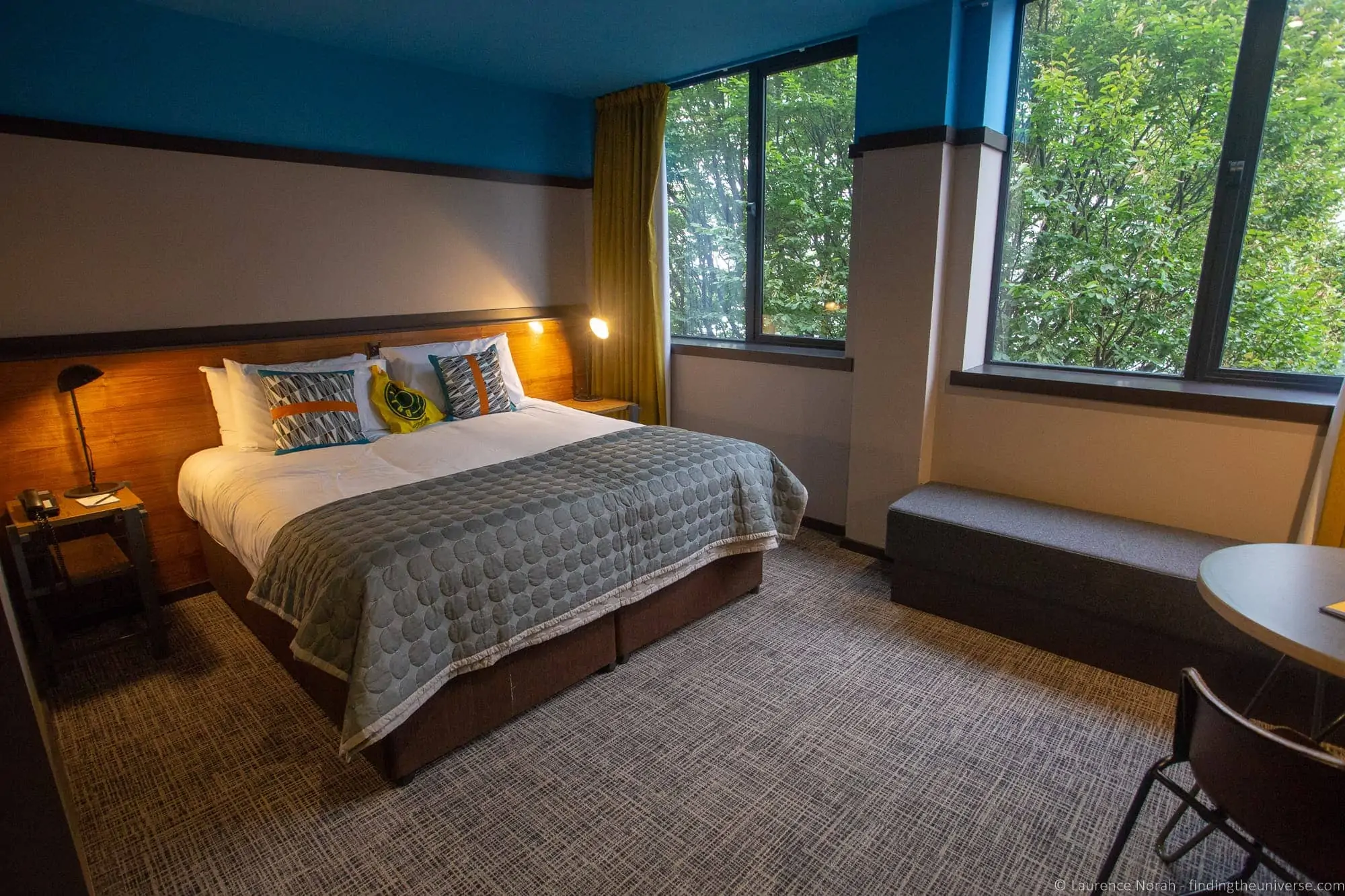
It also has an excellent on-site restaurant, as well as three bars to choose from, including the previously mentioned Babel Bar. Staff were friendly and very knowledgeable about the area, and we have no hesitation in recommending this as a central Belfast option. See prices and book online here.
There are plenty more options to choose from in Belfast, of course. As always, we recommend booking.com for planning your accommodation, as they offer a range of properties from hotels to hostels and apartments, meaning you can usually find what you need. Some options to consider include the following:
- Belfast International Youth Hostel – One of the best centrally located hostels in Belfast in our opinion. It offers private and dormitory rooms, an on-site cafe, linens, a communal kitchen, a breakfast menu, self-service laundry, and even free parking (rare in Belfast).
- easyHotel – This well-rated budget hotel offers no-frills but comfortable rooms and a 24 hour staffed desk. A great central option for those on a tighter budget.
- Jurys Inn – This 4-star hotel offers spacious rooms, a breakfast buffet, bar and restaurant. We have stayed in a number of Jurys Inns and have always found they provide good value for money.
- The Titanic Hotel – On a subsequent visit to Belfast, where we were focusing on the sights in the Titanic Quarter, we stayed at this hotel. It’s found opposite the Titanic Belfast attraction, and is actually in the original buildings where the Titanic was designed. We enjoyed our stay here.
- The Merchant Hotel – A five-star historic luxury hotel in central Belfast, set in a grand 1860 building, with a restaurant, bar and lounge, spa, hot tub and a rooftop gym.
You can see all the listings available in Belfast here.
Getting To and From Belfast
Belfast is an easy city to reach from multiple locations around the world.
From Ireland, there’s a direct rail link between Dublin and Belfast which takes just over two hours, running roughly hourly. From the rest of the Republic of Ireland you’ll probably want to take the train to Dublin and then continue on to Belfast.
There are also multiple bus options from Dublin, including direct from Dublin Airport. Journey time is around two hours, depending on traffic. It’s easy to drive yourself, of course.
From the UK, you can either fly or take the ferry. Ferries to Belfast depart from Liverpool, Cairnryan (Scotland) and the Isle of Man. We travelled with Stena Line and enjoyed the crossing from Cairnryan in Scotland. You can book your ferry here.
Numerous flights serve Northern Ireland’s airports, with service from the UK, continental Europe and North America. There are even more options available if you include Dublin Airport. We recommend checking flight prices using Kiwi.com for the best deals.
Saving Money in Belfast
Belfast has a visitor pass which offers free public transport around the city and discounted admission on a number of attractions, as well as food.
It’s probably going to be the easiest way to manage your public transport around the city if you plan on using it, plus the discounts can quickly pay back the cost of the card.
The Belfast Visitor Pass comes in 1, 2 and 3 day versions (£6.50, £10.50 and £14 for an adult), and you can buy it from the tourist office in the city, or online from the Visit Belfast website here.
When to Visit Belfast
The Emerald Isle, as Ireland is often known, did not get its lush green colour as a result of being a dry and sunny hotspot. As such, similarly to Scotland, the weather in Belfast and Northern Ireland is best described as changeable, although we had our share of sunny weather.
Rain is a possibility year round, but if you want a chance at better weather, then May through September are your best options. The city is a popular destination year round, and there are plenty of indoor attractions to keep you busy regardless of the weather outside.
Belfast also plays host to events throughout the year, so if you’re interested in attending one of these, check the Visit Belfast events page for ideas on what’s on that you might want to see.
How to Get Around Belfast
Belfast is an easy city to get around on foot, and many of the attractions on this list are a short walk apart. It’s a walking city and the weather can turn quickly, so it’s worth packing comfortable, water-resistant shoes, and these Vessi trainers are our current go-to and shrug off a Belfast shower.
The city also has an excellent public transport system which includes buses as well as local trains. The aforementioned Belfast Visitor Pass makes it affordable to get everywhere you need to go, including to and from the airport.
In particular, of the attractions on this list, you might want to take a bus to Crumlin Road Gaol and the Ulster Museum, and perhaps from the Titanic Quarter back to central Belfast.
There’s also a hop on hop off bus tour of Belfast you can take, which visits all the attractions covered in this article.
There are also taxis available, which can be quite cost effective for shorter journeys, especially if you are in a group. You can either hail these on the street, or book in advance. We recommend a taxi booking service called minicabit, which you can book for Belfast here.
Belfast Itinerary FAQ
A few common questions about visiting Belfast.
Is Titanic Belfast worth visiting?
Yes. Titanic Belfast is the city’s standout attraction and earns its reputation, covering the shipyard, the building and launch of the Titanic, the disaster itself and the discovery of the wreck across several floors of interactive exhibits. Plan around two to three hours, and book a timed ticket in advance.
Is Belfast safe for tourists?
Belfast is a safe, welcoming city for visitors, and feels much like any other UK city to walk around. The political murals and Peace Walls are part of the city’s recent history and a major reason people take black cab tours. Visiting them is completely normal, and the tours are run by local guides. Standard city common sense is all you need.
Do you need to book Belfast attractions in advance?
For most of Belfast you can turn up on the day, but a couple of places are worth booking ahead. Titanic Belfast uses timed-entry tickets and gets busy, so book a slot online. Crumlin Road Gaol is over £2 cheaper if you book direct on its own website at least a day ahead. City Hall tours and the Ulster Museum don’t need booking.
Can you visit Game of Thrones filming locations from Belfast?
Yes. Much of Game of Thrones was filmed in and around Northern Ireland. The Game of Thrones Studio Tour is at Banbridge, around half an hour from Belfast, and locations like the Dark Hedges sit along the Causeway Coast. See our Game of Thrones filming locations guide for the full list.
Is Belfast an expensive city to visit?
Belfast is one of the better-value city breaks in the UK and Ireland. Several of its best attractions, including the Ulster Museum and the MAC, are free, hotels are generally good value, and the Belfast Visitor Pass bundles transport and discounts together. Our guide to how much it costs to travel in the UK has more on budgeting.
Further Reading
Well, that sums up our idea of how to spend two days in Belfast. We’ve got more content on the city, and here’s some further reading to help you plan your trip.
- Our detailed guide to things to do in Belfast
- A tour of Belfast’s street art
- Our detailed guide to Titanic attractions in Belfast, which includes the excellent Titanic Belfast
- Our guide to visiting the Dark Hedges, an excellent day trip from Belfast
- Speaking of which, we have a complete guide to the best day trips from Belfast for more inspiration
- Our guide to the best Game of Thrones filming locations in Northern Ireland
- The highlights of the Causeway Coastal Route, which runs from Belfast right around the coast to Londonderry, and makes for an awesome road trip
- Our guides to spending 2 days in Dublin and 3 days in Dublin
- An overview of how much it costs to travel in the UK to help with budget planning
- Our guide to spending 2 weeks in the UK, which includes time in Belfast
- A guide to driving in the UK, in case you choose to hire a car and do a road trip
- The official Visit Belfast website, which has lots of information to help you plan your visit
- If you’re looking for a guidebook, we recommend the Lonely Planet guide to Ireland, the Rick Steves Northern Ireland guide or the DK Eyewitness Ireland Travel Guide
And that’s it. Hopefully you found this post useful. As always, if you have any feedback or questions, do let us know in the comments below, and don’t forget to subscribe to our monthly newsletter for more travel content.
Kris Dustin says
Really enjoyed your travel tips on going to Belfast, it has been really helpful. Many thanks Kris
Laurence Norah says
Thanks Kris, have a great time in Belfast!
Geraldine Moran says
Thanks for all that info – a group of us are going to Belfast next month on a 2-trip , this article will help us confirm our choices. Best wishes
Laurence Norah says
My pleasure Geraldine, have a great trip!
Udit says
You guys are just amazing. What a well written experience. It is helping me plan so much of my trip
Laurence Norah says
Thanks very much Udit, that’s very kind of you. Have a great trip, and if you have any questions just let us know!
Melissa says
Hello,
Me and my boyfriend are planning a trip to Ireland and I would love to share this 2 days itinerary Belfast Google Maps with him but I can’t because of the permissions. can you please change from “Private” to “Public on the web” ?
I really enjoyed all of your itineraries and we are going to follow them soon!
Laurence Norah says
Hey Melissa!
Sure thing, that should be working now 🙂
Let us know if you have any questions!
Laurence