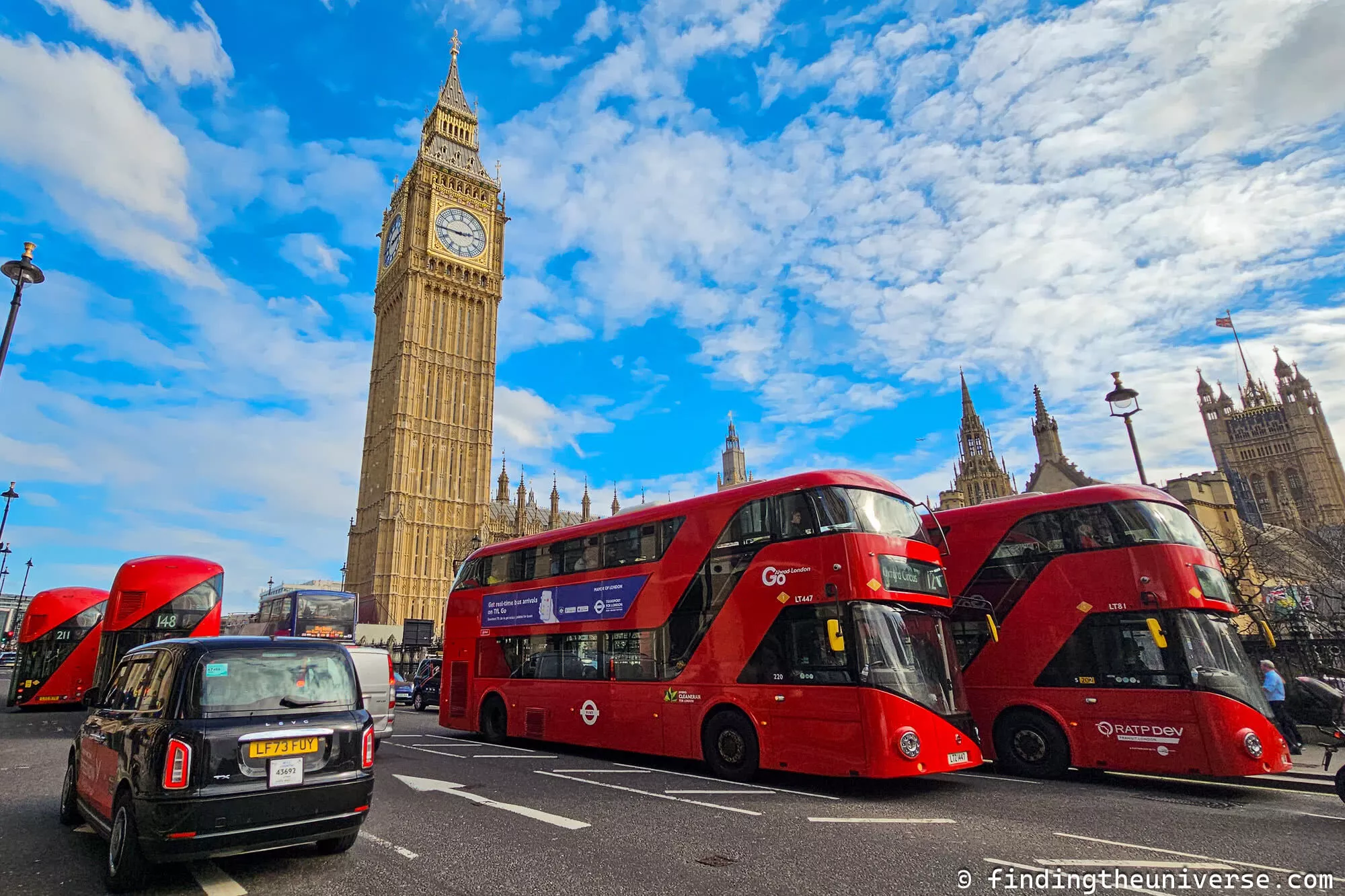
I lived in central London for two and a half years, and across countless commutes I paid for the Tube, the buses and the Overground with both an Oyster card and a contactless bank card.
So here’s my answer to the Oyster versus contactless question: for pretty much every visitor, a contactless card or phone is the better way to pay. The fares and the daily and weekly caps are identical to Oyster, you skip the £10.50 card fee, and there’s no deposit to reclaim or leftover credit to forget about when you fly home.
The times an Oyster card still wins are specific. Choose Oyster if your bank charges foreign transaction fees on every tap, if you’re travelling with children aged 11 to 15 who qualify for the Young Visitor discount, if you have a Railcard you want to link for a third off off-peak fares, or if you want a 7-day Travelcard that starts on a day other than a Monday.
If none of those describe your trip, use contactless and don’t think about it again.
Table of Contents:
Oyster vs Contactless: At a Glance
On price there’s almost nothing between them. The pay as you go fares and the caps are the same on both. The differences that actually decide it are the card fee, foreign-card fees, and a handful of discounts only Oyster can carry.
| What matters | Contactless (card or phone) | Oyster card |
|---|---|---|
| Upfront cost | None, if you already have a contactless card | £10.50 non-refundable card fee (same for a Visitor Oyster) |
| Pay as you go fares | Identical to Oyster | Identical to contactless |
| Daily and weekly caps | Yes, both (weekly cap runs Monday to Sunday) | Yes, both, since September 2021 |
| Foreign-card fees | Your bank may charge a fee on every tap | None, you top up in pounds |
| Children aged 11 to 15 | No discount available | Young Visitor discount, 50% off |
| Railcard discount | Not possible | A third off off-peak pay as you go |
| 7-day Travelcard timing | Capping is fixed Monday to Sunday | Travelcard can start on any day |
| Money left over when you leave | Nothing to reclaim | Refundable up to £10 at a ticket machine |
| Will it always work? | UK cards yes; some foreign cards are hit and miss | Always works |
Payment Options for Travel in London: Cash, Contactless and Oyster
There are three ways to pay for most public transport in London: cash, an Oyster card, or a contactless credit or debit card (including a phone or smartwatch set up with Apple Pay or Google Pay). Here’s what each one is.
Cash. Cash is the worst way to pay for transport in London, and is best avoided. Fares are much higher than the other options, and some services, including the buses, don’t accept cash at all. If you do want to use cash, put it onto an Oyster card at a station machine or ticket counter rather than buying single tickets.
Oyster card. The Oyster card is a London-wide rechargeable card, accepted on almost every form of London transport. There are several versions, but this guide focuses on the standard blue Oyster card you can buy at most Tube and train stations. For more on the different types, including the benefits of buying a visitor Oyster card in advance, and how to use one day to day, Jess has written a detailed post on using the London Oyster card.
Contactless. The newest option is a contactless bank card, or a phone or smartwatch loaded with Google Pay or Apple Pay. Anywhere you can tap an Oyster card, you can tap a contactless card instead. It’s linked to your bank account, so there’s nothing to top up, and one less thing to carry if you pay with your phone.

Contactless vs Oyster Cards for London Travel
Contactless: Which Public Transport Supports It in London?
Contactless can be used to pay for travel on the bus, Tube, tram, DLR, London Overground, Elizabeth line, IFS Cloud Cable Car, River Bus, and most National Rail services inside London.
Both Oyster and contactless benefit from the Hopper fare on buses and trams, where you can make unlimited bus and tram journeys within one hour of first touching in, all for the price of a single fare (£1.75).
You can also use contactless for some airport services, including the Gatwick Express and Heathrow Express. See our guide to getting to London from the airport for more.
You can pay for all black taxis with contactless too, as long as the fare is under £100, which is the contactless limit most UK banks still apply. Above that you fall back to chip and PIN or your phone, which have no such limit. Black taxis are billed separately from other public transport, so they sit outside Travelcards, caps and other payment schemes.
Anywhere you can use an Oyster card, you can use a contactless card. Just look for the yellow reader and remember to touch in (and out, where needed) to pay for your journey. Our guide to public transport in London covers how each of the different options works.
Advantages of Contactless
It’s already on a card you own: if you have a supported contactless credit or debit card or smartphone, using it for travel is more convenient than getting a separate Oyster card, which you have to pay a deposit on and keep topped up.
It doesn’t need topping up: one of the main problems with Oyster is that it is a preload system, so you need credit on the card to use it. You can set up automatic reloads, but as a visitor that extra step might not be worth the hassle. Otherwise you will find yourself queuing at top-up machines at Tube stops, and if you are at a bus stop with no credit you are out of luck, as most do not have top-up points. Contactless cards are linked to your bank account, so as long as you have funds, you are always good to go.
You can pay with your phone or watch: if your smartphone supports Google Pay or Apple Pay, you do not even need to carry a separate card. Just link your contactless card to your phone and pay with that. One less thing to carry.
It can be slightly cheaper in some cases: contactless can occasionally work out a bit cheaper for daily fares, especially if you are travelling from further out, because of the way daily capping works across zones. It is rarely a big difference, but it can tip contactless a touch cheaper for some daily journeys.
Disadvantages of Contactless
It doesn’t support every foreign card: UK-issued contactless cards on Visa, Mastercard, Maestro and American Express should all work fine for your London travel. Foreign-issued cards are less predictable. Foreign American Express contactless cards generally work; some foreign Mastercard, Maestro and Visa cards work and some do not. There is no definitive list, so it is a case of tapping it and seeing.
Foreign transaction fees: if you are using a foreign-issued card, even one that works on the system, check whether it charges foreign transaction fees. Contactless taps are charged in pounds, so if your card issuer charges you for foreign-currency transactions, those costs can outweigh the convenience. Check with your card provider before you travel.
Concessions can’t be added: contactless does not support concessions, such as those for seniors, students, or children of a certain age. If you are a visitor travelling with children aged 11 to 15, for example, you will want an Oyster card or Travelcard to get discounted travel, such as the Young Visitor discount, which loads 50% off onto an Oyster card. Children under 11 qualify for free travel with a fare-paying adult, and that does work with contactless. You will just need to use the wider barriers (marked for accessible access and luggage) so you can pass through together. There is more on travelling with children here, and on the available concessions here.
Oyster: Which Public Transport Supports It in London?
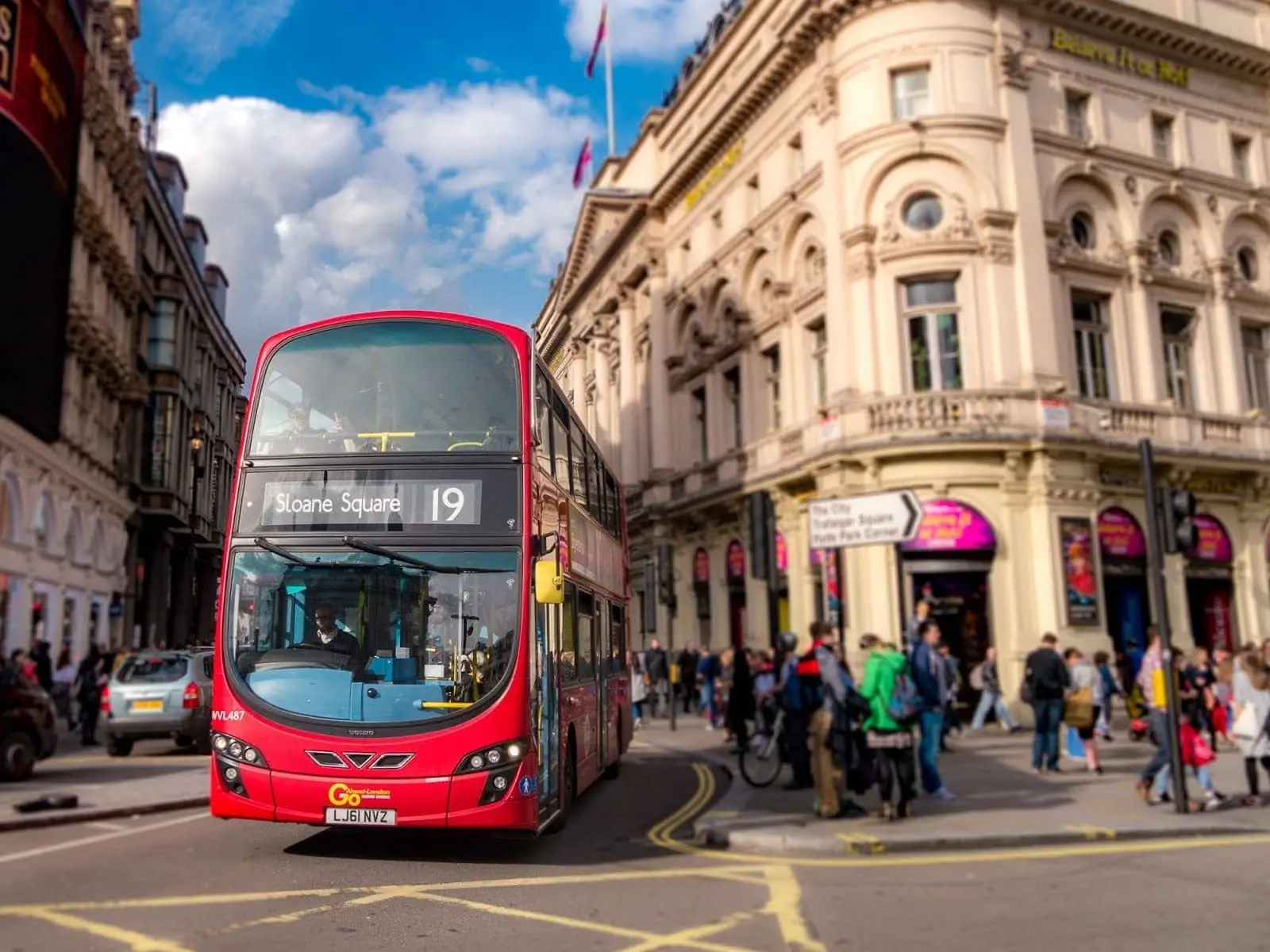
Oyster works on all the same public transport as contactless: bus, Tube, tram, DLR, London Overground, Elizabeth line, IFS Cloud Cable Car, River Bus, and most National Rail services inside London.
Note that you cannot use an Oyster card to pay for a black taxi in London.
The Oyster card is also not accepted on private services like hop-on hop-off buses, which you would need to buy separately. You can see some hop-on hop-off options in London here for an idea of pricing. Hop on hop off is also included on a card like the London Pass, which can be a good option if you plan on doing a lot of sightseeing in the city.
Advantages of Oyster
It always works, and support is available: not all contactless cards work with the system, but an Oyster card always will. Using a separate travel card also means you are not constantly pulling out your bank card or phone in busy stations, which some people prefer from a security point of view. If something goes wrong, you can get support or recover your credit, provided your card is registered on the TfL website.
It’s easier to track your spending: because you load an Oyster card, it is easier to keep an eye on what you are spending on transport, and to set yourself a limit. I don’t think this makes a big difference for the average person, since you will likely have to travel anyway, but it can be handy if you like to keep your spending in check.
It supports Travelcards: one of the main advantages of Oyster is that it supports Travelcards. These are fixed-price passes for unlimited travel within set zones, over a week, a month or a year. With weekly fare capping this matters less than it used to, because a 7-day Travelcard on Oyster costs the same as the weekly cap on contactless. The difference is that a 7-day Oyster Travelcard is valid for seven days from when you activate it, whatever day of the week that is, whereas contactless capping is fixed Monday to Sunday. If you are in London for seven days that do not line up with a Monday to Sunday week, and you will travel enough to make it worthwhile, the Travelcard can be better value.
It supports Railcards: you can link a Railcard to a standard Oyster card for a third off off-peak pay as you go fares. This is not possible with contactless, so if you have a Railcard (or plan to buy one for a longer UK trip), Oyster is the better option.
It supports cash: if you want to pay for your transport with cash, you can buy and top up an Oyster card with it. This is normally far more cost-effective than paying for cash single tickets, with the rare exception of a one-off single journey, where you have to factor in the cost of the card itself.
It supports concessions: as above, if you are travelling with children, or you are a London resident who qualifies for one of the discounts available, you will want the Oyster card that matches your concession to get the best deal (see here for the full list). As a visitor with children aged 11 to 15, you can also add a Young Visitor discount to an Oyster card for savings.
Visitor Oyster card discounts: if you buy a visitor Oyster card before your trip to the UK, it qualifies you for some discounts at shops, restaurants and attractions. I wouldn’t buy the card for these alone, but they are good to know about.
Disadvantages of Oyster
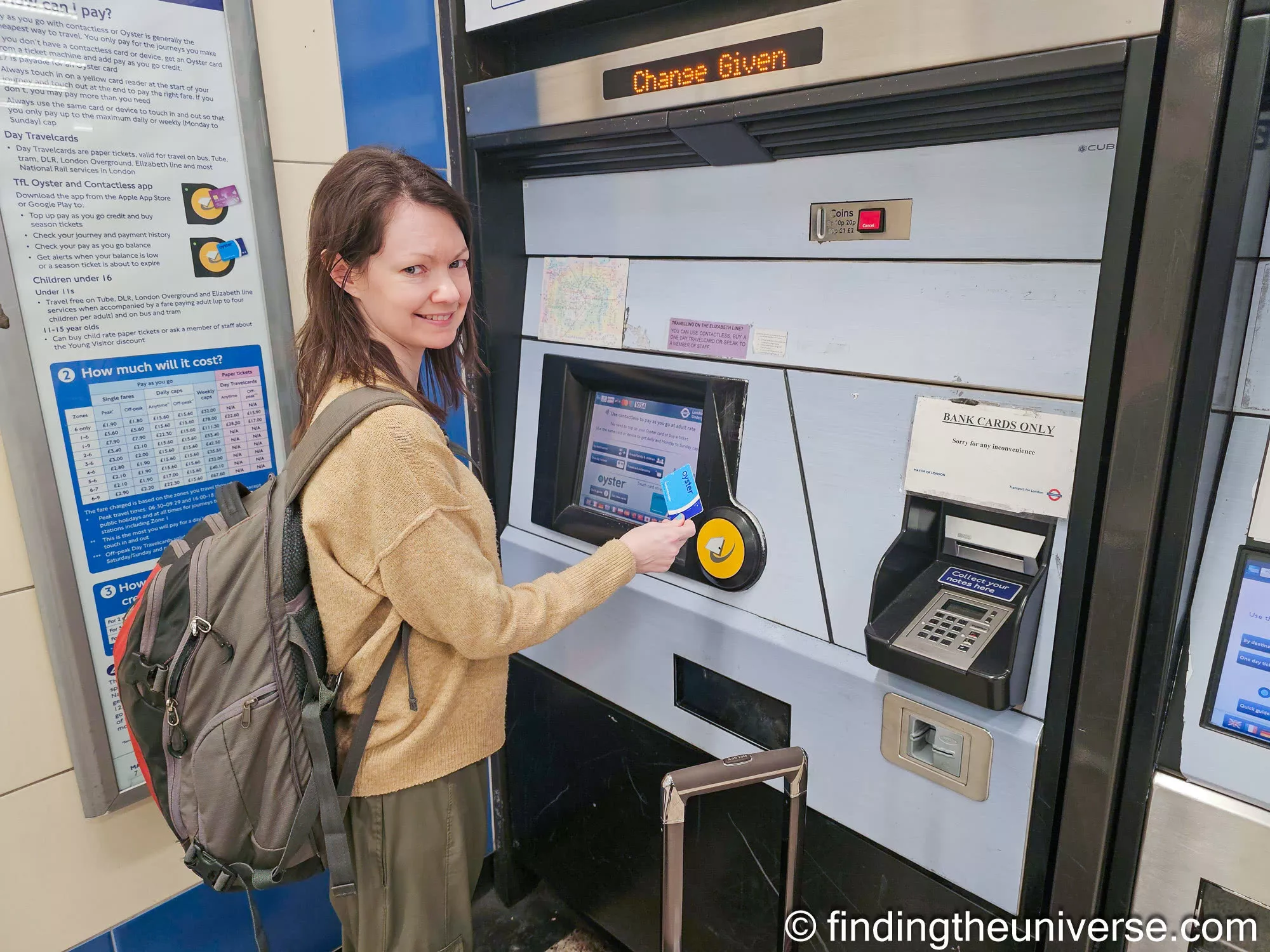
You have to pay for the card: a standard Oyster card and a Visitor Oyster card both cost £10.50 to buy. This used to be refundable (or added as credit), but since 2022 the fee has been non-refundable. It increased from £7 to £10 in September 2025, and has since risen further to £10.50.
It has to be topped up: one of the main downsides of Oyster is that it is a pay as you go card that needs credit on it to work. That is fine if most of your travel is by Tube, since the majority of Tube stations have top-up machines. If you travel a lot by bus (often the most cost-effective way around London), you will have to go out of your way to find a top-up point, as most bus stops do not have them. Registering your card online and setting up auto top-up gets around this.
It can’t be used on taxis: this isn’t really a big deal, but it is worth bearing in mind that you cannot use an Oyster card on taxis. Given how much higher taxi fares are, we would suggest skipping taxis unless you really want a direct trip from A to B, but we have included it for completeness.
There will always be leftover funds: because Oyster is a pay as you go system, you need funds on the card to use it, and since trips vary in price, it is almost impossible to run the card down to zero. So when you stop using it, there will be money left over. You can get this back by returning the card, but we suspect most people don’t, and TfL has reported hundreds of millions of pounds sitting in unused Oyster card balances and deposits.
Should You Use Oyster or Contactless? My Advice by Traveller Type
For most visitors the answer is contactless, but the right choice does of course depend on your trip. Here’s what I’d do in each case.
A short city break, with a UK card or a fee-free foreign card: use contactless. A few Tube journeys a day in central London will hit the Zone 1 to 2 daily cap of £8.90, exactly as they would on Oyster, and you avoid the £10.50 card fee entirely. This covers the large majority of visitors, and it’s what I’d tell a friend flying in for a long weekend.
A week or more in London: contactless still usually wins, because the weekly cap (Monday to Sunday) applies to it just as it does to Oyster.
The one case where Oyster pulls ahead is if your seven days don’t line up with a Monday to Sunday week and you’ll be travelling heavily throughout. A 7-day Travelcard loaded onto an Oyster card runs for seven days from whenever you activate it, so a Wednesday to Tuesday trip can beat the fixed Monday to Sunday contactless cap.
Travelling with children aged 11 to 15: get an Oyster card. Contactless has no way to add a concession, but an Oyster card can carry the Young Visitor discount, which takes 50% off adult pay as you go fares for up to 14 days. A member of staff at most Tube stations can add it.
Children under 11 travel free with a fare-paying adult on either system (up to four children per adult), so this only matters for the 11 to 15 age group.
A foreign-card holder whose bank charges FX fees: lean towards Oyster. Every contactless tap is a separate sterling transaction, so if your bank adds, say, a few percent plus a flat fee per transaction, a week of daily taps quietly turns “free” contactless into the more expensive option. Topping up an Oyster card once, in pounds, sidesteps all of that.
Check your card’s foreign transaction fees before you decide. There’s a second reason a foreign card can tip you towards Oyster: some foreign Visa and Mastercard contactless cards are hit and miss on the system, whereas an Oyster card always works.
Railcard holders: use Oyster. You can link a Railcard to a standard Oyster card for a third off off-peak pay as you go fares, which isn’t possible on contactless. If you already have a Railcard, or plan to buy one for a longer UK trip, that discount is worth more than the card fee within a couple of days.
There are edge cases beyond these, mostly around monthly Travelcards (which contactless doesn’t offer at all, and there’s no monthly cap) and travel entirely outside Zone 1. Working them out means knowing your exact journeys in advance, and the saving is usually small enough that I really wouldn’t lose sleep over it. If you’re not in one of the groups above, tap your contactless card and enjoy your trip!
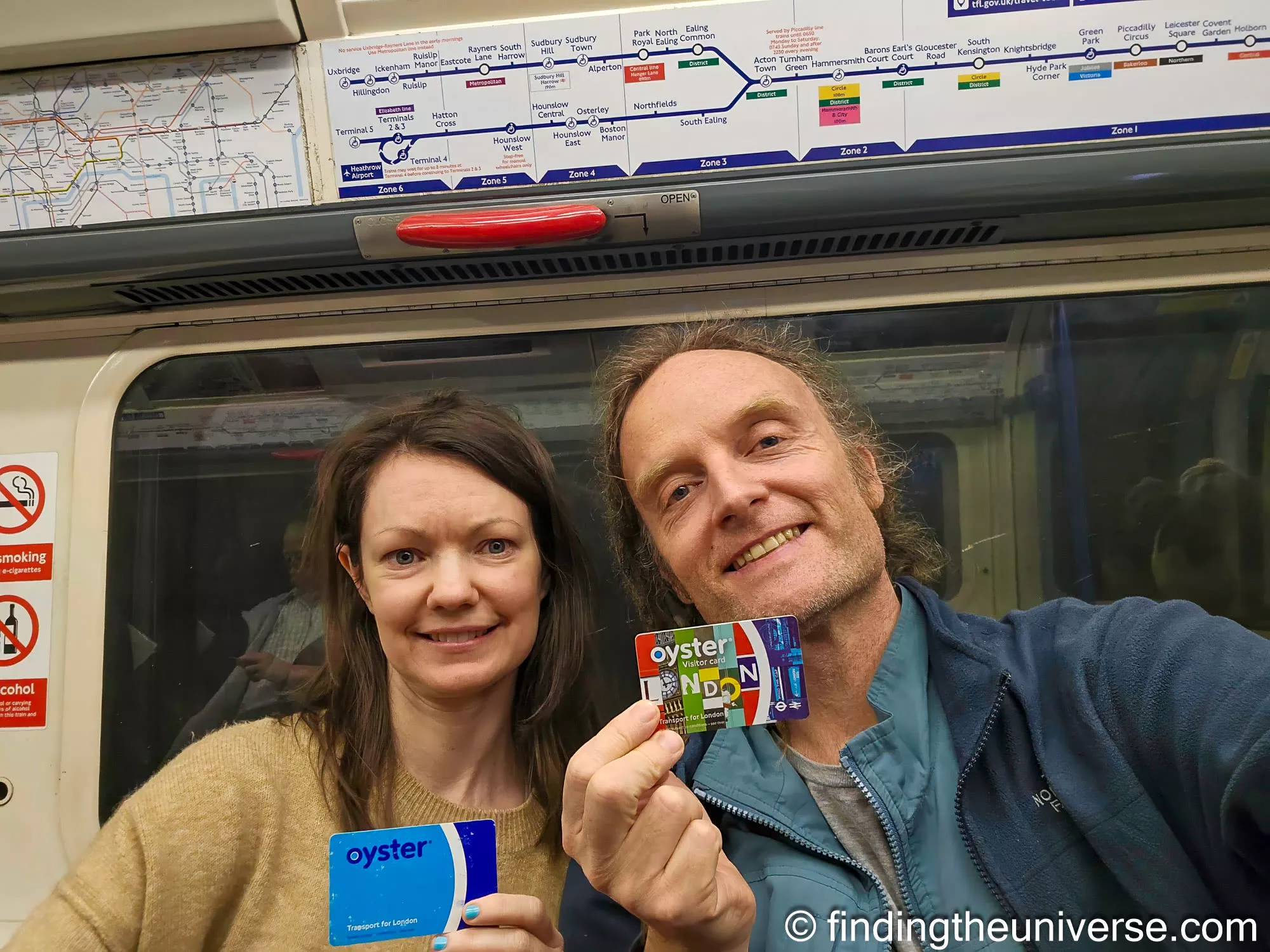
Does Oyster Support Weekly Capping?
Until the end of September 2021, only contactless supported weekly capping across the whole network. Both Oyster and contactless have long supported daily capping (so you never pay more in a day than a one-day Travelcard would cost), but until September 2021 only contactless had the Monday to Sunday weekly cap.
Since 28 September 2021, both Oyster and contactless support daily and weekly caps across the TfL network, which is good news for Oyster users, as it can be a significant saving.
As an example, if all your travel is within Zones 1 and 2, the current weekly cap is £44.70 (frozen until March 2027). The weekly cap runs Monday to Sunday, so it works best if your travel starts on a Monday. For comparison, the Zone 1 to 2 daily cap is £8.90 (as of 2026), which over seven days would come to £62.30.
London Transport Fares at a Glance
Here is a quick summary of the key fares for travel in London using Oyster or contactless (as of March 2026). These fares are the same on both systems.
Single Journey Fares (Oyster / Contactless)
| Journey | Fare (Oyster and contactless) |
|---|---|
| Bus or tram (any distance) | £1.75 (includes the Hopper fare for unlimited transfers within one hour) |
| Tube Zone 1 (peak) | £3.10 |
| Tube Zone 1 (off-peak) | £3.00 |
| Tube Zones 1-2 (peak) | £3.60 |
| Tube Zones 1-2 (off-peak) | £3.10 |
| Tube Zones 1-3 (peak) | £3.90 |
| Tube Zones 1-3 (off-peak) | £3.30 |
| Tube Zones 1-6 (peak) | £5.90 |
| Tube Zones 1-6 (off-peak) | £4.00 |
Daily and Weekly Caps
| Cap | Price |
|---|---|
| Daily cap, Zones 1-2 | £8.90 |
| Daily cap, Zones 1-3 | £10.50 |
| Daily cap, Zones 1-6 | £16.30 |
| Weekly cap, Zones 1-2 (Monday to Sunday) | £44.70 |
| Weekly cap, Zones 1-3 | £52.50 |
| Weekly cap, Zones 1-6 | £81.60 |
| Bus and tram daily cap | £5.25 |
For comparison, a paper single ticket for Zone 1 costs £7.00, so using Oyster or contactless saves you more than half on every journey. You can check all current fares on the TfL website. All of the caps above are frozen until at least March 2027, and bus and tram fares are frozen until 5 July 2026.
Tips and Common Mistakes to Avoid
A few things I learned the hard way when I lived in London, that will save you money and the odd headache.
Don’t hold two cards near the reader. If an Oyster card and a contactless card (or two phones) are both near the yellow reader, it picks one at random, and you can end up touching in on one and touching out on another. That registers as two incomplete journeys and two maximum fares. Pick one payment method and use only that one for the whole trip.
Don’t assume Oyster is automatically cheaper. This is the most common myth I hear. The pay as you go fares and the caps are identical on both systems, so if you already have a contactless card, an Oyster card usually costs you more once you count the £10.50 card fee.
Check your foreign transaction fees before you rely on contactless. A foreign card that works fine technically can still be the wrong choice if your bank charges a fee on every tap. Two minutes checking your card’s terms before you fly can save you more than the price of an Oyster card.
Stay consistent with phone versus physical card. If you pay with a card registered in Apple Pay or Google Pay, keep using the phone. Switching between the phone and the physical version of the same card mid-trip registers as two different cards, which breaks your capping.
This is also a handy trick: two of you can travel on one bank account by having one person tap the physical card and the other tap the same card in their phone, since the system sees them as separate cards and each gets its own daily and weekly caps.
Register your card or Oyster with TfL. It lets you keep track of your journey history and spending, and with an Oyster card you can recover the balance if you lose it. You can register your payment method online with TfL.

Frequently Asked Questions
Is an Oyster card worth it for tourists?
For most tourists, no. A contactless bank card or a phone gives you the exact same fares and the same daily and weekly caps, without the £10.50 non-refundable card fee. If you already have a contactless card that works in the UK, that’s almost always the cheaper and simpler choice.
An Oyster card becomes worth it in a few specific cases: if you’re travelling with children aged 11 to 15 who qualify for the Young Visitor discount, if your bank charges foreign transaction fees on every tap, or if you want to link a Railcard for a third off off-peak fares. Outside those situations, you can skip it.
Do I need an Oyster card if I already have a contactless card?
No, not in most cases. A UK-issued contactless card or a phone works on the Tube, buses, trams, DLR, Overground, Elizabeth line and most National Rail in London, and it earns the same caps as Oyster.
The exceptions are if your bank charges fees on foreign transactions, if you need a concession such as the 11 to 15 Young Visitor discount, or if you want a Railcard discount or a 7-day Travelcard that doesn’t start on a Monday. If you’re unsure whether a foreign card will be accepted, you can tap it at a Tube gate to test it, and buy an Oyster card on the spot if it doesn’t work.
Is an Oyster card cheaper than contactless in London?
For most visitors, contactless works out the same price or cheaper than Oyster. The pay as you go fares and daily and weekly caps are identical on both systems. The difference is that a new Oyster card costs £10.50 (non-refundable), so if you already have a contactless card that works in the UK, you save that fee straight away.
The main exceptions where Oyster can be cheaper are if your bank charges foreign transaction fees on your contactless card (which would add up over multiple journeys), if you are travelling with children aged 11-15 who qualify for the Young Visitor discount, or if you want to load a 7-day Travelcard that starts on a day other than Monday.
Will my foreign bank card work on London transport?
Often, but not always. UK-issued contactless cards work without any issue. Foreign-issued American Express contactless cards generally work, while some foreign Visa, Mastercard and Maestro cards work and some don’t, with no published list. The simplest test is to tap it at a Tube gate and see.
The bigger question for a foreign card is fees. Contactless taps are charged in pounds, so if your bank adds a foreign transaction fee to each one, those fees can add up over a week of daily travel. If your card charges them, an Oyster card topped up once in pounds usually works out cheaper.
Can I use my bank card on London buses and the Tube?
Yes, as long as your bank card supports contactless payments. Look for the contactless symbol on your card (four small curved lines). You can also use Apple Pay, Google Pay, or a smartwatch with contactless payment set up. Just touch your card or device on the yellow reader at the start of your journey (and at the end too, on the Tube and trains). Buses only require you to touch in when you board.
Most UK-issued cards work without any issues. Cards issued outside the UK on Visa, Mastercard, and American Express usually work too, but it depends on the card issuer. If in doubt, try it at a Tube station first. If it does not work, you can buy an Oyster card instead.
Is a 7-day Travelcard better than contactless or Oyster?
Usually not, because weekly capping has made it mostly redundant. Both contactless and Oyster cap your spending automatically over a Monday to Sunday week, at the same price as a 7-day Travelcard for the same zones, so you get the Travelcard’s value without buying anything in advance.
The one advantage of a 7-day Travelcard, which you load onto an Oyster card, is that it runs for seven days from whenever you start it, rather than being fixed Monday to Sunday. If your trip runs across two calendar weeks and you’ll be travelling heavily the whole time, that flexibility can beat the contactless weekly cap. For a standard Monday-start week, contactless is simpler and the same price.
Can two people use the same contactless card in London?
Not directly. Each person needs their own card or device. However, there is a useful workaround: add the card to a mobile payment system like Apple Pay or Google Pay on a phone, and one person can use the physical card while the other uses the phone. The London transport system sees each device as a separate card, so both people get their own daily and weekly caps. This works with smartwatches too, so a group of three could use the physical card, a phone, and a watch.
Do children travel free on London public transport?
Children under 11 travel free on the Tube, DLR, London Overground, Elizabeth line, and buses when accompanied by a fare-paying adult (up to four children per adult). This works with both contactless and Oyster. At Tube stations with barriers, use the wider accessible gates so you can pass through together.
Children aged 11-15 can get half-price travel with a Young Visitor discount loaded onto an Oyster card. This lasts 14 days and can be set up by a member of staff at any Tube station. It is worth doing if you are travelling with children in this age group, as the savings add up pretty quickly.
How much does an Oyster card cost?
A standard Oyster card and a Visitor Oyster card now both cost £10.50, a non-refundable fee (as of 2026). You then need to add credit on top of this for your travel. The Visitor Oyster, which you can buy online before your trip, also requires a minimum £15 credit load plus shipping.
Any unused travel credit on either card can be refunded at a Tube station ticket machine (up to £10) or at a TfL visitor centre. The card fee itself is not refundable. If you already have a contactless bank card, you can avoid this cost entirely.
Does the Hopper fare work with contactless cards?
Yes. The Hopper fare lets you make unlimited bus and tram journeys within one hour of your first touch-in, all for the price of a single fare (£1.75 as of 2026). This works the same way on both contactless and Oyster. You still need to touch in each time you board a new bus or tram, but you will not be charged extra as long as it is within the one-hour window.
Further Reading
We have plenty of further reading to help you plan your trip to London, both content we’ve created based on our own experiences, and third-party content we think you’ll find useful.
- Our guide to where to stay in London, with recommendations across all the main areas
- Our guides to visiting the Tower of London and the London Eye
- Looking for things to do in London? See this complete list on GetYourGuide of attractions, tickets and tours for some ideas
- Our detailed guide to public transport in London
- The official TfL website, which has information on tickets, routes and any updates to services in the form of delays or cancellations
- Jess’s detailed guide to the London Pass, which will help you decide if it is a good way to save money on your London sightseeing. The London Pass includes hop-on hop-off bus passes, which can be a great transport option
- My guides for London must do’s in one day, as well as a detailed two day London itinerary. If you have longer, we also have a detailed six day London itinerary
- Harry Potter fans will want to check out our guide to the key Harry Potter filming locations in London
- Jess’s guide to a 1-day walking tour of the highlights of London
- The DK London Travel Guide, which has all sorts of information within, including more itineraries and ideas for your trip
- Rick Steves’ London guide, a long-running bestseller for UK travel guides, and always a useful source of relevant information
That covers the best way to pay for public transport in London. As always, if you have any comments or thoughts, let us know in the comments below.
GH says
I truly appreciate your help in trying to make sense of this complicated system. However, I would not celebrate the “convenience” of any of this, which attempts to normalize Central Bank Digital Currency (CBDC) in all its digital forms. Is there no way to buy an all-day fare card using cash but without buying an Oyster Card (e.g., those disposable one-day passes of old)? I know many major cities like Paris have gone to (not-sustainable) plastic cards as well as Washington, DC. (Since London is the 2nd-most tourist traveled city in the world, how many plastic cards are being thrown away?) Not your fault, but so disappointing.
Laurence Norah says
Hi GH,
I hear you! You can indeed buy a 1 day travelcard for travel in London, it’s printed as a paper ticket and can be purchased in person at ticket machines, ticket offices and visitor centers in London, where you can pay cash.
You can see more about travelcards here, and how to buy them here.
Thanks for stopping by 🙂
Laurence
Hitesh Dand says
On Oyester, if we change a bus within an hour then we are not charged for it. Does the same work for contactless cards?
Laurence Norah says
Hi Hitesh,
Yes, it’s the same with contactless. It’s called a Hopper fare and it works the same on both contactless and Oyster 🙂
Enjoy your time in London!
Venkat says
Don’t buy Oyester card, if you have wifi enabled contact less card.
Recently as a family of 4 members visited London. we purchased 4 oyester cards with 7 pounds non refundable deposit in each card. we have to add topup balance for travelling. at the end of our trip we couldn’t able to get the 7 pounds, which is non refundable.bit is is big amount. I don’t know why that much of amount fixed as non refundable. The actual cost of making Oyester card is less than 1 pound and Non refundable amount also should be less than 1 pound. We also used contact less card in buses and they are working fine. If you already have contact less card, don’t buy Oyester card
Laurence Norah says
Hi Venkat,
Yes, this is correct. As I say in this guide, if you have a contactless credit card this is normally the best way to pay for transport in London. The only exception is if your card charges fees for overseas transactions, or if you are travelling with children who qualify for the young visitor discount, as this can save you quite a bit as well. I hope you enjoyed your time in London!
Laurence
Jessica says
Hello,
Thank you for your post because this is far too complicated than it should be. I was directed to get a Friends and Family Railcard. This doesn’t work in conjunction with Contactless but I guess there is a way to link it to Oyster. I’m just wondering what makes the most sense.
We will be travelling from Heathrow Terminal to Zone 1
Travelling on Stansted Express from Liverpool Street Station to Stansted Airport
Considering the train to Windsor Castle and/or Stonehenge
Would likely do a day pass for Zone 1-2 one day,
With friends and family kids 4 and under are free but with Oyster there is a photo card where kids under 11 are free with adult ticket. Our kids are 2 & 6 yrs.
It’s very hard to determine if Family Railcard vs Oyster makes sense. I assume with the railcard I just have to purchase online. Would you get both the Family Railcard and Oyster and try linking them? Do you think the 5-11 photocard is a necessity? Any input or suggestions is appreciated!
Laurence Norah says
Hi Jessica
It’s my pleasure and I agree it can be a bit complicated. Honestly, if you have contactless that will probably be the simplest option. It applies a cap to your travel on both a daily and weekly basis, so you never pay more than a certain amount. For your children, the photocard is only important if they are traveling alone. Kids under 11 travel for free when accompanied by an adult, so you don’t need a photo card for them. The photo card is more designed for local residents who take public transport to school for example.
The Friends and Family railcard would save you some money on your transport to Windsor Castle and Stonehenge, but as you have to pay to get it you’d want to check if it would actually end up saving you money. Again, it’s designed more for regular travelers as it’s valid for a year. It saves most families quite a bit over a year if used for a few trips, but might not be worth it in your case for just a couple of journeys. You’d likely save more by just booking your train tickets well in advance, which is how to get the best value fares.
Let me know if you have any more questions and have a great time in the UK!
Laurence
Nilesh Sahni says
Hi,
We are couple visiting London for 8 days and planning to go to Edinburgh by LNER rail. We are comfortable with contactless cards to commute in London, but I saw there are some railcard concessions on booking LNER tickets for Edinburgh.
I’m getting inclined to purchase twotogether railcard to make use of this concession. Please suggest is it worth buying this railcard just for LNER rail concession or is there any other better alternate to book this travel.
Laurence Norah says
Hi Nilesh,
A railcard can definitely save you money on train tickets. However, the best way to save is by booking as far in advance as you can. For example, a standard single from London to Edinburgh is around £193 at the moment. If you book in advance as far as you can, prices are as low as £44.10 currently for one person one way. I believe tickets can be booked up to 90 days in advance of travel.
In terms of a railcard, whether or not it will save you will depend on the ticket. With the previous example:
2 advanced singles without railcard would be £88.20 without the railcard, and £58.20 with the railcard.
2 anytime singles without railcard would be £387.8, and £255.90 with.
I believe the Two Together railcard costs £30. In the first case, the saving would be exactly the same, however I assume you are doing a return journey so yes you would end up saving. In the second case, you would definitely save.
Have a great trip!
Laurence
Amanda Smith says
We will be traveling to London for the first time soon. We’re planning on staying in the city for a while then traveling to the Cotswolds for a few days before we head back to the airport. We are trying to decide on the best way to do this. We could rent a car in London but we’re a little intimidated about driving through the city (on the side of the road we are unaccustomed to driving on), or I’m thinking we could take a train to a less populated city (like Oxford, for example) and rent a car there to head to our final destination. My question is this: Can you use the contactless system and Oyster cards for the train? If so, is there some cost advantage to using one or the other? Do I need to book the train in advance? And finally, do any of these sound like a decent plan, or do you have a better option?
Laurence Norah says
Hi Amanda,
This is a great question. So I would highly recommend not renting your car in London. I’m actually doing something similar right now with a trip around Wales, so rather than rent in London I took the train to Cardiff and will be renting to and from Cardiff instead. London is challenging to drive in, plus there are the issues of the congestion charge zone AND the Ultra Low Emissions Zone to contend with. So best to skip all that if you can!
Oxford, Bath or Bristol would all be good options for getting to the Cotswolds. I’d probably err towards either Bath or Oxford as they are smaller so easier to drive from. I’d definitely suggest picking up and dropping the car at the same location as it avoids the one-way fee.
For trains, the Oyster card doesn’t work beyond London. However it’s easy enough to book train travel in the UK. There are direct trains from London Paddington train station to both Oxford (around an hour) and Bath (around 1.5 hours), and you can book trains online using a site like trainline. You can also just buy tickets on the day if you prefer with contactless payment from a ticket machine, but if you book in advance you normally get a better price and, depending on the train, a reserved seat. However you don’t have to book in advance.
Hopefully this answers your questions, but if not do let me know and I will do my best to help out! Have a great time in the UK. I’d also suggest reading my tips for driving in the UK which might give you some pointers 🙂
Laurence
Jeremy says
Thank you for the detailed write up.
A question: Instead if using one contactless and one physical card, can I use 2 contactless iPhones (Apple Pay) linked to the same card? As I do not intend to bring the physical card along. Thank you.
Laurence Norah says
Hi Jeremy,
Yep, that would work! Every device creates it’s own “virtual card”, which the Oyster system sees as it’s own card.
Cheers
Laurence
Keith Pugsley says
Thanks for the Blog. With a son just starting study in London I have looked into this ‘minefield’ of confusion. If you have the knowledge (and inclination) I’d value your thoughts on the questions I still have.
18+ Oyster card talks of ‘discounted travel’ but all I can see from the Tfl website is that there is a discount for purchasing Travel cards. No mention of discount on fares.
The only discount I can see for fares is if it is linked to a Railcard and then there is a 30% discount on off-peak travel on the tube. However you can link a Railcard to a standard Oyster card and also get this discount so what is the point of a student oyster card?
Then it seems you have to pay a £20 ‘admin fee’ to get the student oyster card, whereas it seems you only pay £5 for a regular adult card.
The Tfl site says for pay as you go using ‘contactless’ you don’t get cheaper fares! But this is not explained. just another ‘hanging statement’. If you are able to throw any light on this I’d be most grateful.
Thanks.
Laurence Norah says
Hi Keith,
I hear you, the TfL website is a bit of a maze when it comes to finding things out. You are correct, the 18+ Oyster card does not offer discounted travel on pay as you go fares, only on Travelcards, for which there is a 30% discount. I think the theory is that this is aimed at someone who will be travelling multiple times a week, for whom a travel card would make sense, and so then there is the added benefit of a 30% discount.
The question really is to think about how often your son is likely to need to travel using public transport. If it is going to be at least 4 days a week, then a travel card with the discount is likely going to save money. If it’s less than that, then there might not be any savings, in which case just using a normal contactless bank card for payment, or an Oyster card, might be just as cost effective.
You are also correct that there is a railcard option, which might make sense if your son already has a railcard. I think the option exists to link it to a student Oyster card because you can still use a student oyster card as a normal Oyster card without adding the discounted travel card to it, so this would save someone having to carry two cards.
I hope this helps a bit. My main suggestion is to look at where your son will be living and his travel requirements, and then doing a bit of math to see which option is going to work out the most cost effective. I also wish him the best with this stage of his life 🙂
Best
Laurence
tawny own says
Thank you! Info which I think was not covered in the article – can you use cash to buy and top up an Oyster card – and which is difficult or impossible to find on the TfL site. Have spent about an hour trying to find out.
Laurence Norah says
Thanks! I’ve updated the post to make this clearer, that you can definitely use cash to top up an Oyster card, as well as to buy one. The larger machines at tube stations accept cash, as do the ticket counters at stations with ticket counters.
Ken K says
My wife and I will be traveling from US to London soon. (4 days) We have a good no foreign fees contactless card, but the card is a joint account. Can we use the same card for two riders for underground/bus fare? I’m would like to use contactless for the reasons that you mentioned -(Initial charge for the Oyster card – how much to put on it – and we are sure to have unused money on it)
on another note – Quick question-transportation from Heathrow to city center can be cheaper and faster than a cab- but we will have luggage and need a transfer from station to the hotel (Westminster area). thoughts?
Thanks
Ken
and I will also check out your other trips on visiting London
Laurence Norah says
Hi Ken,
So you can’t use the same physical card, but what you can do is use a virtual version of the card. So if you have a smartphone that supports contactless payments (Google Wallet or Apple Pay for example), or a smartwatch, then you can add the card to that device and use that as a second card. Because the smartphone assigns it a virtual card number, it works as a separate card for the purposes of the TfL system. This is fully supported and my wife and I do this, so I know it definitely works.
If you don’t have an app or supported phone, then you can also purchase an Oyster Card easily and load it up.
For transport to central London, for sure, the Underground, Elizabeth Line or Heathrow Express will be the lower cost option, although Heathrow Express won’t be much difference. The Underground would be around £10 for the two of you, and Elizabeth Line (to Paddington) will be around £24 for the two of you.
I actually have a whole guide to getting from London airports to central London.
So you have two options really, one is to book a transfer in advance from Heathrow using a service like minicabit. Prices will be in the region of £70 – £80 I expect.
Alternatively, you could take the Elizabeth Line to Paddington and then take a taxi or Uber from there. Honestly, the cost saving probably won’t be that great as you have to get across London. The cheapest option is definitely going to be the Underground but you will have to change lines and it will be less convenient of course.
Have a great trip to London and let me know if you have any more questions!
Laurence
Lorna says
I am slightly confused about the travelling with children situation. I am visiting in August with my 8 year old and can’t decide if I actually need a visitor oyster card or can just use contactless. A friend of mine travelled with her daughter last year and just used contactless but your article says that’s not possible? Any chance you could clarify this please? Thanks ☺️
Laurence Norah says
Hi Lorna,
Your friend is correct, and I recently was able to get clarification from TfL on this point as well. Children under 11 can travel for free with a fare paying adult on contactless pay as you go, as long as they are with the adult. This works on contactless. I’ve updated the relevant section of this guide to be clearer on this point! When using the tube, just be sure to head to the wider barriers which are marked as accessible / for luggage, so you can pass through together.
Let me know if you have any more questions 🙂
Laurence
Lorna says
Thank you so much, that’s really helpful information!
Olivia says
Thank you so much for the article Laurence, truly helpful!
I have a question… You mentioned about the possibility of sharing one bank card between 2 people by one using device and the other the physical card (contactless). How does that work? How does it show in the bank statement?
You recommended registering our payment method online and I saw on their website that you can actually know your trip history online if you use Apple Pay by adding your credit card number to your online account. But if me and my friend register the same credit card on our accounts (one of us using Apple Pay and the other the physical card), would that affect anything?
Many thanks!!
Laurence Norah says
Hey Olivia!
My pleasure. Ok, this is a great question. So you can definitely use one card between two people by having one person use a physical card and one using a contactless payment method. This works (as I understand it), because Apple Pay / Google Pay create a virtual card number for transactions, so the TfL system sees it as a different card.
You can still register them “both” on the TfL system. I believe the way you do this is create an account normally, and then add the physical card details to your account. When you travel, it should show the different devices you are using (the card, Apple Pay, Google Pay etc). TfL even says that using different devices, like an Apple Watch or separate smartphones, also count as different payment methods, even on the same card.
However, I *think* you need to manage them from one account which would be registered to the person whose name the card is in.
Hopefully this makes sense, let me know if you have any more questions!
Laurence
Jennifer Budd says
Hi Laurence-
Quick piggy back question. What if there are three family members traveling together with the same card? We are traveling with our 16 year old son.
Thanks!
Jen
Laurence Norah says
Hi Jennifer!
So you can’t use the same physical card for multiple people, but if you have multiple devices (an Apple Watch and an iPhone for example) then you can load the card onto a virtual payment method like Apple Pay or Google Wallet, and each person can then use the card. You just need a different device for each person, so that would be two devices and the physical card in your case.
I hope this makes sense, have a great time in London!
Laurence
varados sucuri says
The system strikes me as relentlessly complicated and not at all user friendly. Cash appears to be considered poisonous. Is there any way to obtain an Oyster card with cash? I saw no mention of privacy. Are all these transactions automatically collected by the British government and used to track the movement of its citizens?
Laurence Norah says
Hi Varados,
You can indeed purchase an Oyster card with cash at various locations including at many newsagents and at tube stations across London. You can see a full list of where you can buy your Oyster card here: https://tfl.gov.uk/fares/how-to-pay-and-where-to-buy-tickets-and-oyster/buying-tickets-and-oyster?intcmp=54759
It can also be topped up with cash at ticket machines, just make sure you don’t use the “card only” ticket machines and you will be fine.
qodri says
thank you.. it is really helpful
Laurence Norah says
My pleasure 🙂
Costa says
Absolutely love that article. Thank you
Laurence Norah says
Thanks very much!
John Pressagh says
Please subscribe me to mailing list
Laurence Norah says
I can confirm you are subscribed 🙂
Philip says
Thanks Laurence, most helpful. For occasional visitors to London, like me, contactless beats Oyster. I had an old style Oyster & applied for the newer type and received that by post. I went online and arranged to transfer my small balance over to the new card. As expected they cancelled the old card and said I would get the transfer on tapping in with my new card between dates in the very near future when I shall not be in London. I tried to arrange ithe transfer by phone but needless to say I have had to write. I set up auto top up on my new Oyster but the minimum transfer and retained credit is £20. Again a date I can’t make but that £20 will be transferred back to me automatically. Your warnings about unused balances now refers to a minimum of £20 if auto top up is set up. Frankly a single registered contactless credit card is much easier provided I use the card itself, Apple Pay on phone or on watch and never mix the card or devices on any given journey.
Laurence Norah says
Hi Philip – we agree! There are only a few cases where an Oyster card makes more sense, we think that most visitors and travellers in London will benefit from contactless these days.
Thanks for stopping by and sharing your experience, much appreciated 🙂
Paolo says
Thank you so much for all the infos. Very comprehensive and useful …
However it looks like the London public transports system is not only Byzantine but also quite expensive if not a scam.
In comparison with Paris, the Navigo Card cost 22.80 € weekly (Monday to Sunday) or 75.20 € monthly, for all zones (plus 5 € for the card).
With it you can use any Metro, RER (suburban express) train, buses, Transilien suburban trains, and trams … as much as you want. In a nutshell : It is unlimited for the period the card is valid (weekly or monthly) and can be top up for every new period.
This has to be put in light that pollution in a real concern in Paris and the local authorities want to phase out dramatically the use of cars in the French capital to render it inconvenient and expensive : narrowing the streets to make wider pavements and or lanes for bus/taxi/bicycle as well as expensive car parks.
On the other hand since the last 2/3 decades or so a lot of money has been invested to expand and modernize the infrastructures by offering an alternative/incentive to motorists/commuters while keeping affordable prices.
Laurence Norah says
Hi Paolo,
It certainly sounds like the Paris card is more cost effective, although I can’t comment as to why that is! Thanks for your input 🙂
Laurence
Juan says
Hi!
Thank you very much for the information on the blog! I wanted to specifically ask you something.
I travel from Croydon/zone 5 to London bridge/zone 1 M-F also take busses. I was told to buy the weekly plan on the oyster card for £60. Because the contactless payment will most likely charge me a daily rate of £12. Is it just the same with a contactless payment and the oyster then? I understand from your blog, that no matter what, anyway there is a weekly limit?
Thanks!
Laurence Norah says
Hi Juan,
Our pleasure. I will try to help 🙂
So the Oyster card has a daily cap for all journeys, and a weekly cap for bus and tram journeys only. Contactless has both a daily cap and a weekly cap for all journeys including the tube.
However, the weekly cap on contactless always runs from Monday to Sunday. So if someone is visiting London from say a Wednesday to a Tuesday, even though they may travel for a week, they end up falling into two weekly cap periods, so the overall cost might end up higher.
In this case, the 7 day travelcard would make more sense because it starts on the first day you use it and then runs for a week. However, if you are commuting regularly every week, then contactless would be best. After that, the Oyster travelcard would be better than just Oyster, as Oyster by itself has no weekly cap for tube journeys.
Let me know if this doesn’t make sense!
Laurence
Juan says
Hi Lawrence. One more question… if traveling with the oyster will set me up in a plan of a total of £60 per week. How much would be the max weekly cap m/f on the contactless payment. Using busses and trains from zone 5 to zone 1. I’m trying to understand what payment method will actually be cheaper…
Many thanks! Juan!
Laurence Norah says
Hi Juan,
The weekly cap prices are usually the same. Looking at the TFL site, the weekly contactless cap price for zones 1-5 is £60, with a daily cap of £12.
I hope this helps 😉 You can calculate it yourself here:
https://tfl.gov.uk/fares/find-fares/tube-and-rail-fares/caps-and-travelcard-prices?intcmp=54720
Laurence
Maggie says
Hello, great information, I was in London last year and used contactless card , it was so easy. I am now planning on returning to London next week, however I will be with my 2 children aged 7 and 9. I can’t seem to find anything clear on what to do with them. We will be taking national rail transport from surbiton into central London on a daily basis and I understand this is free for children their age, as all tube and bus transport in central London, if with an adult with travel card or oyster card. do i just use my contactless and have a guard always let them through the barriers? I presume this would be the case even if I did get a visitors oyster card. or I have read about a child zip oyster card? is this something they would have to get? I’d be grateful for any help you may be able to give,
thanks
Laurence Norah says
Hi Maggie,
I’ve contacted TfL about this issue in the past as it’s quite a common question, and the response I am given every time basically mirrors what you say – the guard will let you through the barrier with your kids. As long as you have a valid card, they can travel with you. You don’t need the zip oyster card, I believe that’s just for kids travelling alone.
I hope this helps – let me know if you have any more questions!
Best
Laurence
Beckie says
Thanks for this useful article.
I have lost the auto top up on my pay as you go Oyster recently due to not updating my card details in time. I don’t seem to be able to re-add it. I feel forced into using contactless, which I am OK about (and you advise for me, I travel 3 days a week Croydon to London and have no concessions) but I am going to miss being able to view my journey history. Occasionally I have picked up payment faults (like tap out not having worked properly) by looking at it. Am I right in thinking only the actual payment will show on my bank account, not where I tapped in/out of? I think this is a major downside and feel a bit vulnerable to over paying.
Beckie
Laurence Norah says
Hi Beckie,
My pleasure. So certainly, TfL are moving towards contactless and away from Oyster in the mid term – it’s obviously easier for them if they don’t have to manage a whole card system.
The good news is that you can track your contactless journey history – just sign up at https://contactless.tfl.gov.uk/ and you can enter your card details and it will show you your journey history for that card, including all the payments, where the journey was to and from, when you hit a daily cap etc. It’s also accessible in the TfL app 🙂
I hope this helps – I’ll update the post to include this information 🙂
Laurence
Joy says
Hi, I will visit London for 10 days. I still don’t quite understand what a `contactless’ card is? Is it a regular credit card issued from a bank. I checked all my credit card and didn’t see any symbol or icon indicating the card is contactless. If I ask the local bank (in US), do they understand what contactless mean?
Also, I have a travel card used for traveling and will not charge for transaction fee ( worked that way when I was in Asia). Do you know if that will work for this travel card at all the station machines and will not post transaction fee? (that may be a stupid question, the machines may only charge for what need to be charged, bank is the one will figure out the transaction fee, right?)
Thank you
Joy
Laurence Norah says
Hi Joy,
So a contactless card is a relatively new payment technology where the credit card has a wireless chip built into it, so instead of inserting it into a card machine, you just hold it near the card machine, and it takes the payment. As this is the same technology that the Oyster cards have used for a long time, when contactless cards became popular in the UK, the Oyster card readers were updated to support them. The contactless logo is on the card, and looks like four little single parentheses, all getting bigger.
I’m not sure how widespread contactless is in the USA however, it’s down to the individual banks to implement. Your bank should be able to tell you, it is certainly a well known technology by now.
For the bank card and transaction fees, your card should work the same as it did in Asia, so if you don’t get charged fees it should just work as a payment card. It’s important to always choose to pay in GBP rather than USD if given the choice, as your bank will usually give you a better rate than if you let the merchant do the conversion, as they usually give bad rates.
I hope this all helps, and it’s not a stupid question at all! If you still need clarification, I am happy to help!
Laurence
Joy says
Thank you so much for the information.
I checked my bank credit cards again, there is one with the logo you mentioned, I will check with the bank.
Wonder if you can give me suggestion about where should stay. Since I am a member of a brand hotel, and they are much cheaper than the ones in the London center. There is one not far away from Heathrow airport, (and the Hayes district ) I plan to stay there during my London visit and take Heathrow express daily to and back from London city. (I looked up the info, it takes may be 15min)
Should I purchase the oyster card for visitor and can the card be used for the Heathrow express, and while I am in the city?
Or purchase the one for the express for my daily travel, then another oyster card for the use in the city?
Thank you so so much for all your information. It is really reassuring, I am sure for all travelers who never been in a new city, to have a blog like yours. I hope you don’t mind later I have few more questions. ( I will try look up myself first …. that’s how to adventure travel)
Have a great day
Joy
Laurence Norah says
Hi Joy,
So you can use the Oyster Card for Heathrow Express, but I’d advise against it because it will charge you the full fare, which is up to £25 each way. This would quickly negate the cost saving of staying outside the city center! However, if you book online in advance you can get tickets for as low as £5.50. So if that is the option you choose, I would suggest doing that. A couple of posts worth reading are our guide to getting from London’s airports to the city centre:
https://www.findingtheuniverse.com/get-to-london-from-airport/
And one of our itinerary posts, which has a bunch of hotel recommendations 🙂
https://independenttravelcats.com/london-itinerary-6-days-in-london/#Where-to-Stay-for-6-Days-in-London
If you did decide to use the Oyster card, you would only need one, it covers the whole London area,
Happy to help with any more questions 🙂
Laurence
francis croker says
am going down to Wembley in may for cup final,been told aneed a contactless card,please help me out,havnt a clue where to start.,
Laurence Norah says
Hi Francis,
If you have a contactless debit or credit card from your bank (it will have a little symbol on it to indicate this), you can just use this to navigate – just touch the card on the yellow reader at the gates and the system will calculate the correct fare. If you don’t have a contactless card you can contact your bank and they should be able to send you one – most banks issue contactless cards by default these days.
If you don’t have a contactless card, you can just buy an Oyster card instead, most underground stations have Oyster card sales points. These are pay as you go cards, so you need to preload them in advance, which you can do at the station.
I hope this helps – enjoy the game!
Laurence
Joseph Leiba says
Isn’t there a disadvantage of relying on a mobile payment option like Android Pay, because it requires cell service? I’m concerned that I would lose cell connection in an underground station and be out of luck.
For the auto top-up option with Oyster, is there still a danger of not having enough credit on the card for some trips with higher fares?
Thank you very much!
Laurence Norah says
Hi Joseph!
Android Pay doesn’t need cell service, it works offline 🙂 The card details are stored in your phone and passed directly to the reader. So it’s like using a normal credit card, which also works without cell service as you know 🙂
I just spoke with TfL about your second query as no-one has asked that before. They said that you are correct – if you try to take a journey that costs more than the balance on your card, it will likely reject the card. Heathrow Express for example is over £20, and the auto-topup only kicks in at £10. So if you have a balance of between £10 and £20, it won’t autotopup, but you also won’t be able to use it for that journey.
I would probably use contactless or Android Pay generally to avoid this situation,
Let me know if you have any more questions!
Laurence
Joseph Leiba says
That is very helpful! Thank you so much!
Gavin Spencer says
Hi,
Hi Laurence,
Two questions: An Oyster card doesnt merely extract payment. Before it does so, it needs to calculate how far you have travelled, and does this by recording where your journey begins (when you tap in) and later, where it ends (when you tap out). Contactless cards have this “journey calculation” capability? Wow, that’s an awful lot of extra “thinking” for a simple credit/debit card, isnt it? In any other transaction a contactless card merely has to make a predetermined payment. (I realise you didnt design the system, just wondering what you might know.)
Also, regarding the foreign transaction fees using overseas contactless cards: If you use an overseas credit/debit card to charge up an Oyster card, that will also incur foreign transaction fees, so isnt it kind of a wash? Or do you think that the fees will be more if you use the card to travel rather than just to charge up your Oyster card?
Thanks in advance. A very informative article.
Laurence Norah says
Hi Gavin!
So as I understand it the processing doesn’t happen with the card, it happens with the Oyster system. When you tap in with your Oyster or contactless card, that information is registered with the Oyster system, which then tracks your journey. It’s also more clever than just tracking a single journey – it tracks your journeys on all the various Oyster enabled transport options, so if you fall under the daily or weekly caps, you won’t pay more than you have to.
For the foreign transaction fees – yes, you are correct, it would be the same if you used the same card for the top up. That said, some banks charge a minimum amount per foreign transaction. So if you top up an Oyster card once, you will only be charge that fee once. However, if you journey several times on the credit card, there’s a risk of being charged that minimum amount every time, which could add up quickly.
I hope this makes sense!
Best
Laurence
Gavin Spencer says
I see what you’re saying. But still, having the contactless card talk to the Oyster system is an extra layer of “intelligence”, over and above simply making payments.
On the other thing, gotta balance the possible fees with the inconvenience of obtaining an Oyster card and the £5 deposit, which as I recall can be a hassle to get back. Not every station and do it. Sigh….so many decisions 😉
Antony Macer says
Your web-page is a delight. As an ex-Londoner who now only occasionally visits the city, the need to find advice like this is essential. Many thanks for making access to it so simple.
Laurence Norah says
Thanks so much Antony, that’s really kind. Let us know if you have any questions, and have a great time in London when you visit 😀
Susan Ireland says
My husband and I are going to London for 10 days. We want to get Oyster cards. When we top up the card, can we use our US-issued mastercard and visa card? Or do we have to top up with cash?
Thank you!
Laurence Norah says
Hi Susan,
From what I have read, the majority of US issued credit cards will work in the machines. If they don’t, major travel centres like Heathrow, or the large train stations in London, will have ticket windows with a human where you will be able to use the card.
Hope this helps!
Laurence
Susan Ireland says
Thank you, Lawrence. That’s reassuring.
riku says
contactless can be cheaper than oyster when you are mixing journeys in the centre of london with journeys further out. it’s because the daily price caps work in a slightly different way. There’s a clip of two people doing the same journeys with contactless and oyster here: https://www.youtube.com/watch?v=1w95ULafeSY contactless was a few pounds cheaper.
Laurence Norah says
Great video, thanks for sharing. I will update the post accordingly 🙂
Diovane Bonotto says
Apple Pay from overseas can be use?
Laurence says
Hello Diovanne,
You can use Apple Pay from overseas yes, but it’s up to your card issuer as to whether the card is supported, and you have to be sure you won’t be charged transaction fees. You can see more here: https://tfl.gov.uk/fares-and-payments/contactless/other-methods-of-contactless-payment/apple-pay?cid=applepay
Paul and Carole says
Thanks for the information regarding the contactless option, we have always used cash previously and will definitely be using this option. We live in the UK and don’t get to London often so are looking forward to our trip next April. #TheWeeklyPostcard
Laurence says
My pleasure! If you’ve got contactless, it’s definitely the way forward, so much easier (and miles cheaper!) than cash 🙂