
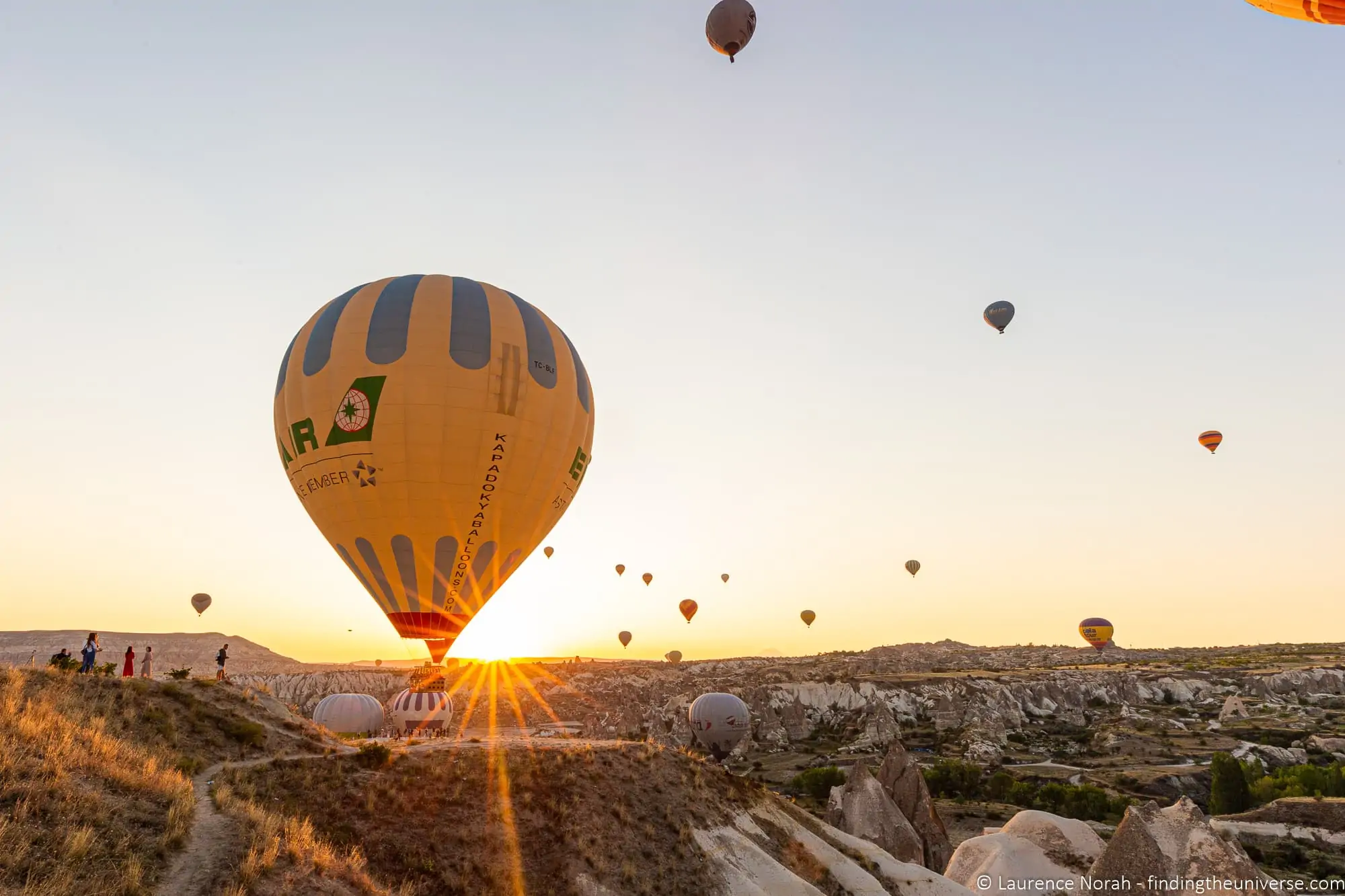
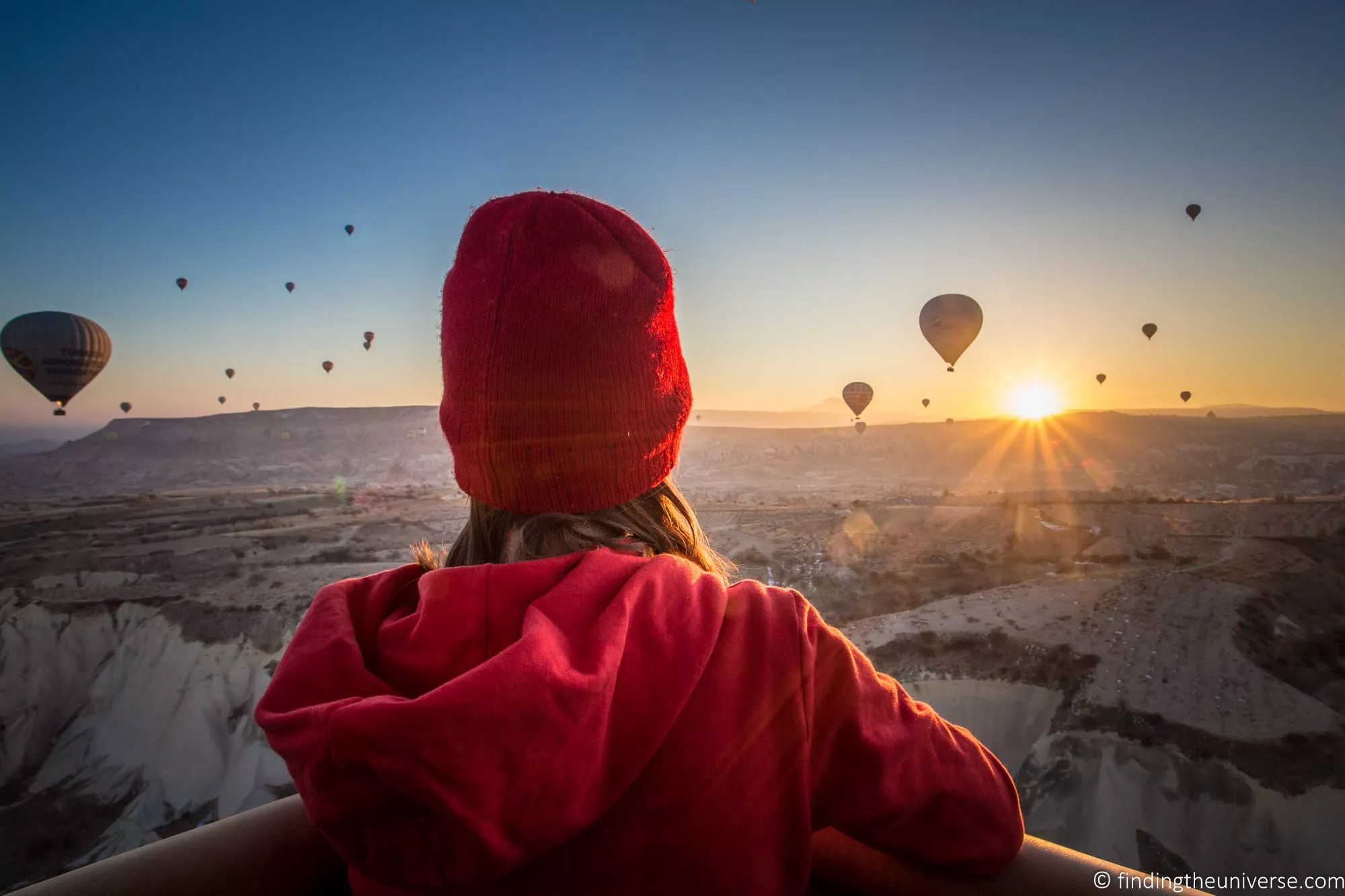
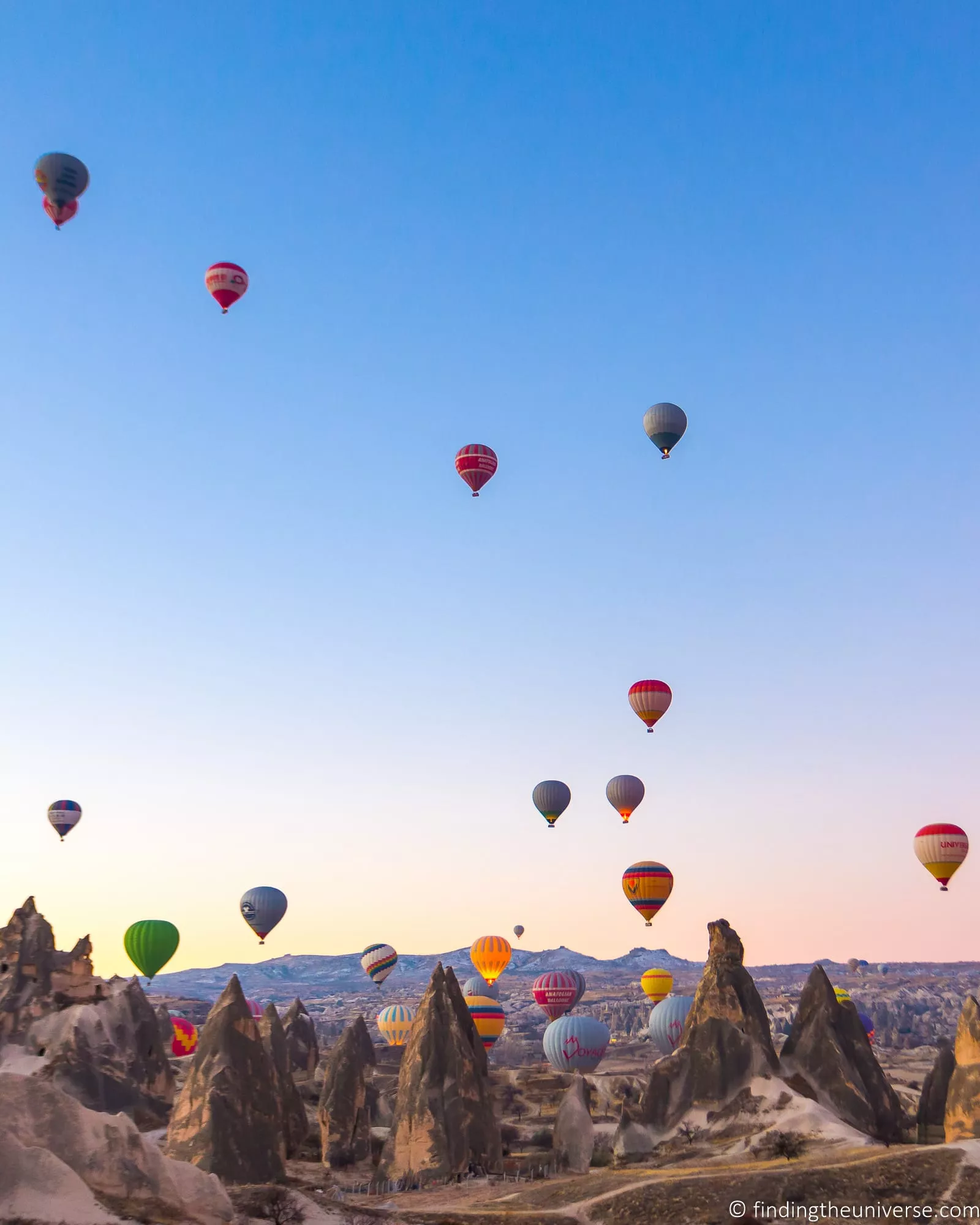
Cappadocia doesn’t quite look real until you’re standing in it. We’ve been a number of times now, and the first sight of the fairy chimneys at sunrise, with dozens of hot air balloons drifting silently above them, still feels like someone has photoshopped the world.
This guide is built from those visits. It covers the things in Cappadocia we’d actually recommend doing, the bits we think are overhyped, and the practical detail that’s harder to find in a generic listicle. Hot air ballooning is in here, obviously. So is everything else worth your time once you’re on the ground.
First, a few questions you might have before getting into the things-to-do list itself.
Table of Contents:
Where is Cappadocia in Turkey?
Cappadocia (Kapadokya in Turkish) is a region rather than a town, which catches a lot of first-time visitors out. It sits in central Turkey, in the modern Central Anatolia region around the Kizilirmak river, roughly 730km southeast of Istanbul, 300km southeast of Ankara, and 500km northeast of Antalya by road.
For visitors, the action concentrates in a triangle between the cities of Aksaray, Niğde and Kayseri. The most popular base is Nevşehir province, where you’ll find the small towns of Göreme, Uçhisar, Ortahisar, and Ürgüp. Most people stay in Göreme.
Why is Cappadocia Famous?
Two reasons, mostly. The landscape, and the balloons.
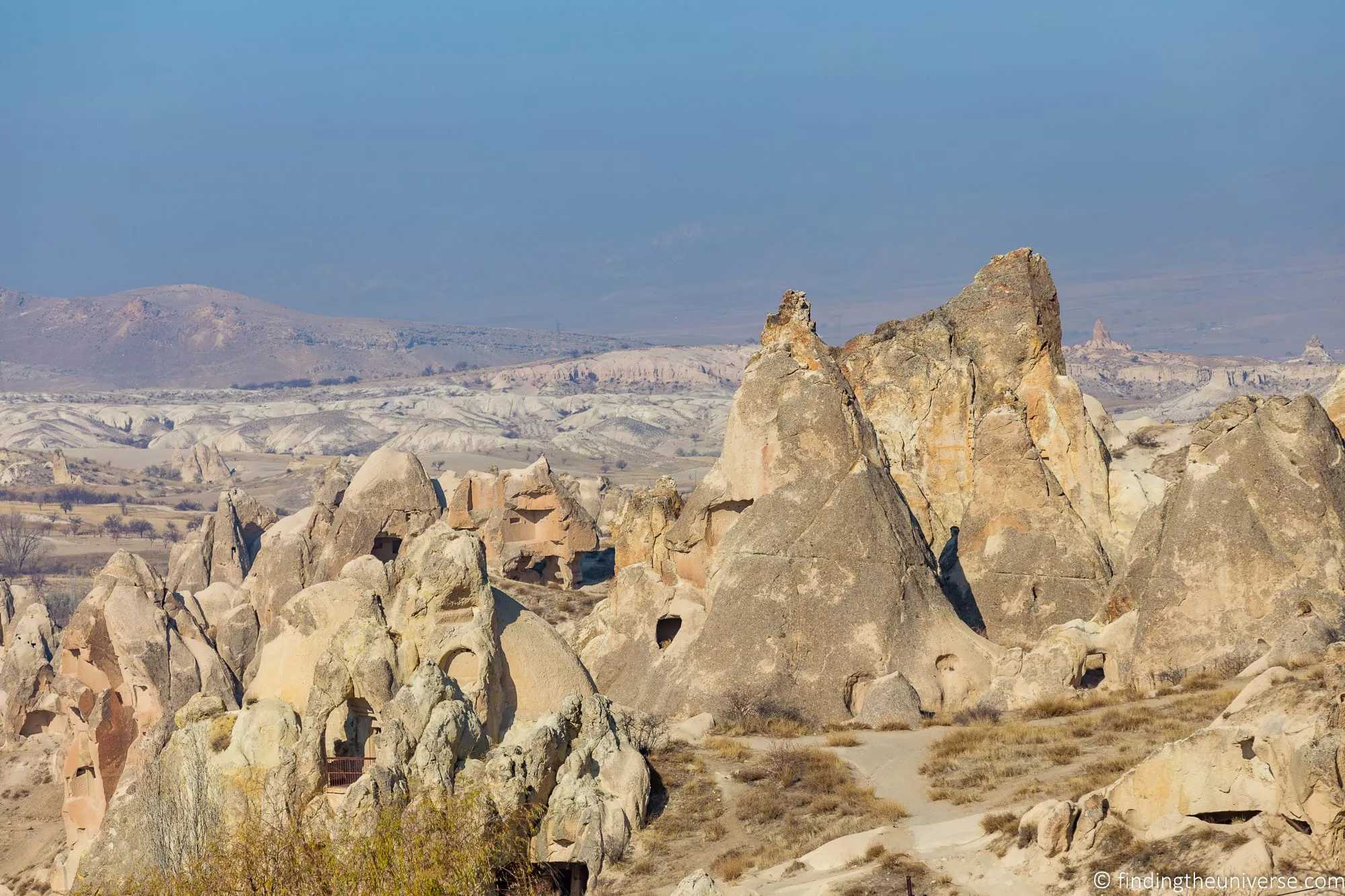
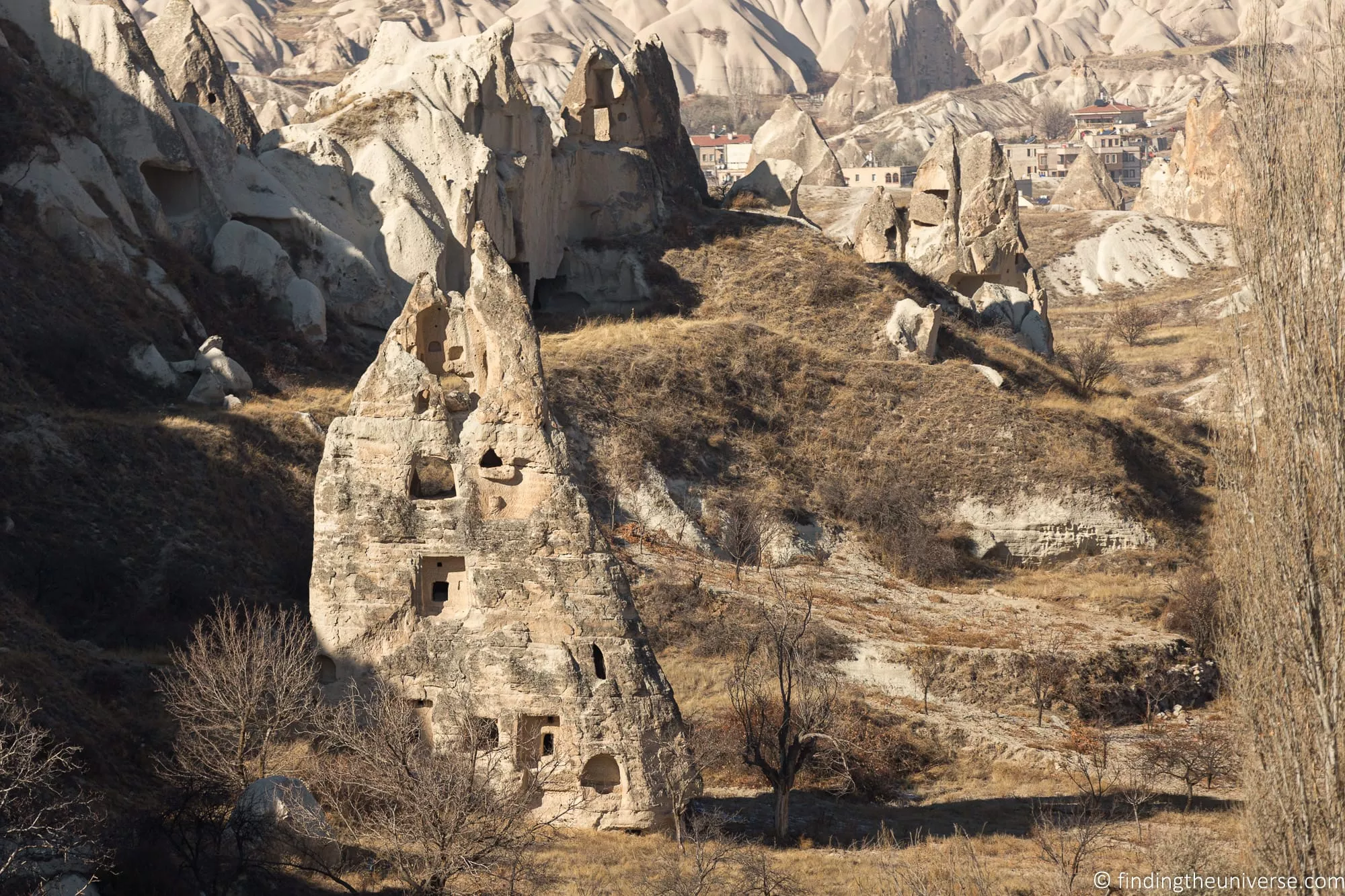
The landscape is the result of millions of years of geological accident. Long-extinct volcanoes blanketed the region in ash hundreds of metres deep, which hardened into a soft rock called tuff. Over time, erosion has carved the tuff into the spires, cones, and outcrops you’ll see everywhere, including the famously phallic ones in Love Valley (which the local tourism board pretends not to notice).
For thousands of years, the locals have made themselves at home in the rock, hollowing out dwellings, churches, and entire underground cities linked by miles of tunnels. Much of the region is a UNESCO World Heritage Site, and you don’t need to be told why once you’re there.
The balloons came later. Cappadocia turned out to be one of the best places in the world to fly hot air balloons, thanks to a combination of consistent flying weather and ridiculously photogenic terrain to drift over. Most flights take off from near Göreme, and on a good morning in peak season you’ll see 100 to 150 balloons in the sky at sunrise. Fewer in winter, but still a properly impressive sight.
How to Get to Cappadocia
Cappadocia is a long way from the rest of Turkey, but it’s well-served by transport. Here are your options.
By Plane
Almost certainly your fastest option. Two airports serve the region: Kayseri Erkilet (ASR), about an hour’s drive from Göreme, and Nevsehir Kapadokya (NAV), about 40 minutes away. Kayseri is the larger of the two and has more domestic and international connections.
From either airport, you can book an inexpensive shared shuttle transfer or a private transfer straight to your hotel. Most major Turkish airports fly to Kayseri or Nevsehir, including Istanbul and Antalya. Coming from outside Turkey, you’ll most likely need to fly via Istanbul.
By Train
The main train station is in Kayseri, with a roughly 6.5-hour line to Ankara (there’s also an overnight option). From Istanbul you’d need to change at Ankara. From Kayseri it’s a taxi or bus on to Göreme. Slower than flying, but a nice way to see the country.
By Bus
Buses are the budget option. Around 9 hours from Antalya, 5 hours from Ankara, 12 hours from Istanbul. Most long-distance routes run overnight, which saves you a daylight day. You can compare timetables and book online here.
By Car
Driving gives you the most flexibility once you’re in the region, and the roads in central Turkey are generally good. Driving in the bigger cities can be a slightly white-knuckle experience due to the volume of traffic, but you’ll be fine on the highways. Make sure your hire car has a valid toll sticker for the toll roads.
Turkey Tours which Include Cappadocia
A lot of visitors choose to see Turkey on a tour, and Cappadocia features in most multi-day Turkey itineraries. We’ve done Turkey both independently and with a tour operator, and there’s a strong case for letting someone else handle the logistics, particularly for a first visit. The distances are large, the language barrier is real, and a good guide adds a lot of context that you’d otherwise miss.
Here are some options across a range of trip lengths and budgets, all of which include time in Cappadocia.
- This two day tour from Istanbul includes round-trip flights from Istanbul to Cappadocia, transport, lunches, an optional hot air balloon ride, one night’s accommodation, and two full days of sightseeing.
- This two day tour from Istanbul is similar but only includes one-way flights, useful if you want to start with a tour and then carry on independently elsewhere in Turkey.
- This two day private tour from Istanbul includes round trip flights, transfers, accommodation, lunches and a hot air balloon flight. This is a similar 2 day private tour.
- This 3 day tour of Cappadocia and Ephesus from Istanbul includes 2 nights of accommodation, private tours and transfers, dinner and breakfast. The hot air balloon flight isn’t included but can be added.
- This 8 day small group tour covers Istanbul, Ephesus, Konya, Pamukkale, and Cappadocia, with hotels, breakfasts, entry fees and domestic flights included.
- This 12 day Travel Talk land tour covers Istanbul, Gallipoli, Troy, Ephesus, Pamukkale, Fethiye, and Cappadocia.
- This 12 day Turkey by gulet tour covers the same destinations plus 3 nights on a gulet boat. We took this one years ago and had a good time. You can read our full Travel Talk review here.
- This 11 day budget Turkey package covers Istanbul, Cappadocia, Antalya, Fethiye, Bodrum, Pamukkale, and Ephesus.
- This 14 day private tour of Turkey covers Istanbul, Ephesus, Pamukkale, Antalya, and Cappadocia.
- This 19 day tour is for those with more time. It covers Istanbul, Gallipoli, Troy, Ephesus, Pamukkale, Fethiye, and Cappadocia, plus 7 nights on a gulet visiting nearby seaside towns and islands.
When to Visit Cappadocia
Cappadocia is a year-round destination, but the season makes a real difference to the experience.
July and August are hot. Temperatures regularly push past 30°C, and these are also the busiest months, so prices climb. May, June, September and October are the sweet spot for warm weather without the worst of the crowds.
March and April have the highest average wind speeds, which can ground balloon flights more often than other months. November through February is the cold season, with temperatures around freezing and the chance of snow on the ground.
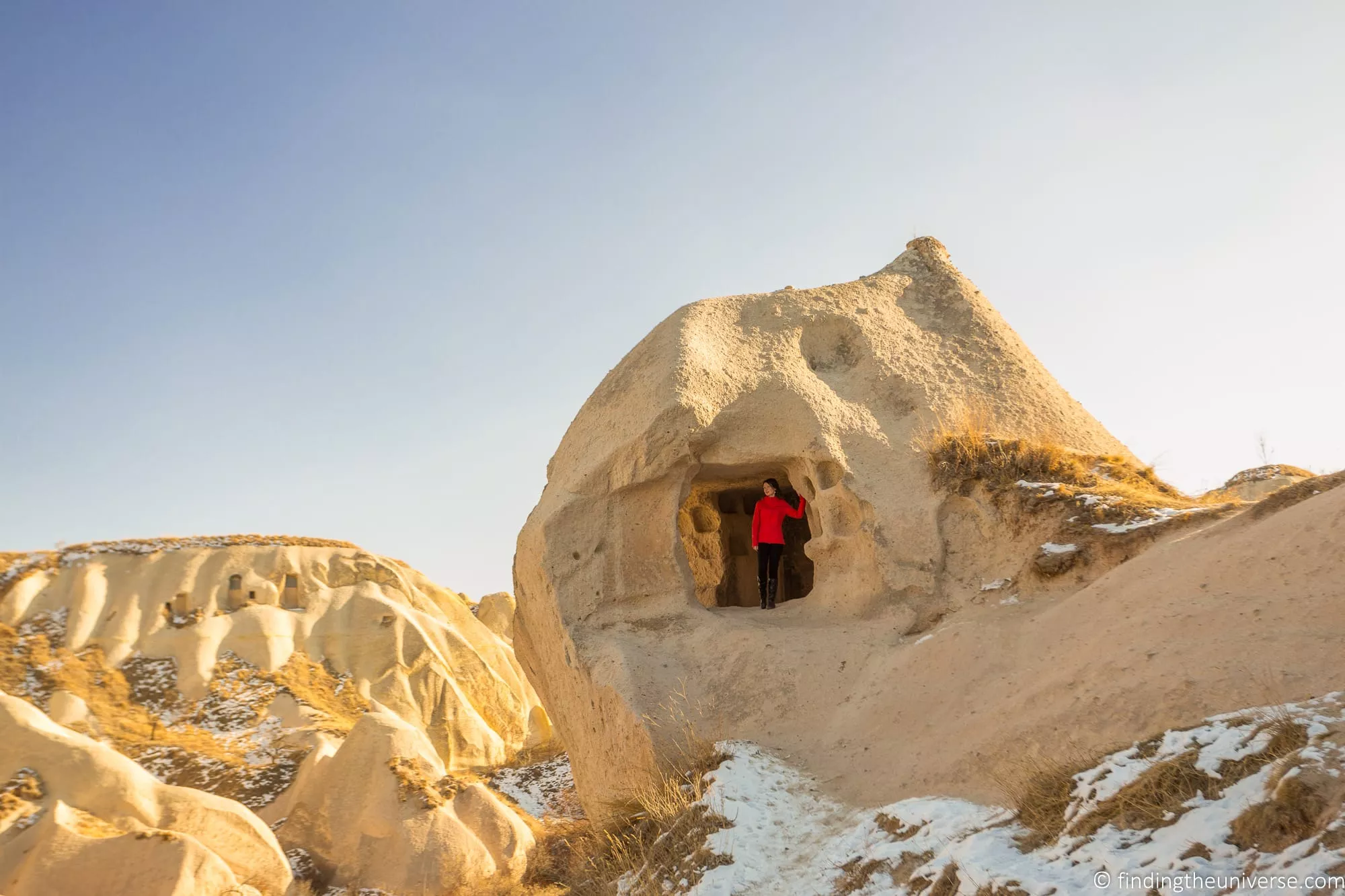
We’ve been in both summer and winter, and got balloon flights up in both seasons. Winter Cappadocia under snow is a beautiful thing, and worth the cold if you’re prepared for it. Pack accordingly.
How Many Days Do You Need in Cappadocia?
Two days is the minimum we’d suggest. Three is better. Five is ideal if you have the time.
With two days, you can do the essentials: a hot air balloon flight on one morning (assuming the weather cooperates), then the Göreme Open Air Museum, Uçhisar Castle, and a sunset at one of the viewpoints. That’s a full but doable trip.
With three days, you add Derinkuyu Underground City and either a half-day in Avanos for the pottery, or a hike through Pigeon Valley or Love Valley. This is what most visitors should aim for.
With five days, you can also do Ihlara Valley, the Zelve Open Air Museum, an ATV or horseback ride through the valleys, and have proper time to walk between locations rather than just driving. The extra days also buffer against weather cancellations on the balloon flight, which is the single most important reason to give yourself more than two nights here.
If Cappadocia is part of a longer Turkey trip, our friends at ITC have a comprehensive two week Turkey itinerary that includes Cappadocia and the rest of the country’s highlights.
Things to Do in Cappadocia
Right, here’s the list. These are roughly in priority order, but the fun of Cappadocia is that it’s small enough to do most of these even on a short trip.
Go Hot Air Ballooning
If you only do one thing in Cappadocia, do this. The hot air balloon flight is the single experience that will stay with you, and it’s the reason most people come.
The conditions here are unusually good for ballooning: the prevailing winds are gentle, the visibility is good a high percentage of the year, and the landscape you’re floating over is, well, this. On a typical morning, dozens of balloons launch at sunrise from sites near Göreme, and from inside one of those baskets you’ll have all of them as your view, plus the fairy chimneys below.
It’s not cheap. Standard flights typically run €150-€300 per person in shoulder seasons, push past €300 and sometimes €400 in peak months (May-June, September-October), and dip as low as €80-€140 in winter when demand is lowest. Premium small-basket and VIP flights cost more again. Compared to balloon flights elsewhere in the world it’s still decent value for what you get, and if you only go up in a balloon once in your life, this is the place to do it.
Two practical bits of advice. First, book your flight for the first morning of your trip if you possibly can. Flights get cancelled for weather more often than you’d expect, and if your flight is cancelled, having spare days at the back end of the trip means you can rebook. Second, check the cancellation policy carefully when booking. Reputable operators will rebook or refund cancelled flights without fuss.
Operators vary on basket size (cheaper flights tend to have larger baskets with more passengers per compartment), flight length (typically 60-90 minutes), and what’s included (breakfast, champagne on landing, hotel pickup, photos). Don’t choose on price alone. Read recent reviews. Safety record matters more than the cost saving.
Some flights worth considering:
- This 2.5 hour experience with Royal Balloons includes flight, hotel pickup, champagne toast, and breakfast. This was our favourite balloon flight in Cappadocia and we highly recommend them.
- This sunrise balloon flight includes breakfast, champagne, souvenir flight certificate, and hotel pickup, and has consistently strong reviews.
- This this balloon flight includes a champagne celebration and hotel pickup.
- This combo pairs a sunrise balloon flight with a full day guided tour of Cappadocia, useful if you want to bundle.
Visit an Underground City
One of the more remarkable things about Cappadocia is the way the locals have shaped the landscape to their needs. The rock here is workable enough to dig into, sturdy enough to stay put once you have, and the practice of carving out homes goes back at least 2,500 years and continues today.
What’s less commonly known is that they didn’t stop at houses. They built entire cities underground.
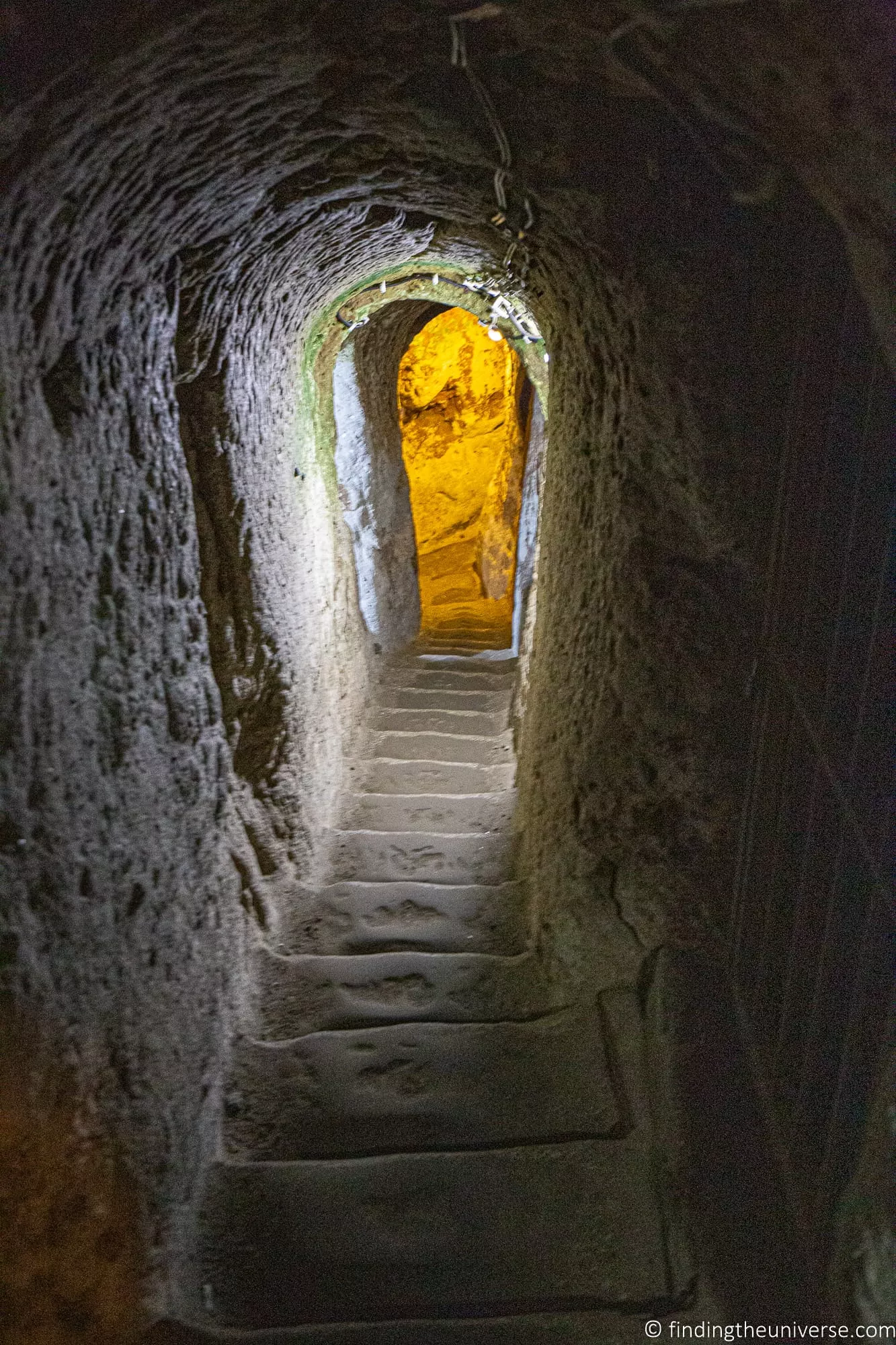
The underground cities started life as places of refuge. Construction is thought to have begun under the Phrygians in the 8th-7th centuries BC, and they were used and expanded by successive populations, most notably by Byzantine-era Christians between the 8th and 12th centuries when the Byzantine empire was at war with the Arabs. Around 36 underground cities are known across the region, with some estimates suggesting many more remain undiscovered.
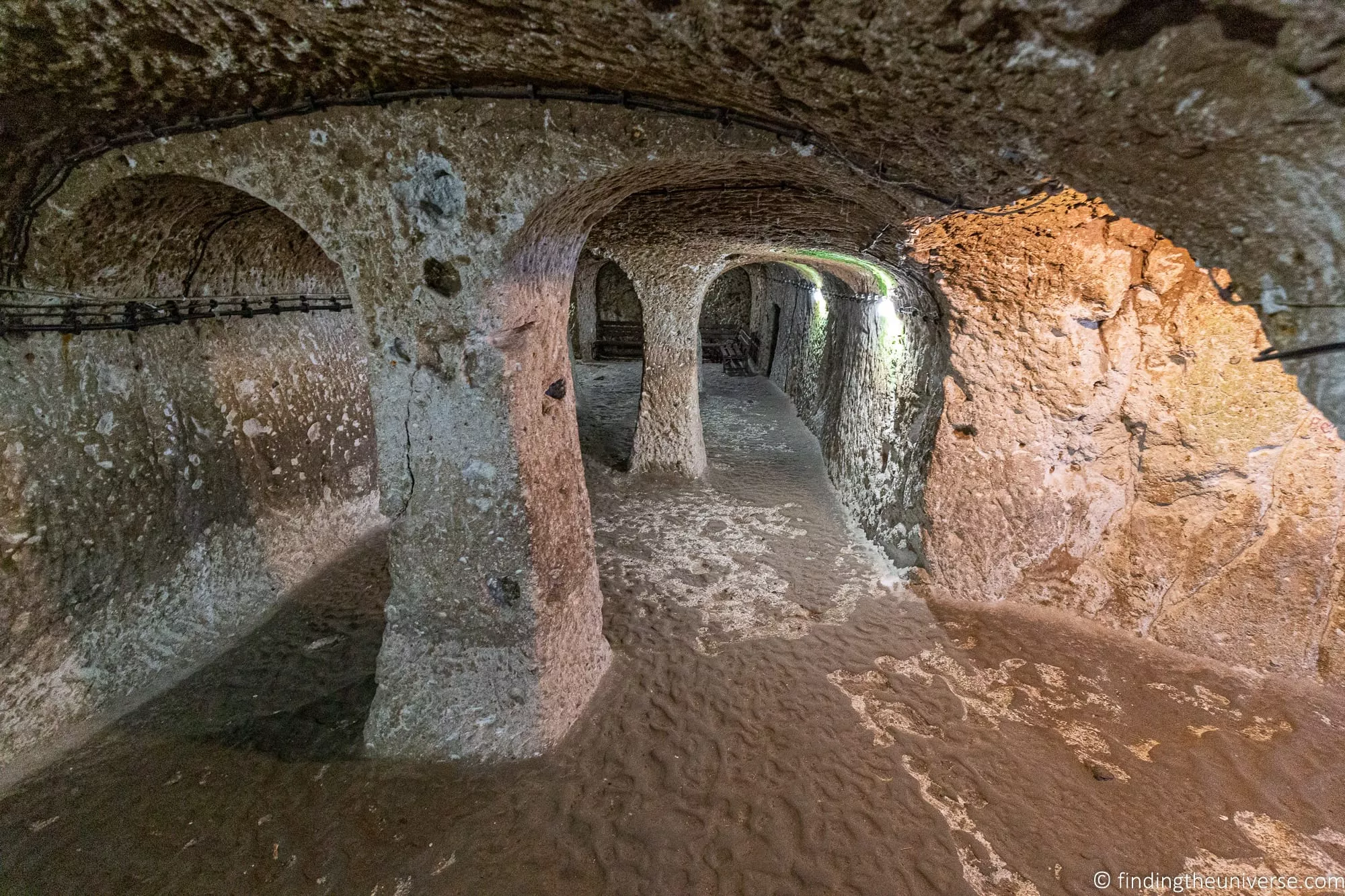
The deepest discovered so far is Derinkuyu, found in the 1960s when a local resident knocked down a wall in his basement and discovered a passageway. It descends to roughly 85 metres (280 feet) below ground level over multiple levels, and could shelter as many as 20,000 people along with their livestock. There were stables, wineries, churches, ventilation shafts, and wells. A massive stone door could seal the single entrance from inside. The city is connected to other underground cities in the region by miles of tunnels.
It’s open every day of the year, with seasonal hours (roughly 8am-7pm in summer, 8am-5pm in winter) and an entry fee. You can see current opening times and prices on the Turkish Museums website. You can visit independently and buy a ticket on arrival, or take a guided tour like this one that includes Derinkuyu as part of a fuller day’s sightseeing.
If you want to see another underground city, Kaymakli is another large complex open to visitors. A massive new underground city was also discovered in Nevşehir in 2014, though as far as we know it isn’t yet open to the public.
Visit the Göreme Open Air Museum
Whilst we’re on the subject of dwellings carved into rock, the Göreme Open Air Museum is the place to see what people did with the religious side of the same engineering trick.
The museum is a complex of churches and monastic dwellings carved out of the rock, primarily built between the 10th and 13th centuries. The churches contain frescoes depicting religious scenes and icons, many surprisingly well preserved given their age. It was one of the first sites in Turkey to make the UNESCO World Heritage list.
It’s a 20 minute walk or 5 minute drive from the centre of Göreme, which makes it one of the most-visited sites in the region. It’s not enormous, so it can feel busy, though there’s enough space and enough churches to spread out a bit. We’d recommend either renting an audioguide on arrival or visiting as part of a guided tour like this. Without context, you’ll see beautiful frescoes; with context, you’ll understand what you’re looking at, which is a substantial improvement.
The other open air museum worth visiting is the Zelve Open Air Museum. It’s larger than Göreme, less visited, and was inhabited as recently as the 1950s. Fewer frescoes but more of a cave-town feel. Both are worth the visit if you have the time.

Visit Love Valley
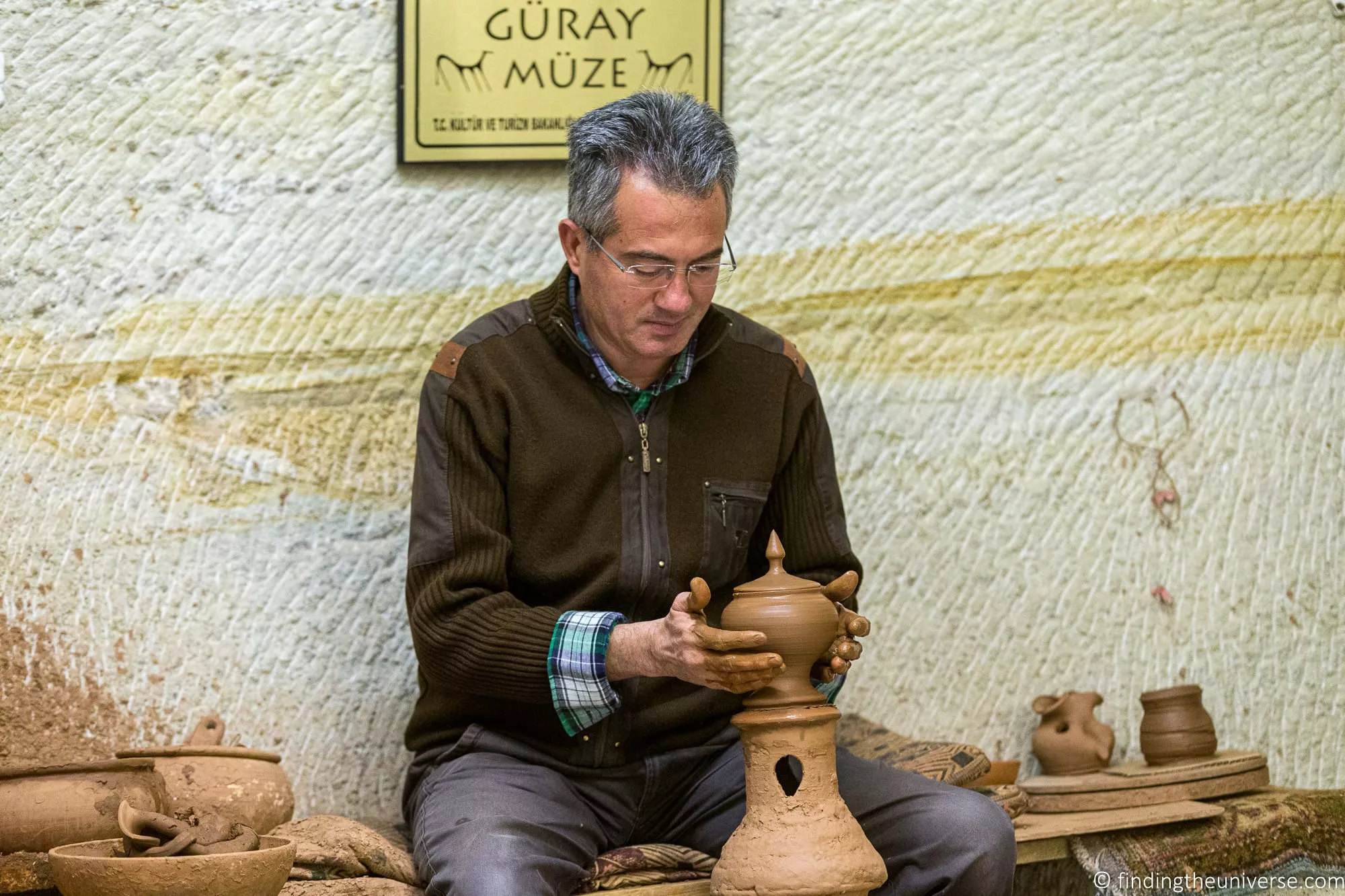
Cappadocia has no shortage of beautiful valleys, but Love Valley is the one most people end up taking photos of. It’s famous for the huge fairy chimney rock formations that fill the valley floor, which look (there’s no delicate way to put this) extremely phallic. The local marketing has gone hard on the romance angle anyway, presumably because nobody could think of an alternative.
You can hike the valley itself, or admire it from the large viewing area on the rim. The viewpoint also has a number of photogenic add-ons that have appeared over the years, including heart-shaped swings, sculptures, and the inevitable evil eye trees. It’s a popular spot for marriage proposals, which presumably overlook the rock formation situation.
Güray Museum (Müze Güray)
Avanos is the Cappadocia town for pottery. Production goes back over 3,000 years to the time of the Hittites, and is still going strong today, though most workshops you’ll see catering to tourists are not exactly Hittite in their commercial approach.
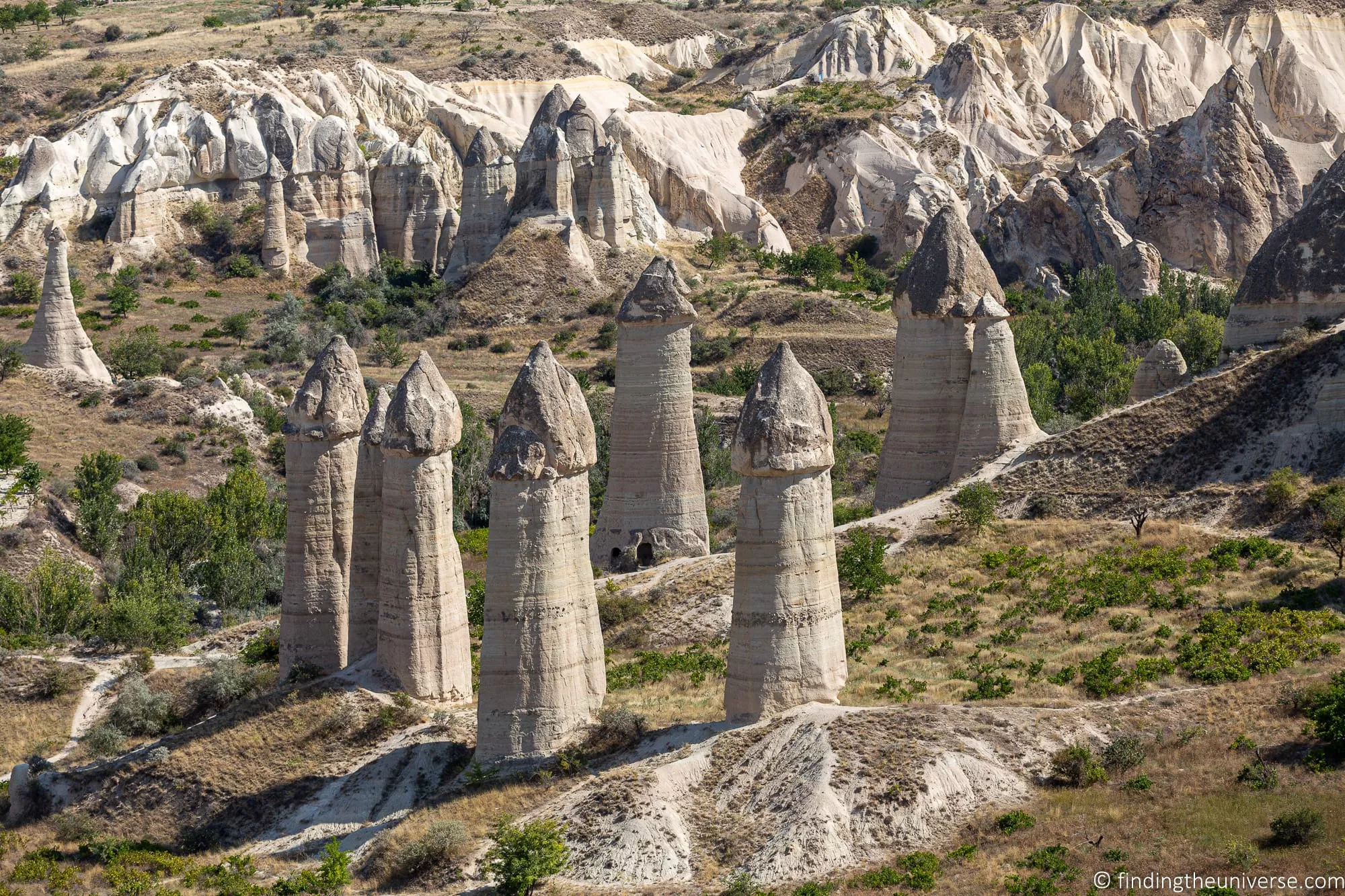
If you want to learn about the actual history and tradition of ceramics in the region, the Cappadocia Underground Ceramic Museum (Güray Müze) is worth an hour. You can watch demonstrations of pottery being made, see hundreds of pieces spanning the millennia of production in the area, and learn the actual context. The museum itself is carved out of the rock underground, which is in keeping with the local construction tradition.
You can see opening hours on the official website, and buy entry tickets either at the door or online in advance here.
Watch the Sunrise (and Sunset) From the Right Viewpoint
After the balloon flight itself, watching the balloons launch from a good viewpoint is the second thing we’d recommend you make time for. Even if you’ve been up in one yourself, watching dozens of balloons inflate and lift off in the dawn light from the ground is a different experience entirely, and considerably cheaper.
A few practical things to know before I list the spots. First, you need to be in position about 30-45 minutes before sunrise to catch the inflation phase, which is a lot of the visual interest. Second, several of the popular viewpoints are now controlled access with a small fee (typically a few lira, cash only, so bring some). Third, the popular spots get busy, but there’s almost always more space than you think.
Four spots worth considering, depending on what you’re after:
- Sunrise Point (east of Göreme). The classic. An elevated panorama over Göreme with the launch sites visible below, so you’ll see balloons inflating, lifting off, and drifting overhead. Google Maps location here. Busy, but the view earns it.
- Sword Valley. Less crowded than Sunrise Point and arguably better for photographers because you get fairy chimneys in the foreground rather than just hotels. A bit of a walk from town but worth it.
- Your hotel rooftop. If you’ve booked a Göreme cave hotel with a rooftop terrace (and most do), this is probably the best option for a relaxed morning. You’re already there, you’re warm, you’ve got coffee. The trade-off is the view depends entirely on the rooftop’s position relative to the launch sites. Worth checking the hotel’s photos before booking.
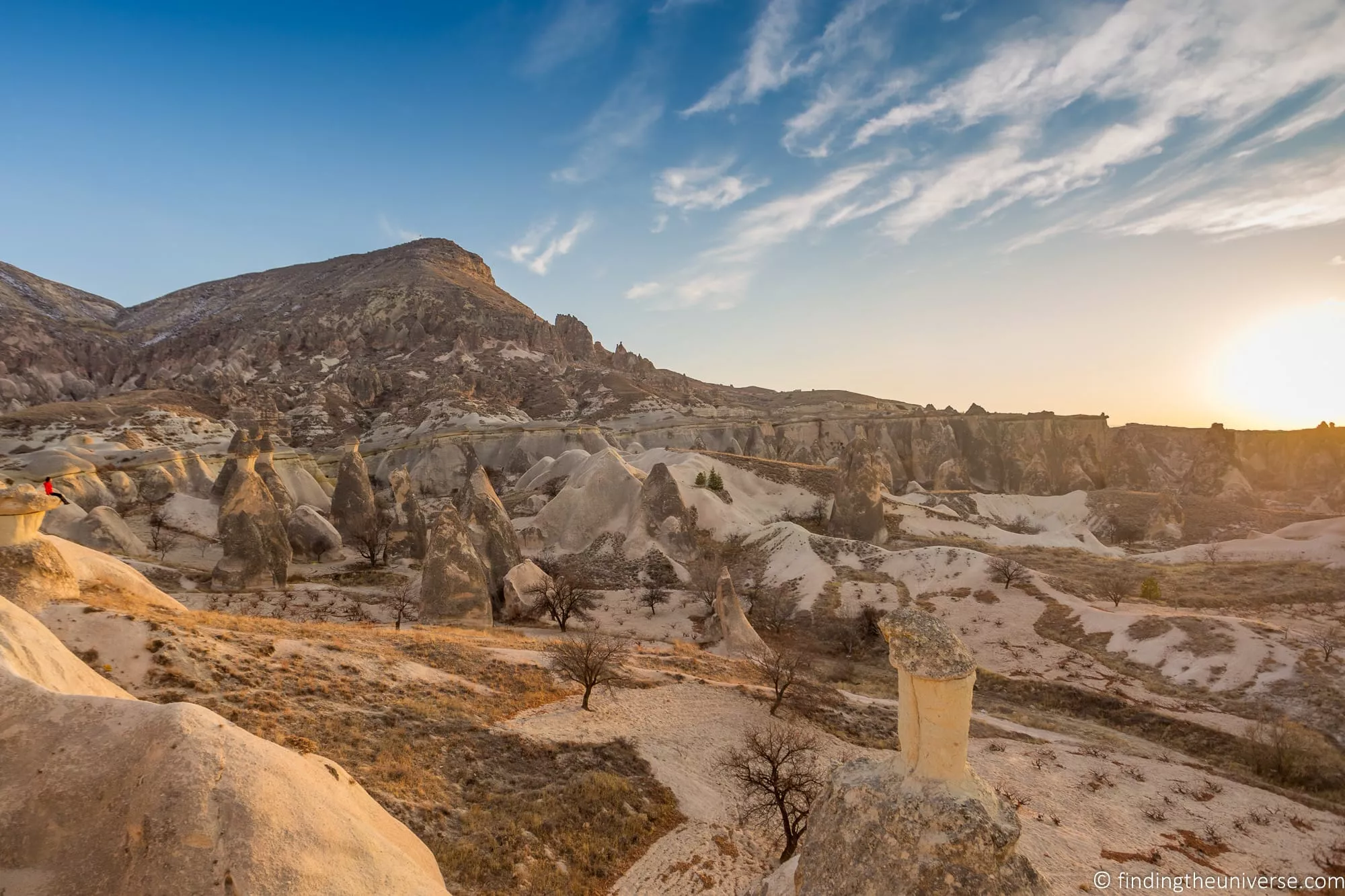
- Rose Valley (sunset). For sunset, head out to Kizilcukur (Rose Valley). The panoramic viewpoint above the red-coloured rock formations gets the warm evening light beautifully.
One photographer’s tip: if you’re going for the “balloons in the foreground, fairy chimneys behind” shot, the balloons drift on the wind, so where they end up depends on conditions on the day. Sunrise Point and Sword Valley both work because they’re on opposite sides of the launch zone, so on most mornings at least one of them will have balloons drifting toward you. If you’re staying multiple nights, try a different viewpoint each morning.
Stay in a Cave Hotel
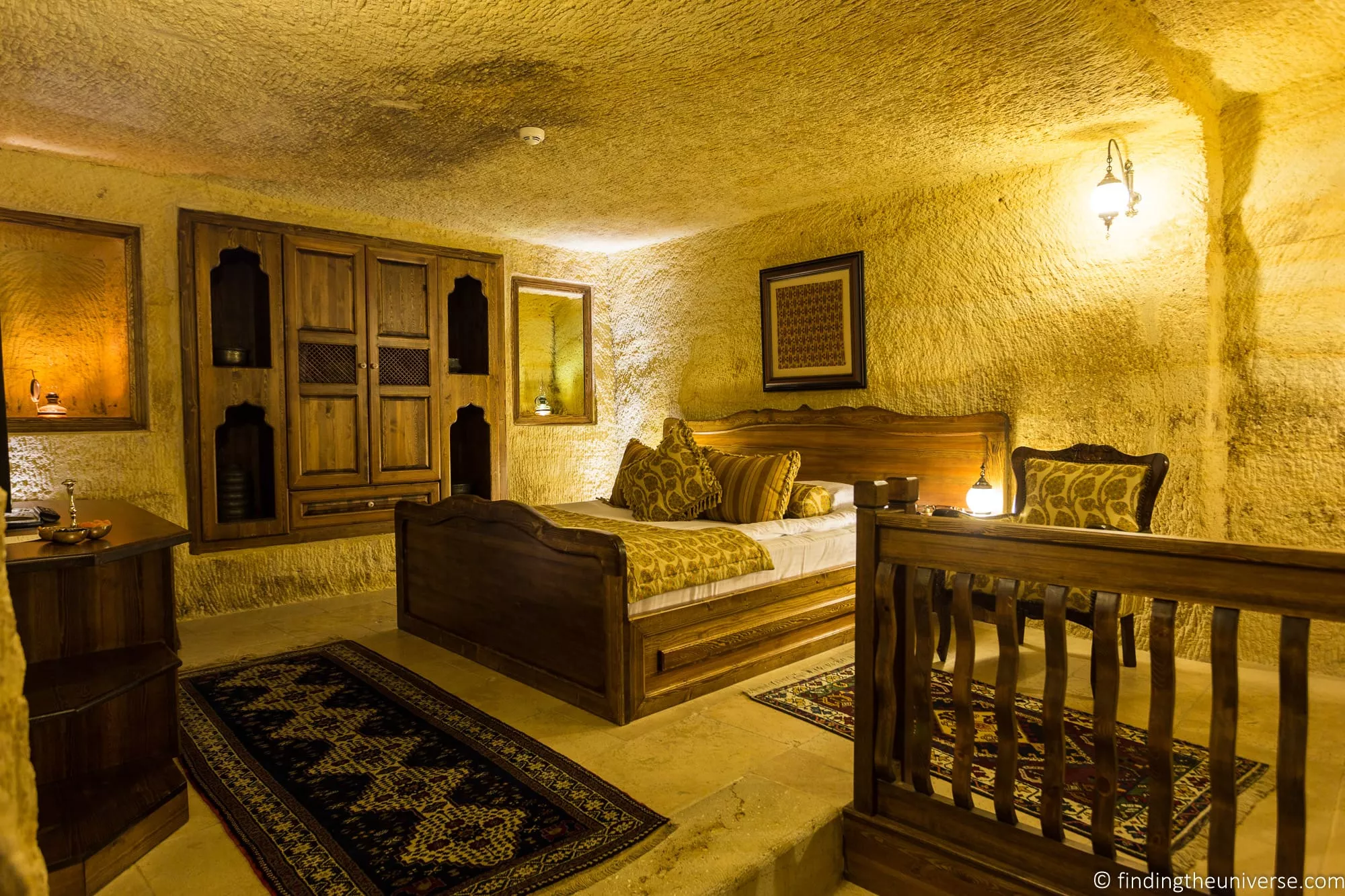
The cave hotel thing is a bit of a Cappadocia rite of passage. You’re in a region defined by people carving homes into rock, so it would be slightly perverse to stay in a normal building. Plus they’re properly atmospheric, generally well-priced compared to equivalent hotels elsewhere, and an experience you can’t easily replicate anywhere else in the world.
A few things to know before booking. First, “cave hotel” doesn’t always mean every room is a cave room. Many properties mix cave rooms with stone rooms or modern additions, and the cave rooms are often the premium tier. When booking, double-check that you’re booking an actual cave room rather than the hotel’s cheaper non-cave option. Second, cave rooms can be cool and a little damp by their nature; some find them atmospheric, some find them claustrophobic. Third, the rooftop terrace is half the appeal, particularly for balloon mornings. Look for hotels with a good one.
Some recommended options below. We’ve stayed at Kayakapi Premium Caves and absolutely loved it, so we’ll start there.
- Kayakapi Premium Caves in Ürgüp. This is the upscale option. Rooms are built into restored historical caves, and the property has an on-site restaurant, swimming pool, and spa, plus a magnificent view across the surrounding landscape. We stayed here on one of our visits and the cave room was the most beautifully restored we’ve experienced anywhere, with the kind of details (proper bathroom, decent lighting, actual heating) that mid-range cave hotels often skip. Worth the splurge if it’s in budget.
- Homestay Cave Hostel, Göreme. The budget option. Some of the dormitory rooms are cave rooms, so you can do the cave-hotel experience without the hotel-room price tag.
- Guzide Cave Hotel, Göreme. A solid value cave hotel with a range of en-suite cave room types.
- Grand Elite Cave Suites, Göreme. Well-reviewed, with room types across most budgets and an outdoor swimming pool.
- Aydinli Cave Hotel, Göreme. Ensuite cave rooms and a rooftop terrace with great views over Göreme, which makes it a strong pick if you’re prioritising balloon-watching from your hotel.
- Zara Cave Hotel, Göreme. Another well-reviewed cave hotel offering a range of en-suite cave rooms across various budgets, with a shared lounge and a terrace area.
Visit Uçhisar Castle
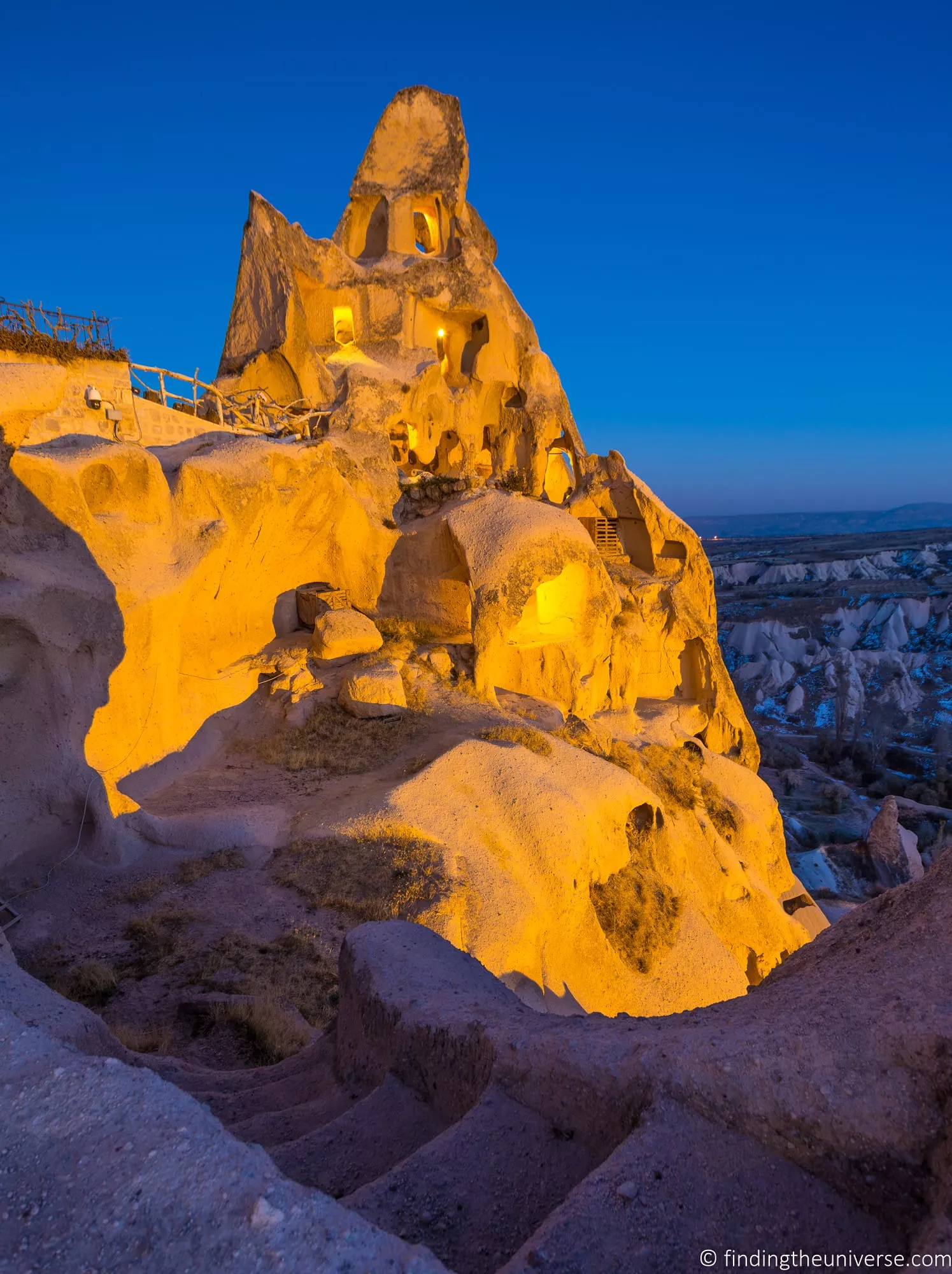
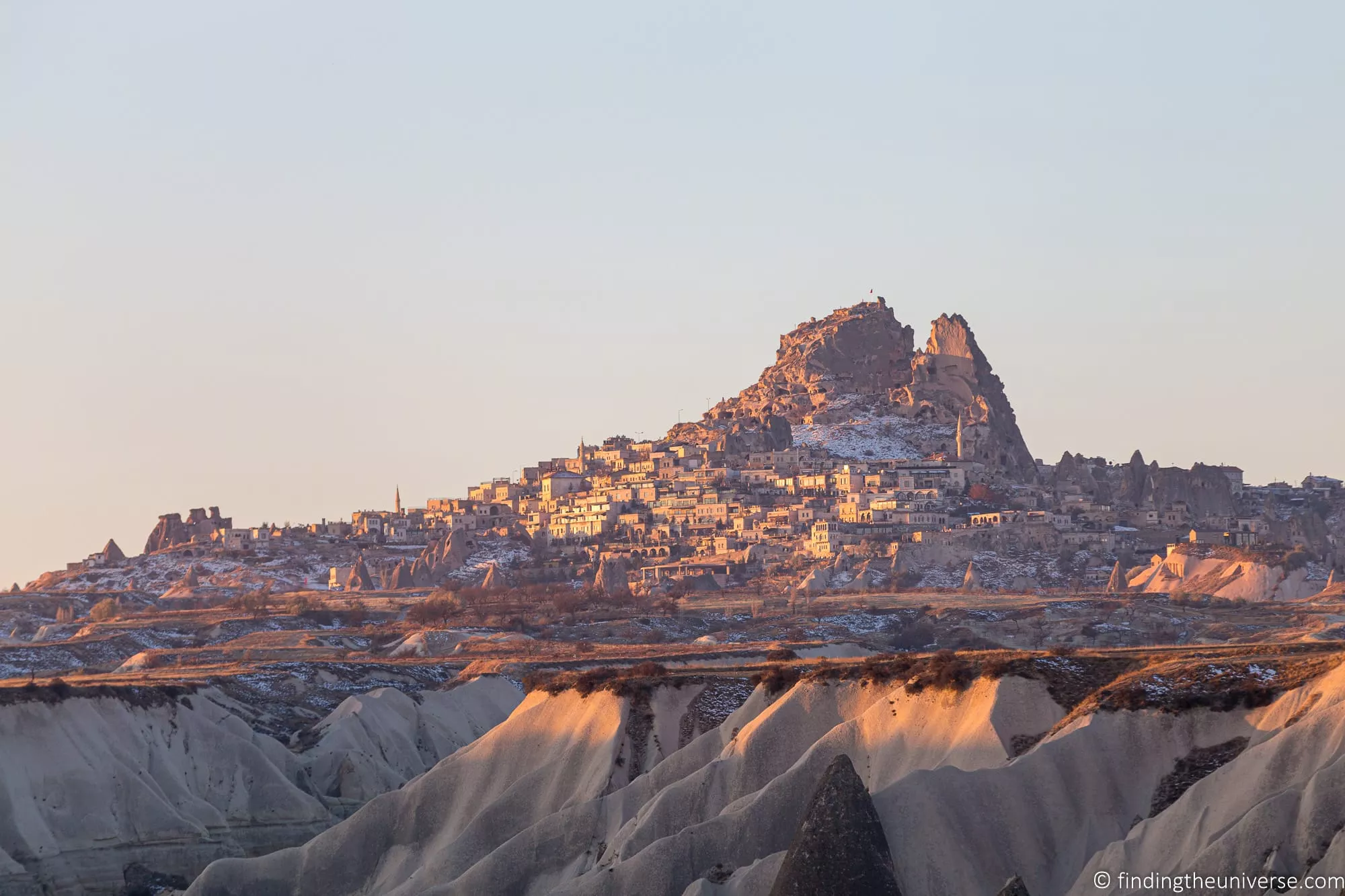
If you prefer your rock dwellings dramatically scaled up, Uçhisar Castle is the one to see. It’s a 60 metre (200 foot) high mountain in the town of Uçhisar that’s been hollowed out into a defensible castle, and as the highest point in the area it’s visible from miles away.
The castle was originally fortified about 2,000 years ago during the Roman occupation, with its strategic vantage point over the surrounding lands making it an obvious choice. Today it’s open to visitors for a small entry fee, and you can navigate your way through the warren of corridors and stairs all the way to the top, where you’ll get spectacular views over the surrounding landscapes.
Uçhisar is around 5km from Göreme. You can visit as part of a guided tour like this, or independently by public bus or taxi from Göreme.
Explore Pigeon Valley
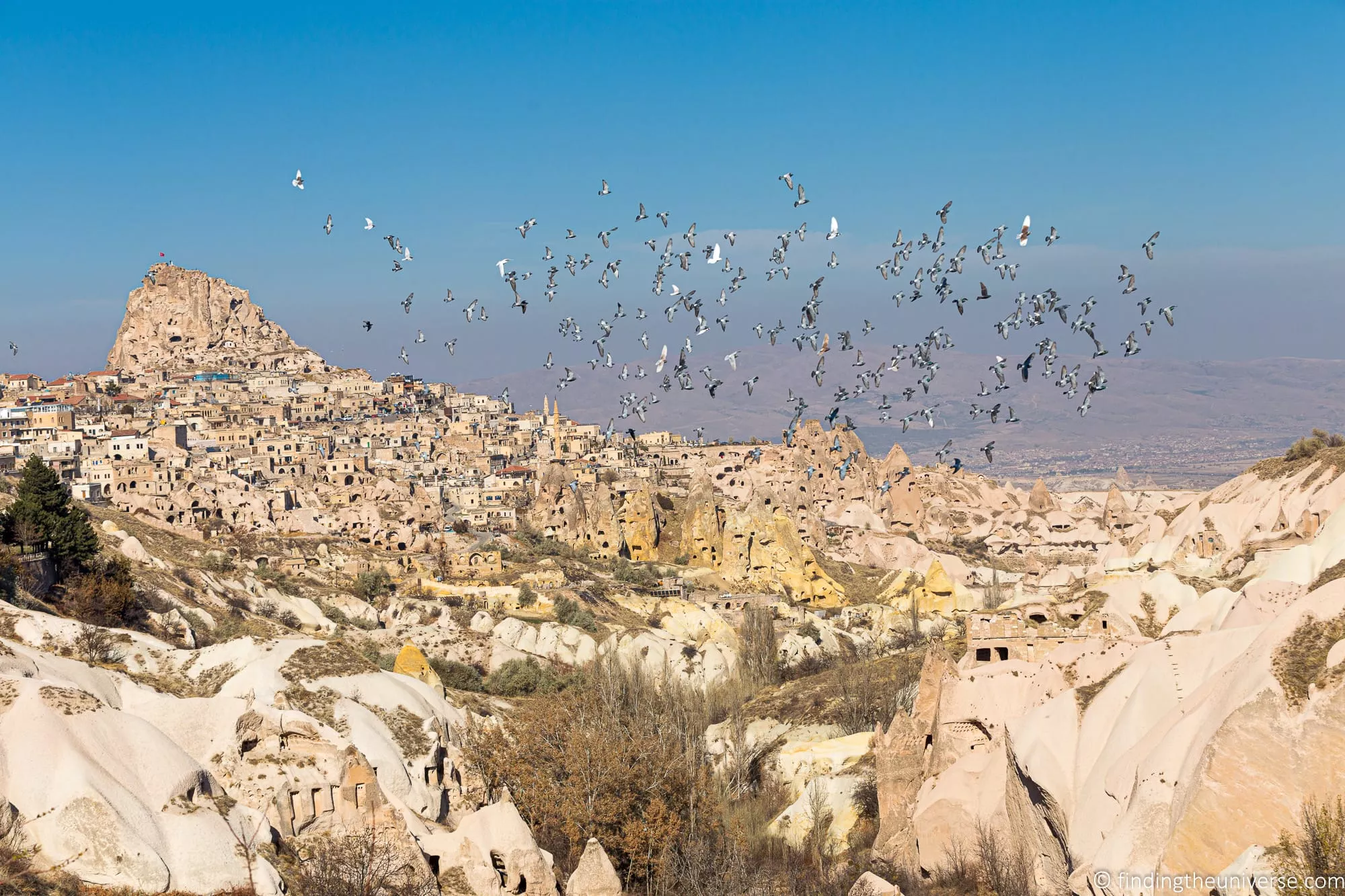
Cappadocia has plenty of beautiful valleys to walk through (more on hiking below), but Pigeon Valley is one we’d particularly highlight. It’s named for the thousands of pigeons that have historically nested in the valley walls (locals harvested the droppings for fertiliser, which is one of those facts that’s surprisingly hard to make sound romantic).
The valley offers a 4km hiking trail between Uçhisar and Göreme, with cave dwellings, fairy chimneys, and constant views to either side. Even if you don’t fancy the walk, the viewpoint at the southern end of the valley gives you lovely views down the valley with Uçhisar Castle in the background. There are also a few small vendors here and the now-traditional evil eye trees draped in blue talismans.
Take in a Turkish Night Show
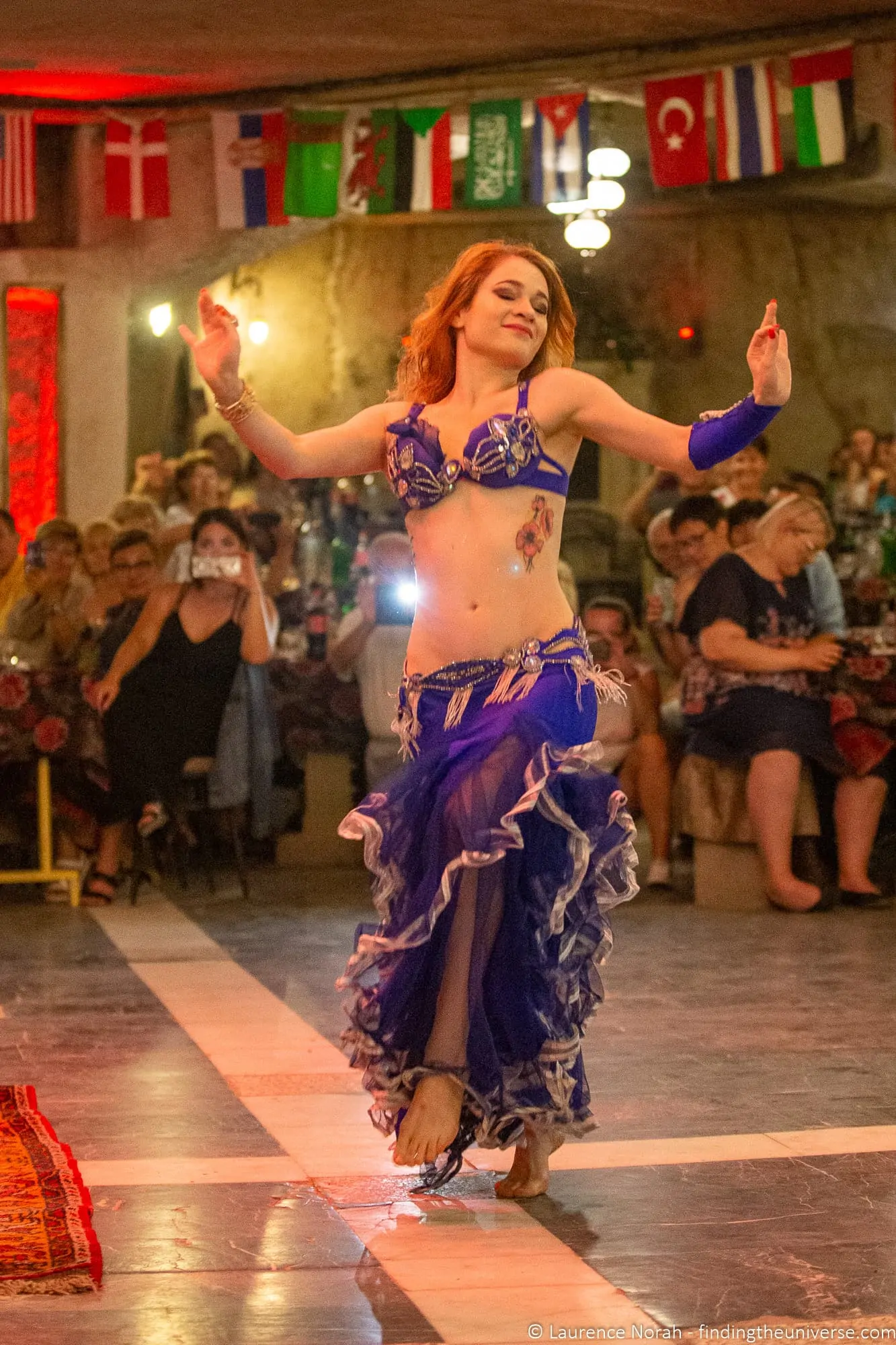
For evening entertainment, particularly in winter when the appeal of “warm and indoors” peaks sharply, a Turkish night show is a good option. These typically combine an evening meal with live entertainment featuring whirling dervishes, belly dancers, and traditional folk music.
We took in one of these as part of a tour of Turkey we did. It was firmly aimed at tourists, no question, but it was also a lot of fun, and a good way to experience a chunk of local culture and cuisine in one go.
Worth a look: this evening show includes dinner, unlimited drinks (wine and beer), hotel pickup and drop-off, and the entertainment.
Shop for a Local Souvenir
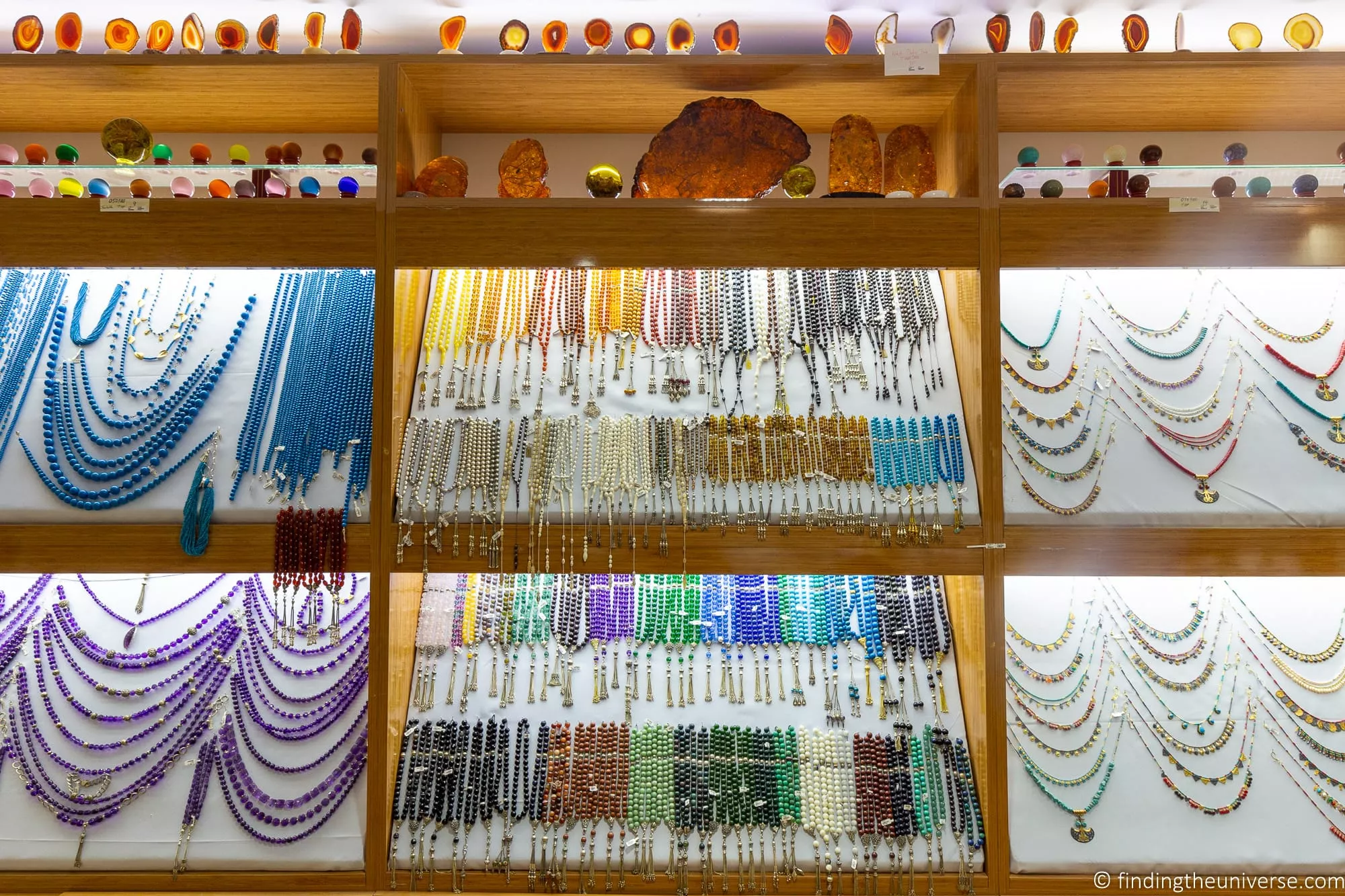
Pottery, carpets, jewellery, evil eye charms (don’t pretend you won’t end up buying one). Cappadocia has plenty of souvenir-shopping opportunities, and if you’ve joined any kind of organised tour you’ll almost certainly be taken to a workshop at some point. This is both a chance to see how the products are made and, with absolute predictability, a chance to buy.
It’s up to you whether to actually buy anything. We think a locally-made piece of pottery or a small carpet makes for a far better souvenir than the usual fridge magnet, and you’re directly supporting local artisans. Just go in eyes open about the inevitable sales pressure, and don’t feel bad about saying no.
If you’re particularly interested in the local crafts, you might consider a private art tour like this one. It focuses on the history of Anatolian arts and crafts and visits local artisans, which gives you the context without the hard sell.
Go Hiking
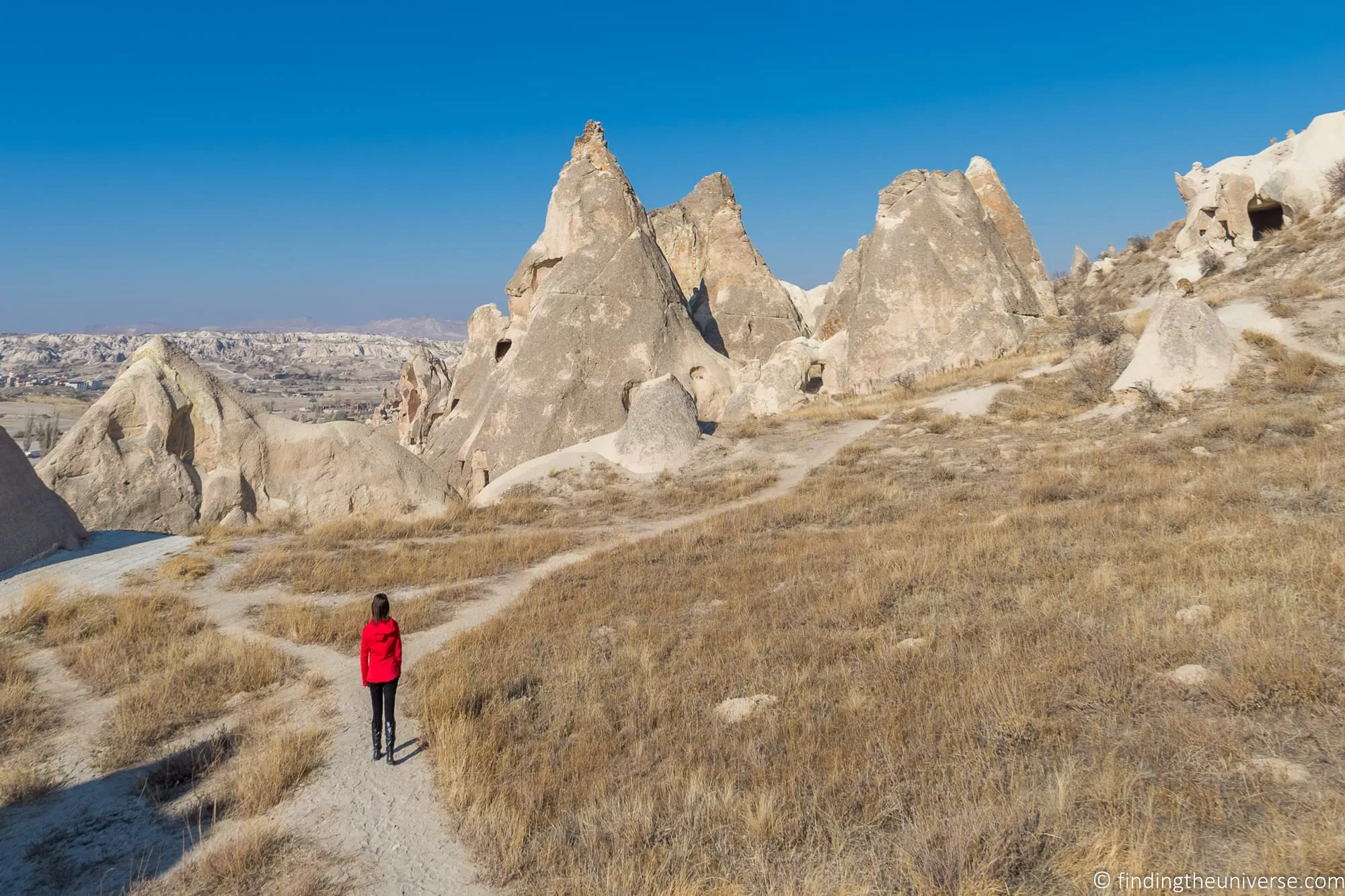
The Cappadocia landscape is made for hiking. Walking is the only way to properly see the fairy chimneys up close, the thousands of cave dwellings, and the slightly mad scale of the rock formations. A surprising amount of this is accessible from Göreme on foot.
If you’re planning a longer hike, prepare properly. Summer temperatures in particular can be brutal, and there’s not much shade once you’re in the valleys. Take more water than you think you need.
Popular hiking destinations include:
- Red Valley / Rose Valley. 2 to 4 hours, several path options. Best at sunset.
- Pigeon Valley. 4km of trails linking Uçhisar with Göreme.
- Love Valley. A 2km trail with the most spectacular fairy chimneys (sniggering optional).
- Ihlara Valley. The valley is 14km long, and you can hike as much or as little as you fancy.
The trails are mostly easy to follow, and you can link several of these together for a longer day. If you’d rather have a guide, this is a full day hiking tour, and this one combines hiking with an underground city visit.
If you’d rather see the valleys with less effort and more adrenaline, you can also explore by ATV or on horseback.
Visit an Outdoor Market
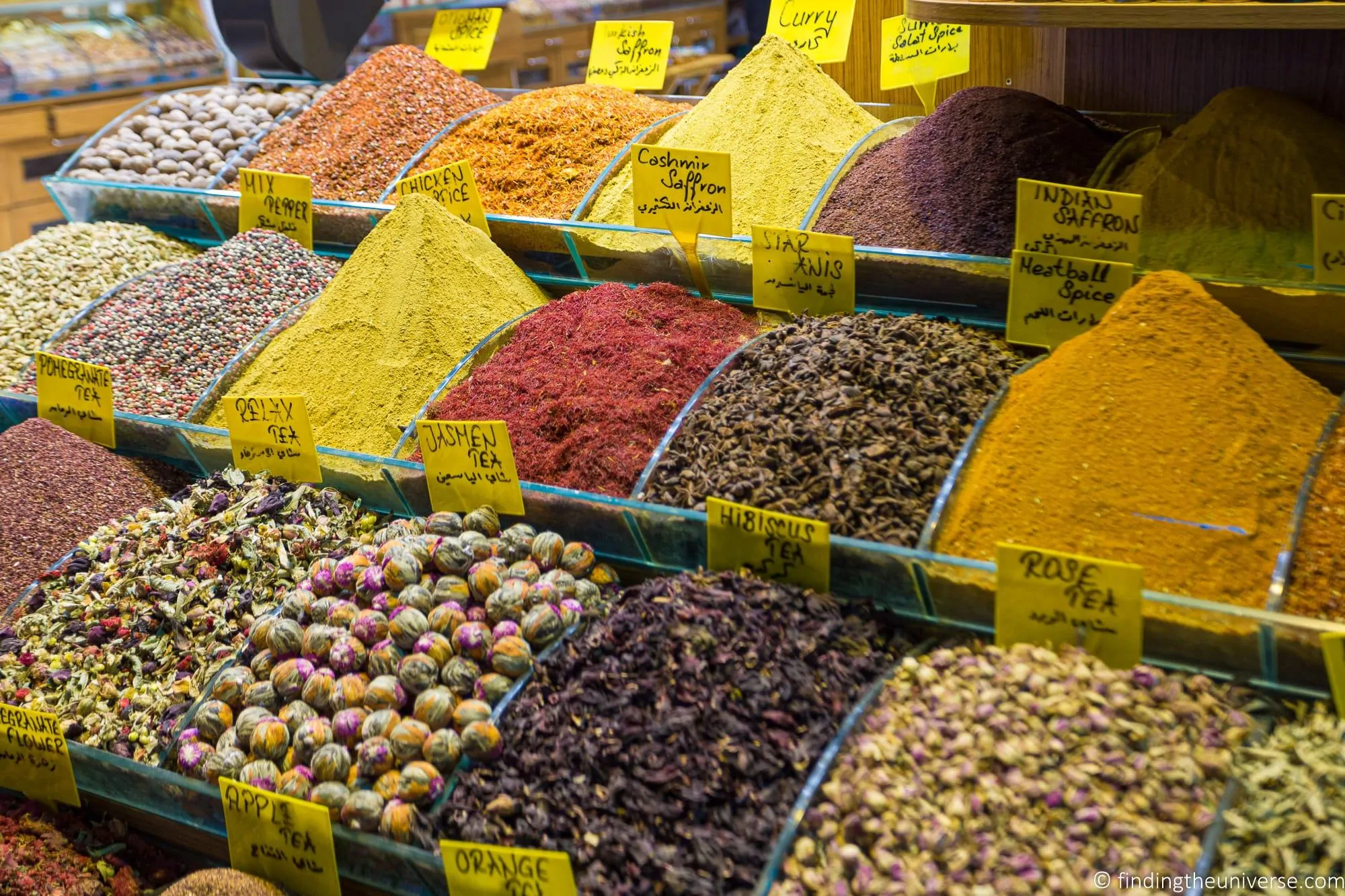
We always make a point of visiting local markets when we travel. They’re the fastest way to see what people in the region actually eat, what’s in season, and what the day-to-day commercial life looks like outside the tourist bubble.
The largest market in the region runs in Avanos every Friday. Other markets run in other towns on other days; ask at your accommodation about local markets, as schedules vary. Mornings are best for fresh produce. By late afternoon a lot of the better stuff has gone.
Have a Traditional Bath
After all the hiking and balloon-chasing, you might appreciate something a bit more relaxing. A hammam is the answer.
The traditional Turkish bath is based on ancient Roman bathing rituals, and involves a sequence of steps: time in a hot room to perspire, bathing in a pool, often a massage, and a period of relaxation afterwards. The baths are usually public and segregated by gender. There’s a level of communal nudity involved that some find liberating and others find slightly alarming. You’ll know which camp you’re in pretty quickly.
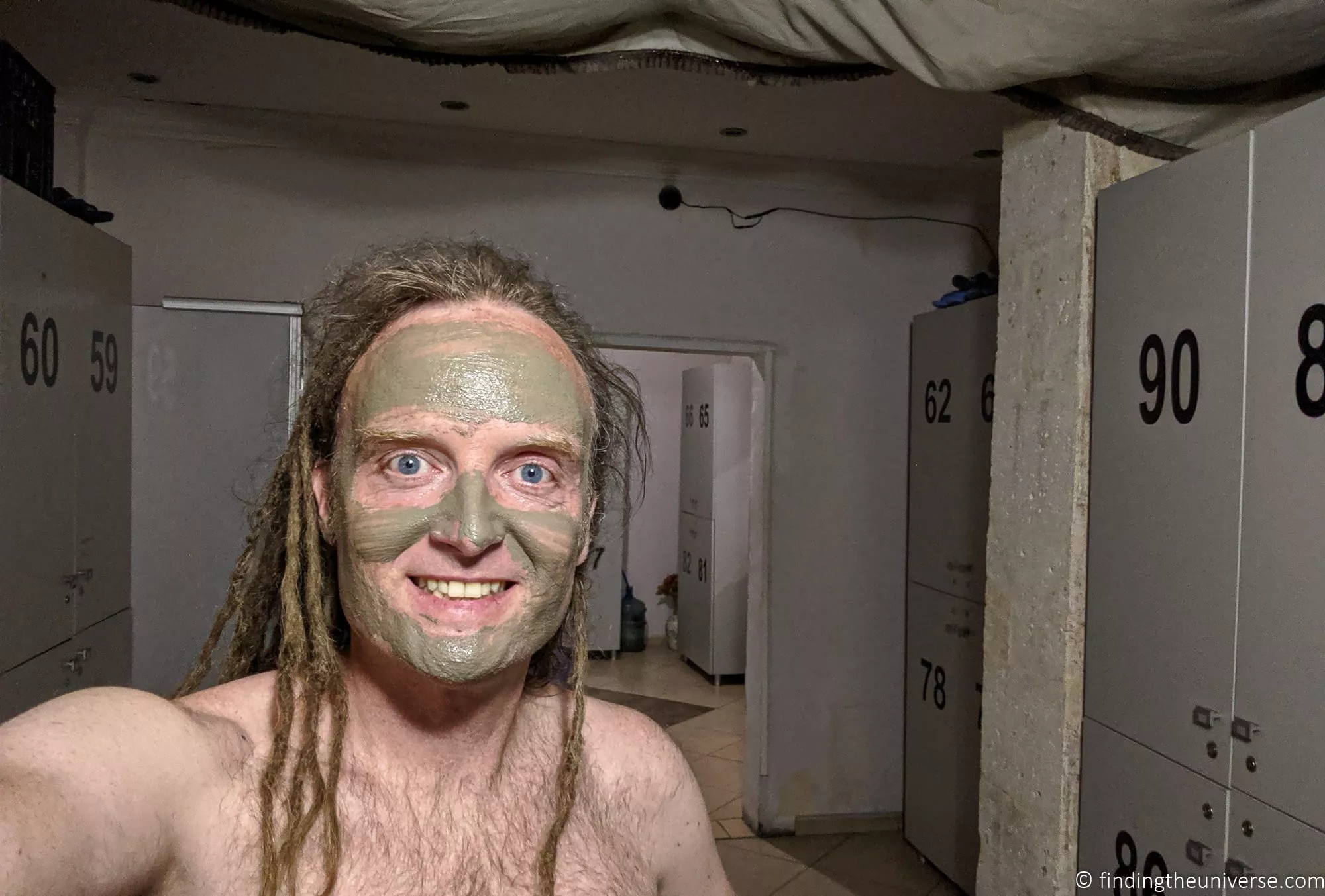
On one of my visits to Cappadocia I had a traditional hammam with a foam massage, which involves a Turkish-style massage accompanied by a frankly absurd quantity of soapy bubbles. I had no idea what to expect going in, and emerged about an hour later feeling like I’d been gently pummelled by a friendly cloud. Properly relaxing, and a fun experience after a long day of stomping around the valleys. The first ten minutes are slightly disorienting (the masseur communicated entirely through gestures and the occasional firm prod), but you settle into it quickly.
Other variations are available, including a traditional mud bath. You can book a foam massage in advance here, and a mud bath here.
Where to Eat in Cappadocia
The food in Cappadocia is a lot more interesting than the standard tourist-restaurant fare you might expect in such a heavily-visited region. Local specialities include testi kebab (meat slow-cooked in a sealed clay pot which is then dramatically broken at your table), manti (Turkish dumplings, often served with garlic yoghurt), and dried apricots from Malatya, which turn up in everything.
We don’t have a strong personal favourite to push from our visits, but the three places below come up consistently in recent reviews and food-focused travel writing on the region:
- Dibek Traditional Cookery (Göreme, casual lunch or dinner). Set inside a 475-year-old building with low cushion seating, this is the spot most often singled out for testi kebab. The kebab takes around three hours to slow-cook, so call ahead or order earlier in the day if you want it for dinner. Manti is also worth ordering here.
- Topdeck Cave Restaurant (Göreme, dinner). A small family-run cave restaurant in central Göreme, consistently recommended for testi kebab and a more atmospheric dinner setting. Reservations are sensible in high season as the dining room is small.
- Seten Restaurant (Göreme, nicer dinner). The pick if you fancy a slightly upscale evening. Garden setting, modern Anatolian cooking with a wider menu than the testi-kebab specialists, and a strong wine list. Reservations needed in season.
If you’re staying in a cave hotel, the in-house restaurant is often a perfectly decent dinner option, particularly at the upscale end where the food can be excellent. Don’t dismiss the obvious choice just because it’s the obvious choice.
Cappadocia Sightseeing Map
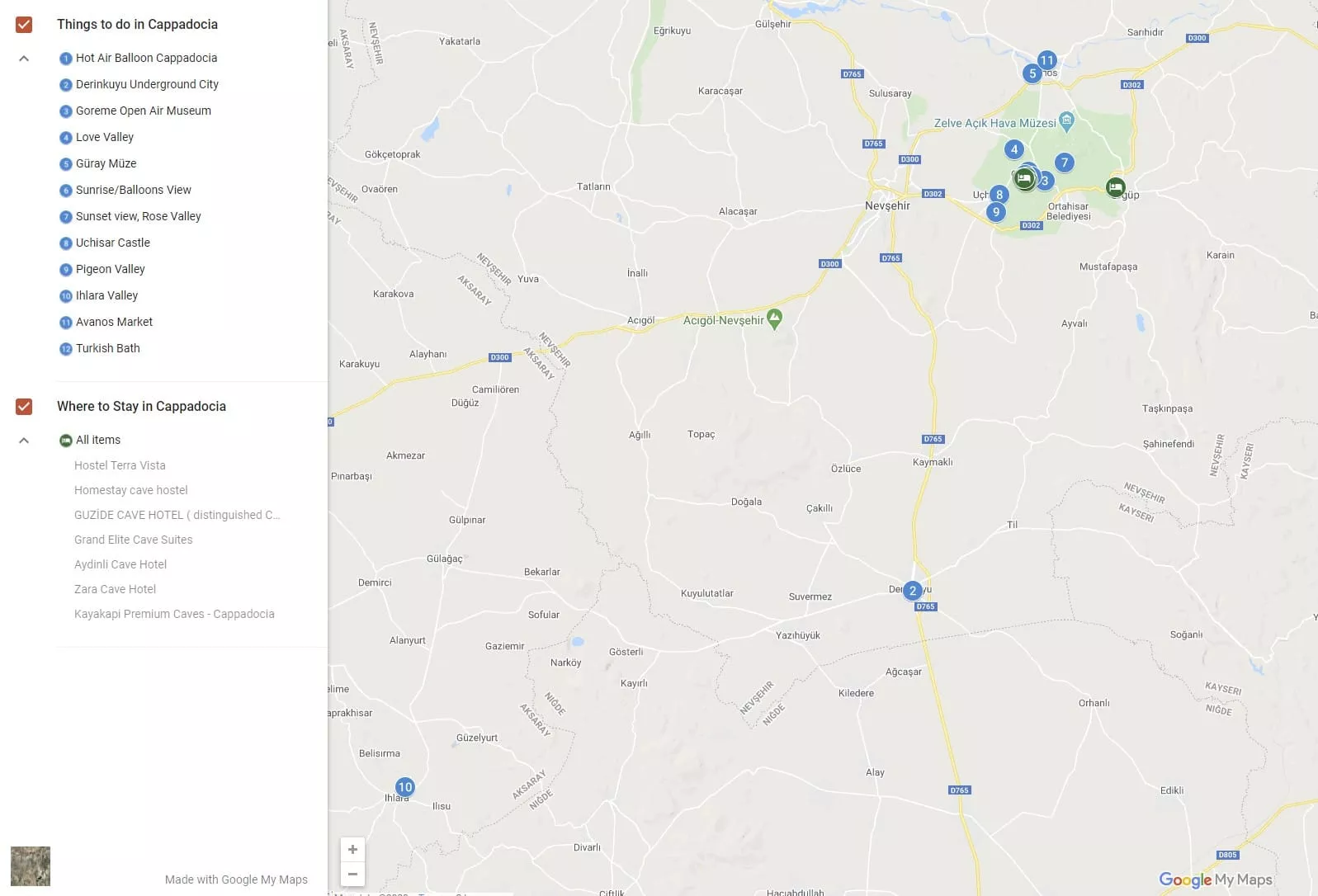
To help you visualise where the main highlights are, we’ve put together this map of things to do in Cappadocia. You can also see this map on Google Maps here.
How to Get Around Cappadocia
Cappadocia is a large region, and even though most highlights cluster in a smaller area, you’re still looking at up to an hour’s drive between some attractions. A few options for getting around.
Public bus. A reasonable bus network links most of the towns and gets you to many of the sights in this list.
Taxis. Widely available and not too expensive. Taxis should be metered, but you can also negotiate a fixed price for a specific route. For sunrise or sunset trips, arrange with the driver to come and collect you, or take their card so you can call when you’re done.
Hire car. The most flexible option. Roads are good and parking is rarely a problem outside the busiest tourist sites. Worth it if you’re staying more than two days.
Hop-on hop-off bus. Cappadocia has a hop on hop off bus that visits the major sights, though it doesn’t run all year, so check before relying on it.
Tours. Probably the easiest way to handle the logistics if you don’t want to drive. The next section covers tour options in detail.
Tours in Cappadocia
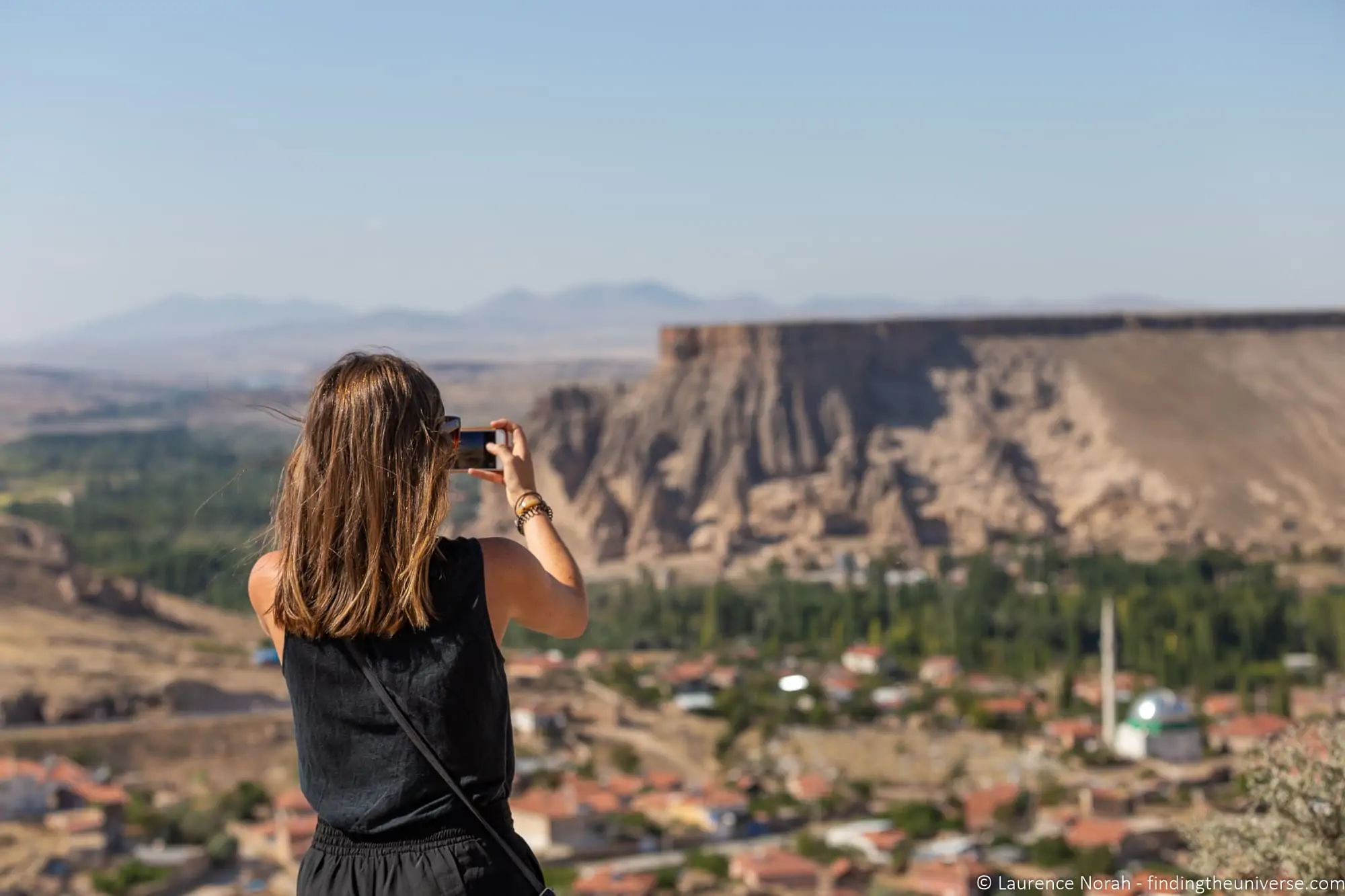
Cappadocia is well covered by tour operators, and the tours are competitively priced. If you don’t fancy organising transport, prefer some context from a guide, or simply want someone else to do the planning, a tour is a sensible option.
One thing we’ve found valuable about taking tours in Turkey, beyond the transport, is the access to an English-speaking guide. Some sites have limited English-language signage, and a good guide adds a lot of context.
When choosing a tour, read recent reviews and check exactly what’s included. Lunch and entry fees vary widely from one tour to the next, so the cheapest tour isn’t always the cheapest tour once you’ve added everything in.
Some tours worth considering:
- This full day tour includes a sunrise hot air balloon flight plus a guided day tour covering the Red and Green routes, around 12 hours in all. A solid all-in-one option.
- This full day small group Green Tour includes lunch and visits Derinkuyu Underground City, Ihlara Valley, Selime Monastery, and Göreme Valley. Group sizes are limited and entry fees plus hotel pickup are included.
- This is a good value 6.5 hour highlights tour covering Devrent Valley, Zelve Open Air Museum, Pasabag, Göreme Open Air Museum, and Pigeon Valley. Lunch and entry fees included.
- This full day Red and Green combined tour visits Göreme Open Air Museum, Pigeon Valley, Özkonak Underground City, Pasabag and Uçhisar Castle. Hotel pickup is included, entry fees and meals aren’t, and there’s a private option if you’d rather not share.
- This full day tour with trekking explores south Cappadocia and includes Derinkuyu Underground City, a walk through Ihlara Valley, and Pigeon Valley.
- If you’re interested in the local arts and crafts, this private Anatolian art tour focuses on the local handicrafts of the region, particularly in Avanos. It includes carpet weaving, pottery, Ebru (water marbling), and jewellery.
- For something more adrenaline-fuelled than hiking, this quad bike tour takes you through the Sword, Love and Rose valleys.
You can see more options on GetYourGuide.
Cappadocia Museum Pass
If you’re planning to visit several museums, the Cappadocia Museum Pass is worth a look. It’s a Ministry of Culture and Tourism product covering 13 attractions across the region, valid for three days. Included sites include Derinkuyu Underground City, Göreme Open Air Museum, and Nevşehir Museum. Worth running the maths if you’re planning to hit several of the included sites. You can buy it from the official website.
Where to Stay in Cappadocia
Cappadocia is a large region, but for your visit we’d recommend basing yourself in Göreme or one of the nearby towns: Uçhisar, Ortahisar, or Ürgüp. The hot air balloon flights mainly operate from Göreme, so being in or near Göreme means you’re well-positioned both for the flights and for watching the balloons drift overhead at sunrise.
These four towns also have the widest range of accommodation options and put you closest to the main attractions. The cave hotels listed above all sit in this area; here’s a quick recap:
- Kayakapi Premium Caves in Ürgüp. Upscale, our personal favourite from past stays.
- Homestay Cave Hostel, Göreme. Budget cave option with dormitory rooms.
- Guzide Cave Hotel, Göreme. Value cave hotel with en-suite rooms.
- Grand Elite Cave Suites, Göreme. Well-reviewed mid-range with outdoor pool.
- Aydinli Cave Hotel, Göreme. Strong rooftop terrace for balloon-watching.
- Zara Cave Hotel, Göreme. Well-reviewed across multiple budgets.
One reminder: when booking a cave hotel, double-check that the room you’re booking is actually a cave room. Many properties have a mix of cave and non-cave rooms, and the listing photos sometimes blur the distinction.
Frequently Asked Questions about Cappadocia
Is Cappadocia worth visiting?
Yes, for almost any traveller. The combination of the landscape, the underground cities, the cave hotels, and the hot air balloon experience is unlike anywhere else in the world, which is why it earns its place on most “wonders” lists.
The one caveat: it’s not a quick add-on. Getting there from anywhere outside Turkey takes most of a day, so you want to give it at least two full days on the ground, and ideally three or more, to make the journey worthwhile.
How many days do you need in Cappadocia?
Two days is the minimum to do the essentials (one balloon morning, the Göreme Open Air Museum, Uçhisar Castle, sunset viewpoint). Three days lets you add Derinkuyu Underground City and a hike or pottery visit. Five days is the sweet spot for properly seeing the region without rushing.
One important factor: balloon flights cancel for weather more often than you’d expect. Booking your first flight on day one of a multi-day stay means you have backup days if it gets cancelled, which materially improves your odds of actually getting up.
When is the best time to visit Cappadocia?
May, June, September and October are the sweet spot for warm weather and manageable crowds. July and August are hot (regularly above 30°C) and busy, with higher prices. November to February is cold (temperatures around freezing, possible snow), but the snow-covered fairy chimneys are beautiful if you’re prepared for the conditions.
March and April have the highest average wind speeds, which can ground balloon flights more often. If the balloon flight is the priority, the shoulder months either side of summer are your best bet.
How much does a hot air balloon ride in Cappadocia cost?
Prices vary a lot by season. Standard flights run roughly €80-€140 per person in winter, €150-€250 in shoulder months, and €250-€400+ in peak season (May-June, September-October). Premium small-basket and VIP flights cost more again, sometimes pushing €500-€600.
Compared to balloon flights elsewhere in the world, Cappadocia is reasonably priced for what you get. We’d suggest spending more for a reputable operator with good recent reviews rather than going for the cheapest available, given that you’re trusting them with an hour of your life floating several hundred metres up.
Do hot air balloons fly every day in Cappadocia?
No. Balloons only fly in good weather conditions, primarily light winds and good visibility. Flights get cancelled more often than visitors expect, particularly in winter and during the windier months of March and April. Even in the best season, weather cancellations happen.
The practical implication: book your flight for the first morning of your stay if at all possible. If it gets cancelled, you can rebook for a subsequent morning. If you book for the last morning of your stay and the weather doesn’t cooperate, that’s your one shot gone.
What is Cappadocia famous for?
Cappadocia is famous for two things above all: its surreal landscape of fairy chimneys and rock formations, and the daily sunrise hot air balloon flights that drift over them. Both are the result of geological accident: ancient volcanic ash hardened into soft rock that erosion has carved into the spires you see today, and the consistent gentle winds make the region one of the best places on Earth for ballooning.
Beyond those headline features, Cappadocia is also known for its cave hotels, its multiple underground cities (some descending dozens of metres below the surface), and its UNESCO-listed open air museums of rock-carved Byzantine churches with preserved frescoes.
Where should I stay in Cappadocia: Göreme or Uçhisar?
Göreme is the better default choice for most visitors. It’s the tourist hub with the widest range of accommodation across all budgets, the best access to the balloon launch sites, and the most restaurants and shops. If you’re staying in Cappadocia for the first time, stay in Göreme.
Uçhisar is the upscale alternative. It sits around the dramatic Uçhisar Castle and tends to attract a higher-end traveller, with more boutique cave hotels and slightly fewer crowds. It’s only a five-minute drive from Göreme, so you can still easily access everything in the region. Worth considering for a quieter, more luxurious base.
Further Reading
I hope you found this guide to things to do in Cappadocia useful. Some other Turkey content and general travel tips that might help you plan:
- We have a detailed 2 week Turkey itinerary covering the country’s main highlights, including 2 nights in Cappadocia.
- Our review of touring Turkey with Travel Talk if you’re interested in a guided tour that includes Cappadocia.
- Our 2 day Istanbul itinerary if you’ll be there as part of your trip.
- A guide to getting online when you travel, to help you stay connected.
- Guides to the best travel adapters, best travel shoes for men, and best travel shoes for women.
- Our guide to the best travel cameras for ideas on what to take to capture all those balloon shots.
- Some reading for the trip: The Lonely Planet Guide to Türkiye, Fodor’s Essential Turkey, and the DK Turkey Travel Guide.
That’s it from us. As always, if you have questions or feedback, the comments section below is the place. We’ll get back to you when we can.
Leave a Reply