
Istanbul is one of those cities I have visited multiple times and somehow still feel like I have barely scratched the surface. We have wandered through the Grand Bazaar (and got pleasantly lost, more than once), watched the sun go down over the Bosphorus from a ferry, and eaten our weight in baklava. We have also stood in the wrong queue at Topkapi Palace, arrived at the Blue Mosque ten minutes before noon prayers, and learned the hard way that Topkapi is closed on Tuesdays. Most of the practical advice in this guide comes from those mistakes.
Two days in Istanbul is enough time to see the headline sights without rushing, provided you plan around the closures and prayer times that catch most first-time visitors out. This guide covers what we would actually do with 48 hours in the city, in what order, with the timings that work, and the bits we would happily skip if we did not have unlimited bookmarking patience.
If you have more time and are continuing on through Turkey, this itinerary works well as the opening chapter of our 2-week Turkey itinerary.
Table of Contents:
Quick Take: Two Days in Istanbul
Before we get into the day-by-day plan, here is the short version.
Day 1 covers Sultanahmet: Blue Mosque, Hippodrome, Basilica Cistern, Hagia Sophia, lunch, Topkapi Palace, then a sunset cruise on the Bosphorus.
Day 2 covers the bazaars and Beyoğlu: Süleymaniye Mosque, Grand Bazaar, Spice Bazaar, lunch near the Galata Bridge, Galata Tower, then on to Dolmabahçe Palace and dinner with a view.
For accommodation, base yourself in Sultanahmet for a first-time visit. You will be walking distance to most of Day 1 and a short tram ride from Day 2.
The closures you have to plan around: Topkapi is closed Tuesdays, Dolmabahçe is closed Mondays, the Grand Bazaar and Spice Bazaar are closed Sundays, and Hagia Sophia is closed to tourists on Fridays between 12:00 and 14:30. If you can choose, arrive on a Wednesday or Thursday and you will avoid most of these.
Skip-the-line tickets earn their price difference in summer. If you are not sure where to book, see our guide to buying attraction tickets online. Hagia Sophia (€25), Topkapi Palace (2,750 TL), and the Basilica Cistern (1,950 TL) all have queues that can run 30 to 60 minutes in peak season. Booking online through GetYourGuide or Tiqets means you walk straight past the queue.
2 Days in Istanbul: A Day-by-Day Itinerary
The order below is what we would do as first-time visitors trying to see the canonical sights without spending half the trip queuing or arriving at a closed mosque during prayer time. It is built around the city’s actual rhythm rather than a generic listicle.
You can of course flip Day 1 and Day 2 if your arrival day requires it (more on that in the Pinch Points section near the end). The clock times below are based on a summer envelope of roughly 9am to 9pm. In winter, when sunset falls around 4:30pm, you will want to start Day 1 cruise earlier and may end up doing dinner instead of an evening cruise.
Istanbul Itinerary Day 1: Sultanahmet’s Greatest Hits
Day 1 takes you through Sultanahmet, the historic core where Constantinople’s Byzantine and Ottoman histories pile up on top of each other. Most of these sights are within a few minutes walk of one another, which is fortunate because you will need every minute.
If you would rather not handle the timing and ticket logistics yourself, a small-group walking tour like this Topkapi, Hagia Sophia and Basilica Cistern tour covers the three big-ticket sights with skip-the-line entry, which saves a lot of standing-around time. We have done it both ways, with a guide and on our own, and a guide makes a real difference at Topkapi in particular, where the signage is patchy.
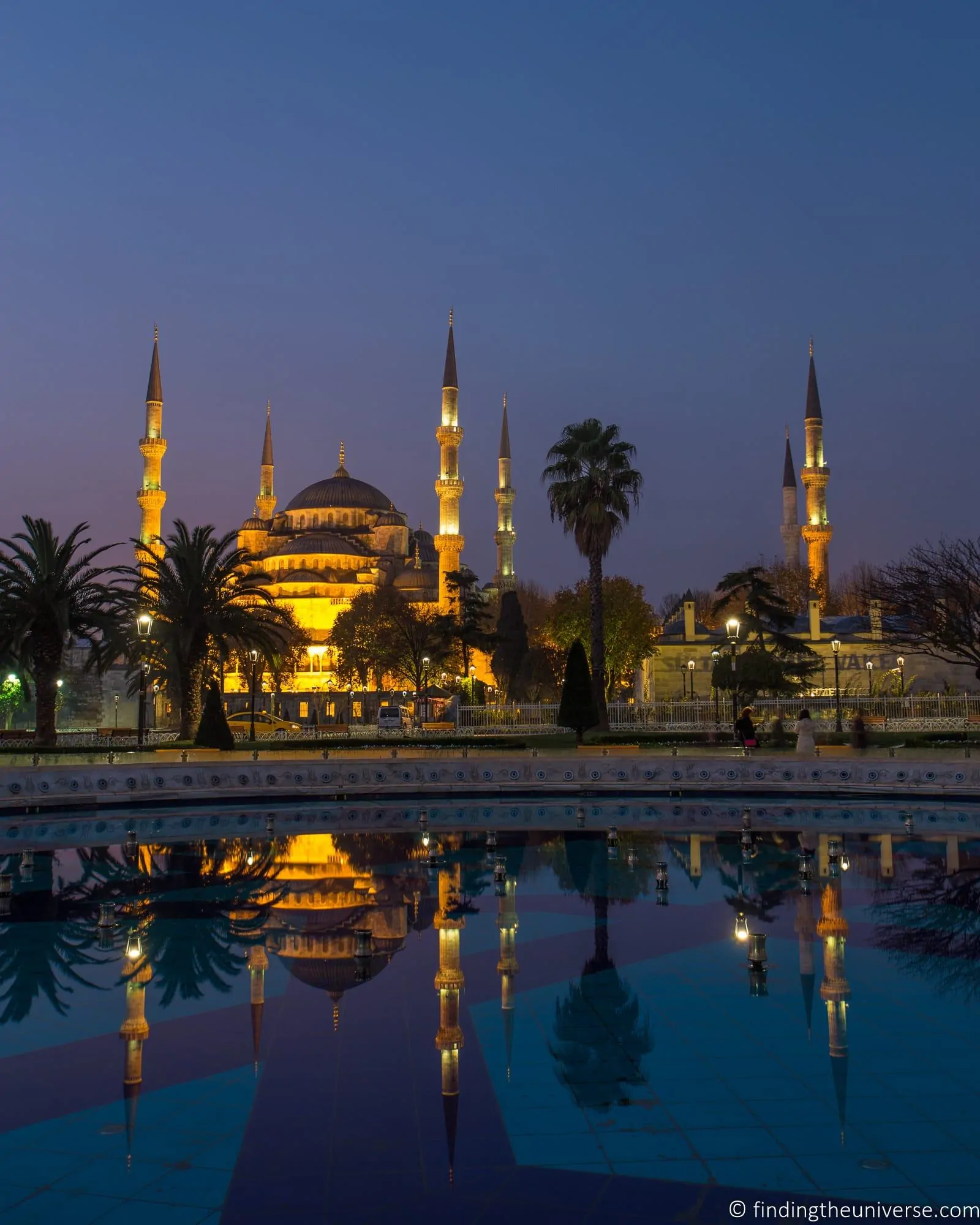
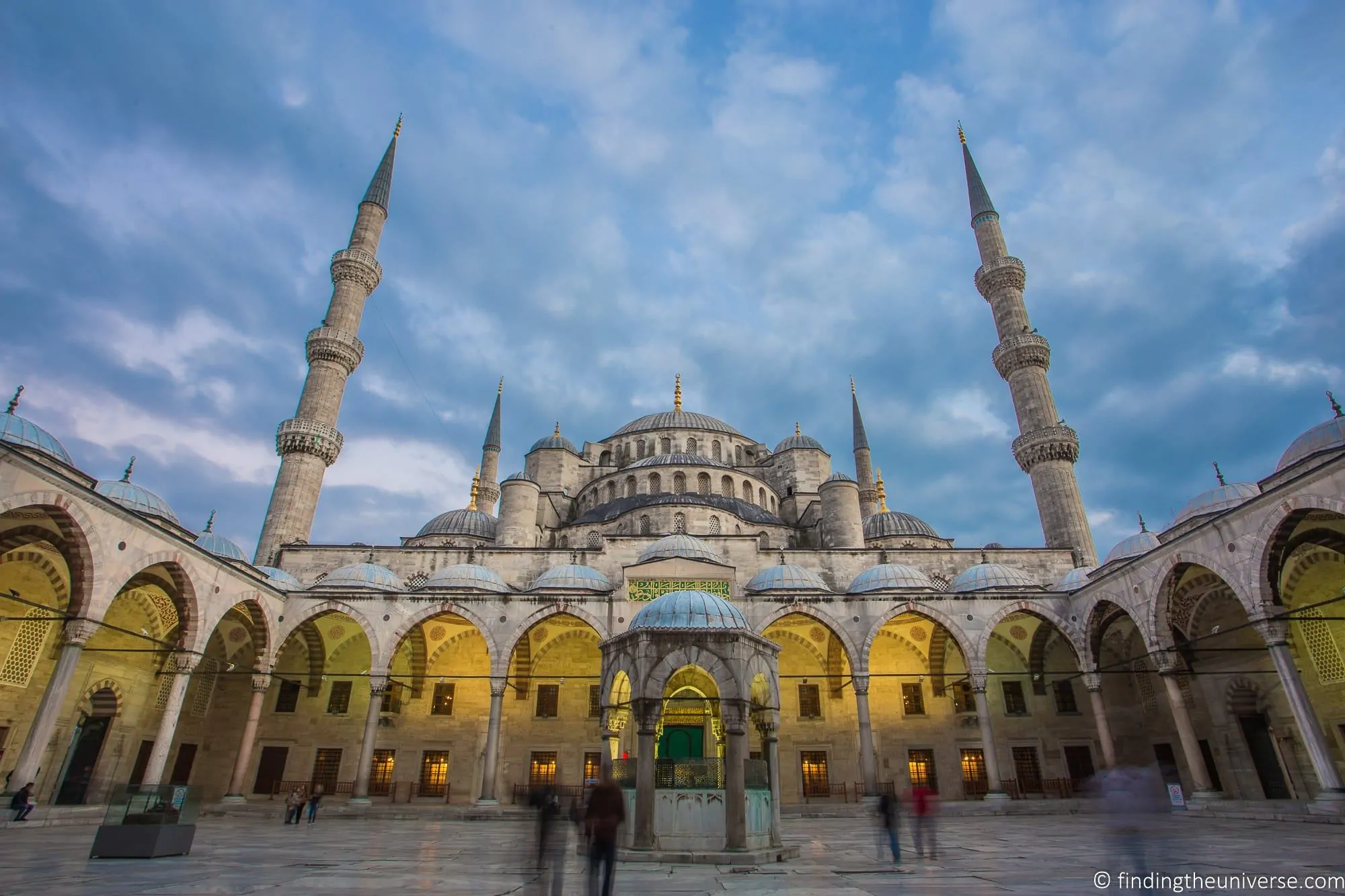
9:00am: Sultan Ahmed Mosque (The Blue Mosque)
We are starting at the Blue Mosque first thing for one specific reason: the noon call to prayer at 11:30am closes it to tourists for ninety minutes. Get in early and you will not have to come back.
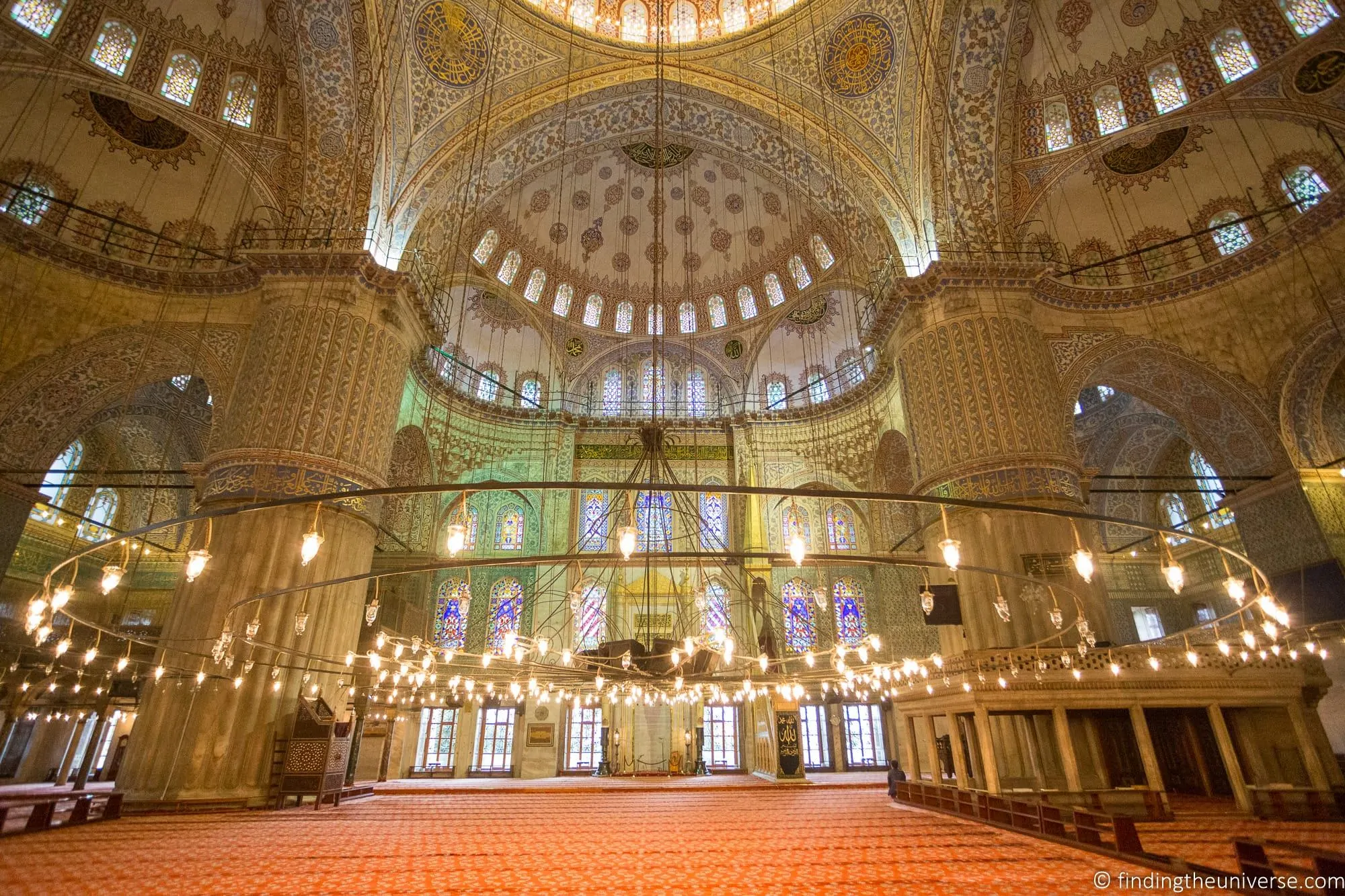
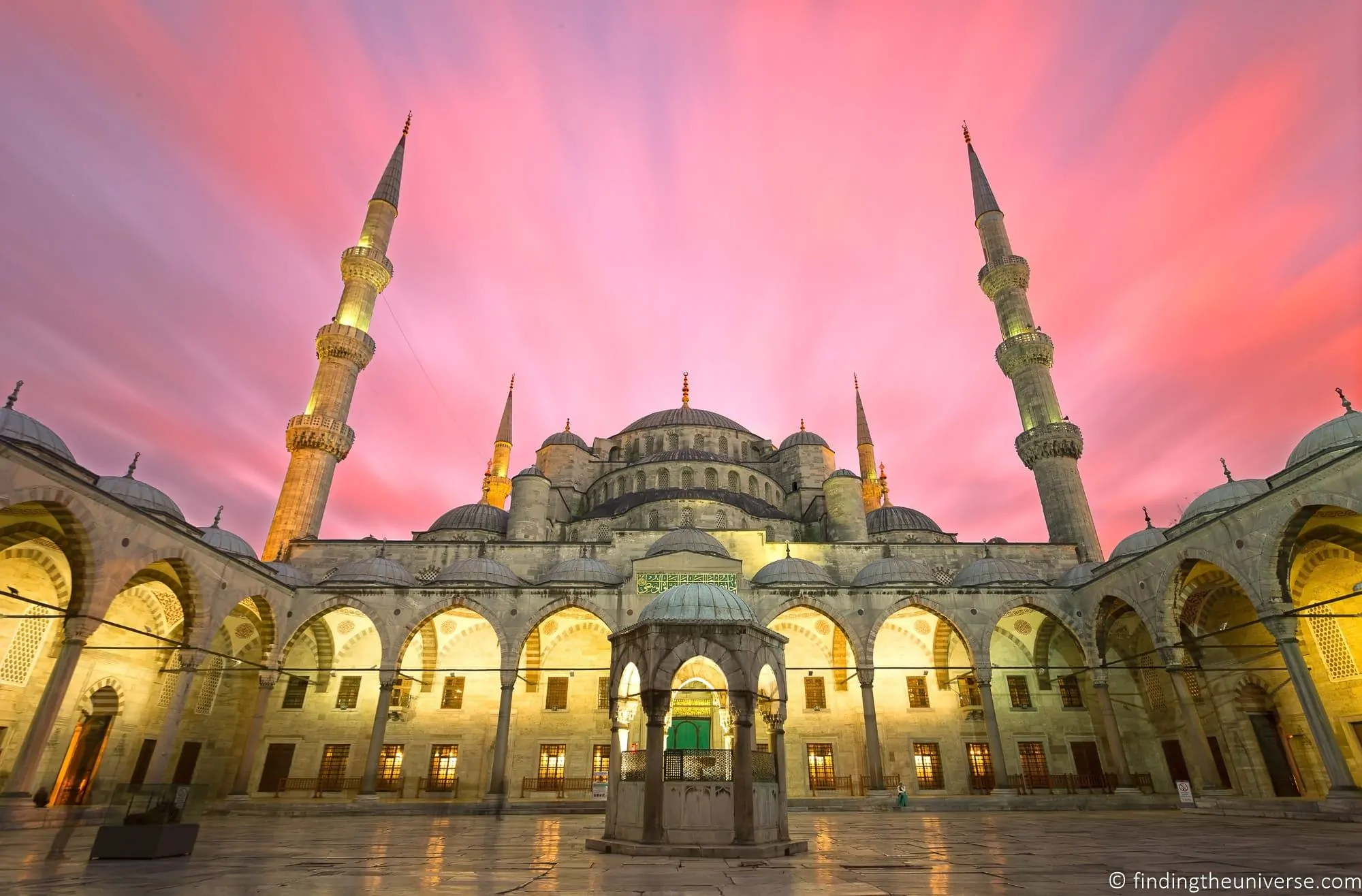
The mosque was built between 1609 and 1617 under Sultan Ahmed I, and the popular name comes from the more than 20,000 hand-painted Iznik tiles covering the lower walls. They are blue, predominantly, although the tiles also include greens, turquoises and reds in floral and geometric patterns. The number of minarets, six, was controversial at the time of construction because the Sacred Mosque in Mecca also had six. The story goes that Ahmed I funded the addition of a seventh minaret in Mecca to resolve the issue.
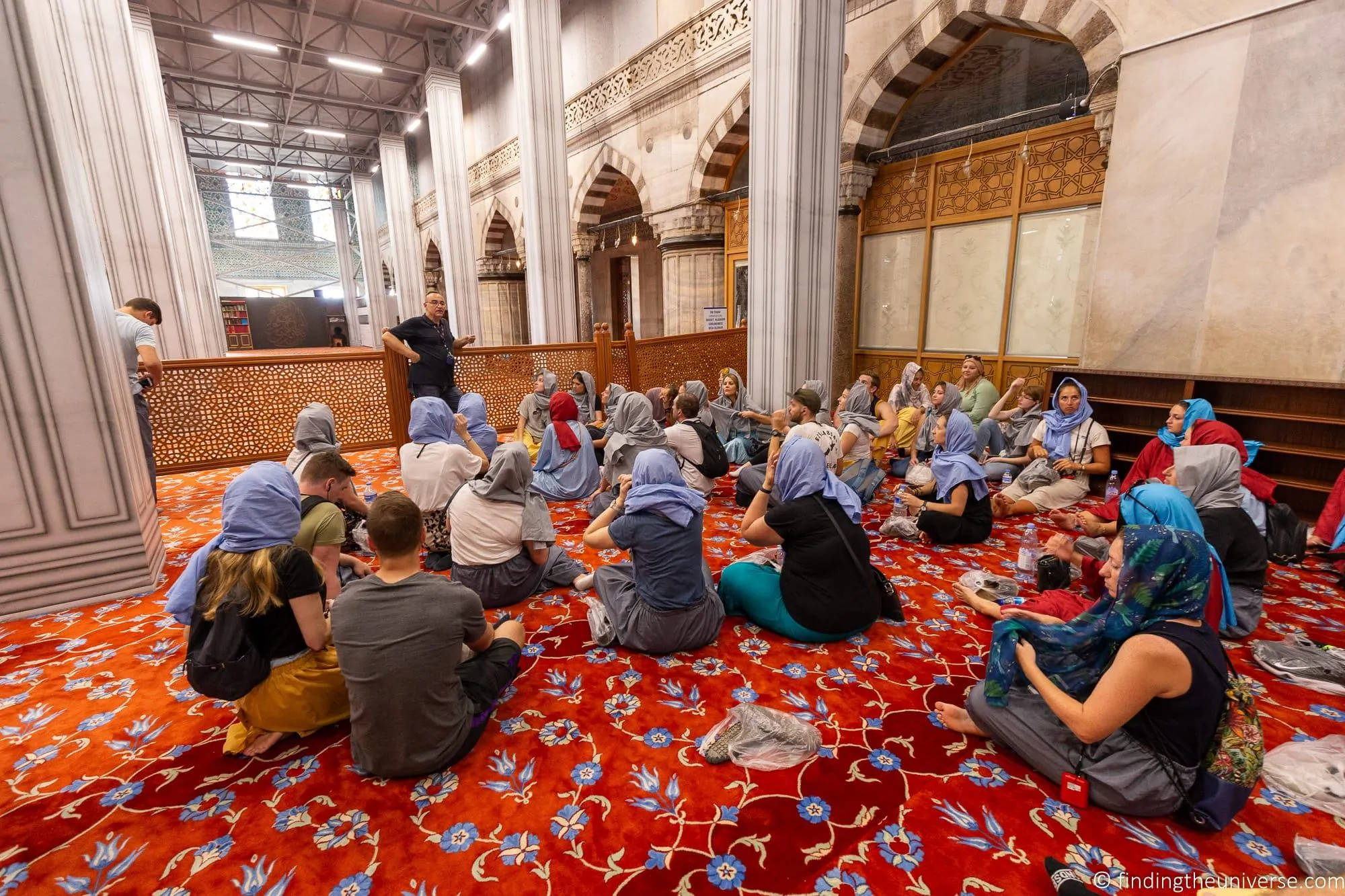
This is an active mosque, so the dress code is enforced. Men need to cover legs and shoulders, women need to cover hair, shoulders, arms and legs. If you turn up in shorts you will be issued a robe at the entrance, but it speeds things up to have your own coverings. Shoes come off before you enter (you will be given a plastic bag to carry them in).
Flash photography is not permitted (see our guide to turning off your camera flash if you are not sure how on your phone or camera), and photographing people praying is rude. Entry is free.
The mosque is generally open to non-Muslim visitors between prayer times, so roughly 8:30–11:30am, 1:00–2:30pm, and 3:30–4:45pm. On Fridays the noon prayer extends to about 15:30. Plan accordingly. Five-minute walk to Hippodrome.
9:50am: Hippodrome of Constantinople
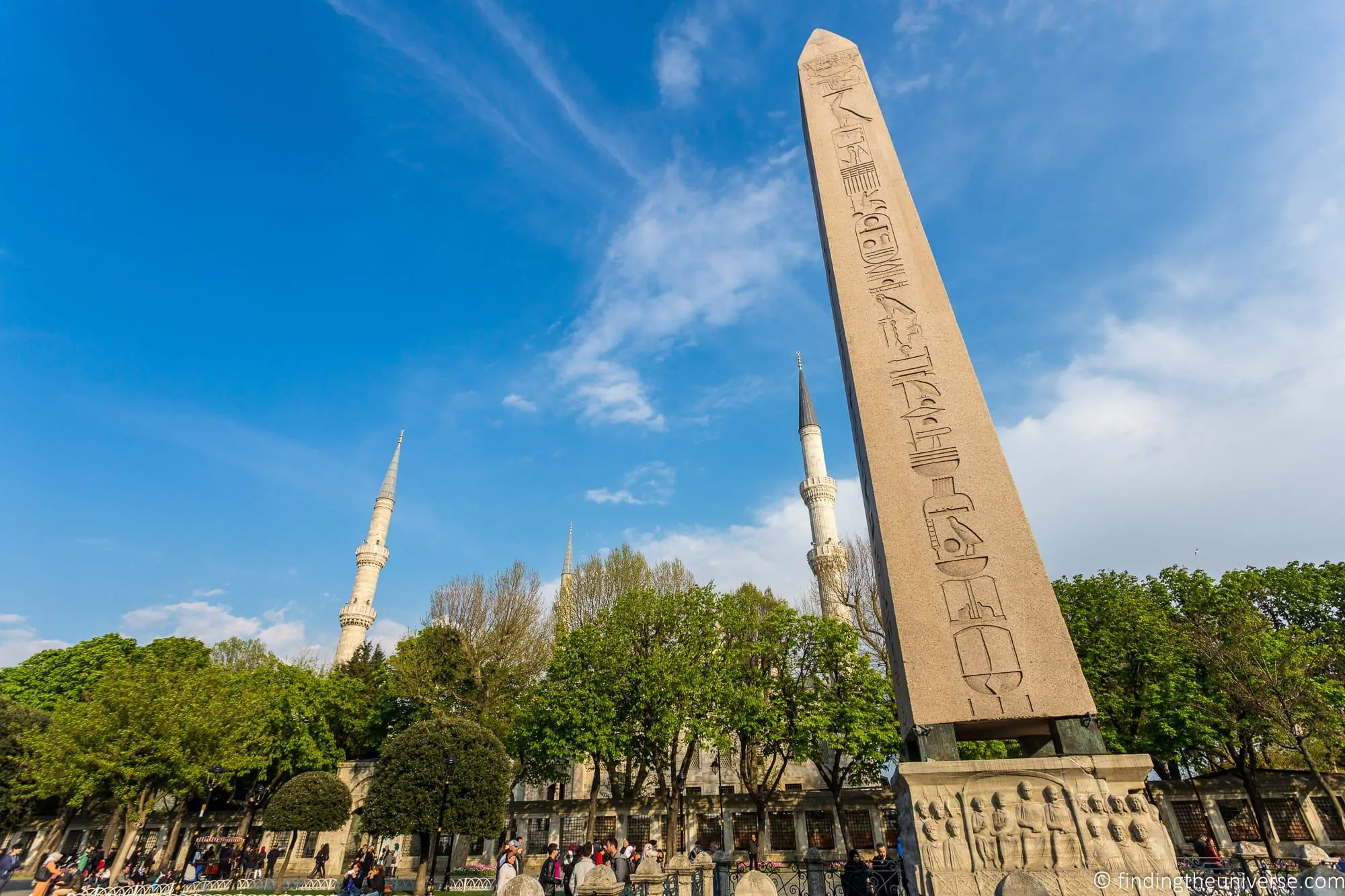
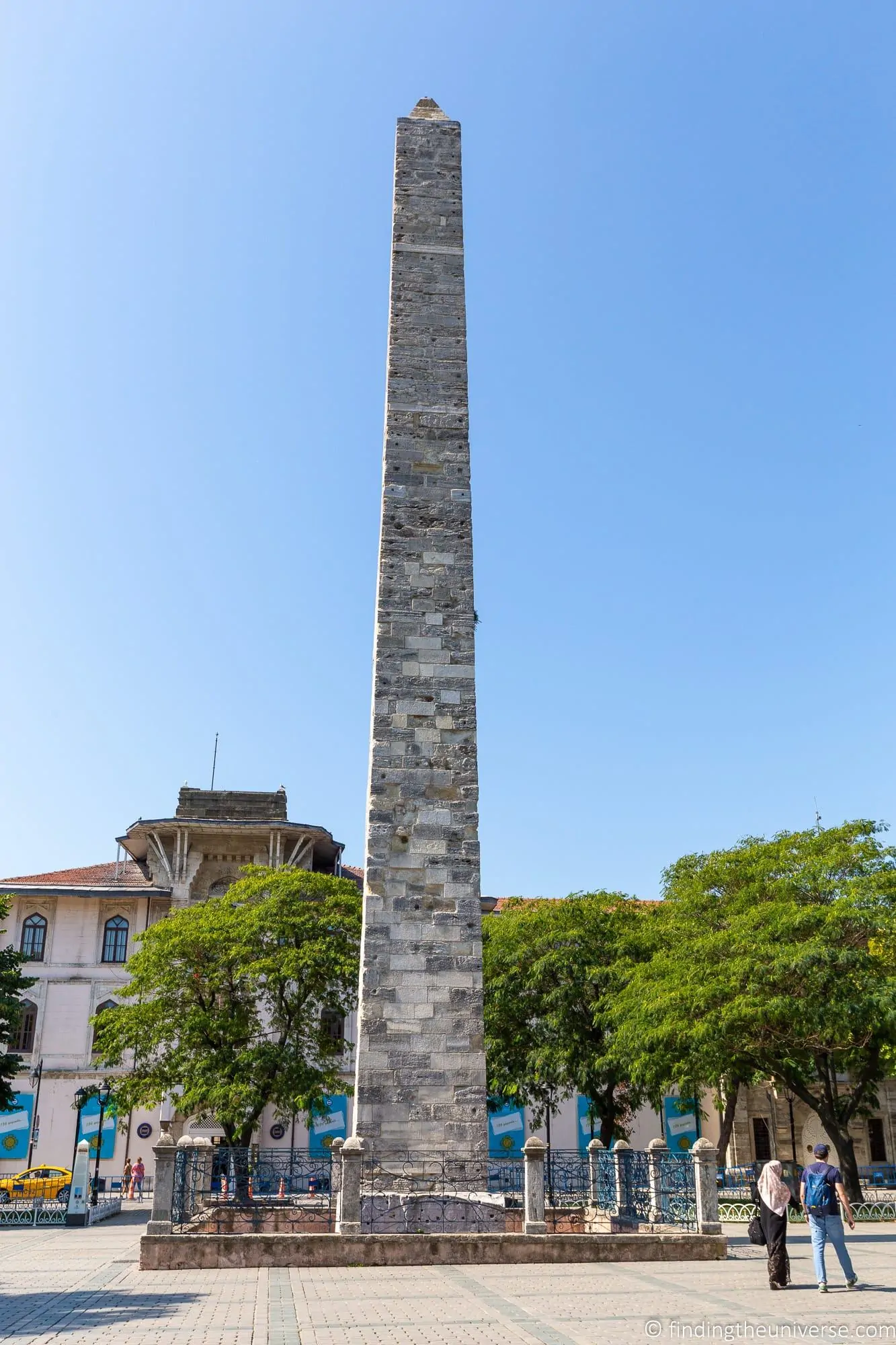
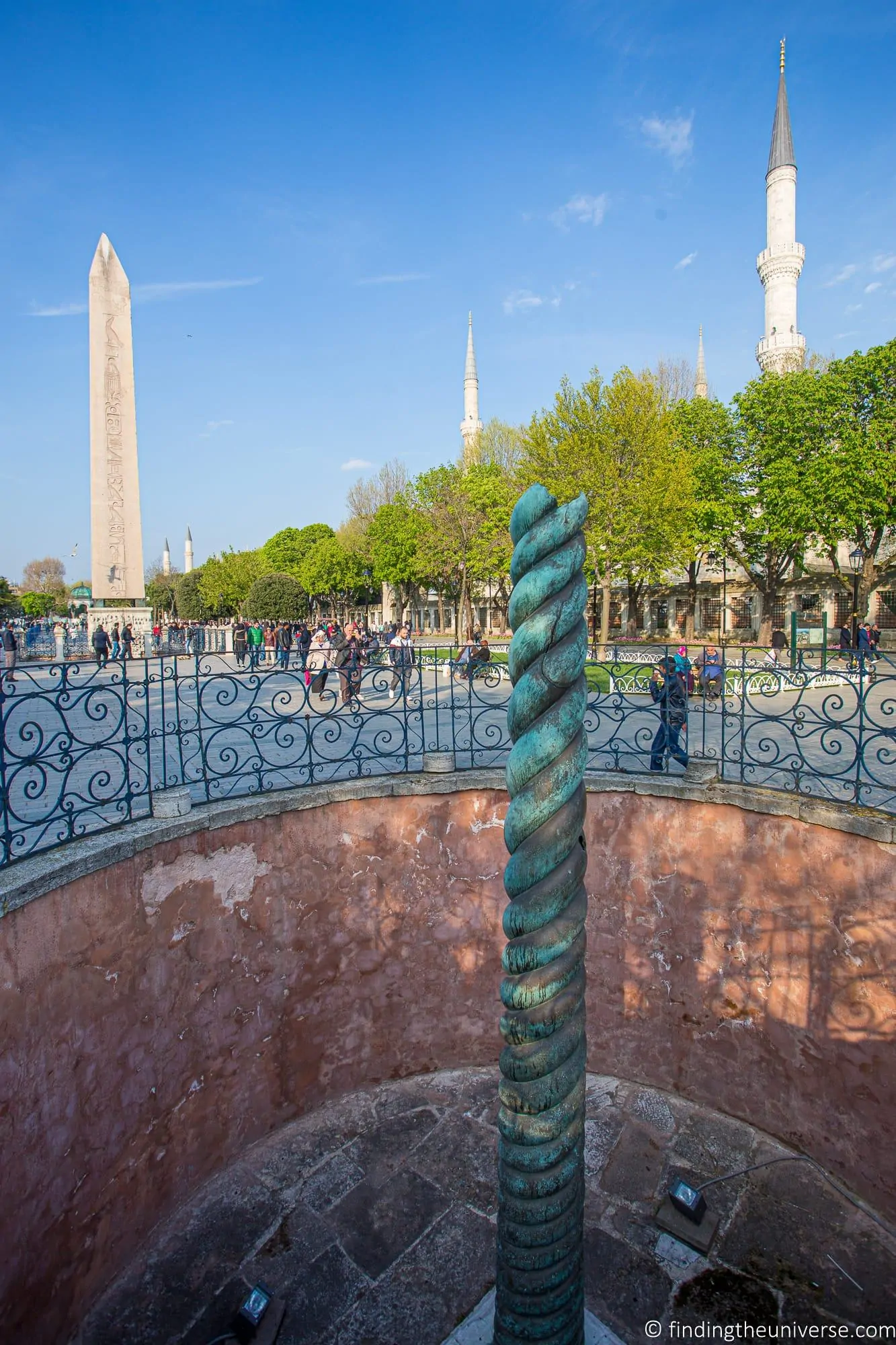
Right outside the Blue Mosque you are standing on what used to be the Hippodrome of Constantinople, a Roman chariot-racing arena that could hold around 100,000 spectators. The arena itself is gone, but three of its monuments are still here, lined up along what used to be the central spina.
The most striking is the Obelisk of Theodosius, an Ancient Egyptian obelisk that originally stood at the temple of Karnak in Luxor, carved during the reign of Pharaoh Thutmose III between 1479 and 1425 BC. Roman emperor Theodosius I had it moved to Constantinople in 390 AD. It is around 3,500 years old and looks remarkably crisp for its age, partly because it has been here longer than it spent in Egypt.
About thirty paces away is the Walled Obelisk, also called the Constantine Obelisk after Constantine VII Porphyrogenitus, who restored it in the 10th century. He clad it in gilded bronze plaques depicting the military victories of his grandfather Basil I. Those plaques were stripped and melted down by the Fourth Crusade in 1204, which is why the obelisk now looks rough rather than gilded. The bronze, apparently, made coins.
Between the two obelisks is the Serpent Column, which is the oldest of the three. It dates from 478 BC and originally stood at the sanctuary of Apollo at Delphi, where it commemorated the Greek victory over the Persians at the Battle of Plataea. Constantine the Great brought it to Constantinople in 324 AD as part of his programme of importing Greek and Roman antiquities to dignify his new capital. It once had three intertwined bronze serpents at the top supporting a golden tripod. The tripod is gone (melted down centuries ago), the serpent heads are gone (one is in the Istanbul Archaeology Museums), and what remains is the lower coil. It is still over 2,500 years old, though, and it is sitting outside in the open air. That alone is worth a few minutes.
All three monuments are free and outdoors. Five-minute walk to the Basilica Cistern.
10:20am: Basilica Cistern
The Basilica Cistern is one of my favourite spots in Istanbul, even though I appreciate that the description, “an underground water tank”, is not the most compelling sales pitch.
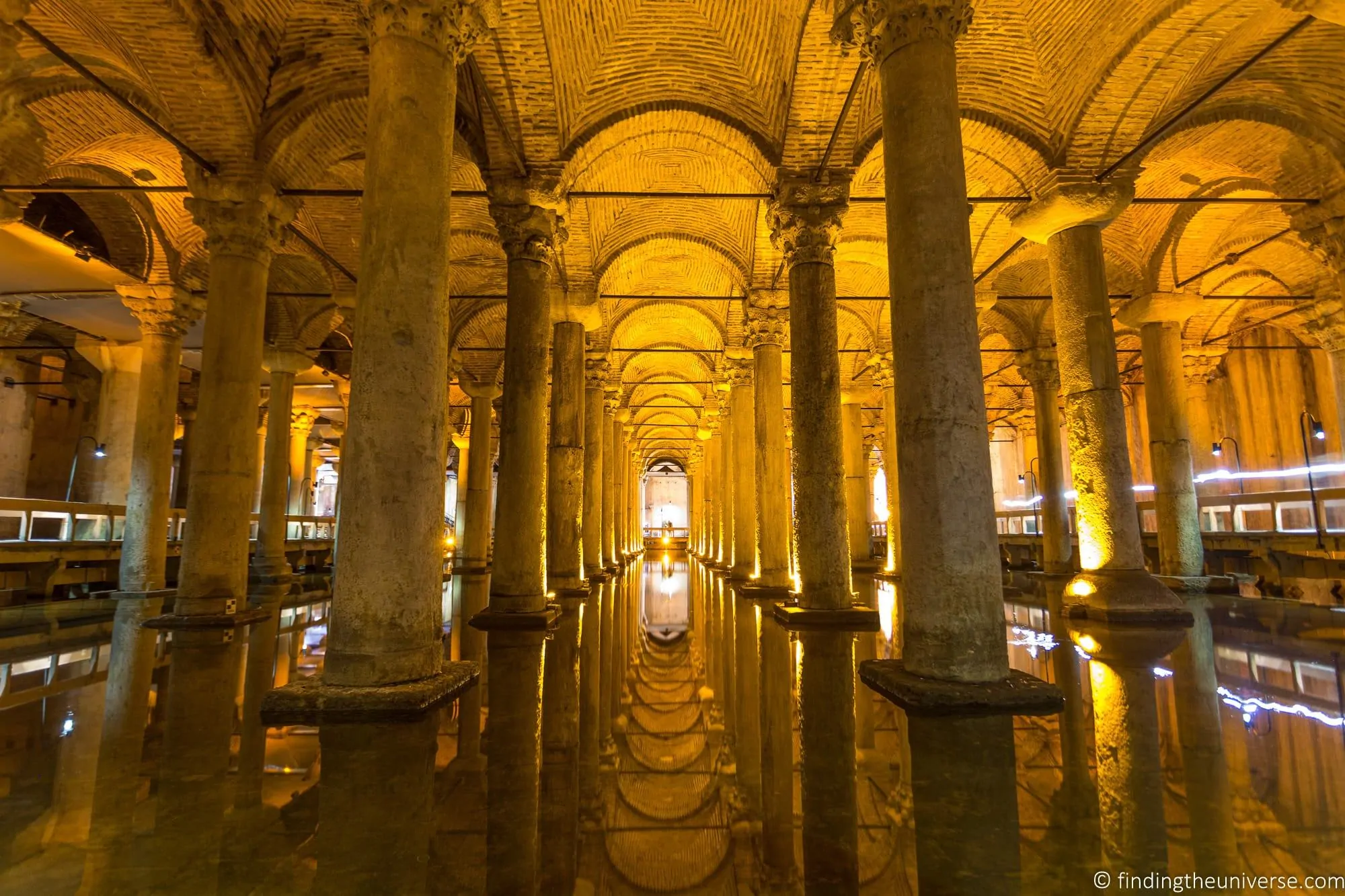
Construction began in 532 AD on the orders of Emperor Justinian I, immediately after the Nika Riots had levelled much of central Constantinople. The cistern was finished by 542 and supplied the Great Palace and surrounding buildings with filtered water from the Belgrade Forest, transported via the Valens Aqueduct nineteen kilometres away. The space is roughly 138 by 65 metres, holds 80,000 cubic metres of water, and is supported by 336 nine-metre marble columns arranged in twelve rows of twenty-eight.
A lot of the columns were recycled from older Roman buildings, which is why they do not match. Two of them have carved Medusa heads at their bases. One head is upside down, the other is on its side, and nobody is entirely sure why. The most popular theory is that the orientations were chosen to neutralise her petrifying gaze. The less romantic theory is that the masons just used whatever stone was the right size.
Today the water is kept shallow so visitors can walk through on raised platforms. The lighting is theatrical (some would say overdone), the still water creates beautiful reflections of the columns, and there are sometimes carp swimming around. The James Bond film From Russia with Love shot a scene here in 1963, as did the Dan Brown adaptation Inferno more recently.
Entry is 1,950 TL for foreign visitors, daytime (09:00–18:30). The Museum Pass Istanbul is not valid here. There is also a “Night Shift” between 19:30 and 22:00 which costs 3,000 TL and sometimes includes live music or art installations, but this is not on the regular itinerary. Allow 30–45 minutes for the visit. Book skip-the-line tickets here on Tiqets if visiting in summer.
Five-minute walk to the Hagia Sophia tourist entrance.
11:10am: Hagia Sophia
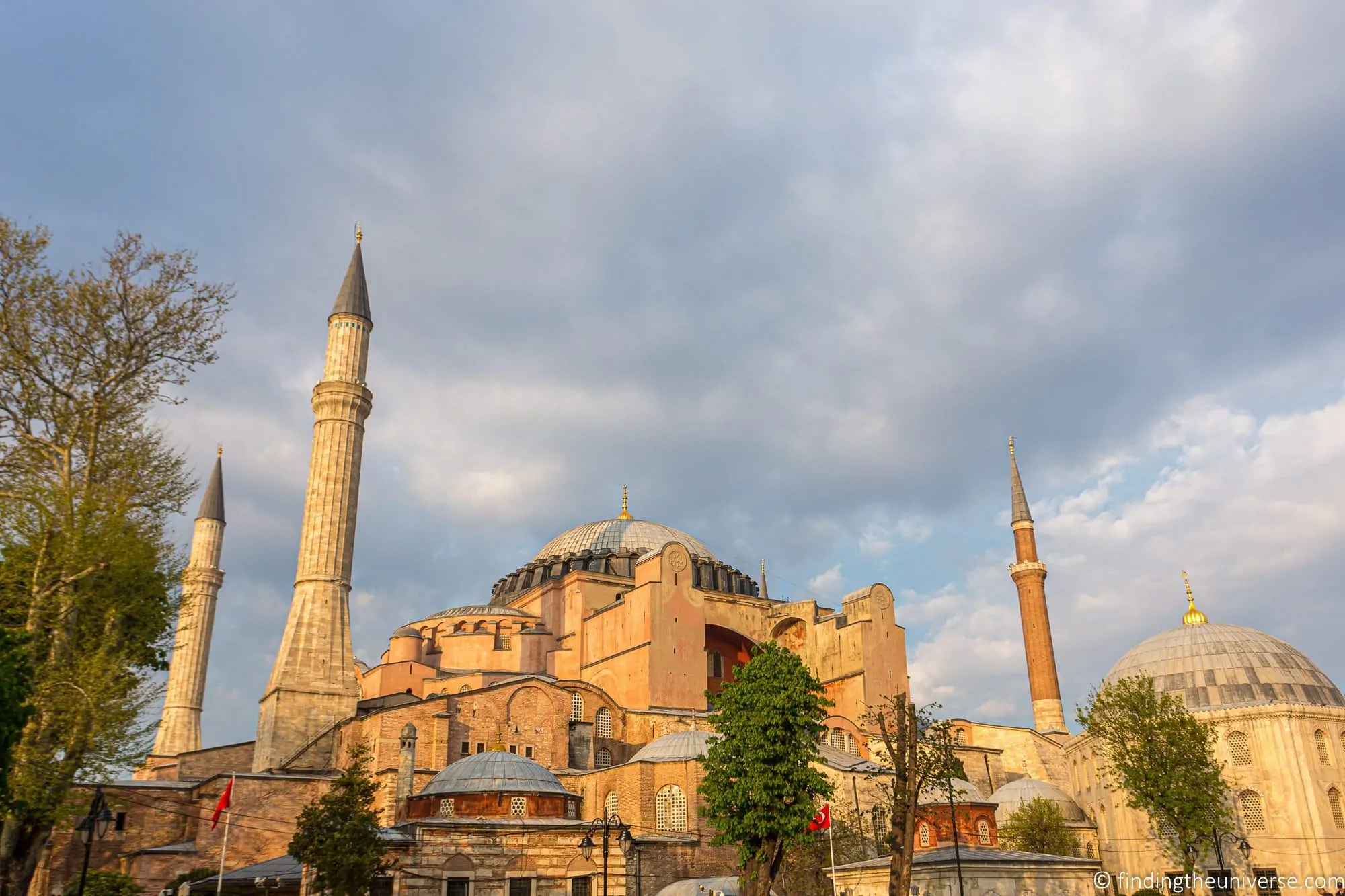
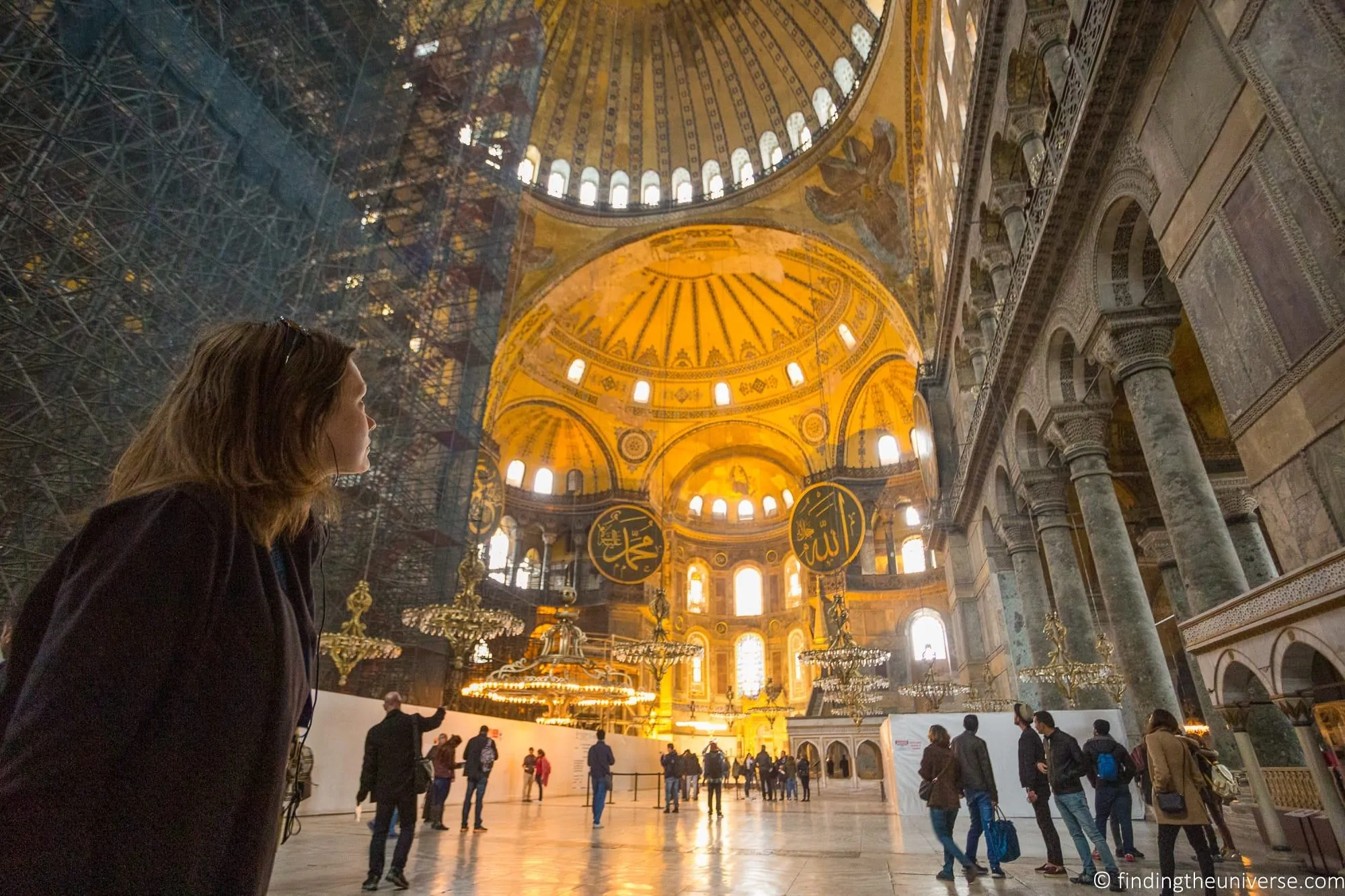
The Hagia Sophia is across the square from the Blue Mosque, but the tourist entrance is not where you might expect. Since 2024, when a €25 entry fee was introduced for foreign tourists, tourists enter through a separate door on the northeast side of the building, facing the Bosphorus. The southwest gate facing Sultanahmet Square is for worshippers only.
I should be upfront here. Although Jess and I have visited the Hagia Sophia multiple times, the most recent visit pre-dates the 2024 entrance reorganisation. The practical detail below is from current official sources rather than firsthand recent experience.
What you need to know:
Tourists now access the upper galleries only. The ground floor (the main prayer hall) is reserved for Muslim worship. The upper galleries are where most of the famous Byzantine mosaics are anyway, including the Deësis Mosaic, the Empress Zoe Mosaic, and the Comnenus Mosaic, so you are not really losing the headline content.
The current structure was completed in 537 AD under Justinian I, designed by Anthemius of Tralles and Isidore of Miletus. It was the largest cathedral in the world for nearly a thousand years and served as the seat of the Patriarch of Constantinople. After the Ottoman conquest in 1453 it was converted to a mosque, then to a museum in 1935 under Atatürk, then back to a mosque in 2020. The 2024 changes added the tourist fee and the upper-gallery-only access.
Opening hours are 09:00 to 19:00 daily, with last entry around 18:30. Closed to tourists on Fridays between 12:00 and 14:30 for congregational prayers. Brief closures also happen during the other four daily prayer times (typically 20–45 minutes each). Allow about 45 minutes to an hour. The Museum Pass Istanbul is not valid.
If you would like a guide to help you understand what you are seeing (recommended, the mosaics are worth the context), this guided tour with skip-the-line entry works well, or there is an audio guide ticket option if you would rather go at your own pace.
Modest dress is required, including head covering for women. There are robes and headscarves available at the entrance, but they cost a few lira and create a pinch point in the queue, so come prepared if you can.
12:00pm: Lunch in Sultanahmet
You have been on your feet for three hours and you have an afternoon at Topkapi ahead. Sit down somewhere and eat something. There are dozens of restaurants in the streets behind the Blue Mosque (Akbıyık Caddesi has a particular concentration), and prices in this area are tourist-inflated but not unreasonable.
If you fancy a proper Turkish lunch, look for a lokanta (a casual canteen-style restaurant where the food is already cooked and displayed). You point at what you want, they serve it. Lentil soup (mercimek çorbası), stuffed grape leaves (yaprak sarma), and pide (a kind of Turkish flatbread, often topped) are all good calls. Allow about an hour. You will need it.
1:00pm: Topkapi Palace
Topkapi Palace is a five-minute walk from the Hagia Sophia. The Imperial Gate (Bâb-ı Hümâyun) is right behind the Hagia Sophia courtyard.
This is a big one. Topkapi was the primary residence of the Ottoman Sultans from the late 15th century until 1856, when Sultan Abdülmecid I moved the imperial seat to Dolmabahçe. The palace covers around 700,000 square metres on the headland called Sarayburnu, between the Bosphorus and the Sea of Marmara. It is enclosed by the Sur-ı Sultani walls, which run for about 1.4km on the landward side, with Byzantine walls completing the perimeter on the seaward side.
Unlike European palaces with grand corridors connecting state rooms, Topkapi is a series of courtyards and pavilions arranged around gardens. You walk through them in sequence, more like a small walled town than a building. At its peak, the palace fed around 4,000 people daily, with a kitchen staff of more than 800 to keep them fed.
Things you should make time for:
The Imperial Treasury, in the third courtyard, holds the Topkapi Dagger and the Spoonmaker’s Diamond among other absurd Ottoman valuables. The Sacred Relics chamber, also in the third courtyard, holds objects associated with the Prophet Muhammad and is approached with the reverence you would expect. The Imperial Council Chamber in the second courtyard is where the Ottoman Empire’s day-to-day government happened. The Harem (separate ticket included in the new combined ticket since 2026) is the part of the palace where the Sultan’s family actually lived, and is worth the time, with rooms tiled in some of the most beautiful Iznik work you will see anywhere.
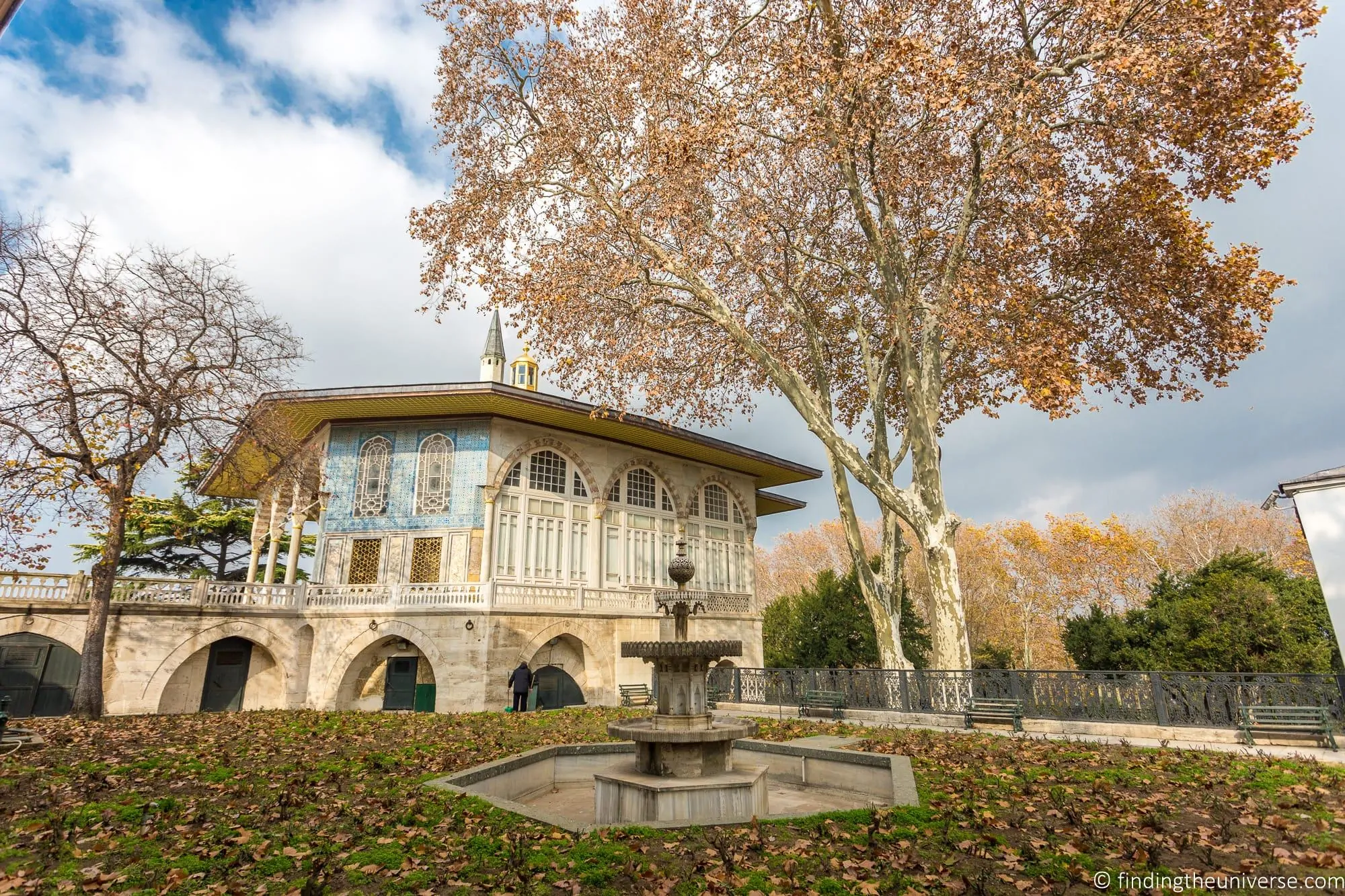
The terraces in the fourth courtyard, particularly around the Baghdad Pavilion, give you panoramic views over the Golden Horn and across to Galata and the Beyoğlu hills. Worth the walk to the back even if you are running short on time.
As of January 2026, the Topkapi entry fee is 2,750 TL for foreign visitors. This is a combined ticket that includes the main palace, the Harem, and Hagia Irene (the early Christian church in the first courtyard). Previously these were separate tickets. The Museum Pass Istanbul is valid for the main palace section but not for the Harem and Hagia Irene at the door, although the new combined ticket bundles them.
Open 09:00 to 17:00, last entry 16:30. Closed on Tuesdays. Allow 2 to 3 hours minimum. Photography is permitted in most areas except the Sacred Relics chamber, which is strictly no-photos. Flash is not permitted anywhere inside.
Skip-the-line tickets via Tiqets are worth the extra few euros if you are visiting in peak season. Or take a guided tour, which makes a real difference here because the signage is sparse.
3:30pm: Tea Break and Walk Back Through Sultanahmet
You will want to sit down for a few minutes after Topkapi. There are dozens of cafés in the Sultanahmet area serving Turkish tea (çay) and Turkish coffee. The strong stuff in small cups, served black with the grounds settling at the bottom. If you have not had a Turkish coffee yet, this is your moment.
The walk back through Sultanahmet to the tram takes about ten minutes.
4:30pm: Bosphorus Sunset Cruise
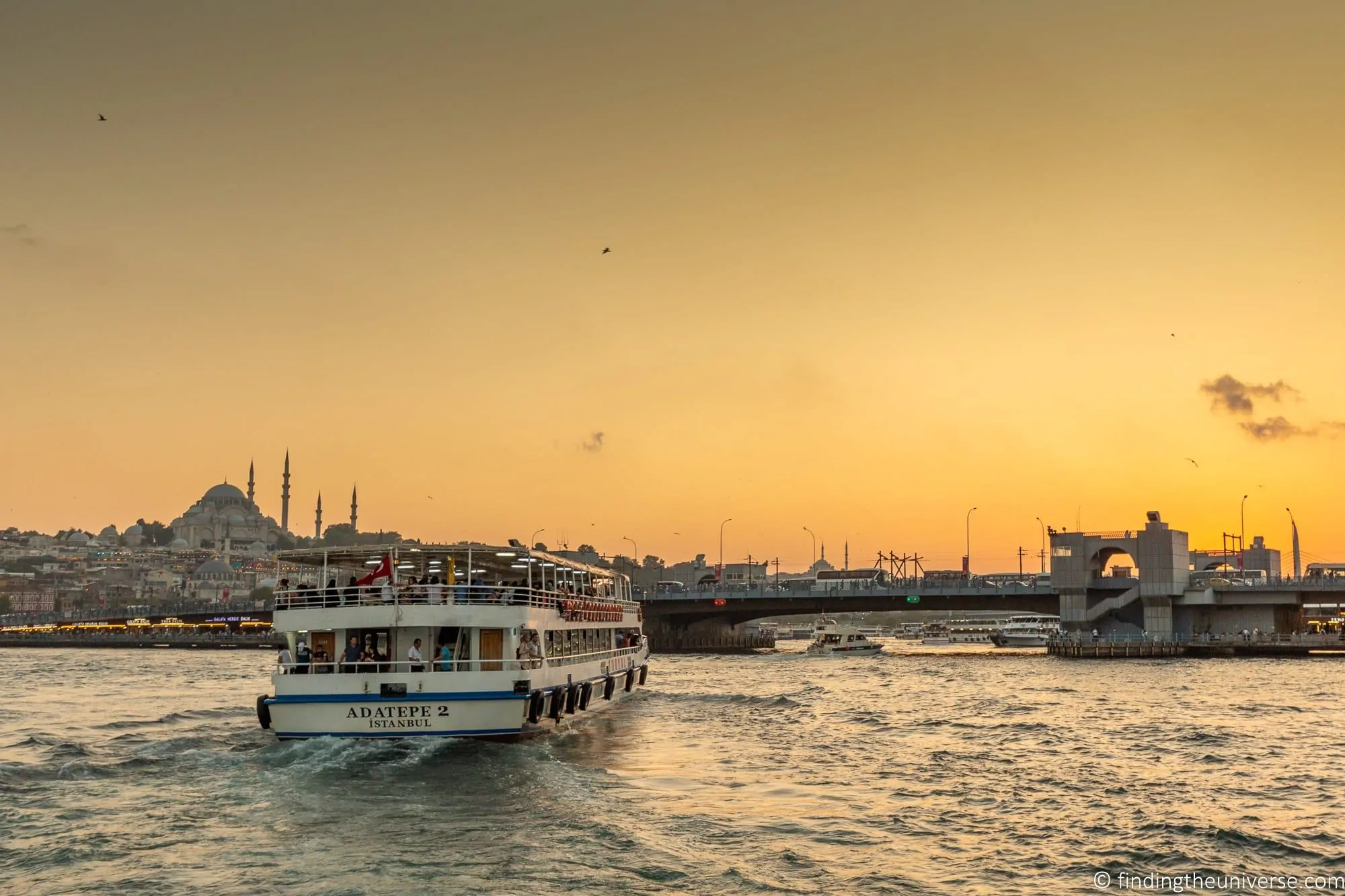
The Bosphorus is the strait that separates Europe from Asia, and one of the easier ways to spend a couple of hours in Istanbul without thinking too hard is to be on a boat in it. Boats leave from Eminönü pier (T1 tram from Sultanahmet, three stops, about ten minutes).
Public ferries run by Şehir Hatları are the cheapest option, but for the sunset cruise specifically we would book in advance because the timing matters. This Bosphorus dinner cruise with live entertainment includes dinner and a Turkish night show, which means you can roll dinner and the cruise together and not have to think about restaurants. A shorter Turkish night cruise is the option without dinner.
In summer, sunset is around 8:30pm, so a 6pm cruise gives you golden light along the European shore palaces (Dolmabahçe, Çırağan, Yıldız) before sunset over the Princes’ Islands. In winter, sunset is around 4:30pm, so you would want a 3:00–4:00pm cruise instead, or take a daytime cruise and have dinner separately. Bring a jacket regardless of season because the wind on the water is colder than you would expect.
If you would rather not do the cruise, see the alternative just below.
Day 1 Evening Alternative: Whirling Dervishes Ceremony
If a boat is not your thing, or you are visiting in winter and the cruise timing does not work, the Whirling Dervishes ceremony at the Hodjapasha Culture Center (housed in a 15th-century Ottoman hammam in Sirkeci, a short walk from the tram) is the obvious alternative. The Sema is a Sufi religious ceremony performed by the Mevlevi order, dating to the 13th century. This one-hour ceremony runs most evenings and gets consistently good reviews. Photography is restricted during the actual spinning, which is a feature rather than a problem.
Istanbul Itinerary Day 2: Bazaars, Galata and the Bosphorus Palace
Day 2 takes you through the bazaars (the historic commercial heart of the Ottoman Empire), across the Galata Bridge, up to the Galata Tower for views, and then along the Bosphorus to Dolmabahçe Palace. It involves more transit than Day 1 but covers a wider geographic range.
9:00am: Süleymaniye Mosque
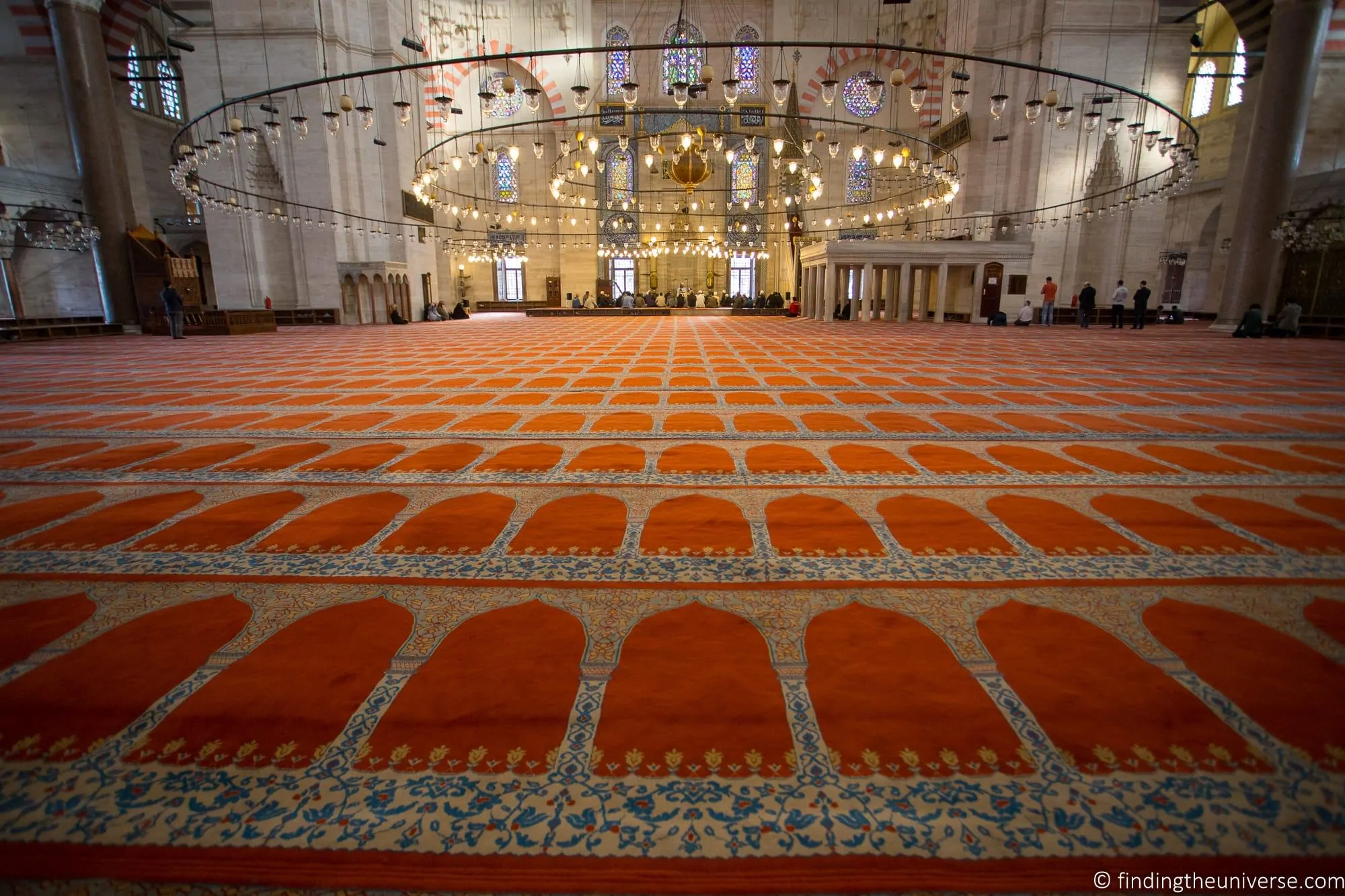
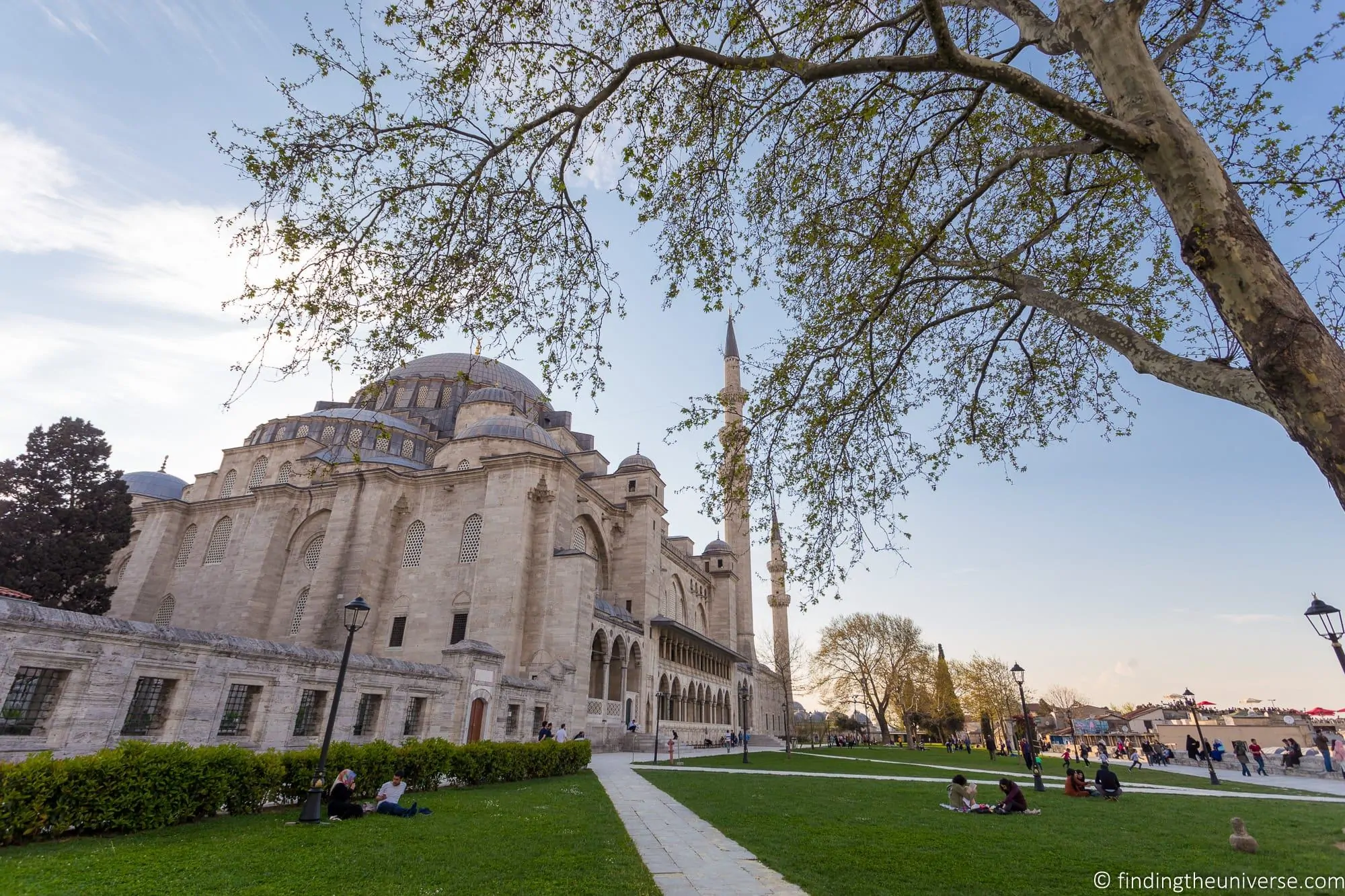
The Süleymaniye Mosque is a working mosque, free to enter, and one of the great pieces of Ottoman architecture. It was built between 1550 and 1557 by Mimar Sinan, the chief Ottoman architect of the period, for Sultan Suleiman the Magnificent. Sinan designed about 300 buildings in his career and Süleymaniye is generally considered his second masterpiece, after the Selimiye Mosque in Edirne. (Sinan also rebuilt parts of Topkapi after a 1574 fire, so this is the same architect you encountered yesterday.)
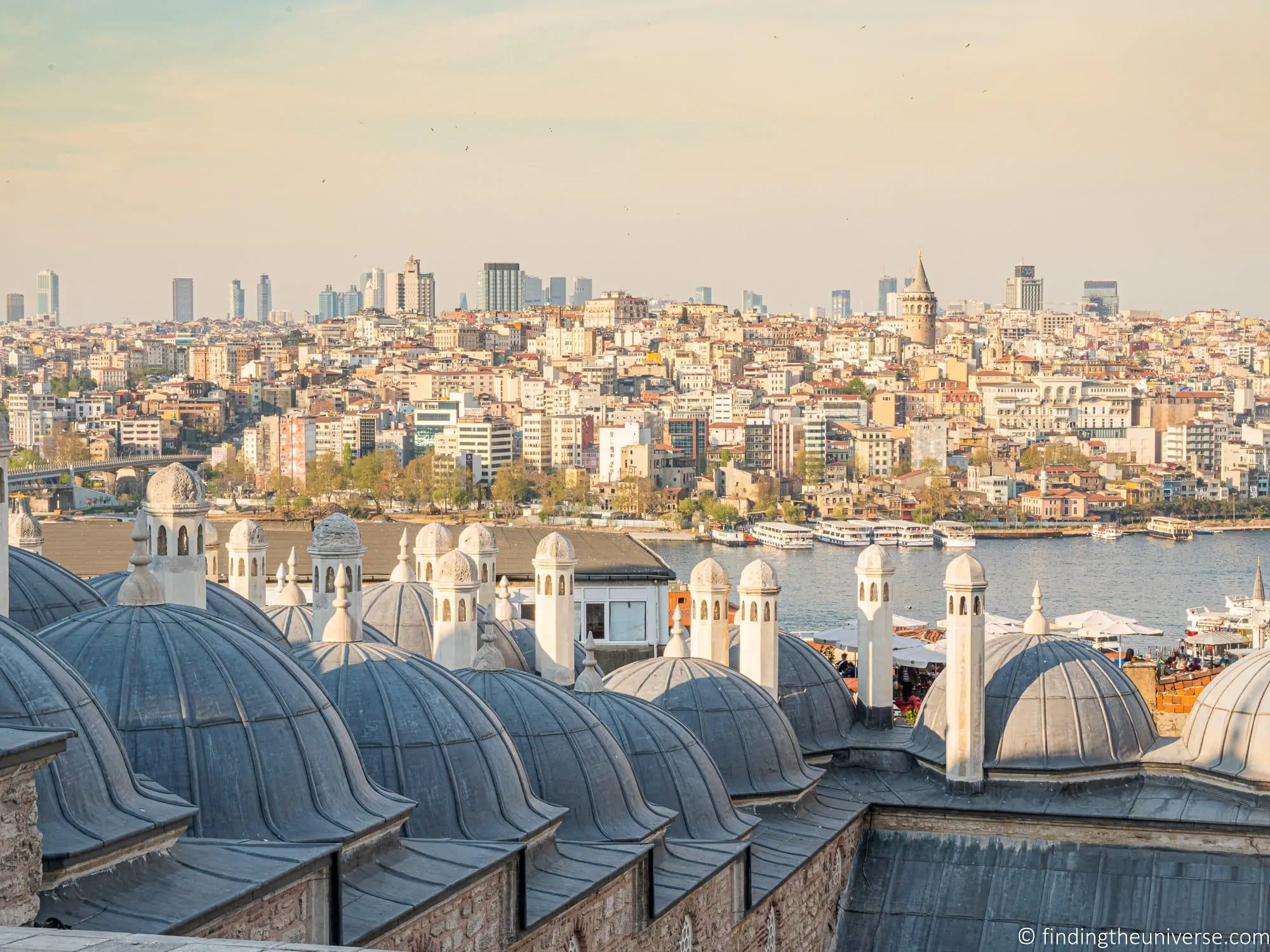
It sits on the Third Hill of Istanbul, which is the highest hill in the historic peninsula, and the views from the courtyard out across the Golden Horn are some of the best in the city. The interior is restrained compared to the Blue Mosque (no Iznik tile blanket), with a much more open central space. I prefer it, personally, because it does not feel like a tourist destination in the way the Blue Mosque now does. It is mostly worshippers and the occasional walker-by.
Same dress code applies: cover legs and shoulders, women cover their hair. Closed during prayer times. Allow 30 to 45 minutes.
Ten-minute walk down the hill to the Grand Bazaar.
9:55am: Grand Bazaar
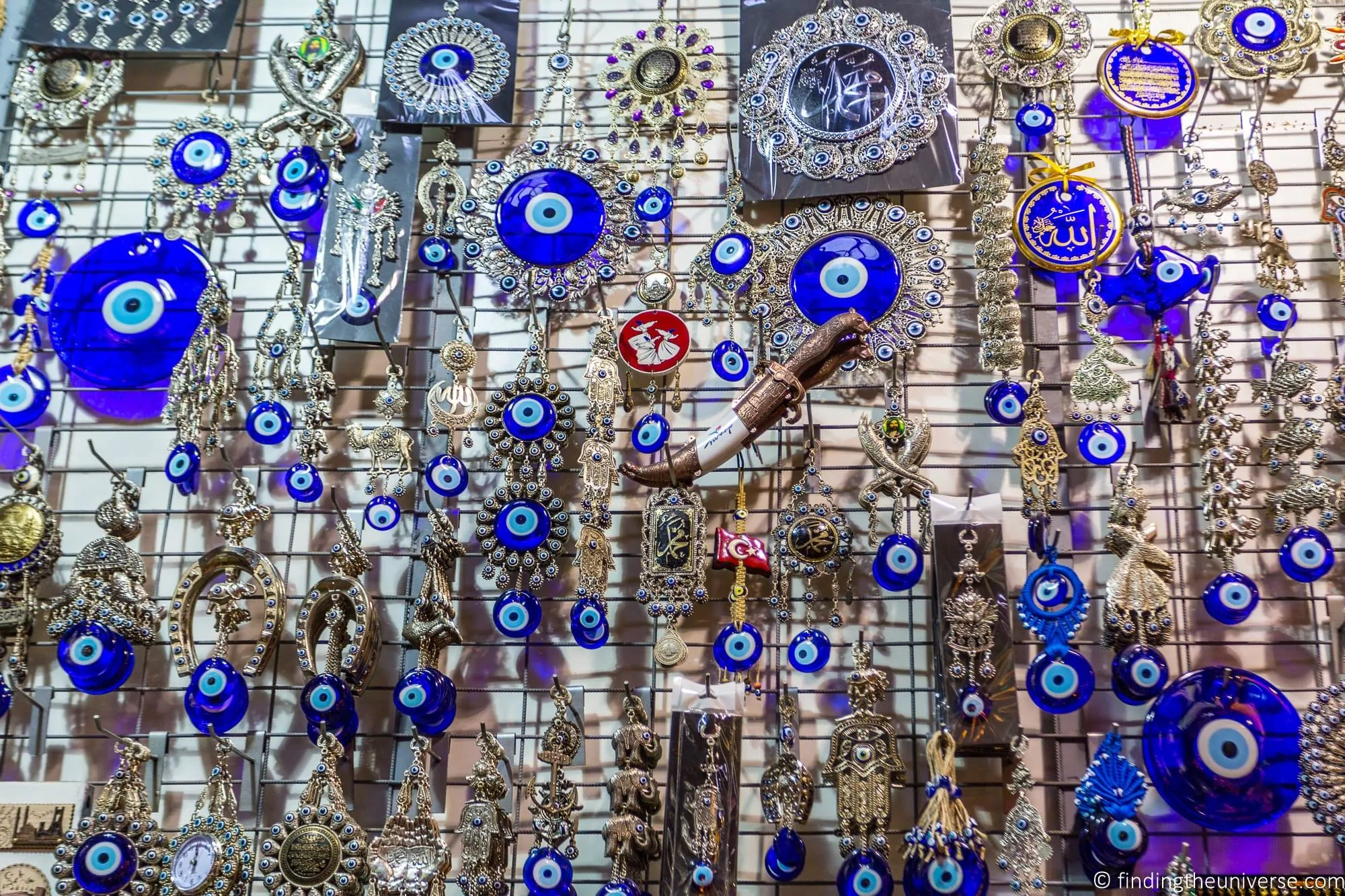
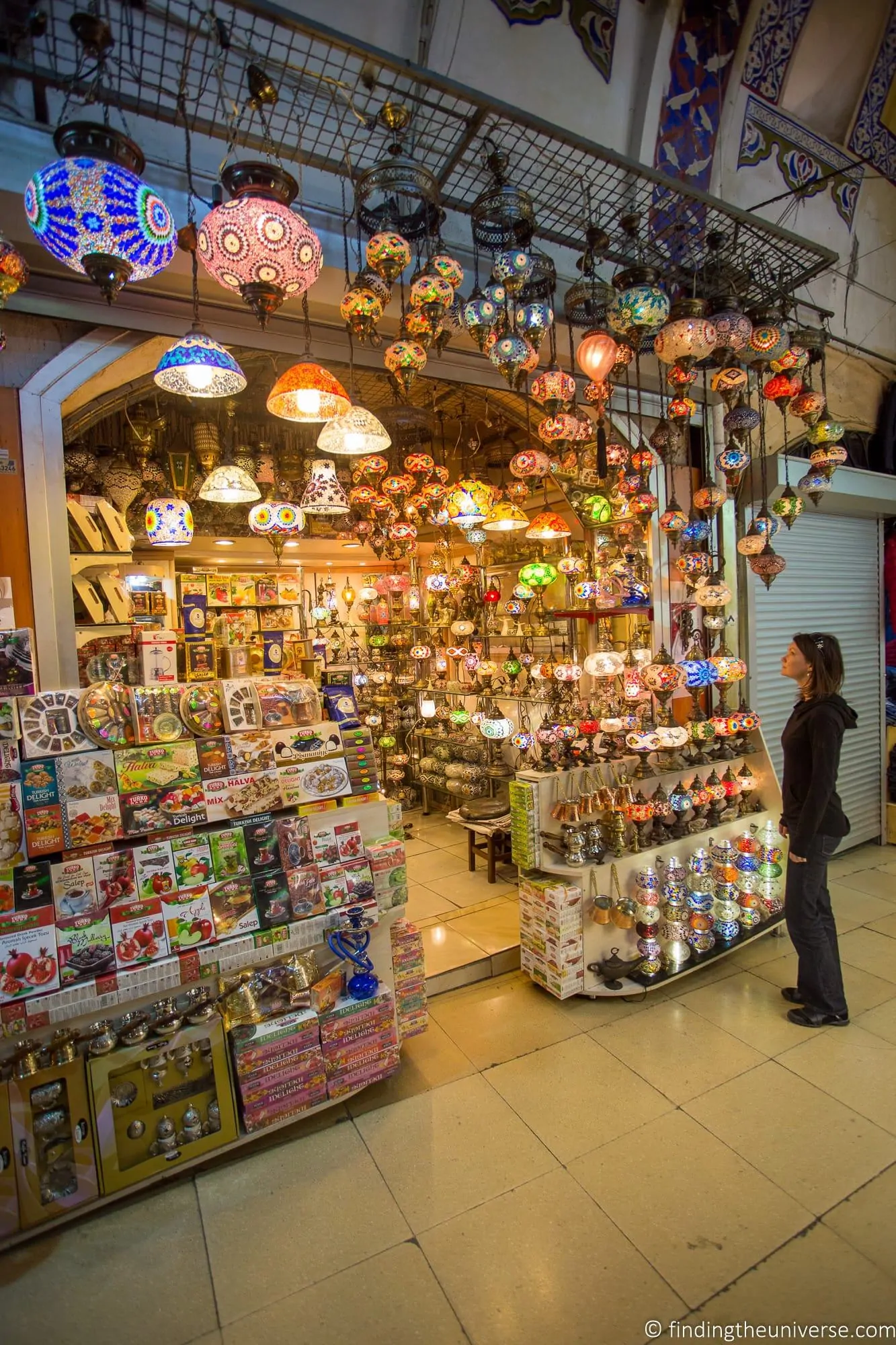
The Grand Bazaar is exactly what the name suggests, but it is hard to overstate how big and disorienting it is until you are inside it. Construction began in 1455-56 under Sultan Mehmed II, just two years after the Ottoman conquest of Constantinople. By the early 17th century it was the central trading hub of the Mediterranean, controlling the flow of goods between Europe and Asia.
Today there are 4,000 shops along 61 covered streets, employing around 26,000 people, all crammed into 30,700 square metres. It is one of the world’s most-visited tourist attractions, and yes, much of what is sold is now aimed at tourists rather than locals, but it remains a working marketplace and the atmosphere is the real draw. Wandering, getting lost, accepting offers of çay from carpet sellers, and emerging two hours later with something you did not need is a perfectly valid use of your morning.
A few things worth knowing:
Bargaining is expected, especially for carpets, leather, and gold. The opening price is generally a multiple of what the shopkeeper will eventually take. Walking away is part of the negotiation. If you are not interested, a polite “no thanks” works fine and most shopkeepers will not pressure you.
The Cevahir Bedesten (Old Bedesten) at the centre is the original 15th-century jewellery and antiquities section. Worth a look even if you are not buying.
The Grand Bazaar is closed on Sundays and public holidays. Open Monday to Saturday, 8:30am to 7:00pm. Entry is free.
If you would prefer to see the bazaar with someone who can help you understand what you are looking at, there are guided walking tours that combine the Grand Bazaar with the surrounding mosques and bedestens.
Allow about 75 minutes if you are not seriously shopping. Considerably more if you are.
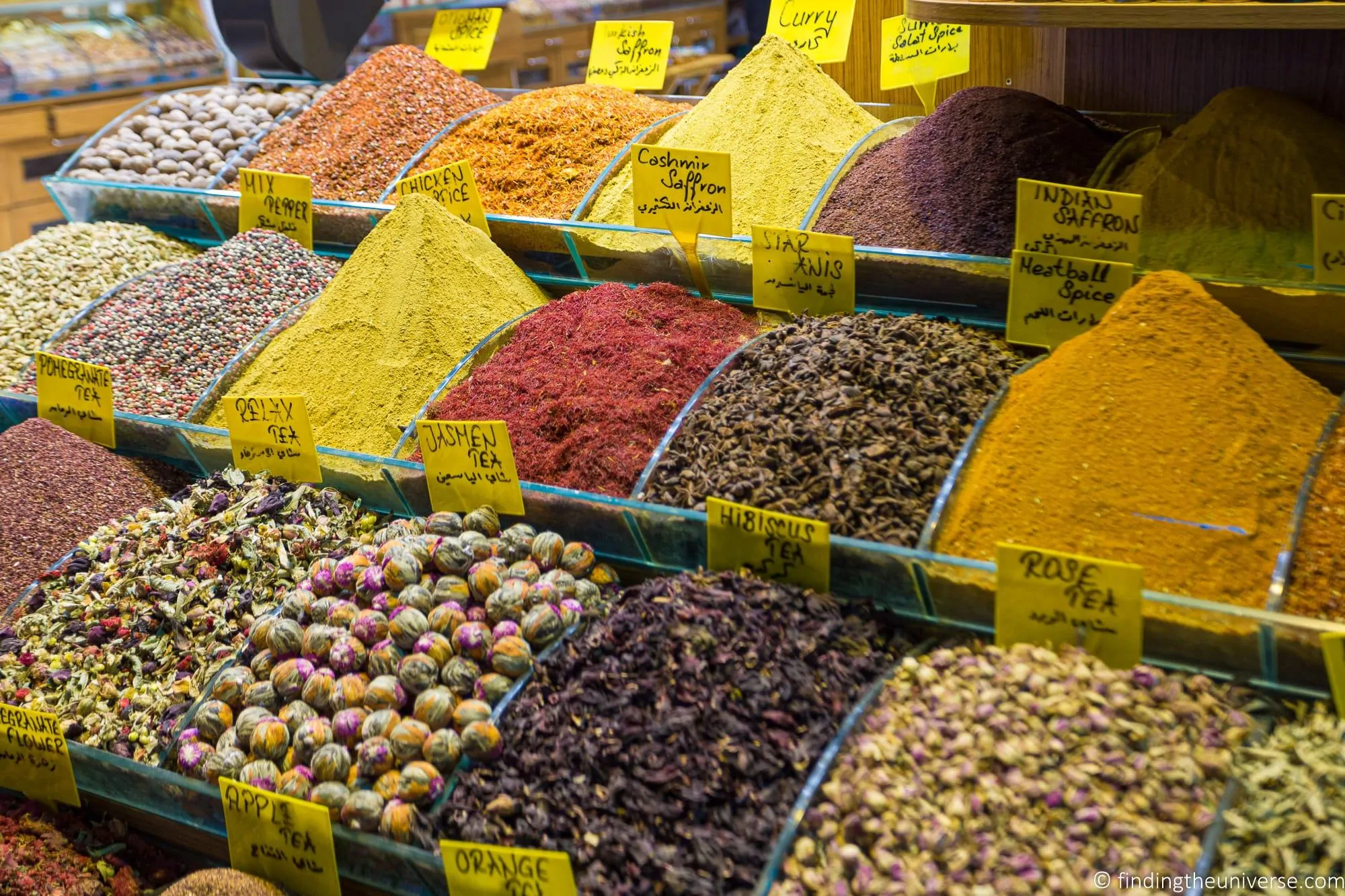
11:20am: Spice Bazaar (Mısır Çarşısı)
A ten-minute walk down through Tahtakale (a wonderfully chaotic street-market district that is worth slowing down for) brings you to the Spice Bazaar. This is the smaller, more focused sibling of the Grand Bazaar, and it is also the one I find more enjoyable.
The Spice Bazaar was built between 1660 and 1664 as part of the New Mosque (Yeni Cami) complex, commissioned by Valide Sultan Turhan Hatice (mother of Sultan Mehmed IV) after the Great Fire of Istanbul in 1660. The Turkish name is Mısır Çarşısı, which translates as “Egyptian Bazaar”. The reason is that construction was funded by tax revenues from the Ottoman province of Egypt, and much of the bazaar’s early trade was in spices and herbs arriving via the Cairo caravan from India and Arabia.
The bazaar has an L-shape with around 85 shops along its corridors. The traditional trade is spices, dried fruits, nuts, Turkish delight, teas, and herbal remedies, although these days you will also find jewellery, ceramics, and souvenirs alongside them. The smells are part of the appeal. Colourful pyramids of paprika, sumac, cumin, cinnamon, and saffron line the corridors, and most vendors will offer free samples of Turkish delight (lokum) or honeyed nuts.
A few things worth buying here that are actually authentic: Iranian saffron (much cheaper than at home, but ask for a quality grade), Turkish coffee from Kurukahveci Mehmet Efendi (the small specialist coffee shop across from the Hasırcılar Gate, established 1871, beans ground while you wait), and pomegranate tea or apple tea if you like sweet teas. Avoid the pre-packaged Turkish delight in fancy boxes and get the freshly cut stuff from open trays.
Generally open Monday to Saturday 8:00am to 7:00pm. Sunday hours have varied recently and some shops have started opening Sundays, so if you arrive on a Sunday, expect a partially-open bazaar at best. Entry is free.
12:00pm: Lunch (Galata Bridge or Karaköy)
Walk out the Spice Bazaar’s south exit and you are right at the foot of the Galata Bridge. The bridge has two levels: cars on top, restaurants on the bottom. The lower level restaurants serve mostly fish, with views across the Golden Horn back to Sultanahmet, and they range from tourist-trap to perfectly good. They will be priced for the view either way.
For a more reliable lunch, walk over the bridge (about ten minutes) into Karaköy and look for one of these:
Karaköy Lokantası serves modernised Turkish dishes in a tile-walled dining room and is consistently good. Hamdi Restaurant on the Eminönü side has a rooftop with views across to Galata Tower and is famous for its kebabs (the Antep style with pistachios is the headline dish). For something cheap and quick, the balık ekmek (fish sandwich) vendors at the Eminönü piers grill mackerel and serve it in a roll with onions and lemon. It costs about 100 TL and tastes far better than that suggests.
Allow about an hour. Day 2 is going to involve more walking than Day 1, so eat properly.
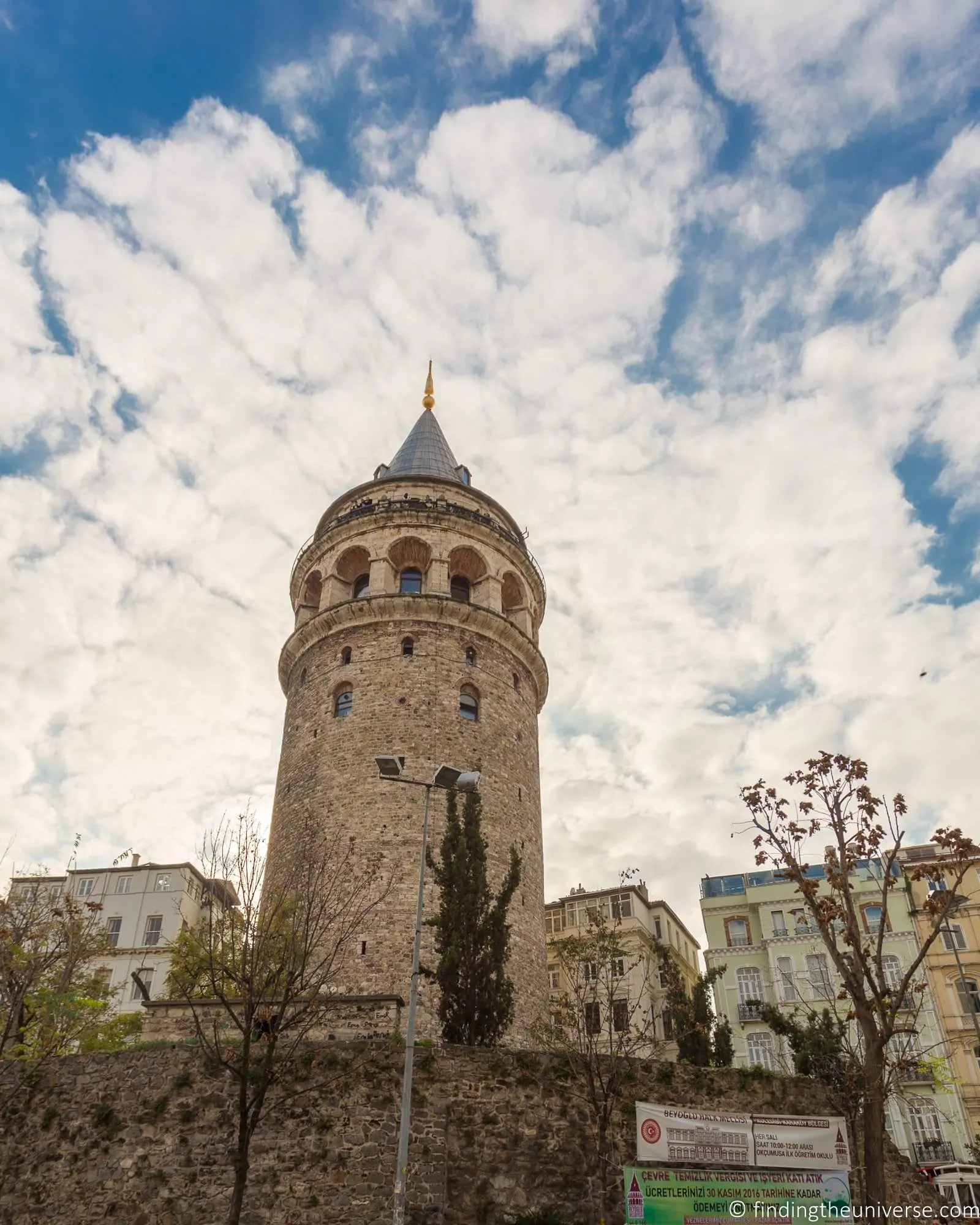
1:15pm: Galata Tower
The Galata Tower is uphill from Karaköy through some of the more atmospheric streets in Istanbul: narrow, steep, lined with boutique shops, vintage record stores, and small cafés. If you fancy the climb you can walk it in about ten minutes. If you do not, the Tünel funicular (one of the world’s oldest underground railways, opened 1875) takes you up to Beyoğlu in 90 seconds, and you walk back down to the tower in five minutes.
Galata Tower itself is a 14th-century Genoese watchtower, built in 1348 as part of the fortifications around the medieval Genoese colony of Galata. It served as a fire watchtower for centuries during the Ottoman period and was famously the launching point for Hezarfen Ahmet Çelebi’s apocryphal 1638 gliding flight across the Bosphorus. After a lengthy restoration completed in 2020, it now operates as a museum, with multimedia exhibits across the lower floors and a panoramic observation terrace at the top.
The views are excellent. Hagia Sophia, the Blue Mosque, the Süleymaniye Mosque, the Bosphorus, and the Galata Bridge are all laid out in front of you. It is the best high-up view of Istanbul’s historic skyline I know of, and worth the queue and the slightly steep €30 entry.
Open 08:30 to 23:00 daily, last entry at 22:00. Entry is €30 for foreign visitors. Museum Pass Istanbul is valid for daytime entry (08:30–18:15) but not for the evening “Night Museology” hours after 19:00. Allow about 45 minutes to an hour.
There is an express elevator that takes you to the seventh floor, after which you climb two flights of stairs to the observation terrace. The final stairs are narrow, so this might be tight for anyone with mobility issues.
2:00pm: Tram to Kabataş for Dolmabahçe
From Karaköy, the T1 tram takes you to Kabataş in about fifteen minutes (the Karaköy stop is a few minutes walk back down from Galata Tower). From Kabataş, it is a five-minute walk along the Bosphorus to the Dolmabahçe Palace gates.
You need to be inside the palace gates by 4:00pm because the ticket office closes then. Realistically, get there by 3:00pm to allow proper time for the visit.
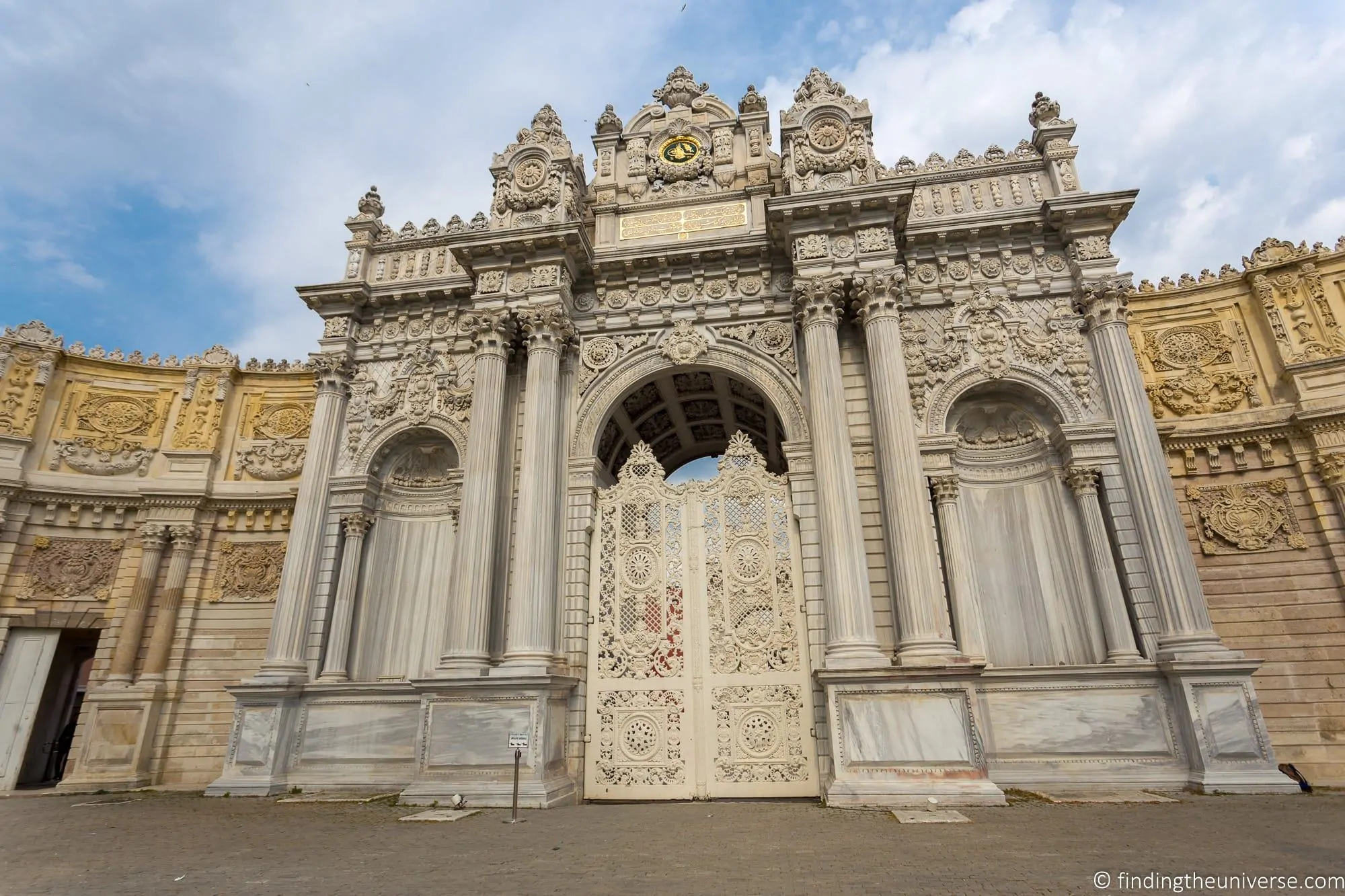
2:30pm: Dolmabahçe Palace
Dolmabahçe Palace is the Ottoman Empire’s last great architectural statement and a study in why empires sometimes go bankrupt. After centuries at Topkapi, the 31st Sultan, Abdülmecid I, decided in the 1850s that the medieval Ottoman palace was no longer in keeping with the European-style residences of contemporary monarchs. He commissioned a new palace on the Bosphorus, designed by the Armenian Balyan family of court architects, and the result was Dolmabahçe.
The palace blends Ottoman elements with European Baroque, Rococo, and Neoclassical styles, mostly the European elements. There is a 4.5-tonne crystal chandelier in the Ceremonial Hall (a gift from Queen Victoria), a crystal staircase, gold-gilded mouldings on basically every surface, and the largest collection of Bohemian and Baccarat crystal in the world. The palace cost around 35 tonnes of gold to build, which contributed materially to the Ottoman financial crisis of the 1870s.
Worth seeing nonetheless. The architectural ambition is real, the craftsmanship is extraordinary, and you get to see how the late Ottoman court actually lived. There are around 285 rooms across the Selamlık (the official ceremonial section), the Harem (the private family section), and the Painting Museum, all included in the standard ticket. The waterfront gardens overlooking the Bosphorus are free to wander.
Atatürk lived in the palace during his presidency and died in his bedroom on the Harem side on 10 November 1938. The clock in the room is fixed at 9:05am, the time of his death. Worth seeing if you have any interest in the Turkish Republic’s founding.
Entry is 2,000 TL for foreign visitors as of 2026, and the ticket includes the Selamlık, Harem, and the Painting Museum. The Museum Pass covers the Harem and Painting Museum but not the Selamlık. Open 09:00 to 17:00, ticket office closes 16:00, closed Mondays. Allow 1.5 to 2 hours.
Photography is now permitted inside the palace (without flash or tripod), which is a recent change. The visit is self-guided with a free audio guide handed out at the entrance, also a recent change (it used to be guided-only).
Skip-the-line tickets are available here, which I would recommend in summer when the queue can run an hour.
4:30pm: Çemberlitaş Hamam (Optional)
If you have made it through both days and your feet are protesting, an old-school Turkish bath is the perfect way to end Day 2. Çemberlitaş Hamamı, a short walk from the Grand Bazaar, was built by Mimar Sinan in 1584 and has been operating as a working hammam continuously since. The structure itself is part of the experience: domed marble interior, central göbektaşı (heated stone slab), and the same essential layout it has had for 440 years.
A standard bath includes a kese (vigorous exfoliating scrub with a rough mitt) and a köpük (foam massage), takes about 90 minutes, and runs around 1,800–2,500 TL depending on which package you choose. There are separate male and female sections. Booking ahead is recommended in summer. Direct booking via cemberlitashamami.com.
It is touristy, undeniably, but it is also a 16th-century working hammam designed by the architect of the Süleymaniye Mosque, and the experience is one of the more memorable ways to spend an afternoon. If you would prefer something less touristy, the Cağaloğlu Hamamı (built 1741) is the other historic option a few streets away. Either way, you finish the day clean, lightly bruised, and feeling roughly twenty years younger than when you walked in.
7:00pm: Dinner with a View
For dinner, anywhere along the rooftop strip in Sultanahmet works well, or head back to Karaköy for the more contemporary Istanbul food scene. The terrace at the Seven Hills Restaurant in Sultanahmet has the best Hagia Sophia view in the city, although the food is competent rather than transcendent. Mikla in Beyoğlu is the more serious modern Turkish option (Bib Gourmand, fusion, decent wine list, expensive). Reservations recommended at both.
If you would rather extend the evening into actual nightlife, this 7-hour Istanbul pub crawl hits party spots in Beyoğlu and is the easy way to do it without planning anything.
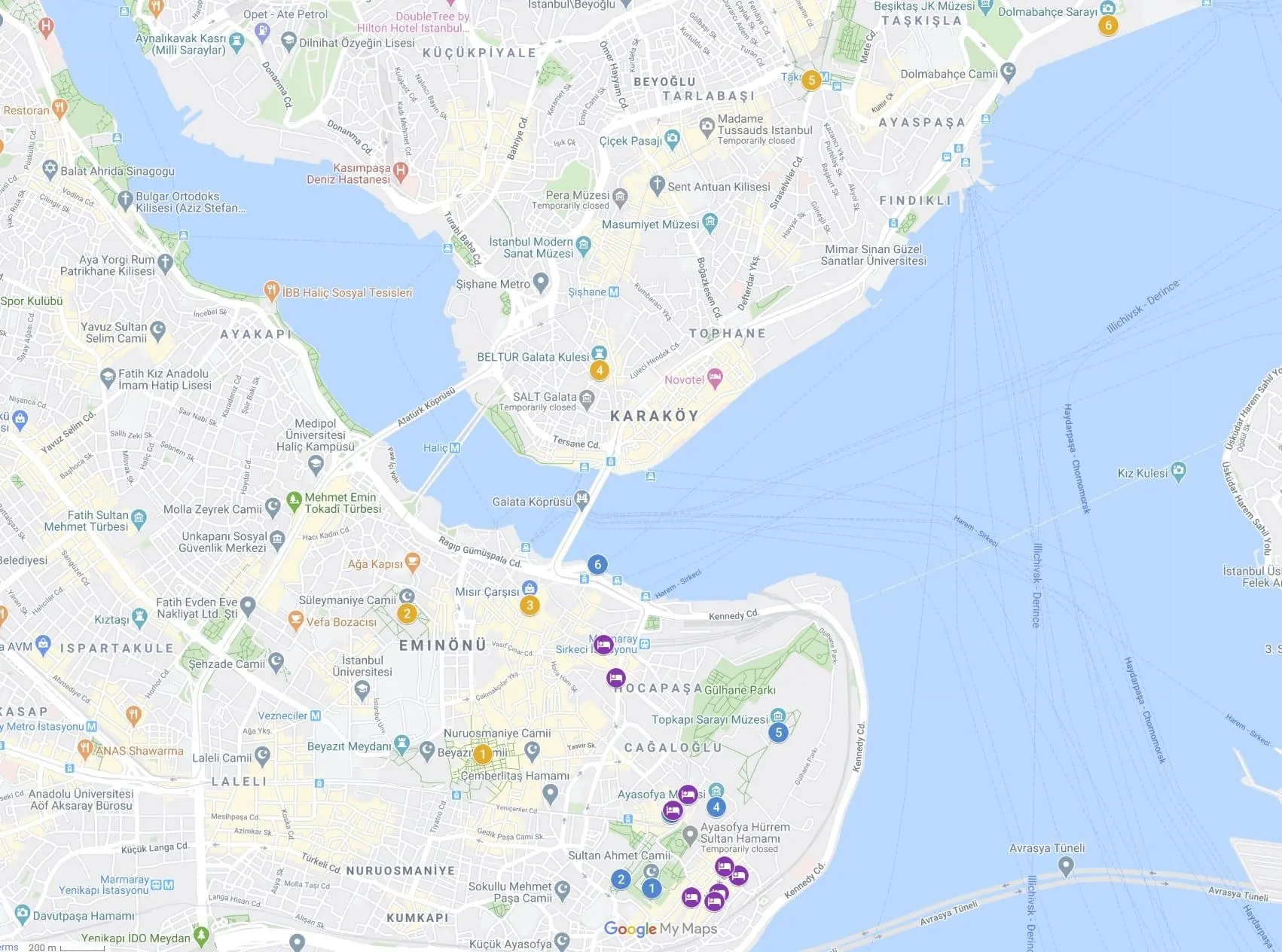
2 Day Istanbul Itinerary Map
To help you visualise the itinerary, here is a map of all the sights, which you can also see on Google Maps here.
Pinch Points: What to Do If You Arrive on a Difficult Day
Istanbul’s main attractions are not all open on the same days, and the noon Friday prayer affects Hagia Sophia access. Here is what to do depending on your arrival day.
Arriving Sunday for a Monday-Tuesday visit: Day 1 falls Monday (Dolmabahçe closed, but Day 1 doesn’t include Dolmabahçe so you are fine). Day 2 falls Tuesday (Topkapi closed, but Day 2 doesn’t include Topkapi so you are also fine). This is actually the cleanest combination if your timing is fixed.
Arriving Saturday for a Sunday-Monday visit: Sunday: the Grand Bazaar and Spice Bazaar are closed. Reverse the plan. Do Day 2’s Galata Tower, Süleymaniye, and Dolmabahçe on Sunday (skipping the bazaars), then do Day 1’s Sultanahmet attractions plus the bazaars on Monday. The bazaars are open Monday.
Arriving Monday for a Tuesday-Wednesday visit: Tuesday: Topkapi closed. Do Day 2 first (which doesn’t include Topkapi), then do Day 1 on Wednesday with Topkapi open.
Friday visit: Hagia Sophia is closed to tourists 12:00–14:30 for the congregational prayer. Visit Hagia Sophia in the morning before 11:30am or after 2:30pm. Other Friday closures are minor.
Ramadan (mid-February to mid-March 2027): Mosques are busier with worshippers, particularly in the evenings. Iftar (the breaking of the fast at sunset) makes evening dining hectic and many restaurants in conservative neighbourhoods close during fasting hours. Tourist sights generally remain open with adjusted hours. Plan dining around 4–6pm rather than 7–9pm.
Public holidays: The first day of Ramadan Bayram (Eid al-Fitr) and the first day of Kurban Bayram (Eid al-Adha) close most museums. National holidays (29 October Republic Day, 23 April Children’s Day) sometimes close palace museums or restrict access. Check before you fly.

Summary of 2 Day Istanbul Itinerary
Day 1 starts at 9:00am at the Blue Mosque, then the Hippodrome at 9:50am, the Basilica Cistern at 10:20am, Hagia Sophia at 11:10am, lunch at noon, Topkapi Palace from 1:00pm, a tea break around 3:30pm, and finishing with a Bosphorus sunset cruise at 4:30pm (or the Whirling Dervishes alternative).
Day 2 starts at 9:00am at the Süleymaniye Mosque, then the Grand Bazaar at 9:55am, the Spice Bazaar at 11:20am, lunch in Karaköy at noon, Galata Tower at 1:15pm, the tram to Kabataş at 2:00pm, Dolmabahçe Palace from 2:30pm, the optional Çemberlitaş Hamam at 4:30pm, and dinner from 7:00pm.
How to Get Around Istanbul
Most of Day 1 is walkable. Day 2 involves a bit more transit, but the public transport in Istanbul is quite good and runs on a single payment card called the İstanbulkart, which you can buy at any tram or metro station for a small refundable deposit and top up at machines.
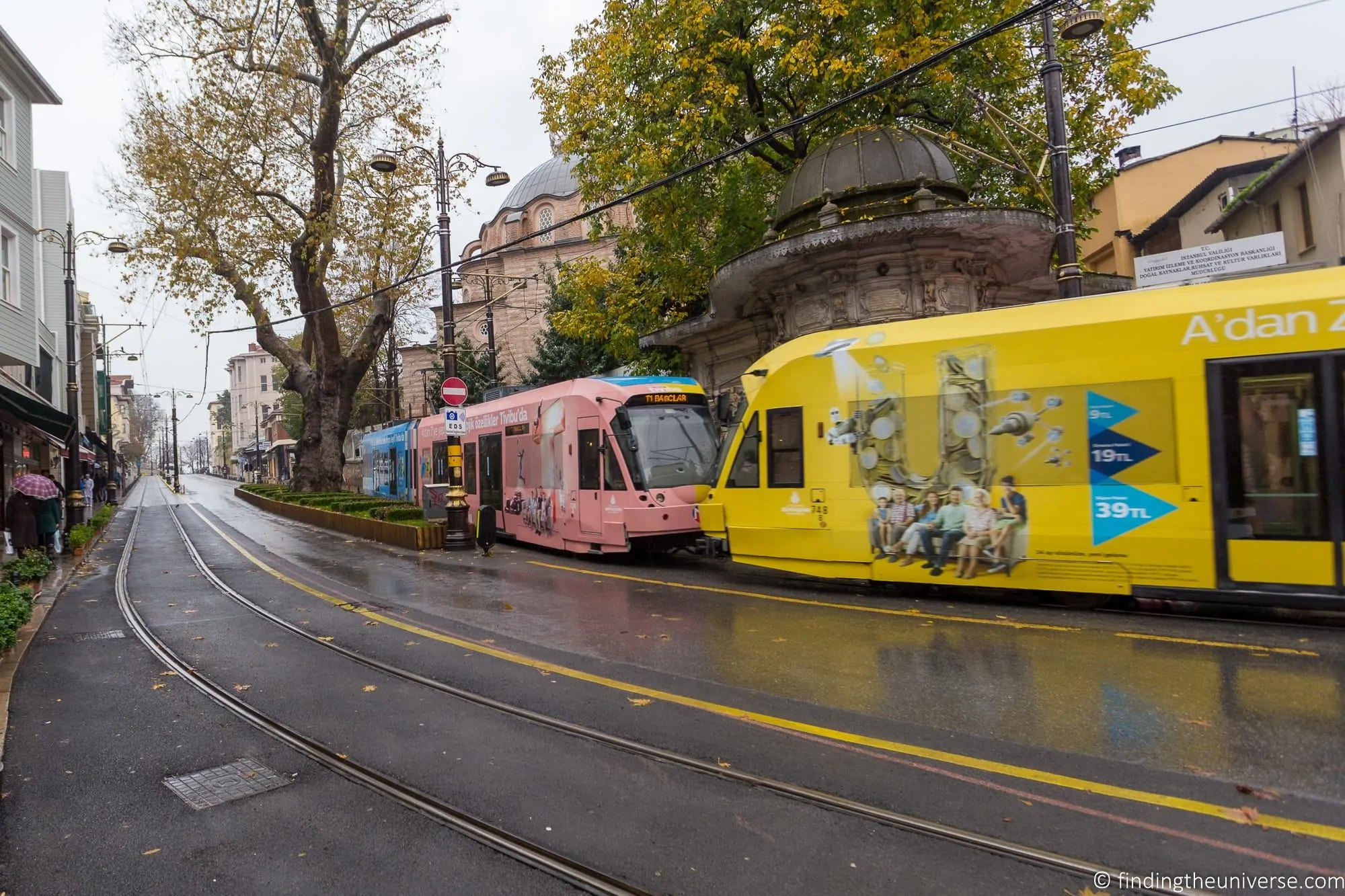
The T1 tram is the workhorse for tourists. It runs from Kabataş (for Dolmabahçe and the Bosphorus ferry pier) through Karaköy (Galata Tower), Eminönü (Spice Bazaar, ferries), Sultanahmet, and on to Beyazıt-Kapalıçarşı (Grand Bazaar). One single line covers most of what you will want. Trams come every few minutes.
For Galata Tower from Sultanahmet specifically, the T1 tram to Karaköy plus a walk uphill, or the Tünel funicular, are both good options.
The metro and Marmaray (the Bosphorus undersea rail link) are useful for getting to the airports. Istanbul Airport (IST, the main airport, on the European side) is connected by the M11 metro to Gayrettepe in central Istanbul. Sabiha Gökçen Airport (SAW, smaller, on the Asian side) is connected by the M4 metro. Allow at least an hour from city centre to either airport.
Taxis are widely available, including via Uber and BiTaksi. Our advice: take taxis from official ranks or have your hotel call one. Rogue taxi drivers running rigged meters or “broken meter, fixed price” scams are a known problem at tourist hotspots, particularly around Sultanahmet and Taksim.
If you would rather skip the planning, the Istanbul hop-on hop-off bus covers most of the headline attractions with audio commentary, although it does not get you into Sultanahmet’s pedestrianised core.
Walking Tours in Istanbul
A guided tour of Sultanahmet on Day 1 is worth it. The signage at most of the main sights is sparse, the historical context is dense, and you skip most of the queues. We have done it both with a guide and without and the guided version covers more ground in less time.
A few options worth considering:
This Topkapi, Hagia Sophia and Basilica Cistern small-group tour covers the three big-ticket Day 1 sights with skip-the-line entry and a guide.
A private full day walking tour can be customised to cover most of Day 1’s sights at your own pace.
A tailor-made private tour with transport works well if you would rather not deal with the trams, particularly for getting to Dolmabahçe on Day 2.
For evening food specifically, an Istanbul pub crawl through the Beyoğlu district is a good way to combine bars and street food.
If you prefer private tours and would like more depth, Context Travel runs intellectually serious small-group walking tours led by historians and architects. We have used Context in cities around the world and consistently enjoyed the experience. You also get a 10% discount with this link.
You can also browse the full range of tours here on GetYourGuide.
Istanbul City Passes
A city pass can save money if you are visiting enough sights, although the maths varies depending on which pass and which sights. Three passes worth comparing:
The Istanbul Tourist Pass is the most-bundled option. The 2-day version includes guided tours of the Hagia Sophia, Topkapi Palace, Basilica Cistern, Dolmabahçe Palace, Grand Bazaar, and Blue Mosque, plus an airport transfer and a Bosphorus dinner cruise. The catch is that you have to take the included guided tours rather than visiting sights independently, so you have to plan around the tour times. It can save money, but a separate walking tour might give you better value.
The Museum Pass Istanbul (issued by the Turkish Ministry of Culture) is the official option, granting access to thirteen museums over five days. It is valid at Topkapi Palace (main section), Hagia Sophia History and Experience Museum, the Turkish and Islamic Arts Museum, and others. It is not valid at Hagia Sophia (the upper galleries tourist entry), the Basilica Cistern, or the Topkapi Harem and Hagia Irene at the door. So check the inclusions carefully against your plans.
The Istanbul Pass via Tiqets is the cleanest hybrid option. It includes skip-the-line admission to Hagia Sophia, Topkapi Palace, and the Basilica Cistern, plus an audio guide app for those attractions, 24-hour Hop on Hop off bus access, and a 2-hour Bosphorus cruise. No guided-tour-only catch.
For most two-day visitors, our pick would be the Istanbul Pass via Tiqets if you want everything skip-the-line and bundled, or buying skip-the-line tickets to Hagia Sophia, Topkapi, and Basilica Cistern individually if you want maximum flexibility.
Where to Stay in Istanbul
For a first-time visit on this itinerary, stay in Sultanahmet (the Fatih district), within walking distance of Day 1’s sights. You will be a short tram ride from Day 2’s start point at the Grand Bazaar.
A range of options across the budget spectrum:
- Cheers Hostel – A consistently top-rated hostel right next to Hagia Sophia and the Blue Mosque (about a one-minute walk). Mixed dorms and private rooms with en-suite bathrooms. Rooftop bar with views of Hagia Sophia. Won the Hostelworld 2024 Most Popular and 2025 Best Hostel in Turkey awards. Breakfast included.
- Agora Guesthouse – Well-reviewed guesthouse offering both dormitory and private rooms. The included breakfast is served on the rooftop terrace. A few hundred metres from the Blue Mosque and Hagia Sophia.
- Tulip Guesthouse – Good-value guesthouse with private rooms (shared or en-suite bathrooms). Breakfast on the top floor terrace. Five minutes walk from the Hagia Sophia.
- Berk Guesthouse – Grandma’s House – Well-rated guesthouse with en-suite rooms and a rooftop terrace. Two minutes walk from the Blue Mosque.
- Meserret Palace Hotel – A 4-star hotel with en-suite rooms, tea/coffee facilities, 24-hour reception and room service. Near the Spice Bazaar, ten minutes walk from the Old City. Central for everything on this itinerary.
- Obelisk Hotel & Suites – Well-rated 4-star hotel with en-suite rooms, tea/coffee facilities, 24-hour front desk, and an on-site restaurant. A few hundred metres from Hagia Sophia.
- Hotel Saint Sophia – 4-star boutique hotel with private en-suite rooms, on-site café and bar. Some rooms have views of the Hagia Sophia.
- Régie Ottoman – Stylish boutique hotel set in a 150-year-old renovated Ottoman building. On-site restaurant. About a 10-minute walk from the Sultanahmet area, near the Spice Bazaar. We have stayed here and really enjoyed it.
- Vogue Hotel Supreme Istanbul – A 5-star luxury option offering modern amenities, 24-hour reception, room service, and an on-site restaurant. Near the Basilica Cistern and Hagia Sophia. The premium pick.

When to Visit Istanbul
Spring (March to May) and autumn (September to November) are the best windows for a two-day visit. The weather is reasonable for walking, the crowds are manageable, and accommodation prices have not yet hit summer peaks. Spring is particularly nice as the city’s tulip season runs through April (Istanbul, not the Netherlands, is the tulip’s original home).
Summer (June to August) is hot and crowded. Daytime temperatures regularly hit 30°C and Sultanahmet’s pedestrian areas get uncomfortable around midday. The cruise and rooftop scene is at its best in summer, but if you can choose, do not pick July or August.
Winter (December to February) is the cheapest, the quietest, and works well if you are content to layer up. Daytime highs are often 8-12°C and rain is frequent. The advantage is that you will have major sights nearly to yourself in many cases, and the light is extraordinary in clear weather. Some open-air sights and rooftop venues close for the season.
What to Pack for Two Days in Istanbul
What to pack for two days in Istanbul. A big, hilly, sprawling city you cross by tram, ferry and on foot, so a couple of things are worth having in the bag.
| What to bring | Why | Price |
|---|---|---|
| Epicka universal travel adapter | Turkey uses the European two-pin plug, so UK and US visitors need an adapter. This GaN one also fast-charges a phone and laptop from its USB ports. | Check price on Amazon |
| INIU P50 power bank | Long days across two continents, with the phone out for maps, photos and the ferry times, drain the battery fast. This one is airline-safe. | Check price on Amazon |
| Lonely Planet Türkiye guidebook | Covers Istanbul alongside the rest of the country, useful if the city is the start of a longer Turkey trip. | Check price on Amazon |
Frequently Asked Questions
Is two days in Istanbul enough?
Two days is enough to see the headline sights without rushing badly. You will hit the Sultanahmet core (Blue Mosque, Hagia Sophia, Basilica Cistern, Topkapi, Hippodrome) and the Beyoğlu and Bosphorus stretch (Grand Bazaar, Spice Bazaar, Galata Tower, Dolmabahçe).
What you will miss in two days: the Asian side (Kadıköy, Üsküdar), the Princes’ Islands, the Chora Church mosaics, the Istanbul Modern art museum, the back streets of Balat and Fener, and any kind of unhurried pace.
If you can stretch to three days, do. Use the third day for the Asian side or the Chora mosaics. Four or five days lets you do everything without rushing.
What’s the best area to stay in Istanbul for first-time visitors?
Sultanahmet (the Fatih district) for first-time visitors. You will be walking distance to the Day 1 sights and a short tram ride from Day 2. Karaköy and Beyoğlu are alternatives if you would rather have nightlife on your doorstep, but you will spend more time on the tram.
Do I need to book Hagia Sophia and Topkapi tickets in advance?
Yes, especially in summer. Walk-up queues at Hagia Sophia can run 30 to 60 minutes in peak season, and Topkapi can be similar. Book skip-the-line tickets via GetYourGuide, Tiqets, or directly through the official sites at least a few days ahead.
The Museum Pass Istanbul is not valid at the Hagia Sophia tourist entrance (since the 2024 fee was introduced) or at the Basilica Cistern, so do not assume it covers everything.
Can I see Hagia Sophia and the Blue Mosque in one day?
Yes. Both are in Sultanahmet, a few minutes walk apart. Visit the Blue Mosque first thing in the morning (it closes for noon prayer at 11:30am), then Hagia Sophia after.
The one exception is Friday. Hagia Sophia is closed to tourists 12:00 to 14:30 for the congregational prayer. On Fridays, do Hagia Sophia in the morning before 11:30am, or wait until after 14:30.
Is Istanbul safe for tourists?
Generally yes. Sultanahmet, Beyoğlu, Karaköy, and the main tourist areas are safe and well-patrolled. Standard urban precautions apply: watch for pickpockets in crowded areas like the Grand Bazaar and around the trams, do not flash valuables, and use official taxi ranks or ride-share apps rather than flagging unmarked cars.
The most common tourist-targeted scams are rigged taxi meters, “broken meter, fixed price” overcharging, and hospitality-style approaches near major attractions that lead to inflated bills at unmarked restaurants. Easy to avoid with a bit of awareness.
Do I need to cover up for the mosques?
Yes. For all working mosques (Blue Mosque, Süleymaniye, Hagia Sophia in its current form):
Men: legs and shoulders covered. Long trousers or below-knee shorts, sleeved shirt.
Women: hair, shoulders, arms, and legs covered. A headscarf and a long-sleeved top with a long skirt or trousers works fine. Robes and headscarves are usually available at the entrance for free or a small fee, but it speeds things up to have your own.
Shoes off before entering. You will be given a plastic bag to carry them.
Is the Grand Bazaar a tourist trap?
Partly yes, partly no. Many of the shops are aimed at tourists, prices are inflated, and the cheaper ceramics are mass-produced rather than handmade. But the Grand Bazaar remains a working market with 4,000 shops, employs around 26,000 people, and the atmosphere is real.
What to actually buy: Iznik-style ceramics (not the cheap ones at the front), Iranian saffron from the Spice Bazaar nearby (cheaper and better), Turkish leather, gold (the gold market section is the real deal and priced by weight), and Turkish lamps if you like that sort of thing.
What not to buy: cheap mass-produced “Iznik” ceramics, Turkish delight from glossy boxes (get the freshly cut stuff from open trays at the Spice Bazaar instead), and anything aggressively pitched in the first ten seconds.
Further Reading
We have written more on Turkey and the surrounding region that you might find useful, plus some general travel tips:
- For a longer trip, our 2-week Turkey itinerary covers the wider country including Cappadocia and the southern coast.
- Our review of touring Turkey with Travel Talk, if you would prefer a guided tour of the country including Istanbul.
- Our guide to things to do in Cappadocia, the obvious next stop after Istanbul.
- Our guide to getting online when you travel.
- Our guides to the best travel adapters, best travel shoes for men, and best travel shoes for women.
- If you want to capture good photos on your trip, our guide to the best travel cameras.
- Reading for the trip: Lonely Planet Türkiye and the DK Turkey Travel Guide.
That’s our two-day itinerary for Istanbul. As always, happy to answer questions or hear about how the trip went. Use the comments section below.
dita says
I can’t thank you enough for this!
Laurence Norah says
It’s our pleasure, have a great time in Turkey!
Basim A Rahman says
this is a brilliant itenarary with every bit of details. i really appreciate the effort behind this. with the attraction pinpointed and numbered in maps.
Laurence Norah says
Thanks Basim, enjoy your visit to Istanbul!
Ed says
All great suggestions, but it’s beyond me how you could have left the Mosaic Museum off the list. It’s a 5 minute walk from the Blue Mosque, takes only about an hour , but leaves you speechless at the scope and craftsmanship of the masters of this art. Also, I’d strongly suggest going to the palaces/museums/cisterns first, as many close by 4 pm – and pre-purchase tickets to skip the lines. Leave the mosques/streets/plazas for later in the day to avoid huge lines and crowds. Line to Sophia was 1+ hr at Noon, and 5 minutes at 7 pm on our visit.
Laurence Norah says
Hi Ed,
Thanks very much, and thanks for your input as well! As with all our itineraries, we always recommend people adjust them based on their personal interests. Glad to hear you enjoyed the mosaic museum, it would be a good option before or after the Blue Mosque for sure. For anyone else interested in visiting, you can learn about visiting here: https://muze.gen.tr/muze-detay/mozaik
Safe travels!
Laurence
Adriano says
The best itinerary of the hundreds that I have read.
Stop looking, this is the real deal.
Thank you for helping travelers to have an easy and stress free experience.
Laurence Norah says
Thanks very much Adriano that’s much appreciated!
SILVIE says
We are going to Istanbul tomorrow for 2 days – I LOVE your itinerary, it’s just what we need for these 2 days in Istanbul! We will follow your steps, and keep you posted! 🙂 All the best to you two. We are following you on your newsletter etc. SILVIE & BRYCE
Laurence Norah says
Thanks Silvie! I hope you guys have an awesome time and do please report back to let me know how it goes! I’m always keen to hear feedback and if you find anything that has changed that would be helpful too 🙂
Best
Laurence
Nita on the Move says
We’re traveling to Turkey in 3 weeks! This guide and your Cappadocia guide have been very helpful as we plan our itinerary. Thank you very much!
Laurence Norah says
Our pleasure Nita, have a wonderful time in Turkey and let me know if you have any questions!
Alanna Koritzke says
Wow! The architecture there is so incredible! Great guide, thanks for sharing!
Laurence Norah says
Thanks very much Alanna – it certainly is a stunning place 🙂
Ashley - Abroad with Ash says
Such a useful post! I’m saving this for when we go to Turkey…hopefully next year. I’ll take your advice on plan on visiting in September or October. The pictures of the Blue Mosque are stunning.
Laurence Norah says
Thanks very much Ashley – i Hope you have a wonderful trip when you do get to visit 😀