
Geneva is a city we’ve returned to several times over the years, in both winter and summer, and every photo in this guide is one I took myself on those visits. Everything in this list is something we’ve actually done, eaten, climbed or queued for, along with a few things we’d do differently next time.
Found on the shores of Lake Geneva and surrounded by mountains, Geneva is very easy on the eye. With great transport connections, it’s also an easy place to visit on a trip to Switzerland.
Of course, there are plenty of reasons to visit Geneva beyond the setting! As the headquarters of Europe’s United Nations and Red Cross, this is a global hub for diplomacy. It’s also home to world-class watchmakers, superb shopping, a historic old town, and an impressive array of museums.
Our quick take: Geneva works best as a one to three day city stop. Plan on two days, base yourself near the lake or old town, and think hard about the Geneva City Pass, which at CHF 40 for 48 hours pays for itself with three or four paid attractions. It’s an expensive city, but more of it is free than you’d expect, and we’ve covered that below too.
As well as our guide to what to do in Geneva, we’ve included the decisions first: whether Geneva deserves a spot on your Switzerland trip at all, how many days to give it, when to come, plus tips on where to stay, how to get around, and how to save money.
Table of Contents:
Is Geneva Worth Visiting?
Yes, Geneva is worth visiting, with one caveat: it’s not the Switzerland of the postcards. There are no chocolate-box villages or dramatic alpine passes in the city itself. What Geneva does have is a beautiful lakefront, a two-thousand-year-old old town, an unmatched cluster of museums, the United Nations, CERN, and Mont Blanc views from a cable car twenty minutes from the centre.
If your Switzerland trip is all about mountains, treat Geneva as a well-connected entry point and give it a day on either end of your trip. If you like museums, food, lake life and a city you can cover almost entirely on foot, give it two or three days and you won’t run out of things to do. We’ve done both approaches and enjoyed the city each time.
The cost question comes up a lot, and it’s fair. Geneva is one of the more expensive cities in Europe. It’s also unusually generous with free things: the city-run museums don’t charge for their permanent collections, public transport is free for most visitors, and the lakefront costs nothing at all. There’s a whole section on that further down.
How Many Days Should I Spend in Geneva?
We would recommend that you spend at least two days in Geneva. With two days, you could spend the first day exploring the old town and south eastern shore of Lake Geneva, and your second day visiting the UN, Red Cross Museum and other highlights in the west of the city.
If you have time, three days will give you more opportunities to see all the highlights as well as take a lake cruise, go shopping, try more restaurants, or fit in CERN.
Of course, you could easily spend much longer in the city. There are so many museums and other attractions to explore, as well as lots of nearby places of interest. Geneva makes for a great base for exploring, and you could stay for a week or more and find plenty to keep yourself busy!
Geneva, Zurich or Lucerne: Which Should You Base Yourself In?
If you’re picking one Swiss city as a base and can’t decide, here’s how we’d call it.
Pick Geneva if you want museums, the international organisations, lake life, and easy day trips into France. Chamonix and Mont Blanc, Annecy, and the Lake Geneva wine terraces are all comfortable day trips from here, and the airport is one of the best connected in the region.
Pick Lucerne if mountains are the point of your trip. It’s a prettier city than Geneva, and Pilatus, Rigi and Titlis are right on the doorstep. Pick Zurich if you need the widest onward connections into central and eastern Switzerland, though as a city to actually spend time in, we’d rank it third of the three.
Geneva and Zurich are around three hours apart by train, so you’re not locked in. On one trip we picked up a rental car at Geneva Airport, toured the country, dropped the car back, and finished with a few days of Geneva sightseeing. That worked really well, and it meant no city parking headaches.
Things to do in Geneva
This guide to things to do in Geneva covers our favourite sights and activities in the city, 27 of them in all. There’s plenty to see and do here, whatever your interests!
The Geneva Water Fountain
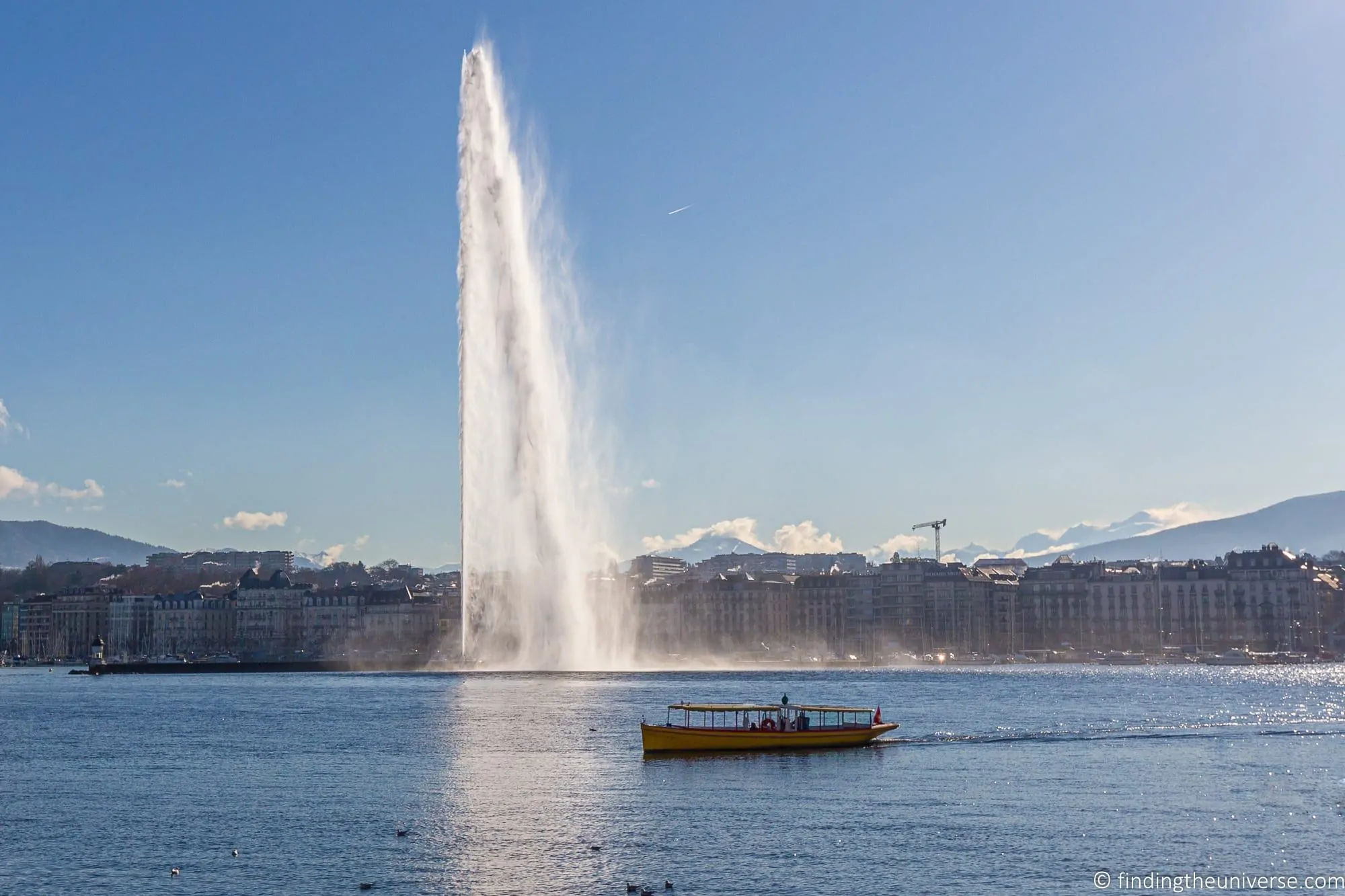
Probably the most iconic landmark in Geneva is the Jet d’Eau. This is a huge water fountain at the southern end of Lake Geneva which fires five hundred litres of water into the air every second, attaining a height of 140 metres (460ft). It’s one of the tallest fountains in the world.
Given the height that the water reaches, as you might imagine the fountain is visible from a great many locations around the city. However, the best views are arguably from the waterfront, where you are closest to the fountain. A word of warning though – a shift in wind direction can cause the water from the fountain to drift over the waterfront, and it’s pretty cold and drenching!
The fountain, which has been operating in its present location since 1891, runs throughout the day all year except when it is particularly cold, or if it is very windy. It also closes for maintenance each year, usually in November (in 2026, that’s 2 November to 3 December). From spring to autumn, it also runs in the evenings and is illuminated. You can see the full schedule here.

Patek Philippe Museum
If there’s one thing that springs to mind when you think of Switzerland, it’s probably watches. Along with cheese and chocolate, watches are one of the top three things many people associate with Switzerland.
As such, a visit to a museum of watches is definitely an appropriate thing to add to your Geneva sightseeing itinerary!
The Patek Philippe Museum is just such a museum. Founded in 1839, Patek Philippe is one of the oldest and most prestigious watchmakers in the world. The company’s luxury watches are worn by celebrities, royalty and world leaders. Patek Philippe also hold records for the most expensive watches ever sold.
As such, I would say that a visit to the Patek Philippe Museum is a good way to get an understanding of the history of watches, watchmaking, and this legendary watchmaker.
The focus of the museum is the incredible collection of timepieces within. There are over 2,000 exhibits to look at! These include watches dating as far back as the 16th century, and the collection even includes the oldest watch ever made. Naturally it also includes a great many Patek Philippe watches, dating from when the company was founded in 1839.
The museum is open for public visits Tuesday to Friday from 2pm to 6pm, and Saturdays from 10am to 6pm. Entry is CHF 10, with under 18s free, and it’s included on the Geneva City Pass. There’s an audioguide which covers a part of the museum, however we would recommend the public guided tour might be a better option. This is because there is a boggling array of timepieces on display, and unless you are a true watch expert, a tour will be the best way to identify some of the real highlights of the collection. You can see full details and opening hours here.
Note that photography inside the museum is not permitted and you must place all your belongings in a locker before you start your tour.
For those of you with a real interest in watchmaking, you might consider a watchmaking tour like this, which will take you on a trip through 500 years of watchmaking history in the city.
We can also suggest ensuring you visit the Passage Malbuisson Clock, found just off Rue de la Croix d’Or, a lovely timepiece which features a troupe of 42 bronze characters and 13 chariots, who sound the hour by performing a little display.

Explore Geneva’s Old Town
Many of the sights and attractions in our guide to things to do in Geneva are found in the old town, which is the historic heart of the city. Whilst you will see parts of it naturally by visiting the attractions in this list, don’t forget to just spend some time wandering the maze of cobbled streets that you will find here.
The old town is set across one of the highest points in the city, with St. Pierre’s Cathedral being the focal point. Surrounding the cathedral is one of Europe’s oldest city centres, with a history that dates back over two thousand years.
A good option for exploring the old town is to take a walking tour like this, which will let you discover all the hidden nooks and crannies, as well as learn about the history of what you are seeing.

Carouge
Cross the Arve river just south of the centre and you reach Carouge, a district that doesn’t feel much like the rest of Geneva at all. It was laid out in the 18th century by Italian architects, back when it belonged to the Kingdom of Sardinia, and it kept the look: low Mediterranean-style houses, courtyard gardens, and streets on a neat grid rather than a medieval tangle.
These days Carouge is known for its independent side. This is where you’ll find artisan workshops, small boutiques, cafés with proper terraces, and regular markets on the Place du Marché. If the luxury boutiques of the Rue du Rhône aren’t your kind of shopping, Carouge is the antidote.
It’s a short tram ride from the city centre, and wandering it takes an hour or two at an easy pace. If you’ve got a spare afternoon on your Geneva itinerary, particularly on a market day, this is a good use of it.
Ethnography Museum Geneva (MEG)
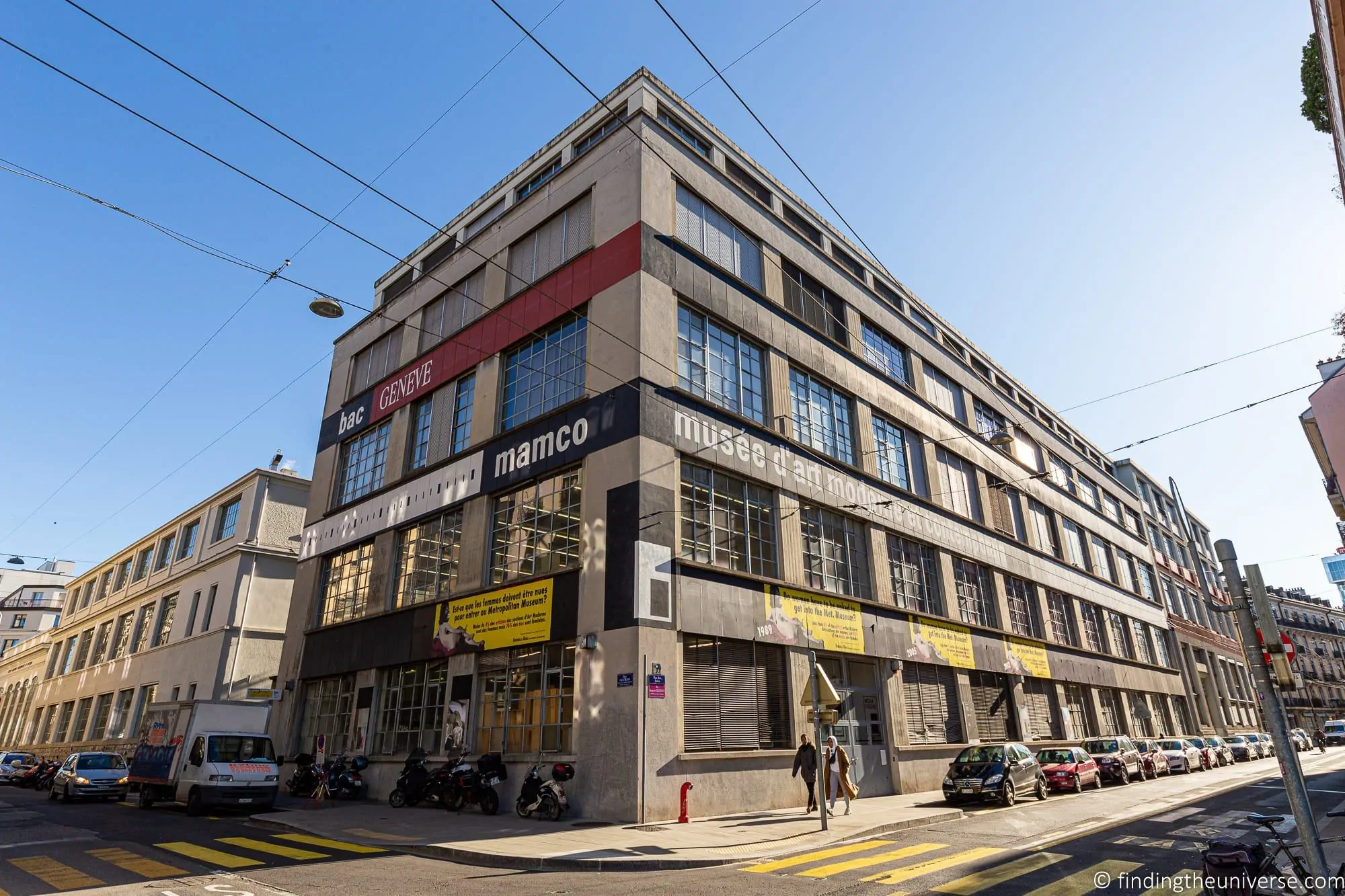
A short walk from the Patek Philippe Museum is the Geneva Museum of Ethnography, or MEG. Founded in 1901, the museum focuses on ethnography, or the study of human cultures. (The neighbouring MAMCO contemporary art museum, previously on this list, is closed for building renovation until 2028, with its programme running at partner venues in the meantime.)
Basically, if you want to learn about the history of cultures around the globe, then you will want to visit MEG. With a huge collection spanning almost 70,000 objects, which cover cultures from around the world, you should find something to interest you!
There’s also an incredible collection of photographs, with almost 18,000 photos in the MEG collection. In the library, you can also listen to music from all over the world.
Of course, there isn’t room to put everything on display at once. The permanent exhibition displays over a thousand objects, which span all the major continents. There are also temporary exhibits.
MEG is open every day except Mondays. Visiting the permanent exhibition is free, as it is at Geneva’s other city-run museums. Temporary exhibits carry a fee, and you can also pay for a guided tour of the permanent exhibition if you wish. Access to the temporary exhibit is also included on the Geneva City Pass.
Museum of the Fire Brigade of the City of Geneva
Geneva has no shortage of museums, which is likely already becoming apparent. This is great, because it means that even if you visit in the cold winter months, you’ll have plenty of things to do in the warmth!
It also means that there’s real variety in the museums on offer. Take for example the Fire Brigade Museum. This is a lovely little museum which charts the history of the fire brigade service in the city.
I have a real soft spot for offbeat museums like this, and I would have to say that this was definitely one of my favourite museums in Geneva. It was put together as a passion project, with experienced firefighters and volunteers putting it all together. When you visit, you’ll be greeted by retired firefighters, who will be able to answer any questions you might have about the impressive collection, which dates from 1840.
The Fire Brigade Museum is always free to visit. If you want to visit, you’ll have to plan carefully as it has fairly limited opening hours, which are Wednesdays and Sundays, from 10am – 12pm, and 1.30pm – 3.30pm. It also closes on public holidays and for the whole of July and August, so summer visitors will need to time this one around their trip. You can see more about opening times and planning your visit on the official site here.

Jardin Anglais & the Flower Clock
The Jardin Anglais, or “English Garden”, is a historic urban park on the shores of Lake Geneva, found just below the old town area. Dating from 1855, the park sits on what was formerly an ancient harbour.
Today, the Jardin Anglais covers an area of around 6 acres on the southern shore of Lake Geneva, meaning it’s right in the centre of the city. It’s home to pretty trees and floral arrangements, as well as statues, pavilions, a fountain, and lovely views of the lake and Jet D’Eau.
Most famously, the Jardin Anglais is home to the L’horloge fleurie, or Flower Clock. Created in 1955 as a tribute to the city’s watchmakers, the flower clock is definitely worth a visit. This fully working clock features thousands of flowering plants and shrubs to denote the time. These are changed as the seasons change in the city.
The flower clock is found in the western side of the park, near the bridge that crosses the Rhône. The whole park is easy to explore on foot. You can also take advantage of the mini electric train that runs here, and offers trips along the lakeside.
The mini train is included as part of the Geneva City Pass, although it is seasonal. You can also book a walking tour like this which includes the mini train.

Cruise on Lake Geneva
Geneva sits at the southern end of Lake Geneva, one of the largest lakes in western Europe, and the largest body of water in Switzerland.
The best way to experience the lake is to take a boat cruise. A number of these operate from Geneva (as well as other points around the lake), of varying lengths from an hour to a full day. There are also fondue cruises and dinner cruises! The main scheduled operator is CGN, whose boats leave from the Jardin Anglais and Mont-Blanc landings. Fares vary by route, and if you have a Swiss Half Fare Card it applies here too.
If you get the Geneva City Pass, it includes CGN’s “Geneva Tour” sightseeing cruise, which lasts around an hour and gives you nice views of the city against an alpine backdrop. Alternatively, you can book a cruise on Lake Geneva here.
There are other options for getting out on the lake if you prefer to propel yourself. For example, you can rent stand up paddle boards or pedal boats to take on the lake (both also included with the Geneva City Pass).
Be aware that water activities and cruises are seasonal and can be weather dependent. When we visited the city in February for example, cruises were running, but they didn’t meet the minimum passenger requirements to make the sailing happen.
If cruises aren’t running, you can still get a taste of a cruise by taking one of the regular shuttle boats, known as mouettes. These run from four different locations in the city and are included on the city transport card. See more on this in the section on getting around Geneva later on in this post.
Bains des Pâquis
On the right bank of the lake, jutting out on a long pier near the Mont-Blanc landing, are the Bains des Pâquis, Geneva’s much-loved public baths. They’ve been here in one form or another since 1872, and they’re about as far from a luxury spa as you can get.
Entry to the pier and swimming area is free. In summer, locals swim in the lake, sunbathe on the concrete, and queue at the buvette, whose fondue has a reputation of its own. In winter, the swimming continues (for the brave), supported by paid saunas, hammams and massages that cost a fraction of what you’d pay at a hotel spa.
It’s also one of the best spots in the city to watch the sunrise over the lake with the Jet d’Eau in the frame, something worth knowing if you’re a photographer. If you want to experience Geneva the way people who live here do, an hour at the Bains des Pâquis will do more for you than another museum.
Brunswick Monument
On a recent trip to Geneva, this huge monument was right outside our hotel, and naturally I was intrigued about what it was. I discovered that it’s a mausoleum, built in 1879, which commemorates the life of Charles II, the Duke of Brunswick.
You might be wondering why there’s a monument to an 18th century German duke in Geneva. Well, when he died, Charles left his entire fortune to the city of Geneva. This amounted to more than 20 million Swiss Francs, an amount which helped fund the construction of many new buildings in the city.
There were two stipulations in his will that the city had to fulfil in order to be eligible for the funding. One was that he got a nice funeral, and the other was that a nice monument be built to commemorate him. The city rather generously spent around 10% of the funds received on the Brunswick Monument, which is a very impressive three-storey marble affair.
So when you see this monument by the lake shore, now you’ll know what it is and why it’s there!

Museum of Art and History
Geneva’s massive Museum of Art and History is one of the largest museums in Switzerland, and the largest art museum in Geneva. It features a collection which was started in 1826, and which covers both art and archaeology.
The art includes fine art pieces from the Middle Ages through to the 20th century, and primarily features works by European artists. These include paintings by Konrad Witz, Rembrandt, and Cezanne. There are also a range of applied artworks, including weapons, musical instruments, and textiles.
The archaeology display includes findings from European prehistory and ancient Egypt (including the obligatory mummy), as well as pieces from Roman, ancient Greek, and other ancient civilizations.
Suffice to say, if you have an interest in European art or archaeology, this is an excellent museum for you.
The permanent collections of the Geneva Museum of Art and History are free to visit. There are also temporary exhibits which require a ticket, and this is free to holders of the Geneva City Pass. The museum is open every day except Mondays, and you can see opening hours and other information for your visit on the official website here.

World-Class Shopping
Geneva is famous for its world class shopping, so if you enjoy a bit of retail therapy, you are definitely going to be in for a treat. In particular, the Rue du Rhône, found between the old town and the Jardin Anglais, is known for its selection of luxury brands.
These include lifestyle brands like Louis Vuitton and Prada, watch brands like Omega and Patek Philippe, and jewellery brands like Tiffany. You’ll also find world class chocolatiers and stores like Timothy Oulton selling unusual antiques.
Suffice to say, if you want to spend a lot of money quite quickly, you should have no problem at all doing so in Geneva! And if your budget doesn’t stretch that far, window shopping here costs nothing, and the boutiques of Carouge offer a more affordable alternative.

Barbier-Mueller Museum
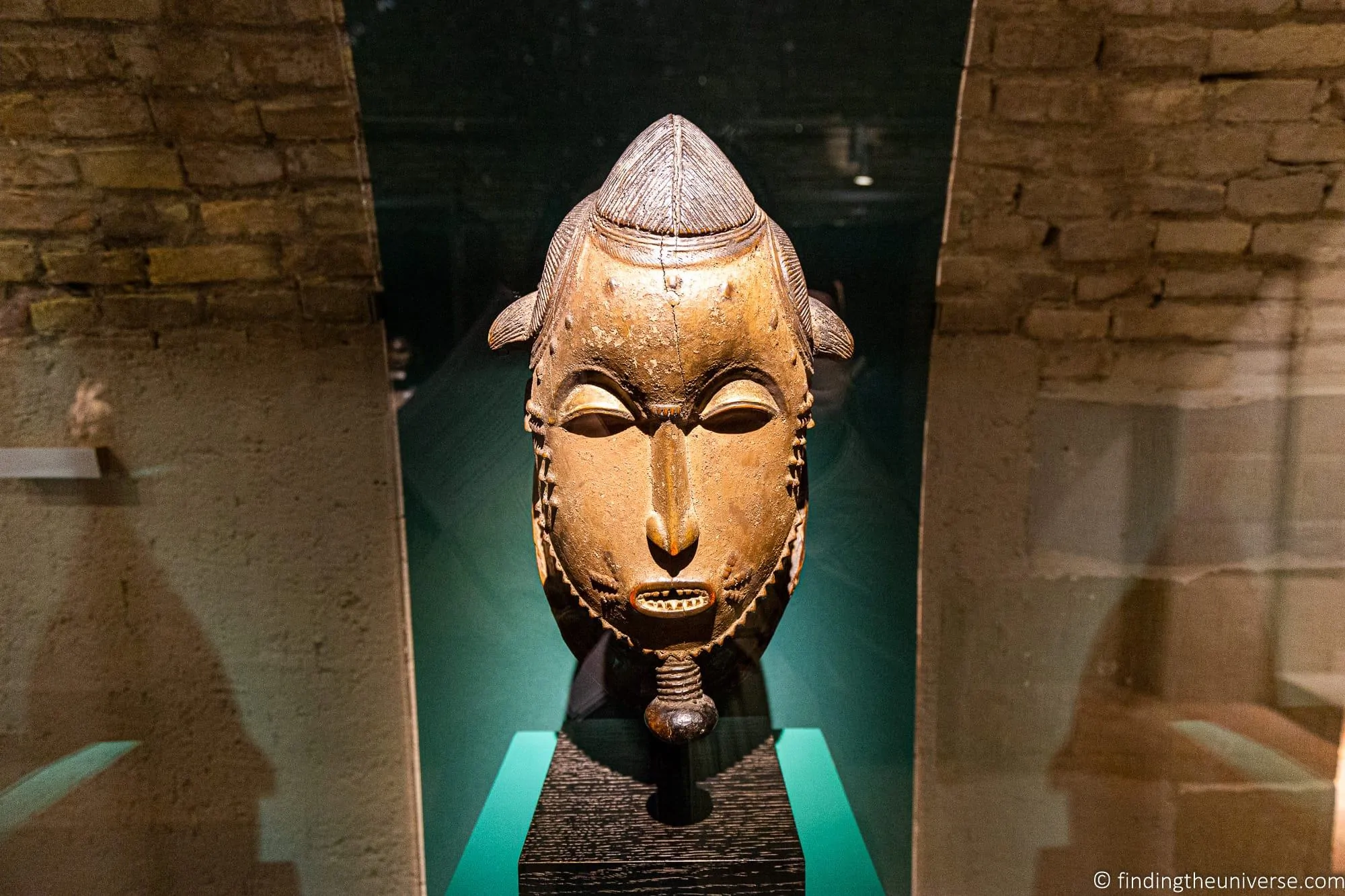
As I’ve already mentioned, Geneva really does have a museum for every interest. The Barbier-Mueller museum is for those of you with an interest in art from Tribal and Classical antiquity, as well as specific artistic objects from so called “primitive” civilizations.
The museum collection, which today features over 7,000 pieces of art, is based on the collection of Josef Muller and his family, who spent decades amassing the many items in the collection. The small museum is only able to display parts of this collection at any one time, but is well worth the visit for those of you with an interest in the subject. Whilst this isn’t an area of particular passion for me, I did very much enjoy visiting the museum nonetheless.
The museum is open every day of the year from 11am – 5pm, and entry is CHF 8. It’s free for holders of the Geneva City Pass. You can see more information on opening times and prices here.
Tavel House
If you want to learn about the history of life in Geneva, then you should plan a visit to Tavel House. This is the oldest home in Geneva, dating from the early 14th century. Across the six sprawling and labyrinthine floors are a huge variety of exhibits depicting life through the ages in the city.
The pinnacle of the collection, in my opinion anyway, is the scale 3D model of the city as it looked in 1850. At this time, Geneva was still a heavily fortified city, and comparing this model with the Geneva you experience today is half the fun of the visit.
Of course, there’s plenty more to see, including paintings, maps, furniture and a whole miscellany of objects from the city. It’s a lovely museum to explore and get lost in, and there’s plenty of information available in an array of languages.
As this is a museum of the city of Geneva, entry to the permanent exhibitions is free. There are also usually paid temporary exhibits which carry a fee, but which are free to holders of the Geneva City Pass. When we visited, there was an excellent temporary installation on the history of photography.
The museum is open from 11am – 6pm every day except Monday. Check the latest information, prices and opening hours here.

International Museum of the Reformation
Depending on your interest in religious history and where you are from, you may or may not be aware that the Reformation was a movement in 16th century Europe which essentially focused on fixing what were seen as problems plaguing the Catholic church.
The Reformation started in Germany and spread throughout Europe, and gave rise to Protestantism, which is today the second largest form of Christianity in the world after Catholicism. Geneva switched to Protestantism in 1536, just before the arrival of John Calvin, and the city would become one of the main centres of Calvinism. You can learn more about the history of the Reformation in Switzerland here.
If religious history interests you, then you will definitely want to visit the International Museum of the Reformation when you visit Geneva. The museum covers the history of the Reformation, from 1517 through to the present day, and reopened in 2023 after a major renovation. It’s found in an 18th century building which stands on the spot where Genevans voted in favour of the Reformation in 1536.
Within, you’ll find around 500 objects that tell the story of the Reformation, including an original manuscript by Martin Luther.
The museum is open 10am – 5pm every day except Mondays, and entry is CHF 13, with an audioguide included in the ticket price. You can see more on the official website here. It’s free for holders of the Geneva City Pass. There’s also a combined Espace Saint-Pierre ticket for CHF 18 which covers this museum plus the cathedral towers and archaeological site, which is the way we’d do it. Note that when we visited photography was not permitted in the museum.

The Reformation Wall
The International Monument to the Reformation, or Reformation Wall, is a large monument found in the Parc des Bastions. This Parc is a lovely green space, and you’ll also find segments of the old city walls here as well.
As the name suggests, the Reformation Wall pays tribute to the Reformation movement, with statues depicting the key individuals, documents and events that contributed to the Protestant Reformation, both in Switzerland and across Europe.
The main focal point of the monument is the set of five metre high statues of William Farel, John Calvin, Theodore Beza, and John Knox, four of the main proponents of Calvinism. The monument is free to visit and open year round. It’s also included on this e-bike tour of Geneva.
St Pierre Cathedral
Built in 1150 as a Roman Catholic cathedral, and converted to a Reformed Protestant Church during the Reformation, St. Pierre Cathedral is the focal point of the old town of Geneva. The church still plays an important part in the life of the city, and the government of Geneva uses the building for its swearing in ceremonies.
The church is most well known as being the home church of John Calvin, one of the leaders of the Protestant Reformation. A small wooden chair used by Calvin is on display in the church. Other highlights include the Chapel of the Maccabees and the beautiful 14th century stained glass.
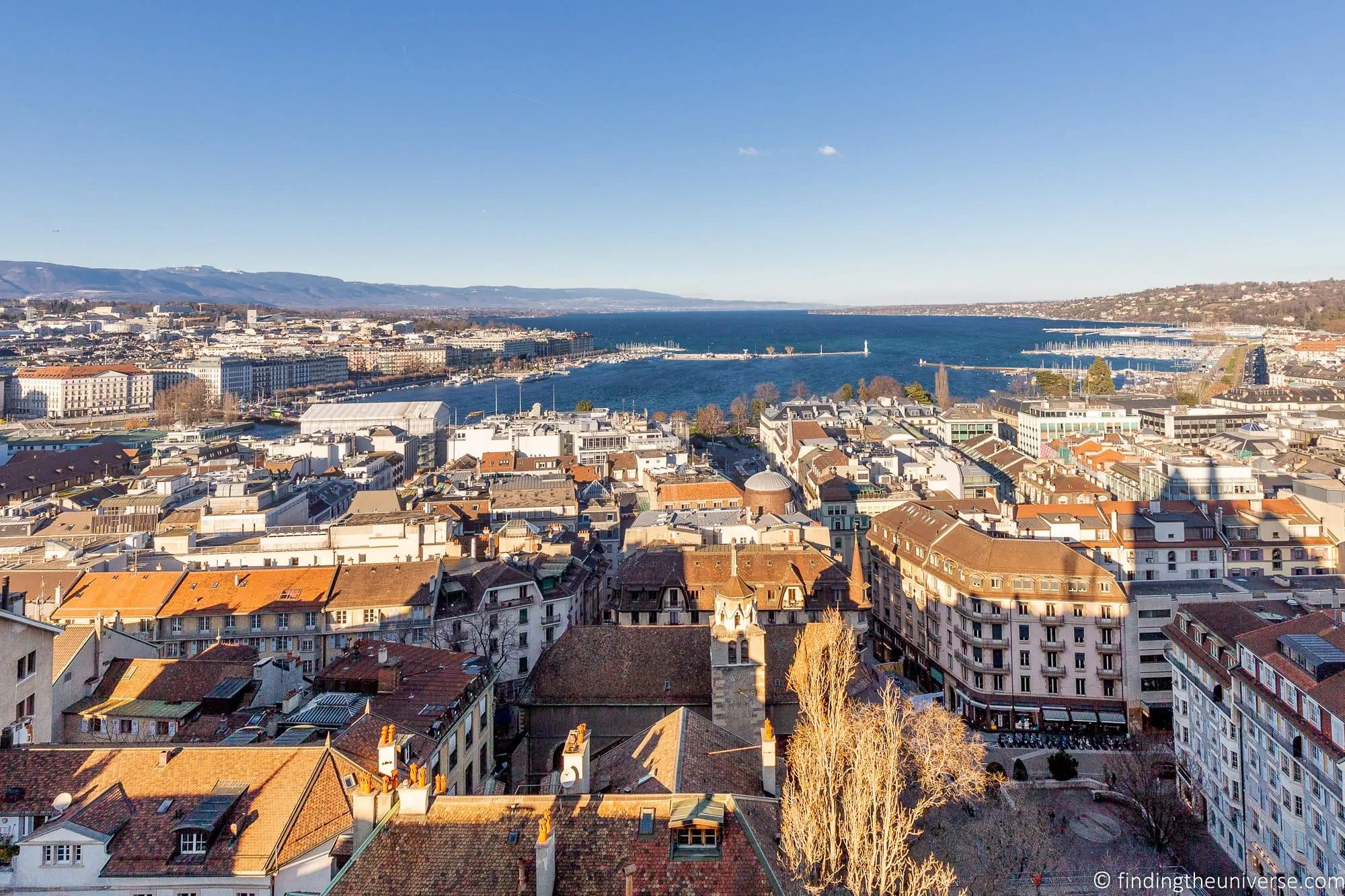
The cathedral is found atop a hill, and there are two towers which can be climbed for a small fee of CHF 5 (free for holders of the Geneva City Pass). The views from the top of the towers are definitely worth the climb up in my opinion!
The cathedral itself is free to visit, and is open Monday to Saturday from 10am to 5.30pm, and Sundays from midday, with tower access closing 30 minutes before the cathedral. There are some exceptions of course, depending on functions, so do check the official website. It’s also part of this city walking tour.
Archaeological Site of St. Pierre Cathedral
The site of the present day St. Pierre Cathedral has been home to a cathedral building since the 4th century. The area has also been inhabited since at least the 3rd century BC. As such, there is a lot of history to be found here, much of it underground.
An excellent way to learn about this history is to visit the Archaeological Site of St. Pierre Cathedral. This is actually found underneath the present day cathedral, in a vast 3,000 square meter site. A visit will take you on a journey through the history of this region and Geneva in general, and includes an excellent video that shows how the site has changed over the centuries.
There’s lots to see here, and we think this will appeal to all ages. If you’re visiting the cathedral, a visit to the subterranean archaeological site next door can really add to that experience. Just be sure to give yourself plenty of time – at least an hour – as there’s a lot to see here. It was much bigger than we expected.
Entry is CHF 8, although it’s free for holders of the Geneva City Pass. You can also purchase the Espace Saint-Pierre combined ticket on site for CHF 18, which includes this site, the St. Pierre towers and the International Museum of the Reformation. The site is open every day from 10am – 5pm. See more on the official website here.

Geneva Parks
If you’re looking for some green spaces whilst you’re in Geneva, you have lots of excellent options. As well as the previously mentioned English Garden and Bastion Park, there are a number of other lovely parks to explore.
These include:
- Geneva’s Botanical Garden, found next to the United Nations. 69 acres of park where you’ll find over 14,000 plant species
- Parc La Grange, the largest park in the city. Found near the lake shore to the north east of the old town. Famous for its roses, also home to two theatres.
- Rousseau Island – a very small, but entirely cute, island park in the middle of the river accessed by the Pont des Bergues
- Eaux Vives Park – found next to Parc La Grange, this is a sloping hillside park topped by an 18th century mansion, offering nice views and pretty water features
There are of course many more to choose from, but this should give you a good starting point. Some of the parks have different activities available throughout the year, from super sized chess boards through to live performances and even ice skating!

Museum of the History of Science
Lovers of science will definitely want to include a trip to the Museum of the History of Science in their Geneva itinerary. Found a little to the north of the city centre close to the western shore of the lake, this museum focuses on the history of science.
Specifically, the museum focuses on the evolution of scientific instruments. So if you’ve ever wondered about the history and advancements in devices like microscopes, telescopes or thermometers, then this is the museum for you!
The Museum of the History of Science is open every day except Tuesdays and certain public holidays, from 10am to 5pm. Entry is free. It’s housed in the Villa Bartholoni in the Parc de la Perle du Lac, which is a pleasant lakeside walk from the centre in itself.
One quick note to avoid confusion: this museum is run by Geneva’s Natural History Museum, whose own much larger building south of the old town is closed for major renovation and isn’t due to reopen until 2028. The History of Science museum is very much open.
International Museum of the Red Cross and Red Crescent
The International Red Cross and Red Crescent movement started in Geneva in 1863 with the founding of the International Committee of the Red Cross. Today, this humanitarian movement has almost 100 million volunteers, members and staff worldwide, and are well known for their efforts to provide humanitarian aid to those in need around the world.
If you’d like to learn more about this movement, its history, the work it has done and the people it has helped, then there’s no better place than the International Museum of the Red Cross and Red Crescent in Geneva. This museum has a number of exhibits which detail the history of the organisation, and which take you on a thought provoking and emotional journey through some of its work over the years.
The museum is open every day except Mondays and some public holidays, with late opening until 8pm on Thursdays. Entry is CHF 15, but it’s included on the Geneva City Pass. See more on pricing and opening hours on the official website here.

United Nations
There are four major United Nations offices around the world, including the headquarters of the UN in New York City. The office in Geneva is the second largest of these offices, and it is possible to visit on a tour and learn about the work that goes on here as well as see some of the more impressive and important rooms.
Tours run on weekdays throughout the year and last around an hour, with English and French always available and other languages on request. An adult ticket is CHF 25, and booking is online only, through the official UN Geneva website. Tickets for each month are released on the 20th of the month before, and because ongoing renovation work limits how many tours run, they sell out quickly. If the UN is a priority for your visit, book on the day tickets are released.
Allow extra time for security on the day – arriving 30 minutes before your tour is the official advice, and based on the lines we saw, sensible advice too. You can read more about tour times and booking on the official website here.

The Broken Chair
When you visit the United Nations, you won’t be able to miss the huge statue of a chair on the plaza outside the entrance. The chair, designed by artist Daniel Berset, is notable for having a broken leg, and is called the Broken Chair.
This sculpture, which is 12 metres high and constructed from five and a half tonnes of wood, symbolises opposition to landmines and cluster bombs, which are known for causing both death and life changing injuries in civilian populations, even long after conflicts have ended.
The chair was initially installed prior to the signing of the Ottawa Treaty on landmines in 1997. Today the treaty has 162 states parties, but several significant countries never joined it, including China, Russia and the USA, and in late 2025 and early 2026 a handful of European states became the first to withdraw from it.
The chair therefore remains in place, as a reminder to both politicians and other visitors to Geneva that the world still has a long way to go on the issue of landmines and cluster bombs.

Ariana Museum
Whilst you are in the area of the United Nations and the Museum of the Red Cross, you might want to make a visit to the Ariana Museum. This museum is also known as the Swiss Museum of Ceramics and Glass, which should give you a hint as to what it’s about.
The museum is the only museum in the country dedicated to objects created in kilns, and it has a spectacular collection of over 27,000 items, spanning seven centuries of ceramics.
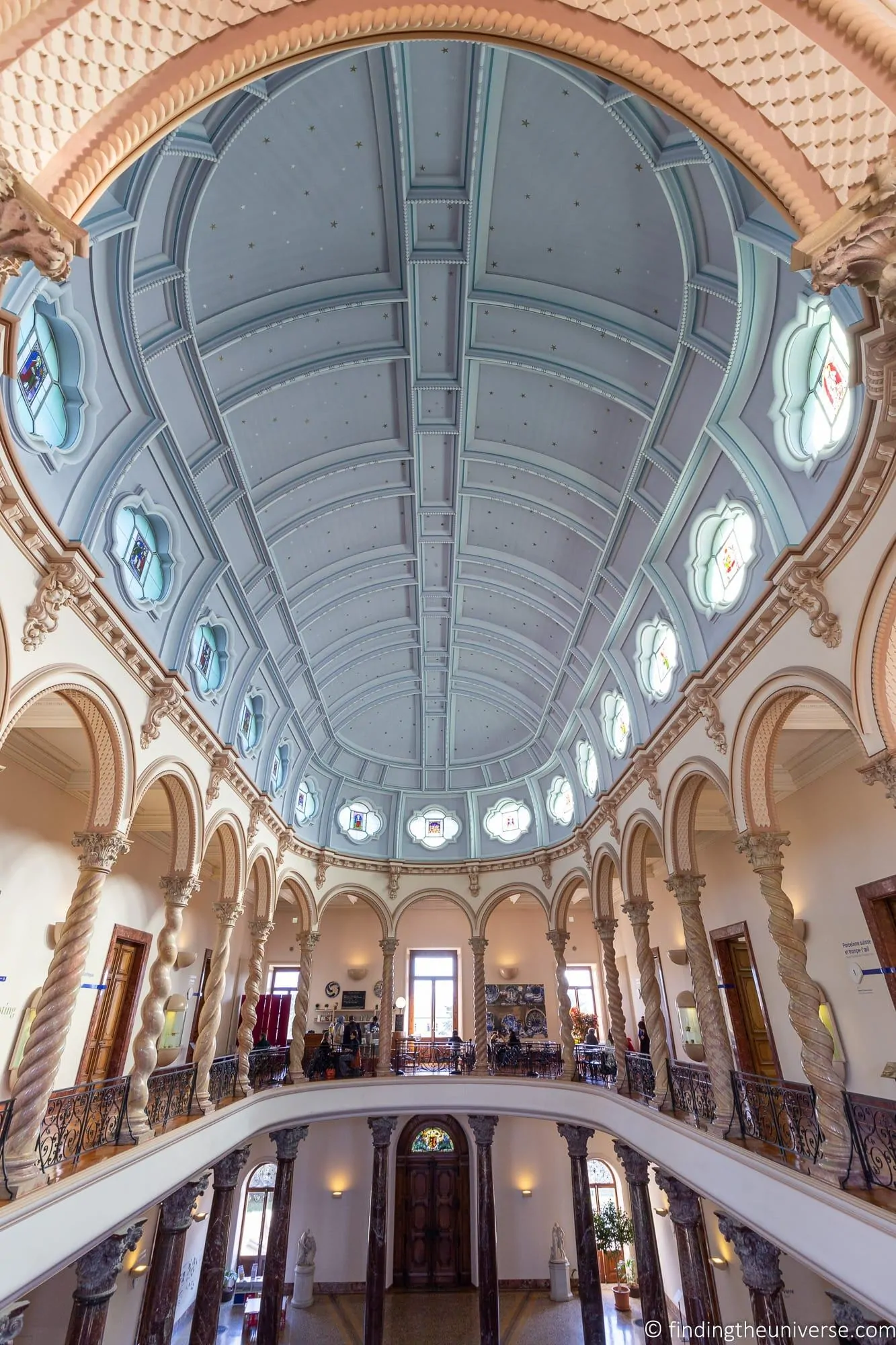
Suffice to say, lovers of ceramics will definitely want to stop in. However, even if you’re not a huge fan of ceramics and glass we’d recommend a visit. The building itself, which was purpose built as a museum in the late 19th century, is marvellous to behold, with a gorgeous central atrium.
The main part of the Museum is free to visit, with the temporary exhibits carrying a small fee of around CHF 5. Holders of the Geneva City Pass get free entry to the temporary exhibits.
The museum is open every day except Monday and some public holidays. There’s also a restaurant on-site where we had a lovely lunch. See more on pricing and opening hours on the official website here.
CERN
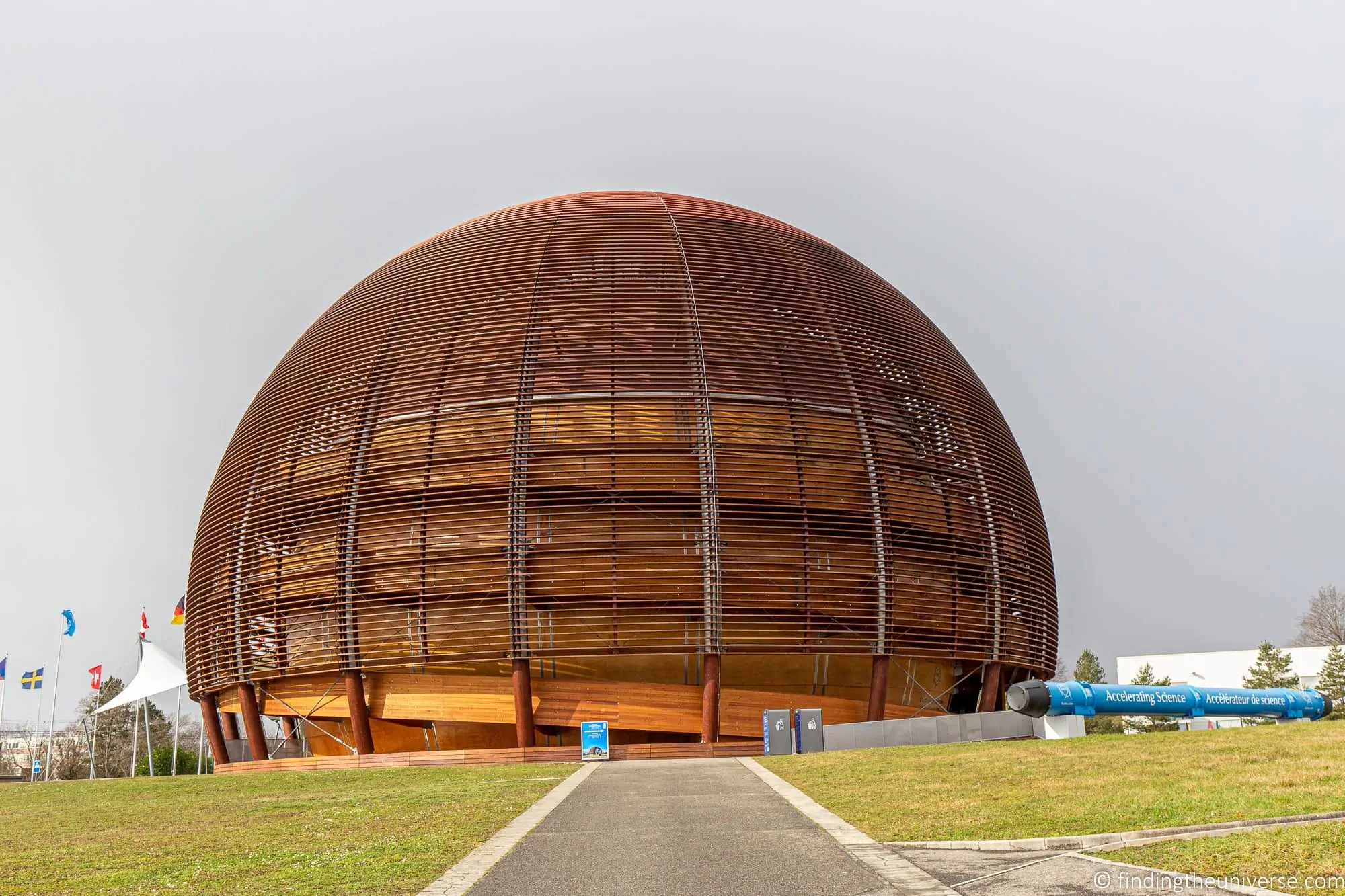
CERN, also known as the European Organization for Nuclear Research, is one of the most well known research organizations in the world. They are the folks behind the massive Large Hadron Collider, the 27km long particle accelerator which is helping us to understand fundamental questions of physics.
CERN is also known as being where Tim Berners-Lee was working when he came up with the idea of the world wide web, and CERN was where the first web server in the world was put live.
Naturally, those of you with an interest in modern day science will want to visit CERN, which is just outside the city centre and quite close to Geneva airport.
The way you visit changed in October 2023, when CERN opened the Science Gateway, a big new visitor centre designed by Renzo Piano. It houses exhibitions, immersive shows and hands-on lab workshops, and it replaces the older Microcosm exhibition you may have read about elsewhere.
Visiting the Science Gateway is free. It’s open Tuesday to Sunday from 9am to 5pm, and while you can just turn up, entry depends on capacity, so we’d recommend reserving a free ticket online, which you can do up to about a month in advance and which guarantees your entry. Free guided tours of CERN also run, and these are allocated on site on the day – they fill up fast, so go early and register for a tour as your first move when you arrive. You can find everything you need to plan a visit on the official website here.
You can easily reach CERN by public transport from Geneva. Just take tram 18 from Geneva Cornavin train station, and get off at the CERN stop. This will take around 20 minutes.
Mont-Salève Cable Car
I have already mentioned Geneva’s setting, on the shore of Lake Geneva, surrounded by mountains.
Well, if you’d like to experience some of these lovely surroundings, a good way to do that is to take a trip on the Mont-Salève Cable Car.
Found less than 10km to the south-east of Geneva, or around a 15 minute bus ride on the number 8 bus, this cable car will transport you up Mount Salève. At 1,100 metres (3600ft), the views from the top will let you see right across Geneva and the lake. On a clear day, you’ll be able to see Mont Blanc! There are also lots of hikes in the area, if you feel like getting some fresh air and exercise, plus a rooftop viewing terrace at the top station.
One quirk: the cable car’s base station is actually over the border in France, so fares are in euros. A return trip is €18 for adults (€13 one way), and the trip up and down is included if you have the Geneva City Pass. It runs daily through the summer season, but drops to selected days a week in winter, so you’ll want to check the timetable and fares before heading out here, which you can do on the official website here.
Try Local Swiss Dishes and Foods
Switzerland is home to a wide range of delicious food, and a visit to Geneva is a wonderful opportunity to try them. Obviously, the most famous food that you will likely already be aware of is fondue and you just can’t come to Switzerland without trying it. Look out too for filets de perche, the lake perch dish that’s a Lake Geneva speciality. On our visits to Switzerland we’ve eaten at everywhere from burger joints to Michelin-starred restaurants, and sampled cheeses, meats and chocolates!
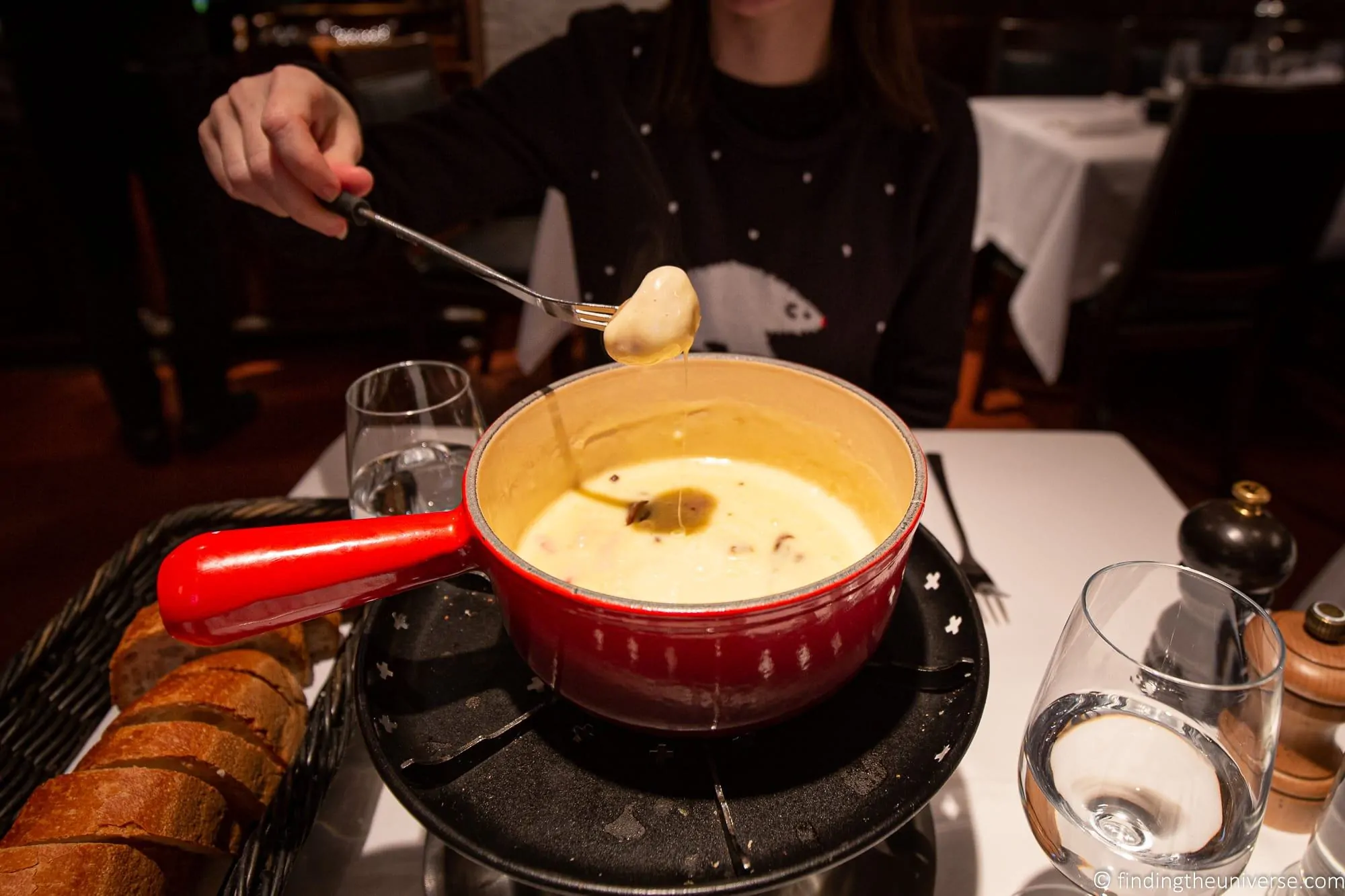
There are lots of good options for food in Geneva, including many great locations for fondue. If you find yourself in the old town (which you will if you’re following our guide to things to do in Geneva!), then we can definitely recommend the Restaurant Les Armures.
We happened upon this by accident following our visit to Tavel House (it’s directly opposite), and had a really excellent meal (of course including fondue). The service staff were also excellent, and even gave me tips on how to best enjoy my fondue.
There are other options for sampling Swiss food of course. This is a well rated tour of some of the best chocolatiers in Geneva, for those of you with a sweet tooth. You can also do a food tour like this, and try a range of dishes.
Map of Things to Do in Geneva
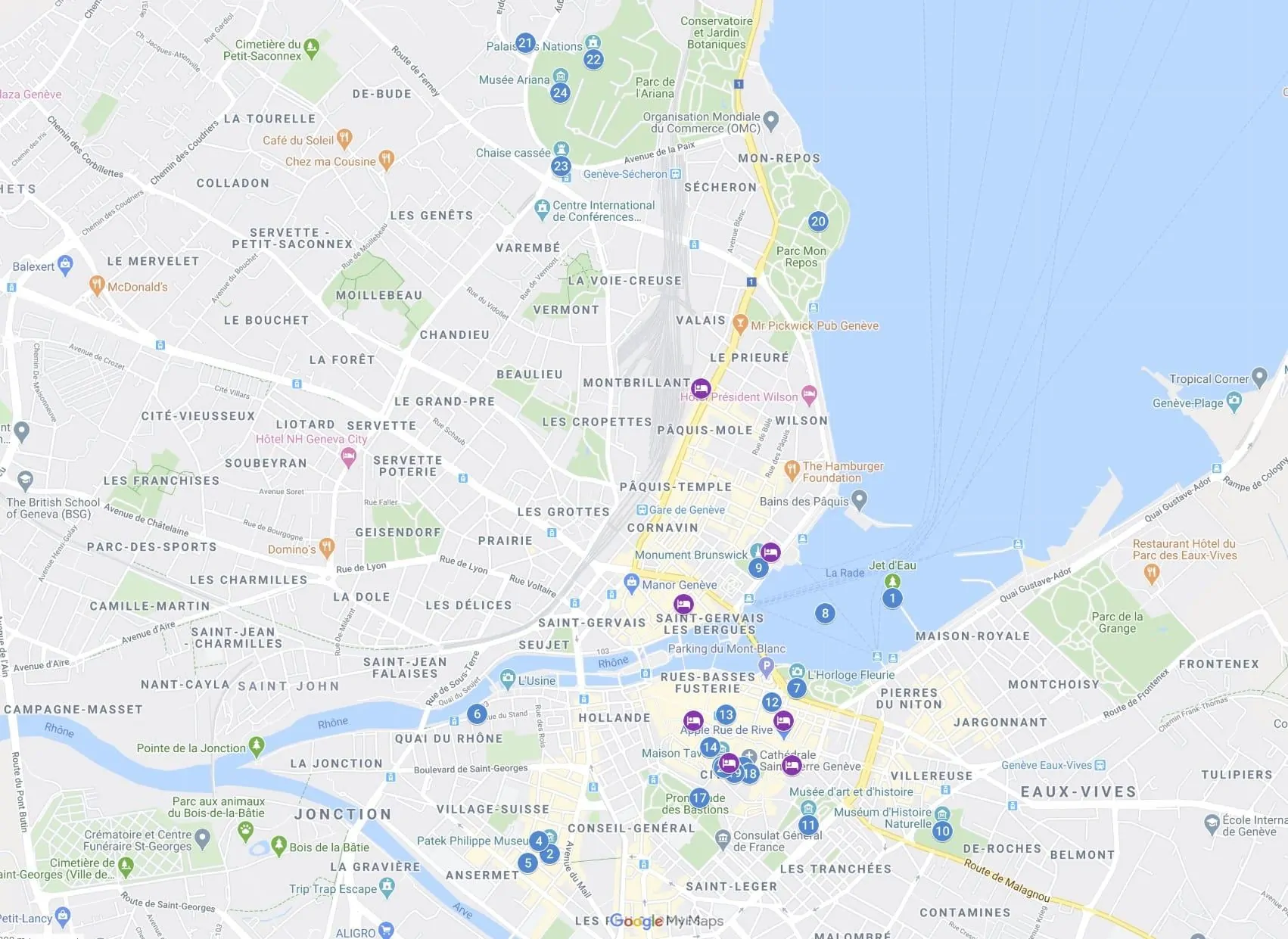
To help you visualise all our recommendations for things to do in Geneva, we’ve put together this map. You can also see this on Google Maps here, which includes the attractions further outside the city like CERN.
Free Things to Do in Geneva
Geneva’s reputation as an expensive city is deserved, but a surprising amount of the city costs nothing at all, something we wish we’d understood on our first visit. If you’re on a budget, you can fill two days here without paying for a single attraction.
Start with the museums. The permanent collections at the museums run by the City of Geneva are free, every day. That includes the Museum of Art and History, Tavel House, the Ariana Museum, MEG and the Museum of the History of Science, all covered above. Most of these also open their paid temporary exhibitions for free on the first Sunday of the month. The little Fire Brigade Museum is free all the time.
Then there’s the lake and everything around it. The Jet d’Eau, the Flower Clock, the old town, the Reformation Wall and all the city parks are free. Entry to the Bains des Pâquis is free too, so a swim in the lake costs nothing. In winter, the outdoor ice rink at Parc des Bastions is free to use, with skate hire costing just a couple of francs.
A few more money-savers we’ve picked up:
- Geneva’s public drinking fountains carry potable water, so bring a bottle and skip buying drinks. Ours came with us everywhere.
- The mouettes, the little yellow shuttle boats that criss-cross the harbour, are covered by the free Geneva Transport Card you get with your accommodation. It’s a mini lake cruise that costs nothing.
- The supermarkets (Migros and Coop) do good picnic supplies. A picnic in the Jardin Anglais or Parc La Grange with a lake view beats a mediocre CHF 30 lunch.
- Window shopping on the Rue du Rhône is free, which is fortunate, because for most of us that’s the only kind of shopping happening there.
How to Get Around Geneva
Geneva is an easy city to get around.
First, much of the city is easy enough to access on foot. Distances aren’t so great, and many of the attractions in Geneva are close to one another.
Of course, there are some exceptions, such as CERN, the Red Cross Museum, the UN and the History of Science Museum which are easier to reach by public transport.
The good news is that as a visitor to Geneva, it is very easy to get free public transport in the city.
First, holders of the Geneva City Pass can choose the version with public transport included, which covers the whole Zone 10 network.
Second, visitors staying at a registered hotel, hostel or campsite get the free Geneva Transport Card for the length of their stay. This is digital these days – your accommodation sends you a link by email up to three days before you arrive, and the card covers buses, trams, trains and the mouettes boats in Zone 10, including the ride in from the airport. If you haven’t received it by check-in, just ask at reception.
Of course, we appreciate some folks might prefer to stay in an apartment rental or similar, and might not take advantage of the Geneva City Pass. In this case, you can buy tickets either on a pay as you go basis or as a day card. These can be purchased from ticket machines, which are found at bus and tram stops.
In practice though, we think most visitors should qualify for free public transport in the city, either through their accommodation provider or through the pass.
If you are arriving into Geneva by plane, all arrivals qualify for free public transport into the city. You can pick up your free ticket from the machines in the arrivals hall where you pick up your luggage, before you exit the arrivals area. Alternatively, you can arrange private transfers here.
Finally, we’d generally advise against hiring a car to get around Geneva. There’s limited free parking, and most trips won’t require a car. If you are visiting Geneva as part of a longer trip to Switzerland, then consider hiring the car only for the time you are outside the city. On a recent trip, this was what we did – we collected our car at Geneva airport, toured Switzerland, returned the car to the airport, and then spent a few days sightseeing in Geneva without the hassle of the car.
If you are collecting a rental car at Geneva Airport, you need to be aware that there are two collection points for car rentals, one for arrivals who are travelling to France, and one for arrivals travelling to Switzerland.
For Switzerland, car rental is located on the Arrivals level. Head towards the post office (signs for La Poste). The return point is the car park area P51 (lower level). The French car rental is on the other side, follow the signs for “destination France”.
As with many cities around the world, you can also take a Hop on Hop off sightseeing bus tour in Geneva. This will take you to all the highlights in the city, with audio commentary that tells you everything you need to know about what you are seeing. We always enjoy these bus rides, as they are a relaxing way to see a lot, and also a handy way to get around. The open bus tour is included on the Geneva City Pass.

Getting To and From Geneva
Geneva is a well connected city, whatever your preferred method of transport might be.
If you’re flying, Geneva airport has international flight connections to locations all around the world. Getting to and from Geneva airport is very easy – there’s free public transport for arrivals (just pick up your free ticket before you leave the arrivals area), and both buses and trains provide services. The train is likely the easiest option, but depending on the location of your hotel a bus might get you closer to where you need to be.
Geneva also has a major train station, with excellent connections to both the rest of Switzerland and much of Europe. So arriving by train is definitely possible, and the train station is very central.
You can check train schedules and purchase tickets for both Swiss and European trains on the Trainline website.
You can also travel to and from Geneva by bus, both within Switzerland and further afield. We recommend checking Flixbus for international bus connections. Their buses have large comfortable seats, bathrooms, wi-fi and power outlets. You can also check bus times on the Trainline website.
When to Visit Geneva
Geneva is a city that can be visited at any time of year, and we’ve done both ends of the calendar ourselves. But winter and summer here are quite different trips, so it’s worth deciding which one you actually want.
Summer, roughly June through August, is lake season. Daytime highs run around 25 to 27°C, the Bains des Pâquis is in full swing, cruises run frequently, and the parks fill with picnics. This is Geneva at its most fun, and also at its busiest and most expensive for accommodation. May and September bring slightly cooler days, fewer people and better hotel rates, and if you made us choose one month for a first visit, we’d say June or September.
Winter, December through February, sees daytime highs of around 4 to 6°C with lows around freezing. That sounds bleak, but Geneva does winter rather well: the museum list above keeps you warm and busy, the free ice rink at Parc des Bastions runs from late November to early March, and in mid-December the city celebrates the Escalade, its gloriously odd festival marking the failed 1602 invasion by Savoy, complete with costumed processions and chocolate cauldrons. The Geneva City Pass is also around 20% cheaper in winter. Two things to know: cruises can be cancelled if too few passengers book (this happened to us in February), and the Jet d’Eau usually shuts down for maintenance for several weeks in November.
March and April sit in between – changeable weather, but quiet, and fine for a museums-and-food city break. October is similar, with autumn colour in the parks as a bonus.
If your trip to Geneva is part of a longer visit to Switzerland, then the time of year will depend on the activities you want to do in the rest of the country. Snow sports mean winter, obviously. Hiking and warmer weather mean summer. Geneva itself will work either way.
Where to Stay in Geneva
As a major city, Geneva has plenty of accommodation options. These vary across a range of budgets and styles. In our experience, hotels which are closer to Lake Geneva, and have lake views, tend to be more expensive than those which are further back from the lake. Rooms with views of the fountain in particular have a price premium attached.
On the neighbourhood question: the old town puts you among the sights, the Pâquis district near the station is livelier and better value (and handy for the Bains des Pâquis), and Eaux-Vives on the left bank is quieter and close to the big parks.
Here’s an overview of some great options for your trip to the city, including our favourite hotel in Geneva. These are approximately ordered by price, from lower to higher, although you’ll need to check prices for your trip of course.
- City Hostel Geneva – Just 800 yards from the Lake and conveniently located for the train station, this is one of the more central and well-reviewed hostels in the city. Both dormitory and private rooms are available, and kitchen facilities are available. A well located budget pick for Geneva.
- Hotel Central – Very centrally located, this is a well reviewed 2* hotel within walking distance of the majority of Geneva’s attractions. Rooms range from fairly basic options with shared bathrooms, through to larger options with en-suite facilities. An excellent location for those on a budget.
- Chez Maman – Found around a 20 minute walk to the west of the old city centre, this is a good value 3* boutique hotel offering private soundproofed en-suite rooms and a restaurant. There’s also free parking, if you are travelling with a car.
- Hôtel Longemalle – just moments from Lake Geneva and the flower clock, this is a lovely 4* hotel with private en-suite rooms featuring period furniture. It’s great value for the location and quality, and it gets excellent reviews.
- Hotel d’Allèves – 100 yards from Lake Geneva and just five minutes walk from the train station, this is a well reviewed 18th century 4* hotel. Rooms are all en-suite and breakfast is available.
- Les Armures – right next to St. Pierre Cathedral, one of our favourite restaurants in Geneva is also a well-reviewed 5* hotel. Rooms are luxuriously decorated and the location is wonderful for exploring the old town.
- Hotel Beau Rivage Geneva – This 5* hotel found right on the Lake is our favourite hotel in Geneva. Rooms are spectacular, and many of them offer views of the fountain. Its Michelin-starred restaurant, Le Chat-Botté, is closed for renovation until 2027, with the same kitchen team cooking at the in-house Rivage Café in the meantime. If you are visiting Geneva looking to spoil yourself, this hotel is still the one to go for!
Of course, there are lots more options in Geneva for your stay. You can see more listings on booking.com here. If you’re looking for an apartment rental, see a full list of options on Vrbo here.

Recommended Tours in Geneva
We always enjoy taking a tour when we visit a city, be it a walking tour, a cycling tour, or something more adventurous like a Segway tour. Tours can be a great way to quickly get to know a city, and we often find they are a great introduction when visiting somewhere we’ve not been before.
Geneva has a lot of excellent tours to offer, here are some to consider for your visit.
- A 1 hour cruise on Lake Geneva
- A 2 hour walking tour of the Old Town and international district of Geneva
- A 2.5 hour guided e-bike tour of Geneva, including the lake shore and Old Town
- A 3 hour gourmet food and drink walking tour of Geneva, which includes a range of food and wine tastings
- A 3 hour walking tour sampling some of the finest chocolate Geneva has to offer
As you can see, there are plenty of tours to choose from in Geneva! You can see more options on GetYourGuide here and Viator here.
Holders of the Geneva City Pass also have access to a number of free tours which are included with the pass, including some guided walking tours.
Day Tours from Geneva
As this guide has hopefully shown, there’s plenty to see and do in Geneva. However, there’s also a great deal to experience around the city, meaning there are some great day tours you can take from Geneva.
These include trips to pretty lakeside towns like Montreux, Nyon and Lausanne, trips to the Alps, as well as cheese, wine and chocolate tasting excursions.
Here are several options to consider.
- This full day tour of the Swiss Riviera has you trying wine in Lavaux and visiting Montreux, with the option of a lake cruise or a visit to the 11th century Chillon Castle.
- A full day tour to the famous mountain resort of Chamonix Mont Blanc in France, with time to explore Chamonix, and the option to take the Aiguille du Midi cable car up to 3,842 metres for close-up views of Mont Blanc, Western Europe’s highest mountain
- This full day tour to the Gruyères region, famous for its cheese and beautiful fortified hilltop town. Includes time in the town as well as a tour of a chocolate factory, although note that this tour doesn’t include the cheese factory
- This half day tour to Annecy, considered the Venice of the Alps.
- This full day tour to Interlaken, including a ride on the Schilthorn cable car, for spectacular views of the alps
- This private full day trip to Gruyères visits both the cheese and the chocolate factory, as well as giving you time to explore the beautiful town itself
- A full day trip to Gruyères which includes a panoramic train ride, time in Gruyère village and a visit to the cheese factory and chocolate factory. Note the Golden Panoramic train section only runs from around May to October, so check the inclusions if you’re travelling in winter
- Lausanne – it’s easy to visit Lausanne as a day trip from Geneva. Trains run regularly and take 40-50 minutes. Then you can self-guide yourself around this pretty lake-side city, or book a city walking tour like this to see the highlights with a guide. Book your train in advance here.

Is the Geneva Pass Worth It?
Like many cities around the world, Geneva offers a city pass, now sold as the Geneva City Pass (you’ll still see it called the Geneva Pass). It offers free and discounted admission to 60 attractions and activities, including many of the items in this guide, plus free tours and rentals such as a lake cruise, pedal boats, the open bus tour and some guided walking tours. There’s also a version with Zone 10 public transport included.
We bought two 48 hour passes on a previous visit, used them constantly, and they saved us a decent amount of money. But whether the pass makes sense for you depends entirely on what kind of trip you’re planning, so instead of a vague answer, here are the current prices (as of summer 2026) and some worked examples.
| Pass length | Standard price | With public transport | Winter price (roughly late Nov to end Feb) |
|---|---|---|---|
| 24 hours | CHF 30 | CHF 35 | CHF 24 |
| 48 hours | CHF 40 | CHF 50 | CHF 32 |
| 72 hours | CHF 50 | CHF 65 | CHF 40 |
A quick note on the transport version: if you’re staying at a hotel or hostel, you get the free Geneva Transport Card anyway, so the standard pass is usually the one to buy. The transport version mainly makes sense for apartment stays.
Now the scenarios, using the actual admission prices from this guide:
The one-day museum blitz. Patek Philippe Museum (CHF 10) + Museum of the Reformation (CHF 13) + cathedral towers (CHF 5) + archaeological site (CHF 8) comes to CHF 36 against a CHF 30 pass, and that’s before you add the mini train or an hour’s cruise. The pass wins, though not by a landslide. If you’d rather do just the cathedral cluster, the CHF 18 Espace Saint-Pierre combined ticket beats everything.
The classic 48 hours. Day one: the museum blitz above. Day two: Red Cross Museum (CHF 15) and the included lake cruise (CHF 19 if bought separately). That’s CHF 70 of entries against a CHF 40 pass. This is the trip the pass is built for, and it’s a clear win.
The budget weekend. Free municipal museums, the old town, the Reformation Wall, the Bains des Pâquis, a mouette ride on your free transport card, and a picnic in the park. Total attraction spend: CHF 0. Skip the pass entirely, and you’ll still have a proper Geneva trip. This is doable here in a way it just isn’t in most expensive cities.
The winter city break. The winter discount changes the maths: a 48 hour pass at CHF 32 needs barely three paid entries to pay off, and museums are exactly what a Geneva winter day is for. Add the free Bastions ice rink and the pass-plus-free-stuff combination works really well.
Two caveats before you buy. First, check opening days: many Geneva museums close on Mondays, so a Sunday-Monday pass window is a bad deal. Second, remember the permanent collections at the city-run museums are free anyway – the pass pays off on the private museums (Patek Philippe, Red Cross, Barbier-Mueller, Reformation), the towers, the cruise, the Salève cable car and the tours, not on things that were free to begin with. And if your visit lands on the first Sunday of the month, factor in that many temporary exhibitions are free that day too.
Otherwise, for a first visit hitting the headline sights, we think it’s one of the better value city passes we’ve used. You can buy yours in advance here.
What We’d Do Differently in Geneva
A few lessons from our own visits that should save you some time and money:
Book the UN and CERN before you book anything else. Both are free or cheap, both are highlights, and both sell out or fill up well ahead. UN tickets drop on the 20th of the month before your visit; CERN reservations open about a month out. We’d sort these before restaurants, tours, or anything else with flexible timing.
Don’t build a Monday around museums. Most of the big ones close. Mondays are for the old town, the lake, Carouge and the Salève.
Buy the pass before you arrive, and start it on a full day. The clock runs from first use, so activating a 24 hour pass at 4pm wastes most of it.
Don’t hinge a winter day on a cruise. Ours didn’t sail because too few people booked. Have a museum as your backup and you lose nothing.
Check the first-Sunday trick before paying for exhibitions. If you’re in town on the first Sunday of the month, the temporary exhibitions at the municipal museums are mostly free, which stacks nicely with the permanently free collections.
Frequently Asked Questions About Visiting Geneva
Here are answers to some of the questions we get asked most about visiting Geneva.
Is Geneva worth visiting?
Yes, we think so, as long as you come for what Geneva actually is: a lakeside city of museums, food and international institutions, rather than an alpine postcard. The Jet d’Eau, the old town, CERN and the UN are all worth your time, and the Mont-Salève cable car gets you mountain views within half an hour of the centre.
If your Switzerland trip is purely about mountain scenery, give Geneva a day at the start or end. If you enjoy city breaks, give it two or three.
How many days do you need in Geneva?
Two days covers the highlights: one for the old town, cathedral and lakefront, one for the international quarter with the UN and Red Cross Museum. A third day adds CERN, a lake cruise, or a day trip to Annecy, Chamonix or Lausanne. We’d suggest two nights as the sweet spot for a first visit.
What is Geneva famous for?
Geneva is best known as a centre of diplomacy, hosting the European headquarters of the United Nations and the birthplace of the Red Cross. It’s also famous for watchmaking (Patek Philippe and Rolex are based here), the Jet d’Eau fountain, Lake Geneva itself, and its role in the Protestant Reformation as the home of John Calvin. CERN, just outside the city, is where the world wide web was invented.
Is Geneva expensive to visit?
Yes. Geneva is one of the more expensive cities in Europe for eating out and accommodation. But it’s surprisingly kind to budget travellers in other ways: public transport is free for most visitors, the city-run museums have free permanent collections, and the lake, parks, old town and Bains des Pâquis pier cost little or nothing. With a picnic habit and the free museums, a day here can cost less than you’d think.
Is the Geneva City Pass worth it?
For a first visit hitting the paid sights, usually yes. A 48 hour pass costs CHF 40 (CHF 32 in winter), and three to four paid attractions cover it: the Patek Philippe Museum, Red Cross Museum, cathedral towers and a lake cruise together cost more than the pass. If you’re mainly planning to visit the free municipal museums and enjoy the lake, skip it.
Can you visit CERN for free?
Yes. CERN’s Science Gateway visitor centre is completely free, open Tuesday to Sunday from 9am to 5pm. You can reserve a free ticket online up to about a month ahead, which guarantees entry. The free guided tours are allocated on site on the day and fill up quickly, so arrive early and register for a tour first. Tram 18 from Cornavin station takes you straight there in around 20 minutes.
Is Geneva walkable?
Very. Most central sights, from the old town to the Jardin Anglais and the Bains des Pâquis, are within a 20 to 30 minute walk of each other. For the further-out sights like the UN, Red Cross Museum and CERN, trams and buses are frequent, and nearly all visitors travel free using the Geneva Transport Card provided by their accommodation.
What can you do in Geneva for free?
Quite a lot. The permanent collections at the Museum of Art and History, Tavel House, MEG, the Ariana Museum and the Museum of the History of Science are all free, as is the Fire Brigade Museum. The Jet d’Eau, Flower Clock, old town, Reformation Wall, parks and the Bains des Pâquis pier are free too, and the CERN Science Gateway costs nothing. In winter, add the free ice rink at Parc des Bastions.
Is Geneva better in winter or summer?
They’re different trips. Summer (June to August) is best for the lake: swimming at the Bains des Pâquis, cruises, and long evenings in the parks. Winter (December to February) suits a museums-and-fondue city break, with the Escalade festival in mid-December, the free ice rink, and a roughly 20% discount on the Geneva City Pass. For a first visit, we’d lean towards June or September.
Practicalities for Visiting Geneva
Language
There are 4 national languages in Switzerland. Geneva is in the French speaking part. In our experience most people working with tourists speak good English, and most museums have signs in English as well.
However, we think it’s a good idea to learn some basic French phrases for your trip, so at least you can handle greetings and directions. We also think it’s polite to always try learning a few phrases when travelling to a country with a different language to our own, and locals usually seem to appreciate the effort!
Electricity
Switzerland operates on 230 volts / 50 Hz and uses Type C or Type J plugs that fit into recessed wall sockets. If your devices do not have Type C or Type J plugs, you will need to take some plug adapters such as these.
If you are travelling from a country with 120v voltage (such as the United States or Canada), you will want to make sure to only bring electronics that will support 220v voltage. You can learn more in our travel adapter guide.
Safety
Switzerland is one of the safest countries in the world, although of course we always recommend you take the usual precautions with your belongings and personal safety. We have never encountered any problems travelling in Switzerland or Geneva, but it’s always best to be on the safe side.
Internet Access
Internet access is relatively easy to come by in Switzerland, with free WiFi available at most cafes, restaurants, and hotels. Many attractions also provide free WiFi access, and there are also over 600 free WiFi points around the city provided by the City of Geneva (you can see a full list here).
As such, we don’t think you’ll have any difficulty getting online in Geneva. We recommend reading our guide to VPNs for travel, to keep your data safe. For more information on getting online, see our guide to getting online when travelling.
Currency
Switzerland uses the Swiss Franc, which is denoted as CHF. These are available in both coins and notes. For most transactions in Switzerland, we found that we could use our credit card with no issues – just make sure that your credit card issuer doesn’t charge you fees for foreign currency use.
There are some exceptions of course, so it is worth having some notes and coins to hand. For example, if you buy individual tickets for public transport, the ticket machines will only accept coins. We also found when attending the balloon festival in Chateau d’Oex that some food vendors would only accept cash, although this is fairly rare as a rule.
Further Reading
We hope you have found our guide to things to do in Geneva helpful! Before you go, we wanted to share some additional content to help you plan your trip.
- If you’re visiting Switzerland in winter, you might have the opportunity to visit a wonderful hot air balloon festival in the Swiss Alps! See our guide to attending the Château-d’Oex International Hot Air Balloon Festival in Switzerland for tips. This is around an 87 mile drive from Geneva, so usually under 2 hours drive. It can also be reached by public transport.
- If you’re planning on visiting Switzerland as part of a longer trip to Europe, see our 2 week Europe itinerary for some inspiration
- We have a guide to getting online when you travel, to help you stay connected
- We have guides to the best travel adapters, best travel shoes for men, and best travel shoes for women, if you’re looking for some new gear for your trip.
- If you want to capture some great photos on your trip, see our guide to the best travel cameras for tips on what to look for and recommended options across a range of budgets
- If you want some reading for your trip, check out the Rick Steves Switzerland guide (the current 12th edition) or the DK Eyewitness Switzerland guide
And that’s it for our guide to things to do in Geneva, Switzerland! As always, we’re open to answering your questions and hearing your feedback. Just pop them in the comments section below and we’ll get back to you as soon as we can.

Tracy Anne Lewis says
My hubby and I (senior citizens) want to visit Switzerland, Germany and Poland in Sept. Suggestions on how to get around without a car? Prefer not to be in a tour group. Thanks.
Laurence Norah says
Hi Tracy,
So it will depend a bit on what you want to see, but the best option is likely going to be trains. Europe had an efficient and fairly affordable train network that will get you between cities and larger towns pretty easily. The one thing to be aware of is that when using trains that cross between countries, it’s usually best to book with the operator of the originating country so you don’t have issues. For example, if taking a train from Germany to Poland it will obviously originate in Germany, and the company is Deutsch Bahn (DB). So you’d want to book that with DB.
It’s pretty easy and you should be able to find train information online easily. I’d check out the seat61.com website which has loads of information about train travel in Europe, the main routes, how to buy tickets and so on.
If you are planning on visiting smaller towns and countryside areas, then this might be a bit trickier. There are local trains and buses, but it will take a bit more time. So in those cases a private tour might be the best option, or hiring a taxi for the day or something.
Let me know if you have any more questions, I’m happy to help!
Laurence
Tracy Anne Lewis says
Thanks so much, Laurence. You’re the best! Will we need a tour to see the Swiss Alps?
Laurence Norah says
Hi Tracy,
It’s my pleasure! So, that does depend a little on where you are going to be, however you can definitely visit the Swiss Alps without taking a tour. You can actually take a train to the Jungfraujoch, which at around 11,000ft is the highest train station in Europe. It’s basically right at the top of the Swiss Alps, and there are amazing views from the observation station at the top. It is a bit pricey for a train ride, but I would say it is well worth it!
You can also see the Swiss Alps from lots of other regions of Switzerland and there are often cable cars that will take you up to viewing points. So you can definitely do it without a tour 🙂
Happy to help with any further questions you might have!
Laurence