
I first fell in love with Venice when I was 15. I’d come with my parents, and a thunderstorm rolled in over St. Mark’s Square so dramatically that everyone else scattered. I had the whole piazza to myself, water pooling around the columns, pigeons gone, just me and one of the most extraordinary squares on earth. It was, for a teenager who hadn’t travelled much, a formative experience.
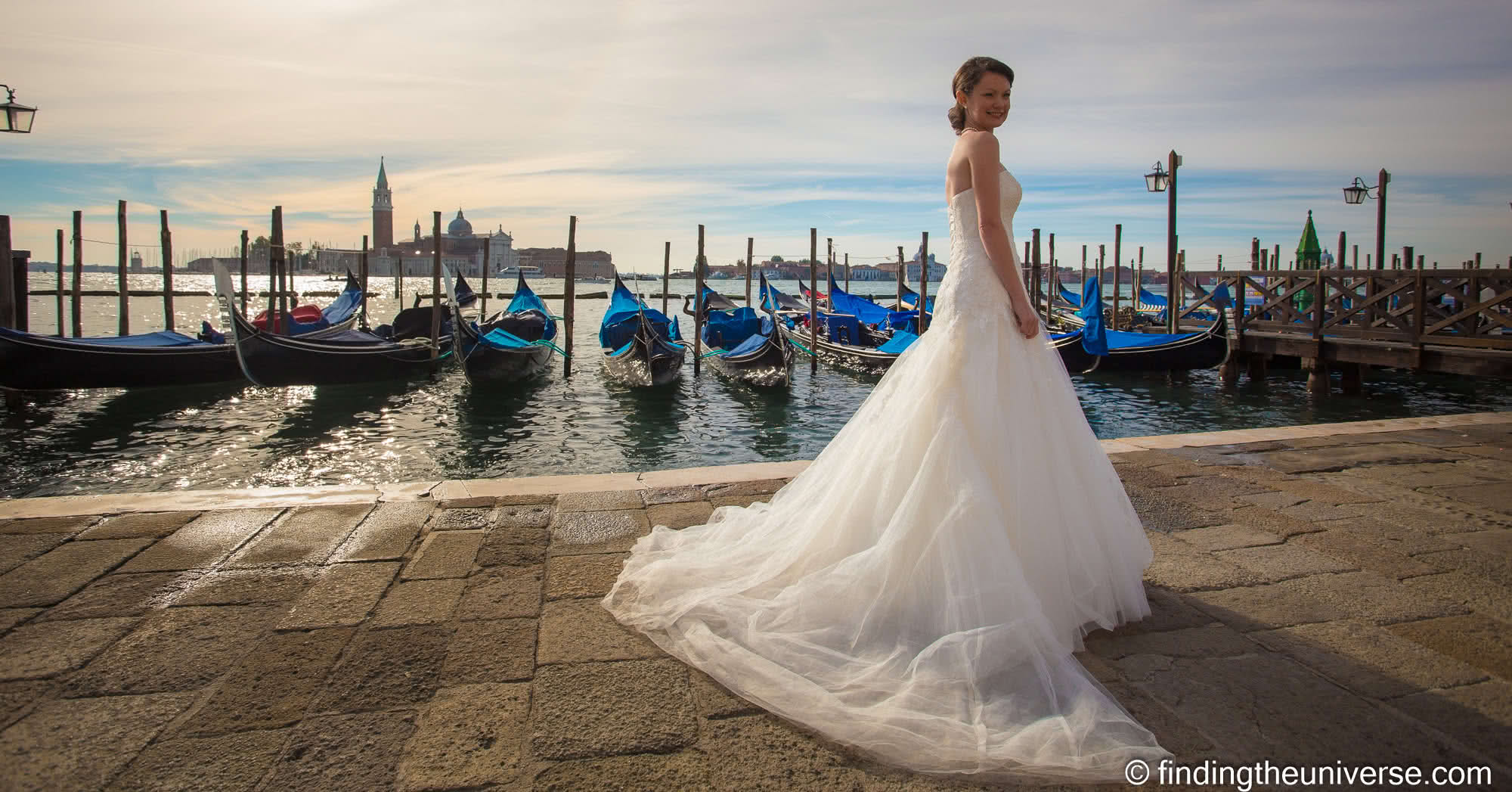
Years later, Jess and I went back to that same square for our wedding ceremony. Jess had never actually been to Venice before, so this was a bit of a gamble on my part, but thankfully it paid off spectacularly and she fell in love with the city almost as much as she (presumably) fell in love with me.
We’ve been back more times than I can count since then. We’ve wandered every neighbourhood, eaten at enough restaurants to have opinions, and I’ve photographed the city in every season and every light. So when I say two days is a good amount of time for Venice, I mean it. One day is possible (we have a one day in Venice itinerary for that), but two days lets you breathe. You get the highlights without the rush, time for the islands, and evenings when the day-trippers have left and the city becomes something else entirely.
This itinerary is based on how we’d actually structure a two-day visit. It covers the main sights, a day trip to the islands, specific places to eat and drink, and some photography tips from someone who has probably spent too many early mornings on Venetian bridges.
Table of Contents:
Is Two Days in Venice Enough?
Two days is a good amount of time for a first visit. You won’t see everything (you could spend a week and not see everything), but you’ll cover the major landmarks, have time to get properly lost in the back streets, visit the islands, and still have room for a long lunch and an aperitivo or two.
One day is better than not going at all, and we have a full one day Venice itinerary for that. Three or more days lets you add things like the Gallerie dell’Accademia, the Peggy Guggenheim Collection, and the Jewish Museum in more depth. But two days hits the balance between thoroughness and actually enjoying yourself rather than racing between attractions.
One practical thing to be aware of: if your two days fall on a weekend between April and July, you’ll need to register for the Venice Access Fee. More on that below, but don’t panic, it takes about two minutes.
Venice Access Fee (2026)
Since 2024, Venice has charged day visitors a fee to enter the historic centre on busy dates. In 2026, the fee applies on 60 days between April 3 and July 26, mostly Fridays through Sundays plus some holiday weeks.
The cost is €5 per person if you register at least four days in advance, or €10 for late registration. Children under 14 are exempt. The fee applies between 8:30am and 4pm, so if you’re arriving for dinner you don’t need to pay.
If you’re staying overnight in Venice (which you will be on this itinerary), you’re exempt from the fee because your accommodation already includes a tourist tax. You do, however, still need to register for a free exemption QR code on the official Venice Access Fee website. It takes two minutes and they may ask to see it at checkpoints near the train station.
Do this before you arrive. It takes about as long as making a cup of tea and saves you a pointless conversation with someone holding a clipboard at the train station.
Day 1: The Classic Venice
Morning: St. Mark’s Square and the Doge’s Palace
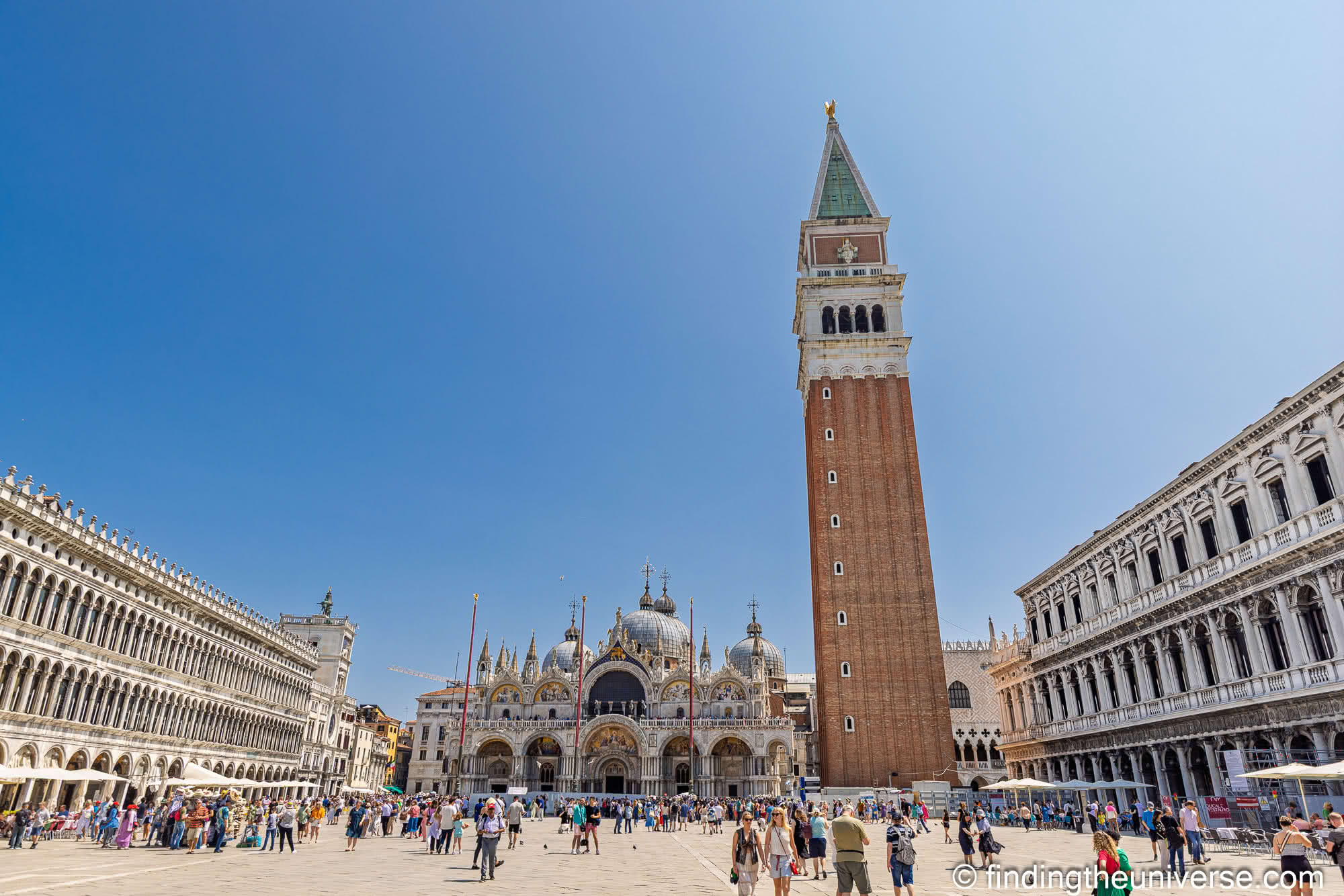
Start at Piazza San Marco, and get there early. I cannot stress this enough. The difference between St. Mark’s Square at 8am and at 11am is the difference between one of the most atmospheric places on earth and a very beautiful, very crowded, slightly overwhelming experience. There’s a reason we held our wedding ceremony here at sunrise.
The square is framed by the Basilica di San Marco on one end and the elegant colonnaded buildings of the Procuratie on the sides, with the Campanile bell tower rising at the corner. Grab a coffee (not at Caffè Florian unless you want to pay €15 for an espresso, which, to be fair, is an experience in its own right. We have done this and enjoyed it, but our credit card did not) and take it all in.
The Campanile is worth going up first. It’s the tallest structure in Venice and the view across the rooftops and out over the lagoon is excellent. Access to the top is by lift, so no stairs to worry about. It normally opens at 9am. Get there early and you’ll have the viewing platform largely to yourself.
The Basilica di San Marco is free to enter, though the queue can be brutal in summer. You can skip it by booking a timed-entry ticket on the official website for a few euros. The golden mosaics covering the interior are extraordinary, and I say that as someone who has been dragged into quite a lot of churches over the years. There are paid add-ons for the Pala d’Oro altarpiece and the museum upstairs. Both are worth your time if you have it.
The Doge’s Palace (Palazzo Ducale) is just next to the Basilica and is one of the best museums in Venice. This was where the rulers of the Venetian Republic governed for centuries, and the rooms are vast, ornate, and filled with some of the finest Renaissance art you’ll find anywhere. The tour takes you across the Bridge of Sighs into the old prison cells, which is a nice bit of drama (and makes you grateful for modern standards of hospitality). Book your ticket in advance here as the queues without a pre-booked ticket can be painful. Alternatively, we’ve taken this guided night tour of the Doge’s Palace and St. Mark’s Basilica, which gets you in after hours with far fewer people. Highly recommended if available on your dates.
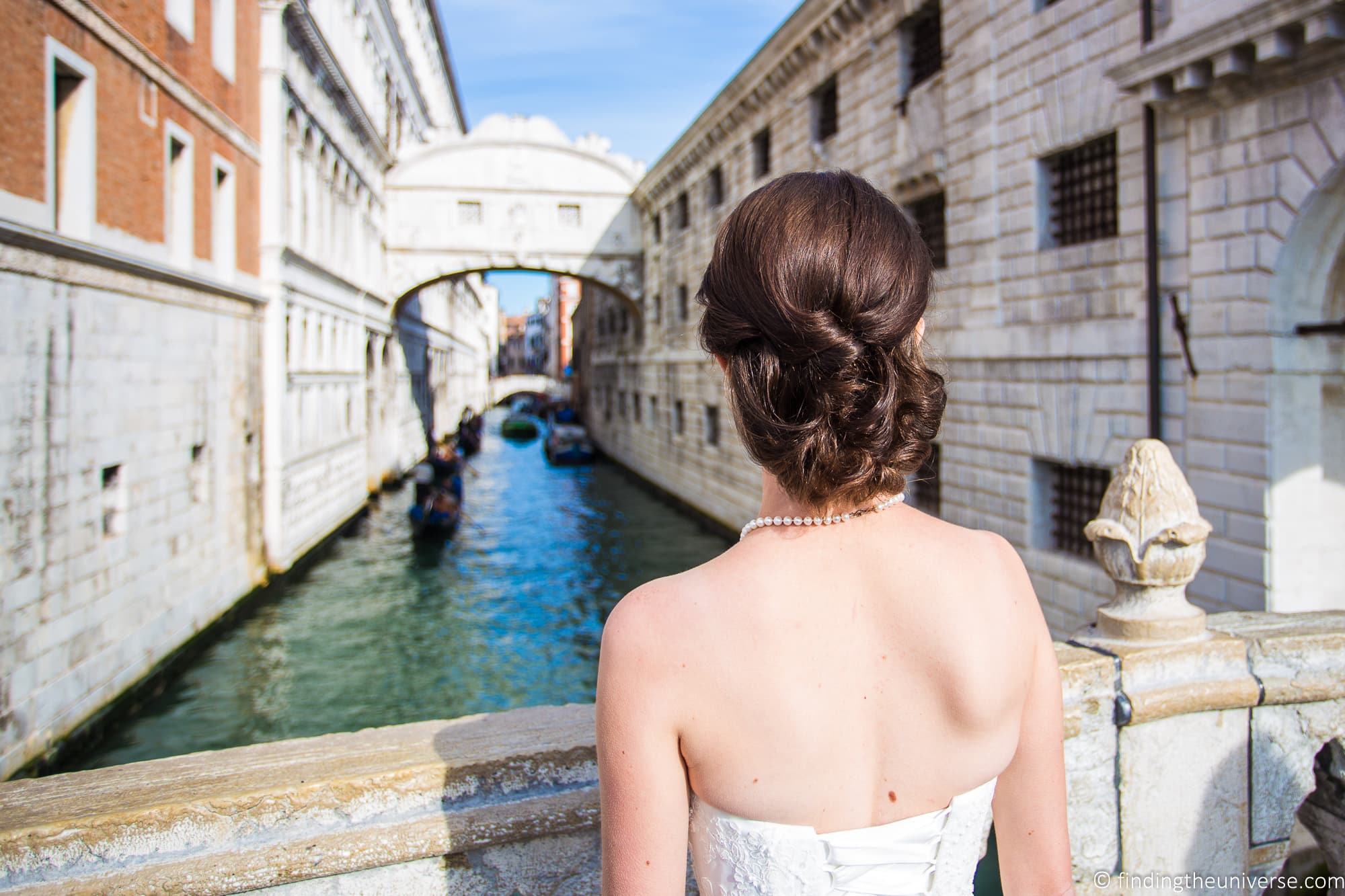
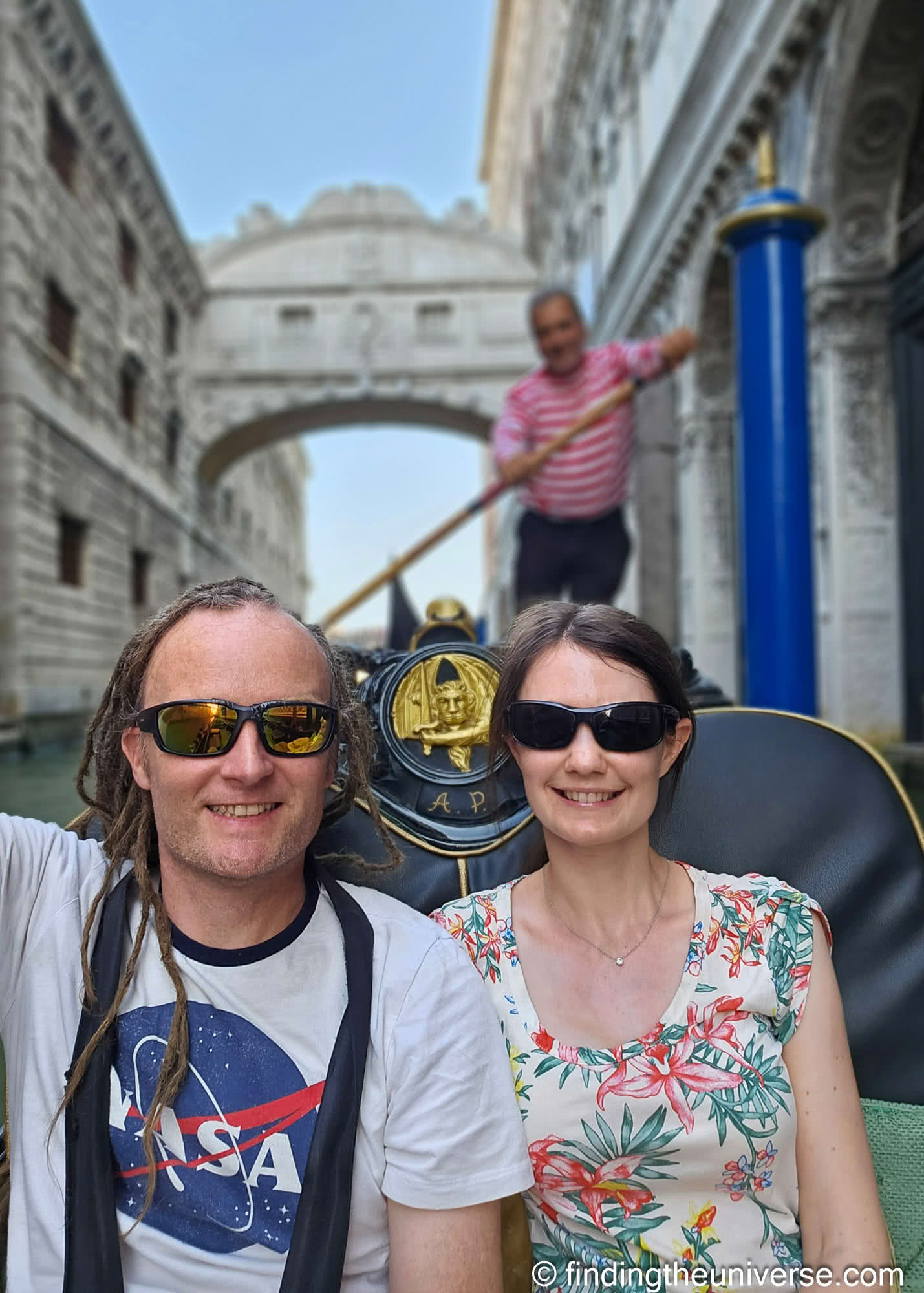
The Bridge of Sighs connects the palace to the old prison. You can see it from the outside by walking around to the canal behind the Doge’s Palace, or you’ll cross it from the inside if you do the palace tour. The name comes from the romantic idea that prisoners sighed at their last view of Venice through the bridge’s stone-latticed windows. Probably not historically accurate, but the bridge itself is beautiful regardless.
Mid-Morning: The Grand Canal and Ponte dell’Accademia
From St. Mark’s Square, walk west along the waterfront and then inland towards the Ponte dell’Accademia. It’s about fifteen minutes on foot, and the walk itself is much of the attraction. You’ll pass churches, hidden squares (called campi in Venice), and the kind of narrow alleyways that make the city feel like a maze built by someone who got a bit carried away.
The view from the Accademia bridge is my favourite in Venice. You look down the Grand Canal towards the Basilica di Santa Maria della Salute, with gondolas and water buses crossing in the foreground. If you’re a photographer, this is the spot. Early morning or late afternoon light works best, and a wider lens (16-35mm range) gets the full sweep. I’ve shot this view more times than is probably reasonable and I still stop every time I cross the bridge.
If you have an interest in art, the Gallerie dell’Accademia is right here, housing one of the finest collections of Venetian painting in the world: Bellini, Titian, Tintoretto, Veronese, and many others. Book tickets in advance on the official website. A few minutes further along the canal is the Peggy Guggenheim Collection, one of Europe’s most important museums of modern art. Skip-the-line tickets are available here.
You probably won’t have time for both museums and the rest of this itinerary in one day, so pick whichever one appeals more and save the other for next time. Or skip both and just enjoy the walk, which is what I end up doing a lot of the time. Venice is quite good at rewarding people who don’t have a plan.
Lunch: Cicchetti and a Glass of Something Cold
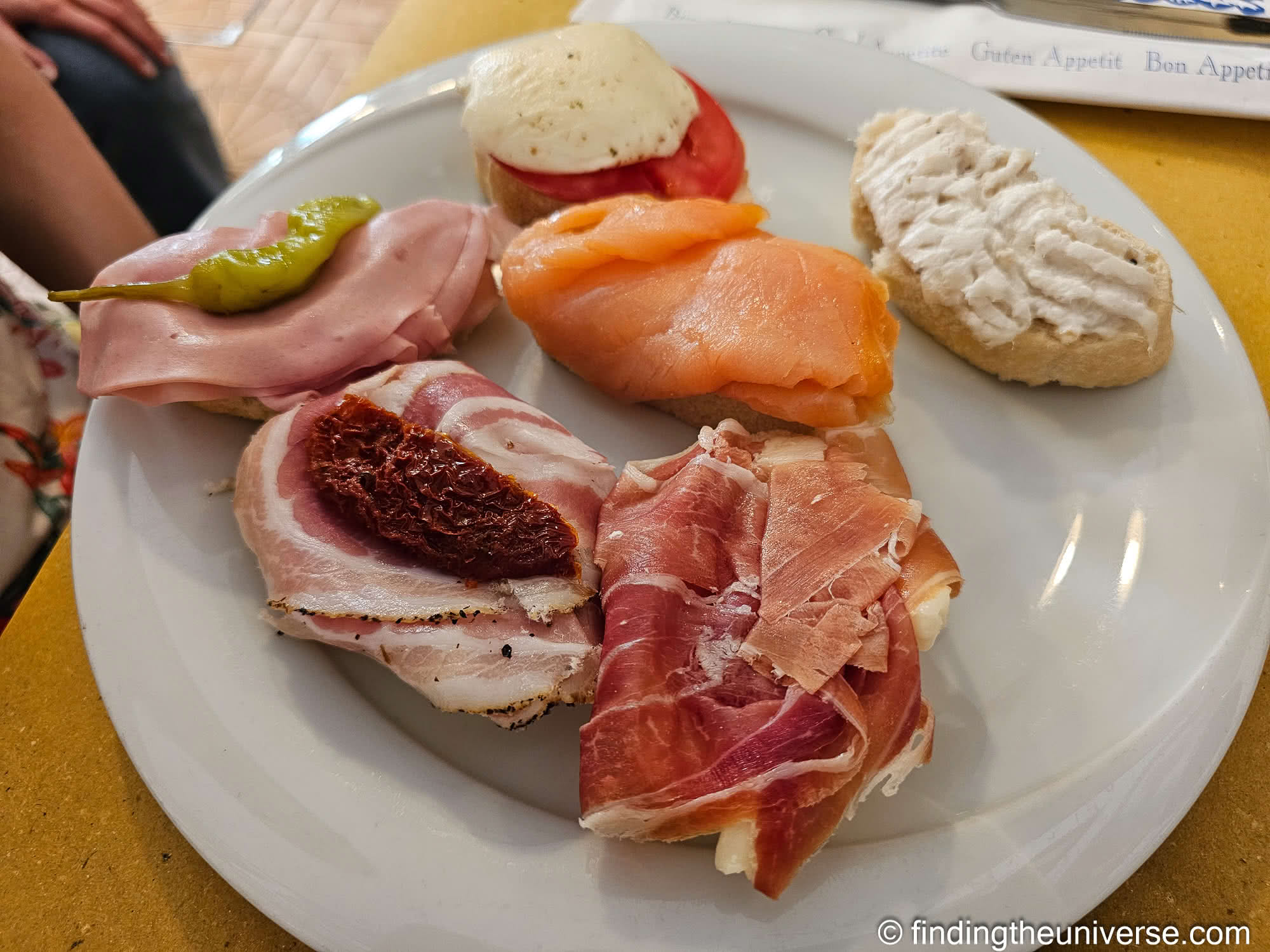
Venice is not a cheap city for eating out. But of course there’s a way to eat well without spending a fortune, and it’s called cicchetti. These are small snacks served at bacari, Venice’s traditional wine bars. Think crostini with various toppings, fried seafood, meatballs, wedges of frittata. You stand at the bar, point at what looks good, and wash it down with a small glass of local wine called an ombra. It costs a fraction of a sit-down meal and it’s what locals actually do for lunch.
The best area for cicchetti is around the Rialto market, which is also your next destination. The streets around Rialto on the San Polo side have a cluster of good bacari. Our favourite is Cantina Do Mori, tucked down a narrow alleyway near the market. It’s been serving wine since 1462 (they claim it’s the oldest bacaro in Venice, and I’m not going to argue), and the atmosphere is wonderful: dark wood, copper pots hanging from the ceiling, locals propping up the bar alongside bewildered tourists trying to figure out the ordering system.
There are no tables. You stand, you point at things, you eat. Try the francobolli, which are tiny stuffed sandwiches that are the house speciality, and whatever the meatballs of the day are. A round of cicchetti and a couple of glasses of wine will cost you a fraction of what a sit-down restaurant would charge.
One bit of advice we learned the hard way: avoid any restaurant with a photo menu displayed outside and a person standing at the door trying to wave you in. Venice has a lot of these and they are almost universally overpriced and mediocre. Walk another thirty seconds and you’ll find somewhere considerably better. If a place looks busy and nobody is trying to lure you in from the pavement, that’s usually a good sign.
If you want something more substantial than cicchetti, Bacaro de’ Bischeri is also near the Rialto and does excellent stuffed schiacciata (Florentine-style focaccia) with fresh-cut meats, truffle cream, burrata, and similar fillings. It’s more of a grab-and-go sandwich shop than a traditional bacaro, run by a friendly young crew who slice everything to order. No seats inside, but there’s a canal bank round the corner where you can sit and eat. We went back twice.
Early Afternoon: The Rialto Bridge and Getting Lost
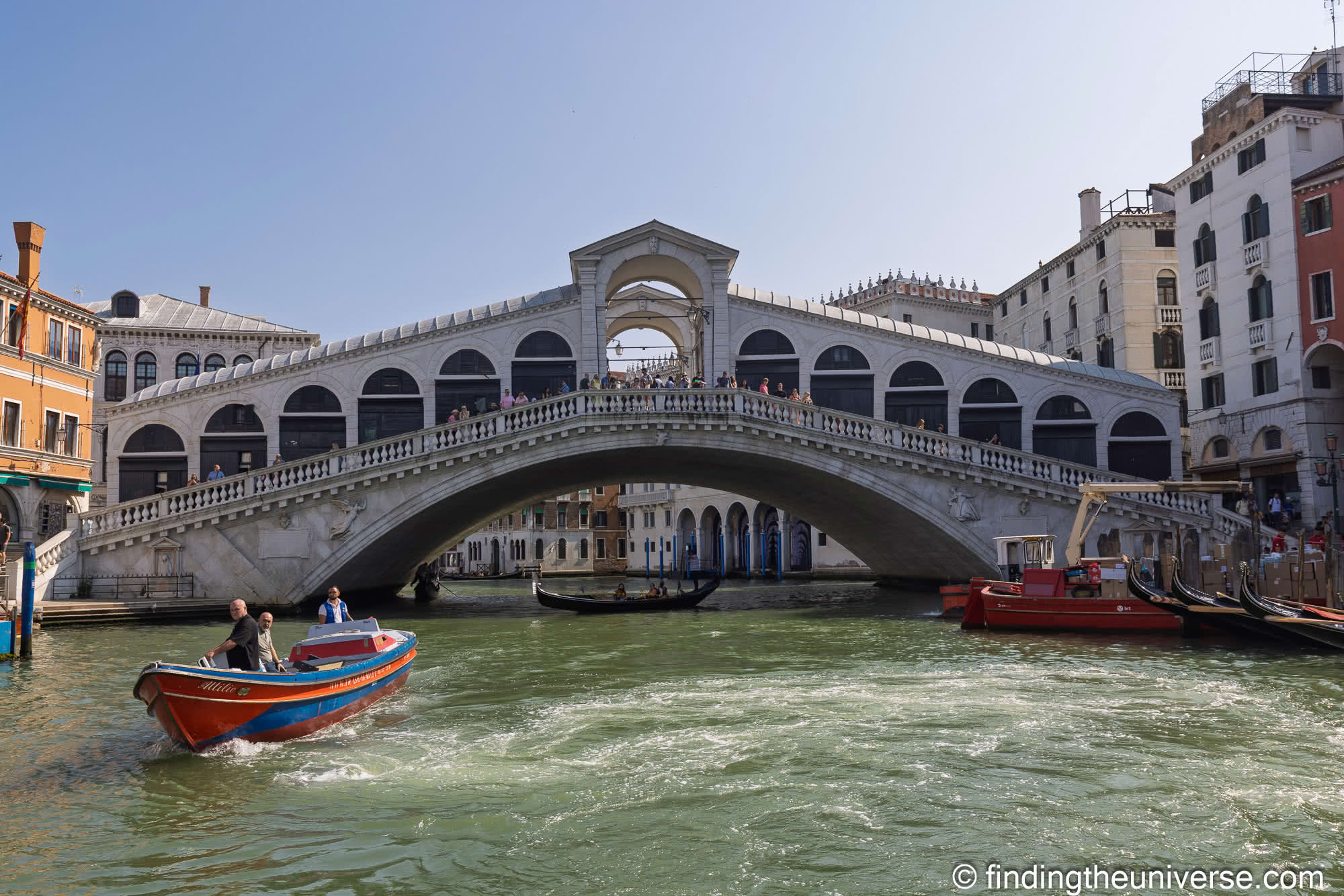
The Rialto Bridge is the oldest and most famous of the bridges crossing the Grand Canal, and the central section is lined with small shops. It’s worth crossing, worth looking at from both banks, and worth visiting the Rialto fish and produce market on the eastern side if it’s still open (it runs mornings and mostly finishes around noon).
From here, get lost. I mean it. Head north and east from the Rialto into the Cannaregio and Castello neighbourhoods and within about five minutes you’ll be in a Venice that most visitors never see. Quieter streets, local shops, washing strung between windows, the occasional resident looking mildly confused at the absence of tourists.
If you fancy a specific detour, the Scala Contarini del Bovolo is worth visiting. It’s tucked away in a small courtyard near Campo Manin, where you’ll find a beautiful external spiral staircase from the 15th century. The view from the top across the Venice rooftops is excellent. I climbed it on one of our visits and was surprised how few people were there given how good it is. Tickets are €9 at the door.
Another option (and a good one for photographers): Libreria Acqua Alta, the bookshop famous for storing its books in gondolas, bathtubs, and various other vessels to protect them from the flooding that gives the shop its name. It’s photogenic and quirky. I should be upfront, though: it’s become very popular on social media and is often packed with people taking photos rather than browsing books. If you’re after a quiet literary experience, this isn’t it. But as a quick visit for the novelty and a photo, it’s worth the detour. It’s in the Castello neighbourhood, about ten minutes east of St. Mark’s Square.
Afternoon: A Gondola Ride
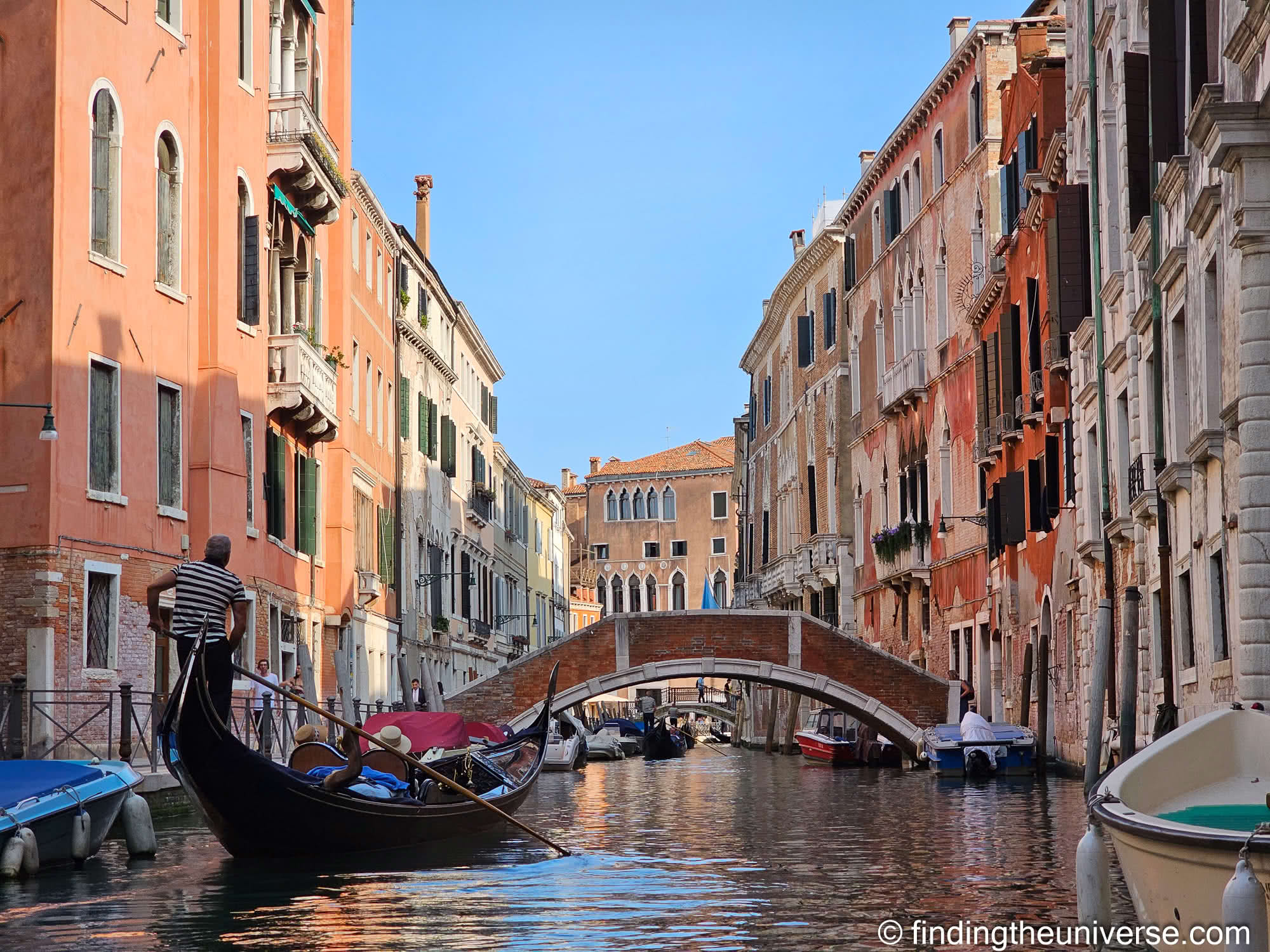
I know gondolas are expensive. I know they’re touristy. And I will still tell you to do it if you’re visiting Venice with someone you like. Or even if you’re on your own. Gliding through the back canals in a gondola, with the water lapping at ancient walls and bridges arching overhead, is one of those travel experiences that earns its reputation.
Prices are set by the city and posted at official departure points. In 2026, it’s €90 for a 30-minute ride during the day (9am to 7pm) and €110 in the evening (7pm to 4am). That’s per gondola, not per person, and you can fit up to five people. You can book a shared gondola ride through GetYourGuide for less, or a private gondola for two if you’re feeling romantic.
A tip: the gondola stations near St. Mark’s Square are the busiest and often have queues. Walk ten minutes into a quieter neighbourhood, find a station there, and you’ll get the same price, a shorter wait, and a more atmospheric route through narrower canals. We’ve done this several times and it’s always been a better experience.
If a full gondola ride feels like a stretch, the traghetto is the local version: a standing gondola that ferries people across the Grand Canal at several crossing points for €2. Brief (maybe five minutes), but it’s a real gondola on the Grand Canal, and it’s what the locals use.
Evening: Aperitivo and Dinner
Venice in the evening, after the day-tripper boats have left, is a different city. Quieter. More golden. Significantly more magical. This is when the squares fill with locals rather than tour groups, and when Venice reveals the version of itself that brings people back year after year.
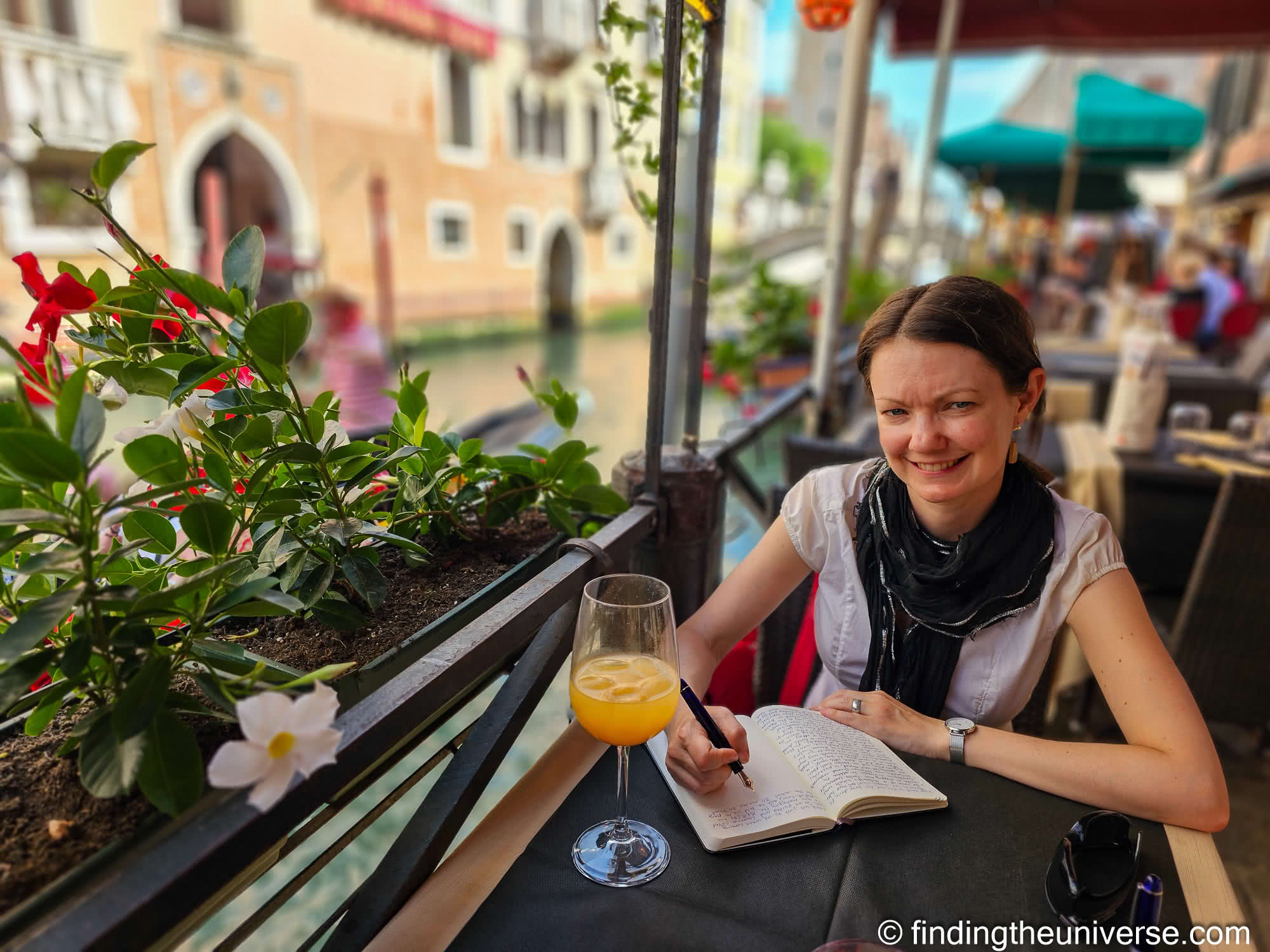
Aperitivo hour starts around 6pm. A Spritz with a plate of cicchetti is the Venetian way to start the evening, and almost every bar will be serving them. Spritz Aperol is the default, but I’d suggest trying a Spritz Campari if you prefer something with a bit more bite and less sweetness. The area around Campo Santa Margherita in Dorsoduro is particularly good for aperitivo and has a younger, more local feel than the streets around St. Mark’s.
For dinner, if you’re looking for a recommendation: we have a soft spot for Ristorante Oniga in Dorsoduro, on Campo San Barnaba. We ate here on the day of our wedding ceremony and have been back several times since. The food is proper Venetian cooking, the setting on the campo is lovely, and the prices are reasonable by Venice standards. Do make a reservation for dinner, especially in summer. The better restaurants fill up and turning up without one limits your options significantly.
Day 2: The Islands and Deeper Venice
Morning: Murano and Burano
For your second day, take a boat out to the islands of Murano and Burano. This is what we do when we bring friends to Venice for multiple days, and it’s always one of the highlights. The islands have a completely different pace to the main city and you’ll be glad of the contrast.
Murano is famous for its glassmaking. Watching the glassblowers sculpt molten glass into intricate shapes is mesmerising, and you can pick up small souvenirs at reasonable prices. The island is closer to Venice (about 10 minutes by vaporetto from Fondamente Nove) and can be covered in an hour or two, depending on how many tiny glass animals you feel compelled to buy.
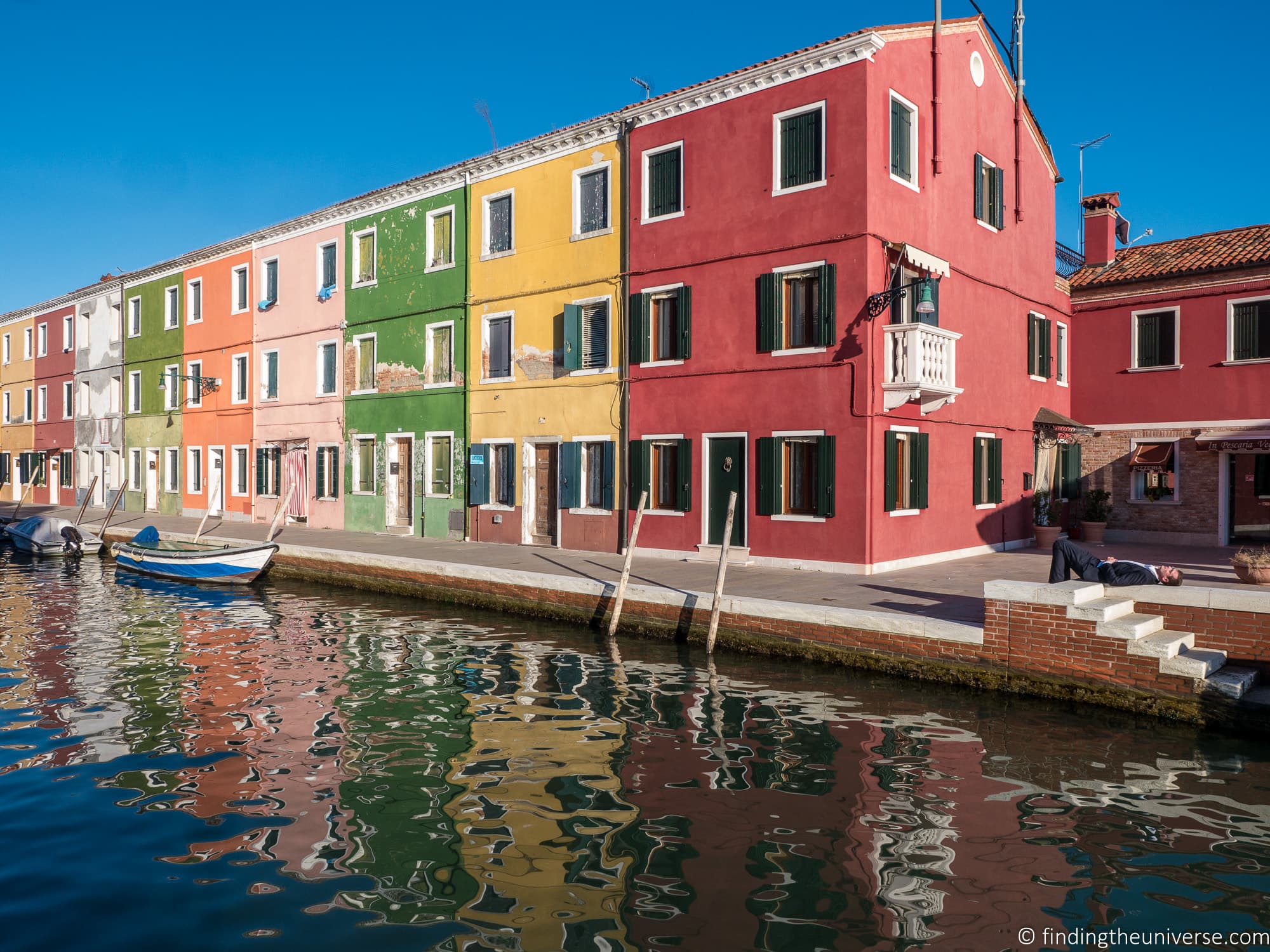
Burano is further out (about 45 minutes from Fondamente Nove on the Vaporetto Line 12) and it’s my favourite of the two. The painted houses reflected in the canals are absurdly photogenic, and the pace is much slower and quieter than Venice itself. Bring a camera. The colours practically photograph themselves, but the real shots are the smaller details: washing lines against pastel walls, fishing boats bobbing in the canals, cats sleeping on windowsills. If you’re a photographer, Burano is one of those places where every direction looks good.
You can visit both islands independently using the vaporetti, which run regularly. An ACTV day pass or multi-day pass covers unlimited rides and pays for itself quickly if you’re doing the islands (individual tickets are €9.50 each way). We bought passes when we visited with Jess’s family and they made the logistics much simpler.
Or if you’d prefer a guided experience, this boat tour from TakeWalks visits both islands and includes wine tasting, which is a nice touch.
Aim to leave Venice for the islands by around 9am. Do Murano first (it’s on the way), then continue to Burano for a late morning wander and lunch. Return to Venice early to mid-afternoon, which gives you the rest of the day for the parts of the main city you haven’t explored yet.
Afternoon: Cannaregio and the Quieter Venice
When you get back from the islands, you’ll arrive at Fondamente Nove in the Cannaregio district. Rather than heading straight back to the tourist centre, spend the afternoon exploring this side of the city.
Cannaregio is the northernmost of Venice’s six historic districts and one of the least visited by tourists. The long, straight Strada Nova is the main artery, but step off it onto the smaller canals and fondamente (waterfront paths) and you’ll find a much more local, residential Venice.
The Jewish Ghetto is in this part of the city. The word “ghetto” itself originated here in 1516, from the Venetian word for foundry, and this was the first one. It has a heavy history. The main square, Ghetto Nuovo, is quiet and atmospheric, and the buildings here are the tallest in Venice because the residents had no choice but to build upwards when they couldn’t expand outwards. We’ve walked around here several times and it always feels a bit set apart from the rest of the city. Which, of course, it was. By design.
The Fondamenta della Misericordia, a long waterfront stretch in northern Cannaregio, has a good run of bars and restaurants popular with locals. It’s a nice place for a late afternoon drink and a sit down after the islands.
Late Afternoon: A View Most Visitors Miss
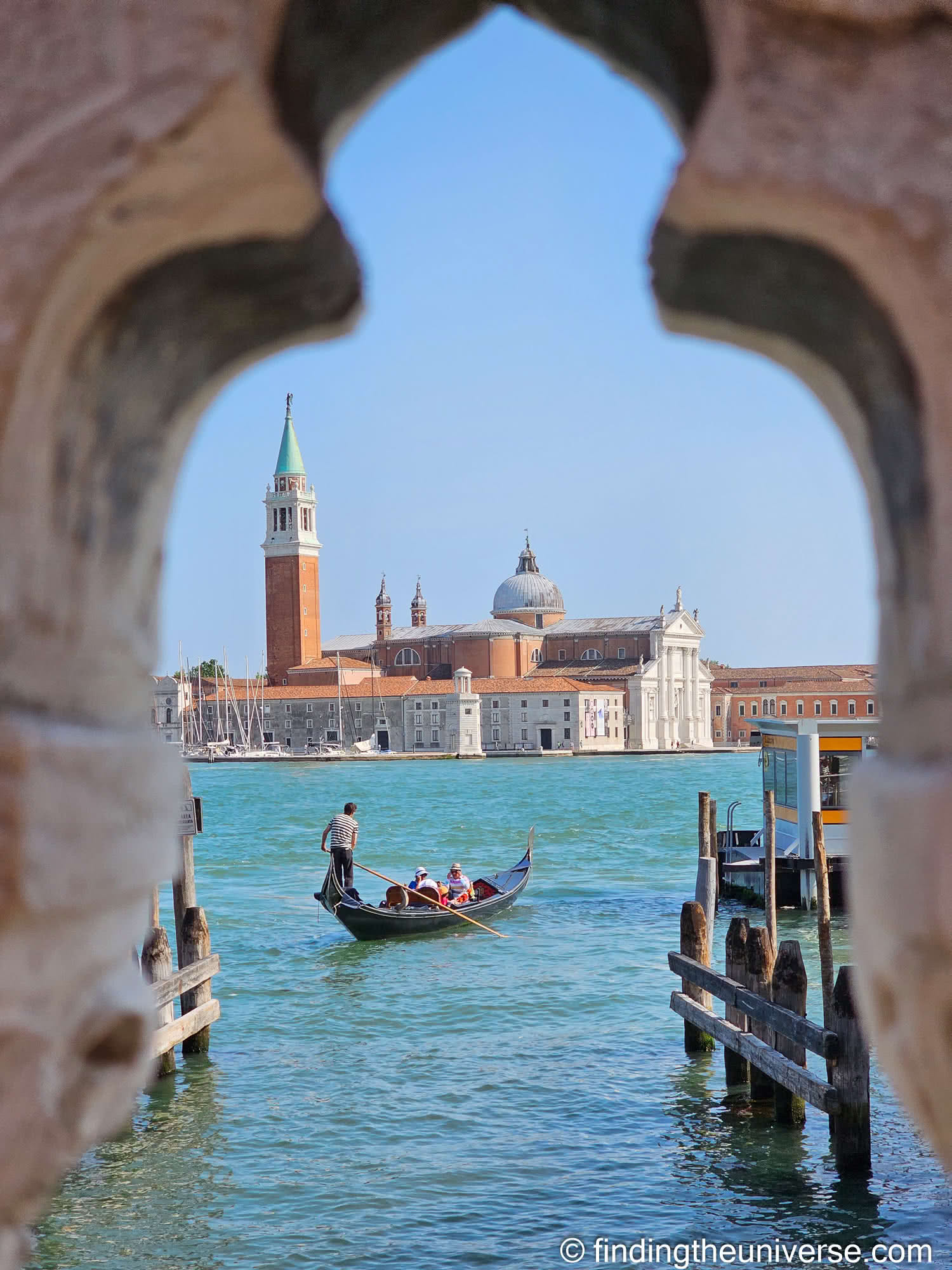
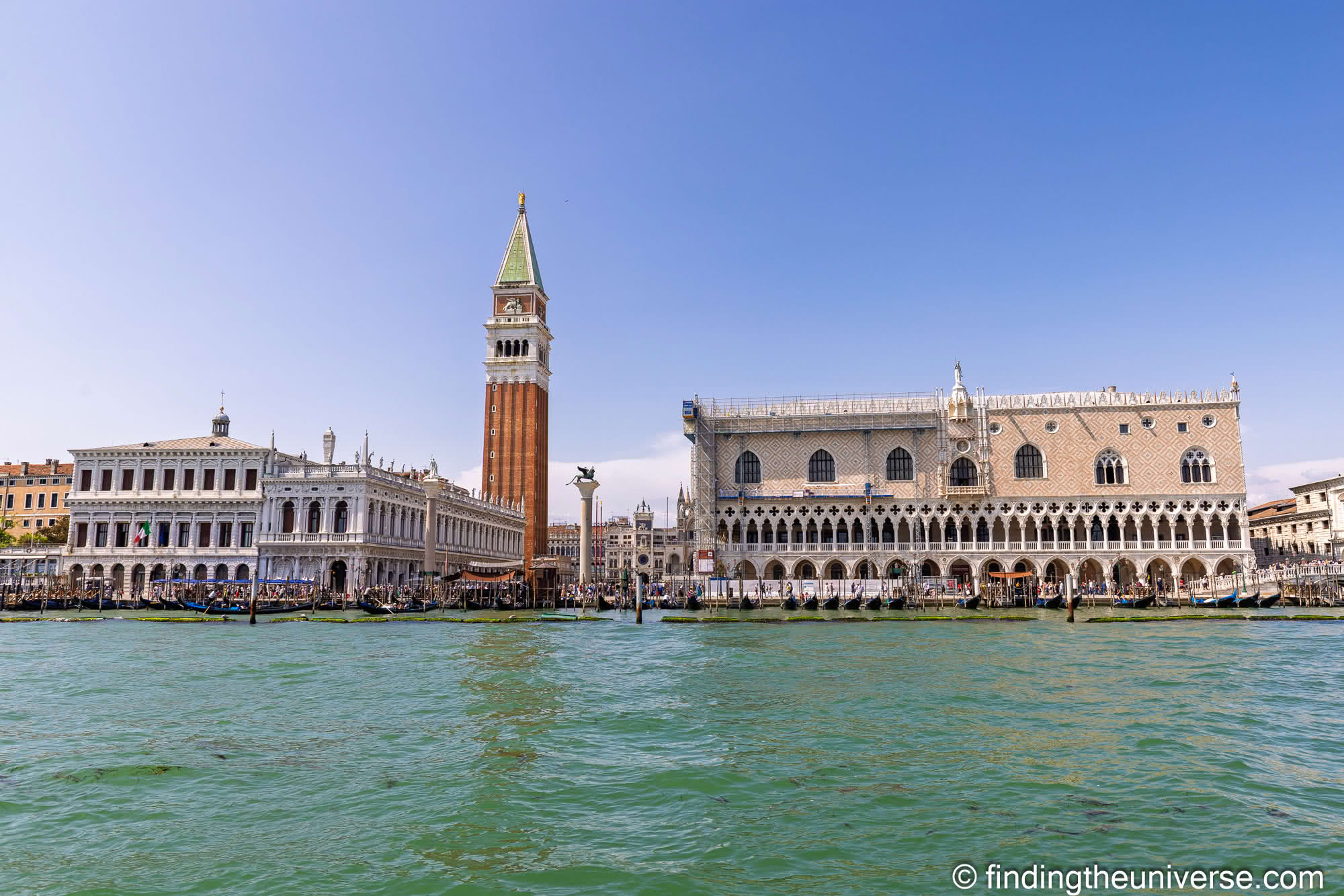
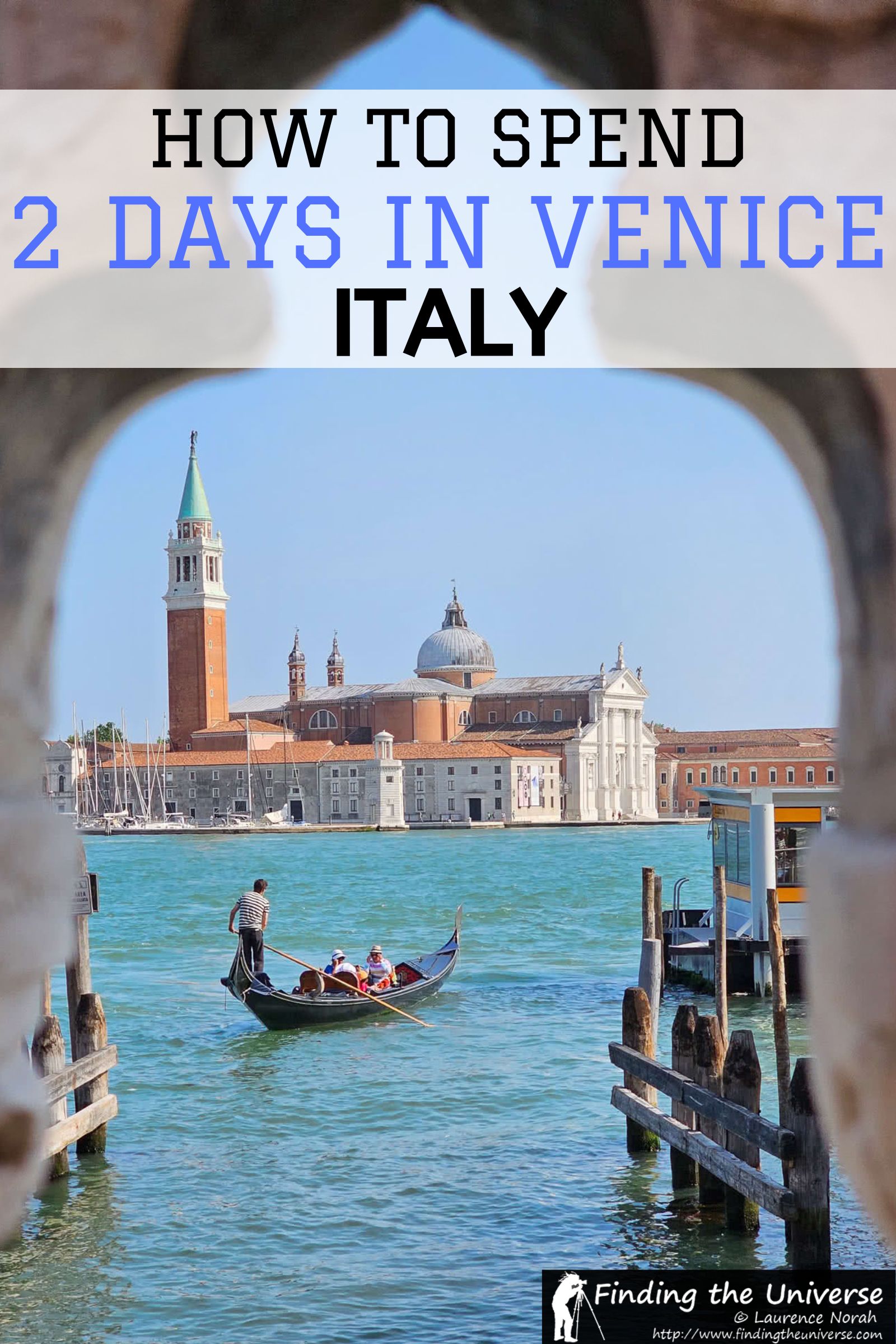
Here’s my photography insider tip for Venice, and it’s one most visitors don’t know about: take the vaporetto across to the island of San Giorgio Maggiore. The church on this island, designed by Palladio, has a bell tower you can go up (by lift), and the view from the top looking back across the water towards St. Mark’s Square and the Venice skyline is arguably the best panorama of the city. It’s a better view than the one from the Campanile, because from San Giorgio you can actually see the Campanile in the frame.
The vaporetto ride takes about five minutes from the San Zaccaria stop near St. Mark’s Square. Go in the late afternoon for the best light. The bell tower costs a few euros to go up and is rarely crowded.
Evening: Your Last Night in Venice
For your final evening, head back into the city centre for one more wander. The Dorsoduro neighbourhood, south of the Accademia, has a younger, slightly less tourist-heavy feel and some good restaurants. If you didn’t make it to Campo Santa Margherita yesterday, go tonight. It’s one of the most sociable squares in Venice, full of university students and locals, and a lovely place for an evening drink.
Alternatively, simply wander. Venice after dark, when the narrow alleyways are lit by lamp light and you can hear the water lapping against the buildings, is something quite special. You don’t need a plan for this. Just pick a direction and walk.
Photography Tips for Venice
I’ve been photographing Venice for years and these are the things I wish someone had told me on my first trip.
Get up for sunrise. Venice early in the morning, before the crowds, is an entirely different city. St. Mark’s Square at sunrise, with the light coming in off the lagoon and the marble glowing warm, is one of the great photography experiences. You might have the whole piazza to yourself. I’ve had this happen more than once and it’s worth every minute of lost sleep. We held our wedding at sunrise to avoid the crowds, but also for the light. Yes, our guests were very patient people.
The Ponte dell’Accademia. This is the best vantage point for the Grand Canal, in my opinion. The view down towards Santa Maria della Salute with boat traffic in the foreground works at almost any time of day, but golden hour light is extraordinary.
San Giorgio Maggiore bell tower. As mentioned above, the panoramic view back towards Venice from here is the best city-wide shot you’ll get. Late afternoon light is ideal.
The gondola row near St. Mark’s. There’s a row of gondolas moored along the waterfront near Piazza San Marco. With St. Mark’s or the lagoon in the background, this is a classic Venetian composition and it’s easy to get to.
Burano. Every direction is a photo. The coloured houses reflected in the canals give you compositions you barely have to work for. Morning light is softest. A telephoto lens (70-200mm) works well here for compressing the rows of coloured houses, though a wide angle catches the reflections better.
Lens choice. If I could only bring one lens to Venice, it would be a wide-angle zoom (16-35mm or equivalent). The streets and buildings are close together and you need the width. But I always bring my 70-200mm as well for picking out details: ironwork, reflections, the curve of a gondola prow against stone.
Where to Stay in Venice
If your budget allows it, stay within the historic centre. Waking up in Venice before the day visitors arrive is one of those travel experiences that justifies the extra cost. The Dorsoduro and Cannaregio neighbourhoods tend to be quieter and slightly less expensive than the area around St. Mark’s Square.
The mainland town of Mestre is significantly cheaper and connected to Venice by a short train ride, which is worth knowing about if budget is a serious constraint, though you’ll lose the magic of being in the city for the early mornings and late evenings, which for me are the best parts.
Here are some properties we’d suggest.
- B&B Bloom Settimo Cielo – a highly rated and good value B&B, about ten minutes from St. Mark’s Square and the Rialto Bridge. Individually designed rooms have en-suite facilities, and there’s a rooftop terrace with views.
- Leon Bianco on the Grand Canal – this is where we stayed for our wedding ceremony in Venice. The Grand Canal views are fantastic, and for the location it’s excellent value. We’re obviously a bit biased but we’d go back in a heartbeat.
- Ruzzini Palace Hotel – a centrally located and well-reviewed 4-star hotel, about ten minutes walk from the Rialto Bridge.
- Hotel Saturnia & International – a 4-star hotel just moments from St. Mark’s Square. Turn of the century building with en-suite rooms, a terrace, and an on-site restaurant.
- Baglioni Hotel Luna – a gorgeous 5-star property about 100 metres from St. Mark’s Square. Murano glass chandeliers, antique furniture, marble bathrooms. If you’re celebrating something, this is where to do it.
- The Gritti Palace – one of the most famous luxury hotels in Venice. Right on the Grand Canal, about 500 metres from St. Mark’s Square. If budget isn’t a concern, this is extraordinary.
Venice has many more options at every price point. Our go-to for finding the best deals is Booking.com. See all the listings on Booking.com for Venice here.
If you prefer an apartment, we’d recommend Plum Guide. They curate their listings carefully, so the quality tends to be reliably high. We’ve stayed at several of their properties around the world and you can see our review of the Plum Guide here.
Getting to Venice
By train: Venice Santa Lucia is the main station, right on the edge of the historic centre. Step off the train and you’re in Venice. Trains run from Rome (about 3.5 to 4 hours), Florence (about 2 hours), Bologna (about 1.5 hours), and Milan (about 2.5 hours). Book in advance for the best prices on Trainline or the Trenitalia website.
By air: Venice Marco Polo Airport is on the mainland about 13km north. You can get into the city by water bus (Alilaguna, about 70 minutes to St. Mark’s area), water taxi (faster but expensive, around €110), or bus to Piazzale Roma then walk or take a vaporetto. The water bus is the most common option and a lovely introduction to the city.
By car: You cannot drive into Venice. Park at Piazzale Roma or on the island of Tronchetto and walk or take a vaporetto from there. We’ve used Parclick to book parking in advance, which guarantees a spot and avoids the stress of finding one.
Getting Around Venice
On foot, mostly. Venice is compact and walking is almost always the best way to get between sights. The city is a maze, but here’s the thing: you can’t actually get properly lost. It’s a group of islands, so you’ll always hit water eventually and be able to work out where you are. We’ve tested this theory quite thoroughly.
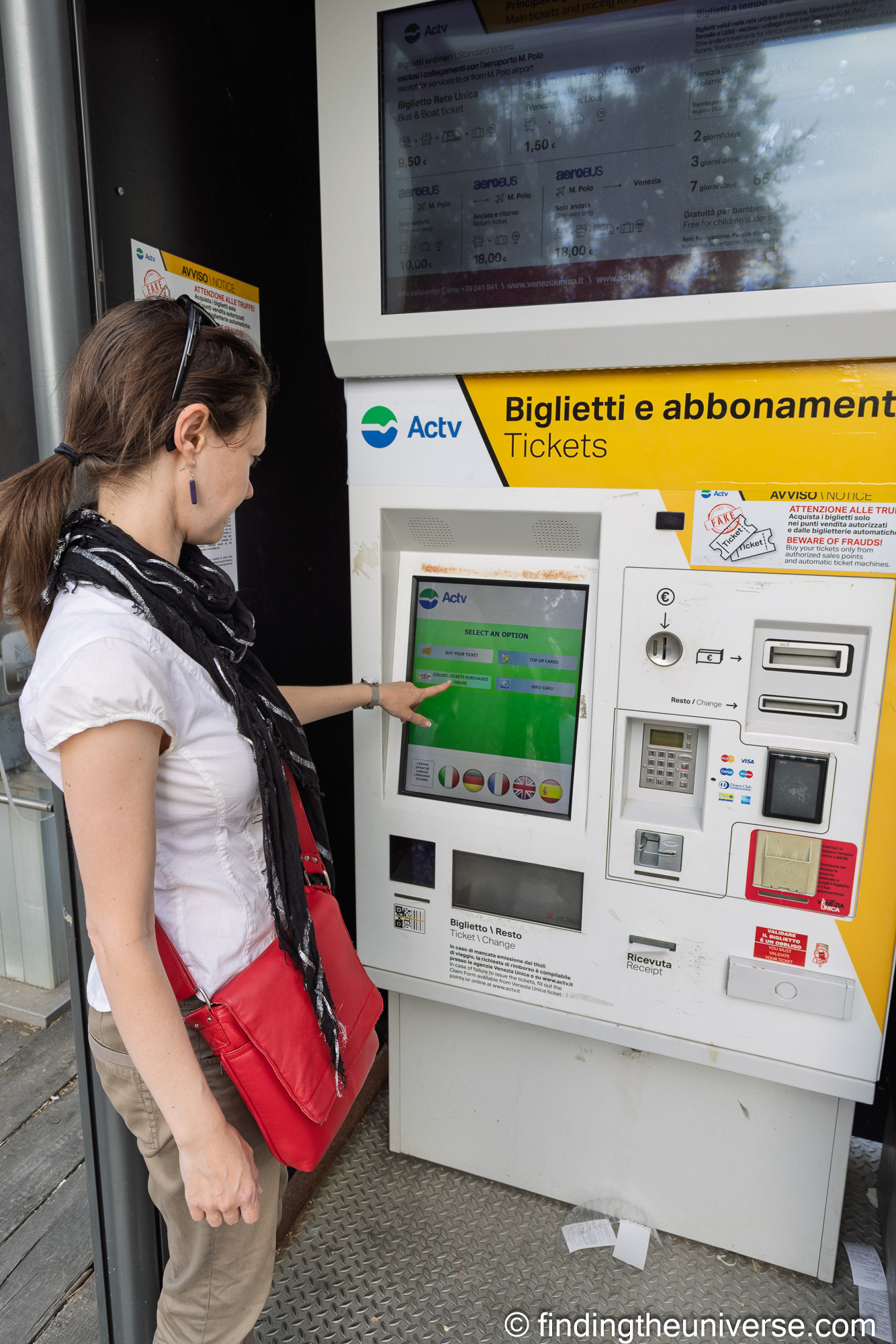
For longer distances or the islands, you’ll use the vaporetto water buses. The ACTV network covers the Grand Canal, the lagoon, and the main islands. Individual tickets are €9.50 (valid for 75 minutes) which adds up quickly, so if you’re doing this two-day itinerary with the island trip on Day 2, a 48-hour pass pays for itself fast.
We bought multi-day passes when visiting with Jess’s family and found them simple to use. You tap the card on the reader at the vaporetto stop when you board. No need to validate at the other end. Buy them at the ACTV ticket offices at the main vaporetto stops or online through the ACTV website.
One useful tip: Line 1 does the full length of the Grand Canal, stopping at every major landmark along the way. It’s essentially a sightseeing cruise for the price of a vaporetto ticket, and doing it near sunset is one of Venice’s great free (well, nearly free) pleasures.
Venice City Pass
If you’re planning to visit the Doge’s Palace, the Campanile, the Correr Museum, and a few other paid attractions, the Venice Pass bundles access to several civic museums and includes a gondola ride. Compare the pass price against the specific attractions you plan to visit before committing, but for this two-day itinerary it could save you a fair amount.
When to Visit Venice
Spring (April to May) and autumn (September to October) are the sweet spots. The weather is usually warm enough to be comfortable, the light is beautiful for photography, and the crowds are a step down from the summer peak.
Summer (June to August) is warm, sometimes very warm, and busy. July and August can be properly hot, particularly in the narrow streets where there’s no shade and no breeze and you start to understand why the Venetians invented the Spritz. If you go in summer, start early and plan a long lunch break during the hottest part of the afternoon.
Winter (November to February, excluding Carnival) is quiet, cold, and occasionally misty. Venice in winter fog is hauntingly beautiful and you’ll have many of the sights almost to yourself. The downside is shorter daylight hours and the possibility of acqua alta (high water flooding), which can affect low-lying areas including parts of St. Mark’s Square.
The Venice Carnival usually falls in February and is spectacular if you’re specifically interested in it, but overwhelming if you arrive unprepared. The city is at its busiest during Carnival week.
Tours of Venice
If you’re short on time, a guided tour is an efficient way to cover the main sights and get the historical context that makes them come alive. We’ve taken several walking tours in Venice over the years and have always come away knowing more about the city than when we started.
Here are some we’d recommend.
- Venice In a Day from TakeWalks – a full day tour that covers St. Mark’s Basilica, Doge’s Palace, and a gondola ride. We’ve done this one and it’s a solid overview if you want everything in one package.
- Walking Tour with Gondola Ride – a shorter version if you don’t have a full day for a tour.
- Venice Boat Tour with Grand Canal and Tower Climb – Venice from the water, which is how it was meant to be seen.
- St. Mark’s Basilica After Hours – experience the Basilica without the daytime crowds. We’ve done this and it was one of the best things we’ve done in Venice. Having a place that busy almost to yourself is something else. There’s also a version that includes the Doge’s Palace.
- Venice Food Tour – cicchetti, local wine, and a gondola ride. A good option if food is a priority for you.
Where to Park in Venice
If you’re arriving by car, you’ll need to park outside the city. There are several car parks at Piazzale Roma and on the island of Tronchetto, at varying price points. We’ve used Parclick to find and book a space in advance, which means you know you’ve got a spot and you know what it’ll cost. See the parking options near Venice on Parclick here.
Frequently Asked Questions About 2 Days in Venice
Is two days enough for Venice?
Two days is a comfortable amount of time for a first visit. You’ll cover the main highlights on Day 1 (St. Mark’s Square, the Doge’s Palace, the Grand Canal, a gondola ride) and have a full day for the islands of Murano and Burano plus the quieter neighbourhoods on Day 2.
It’s enough to get a proper feel for the city rather than just ticking off landmarks. If you have three or more days, you can go deeper into the museums and spend more time in the less-visited neighbourhoods.
How much does 2 days in Venice cost?
Venice can be done at various budget levels. Accommodation ranges from around €80 per night for a decent budget option to €300+ for a good mid-range hotel and well into the thousands for luxury properties. A 48-hour vaporetto pass is around €40. Main attractions (Doge’s Palace, Campanile) will cost €30 to €50 in tickets depending on what you visit. A gondola ride is €90 during the day. Food can range from €15 for a cicchetti lunch at a bacaro to €50+ for a sit-down dinner.
A rough budget for two people for two days, including mid-range accommodation, attractions, transport, a gondola ride, and meals, would be in the range of €600 to €900. You can do it for less by staying in Mestre, skipping the gondola, and eating cicchetti for most meals. You can also spend considerably more.
Is Venice safe?
Venice is one of the safest cities in Europe. Violent crime is extremely rare. The main risks are the usual ones for tourist cities: pickpockets in very crowded areas (particularly the vaporetti and around St. Mark’s Square), overpriced restaurants, and taxi/water taxi scams. Keep your valuables secure, avoid the tourist-trap restaurants, and agree the fare before getting in any water taxi and you’ll be fine.
Do you need to book Venice attractions in advance?
For the Doge’s Palace and the paid areas of St. Mark’s Basilica, advance booking is strongly recommended in summer and on weekends. The queues without pre-booked tickets can be very long. The Campanile, general wandering, and the islands don’t require booking.
What is the best area to stay in Venice for 2 days?
San Marco is the most central and most expensive. Dorsoduro has a slightly younger, more local atmosphere and is our favourite neighbourhood to stay in. Cannaregio is quieter and a bit less expensive, with good transport links to the islands. All three work well for this itinerary.
How much is a gondola ride in Venice in 2026?
The official city-set price is €90 for a 30-minute ride during the day (9am to 7pm) and €110 in the evening (7pm to 4am). This is per gondola, not per person, and a gondola seats up to five people. If you want a shorter, cheaper alternative, the traghetto gondola ferries cross the Grand Canal for €2.
Should you visit Murano or Burano from Venice?
Both are worth visiting and you can comfortably do both on a half-day trip. Murano is closer (10 minutes by vaporetto) and famous for glassblowing. Burano is further (45 minutes) but the colourful houses and slower pace make it the more memorable of the two for most visitors. If you can only pick one, go to Burano.
Further Reading
Here are some of our other guides that might help with planning your time in Venice and Italy.
- If you only have one day, see our one day in Venice itinerary
- For a longer trip through Italy, see our 10-day Italy itinerary
- For Rome, we have guides to a day in Rome, 2 days in Rome, and 3 days in Rome
- We also have a guide to the best gelato in Rome and visiting the Colosseum
- For Venice specifically, see our guide to visiting the Doge’s Palace and St. Mark’s Basilica on ITC
- If you’re visiting Venice as part of a wider European trip, check out our 2-week European itinerary
And that pretty much wraps up our guide to spending two days in Venice. It’s a city we keep going back to, and we keep finding reasons to go back again. If you have any questions, pop them in the comments below and we’ll do our best to help.
Leave a Reply