
Glasgow tends to get skipped. Visitors land in Scotland, head straight for Edinburgh, and treat the country’s largest city as somewhere to change trains. That’s a mistake. Glasgow has the best free museums in Scotland, a run of Victorian architecture that rewards looking up, walls covered in some of the finest street art in the UK, and a music and food scene that Edinburgh quietly envies.
We know the city well. We lived in Edinburgh for several years, which put Glasgow about fifty minutes away by train, and we’ve been back plenty of times since.
This is a two-day Glasgow itinerary built from those visits: a sequenced, walkable plan that you can follow without a car. Day 1 covers the medieval East End and the city centre. Day 2 takes in the West End and the River Clyde. If you have a third day, Loch Lomond is close, and we cover exactly how to add it. Every photo here’s one of my own, taken on the ground.
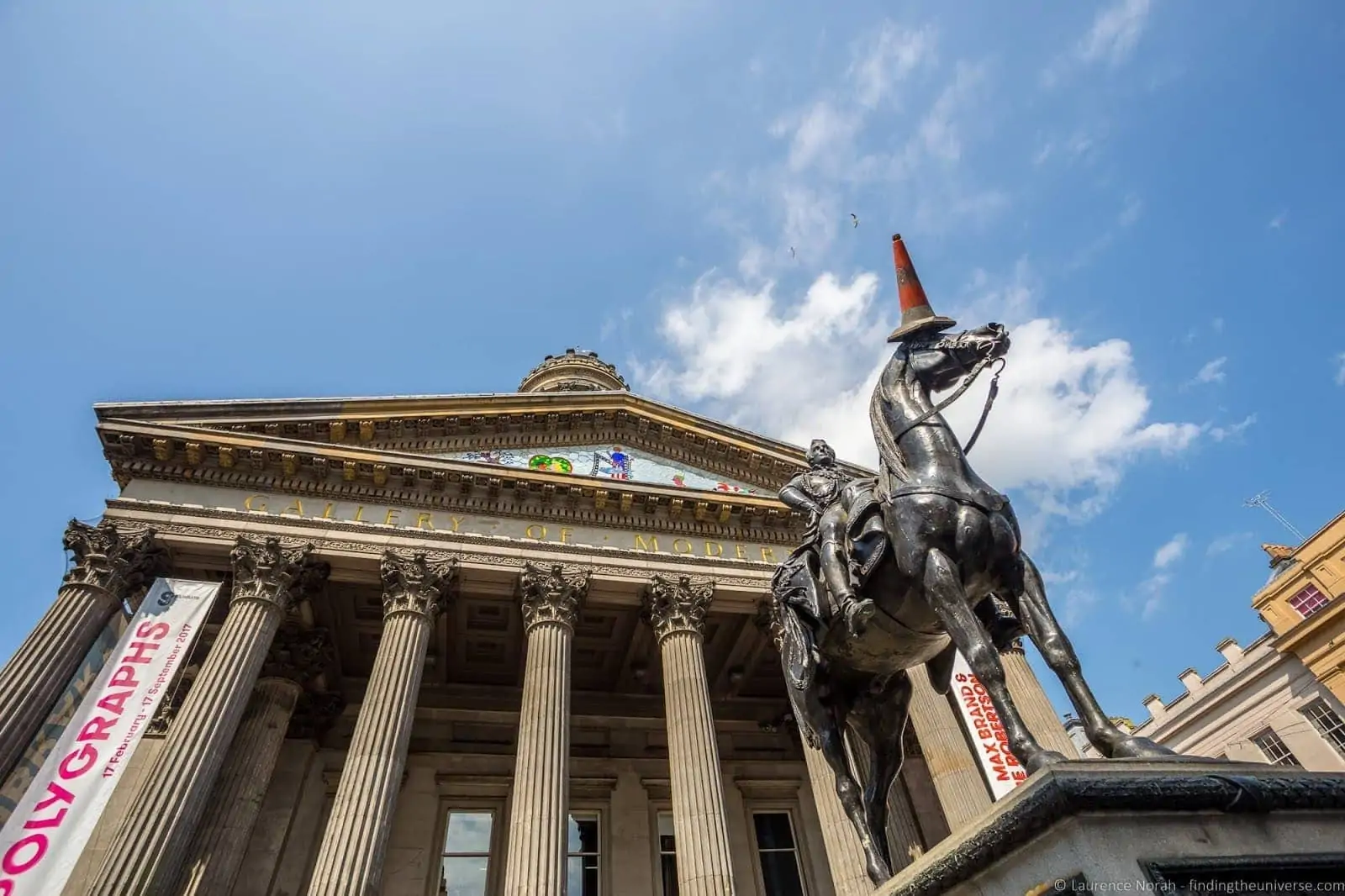
Table of Contents:
2 Days in Glasgow at a Glance
Two days is enough to see the best of Glasgow. Here’s how this itinerary breaks down, with an optional third day if you want to get out to Loch Lomond and the Trossachs.
- Day 1 stays in the medieval East End and city centre, taking in Glasgow Cathedral and the Necropolis, the free museums beside them, the Gallery of Modern Art and its traffic-cone Duke, George Square, the city centre street art, and dinner at Drygate.
- Day 2 crosses to the West End and the River Clyde, with Glasgow University and the Hunterian, the Mackintosh House, Kelvingrove Art Gallery and Museum, lunch in the West End, then either the Riverside Museum or the Glasgow Science Centre, and dinner in Finnieston.
- With a third day, you can add a day trip to Loch Lomond and the Trossachs, easy to reach by train or by car.
- For where to stay, the city centre or Merchant City keeps you close to Day 1, while the West End suits Day 2.
- Getting around is easy, as Glasgow is walkable, with a simple circular Subway and plenty of buses for the longer hops.
How many days do you need in Glasgow?
Two days is enough to see the best of Glasgow itself. That gives you a full day in the historic East End and city centre, and a second day in the West End and along the River Clyde. Between them, those two days cover the cathedral, the major free museums, the university, the street art and the architecture, which is most of what people come to Glasgow for.
One day is too tight. You can of course get a feel for the city in a day, but you’ll be choosing between the East End and the West End rather than seeing both, and Glasgow’s museums reward a slower pace than that. If you only have a single day, follow Day 1 below and treat it as a city-centre taster.
A third day is where Glasgow gets interesting as a base. Loch Lomond and the Trossachs National Park sits about twenty miles north west, close enough for an easy day trip, and it gives you lochs, hills and forest after two days of city. We’ve laid that out as an optional add-on further down, along with how to reach it with or without a car.
Day 1: Glasgow Cathedral, the East End and the City Centre
Day 1 covers the oldest part of Glasgow and the city centre, and it works best if you start reasonably early. Glasgow’s museums generally open around 10am and close at 5pm, so the morning is your most valuable stretch of the day. Almost everything today is walkable, give or take one short hop into the centre, and you’ll finish back in the East End for dinner.
Glasgow Cathedral and the Necropolis
Start at Glasgow Cathedral, the city’s oldest building and a good place to get a feel for how far back Glasgow goes. It’s a gothic construction dating from the 12th century, with a gorgeous timber ceiling and a low vaulted crypt. This is where St Mungo, the patron saint of Glasgow, is said to have founded his church, and he’s buried in the crypt below. Entry is free.
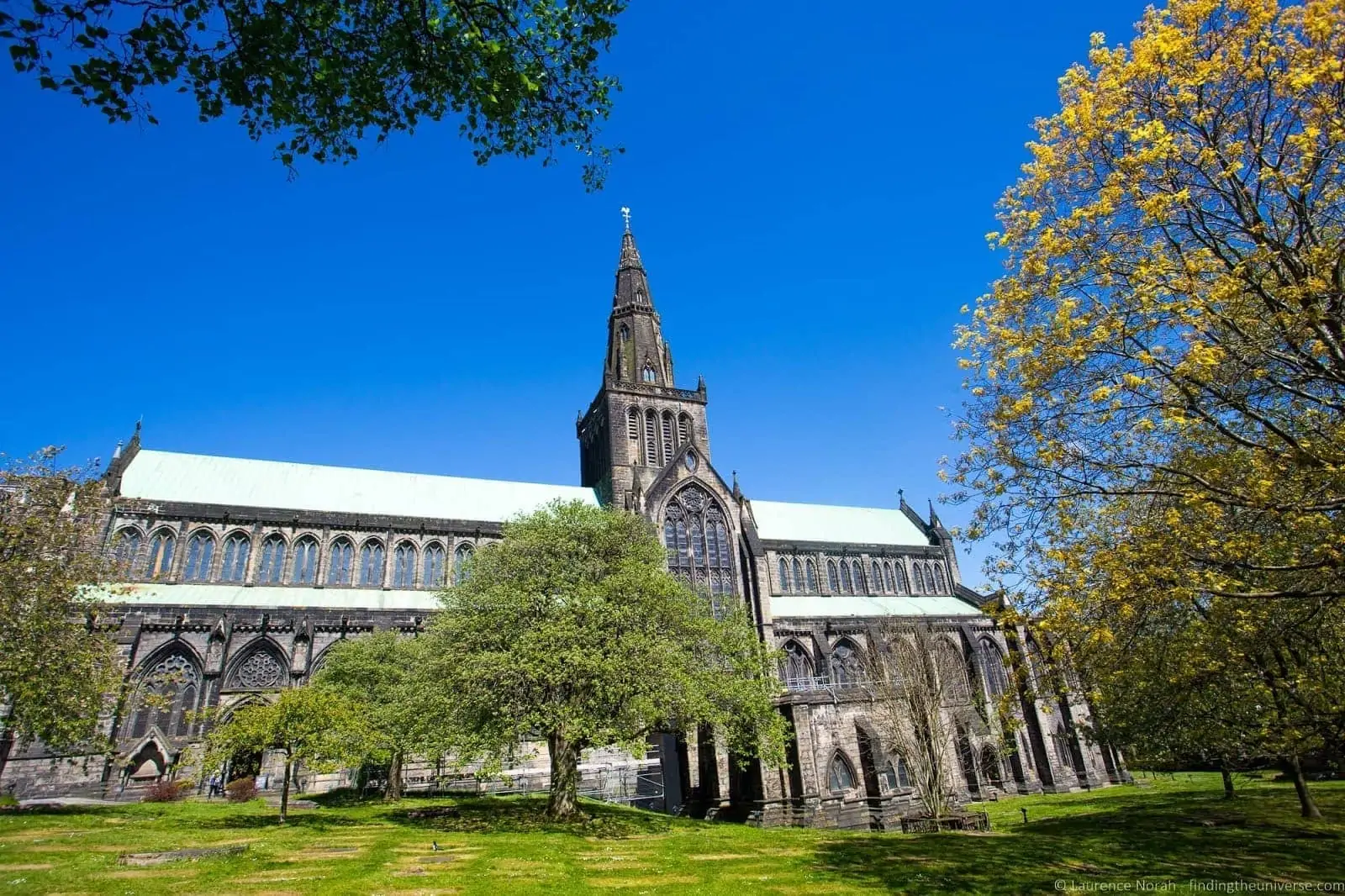
Behind the cathedral, across a small bridge, the Necropolis climbs a hill in tiers of Victorian monuments and mausoleums. It’s worth the short walk up. The views back over the cathedral and the East End are some of the best free views in the city, and on a day with a bit of weather moving through it’s an atmospheric place to photograph.
Provand’s Lordship and the St Mungo Museum
Two free museums sit right beside the cathedral, so you can see all three without moving the car you don’t need. Provand’s Lordship is housed in Glasgow’s oldest house, which dates from 1471, and is now a historic-house museum with furniture and artefacts from across the centuries. Across the road, the St Mungo Museum of Religious Life and Art looks at the world’s major religions, with objects and information from each of them.
Both are free, with donations welcomed, and both keep similar hours, roughly 10am to 5pm from Monday to Saturday and 11am to 5pm on Sunday. One small heads-up: the lift at the St Mungo Museum has been out of service, so step-free access to the upper floors isn’t guaranteed at the moment. If that matters for your visit, check the museum’s site before you go.
The Gallery of Modern Art and Glasgow’s traffic-cone Duke
Walk fifteen minutes or so into the city centre and you reach the Gallery of Modern Art, usually shortened to GoMA. It’s free, and the rotating exhibitions are worth half an hour, but the real star is outside the front door.
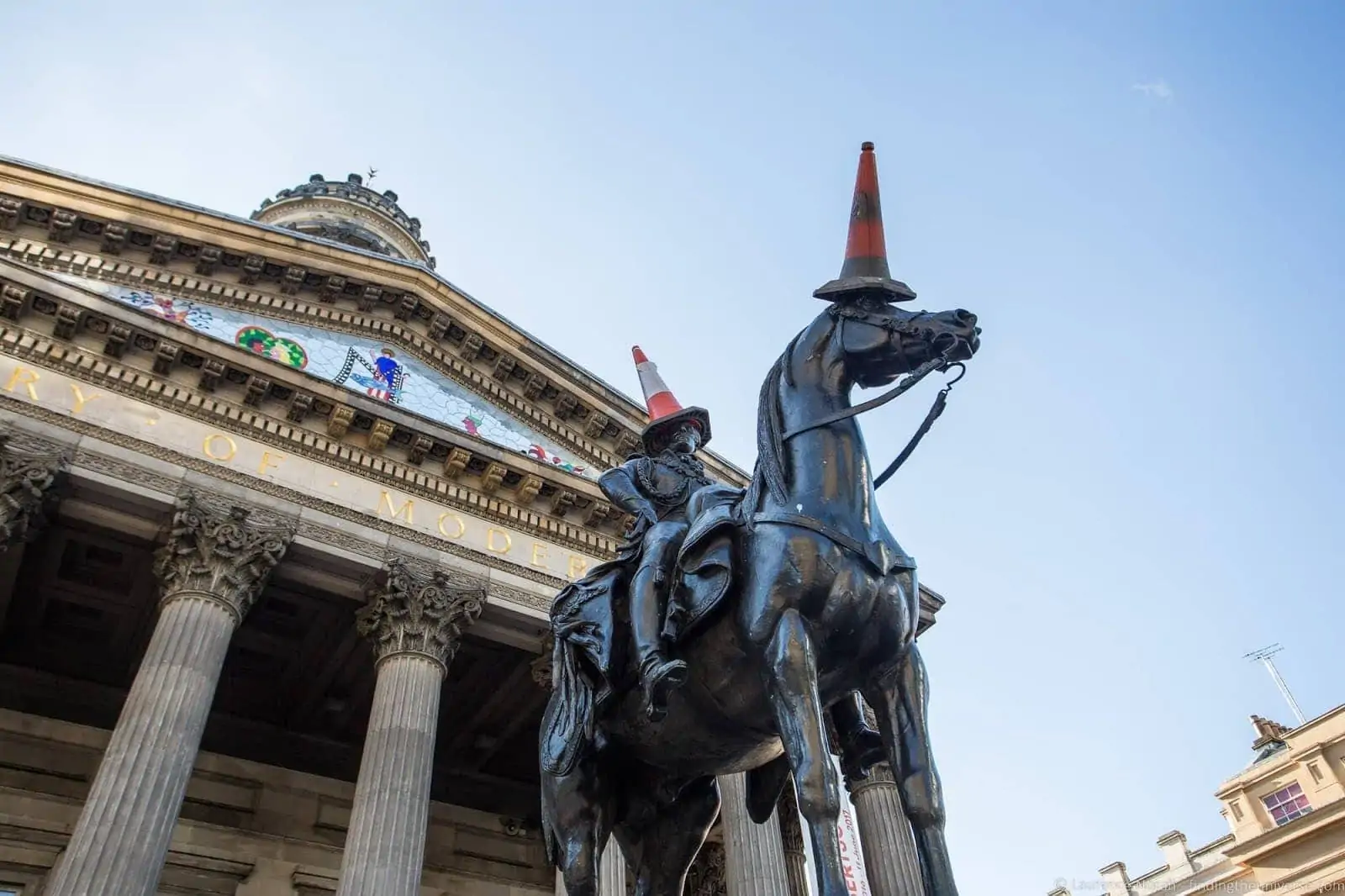
The equestrian statue of the Duke of Wellington sits in front of GoMA, and the Duke nearly always has a traffic cone on his head. The cone has been there, on and off, for decades. For years the council removed it and persons unknown put it straight back, until the council eventually gave up and the cone became semi-official.
It’s probably the most photographed thing in Glasgow, and it tells you something true about the city’s sense of humour. You’ll want a shot of the Duke!
George Square and the City Chambers
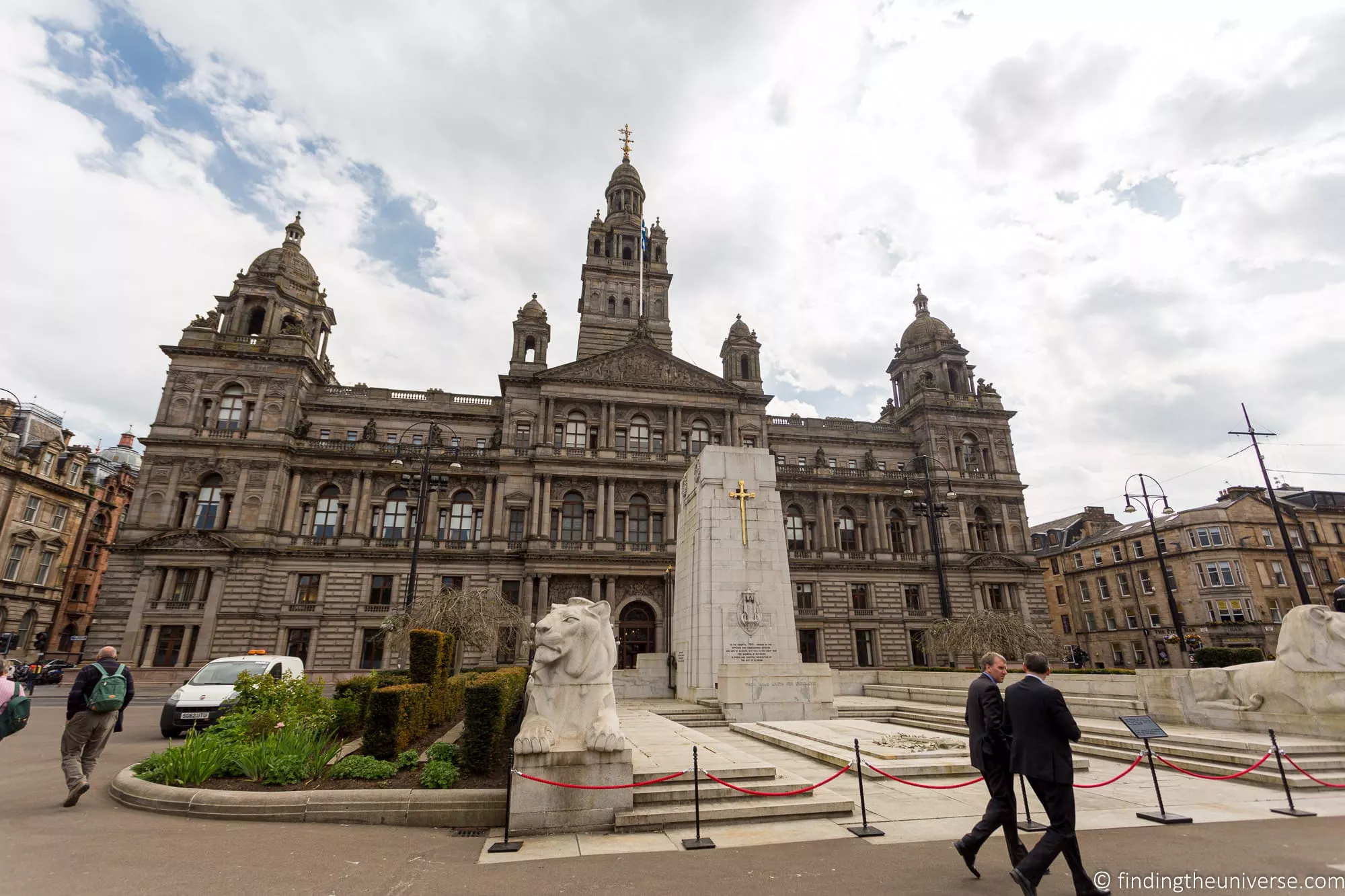
George Square is a two-minute walk from GoMA and is Glasgow’s main civic space, ringed with statues and overlooked by the City Chambers. The Chambers are a Victorian set piece, all marble and mosaic inside, built when Glasgow was one of the wealthiest cities in the world.
Free guided tours run on weekdays, so if the timing lines up it’s an easy thing to fold into the morning, in the same way the brewery tour below is an optional swap rather than a fixed stop.
Glasgow’s city centre street art
As you walk around the centre you can’t miss the huge mural panels on the sides of buildings. Giant tigers, a floating spaceman, athletes, famous Glaswegians and St Mungo himself appear on gable ends all over the city. It’s some of the best street art we’ve seen anywhere, and it’s only grown since our first visits.

There’s a City Centre Mural Trail you can follow if you want to see them all in one go, though it takes a bit of time. If you’d rather just have the best of them mapped out, we have a whole post on the street art of Glasgow with photos of our favourites.
Lunch in the Merchant City
By now you’ll be ready for a break. The Merchant City, just south and east of George Square, is the easiest place to find lunch. It’s the old trading quarter, now full of cafes, restaurants and bars in handsome converted warehouses, and you can pick a spot to suit your budget without much planning. Sit down, eat well, and give your feet a rest, because there’s still the East End to come.
An optional swap: a Tennents Wellpark brewery tour
If beer appeals more than another museum, a tour of the Tennents Wellpark Brewery is a good Glasgow-specific option. Tennents has been brewed at the Wellpark site in the East End for centuries, and the brewery sits close to the cathedral, which makes it easy to slot in late in the afternoon before dinner.
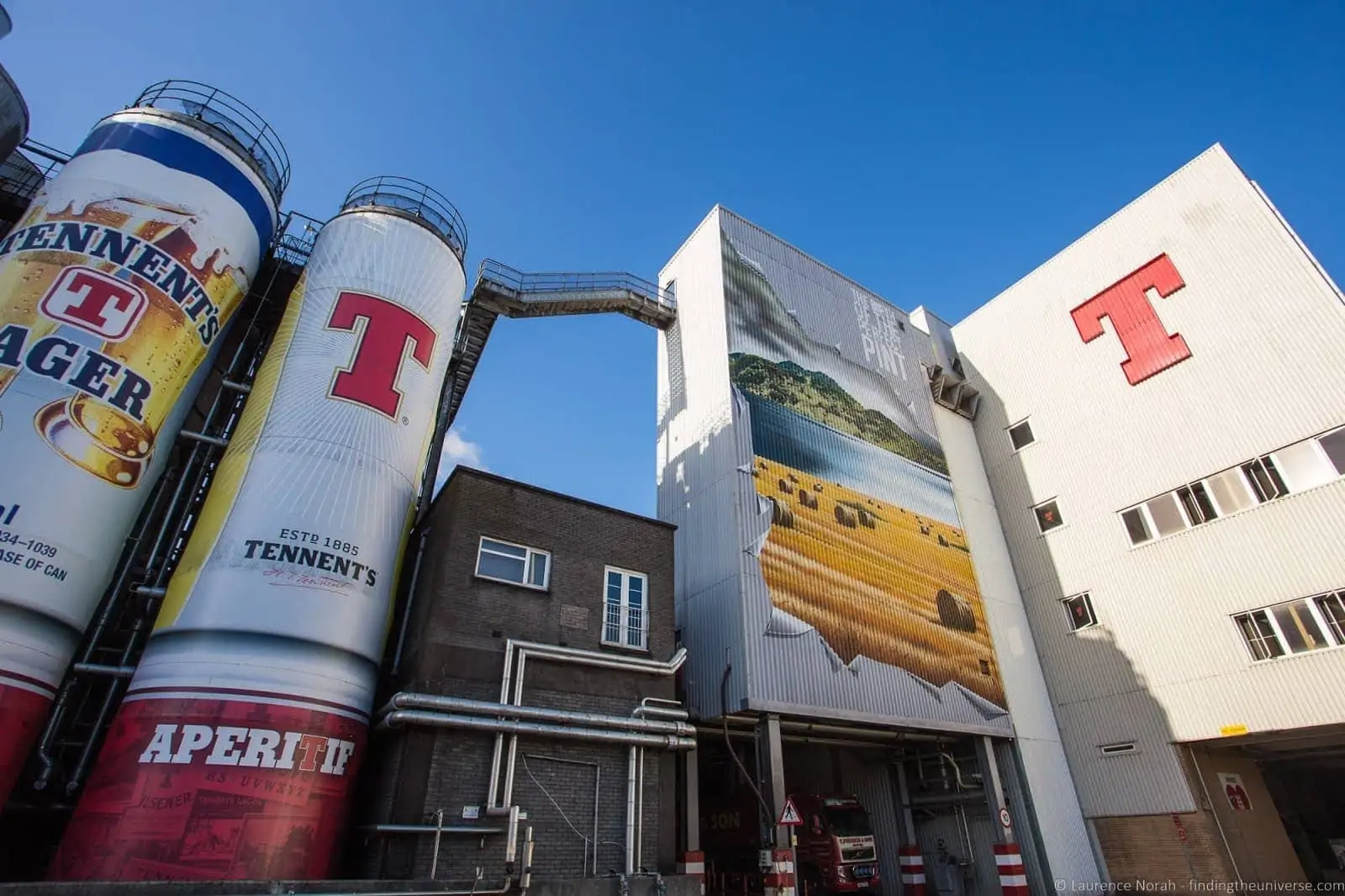
The standard brewery tour runs about an hour and a half, costs from £17 per person, and is for over-18s only. It does need booking in advance, so check the official website for current times and to reserve a place. Treat this as a swap rather than an extra: a booked tour doesn’t fit alongside the full Day 1 plan above, so if you want to do it, drop the mural trail or trim the museums.
Dinner at Drygate
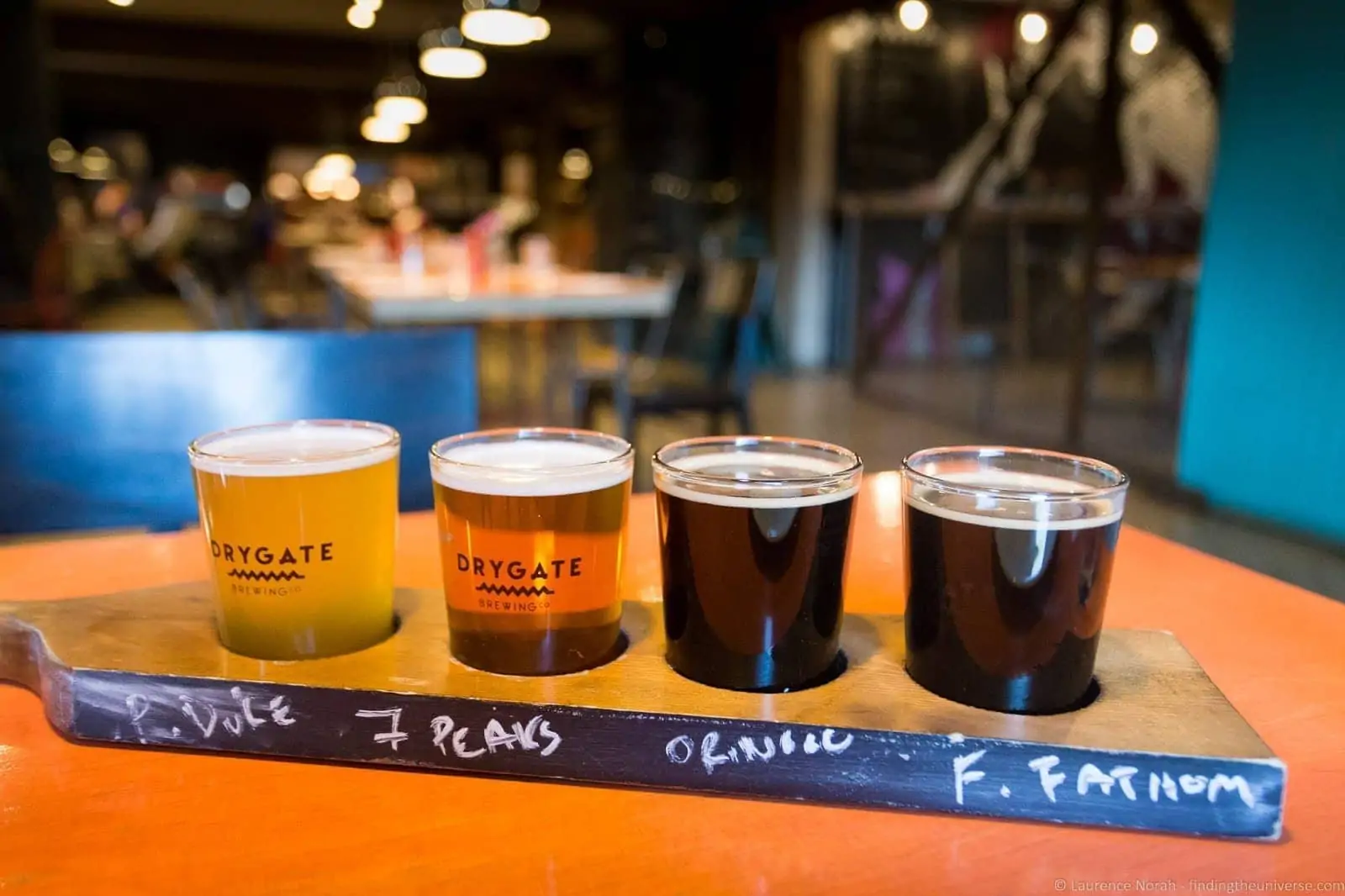
Finish Day 1 back in the East End at Drygate, a working brewery with a bar and kitchen, sitting right next to the Wellpark Brewery and a short walk from the Necropolis.
This was one of our most memorable meals in the city! They brew their own beer on site, the food is good, and the whole place has the relaxed, slightly industrial feel that suits the East End. They run brewery tours too, if the Tennents one didn’t tempt you.
Day 2: The West End and the River Clyde
Day 2 moves across town to the West End, Glasgow’s leafier quarter and the home of the university, and then down to the River Clyde. The morning, around the university and Kelvingrove, is a solid stretch of sightseeing, so it pays to start early and not linger too long over coffee. The afternoon by the Clyde is deliberately a pick-one, and we’ll explain why when we get there.
Glasgow University and the Hunterian Museum
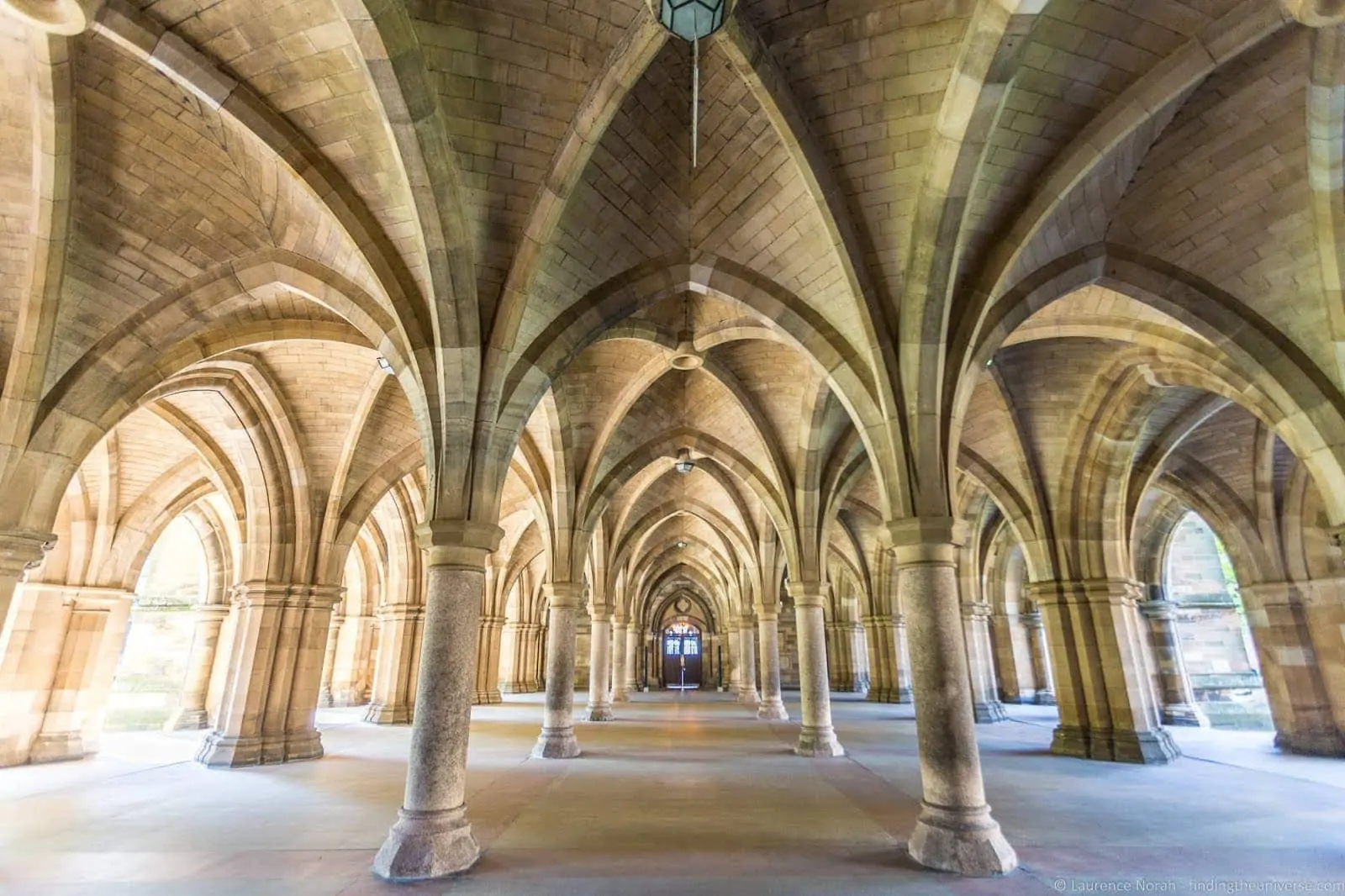
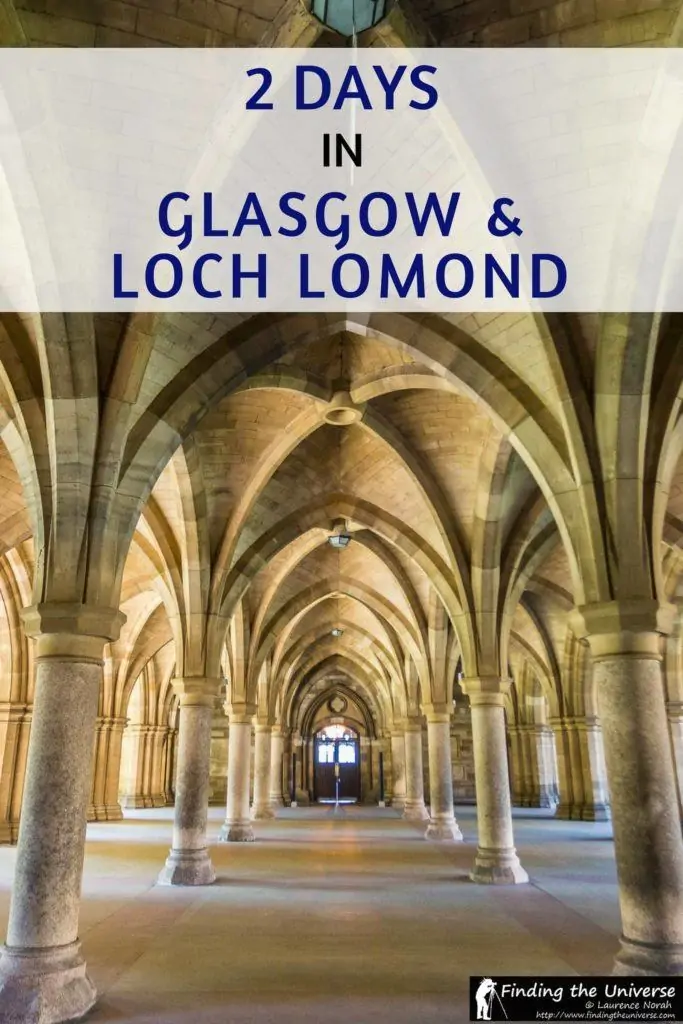
Start the day at the University of Glasgow, whose main building is a grand neo-gothic pile by George Gilbert Scott that looks far older than it is. Wander into the cloisters underneath the main hall. They’re a run of arched stone vaults that photograph beautifully, and on a quiet morning you can have them more or less to yourself.
Inside the same building is the Hunterian Museum, built around the collection of William Hunter, an 18th-century anatomist and collector who left it all to the university.
It’s free, open Tuesday to Sunday from 10am to 5pm, and the coin collection in particular is regarded as one of the finest anywhere. There’s plenty here beyond that, from Roman Scotland to Ancient Egypt.
The Mackintosh House and Hunterian Art Gallery
You can’t really visit Glasgow without taking in something by Charles Rennie Mackintosh, the architect and designer whose work has become shorthand for the city. Largely overlooked in his own lifetime, his buildings and interiors are now among Glasgow’s biggest draws.
Across the road from the Hunterian Museum, the Hunterian Art Gallery holds the university’s art collection, including a good number of Mackintosh watercolours, and entry to the gallery is free. Attached to it is the Mackintosh House, a careful reconstruction of the home Mackintosh shared with the artist and designer Margaret Macdonald, his creative partner and wife, who was responsible for much of the interior and decorative work the couple produced together.
The house carries an admission charge, separate from the free gallery, and access can be limited, so it’s worth booking ahead or at least checking opening details before you build your morning around it.
Kelvingrove Art Gallery and Museum
A ten to fifteen minute walk downhill from the university, on a well-signposted route, brings you to Kelvingrove Art Gallery and Museum, and this is the one unmissable stop of Day 2. Opened in 1901 in a vast red sandstone building, Kelvingrove is one of Scotland’s most popular free attractions, with more than 8,000 objects across 22 galleries.
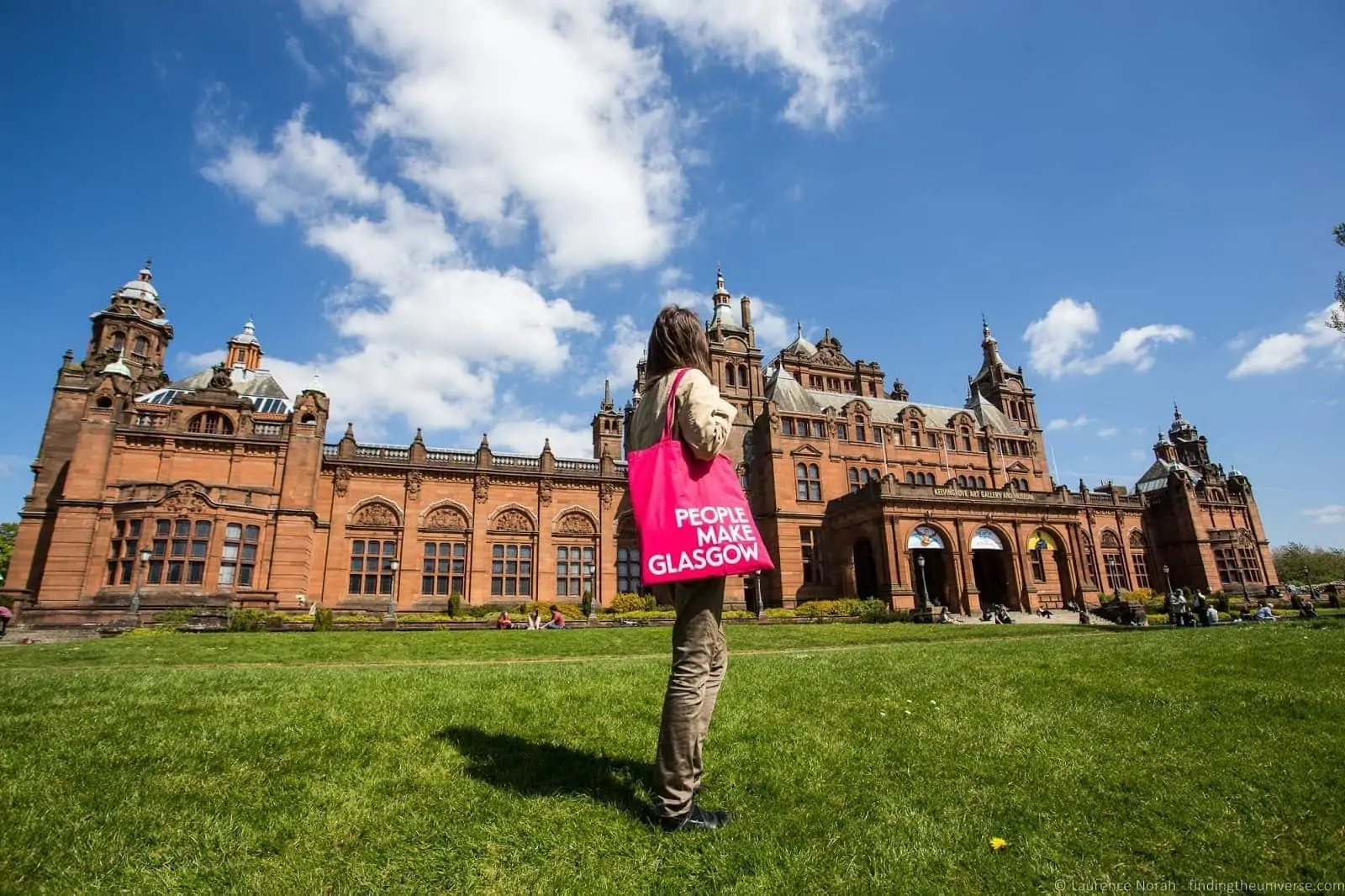
The range is the appeal. Salvador Dali’s Christ of St John of the Cross hangs here, along with a suspended Spitfire, natural history, arms and armour, and a famous set of expressive heads in the main hall. Entry is free, and you could easily spend a half day inside.
Kelvingrove has been undergoing restoration work since late 2025, so you may find some scaffolding and the west car park closed, though the museum stays open to visitors throughout.
Lunch in the West End
For lunch, head for Byres Road and Ashton Lane, the cobbled lane just off it that’s packed with bars and restaurants. This is the heart of the West End and an easy place to eat well.
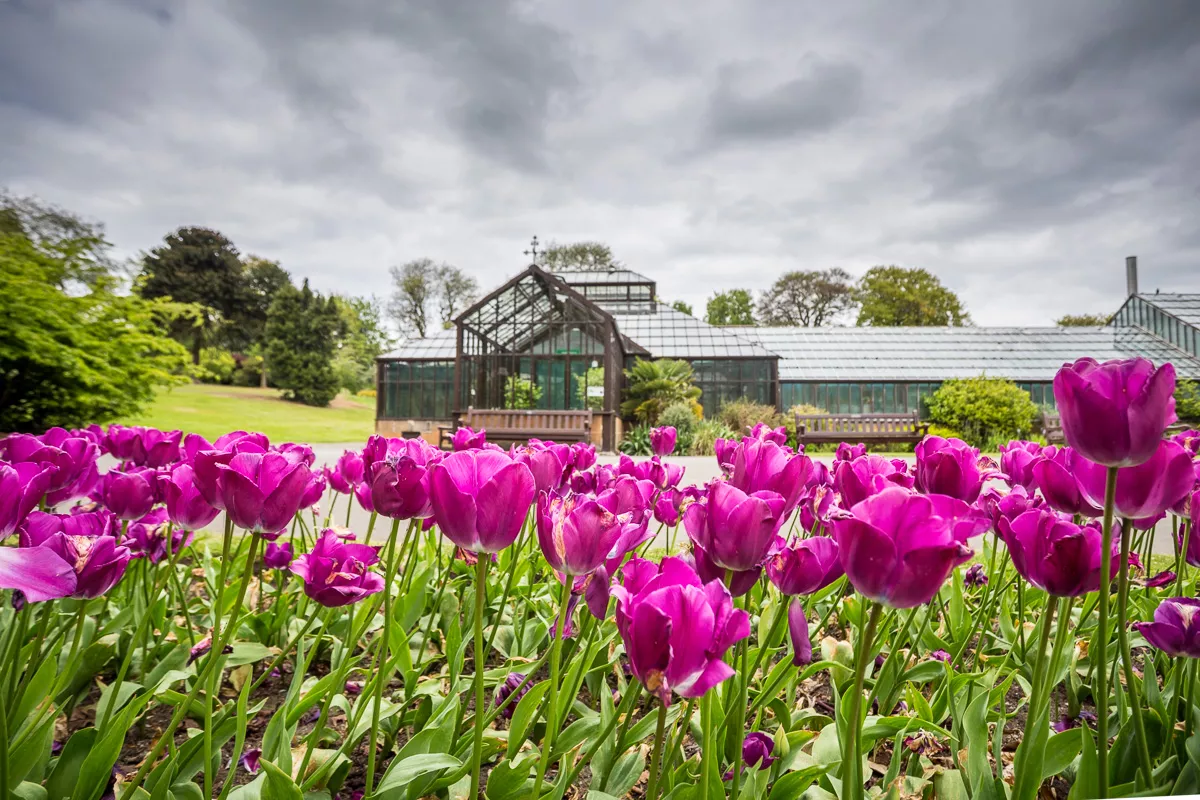
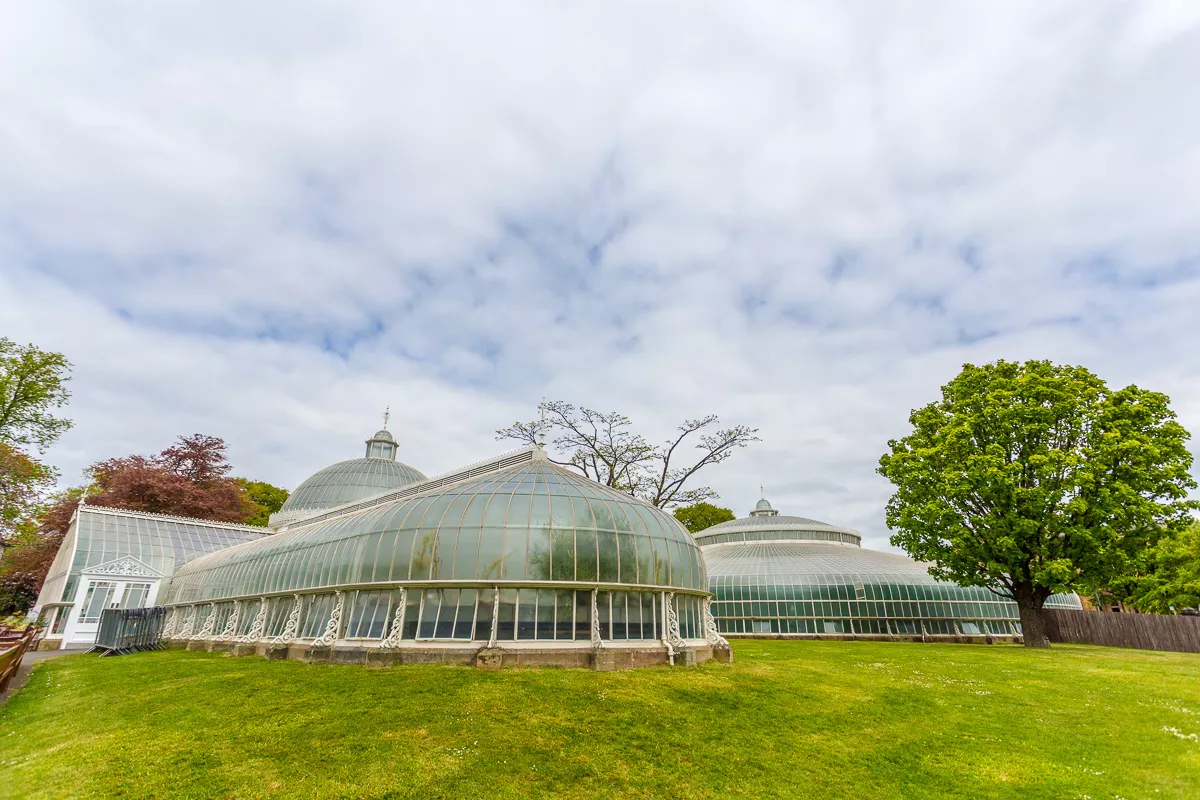
If you have a spare half hour, the Glasgow Botanic Gardens are a short walk from the top of Byres Road, and the Kibble Palace glasshouse there is free, quiet, and a lovely shelter if the weather turns. Treat it as a flexible add rather than a fixed stop, depending on how the morning has run.
An afternoon on the Clyde: pick one
Here’s where you have to make a choice, and choosing is the point. The two big Clyde-side attractions sit at opposite ends of the river and each needs a couple of hours, so you realistically do one, not both. Picking one and doing it well beats rushing through two.
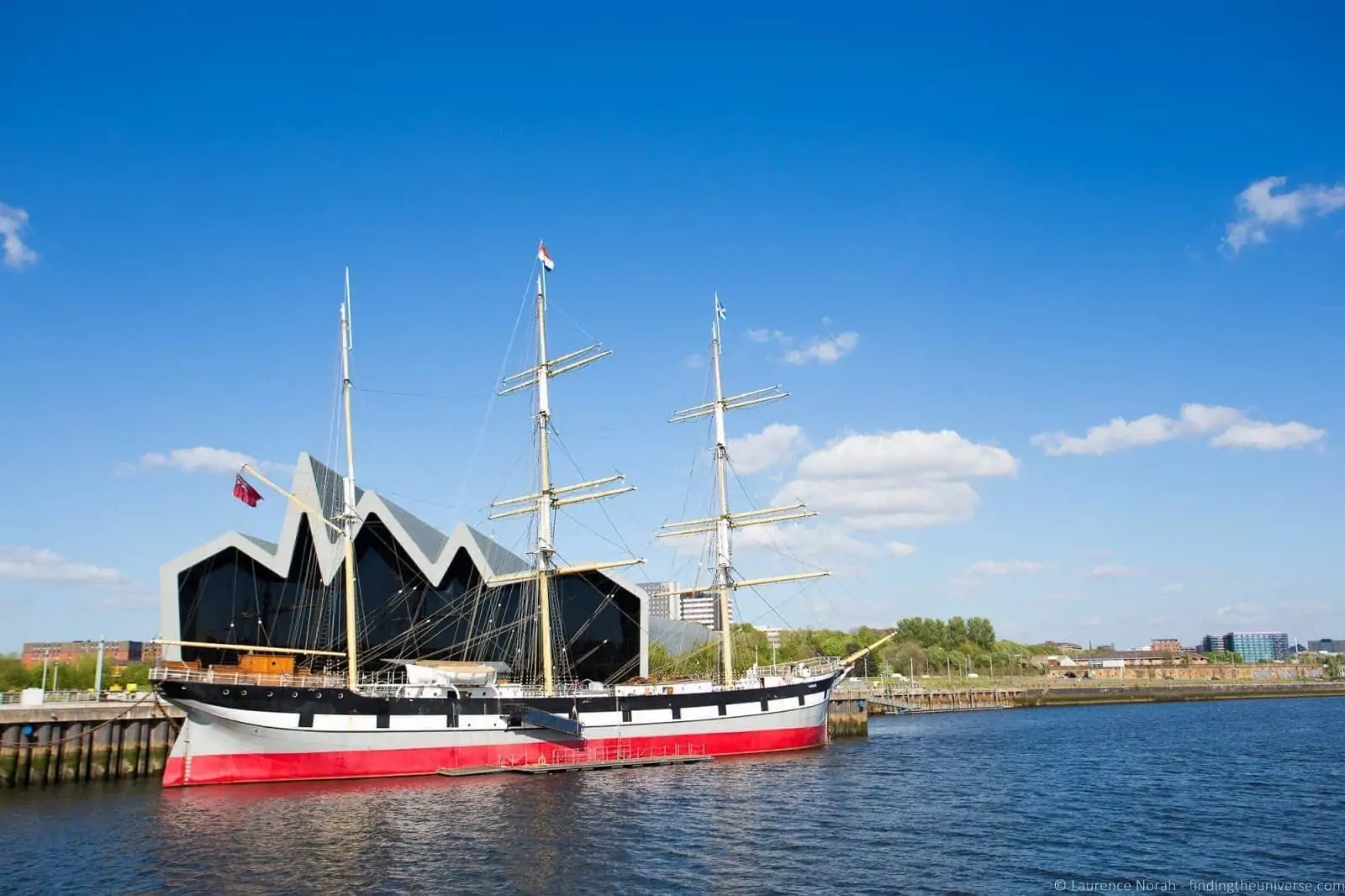
The first option is the Riverside Museum and the Tall Ship. The Riverside Museum is Glasgow’s transport museum, housed in a striking wave-roofed building designed by Zaha Hadid. It’s free, and it’s stuffed with real vehicles, including the world’s leading collection of Scottish-built cars. Moored alongside it is the Tall Ship Glenlee, an 1896 sailing cargo vessel you can go aboard.
The Tall Ship used to be free and now charges, around £5.50 for adults and £3.70 for children, while the Riverside Museum itself stays free. If whisky is your thing, the Clydeside Distillery is a short walk away and makes an easy add to this option.
The second option is the Glasgow Science Centre. If you’re travelling with children, the Glasgow Science Centre is the better afternoon. Three floors of hands-on, interactive exhibits keep kids and adults busy for hours.
It’s one of the few Glasgow attractions that isn’t free: adult tickets start at around £15.50 off-peak, children’s tickets are lower, and summer-peak prices run higher, with the planetarium and IMAX cinema charged separately.
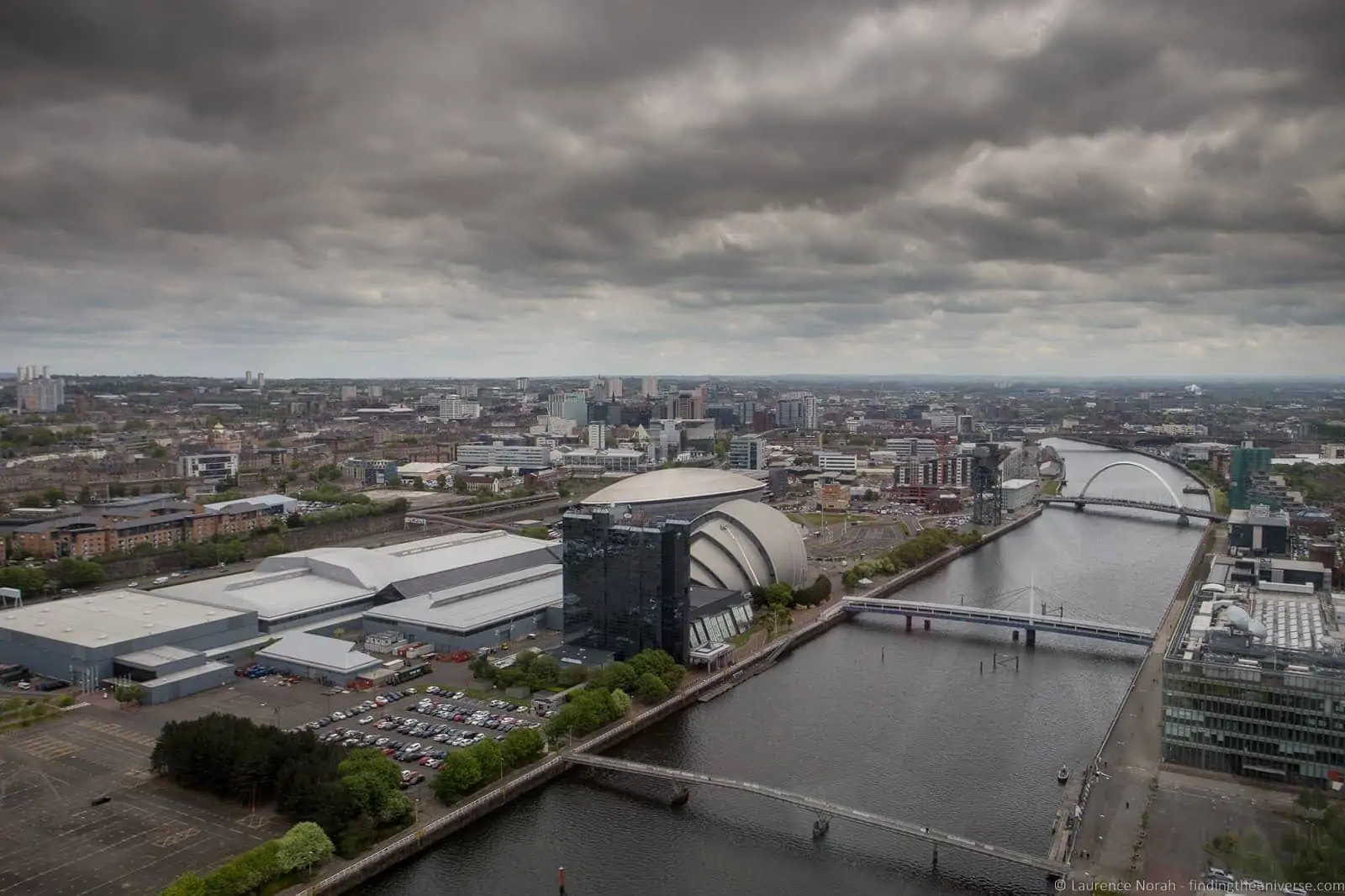
One thing the Science Centre used to be known for is the Glasgow Tower next door, the tallest freely rotating tower in the world. As of 2026 the Tower is closed to visitors, with an update on its future promised in 2027, so don’t plan your afternoon around the view from the top.
Dinner in Finnieston
Round off Day 2 in Finnieston. This stretch of Argyle Street, between the West End and the Clyde, has become Glasgow’s go-to dinner destination, a tight run of independent restaurants and bars that consistently turns up in the city’s best-of lists. It’s an easy walk or a short hop from either Clyde-side option, and a good place to end two days of walking.
More Glasgow ideas if you have extra time
The two days above are a curated route, not the whole city, and Glasgow of course has far more than fits into a weekend. If you have extra time, or you want to swap something out, here are the stops we’d reach for next.
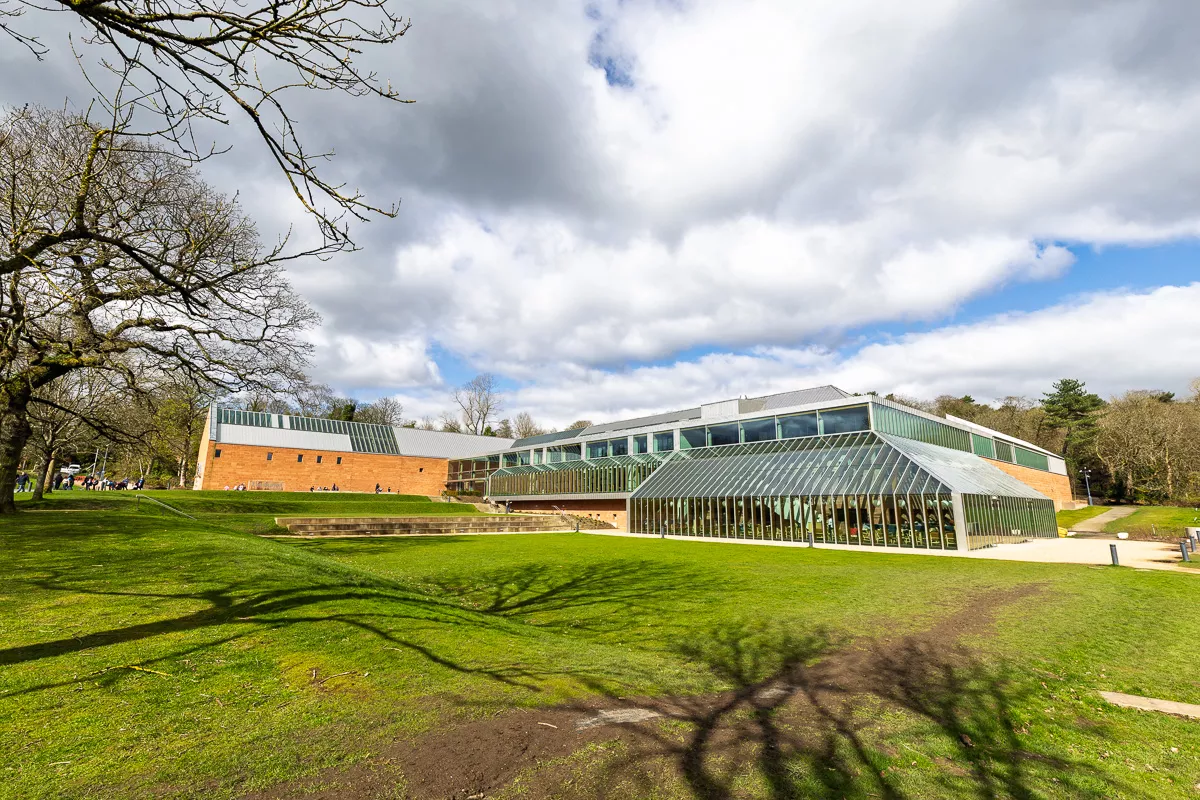
- The Burrell Collection in Pollok Country Park reopened in 2022 after a major refurbishment and went on to win Art Fund Museum of the Year. It’s free, set in parkland, and one of the most rewarding museums in the city.
- House for an Art Lover in Bellahouston Park is a Mackintosh design, built long after his death from his competition drawings. The cafe and shop open daily, but the house exhibition rooms run on a limited, event-dependent schedule, so check before you make the trip out.
- Glasgow Green, the city’s oldest park, is worth a wander, though the People’s Palace museum on the green is currently closed for a multi-year, multi-million-pound redevelopment with no confirmed reopening date.
- The Barras, the East End’s long-running weekend market, and the surrounding streets are a good slice of older Glasgow.
- A Glasgow Central Station tour takes you under and behind one of Britain’s grand Victorian stations, while the tiny Glasgow Police Museum and the mechanical sculptures of Sharmanka Kinetic Theatre are unusual, low-key alternatives to the big museums.
For a fuller run-down of the city’s attractions, Jess has put together a guide to 25 things to do in Glasgow over on our sister site, which works well as the long list to this itinerary’s short one.
Adding a third day: Loch Lomond and the Trossachs
If you can give Glasgow a third day, spend it out of the city. The Loch Lomond and the Trossachs National Park begins less than an hour north west of Glasgow and couldn’t feel more different: lochs, rolling hills, forest and wildlife, all within easy reach. It’s one of the best reasons to base yourself in Glasgow.
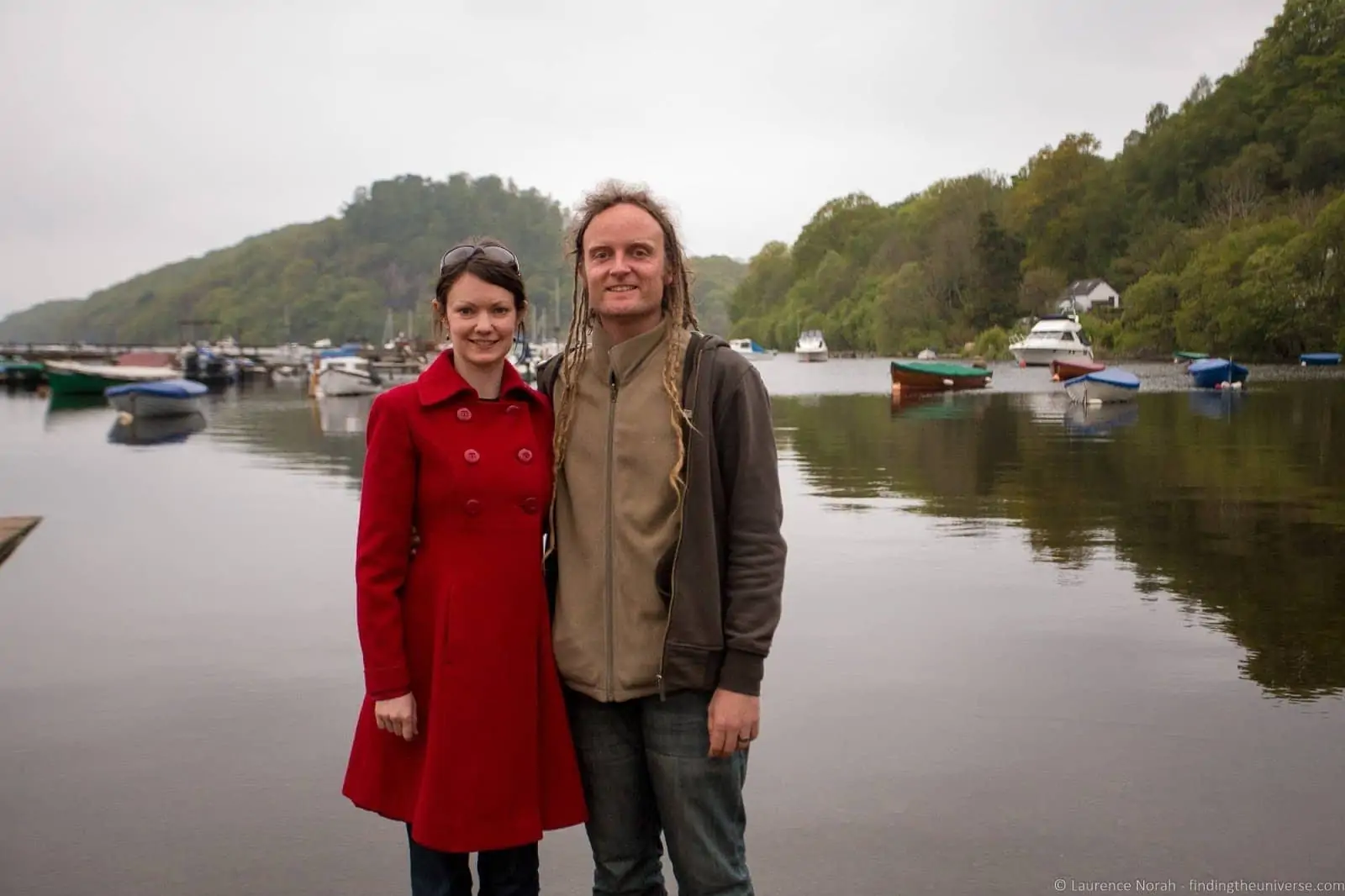
There’s far more here than one day holds, so here’s how we’d shape it. If you have a car, you can build a full loop through the Trossachs. If you don’t, the southern end of the loch around Balloch and Luss is easy to reach by train and makes a relaxed day in its own right.
A cruise on Loch Katrine
There’s no better way to start a day in this part of the world than out on the water. The steamship Sir Walter Scott has been cruising Loch Katrine since 1900, and a trip aboard her is the highlight of the Trossachs for us. The world has moved on around the loch, but the views from the deck are much as the Victorians who first took this boat would have seen them.
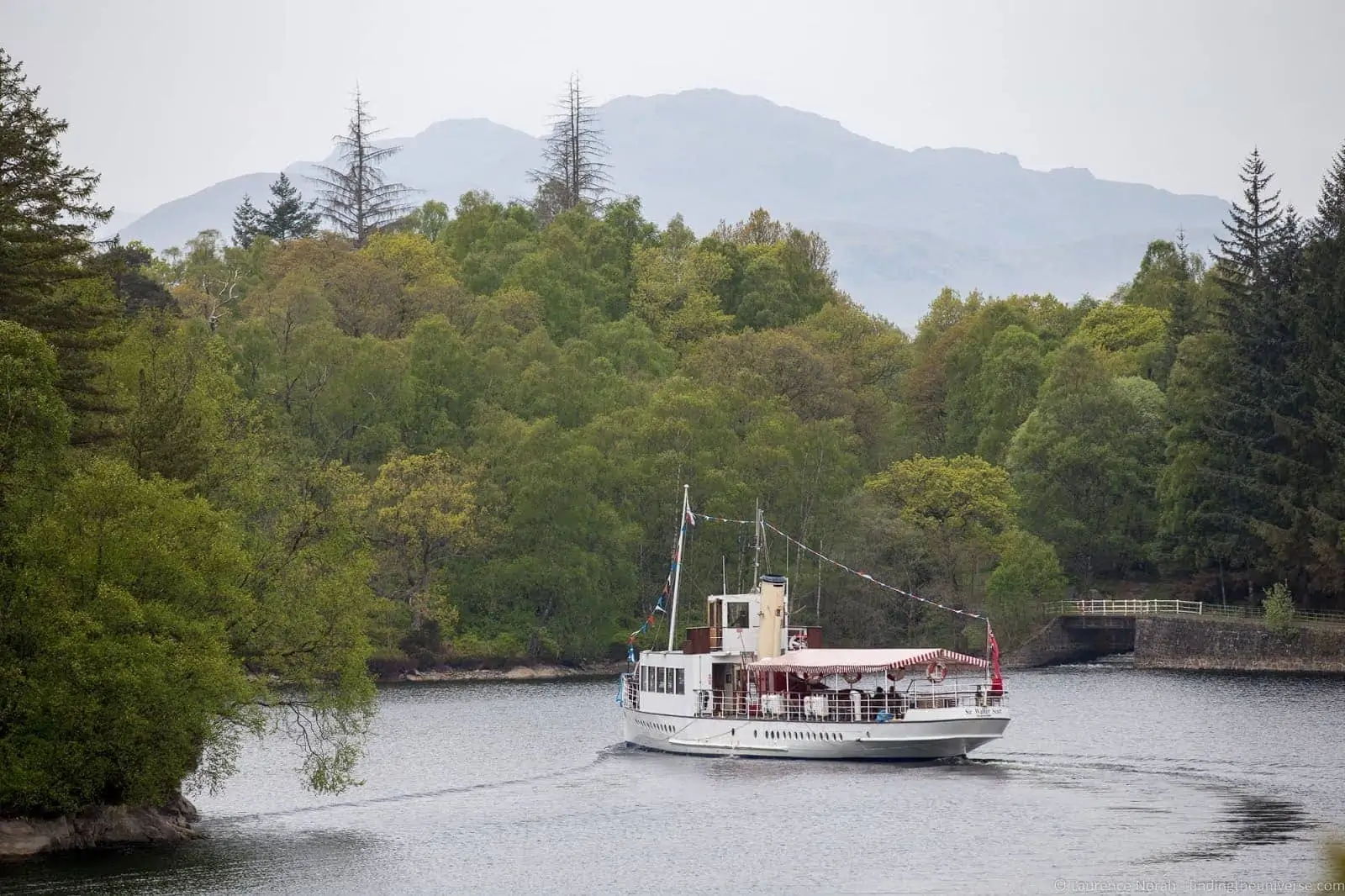
Short circular cruises of around 45 minutes run throughout the day, year round, and there’s a bar on board if you fancy a wee dram as you steam across the water (or, in our case, a hot chocolate!). Sailing times and fares change with the season, so check the Loch Katrine website and book ahead.
The Devil’s Pulpit at Finnich Glen
One of the photographic highlights of the wider area is the Devil’s Pulpit, a deep gorge more formally known as Finnich Glen, about fifteen minutes’ drive south of Loch Lomond itself. The gorge is famous for its reddish water and steep, moss-covered walls, and it’s become very popular since appearing on screen.
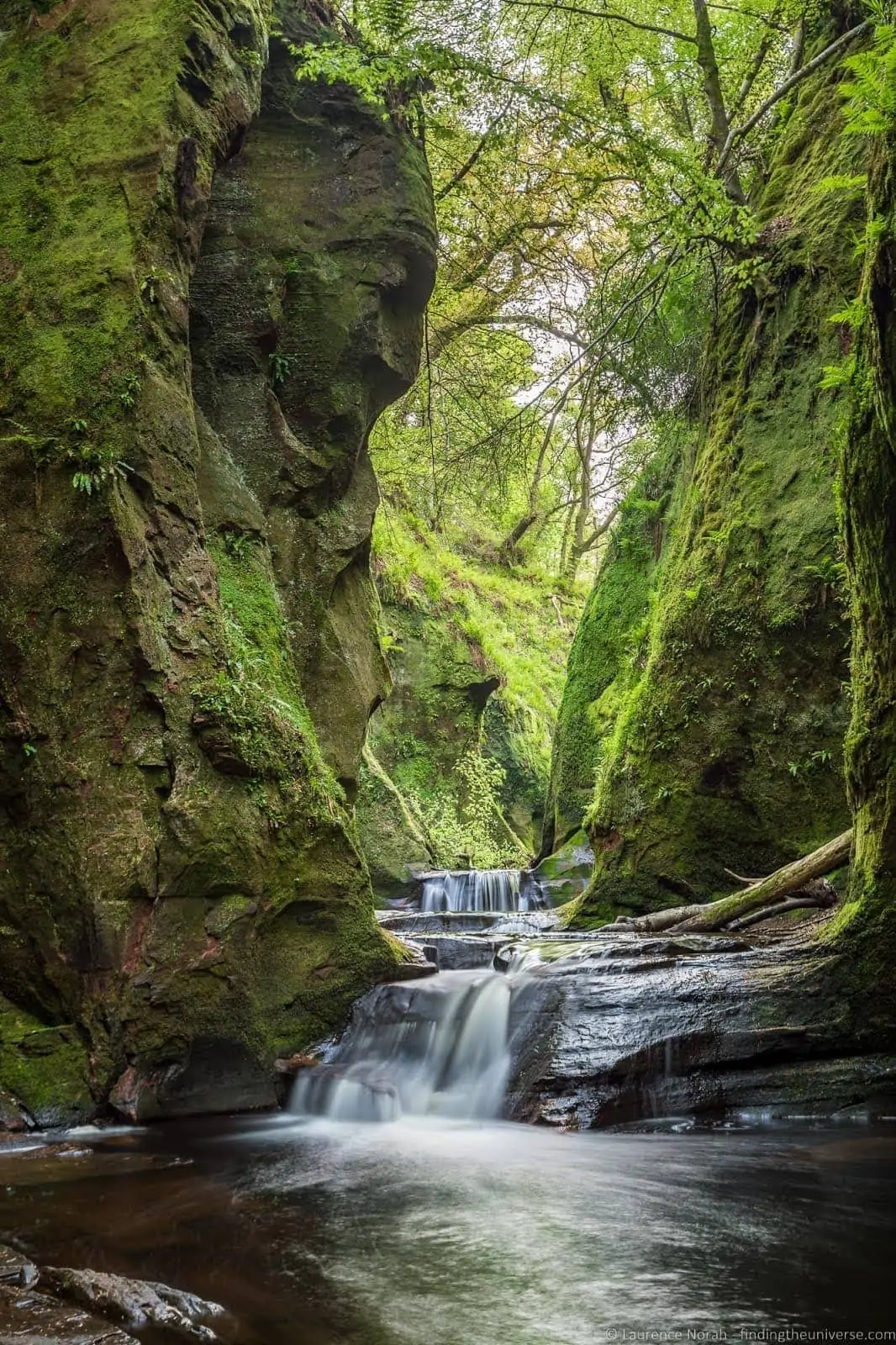
Go in with your eyes open. This is private farmland with no visitor facilities, despite plans for a car park and visitor centre that have been proposed but not built.
Parking is deliberately minimal, a small layby on the A809 that holds only two or three cars, with a slightly larger car park about a ten-minute walk away. The verges carry double yellow lines specifically to keep cars off them, so don’t park there.
Getting down to the gorge floor means a steep, roughly 200-year-old stone stairway known as Jacob’s Ladder, which is unguarded and often wet and slippery. The water level can rise fast in rain. Visit early to beat the crowds, wear sturdy footwear, and treat the descent with respect. Here’s a map location to help you find it.
Treezone and the southern loch
If you have kids in tow, Treezone at Loch Lomond Shores in Balloch is an aerial adventure course with high obstacles and zip-lines. We’ve done a fair few of these and Treezone had one of the smoothest safety systems we’ve used, clipped in once and left clipped in, so the only thing to think about was the course itself. Check their website for prices, age limits and opening times.
Balloch is also the easy base for anyone without a car. From here you can walk the loch shore, visit Loch Lomond Shores, or carry on to the pretty conservation village of Luss further up the western bank. Further north, the Falls of Dochart at Killin are worth a look if you’re touring more widely, though they’re well off this day’s route.
Dinner at the Oak Tree Inn
Finish the day with a meal at the Oak Tree Inn in Balmaha, on the eastern shore of Loch Lomond. We’ve eaten here twice and been impressed both times by the local produce and Scottish cooking. If you arrive a little early, take the short walk along the loch shore first. It’s a fine way to end a day in the national park.
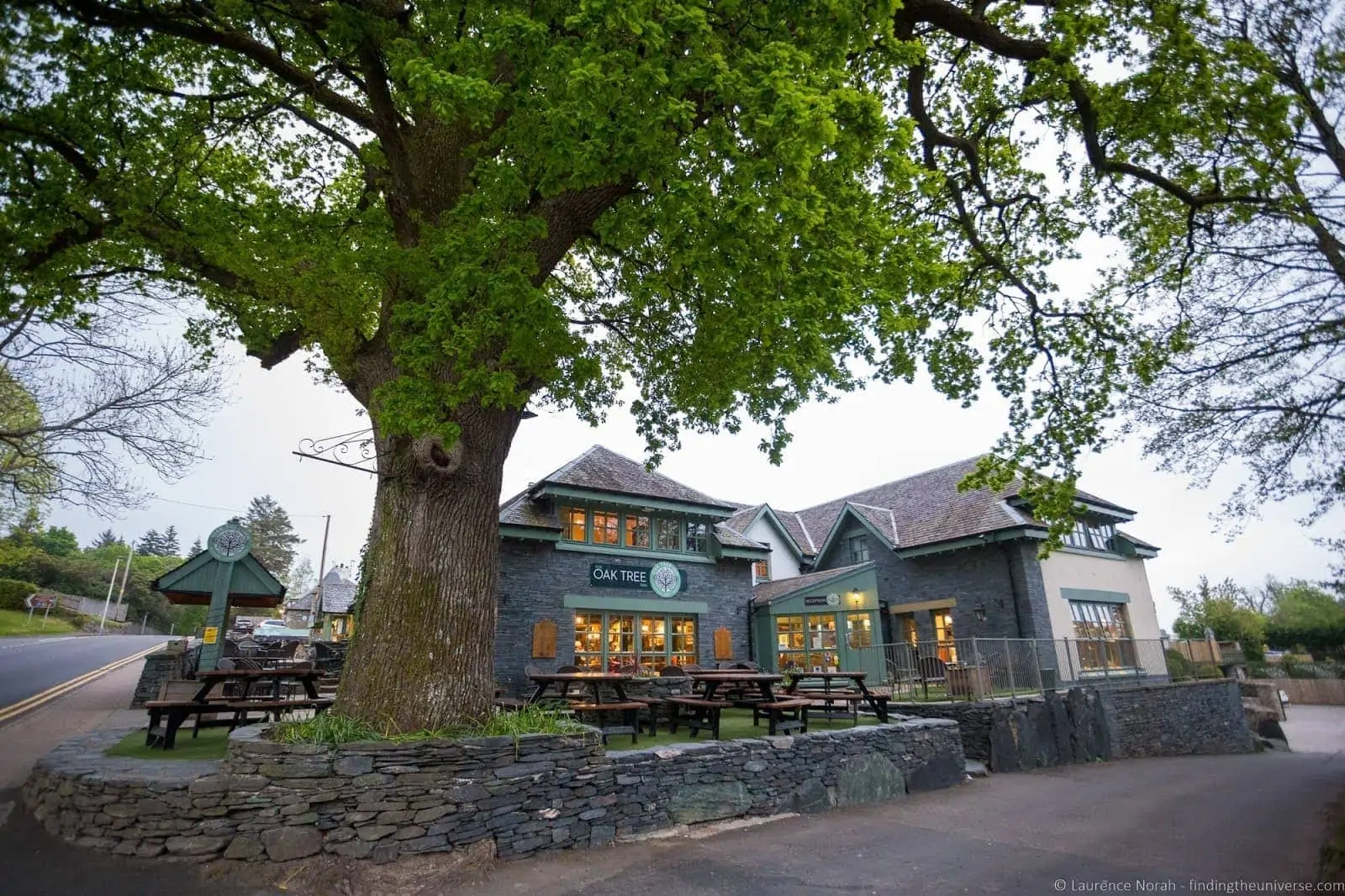
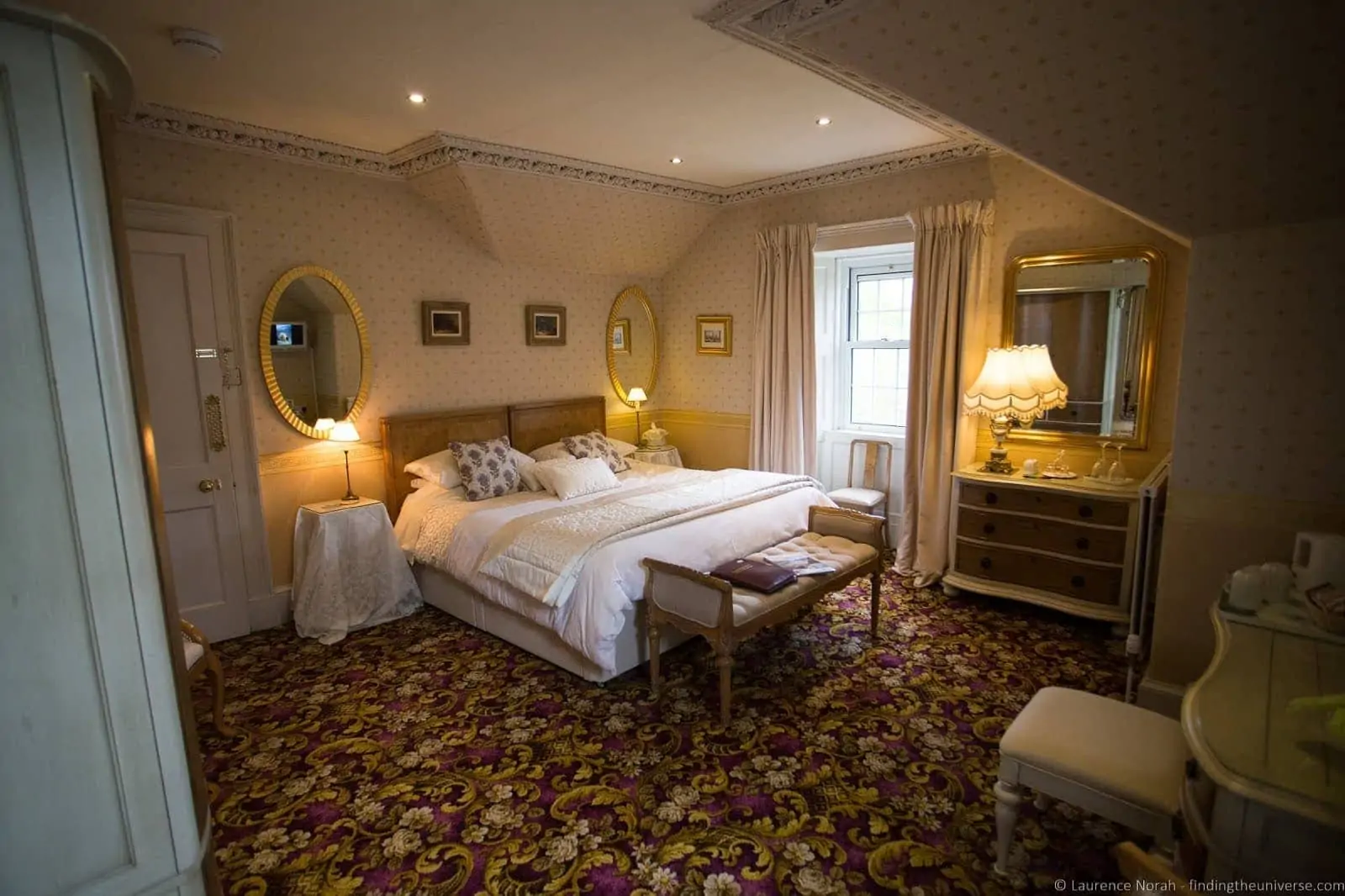
If you’d rather stay over and spread the national park across two unhurried days, we loved the cosy Loaninghead Holiday Cottages, where we had a wonderful room, views over the hills and a memorable breakfast served on fine china. Little touches like the decanter of sherry waiting in the room summed the place up.
How to get from Glasgow to Loch Lomond
Loch Lomond is easy to reach from Glasgow, and you have four sensible options depending on how much of the national park you want to cover.
- Driving is the most flexible choice, and the only way to link the Trossachs loop of Loch Katrine and the Devil’s Pulpit in a single day. The drive to the southern loch takes under an hour. If you need a vehicle, we use Discover Cars to compare hire prices across companies.
- The train is the simplest no-car option. A direct ScotRail service runs from Glasgow Queen Street station to Balloch, at the southern tip of the loch, in around 50 minutes, with frequent departures through the day. This is the route to take if you want a relaxed day around Balloch, Loch Lomond Shores and Luss.
- Buses also run from Glasgow towards the loch, and can be a cheaper alternative to the train, though journey times are usually longer.
- An organised tour is worth considering if you want the highlights without driving or planning. A guided day tour from Glasgow such as this one typically takes in Loch Lomond and the Trossachs with a driver who knows the area.
Getting around Glasgow
Glasgow is a walkable city, and most of this itinerary is done on foot. The city centre is laid out on a grid, which makes it pretty hard to get lost, and the West End is compact once you’re in it. For the longer hops, the city has an easy public transport network.
The Glasgow Subway is the quick way between the centre and the West End. It’s a single circular line with 15 stations, so it’s hard to take a wrong train, you just pick the direction that gets you there faster.
A real change since our early visits: the Subway introduced contactless payment across all stations in early 2026, so you can now tap a card or phone to travel rather than buying a separate ticket. Buses fill in the rest of the network, and taxis are easy to find.
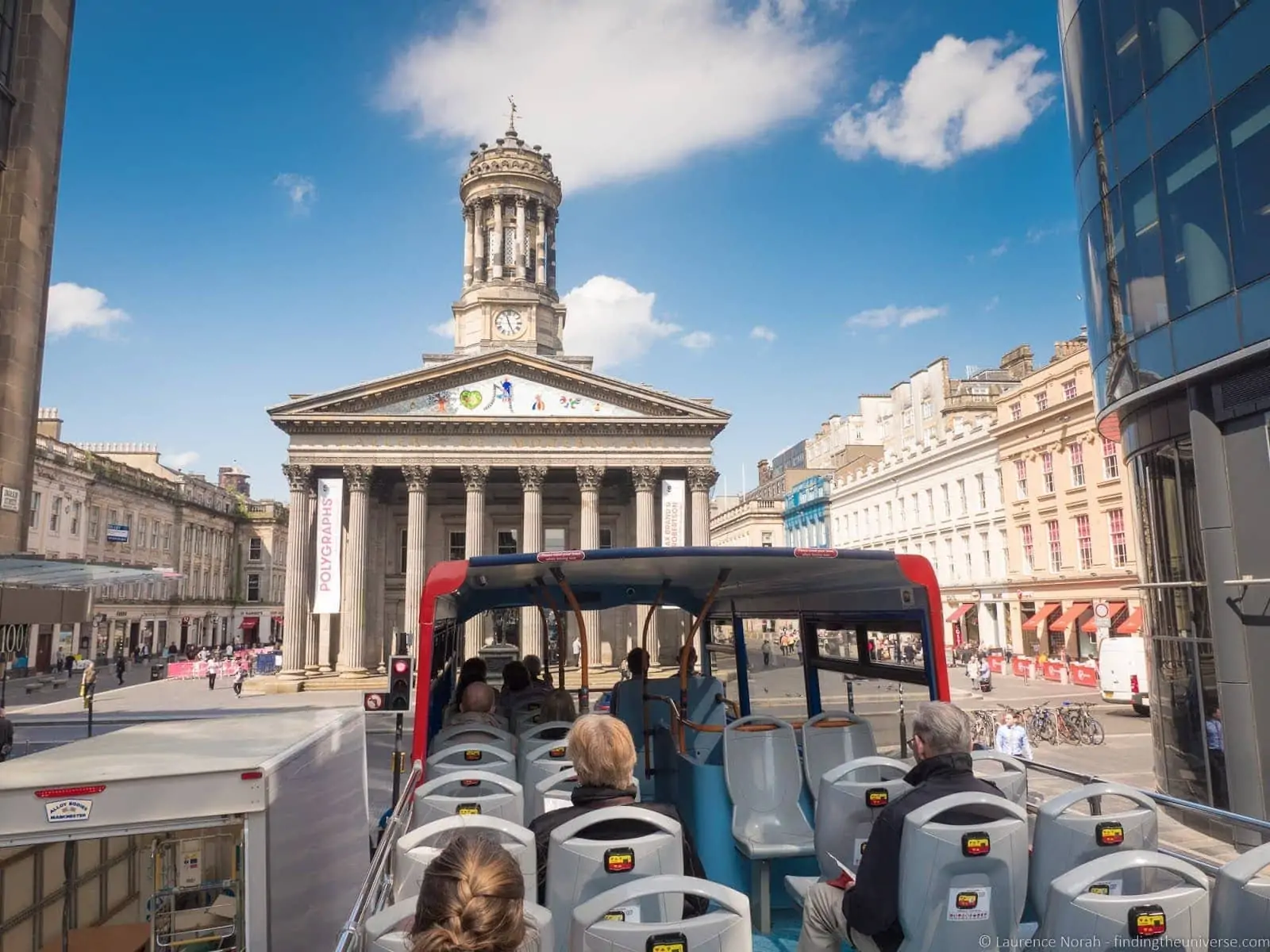
If it’s easier to have the sights linked up for you, the hop-on hop-off sightseeing bus runs a loop of the main attractions, and a two-day ticket lines up neatly with this itinerary. We used it on one of our days, and the onboard commentary is a good way to pick up some background on the city as you go.
Where to stay in Glasgow
Glasgow has lodging to suit every budget, and where you stay is worth a moment’s thought. The city centre and the Merchant City keep you close to Day 1 and to the main railway stations, which is handy if you’re arriving or leaving by train.
The West End is quieter and more characterful, with easy access to Day 2, and Finnieston puts you near the best of the city’s dining.
- For a budget stay, Glasgow has a good range of hostels and lower-cost hotels, most of them clustered in and around the city centre near the stations. This is the easiest area for a no-fuss base.
- For a mid-range stay, the city centre and Merchant City are full of solid hotels and serviced apartments, within walking distance of Day 1 and a short Subway ride from the West End.
- For a luxury stay, look at the West End’s townhouse hotels and the smarter city-centre and Finnieston options, which pair well with Day 2.
We tend to start a search on Booking.com, which usually has the widest choice of hotels and apartments. You can see the current Glasgow listings on Booking.com to compare options across the city.
If you want specific recommendations, here are some Glasgow hotels worth a look, running from budget to luxury.
- Point A Hotel is a no-frills budget hotel in the city centre, with small, simple, clean rooms and a handy position for the stations and Day 1.
- Leonardo Royal Hotel Glasgow is a solid 4-star a few minutes from Glasgow Central that often comes in at good value, which makes it a sensible mid-range base. You may know it by its former name, Jurys Inn.
- Native Glasgow is a central aparthotel in a handsome Edwardian building, with kitchens in the rooms if you’d rather self-cater, and the Anchor Line restaurant on the ground floor for when you wouldn’t.
- Sherbrooke Castle Hotel is a 4-star set in a 19th-century baronial villa in the Southside, a quieter and more characterful option a short way out of the city centre.
- Kimpton Blythswood Square Hotel and Spa is a 5-star stay on an elegant Georgian square in the city centre, with a restaurant, bar and spa if you want to round the trip off in style.
The best time to visit Glasgow
Our favourite time to travel anywhere in Scotland is May and June. The weather is generally kinder than in winter, the days are wonderfully long, and the city isn’t as busy as it gets at the height of summer. Glasgow is also noticeably less crowded than Edinburgh through the summer months, which is one quiet argument for the city.
That said, any time of year works for Glasgow. Scottish weather is so variable that you can have glorious sun in winter and a washout in July, so rather than chase a perfect season, just check the average temperatures for the month you’re visiting and pack accordingly. Bring layers and some form of waterproofing whatever the forecast.
Making the most of your two days in Glasgow
A few things, picked up over our visits, make a Glasgow trip run more smoothly.
Lean into the choices. This itinerary deliberately makes you pick one Clyde-side attraction rather than cramming in both, and that’s a feature. Glasgow’s museums reward a slower pace, and a trip where you actually take things in beats one where you tick boxes at speed.
Book the things that need booking. The Mackintosh House, the brewery tours and the Loch Katrine cruise all benefit from reserving ahead, and a couple of attractions, like House for an Art Lover and the People’s Palace, run limited or no public access at the moment. A two-minute check of opening details before you head out saves a wasted journey across the city.
Mornings are your friend. Glasgow’s museums mostly close at 5pm, so the earlier you start each day, the more you see. It’s tempting to ease into a city break, but the first couple of hours are the most valuable on this itinerary.
Glasgow weather is changeable, and good footwear changes the trip. Both days here involve a lot of walking, often on pavements that have seen recent rain. A comfortable, waterproof pair of shoes makes the difference between enjoying the walk between stops and counting down to the next cafe. For what actually holds up on a trip like this, see our guides to the best travel shoes for men and women.
Finally, leave room to wander. Some of our best moments in Glasgow have come from looking up at a building, turning down a side street after a mural, or following a recommendation from someone in a bar. The itinerary covers the essentials. The city fills in the rest.
Glasgow itinerary FAQ
Is two days enough time in Glasgow?
Two days is enough to cover the best of Glasgow itself. It gives you a full day in the medieval East End and city centre and a second day in the West End and along the River Clyde, taking in the cathedral, the major free museums, the university and the street art. If you also want a day trip to Loch Lomond, you’ll need a third day.
How far is Loch Lomond from Glasgow?
Loch Lomond is about 20 miles north west of Glasgow. Balloch, the town at the loch’s southern tip, is under an hour away by car and around 50 minutes by train from Glasgow Queen Street station.
Can you visit Loch Lomond from Glasgow without a car?
Yes. A direct ScotRail train runs from Glasgow Queen Street to Balloch in about 50 minutes, and from Balloch you can reach the loch shore, Loch Lomond Shores and the village of Luss. A car gives you more freedom for the wider Trossachs, including Loch Katrine, but the southern loch is well served by train.
Are Glasgow’s museums free?
Most of Glasgow’s major museums are free, including Kelvingrove Art Gallery and Museum, the Riverside Museum, the Gallery of Modern Art, the Hunterian Museum and the Burrell Collection. A few attractions charge, among them the Glasgow Science Centre, the Tall Ship Glenlee and the Mackintosh House.
Is Glasgow a walkable city?
Glasgow’s city centre and West End are both walkable, and most of this itinerary is done on foot. The city centre’s grid layout makes it easy to find your way around, and the circular Subway and the bus network cover the longer hops, such as travelling between the East End, the West End and the River Clyde.
Further reading for visiting Glasgow and Scotland
Before you go, here’s some further reading to help you plan your trip to Glasgow and the wider country.
- Most people pairing Glasgow with another Scottish city are also thinking of Edinburgh. See our guide to spending two days in Edinburgh, as well as Jess’s guide to getting off the beaten path in Edinburgh.
- If you’re a Harry Potter fan, take a look at Jess’s guide to the best Edinburgh Harry Potter locations.
- Fitting Glasgow into a wider trip? We have both a one week itinerary of the UK and a two week itinerary of the UK to give you a sense of what’s possible.
- Heading further into Scotland? Consider a trip to the Scottish Borders, a whisky-tasting tour of Scotland, or a guide to whisky distilleries on Islay. To get further afield, there’s our five day Isle of Skye and Highlands itinerary.
- For Scotland’s most dramatic scenery, see our guide to driving the North Coast 500, along with the best places to stay along the North Coast 500.
- If you want to come home with better photos, take a look at my online travel photography course, which covers everything you need whatever camera you’re carrying.
- And if you’d like a guidebook to bring along, here’s the current Rick Steves Scotland guide to get you started.
That sums up our suggestions for spending two days in Glasgow, with Loch Lomond on hand if you have a third. Have you visited Glasgow, or are you planning to? Let us know if you have any questions in the comments below.
David Cameron says
Hey, really nice itenary. You’ve covered all the important places too. I’d be travelling soon there and this would be really helpful. Thanks for this!
Laurence Norah says
My pleasure David, have a great trip.
TRACI VINSON says
This was such a fabulous surprise! We are planning a trip to the U.K. and this is a perfect place to start! Your time lines, traveling and weather suggestions are fabulous!! My friend and I look forward to navigating your site even more!
By the way, your pictures are incredible. I hope I get some half as beautiful when we go.
Thank you!!
Laurence Norah says
Thanks so much Traci 🙂 We hope you have a wonderful time, and don’t hesitate to reach out if you have any questions 😀