
Milford Sound is one of New Zealand’s most spectacular natural attractions, and for most people planning a south island trip, it’s the headline they’re trying to figure out how to actually do. This guide is here to help: when to go, how to get there, which cruise to book, and the bits the other guides leave out (like what to do if it rains, which it will). For where Milford sits in a wider trip, our two week South Island route gives it the two nights in Te Anau it really needs.
First though, I have a confession to make. In a previous post, I referred to the geological feature known as a Sound as being the New Zealand equivalent of a Fiord.
I have come to learn that this is seriously incorrect. They are distinct features and confusing one with the other is a bit like confusing a puddle with a lake.
For clarity therefore, here is the definition.
A Sound is a waterway formed by the action of a river, which results in a v-shaped valley. A fiord is created by the movement of ice, usually in glacial form, which results in those lovely u-shaped valleys that you probably remember from the geography lessons of your youth.
All this geography aside, I will now talk about Milford Sound, which is actually a fiord (I’m not the only one who gets these things wrong, although at least my efforts don’t end up on atlases), in the World Heritage listed Fiordland National Park, on the south west coast of New Zealand’s south island.
Table of Contents:
About Milford Sound
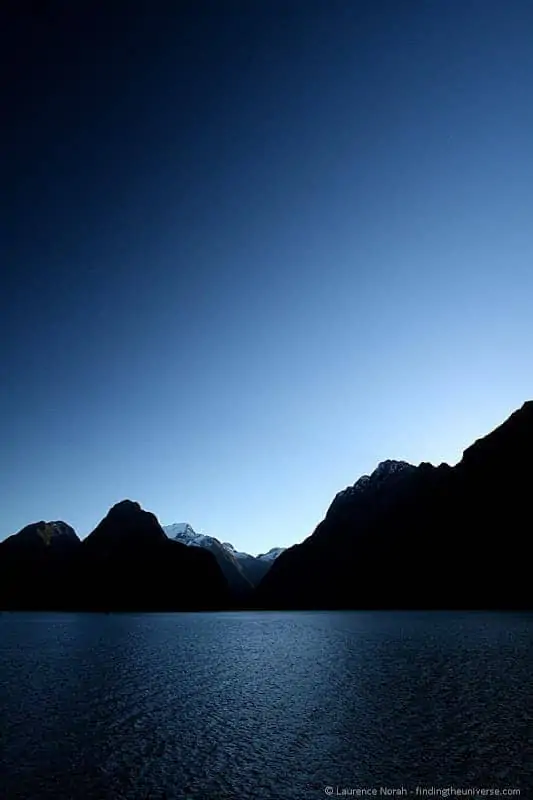
A bit of perspective for you. Fiordland National Park is fairly big. It takes up about 5% of New Zealand’s entire land mass. As well as that, everything in Fiordland National Park is pretty big. Lakes are deeper, longer and, I would guess, somewhat colder than in other parts.
Mountains rise out of the sea in distances that can be measured in kilometres. Glacially formed valleys challenge your brain to comprehend the scale of the sight before your eyes, as tiny camper vans and cars crawl like ants on the snake like roads that traverse the area.
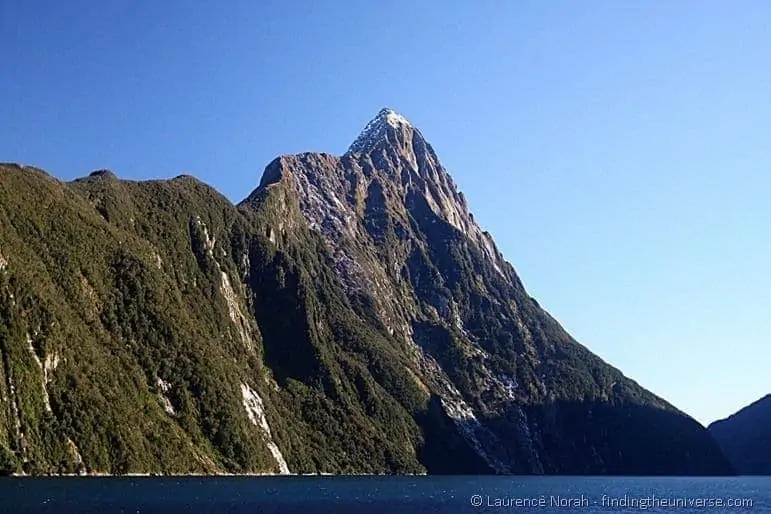
Hopefully I’ve conveyed the impression that Fiordland is a big place, with some big things in it. Big, impressive, snow capped things.
One of the main drawcards of the Fiordland National Park, and in fact, of all of New Zealand, is the Milford Sound. If you’re a Kiwi, this tops the list of the 101 things you must see before you die (yes, there is an actual list).
Specifically, the main attraction is Mitre Peak, a mountain which rises up out of the Sound to a rather jaw dropping height of 1,692m. It’s one of the tallest mountains in the world to rise directly out of the sea.
I spent a very happy year living, working and road tripping around New Zealand, and Milford was the one place that stopped me in my tracks more than any other. So if you’re trying to work out whether to make the trip, the short answer is yes. The longer answer, including how to actually do it without ruining the day with a 13-hour bus ride, is the rest of this guide.
Should you do Milford Sound as a day trip from Queenstown?
This is the question almost everyone planning a Milford trip ends up asking, because Queenstown is where most south island itineraries land first. Almost every guide I’ve read dodges it. Here’s the actual answer.
The drive from Queenstown to Milford Sound is around 290km each way, and even on a perfect-weather day with no road closures it’s a five-hour drive each direction. Add a two-hour cruise, lunch, and a couple of stops, and you’re looking at a 13-hour day. Most coach tours leave Queenstown around 7am and get back around 8pm. You’ll be on the bus in the dark either side, the cruise window is short, and you’ll see a lot of the Eglinton Valley through bus windows.
Te Anau, on the other hand, is two hours’ drive from Milford, which gives you a sensible day with time to actually stop along the road (and trust me, you’ll want to).
So my actual rule, having done it both ways, comes down to your spare nights.
If you have no spare nights to base elsewhere and you’re happy with a long bus day, do it as a day trip from Queenstown. A coach is a sensible choice here because someone else does the driving on a road that demands attention. Treat it as a tick-box “I’ve been” and don’t expect a leisurely day.
If you have one or two extra nights to play with, drive yourself and base in Te Anau instead. Te Anau is a pleasant lakeside town, the road from there is one of the most spectacular drives in the country, and you can break the journey at the Mirror Lakes, the Chasm, Lake Gunn, and the long string of overlooks along the way.
If you want an early-morning cruise (better light, quieter boats), or you’re thinking of doing a scenic flight (which is weather-dependent and worth being on the spot for), stay in Milford itself.
And one more thing: if you’ve only got the Queenstown day-trip option and the weather forecast looks atrocious, my advice would be to skip it and do something else in Queenstown. Half the impact of Milford is in the scale of the mountains, and you don’t see the scale through fog.
Getting to and from Milford Sound
One of the best ways to get to Milford Sound is to drive yourself. Pick up a rental car and enjoy the magnificent views on the 119km drive from Te Anau. The drive takes 2 to 3 hours if you’re not stopping (which you should be), so plan accordingly if you have an early cruise booked. We recommend searching for your car rental on Discover Cars here. They compare a range of providers so you can find the best deal for your trip.
If you’re driving yourself, check the road conditions with NZTA before you set off. The Milford Road is susceptible to landslides, avalanches in winter, and flash flooding in the wet, and it does close. There’s no point setting off if it’s shut.
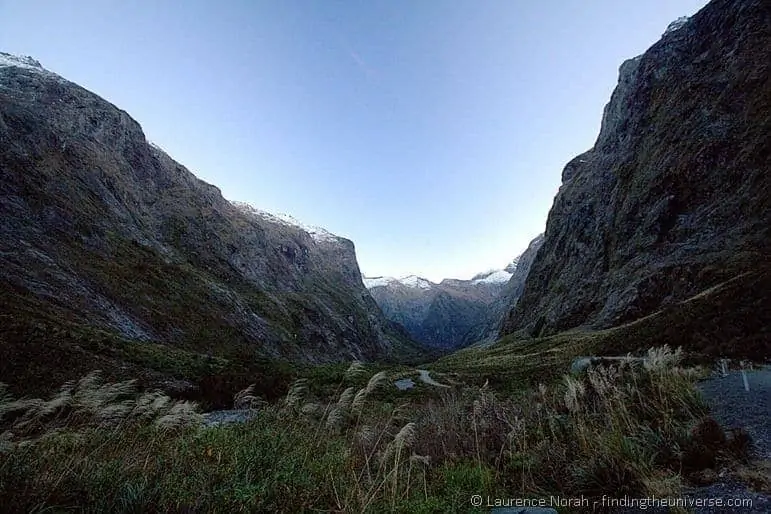
The drive itself is a destination in its own right. The 119km from Te Anau passes through the Eglinton Valley, with Mirror Lakes (a five-minute walk off the road, free), Lake Gunn (a 45-minute loop walk), and the Chasm (a short walk to a violent rock-carved gorge). And then there’s the Homer Tunnel, a 1.2km tunnel hand hewn over nearly two decades, angling down through the mountain at a 1 in 10 ratio. There’s a single lane with a traffic light at each end, and you may end up waiting fifteen minutes for your turn (more on a busy day). It’s worth pointing out that there’s nowhere to overtake on most of this road, so be patient.
If self-driving isn’t an option, the alternative is a coach trip. A coach plus cruise day trip from Queenstown bundles the long drive, lunch, and cruise into one transaction, and you can book a Queenstown to Milford Sound coach plus cruise day trip on GetYourGuide here. There are also coach options from Te Anau, which involve a much shorter day on the bus.
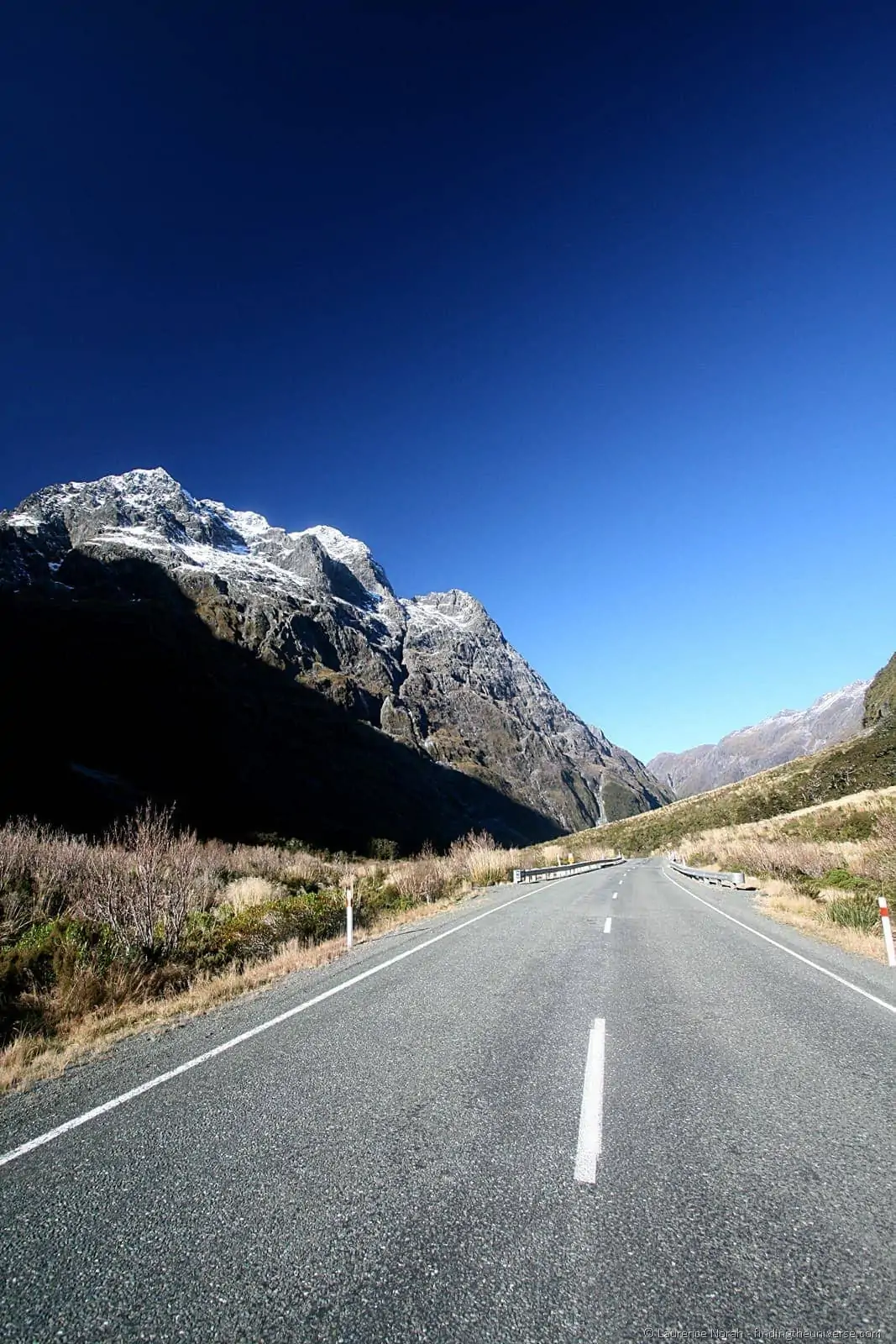
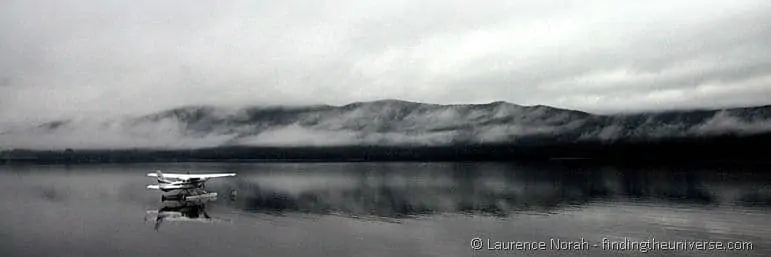
If you’re in a rush and have the budget, you can fly in to Milford Sound from Queenstown, Te Anau and Wanaka. The views from the air on a clear day are, of course, spectacular, although the flights are heavily weather-dependent and cancellations are common. If a flight is part of your plan, build in flexibility.
Finally, for those of you wanting a more traditional experience, you can also hike in to Milford Sound along the Milford Track. This is a four-day one-way hike that lets you experience some of New Zealand’s most spectacular scenery. Bookings are essential and open in May for the following November-to-April Great Walks season. They sell out within hours. You can book on the New Zealand Department of Conservation site here.
Which Milford Sound cruise should you book?
The cruise is the main event for most visitors, and there are four operators worth knowing about. They all do roughly the same route (out to the Tasman Sea and back via Mitre Peak, the waterfalls, the cliffs, and the seal colonies), but the boat size, cruise length, and what you get for your money are quite different.
Here’s how they break down. All prices are NZD per adult, accurate as of early 2026.
| Operator | Boat type | Cruise length | From (NZD) | Best for |
|---|---|---|---|---|
| Mitre Peak Cruises | Smaller purpose-built boats (~75 pax) | ~2h | 169 | Best value smaller-boat experience; gets right under the waterfalls |
| Southern Discoveries | Larger catamarans | ~1h 45m to 2h | 179 | Best combined option with the underwater observatory at Harrison Cove |
| Cruise Milford | Smaller boats (≤75 passengers) | ~1h 45m | 189 | Boutique small-boat experience; positioned as a premium small-group option |
| GetYourGuide coach plus cruise from Queenstown | Coach plus Southern Discoveries cruise | ~12h total day | From around 240 | One transaction, no driving, you have no spare nights |
Some practical recommendations on which to pick.
For the best value smaller-boat experience, go with Mitre Peak Cruises. They run purpose-built smaller boats with fewer passengers per trip, and the captain will nose right up under the waterfalls (you will get wet). At NZD 169 they’re the cheapest of the small-boat operators, and the 2-hour cruise is the longest of the standard nature cruises.
If you want a boutique experience and don’t mind paying a bit more, Cruise Milford position themselves as the premium small-boat option, at NZD 189. Boats hold up to 75 passengers, the cruise is slightly shorter than Mitre Peak’s, and the on-board experience is pitched at the higher end.
If you want to add the underwater observatory, book Southern Discoveries. They operate the Milford Discovery Centre and Underwater Observatory at Harrison Cove, which is a 10m-deep viewing chamber that lets you see the rare black coral and deep-sea creatures that live in the fiord’s unusual freshwater-on-saltwater layering. The combined cruise plus observatory option costs more, and as of mid-2026 may have limited availability, so check the operator site before you commit.
If you’re coming from Queenstown without a car, the GetYourGuide coach plus cruise day trip handles the whole logistics chain. You’ll lose the day-trip-vs-base flexibility I described above, but if your itinerary is fixed and Queenstown is your base, it’s the most efficient way to do it. Book the Queenstown coach plus cruise day trip here.
Whichever operator you pick, my one piece of timing advice is to take the earliest cruise of the day you can. The light is better for photos, the fiord is quieter, and you avoid the late-morning rush when the Queenstown coach trips arrive. You can book the Milford nature cruise on GetYourGuide here, which covers the standard nature-cruise route with optional lunch.
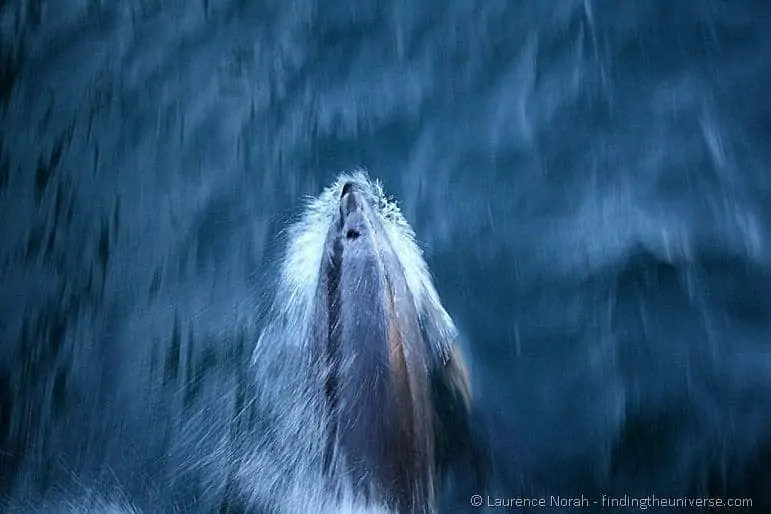
I should mention that I once took a Milford cruise on a beautifully sunny day in May 2010 (during the Eyjafjallajökull volcanic ash chaos that grounded planes across much of Europe). My boat could probably have accommodated 200 people without trouble, and had a grand total of nine passengers. The captain found us a pod of dolphins that played in the bow wave for about ten minutes. I’m not promising you’ll get dolphins or a near-empty boat, but I am promising the experience is worth the effort even on a busy day.
When to visit Milford Sound
Fiordland gets over seven metres of rainfall a year. In the winter months (May to August), there’s also snow to contend with, which can cause avalanches and force the road to close. The good news is that even in the rain and fog Milford Sound is still gorgeous, with hundreds of temporary waterfalls exploding down the mountains and the clouds adding wonderful atmosphere. The bad news is you won’t see Mitre Peak.
The trade-off, by season, looks like this.
December to February is the busiest period, with the longest daylight, warmest temperatures, and unfortunately the most sandflies. Cruises and accommodation book up months ahead. March and April are my pick: quieter than summer, the road is reliably open, daylight is still long enough for an unhurried day, and the weather pattern is often more stable. May to August is winter, and the road can close on short notice. Snow on the peaks looks magnificent on a clear day, but cruises run with fewer departures and scenic flights are even more weather-dependent. September to November is the best waterfall season because of snowmelt feeding into the rain. It’s quieter than summer and the days are getting longer.
The answer is that there’s no bad time to visit Milford. There are, however, days when you should give it a miss because the weather has won. Check the forecast and the road status the day before, and have a backup plan.
What to do at Milford Sound when it’s raining
Every guide to Milford Sound (including, I should admit, the previous version of this one) tells you that “rain just makes the waterfalls more dramatic” and then moves on. That’s true but it’s not actually useful. So here’s what changes operationally if you’ve drawn the wet card.
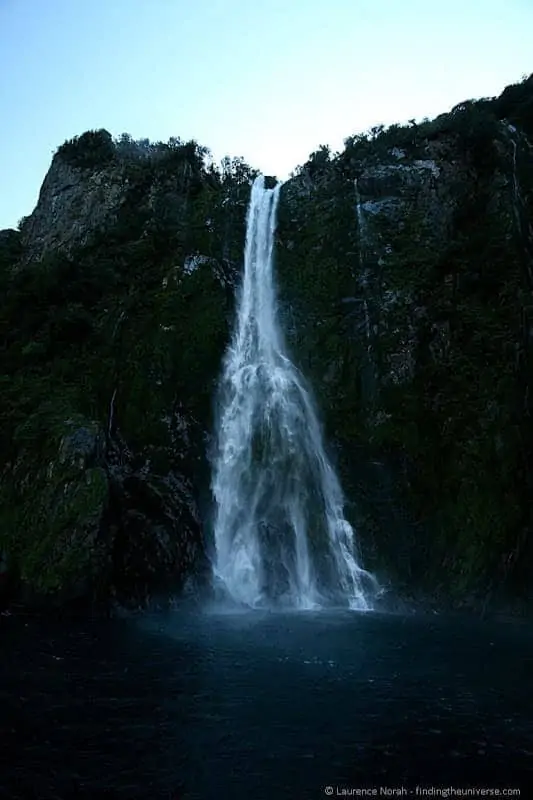
The cruise still runs. Cruises operate in pretty much any weather short of a road closure. What changes is visibility from the deck. Mitre Peak may be entirely invisible, and the cliffs you’re sailing past will be wreathed in cloud. The waterfalls, however, are spectacular. Fiordland’s permanent waterfalls are dramatic in any weather, but on a wet day there are hundreds of temporary ones streaming down every cliff face. Bring a waterproof outer layer (the operators provide rain ponchos but they’re a bit thin). Most boats have a heated indoor section, which is essential.
The Underwater Observatory is the one thing in Milford that’s actively improved by poor weather. The viewing chamber at Harrison Cove sits 10m below the surface, where the deep-water marine life rises during low-light conditions. On a sunny day the surface light penetrates further down and the rare black coral and other deep-sea creatures retreat. On an overcast or rainy day, those creatures rise into the visible zone.
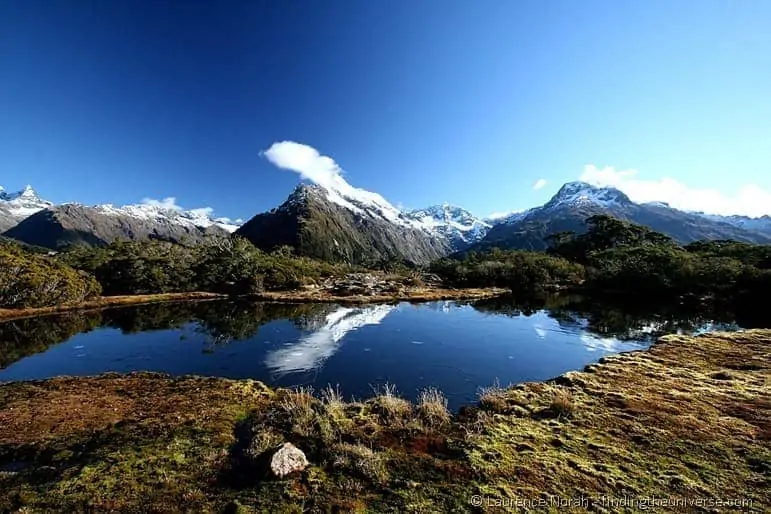
Among the stops along the road, some work in the rain and some don’t. The Chasm (a short walk to a violent rock-carved gorge) is better in rain because the water flow is higher. Mirror Lakes is not worth the stop in cloud because the whole point is the reflection of the mountains, which you can’t see. Key Summit, a 3-hour panoramic view walk, should also be saved for a better day; closed-in cloud removes the entire reason to go up. Lake Gunn nature walk, a 45-minute loop through beech forest, is fine in the rain because the forest doesn’t mind it and the moss looks better wet.
Scenic flights have a high cancellation rate in poor weather. If a flight is part of your plan, ask the operator about their rebook policy before you commit. Some will rebook for free if conditions force them to cancel; others charge.
Photography tips for Milford Sound
Milford is hard to photograph well, partly because the scale defeats most lenses and partly because the conditions can be challenging. A few things I’ve learned from being there with a camera.
Bring a wide-angle lens. The cliffs are kilometres tall and the fiord is narrow. Anything below about 24mm full-frame equivalent will struggle to fit Mitre Peak in the frame from most cruise vantage points. A 16-35mm or equivalent is the sweet spot.
Expect a wide dynamic range. Bright sky over dark, deep-shadow fjord walls is a tough exposure. Shoot RAW so you can recover shadow detail in post. If your camera has built-in HDR or exposure bracketing, this is the place to use it. Most smartphones will handle all this for you, for other cameras you’ll want to read up on the process.
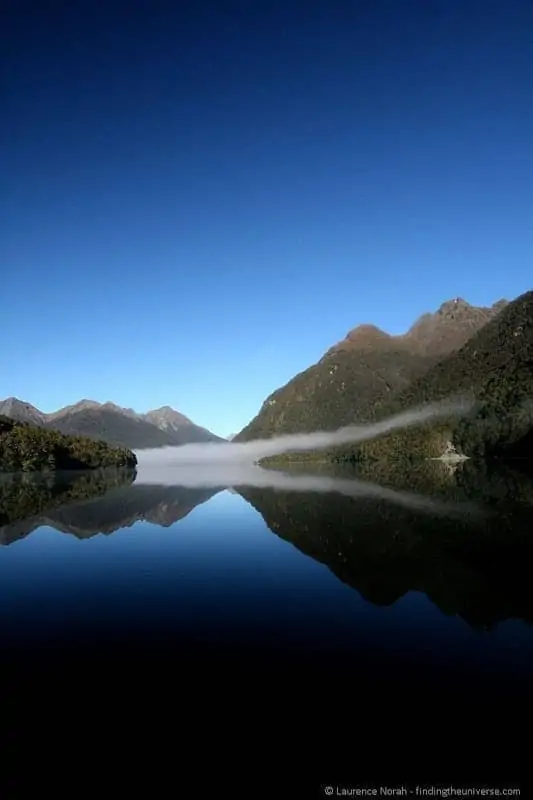
Reflection shots need a still surface. The classic Mitre Peak reflection requires a calm morning with no wind and no boats moving through. Your best bet is the first cruise of the day, since the boats coming back at the end of the day churn the water for hours afterwards. The reflection from the cruise terminal jetty is also excellent and free.
A tripod is essentially useless on the boat. The vibration and movement makes long exposures impossible. Hand-hold and shoot at a higher shutter speed than you’d normally use (1/250s or faster). Bring image-stabilised glass if you have it.
If you’re doing a helicopter or scenic flight, set a fast shutter speed (1/1000s or faster) to counter aircraft vibration. Don’t rest the lens or your hand against the window, since it’ll transmit vibration straight into the body. Auto-ISO with a shutter-priority mode of 1/1000s or so is a sensible default.
For the underwater observatory, the lighting inside is dim and tricky for photography. Push your ISO higher than feels comfortable (3200+ on most modern cameras is fine), open up the aperture, and don’t use flash, since it’ll bounce off the viewing window and ruin the shot.
If you’d like to learn more about travel photography, I run an online travel photography course that goes deep into the techniques and creative thinking behind the kind of photos you’d take at a place like Milford. It might be useful if photography is part of why you’re coming.
Milford or Doubtful Sound? Which one is right for you?
If you’re going as far south as Te Anau, you’ll come across the question of whether to do Doubtful Sound instead of (or as well as) Milford. They’re both in Fiordland National Park and both spectacular, but they’re quite different experiences.
Milford Sound is more accessible (you can drive in), more dramatic in a single-glance way (Mitre Peak is iconic), and busier. Doubtful Sound is three times longer than Milford, much quieter (you can only get there by boat across Lake Manapouri followed by a coach over the Wilmot Pass), and the scale is more sprawling than vertical.
My rule of thumb. Pick Milford if you have one day, you want the iconic shot, you’re combining it with a road trip down the Milford Road, or it’s your first time in Fiordland. Pick Doubtful if you have a full day to dedicate to the experience, you’ve already done Milford and want something deeper, you prefer quiet to spectacle, or you can stretch to an overnight cruise (Doubtful’s overnight cruises are exceptional). Do both if you have three or more days based in Te Anau and you’re a fiord enthusiast. They’re different enough to be complementary rather than redundant.
For most first-time visitors, Milford is the right call. Doubtful is the depth pick for people who already know they love this kind of place.
Where to stay near Milford Sound
Accommodation options at Milford itself are limited. There’s Milford Sound Lodge (the only hotel-style option in Milford itself) and Mitre Peak Lodge (which is only available for people who hike in via the Milford Track). Milford Sound Lodge books up months ahead, particularly in summer.
For most visitors, the practical choice is to base in Te Anau, which is a pleasant lakeside town two hours’ drive from Milford, with a wide range of accommodation. We recommend using Booking.com to find a place to stay in Te Anau, which lists everything from budget motels to lakefront lodges. Most properties book up in summer so don’t leave it to the last minute.
If you’ve got a campervan, there are several basic DOC campsites along the Milford Road (the Cascade Creek and Lake Gunn campsites are particularly good). These are first-come-first-served, no booking, with very basic facilities (long-drop toilets, no power), and they let you stay close enough for an early-morning cruise without paying lodge prices.
Take a look at the Te Anau accommodation listings here.
What else to do in the area
If you’re staying in the area for more than a day, there’s plenty more to do. Jess and I once walked a part of the world-famous Routeburn Track from this end, the other end of which we had walked from Glenorchy. Admittedly we missed out the middle, but it’s about the closest we have come to doing a Great Walk on the south island. The views from the Routeburn, with snow-lined mountains in every direction and endlessly blue skies stretching beyond, were spell-binding.
Other options include the Key Summit walk (a 3-hour return hike with panoramic views, weather permitting), the Hollyford Track (a longer multi-day option), and trips to Doubtful Sound from Manapouri. There are also kayaking trips on Milford Sound itself, which are an excellent way to see the fiord at water level.
Milford Sound FAQ
How long should you spend at Milford Sound?
For most visitors, a full day from Te Anau is enough. That’s a 2-3 hour drive each way (with stops along the road), a 2-hour cruise, and time for a couple of short walks. If you want to do a scenic flight, an overnight cruise, or a hike like Key Summit, you’ll want two days.
If you’re coming from Queenstown by coach, plan for a full 12-13 hour day with most of the hours on the bus. Coming from Te Anau is a much more humane day.
Is Milford Sound worth visiting from Queenstown?
Yes, but only if your itinerary doesn’t allow you to base in Te Anau for a night, and only if the weather forecast is reasonable. The day-trip-from-Queenstown experience is heavy on bus time and light on actual fiord time. If you have one or two extra nights, drive yourself and base in Te Anau instead.
Can you swim at Milford Sound?
You can, but you probably won’t want to. The water is cold (around 12-13°C in winter and 15-16°C in summer at the surface), the surface is a freshwater layer floating on saltwater, and the visibility is limited because of tannins from the rainforest runoff. There are also large numbers of sandflies onshore, which are a more reliable obstacle than the temperature. If you do want to swim, the kayaking trips offer the chance.
How long is a Milford Sound cruise?
The standard nature cruise is around 1h 45m to 2h, varying by operator. The cruise route is roughly the same across operators, going out to the Tasman Sea via Mitre Peak, the major waterfalls, and the seal colony, then back. Premium and overnight cruises are longer and stop at more locations.
What is the best month to visit Milford Sound?
March and April are my pick. You get fewer crowds than summer, reliable road access, long enough days for an unhurried trip, and often more stable weather than the height of summer. November is also a strong shoulder-month option, with the bonus of snowmelt-fed waterfalls.
Avoid the December to mid-January peak unless you’ve booked everything months in advance.
Do you need to book a Milford Sound cruise in advance?
In peak season (December to February) yes, several days to a week in advance is sensible, particularly for the smaller-boat operators (Mitre Peak Cruises and Cruise Milford). In shoulder seasons you can usually book a day or two ahead, and in winter often on the day. The Queenstown coach plus cruise packages should always be booked at least a day ahead because of the coach capacity.
Further reading to help plan your New Zealand trip
We spent a year travelling and working in New Zealand, and have written a lot of guides to help you plan your trip to this spectacular country. Here are some you’ll find useful, but do take a look at all our New Zealand content as well.
- Our detailed guide to spending a month in New Zealand, including planning information and a full itinerary
- A guide to the highlights of the north island, and the highlights of the south island
- Looking for a scenic road trip in New Zealand? Check out our guide to the best road trips in New Zealand
- A guide to hiking the Tongariro Crossing, New Zealand’s most popular day hike
- A first-time visitor’s guide to New Zealand
- Our guide to buying a vehicle in New Zealand, if you’re travelling for a little while
And that’s it for Milford Sound! As always, we’re open to your feedback and suggestions, just use the comments below. Happy travels!
Andhika Dimas D. Saputra says
marveleous
bakoyma says
“in a medium that doesn’t let you print life sized pictures of kilometre high mountains.” – Ain’t that the truth… I was in New Zealand in 2010 and got stuck for 2 ekstra weeks because of the ash cloud (what a shame!), but unfortunately we missed out on Milford Sound… Coming from Norway, I guess we didn’t make the fjords a priority, but it’s definitely on my list for my next trip there. Hoping it’ll be in 2014 🙂
Thanks for sharing your pictures and tips!
Laurence Norah says
Thanks very much Simon 😀
Laurence Norah says
Thanks Jason 🙂
Simon says
OMG, I just stumbled into your wonderful photos and got simply stunned! Exactly the place that make me say WOW! and the ones I wish to visit soon.
Jason says
Very nice. Glad I stumbled upon this. lol keep up the good work
Laurence Norah says
Thanks Jade – I was so lucky with the weather as the day we drove in it was absolutely dire – mist on the deck. Then for the day of the actual visit, we had stunning weather. Even better – there was no-one else there! Win win!
Laurence Norah says
I have to agree – I love a good reflection photo!
Laurence Norah says
Thanks DJ – it’s a stunning place to photograph when the weather is good 🙂
Jade - OurOyster.com says
Wow you really got some great photos. The day that I went to Milford, it was rainy and cloudy, so Im not very impressed with my own photos
D.J. - The World of Deej says
Simply incredible photos…the one with the clouds reflection especially…
Christy says
Reflection photos are the best. This place looks amazing.
Laurence Norah says
Thanks Andrew 😀 The drive in was really special, I have to agree. We had two weathers while we were there – glorious sunshine, and mist on the deck. Beautiful in both!
Laurence Norah says
Thanks Linda! Your time will come 😀
Laurence Norah says
I know – my geography teacher must be spinning in his classroom!
Ava Apollo says
Stunning! Looks so peaceful.
Marchel says
New Zealand has been on my bucket list ever since I watched The Lord of The Rings. It is just so darn far away from Houston TX.
Andrew says
We went to Milford on an overnight this past Christmas. It was, as you say and show, fabulous. And the odd part for me is that however amazing the fjord itself is, I found the forest and the drive in competing with it. The forest is just as cool, and I wish I had more time there.
Christy @ Technosyncratic says
Yikes, how terribly embarrassing that you mixed up a sound with a fiord. What were you thinking?!? 😉
These photos are WOW. Total stunners. There’s something about mountains and water that just screams beauty.
Linda McCormick says
Beautiful, beautiful shots Laurence. I was blown away by how amazing it was when I was there a few years back. Always swore to go back with a better camera… still waiting for the moment.
Laurence Norah says
Wow, brilliant 🙂 Looking forward to reading about that 😀
Natasha von Geldern says
Absolutely gorgeous 🙂 As we speak I’m planning a summer assault on the Milford Track – something every Kiwi must complete in their lifetime!
Laurence Norah says
I really want to visit Norway – and that scary looking rock in particular!
A Montrealer Abroad says
Sooo beautiful. Headed to the Norway fjords in a few months, but hopefully I’ll be able to visit the famous NZ fjords one day!
Laurence Norah says
Cheers Amy 🙂
Laurence Norah says
Thanks Abby – a pleasure 😉
Laurence Norah says
Cheers Pete! When you convince Dalene to take part in an Antipodean adventure across Oz and NZ, this is one spot not to miss!
Pete says
Wonderful photos again Laurence. This is one spot we have not ventured down to. I can’t say why. Maybe how similar it is to where we grew up in Western Canada. But that doesn’t mean we won’t get there. It’s on our list. Oh and we don’t have dolphins…
Abby says
Your photos don’t look real! What an experience. You’re in a part of the world I’ve never been close to. And thank you for the geography lesson. 😉
stjepanradic says
Awesome … Amazing, well done Great work. Wow … I’m impressed photographs is done superbly. Thank you so much.
AmyJalapeño! says
Wow. These are absolutely incredible. Amazing.
Wayne Mansfield says
The beauty is beyond portal comprehension… and without photographic proof nobody would be believe you.
srbmckenzie says
Stunning photos mate…. but come on, how many shots of surface water did you take before nailing the one of the dolphin?
Laurence says
A photographer never shoots and tells 😉
Laurence says
Hey Amanda, and thanks. I couldn’t believe how quiet it was either, really
considered myself lucky. Love that you have been to both doubtful and
milford sounds, doubtful sounds awesome too 🙂
Laurence says
Hey Mike! Wow, your pictures do look very similar 🙂 Crystal lake looks like
a wonderful spot too. Thanks for sharing 🙂
MikesRoadTrip says
OMG…amazing pics! Reminds me of a place in the Pacific Northwest (USA) called, Lake Crescent.
Laurence says
Hey Mike! Wow, your pictures do look very similar 🙂 Crystal lake looks like
a wonderful spot too. Thanks for sharing 🙂
MikesRoadTrip says
Hey Laurence…you bet! I thought so…waterfalls and all. I got really lucky and caught the lake perfectly still, as you can see in those reflective shots. Not nearly as good as yours, but I caught a few. 🙂 Look forward to see your next adventure. Cheers, Mike
Amanda Williams says
Great photos, as usual! I especially love the last few.
You had the same weather I had for Milford – sunny and uncharacteristic for that part of the country. But wow, only 9 people on your cruise?? Lucky! Looks like you definitely got to experience Milford at its best.
Laurence says
Hey Amanda, and thanks. I couldn’t believe how quiet it was either, really
considered myself lucky. Love that you have been to both doubtful and
milford sounds, doubtful sounds awesome too 🙂